



Side-parted bangs have become the go-to solution for anyone who wants the softness of bangs without the commitment or the heavy, straight-across look that can feel either too trendy or too restrictive. The real magic happens when you combine that side part with face-framing layers—suddenly you’ve got movement, dimension, and a style that works whether your face is round, square, heart-shaped, or oval. The key is that a side part naturally creates asymmetry, which flatters almost every face shape because it breaks up harsh lines and draws attention exactly where you want it.
What makes side-parted bangs so versatile is that they don’t demand a specific hair type, length, or texture commitment. Whether your hair is stick-straight, wavy, or naturally curly, there’s a bang style within this category that’ll work for you—and work well. The side part itself does a lot of heavy lifting: it creates a subtle diagonal line across your face that makes cheekbones look more defined, can minimize a broader forehead, and adds an effortless, lived-in quality to your whole look. You’re not going for blunt or severe; you’re aiming for textured, piece-y layers that catch the light and move with your hair, not against it.
The styles below cover everything from barely-there whisper-thin layers to more dramatic, statement-making bangs that still maintain that soft, side-swept aesthetic. Each one includes the exact details you need—the length, the texture, who it suits best, and how to style it—so you can walk into a salon knowing exactly what you’re asking for and how to maintain it at home.
1. Wispy Curtain Bangs with Side Part

Wispy curtain bangs are probably the most forgiving bang style out there, especially when paired with a side part. These bangs start longer at the inner part of your face (around cheekbone length or slightly longer) and taper dramatically shorter toward the outer edges, creating that signature feathered-away-from-the-face effect. The side part doesn’t fight the natural direction of the bangs—instead, it enhances the movement and makes them feel intentionally tousled rather than blowout-dependent.
Why This Style Works for Most People
The beauty of wispy curtain bangs is that they’re incredibly forgiving with texture. If you wake up with waves, they still look intentional. If your hair is straight, they’ll frame your face with a softer edge than blunt bangs ever could. They don’t require a ton of styling precision, which makes them perfect if you’re not willing to spend 20 minutes every morning with a round brush and blow dryer. The side part guides one set of curtain-bang layers back toward your temple and across toward your ear, while the other side falls toward your cheek—this creates a natural face-framing effect that doesn’t look like you’re trying too hard.
What You Need to Know Before Committing
- These bangs typically need trimming every 6-8 weeks because they grow out and lose that wispy taper pretty quickly
- They work best when there’s some texture or movement in your hair—if your hair is extremely thick and blunt-cuts easily, ask your stylist for point-cut or razor-cut bangs rather than blunt-cut
- Styling is minimal: blow-dry with a round brush for waves, or just finger-comb through with a light texturizing spray if you’re going for undone
- They do require regular styling if you want them to look their best—washed hair lying flat will read more brow-length than curtain-like
Pro tip: Blow-dry these bangs in the direction they’re parted while they’re still slightly damp, and they’ll fall naturally into place all day. No need to fight the grain.
2. Side-Swept Bangs with Subtle Layers

Side-swept bangs are intentionally longer on one side—sometimes dramatically so. Paired with a side part, they create this elegant, almost old-Hollywood effect where the bangs sweep across one side of your face and tuck back behind your ear. The layers are subtle and integrated into the rest of your hair, so the bangs feel like a natural extension of the cut rather than a separate statement piece.
How This Flatters Your Face
Long side-swept bangs create a vertical line that naturally elongates your face, making it a great choice if your face is wider or rounder. The length and sweep also draw the eye toward your cheekbones and jawline rather than your forehead. Because they’re longer and more integrated into the haircut, they feel sophisticated and polished—this is the bang style you see on runway models and in editorial shoots. It reads “intentional and thoughtful” rather than “trendy and playful.”
Styling and Maintenance Notes
- These require blow-drying and styling to achieve that smooth, sweeping effect—they won’t naturally fall that way if your hair air-dries or if you have texture
- They’re less maintenance-heavy than shorter bangs because you won’t need trims quite as frequently (every 8-10 weeks is usually enough)
- If you have naturally wavy or curly hair, this style works beautifully but needs a smoothing cream or light serum to enhance the sweep rather than fight it
- These bangs work best with longer hair overall—if your hair is above shoulder-length, the proportions can look off
Pro tip: Invest in a good blow-dry cream and a medium round brush. These bangs are all about the blow-dry finish, so mastering that technique makes all the difference.
3. Choppy Piece-y Bangs with Textured Side Part

Choppy, piece-y bangs are cut with lots of texture and variation in length—think roughly 1-2 inch variation in depth across the bang section. Combined with a side part, they create a super modern, effortless vibe that works especially well if you already have a choppy, textured cut throughout. There’s no bluntness here; instead, you’ve got intentional choppy pieces that move independently and catch the light beautifully.
Why Choppy Bangs Read Modern and Cool
The texture in choppy bangs means they work with almost any hair texture—actually, they often look better with some wave or natural texture because the choppiness enhances the movement rather than fighting it. They feel younger and more edgy than wispy bangs, but less severe than blunt bangs. The side part breaks up the visual weight even more, so even if you have fine or thinner hair, the choppiness can make it look fuller because every strand has its own shape and direction.
What to Expect Day-to-Day
- These bangs look their best when they have some texture or movement, so air-drying with texture spray or using a diffuser is actually ideal
- They don’t require as much precision styling, which is freeing if you’re not a blow-dry person
- Trims are necessary every 6-8 weeks to maintain the choppy, piece-y shape and prevent them from looking just blunt and grown-out
- They pair beautifully with choppy layers throughout the rest of your hair, but can look a little disjointed if the rest of your cut is very blunt or one-length
Pro tip: Use a medium-hold texture spray while your bangs are still slightly damp, and scrunch them with your fingers. This enhances the piece-y separation without making them look greasy.
4. Blunt Bangs with Sharp Side Part

If you want bangs that make a statement, blunt bangs paired with a sharp, defined side part is the answer. These are cut straight across with a clean line, positioned right around eyebrow height or just above. The side part isn’t subtle here—it’s deliberately sharp and graphic, which actually softens the bluntness of the bangs by creating a visual break and asymmetry.
The Impact of Blunt Bangs on Your Face Shape
Blunt bangs can be polarizing, but when they’re paired with a sharp side part, the overall effect is way less severe than blunt bangs with a centered part. The asymmetry from the side part softens the hardness of the blunt line. These bangs work especially well on people with longer face shapes because the horizontal line of the bangs balances vertical length. They also look incredible on people with strong cheekbones or sharp jawlines—the clean lines complement angular features beautifully.
Styling Demands and Reality Check
- Blunt bangs require blow-drying and styling—there’s really no way around it. They won’t look intentional if you air-dry them
- They need to be cut precisely, so finding a stylist you trust is crucial
- Trims are necessary every 4-6 weeks to keep that clean line sharp
- They read more high-fashion and editorial, which is amazing if that’s what you’re going for, but they’re not the lowest-maintenance option
Pro tip: Blow-dry these bangs last, after styling the rest of your hair. Use a paddle brush and direct the hair straight down, then smooth the side part into place. The bluntness will look crispest when your hair is completely dry.
5. Feathered Bangs with Soft Side Part

Feathered bangs are cut with lots of texture and layers throughout the bang section itself, creating movement within the bangs rather than just at the edges. Paired with a soft, almost undone side part, they give off this 70s-inspired vibe that feels nostalgic but somehow still completely current. The feathering means the bangs have tons of internal layers and texture.
Why Feathered Bangs Feel Effortless
Because feathered bangs have so much texture built in, they actually look better when they’re not blow-dried to perfection. A little wave, a little texture, a little undone-ness is exactly the point. They work beautifully with naturally wavy or curly hair because the layers interact with your natural texture rather than fighting it. The soft side part complements this aesthetic—you’re not going for sharp and graphic; you’re going for romantic and lived-in.
The Styling Sweet Spot
- These are genuinely low-maintenance because they look best when they have movement and aren’t blow-dried into submission
- Air-drying with a texturizing spray or sea salt spray is actually the ideal way to style them
- Curling your bangs slightly with a small curling iron enhances the feathered effect but isn’t necessary
- Trims every 6-8 weeks keep them looking intentional rather than overgrown
Pro tip: Embrace your natural hair texture with these bangs. The more you try to fight waves or texture, the more work they become. Let them be a little piece-y and imperfect.
6. Micro Bangs with Dramatic Side Part

Micro bangs sit much higher, right at or even above your eyebrows, creating an edgy, bold look. Paired with a dramatic side part, they’re absolutely statement-making. This is not a subtle choice—it’s confident, fashion-forward, and definitely reads as intentional. The high placement combined with the dramatic side part creates almost a graphic quality to your face framing.
Who Should Actually Consider Micro Bangs
Micro bangs work best on people with a higher forehead or an angular face shape because they don’t cover much, so they’re highlighting rather than concealing. They also work beautifully on people who like bold, editorial fashion and aren’t looking for something soft or romantic. You need to be comfortable with them being a focal point—they will be. The dramatic side part actually helps by drawing the eye along that diagonal line rather than just to the bangs themselves.
The Reality of Living With Micro Bangs
- They require trims every 3-4 weeks because even a tiny bit of growth changes the whole look
- Styling-wise, they’re pretty flexible—they look good blown out or textured, but they do need to be intentional
- They’re not forgiving if your hair texture is very thick, coarse, or curly—they can look unruly pretty quickly
- This is a style that demands confidence because it’s so visible and specific
Pro tip: Don’t jump into micro bangs on a whim. Try styling your regular bangs shorter with bobby pins and texture spray first, and live with that for a few days to make sure you actually want the commitment.
7. Long Face-Framing Layers with Subtle Bangs

This style is the most integrated option on this list. Rather than having distinct “bangs,” you have longer, subtle face-framing layers that begin around cheekbone height or slightly longer, creating the effect of bangs without the separate styling or frequent trims. The side part guides these layers and creates movement throughout the front sections of your hair.
Why This Hybrid Approach Works
If you love the idea of face-framing softness but you’re hesitant about the commitment of actual bangs, this is your style. You get all the flattering benefits of bangs without needing to style them specifically or trim them separately. The layers work with your natural hair texture and movement instead of requiring a specific styling routine. The side part is subtle and natural-looking rather than dramatic—it’s just part of your haircut, not a statement.
Maintenance and Styling Notes
- These layers blend seamlessly with the rest of your hair, so trims every 8-10 weeks are enough to keep them looking fresh
- Styling flexibility is huge—they look good blown out, air-dried, curled, or straightened
- This works beautifully with any hair texture or length (as long as your hair is at least shoulder-length)
- They’re genuinely the lowest-maintenance option if you want face-framing without actual bangs
Pro tip: When asking for this in a salon, use the word “layers” rather than “bangs,” and show your stylist exactly where you want them to start. The clearer you are, the better they can customize it to your face shape.
8. Side-Swept Bangs with Longer Undercut Section

This style combines a side-swept bang on top with a shorter, more textured section underneath—almost like a hidden undercut that you only see when your hair moves or when you style it to one side. The top layer sweeps across your face in that elegant way, while the underneath adds texture and movement without being immediately visible.
The Dimensional Effect of Layered Bangs
The genius of this style is that it looks polished and put-together from the front (side-swept elegance), but when you move or when light hits your hair, there’s texture and dimension that makes it feel less flat. The side part is essential here because it works with the longer top layer while allowing the shorter underneath to peek through and add visual interest. This is especially effective if you have finer or thinner hair because the shorter underneath section can make your hair look fuller.
Styling and Texture Considerations
- The longer top layer requires blow-drying and styling to achieve that smooth sweep
- The underneath section adds texture, so some wave or texture in your hair actually complements this style
- Trims every 7-9 weeks keep both sections looking intentional
- This works best on people with medium-length to longer hair overall—the proportions need that length to balance
Pro tip: When you blow-dry these bangs, focus on smoothing the top layer while scrunching a bit of texture into the underneath section. This keeps the elegant top layer while maximizing the textured effect underneath.
9. Baby Bangs with Soft, Undone Side Part
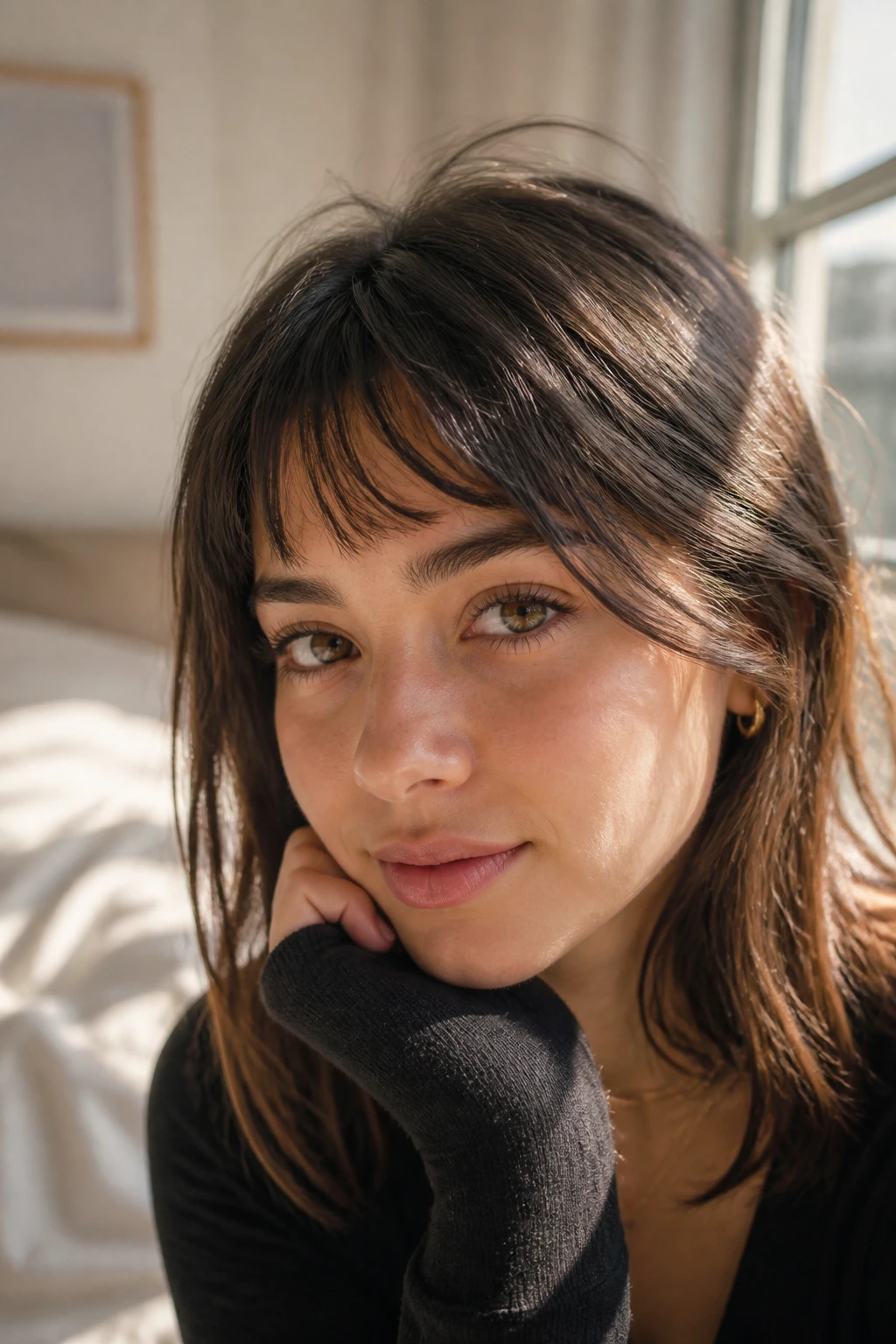
Baby bangs are shorter than micro bangs but slightly longer than a true fringe—they typically hit right at the brow bone or just slightly above. Paired with a soft, undone side part, they feel cute and playful rather than severe or editorial. The key to making baby bangs work is ensuring they have texture and aren’t cut too bluntly, and the soft side part keeps them from feeling too precious or dolly-like.
The Sweet Spot of Baby Bangs
Baby bangs hit that sweet spot between “barely-there bangs I can hide” and “statement bangs everyone will notice.” They’re visible enough to frame your face meaningfully, but not so short that a couple weeks of growth completely changes your look. The soft side part is crucial to the vibe—a sharp side part makes them look too precise and styled, while an undone, grown-out side part keeps them feeling youthful and playful.
Daily Styling and Upkeep
- These work well with texture or movement, so they’re not high-maintenance styling-wise
- Trims every 5-6 weeks keep them looking intentional
- They work on most face shapes, but they’re especially flattering on people with larger eyes or a smaller/more delicate face because they don’t overwhelm your features
- They pair beautifully with shoulder-length or longer hair
Pro tip: Cut your baby bangs slightly longer than your final desired length during your first trim. They’ll grow out and settle into the perfect spot faster if you give yourself a little wiggle room.
10. Blended Face-Framing Bangs with Natural Side Part

Blended face-framing bangs are cut in a way that they integrate completely with the rest of your cut—you’re not creating a separate bang section; instead, you’re slightly shortening the pieces that naturally frame your face as part of your overall layer pattern. The side part is natural and unstudied, and because the bangs are blended rather than distinct, the whole look feels like one cohesive, intentional haircut rather than “bangs plus a haircut.”
Why Blended Bangs Feel Most Wearable
This style works on virtually everyone because it’s customized to your specific face shape, hair texture, and overall proportions within your unique haircut. There’s no cookie-cutter quality here—it’s tailored to you. The blended approach means trims are less frequent and less precise (you’re not maintaining a specific bang line), which makes them lower-stakes and more forgiving. The natural side part emerges organically from your face shape and hair texture rather than being imposed on top of the cut.
Making It Work for Your Specific Hair
- This is the most flexible option in terms of styling—it looks good blown out or air-dried, curled or straight
- Trims every 8-12 weeks are plenty because you’re not maintaining a specific shape, just refreshing the layers
- It works beautifully with any face shape, any hair texture, any hair length (shoulder-length and longer)
- This is genuinely the easiest to live with long-term because it adapts to your life rather than demanding your hair adapt to it
Pro tip: When you get a trim, describe the overall vibe you want (soft, textured, face-framing) rather than asking for specific bang placement. A great stylist will customize it to your face and features.
Final Thoughts

Side-parted bangs are genuinely transformative—they frame your face, add dimension and movement, and create an intentional-but-effortless aesthetic that works whether you’re going for romantic, edgy, or somewhere in between. The key is choosing a style that matches your styling willingness and your face shape rather than just chasing a look you love on someone else.
The best strategy? Bring multiple reference photos to your stylist and tell them your honest daily styling reality. If you’re not going to blow-dry your bangs every morning, choppy textured bangs or wispy curtains are your friends. If you love a polished aesthetic and don’t mind the daily styling commitment, side-swept or blunt bangs deliver that. And if you want the softness of bangs without the maintenance, blended layers do the work for you.
Whichever style you choose, commit to at least one trim on schedule before deciding it’s not for you. Bangs change completely between trims and freshly cut ones look completely different from overgrown ones. You might find that the style you thought wasn’t quite right absolutely sings once it’s been freshly shaped. Trust the process, invest in a good stylist, and enjoy the instant face-framing upgrade that the right bangs bring to your whole look.
