



Layered cuts have become the go-to request for anyone seeking movement, texture, and shape without committing to a drastic transformation. A well-executed layered haircut works with your natural hair texture rather than against it, creating volume where you need it and removing weight where it matters most. Whether your hair is thick and heavy or fine and limp, there’s a layered cut designed to solve your specific texture challenge.
The beauty of asking for a layered cut isn’t just the visual appeal—it’s the practical advantage. Layers break up bulk, enhance natural waves or curls, add bounce to straight hair, and make styling faster because the cut itself does half the work. Short to medium lengths sit in that perfect sweet spot where layers feel contemporary without requiring constant trims or complicated daily styling. You get enough length to style multiple ways, but short enough that layers feel deliberate and current rather than overgrown.
What makes the difference between a layered cut that transforms your look and one that falls flat comes down to the specific positioning of the layers, the angles your stylist cuts them at, and how they work with your face shape. The cuts below aren’t just names—they’re specific architectural approaches that have been refined over years of professional styling. When you bring these descriptions to your stylist, you’ll be speaking the same language about exactly what you want.
1. The Textured Pixie
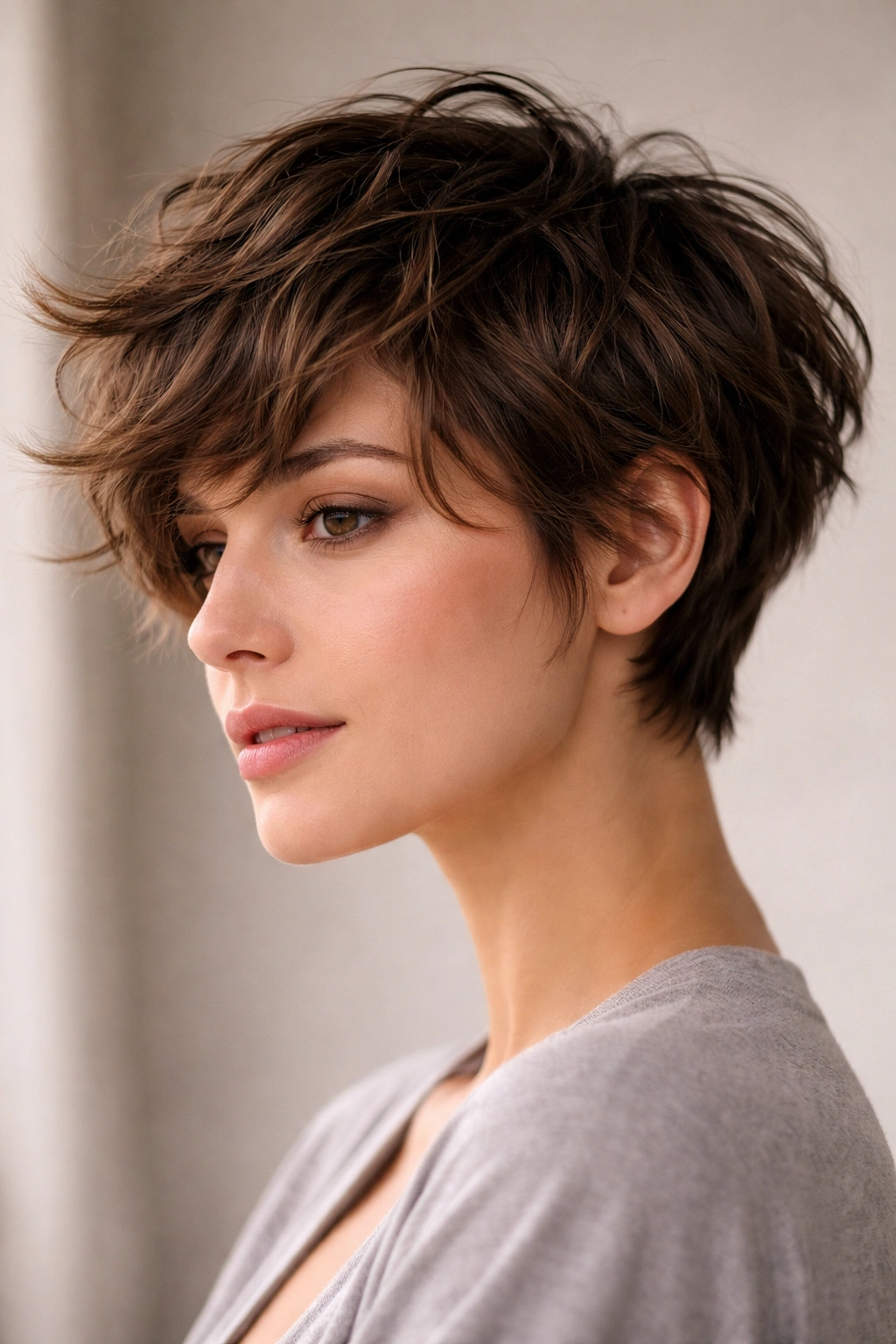
A textured pixie sits somewhere between a crop and a short bob, typically hitting around ear level with significant layering throughout that creates dimension instead of a blunt, severe look. The layers are cut at varied angles on top, creating pieces that fall in different directions and catch light from multiple angles. This cut relies on choppy texture work, so your stylist will use point-cutting or razor-cutting techniques to deliberately create choppy, separated pieces rather than one uniform length.
Who It Suits Best
The textured pixie works beautifully on people with naturally wavy or curly hair, since the layers work with your wave pattern rather than against it. If you have fine, straight hair, you’ll need styling products and a blow dryer to add texture, but it’s absolutely doable. Face shape matters less here because the movement and dimension can be adjusted—shorter on the sides for a more angular face, longer layers on top for a rounder face.
Styling and Maintenance Tips
- Requires monthly trims to maintain the choppy texture and prevent a shaggy appearance
- Style with a texturizing product, sea salt spray, or light cream while hair is damp or dry
- Blow-dry with fingers or a diffuser to emphasize the layers and create movement
- Works with messy, undone styling and also sleek, polished looks depending on your mood
- Low daily maintenance once the cut settles; many people find this cut actually easier to manage than longer styles
2. The Choppy Bob with Face-Framing Layers
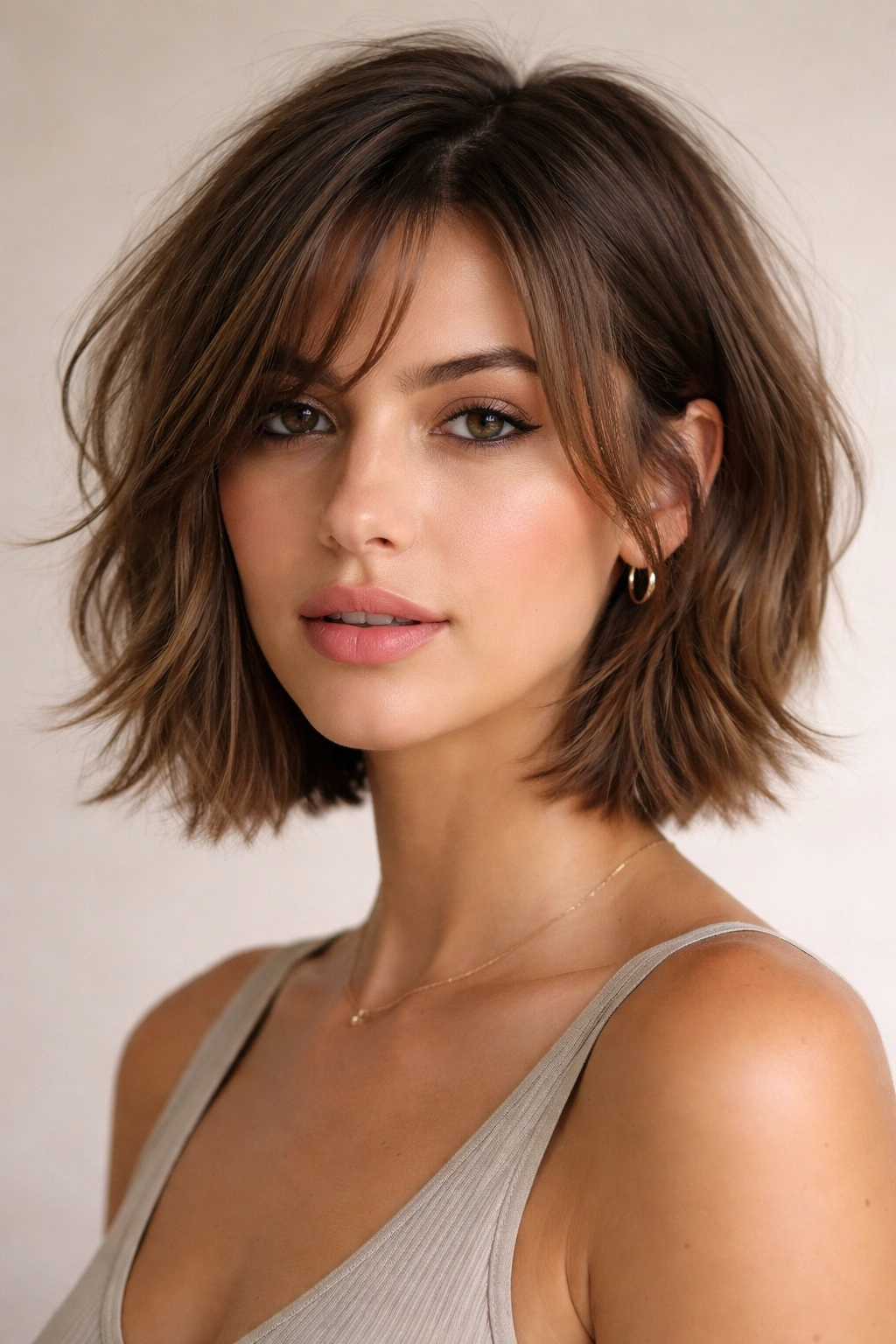
This is the modern take on the classic bob—roughly chin-length or slightly shorter, with choppy, disconnected layers concentrated around the face and throughout the crown. The back can be slightly longer or blunt-cut, while the front layers frame the face with movement and softness. The “choppy” element comes from the cutting technique, where pieces are intentionally disconnected rather than blending seamlessly into each other.
What Makes It Stand Out
The face-framing aspect is what elevates this beyond a standard layered bob—your stylist will cut shorter, choppy pieces specifically around your cheekbones and jawline so they literally frame and flatter your face. The front layers fall forward naturally, which is flattering for different face shapes and makes the cut feel less structured than a blunt bob.
How to Ask For It
- Ask for choppy layers concentrated at the front and crown
- Request shorter pieces around the face for framing
- Ask whether the back should be slightly longer for graduation or blunt for contrast
- Mention how much styling effort you want to put in daily—this cut can look polished or textured depending on product and technique
- Length options: jaw-length, chin-length, or slightly above the shoulders
3. The Modern Shag
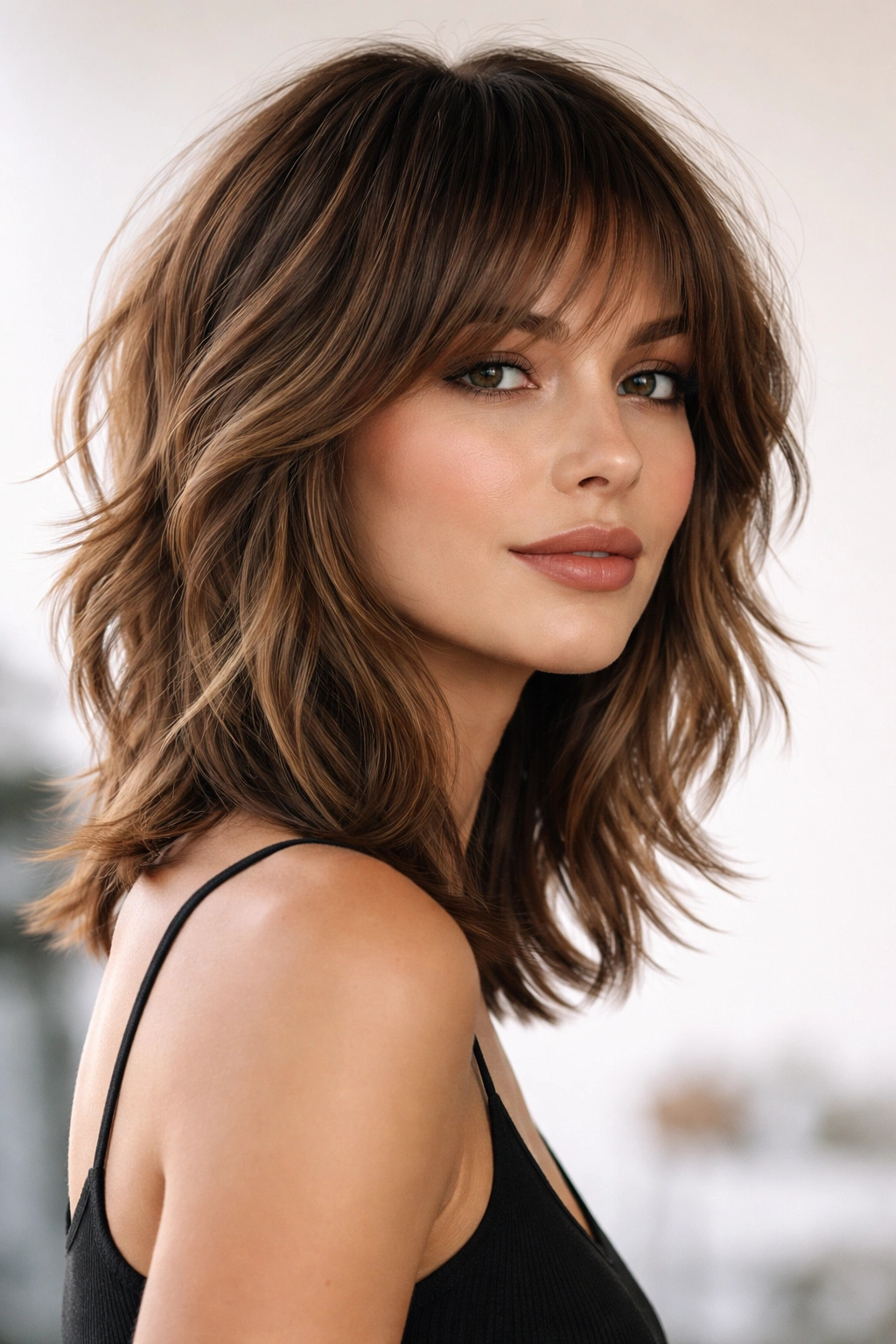
The modern shag is short to medium length (typically hitting the shoulders or just above) with lots of choppy layers throughout that create that signature shaggy texture while still looking intentional and styled. Unlike the 1970s shag, the modern version is refined—the layers are more strategically placed, the proportions are updated, and the styling is cleaner.
Why It Works Now
The modern shag reads as edgy and textured rather than dated because the layers are cut with intention and the overall shape is contemporary. It works on virtually every hair texture because layers can be customized—more dramatic for thick hair, subtler for fine hair. The cut naturally creates volume at the crown without being bulky at the sides.
Styling Approach
- This cut requires texture—either natural waves or styled texture with product
- Blow-dry with a round brush or diffuser for movement and shape
- Use a texturizing spray or light pomade to enhance the choppy pieces
- It should look piece-y and separated, not smooth and blended together
- Perfect for people who like a “lived-in” aesthetic rather than a polished one
4. The Wolf Cut
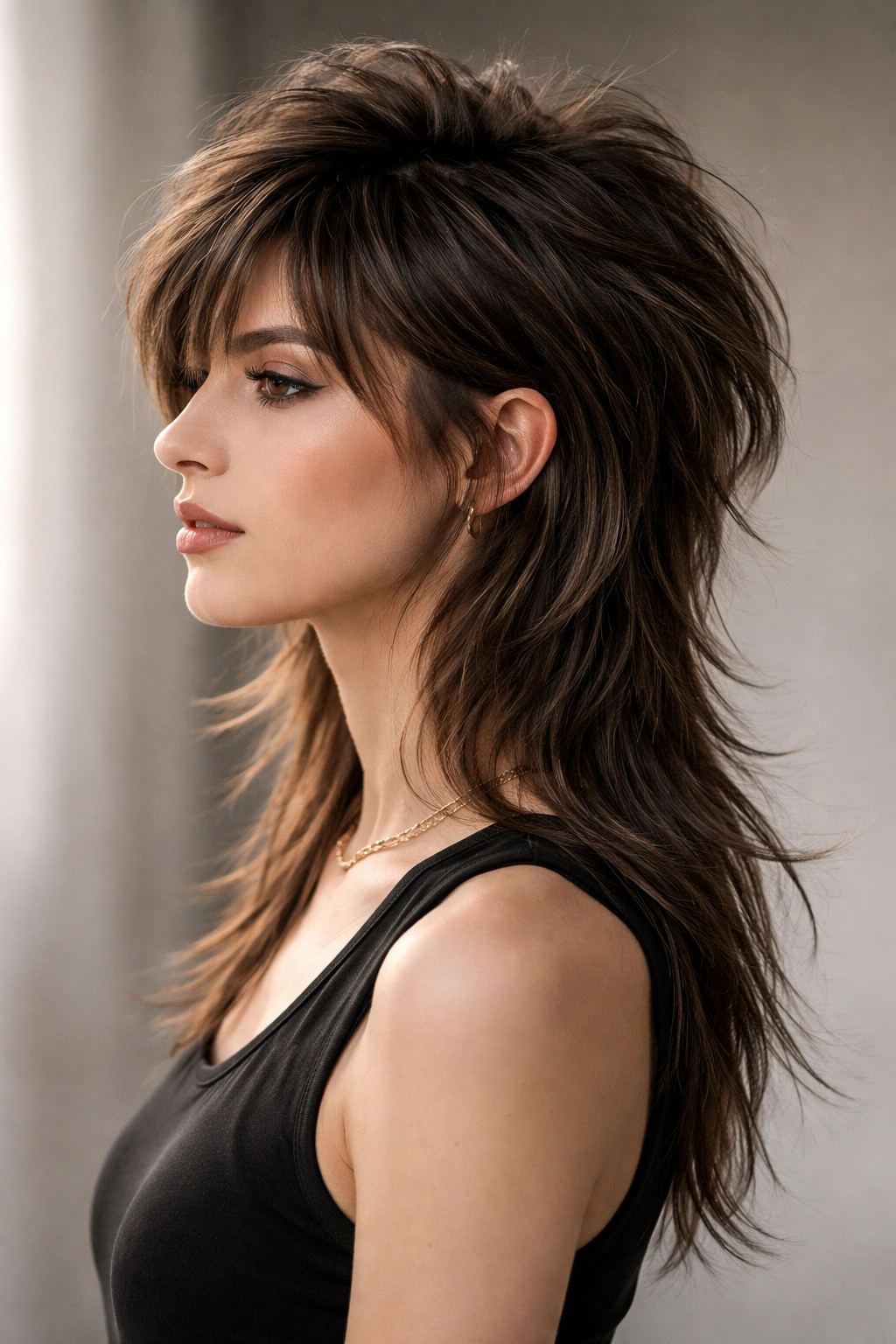
A wolf cut combines elements of a shag and a mullet in a way that actually works—shorter, rocker-edgy on top with distinct layers, longer underneath for movement, and a disconnected vibe throughout. The top is textured and voluminous, the back flows longer, and the sides sit somewhere in between. The name describes the sharp, edgy feeling of the overall shape.
Who Should Ask For This
The wolf cut suits adventurous personalities and people who want a statement haircut that definitely reads as intentional and current. It works on wavy and curly hair naturally, and can work on straight hair with styling. Face shape isn’t a major limiting factor because the length variation and layering can be customized for your proportions.
Styling Requirements
- Medium daily styling effort—you need to create separation and texture in the layers
- Works with both undone, textured styling and more polished, blow-dried looks
- Use texturizing spray, light pomade, or sea salt spray to emphasize the layers
- The longer back length allows for versatility—you can wear it down, half-up, or styled behind your ears
- Grows out in an interesting way that extends the time between cuts
5. The Feathered Medium Cut
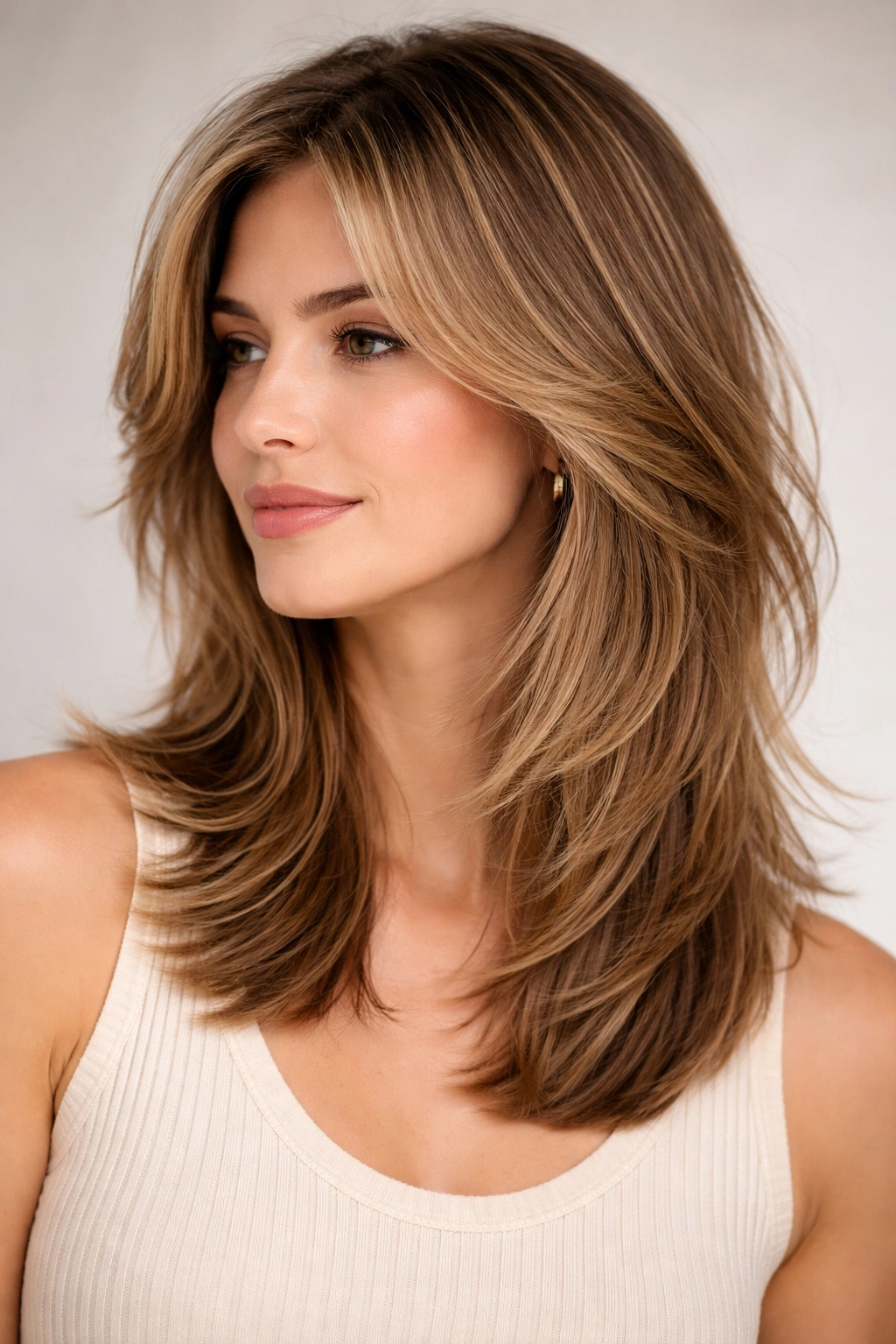
A feathered cut features layers that are cut at soft, gradual angles rather than choppy, dramatic ones, creating movement that flows smoothly from shorter to longer lengths. The feathering technique uses point-cutting to create pieces that angle away from the head, literally feathering outward. The overall length sits at medium (shoulder-grazing or slightly longer), so you have more styling flexibility than with super-short cuts.
Why Feathering Creates Flattery
The gradual angle of feathered layers works with your natural hair direction, creating movement without bulk. This is especially flattering if you have a rounder or fuller face because the feathered layers direct the eye upward and outward rather than emphasizing width. The softer technique also looks less severe than choppy layers.
Best For
- Naturally wavy or curly hair—feathered layers enhance and define your natural pattern
- Straight hair that you’re willing to style with a blow dryer and round brush
- Anyone who wants movement and texture without the edgy, choppy aesthetic
- People who prefer a more blended, flowing look to a separated, piece-y one
6. The Wispy Layered Lob
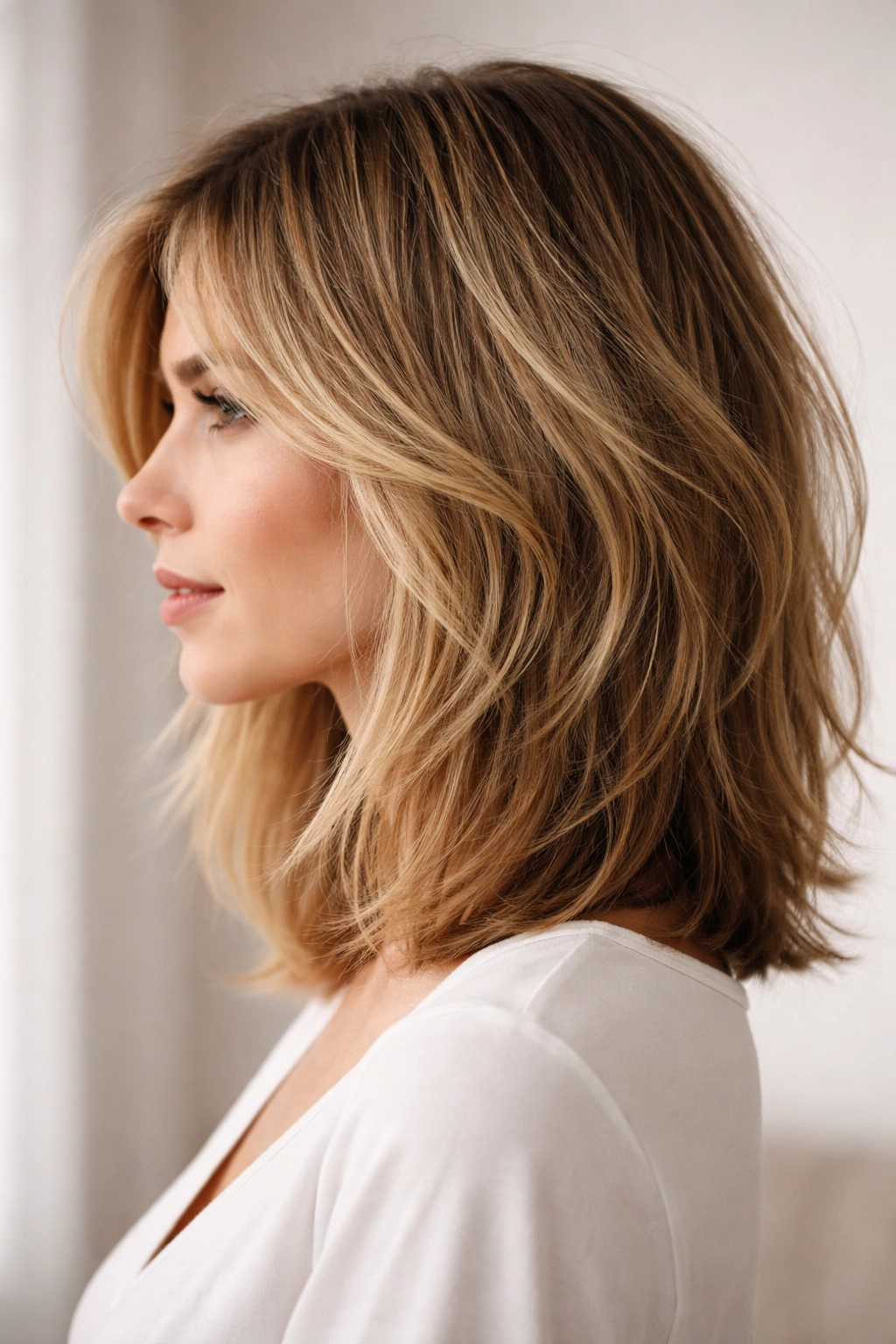
A lob (long bob) that hits somewhere between your collarbone and your shoulders gains shape and movement through wispy, subtle layers throughout. “Wispy” refers to thin, delicate pieces rather than thick, chunky ones—the layering is there but refined. The cut maintains enough length that it can be styled multiple ways, yet the layers add enough movement that it doesn’t feel heavy or dull.
Styling Versatility
- Can be worn sleek and straight, enhancing the subtle layering
- Works beautifully with waves, curls, or natural texture
- Styling options range from romantic and soft to modern and sharp depending on how you approach it
- Half-up styles are particularly flattering with this cut because the layers frame the face beautifully
- Requires less frequent trims than choppier styles—the wispy layers age gracefully
Who It Suits
- Professionals who want an on-trend cut that still feels polished and put-together
- Anyone who isn’t ready to go short but wants more movement than a blunt cut provides
- People with fine or medium-textured hair—wispy layers are more proportionate on finer hair
- This cut works with most face shapes and hair textures with proper customization
7. The Disconnected Crop with Undercut
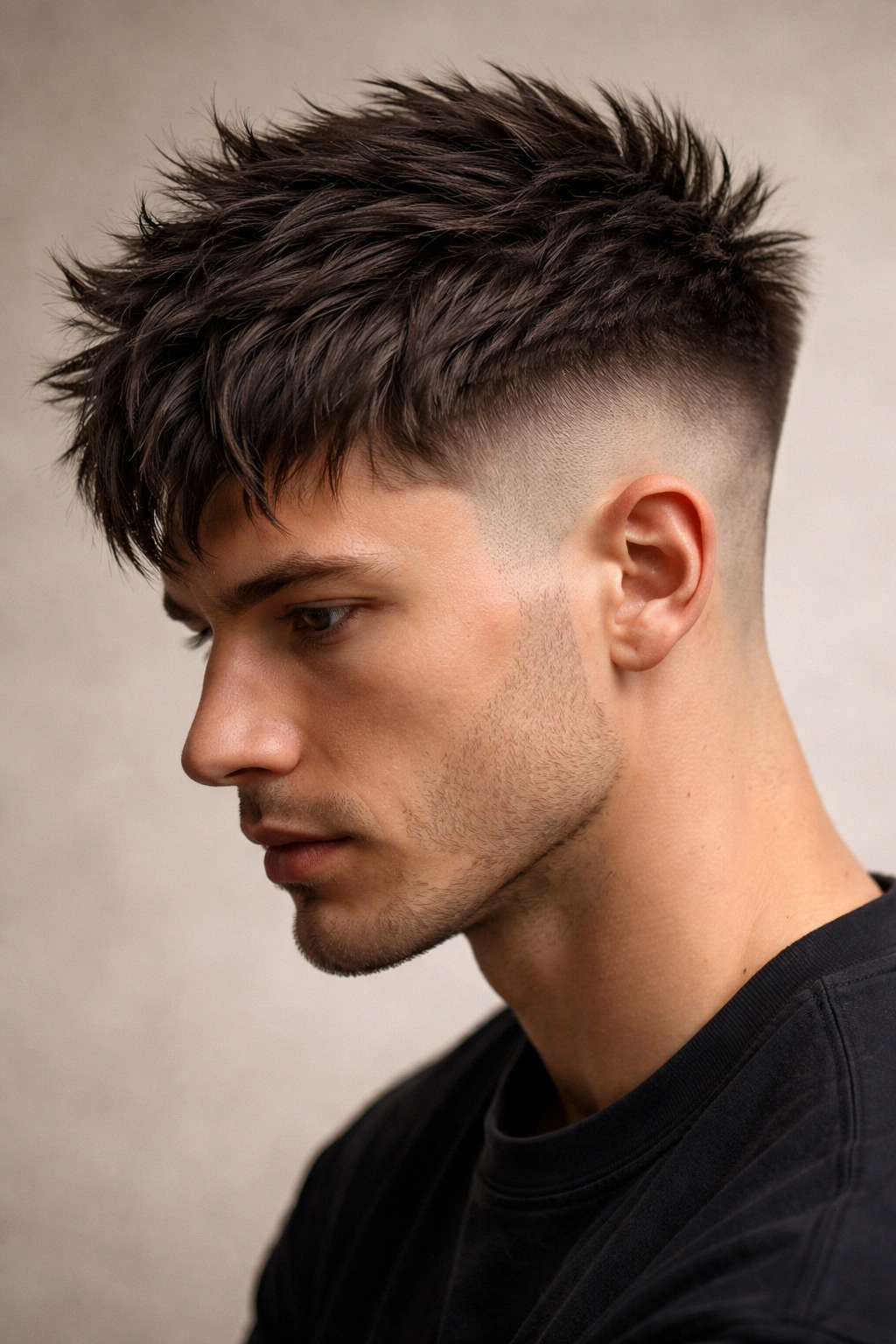
This cut features very short, choppy layers on top (typically 1-2 inches) with an undercut on the sides and back, creating maximum disconnection and edge. The top is textured and tousled, the sides are quite short, and the contrast between them is deliberate and striking. This is a cut for people who want a bold, fashion-forward statement.
The Styling Element
- The textured top is key—you need product and styling effort to make this cut shine
- Blow-dry and work through the layers with a texture spray or styling cream
- The undercut requires regular maintenance (every 3-4 weeks) to keep the contrast sharp
- Works especially well with thicker hair that has natural texture or wave
- Fine-haired people can make this work but will need styling products and technique to add the texture
Who Wears This Well
- People comfortable with a bold, modern aesthetic
- Anyone with thicker hair or natural waves/curls
- Individuals willing to commit to regular trims and daily styling
- Best on people who prefer an undone-cool aesthetic over a traditionally polished look
8. The Textured Shoulder-Length Cut
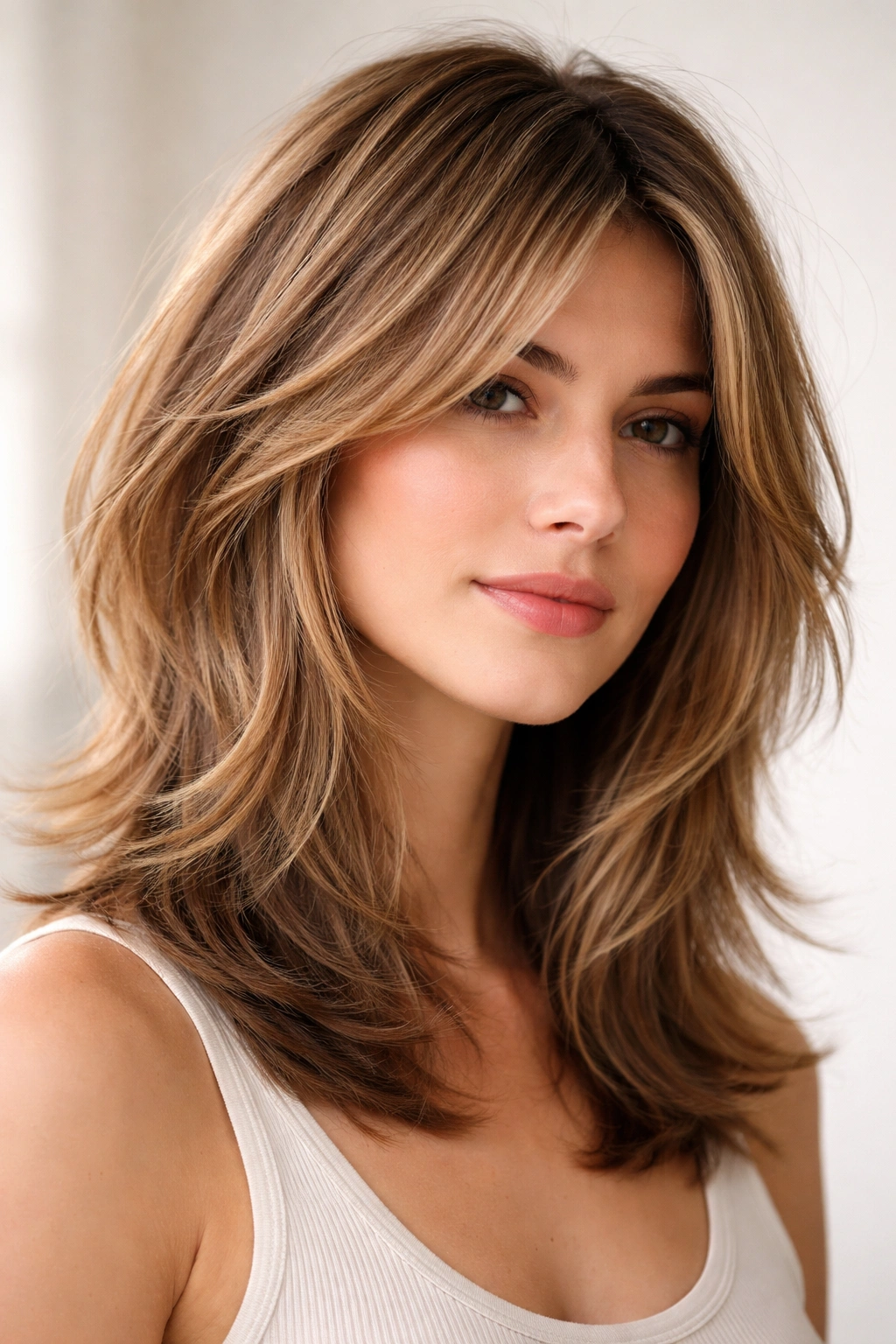
Medium-length hair (roughly shoulder-grazing) with layers distributed throughout creates shape without shortness. The layers are blended rather than choppy, working seamlessly from the crown through the ends, so the cut looks cohesive while still having plenty of movement. This is the workhorse cut—versatile enough for multiple styling options, short enough for bounce, long enough for flexibility.
Layering Distribution
- Layers in the crown area add lift and volume where most people want it
- Mid-length layers create movement and texture throughout the back and sides
- Shorter face-framing pieces soften the overall look and add flattery
- The graduation and angle are key—your stylist needs to cut at the right angle to encourage movement in the direction you want
Daily Styling Options
- Can be worn smooth and straight with a blow dryer
- Works beautifully with natural waves and curls
- Half-up styles are flattering and practical
- Ponytails look fuller and less severe with this cut because of the layers
- Requires less styling time than shorter cuts but more than very long, blunt hair
9. The Collarbone Mullet
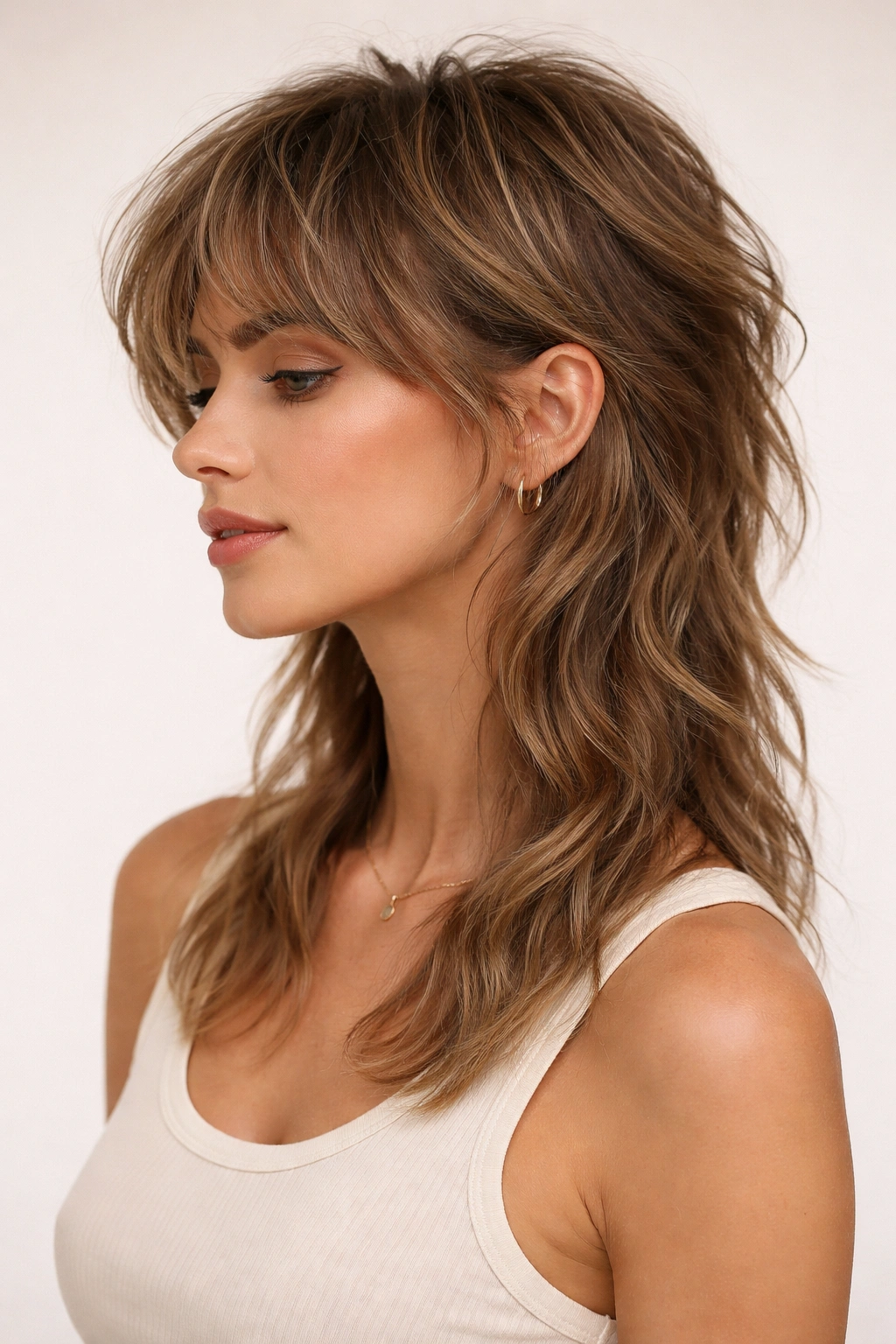
A modern mullet at collarbone length (longer than short but not quite long) with clear length differentiation between the top layers and the back. The crown has choppy, voluminous layers that sit shorter, while the back extends significantly longer, usually past the collarbone. It’s the contemporary version of the 1980s mullet—intentional, artistic, and unapologetically bold.
Styling the Collarbone Mullet
- The top requires texture—use a texture spray or styling cream to emphasize the choppiness
- The longer back can be worn loose, half-up, or even braided depending on your mood and the occasion
- Blow-dry the top for volume and texture; the back can be air-dried or styled depending on your preference
- This cut benefits from waves or curls because they emphasize the length variation
- Works on straight hair too, but requires more deliberate styling to make the statement land
Who Should Ask For This
- Creative, fashion-forward individuals who aren’t afraid of a conversation-starting haircut
- People with thicker hair who can handle the length variation without it looking limp
- Anyone who appreciates wearing their hair in multiple ways on different days
- Best suited for people willing to trim every 6-8 weeks to maintain the sharp distinction between short and long
10. The Layered Blonde Cut with Texture
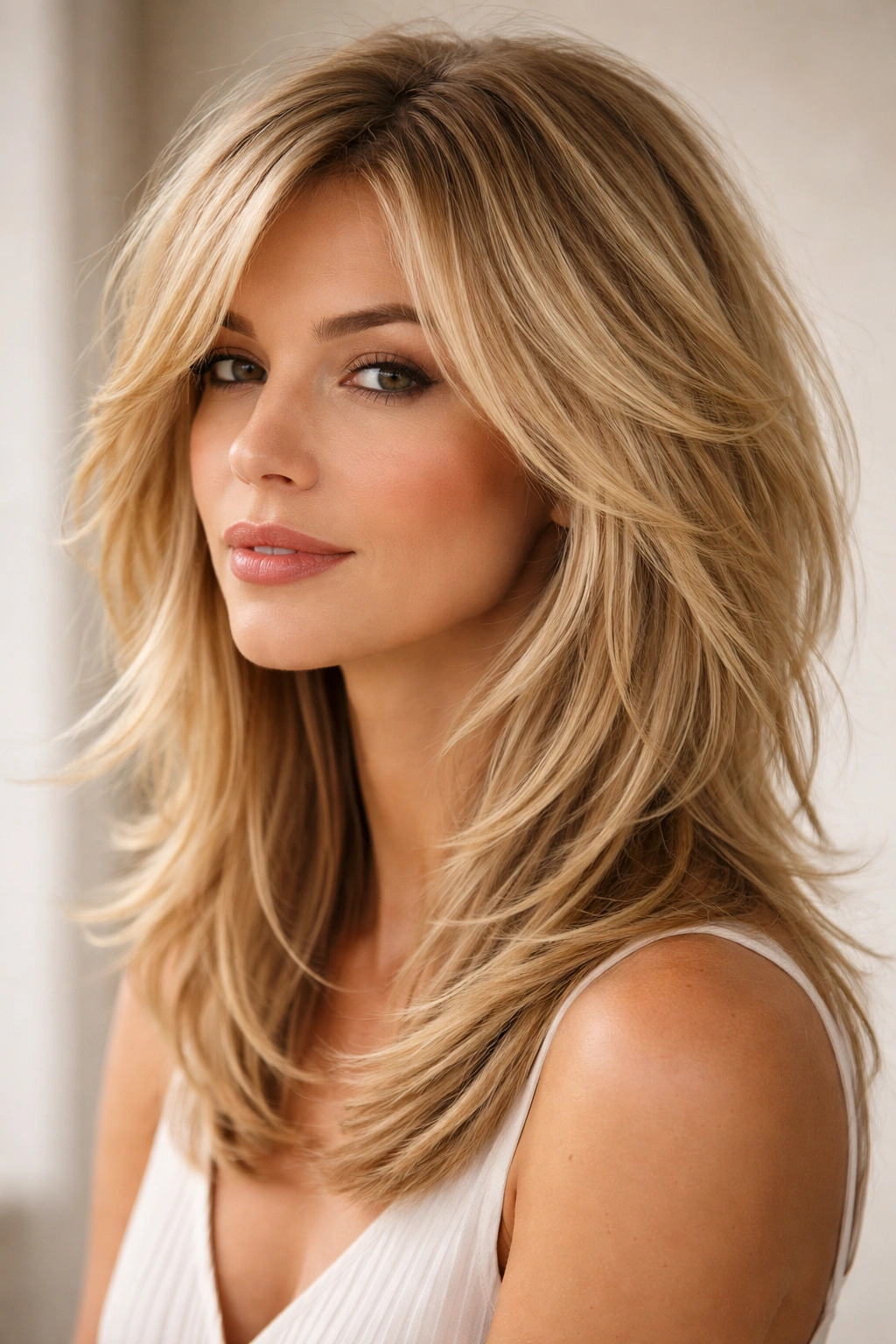
While not limited to blonde hair, this style became iconic in that shade—roughly shoulder-length with intricate, intentional layers throughout that create serious texture and movement. The layering is extensive, with shorter pieces at the crown for volume, progressively longer pieces toward the face and back, creating a soft, feminine shape despite the textured, modern cutting technique. The blonde shows every layer because the color depth variation catches light.
The Texture Technique
- Point-cutting or razor-cutting creates the separated, choppy texture throughout
- Layers are strategically placed to work with your natural hair growth patterns, not against them
- The result should look intentional and styled, not accidental or scraggly
- Requires styling—blow-dry with a round brush and use a texturizing product to maximize the layer visibility
Best For Different Hair Types
- Thick, straight hair: The layers remove weight and add movement
- Wavy hair: Layers enhance and define your natural pattern without creating frizz
- Curly hair: Can work beautifully with proper styling, though frizz management is important
- Fine hair: Works if you love styling and don’t mind the extra effort to create texture
11. The Shaggy Pixie Blend
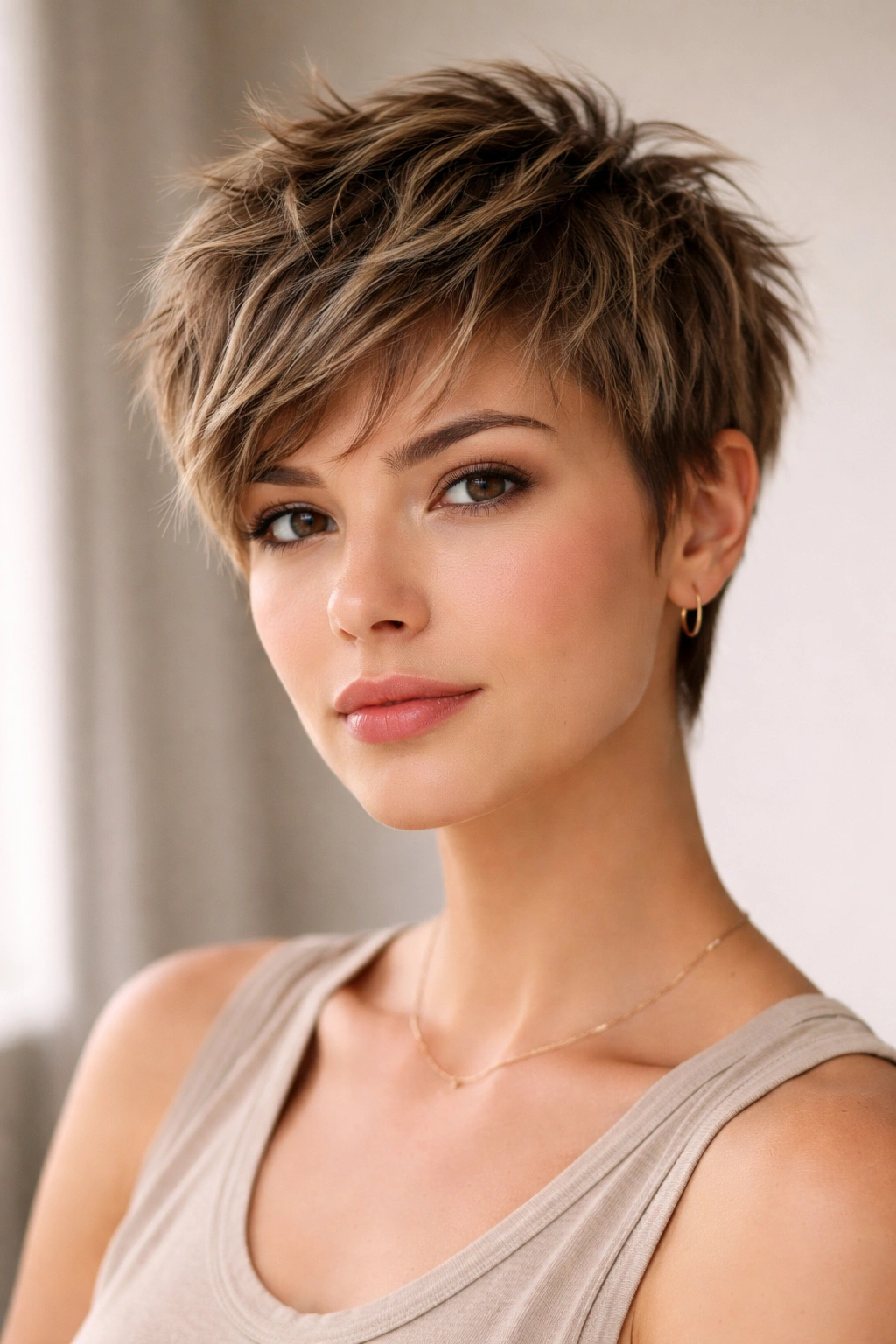
This cut combines the length of a pixie (very short, typically 2-3 inches all over) with strategic shaggy layering that creates texture and movement instead of a uniform, severe crop. The layers make it less severe than a standard pixie while keeping it undeniably short. The shaggy elements sit on top while the sides and back can be slightly shorter, creating dimension without a dramatic undercut.
Maintenance and Styling
- Requires monthly trims to keep the layers defined and prevent looking overgrown
- Needs daily styling with product to emphasize the texture
- Blow-dry with fingers or a diffuser for maximum movement
- Works beautifully on wavy and curly hair where texture is naturally present
- Straight-haired people can achieve this look but need texturizing product and blow-drying technique
Who Thrives With This Cut
- People comfortable with a statement haircut that definitely reads as intentional
- Anyone with naturally textured hair (waves or curls)
- Individuals who enjoy daily styling and using hair products
- Perfect for creative professionals, artists, and anyone with a bold personal style
12. The Bixie (Blend of Bob and Pixie)
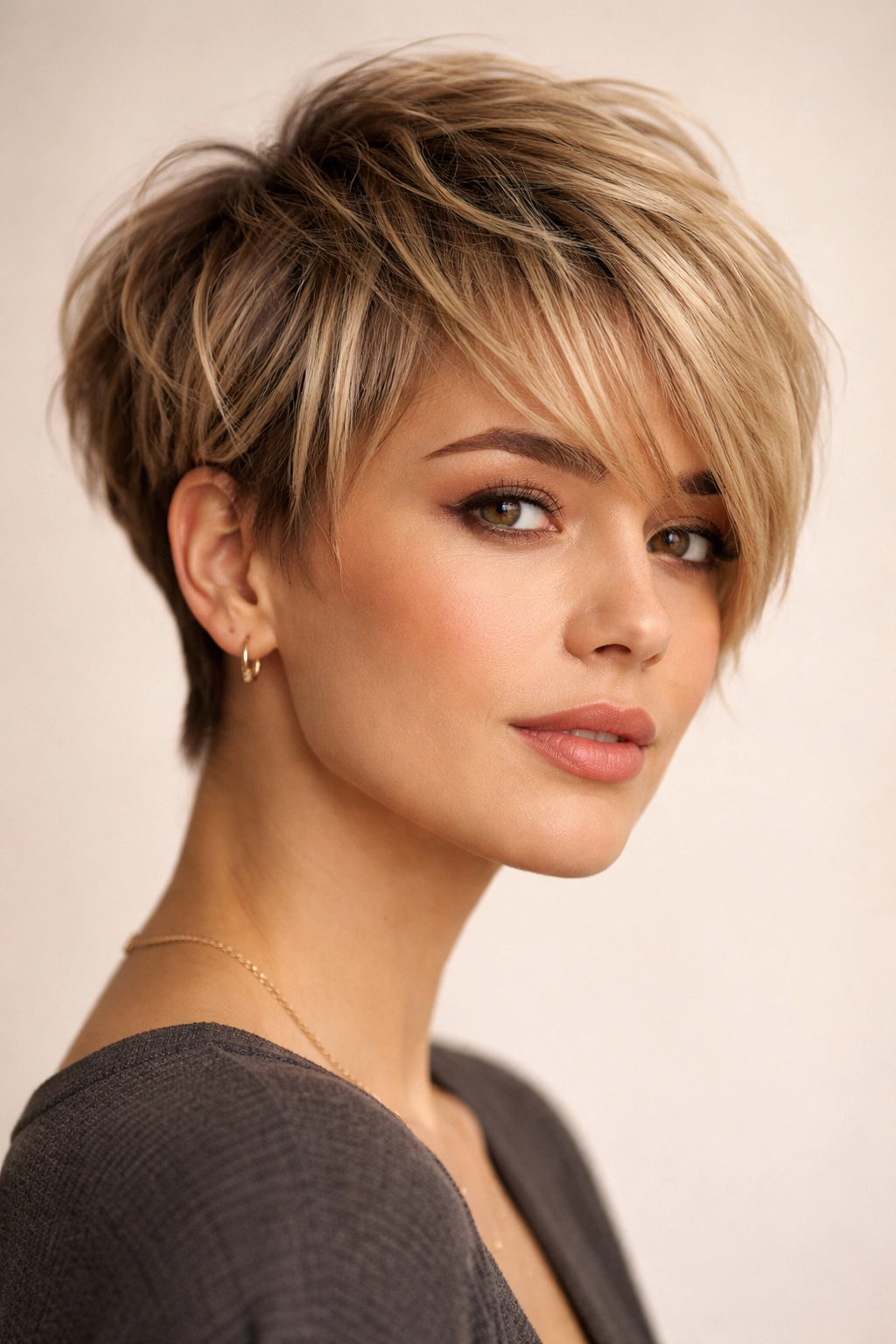
The bixie splits the difference between a bob and a pixie—typically 3-4 inches on top with choppy, textured layers, shorter sides and back (but not an undercut), and a face-framing element that’s longer than the pixie but shorter than a traditional bob. It’s genuinely short without being as severe as a full pixie, offering more styling versatility while still reading as bold and modern.
Why This Cut Works
The bixie solves the “I like short hair but want just a bit more length and styling options” dilemma. The layers create textured, piece-y movement throughout, and the slightly longer face-framing pieces add flattery and softness. The overall effect is androgynous, modern, and intentional.
Styling and Customization
- Ask your stylist to keep the top longer and textured, the sides slightly shorter
- Point-cutting or razor-cutting creates the textured pieces that make this cut shine
- Requires regular trims (every 4-6 weeks) to maintain the shape as it grows
- Works on straight and textured hair, though textured hair showcases the layers more naturally
- Style with a texturizing product and blow dryer, or embrace a messy, textured aesthetic
Final Thoughts
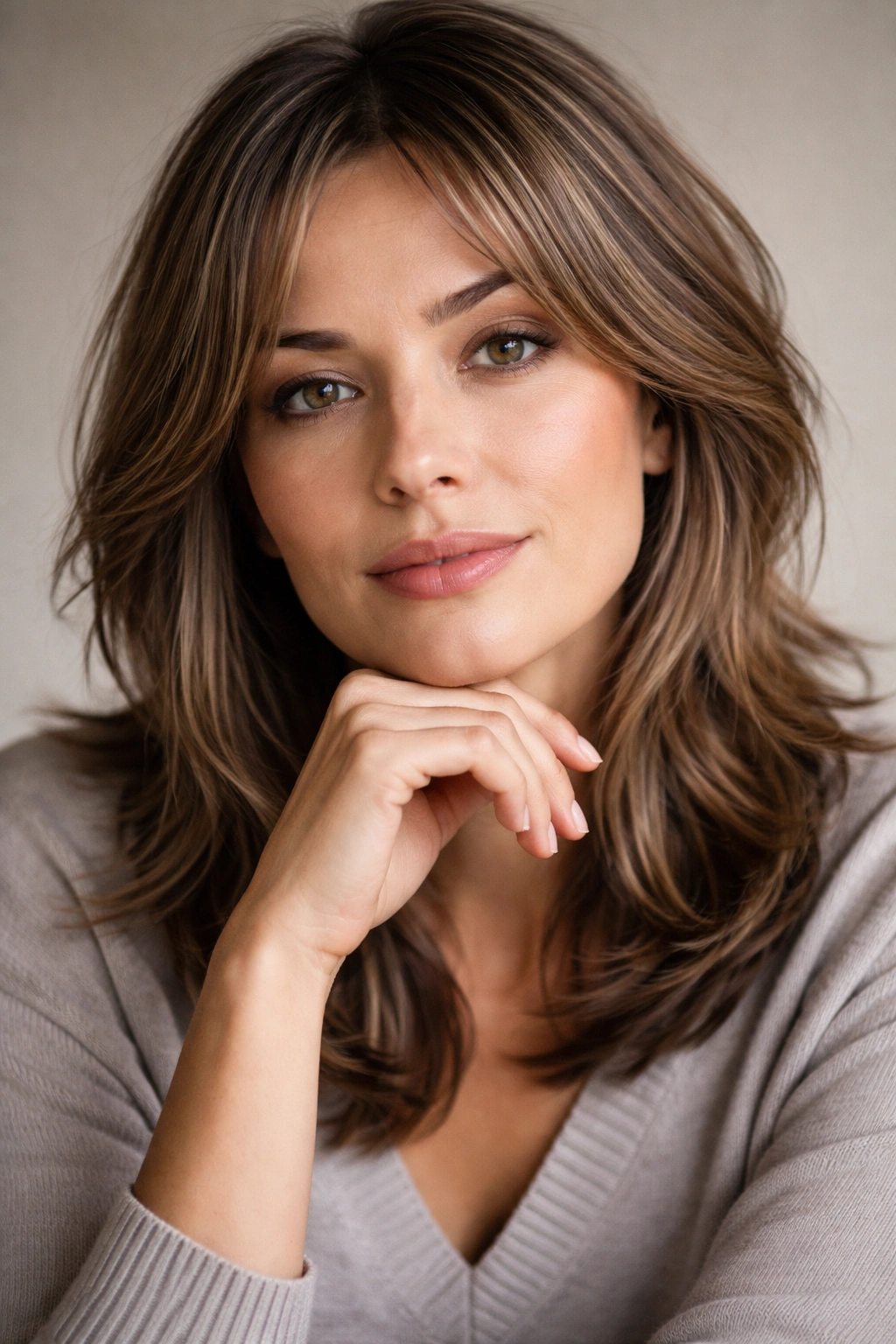
The right layered cut transforms your hair by working with your natural texture, face shape, and lifestyle instead of against them. Bringing these specific descriptions to your stylist—along with photos showing the exact level of choppiness, the length you want, and the styling aesthetic you’re after—sets you both up for success. A great layered cut does the heavy lifting for you, creating movement and shape that makes daily styling faster and your hair look fuller, bouncier, and more intentional.
Before booking, consider how much time you’re willing to spend styling each day, how often you can get trims to maintain the layers, and which aesthetic speaks to your personal style. The best cut is one you’ll actually style and maintain, not one that requires daily blow-drying if you’re a wash-and-go person. Talk honestly with your stylist about your hair’s natural texture, growth patterns, and how much product you’re comfortable using, and ask for their recommendation on which of these cuts would look best on your specific hair type and face shape. They’ll have insights that photos alone can’t provide, and the combination of your research and their expertise will land you a cut you’ll love.
