



The crew cut is one of the most versatile and timeless men’s hairstyles, and for good reason. It delivers an instantly sharp, polished appearance without requiring complicated daily styling routines. Whether you’re drawn to military heritage, classic simplicity, or the confidence that comes with a well-groomed fade, a crew cut works across different face shapes, hair textures, and personal styles. The beauty of this cut lies in its range—it’s not the one-note style many assume it to be.
What makes crew cuts so appealing today is the way they’ve evolved. While the traditional version remains popular, barbers and stylists have created dozens of modern variations that play with length, fade patterns, texture, and definition. You can go ultra-conservative or experiment with contrast, hard parts, longer tops, or dramatic undercuts. The fundamentals stay the same—a short, tapered cut with length that gradually or sharply decreases from crown to nape—but the execution varies significantly.
If you’ve been considering a crew cut or you’re already committed to the style and want to explore what’s possible, understanding the different variations will help you communicate clearly with your barber and find the exact look that suits your features and lifestyle. Each style below brings something distinct to the table, from no-fuss minimalism to subtle sophistication.
1. The Classic Crew Cut

The classic crew cut is the foundation upon which all modern variations are built. This version keeps hair short and uniform across the entire head, typically around one-half to three-quarters of an inch in length at the top, with a clean taper down the sides and back. There’s minimal fade—the transition is gradual rather than dramatic—and no hard lines or sharp definition. It’s the no-thinking-required option that requires only periodic trims to maintain.
Why It Works Every Time
This style is indifferent to hair type and face shape. The simplicity is precisely what makes it powerful; there’s nowhere for the cut to hide, so a skilled barber’s technique and blade work matter tremendously. A well-executed classic crew cut looks intentional and polished rather than rushed. It projects confidence and professionalism while feeling approachable and not overly trendy.
What to Expect and How to Maintain It
- Requires a trim every 4 to 6 weeks to keep the shape clean and the taper sharp
- Minimal styling—a light shaping cream or low-hold pomade if you prefer a slightly textured finish, but completely optional
- Works especially well on fine or thin hair since there’s no bulk to manage
- Looks equally good on men with thick, coarse hair when the barber uses proper technique
Pro tip: Ask your barber to leave just a touch more length on top than the original military standard—even a quarter-inch more creates subtle dimension and prevents an overly severe appearance if it’s your first crew cut.
2. The Textured Crew Cut
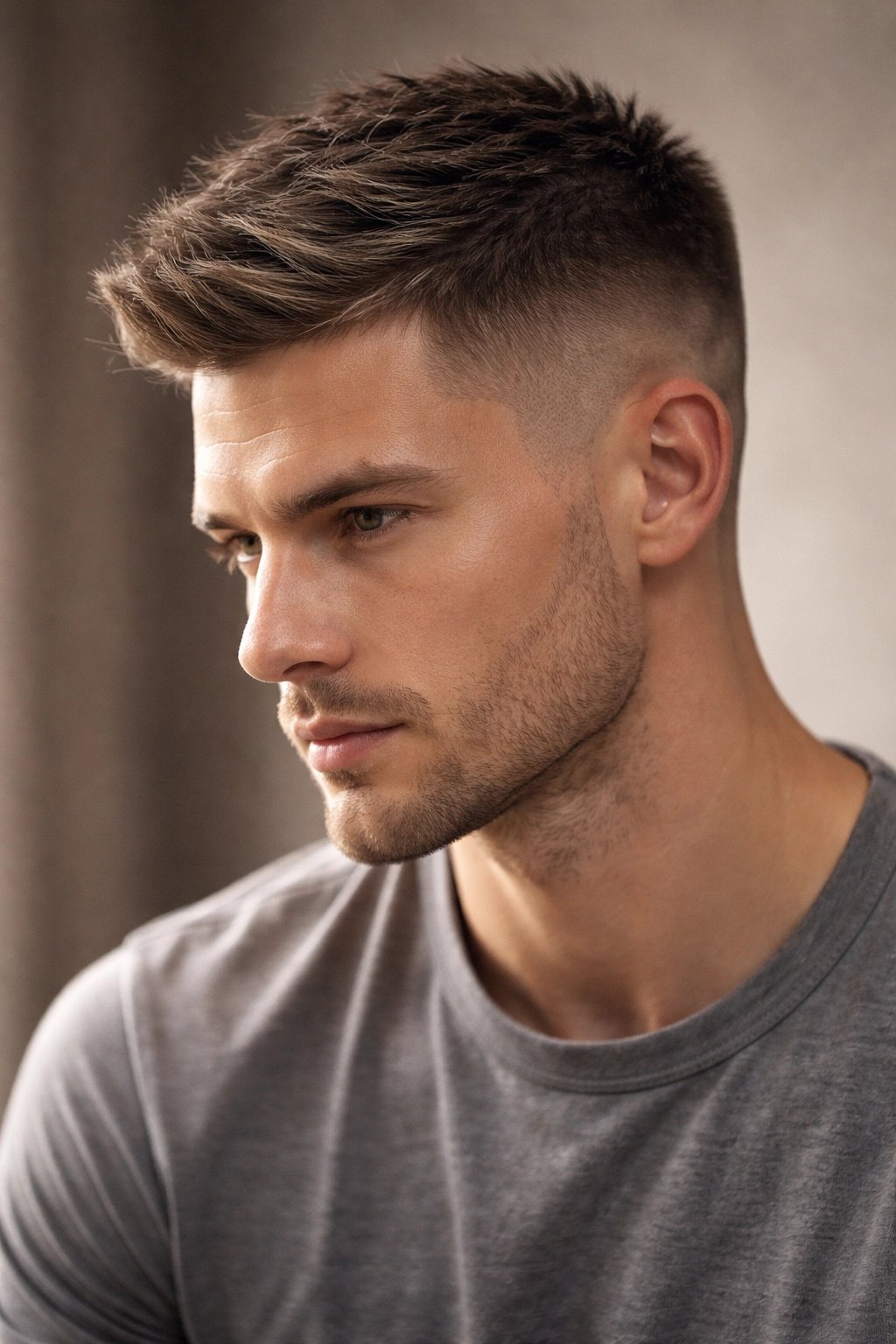
A textured crew cut takes the same basic template but asks the barber to create definition by cutting slightly shorter lines through the hair, leaving strategic longer pieces that catch light differently. The result is a crew cut that appears more dynamic and less flat than the classic version. This works beautifully when your hair has natural wave or curl.
Building Dimension Into a Short Cut
The texture isn’t accidental—your barber creates it by using specific cutting techniques, including point-cutting or razor work, to remove weight and create separation between hair strands. This approach works because it maintains the crew cut’s clean profile while making it visually interesting. Men with straight hair can also pull this off; it just requires understanding that the barber is creating the texture through cutting precision, not relying on your hair’s natural texture alone.
Styling and Product Choices
- Works beautifully with a light textured clay or matte finish product applied to damp hair
- A dry shampoo or texture spray adds grip and makes the cut’s detail more visible
- The texture makes the style more forgiving—small imperfections in daily styling are less noticeable
- Often looks better as it grows slightly longer between trims (days 3 to 5 are often the sweet spot)
Worth knowing: Ask your barber specifically about their point-cutting technique and whether they recommend any styling products that will enhance the texture they’ve created.
3. The High and Tight Fade
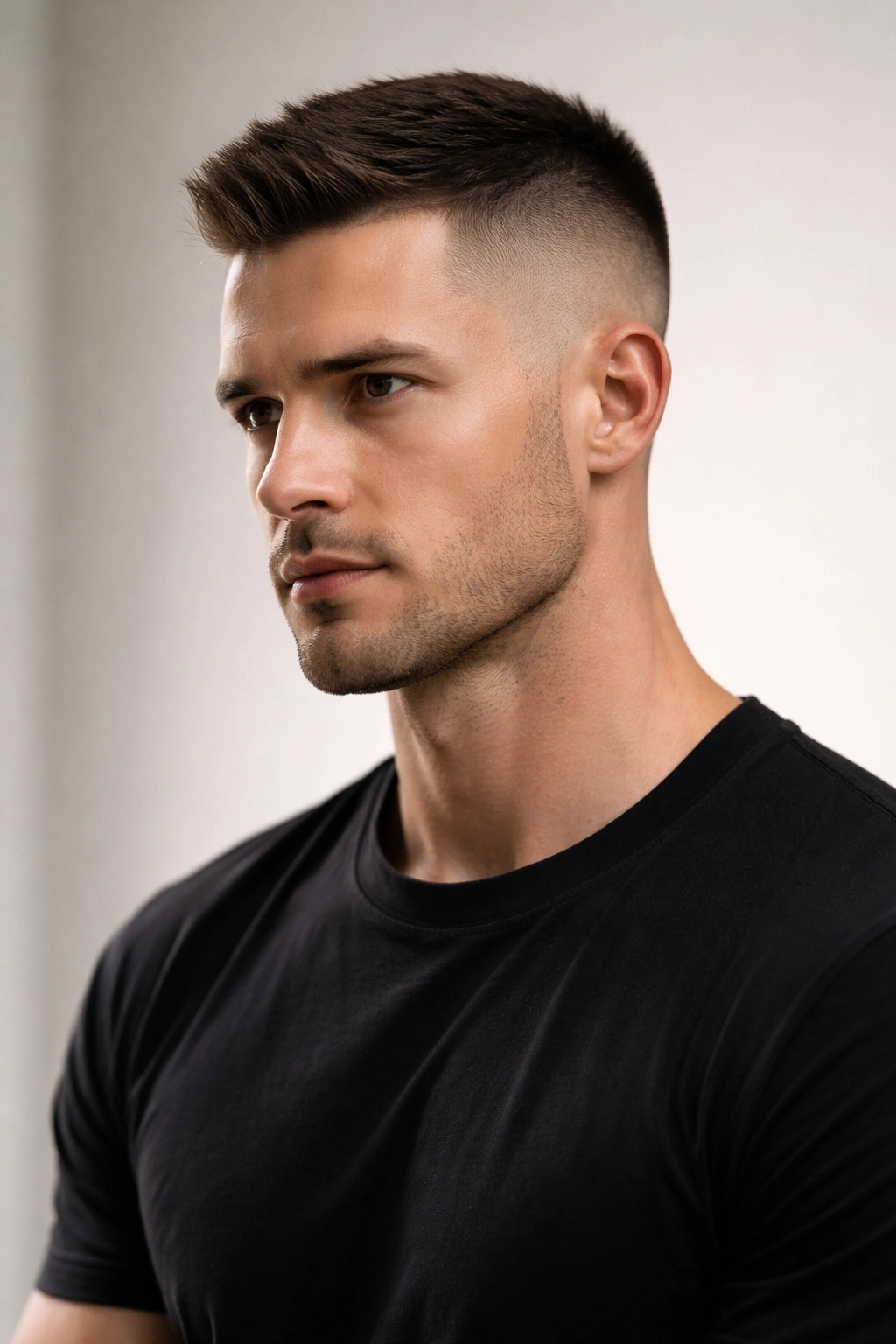
The high and tight fade cranks the contrast to maximum. The sides and back are clipped extremely short—sometimes down to skin or nearly skin—while the top maintains slightly more length. The fade line sits higher on the head than a classic crew cut, creating a dramatic visual separation between the clipped areas and the hair above.
The Military Heritage and Modern Appeal
This version has unmistakable military roots and still carries that association, which appeals to anyone drawn to a sharp, no-nonsense aesthetic. What’s changed is that the high and tight fade doesn’t require the severity of genuine military-spec cuts; modern versions have some softness in the fade rather than truly skin-tight sharpness, which makes them more wearable for civilian life while retaining the dramatic visual impact.
Fade Maintenance and Growth Patterns
- The fade needs a trim every 2 to 3 weeks to maintain definition—more frequently than classic crew cuts
- Visible hair growth on clipped sides happens quickly, which some men like (creates a different look day-to-day) and others find requires too much commitment
- The stark contrast between top and sides works best on men with defined head shape and proportional faces
- On men with rounder faces, the contrast can sometimes emphasize width; discussing this with your barber beforehand prevents regret
4. The Undercut Crew Cut
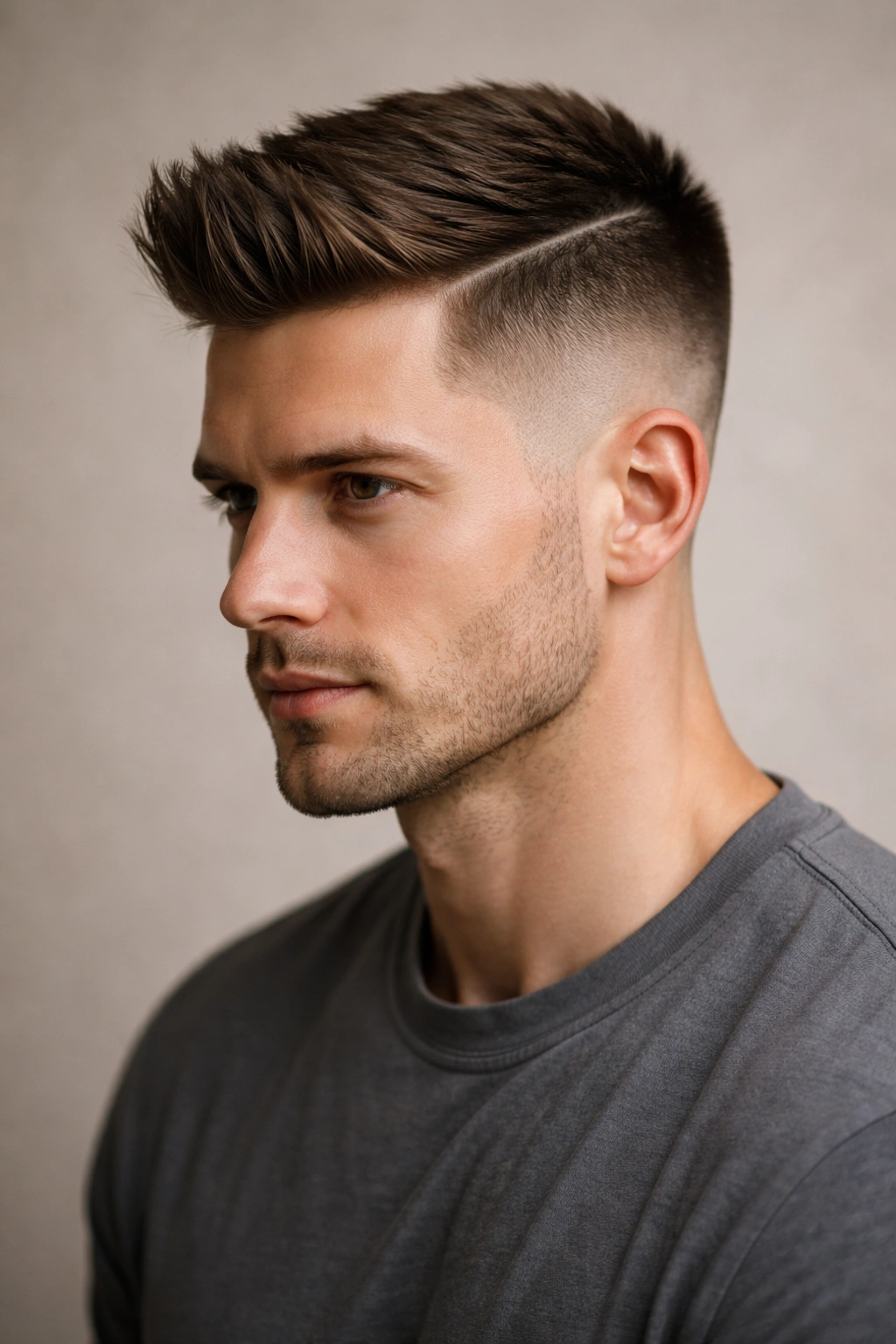
The undercut crew combines a crew cut top with longer hair on the sides than a traditional fade would allow. There’s usually a hard line where the shorter top meets the slightly longer sides, and the sides taper down gradually rather than fading sharply. This creates a modern, deliberately styled appearance that’s notably different from the soft transitions of classic fades.
Visual Impact and Face Shape Considerations
The undercut crew works particularly well on men with angular or oblong faces because the longer sides add width, creating balance. The defined line creates a sophisticated, almost architectural quality that reads as intentional and curated. It’s a modern take on the crew cut that nods to contemporary trends while maintaining the clean, short aesthetic that makes crew cuts timeless.
Styling the Undercut Crew
- The top typically needs a styling product—light hold cream or a textured paste—to look intentional
- The contrast between lengths is a design feature, so it’s visible even without styling
- Requires a trim every 4 to 5 weeks to maintain the intentional shape and hard line
- Works best when your barber uses clippers with excellent precision or scissors for definition
5. The Textured Crop Crew

This variation sits between a textured crew cut and a longer crop, keeping slightly more length on top than a traditional crew cut while maintaining the same short, tapered sides. The top is textured for dimension, creating a cut that feels contemporary and casual but still maintains crew cut cleanliness.
Why This Works for Modern Styling
The textured crop crew gives you just enough length on top to work with styling products and create shape without requiring longer hair maintenance. It’s the crew cut for men who like a little more control over their daily look, who want to play with styling rather than just combing it and leaving it. The texture detail prevents it from looking thin or wispy even with slightly more length.
Product Application and Texture
- A medium-hold matte clay or paste works beautifully on damp hair, allowing you to create direction and texture
- The longer top means you can style it back, to the side, or textured through
- Daily styling is quick—thirty seconds maximum—but optional if you prefer a more natural look some days
- Works especially well on men with naturally wavy or curly hair since the barber can work with your hair’s existing texture
Insider note: This cut is forgiving as it grows out slightly; days 3 to 10 often look better than day-one fresh, making it ideal if your schedule doesn’t permit frequent trims.
6. The Faded Crew with Hard Part
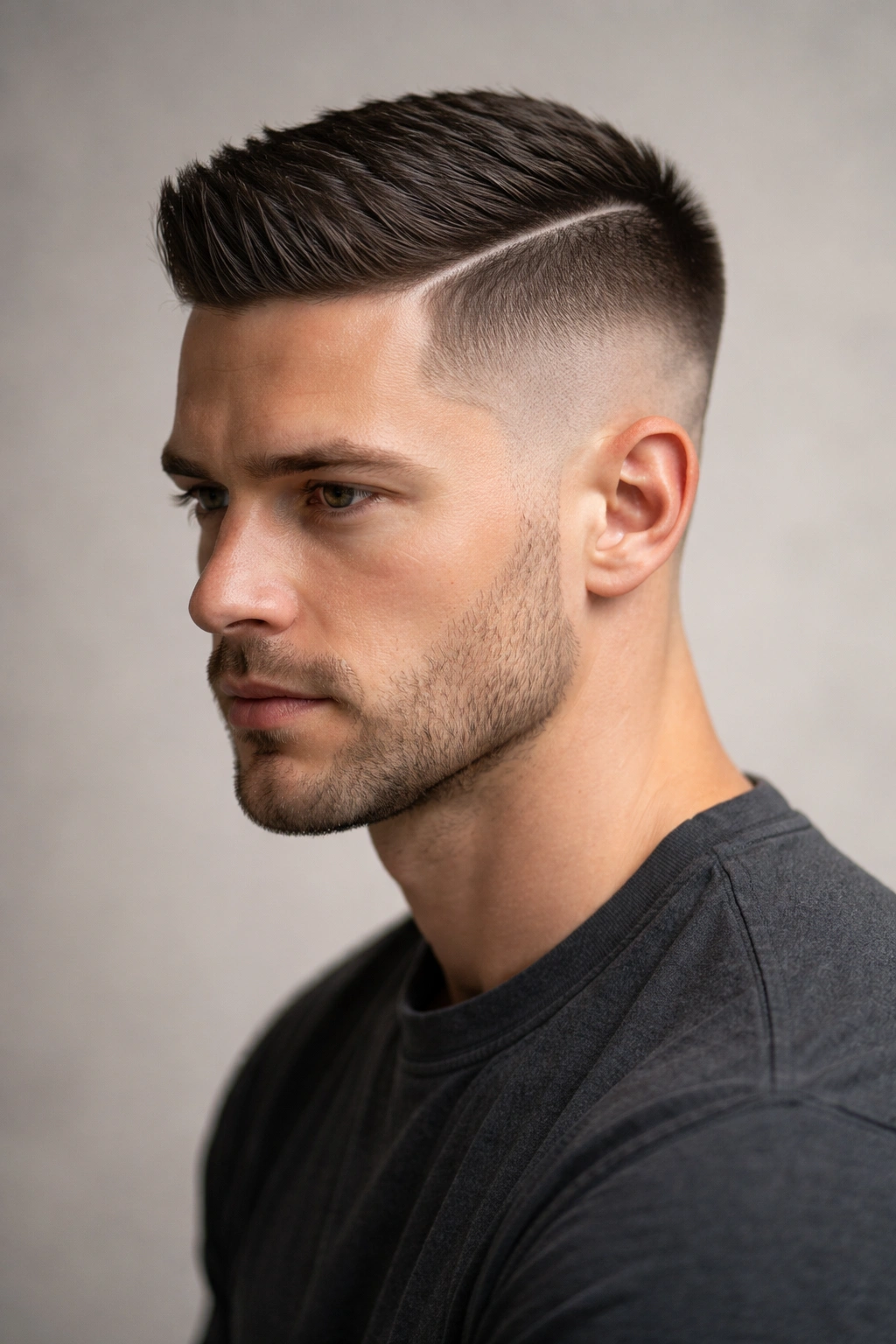
A hard part is an intentionally carved line that your barber creates using the blade’s edge, running vertically from your hairline toward the back of the head. Combined with a crew cut and a precise fade, this creates a distinctly styled look that reads as more deliberate and fashion-forward than standard crew cuts. The hard part itself becomes a design element.
Creating Definition and Style
The hard part gives a crew cut genuine personality. It’s not a trend that appeared yesterday—men have worn hard parts for decades—but modern barbers have refined the technique. The line is sharp enough to be clearly intentional but not so severe that it looks theatrical. It works best when the barber makes it slightly visible but not jarring, a detail that’s obvious when you’re looking but doesn’t dominate the overall appearance.
Maintenance and Face Shape Fit
- The hard part requires a trim every 3 to 4 weeks to stay defined and clean
- Works beautifully on most face shapes, though it’s particularly striking on angular faces with defined jawlines
- The part directs visual attention and can be positioned to flatter your face shape
- Some men request the part slightly off-center to create asymmetry and visual interest
7. The Burst Fade Crew Cut
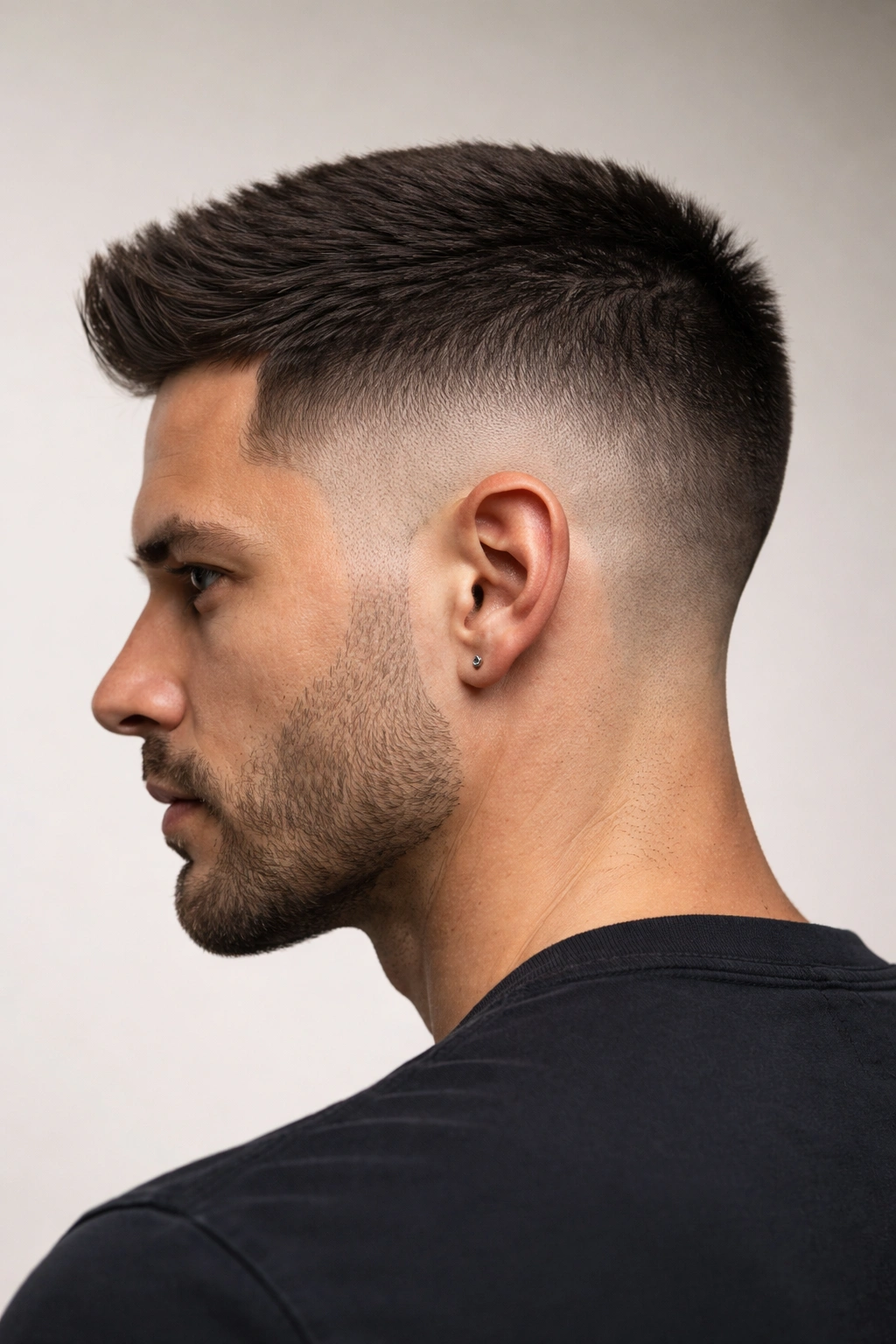
A burst fade curves around the ear and nape, following the natural contours of the head rather than fading in straight lines. It’s a technical barbering skill that creates a polished, three-dimensional appearance. Combined with a crew cut top, the burst fade adds sophistication and visual interest compared to a standard linear fade.
Technical Execution and Visual Effect
The burst fade requires genuine barbering skill—your barber needs experience and steady hands to execute it cleanly. When done well, it creates the appearance that the cut was designed specifically for the shape of your head, making it look custom and intentional. This is the crew cut that signals you chose your barber deliberately and aren’t just getting a quick trim.
Who Should Consider This Style
- Works on most head shapes but is particularly striking on men with defined ear shape and neck definition
- Requires a trim every 3 to 4 weeks; the curved lines lose definition if you let it grow
- Best with a barber who specializes in fade work; this isn’t something every stylist executes well
- The detail work means it costs slightly more than a basic crew cut, but the result is distinctly elevated
8. The Longer Crew Cut with Texture
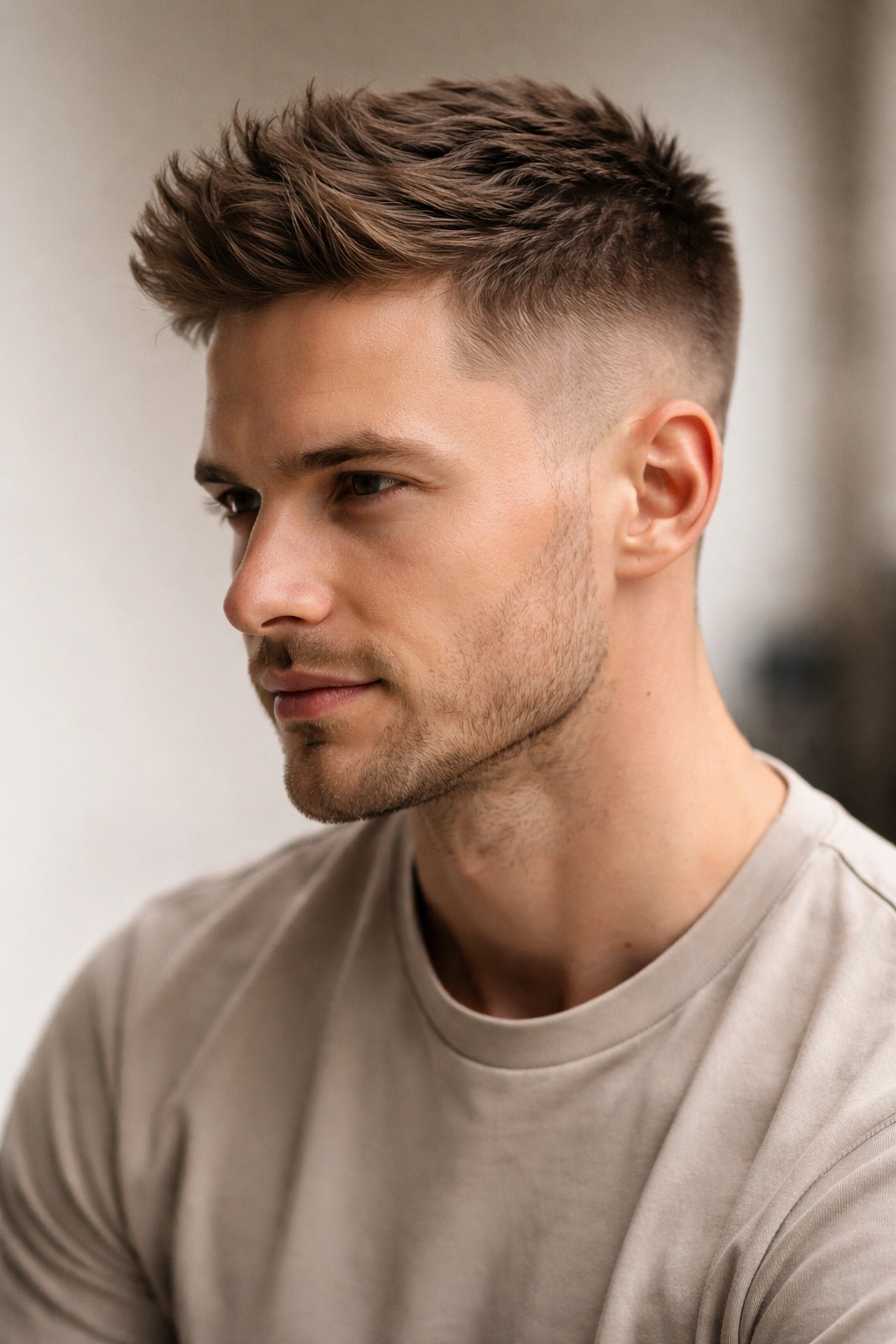
This version keeps more length on top—closer to an inch and a quarter in some areas—while maintaining crew cut proportions with a gradual fade. It’s still unmistakably a crew cut, but it falls on the longer end of the spectrum, offering more styling versatility while keeping the clean, tapered silhouette intact.
Length and Styling Flexibility
More length means more options for how you wear your hair day-to-day. You can style it back with a matte product for a sleeker look, leave it textured and undone for casualness, or work it to one side if you prefer asymmetry. The barber uses texture and point-cutting to add visual interest and ensure the longer length doesn’t look flat or limp.
Maintenance and Growth Timeline
- Trims every 5 to 6 weeks keep the shape; the longer top means it doesn’t lose definition as quickly as ultra-short versions
- Works beautifully on men with naturally thick hair; fine hair can sometimes look wispy with extra length
- Styling products become more useful here—you have enough hair to shape and direct
- The longer length is forgiving as it grows, offering a longer window before it starts looking shaggy
9. The Two-Block Crew Cut
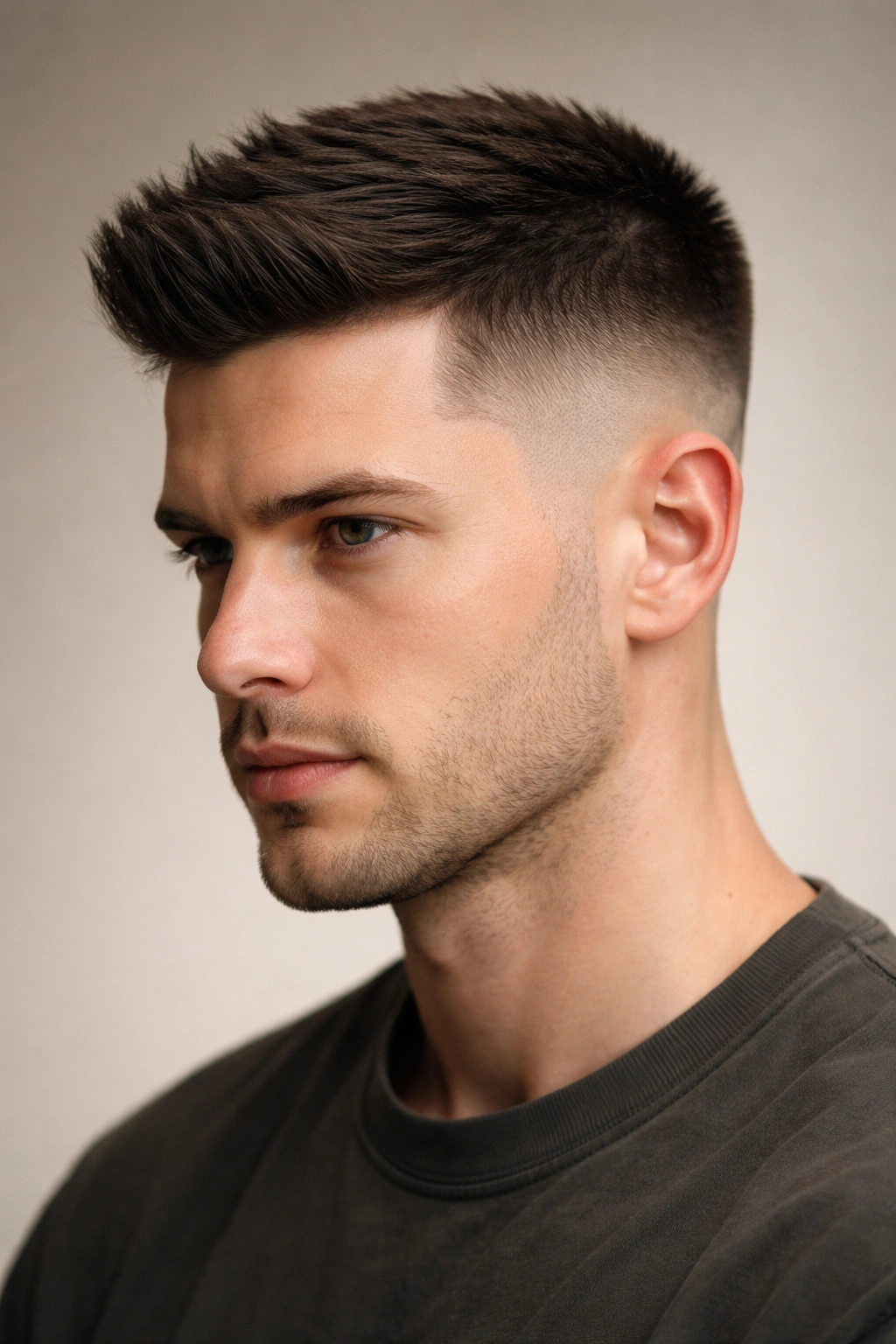
The two-block is a Korean-influenced style that pairs a crew cut top with slightly longer hair on the sides, separated by a defined line rather than a smooth fade. The sides and back are cropped short but with more length than a fade would leave, and there’s intentional separation—almost a hard line—between the top and sides.
Contemporary Appeal and Definition
This style has gained popularity because it’s visually distinctive while maintaining the crew cut’s clean, polished quality. The two distinct blocks of length create a modern, fashion-forward appearance that’s very different from traditional Western barbering, making it appealing to men who want something a bit different while staying within the crew cut family.
Styling and Upkeep
- Requires a barber experienced in this specific cut; not all traditional barbershops do it
- The defined line needs a trim every 3 to 4 weeks to stay crisp
- The sides and back need regular clipper work to maintain the length
- This style looks intentional and requires styling product on the top to fully realize the cut’s design; it’s not a no-product option
10. The Crew Cut with Longer Front
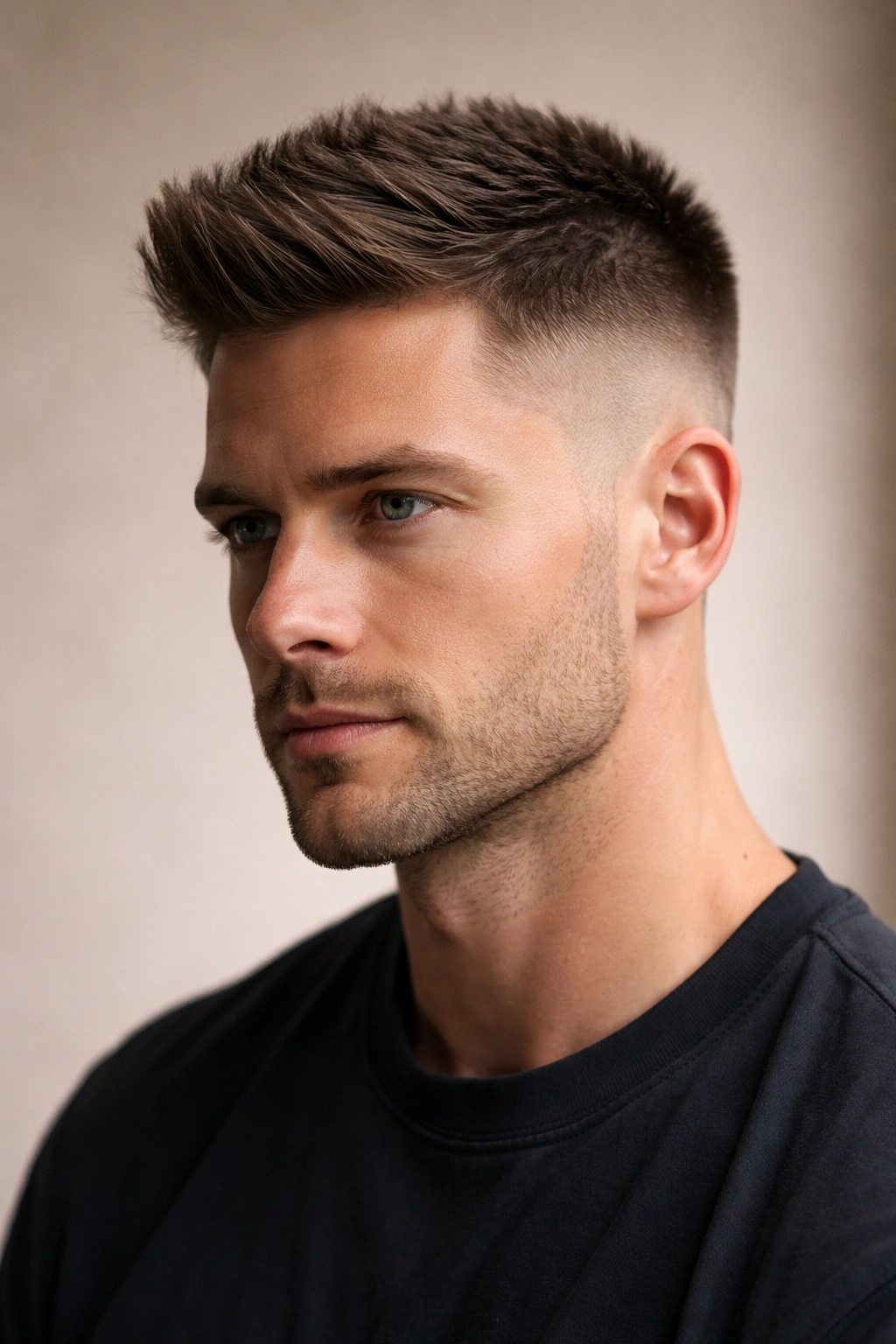
This variation keeps the classic crew cut proportions but adds slightly more length to the front and crown area compared to the sides and back. The longer front catches light differently and creates visual height, while the shorter back and sides maintain the classic crew cut’s clean silhouette. It’s a subtle variation that makes a real difference in overall appearance.
Creating Height and Flattering Proportions
The extra length at the front works beautifully on men with longer face shapes or wider foreheads because the hair draws the eye upward and creates better visual balance. It’s also a smart choice if you have some hair loss or thinning at the crown; the extra length in front doesn’t hide the issue but balances your overall appearance. The cut reads as intentional rather than trying to mask anything.
Styling and Communication With Your Barber
- You’ll need to be clear with your barber about how much extra length you want in front; half an inch of difference is noticeable but subtle
- The fade should be slightly more aggressive on the sides to emphasize the length difference on top
- Styling is optional; this cut works great either combed back naturally or left textured and undone
- Trims every 4 to 6 weeks maintain the subtle proportional difference
Final Thoughts

Choosing a crew cut style is about understanding what works for your face shape, hair type, and lifestyle. The classic crew cut remains perfect if you want maximum simplicity and minimum maintenance. But if you’re drawn to more visual interest, precision barbering, contemporary styling, or a cut that lets you play with texture and product, the variations above offer real options within the crew cut family.
The most important factor is finding a barber who understands the specific style you want and can execute it with precision. A poorly done crew cut—uneven taper, sloppy fade lines, or wrong proportions—will look rough no matter which variation you’ve chosen. A well-executed crew cut, on the other hand, looks sharp, polished, and intentional. Take time to find someone whose work you trust, show them reference photos, and be willing to return to them regularly. That consistency and relationship with a skilled barber is what transforms a crew cut from simply short hair into a genuinely distinctive look.
