



10 Mullet Haircuts That Suit Thick Heavy Hair
The mullet is back, and if you’ve got thick, heavy hair, you’re actually in the perfect position to rock one of these modern variations. Thick hair used to be seen as a challenge for the mullet look, but the truth is the opposite — density gives you options that people with fine hair can only dream about. You can actually maintain volume, create clean lines, and build texture without fighting against your hair’s natural weight. The key is choosing the right mullet style that works with your hair type instead of against it, and understanding how to cut and style it so those thick strands work in your favor.
This isn’t your uncle’s 1980s mullet. The mullet has evolved into something far more nuanced and wearable. You’ve got disconnected fades, textured layers, modern tapers, and hybrid cuts that take the party-in-the-back spirit and make it feel current and intentional. For thick hair specifically, these styles actually handle the volume better than a lot of other cuts — they give density somewhere to go instead of just puffing out awkwardly from your head. Whether you want something office-friendly or genuinely bold, there’s a mullet that’ll work.
The real secret is finding the right balance between length, texture, and fade. Your barber needs to understand that thick hair requires more thought about taper angles, layering depth, and where to thin things out strategically. Get it right, and you’ll have a cut that looks sharp, feels comfortable, and actually gets easier to style once you know what you’re doing. Let’s walk through ten mullet styles that are genuinely built for thick, heavy hair.
1. The Textured Modern Mullet
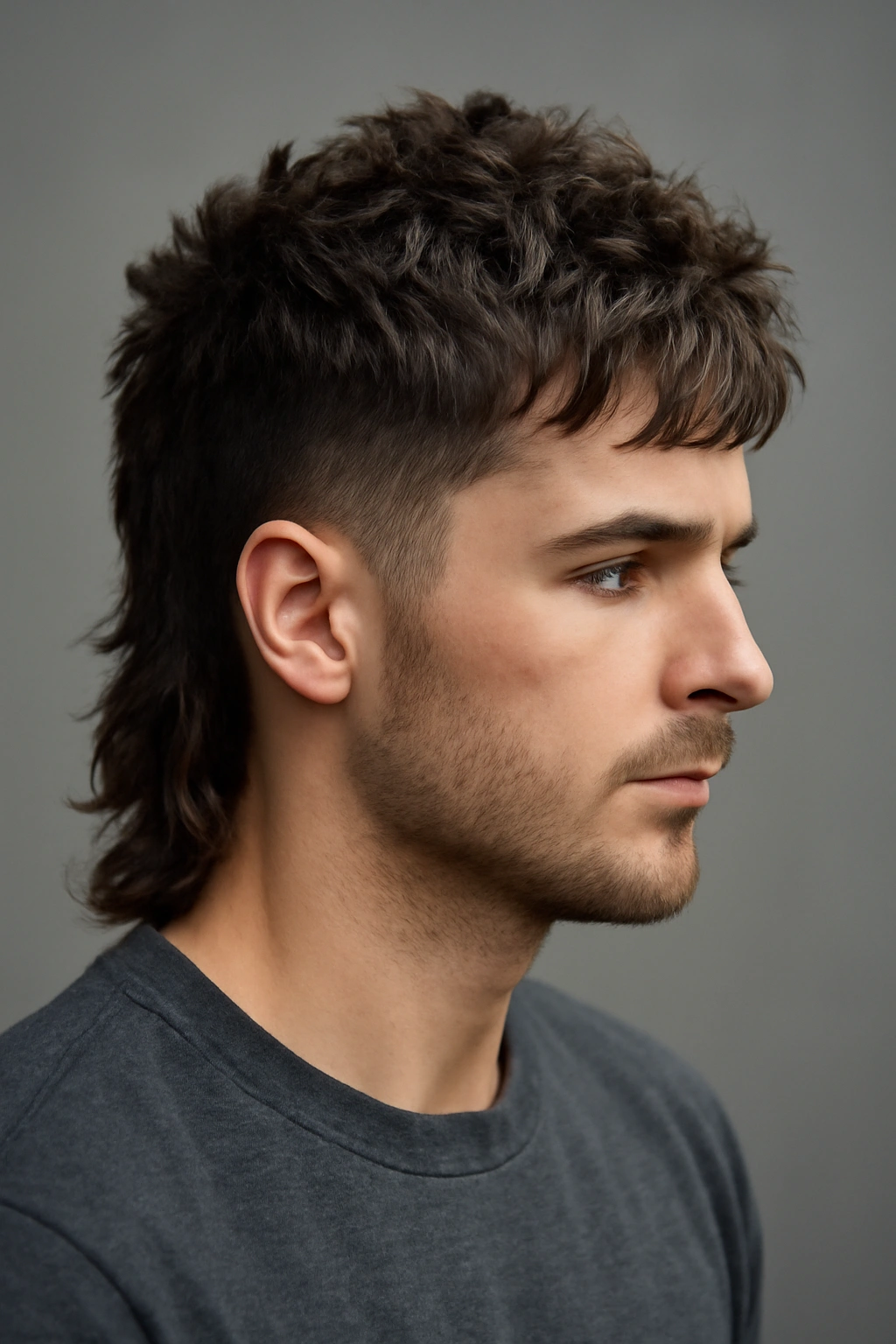
This is the foundation mullet for thick hair — short, textured sides that fade or taper cleanly, with length in the back that you can actually style and shape. The sides usually sit around a quarter-inch to half-inch, while the back runs anywhere from 2 to 4 inches depending on how dramatic you want to go. The magic here is the textured cut on top, which breaks up the density on your crown and prevents that helmet-like feeling you get when thick hair all grows down in the same direction.
Why It Works with Thick Hair
Texture is everything when you’ve got heavy hair. A textured crop on top means your barber is cutting the hair at different angles and lengths, which removes bulk while keeping the overall appearance fuller and more intentional. This isn’t just a buzz cut — it’s a deliberately cut, layered top that lets air reach your scalp and gives your styling cream or clay something to grip. The back length gives you that unmistakable mullet silhouette without overwhelming your head because the tapered sides provide proportion and balance.
How to Style It Daily
Use a light matte cream or clay on damp hair, work it through the textured top while directing hair backward and to the side, and let it dry naturally or use a blow dryer on medium heat. The back can stay tousled and loose, or you can slick it back for something sleeker depending on the occasion. The whole point is that thick hair holds shape, so a light product is usually enough — you don’t need heavy pomade that’ll weigh everything down.
Pro tip: Ask your barber to cut the texture on top using a combination of point-cutting and clipper-over-comb techniques. This creates actual movement instead of just a uniform short crop, and it’s the difference between a hairstyle that looks intentional versus just a short cut.
2. The Disconnected Undercut Mullet
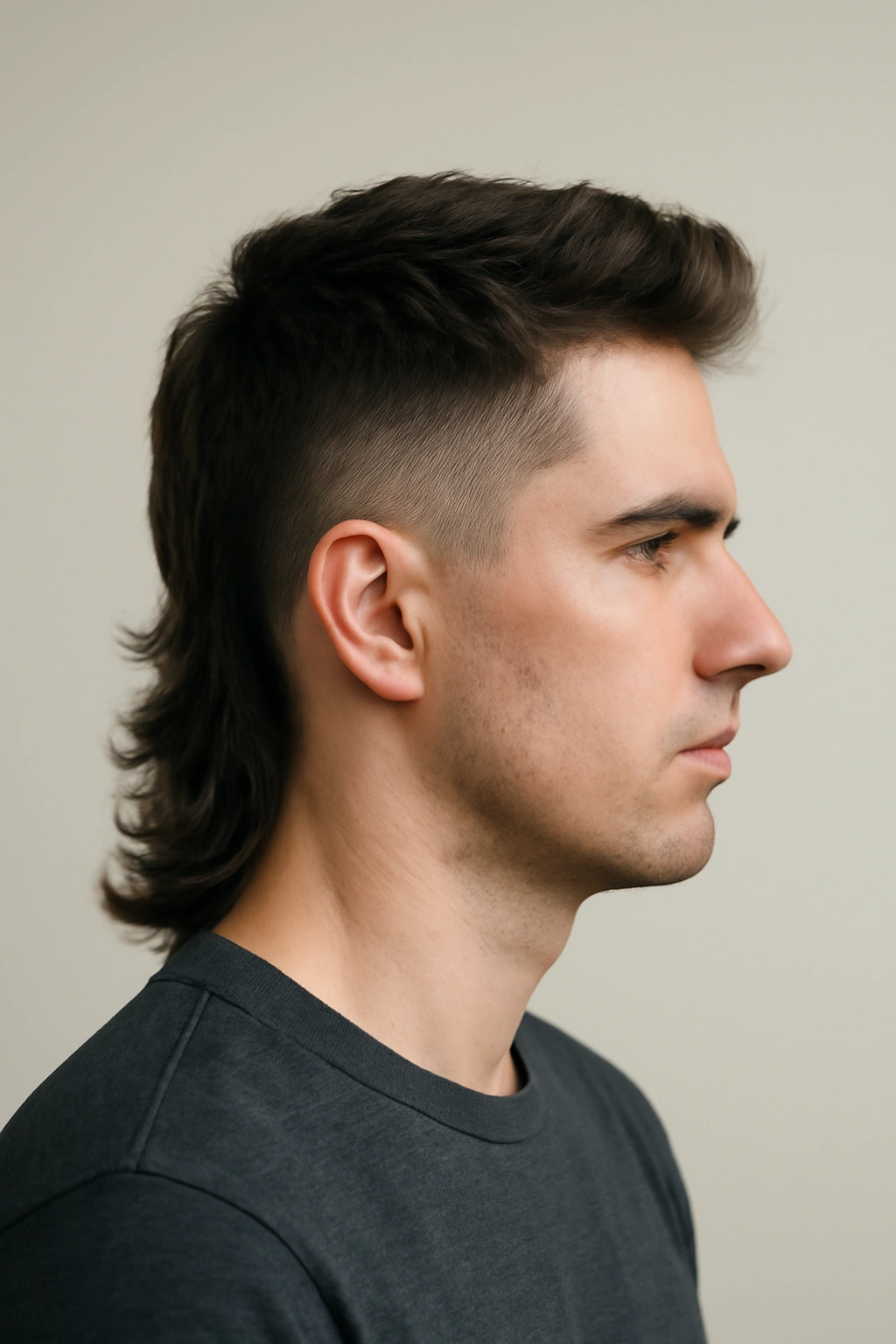
When the sides and back are completely separated from the top — zero fade, zero blend — you’ve got a disconnected undercut mullet. The sides can be clipped down to a one or two, the back tapers separately from the sides to maybe a half-inch or three-quarter-inch, and then there’s actual separation where they meet the longer top. With thick hair, this creates visual drama and makes the length feel more intentional because it’s literally isolated from the shorter sides.
What Makes This Cut Special
The disconnected style removes any ambiguity about what you’re doing with your hair. There’s no confusion, no blending that tries to make it look like something else. It’s unapologetically a mullet, and the sharp line between short and long actually flatters thick hair because it creates a clear frame. Your density reads as intentional instead of just messy, and the clean separation prevents the back from looking like it’s just growing out from a standard cut.
How to Ask Your Barber
Bring a photo and be specific: you want a disconnected line — meaning the sides and back don’t blend or fade into the top. Ask for the sides at whatever length appeals to you (most people go with a one, two, or three), and specify how long you want the back. Don’t let your barber talk you into a blend unless that’s what you actually want. Thick hair can handle a sharp disconnect way better than fine hair can, so take advantage of it.
Pro tip: This style needs a trim every 3 to 4 weeks to maintain that clean disconnect line. As your hair grows, that separation gets blurry fast, and the whole look falls apart. Book regular appointments with someone who understands what you’re going for.
3. The Tapered Fade Mullet
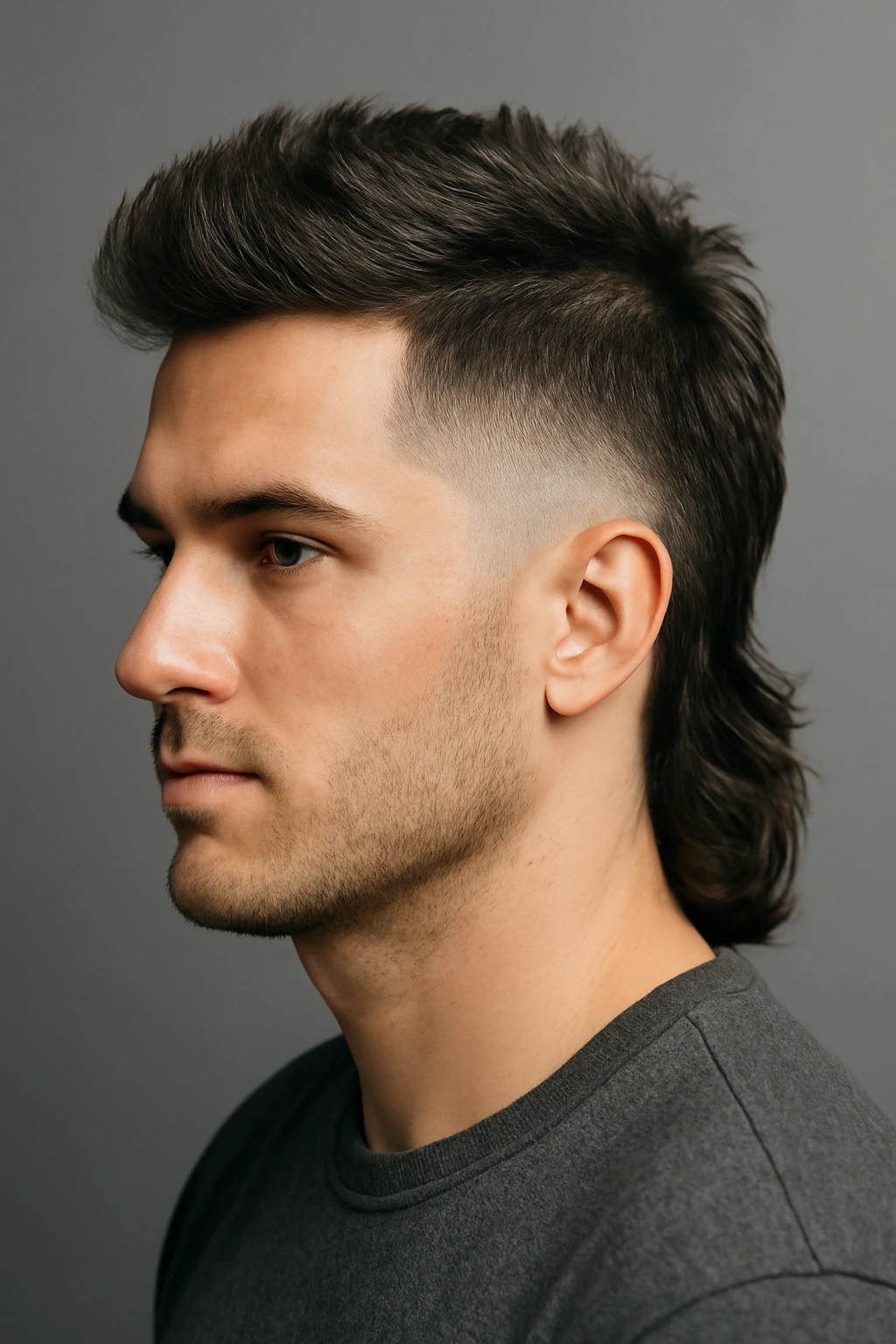
This is the middle ground — the sides fade from a very short clipper length down to skin at the sides and back of the neck, then gradually transition into the longer back section. It’s not a full disconnect, but it’s not a subtle blend either. The fade usually takes up the first half of the sides and back, and the taper becomes more gradual as it reaches the longer length. This gives you a modern, polished look while keeping the mullet unmistakable.
The Best of Both Worlds
A good fade on thick hair actually removes a lot of density where it matters — along the sides and back of the neck where weight and bulk can make you uncomfortable in heat or when wearing hats. The fade keeps things tight and clean without looking like you’re just growing your hair out from a standard cut. The transition into length is smoother than a disconnect, which appeals to people who want the mullet energy without the ultra-bold statement.
How to Style It Daily
The fade makes styling way easier because the volume is already managed at the sides. Work your product through the top and back while it’s damp, create the shape you want, and let it dry. The back can look shaggy or sharp depending on how you style it — you’ve got options. Because the sides are so controlled by the fade, the back becomes the focal point, and that works perfectly with thick hair.
Pro tip: Get a fade from someone who actually understands how to work with thick hair. A bad fade looks obviously bad, but a good fade on dense hair is a real skill — the barber needs to understand how to use clippers and scissors together, and how to taper the bulk gradually instead of just taking it all off at once.
4. The Shag Mullet
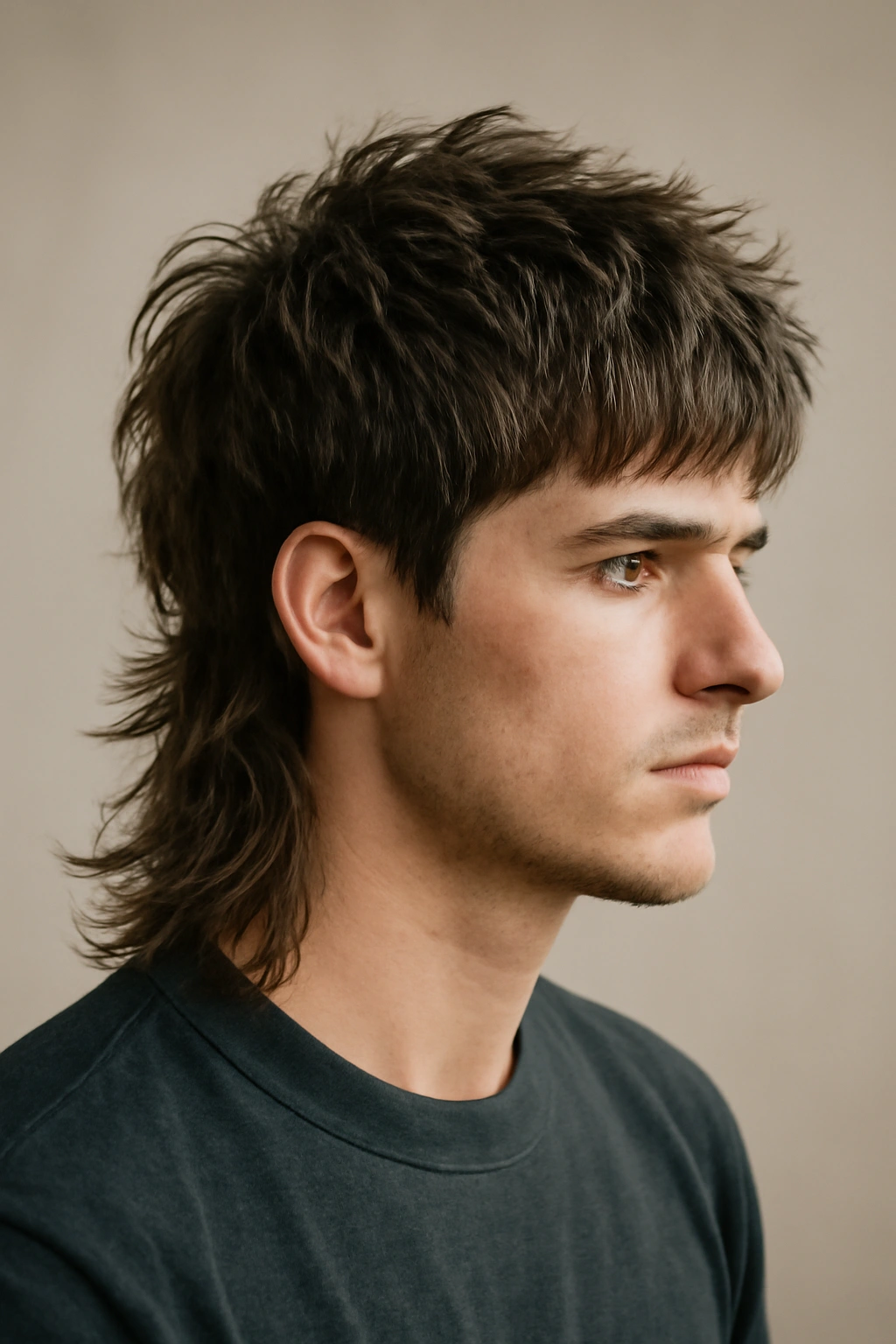
Layer the back aggressively, let the top have textured length, and you’ve got a shag mullet. This style embraces the thickness by using layers to create actual movement and texture instead of fighting against the weight. The sides can be tapered or faded, the top has substance and layering, and the back is cut with layers that sit at different lengths and create that feathered, lived-in shag aesthetic. With thick hair, this actually looks effortless because the density holds the layers and creates natural texture.
Why Thick Hair Loves Layers
Thick hair gets weighed down by its own density when you let it grow out solid. Layers cut strategically remove weight while keeping length, and they create visual movement that makes your hair look fuller without actually being fuller. The shag approach says yes to the thickness but channels it into something with texture and shape. It’s especially good if you’ve got natural wave or curl hiding under all that straight-hair thickness.
Making It Look Its Best
You need product that adds texture without weight — a dry shampoo, texturizing spray, or light sea salt spray works great. Apply it to damp or dry hair, mess around with it, and let the layers do the work. The beauty of a layered shag mullet is that it actually looks better when it’s a little messy and lived-in. Trying to make it too neat defeats the purpose.
Pro tip: If you’ve got any wave or curl in your hair at all, the shag mullet will bring it out and make it look intentional. Tell your barber that you want to work with your natural texture, not against it. They should cut the layers following your hair’s natural fall pattern.
5. The Slicked-Back Business Mullet
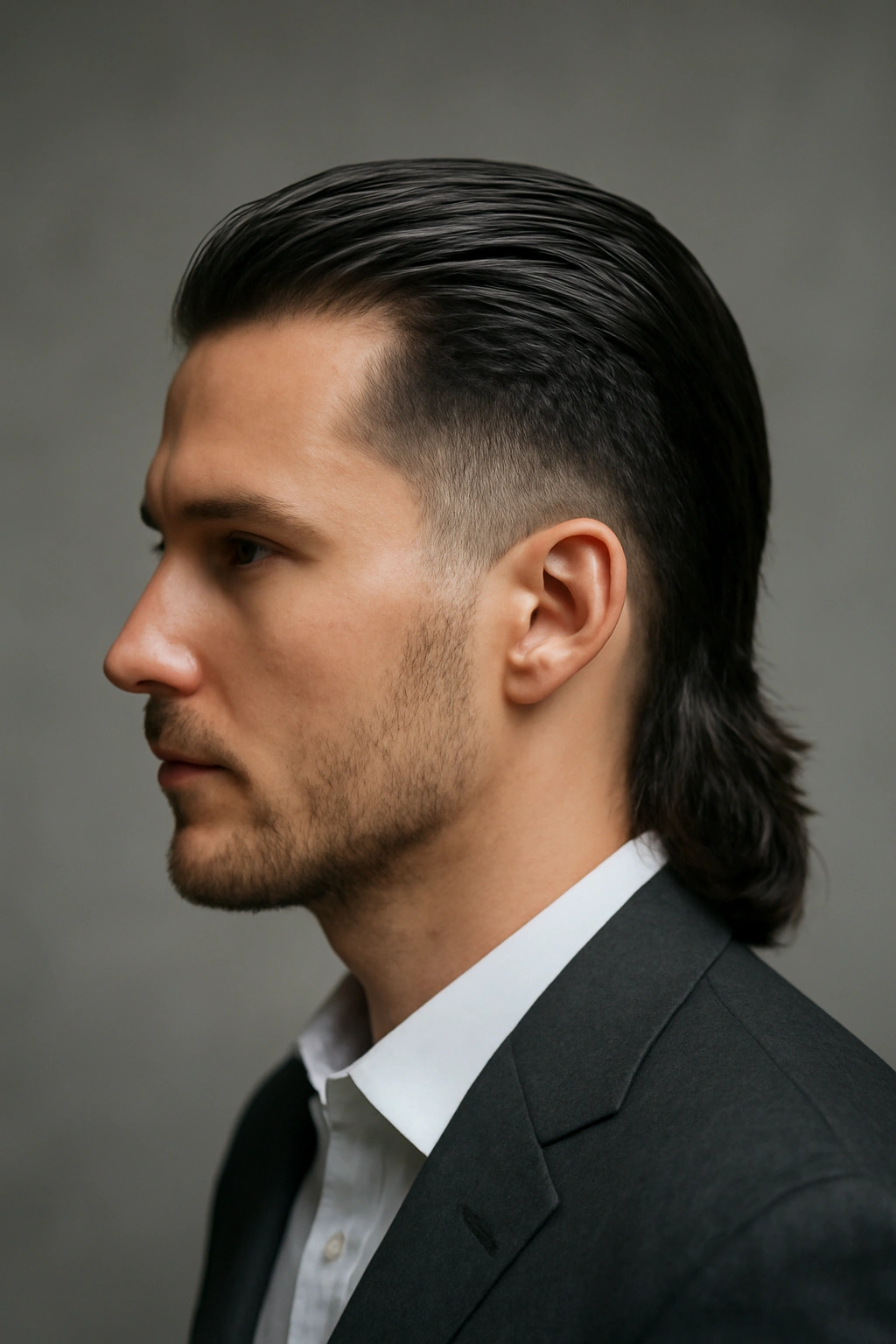
For thick hair that needs to work in a more professional environment, this is the answer. The sides are faded or tapered clean, the top is cut short enough that you can slick it back or to the side with a strong hold product, and the back has subtle length that sits neat and pulled together. It reads as professional, but the back length keeps the mullet DNA unmistakable. It’s the mullet for someone who has a 9-to-5 but doesn’t want to give up the style entirely.
Professional Meets Playful
The slicked-back version transforms the mullet into something corporate-adjacent. In the morning, you apply a strong pomade or gel, brush everything back, and you look like you’re ready for a meeting. After work, you can mess it up, add texture, and that back length suddenly becomes rebellious again. It’s genuinely versatile, and thick hair holds the slicked-back style way better than fine hair does because the density gives you the structure you need.
Styling for the Office
Use a strong-hold pomade and a fine-tooth comb. Work it through damp hair, brush everything back and smooth it out, and let it set. You can part it or leave it center-parted depending on what feels right. The back stays neat and tucked — this isn’t the place for wild length. The whole point is that it looks controlled and intentional during the day.
Pro tip: Switch products for different occasions. During the day, use a stronger hold product. On weekends or after work, use something lighter and texture-based so you can create more movement and visual interest.
6. The Curly Volume Mullet
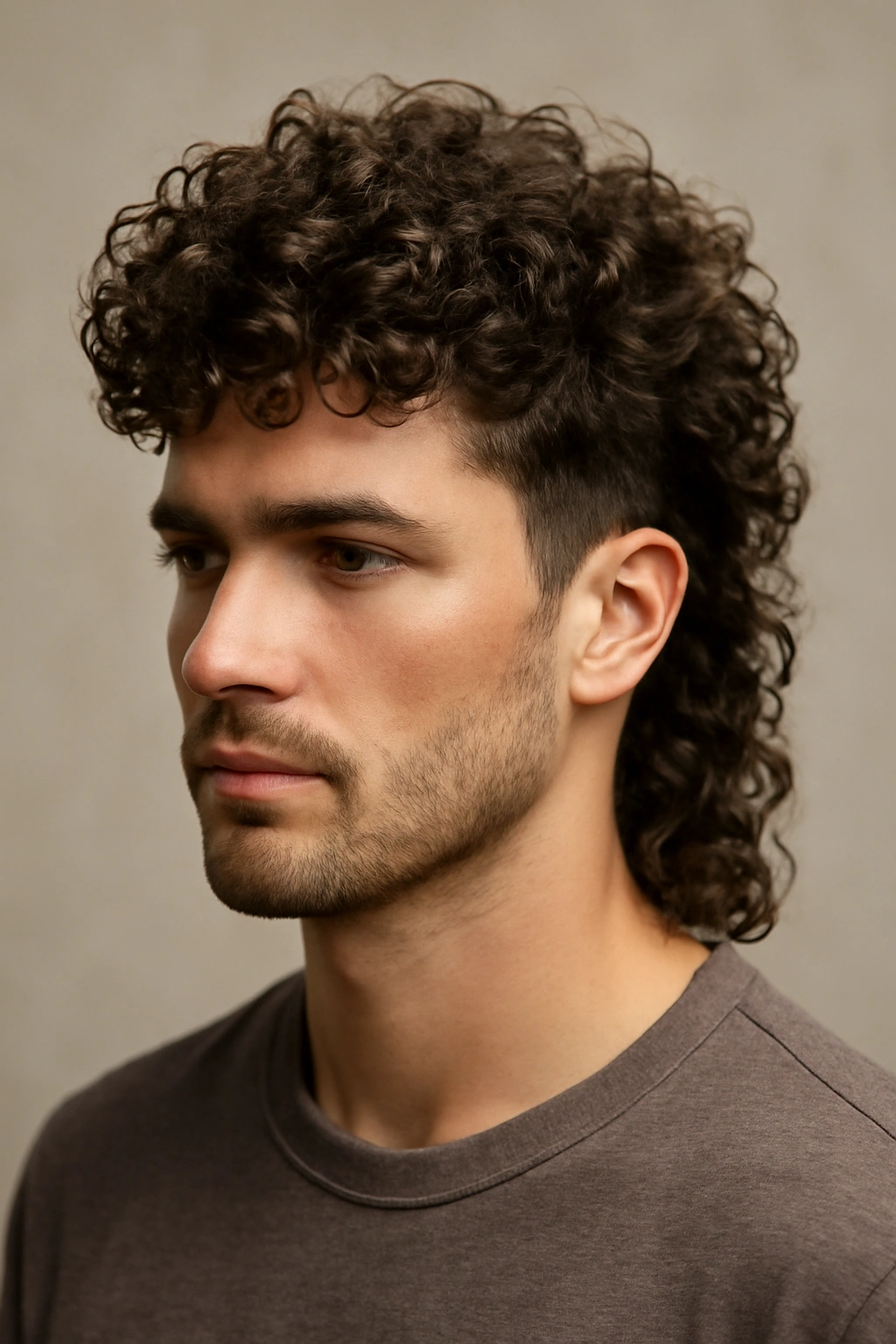
If you’ve got thick, curly, or wavy hair, a mullet cut specifically to work with your curl pattern is genuinely the best option. Keep the sides close to manage the density, and let the top and back have enough length to actually showcase your curl. The layers should follow your natural curl pattern, not fight against it. This style celebrates thick, curly hair instead of trying to fight the natural texture.
Maximizing Natural Texture
Thick curly hair has potential that straight-haired people spend products and tools trying to achieve. A proper curly mullet cut means your barber understands dry cutting, knows how to work with texture, and cuts the layers so your curls sit well when they’re in their natural state. The sides can be tapered or faded to manage the volume, and the back layers create shape and movement that looks intentional and controlled instead of just wild.
Product and Care Tips
You need products formulated for curly hair — a curl cream, curl gel, or leave-in conditioner that defines curls without crunching them or weighing them down. Apply to damp curls, scrunch upward to encourage curl formation, and let air dry or use a diffuser. The beauty of this approach is that your hair is doing most of the work for you. You’re just defining what’s already there.
Pro tip: Find a barber who specializes in curly hair cuts. A regular barber will likely either buzz everything too short or leave you with a cut that doesn’t work with your curl pattern. A curl specialist knows exactly how much length to leave and how to layer so your curls look their best.
7. The Wolf Cut Mullet
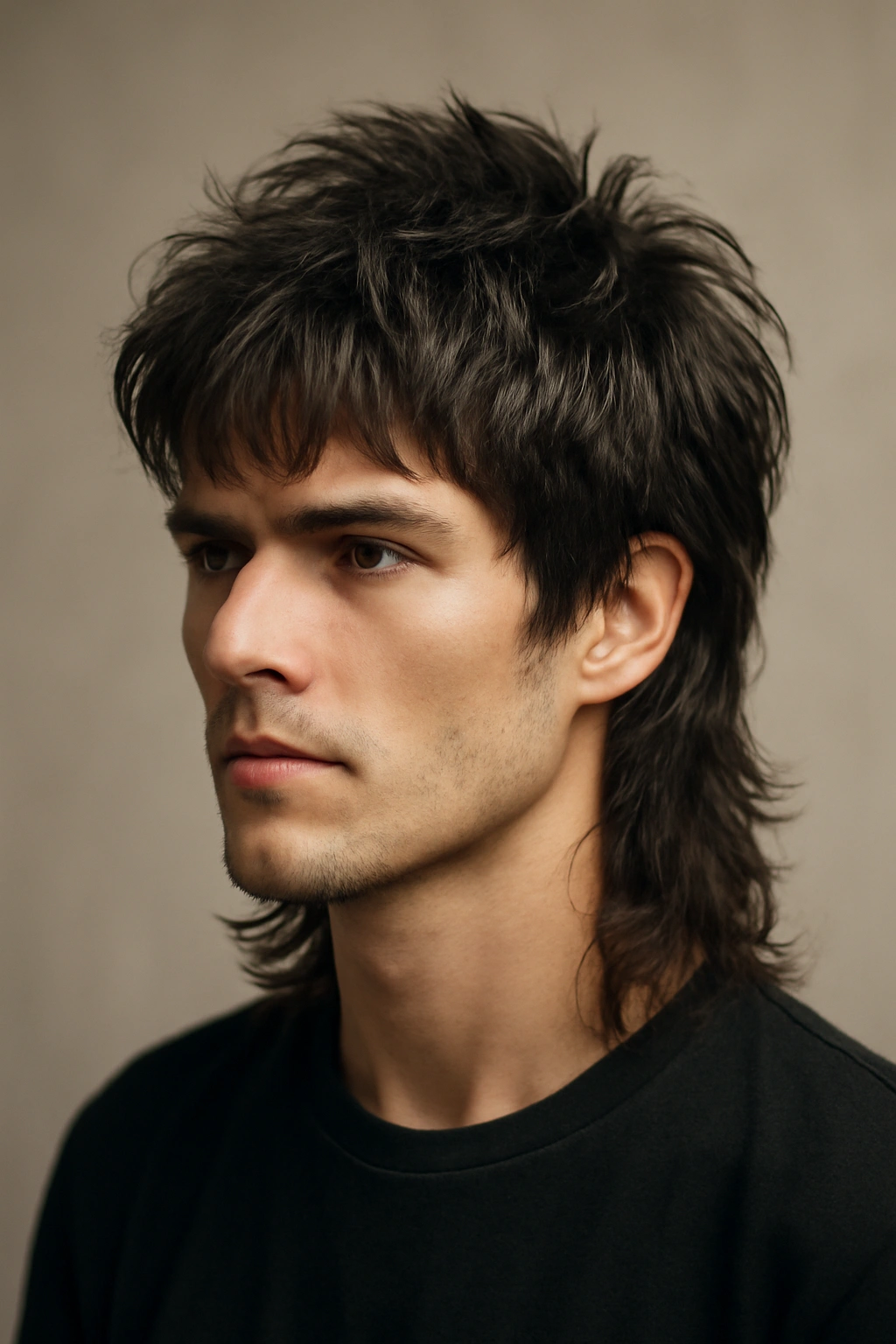
The wolf cut is basically a shag mullet’s wilder cousin — more layers, more texture, more movement. The top and sides blend with lots of choppy layers, and the back is long with stacked layers that create a feathered, almost wolf-like silhouette. It’s bold and unapologetically trendy, and it works remarkably well on thick hair because the density actually supports all those layers instead of looking wispy and thin.
Modern Evolution
The wolf cut takes the mullet into territory that feels fresh and young. It’s got the party-in-the-back attitude, but the chopped layers on top make it feel current and intentional. On thick hair, this reads as deliberate styling choice, not just grown-out hair. The layers create visual movement and texture that make thick hair look dynamic instead of heavy.
Styling for Drama
Work a texturizing product or light clay through damp hair, blow dry while scrunching and creating movement, and let the choppy layers do their thing. This is the mullet style that actually looks better when it’s messy and moved around. You’re not going for neat — you’re going for textured and lived-in. The whole point is that effortless, I-woke-up-like-this aesthetic, even though you probably spent time styling it.
Pro tip: This cut needs a trim every 4 to 6 weeks to keep the layers sharp and the overall shape intentional. If you let it grow too long between cuts, it stops looking intentional and starts looking like you just haven’t gotten a haircut.
8. The Blunt Crew Mullet
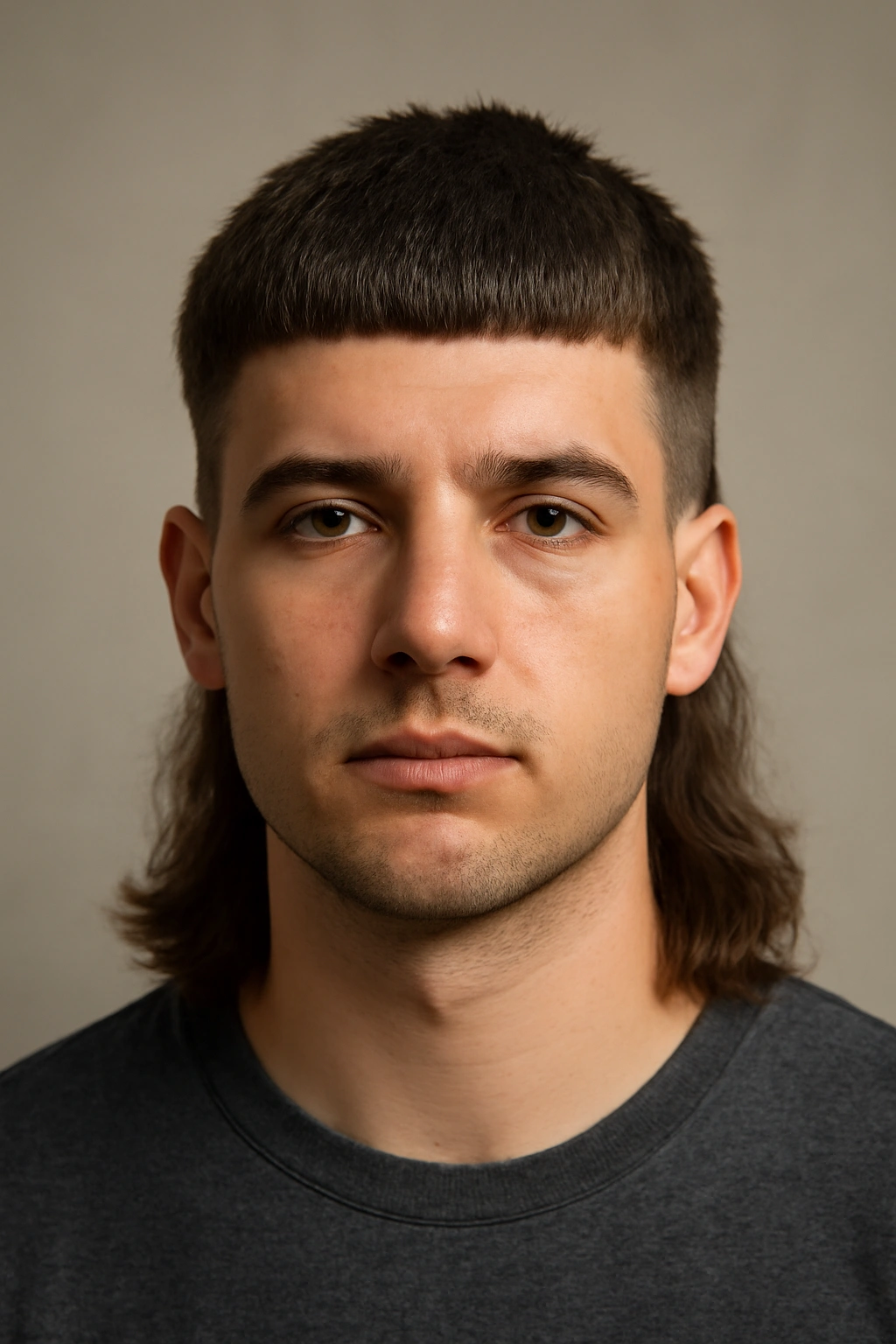
Go sharp and defined with a blunt crew cut on top — minimal layering, one solid length around a half-inch to three-quarter-inch — and keep the back at a substantial length with minimal layers. The sides fade clean, and there’s real visual contrast between the short, blunt top and the longer, fuller back. This style is especially good on thick hair because the blunt top actually looks polished instead of wispy.
Bold and Defined
The blunt approach removes any softness from the look. You’re making a statement — this is a mullet, it’s bold, and you’re not apologizing for it. The clean lines of the blunt top paired with the length in back create a genuinely striking silhouette. Thick hair makes this work because the density of the back section feels substantial and intentional instead of just stringy.
Maintenance Schedule
Trim the top every 3 to 4 weeks to keep it blunt and defined. As it grows out, the bluntness fades and the whole style starts to feel less intentional. The back can go longer between trims, but you’ll probably want to tidy it up every 6 to 8 weeks. Invest in regular maintenance if you want this cut to look good.
Pro tip: Use clippers for the top of a blunt crew cut — scissors alone won’t give you that super clean, defined line. Your barber should be using clippers over comb or an actual clipper guard to create uniformity and that sharp look.
9. The Faded Temple Mullet
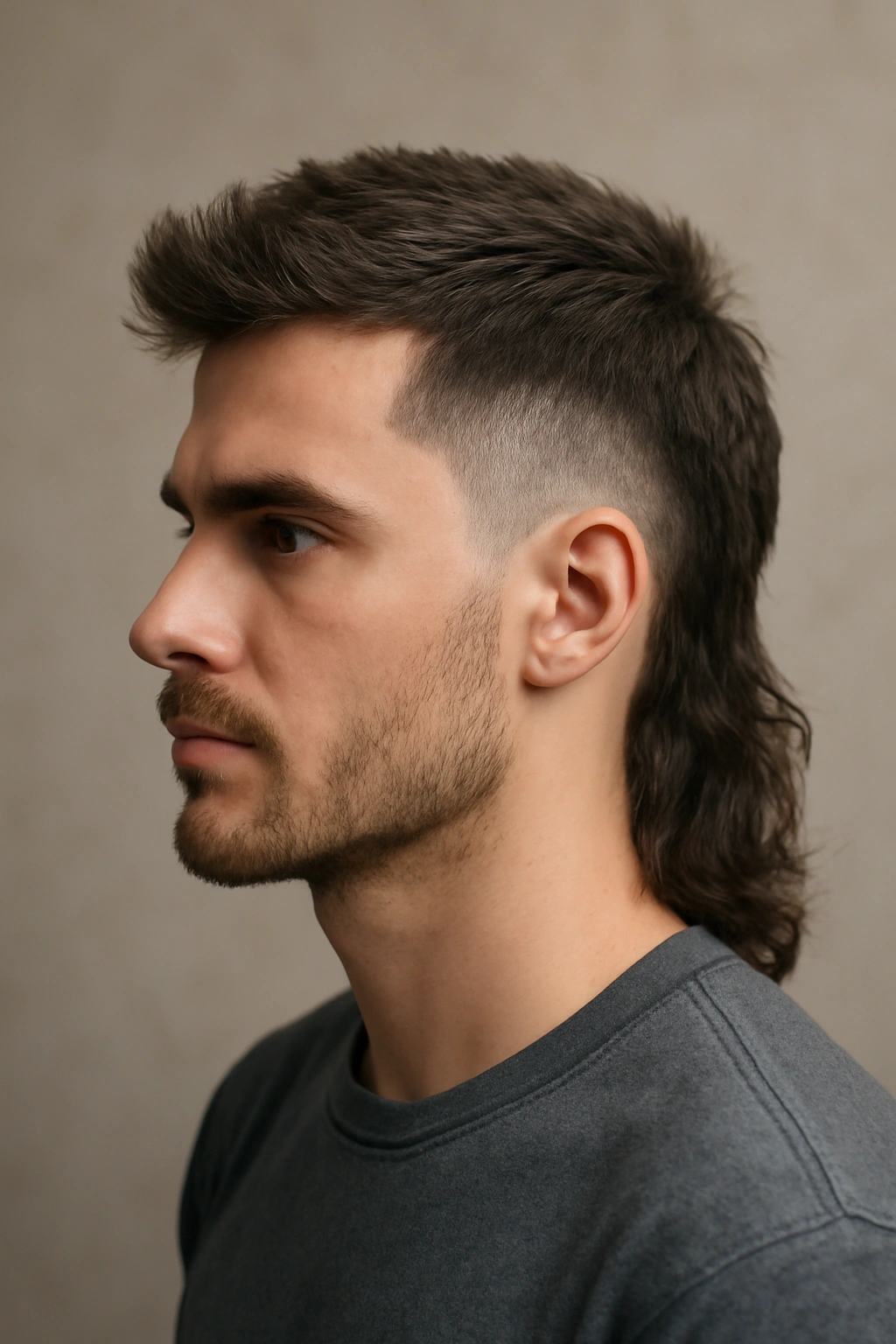
Fade tight around the temples and back of the neck while keeping substance on top and clear length in the back. The fade around the ears and at the nape focuses the visual weight where you want it — down and back — instead of spreading it out to the sides. This is a good compromise for people who want the mullet but need the sides to feel controlled and neat.
Clean Sides, Full Back
By tightening up the fade around the temples specifically, you create a frame that makes the back length feel more intentional and less like you’re just growing everything out. The sides read as neat and professional, but the length immediately identifies this as a mullet. It’s a styled look that works in more contexts than some of the bolder mullet variations.
Daily Styling Routine
With the sides already managed by the fade, your styling focuses on the top and back. Use a light product, dry it toward the back, and you’re done. This is the lowest-maintenance mullet on this list. Because the fade handles the visual heaviness of thick hair along the sides, you don’t need to do as much to the rest.
Pro tip: Ask your barber to fade specifically around the temples — not the whole side. This creates a different aesthetic than a full-side fade while still managing the visual weight where thick hair accumulates most.
10. The Messy Textured Mullet
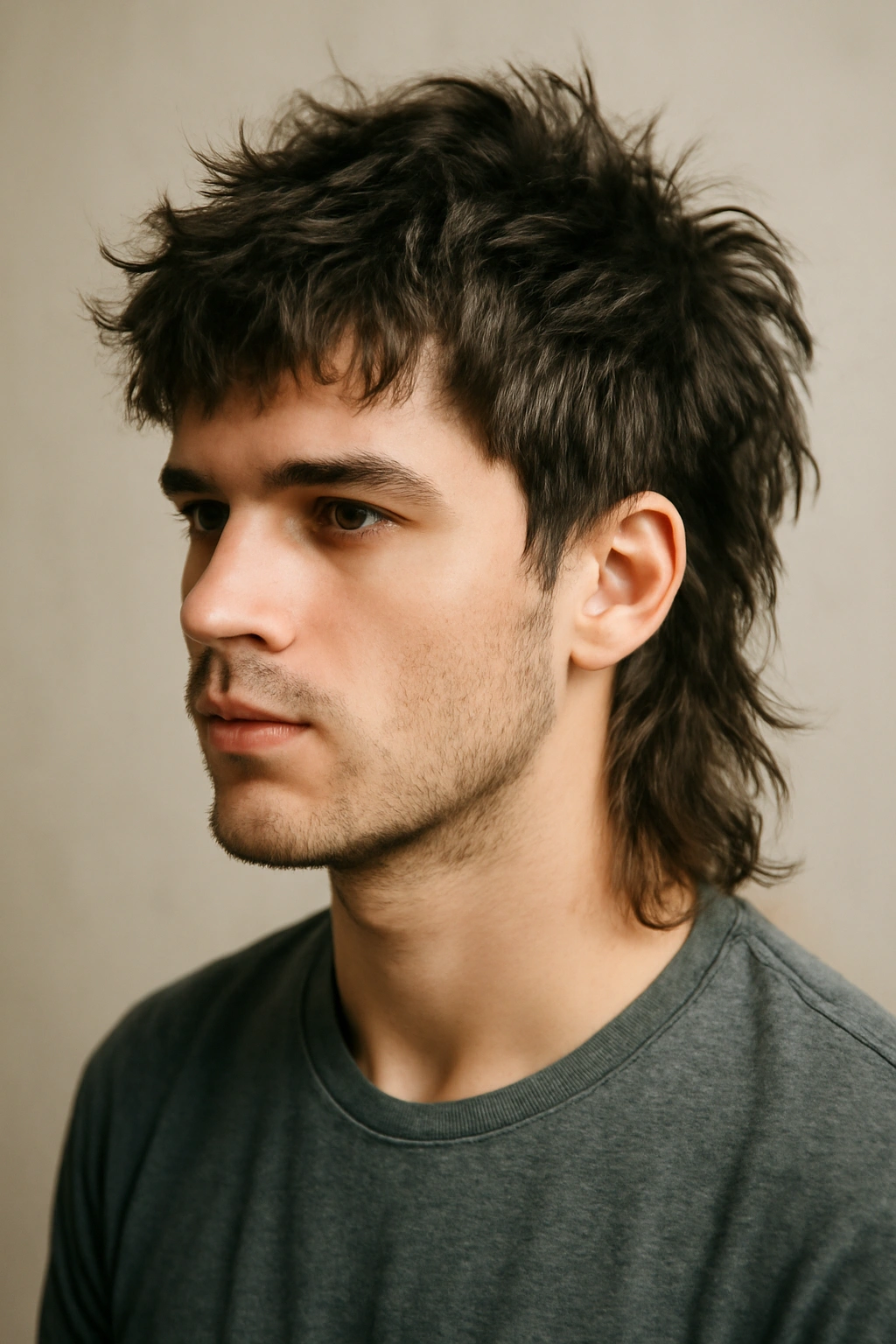
Embrace the mess. Short, choppy, textured sides and top with tousled length in the back — no fancy styling, no heavy product, just intentional texture and movement. This mullet works with thick hair’s natural tendency to do its own thing. The cut creates shape through layers and choppy texture, so the hair naturally looks good even if you don’t style it much.
Effortless Cool Factor
This is the mullet for people who genuinely don’t want to spend an hour styling their hair every morning. The cut does most of the work — the layers and texture create movement and visual interest naturally. Your thick hair actually makes this work because the density supports the layered cut and creates that tousled texture without looking thin or wispy.
Getting the Textured Look
Work a light texturizing spray or sea salt spray through damp hair, mess around with it, and let it air dry. If you want more control, use a blow dryer and your fingers or a comb to create movement while it dries. The whole point is that this style is genuinely low-fuss. You’re not trying to make it perfect — you’re trying to make it look like you don’t care, even though the cut required real skill.
Pro tip: This cut needs someone who understands how to use point-cutting and choppy layers to create texture. Ask your barber specifically for point-cut layers that create movement and texture, not just uniform short hair.
Final Thoughts
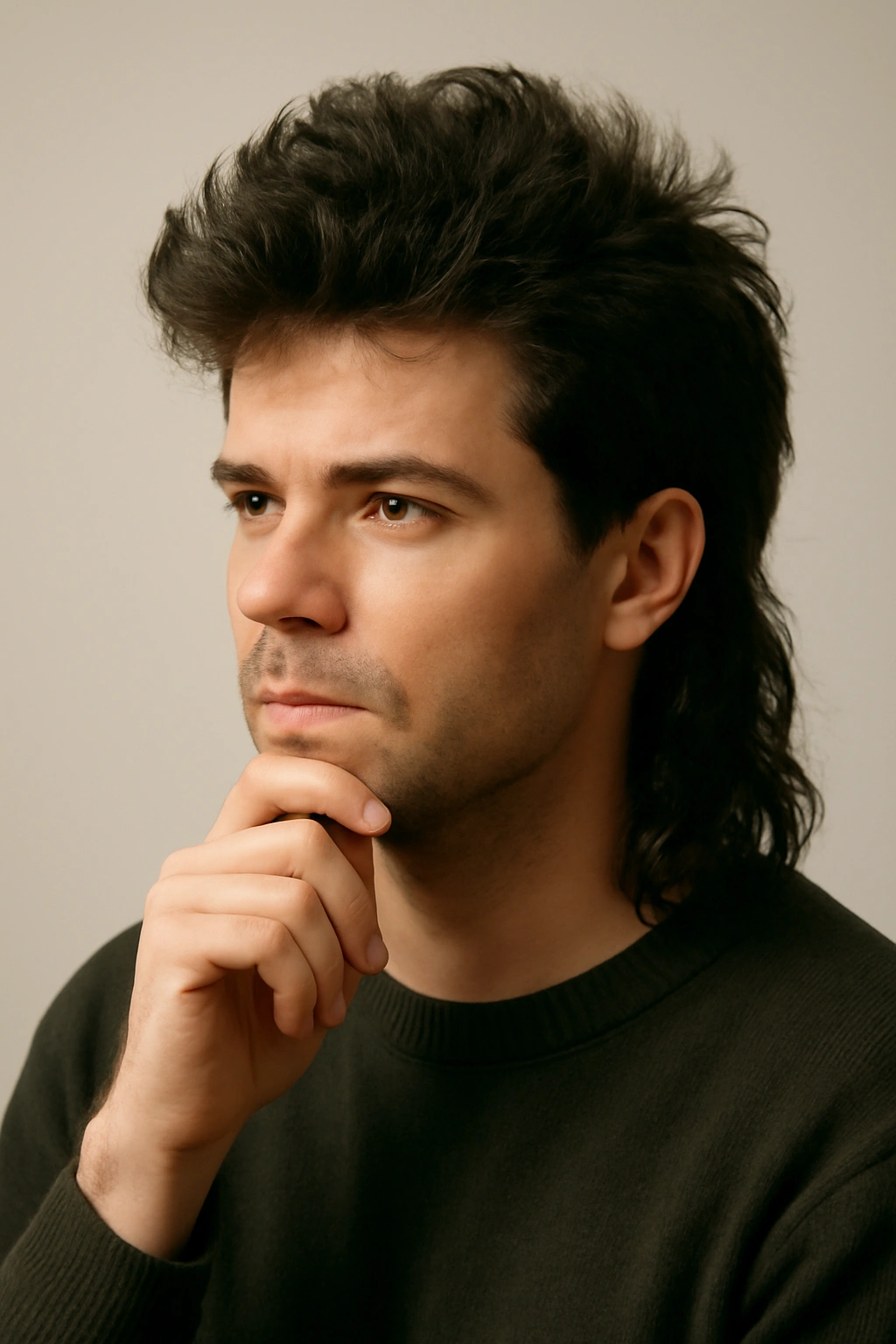
Thick, heavy hair is actually an advantage when you’re wearing a mullet, not a limitation. The density gives you options — you can do sharper, more defined cuts because the hair has enough substance to hold them. You can layer aggressively because the weight supports the layers instead of making them disappear. You can go bold and dramatic because the thickness reads as intentional instead of accidental.
The real key is finding a barber who understands thick hair specifically and gets what you’re trying to do with a mullet. They need to know where to remove weight strategically, how to cut layers that actually create movement, and how to taper or fade in ways that flatter your face and head shape. Show them a clear photo of what you want, communicate about maintenance expectations, and be willing to book regular trims to keep the style intentional.
Start with whichever of these styles actually speaks to you — whether that’s the professional business version, the bold wolf cut, or the effortless textured approach. Your thick hair is going to make whatever you choose look solid and deliberate. The mullet has evolved way past the 1980s, and modern versions on thick hair can be genuinely stylish, wearable, and built to last.
