



10 Short Flip Hairstyles for Black Women to Try
Short hair flips are having a cultural moment, and there’s a reason why. Whether you’re wearing your natural texture, protective styling, or experimenting with layers, the flip adds instant movement, personality, and polish to a short cut. A flip—that expertly tousled or structured upward curve at the ends—transforms a basic bob or pixie into something with edge and dimension. For Black women especially, short flip hairstyles celebrate the versatility of textured hair while giving you options that work for everything from boardroom meetings to weekend hangouts.
The beauty of flip hairstyles lies in how they interact with different hair densities, curl patterns, and textures. A flip on a coily 4C natural looks totally different from a flip on a silky 2A texturized cut—and that’s exactly the point. You’re not trying to force your hair into someone else’s shape; you’re working with what you naturally have and amplifying it. The flip becomes a tool to showcase volume, texture, and movement in ways that feel authentic to your hair type.
What makes these styles particularly appealing right now is that they’re not one-dimensional. You can wear them sleek and controlled for professional settings, or embrace the texture and movement for a more relaxed vibe. Some flips are blunt and architectural, others are soft and feathered. Some require daily styling; others settle into a shape once you’ve cut them right. We’re going to walk through 10 distinct short flip hairstyles that work beautifully on textured hair, with specifics about how to ask for them, how to style them, and what kind of maintenance each one requires.
1. The Classic Textured Bob with Flipped Ends
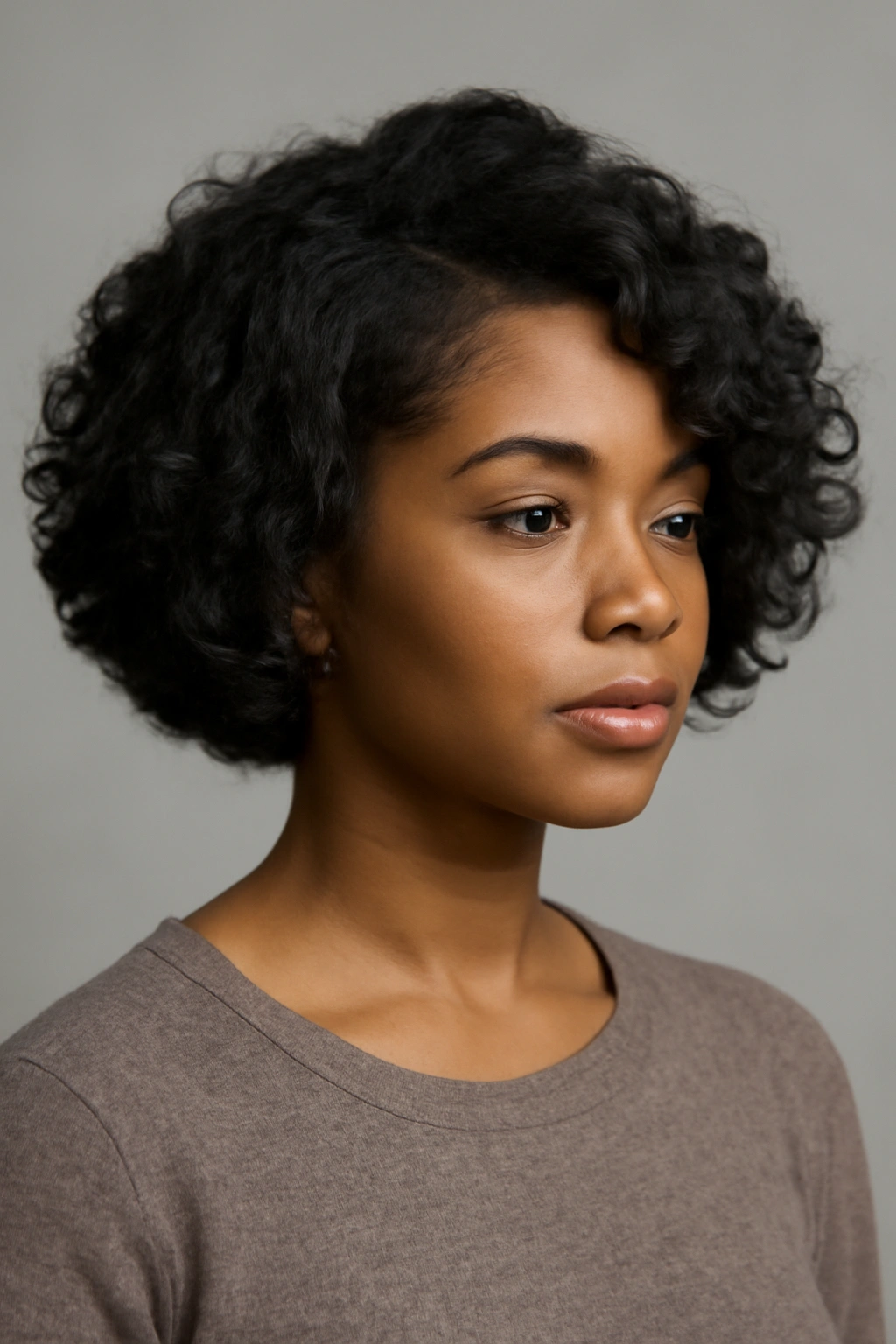
The foundation of flip styling, a textured bob sits right at ear level or slightly shorter, with layers cut throughout to encourage the natural curl or wave pattern to flip outward at the ends. This style is built on the cut itself—the layers and angles do most of the work, and your curl pattern provides the movement. The beauty here is that you’re not fighting your hair; you’re working with it.
Why This Cut Works for Textured Hair
A textured bob respects the natural shrinkage and density of coiled or kinky hair. Unlike a blunt cut that requires constant heat styling to maintain, a textured bob with layers embraces your curl pattern and actually looks better the more natural it is. The flip happens naturally as your curls dry and settle. The layering also removes bulk from the interior of the cut, which prevents the mushroom effect that thick hair can sometimes develop.
How to Style and Maintain
- Use a leave-in conditioner on damp hair to define your curls as they dry
- Consider a curl-defining cream or light gel to enhance the flip at the ends without creating crunch
- Allow hair to air dry whenever possible, or use a diffuser attachment on low heat
- Sleep on a silk pillowcase or bonnet to preserve the flip overnight
- Refresh the style in the morning with a water-based spray and your fingers
- Visit your stylist every 4-6 weeks for a light trim to maintain the layered shape and flip definition
Pro tip: The key to keeping your flip looking sharp is protecting your ends. Wrap them gently in a pineapple (a high, loose ponytail on top of your head) before bed, and they’ll flip beautifully again the next morning without damage.
2. The Pixie Cut with a Textured Flip
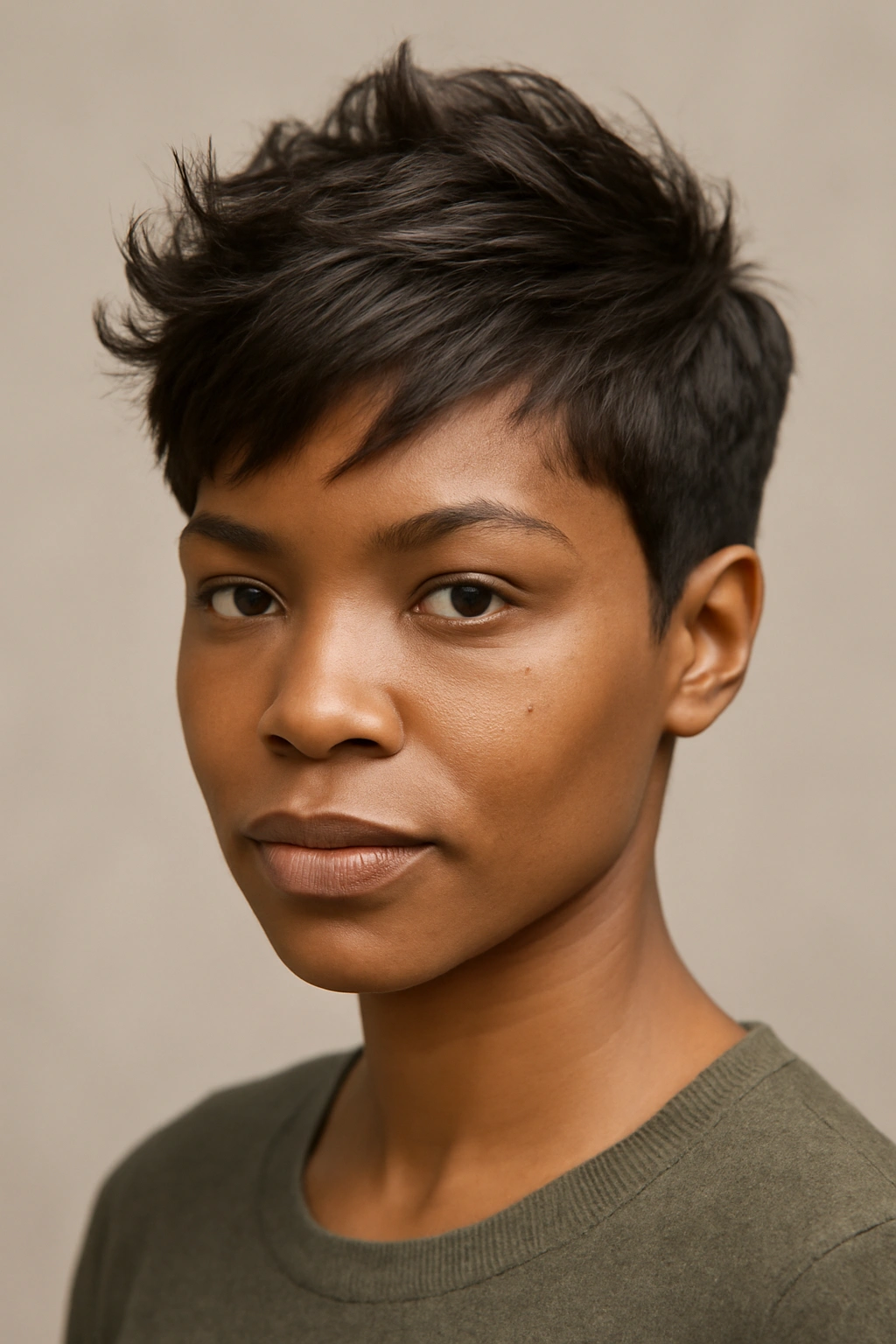
A short pixie on textured hair is bold, low-maintenance, and undeniably chic—especially when the top and sides are cut short enough to sit close to the head while the front and crown have just enough length to flip forward or to the side. This is the signature cut worn confidently by women who want a statement-making style that takes less than five minutes to style each morning.
The Geometric Precision Behind the Flip
A pixie flip works because of intentional angle-cutting at the crown and front. Your stylist cuts shorter on the sides and back, then graduates longer toward the front and crown, creating a natural upswing as the hair dries. The flip isn’t forced—it’s cut into the architecture of the style. On textured hair, this gradation works with your curl pattern to create dimension and movement that’s impossible to achieve with a blunt cut.
Styling Tips for Maximum Impact
- Wash and condition, then apply a moisturizing cream to damp hair
- Use your fingers to encourage curls to flip upward as hair dries
- A lightweight gel applied while hair is very damp can help train the flip shape
- You can wear it as-is for a natural look, or finger-coil individual sections for more definition
- The flip should feel organic, not rigid—think tousled, not sculpted
Worth knowing: Pixie flips show off your face shape and bone structure in a way longer styles can’t. This is the style to choose if you want people to notice your features and your confidence, not distract them with length.
3. The Side-Swept Flip Bob
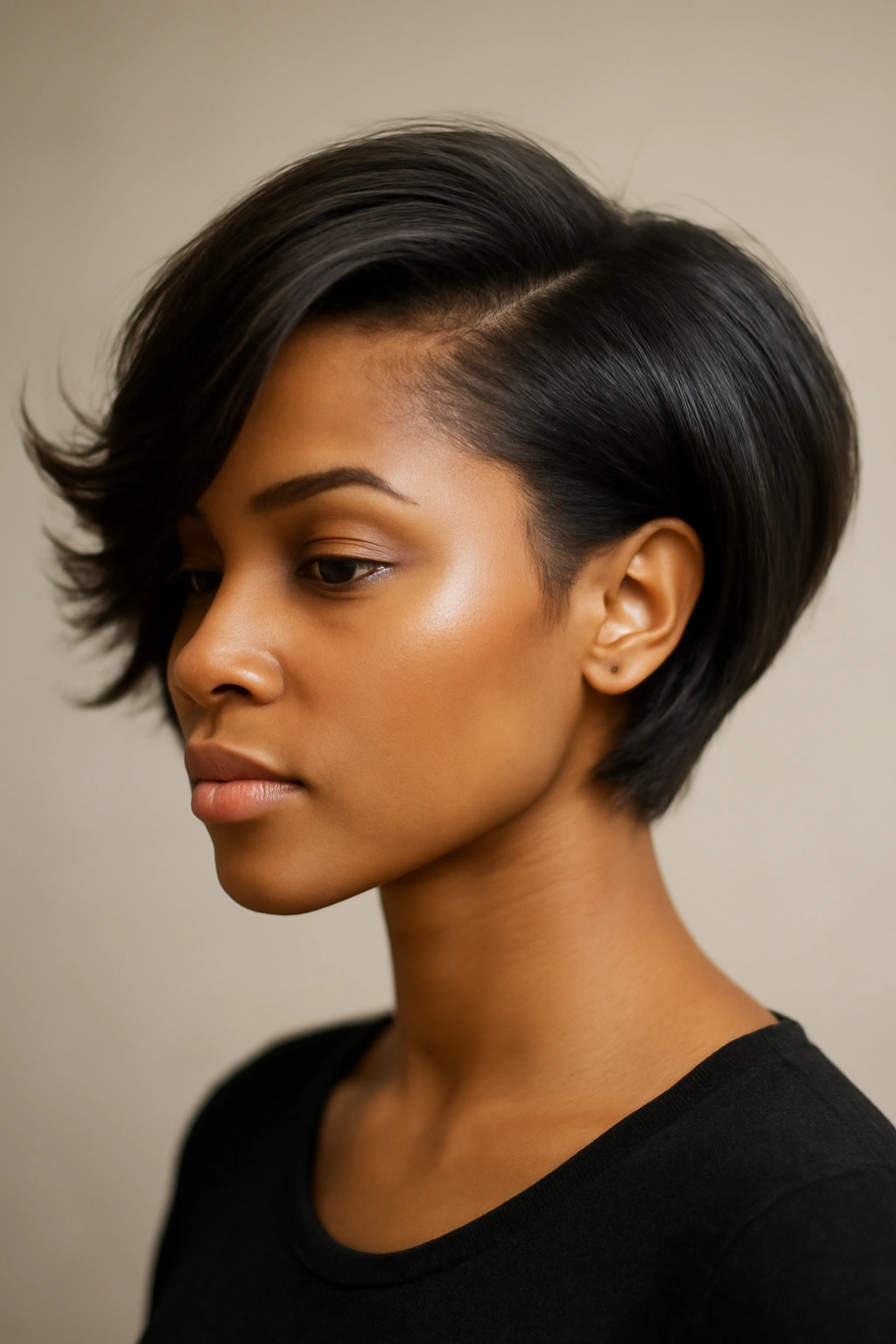
This is a bob where the majority of the hair is cut to flip dramatically to one side, creating asymmetry and movement. The back is shorter, the front is longer, and the entire cut is designed to fall and flip sideways rather than straight down. It’s sophisticated, modern, and works gorgeously on waves and curls.
What Makes the Asymmetry Work
Side-swept flips are all about angle and intention. Your stylist cuts the longer front section at an angle that encourages it to flip backward and to the side, while the back stays cropped for contrast. The flip happens because of the weight distribution and the cut angle—heavier on one side, which naturally gravitates toward a flip. On textured hair, this asymmetry adds visual interest and keeps the style from looking one-note.
Styling for the Flip Effect
- Begin with clean, damp hair
- Apply curl cream or mousse to enhance your natural texture
- Use a brush or your fingers to direct the longer front section backward and to the side as hair dries
- The flip should feel like a deliberate side-part, not an accident
- Once dry, you can refresh by lightly misting with water and finger-styling the flip back into place
Insider note: This style looks incredible with a small or delicate ear cuff on the side where your hair is shorter and your ear is more visible. It draws attention to the deliberate asymmetry and adds a jewelry element to a minimal cut.
4. The High-Volume Textured Crop with Upward Flip
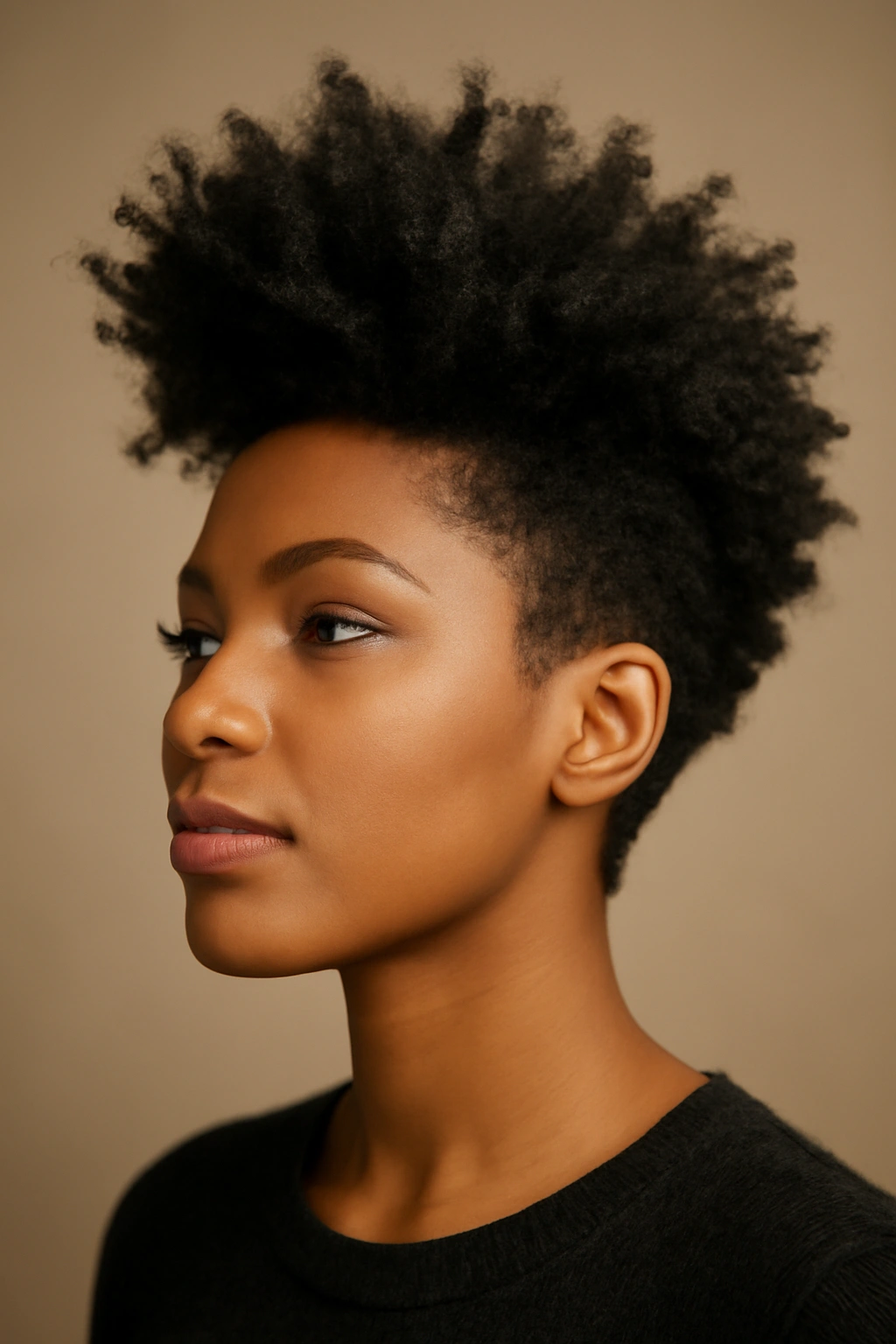
Think of this as a textured pixie’s slightly longer cousin—the hair on top and crown has real length and volume, while the back and sides are tapered or faded. The flip happens upward from the crown, creating height and drama. This style celebrates volume in a way that feels natural for dense, coily, or kinky hair textures.
Building Height Through Cut and Texture
Volume on textured hair is achieved partly through how you cut (shorter underneath so longer pieces can sit on top) and partly through how you style (encouraging curl pattern upward rather than flattening it). A high-volume crop flip is cut with this in mind from the very beginning. Shorter sides and back, graduated length on top, and the natural upward spring of your curls doing the heavy lifting.
Creating and Maintaining the Flip
- Use a volumizing mousse or curl cream on damp hair, applied to the roots and crown area especially
- Rough-dry with a diffuser to encourage curls to lift and flip upward
- You can scrunch curls as they dry to increase volume and definition
- Avoid flattening the crown with tight hats or headwear right after styling
- The flip lasts best when you’re sleeping on a silk pillowcase or bonnet to prevent flattening
Pro tip: If your flip is falling flat by midday, a light spritz of water and a quick finger-coil refresh at the crown usually brings it right back. You don’t need product—just moisture and your hands.
5. The Choppy Feathered Flip Bob
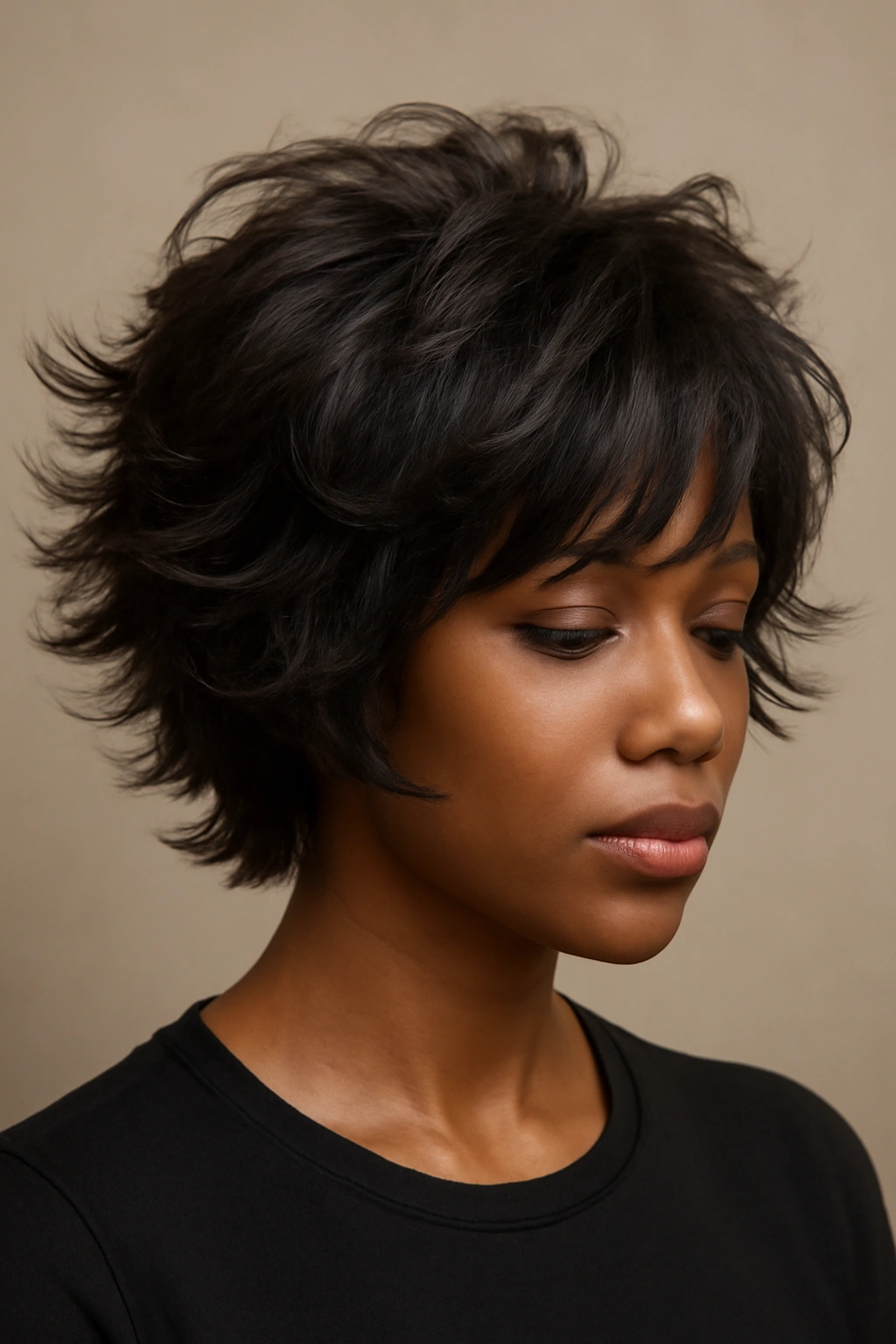
Choppy layers throughout the entire cut, from the crown to the nape, create tons of individual flip points rather than one solid flip. Each layer flips independently, creating movement and texture throughout the style rather than just at the ends. This is the style for someone who loves texture and doesn’t mind that their hair will look a little wild and free.
Why Layers Work Better Than Blunt Cuts on Textured Hair
A single blunt line on thick, curly, or coily hair can look boxy. Choppy layers break that line up and create visual movement that’s flattering and dynamic. Each layer flips at its own angle, and together they create a sense of constant motion even when you’re standing still. On textured hair, this layering actually works with your curl pattern rather than against it.
How to Achieve the Choppy Flip Look
- Use a curl-defining product on damp hair—cream, gel, or a combination of both
- Use a diffuser to dry and enhance the natural flip of each layer
- Avoid brushing once curls are dry; instead, use your fingers to separate and redefine layers
- Sleep in a protective style to preserve individual layer flips
- Refresh in the morning with water and a light product applied to specific sections
Worth knowing: Choppy layers require a trim every 4-6 weeks to maintain definition. The more layers you have, the more important regular maintenance becomes. If you let it grow out too long between trims, the layers blend back together and you lose the movement.
6. The Sleek Blowout Flip
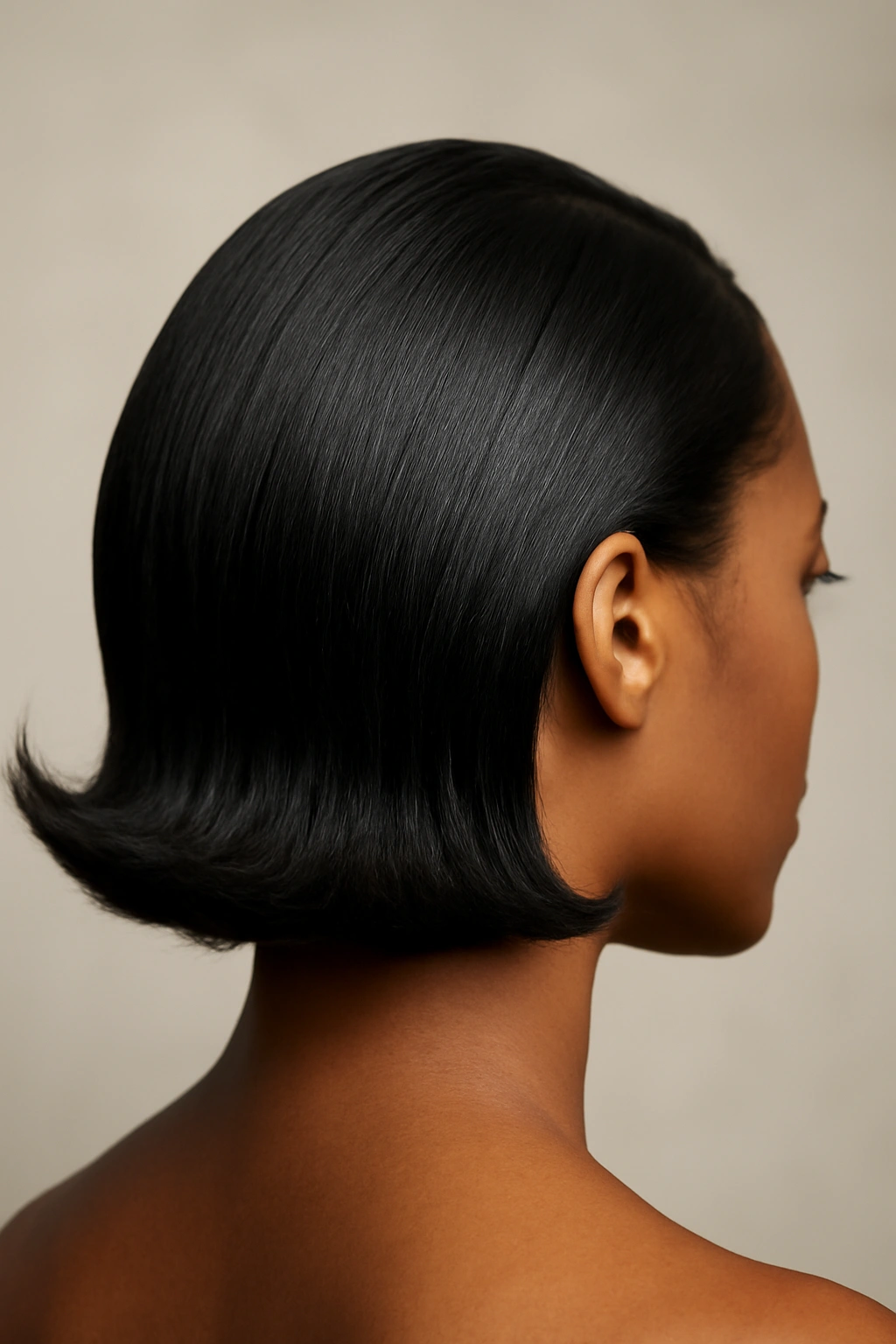
If you prefer heat-styled, straightened texture or are wearing a protective style like a silk press, a sleek blowout flip is built on a precision cut that flips beautifully when blown out smooth. This is less about embracing your natural curl pattern and more about creating architectural movement through the blow-dry process itself.
Cutting for the Blowout Flip
A sleek flip cut is more geometric and precise than a textured cut. Your stylist will cut with the understanding that you’ll be blow-drying straight, so they’re creating angles and movement that work when hair is smooth and straight. The front might be longer to flip backward; the back stays cropped; and all the angles are calculated to work with your hair as a smooth surface rather than as curls.
Styling the Perfect Sleek Flip
- Shampoo and condition with smoothing products designed for your hair type
- Blow-dry in sections, using a round brush to create the flip as you dry
- Use a flat iron on low to medium heat to smooth any flyaways and polish the flip
- Apply a light serum or oil to the ends and flipped sections to add shine
- This style typically lasts 3-5 days before you’ll need to re-style
- Use a silk bonnet at night to preserve the blowout
Pro tip: A sleek flip blowout and a textured flip cut are almost opposite approaches. If you love the idea of flipping but prefer heat-styling, ask your stylist for a “blowout-friendly” cut rather than a texture-embracing cut. They’ll use different angles.
7. The Two-Tone Flip with Texture and Color
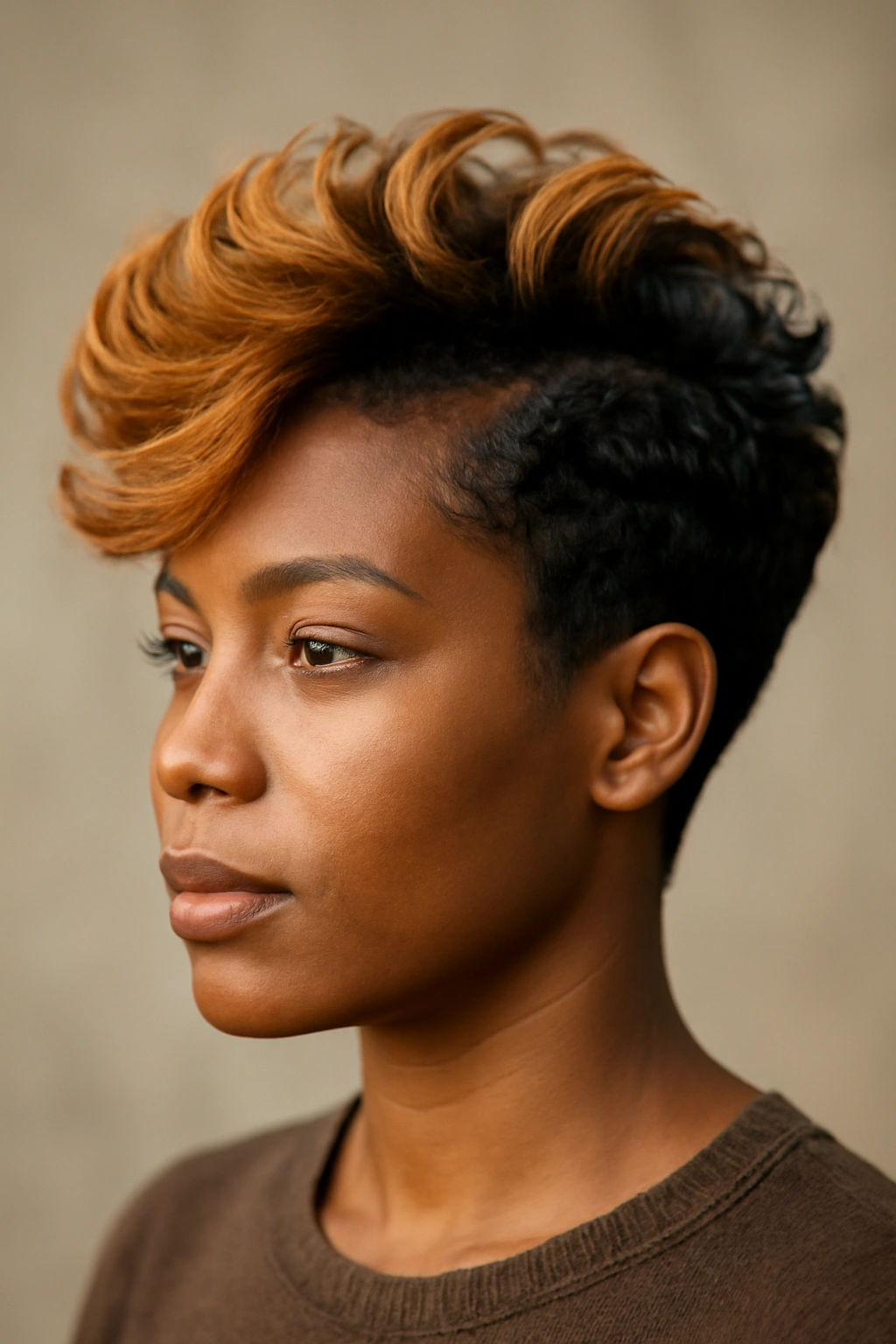
Adding a second color—whether it’s a bold contrast or a subtle highlight placement—combined with a flip cut elevates the style into something more fashion-forward. The flip creates movement that shows off both colors, especially if the highlight or secondary color is placed strategically on the flipped sections.
Strategic Color Placement with Your Flip
If your flip is going backward and to the side, placing highlights or a secondary color on those flipped-back sections means the color is visible and moves with your hair. If your flip is upward at the crown, placing color on the crown area means it’s showcased whenever your hair flips up. Color and cut work together here—the flip reveals the color, making it dynamic rather than flat.
Maintaining Color and Texture Together
- Use color-safe shampoo and conditioner to prevent fading
- If you’re also maintaining a textured flip, curl-specific products help preserve both texture and color vibrancy
- If you’re doing a sleek blowout flip, use smoothing products that are color-safe
- Plan color touch-ups every 6-8 weeks depending on how bold the color is
- Deep condition weekly to keep textured or color-treated hair healthy and the flip looking sharp
Insider note: A subtle dimension—like a few hand-placed ribbons of color on your flipped sections—often looks more sophisticated than an all-over color change. The flip showcases the dimension beautifully.
8. The Undercut Flip with Shaved or Faded Sides
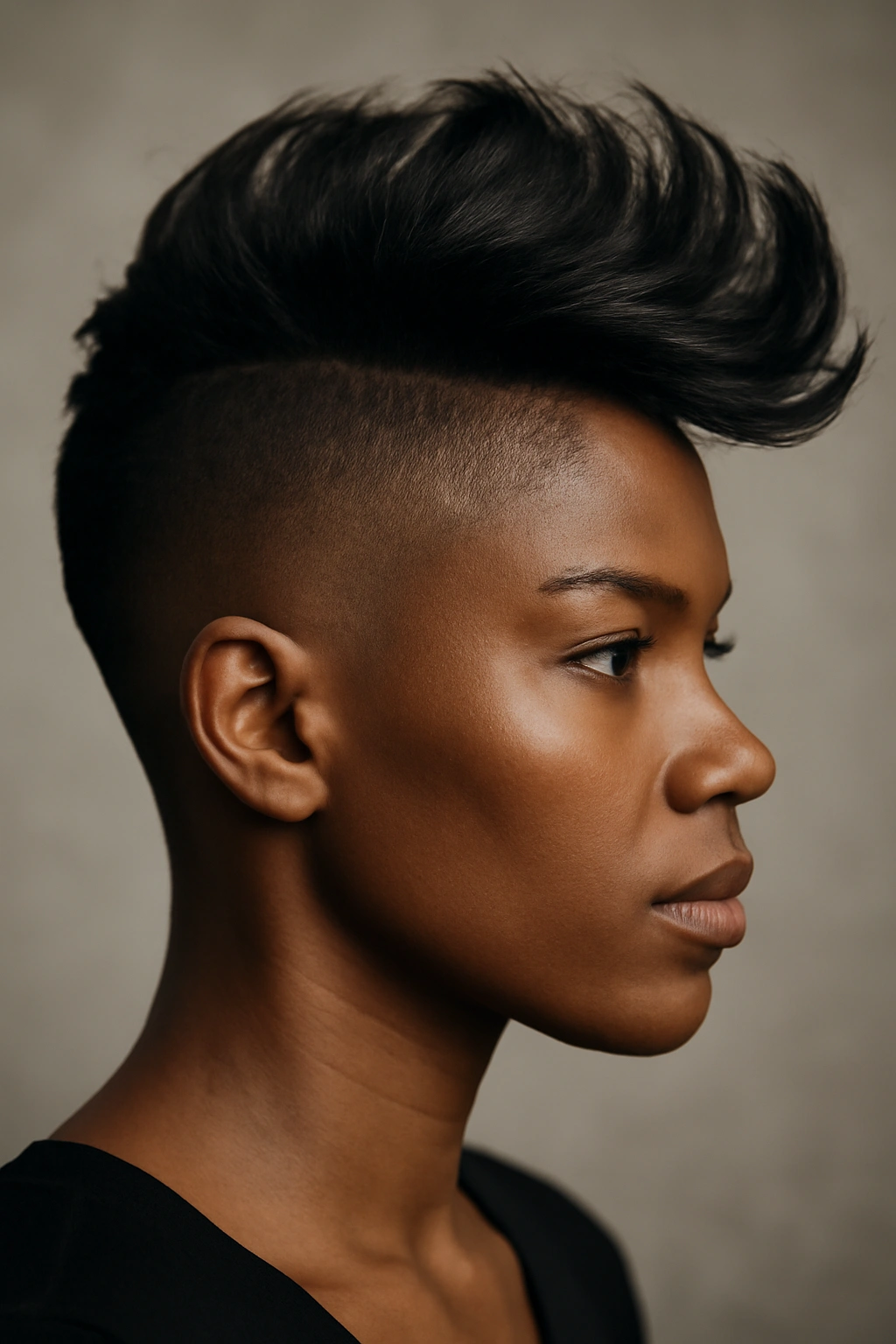
An undercut—where the sides and back are shaved or cut very close to the scalp while the top is significantly longer—creates drama, especially when the longer top section is styled to flip. This is an edgy, bold choice that makes a clear style statement. The contrast between the clean, bare sides and the voluminous, flipped top is striking.
Making the Undercut Work with Your Hair Texture
On textured hair, an undercut is particularly bold because the volume on top contrasts so dramatically with the bare or faded sides. You can wear it as a strong style statement, or you can grow it out if you change your mind. The flip on top becomes the focal point; everything else recedes into the background. For women with natural hair, an undercut can actually be low-maintenance because the top is where all the styling action happens.
Styling and Maintenance for Undercut Flips
- The undercut portion requires regular maintenance—every 2-3 weeks for a clean shave or fade
- The longer top section is styled normally, with attention to the flip using curl cream or gel
- The contrast means every single day you’re making a style statement; this is not a subtle choice
- You can style the top however you’d like—slicked back, textured, coiled, or feathered
- The undercut itself requires no daily styling, just maintenance trims
Worth knowing: If you’re considering an undercut, make sure you have a stylist you trust and can see regularly. The maintenance is non-negotiable—a grown-out undercut doesn’t have the same impact.
9. The Soft Finger Coils with Forward Flip
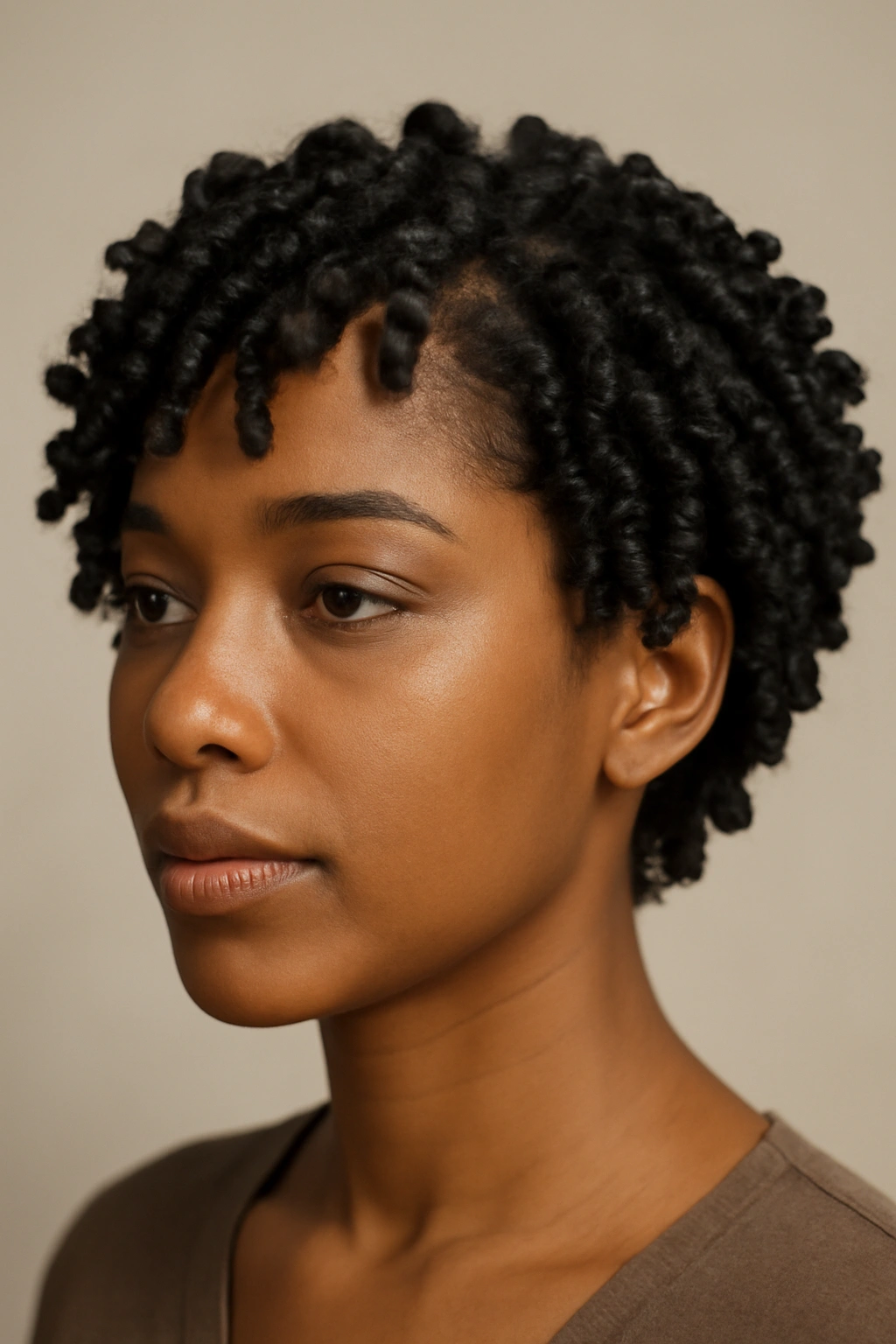
Instead of one dramatic flip, this style features lots of individual finger coils (curls created by wrapping hair around your finger) throughout the cut, with the coils arranged to flip forward around the face and sides. It’s textured, romantic, and celebrates your natural curl pattern in a very intentional way.
Creating Defined Finger Coils
Finger coils are created by moisturizing and sectioning damp hair, then wrapping small sections around your finger, smoothing from root to tip, and either air-drying or heat-setting the curl with a diffuser. They’re not a cut per se—they’re a styling technique applied to a short cut. A stylist might cut your hair in a way that supports finger coils (often shorter and textured), but the actual coils are created through styling.
Daily Care for Coil Definition
- Finger coils hold best on freshly washed or refreshed hair
- Apply a curl cream or gel before coiling to enhance definition and hold
- Coils last 3-5 days depending on your sleep and activity level
- Refresh coils by spritzing with water and re-coiling sections that have loosened
- Sleep in a pineapple (loose high ponytail) or bonnet to preserve coils overnight
- Re-coil usually takes 15-20 minutes in the morning or whenever they need refreshing
Pro tip: Finger coils look best when they’re freshly styled. If you love the look but don’t want to style daily, this might not be your go-to style. But if you have 20 minutes in the morning and enjoy styling, finger coils are meditative and gorgeous.
10. The Blunt Crop Flip with Texturized Ends
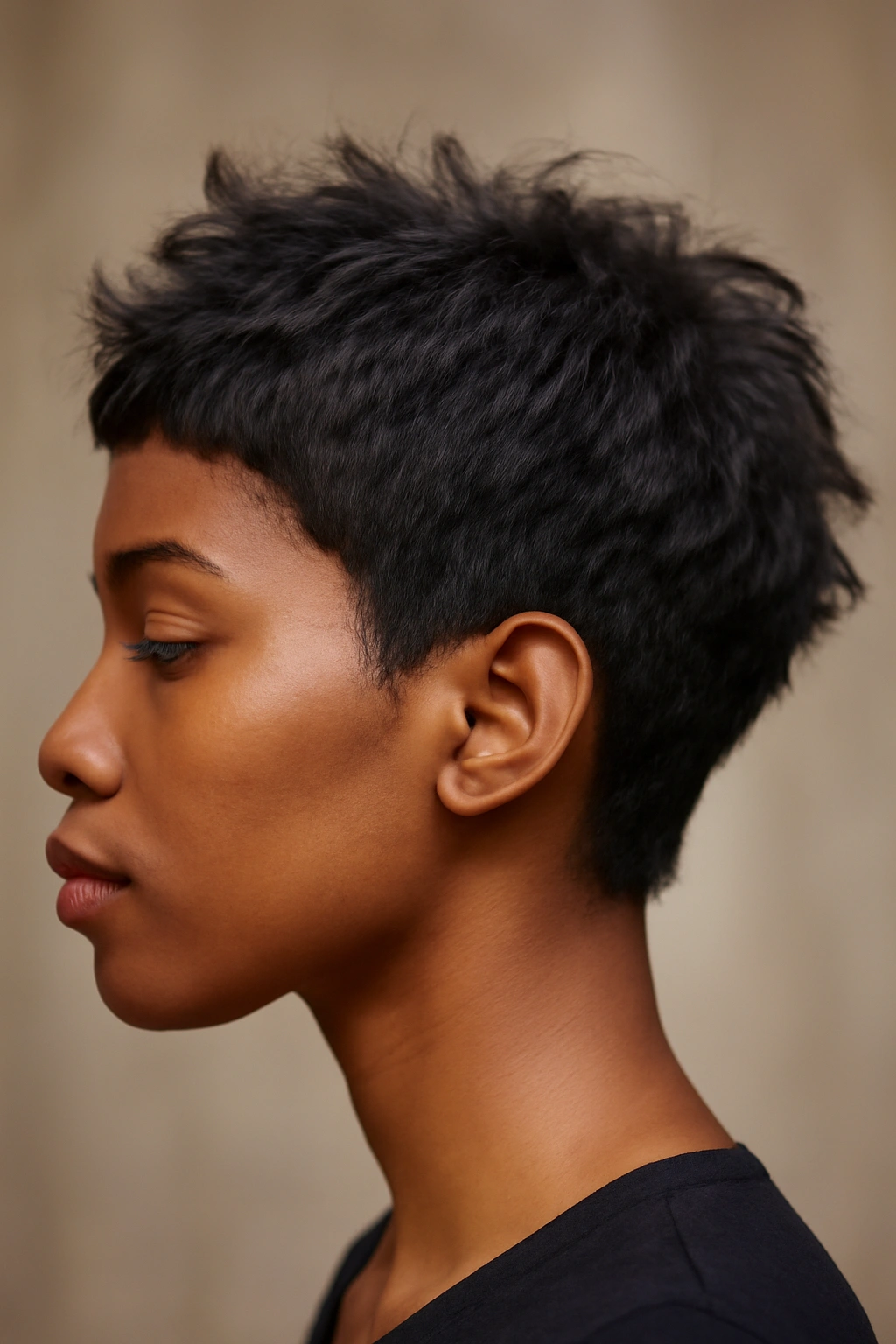
A very short, blunt cut that sits high on the head—almost like a cropped crew cut—with texturized or choppy ends that encourage a flip. This is minimal, modern, and works beautifully on all hair types. It’s the style that reads as confident because it’s short enough to make a statement but still offers styling possibilities.
The Paradox of Blunt Cuts on Textured Hair
A blunt cut seems like it would fight textured hair, but when paired with texturized or choppy ends, it actually creates movement. The bluntness provides structure and shape, while the textured ends provide softness and flip. It’s a balance between geometry and texture. This style requires a really skilled stylist who understands how to cut blunt lines on textured hair without creating a harsh or boxy appearance.
Styling a Blunt Crop Flip
- Apply a lightweight styling cream to damp hair
- Allow to air dry or diffuse for a natural textured look, or blow-dry smooth for a sleeker appearance
- The flip happens naturally if the ends are cut right; minimal styling is required
- This style looks best with minimal daily styling—your confidence and the cut do the work
- Maintain every 3-4 weeks to keep the blunt lines and textured ends crisp
Insider note: A blunt crop flip is one of the most low-maintenance short flip styles if your hair cooperates with it. Some people can literally roll out of bed and the flip is perfect. If that sounds appealing, ask your stylist whether this cut would work with your specific hair texture and density.
Final Thoughts
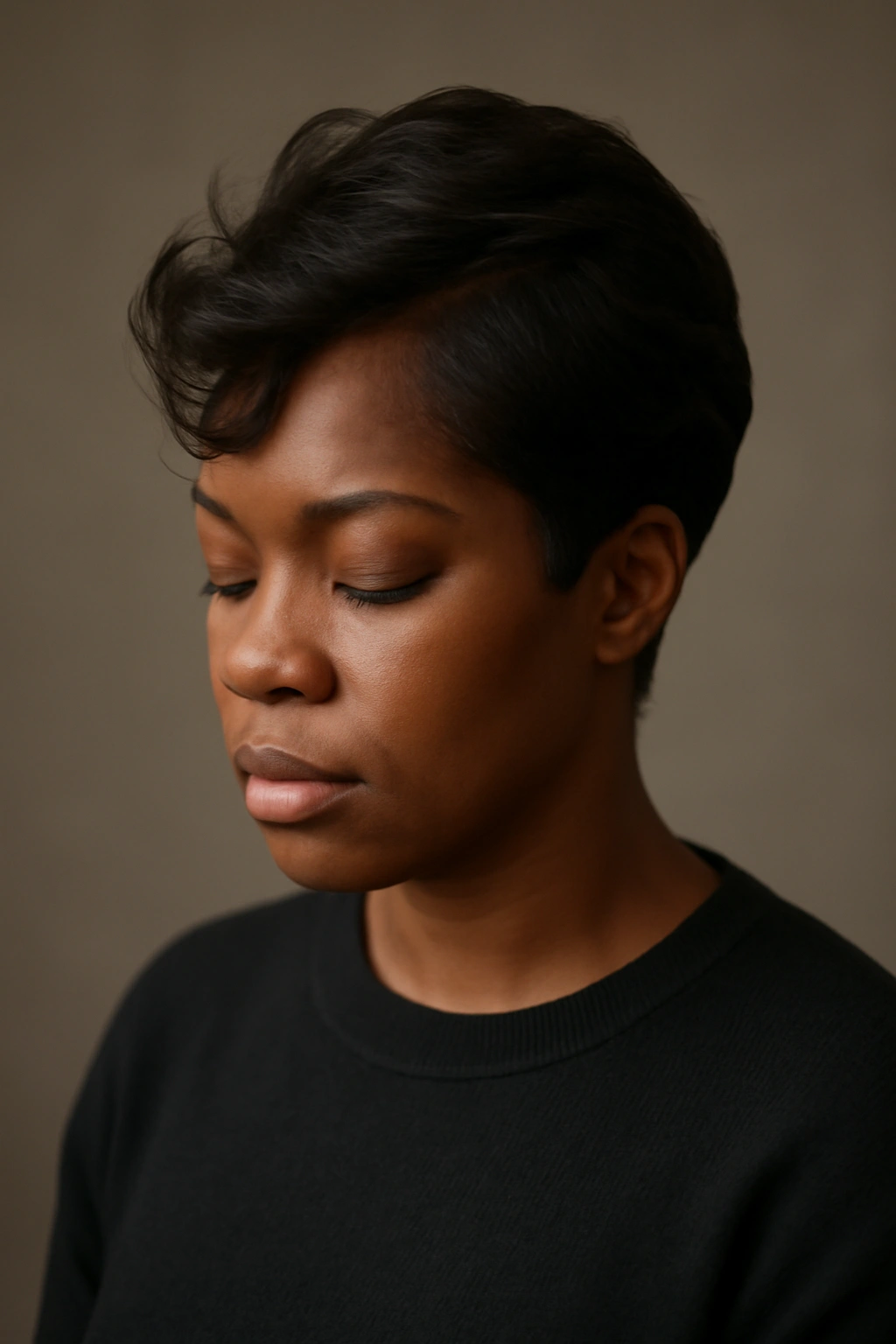
The best short flip hairstyle for you depends on your hair texture, how much time you want to spend styling daily, and whether you prefer heat styling or want to work with your natural texture. A textured flip bob might be perfect if you love your curls and want a minimal daily routine, while a sleek blowout flip might be your move if you prefer the control and polish of heat styling.
What all of these styles have in common is intentionality. A flip isn’t accidental—it’s a deliberate design element cut into your hair by someone who knows how to work with your texture. Once you have the right cut, the flip becomes part of how your hair naturally falls and moves, not something you have to force into place every morning. That’s when you know you’ve found your style.
Go into your consultation with photos of flips that appeal to you, be honest about how much time you realistically want to spend on styling, and find a stylist who has experience working with Black hair textures. The conversation about your hair texture—whether you have 2A waves, 3C curls, or 4Z coils—matters as much as the photos you bring. Your stylist needs to understand your hair to cut a flip that’s going to work for you, not against you. From there, you’ll have a style that feels like it was made for you, because it will be.
