



A longer face shape presents a unique styling challenge—one that many people spend far too much money trying to solve with extensions and layers that don’t actually address the issue. The truth is, the right short haircut can completely transform how your face appears by adding width, breaking up vertical length, and creating visual balance where none existed before. It’s not about fighting your face shape; it’s about working with it strategically.
The science behind this is straightforward. Longer faces typically have a greater distance from forehead to chin, making them appear narrow or elongated. A skillfully cut short style can shorten the perceived face length while adding volume and dimension at the sides—exactly what a longer face needs. The challenge is finding a cut that gives you movement and personality without requiring a two-hour styling routine every morning. Short doesn’t have to mean boring or overly simple; in fact, some of the most flattering options come with texture, layers, and interesting details that make your features pop.
What makes a short haircut work for a longer face isn’t rocket science, but it does require understanding a few key principles. Horizontal lines, textured volume on the sides, and clever bang placement all play crucial roles. The good news? There are dozens of genuinely great short styles that tick every single one of these boxes—and most of them are accessible, maintainable, and stylish enough that you’ll actually want to wear them.
1. The Pixie Cut
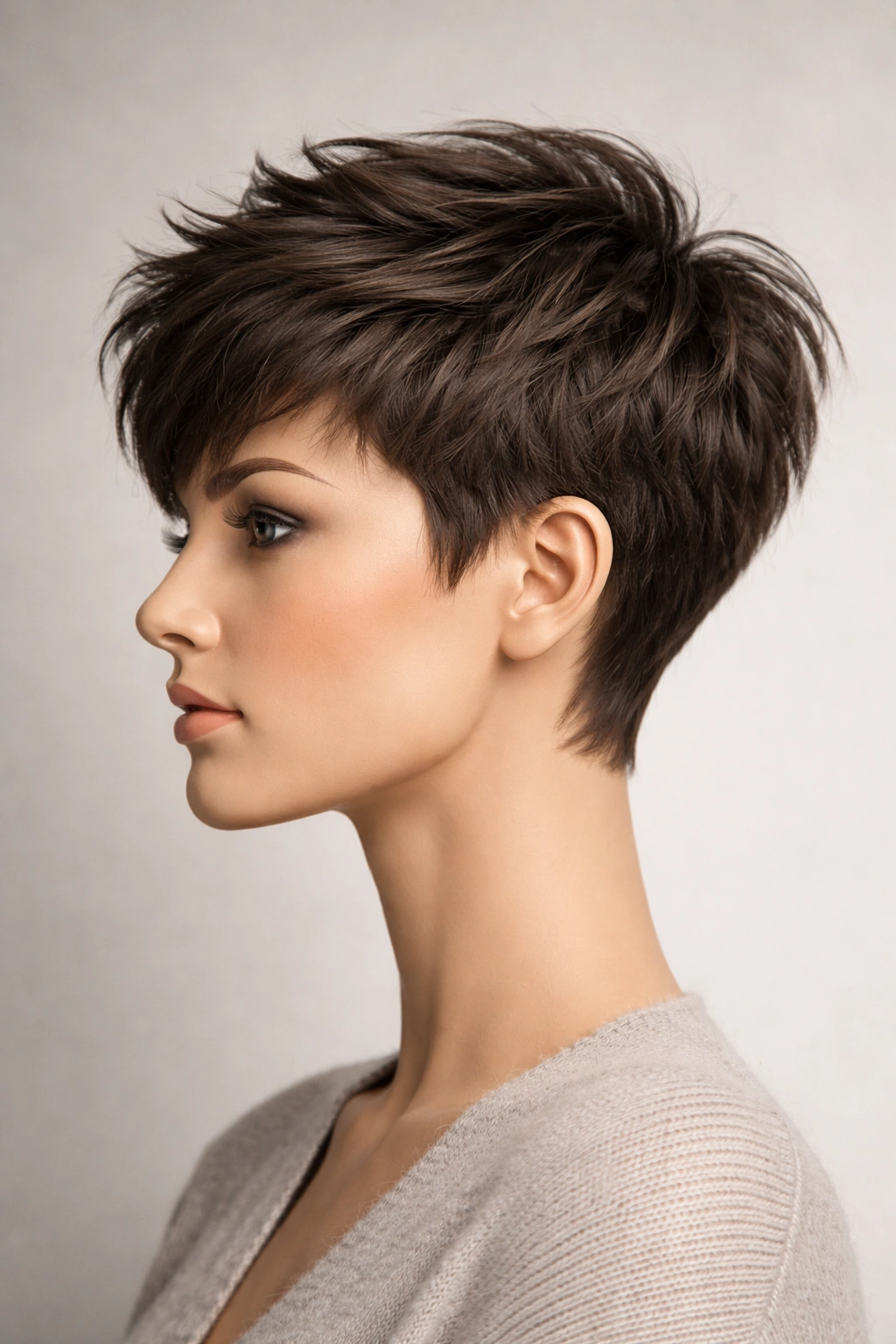
A well-executed pixie is the ultimate confidence move, and it’s surprisingly flattering on longer face shapes when cut with intention. The key here is length variation—not a uniform buzz, but a style with longer strands on top and textured sides that create visual width right where you need it. This height and dimension makes the face appear shorter and broader by comparison.
Why Pixies Work for Longer Faces
The pixie cut adds instant fullness to the crown and cheekbones while the cropped sides draw attention outward rather than downward. A skilled stylist will cut the top longer (at least 2 to 3 inches) and blend it gradually into shorter sides, creating natural texture and movement. This variation prevents the severity that sometimes makes longer faces look even more elongated.
How to Style and Customize Your Pixie
- Ask your stylist for longer pieces at the crown for maximum height and the illusion of a wider face
- Request textured, choppy layers rather than blunt lines for a modern, less harsh appearance
- Consider a slightly longer fringe or wispy bangs that graze your eyebrows to shorten the forehead visually
- Use a lightweight texturizing product to emphasize the movement and keep it from lying flat against the scalp
- Regular trims every 4 to 6 weeks keep the shape crisp and intentional
Pro tip: A pixie doesn’t have to be androgynous or super edgy—ask your stylist for a “feminine pixie” with softer layers and slightly longer pieces at the front for a more romantic, less severe version.
2. The Textured Bob
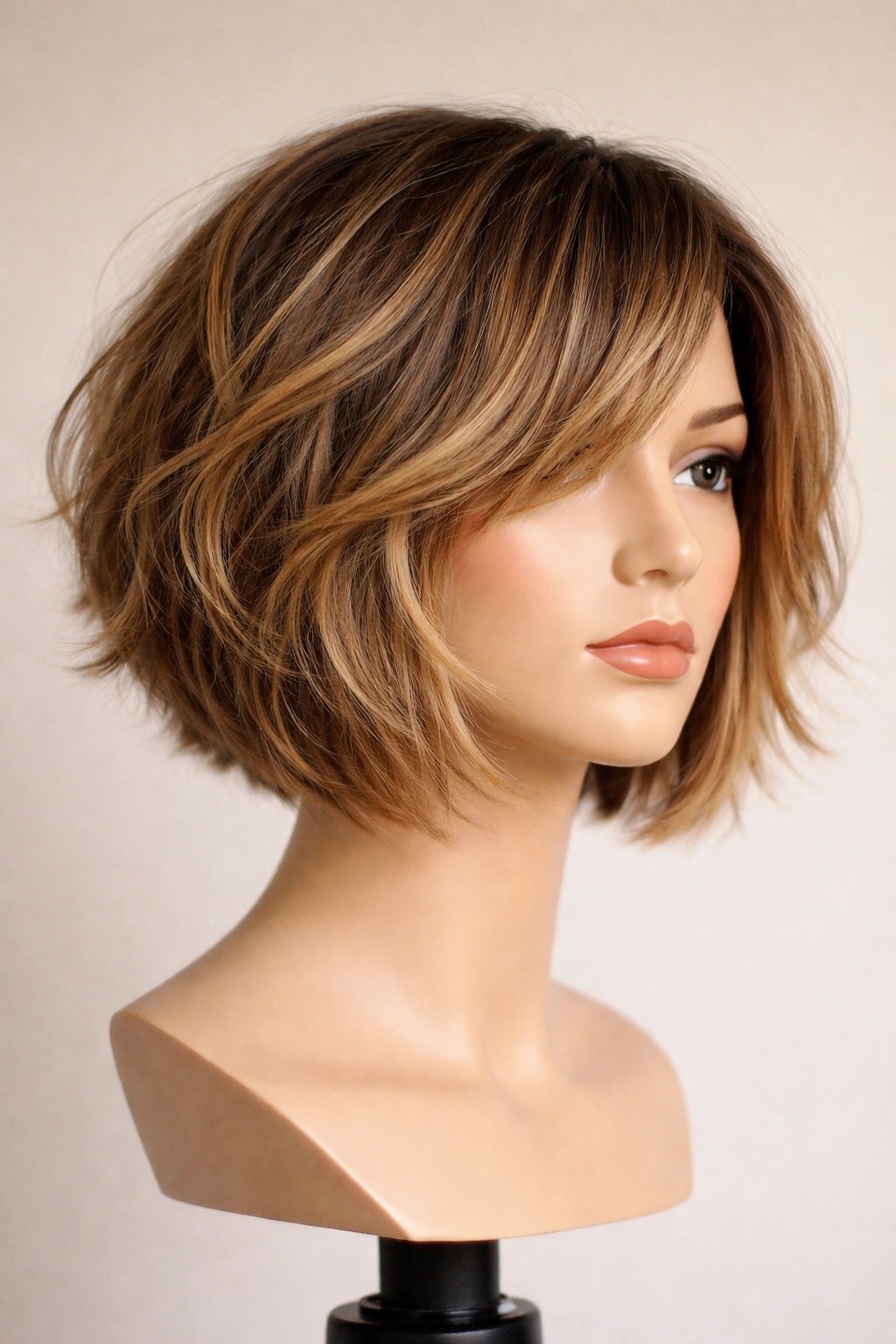
The bob is having a moment, and for good reason—it’s one of the most versatile and flattering lengths for longer face shapes when executed with proper texture. A blunt, solid bob can actually emphasize face length, but a textured, layered version breaks that up beautifully with movement and dimension. The key is getting choppy layers throughout that create visual interest without adding length.
The Magic of Texture in a Bob
Textured layers give the bob a lighter, modern feel while the length (typically chin-length or just below) provides the perfect proportion to balance a longer face. The layers should start at mid-ear and increase in length gradually, creating a feathered, lived-in look. This prevents the heavy, blunt appearance that can make longer faces seem even more stretched out.
Making Your Bob Work Hardest
- Opt for layers that begin around ear level to add width where your face is narrowest
- Ask for choppy, piece-y layers rather than subtle ones for maximum texture and movement
- Style with texture spray or sea salt spray to emphasize the layers and give it that effortless dimension
- Keep the styling piece-y and separated rather than smoothing it flat for the best face-framing effect
- A slight tousle when styling creates the visual bustle that shortens a longer face
Worth knowing: A textured bob requires regular trims every 6 to 8 weeks to maintain its choppy shape and prevent it from looking thin or wispy.
3. The Shag
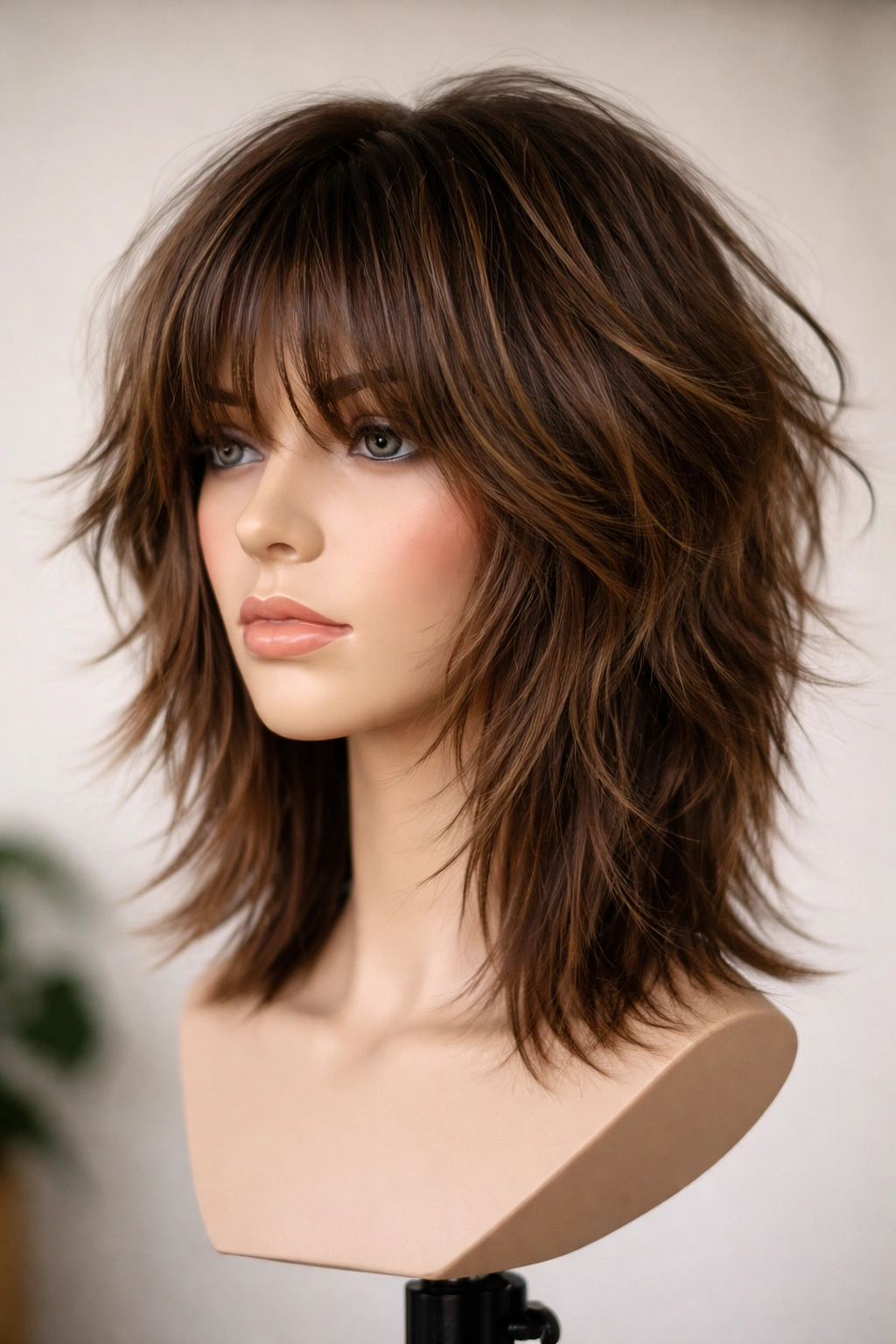
The shag is back, and it’s absolutely transformative for longer faces. This layered, rock-and-roll style has natural movement throughout, creating width at the sides and a playful texture that prevents the face from looking too long or too serious. The shag’s defining feature is its choppy, uneven layers that catch light and movement beautifully.
Why the Shag Flatters Longer Faces
The shag’s strength lies in its abundance of texture and its sideways movement. Every layer catches light differently, creating visual complexity that draws the eye around the face rather than down its length. The layers also add fullness at the sides, which creates the width a longer face needs. It’s volumetric in a way that other short styles sometimes aren’t.
Styling Tips for a Modern Shag
- Use a blow dryer with a diffuser attachment to enhance the natural texture and layers
- Apply a lightweight texturizing spray while hair is damp to encourage the layered movement
- Don’t try to smooth it into submission—the shag’s beauty comes from its intentional messiness
- The longer pieces at the front should graze your cheekbones to break up vertical length
- Scrunch and tousle as you style rather than brushing straight back
Insider note: A shag works especially well on naturally wavy or curly hair, where the texture already exists. If you have straight hair, you’ll want texturizing products to maintain the shag’s signature movement.
4. The Asymmetrical Cut
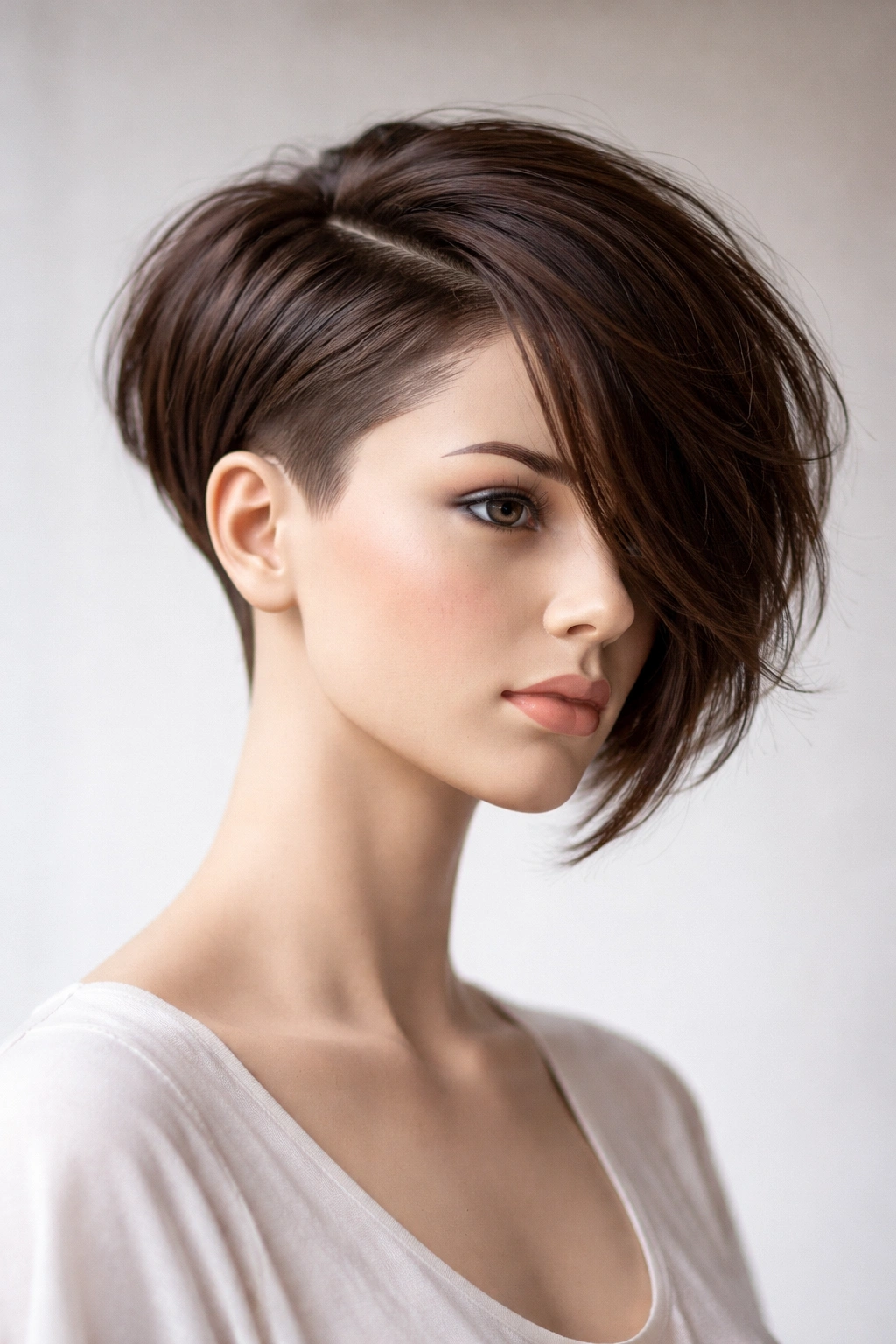
An asymmetrical style deliberately breaks the vertical line of a longer face by creating uneven length on either side. One side stays shorter (often buzzed or very cropped) while the other is longer, and this contrast creates visual interest that shifts focus away from face length. It’s bold and modern, and it works exceptionally well for people with longer face shapes.
The Geometry of Asymmetry
An asymmetrical cut creates a natural horizontal break that shortens the perceived face length. The longer side falls across the cheekbone and jawline, adding width right where a longer face needs it. The cropped side exposes the ear and neck, creating an unexpected contrast that draws attention to other features. Together, these elements prevent the eye from traveling straight down the length of the face.
Making an Asymmetrical Cut Work Daily
- Choose a stylist experienced with asymmetrical cuts—they require precision and skill to balance proportions
- The shorter side should be faded or textured, never blunt and heavy
- Ask for the longer side to fall at cheekbone length or just below for maximum face-shortening effect
- Style the longer side with texture and movement for a modern, intentional appearance
- The contrast between the two sides is what makes this cut work, so don’t shy away from dramatic length differences
Pro tip: An asymmetrical cut photographs beautifully from the longer side, so consider which angle you prefer and ask your stylist to orient the longer side accordingly.
5. The Cropped Layers
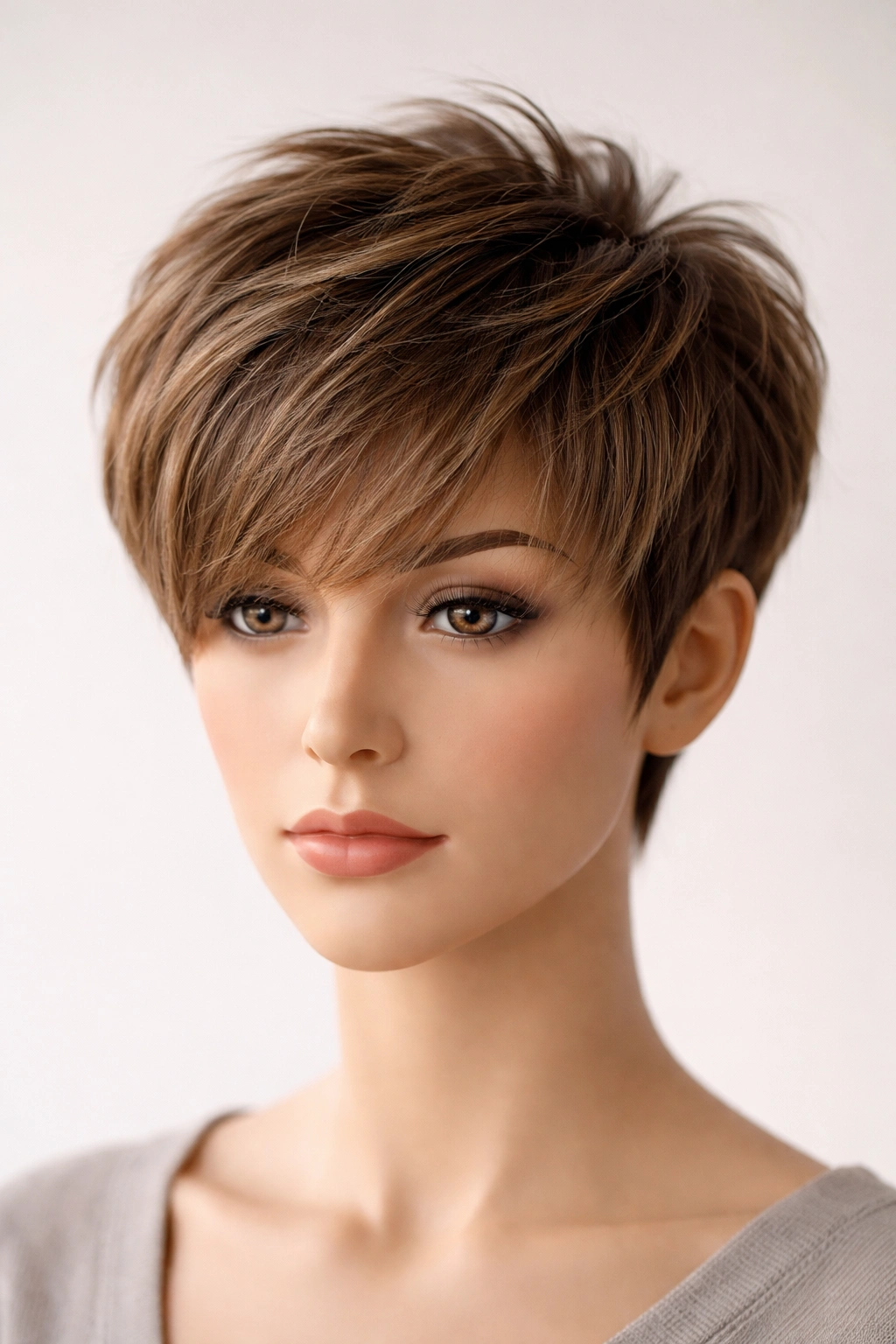
Cropped layers create maximum texture and movement throughout the entire cut, with strategically placed layers that add width and break up vertical lines. Unlike a pixie or shag, a cropped layered cut maintains slightly more length overall, usually 2 to 3 inches on top, but layers are cut short all over to create dimension and movement. This works beautifully for longer faces because the layering prevents any one line from being too long.
How Layers Create Balance
Multiple layers catch light and movement differently, creating a complex, multi-dimensional appearance that prevents the face from appearing flat or overly long. The layers should be closest together at the crown (for height) and gradually wider as they extend down, with shorter pieces framing the face. This graduated approach adds volume where it helps balance face proportions most.
Styling Cropped Layers Successfully
- Use a texturizing paste or powder to separate the layers and enhance individual strands
- A blow dryer on high heat with a round brush lifts the crown for added height
- Tousle layers as you style rather than smoothing everything in one direction
- Layers naturally create movement, so embrace it rather than trying to sleek it down
- The separation between layers is what gives this cut its face-flattering appeal
Worth knowing: Cropped layers require blow-drying or styling product to look their best—they won’t have the same impact if you let them air-dry flat against your head.
6. The Blunt Bangs with Short Hair
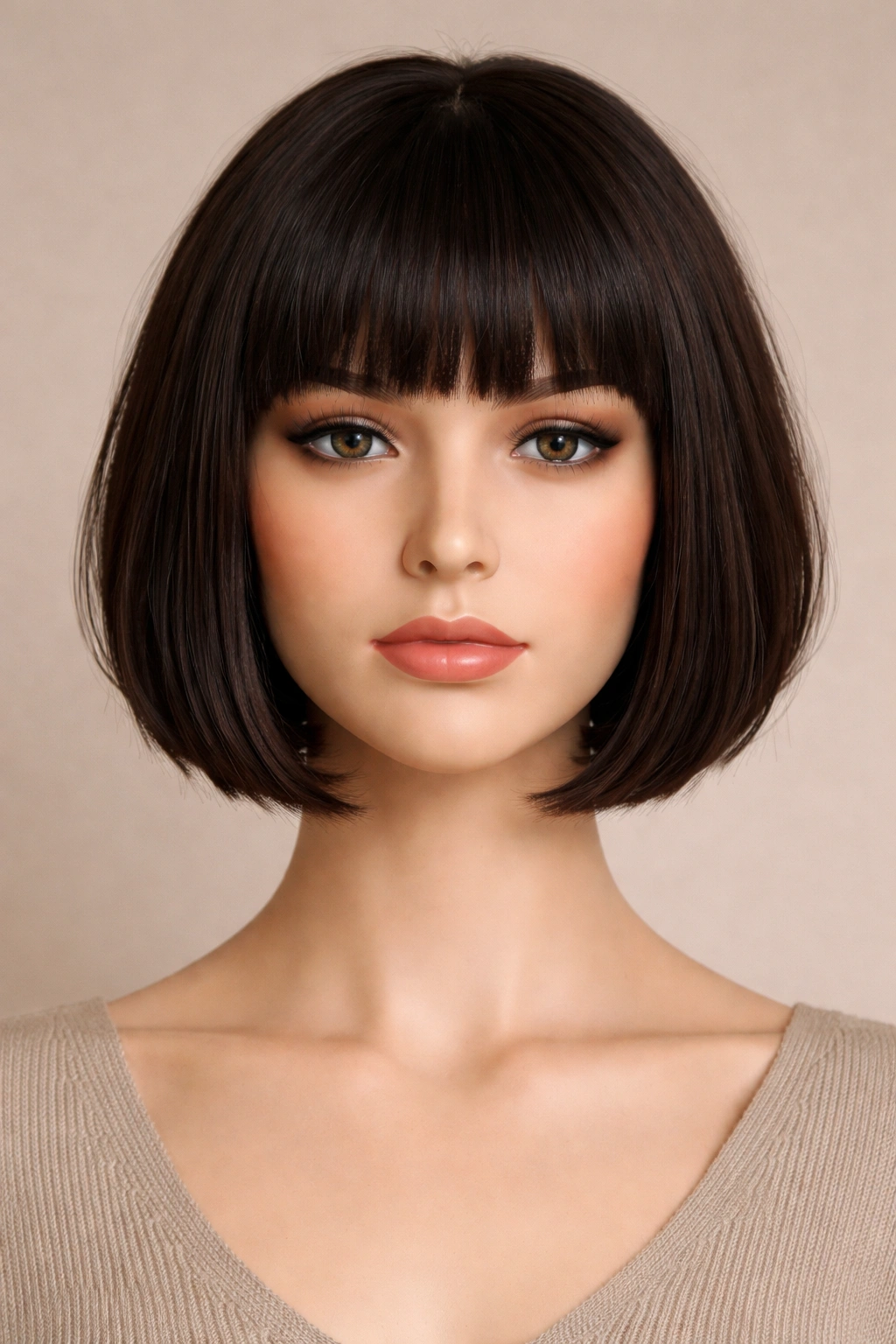
Bangs are a strategic tool for longer faces because they interrupt the vertical line right at the forehead, immediately shortening how long the face appears. Pairing blunt bangs with a short cut (usually a pixie length on top or a short layered style) creates a two-part composition that breaks the face into sections. This visual division is exactly what longer faces need.
Why Bangs Work for Longer Faces
Blunt bangs create a horizontal line at the forehead, visually shortening the upper third of the face. This redirection of visual attention makes the overall face appear less elongated. The bangs also frame the eyes and eyebrows, drawing focus to the center of the face rather than allowing the eye to travel vertically from forehead to chin. When paired with a textured short cut, bangs become a powerful balancing tool.
Getting and Maintaining Bangs
- Blunt bangs should hit between your eyebrow and the top of your eye for optimal face-shortening effect
- Bring a reference photo showing the exact thickness and length you want—bangs are precise
- Ask your stylist for slightly wispy or textured blunt bangs rather than a completely rigid line for a modern feel
- Bangs require trimming every 4 weeks as they grow out quickly and can cover the eyes
- Style bangs with a blow dryer and round brush to keep them full and slightly lifted
Pro tip: If you’re not ready to commit to full bangs, ask for baby bangs (micro bangs) or a longer fringe that hits mid-forehead—they provide the face-shortening benefit without the commitment.
7. The Taper Fade with Texture
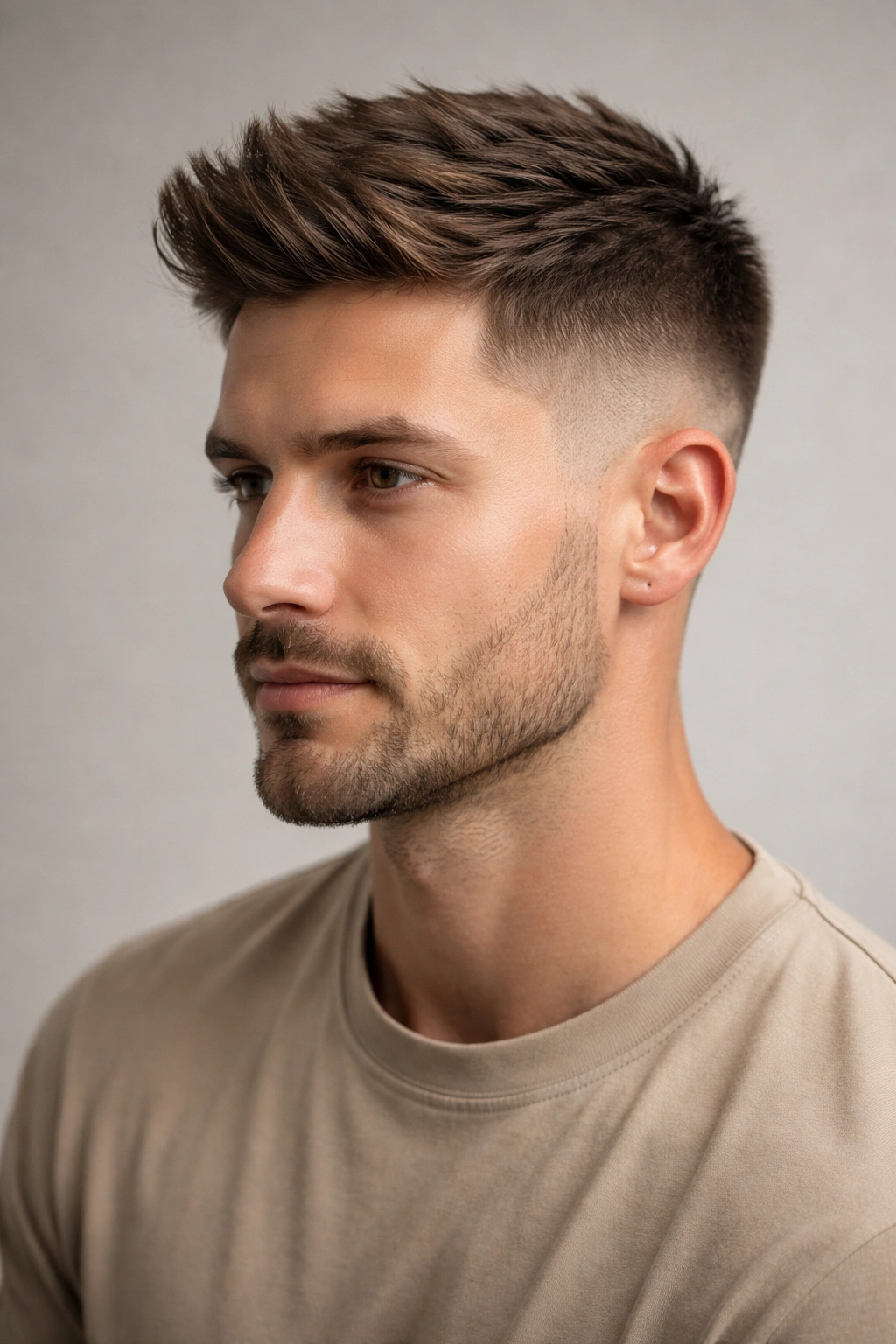
A taper fade gradually transitions from longer hair on top to very short hair on the sides and back, creating clean lines and maximum width at the crown. When cut with texture on top rather than slicked flat, this style gives longer faces the height and dimension they need. The fade keeps the sides lean and defined, preventing the heavy appearance that can emphasize length.
Building Volume and Balance
The taper fade’s strength for longer faces comes from the contrast between the longer, textured crown and the faded sides. This vertical contrast actually works in reverse—the eye is drawn upward to the texture and fullness on top, making the face appear shorter. The precise fade also keeps the sides clean and sculpted, which adds definition without weight. The result is a style that’s sharp and modern while being genuinely flattering.
Styling and Maintenance
- Ask your barber or stylist for 1 to 2 inches of length on top for texture and movement
- Textured hair on top should be choppy and piece-y, not slicked back or smoothed flat
- Use a texturizing powder or clay to separate the pieces and emphasize the texture
- A blow dryer helps lift the crown for maximum height
- Fades require trimming every 2 to 3 weeks to maintain clean, sharp lines
Worth knowing: A taper fade works beautifully on straight, wavy, and curly hair types, but the styling approach changes based on your hair texture—discuss this with your stylist.
8. The Wolf Cut
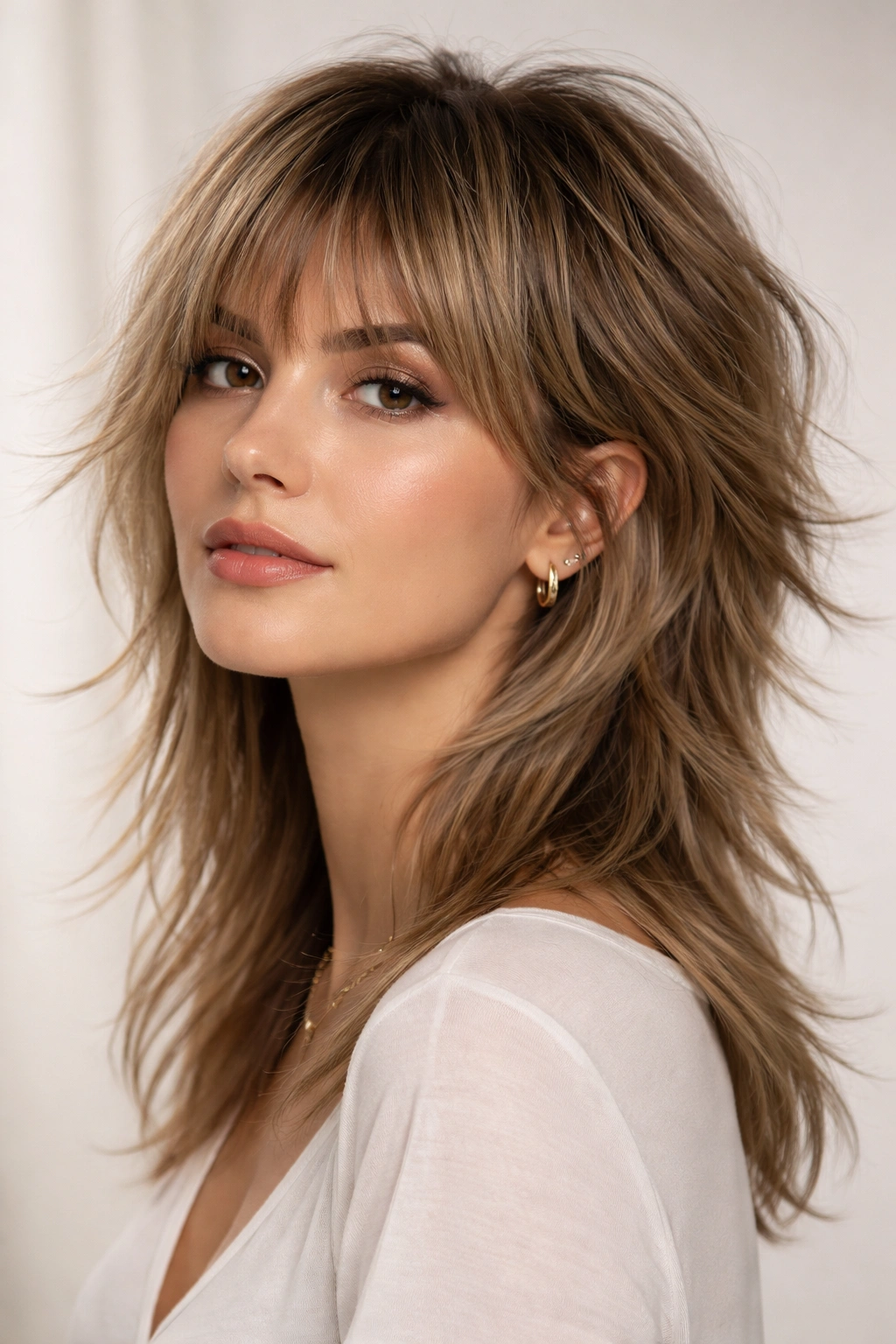
The wolf cut is a hybrid between a shag and a mullet, featuring long layers on top that create height and texture while shorter layers in the back give structure. For longer faces, the wolf cut is brilliant because it delivers maximum volume at the crown (which adds visual width and shortens the face) while the layers throughout prevent any one line from being too long. It’s playful, trendy, and surprisingly wearable.
What Makes the Wolf Cut Special
The wolf cut’s genius is its layering strategy. Shorter layers throughout create movement and texture that a longer face needs, while the slightly longer pieces on top provide height that helps balance proportions. The cut has a naturally tousled appearance that photographs well and requires minimal daily styling. The layers catch light beautifully, creating visual complexity that prevents the face from appearing flat or overly elongated.
Making a Wolf Cut Work
- Ask for shorter, choppy layers throughout with slightly longer pieces framing the face
- The back should be textured and layered, not heavy or blunt
- Texturizing spray or paste helps emphasize the layers and gives definition
- A slight tousle and movement is the whole point—embrace the piece-y texture
- This cut works especially well on naturally wavy or textured hair
Pro tip: The wolf cut photographs beautifully with slightly damp, tousled styling—take photos or videos to show your stylist exactly what texture and movement you’re going for.
9. The French Crop
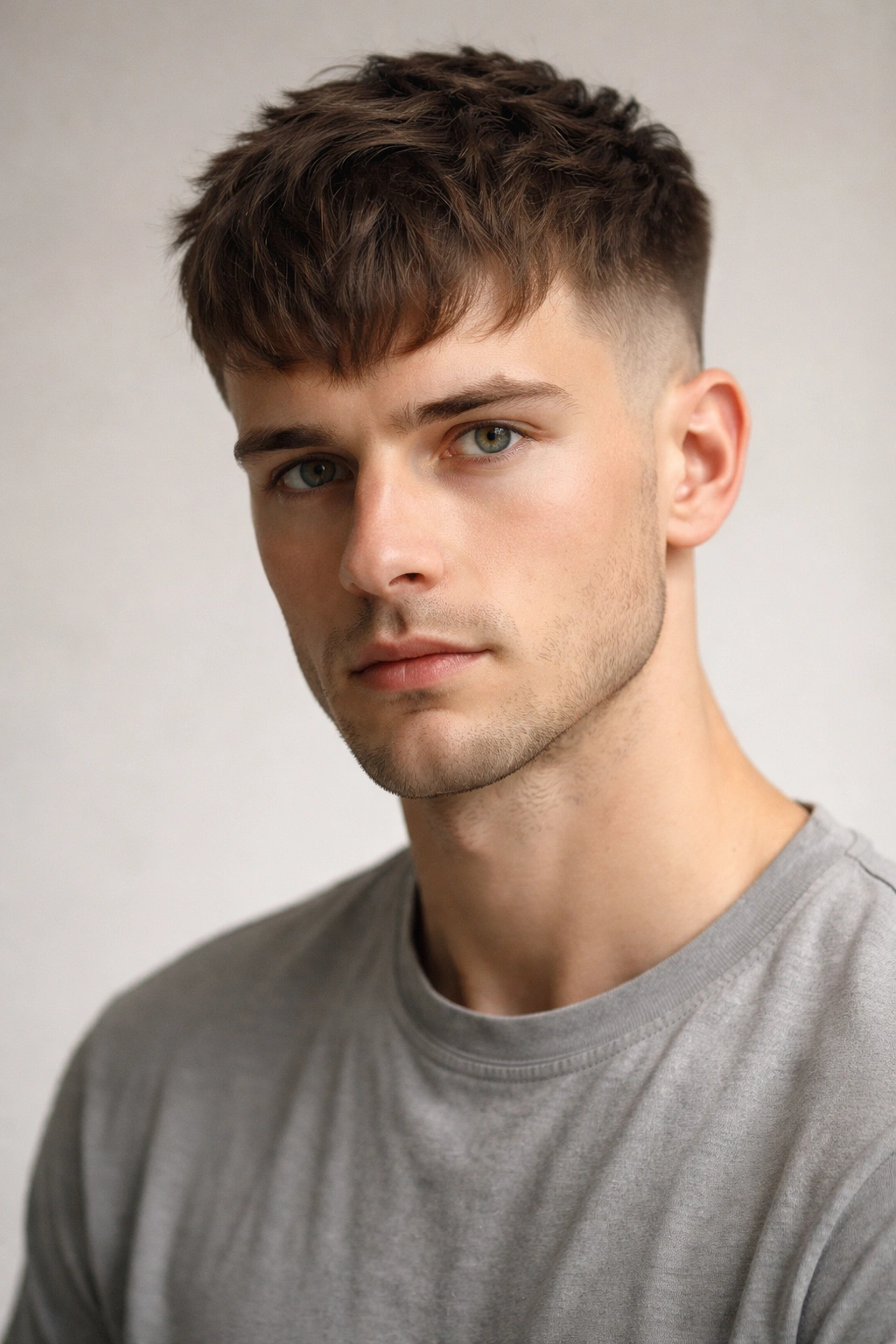
The French crop is a clean, structured short style that features slightly longer hair on top (usually 1 to 2 inches) with faded or very short sides and back. What makes it work for longer faces is the way the top is cut with texture and a slight fringe-like quality that creates visual interest without excessive length. The French crop is masculine-leaning but can be styled feminine or neutral depending on the stylist’s approach and your personal styling choices.
Structure and Proportion
The French crop works for longer faces because the textured top adds height while the clean sides and back prevent any heaviness. The cut naturally creates a horizontal line where the longer top meets the shorter sides, and this line visually breaks up vertical face length. The top should be textured and slightly messy rather than slicked or overly controlled—this adds dimension that a longer face needs.
Styling Your French Crop
- Style the top with a texturizing product to separate the strands and create visual interest
- Use a blow dryer to add lift and height at the crown
- The fringe-like quality comes from leaving the front slightly longer than the very top, which frames the face
- Keep styling relaxed and piece-y rather than neat and uniform
- Fades require maintenance every 3 to 4 weeks
Worth knowing: A French crop can feel masculine or feminine depending entirely on how you style it and what products you use—the same cut can read different ways.
10. The Short Curly Cut
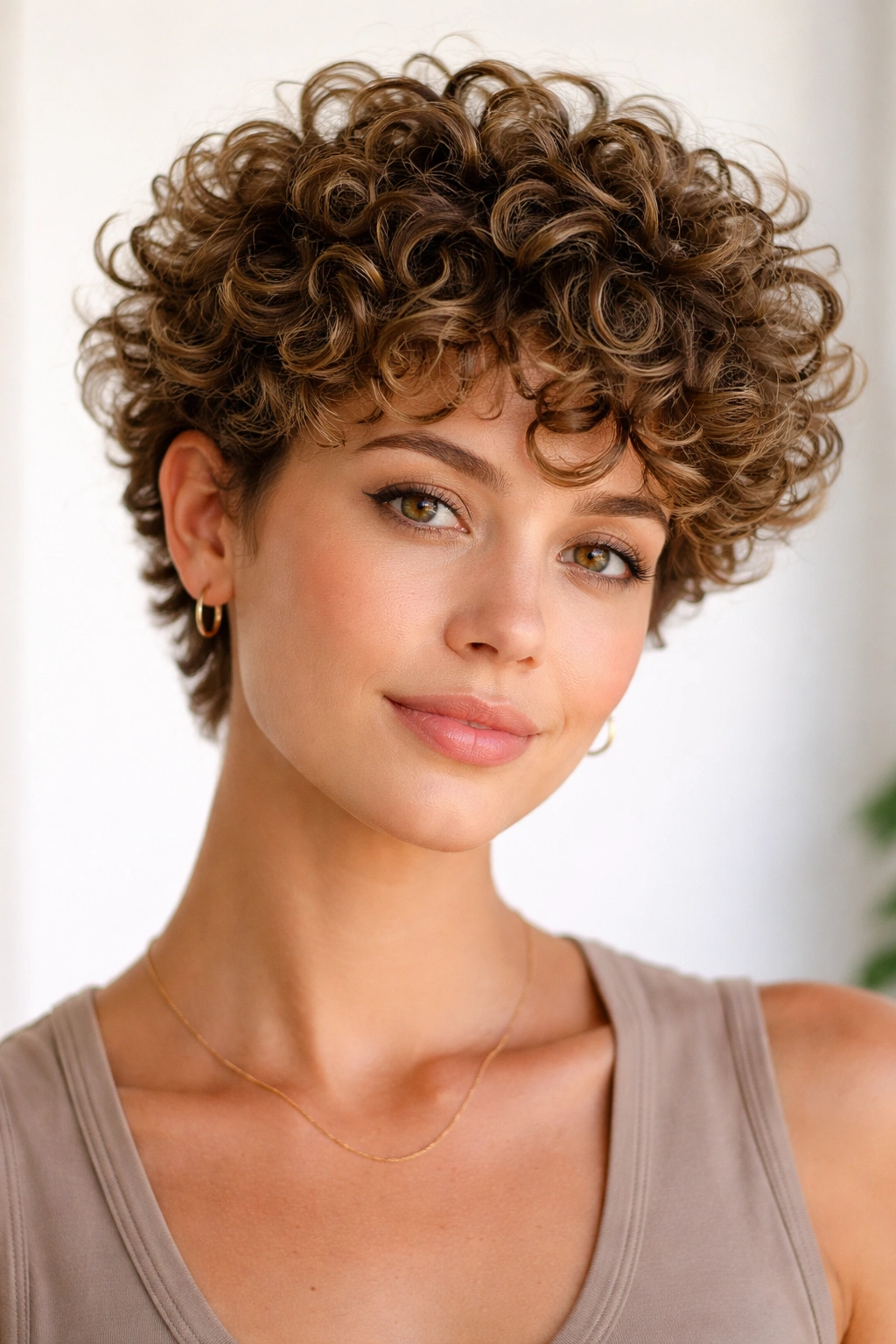
If you have naturally curly or coily hair, a short cut designed specifically for curl patterns can be absolutely transformative for a longer face. Curly hair has inherent volume and texture, so a short curly cut maximizes these natural qualities. The curls create width and dimension while the shorter length prevents the curl pattern from stretching and elongating the face further. This is a case where your hair texture becomes your greatest asset.
Leveraging Natural Curl
Curly hair already provides the texture and width that longer faces need—the trick is cutting it in a way that works with your specific curl pattern rather than against it. A curly-specialist stylist will cut your hair dry (or at least damp in its natural curly state) to see exactly how the curls fall and where they sit when dry. Shorter lengths mean the curls have more spring and bounce, adding volume at the sides and crown.
Caring for Your Curly Cut
- Find a stylist who specializes in curly hair and cuts curly hair dry to see the true pattern
- Use curl-defining products that enhance your natural texture without weighing it down
- Hydration is crucial—curly hair needs moisture to maintain its shape and bounce
- Air-dry when possible, or use a diffuser attachment on your blow dryer
- Regular trims every 6 to 8 weeks maintain the shape as curl patterns grow out
Pro tip: Curly hair and shorter lengths are a match made in heaven for longer faces—the curls naturally provide the width and dimension you need without you having to do much styling work.
11. The Choppy Layers
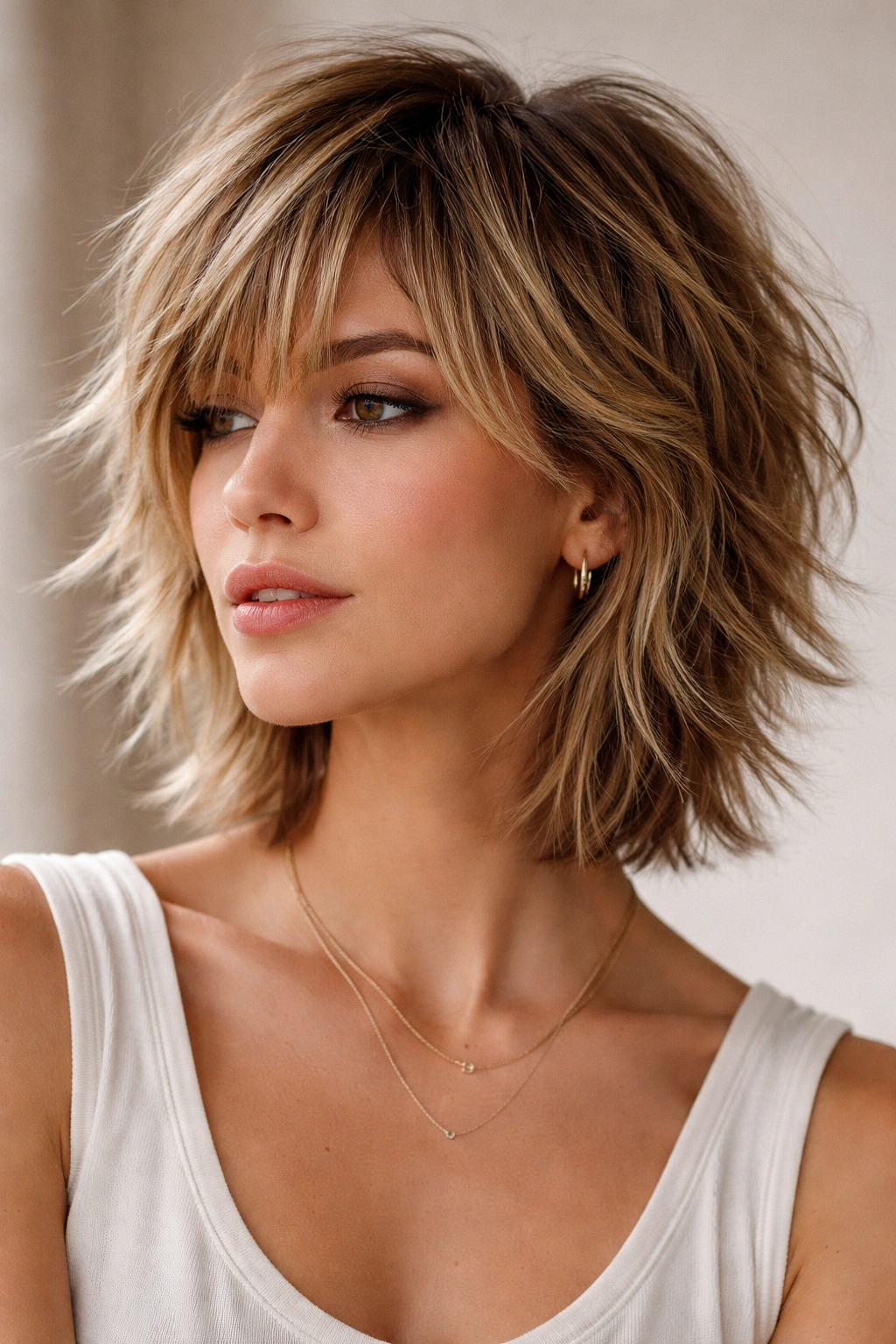
Choppy layers are all about breaking up lines and creating visual movement throughout the cut. Unlike neatly blended layers, choppy layers are intentionally piece-y and uneven, with noticeable variation in length that creates dimension and prevents any one line from dominating. For longer faces, the visual busyness of choppy layers is actually the entire point.
How Choppy Layers Transform Face Shape
Choppy layers create visual complexity that prevents the eye from following a simple vertical line down the face. Each layer catches light differently, and the varied lengths create a sense of movement and texture. The choppiness also adds width because the jagged edges suggest more fullness than a smooth line would. This is why choppy layers can be so transformative for longer faces—they interrupt the length in multiple places rather than creating one long unbroken line.
Styling Choppy Layers
- Texture spray or sea salt spray emphasizes the layers and the choppiness throughout
- Finger-tousling during styling separates the layers and shows off the texture
- A blow dryer helps lift and separate each layer without smoothing it
- Don’t brush through choppy layers when dry—use your fingers or a wide-tooth comb
- The lived-in, undone appearance is the whole aesthetic
Worth knowing: Choppy layers require regular trims every 6 to 8 weeks because the choppiness becomes less defined as they grow out—maintenance is part of the commitment.
12. The Side-Swept Short
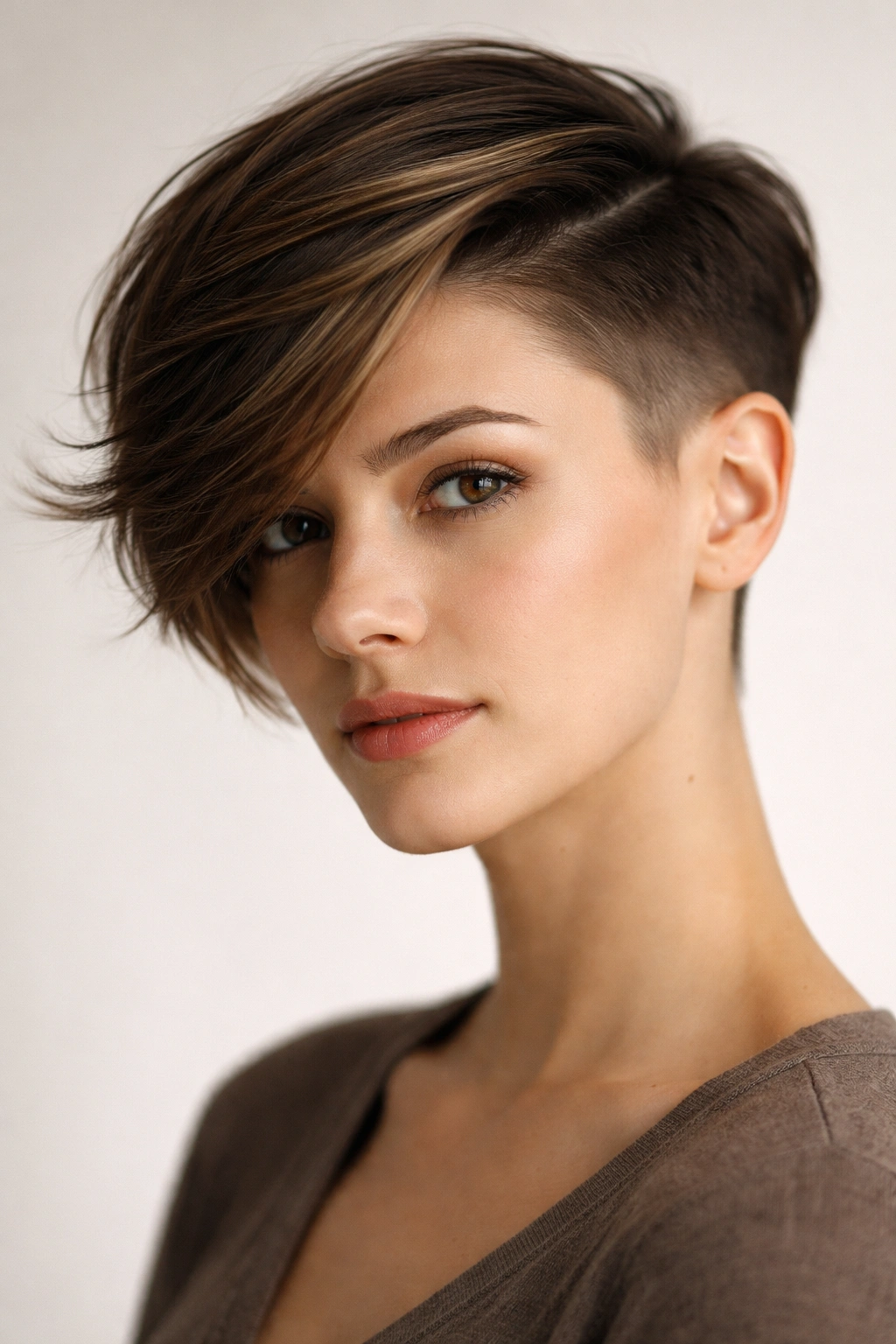
A side-swept short cut, sometimes called a side-part short or a one-sided short, features longer hair on one side that sweeps across and shorter, faded hair on the other side. The length on top gradually tapers, creating that diagonal line that breaks up vertical face length. For longer faces, this style is brilliant because the sweeping length creates a horizontal emphasis that visually shortens the overall face.
The Power of Asymmetry and Sweeping
The side-swept short creates a strong diagonal line that travels across the face and head, which prevents the eye from moving straight up and down (the vertical emphasis that makes longer faces look even longer). The longer side usually falls to the cheekbone or just below, framing that area and adding width right where it helps most. The shorter, faded side exposes more of the head shape and neck, creating contrast and balance.
Creating the Sweep
- Ask your stylist for hair on top that’s longer on one side and gradually shorter on the other
- The fade should be clean and precise on the shorter side for maximum contrast
- Use styling product to create the sweep rather than trying to blow-dry it into place
- A pomade, cream, or gel helps define the sweep and gives it structure
- The sweep should look intentional but not overly slicked or stiff
Pro tip: The side-sweep works beautifully photographed from the longer side, so consider which angle you want to feature most and ask your stylist to orient the longer side accordingly.
13. The Classic Undercut
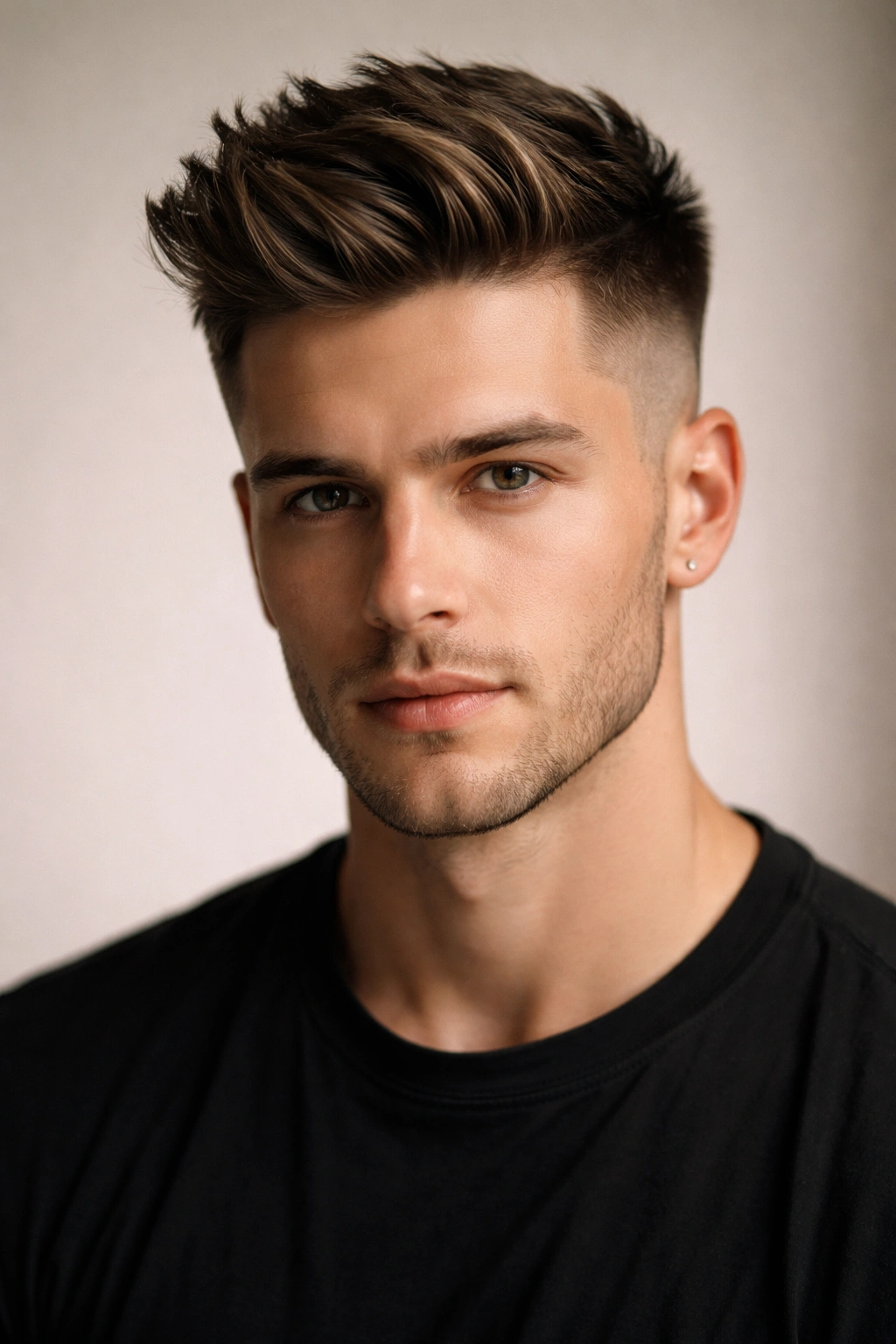
An undercut is bold and geometric—it features longer hair on top with very short, often shaved or faded, sides and back. What makes it work for longer faces is the stark contrast between the longer crown and the lean sides. This contrast immediately draws attention upward to the length and texture on top, which is where you want visual emphasis to land for longer face shapes. An undercut is a commitment, but it’s undeniably effective.
Why Undercuts Shorten Longer Faces
The undercut works through visual contrast. The very short sides create a lean appearance while the longer hair on top provides height and width in the crown. This top-heavy proportion actually makes the face appear shorter because visual attention lands upward rather than traveling the full length. The geometric precision of an undercut also adds structure and sophistication that can make the entire face appear more balanced.
Styling an Undercut
- Ask for 2 to 3 inches of length on top with maximum texture and choppiness
- The sides should be faded or shaved for the most dramatic effect
- Texturizing products help separate the longer hair on top and emphasize its movement
- Styling options range from slicked-back to piece-y and tousled depending on your mood
- Undercuts require maintenance every 2 to 3 weeks to keep the sides clean and defined
Worth knowing: An undercut is a significant style commitment—it reads bold and edgy, so make sure you’re prepared for the impact and the maintenance required.
14. The Cropped Curls
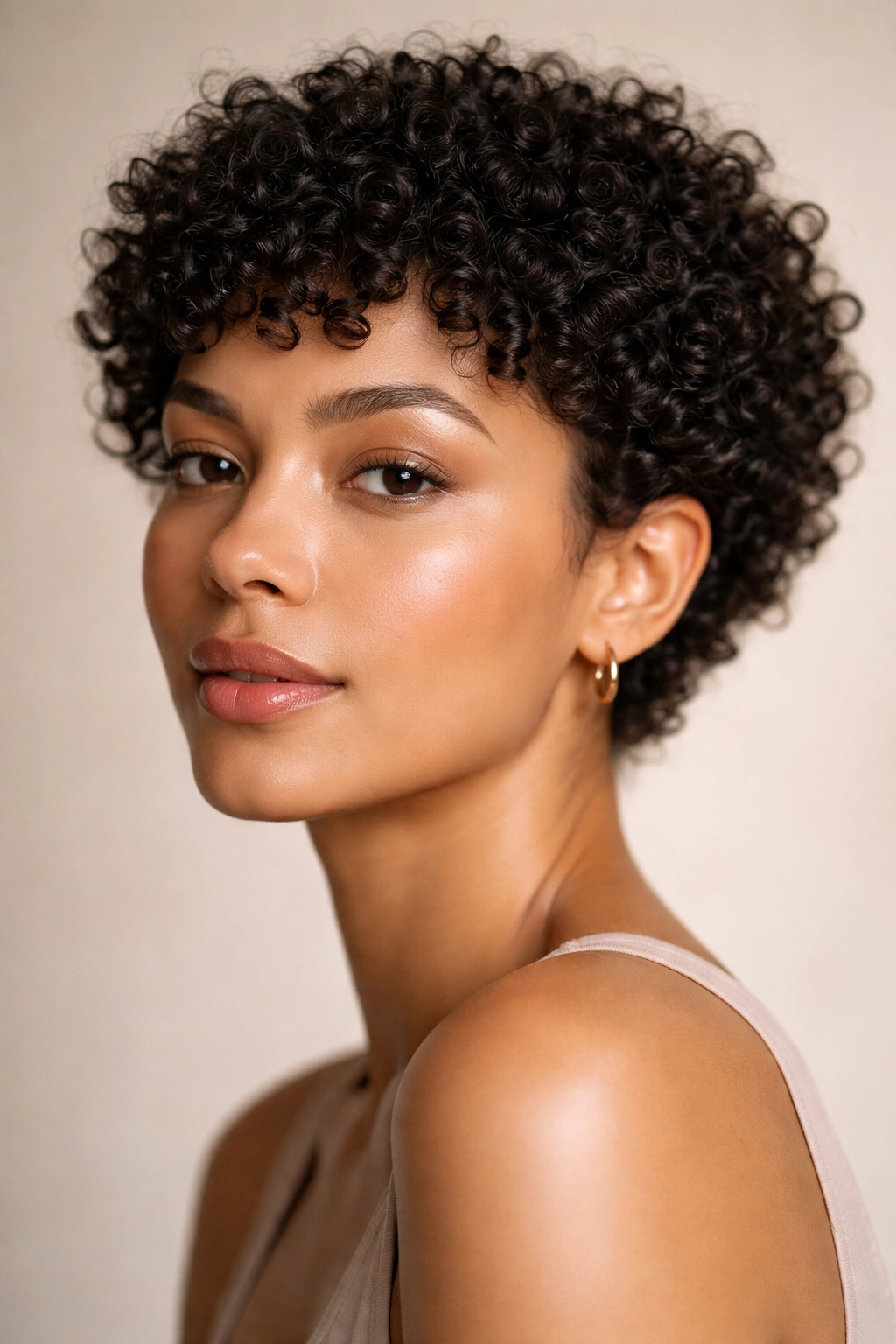
For people with naturally curly hair, cropped curls taken very short (usually 1 to 2 inches all over) create a halo of texture around the head that instantly adds width. The curls naturally spring away from the scalp, creating volume that a longer face desperately needs. This cut celebrates the curl pattern while preventing length from becoming too elongated. The result is a style that’s chic, low-maintenance, and genuinely flattering.
Curl Pattern as Your Asset
When curls are cropped short, they have maximum bounce and spring, creating a natural halo effect that adds width all around the head. The curl pattern itself becomes the texture and visual interest—you don’t need choppy layers or styling tricks to make this cut work. The shorter the crop, the more the curls expand away from the head, which is exactly the width that longer faces need. This is a case where your natural hair texture solves the face-shape problem almost entirely on its own.
Maintaining Cropped Curls
- Moisture is crucial—use hydrating shampoos and conditioners designed for curly hair
- Define the curls with a good curl cream or gel applied to damp hair
- Air-dry when possible or use a diffuser attachment to maintain curl definition
- Regular trims every 4 to 6 weeks keep the curls bouncy and prevent them from getting too stretched
- Embrace the natural shrinkage that happens with curly hair—it’s actually helping your face proportions
Pro tip: Ask your stylist to cut your curls when they’re wet and in their natural state, so the cut works with your true curl pattern rather than against it.
15. The Modern Mullet
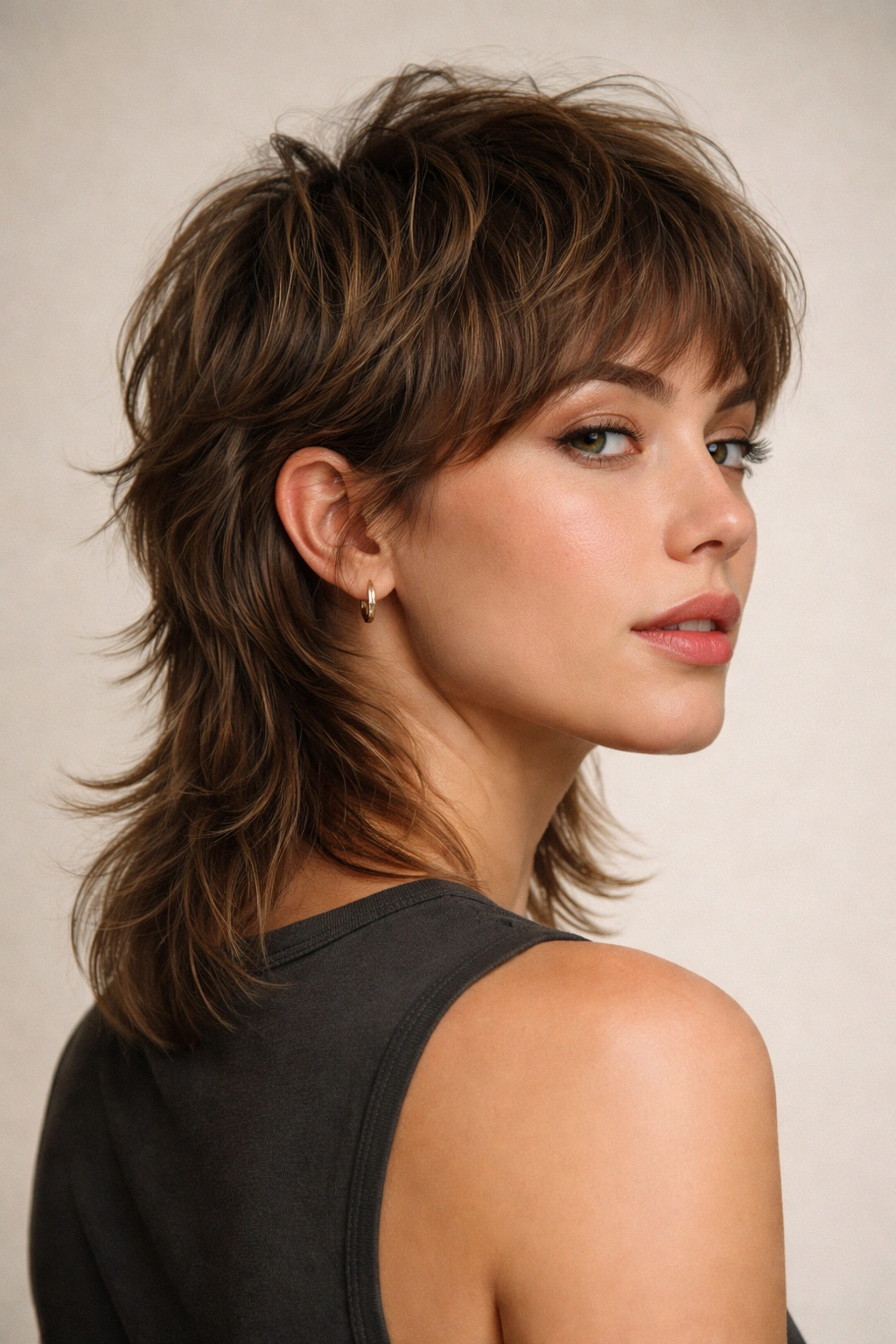
Yes, the mullet is genuinely back, and styled the right way, it can actually work for longer faces. A modern mullet features textured, piece-y layers on top and at the sides with slightly more length in the back—not the extreme “business in the front, party in the back” of past decades. For longer faces, the fullness and texture on top and sides create the width you need, while the slightly longer back adds structure without excessive length overall.
The Modern Mullet’s Appeal
A modern mullet is about proportion and texture. The choppy, textured layers throughout prevent any one line from being too long or too serious. The fuller crown and sides add width that balances a longer face, while the slightly longer back provides proportion without dragging the entire look downward. When styled correctly with texture and movement, a modern mullet can be surprisingly chic and contemporary—not retro or ironic, but genuinely cool.
Styling a Modern Mullet
- Ask for choppy, textured layers throughout rather than a clean, defined line
- The back should be longer than the sides but not excessively long—aim for 2 to 3 inches
- Texture spray helps define the layers and creates the lived-in appearance this cut needs
- Styling should be piece-y and separated rather than slicked back
- The top can be styled up for volume or tousled for texture depending on your preference
Worth knowing: A modern mullet requires commitment to styling and regular trims to maintain the shape—this isn’t a wash-and-go cut, but it’s worth the effort if you want something bold and memorable.
Final Thoughts

Finding the right short haircut for a longer face shape comes down to understanding a few fundamental principles: add width with texture and strategic layering, break up vertical length with horizontal lines or diagonal sweeps, and create visual complexity that prevents the eye from following a simple line down the face. Every single one of these cuts accomplishes at least one—and usually all three—of those goals.
The best cut for you depends on your hair texture, your personal style, how much styling you’re willing to do daily, and how often you’re willing to get trims to maintain the shape. A pixie requires more frequent maintenance than a textured bob. An asymmetrical cut makes a bigger style statement than a French crop. A short curly cut requires a curl-specialist stylist, while many stylists can execute a taper fade beautifully. There’s no universally “best” choice—there’s only what works best for your specific hair, lifestyle, and confidence level.
The real game-changer is finding a stylist who understands your face shape and can recommend cuts with intention rather than just following trends. Show them reference photos of cuts you love, discuss what you do and don’t want to deal with styling-wise, and explain honestly whether you want to be high-maintenance or low-maintenance with your hair. A skilled stylist can adapt any of these cuts to work with your unique hair texture, lifestyle, and personal aesthetic. That personalization is what transforms a short cut from something you tolerate to something you actually love wearing.
