



Finding the right short haircut when you’re over 40 with a rounder face shape can feel genuinely challenging. You want something that feels contemporary and effortless, not like you’re trying too hard or clinging to a style that worked two decades ago. The good news? Short haircuts can be incredibly flattering for round faces when they’re cut with intention—creating angles where they don’t naturally exist, adding texture where it matters, and drawing attention upward to your eyes and cheekbones instead of widening the face.
The real trick is understanding that a round face needs vertical lines, dimension, and movement rather than blunt, heavy layers that add width. Age 40 and beyond also means you likely know what works for your hair texture, your lifestyle, and your confidence level—so these ten cuts are designed to be chic, manageable, and genuinely age-appropriate without feeling matronly or outdated. Each one can be styled sleek for a polished day or tousled for something more relaxed, depending on your mood and the occasion.
What makes a haircut truly flattering isn’t just the initial cut—it’s the styling technique that follows and how well you maintain it between salon visits. You’ll see the most dramatic difference when your stylist understands exactly what you’re aiming for: more definition at the crown, strategic layering to avoid bulk, and a shape that elongates rather than rounds out your face further. Let’s walk through ten proven cuts that deliver exactly that.
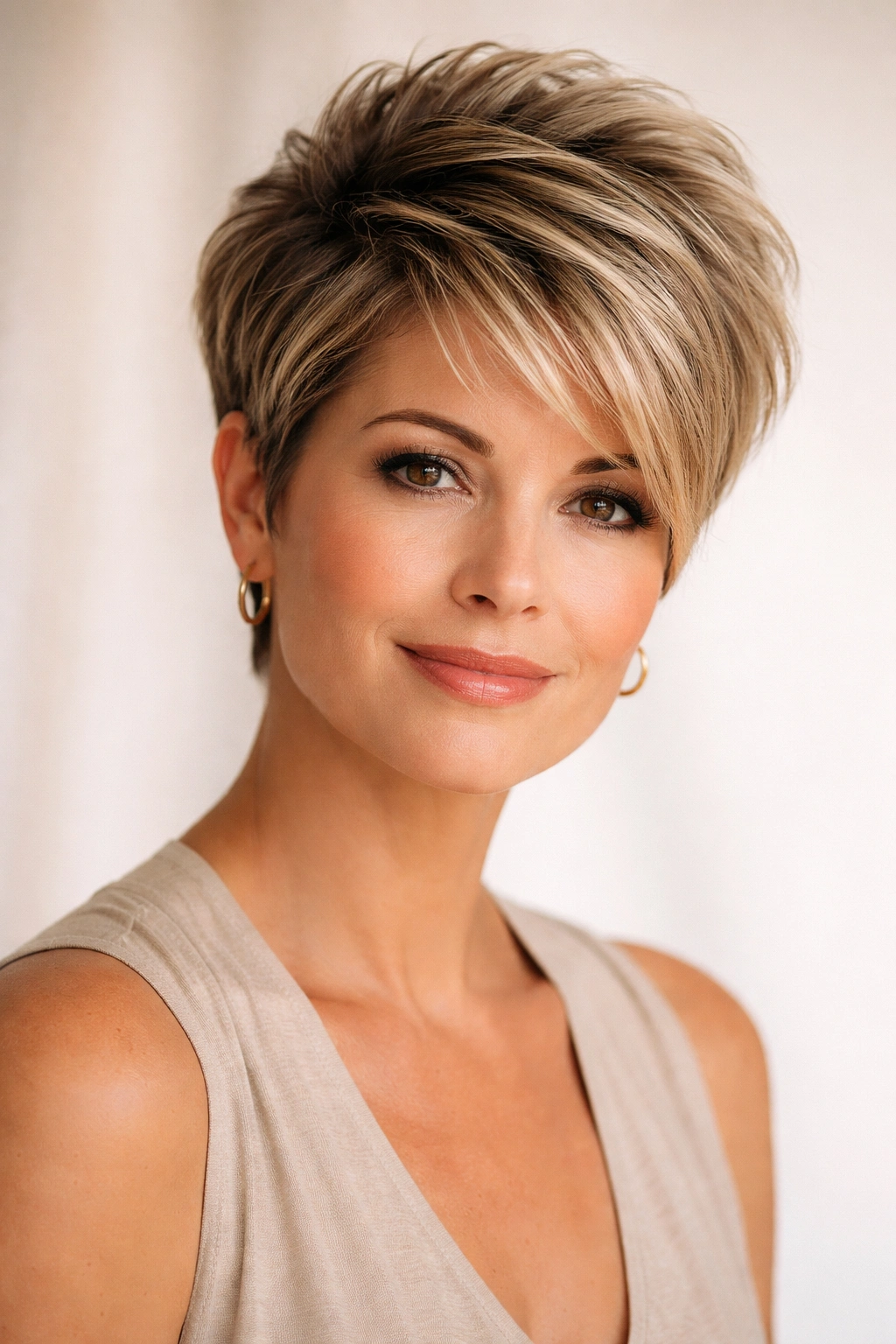
1. Textured Pixie Cut with Length on Top
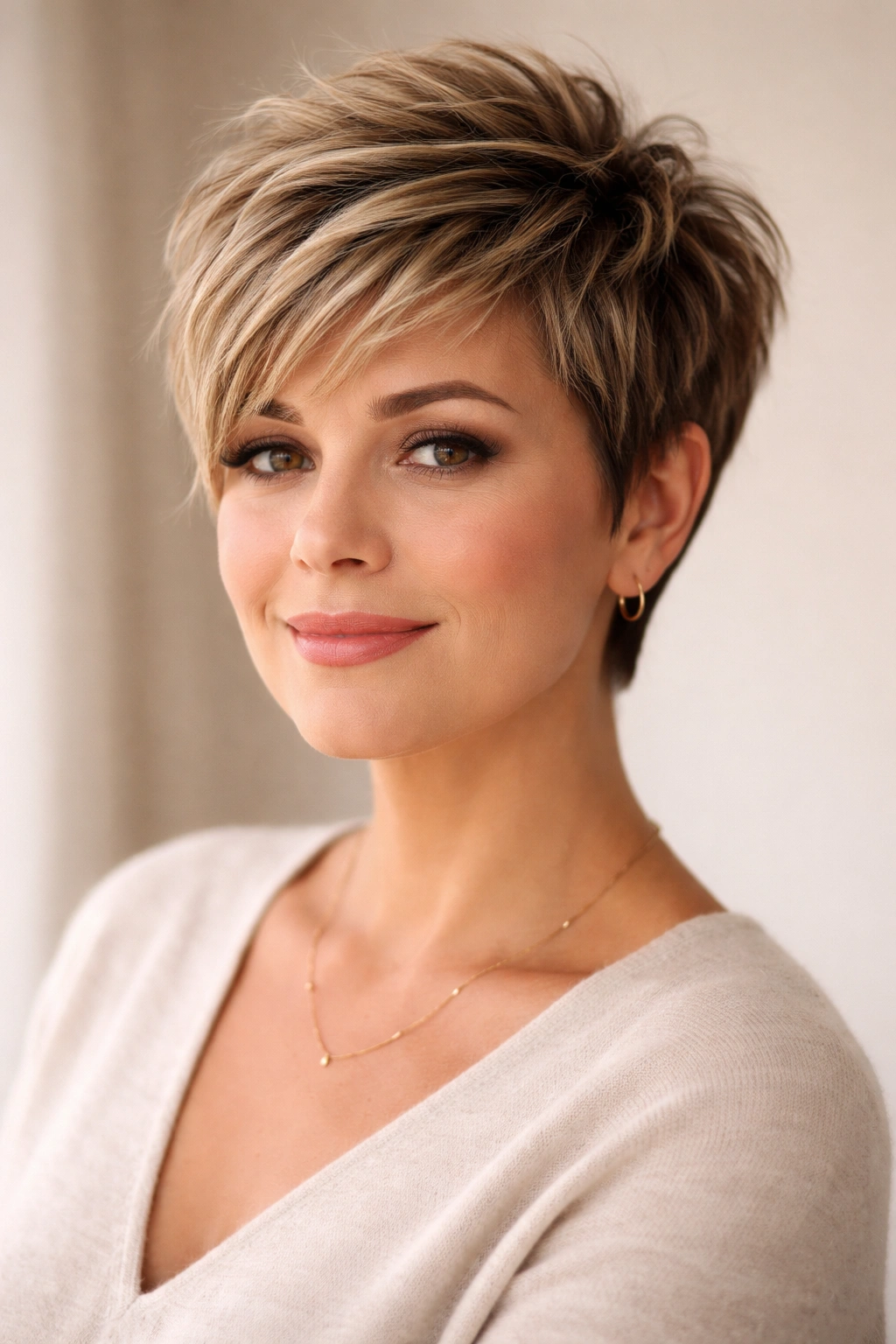
A pixie cut might seem bold if you’ve never worn one, but this modern version is nothing like the severe cuts of the past. By keeping more length on top and layering it heavily for texture, you create height and movement that instantly elongates a round face. The key is avoiding that flat, close-cropped look and instead asking your stylist for choppy, textured layers that point upward.
Why This Cut Works for Round Faces
The vertical movement on top immediately draws the eye upward, away from the widest part of your face. Texture breaks up any heaviness and makes the cut feel contemporary rather than practical. When the sides are kept relatively short but not skin-tight, you avoid adding width at the cheekbones. The overall effect is one of sophistication and intentionality—you’re clearly making a style choice, not defaulting to something easier.
Styling and Maintenance Tips
- Use a texturizing product or sea salt spray to enhance the choppy layers rather than smoothing them down
- Blow-dry with your fingers or a round brush, lifting at the crown to maximize height
- Visit your stylist every 4-6 weeks to maintain the shape and texture definition
- Shorter pixies pair beautifully with statement earrings or a bold lip color since your neck and face are so visible
2. Modern Bob with Choppy Layers
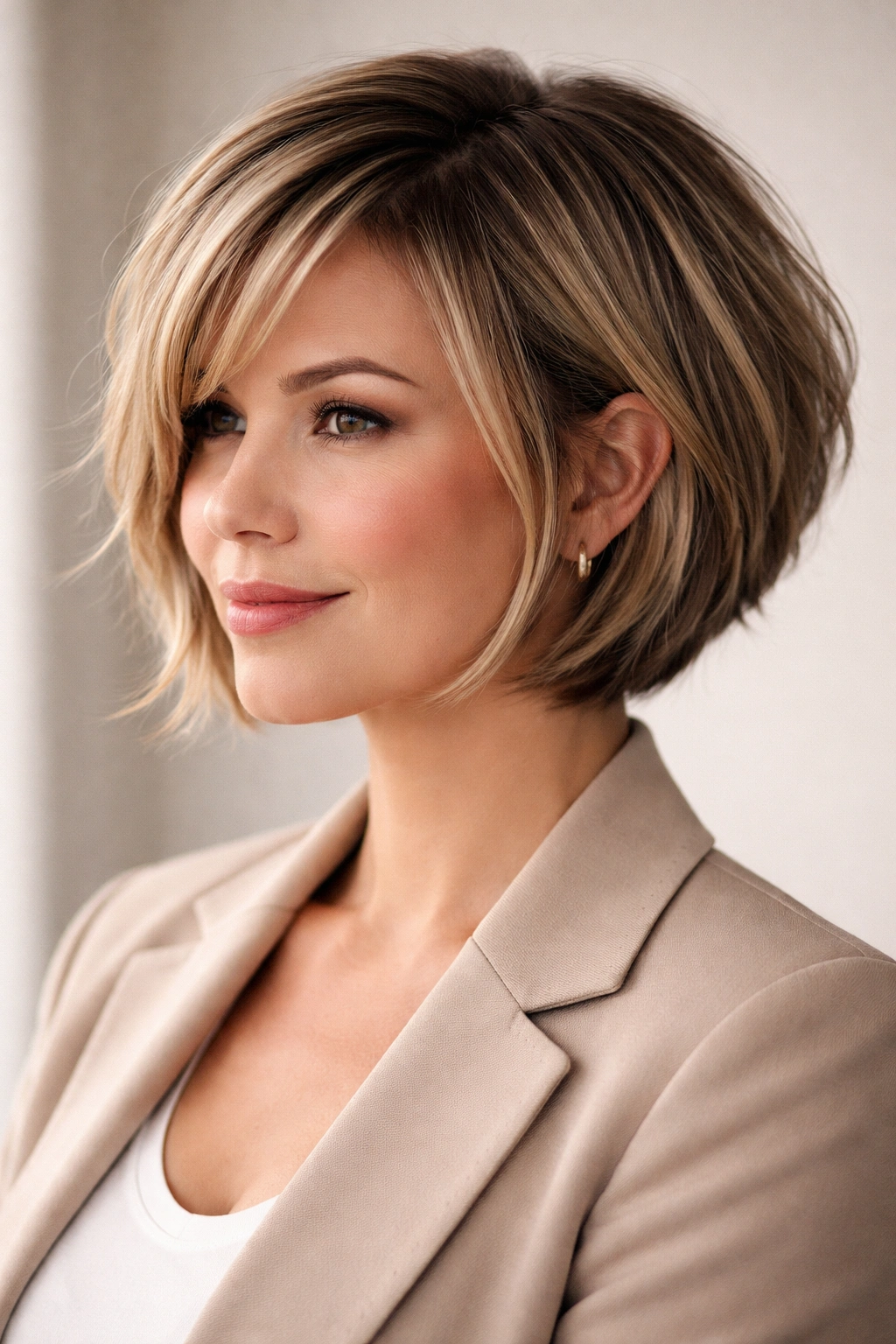
A bob sits right at the top of your shoulders or just below the chin, creating a clean horizontal line that actually works better for round faces when it’s not blunt. Adding choppy, disconnected layers throughout transforms it from heavy to light and airy. The layers create vertical lines that interrupt the roundness, while the overall length keeps it professional and wearable for any workplace or occasion.
What Makes This Different
Unlike a blunt one-length bob that emphasizes width, a layered bob has movement and dimension. Each layer catches light differently and creates the illusion of a narrower face. The choppy texture also gives you the flexibility to style it multiple ways—smooth and controlled one day, textured and tousled the next—without it looking like an entirely different cut.
How to Get It Right at Your Salon Visit
- Bring a reference photo showing exactly the type of layering and movement you want
- Ask your stylist to point-cut or razor-cut the layers for that disconnected, textured effect
- Request shorter layers around the face to frame your features and longer ones underneath for movement
- Specify that you want more volume at the crown—this is crucial for elongating a round face
3. Sleek Lob with Side Part
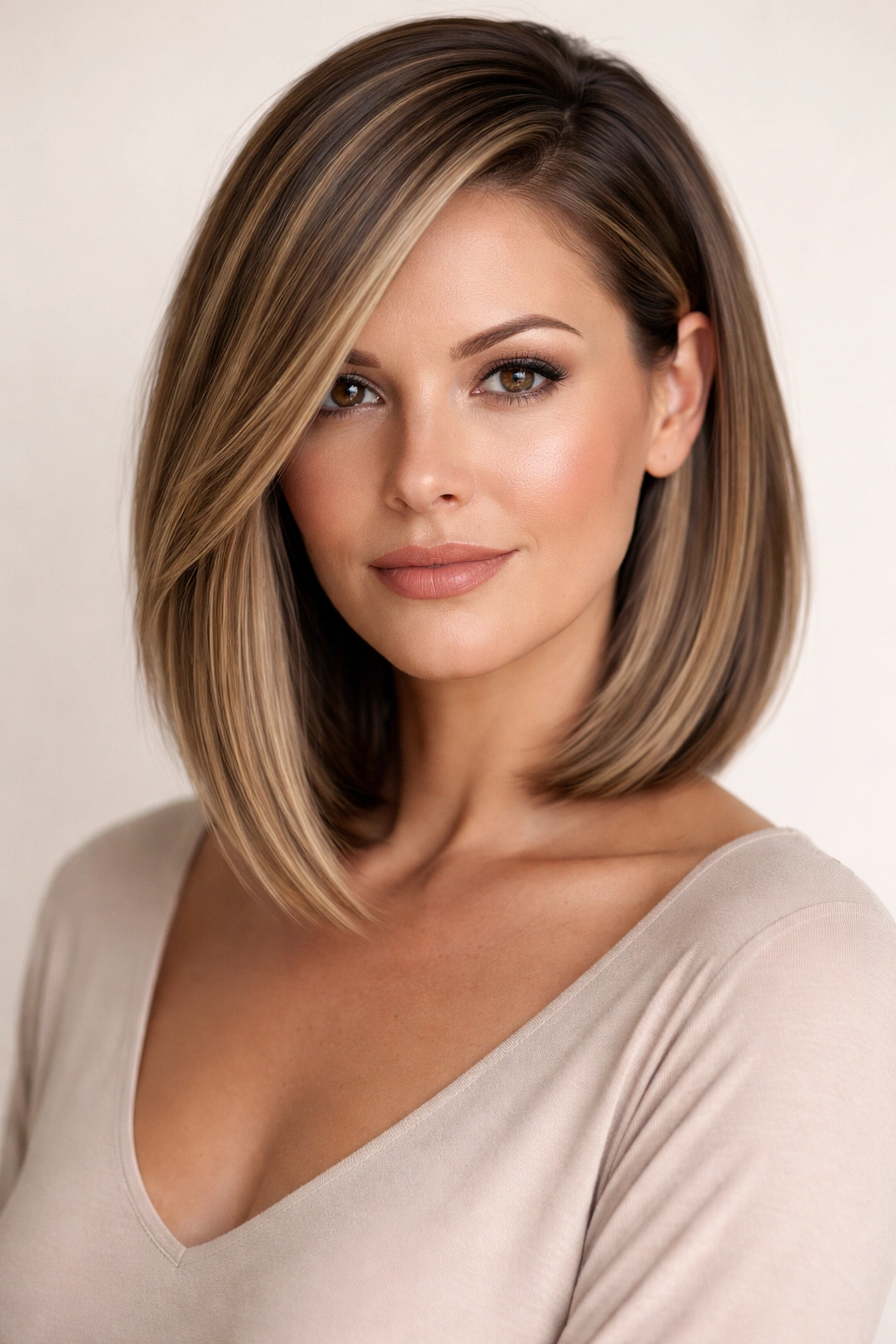
A lob (long bob) that hits around collarbone length gives you more styling versatility than a shorter cut while still working beautifully for round faces—if you commit to a deliberate side part and some length variation. The key is avoiding a blunt, one-length lob that adds width. Instead, ask for subtle layers and a deeper side part that creates diagonal lines across your face.
The Power of the Side Part
A deep side part is one of the simplest ways to elongate a round face without cutting more length off. It creates an asymmetrical line that breaks up the roundness immediately. Combined with a lob that’s slightly longer in front and shorter in back, you get a silhouette that’s flattering and modern. This cut requires minimal styling effort on mornings when you’re rushed, but it also cleans up beautifully when you blow it out properly.
Styling Secrets for Maximum Flattery
- Always blow-dry your hair with a round brush to create volume at the crown
- The side part should be exaggerated—not just a slight lean, but a real diagonal line
- Use a lightweight volumizing mousse at the roots to add lift where you need it most
- Consider adding subtle layers around your face that are just long enough to touch your chin—this frames and flatters
4. Shaggy Layers for Texture and Movement
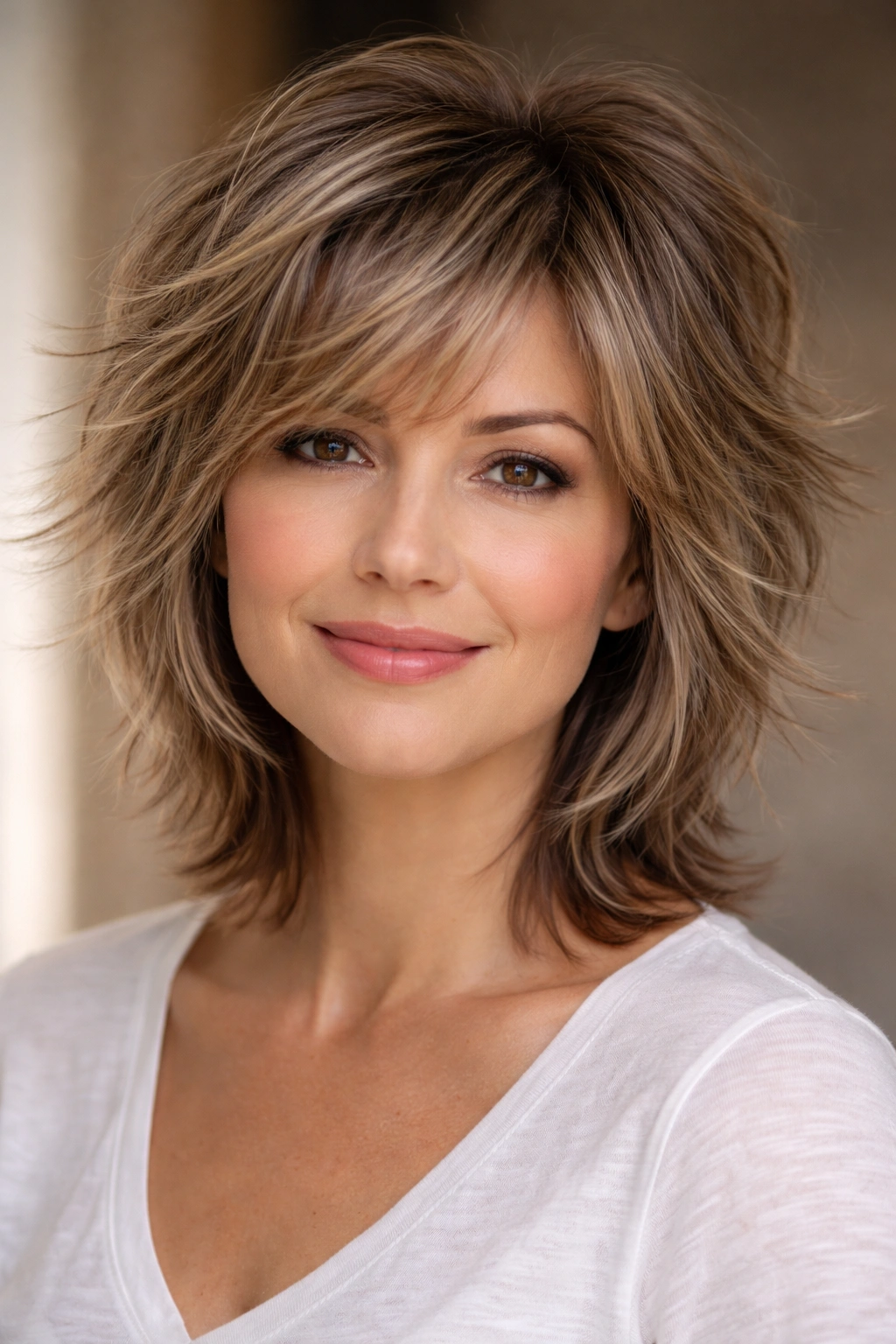
Shag haircuts have made a major comeback, and they’re genuinely flattering for round faces when executed thoughtfully. The key difference between a flattering shag and an unflattering one is the degree of layering and how it’s blended. A true shag has feathered layers throughout that create movement in every direction, making it nearly impossible for your hair to look heavy or flat.
Why Shag Works at 40 and Beyond
A shag feels youthful without trying to turn back the clock. The texture and movement create visual interest that distracts from face shape, while the natural messiness of the cut means it doesn’t require precision styling. This is ideal if you have texture naturally in your hair—waves or curls look stunning in a shag because the cut is literally built for movement. Even if you have straighter hair, blow-drying a shag with a diffuser or your fingers creates a lived-in, intentional look.
Getting the Shag Right
- Ask for feathered layers throughout—not just around the face, but all over
- Request more length on top for height and shorter, sparser layers on the sides to avoid bulk
- Make sure your stylist understands you want a modern shag, not a 1970s shag—the execution is much cleaner
- Plan on blow-drying with texture (mousse, sea salt spray, or a diffuser) rather than straightening
5. Blunt Bangs with Medium-Length Hair
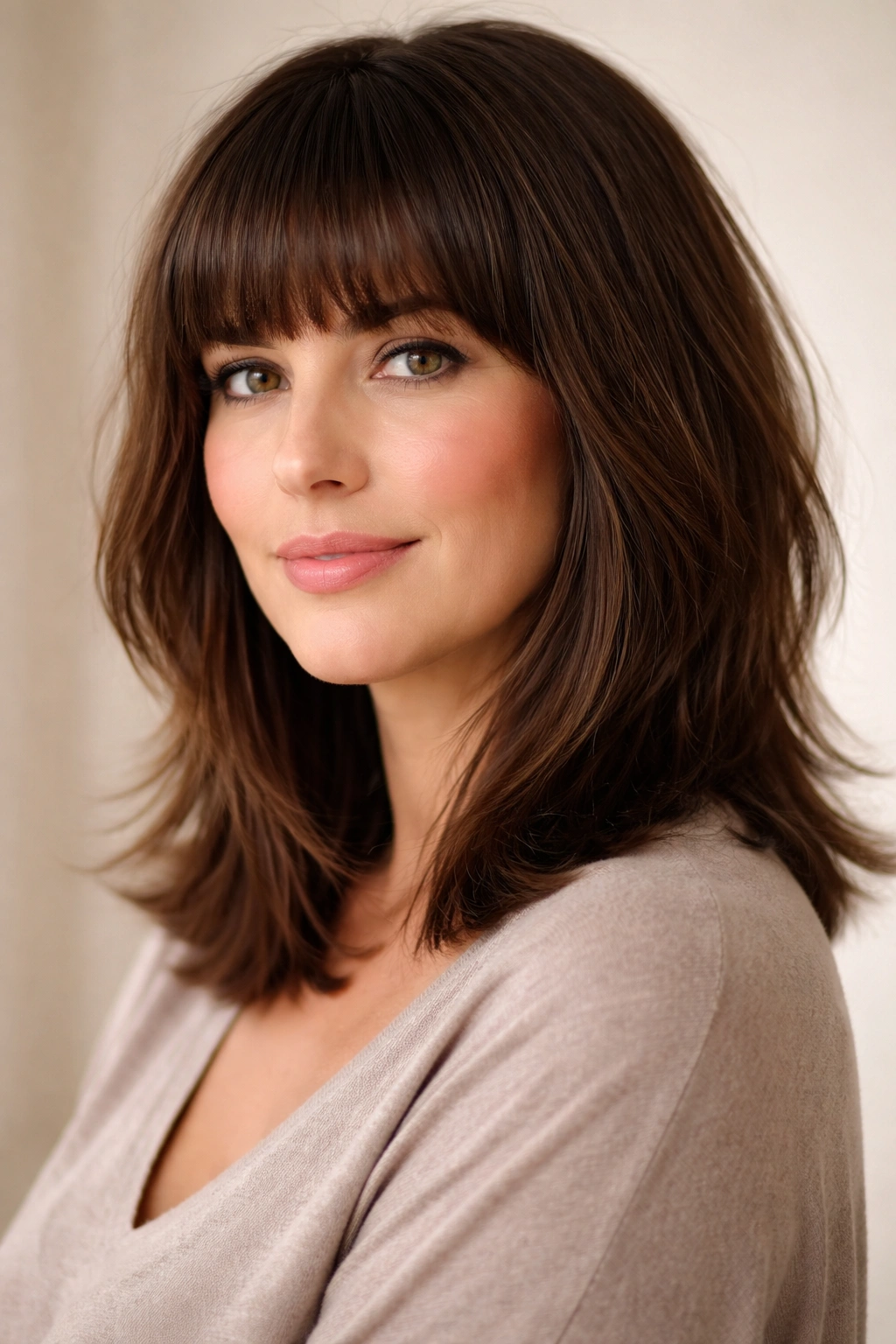
Blunt bangs instantly change your face shape by drawing a horizontal line across your forehead, which can actually work in your favor with a round face—as long as you pair them with textured length underneath. Bangs also open up your eyes and add a youthful quality without requiring surgery or extensive treatments. The medium length (just above shoulder) keeps them easy to manage while still offering styling flexibility.
How Bangs Reshape Your Face
Blunt bangs create a decisive horizontal line that breaks the roundness of your face. They shift focus upward to your eyes, away from cheek width. Combined with textured, choppy layers beneath that create vertical movement, bangs become a powerful tool for face-shaping. The trick is making sure they don’t emphasize a wider forehead—they should start just wide enough to frame your face without extending beyond your temples.
Maintenance and Styling for Bangs
- Blunt bangs require regular trims—every 3-4 weeks—to maintain that crisp line
- Blow-dry them straight and smooth to keep them looking intentional
- Use a small round brush or a flat iron to create a slight curve that softens their severity
- They work best on straight or slightly wavy hair; very curly hair makes blunt bangs challenging to maintain
- Pair them with some texture below to avoid looking too severe
6. Face-Framing Layers with Subtle Waves
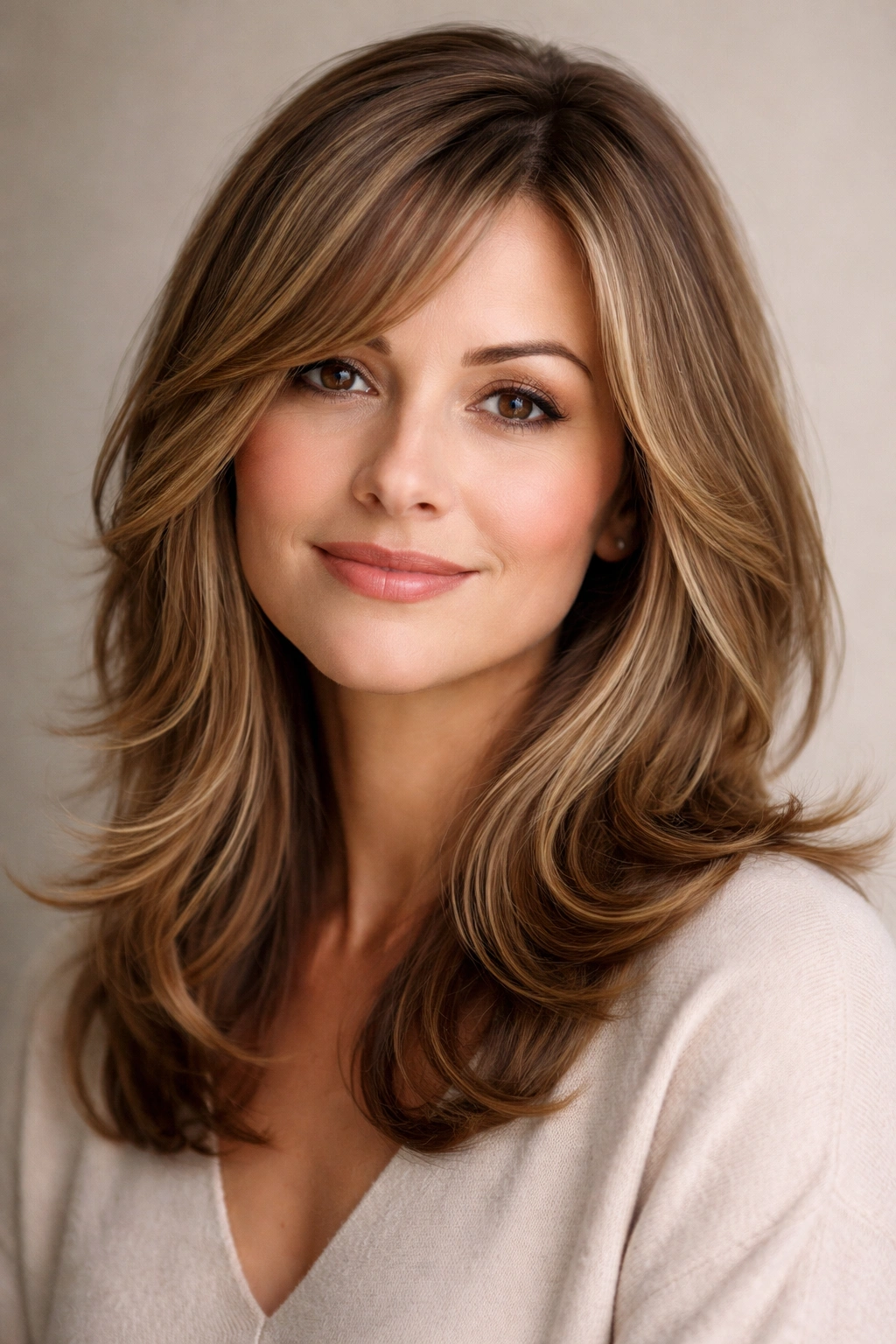
Rather than choosing a specific cut, this approach focuses on strategic layering around your face paired with your natural wave pattern or gentle blow-dry waves. Long, face-framing layers that start around your cheekbones and are cut at angles rather than bluntly create immediate flattery. When you add soft waves through styling, the combination is incredibly dimensional and forgiving.
The Science Behind Face-Framing Layers
Layers cut at angles (slightly longer in front, shorter as they move back) create diagonal lines that work against the natural roundness of your face. When these layers move and curl away from your face, they actually create negative space—the opposite of bulk. This is why a round face looks slimmer immediately after a good blow-dry with waves; the movement creates the illusion of a narrower profile.
Creating the Perfect Waves
- Use a large barrel curling iron or a straightener to create loose, soft waves
- Curl away from your face to open up your features
- Apply texturizing cream or sea salt spray before styling for easier, longer-lasting waves
- The waves don’t need to be perfect—tousled and slightly messy is actually more flattering than tight, controlled curls
- Waves work beautifully whether your hair is shoulder-length or just past it
7. Angled Bob Longer in Front
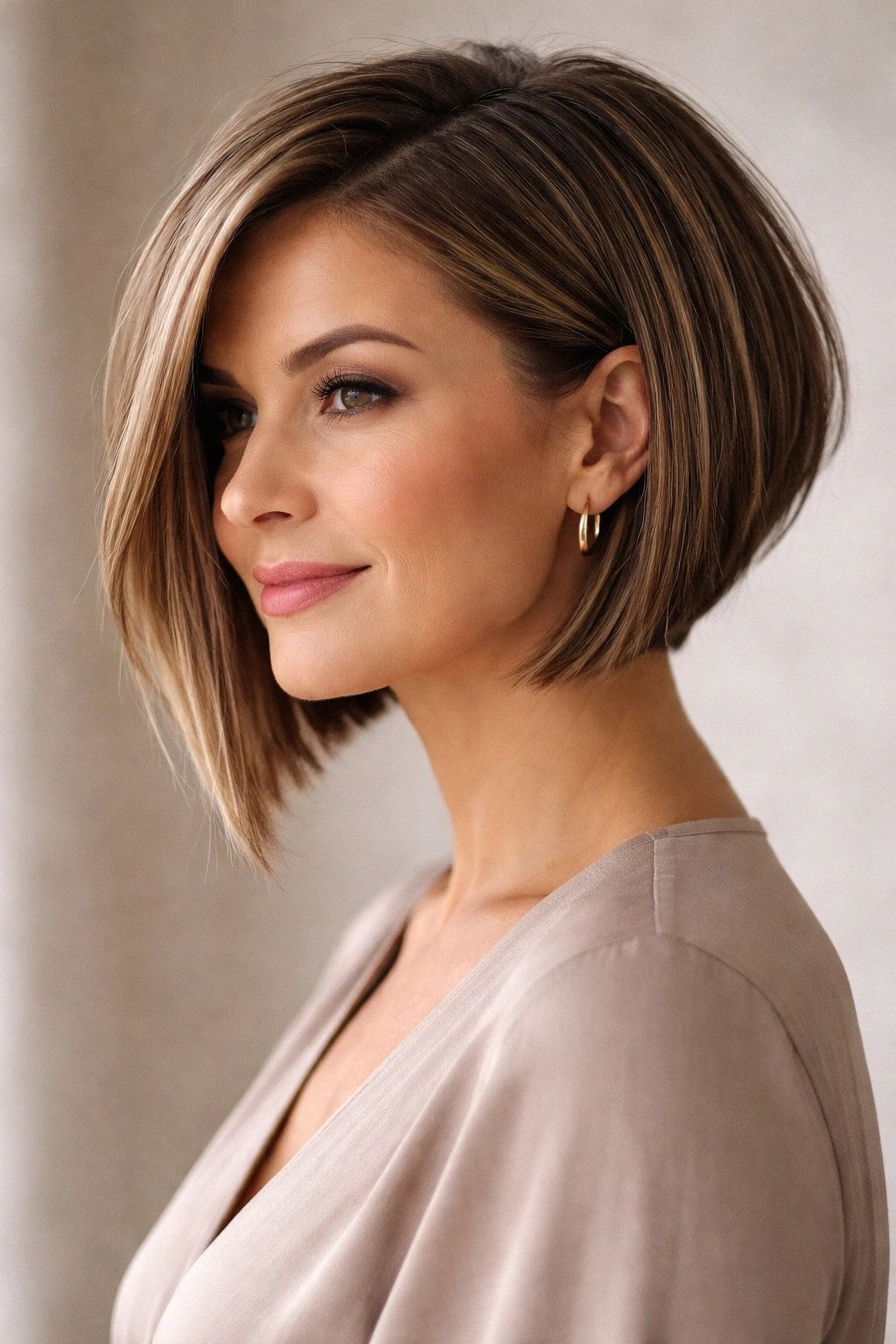
An angled or asymmetrical bob—longer at the front (nearly at your chin) and significantly shorter in the back—creates dramatic angles that elongate your face shape. The graduated length from back to front creates movement and visual interest, while the longer pieces in front frame your face strategically. This cut requires a skilled stylist who understands angles and can execute clean lines.
Why the Angle Matters So Much
The longer front pieces create vertical lines that draw the eye downward, away from the widest part of a round face. The shorter back adds movement and prevents the cut from feeling heavy. The contrast between the short back and long front is what makes this cut feel modern and intentional rather than accidental. It’s a cut that photographs beautifully and works for professional settings as well as casual days.
Styling Your Angled Bob
- Blow-dry the longer front pieces away from your face for maximum flattery
- The back can be styled smooth or textured depending on your hair type and preference
- Add subtle waves to the front pieces to enhance the framing effect
- This cut benefits from regular trims to maintain the angle—every 6-8 weeks is ideal
- It’s especially flattering if you have some natural wave or texture in your hair
8. Disconnected Undercut with Textured Top
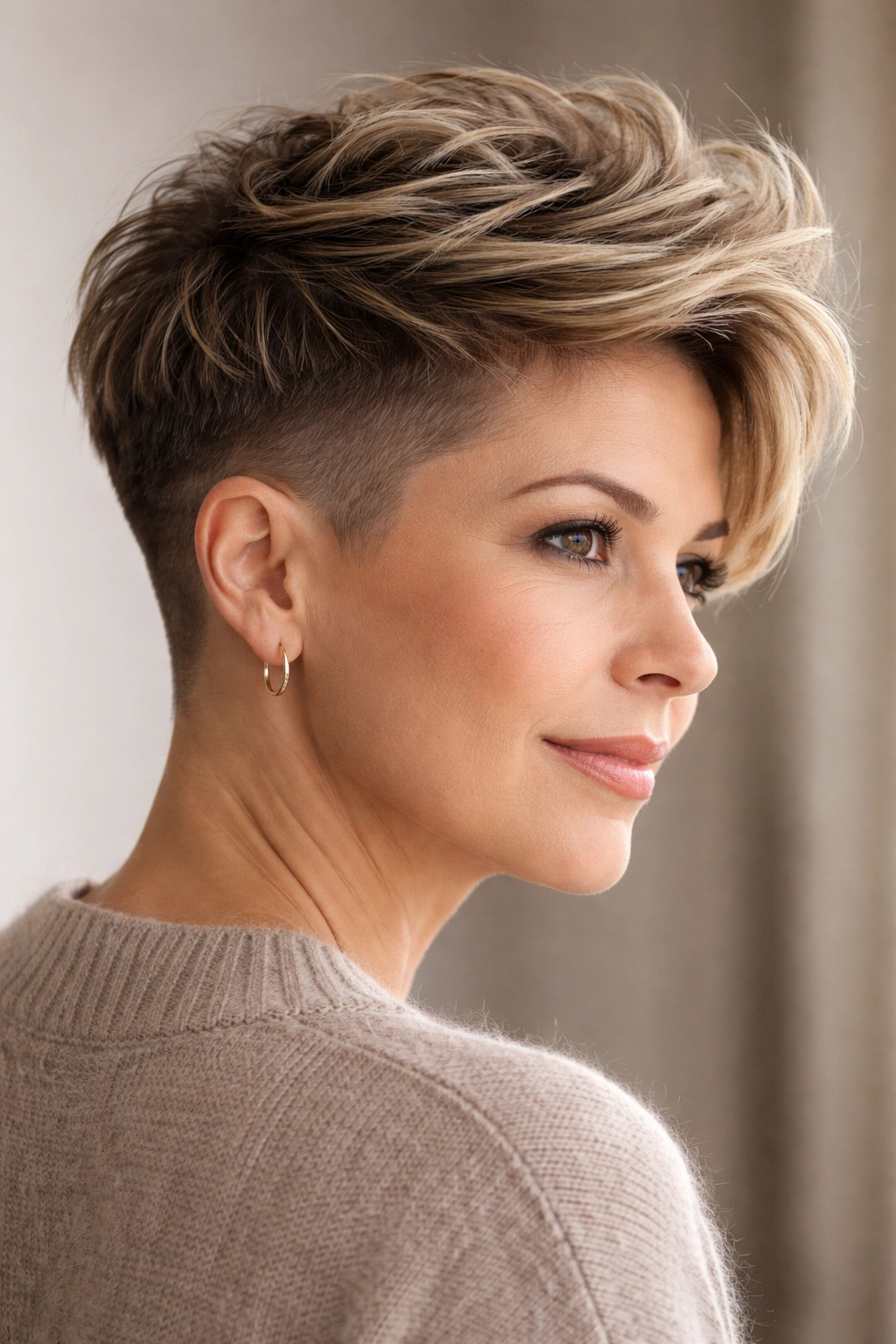
An undercut—where the back and sides are cut very short while the top is left longer—creates maximum contrast and visual interest. The disconnected version means the transition between short and long isn’t blended, making it bold and contemporary. This cut requires confidence and commitment to styling, but the payoff is a genuinely modern look that works beautifully for women over 40 who want something different.
Creating Height Where You Need It
The key to making an undercut work for a round face is maximizing the height and texture on top while keeping the sides genuinely short. This creates a visual effect of width at the top and narrowness at the bottom—the opposite of a round face’s natural proportions. The longer, textured top draws the eye upward, while the short undercut prevents any sense of heaviness on the sides.
The Commitment Required
- You need to be comfortable with a bold, fashion-forward look—this isn’t a subtle cut
- Styling takes more effort; you’ll need texturizing products and either blow-dry skill or salon visits for styling
- The undercut shows hair growth more noticeably, so you’ll need trims every 4-6 weeks
- Consider whether you’re comfortable with such a visible undercut in your daily life and workplace
- This cut is stunning on straight and wavy hair; very curly hair makes the undercut less visible
9. Asymmetrical Cut with One Side Longer
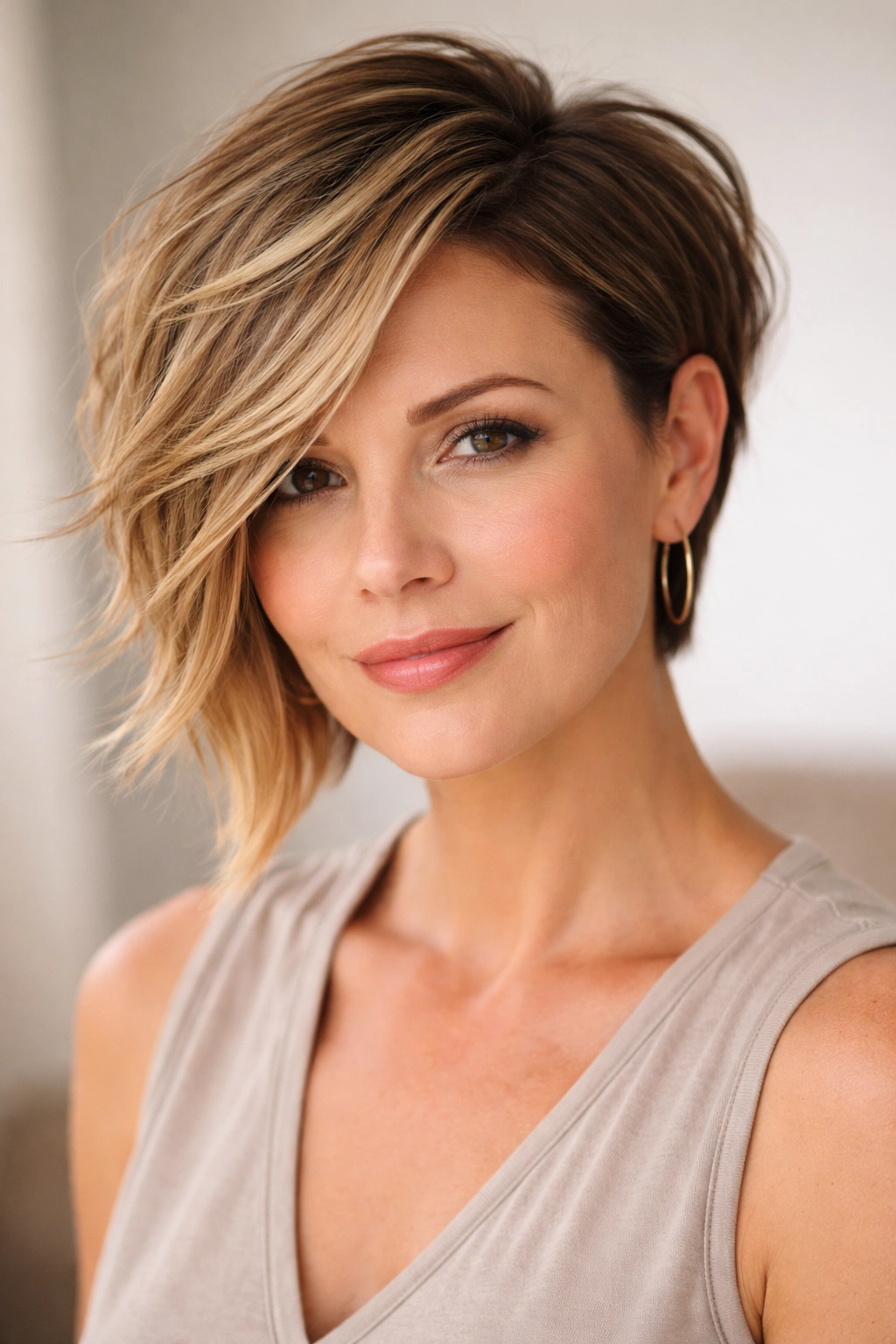
An asymmetrical cut takes the angled bob concept further, with one side noticeably longer than the other. This creates a diagonal line across your entire head that immediately breaks up the roundness of your face. The longer side can sweep across your face and frame it beautifully, while the shorter side adds movement and prevents the cut from feeling lopsided or costume-like.
The Asymmetry Trick
What makes an asymmetrical cut work rather than just look unbalanced is the intentionality and precision of the cut. The longer side should be cut at an angle rather than hanging straight, and it should sweep across your face in a flattering way. The shorter side should still have dimension through layers or texture. The key is that both sides should feel purposeful, not like one side is just waiting to grow out.
Styling an Asymmetrical Cut
- You can part on either side depending on your mood and which features you want to emphasize
- The longer side looks best when it has waves or curl that creates movement away from your face
- Use texturizing products to enhance the asymmetry and prevent it from looking like a styling mistake
- This cut works on most hair types but requires regular maintenance to keep the angles clean
- It’s a cut that makes a statement, so make sure you’re genuinely excited about it before committing
10. Chin-Length Bob with Wispy Layers
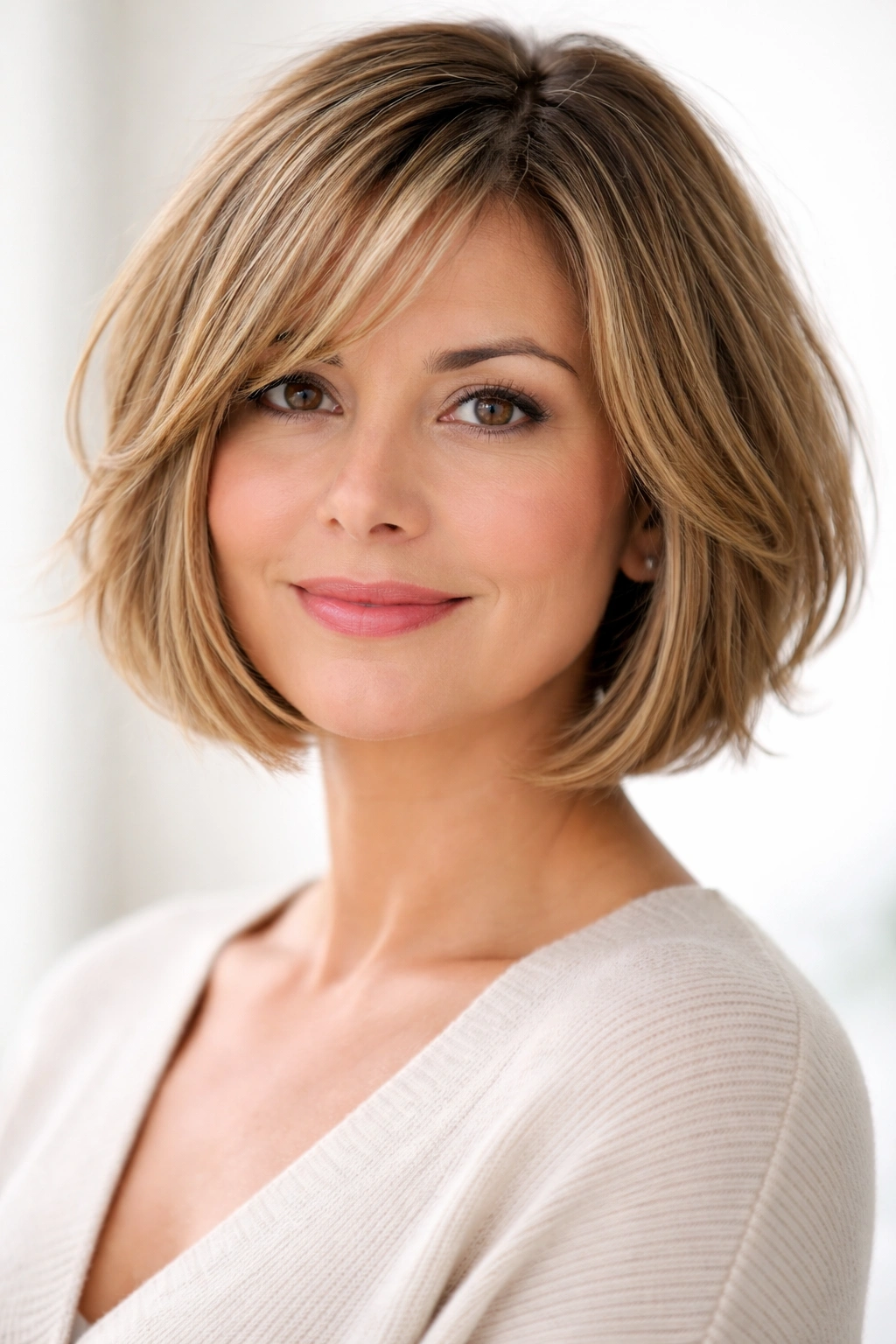
A chin-length bob with very soft, wispy layers throughout creates femininity without sacrificing the face-flattering benefits of a shorter cut. The layers are cut delicately rather than heavily, creating movement and texture without the choppy, edgy feeling of a shag or heavily layered cut. This is an excellent option if you want something that feels modern but not too radical, especially if you’re transitioning from longer hair.
The Appeal of Wispy Softness
Wispy layers catch light beautifully and create the illusion of lightness even if your hair is thick or dense. They’re incredibly forgiving because imperfect styling still looks intentional—a slightly tousled wispy bob looks more polished than messy, whereas a slightly tousled blunt bob might look like you haven’t finished getting ready. This cut genuinely works for every hair type and texture, from stick-straight to very curly.
How to Maintain This Cut
- Ask your stylist for point-cutting or razor-cutting to create that soft, wispy texture
- The layers should blend seamlessly rather than looking disconnected
- Styling can be as simple as a quick blow-dry with your fingers and a lightweight mousse
- Regular trims every 6-8 weeks keep the layers looking intentional rather than grown-out
- This cut benefits from a side part or a deep side part to create face-flattering angles
Final Takeaway
Choosing a short haircut for a round face over 40 comes down to understanding that you need height at the crown, dimension throughout, and movement that creates vertical lines rather than horizontal ones. The most flattering cuts are the ones you’ll actually maintain and style consistently—there’s no point in getting a cut that requires daily blow-drying if you prefer air-drying, or a cut that needs frequent salon trims if you prefer longer stretches between appointments.
What matters most is finding a skilled stylist who genuinely understands your face shape and hair type, not just someone who can execute any cut you show them a picture of. Before your appointment, be specific about your daily routine, your styling comfort level, and how much maintenance you’re willing to do. Bring multiple reference photos showing the exact texture, length, and movement you want—not just the overall shape of the cut.
The confidence that comes from a great haircut is real and tangible. When you feel like your hair looks good, you stand differently, smile more freely, and walk into a room with a sense of ease that has nothing to do with vanity and everything to do with feeling like yourself. At 40 and beyond, that’s worth investing in a really good cut and the styling knowledge to maintain it.
