



Straight hair has an undeniable advantage when it comes to achieving sleek, polished looks. The natural smoothness and light-reflecting quality of straight strands create an almost effortless sophistication that textured or curly hair has to work harder for. But that doesn’t mean straight-haired women are limited to a single haircut — far from it. Medium-length cuts, in particular, offer the perfect sweet spot: long enough to maintain femininity and styling versatility, short enough to look modern and require manageable maintenance. The right sleek medium cut can completely transform how you look and feel, whether you’re aiming for minimalist elegance, edgy confidence, or polished professionalism.
What makes a haircut truly “sleek” goes beyond just cutting hair straight across the bottom. Sleek cuts rely on precision, clean lines, strategic layering (or deliberate lack thereof), and angles that work with your face shape rather than against it. For straight hair specifically, the way light hits blunt edges, the sharpness of angular cuts, and the purity of a single-length style all become powerful styling tools. A well-executed sleek medium cut on straight hair isn’t trying hard — it looks like you didn’t try hard, which is the highest compliment a cut can receive.
The challenge is figuring out which of the many options actually suits your face shape, lifestyle, and styling preferences. Not every trendy medium cut will work for every person, and that’s precisely why we’re breaking down fifteen distinct approaches. Some are nearly one-length with subtle movement, others feature strategic disconnected layers, and a few play with asymmetry or unexpected angles. Each one is detailed enough that you can walk into a salon with a clear sense of what you’re asking for — and what to expect in terms of styling and upkeep.
1. The Sleek Blunt Bob
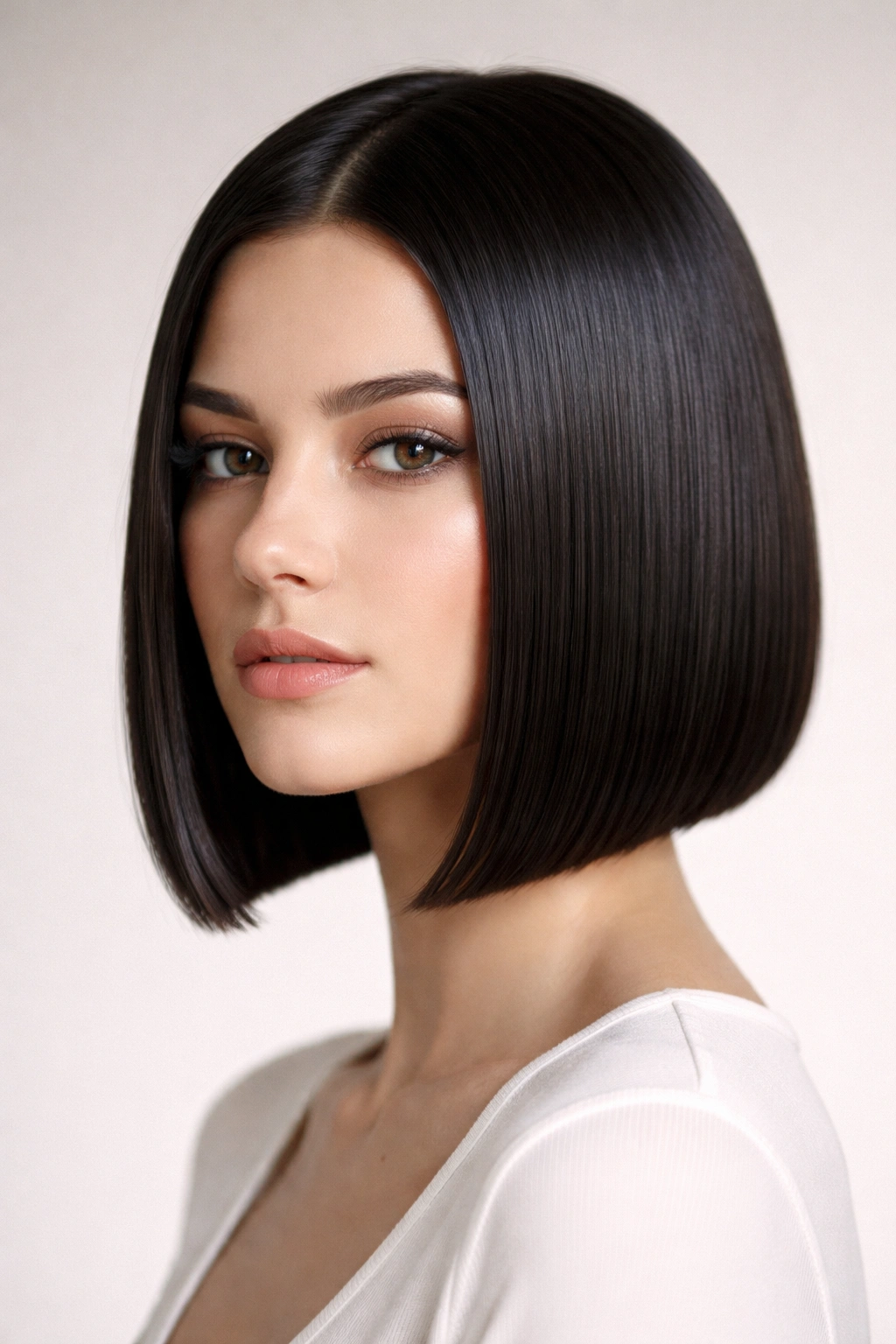
The blunt bob is the gold standard of sleek haircuts, and for good reason. This cut sits anywhere from chin-length to just past the shoulders, with a perfectly straight, parallel line across the bottom and minimal layering throughout. On straight hair, the blunt edge becomes an architectural feature — light bounces off that clean line, creating an instantly polished, high-fashion appearance. The simplicity is deceptive; a truly great blunt bob requires precision from your stylist and honest conversation about your face shape and hair texture.
Why This Cut Endures
The blunt bob’s appeal lies in its versatility and instant sophistication. It works equally well styled sleek with a flat iron and serum, or tousled with texture spray for a more relaxed vibe. The cut naturally suits straight hair because the blunt edge doesn’t rely on texture or movement to look intentional.
Best For and Styling Tips
- Most flattering on oval, heart, and square face shapes
- Requires a trim every 4-6 weeks to maintain the blunt edge
- Style with a blow dryer and round brush for maximum polish
- Pair with a deep side part or center part depending on your face width
- Applies subtle makeup contouring around the jaw and cheekbones to enhance the cut’s definition
- Works beautifully with a low, sleek ponytail on days you don’t want to wear it down
Styling note: Straight hair is your advantage here — a few minutes with a flat iron and some smoothing serum makes this cut look editorial without much effort.
2. The Midi Length with Subtle Layers
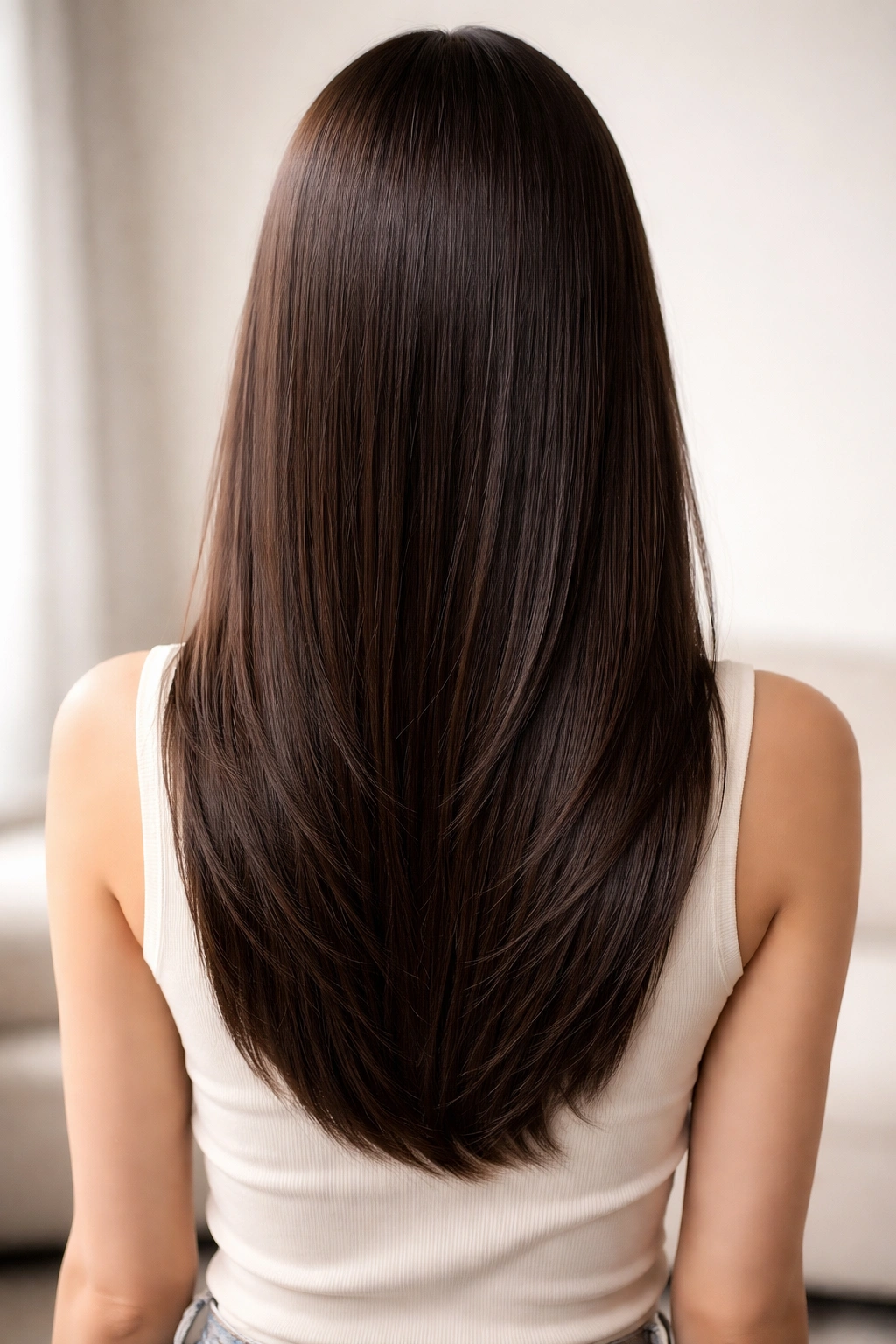
This cut extends to mid-back length but incorporates barely-there layers that create movement without sacrificing the sleek aesthetic. The layers are minimal and well-hidden — you won’t see obvious stepped texture when wearing your hair down, but the cut prevents that thick, boxy feeling that ultra-long, one-length styles can develop. This is the sweet spot for women who want length but also want their hair to feel alive and moving.
The Layering Strategy
The layers in this cut are strategically placed to start around chin-length, with each subsequent layer only an inch or two longer than the one above it. This creates an almost invisible graduation that works with your straight hair’s natural fall rather than fighting it. When you move, the hair swings and separates naturally without looking shaggy or unkempt.
Maintenance and Styling Reality
- Trims every 8-10 weeks keep the subtle layers looking intentional
- Blow-dry with a paddle brush for smoothness, or let air-dry for a more natural look
- Straightening iron can enhance the sleek effect but isn’t mandatory
- This cut works with straight, thick hair especially well — the layers prevent heaviness
- Part down the center or to one side, and the cut adapts beautifully
- Layers naturally create dimension even with a single hair color
Pro tip: Ask your stylist to point-cut or razor-cut the layers rather than blunt-cut them; this creates a softer integration between lengths that reads as sleek rather than choppy.
3. The Textured Shag
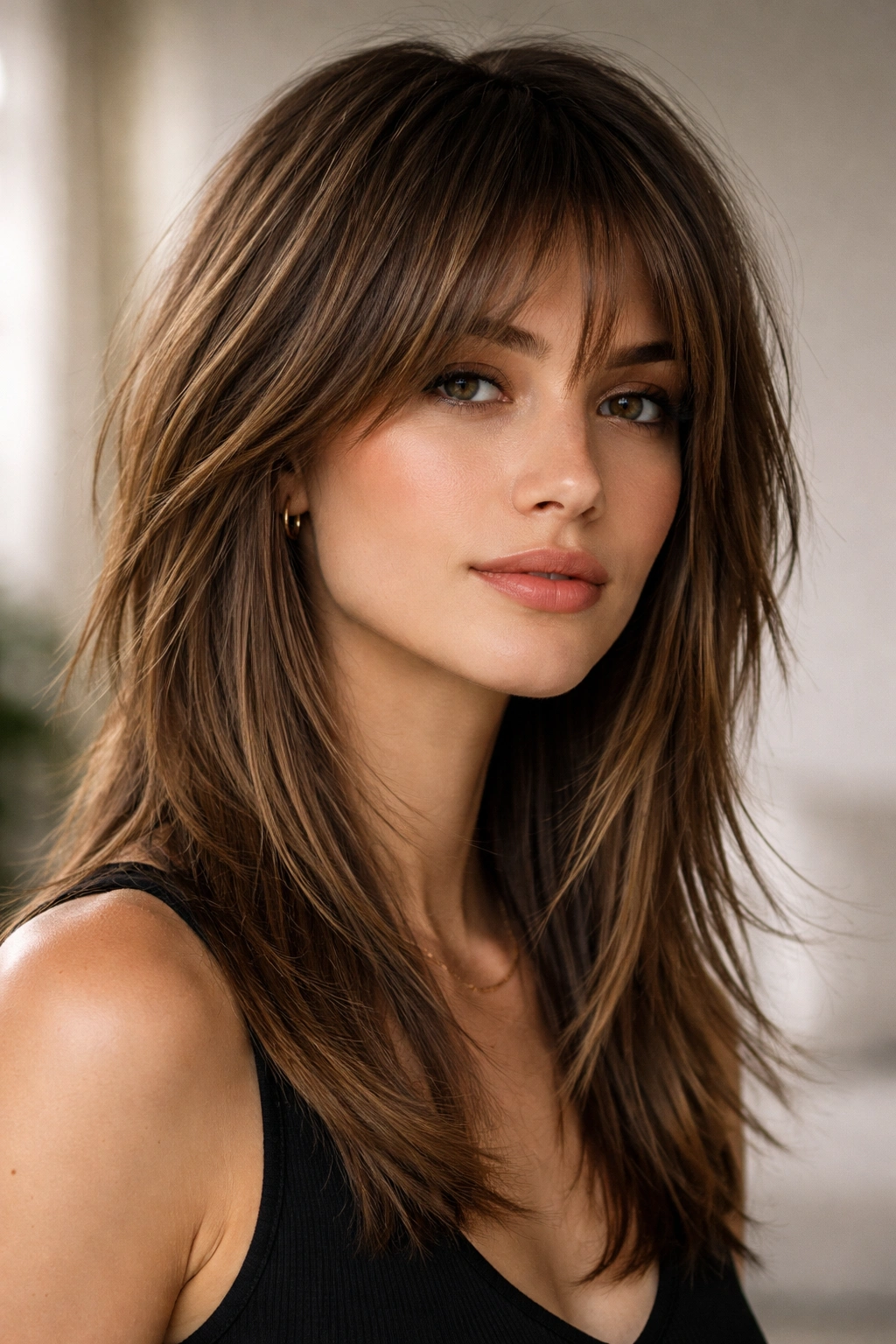
The modern shag is nothing like the 1970s version — this is a sophisticated, deliberately choppy cut that works surprisingly well on straight hair. Medium-length shags feature disconnected layers throughout, creating movement and texture that feels intentionally rebellious rather than accidental. On straight hair, the layers remain crisp and defined, giving the cut a cleaner, more contemporary edge than it might have on textured hair.
What Makes It Feel Sleek
A shag reads as sleek when the layers are strategically placed to frame the face and move with intention, not when they’re scattered randomly throughout. The cut typically features longer pieces around the face and shorter layers at the crown to add volume, plus choppy texture throughout that catches light.
Styling for Maximum Impact
- Requires styling to look intentional — air-drying can read as undone rather than cool
- Use a blow dryer and round brush to smooth the layers, then flip your head and tousle
- Texturizing spray or salt spray adds intentional piece-y-ness without frizz
- Works beautifully with a center or deep side part
- Face-framing layers mean this cut is flattering on most face shapes
- Pair with minimal makeup for an effortlessly cool vibe
Maintenance: Trims every 6-8 weeks keep the disconnected layers looking crisp rather than grown-out and shaggy. On straight hair, this cut needs those fresh edges to read as intentional rather than messy.
4. The Straight-Across Shoulder Length
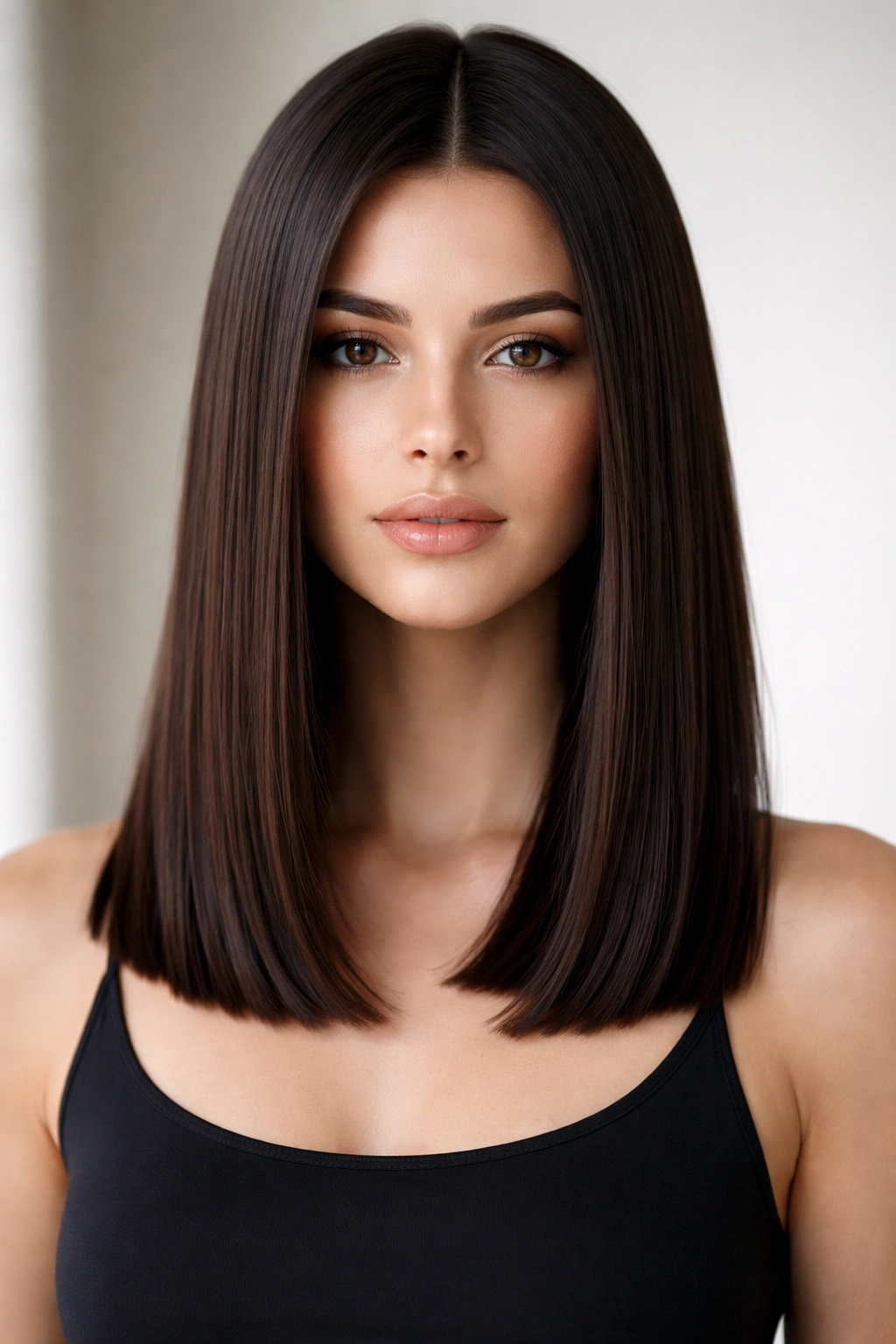
This is ultra-simple and deceptively elegant — a one-length cut that hits right at or just below the shoulders, with minimal to no layers and a blunt edge across the back. It’s the kind of cut that photographs beautifully and reads as effortlessly chic, even though the simplicity means it requires a skilled stylist who understands face shape and proportions.
Why Simplicity Works
There’s nothing to hide behind with this cut, which is precisely why it’s so striking on the right person. The blunt edge becomes the style statement. Light catches that line and creates visual impact without any layering tricks or texture work.
Face Shape Considerations and Styling
- Suits oval, long, and rectangular face shapes best
- Creates visual width for narrow faces
- On round or square faces, pair with side-parted styling to elongate
- A deep side part is your styling best friend with this cut
- Blow-dry straight back or to one side for maximum polish
- Can be styled sleek with serum and a flat iron, or slightly textured with volume at the roots
- Works at any hair thickness, but especially striking on thick, straight hair
Insider note: This cut’s success entirely depends on how well your stylist understands your hair’s natural growth patterns and density. The blunt edge will show every imperfection, so find someone experienced with precision cuts.
5. The Angled Bob
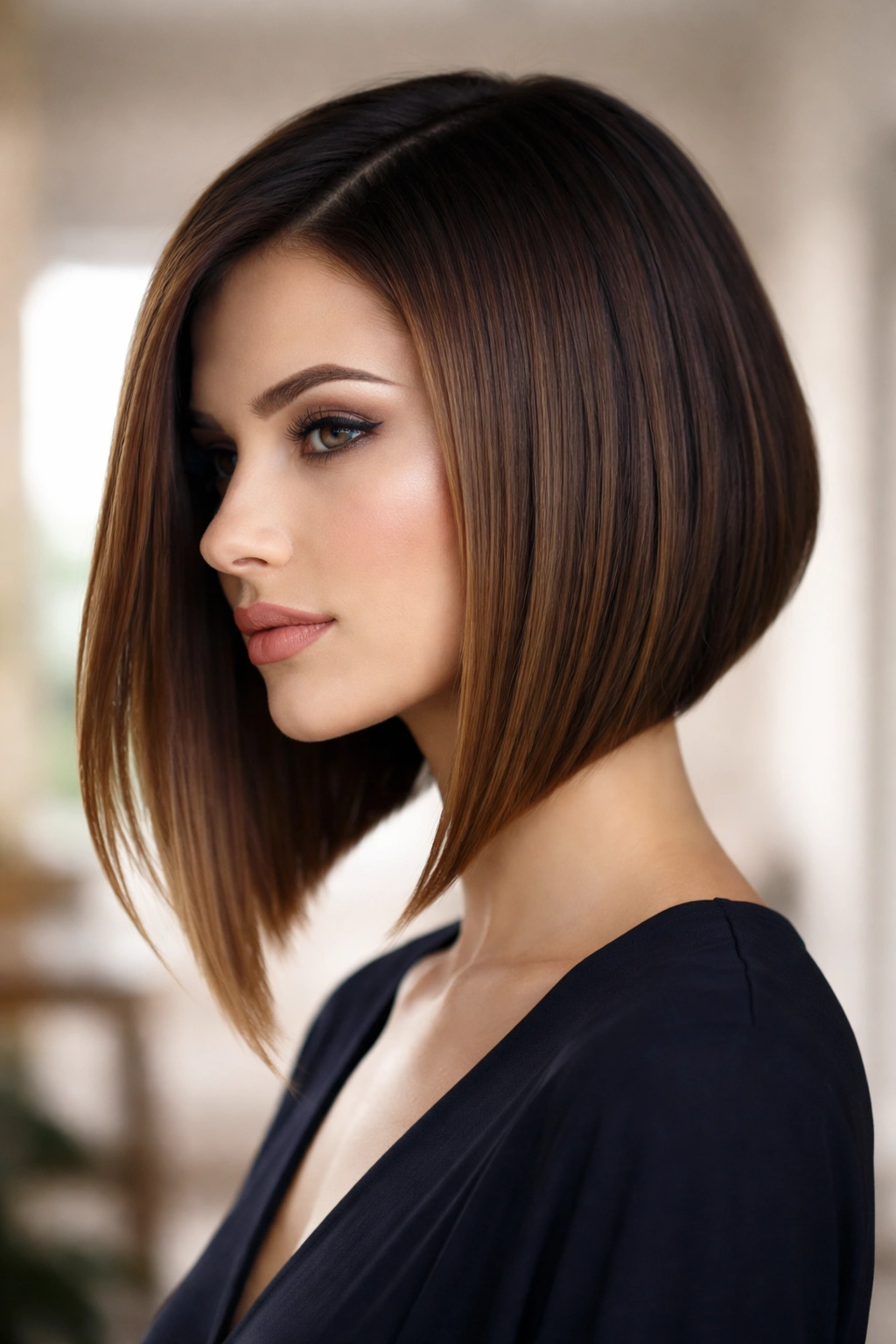
An angled bob is a blunt bob’s more daring cousin — the front pieces are cut significantly longer than the back, creating a dramatic diagonal line from the nape to the chin or beyond. On straight hair, this angle creates movement and visual interest without the need for layers or texture. It’s a bold cut that feels contemporary and fashion-forward.
The Geometry Behind the Style
The front-to-back angle creates a built-in face frame that works with your natural features. The longer front pieces soften the jawline while the shorter back adds shape at the nape. This asymmetrical structure is especially striking on straight hair, where clean lines read as intentional design rather than accident.
Who It Suits and Styling Strategy
- Flatters most face shapes, especially round, square, and heart shapes
- The angled front pieces naturally frame the face
- Side-part styling emphasizes the angle and elongates the face
- Blow-dry with a round brush, flicking the ends under slightly or out for attitude
- Straight hair shows off the angle best — a flat iron can sharpen the line further
- Requires trims every 4-6 weeks to maintain the precise angle
- Works beautifully with a sleek, low side ponytail
Consider this: The angle creates a built-in style — you don’t need to do much beyond smoothing it out, which makes daily styling faster than you’d expect for such a bold cut.
6. The Chin-Length Rounded Bob
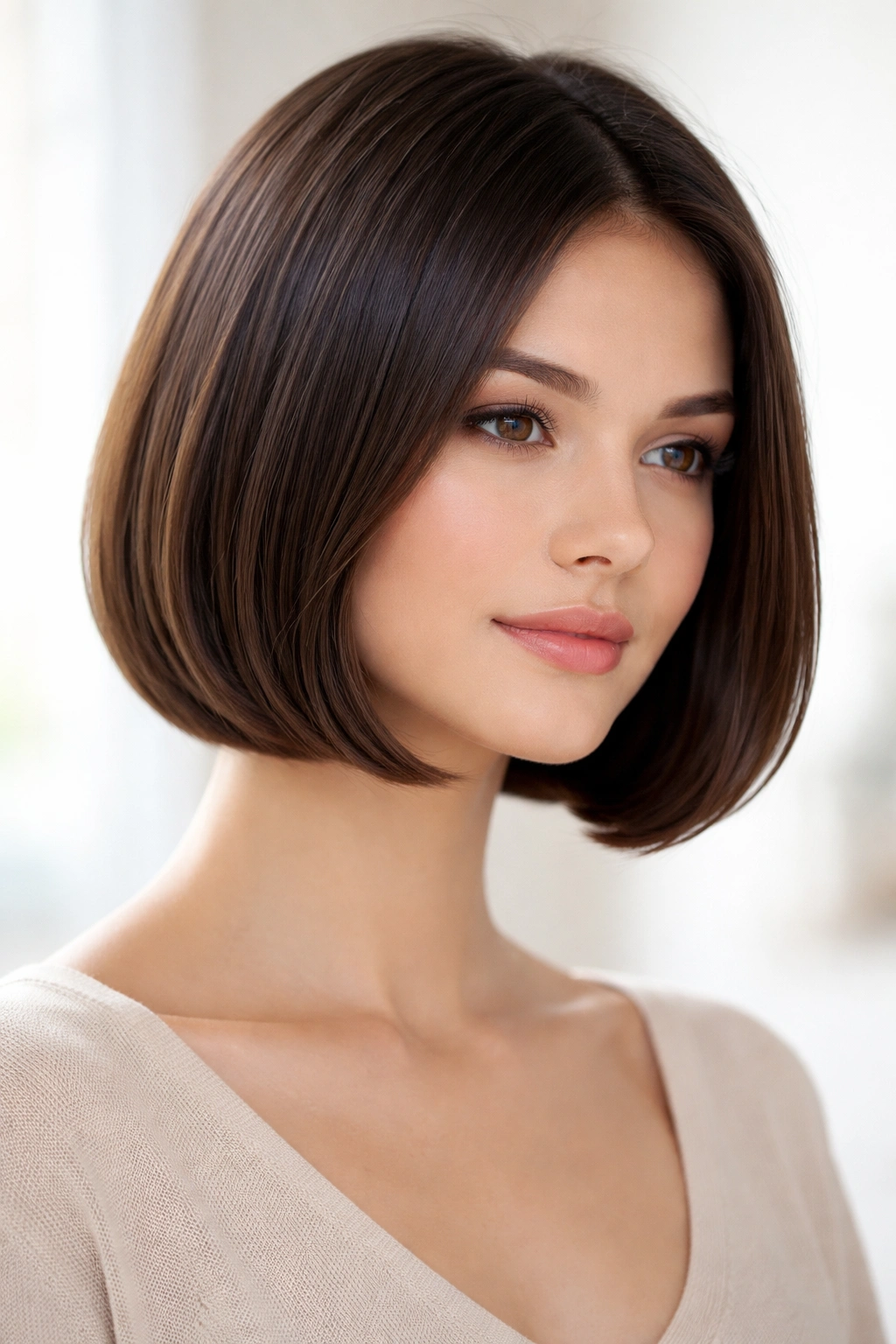
This cut sits right at chin-length with softly rounded edges rather than sharp corners. It’s less severe than a blunt bob but still sleek and polished. Minimal layering keeps the emphasis on the rounded shape, which creates a gentle, flattering frame for the face while still reading as modern and intentional.
The Appeal of Softness
The rounded shape feels slightly less architectural than a blunt bob, but on straight hair, the soft curve still reads as deliberately styled rather than accidental. It’s a cut that feels approachable and wearable while maintaining elegance.
Styling and Face Shape Fit
- Incredibly flattering on round, oval, and oblong face shapes
- Creates visual width and softness without looking overly feminine or dated
- Can be styled with a center part for balance or a side part for movement
- Blow-dry and smooth with a flat iron for maximum polish
- The rounded edges naturally fall into place without constant fussing
- Trims every 5-6 weeks maintain the shape
- Works at any hair density, though looks especially polished on finer, straight hair
Real-world benefit: This cut genuinely requires less styling time than a blunt bob. The soft curve means slight imperfections in your blow-dry aren’t as noticeable, and the cut works beautifully even on days when you’re air-drying.
7. The Mid-Length Shag with Long Bangs
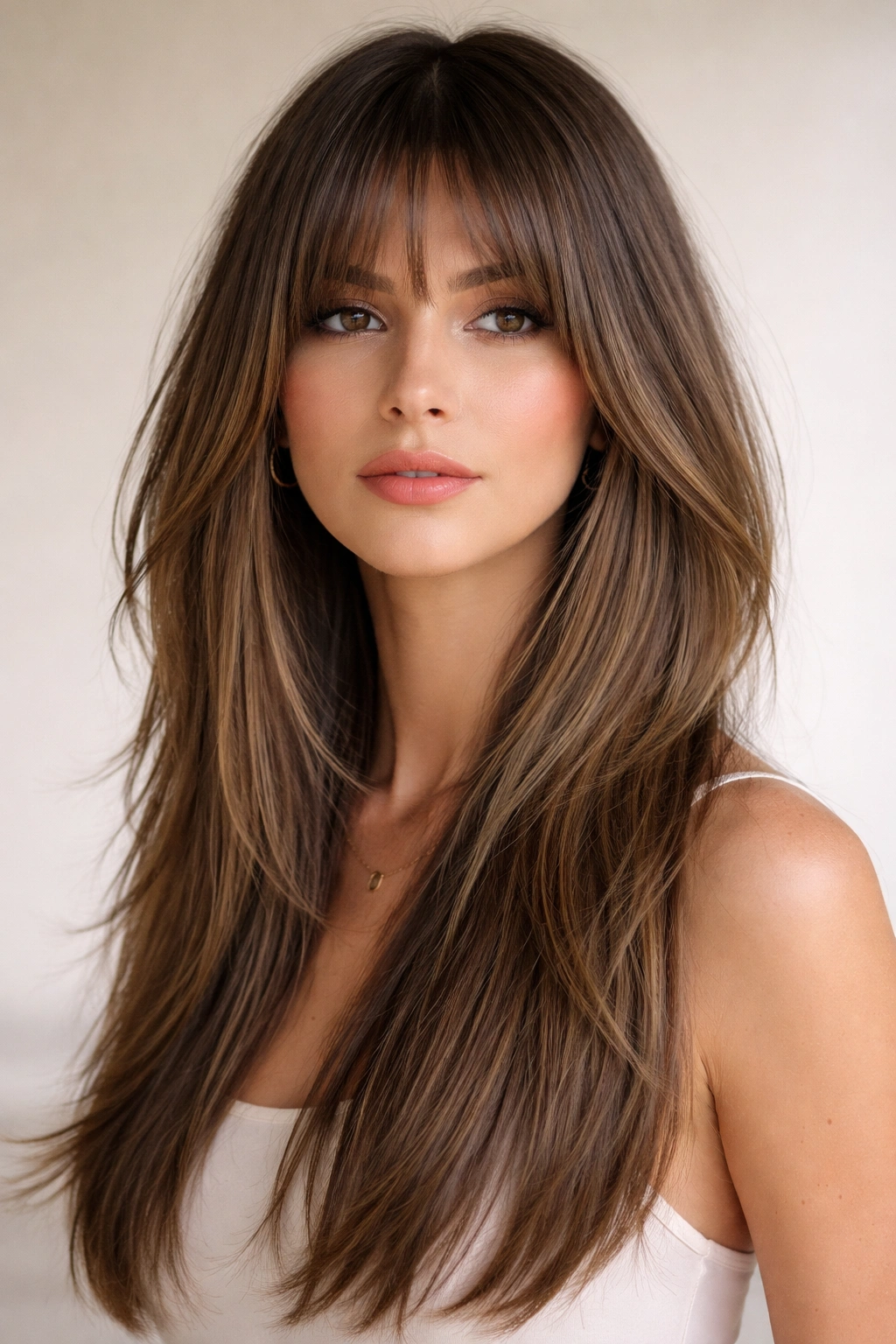
A modern shag that extends to mid-back length but features longer, face-framing pieces that work like bangs — typically starting at eyebrow length and angling back into the shorter choppy layers. This cut combines the edgy, textured appeal of a shag with the face-framing benefits of bangs, creating visual interest and softness without sacrificing movement.
Bangs as Integral Design
The longer face-framing pieces in this cut aren’t traditional bangs but rather the longest layer in a series of choppy, disconnected layers. They frame the face immediately and create a focal point, while the shorter layers at the crown add volume and the choppy texture adds movement throughout.
Styling Considerations for Straight Hair
- Works best on straight hair because the longer face-framing pieces remain crisp and defined
- The choppy layers need styling to look intentional — texturizing spray is your friend
- Blow-dry with a round brush, then scrunch texture spray through for piece-y movement
- Face-framing pieces work with most face shapes and can soften wider jaws or highlight cheekbones
- Trims every 6-8 weeks keep the layers looking crisp and the bangs at the right length
- Pairs beautifully with minimal makeup for a cool, confident vibe
- Works at any part direction, but a center or deep side part shows off the face-framing best
Styling tip: This cut looks best when you lean into the texture. Trying to blow-dry it completely smooth defeats the purpose — embrace some piece-y movement with a light texturizing product.
8. The Blunt Lob
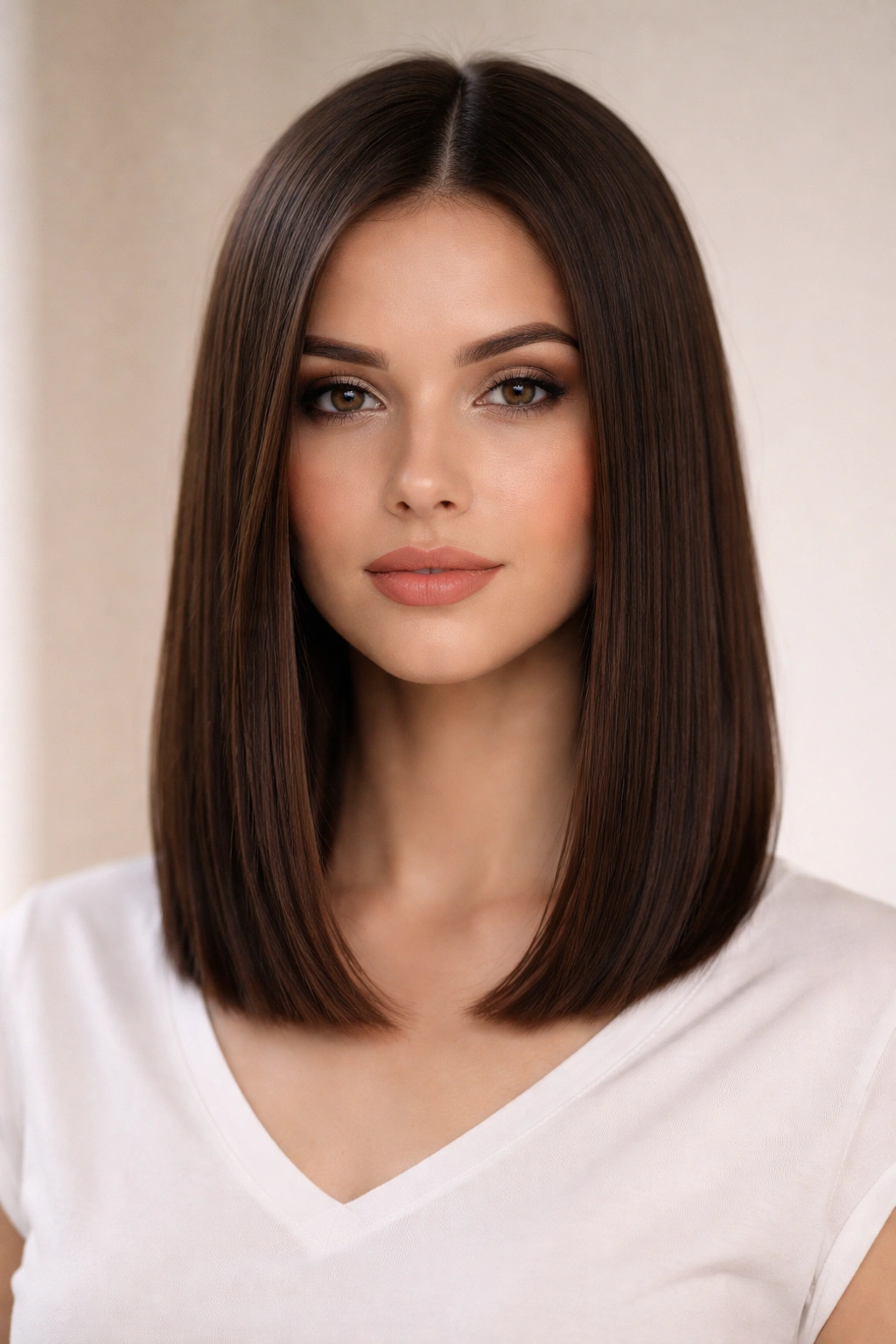
A lob is a long bob that typically extends to mid-back length, and a blunt lob takes that length and commits to a perfectly straight, parallel line across the bottom with minimal layering. It’s the sophisticated older sibling of the blunt bob — it requires the same precision and maintains the same sleek aesthetic, but the added length gives it different styling possibilities and a more dramatic presence.
Length as a Design Feature
The blunt lob’s impact comes from the sheer presence of that long, perfectly straight line. It’s a cut that commands attention without trying. On straight hair, the blunt edge catches light and creates visual weight without needing bulk or texture.
Practical Styling and Maintenance
- Hits anywhere from bra-band to mid-back length
- Requires trims every 4-6 weeks to maintain the blunt edge
- Pairs beautifully with a center or side part
- Blow-dry straight for maximum polish, or let air-dry for a slightly more relaxed vibe
- The length means you can style it down or pull it back into a sleek ponytail or bun
- Works on all face shapes, though longer styles can elongate the face
- The added weight of the length means this cut works especially well on finer, straight hair (fine-stranded hair can look thin in short bobs, but the length of a lob creates visual fullness)
Consider: The blunt lob is a commitment in terms of maintenance. If you can’t keep up with the trims, the blunt edge will look grown-out and rough rather than intentional.
9. The Layered Mid-Length with Textured Ends
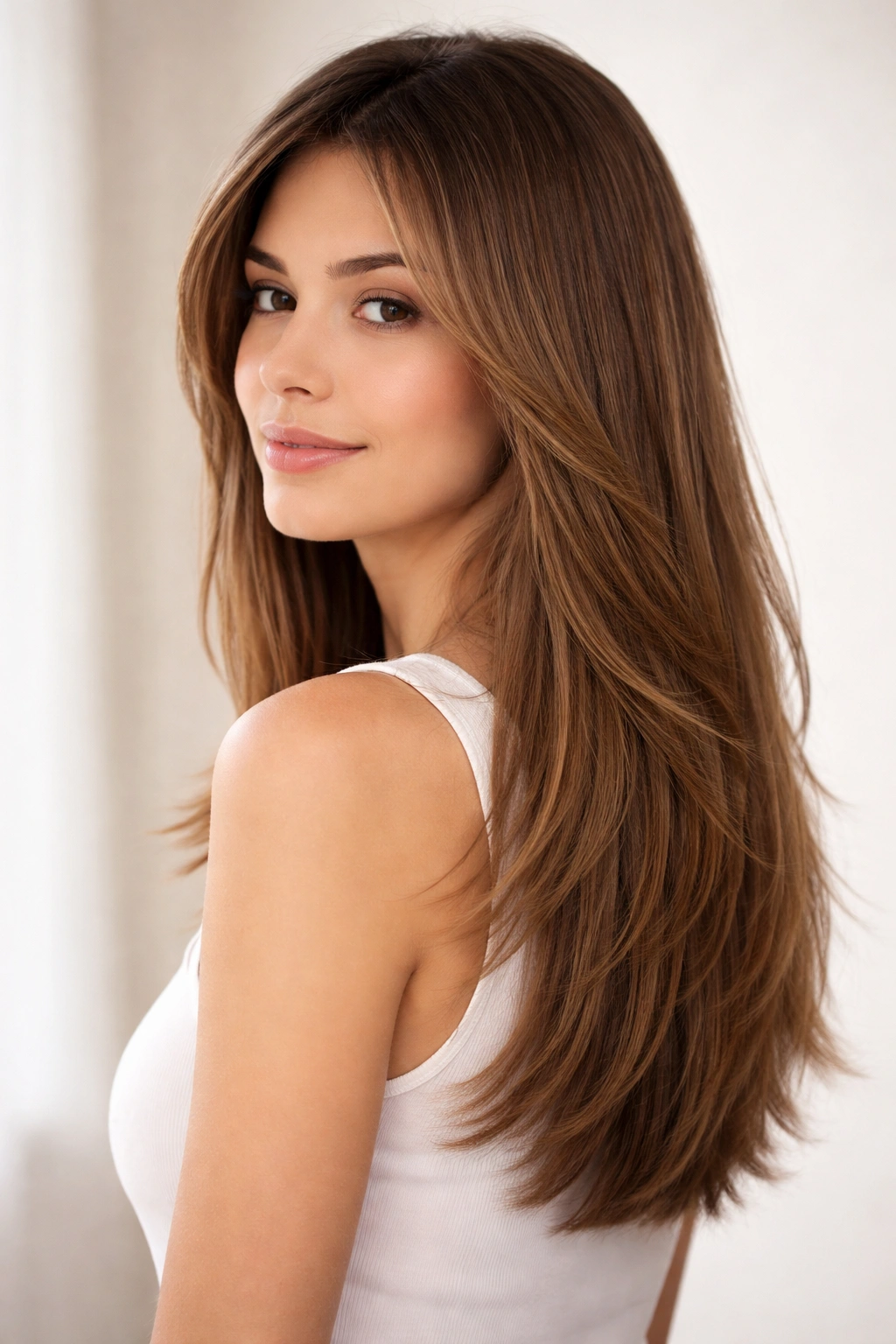
This cut extends to mid-back length with layers throughout that create movement and separation. Unlike the shag, the layers here are more integrated and less choppy — you’ll see gradual length changes that create shape without obvious disconnection. The ends are subtly textured or point-cut rather than blunt, giving them a softer edge that still reads as intentionally styled.
Movement Without Choppy Texture
This cut strikes a balance between the sleekness of minimal layering and the movement of a heavily textured cut. The layers are visible but integrated, creating dimension and helping the hair move without the shag’s rebellious edge. On straight hair, the subtle point-cut texture adds interest without compromising the sleek aesthetic.
Face Shape and Styling Reality
- Flatters most face shapes, especially when face-framing layers are incorporated
- Longer layers at the sides can soften wider jaws or round faces
- Shorter layers at the crown add volume without making you look top-heavy
- Blow-dry for smoothness or let air-dry for a more natural texture
- A light texturizing spray adds intentional piece-y movement without frizz
- Trims every 8-10 weeks keep the layers looking intentional
- Works beautifully with a center, side, or even slightly off-center part
- The length and movement mean styling is flexible — works dressed up or casual
Real-talk: This cut requires more styling finesse than a blunt bob, but less than a full shag. It’s the sweet spot for women who want movement but also want their hair to read as polished.
10. The Asymmetrical Shoulder-Length Cut
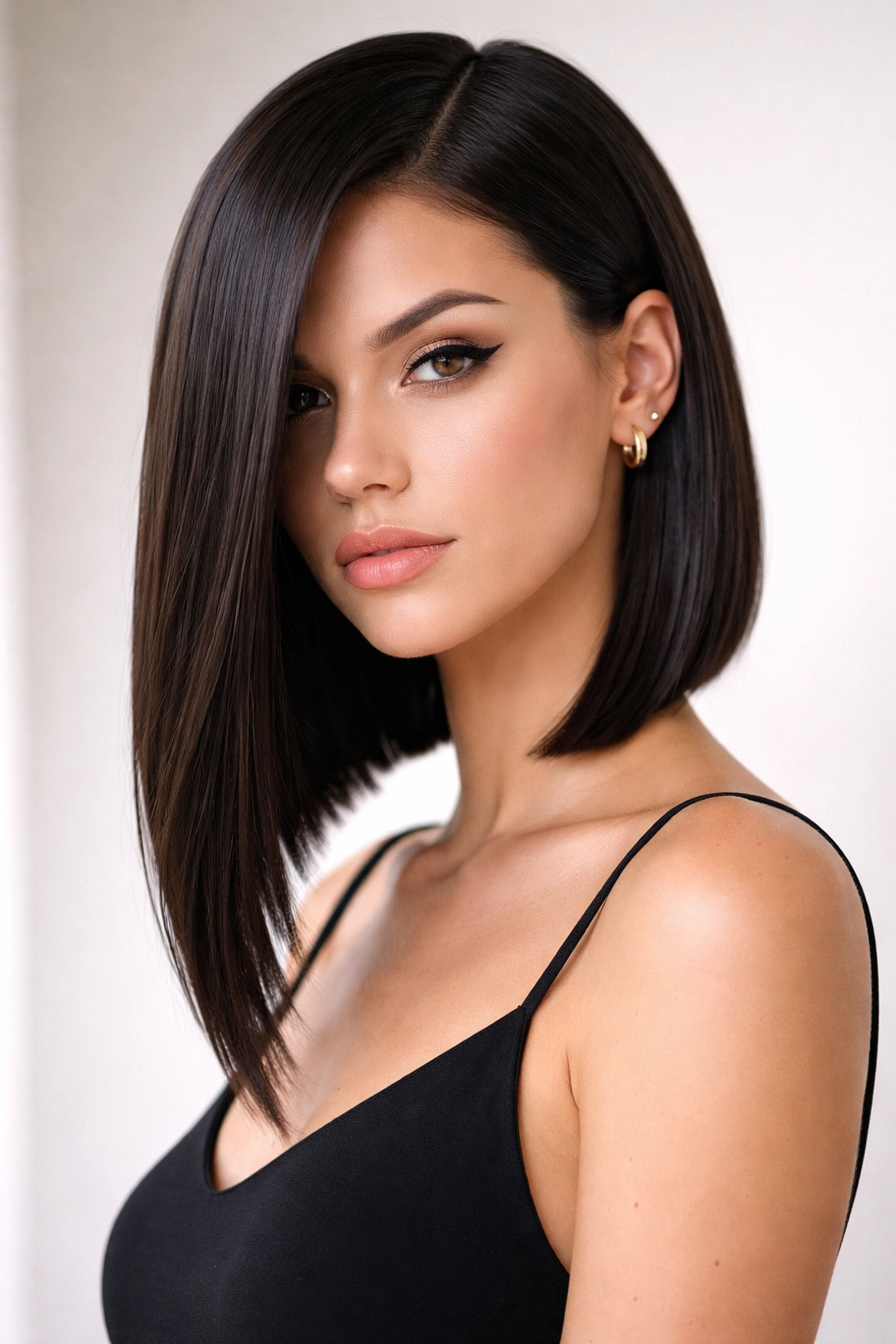
An asymmetrical cut features deliberately different lengths on each side — typically one side chin-length and the other extending toward the shoulder or beyond. It’s bold, modern, and unexpectedly wearable. On straight hair, the contrast between the two sides creates visual interest and movement without relying on layers or texture throughout.
Bold Geometry for Impact
Asymmetrical cuts are polarizing, but when executed well, they’re striking. The cut creates an immediate visual focal point and reads as confidently fashionable. On straight hair, the clean lines of each side remain sharp and defined.
Styling and Face Considerations
- Requires a stylist experienced with asymmetrical cuts and precise proportions
- Works best on oval and oblong face shapes, though heart-shaped faces can work too
- The shorter side can be positioned toward or away from your wider facial features depending on what you want to emphasize
- Styling can be as simple as a center part showing off both lengths, or a side part positioning the longer side forward
- Blow-dry straight for maximum impact and cleanliness of line
- Trims every 4-6 weeks maintain the asymmetry
- Pairs beautifully with structured makeup and confident personal style
- Works at any hair density but looks especially striking on thick, straight hair
Styling note: This cut’s success depends entirely on your willingness to commit to regular trims. A grown-out asymmetrical cut looks accidental rather than intentional.
11. The Blunt Straight Bangs with Long Straight Hair
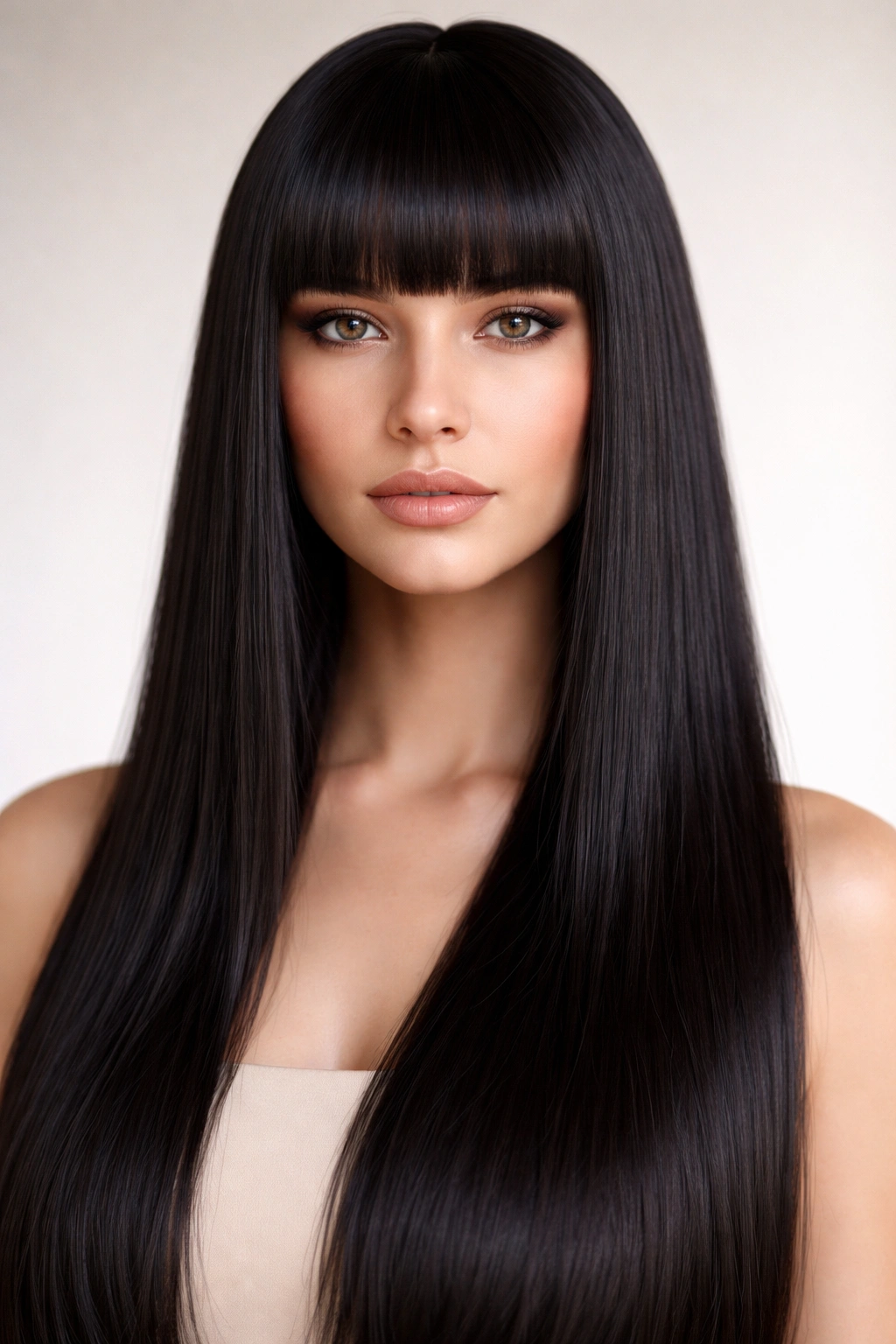
While this technically falls into the medium-to-long category depending on your body length, the blunt bangs are the defining style feature. Straight-across bangs that hit at eyebrow level create an immediate focal point and bring a trend-forward edge to mid-length or longer straight hair. The rest of the hair remains one-length or nearly one-length with minimal layers, creating a sleek, graphic silhouette.
Bangs as Statement Feature
Blunt straight bangs are bold. They require commitment and regular maintenance, but they create an undeniable style statement that reads as confident and fashion-forward. On straight hair, the blunt line of the bangs creates a graphic quality that’s striking.
Maintenance and Styling Reality
- Bangs require trims every 2-3 weeks to maintain the blunt edge and proper length
- The rest of the hair can go longer between trims — every 6-8 weeks
- Styling is straightforward: blow-dry the bangs first with a round brush, then straighten if needed
- Pair with minimal makeup to let the bangs be the statement feature
- Works on most face shapes, though longer face shapes benefit most from the facial width bangs create
- The longer hair beneath the bangs can be styled down, in a ponytail with bangs out, or in an updo
- Clean, straight bangs look best with simple, modern personal style
Honest consideration: Blunt bangs require daily styling (or at least most days) and regular trims. They’re a significant commitment compared to a cut without bangs.
12. The Choppy Textured Medium Cut
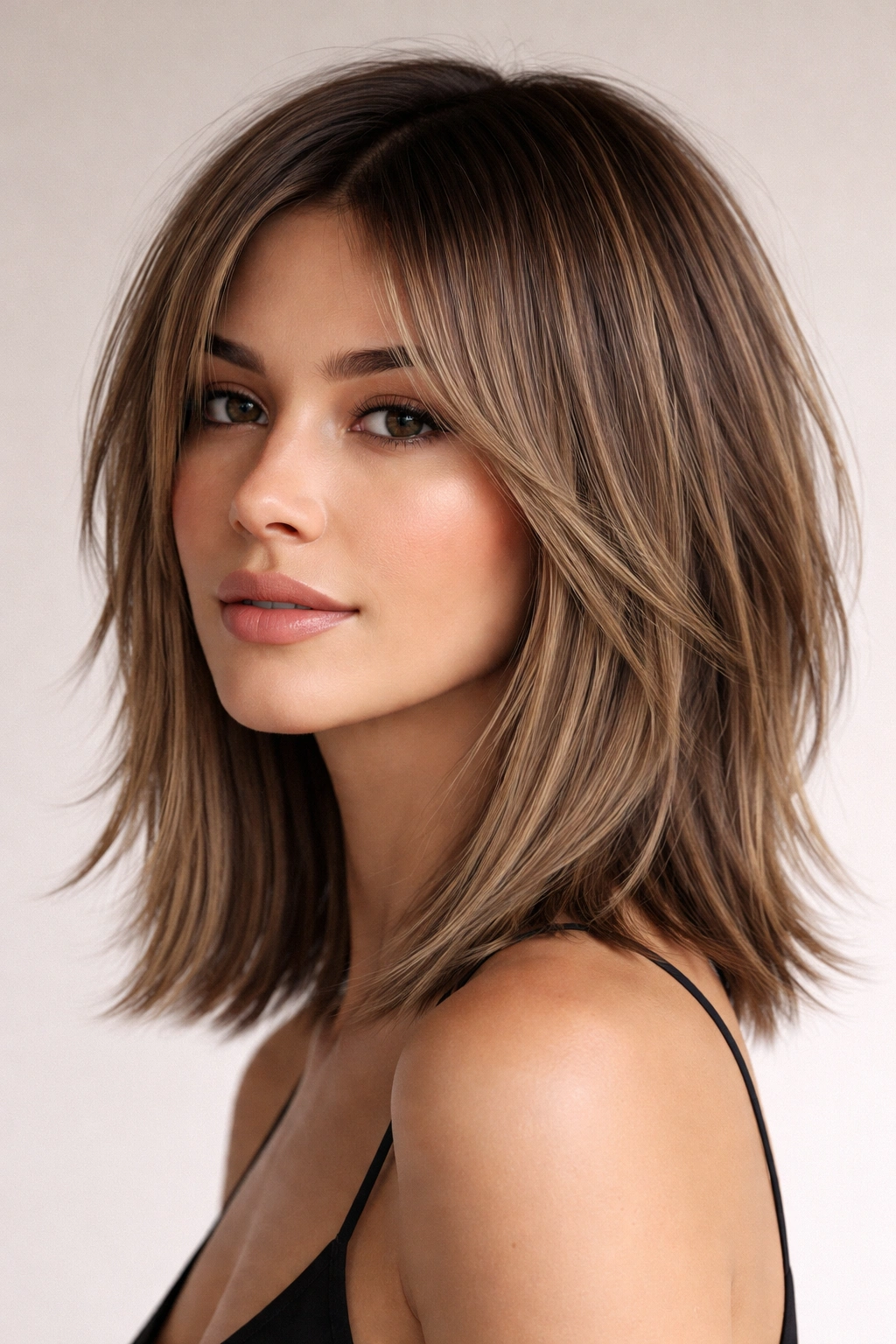
This cut sits at medium length (around shoulder-length or slightly longer) with choppy, disconnected layers throughout that create texture and movement. Unlike a shag, the choppiness here is more refined — the layers are intentional and designed rather than chaotic. On straight hair, each choppy layer remains crisp and defined, creating a contemporary, slightly edgy aesthetic.
Controlled Choppiness
The key to this cut is that the choppiness is designed, not random. The layers follow a shape and have intention, which prevents the cut from reading as accident or neglect. On straight hair, the clean lines of each choppy piece create visual interest and light-catching dimension.
Styling for Modern Edge
- Works on most face shapes, though the choppy layers should frame the face intentionally
- Requires styling to look intentional — texturizing spray is essential
- Blow-dry with fingers or a round brush, then scrunch texture spray through the layers
- A center or side part works well depending on the specific layer placement
- The shorter choppy layers create volume at the crown, which flatters most face shapes
- Trims every 6-8 weeks keep the layers looking crisp and intentional
- Pairs beautifully with bold makeup, modern fashion, and confident personal style
- Works at any hair density, though looks especially striking on thick, straight hair
Style philosophy: This cut is for women who enjoy styling and want their hair to reflect a deliberate, contemporary aesthetic rather than a timeless, classic one.
13. The Sleek Invisible Layers
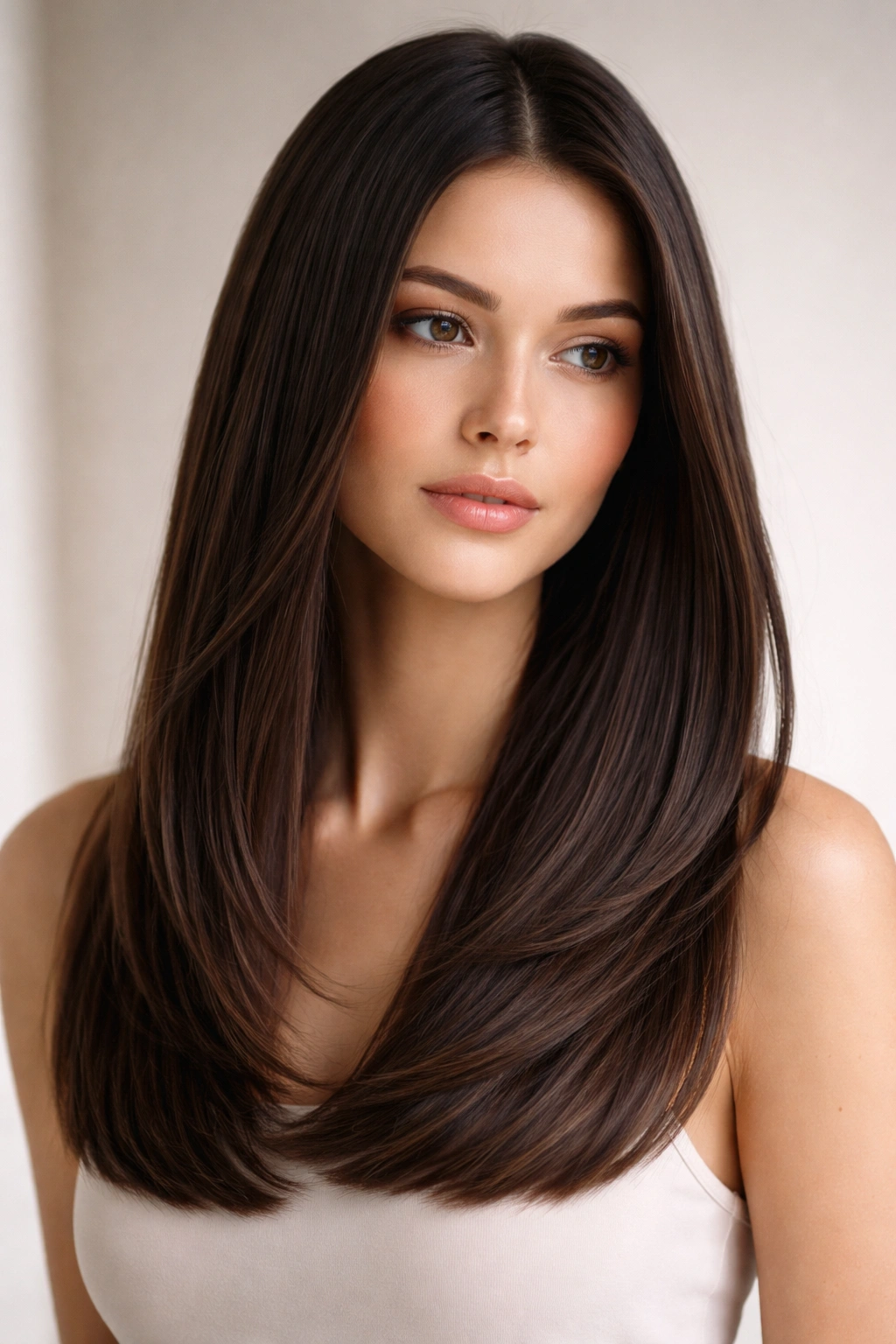
This cut appears to be one-length or nearly one-length at first glance, but subtle layers are built in throughout that you only notice when the hair moves. The layers start at around chin-length and graduate gradually, creating shape and movement without obvious texture or separation. On straight hair, these invisible layers prevent the hair from feeling heavy while maintaining the sleek aesthetic.
Engineered Movement
This cut is the most technically sophisticated on this list. It requires a stylist who understands hair density, growth patterns, and how light reflects off layered straight hair. The goal is movement and shape without visible choppy texture — just clean, smooth hair that swings and separates naturally.
Who Should Choose This Cut
- Works on all hair densities, though especially flatters finer, straight hair
- Suits all face shapes because the layering is designed based on your specific features and density
- Requires minimal styling — blow-dry smooth or air-dry with confidence
- Trims every 8-10 weeks maintain the invisible layer structure
- A center or side part works equally well
- Pairs beautifully with any makeup or style because the cut is the foundation, not the statement
- Styling is genuinely simple, making this a great choice for busy women who want a polished look without fuss
Real advantage: This cut does the work for you. You can air-dry it and still look intentional and put-together, which is rare in the world of modern haircuts.
14. The Textured Midi with Long Layers
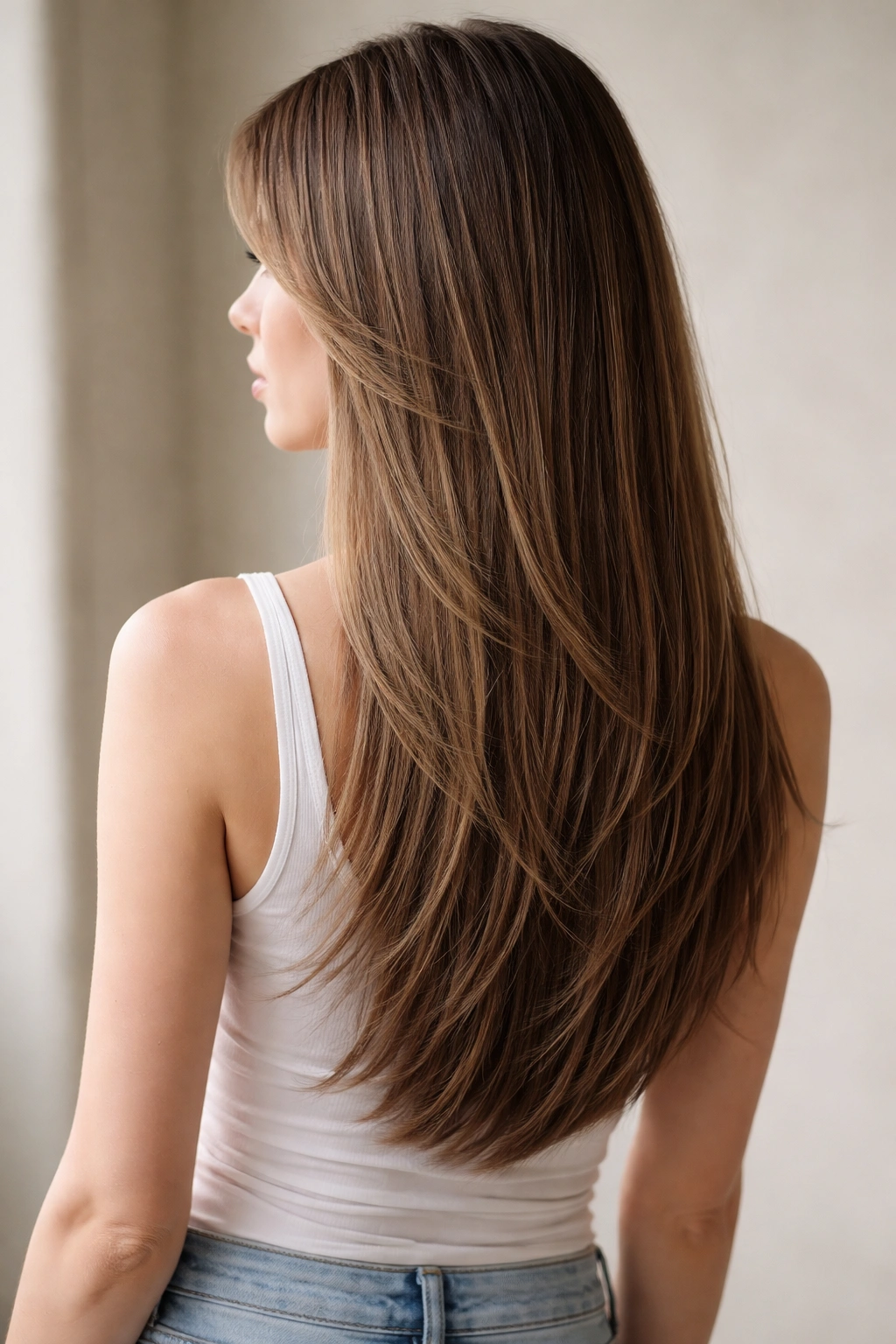
This cut extends to mid-back or bra-band length and features longer, more integrated layers throughout that create movement without the choppy, disconnected quality of a shag. The texture comes from graduated layers and subtly point-cut ends, creating a softer, more romantic aesthetic than some of the bolder cuts on this list. On straight hair, the layers create dimension and catch light beautifully.
Soft Movement Through Layering
The longer layers in this cut integrate gradually, creating shape from the inside out. The cut has volume and movement without obvious texture, and the longer length means you can style it multiple ways — down for softness, pulled back for polish, or in a bun or ponytail when you need practicality.
Versatile Styling Options
- Works on most face shapes, especially when face-framing layers are incorporated
- Longer face frames soften sharp features without overwhelming them
- Blow-dry with a round brush for smoothness or a paddle brush for natural texture
- Air-drying works beautifully on straight hair — let it dry and enjoy the natural soft waves from the layers
- Trims every 8-10 weeks keep the layers looking integrated rather than grown-out
- A center or deep side part both work well
- The added length means you can style it dozens of ways depending on your mood and occasion
- Works at any hair density, but especially flattering on medium to thick, straight hair
Advantage: This cut offers serious versatility. You can style it sleek and polished, slightly textured for romance, or practical in a ponytail depending on your needs that day.
15. The Disconnected Shoulder-Length Layers
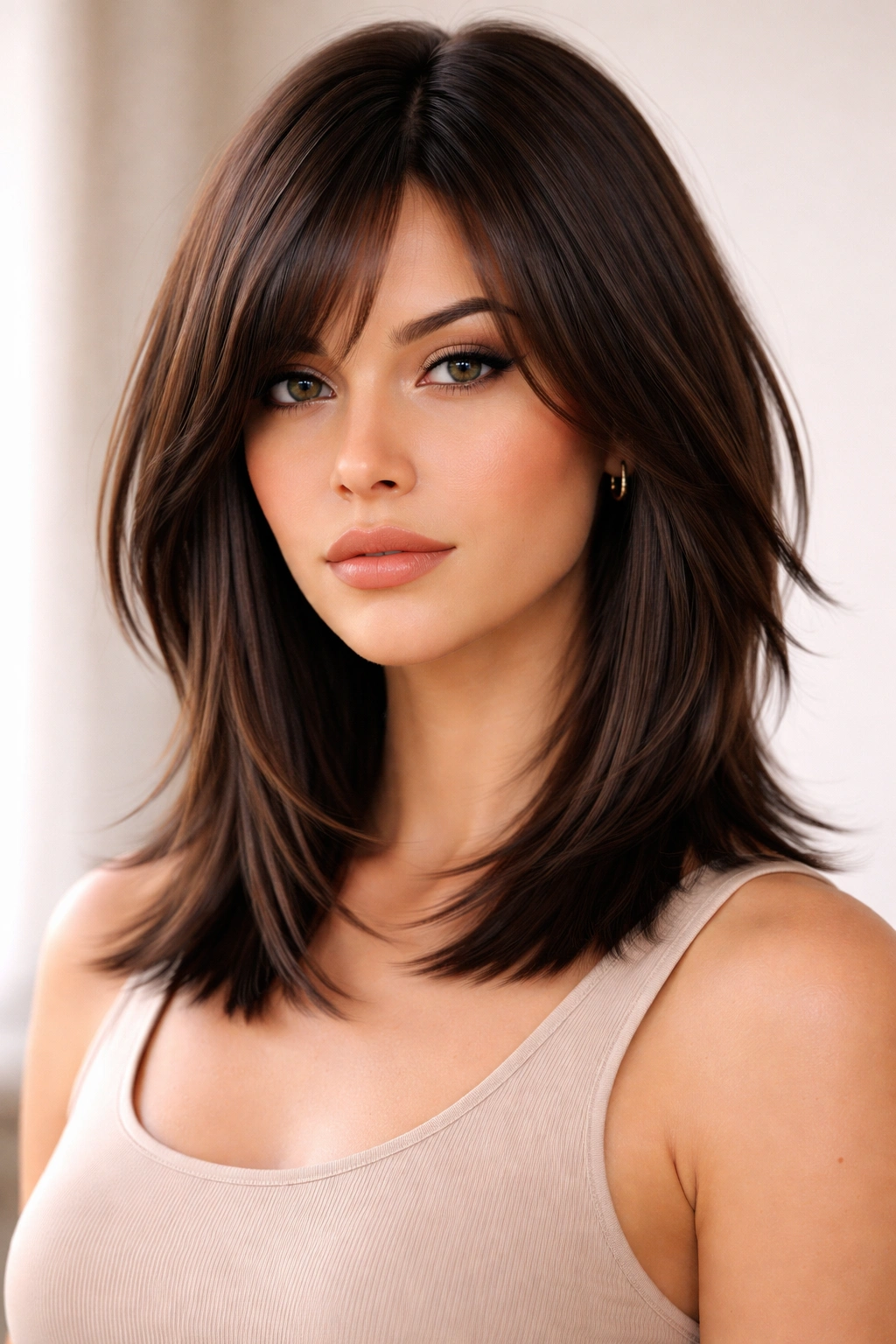
This cut sits at shoulder-length with distinctly separated, choppy layers that create obvious texture and movement throughout. Unlike integrated layering, these layers are visibly disconnected — you see the length changes and the texture is the style statement. It’s a bold, modern cut that reads contemporary and confident.
Obvious Texture as Design
In this cut, the separation between layers is intentional and visible. This isn’t about subtlety; it’s about using obvious choppy texture as a design feature. On straight hair, each layer remains clean and defined, creating a crisp, modern aesthetic.
Styling and Personality
- Requires styling to look intentional — this cut isn’t wash-and-go
- Blow-dry with a round brush or fingers, creating shape and lift at the roots
- Texturizing spray or sea salt spray adds piece-y definition without frizz
- Works on most face shapes, though works especially well on longer, narrower faces that benefit from the added width
- The disconnected layers create volume at the crown and movement throughout
- Trims every 6-8 weeks keep the layers looking sharp rather than grown-out and wispy
- Pairs beautifully with bold makeup, modern fashion, and a confident attitude
- Works best on medium to thick, straight hair — finer hair can look thin with too much visible texture
Personality match: This cut is for women who enjoy styling, want their hair to make a statement, and appreciate modern, fashion-forward aesthetics.
Final Thoughts

The right medium-length sleek haircut has the power to completely transform how you feel in your own skin. If you have straight hair, you’re starting with an advantage — your hair’s natural smoothness and light-reflecting quality make every one of these cuts look intentional and polished. The challenge isn’t whether a sleek medium cut will work for you; it’s finding the specific cut that aligns with your face shape, lifestyle, and how much styling time you’re willing to commit.
Before you book your appointment, spend time thinking honestly about your styling routine. Are you someone who enjoys blow-drying and styling with products, or do you prefer low-maintenance cuts that look good with minimal fussing? Do you want a timeless cut that will work for years, or are you drawn to something bolder and more trend-forward? How often are you realistically willing to get trims? These questions matter more than chasing whatever cut you saw on social media, because the best haircut is one that actually fits your life.
Find a stylist who specializes in precision cutting for straight hair and who takes time to understand your hair’s specific texture, growth patterns, and how it moves. Bring reference photos, but also have a real conversation about what would work for your face shape, hair density, and styling preferences. The right cut, combined with your straight hair’s natural advantages and your willingness to style it well, creates something genuinely special — a look that’s effortlessly polished and undeniably yours.
