



A curly bob can be absolutely transformative, but only if it’s cut to work with your unique face shape, curl pattern, and lifestyle. The wrong bob can overwhelm a round face or make fine curls look stringy and thin. The right one? It becomes the kind of haircut that makes you look refreshed without needing much beyond a quick shake-dry each morning.
The magic of a curly bob lies in its versatility. Whether you have tight coils, loose waves, or something in between, there’s a bob cut designed to enhance your features and make styling easier. The key is understanding which styles flatter different face shapes and which cutting techniques bring out the best in your specific curl pattern. Some bobs work better with layers that encourage movement, while others rely on blunt, strategic length to create definition.
This guide walks you through twenty distinct curly bob styles — each chosen because it genuinely works for particular face shapes, curl types, or styling preferences. You’ll find detailed descriptions of what makes each cut unique, who it flatters most, and how to ask your stylist for it so you get exactly what you’re looking for. Whether you’re considering your first curly bob or you’re ready to switch up your current style, these options will help you find the cut that feels authentically you.
1. The Classic Shoulder-Length Curly Bob
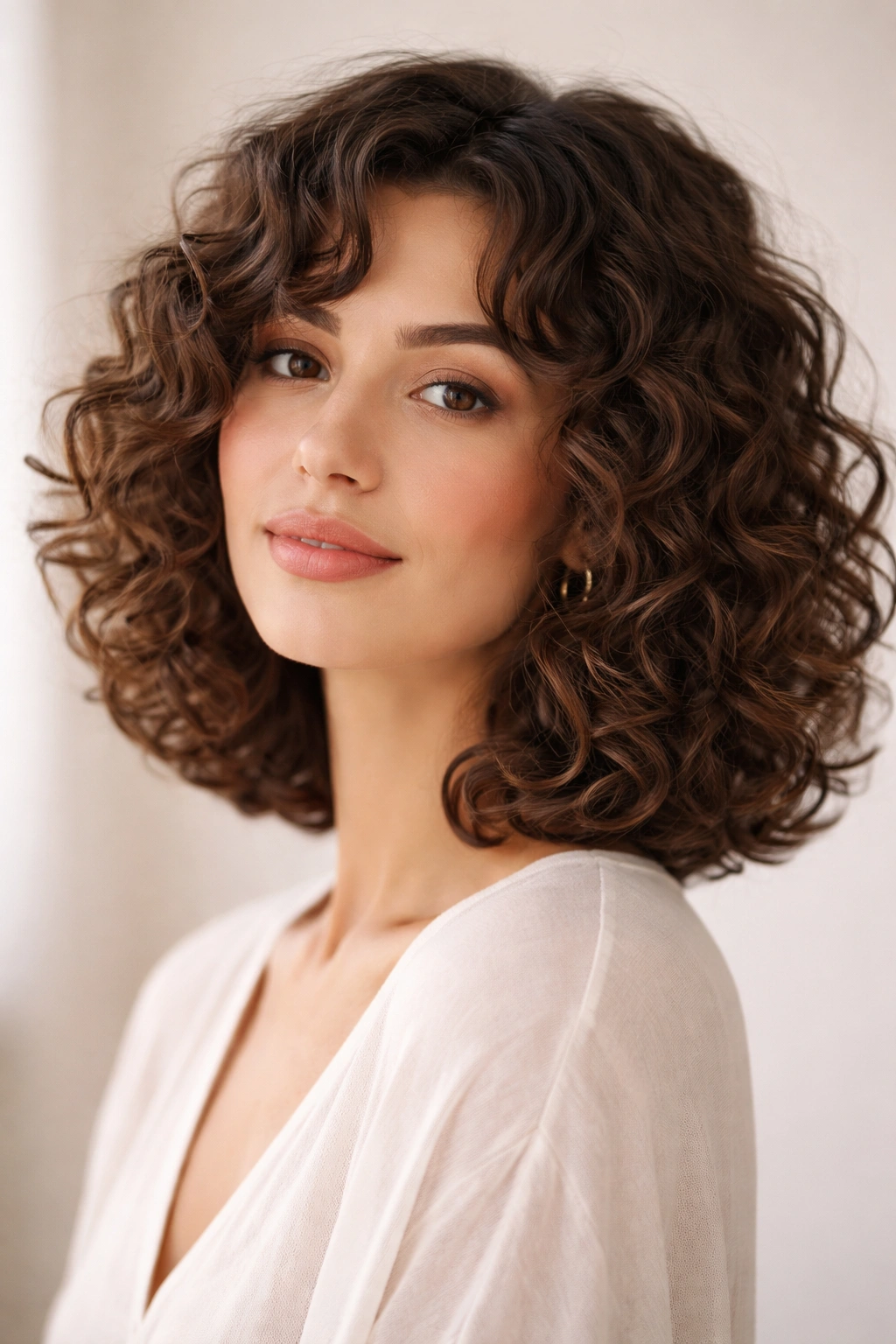
This is the curly bob that started everything — a timeless cut that hits right around the shoulders with a rounded shape that celebrates natural texture. The length gives you enough hair to work with, so curls have room to develop their full personality without looking cramped or too tight against the head. It’s the kind of cut that works with almost any curl pattern because the length provides balance.
Why This Cut Works Universally
The shoulder-length bob keeps curls looking full and bouncy without requiring extensive styling or layers that can sometimes make curly hair look wispy. For oval and square face shapes, this length is particularly flattering because it elongates the face while still providing softness around the jawline. The rounded silhouette naturally frames the face, drawing attention upward toward your eyes and cheekbones rather than making the face look wider.
Essential Details for Your Stylist
- Ask for the cut to be slightly shorter in the back than the front — this creates movement and prevents the back from looking flat
- Request that layers be minimal or nonexistent to maintain density throughout
- Specify that you want the ends curved gently around your face rather than blunt and severe
- Bring photos showing your target finished curl pattern, not just straight-haired reference pictures
Pro tip: This cut actually looks better a few weeks after it’s first done, as your curl pattern settles and the weight of the hair relaxes into its natural shape.
2. The Textured Pixie-Bob Hybrid
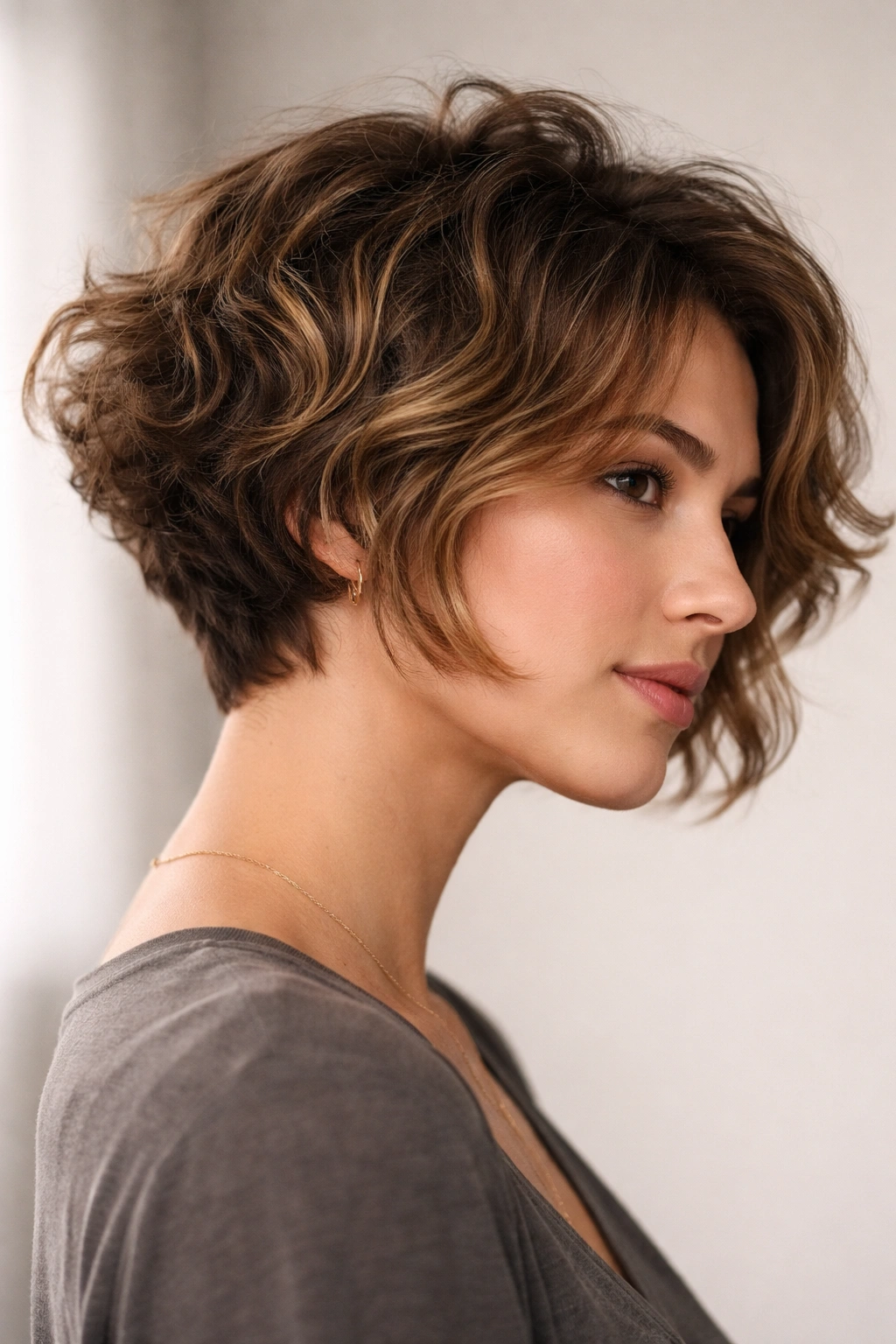
This cut merges a pixie’s short, textured freedom with a bob’s soft, feminine shape. The back stays short and textured — usually 2 to 3 inches — while the front gradually lengthens toward the jawline or slightly below. It’s a bold choice that reads edgy and modern while still being undeniably curly and textured.
Who Should Wear This Style
This hybrid works beautifully on people with heart-shaped faces (narrow foreheads, wider cheekbones and jawline) because the longer front pieces soften the lower face. It’s also fantastic for round faces, where the shorter texture in the back prevents the head from looking overly full and the longer front pieces create the illusion of more facial length. If you have a naturally small head or fine, delicate features, this cut can look more balanced than a full-length bob.
Styling and Maintenance Reality
This cut requires a blow-dry with a diffuser to look its absolute best — air-drying can sometimes leave the back looking matted or undefined. The trade-off is that you get serious texture and movement with minimal effort beyond drying. Your stylist should razor-cut rather than scissor-cut to maximize texture and avoid creating a blunt, heavy weight.
Key characteristics: Choppy, textured layers; shorter back; tapered sides; longer front pieces that frame the face.
3. The Blunt Curly Bob with Depth
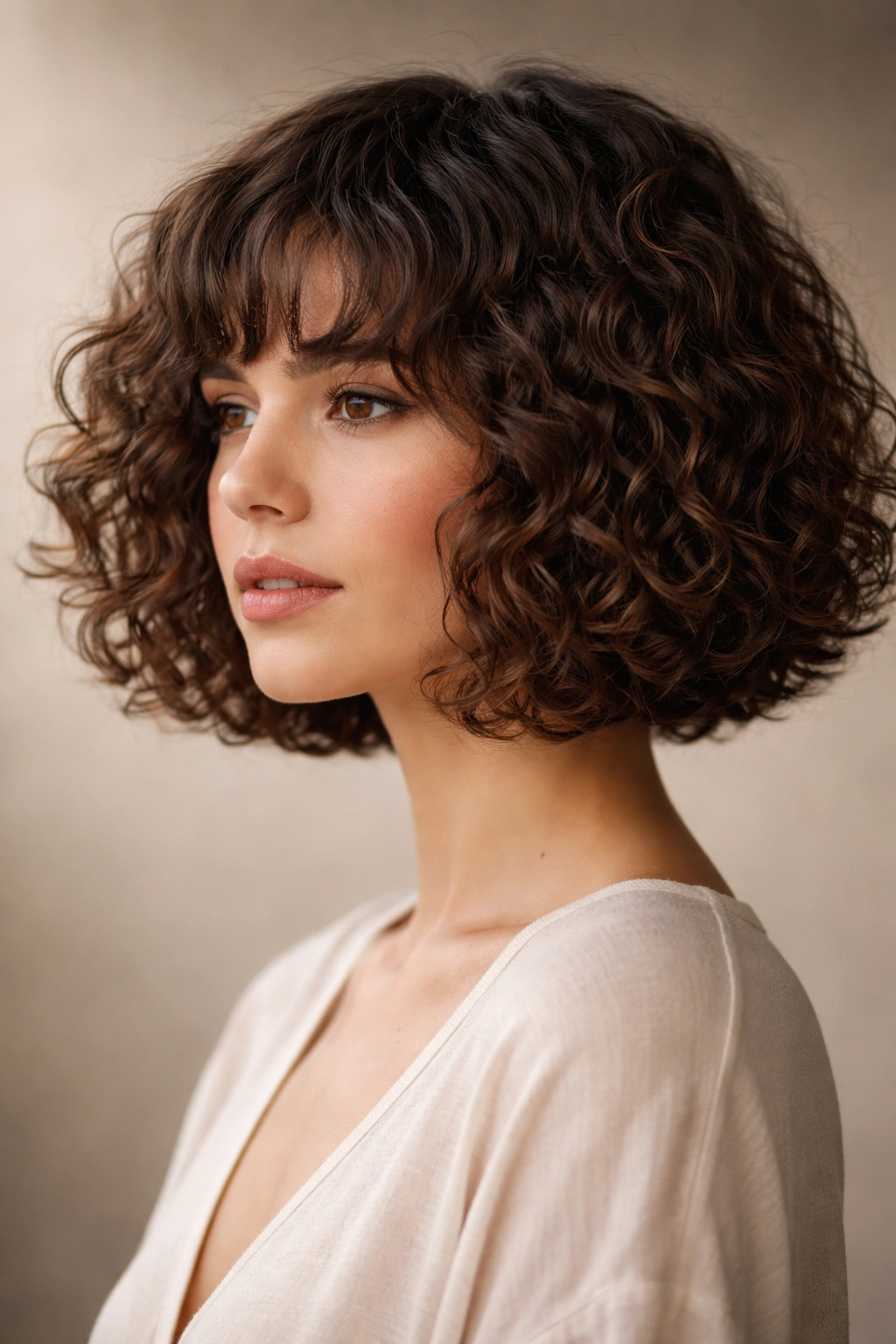
This cut keeps the outline of the bob blunt and clean — no flipped ends or soft curves — while using strategic depth and layers underneath to prevent weight buildup. From the front, it looks clean and structured. From the side and back, you see the intelligent shaping that keeps curls from feeling heavy or matted.
The Science Behind the Shape
A truly blunt curly bob is trickier to cut than it sounds because curly hair shrinks as it dries. Your stylist needs to account for that shrinkage when determining the final length, which is why consulting with a curl-experienced stylist matters so much. The bluntness creates visual impact — it makes the cut look intentional and polished — while the internal layers prevent the everyday discomfort of dense, heavy curls sitting against your neck.
Best Face Shapes for Bluntness
Oval and oblong faces love the blunt curly bob because the horizontal line of the cut creates the illusion of width and proportion. Rectangle-shaped faces benefit from the visual “stop” that a blunt line creates. If you have a wider face naturally, ask your stylist to keep the sides slightly longer than the very back to avoid emphasizing width.
Remember: A blunt bob requires more precision in cutting, so this is a time to invest in a stylist who specializes in curly cuts rather than going somewhere that treats all hair the same way.
4. The Layered Textured Bob for Fine Curls
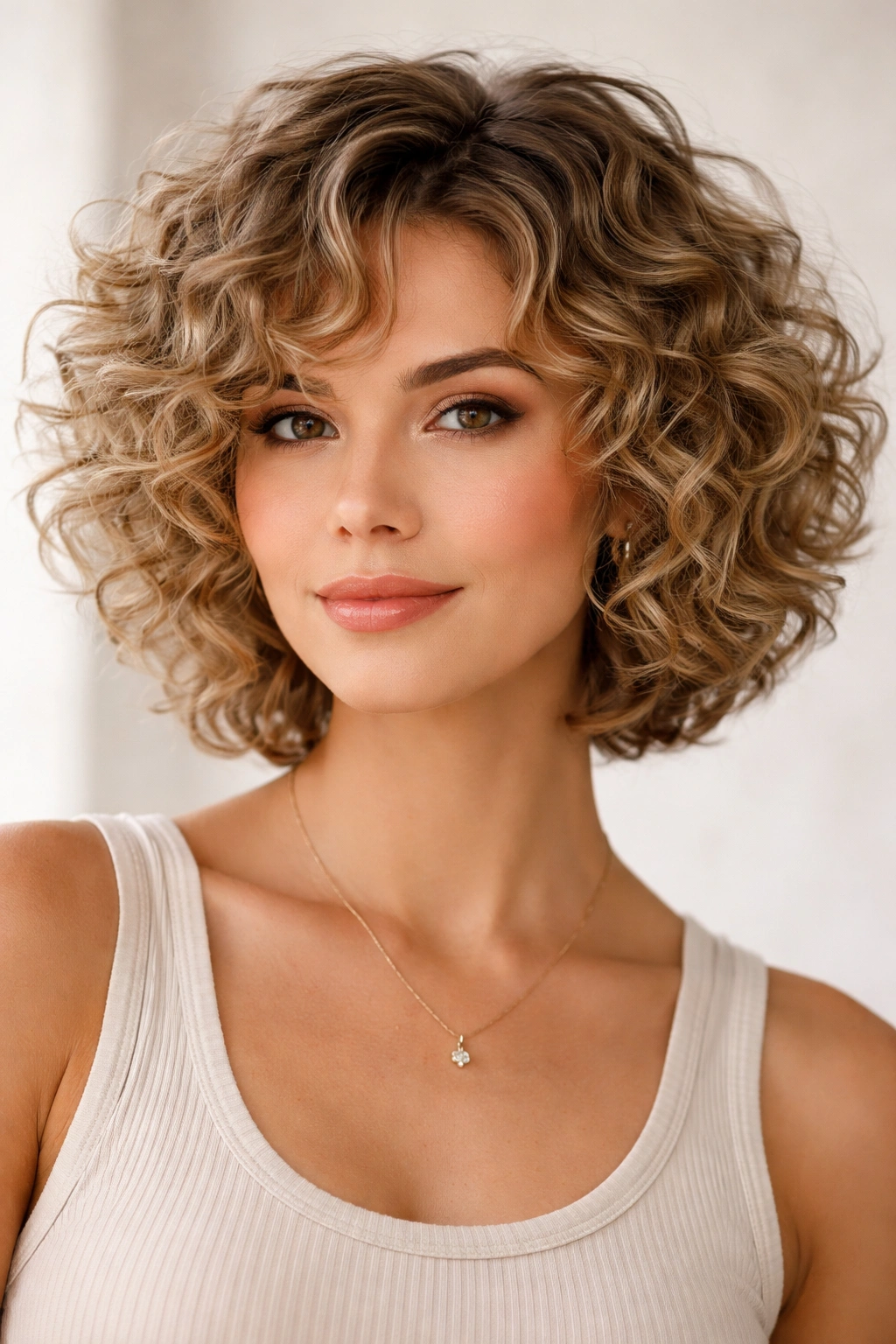
If your curls are on the finer side — whether you have a lot of them or just a moderate amount — this is your cut. Strategic layers throughout create movement and definition without making the hair look thin or scraggly. Each curl gets its own space to show texture, and the overall effect is full and intentional rather than sparse.
How Layers Change Everything for Fine Curls
Fine curly hair needs layers like a garden needs different heights of plants — the variation in length keeps everything from looking flat. This cut typically features 3 to 4 distinct layers, each starting at different points on the head so that curls can move independently. The shortest layers sit at the crown, where you want the most lift and volume. Longer layers underneath provide shape and structure without cutting away all your length.
Styling Approach for Maximum Impact
Apply your curl cream or gel to dripping-wet hair, section by section, before using a diffuser. The layered cut means you don’t need to be as gentle because individual curls have room to move. You’ll actually get more definition with slightly more aggressive diffusing because curls can express themselves fully.
What to tell your stylist: “I want layers that encourage each curl to show its own pattern. Keep the crown area shorter for lift, and graduate the layers so there’s no sudden heaviness in the bottom.”
5. The Face-Framing Curly Bob
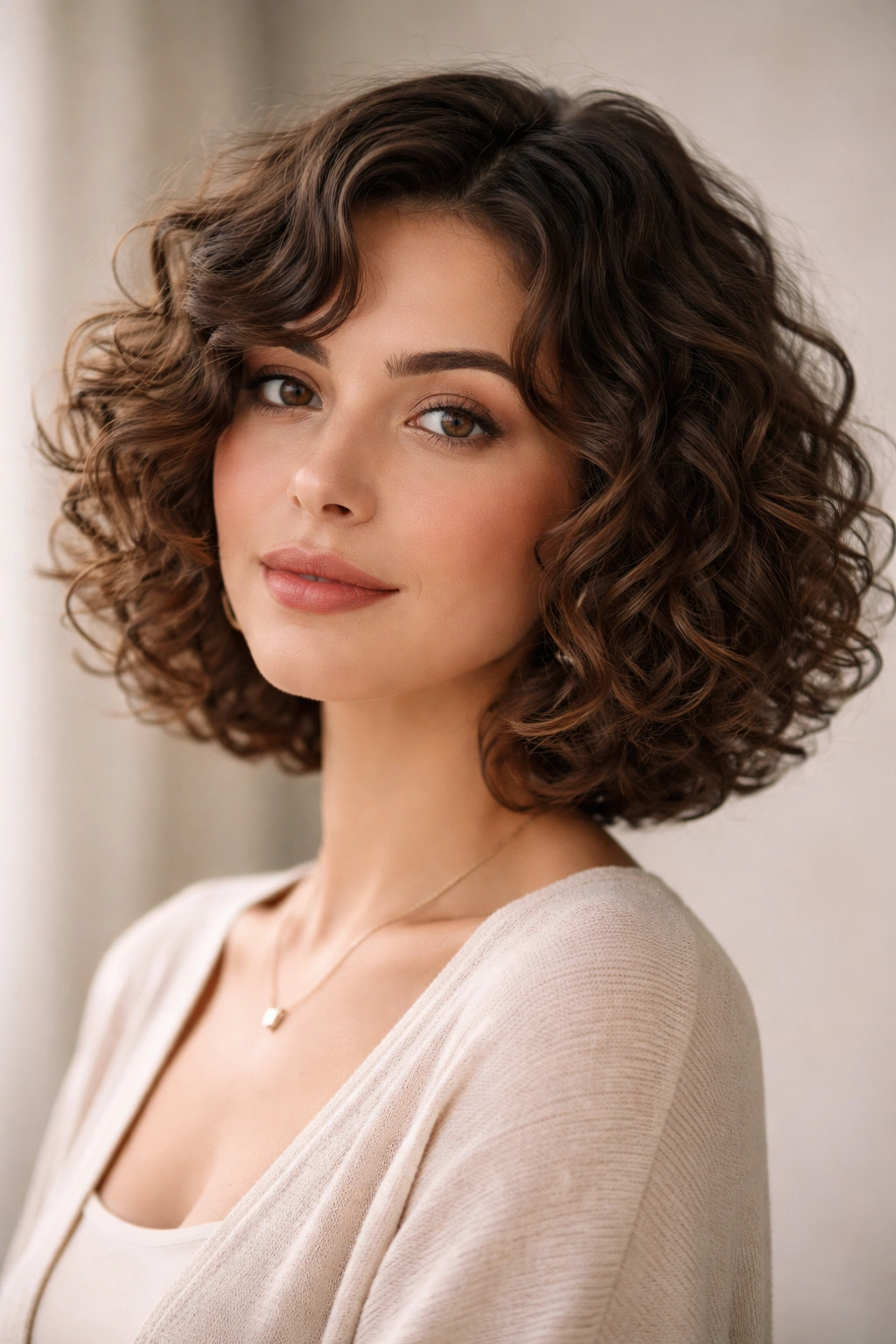
This style puts the emphasis on softness right around the face, with slightly longer pieces in the front that curve inward gently. It’s less about a uniform bob length and more about creating a flattering frame that draws attention to your best features. The back can stay relatively full and round, while the front creates a softer, more open look.
Why Face-Framing Works for Problem Zones
If you’d rather not emphasize a wider jawline, fuller cheeks, or a broader nose, face-framing pieces literally redirect attention. The longer front pieces create vertical lines that the eye naturally follows, making faces appear slightly narrower and longer. This works particularly well for round and square face shapes where you want softness around the edges.
The Styling Sweet Spot
The front pieces do need a little intentional styling — either tucking behind the ear for a polished look or allowing them to fall forward for a softer, more romantic feel. Some people alternate depending on their mood and the occasion. The longer front sections won’t dry as quickly as the rest of your hair, so apply your styling products to these pieces last to prevent them from getting too heavy.
Pro insight: Ask your stylist to cut the front pieces on dry hair so they can see exactly how your curls will sit once they’re completely dry and settled.
6. The Choppy Shag Bob
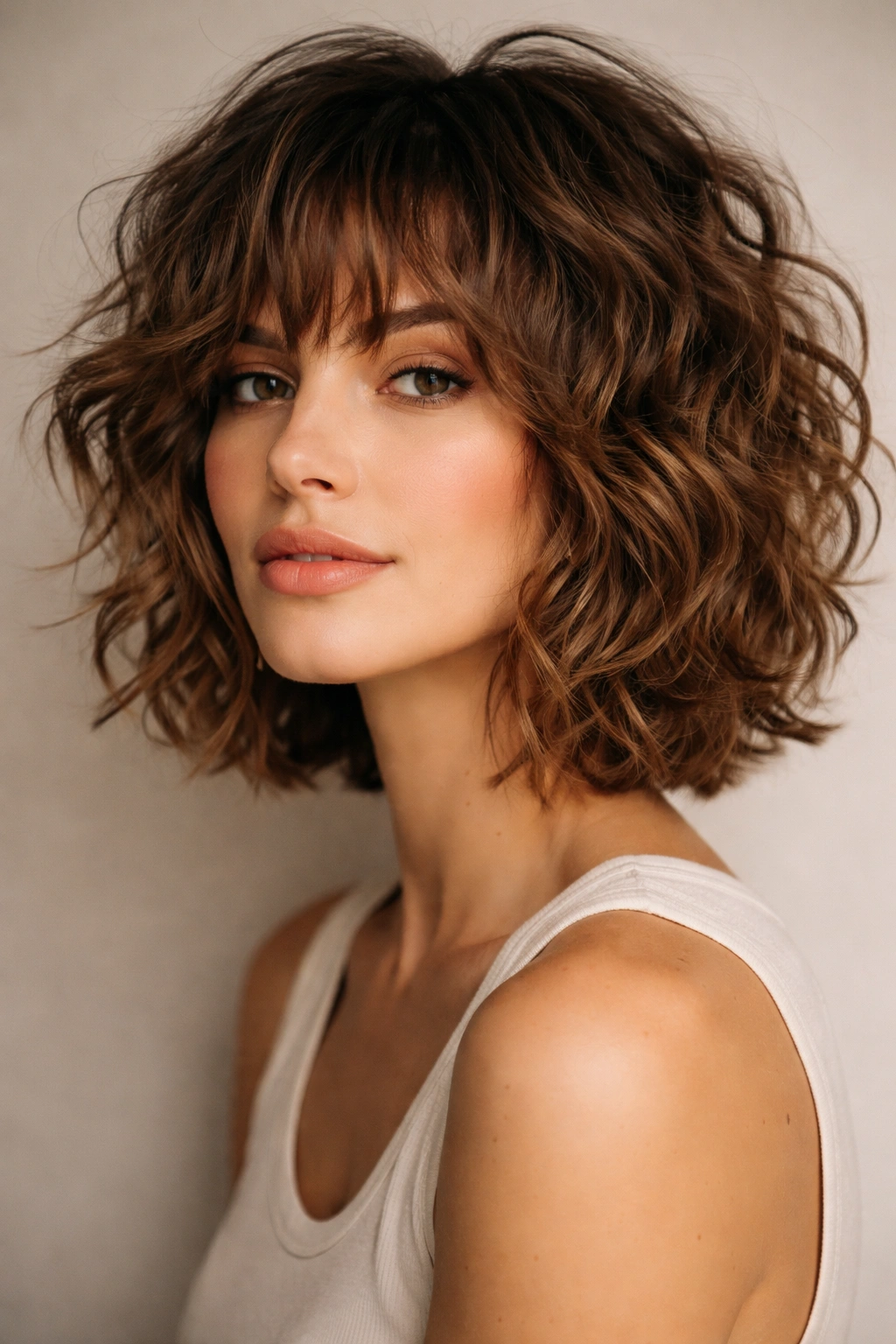
Part bob, part shag — this cut features lots of choppy, textured layers throughout that create movement and an effortlessly undone aesthetic. It reads modern and youthful while still being distinctly a bob in terms of overall shape. The key is that the layers are choppy and irregular rather than neat and geometric, which creates that lived-in, textured vibe.
Who This Cut Flatters Most
Oval faces wear this cut with absolute confidence — there’s enough texture and movement that nothing gets too serious. Heart-shaped faces love it because the choppy layers soften the jawline and the overall shape is flattering. If you have a longer face, the horizontal lines created by the choppy texture can make proportions feel more balanced. This is also fantastic for thick, curly hair that has natural volume — it gives all that texture somewhere intentional to go.
Maintenance and the Texturized Look
This cut needs a refresh every 6 to 8 weeks because the choppy layers start looking shaggy rather than intentional if they get too long. When you style it, a blow-dry with a diffuser brings out maximum texture, or air-dry for a more undone, tousled effect. Neither approach is wrong — it just depends on the vibe you’re going for that day.
Key point: Don’t ask for “choppy layers” unless you’re prepared to style the cut regularly. If you prefer wash-and-go, this style might frustrate you.
7. The Structured Curly Bob for Straight Hair with Waves
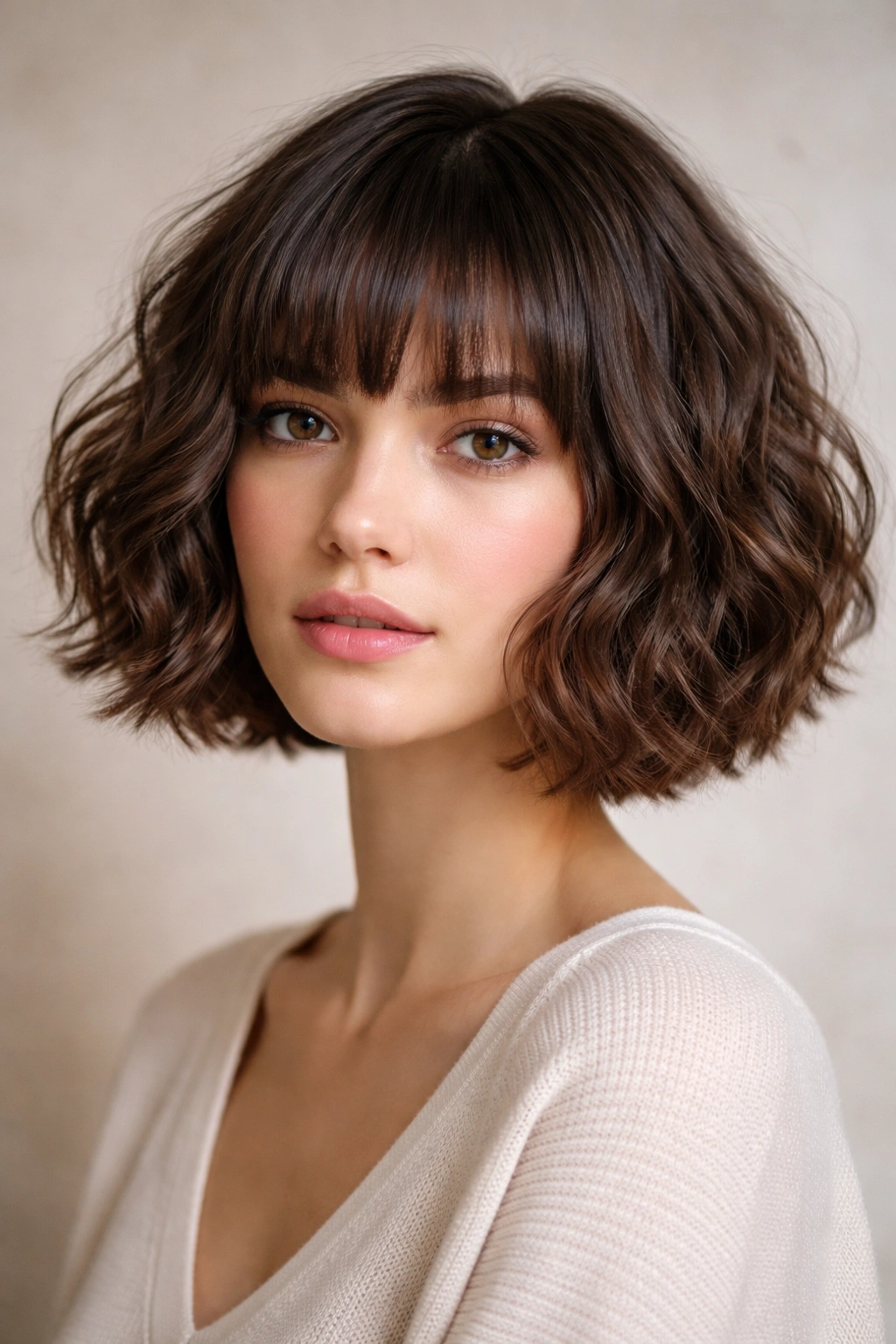
If your hair is naturally straight or has very loose waves, you might think a curly bob isn’t for you. This style proves otherwise. Shorter, more structured lengths work beautifully with straighter or wavy hair because the cut itself creates the shape, rather than relying entirely on natural curl to do the work. It reads as intentional and modern rather than underdone.
Why Shorter Lengths Work Better Here
With less naturally textured hair, you need more precision in the cut to create visual interest and shape. This bob typically sits chin-length or slightly shorter, with clean lines and minimal layers. A blunt or slightly angled front creates definition, while a gently rounded back completes the shape. It’s more geometric than a traditional curly bob, but it’s absolutely still a bob.
Styling Requirements for Wave-Based Hair
Depending on your wave pattern and humidity, you might need a light blow-dry and some texture spray or mousse to keep the shape looking clean. Some people find that a curling iron or straightener helps define the angles of the cut, especially around the face. This is one of those styles where understanding your specific hair type and the products that work for you matters more than for naturally curlier patterns.
Ask your stylist for: A cut that’s shaped to work with your natural wave pattern rather than against it — something that looks intentional whether you style it or let it air-dry.
8. The Tight-Coil Bob for Type 4 Hair
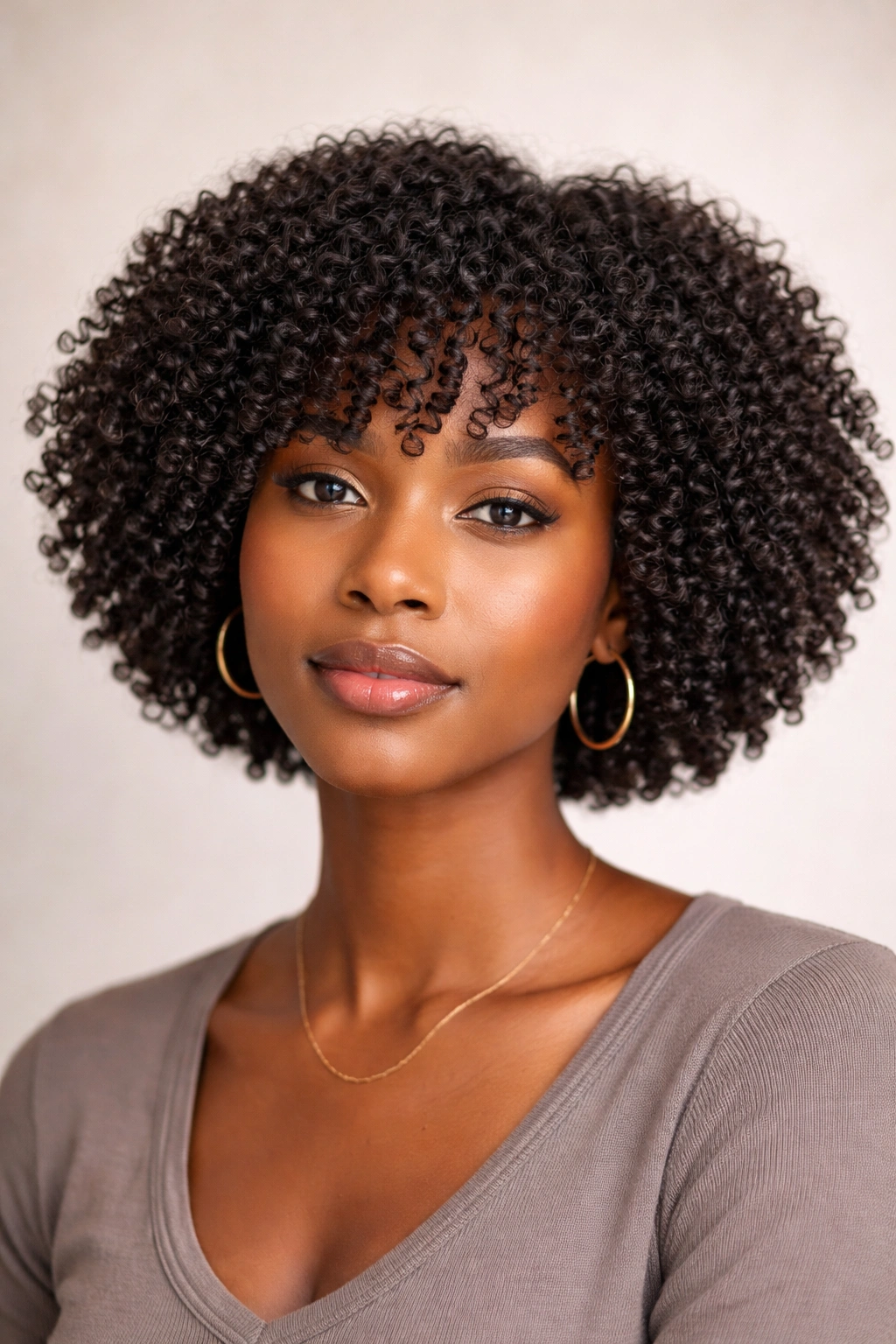
Tight, springy curls have their own needs, and this bob is designed specifically for that texture. The cut tends to be slightly shorter overall and works with the natural shrinkage that happens when Type 4 curls dry. Instead of fighting the tightness, this style celebrates it, creating a compact, densely textured shape that looks polished and powerful.
Understanding Shrinkage in the Cutting Process
Your stylist needs to cut this style on dry hair or at least thoroughly understand how much your specific curls will shrink. Some Type 4 curls shrink 30 to 40 percent from wet to dry, which is a massive difference. If your stylist cuts on wet hair without accounting for this, you’ll end up with a bob that’s shorter than you intended. This is non-negotiable: find a stylist experienced with Type 4 texture.
Styling and Maintenance Reality
This bob actually requires less daily styling than some curlier patterns because the coils lock together naturally and stay in place. A light moisturizer, curl cream, or gel applied to soaking-wet hair, followed by air-drying or a diffuser, is often all you need. Refresh curls between washes with a light spray of water and a bit more product. The cut is also more forgiving as it grows out because the texture hides length inconsistencies.
Important: Bring photos of other Type 4 curls you admire — not photos of looser curls, as the resulting shape will be completely different.
9. The Angled Curly Bob
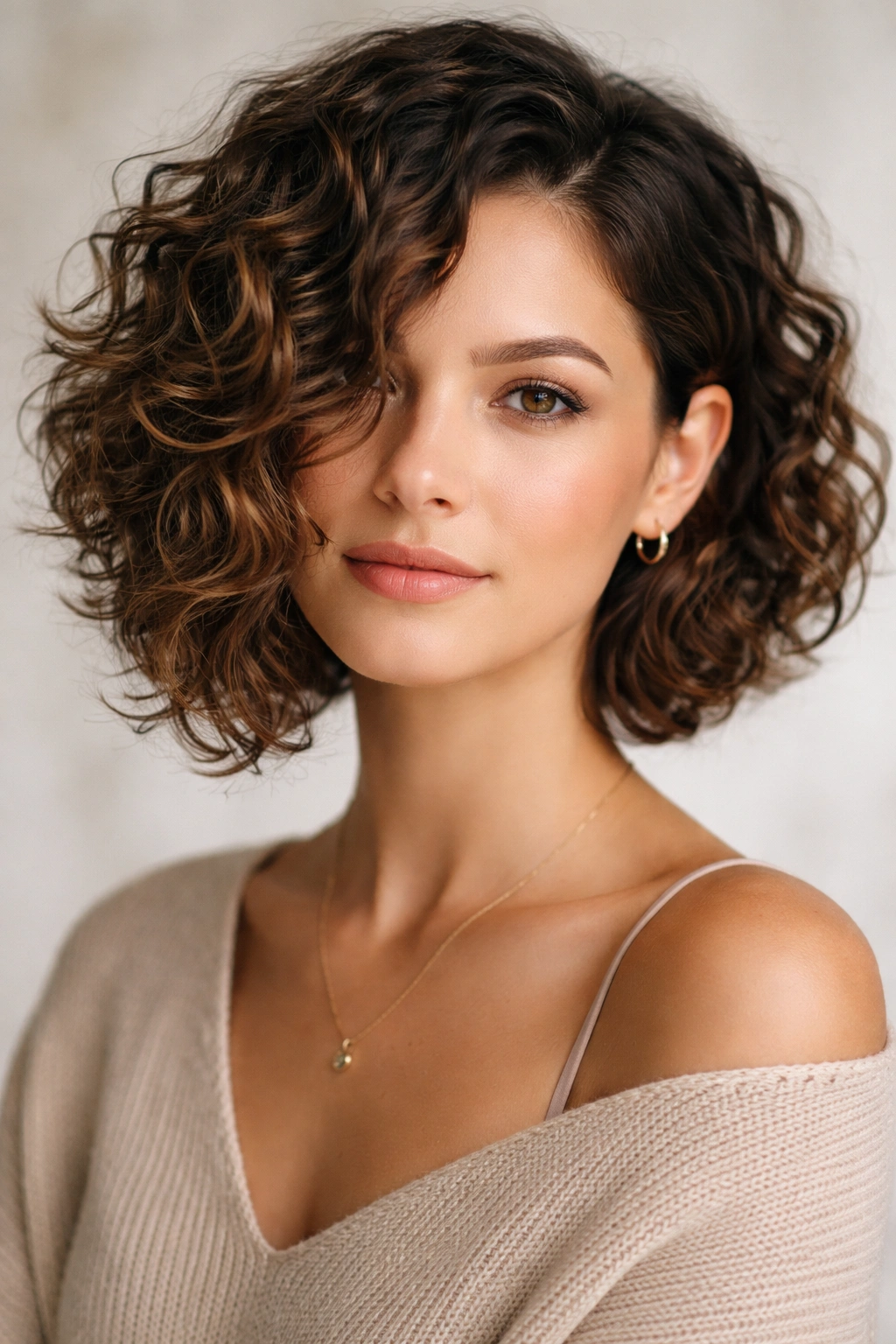
One side of this bob sits shorter (usually right around the chin) while the other side is noticeably longer — sometimes several inches longer. It’s a bold, fashion-forward look that reads edgy and modern while still being undeniably flattering to the right face shape. The angle creates movement and an asymmetrical visual interest that works beautifully with texture.
Face Shapes That Own This Style
Heart-shaped faces absolutely thrive with this cut because the longer side (usually worn on the weaker side of the face) balances out a narrower jaw or chin. Oblong and rectangular faces love the angle because it breaks up length and adds visual interest. If you have an angular face shape naturally — sharp cheekbones, defined jawline — the soft curve of the longer side creates a beautiful contrast. Square faces can wear this cut beautifully if the longer side emphasizes the cheekbones and jaw doesn’t sit right at the cut line.
Styling the Angle
The longer side will dry slightly differently than the shorter side, so you may need to focus more styling effort there. Many people let the longer side fall forward and the shorter side tuck back, creating an asymmetrical finished look. Others blow-dry and style it more uniformly so the angle is subtle. Both approaches work — it’s about what feels right for your personality and lifestyle.
For your stylist: Clarify which side you want longer and whether you want a dramatic angle (4+ inches of difference) or a subtle one (2 to 3 inches).
10. The Graduated Curly Bob
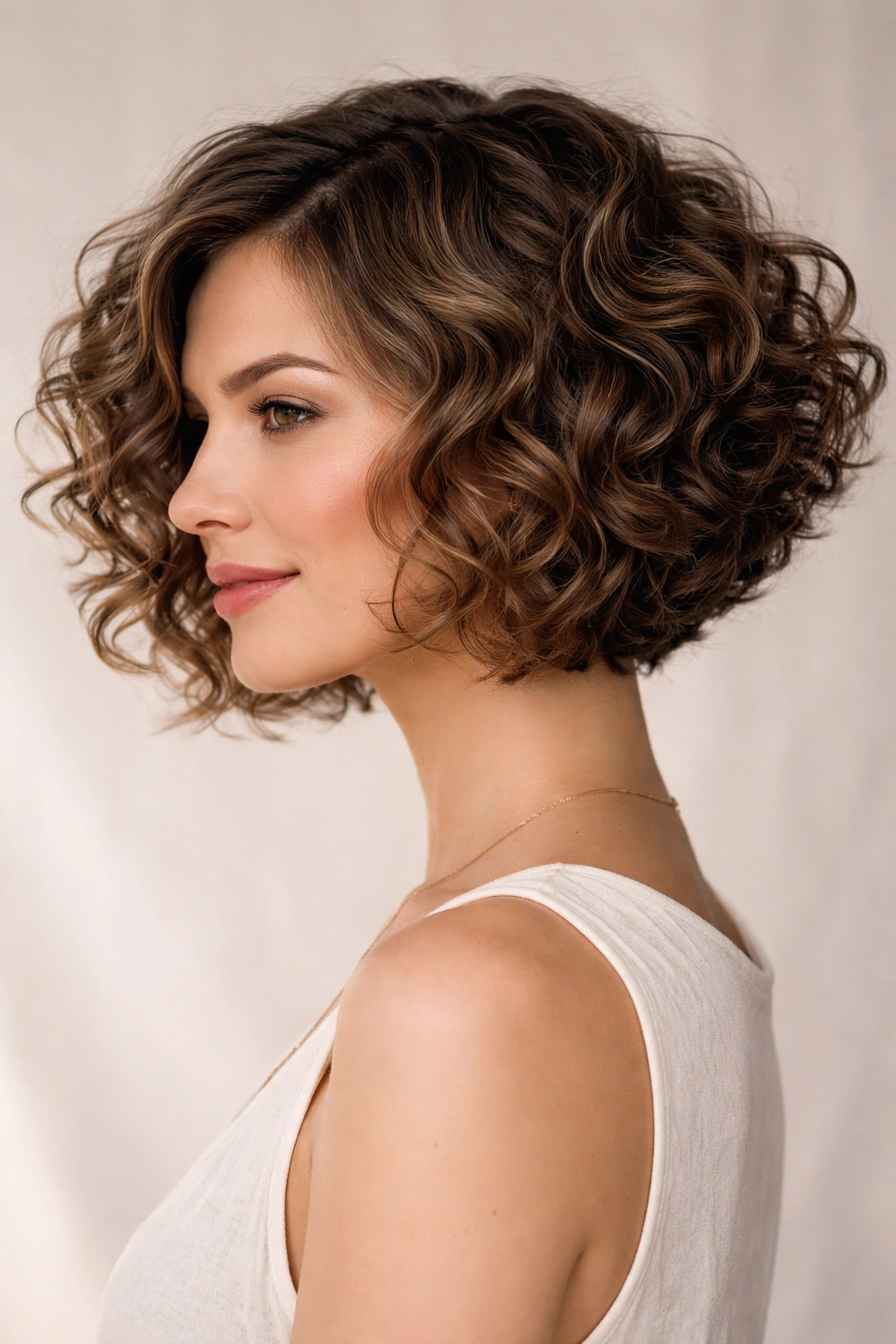
This style is shorter in the back and gradually gets longer toward the front, creating a subtle but sophisticated shape. It’s more understated than an angled bob, but it still provides movement and prevents the whole cut from feeling flat or one-note. Think of it as the curly bob version of a stacked bob — there’s intentional shaping happening, but it’s refined rather than dramatic.
Why Graduated Works for Almost Everyone
A graduated bob flatters nearly every face shape because the longer front pieces can be customized to your specific proportions. If you have a wider jaw, longer front pieces balance it. If you have a narrower face, you can keep them from getting too long. The back sitting shorter creates lift at the crown, which opens up the face and makes it look less heavy.
Cutting and Styling Details
This cut is best cut on curly hair because your stylist can see how the curls sit and shape accordingly. They’ll usually use point-cutting or texturizing rather than blunt lines to create a seamless graduation. When you style it, the back tends to dry more quickly because it’s shorter, so apply product there last or use a lighter-hold product in the back and stronger hold in the front.
Key phrase for your consultation: “I want the back shorter and the front longer, with a smooth, intentional graduation that frames my face.”
11. The Curly Bob with Undercut
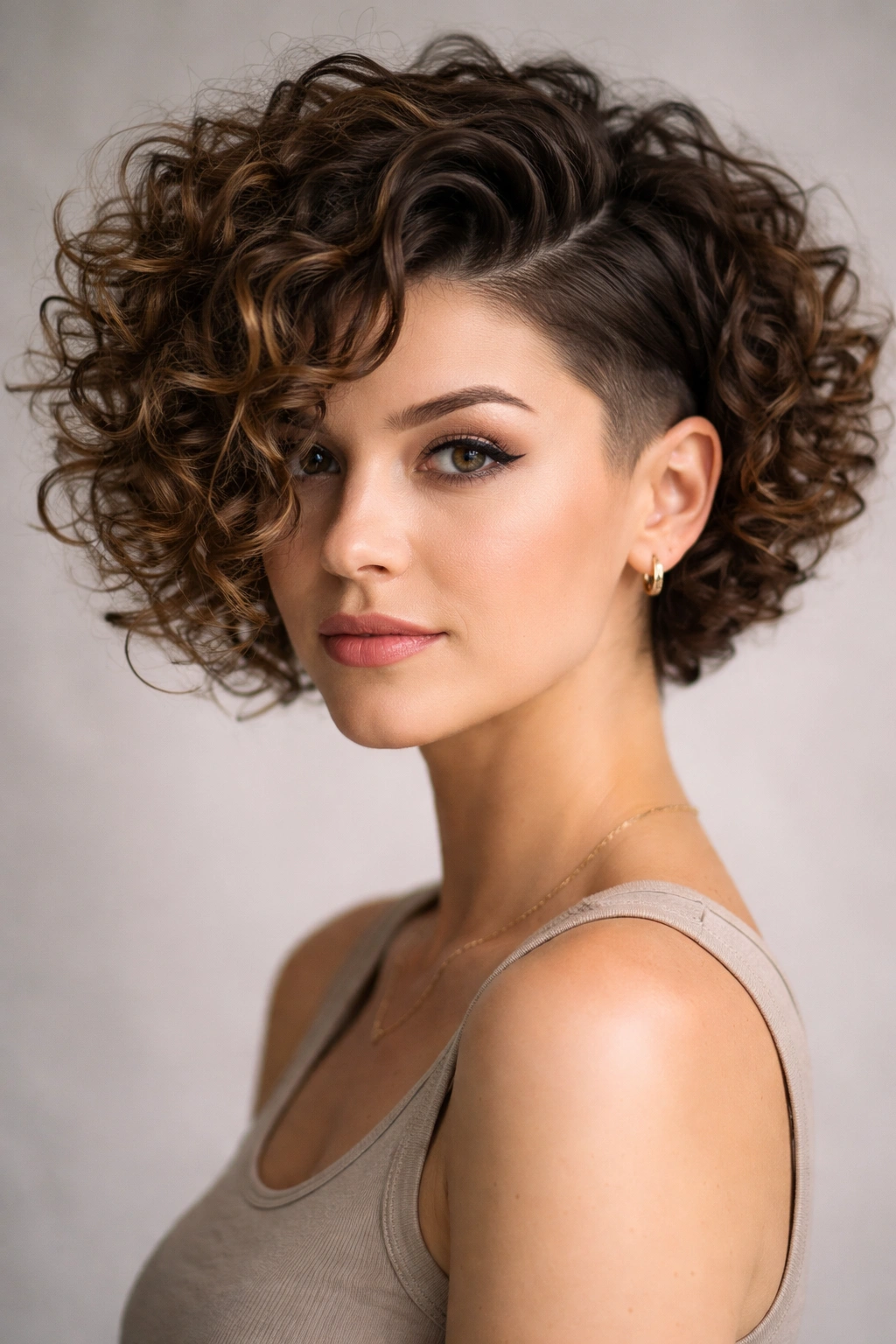
This is a bolder style where the nape of the neck (the very back) is clipped short and clean while the rest of the bob sits longer on top. It’s striking and modern, offering maximum texture and movement on top while the clean undercut adds unexpected edge. The contrast between short and long creates visual drama.
Who Can Pull Off an Undercut
This style works beautifully if you have thick, curly hair and you’re comfortable with something unconventional. Oval faces can wear this cut with confidence. Long, narrow faces love the visual break that the undercut creates. Heart-shaped faces do well with it if the longer curls on top distract from a narrower jaw. People with shorter hair that won’t grow past the shoulders can create this look too, which is great if you’re not trying to grow your hair long.
The Maintenance Commitment
An undercut requires a trim every 4 to 6 weeks to keep the short part neat and defined. You’re essentially maintaining two different lengths, which means more frequent trips to your stylist. If you’re okay with that commitment and love the aesthetic, it’s totally worth it. If you’re looking for low-maintenance, this probably isn’t your cut.
Reality check: This is a high-impact cut that reads very intentional. You need to genuinely love it because it’s not subtle.
12. The Curly Bob with Bangs
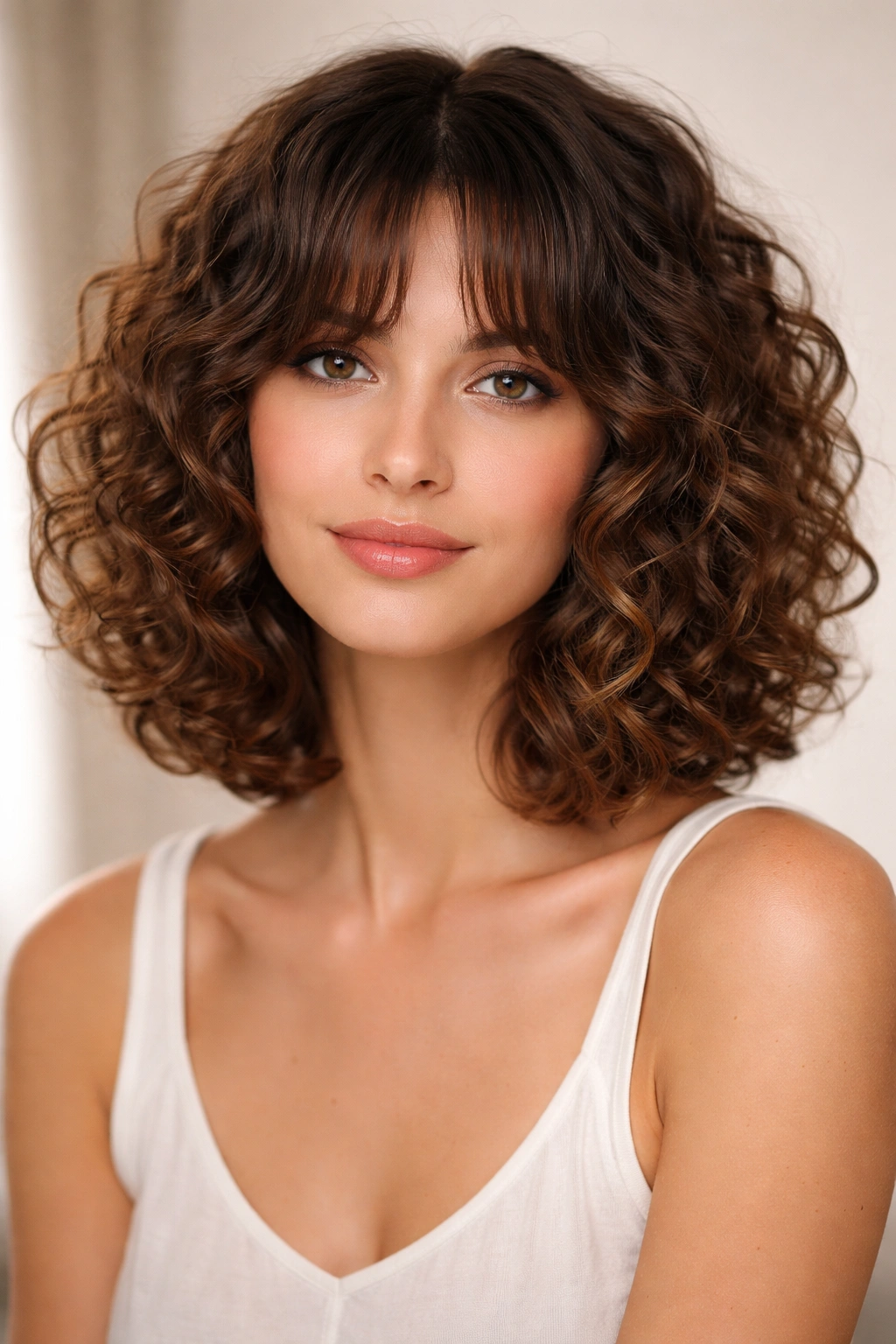
Adding bangs to a curly bob completely changes the vibe — it feels more romantic, playful, or editorial depending on the bang style. Curtain bangs that part in the middle read softer and more bohemian. Blunt or micro bangs read bolder and more fashion-forward. Whatever style you choose, bangs add a frame to your face that can be incredibly flattering.
Bang Styles That Work with Curls
Curtain bangs are probably the easiest to maintain with curly hair because the middle part disguises any uneven drying or curl pattern inconsistencies. They also work with nearly every face shape. Blunt bangs sit best on people with straighter or wavy hair because they’ll hold their shape more predictably. If you have very curly or coily hair and you want blunt bangs, you’ll need to blow-dry them daily to keep them looking intentional.
The Styling Reality
Bangs add styling time to your routine, there’s no getting around that. You’ll need to dry them separately from the rest of your hair, and you might need a small straightener or curling iron to shape them depending on your preference. Grow-out can also be a bit awkward — that in-between phase where they’re getting longer but not quite long enough to tuck back completely. Many people find bangs worth the extra effort; others decide they’d rather skip them after a few months.
If you’re considering bangs: Ask your stylist to show you how they’ll look with your curl pattern, not just on straight hair. The shape changes dramatically when hair has texture.
13. The Tousled Curly Bob for Relaxed Texture
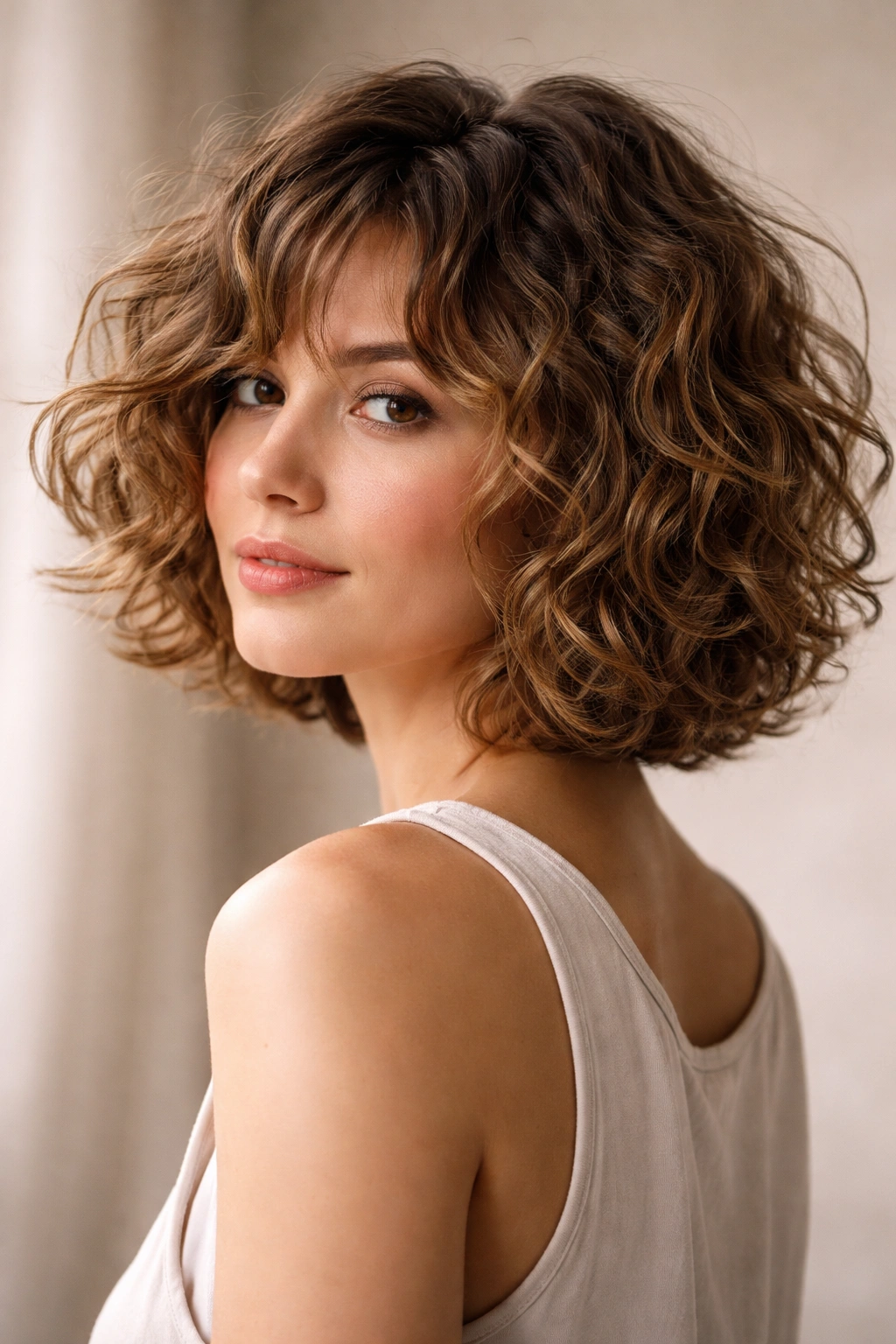
This bob celebrates a slightly messy, undone aesthetic — the kind of cut that looks good whether you’ve styled it carefully or just shaken out your curls and gone about your day. It’s all about movement, softness, and the impression that you woke up looking effortlessly fabulous. The cut works with your natural texture rather than fighting it.
Curl Patterns That Love This Style
Loose to medium curls absolutely thrive with this approach. Tight coils can work with it too if the cut is shaped to encourage maximum movement. Wavy hair looks stunning with this cut because the casual, tousled vibe matches the relaxed wave pattern. The key is that your curl pattern is strong enough to read as intentional even when it’s messy.
Minimal Styling Required
This is the cut for people who don’t want to spend twenty minutes every morning on their hair. Apply product to soaking-wet hair, air-dry (or do a quick diffuse if you’re in a hurry), and you’re done. Refresh curls between washes with a light spray of water. The cut itself does most of the work. On days when you have more time, you can enhance the texture with more deliberate styling, but it’s never required.
What to tell your stylist: “I want a cut that looks intentional but not overly styled — something that works with my natural texture and doesn’t require blow-drying every day.”
14. The Retro Curly Bob
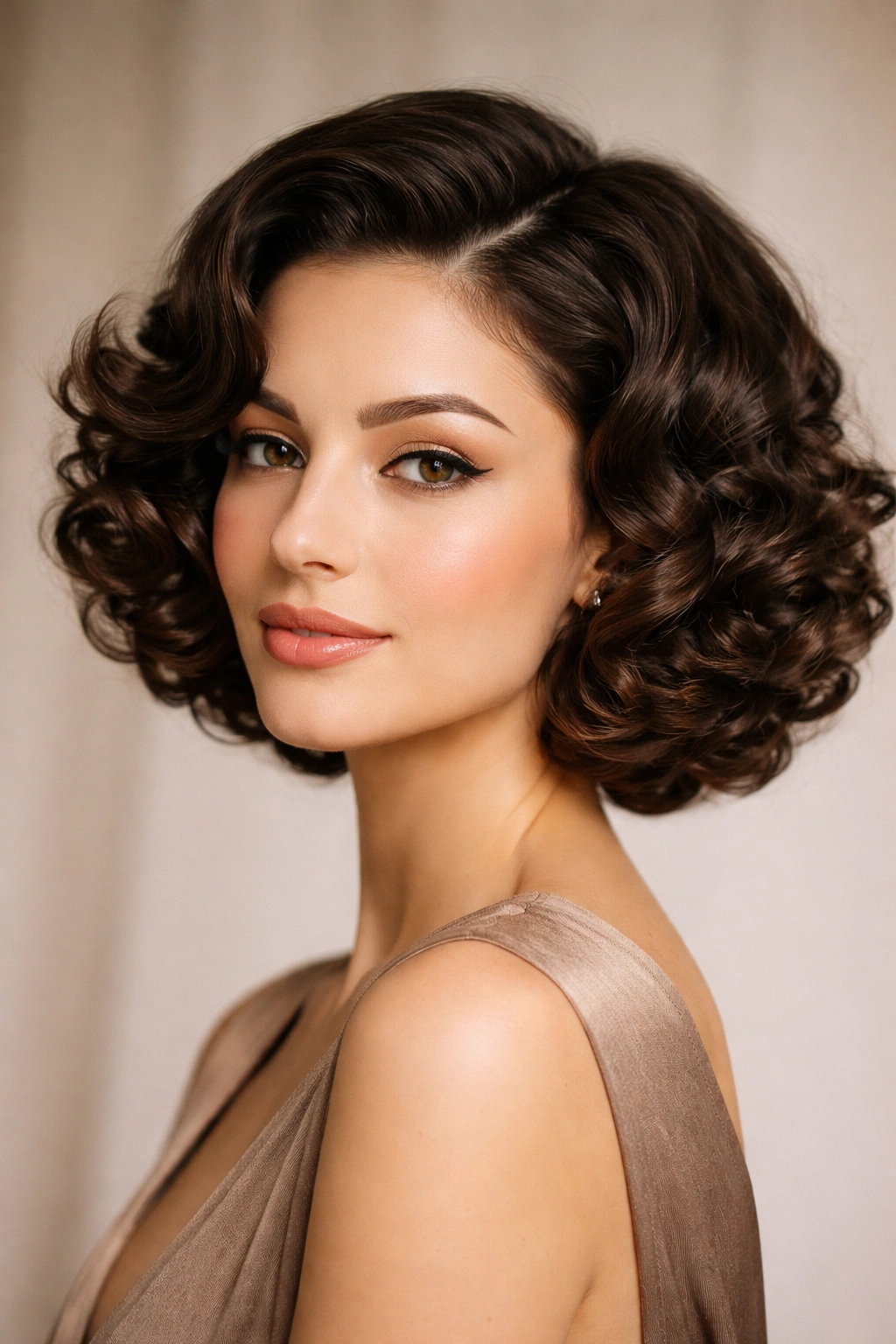
This is a throwback to classic Hollywood curls and vintage styles — think Audrey Hepburn meets modern curly texture. It’s a very polished, put-together look with smooth, well-defined curls that sit in a neat, rounded bob shape. It reads sophisticated and elegant, which makes it perfect if you want something that works for both professional settings and social occasions.
The Styling Commitment
A retro curly bob requires intentional daily styling — blow-drying with a diffuser and possibly using a diffuser or round brush to shape the curls. Some people use a curling iron to define individual sections, especially around the face. It’s a style that says “I take care of my appearance” and looks best when curls are clearly defined and shaped rather than freely textured.
Face Shapes That Look Polished
Oval faces are ideal for a retro bob because the proportions are already balanced. Round faces look refined with a retro bob because the structured shape counteracts roundness. Square faces benefit from the softness and curves of the style. If you have an angular face with prominent cheekbones, this style showcases them beautifully.
The main ask: “I want well-defined curls in a polished bob shape — something classic and put-together that I can refresh with blow-drying and styling.”
15. The Curly Lob (Long Bob)
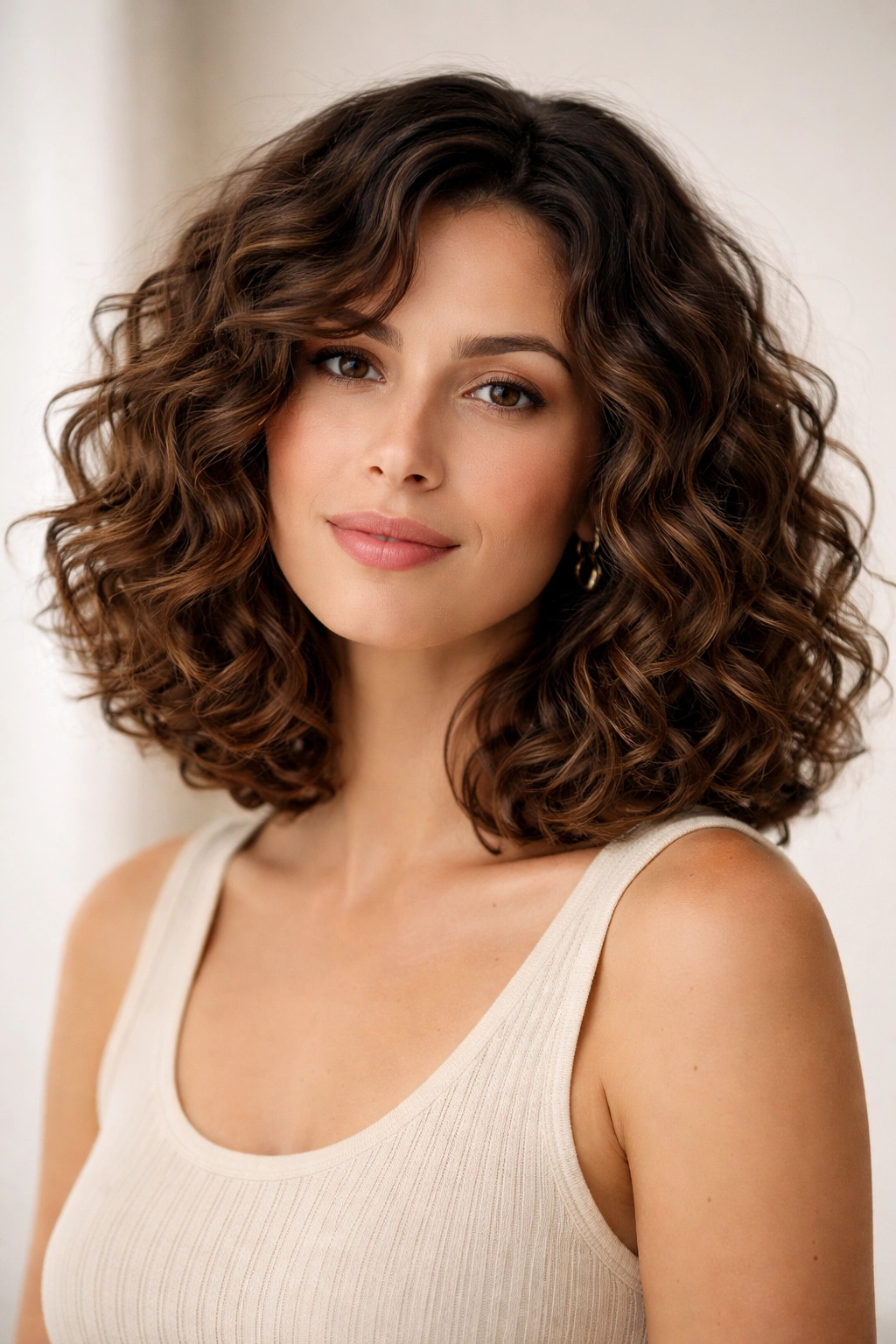
A lob sits somewhere between a bob and longer hair — usually hitting somewhere between your chin and shoulders. For curly hair, a curly lob gives you the styling flexibility of something longer while still maintaining that distinctive “bob” silhouette. It’s perfect if you’re not quite ready to commit to a true short bob but want something that reads as intentional and shaped rather than just “long hair.”
Why Length Matters for Curly Hair
The longer your curly hair, the more weight it has, which can sometimes relax your curl pattern or make it look heavy rather than textured. A lob hits that sweet spot where you get movement and texture without the hair feeling weighed down. Curls in a lob tend to look bouncier and more defined than very long curly hair, even though you’re not giving up that much length.
Versatility for Different Occasions
A curly lob works beautifully worn down and textured for casual settings. You can also blow-dry it into softer waves for a more polished look, or even straighten it if you want a completely different aesthetic. The length gives you options without requiring you to make a drastic commitment.
For curly hair: A lob should have enough length to work with gravity but not so much that it feels heavy. For most people, somewhere between chin and collarbone is ideal.
16. The Curly Bob with Hidden Layers
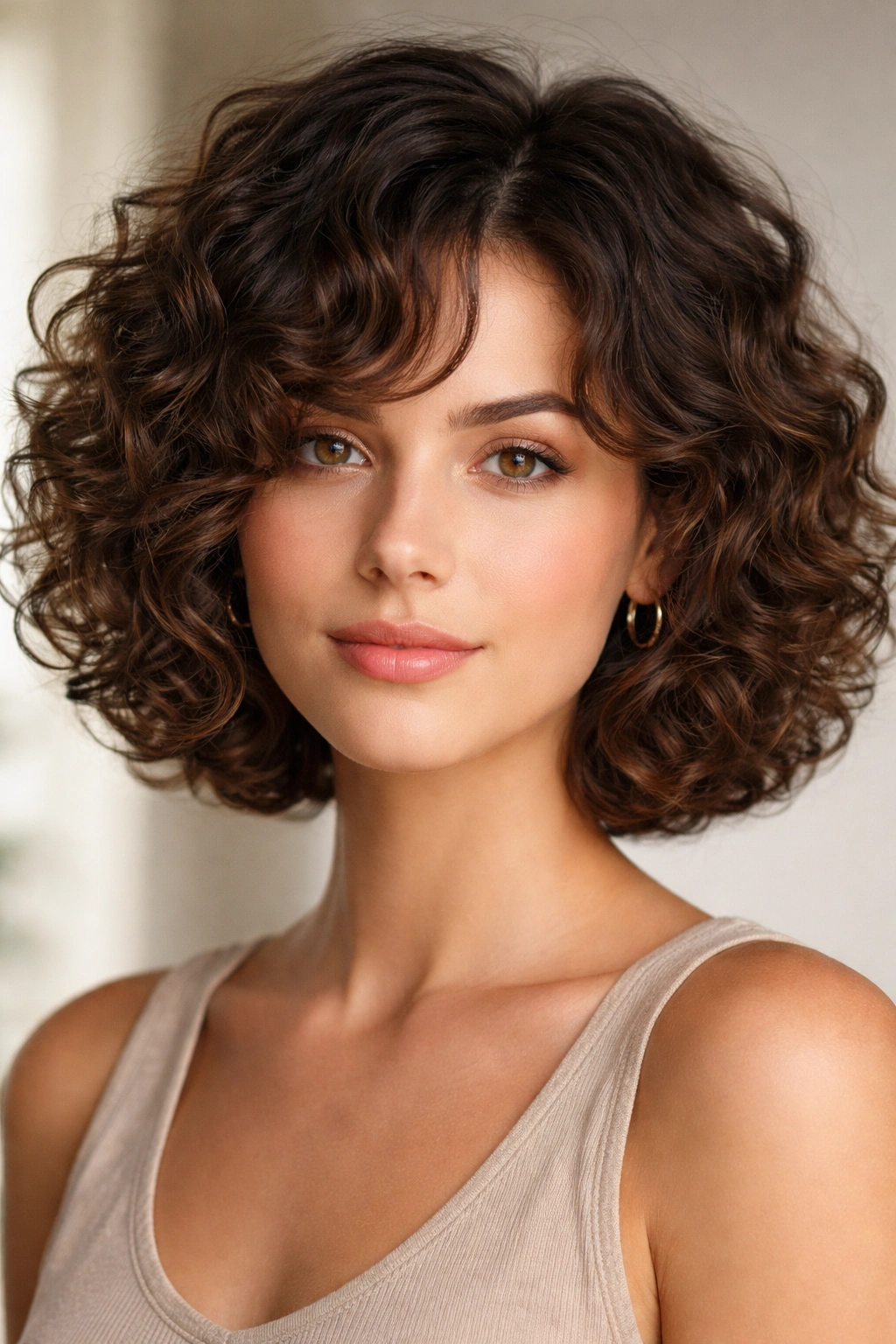
This cut appears to have minimal layers from the outside, preserving the smooth bob silhouette, but actually features strategic layers hidden throughout that prevent weight buildup and encourage movement. It’s a sophisticated approach that works beautifully for people who want a classic, clean look but need the practical benefits of layers.
The Technical Approach
Your stylist will work the layers into the interior of the cut so they’re not visible when you look at the overall shape. The perimeter stays blunt and defined, but inside, curls have room to move and express themselves. This approach works particularly well for thick, curly hair that would otherwise feel dense and heavy with minimal layers.
Best for Dense, Springy Curls
If you have a lot of hair or very tight curls that don’t naturally separate well, hidden layers are your secret weapon. You get the polished look of a structured bob without the weight. The cut reads as clean and intentional rather than textured and choppy, which can be exactly what some people are looking for.
When consulting: “I want the overall shape to be clean and simple, but I need layers inside to prevent the hair from feeling too heavy or dense.”
17. The Tapered Curly Bob
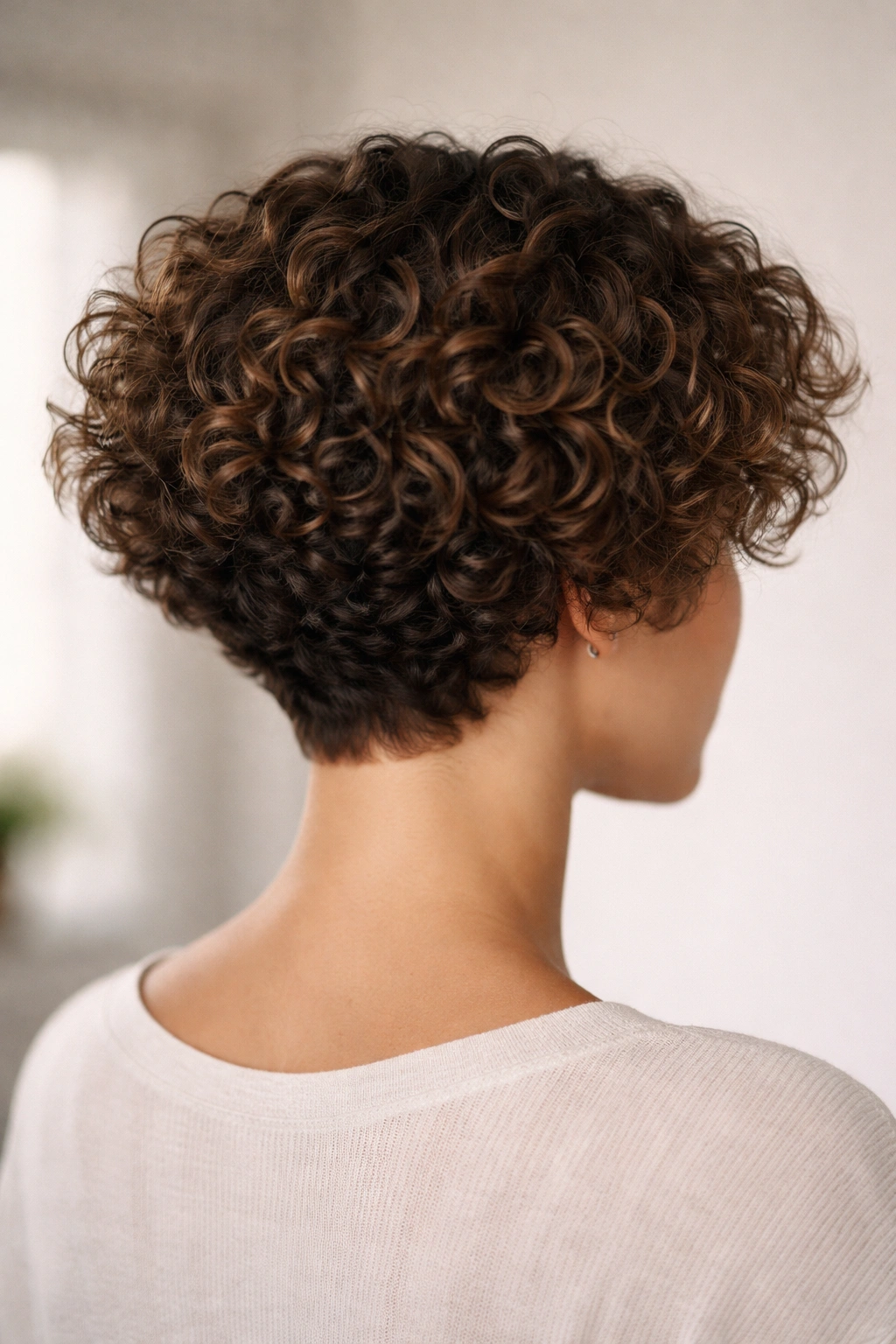
This bob is slightly wider at the crown and tapers narrower toward the neck, creating an elegant, sculpted shape. It’s not as dramatic as an undercut, but there’s still intentional shaping happening. The taper creates lift at the crown and a streamlined neckline without actually cutting hair extremely short.
Face Shapes Perfect for Taper
Heart-shaped faces love this style because the lift at the crown doesn’t add width where it’s not wanted, and the tapered neckline is delicate and flattering. Oblong and rectangular faces benefit from the visual interest and shape that tapering creates. If you have a longer face and thinner neck, a taper can make the overall proportion feel more balanced.
Movement and Styling
A tapered cut often has slightly shorter pieces throughout that create more movement than a straight-across bob. You get natural texture and definition without needing to razor-cut layers throughout. It’s a refined approach that works beautifully for people who want something clearly cut but not necessarily choppy or heavily layered.
The key ask: “I want a bob that’s tapered in the back — narrower at the neckline than at the crown — so it sits elegantly on my head.”
18. The Curly Bob with Textured Bangs
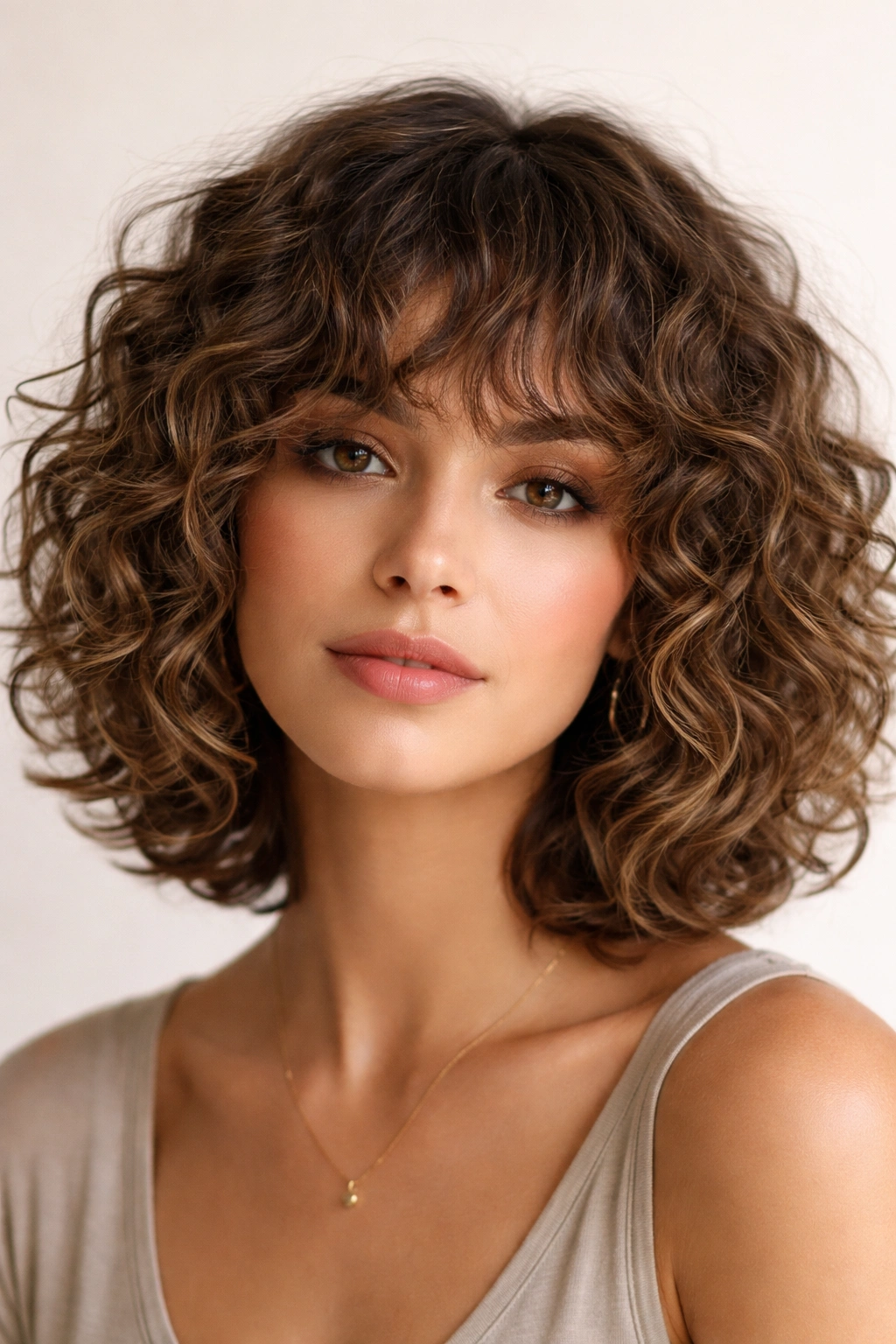
This takes the bangs concept further by making the bangs themselves heavily textured and layered, which integrates them more seamlessly with a curly bob. Rather than the bangs looking like a separate element, they’re clearly part of the overall textured design. It’s a more editorial, fashion-forward approach.
Integration and Balance
Textured bangs work when the rest of your bob has layers and texture to match. If you’re doing textured bangs, make sure your stylist designs a bob with complementary layers throughout. Otherwise, the bangs will look disconnected from the rest of the cut. The overall effect should feel like one cohesive, textured design rather than bangs added onto a separate style.
Who Wears This Best
People with medium to curly hair who don’t mind daily styling can pull off textured bangs beautifully. They read young, fashion-conscious, and creative. If you’re uncomfortable with a higher-maintenance style or you’re in a conservative professional setting, textured bangs might not feel right for you. That said, they’re incredibly cool and absolutely work for people who love the aesthetic.
Be clear: “I want textured bangs that match the overall layering and vibe of my bob — one cohesive look rather than bangs that feel separate.”
19. The Curly Bob with Side Part
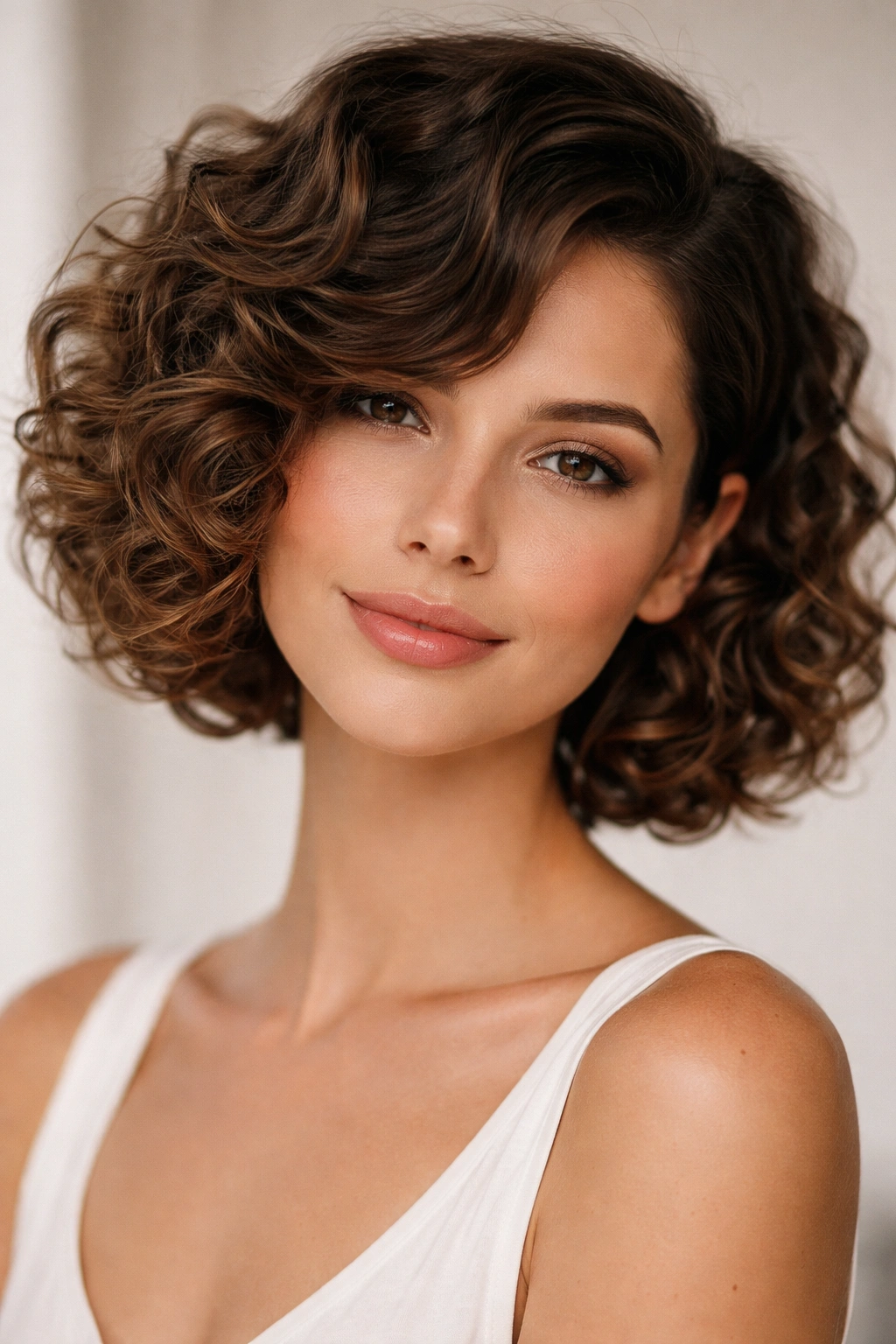
This is a subtle variation that centers everything on the side part rather than down the middle. A side part creates asymmetry and draws attention toward one side of the face, which can be incredibly flattering depending on which side you’re emphasizing. It’s an easy customization that works with most curly bob styles.
Strategic Side Parting
If you have a wider jawline on one side, parting on the opposite side draws attention away from it. If you love your cheekbones and want to emphasize them, part toward the side that shows them off best. If you have an off-center feature — a beauty mark, a scar you want to highlight, or simply a side of your face you love — a side part lets you feature it.
Styling Implications
A side part requires you to dry your hair in a way that encourages the hair to fall in that direction. It’s not a permanent commitment, though — you can change your part whenever you want based on your mood or what you’re doing that day. Some people find that a side part looks more polished and put-together; others prefer the balance of a center part.
For your stylist: “I’m planning to wear this with a deep side part — make sure the cut works with that styling direction.”
20. The Textured Curly Pixie Bob
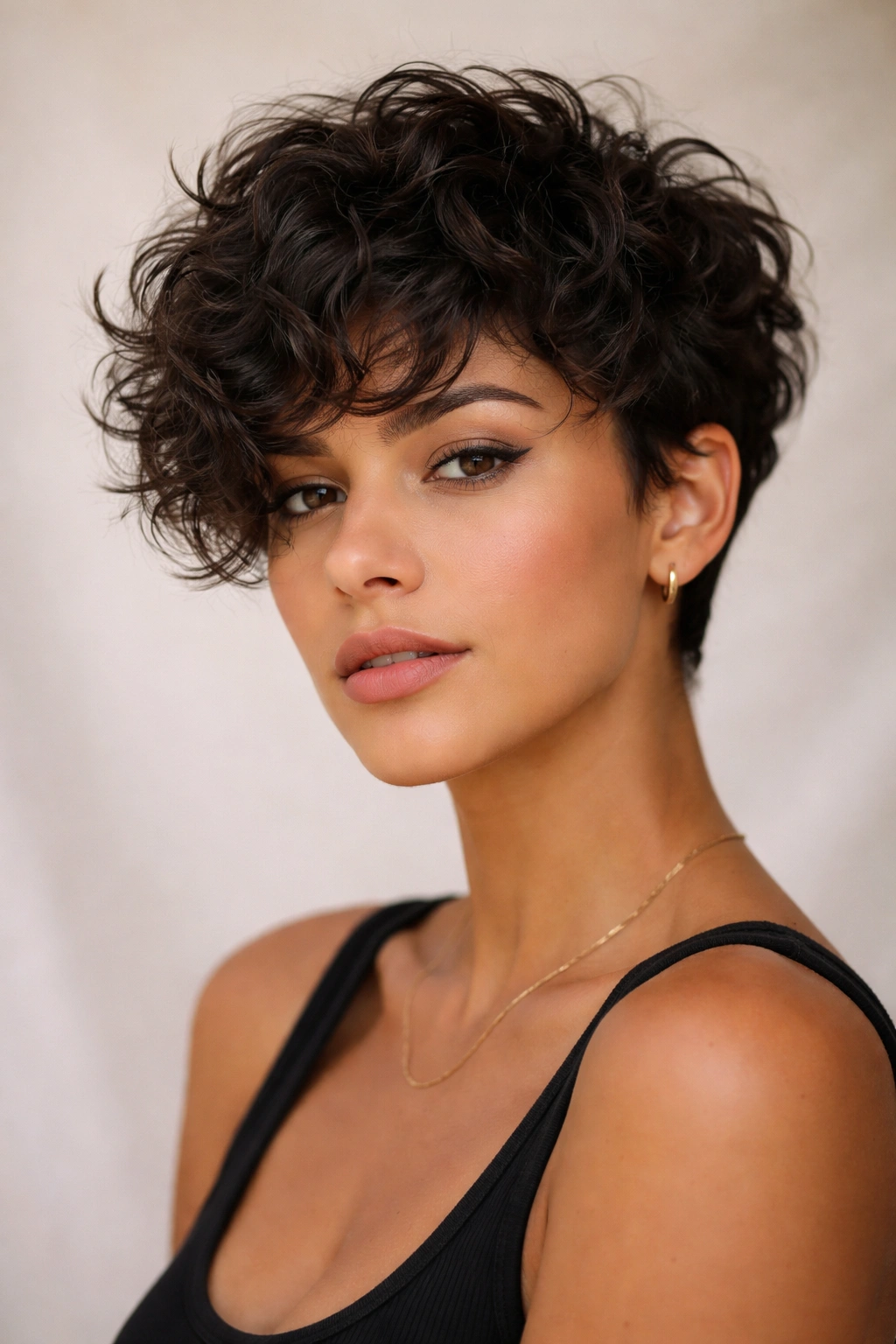
This final style pushes the envelope toward editorial and fashion-forward territory. It’s extremely short and textured throughout, with the essence of a bob but with edgier, choppier proportions. It’s a power move of a haircut that reads confident and effortlessly cool.
Who Owns This Look
People with strong, confident personalities absolutely shine with this cut. Oval and heart-shaped faces wear it beautifully because the short texture draws focus to facial features rather than hair length. If you have delicate features or a smaller face, this cut can actually make your face look more defined and striking. People of color with tight, textured curls often find this cut especially flattering because it celebrates the natural texture in a way that longer cuts sometimes can’t.
The Styling and Maintenance Reality
This is a wash-and-go styling dream — apply product to wet hair and let it air-dry or use a diffuser for a few minutes, and you’re done. You’ll need a trim every 4 to 6 weeks to keep the shape looking intentional, but daily styling is minimal. It’s low-maintenance in terms of daily effort but high-maintenance in terms of regular trims.
The Confidence Factor
The biggest requirement for wearing a textured pixie bob is genuine confidence and comfort with something unconventional. It’s not a safe choice; it’s a statement. If that appeals to you, this cut can be absolutely transformative. If you’re still figuring out your style or you prefer blending in, you might want to start with one of the earlier options on this list and work your way up to this level of boldness.
Go for this if: You’re ready for a dramatic change, you love the idea of washing your hair and walking out the door, and you’re comfortable standing out.
Final Thoughts
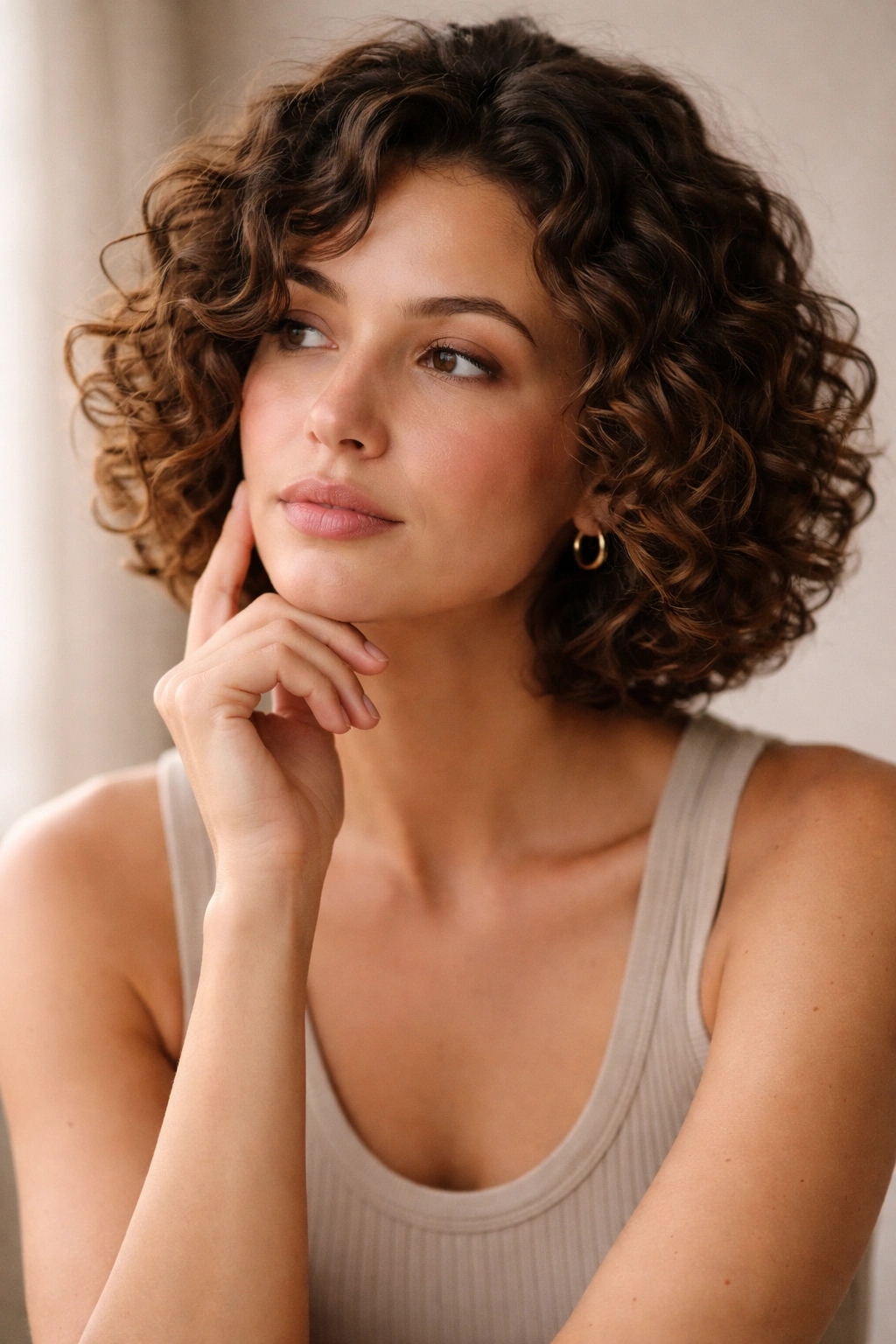
Finding your perfect curly bob is about understanding what makes your curl pattern unique, knowing which cut will work with your face shape, and honestly assessing your styling commitment. A gorgeous curly bob isn’t just about the length or the layers — it’s about matching the cut to your specific texture, your lifestyle, and the version of yourself you want to express.
The most important thing you can do is find a stylist who specializes in curly cuts and asks questions before picking up the shears. They should want to know your curl pattern, how much time you spend styling daily, what face shape concerns you have, and what your ultimate styling goal is. A good curly-hair stylist will ask you more questions than you ask them, because they know that precision cutting requires understanding all these variables.
Remember that your hair will feel and look different three weeks after a cut than it does on the first day. Curls settle, weight distributes, and your own styling improves as you get familiar with the cut. Give any new bob a solid month before deciding if it’s truly the right choice. By then, you’ll know if you’ve found your signature style or if you need to make adjustments at your next appointment. Either way, you’re learning what works for you — and that knowledge makes every future haircut better.
