



The shullet is having a genuine cultural moment. It’s the haircut that finally answers the question nobody was asking but everyone secretly wanted: what if we combined the flowing, textured layers of a 1970s shag with the bold statement of a modern mullet? The result is something that feels nostalgic and contemporary at the same time—rebellious without trying too hard, effortlessly cool without the commitment of a full punk aesthetic.
What makes the shullet different from simply throwing two trends together is how deliberately it blends them. You’re not getting a tidy, conservative haircut here. Instead, you’re getting volume and movement on top, textured layers throughout the crown and sides, and then—the twist—those characteristically shorter, cleaner lengths in front paired with noticeably longer sections in the back. It’s the kind of haircut that reads as intentional, fashion-forward, and unapologetically bold.
The beauty of the shullet is that it’s endlessly customizable. Whether you want something subtly layered or dramatically textured, you can adjust the proportions to match your hair type, face shape, and personal style. Some versions lean heavier into the shag’s soft, feathered aesthetic, while others emphasize the mullet’s structural contrast. It’s a haircut that works across gender expressions and hair textures when cut with intention.
If you’re considering taking the plunge into shullet territory, understanding the different interpretations and approaches will help you articulate exactly what you want when you sit down in the chair. Here are twelve distinct takes on this hybrid haircut, each with its own character and approach.
1. The Soft Feathered Shullet
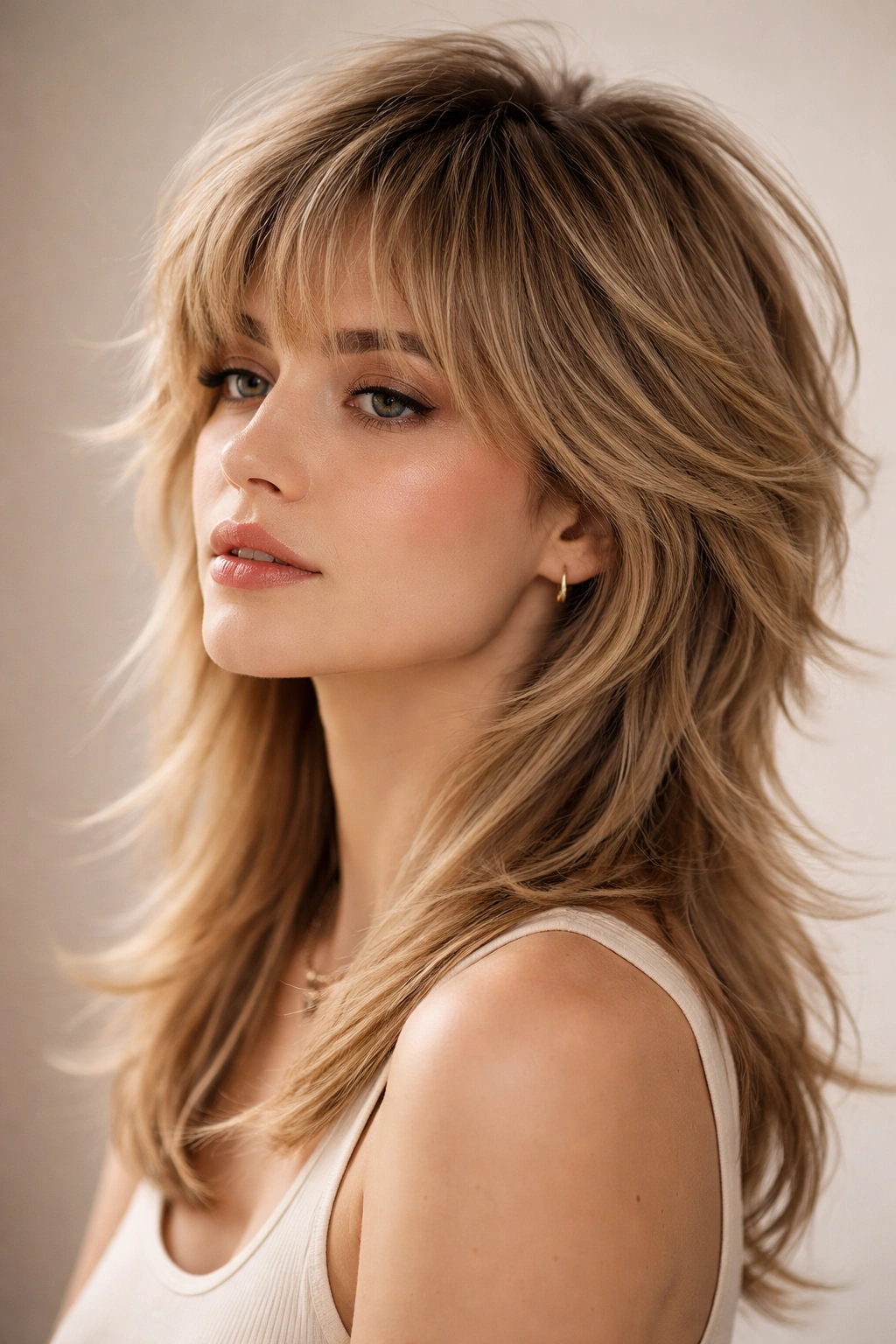
This is the shullet for anyone who wants the vibe without the edge. The soft feathered shullet prioritizes movement and flow, with extensively layered sections throughout that create a pillowy texture across the crown and sides. The layers are cut at angles that encourage them to flip and fall naturally, giving that characteristic 70s shag feeling.
How It Achieves the Look
The cut works by creating many thin, delicate layers throughout the top and sides, each one slightly shorter than the one beneath it. The back maintains genuine length—think shoulder-length or beyond—but it’s textured with layers rather than kept blunt. The front sections are cropped significantly shorter, but the overall effect is soft rather than sharp.
Best Hair Types and Styling
- Works beautifully on naturally wavy or textured hair that holds movement naturally
- Medium to fine hair benefits from the layers, which create the illusion of volume without heaviness
- Styling requires a blow dryer and texturizing product, but takes only 10-15 minutes
- Pair with sea salt spray or light mousse for definition
Pro tip: This cut looks even better as it grows out slightly—the layers continue to move and shift as they gain length over the first few weeks.
2. The Choppy Shullet Statement
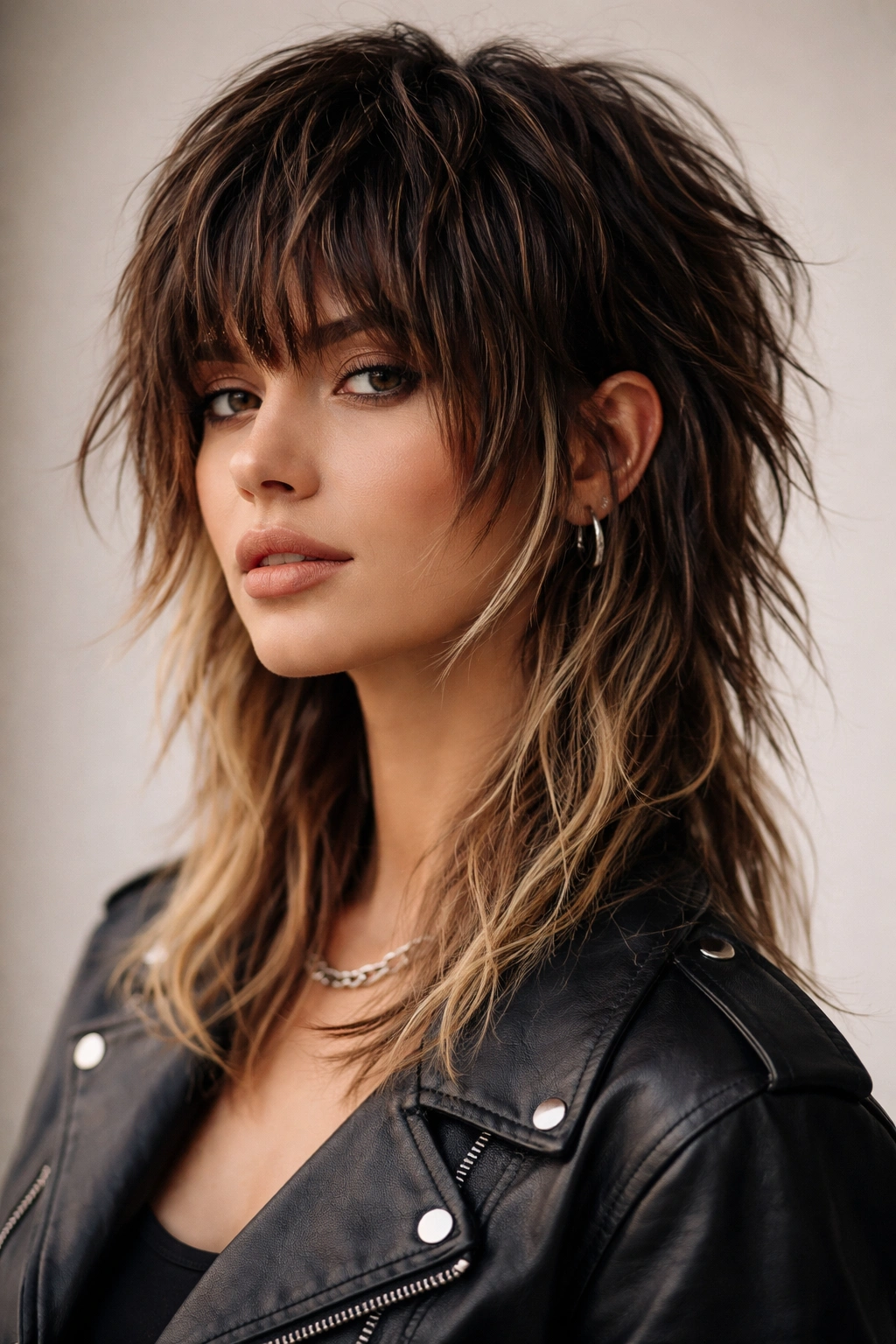
Want people to notice immediately? The choppy shullet leans harder into the shag’s edgy roots while maintaining the mullet’s bold back-to-front contrast. This version uses much shorter, more dramatic layers that create visible texture and movement, almost like your hair’s been deliberately tousled.
The Cutting Technique
Choppy layers are cut with precision, not haphazardly. The stylist creates deliberate points and angles throughout the crown, making each layer visibly distinct rather than subtly blended. The back maintains significant length, but again with intentional choppy texture. The front is cropped short—sometimes even approaching chin-length or shorter on the sides.
Styling and Maintenance
- Requires styling product to look intentional rather than undone (styling gel, pomade, or paste works best)
- Blow-drying with movement gives the best results, taking 15-20 minutes
- Needs trims every 4-6 weeks to maintain the choppy definition
- Works on most hair types but really shines on straight to slightly wavy hair
3. The Disconnected Shullet
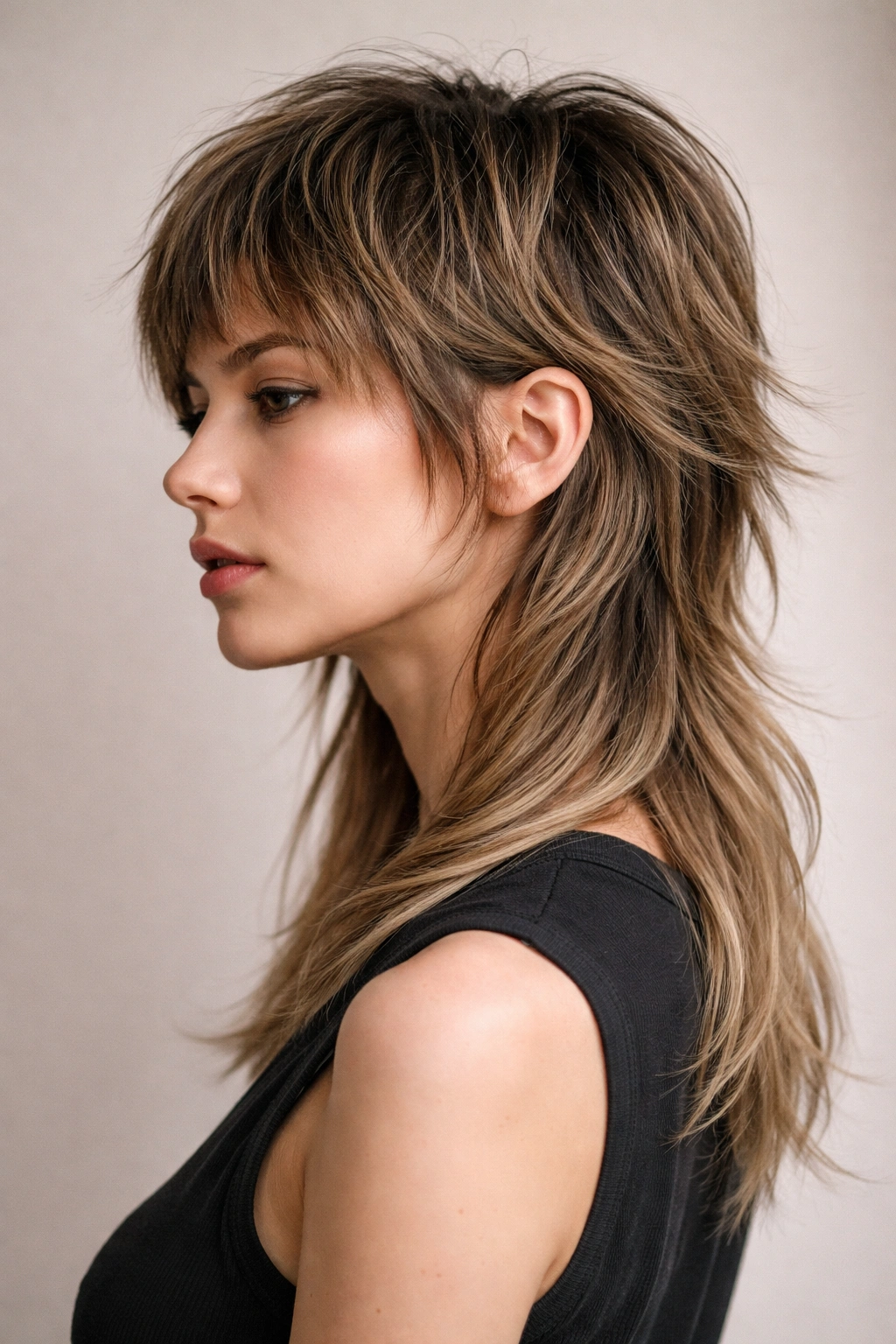
This version emphasizes the gap between the shorter front sections and the longer back by literally leaving a visual disconnect. Rather than blending everything seamlessly, the stylist creates clear separation, often visible when the hair is styled back or tucked to one side.
What Makes It Distinctive
The disconnect is achieved by keeping the transition zone (around the ears and lower sides) significantly shorter than the back length, creating an almost undercut-style detail. The top remains heavily layered and textured. This creates a striking geometric quality—modern, architectural, and unmistakably intentional.
Face Shapes and Features
- Particularly flattering on longer, rectangular faces where the geometric contrast adds visual interest
- Works well on those with strong cheekbones who want to emphasize them
- The side profile is dramatic—a real statement when your hair is pulled back
- Consider your ear size before committing (exposed ears are very visible with this cut)
4. The Textured Crown Shullet
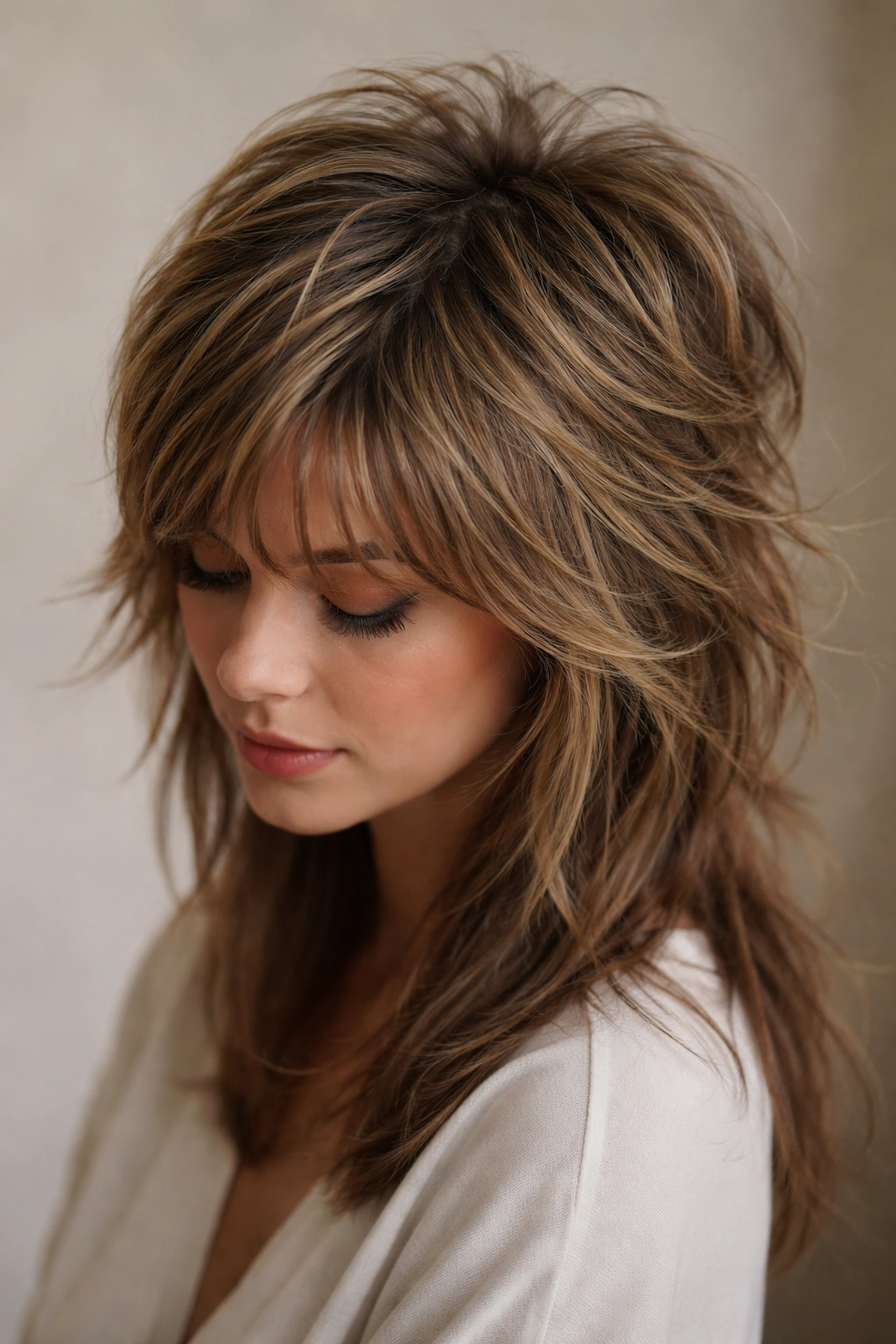
If you love the idea of the shullet but want something a bit more conservative for professional or everyday settings, the textured crown shullet is your answer. It concentrates most of the dramatic texture at the very top of the head, keeping the sides and front more controlled.
The Balanced Approach
The crown gets maximum layers and texture, creating genuine volume and movement where it matters most. The sides are layered but blend more gradually toward the face, creating a shorter, neater frame. The back is definitely longer—maintaining that mullet element—but shaped more subtly than in bolder versions.
Styling Ease
- Can be worn slicked back and styled more formally if needed
- Works beautifully with minimal styling on days when you’re short on time
- The shorter front sections and controlled sides mean less overall styling commitment
- Great option if you transition between more casual and professional settings regularly
5. The Modern Textured Mullet Shullet
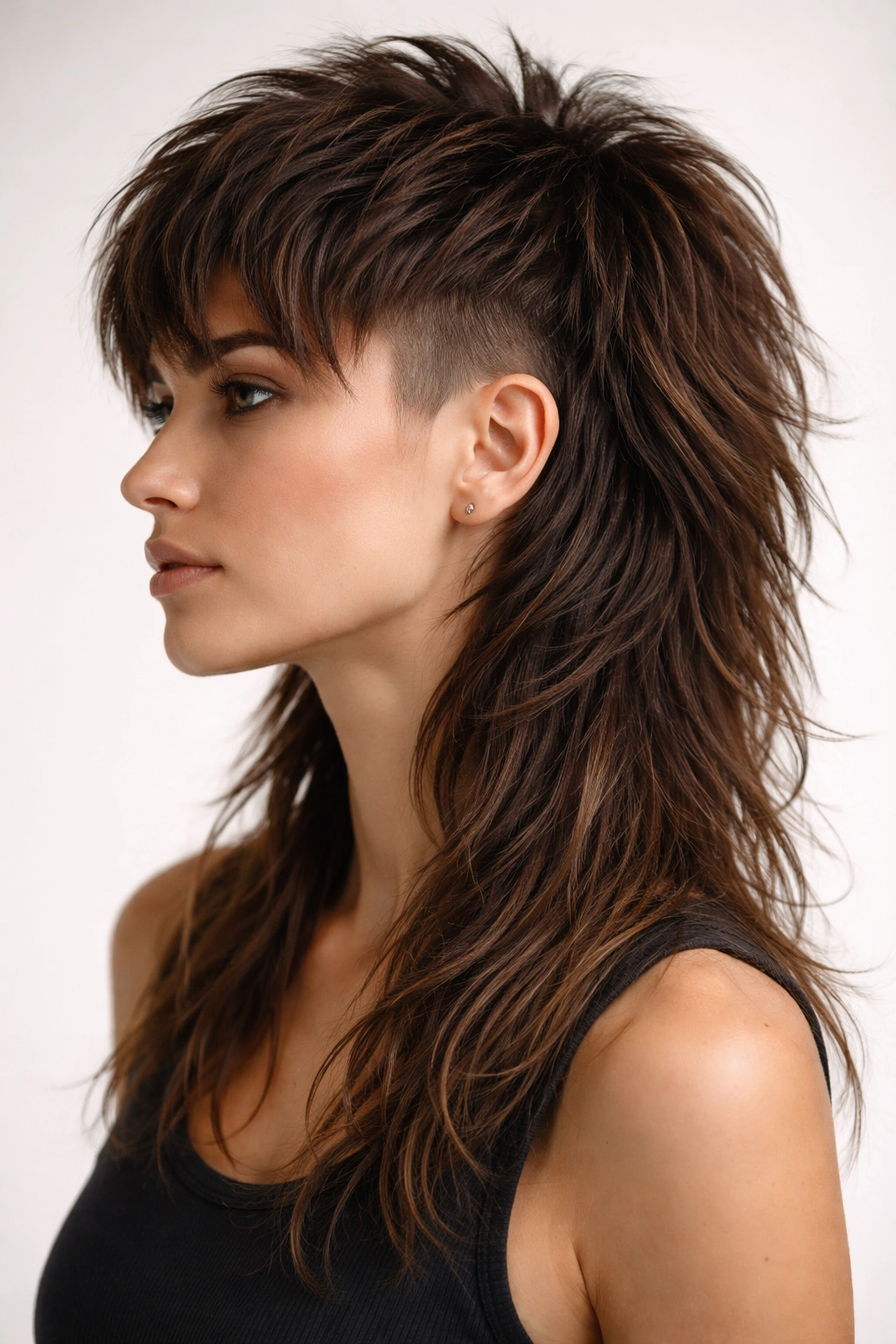
This is a shullet that leans heavily into contemporary mullet aesthetics while maintaining the shag’s textured, layered character. The sides are faded or undercut in a modern, clean way, the front is definitely shorter and more geometric, and the back is significantly longer—creating real length contrast rather than subtle gradation.
The Modern Edge
Think clean, contemporary barbering meets shag texture. The fade or undercut on the sides is precise and sharp, sometimes even geometric or patterned. The top has intentional layers that create texture without looking overly soft or 70s. The longer back often gets texture through layers as well, but maintains that stark contrast with the front.
Who Rocks This Well
- Those who want people to definitely know they made a bold choice
- Individuals comfortable with significant maintenance (fades need refreshing every 3-4 weeks)
- Anyone who appreciates the contrast between clean barbering and deliberately shaggy texture
- Works across hair types but really stands out on darker hair where contrast is maximum
6. The Subtle Shag Shullet
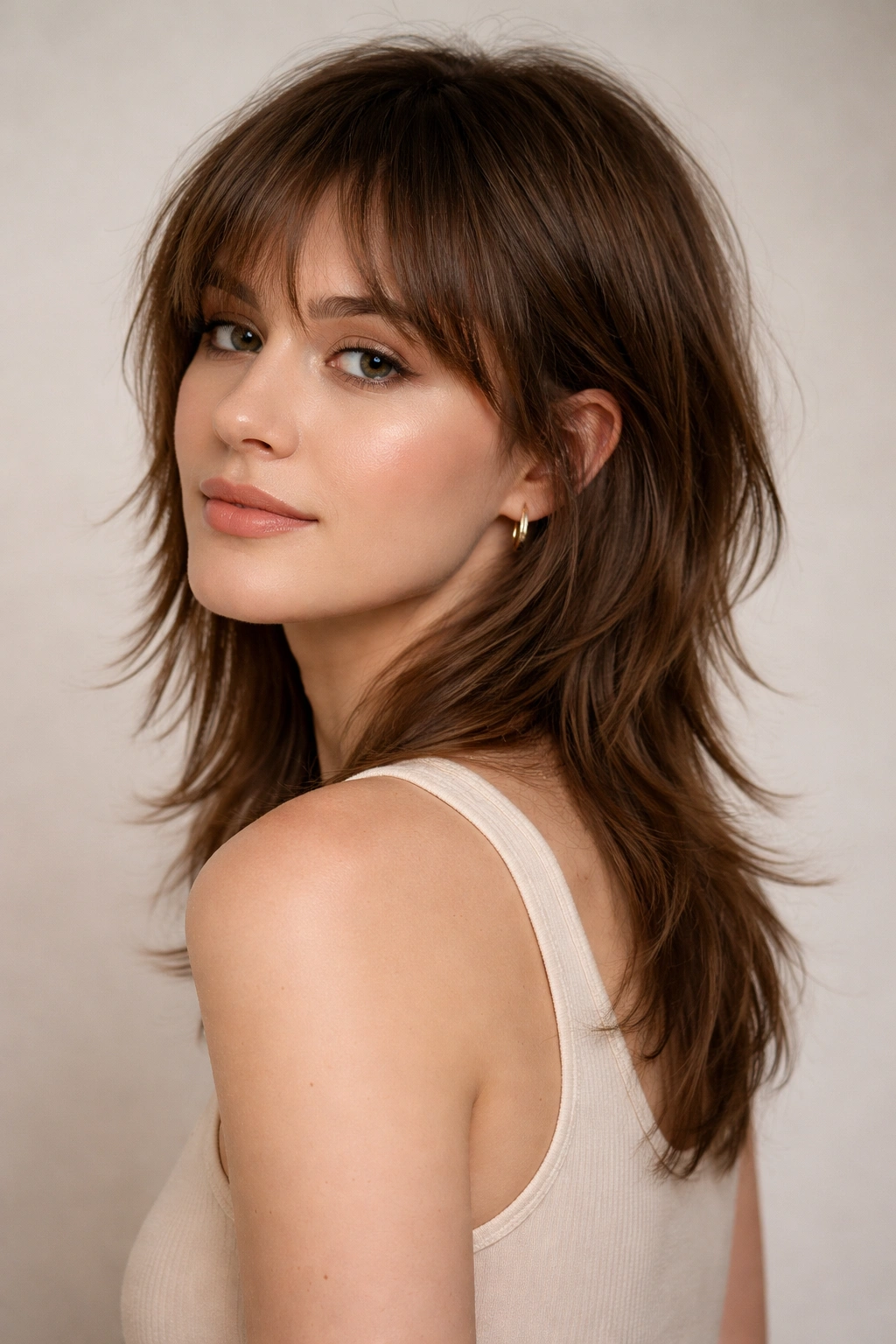
For the cautiously adventurous, the subtle shag shullet gives you the hybrid cut without a massive departure from conventional haircuts. It’s what you might call a “gateway shullet”—noticeable to those in the know, but not alarming to your more conservative relatives.
The Understated Approach
The cut creates layered texture throughout but with much less dramatic contrast between front and back. You’re getting maybe 2-3 inches of additional length in the back rather than the 6-8 inches of more extreme versions. The layers are present but blend relatively smoothly rather than creating obvious choppy texture.
Best For
- First-time shullet wearers testing the waters
- Professional environments where you want style without shock value
- Those transitioning from more traditional cuts who want something new without commitment-level drama
- Anyone with very fine or thin hair who needs the texture from layers but can’t handle extreme volume
7. The Dyed Shullet with Color Contrast
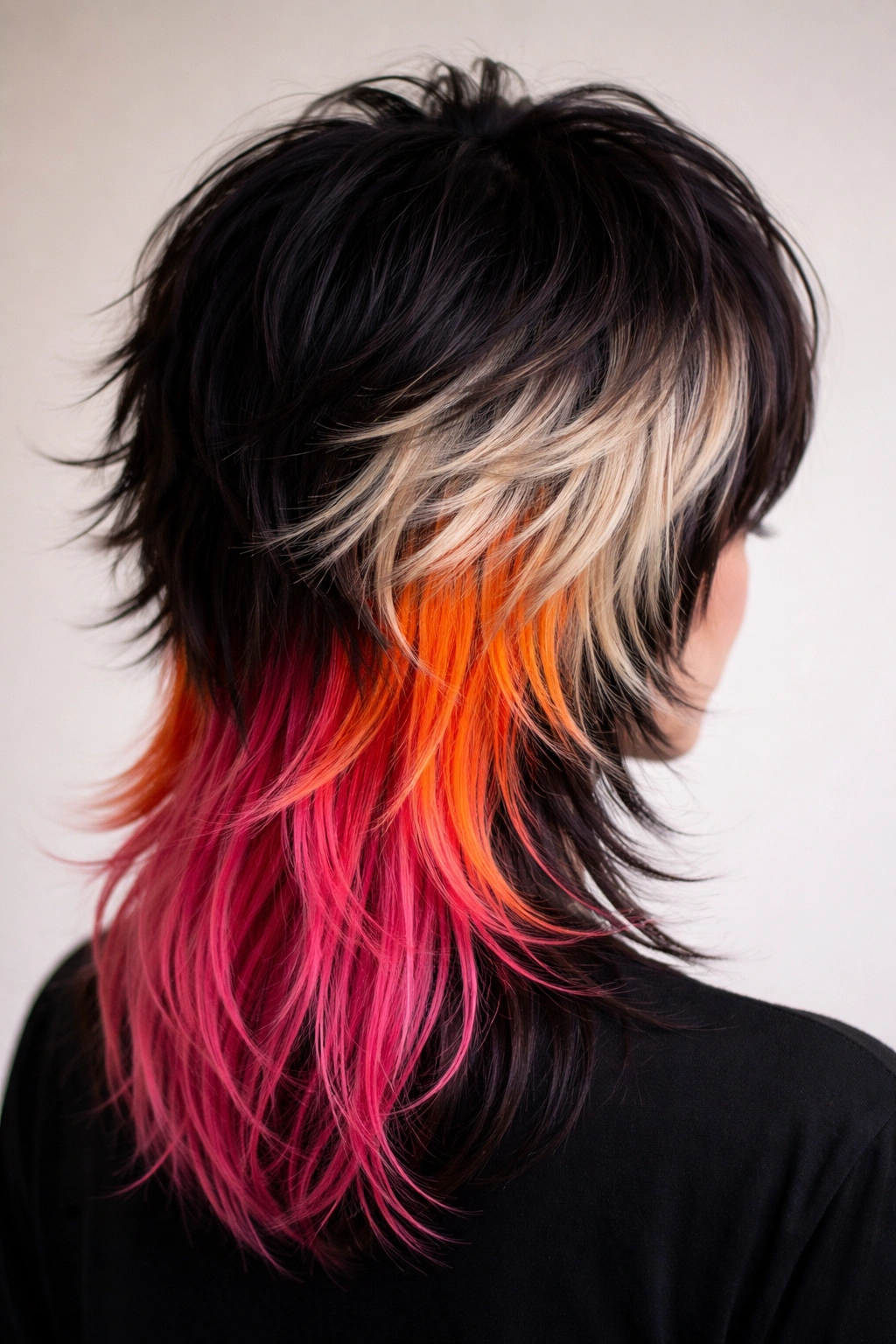
Sometimes what really makes a shullet sing is color. A shullet with deliberate color blocking—perhaps a darker base with lighter textured layers, or a bold color concentrated in the longer back section—transforms the entire aesthetic and draws attention to the cut’s structural elements.
How Color Enhances the Cut
Color can emphasize the layered texture throughout the top and sides, make the length contrast between front and back more visually striking, or create an entirely new visual dimension. Highlights or balayage throughout the shag sections add dimension, while a solid color in the back creates graphic contrast.
Color Considerations
- Bleaching and lightening requires significant commitment to maintenance and hair health
- Bolder colors (reds, purples, blues) fade quickly but make dramatic statements
- Subtle color work (lowlights, dimensional highlights) looks polished and intentional
- Consider your natural hair color and the depth of color shift you want to achieve
8. The Sleek Shullet with Side Sweep
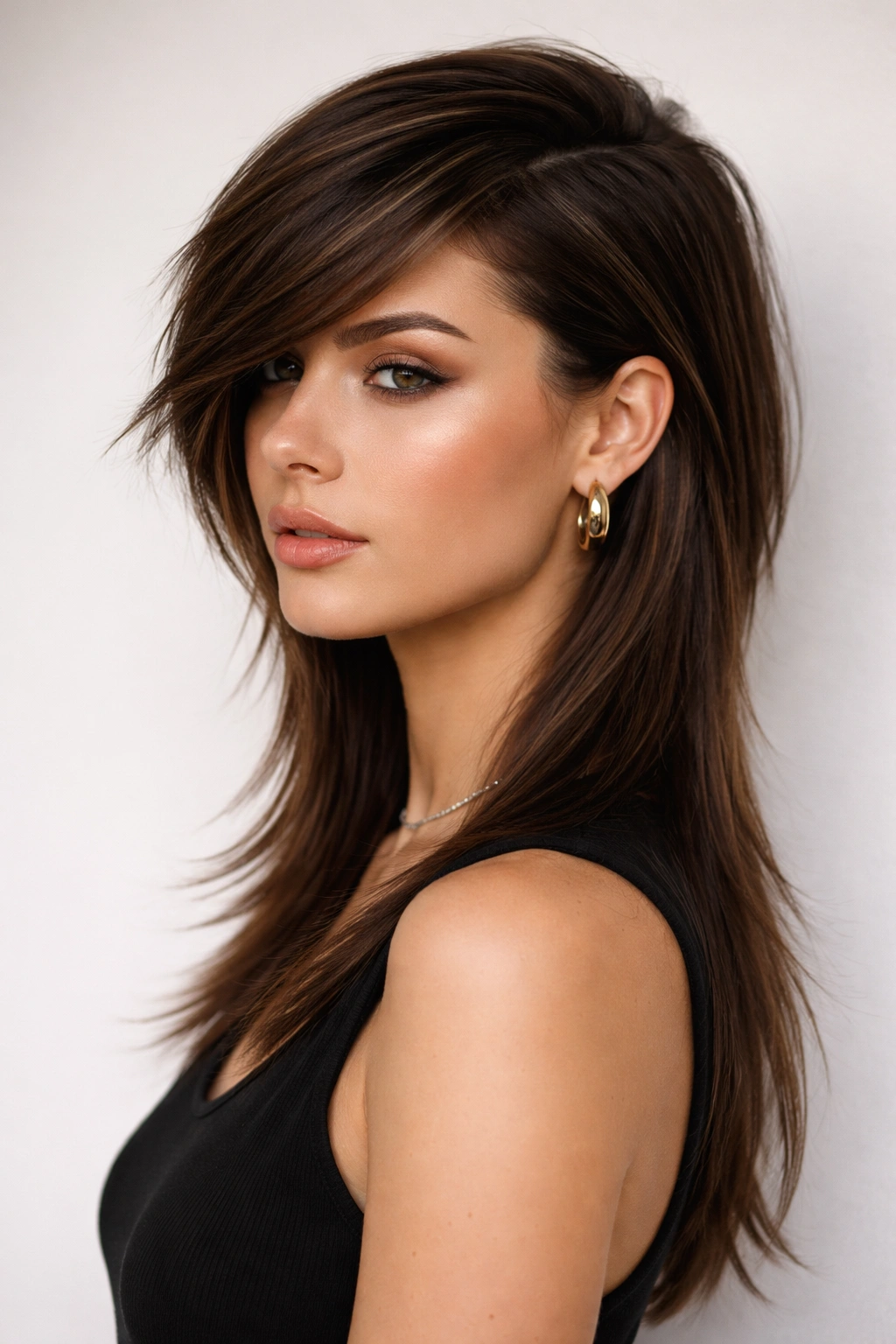
This version uses the shag’s layered texture on top but styles it with intentionality and control, often swept dramatically to one side. The longer back is kept relatively sleek and not too heavily textured, creating a more refined silhouette while maintaining the shullet’s core identity.
Styling as Part of the Design
A significant portion of the shullet’s look comes from how you style it. The sleek shullet is styled almost daily as part of the aesthetic—the side sweep is intentional, the texture on top is directed and defined, the longer back is smoothed or texturized depending on your mood. This is a cut that rewards styling effort.
The Styling Routine
- Requires blow-drying to look intentional (10-15 minutes)
- Use a smoothing serum or light pomade to encourage the side sweep
- Texturizing products on top keep the shag feeling effortless rather than flat
- Can be worn sleeker for professional settings or more textured for casual days
9. The Mullet-Forward Shullet
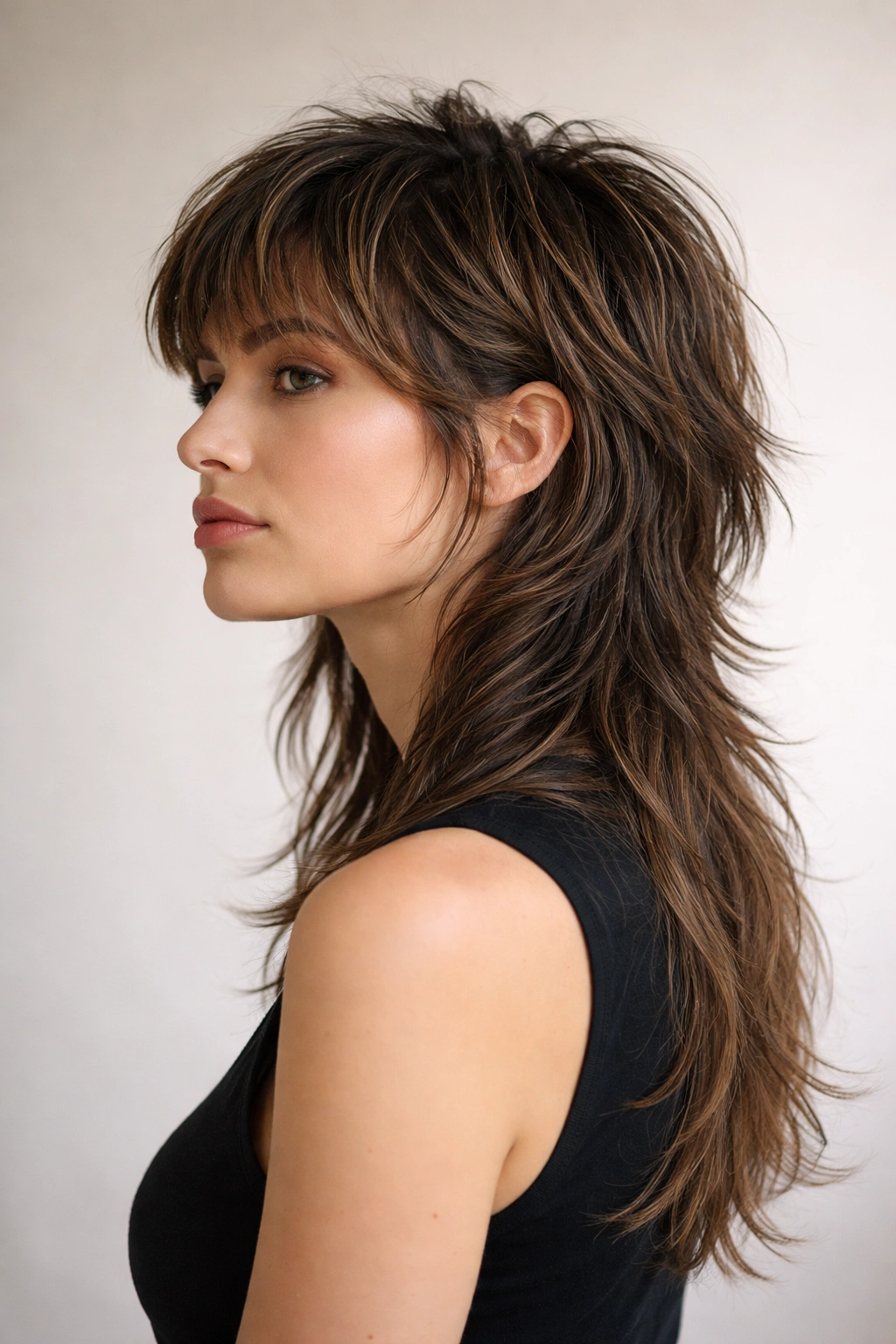
What if you let the mullet aesthetic dominate while keeping just enough shag elements to soften the overall impact? That’s the mullet-forward shullet—where the back really is significantly longer and more dramatic, the sides are cut quite short, and the shag elements exist primarily through textured layers on top rather than throughout.
The Balance Point
The mullet dominates the silhouette, but the textured, feathered layers on top prevent it from reading as a straight-up 80s/90s mullet. It’s modern enough, softened enough, and intentional enough to feel like a genuine hybrid rather than a nostalgic costume.
Who Pulls This Off
- Those with genuine commitment to the mullet aesthetic but wanting something more wearable
- Individuals with thick hair that can handle significant length in the back
- Anyone who wants a genuinely bold statement that’s still somewhat refined
- Those who appreciate the mullet’s history and want to reclaim it in a contemporary way
10. The Curly Shullet
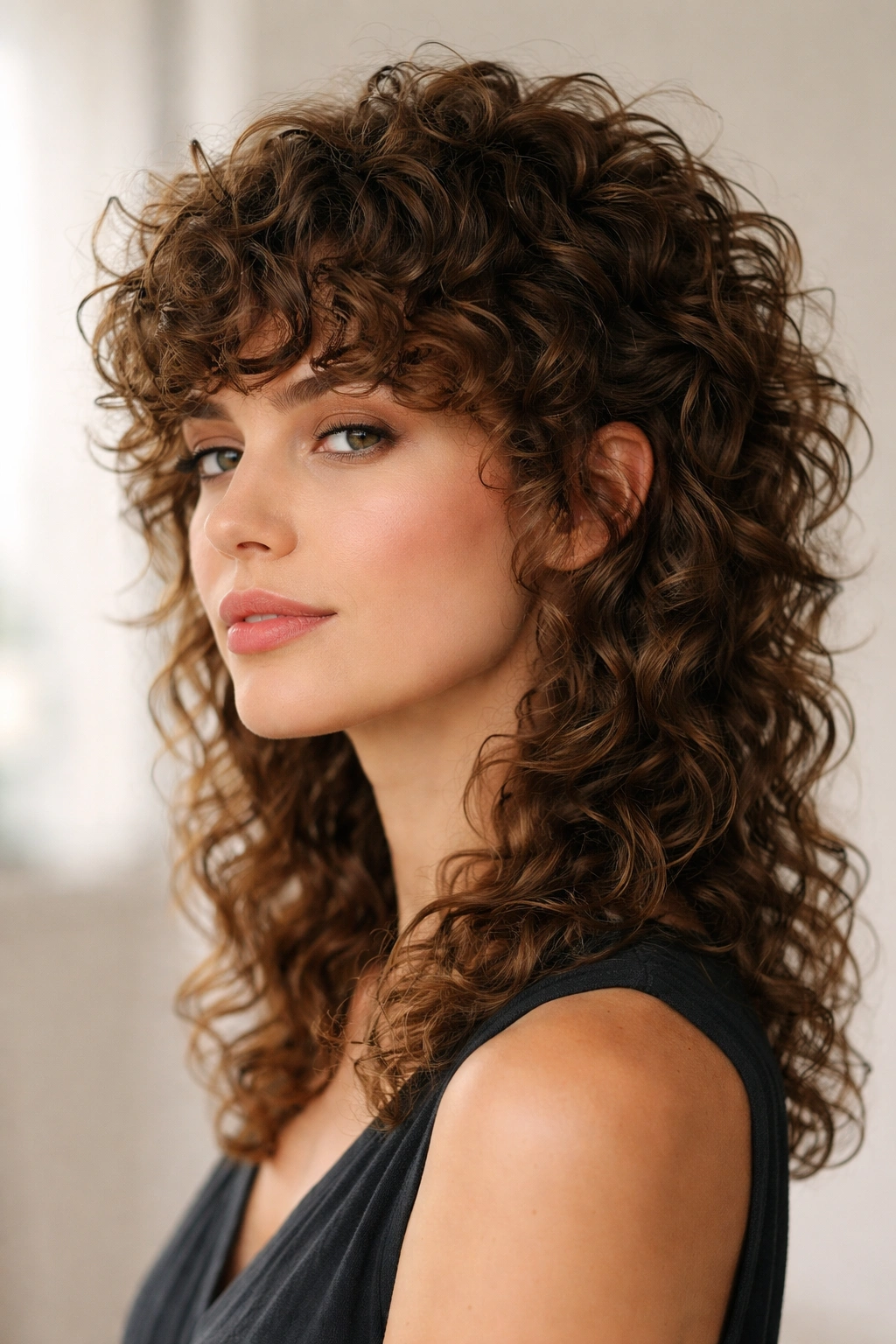
Curly and coily hair brings its own magic to the shullet. The texture that’s built into curls creates inherent movement and volume, which plays beautifully with the layered shag elements. The contrast between the shorter, curly front and the longer, bouncier back reads as intentional and striking.
Working With Curl Patterns
Layers in curly hair need to be cut with precision—improperly cut layers can create frizz or disrupt curl pattern. A stylist experienced with curly hair should understand how a cut will translate once your curls dry. The shullet’s multiple layers actually help curly hair by reducing bulk and encouraging individual curl definition.
Maintenance and Styling
- Requires a curl-specific cut and styling routine to look its best
- Regular deep conditioning is essential for layered curly hair
- Styling with curl cream and gel defines the cut and creates intentional texture
- Grow-out is actually less noticeable on curly hair because the layers blend as they lengthen
11. The Androgynous Shullet
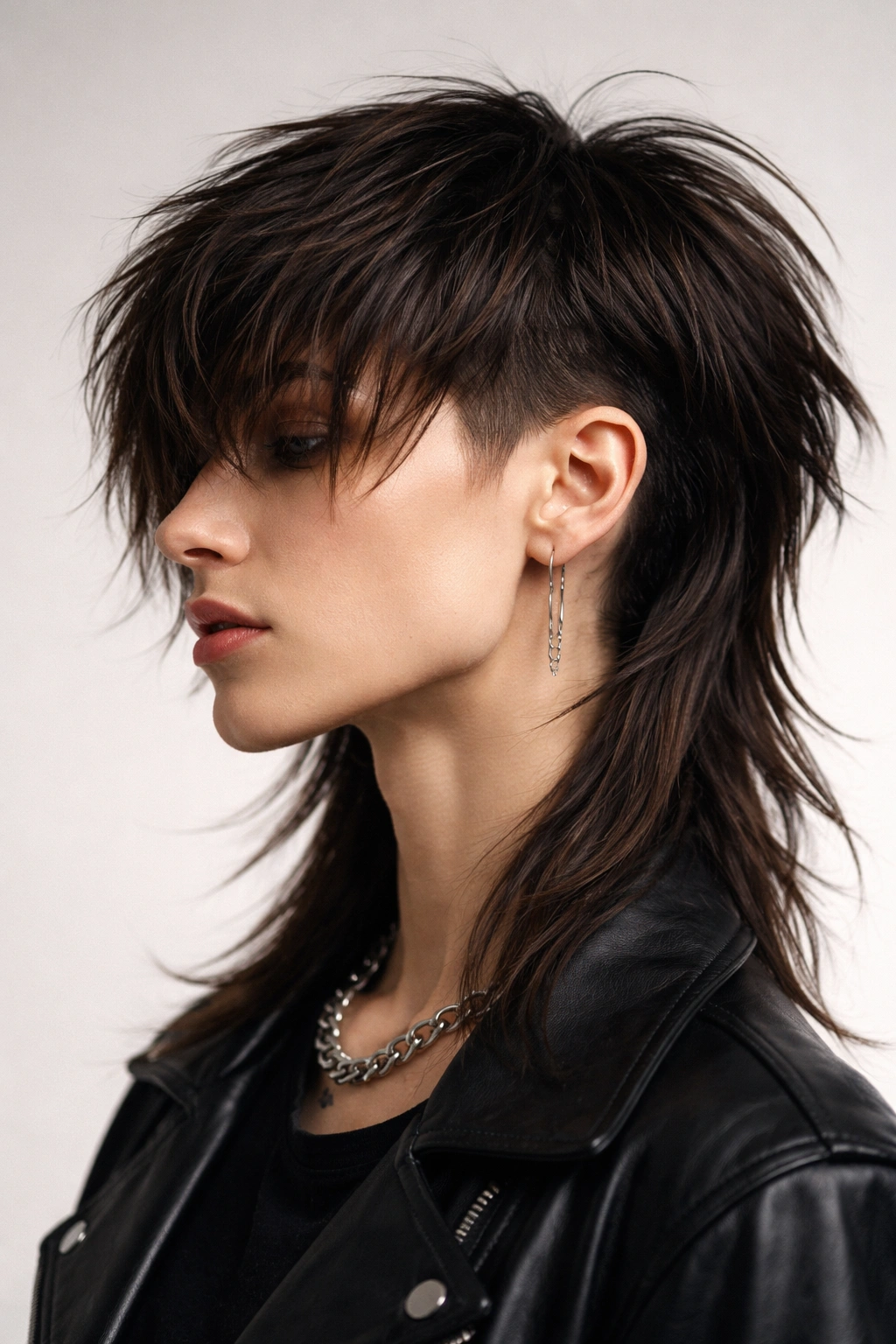
The shullet’s geometric contrast and structural boldness make it perfect for those seeking an androgynous or gender-neutral presentation. By emphasizing the geometric elements—disconnected sides, sharp layering, dramatic front-to-back contrast—the cut reads as deliberately contemporary and fashion-forward rather than specifically masculine or feminine.
Design Elements
The androgynous shullet often incorporates undercut or fade elements on the sides for geometric impact, clean lines and sharp angles throughout, and intentional texture that reads as modern rather than soft. It’s structured and deliberate, refusing to soft-pedal or compromise the cut’s boldness.
Styling Approaches
- Can be worn in multiple ways depending on context and mood
- Works beautifully slicked back and controlled or tousled and textured
- Very short front sections and visible side detail create the androgynous read
- Length in the back prevents it from reading as a traditional short masculine cut
12. The Extreme Length Shullet
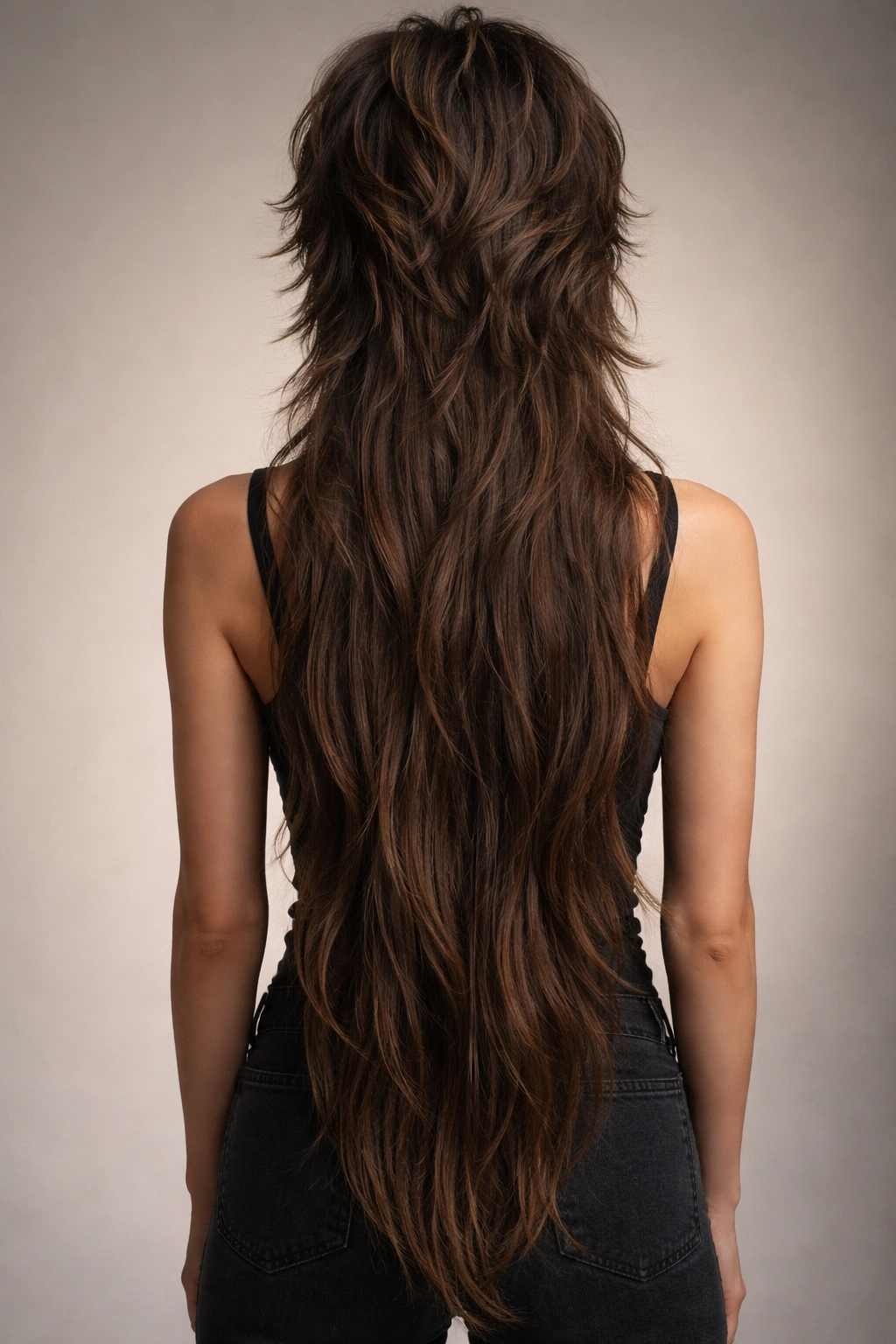
For the truly committed, the extreme length shullet maintains the shag’s textured, layered character on top and sides while letting the back grow to real length—sometimes past shoulder length or even considerably longer. This creates maximum contrast and definitely makes a statement.
The Dramatic Approach
The top and sides get intentional shag layering, the front is significantly shorter (often quite short), and the back is genuinely long and dramatically different. When you pull the back up or to the side, the contrast becomes strikingly obvious. This is definitely a “people will ask about it” haircut.
Lifestyle Considerations
- Requires genuine styling commitment—the length in the back needs care and intentional styling
- Takes longer to grow out, but once grown, the contrast becomes even more dramatic
- The longer back section needs regular trims to maintain shape and health
- Not ideal for very active lifestyles or sports unless you’re wearing it up regularly
Final Thoughts
The shullet works because it doesn’t apologize for being a hybrid. Instead of trying to seamlessly blend two contradictory trends, it leans into the contradiction—soft textured layers meeting geometric contrast, 70s vibes meeting contemporary edge, playfulness meeting structure.
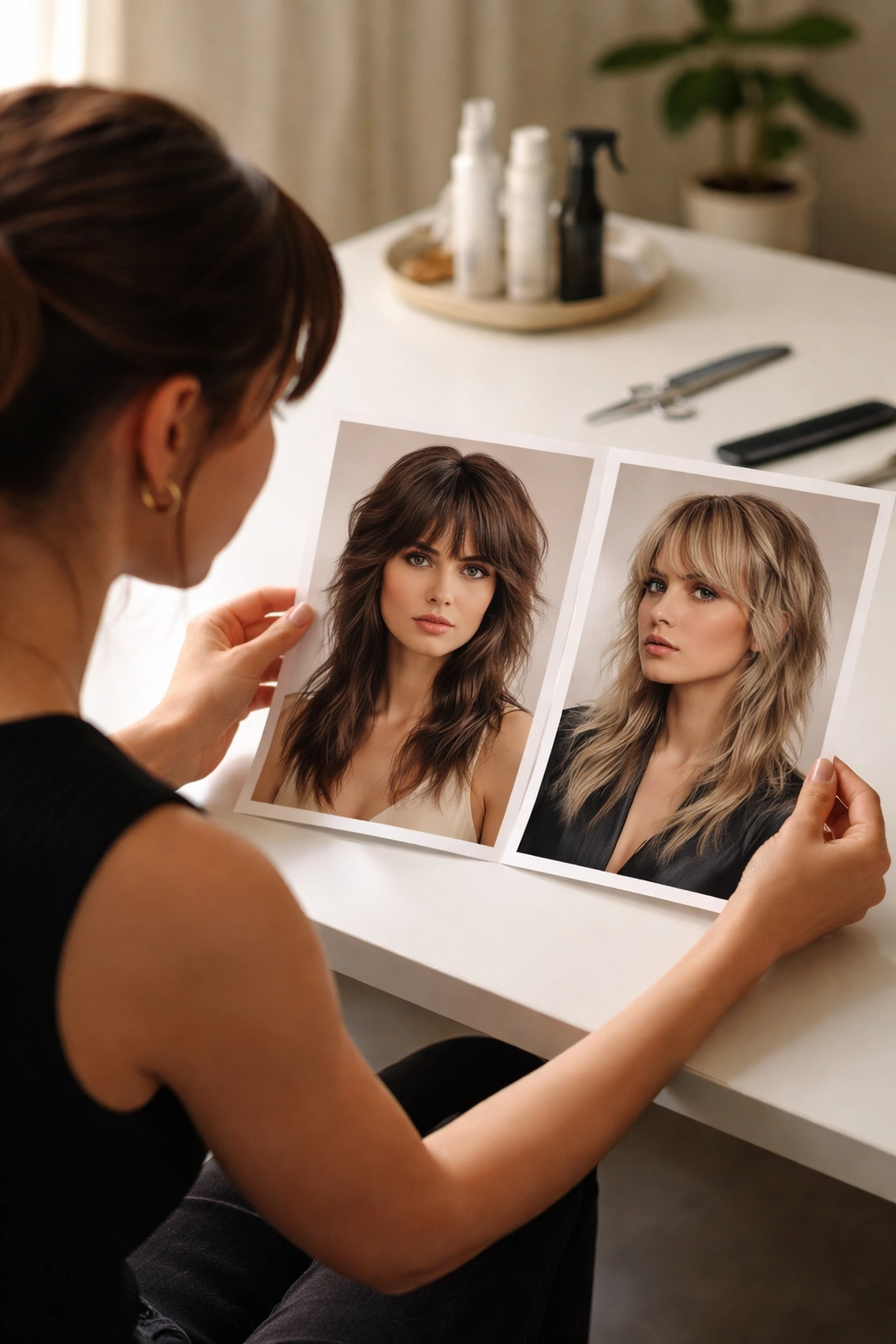
Whichever version calls to you, the key is finding a stylist who understands the cut’s dual nature. This isn’t a conservative haircut, so you want someone who’s genuinely excited about your willingness to try something bold and has the technical skill to execute the layering and length contrast with precision. Show your stylist multiple photos of shullet variations that appeal to you, discuss your hair type and daily styling capacity honestly, and trust their expertise on which specific interpretation will work best for your particular situation.
The shullet says something unapologetic about the person wearing it. It says you’ve thought about your style intentionally, you’re not afraid of texture and contrast, and you appreciate when trends respect their own history while creating something genuinely new. That’s a powerful thing to communicate with a haircut.
