



The shag cut isn’t a new invention—it’s made an impressive comeback after decades of being relegated to the “guilty pleasure” category of 80s and 90s nostalgia. But here’s the thing: modern shag cuts are nothing like those heavy, feathered versions your parents remember. Today’s interpretations range from subtle and wearable to bold and transformative, and they work across virtually every hair type, texture, and face shape. Whether you’ve been living with the same straight styles for years or you’re just curious about what a real shag can do, the versatility of this cut might genuinely surprise you.
What makes shag cuts so effective at upgrading your look is the engineering behind them. A proper shag combines shorter layers on top with longer pieces underneath, creating movement, dimension, and instant texture—even in hair that’s naturally flat or fine. The cut works with your hair’s natural texture rather than fighting it. Curly? It enhances your waves. Straight? It creates intentional movement. Thin? Layering makes it appear fuller. The psychological impact is real too—there’s something about the way a shag frames your face and moves when you walk that just feels different from more blunt, uniform styles.
The real power of exploring these 20 variations is discovering which version aligns with your lifestyle, hair type, and the vibe you actually want to project. Some of these cuts require regular maintenance and styling intention. Others are nearly wash-and-go friendly. Some need thick, textured hair to really sing, while others were specifically designed with fine or limp hair in mind. By the time you finish reading, you’ll have a clear sense of which shag cut deserves a conversation with your stylist.
1. The Classic Rock Shag
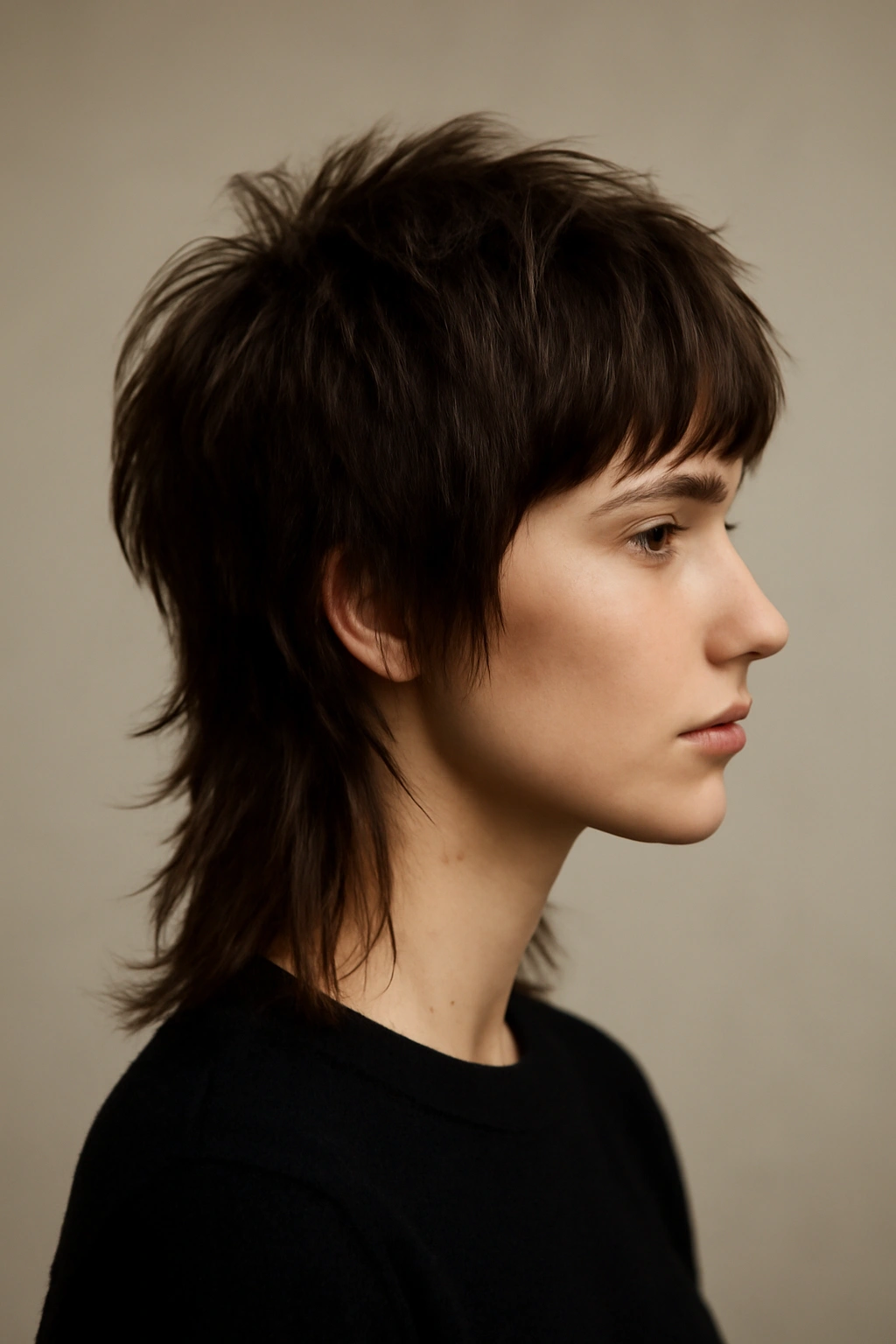
This is the shag that captures everything people love about the cut: shorter layers on top creating volume and movement, longer lengths underneath for flow, and an undeniably cool attitude. The classic rock shag works best on medium to thick hair with at least some natural texture. The top layers are cut shorter and choppy, while the back stays longer, creating that signature mullet-adjacent silhouette that somehow never feels dated when executed well.
Why This Works for So Many People
The classic rock shag’s genius is that it works with practically any hair texture and creates instant visual texture even on naturally straight hair. Layers catch light differently as you move, making even flat hair look dimensional and alive. The cut sits naturally, so it doesn’t require elaborate styling—just texture and some movement.
How to Style It
- Blow-dry with a round brush to create volume at the roots, then tousle the layers
- Use a texturizing spray or light pomade on damp hair for that effortlessly undone look
- For curly hair, apply product to soaking-wet hair and let it air-dry or diffuse
- Shag-specific styling almost demands some level of intentional texture; avoid making it too smooth or polished
2. The Wolf Cut
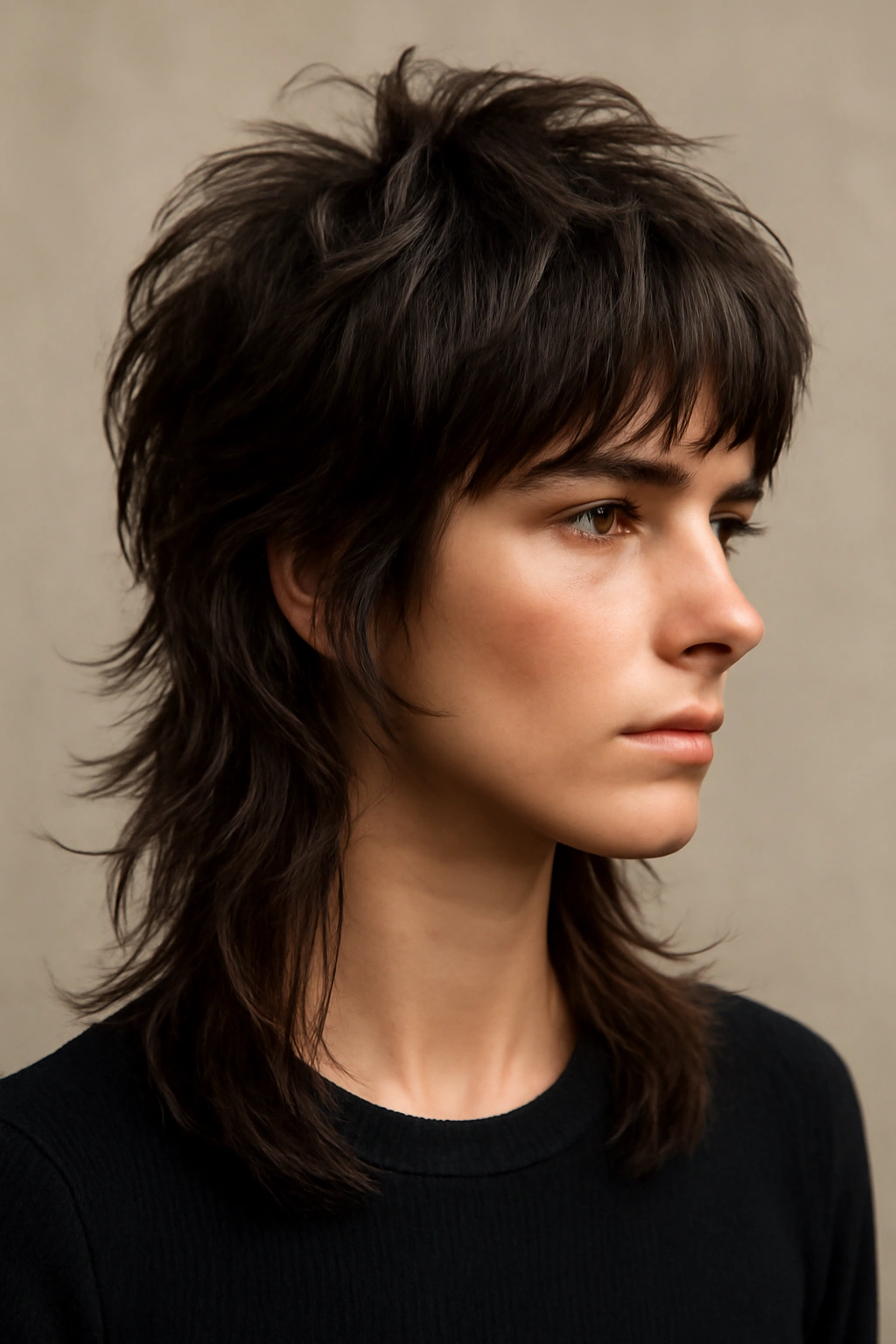
Part mullet, part shag, entirely trend-forward—the wolf cut takes the shag concept and pushes it further with sharper, more defined layers. Where a classic shag is relatively blended, the wolf cut embraces contrast. The crown sits shorter and fuller for volume, while the lengths below create dramatic movement. This cut photographs beautifully and demands confidence in how it looks.
What Sets the Wolf Cut Apart
The wolf cut is specifically designed for people who want texture and movement that announces itself. It’s not subtle. The layers are more pronounced, the contrast between lengths is intentional, and styling it tends to be more obvious—meaning styling it well becomes part of the aesthetic. It photographs exceptionally well and works best on people with at least some natural wave or texture to work with.
Best Hair Types for This Cut
- Thick, wavy, or curly hair that has natural body
- Hair with enough length (at least shoulder-length) to accommodate the layered shape
- Hair that can hold texture products well
- Not ideal for very fine or limp hair that struggles to hold volume
3. The Bixie Shag
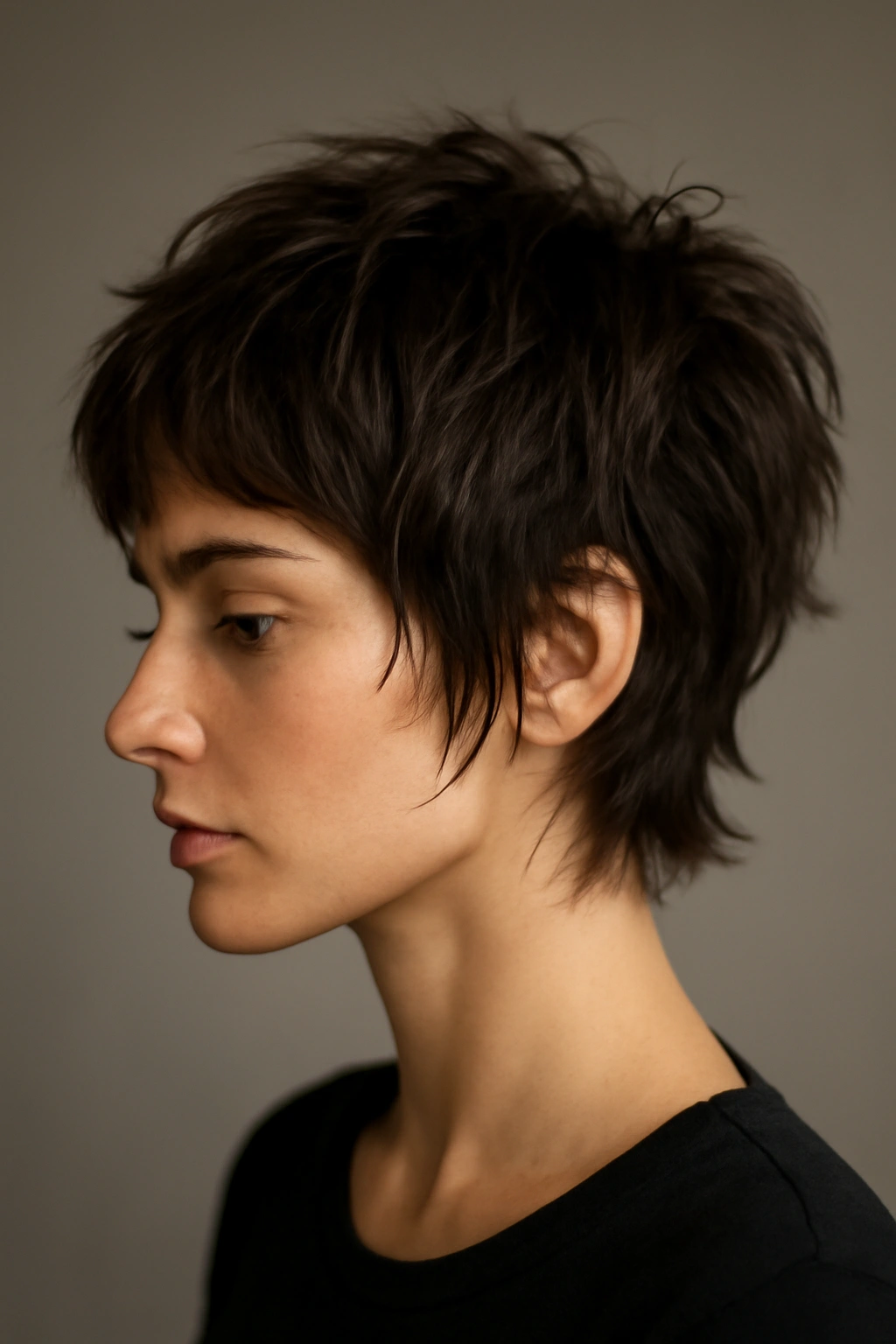
The bixie shag splits the difference between a textured pixie cut and a shag—short enough to feel modern and low-maintenance, but with enough layers and length to create movement that pure pixies sometimes lack. This cut works beautifully on people who want something short and edgy without the rigid minimalism of a traditional pixie.
Why Short-Hair Lovers Choose This Version
A bixie shag gives you the styling versatility of slightly longer hair while maintaining that clean, modern shortness. You get the confidence boost of a short cut, plus styling options. It works across face shapes and suits people who don’t have the time or desire for lengthy daily styling routines but still want something with personality.
Styling and Maintenance
- Requires trims every 4-6 weeks to maintain shape definition
- Style wet hair with a blow-dryer for volume and texture separation
- Use pomade or texture paste on damp hair for definition
- Works well on wavy, curly, and coarse textures; requires more intention on very fine hair
4. The Curtain Shag
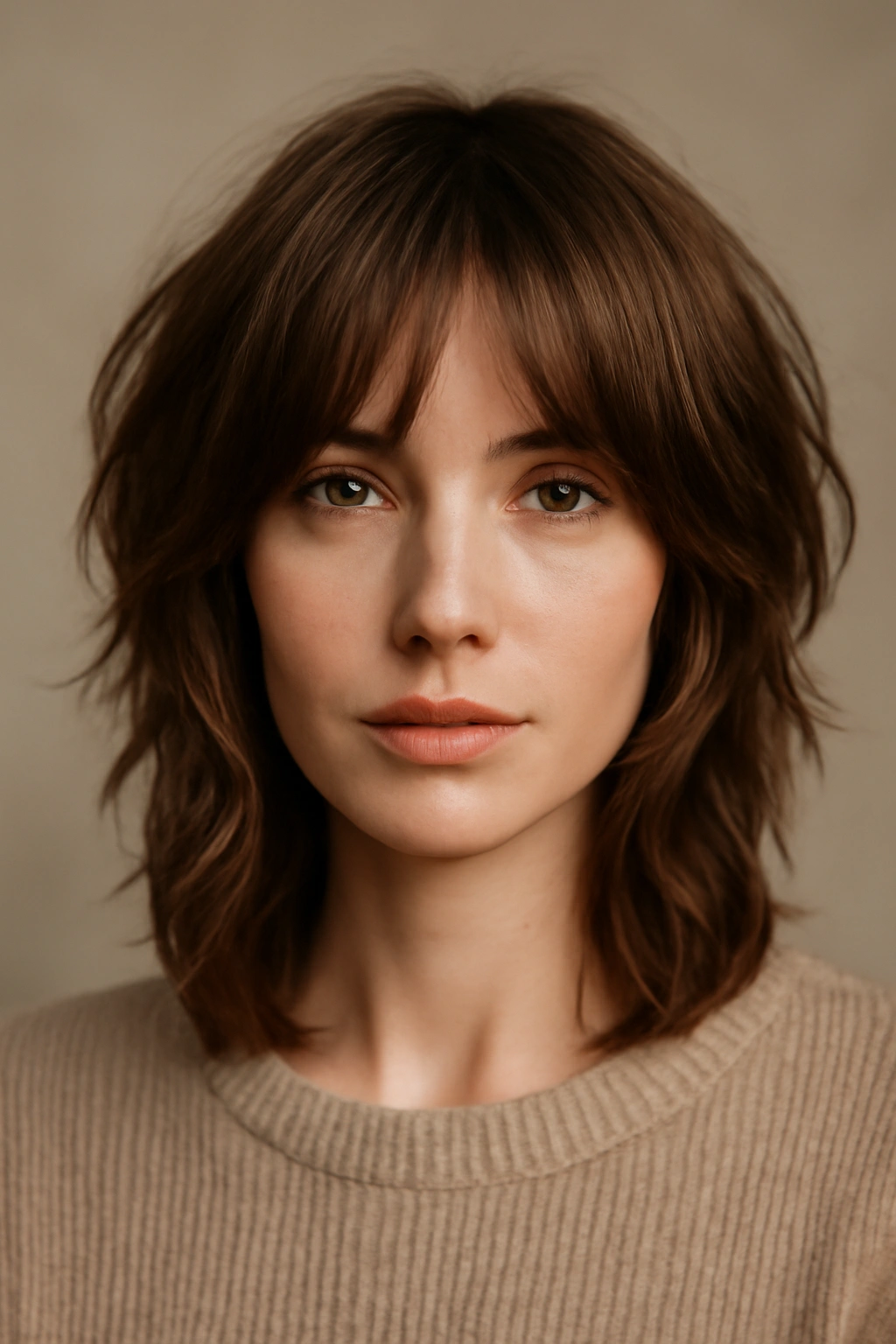
Imagine a shag that’s been specifically designed to frame your face like a beautiful curtain opening—this is it. The curtain shag has longer layers at the front that curve gently away from the face, creating a flattering face-framing effect. The cut is still shorter on top for volume, but the intentional face-framing makes this version feel more refined than edgy.
The Face-Framing Power
The curtain shag’s secret weapon is how it works with your face shape. Those longer front pieces create a vertical line that elongates your face, while the way they’re layered means they fall naturally without requiring you to blow-dry them away from your face. It’s flattering on round faces, oval faces, square faces—basically everyone.
Best Suited For
- People who want a shag but prefer something more refined or polished
- Anyone who wants to emphasize or frame their face
- Hair with some natural texture or wave that helps the layers fall correctly
- Individuals who have time for basic blow-drying but don’t want extreme styling demands
5. The Textured Shag on Straight Hair
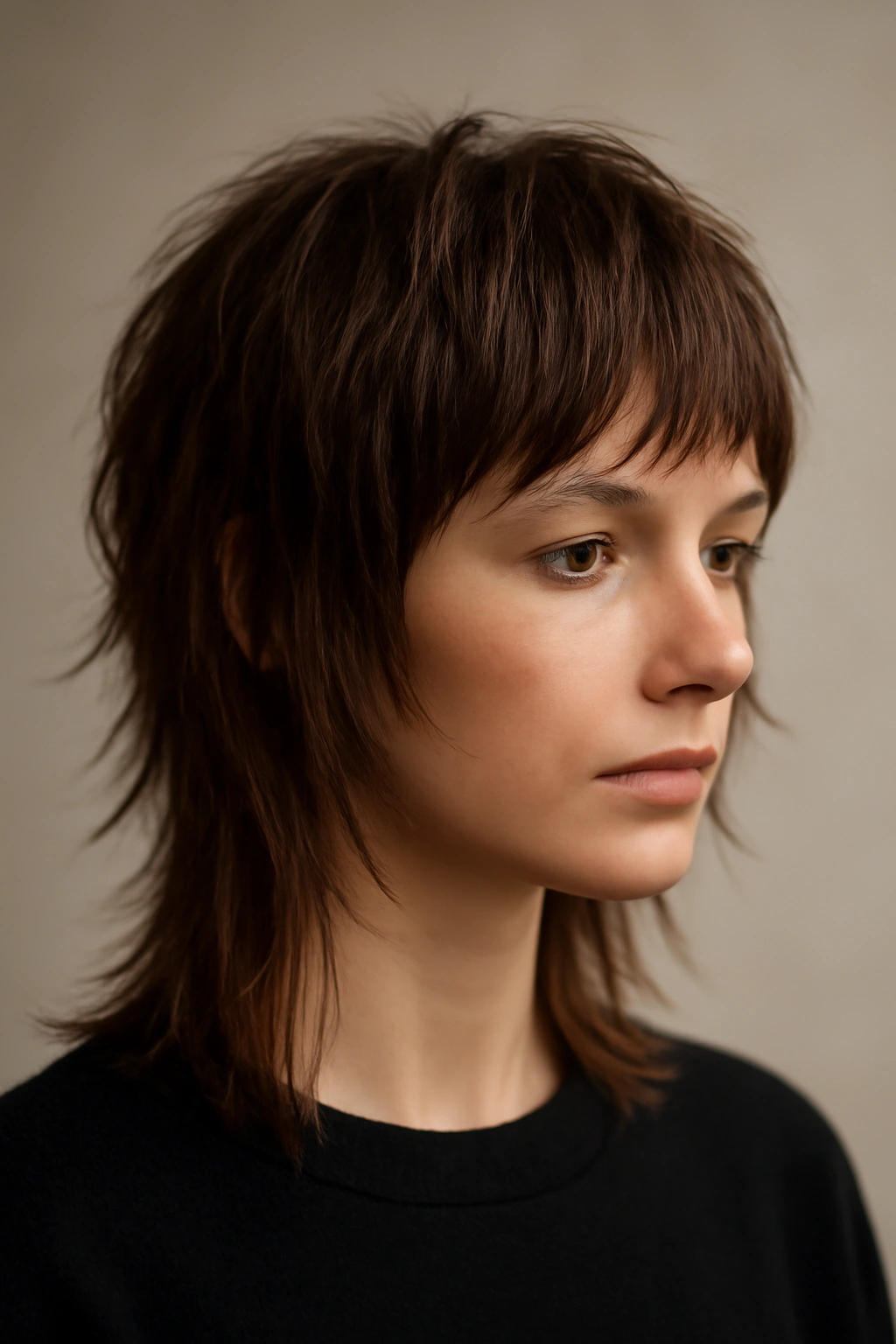
This version proves that shags absolutely thrive on naturally straight hair when cut and styled correctly. The key is that the layers are cut intentionally shorter and choppy enough to create visible separation and movement even without natural wave. It’s about using the cut itself to create the texture a wavy-haired person might get naturally.
Why Straight Hair Can Rock a Shag
The shag cut on straight hair actually looks cleaner and more intentional than on naturally wavy hair, because every layer is clearly defined. The cut doesn’t blend into natural texture—it stands out as a deliberate style choice. The movement comes from the cut, the layering, and strategic blow-drying or product use.
Styling Requirements
- Blow-dry is pretty much essential—air-drying reads as flat and shapeless
- Use a round brush to direct the layers
- Apply texture spray or lightweight product to damp hair before blow-drying
- The effort is real, but the payoff is a genuinely striking look
6. The Modern Shag with Bangs
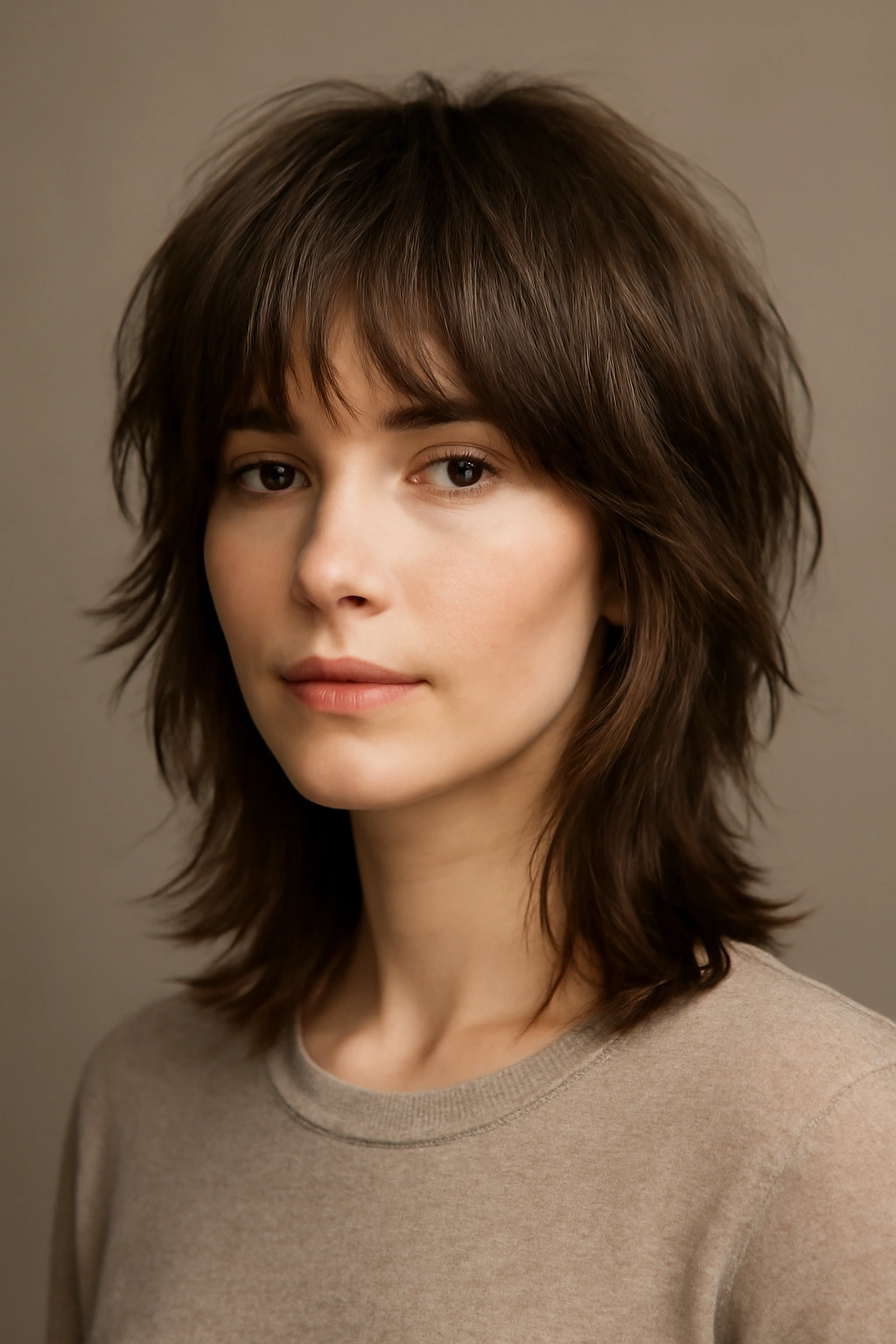
This version adds a bang element to the shag equation, typically wispy or choppy bangs that blend into the top layers rather than sitting as a distinct fringe. The bangs create extra dimension and draw attention to your eyes and face, while the shag underneath provides volume and movement.
How Bangs Enhance the Shag
Bangs on a shag aren’t a separate component—they’re integrated into the layering pattern. This creates a unified, cohesive look rather than bangs and a cut that are two separate things. The effect is immediately face-framing and modern, with an almost seventies-inspired elegance that feels current.
Face Shapes That Benefit Most
- Heart-shaped faces (bangs balance a larger forehead and wider upper face)
- Oval faces (anything works, but bangs add interest)
- Round faces (depending on bang placement, can create vertical lines that elongate)
- Avoid if you have a very long face and want to elongate it further
7. The Textured Shag for Curly Hair

Curly hair and shag cuts are a match made in heaven when the cut is designed specifically for your curl pattern. This version uses the natural movement and volume that curls provide, cutting shorter layers that sit above curl clumps to define them without creating frizz or stringiness. The result is defined, bouncy, and low-maintenance.
Why Curly Hair Thrives with Shags
Curls already provide movement, volume, and texture—a good shag enhances all of that without fighting the hair’s natural structure. Unlike straight cuts that often require precision blow-drying, a curl-specific shag often looks better with less manipulation. Apply product to soaking-wet hair, use a diffuser or let it air-dry, and the cut does most of the work.
Important Curl-Cut Considerations
- Get a cut from someone who understands curly hair and cut it dry if possible
- Shorter layers on top mean quicker drying and more defined curls
- Longer underneath layers add movement and weight
- Avoid getting layers too short if your curls are loose or your hair is fine
8. The Sleek Shag
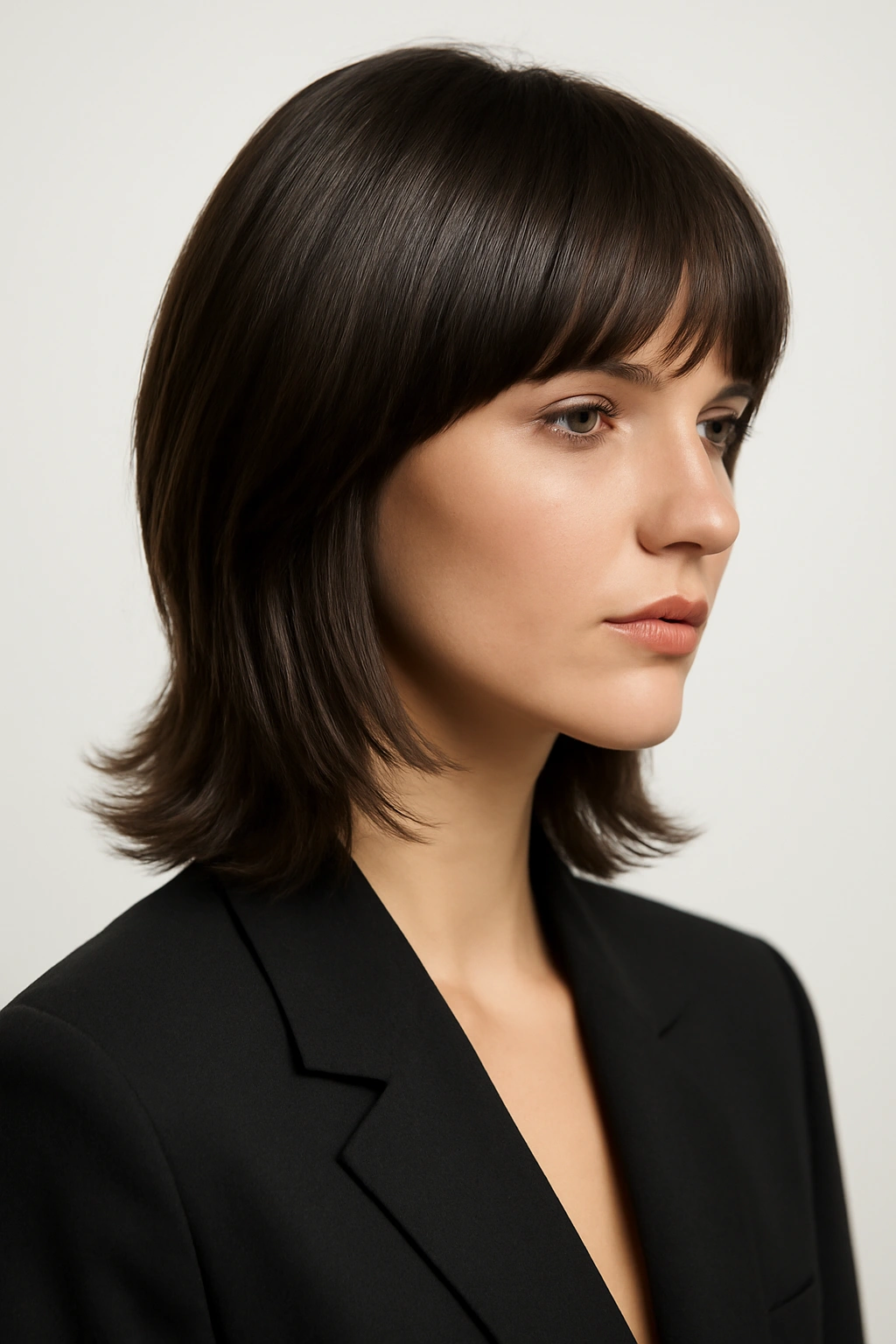
This version keeps the shag’s architectural layering but styles it smooth and intentional rather than tousled and undone. It’s proof that a shag doesn’t have to feel “messy” or casual—it can be polished and professional. The cut still has those textured layers and that movement built in, but the styling approach is completely different.
Making a Shag Look Refined
A sleek shag is all about how you style it. Blow-dry with intention, smooth out the layers, apply a lightweight serum to create shine, and you’ve got a cut that reads as put-together and sophisticated. It’s ideal for people who love the shag’s shape but aren’t drawn to the tousled, undone aesthetic.
Who Should Consider This Approach
- Professional environments where “undone” might not be appropriate
- People who naturally prefer polished styling
- Anyone who wants a shag but worries it might look too casual
- Anyone whose hair is sleek and shiny naturally
9. The Choppy Shag for Fine Hair
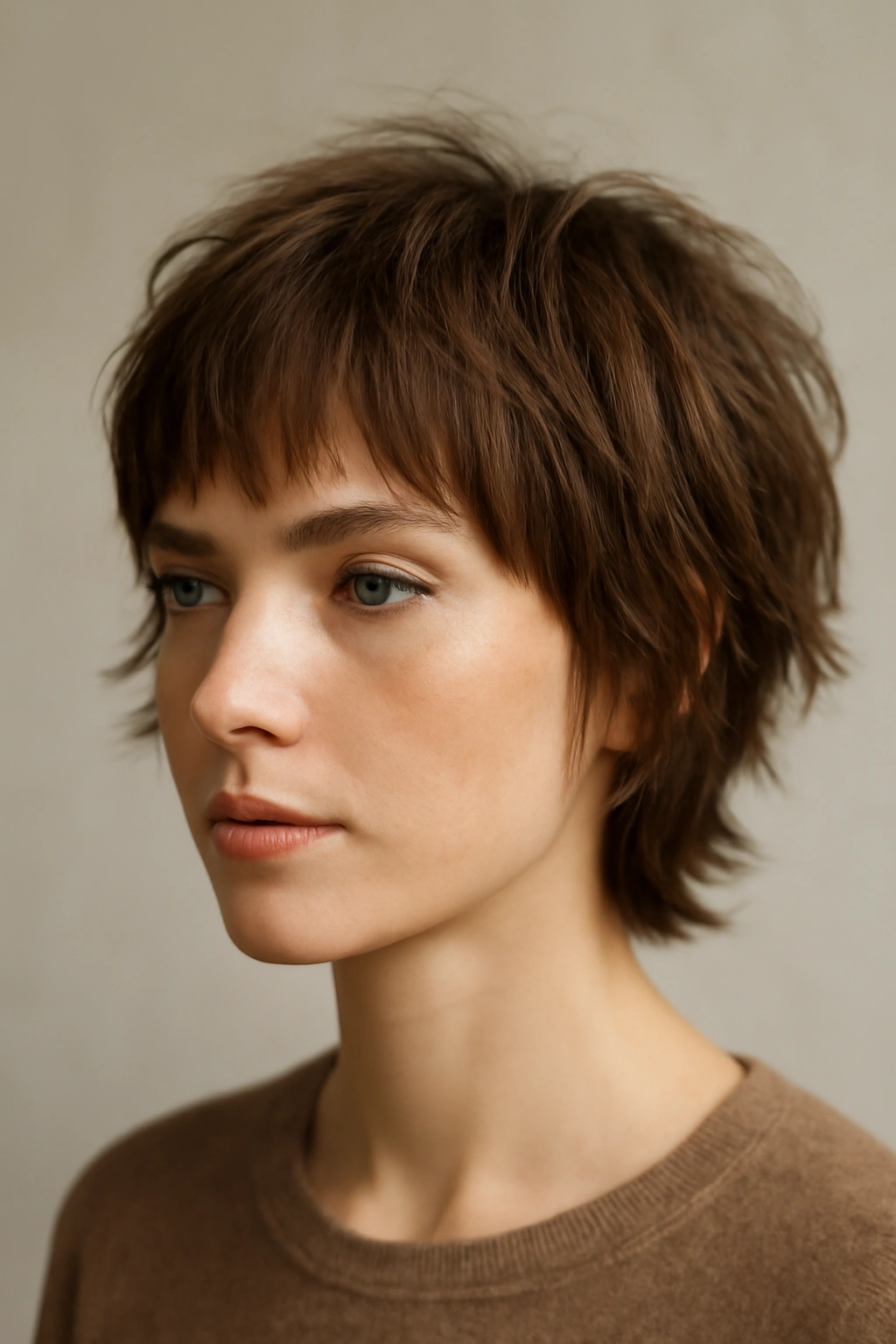
Fine hair often seems incompatible with shags—after all, layers can emphasize thinness and create a wispy, fragile look. But a choppy shag designed specifically for fine hair actually uses the cut to create the illusion of volume and density. The trick is cutting the layers in a way that creates visual texture without removing too much hair.
How to Add Volume Illusion to Fine Hair
A choppy shag for fine hair focuses on shorter layers at the crown that create lifting and volume at the root, plus selective layering below that creates movement without removing density. The choppiness means the eye reads texture and dimension instead of just thin strands.
Styling for Maximum Impact
- Use volumizing products specifically for fine hair
- Blow-dry with a root-lifting spray for maximum height
- Avoid heavy serums or oils that weigh fine hair down
- More frequent trims (every 4-6 weeks) keep the cut looking intentional
10. The Long Shag
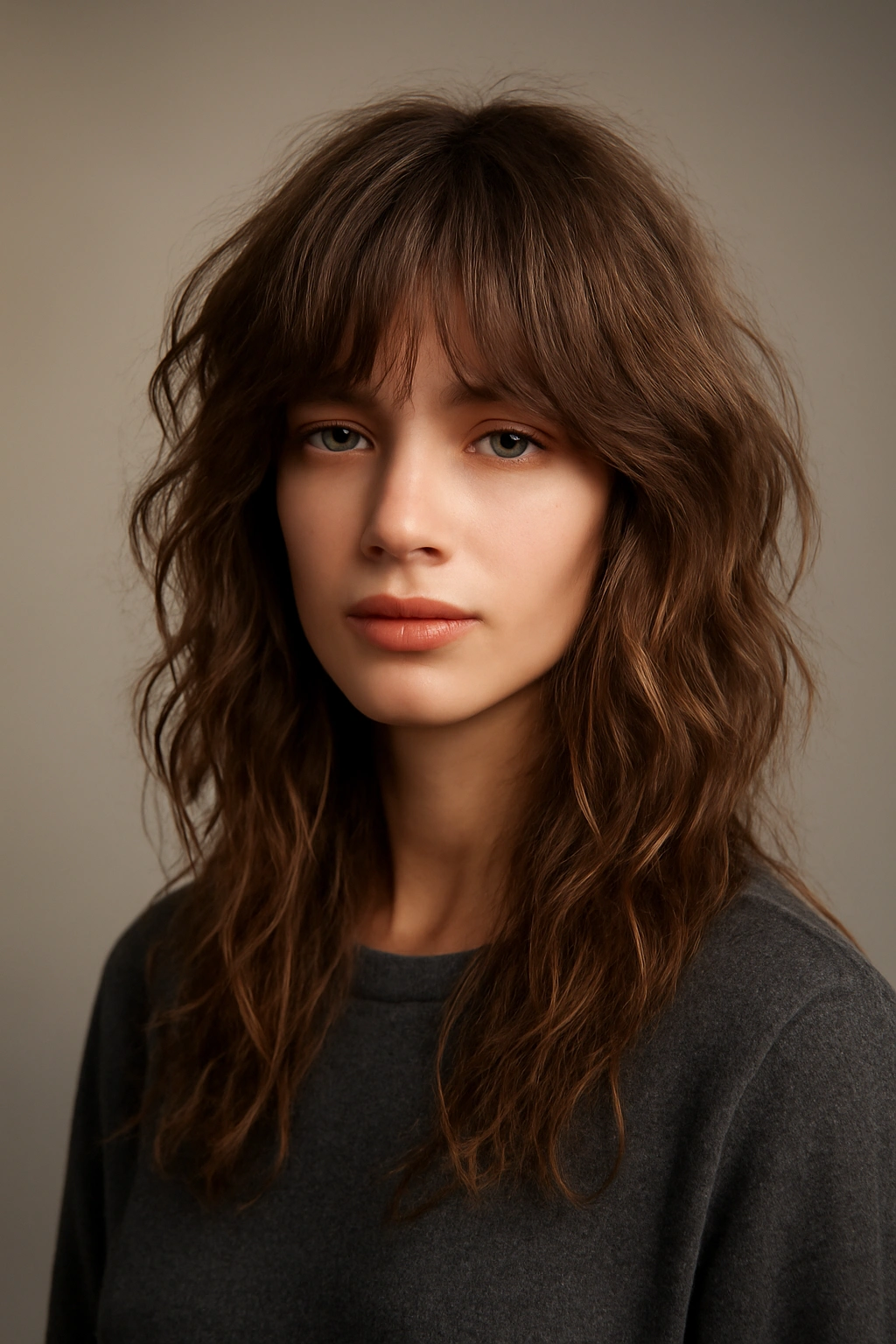
Sometimes “shag” evokes images of shorter cuts, but a long shag—staying past shoulder length or even longer—is absolutely valid. This version maintains all the textural layering and movement benefits of a shorter shag but with the length that some people strongly prefer. The longer lengths mean the cut feels less severe and more wearable in professional or conservative settings.
When Longer Works Better
A long shag is ideal for people who love their hair’s length and don’t want to sacrifice it but still want the movement and dimension that layers provide. It’s less dramatic than a shorter shag and often feels more timeless, less trendy. The longer pieces underneath provide more of a transition, so the cut reads as refined layers rather than an edgy style.
Styling a Long Shag
- Works beautifully with waves and texture, either natural or styled
- Longer length means more flexibility in how you wear it (up, down, half-up)
- Blow-drying is optional but styling it with some texture looks intentional
- Great for people who style their hair multiple ways throughout the week
11. The Platinum Shag
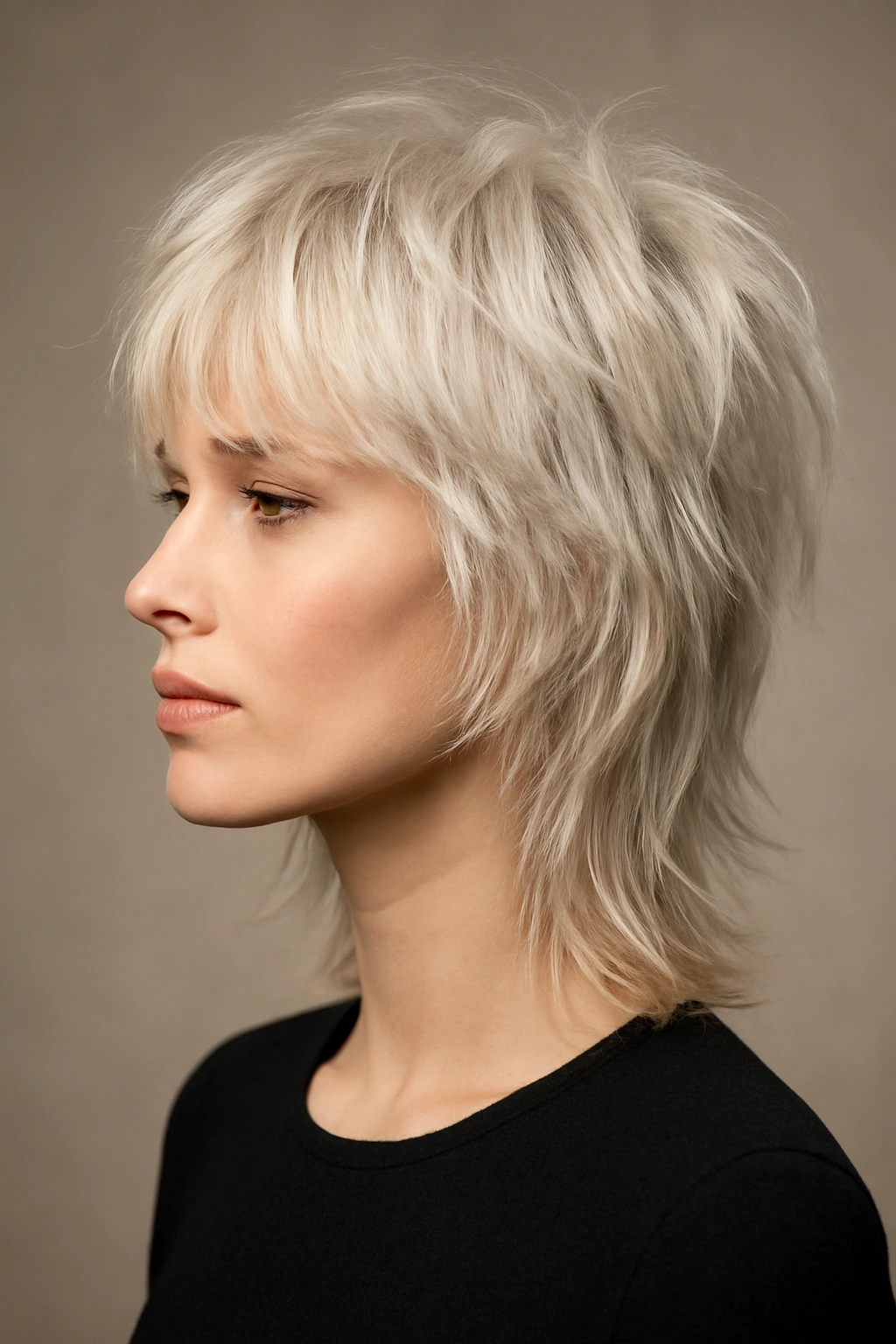
This is technically a color + cut combination, but the platinum blonde paired with a shag is such a specific, impactful look that it deserves its own consideration. The cooler tones of platinum highlight the cut’s texture and movement in a way that other colors sometimes don’t. The shag’s layers catch light differently on each strand, creating depth that reads even more striking on platinum.
Why Platinum Amplifies a Shag’s Impact
The contrast between the cut’s layers and the luminosity of platinum blonde makes every layer visible and distinct. You get texture, movement, and light-play—three different dimensions of visual interest. It’s bold and intentionally fashionable, not subtle or understated.
Real Talk on Maintenance
- Platinum requires regular color maintenance and toning to stay cool
- Hair should be in good condition to handle both the coloring process and the cut
- This is a commitment to a fairly statement-making look
- Not ideal if you’re trying to keep your look subtle or low-key
12. The Shag with Layers Starting Lower
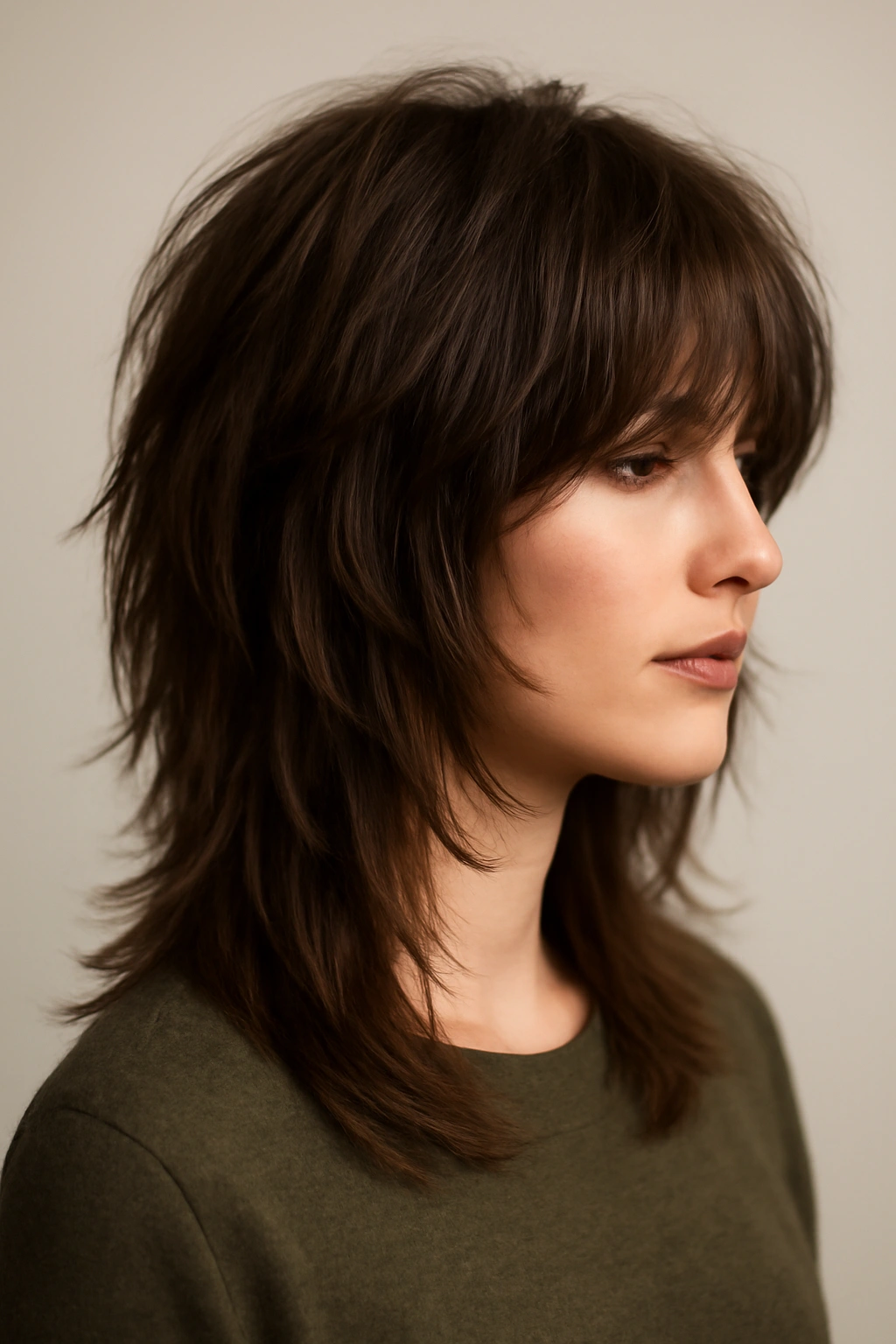
Some shags have chopped, short layers throughout. This version keeps the crown area more solid and full, with layers starting lower—closer to chin length or below. The result is maximum volume at the crown with movement below, rather than choppy layers all throughout. It’s a great middle ground between a blunt bob and a full shag.
Best For Creating Specific Impact
This approach creates a look that’s voluminous at the crown but doesn’t sacrifice as much length or thickness. The longer top section means you have more to work with for different styling options. The layers below create movement without the visible choppiness that comes with starting layers at the crown.
Ideal Hair Situations
- People who want volume but are worried about shorter layers looking thin
- Anyone who wants a shag but prefers a bit more substance at the crown
- Hair that’s naturally thick and can support layers starting lower
- People who want options for styling the crown area differently
13. The Flipped-Out Shag
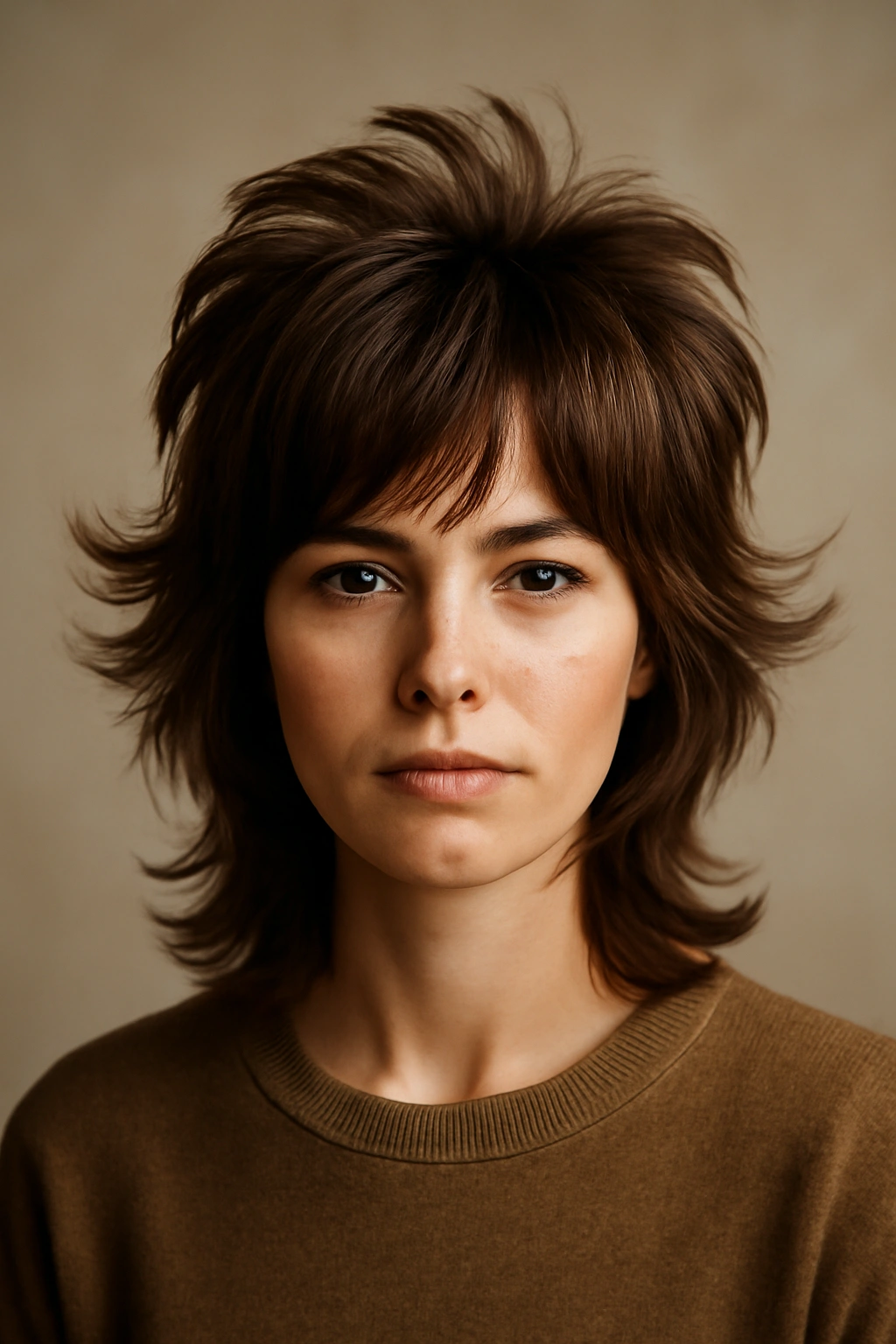
This version deliberately styles the shortest layers at the crown so they flip outward and upward, creating a specific ’70s-inspired silhouette. It’s playful, retro-influenced, and fun—not trying to be subtle about its inspiration. The cut allows for this styling, with layers that naturally want to turn out rather than lay flat or flip under.
Creating That Intentional Flipped Effect
The flipped-out shag requires intentional blow-drying. You’re directing the shortest layers up and out, using your brush and your blow-dryer to create the flip. It’s not accidental; it’s a styling choice. This look works best on people who enjoy visible styling and don’t mind spending time creating a deliberate shape.
Who Should Try This
- Anyone who loves retro-inspired, playful styling
- People with medium to thick hair that can support the shape
- Those who don’t mind being noticed for their hair
- Anyone willing to blow-dry regularly to maintain the shape
14. The Textured Shag on Thick Hair
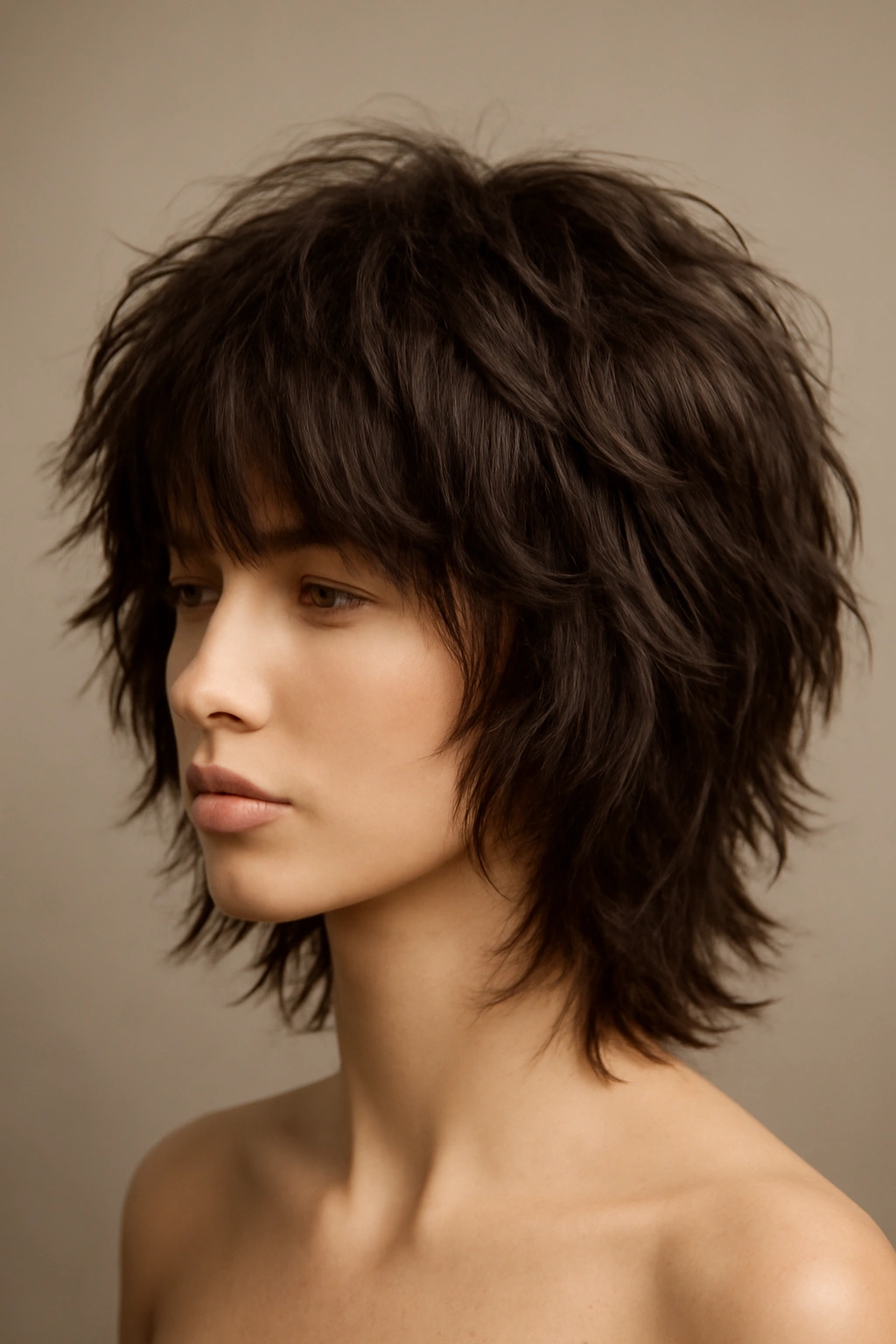
Thick hair naturally has volume, so a shag on thick hair is all about creating intentional movement and preventing the hair from becoming too dense or bulky. This version uses the layers strategically to thin out texture, create clear separation between layers, and maximize movement without losing the fullness thick hair provides.
Maximizing Thick Hair’s Natural Advantages
Thick hair can support more aggressive layering and chopping without looking thin. A good shag on thick hair looks intentional and structured, with clear definition between layers. The weight of thick hair means the layers fall in a controlled way rather than flying everywhere.
Styling Considerations
- Product helps define layers and prevent the hair from looking shapeless
- Blow-drying can emphasize texture or smooth it down depending on preference
- Layers help thick hair move and flow instead of sitting as a dense block
- Maintenance is important—grow-out can start to look bulky if the layers aren’t refreshed
15. The Shag with Texture Added Through Color
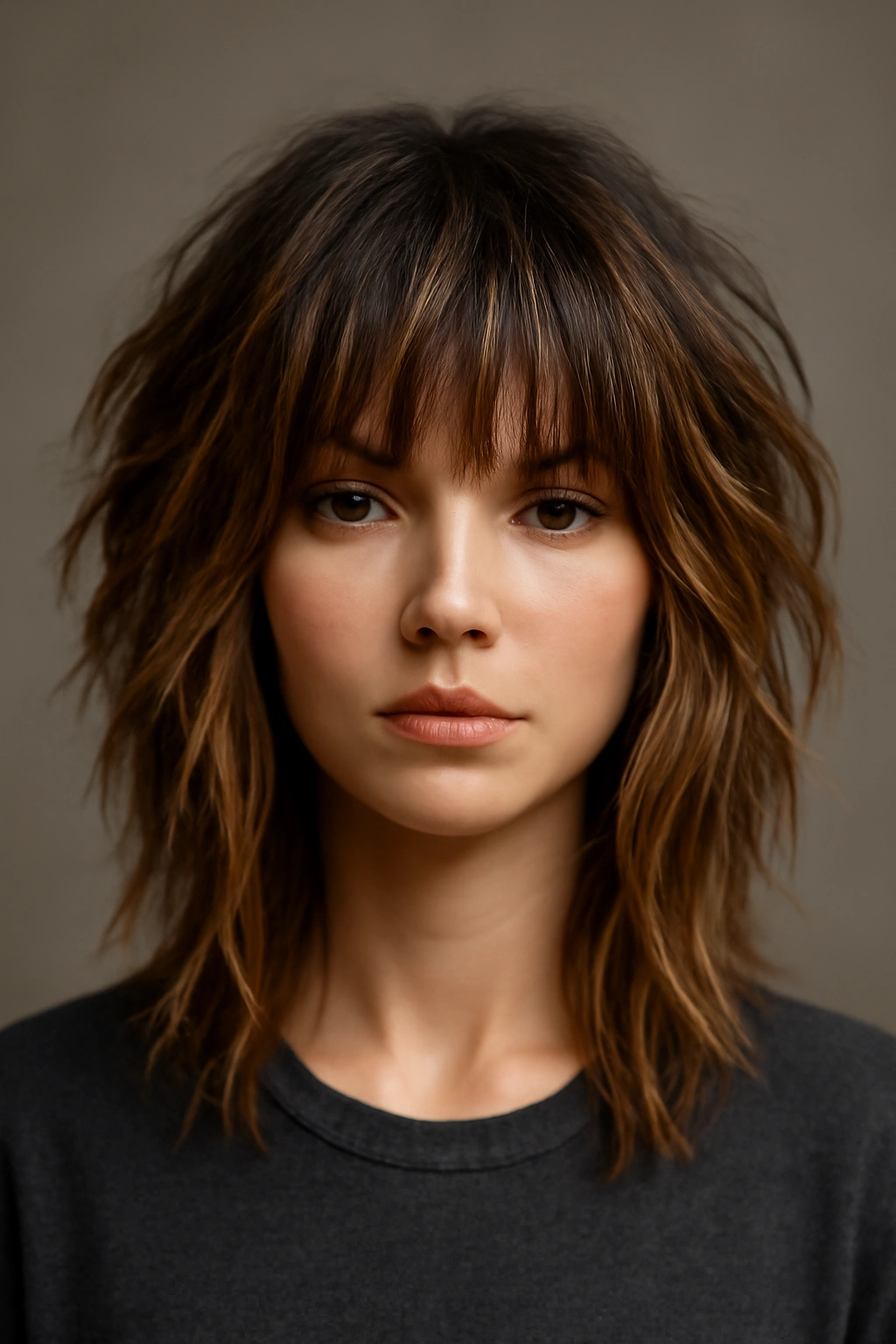
This version uses color blocking, balayage, or highlights to add dimension to a shag cut in a way that emphasizes texture even more than the cut alone does. Darker roots with lighter pieces throughout, or strategic highlights that play with the layering, create extra visual texture and movement.
How Color Works with the Cut
When lighter pieces are strategically placed throughout the layers, the eye reads more texture and movement than it would from the cut alone. The color creates the illusion of even more separation and dimension. It’s a way to amplify the shag’s inherent advantages.
Popular Color Approaches
- Darker roots with overall lighter tones (lowlights and highlights)
- Dimensional pieces that follow the natural growth pattern
- Cool tones that create contrast with warmer base tones
- Balayage that’s specifically placed to emphasize layering
16. The Grown-Out Shag
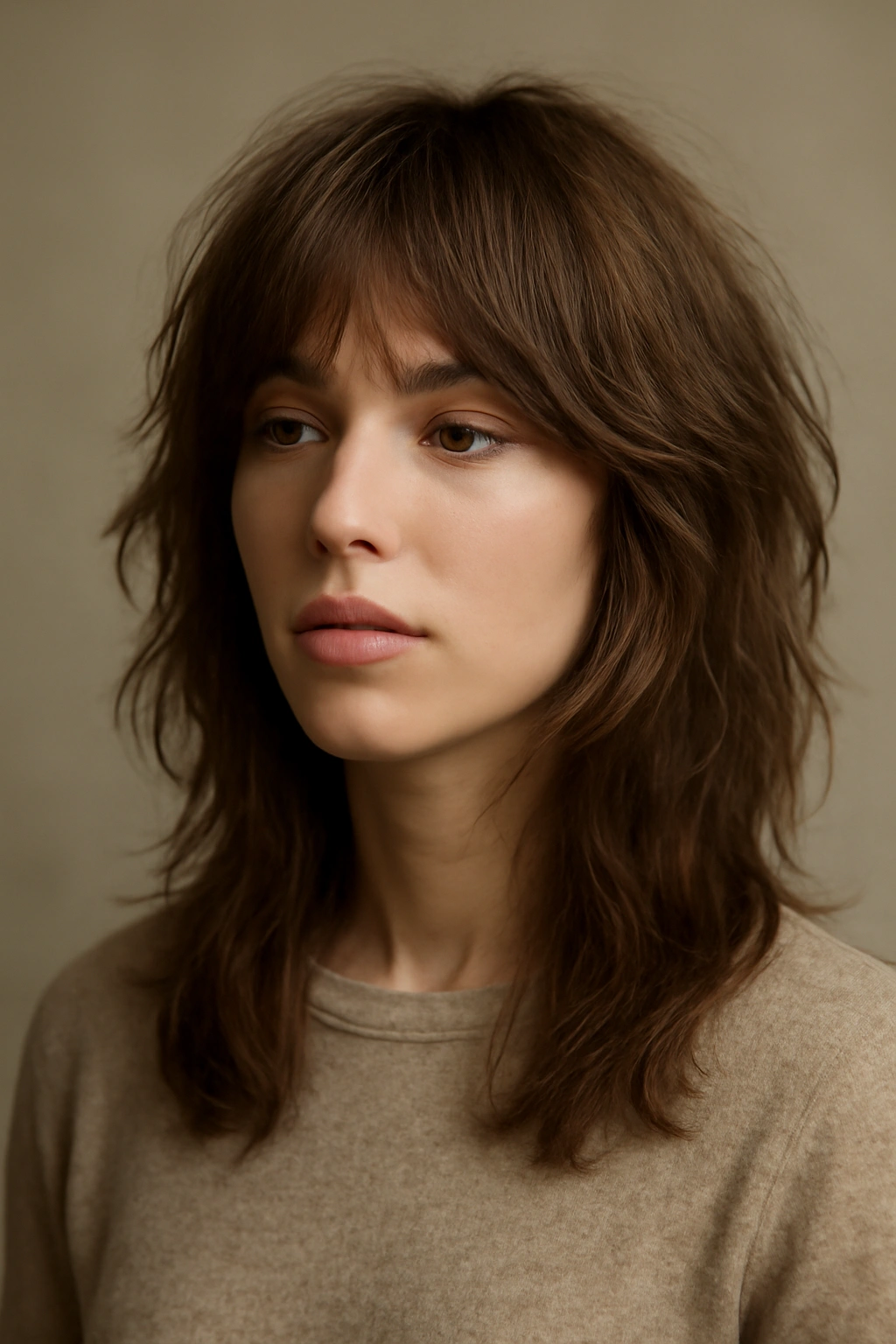
This version leans into the idea that a shag doesn’t have to be perfect. It’s the “I’ve been living with this cut for a few months and it’s just getting better” aesthetic. Grown-out layers have more movement and texture, blend together more softly, and often feel more effortless than a freshly cut shag. It’s deliberately embracing the in-between phase.
Why Grow-Out Works as an Intentional Choice
A newly cut shag can feel a bit sharp or blunt. As it grows out over several months, the layers become softer, blend together more naturally, and often actually look better. The texture becomes more diffused and less choppy. Some people deliberately stretch out their trim schedule to hit this phase.
Maintenance and Upkeep
- Trim every 8-10 weeks to keep the shape intentional (rather than just growing it out chaotically)
- Styling becomes easier as the cut softens with growth
- More wash-and-go friendly than a freshly cut shag
- Perfect for people who want less maintenance and more organic texture
17. The Shag with Undercut
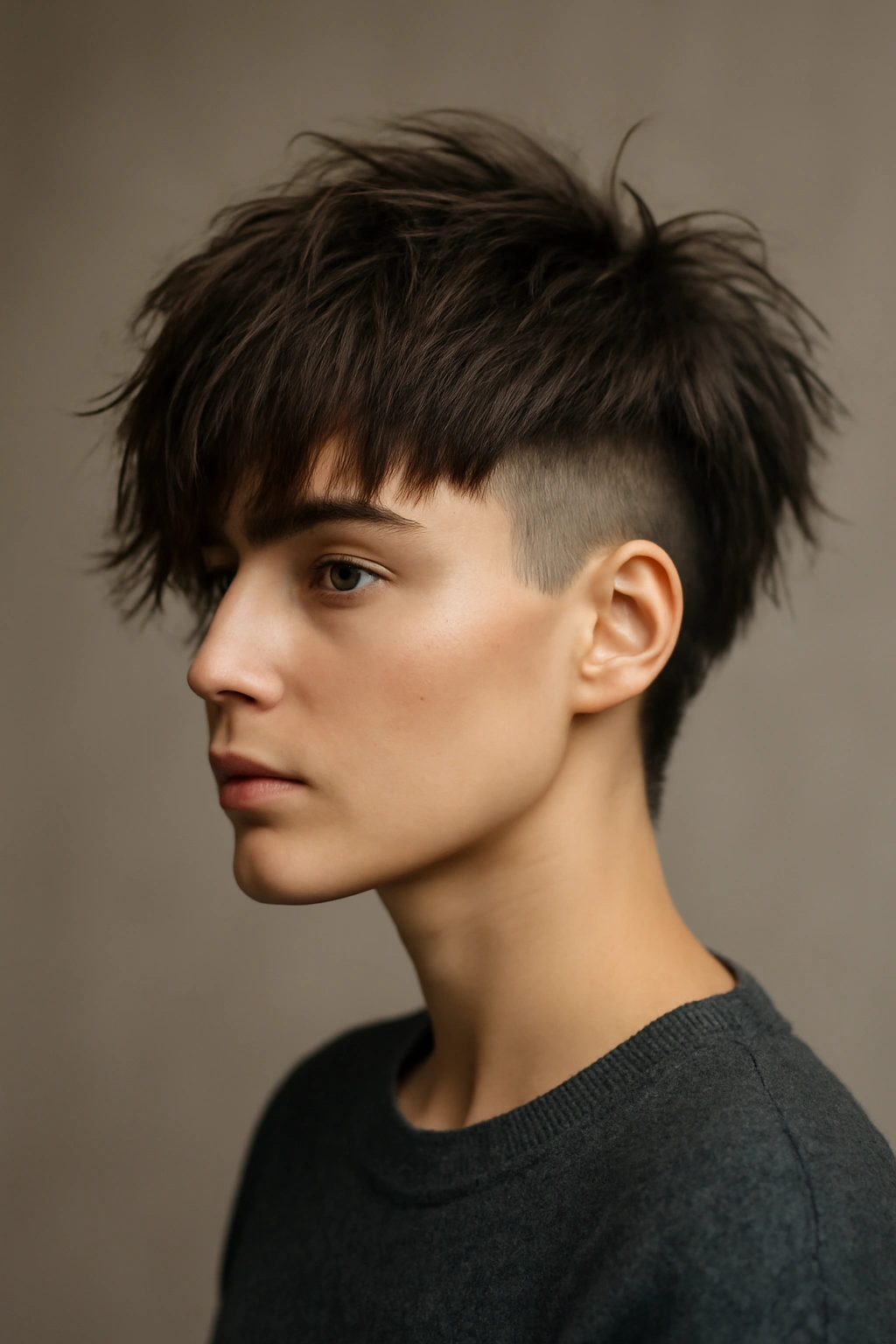
This version adds an undercut element—shorter layers at the nape and sides that create extra contrast with longer layers on top. It’s edgier and more fashion-forward than a straightforward shag. The undercut adds architectural interest and makes the top layers appear fuller and more voluminous in comparison.
How the Undercut Changes the Vibe
An undercut transforms a shag from “retro and cool” into “intentionally fashion-forward and edgy.” The sharp contrast between closely-cropped sides or nape and longer layers on top creates a more statement-making look. It’s bold and clearly intentional, not subtle.
Who Gravitates Toward This
- People who want a genuinely fashion-forward cut
- Anyone who loves shaved or very short sides
- People who want extra visual contrast and architectural interest
- Those willing to maintain the undercut every 4-6 weeks
18. The Shag Styling for Waves
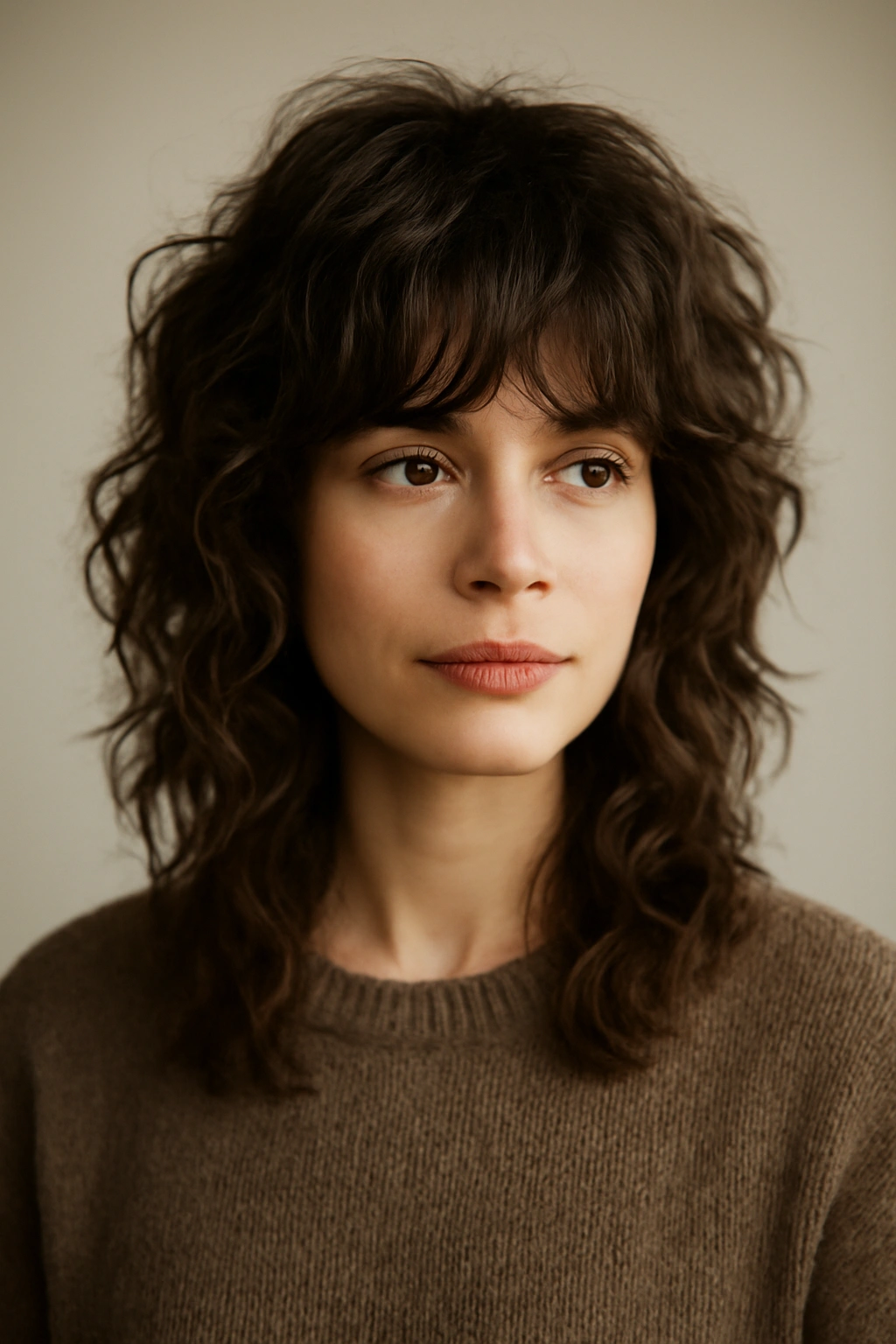
Wavy hair that’s not quite curly sits in an interesting place—not straight enough for a sleek aesthetic, not curly enough for curl-specific techniques. A shag designed for waves plays into that middle ground, creating layers that enhance natural waves without the rigidity of defining curls. The result is effortlessly textured.
Working with Natural Waves
Wavy shags benefit from enhancing what your hair naturally does. Apply product to damp hair, scrunch it gently, and let the cut’s layers do the work. The waves will enhance the layers, creating movement and dimension. It’s lower-maintenance than styling a straight shag but more intentional than just letting curls do their thing.
Styling Approach
- Apply product to damp (not soaking) hair and scrunch gently
- Use a diffuser on a blow-dryer set to medium speed and heat
- Avoid making it too smooth or sleek—the waves are the point
- Refresh waves on second-day hair with a wave-enhancing spray
19. The Boundary-Breaking Shag
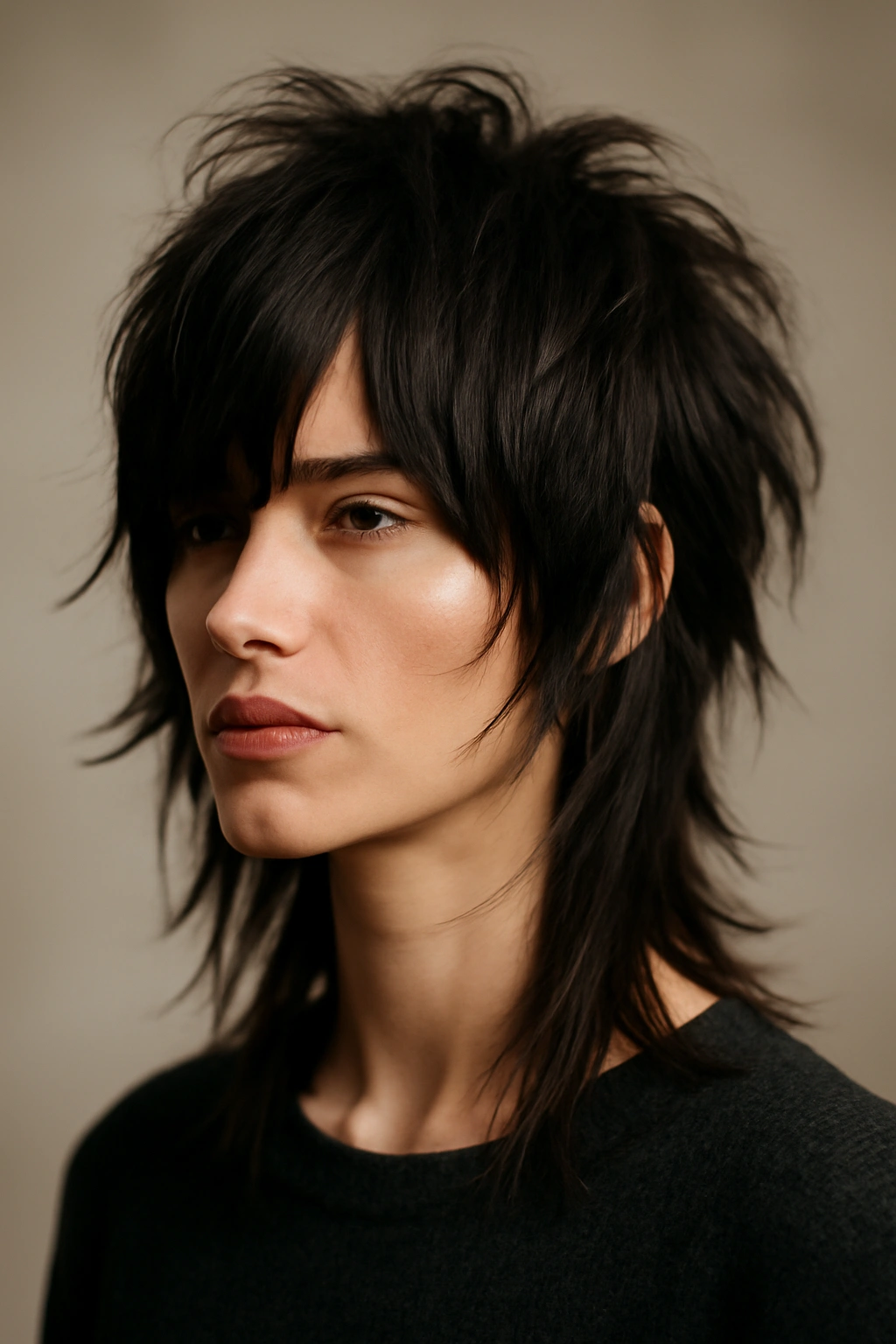
This version completely reimagines what a shag can be—think much longer lengths with very subtle layering, or very short hair with dramatic choppy layers, or asymmetrical versions where one side is distinctly different from the other. It’s a shag that breaks typical rules and doesn’t fit into standard categories.
For the Adventurous
If you love the shag concept but want something that doesn’t fit neatly into traditional definitions, a boundary-breaking interpretation might be perfect. This could mean consulting with a stylist about what a shag would look like that’s completely unique to your vision and style.
Working with a Stylist
- Come with specific reference photos of what you want
- Discuss where the “shag elements” are in your specific vision
- Be clear about what you’re trying to achieve in terms of movement and texture
- This is a collaborative process that benefits from detailed conversation
20. The Maintenance-Friendly Textured Shag
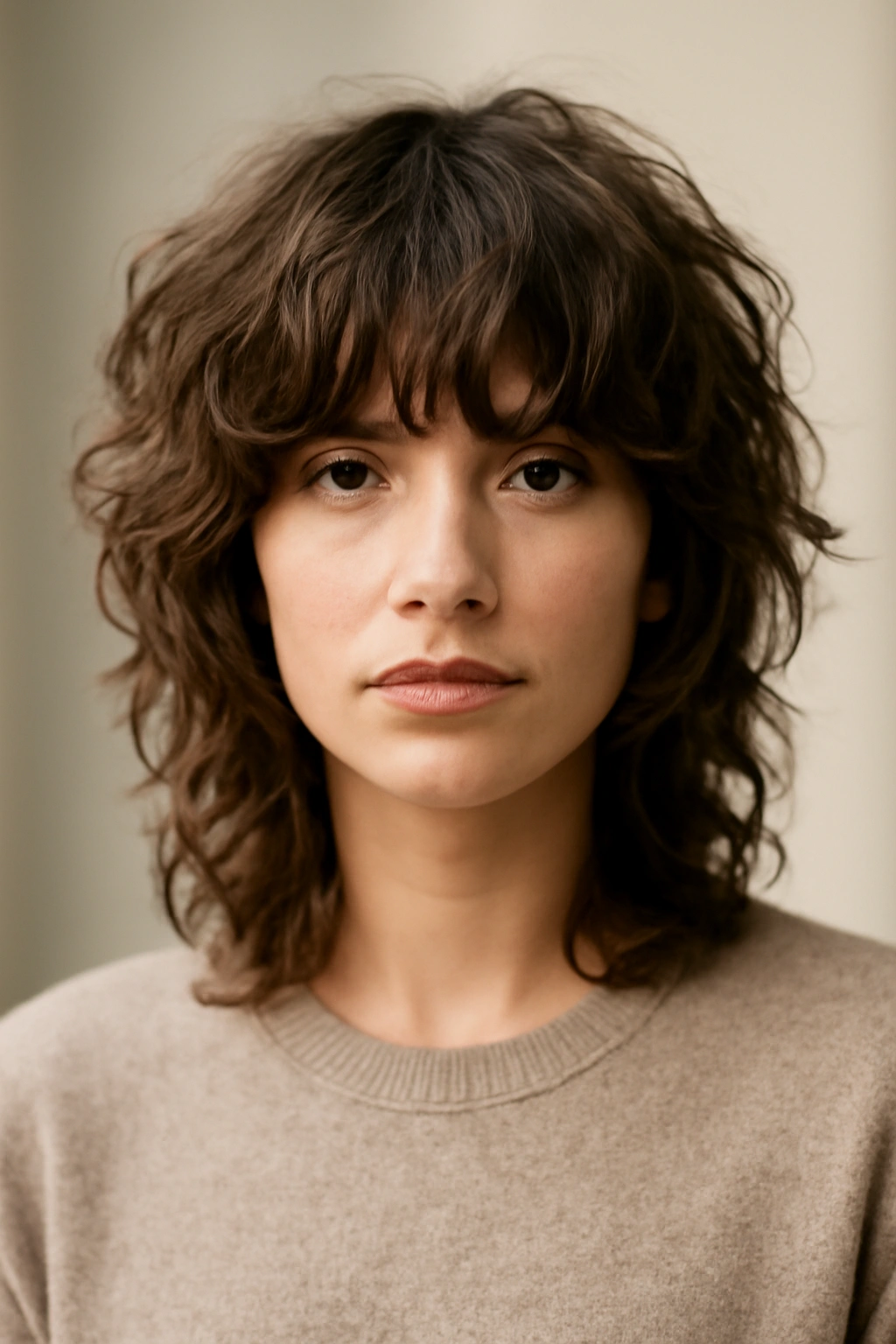
This final version is designed for people who love the shag’s vibe but have limited time or desire for daily styling. It’s cut in a way that works with most hair textures, doesn’t require a blow-dryer to look intentional, and actually benefits from a more wash-and-go approach. It’s the proof that you don’t have to be a hair-styling enthusiast to pull off a great shag.
Less Styling, Same Impact
A maintenance-friendly shag uses the cut’s inherent texture to create movement without requiring intentional styling. You can air-dry it, apply a product that works with your hair’s natural pattern, and let the cut do the heavy lifting. It reads as intentional and cool without demanding your time daily.
Best For
- Busy people who don’t have time for regular blow-drying
- Anyone who prefers a more natural, less-styled aesthetic
- People with naturally textured or wavy hair that air-dries well
- Anyone who wants a modern, cool cut without the maintenance commitment
Final Thoughts
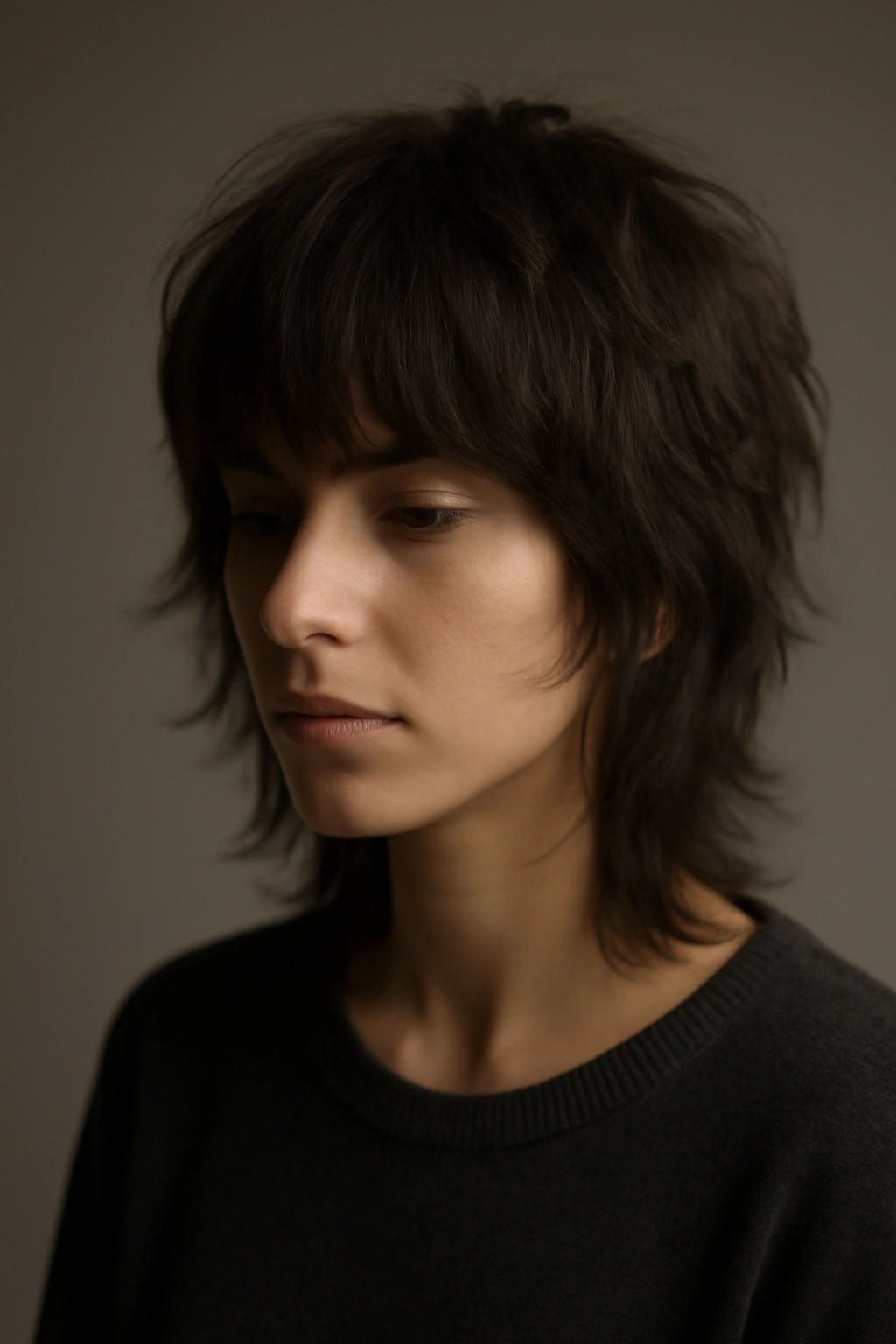
A shag cut is genuinely one of the few styles that offers this much versatility within a single category. Whether you’re drawn to the rock-and-roll energy of a classic shag, the refined face-framing of a curtain shag, or the low-maintenance ease of a textured version, there’s absolutely a version that fits your hair type, lifestyle, and aesthetic. The key is walking into your consultation with specific reference photos, clear communication about your styling tolerance and preferences, and a stylist who understands that modern shags are engineered cuts—not just “lots of layers.”
The upgrade you’re looking for might not be about length or a completely different style category. Sometimes it’s about movement where there was flatness, about dimension where there was uniformity, about a cut that actively works with your hair instead of requiring you to fight it every day. That’s what a well-executed shag delivers. Take your time choosing which version resonates with you, find a stylist who specializes in textured cuts, and trust that your hair probably already has the texture and movement it needs—the cut is just there to unlock it.
