



Curly hair has a superpower that straight or wavy textures simply can’t match—it holds shape, creates dimension, and commands attention with minimal effort. The trick is finding the right cut that works with your curl pattern instead of against it. Short curly haircuts are having a major moment because they celebrate what curls naturally do best: bounce, texture, and bold visual impact. Whether you’ve got tight coils, loose waves, or somewhere in between, the right short cut can transform your whole look and actually make styling easier, not harder.
The challenge most people face is that not every short style works for every curl type. A cut that looks amazing on loose waves might leave tight curls looking shapeless. That’s why understanding your specific curl pattern—and matching it to the right haircut—is essential before you book that appointment. The good news? There are genuinely so many incredible options. From textured pixies to shaped bobs, from shaggy layers to sleek tapered cuts, short curly hair can go virtually anywhere. You just need to know what you’re looking for.
Here’s what makes a short curly cut actually work: it respects the curl pattern, uses strategic layering or texturizing to enhance movement, includes enough length to avoid shrinkage that makes the style too short when dry, and frames your face in a way that feels intentional. The best short curly cuts aren’t about fighting your curls into submission—they’re about amplifying what’s already there and making styling feel like you’re enhancing something beautiful rather than trying to fix something broken.
Let’s walk through twenty distinct short curly haircuts that genuinely work, with specific details about what makes each one special and who it suits best.
1. The Textured Pixie
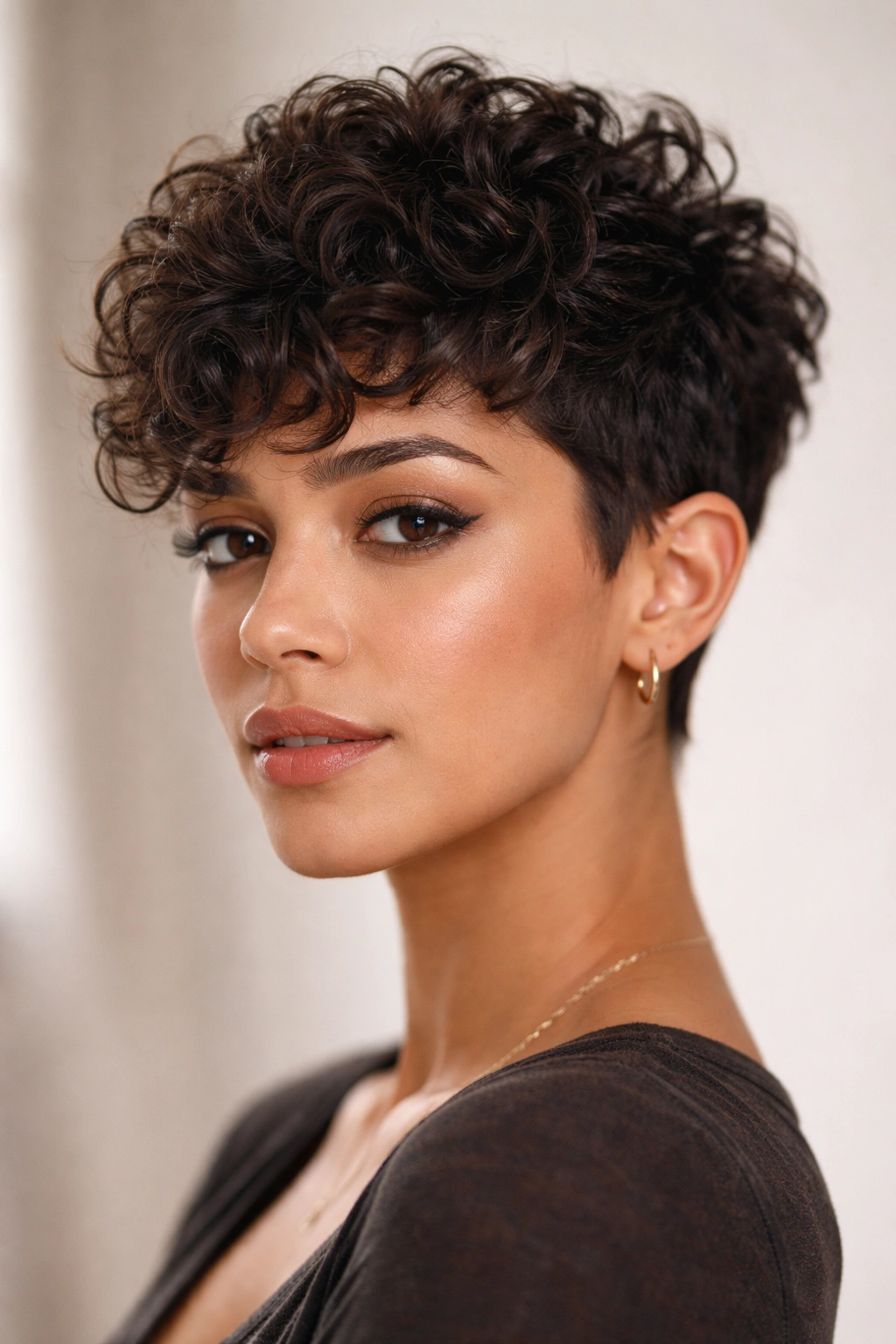
A textured pixie takes the classic short cut and completely redefines it for curls. Instead of the precision geometric shape pixies are known for, this version uses choppy layers and piecey texturizing to work with your curl pattern. The sides stay close and tapered, but the top has enough length and texture that your curls can grip and create volume rather than lying flat. It’s audacious, it’s chic, and it works surprisingly well for curl types ranging from loose waves to medium coils.
Why It’s Worth Considering
This cut hits different when you have curls. It eliminates the awkward phase-out length that straight-haired people deal with, and it makes your natural texture the focal point rather than something to hide. The textured pixie is low-maintenance in the best way—you’re not fighting against your curl pattern, you’re working with it. Styling is literally wash, apply products, and go.
Who It Suits Best
- Anyone ready for a bold, confidence-forward style that announces you’re not playing it safe
- Curl types from loose waves through medium coils (tight coils need more length at the top to avoid shrinkage looking extreme)
- People who like the idea of a short cut but worry about high-maintenance styling—this one gets easier with time
- Face shapes: Works beautifully for round or square faces; longer texture on top can help balance wider faces
Pro tip: Ask your stylist to leave slightly more length than a traditional pixie on the top—curls shrink when they dry, and you want enough texture to work with even at full shrinkage.
2. The Curly Shag
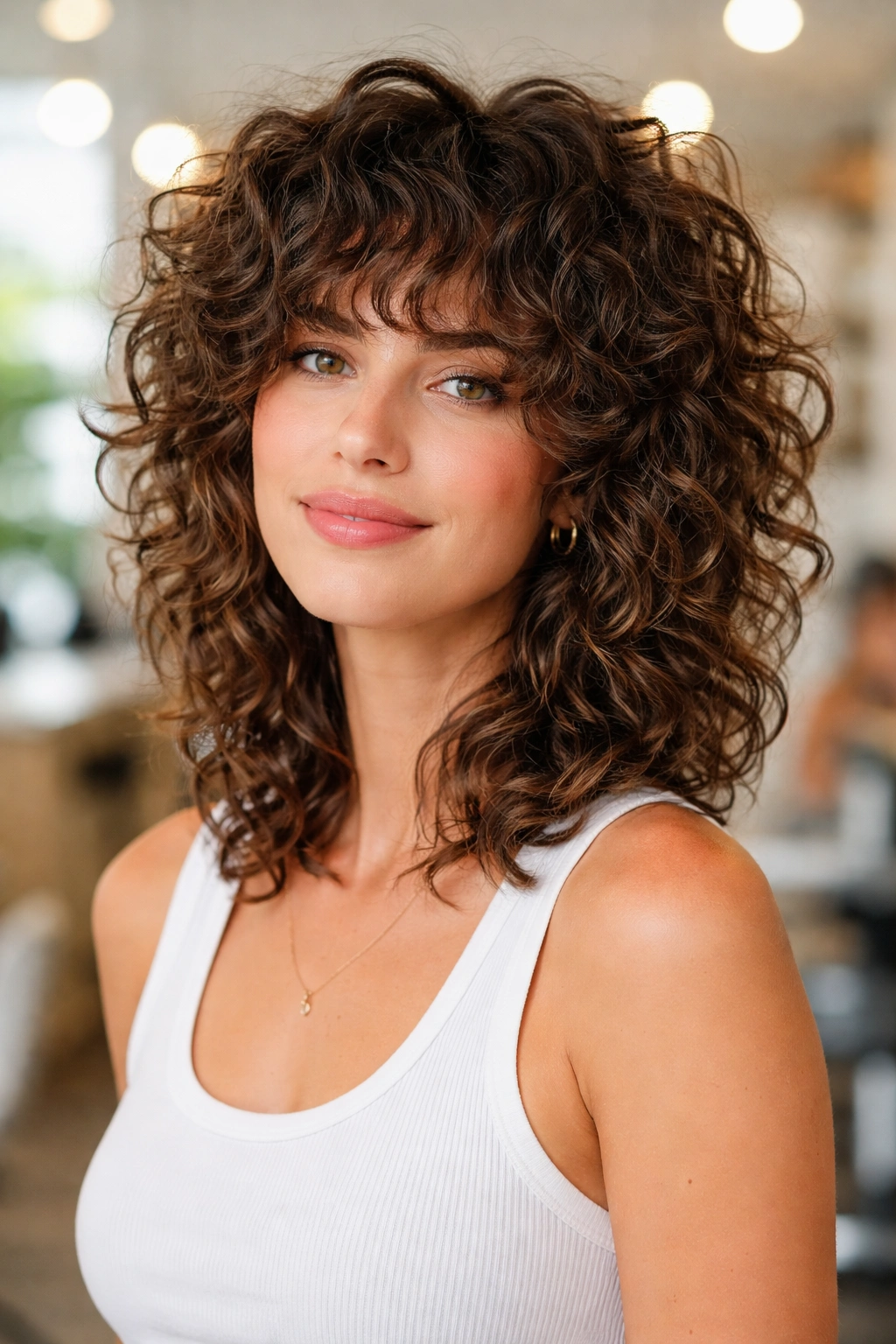
The shag is back, and it’s perfect for curls. This cut uses strategic layering throughout to create movement, texture, and that effortlessly cool vibe that feels intentional rather than accidental. The layers are cut dry or sculpted specifically to enhance your curl pattern, and they’re distributed across the entire head rather than just concentrated at the crown. You end up with a cut that has shape and definition without looking heavy or structured.
What Makes This Style Stand Out
Shags are one of the few short cut styles that actually looks better and more intentional the messier you style it. That’s the opposite of most haircuts, which means you get that coveted “I woke up like this” vibe without actually trying hard. The layers create natural separation so curls don’t clump together, and each layer catches light differently, creating genuine dimension.
How to Style It for Maximum Impact
- Apply products to soaking wet curls (mousse, styling cream, or gel depending on hold preference)
- Scrunch or diffuse to encourage curl formation
- Once dry, use your fingers to separate curls and add texture rather than brushing, which disrupts the pattern
- The more undone it looks, the better it actually looks—this is the rare cut where perfection is the enemy
3. The Tapered Curl Bob
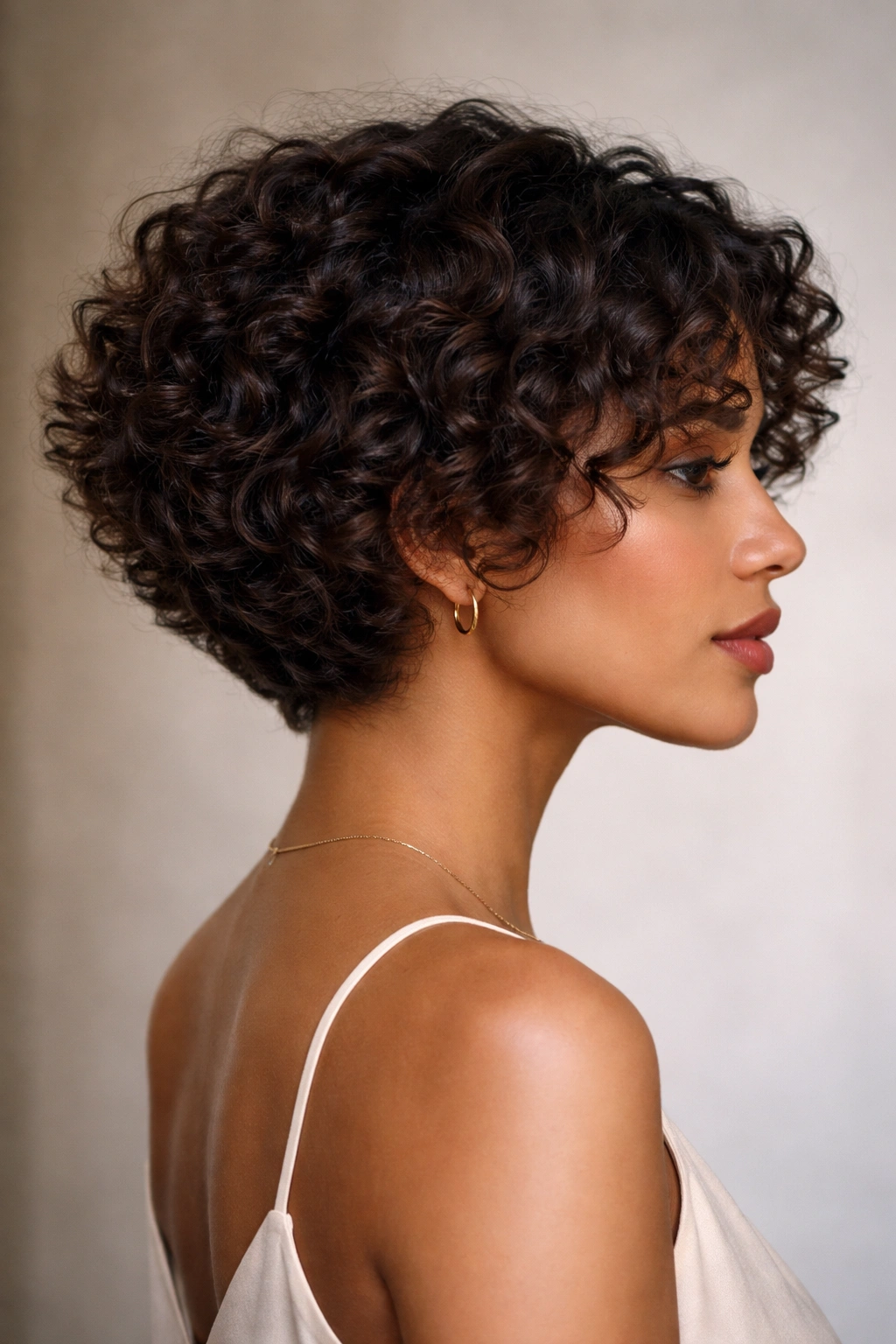
A tapered curl bob is basically a modern take on the classic bob that’s been specifically engineered for curls. The back is slightly shorter and fuller, the sides taper smoothly into the face, and there’s intentional layering throughout to create movement rather than weight. It sits somewhere between a traditional bob and a shag—more structured than a shag, but way more textured and organic than a rigid geometric bob would ever be.
The Shape and Structure
This cut relies on precise angling and expert texturizing. The stylist is essentially cutting into the curl pattern strategically—not fighting it or trying to make it straight, but creating a shape that works with how your curls naturally fall and distribute. The result is a cut that has personality and looks intentional from every angle.
Who Loves This Cut
- Anyone who wants a cut that reads as polished and intentional without feeling overdone
- People with medium to thick curl density who want shape without looking shapeless
- Those who want a style that works for both casual days and more dressed-up occasions
- Face shapes: Particularly flattering for long or rectangular faces, but works for most shapes with proper customization
4. The Faux Hawk with Curls
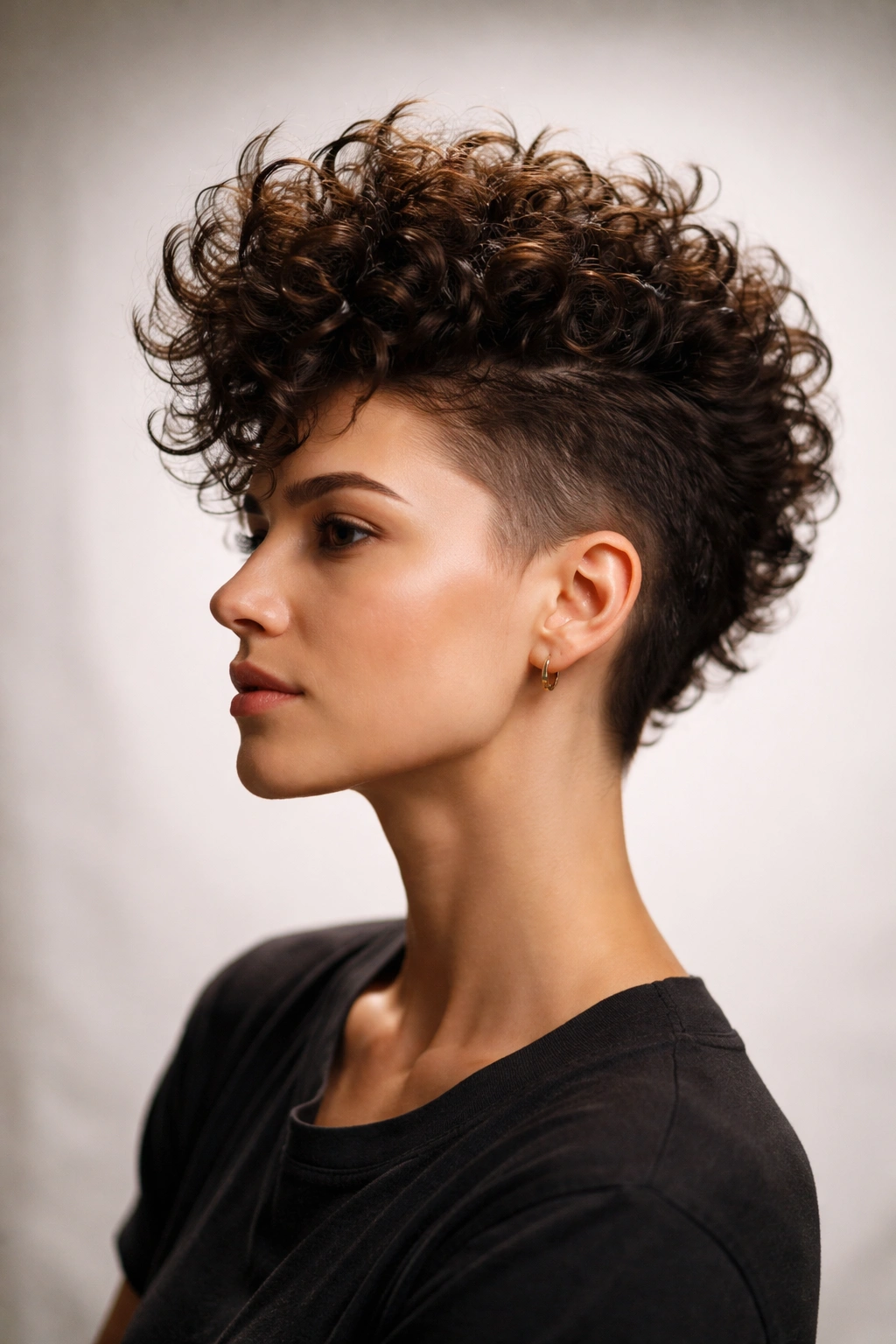
A faux hawk takes the edge and attitude of a real hawk cut but keeps it wearable by using your curls to create volume rather than slicked product. The sides are tapered close, creating clean lines that make the top look dramatically fuller. Your curls provide the texture and height naturally, giving you that bold silhouette without needing to style it into place every single day. It’s punk-inspired but accessible, and honestly pretty fun.
How the Texture Creates Height
Instead of needing pomade or gel to keep strands standing straight up, your curls do the work. When you style it, you’re just encouraging your natural curl pattern to project upward and outward. The cut itself is shaped to support this—the top is left longer and texturized so when curls dry and shrink, they create that dramatic center-line emphasis without looking rigid or overly styled.
Styling Tips for Impact
- Keep the sides clean and sculpted with regular trims every 4-6 weeks
- On styling days, apply styling cream or gel to damp hair and diffuse while encouraging curls toward the center
- The messier and more texture-forward it looks, the more intentional it appears—resist the urge to smooth it down
5. The Coily Crown
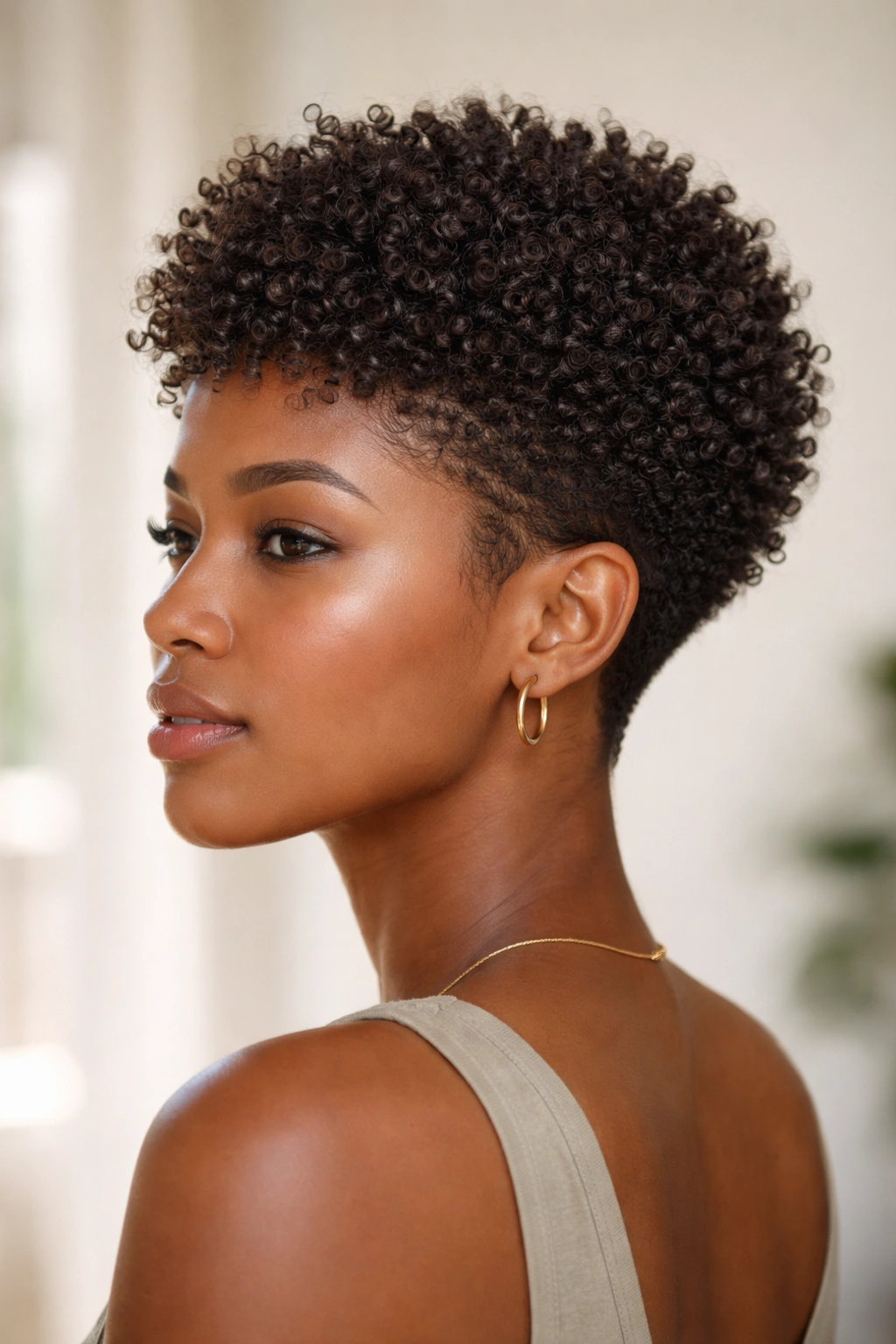
The coily crown celebrates tight, springy curls by keeping the cut quite short and letting the natural shrinkage create volume that’s almost architectural. This is a celebration of texture itself—the cut is basically a close crop that respects the curl pattern and trusts that the coils will create shape naturally. There’s no reliance on product or styling technique; the cut does the heavy lifting. It’s clean, it’s bold, and it’s absolutely striking.
The Science of This Cut
When you cut curly or coily hair short, the curls often spring tighter and create more volume than longer hair would. This cut uses that principle intentionally. By keeping everything very short and uniform, each coil is left to express itself fully. You end up with a textured silhouette that has incredible visual interest without being complicated.
Maintenance and Growth
- You’ll want trims every 4-5 weeks to keep the shape clean and prevent the cut from growing shapeless
- Between trims, the cut actually gets more defined rather than looking scraggly (because curls shrink, not grow out straight)
- Styling is genuinely minimal—wash, apply lightweight product if desired, and air dry or use a diffuser
6. The Layered Crop
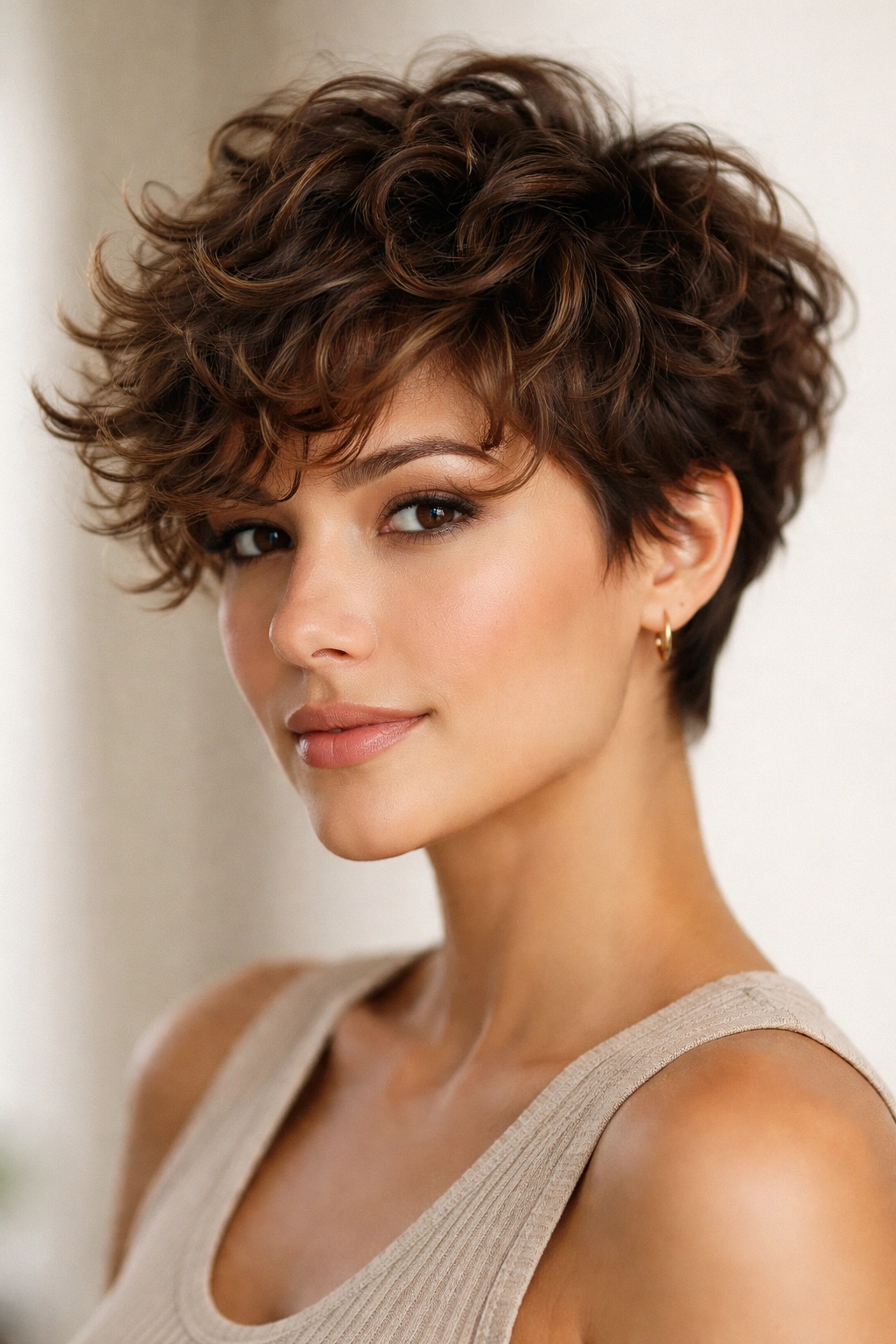
A layered crop uses varied lengths throughout the cut to create texture and movement without being a full shag. Think of it as a crop cut that’s been texturized specifically for curls. The overall silhouette reads as short and clean from a distance, but up close, you can see the layers that create separation and dimension. It’s sophisticated but not precious, and it works for people who want defined style without the maintenance of longer hair.
Layer Placement for Curl Pattern
The magic of a layered crop is that the layers are cut at angles that complement your specific curl pattern. Shorter layers on top create lift, while layers around the sides and back create softness and frame the face. The goal is a cut that looks intentional and considered without looking over-fussy or high-maintenance.
Perfect for These Scenarios
- If you want something shorter than a bob but not as short as a pixie
- For office environments where you want polished but approachable
- When you want a cut that looks good air-dried but also takes styling beautifully
- Works across most curl types and face shapes with the right customization
7. The Twisted Twist-Out Shape
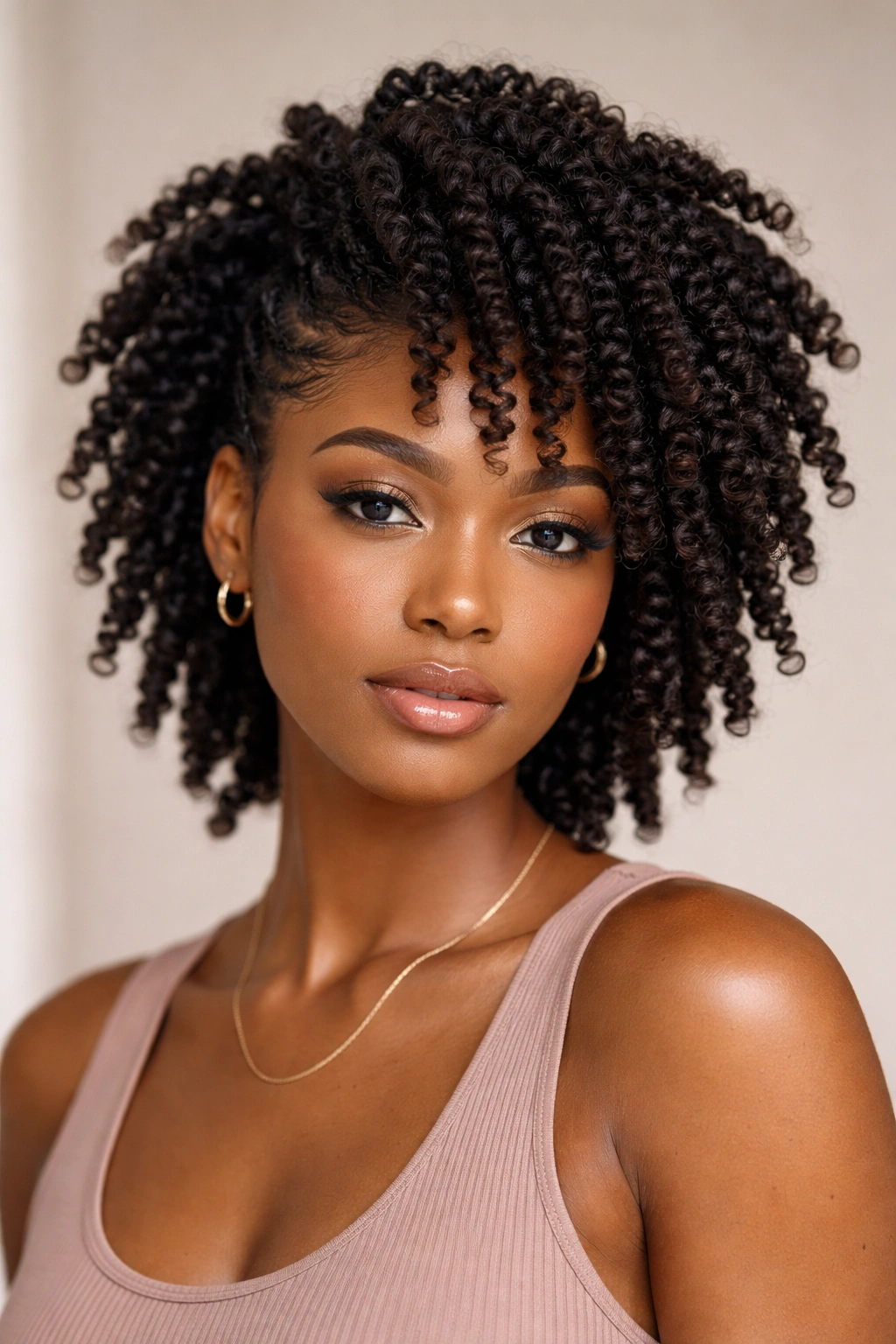
This cut is designed specifically to be styled into a twist-out, where you two-strand twist damp hair and then unravel it once dry to create defined, elongated curls. The cut itself uses layering to support this styling method—shorter layers on top create height and volume when untwisted, while longer layers underneath provide length for the twists themselves. When worn untwisted, it creates a specific silhouette that’s textured but shaped.
How the Cut Supports the Styling
You’re not trying to make the cut do all the work—you’re creating a partnership between the cut and your styling technique. The layers are designed to show separation and definition when you use this specific method. It means you have control over how your curls look based on how tight or loose you twist and how long you leave the twists in.
Best For
- People who already love twist-outs and want a cut that supports that aesthetic
- Those who want to actively style their curls rather than just wash-and-go
- Anyone with medium to tight coils that hold twist-outs beautifully
- Creating intentional, defined curls within a short-hair framework
8. The Undercut Curl
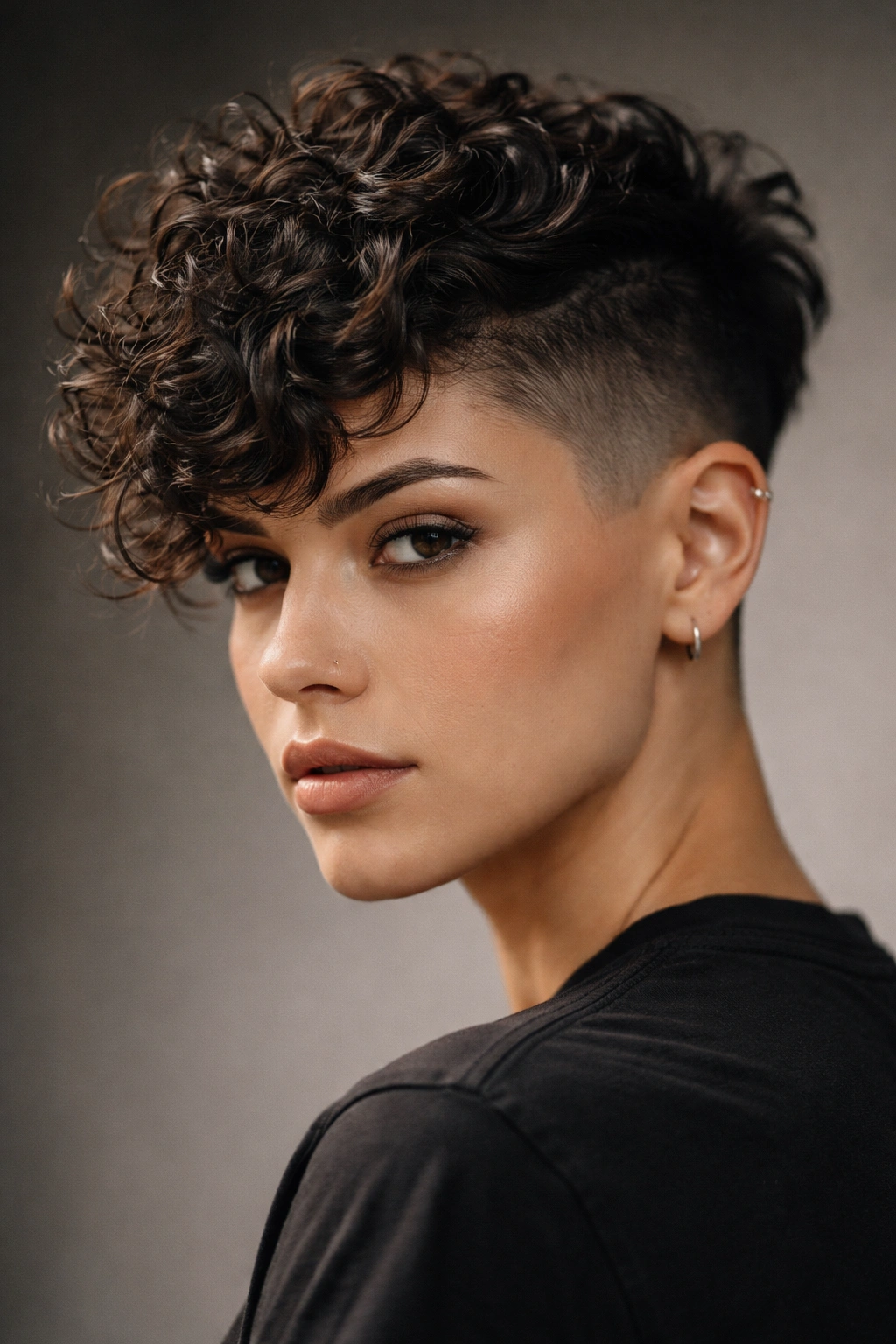
An undercut creates contrast and visual interest by keeping the sides very close while leaving significant length and curl texture on top. It’s dramatic, it’s modern, and it completely changes how your curls read on your head. The taper creates clean lines that make the textured top stand out even more. This works best for people who are genuinely into style and aren’t worried about looking bold.
The Visual Impact
The undercut naturally draws attention to your face and the texture on top. Your curls become the focal point because of the stark contrast with the neat, sculpted sides. It’s a cut that photographs well and commands attention—it’s not invisible or understated in any way.
Maintenance Reality
- You’ll need regular trims to keep the undercut sharp and clean (every 3-4 weeks ideally)
- The texture on top grows out pretty naturally without looking awkward, so you can go longer between trims on top
- The overall look stays clean and intentional looking as long as the undercut stays crisp
9. The Chin-Length Curly Bob
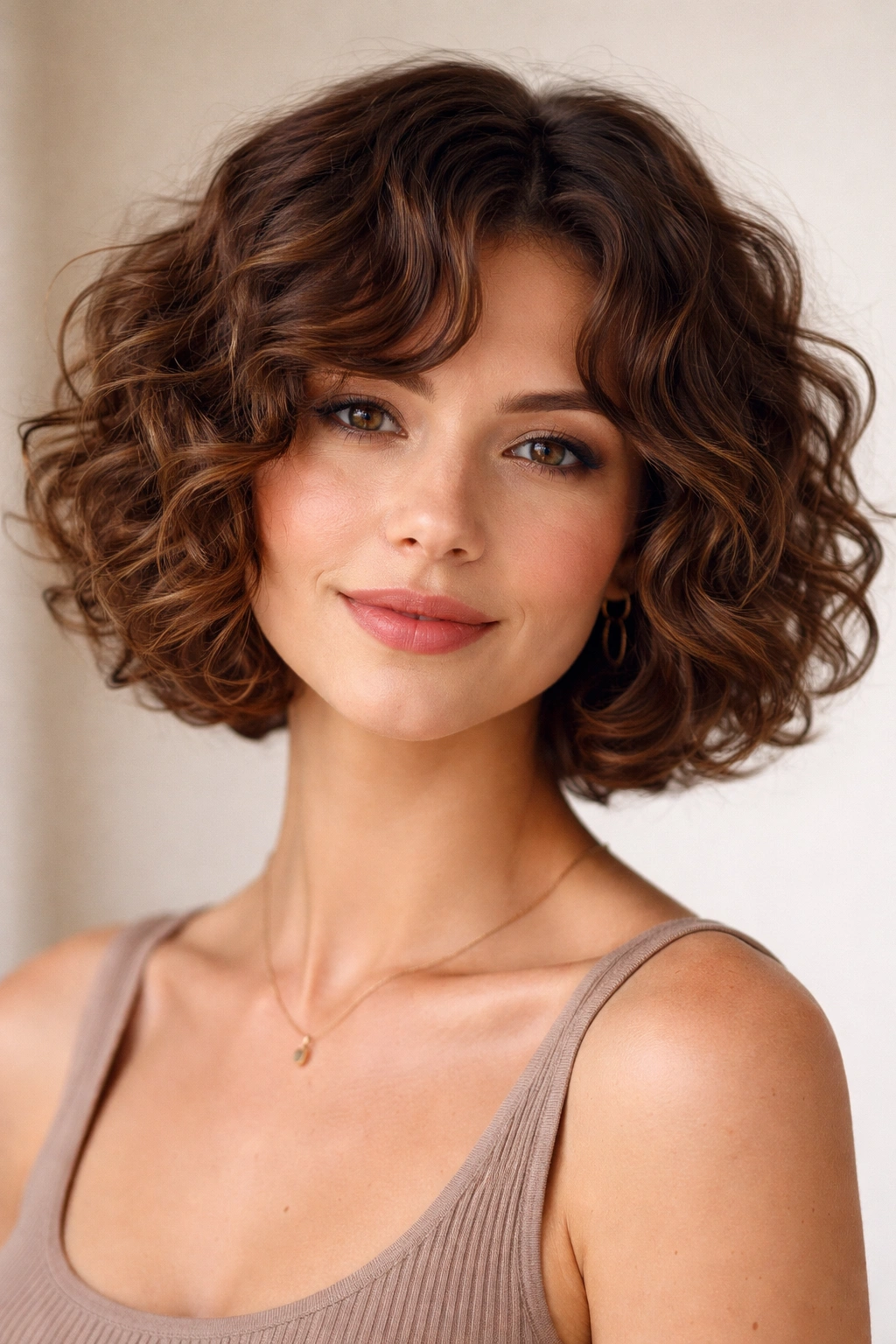
A chin-length curly bob is short enough to feel like a real change from longer hair but long enough that your curls have something to work with. The cut uses layering to prevent weight from building up and creating a heavy, shapeless look. It’s a classic silhouette that’s been specifically adapted for texture and curl pattern. You get the elegance of a bob with the personality that curls bring naturally.
Why This Length Works
Chin-length is that sweet spot where you have enough hair for curls to express themselves fully, but not so much that you’re dealing with maintenance, drying time, or the tangles that come with longer curly hair. The cut can use layering strategically to create shape without you having to fight for it.
Styling Flexibility
- Can be worn sleek and intentional with smoothing products if you want polish
- Can be worn natural and textured for a more relaxed vibe
- Holds styling beautifully if you want waves or defined curls on any given day
- Works as a professional-looking cut or a casual weekend style depending on styling choice
10. The Precision Textured Pixie Fade
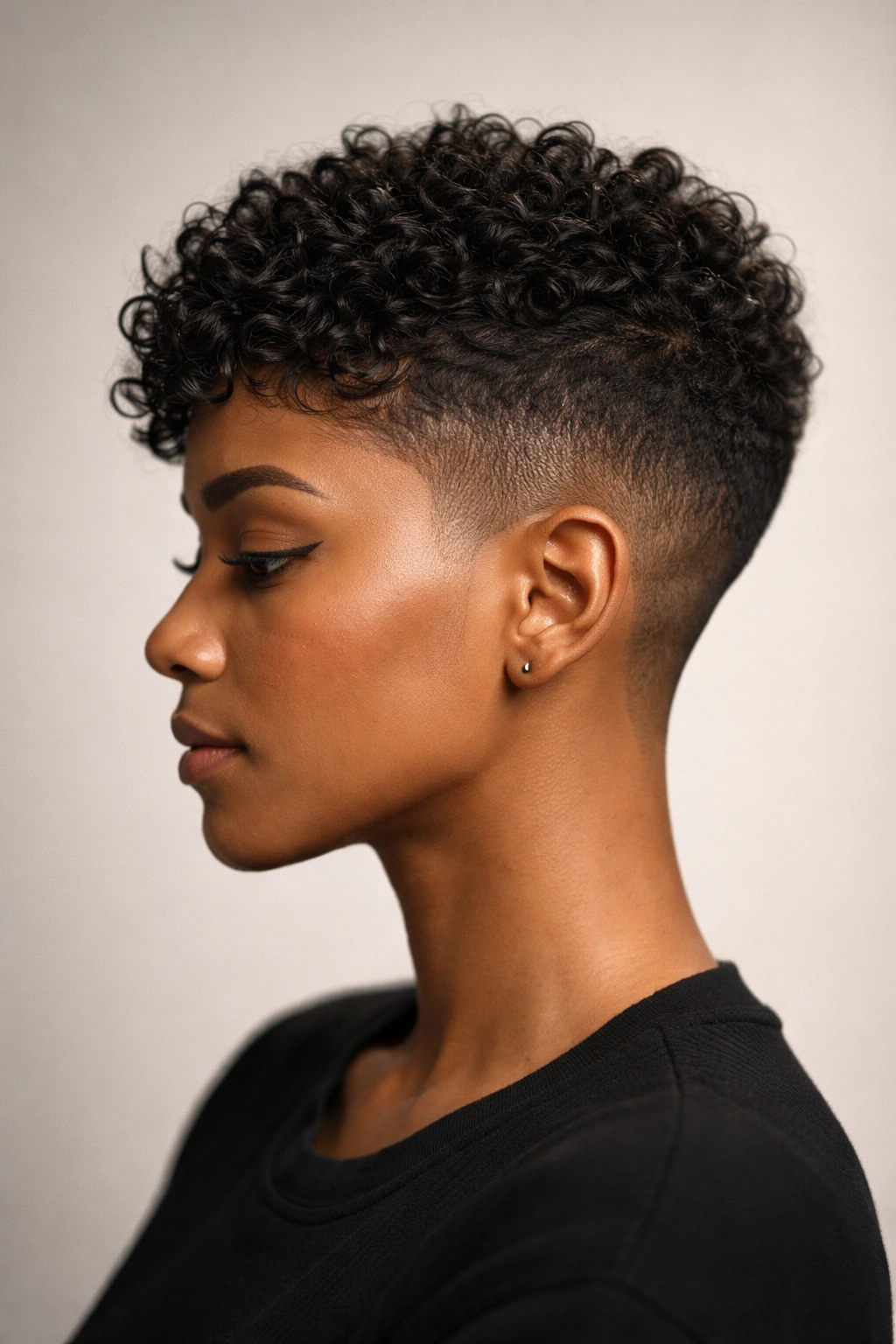
This is an elevated version of the textured pixie that uses fading technique—where the sides gradually blend from very short to slightly longer. It’s borrowed from men’s cutting but works beautifully for shorter curly hair. The fade creates smooth transition lines while the top stays textured and full of curl. It looks intentional, sculptural, and requires a stylist who really understands both curls and fade technique.
Technical Skill Required
This cut absolutely demands a skilled stylist who understands both curl patterns and fade cutting. The goal is clean lines on the sides with zero harshness, while the top showcases textured curl. It’s the kind of cut where the difference between “good” and “amazing” is genuinely about the stylist’s expertise and vision.
Who This Suits
- Anyone ready for a seriously impressive, high-skill cut
- People who want the boldness of very short sides but the personality of textured curls on top
- Those willing to get regular maintenance trims (every 3-4 weeks) to keep the fade sharp
- Anyone with curl types that shrink significantly—the shorter sides and textured top create amazing contrast
11. The Curly Lob (Short Version)
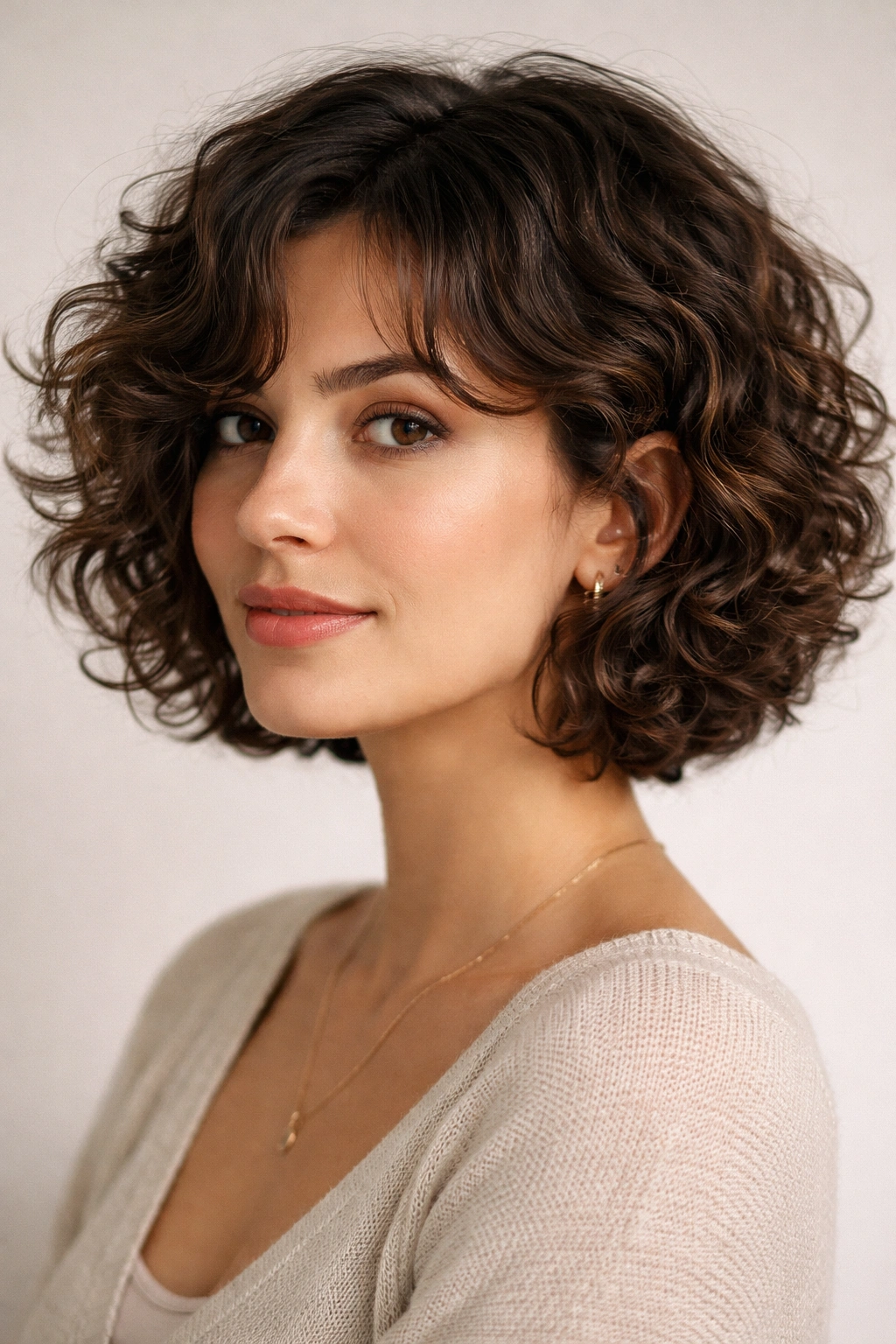
A curly lob (long bob) can be cut short—around ear-length or slightly longer—and still retain the defining characteristics that make a lob appealing: length variety throughout, strategic layering, and a shape that feels modern without being trendy. The short version is easier to manage than a traditional lob while still giving you dimensional, textured style. Your curls do a lot of the work in creating the shape naturally.
The Magic of Short Lob Length
At this length, curls have enough room to express themselves fully without the maintenance, drying time, or tendency to tangle that longer hair requires. The layers create separation so individual curls show, and the overall silhouette reads as textured and intentional. It’s a cut that works across multiple styling aesthetics—you can dress it up or down depending on how you style it.
Versatility Factor
- Looks equally good styled with product and definition or completely air-dried and natural
- Works for casual environments and professional settings
- Photographs beautifully because the length creates visual interest
- Can transition through growth phases without looking awkward or shapeless
12. The Shaped Spiral Curls Cut
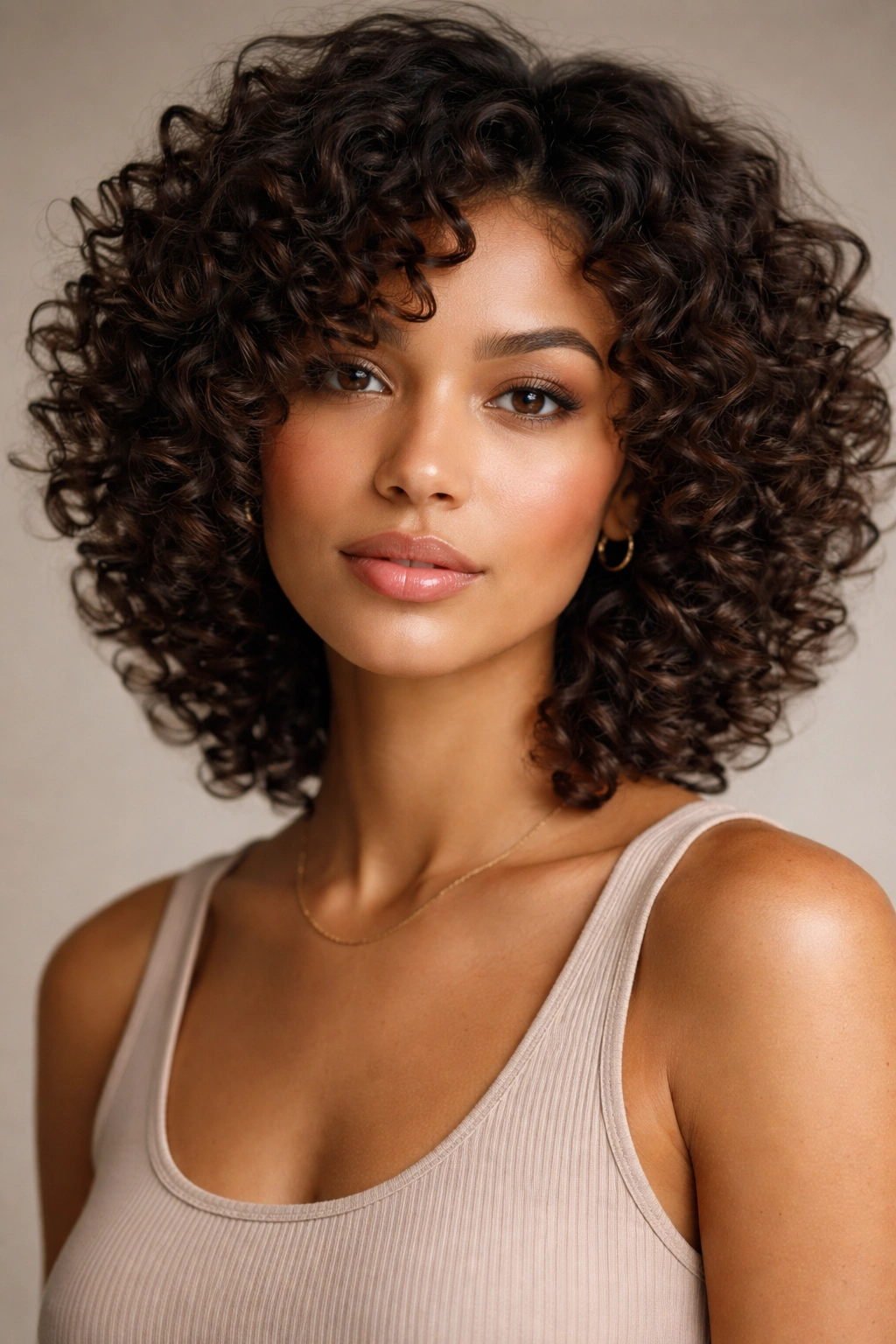
This cut is specifically designed for people with natural spiral curls—the kind that form perfect ringlets when they’re healthy and well-cut. The stylist cuts dry, working with the actual spiral pattern of your curls to create a shape that supports those spirals naturally. No forced waves or artificial structure; just a cut that lets your curls be exactly what they are, in a shape that frames your face beautifully.
Dry Cutting Importance
Cutting spiral curls dry means the stylist can see exactly how your specific curls behave, where they fall, and what shape they naturally create. This information is crucial because curls that look a certain way dry might shrink or curl up differently when wet. Dry cutting eliminates that guesswork.
Who Needs This Cut
- People with natural ringlet curls who want them celebrated rather than fought
- Anyone tired of cuts that look great when wet but weird when fully dried
- Those who want a professional-looking cut that’s also completely authentic to their natural texture
- People with any curl type who have a stylist trained in dry-cut technique for curls
13. The Textured Crop with Length on Top
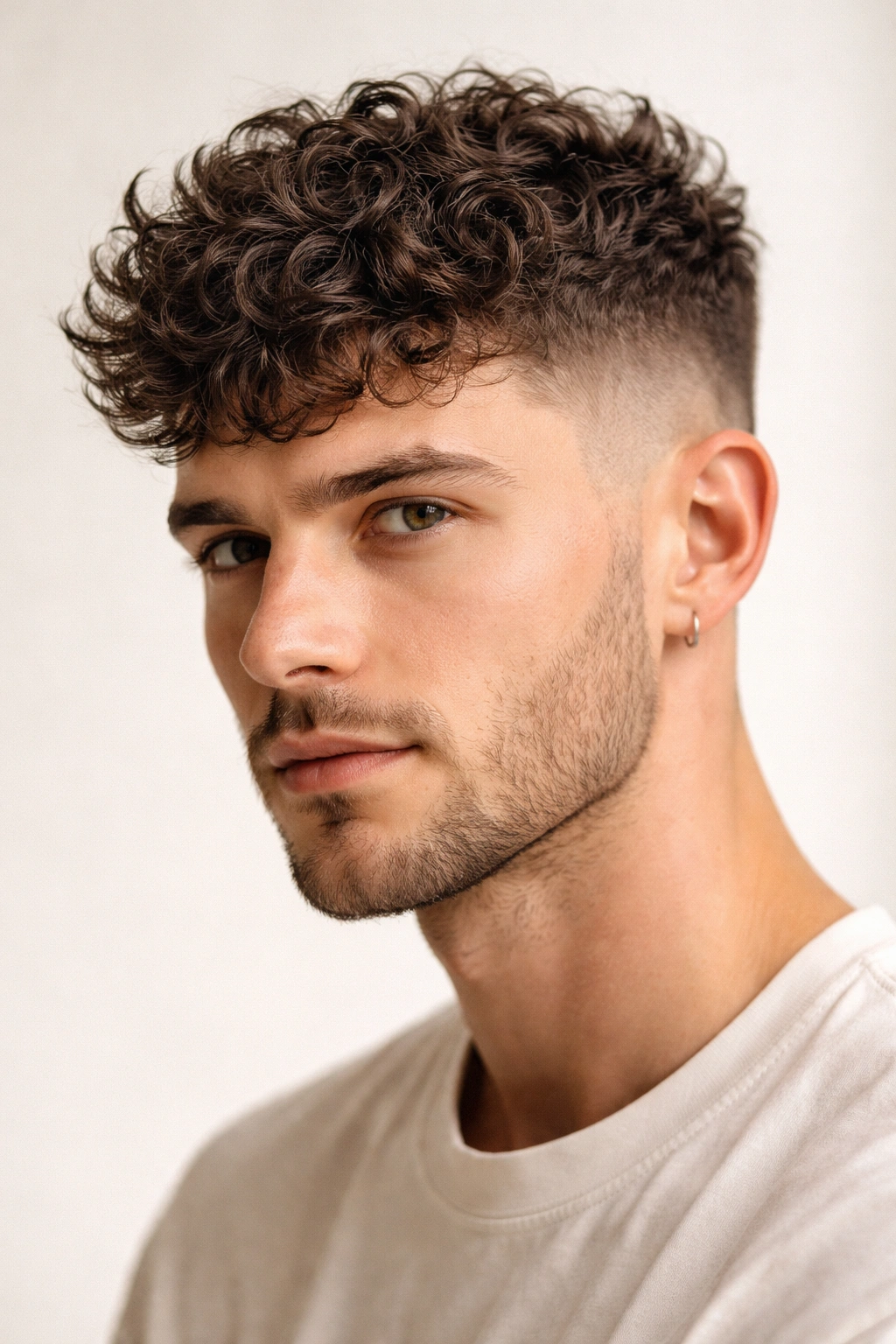
A textured crop is essentially a very short cut overall—clipped close on the sides and back—but with enough length on top to create texture and curl. It’s short enough to feel refreshingly low-maintenance, but the top has enough hair that you can still create intentional styling if you want it. It’s a cut that bridges the gap between a pixie and a full shag, giving you the best of both worlds.
The Balance Point
The genius of this cut is that it’s short enough for genuine ease but textured enough that it doesn’t feel severe or overly masculine. You get the practicality of short hair with the personality that curls bring. It’s modern, it’s clean, and it feels intentional rather than like you just got a regular short cut with curly hair.
Who Gravitates to This
- People who want real simplicity in styling and maintenance
- Anyone who loves the idea of short hair but worries about losing femininity or style
- Those with active lifestyles who want hair that’s genuinely low-fuss
- Anyone with any curl type—the length on top can be adjusted based on your specific pattern
14. The Curly Shag with Feathered Layers
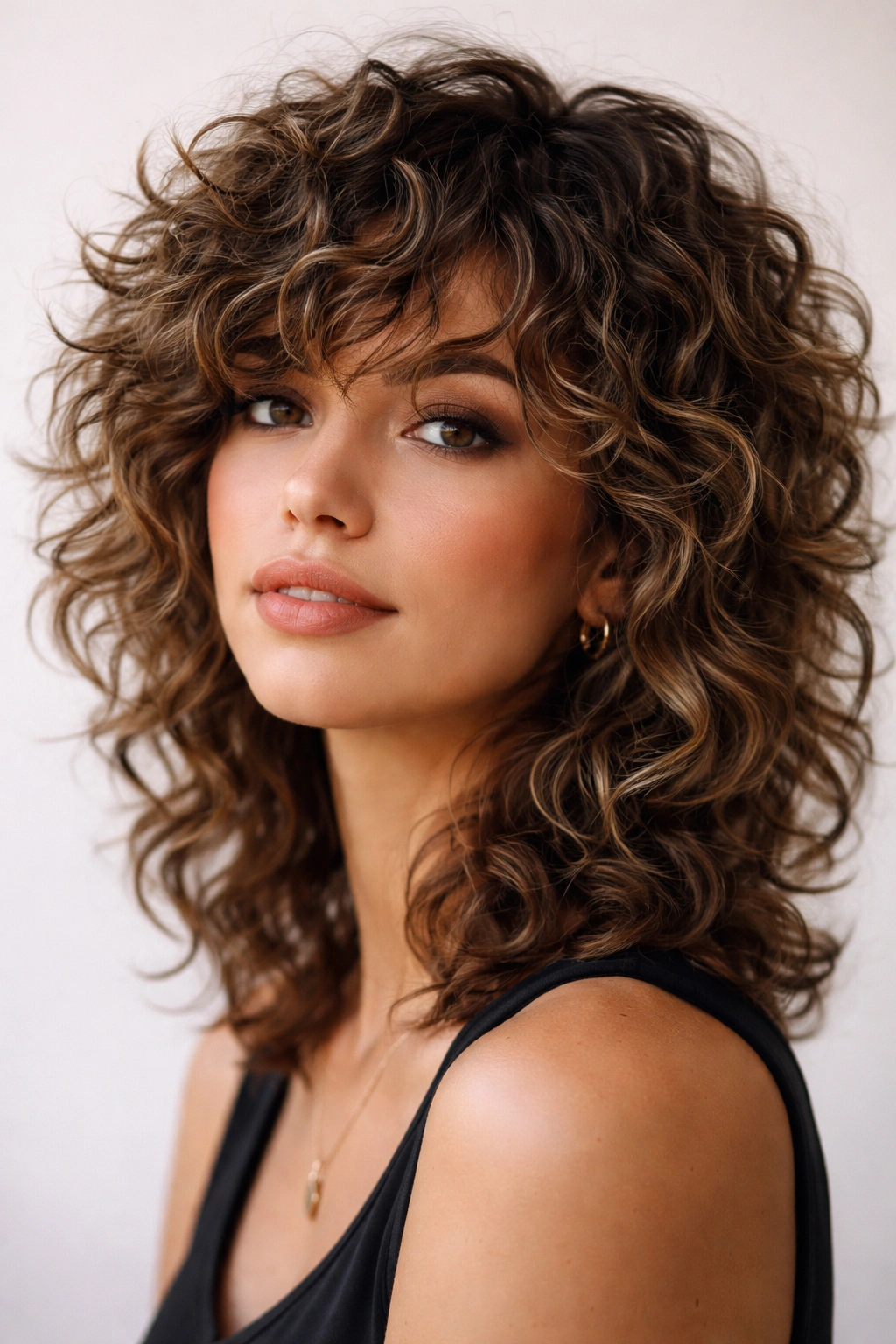
This is a shag taken a step further with feathering technique, where the stylist cuts into the layers to create softness and movement. Instead of blunt layers, you get layers that graduate and blend, creating a softer silhouette that flows more organically. Your curls weave through these feathered sections, creating incredible dimension and texture. It’s one of the most flattering cuts available for curly hair, and it feels effortlessly cool.
What Feathering Actually Does
Feathering removes weight from the ends of layers, so instead of blunt edges that can look heavy, you get soft edges that encourage movement and curls to separate naturally. This technique specifically supports curl patterns rather than fighting against them. The result is a cut that gets better as your curls find their flow.
Styling This Cut
- The more you encourage natural curl formation, the better it looks
- Brushing or rough handling disrupts the feathered edges, so finger-combing or scrunching is better
- Using lighter products helps the feathered edges show rather than weighing curls down
- This is a cut that genuinely looks better the less you try to control it
15. The Graduated Curl Bob
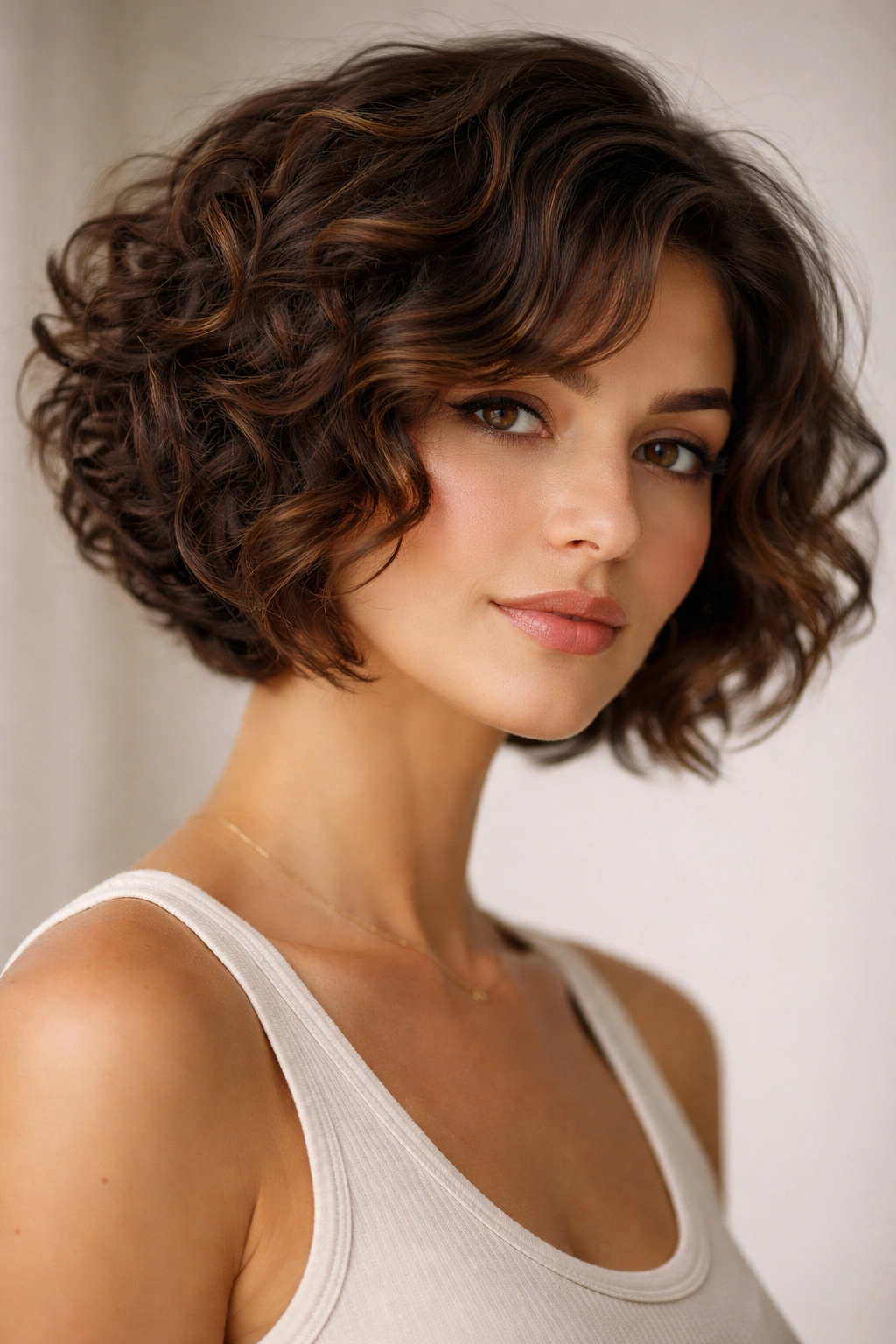
A graduated curl bob uses the principle of graduation—where hair gets progressively longer from back to front, or longer in the front and progressively shorter toward the back, depending on the specific style. This creates shape and movement naturally. For curly hair, graduation is brilliant because it lets curls fall and move rather than sitting in a uniform, potentially heavy line. The shape feels modern and intentional.
How Graduation Changes the Game
Without graduation, a short bob can sit flat or heavy on curly hair. With graduation, you create angles and movement built into the cut itself. Your curls emphasize those angles, creating a shape that photographs beautifully and feels effortless to style. It’s the difference between a cut that your curls happen to fall into, and a cut that was specifically designed to showcase what curls do best.
Face-Framing Potential
The graduated length naturally frames the face beautifully. Longer pieces in front can soften angles, while the shorter back creates lift and prevents the cut from looking heavy. You end up with a silhouette that’s flattering across different face shapes and features.
16. The Textured Topknot-Ready Cut
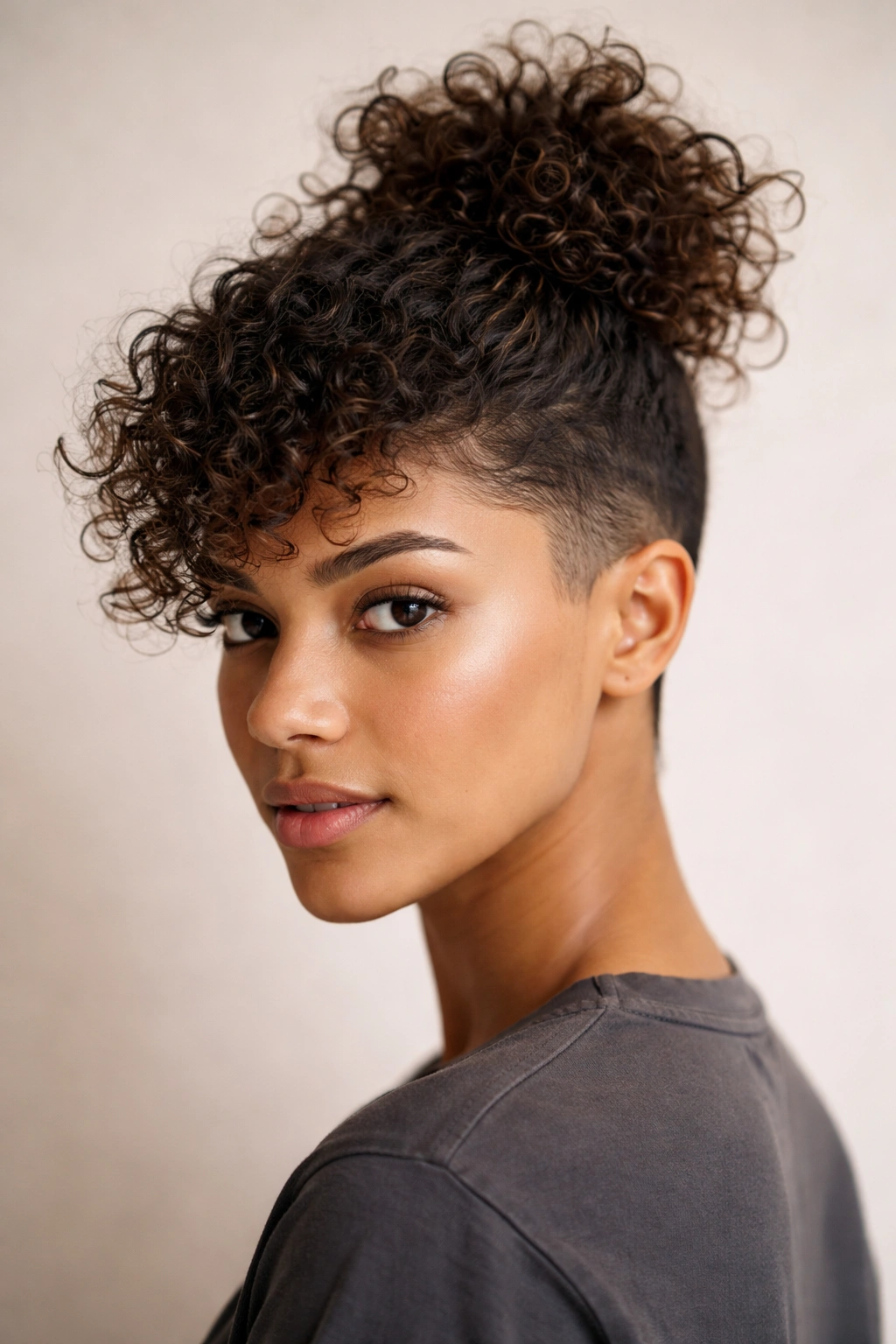
Some people want to wear their short curly hair up regularly, so they need a cut that works both down and up. This cut uses specific layering and length planning to ensure that when you pull your curls up into a bun or topknot, the cut has enough texture and movement that it looks intentional rather than like you just pulled your hair back. Shorter layers prevent wispy, flyaway chaos, and strategic length placement supports the updo structure.
Dual-Purpose Styling
This is perfect for people who want versatility—the ability to wear curls down and natural on some days, and up and polished on others, using the same cut. The layering ensures that even pulled up, the cut reads as intentional rather than like you’re just managing your hair. It’s the kind of cut that takes into account your actual lifestyle rather than just a single styling aesthetic.
Best for Active People
- Anyone with a job or lifestyle that sometimes requires hair pulled back
- Athletes or fitness enthusiasts who want their curly hair to look good both ways
- People who like versatility rather than having one singular look
- Those who want a cut that works for business casual and weekend casual equally
17. The Braided-Inspired Texture Cut
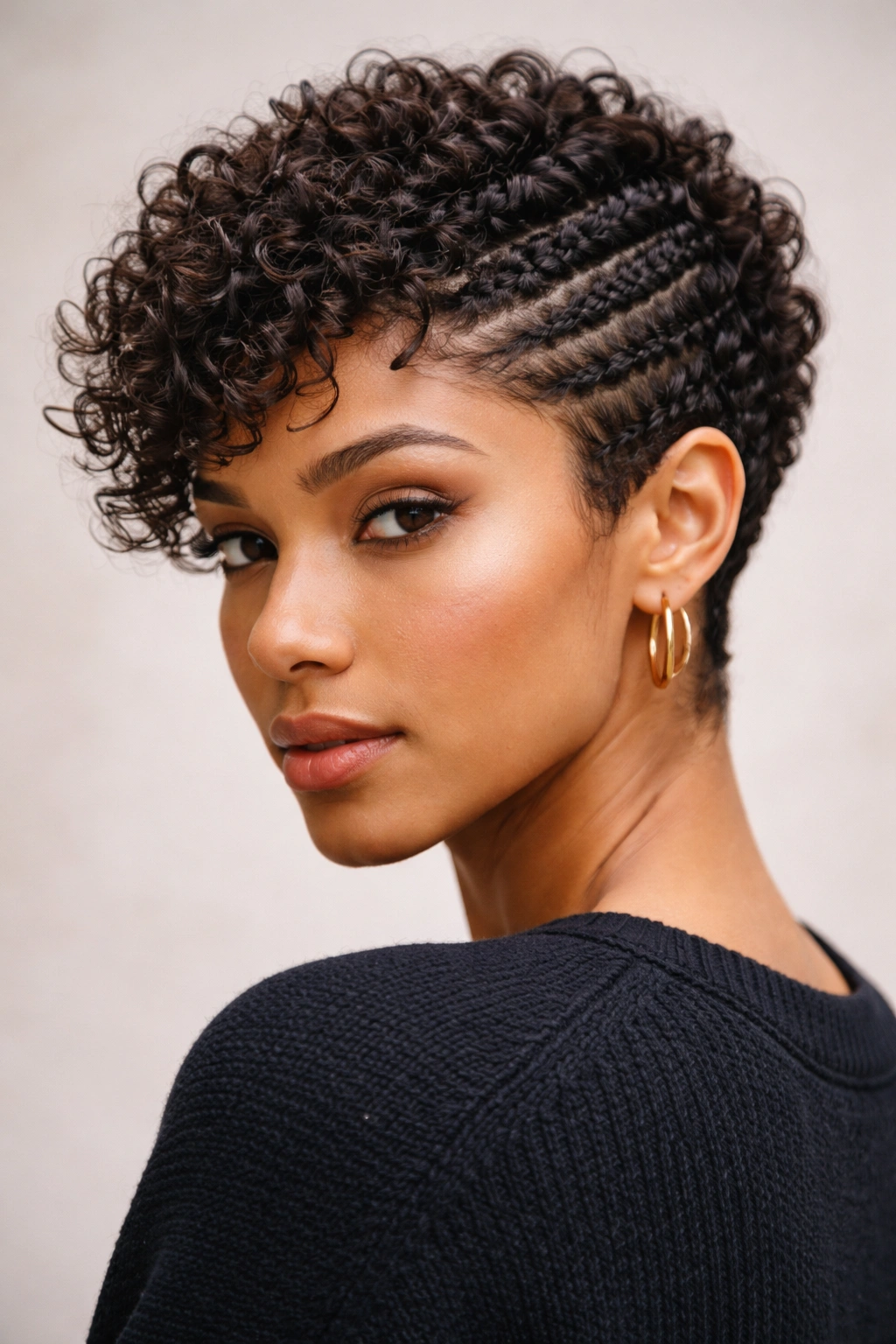
This cut uses texturizing techniques to create a surface that almost looks like braided texture even when you’re not actually braiding. The layering and cutting angles create visual separation and dimension that mimics the look of a braid. It’s specifically designed for people who love the aesthetic of textured, braided styles but want a shorter, wash-and-go alternative. Your natural curls create texture and hold that separates almost like a braid would.
Visual Texture Creation
The stylist is essentially creating a cut where every curl has space to show individually rather than clumping together. That separation creates visual interest and texture that reads similarly to a braided look, without you needing to actually braid. It’s a clever approach for people who like complex-looking texture but want simplicity in daily styling.
Wear-and-Care Simplicity
- Wash and apply your regular curl products
- Diffuse or air dry and let your texture do the work
- The cut itself creates the visual interest—you’re not adding complexity
- Works beautifully for anyone with curl types that create natural separation
18. The Sculpted Curl Crop
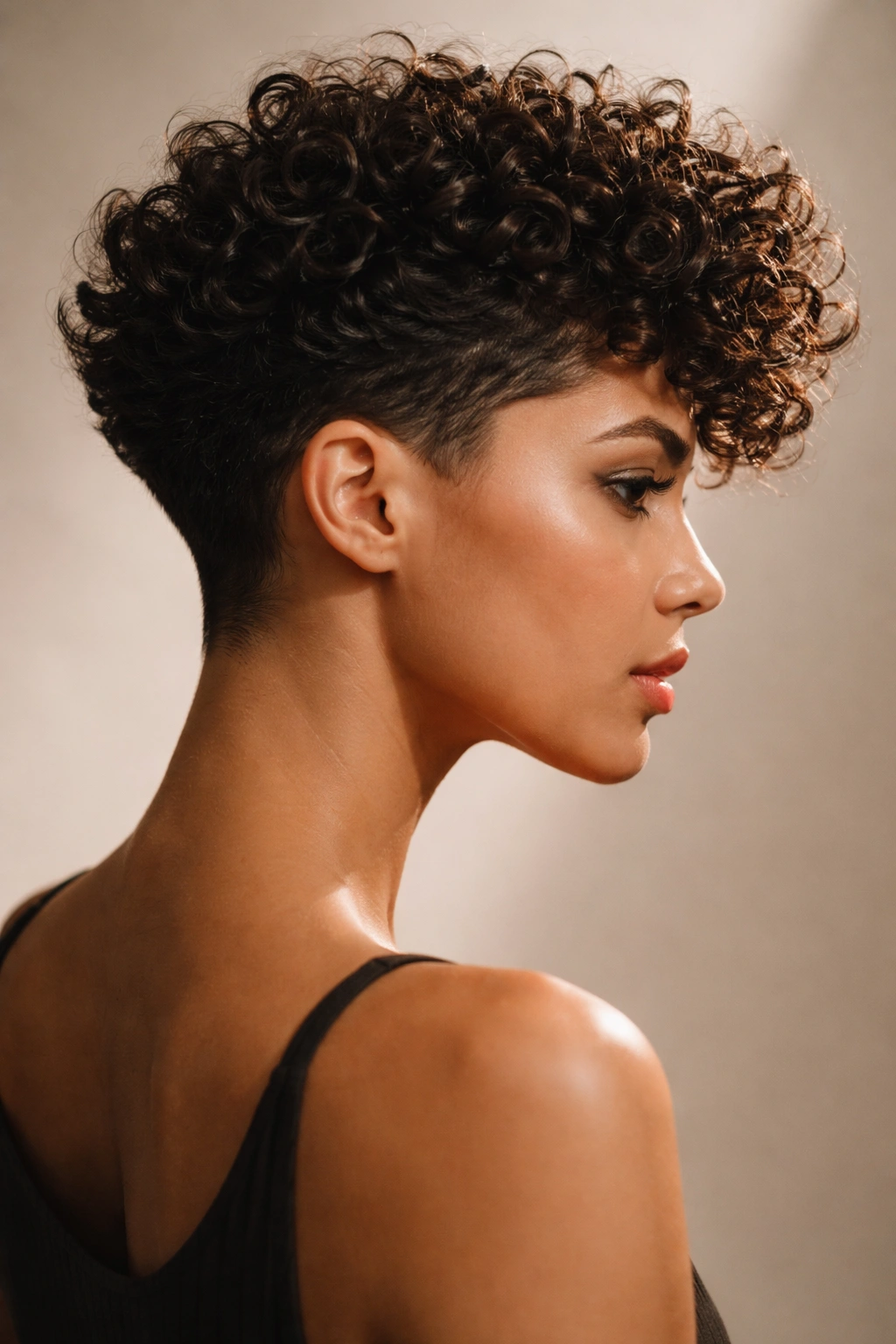
A sculpted curl crop uses very deliberate cutting angles to create a shape that’s almost architectural. This isn’t random layering; it’s strategic, intentional cutting that creates lines and angles within the cut. Your curls fill in these sculpted areas, creating a silhouette that’s visibly shaped from every angle. It requires a skilled stylist, but the result is a cut that reads as seriously intentional and well-done.
The Artistry Element
This cut is genuinely artistic—it’s the kind of cut a skilled stylist creates like a sculpture, thinking about negative space and how light hits the texture. The result is a cut that has dimension and interest from every angle. You’re not just getting shorter hair; you’re getting a specifically designed shape that celebrates your curls as the medium.
Who Appreciates This Cut
- Anyone who loves hair as a form of personal expression and artistry
- People who want a cut that reads as expensive and well-crafted
- Those with any curl type who want intentional, defined style
- Anyone willing to work with a really skilled stylist who specializes in textured cuts
19. The Taper Fade with Textured Crown
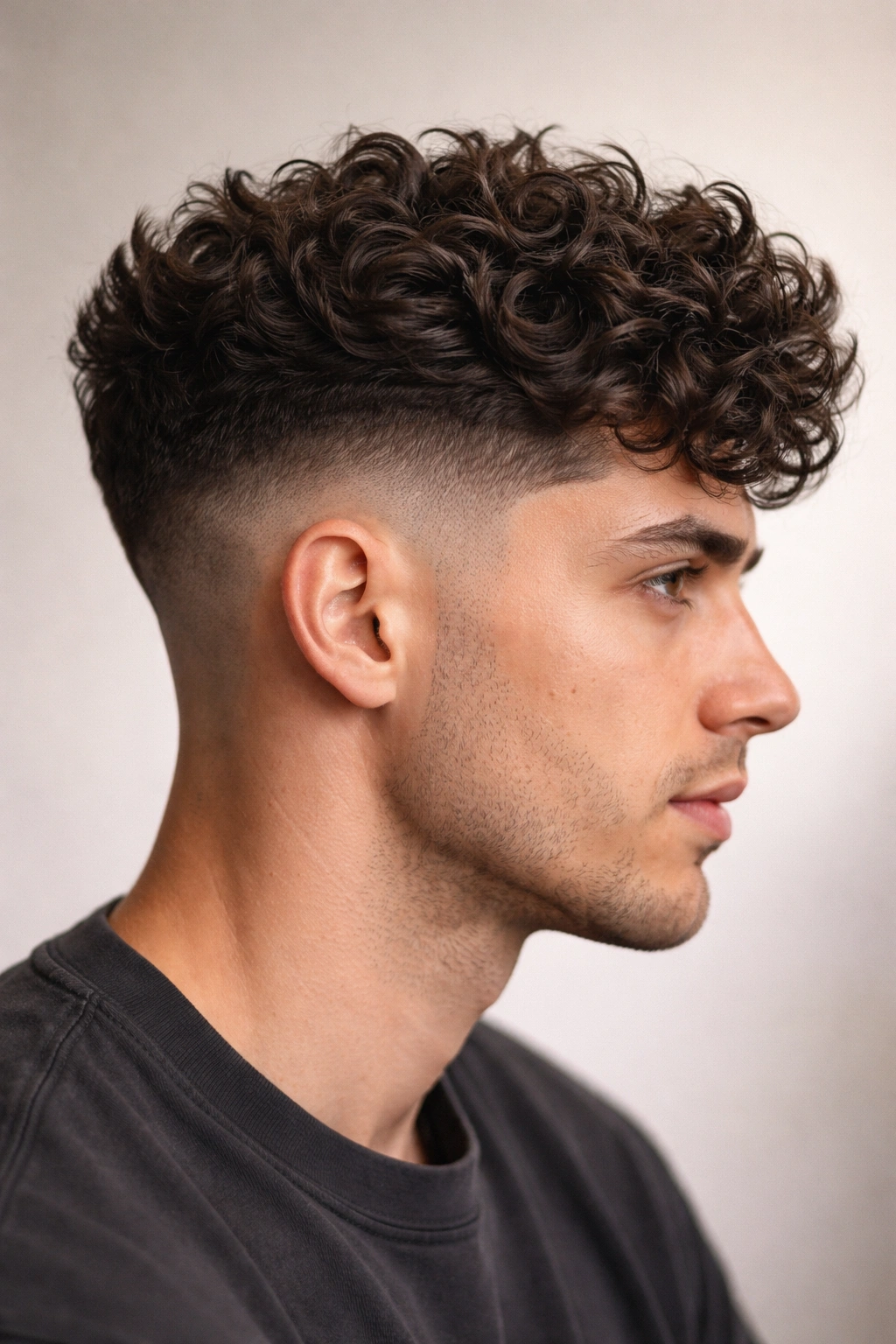
This cut combines the clean lines of a taper fade (where hair gradually shortens from longer on top to very short on the sides and back) with a fully textured crown on top. The crown is left long enough for your curls to show in all their glory, creating dramatic contrast with the faded sides. It’s modern, it’s striking, and it’s the kind of cut that makes a statement without being experimental or risky.
The Balance of Clean and Textured
The clean taper creates visual structure that makes the textured crown read as even more bold and impressive. You’re creating intentional contrast rather than randomness. This is a sophisticated approach that works for people who want both polish and personality in their style.
Maintenance Timeline
- The taper fade needs refreshing every 3-4 weeks to stay clean
- The textured crown can go longer between trims since curl growth is forgiving
- As the fade grows out slightly between trims, the style still reads as intentional rather than messy
20. The Signature Short Curl Cut
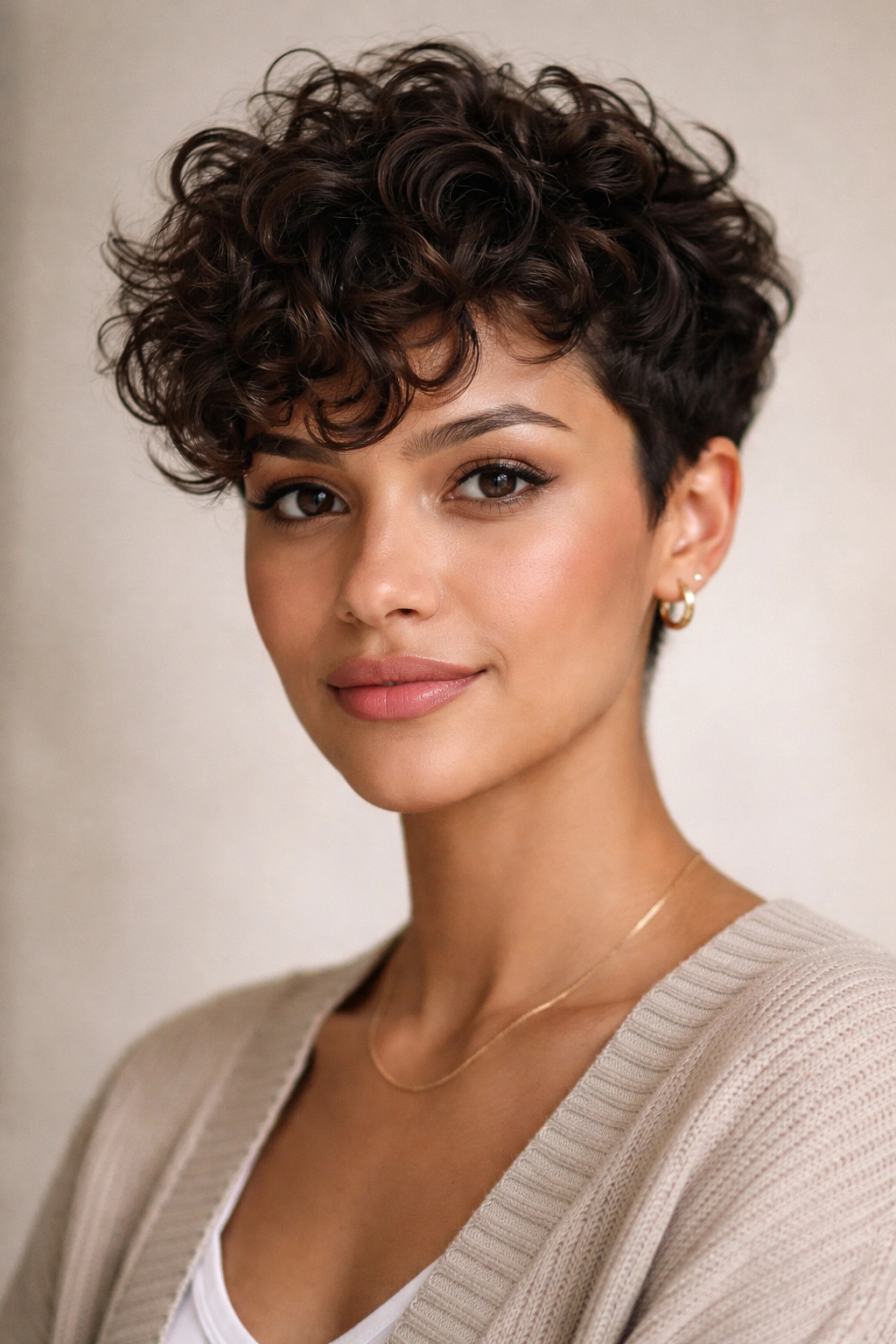
Every great stylist eventually develops a signature cut—a style they’ve refined through hundreds of clients that works beautifully across different curl types and face shapes. If you have a stylist you trust, asking for their signature short curl cut might be one of the smartest moves you can make. They know the proportions, the layer placement, and the approach that works across different variations. You’re getting the benefit of genuine expertise and experimentation.
What Makes a Signature Cut Worth Getting
A stylist’s signature cut exists because it works. They’ve tested it, refined it, and solved the common problems that come with short curly hair. When you get a signature cut, you’re getting the distilled knowledge of someone’s career. Plus, your stylist knows how to adjust it based on your specific curl pattern, face shape, and lifestyle.
The Relationship Matters
Part of what makes a signature cut work is that you’re building a relationship with someone who understands your hair. They remember how your curls react to humidity, what works for your lifestyle, and how to adjust the cut as your hair changes. This continuity means your hair consistently looks great rather than varying wildly between appointments.
Key Takeaways
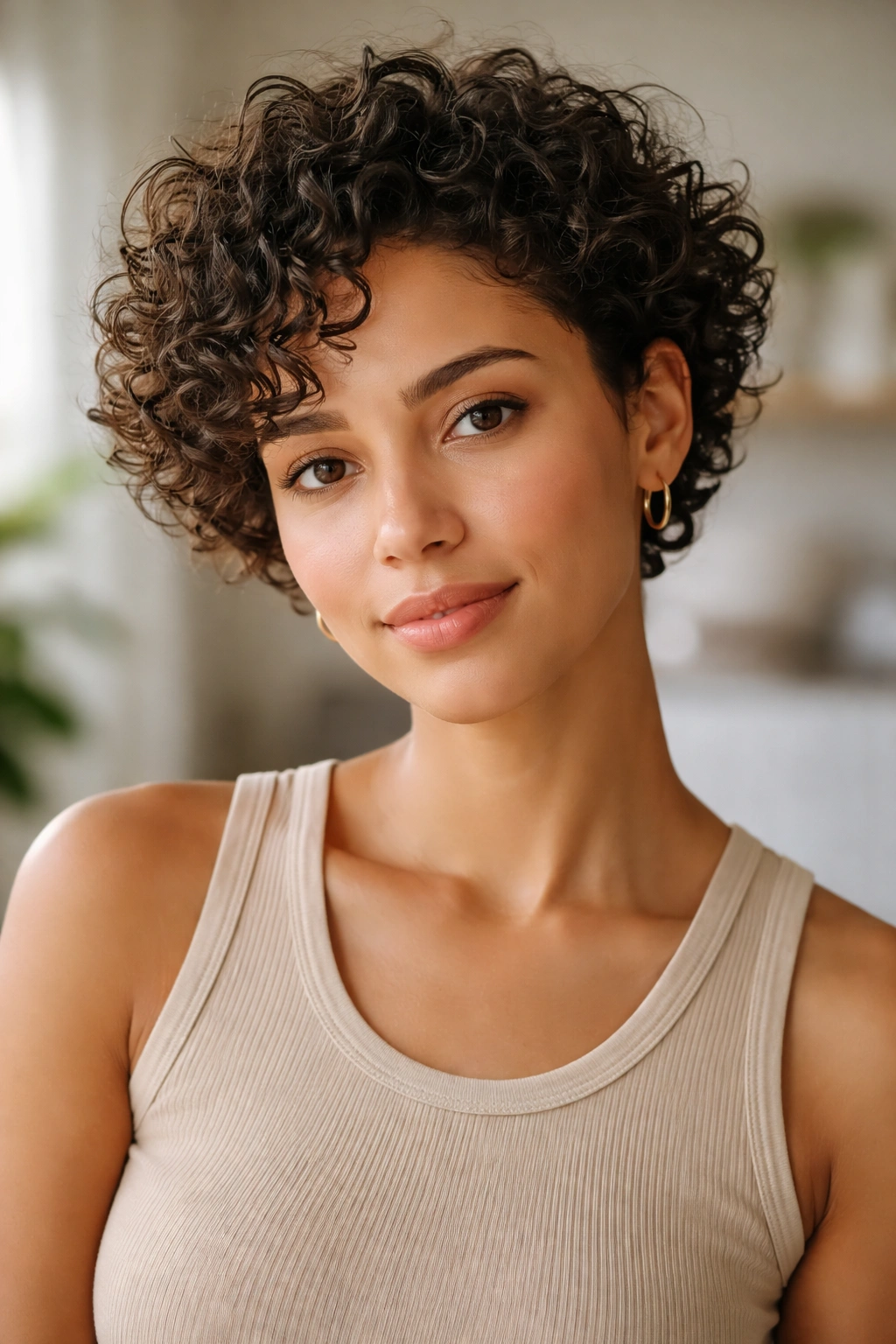
The absolute best short curly haircut is the one that matches your specific curl pattern, fits your lifestyle, and makes you feel confident and beautiful. There’s genuinely no universal answer—what works perfectly for tight coils might not suit loose waves, and a cut that’s ideal for someone who loves styling might be too high-maintenance for someone who wants true wash-and-go ease.
Before booking an appointment, do some honest thinking about what you actually want your hair to do. Do you want to style it regularly, or do you prefer air-drying? Do you want your natural curl pattern celebrated, or are you open to more styling flexibility? Do you want something that reads as bold and artistic, or more polished and professional? Your answers to these questions should guide which of these cuts you choose.
The final piece is finding a stylist who genuinely understands curly hair and is willing to cut it dry (or at least work with your curl pattern, not against it). A great stylist will ask questions about your curl type, your lifestyle, and what you actually do with your hair daily. They’ll show you pictures of cuts they’ve created and talk through what would work for you specifically. That consultation conversation matters as much as the actual cut—it’s how you end up with short curly hair that actually works for your life rather than adding frustration to your routine.
