



Curly hair can feel like a challenge when you’re trying to find a haircut that actually works with your natural texture instead of fighting against it. The truth is, most men’s haircuts are designed with straight hair in mind, leaving guys with curls searching for styles that won’t look matted down, frizzy, or impossible to manage. But here’s what’s changed: curly hair is having a major moment in men’s grooming, and there are now plenty of cuts specifically designed to showcase natural curl patterns while keeping the whole look sharp and intentional.
The key to finding your ideal curly-hair cut comes down to understanding your specific curl pattern and knowing which cuts actually enhance your texture instead of fighting it. Some cuts work best when you wear your curls longer so they have space to form properly. Others lean into shorter lengths and fade work that lets your natural volume do the heavy lifting. And a few classic styles have made comebacks specifically because they’re finally being done the right way for curly-haired men.
What makes a haircut work for curly hair isn’t just about length—it’s about how the cut handles weight distribution, how it frames your face, and whether the style actually suits the way your hair naturally grows. A poorly executed cut can make even beautiful curls look scraggly or undefined. A great one can make your hair look effortlessly textured, intentional, and genuinely impressive. The cuts below are proven winners that work across different curl patterns, face shapes, and styling preferences.
1. The Textured Crop
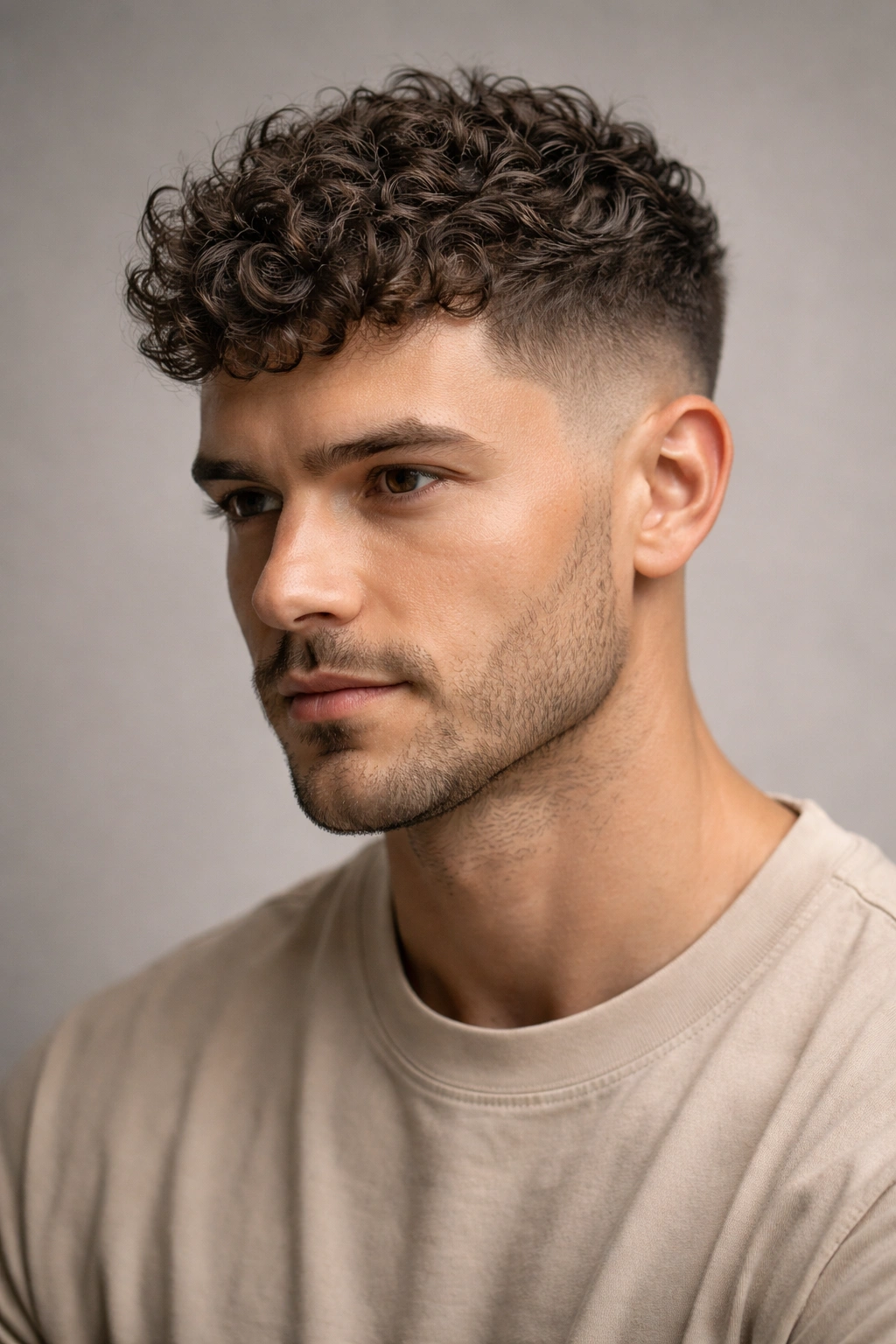
This is the go-to style for men who want something short, clean, and professional without sacrificing texture. A textured crop sits between a traditional crop and a longer crop, usually taking your hair down to about half an inch on top while keeping the sides shorter. What makes it work for curly hair is that the length on top gives your curls room to form visible texture while the shorter sides create clear definition and prevent the whole thing from looking bulky.
Why It Works With Curly Hair
The textured crop thrives on your natural curl pattern. Instead of trying to flatten your hair down or straighten it out, this cut celebrates the way your curls naturally stack and separate. When your barber cuts into curly hair with shorter clipper guards, each individual curl gets definition and can move independently. The result looks intentional and sharp, not accidental.
How to Style and Maintain It
- Run a dime-sized amount of lightweight styling cream through damp hair and let it air dry, or use a blow dryer on low heat with a diffuser attachment
- For extra texture, add a clay or matte pomade once the hair is dry—this keeps curls separated and defined without adding shine
- Get a trim every 3 to 4 weeks to keep the shape crisp as your curls grow out
- Wash 2 to 3 times per week with a curl-friendly shampoo that won’t strip natural oils
The textured crop works best if you have medium to tight curls. Looser wave patterns can sometimes look thin or undefined with this length, but tighter curls absolutely pop.
2. The Curly Fringe
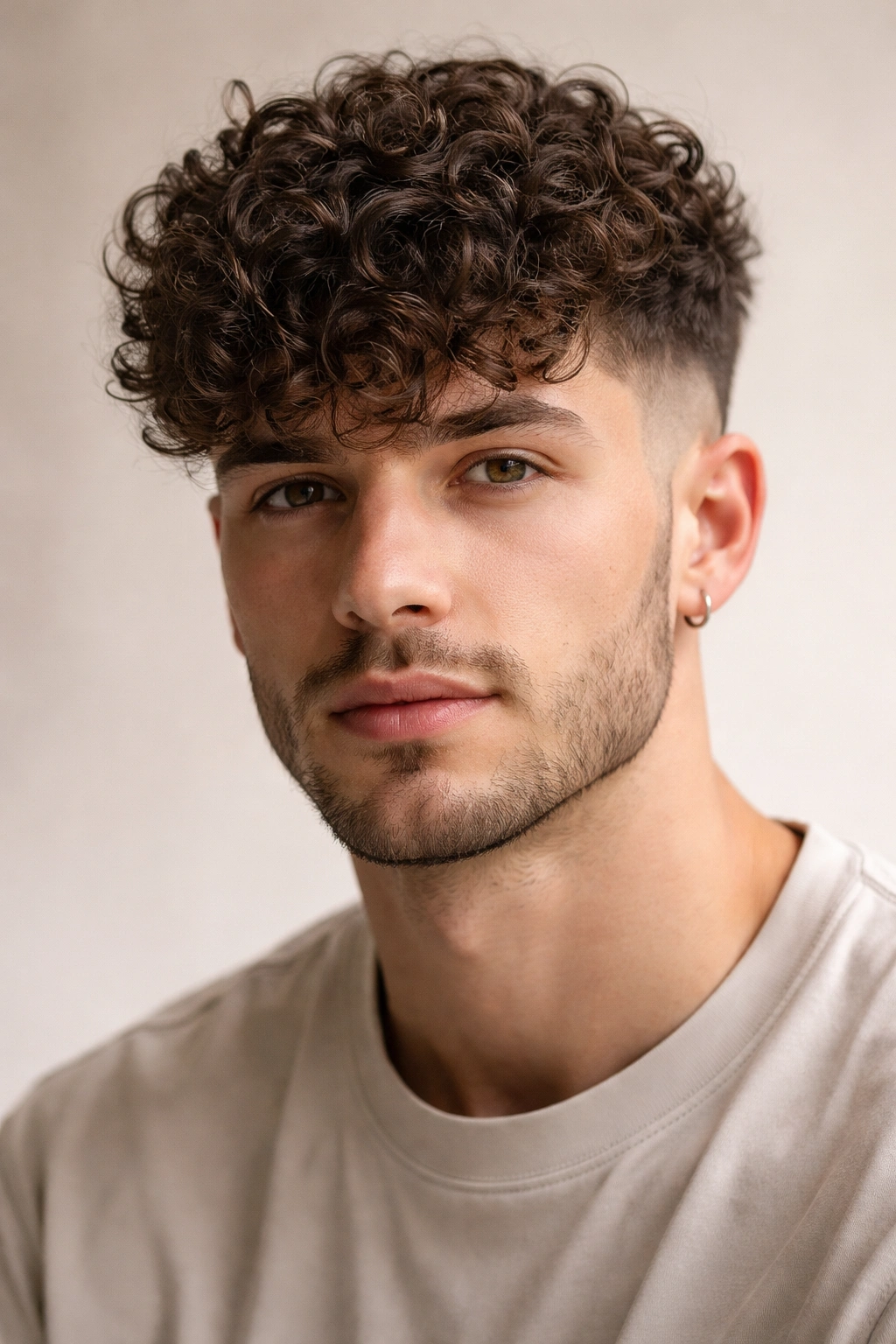
A modern twist on the classic 1990s fringe, the curly fringe keeps the hair longer on top (usually 3 to 4 inches) while tapering down the sides into a fade. The key difference from a traditional fringe is that this version is styled specifically to lean into curl and texture rather than trying to create a sharp, blown-out line. Your curls fall naturally forward and across the forehead, creating movement and personality.
What Makes This Style Stand Out
This cut works because it gives your longest curls room to develop their full shape while the fade on the sides creates a sharp contrast. The result is a style that looks modern, a little bit edgy, and distinctly textured. It’s popular right now because it balances length with structure—your curls aren’t so long that they look uncontrolled, but they’re long enough to actually showcase what you’ve got.
Styling Tips for Maximum Impact
- Style this cut while your hair is still damp—scrunch and lift at the roots as it dries to build volume
- Use a curl-defining cream or gel on damp hair; once dry, you can separate individual curls with your fingers for a more textured look
- Avoid blow-drying on high heat, which can frizz curly hair. Stick to low heat with a diffuser, or air dry
- This style demands a trim every 3 weeks because as the length grows, the shape gets lost
The curly fringe looks best on men with face shapes that aren’t too round (it adds width to the forehead area). If you have an oval or longer face, this cut is a home run.
3. The Messy Quiff
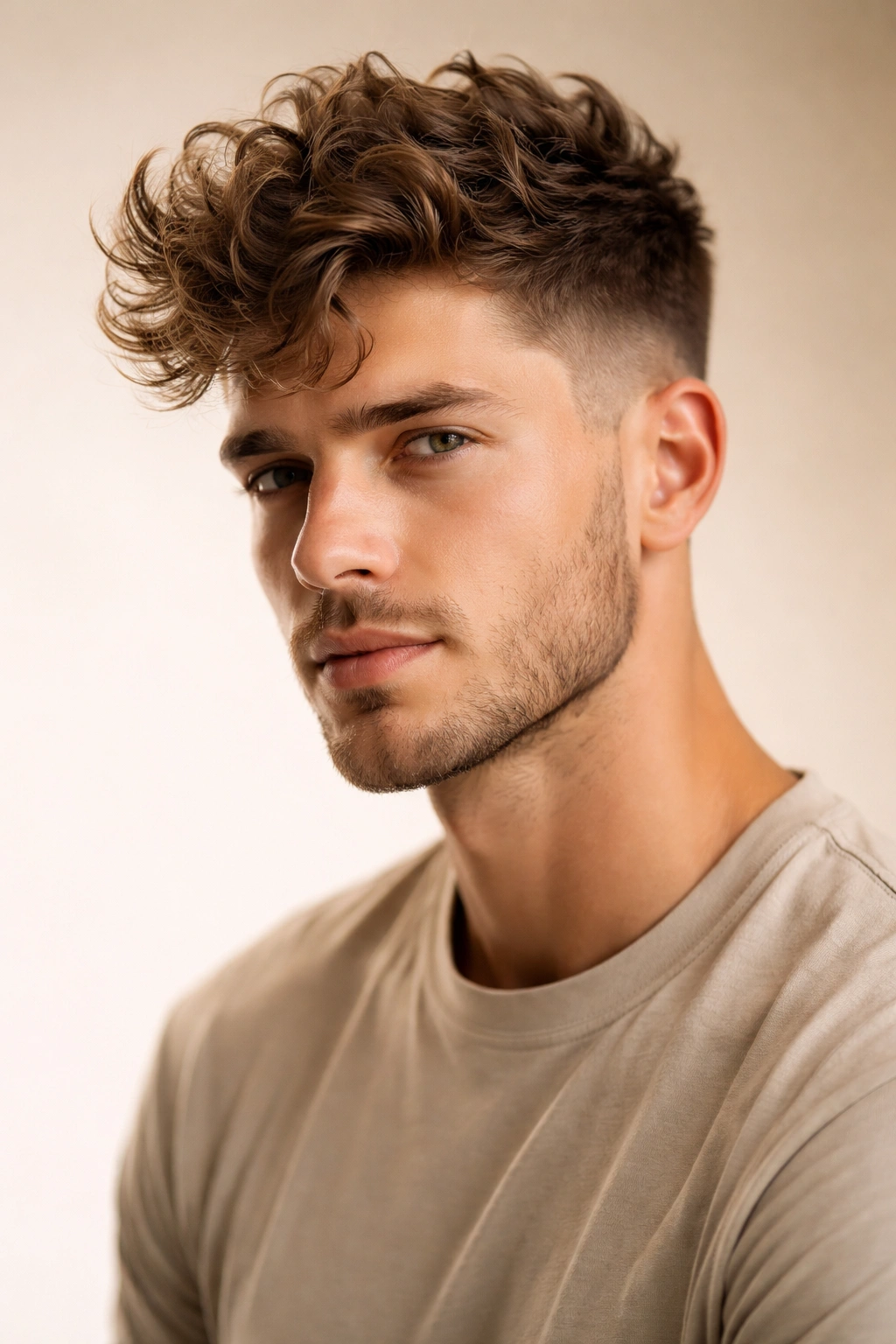
A quiff is technically a cut where the hair is longer on top and shorter on the sides, but a “messy” quiff for curly hair throws out the idea of perfection and leans into the natural disheveled texture. Your barber will keep maybe 2 to 3 inches on top (enough for your curls to show, but not so long that it looks overgrown) and fade the sides. The magic is in the styling—intentionally tousled, not slicked back or neatly combed.
Why Curly Hair is Perfect for This Style
Straight-haired guys struggle with quiffs because they have to style them precisely every day to keep that tousled look. With curly hair, you’re basically getting that messy texture for free. Your curls naturally create that lived-in, undone vibe that the style is going for. You can have bedhead and still look intentional.
Daily Maintenance and Styling
- Apply a lightweight cream or clay to damp hair at the roots and work it through as your hair dries
- Mess it up with your fingers as it dries—no comb needed, no product buildup required
- The beauty of this cut is its low-maintenance styling. You’re literally aiming for slightly chaotic texture
- Wash 2 to 3 times weekly with a gentle cleanser designed for curls
- Trim every 4 weeks to maintain the quiff shape
This style works for nearly every curl pattern, from loose waves to tight coils. It’s forgiving because the whole point is texture and movement.
4. The High Fade With Curly Top
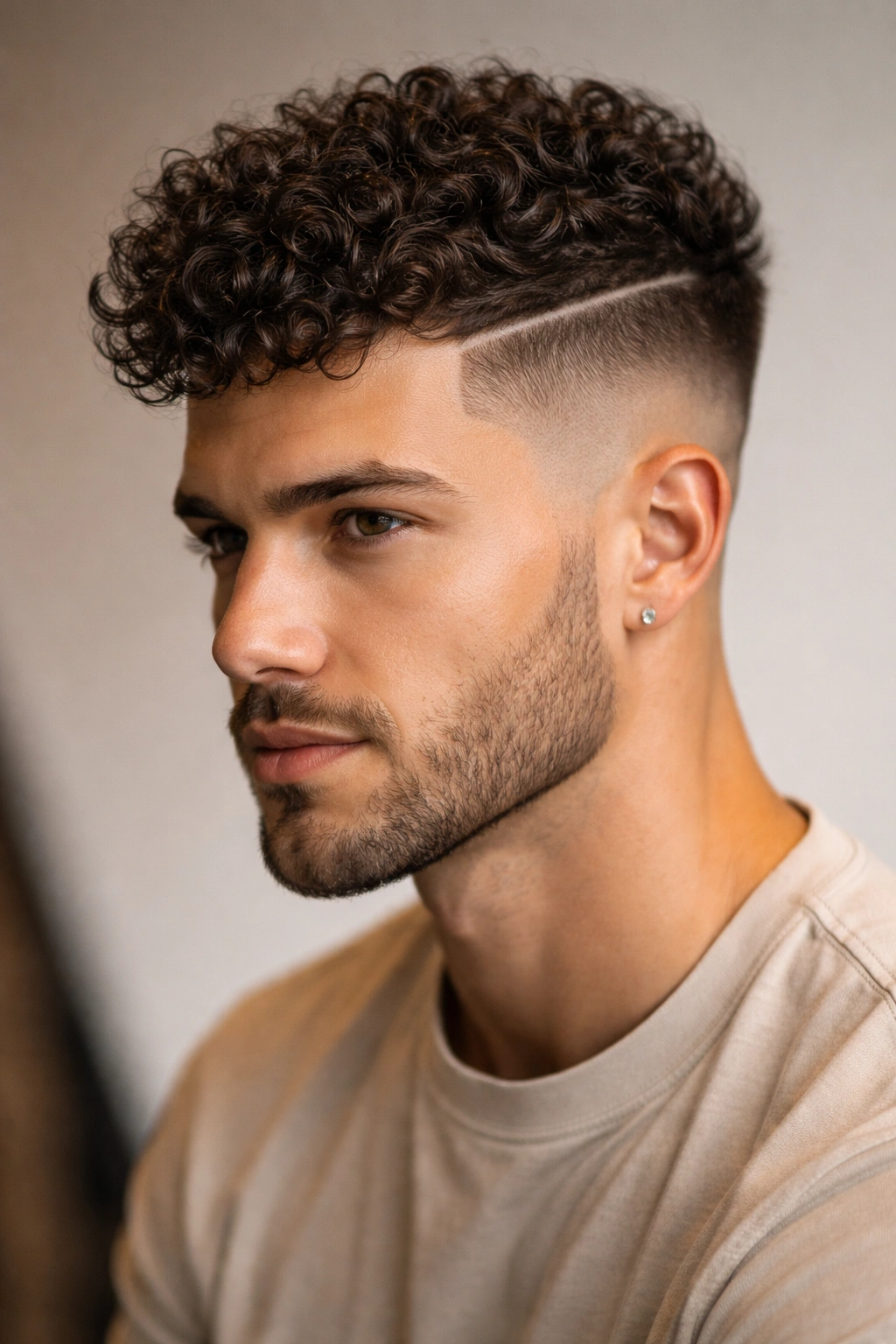
This is the modern classic: short sides and back (faded down to skin) with noticeably longer hair on top. The fade is usually taken up to somewhere between your temple and mid-ear, creating a sharp line of contrast. The top stays long enough for your curls to fully form—usually 2 to 3 inches—giving you serious texture while the fade keeps everything else clean and structured.
Why This Cut Has Staying Power
The high fade with a curly top works because it solves two problems at once: it keeps you looking sharp and groomed (the fade is precise and clean) while letting your curls be fully themselves (the length on top means nothing is being flattened or restricted). It’s professional enough for an office but textured and modern enough that it doesn’t look conservative.
Getting the Shape Right and Keeping It
- Ask your barber for a “disconnected” fade—this means there’s a clear line between the faded sides and the longer curls on top, rather than a gradual blend
- Style the curly top with a lightweight cream or curl mousse while damp, then let it air dry or use a diffuser
- Once dry, you can add definition with fingertip-scrunching or leave it as is for a softer, more natural texture
- This cut requires a fresh fade every 2 to 3 weeks if you want to maintain that sharp look. The curly top can go 4 to 6 weeks between trims
- Use a sulfate-free shampoo and a good curl-specific conditioner to keep your curls defined
The high fade works for literally every face shape and works well across different skin tones since you’re not trying to match fade intensity to skin tone—the fade is doing the work.
5. The Shag Cut
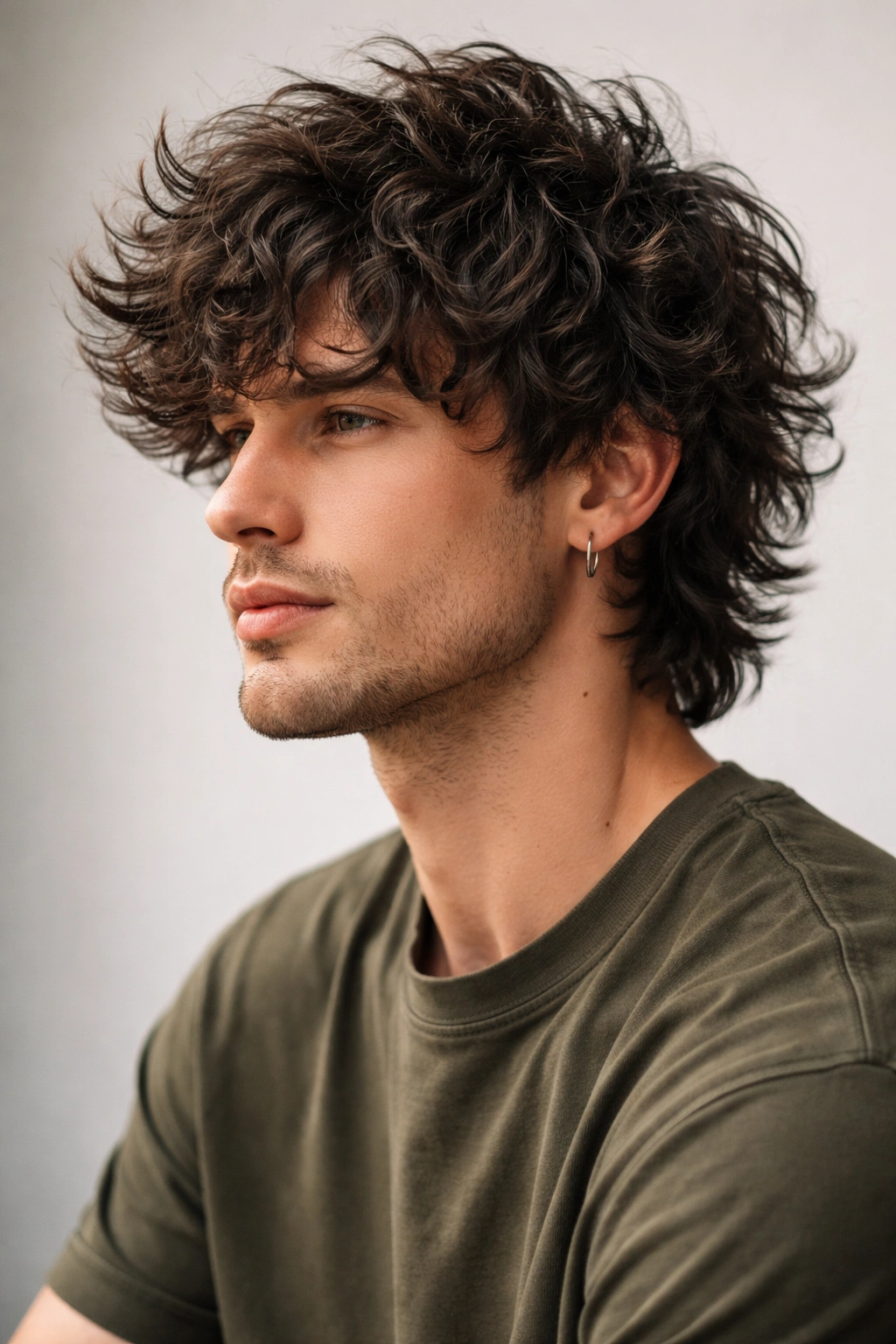
A shag is longer overall but cut in layers, with shorter layers underneath and longer layers on top. For curly hair, this creates incredible dimension and allows each curl to move independently without weighing everything down. Your hair might be 4 to 5 inches on top, but because of the layering, it doesn’t feel or look thick or heavy—each section has space to breathe and form its own shape.
How Layers Transform Curly Hair
Layers are genuinely the secret weapon for curly hair. Instead of cutting straight across (which traps all your hair together and can make it look flat or bulky), layers create movement and separation. Each curl has more room to stack and show, so your overall texture looks more defined even if you’re keeping length. A shag cut is basically all about strategic layering.
Styling a Shag to Look Its Best
- Apply leave-in conditioner or a lightweight styling cream to damp hair and scrunch upward to encourage curl formation
- You can air dry or use a diffuser on low heat. Higher heat will frizz layers and defeat the purpose
- This cut genuinely shines when you let it dry naturally—your curls will form their most beautiful shape without heat manipulation
- Expect to visit your barber every 6 to 8 weeks. With layers, the cut can start to look shaggy-shaggy (not cool shag, just unkempt) if it gets too overgrown
- Use a curl-cream or mousse designed for defining texture
Shags look incredible on men with tighter curl patterns (coils, springs, anything that coils or spirals). Looser waves can sometimes look separated in a way that doesn’t feel intentional with a shag cut.
6. The Undercut With Curls
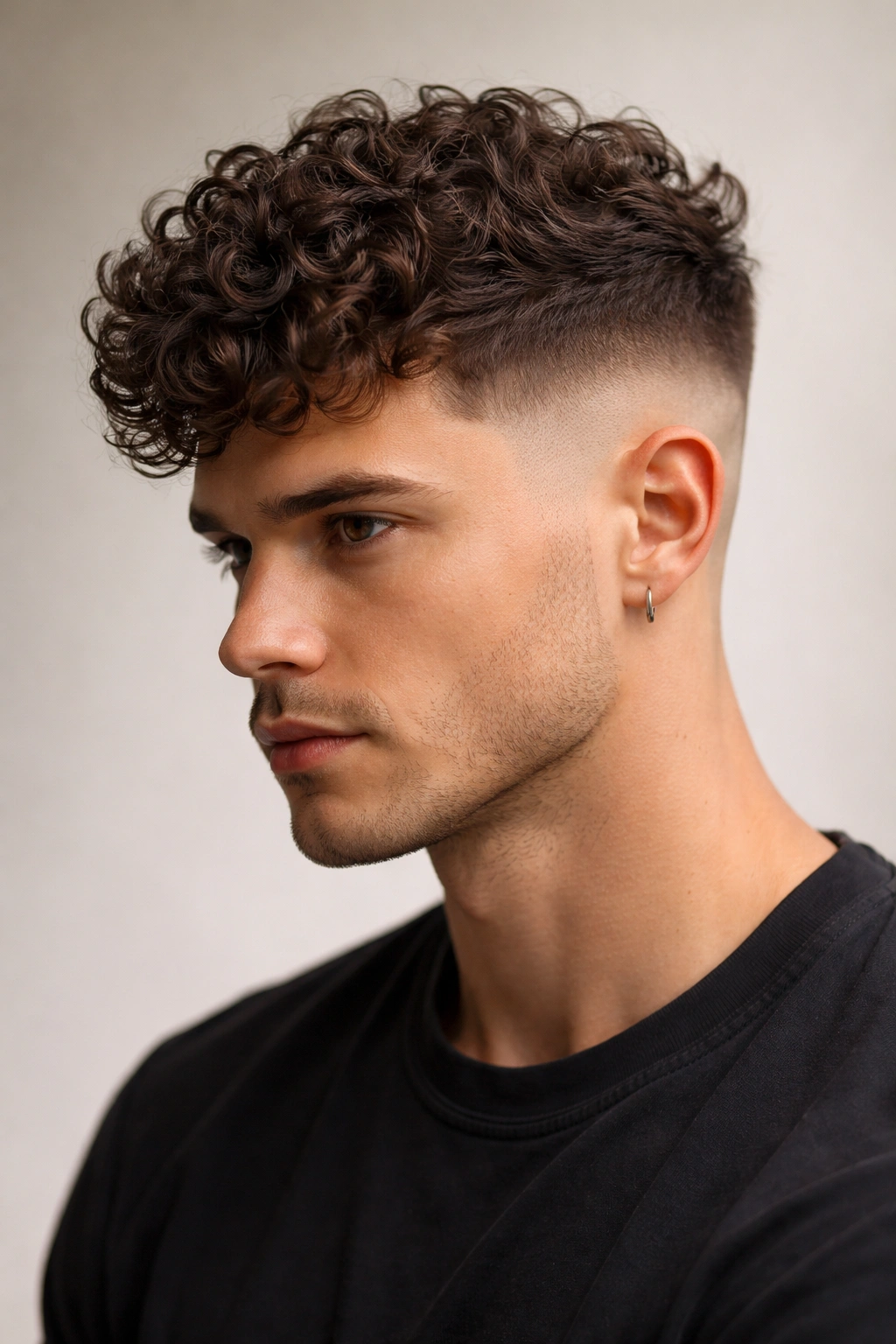
An undercut is a style where your sides and back are very short (sometimes shaved clean) while your top is significantly longer—think 3 to 5 inches. The difference from other fades is that the transition is sharp and defined rather than blended. There’s a clear line showing where the short sides end and the longer hair begins. For curly hair, this creates dramatic contrast and lets your curls really shine on top.
What Makes the Undercut Special for Curly Hair
The undercut is about creating visual drama and contrast. When you have really short sides next to voluminous, textured curls on top, the curls look even fuller and more impressive than they would with a regular fade. It’s bold, it’s modern, and it’s specifically designed to draw attention to what’s happening on top.
Styling Options and Commitment
- You can style this many ways: sleek and defined with a pomade, textured and curly with a cream, or even slicked back for a different vibe
- The undercut requires commitment to maintenance because that sharp line needs a fresh cut frequently (every 2 to 3 weeks) to look intentional rather than just overgrown
- Some men shave their undercut weekly to keep the line crisp and clean
- Use lightweight products to avoid weighing down your curls
- This style really shines with tighter curl patterns where you get maximum volume contrast
The undercut works best on men with strong jawlines because the sharp silhouette draws attention to your face shape. If you have a rounder face, you might want to ask your barber about a slight blend instead of a complete disconnection.
7. The Afro
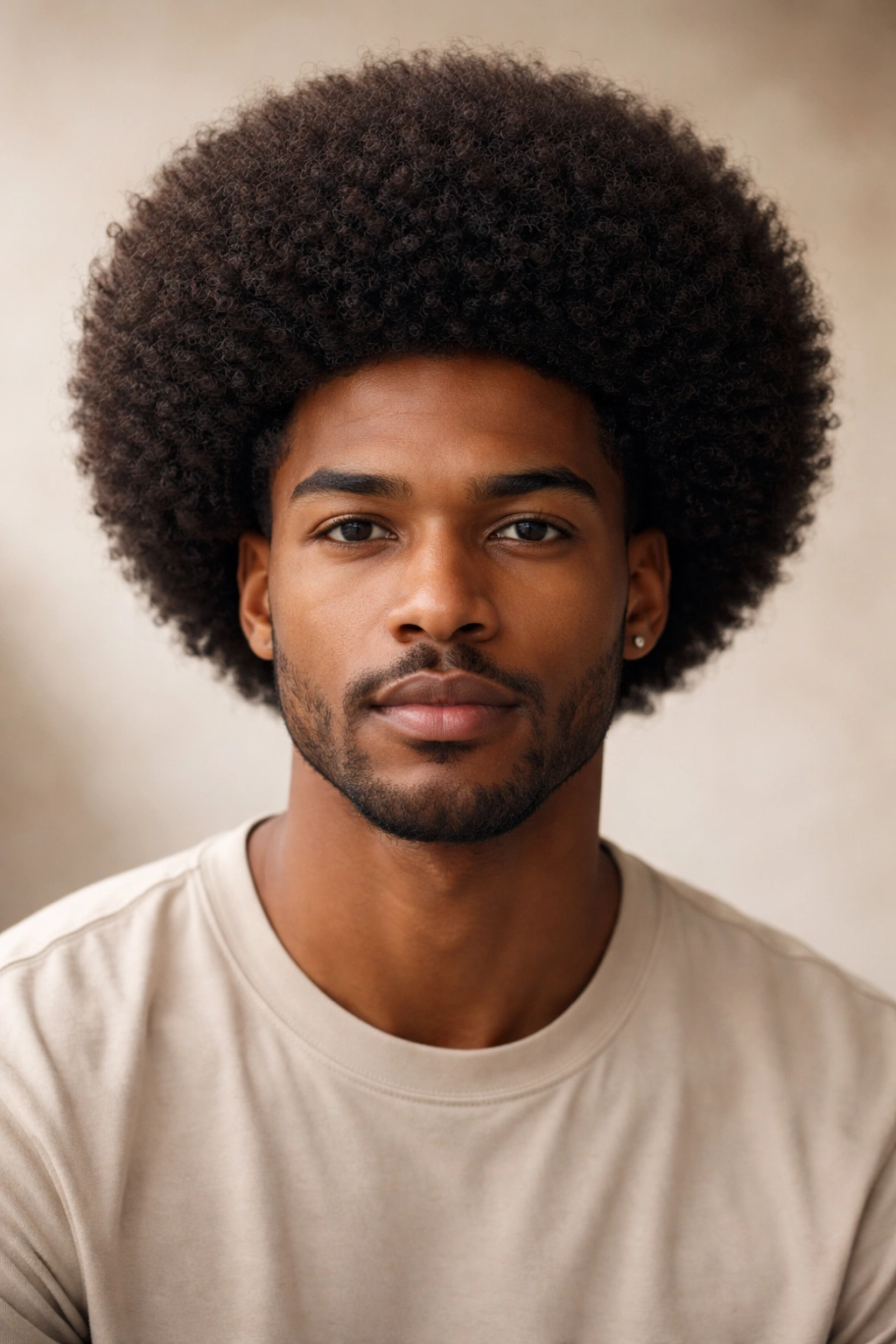
A true afro cut keeps hair roughly the same length all over (usually 2 to 4 inches) and is cut to stand out from the head in a full, rounded shape. For men with coily, tightly curled hair or textured coils, an afro is one of the most authentic and flattering cuts available. It’s not just a style—it’s a celebration of natural hair texture in its most classic form.
Understanding the Afro Aesthetic
An afro works because it stops fighting your hair’s natural tendency to shrink and coil. Instead of trying to stretch it out or flatten it, you’re working with the texture that your hair naturally wants to form. The result is a style that looks powerful, intentional, and deeply connected to your natural hair pattern. A well-cut afro is geometric, symmetrical, and striking.
Cutting and Maintaining an Afro
- Find a barber who specifically understands how to cut curly and coily hair. They’ll use different techniques than someone trained on straight hair
- The cut is usually done on dry hair, so your barber can see your natural curl pattern and cut accordingly
- An afro is one of the lower-maintenance styles in terms of daily styling—just fluff and go
- That said, you’ll want trims every 4 to 6 weeks to maintain the shape and keep edges clean
- Use moisturizing products designed specifically for coily hair, as this texture type tends to be drier than other patterns
- A good leave-in conditioner is essential. Apply it to damp hair regularly to keep curls hydrated and defined
The afro is stunning on men with tighter curl patterns. It’s less effective on looser waves since those don’t create the same three-dimensional shape.
8. The Taper Fade With Length
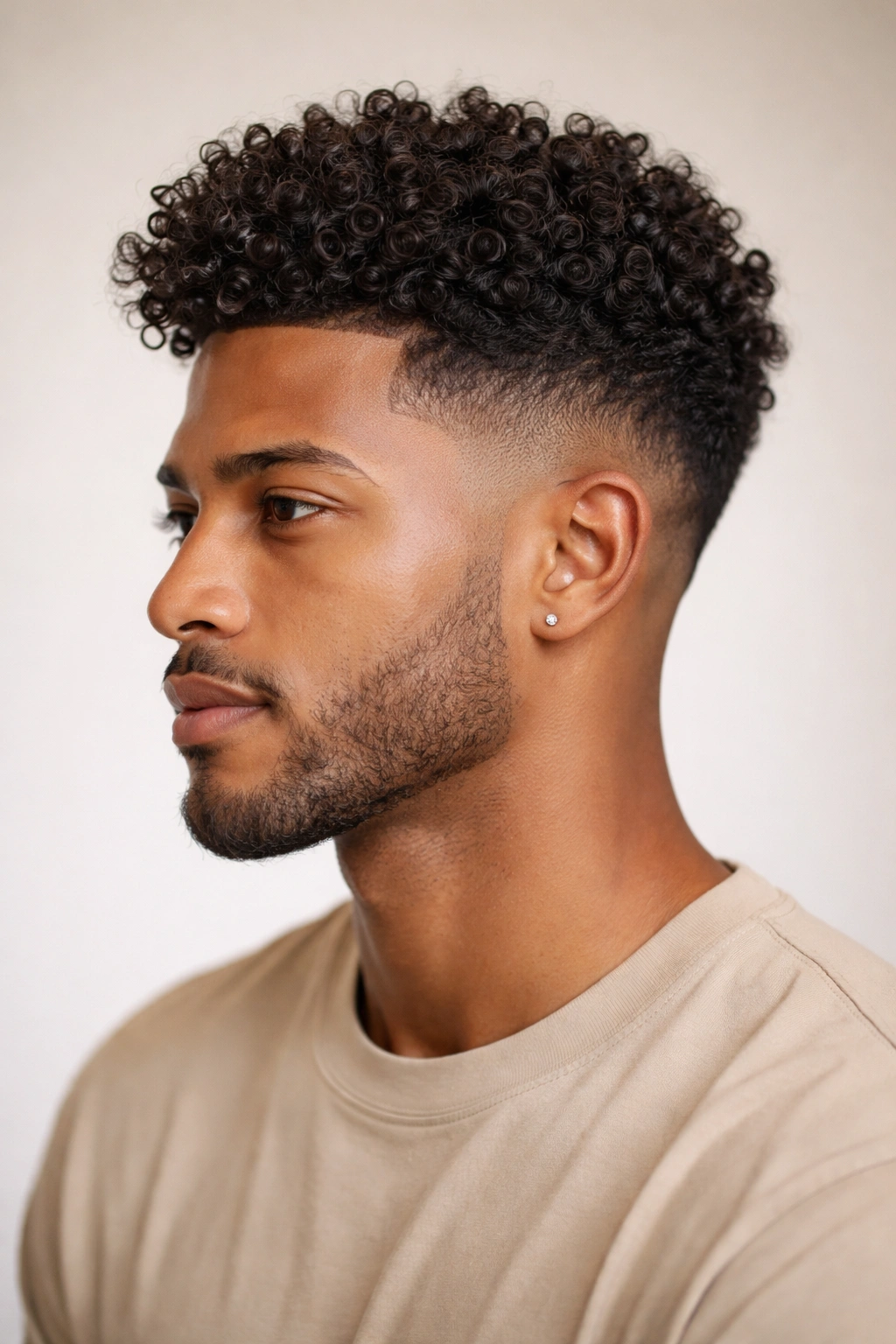
Similar to the high fade, but softer—a taper fade gradually reduces hair length from longer on top to shorter on the sides and back. There’s no sharp disconnection line. Instead, the transition is smooth and gradual. On top, you’re keeping enough length for your curls to fully form (2.5 to 3.5 inches), but the sides taper down smoothly rather than fading all the way to skin.
Why the Taper is Less Harsh Than a Fade
If you want a professional, clean look but don’t want the dramatic contrast of a high fade, a taper is your answer. It’s still structured and sharp, but it’s more forgiving. The gradual transition from long to short looks more natural and less severe. For some face shapes and personal styles, this feels more balanced than a disconnected fade.
Styling and Maintenance Differences
- Style exactly like you would a faded top—cream or mousse on damp hair, then dry naturally or with a diffuser
- The softer transition of a taper means you can potentially stretch trims to every 4 weeks instead of every 2 to 3 weeks
- A taper is slightly easier to manage at home between trims since there’s no sharp line that looks bad if it’s overgrown
- Use the same curl-friendly products as you would with any other cut
Tapers work better on men who prefer a less dramatic look or have rounder face shapes where the softer transition is more flattering than sharp contrast.
9. The Bro Flow (Longer Curly Style)
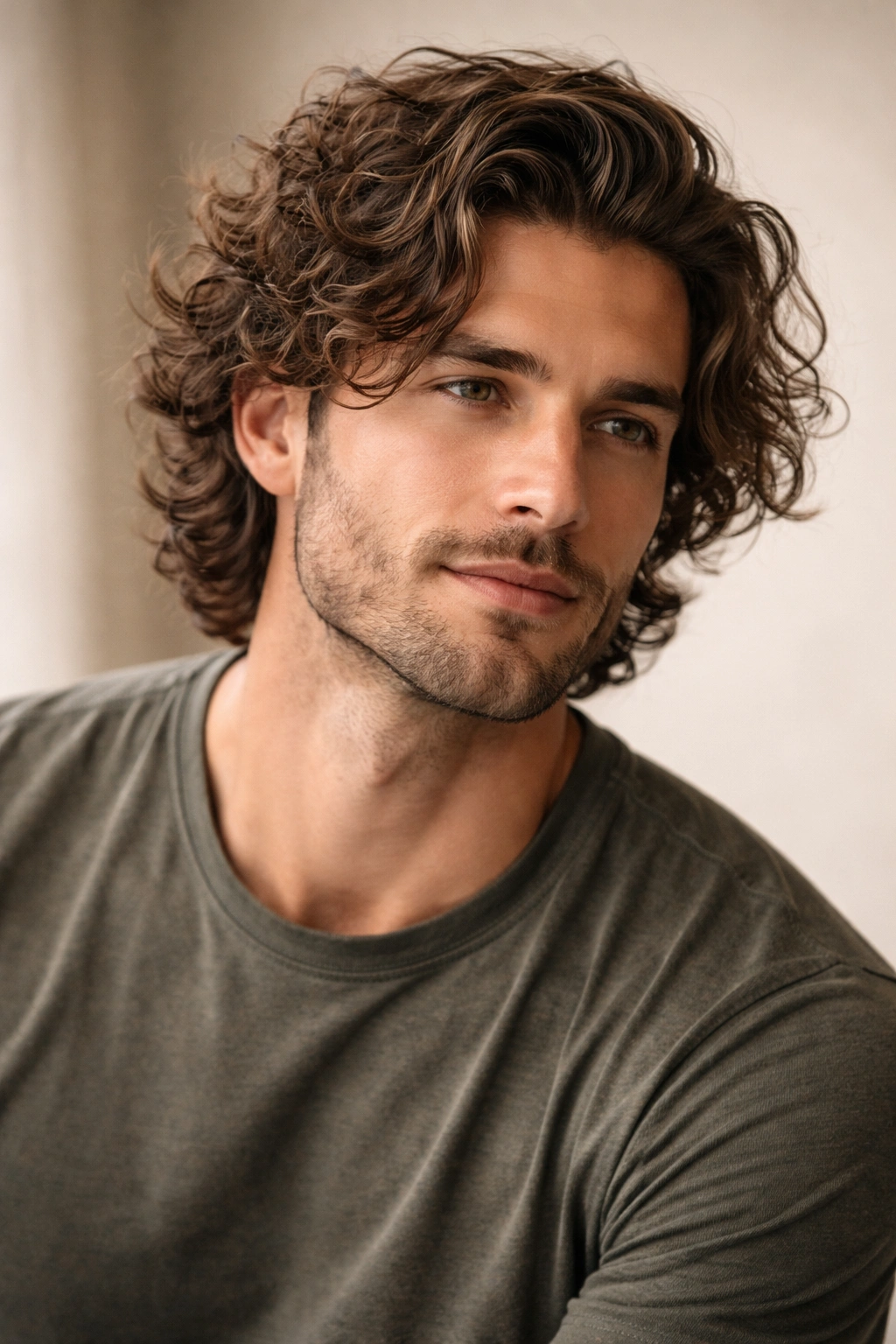
Bro flow refers to longer hair (4 to 6 inches or more on top) worn a bit tousled, textured, and loose. It’s called “bro flow” because it became associated with a certain laid-back aesthetic, but for curly-haired men, this is just embracing your natural length and texture. The sides are usually faded or tapered, but the top is allowed to be full, long, and unapologetically curly.
Making Longer Length Work for Your Curls
Longer curls can sometimes look bulky or unkempt if they’re not cut right. The secret is layers and proper cutting technique. Your barber needs to cut in a way that removes weight while maintaining length, so each curl has space to move. Done right, bro flow looks intentional and effortlessly cool. Done wrong, it looks like you need a haircut.
Daily Care and Styling for Longer Curls
- Longer curls need more moisture. Use a good curl-defining cream or mousse and apply it to damp hair
- Consider styling with a wet gel or mousse, then air drying for the most natural, defined look
- You can also blow dry with a diffuser if you want more control and volume
- Wash 2 to 3 times weekly with sulfate-free shampoo and condition more frequently than you would with shorter hair
- Trim every 6 to 8 weeks to maintain shape and remove dead ends (longer hair shows split ends more)
This style works best if you have tighter to medium curl patterns. Very loose waves can sometimes look stringy when worn this long.
10. The Textured Comb-Over
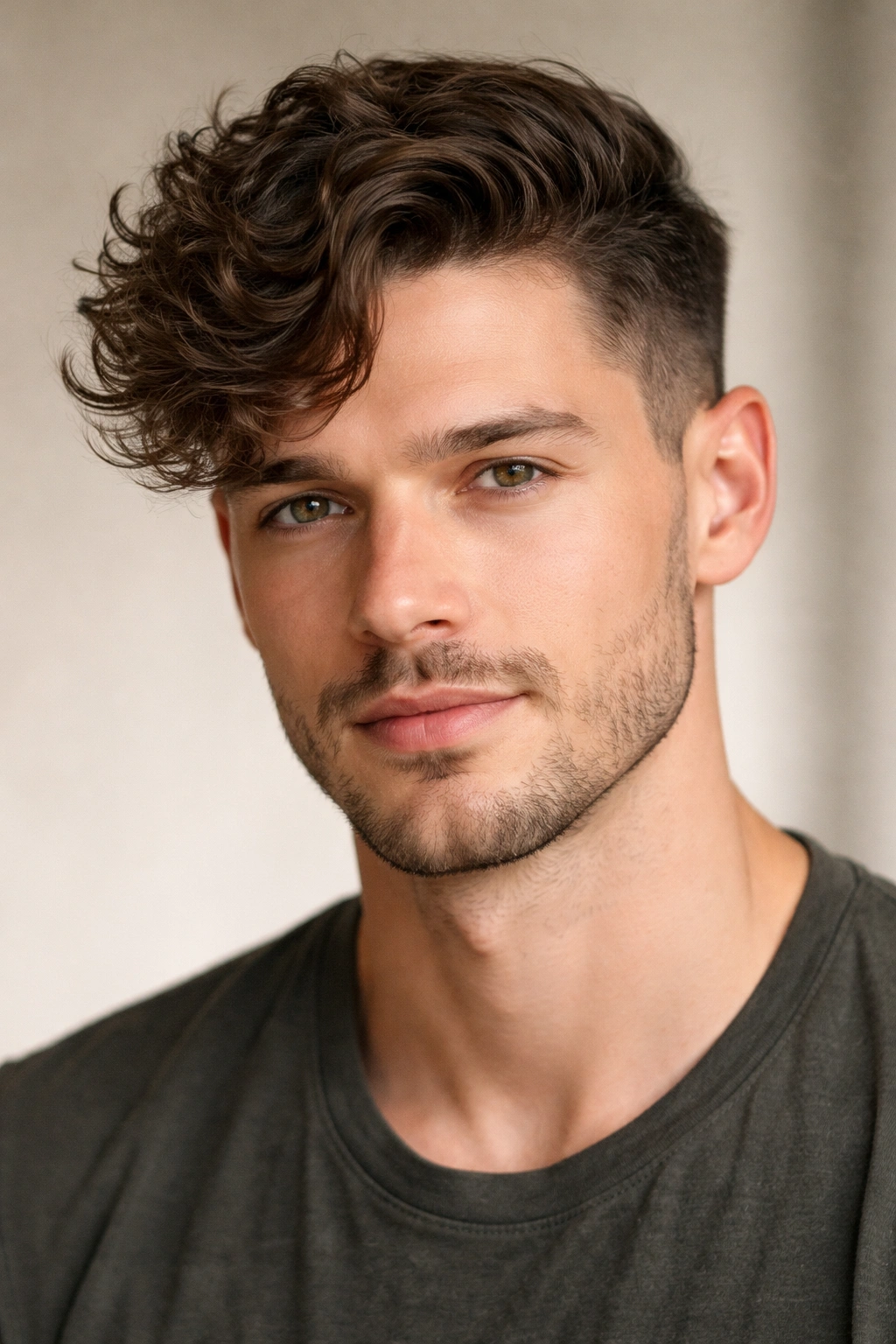
A comb-over for curly hair isn’t the slicked-back, conservative style older generations wore. Instead, it’s a modern take where your hair is longer on one side (usually 2.5 to 3.5 inches) and shorter on the other, with the longer side styled to sweep across. The texture is maintained and visible—you’re not flattening it down, just directing your natural curl in a particular direction.
Making a Comb-Over Look Modern
The modern curly comb-over works because you’re using your curl pattern to create shape and movement. Instead of aiming for a sleek, polished line, you’re leaning into texture. Your curls naturally separate and create definition, which makes the style look intentional rather than old-fashioned.
How to Style This Cut Daily
- Apply a lightweight pomade or styling cream while hair is damp
- Use your fingers or a wide-tooth comb to gently direct hair toward the longer side as it dries
- You’re not trying to force it into a rigid line—let your curls form naturally while you just guide the general direction
- This style can use a bit more product than some others, so a quality pomade (that won’t flake or feel heavy) is important
- Trim every 4 weeks to maintain the asymmetrical shape
The comb-over works well for men who have a particular side where their hair naturally wants to fall, and it suits most face shapes—the asymmetry can actually be flattering depending on your proportions.
11. The Blunt Crop
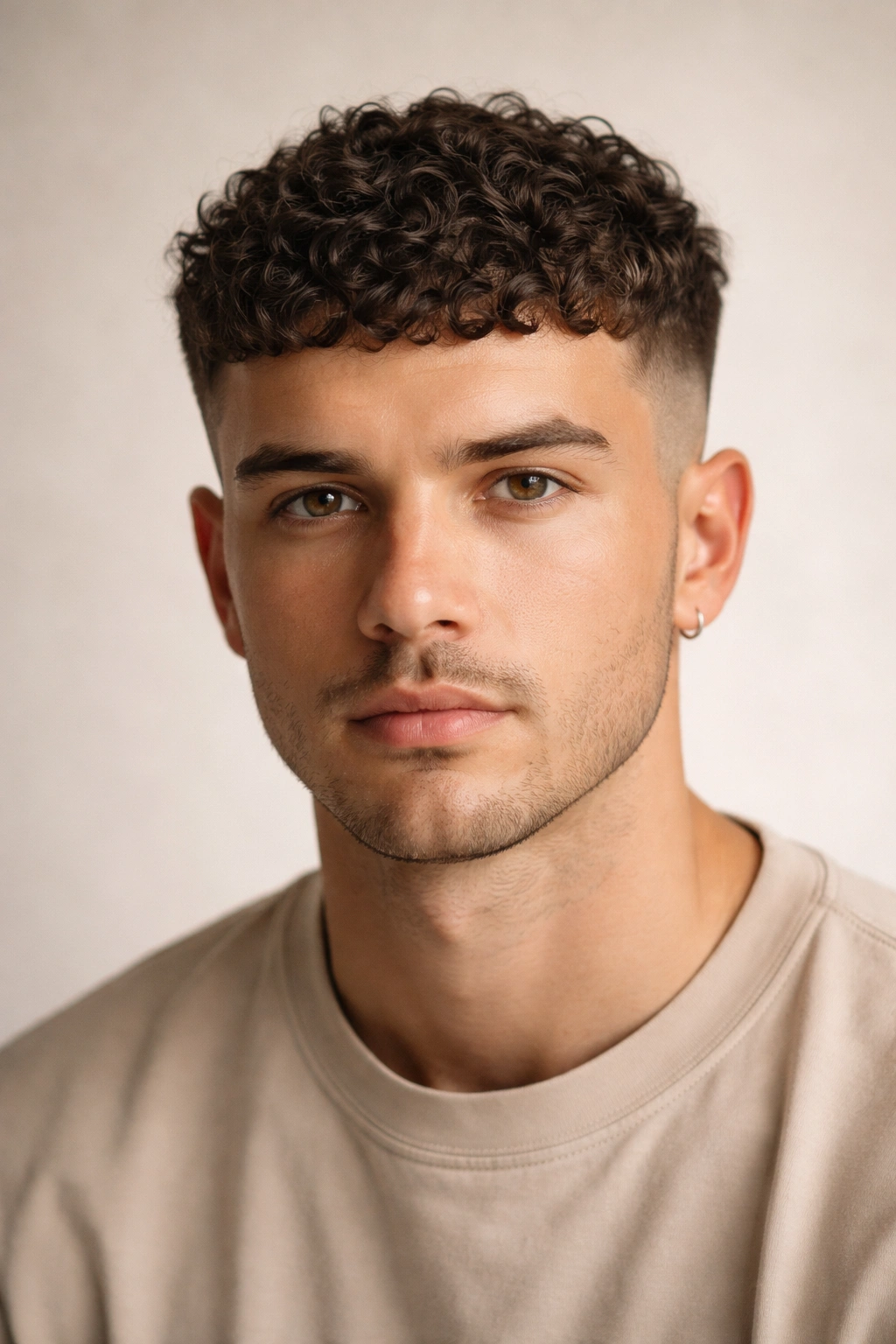
A blunt crop is cut straight across, usually shorter than a textured crop (maybe a quarter to half inch) but without creating texture separation the way a textured crop does. It’s sleek, minimal, and geometric. For curly hair, this creates a really interesting effect where your individual curls create shape and dimension against the blunt line, but the overall silhouette is clean and controlled.
The Minimalist Appeal of a Blunt Crop
If you like short hair but find regular clipper cuts look too flat or boring on your curly hair, a blunt crop might be your answer. The shortness doesn’t flatten your curls the way you might expect. Instead, each curl shows and creates tiny peaks of texture against the blunt line. The effect is sophisticated and intentional-looking.
Maintenance for a Blunt Crop
- A blunt crop is one of the lowest-maintenance styles. Wash, maybe apply a light cream, and go
- Because this cut is so short, you don’t really need to blow dry. Your curls will form as it air dries
- You’ll want a fresh trim every 3 to 4 weeks as it grows out, or the blunt line will disappear
- Use a good shampoo and condition, but you don’t need much styling product
- This cut looks best on men with very tight curls where each individual curl is visible
A blunt crop works for nearly every face shape and is especially good if you prefer minimal daily styling.
12. The Tapered Sides With Voluminous Top
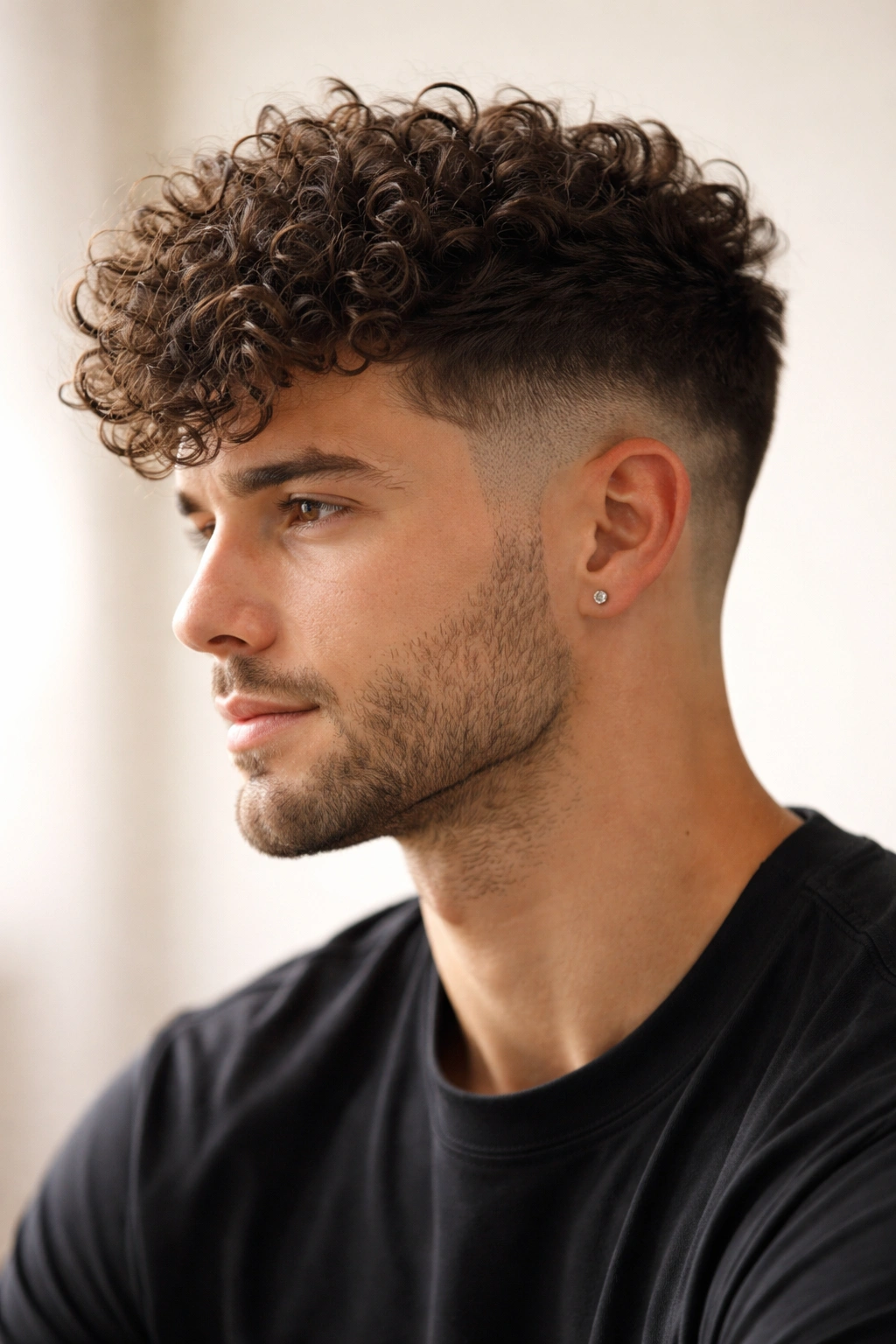
This is a category broader than one specific cut, but it’s worth calling out as a template: any cut where you have significantly shorter, tapered sides and a voluminous, textured top. This might be achieved through a taper fade, an undercut, or even just a dramatic length difference. The key is the contrast between controlled sides and wild, full curls on top.
Why This Template Works for Curly Hair
This approach solves the fundamental challenge of styling curly hair: how do you look intentional and groomed while still showcasing your natural texture? The answer is to keep one part (the sides) controlled and let the other part (the top) be fully itself. You get structure and texture in the same haircut.
Versatility and Personalization
- This template works across nearly every cut style: you could do a high fade with a curly top, a taper with a quiff, an undercut with a shag, etc.
- The specific cut you choose should depend on your face shape, curl pattern, and how much daily styling you’re willing to do
- All of these variations use similar styling techniques: lightweight cream or mousse on damp hair, air dried or diffuser dried
- The sides stay clean and fresh with trims every 2 to 4 weeks, while the top can go 4 to 6 weeks between trims
- Use products designed for curly hair, and avoid anything with silicones or sulfates that can build up
This template is infinitely adaptable to your personal style and the specific texture of your hair.
Final Thoughts
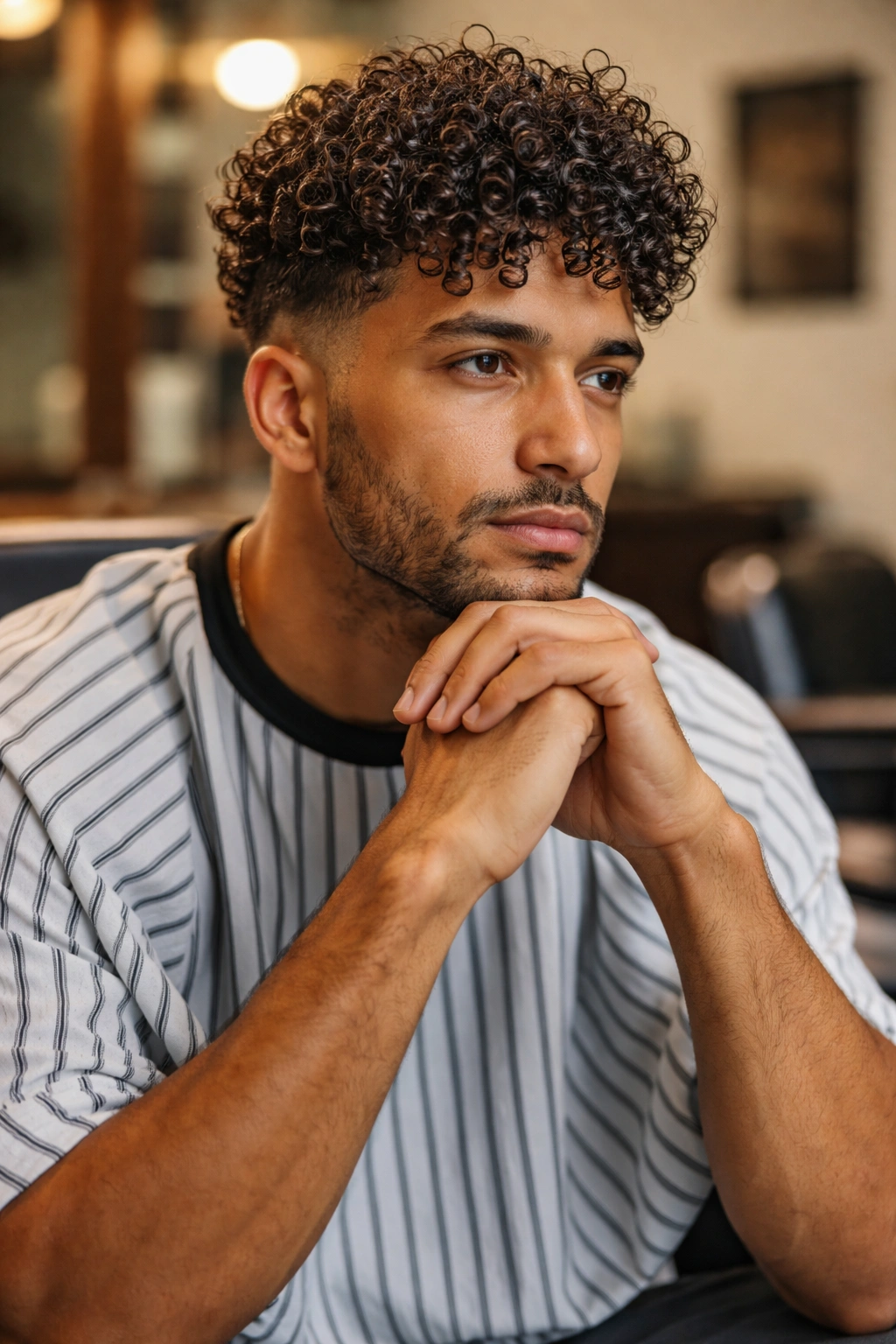
Finding the right haircut for curly hair is about understanding that your natural texture is an asset, not something to fight against. The best cuts for curly-haired men all share one core principle: they work with your curl pattern instead of against it. Whether you choose something short and sharp like a textured crop or high fade, something longer and textured like a shag or bro flow, or something bold like an undercut or afro, the goal is the same—a cut that looks intentional and feels manageable for your daily life.
The single most important decision you can make is finding a barber who actually knows how to cut curly hair. Not everyone trained on straight hair knows how to approach curls properly. Look for someone who understands layering techniques, who can explain how they’re going to cut your specific curl pattern, and who will be honest about what styles suit your hair type and face shape. A great barber makes an enormous difference.
Beyond the cut itself, your styling routine and product choices matter just as much. Most curly-haired men find their best results using lightweight, curl-specific products applied to damp or wet hair, then either air drying or using a diffuser. Avoid heavy pomades that weigh curls down, sulfate shampoos that strip natural oils, and high heat that frizzes texture. With the right cut, the right products, and the right approach, curly hair can be one of your best grooming assets.
