



Women’s hairstyling has embraced bolder choices in recent years, and the undercut has emerged as one of the most versatile and flattering options available. Whether you’re drawn to daring statements or prefer to keep things understated, an undercut can be customized to match your personality, lifestyle, and comfort level. The beauty of this cut lies in its flexibility—you can wear it hidden beneath longer layers for a surprise reveal, or let it take center stage as your main design feature.
An undercut is defined by having the hair on the lower section of the head cut significantly shorter than the top layers, creating contrast and dimension. This contrast is what makes the style so dynamic. The “undercut” section can range from a subtle fade that’s barely noticeable when your hair is down, to a shaved or very short cut that makes a bold statement. The top can be styled in countless ways—swept to one side, worn straight back, textured and tousled, or even shaved with a design pattern.
The versatility of undercuts extends beyond just how short you go underneath. You can play with the shape of the undercut, blend it seamlessly into longer hair, or leave it disconnected for maximum visual impact. Some styles work beautifully on straight hair, others showcase texture and curls. Undercuts can complement virtually any face shape when tailored correctly—a skilled stylist will determine the ideal placement, angle, and length for your specific features.
What makes undercuts particularly appealing is that they suit diverse aesthetics and life stages. A corporate professional can rock a hidden undercut and flip her hair to reveal it only when she chooses. A creative type can embrace a geometric shaved design. Someone going through a transformation can experiment with a bold look that still allows flexibility in how it’s presented to the world. Understanding the full spectrum of undercut options helps you choose a style that genuinely resonates with who you are and how you want to present yourself.
1. The Hidden Undercut
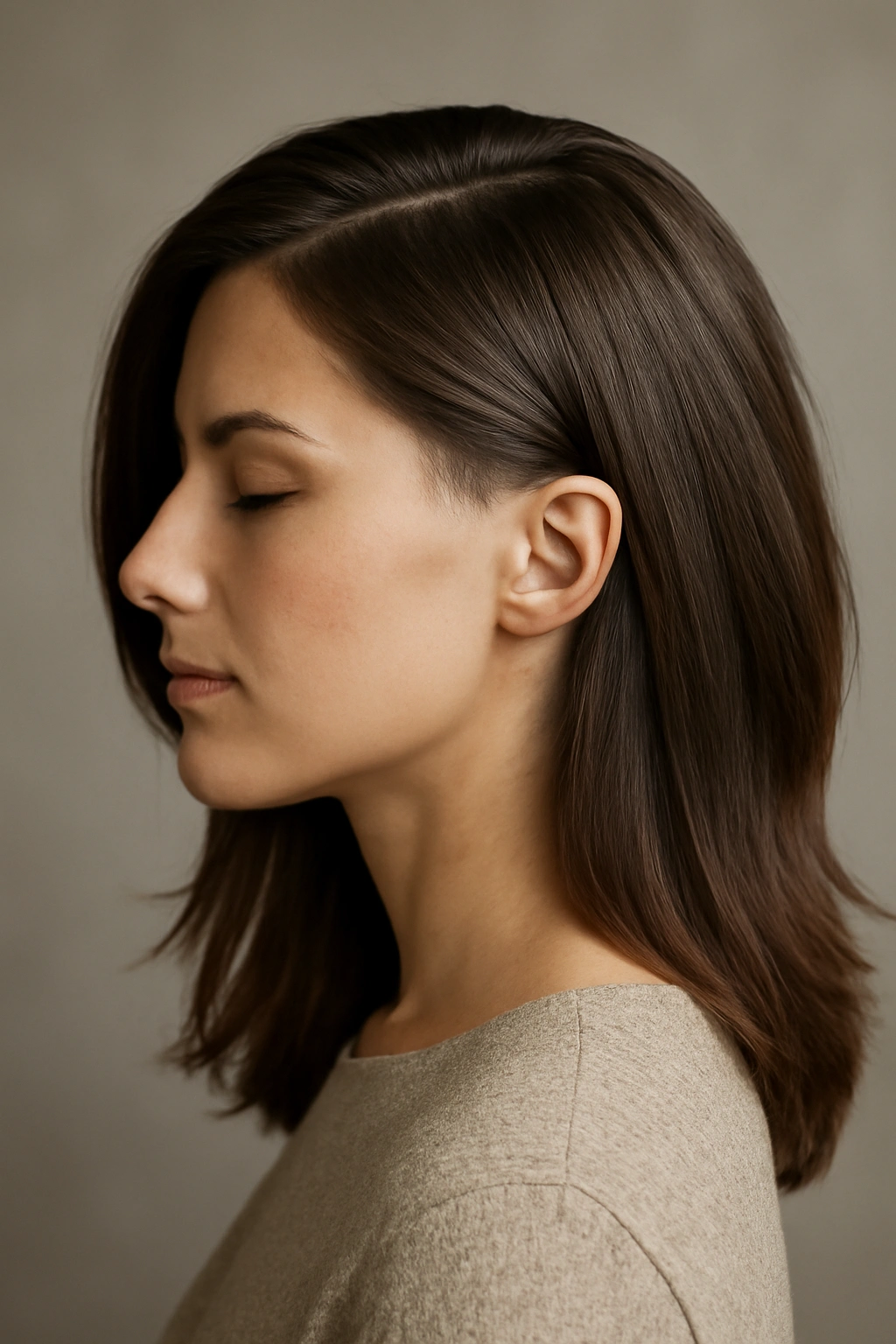
The hidden undercut is your secret weapon if you want edge without full commitment. This style keeps the undercut tucked away beneath longer top layers, usually at least shoulder-length or longer. The top section completely covers the shaved or very short undercut when your hair is down, making it virtually undetectable to the casual observer. Only when you pull your hair up into a ponytail, bun, or half-up style—or flip your hair dramatically—does your undercut reveal itself.
Why This Works Best
The hidden undercut offers maximum flexibility in professional and conservative settings while delivering the psychological confidence boost of knowing you have something bold underneath. It’s the perfect choice if you’re testing whether you actually want an undercut without the daily visibility commitment. Many people find the hidden undercut allows them to express themselves on their own terms—you control when and how much the style shows. The contrast between the polished longer top and the edgy shaved section creates genuine visual interest the moment it’s revealed.
Styling and Maintenance Tips
- Keep the top layers healthy and regularly shaped every 6-8 weeks so they maintain their length and fullness
- The undercut typically needs touching up every 3-4 weeks depending on your hair growth rate and how short you shave it
- When wearing your hair down, use volumizing products at the roots to add texture and dimension to the top section
- The hidden undercut pairs beautifully with longer layers, face-framing pieces, or an asymmetrical cut where one side is slightly longer
- You’ll want to visit your stylist more frequently than someone with a traditional cut, since maintaining two distinct lengths requires precision
Pro tip: If you work in a conservative environment, schedule important meetings on days when your hair is styled down over the undercut—psychologically, you’ll still feel confident knowing it’s there, but it won’t affect how others perceive your professionalism.
2. The Shaved Side Part
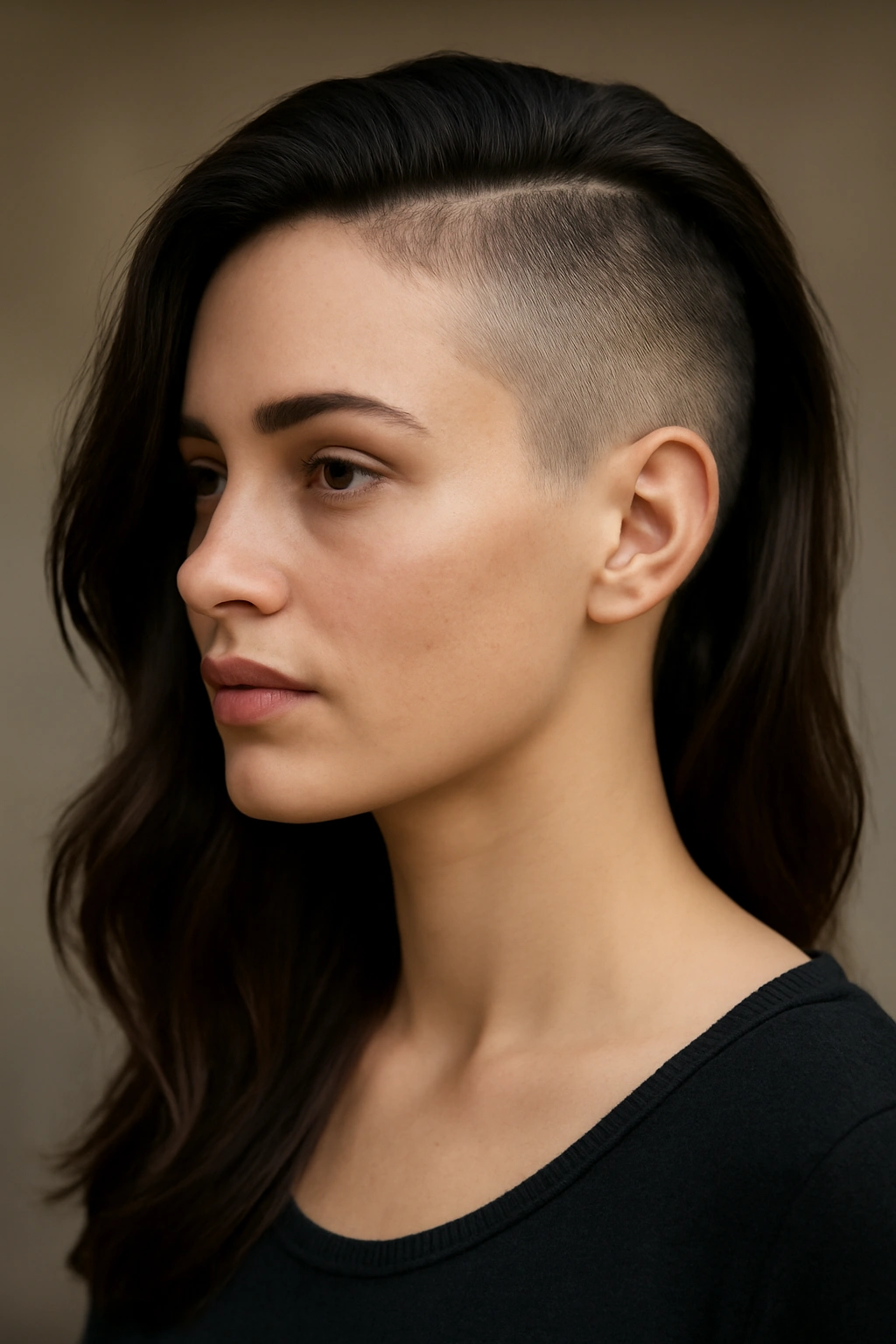
The shaved side part is the next step up in visibility from the hidden undercut. This style shaves one entire side of the head—typically from your temple down and around to behind your ear—leaving the other side longer and voluminous. The longer side sweeps across to cover part of the shaved side, or you can style it away to show off the undercut. The key to this style is the sharp, clean line where the shaved side meets the longer side, usually following your natural hair parting.
The Visual Impact
This style creates an immediately flattering asymmetrical silhouette that draws attention to your face and can actually make your features appear more balanced. The shaved side, when left fully exposed, elongates the neck and adds an edgy sophistication. When you sweep the longer section over, you get a sleek, controlled look. The shaved side part works across all hair textures and face shapes, though the placement of that dividing line can be adjusted to flatter your specific features—someone with a rounder face might position the line slightly differently than someone with an angular face.
Styling Flexibility
- On days you want to show the undercut, use a deep side part and slick the longer section back with pomade or gel
- On days you want more coverage, let the longer section fall naturally across the shaved side for an almost-hidden effect
- The longer side usually needs shaping every 4-6 weeks to maintain the asymmetrical line; the shaved side typically needs touching up every 2-3 weeks
- This style pairs beautifully with textured, choppy layers on the longer side, or you can keep it sleek and straight for contrast
Worth knowing: The transition line between shaved and longer is critical to this style’s success. Finding a stylist experienced with precision undercuts is worth the investment—a sloppy transition line will undermine the entire look.
3. The Disconnected Fade
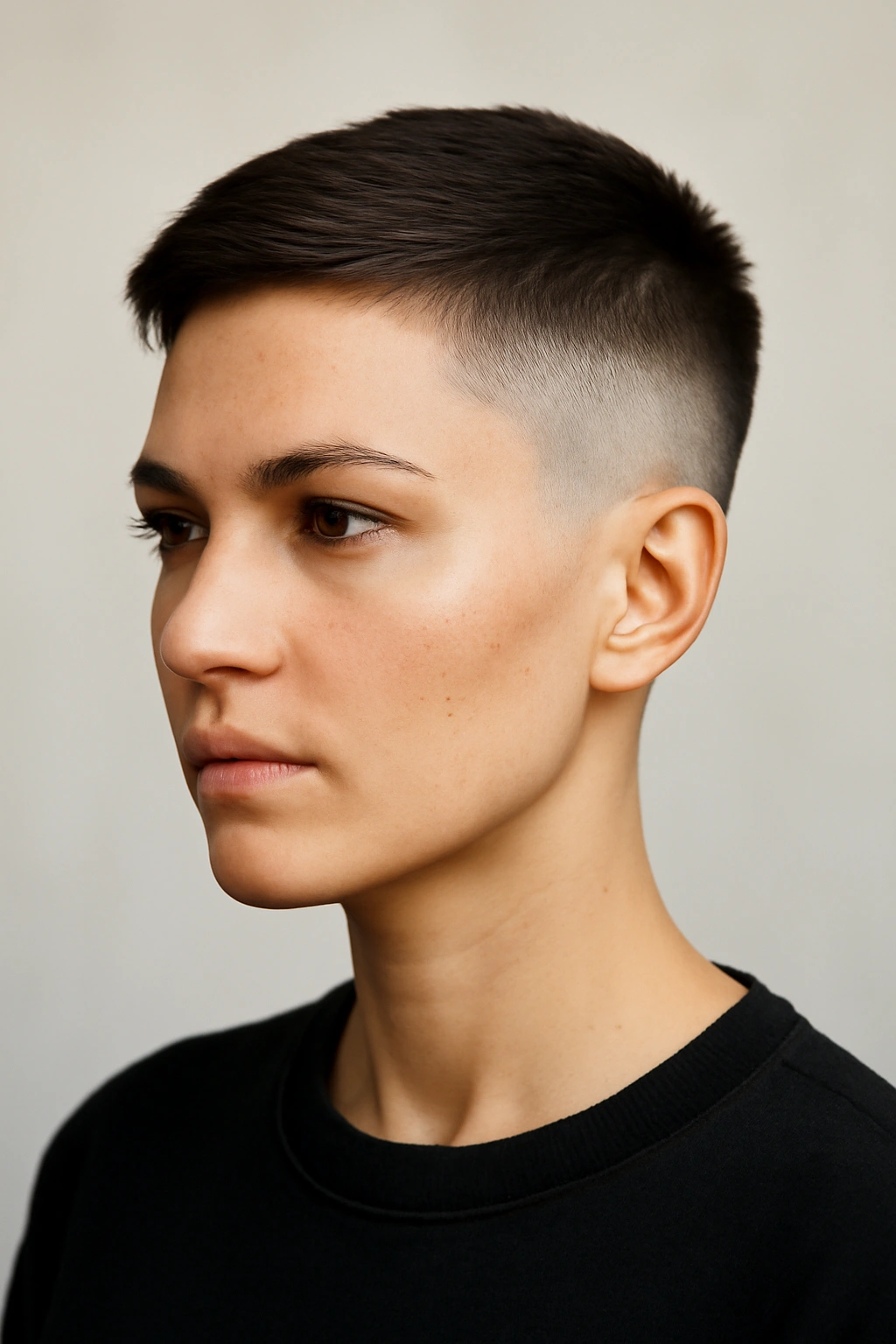
The disconnected fade creates a dramatic contrast by leaving a noticeable gap—literally a disconnection—between the very short undercut and the longer top section. Rather than blending the two lengths together gradually, the fade sits higher up on the head, creating an obvious line where short becomes long. This style reads as noticeably edgy and modern while still allowing the longer top to provide versatility in styling.
Why It Creates Such Impact
The visual weight sits entirely on top with the disconnected fade, creating a bold, sculptural silhouette. This style suits people who want an obvious undercut but still maintain longer hair for styling options. The disconnected fade is especially striking on straight or wavy hair where you can see the contrast clearly. It’s less subtle than a blended undercut but less extreme than a shaved head, making it a sweet spot for many people seeking that edge without complete commitment to a buzzcut aesthetic.
How to Style It
- The longer top section can be styled in virtually any direction—swept back, side-parted, textured and tousled, or even straightened for a sleek look
- Product becomes your friend with this style; pomade, paste, or gel helps define the longer section and emphasize the disconnect between lengths
- The longer section typically needs shaping every 6-8 weeks, while the disconnected section needs touching up every 3-4 weeks
- This style looks particularly sharp with textured, choppy layers on top that play up the disconnect rather than try to blend it
- Consider the angle of your disconnect—it can be horizontal, slightly angled, or even curved depending on your style preferences and face shape
4. The Geometric Design
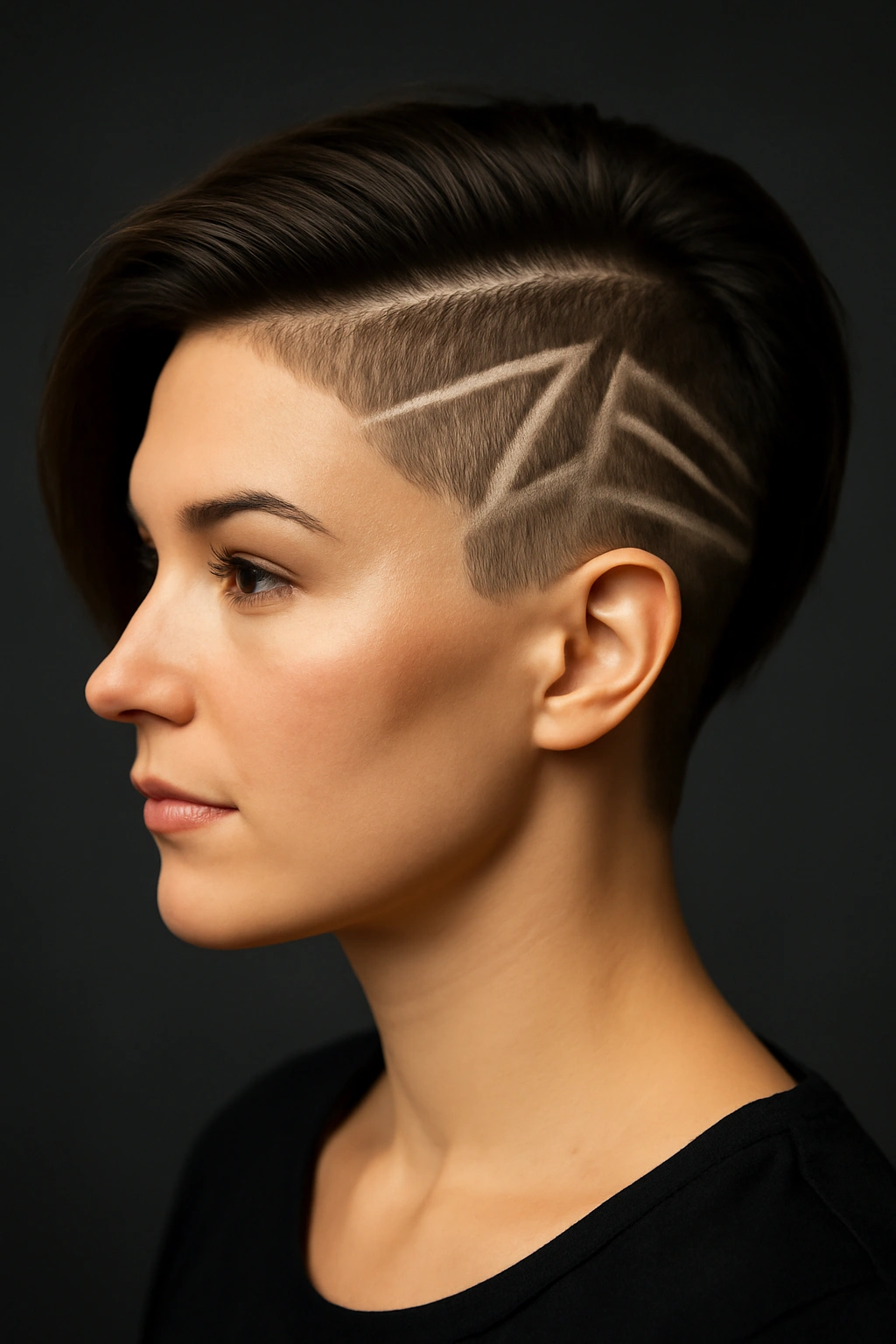
The geometric design takes undercuts into true artistic territory. This style incorporates patterns, lines, or shapes into the shaved section—think precise geometric lines, angular designs, or even more complex patterns carved into the undercut area. The top section is typically longer and often styled to fall in a way that sometimes covers the design and sometimes reveals it, depending on how you position your hair.
The Artistry Involved
Geometric designs require serious skill from your stylist—this isn’t a standard undercut. You’re essentially commissioning a custom design that gets shaved into your hair. The designs can be as simple as a few clean lines or as complex as intricate geometric patterns, Celtic knots, or abstract shapes. Some people choose designs that reflect personal meaning, symbols, or aesthetic preferences. Because the design is shaved into hair, it will eventually grow out and require retouching every 2-4 weeks, depending on your hair growth rate and how dark your hair is.
Making It Work
- Bring inspiration photos or sketches to your consultation so your stylist understands exactly what design you want
- Book extra time for the appointment—geometric designs take longer than standard undercuts
- Expect to pay more for this service than a basic undercut; the artistry commands premium pricing
- The longer top section should be styled in a way that occasionally reveals your design—this style loses its purpose if the art is perpetually hidden
- Consider whether you want your design to be semi-permanent or if you’re comfortable with frequent touch-ups as a normal part of your styling routine
Pro tip: If you’re investing in a geometric design, photograph it frequently from different angles and in different lighting. These designs are temporary art, and documentation helps you remember and replicate them if you decide to restyle.
5. The Textured Crop Top
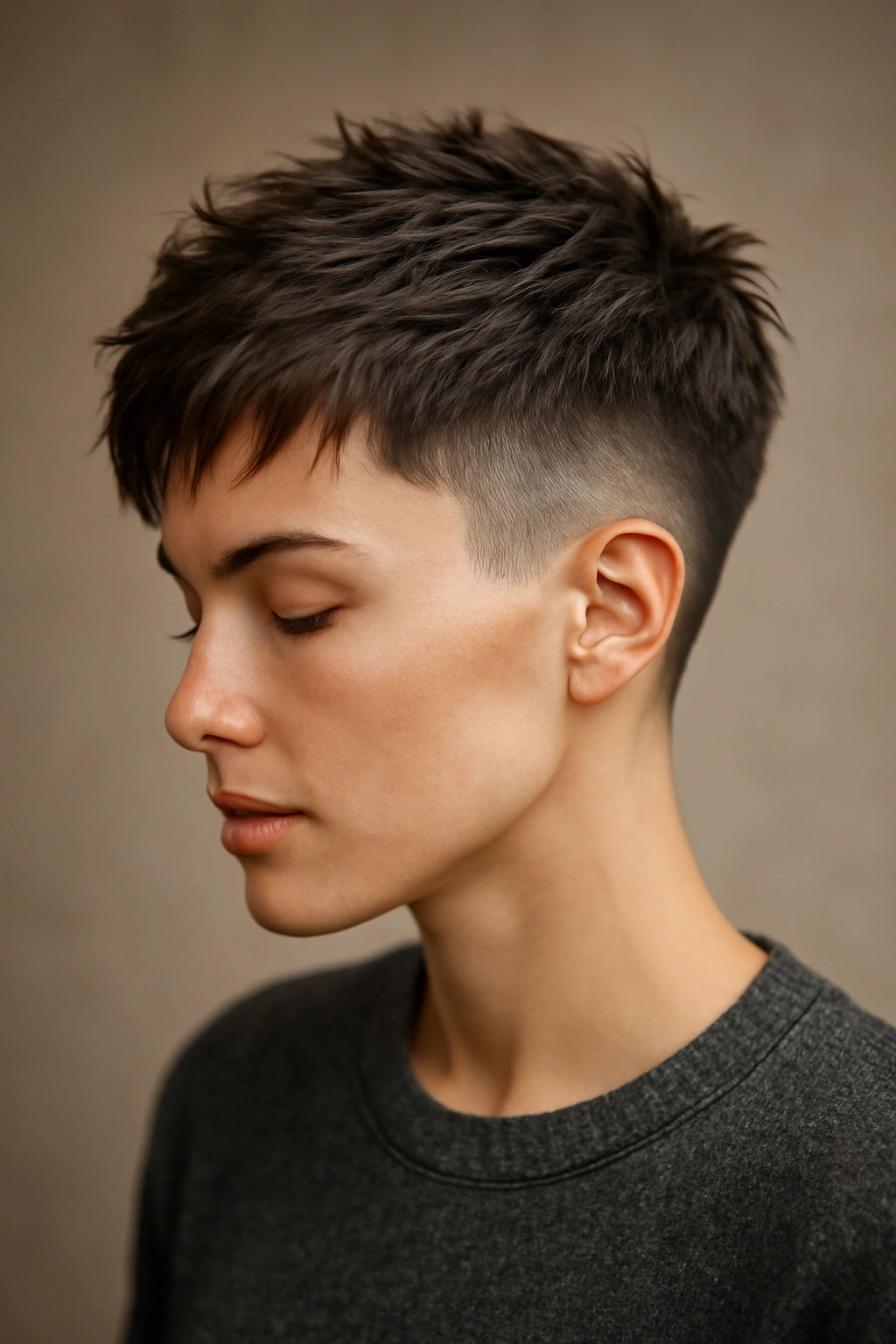
The textured crop top pairs a very short, textured top section with an even shorter or shaved undercut, creating a cohesive, overall-short silhouette with dimension and movement. Unlike many other undercuts where there’s a dramatic length difference between top and bottom, this style uses texture and cut direction to create the undercut effect. The top might be 1-2 inches long and heavily textured with choppy layers, while the undercut sits even shorter.
Who This Suits Best
The textured crop top works beautifully on people with naturally wavy or curly hair, where texture becomes the main design element. It’s also stunning on straight hair if you’re willing to use styling products to create dimension and movement. This style is particularly flattering on people with angular features, as the texture softens hard lines while the short length emphasizes bone structure. It reads as youthful, modern, and creative—perfect for people who want an obvious short style but with personality beyond just an extreme buzz cut.
Maintenance and Styling
- This style requires touch-ups every 3-4 weeks to maintain the crisp lines and shape
- The texture is created through a combination of clipper work and scissor work; your stylist might use thinning shears or point-cutting techniques to enhance movement
- On straight hair, use texturizing products—sea salt spray, dry shampoo, or styling paste—to enhance the dimension and make the layers visible
- On curly or wavy hair, let your natural texture do the work; just use a curl-defining product and scrunch for volume
- This style actually benefits from a slightly grown-out phase; as it grows between appointments, it develops even more texture and movement
6. The Sleek Undercut Lob
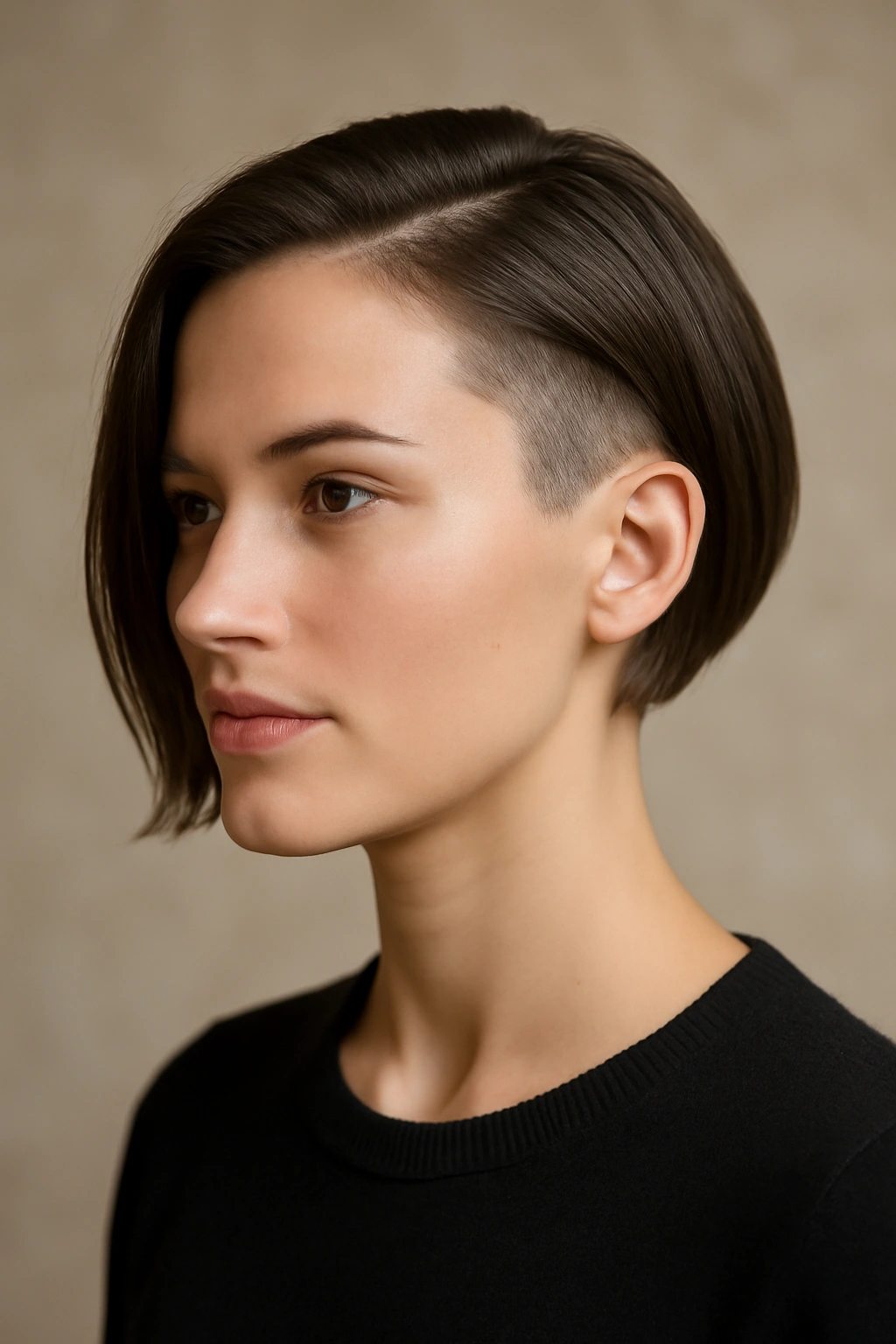
The sleek undercut lob combines a long bob (lob) length on top—typically hitting around chin length or slightly longer—with a clean, short undercut underneath. The longer section is typically styled straight or smoothly waved for contrast with the shaved or very short undercut. This style bridges the gap between “I want longer hair” and “I want an obvious undercut,” making it incredibly practical for people who love the aesthetic of longer hair but crave that edge.
The Best of Both Worlds
The sleek undercut lob gives you the styling versatility of longer hair—you can curl it, straighten it, half-up it, or put it in a ponytail—while the undercut provides an edgy surprise. The longer section can be cut with face-framing layers or kept blunt for a very modern feel. Because the top is longer and the undercut is clean and defined, this style skews sophisticated rather than rebellious, making it a smart choice if you want an undercut that works in professional settings.
Styling Strategies
- Keep the longer section sleek and smooth with a good flat iron and smoothing serum to maximize the contrast with the shorter undercut
- The longer section can be styled in countless ways—pulled back into a high ponytail to show the undercut, curled for movement, or left straight for a sleek appearance
- The undercut typically needs touching up every 3-4 weeks; the longer section needs shaping every 6-8 weeks
- This style pairs beautifully with face-framing layers that can be swept across to cover the undercut or tucked behind your ear to reveal it
- Consider the angle of your undercut—some people prefer a clear horizontal line, while others choose a fade that gradually gets longer toward the front
Worth knowing: The sleek undercut lob requires commitment to maintenance. You’ll be visiting your stylist more frequently than someone with a traditional lob, and the sleek appearance demands regular blow-outs and product application.
7. The Curly Top with Undercut
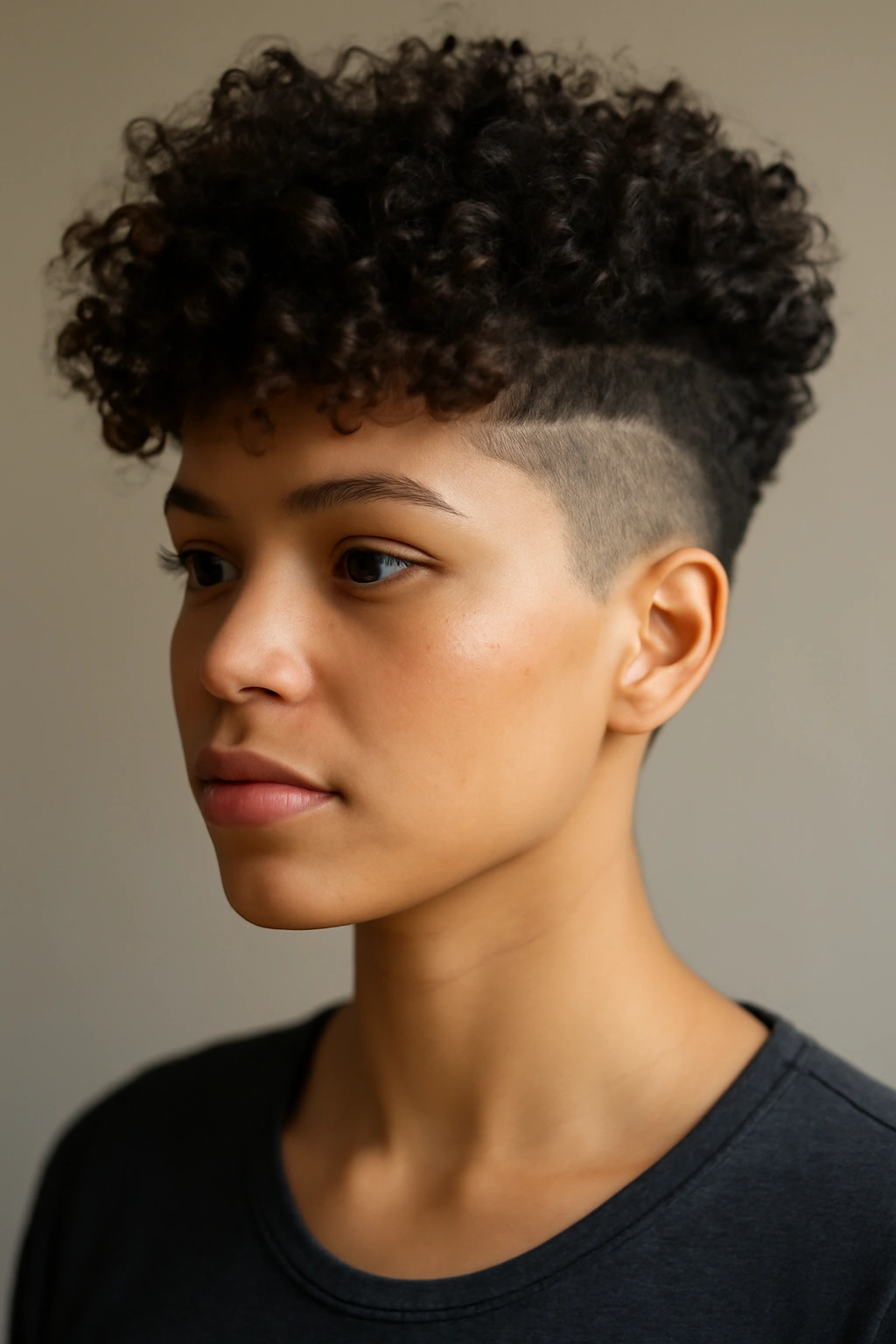
The curly top with undercut celebrates natural texture by keeping curls or coils on top while shaving or cutting very short underneath. This creates stunning dimension and volume, as the curls sit above the clean lines of the undercut. The contrast between the soft, rounded curl texture and the sharp, defined undercut is visually striking and works beautifully on all curl patterns—from loose waves to tight coils.
Styling the Combination
With curly hair, an undercut actually makes styling easier by removing weight and heaviness from the nape and sides, which helps curls sit higher and maintain their shape longer. The undercut can be hidden completely by letting curls fall naturally, or revealed by sweeping curls to one side or putting them up. This style celebrates texture rather than fighting against it, making it an ideal choice for people with naturally curly hair who have been looking for a way to add edge without sacrificing their texture.
Care and Maintenance
- Curls are easier to maintain on an undercut because you’re removing weight; you might actually find your curls hold their shape better
- The undercut typically needs touching up every 3-4 weeks; your curls can go longer between cuts because the curl pattern dictates the shape
- Use curl-defining products, creams, or gels to enhance your natural texture and keep curls defined and separated
- Deep conditioning becomes even more important since you have more exposed scalp; keep your scalp and hair well-moisturized
- Consider the placement of your undercut—you might fade it gradually rather than shaving it completely, which can create a softer transition between curls and undercut
8. The Artistic Undercut
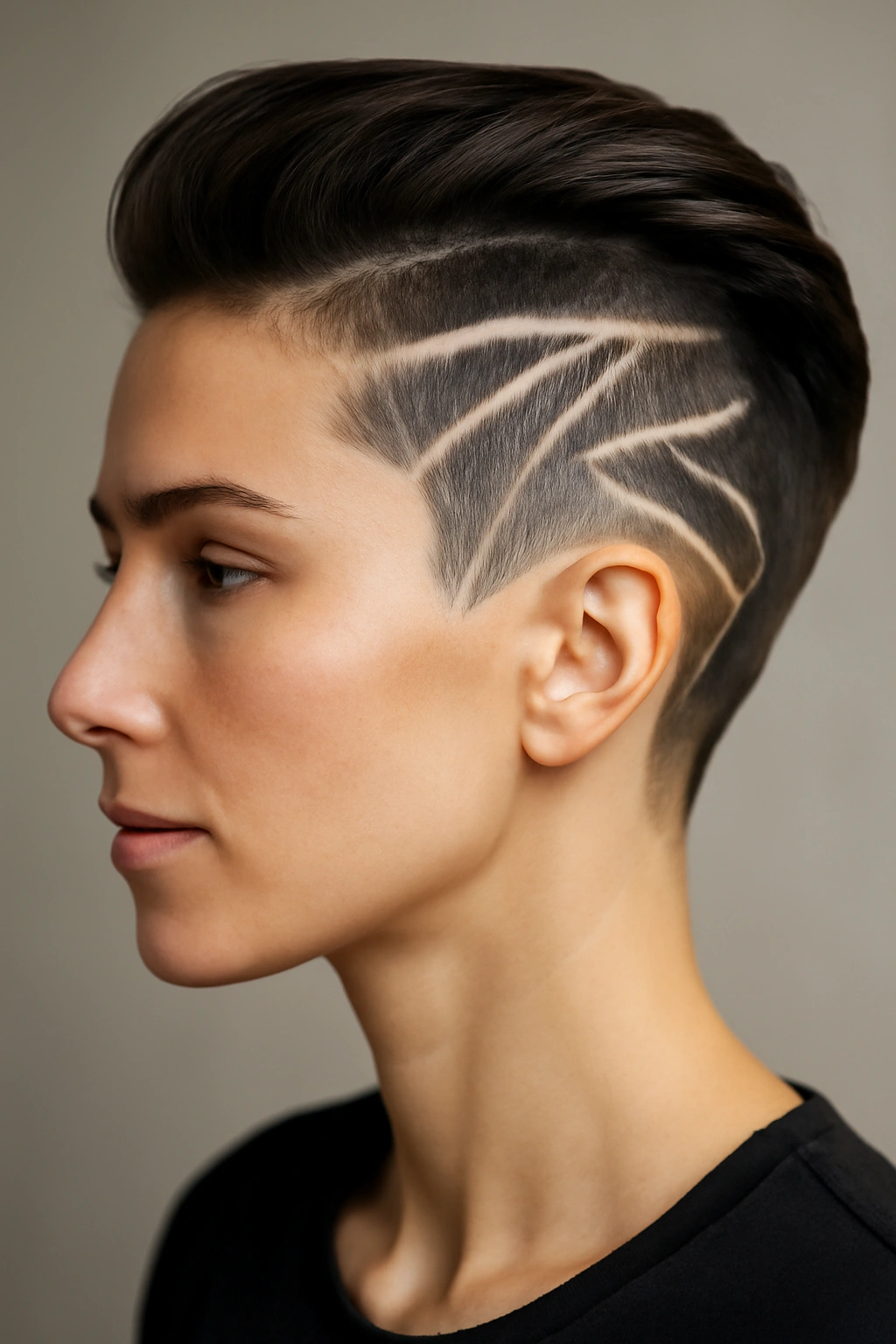
The artistic undercut is for the boldly creative—this is where your undercut becomes a canvas for real artistry. Unlike the geometric design which uses lines and shapes, the artistic undercut might incorporate full designs, illustrations, portraits, or elaborate patterns. Some people combine shaved designs with color-blocking, using different hair colors in the undercut section for maximum impact.
Taking It to the Next Level
This style requires finding a stylist who is genuinely skilled in clipper design or who can work with a custom design artist. Some salons partner with tattoo artists or digital designers to create custom patterns that are then shaved into the hair. The artistic undercut is a genuine form of self-expression—it’s wearable art that reflects your personality, interests, or aesthetic vision.
Practical Considerations
- Expect to pay significantly more for an artistic undercut than a standard one; you’re paying for specialized artistry
- Schedule longer appointments to allow time for the detailed work
- Photograph your design regularly because it will eventually grow out and you’ll want documentation
- Touch-ups might be required every 2-4 weeks depending on your hair growth and the complexity of the design
- Consider your lifestyle; if you work in a very conservative field, plan how and when you’ll reveal this design
- This style makes the boldest statement when the longer top is occasionally styled away to show off your artwork
Pro tip: If you’re considering an artistic undercut, start by discussing your vision in detail with your stylist weeks in advance. Provide photos, sketches, or descriptions of what you’re envisioning so there’s zero confusion on the day of your appointment.
9. The Blended Undercut
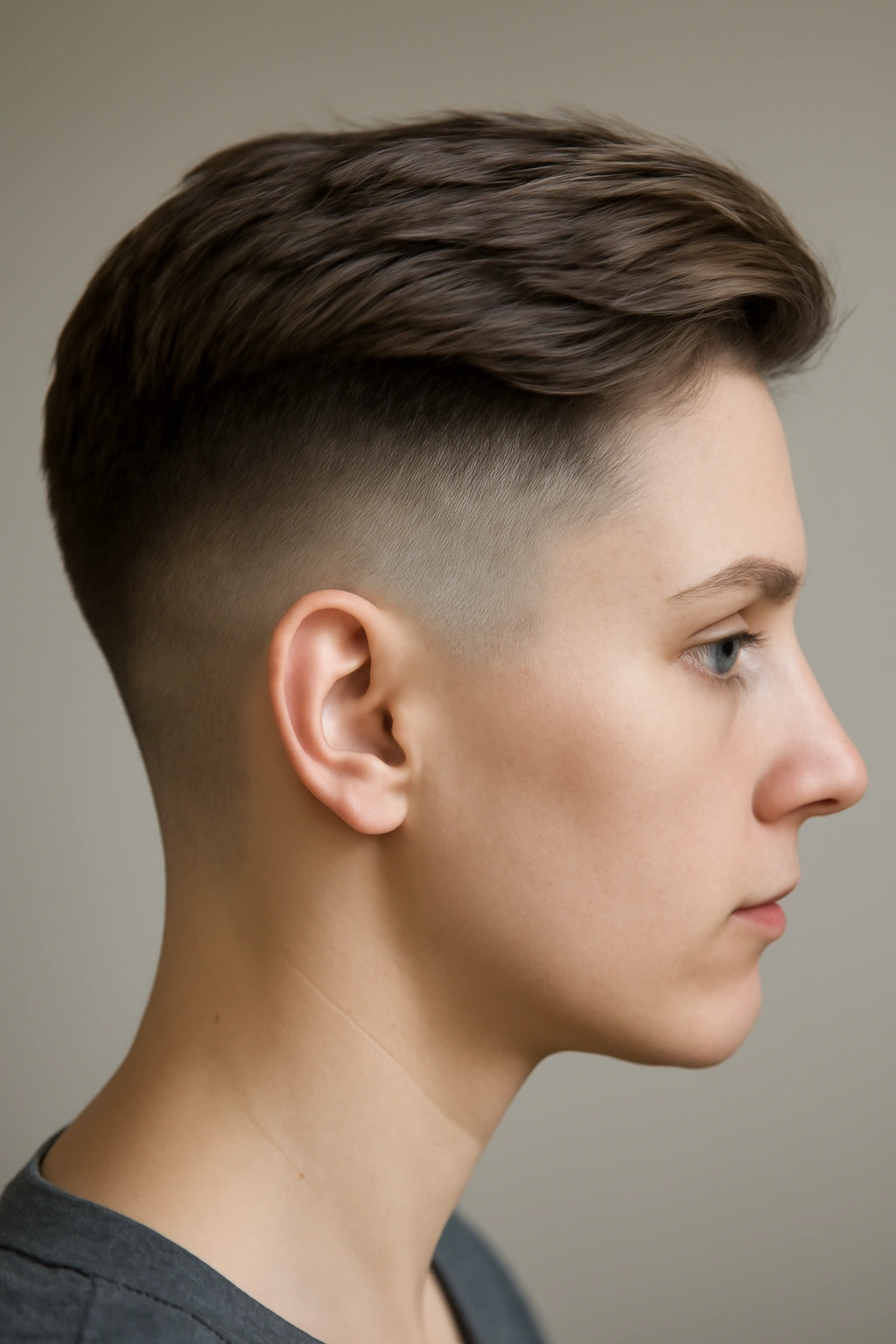
The blended undercut uses clipper-over-comb techniques or a gradual fade to blend the shorter undercut seamlessly into the longer top section. Rather than a distinct line or disconnect, the hair gradually transitions from short to long, creating a smooth, cohesive look. This style reads as less extreme than a disconnected or shaved undercut while still providing that dimensional, layered aesthetic.
Why Blending Works
A blended undercut is perfect for people who want an undercut but prefer a more subtle, cohesive appearance. The gradual transition creates movement and dimension without the shock value of a sharp disconnect. This style works beautifully on all hair types and is incredibly flattering because the gradual length change follows the natural contours of your head. It’s also forgiving between appointments—as your hair grows, a blended undercut looks intentional and styled rather than unkempt.
Styling and Growing Out
- Use styling products like pomade or paste to emphasize the blend and show the different layers
- Your stylist needs skill with clipper-over-comb or fade techniques to create a smooth blend; this isn’t a style for beginners
- The blend typically needs refreshing every 4-6 weeks as your hair grows out
- This style looks particularly good with textured, choppy layers on top that complement the gradient of length
- As it grows out, you have the option to either maintain the blend or let it grow into a shaggy layered cut
- The blended undercut looks especially sharp with a side-parted, swept-back, or textured styling approach
10. The Undercut with Shaved Designs
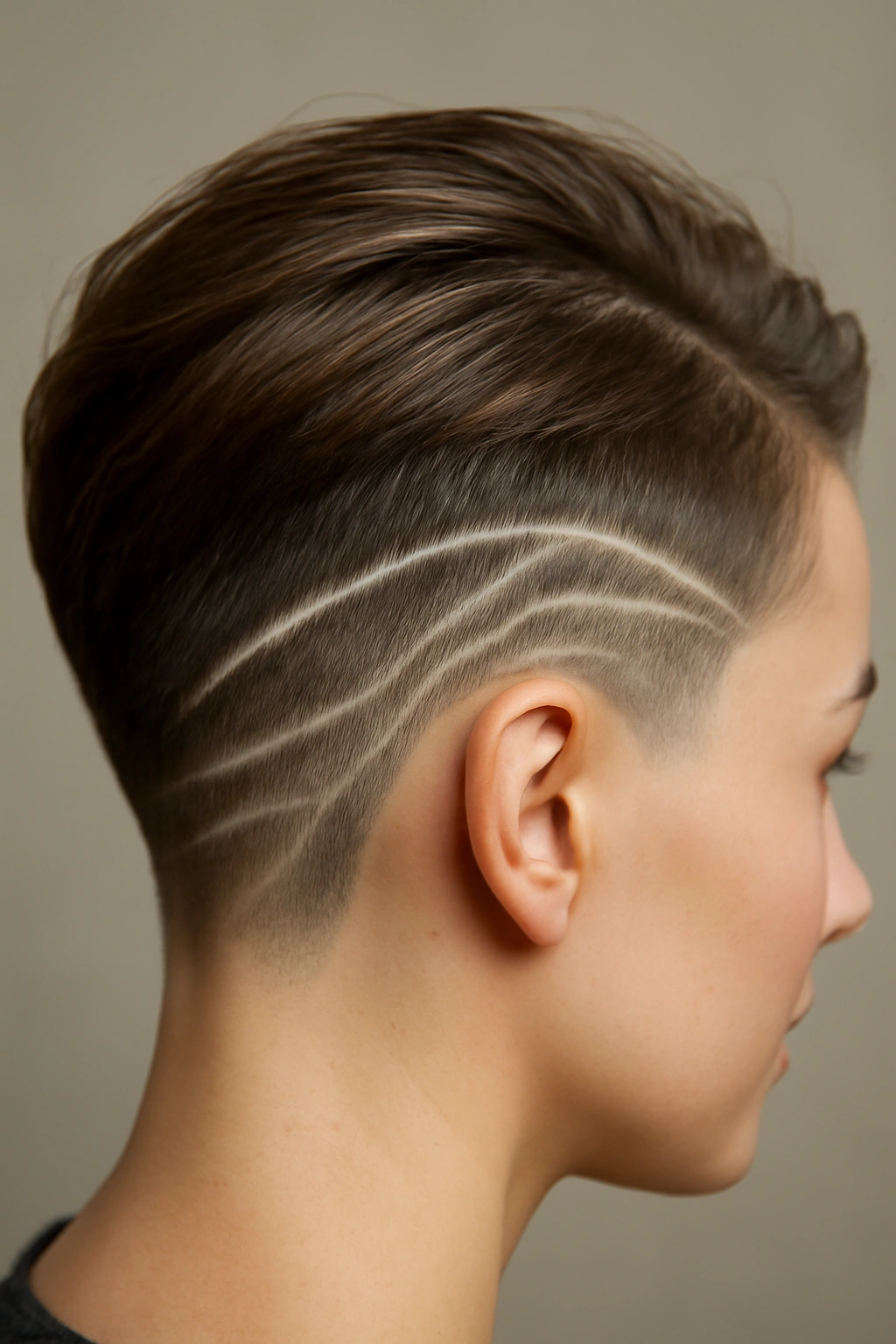
The undercut with shaved designs combines a standard undercut—typically shaved quite short on the sides and back—with added designs or patterns that incorporate the undercut area and sometimes extend into the longer top section. These designs might be simple and geometric or more elaborate, and they’re shaved in using precise clipper work. The design becomes an integral part of the overall cut rather than a separate artistic element.
Design Integration
With this style, the designs aren’t just decorative—they’re functional elements of the cut that affect how light plays across your head and how your hair looks from different angles. The designs might accent the undercut section, frame your face, or create visual lines that enhance your bone structure. Common design choices include sharp lines following your natural head shape, designs that emphasize your undercut placement, or patterns that tie into other design elements in your personal aesthetic.
Making the Most of This Style
- This style requires a stylist who understands how design can enhance a cut’s overall structure
- The designs need touching up more frequently than a standard undercut—every 2-4 weeks depending on growth rate
- Style your hair in ways that occasionally show off the designs rather than always covering them
- Consider how the designs will look from different angles—back, front, sides, and overhead
- This style pairs beautifully with edgy fashion and bold personal style; it conveys confidence and creativity
Worth knowing: If you’re adding designs to your undercut, think carefully about whether they’ll have lasting meaning for you. Hair grows out relatively quickly, but designs you’re going to stare at for weeks should be something you genuinely love.
Final Thoughts

The spectrum of undercut styles available today means there’s genuinely an option for every comfort level, lifestyle, and aesthetic preference. If you’re drawn to an undercut but feel hesitant about making a dramatic change, starting with a hidden or blended version lets you experience the style with lower stakes. If you’re ready for maximum impact, geometric designs or artistic undercuts let you turn your head into a genuine statement piece.
What matters most is choosing a style that aligns with your personality and life. An undercut that matches who you are and how you want to present yourself will feel empowering rather than uncomfortable. Finding a skilled stylist matters enormously—undercuts aren’t a standard cut that every stylist executes equally. Take time to research your stylist’s portfolio, ask questions about their experience with undercuts specifically, and don’t hesitate to look for someone different if your first appointment doesn’t deliver the quality you expected.
Remember that your undercut can evolve as you do. You might start with a hidden undercut and eventually feel ready for something bolder. You could try a subtle fade and later decide you want a shaved side part. The beauty of this style is that it’s temporary enough to change your mind but impactful enough to make you feel genuinely transformed. Trust your instincts, choose a skilled stylist, and embrace the confidence boost that comes with a style that feels authentically you.
