



Short hair is having a moment—and not the polite, safe kind of moment. If you’re tired of playing it safe with your locks, if you’ve been scrolling through photos and feeling drawn to something sharp, textured, and unapologetically bold, you’re in exactly the right place. The beauty of edgy short haircuts is that they’re not just about length; they’re about attitude, precision, and the willingness to stand out in a room full of predictable styles.
What makes a short haircut truly edgy isn’t always about how short it is. Sometimes it’s the contrast—shaved sides against longer layers on top. Sometimes it’s the texture—choppy, deliberately imperfect layers that catch the light and move with intention. Other times, it’s the geometry of the cut itself: asymmetrical, angular, unexpected. The best edgy short haircuts work for different face shapes, hair textures, and personal styles because they’re fundamentally about confidence and self-expression rather than fitting into a narrow mold.
The reality is that bold hair doesn’t have to mean complicated daily styling. In fact, many of the most striking short cuts actually require less fussing than longer hair. They show off the shape of your face and skull, they demand a good cut from someone who truly understands precision and movement, and they reward you with a look that commands attention without screaming for it. Whether you’ve got thick waves, fine straight hair, or something in between, there’s an edgy cut waiting for you.
Let’s walk through twelve of the most striking, personality-packed short haircuts that work for women who aren’t afraid to be noticed.
1. The Pixie Shag
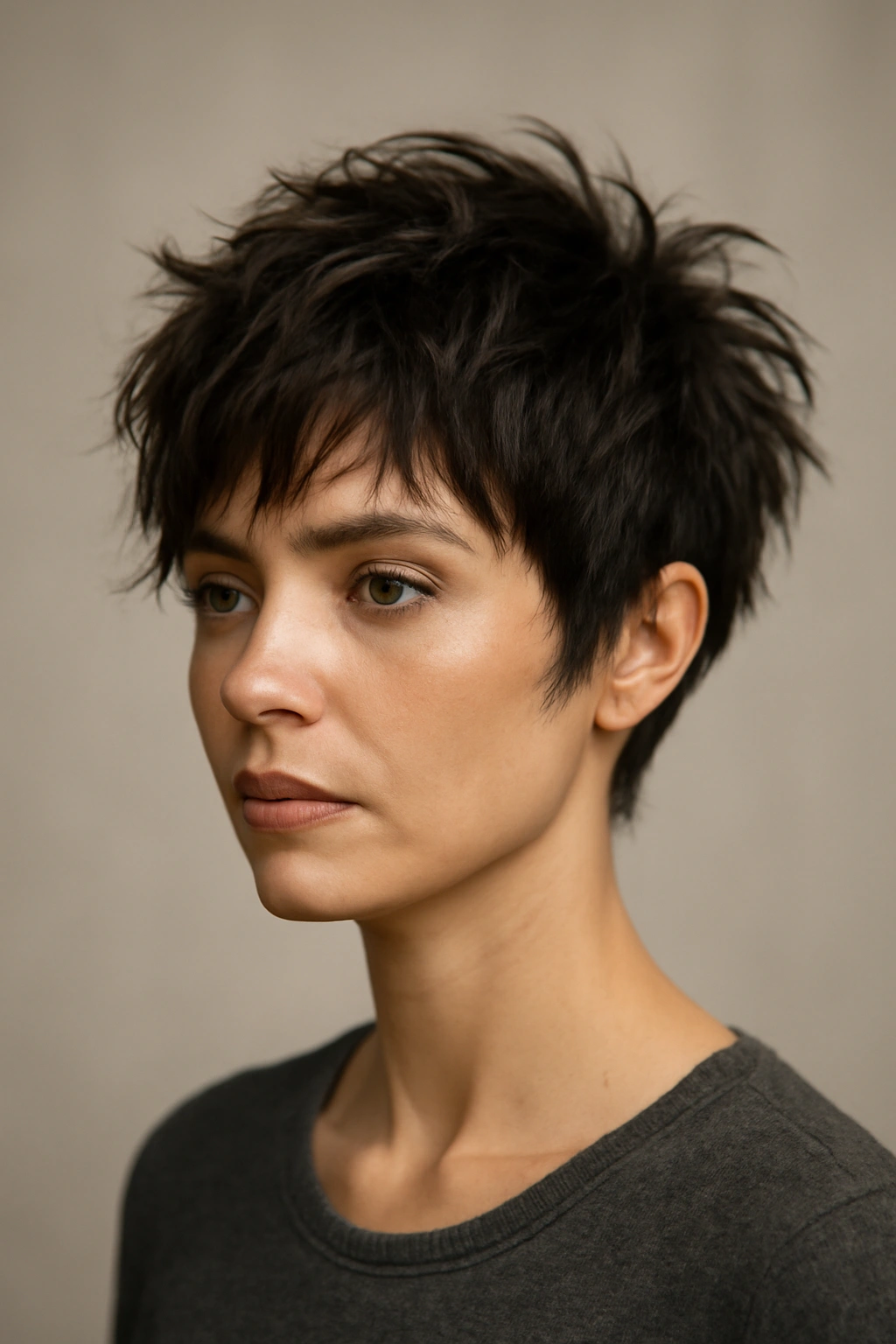
The pixie shag is where vintage cool meets modern edge, and honestly, it’s the perfect bridge if you’ve never gone super short before. Instead of a sleek, geometric pixie, this cut layers texture and movement throughout, giving you that undone, “I woke up like this” vibe that actually requires a skilled stylist to pull off. The top has enough length to work with—usually 2 to 3 inches—creating natural layers that follow the contours of your head, while the sides taper down to something much shorter and clean.
Why It’s Edgy Without Feeling Severe
This cut walks that beautiful line between tomboyish and feminine. The shaggy layers create movement and softness, which means it doesn’t read as harsh the way a blunt pixie can. You get all the boldness of cutting most of your hair off, but with the added dimension that prevents it from looking too stark or severe on most face shapes. The texture also means you can style it in multiple directions—sleep-messed one day, slightly smoothed the next.
What You Need to Know
- The taper on the sides is essential; ask your stylist for a fade or taper that starts around the ear and gets progressively shorter toward the nape
- This cut shows off your facial features and bone structure, so it’s particularly striking if you have defined cheekbones or a sharp jawline
- Styling is minimal but important—a texturizing product like sea salt spray or a light pomade keeps the layers separated and intentional
- Longer face shapes work beautifully with this; the horizontal layers add width where needed
- You’ll need trims every 4 to 6 weeks to maintain the layered shape as it grows
Pro tip: If you have fine hair, ask your stylist to point-cut the layers rather than blunt-cut them. This technique creates the appearance of more texture and movement without making thin hair look wispy.
2. The Textured Undercut
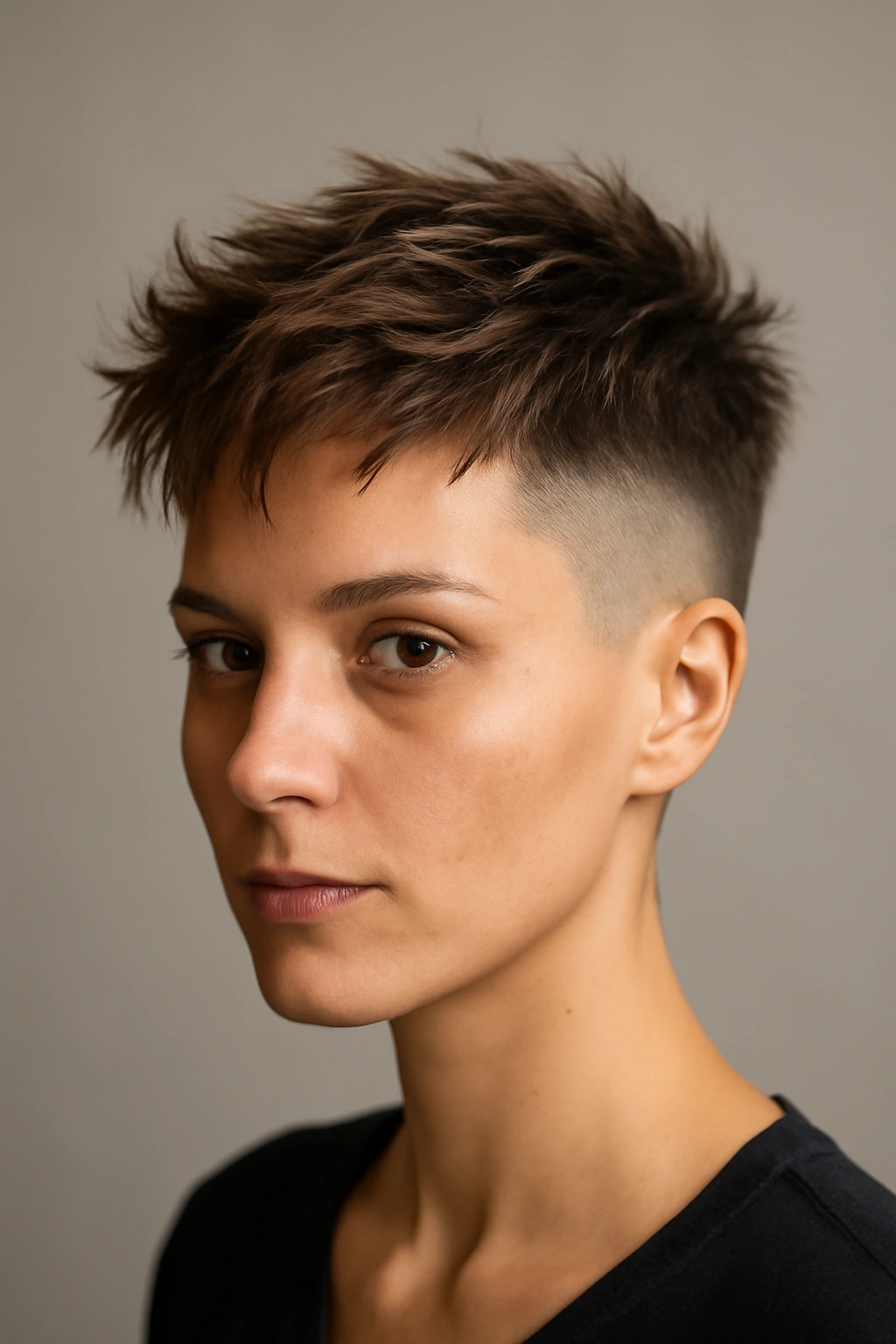
An undercut is bold by definition—you’re literally shaving or fading the sides and back short while keeping significant length on top. The textured version elevates this concept by pairing those clean, short sides with choppy, deliberately imperfect layers on top rather than a sleek, blunt surface. The result feels punk-influenced and artistic rather than military-precise.
What Makes This Cut Stand Apart
The magic happens at the transition line. Instead of a sharp, dramatic line dividing long from short, this cut blends them with layers and movement. The top section gets textured through point-cutting or chunking, which breaks up the weight and creates visual interest without relying on length. You’re essentially wearing a statement—short sides announce that you’re serious about looking intentional and different, while textured top layers prove you’re not trying too hard.
Technical Details Worth Understanding
- Side length typically sits around 1/4 inch to 1 inch, depending on how bold you want to go
- Top length usually ranges from 2 to 4 inches, long enough to style back, forward, or to the side
- The fade between the two lengths is where craftsmanship shows; a good fade looks intentional, not abrupt
- This cut genuinely suits most face shapes because the top length provides styling flexibility—you can comb it forward to soften angles or sleek it back to highlight them
- The textured layers keep it from looking too harsh, making it easier to style casually or dress up
Worth knowing: Textured undercuts require more styling attention than super-clean undercuts. You’ll want a texturizing product, and you might need a blow dryer to get movement into those choppy layers. This isn’t a wash-and-go cut for most hair types.
3. The Asymmetrical Bob
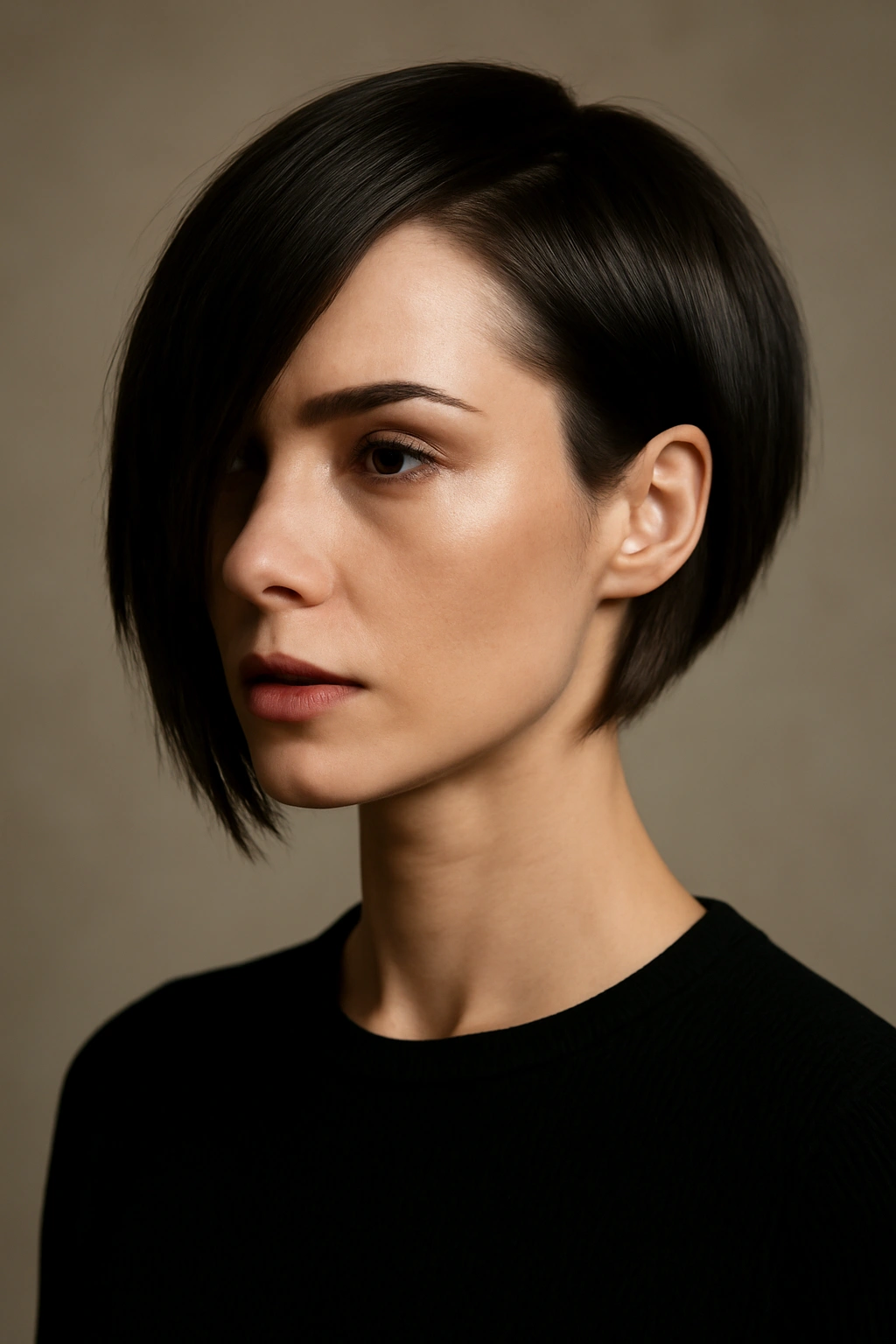
An asymmetrical bob—where one side is noticeably longer than the other—is bold through imbalance. It plays with visual expectation and breaks every rule you learned about symmetrical, “flattering” haircuts. The result is modern, artistic, and undeniably edgy. This cut works best when the length difference is genuinely dramatic: one side might graze your jawline while the other sits at your shoulder, for example.
Why Asymmetry Reads as Edgy
When everything in fashion and beauty is obsessed with balance and symmetry, asymmetry feels rebellious. It draws the eye and demands attention. An asymmetrical bob also shifts the way light and shadow play across your face, creating dimension and intrigue. The longer side can frame your face while the shorter side offers an unexpected peek at your neck, ear, or the nape of your neck. It’s inherently more interesting than a traditional bob.
How to Make It Work for Your Face
- If you have a rounder face, keeping the longer side in front (framing the face) and shorter in back helps elongate proportions
- If you have an angular or longer face, reversing this—shorter in front, longer in back—adds width and softness
- The cut needs texture and movement to avoid looking accidentally uneven; ask your stylist to add choppy layers throughout rather than a blunt, geometric edge
- This works beautifully with color too; an asymmetrical cut pairs wonderfully with dimensional highlights or an ombre effect that plays into the asymmetry
- Styling product is your friend here; the cut’s drama is heightened when the texture is intentional and deliberate
Quick fact: Asymmetrical cuts have roots in avant-garde fashion and were popularized by legendary stylists who understood that true elegance sometimes means breaking traditional rules.
4. The Geometric Crop
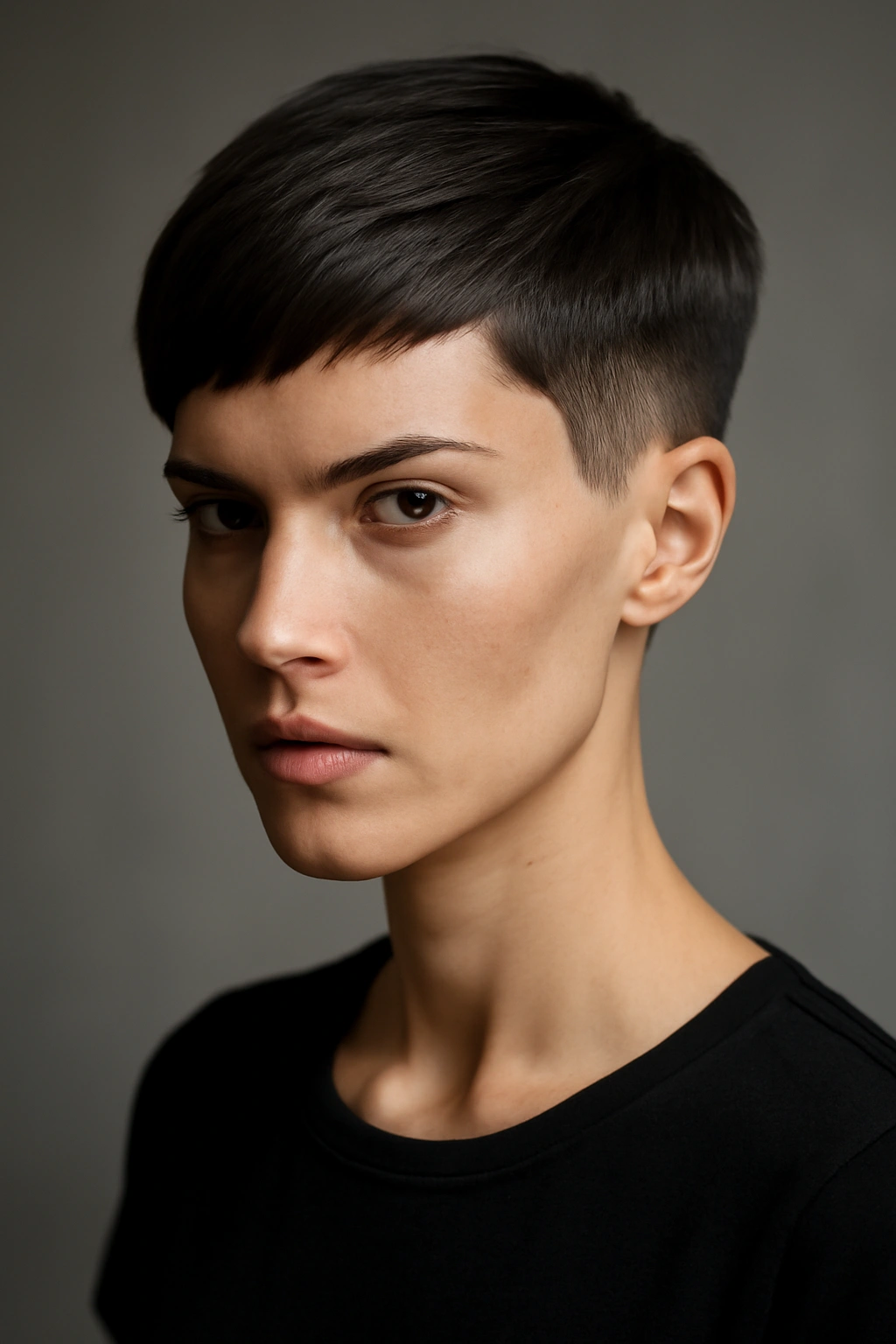
A geometric crop is the intellectually cool cousin in the short haircut family. This is a precisely cut, architectural style where the stylist treats your head like a canvas and uses clean lines, specific angles, and intentional shapes to create something that looks almost sculpted. Unlike a shag or textured cut that embraces movement and imperfection, a geometric crop celebrates precision and form.
What Makes It Visually Striking
The geometry here is the entire appeal. Think sharp angles along the jawline, a specific line at the nape, clean transitions between lengths. The cut typically features longer length on top and progressively shorter sides and back, but the artistry is in how those transitions are executed. A truly geometric crop almost looks like it’s been designed rather than grown—it has that intentional, thought-out quality that reads as modern and editorial.
Execution and Styling Considerations
- This cut demands a highly skilled stylist who understands how the cut will change as your hair grows and moves
- The shape is best maintained every 3 to 4 weeks; as it grows, the geometry softens and the edge fades
- Styling can be minimal for everyday wear, but this cut truly sings when styled intentionally—slicked back, tousled, or even slightly damp and smooth
- It suits strong facial features and people with the confidence to wear something so deliberately designed
- Fine hair or thin hair can actually look fuller with a geometric crop because the precise shape and shorter length minimize the appearance of scalp
- Straight to slightly wavy hair shows the geometry better than very curly hair, which might obscure the clean lines
Real talk: This cut is for people who care about precision and don’t mind regular maintenance. It’s less “wash and go” and more “I know what I’m doing with my hair.”
5. The Slicked-Back Fade
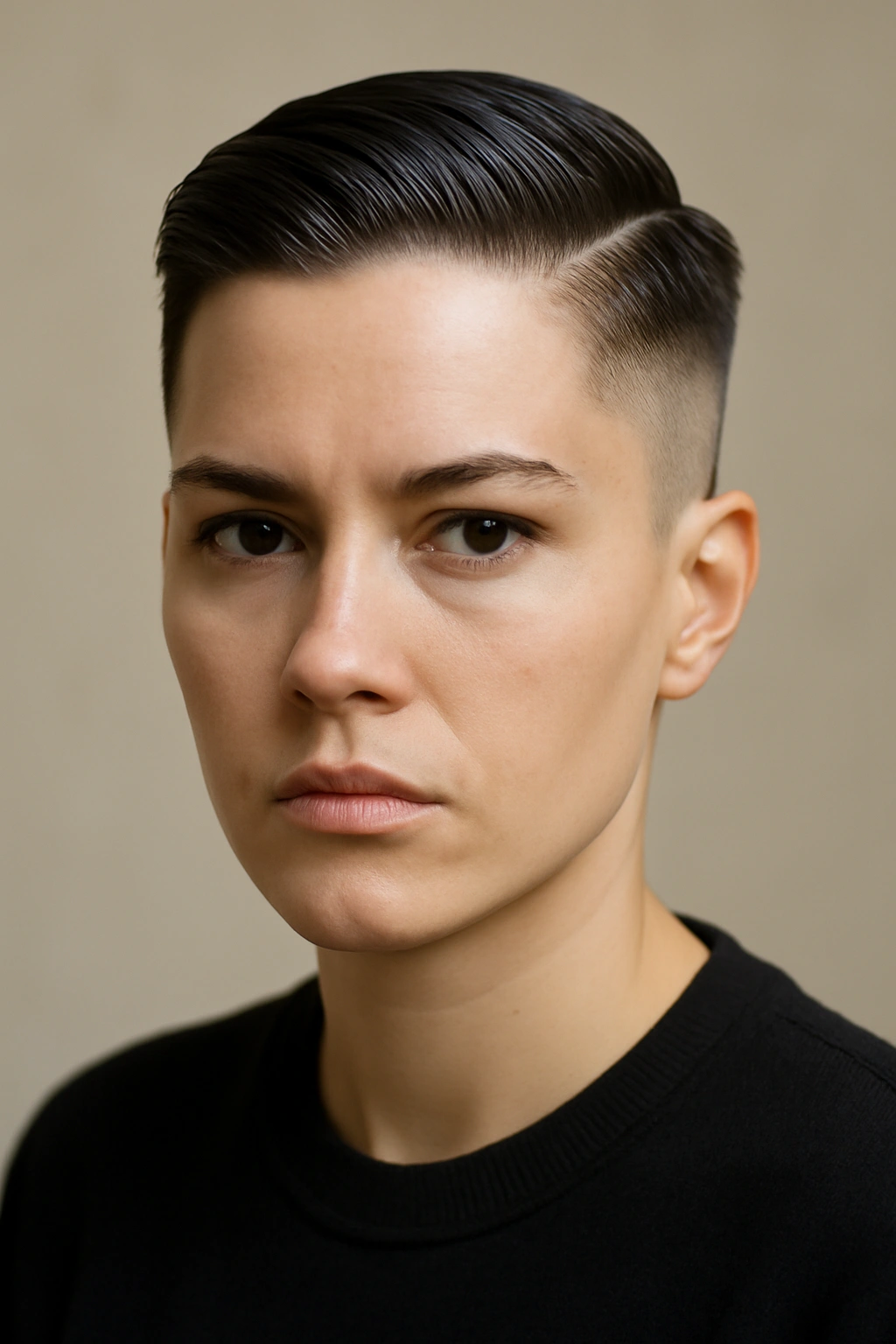
If you love the simplicity of an undercut but want something that reads ultra-polished and intentional, the slicked-back fade delivers pure edge through precision and styling. This cut features very short, faded sides that gradually blend into slightly longer length on top—typically 1 to 2 inches—that you’ll comb straight back against your head, smooth and close.
The Appeal of Minimal Styling Maximum Impact
The beauty of this cut is that it’s simultaneously low-maintenance and high-impact. The cut itself is simple: short, clean, precise. But the styling transforms it into a sleek, sharp look that photographs beautifully and commands attention. The slicked-back styling shows off your face shape completely and creates a confident, almost architectural effect. There’s something inherently bold about wearing your face completely exposed and your hair this intentionally groomed.
Getting the Cut and Keeping It Sharp
- Ask your stylist for a skin fade or high fade on the sides and back (meaning the shortest sections sit right against the scalp)
- The top should be blended to the fade, not a jarring transition; the best fades look like a gradient
- You’ll want a pomade, gel, or cream to style it back; this isn’t a casual style, so embrace the grooming ritual
- The whole vibe is sharp and polished, so this works best with clean lines and consistent maintenance
- This cut suits almost any face shape because the styling is so intentional and controlled that it flatters through confidence
- Plan for trims every 3 to 4 weeks to keep the fade looking clean and intentional
Pro tip: The quality of the pomade or styling product matters more than you might think. A good product that holds without looking greasy or stiff makes the difference between looking put-together and looking like you’re wearing gel. Spend a bit on something you like.
6. The Choppy Layers
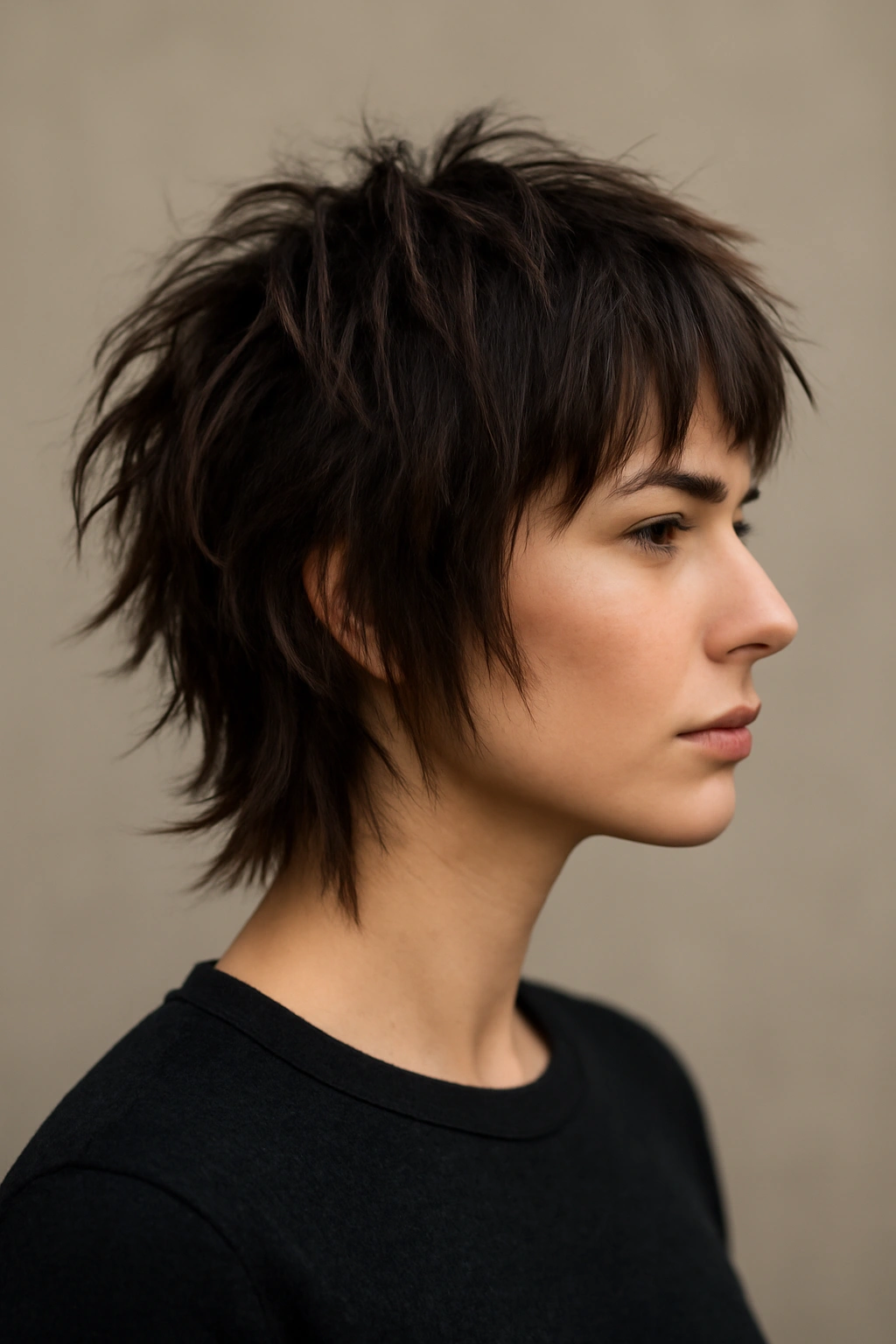
Choppy layers are the cut for people who love movement, texture, and a bit of controlled chaos. Unlike organized, parallel layers, choppy layers are cut at different angles and lengths, creating peaks and valleys throughout the hair. When light hits it, the texture reads as dynamic and alive. This cut works at virtually any length—from very short (2 inches) to shoulder-length—but what makes it edgy is the deliberate imperfection and the way it demands personality.
Why Choppy Layers Feel So Bold
There’s something inherently confident about wearing a haircut that celebrates texture over refinement. Choppy layers say you don’t care if every hair is in place, that you value movement and dimension over polish. The cut works because the choppiness isn’t random—it’s calculated to create specific lines of movement and shadow that actually make you look more interesting, not messier. Each chop is placed intentionally to catch light or create a particular silhouette.
Styling and Texture Considerations
- This cut looks best with some texture in your actual hair; it can work on straight hair but truly shines on wavy or naturally textured hair
- Styling requires texture products—salt spray, texturizing cream, or a light mousse—to encourage the choppy movement
- You can wear it tousled and undone, which is the whole appeal for many people, but you can also smooth it or blow-dry it into different shapes
- The cut typically takes off a significant amount of weight, which means finer hair can look fuller and thicker
- Face shape works with this because you’re creating movement and dimension rather than relying on a specific geometric shape
- Choppy layers grow out beautifully; even at 8 weeks, when you’re due for a trim, they still look intentional rather than unkempt
Worth knowing: Choppy layers require more frequent trims than blunt cuts—every 5 to 6 weeks is ideal to maintain the intentionality. As they grow out, they can start to look ragged rather than textured unless you stay on top of maintenance.
7. The Tapered Sides with Long Fringe
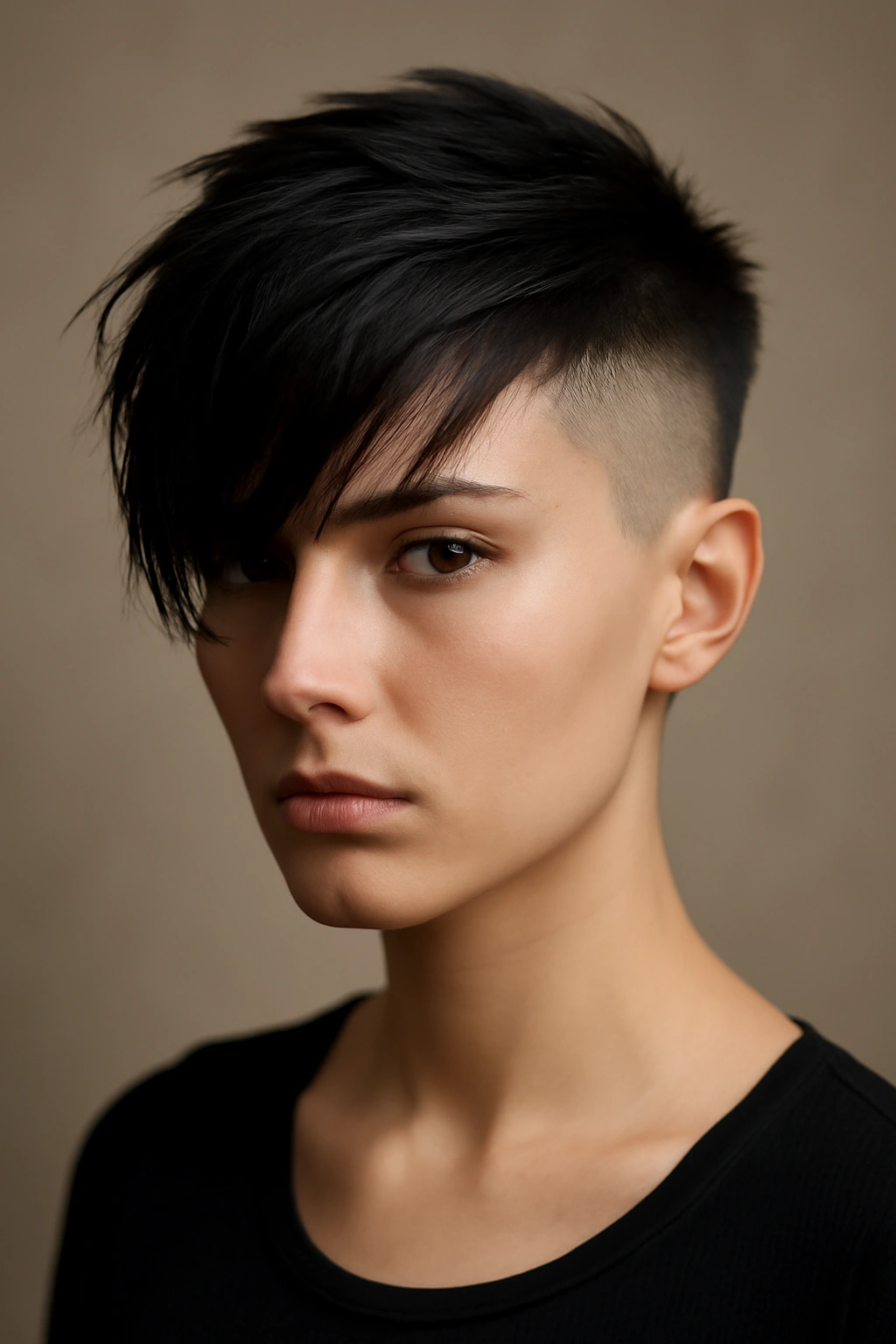
This cut is a study in contrast: very short, tapered sides that fade or fade down to nearly nothing, paired with significantly longer length in the front that falls across the forehead as a striking fringe or bangs. The length difference is the entire point—it’s dramatic and intentional, creating an almost punk-rock or avant-garde vibe while remaining wearable.
The Power of Dramatic Contrast
The appeal here is visual tension. Your eye doesn’t know where to look first—the clean, sharp sides or the bold fringe drawing attention to the face. This contrast makes the cut memorable and edgy without being extreme. The fringe works as a styling tool too; you can sweep it to one side, let it fall straight, or tuck it back as your mood and occasion dictate. The possibilities give this cut real versatility despite its seemingly specific design.
Making This Work for Your Hair Type and Face
- The fringe length should be determined by your face proportions; it typically ranges from eyebrow-length to nose-length
- Finer or thinner hair can handle this beautifully because the fringe sits on top and the sides are short, minimizing scalp show
- This cut is particularly striking with straight or slightly wavy hair because the fringe line reads crisply and the contrast is clear
- For rounder faces, a longer fringe helps lengthen proportions; for longer faces, a shorter, blunt fringe adds width
- Styling the fringe takes a bit of intention—you’ll need a blow dryer and possibly a smoothing product to keep it looking intentional
- The tapered sides require trims every 3 to 4 weeks to maintain the clean fade
Pro tip: If you’re committing to a fringe, invest in styling tools and products. A fringe works best when it looks intentional, and that requires a blow dryer, a round brush or flat iron, and something to keep flyaways smooth.
8. The High and Tight Fade
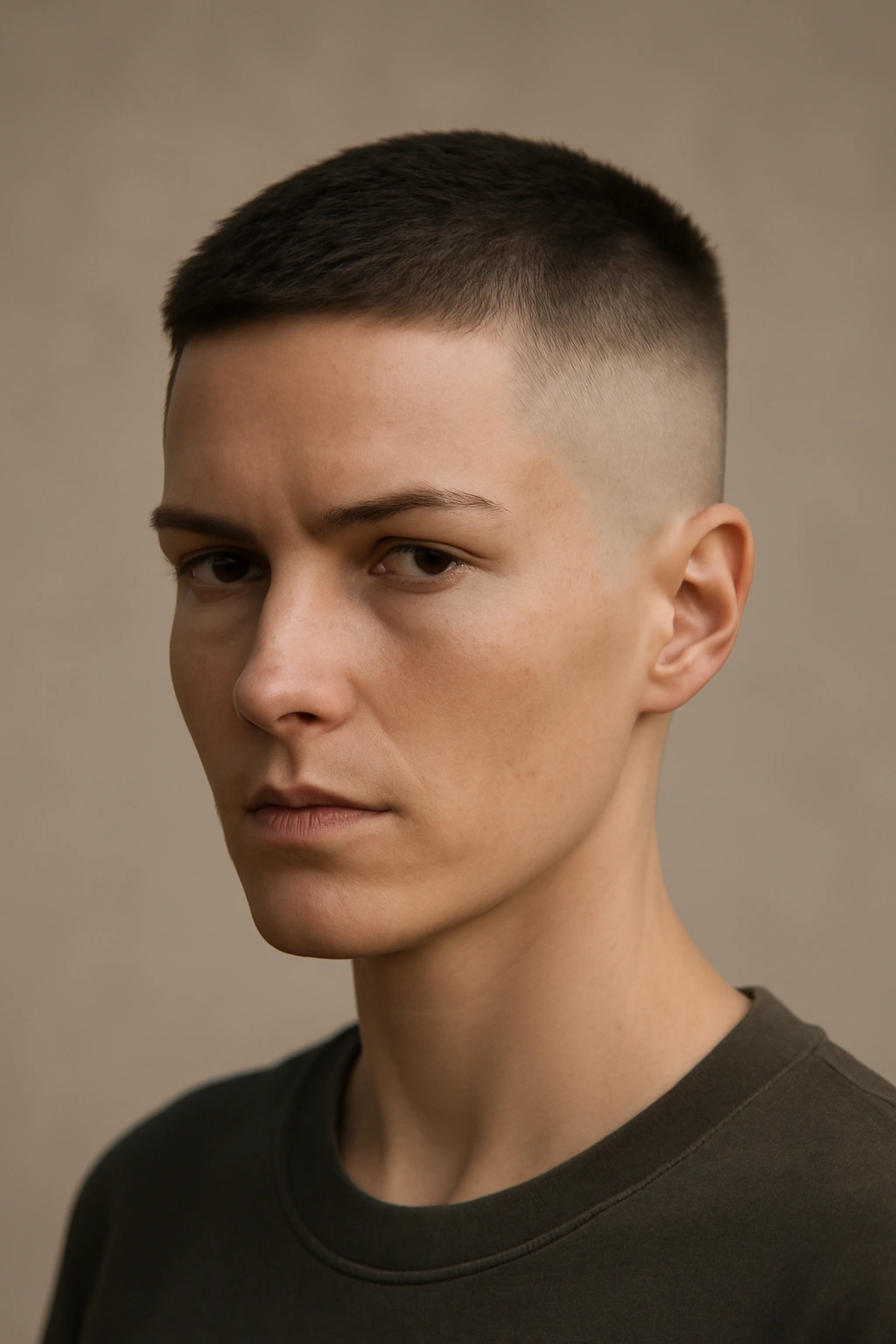
The high and tight fade is the no-nonsense, military-inspired cut that’s become increasingly popular in fashion and personal style circles. This is short—we’re talking very short, with significant length only on the very top (usually 1.5 to 2 inches) and everything else faded down to nearly nothing. It’s an unambiguously bold statement.
The Confidence Factor
This cut doesn’t hide anything. Your face shape, bone structure, and confidence are completely exposed. There’s no hair to soften angles or frame features—just your face and a minimal amount of hair on top. This level of exposure reads as incredibly bold and sure. You’re essentially saying you’re comfortable with how you look and you don’t need hair to feel confident. That’s edgy in the most straightforward sense.
Who This Works Best For and How to Style It
- This cut works best on people with relatively symmetrical face shapes and clear, healthy skin (since nothing hides)
- If you have a strong jawline or defined cheekbones, this cut showcases those features beautifully
- The short top length allows for minimal styling, though you can add texture or movement with pomade or styling cream
- Many people wear this cut with the top slightly longer in front and shorter in back, creating a subtle slope
- You’ll need trims every 3 to 4 weeks to maintain the sharp fade and keep the short top from looking unkempt
- This cut suits straight or slightly wavy hair best; very curly hair can be challenging because the short length might emphasize curl texture
Quick facts: This cut requires zero styling products if you prefer a super-clean look, or minimal product if you want to add texture. It’s the ultimate low-maintenance bold haircut.
9. The Shaved Sides Design
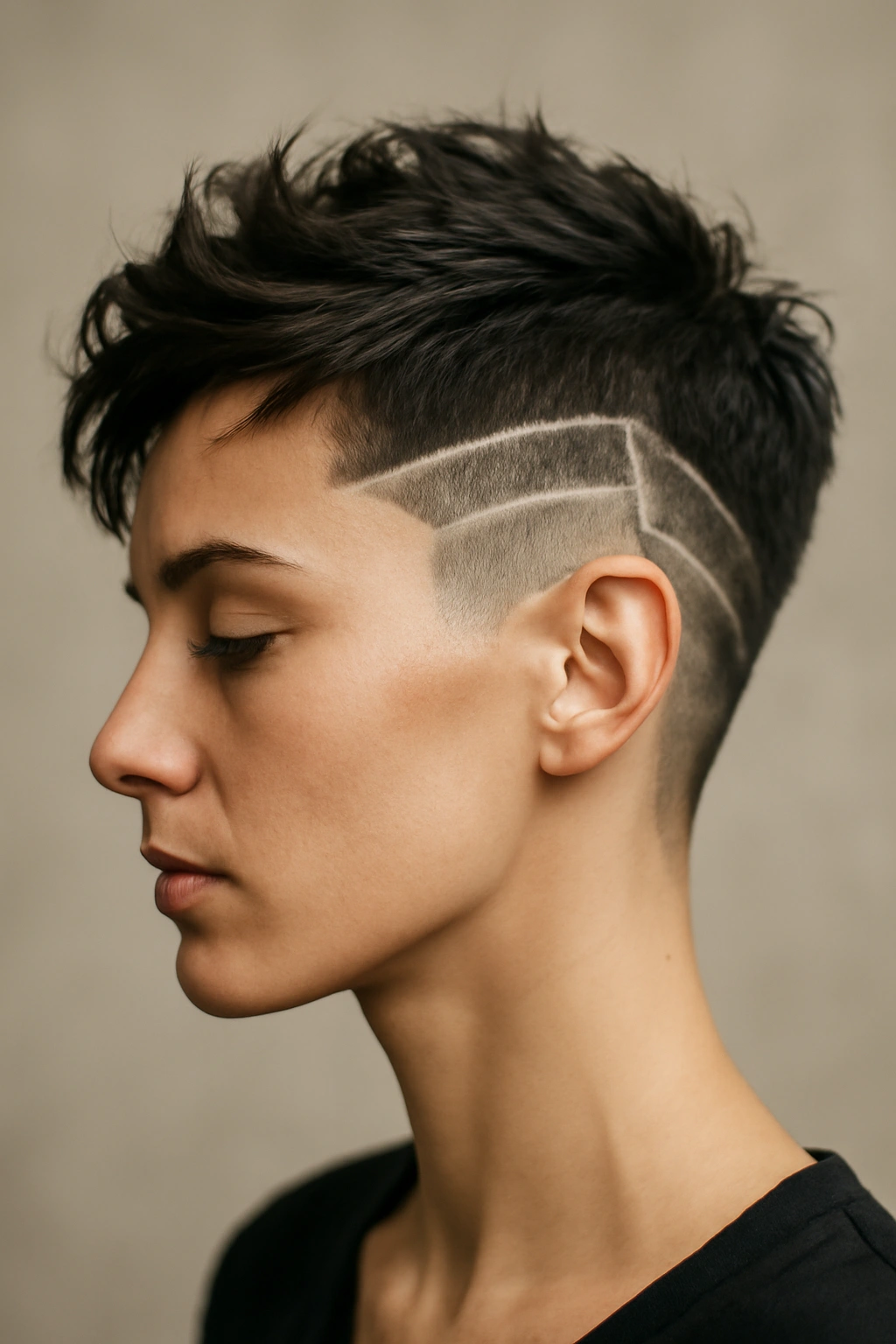
Taking the undercut concept a step further, this cut features shaved or very closely faded sides with custom designs shaved into them—geometric patterns, lines, or even images. The longer hair on top provides contrast and makes the shaved design element stand out dramatically. This is edgy and artistic, turning your hair into a canvas.
The Art and Impact of Shaved Designs
Shaved side designs instantly elevate a haircut from bold to artistic. They’re a statement piece, a way to express personality and creativity through your hair. The designs can be as simple as clean, sharp lines creating geometric patterns or as complex as detailed imagery. What makes this approach edgy is that it’s permanent (well, until it grows out) and requires commitment and confidence. You’re not just changing your hair; you’re turning it into wearable art.
Practical Considerations and Styling
- Find a stylist who specializes in design cuts; this requires real artistic skill and precision
- The design will be most visible from certain angles, so think about how you typically wear your hair and what angles matter to you
- Designs show best on short hair; as the sides grow out, the design blurs and eventually disappears
- You’re looking at trims every 2 to 3 weeks if you want to keep the design crisp
- The contrast between the shaved sides and longer top creates automatic visual interest, so the top doesn’t need to be complicated
- This cut works with most face shapes and hair textures because the focus is on the design itself rather than the haircut’s ability to flatter
Worth knowing: Shaved designs grow out, and the regrowth looks intentional for a while before it just looks like you need a cut. Plan on either committing to frequent maintenance or being okay with the design fading as your hair grows.
10. The Textured Spiky Cut
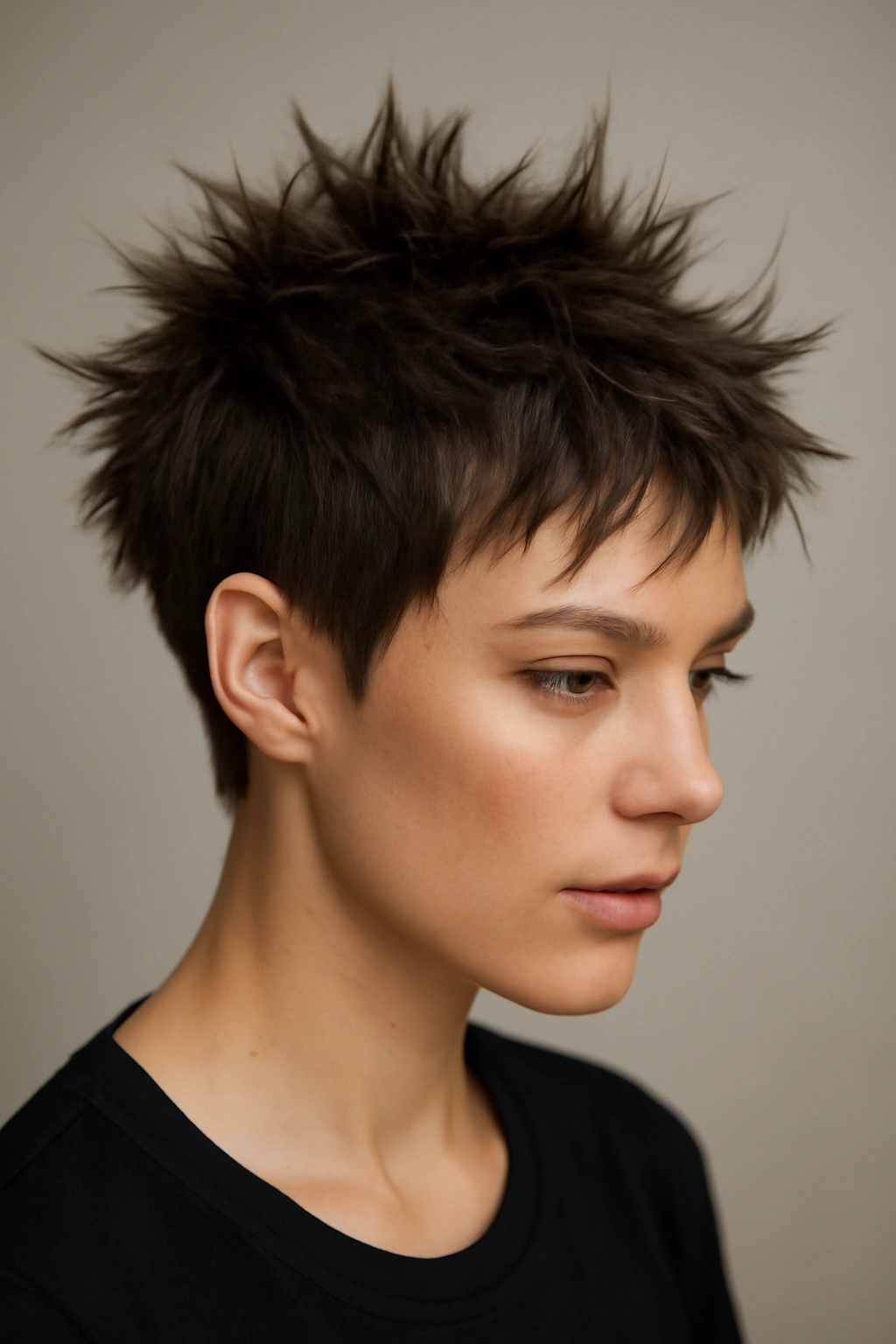
For people who love movement and visual interest, a textured spiky cut delivers edge through controlled chaos. This cut creates short, choppy layers throughout that stick up and out in multiple directions, creating a high-volume, dynamic look. It’s more playful than geometric styles but just as bold in its own way.
How Texture and Spikiness Create Edge
Spiky hair reads as youthful, confident, and fun. It’s not trying to be sleek or perfect; it’s trying to be interesting and alive. The “spiky” texture comes from the way the layers are cut at different angles and lengths, combined with styling techniques that encourage the hair to separate and stand up. This cut demands personality and movement, which automatically makes it edgy. You can’t wear this cut and look polished or understated—the whole point is visual impact and movement.
Making Spiky Texture Work With Your Hair
- This cut works best on naturally wavy or curly hair that has inherent texture; straight hair requires more styling effort
- The cut typically features very short sides and back with longer, textured length on top
- Styling products are essential—texturizing spray, clay, or pomade helps separate the spiky layers and keep them defined
- You’ll want a blow dryer to create the texture and movement
- This cut looks young and playful; it works especially well if you have an angular face shape or strong features that can carry off the volume
- Trims every 4 to 5 weeks keep the spiky texture from growing into something too choppy and unintentional-looking
Pro tip: Play with different styling products to find what creates the texture you want. Some products give you a wet-look defined spikiness, while others create a matte, more natural texture. The right product makes all the difference.
11. The Disconnected Undercut
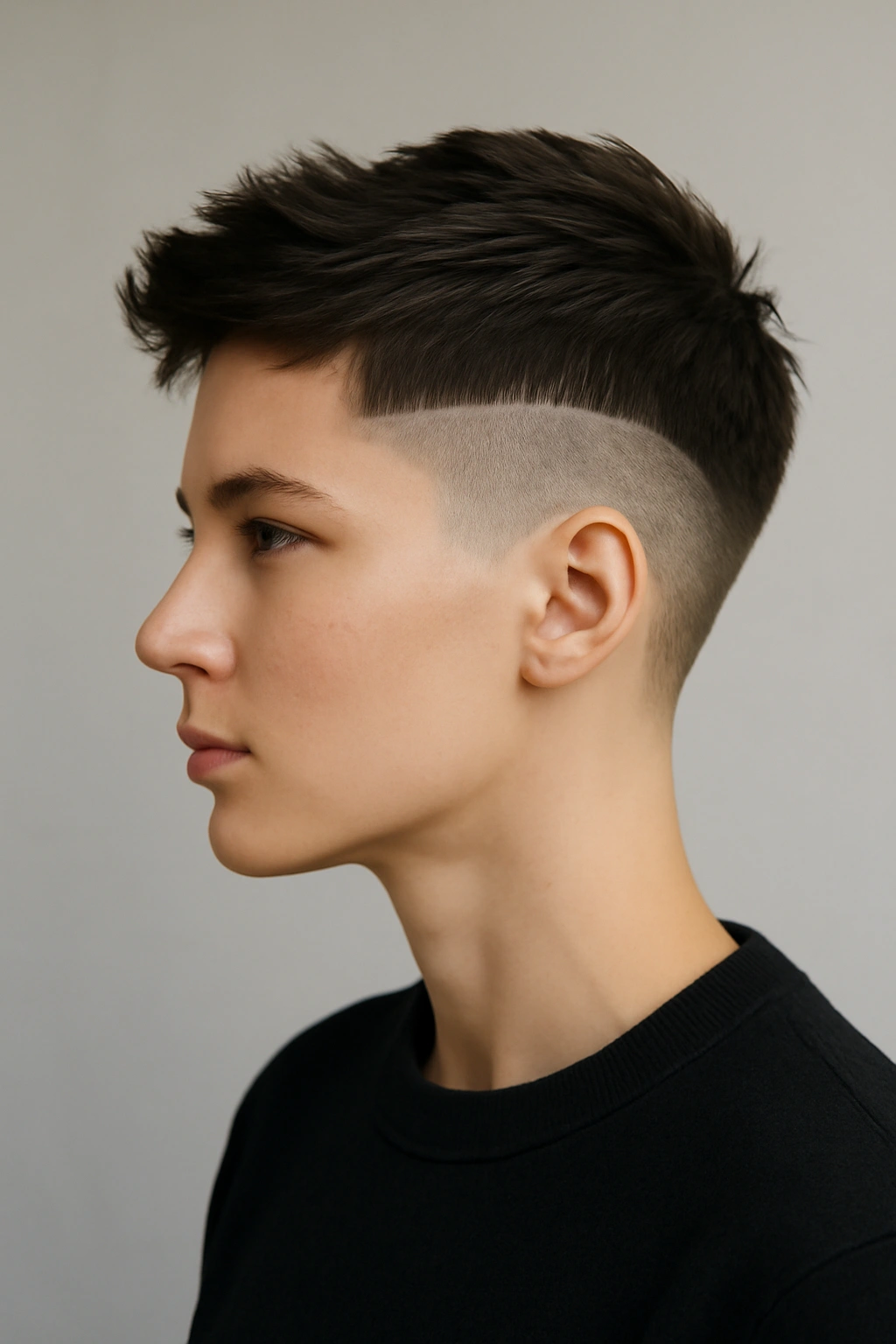
A disconnected undercut takes the undercut concept and amplifies the drama by creating a very obvious, sharp line between the short sides and the longer top—no blending, no fade, just a distinct transition. The two lengths are intentionally separated, creating a graphic, almost sculptural effect.
Why Disconnection Creates Maximum Impact
The whole point of a disconnected undercut is the contrast and the line itself. There’s no transition zone; the eye can follow a clear demarcation between very short and notably longer. This graphic quality is what makes it edgy. It’s not subtle or soft; it’s a statement. The disconnection also means the longer top can have its own shape and style completely independent of the sides, creating multiple visual elements within one cut.
Technical Details and Styling
- The line between sections is key; it should be clean and precise, not blurry
- Top length typically sits at 2 to 4 inches, long enough to style in multiple directions
- Side length is usually faded or clippered very short, anywhere from a 0 to a 1/2 inch
- The disconnect reads most dramatically with straight to wavy hair; curly hair softens the line
- You can style the top in countless ways—slicked back, tousled, swept to one side—and each style changes how the disconnection reads
- The cut requires trims every 4 to 6 weeks to maintain the sharpness of the line
Real talk: This cut is for people who genuinely want to make a visual statement. If you like blending in or prefer subtle changes, this isn’t your cut. The whole point is that it’s obviously, intentionally different.
12. The Modern Mullet
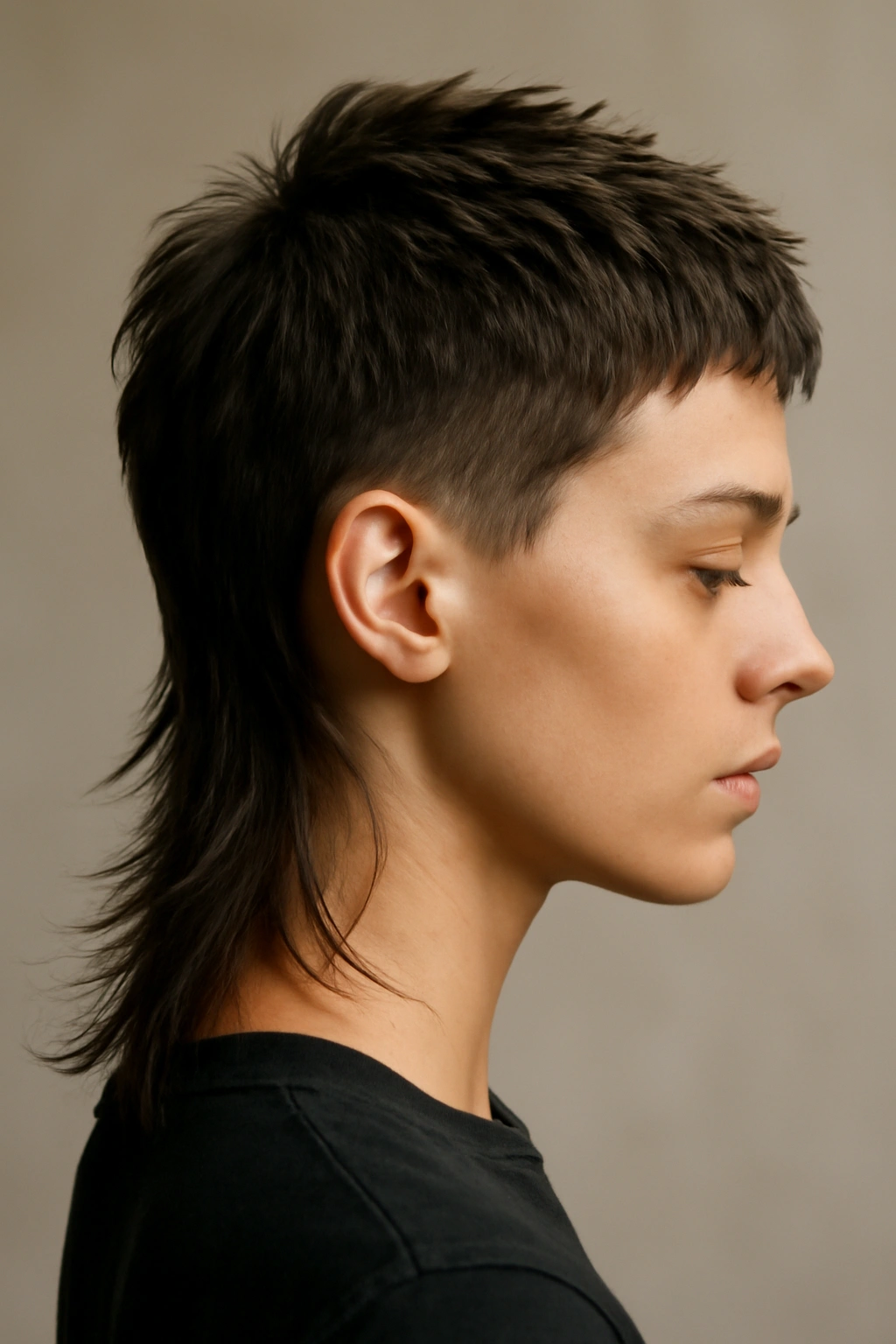
The modern mullet takes the controversial 1980s hairstyle and reimagines it through a contemporary, edgy lens. Short and tapered on the sides and top, with noticeably longer length in the back, it’s a cut that plays with proportion and breaks expectations. In its modern iteration, it’s artistic and intentional rather than dated.
Why the Modern Mullet Is Having a Moment
The modern mullet appeals to people who love irony, nostalgia, and genuine boldness. It’s recognizably a mullet, but it’s styled and cut in a way that reads as contemporary and artistic rather than retro. The cut plays with the balance of your overall silhouette—it’s unexpected and that unexpectedness is exactly what makes it edgy. It’s also genuinely wearable in a way the original mullet wasn’t; there’s room for personality and styling variation.
Modern Mullet Details and Styling
- The front and sides are typically short and clean, often with a fade or taper
- The back has significant length; this could be a few inches longer than the front or dramatically longer, depending on how bold you want to be
- Some modern mullets feature textured or choppy layers throughout, while others have a cleaner, more geometric quality
- The back length gives you styling options—you can wear it down for the full effect or tie it back for a different look
- This cut works on most face shapes because the short front balances the longer back, creating visual interest without relying on a specific silhouette
- Trims every 4 to 6 weeks keep the front sharp while you’re growing the back
Worth knowing: Styling a modern mullet takes intention. The front can be styled numerous ways, and the back length needs care and possibly styling product to look intentional rather than accidentally messy.
Final Thoughts
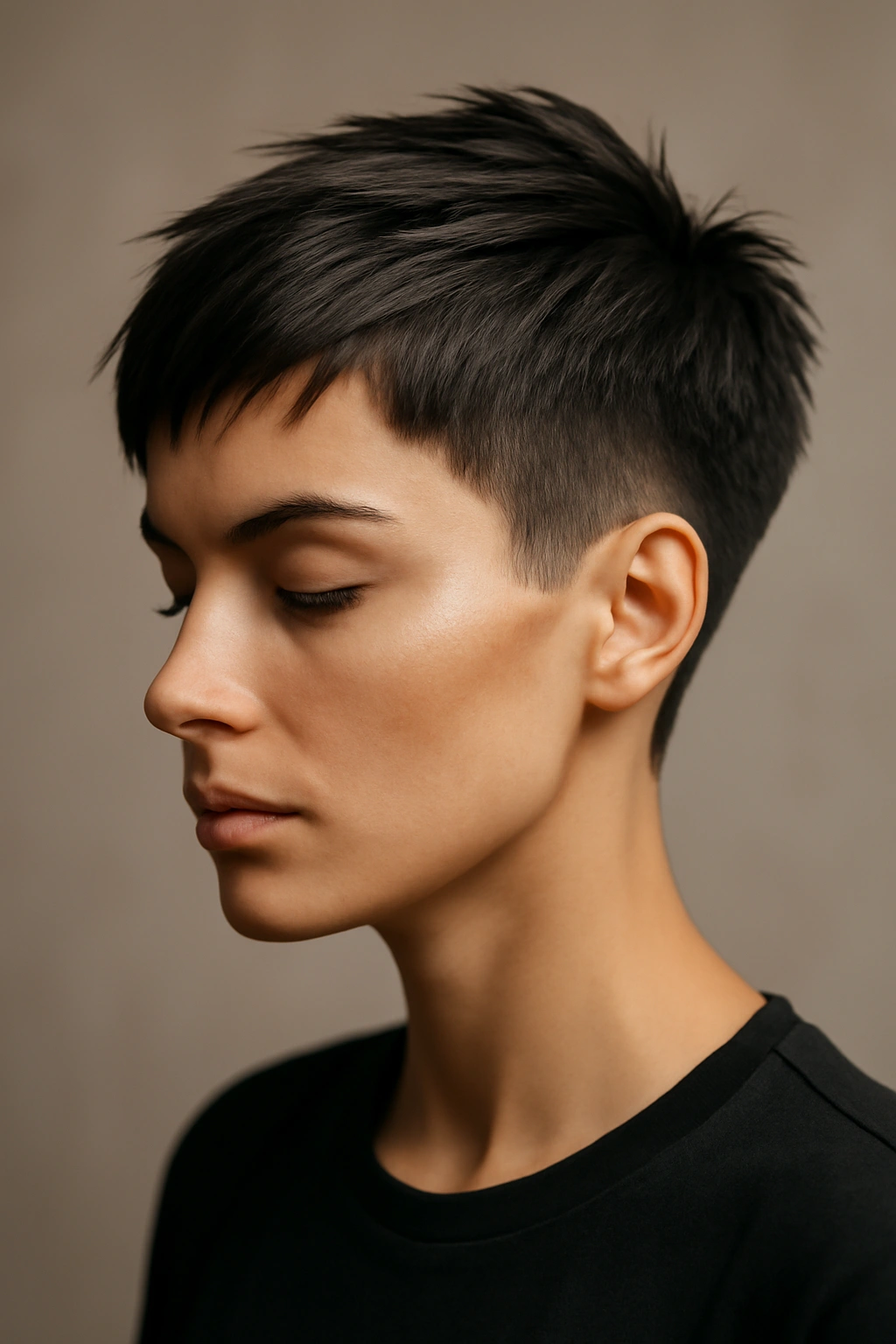
Bold, edgy short haircuts aren’t for everyone, but if you’re drawn to them, that pull is worth listening to. The truth is that the shortest haircuts often require the most confidence—there’s nowhere to hide, nowhere to disappear into. But that exposure is also what makes these cuts so powerful. When you commit to an edgy short cut, you’re essentially saying that you’re comfortable being seen, that you value standing out, and that you’re willing to maintain something that requires precision and intentionality.
The other thing these cuts have in common is that they reward good maintenance. A geometric crop, a disconnected undercut, a high and tight fade—these cuts look incredible when they’re freshly trimmed and start to lose their edge as they grow out. That’s not a flaw; that’s part of the commitment. Finding a stylist who understands your vision and can execute these precision cuts is essential. You’re not just getting a haircut; you’re getting a partnership with someone who can help you maintain the edge you’re going for.
The most important factor isn’t which specific cut you choose—it’s that you choose something that genuinely excites you. If you wake up and think about getting one of these haircuts, if you’re scrolling through photos and feeling a spark, that’s your sign. Edgy hair is for people who want to feel like themselves in a more intentional, visible way, and that’s always worth pursuing.
