



Bangs have a way of completely transforming how you present yourself—they can soften your features, add dimension to your face, or create a bold statement depending on which style you choose. For Black women, the right bangs can be absolutely stunning, but finding the perfect option means understanding how different bang styles interact with your unique hair texture, face shape, and personal aesthetic. The good news is that bangs work beautifully across all hair types worn by Black women, from natural coils and coils to locs, braids, and straight styles.
The challenge many Black women face is that most mainstream hairstyle content features bangs styled on straight or wavy hair, leaving fewer clear examples of how these looks translate to natural textures and protective styles. This means you need guidance specifically tailored to Black hair—advice that accounts for the way bangs interact with curl patterns, the maintenance requirements for different textures, and which styles will actually frame your face the way you want them to. Whether you’re working with a natural wash-and-go, wearing box braids, or maintaining locs, there’s a bang style that can elevate your look.
What makes bangs work for Black women is understanding the relationship between your face shape, hair texture, and the specific bang style you choose. A bang that would be stunning on someone with a round face and wavy hair might need adjustment for someone with an oval face and tight coils. The same principle that makes bangs transformative for anyone—their ability to draw attention to your eyes and cheekbones—works for Black women too, but getting it right means being thoughtful about texture, styling time, and maintenance.
1. Wispy Feathered Bangs
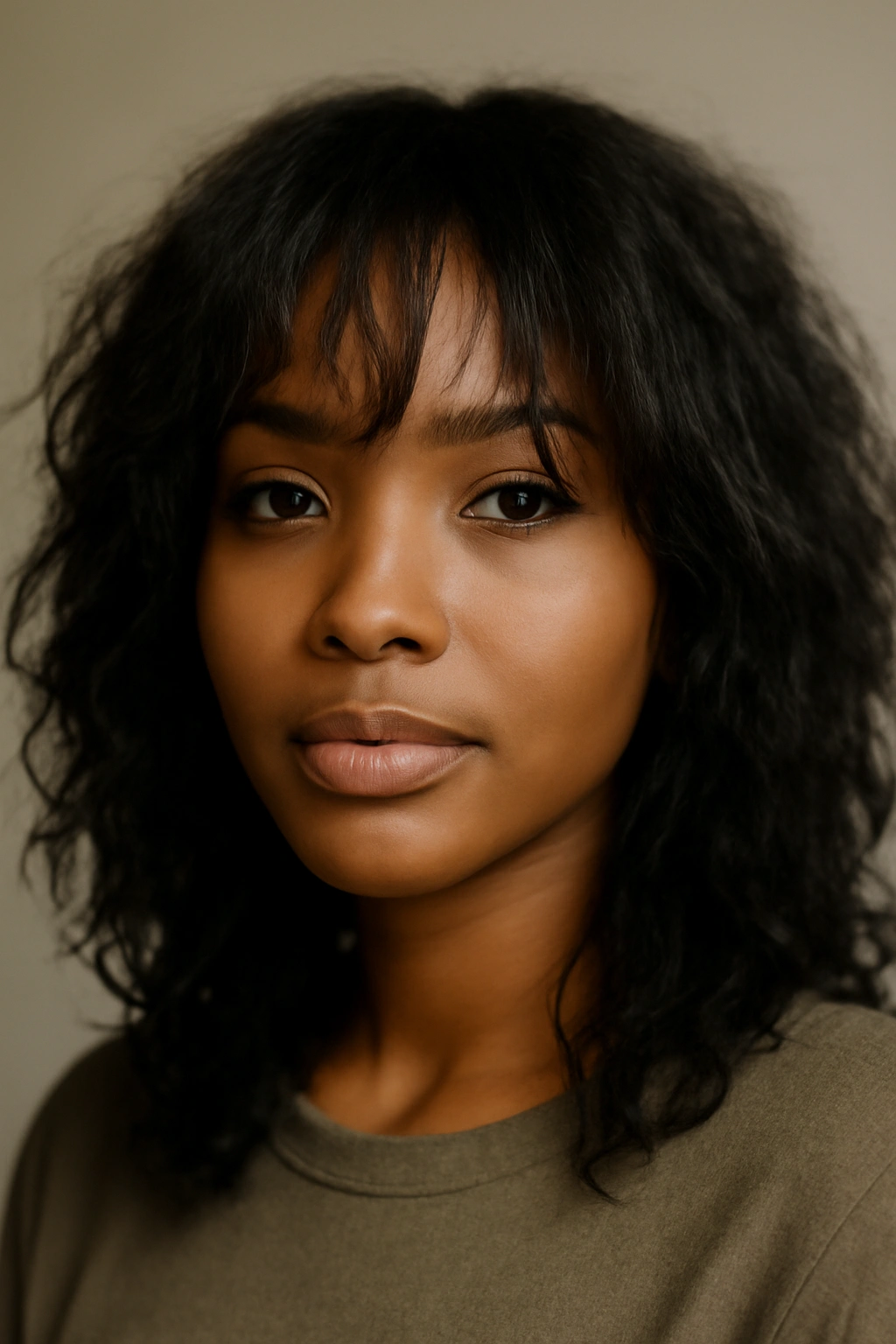
Wispy feathered bangs are some of the most flattering and low-maintenance options for Black women, especially those with natural hair. These bangs feature longer, softer layers that create movement rather than a blunt line across your forehead. Instead of sitting flat against your skin, feathered bangs fall through your hair in delicate pieces, which works beautifully with the natural texture of coily and curly hair.
Why They Work for Black Women
Feathered bangs blend seamlessly with natural curl patterns because they’re cut in layers rather than as a solid block of hair. When your hair dries, these layers distribute throughout your texture, creating dimension and softness around your face. They’re particularly flattering for women with round or square faces because the movement and layers add visual interest without the heaviness of blunt bangs.
How to Style and Maintain
- The beauty of feathered bangs is that they require minimal daily styling for natural hair textures
- Simply use your regular curl routine on your bangs—apply leave-in conditioner, define with gel or cream, and let them curl naturally
- For straight styles, a light flat iron or curling iron in the morning keeps the feathered layers looking fresh
- Get trims every 4-6 weeks to maintain the layered shape and prevent the bangs from becoming too blunt as they grow
- These bangs work with most hair lengths and pair beautifully with natural texture, box braids, or even straight sew-ins
2. Blunt Straight Bangs
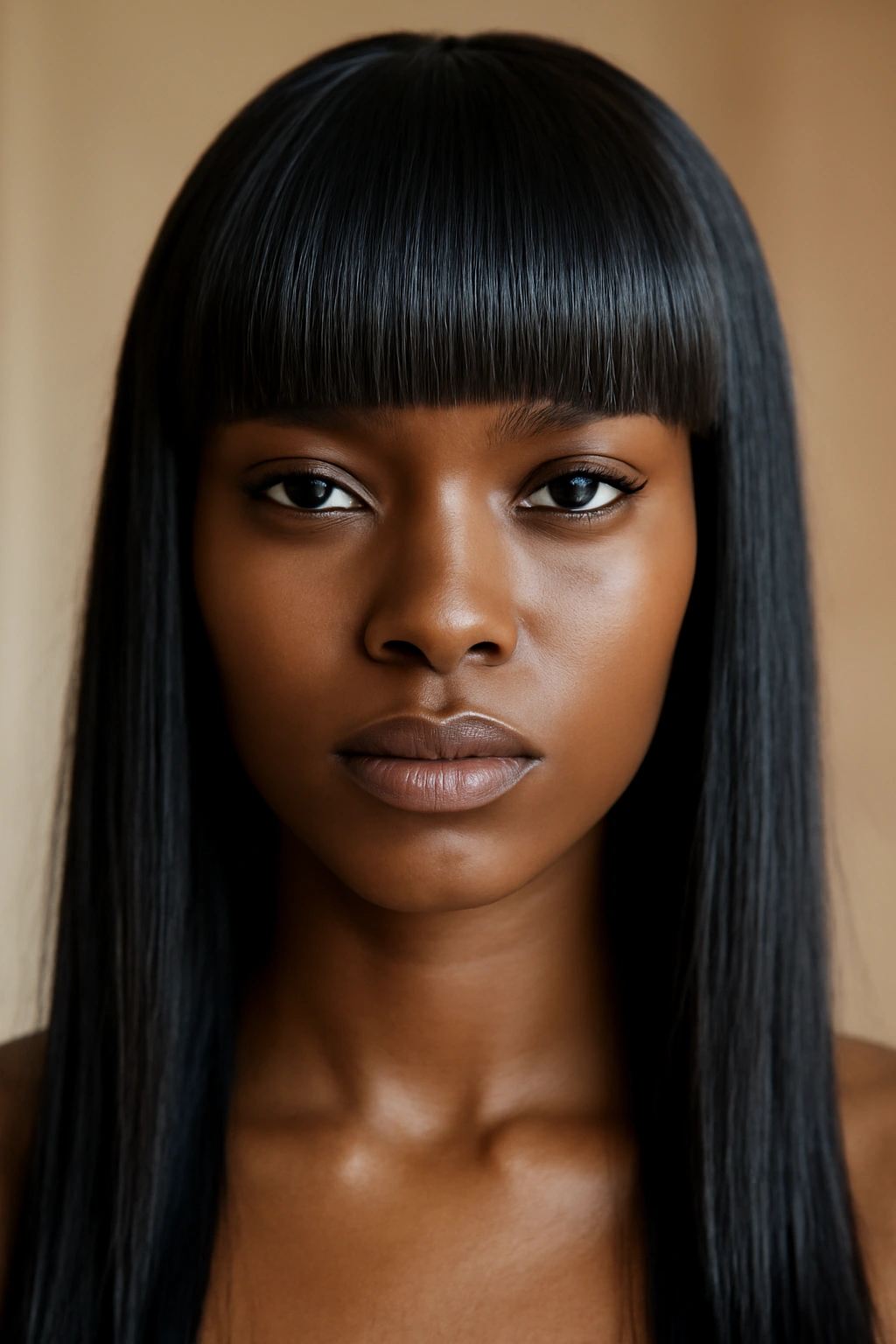
Blunt straight bangs make a bold statement and offer a clean, graphic look that photographs beautifully. This is a no-nonsense bang style that sits right at your eyebrow (or slightly above) in a straight, defined line. For Black women wearing straight styles—whether natural hair that’s been pressed, relaxed hair, or straight weaves—blunt bangs create a striking frame around the face.
The Best Face Shapes for Blunt Bangs
Blunt bangs are particularly flattering on women with oval or heart-shaped faces, as the horizontal line of the bangs balances wider foreheads or jawlines. If you have a very round face, blunt bangs can sometimes emphasize roundness, but pairing them with volume at the crown and layering in the sides of your hair creates balance.
Styling Tips for Different Hair Types
- For natural hair that’s been pressed straight, apply a smoothing serum and use a flat iron on the lowest heat setting to prevent heat damage
- Maintain the blunt edge with trims every 3-4 weeks—blunt bangs show growth and unevenness quickly
- If you wear your hair in protective styles like Senegalese twists or straight sew-ins, get your straight bangs cut before installing the protective style
- Blunt bangs with relaxed hair require consistent smoothing to maintain their sharp appearance, so budget extra time for styling
- This style demands healthy edges, so keep your hairline nourished with edge control and protective styling practices
3. Curved Bangs (Baby Bangs That Follow Your Face Shape)
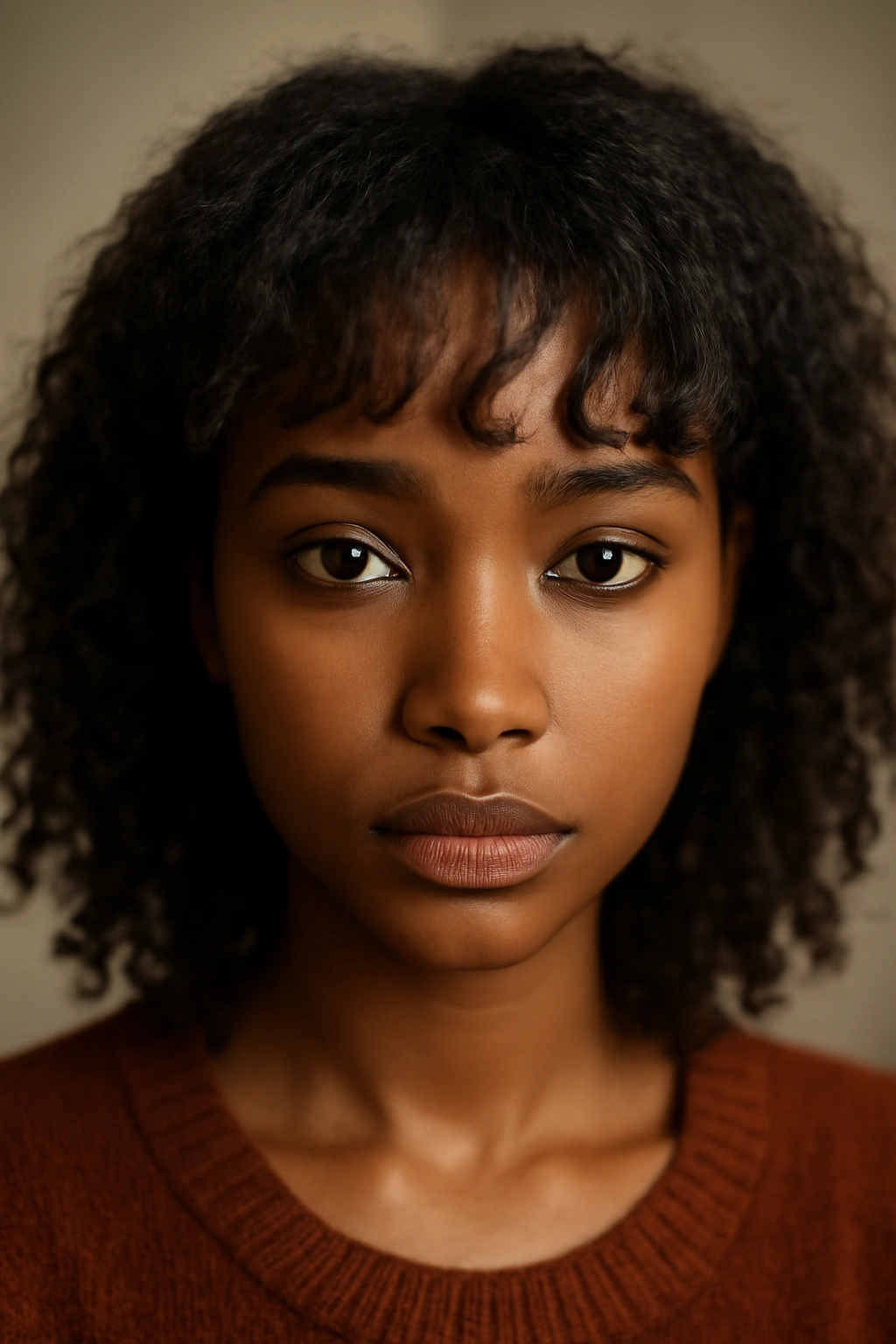
Curved bangs follow the natural contour of your face, dipping slightly at the center and longer at the sides where they blend into your hair. This style is flattering because it creates a customized frame that adapts to your unique face shape rather than imposing a one-size-fits-all line across your forehead.
Why This Style Is Versatile
Curved bangs work well with any face shape because they’re cut to your individual proportions. The curve can be subtle or more pronounced depending on your preference and the difference between your forehead width and your cheekbones. This style pairs beautifully with both textured natural hair and straight styles.
Maintenance and Care
- Curved bangs need to be cut by someone experienced with Black hair and familiar with how your specific texture will settle after cutting
- Ask your stylist to cut the bangs with your hair in its natural state (not blown out or straightened) so the curve accounts for your actual texture
- For textured hair, trim every 5-6 weeks; for straight styles, every 4 weeks
- These bangs look especially gorgeous with medium-length or longer hair that you wear down
- Curved bangs also work beautifully in styles where you wear your hair half-up, half-down, as the side-swept length transitions smoothly
4. Side-Swept Bangs
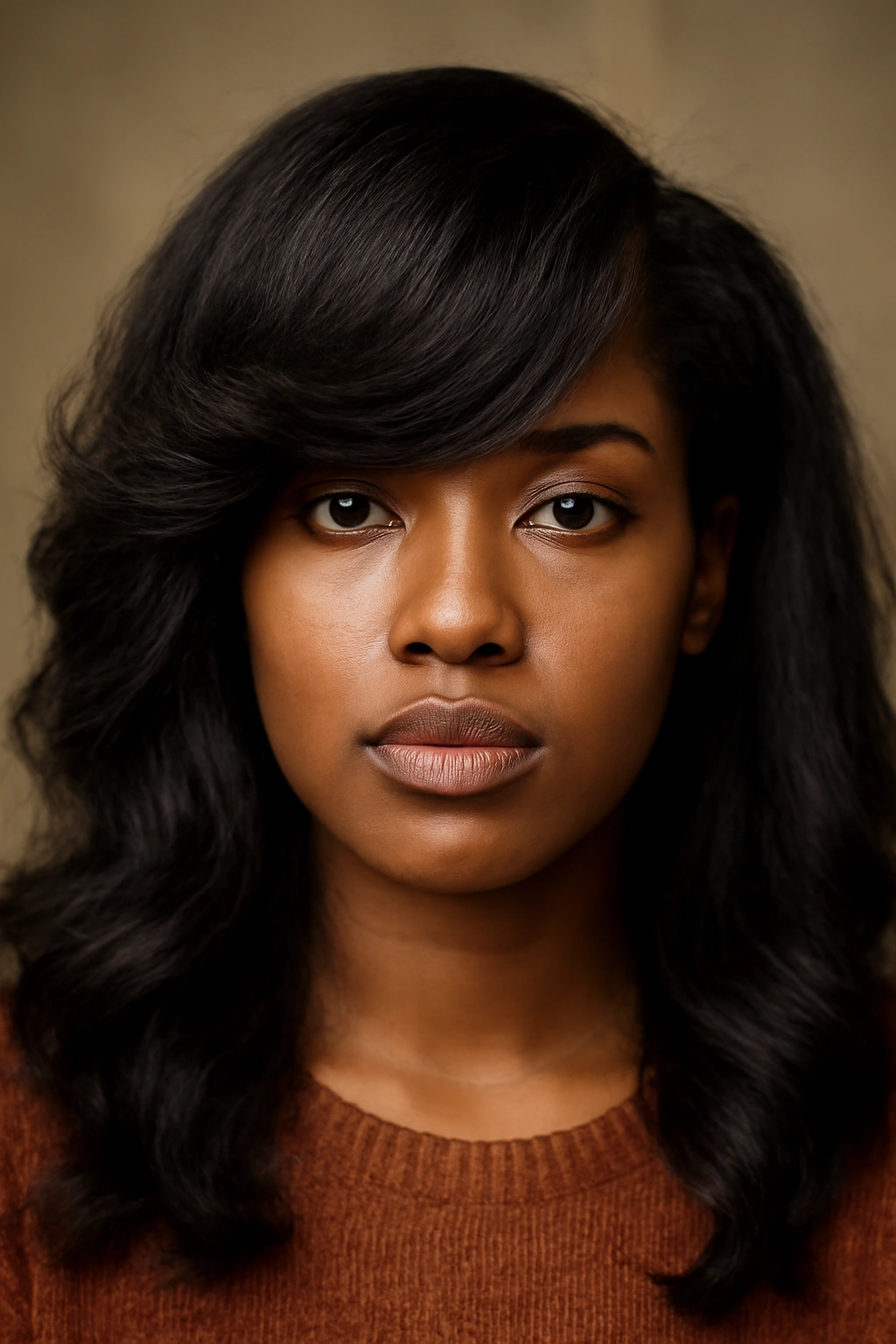
Side-swept bangs are cut longer on one side of your face and gradually get shorter as they sweep across to the other side. Rather than sitting center on your forehead, these bangs angle dramatically, creating an asymmetrical frame that can look edgy, elegant, or playful depending on how you style them.
Face Shapes That Shine With Side-Swept Bangs
Side-swept bangs are exceptionally flattering for round faces because the angled line creates visual length and definition. They work beautifully on square faces as well, where the sweeping angle softens strong jawlines. Even on oval faces, side-swept bangs add an unexpected dimension that feels modern and intentional.
Styling for Maximum Impact
- Side-swept bangs work wonderfully with voluminous styles—big curls, textured crown, or height at the top creates an intentional, fashion-forward look
- For natural texture, enhance your natural curl pattern with curl cream and let the bangs curl with the rest of your hair
- On straight styles, use a flat iron or round brush to get the sweep to sit where you want it
- These bangs can obscure one eye depending on how you wear them, so think about whether you’re comfortable with that aesthetic
- Consider your hair density and texture—very fine or thin bangs won’t have the weight to sweep dramatically, while thicker hair creates beautiful movement
- Side-swept bangs pair especially well with side-part hairstyles and work beautifully with locs once they’re long enough
5. Curtain Bangs
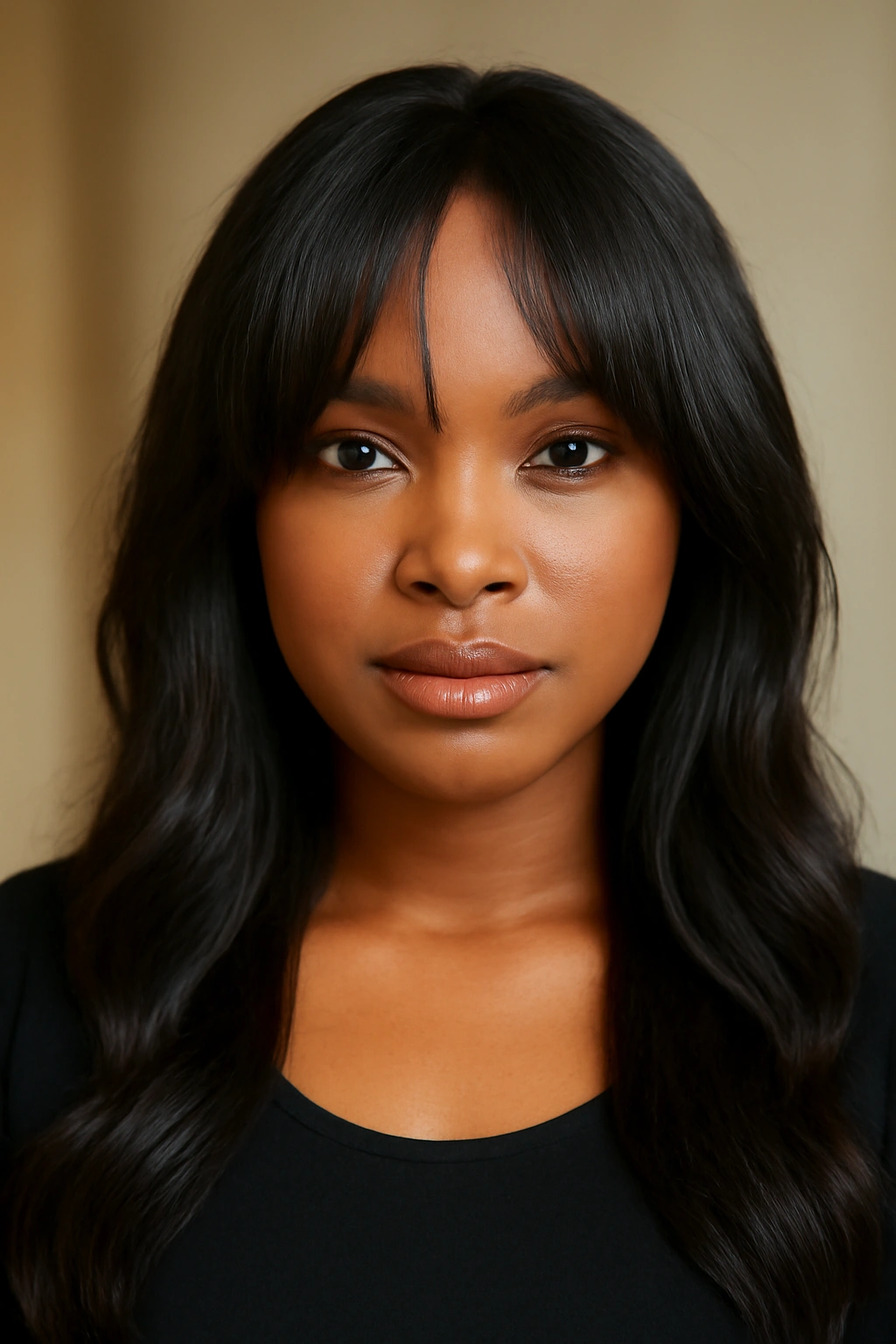
Curtain bangs are cut down the center of your face, with longer pieces that frame both sides of your face and gradually blend into the rest of your hair. Often called “face-framing” bangs, this style creates a soft, sophisticated look that feels flattering and modern. The pieces fall away from your face rather than sitting flat against your skin.
Universal Appeal and Flattering Quality
Curtain bangs work beautifully on every face shape because there’s no harsh line—the bangs blend gradually into your hair and create gentle movement around your face. This style is especially forgiving because if you don’t style the center parting every day, it naturally repositions and still looks intentional.
Care and Styling Across Different Hair Types
- Curtain bangs in textured natural hair look absolutely stunning because the layers work with your curl pattern instead of against it
- Apply curl-defining products to your bangs and let them curl with the rest of your hair—they dry into a soft, face-framing shape
- On straight styles, use a flat iron to keep the center part smooth and the side pieces swept away from your face
- These bangs work beautifully with half-up hairstyles and look especially good when you wear your hair in higher ponytails or buns
- Trim every 6 weeks to maintain the layered shape and keep the center part looking intentional
- Curtain bangs are a perfect entry point if you’re nervous about committing to a bang—they’re the most forgiving style and hardest to mess up
6. Micro Bangs (Baby Bangs)
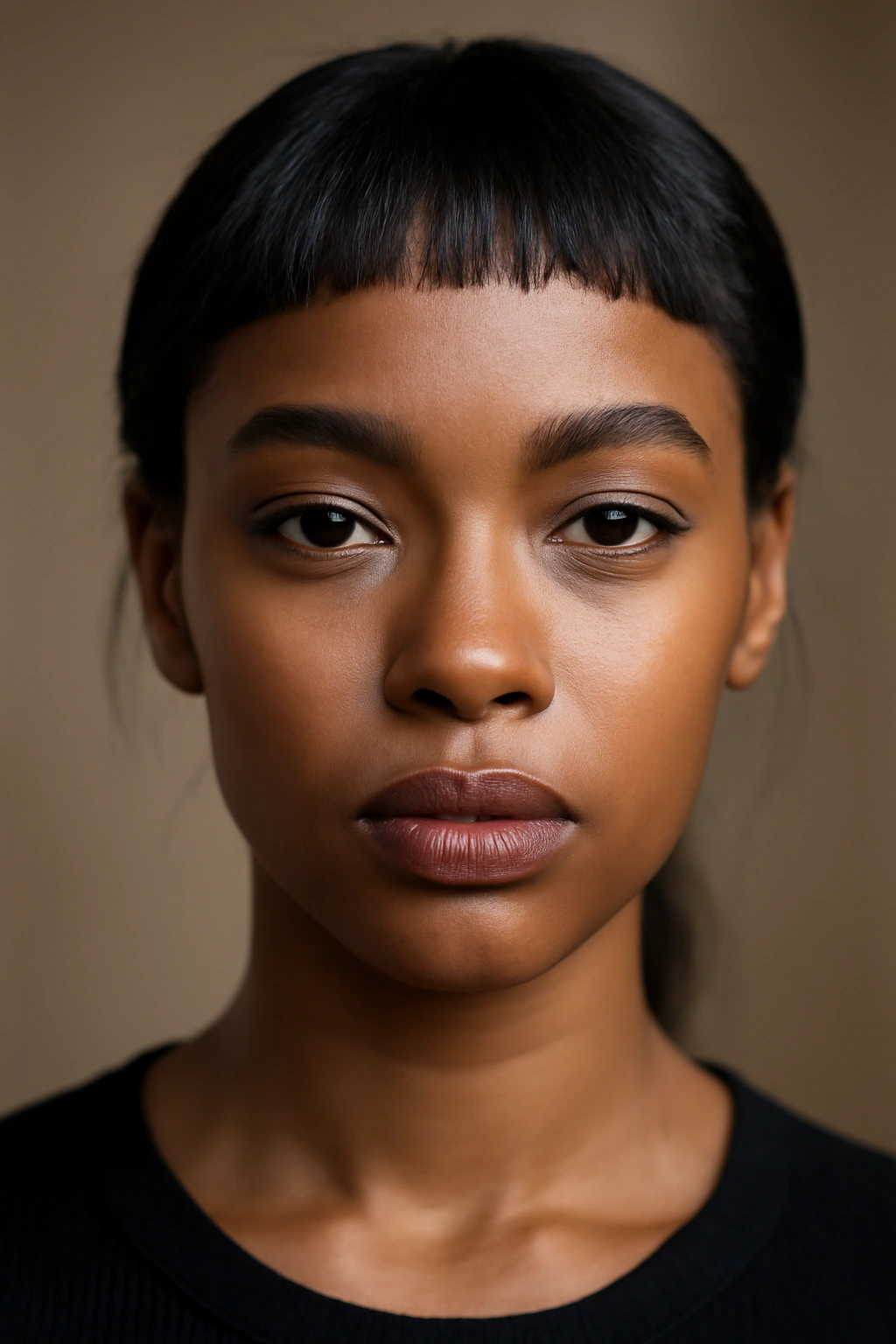
Micro bangs are cut very short, sitting just above your eyebrows with a blunt edge. These bangs make a daring statement and require confidence, but for the right person, they’re absolutely stunning. Micro bangs were popularized in fashion magazines and on runways, and on Black women, they can look edgy, artistic, and deeply chic.
Who Should Consider Micro Bangs
Micro bangs look best on women with oval or elongated face shapes and good forehead proportions. If you have a smaller forehead or prefer not to show much of it, this probably isn’t the style for you. Micro bangs also require a significant commitment—they grow out quickly and need trimming every 2-3 weeks to look intentional rather than unkempt.
Styling and Confidence Considerations
- Micro bangs demand clear skin and a groomed appearance overall because so much of your forehead is exposed
- These bangs work beautifully with sleek, minimal styles where the focus is on your face
- Style them with whatever works for the rest of your hair—they can be curly with textured hair or straight with straightened styles
- Micro bangs work particularly well with natural hair worn out and full because the contrast between the short bangs and voluminous hair is striking
- This is a style that requires genuine interest in bangs and regular maintenance; if you’re not sure about it, try a clip-in option first
- Consider your lifestyle—if you’re very active or prefer low-maintenance styles, the frequent trims required might not be worth it
7. Blended Bangs in Box Braids
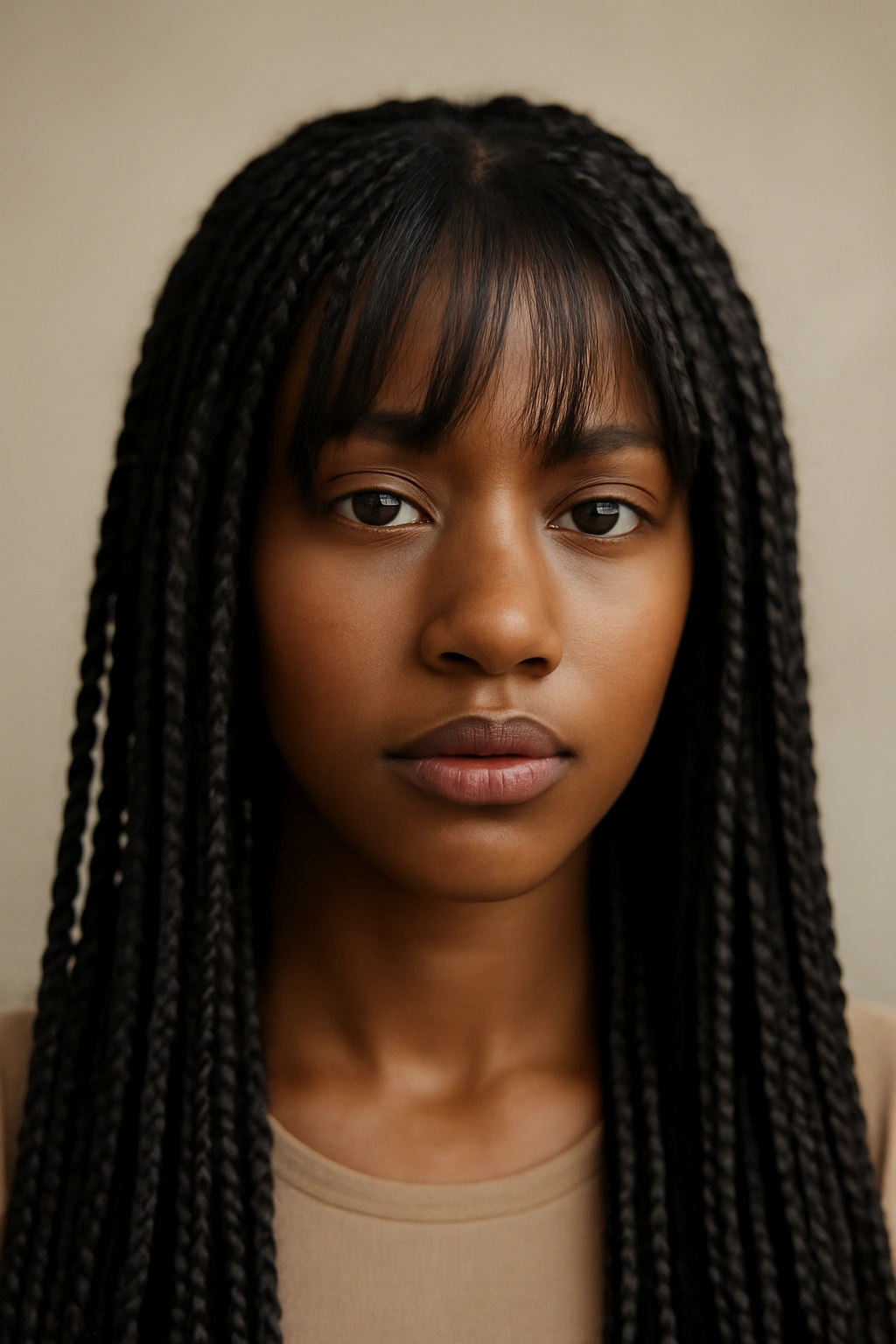
Blended bangs in box braids are created by leaving some of your hair unbraided at the front in a bang-length area, then braiding the sides and back. This option gives you the look of bangs while protecting the rest of your hair. The unbraided bangs can be styled straight, curled, or worn in small braids of their own.
Why This Works for Protective Styling
Box braids with bangs offer flexibility—you can change how you style the bang area frequently while the rest of your hair stays protected in braids. On days you want a sleek look, straighten the bangs. On days you want texture, braid or curl them. This versatility is one of the biggest advantages of this style.
Styling Options and Maintenance
- Leave approximately 2-3 inches of hair unbraided at the front for a natural-looking bang length
- These bangs can be styled with the same products and techniques as your regular hair routine
- Braiding the bang area itself (in thin microbraids, Senegalese twists, or similar styles) protects those ends while you wear the protective style
- Moisturize unbraided bangs regularly since they’re exposed to more manipulation and environmental factors than braided hair
- This style works beautifully with medium to longer box braids—the contrast between the bang area and the braids creates intentional, stylish detail
- When you take down your protective style, your hair will be healthier overall because the bangs were being manipulated less than the rest of your hair
8. Locs with Bang-Length Framing Locs
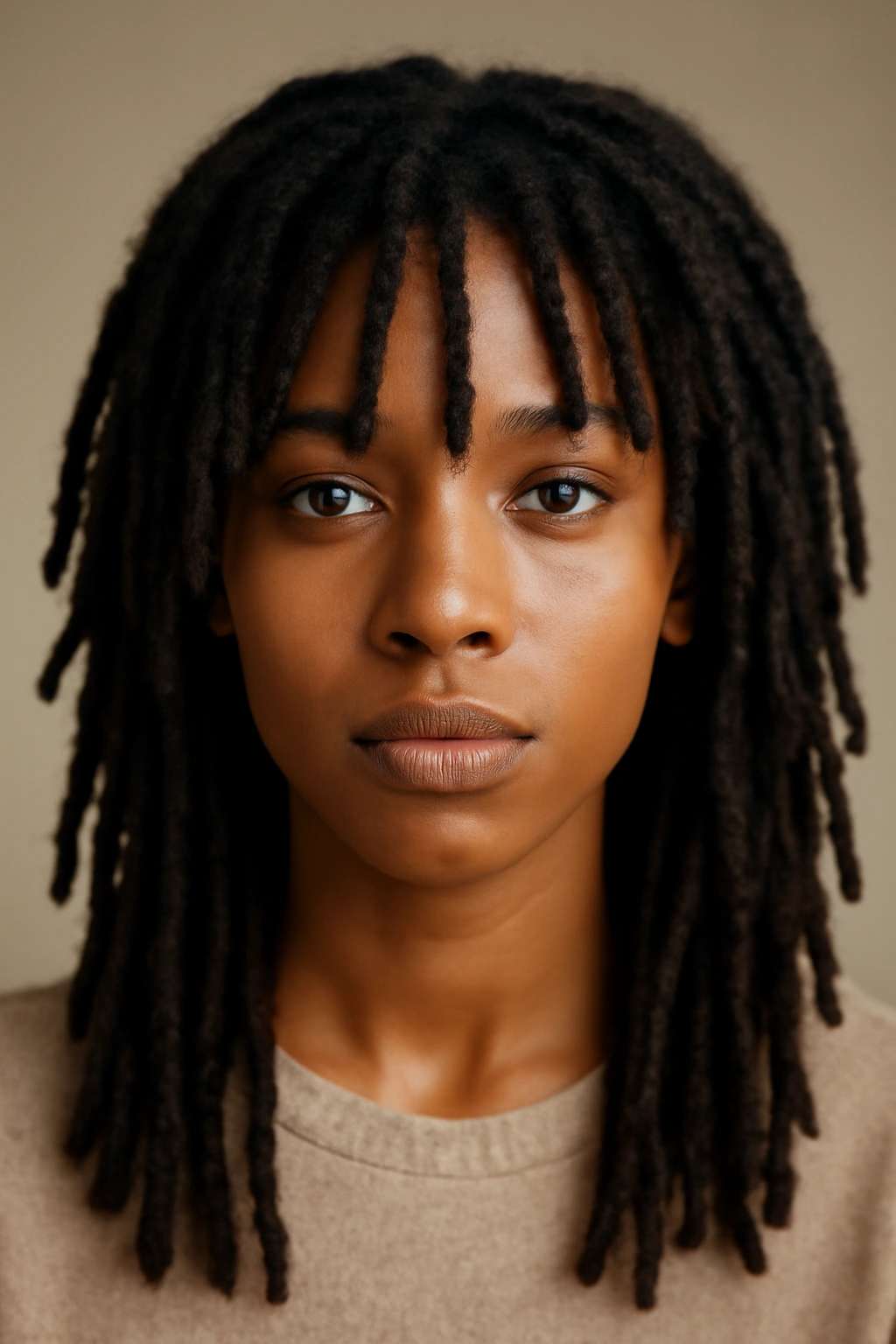
If you wear locs, bangs can still be part of your aesthetic by leaving a few smaller locs at bang-length and maintaining them separately, or by starting your locs with sections left slightly longer at the front. Locs with framing pieces create a beautiful, intentional look that can be styled various ways.
Creating and Maintaining Framing Locs
- When starting your locs, create a few slightly thinner sections at the front that you’ll keep at bang-length (usually starting at 3-4 inches shorter than the rest)
- These framing locs can be individually styled—twisted away from your face, braided, wrapped with thread, or beaded
- Keep these front locs well-moisturized since they’re more visible and exposed than locs in the back
- Retwist your bang-length locs slightly more frequently than your main locs to keep them looking neat and intentional
- This style works beautifully with any loc length once they’ve matured enough to hold their shape
Styling Flexibility
- Sweep your bang-length locs to one side for a side-swept bangs look, or let them frame your face in the center
- Curl or wave the ends of your framing locs for a softer look, or keep them straight for something edgier
- Pair this style with upstyles, ponytails, or wearing your locs down—the framing pieces work with every option
- The beauty of locs with bangs is that you get the visual effect of bangs without the maintenance of managing individual strands
9. Textured Bangs on Natural Hair
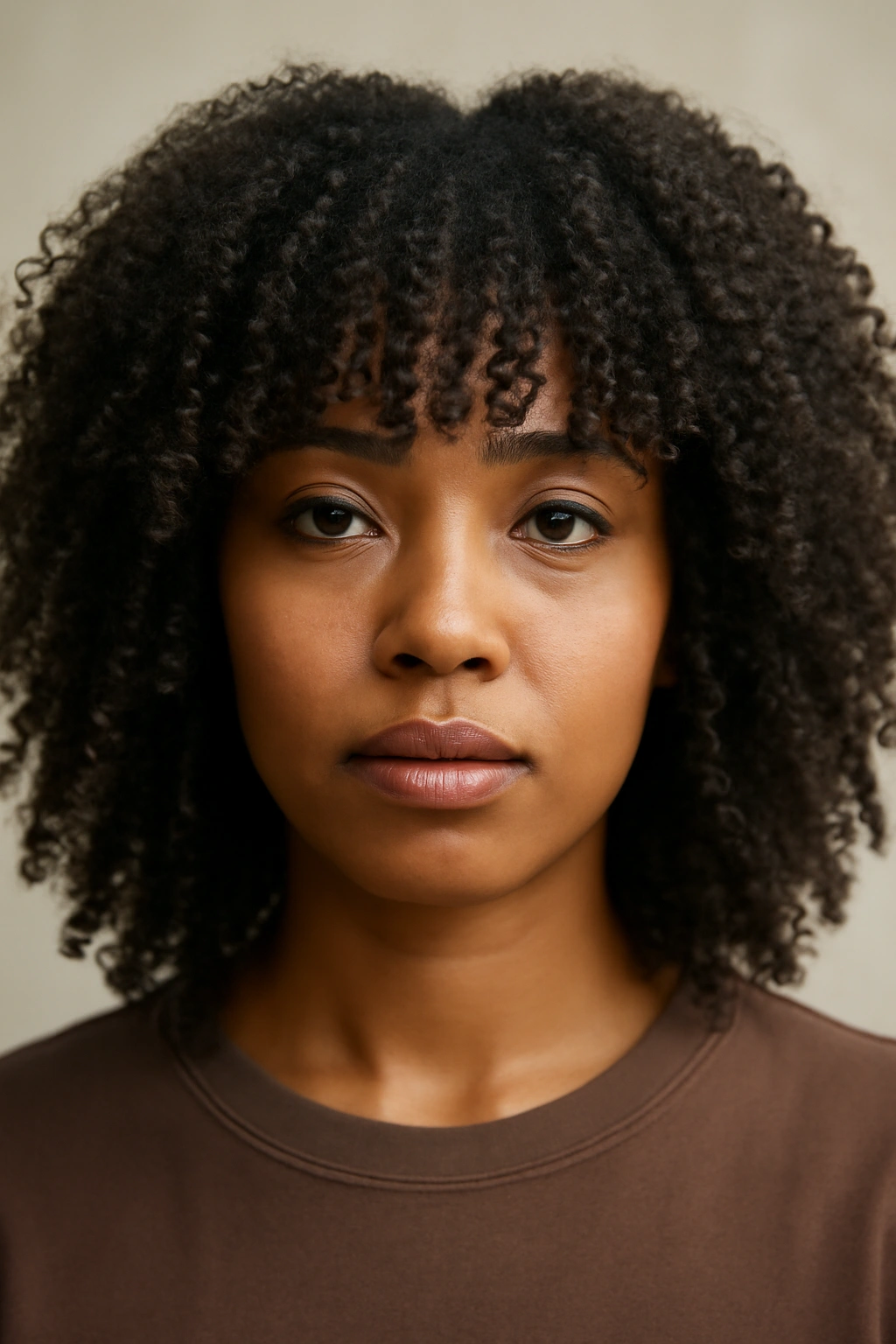
Textured bangs embrace your natural curl pattern completely, cut at the length you want but allowed to dry in your natural texture without manipulation. These bangs celebrate coils, curls, and kinks rather than fighting them. The beauty is that textured bangs create fullness and volume around your face without any heat styling needed.
Cutting and Shaping Textured Bangs
- Have your bangs cut while your hair is in its natural state (wet or freshly washed), not blown out or straightened
- A stylist experienced with natural hair will understand how much your hair will shrink as it dries and will cut accordingly
- Textured bangs are incredibly forgiving because the curl pattern hides minor unevenness in the cut
- Plan for about 50% shrinkage from wet to dry, so if you want bangs that sit at your eyebrow when dry, you need them cut lower when wet
Styling Your Natural Texture Bangs
- Apply your regular curl routine products to your bangs—leave-in conditioner, curl cream, and gel
- Define your curls with your fingers or a curl cream to encourage the pattern
- Textured bangs dry fastest when you use a microfiber towel or cotton t-shirt and allow air drying
- Deep condition your bangs weekly along with the rest of your hair—they need the same moisture as longer hair
- These bangs pair beautifully with natural styles worn out and full, creating a cohesive, textured look
- Trim every 6-8 weeks to maintain the shape without sacrificing length
10. Braided Bangs
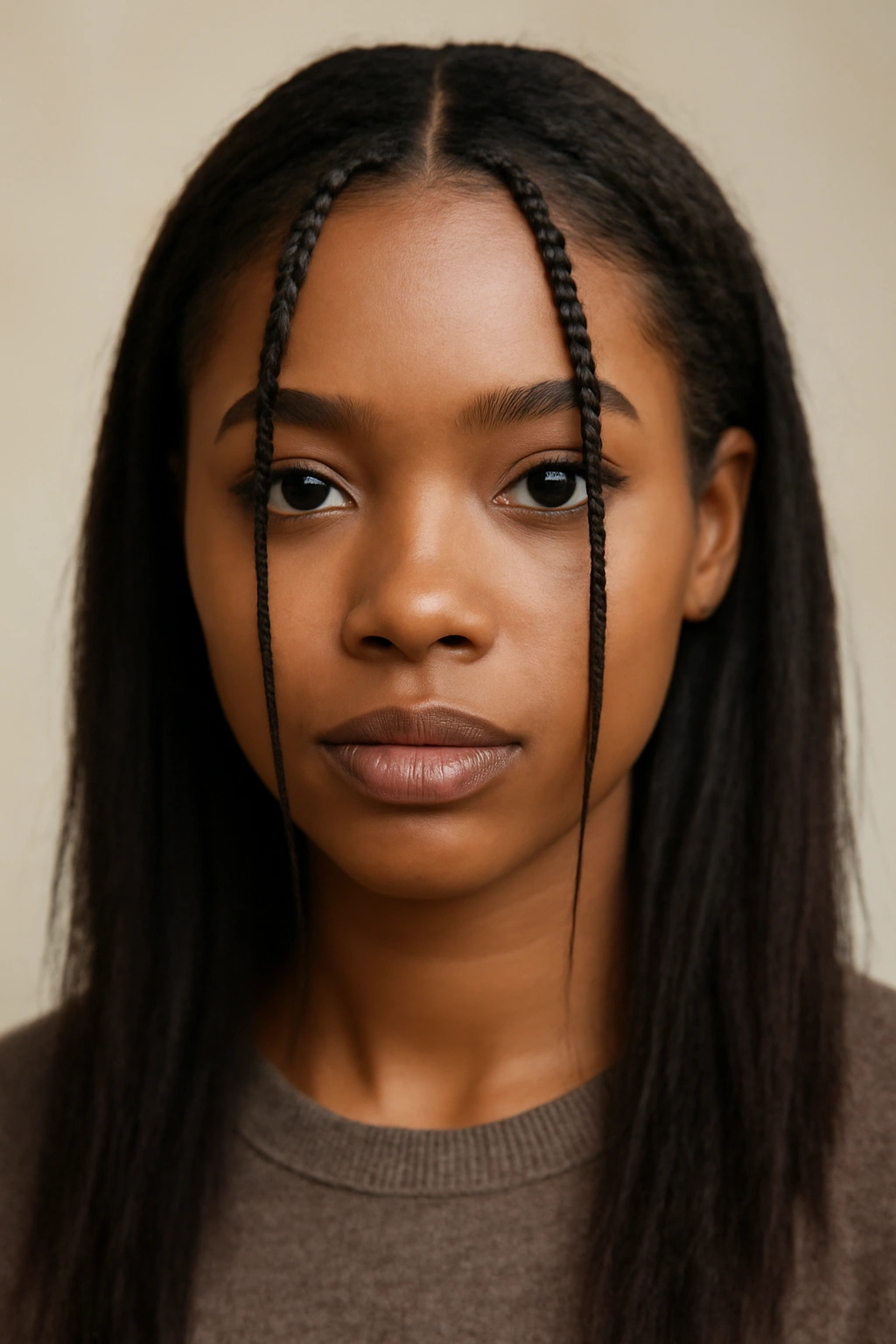
Braided bangs are created by taking two or three thin sections from your front hairline and braiding them down the length of your bangs, leaving a few inches of hair unbraided at the end. This style combines the protective element of braids with the bang aesthetic, and it’s stunning on Black women with textured hair.
Design and Installation
- Braided bangs work best with cornrows or thin three-strand braids—take sections from your hairline or part line and braid them down
- The braids should start right where your bangs would naturally sit and extend a few inches
- You can braid all your bangs or just one or two sections on the side for an asymmetrical look
- This style is perfect for protective styling or for those who want to try bangs without fully committing to unbraided ones
Versatility and Care
- Braided bangs can be left in for several weeks, making them a great option if you’re not sure about regular bang maintenance
- Add beads, thread, or cuffs to the braided sections for extra style
- Keep braided bangs moisturized with lightweight oils and edge control
- When you take down the braids, your bang-length hair will be protected and healthier than if it were continuously styled
- Pair this style with other protective styles or with your hair worn fully out—braided bangs work with any look
11. Colored Bangs with Highlights
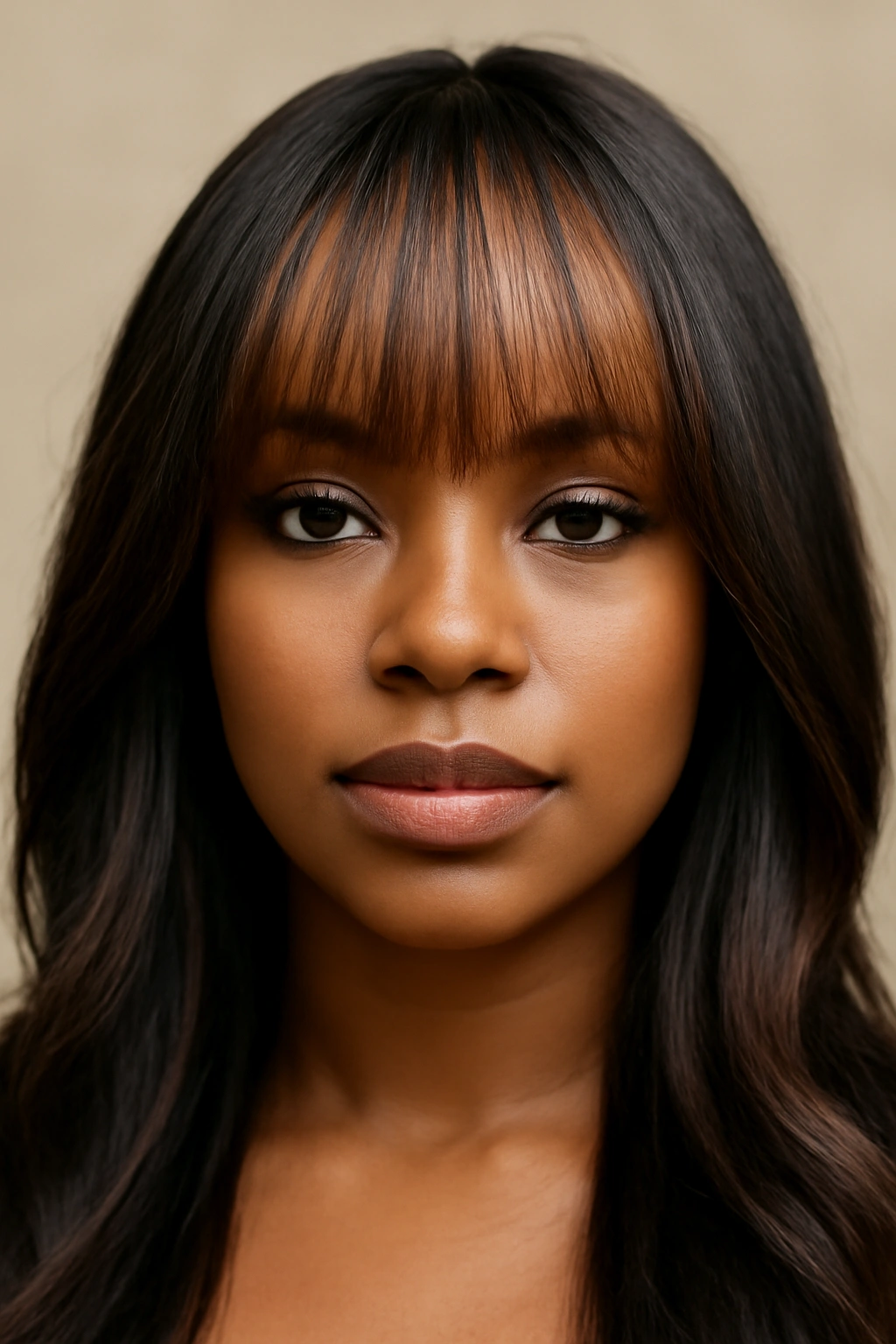
Adding color or highlights specifically to your bang area creates visual depth and can frame your face in a stunning way. Whether you choose a subtle highlight that’s just a few shades lighter than your base color or a bold contrasting color, colored bangs draw attention to your face and add dimension.
Color Options That Work
- Dimensional highlights in your natural hair color family create depth without high maintenance—think caramel, honey, or bronze tones in darker hair
- Contrasting colors like blonde, burgundy, or jewel tones make a bold statement and work beautifully as accents in your bang area
- For protective styles, colored thread or yarn wrapped into your bang-length braids achieves a similar visual effect without damaging hair
- Ombré or gradient coloring in your bangs (darker at the roots, lighter at the ends) creates movement and visual interest
Maintenance and Health Considerations
- If your hair is natural and uncolored, adding color to bangs is a significant commitment—color requires regular maintenance as your hair grows
- Professional color application is essential for achieving the look you want and protecting your hair health
- Colored bangs need deep conditioning treatments more frequently than uncolored hair
- Use color-safe products specifically designed to prevent fading and maintain vibrancy
- This style works beautifully with any bang cut—blunt, feathered, curtain, or side-swept—the color just adds another dimension
12. Curved Lace-Front Bangs
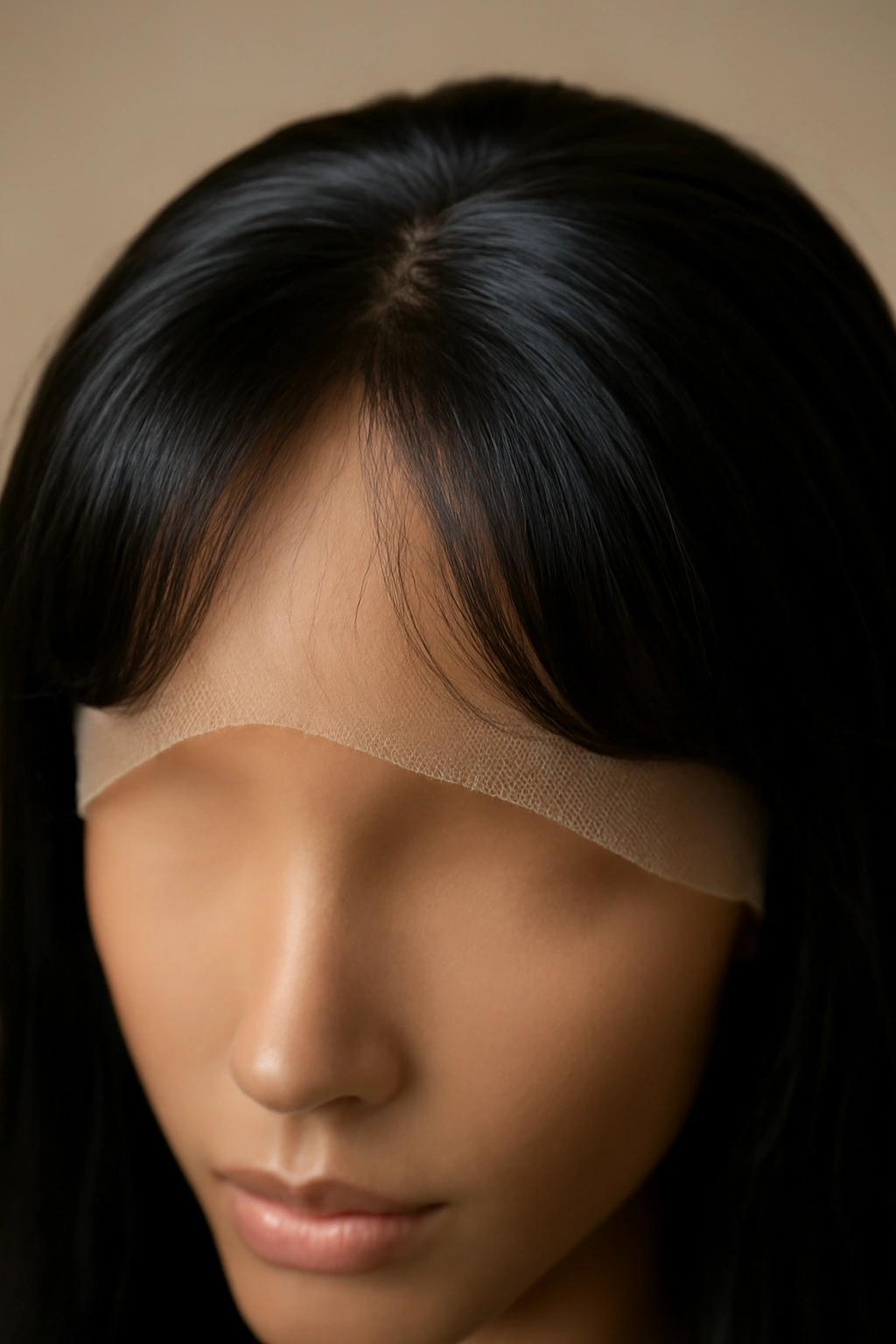
Curved lace-front bangs are styled when wearing a wig or closure, created by cutting the lace at the front in a curved or angled bang shape. This allows you to wear bangs without cutting your natural hair, giving you complete freedom to experiment with different styles.
Styling Your Lace-Front Bangs
- Cut the lace very carefully with sharp scissors, starting with a longer line than you think you need (you can always cut more)
- Pluck individual hairs from the lace-front to create a more realistic, less densely packed hairline in your bang area
- Blend the wig hair with your natural hair for a seamless look, or wear the bangs fully in the wig if you prefer a more obviously styled appearance
- Style your lace-front bangs the same way you’d style the rest of the wig hair—the styling options are unlimited
Why This Option Is Perfect for Experimentation
- Try different bang styles before committing to cutting your natural hair
- Change your bang style whenever you change your wig—wear blunt bangs one month and side-swept bangs the next
- Lace-front bangs work with any wig texture and length
- This is the least permanent way to experiment with bangs while still getting the full visual impact of the style
- Protect your natural hairline by wearing wigs with bangs instead of repeatedly styling your actual hair into bangs
Final Thoughts
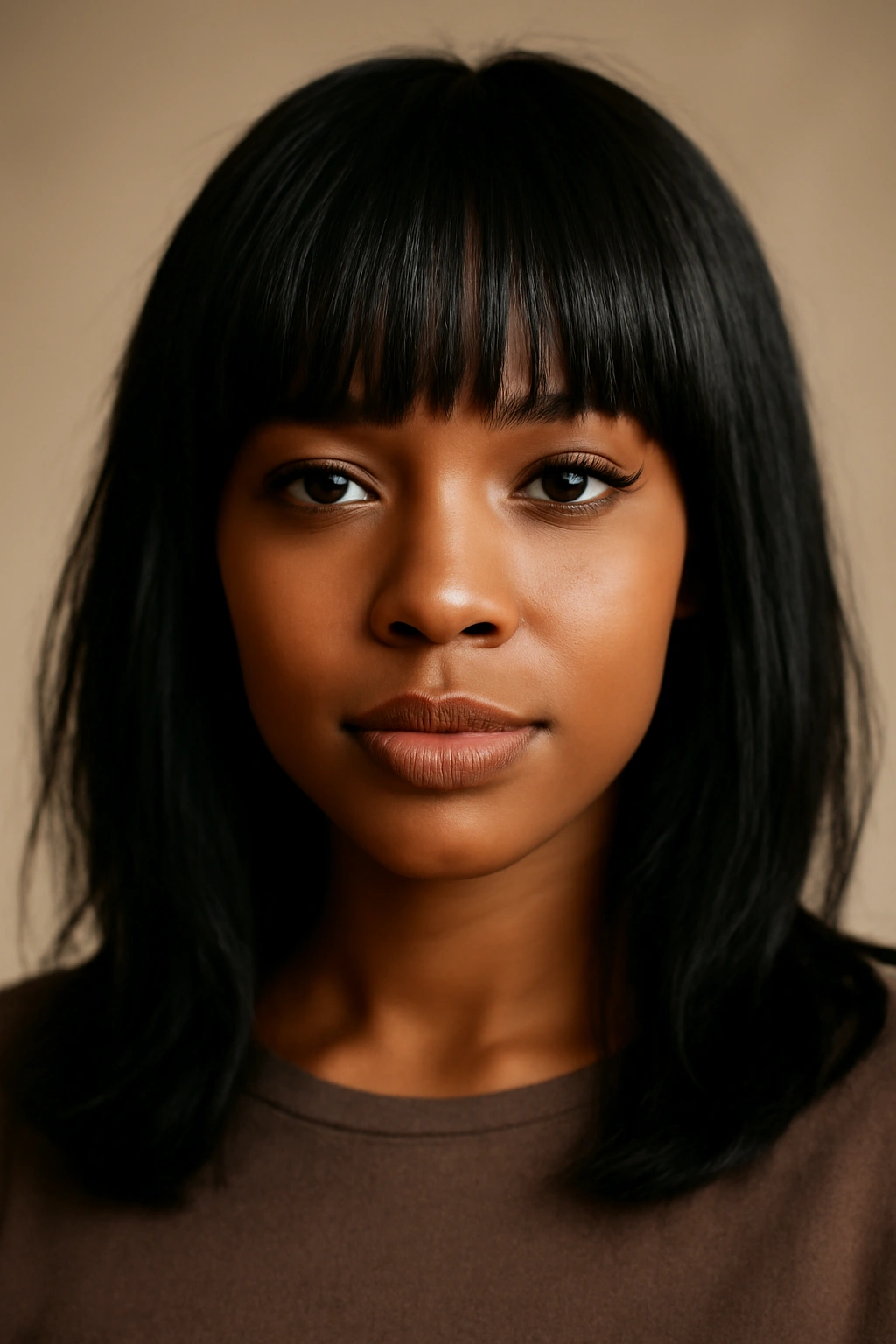
Finding the perfect bang style is about understanding what works for your face shape, hair texture, and lifestyle—and for Black women, there are genuinely gorgeous options across the entire spectrum. Whether you choose the low-maintenance softness of feathered bangs, the bold graphic of blunt bangs, or the protective option of braided bangs, you have real choices that honor your hair type and your aesthetic.
The most important thing is working with a stylist who has experience cutting bangs on Black hair and understands how your specific texture will behave once your bangs grow out. A great bang cut accounts for your natural shrinkage, your curl pattern, and your face shape—not just what looks good on someone else. If you’re nervous about committing to bangs, remember that lace-front bangs or braided bang options let you experiment without cutting your actual hair.
Your bangs should feel like an intentional choice that enhances how you present yourself, not something you’re maintaining reluctantly. When bangs are the right fit, they transform your entire look and give you that fresh, elevated feeling every time you catch your reflection. Whether you’re going for soft and romantic, bold and graphic, or protective and practical, there’s a bang style waiting to frame your beautiful face.
