



A diamond face shape is one of the trickier face geometries to dress with the right hairstyle. You’ve got a narrow forehead and jawline that contrast with prominent cheekbones, which means what works for a square or oval face will likely throw your proportions off. The goal with short haircuts for a diamond face is to add width where you need it most—at your forehead and jawline—while keeping the sides of your head from looking too heavy, since your cheekbones are already naturally wider.
The good news? Short haircuts can be incredibly flattering for diamond faces when they’re designed with your specific proportions in mind. Unlike longer styles that rely on length to balance features, short cuts force you to work smarter with angles, texture, and strategic layering. The right cut can disguise a narrow forehead, soften sharp jawlines, and draw attention where you want it.
What makes this tricky is that not every short haircut works for every diamond face—a cut that emphasizes width at the cheekbones will make your face feel even more compressed if it’s not paired with volume at the crown or strategically placed layers. The most flattering cuts either add fullness at the forehead to balance it out, create texture and dimension at the jaw to soften angular lines, or do both. You’ll want to work with a stylist who understands face shapes and isn’t just following a trend blindly.
In this breakdown, you’ll find 12 short haircuts specifically chosen for diamond faces, with details on why each one works, how to style it, and what to ask your stylist when you book your appointment.
1. The Layered Pixie Bob
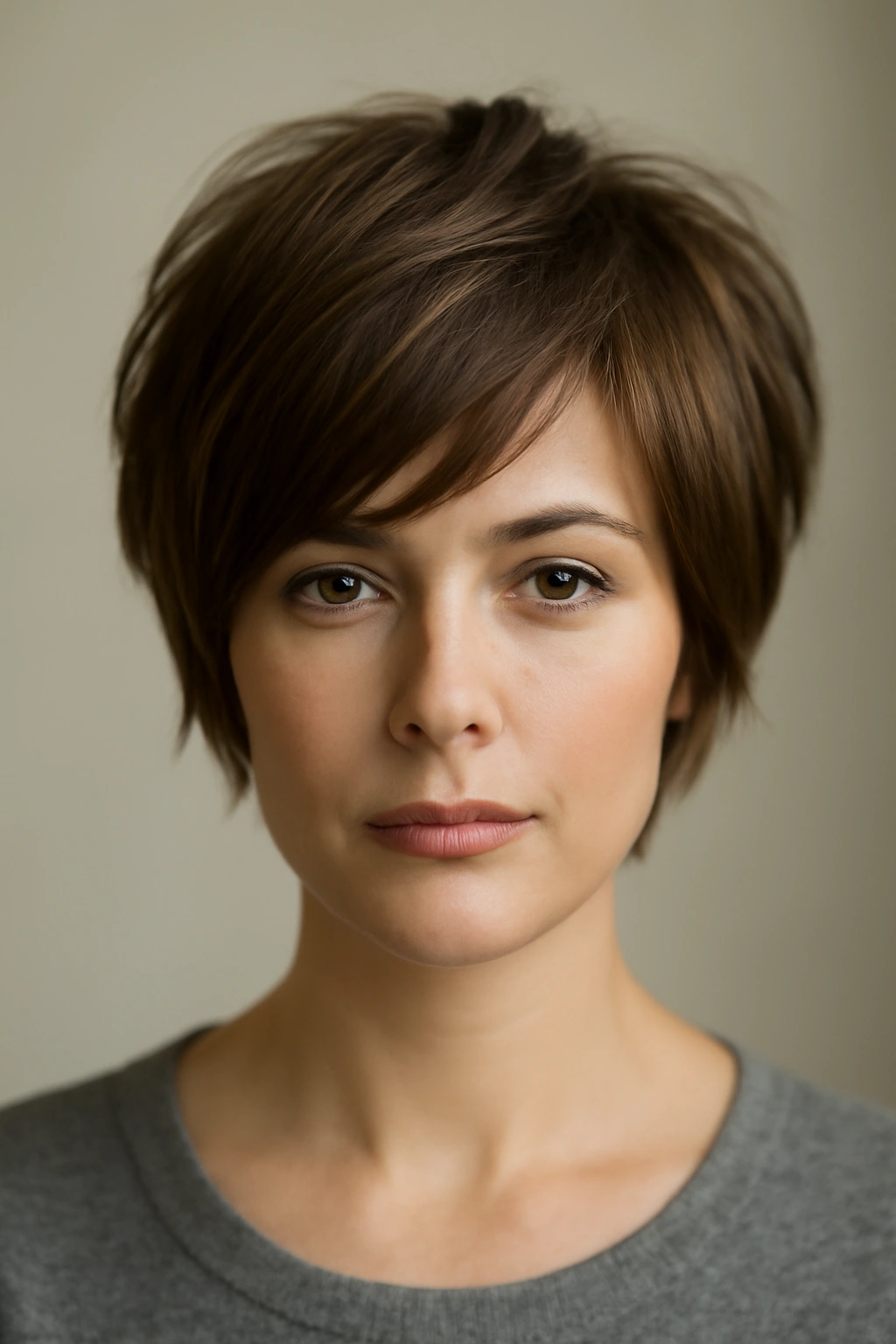
This cut splits the difference between a pixie and a bob, giving you short length that’s slightly longer in front. The key advantage for a diamond face is the way layers create texture and dimension that softens hard angles. You get the practical ease of a pixie with just enough length to frame the face differently than a true pixie would.
Why It Works for Diamond Faces
Layered pixie bobs add volume where you need it most—at the crown and through the layers—without adding bulk at the sides of your head. The longer front pieces can be styled to frame your cheekbones in a way that draws the eye down rather than emphasizing their width. The texture created by the layers breaks up the face’s geometric lines, which is exactly what a diamond face needs.
How to Style and Maintain It
- Blow-dry with a round brush to direct volume upward and forward, not outward at the temples
- Use a texturizing spray or dry shampoo to enhance the layers without weighing them down
- Ask your stylist for longer pieces in front—at least chin-length—so you can tuck them behind your ears or let them fall forward as needed
- Trim every 4-5 weeks to keep the shape crisp and prevent it from looking shaggy
2. The Short Shag with Choppy Layers
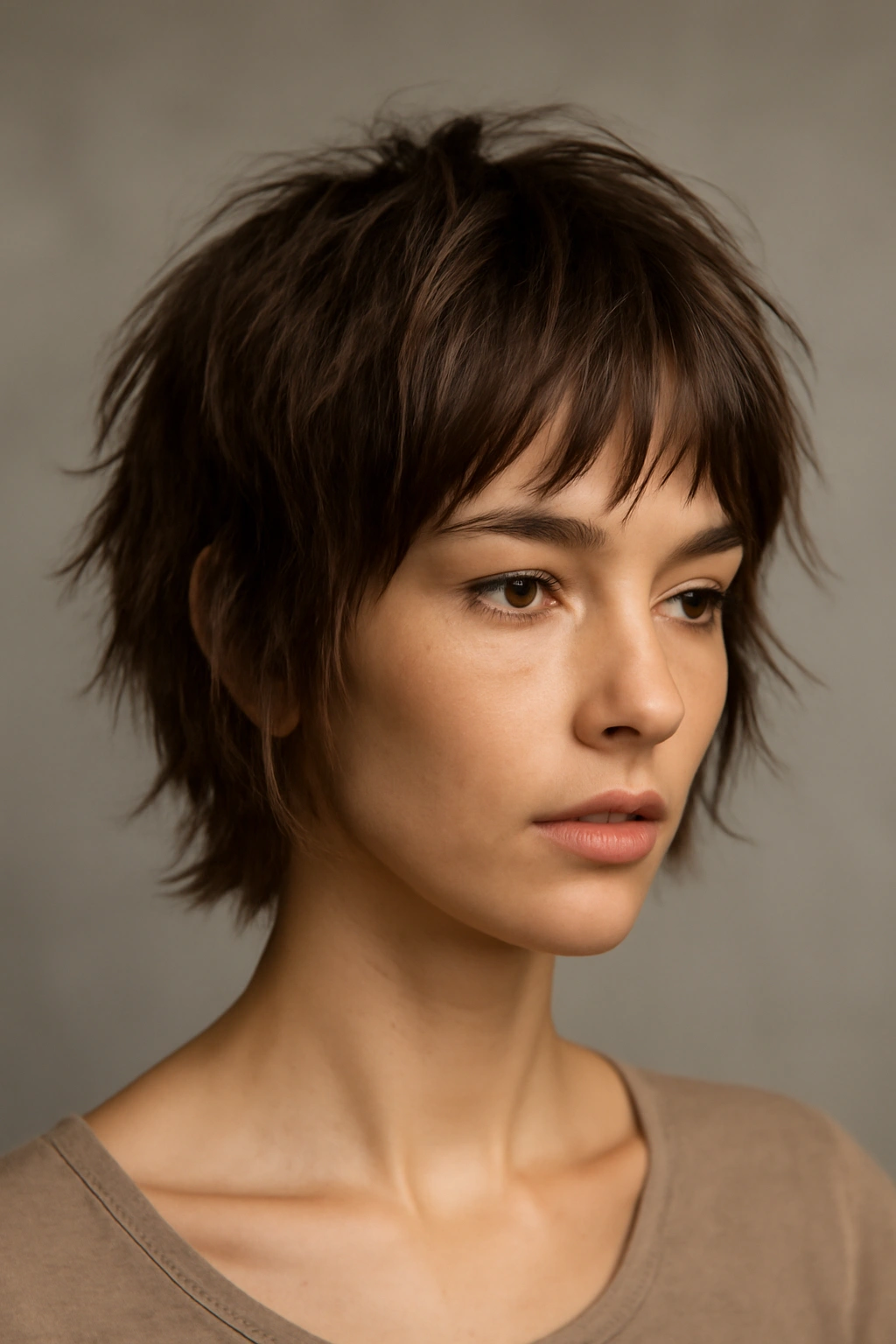
Shags have made a huge comeback, and for good reason—they’re incredibly forgiving on complex face shapes. A short shag with choppy, textured layers works beautifully on diamond faces because the irregular layering breaks up facial symmetry and creates movement that distracts from a narrow forehead or sharp jawline.
Why This Cut Flatters Diamond Faces
The beauty of a choppy shag is that it doesn’t rely on a rigid shape. Instead, the layers create visual interest and texture that draws the eye all over your face rather than settling on one feature. For a diamond face, this means the cut naturally de-emphasizes the cheekbones’ prominence. The shorter layers at the crown add height, which balances a narrow forehead.
Styling Tips and Maintenance Requirements
- Embrace texture—this cut is designed to look a bit tousled and piece-y, not sleek and polished
- Blow-dry with your fingers, scrunching as you go, to enhance the choppy layers
- Use a sea salt spray or texturizing product to amplify the shaggy effect
- Keep bangs out of this cut unless you specifically want them; the open forehead helps balance the face
- Schedule trims every 5-6 weeks to maintain the choppy texture before it gets overgrown
3. The Textured Crop with Longer Front Pieces
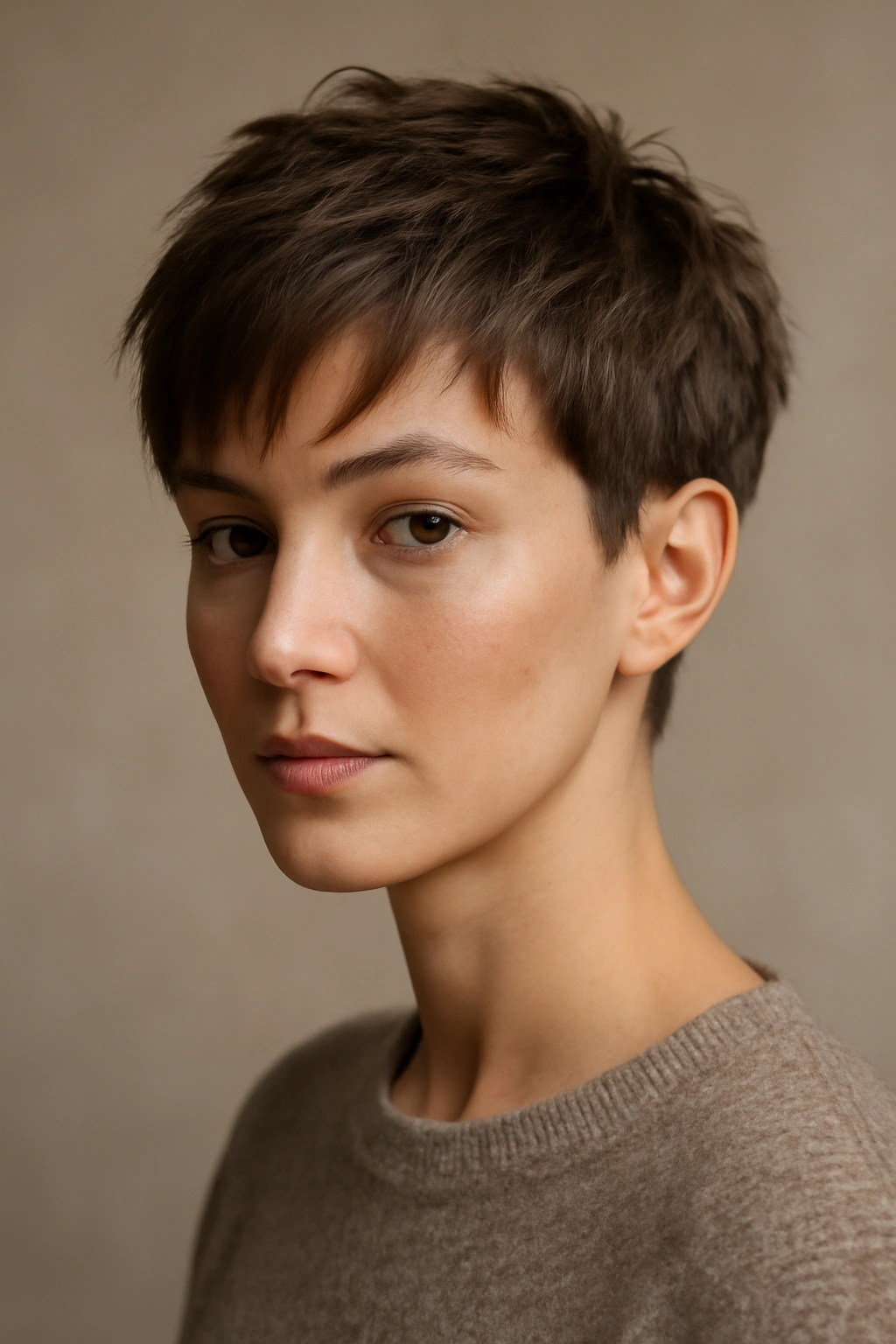
A textured crop is basically a very short cut everywhere except the front, where you keep slightly longer pieces that can frame the face. This hybrid style gives you the low-maintenance benefits of a short crop with enough front length to strategically balance a diamond face’s proportions.
Why It Suits Diamond Face Shapes
The longer front pieces on a textured crop are absolutely key for diamond faces. These pieces can fall forward to add visual width at the forehead, or be swept to one side to soften a sharp jawline. Meanwhile, the cropped back and sides keep the overall look airy and prevent the style from becoming top-heavy. The texture throughout keeps the cut from looking severe.
Styling and Upkeep
- Style the front pieces forward or swept across to add width and soften angles
- Use pomade or a light gel to piece out the textured sections and show off the layers
- The back can be left to grow naturally between cuts for a slightly shaggier texture
- Trim every 4-6 weeks, focusing on maintaining the longer front pieces rather than letting them disappear
- This cut is excellent if you like a more androgynous or editorial look
4. The Side-Swept Pixie
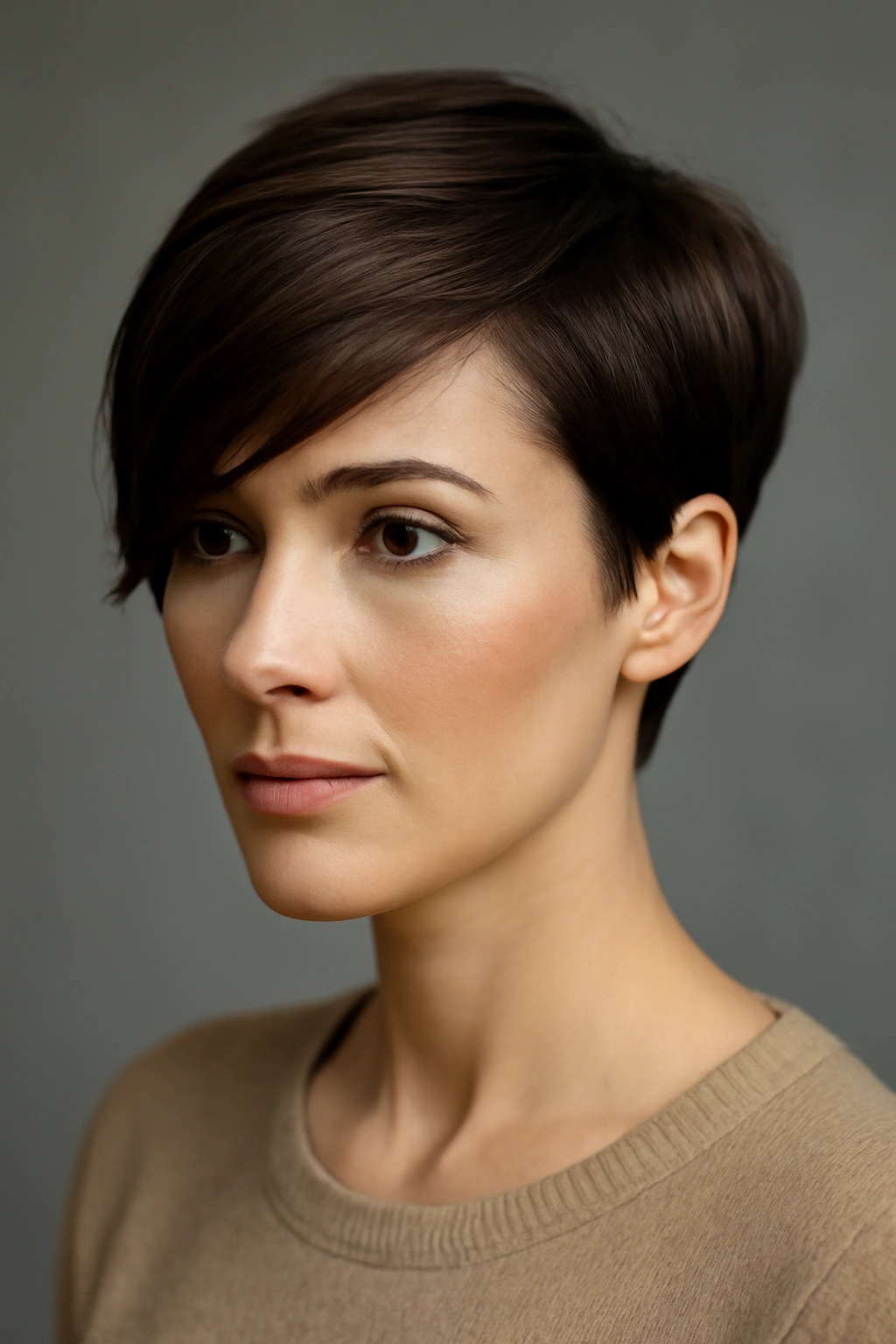
A traditional pixie that’s grown out just slightly and swept dramatically to one side can be surprisingly flattering for a diamond face. The key is the severe side part, which creates an asymmetrical line that interrupts the face’s natural symmetry and makes angles feel softer.
How This Cut Benefits Diamond Faces
When you part a short pixie dramatically to one side, you create a visual line that draws the eye downward and to the side, away from the cheekbones. The longer pieces on the swept side can actually cover part of your cheek, which helps soften the width. The shorter side shows off the clean lines of your face without emphasizing it. It’s a clever optical trick that works better than you might expect.
Styling Guidance
- Use a flat iron or blow dryer to create a sharp, defined side part
- Sweep the longer side across and secure with pomade or wax if needed
- The back can be slightly longer than a traditional pixie, giving you options to blend the sides
- Style it wet or dry depending on your mood—both look intentional
- Trim every 3-4 weeks to keep the side-swept shape from disappearing
5. The Wavy Lob with Subtle Layers
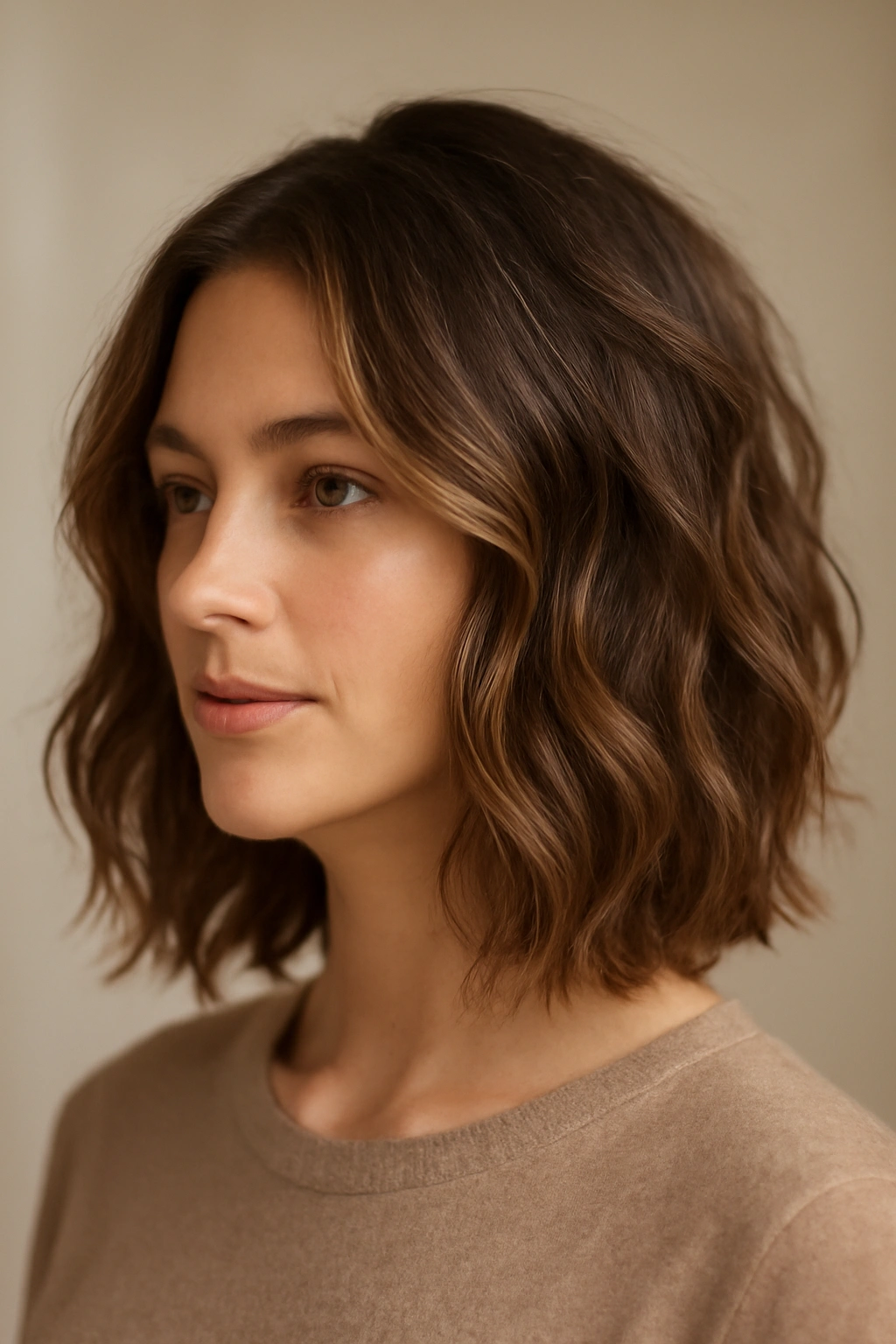
A lob is technically a “long bob,” but when you cut it short enough and add subtle layers, you get a style that’s longer than most on this list while still being decisively short. The waves and layers create visual texture that breaks up the face’s lines without drastically changing your length.
Why Layered Waves Work for Diamond Faces
Waves and texture create visual interest that distracts from a face’s geometric shape. For a diamond face, that’s incredibly valuable. The layers in a short lob add fullness at the crown—which balances a narrow forehead—while the wave pattern means the hair doesn’t cling to your cheekbones, emphasizing their width. The length is still short enough to be practical and modern.
How to Achieve and Maintain Waves
- Ask your stylist for layers that begin at your cheekbones and get progressively longer
- Waves can be heat-styled, naturally textured, or enhanced with a salt spray
- Blow-dry with a round brush, wrapping sections around the brush to create loose waves
- Use a texturizing product to enhance natural wave texture and reduce frizz
- Trim every 6-8 weeks; this cut grows out gracefully without losing its shape
6. The Disconnected Undercut with Longer Bangs
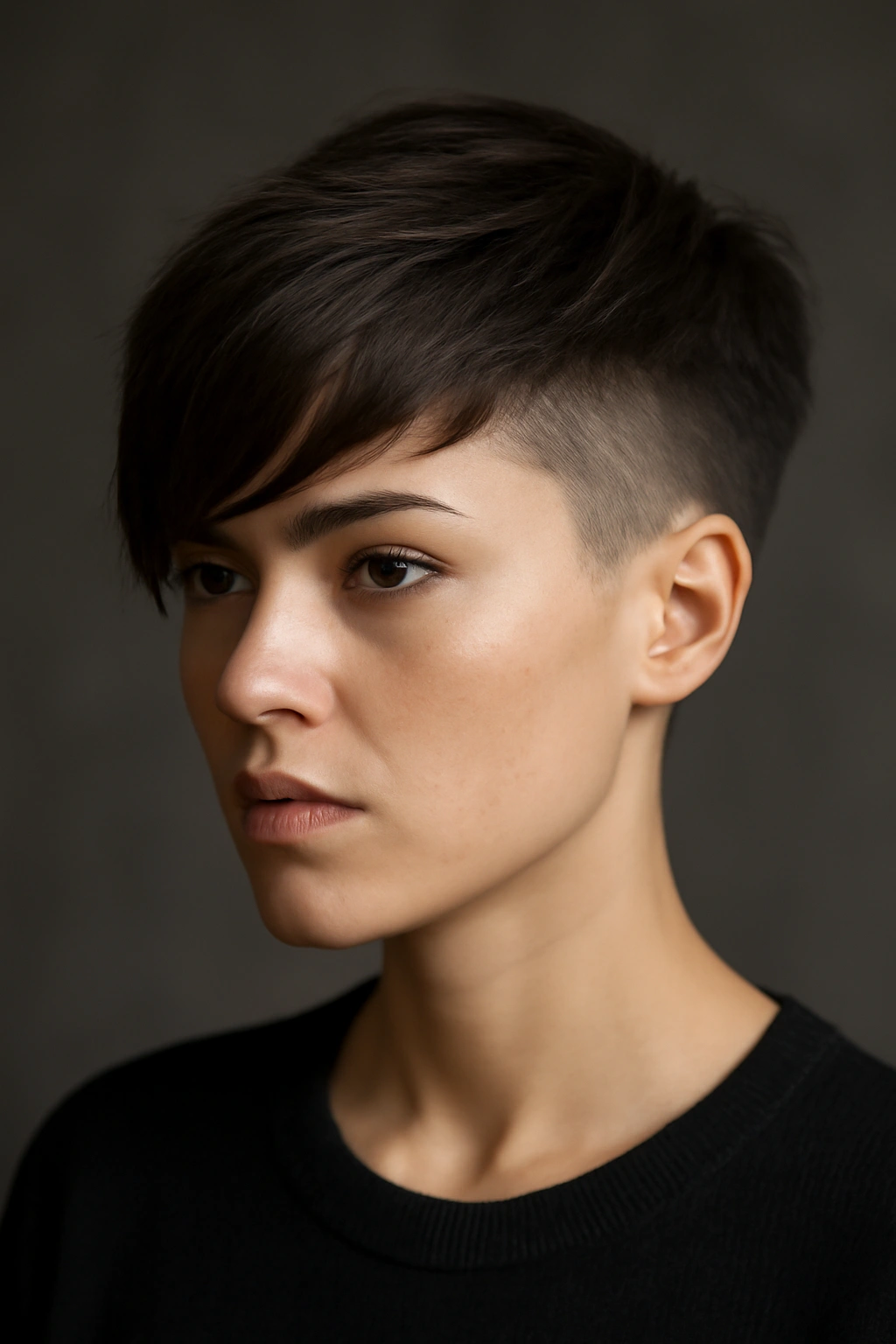
An undercut means the back and sides are cut very short and disconnected from the longer hair on top. When you pair this with longer bangs or front pieces, you get serious visual drama that works beautifully on diamond faces. The severe contrast between short and long creates an asymmetrical shape that counters facial symmetry.
Why Undercuts Complement Diamond Faces
Undercuts remove visual weight from the sides and back of the head, which prevents that area from competing with your prominent cheekbones. The longer pieces on top can be styled backward, forward, or swept to the side—you have control. The bangs or front pieces add width to your forehead, which is exactly what a narrow forehead needs. This cut is bold and requires confidence to pull off.
Styling and Maintenance
- The undercut requires regular trims every 3-4 weeks to stay sharp
- Style the longer top sections with texture and movement to avoid the cut looking too severe
- You can sweep the longer pieces backward to expose the sides, or forward for a softer look
- Use a matte pomade or wax to define and separate the longer strands
- This cut looks striking with color work—blonde on top with darker sides, or vice versa
7. The French Crop with Textured Crown
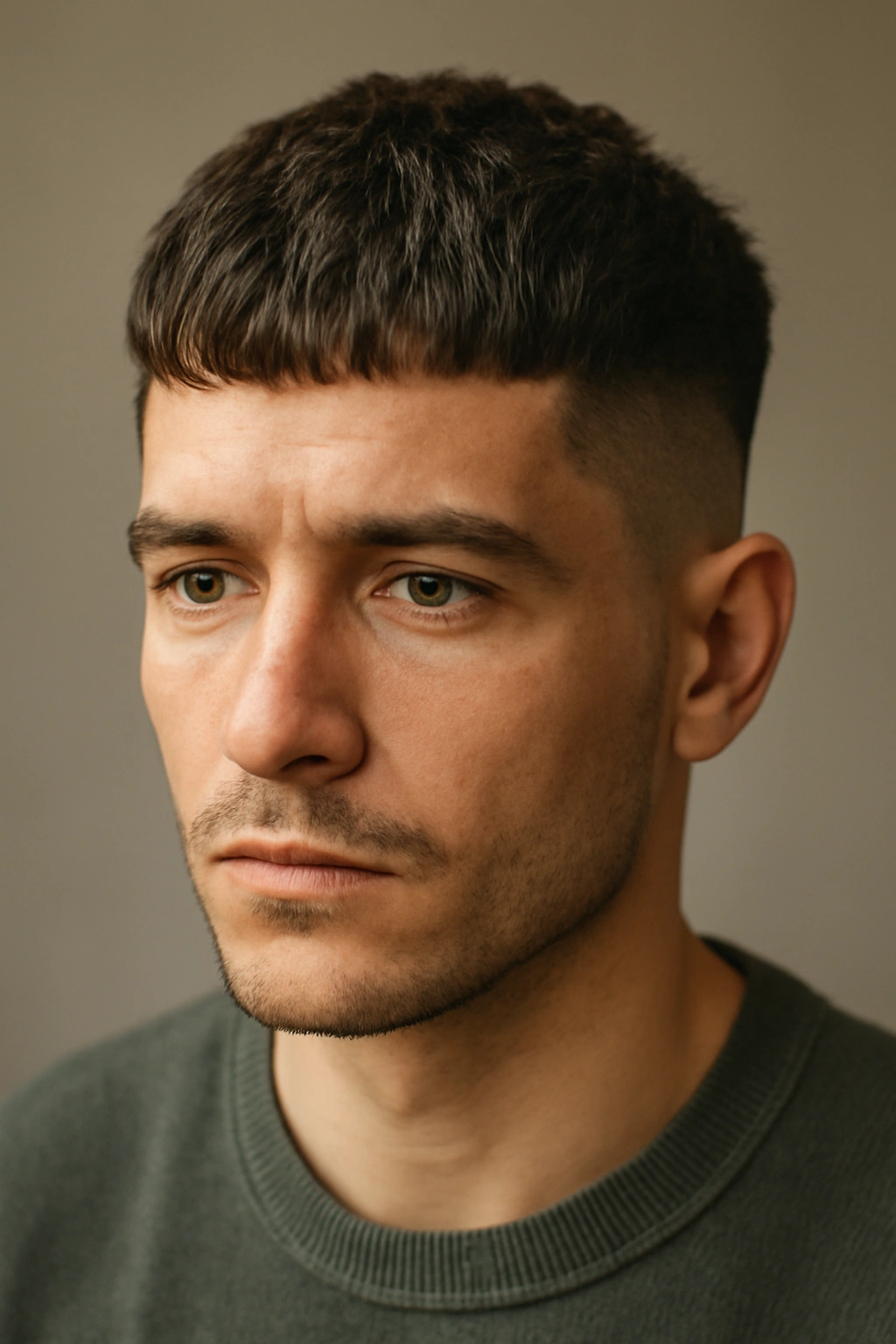
A French crop is a timeless men’s cut that’s increasingly popular for women who want something sharp and low-maintenance. The hair is longer on top in a rounded, textured shape, while the sides and back are faded short. For a diamond face, the rounded texture on top is ideal.
How This Cut Balances Diamond Proportions
The rounded shape at the crown actually adds perceived width to a narrow forehead—it’s a subtle optical effect, but it works. The short faded sides keep the cut from looking bulky and prevent it from emphasizing cheekbone width. The overall effect is a cut that looks sharp and deliberate without being harsh. The texture in the top section means the cut never looks severe or unflattering.
Styling and Product Recommendations
- Blow-dry the crown with your fingers to enhance the natural texture and round out the shape
- Use a matte pomade, clay, or dry powder to add texture and piece out individual sections
- The cut looks good both styled and slightly undone—both are intentional
- Fade the sides every 2-3 weeks to keep the contrast sharp
- This cut is excellent if you have naturally textured or wavy hair
8. The Tousled Pixie with Volume at the Crown
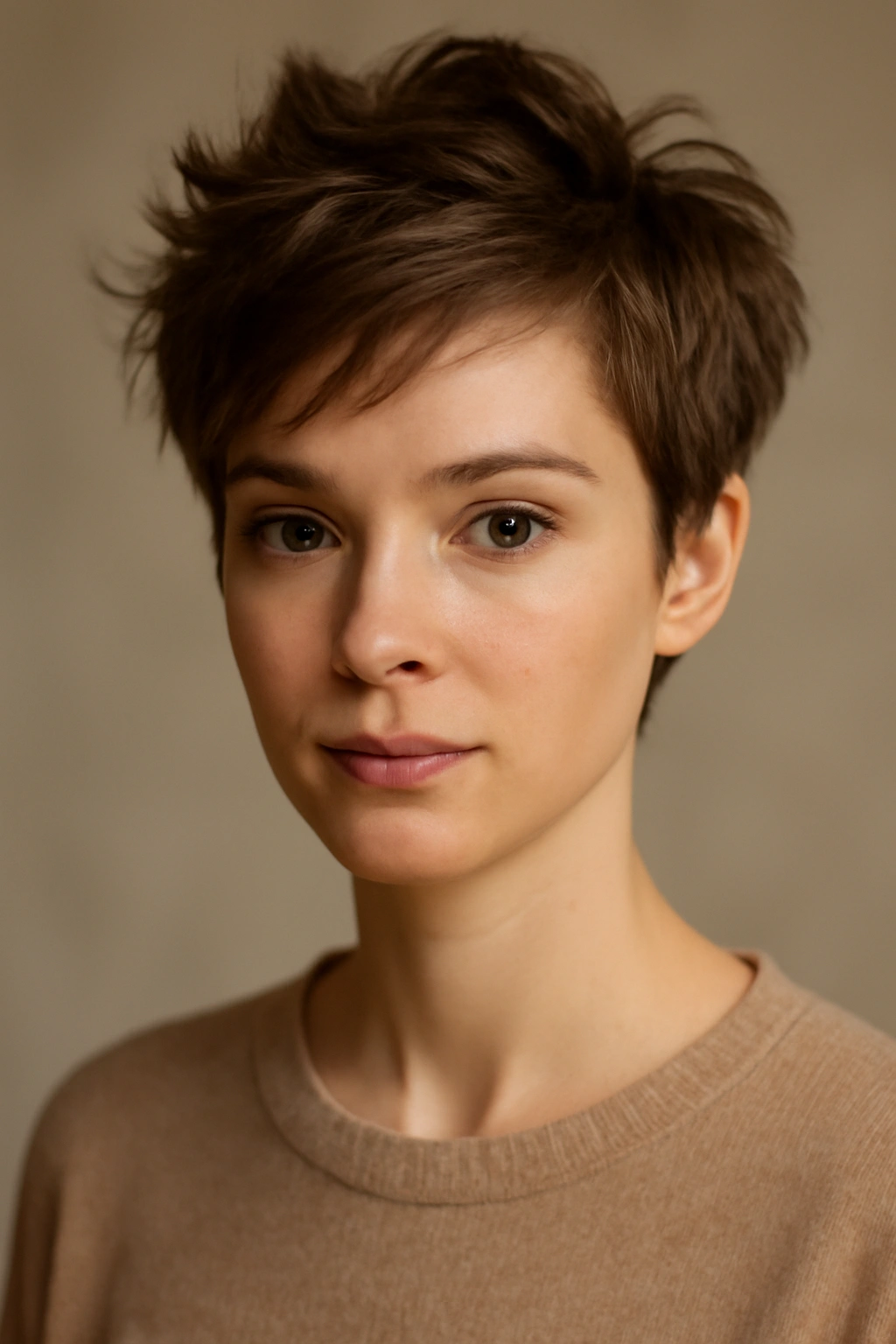
This is a traditional pixie cut but grown out slightly and styled with deliberate texture and volume. The key difference from other pixies is the intentional emphasis on movement and dimension rather than neat, geometric precision.
Why Volume at the Crown Works for Diamond Faces
Volume lifts the eye upward, which visually expands a narrow forehead. A tousled, textured pixie with height at the crown creates that lift while keeping the overall length short and practical. The texture throughout means the style never emphasizes the geometric angles of a diamond face—instead, it celebrates movement and personality.
How to Style for Maximum Impact
- Blow-dry against the natural direction of hair growth at the crown to build height
- Use a texturizing spray or sea salt spray while hair is damp for enhanced texture
- Ruffle your hair with your fingers as it dries to create intentional tousled-ness
- Scrunch with a bit of product to create separated, defined pieces
- Trim every 4-5 weeks to prevent the style from growing out into an unflattering shape
9. The Angled Bob with Razor-Cut Layers

An angled bob that’s cut with a razor creates a deliberately jagged, textured effect. The angle means the front is longer than the back, which suits a diamond face better than a blunt, level bob would. The razor-cut layers add dimension throughout.
Why Angles and Texture Benefit Diamond Faces
Angled lines interrupt facial symmetry—that’s their superpower for complex face shapes. An angled bob with longer front pieces can frame the jawline softly while the shorter back creates visual lift. The razor-cut texture means the hair breaks up at the cheekbones rather than clinging to them, which keeps that width from feeling emphasized.
Styling Techniques
- Blow-dry forward and down to emphasize the angled shape and length variation
- Use a flat iron to create or enhance the angle, pressing the longer front pieces away from the face
- A texturizing product enhances the razor-cut layers without requiring a lot of manipulation
- Style with some movement and texture—this cut looks best when it’s not slicked flat
- Trim every 6-8 weeks; grow it out gracefully or cut shorter depending on your mood
10. The Faux Hawk with Tapered Sides
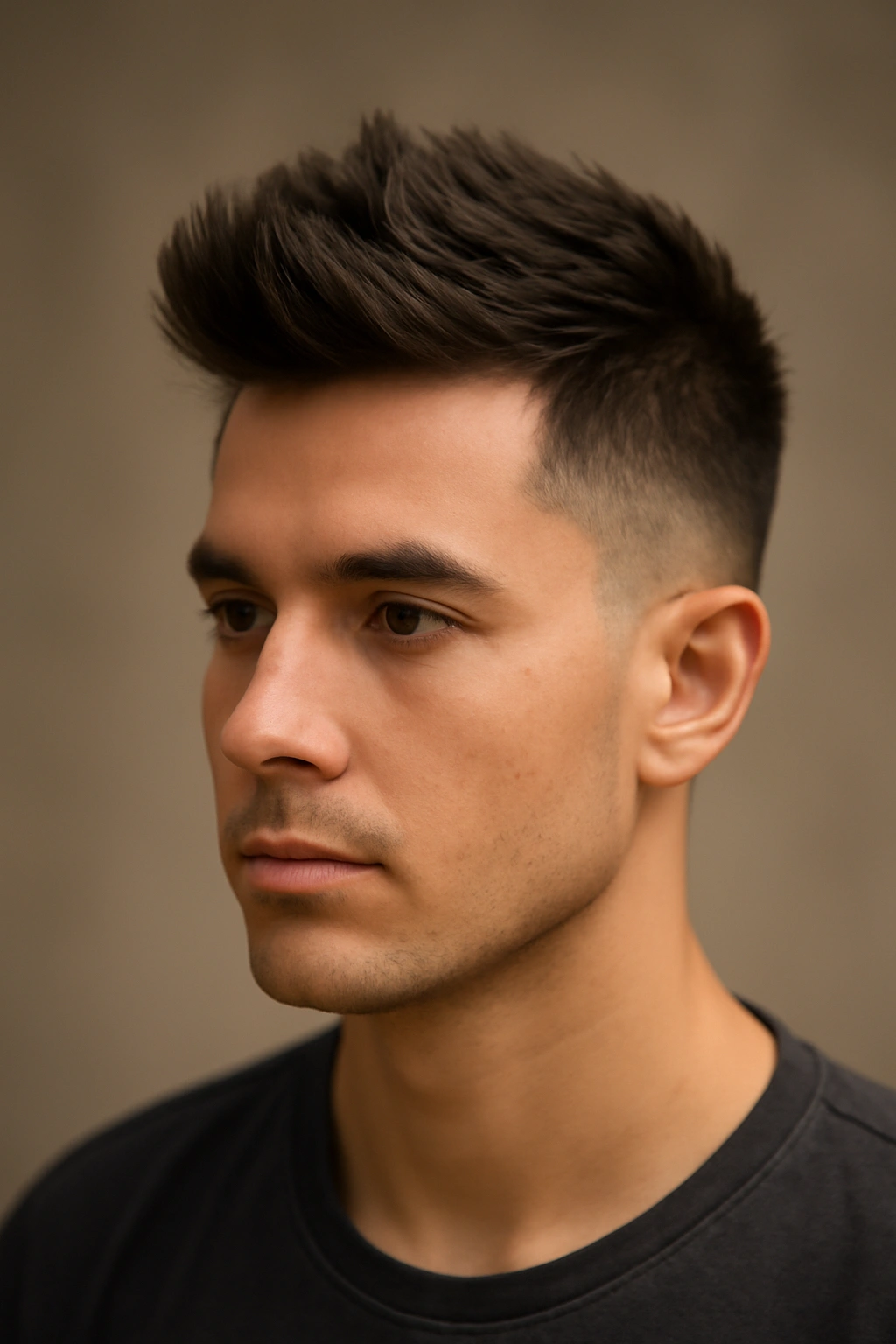
A faux hawk is an undercut where the top is left longer and can be styled upward, but it’s soft enough to wear down on casual days. The tapered sides gradually fade to short rather than cutting straight across. This gives you a cut that’s bold but flexible.
Why This Cut Works for Diamond Face Shapes
The faux hawk’s lifted crown adds vertical dimension, which visually broadens a narrow forehead. When worn with the hawk styled up, it’s a striking look that emphasizes personality over facial geometry. When worn down and soft, it looks like a textured pixie. The tapered sides prevent the cut from being too severe or emphasizing cheekbones. You get versatility from one cut.
Styling Options
- Wear with the hawk styled upward using a texturizing product for bold days
- Wear with it soft and tousled for a more relaxed vibe
- The tapered fade requires touch-ups every 2-3 weeks to stay sharp
- Use a matte pomade to define and sculpt the longer top section
- This cut rewards regular styling—the more intentional your styling, the better it looks
11. The Curly Crop with Volume
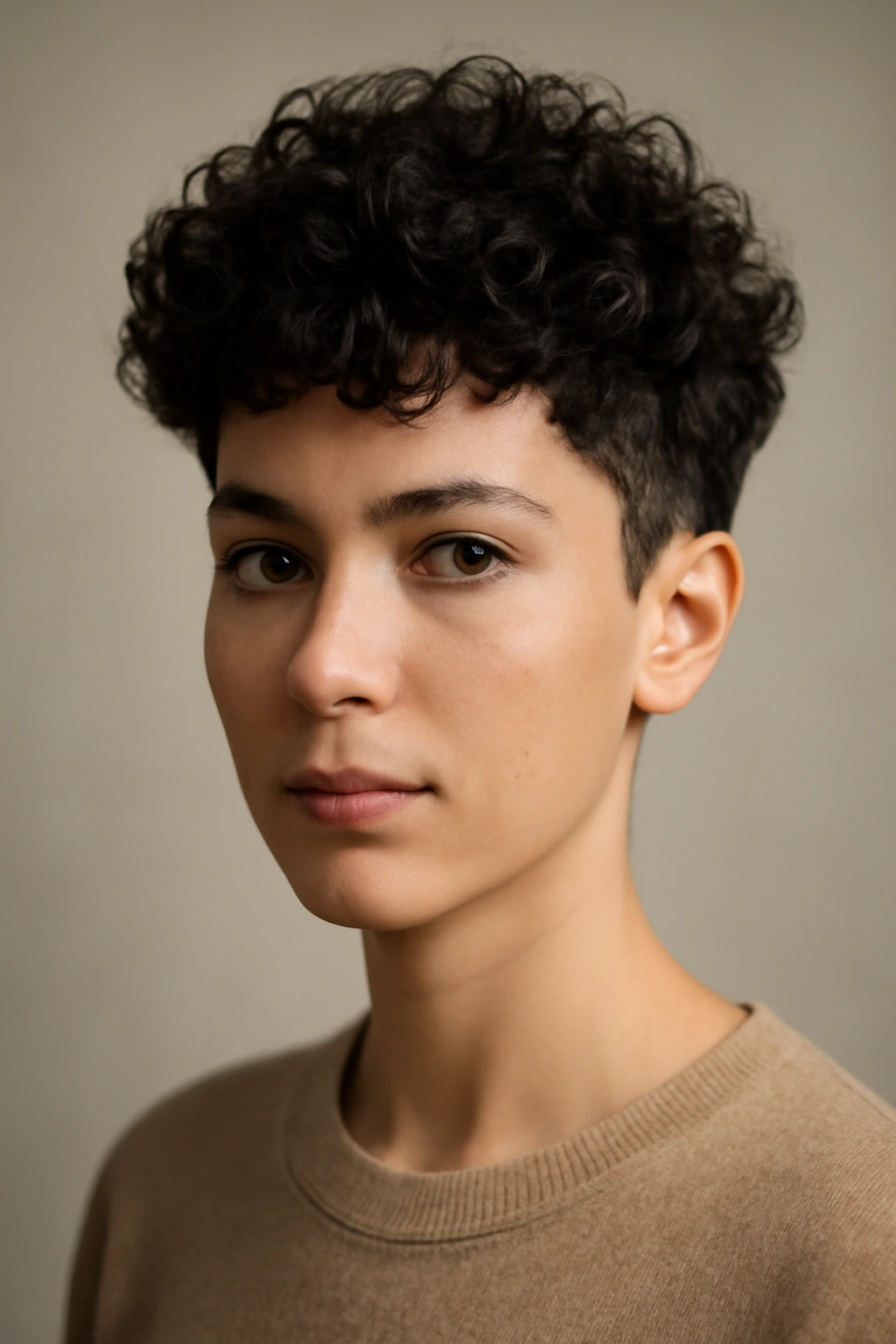
If you have curly or wavy hair, a very short crop cut specifically for curls creates natural volume and texture that’s incredibly flattering for diamond faces. The curls themselves provide the visual interest that breaks up facial lines. No heat-styling or complicated maintenance required.
How Natural Texture Complements Diamond Faces
Curls and waves naturally create visual interest and movement—exactly what a diamond face needs to soften its geometric angles. A short curly crop keeps the texture close to your head without weighing it down or making it bulky. The volume that curls provide at the crown lifts the face and visually expands a narrow forehead. This cut works with your hair’s natural texture rather than fighting it.
Styling and Care
- Wash with a curl-specific shampoo and apply conditioner or curl cream while damp
- Scrunch or plop your hair to encourage curl definition and set
- Let curls air-dry or diffuse with a blow dryer on low heat
- No daily styling required—your hair’s natural texture does the work
- Trim every 6-8 weeks; curly hair grows down rather than out, so regular trims keep the shape intentional
- This cut is lower-maintenance than most, especially if you embrace your hair’s natural pattern
12. The Swept Bangs with Short Layers
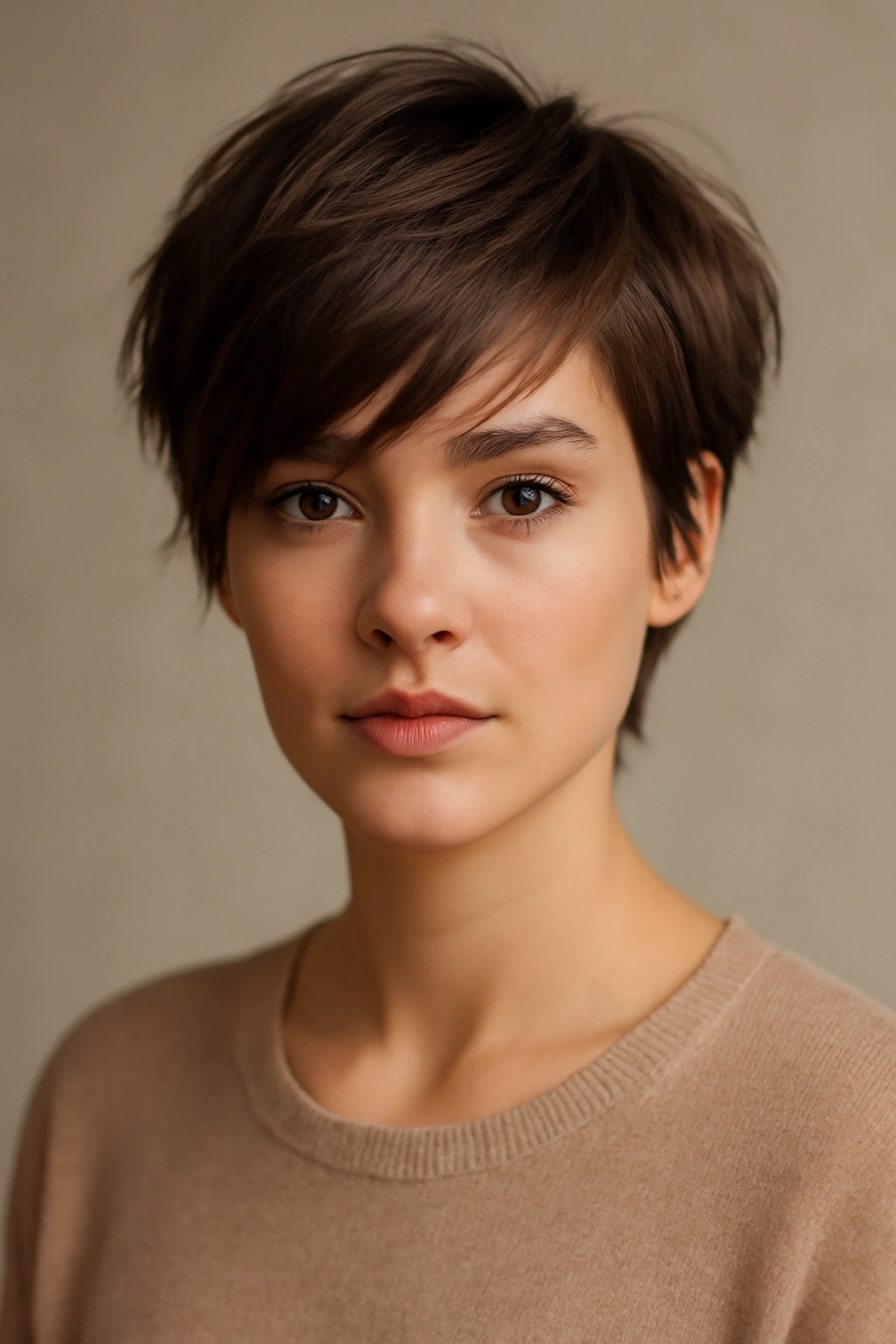
This cut combines a heavily layered, textured short style with longer swept bangs that fall across the forehead and cheekbone area. The bangs are the hero element here, adding visual interest and softening the face’s natural angles.
Why Bangs and Layers Transform Diamond Faces
Bangs instantly add width and interest to a narrow forehead—they’re one of the best tools for balancing diamond face proportions. Swept bangs specifically are softer than blunt bangs; they fall across the cheekbone at an angle, which helps soften that prominence. Layer the rest of the hair short and textured, and you’ve created a cut that’s flattering from every angle. The layering adds volume at the crown and texture throughout.
How to Style Swept Bangs
- Blow-dry bangs with a round brush, directing them back and across your forehead
- Use a flat iron to create a smooth, intentional sweep
- Keep the shorter layers textured and piece-y so the cut doesn’t look too geometric
- Trim bangs every 2-3 weeks; they grow faster than the rest of your hair and require regular maintenance
- Use a texturizing product to add grip and prevent bangs from sliding out of place
- Swept bangs work best when there’s some movement to the rest of the cut—avoid pairing them with a blunt, rigid style
Final Thoughts
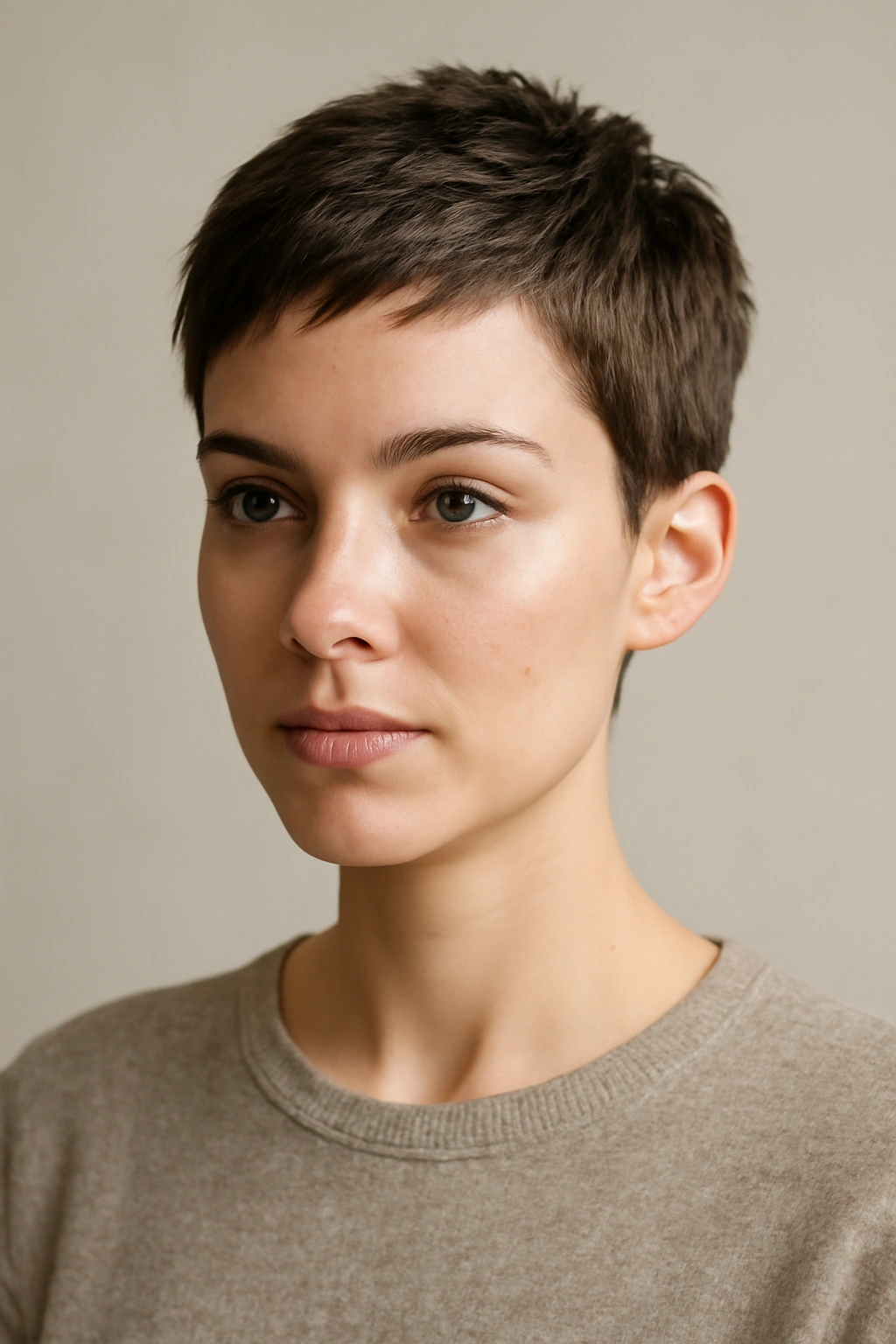
The best short haircut for your diamond face depends on your hair texture, lifestyle, styling commitment, and personal style preference. Some of these cuts are wash-and-wear low-maintenance styles, while others require daily attention and product. Some are bold and editorial; others are soft and romantic.
What matters most is working with a stylist who understands your face shape and isn’t just chasing a trend. Show them multiple photos of cuts you love, and more importantly, explain why you love them—talk about the proportions, the angle, the texture, the way it frames the face. Tell your stylist that you have a diamond face and you’re looking to add width at the forehead and soften the jawline.
Most of these cuts require maintenance and intentional styling to look their best. That’s not a drawback—it’s part of the appeal of short hair. You get to show up and invest in how you look in small, meaningful ways every day. The payoff is a cut that actually works with your face, not against it.
