



A money piece is that strategically placed, face-framing highlight or lighter dimension that sits right up front—and it’s the secret weapon that transforms a simple short cut into something with serious dimension and movement. The term itself comes from the fact that these front-facing pieces are the first thing people see, making them literally your most “visible” feature. When paired with a short haircut, a money piece doesn’t just add depth; it creates the illusion of texture, movement, and intentional styling even when you’ve barely touched your hair with a brush.
The brilliance of combining a short cut with a money piece lies in the contrast and focus. Short haircuts are already bold—they demand attention and require confidence to pull off. When you add the dimension of a money piece, you’re layering in visual interest that makes your face feel more sculpted, your features feel more emphasized, and the overall look feel more editorial and current. It works whether you’re going for a sleek, minimalist vibe or something textured and lived-in. The money piece catches light, moves independently from the rest of your hair, and creates those little framing moments that catch people’s eye when you move.
What’s particularly smart about this combination is that it works across virtually every face shape, hair type, and skin tone. Whether you have fine hair that needs visual tricks to look fuller, thick waves that benefit from strategic color work, or straight hair that needs movement cues, a money piece adapts. The highlights can be subtle—just a whisper of lightening that enhances your natural dimension—or bold and contrasting. That flexibility is why this trend has real staying power.
1. The Sleek Bob With Dimensional Money Pieces
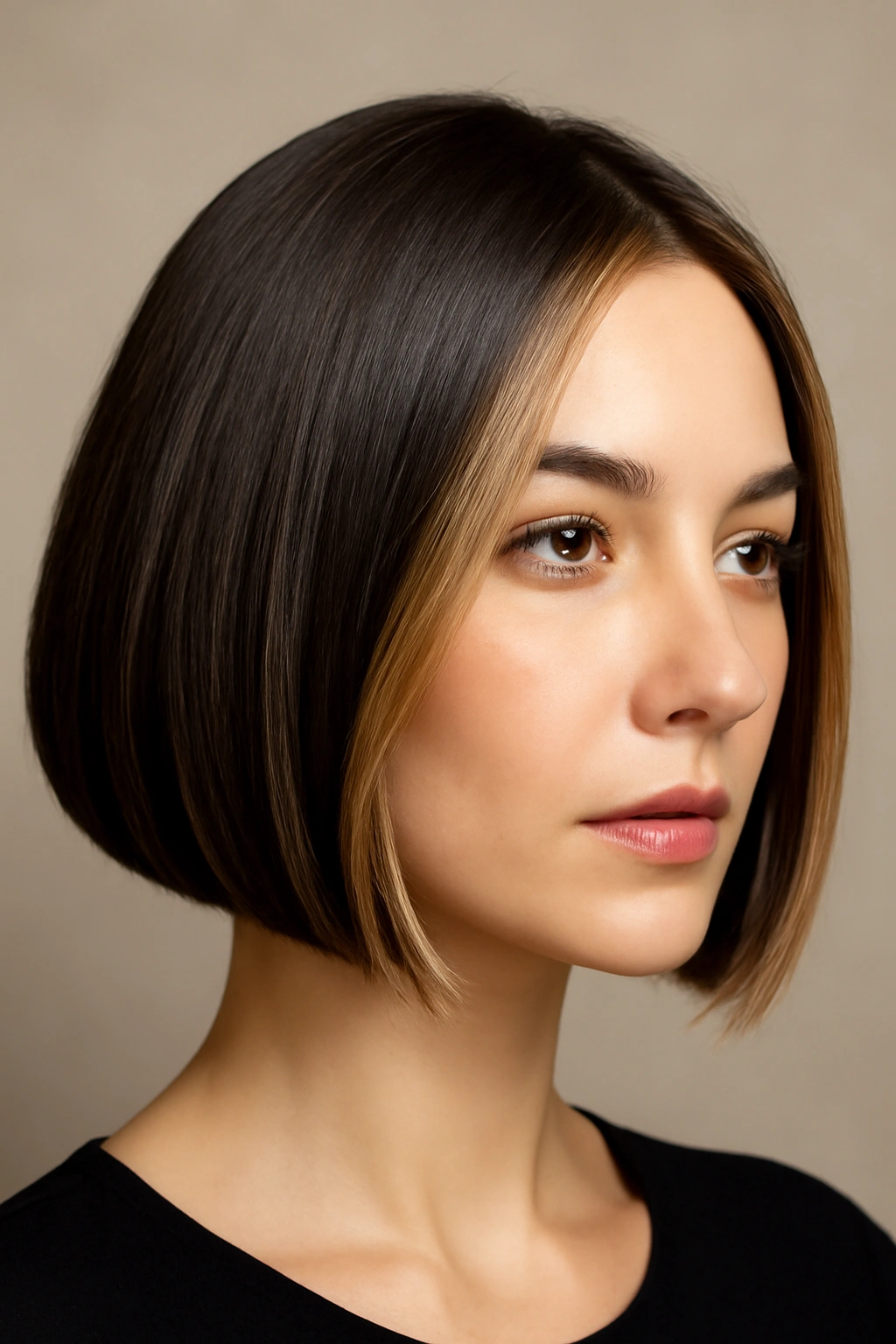
A classic bob gets an immediate upgrade when you introduce money pieces that fall just past the jawline. This cut works best when the bob sits perfectly straight with clean, blunt edges—the money pieces become these bright exclamation points at the front that draw focus to your face rather than the length. The pieces should be placed at a slight angle, starting higher at the back and catching the cheekbone area.
Why This Works for Daily Styling
A dimensional bob with money pieces requires minimal styling effort while delivering maximum polish. You can air-dry this cut into soft waves, and those front pieces will catch the light and move independently, creating the impression of intentional styling even when you haven’t spent much time styling at all. The bluntness of the cut provides structure, and the money pieces provide the visual interest that prevents the look from feeling too severe or stark.
How to Customize It for Your Face
- If you have a round face, ask your stylist to keep the bob hitting right at your jawline and angle the money pieces slightly toward the back to create the illusion of length
- For an oval face, you have the most flexibility—the pieces can be more dramatic and placed closer to the front
- If you have a square jaw, longer pieces that extend past the jawline will soften your angles
- Styling tip: Use a round brush while blow-drying to create a subtle inward flip at the ends, which emphasizes the blunt cut
Pro tip: This cut requires regular maintenance every 4-6 weeks to keep those blunt edges sharp and the money pieces bright and fresh. If you’re not ready to commit to that timeline, ask for slightly softer, slightly longer edges that can stretch a bit longer between cuts.
2. The Textured Pixie With Piece-y Highlights
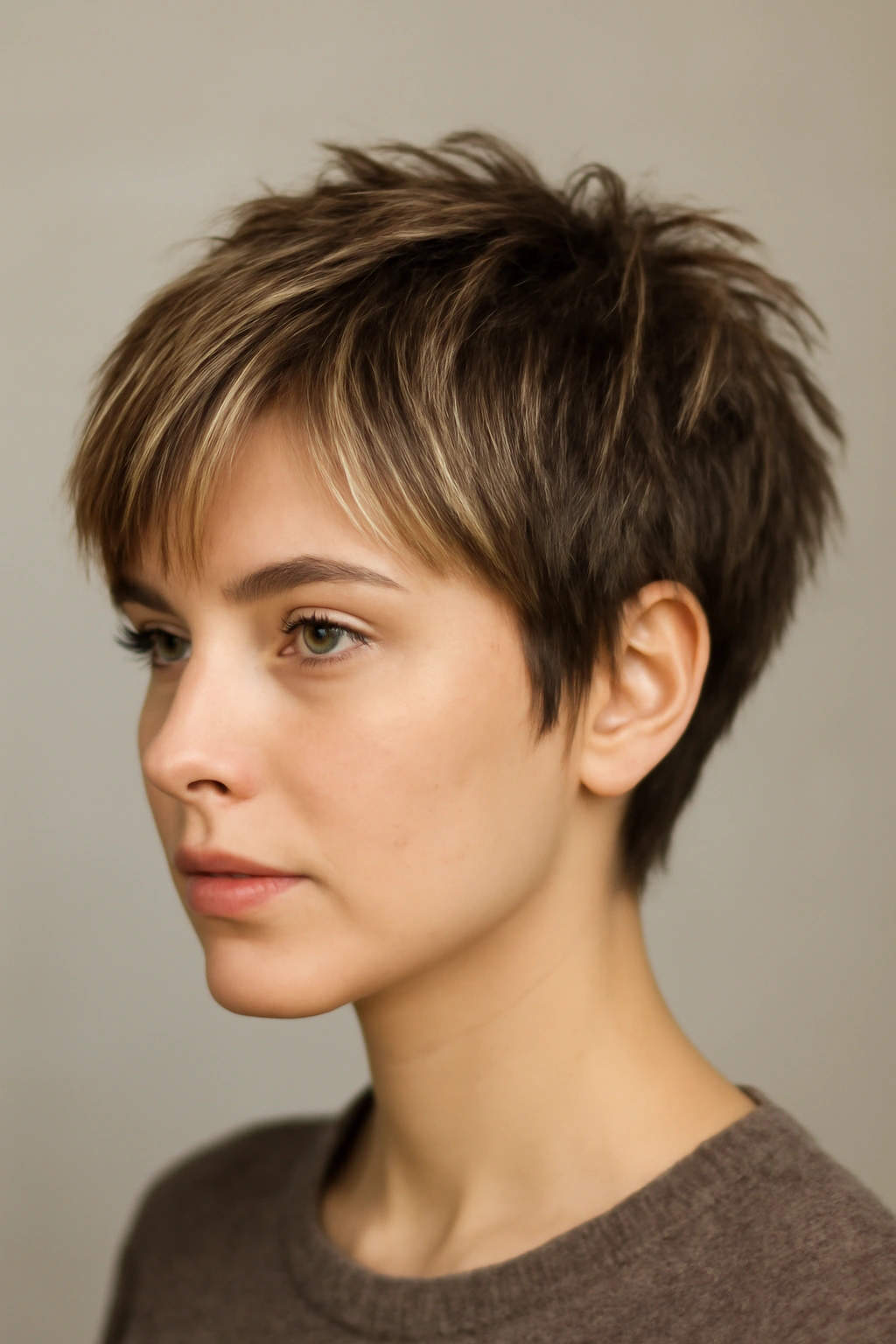
A pixie cut paired with strategically placed money pieces transforms what could feel too severe into something playful and modern. Short layers throughout create natural texture, and the highlights should be woven throughout those layers rather than sitting as one flat color band. The money pieces sit at the front and sides, creating a halo effect when lit.
The Styling Advantage
Pixies with money pieces sit at the intersection of low-effort and high-impact. You can spike the texture up with pomade for an edgy vibe, slick it back for something refined, or tousle it for an effortless look. The money pieces will be visible in every direction, so they become the element that ties the whole look together and makes it feel intentional rather than just “I cut my hair short.”
Building Confidence With Short Cuts
- Money pieces add a visual softness that counterbalances the boldness of short length
- The front-facing highlights create face-framing that emphasizes your best features
- This combination signals confidence and intentionality—it says you chose this cut on purpose, not that you inherited it
- Use a lightweight texture spray or sea salt spray to enhance the natural texture of a pixie without weighing it down
Real talk: Pixies with money pieces are one of the most photogenic short cuts out there. They photograph beautifully in both natural light and indoor settings because the pieces catch light beautifully. If you’re hesitant about going short, ask for photos of how this specific cut looks in different lighting conditions.
3. The Choppy Shag With Disconnected Money Pieces
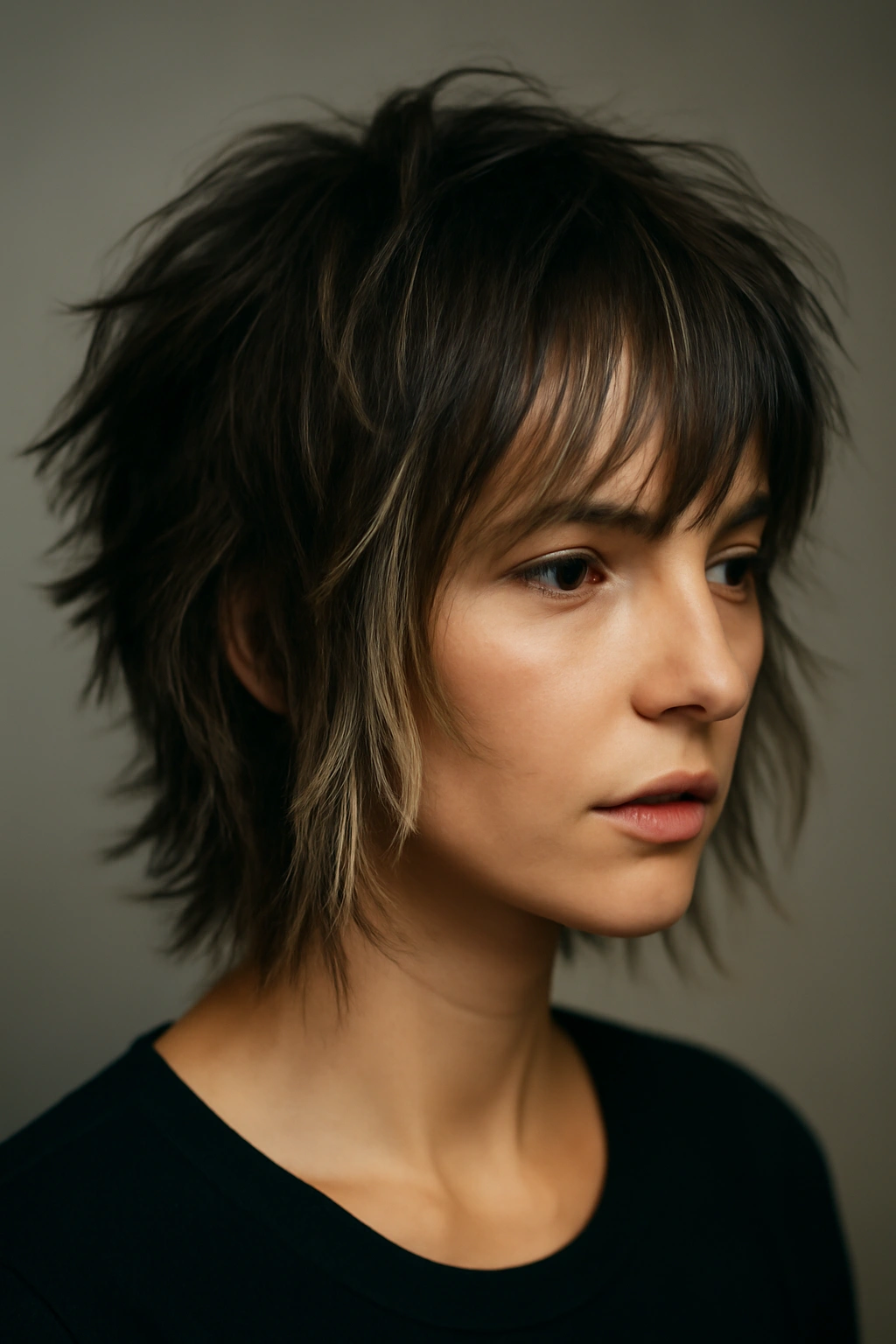
A modern shag is all about movement and attitude, and disconnected money pieces—highlights that are clearly separate and distinct from the rest of the hair—amplify that vibe. The shag layers should create texture throughout, and the money pieces should feel like they’re living their own independent life up front.
Creating Movement and Dimension
A shag with money pieces taps into that lived-in, editorial aesthetic that’s dominated fashion and beauty imagery. The cut itself has lots of movement because of the layers, and the highlights add yet another dimension of movement through color. When you move, these pieces move with you, catching light and creating shadow play that makes the whole cut look more expensive and intentional.
Styling Your Shag for Maximum Impact
- Blow-dry the cut with your hands, using fingers to piece out the layers as you go—this is the styling method that shows off both the cut and the highlights
- A texturizing spray or light-hold pomade will enhance the piecy texture without making your hair feel stiff
- Sleep on slightly damp hair and refresh with a spritz of dry shampoo for that perfectly tousled morning-after texture
- The money pieces will be most visible when your hair is down and moving—they’re less noticeable (by design) when you style up
Worth knowing: This cut requires someone who understands modern shag technique, not someone who just creates random layers. A good shag should have a specific structure underneath the piece-y appearance. The money pieces should complement that structure, not feel like they’re trying to fix an unstructured cut.
4. The Angular Lob With Soft Money Pieces
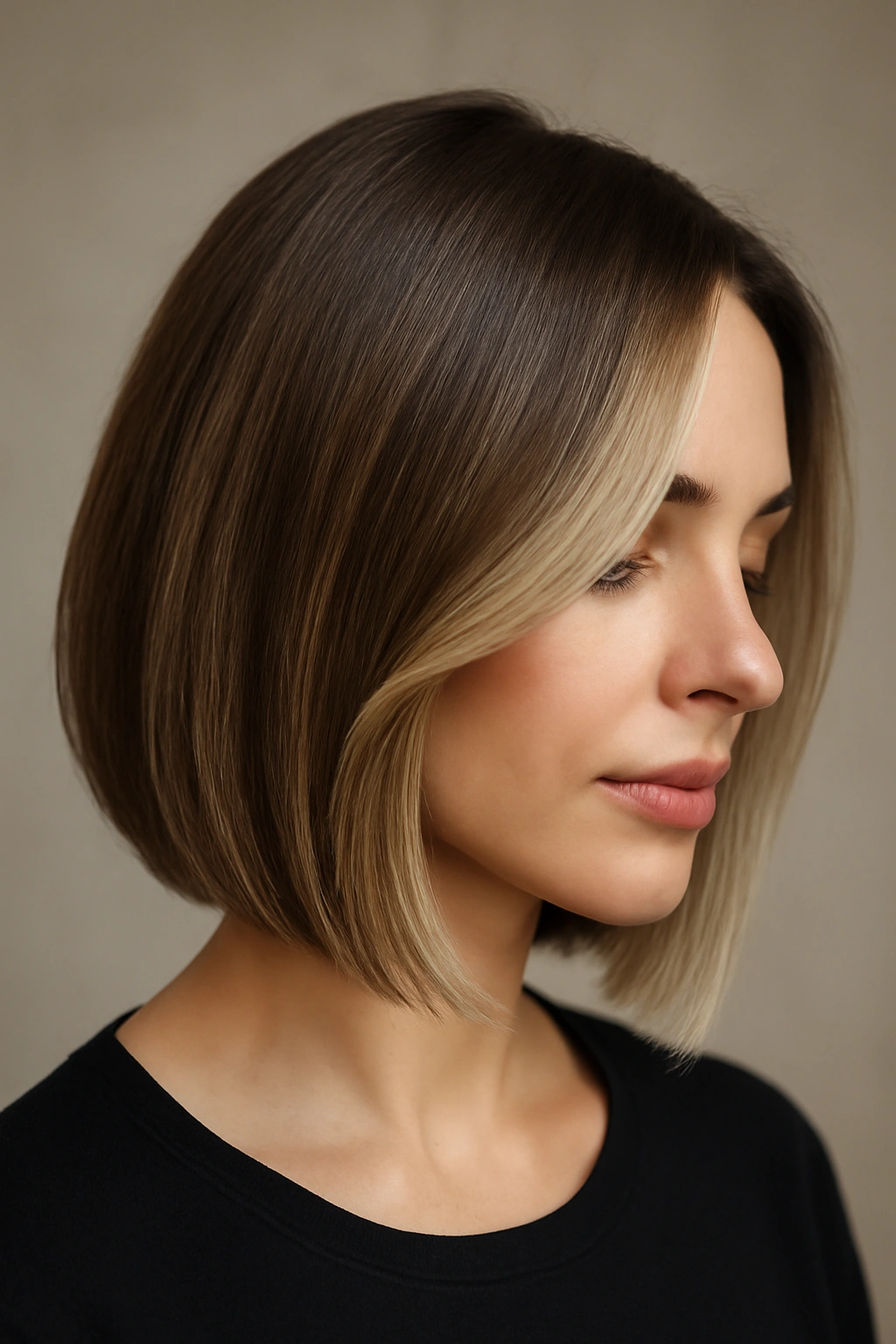
A lob (long bob) sits in that interesting middle ground where it’s not quite shoulder-length but longer than a traditional bob. When you add subtle, soft money pieces, you create dimension without losing the sleekness of the cut. These pieces should blend seamlessly into the rest of the hair rather than looking like a stark contrast.
Why Soft Pieces Work Here
An angular lob is already a sophisticated cut—it has structure and intention built in. Soft money pieces that blend rather than contrast respect that structure while adding the depth and dimension that prevents the cut from looking flat. The angle of the cut works in tandem with the piece placement to create a flattering frame around your face.
Maintaining the Blend
- Use a shadow root technique or balayage to keep the money pieces looking intentional and dimensional rather than obvious
- The pieces should start slightly lighter and blend into your natural tone or base color as they move back
- Styling this cut is effortless—a flat iron or curling iron can create waves, and the pieces will move beautifully with whatever texture you create
- This is ideal if you love the idea of money pieces but aren’t ready for high contrast or dramatic color work
Pro tip: The best money pieces for a lob are placed at the cheekbone and temple area—these are the exact spots where we naturally look when we see someone’s face, so the dimension there creates the most impact. Ask your colorist to be specific about placement rather than just “adding highlights.”
5. The Tousled Crop With Bold Contrast Pieces
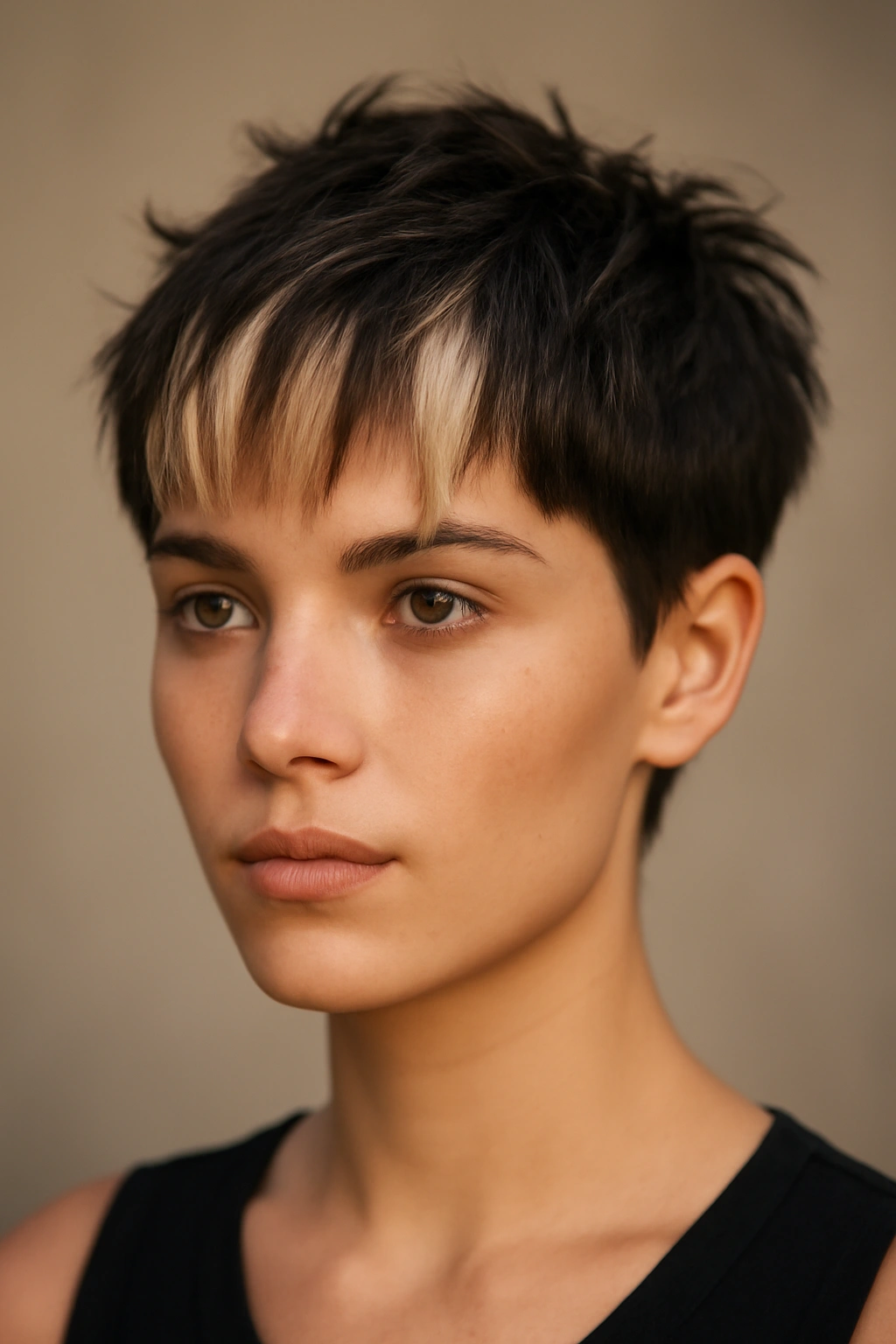
A cropped cut that sits close to the head benefits enormously from bold, contrasting money pieces. The brevity of the cut means there’s less surface area to work with, so the pieces need to be noticeable enough to matter. High-contrast pieces in this situation feel editorial, cool, and intentional rather than accidental.
Making a Statement With Your Cut
This combination is for people who want their hair to be a conversation starter. Bold money pieces on a short crop say “I’m making deliberate choices about my appearance.” The cut itself demands confidence, and the contrasting pieces double down on that energy. It’s not a look for blending in—it’s a look for standing out in the best possible way.
Working With Different Hair Textures
- If you have straight hair, ask for pieces that have a bit of texture built into them—a curled end or a subtle wave—so they feel more organic
- With wavy or curly hair, the texture will do much of the work for you; the contrast pieces will be the star
- Fine hair benefits from pieces that aren’t too thin, as thin pieces can look wiry; ask for slightly thicker dimensional pieces
- Styling options include sleek and smooth, piece-y and textured, side-swept, or fully tousled—all work beautifully
Insider note: This is the cut to choose if you’re working with a colorist who really understands dimensional color. The placement and blend of these pieces is as important as the haircut itself—they need to be positioned to frame your face in the most flattering way, not just placed randomly throughout.
6. The Modern Mullet With Fringe Money Pieces
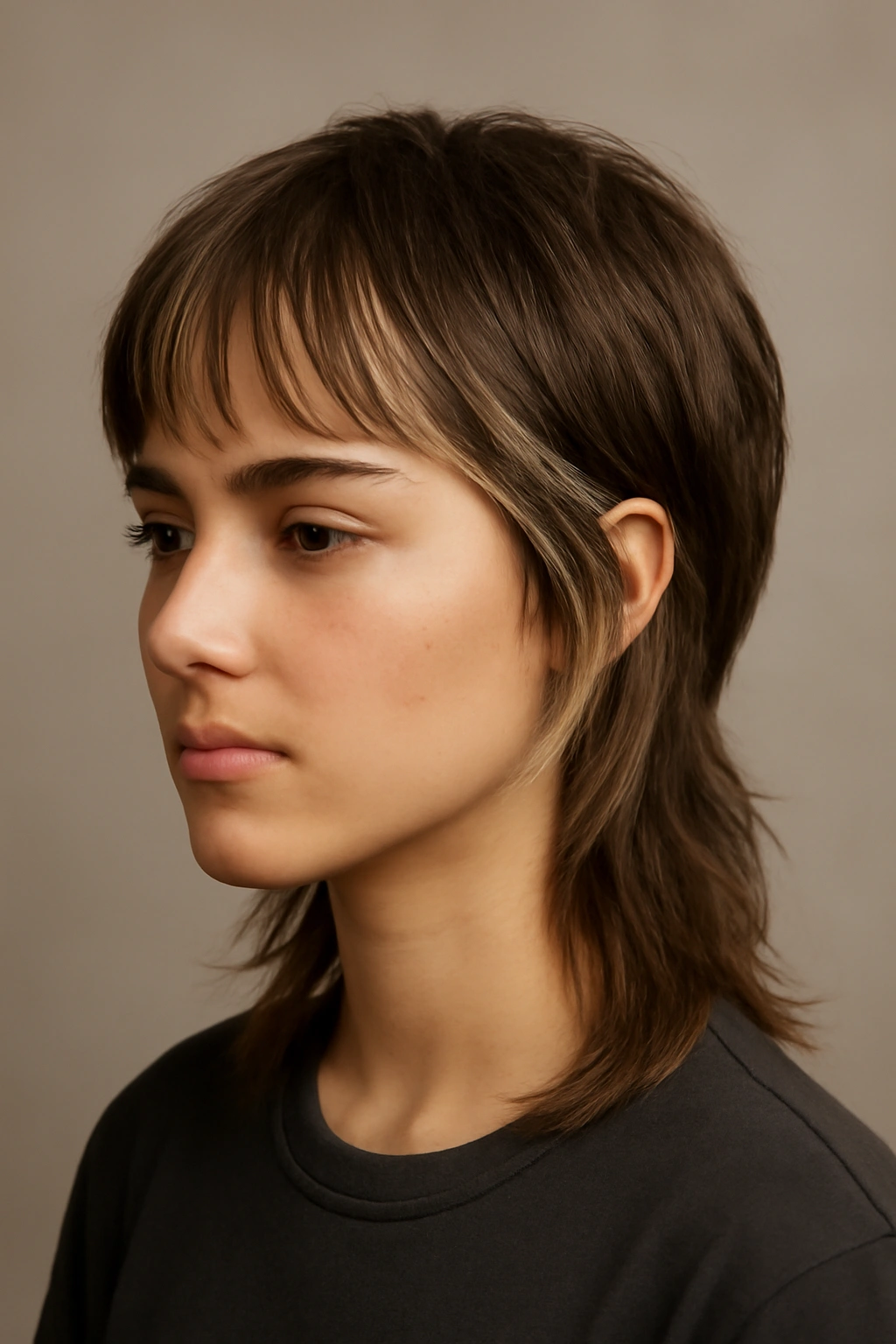
A modern mullet is a short, textured cut at the front and sides with slightly longer length in the back. The money pieces should be positioned at the front and through the fringe area, creating that soft, dimensional frame while the back remains more solid.
Why This Cut Is More Wearable Than You Think
The modern mullet has shed its ’80s reputation and evolved into something genuinely cool and wearable for everyday life. The money pieces soften any edge that might feel too fashion-forward or costume-like. They create face-framing that makes the short front feel less severe and more balanced with the longer back.
Styling for Different Occasions
- For a softer daytime vibe, style the fringe and front with texture and movement, letting the pieces do the talking
- For something more dramatic, slick the front back and let the longer back take center stage
- The pieces are visible regardless of how you style the cut, making this a versatile option if you like your haircut to work for both professional and creative settings
- A light pomade or styling cream through the front will enhance the piece-y texture
Real talk: A modern mullet with money pieces absolutely requires a stylist who understands contemporary cut technique. The proportions and the blend between front and back are crucial—this isn’t a cut where you can just ask for “short in front, long in back” and expect great results.
7. The Undercut Crop With Contrasting Money Pieces
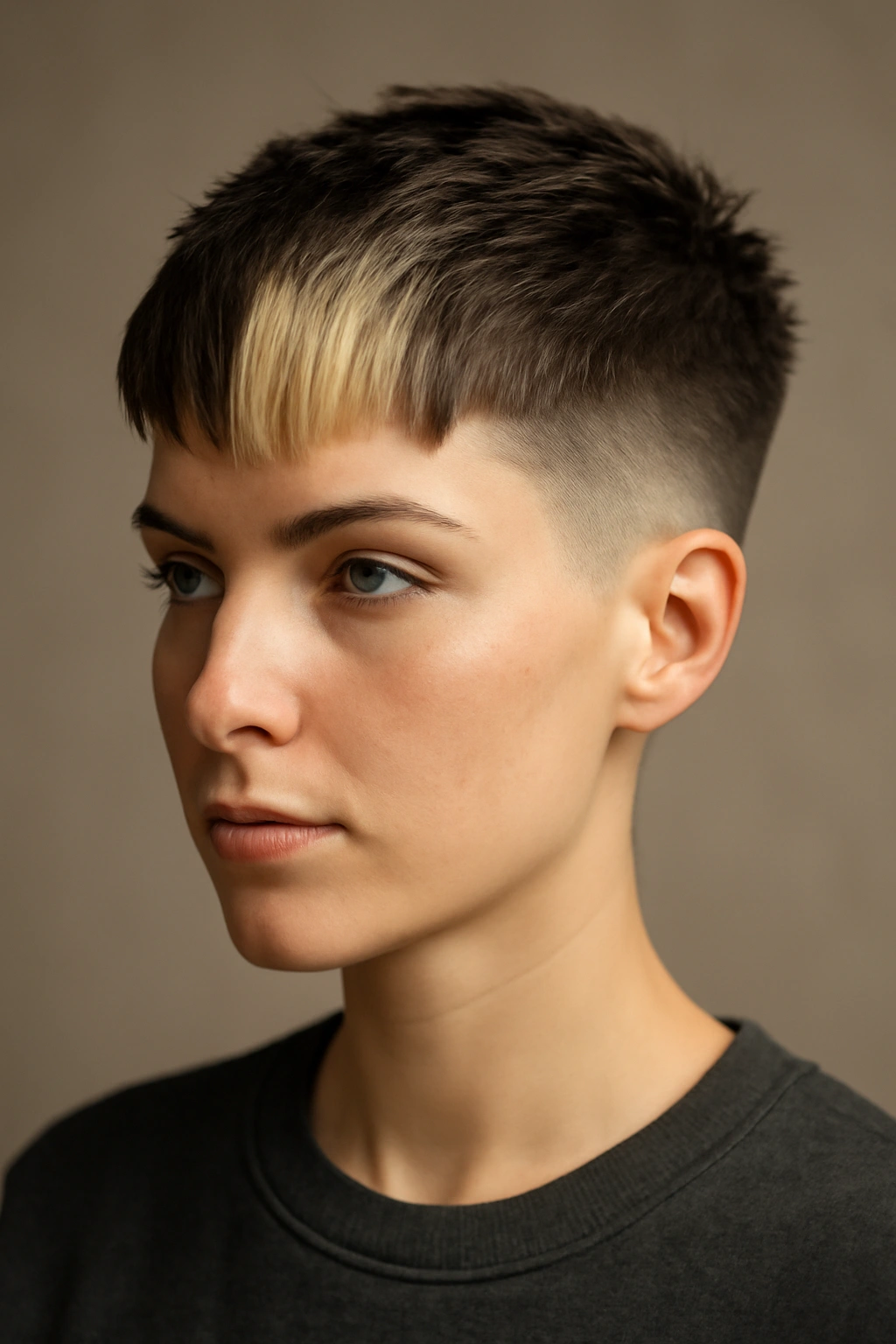
An undercut—where the sides and back are cut significantly shorter than the top—creates a bold foundation that pairs beautifully with contrasting money pieces. The pieces feel even more pronounced when they’re sitting on top of such short underlying structure.
Creating Visual Impact
The contrast in this look operates on multiple levels: the contrast between the length of the undercut and the top, and then the contrast of the money pieces against your natural color. It’s a look for people who want their haircut to be architecture, not just a style.
Maintenance Reality Check
An undercut is a high-maintenance cut in terms of regular trims—you’ll need to maintain the contrast every 3-4 weeks to keep those clean lines. The money pieces will also need refreshing every 6-8 weeks depending on how bold the contrast is. But if you’re willing to commit to that maintenance, the visual payoff is significant.
Styling Your Undercut
- You can style the top in virtually any direction—back, to the side, forward
- The pieces will move independently, creating interest even if the rest of your hair is slicked back
- Use a strong-hold pomade or gel if you’re going for a sleek look, or a texturizing spray if you want something more piece-y and relaxed
- The bold geometric nature of this cut makes it ideal for creative professionals, performers, and people who want their appearance to make a statement
Pro tip: Have a conversation with your colorist about placement before you start any cutting. With an undercut, the money pieces become even more of a focal point, so their exact placement really matters for balancing your face shape.
8. The Blunt Fringe Short Bob With Dimensional Pieces
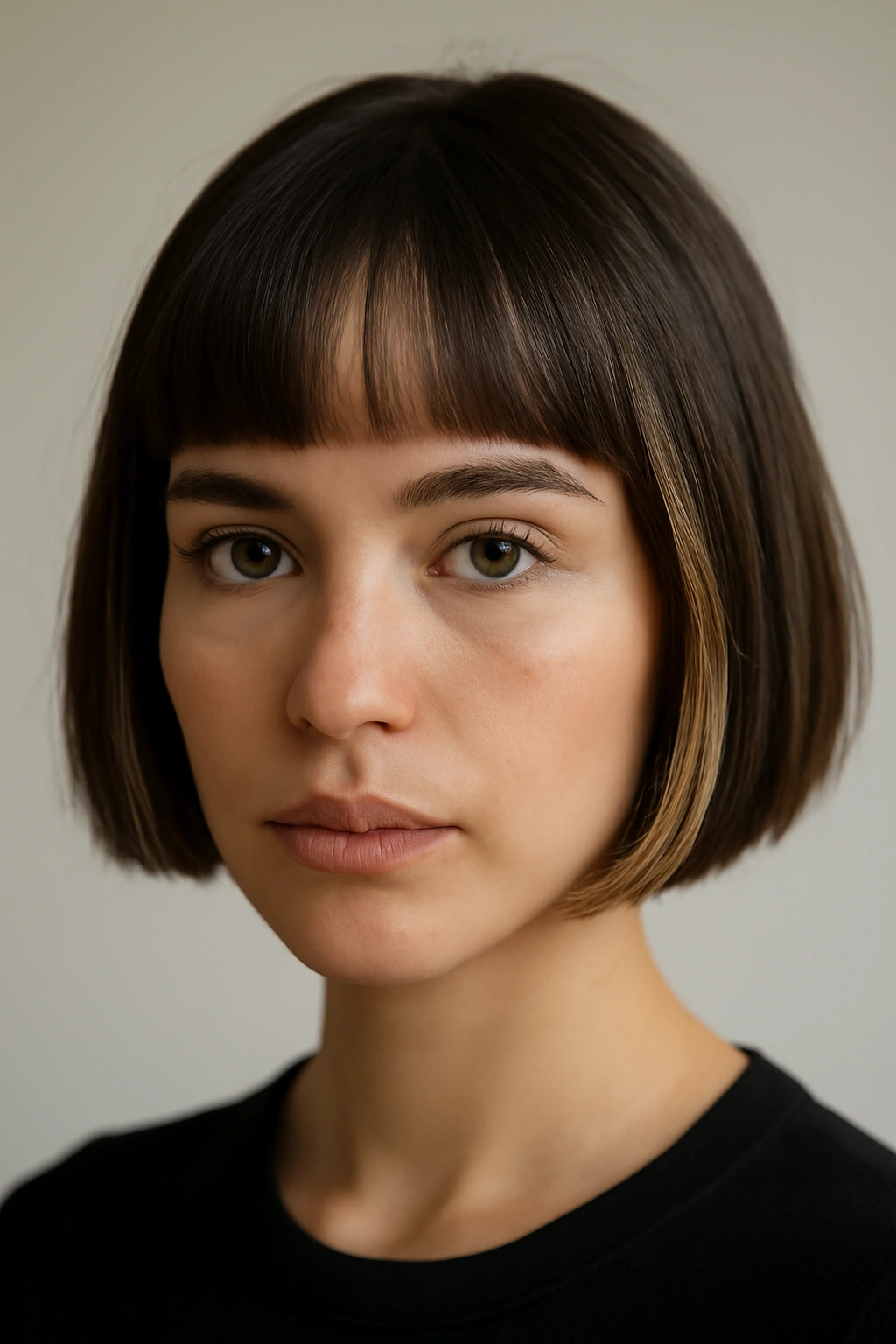
A short bob with a blunt fringe is inherently bold—the fringe creates structure and makes a statement. Adding dimensional money pieces in the fringe area and at the temples creates a look that’s simultaneously modern and timeless.
The Psychology of Fringe
A blunt fringe naturally draws focus to your eyes and forehead, and dimensional money pieces through that fringe area enhance that effect. The pieces catch light when you move, creating animation and movement that a one-dimensional fringe might not achieve on its own.
Getting the Fringe Right
- The fringe should hit at or just below your eyebrow line for the most flattering frame
- Money pieces through the fringe should be subtle enough that they blend slightly rather than creating harsh bands of color
- Styling a fringed bob is simple: a quick tousle with your hands or a blow-dry with texture spray, and you’re done
- The fringe will require more frequent trims than the rest of the cut (every 2-3 weeks) to maintain that crisp edge
Worth knowing: A blunt fringe is less forgiving than longer, layered pieces—if your part is slightly off or your fringe isn’t perfectly placed, it becomes obvious. Talk to your stylist about whether this cut is right for your hair type and your willingness to maintain it carefully.
9. The Side-Swept Short Cut With Directional Money Pieces
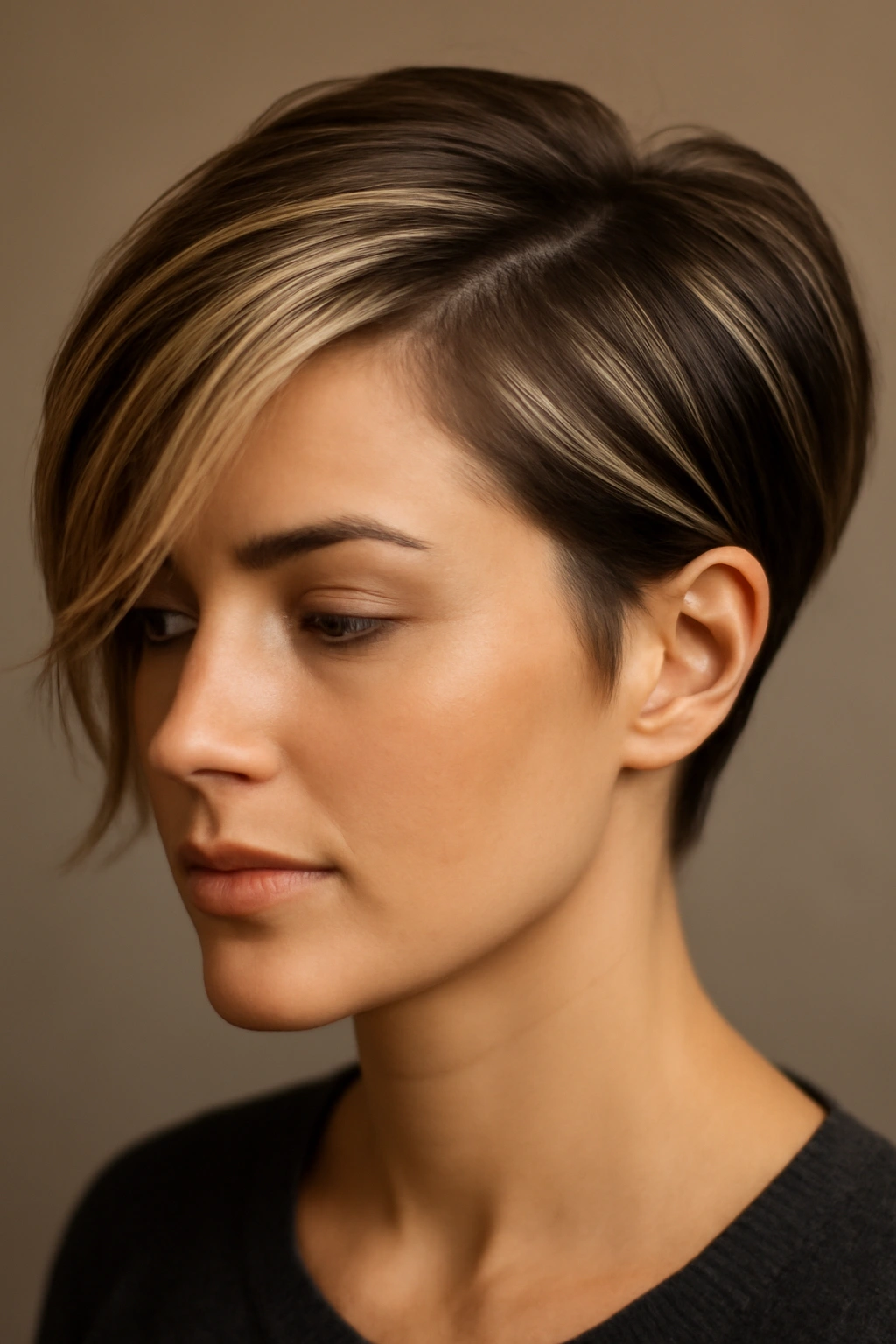
A short cut with serious side-sweep has built-in movement—the structure naturally creates that swept direction. Money pieces placed to emphasize and enhance that direction create a look that’s constantly moving and catching light.
Creating a One-Sided Focal Point
When you sweep everything to one side, you’re essentially creating one main focal point. Money pieces placed along the direction of that sweep will be consistently visible and create a frame that emphasizes one side of your face more than the other.
Working With Your Face Shape
- If you have a longer face, sweeping toward one side creates the illusion of width
- A rounder face can be narrowed and elongated by a decisive side-sweep
- Heart-shaped faces benefit from pieces that sit closer to the temple and cheekbone on the smaller upper face
- The side you choose matters—experiment with both directions before committing, as one will feel more natural and flattering
Styling Options
- You can maintain the sweep even when air-drying if your hair has natural texture or wave
- A blow-dry creates more dramatic sweep and movement
- These pieces are visible whether your hair is swept back or tousled, so they’re always working for you
- A light pomade or texturizing spray enhances the pieces without disrupting the natural sweep
Insider note: This cut works particularly well for people with finer hair, as the side-sweep can create the illusion of more volume and density than your hair actually has.
10. The Textured Taper With Face-Framing Pieces
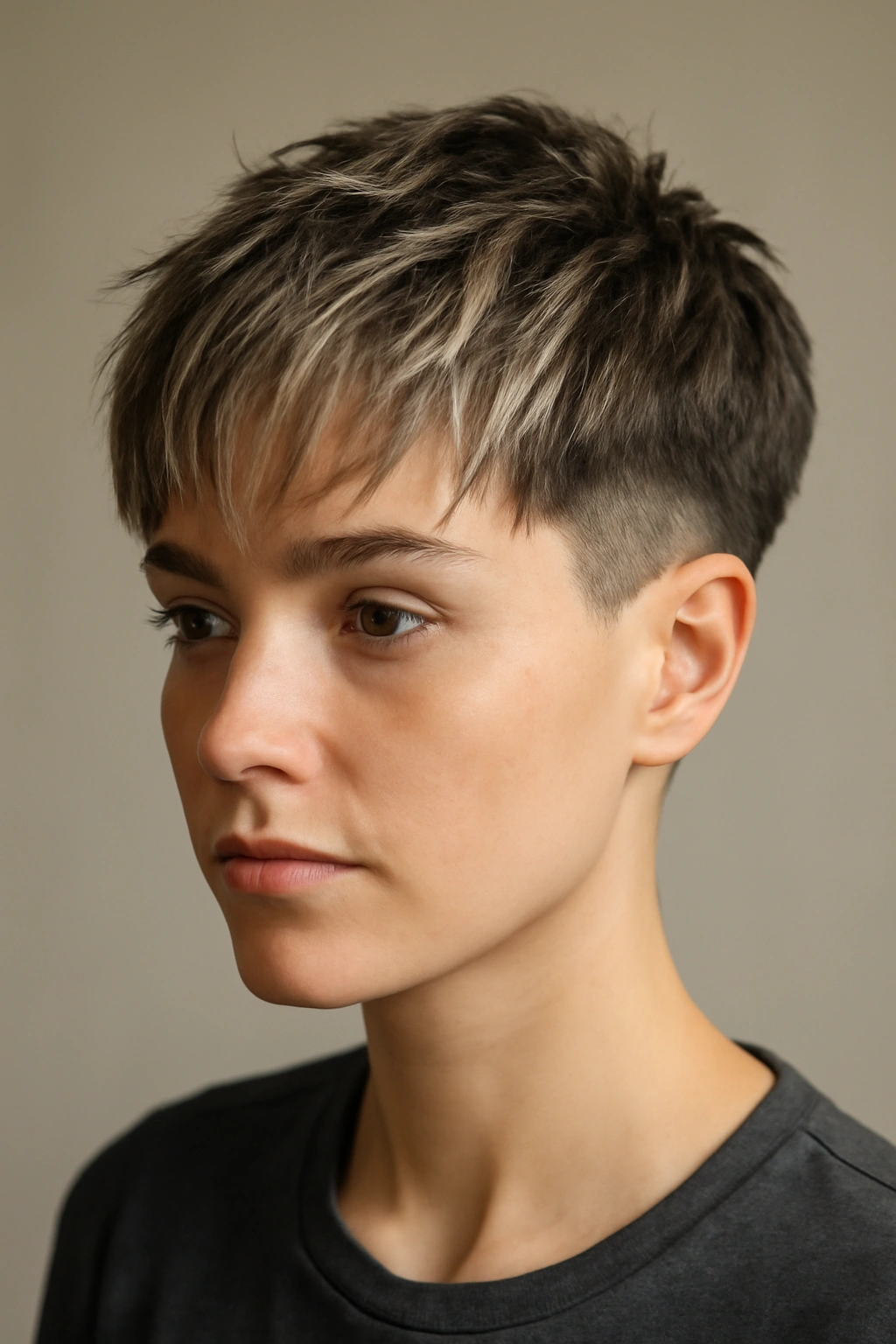
A tapered cut is close and textured on the sides and back, with slightly more length on top—it’s essentially a modern, refined version of a classic men’s cut that’s been embraced across gender expressions. Face-framing money pieces placed at the front and temples make the taper feel less austere and more intentionally styled.
Blending Classic and Modern
A taper is a classic, clean cut—it has structure and sophistication built in. Money pieces add a contemporary edge without compromising that classic foundation. This combination is ideal for people who want a haircut that reads as sharp and intentional but not avant-garde.
Styling a Tapered Cut
- A simple tousle with your hands and you’re good to go
- A light pomade or paste through the top creates texture and shows off the taper
- You can style the top back, to the side, or forward with equal success
- The pieces will frame your face differently depending on how you style the top, giving you variety without requiring a different cut
Who Should Consider This Cut
- People who want a low-maintenance cut that doesn’t require lots of styling products or effort
- Anyone who likes the idea of short hair but feels nervous about something too trendy or extreme
- This cut is particularly flattering on people with angular faces, as the tapered sides complement strong jawlines
- If you have thick hair, a taper helps manage bulk while keeping length on top
Real talk: This is one of the most universally flattering short cuts paired with money pieces. It’s hard to go wrong with this combination, which is exactly why it’s become increasingly popular across different communities and style preferences.
Final Thoughts
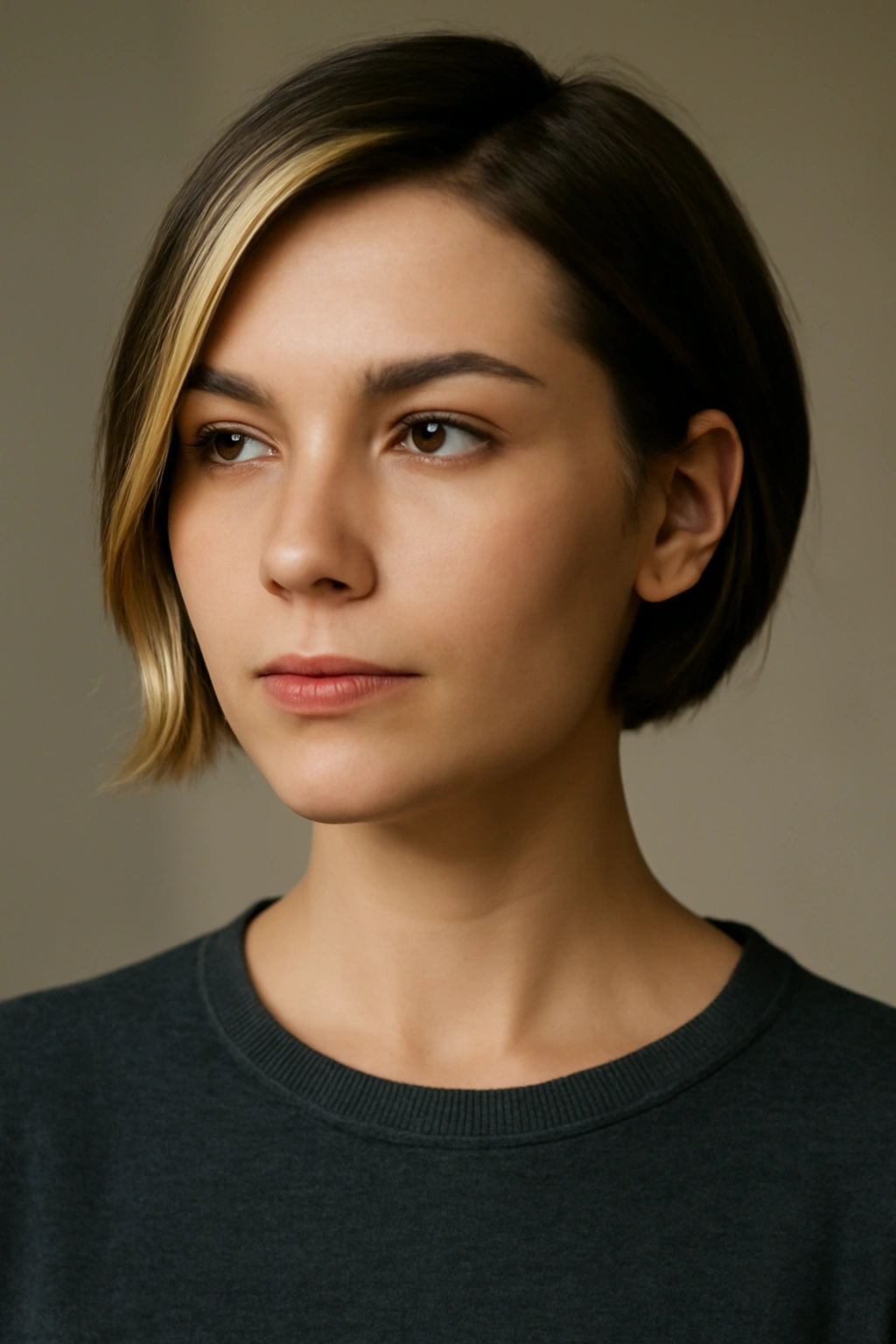
A short haircut with a money piece isn’t about following a trend—it’s about choosing a deliberate combination that serves your face, your lifestyle, and your personal style. The money piece is the element that transforms a short cut from simply bold into specifically you. Whether you choose something subtle and blended or high-contrast and dramatic, the key is working with a stylist who understands both the cut and the color work, and who can adapt the concept to your hair texture, face shape, and daily styling preferences.
The best version of any of these cuts is the one that makes you feel confident enough to walk out of the salon wanting to show everyone you see. That’s when you know the combination of cut and color is actually working.
