



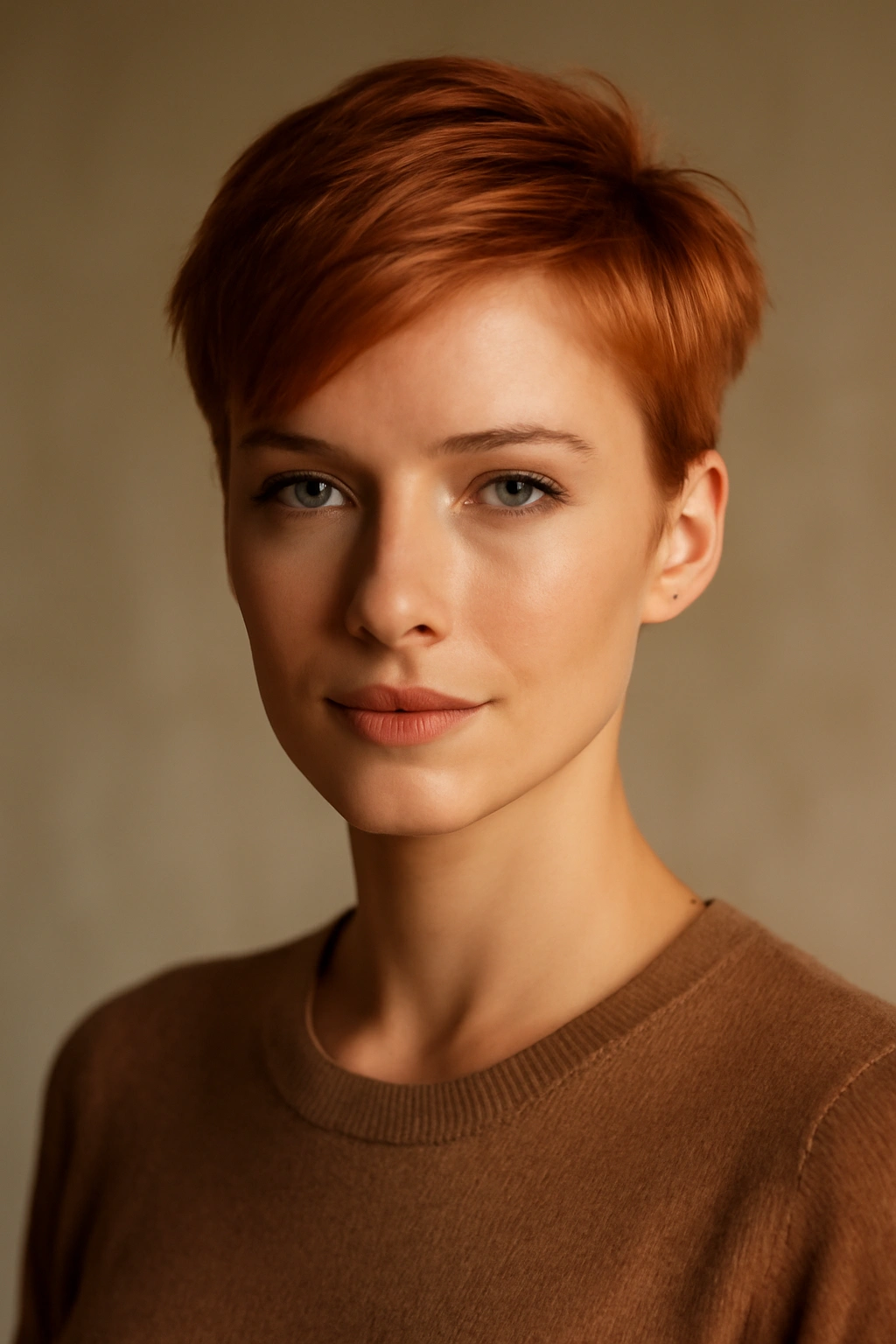
Copper hair has this almost magical quality — it catches the light, flatters a surprising range of skin tones, and instantly makes you look like someone who woke up with their life together, even if you’re running late. When you pair that warm, luminous color with a sharp, intentional short cut, something really special happens. Short copper hair isn’t just a style choice; it’s a statement that says you’re confident enough to let your hair do the talking without hiding behind length. The color brings warmth and dimension to cropped cuts, pixies, bobs, and shags in ways that blondes and brunettes often can’t quite capture.
What makes copper particularly brilliant for short hair is how the color works with texture and movement. Every time you move, the light hits differently, creating this living, breathing effect that makes even a simple cut feel dynamic. You’re not just getting a haircut — you’re getting a style that literally glows. And here’s what’s really interesting: copper is forgiving. It works across skin undertones better than most people realize, can hide a few weeks of root growth thanks to its dimension, and looks intentional whether your cut is super polished or beautifully undone.
The challenge, of course, is finding the exact copper haircut that matches your hair texture, face shape, and lifestyle. That’s why we’ve pulled together ten of the most gorgeous short copper cuts out there — styles that work for different hair types, different confidence levels, and different daily routines. Each one has its own personality, its own way of wearing that copper glow, and its own vibe. Whether you’re ready to go full pixie or just want to trim your length and lean into the warmth, you’ll find something here that speaks to you.
Why Copper Shades Transform Short Hair
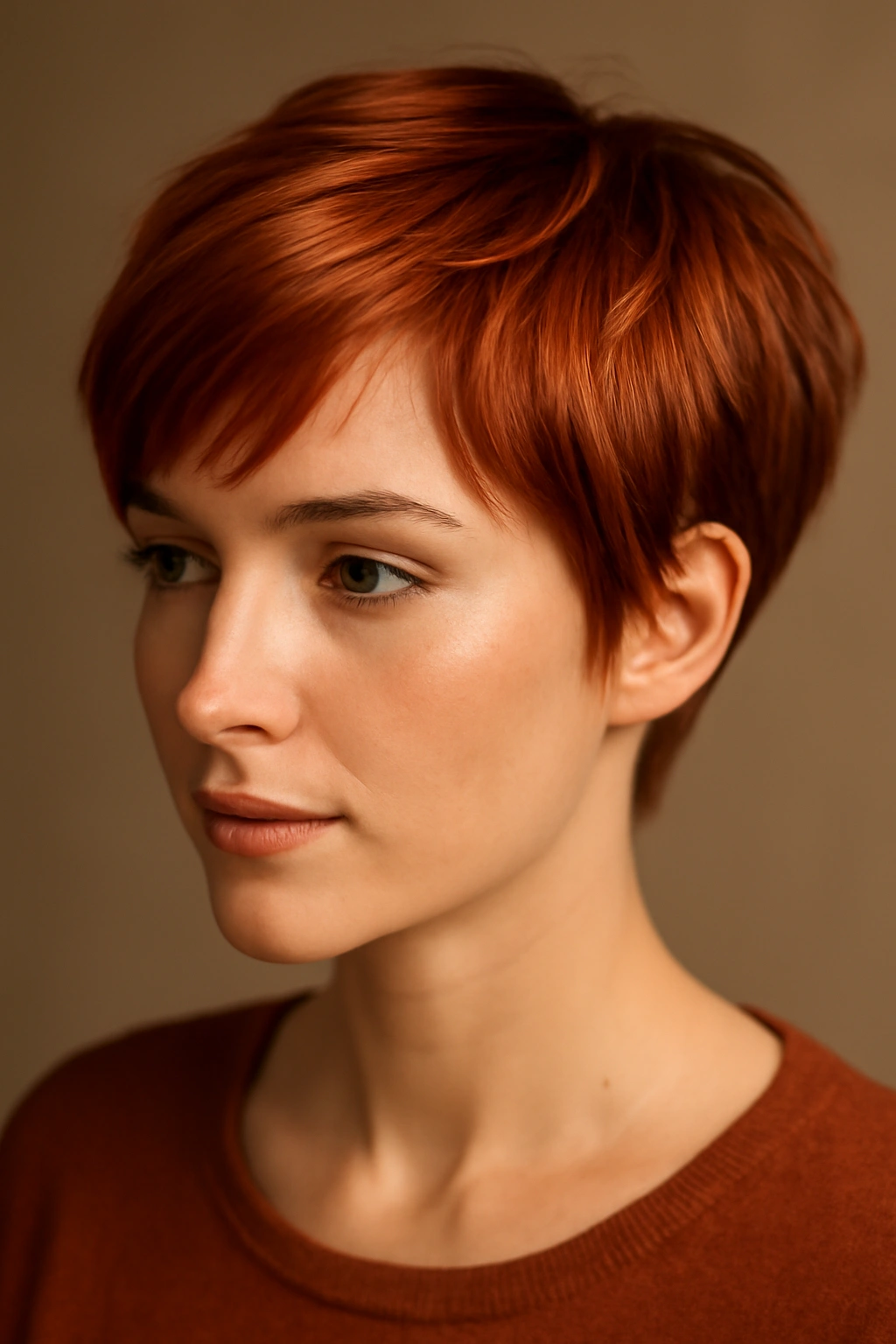
Copper isn’t just another color — it’s a color that actually does something to short hair. The reason is pretty simple: short hair leaves your face completely exposed, which means the color you choose either harmonizes with your skin tone or it doesn’t. Copper sits in this sweet spot where it’s warm enough to flatter most complexions, but also has enough variation and depth that it doesn’t feel flat or one-note. Think of it as a color that adds texture even before you style.
Short hair with copper means the color travels all the way around your head, catching light from every angle. A single color might look monotone; copper, especially with subtle highlights or a bit of dimension, creates this layered effect that makes even a blunt cut look more intricate. The warmth of copper also tends to make skin look fresher and more awake — which is genuinely helpful when you’re wearing your hair very short and can’t use it to soften or frame your face.
Copper also works beautifully with the texture you get in short cuts. A pixie cut with copper has this pixie-fairy quality; a textured crop has this intentional, editorial feel; a short shag with copper almost has a rock-and-roll edge. The color amplifies the personality of the cut itself. That’s the real magic — it’s not just about the color, and it’s not just about the cut. It’s about how they work together to create something that feels completely intentional and undeniably you.
Understanding Copper Tone Variations for Your Skin
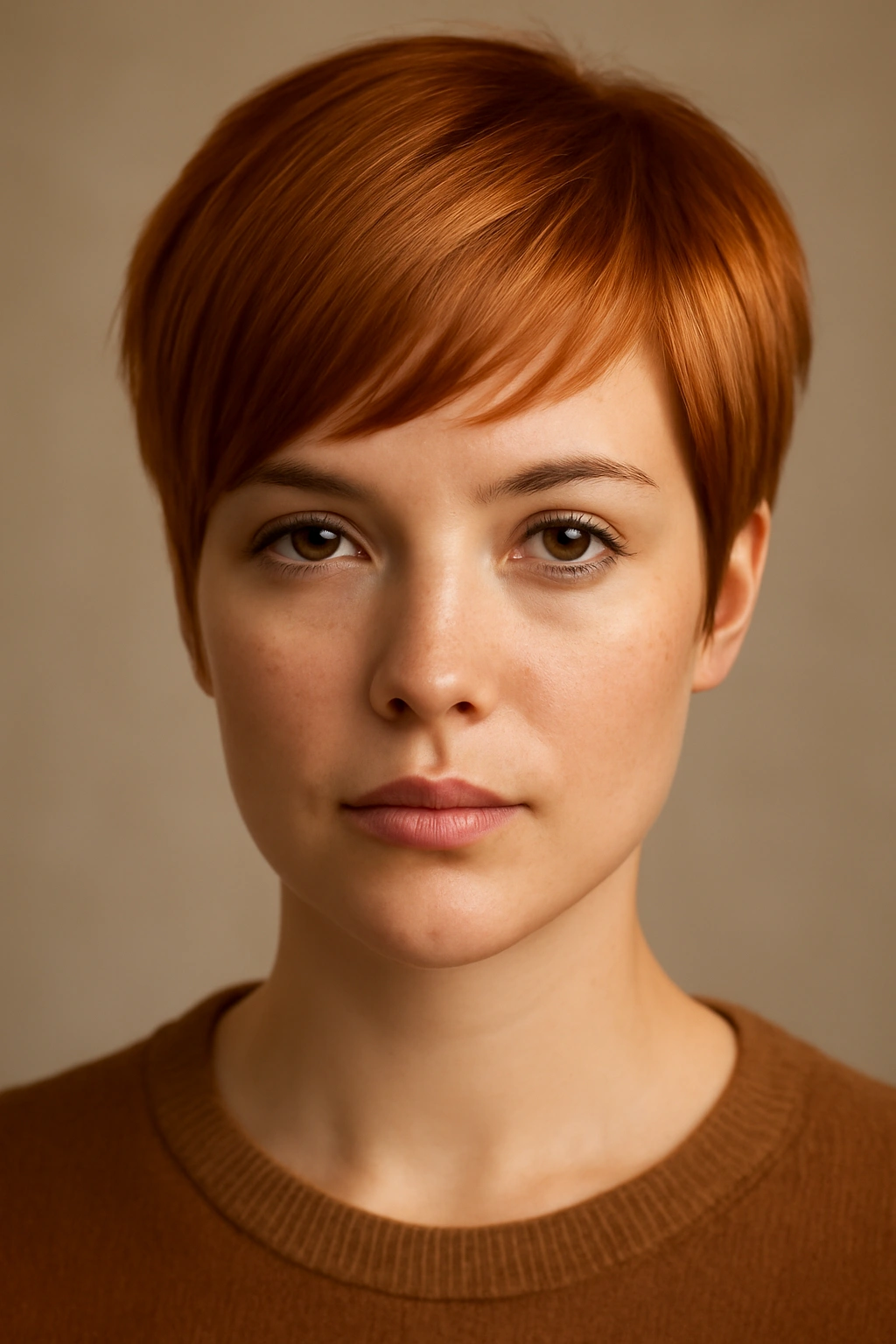
Before you pick a copper cut, understanding which copper tone will make your complexion sing is genuinely important. Copper isn’t one shade — it’s a whole spectrum. You might be looking at penny copper (deep, rich, almost brown-red), apricot copper (bright, warm, peachy), burnished copper (sophisticated, with golden undertones), or rose copper (copper with a bit of pink in it). Each one flatters different skin undertones, and choosing the right one makes the difference between a color that looks like it was made for you and one that just happens to be on your head.
If you have warm undertones — think golden skin, freckles, or naturally warm hair — you can go for virtually any copper and it’ll work. Apricot copper and burnished copper tend to be your sweet spot. If you have cool undertones, rose copper and deeper penny copper are your friends; they’ll harmonize rather than clash. Olive undertones? You’ve actually got the most flexibility of anyone — copper works beautifully with olive, especially richer, more burnt tones.
The best move is to bring reference photos to your colorist and, critically, ask them what they’d recommend based on your specific undertone. A skilled colorist knows how to place copper tones to flatter, warm up, or balance your natural coloring. They might suggest glossing over warm for your undertone, or going slightly darker or lighter than what you’re picturing. Their expertise here is worth every penny.
How to Choose Your Perfect Copper Tone
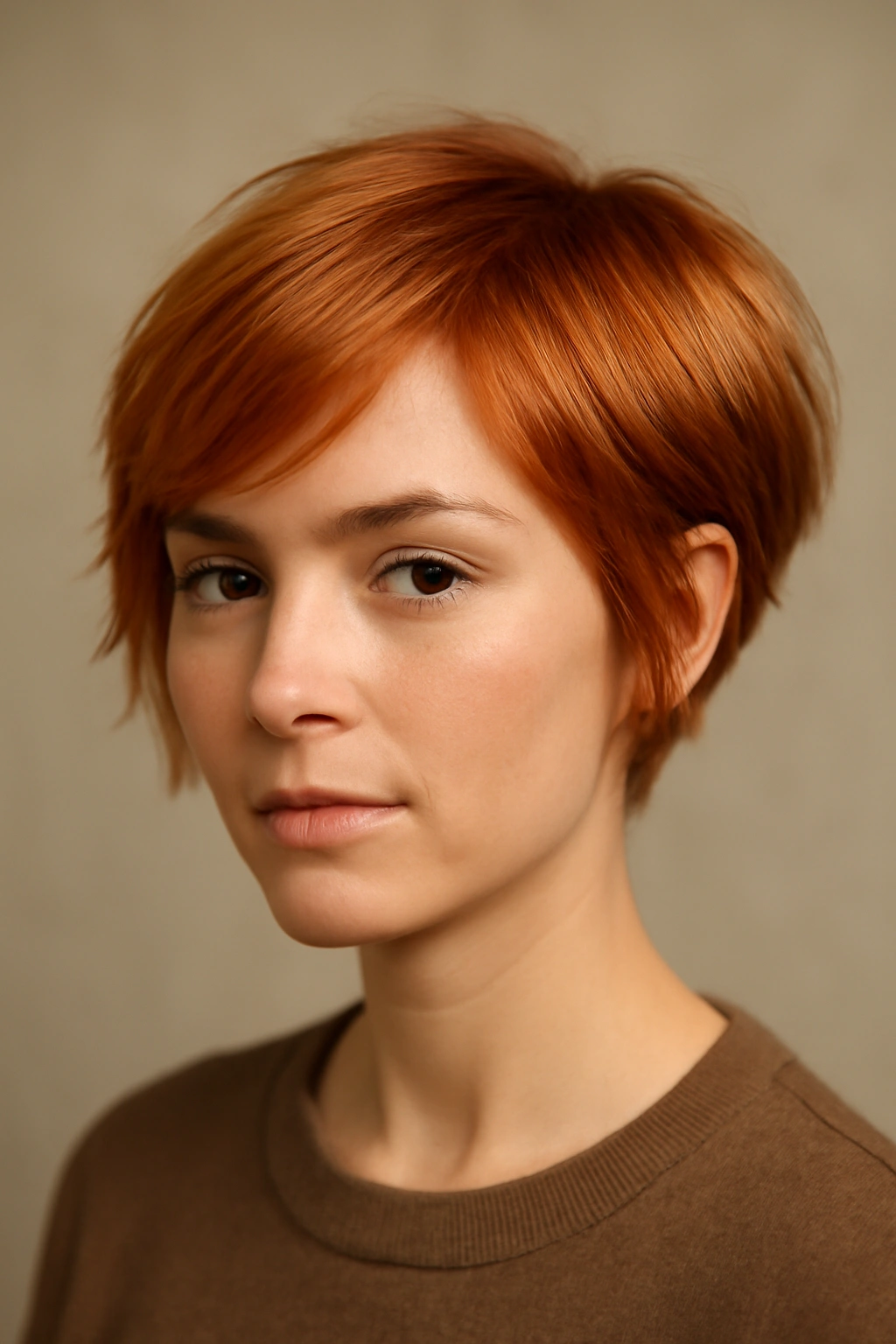
Think about your daily environment and what you want the color to communicate. Lighter, brighter coppers (apricot, rose gold-copper) feel modern, approachable, and fun — perfect if you want the color to be the main character. Deeper, more burnished coppers feel sophisticated and editorial, like you’re deliberately making a bold choice. Medium coppers are the Goldilocks zone — striking without being overwhelming.
Also think about maintenance honestly. Brighter coppers show roots and fading more noticeably, which means you might need root touch-ups every 4-6 weeks. Deeper, more muted coppers are more forgiving and can stretch to 8-10 weeks between maintenance. If you love the idea of copper but aren’t ready for regular touch-ups, a deeper burnt copper or penny copper is your answer. If you want that vivid, attention-grabbing glow, go brighter and commit to the upkeep.
Finally, consider your lifestyle and how much styling energy you actually want to invest. Some copper cuts are genuinely wash-and-go; others really benefit from deliberate styling. Be honest with yourself about what you’ll actually do with your hair, not what you think you should do. The best haircut is one you’ll actually wear, not one that sits in your head as a stunning intention.
1. The Textured Pixie Crop With Burnished Copper
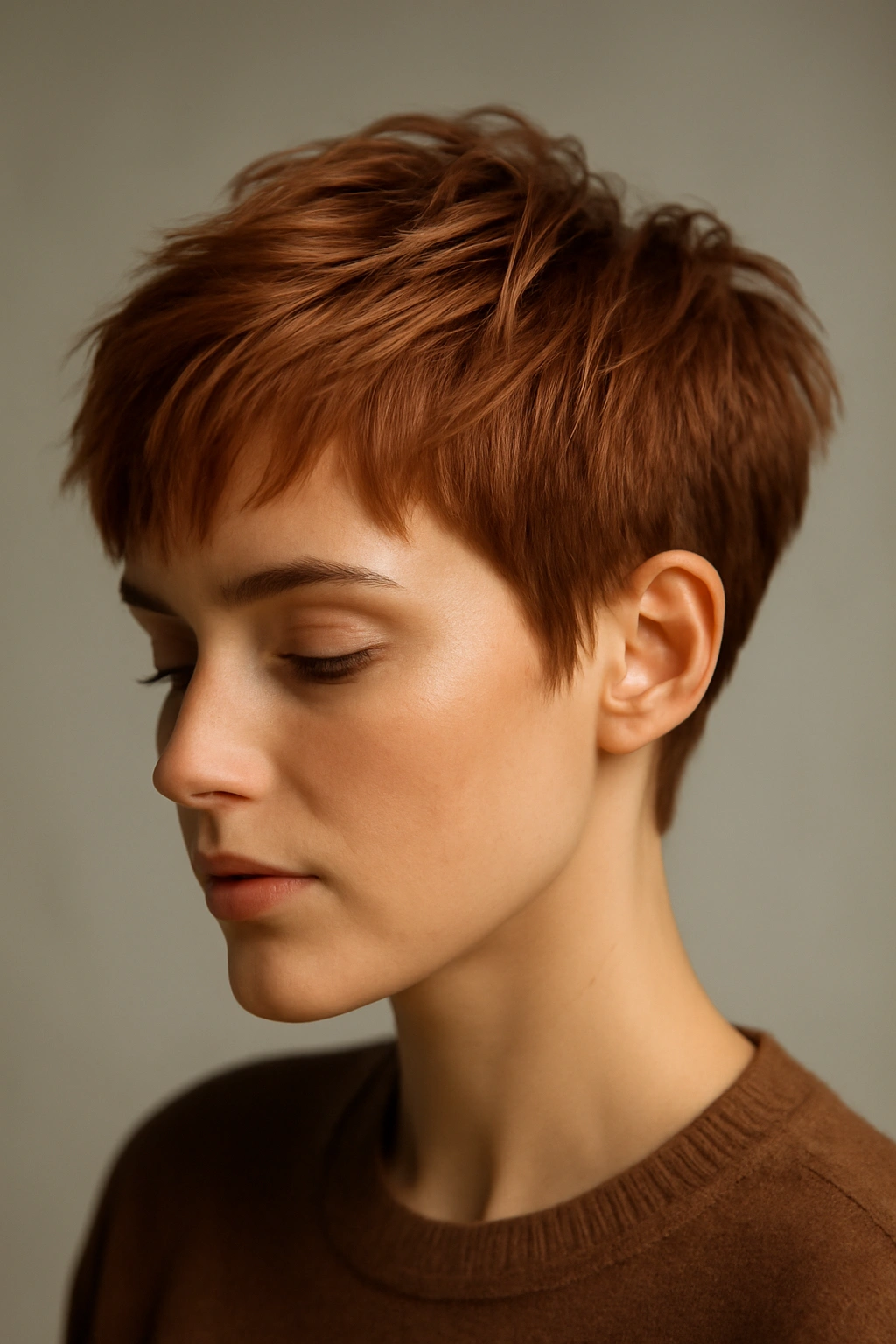
A textured pixie crop is short everywhere — roughly 1-2 inches on top with choppy, piece-y layers that create movement and dimension. Pair it with burnished copper (that sophisticated, golden-brown-red blend), and you’ve got a cut that reads as both effortlessly cool and intentionally styled. The texture keeps the cut from feeling harsh or severe; instead, it looks tousled, lived-in, and undeniably confident. The copper gives it warmth that keeps it from feeling too edgy.
Why This Cut Works for Pixie-Curious People
This isn’t a severe, super-short pixie that requires daily styling and nerves of steel. The textured layers mean you have options — you can style it sleek and polished, or you can let it do its own thing and still look intentional. The copper color adds so much visual interest that the short length doesn’t feel stark. Even if you’ve never gone short before, this one feels surprisingly wearable while still being a legitimate statement.
How to Make It Work
- Have your stylist create choppy, disconnected layers throughout the crown and sides for texture and movement
- Ask for a longer fringe that you can brush to the side or style upward — this gives you a bit more flexibility in how the cut reads
- Keep the sides tapered but not shaved; this softens the cut and makes it less severe
- The burnished copper should have some dimension — ask for subtle balayage or highlights if you want to make it even more dimensional
Pro tip: This cut needs to be refreshed every 3-4 weeks to keep the texture clean and sharp. It’s not a set-it-and-forget-it style, but the payoff in coolness factor is totally worth it.
2. The Soft Copper Pixie Bob Hybrid
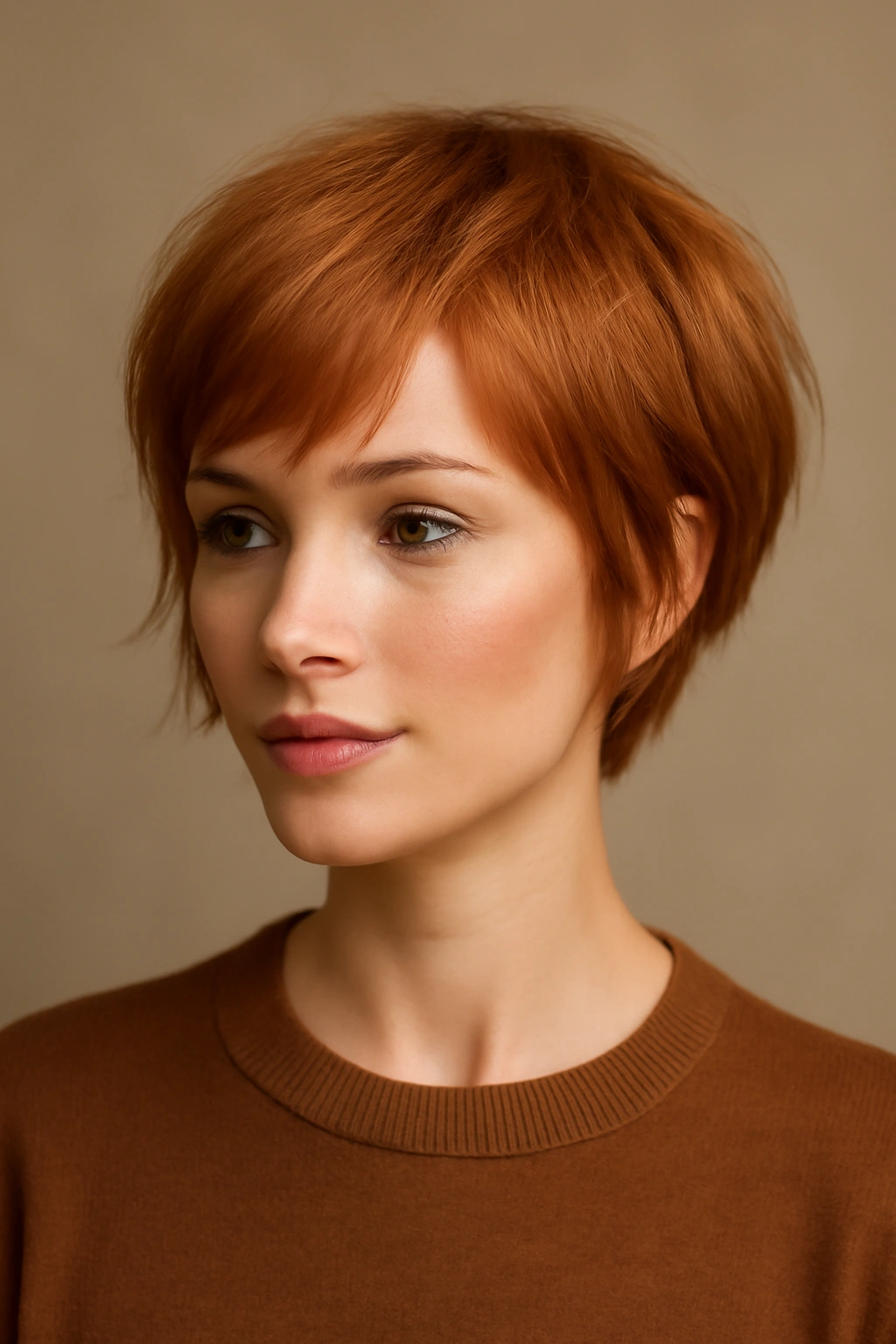
Think of this as the bridge between a pixie and a bob — it’s short, but not quite short everywhere. You’ve got slightly longer length in the front (maybe 2-3 inches) that can frame the face, while the back is cropped and textured (1-1.5 inches). The copper here works as a soft, slightly muted tone — apricot copper or rose gold-copper that feels approachable rather than edgy. This cut works beautifully for people who love the idea of short hair but want just a tiny bit more dimension and movement than a full pixie offers.
The Sweet Spot Between Styles
This is genuinely one of the most versatile short cuts out there. The slightly longer front pieces give you options for styling — you can brush them back for a polished look, style them to the side, or let them catch light and frame your cheekbones. The textured, tapered back keeps it feeling modern and intentional. And because there’s just a bit more length, it’s slightly more forgiving for your first time going short.
Making This Cut Sing
- Ask for textured layers throughout to create movement, especially at the back
- The front should be long enough that you can style it different ways; consult with your stylist about your face shape
- Keep the copper tone relatively soft and blended — this cut benefits from dimension rather than a flat color
- Have your stylist show you 2-3 different ways to style it before you leave so you know what you’re working with
Worth knowing: You’ll want trims every 3-4 weeks to keep the texture sharp and the shape defined, but styling-wise, this one is pretty low-maintenance.
3. The Sleek Copper Crop With Extended Fringe
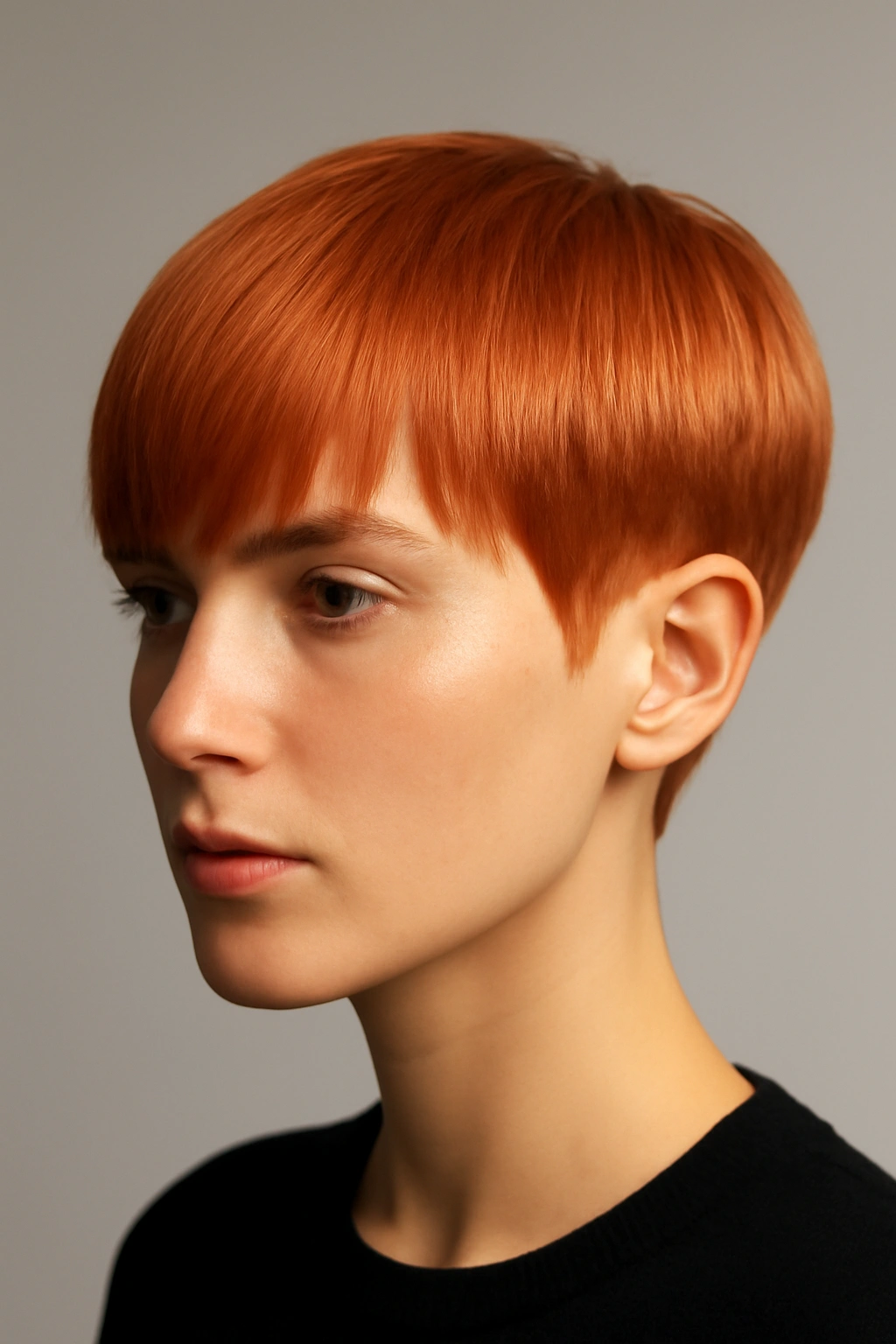
This is a more structured, editorial cut — a short, clean crop everywhere except the front, where you’ve got a longer, more intentional fringe that can be styled down, swept to the side, or even pinned up. The fringe creates a bold frame for the face, while the copper color — preferably a brighter, more vivid tone like apricot or rose copper — amplifies that editorial confidence. This is the cut for people who want short hair to feel like a deliberate fashion choice, not just a length choice.
The Power of the Extended Fringe
The fringe is what makes this cut feel different. It gives you a focal point, creates a sense of movement even when the hair is very still, and means you have some face-framing dimension even with the super-short sides and back. The copper color landing on that fringe first (since it’s the first thing people see) means the color works extra hard to draw attention and admiration.
Styling and Maintenance
- Keep the fringe healthy and trimmed every 2-3 weeks — a scraggly fringe reads as unintentional rather than cool
- The copper works best if the fringe has a bit of texture to it; ask your stylist for some choppy, disconnected layers within the fringe itself
- You can style the fringe down (70s energy), swept to one side (modern and sharp), or even pin it up with bobby pins when you want a different look
- The rest of the cut is very low-maintenance and wash-and-go friendly
Real talk: This cut requires commitment to maintaining that fringe. If you’re not going to trim it regularly, it’ll start looking sad pretty quickly. But if you’re willing to stay on top of it, the payoff is absolutely worth it.
4. The Tousled Copper Shag
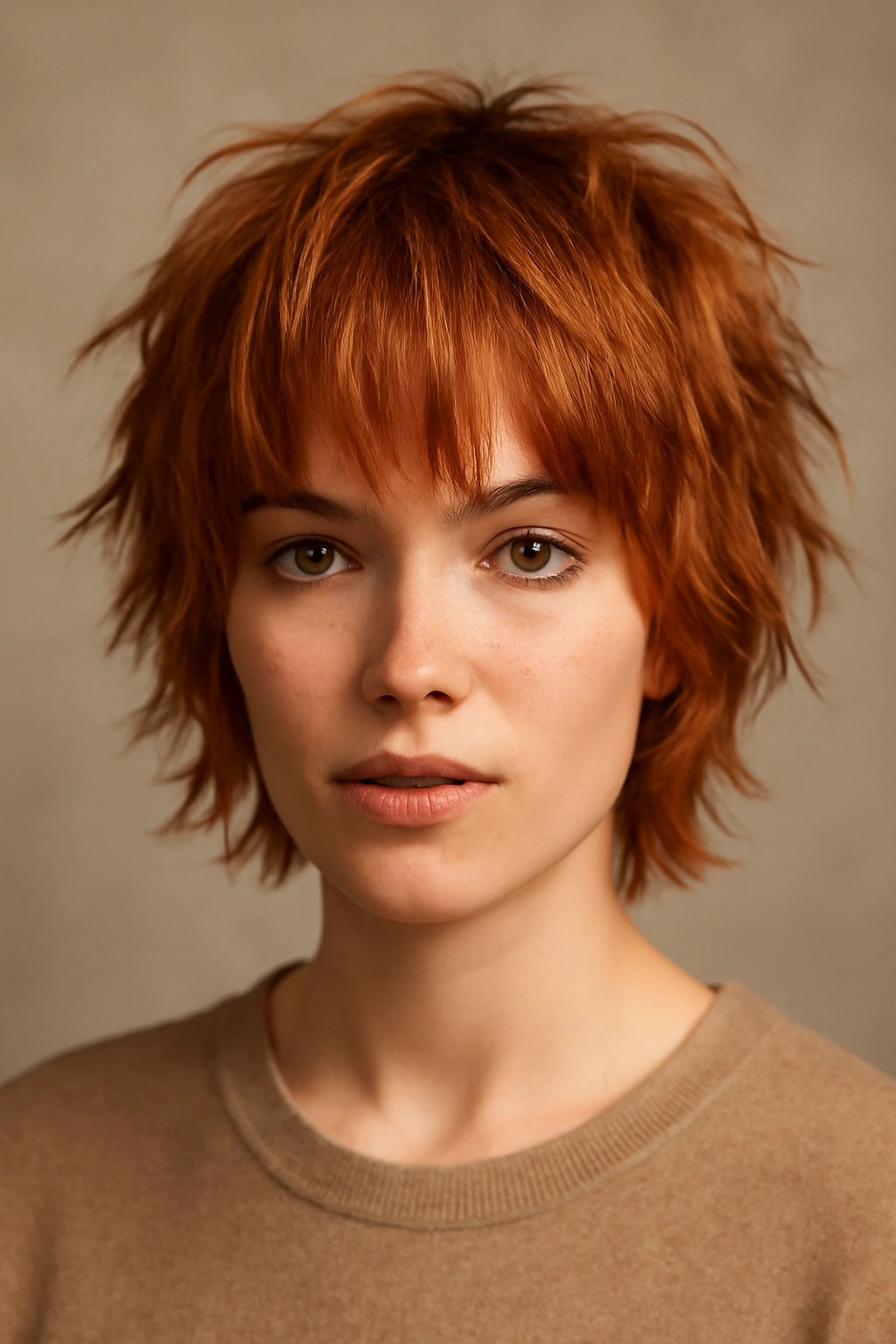
A short shag is textured, layered, and deliberately undone — it’s the opposite of slick or polished. With copper color, especially a muted, warm-toned copper, a short shag feels rock-and-roll and rebellious. This cut has layers throughout, including choppy face-framing pieces, and the texture is the whole point. Style it tousled and piece-y for maximum effect. A short copper shag is perfect for people who want short hair but don’t want to look too neat about it.
Why Shags Work With Copper
The copper color adds warmth to what could otherwise feel like a cold, structured cut. Instead, the combination reads as intentionally cool — like you just got back from some fabulous adventure. The layers catch light differently throughout the cut, so the color isn’t flat; it feels three-dimensional and alive. And the undone styling means you don’t need to be perfect with the color, either — a shag actually benefits from the way copper fades and grows out.
Creating the Shag Effect
- Ask for choppy, disconnected layers throughout — not neat or blunt, but intentionally choppy
- The longest pieces should probably be around 2-3 inches, with shorter sections layered throughout
- Face-framing pieces should be distinct and a bit shorter than the surrounding hair
- Textured copper works best here; ask for some subtle dimension or balayage to enhance the lived-in feeling
Insider note: This cut is genuinely forgiving between trims because the undone nature of it means you don’t have to look “perfect.” You can go 5-6 weeks easily, which is longer than most short cuts allow.
5. The Copper Undercut Bob
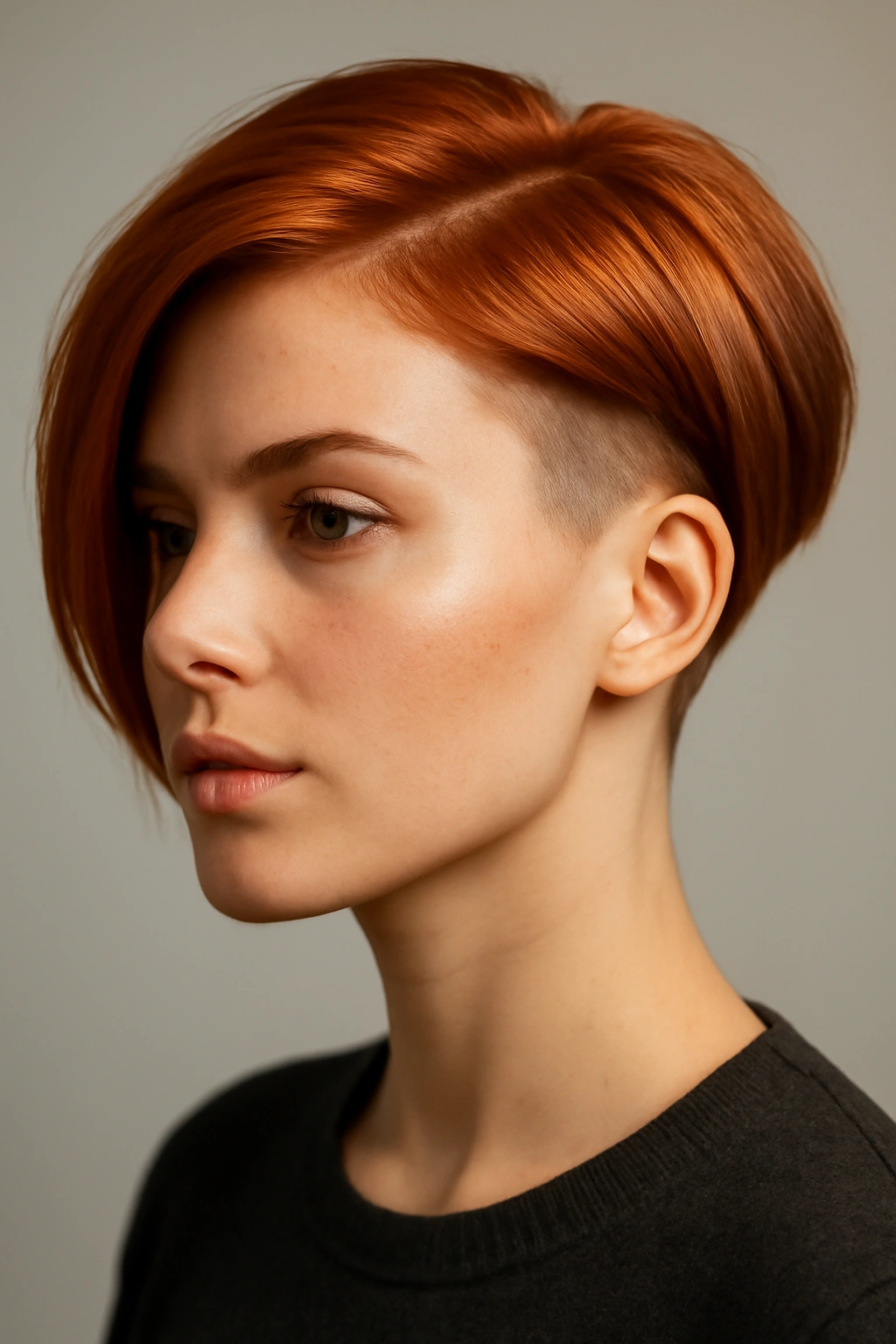
An undercut bob is short on the sides and back (maybe 1-1.5 inches) with significantly longer length on top (3-4+ inches). The copper here creates contrast — you might do a richer, deeper copper on the longer top section and let the undercut area show your natural color, or you might keep it all one consistent copper tone. The undercut creates visual interest and structure, while the longer top gives you volume and shape. This is the cut for people who want short hair on their terms — not short everywhere, just strategically short.
The Visual Drama of an Undercut
An undercut automatically looks intentional and modern. There’s something undeniably cool about the juxtaposition of longer and super-short. Add copper into the mix, and you’ve got a cut that feels polished and editorial. The copper on the longer pieces creates movement and glow, while the clean, crisp undercut creates structure. It’s a really sophisticated combination.
How to Make It Work
- Have a consultation with your stylist about the exact length ratio you want — how much longer on top, how short underneath
- The undercut area can be faded or blunt; talk about which reads better for your style
- Copper works beautifully here if you use the color to create dimension between the top and bottom sections
- Ask about styling options; you can wear it slicked back (showing off the undercut), tousled on top, or even styled to cover the undercut depending on your mood
Key consideration: If you ever want to transition away from the undercut, you’ll be growing out two different lengths, which can be awkward. Make sure this is a cut you genuinely want to commit to for at least 6 months.
6. The Copper Grown-Out Pixie

This is what a pixie looks like after about 8-10 weeks of growth — it’s still short, but it’s longer and shaggier than the initial cut. It’s soft, tousled, slightly undone, and has a kind of romantic, lived-in quality that a fresh pixie cut doesn’t quite have. With copper color, a grown-out pixie feels editorial and intentional; it reads like you meant to let it grow out this long. This is perfect for people who love short hair but want it to feel a bit more feminine or soft.
The In-Between That’s Actually Gorgeous
Most people see a pixie cut growing out as an awkward phase to get through. But honestly, if you lean into it with intention — tousling it, styling it piece-y, and keeping the copper color fresh — it’s genuinely beautiful. It’s short enough to be low-maintenance, but it has just a bit more dimension and softness than a fresh pixie. The copper color is doing heavy lifting here, making what could be an awkward length feel intentional.
Styling for the Grown-Out Phase
- Use a texturizing spray or salt spray to enhance the piece-y, tousled quality
- Style it with your fingers more than a brush — you want that undone feel
- Consider asking your stylist for some choppy layers if you want to enhance the texture
- The copper should still be bright and fresh; touch up color before the cut gets too grown out
Fun fact: A lot of people find they prefer their pixie cut at this grown-out stage. If that’s you, you can just transition into keeping it at this length — basically a textured crop — instead of chopping it all short again.
7. The Blunt Copper Crop With Attitude
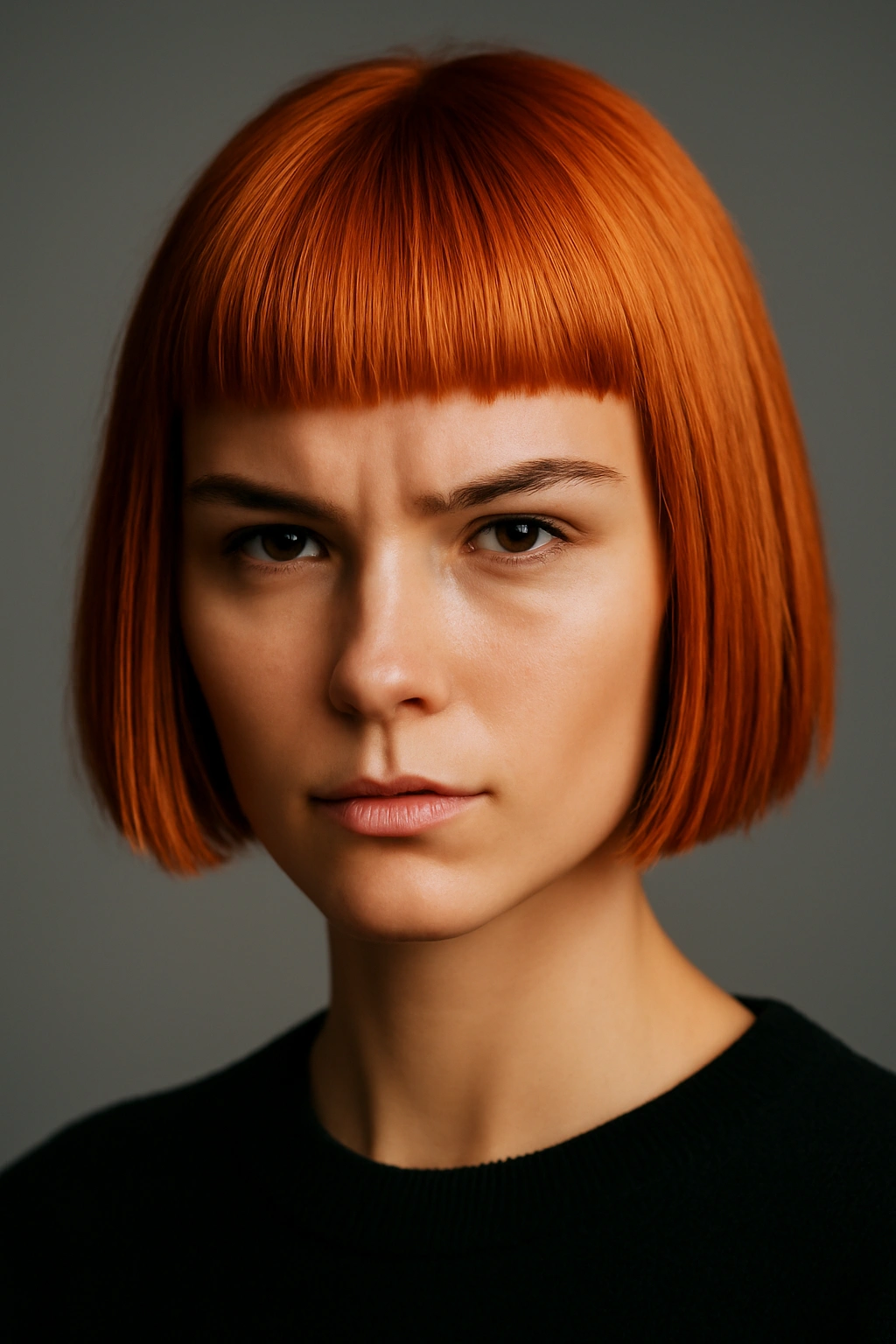
Sometimes the best short haircut is the simplest one. A blunt copper crop is short everywhere — maybe 1.5-2 inches — with minimal layering and a clean, sharp line. No texture, no undone quality, no softening. The copper color is bright and vivid (think apricot or even a brighter rose copper), and the bluntness of the cut means the color is doing all the visual work. This is the haircut for people who want everyone to know they made a deliberate choice. There’s something unapologetically bold about it.
Clean Lines, Zero Apology
A blunt copper crop doesn’t try to be soft or romantic or undone. It’s sharp, it’s clean, and it’s clearly intentional. The copper prevents it from feeling severe or harsh; instead, it just reads as confident. This is the cut you get when you know exactly who you are and you’re not interested in hedging your bets. It’s minimalist, almost architectural, and absolutely striking.
Getting and Maintaining the Look
- Make sure your stylist is skilled with blunt lines; any unevenness will be super visible
- Ask for the absolute sharpest, cleanest line they can create
- Keep the color bright and vivid; a blunt cut with dull, faded color looks sad fast
- You’ll want trims every 3-4 weeks to keep those lines sharp and clean
- Styling is minimal — mostly you’re just keeping it clean and letting the color and cut do the talking
Important: This cut requires confidence. If you’re the type to second-guess yourself or want softer options, this might not be your vibe. But if you commit to it, it’s genuinely stunning.
8. The Side-Swept Copper Undercut Pixie
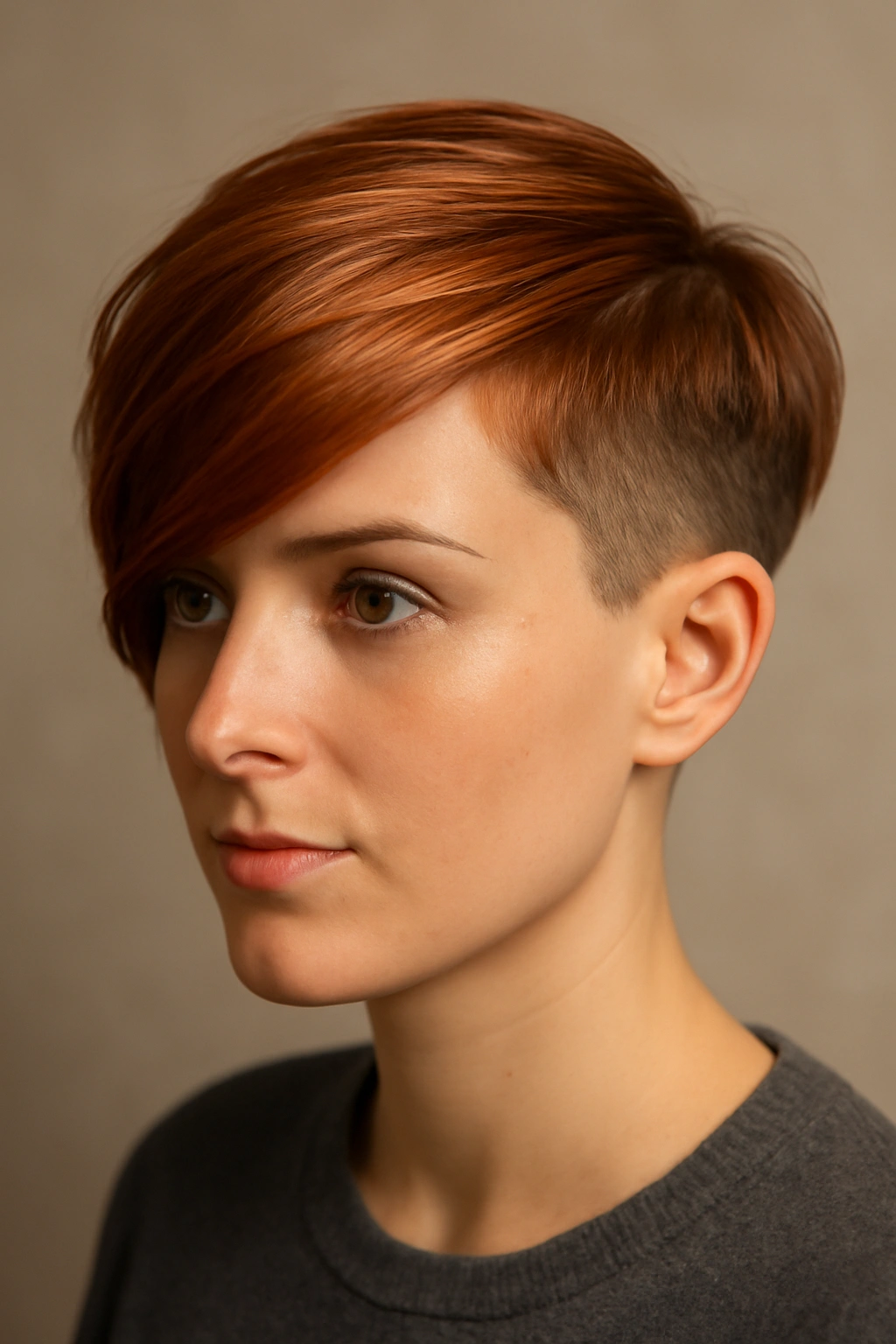
Imagine a pixie cut where one side is significantly longer than the other — the longer side sweeps down and across, while the other side is cropped close. Add an undercut element (a clean, faded or shaved line underneath), and you’ve got a cut with serious visual interest. With copper color, especially a medium tone that shows dimension well, this cut feels fashion-forward and undeniably cool. It’s short, but the side-sweep and asymmetry make it feel dynamic.
The Power of Asymmetry
Asymmetrical cuts aren’t for everyone, but when they work, they really work. The side-sweep gives you movement and fluidity; the undercut gives you structure and edge; the copper gives you warmth and glow. Together, they create a cut that photographs beautifully and turns heads. This is especially gorgeous if you have the kind of face that can handle asymmetry (generally, longer or angular face shapes do really well with this).
Styling and Managing the Side-Sweep
- The longer side should be long enough to sweep completely across (probably 2.5-3 inches)
- Ask your stylist how to style the sweep — you want to know the best angle and technique
- The undercut can be faded (gradually shorter) or shaved clean; both work beautifully with copper
- You can style the swept-over side down, tousle it for texture, or even pin it up if you want a different look
Real talk: This cut needs trims every 3-4 weeks to keep the shape defined, because as it grows, the asymmetry gets less pronounced. But between trims, it’s actually pretty low-maintenance.
9. The Copper Textured Bob
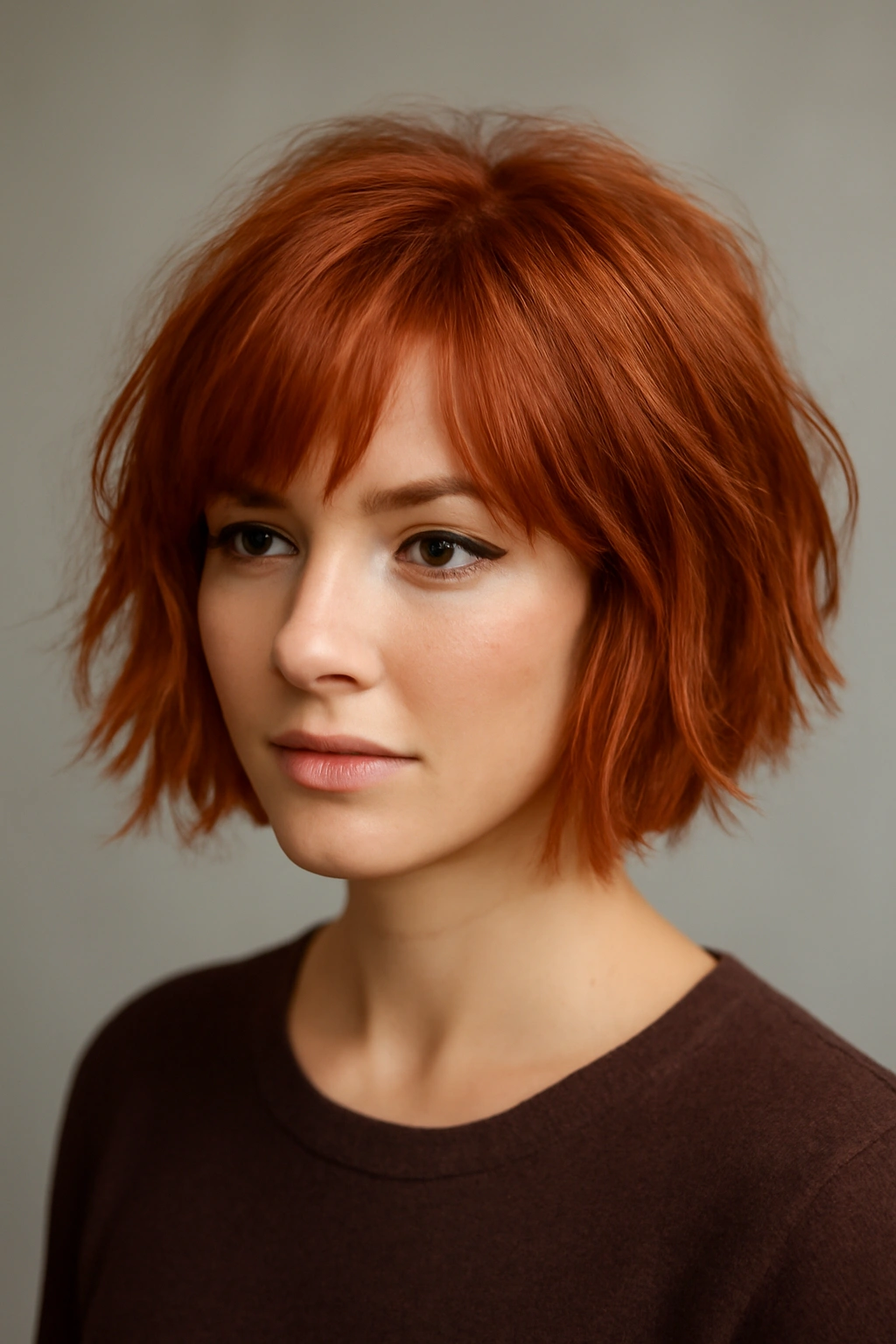
A textured bob is chin-length or slightly longer (2-3 inches), with choppy, disconnected layers throughout that create movement and dimension. With copper color — and here, a medium or deeper copper often works best — a textured bob feels modern, fresh, and incredibly wearable. It’s short, but it’s not tiny short, which appeals to people who want shorter hair but aren’t ready to go full pixie. The texture keeps it from feeling heavy or blunt; the copper keeps it from feeling dated.
The Modern Take on Short
A textured bob split the difference between a true pixie and a longer bob. It’s way easier to maintain than shorter cuts — you can go 5-6 weeks between trims instead of 3-4 — but it still reads as intentional and modern. The layers give you styling flexibility; you can wear it sleek and smooth, or you can enhance the texture with products and styling for a more piece-y look.
Making the Texture Work
- Ask for choppy, disconnected layers throughout; the choppier they are, the more modern it feels
- The layers should be shorter at the crown for volume, and blend down to the longer pieces at the bottom
- The copper should have some dimension; ask about highlights or balayage to enhance the textured feeling
- Style with products that enhance texture — mousse, texture spray, or sea salt spray — for maximum effect
Worth noting: This cut works for a pretty wide range of hair types. Straight hair shows off the clean layers; wavy or curly hair shows off the texture beautifully. Talk to your stylist about your hair type and how to customize the layering to work with it.
10. The Copper Shag Pixie Blend
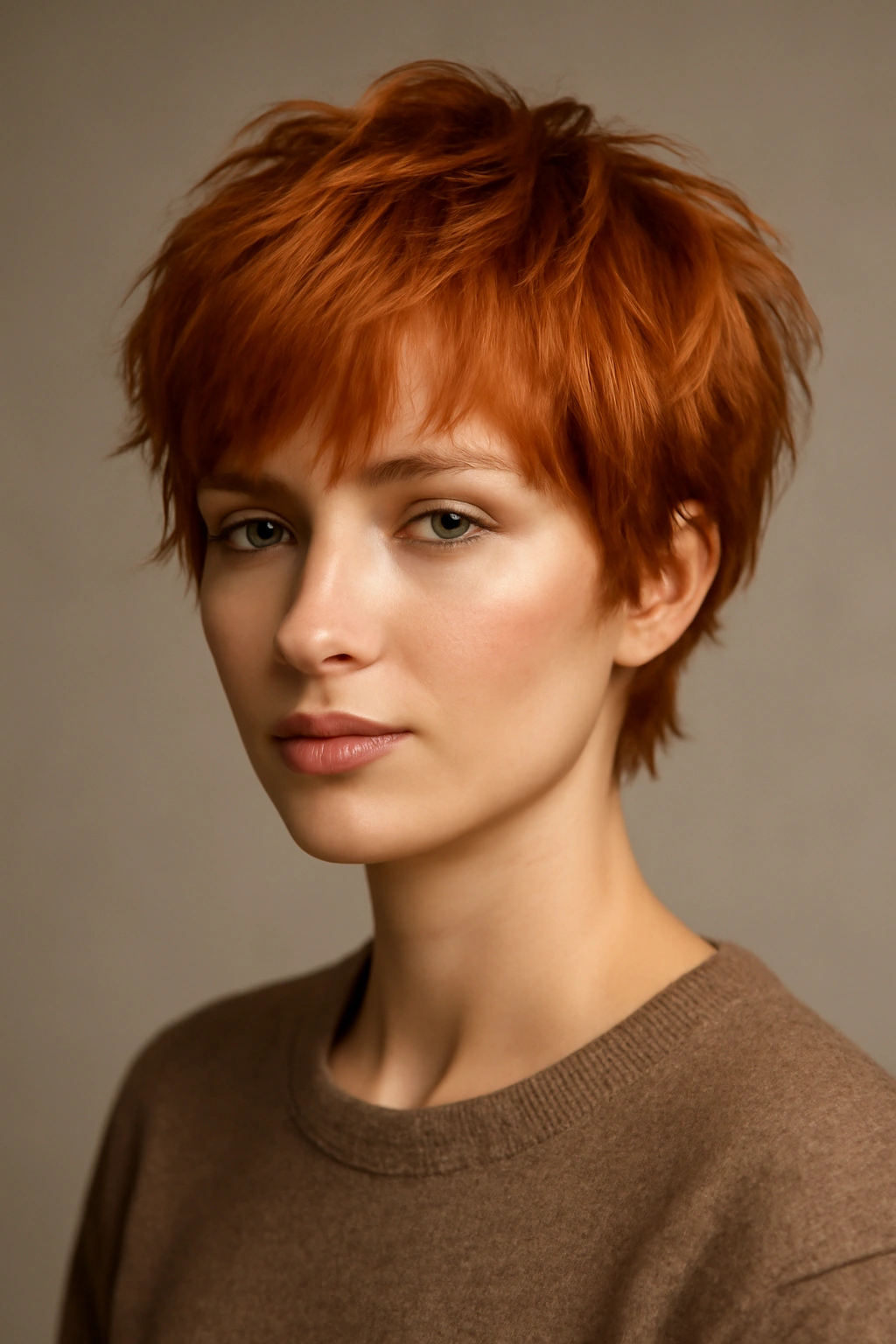
This is basically a textured pixie cut that’s been grown out slightly and styled with that deliberate shag-y, tousled energy. It’s short everywhere, but not militaristically so — there’s texture, movement, and a bit of that lived-in feeling. With copper color, especially a warmer, more muted tone, this cut reads as both edgy and approachable. It’s the kind of cut that looks effortlessly cool, even though achieving that effortless look takes a bit of intention.
The Best of Both Worlds
This cut gives you the shortness of a pixie with the texture and movement of a shag. You get the ease of a pixie (minimal length to style) with the visual interest of a shag (tons of texture and dimension). The copper color amplifies that texture, making every piece catch light differently. It’s genuinely one of the most forgiving short cuts because the undone nature means perfection isn’t the goal.
Creating and Maintaining the Vibe
- Ask for choppy, textured layers throughout — think pixie-length layering with that shag-like texture
- Face-framing pieces should be distinct and a bit shorter
- The copper works best if it has dimension; ask about subtle highlights or a slightly textured color application
- Style with texture products and your fingers, not a brush — you want that deliberately undone feel
Styling hack: This cut actually benefits from NOT washing it every day and from just waking up and tousling it. The texture builds naturally, and the copper color develops more dimension as the days go on.
Maintaining Copper Color in Short Hair
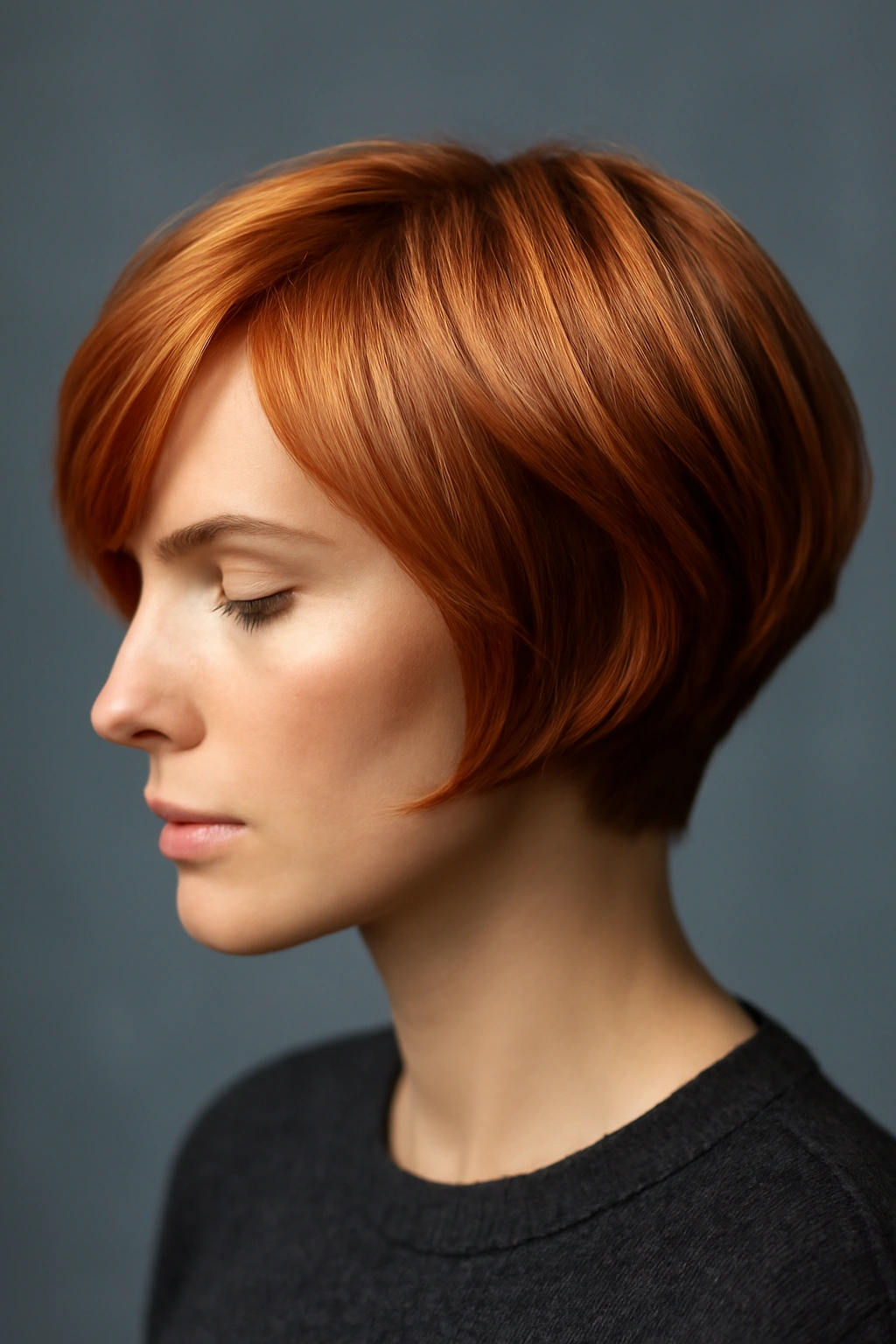
Copper color is gorgeous, but it does require some care to keep it looking that vivid and dimensional. Short hair means your color is visible and prominent — there’s no blending or camouflaging — so maintenance is worth doing right. The good news? With short hair, you’re using less product and it’s easier to get color into every single strand.
The first rule is to wash your hair in cool water, not hot. Hot water opens the hair cuticle and lets color molecules escape; cool water seals the cuticle and locks color in. You don’t need the water to be ice-cold, just genuinely cool. This single change makes a noticeable difference in how long your copper color stays vibrant.
Use a color-safe shampoo and conditioner designed for color-treated hair. These formulas are gentler and don’t strip color the way regular shampoo does. For copper specifically, a sulfate-free shampoo is your friend. And honestly, you might want to condition more frequently than you shampoo — shampooing every other day or even every third day, but conditioning most days. This keeps your copper from fading while also keeping your hair healthy.
Consider a toning treatment or gloss every 2-3 weeks, depending on how the color is fading. A toning gloss is basically a semi-permanent color treatment that refreshes and deepens your copper without the commitment of a full color redo. It’s less damaging than a full color service, but it makes a visible difference in vibrancy. Ask your stylist what they recommend for your specific copper tone.
If you color your own hair at home between salon visits, choose a demi-permanent color rather than permanent. It’ll fade more gradually, and if you make a mistake, it’s easier to correct. But honestly, for copper specifically, professional color is worth the investment. A colorist knows how to place copper tones to flatter and enhance, which is harder to do yourself.
Styling Products and Tools for Copper Short Hair
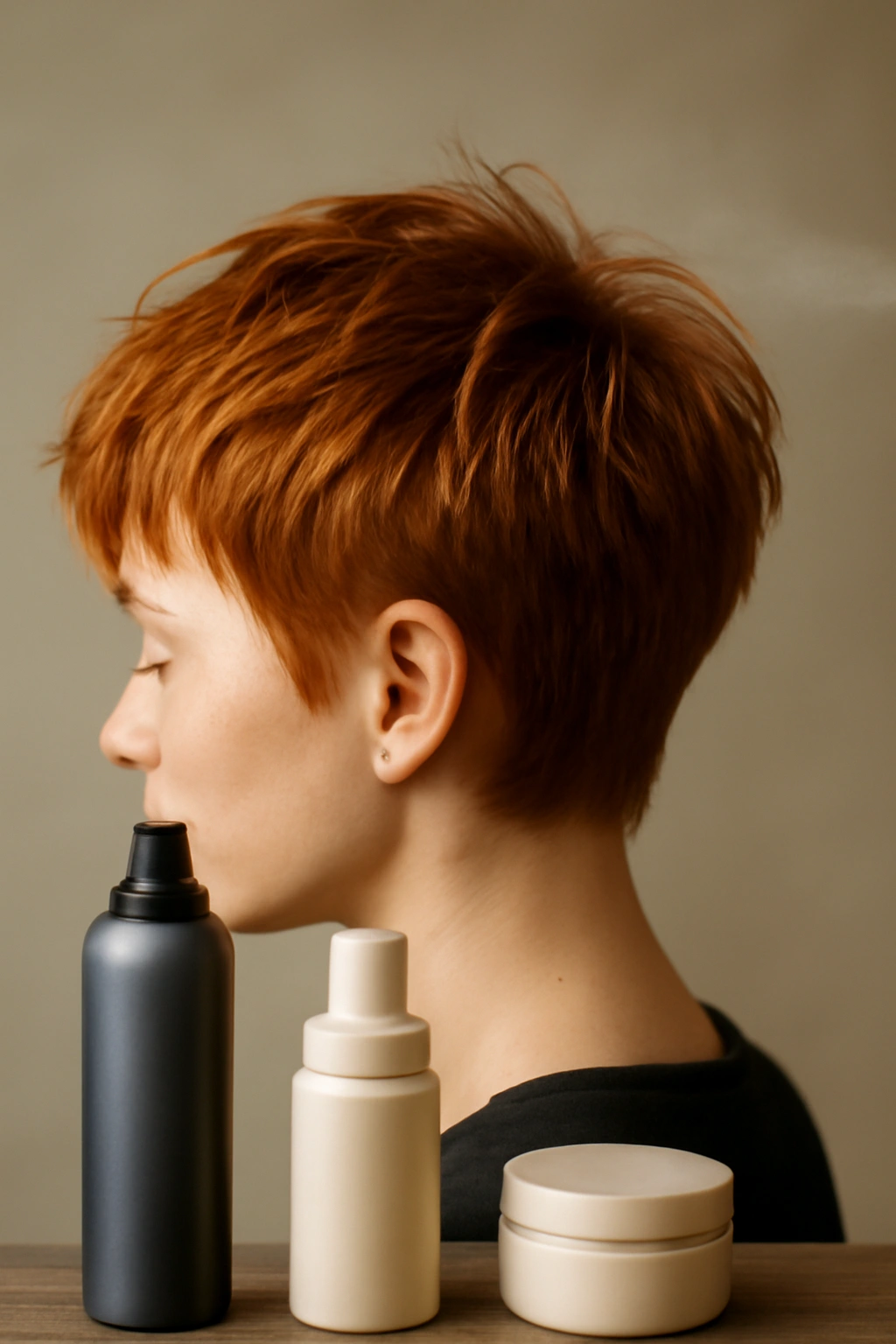
Short hair is forgiving, but the right products and tools make it genuinely easy to style. Since short hair has less surface area, a little bit of product goes a long way — you don’t need much, just the right stuff.
For everyday texture and hold, a good texturizing spray or sea salt spray is your MVP. These products add grip and dimension, making even a simple wash-and-go look intentional and textured. Spray it in while your hair is damp, work it through with your fingers, and let it air-dry or blow-dry for a piece-y, tousled effect.
A lightweight mousse is perfect for creating volume at the roots without weighing short hair down. Apply it to damp hair at the crown and roots, then blow-dry for lift that actually lasts. Unlike heavy styling products, mousse works with short hair rather than against it.
For sleeker styles, a light pomade or styling cream gives you control without stiffness. Use just a tiny amount — seriously, start with about the size of a pea — and work it through your hair with your fingers or a comb.
A blow-dryer is legitimately useful for short hair, even though you might think it’s not necessary. A quick blow-dry with some fingers-combing through your hair creates volume and texture that air-drying alone won’t give you. You don’t need to spend ages blow-drying — just enough to dry it and add movement.
A straightening iron or curling iron can be fun with short hair because you can quickly add texture or smoothness depending on your mood. A flat iron can create sleek, straight styles; a curling iron can add waves or texture.
For holding copper color looking fresh, a purple toning shampoo can be helpful if your copper starts leaning too warm or brassy. Use it once a week or as needed, and watch it so you don’t over-tone and make your hair look ashy.
Who Should Try Copper Short Hair
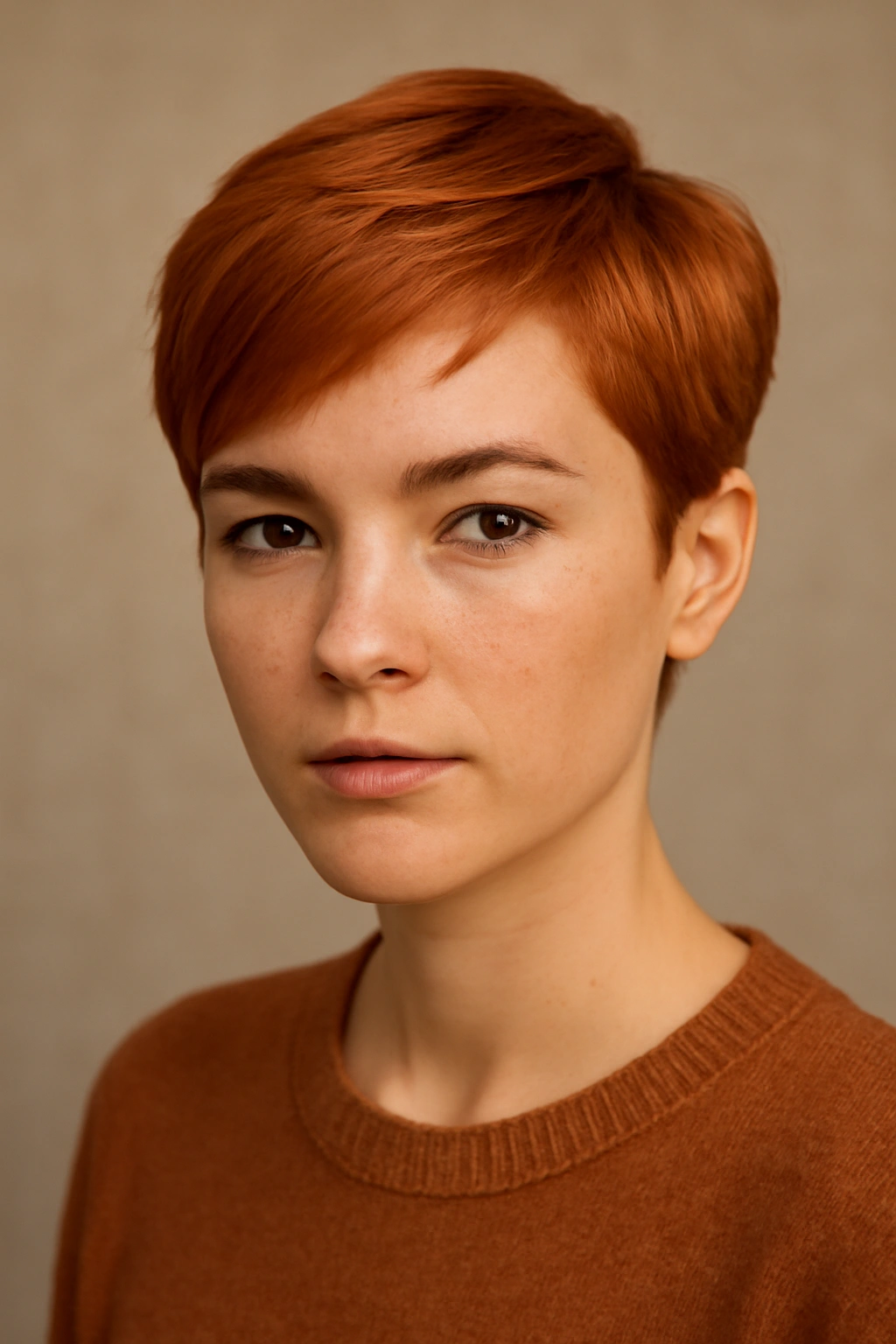
Copper short hair is genuinely beautiful on a lot of people, but there are some factors that make it particularly stunning. If you have warm undertones in your skin, copper is basically made for you — the warm color harmonizes with your natural coloring and makes your complexion glow.
If you have freckles, copper is an absolute game-changer. Freckles and copper hair together are genuinely striking; they almost look like they’re part of the same color story. Even if your freckles are subtle, copper will make them stand out in the best way.
If you have an angular or longer face shape, you can wear basically any copper short cut confidently. Shorter hair can make round faces look rounder, but angular faces actually benefit from the structure and sharpness of short cuts.
If you’re ready to make a statement, copper short hair is the move. It’s not subtle or understated; it’s deliberately bold. If you love color and you’re not afraid of it being the first thing people notice about you, copper is your shade.
If you have fine or thin hair, copper short hair can actually look more voluminous than longer hair. Short cuts create the illusion of density, and the copper color adds dimension that makes hair look thicker than it is.
If you’re willing to commit to maintenance, you’re already winning. Copper fades faster than some colors, so you need to be cool with regular root touch-ups or color refreshes. But if you’re someone who enjoys getting your hair done and treats it as self-care, that upkeep is just part of the fun.
Common Copper Myths and Realities
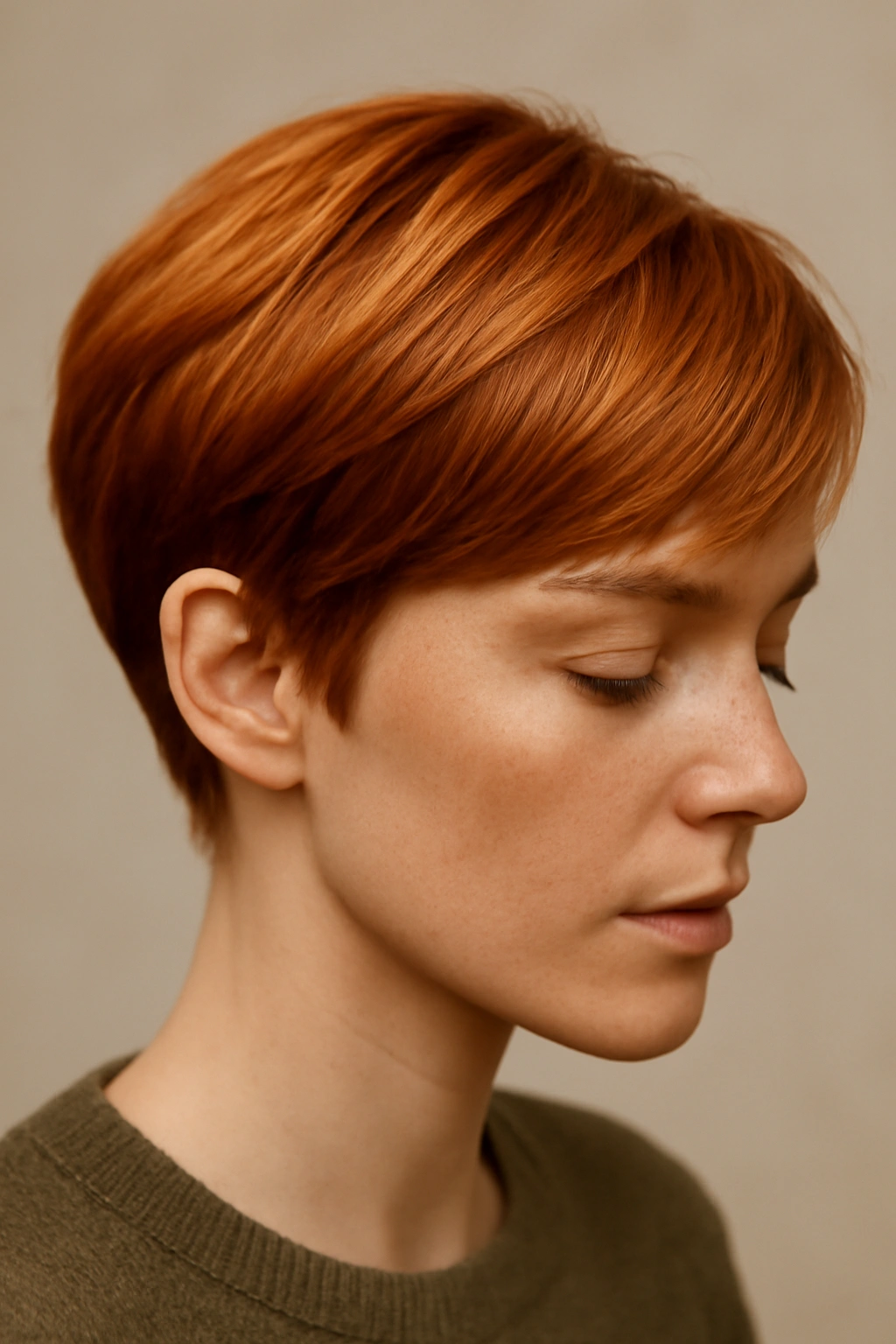
A lot of people think copper short hair will make them look orange, and that’s just not true if you choose the right tone for your coloring. A skilled colorist will pick a copper that flatters you specifically. It might lean more red, more gold, more brown, or more pink depending on what you need. The tone should be chosen to complement, not clash with, your skin tone.
People also sometimes think copper is high-maintenance in a way that other colors aren’t. While copper does fade a bit faster than some browns or blonde, it’s not dramatically more maintenance. With the right products and some basic care (cool water, color-safe products), your copper will stay gorgeous for 6-8 weeks easily.
There’s also this idea that short hair with color is “too much” or looks too dramatic. Here’s the thing: if you want it to look dramatic, it will. But copper short hair can also read as effortless and undone. The vibe is completely in your control through how you style it and the attitude you bring to it.
Key Takeaways
Copper is one of the most genuinely flattering colors you can choose for short hair, and there’s a copper short cut out there for basically every hair type, face shape, and styling preference. Whether you want something edgy and blunt, undone and textured, dramatic with an undercut, or soft and tousled, copper works.
The real secret isn’t the color or the cut individually — it’s choosing them together. A cut that works with the copper, where the color is actually doing something visually, where it all feels intentional and right for your specific face, hair, and coloring.
If you’ve been thinking about copper short hair, trust that instinct. Get a consultation with a colorist who knows how to work with copper, bring reference photos, ask questions about maintenance and styling, and then commit to the change. Short hair with copper is the kind of thing that catches light, catches eyes, and makes you feel genuinely confident. That’s worth doing right.
