



Wave patterns have a timeless appeal that works across every hair length and texture type. Whether you’re starting fresh with a cut or simply looking to refresh your current style, the right wavy hairstyle can enhance your face shape, add dimension to your hair, and create movement that feels effortlessly chic. The beauty of waves is their versatility—they work for casual beach days, professional settings, and everything in between. What makes waves particularly powerful is how they catch light differently at each length, creating depth and texture that read as fuller, healthier hair even if your natural density is on the thinner side.
The real magic of finding your perfect wavy hairstyle comes down to understanding how your hair length interacts with wave patterns. A short textured wave reads completely different than that same wave pattern at shoulder length or cascading down past your shoulders. The cut itself matters enormously—not all waves are created equal, and the difference between a shapeless shag and a deliberately crafted textured style comes down to how your stylist approaches layers, angles, and movement. You’ll also want to consider your natural hair texture, your daily styling commitment, and what tools and products you’re willing to use regularly.
This guide walks you through twenty stunning wavy hairstyles organized by length so you can find exactly what fits your hair goals. Each style comes with the real-world details about what makes it work—the specific layer placement, the styling techniques that bring out the waves, and who should consider it. Whether you prefer tight romantic waves, loose beachy texture, or something somewhere in the middle, you’ll find multiple options to explore with your stylist.
1. Short Textured Waves with Undercut
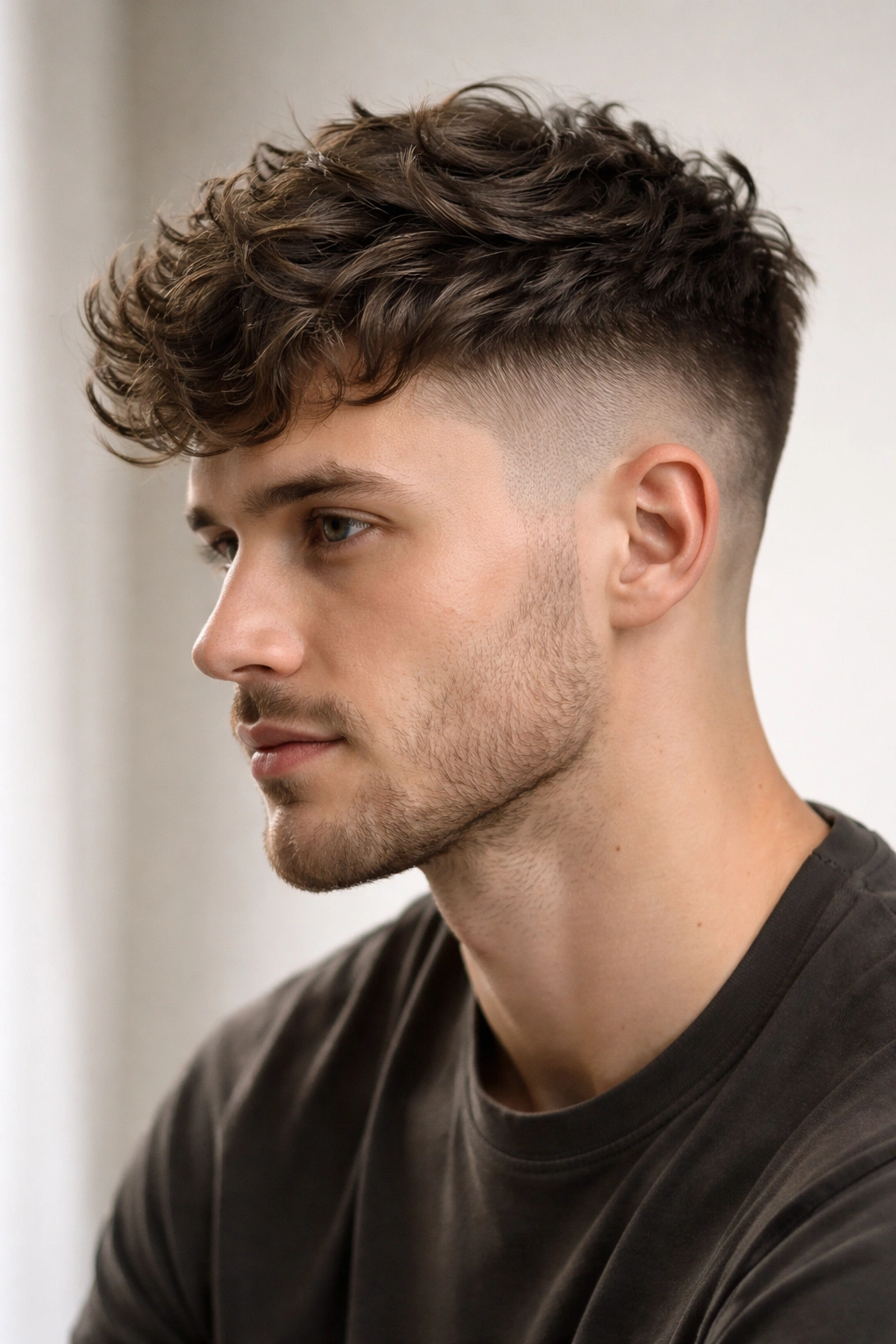
Short hair with waves creates maximum impact because every movement shows. This style features textured layers throughout with an undercut on one or both sides, giving you that modern edge while the top remains full and wavy. The contrast between the shaved or faded undercut and the tousled waves on top creates serious visual interest and makes the style feel current without trying too hard. Short waves like these work beautifully if you have naturally wavy or curly hair, as they require less daily styling than a smooth short cut would.
Why This Cut Elevates Short Hair
The undercut serves two purposes beyond looking sharp—it removes weight that would otherwise pull your waves down and flatten them, while also creating definition between the textured top and clean sides. This cut photographs beautifully from every angle and requires minimal product to look intentional. If you have fine hair, the reduced weight means your waves hold their shape longer throughout the day.
What You’re Committing To
- Regular trims every 4-6 weeks to maintain the undercut shape and keep waves looking fresh
- Daily styling with a sea salt spray or texturizing product to emphasize the movement
- Either blow-drying with a diffuser or air-drying with product, depending on your natural texture
- Occasional barber visits if you’re maintaining the undercut yourself between full cuts
Pro tip: This is one of the rare short styles where a texturizing cream actually looks better than a slick product—it enhances the wave rather than weighing it down.
2. Wavy Pixie Cut
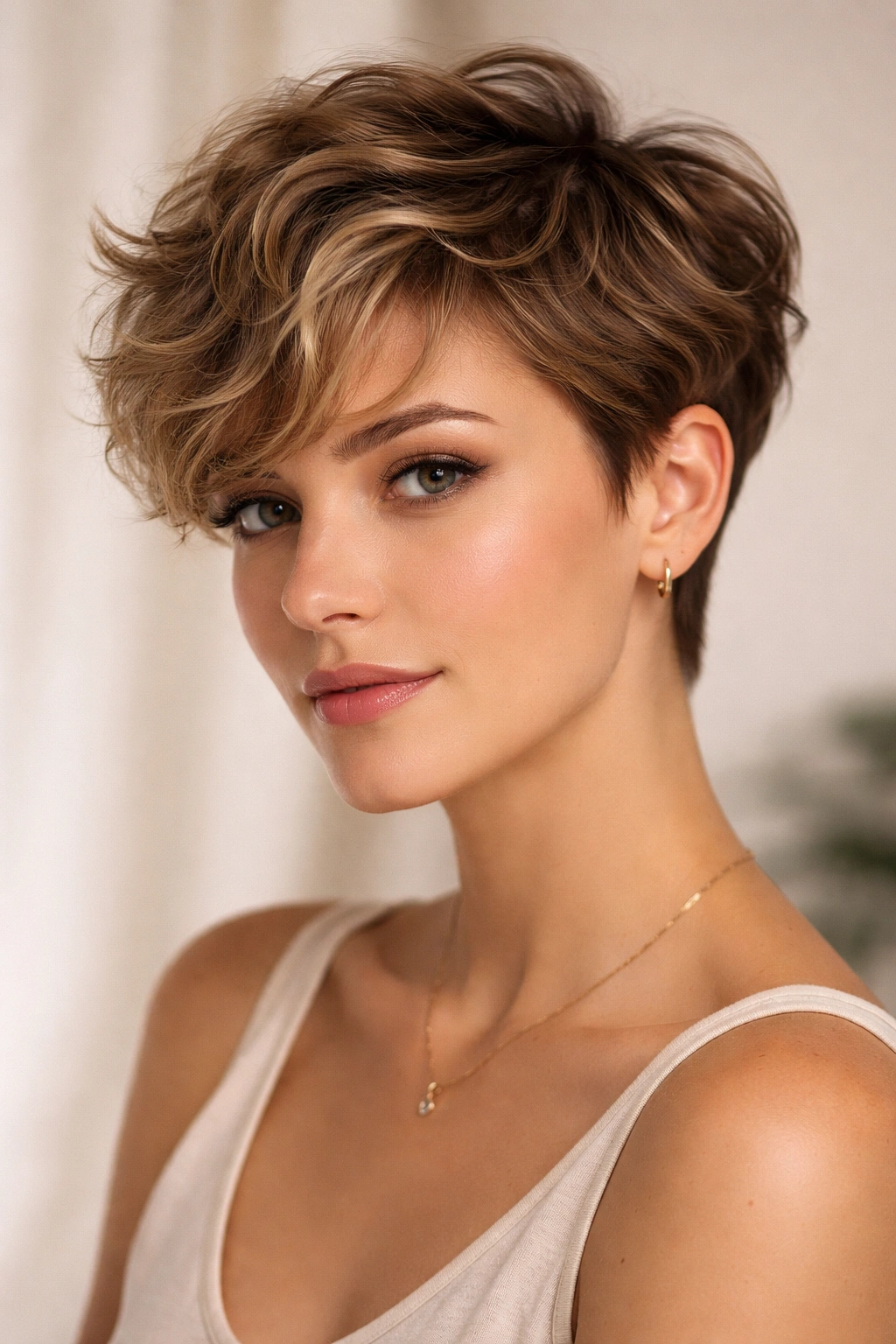
A wavy pixie delivers all the low-maintenance convenience of a pixie with way more personality and softness. Instead of sleek, this version embraces your natural wave pattern and cuts the hair short enough that waves sit close to your head but long enough on top (usually 2-3 inches) that you see actual texture and movement. The sides taper down shorter, and the whole look reads both feminine and edgy depending on how you style it. This is the pixie for people who love the idea of short hair but want something that doesn’t feel severe.
How Waves Change the Pixie Game
A straight pixie relies entirely on face shape and head shape to look flattering—there’s nowhere for waves to hide. A wavy pixie, though, adds instant softness and dimension that works with more face shapes. The waves also create volume around your crown and temples, which flatters different head shapes than a sleek version would. You’re getting the time-saving benefits of a pixie with none of the severity.
Styling Essentials for This Look
- A good curl cream or mousse applied to damp hair and either air-dried or diffuser-dried
- Quick scrunching with your hands while the hair is still wet to encourage wave formation
- Occasional finger-combing to avoid a matted appearance
- A lightweight pomade if you want to piece out sections and add definition
3. Wavy Bob with Blunt Bangs
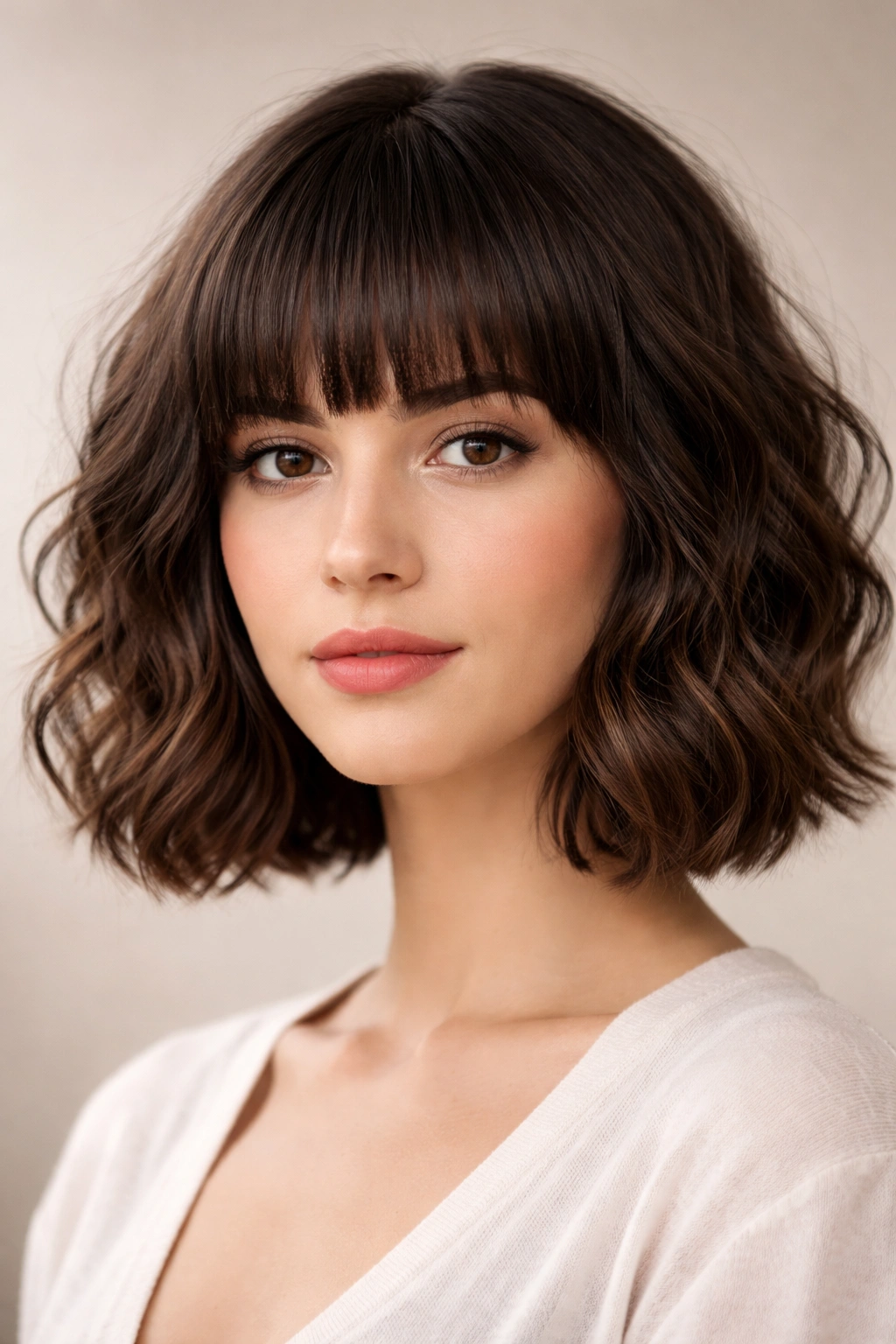
A blunt-banged bob with waves is having a major moment because it feels both retro and completely current. The blunt line of the bangs creates graphic geometry at the front, while the wavy texture below adds movement and softens the overall effect. This style typically hits right at your jawline or chin, and the bangs sit right above your eyebrows. The contrast between the structured blunt edge and the organic wave pattern is what makes this style visually striking.
Why Bangs Work With This Wave Pattern
Blunt bangs need a certain hair density to look intentional rather than thin, so this style works best if you have medium to thick hair. The waves throughout the rest of the hair prevent the style from reading as too severe—the bangs provide structure while the waves below add approachability. The visual effect is polished without being corporate, and textured without being undone.
Making This Work Long-Term
- Bangs need trimming every 3-4 weeks to maintain the blunt line
- The rest of the bob should be trimmed every 6-8 weeks to keep the wave shape deliberate
- Blow-drying is usually necessary to direct the bangs and set the wave pattern
- A lightweight texturizing spray helps the waves hold without making bangs look stringy
4. Tousled Short Waves
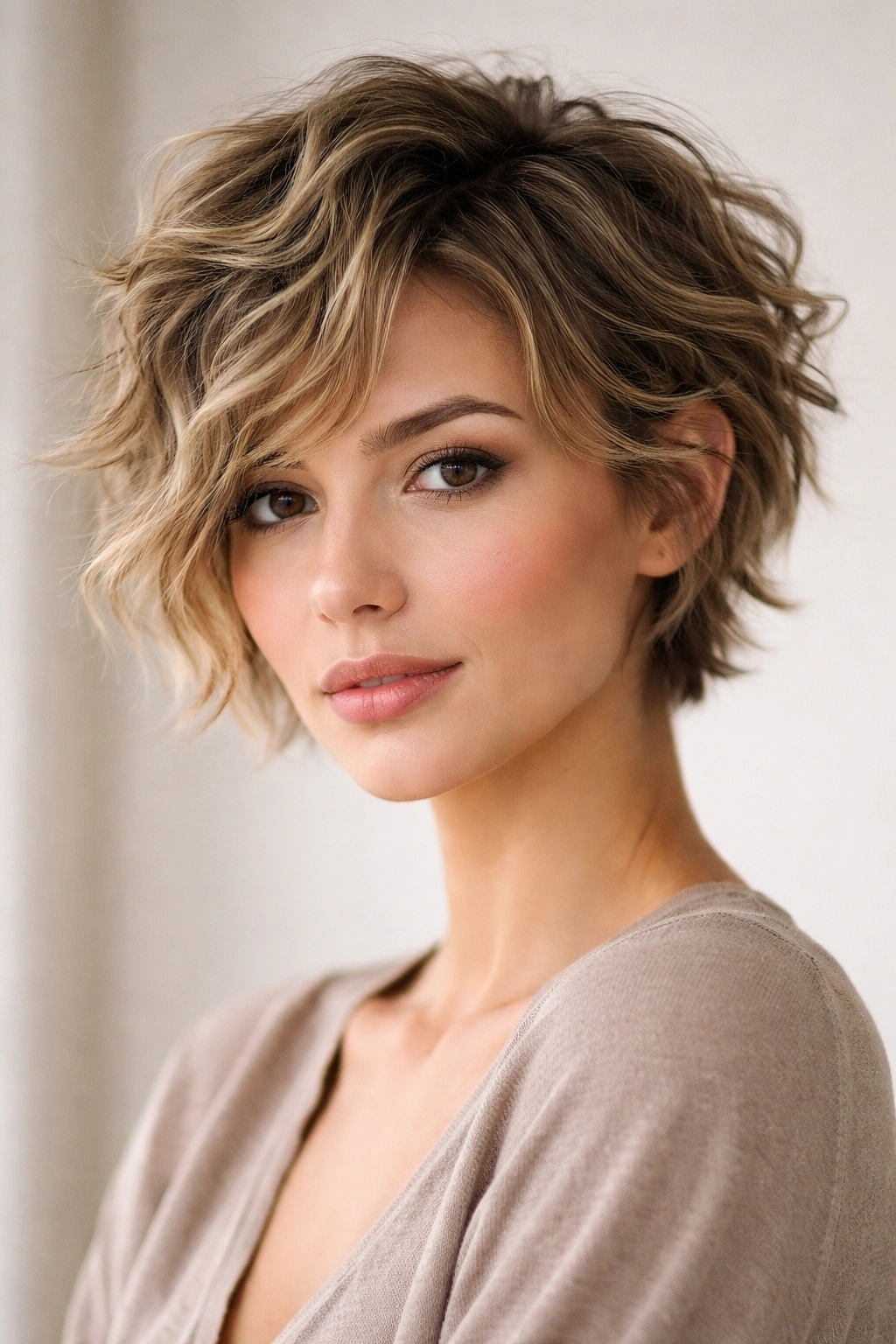
This is the “I woke up like this” style that actually requires some intention but reads completely effortless. Tousled short waves are longer than a pixie but shorter than a traditional bob—think 3-5 inches on top with slightly longer layers creating movement. The whole cut is textured throughout, which means there’s no one “correct” way to style it on any given day. Some mornings it looks polished, other mornings it looks undone, and both versions feel intentional.
The Appeal of Intentional Undone-ness
Tousled waves work because they give you permission to skip perfect styling. You’re not trying to recreate an exact shape each day; you’re just enhancing the texture that’s already there. This takes the pressure off and actually makes styling faster than a cut that requires a specific shape. The texture also makes your hair read as having more volume and body than it actually has.
Practical Styling for Tousled Waves
- Sea salt spray applied to damp roots and mid-lengths for texture and grip
- A quick blow-dry with fingers instead of a brush, or air-drying for a looser texture
- Occasional texturizing paste worked through for definition on days you want more structure
- No specific styling required—the cut does most of the work
5. Shoulder-Length Beach Waves
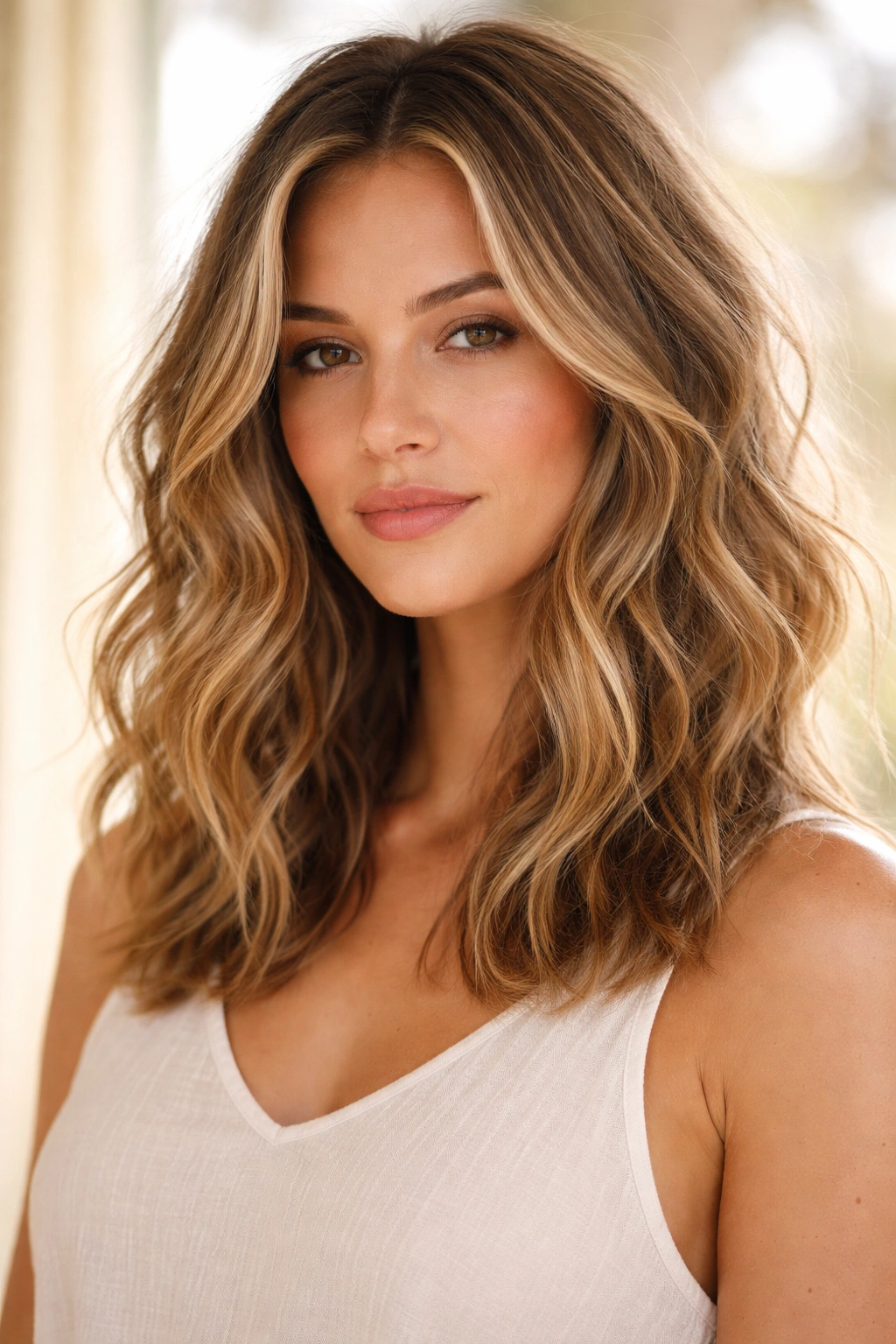
Shoulder-length beach waves are the reliable middle ground that suits most people. This length hits right at your shoulders, which is long enough that you get real movement but short enough that the waves don’t weigh the style down. Beach waves at this length have that lived-in, sun-kissed quality even without color—they read light, breezy, and effortlessly put-together. The key is that the waves are loose and organic-looking rather than perfectly uniform.
Why This Length Works for Beach Waves
Shoulder length is the sweet spot for waves because it’s long enough that you see the wave pattern clearly but short enough that the waves don’t get weighed down by their own length. The movement creates a soft frame around your face, and the waves create dimension that makes even one-dimensional color look more interesting. This length also sits perfectly with most face shapes—it’s short enough to be flattering to rounder faces but long enough to elongate other face shapes.
Achieving This Look at Home
- Loose-barrel curling iron (1.5 to 2 inches) wrapped away from the face
- Spray setting lotion before curling helps waves hold longer
- Running your fingers through waves once they’ve cooled breaks the curl into waves rather than ringlets
- A sea salt spray can add texture and help waves hold through the day
6. Modern Shag with Waves
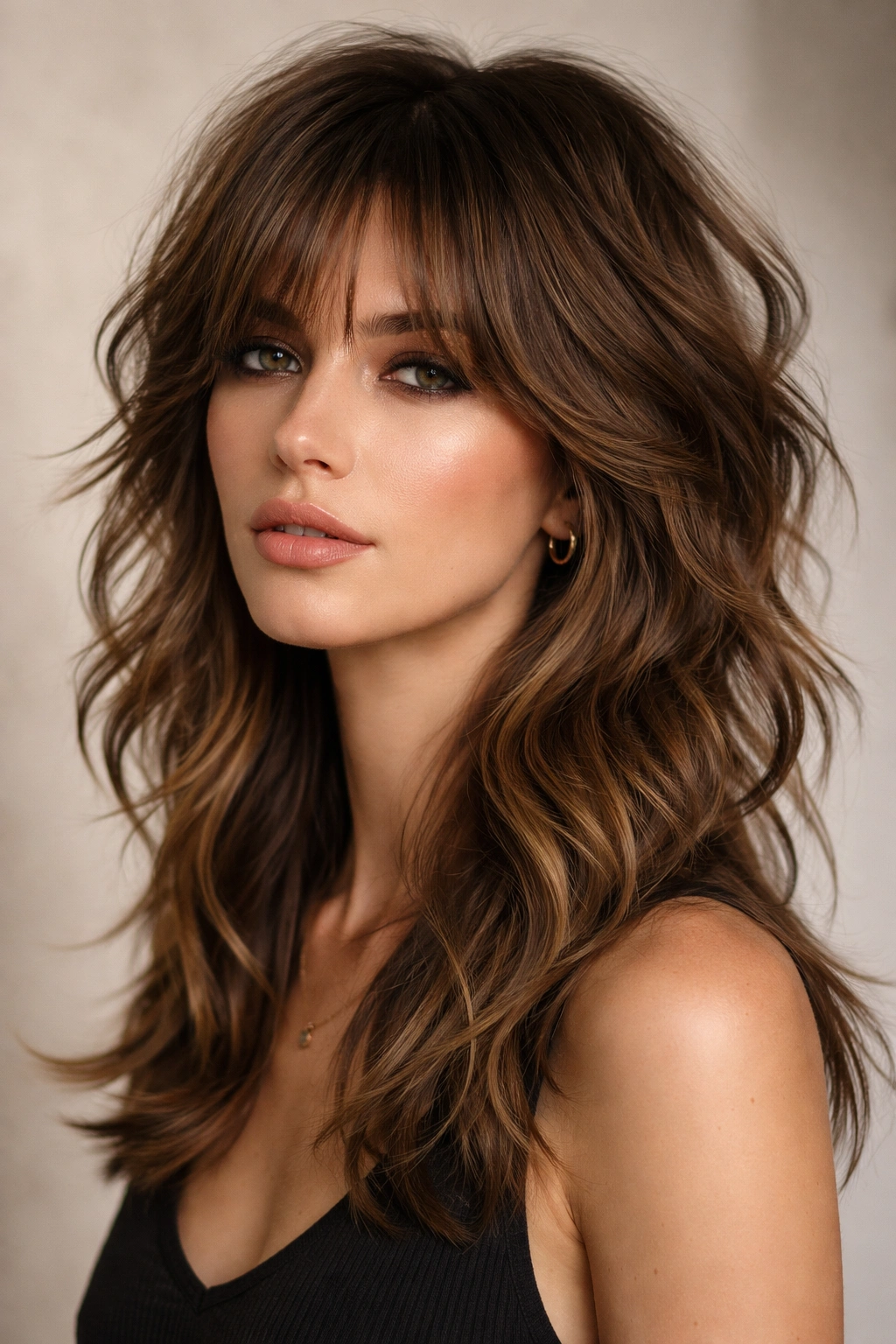
The shag is back and textured, and it’s nothing like the 1970s version you might be picturing. A modern shag with waves features layers throughout—shorter layers at the crown for volume, gradually longer layers toward the bottom—all with movement and texture. The result is a style that feels rock-and-roll cool while being surprisingly wearable. Waves throughout a shag create dimension that a straight shag wouldn’t have, and the combination reads youthful and current.
What Makes a Shag Different From Layered Waves
A shag specifically has more dramatic layers than a standard layered cut, with significant contrast between shorter and longer sections. This creates intentional texture and movement even with minimal styling. Waves amplify this effect, making the shag read as deliberately textured rather than just choppy. The style moves independently, which creates constant visual interest.
Shag + Waves Styling Requirements
- Texturizing spray or sea salt spray for grip and dimension
- Blow-drying with a diffuser to encourage and direct the waves
- Occasional scrunching to enhance the texture
- A dry shampoo to add grip if you’re styling days after washing
- Trims every 6-8 weeks to maintain the layer structure and prevent the style from looking shapeless
7. Wavy Lob with Layers
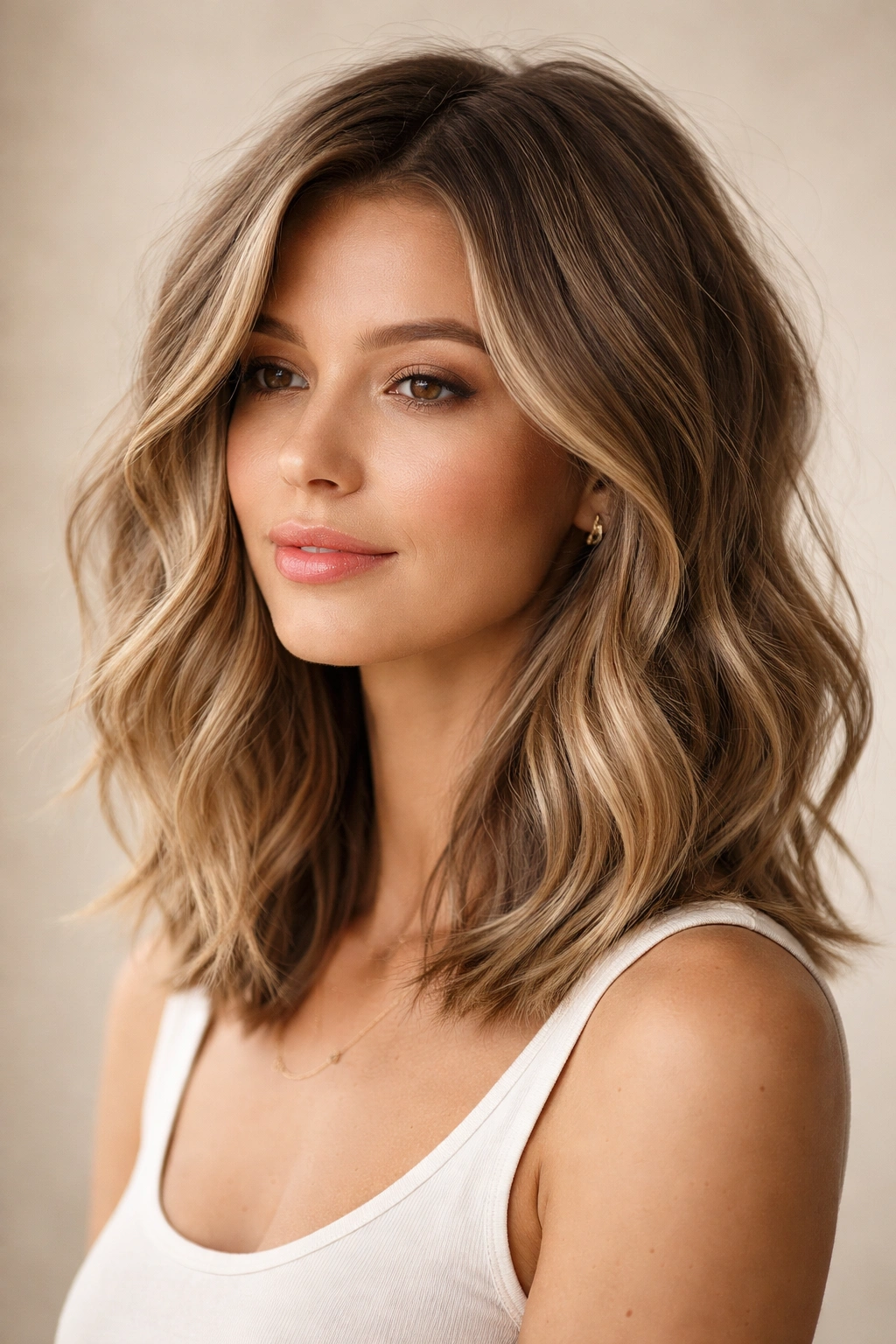
A lob (long bob) with waves is the perfect transition style if you’re growing out a shorter cut or testing whether you want longer hair. A lob typically hits between your shoulder and mid-back, and when textured with waves, it feels substantial without the commitment of truly long hair. Layers cut throughout prevent the lob from looking blunt and heavy—instead, the waves and layers create movement that makes the style feel lighter and more dynamic than the length alone would suggest.
Why Layers Matter in a Wavy Lob
A blunt lob can read heavy and severe, but the same length with layers and waves feels completely different. Layers create internal movement that allows waves to develop naturally and show throughout the entire length, while also preventing the style from looking like a solid wall of hair. The interplay between the longer length and the layered texture is what makes a wavy lob visually interesting.
Styling Your Wavy Lob
- Blow-drying with a round brush or blow-dryer brush curls waves in
- A mid-sized curling iron (1.5 inches) for more deliberate waves
- Sea salt spray for grip and texture without weight
- Dry shampoo on day-two hair adds grip that helps waves hold
- Trims every 8-10 weeks to maintain layers and keep the style feeling fresh
8. Beachy Waves with Money Pieces
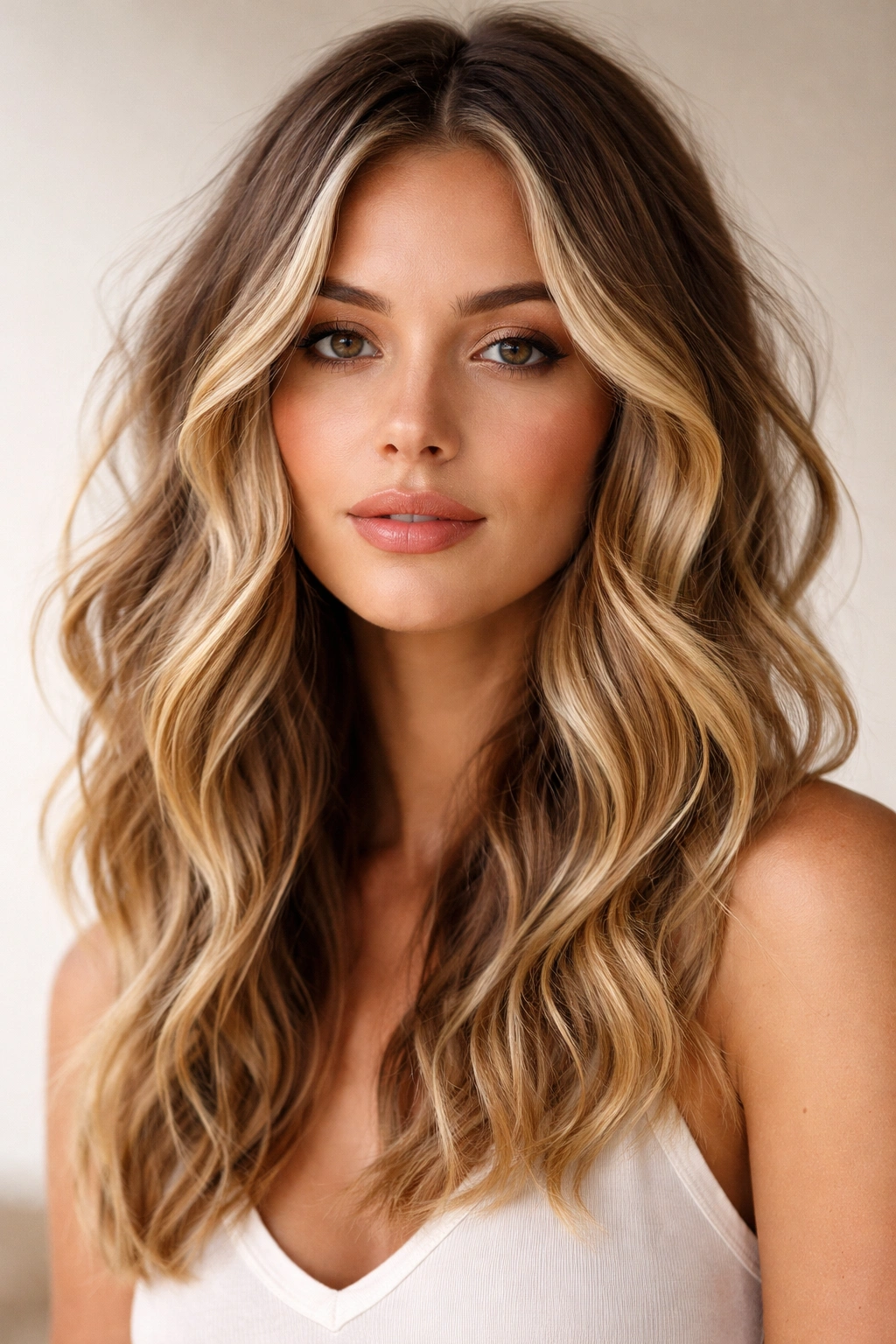
Money pieces—those strategically face-framing highlights—become even more striking when paired with waves. The lighter pieces catch light with every movement, creating an illusion of dimension and lightness. This style works at any length but feels particularly fresh at medium to longer lengths where the waves are substantial. The highlights don’t have to be traditional blonde; they can be a couple of shades lighter than your base color for a subtle effect or several shades lighter for more drama.
How Light Pieces Amplify Wave Texture
The light-catching quality of highlighted pieces makes waves read more three-dimensional than they would with a single-tone color. The lighter pieces naturally draw the eye around your face, and as the waves move, the highlights reflect light in ways that solid-color hair can’t replicate. This is why the same wave pattern looks more textured and dimensional when paired with strategic highlights.
Getting Money Pieces Right
- Pieces should be placed at your face, around your temples, and framing your cheekbones
- Thickness varies, but typically 5-7 pieces per side work for subtle effect
- Grow-out blends better if pieces are thick enough to allow some shadowy regrowth before they become obvious
- Maintain these pieces every 6-8 weeks for the most impactful look
- Pair with waves—straight hair makes the pieces look flat and uniform rather than dimensional
9. Wavy Wolf Cut
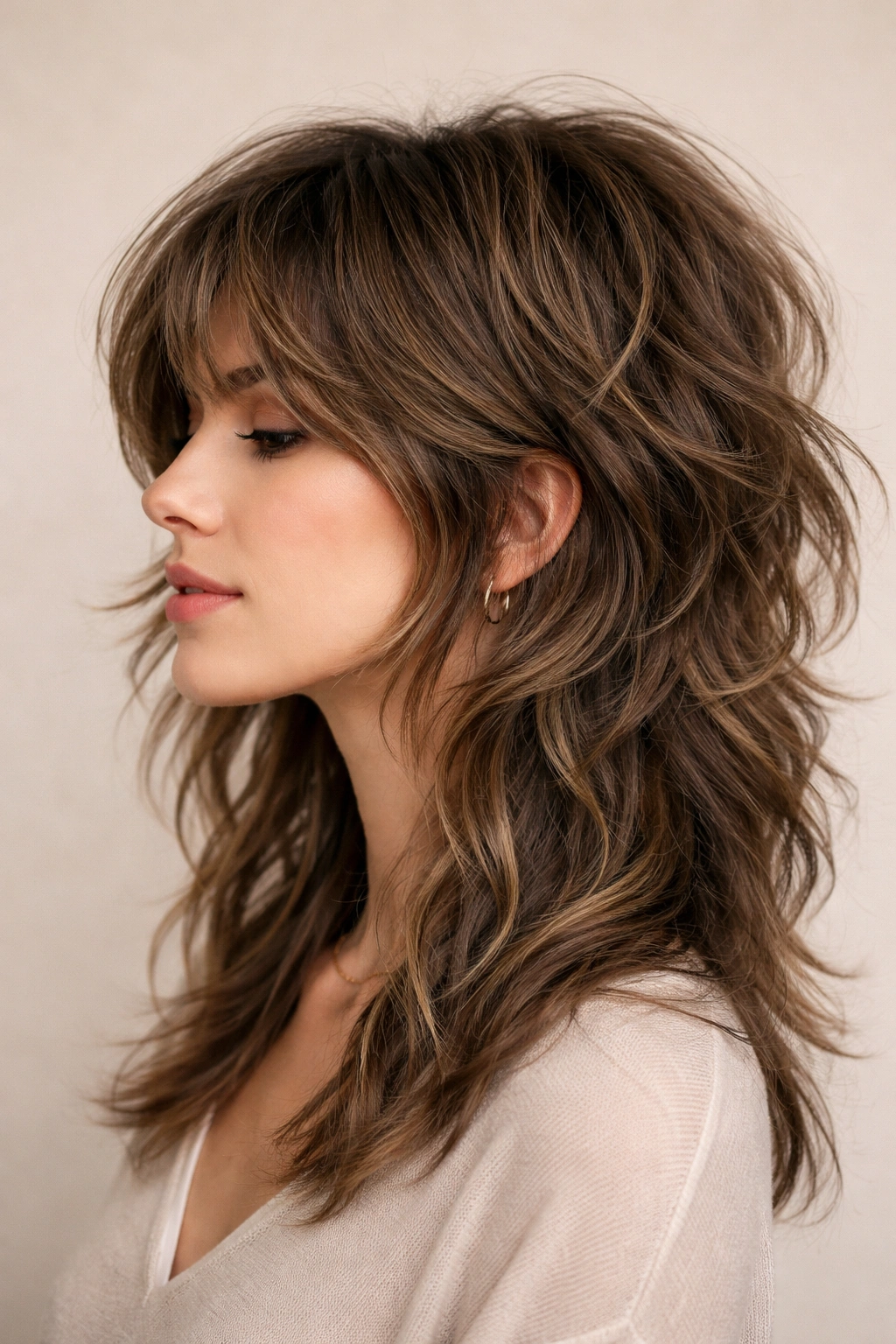
A wolf cut is essentially a shag meets a mullet—textured and shorter on top for volume, with strategically longer pieces underneath. With waves throughout, a wolf cut becomes this edgy, interesting style that feels fashion-forward without being impractical. The waves prevent it from reading as too severe, while the cut structure prevents it from looking like just a messy textured style. A wolf cut with waves requires some styling intention but rewards you with a look that gets genuine compliments.
The Wolf Cut: Edgy but Wearable
A wolf cut works because it gives you volume and texture on top (important if you have fine hair) while the longer underneath pieces create movement and fluidity. Waves throughout soften what could otherwise feel harsh, while the cut structure keeps it from reading as shapeless. The style is bold without being outrageous—you’re making a statement without looking costume-y.
Daily Styling for Wolf-Cut Waves
- Texturizing spray applied to damp roots and lengths
- Blow-drying with a diffuser on medium heat for texture without frizz
- Scrunching while damp to encourage wave formation
- A lightweight pomade or wax for piecing out the shorter layers on top
- Trims every 5-6 weeks to maintain the structure and prevent the shorter pieces from growing too long
10. Choppy Layered Waves
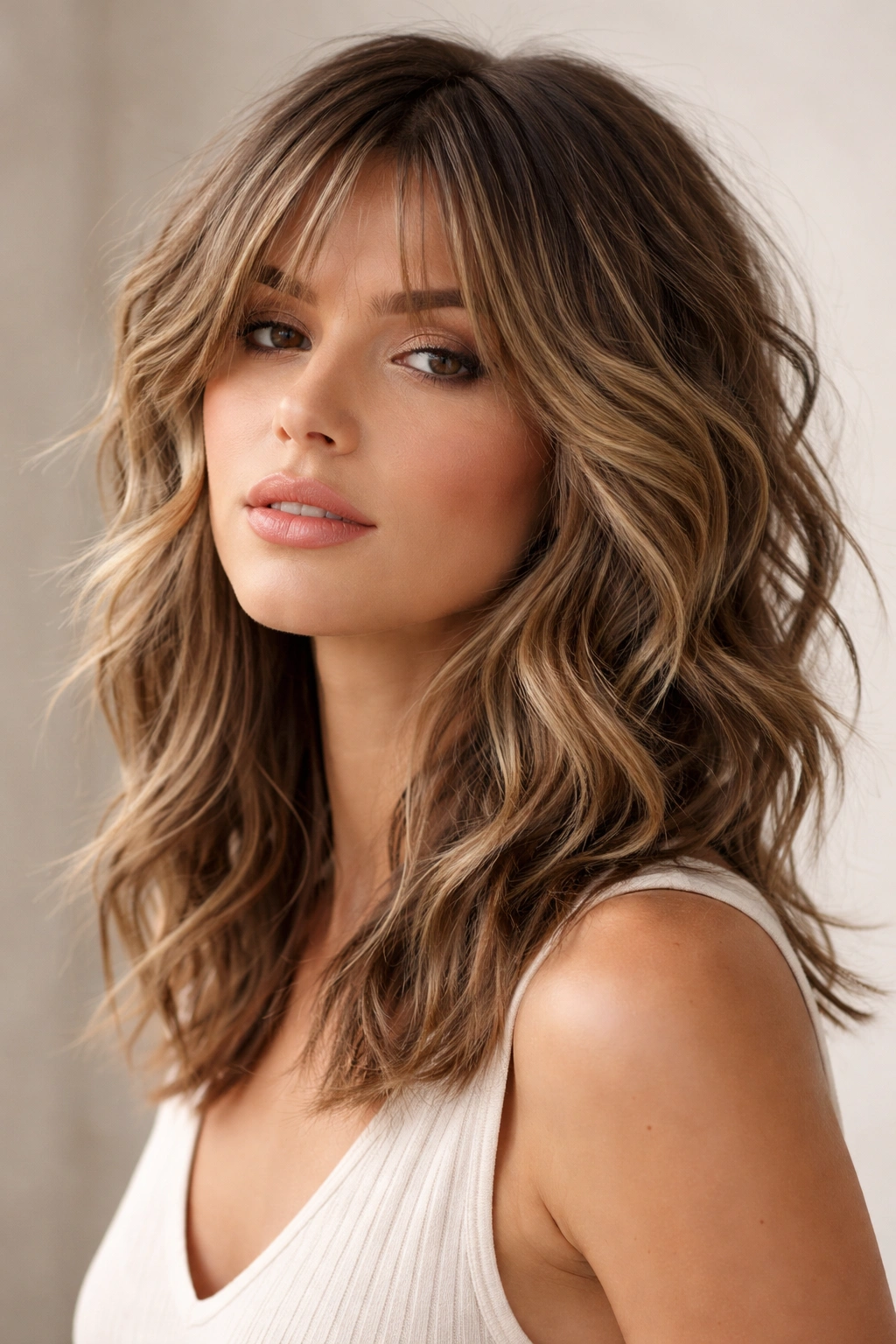
Choppy layers with waves create maximum texture and movement. Unlike a smooth layered cut, choppy layers are cut at more dramatic angles and sit at different lengths, which means every strand moves independently. When paired with waves, this creates a style that reads textured and dynamic from every angle. Choppy layers work best if you have medium to thick hair, as they need enough density that the choppiness reads intentional rather than thin.
Why Choppy Layers Transform Waves
Smooth layers create subtle texture, but choppy layers create obvious movement and visual interest. The choppiness means that waves aren’t sitting as one cohesive unit—they’re breaking up into individual pieces that move differently. This creates a style that photographs well, moves beautifully, and looks different when you move your head. It’s the most dynamic version of layered waves.
Working with Choppy-Layered Waves
- Texturizing spray for grip and to enhance the choppy dimension
- Blow-drying with a brush or diffuser, scrunching to encourage movement
- A curling wand or iron to define waves between shampoos
- Dry shampoo on day-two hair adds grip and prevents flat sections
- Regular trims every 6-8 weeks because choppy layers lose their shape quickly if not maintained
11. Long Beachy Waves with Layers
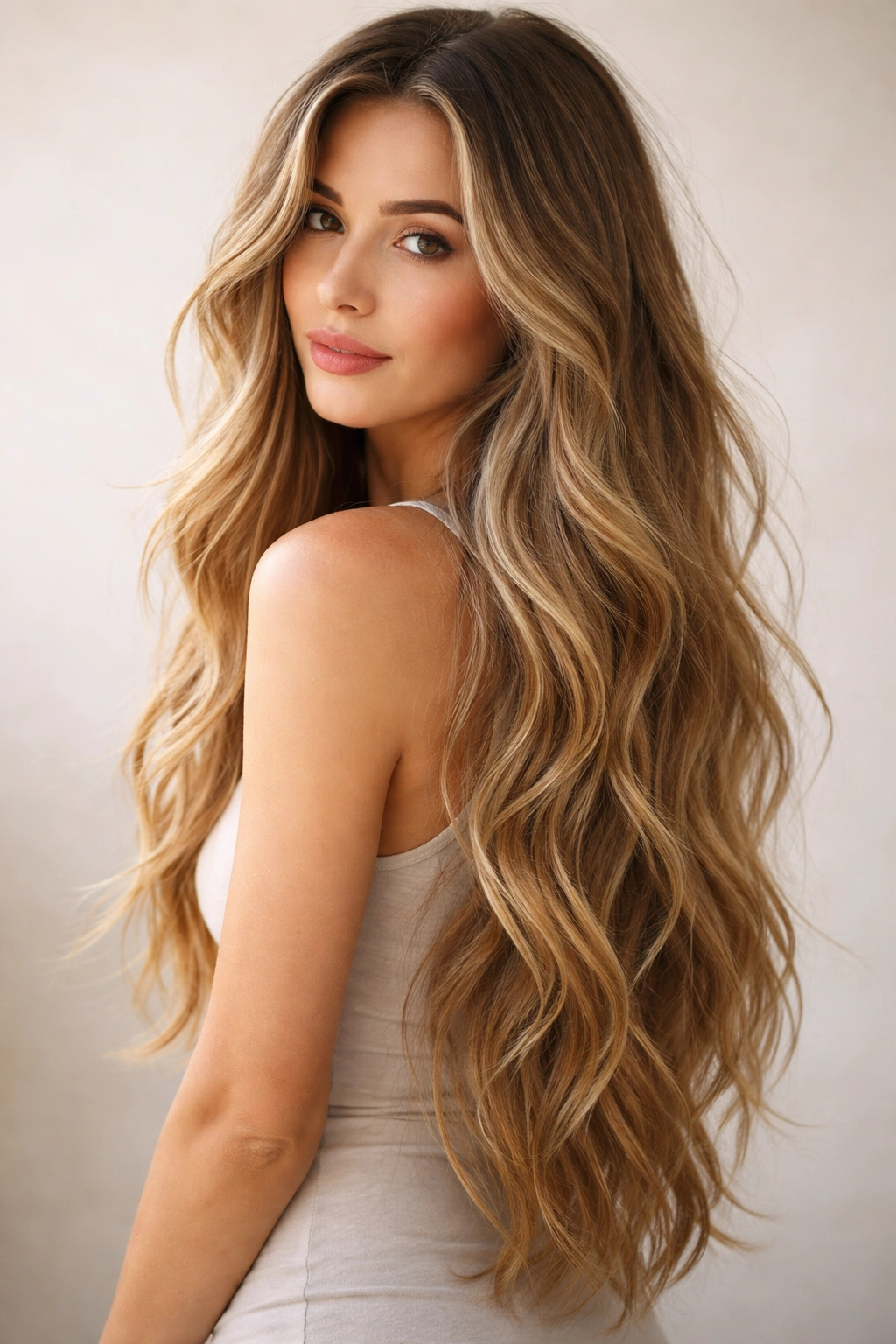
Long hair with beachy waves and subtle layers is the style that suggests you just came from a beach vacation. The layers are strategic but not dramatic—they’re cut to encourage movement without making the hair look obviously layered. Beachy waves at this length mean loose, organic waves that aren’t perfectly uniform. This is the style that works whether you’ve styled it deliberately or just let it air-dry with product.
The Magic of Strategic Layers in Long Hair
Long, single-length hair can look heavy and shapeless, but layers cut at the right angles create movement throughout while still maintaining overall length. The layers allow waves to develop and show throughout the hair rather than just sitting at the ends. The effect is movement and dimension without the commitment of a shorter cut.
Maintaining Long Beachy Waves
- Blow-drying with a diffuser or plopping (wrapping hair in a towel) to enhance natural texture
- A medium-barrel curling iron for defining waves on day two or three after washing
- Sea salt spray for grip and that just-back-from-the-beach texture
- Deep conditioning on ends every week or two because longer waves need moisture
- Trims every 10-12 weeks, focusing on adding movement rather than just removing length
12. Mermaid-Length Waves with Ombre
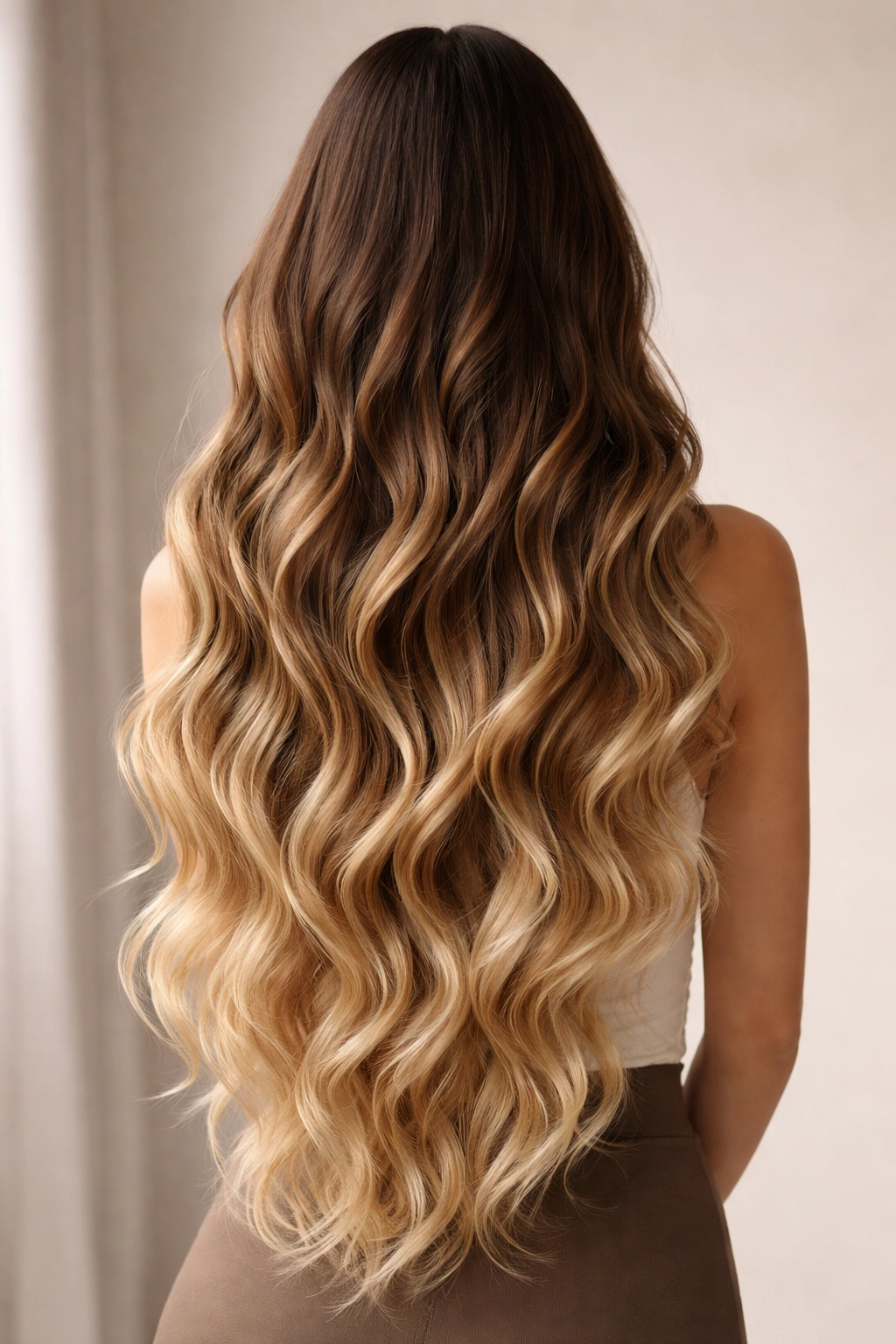
Mermaid length—that gorgeous very-long style that hits mid-back or lower—becomes absolutely stunning when textured with waves and paired with an ombre color. The length allows you to see the full wave pattern, and the color-fading creates dimension that single-tone hair can’t match. The waves move constantly, showing different shades of color with each motion. This is the ultimate romantic, dramatic long-hair style.
Why Ombre Works With Long Waves
Ombre on straight hair can look flat and unmotivated, but on waves, the color-shifting becomes three-dimensional and dynamic. The lighter lengths catch light with every wave, and the interplay between the waves and the color creates constant visual interest. The lighter ends also read lighter than they would on straight hair, making truly long lengths feel less heavy.
Caring for Mermaid Waves
- Deep conditioning is non-negotiable—long waves need serious moisture maintenance
- Weekly conditioning masks help prevent split ends on length
- Sulfate-free shampoo to protect color and maintain wave structure
- Blow-drying with a diffuser for texture or air-drying for a looser wave
- Curling iron touch-ups between shampoos for refreshing waves
- Trims every 8-10 weeks on just the ends to remove damage while maintaining length
13. Cascading Waves with Long Layers
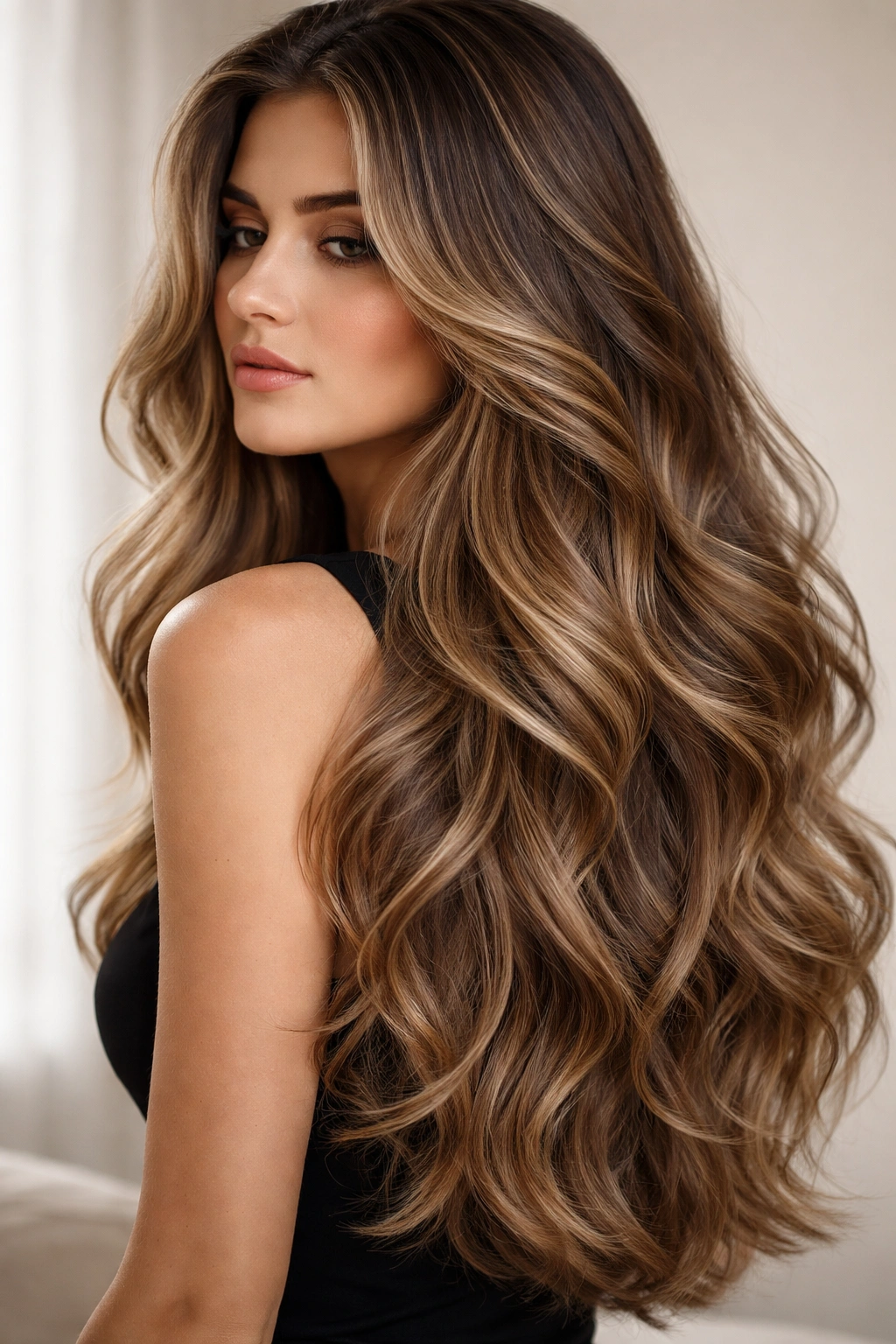
This style features extensive layering throughout that creates the effect of waves cascading down from your crown. Rather than one wave pattern, each layer has its own movement, creating a waterfall-like effect when the light hits it. The layers are strategically cut so shorter pieces near the crown create volume and shape, while longer layers maintain the overall length. The result is a style that looks effortlessly textured but is actually quite deliberately cut.
The Structural Genius of Cascading Layers
Cascading layers work because they remove weight from the hair while maintaining length. Each layer sits on top of the layer beneath it, so they don’t weigh each other down. This means waves stay lifted and visible throughout the entire length, rather than being flattened by the weight of longer hair above them. It’s a cut that creates dimension and movement without requiring serious daily styling effort.
Styling Cascading Waves
- Blow-drying with fingers or a brush for quick styling
- A sea salt spray to add texture and grip
- Scrunching while damp to encourage the cascading effect
- A large-barrel curling iron to refresh waves between washes
- Dry shampoo for added grip on day-two or day-three hair
- Trims every 8 weeks to maintain the layer structure
14. Loose Waves with Face-Framing
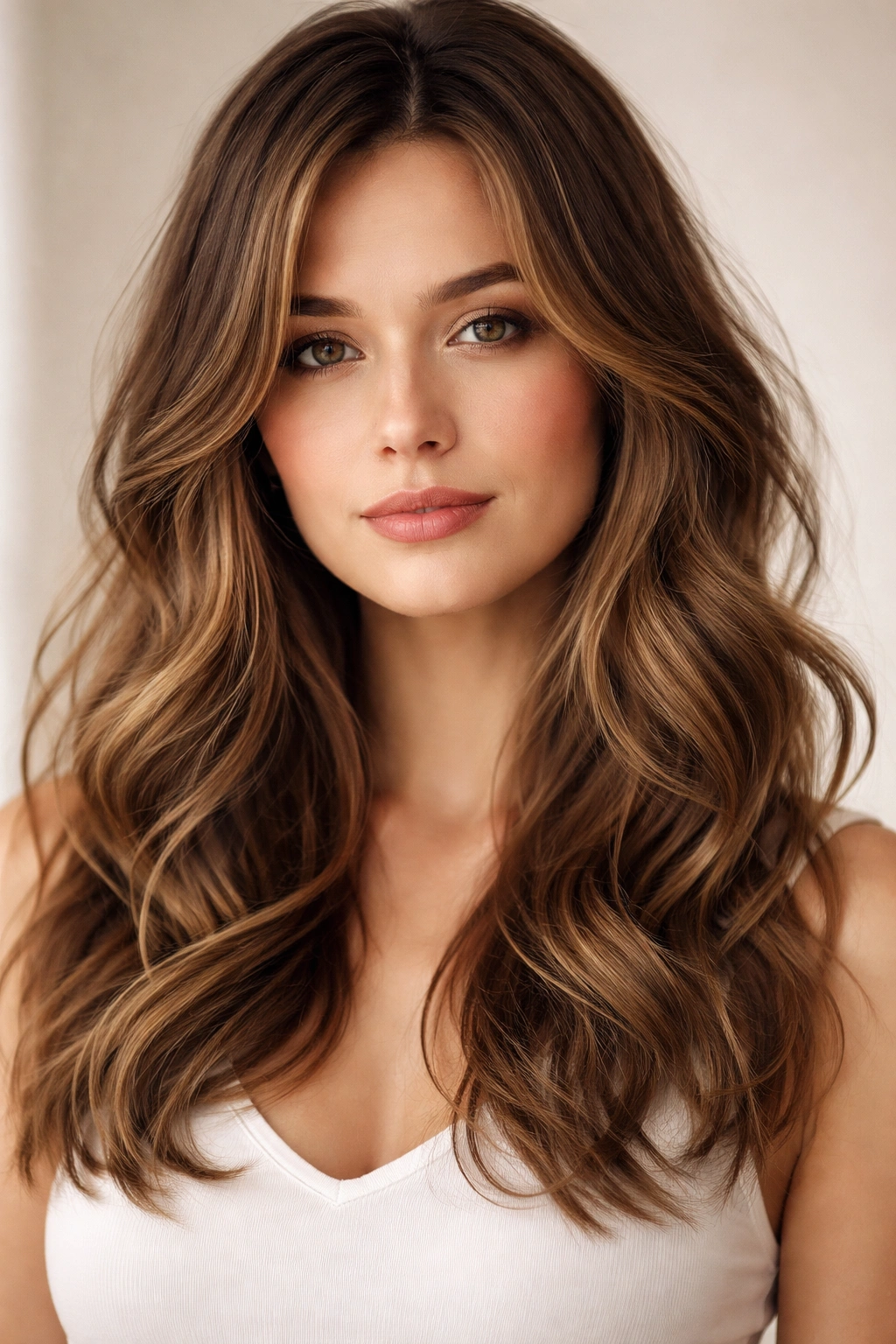
Sometimes the simplest style is the most impactful. Loose waves with intentional face-framing pieces is exactly what it sounds like—gentle, romantic waves throughout with pieces cut specifically to frame your face and contour your cheekbones. The waves are loose enough to feel effortless, but the face-framing creates polish and intentionality. This style works at any length and suits most face shapes because the customizable face-framing adapts to what’s flattering for you personally.
Why Face-Framing Matters
Face-framing pieces serve a purpose beyond aesthetics—they’re shorter than the rest of the hair, so they fall around your face and move differently than the bulk of your hair. This creates softness and draws attention to your face. The pieces also catch light and create dimension around your features. Paired with waves, face-framing pieces create a style that looks intentional and polished without being overdone.
Getting Face-Framing Right
- Pieces should be cut 1-2 inches shorter than the surrounding hair
- Placement should follow your natural cheekbone and face shape
- Layers underneath allow pieces to move independently
- These pieces grow out fastest, so trim them every 4-5 weeks if you want to maintain the effect
- Waves throughout the rest of the hair create softness that makes the framing feel cohesive rather than obvious
15. Textured Waves with Highlights
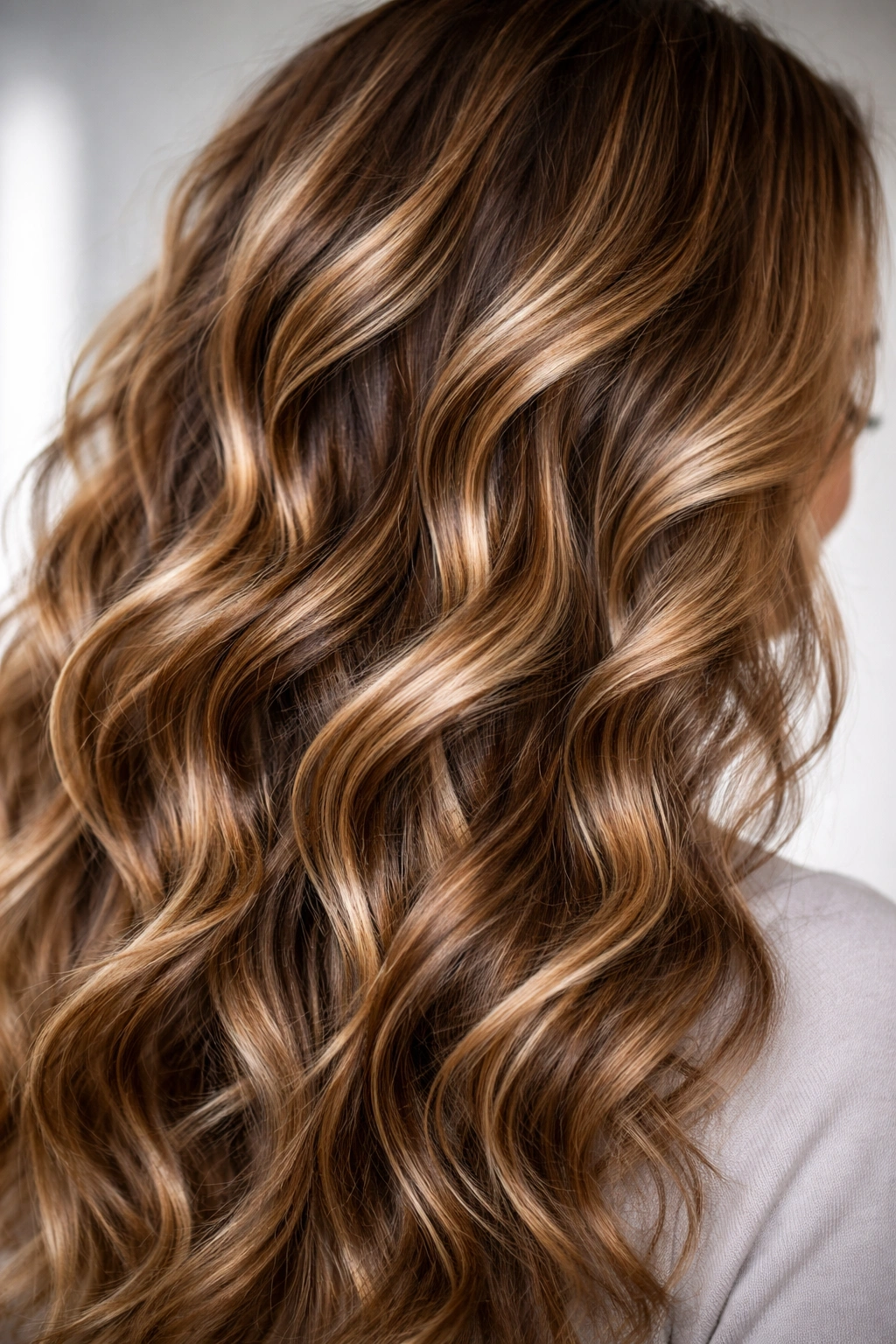
Waves become even more textured and dimensional when paired with strategic highlights. Rather than money pieces, this approach adds brightness throughout the hair with pieces placed to catch light from multiple angles. The highlights can be subtle (just a few shades lighter) or dramatic (several shades lighter), depending on your preference and skin tone. The combined effect of waves and multidimensional highlights is a style that looks expensive and salon-fresh.
How Highlighting Amplifies Texture
Solid-color hair shows texture less dramatically because there’s no light variation. Highlights scattered throughout the hair catch light at different angles and with each wave movement, making texture read as more pronounced. The effect is that your hair looks thicker, fuller, and more textured than it is. This is particularly valuable if you have fine or thin hair.
Maintaining Highlights With Waves
- Touch up root color every 6-8 weeks depending on how obvious your regrowth is
- Use a purple or blue-toned toner if your highlights are blonde to prevent brassiness
- Deep condition weekly to maintain the health of highlighted strands
- Avoid sulfate-free shampoo if possible to extend the vibrancy of your color
- The combination of highlights and waves photographs beautifully, so this is a high-reward style maintenance-wise
16. Vintage-Inspired Waves
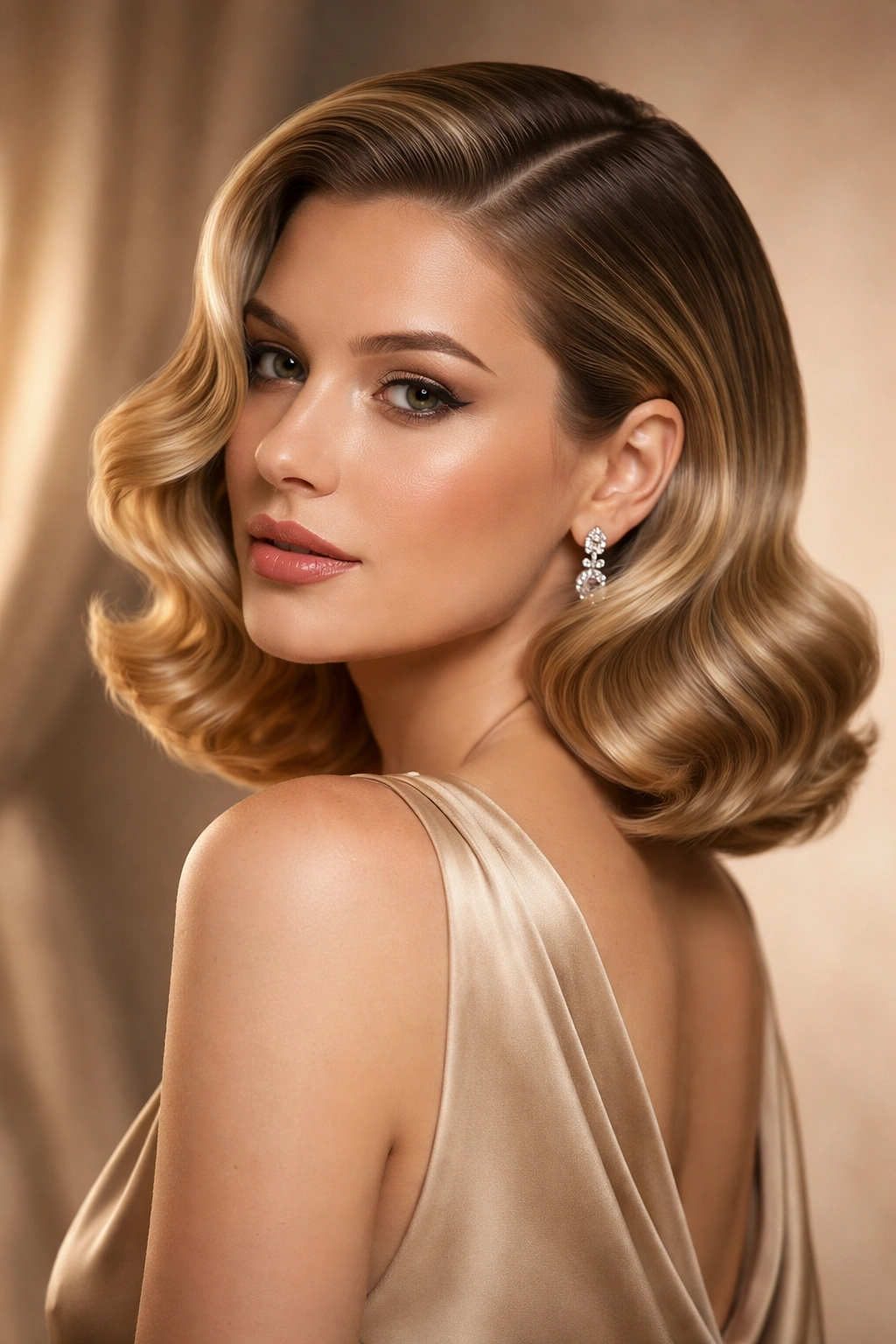
Vintage waves—think Old Hollywood glamour or 1960s elegance—are having a moment because they feel both timeless and completely current when paired with modern styling and color. These are typically defined, structured waves that sit close to the head, created with precision and intention. A vintage wave style works at any length but is particularly stunning at shoulder-length or slightly longer, where the waves have room to develop fully while still feeling controlled and polished.
Why Vintage Waves Feel Modern
Vintage waves are usually created using traditional curl patterns rather than modern texturizing, which means they’re more uniformly wavy than contemporary beachy waves. The uniformity reads intentional and styled, which is the opposite of the undone aesthetic. Paired with modern hair color, fresh makeup, and current clothing, vintage waves feel like a intentional style choice rather than a throwback. The effect is elegant and fashion-forward.
Creating Vintage Waves
- Blow-drying with a medium-barrel curling iron in sections
- Setting lotion applied before curling helps waves hold longer
- Finger-combing through waves once cooled breaks curl into defined waves
- A light hairspray to hold the wave pattern without looking stiff
- Rewaving is typically necessary every few days with this style, as these waves are precision-based
- This is a high-maintenance style but absolutely worth it if you love the vintage-glam aesthetic
17. Tousled Waves with Undercut Design
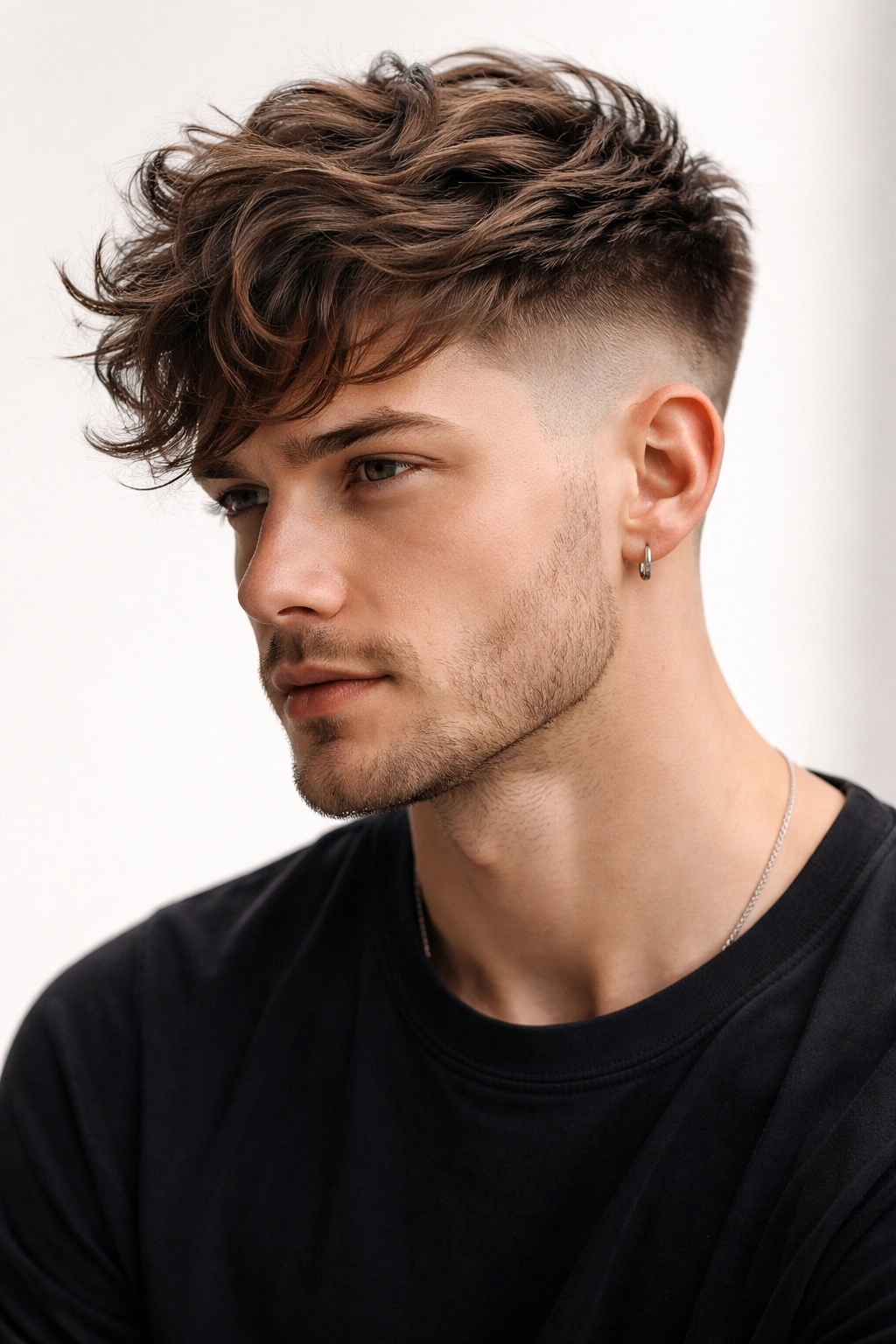
An undercut combined with tousled waves creates a style that’s edgy on the sides and textured on top. The undercut can be a simple fade, a geometric design, or even a shaved pattern that adds visual interest. Tousled waves on top provide contrast and softness that keeps the look from feeling too harsh. This style is particularly striking with shorter to medium-length hair where the contrast between the undercut and the tousled top is most obvious.
The Power of Contrast
An undercut makes a statement on its own, but the combination with tousled waves makes it feel more wearable and contemporary. The waves prevent the style from reading as too severe, while the undercut prevents the waves from reading as just undone. The two elements work together to create a look that’s bold without being costume-y.
Maintaining This Hybrid Style
- The undercut needs trimming every 4-6 weeks to maintain clean lines
- The tousled top needs trims every 6-8 weeks to keep the wave shape intentional
- Texturizing spray is essential for emphasizing the tousled texture
- Blow-drying with a diffuser keeps the undercut from looking flat
- This style photographs beautifully and works well if you love having a distinctly styled look
18. Beachy Waves with Bangs
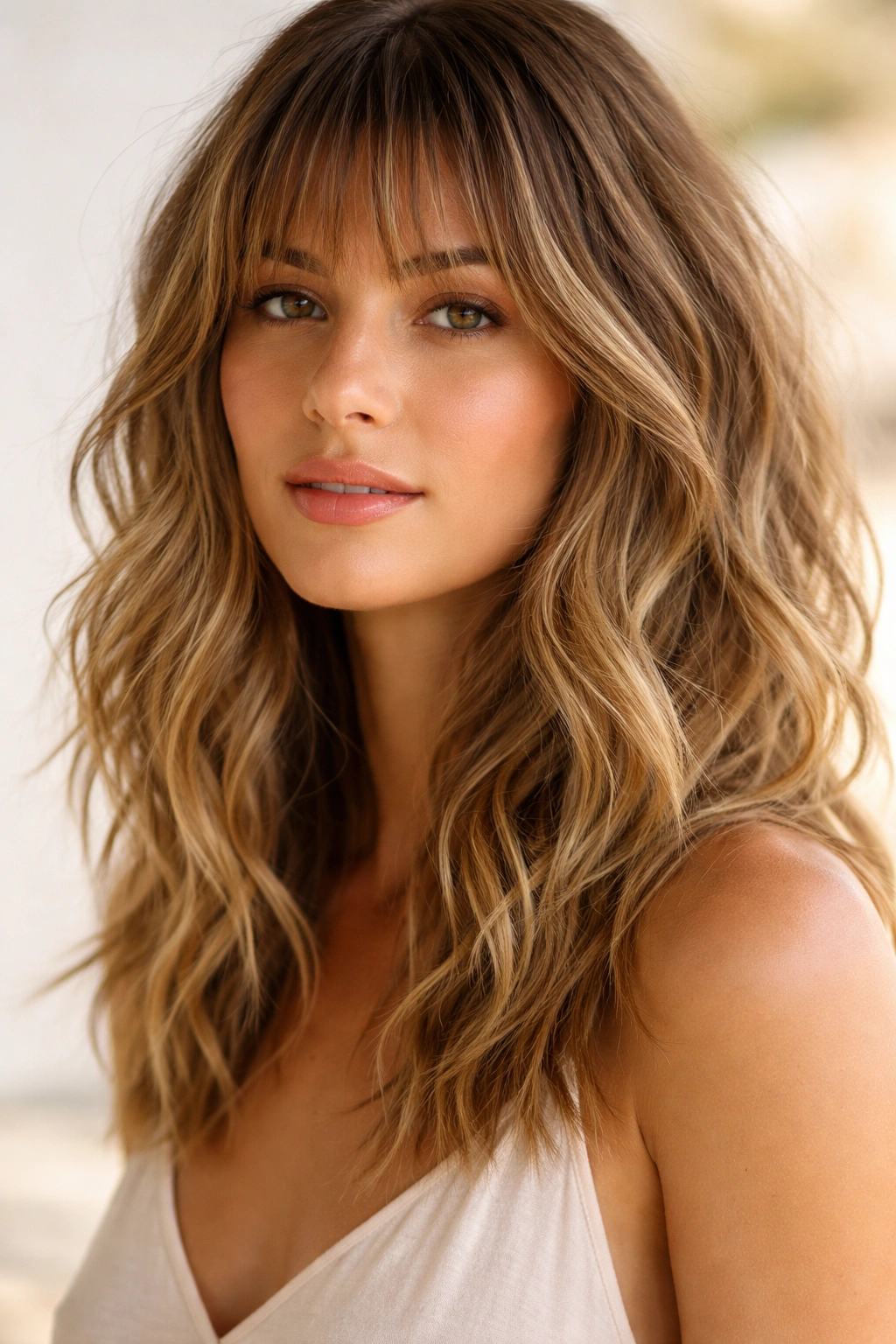
Bangs with beachy waves create instant softness and a youthful feel. Unlike blunt bangs, beachy-wave bangs are textured and soft, creating a gentle frame rather than a graphic line. The bangs blend seamlessly with the wavy texture throughout the rest of the hair rather than creating obvious separation. This style works best at shoulder-length or longer, where the waves have room to develop and the bangs can sit beautifully without overwhelming your face.
Why Wavy Bangs Are Different
Straight bangs create a hard line; wavy bangs create a soft frame. The texture of the bangs matches the texture of the rest of your hair, so the style reads cohesive and intentional. Wavy bangs also require less frequent trims than blunt bangs because the texture hides slight length variations. The effect is flattering and softer than any bang style without waves.
Styling Wavy Bangs Successfully
- Blow-dry bangs away from your face to prevent them from covering your eyes as they dry
- A smoothing cream helps bangs sit nicely without frizz
- Wavy bangs need trimming every 6-8 weeks, though they hide length variations better than blunt bangs
- Texturizing spray helps bangs match the texture of the rest of your hair
- On day-two hair, a curling iron can refresh the wave pattern in your bangs specifically
19. Long Waves with Curtain Layers
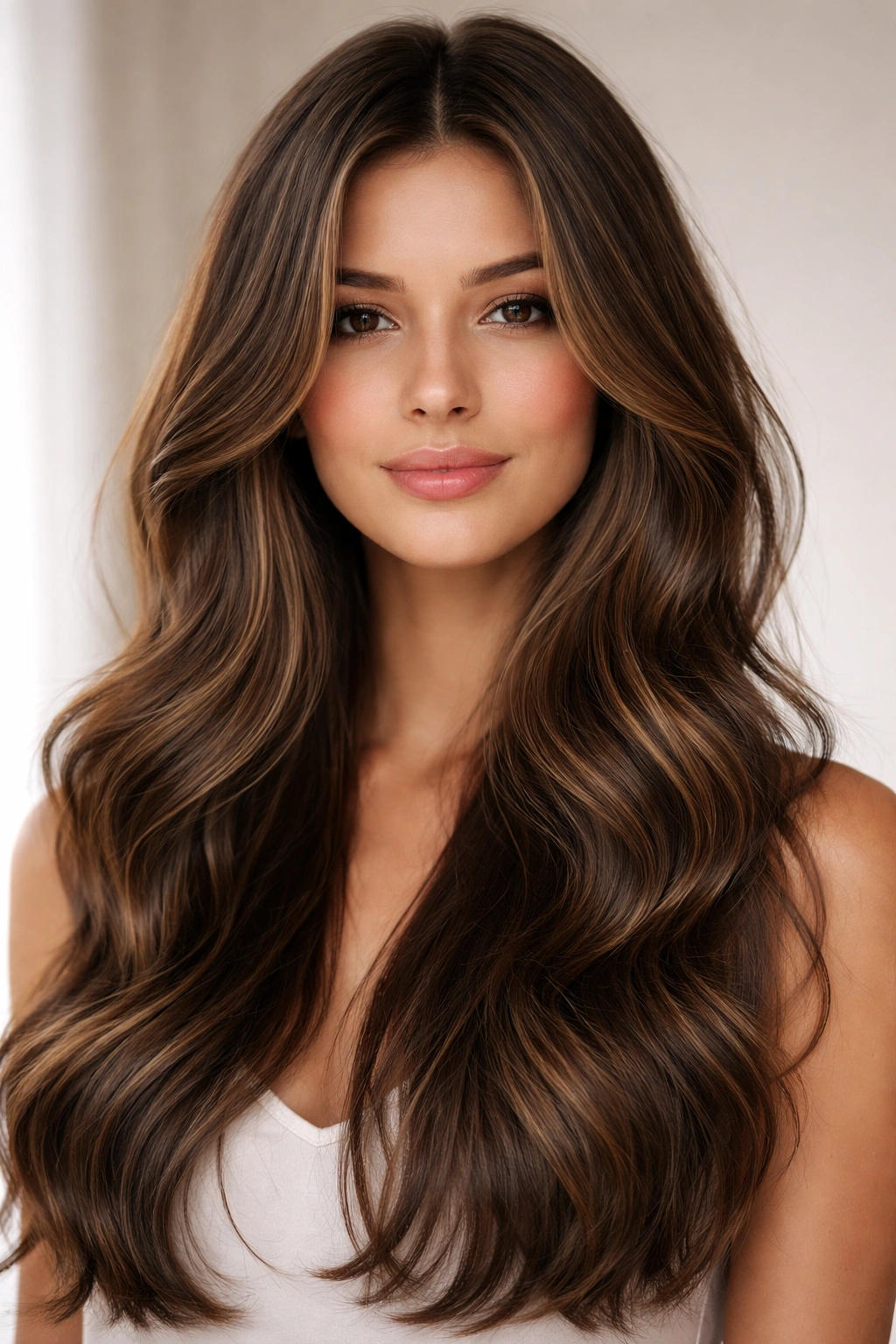
Curtain layers—those classic pieces that frame your face on either side—pair beautifully with long waves. The layers are cut to be longer in the middle and shorter on the sides, creating a silhouette that’s flattering from the front. Long waves throughout create movement, and the curtain layers add intentional face-framing that feels both romantic and modern. This style works at truly long lengths and suits most face shapes because the customizable length of the curtain pieces can be adjusted to what’s flattering for you.
Why Curtain Layers Work With Long Waves
Curtain layers would look flat on straight hair, but on waves, they create movement around the face while the longer lengths in back maintain overall length and drama. The layers don’t remove significant length, which means you get the benefits of layering without sacrificing the long, flowing aesthetic. The effect is flattering and flatters without being a dramatic cut.
Maintaining Curtain-Layered Waves
- Trims should focus on refreshing layers and removing length damage, not removing significant length
- Blow-drying with a diffuser enhances waves throughout
- A large-barrel curling iron refreshes waves between shampoos
- Layers grow out gracefully, so you can go 10-12 weeks between trims if you’re monitoring for damage
- This is a lower-maintenance long style because the layers encourage natural wave formation
20. Asymmetrical Waves with Side Part
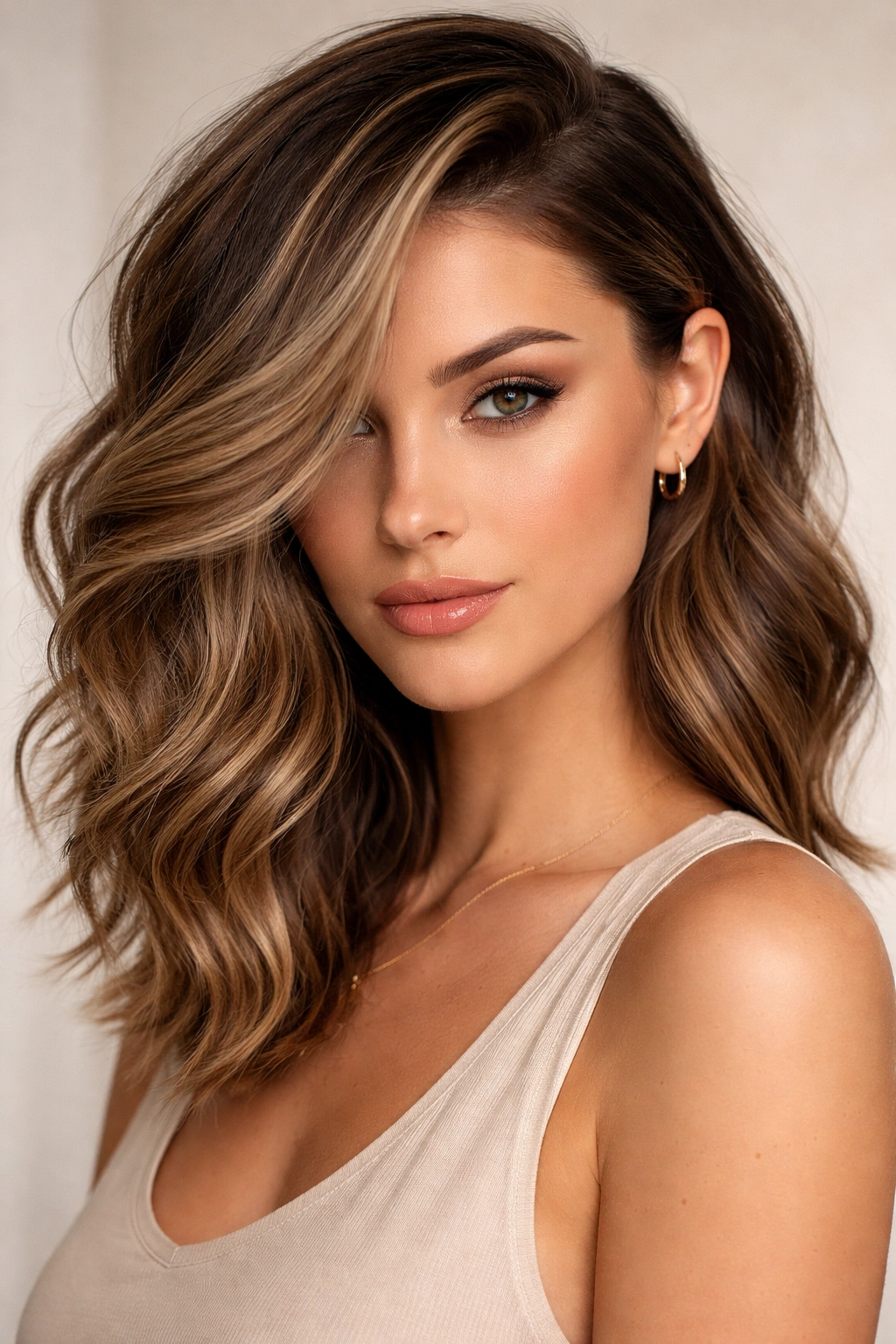
An asymmetrical haircut with waves on one side longer than the other creates instant visual interest and an edgy-modern aesthetic. The side part creates a dramatic line, and the longer side cascades down while the shorter side sits closer to the head. Waves throughout create movement that makes the asymmetry feel dynamic rather than stationary. This style makes a statement and works best if you’re comfortable with a deliberately styled look that requires some intention to maintain.
Why Asymmetry Feels Modern
Perfect symmetry reads classic; strategic asymmetry reads contemporary. An asymmetrical cut with waves creates movement that symmetrical styles can’t match. The longer side creates drama, while the shorter side creates volume and shape. The combination reads fashion-forward and intentional, making this ideal if you love having a clearly styled, statement-making haircut.
Styling Asymmetrical Waves
- The side part must be consistent for the cut to look intentional; restyle it every time you wash
- Blow-dry the shorter side up and back for volume
- Blow-dry the longer side down and slightly away from your face for drama
- Texturizing spray adds definition to the waves and emphasizes the asymmetry
- Trims every 6-8 weeks to maintain the specific length differences
- This is a medium-maintenance style, but it rewards you with a look that photographs beautifully and gets genuine compliments
Final Thoughts
The right wavy hairstyle does more than look beautiful—it shapes how you feel about yourself every time you see your reflection. Whether you go for the bold statement of an asymmetrical cut, the timeless elegance of Old Hollywood waves, or the effortless vibe of beachy waves, your choice should align with how much styling you genuinely want to do and what makes you feel most like yourself.
The most important step is finding a stylist who understands what you’re aiming for and can cut your specific length and texture in a way that supports the wave pattern you want. A cut that works with your natural texture will always be easier to style than one that fights against it. Bring pictures, ask detailed questions about styling commitment and maintenance frequency, and be honest about how much time you want to spend on your hair daily.
Waves aren’t just a trend—they’re a versatile, flattering option that works across every length, face shape, and hair texture. Whether you’re ready to make a dramatic change or just want to refresh what you already have, one of these twenty styles will feel like exactly what you’ve been looking for.
