



Short hair has a rebellious power that longer styles just can’t match. There’s something undeniably bold about a cropped cut that frames your face and demands confidence—and when that cut draws inspiration from rock and punk aesthetics, it becomes a total statement. If you’re craving that edgy, rock-inspired vibe but aren’t sure which cut would actually suit your face shape, hair texture, and lifestyle, you’re in the right place.
Rockstar-inspired short hairstyles aren’t one-size-fits-all. Some are shaved and dramatic, others are textured and tousled, and still others play with asymmetry and unexpected angles. The beautiful part? There’s a rock cut for almost every hair type, face shape, and commitment level. Whether you’re ready to go full pixie or you want something with a bit more length and movement, these ten cuts capture that fearless energy that made icons like Joan Jett, Debbie Harry, and P!nk absolutely unforgettable.
The key to rocking any of these styles is knowing what to expect in terms of styling time, maintenance, and how to make it uniquely yours. Let’s break down each cut so you can figure out which one speaks to your inner rockstar.
1. The Classic Pixie Cut with Disconnected Edges
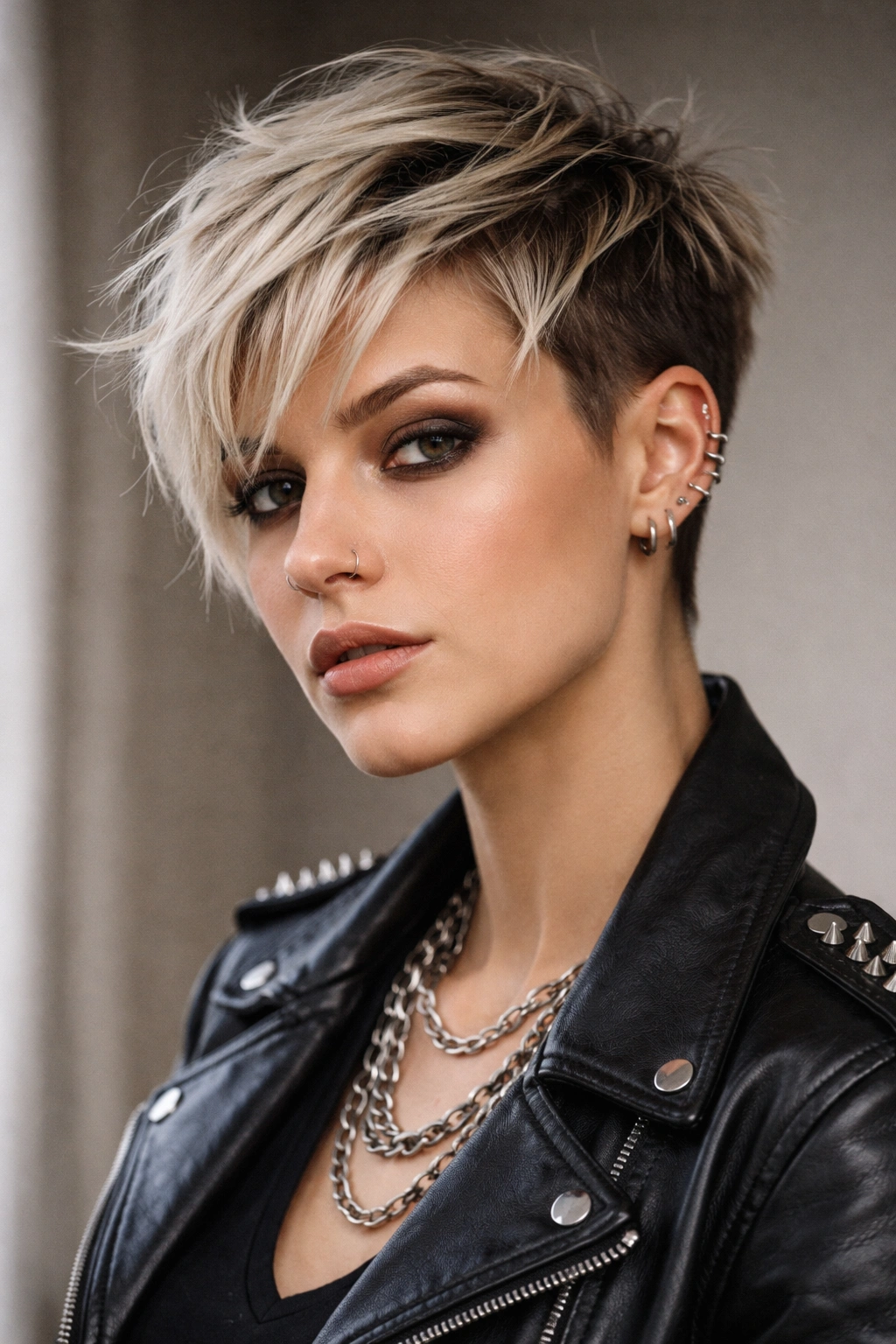
The pixie cut is the OG short haircut, and when you add disconnected edges—where the top has more length and texture while the sides are cropped close—you get a cut that’s both timeless and thoroughly modern. This isn’t a wimpy pixie; disconnected edges give the style structure, drama, and that undeniable edge without requiring extreme bleaching or shaving patterns into your head.
Why It Works for Rock Aesthetics
The contrast between cropped sides and longer texture on top creates visual interest and attitude. You get volume where it matters and clean lines everywhere else, which reads as intentional and deliberate—exactly the vibe rockstars are after. The disconnected structure also means you can style it slicked back for a sharp look, tousle it forward for texture, or sweep it to one side depending on your mood and the occasion.
What to Know Before Committing
- The longer top requires regular trimming every 4-6 weeks to maintain the shape and prevent the style from growing into a mullet (unless that’s what you’re going for)
- Styling time is minimal—most mornings you’re looking at 2-3 minutes of product and finger-styling
- Works beautifully with natural texture but also works well with blow-drying for a sleeker finish
- Suits most face shapes, though a longer pixie (with more top length) is especially flattering on round faces
- Can be styled with or without bangs—front bangs add more attitude, while a grown-out front softens the look
Pro tip: Add texture with a clay or matte pomade rather than a shiny gel. It gives that lived-in rock vibe instead of a polished, corporate look.
2. The Modern Shag with Raw Edges
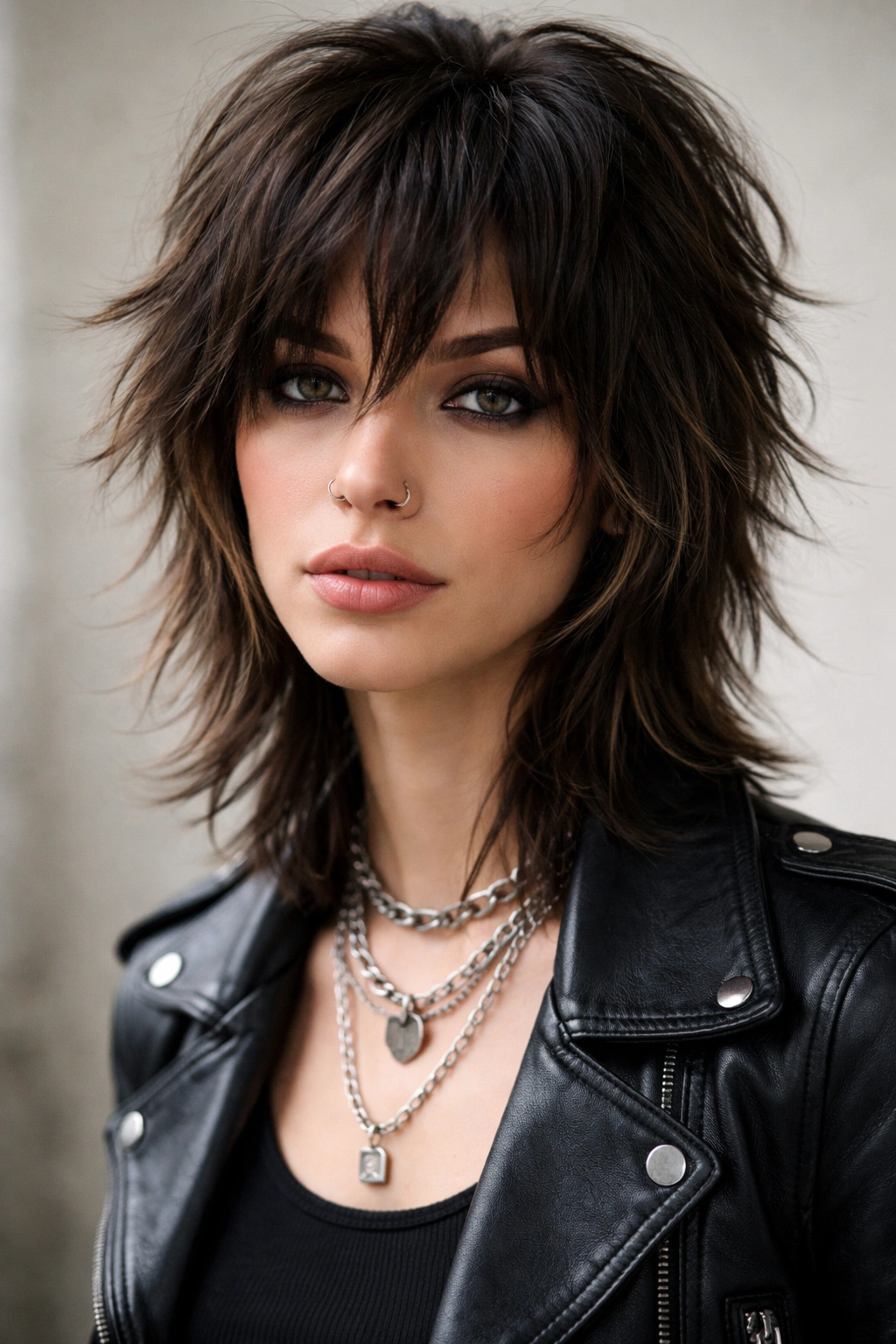
The shag is back, and this time it’s not your mom’s 1970s version. A modern rock-inspired shag keeps the playful choppy layers and tousled texture but pairs them with shorter overall length and intentionally ragged, undone edges. The whole point is that “I just rolled out of bed and look this good” energy that defines rock style.
Why It Captures That Edgy Energy
Layers create movement and texture without requiring a ton of styling effort. The raw edges look intentional rather than blunt, and the shorter crown length keeps it from feeling dated. A shag gives you the best of both worlds: enough length to play with styling options, but short enough that you feel that rebellious, cropped-hair freedom.
Styling and Maintenance Breakdown
- Dry cutting (cutting hair while dry rather than wet) is essential so the stylist can see exactly how the layers will land and create that intentional choppy texture
- Styling options include tousling with a texture spray for movement, blow-drying with a diffuser for volume, or smoothing with a blow dryer for a sleeker vibe
- Requires a trim every 6-8 weeks to keep edges sharp and layers defined
- Works particularly well on wavy or curly hair, where the texture naturally enhances the layer pattern
- Straight hair can pull off a shag too, but you’ll need to add texture with product or styling to get the full effect
Worth knowing: A shag is lower-maintenance than a pixie because you have more length to work with, meaning you can go a bit longer between trims before it starts looking shaggy in the wrong way.
3. The Undercut with Buzzed Sides
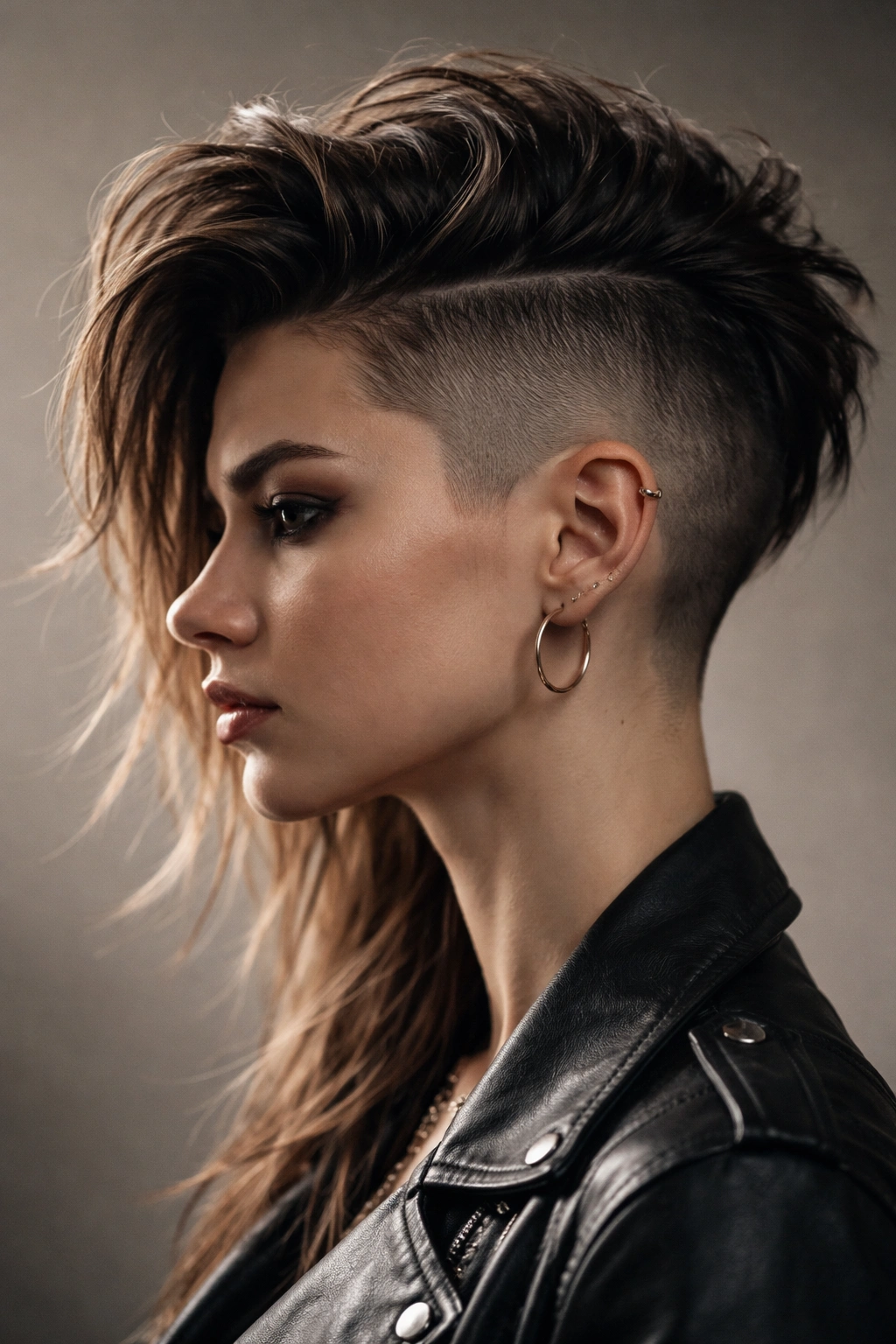
An undercut takes the undercut trend and cranks up the attitude with buzzed sides (typically anywhere from a #1 to #3 clipper guard) while keeping considerably more length on top. This creates stark, dramatic contrast—perfect for channeling serious rockstar energy. You can keep the sides clean and precise or let them grow out slightly for a softer transition.
The Rock Appeal of This Cut
Nothing says “I don’t care what anyone thinks” quite like shaved sides. The visual impact is immediate, and it instantly transforms your whole look. The buzzed sections also give you incredible styling freedom for the top: you can slick it back, sweep it, style it spiky, or wear it messy and undone. Every time you move, those clean lines show.
What You Should Expect
- The sides require maintenance every 2-3 weeks if you want crisp edges, or every 4-6 weeks if you’re okay with some growth
- The top can have anywhere from a few inches to 4+ inches of length—longer top length (3-4 inches) is more versatile for different styling options
- Works on all hair types, though wavy or curly hair on top creates extra texture and drama
- Face shape matters here: undercuts suit oval and square faces beautifully; if you have a round face, ask your stylist for more length on top and perhaps a slightly tapered rather than straight buzz
- Styling the top can range from a quick matte product application (2-3 minutes) to a full blow-dry situation depending on your hair texture
Pro tip: Use a taper fade rather than a straight line between the buzzed sides and longer top. The fade makes the transition feel intentional and polished rather than harsh.
4. The Modern Mullet for Women
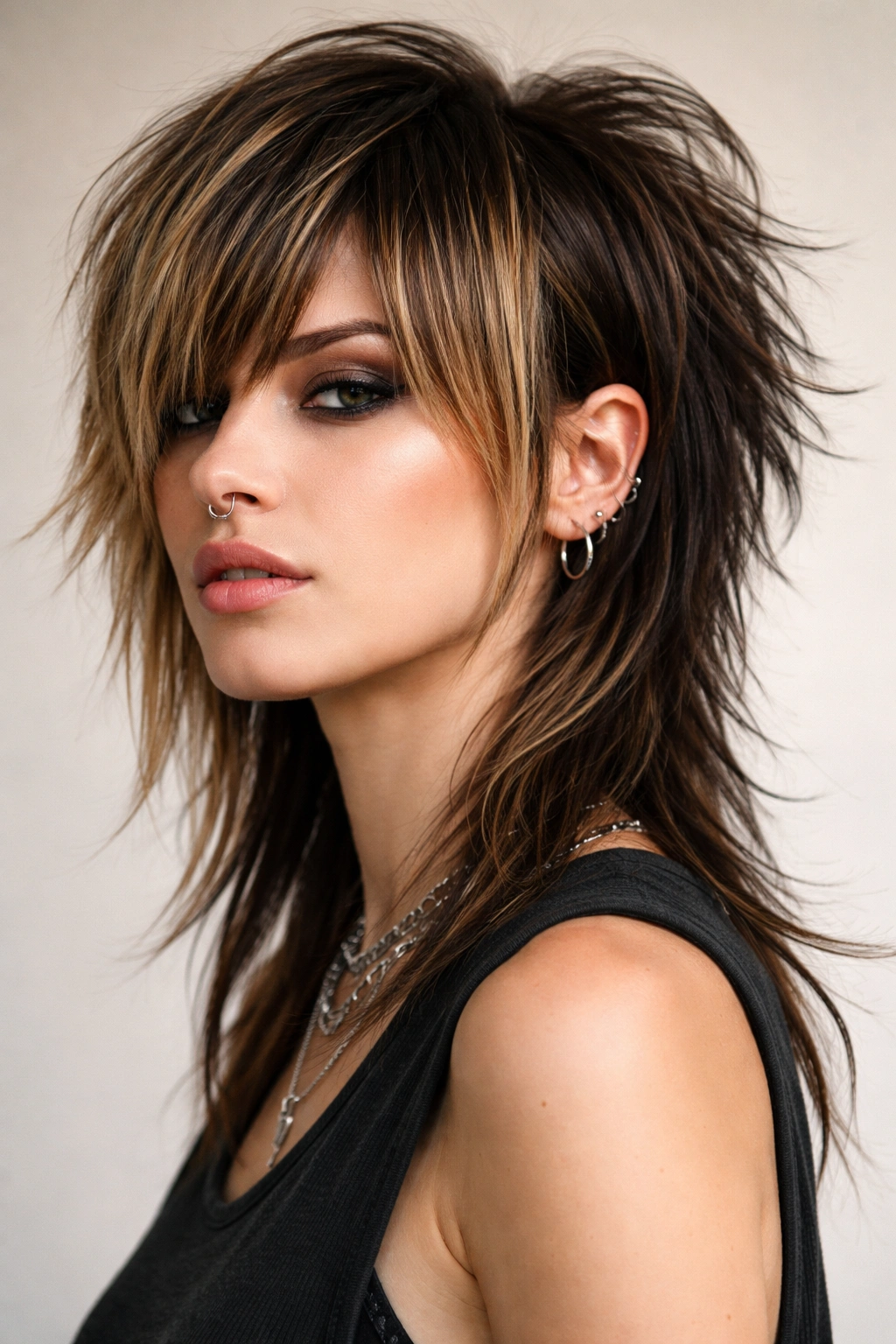
The mullet is having its moment, and a modern female mullet is nothing like the 1980s version—though it still carries that same rebellious energy. This cut is longer in the front (typically chin-length or slightly shorter) and dramatically shorter in the back, creating an asymmetrical silhouette that’s equal parts playful and bold. It’s a cut that demands confidence and turns heads.
Why It Screams Rock and Roll
The mullet has always been about breaking rules and rejecting conventional beauty standards. A modern version keeps that DNA but executes it with intention and style. The contrast between the front and back creates movement, the asymmetry is visually striking, and styling it is genuinely fun—you can style the front one way and the back another.
Everything You Need to Know
- The front length determines how versatile this cut is: shorter front (around ear-length) is more dramatic and easier to style, while longer front (chin-length) gives you more options for tucking or pinning
- The back should be significantly shorter—think pixie-short or even buzzed if you want maximum contrast
- Requires trims every 4-6 weeks to keep the front blunt and the back defined
- Styling depends on your vibe: you can slick the front back with gel for a sharp look, curl the front under, or wear it messy and undone
- Works on most hair types, but texture really shines in this cut—wavy and curly hair create natural movement and drama
Insider note: A mullet works particularly well if you love changing your style. You can switch up how you wear the front while keeping the attitude consistent.
5. The Choppy Pixie Crop with Longer Texture
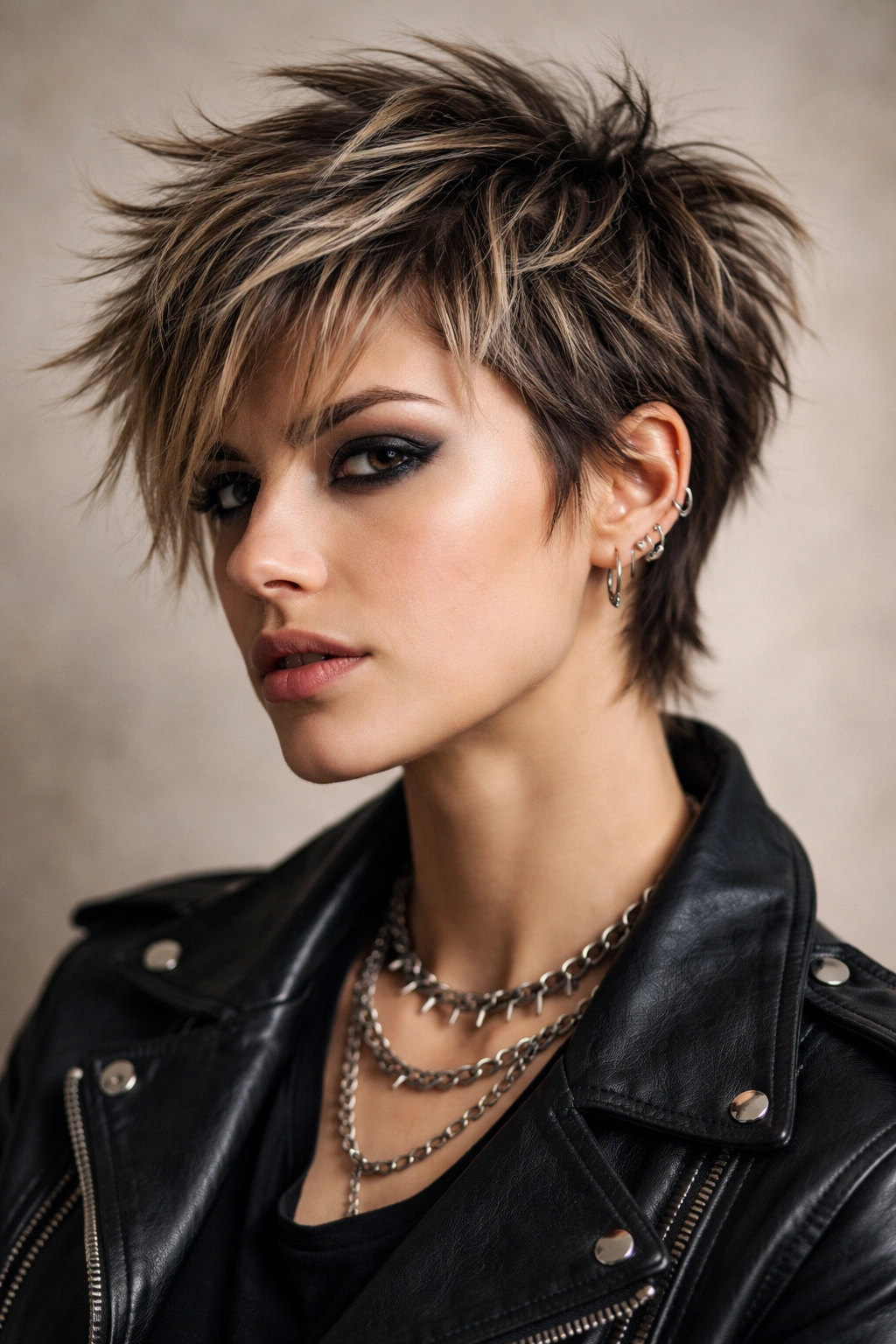
This hybrid takes the short cropped vibe of a pixie but builds in choppy, jagged texture throughout—especially through the crown and top. Rather than one cohesive length, every piece is slightly different, creating a shaggy, lived-in effect that looks intentional rather than neglected. It’s edgy without being extreme, and it photographs beautifully.
What Makes This Cut So Rock-Forward
The choppy texture mimics the aesthetic of someone who’s just stepped off stage—tousled, textured, and unapologetically imperfect. There’s no attempt to create a smooth, polished silhouette; instead, every piece does its own thing while working together. This approach is incredibly flattering on people who don’t want to commit to super-short hair but still want serious edge.
The Reality of Living With This Cut
- Styling is more involved than a sleek pixie but less involved than a longer shag—plan for 5-10 minutes most mornings
- A matte texture product (clay, pomade, or texture spray) is essential to activate the layers and create definition
- Requires dry cutting so the stylist can see exactly where to chop for maximum texture
- Trims every 5-7 weeks keep the choppiness intentional rather than scraggly
- Works beautifully on naturally wavy or textured hair, where the chop lines create natural dimension
- Straight hair can pull this off too, but blow-drying or product application becomes a bigger part of your routine
Pro tip: Ask your stylist for choppy layers throughout rather than just on top. This creates a 3D effect that looks even more textured and intentional from all angles.
6. The Bleached Pixie with Undercut
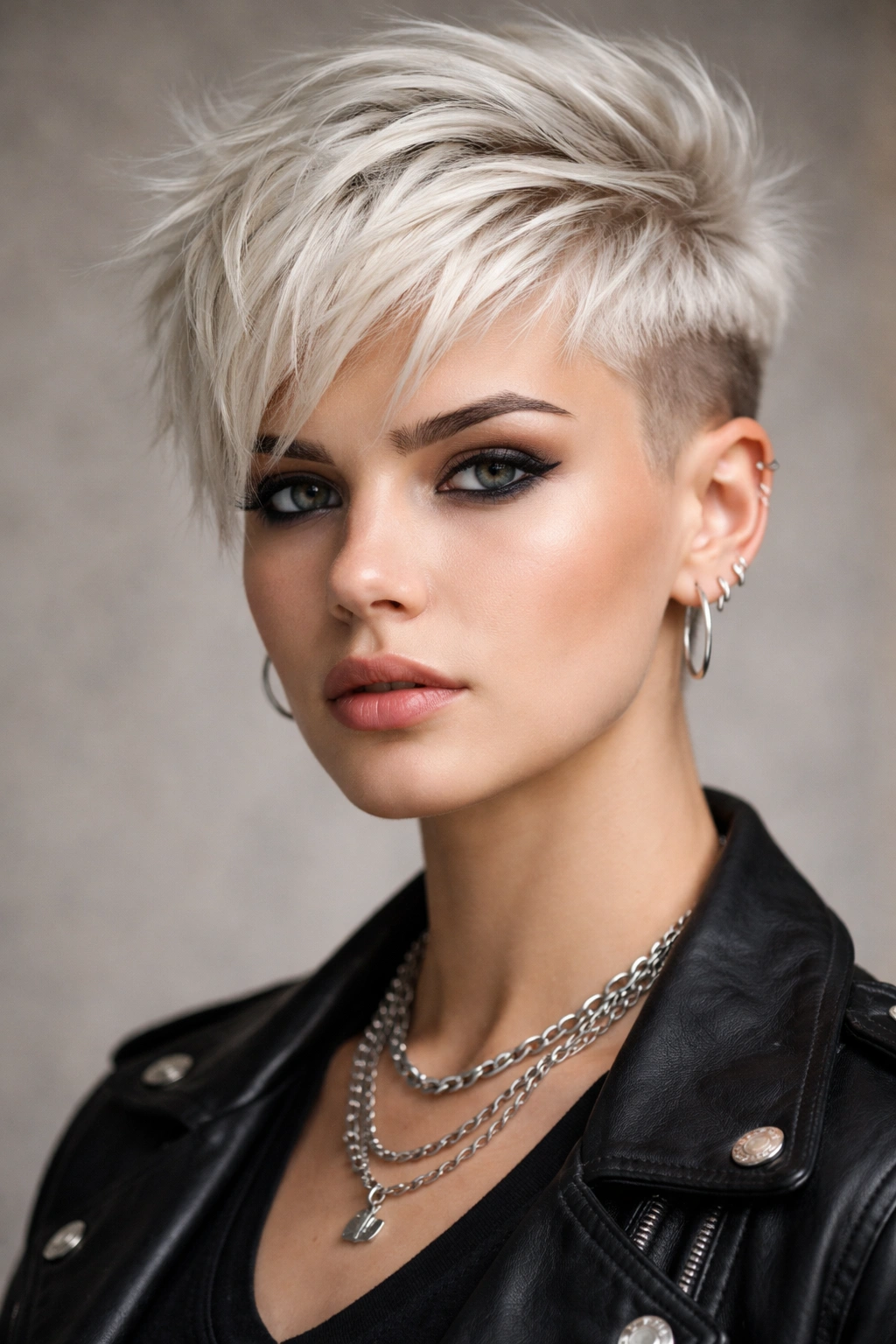
Pair a super-short pixie or cropped cut with platinum blonde or silver tones, add a shaved undercut on at least one side, and you’ve got instant rock royalty energy. This is the cut that says you’re committed to the look. The bleaching and the ultra-short length together create an unmistakable statement—you’re not trying to blend in.
Why This Look Is Uncompromisingly Rock
Bleached hair is bold. Combined with a very short cut and the graphic lines of an undercut, it becomes a full aesthetic statement. This is the cut worn by every punk rocker, alternative icon, and edgy musician who walked into a room and commanded attention. There’s no subtlety here, and that’s exactly the point.
Commitment Level and Maintenance Reality
- Your hair needs to be in good condition before bleaching—damaged, fragile hair won’t take the process well
- Plan for professional bleaching unless you’re experienced; at-home bleach can result in uneven color or damage
- Toning the blonde to platinum or silver adds another step, typically done a week or two after bleaching
- Maintain the blonde with purple-toning shampoo weekly to prevent yellowing
- The cut itself requires trims every 3-4 weeks to keep edges sharp
- Blonde hair shows every bit of regrowth, so you’ll want dark roots touched up or let grow intentionally if that’s your vibe
- Consider the texture of bleached hair—it’s drier and more fragile, so deep conditioning becomes non-negotiable
Worth knowing: If you’re not ready to fully commit to bleaching, ask your stylist about balayage or highlights that preserve some of your natural color. You still get the rock edge, but with more flexibility.
7. The Spiky Textured Crop with Volume
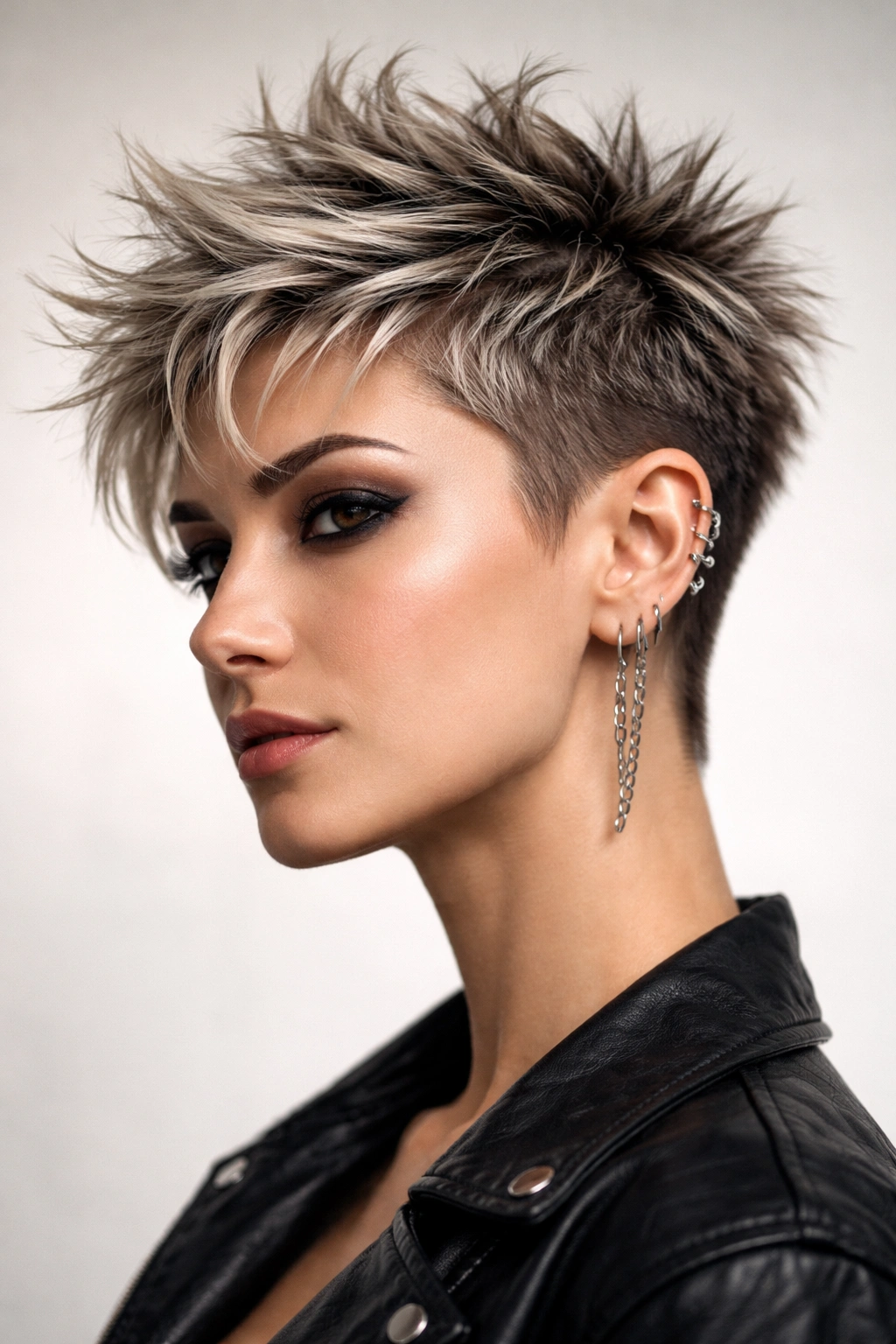
This cut is all about creating strategic height and spiky texture throughout—a style that works with your hair’s natural texture rather than against it. Think short all over, but with enough variation in length (longer on top, shorter at the sides) to create piecey, spiky movement. It’s fun, youthful, and absolutely rock and roll.
The Appeal of Intentional Texture and Spike
Spiky texture reads as playful confidence. You’re not trying to look polished or conventional; you’re leaning into movement, texture, and a bit of visual chaos. This cut works particularly well for people with straight-to-wavy hair who are willing to spend a few minutes styling it up with product. The result is a look that feels alive and energetic.
Daily Reality and Styling Requirements
- Best achieved on hair with some natural texture or waviness—perfectly straight hair can look limp without significant product
- Styling involves applying a matte clay, pomade, or texture spray to damp or dry hair, then either blow-drying for volume or tousling by hand
- Total styling time: 5-10 minutes depending on how much product and blow-drying you want to do
- Works on all hair types, but texture-enhancing products become essential
- Trims every 4-6 weeks keep the spiky shape intentional and prevent it from growing into an unstyled mess
- The cut is most dramatic when the spikes are in their moment (freshly styled); as the day goes on and product breaks down, it relaxes into a softer texture
Pro tip: Use a light-hold product rather than something heavy. You want the texture to move naturally, not look stiff or helmet-like.
8. The Asymmetrical Crop with One Long Side
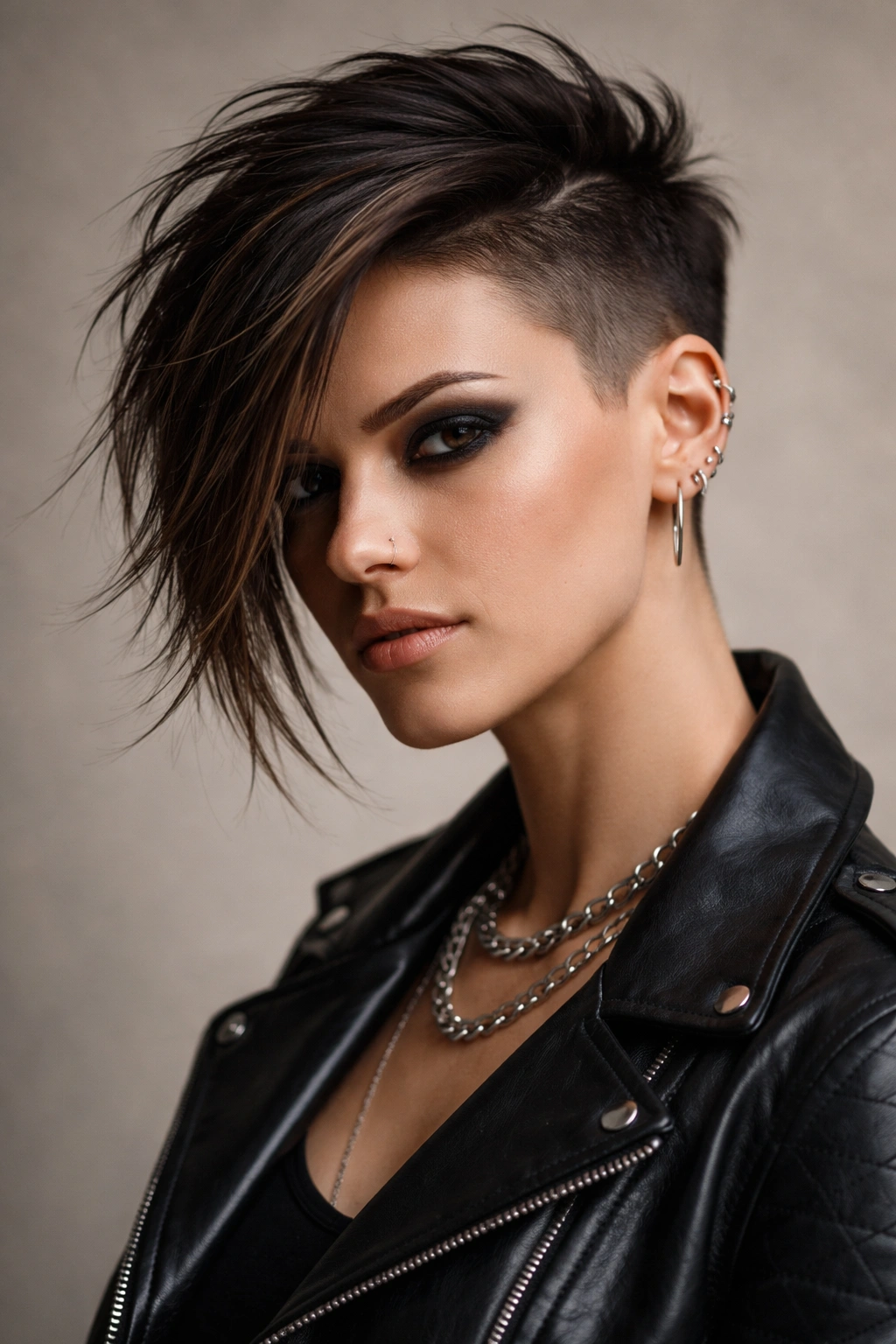
Push asymmetry further with a cut that’s very short on one side of your head and substantially longer on the other—think buzzed undercut on one side with 2-4 inches of length swept across the longer side. This cut is dramatic, intentional, and endlessly customizable. You can style the longer side forward, back, or even tucked behind your ear for a completely different vibe day to day.
Why Asymmetry Reads as Pure Rock Attitude
Symmetry is safe. Asymmetry challenges it. A dramatic asymmetrical crop immediately signals that you’re not following conventional beauty rules—you’re creating your own. The visual impact is strong from every angle, and the fact that it can be styled multiple ways means it never gets boring.
Making This Cut Work for You
- Face shape matters: longer pieces falling forward can balance a wider forehead or angular jawline, while pulling the longer side back shows off your face
- Hair texture on the longer side determines styling options: straighter hair can be sleek, while wavy hair gets textured and dimensional
- The buzzed or short side requires maintenance every 2-3 weeks for crisp edges
- The longer side needs trims every 6-8 weeks to keep the shape intentional
- Styling the longer side takes 5-15 minutes depending on whether you want it smooth and sleek or textured and tousled
- This cut requires confidence—it’s not subtle, and you need to own that
Insider note: Consider the length of your longer side based on how much styling you want to do daily. Ear-length is the minimum for true styling versatility; chin-length gives you even more options.
9. The Slicked-Back Fade with Disconnected Top
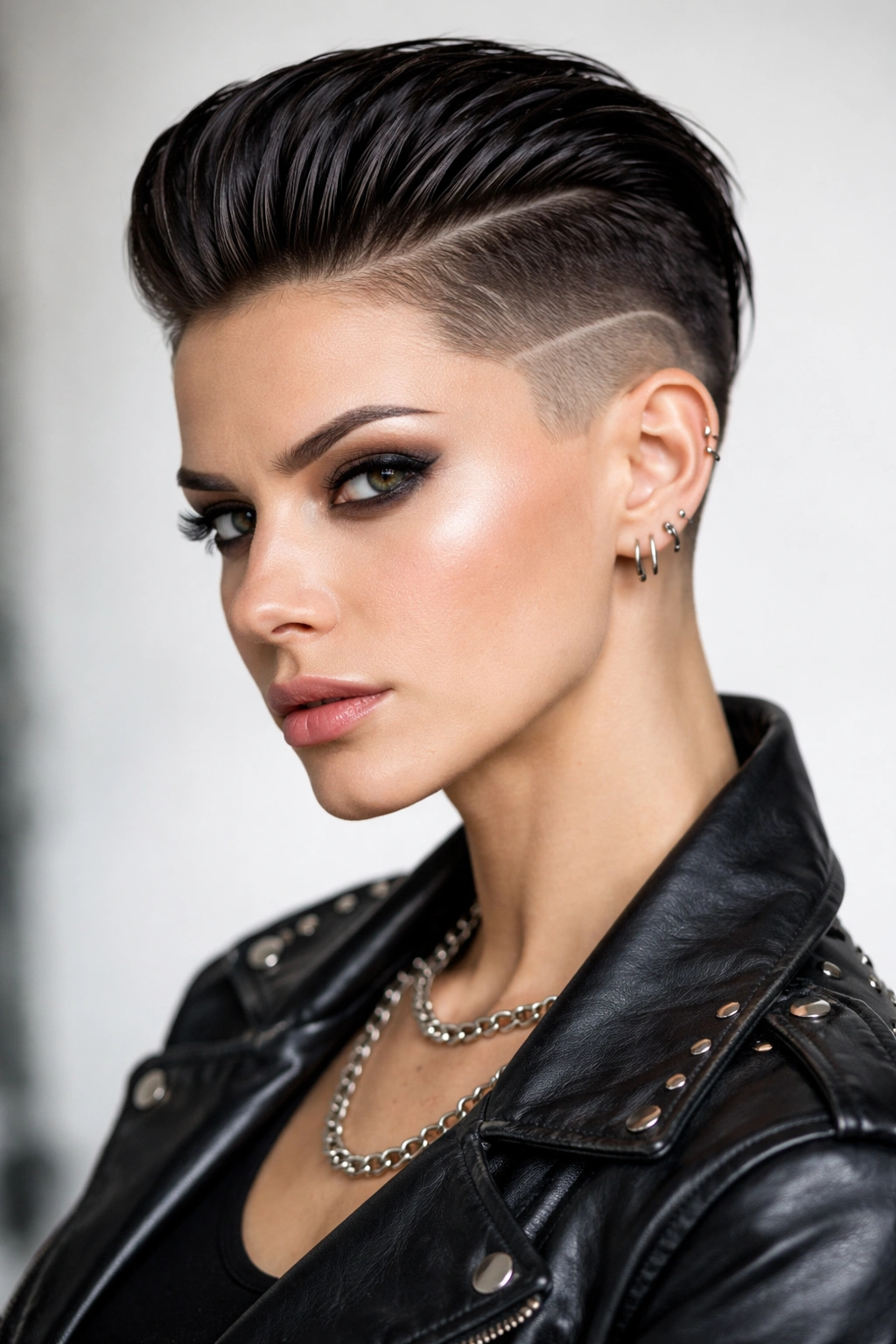
This cut creates maximum contrast: sides faded super short (often completely shaved or buzzed with a #1), a distinct disconnected line where length begins, and a longer top that’s slicked straight back with pomade or gel. It’s sleek, it’s structured, and it’s unapologetically edgy. The look reads as sharp, intentional, and completely controlled—the opposite of accidental.
The Rock Appeal of Clean Lines and Contrast
While this might sound more “smart casual” than “rock and roll,” remember that punk and new wave rockers often paired ultra-clean lines with edgy attitudes. The contrast between the shaved sides and slicked-back top is visually striking and creates a look that’s both rebellious and refined. It’s rock for people who also want an element of sophistication.
Daily Styling and Upkeep
- The top needs to be 2-3 inches minimum for the slicked-back effect to work
- Styling requires pomade, gel, or a strong-hold product applied to damp hair and smoothed back
- Blow-drying helps create the sleek effect; total styling time is about 5-10 minutes
- The buzzed sides need touch-ups every 2-3 weeks
- The top needs trims every 5-7 weeks to keep the shape clean
- This cut works on all hair types, though thicker hair creates a fuller top when slicked back
- Works beautifully with either natural hair color or bleached/dyed color—the structure is what makes it rock
Worth knowing: If you want softness while keeping the structure, ask your stylist for a tapered fade rather than a straight line between buzzed and longer hair.
10. The Cropped Textured Bob with an Undercut
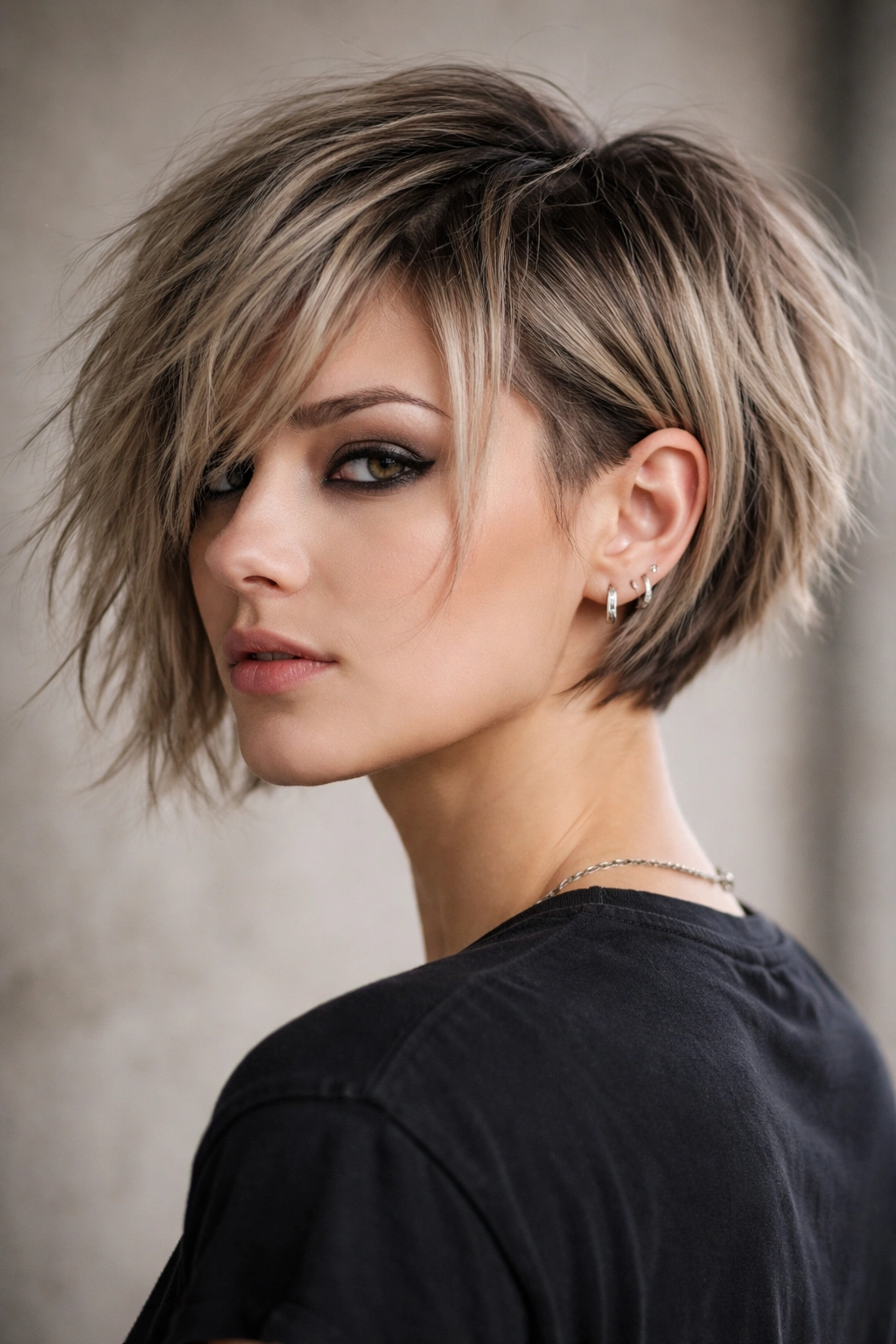
Take a traditional short bob, chop it to sit above the jawline, add choppy texture throughout, and undercut the back or sides—you’ve got a cut that bridges classic and rebellious. This style keeps enough length for some wearability and styling versatility while the undercut adds that edge and the choppy layers prevent it from looking too polished or safe.
Why This Cut Hits the Rock Sweet Spot
It’s the perfect middle ground: short enough to feel daring and rock-forward, but long enough to have options. The texture creates movement and visual interest, while the undercut prevents it from looking conservative. You’re getting the aesthetic of a rocker without fully committing to an extreme cut, and that’s perfectly valid.
How to Keep This Cut Looking Fresh
- The choppy texture requires dry cutting so the stylist can create intentional pieciness
- Styling can be as simple as tousling with texture product (5 minutes) or as involved as blow-drying for volume (10-15 minutes)
- Matte products work better than shiny ones to keep the vibe edgy rather than polished
- Trims every 5-7 weeks keep the texture intentional and prevent the shape from becoming shapeless
- The undercut (whether back, one side, or both sides) needs touch-ups every 3-4 weeks
- Works on all hair types and textures; naturally textured hair creates extra dimension
- Styling versatility is higher with this cut than with very short crops—you can dress it up or down
Pro tip: If you’re nervous about the undercut looking too dramatic, start with just one side or the back. You still get the edge factor without the maximum impact.
Final Thoughts
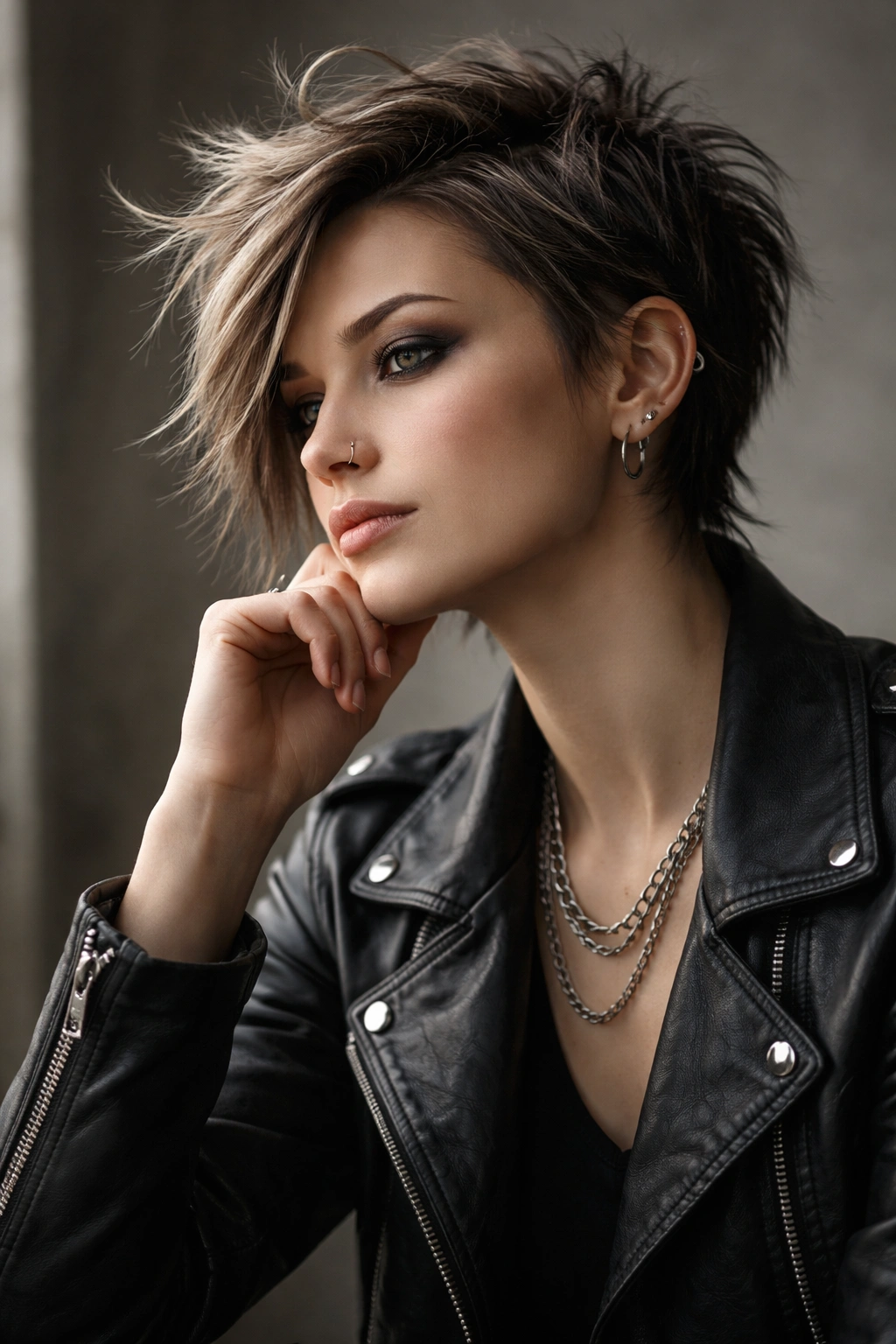
Choosing a rockstar-inspired short cut is about more than just picking a style that looks cool (though that’s definitely part of it). It’s about finding a cut that matches your hair texture, your face shape, your lifestyle, and your willingness to commit to styling and maintenance. The most beautiful rock cut in the world won’t work if you hate styling it every morning or if you can’t get to the salon regularly for trims.
The real power of a short, edgy cut is that it forces you to own your look. There’s nowhere to hide behind length when you’ve got a pixie or an undercut—you either commit to the energy of it or you don’t. That commitment is what separates a great rock-inspired cut from just a short haircut. When you find the right cut for you, you’ll feel it instantly: that surge of confidence, that sense of stepping into a version of yourself that’s bolder and more unapologetic.
Start a conversation with a stylist who has experience with short, edgy cuts. Show them photos of cuts that speak to you, talk honestly about your styling preferences and lifestyle, and trust their expertise about what will suit your face and hair. A great stylist can suggest modifications or compromises that give you 80% of the look you want with 20% less maintenance, or they can help you build into a more dramatic cut gradually if you’re not ready to fully commit.
Your hair grows back. You can always change it. That’s the beautiful truth that makes experimenting with a rockstar-inspired cut feel exciting rather than terrifying. So if you’ve been dreaming about going short and edgy, this might be your sign to actually do it.
