



A chin-length bob is the kind of haircut that never truly goes out of style—because it’s endlessly customizable. Whether you’re looking for something sleek and polished, tousled and textured, or playfully asymmetrical, a chin-length bob can deliver. But here’s what most hairstylists will tell you: the right chin-length bob isn’t just about what you love—it’s about what actually works with your face shape. The same cut that makes one person look fresh and modern might overwhelm another, simply because of how the angles and proportions interact with their unique features.
The beauty of the chin-length range is that it hits right at that sweet spot between short and mid-length. It’s short enough to feel transformative and easy to manage, but long enough to offer real styling versatility. A cut at this length can either emphasize or soften your natural bone structure, depending on how it’s shaped. A sharp angle can define a jawline or add structure where you want it. Texture and movement can soften angles that feel too harsh. Layers can add dimension to flat hair or reduce bulk where you don’t need it.
Understanding which chin-length bob matches your face shape isn’t about rigid rules—it’s about understanding how line, angle, and proportion create visual balance. Once you know the principles, you can work with your stylist to customize any of these cuts to feel uniquely yours. You’ll also understand why certain pieces around your face, certain angles, and certain textures genuinely flatter you more than others.
1. The Classic Chin-Length Bob for Rounded Faces
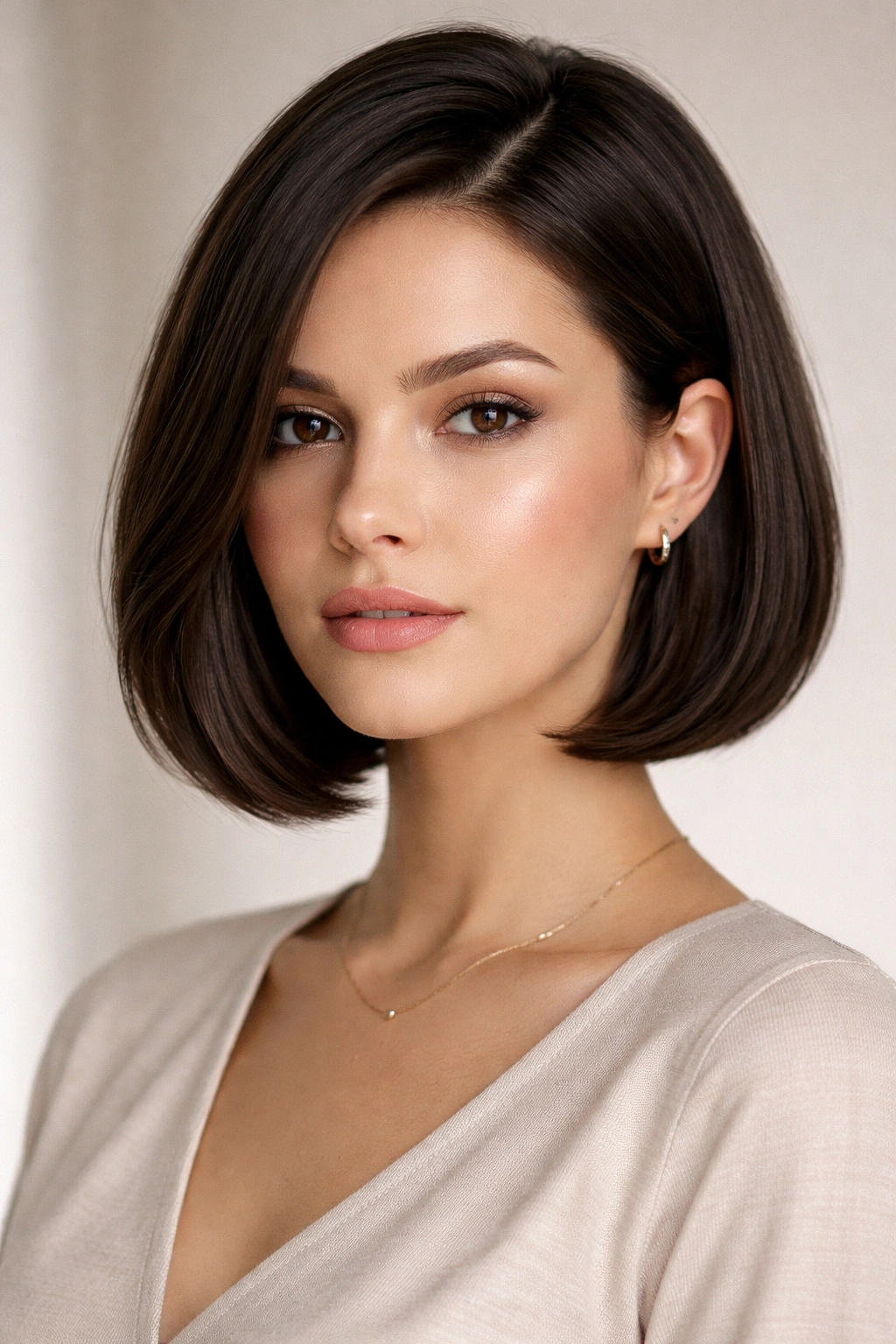
The classic chin-length bob is the foundation—a timeless cut that hits right at your chin with a slight curve. For round faces, the power of this cut lies in creating the illusion of length and sharpness. You want a bob that adds vertical interest rather than hugging your face closely, which would emphasize the roundness you’re trying to balance.
Why This Works for Round Faces
Round face shapes have width across the cheeks and softer angles everywhere. The classic bob flatters this by keeping the line smooth and creating a sleek silhouette that visually lengthens the face. When the bob sits at chin length without too much volume at the sides, it creates a streamlined look that balances facial proportions. The key is keeping the ends relatively straight and avoiding too much fluffiness around the jaw.
Styling Tips and Variations
- Cut the bob with a very subtle inward curve, so the ends sit just barely tucked toward the chin rather than flared outward
- Keep the sides smooth and close to the face without creating bulk at the sides
- Style with a deep side part to create asymmetry and visual height
- Use a flat iron to keep the ends smooth and slightly angled inward—this elongates the appearance of your face
- Avoid center parts, which can emphasize the width of a round face
- Consider a longer version that grazes just below the chin rather than at the exact chin point—this extra half-inch matters for proportion
The classic bob works beautifully for round faces when it’s sleek and polished. This isn’t the time for tons of layers or choppy texture—those elements add width where you don’t want it. Straight or slightly wavy is your friend here.
2. The Textured Shag Bob for Square Faces
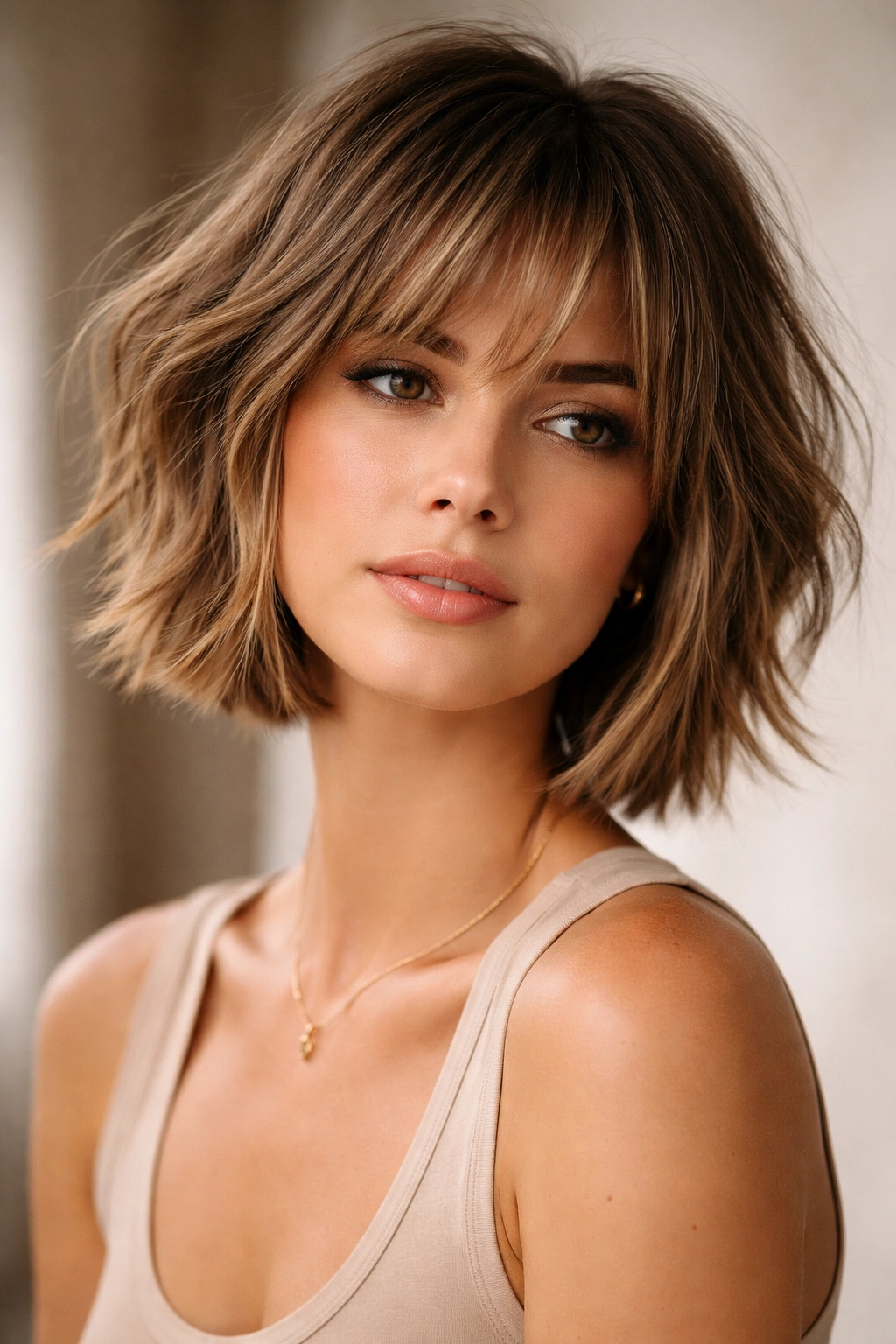
A square face shape has a strong, defined jawline and equal width across the cheekbones and jaw. The textured shag bob softens that structure while still honoring the face’s natural strength. Texture, layers, and movement are exactly what square faces need—they break up the sharp lines and add a softer, more approachable energy.
Why Texture and Layers Work for Square Jaws
Square faces are all about defined angles. A textured shag bob introduces multiple lengths and choppy pieces throughout the cut, which creates visual softness and disrupts the strong horizontal line of the jaw. The layers also create movement and fluidity, giving you a style that feels modern and lived-in rather than geometric. When done well, a shag bob for a square face looks effortlessly cool without sacrificing sophistication.
How to Customize It for Your Face
- Ask your stylist for layers throughout, with shorter pieces around the face and longer pieces underneath
- The shortest layers should frame the face with choppy texture, breaking up the jawline
- Ask for extra texture through the bottom inches—this is where the shag movement comes from
- Style with texture and movement rather than sleekness—use a texturizing spray, sea salt spray, or curl-cream
- Blow-dry with your fingers or a texturizing product for that relaxed, piece-y finish
- A tousled wave is perfect for this cut; aim for gentle movement rather than tight curls
- The cut should feel like it moves when you move, not sit statically against your face
One thing to understand: a shag bob for square faces is actually doing double duty. It’s softening your angles while also adding personality and edge. This cut says you’re confident enough to wear something with attitude.
3. The Blunt-Cut Bob with Angles for Oblong Faces
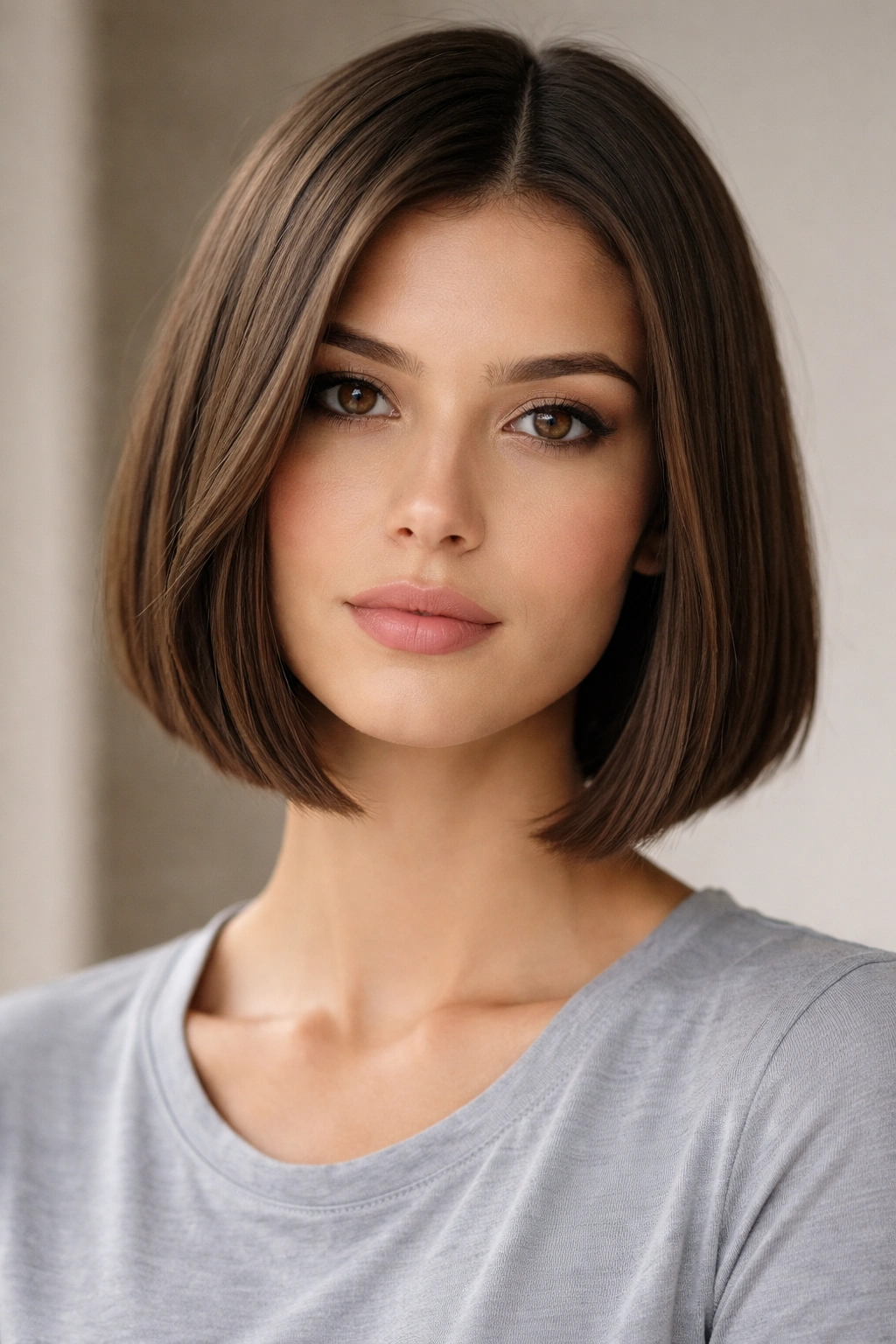
Oblong or rectangular face shapes are longer than they are wide, with length through the forehead and chin. The goal with an oblong face is to create the illusion of width and break up that vertical length. A blunt-cut bob with strategic angles does exactly that—the horizontal line at the chin creates width, and angled or shorter pieces can add dimension without adding more length.
Understanding Face Proportions and the Blunt Cut
An oblong face benefits from a bob that creates a strong horizontal line at the jaw. A blunt cut naturally creates this line. For oblong faces specifically, you want the blunt line to sit right at the widest part of your jaw to maximize that width-creating effect. The cut should be relatively thick and textured, not wispy and fine—you want that line to be visible and impactful.
Angles and Customizations
- Ask for a blunt cut with a subtle angle, where the front pieces are slightly longer than the back
- This creates a frame for your face that’s longer in front and shorter in back, which disrupts the overall vertical length
- Keep the side pieces substantial enough to create visual width
- Avoid too many layers, which would diminish that strong horizontal line you’re creating
- A deep side part emphasizes the angle and adds more dimension
- Style with volume at the crown—this is one of the few face shapes where crown volume actually helps proportions
- Straight or very gently wavy is ideal; you want that blunt line to read clearly
The blunt-cut bob for oblong faces is architectural. It’s saying: here is the structure of this face, and here is how I’m reshaping it visually.
4. The Layered Lob for Heart-Shaped Faces
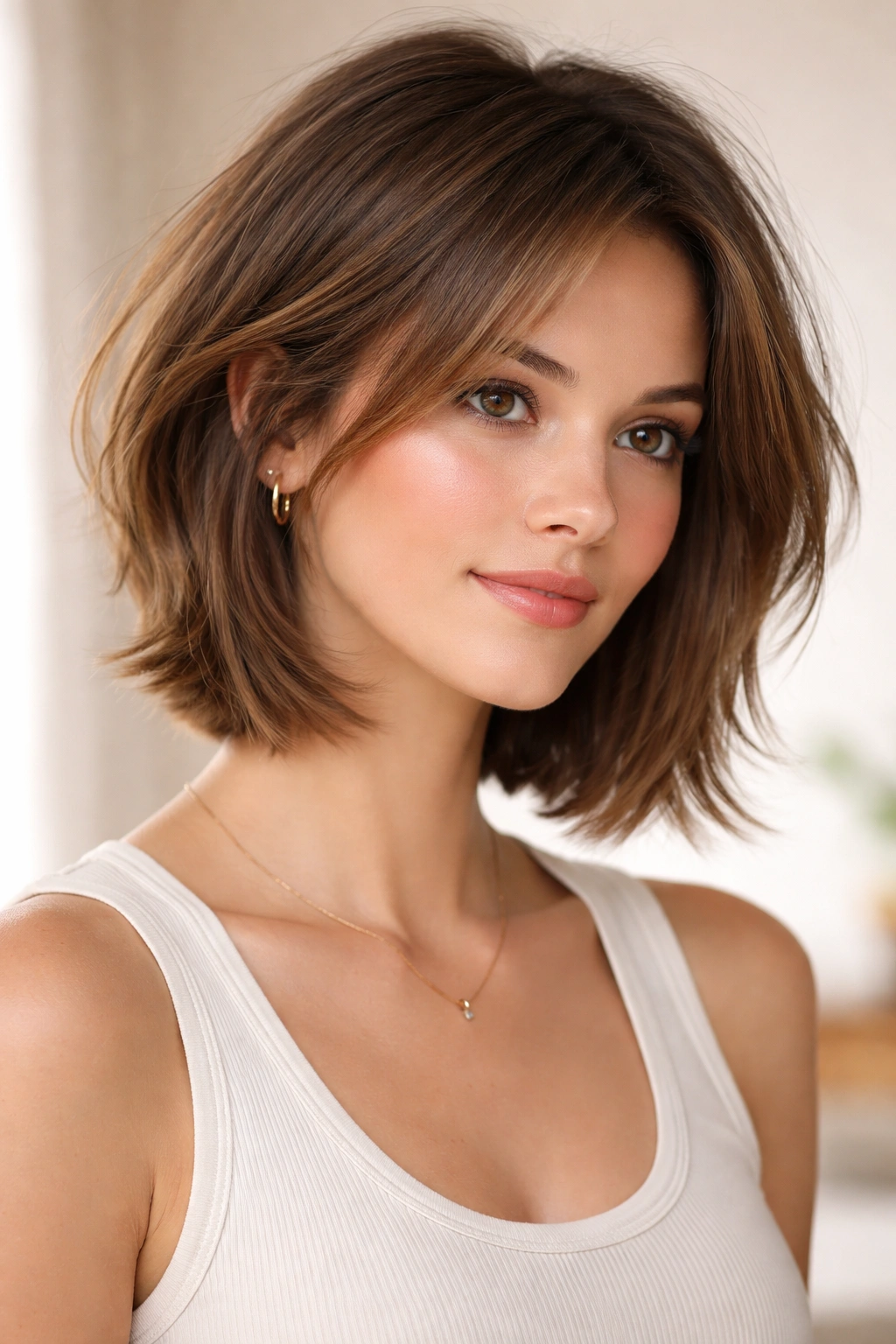
Heart-shaped faces are wider through the forehead and cheekbones, with a narrower chin and jaw. A layered lob—that sweet spot between a bob and a longer cut, usually around chin length or just below—works beautifully for heart shapes because it adds volume and interest at the bottom where you need it, while layers lighten the top.
Why Heart-Shaped Faces Need Strategic Layering
The challenge with a heart-shaped face is balancing the width at the top with the narrowness at the bottom. A layered lob does this by keeping shorter layers at the crown (which prevents excessive bulk where you don’t need it) and longer layers underneath (which add volume and visual interest at the chin and jaw). This creates balance and proportion.
Styling the Layered Lob
- Shorter layers should start around cheekbone height and work upward
- Longer layers should extend to chin length or slightly below, creating movement and softness
- The longest pieces should frame the face, hitting right where your jaw is
- These face-framing pieces are crucial—they draw attention downward, balancing the wider forehead
- Texture and movement are your friends; ask for choppy, piece-y layers rather than blunt ones
- Style with some lift at the crown and waves or curls through the length
- A side part is ideal for heart-shaped faces, as it adds dimension to one side
- Avoid a center part, which emphasizes the center of your forehead
The layered lob for a heart-shaped face creates visual movement and balance. It says: I’m drawing attention to my jaw and cheekbones, not my forehead.
5. The Softly Curved Bob for Diamond-Shaped Faces
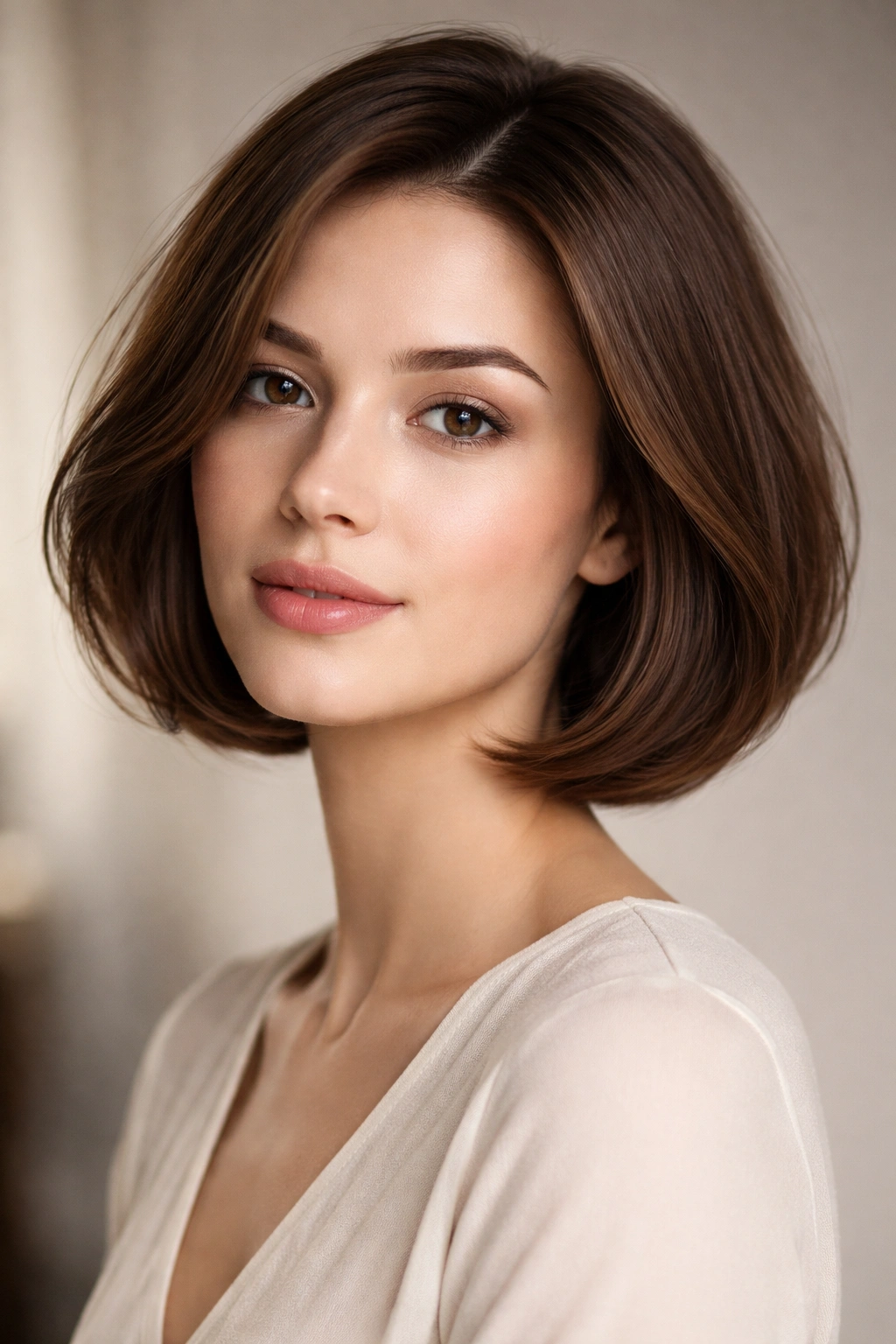
Diamond-shaped faces are narrower through the forehead and jaw, with prominent, wide cheekbones at the widest part of the face. The goal is to balance that cheekbone width without emphasizing it further. A softly curved bob—one with gentle, rounded lines rather than angles—flatters diamond faces by creating soft definition without sharpness.
The Power of Curved Lines for Diamond Faces
Diamond faces need softness and femininity more than angles and structure. A softly curved bob, where the ends curve gently inward toward the chin and the sides are rounded rather than sharp, creates a flattering frame. The curve should be barely perceptible—we’re talking about subtle shaping, not a dramatic C-curve.
How to Achieve and Wear It
- Work with your stylist on a cut where the ends have just a hint of an inward curve
- The sides should be smooth and close to the face, without flare outward
- Face-framing pieces should be rounded, not choppy or angular
- Longer layers are okay for diamond faces, as long as they maintain that curved quality
- Style with soft waves or a gentle curl—straight can feel too severe
- A center part works beautifully for diamond faces, as it balances cheekbone width
- Use a blow dryer and round brush to create that soft curve; the shape is in the styling as much as the cut itself
- Avoid asymmetrical styles or heavy side parts, which can emphasize the cheekbone width
The softly curved bob for a diamond-shaped face is essentially saying: I’m honoring my face shape while softening it. It’s elegant and balanced.
6. The Side-Parted Bob for Triangular or Pear-Shaped Faces
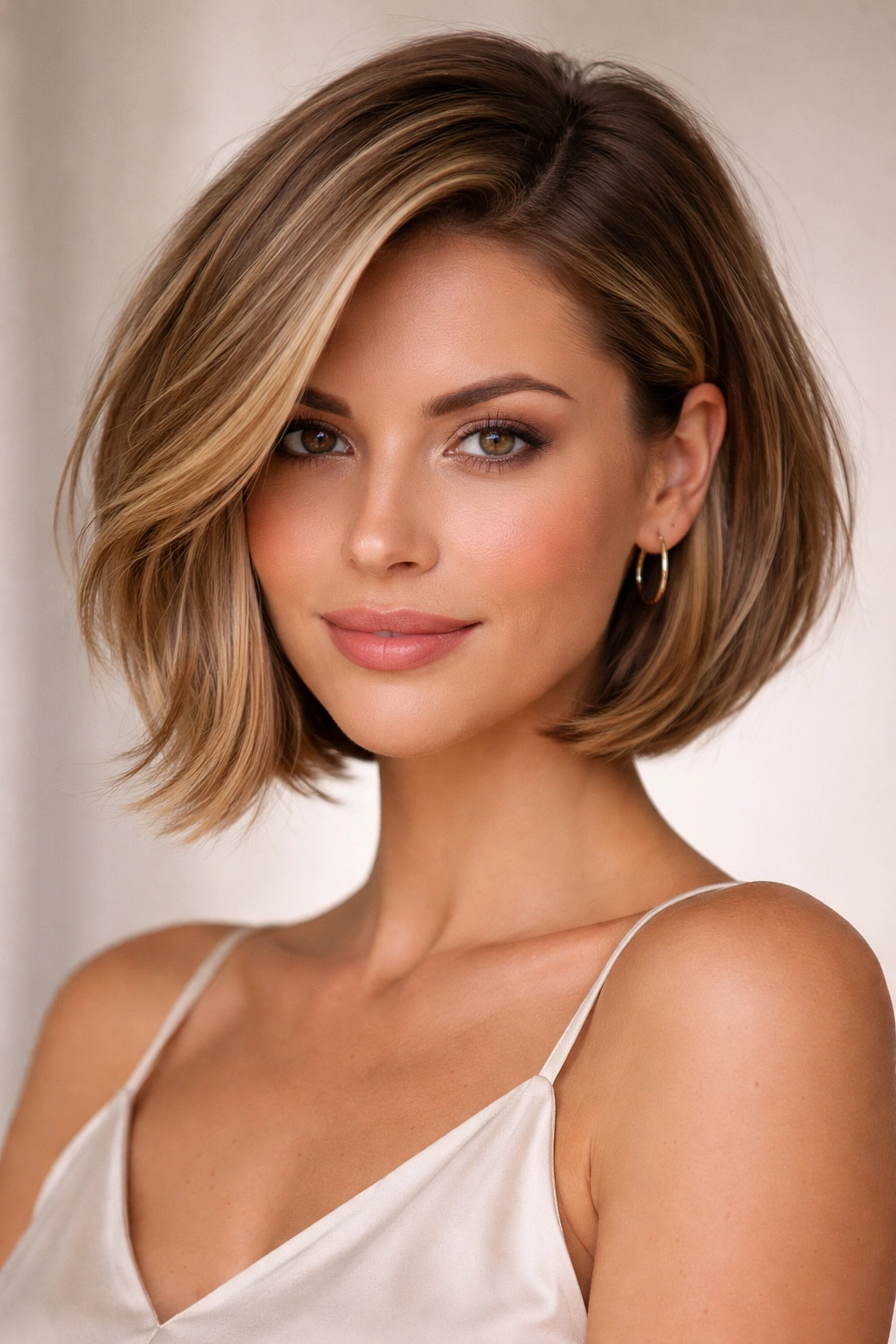
Triangular or pear-shaped faces are narrower at the top (forehead and cheekbones) and wider at the bottom (jaw and chin). The opposite challenge of a heart-shaped face, in other words. A side-parted bob with the right proportions adds visual interest and volume at the top while keeping the bottom streamlined.
Strategic Parting and Proportion
The side part is your secret weapon for triangular faces. It creates asymmetry and visual interest at the crown, drawing attention upward. Combined with a chin-length bob that doesn’t add too much volume at the bottom, this creates balance. The key is using the cut and the parting together to redistribute visual weight.
Making It Work
- Cut with shorter layers at the crown and through the sides
- Keep the ends blunt or only slightly layered—you don’t want excess volume at the jaw
- The side part should be deep and distinct, starting well to one side of center
- The side with more hair lifted should be the side with more styling product and volume
- Blow-dry with the part very intentional; spend extra time volumizing the side with the deeper part
- Waves or slight texture work, but keep the bottom relatively smooth
- Avoid center parts entirely with this face shape
- The cut should feel slightly shorter and more structured at the bottom, not fluffy
For triangular faces, this bob is all about creating vertical interest at the top while keeping the bottom clean and defined. It’s a strategy as much as a style.
7. The Choppy, Piece-y Bob for Oval Faces
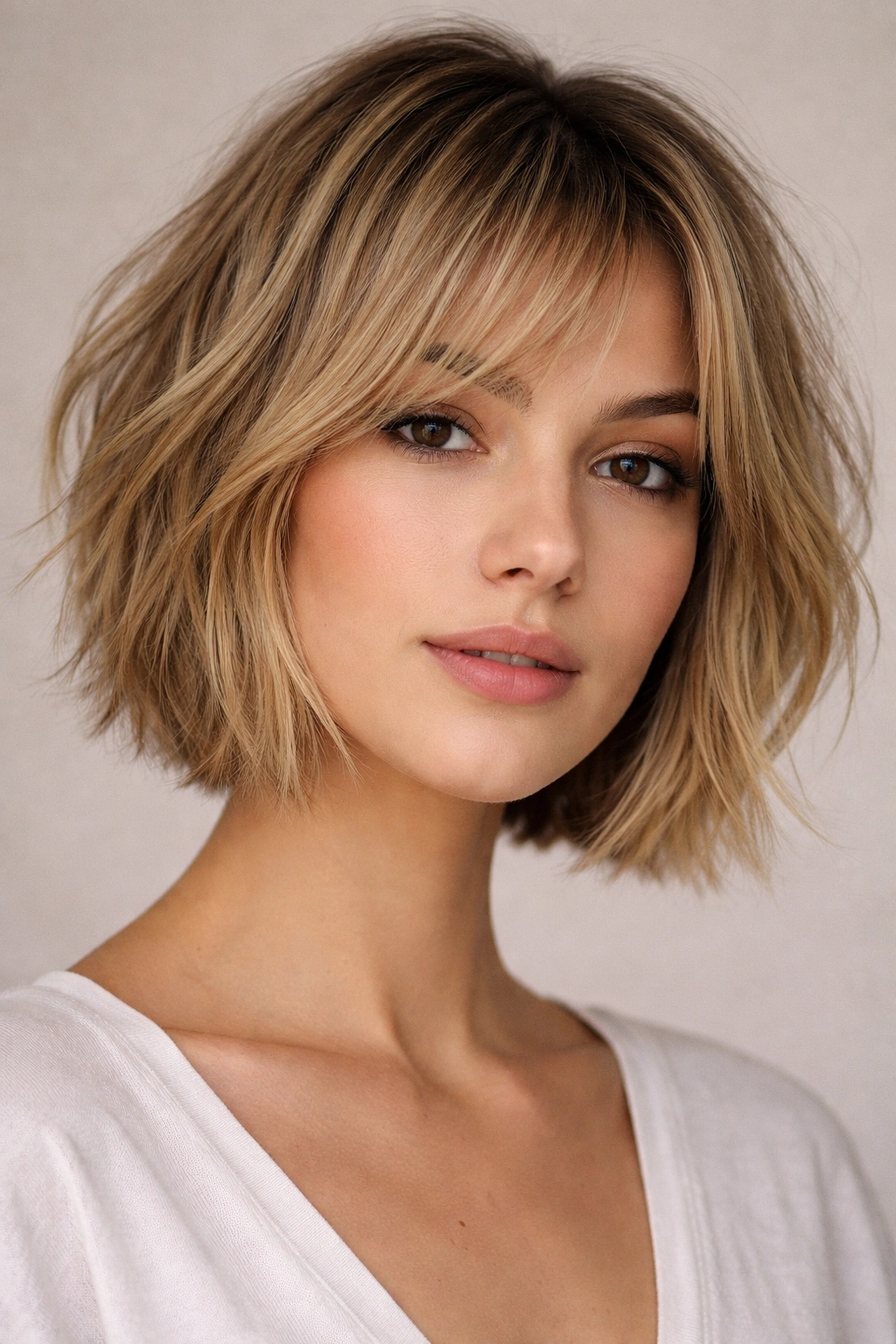
Oval faces are proportionally balanced—similar width through the forehead, cheekbones, and jaw, with slightly more length than width. Oval is the “golden ratio” of face shapes, meaning nearly any hairstyle works. But a choppy, piece-y bob is where oval faces can really have fun and experiment with texture and movement without worrying about disrupting balance.
Why Oval Faces Can Embrace Choppy Texture
Because oval faces are naturally balanced, you don’t need the cut to do heavy lifting in terms of proportion correction. This means you’re free to prioritize personality, texture, and style over strategy. A choppy, piece-y bob on an oval face is about movement, dimension, and visual interest—not about correcting proportions.
Creating Choppy Dimension
- Ask for layers throughout the cut, with varying lengths to create movement
- Shorter pieces around the face create that piece-y, textured look
- Longer pieces underneath add dimension and prevent the cut from looking too short or severe
- The choppiness should feel intentional but relaxed—think lived-in, not awkwardly uneven
- Texture products are essential; this cut is meant to be styled with movement
- A tousled wave or textured, undone look is perfect
- Center or side parting both work beautifully with this shape
- You can even try a slightly asymmetrical approach, as oval faces can handle the added complexity
The choppy, piece-y bob for oval faces says: I have the freedom to experiment. And you do. Enjoy it.
8. The Asymmetrical Bob for Geometric Face Shapes
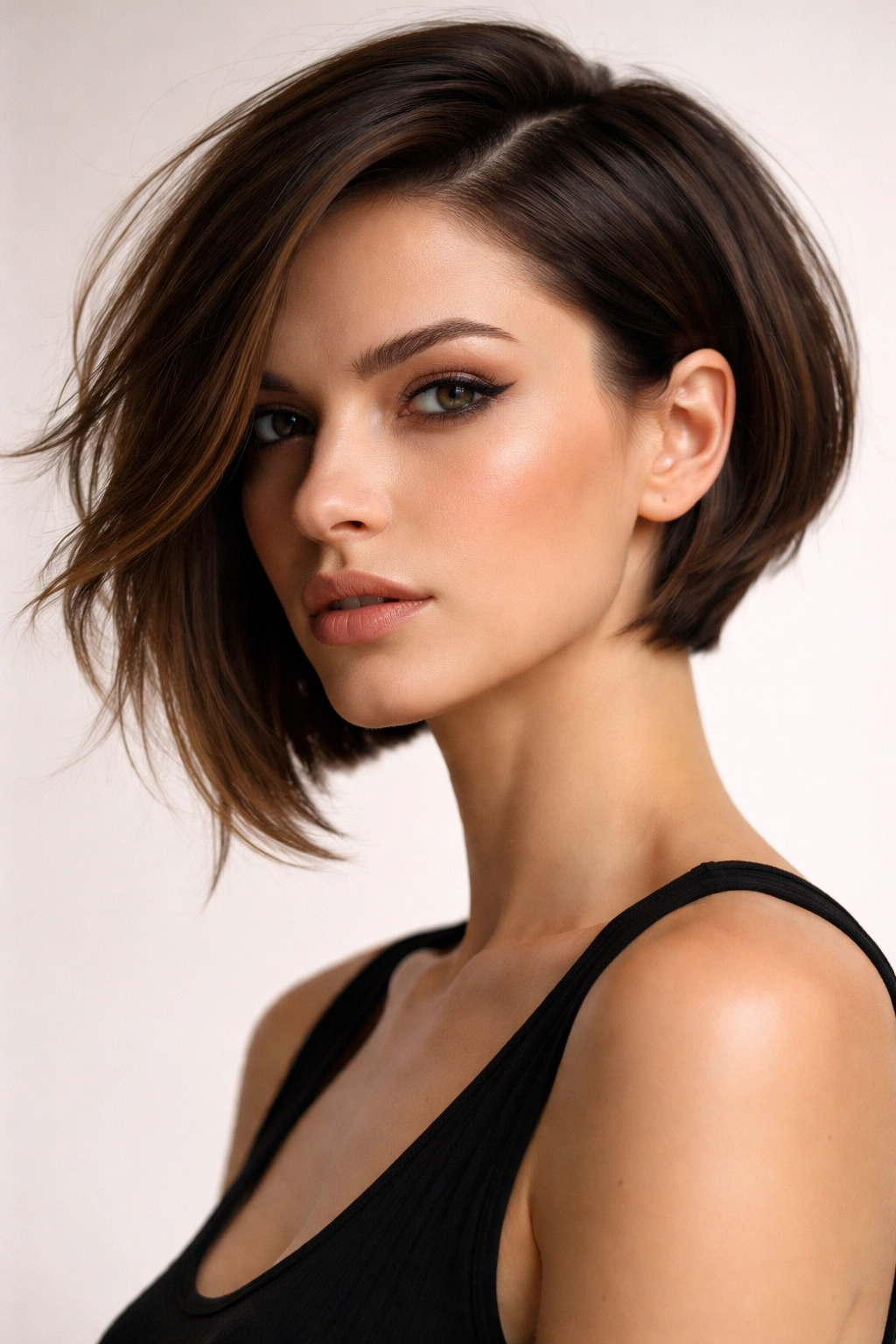
Asymmetrical bobs—where one side is notably shorter than the other—are bold, modern, and surprisingly flattering for certain face shapes. If you have a geometric, angular face shape (square or oblong), an asymmetrical bob can actually soften those angles while adding visual interest and movement.
When Asymmetry Works Best
An asymmetrical bob works best for people who want to make a style statement and who don’t mind breaking from tradition. It’s particularly flattering for angular faces because the uneven lines echo the face’s natural angles without making them look harsh. The asymmetry is dynamic—it moves, it changes with styling, and it creates visual complexity that’s inherently flattering.
Styling an Asymmetrical Bob
- The shorter side should be shorter enough to be noticeably different—usually significantly shorter
- The longer side can extend to chin length or even a bit longer
- Both sides should have texture and movement, not sit flat
- You have some flexibility in parting; you can part toward the longer side or the shorter side for different effects
- Styling matters enormously with an asymmetrical cut—a side part and waves or texture really bring it to life
- The shorter side looks best with some volume or texture; keeping it flat can look unfinished
- This cut works best on people who are willing to style it regularly; a quick wash-and-go might look a bit off
Asymmetrical bobs are for people who see their haircut as part of their personal style and identity, not just a convenient way to manage their hair.
9. The Wavy, Textured Bob for Round Faces (The Movement Approach)
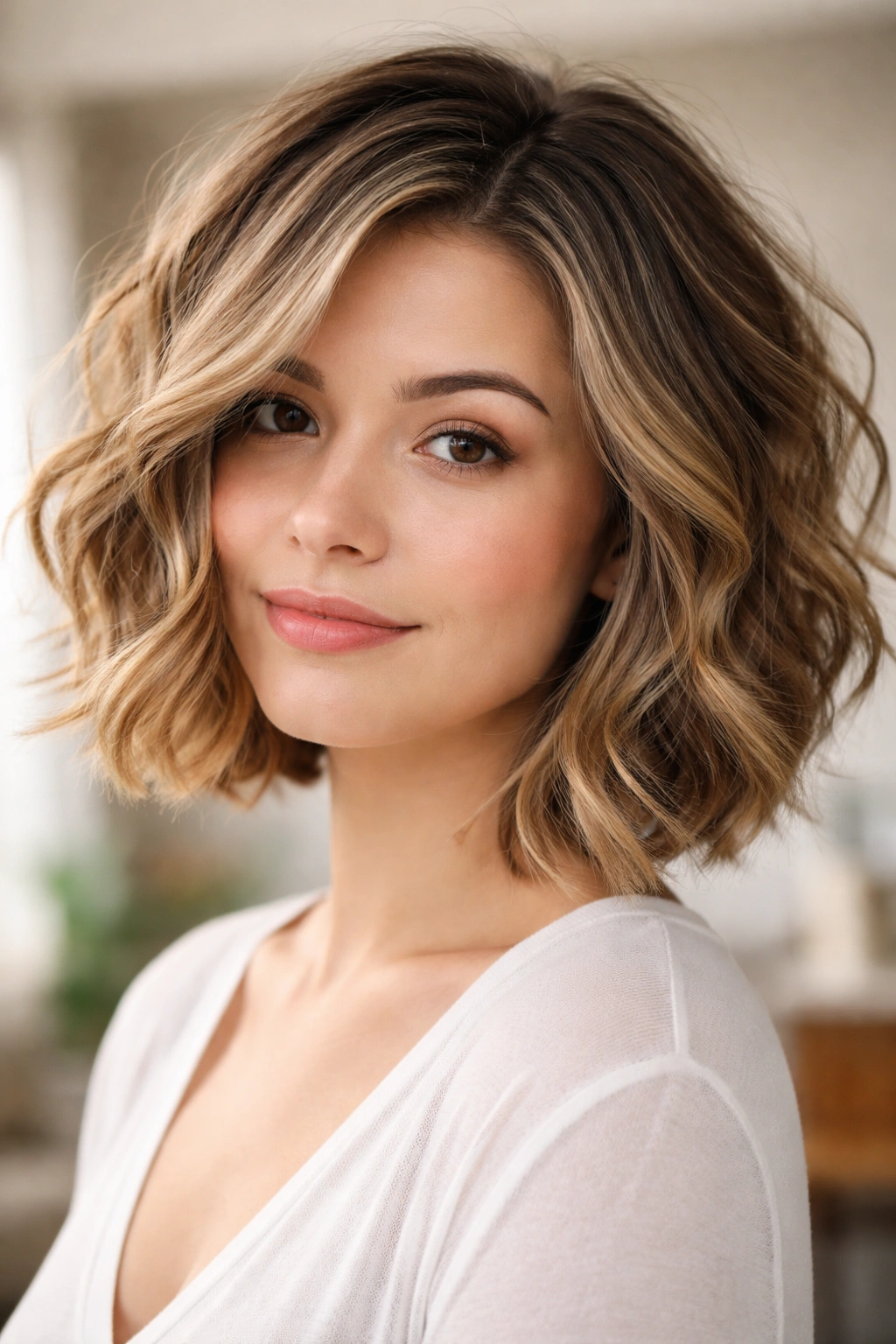
While the classic bob works for round faces by being sleek, another approach is embracing waves and texture. This works if you’re willing to commit to styling—the waves and movement create height and visual interest that balances roundness, but the cut needs to be worked with regularly.
Texture as a Balancing Tool
Instead of relying on sleekness to elongate, you can use movement to create visual complexity. Waves break up a round face’s smooth curves and add dimension. The texture gives your face more to “look at,” which is a form of flattery for rounder faces.
Making Wavy Texture Work
- Get a cut with subtle layers throughout to support movement
- Ask your stylist to cut in a way that works with your natural texture or the waves you plan to create
- Blow-dry with a round brush and product for waves, or use a curling iron
- Sea salt spray and texturizing sprays are your friends
- Avoid center parts; a deep side part maximizes the movement
- The waves should feel loose and relaxed, not tight or frizzy
- Regular heat styling will be part of your routine—this isn’t a wash-and-go cut
This approach requires more styling commitment but gives you a different energy than the sleek classic bob.
10. The Sleek, Polished Bob for Long or Oblong Faces
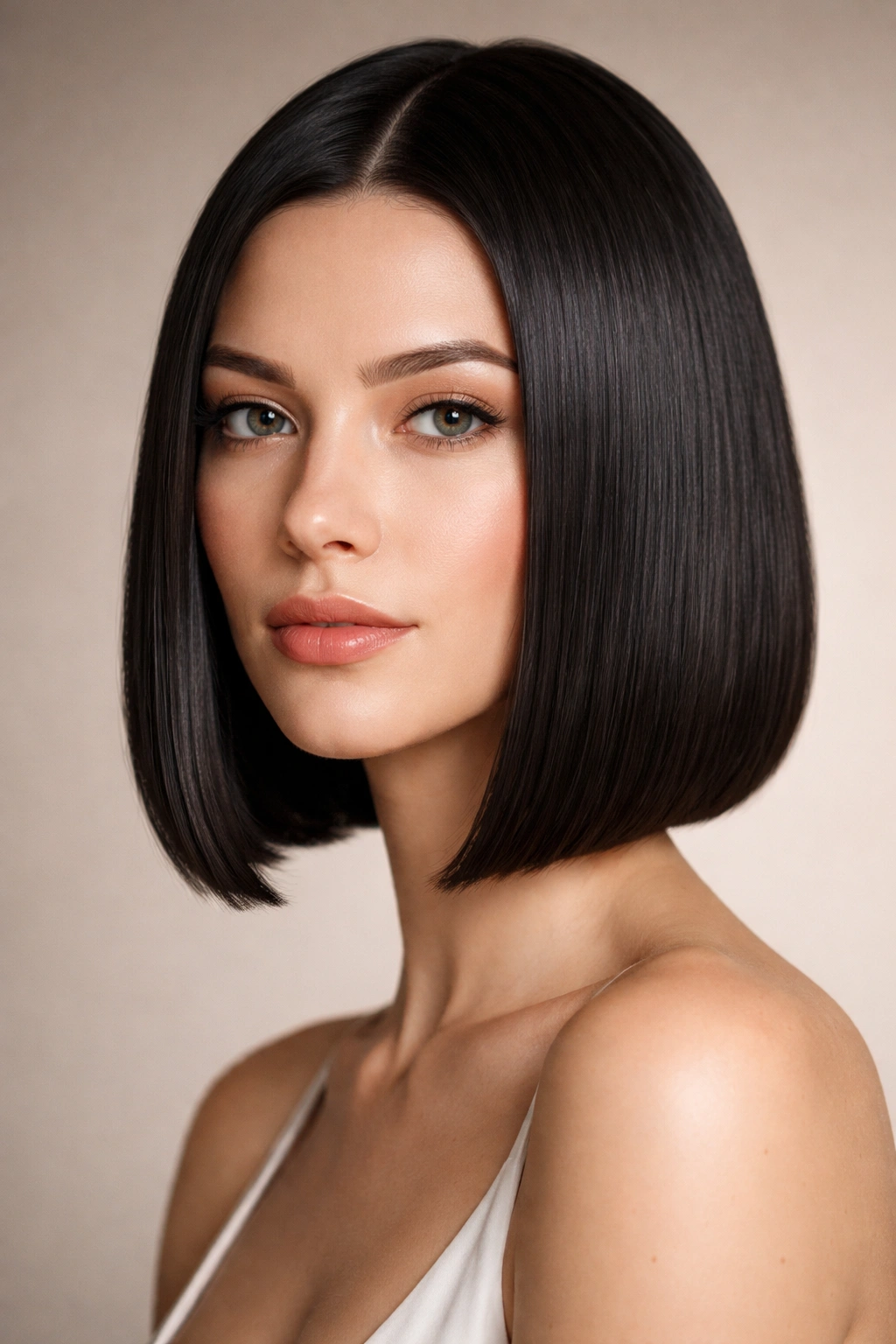
If you have a longer face and you love the idea of a polished, refined look, a sleek bob cut at chin length with minimal texture creates an elongated silhouette that actually enhances rather than fights against your face shape.
Embracing Length Rather Than Fighting It
Some people with longer faces prefer to work with their proportions rather than against them. A sleek, polished bob—super straight, minimal layers, a strong horizontal line at the chin—creates a sophisticated, fashion-forward look. The smoothness elongates further, which might seem counterintuitive, but the clean geometry actually creates a very chic effect.
Polishing the Look
- Ask for a blunt, precise cut with minimal layers
- The ends should be perfectly even and sharp
- Straight hair or very gently wavy is ideal
- Styling should emphasize sleekness: blow-dry smooth, use a flat iron, apply shine serum
- A center or deep side part both work, depending on your mood
- This cut pairs beautifully with bold makeup, statement earrings, or a strong lip
- It reads as intentional and curated, not casual
A sleek, polished bob says: I have refined taste and I’m willing to maintain this look.
11. The Razored Bob with Movement for Pear-Shaped Faces
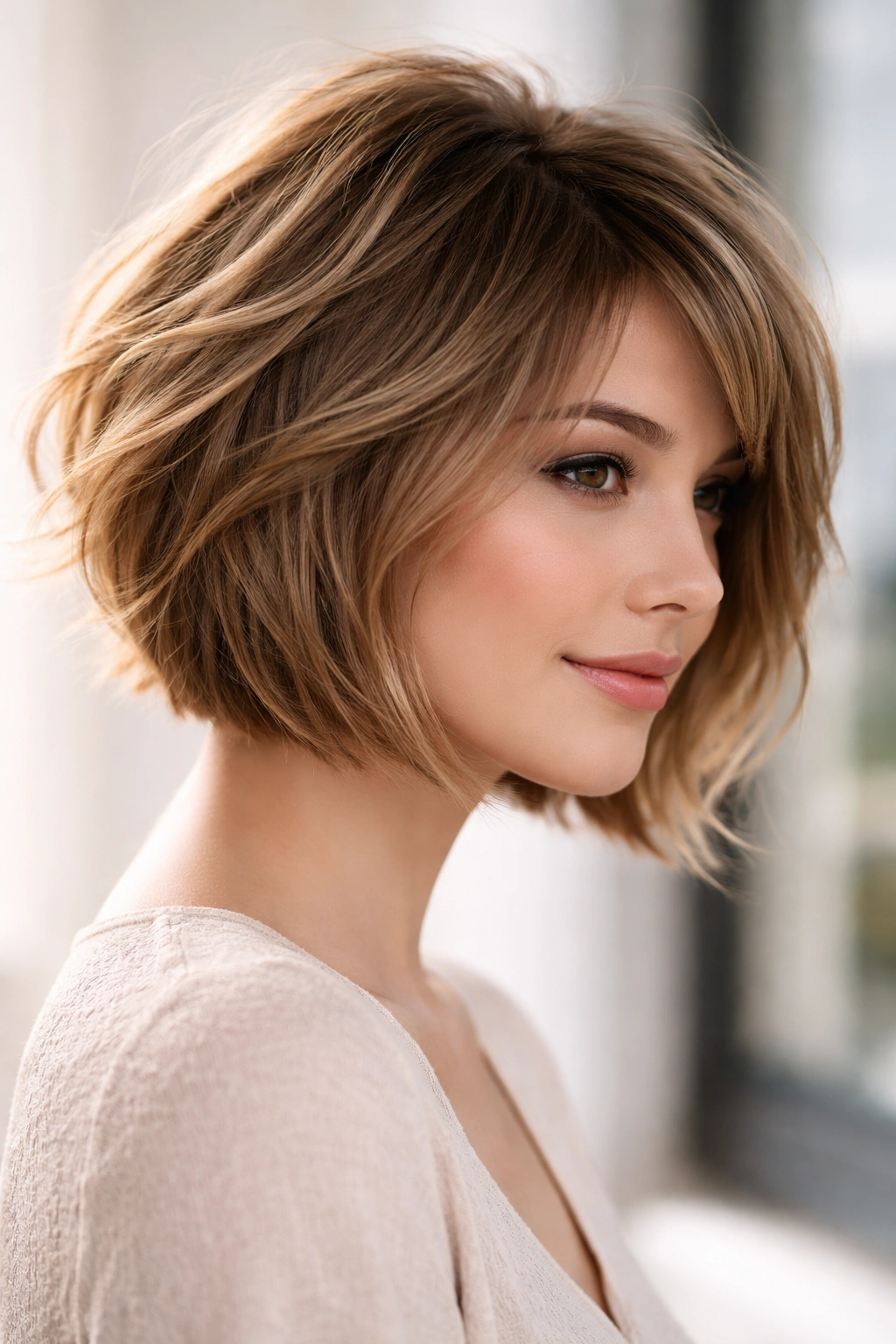
Pear-shaped faces are wider at the jaw and chin than at the forehead and cheekbones. Similar to triangular faces in that the lower face is wider, pear-shaped faces benefit from adding visual interest and volume at the top. A razored bob—cut with a razor rather than scissors for a textured, piece-y effect—with strategic layering addresses this beautifully.
Razor Cutting for Texture and Dimension
A razor-cut creates a different kind of texture than scissor-cut layers. The result is softer, more feathered, and slightly more piece-y. For a pear-shaped face, this means you get texture and movement exactly where you need it—at the crown and sides—without bulk at the bottom.
Customizing the Razored Bob
- Ask for shorter, razored layers at the crown and through the sides
- Longer pieces can extend to chin length, but keep the bottom relatively smooth
- The razored texture creates movement even without styling product, though product enhances it
- Waves or soft texture work beautifully with the razored effect
- A side part maximizes the dimension at the crown
- Blow-dry with some lift and movement at the crown and sides
- Use texturizing products to enhance the piece-y quality
- This cut looks great tousled and lived-in; it doesn’t need to be overly polished
The razored bob for pear-shaped faces creates a dynamic, modern look that balances facial proportions effortlessly.
12. The Feathered Bob for Square Faces (The Softer Alternative)
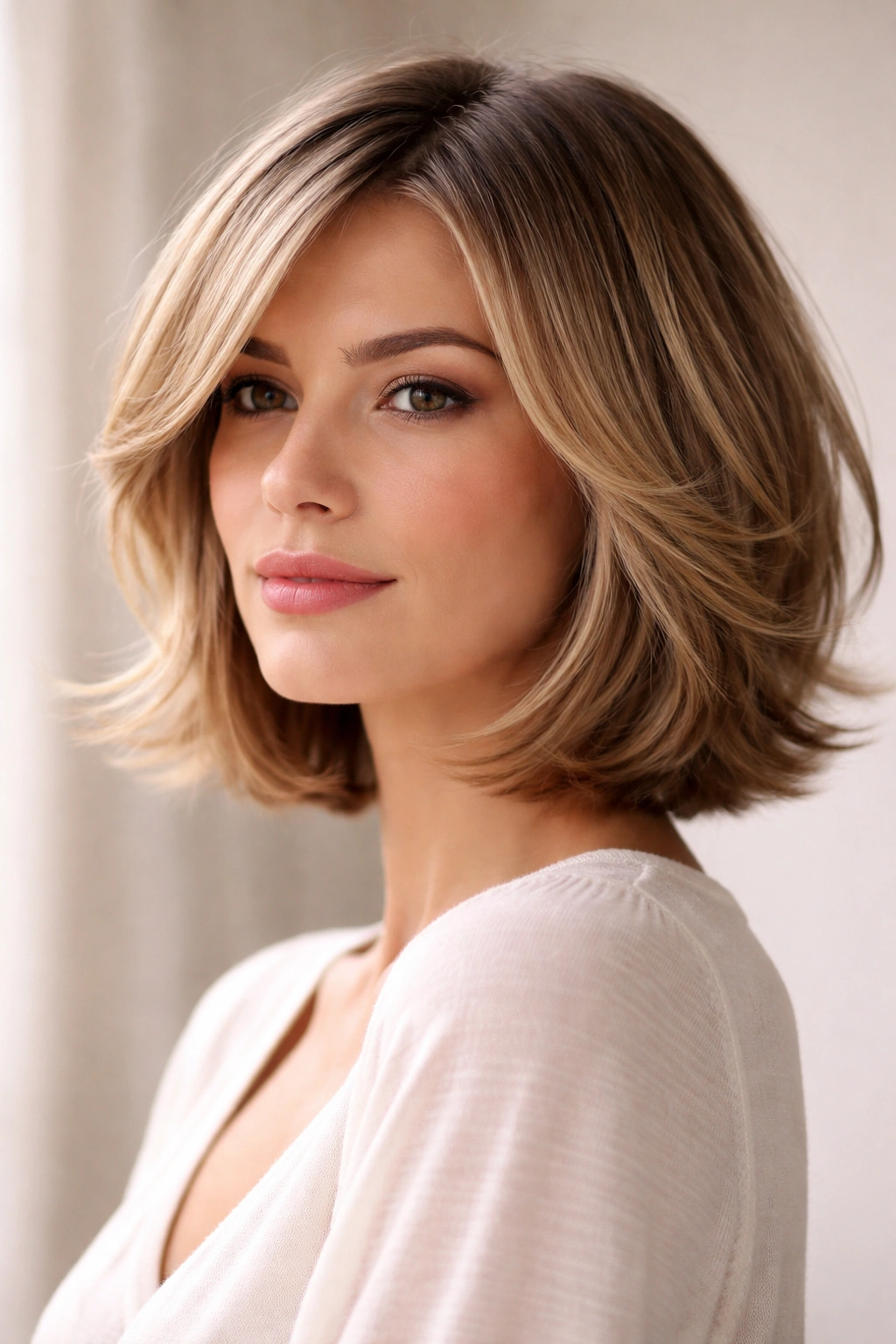
While the textured shag bob softens square faces with choppy texture, a feathered bob takes a different approach. Feathering involves cutting each layer to flip slightly outward at the ends, creating a lighter, softer edge. For square-jawed faces, this is another beautiful option that softens angles without being quite as bold as a shag.
Feathering as a Softening Technique
Feathering creates a visual softness that works beautifully for strong, angular face shapes. The flipped-out ends catch light differently and create a less severe silhouette. It’s a subtle technique, but it’s surprisingly effective for taking the edge off a square jaw.
Styling the Feathered Bob
- Ask your stylist to feather each layer, particularly around the face
- The feathering should flip outward slightly, creating a soft outline around your face
- Keep the shortest feathered layers right around cheekbone height
- Longer layers underneath support the feathered effect
- Blow-dry with a round brush and product to enhance the feathered flip
- Waves or curls work, but even straight hair shows the feathered effect
- A side part adds asymmetry, which further softens angles
- This cut has a more classic, polished feeling than a shag but still softens your face shape
The feathered bob offers square-jawed faces a more conservative approach to softening angles—it’s sophisticated and timeless.
Final Thoughts
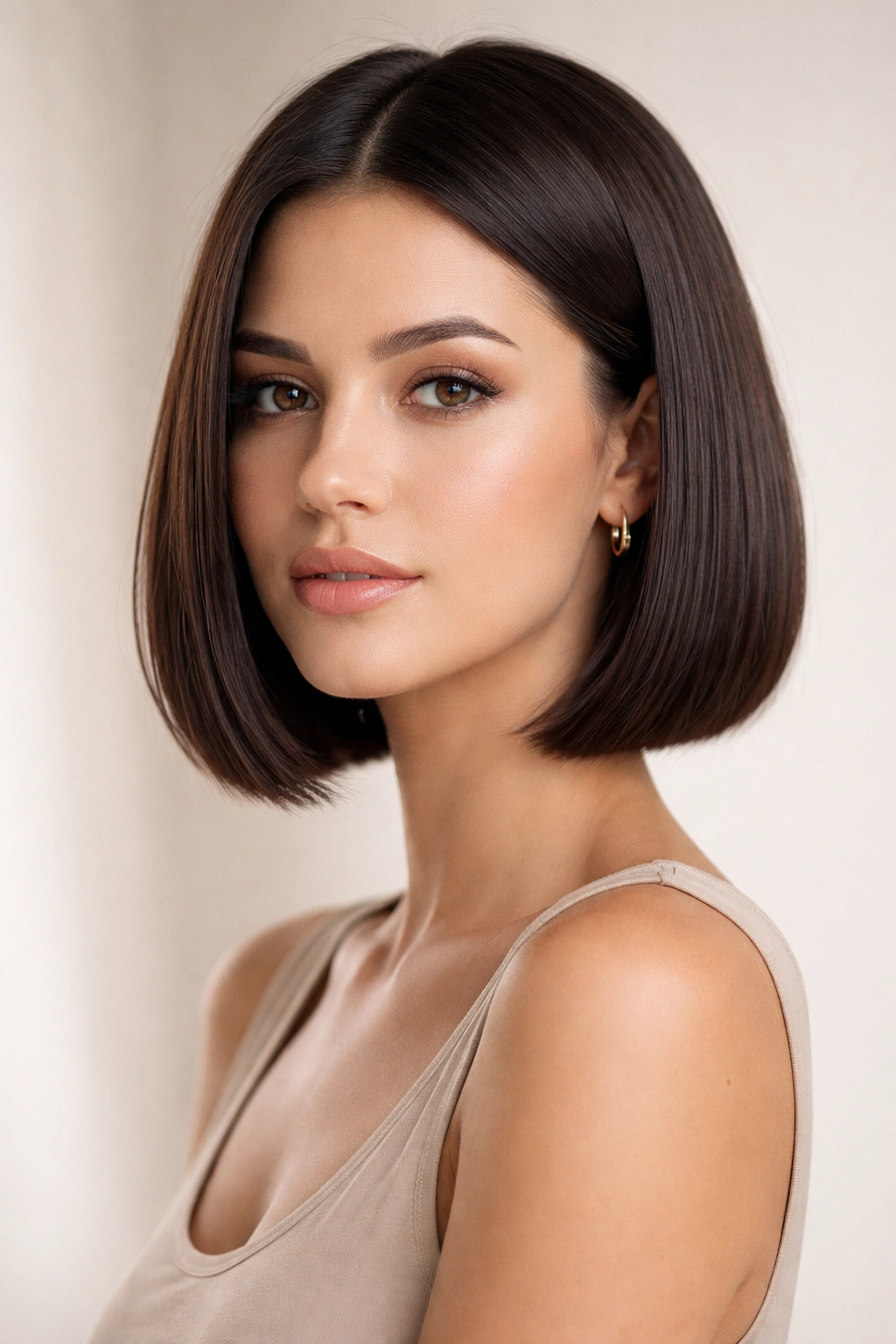
The right chin-length bob for your face shape isn’t about following rigid rules—it’s about understanding how line, texture, and proportion work together to flatter your unique features. A round face needs vertical interest and sleekness. A square face needs softness and texture. An oblong face needs horizontal line and visual width. An oval face can experiment freely. Heart-shaped faces need balance between forehead and chin.
Once you understand these principles, you can work with a skilled stylist to customize any of these styles to feel like you. Bring reference photos, describe your daily styling commitment honestly, and talk specifically about what you want the cut to do for your face. The best haircut is one that makes you feel confident, works with your hair texture and lifestyle, and flatters your face shape. A chin-length bob can absolutely be that cut—you just need to find the right approach for you.
