



There’s something magic about the long pixie—it’s the rebellious middle ground between adventurous and wearable, between bold and blendable. If you’ve been curious about pixie cuts but aren’t ready to commit to ultra-short hair, the long pixie hairstyle offers the best of both worlds: the clean, effortless vibe of a pixie with enough length to style, texture, and personal expression. Whether you’re drawn to sleek, polished sophistication or tousled, undone texture, the long pixie adapts to your lifestyle, hair type, and style sensibility.
The beauty of the long pixie is its versatility. Unlike a traditional pixie that demands a specific hair texture and maintenance routine, the longer version works with straight hair, wavy hair, and curly hair alike. You can wear it slicked back for a chic, androgynous moment, tousle it into tousled waves for romance, or let it dry naturally into its own textured landscape. The length gives you flexibility that a cropped pixie simply doesn’t offer—you can experiment with side parts, swept bangs, face-framing layers, or a more connected top that blends seamlessly into the shorter sides.
What makes a long pixie different from a shag or a wolf cut is the intention behind it: shorter sides and back paired with deliberate length on top, creating definition and dimension rather than relying on overall length for volume. It’s a cut that requires a skilled stylist who understands how to balance proportion, create movement, and work with your hair’s natural texture rather than against it. The right long pixie doesn’t just sit on your head—it lives there, responding to how you move and how you style it.
Let’s explore 12 compelling long pixie variations, from polished and refined to wild and textured, so you can find the version that speaks to who you are.
1. Classic Long Pixie with Side-Swept Bangs
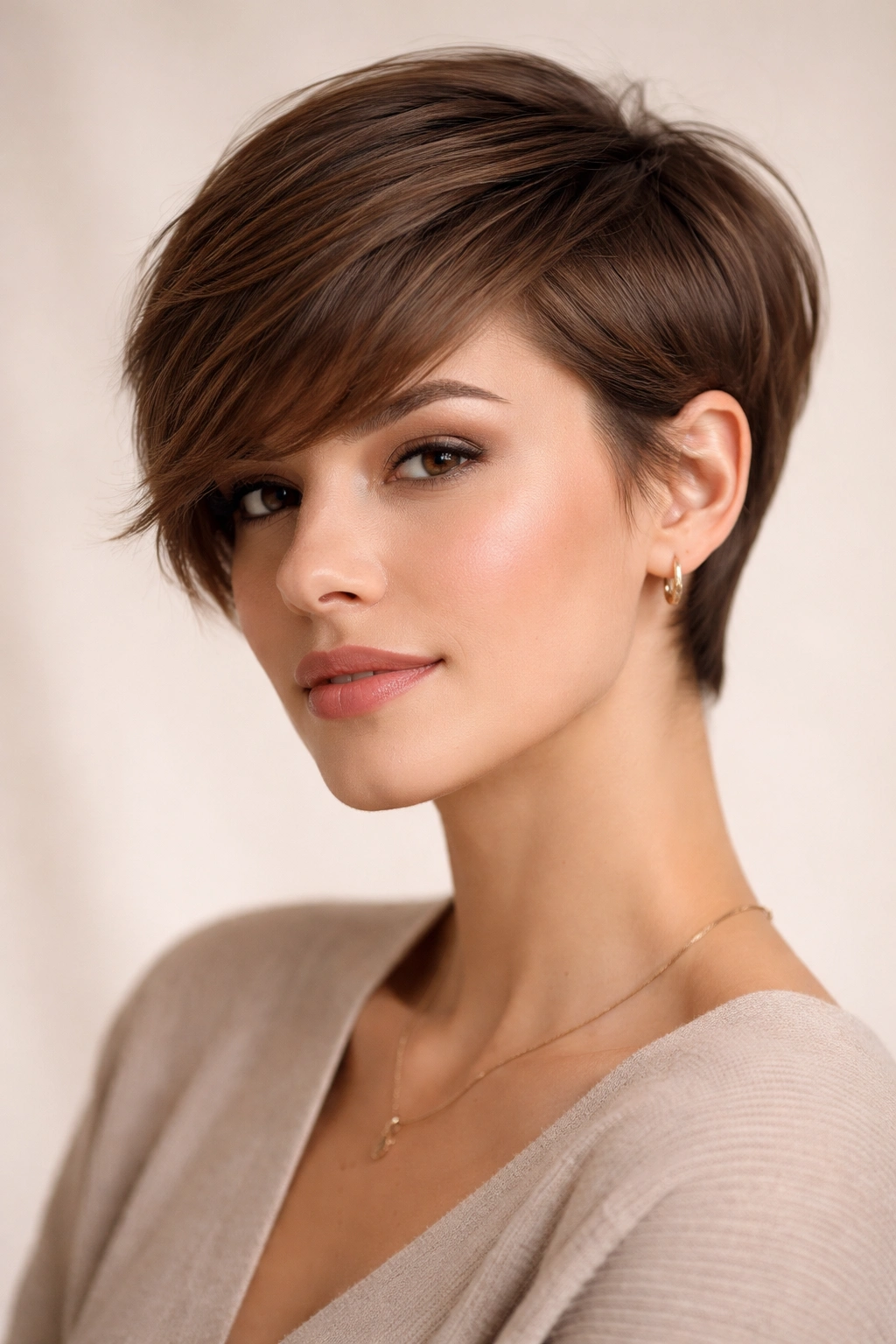
The classic long pixie with side-swept bangs is the gateway into longer pixie territory—it’s instantly recognizable, undeniably flattering, and forgiving enough that even first-time pixie wearers feel confident. This version features a gently tapered back and sides with longer hair on top that sweeps across the forehead, framing one side of the face while the other side is shorter and tucked behind the ear. It’s structured enough to look intentional, yet casual enough that it doesn’t require blow-drying to look polished.
What Makes This Cut Stand Out
The side-swept bang is the secret to this style’s universal appeal. It draws attention to the eyes, softens the face shape regardless of whether you have a square jawline or a rounder face, and creates an asymmetrical silhouette that feels modern and editorial without being extreme. The longer top gives you real styling options—you can side-part it, push it back, or let it fall naturally depending on your mood and the occasion. The tapered sides keep the overall look sharp and prevent it from feeling overgrown too quickly.
How to Ask Your Stylist for This Cut
- Ask for a long pixie with a side-swept bang that extends to cheekbone length on the longer side
- Request that the back and sides be tapered short, with clean lines at the nape
- Specify that you want the top to blend smoothly from the shorter sides into the longer front pieces
- Ask about layering on top for movement—even a few subtle layers make a huge difference in how the hair falls
- Discuss how short you want the “short side” to be; this varies from a #2 fade to a longer textured taper
Styling and Maintenance Tips
- Invest in a lightweight styling cream or paste to define the sweep and add texture without weighing hair down
- This cut is low-maintenance but does require a trim every 4-6 weeks to keep the taper crisp and the proportions balanced
- Use a blow-dryer on cool to medium heat to set the side sweep, directing hair across the forehead
- Many people with this cut find it looks better the second or third day after washing, when oils have settled and texture is more visible
- Sleeping on the “longer side” so the sweep falls naturally upon waking is a common styling trick
Pro tip: If you’re not ready to commit to short sides, ask your stylist for a more gradual taper that extends your styling options while you’re getting used to the shorter length.
2. Textured Long Pixie with Tousled Layers
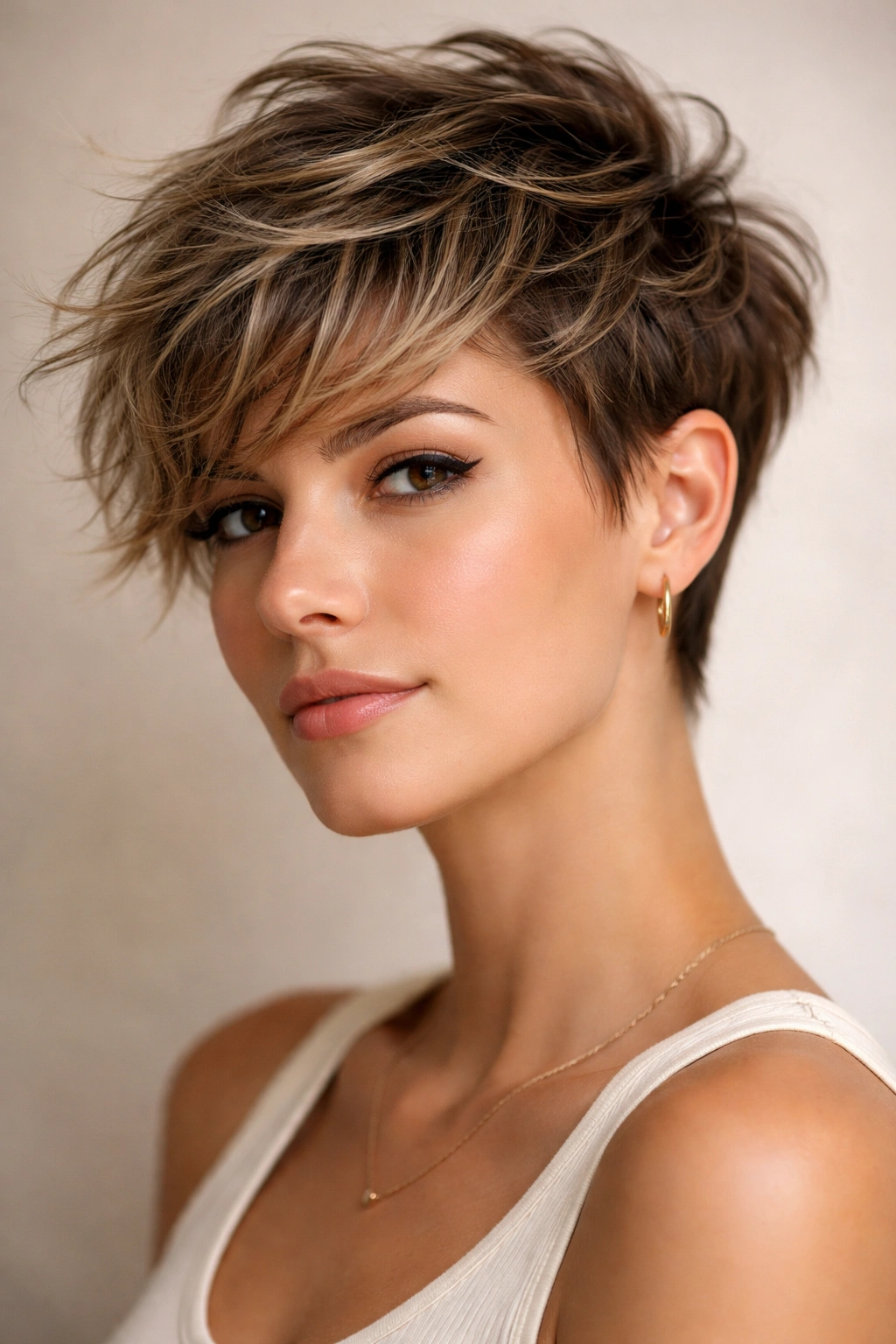
This is the long pixie for people who love movement and don’t mind putting a little intentional effort into their hair texture. Instead of a sleek, blended finish, this cut features choppy, disconnected layers throughout the top that create visual interest, dimension, and that deliberately undone texture that reads as effortlessly cool. The sides remain short and clean, but the top is a playful interplay of varying lengths that catch light and create the illusion of volume—especially magical if you have naturally wavy or curly hair.
What Makes This Cut Stand Out
The multiple layers mean that your hair can be styled in a hundred different ways depending on how you dry and manipulate it. Some days it’ll look tousled and piecy; other days those same layers will blend into something smoother. The texture is built into the cut itself, so you don’t have to tease or use excessive product to create movement. If you have fine or thin hair, choppy layers trick the eye into seeing more volume than you actually have. If you have thick hair, layers prevent the cut from looking heavy or helmet-like.
How to Ask Your Stylist for This Cut
- Ask for a long pixie with choppy, textured layers throughout the top section
- Request that layers be shorter near the roots for lift and progressively longer toward the ends
- Specify that you want visible “chop” and separation between layers, not a blended blend
- Ask about the depth of the layers based on your hair thickness; finer hair might need more layers, while thicker hair might benefit from chunkier sections
- Discuss which direction you want the layers to fall—forward, to the sides, or mixed
Styling and Maintenance Tips
- A texture paste or matte clay product is essential for this cut; use it while hair is damp to piece out the layers and control the texture
- Rough-dry your hair with your fingers and product for a more organic, less polished finish
- Layers require more frequent trims—every 4 weeks is ideal to maintain the choppy texture as your hair grows
- This cut actually looks better with some degree of bedhead; sleeping on it without smoothing it down enhances the natural texture
- For special occasions, you can smooth layers with a flat iron for a dressier version, or add more texture with a curling iron
Pro tip: Ask your stylist to cut some layers shorter than others; variation in layer length creates more visual interest than even layers.
3. Sleek Long Pixie with Undercut
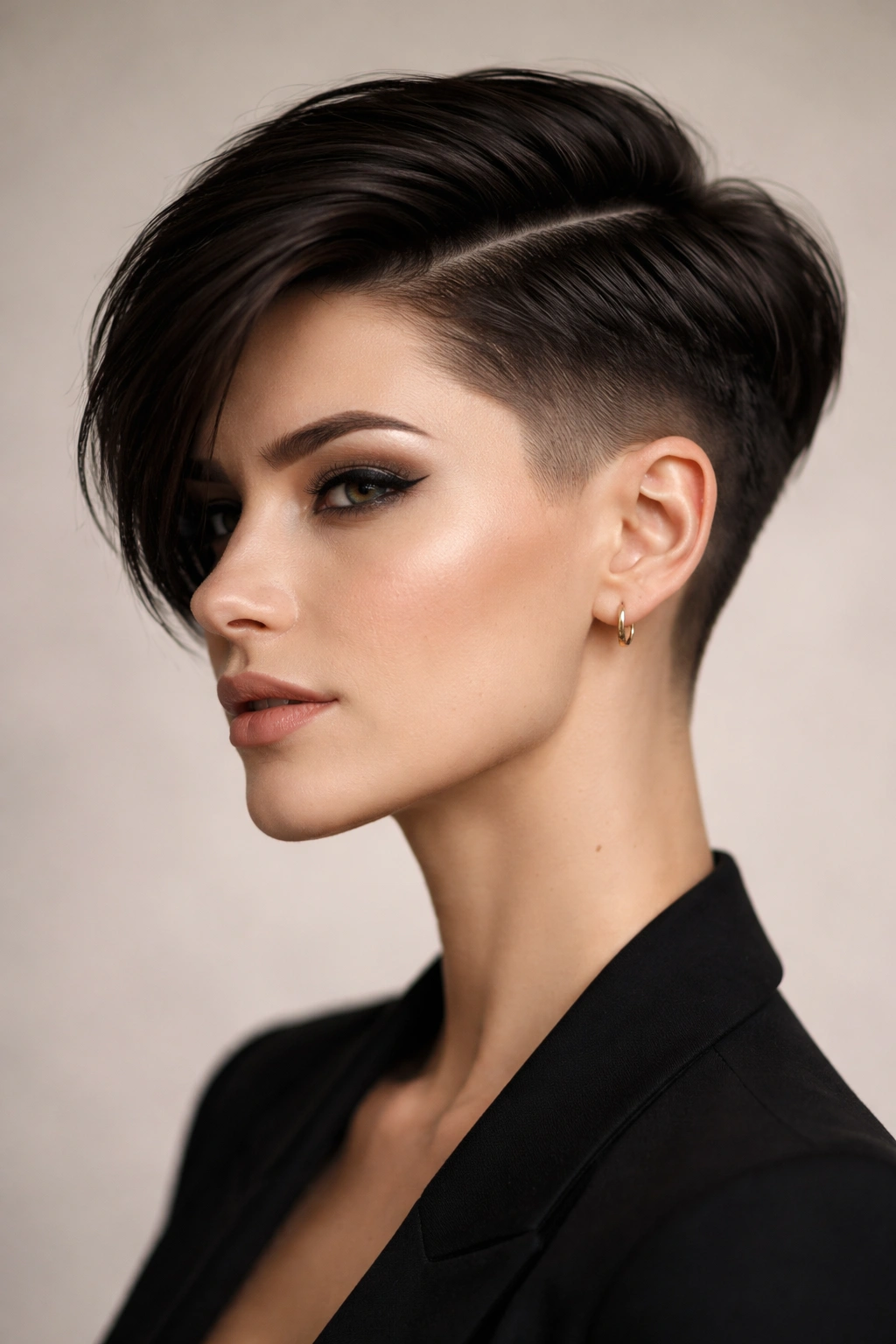
For people who want their pixie cut to make a bold statement, the sleek long pixie with undercut delivers. This version takes the concept of short sides to its most extreme: the back and sides are cut extremely short (often a #1 or even skin-faded), creating a dramatic contrast with longer hair on top that can be slicked back, swept to one side, or styled up. The undercut is unapologetic, geometric, and inherently edgy—it’s a cut that says you’re intentional about your style.
What Makes This Cut Stand Out
The undercut is pure contrast and confidence. It’s a cut that photographs beautifully and reads as sophisticated in professional settings while still feeling bold and individual. The ratio between super-short sides and longer top creates a visual triangle that can be balanced to suit different face shapes—a wider top can balance a narrower face, while proportions can be adjusted based on your features. This cut also exposes your ears, neck, and face shape, so it works best for people who are comfortable with visibility and want those elements celebrated rather than softened.
How to Ask Your Stylist for This Cut
- Ask for an undercut pixie—specify how short you want the sides and back (most people request a #1 or #1.5 clipper guard, or a skin fade)
- Request that there’s a clear line of demarcation between the short sides and the longer top; no blending or gradual taper
- Discuss the length on top based on your styling goals; if you plan to slick it back, you’ll need at least 2-3 inches; if you want it swept to one side, slightly more is helpful
- Ask whether you want the undercut to be a classic horizontal line around the sides and back, or a more contemporary disconnected design
- Discuss how you’ll part or style the top; this affects how the undercut reads
Styling and Maintenance Tips
- A strong-hold gel or pomade is essential for slicking this back or keeping it in place
- The undercut requires a clipper trim every 2-3 weeks to maintain crisp lines; it grows in quickly and becomes less striking as stubble grows
- You can style the top wet or dry; wet styling with product creates a more polished look, while dry styling with clay or paste looks more textured
- This cut requires confidence and a willingness to own that you have short hair—there’s no hiding an undercut or apologizing for it
- Consider sleeping on a silk pillowcase so the undercut doesn’t get distorted by rubbing against cotton
Pro tip: If you’re not ready to commit to an undercut, ask your stylist for a very short fade that creates high contrast without being quite as dramatic.
4. Curly Long Pixie with Volume
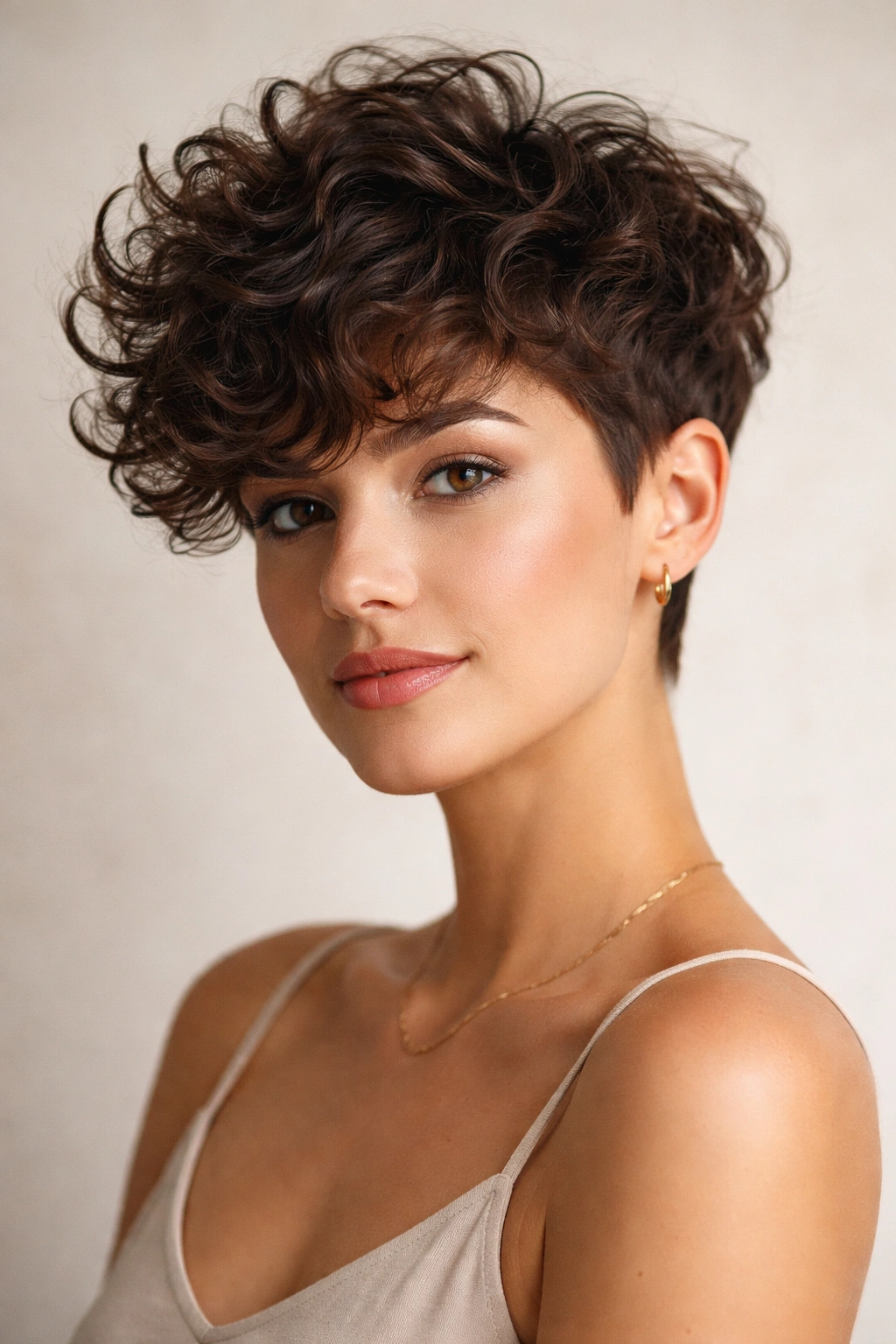
If you have naturally curly or coily hair, the long pixie is your secret weapon for embracing your texture without needing waist-length hair to feel like you have enough volume. This version is cut specifically to work with curl pattern rather than against it, with slightly shorter sides to prevent puffiness and longer, strategically layered top that distributes curl weight and creates vertical movement. The result is a cut that celebrates your natural texture and actually requires less styling than longer curly hair.
What Makes This Cut Stand Out
Curly hair shrinks when dry, which means a curly long pixie can look surprisingly short once it’s fully dried and separated—this is actually the magic of it. You get the cool factor of a pixie cut with the length and styling options of longer hair. Layers in curly hair are essential because they prevent the hair from looking like a solid triangle of frizz; proper layering allows your curls to spring up and out individually rather than clumping together. A curly pixie also means less daily detangling, less product buildup, and a cut that actually looks better as it grows slightly longer between trims.
How to Ask Your Stylist for This Cut
- Find a stylist who specifically understands curly hair cutting techniques (look for someone trained in the Deva Cut method or similar curl-specific approach)
- Request a long pixie cut designed for curly hair, with shorter sides to prevent bulk
- Ask for layers throughout the top, with special attention to the crown area; this prevents a heavy, domed shape
- Discuss your curl pattern and porosity with your stylist; these affect how the cut will hang and what product recommendations they’ll make
- Ask about cutting the sides either while hair is wet and curly, or dry; different approaches create different results
Styling and Maintenance Tips
- Curl-specific products are non-negotiable; use a curl-defining cream or gel while hair is soaking wet, then plop or diffuse dry
- This cut benefits from being trimmed more frequently when wet and curly to maintain the layer pattern and shape
- Many people with curly pixies find that their curls hold their style longer with shorter hair, requiring less daily styling
- Avoid touching your curls while they dry; the more you manipulate them, the more frizz develops
- Sleeping on a pineapple (gathering hair on top of your head in a loose ponytail) or bonnet preserves the curl pattern overnight
Pro tip: Your curl pattern might surprise you when it’s on shorter hair; curls that looked tight and small at longer lengths might spring into bigger coils when cut shorter, so be prepared for a transformation.
5. Asymmetrical Long Pixie Cut
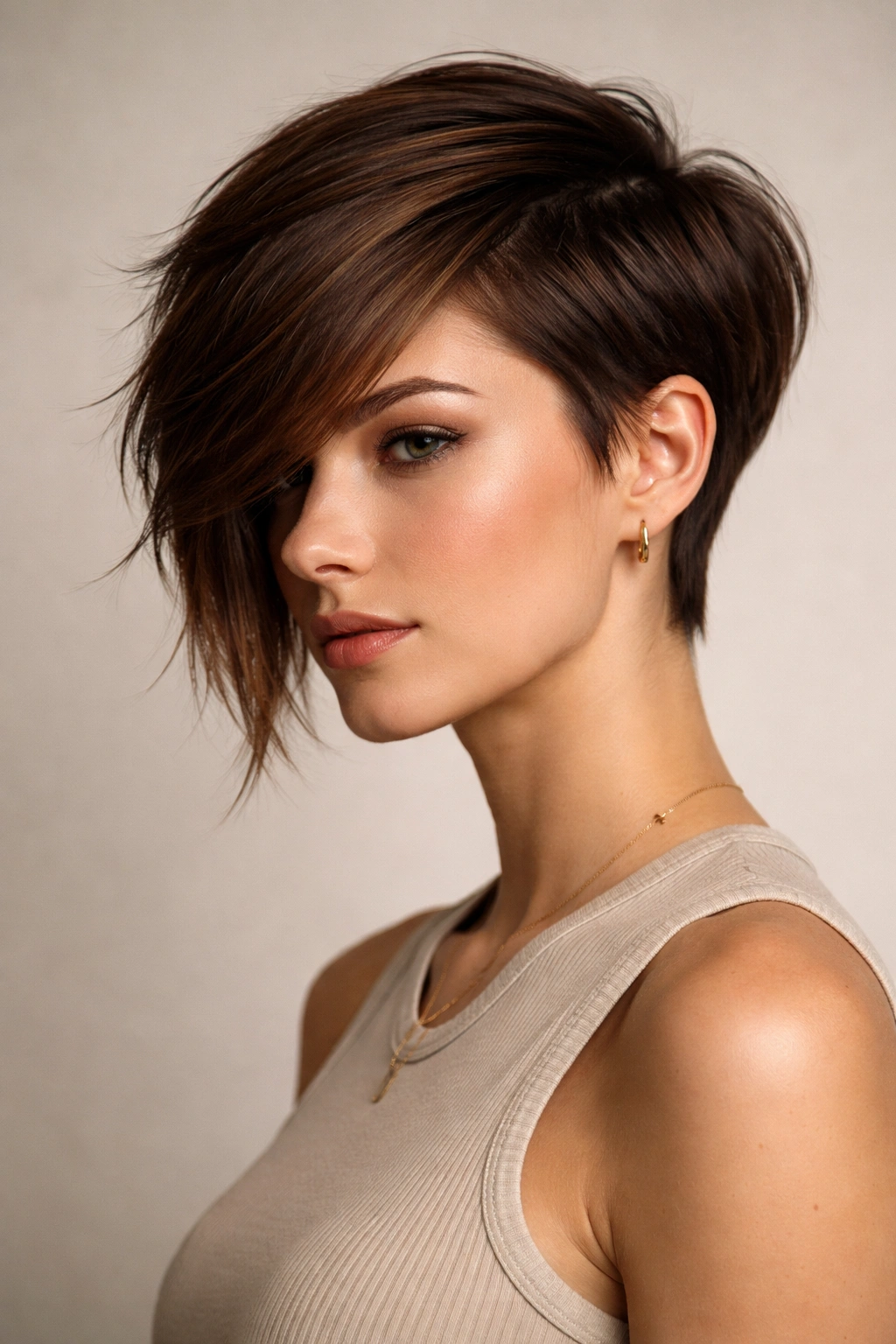
The asymmetrical pixie takes the concept of one-sided styling and makes it structural. Instead of both sides being the same length with a style that falls to one side, one side of the cut is deliberately longer than the other—sometimes dramatically so. One side might be cropped close to the head while the other has several inches of length, creating an eye-catching silhouette that’s undeniably artistic. This cut is for people who want their hairstyle to be a conversation starter.
What Makes This Cut Stand Out
The asymmetry creates movement and visual interest from every angle. When you move, the longer side catches light and motion differently than the shorter side, making the cut feel dynamic rather than static. It’s a cut that photographs beautifully, shows off the texture of your hair, and reads as deliberately artistic rather than accidental. The asymmetrical pixie also allows you to change the vibe depending on which side you show the world—push the longer side back for a different look than when you let it fall forward.
How to Ask Your Stylist for This Cut
- Be specific about the difference in length between sides; do you want a subtle difference (one side 1-2 inches longer) or dramatic (one side significantly longer)?
- Decide which side you want longer and communicate this clearly
- Specify how short you want the short side to be, and how long you want the long side to extend (cheekbone? chin length?)
- Ask your stylist for their recommendation based on your face shape and how asymmetry will frame your features
- Discuss whether you want the transition between sides to be gradual or sharp
Styling and Maintenance Tips
- The longer side typically needs a styling product to keep it in place and prevent it from always falling the same direction
- Trim every 4-6 weeks to maintain the intentional asymmetry; as hair grows, the difference in length becomes less pronounced
- You can style the longer side by sweeping it back, curling it under, or letting it fall forward depending on the occasion
- Many people with asymmetrical pixies find that one side looks better because it flatters their face shape; lean into that
- Sleeping on the longer side helps it hold its shape and prevents it from getting too crinkled
Pro tip: An asymmetrical pixie is easier to maintain as it grows out than you might think, since the inherent imbalance means small growth differences are less noticeable than they would be in an even cut.
6. Soft Long Pixie with Feathered Layers
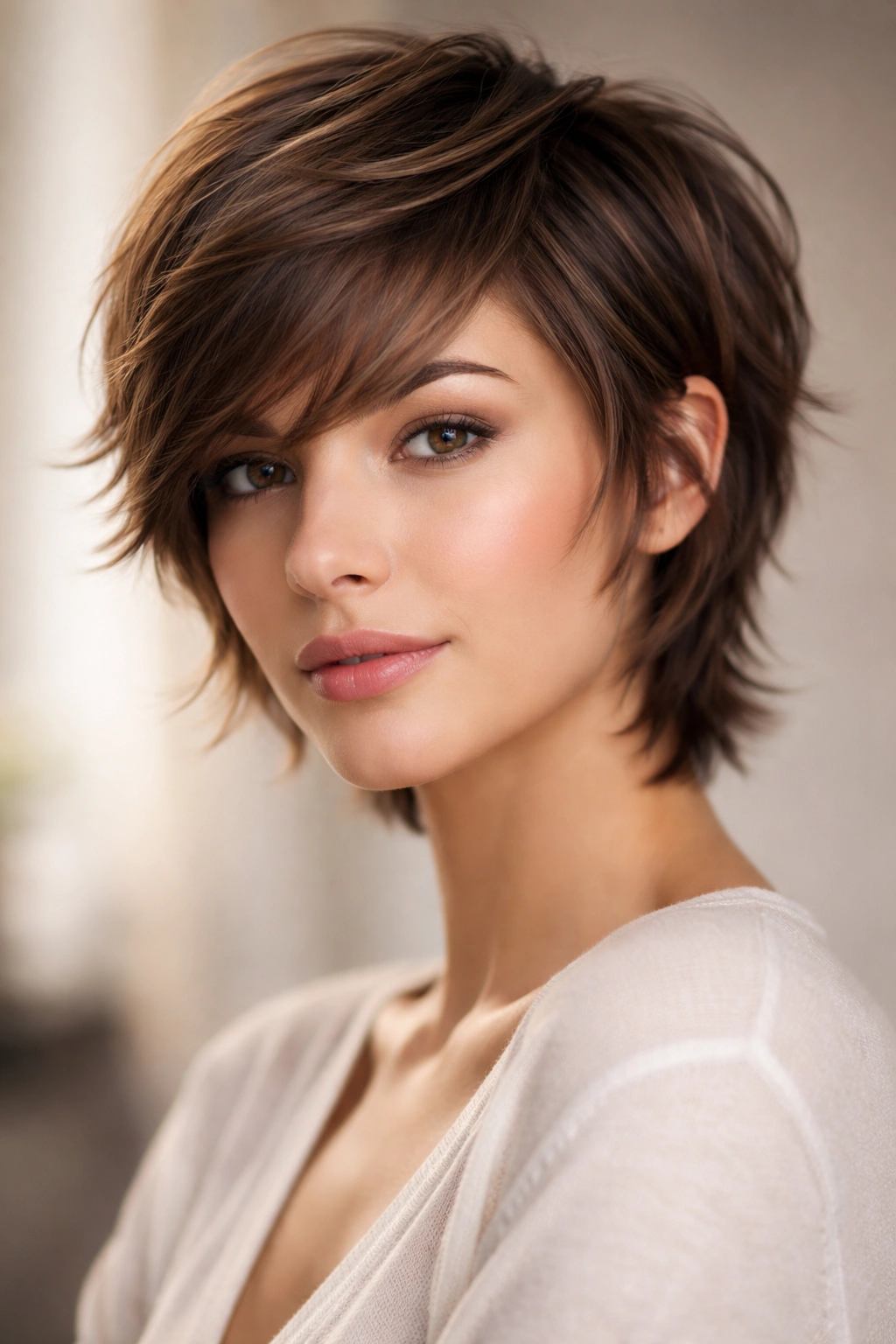
This is the romantic cousin of the choppy textured pixie—soft, feathered layers that move and shift rather than sit in distinct pieces. Instead of blunt choppy layers, feathered layers are cut at angles so the hair cascades and blends slightly, creating a softer, more feminine silhouette while still maintaining the clean proportions of a pixie. The sides are kept short and clean, but the top is a symphony of layers that frame the face and create gentle movement.
What Makes This Cut Stand Out
Feathered layers create the illusion of softness and flow even with shorter hair. The angles of the layers catch light beautifully and create dimension without looking choppy or piecy. This is an excellent cut for people who like the idea of a pixie but want it to feel less severe and more romantic. It’s also incredibly flattering for most face shapes because the soft layers frame cheekbones and jawlines gently, and the feathering movement draws attention upward and outward. If you have fine or medium-textured hair, feathered layers create volume; if you have thick hair, they prevent the cut from looking heavy.
How to Ask Your Stylist for This Cut
- Ask for a long pixie with feathered layers throughout the top and crown area
- Request that layers be “feathered” rather than “choppy”—meaning they should blend and flow rather than sit in distinct separated pieces
- Ask your stylist to pay special attention to the face-framing layers; these should be angled to suit your face shape
- Specify that you want soft movement rather than blunt texture
- Discuss whether you want layers that graduate longer toward the front (more face-framing) or throughout the top equally
Styling and Maintenance Tips
- A lightweight styling cream or texture spray works beautifully for this cut; avoid heavy products that weigh down the feathered layers
- Blow-dry with a brush to smooth the layers and create a polished finish, or rough-dry for a more textured look
- Trim every 6-8 weeks; feathered layers can get scraggly faster than blunt cuts as the feathering softens with growth
- Use a round brush while blow-drying to direct layers in the direction you want them to fall
- Sleeping on the feathered side helps the layers set and fall naturally the next day
Pro tip: Feathered layers show off hair color beautifully; if you’re considering adding color to your long pixie, this cut is an excellent choice because the movement catches color variation.
7. Shaggy Long Pixie for Texture and Movement
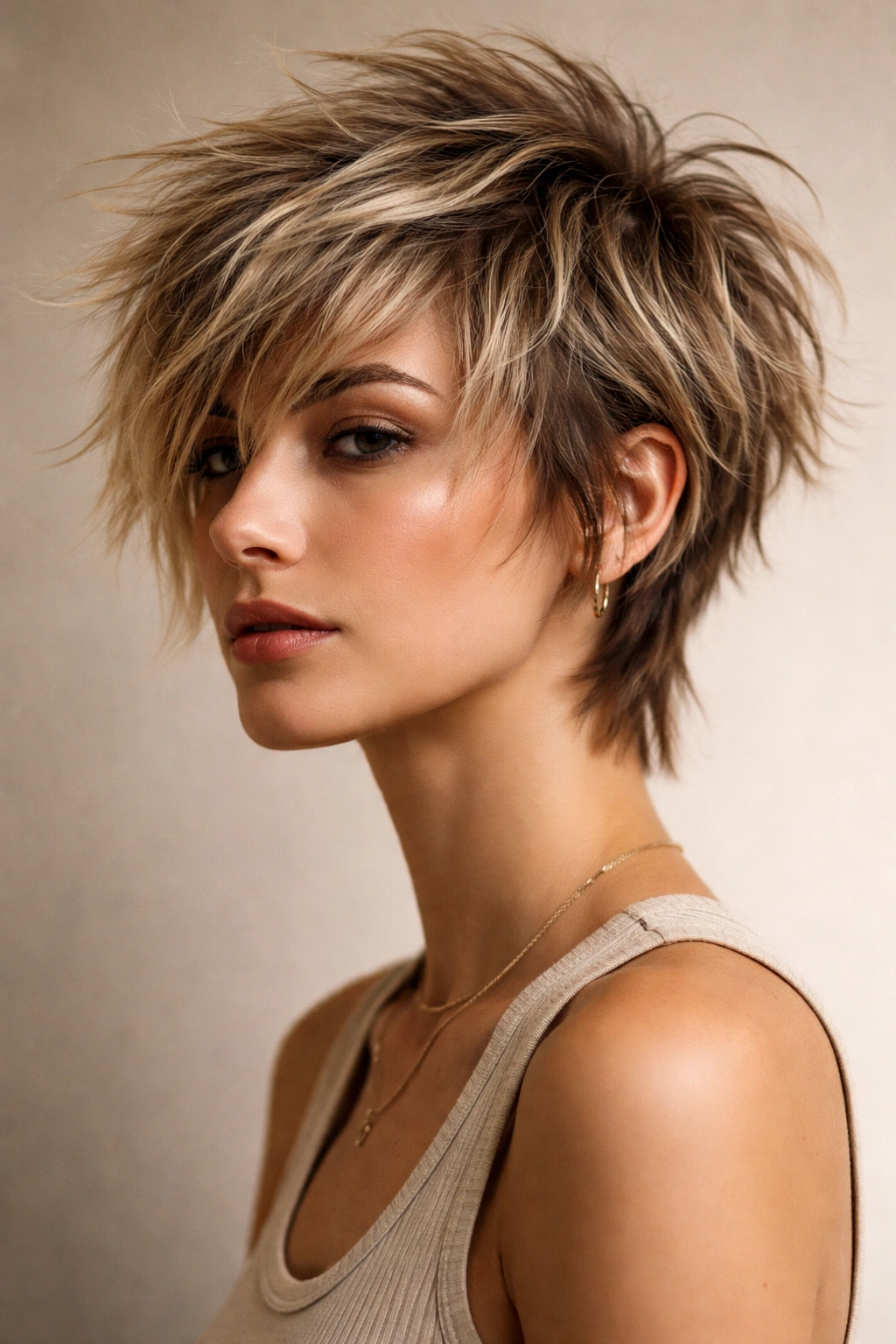
The shaggy long pixie is the edgy, rock-and-roll version of the long pixie category. It’s essentially a long pixie that’s been given the shag treatment—choppy, layered, wild, with shorter sides and a longer, textured top that’s cut at multiple angles to create movement and that cool “I just woke up like this” energy. It’s a cut that appeals to people who love the shag aesthetic but want something more contemporary and less 1970s disco-ball.
What Makes This Cut Stand Out
The shag gives you maximum movement and personality. It’s a cut that looks intentionally undone, which ironically requires some intention in the cutting but feels effortless to wear. Layers are aggressive and multiple, creating a sculptural quality where you can see individual sections of hair moving independently. This cut works especially well with natural texture—whether that’s natural waves, a slight permanent wave, or natural curls. Even straight hair can be styled with a curling iron or diffuser-dried to activate the shag’s full potential. It’s a cut that’s having a major moment in contemporary hairstyling because it balances edginess with approachability.
How to Ask Your Stylist for This Cut
- Ask for a shaggy long pixie with choppy, disconnected layers throughout
- Request that the sides be tapered or short while the top has significant length and aggressive layering
- Ask your stylist how they’d cut this based on your hair texture; this is important because shag cutting techniques vary
- Specify that you want a shag that feels modern rather than retro; discuss what “modern shag” means to you
- Ask about layers around the crown and on the sides of the face; shag placement matters
Styling and Maintenance Tips
- A matte texture product is essential; this cut shines with clay, paste, or dry texture spray rather than glossy products
- Rough-dry your hair with your fingers, scrunching upward and outward to activate the shag layers
- You can also blow-dry with a diffuser attachment while scrunching to enhance texture
- Trim every 4-5 weeks to maintain the shag shape; these cuts look best with frequent trims
- The longer you have a shag, the more lived-in and cool it looks; it’s a cut that improves slightly with age
- Use a sea salt spray on damp hair before rough-drying to add grip and texture
Pro tip: If you have straight hair, consider getting a very loose permanent wave or asking your stylist for styling recommendations specific to creating texture; shag cuts are cut assuming some natural movement.
8. Long Pixie with Face-Framing Pieces
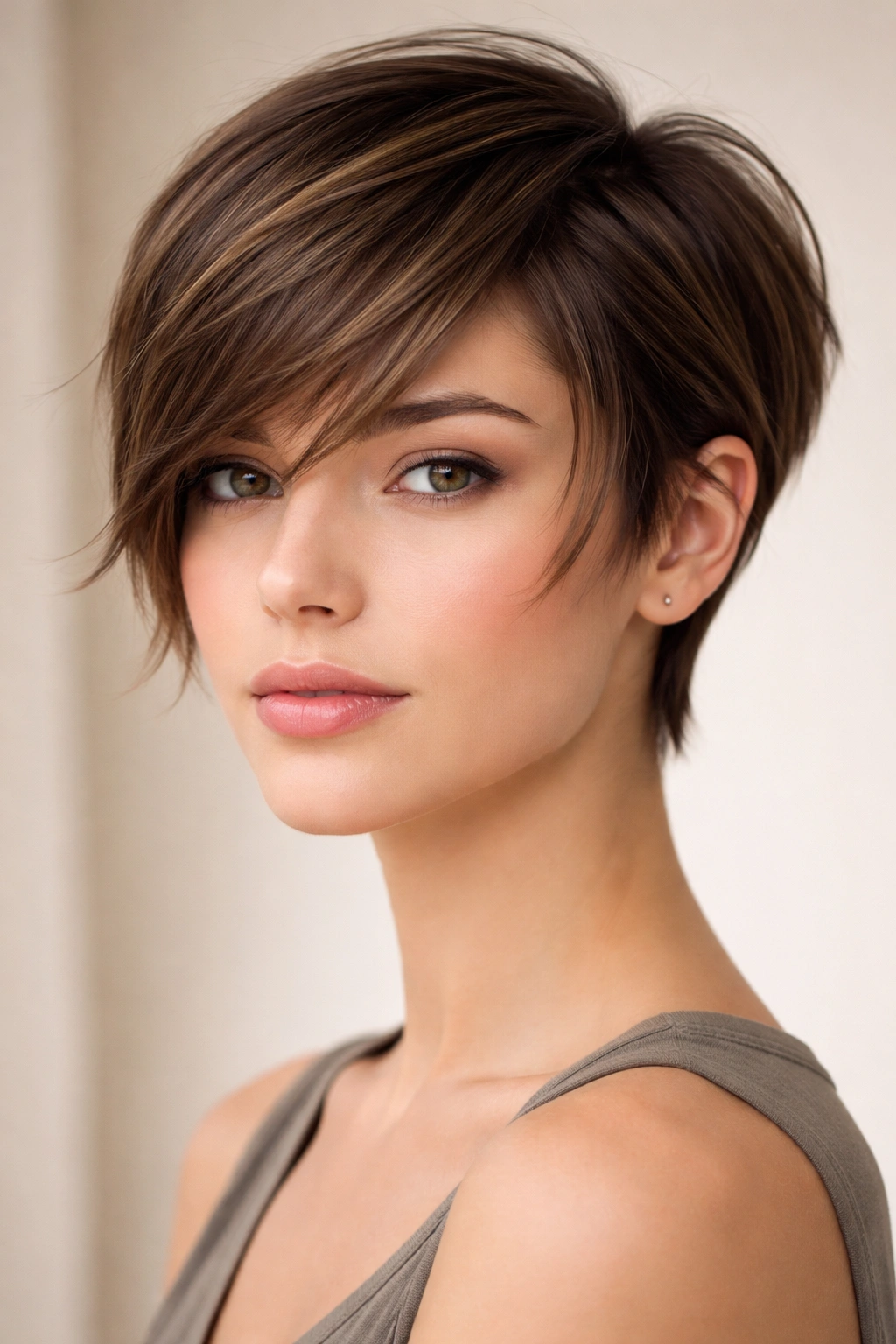
Sometimes the magic of a long pixie is in the details, and face-framing pieces are the ultimate detail. This version keeps the overall pixie structure—tapered sides and back, longer top—but adds intentional longer pieces that frame the face, starting from the temples or cheekbones and extending past the chin. These pieces aren’t side bangs exactly; they’re longer layers that integrate with the rest of the cut but are specifically positioned to draw attention to the face.
What Makes This Cut Stand Out
Face-framing pieces are inherently flattering because they soften the face shape, draw attention to the eyes, and create a subtle asymmetry that feels interesting without being extreme. They break up a straight hairline, soften an angular jawline, and add dimensionality when you move your head. Unlike bangs that sit on the forehead, face-framing pieces hang alongside the face, which means they’re less maintenance-heavy and work with more face shapes. They also give you something to style and play with—you can tuck them behind your ears for a cleaner look, let them fall forward, or curl them under.
How to Ask Your Stylist for This Cut
- Ask for a long pixie with face-framing pieces or “money pieces”
- Specify how long you want the face-framing pieces (usually cheekbone to chin length works for most people)
- Request that the pieces be slightly longer than the surrounding top layers so they’re clearly defined and visible
- Discuss which direction you want them to fall; forward, slightly angled back, or mixed
- Ask your stylist whether they recommend layering the face-framing pieces or keeping them slightly blunt for definition
Styling and Maintenance Tips
- Face-framing pieces look good when slightly waved or curled under; use a 1-inch curling iron while damp or blow-dry with a round brush
- These pieces benefit from a light styling cream or serum that adds smoothness and shine; they’re meant to catch light
- Trim these pieces every 4-6 weeks; they’re the first thing people notice, so keeping them shaped is important
- Tuck them behind your ears when you want a cleaner look, or use a small bobby pin to hold them back if needed
- Sleep on the opposite side so the pieces don’t get too crimped or creased
Pro tip: Ask your stylist to cut face-framing pieces on a very slightly shorter layer than the surrounding hair; as you grow your pixie out, the face-framing pieces maintain their purpose longest if they’re clearly distinguished.
9. Slicked-Back Long Pixie Hybrid
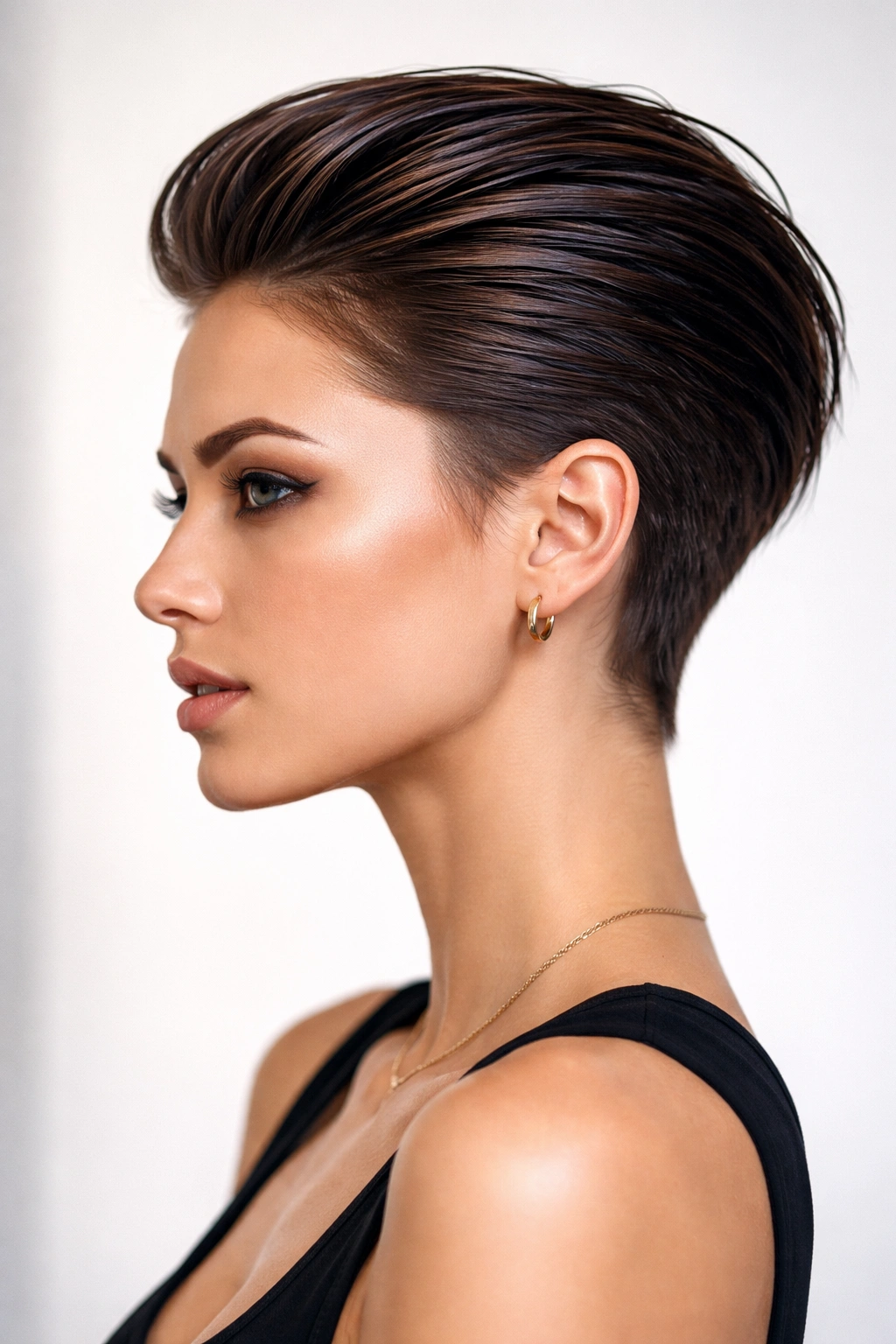
For people who love the androgynous appeal of a pixie but also want the option of softer, more traditionally feminine styling, the slicked-back long pixie hybrid offers the best compromise. This version is cut longer on top than a traditional pixie—sometimes extending to 3-4 inches—so that you have enough length to slick back into a small bun, braid, or ponytail, or to style sleekly against the head. The sides remain short and clean, creating that pixie definition, but the top gives you real versatility.
What Makes This Cut Stand Out
This cut is about having options. You can slick it back for an ultra-sleek, androgynous look with an undercut or short fade showing; you can let it fall naturally for a softer pixie appearance; or you can style it up in a tiny ponytail for a whole different energy. It’s perfect for people with jobs or social situations where they might need to present as more traditionally feminine some days and more androgynous other days. The hybrid nature means you’re never locked into one aesthetic.
How to Ask Your Stylist for This Cut
- Ask for a long pixie that’s long enough on top to slick back or tie up; specify your minimum length requirement
- Request that the back and sides be short and clean so the contrast still reads as a pixie when you’re wearing it down
- Discuss how you’d slick it back; do you want just enough length for a tight bun, or more length for a small ponytail?
- Ask your stylist whether they recommend any layers on top for softness, or if you want the top relatively blunt
- Discuss how the sides and back will look when you slick hair back; this affects how short they should be
Styling and Maintenance Tips
- Keep a small hair elastic and bobby pins on hand so you can switch between styles throughout the day
- When slicked back, use a strong-hold gel or edge control to keep everything in place and prevent flyaways
- Trim the sides and back every 4-6 weeks, but you can let the top grow longer if you like having more versatility with styling
- Sleep on a silk pillowcase so the slicked-back style doesn’t get too distorted
- When wearing it down, use a dry shampoo at the roots to add texture and grip so the longer top doesn’t sit flat
Pro tip: If you’re considering this cut, ask your stylist how it will look in a slicked-back style on your specific face shape before committing; some faces read better with hair back than others.
10. Long Pixie with Faded Sides
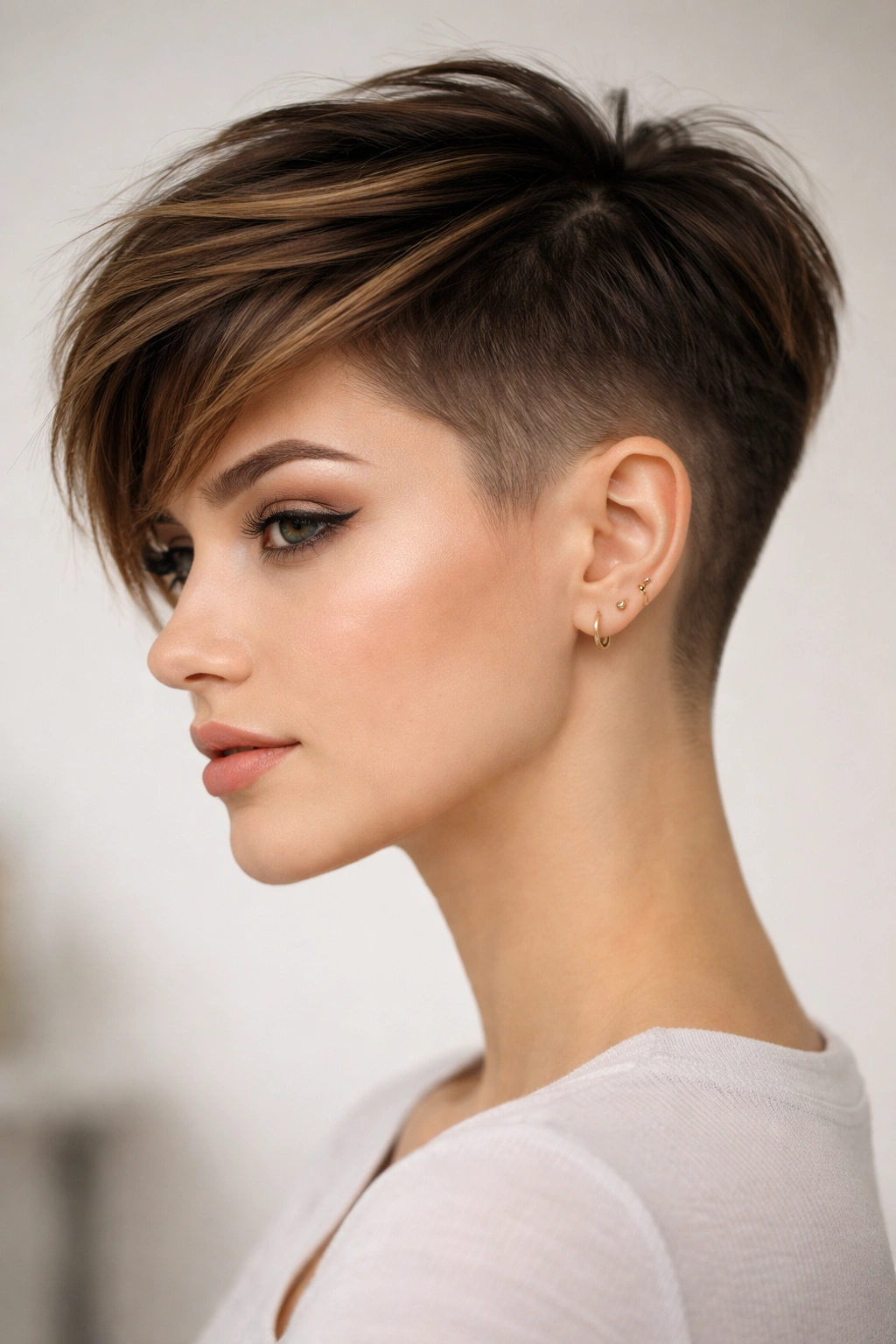
The faded sides version of the long pixie takes the undercut concept and makes it slightly more wearable for people who want that contrast without something quite as dramatic. Instead of a sharp line between short and long, a fade gradually transitions from very short sides (often clippered at a #1 or #1.5) to longer hair on top, with the gradient happening over about 1-2 inches rather than a sharp delineation. It’s modern, clean, and less maintenance-intensive than an undercut because the growth between trims is less noticeable.
What Makes This Cut Stand Out
The fade is the contemporary evolution of the taper; it’s geometric and intentional without being as severe as an undercut. A good fade shows off barber technique and precision, creating a beautiful visual line from short to long that flatters the sides of the head. The fade works well for people with different head shapes because you can adjust how short the fade goes and where the transition happens. It’s also incredibly versatile in terms of styling the top—you can wear it slicked back, ruffled up, swept to one side, or soft and textured.
How to Ask Your Stylist for This Cut
- Ask for a pixie cut with a fade on the sides and back
- Specify how short you want the shortest part of the fade (usually #0.5, #1, or #1.5)
- Request a fade that transitions evenly from short to longer over about 1-2 inches
- Ask your stylist whether they’ll taper the fade higher behind the ears or keep it consistent around the sides
- Discuss how they’ll blend the fade into the longer top; some prefer a very gradual blend while others like a slightly more defined line
Styling and Maintenance Tips
- A fade requires a trim every 2-3 weeks to maintain the gradient; as it grows, the fade becomes less defined and more like a taper
- You’ll need to find a stylist with fading skills; this is often a barber rather than a traditional hairstylist
- Between trims, use a clipper or an electric trimmer at home if you’re comfortable maintaining it, or schedule frequent appointments
- The fade looks great with any style on top; experiment with different products and directions
- Consider using a fade-specific shampoo and conditioner that won’t dry out the short sides
Pro tip: Show your stylist photos of fades you like; fade technique varies significantly between stylists, and specificity helps ensure you get the look you want.
11. Romantic Long Pixie with Waves
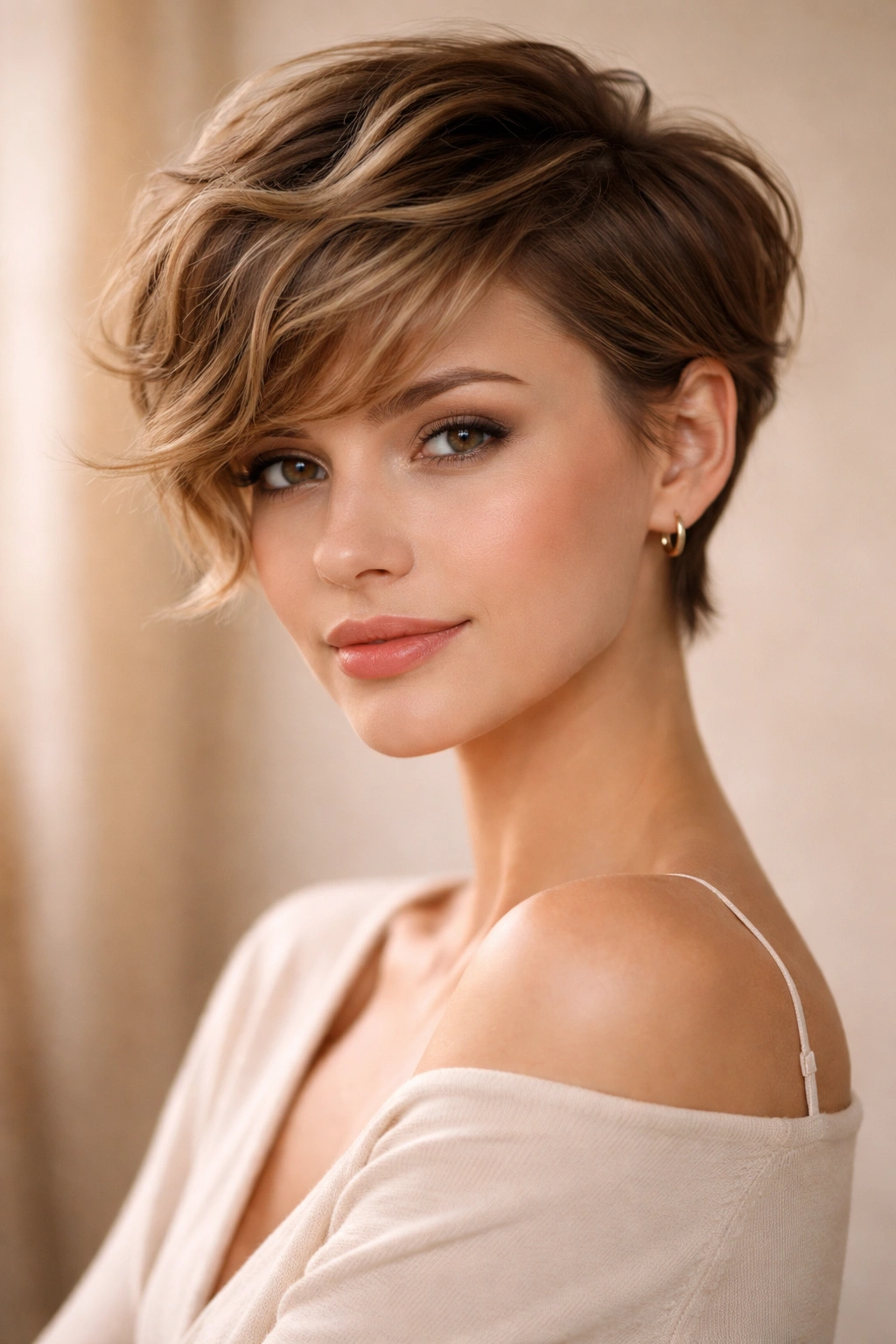
If you love the idea of a pixie but want it to feel soft, romantic, and undeniably feminine, a long pixie with waves is your answer. This version is cut like a classic long pixie—shorter sides, longer top with some layering—but it’s styled with waves, curls, or soft loops throughout. You can achieve waves with a curling iron, a wave-creating product, or by embracing your natural wave pattern and styling it intentionally. The result is a pixie that feels both edgy and romantic at the same time.
What Makes This Cut Stand Out
Waves soften the sometimes-severity of a pixie cut, creating a more traditionally feminine silhouette while maintaining the cool factor of shorter hair. The combination of short sides and waves on top creates an interesting textural contrast—there’s something inherently romantic about the juxtaposition. This cut works beautifully for people with any hair texture because you can create waves in straight hair with heat tools, enhance natural waves, or wear curly hair in a more intentionally styled way. Waves also create volume, making your pixie look fuller and more substantial.
How to Ask Your Stylist for This Cut
- Ask for a long pixie designed with waves or soft curls in mind
- Request layers that will hold waves well; this is important for the styling to work
- Ask your stylist how they’d cut this based on your hair texture and whether you’ll be styling waves daily
- Discuss whether you want the waves throughout the entire top or concentrated in certain areas
- Ask for styling recommendations specific to creating and maintaining waves in your hair type
Styling and Maintenance Tips
- Invest in a good 1-inch curling iron and learn proper curling technique, or use a wave-creating cream and diffuser-dry for more natural waves
- Create waves while hair is damp; they’ll set better and last longer than waves created on dry hair
- Use a light texture spray or sea salt spray to add grip and make waves hold longer throughout the day
- Sleep with hair in a loose braid or pineapple to preserve waves overnight
- Trim every 6-8 weeks so layers continue to hold waves well; as layers grow blunt, waves can look less defined
- Embrace second-day waves; they often look better than day-one waves, so don’t wash your hair daily if you don’t have to
Pro tip: If you want waves but aren’t skilled with a curling iron, ask your stylist about getting a light permanent wave; a soft perm can give you waves that require less daily styling while still reading as natural.
12. Modern Long Pixie with Disconnected Layers
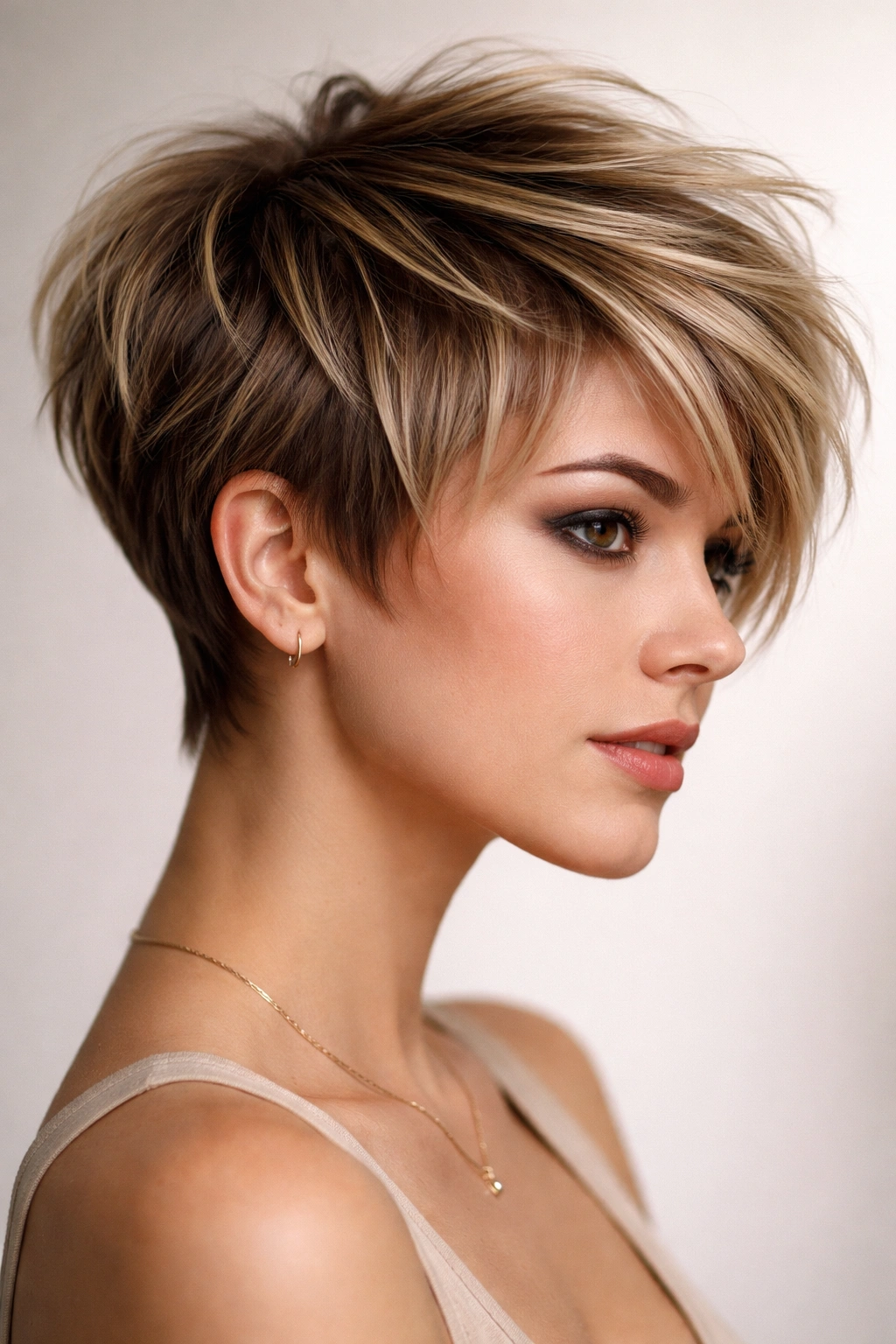
The disconnected layer approach takes the long pixie into contemporary territory. Instead of layers blending smoothly from one length to another, disconnected layers are deliberately separated—you can see clear visual separation between sections of hair at different lengths. This creates an artistic, sculptural quality where the hair has distinct “chunks” of texture rather than a gradual transition. It’s a cut that’s very now and reads as intentionally artistic rather than accidental.
What Makes This Cut Stand Out
Disconnected layers create dramatic visual interest and volume illusion; they’re perfect for people who love movement and texture. The cut shows off your hair’s individual sections, which means it photographs beautifully and looks different from every angle. It’s especially striking in color because the layers catch light and reveal color variations. This cut requires commitment to styling—it needs texture product, deliberate drying techniques, and occasional touch-ups—but if you love making a bold statement with your hair, it’s worth every bit of effort.
How to Ask Your Stylist for This Cut
- Ask for a long pixie with disconnected layers that are clearly visible and separate
- Specify that you want distinct layers rather than a blended, graduated cut
- Request layers throughout the top and sides that vary in length; discuss how dramatic you want the separation
- Ask your stylist where they’ll place the disconnected layers for maximum effect and flattery
- Discuss how they’ll cut the sides and back; these can also feature some disconnection for a fully modern look
Styling and Maintenance Tips
- This cut absolutely requires a strong texture product; use a matte clay, paste, or texture powder to define layers and prevent them from looking matted
- Rough-dry your hair with your fingers, using product to piece out the disconnected sections deliberately
- You can also style this cut sleek and slicked back if you want a completely different aesthetic
- Trim every 4-6 weeks; disconnected layers can get choppy and unkempt-looking faster than blended cuts as they grow
- The cut looks best when you lean into its artistic nature; embrace the texture and don’t try to smooth it into something polished
Pro tip: Ask your stylist to cut some layers much shorter than others for maximum visual impact; subtle disconnection is less striking than obvious variation in layer lengths.
Final Thoughts
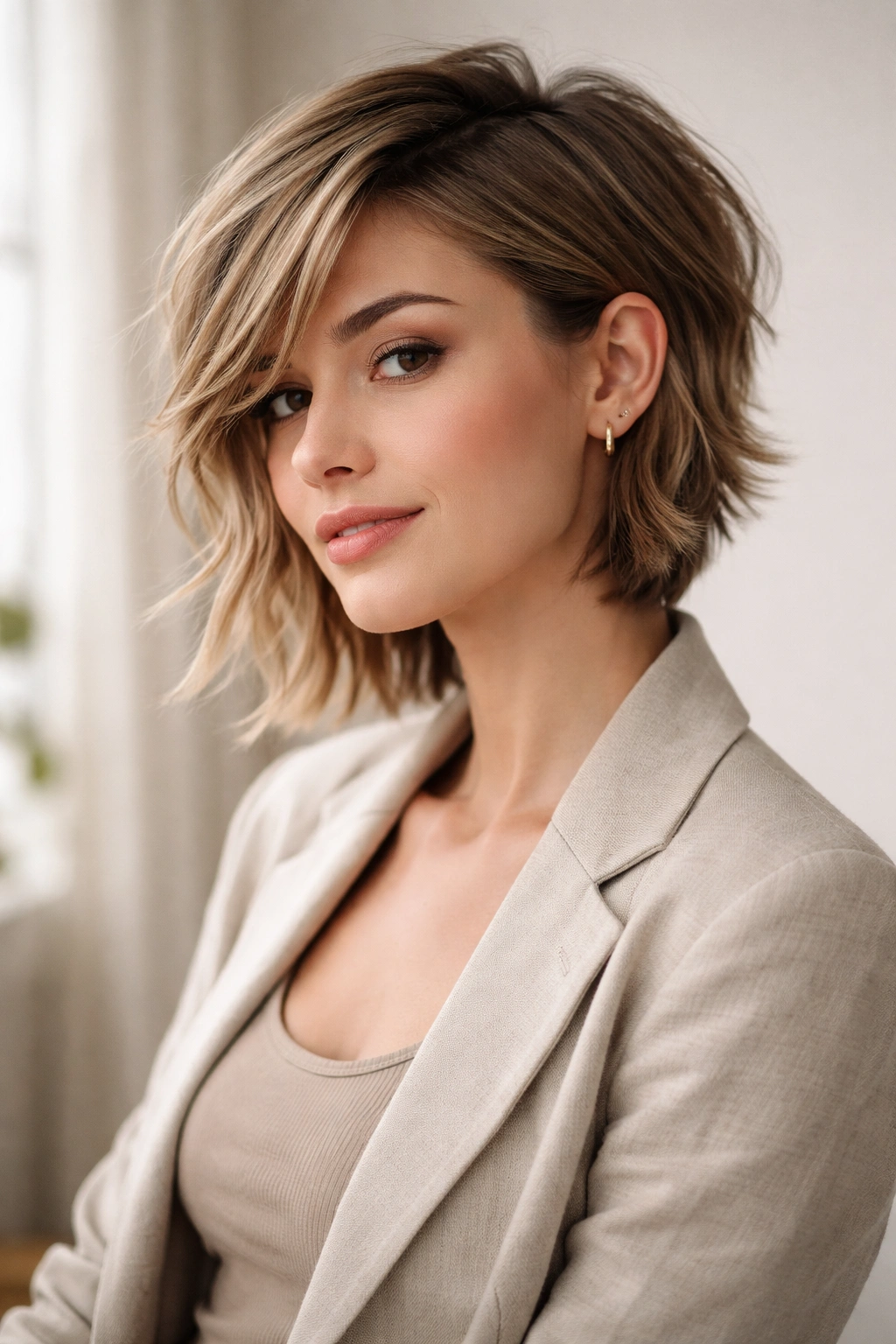
The long pixie sits at the intersection of bold and wearable, letting you embrace the attitude of a pixie cut while maintaining enough length to play with styling, texture, and personal expression. Whether you’re drawn to the sleek geometric drama of an undercut, the romantic softness of waves, or the artistic chaos of disconnected layers, there’s a long pixie variation that speaks to your style and lifestyle. The key is finding a skilled stylist who understands how to balance proportion, work with your hair texture, and cut with intention so your long pixie isn’t just a hairstyle—it’s a reflection of who you are.
The commitment to a pixie cut is real, and the long pixie asks you to own shorter hair and show your face more. But the payoff is a hairstyle that’s low-maintenance compared to longer styles, photograph-worthy from every angle, and uniquely you. Schedule a consultation with a stylist who has experience cutting pixies, bring reference photos of the specific version that calls to you, and be honest about your styling willingness and lifestyle. A long pixie that’s cut right and styled with intention isn’t just a hairstyle—it’s a confidence maker.
