



Shoulder-length hair is that perfect sweet spot between versatility and maintenance. It’s long enough to experiment with different styles and textures, yet short enough to actually manage without spending hours styling. Whether you’ve got thick curls, fine waves, or ruler-straight strands, there’s absolutely a shoulder-length cut that’ll make your hair look its best and feel effortless to style.
The thing about shoulder-length cuts is they’re incredibly forgiving. They work with your natural texture instead of against it, they suit almost every face shape, and they give you endless styling possibilities—from sleek and polished to tousled and textured. The key is finding the specific cut that complements your hair type, face shape, and lifestyle. That’s where this guide comes in.
We’ve rounded up twenty of the most flattering shoulder-length haircuts, broken down by hair type and styling potential. Each one comes with specifics about who it works best for, why it’s worth considering, and how to style it so it actually looks the way you want every single day. Let’s find your next haircut.
1. The Classic Bob with Textured Layers
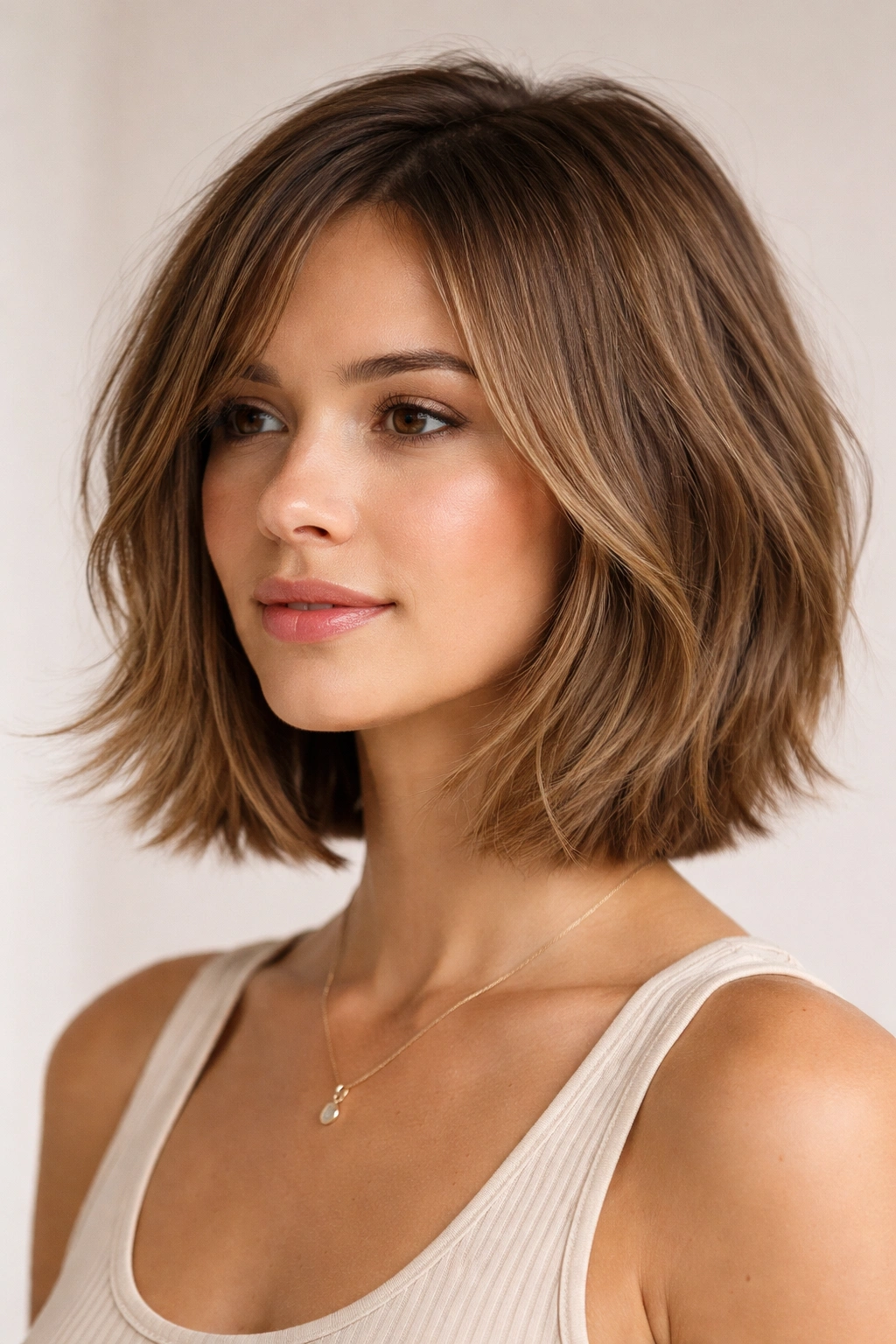
This is the reliable workhorse of shoulder-length cuts—a traditional chin-to-shoulder bob with subtle layering throughout that adds movement without sacrificing the clean silhouette. The layers are strategically placed to encourage natural texture and prevent the heavy, blunt look that can weigh fine hair down.
Why It Works for Most Hair Types
The textured bob is endlessly adaptable because the layering works with whatever texture you naturally have. Fine hair gets dimension and the illusion of fullness. Wavy and curly hair gets a structure that helps define your natural pattern. Even thick straight hair looks less severe when the ends have some strategic choppy texture. It’s also one of the easiest cuts to grow out gracefully—the layers blend into longer hair beautifully over time.
How to Make It Work for You
- Best for: Fine to medium hair, all textures
- Styling: Blow dry with a round brush for volume at the roots, or air-dry with sea salt spray for an undone texture
- Maintenance: Trim every 4-6 weeks to keep the layers sharp and prevent the ends from looking scraggly
- Styling time: 5-10 minutes with heat, or completely wash-and-go friendly with the right products
- Face shapes: Works beautifully on oval, square, and heart-shaped faces
Pro tip: Ask your stylist to point-cut the ends rather than blunt-cut them. Point-cutting creates a softer, more textured finish that looks intentional and polished, even on a lazy hair day.
2. The Shag Haircut
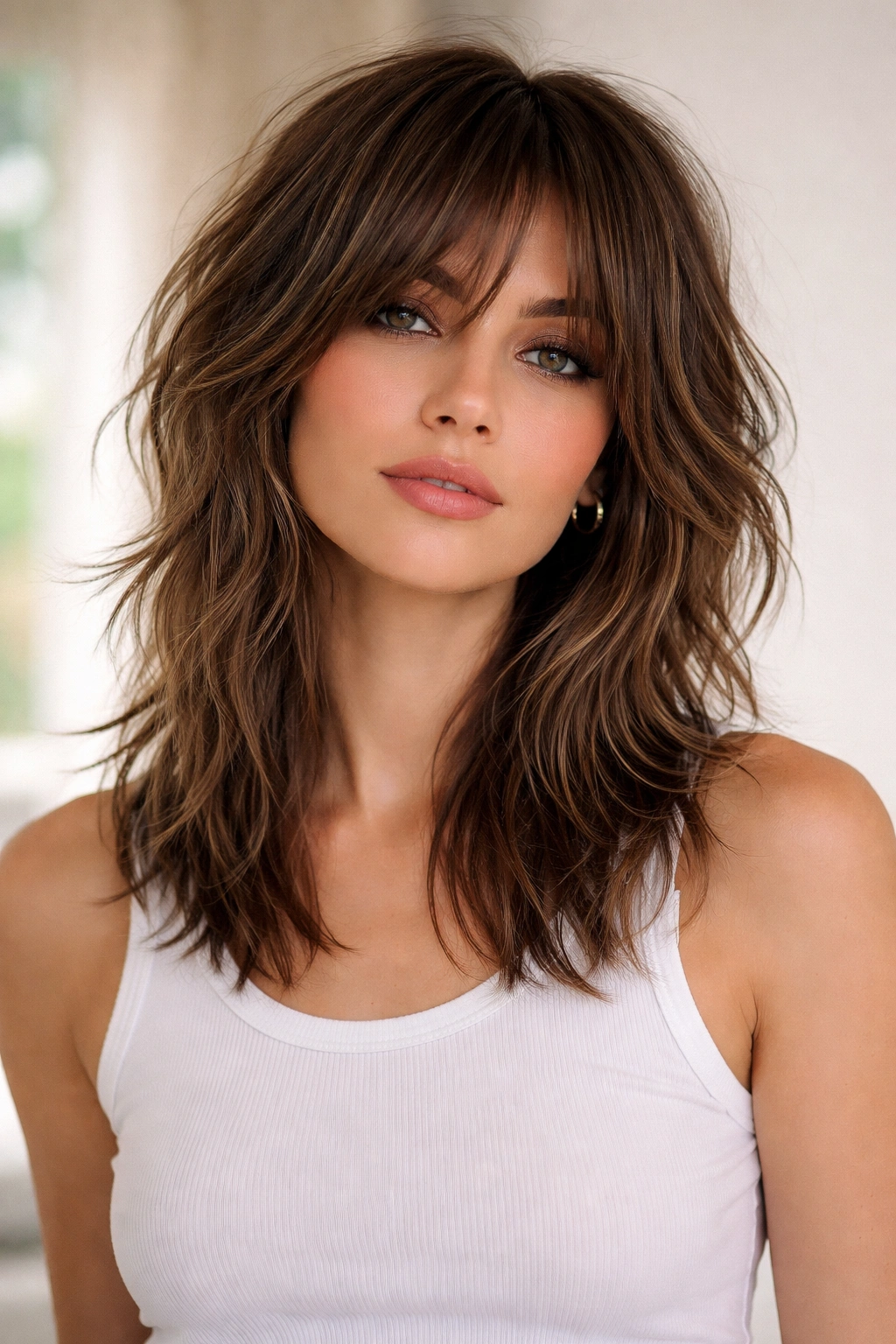
The modern shag is a glamorous, lived-in take on the ’70s classic—lots of choppy, shorter layers throughout with longer pieces underneath that hit right at the shoulder. It’s deliberately undone, meant to look like you just rolled out of bed and somehow looked amazing.
Why It Works for Most Hair Types
Shags thrive on texture and movement. If you’ve got natural waves or curls, this cut is basically made for you—the layers work with your texture to create dimension without you having to do much of anything. Even straight-haired folks can rock a shag by adding some texture with a curling iron or salt spray. The choppy layers also mean it’s remarkably low-maintenance; every texture catches light differently, so imperfection is actually the point.
How to Make It Work for You
- Best for: Wavy, curly, and textured hair; thick hair; anyone who wants an effortless vibe
- Styling: Embrace your natural texture or add waves with a curling iron, then finger-comb with texturizing spray
- Maintenance: Trim every 6-8 weeks to keep the layers intentional-looking and prevent fluffiness
- Styling time: 5 minutes if you’re using your natural texture; 15 minutes if you’re curling
- Face shapes: Flattering on most face shapes, especially round and oblong
Insider note: The key to a shag looking intentional rather than chaotic is asking your stylist for “layers throughout with longer pieces underneath.” This keeps it cohesive while still giving you that shaggy texture on top.
3. The Blunt Shoulder-Length Cut
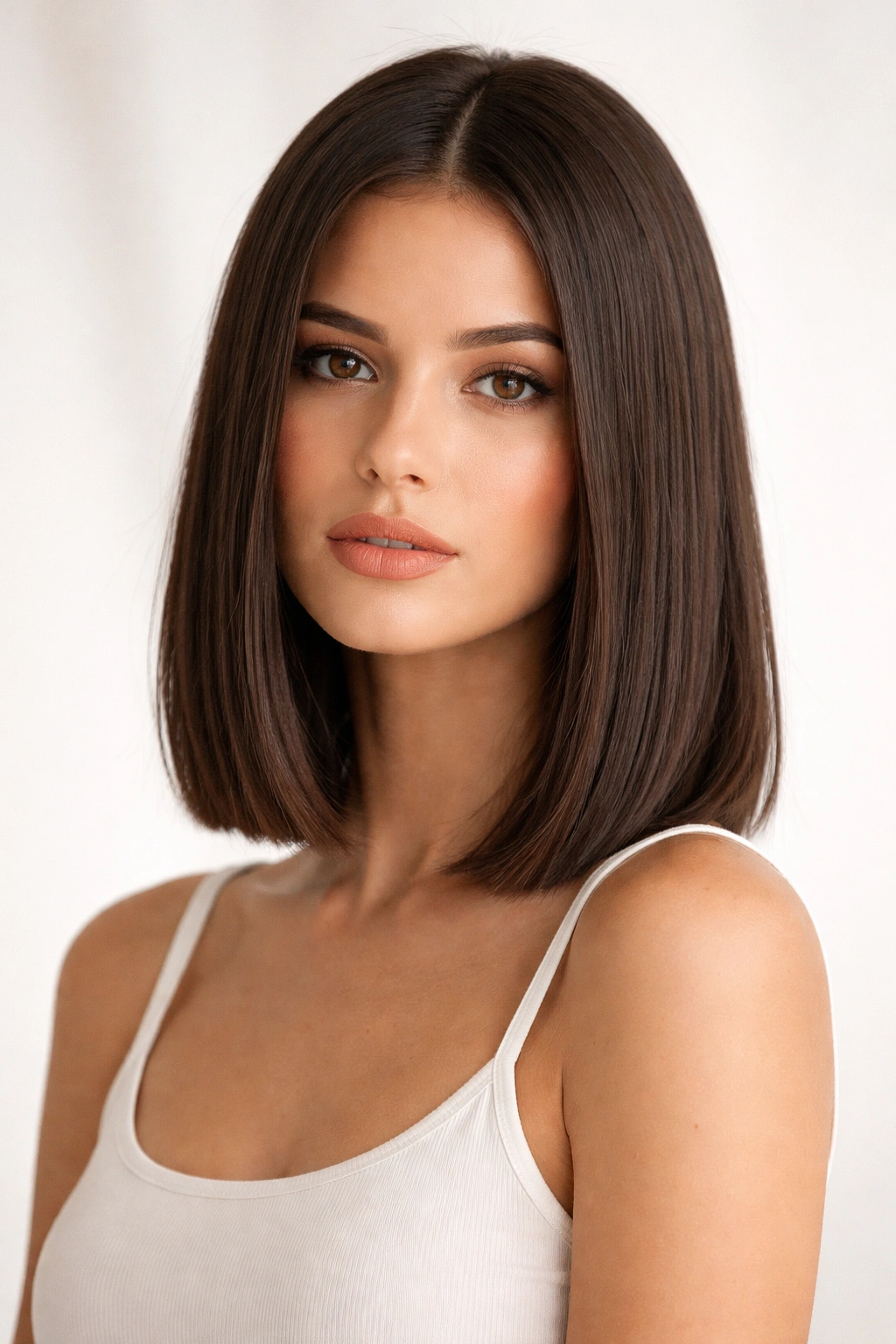
This is pure, unapologetic structure—a clean, straight line right at the shoulder with minimal to no layering. It’s bold, geometric, and makes a statement. The bluntness creates an almost art-gallery quality; this cut knows exactly what it is.
Why It Works for Straight Hair
Blunt cuts are the hero haircut for straight hair. The sharp line looks intentional and polished, and straight hair has the density to carry the weight without looking limp. When you’ve got naturally sleek hair, a blunt cut actually enhances that quality instead of fighting it. Plus, the geometric precision photographs beautifully.
How to Make It Work for You
- Best for: Straight, fine to thick hair; strong, angular face shapes
- Styling: Blow-dry straight or let it air-dry for a minimal-effort look; straightening iron for extra precision
- Maintenance: Trim every 3-4 weeks to keep the line razor-sharp and prevent split ends from ruining the effect
- Styling time: 5-10 minutes, or completely wash-and-go
- Face shapes: Especially flattering on square and oblong faces; creates beautiful framing on oval faces
Worth knowing: A blunt cut shows every texture variation and split end, so investing in quality hair products and regular trims is non-negotiable. The trade-off is that when it’s healthy, it looks absolutely stunning.
4. The Choppy Wolf Cut
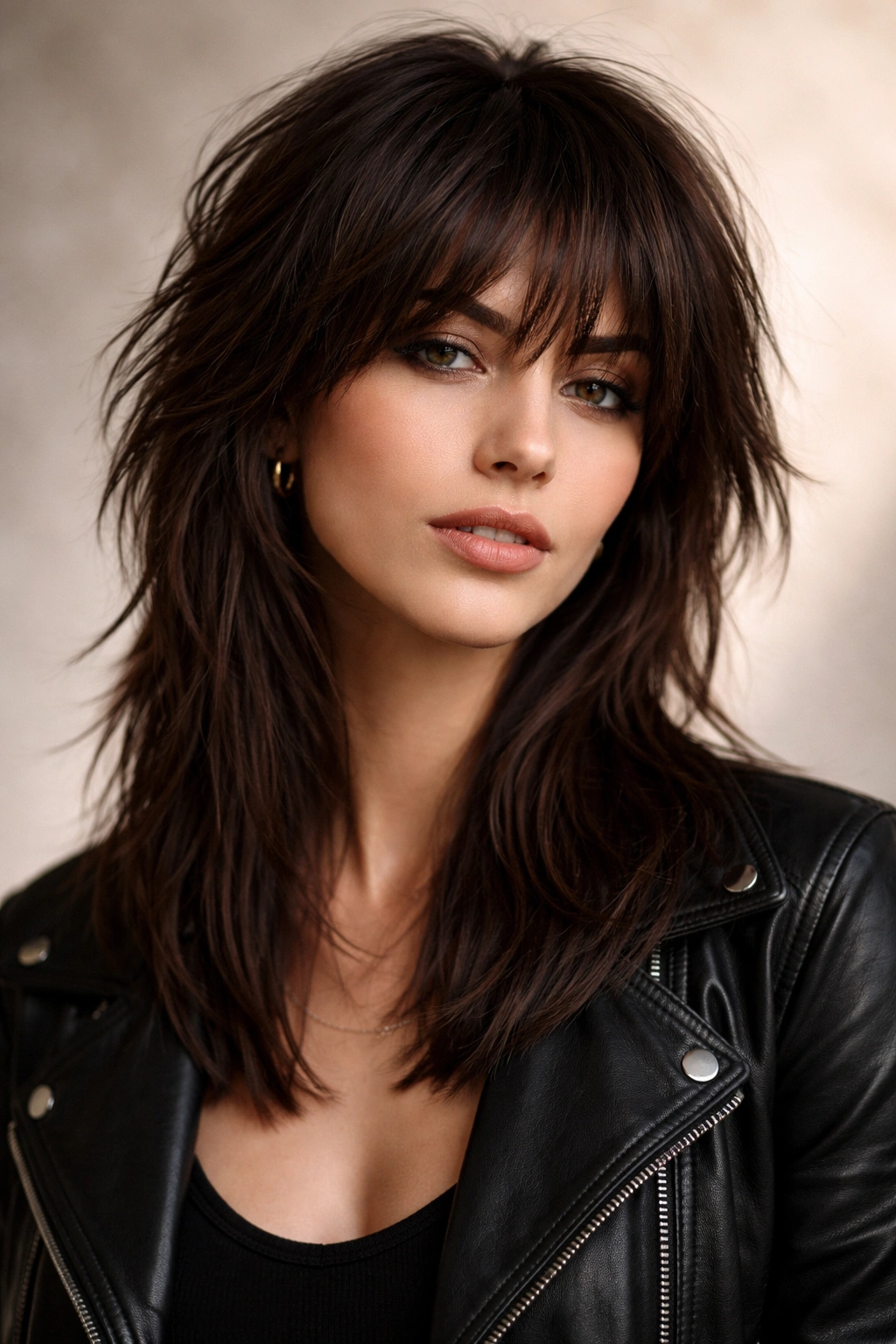
Think of this as a hybrid between a shag and a mullet—shorter choppy layers on top that create volume and movement, with longer, sleeker pieces underneath that extend to the shoulder. It’s edgy, modern, and surprisingly wearable despite its bold name.
Why It Works for Thick, Wavy Hair
The wolf cut is actually brilliant for managing thick hair because it removes bulk from the top while keeping length overall. The choppy layers catch light and create the illusion of movement even if your hair is naturally very straight. It’s got enough structure to look intentional but enough texture to feel modern and a little rebellious.
How to Make It Work for You
- Best for: Thick, wavy to curly hair; anyone wanting an edge with their shoulder-length style
- Styling: Tousle with texturizing products or add waves with a curling iron; the messier the better
- Maintenance: Trim every 5-6 weeks because the layers are the whole point—when they grow out, you lose the definition
- Styling time: 10-15 minutes to style intentionally, or quick and undone with the right products
- Face shapes: Stunning on oval and oblong faces; adds needed softness to very angular faces
Pro tip: This cut works best when you embrace texture. Use a sea salt spray and either air-dry with your natural texture or quick-curl with a wand. Fighting the cut by blow-drying it smooth kind of defeats the purpose.
5. The Straight-Across Bangs with Shoulder-Length Hair
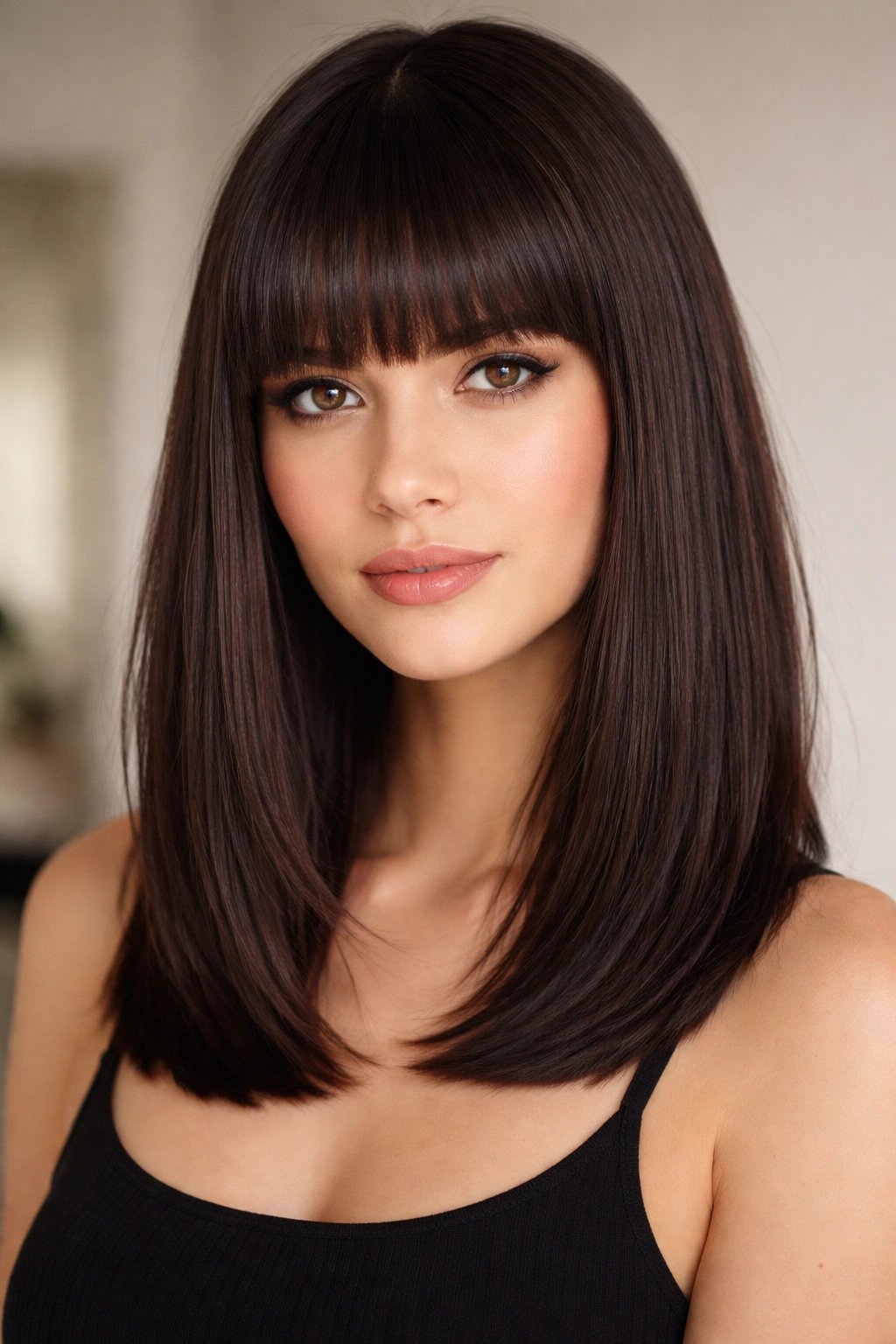
Long, blunt bangs that sit right at eyebrow level paired with straight shoulder-length hair creates an intentional, fashion-forward look. It’s a bolder choice, but when it works, it really works—and it can actually transform your whole face.
Why It Works for Fine, Straight Hair
Bangs instantly add fullness to the face, and when paired with fine hair, they create the illusion of density that many fine-haired folks are after. The bangs also frame the face beautifully, drawing focus where you want it. Straight hair makes bangs look crisp and intentional rather than fluffy or wispy.
How to Make It Work for You
- Best for: Fine, straight hair; oval or heart-shaped faces; anyone confident about committing to bangs
- Styling: Blow-dry straight or with a slight curve at the ends; trim the bangs every 2-3 weeks to maintain the line
- Maintenance: Bangs require commitment—weekly trims at minimum if you want them looking sharp
- Styling time: 10 minutes with a blow dryer and round brush
- Face shapes: Absolutely transformative for heart and long face shapes; use caution on very round faces
Worth knowing: Bangs aren’t for everyone, and they’re one of the harder cuts to grow out gracefully. Make sure you’re genuinely ready for the maintenance before committing. That said, if you’re willing to put in the upkeep, they can genuinely change how you feel about your whole look.
6. The Textured Lob with Subtle Face-Framing
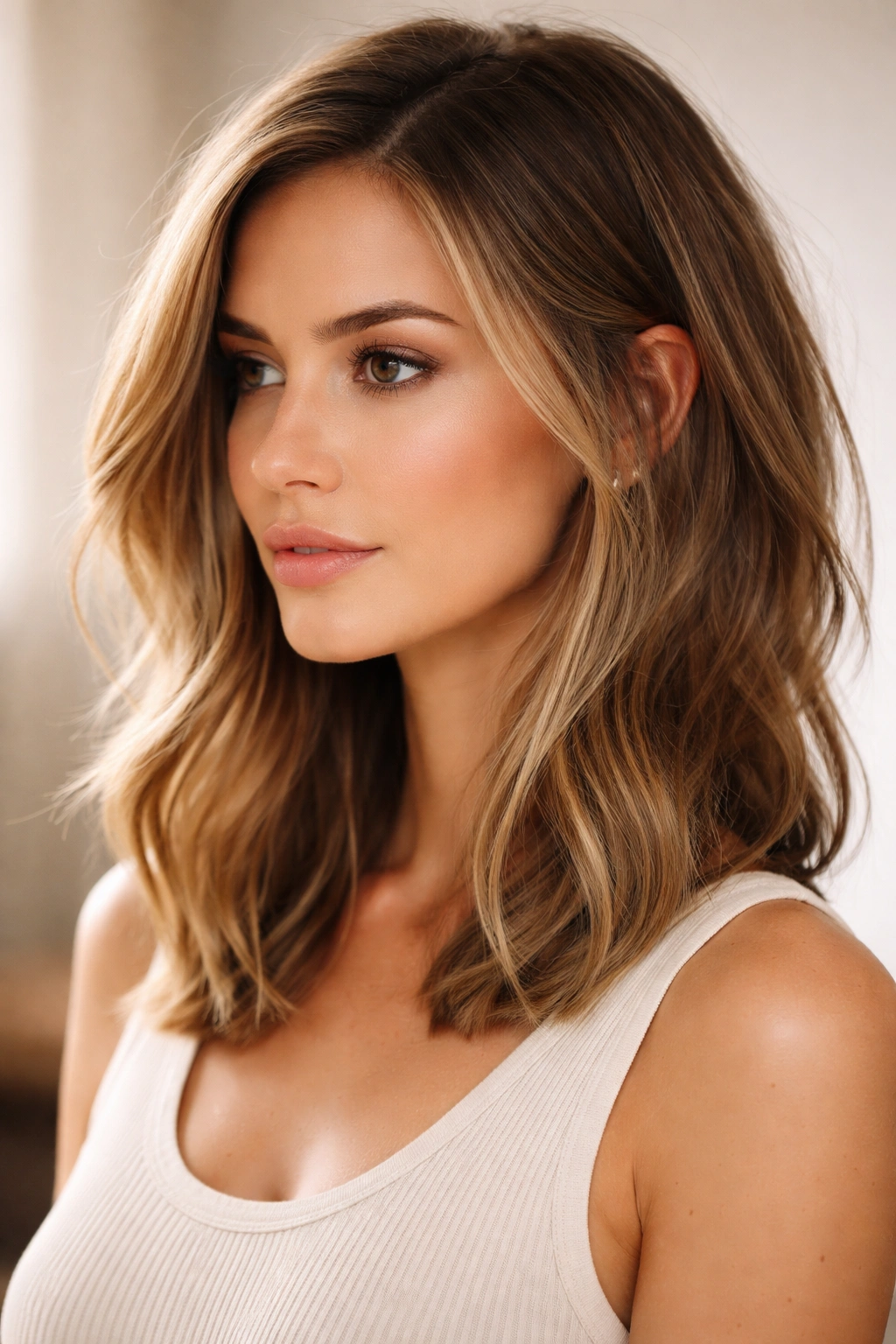
A lob (long bob) that’s longer on the sides and shorter in back, with strategic choppy layers around the face to frame features beautifully. It’s sophisticated without feeling stuffy, textured without being chaotic.
Why It Works for Most Hair Types
This cut works because it borrows the best of both worlds—the length that many people want, but with enough layers and texture that it doesn’t feel heavy or dragging. The face-framing pieces add dimension and draw attention upward. It’s polished enough for professional settings but textured enough to feel modern and intentional.
How to Make It Work for You
- Best for: Medium to thick hair, all textures; works beautifully with waves and curls
- Styling: Blow-dry with face-framing pieces tousled forward, or air-dry with texturizing spray
- Maintenance: Trim every 6-8 weeks to keep the layers and face-framing intentional
- Styling time: 10-15 minutes with heat, or 5-10 minutes air-drying with the right products
- Face shapes: Universally flattering, especially for square and round faces
Pro tip: Ask your stylist to keep slightly longer pieces around the face that can be styled forward or tucked behind the ear depending on your mood and outfit. This adds versatility to how you wear the cut day-to-day.
7. The Sleek One-Length Cut with a Side Part
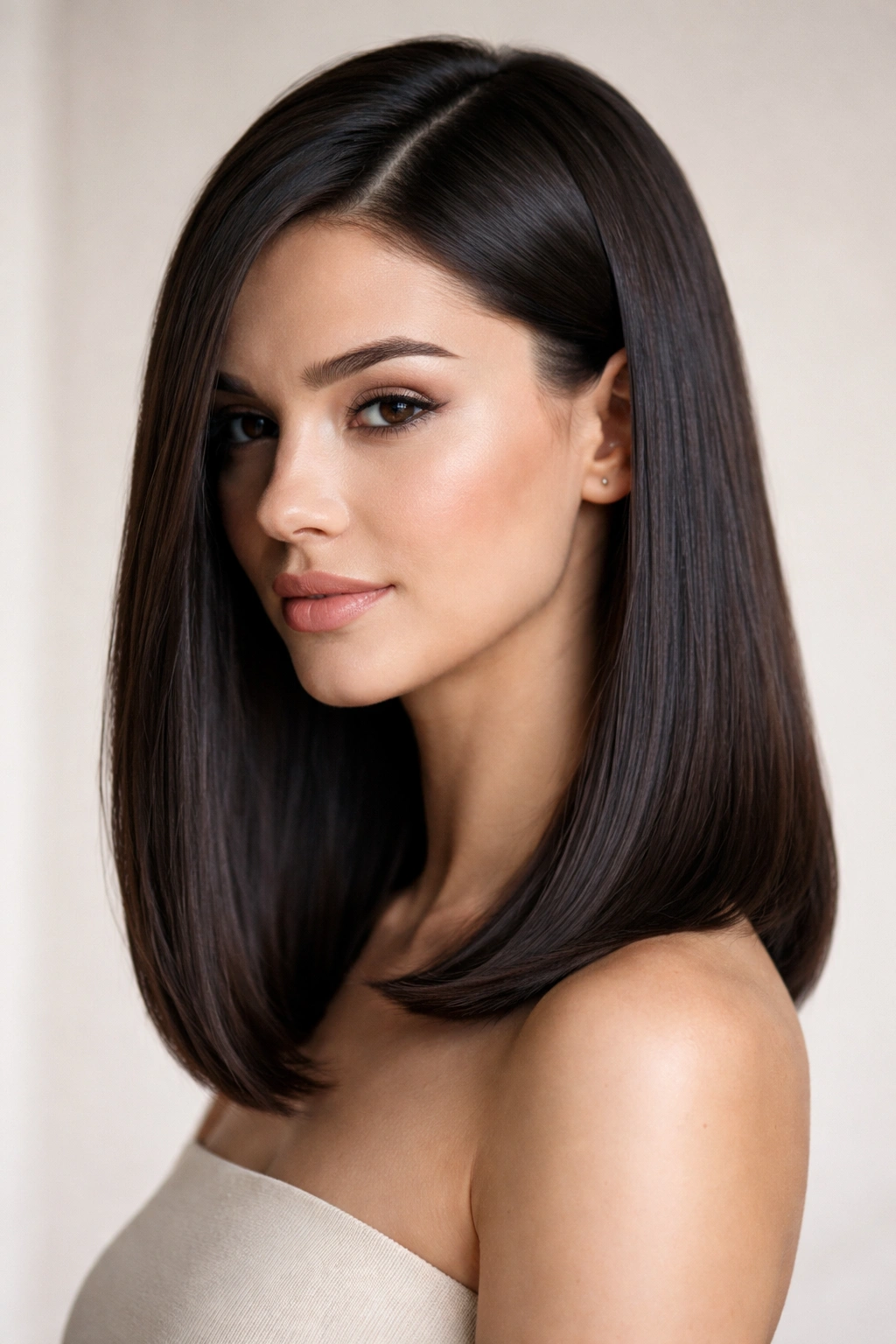
This is minimalist perfection—one clean length hitting right at the shoulder, blown out smooth with a deep side part. It’s the opposite of the shag; where that thrives on texture, this one is all about smoothness and shine.
Why It Works for Fine Hair
Fine hair can look limp when it’s all layered up, but a one-length cut actually gives fine hair somewhere to go. It creates a silhouette without sacrificing density. Add a side part and you’ve got built-in dimension and the illusion of fullness. The smooth finish also makes fine hair look shinier and more lustrous.
How to Make It Work for You
- Best for: Fine to medium straight hair; anyone who loves a polished, put-together aesthetic
- Styling: Blow-dry smooth with a round brush, using a side part to create volume on one side
- Maintenance: Trim every 4-6 weeks to keep the line clean and prevent scraggly ends
- Styling time: 15 minutes blow-drying, or air-dry and touch up with a flat iron
- Face shapes: Flattering on oval and oblong faces; the side part adds width to narrow faces
Worth knowing: This cut shows everything—every texture variation, every split end, every imperfection. It’s not high-maintenance in terms of cutting frequency, but it does require good daily care and regular blow-drying to look its best.
8. The Curly-Textured Shoulder Cut with Defined Layers
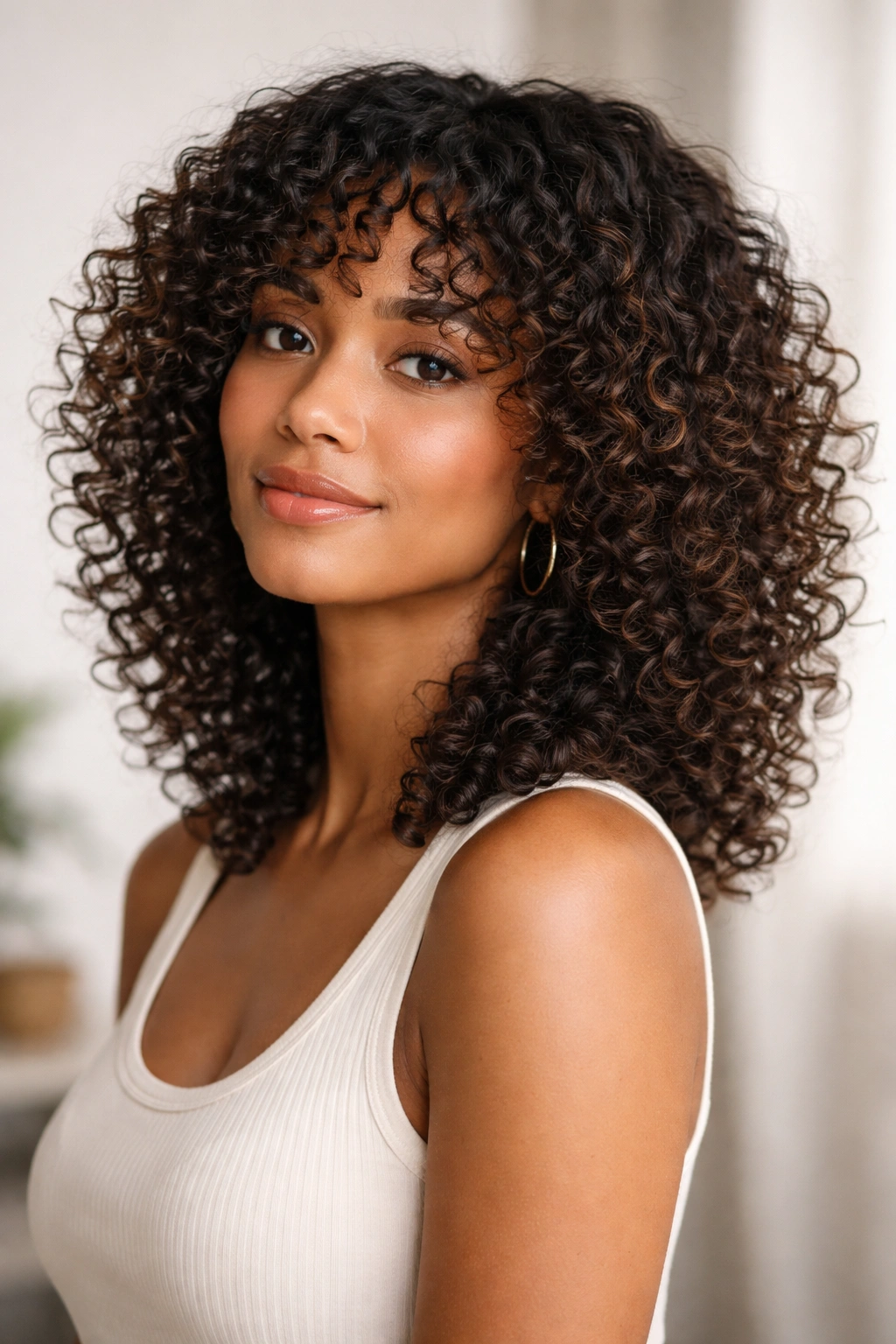
For curly and coily hair, a shoulder-length cut with layers that are specifically designed to enhance your curl pattern—not fight it. Layers in curly hair are tricky; done right, they add definition and volume; done wrong, they create frizz and chaos.
Why It Works for Curly and Coily Hair
When a stylist understands how to layer curly hair, magic happens. The layers remove bulk, define your curl pattern, and actually make your hair easier to style and manage. Shoulder length is also the perfect length for curls—long enough to have weight that helps curls hang beautifully, short enough to avoid the weight dragging your curls into a flat, undefined mess.
How to Make It Work for You
- Best for: Curly, coily, and textured hair types; anyone with naturally textured hair who wants to enhance their pattern
- Styling: Style on wet hair with curl cream and gel; diffuse-dry or air-dry depending on your curl type
- Maintenance: Trim every 8-12 weeks; find a stylist who specializes in cutting curly hair (this is non-negotiable)
- Styling time: 15-30 minutes depending on your curl type and air-dry time
- Face shapes: The frame-around-the-face definition works beautifully on most face shapes
Pro tip: Make absolutely sure your stylist knows how to cut curly hair dry or understands the curl-cutting method. Cutting curly hair when it’s wet is a recipe for disaster—the hair shrinks as it dries, and you’ll end up with layers that don’t work the way you expected.
9. The Tousled Beach Waves Length
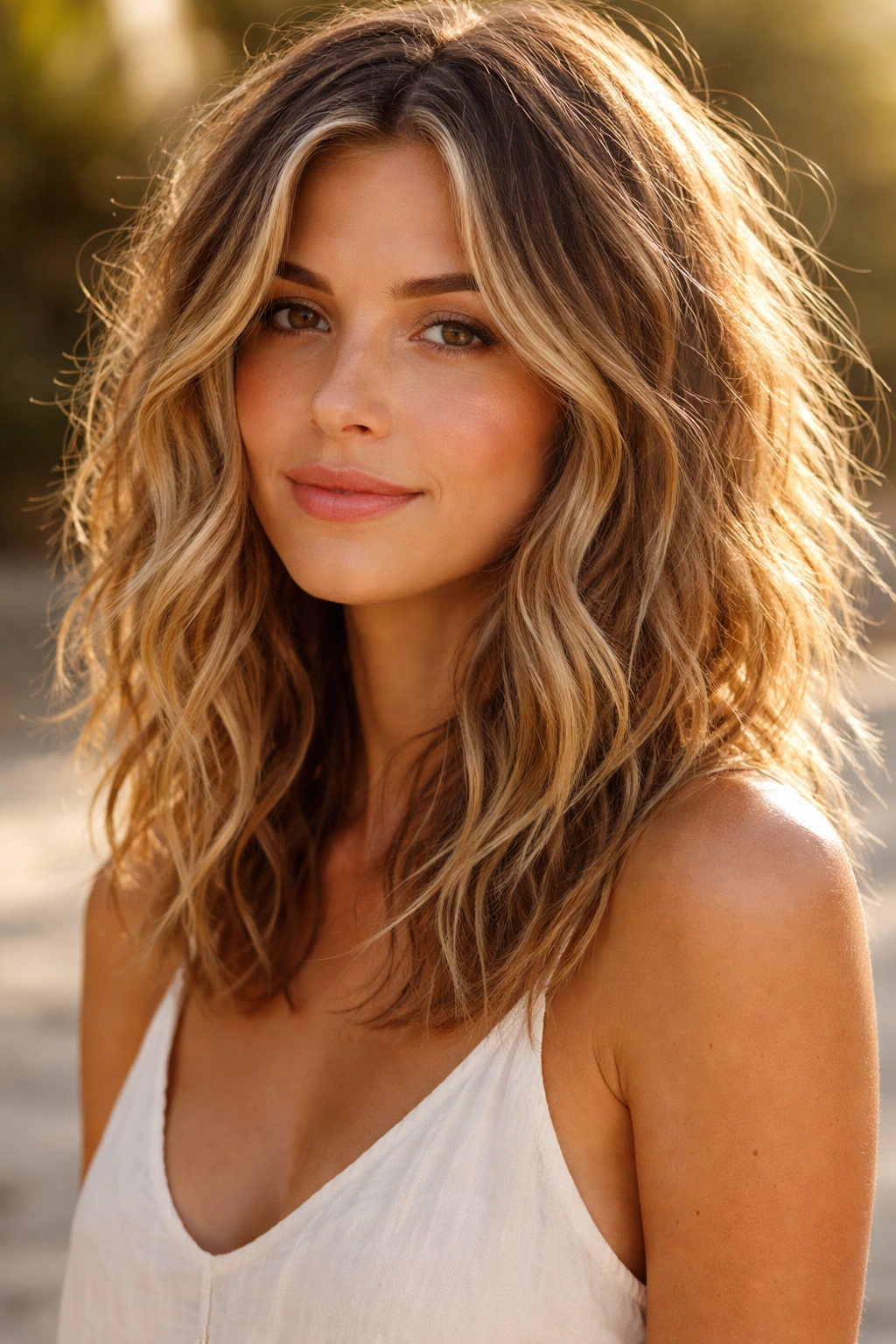
Shoulder-length with subtle layers, styled specifically to give that effortless, beachy, just-came-from-the-ocean texture. It’s undone but intentional, relaxed but polished enough for basically anywhere.
Why It Works for Wavy Hair
If you’ve got natural waves, this is your dream cut. The layers work with your wave pattern to create dimension and movement without you having to do much beyond applying product and letting your hair air-dry. Even if your waves are subtle, the cut encourages them, and with the right styling products, you can enhance what you naturally have.
How to Make It Work for You
- Best for: Wavy hair, medium to thick; anyone wanting an effortless, relaxed vibe
- Styling: Apply texturizing spray to damp hair, add waves with a curling wand, and finger-comb into place
- Maintenance: Trim every 5-6 weeks to keep the layers working with your texture
- Styling time: 10-20 minutes depending on how defined you want your waves
- Face shapes: Universally flattering; the waves soften angular faces beautifully
Worth knowing: This cut works best with the right products. Invest in a good sea salt spray, texturizing cream, and maybe a light mousse. With the right product lineup, you can achieve that beachy look even on days when you’re not feeling like styling.
10. The Precision-Cut Textured Pixie-to-Bob
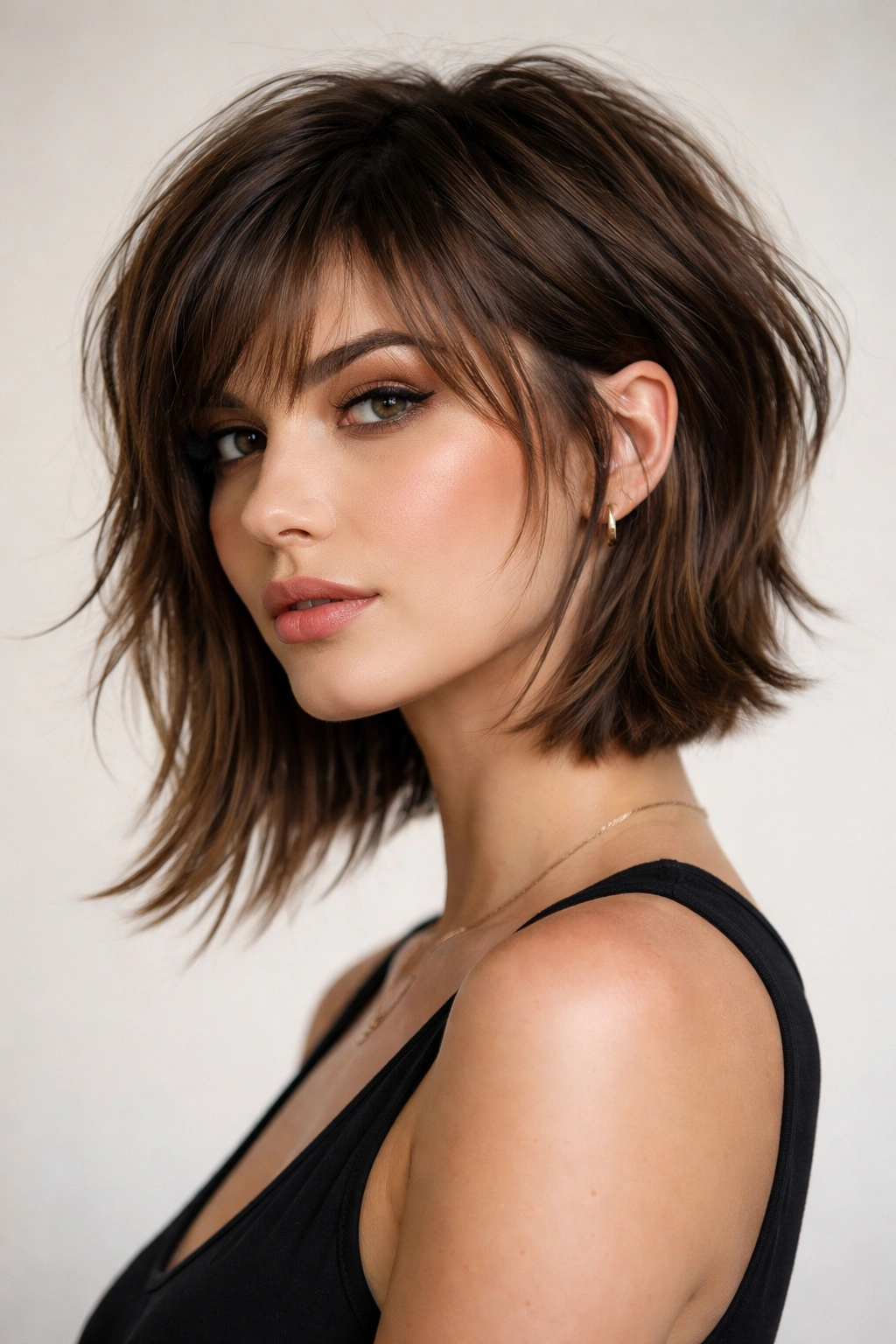
This is a playful, modern cut that’s short and textured at the crown, gradually transitioning to longer pieces in front that reach the shoulder. It’s dramatic but wearable, and it gives you serious personality.
Why It Works for Fine, Textured Hair
The shorter crown removes bulk and adds volume through texture rather than length. The longer front pieces give you something to frame your face with. This cut thrives on fine hair because the texture is the whole point—it’s supposed to look choppy and undone, not limp or thin.
How to Make It Work for You
- Best for: Fine to medium hair; anyone confident about bold style choices
- Styling: Style with texturizing product and either let it air-dry or tousle with a blow dryer and your fingers
- Maintenance: Trim every 4-5 weeks to keep the texture intentional and prevent it from looking straggly
- Styling time: 5-15 minutes depending on how polished you want to look
- Face shapes: Especially flattering on round faces; adds softness to angular faces
Pro tip: This cut is all about attitude. Styling it smooth and polished kind of defeats the purpose. Embrace the texture, use texturizing products, and don’t worry about it looking slightly undone—that’s the whole point.
11. The Face-Framing Layers with Blunt Ends
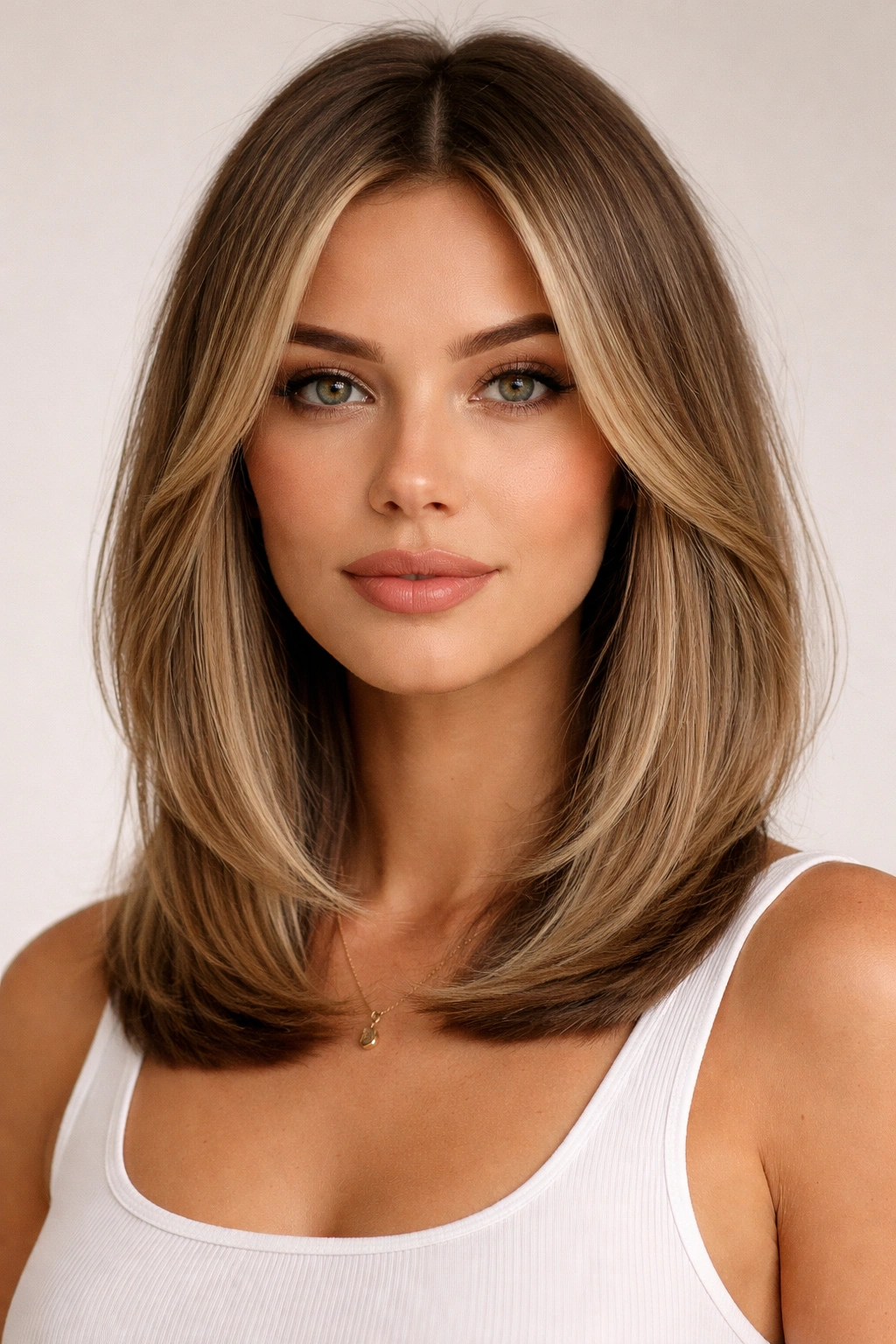
Imagine a shoulder-length cut where the layers are concentrated around the face for framing, but the overall line is relatively clean and blunt. You get dimension and shape without the full shag effect.
Why It Works for Thick, Straight Hair
Thick hair can look heavy and immovable, but strategic face-framing layers change the game. They add movement around the face without making you look like you’re wearing a shag, and the blunt ends keep the whole thing looking intentional and polished rather than choppy.
How to Make It Work for You
- Best for: Thick, straight to slightly wavy hair; anyone wanting structure with softness
- Styling: Blow-dry with a round brush, focusing on creating volume at the crown and flipping the face-framing layers forward
- Maintenance: Trim every 5-6 weeks to keep the layers sharp and prevent the ends from looking dull
- Styling time: 10-15 minutes blow-drying, or 5 minutes with texturizing product if you’re air-drying
- Face shapes: Flattering on most face shapes, especially square and oblong
Worth knowing: The key to this cut looking polished rather than choppy is the execution. Lots of texture but with a clear overall direction and shape. Make sure your stylist understands that you want definition without chaos.
12. The Spiraled Curl Enhancement Cut
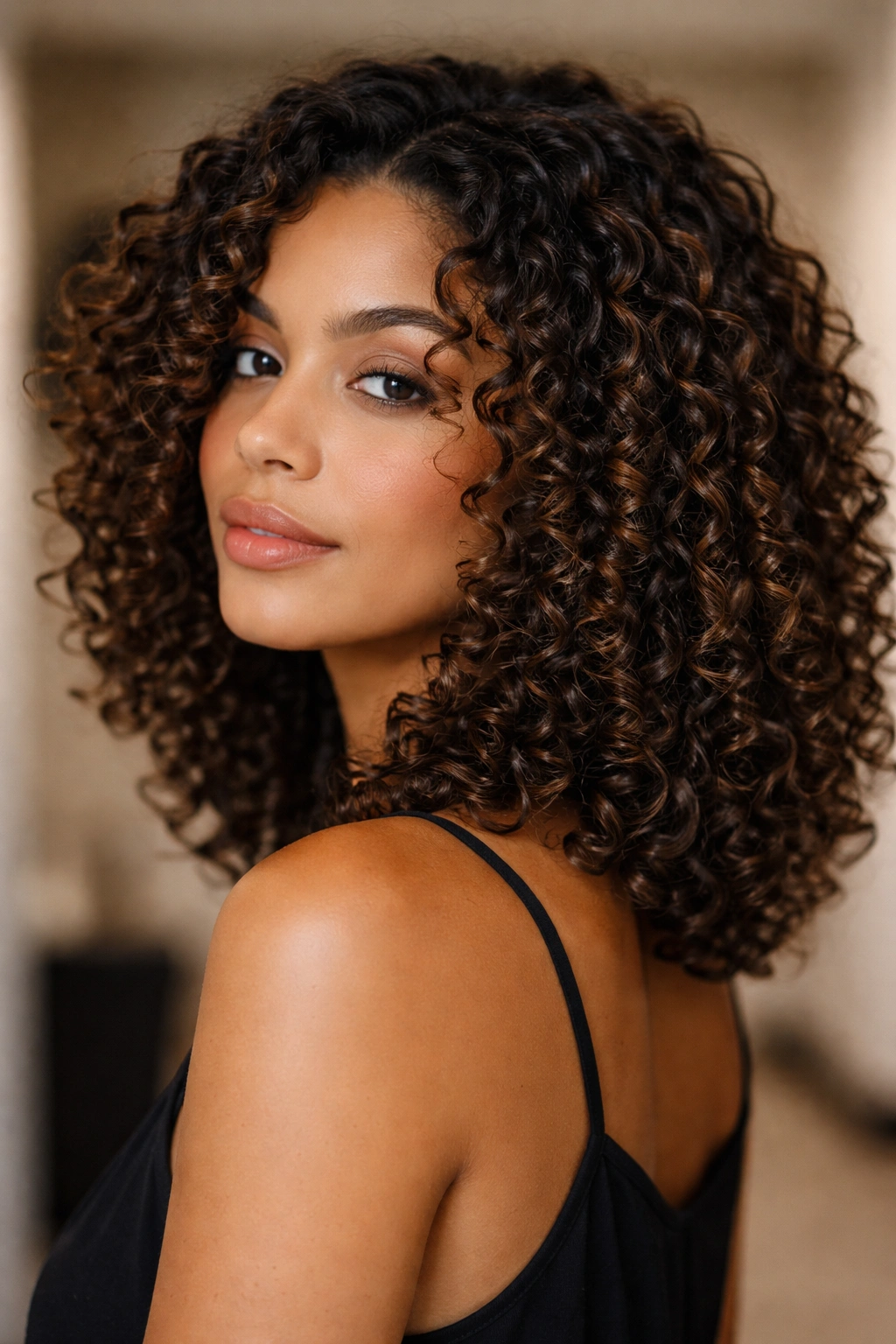
For curly and coily hair, a shoulder-length cut specifically designed to enhance your natural spiral pattern and encourage curl definition. This is cut entirely dry, with an understanding of how your curls naturally form.
Why It Works for Coily Hair
Coily hair needs a different cutting approach than other curl types. The cut is designed to work with how your curls naturally fall, removing frizz-prone ends while maintaining the length you need for your curls to show off their true pattern. Shoulder length is also ideal—long enough for coils to have weight and definition, short enough to avoid matting or undefined curl clumping.
How to Make It Work for You
- Best for: Coily to very curly hair types; anyone with tightly textured hair
- Styling: Style with curl cream, gel, and moisture; diffuse-dry or air-dry depending on your curl type
- Maintenance: Trim every 8-12 weeks with a stylist who specializes in textured and curly hair
- Styling time: 20-40 minutes depending on your hair type and drying method
- Face shapes: The natural shape created by curls is universally flattering when the cut is done right
Pro tip: Bring reference photos of the curl pattern you want to see, not just photos of other people’s hair. Everyone’s curls are different, and what matters is understanding your specific curl type and what cut will enhance it.
13. The Undercutted Textured Bob
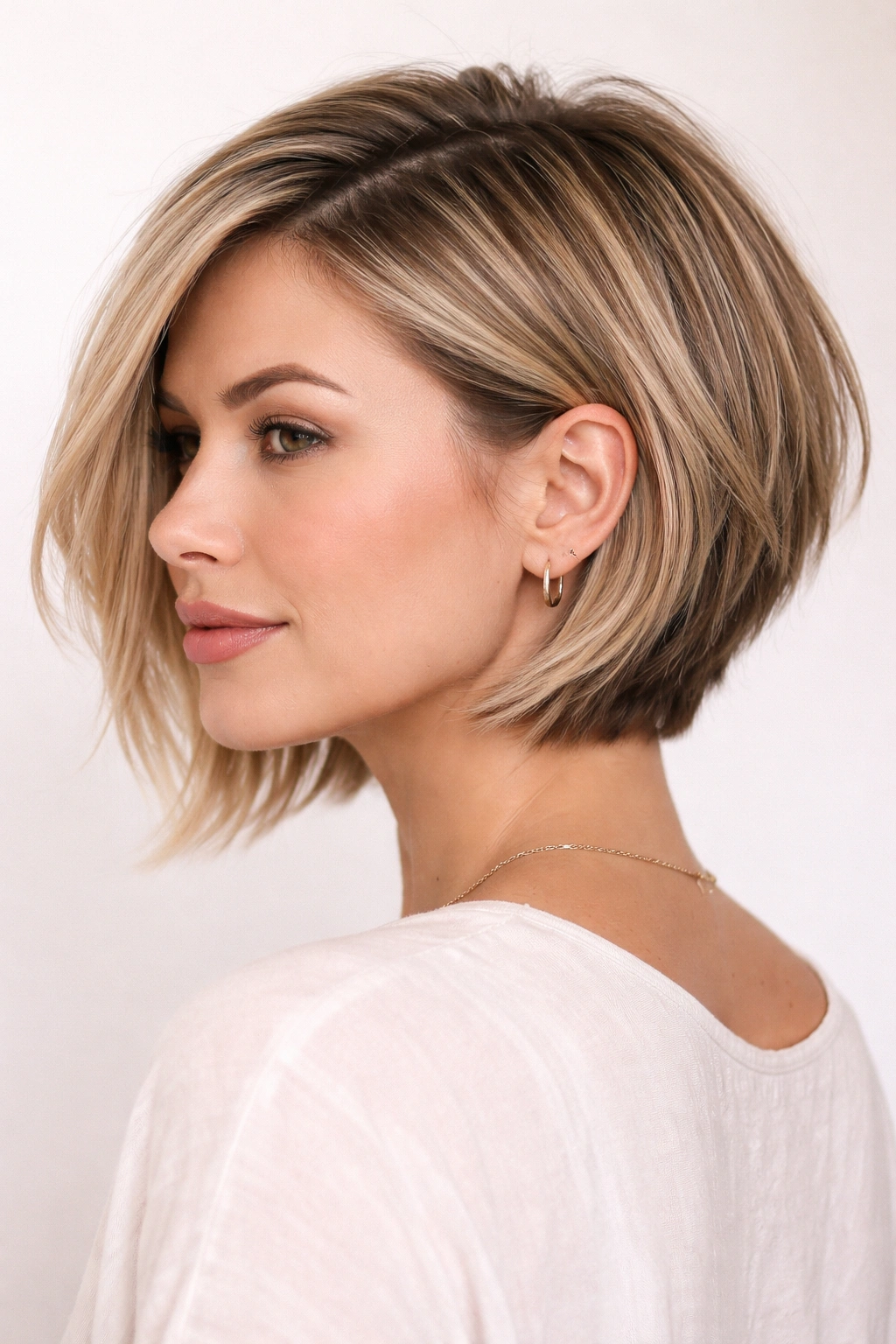
This is structural and modern—a layered shoulder-length cut with significantly shorter, texturized layers underneath that create volume and movement, while longer pieces on top add length and frame the face.
Why It Works for Fine Hair
The undercutting removes weight from underneath while keeping length on top, which makes fine hair look fuller and more voluminous. The texture means it’s never flat or limp-looking. It’s also surprisingly easy to maintain because the shorter undercut doesn’t need as frequent trims as the top layers.
How to Make It Work for You
- Best for: Fine to medium hair; anyone wanting dramatic texture without a full shag
- Styling: Blow-dry with your fingers to create separation and texture, or use a texturizing spray and let it air-dry
- Maintenance: Trim every 5-7 weeks to keep the undercut sharp and the longer pieces looking intentional
- Styling time: 10-15 minutes with heat, or 5 minutes with product and air-drying
- Face shapes: Works beautifully on oval and square faces; adds needed softness to angular faces
Worth knowing: This cut has a modern, slightly edge-forward vibe. If you’re going for this one, lean into the textured styling. Blow-drying it smooth kind of defeats the purpose.
14. The Shoulder-Skimming Straight with Micro Bangs
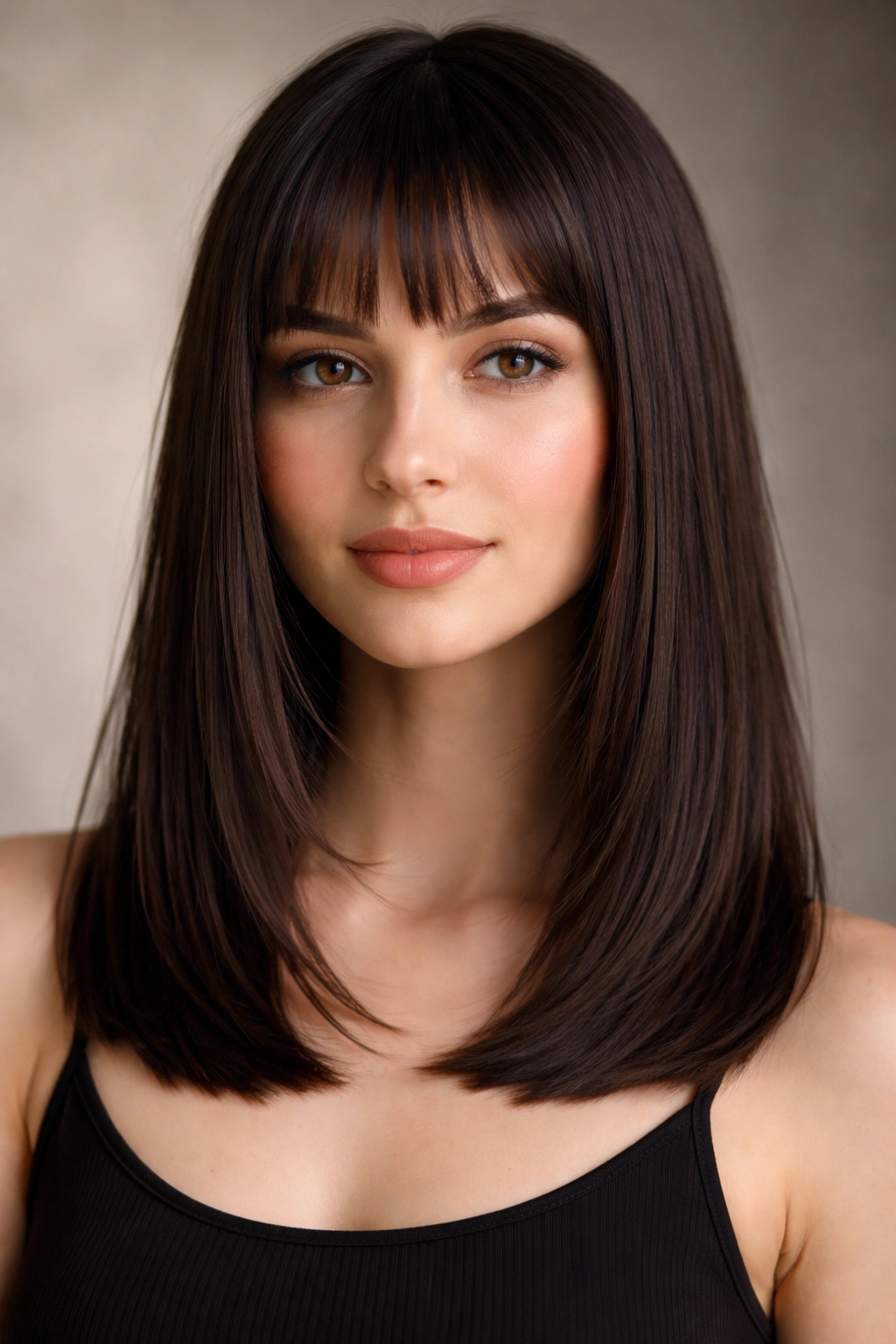
Sleek, straight hair at the shoulder with tiny, textured bangs that create movement and interest at the face. It’s a bold choice that feels very “right now” while still being wearable.
Why It Works for Fine Straight Hair
Micro bangs add texture and movement without weighing down fine hair, and the straight length below creates a beautiful contrast. The bangs draw the eye upward and add personality to an otherwise minimal cut. It’s also a great way to add interest to fine hair without layering the whole thing.
How to Make It Work for You
- Best for: Fine, straight hair; strong brows; anyone ready to commit to frequent bang trims
- Styling: Blow-dry the bangs with a small round brush; blow-dry the rest straight or with a slight bend at the ends
- Maintenance: Trim the bangs every 2-3 weeks; trim the overall length every 4-6 weeks
- Styling time: 10-15 minutes blow-drying
- Face shapes: Especially flattering on oval and heart-shaped faces
Worth knowing: Micro bangs require commitment and frequent maintenance. If you’re not ready to trim them every few weeks, this isn’t the cut for you. But if you are, they can genuinely transform your whole look.
15. The Wavy Shoulder Cut with Longer Layers
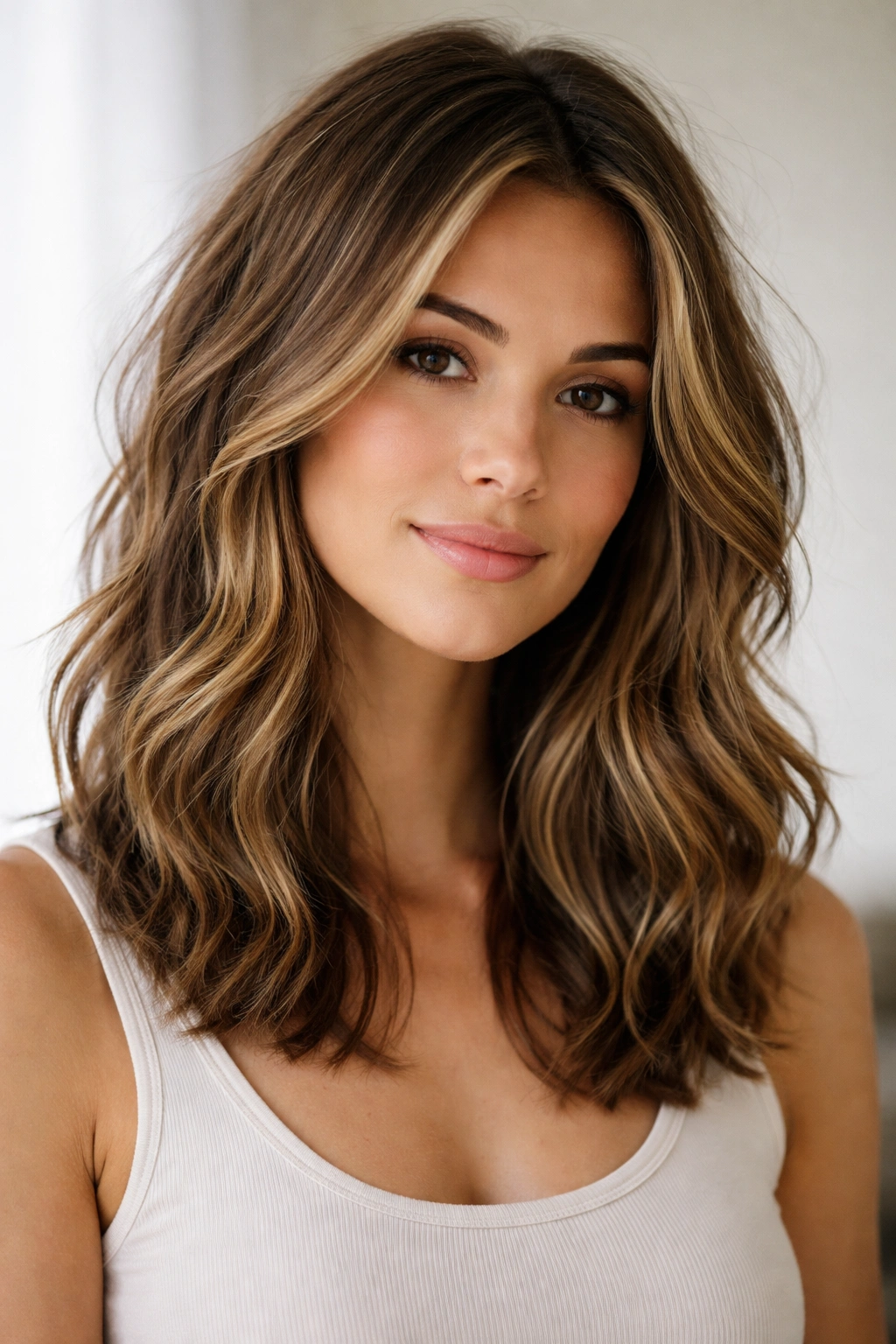
Shoulder-length with layers throughout, but specifically cut to encourage and enhance your natural wave pattern. It’s all about working with your hair’s natural tendencies rather than against them.
Why It Works for Naturally Wavy Hair
When you cut wavy hair with the grain rather than against it, you get effortless beauty. The layers work with your waves to create dimension and movement, and styling becomes something you can do in five minutes rather than spending 20 minutes fighting your hair’s natural texture.
How to Make It Work for You
- Best for: Naturally wavy hair; anyone wanting to work with their texture rather than against it
- Styling: Apply product to damp hair, let it air-dry or diffuse-dry, and you’re done
- Maintenance: Trim every 6-8 weeks to keep the layers working with your wave pattern
- Styling time: 5-10 minutes, or completely wash-and-go friendly
- Face shapes: The natural shape created by waves is flattering on most face shapes
Pro tip: Tell your stylist you want the layers cut in a way that enhances your wave pattern, not fights it. The angle and placement of layers makes a huge difference in how your waves look when they’re dry.
16. The Geometric Angled Bob
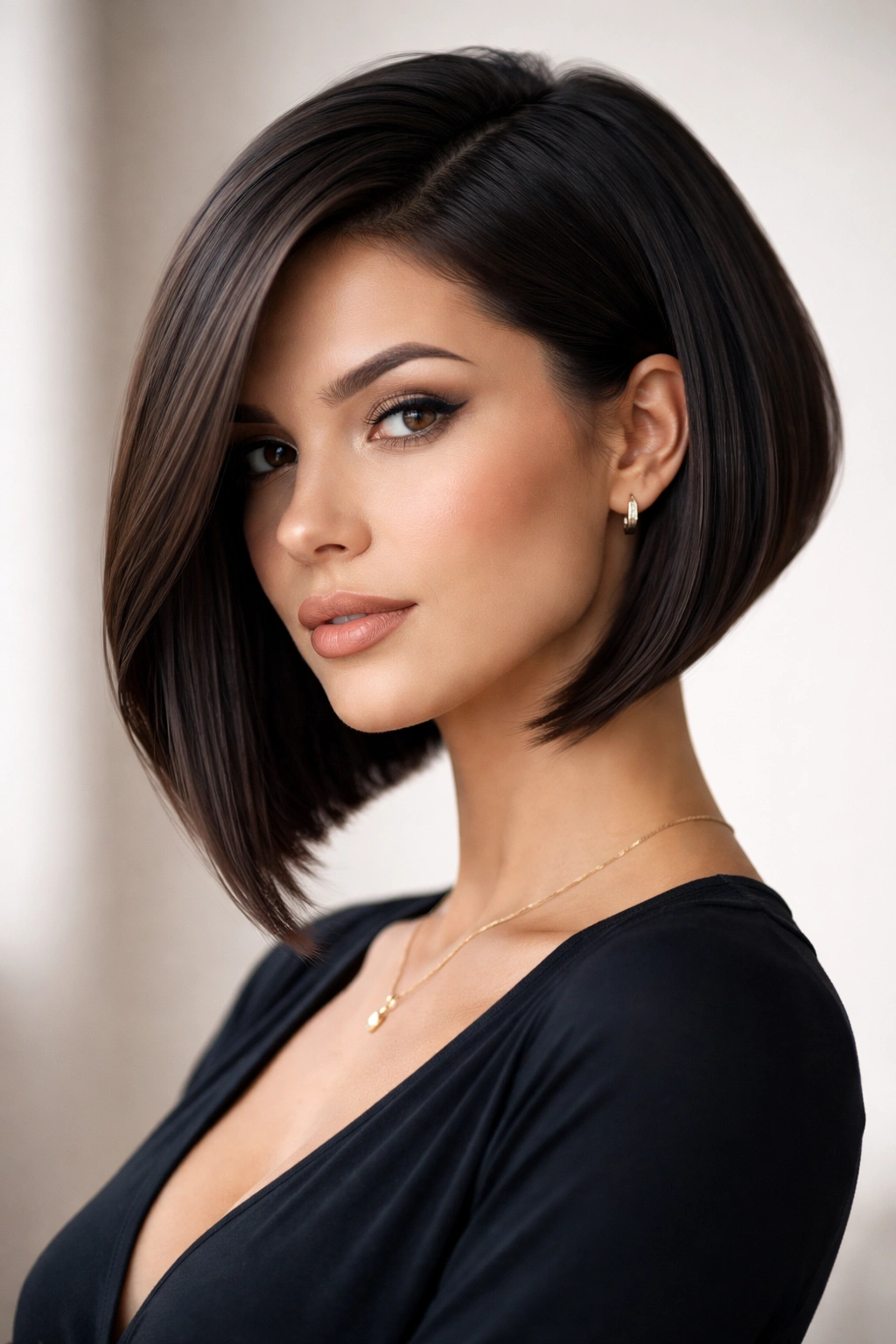
An angular, fashion-forward cut that’s shorter in back and gradually longer toward the front, creating a distinctive angled line. It’s geometric, intentional, and makes a statement.
Why It Works for Thick Hair
Thick hair has the density to carry a geometric cut beautifully. The angles create movement and shape without the weight dragging everything down. It’s also a great way to use thickness as an asset rather than something to minimize.
How to Make It Work for You
- Best for: Thick, straight to slightly wavy hair; anyone wanting a bold, fashion-forward look
- Styling: Blow-dry smooth with a round brush to enhance the angles, or add texture with a texturizing product
- Maintenance: Trim every 4-5 weeks to keep the angles sharp and geometric
- Styling time: 10-20 minutes depending on how polished you want the angles to look
- Face shapes: Especially flattering on oval and oblong faces; use the angles to add width to narrow faces
Worth knowing: This cut relies on precision and regular maintenance. If you’re not ready to trim every month or so, the angles will grow out and lose their impact. But when it’s maintained, it looks absolutely stunning.
17. The Tousled Shoulder Length with Longer Bangs
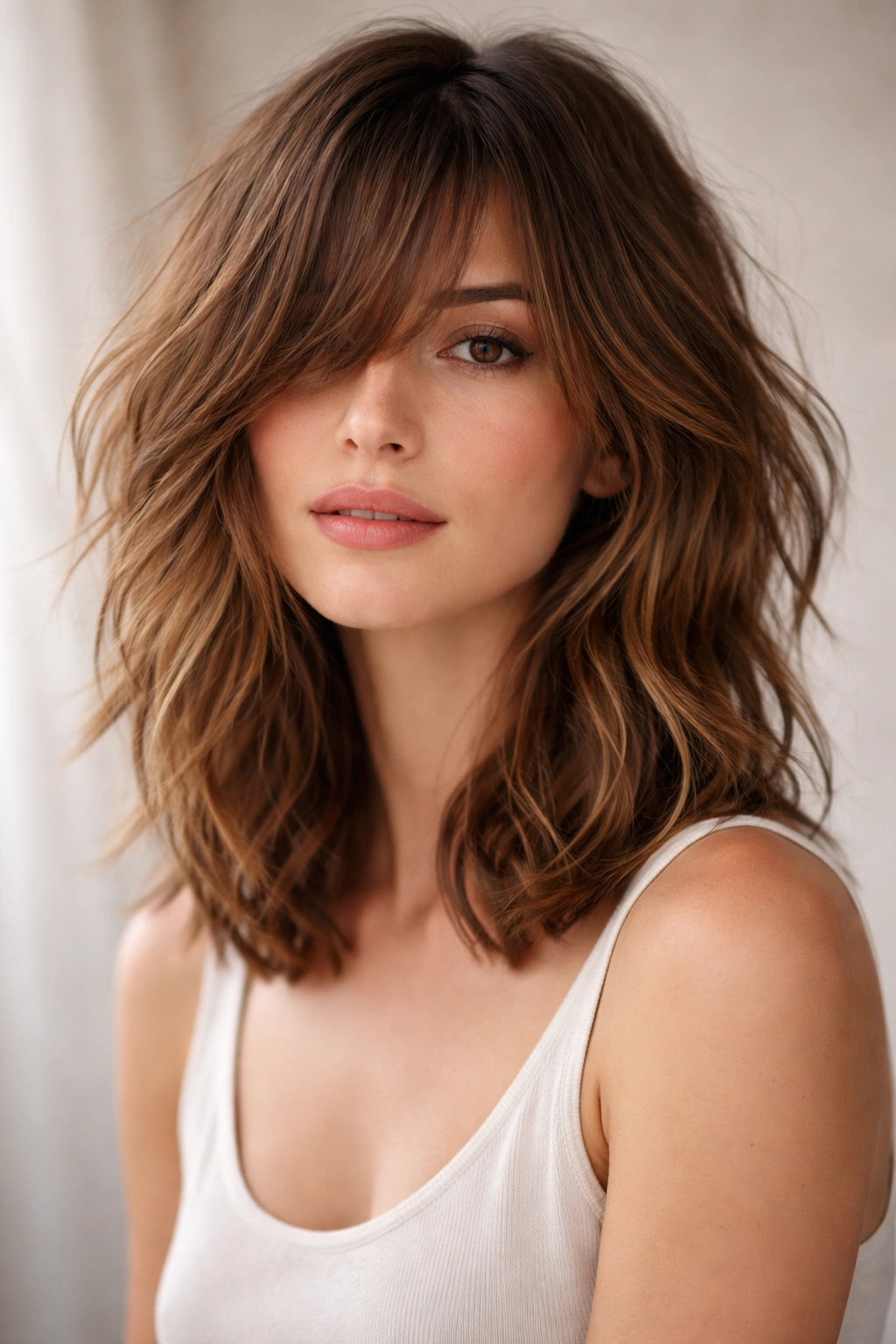
Shoulder-length with a texture throughout and longer, side-swept bangs that hit around cheekbone length. It’s effortless and modern, tousled without being messy.
Why It Works for Textured Hair
Textured hair thrives on this cut. The layers encourage your natural texture, and the longer bangs add dimension to the face. It’s also very forgiving—you don’t need precision styling to make it look intentional.
How to Make It Work for You
- Best for: Wavy, curly, and textured hair; anyone wanting an effortless vibe
- Styling: Apply texturizing product and let air-dry, or quick-curl with a wand for enhanced waves
- Maintenance: Trim every 5-7 weeks to keep the layers and bangs intentional
- Styling time: 5-15 minutes depending on how styled you want to look
- Face shapes: Universally flattering; the longer bangs add softness to angular faces
Worth knowing: This cut is supposed to look slightly undone. Blow-drying it smooth and polished kind of defeats the purpose. Embrace the texture and use products that enhance it.
18. The Sleek Straight Cut with Subtle Internal Layers
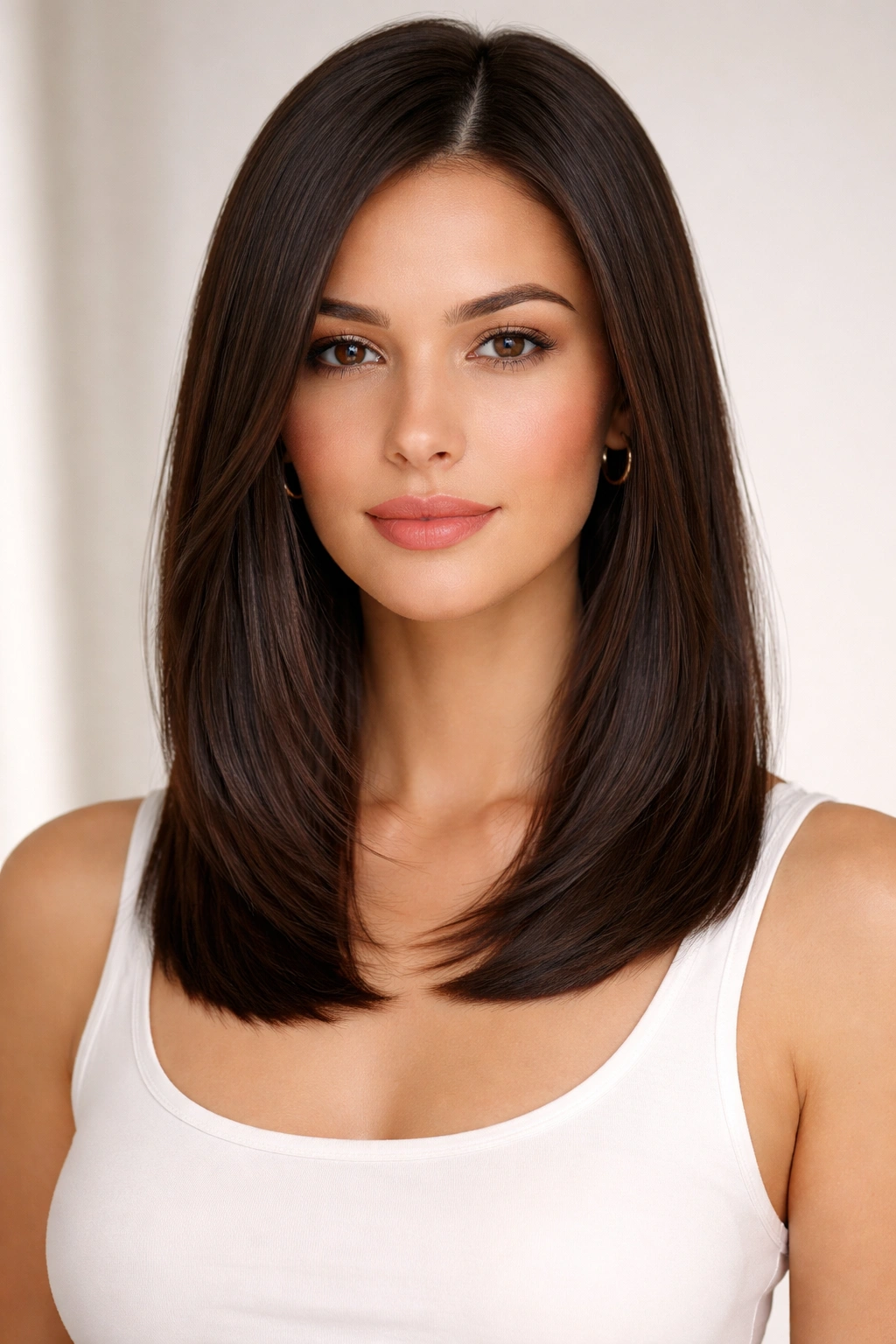
A one-length cut that appears sleek and smooth from the outside, but has subtle layers built into the interior for movement and texture. It’s a professional secret—looks polished, but has built-in dimension.
Why It Works for Fine Hair
The internal layers give fine hair dimension and the illusion of fullness without any of the external layering that can make fine hair look thin. From the outside, it looks like a clean, simple cut, but when you move, there’s subtle texture and dimension.
How to Make It Work for You
- Best for: Fine to medium straight hair; anyone wanting polish with hidden dimension
- Styling: Blow-dry smooth or air-dry with a smoothing serum; the internal layers do the work for you
- Maintenance: Trim every 4-6 weeks to keep the line clean
- Styling time: 5-15 minutes depending on how polished you want to look
- Face shapes: Flattering on most face shapes, especially oval and oblong
Pro tip: Ask your stylist about point-cutting or texturizing the internal layers. This creates more movement and dimension than blunt internal layers.
19. The Choppy Textured Shoulder Length with Disconnected Layers
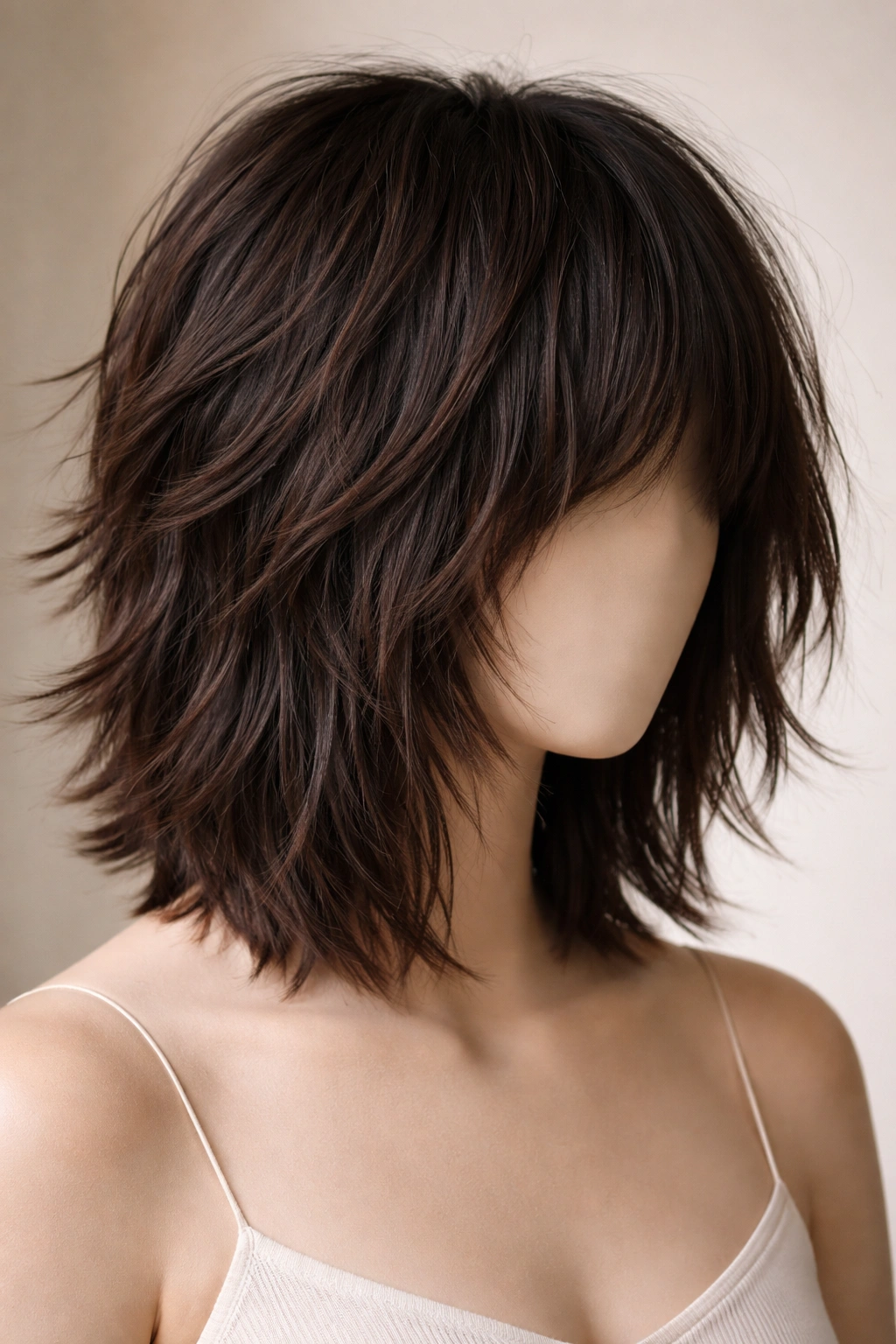
Bold, disconnected layers throughout create intentional texture and movement. This cut has serious personality—it’s not trying to be subtle or minimal.
Why It Works for Thick Hair and Anyone Wanting Texture
Thick hair can rock this cut beautifully—the choppy layers remove bulk while creating dimension and edge. It’s also great for anyone who wants their cut to make a statement and isn’t interested in looking polished or minimal.
How to Make It Work for You
- Best for: Thick hair, all textures; anyone wanting a bold, personality-forward cut
- Styling: Embrace texture with texturizing products, either air-dry or quickly style with heat
- Maintenance: Trim every 5-6 weeks to keep the layers intentional and prevent straggly ends
- Styling time: 5-15 minutes depending on how polished you want to look
- Face shapes: Works beautifully on most face shapes; adds softness to very angular faces
Worth knowing: This cut looks best when you’re not trying too hard. The whole point is that it’s textured and undone. Spend time making it look smooth and polished and you’re missing the whole appeal.
20. The Shoulder-Length Curtain Cut with Center Part
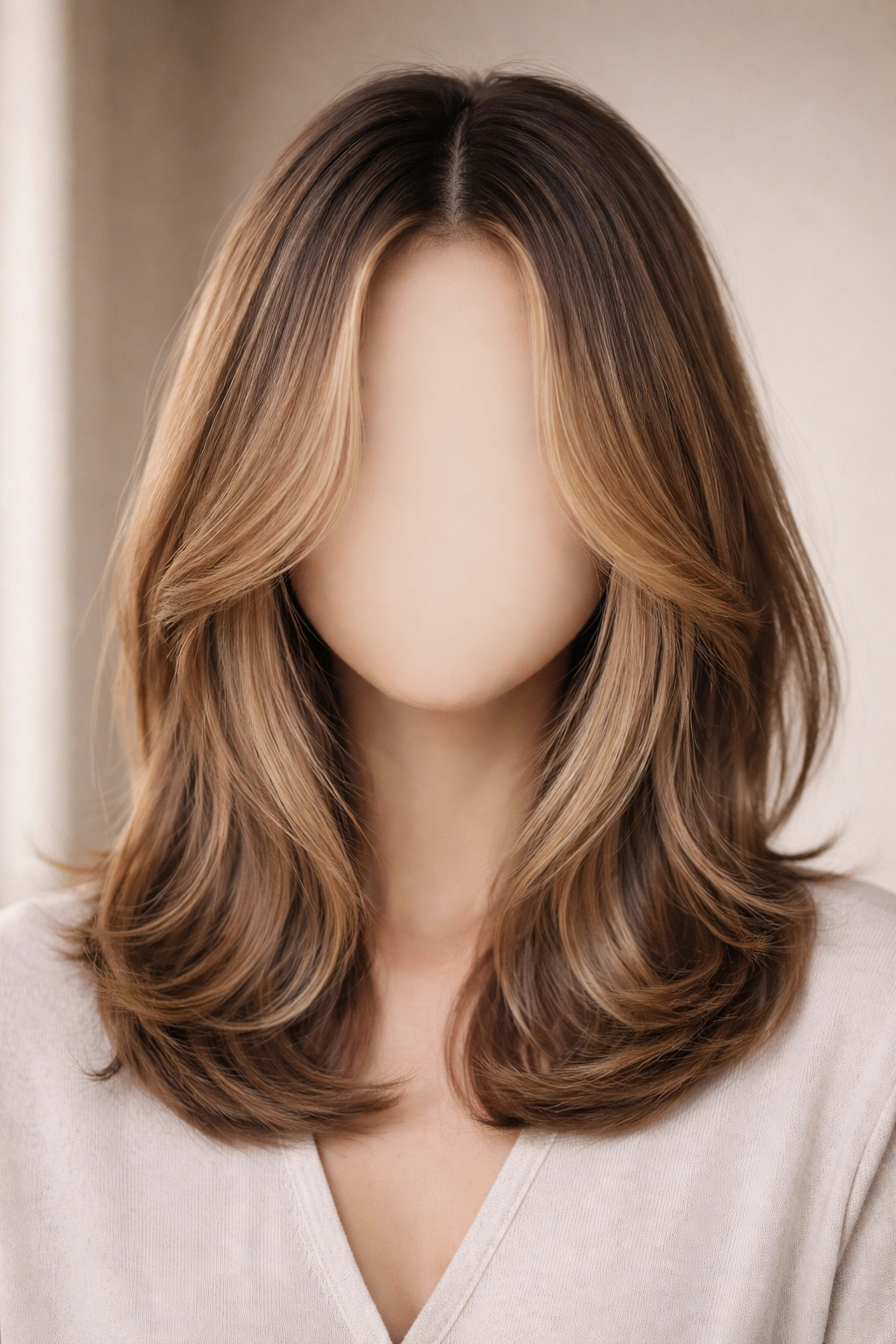
Long, face-framing layers that fall from a center part, creating a modern take on the ’70s curtain cut. It’s soft, feminine, and surprisingly versatile.
Why It Works for Most Hair Types
The center part and face-framing layers are incredibly flattering on most face shapes and hair types. They draw the eye to the center of the face and frame features beautifully. The layers also add dimension without removing too much length, which appeals to anyone who wants shoulder length but with movement.
How to Make It Work for You
- Best for: Medium to thick hair, all textures; anyone wanting a soft, face-framing look
- Styling: Blow-dry with the center part emphasized and the face-framing pieces curled or tousled toward the face
- Maintenance: Trim every 6-8 weeks to keep the face-framing layers sharp and intentional
- Styling time: 10-15 minutes with heat, or 5-10 minutes with texturizing product and air-drying
- Face shapes: Universally flattering, especially for long, oblong, and heart-shaped faces
Pro tip: The center part is part of this cut’s identity. Even if you usually wear your hair differently, styling the center part with the face-framing layers is what makes this cut work. Don’t fight it—lean into it.
Final Thoughts

Finding the right shoulder-length cut comes down to understanding your hair type, your face shape, and your lifestyle. Are you someone who wants to style your hair every single day, or are you looking for something wash-and-go friendly? Do you have thick, curly hair that needs weight removed, or fine hair that needs the illusion of fullness? Do you love texture and movement, or do you prefer sleek, polished lines?
Once you know what you’re after, bring reference photos to your stylist—not just the overall look, but close-ups that show the specific texture and movement you want. The better your stylist understands your hair type, your goals, and your daily routine, the better they can execute a cut that actually works for your real life.
The beauty of shoulder-length hair is that there’s genuinely something for everyone. Whether you’re going for bold and textured, sleek and polished, effortless and undone, or anything in between, shoulder length gives you the length to have options while still being manageable and low enough maintenance that you’re not spending your whole day styling. Pick the cut that speaks to you, commit to the maintenance it requires, and enjoy having hair that actually works with your natural texture instead of against it.
