



If you’ve spent years fighting your natural curl texture, only to discover that short, layered cuts actually enhance your curls instead of fighting them, you’re about to have a complete game-changer moment. The truth most hair stylists don’t tell you: curly hair doesn’t need length to look beautiful — it needs the right strategic layers that work with your natural texture, not against it.
Short, layered cuts for curly hair are genuinely transformative. They remove weight that flattens your curls, create movement and dimension that make your hair look fuller and healthier, and honestly require less styling time and product than you’d think. The layers allow your curl pattern to breathe, preventing that dense, shapeless ball of frizz you might associate with curly hair that’s been growing past shoulder-length without proper cuts. When a stylist understands how curly hair moves, they can remove strategic pieces to reveal the texture’s natural bounce, create intentional shape that frames your face beautifully, and give you a cut that actually gets better as your curls dry and settle.
The catch is that not every short layered cut works equally well for every curl type. Fine, tightly coiled curls need a different approach than thick, loose waves. Some cuts prioritize volume at the crown; others emphasize length in the front. Some work best on curls that are well-hydrated and defined; others suit wavier, less defined texture. That’s why finding the right cut for your specific hair requires understanding both the fundamentals of how layers affect curly hair and having a clear picture of what each cut actually delivers.
1. The Modern Pixie
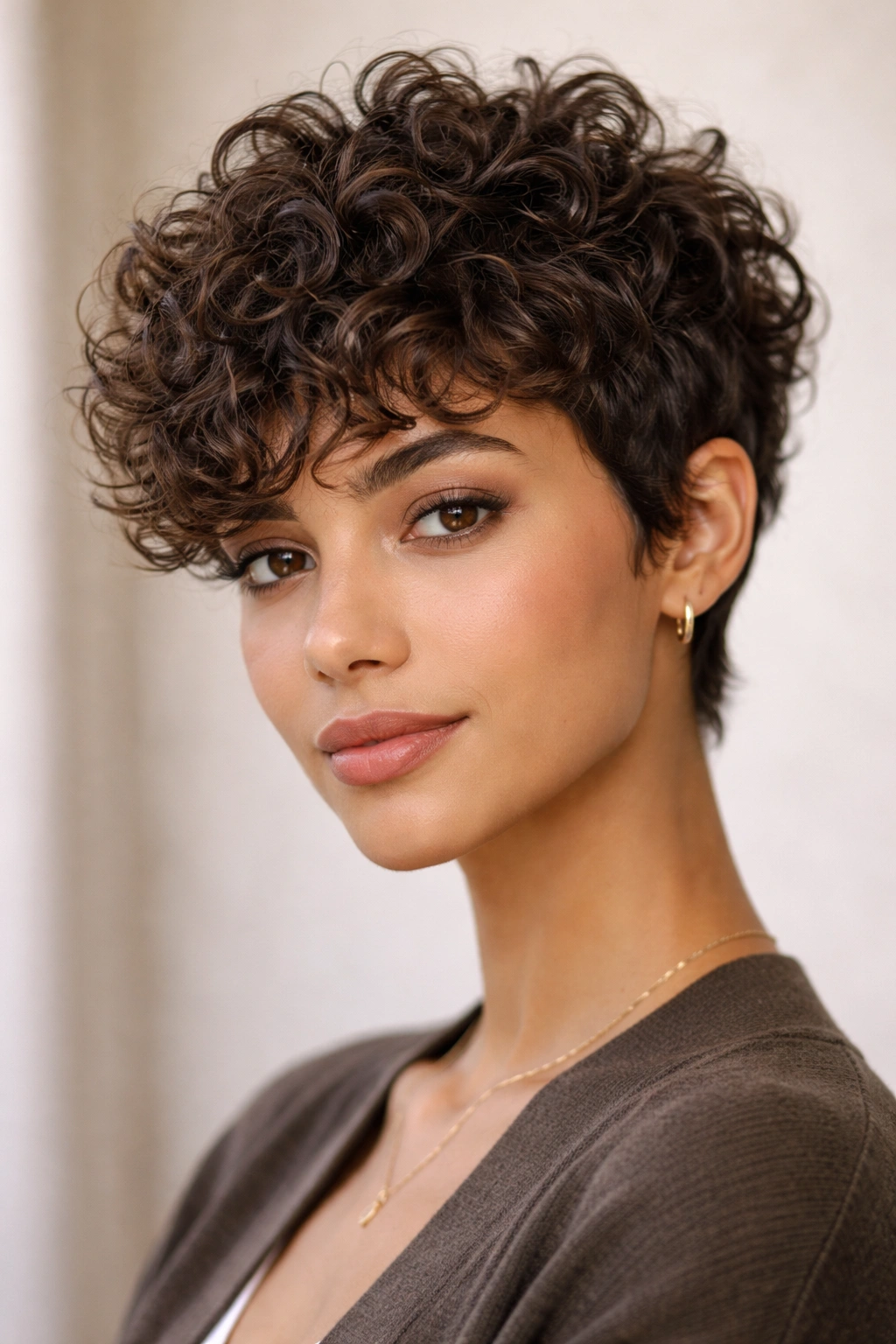
The modern pixie has absolutely evolved beyond the androgynous crop it used to be. On curly hair, a textured pixie cut works because the layers create intentional separation throughout the entire head, allowing each curl to express itself fully rather than getting compressed or matted down. The shorter pieces around the ears and nape give an airy, sophisticated feel, while length left on top maintains enough curl to style.
Why It Works for Curly Hair
A pixie cut strategically removes bulk while keeping enough texture on top that your curls can actually show their personality. The layers naturally blend your curl pattern instead of creating an obvious demarcation line between shorter and longer pieces. Curly hair tends to look best with gradual transitions rather than stark length changes, and a well-executed pixie nails this through careful layer placement and point-cutting techniques that feather the pieces together.
Best For
- Ultra-thick, densely textured curls that feel heavy no matter what
- People who want a genuinely low-maintenance cut requiring minimal styling
- Anyone with curl patterns tight enough that shorter length actually enhances definition
- Those comfortable with frequent trims every 4-6 weeks to maintain shape
Worth knowing: The modern pixie works especially well when you have curl definition — meaning your curls are distinct and separable from each other. If your curls tend to merge into frizz even when hydrated, a pixie might expose that texture too dramatically.
2. The Textured Bob with Undercut
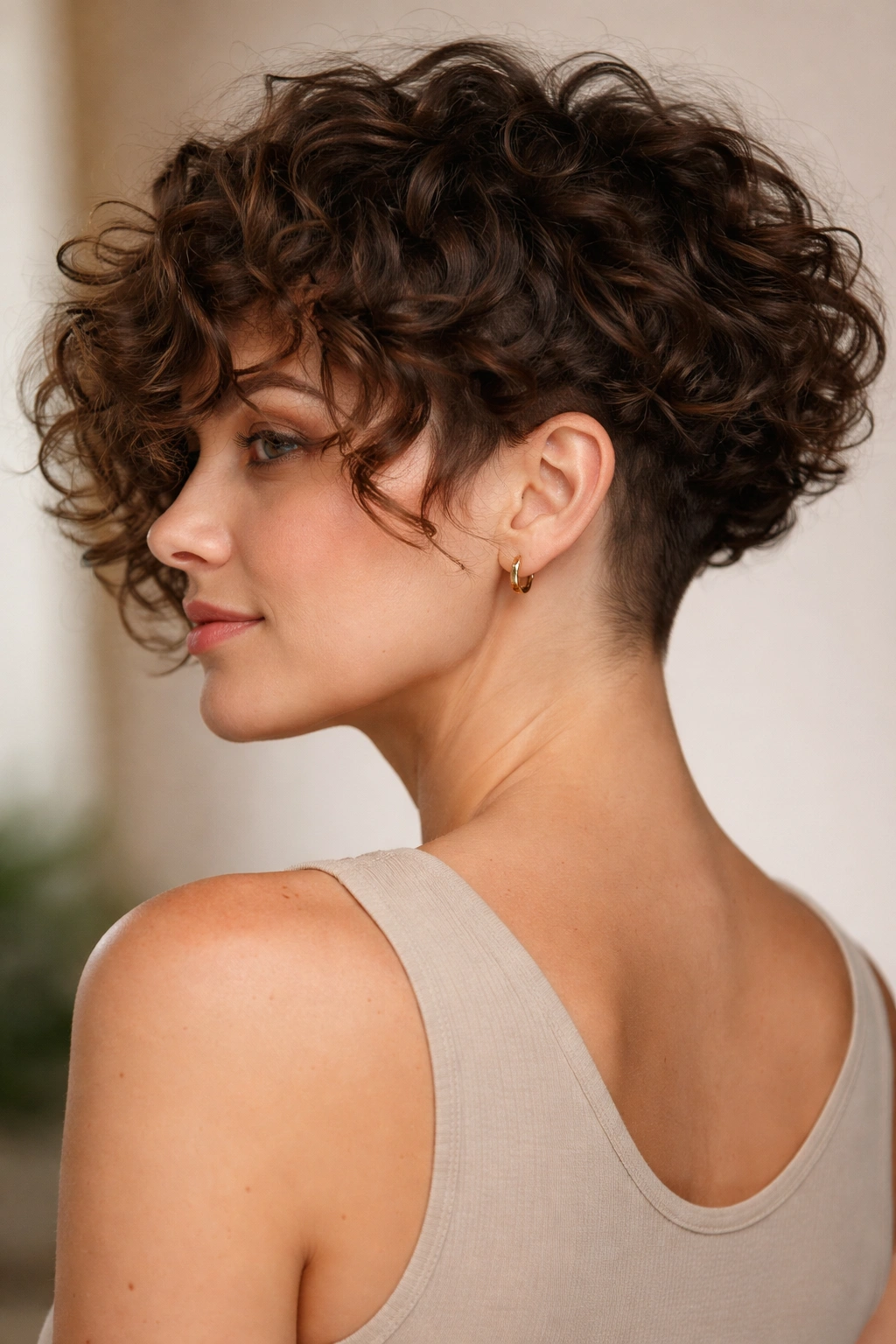
A textured bob sits somewhere between chin and shoulder length with dramatic layering throughout and often includes an undercut (very short, clipped layers underneath). The undercut serves a crucial purpose for curly hair: it removes bulk from the interior without sacrificing the length you see from the outside, creating an illusion of fullness without actual weight.
Why It Works for Curly Hair
Curly hair doubles or triples in volume as it dries. An undercut acknowledges this reality and works with it instead of fighting it. The shorter underneath layers allow curls to move freely without that trapped, compressed feeling, while the longer top layers create the silhouette and shape you actually see. The textured layering throughout means your curl pattern gets distributed evenly rather than concentrating weight in one place, which is exactly how to get a flattering shape on curly hair.
Best For
- Thick, medium to tightly coiled curls with strong definition
- Anyone who wants visible length but finds that length feels heavy or shapeless
- People seeking a cut that looks intentionally textured and modern
- Those willing to learn how to style with a diffuser attachment or air-dry properly
Pro tip: Ask your stylist to cut the undercut layers while your hair is dry. This is crucial because curly hair’s true length isn’t visible when wet — cutting while wet can result in an undercut that’s shorter than intended once your curls shrink back up and dry.
3. The Tousled Shag
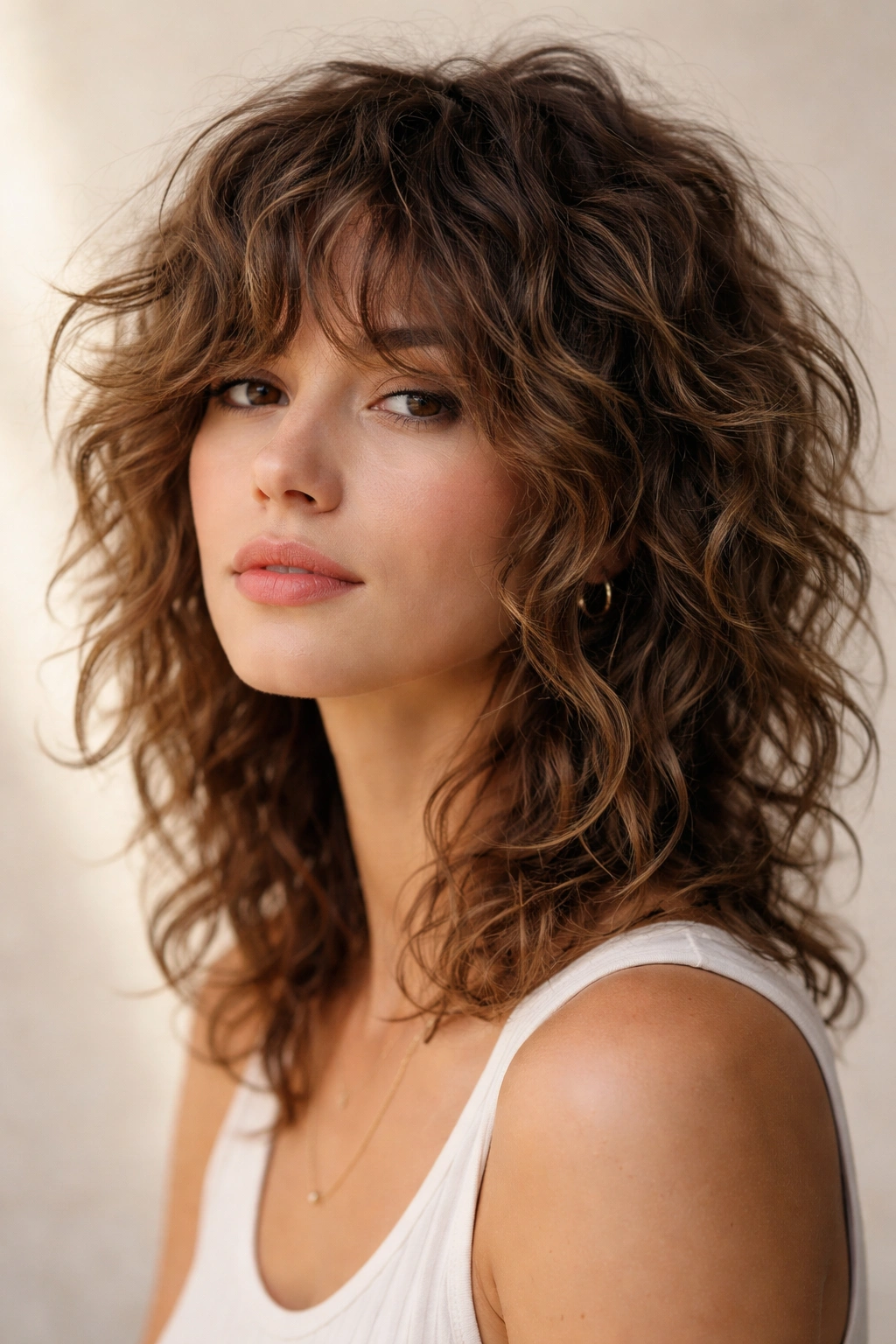
The shag brings back the carefree, undone energy that actually suits curly hair perfectly. Lots of choppy, feathery layers throughout combined with longer pieces in the front and shorter, textured pieces everywhere else create a deliberately disheveled look that curly hair naturally wants to be anyway.
Why It Works for Curly Hair
A shag celebrates the fact that curly hair is never going to look perfectly smooth and blunt. Instead of fighting that reality, the shag layers embrace it. The multiple different lengths work beautifully with curls because they create movement and dimension that looks intentional rather than messy. Your curl pattern gets broken up instead of forming one cohesive shape, which actually makes the whole cut look fuller and more textured.
Best For
- People with looser, more wavy curl patterns who want that effortless vibe
- Anyone who enjoys a piece-y, undone styling approach
- Curly hair that tends toward frizz and benefits from accepting that rather than fighting it
- Those who want a cut that actually improves as their curls dry and settle
Worth knowing: The shag can read as dated if not executed by someone who really understands contemporary styling. Make absolutely sure your stylist has recent portfolio examples of shags on curly hair, not just textbook 1970s references.
4. The Cropped Curly Fade
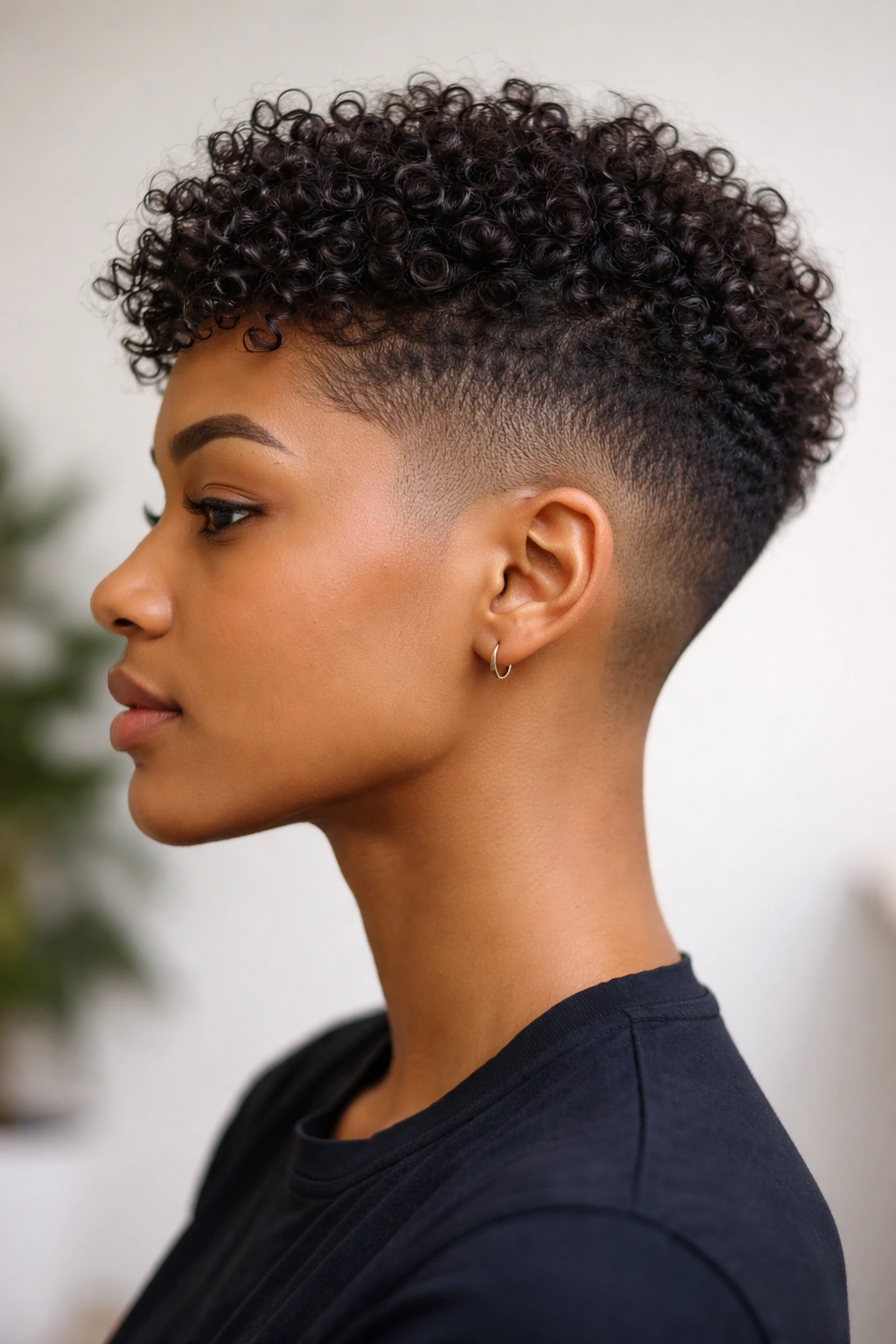
A cropped fade takes a minimalist approach: very short on the sides and back (faded or clipped), with slightly longer, textured curls left on top that can be styled back or left standing. It’s bold, clean, and surprisingly versatile for those willing to lean into a short, trendy silhouette.
Why It Works for Curly Hair
The contrast between the short, sculptural sides and the curly texture on top is visually striking. The fade removes literally all the weight from the sides and back, so the curls on top have maximum freedom to express their texture without competing with longer, flattened pieces. This cut genuinely works because of the volume curly hair naturally creates — you need that texture on top to balance the minimalism of the sides.
Best For
- Anyone with confidence and styling interest — this isn’t a wash-and-go cut
- Tightly coiled or densely textured curls that benefit from dramatic contrast
- People seeking an ultra-modern, fashion-forward appearance
- Those comfortable with frequent salon visits every 3-4 weeks as the fade grows out
Pro tip: This cut shines with intentional styling — apply a curl cream or gel to damp curls on top, use your fingers to enhance your natural pattern, and either air-dry or diffuse. The styling is part of the whole aesthetic, not optional.
5. The Choppy Blonde Lob with Lots of Texture
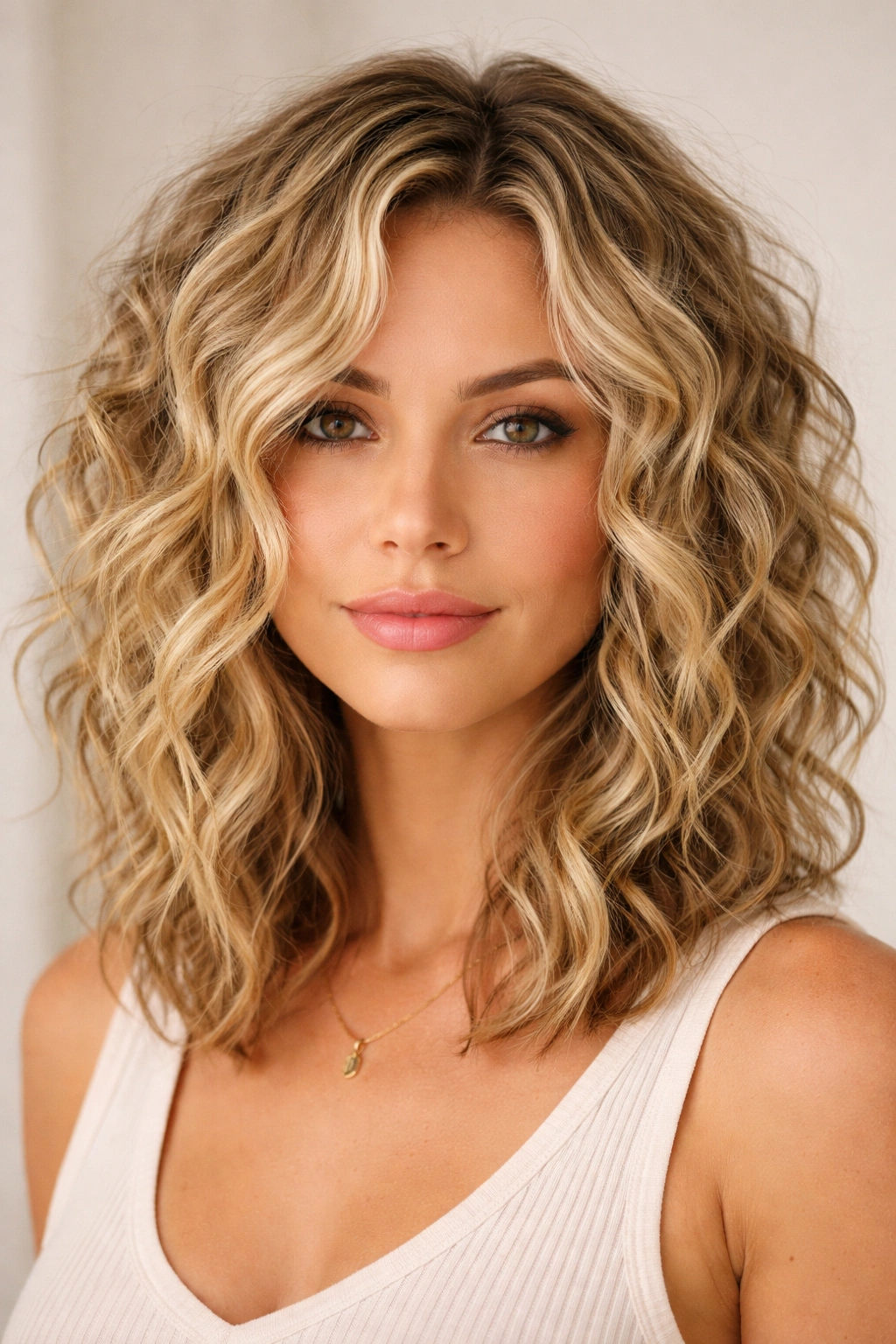
A lob (long bob) falls somewhere between ear and shoulder length and typically has heavy texture throughout — meaning lots of choppy, medium-length layers rather than smooth, blunt lines. On curly hair, the choppiness is what makes it work; the layers break up what could otherwise feel heavy and shapeless.
Why It Works for Curly Hair
The shoulder-length area is tricky for curly hair because it’s where curls often look bulkiest but shortest pieces haven’t grown out yet. A lob with intentional choppy layers avoids that awkward space by creating dimension throughout the length. The layers mean your curl pattern gets showcased at multiple different lengths, creating visual interest and preventing that dense, concentrated look that shoulder-length curly hair can have without proper layering.
Best For
- Anyone wanting the versatility of slight length while still getting texture benefits
- Curly hair that’s loose enough to hold a lob shape (looser waves through medium curls)
- People who enjoy styling their curls intentionally rather than air-drying
- Those willing to trim every 6-8 weeks to maintain the choppy texture
Worth knowing: This is one of the trickier cuts to maintain because as it grows out, you can end up with weird in-between lengths. Commit to regular trims, or work with a stylist who will help you figure out a growth strategy (either growing it longer intentionally or keeping it trimmed at length).
6. The Tapered Curly Cut with Volume on Top
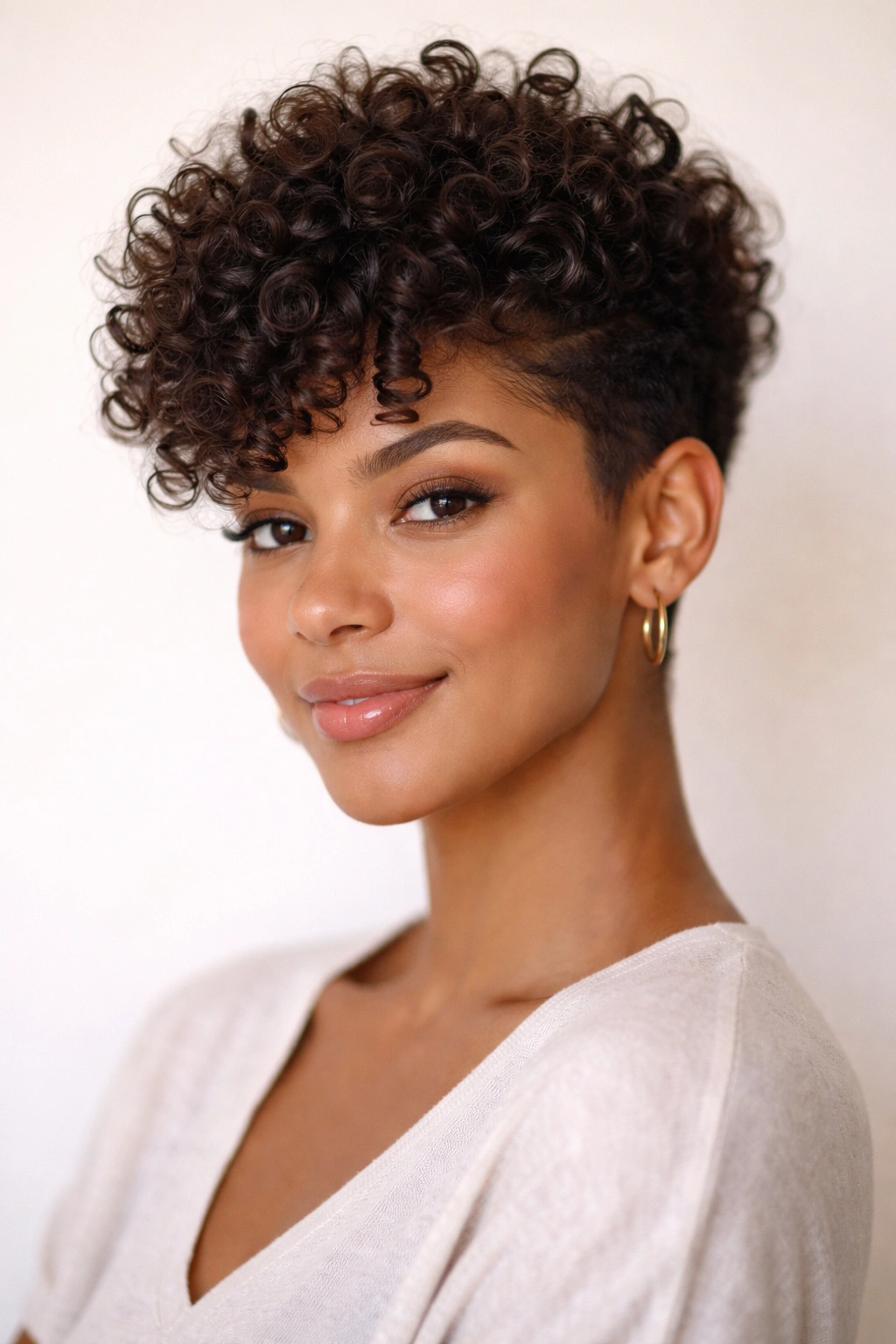
This is a classic short cut that keeps most of the length on top while tapering dramatically shorter toward the nape and around the ears. It’s traditionally masculine-leaning but works beautifully for anyone who wants that tapered, shaped silhouette emphasizing volume and movement on top.
Why It Works for Curly Hair
The taper removes weight exactly where curly hair tends to weigh down most — around the ears, at the nape, and along the sides. This creates a lifted, almost sculptural quality while preserving curl length on top where it matters most for shape and texture. The gradual taper (rather than an abrupt undercut) blends the shorter and longer pieces naturally, creating cohesion instead of obvious contrast.
Best For
- Dense, tightly coiled curls that benefit from significant volume reduction
- Anyone comfortable leaning into a more angular, shape-forward aesthetic
- People who want classic, timeless styling without trendy extremes
- Those with curl types that benefit from visible taper (very tight, very dense)
Pro tip: Ask your stylist how they’ll maintain this cut as it grows. A taper can either grow out gracefully (if it’s cut in a specific way) or become shaggy and undefined pretty quickly. Getting clarity on growth strategy before the cut saves you styling frustration later.
7. The Textured Crop with Longer Front Pieces
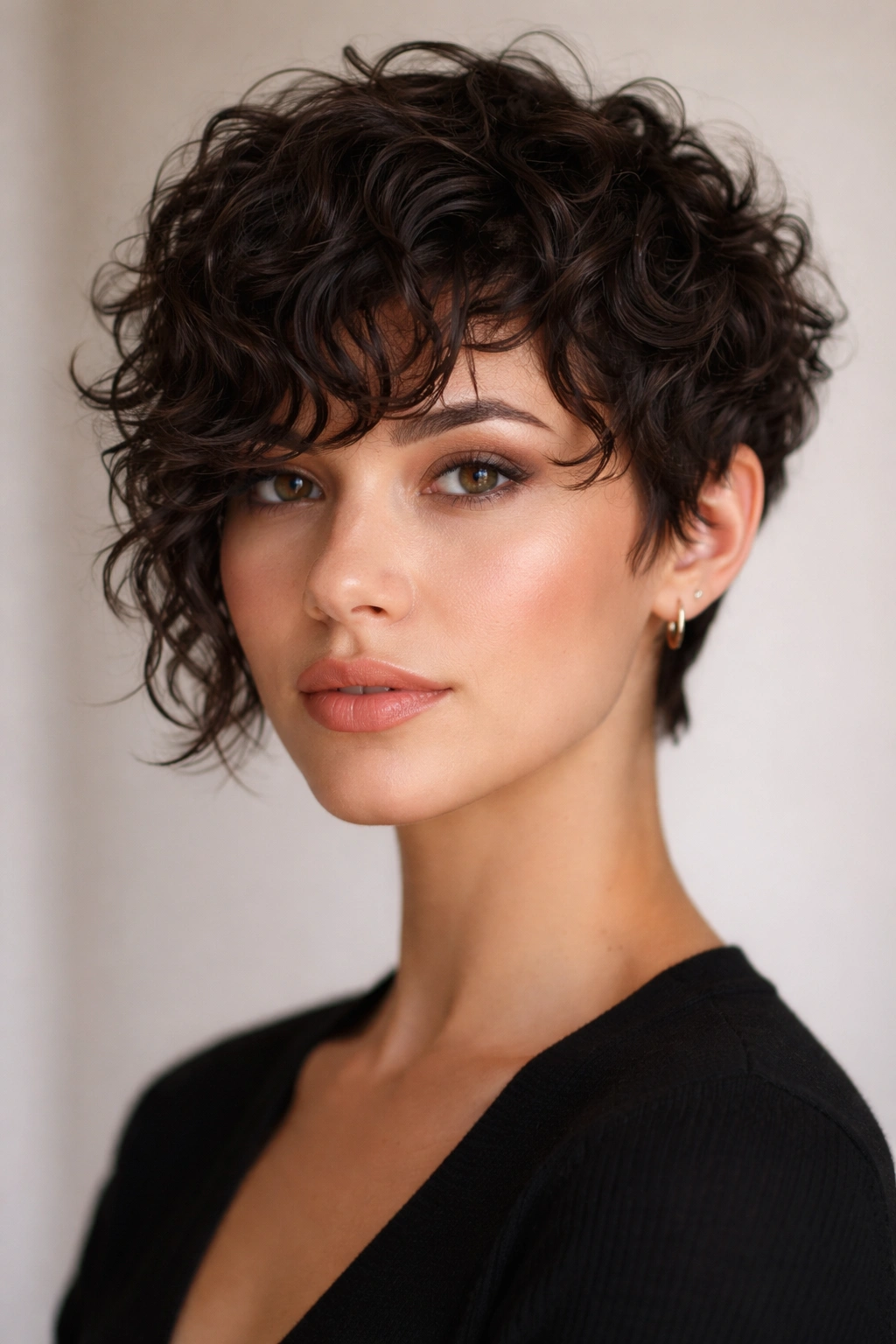
A crop means significantly shorter overall length (two to three inches maximum on top), but this version keeps slightly longer pieces in front that can brush the jawline or cheekbone. It creates an asymmetrical, modern vibe while keeping the overall cut undeniably short.
Why It Works for Curly Hair
Longer front pieces on a curly crop serve a real styling purpose — they frame the face and create visual interest in a cut that might otherwise feel too severe. The texture throughout means you’re not fighting for curl definition; every piece is short enough that curls actually stand out and look defined. The asymmetry is flattering because it prevents the cut from feeling too uniform or helmet-like, which can happen if a short crop is cut too evenly all over.
Best For
- Curly hair with excellent definition and curl pattern
- Anyone wanting a genuinely short, easy-maintenance cut with modern edge
- People comfortable with very frequent styling or very intentional air-drying
- Those with face shapes that benefit from slightly longer front pieces for balance
Worth knowing: The longer front pieces grow out faster than the rest of the cut. Plan on trims every 4-5 weeks if you want to maintain this exact proportion, or be willing to let the front grow out as the sides catch up.
8. The Curly Mullet (Modern Version)
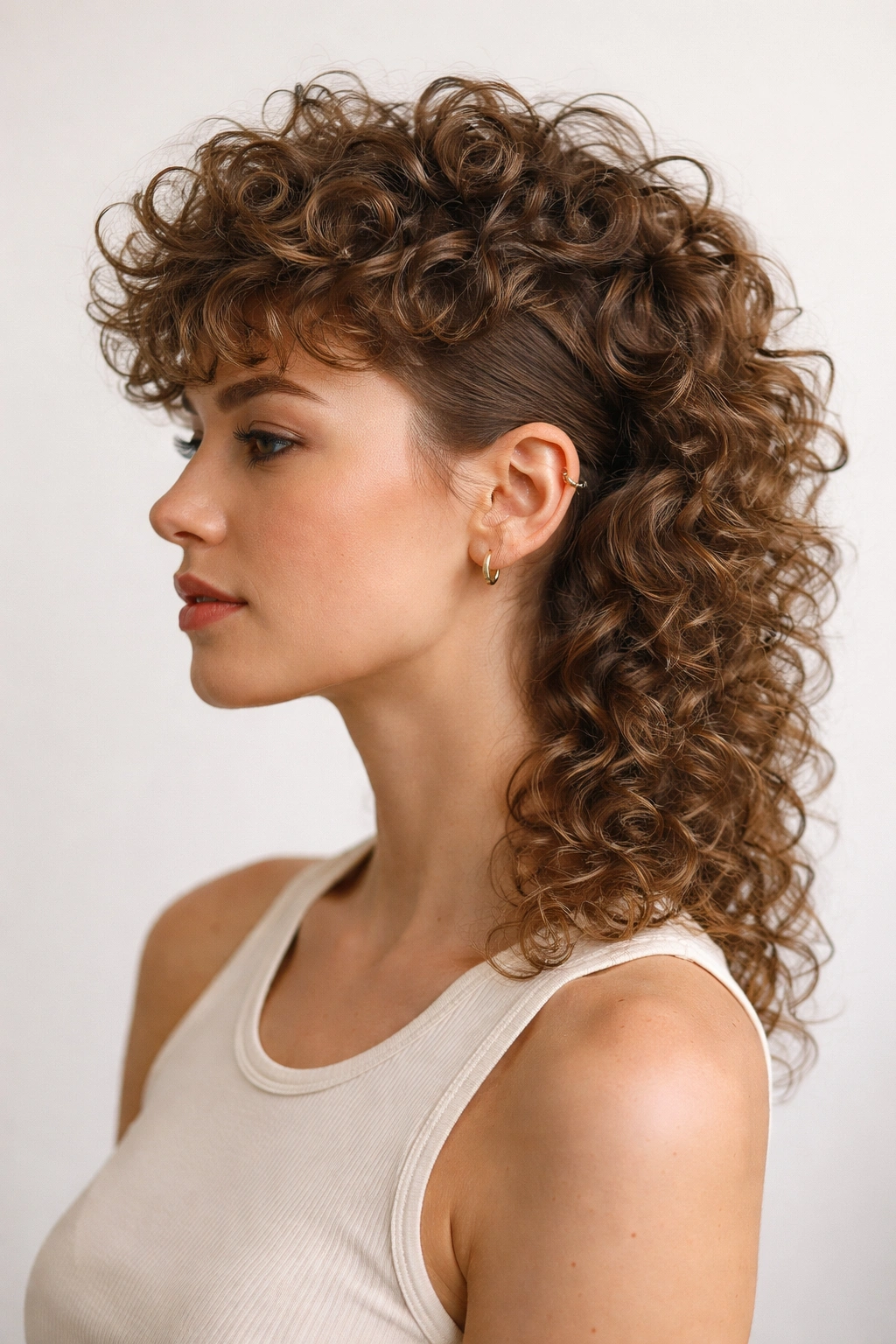
Don’t dismiss the modern curly mullet before understanding what it actually is now. It’s not the ’80s style — it’s strategically shorter on top and at the sides with noticeably longer pieces in the back, creating intentional volume and movement without being costume-like or dated.
Why It Works for Curly Hair
A modern mullet works for curly hair because it leans into the texture’s natural tendency toward volume and movement. The longer back pieces give curls room to express their full pattern, while the shorter top and sides create shape and prevent weight concentration. The contrast between lengths is bold enough to look intentional and contemporary rather than accidentally grown-out.
Best For
- Curly hair with significant length goals combined with desire for styling ease
- Anyone seeking a cut that’s genuinely unique and conversation-starting
- People confident enough to own an intentionally unconventional silhouette
- Those with curl patterns that look better longer but need shape and structure
Pro tip: This cut is especially dependent on working with a stylist who really understands curly hair texture and movement. An inexperienced stylist can make it look like an accident rather than intentional design. Check portfolios carefully before committing.
9. The Layered Pixie-Bob Hybrid
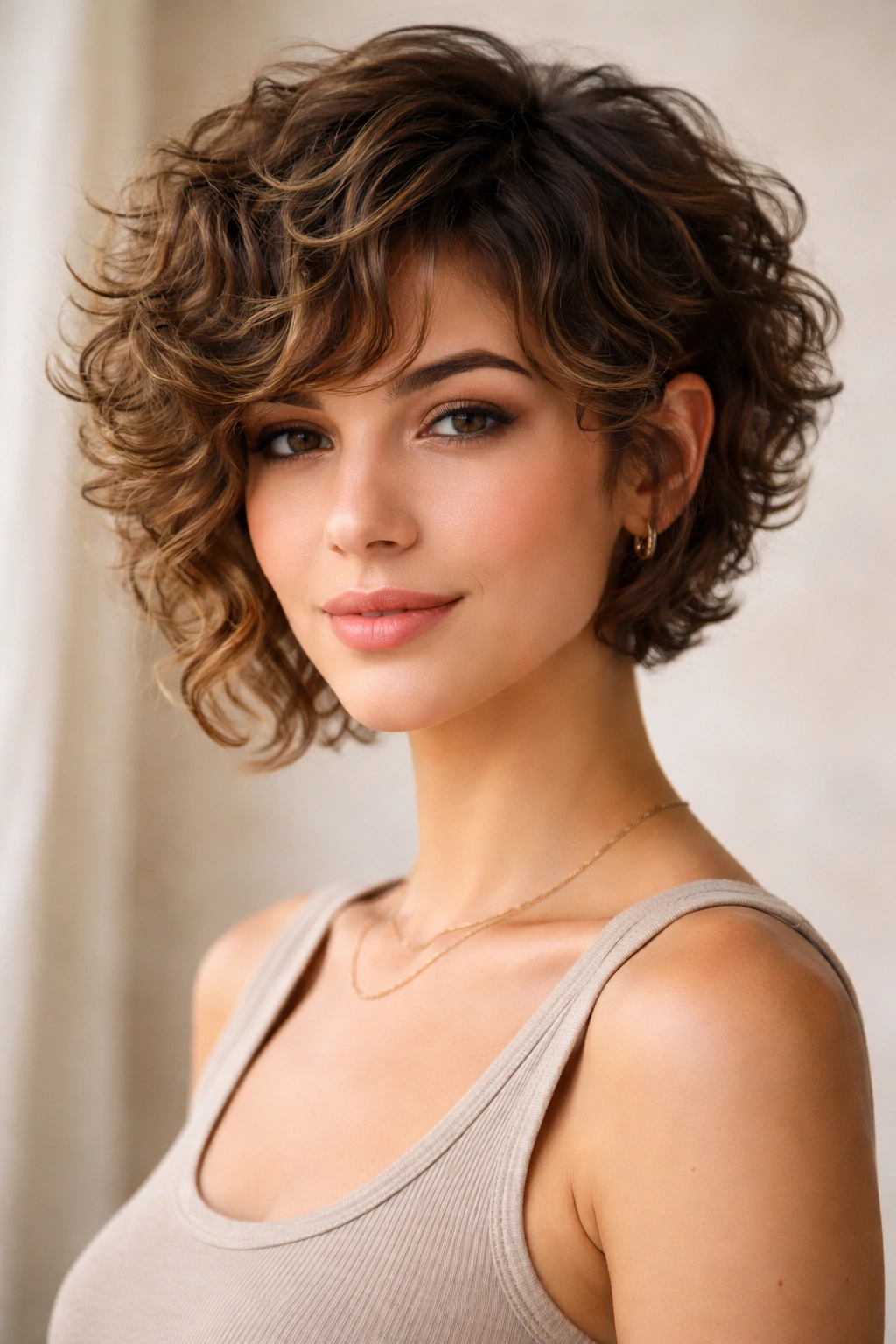
This hybrid cut is essentially a pixie on top with slightly longer pieces in back and around the face that extend to chin length or slightly below. It combines the ease of a pixie with the versatility and face-framing potential of a bob.
Why It Works for Curly Hair
A pixie-bob hybrid gives you the texture and low-maintenance benefits of a short cut while maintaining enough length in strategic places to frame your face and create visual interest. The layers throughout mean your curl pattern gets showcased at multiple lengths, creating dimension. You get genuine ease-of-styling from the short pieces while still having length where it matters most for your face shape and aesthetic preferences.
Best For
- People who want short-cut benefits without committing to a full pixie
- Curly hair that’s fine or medium-textured (very thick curls might lose shape without enough overall length)
- Anyone seeking balance between low-maintenance styling and a polished, shaped appearance
- Those who enjoy trying different styling options with the same cut
Worth knowing: This cut requires clear communication about what “slightly longer” means to you. Bring reference photos and be specific about where you want length — front pieces only? All the way around? Having the exact same vision as your stylist is crucial for getting a hybrid cut that actually delivers what you want.
10. The Defined Ringlet Cut
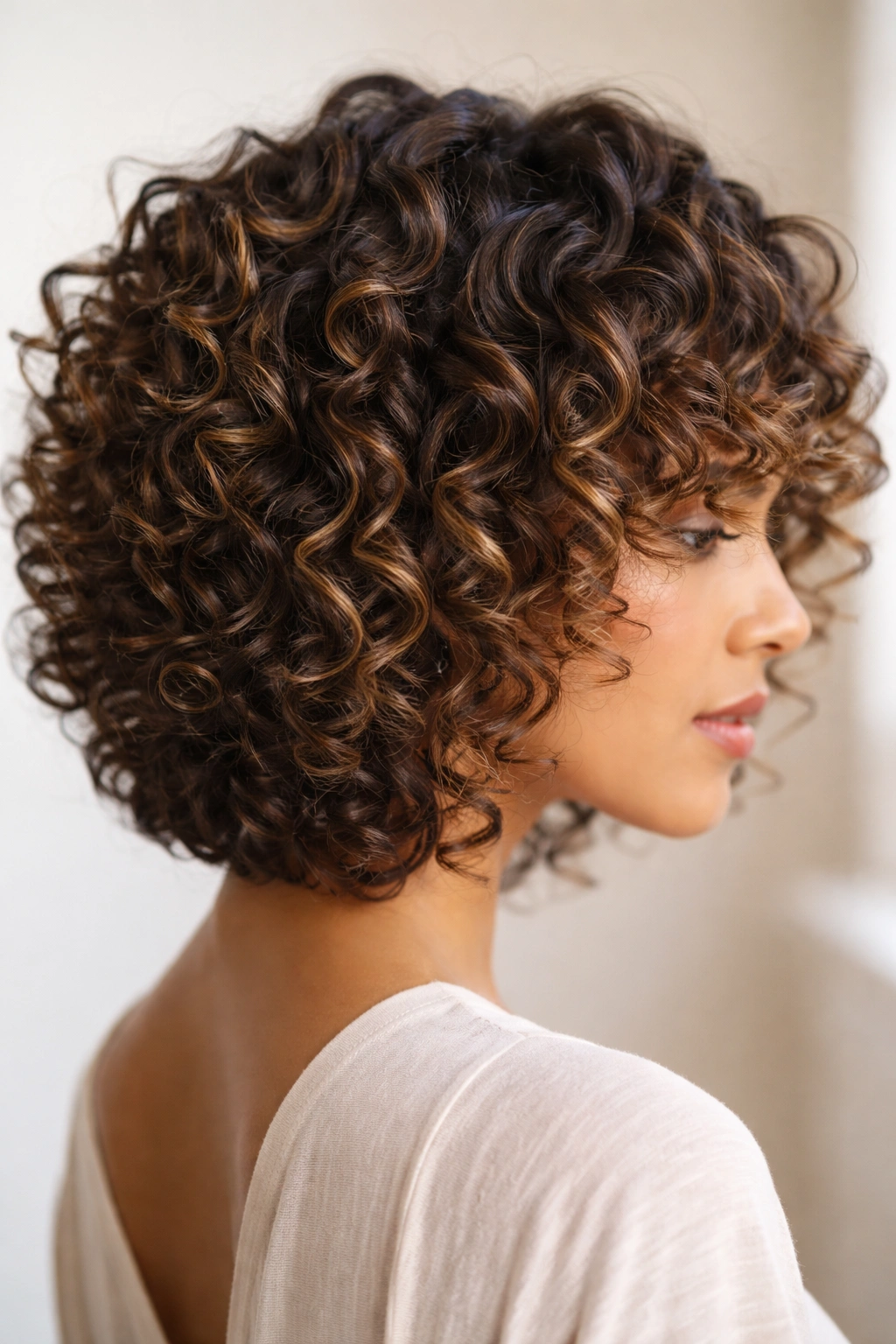
This is a precision cut specifically designed around defined, individual curls rather than treating curly hair as one bulk of texture. Each curl gets strategically cut at its own best length to allow that specific ringlet to express its shape fully while maintaining overall cohesion.
Why It Works for Curly Hair
The ringlet cut is the most sophisticated approach to curly hair because it treats every curl as its own entity with its own length and movement needs. Layers are placed strategically to enhance definition and allow each curl to separate cleanly from its neighbors. This approach works best on curls that are already fairly defined and bouncy — it enhances existing definition rather than creating it.
Best For
- Tightly coiled or densely coiled curls with clear, defined ringlets
- Anyone whose curls are already well-hydrated, moisturized, and healthy
- People willing to invest in regular trims every 5-6 weeks to maintain definition
- Those seeking the most precision, intentional approach to curly haircuts
Pro tip: This cut shines when combined with consistent curl-care practices — deep conditioning, proper hydration, products that define your specific curl type. The cut alone can’t create ringlets that don’t naturally exist, but it absolutely maximizes ringlets that are already there.
11. The Feathered Short Cut
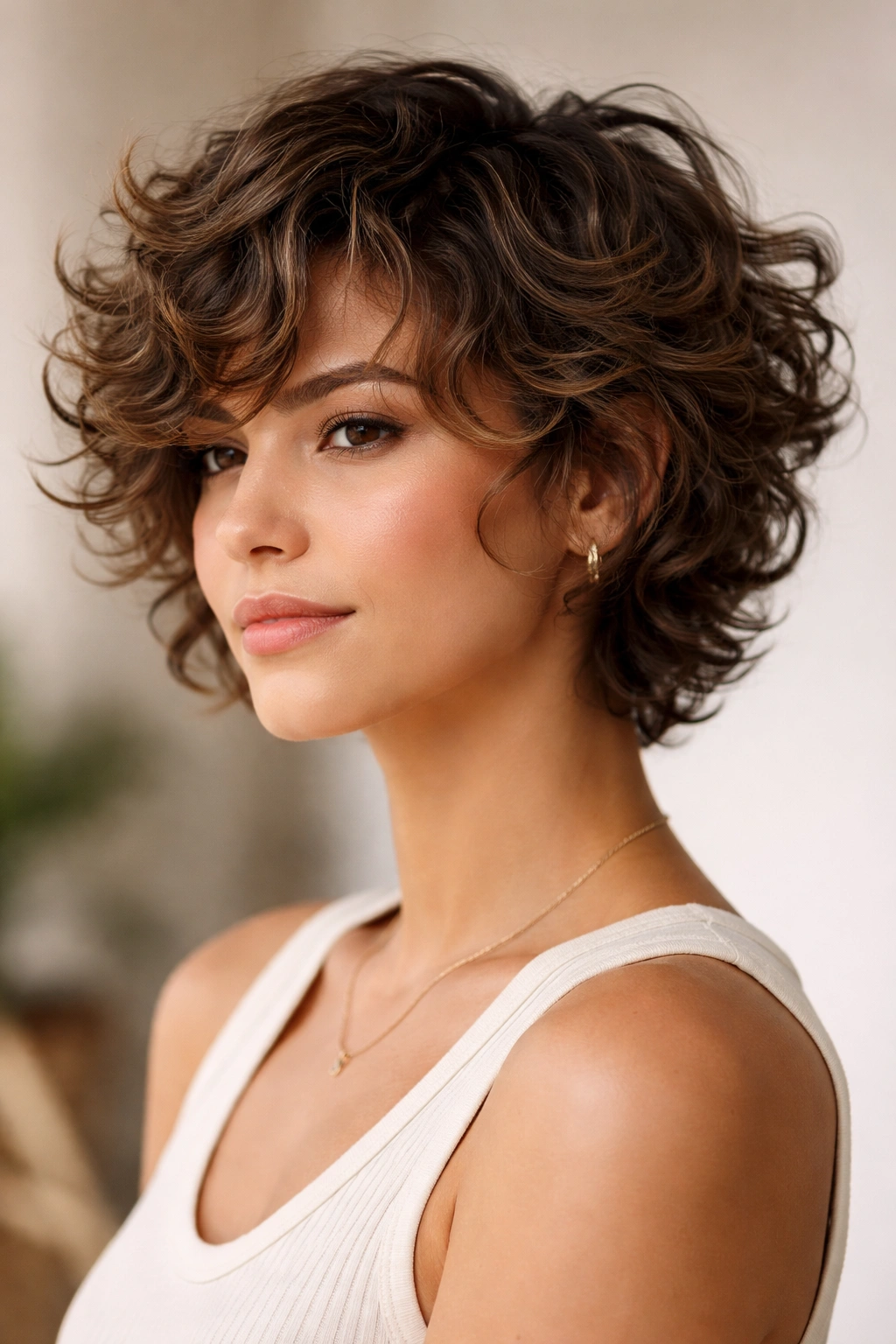
A feathered cut uses point-cutting and specific layer placement to create pieces that blend rather than create obvious demarcation lines. Feathering gives you layers while maintaining a more cohesive, unified silhouette rather than a choppy, textured appearance.
Why It Works for Curly Hair
Feathering works beautifully for curly hair because it removes weight gradually, creating soft transitions between lengths rather than sharp contrasts. Your curls get to move and express texture without looking deliberately choppy or undone. The feathering technique creates what’s sometimes called a “lived-in” quality — the cut looks intentional and shaped, but natural and effortless in how it lands when you style or air-dry.
Best For
- Medium to looser curl patterns that benefit from soft, blended transitions
- Anyone wanting a short cut that still looks polished and intentional
- Curly hair that’s fine or medium-textured
- Those seeking a cut that works whether you deliberately style or simply air-dry
Worth knowing: Feathering requires real skill. This isn’t a cut your stylist can execute well just by following a technique — they need to understand how your specific curls move and bend to feather effectively. It’s worth seeking out a stylist with real curly-hair expertise for this one.
12. The Asymmetrical Curly Cut
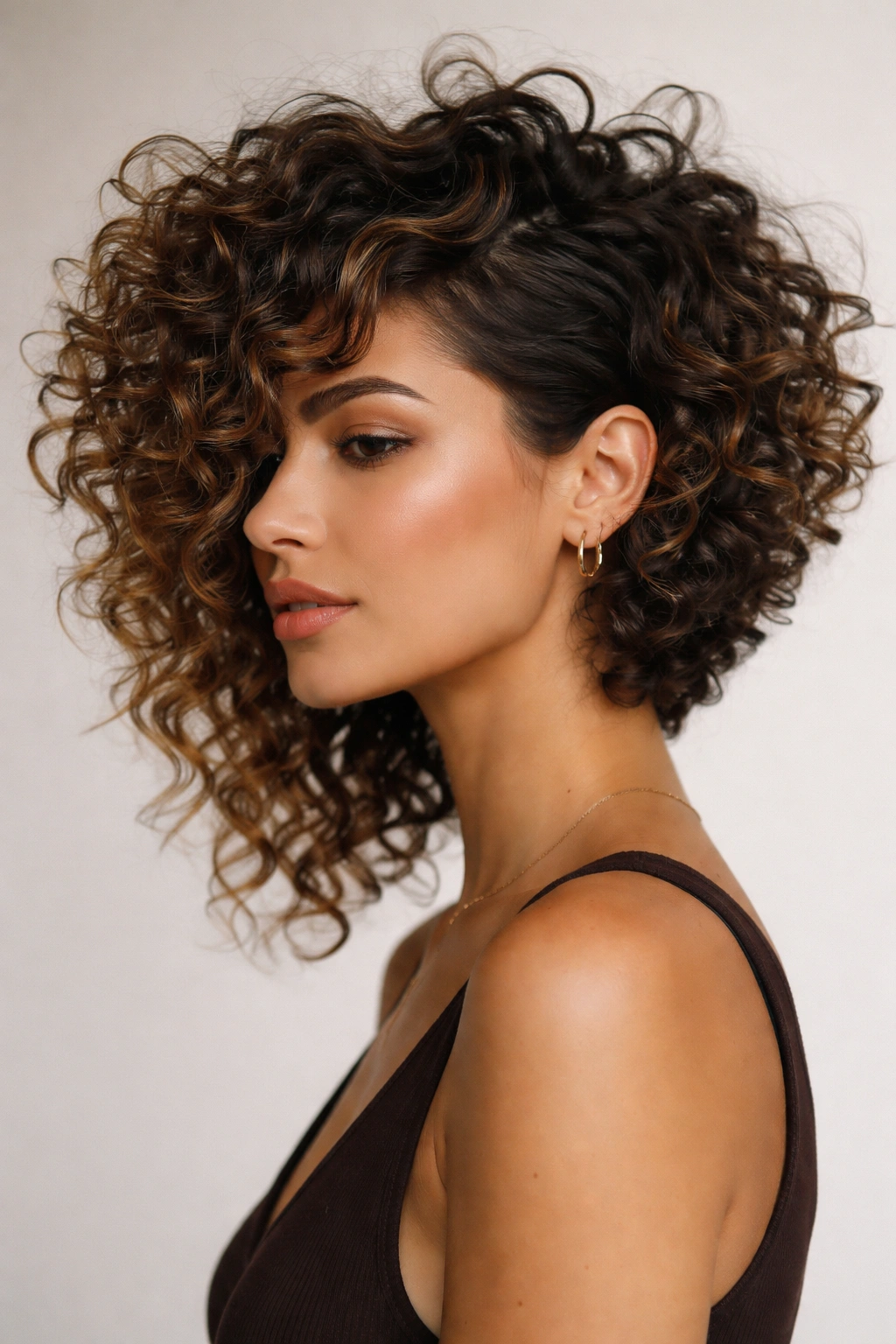
An asymmetrical cut features noticeably different lengths on either side of the head — one side might be significantly shorter while the other extends longer, creating deliberate imbalance that’s visually striking and modern. The layers throughout maintain movement and texture.
Why It Works for Curly Hair
Asymmetry works for curly hair because it creates visual interest that plays off your hair’s natural movement and dimension. Curly hair’s volume and texture mean asymmetry reads as intentional rather than like a haircut gone wrong. The different lengths on each side showcase your curl pattern’s complexity and movement, especially on the side with longer pieces.
Best For
- Anyone with strong style confidence and willingness to lean into bold design
- Curly hair with enough volume and texture to carry an asymmetrical silhouette
- People seeking a genuinely eye-catching, contemporary appearance
- Those comfortable with styling flexibility — an asymmetrical cut works with various styling approaches
Pro tip: Ask your stylist about the ratio. How much shorter is one side versus the other? The more dramatic the difference, the more deliberate and high-fashion it reads. A subtle asymmetry might disappear once your curls dry, while a dramatic one ensures the cut’s intentionality stays visible.
13. The Textured Crop with Undercut Fade
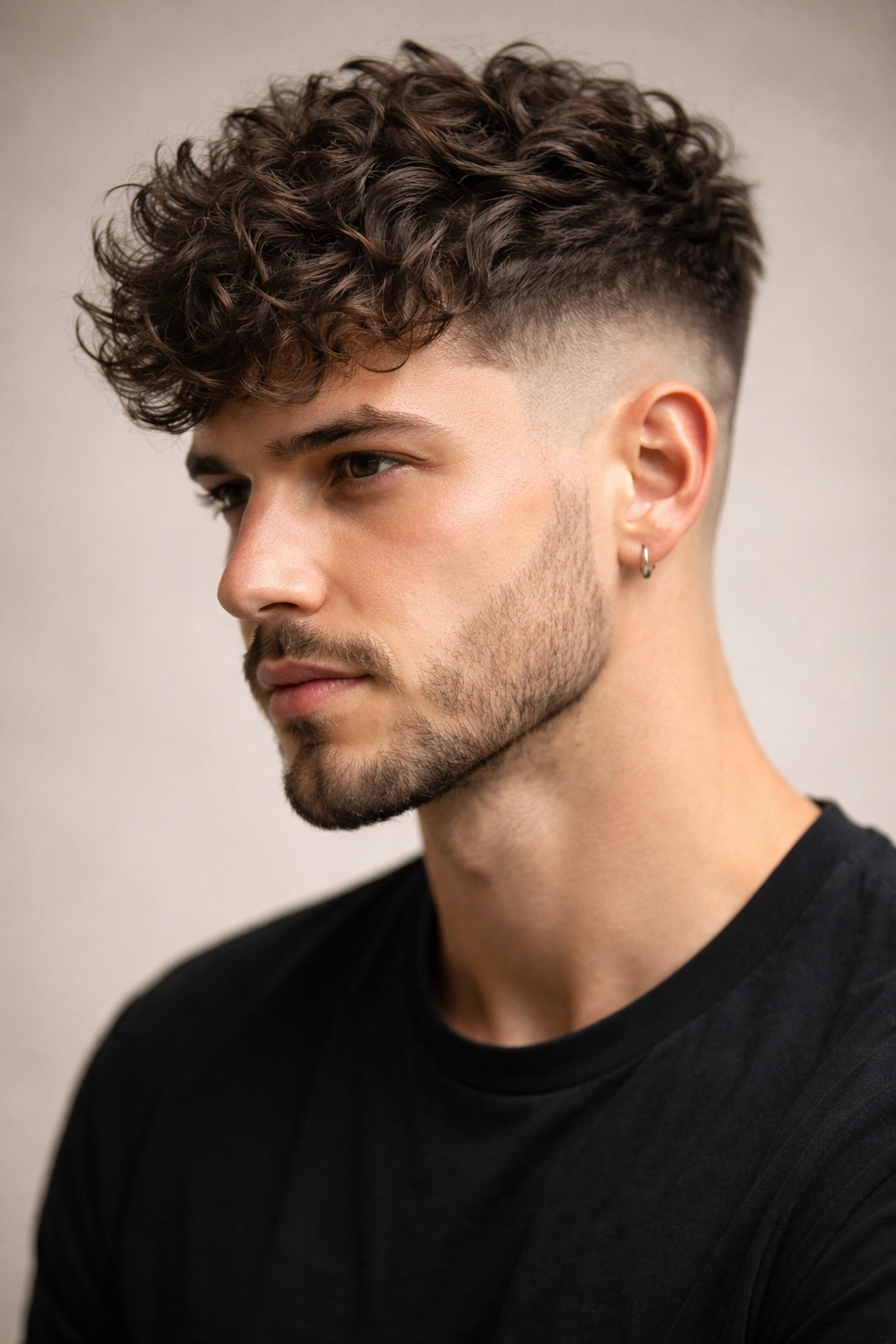
Similar to the standard textured crop but with an added undercut fade — meaning the sides and back are clipped progressively shorter (faded) rather than left at the same uniform length. This creates extra dramatic contrast between texturally short curls on top and minimal length on the sides.
Why It Works for Curly Hair
The fade maximizes volume on top by removing every possible bit of weight from sides and back, creating a silhouette that’s almost sculptural. Curly hair’s natural volume means the contrast between the textured top and faded sides is visually striking without looking unbalanced. The fade removes any potential flatness or weight compression from the sides, so your curls on top have complete freedom to move and show their texture.
Best For
- Tightly coiled or densely textured curls needing significant bulk removal
- Anyone seeking maximum contrast between textured top and minimal sides
- People willing to maintain the fade with trims every 3-4 weeks
- Those with mature style confidence — this is a bold, statement-making cut
Worth knowing: A fade requires clipper work and precision. Make sure your stylist is comfortable with both curly hair texture and fade execution. Some stylists excel at one but not the other — you need someone proficient at both.
14. The Shoulder-Grazing Textured Cut with Face-Framing Layers
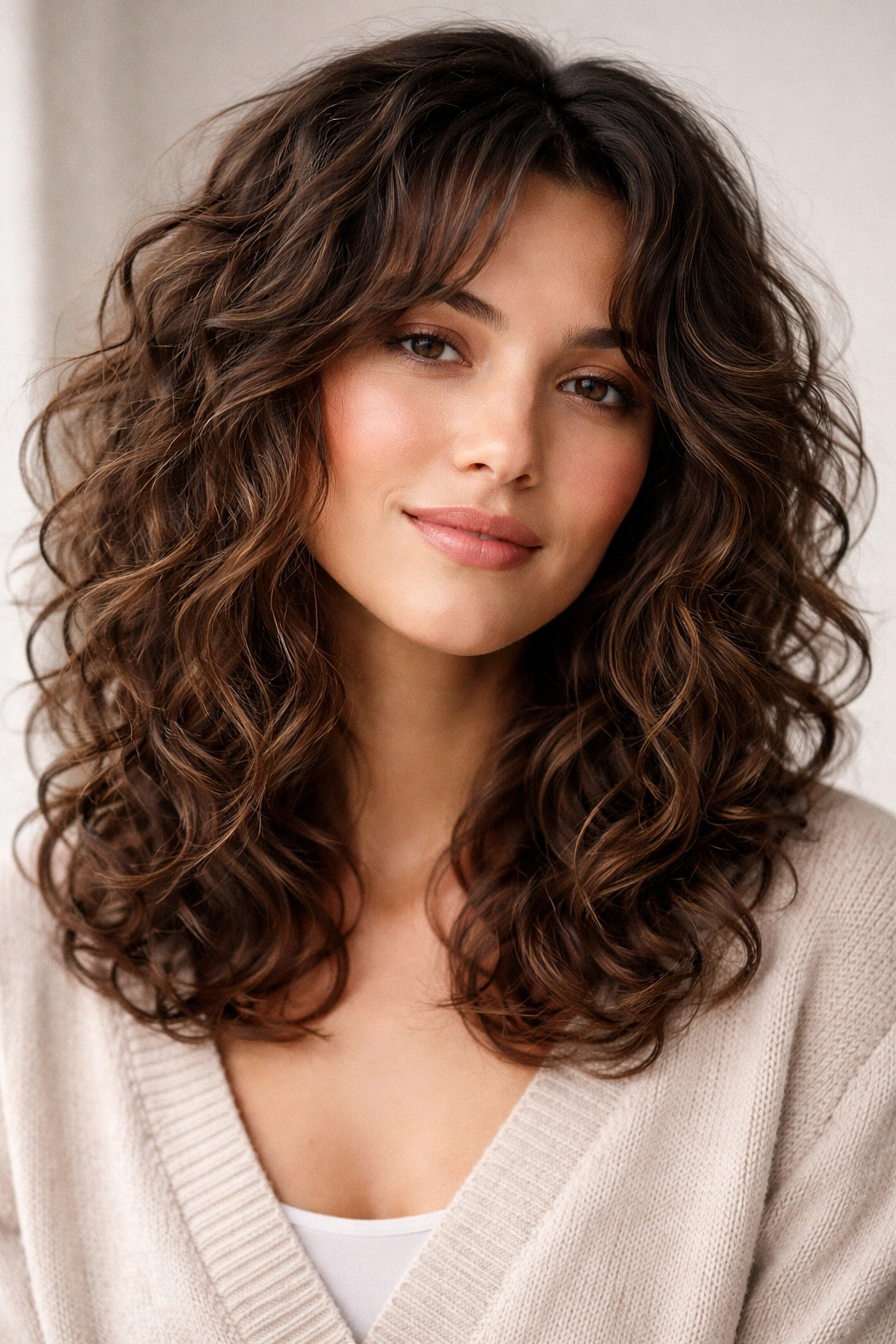
This cut maintains slightly longer length — roughly collarbone or just above — with heavy texture and intentional layers framing the face. The front pieces are slightly longer than the back and sides, creating movement toward the face while the layers throughout prevent weight accumulation.
Why It Works for Curly Hair
This length is ideal for curly hair because it’s long enough to show off your curl pattern’s full potential, but short enough that layers still provide significant shape and movement benefits. The face-framing layers are crucial because they ensure your curls frame your face with intention rather than just sitting around your head. Texture throughout means every piece contributes to the overall dimension and flow rather than some pieces being flat and some curly.
Best For
- Medium to loose curl patterns with defined waves or curls
- Anyone wanting enough length to express their curl texture fully
- People who enjoy styling their curls intentionally rather than pure air-dry approaches
- Those with face shapes that benefit from intentional face-framing and movement
Worth knowing: This length requires commitment to trim schedules. Without regular trims every 6-8 weeks, the shape gets lost and the weight creeps back as the cut grows out. If you’re not willing to trim regularly, this length might frustrate you.
15. The Blunt Curly Bob with Choppy Layers Inside
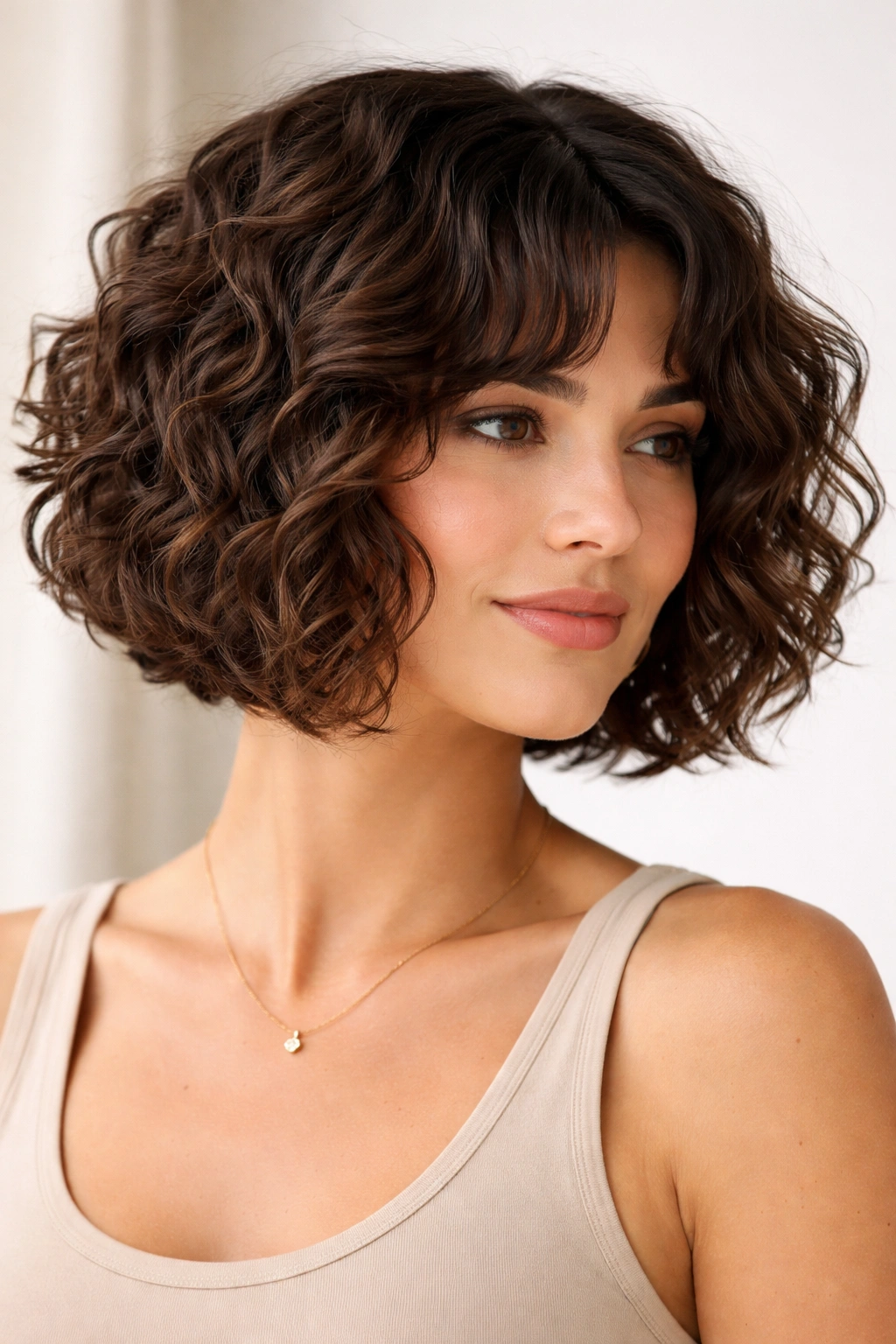
A blunt or nearly blunt perimeter combined with heavy choppy layers throughout the interior creates unexpected visual complexity. The outside line appears relatively clean and shaped, but the interior is all texture and movement, giving you the best of both worlds — shape and structure plus intentional texture.
Why It Works for Curly Hair
This approach is clever because it gives curly hair a defined perimeter (which always helps shape read more intentional) while using interior layers to ensure the texture actually moves and doesn’t just sit as one dense, shapeless mass. The choppy interior layers mean your curls separate and showcase dimension rather than blending into a uniform texture blob. The bluntish perimeter prevents the cut from reading as too choppy or undone.
Best For
- Curly hair with good density and texture that can hold a shaped silhouette
- Anyone wanting a cut that reads as intentionally polished with plenty of texture
- People who enjoy deliberate styling but appreciate a cut with some structural boundaries
- Those whose curls benefit from definition lines and intentional shape
Pro tip: The success of this cut absolutely depends on your stylist’s ability to layer the interior without making the perimeter ragged or uncontrolled. This isn’t a beginner-level cut — find someone experienced in this specific technique.
16. The Shaggy Curly Wolf Cut
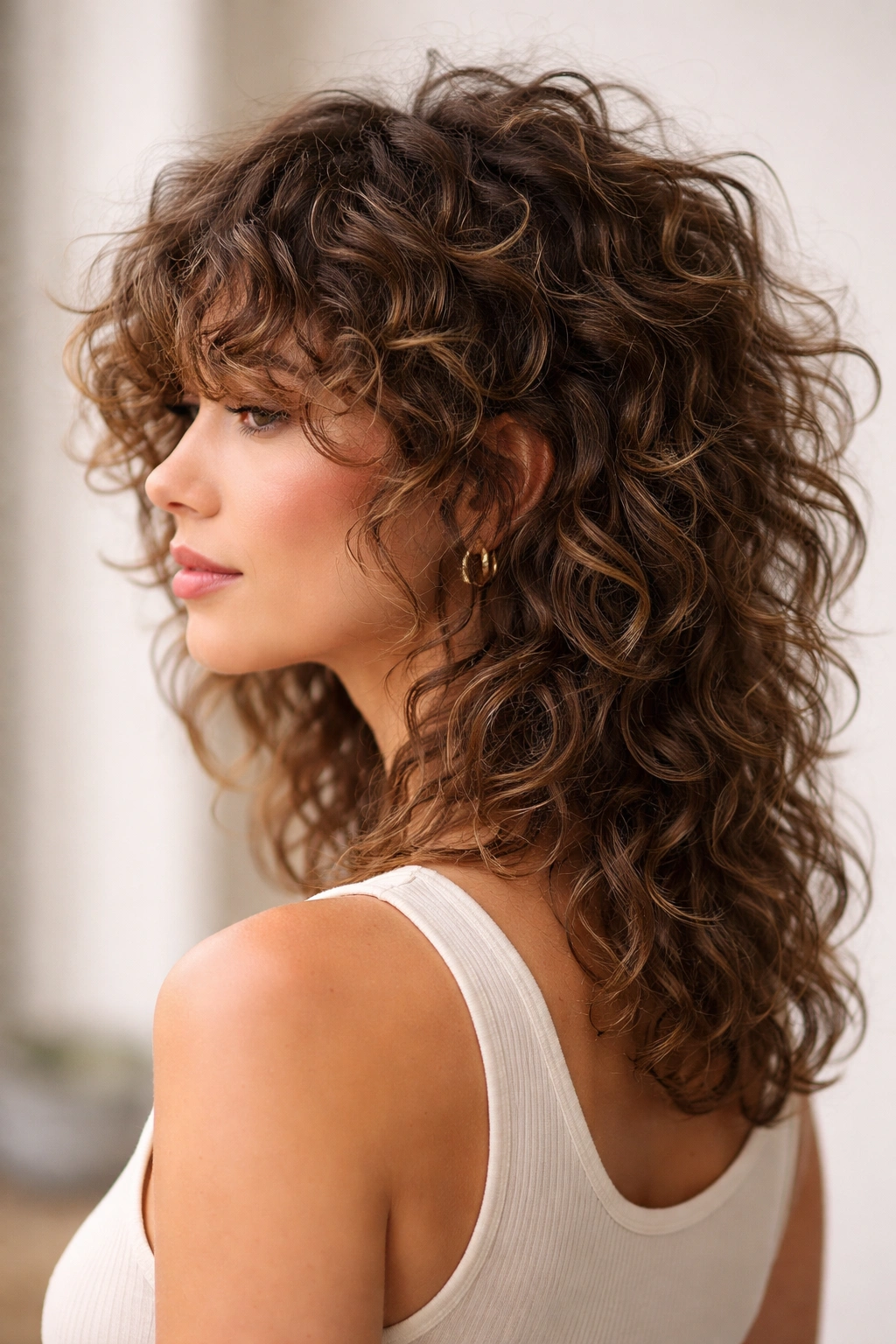
The wolf cut combines the textured choppiness of a shag with the layered structure of a mullet — lots of short, choppy texture throughout with noticeably longer pieces in the back. It’s undeniably trendy but works genuinely well on curly hair because the multiple layer lengths create exactly the kind of movement curly hair loves.
Why It Works for Curly Hair
A wolf cut’s multiple different lengths and generous choppy layering mean your curls get to move and separate at various lengths throughout the cut, creating dimension and preventing weight concentration anywhere. The longer back pieces give curls length and movement, while the shorter pieces everywhere else provide shape and prevent that compressed, flattened feeling. It’s trendy and genuinely flattering on textured hair.
Best For
- Curly hair with good bounce and definition that can carry trendy styling
- Anyone wanting a cut that looks current and fashion-forward
- People who enjoy styling their curls intentionally and taking time with their appearance
- Those with enough curl pattern strength that a choppy, textured cut enhances rather than reveals frizz
Worth knowing: This is very much a trendy cut. If trends don’t matter to you and you want timeless styling, skip this one. But if you love current style and want your hair to reflect that, a wolf cut on curly hair is genuinely excellent right now.
17. The Vintage-Inspired Curly Bob with Waves
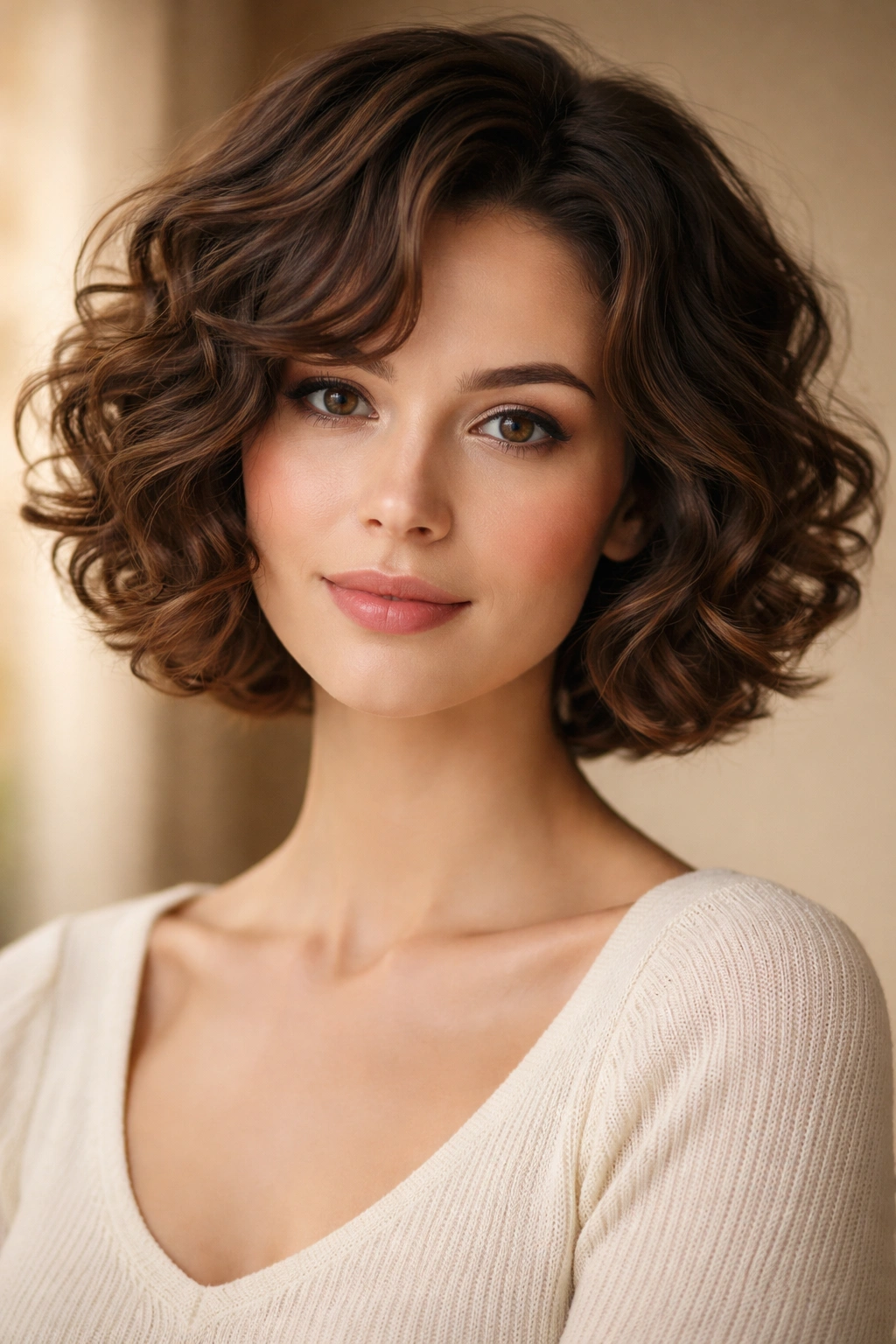
This cut channels vintage styling — think 1920s-1960s inspiration — with a bob that sits roughly chin-length and features intentional waves and curves rather than choppy choppiness. The layers are subtle and purposeful rather than numerous and textural, creating soft shape while letting your natural wave pattern show.
Why It Works for Curly Hair
This cut works because it trusts your natural curl pattern rather than fighting it or adding tons of choppy layers to it. The intention is to enhance your waves’ natural movement rather than creating texture where it might not naturally exist. If your curls have a beautiful wave pattern, this cut lets that pattern be the star without too much layer-driven disruption.
Best For
- Wavy to loosely curly hair with beautiful, defined wave patterns
- Anyone seeking a vintage or nostalgic aesthetic
- People who want enough shape to look intentional without tons of texture
- Those whose curl pattern is already beautiful enough to be the main feature
Pro tip: This cut works best when you lean into the vintage styling direction — think waves set with product, intentional pinning or styling, a polish approach rather than undone vibe. If you’re seeking wash-and-go ease, this might not be your cut.
18. The Curly Crop with Textured Definition
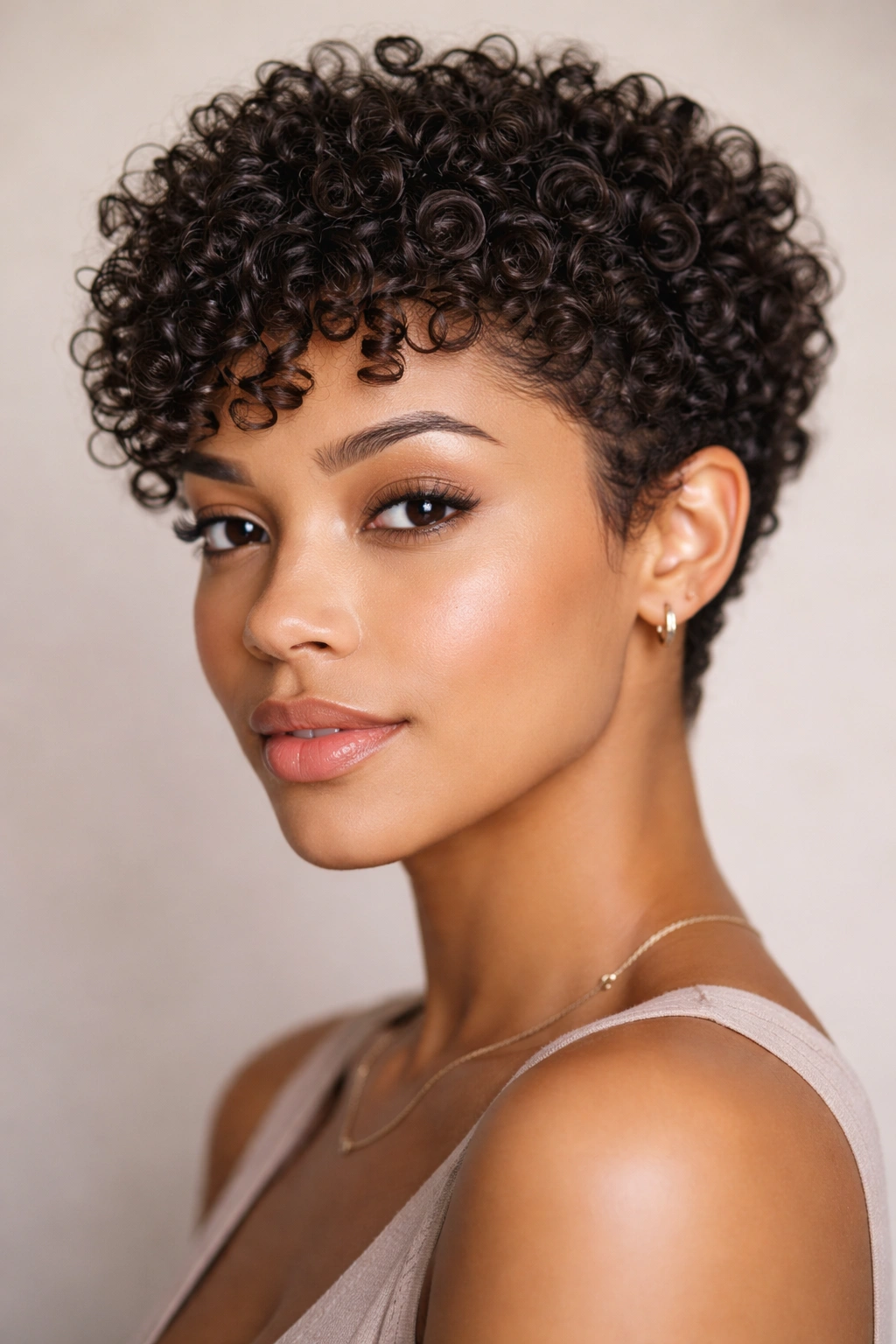
A crop that emphasizes clean lines and defined curl separation rather than choppy blending. Each curl is allowed to express itself as a distinct ringlet, but the overall cut maintains enough shape and structure that it reads as intentional and polished rather than wild or uncontrolled.
Why It Works for Curly Hair
This final cut celebrates what makes curly hair beautiful — defined, individual curl patterns — while maintaining enough cut precision that the whole thing reads as intentional styling rather than simply short hair. The layers are placed to enhance curl separation and definition rather than create blending. It’s the most “let your curls be curls” approach while still providing meaningful cut structure.
Best For
- Densely coiled or tightly curled hair with beautiful, defined ringlets
- Anyone wanting to showcase their natural curl definition and pattern
- People with curl types that look best when curls remain distinct and separated
- Those seeking a cut that celebrates their natural texture rather than fighting it
Worth knowing: This cut really shines when you’re committed to your curl-care routine. It’s designed to showcase curl definition, so your curls need to actually have definition. That requires proper hydration, conditioning, and products that define your specific curl type. The cut alone can’t create definition that doesn’t naturally exist.
Final Thoughts
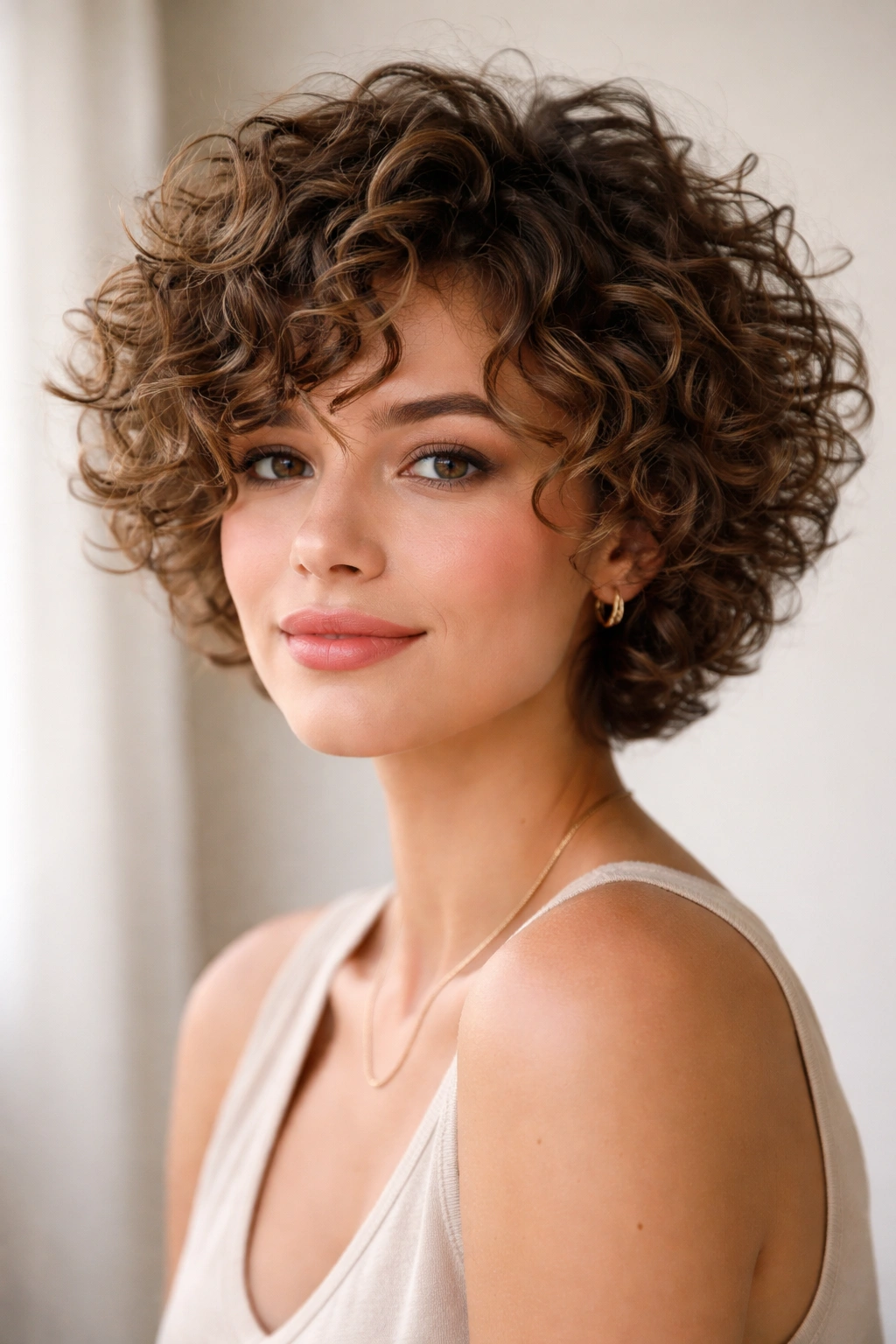
Finding the right short, layered cut for your curly hair is genuinely transformative because it’s the difference between hair that fights your natural texture and hair that works with it. Every cut on this list works because it addresses what makes curly hair unique — its volume, its tendency toward texture, its need for strategic weight removal — rather than trying to straighten it out or minimize its natural characteristics.
The real secret is understanding your specific curl type, density, and pattern, then finding a stylist who knows how to translate that into a cut that actually serves your hair and your lifestyle. A cut that’s incredible for tight, dense, defined curls might not work at all on looser, wavier texture. A low-maintenance cut that works beautifully with intentional air-drying might require daily styling effort if you’re not willing to invest time in your routine.
Get a consultation with a stylist who specializes in curly hair, bring specific photos of cuts you’re drawn to, and be honest about how much styling and maintenance you’re willing to do. The best cut in the world doesn’t matter if it requires a styling commitment you won’t sustain. Once you find your cut and your stylist, commit to regular trims every 4-8 weeks depending on your cut’s specific needs — this is genuinely the difference between a cut that ages beautifully and one that gets progressively shapeless as it grows out. Your curls will thank you for it.
