



There’s something undeniably powerful about a curly crop—a style that sits at the intersection of low-maintenance practicality and unapologetic boldness. While straight-haired folks have long dominated the short-hair conversation, curly-haired people now have endlessly creative options for rocking a cropped cut that actually works with their natural texture instead of fighting it. A good curly crop isn’t about forcing your coils into submission; it’s about embracing them, letting them spring to life, and creating a silhouette that feels fresh, intentional, and entirely you.
The magic of a curly crop is that it requires minimal daily styling once you’ve found the right cut and technique. Your natural curl pattern becomes the architecture of the style itself—no blow-drying, no fighting frizz for hours, no damaging heat tools required. What you get instead is a cut that dries into shape, actually gets better the more you embrace your texture, and transforms your whole face and presence the moment you step out of the chair. That’s the real appeal: a style that’s both easier to maintain and somehow makes a bolder statement than anything you could achieve with damage-prone straightening or exhausting styling routines.
The challenge, though, is that not every curly crop works for every curl type, face shape, or style preference. A cut that’s pure magic on tight coils might look completely different on loose waves. A style that frames one face beautifully could overwhelm another. That’s why understanding your specific options matters so much. The following styles represent some of the most striking curly crop variations out there—each one designed to work with different curl patterns, lengths, and the kind of bold statement you want to make.
1. The Classic Textured Crop
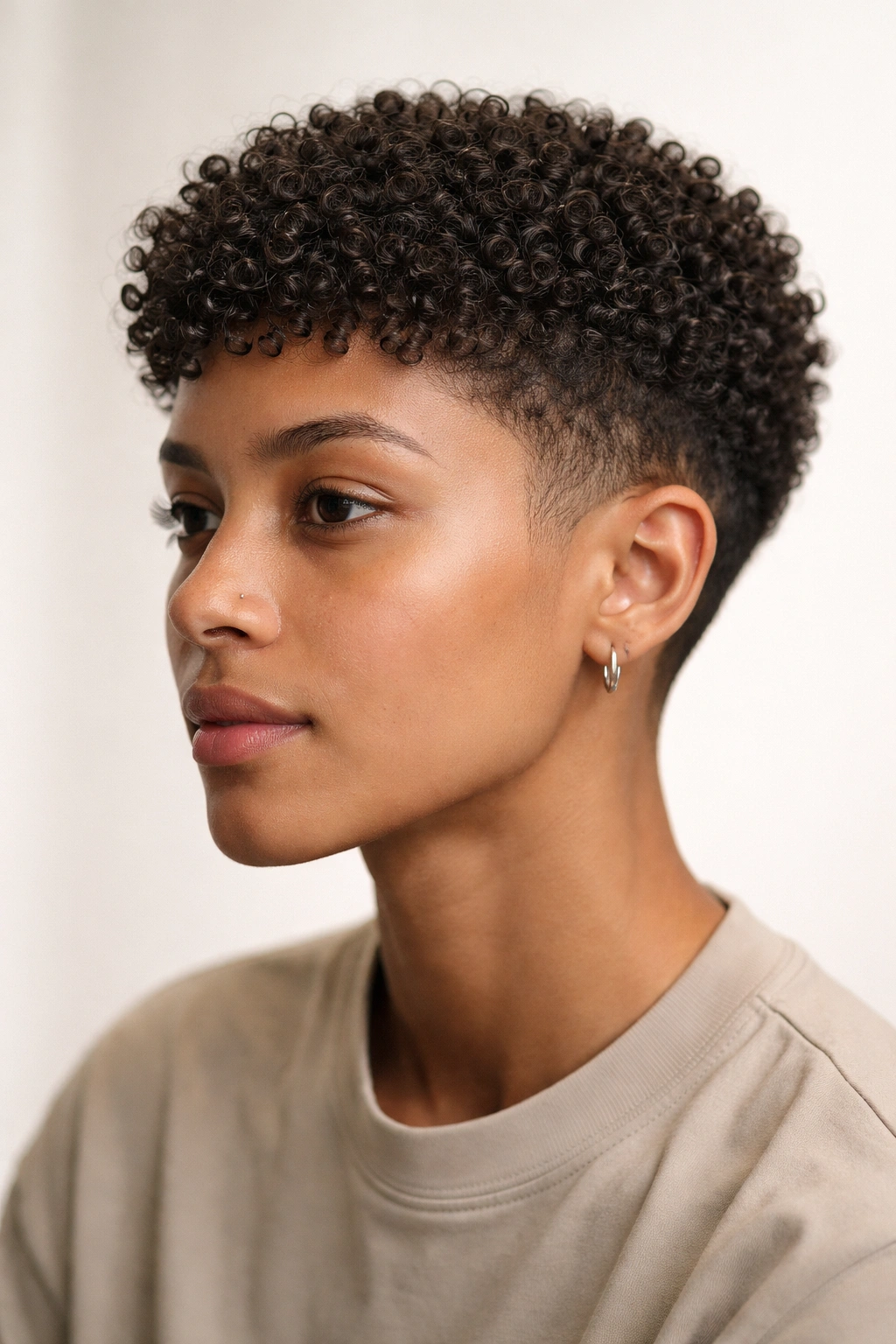
The classic textured crop is the foundational curly crop style—short, even, and shaped to emphasize your natural curl pattern all over. Think of it as a clean, uniform cut where every curl sits at roughly the same length, typically between half an inch and two inches, and the shape is deliberately rounded to show off maximum texture. This style works especially well for tight coils and tight curls because the uniform length gives those dense curl patterns room to breathe without becoming matted or weighted down.
Why This Cut Stands Out
The beauty of the classic textured crop is its simplicity and versatility. You’re not fighting your natural texture—you’re celebrating it. The cut removes length that can sometimes cause curls to hang limp, and instead creates a silhouette where your coils spring outward, creating visible dimension and shape. It’s a style that looks intentional the moment you step out of the shower, requires minimal styling, and actually looks fresher the longer you go between haircuts. For people who’ve spent years on protective styling or styles that hide their natural hair, this cut can feel genuinely liberating.
What Makes It Work
- Works beautifully on Type 4 coils and very tight curl patterns where curl definition is naturally dense
- Requires a stylist who understands how curls shrink and how to cut for that shrinkage factor (wet versus dry cutting makes a huge difference)
- Pairs well with lightweight moisturizing products rather than heavy creams that can weigh down short coils
- The style actually improves over the first few weeks as your curls get more defined with regular moisturizing
- Easy wash-and-go potential with just a spritz of water, some leave-in conditioner, and maybe a curl cream
Pro tip: When you consult with your stylist, bring photos of curls at different stages of growth—not just freshly cut, but also after 4-6 weeks—so they can see what you’re aiming for long-term.
2. The Tapered Textured Fade
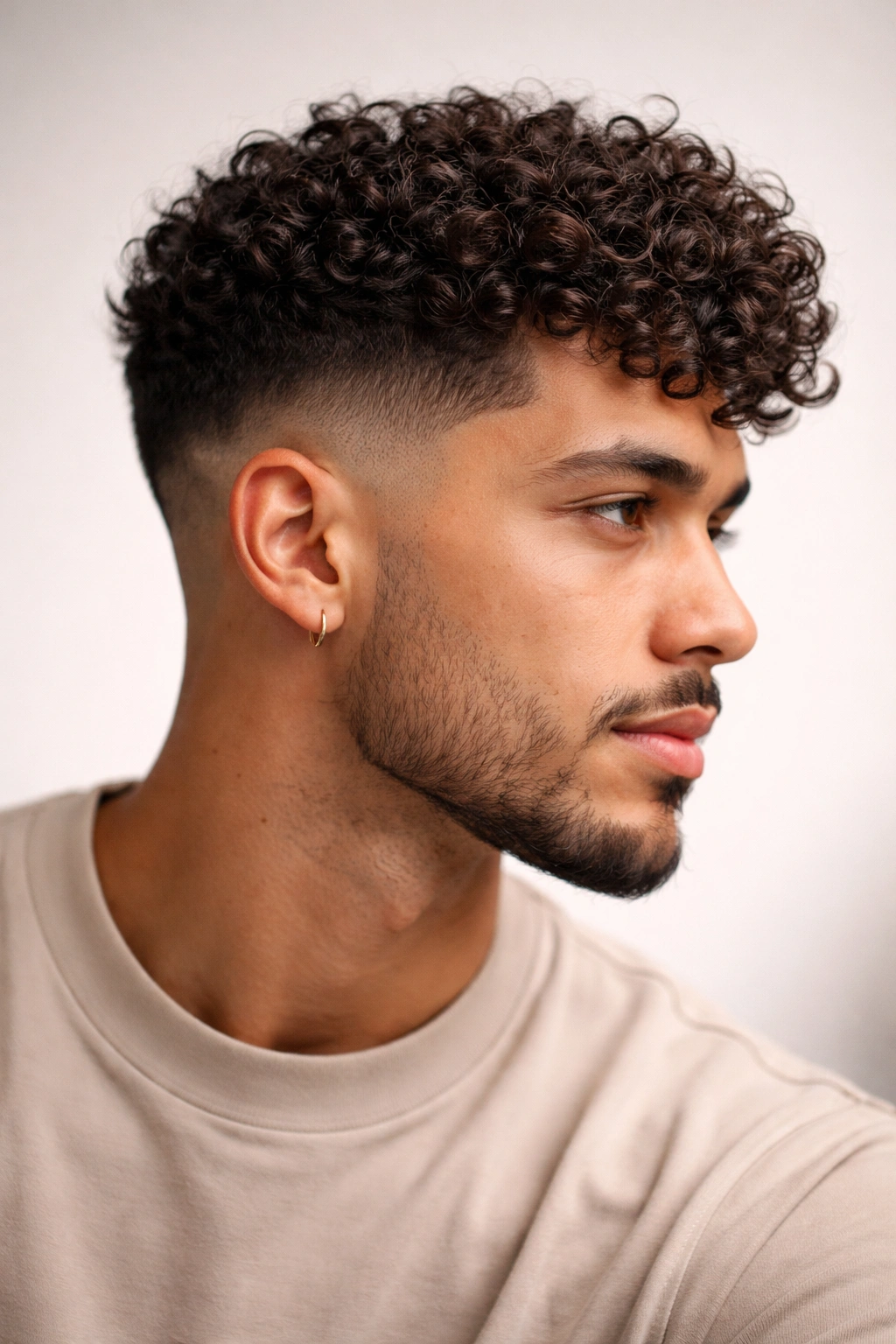
The tapered textured fade brings barber-shop precision to curly hair, with shorter, faded sides and back (sometimes clipped down to a fade that gets progressively closer near the neckline) while leaving more length and texture on top. This creates contrast and dimension that’s visually striking while keeping the overall look neat and controlled. The key difference from a standard fade is that the top stays textured and curly rather than being slicked down or shaped into a defined line—you’re maintaining your curl pattern while using the contrast of length to create shape.
The Specific Appeal of This Style
A tapered fade works magic for people who want an edgy, polished look without sacrificing their curls. The faded sides draw attention upward and outward, which can make the face appear broader or more balanced depending on your angles. The style feels intentional and fashion-forward, which is exactly why it’s become popular across different curl types and face shapes. It’s a style that reads as both effortless (because you’re working with your texture) and carefully crafted (because of the precision fade work required).
What You Need to Know
- Requires a stylist skilled in both fade work and curly hair—this is not a standard haircut
- The fade may feel high-maintenance initially, but as your coils regrow on top, the overall look blends naturally
- Works particularly well on medium to loose curls where the texture on top has enough definition to show volume without looking shapeless
- The contrast of the fade creates the visual interest, so you don’t need aggressive texturizing or choppy layers on top
- Best maintained with touchups every 4-6 weeks, though it’s actually quite forgiving as it grows out
Worth knowing: The side part or center part you choose changes the entire vibe—try different parts during consultations to see which suits your face best.
3. The Undercut with Textured Top
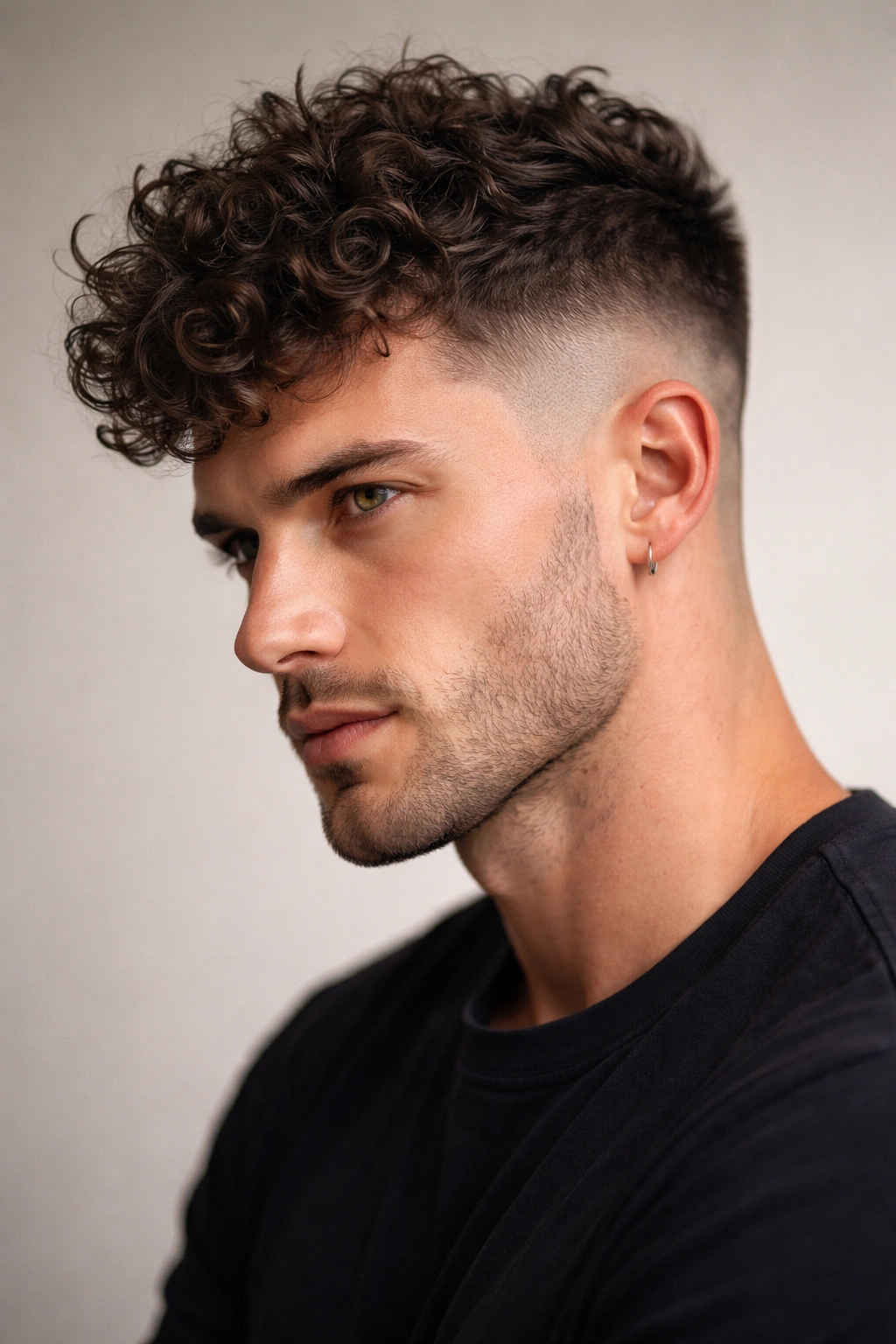
An undercut takes the contrast idea further: the sides and back are cut very short (sometimes clipper-shaved to skin) while the top is left significantly longer and fuller, creating dramatic visual separation. Unlike a fade that’s a gradual transition, an undercut is more of a sharp line of demarcation. The top can be anywhere from two to four inches, giving you real texture and curl definition up there while the stark contrast of the shaved sides creates an edgy, modern aesthetic.
Why This Cut Makes Such a Bold Statement
The undercut is unapologetically bold. It’s not subtle. You’re saying, “I’m confident in my curls, and I want the world to see them.” The style puts your face front and center because there’s nothing on the sides to compete for attention. For people with great cheekbones, a strong jawline, or who just want maximum impact, this style delivers. It’s also incredibly practical—no hair getting in your face, easy to maintain, and the contrast itself does the styling work for you.
Important Details to Consider
- Requires absolute precision in the clipper work—a wobbly line or uneven sides ruins the whole effect
- The longer top needs regular maintenance (every 3-4 weeks) to keep the undercut clean and visible
- Works on almost any curl type, but particularly striking on looser curls where the top can show really dramatic volume
- Pairs well with designs shaved into the fade (geometric patterns, lines, or shapes) if you want even more personality
- The style requires confidence because it’s maximally visible—there’s nowhere for self-consciousness to hide
Pro tip: Take a full-body photo after you get the cut, because the undercut often looks even more powerful in proportion to your whole silhouette than you might expect.
4. The Curly Pixie Crop
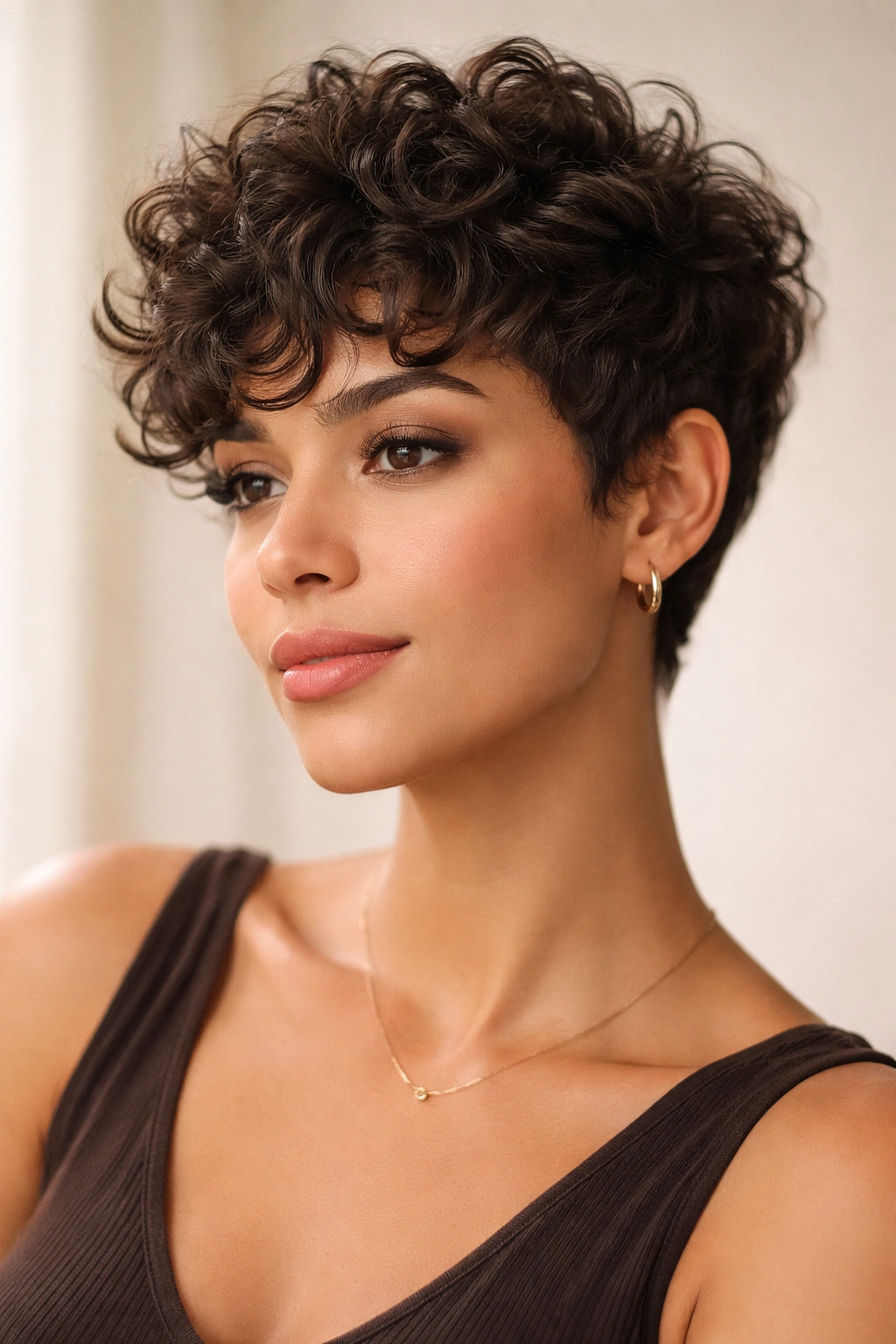
A curly pixie is longer than a classic crop but shorter than what most people think of as a traditional pixie cut on straight hair. We’re talking about an overall length of two to three inches with slightly longer pieces around the face and crown for dimension. The style emphasizes the natural curl pattern throughout while creating a slightly feminine softness compared to the more structured crops. It’s approachable, youthful, and works beautifully for people who want short hair but aren’t quite ready for a full-on shaved fade.
What Makes a Curly Pixie Distinctive
The curly pixie occupies a sweet spot: it’s noticeably short and bold, but with enough length that your curls have room to really do something. The slightly longer pieces at the crown can actually curl upward and create volume naturally, while the slightly shorter pieces around the nape and ears keep things neat. It’s a style that’s easier to achieve “wash and go” status with compared to more severe crops, because you have texture working with you rather than against you.
Key Factors for Success
- Requires a stylist who understands how to layer curly hair for shape without creating a wispy, unkempt appearance
- The pieces around the face need to be long enough that they don’t stick straight out from your head when your curls are fully dry
- Works beautifully on medium to loose curls that have natural bounce and definition
- The style needs regular moisture and lightweight styling products to keep pieces from looking dry or stringy
- Actually photographs better in person than in photos because the texture shows more depth in three dimensions
Insider note: If you have some gray hair or lighter pieces, a curly pixie shows off color variation beautifully—the texture creates natural highlighting effects.
5. The Textured Mohawk Crop
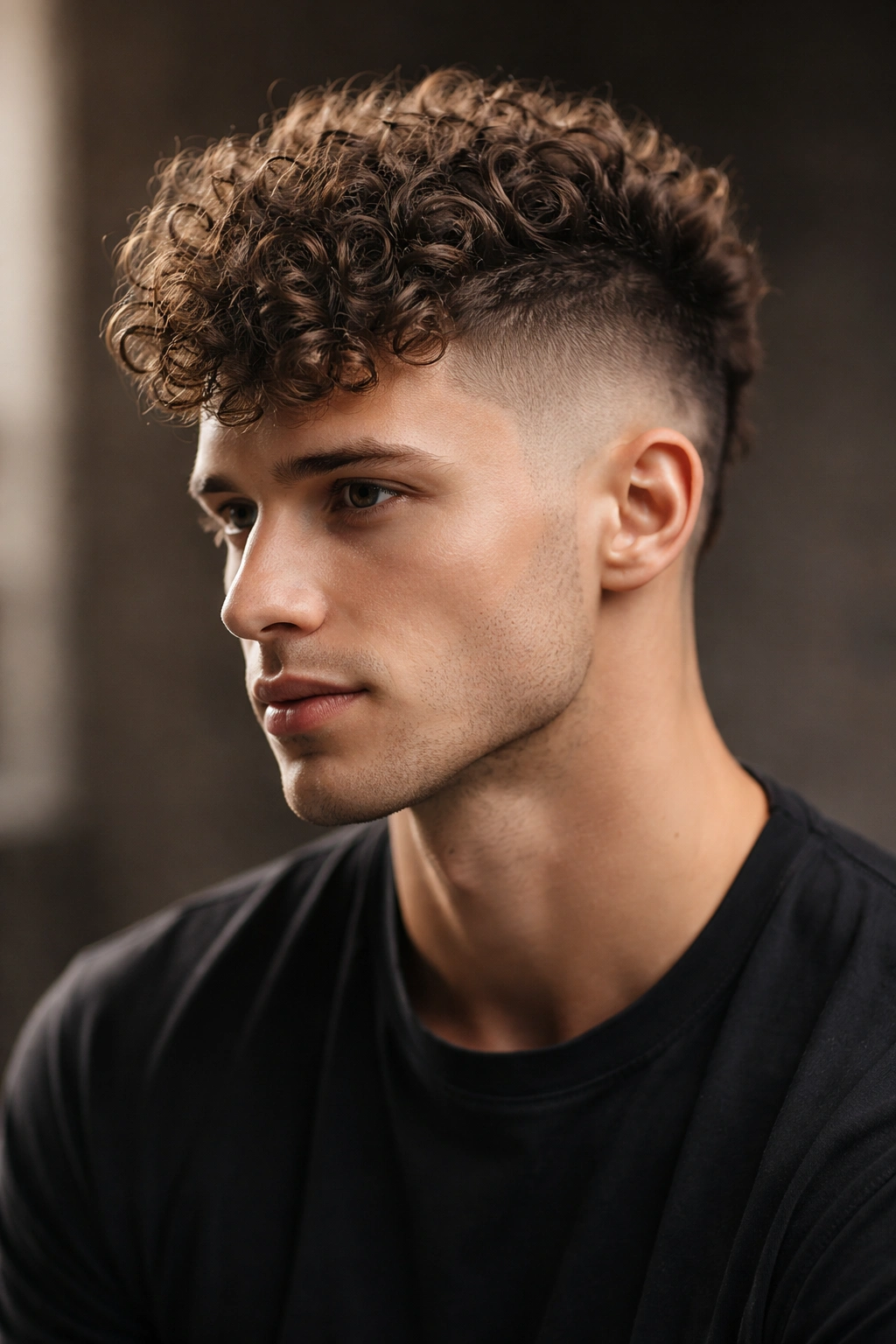
A textured mohawk crop keeps length primarily down the center of the head while fading or cutting shorter on the sides, creating a subtle mohawk silhouette without being a literal, dramatic runway mohawk. It’s the edgier cousin of the tapered fade, giving you intentional shape and direction while still maintaining enough overall shortness that it reads as a crop rather than a traditional longer mohawk. The texture on top can be 2-4 inches, and the styling possibilities vary from natural and loose to deliberately tousled and shaped.
The Statement This Style Makes
A textured mohawk crop reads as fashion-forward and deliberately bold without being costumey. It’s popular in creative fields, among people confident in their personal style, and anyone who wants their haircut to be a clear visual marker of their personality. The style creates natural direction and movement because your curls will gravitate toward the center, and you can enhance that with styling if you want or let it be completely natural.
What to Understand Before Committing
- The sides need regular maintenance to keep the faded or short portions visible—this isn’t a low-maintenance style for the first 4-6 weeks after cutting
- Works best on curly or coily hair types that have enough springiness to create visible volume on top
- The center-focus styling means you might want more voluminous or defined curls on top—discuss this with your stylist
- The style can be dressed up or down depending on how you style the top portion
- Requires confidence in your personal style because it’s a very intentional, visible choice
Worth knowing: The sides of a mohawk crop can accommodate designs or patterns if you want to take the boldness even further.
6. The Faux Hawk Crop
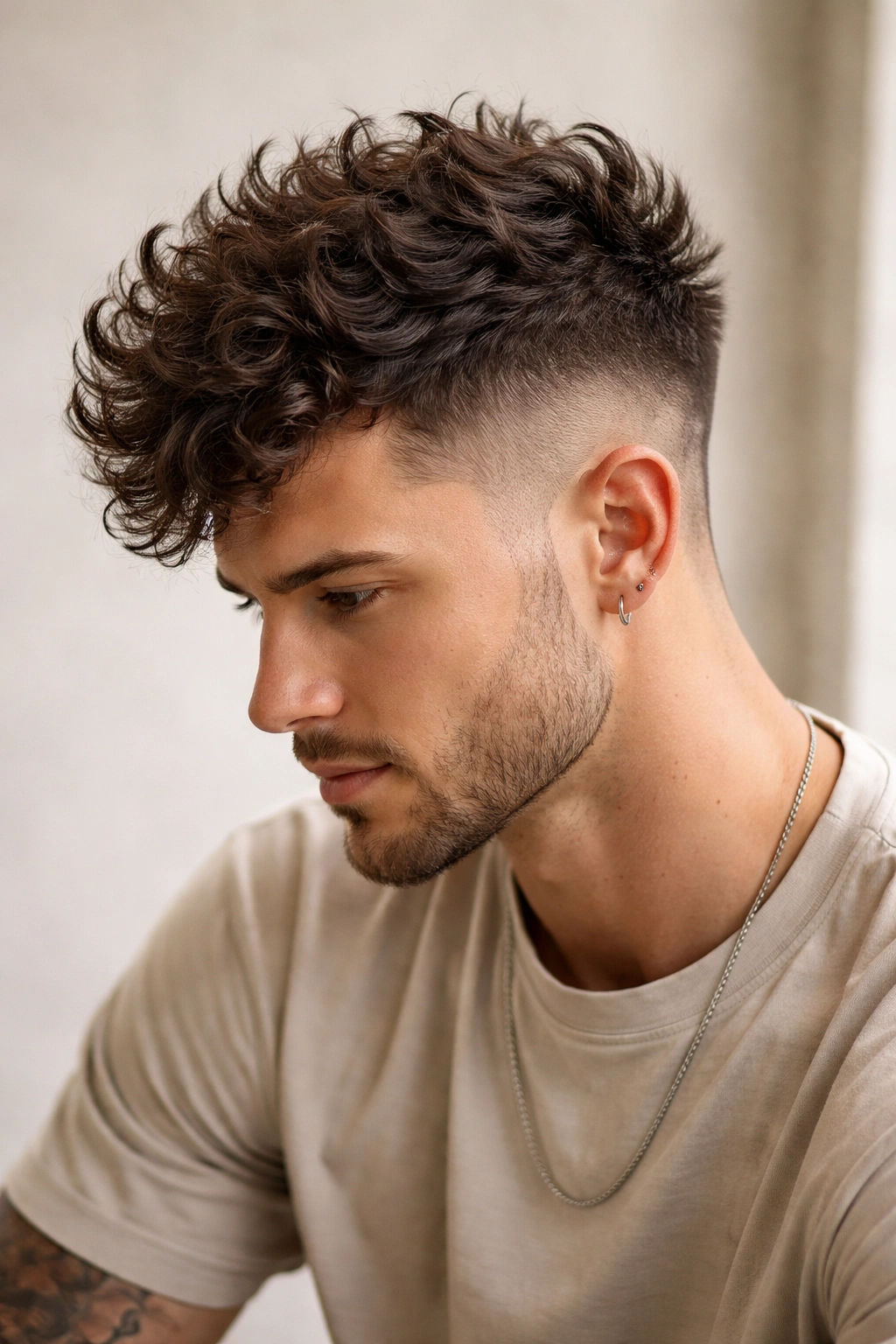
A faux hawk crop is similar to a textured mohawk but subtler and more wearable for people in conservative professional environments. The style keeps more length and texture overall while still creating the illusion of a mohawk shape through how the curls naturally fall or are styled. It’s achieved through strategic layering and sometimes slight texturizing that encourages curls to sit in a way that creates height and movement at the crown, while sides remain fuller and softer than they would be in a true mohawk fade.
Why Choose a Faux Hawk Over a True Mohawk
A faux hawk gives you the visual interest and directional styling of a mohawk without the commitment or maintenance. You get the shape and personality without the regular fade touchups. It’s significantly more forgiving as your hair grows out, because you’re not depending on a sharp contrast between short and long. The style works in boardrooms, classrooms, and conservative settings where a full mohawk might draw more attention than you want, while still reading as confident and intentional.
The Technical Details
- Requires a stylist skilled in texturizing curly hair—you want choppy, intentional layers that create movement without looking sparse or damaged
- The crown should have slightly more length than the sides, but the difference is subtle (half an inch to an inch at most)
- Works beautifully on medium curls and some loose curl types that have enough weight to show dimension
- Styling can be completely hands-off or enhanced with a curl cream or gel that defines and shapes your waves
- Grows out gracefully because you’re not dependent on a sharp line maintaining your style
Pro tip: A faux hawk can be styled different ways on different days—some days let it dry naturally and messy, other days smooth it and shape it with product for a more polished look.
7. The Taper Cut with Longer Curls on Top
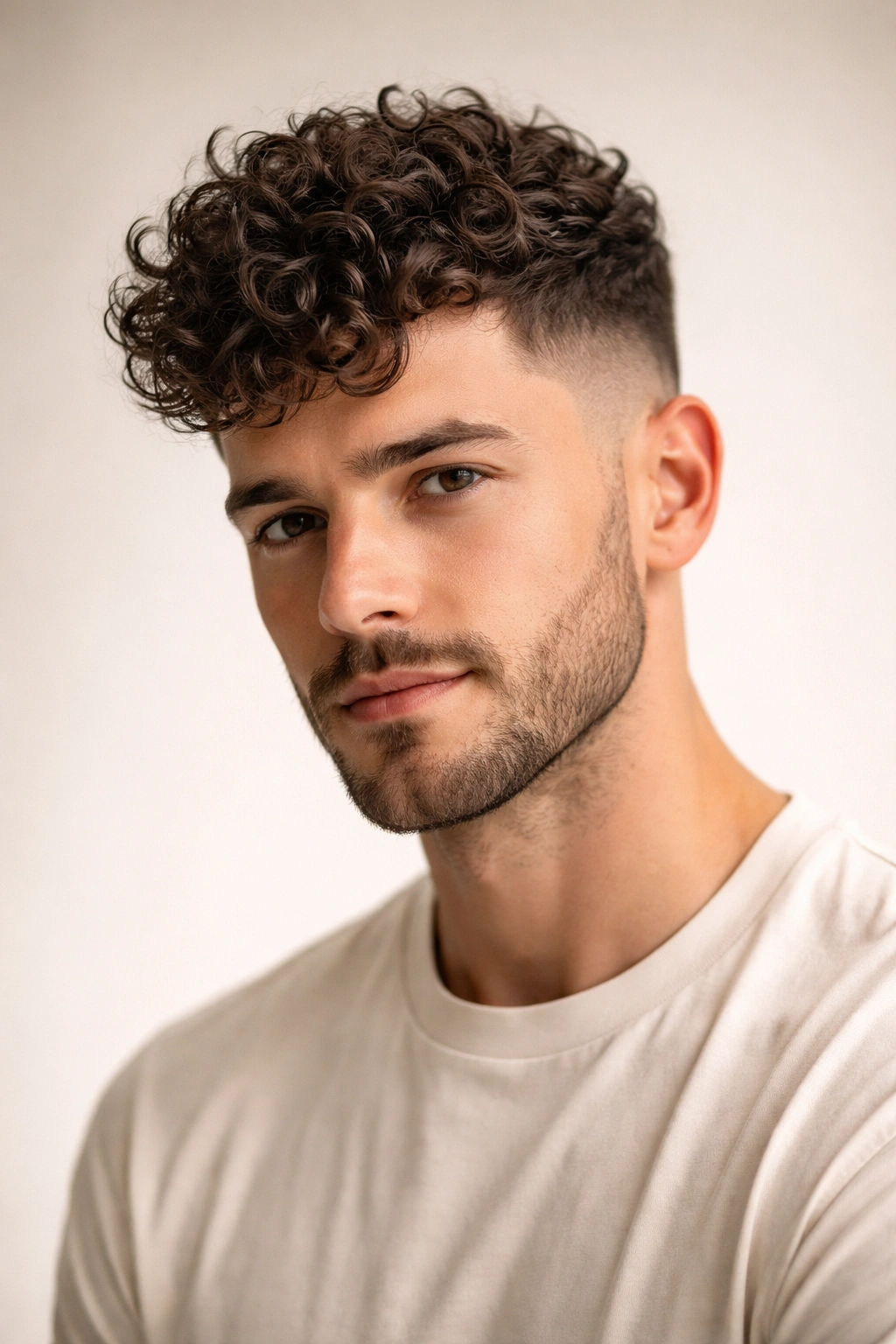
This is a classic men’s haircut approach adapted for curly hair: very short and faded on the sides and back (but not as dramatic as an undercut), with noticeably longer curls left on top. The taper is gradual and blends smoothly, typically two or three inches at the crown fading to nearly nothing at the neckline and around the ears. The longer curls on top can be shaped and styled, or left to do their own thing—the style works either way.
The Appeal of This Proportioned Approach
The taper with longer top is incredibly versatile because the length on top gives you actual styling options. You can create shape, you can brush curls up and out, you can let them fall naturally, or you can add texture and definition with product. The style reads as intentional and groomed without being fussy, and it works across a really wide range of face shapes and curl types. It’s a style that reads equally good whether you spend two minutes or twenty minutes styling.
Important Styling Considerations
- The length on top needs to be long enough that your curls don’t stick straight out from your scalp when fully dry
- Works on virtually all curl types, from loose waves to tight coils
- The taper should be blended smoothly—an abrupt line between short and long looks unfinished
- You have real flexibility in how you style: natural texture, brushed and shaped, or slicked with product
- Maintenance is moderate: you’ll want touchups every 4-6 weeks to keep the fade clean
Worth knowing: This style photographs well from multiple angles because the longer curls on top create visible dimension.
8. The Shaggy Textured Crop
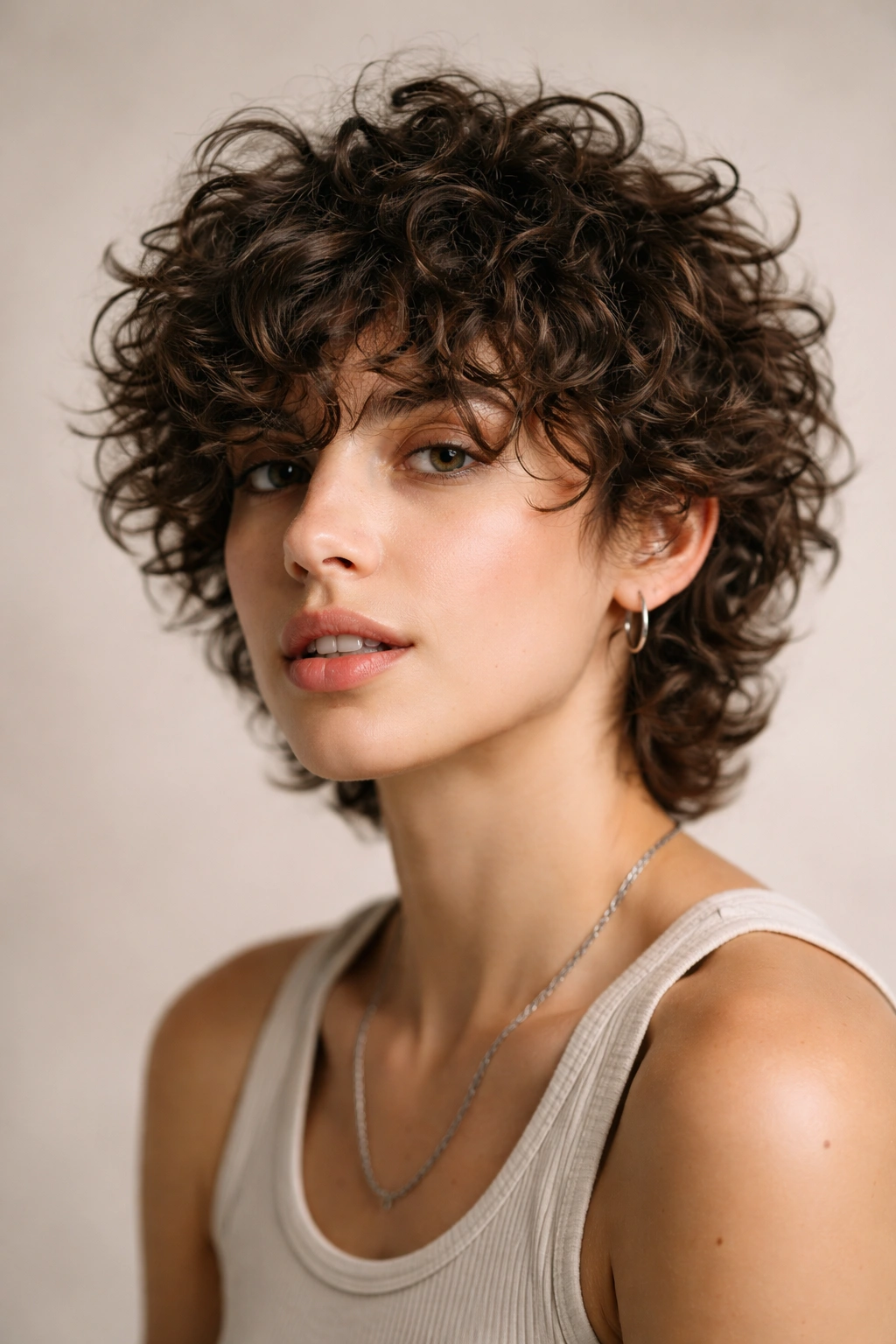
A shaggy textured crop adds choppy layers and varying lengths throughout, creating an almost tousled, deliberately undone appearance. Instead of a uniform length, you have intentional texture work where some pieces are left longer, others are shortened, and the whole effect is more organic and less structured than a classic crop. The style embraces the inherent messiness of curly hair and makes that messiness feel intentional and fashionable rather than accidental.
Why the Shaggy Approach Works for Curls
Shaggy layering actually reduces bulk on curly hair because the choppy texture prevents thick, heavy buildup. Each layer can move independently, so you get bounce and movement without the weight. The style works particularly well on medium to loose curls that benefit from having some of their volume tamed through strategic texturizing. It’s also very forgiving with styling—the whole point is that it looks casual and lived-in, so morning bedhead actually enhances the aesthetic.
What You Need to Know About Maintenance
- Requires a stylist experienced in texturizing curly hair with scissors (clipper work over scissors creates a different effect)
- The choppy layers can make hair look drier, so you’ll want a solid moisturizing routine to keep pieces from looking scraggly
- Works best on curls that have enough definition that individual pieces show shape rather than looking wispy
- The style works beautifully with a little styling—some curl cream and finger-ruffling can enhance the intentional texture
- Grows out quite gracefully because the varying lengths blend naturally
Pro tip: If you go shaggy, invest in a good curl cream or gel—the choppy texture needs definition and moisture to look polished rather than just unkempt.
9. The Angled Textured Crop
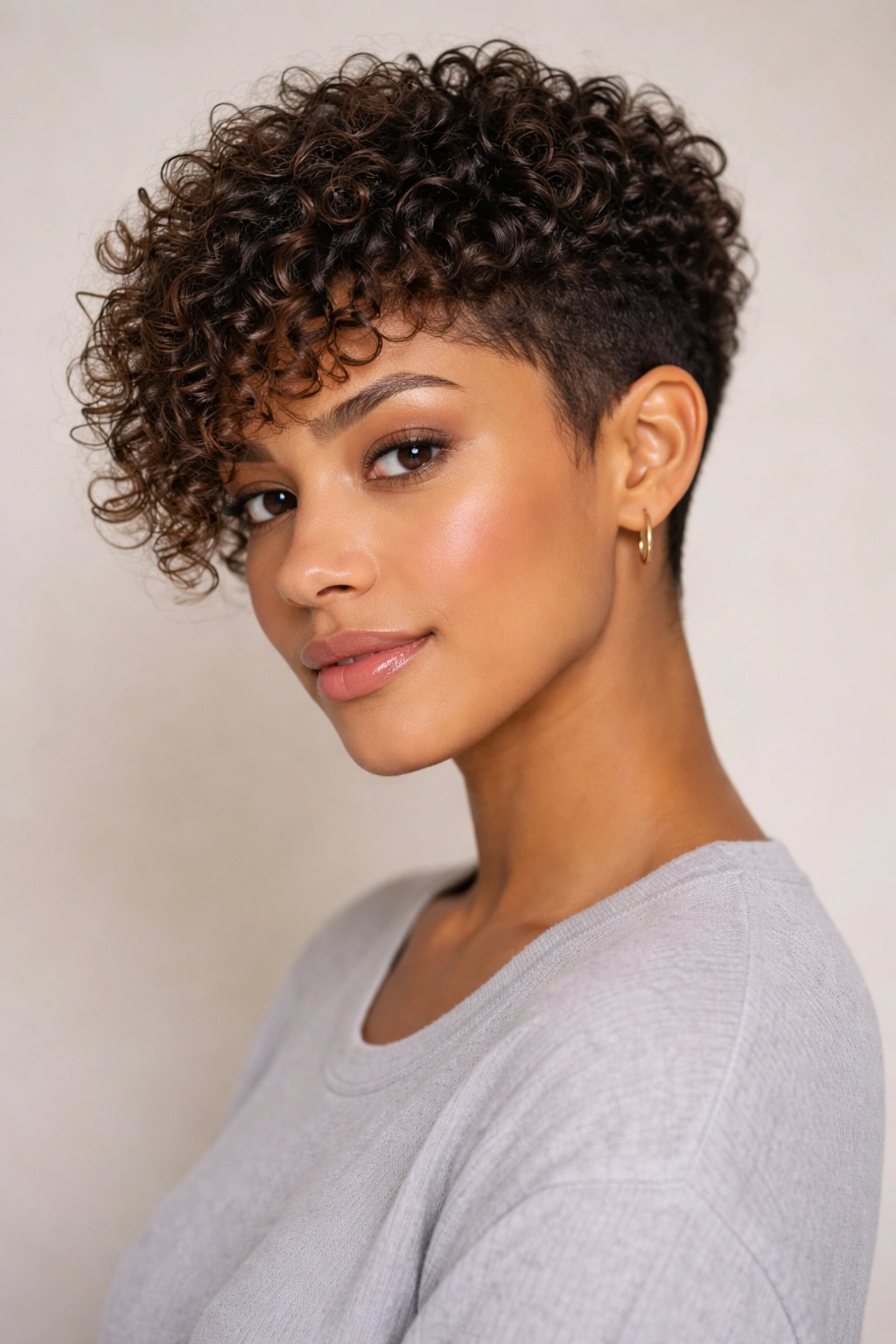
An angled textured crop has slightly longer pieces in front and progressively shorter pieces toward the back, creating a subtle slope or angle to the silhouette. This is a more sophisticated take on the classic crop, offering dimension and the flattering effects of pieces that frame the face while keeping the overall cut noticeably short and textured. The angle can be subtle (just a quarter-inch difference) or more dramatic depending on your preference and face shape.
The Flattering Geometry of an Angled Crop
The angle creates visual interest and draws the eye forward, which flatters most face shapes. It also gives you the option to wear slightly longer pieces around the face that can soften your features or draw attention to your eyes or cheekbones. The angled silhouette reads as intentional and fashionable while still being a crop-length style. It’s a great option for people who want something bolder than a traditional pixie but more refined than a shaggy crop.
Technical Aspects to Discuss
- The angle should be gradual enough that it blends smoothly—too sharp an angle looks like a bad haircut rather than an intentional style
- Works beautifully on most curl types, from loose waves to tight coils
- The longer front pieces need to be long enough that they frame your face without sticking straight out when dry
- The angle can be worn with or without styling—it naturally creates flattering movement
- Maintenance is moderate, with touchups every 5-7 weeks to keep the angle visible
Worth knowing: If you have a larger forehead, longer front pieces can be incredibly flattering; if you have a rounder face, a more gradual angle can elongate your features.
10. The Defined Curl Crop with Gel Definition
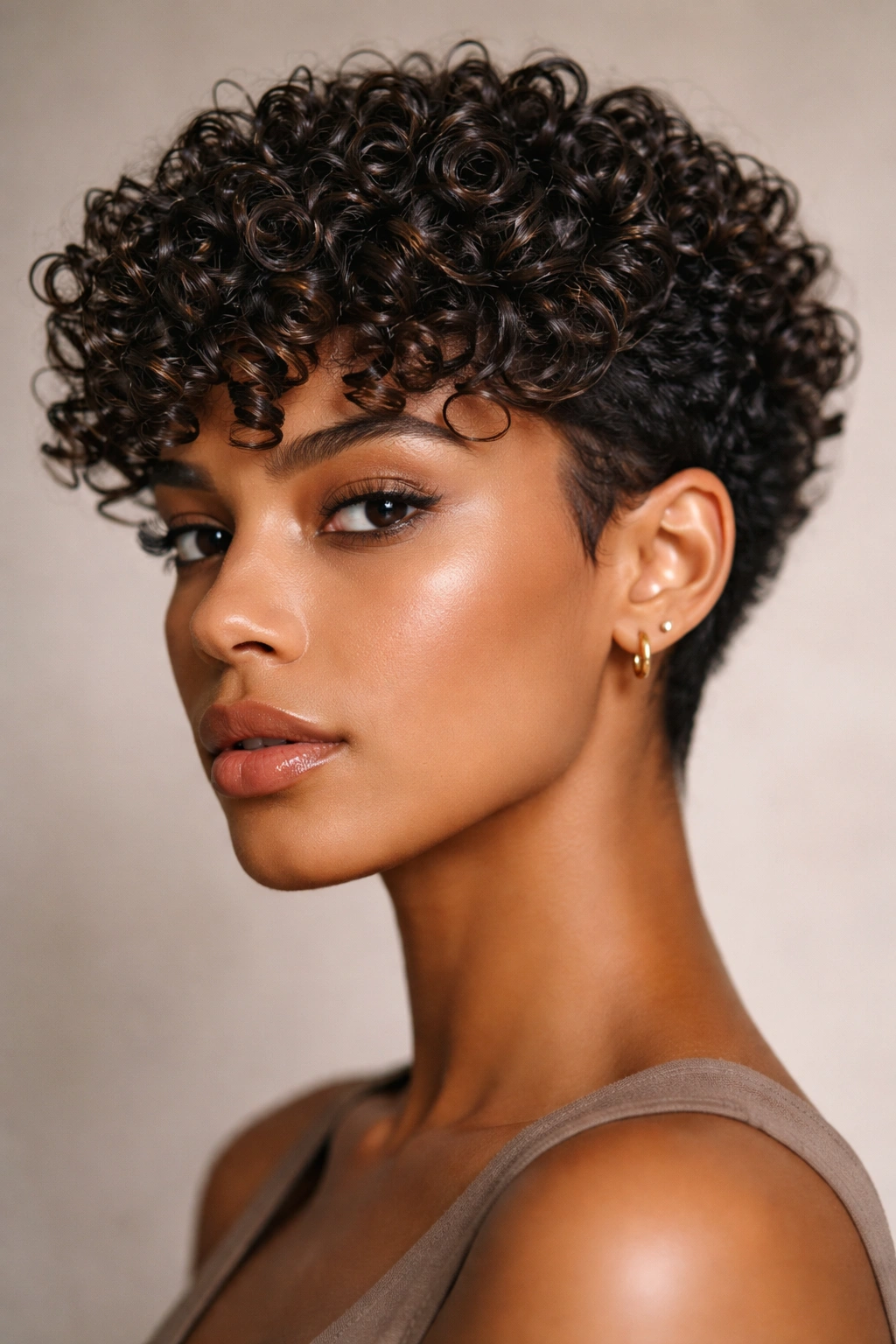
This style keeps the crop length short overall (around two inches) but uses strategic product placement and technique to create defined, almost separated curls rather than a unified textured appearance. It’s achieved through cutting technique, product selection, and styling that emphasizes individual curl clumps. The effect is almost sculptural—you can see distinct curls rather than a unified texture, and each curl is polished and clearly defined. This style particularly suits people with coily or curly hair where individual curl patterns are pronounced.
The Specific Appeal of Defined Curls
A defined curl crop reads as polished and intentional in a different way than textured crops. Instead of embracing the unified texture, you’re celebrating the individual beauty of each curl. The style requires some product and daily attention but rewards that effort with a look that’s undeniably striking. It’s popular with people who love their curl pattern and want to showcase it rather than blend it into overall texture. The style also photographs beautifully because individual curls create clear visual interest.
What Defines Success with This Approach
- Requires a stylist who cuts with curl definition in mind—they should dry-cut or understand how to cut for the curl clumps you naturally have
- The products you use matter significantly: you need a gel or styler that holds definition without flaking or looking heavy
- Works best on coily or curly hair where you have naturally defined curl patterns rather than loose waves
- Styling takes more time (5-15 minutes) than other crop styles because you’re actively defining each curl
- The style requires regular trims (every 4-5 weeks) to maintain the defined shape
Pro tip: Invest in a good curl gel or mousse and learn the praying hands or raking method of application—this is what transforms a simple crop into a polished, defined statement.
Final Thoughts
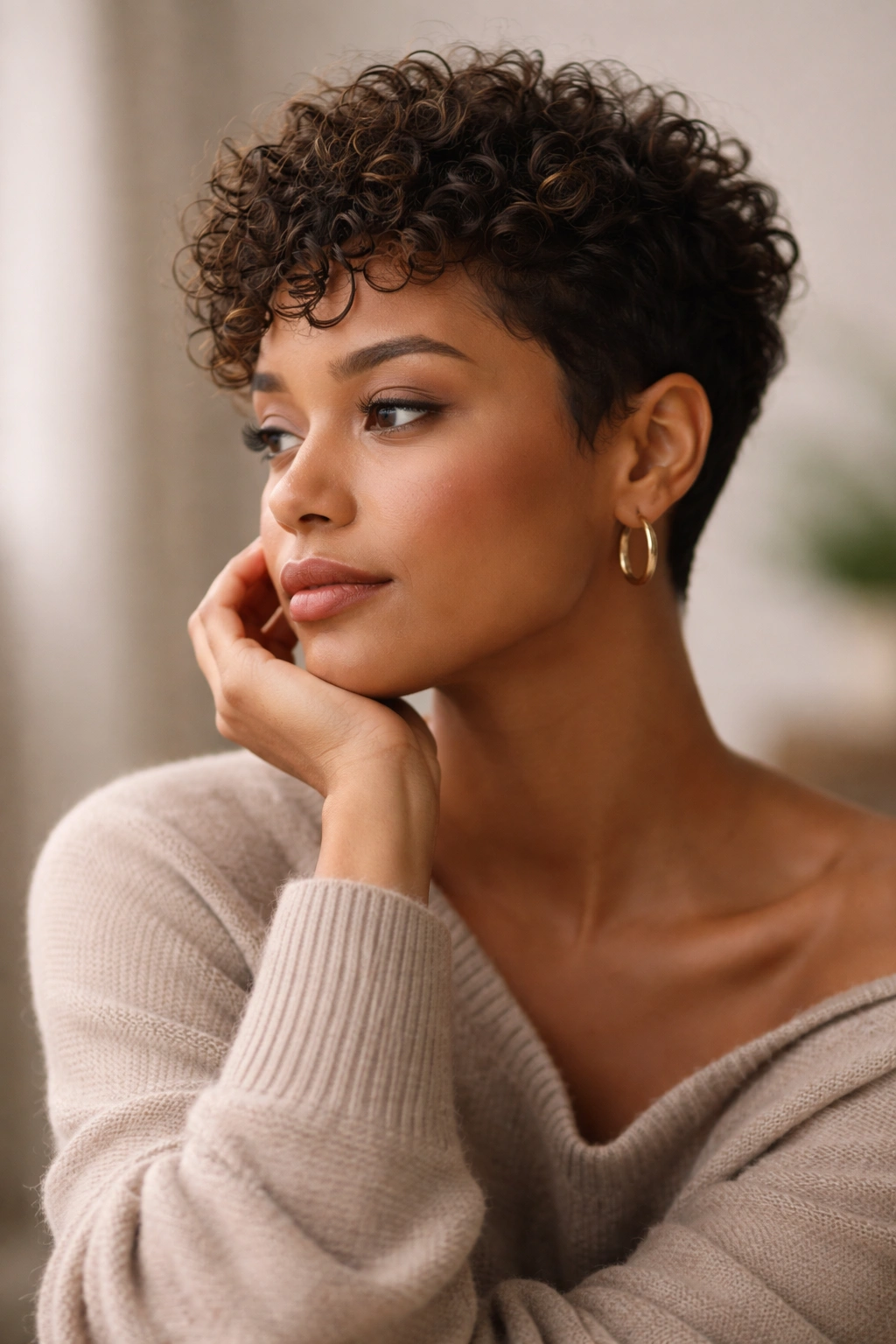
The right curly crop transforms more than just your appearance—it changes how you move through the world. Instead of spending mornings fighting your hair into submission or hiding your natural texture, you get a style that celebrates exactly what makes your hair unique. The cuts listed here span a spectrum from conservative and elegant to edgy and bold, which means there’s genuinely something here regardless of whether you’re starting your natural hair journey or you’ve been embracing your curls for years.
The most important thing to remember is that consultation matters profoundly. Bring photos of styles you’re drawn to, talk honestly about your daily styling tolerance (wash-and-go versus intentional styling), and find a stylist who actually understands curly hair. Not just someone who thinks they do, but someone whose portfolio shows working knowledge of how curls shrink, where texture comes from, and how to cut for movement and volume rather than against it.
One final thing: give yourself grace during the adjustment period. That first week after cutting a significant amount of length feels strange in ways that go deeper than just hair. You might feel exposed or like you’re still getting used to your reflection. That’s normal. By week three or four, when your curls have settled and you’ve developed a styling routine, you’ll likely realize that the boldness you were nervous about is exactly what you needed to feel like yourself. Sometimes the best version of you was waiting under length and protective styling all along.
