



A long face shape can feel challenging when you’re shopping for a new haircut. The proportions between your forehead, cheekbones, and jawline already stretch vertically, so the wrong cut can make your face appear even longer and narrower — accentuating length when what you really want is balance and dimension. The good news? The right haircut can visually shorten your face, add width where you need it, and create a more harmonious overall appearance.
The key to flattering a long face isn’t just about the length of your hair — it’s about where you place volume, where you add texture, and how you use horizontal lines to interrupt that vertical stretch. A well-chosen cut creates the illusion of width at the cheekbones and jaw, breaking up the face’s natural length and making it feel more proportionate. The most successful cuts do this through strategic layering, fringe placement, side-swept styles, or textured waves that draw the eye horizontally rather than vertically.
Finding your ideal cut means understanding your face’s specific features: how wide your forehead is, where your cheekbones sit, the shape of your jawline, and the texture of your hair. A thick, naturally wavy hair texture will take volume differently than fine, straight hair. Your lifestyle matters too — do you have time for daily styling, or do you need something that looks good with minimal effort? Understanding these details helps you choose a cut that not only flatters your face shape but also fits how you actually live.
The cuts below represent the most effective options for shortening and balancing a long face — from classic styles that have been flattering long faces for decades to modern approaches with texture and movement. Each one works through slightly different mechanisms, so you’ll find options regardless of your hair type, styling commitment, or personal style preference.
1. Blunt Bob With Bangs
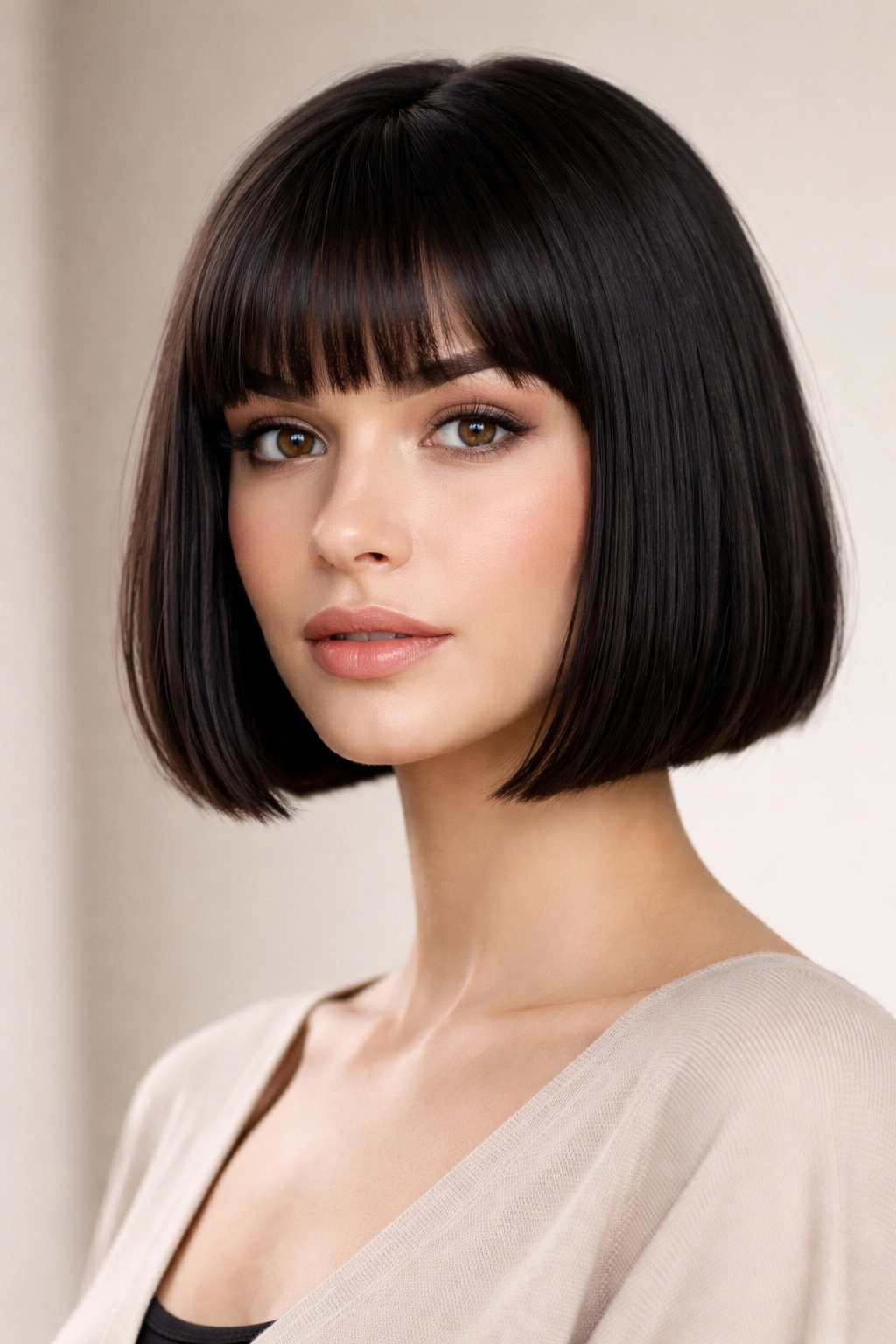
A blunt bob is one of the most straightforward ways to shorten the visual length of your face. The cut sits right at or just below the jawline, creating a strong horizontal line that interrupts the vertical stretch of a long face. When paired with blunt bangs that hit at the eyebrows or just below, it creates a second horizontal line at the forehead, effectively “chopping” your face into shorter segments.
Why It Works For Long Faces
The power of a blunt bob lies in its geometric simplicity — it creates multiple horizontal lines that work against your face’s natural length. The bangs especially break up the forehead, which is often the longest vertical section on a long face. Blunt lines also create visual weight and density, which adds fullness and shortens the perception of face length. The cut’s strength comes from its clean precision, so this style works best with a blow-dry or styling commitment to keep the lines crisp.
Best For Long Faces With These Features
- Fine or medium-textured hair that can hold a blunt line without looking wispy
- A preference for a polished, intentional aesthetic rather than a tousled look
- Commitment to styling (you’ll want to blow-dry to maintain that sharp definition)
- Foreheads that benefit from coverage or those who want to create a stronger horizontal frame
Pro tip: Ask your stylist to keep the back slightly longer than the front — just a quarter-inch difference creates movement and prevents the look from feeling too severe while maintaining that crucial face-shortening line.
2. Textured Pixie With Side Sweep
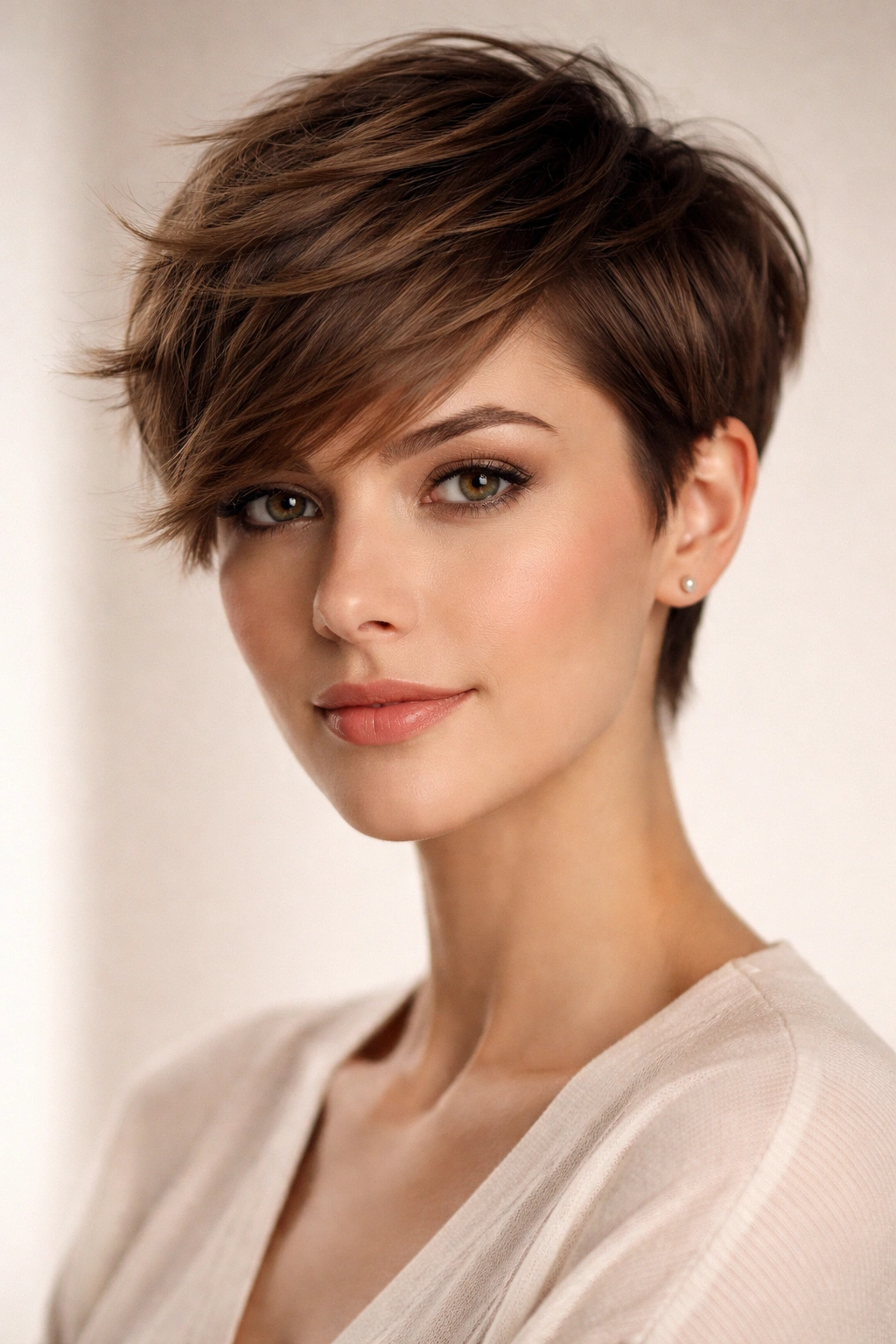
A pixie cut with texture takes the face-shortening power of short hair and adds movement and softness through layering and separation. When styled with a deep side part and swept across, it creates an off-center horizontal line that breaks up the face’s length. The short length means minimal vertical hair coverage, so the cut itself becomes the focus rather than length working against your proportions.
How Short Hair Shortens a Long Face
Short hair removes the vertical line entirely, so your face’s proportions aren’t extended downward by lengths and layers below the chin. A textured pixie also creates width through separated, piece-y layers, especially when tousled and styled — this side-to-side movement visually widens the face. The deeper the side part, the more dramatically the cut breaks your face’s midline, creating a secondary horizontal accent.
Styling and Commitment Level
- Requires styling with texturizing products or pomade to activate the piece-work
- Needs regular trims every 4-6 weeks to maintain shape and texture definition
- Works best with naturally wavy or textured hair, though straight hair can be styled into texture
- Creates an edgy, modern aesthetic that suits confident, low-maintenance-seeming personal styles
Worth knowing: A pixie works best on long faces with strong jawlines and cheekbones — the short length really showcases facial features, so ensure you’re comfortable with that level of exposure.
3. Layered Lob With Choppy Texture
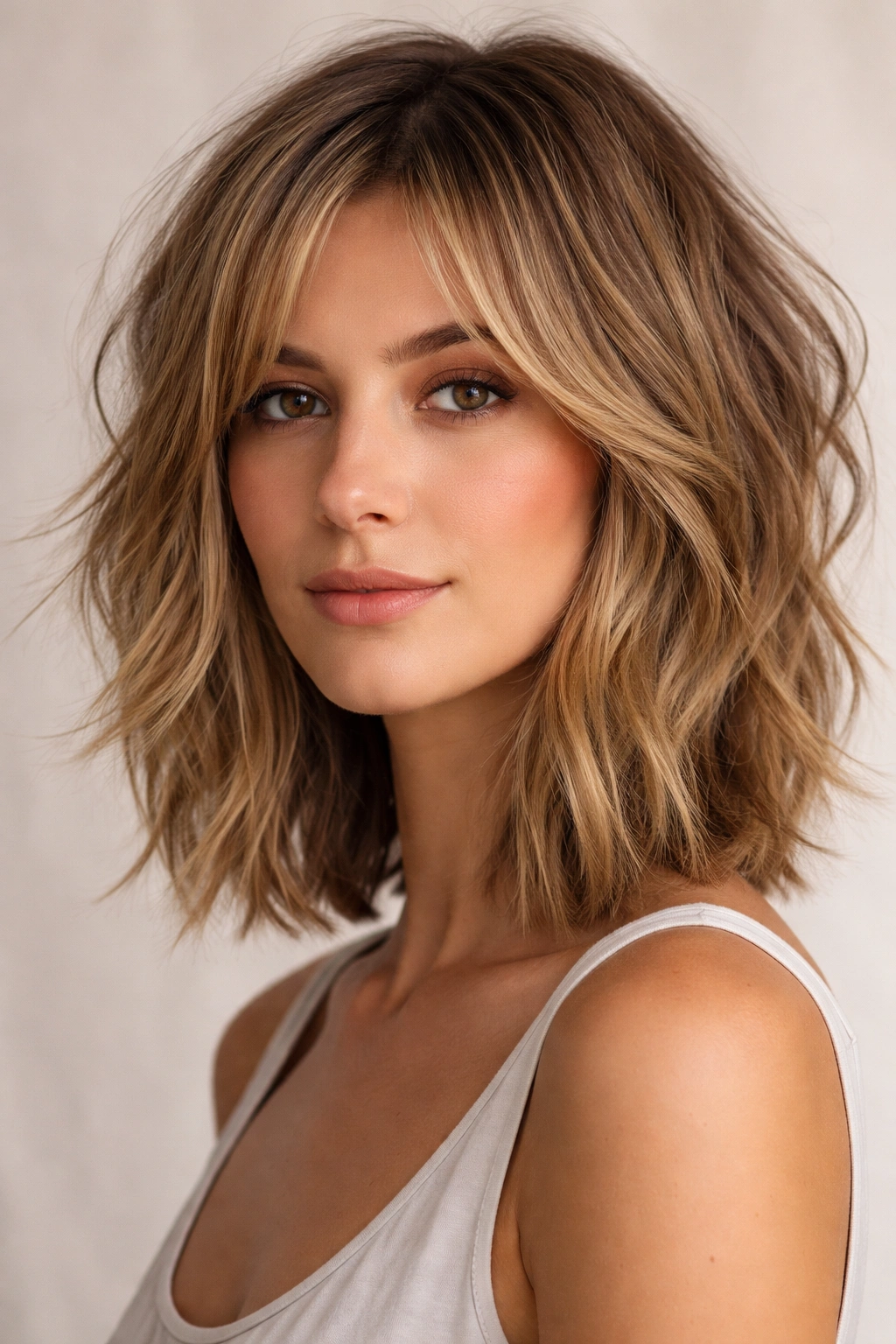
A lob (long bob, typically hitting mid-neck or collarbone length) becomes face-shortening when layered with choppy, disconnected texture throughout. The layering prevents the hair from sitting flat against your face and adds volume at the sides, creating width at the cheekbones. Choppy, blunt-edged layers break up any vertical line the length might create, instead emphasizing horizontal movement and texture.
The Role of Choppy Layers in Face Shortening
Choppy layers work by creating visual interruption — instead of a smooth, continuous line from forehead to ends, the eye bounces across different lengths and textured edges. This prevents the eye from following the full vertical length of your face. The texture also draws attention to individual strands and movement rather than overall length, which naturally shortens the visual perception of your face shape.
Best Hair Types and Styling Approach
- Works beautifully on naturally wavy or curly hair where texture is already present
- Can be achieved on straight hair with regular texturizing and styling products
- Requires some styling effort — air-dry texture isn’t quite as face-shortening as intentionally tousled waves
- Needs trims every 8-10 weeks to maintain choppy definition (layers grow out quickly)
Pro tip: Ask your stylist to focus the choppiest, shortest layers around your cheekbones and jaw area — this creates width precisely where you need it and boosts the face-shortening effect.
4. Side-Swept Bangs With Long Layers
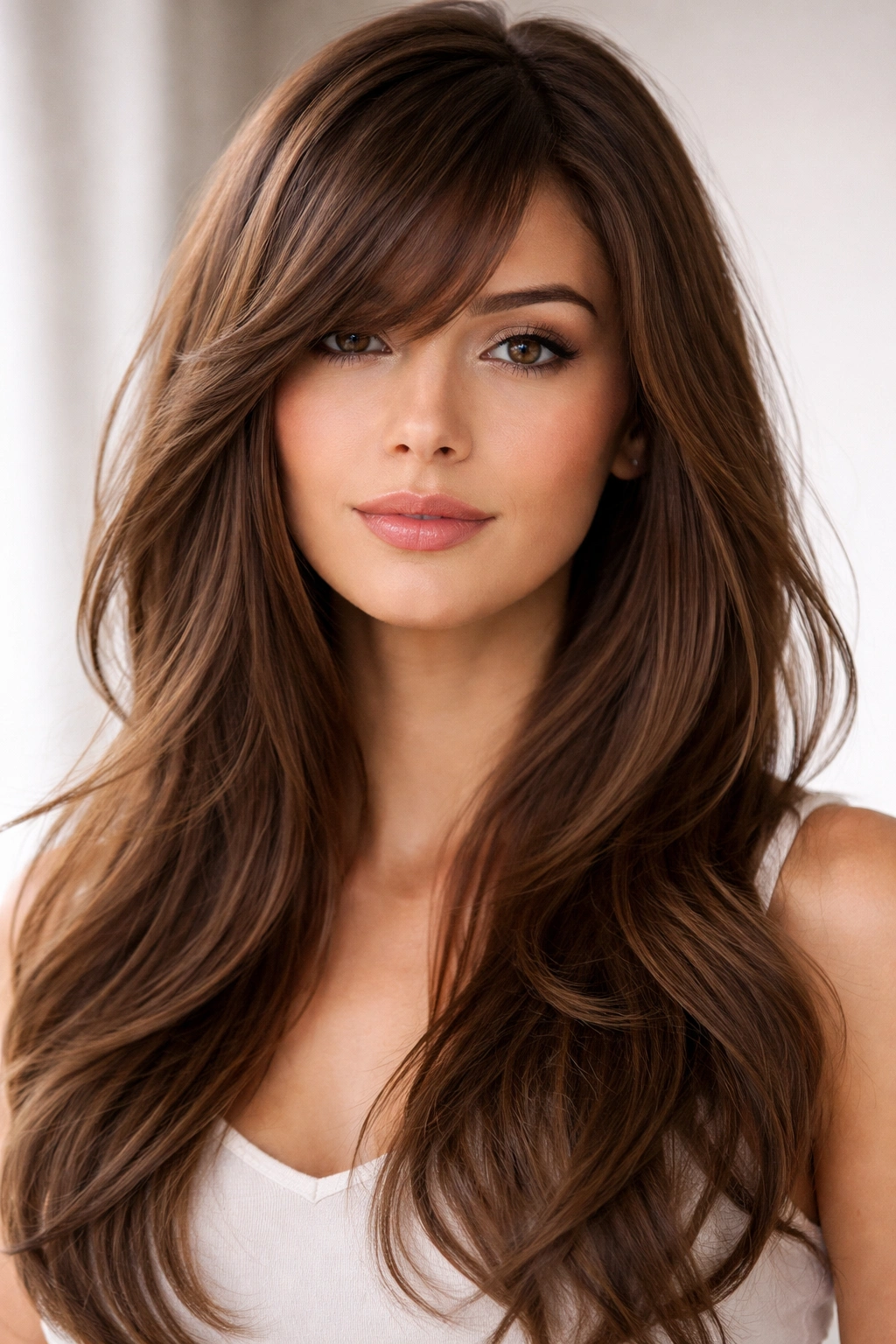
Long, side-swept bangs paired with long, flowing layers is a softer approach to face shortening that maintains length while creating crucial horizontal breaks. The bangs sweep dramatically across from one side to the other, creating a strong diagonal line that disrupts the vertical flow of your face. Layered, piece-y hair throughout adds texture and movement that keeps the eye moving horizontally rather than following length vertically.
Why Diagonal Lines Work For Long Faces
A diagonal line — created by a deep side-sweep or side-swept bangs — is actually more powerful for breaking vertical length than a straight horizontal line, because it forces the eye to move across and down simultaneously, rather than straight down. The side-swept fringe especially works because it creates asymmetry, and asymmetrical elements feel more dynamic and less elongated than symmetrical ones. Combined with layers, this cut creates multiple visual “stops” that interrupt the face’s vertical journey.
What To Know About Maintenance
- Bangs require styling to sweep correctly — they won’t fall into place on their own if you have straight hair
- Longer bangs typically need trimming every 4-6 weeks as they grow
- Works well with all hair textures, but the fringe will show your hair’s natural texture clearly
- Styling commitment is moderate — you’ll want to blow-dry and maybe touch up the sweep periodically
Insider note: The longer your bangs are, the less of your forehead they cover, which means less face-shortening benefit — aim for bangs that hit around the middle of your eyebrows or just above for maximum effect.
5. Blunt Bangs With Shoulder-Length Layers
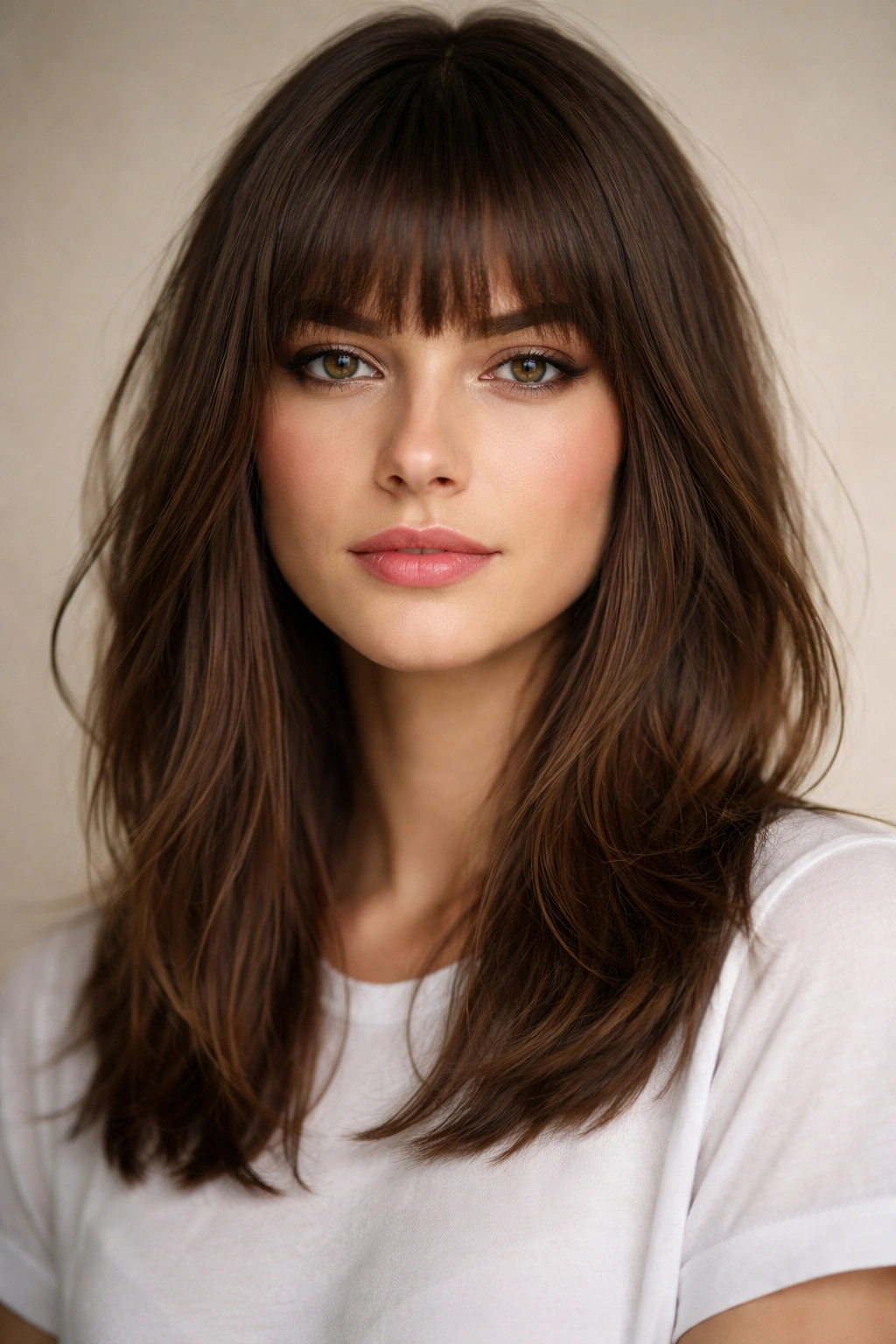
Blunt, straight-across bangs create an immediate horizontal line across your forehead, one of the most powerful tools for shortening a long face. When paired with shoulder-length layers that add volume and texture throughout the rest of the hair, this cut creates that crucial face-balancing effect. The blunt bangs do the heavy lifting for shortening, while the layers provide movement and prevent the overall look from feeling too heavy.
The Geometry of Blunt Bangs
Blunt bangs work because they create a strong, unbroken horizontal line at the forehead — visually the top third of your long face. This line is decisive and unavoidable, so it effectively shortens how far down viewers’ eyes travel before hitting that line. When the rest of your hair has texture and movement, the cut feels modern rather than retro, and the blunt line doesn’t look harsh — it looks intentional and flattering.
Hair Texture Considerations
- Works on all hair types, though straight or wavy hair shows the blunt line most clearly
- Very curly hair will soften the blunt line unless you blow-dry straight
- Texture throughout the layers prevents the style from reading as “1970s” and keeps it current
- Requires regular bang trims (every 3-4 weeks) to maintain the blunt, short definition
Pro tip: Ask your stylist to make the bangs slightly wispy or feathered at the inner edges — this softens them just enough to feel modern while keeping the face-shortening horizontal line intact.
6. Face-Framing Layers With Textured Waves
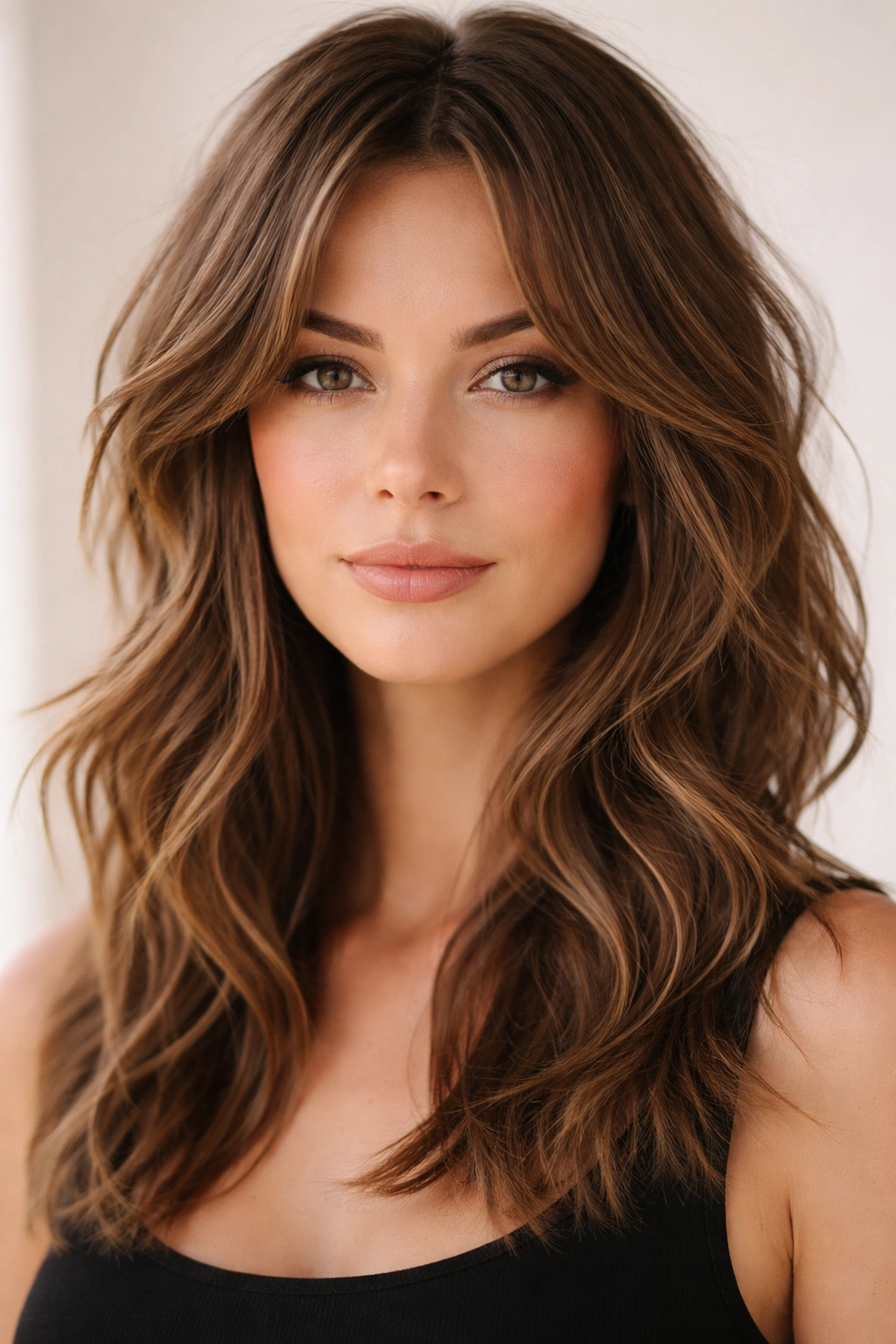
Face-framing layers — shorter pieces cut to fall around your face and emphasize your features — work to shorten a long face by creating width at the cheekbones. When these layers are textured and styled into waves, they move horizontally across the face rather than falling straight down. The combination of shorter, strategically placed pieces and horizontal movement creates the illusion of a shorter, wider face.
How Shorter Face-Framing Pieces Create Balance
The theory behind face-framing is that shorter pieces around the face draw more attention to your cheekbone area, which is often the widest and most proportionate part of a long face. By creating texture and visible shorter lengths in this zone, you’re essentially widening the face’s visual perception and shortening the apparent distance from forehead to jaw. The layers also break any vertical lines, replacing them with shorter, more segmented lengths.
Styling and Wave Texture
- Best achieved with natural wave texture or hair that holds a wave easily
- Can be done on straight hair but requires consistent styling (curling iron or heat styling)
- Waves are crucial — straight, limp layers don’t create the horizontal shortening effect
- Works well with medium to long hair, but the shorter face-framing pieces should hit around the cheekbones or jawline
Worth knowing: This cut depends heavily on styling, so if you prefer air-dry hair, you might find yourself frustrated. The wave texture is what does the face-shortening work.
7. Curly Shag With Choppy Layers
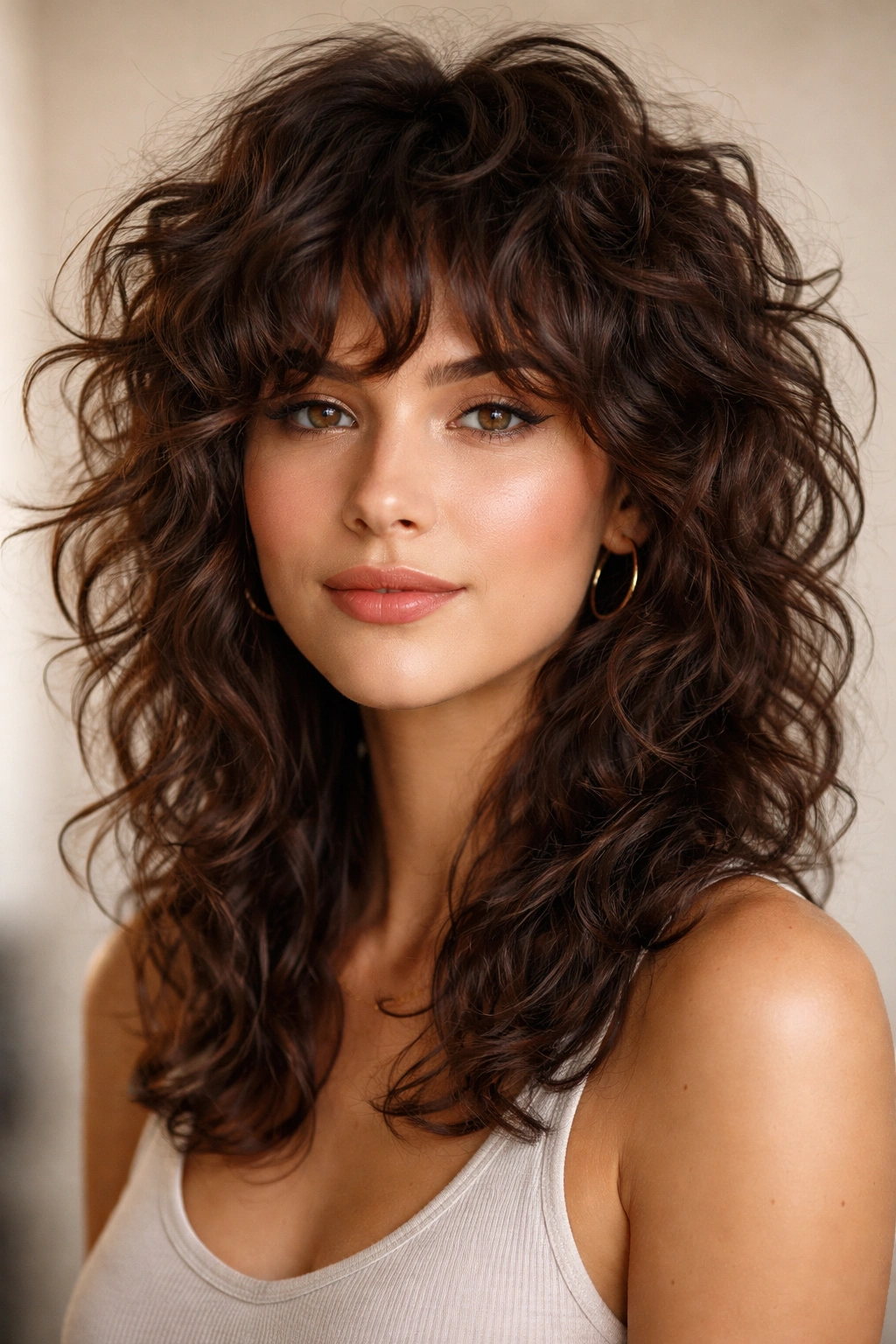
A shag with choppy, disconnected layers is a textured, voluminous cut that naturally creates width and breaks vertical lines. The layering is more extreme than a typical lob — short, textured layers throughout the entire head create a piece-work, tousled look. For curly hair especially, a shag cut works beautifully because your natural curl pattern already creates that horizontal, bouncy movement.
Why Shags Shorten Long Faces
Shags work through a combination of tactics: the choppy layers create visual interruption (the eye bounces across different lengths rather than following one long line), the volume created by layering adds width, and the tousled, piece-work texture prevents any smooth vertical line from dominating. A shag is inherently playful and dynamic — it doesn’t sit flat against your face, so your face shape isn’t outlined by a clean vertical silhouette.
Best For Curly and Wavy Hair
- Looks its best on naturally curly or wavy hair where the texture comes out of the box
- Requires regular trims (every 6-8 weeks) to maintain choppy definition and shape
- Can be worn with minimal styling on curly hair — just scrunch and go
- The shorter layers should hit around cheekbone or chin length for maximum width
Pro tip: Ask your stylist for a shag with emphasis on layers around the crown and sides — this creates lift and width exactly where you need it to shorten a long face.
8. Modern Bob With Undercut
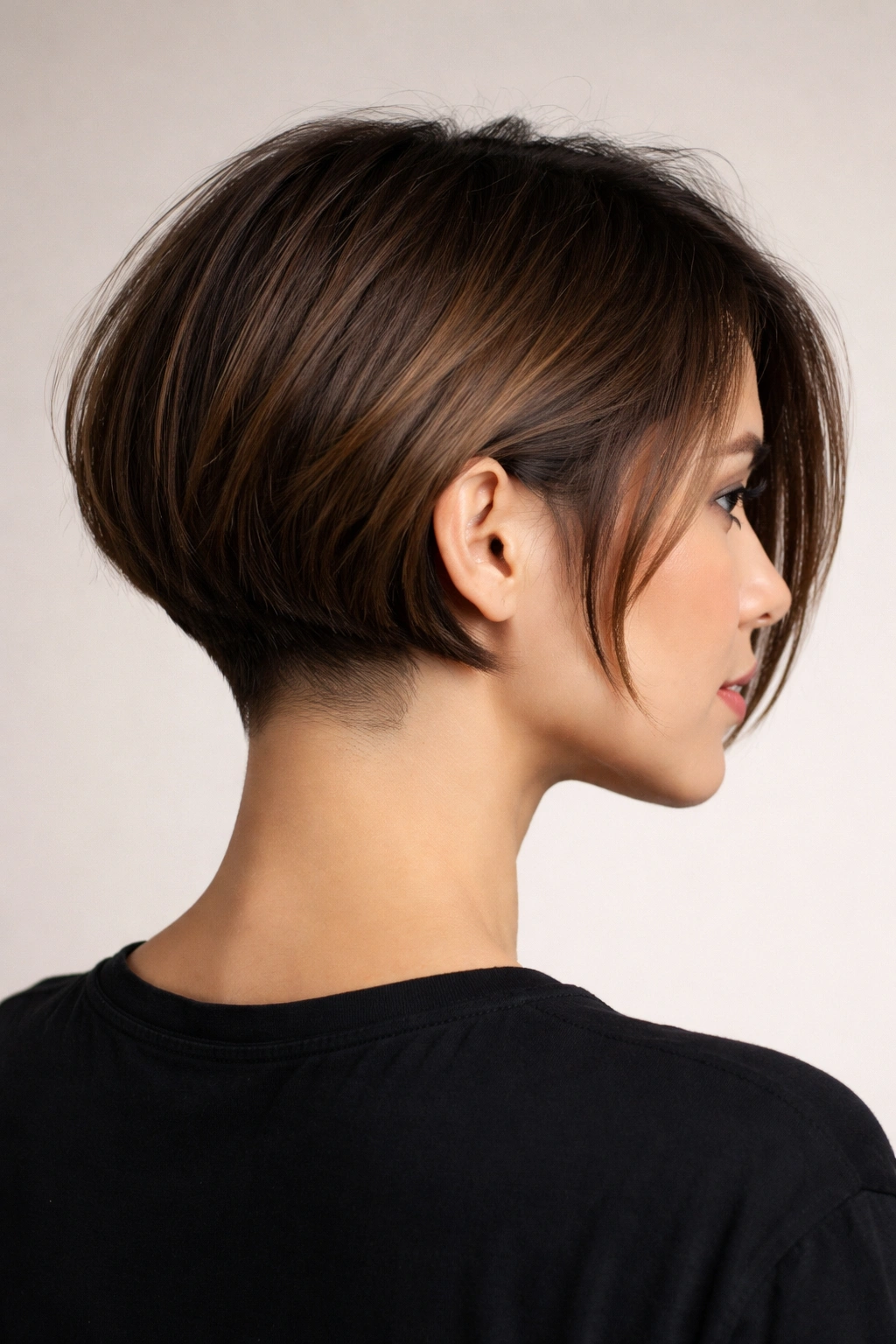
A modern undercut beneath an otherwise fuller-length bob creates visual width without actual length. The hidden undercut (shorter hair beneath longer hair on top) allows the longer layer to sit away from your head with more volume, creating a wider silhouette. This cut especially works for long faces because the width it creates is spread across the cheekbones and jaw, shortening the visual proportion of the face.
How Undercuts Create Visual Width
An undercut removes weight from underneath, which paradoxically makes the top feel fuller and more voluminous — that volume sits away from your head and face, creating a wider overall shape. For a long face, this width is crucial for balance. The cut also works because the undercut isn’t visible unless you pull your hair back, so you can have that face-shortening, width-creating effect without the hair looking obviously short underneath.
Styling and Maintenance
- The longer layer will need styling to show off the volume created by the undercut
- Works best on straight or wavy hair — very curly hair won’t show the undercut structure as clearly
- Requires trims every 6-8 weeks to keep the undercut clean and the longer layer shaped
- Can be customized with your stylist to determine how much of an undercut you want
Insider note: This is a higher-maintenance cut in terms of styling and trimming, but it’s incredibly effective for creating that horizontally-focused, width-emphasized effect that shortens long faces.
9. Chin-Length Bob With Movement
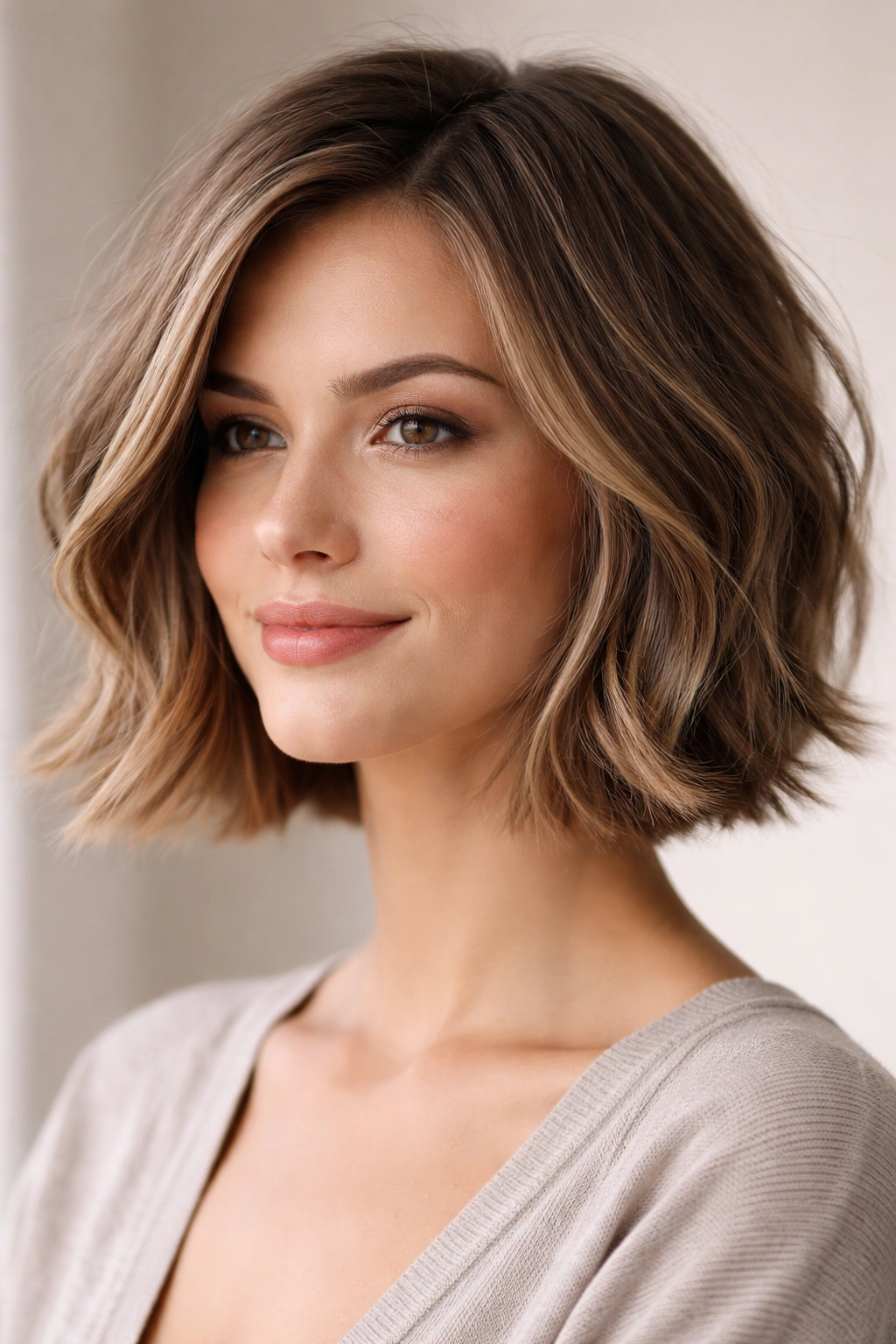
A bob that hits right at chin length, paired with movement and texture, sits at the ideal length for shortening a long face. This length creates a horizontal line at the jaw — the widest part of most long faces — and the movement prevents the cut from feeling static or severe. Waves, flipped ends, or choppy texture all contribute to the horizontal emphasis.
Why Chin-Length Is the Sweet Spot
Chin-length hits at your jawline, often the widest part of a long face, making it the perfect place for a horizontal line. It’s long enough to feel substantial and feminine, but short enough to clearly interrupt the face’s vertical length. When paired with movement, it doesn’t feel blunt or harsh — it feels intentional and modern. This length also tends to sit away from the face slightly when you have texture, creating width.
Creating Movement in Your Bob
- Waves are the easiest way to add movement — curl the ends slightly outward or create loose waves throughout
- Choppy layers throughout add texture and prevent the bob from sitting flat
- A round or layered cut (vs. a blunt, one-length cut) naturally has more movement built in
- Styling is moderate — you can air-dry with product for texture or blow-dry for a more polished look
Pro tip: Ask your stylist for slightly flipped-out ends — this creates movement that curves away from your face and emphasizes the horizontal line at jaw-level.
10. Straight-Across Bangs With Mid-Length Hair
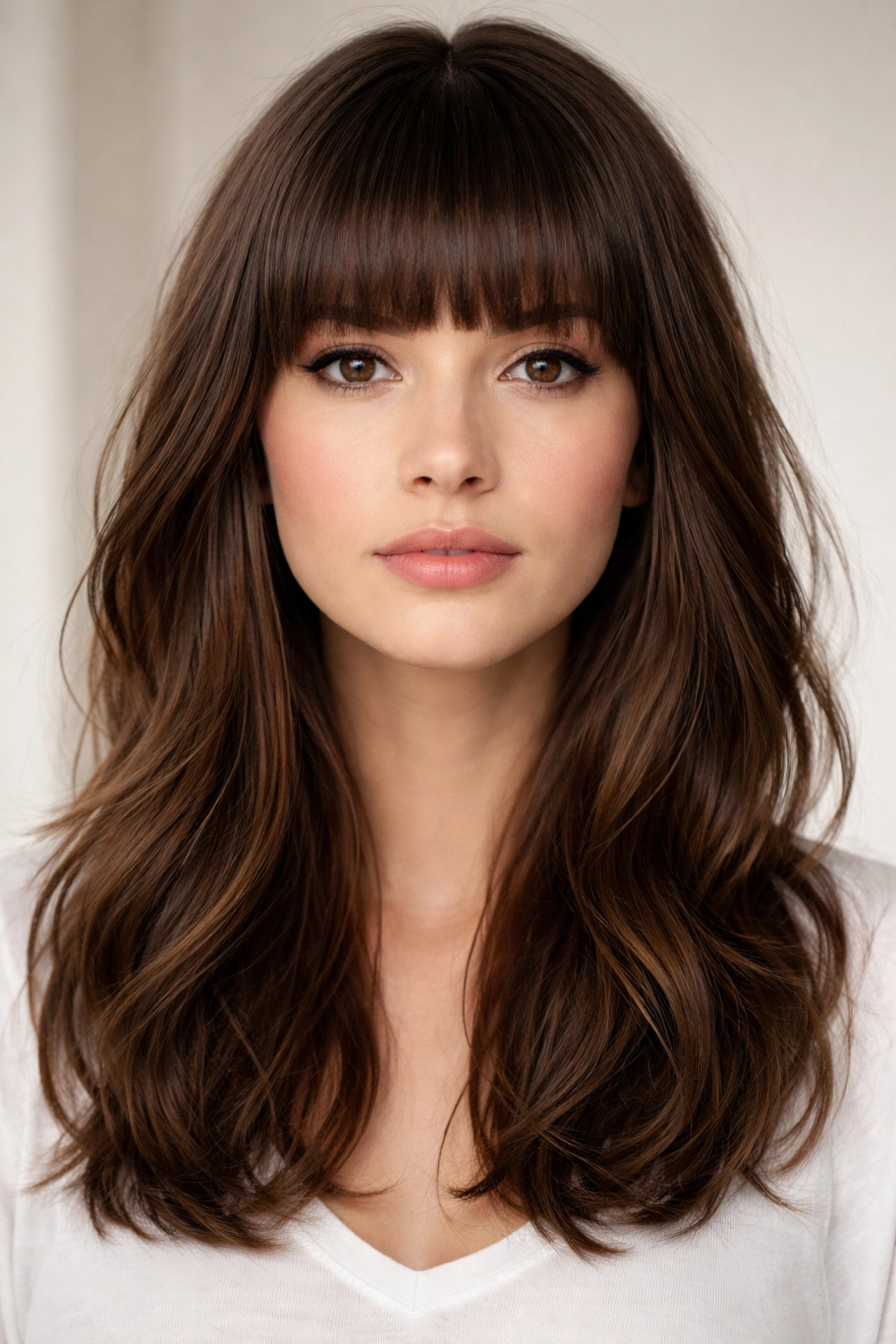
Straight-across bangs positioned at or just below the eyebrows create one of the most powerful horizontal lines available. When combined with mid-length hair (typically bra-strap or mid-back length) that has some texture or movement, the bangs become the dominant face-shortening feature. The longer length below maintains dimension without extending the face’s visual length too dramatically because the bangs interrupt that potential vertical line.
The Power of Positioned Bangs
Bangs positioned correctly create an optical division that makes your face appear shorter by definition — everything above the bangs (forehead) visually separates from everything below (cheeks to chin). This division is especially powerful for long faces because it literally shortens how much vertical space your face occupies visually. The lower the bangs sit, the more your forehead is covered, and the more dramatic the shortening effect.
Hair Type and Styling Requirements
- Works on all hair types but is most dramatic on straight or wavy hair
- Curly hair will soften the straight-across line unless you blow-dry straight
- Requires regular bang trims every 3-4 weeks
- The longer hair below the bangs can be straight, wavy, or curly — experiment to see what feels balanced
Worth knowing: If you have very fine or thin hair, blunt bangs can sometimes look too heavy — discuss a slightly feathered or slightly longer variation with your stylist if that’s a concern.
11. Shaggy Layers With a Modern Twist
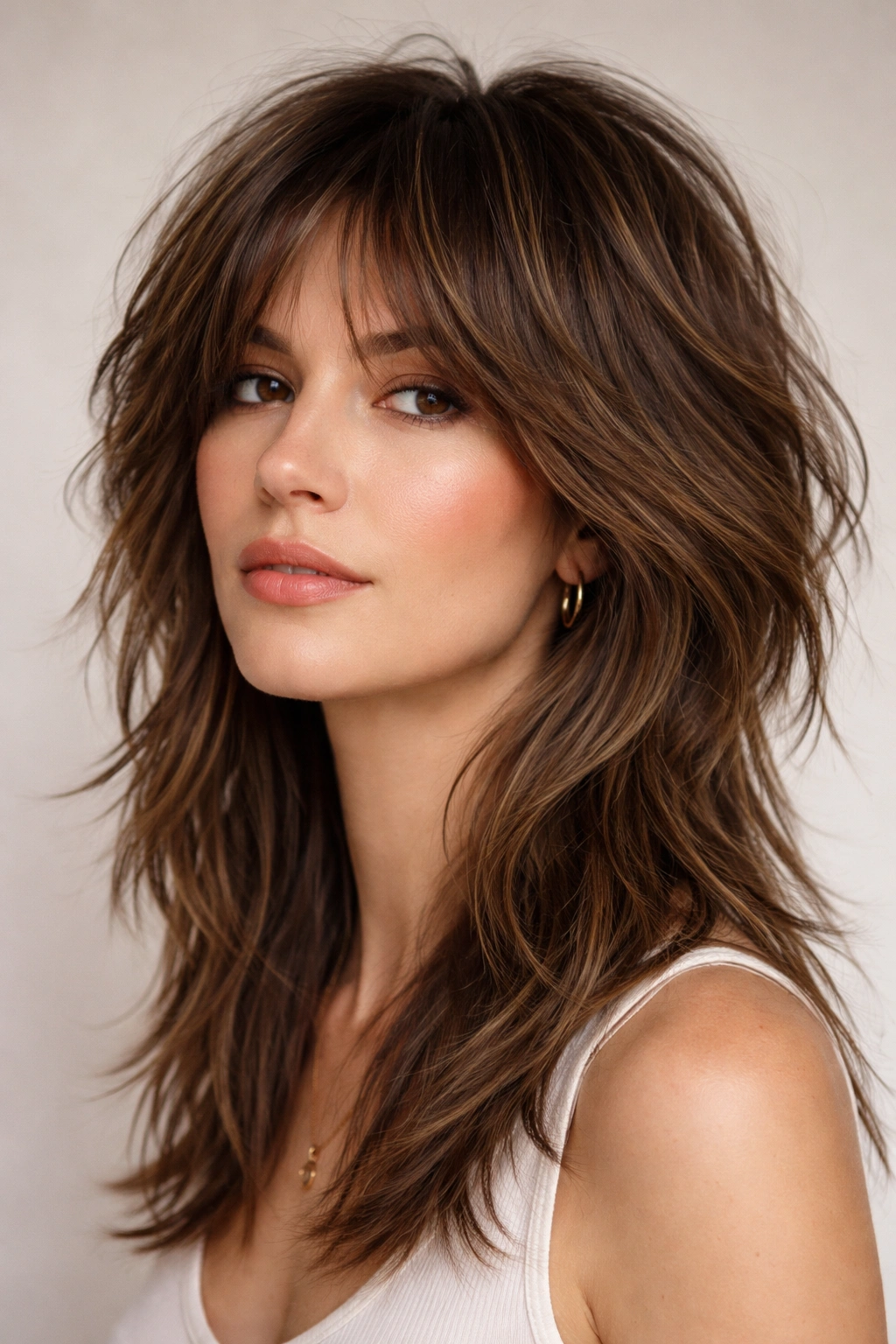
A modern shag isn’t the 1970s feathered look — it’s a current interpretation with intentional choppy layers, texture, and often some bangs or face-framing pieces. Modern shags work beautifully for long faces because they create width through layering and texture while adding that necessary horizontal dimension with bangs or face-framing. The cut is inherently playful and movement-focused, which prevents it from sitting flat against a long face.
Modern Shag Structure For Long Faces
A contemporary shag layers shorter pieces throughout, especially around the face and crown, creating lift and width. The texture is more intentional and less uniformly feathered than classic shags — think choppy, piece-work texture rather than gentle feathering. Many modern shags include face-framing pieces or soft bangs, which add that crucial horizontal line while maintaining the textured, playful aesthetic.
Styling For Shags
- Works beautifully on naturally wavy or curly hair with minimal styling
- Requires more styling commitment on straight hair but can be styled into tousled texture with products and heat
- Trims every 6-8 weeks keep the choppy definition crisp
- Bangs or face-framing pieces (if your shag includes them) need regular maintenance
Pro tip: Ask your stylist for layers that are shorter and more intentional around the face and crown, and longer and more subtle in the back — this creates the width where you need it while maintaining dimension.
12. Rounded Bob With No Bangs
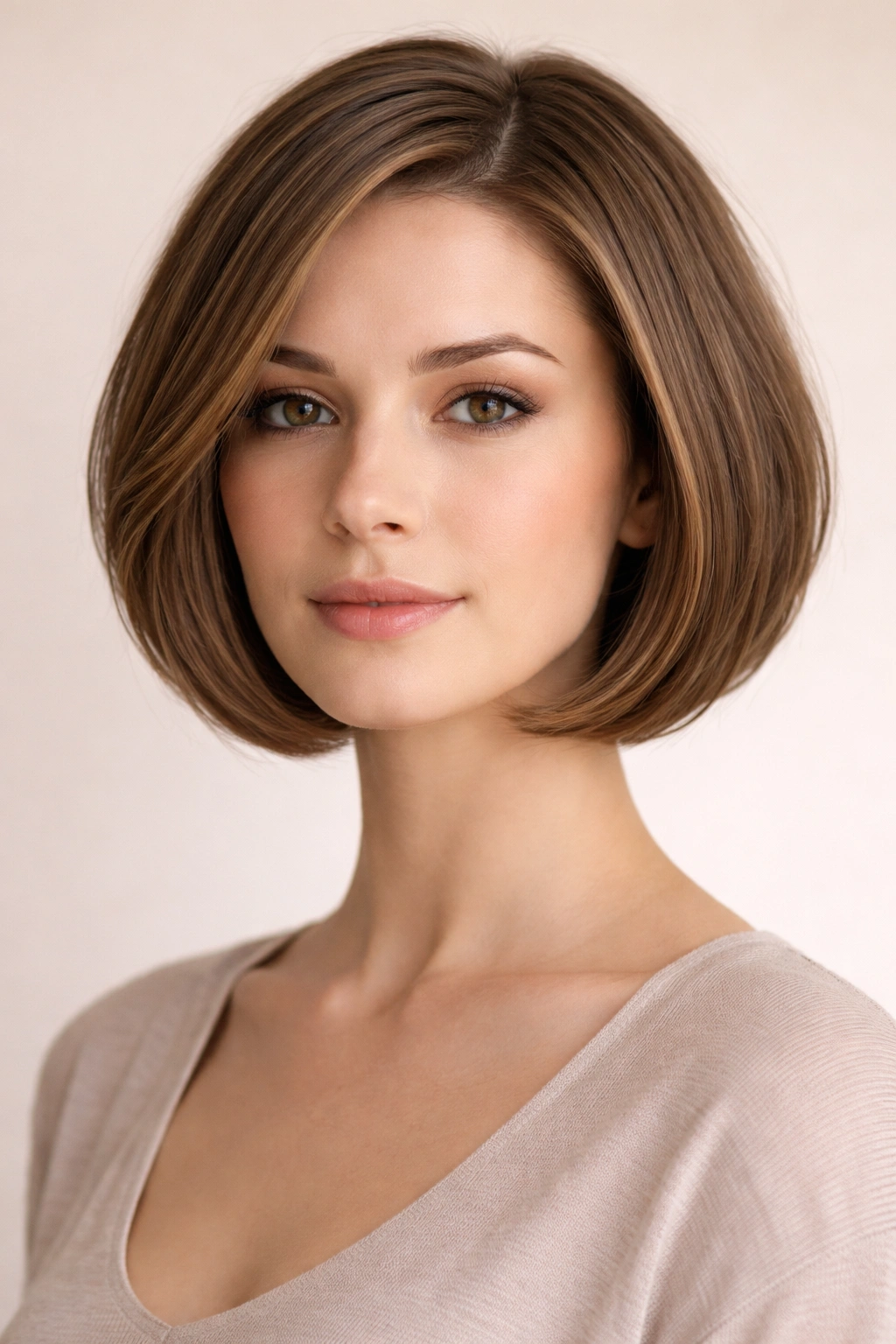
A rounded, layered bob (sometimes called a butterfly bob) is cut to curve softly around the face, hitting at or just below the jawline. Instead of a blunt line, the shape is rounded, which creates visual width as the hair curves around the face and jaw. Without bangs, the focus is entirely on that horizontal line created by the curved shape, which is powerful for shortening a long face while maintaining a soft aesthetic.
Why Rounded Shapes Shorten Long Faces
A rounded shape is naturally perceived as shorter and wider than a straight, angular one — think of how a round shape feels more compact than a long, vertical one. When a bob is cut with that rounded shaping, it creates width at the jawline and curves back slightly at the cheekbones, emphasizing the widest parts of a long face. The lack of bangs means the forehead is visible but not emphasized, keeping focus on that crucial rounded jawline.
Styling and Hair Type
- Works beautifully on straight or wavy hair where the rounded shape shows clearly
- Curly hair can be styled into a rounded bob, but the curl pattern will soften the defined shape
- Minimal styling required — the cut does much of the work
- Trims every 6-8 weeks maintain the rounded shape as it grows
Insider note: A rounded bob is one of the easiest cuts to maintain and style, but it does require regular trims to keep the shape as the hair grows out.
13. Textured Pixie-Bob Hybrid
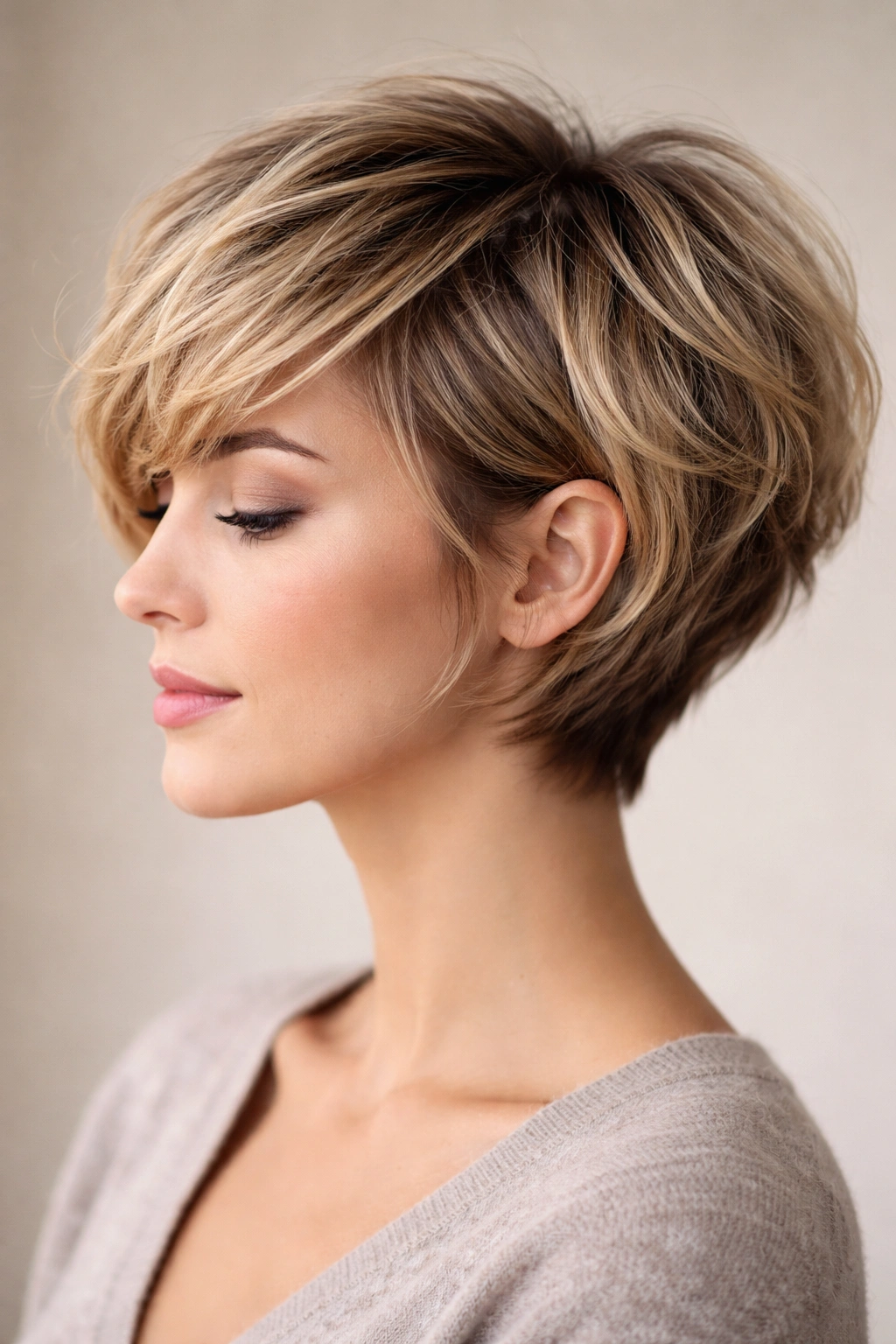
A pixie-bob hybrid is a clever cut that takes the short, face-shortening benefits of a pixie and combines them with slightly more length for dimension and softness. The cut is shorter overall (typically hitting at or just below the ear), but with layers that create texture and movement rather than a sleek, cropped look. This cut creates width through texture while maintaining the face-shortening power of genuinely short hair.
The Pixie-Bob Sweet Spot
This cut offers middle ground — it’s short enough to remove the vertical length problem that very long hair creates, but long enough to have dimension and softness. The layering creates texture and piece-work that prevents the cut from looking stark or overly severe. For long faces, this cut works because it genuinely shortens the hair length while the texture adds width through movement.
Maintenance and Styling
- Requires regular trims every 4-6 weeks to maintain shape and texture
- Styling is moderate — you can air-dry with texture product or blow-dry for a polished look
- Works on all hair types, but texture is most visible on wavy or naturally textured hair
- Best for those comfortable showing more of their face and features
Pro tip: Ask your stylist for longer pieces at the front (around the ear or jaw area) and shorter pieces at the back — this creates asymmetry that feels modern and adds a horizontal emphasis at the jaw.
14. Asymmetrical Bob With Longer Side
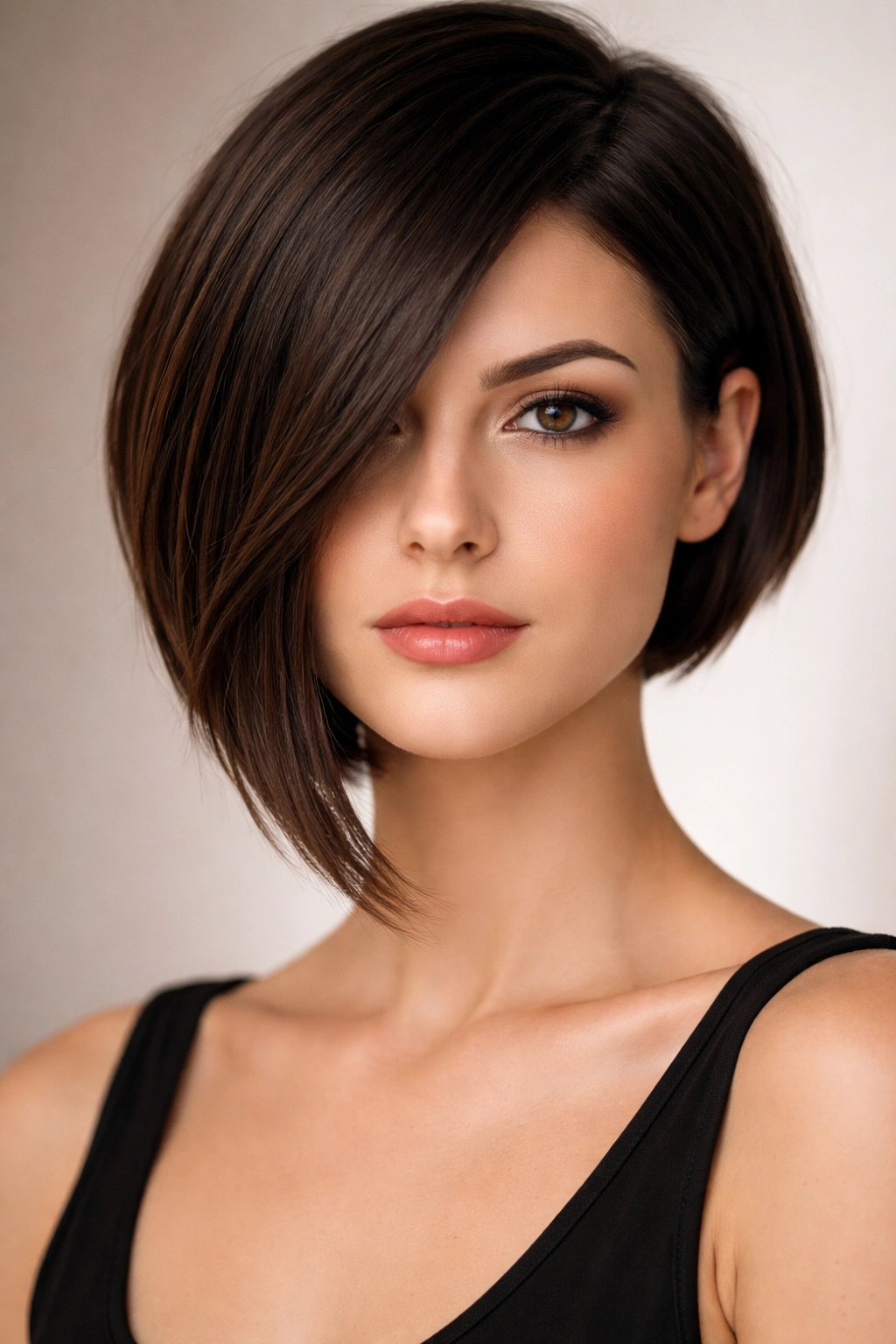
An asymmetrical bob plays with length imbalance to disrupt vertical lines. One side is cut noticeably longer (sometimes hitting mid-cheek or jaw) while the other is cut shorter (hitting ear or jaw level). This dramatic difference creates a visual break and asymmetry that feels dynamic and prevents the eye from reading your face as a straight vertical line. The longer side can be styled to cover part of your face, adding width through volume.
Why Asymmetry Works For Long Faces
Asymmetry is inherently more interesting and dynamic than symmetry — it creates visual complexity that prevents your long face from being perceived as simple or stretched. An asymmetrical cut also allows you to play with styling: you can sweep the longer side across your face, creating a horizontal line, or style it back, creating lift at the crown. The unpredictability of an asymmetrical shape makes it feel shorter than a perfectly symmetrical one.
Styling Versatility
- Can be styled multiple ways — sleek and polished or textured and tousled
- Works on all hair types but is most dramatic on straight hair
- Requires regular trims to maintain the asymmetrical shape as it grows
- Styling commitment is moderate to high depending on how intentionally you want to create the asymmetrical effect
Worth knowing: An asymmetrical bob requires confidence in a bolder aesthetic — it’s a statement cut that makes a clear style choice.
15. Textured Lob With Face-Framing Pieces
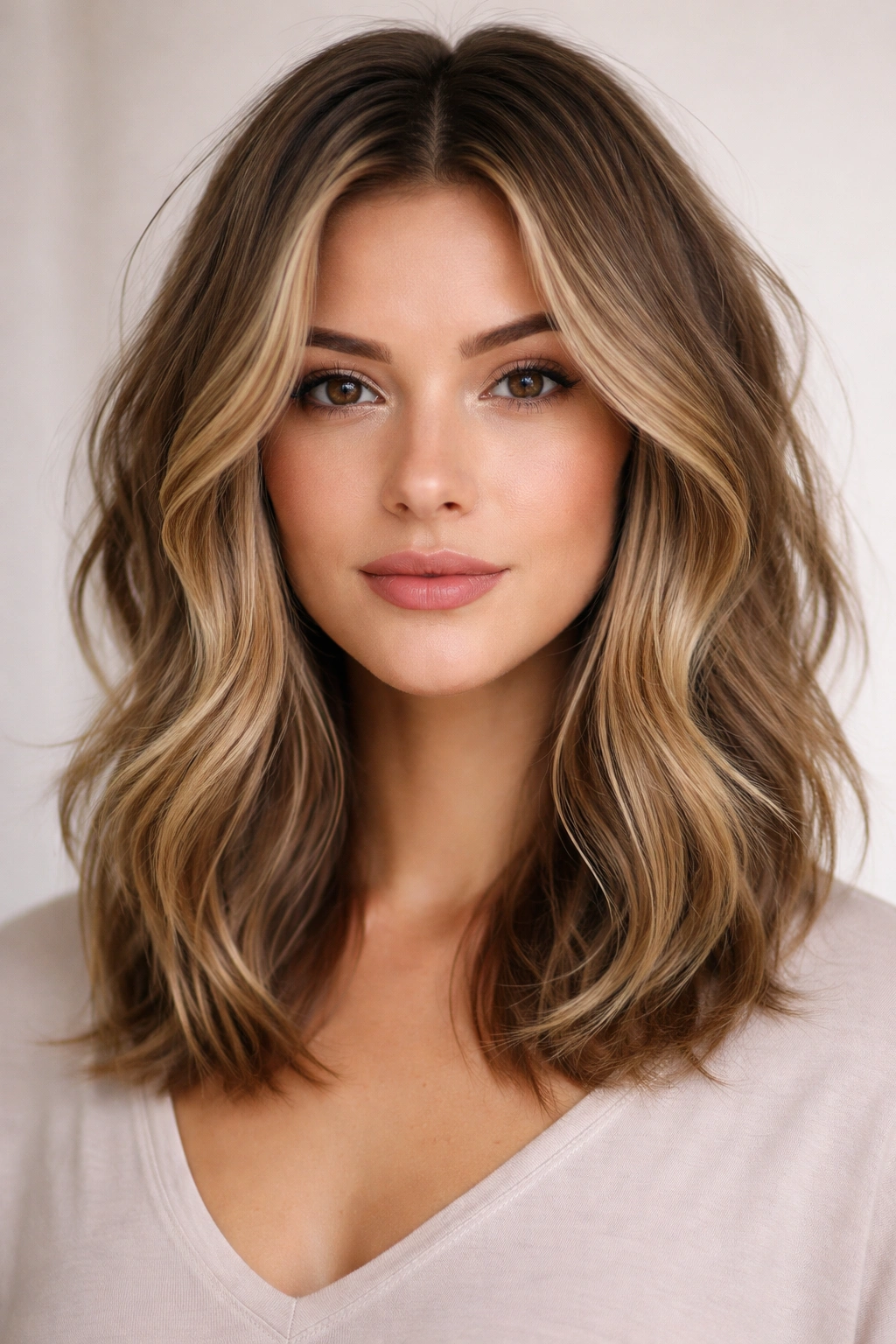
A textured lob (longer than a traditional bob but shorter than long hair, typically hitting collarbone or mid-shoulder) works for long faces when layered with intentional face-framing pieces. The texture creates horizontal movement and breaks vertical lines, while the face-framing pieces add width at the cheekbones. This cut balances length with texture, allowing you to keep longer hair while still achieving the face-shortening effect.
How Texture Replaces Length in Face-Shortening
Instead of relying on short hair to shorten your face, a textured lob uses movement and texture to break the vertical line your hair could create. Layers, especially shorter ones around the face, create width and horizontal emphasis. The texture — whether from waves, curls, or choppy layers — prevents smooth vertical lines from dominating, so your eye bounces horizontally across texture rather than following length vertically.
Achieving Texture in a Lob
- Naturally wavy or curly hair shows texture beautifully with minimal styling
- Straight hair needs waves (curling iron or heat waves) to activate the texture effect
- Choppy, disconnected layers (vs. subtle, blended layers) create more dramatic texture and width
- Face-framing pieces should be intentional and choppy, hitting around cheekbone or jaw length
Pro tip: Ask your stylist for textured layers specifically around your face and crown, while keeping the back slightly longer and more blended — this creates width where you need it while maintaining the overall length you want.
Final Thoughts

Finding the right haircut for your long face comes down to understanding how horizontal lines, texture, and volume work together to create balance. The most effective cuts for long faces share common elements: they create horizontal interruption (through bangs, bobs, or side-sweeps), they add width (through texture, layers, or strategic volume), and they prevent smooth, unbroken vertical lines from dominating your face shape.
Your ideal cut depends on your hair texture, your styling commitment, and your personal aesthetic. If you have naturally wavy or curly hair, a textured shag or choppy lob requires minimal daily styling while delivering maximum face-shortening impact. If you prefer polished, intentional looks, a blunt bob with bangs creates that dramatic horizontal line that works immediately. If you want to keep length while balancing your face, a textured lob with face-framing pieces or a cut with side-swept bangs offers dimension without sacrificing length.
The key is having a conversation with your stylist that goes beyond just showing a photo. Talk specifically about how you want to address your face length — do you want to create width through volume, add horizontal lines through bangs or positioning, or use texture to break vertical lines? Understanding the mechanism behind why a cut works helps you make confident decisions about your hair and communicate clearly with your stylist. With the right cut chosen for both your face shape and your lifestyle, you’ll find that balance and proportion you’re looking for.
