



A long pixie cut sits in that sweet spot between the androgynous buzz and the chin-length bob — it’s short enough to feel effortlessly chic and low-maintenance, yet long enough to offer real styling versatility. Whether you’re drawn to the textured, tousled aesthetic, the sleek and polished look, or something layered and dimensional, a long pixie can be tailored to suit your face shape, hair type, and personal style. The beauty of this cut is that it’s surprisingly forgiving; you can wear it bed-head messy on days when time is tight, or blow it out smooth and sophisticated for something more intentional. It works with thick, thin, curly, and straight hair types, and it flatters nearly every face shape when cut with the right proportions. Most importantly, it requires minimal styling time once you understand your hair’s natural pattern and how to work with it.
The challenge, though, is knowing which variation will actually work for your lifestyle and aesthetic. Long pixie cuts come in dozens of iterations — some favor one side, some blend seamlessly from back to front, others lean into choppy textures or sleek lines. Without clear examples and honest guidance about what each style demands, you might end up with a cut that photographs beautifully on someone else but feels wrong on you. What works for fine, straight hair is different from what works for thick, wavy hair. A style that suits someone with a round face differs from one for an angular jawline. The styling time and maintenance also varies dramatically — some cuts need a blow dryer and texture spray every morning, while others look better the less you fuss with them.
This guide walks through fifteen distinct long pixie variations, explaining exactly what makes each one unique, who it suits best, and what your daily styling routine should look like. You’ll find options that are soft and romantic, edgy and modern, polished and professional, and playfully textured. By the end, you’ll know not just what exists, but which version aligns with your hair type, face shape, and how much time you’re willing to invest in styling each morning.
1. The Textured Tousled Pixie
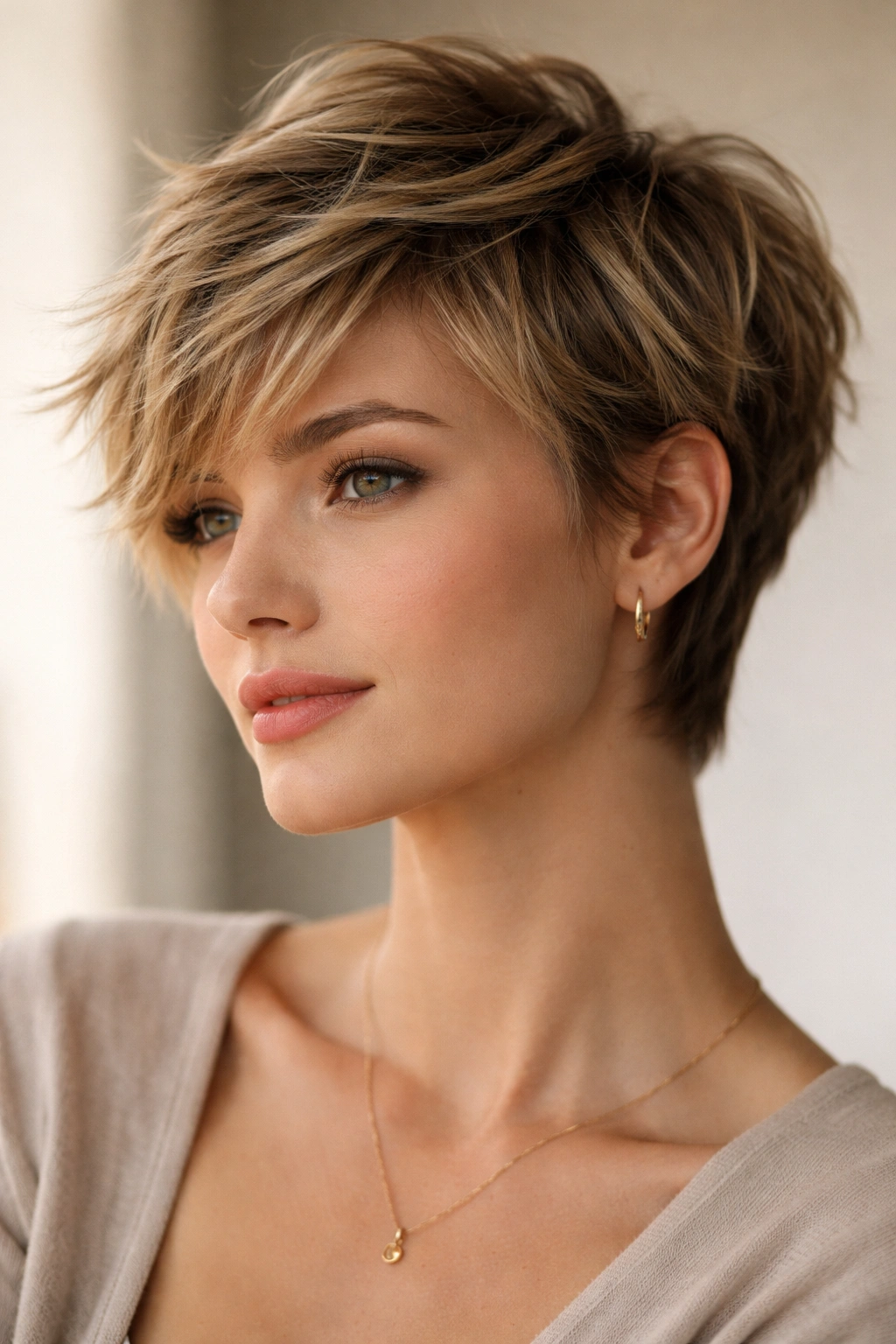
This is the long pixie for people who want an intentionally undone, lived-in vibe. The cut itself is layered throughout, with choppy, varied lengths that create movement and texture all over. The back sits slightly longer than a traditional pixie, falling to just below the ear, while the sides blend with soft, piece-y layers that hit around cheekbone length. There’s no rigid structure here — the whole point is that it looks better when it’s deliberately messy.
Why It Works for Modern Style
This cut thrives on movement and doesn’t require precision styling. It suits people with naturally wavy or curly hair beautifully because the texture is built into the design. Even if your hair is straight, a good stylist can cut the choppy layers in a way that encourages natural texture and makes the cut appear fuller and more dynamic. The textured tousled pixie reads as effortlessly cool without looking like you rolled out of bed without trying (even though you kind of did).
Styling and Maintenance Tips
- Use a texturizing spray or sea salt spray on damp hair to enhance the piece-y texture
- A quick tousle with your fingers as it air-dries is often all you need
- If you want more defined waves, use a straightener or curling iron on small sections and break them apart with your fingers
- This cut needs trims every 4-6 weeks to maintain the choppy layers; without regular maintenance, it starts to look grown-out rather than intentionally textured
- Works best with lighter, thinner products that don’t weigh down the movement
Real talk: This style requires regular trims because the layered structure is the whole point. If you wait 8 weeks between cuts, it can start to look shaggy rather than trendy. Also, this cut shines with some texture in your hair — if yours is poker-straight and you want it to stay that way, consider a different variation.
2. The Blunt, Face-Framing Pixie
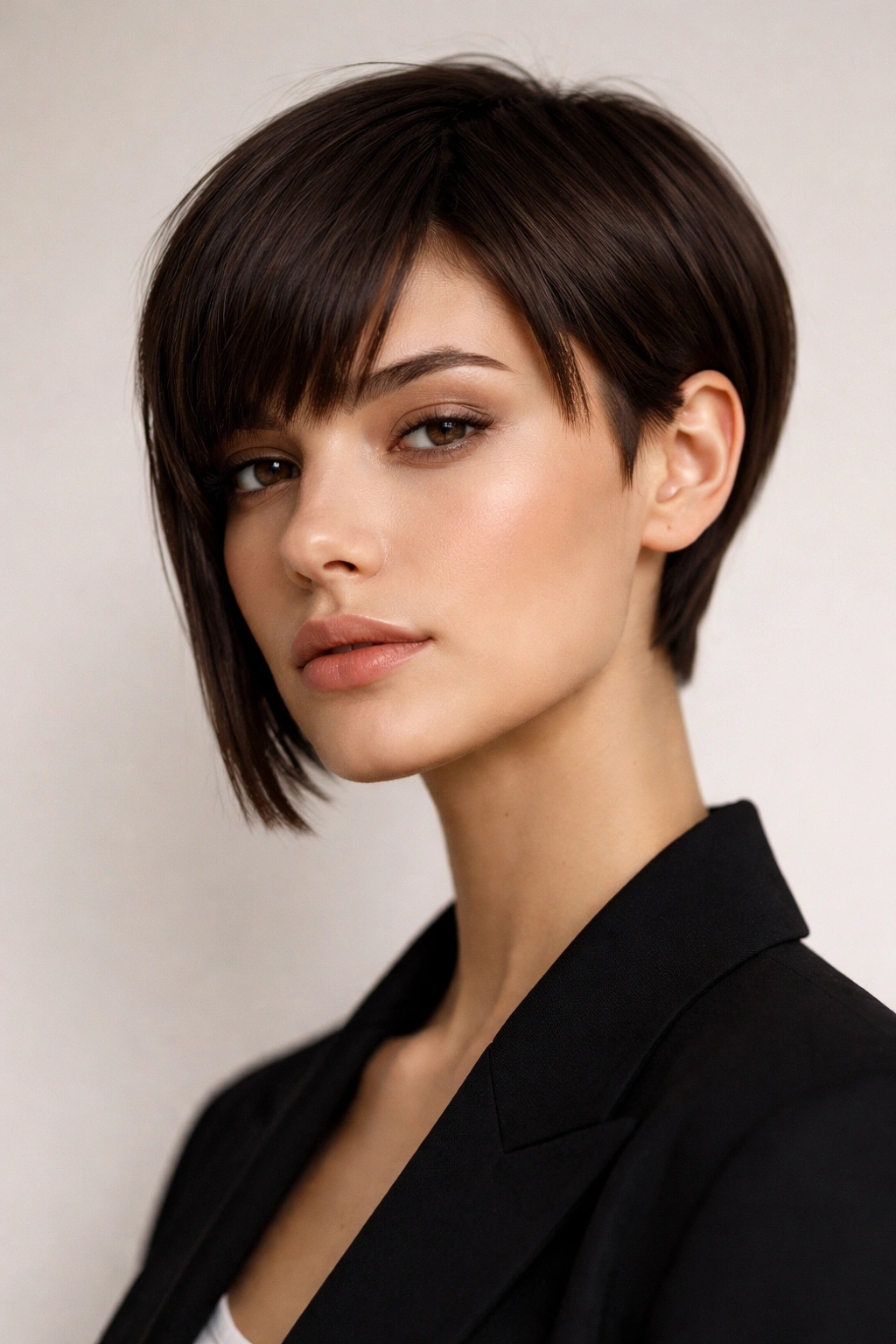
This version features clean, blunt lines framing the face with slightly longer pieces in front that sit around jawline or just below. The back of the head is still short and tapered, but the overall shape is more structured than textured. It’s a more geometric, architectural take on the long pixie that feels intentional and polished. The blunt front pieces create a strong visual line that can be incredibly flattering, especially if you have a heart-shaped or wider forehead.
Why This Cut Suits Bold Personalities
The blunt, face-framing pixie reads as confident and modern. It has a no-nonsense quality that pairs well with minimalist fashion, bold makeup, and a strong personal aesthetic. This is the cut you see on fashion-forward people and editorial spreads because it photographs beautifully and has a distinctly contemporary feel. It works particularly well for people who appreciate clean lines and geometric shapes in their overall style.
How to Keep It Looking Sharp
- Blow out straight to maintain the clean lines, or embrace the texture if your hair has natural wave
- The blunt front pieces need regular trims (every 3-4 weeks) to stay sharp and not start flipping up or looking ragged
- Use a smoothing serum or shine spray to enhance the polished feeling
- The structured nature of this cut means styling matters more than with a more textured approach — a tousled bedhead look will work against the cut’s geometric appeal
- Best on hair with some natural shine or gloss to emphasize the clean lines
Worth knowing: If you have very curly or coily hair, this cut can be tricky to maintain because the blunt lines tend to curve or frizz. A talented stylist who understands curly hair can make it work, but straight or wavy hair is more naturally suited to this style.
3. The Asymmetrical Side-Swept Pixie
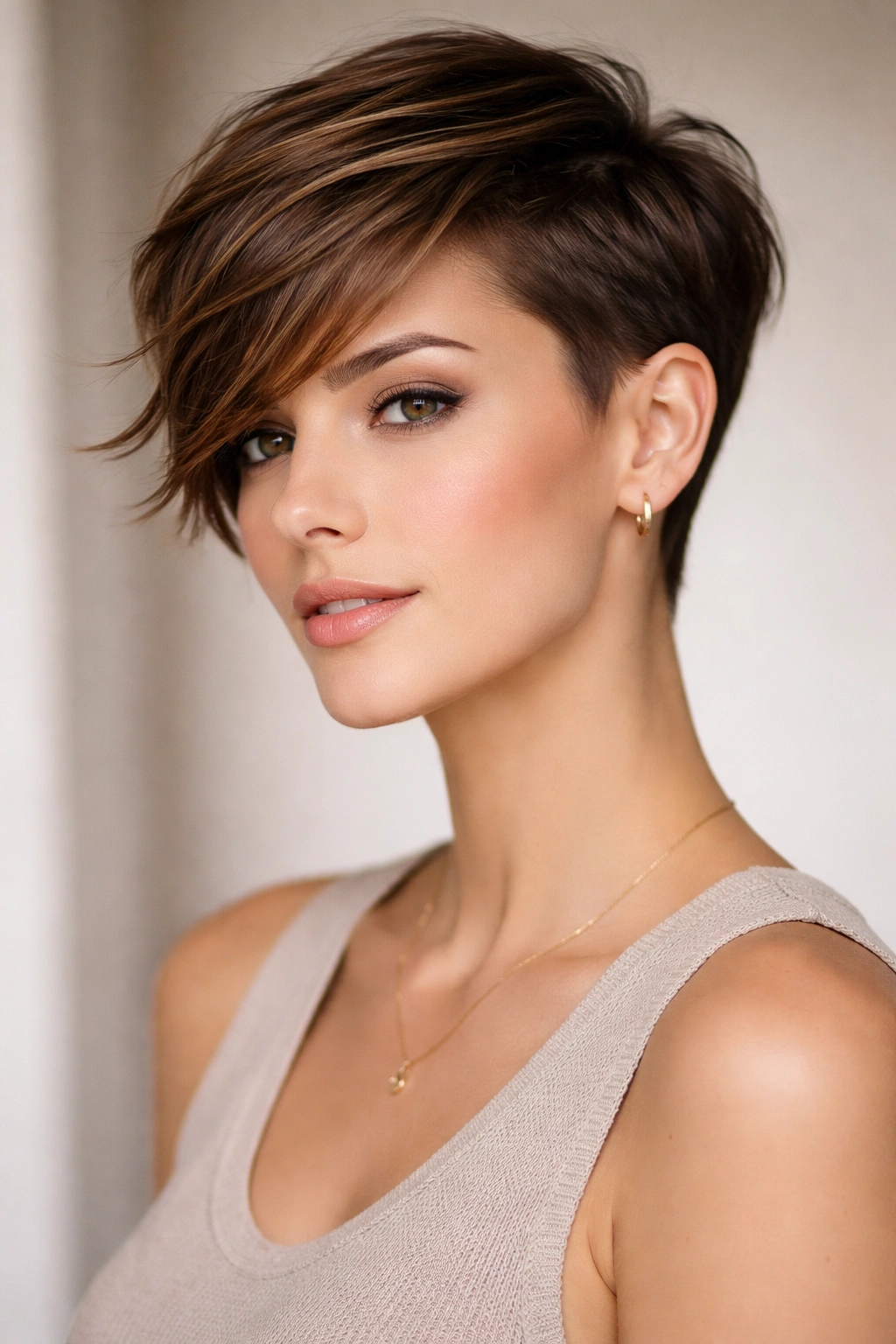
This cut features longer hair on one side that sweeps across the head, with a shorter, tapered opposite side. The length differential can be subtle (one side chin-length, one side ear-length) or more dramatic (one side reaching shoulder, one side very close-cropped). The longer side usually has layering for movement, while the shorter side maintains a clean, tapered line. It’s a statement cut that commands attention and works beautifully for people comfortable being a little bold.
The Statement Power of Asymmetry
An asymmetrical pixie instantly reads as intentional, artistic, and modern. It suits people with strong personalities who aren’t afraid to stand out. This cut is especially flattering if you have an angular face or high cheekbones — the asymmetry plays up those features. It also works as a way to accommodate different hair textures on different sides, or to address hair loss, thinning, or damage on one side.
Styling an Asymmetrical Pixie
- The longer side will need regular blow-outs or styling to sweep across; without styling, it can look lopsided
- Use bobby pins to secure the longer side back if you want to show off the shorter side, or let it drape for a sultry look
- This cut needs a skilled stylist who understands how to blend the asymmetry so it doesn’t look accidental
- Regular trims every 3-4 weeks keep the asymmetry intentional and sharp
- Pairs beautifully with color work — highlight the longer side or add darker tones to the shorter side for extra dimension
Pro tip: If you’re considering this cut but nervous about commitment, ask your stylist to do a very subtle asymmetry first. You can always go more dramatic on the next cut, but it’s harder to go back the other direction.
4. The Textured Crop with Longer Fringe
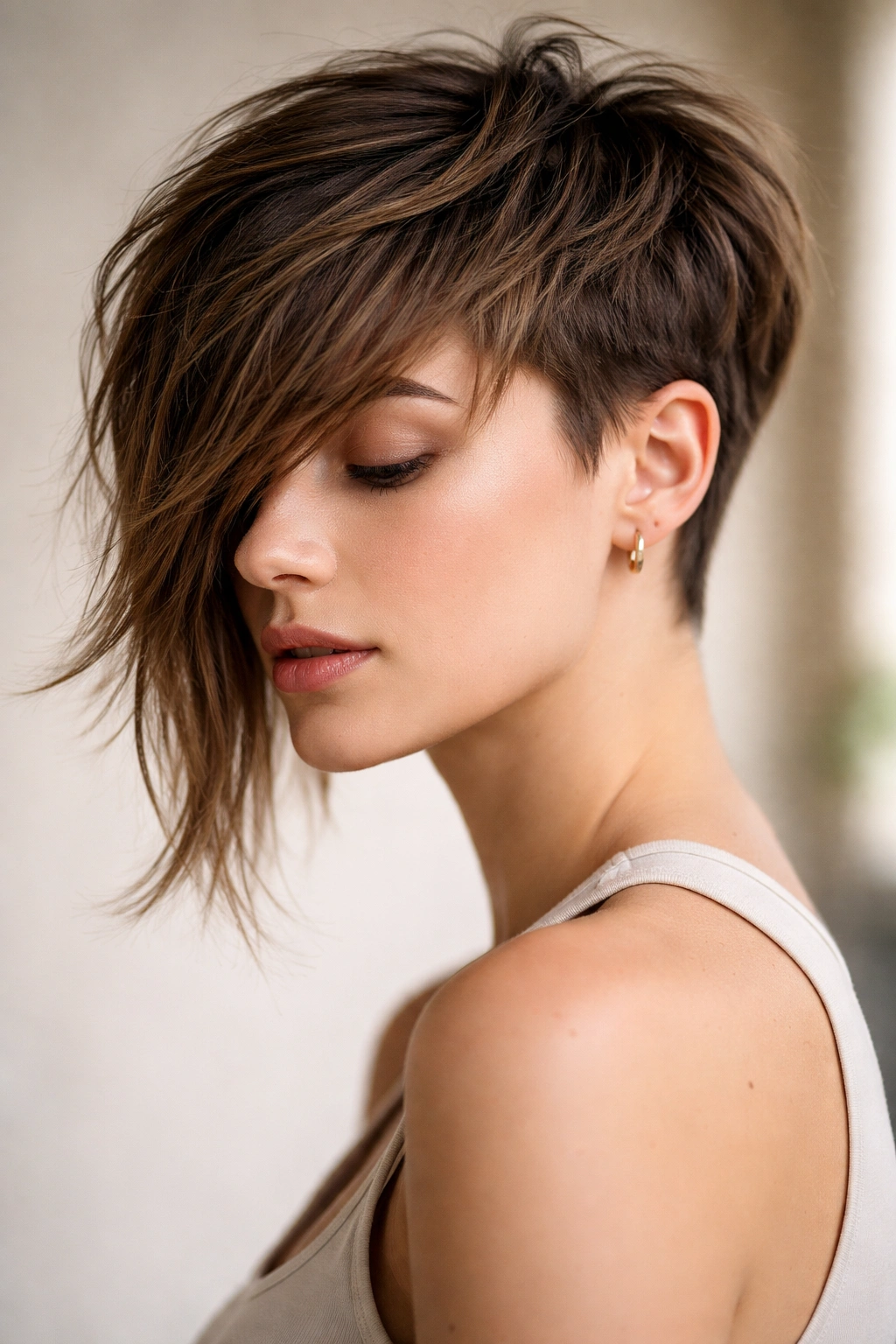
This variation keeps the back and sides very short and cropped (almost like a traditional pixie), but grows out the fringe dramatically long — falling to the chin, or even to mid-cheek when styled down. The back is heavily tapered and blends seamlessly from front to back, but the fringe is the star. This works beautifully for people who want the practical short sides of a pixie with the styling versatility of longer front pieces.
Best for Those Who Want Options
This cut is perfect if you want the ease of a short pixie but also want the ability to style your hair different ways. Comb the fringe down for an androgynous, almost shag-like vibe. Sweep it to the side for something more romantic. Clip it back to show off your bone structure and keep hair off your face. The longer fringe gives you options that a traditional pixie doesn’t offer, while still maintaining that effortless, low-maintenance short-hair aesthetic.
Daily Styling Reality
- The fringe will need blow-drying or styling; it won’t automatically fall the way you want
- Use a straightening iron or flat iron on the fringe pieces to get the shape you want — they can either frame softly or be blunt and angular depending on your preference
- The back stays so short that it requires very little styling; just finger-combing or a quick tousle is usually enough
- Trims every 4-6 weeks keep everything sharp, with the understanding that the fringe grows faster than the back
- This cut shows product very clearly, so keep texture sprays and styling products minimal to avoid it looking heavy
Insider note: This cut is excellent if you like changing your look frequently. In five minutes, you can go from business-casual with the fringe swept back to artsy and romantic with it down. You’re essentially getting two different hairstyles in one cut.
5. The Sleek Undercut Pixie
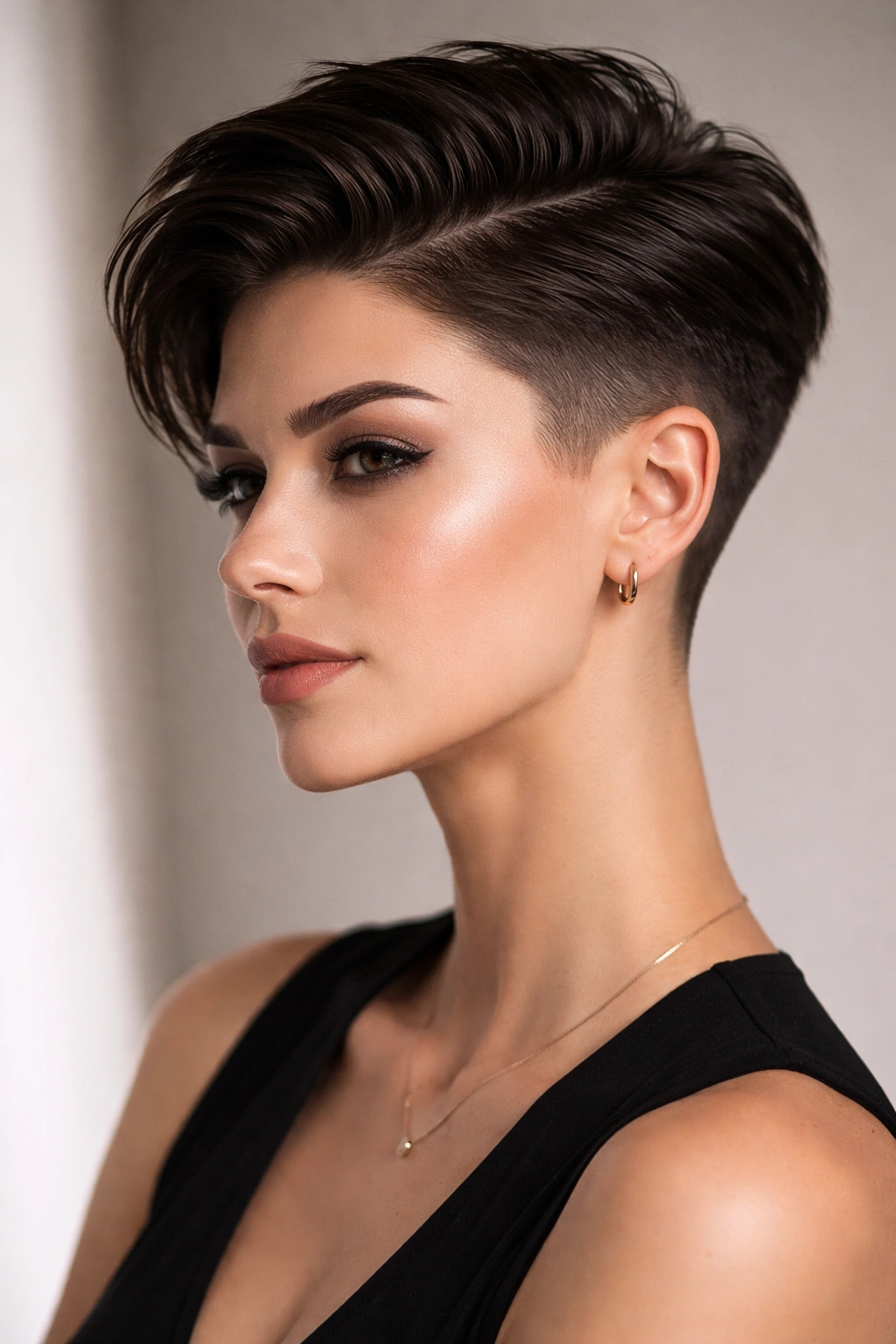
This is a bold, architectural cut with very precise, sharp lines. The sides and back are tapered extremely short (often skin-faded or with very sharp undercut lines), while the top is left longer and can be styled up, back, or to the side. There’s clear definition between the short sides and longer top — no blending or soft transitions. It’s a confident cut that doesn’t apologize.
Precision and Edge
The sleek undercut pixie reads as edgy, modern, and deliberately styled. It suits people with strong fashion opinions and a willingness to commit to regular styling and maintenance. This is a cut that pairs beautifully with geometric tattoos, bold jewelry, or a minimalist aesthetic. It’s flattering for people with oval or angular faces, and it can make a smaller face appear more angular and defined.
Maintenance is Non-Negotiable
- The undercut needs sharpening every 2-3 weeks to maintain those clean lines
- The longer top requires blow-drying to look intentional; bedhead won’t work with this cut
- Styling products are essential — use pomade, clay, or wax to add texture and definition to the top section
- This cut works best with thick hair or straight hair; very fine hair can look sparse with the tapered sides
- The contrast between short and long makes every hair count, so overall hair health and shine matter more than with a more forgiving cut
Worth knowing: This cut is genuinely high-maintenance. If you’re not willing to style it regularly or get trims every 2-3 weeks, it will look neglected very quickly. The payoff is that when you do style it, it looks incredibly sharp and intentional.
6. The Soft, Romantic Pixie
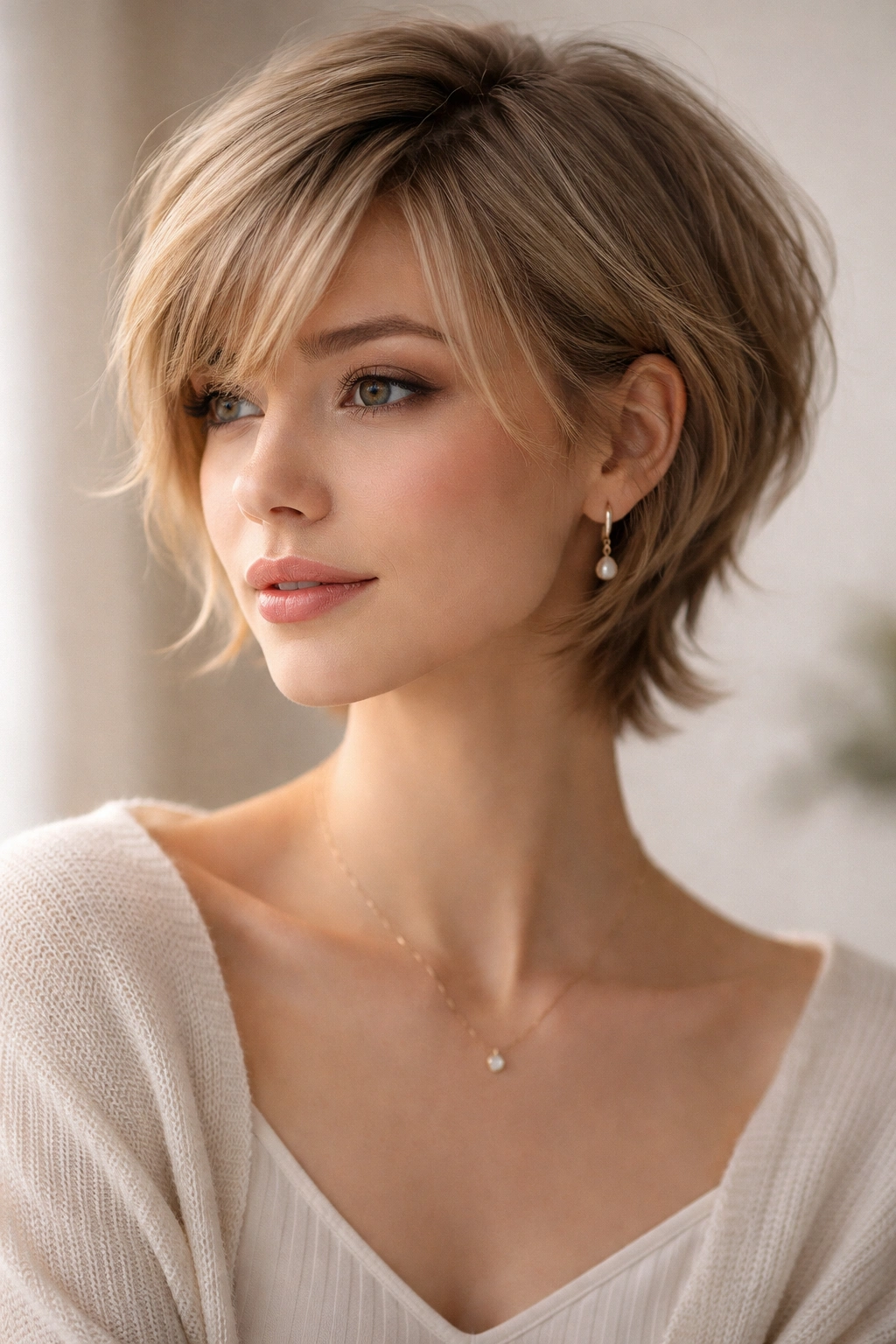
This version embraces delicate, feathery layers throughout with longer pieces that fall gently to the chin or jaw. The back is still short but not severely tapered; instead, it fades softly into the longer pieces. There’s movement and femininity here — it’s a long pixie that leans romantic rather than edgy. The texture is intentional but soft, not choppy or jagged.
Feminine Beauty in Short Hair
A soft, romantic pixie proves that short hair doesn’t have to feel masculine or severe. This cut suits people who love the practicality of short hair but want it to feel soft and elegant. It pairs beautifully with dresses, soft makeup, delicate jewelry, and a more romantic overall aesthetic. It’s particularly flattering for people with delicate features, smaller faces, or high cheekbones.
Creating Softness Through Styling
- The feathery layers work best with some wave or curl; use a curling iron to create soft waves throughout
- Air-drying with a curl-enhancing cream can work beautifully, especially for naturally wavy hair
- This cut looks best when it’s not blow-dried completely straight; a little texture or wave enhances the romantic quality
- Use lightweight products — serums and oils rather than heavy creams — to maintain the delicate feel
- Trims every 5-6 weeks keep the soft layers looking intentional rather than grown-out
Real talk: This cut requires some daily effort if you want to maintain the soft, romantic vibe. If you blow it out straight or don’t add any texture, it can read as just short rather than intentionally styled.
7. The Grown-Out Pixie with Choppy Texture
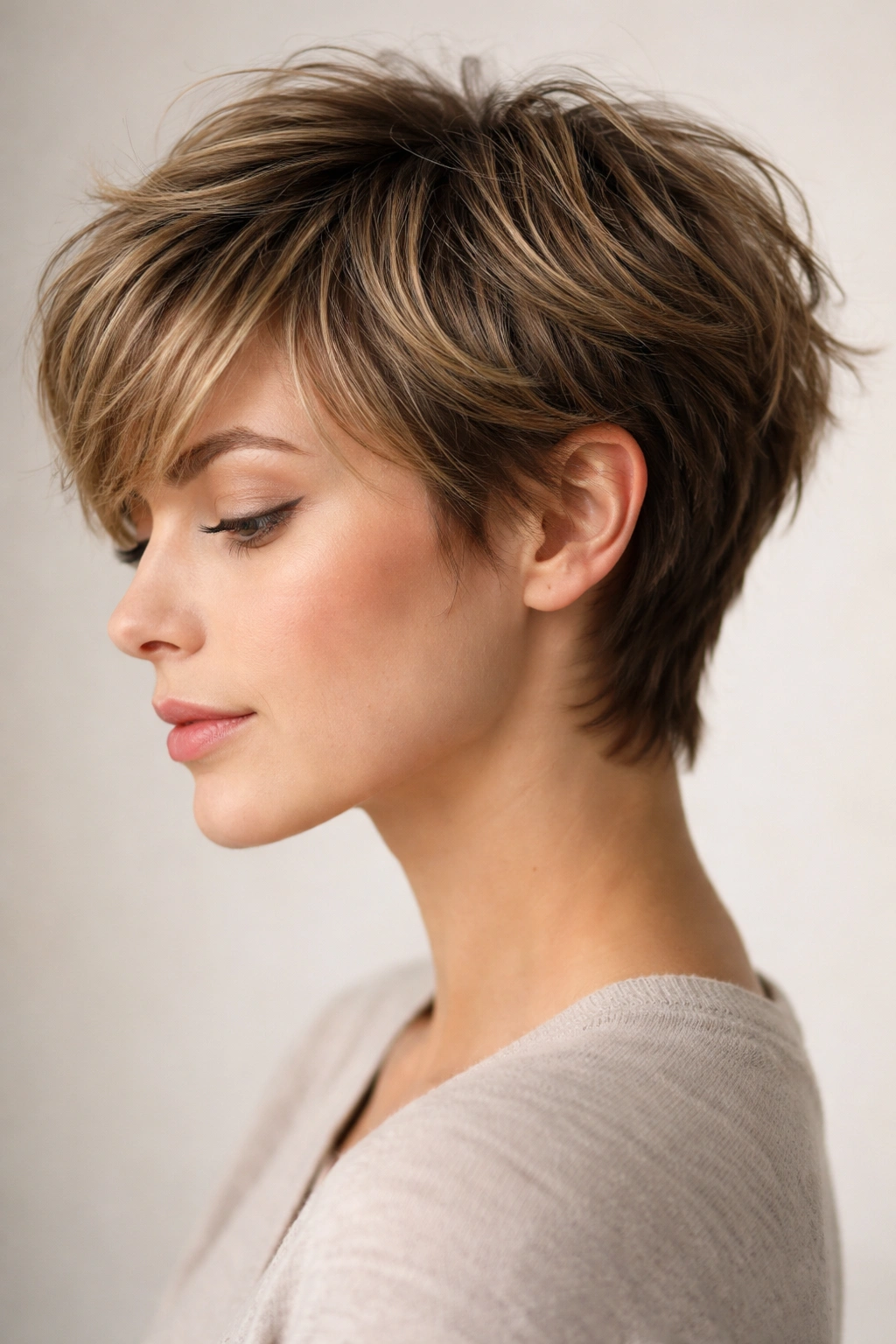
This is essentially a longer, more textured version of a pixie — it’s starting to blur the lines between pixie and shag. The back is longer than a traditional pixie (hitting around the ears or slightly below), and the whole head is heavily layered with choppy, uneven pieces. The sides blend seamlessly into the back without a sharp line. It’s textured, voluminous, and wonderfully low-maintenance.
Maximum Texture with Minimum Effort
This cut is the dream for people with naturally wavy, curly, or textured hair. The choppy layers work with your natural texture rather than against it, so styling is genuinely minimal. The longer length also means you can wear it down, pull it back in a small clip, or even do a tiny pony if you want a different look. It reads as effortlessly cool without being severe or too short.
Working with Natural Texture
- This cut is built for texture — if you have straight hair, you’ll need to add wave or texture with styling tools to make it work
- Sea salt spray or texture spray on damp hair brings out the layers beautifully
- Curly or wavy hair can often air-dry into this cut with minimal intervention
- The choppy layers mean that no two pieces sit exactly the same way; this is intentional and part of the appeal
- Trims every 6-8 weeks keep it looking intentional rather than shaggy, though this cut forgives longer grow-out periods better than blunt versions
Pro tip: If you’re thinking about this cut, ask your stylist to show you how it looks wet and how it looks dry. The texture will look very different depending on whether your hair is damp or fully dried, and you want to love both versions.
8. The Polished Business Pixie
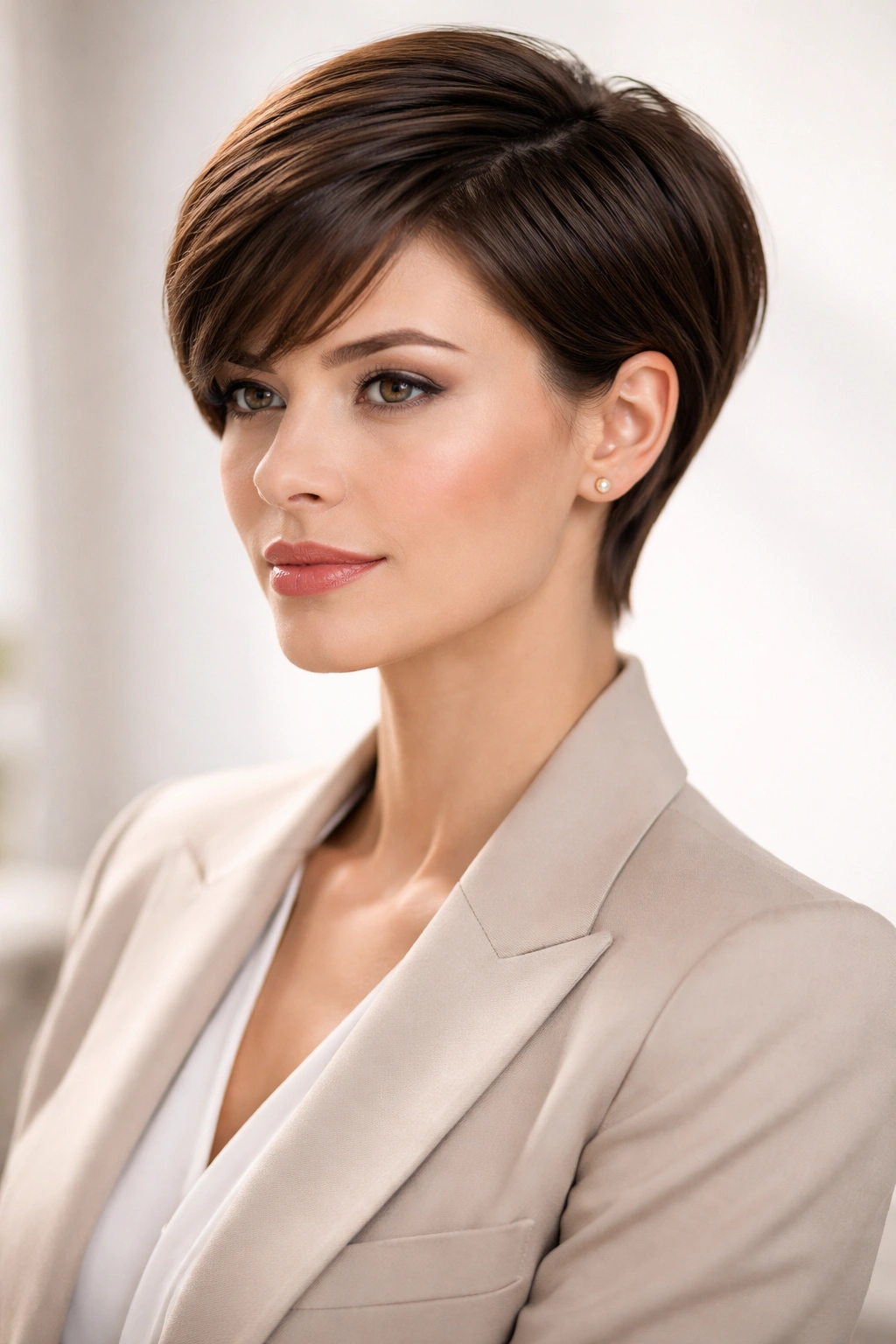
This cut is short, clean, and professional — it’s a long pixie designed for people in corporate or conservative environments who still want something modern and flattering. The back is tapered neatly, the sides are blended cleanly, and the front pieces are longer but shaped intentionally, never too choppy. It reads as sophisticated and put-together without being boring.
Professionalism Meets Style
A polished business pixie proves that you can have a modern, stylish haircut and still look entirely professional. It suits people who want short hair for practicality but need to appear polished in their work environment. This cut works beautifully with business casual or business formal dress codes, and it pairs well with minimal jewelry and a clean aesthetic.
Keeping It Polished
- Blow-dry for maximum polish and smoothness
- A light smoothing serum or shine spray maintains the put-together vibe
- Keep the lines clean with regular trims every 4 weeks
- Avoid heavy texturizing products or choppy styling that might read as too casual
- This cut looks best when it’s clearly intentionally styled, not bedhead
Worth knowing: If you’re nervous about cutting your hair short for a professional environment, this version might be your sweet spot. It reads as sophisticated and intentional, not experimental or risky.
9. The Curly Pixie with Defined Coils
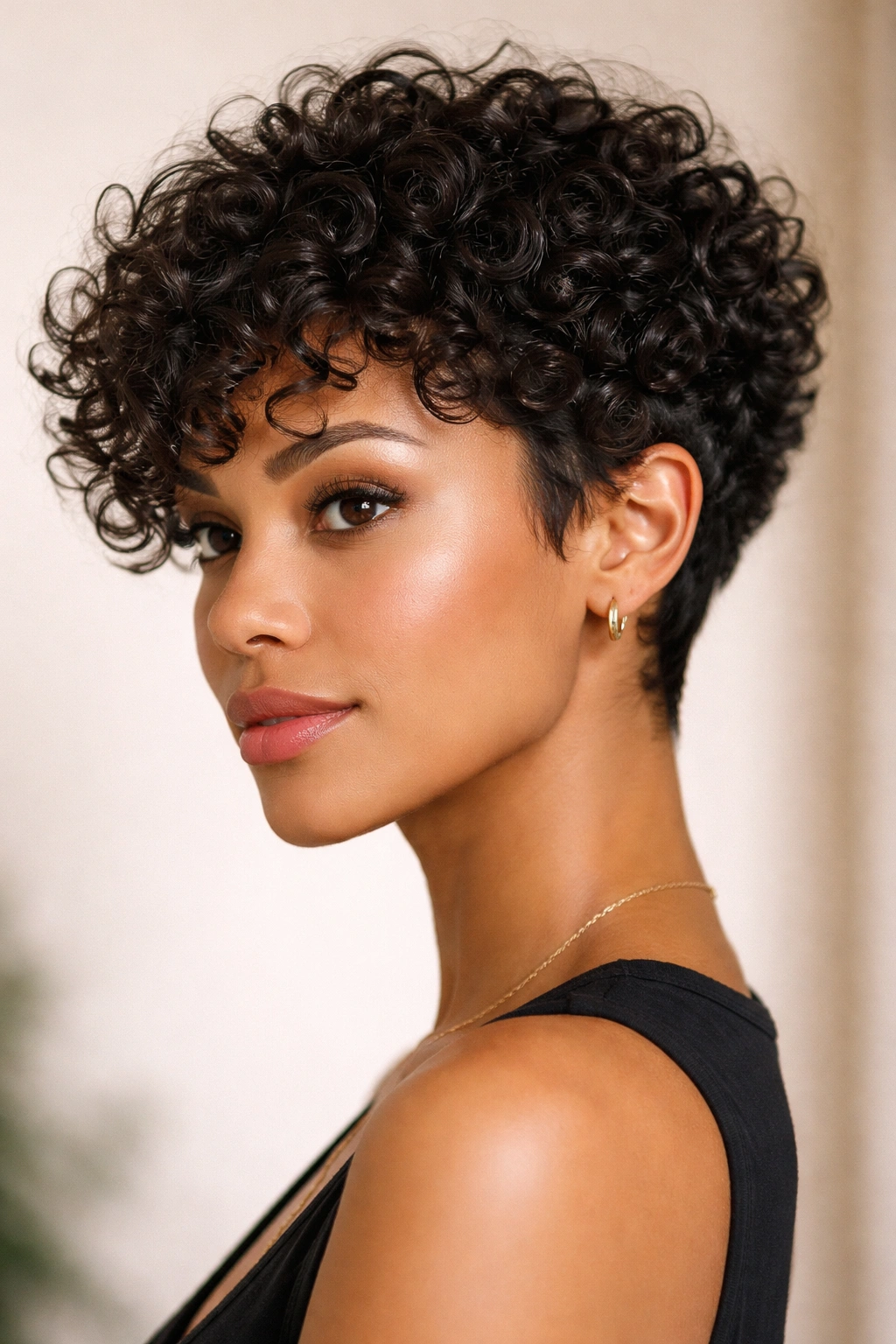
If you have naturally curly or coily hair, a long pixie designed specifically for your texture is a game-changer. This cut features layers cut specifically to work with curl patterns, with the longest pieces falling around the jaw. The layers are designed to reduce bulk while maintaining volume and definition. The back is shorter but tapered in a way that suits curls rather than fighting them.
Embracing Your Curl Pattern
This cut celebrates curly and coily hair rather than trying to flatten or smooth it. It’s designed by stylists who understand that curls take up more space, that shrinkage is real, and that the way the cut looks wet is different from how it looks dry. This is crucial — many stylists cut curly hair too short because they don’t account for curl pattern and shrinkage.
Caring for Curly Pixie Hair
- Use curl-specific products: creams, gels, and leave-in conditioners designed for your curl pattern
- Wet or damp styling is essential; curly hair needs moisture to define properly
- Avoid brush-combing when dry; use a brush or comb when hair is wet and saturated with product
- Regular deep conditioning keeps curls hydrated and bouncy
- Trims every 6-8 weeks maintain the shape, but be sure your stylist is experienced with curly hair and cuts while hair is wet
Real talk: Finding a stylist experienced with curly hair is half the battle. They need to understand your specific curl pattern and density. A great cut designed for your curls will genuinely change your life; a mediocre cut can be frustrating and require constant styling to look intentional.
10. The Tapered Fade Pixie
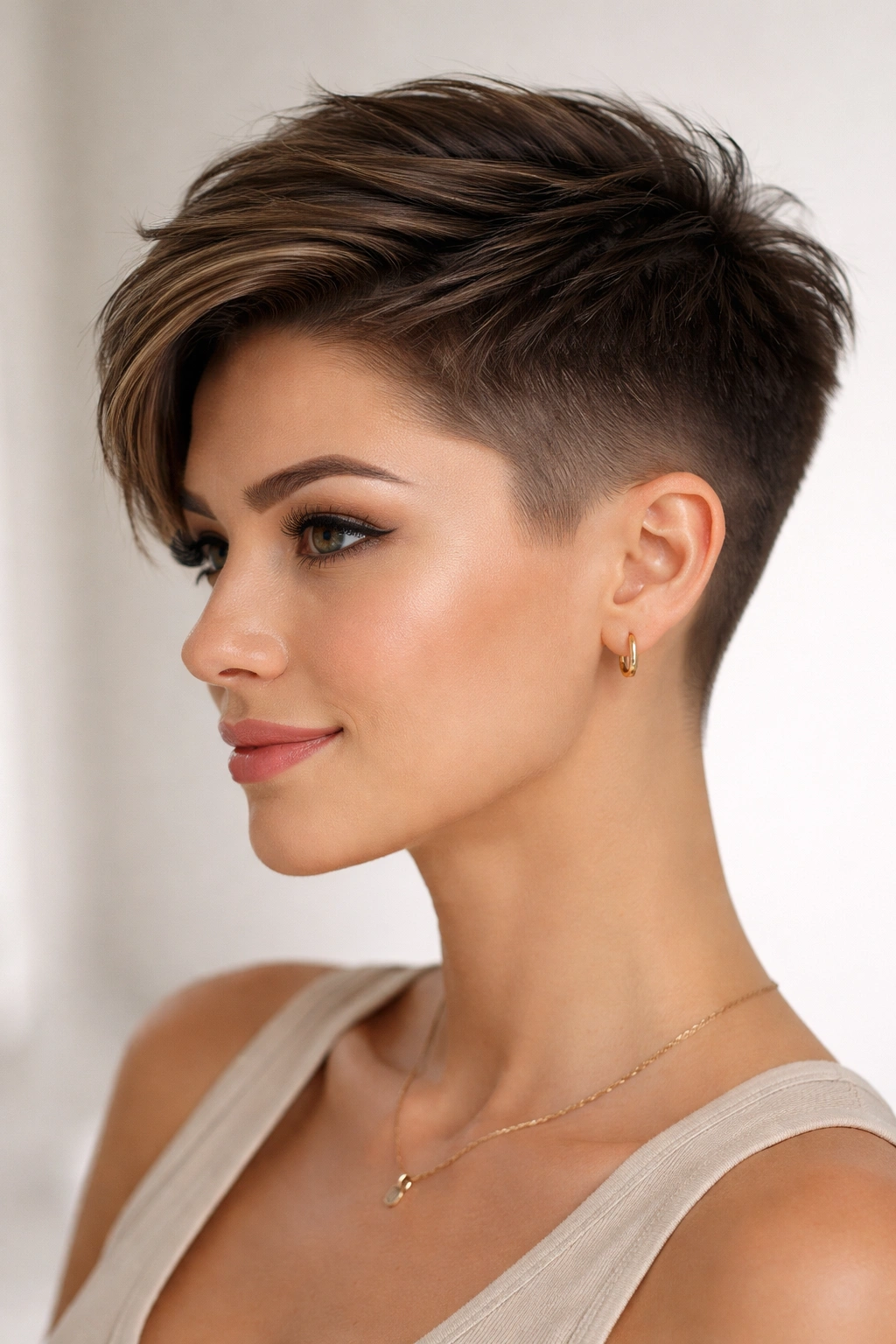
This modern version features a gradual fade from very short at the nape and sides to progressively longer hair at the crown and front. The fade is smooth and blended, not sharp like an undercut. The longer hair on top can be styled multiple ways — back, to the side, up, or forward. It’s a contemporary look that reads as modern and intentional without being severe.
Modern Versatility
The tapered fade pixie offers styling versatility because you have enough longer hair on top to work with. You can style it sleek and polished, tousled and casual, or even swept to one side. The fade itself is clean and modern, appealing to people who like contemporary aesthetics but want something less extreme than a sharp undercut.
Styling Your Fade
- A blow dryer and some product (pomade, clay, or wax) let you style the longer top section
- The faded sides stay relatively tidy without daily styling
- Regular fades every 2-3 weeks keep the gradient looking smooth and intentional
- This cut works beautifully with color work; you can highlight the longer section or add contrast with different tones
- Works best with straight or wavy hair; very curly hair makes the fade less visually dramatic
Pro tip: Ask your stylist to fade the sides in a way that complements your ear shape and face shape. A good fade takes these factors into account and frames your face intentionally rather than just removing bulk.
11. The Layered Pixie Shag
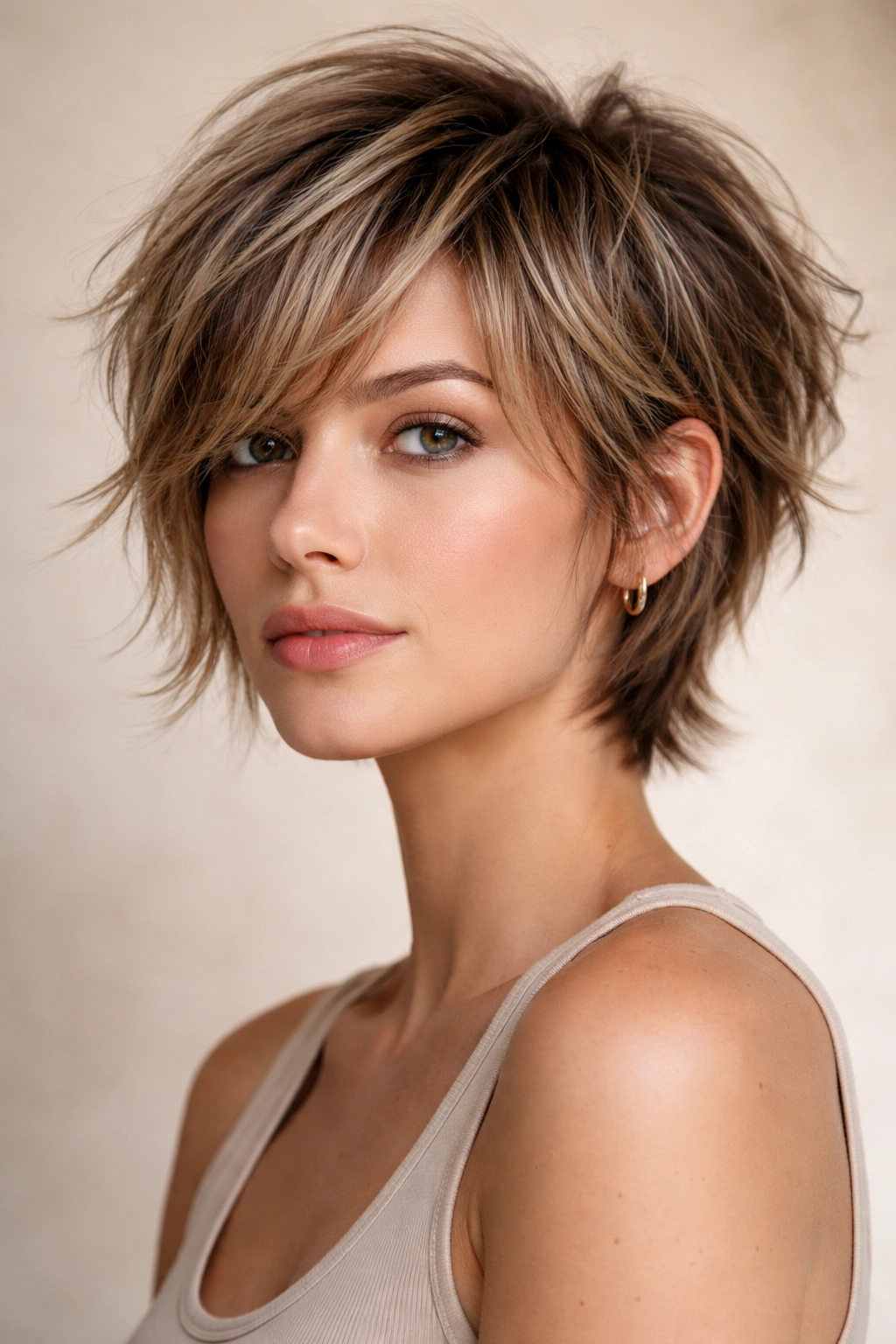
This is a shaggy take on the long pixie — it’s longer overall than a traditional pixie (falling to around chin length) but maintains the signature short, tapered back. The whole cut is heavily layered to create movement and texture, with pieces at slightly different lengths throughout. It reads as effortlessly cool and slightly wild in the best way.
That Effortless, Cool Factor
A layered pixie shag looks better the less you try to style it. This appeals deeply to people who want to look cool without spending time on their hair. The layers create natural movement and texture, so even finger-combing can look intentional. It pairs beautifully with a casual, relaxed aesthetic and works across multiple style sensibilities.
Minimal Styling, Maximum Impact
- This cut works best with naturally wavy or curly hair that creates texture on its own
- For straight hair, a light texturizing spray and finger-tousling can create the effect
- Air-drying is often preferable to blow-drying; the layers fall more naturally
- Trims every 6-8 weeks keep the layers sharp and prevent the whole thing from looking unkempt
- Use very light products or none at all; this cut reads better the less product you use
Worth knowing: If you have very fine or thin hair, the heavy layering can make hair look sparse rather than cool and shaggy. This cut works best with at least medium hair density.
12. The Elongated Pixie with Side Bangs
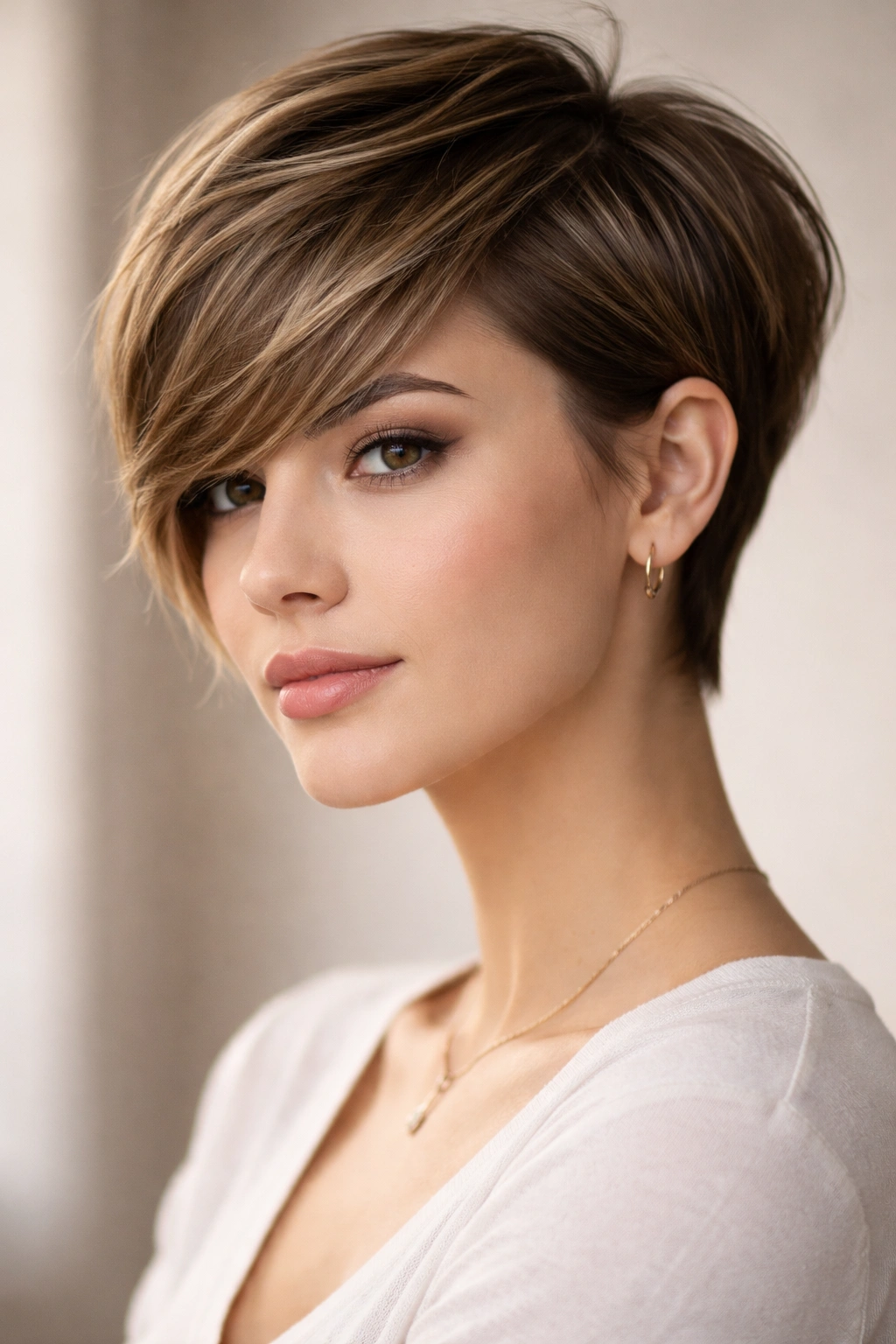
This variation features a slightly longer overall length (closer to chin-length) with distinct, structured side-swept bangs that frame the face. The back and sides are still tapered short in traditional pixie fashion, but the front bangs are the statement. The bangs can be blunt or textured, and they create a strong visual frame for the face.
Framing Your Face with Purpose
Side bangs add both softness and drama to a pixie cut. They can emphasize cheekbones, balance a wider forehead, or simply add visual interest. This cut suits people who love the idea of bangs but want to avoid the full-forehead commitment of traditional bangs. The side-swept style is more forgiving and works across multiple face shapes.
Styling Side Bangs
- The bangs will need regular styling to sweep the way you want; they won’t fall perfectly on their own
- Use a blow dryer and round brush to shape them, or a straightening iron if you want a sleeker look
- The bangs grow quickly and can be adjusted frequently, which means more frequent trims overall
- Texture or waves in the bangs look beautifully modern; pin-straight bangs can read as slightly dated
- Use a lightweight product on the bangs to avoid them looking heavy or greasy
Real talk: This cut requires more daily styling time than a simple pixie because the bangs need to cooperate. On days when you don’t style your hair, the bangs might not fall the way you want, which can change the whole vibe of the cut.
13. The Voluminous Textured Pixie
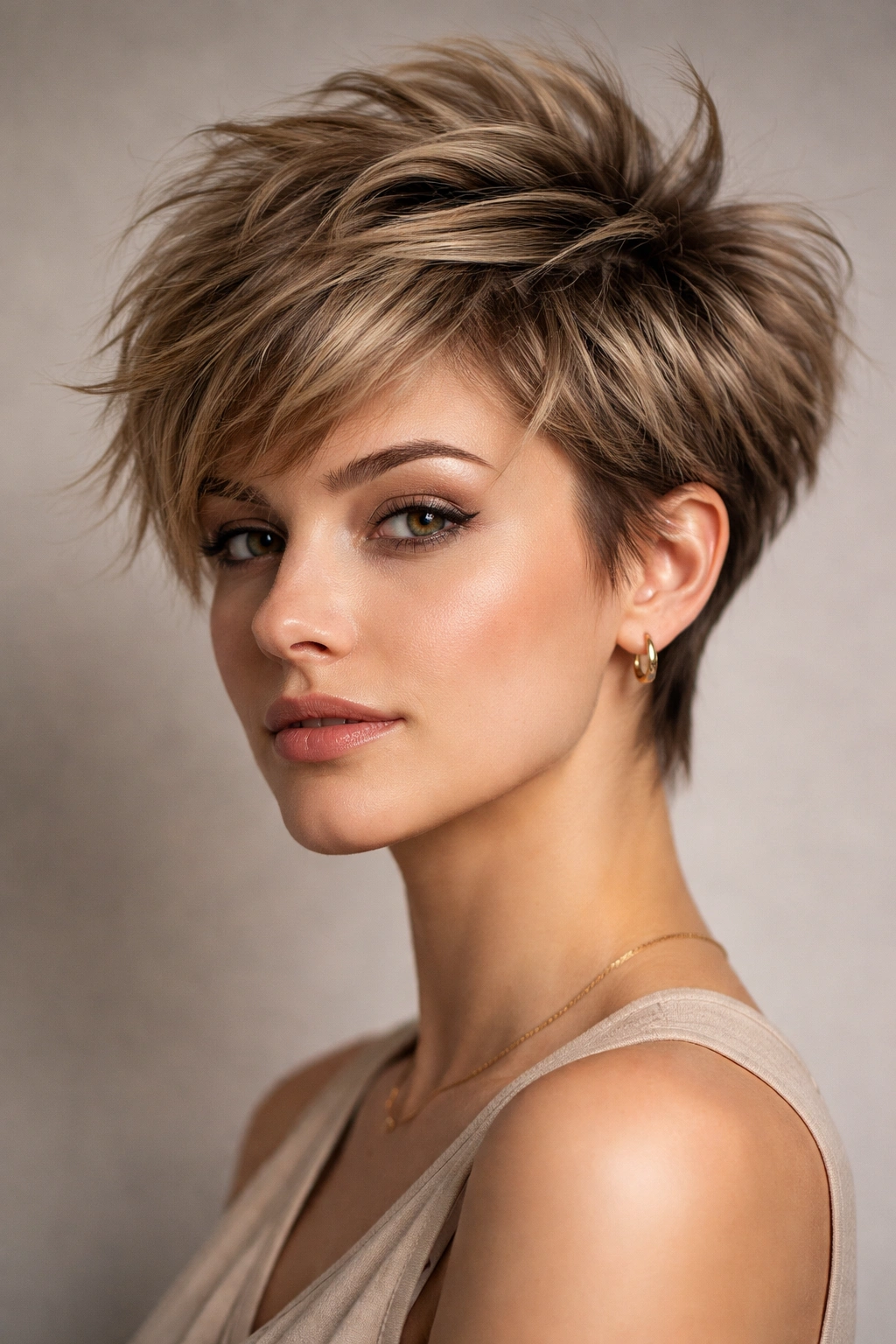
This cut is designed for people who want as much texture and volume as possible from a short pixie. The layers are choppy and dramatic throughout, with shorter pieces near the roots that create lift and longer pieces on the ends that create movement. The back is tapered but voluminous, not slicked down. It’s a big, textured, statement cut.
Maximizing Volume and Movement
This cut is ideal for people with fine or thin hair who want their hair to look thicker and fuller. The choppy layers and strategic shorter pieces create the illusion of more hair. The movement also makes thin hair look more substantial. It suits people who love texture and are willing to style their hair daily to create and maintain that texture.
Creating and Maintaining Volume
- Blow-dry using a round brush or blow-dryer brush to add volume and shape
- Use a volumizing mousse or texturizing spray to enhance the texture
- Dry shampoo or texturizing spray between washes maintains volume and texture
- Avoid heavy products, conditioner, or oils that weigh down fine hair
- Trims every 4-6 weeks keep the layering intentional and prevent the style from going flat
Pro tip: If you have fine hair and you’re considering this cut, ask your stylist specifically for choppy, layered styling that creates volume. Not all stylists understand how to cut fine hair to maximize volume rather than just remove weight.
14. The Sleek Honey-Blonde Pixie
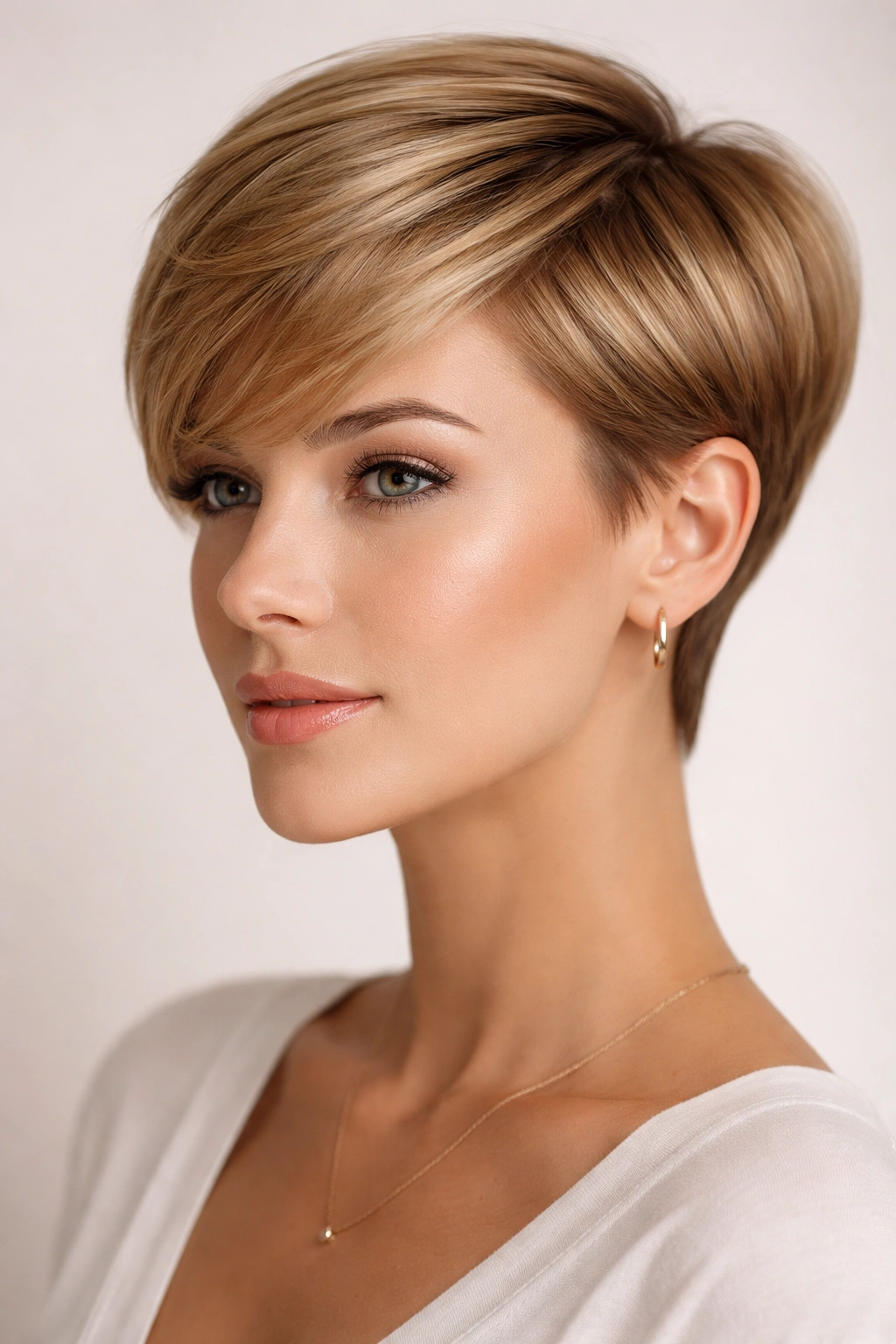
While this technically isn’t a cut variation (it could be applied to several of the cuts above), blonde or honey-toned hair in a pixie cut is such a distinctive and flattering combination that it deserves its own category. The cut is typically a short, tapered pixie with some length on top and longer pieces in front. The magic is in the color — warm, honey, golden, or butter tones that work beautifully with most skin tones and catch the light.
Color as Part of the Style
A beautiful honey blonde or golden tone can make a simple pixie cut feel luxurious and intentional. The color adds richness and dimension that makes even a basic pixie feel sophisticated. This combination works beautifully for people with warm undertones (golden, olive, or warm brown skin) and pairs well with warm-toned makeup and clothing.
Maintaining Blonde Hair
- Blonde hair requires dedicated color maintenance; plan for root touch-ups every 4-6 weeks
- Use purple or blue-toning shampoo to prevent brassiness and keep the blonde looking fresh
- Deep conditioning is essential; blonde hair, especially lightened blonde, needs moisture
- Regular trims every 4-6 weeks keep the cut looking sharp and intentional
- Invest in good quality styling products; cheap products can make blonde hair look dull
Worth knowing: Maintaining blonde hair is a genuine commitment. If you’re not willing to do regular color maintenance and invest in good products, this might not be the right choice. That said, for people willing to maintain it, blonde pixies are absolutely gorgeous and flattering.
15. The Androgynous Gender-Neutral Pixie
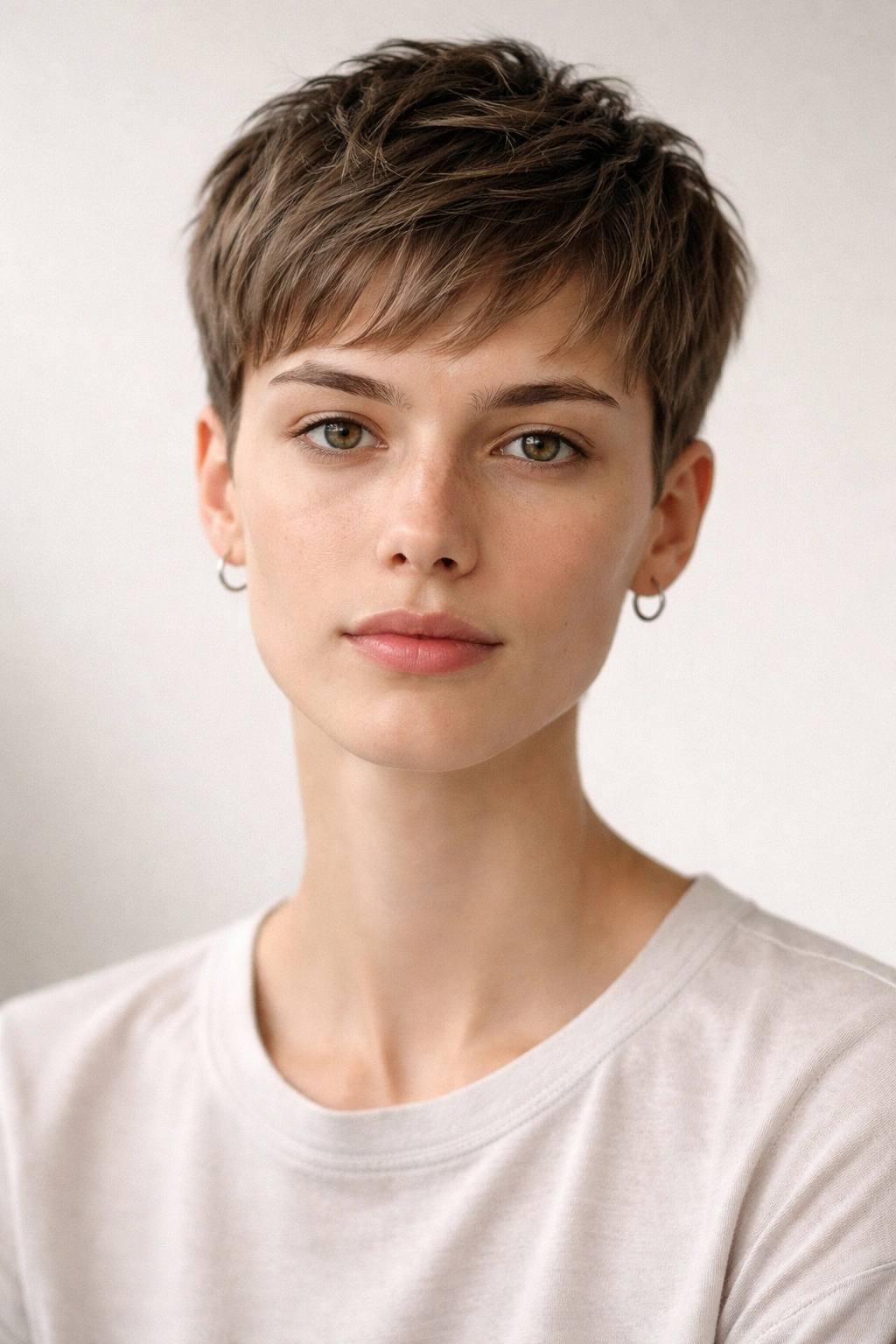
This final variation is cut for people who want a genuinely androgynous, gender-neutral aesthetic. The cut is short and tapered throughout without especially feminine or masculine elements. The back is clean but not severely faded, the sides are blended evenly, and the front is neither swept to frame the face nor styled dramatically to one side. It’s simply a clean, short cut that doesn’t code as particularly masculine or feminine.
Beyond Gender Presentation
This cut is for people who want short hair that doesn’t feel like it’s making a gender statement — it’s simply a practical, modern, flattering cut. It suits people with any face shape and works beautifully across multiple style sensibilities. It reads as clean, modern, and intentional without requiring heavy styling or dramatic styling choices.
Keeping It Simple and Clean
- Styling can be as minimal as finger-combing; this cut works with natural texture or slicked smoothly
- A light texturizing spray can add definition if you want it, or skip it entirely for a simpler look
- Trims every 4-6 weeks keep the lines clean and intentional
- This cut works beautifully across different hair types and textures
- Pairs well with minimal aesthetic, streetwear, and fashion-forward styling
Real talk: This cut is refreshing in its simplicity. It’s not trying to be anything other than what it is — a well-cut, modern, practical short haircut. If you’re tired of cuts that require constant styling or that feel like they’re making a statement, this version might be exactly what you need.
Final Thoughts
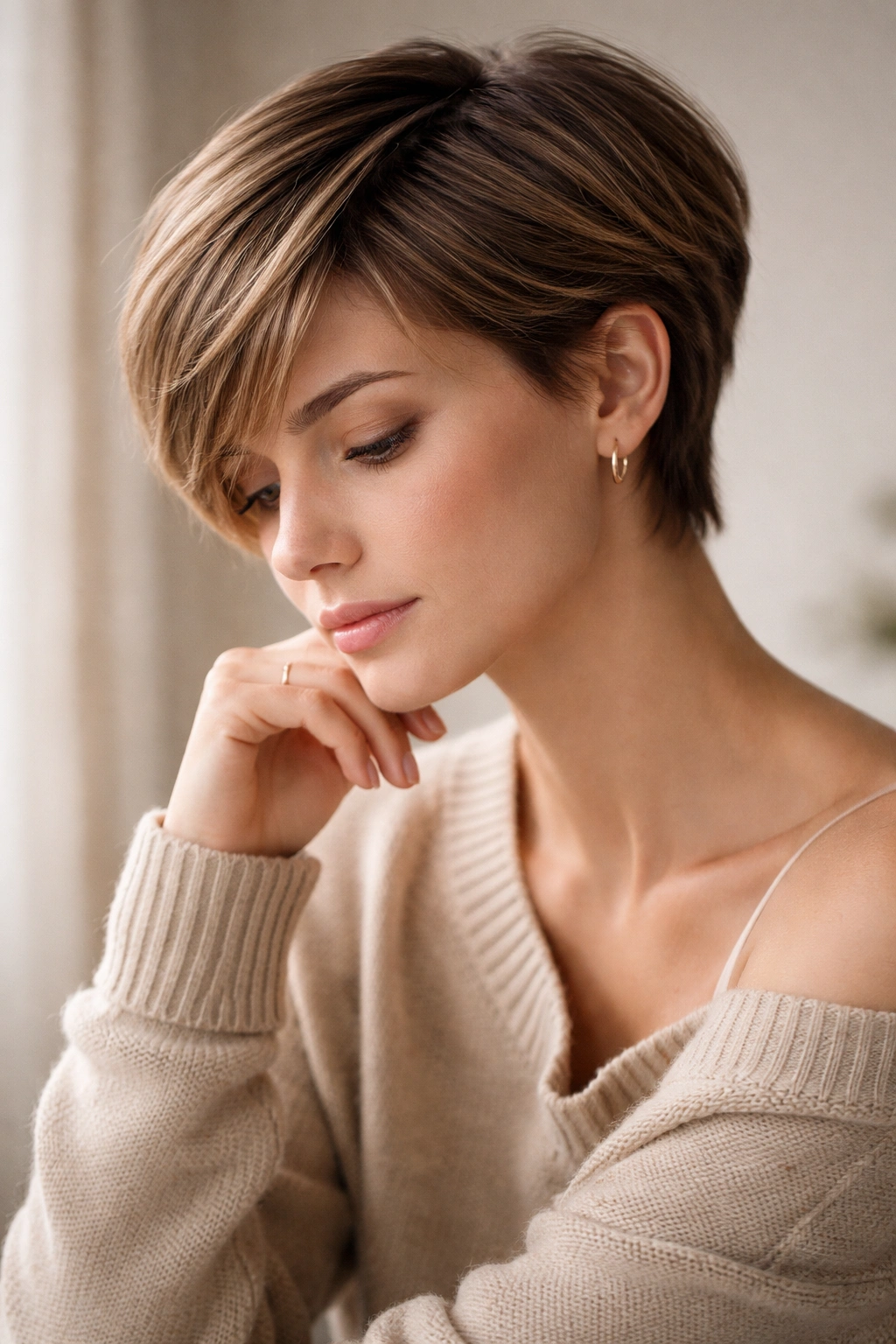
The right long pixie cut is out there for you — whether you want textured movement, polished sleekness, romantic softness, or edgy drama. The key is understanding your hair type, how much time you’re willing to spend styling, and which aesthetic actually makes you feel like yourself when you look in the mirror. A haircut that photographs beautifully but makes you feel uncomfortable every time you see your reflection isn’t the right choice, no matter how trendy it is.
Before booking an appointment, save photos of cuts you love, but look beyond the styling and the color. Pay attention to the actual cut shape and how the layers or lines are structured. Bring those photos to a consultation and be specific about what appeals to you — the texture? The length? The face-framing? A good stylist will listen carefully and help you figure out which variation will work best with your specific hair type and lifestyle. Don’t be afraid to ask questions about maintenance, styling time, and how often you’ll need trims.
Most importantly, remember that hair grows. If you love the idea of a long pixie but you’re nervous about the commitment, cut it. If you hate it, you can grow it out or adjust it. Short hair is one of the most changeable features you have, and there’s genuine freedom in that. Find a skilled stylist you trust, communicate clearly about what you want, and then give yourself permission to love your hair. You’ve got this.
