



Medium length hair sits in that sweet spot where you have enough versatility to explore countless styles without committing to the length and maintenance demands of long hair. Whether you’re growing out a shorter cut or transitioning from long locks, medium length—typically falling somewhere between chin and shoulder length—opens doors to some of the most flattering and dynamic hairstyles available. The beauty of medium lengths is that they work across different hair textures, face shapes, and lifestyle demands, making them genuinely one of the most practical yet stylish choices you can make.
The challenge isn’t finding a medium length hairstyle—it’s choosing from the abundance of options that actually suit your lifestyle, face shape, and personal aesthetic. Some styles emphasize movement and texture, while others deliver polished sophistication or edgy attitude. Some work best with straight hair, others shine with waves or curls, and many adapt beautifully across multiple textures with the right approach. What makes these styles so universally appealing is their flexibility: most can be worn sleek and professional one day, tousled and relaxed the next, or styled up for an evening out.
The hairstyles below represent the most wearable, transformative, and genuinely versatile medium-length options across the board. Each one brings something different to the table—whether that’s movement, structure, edge, romance, or pure everyday wearability. More importantly, each one can be customized and tailored to work with your specific hair type, face shape, and how much styling effort you’re willing to put in daily. Let’s explore the medium-length styles that truly do suit everyone, provided you find the right variation for your unique features.
1. Classic Layers with Soft Movement
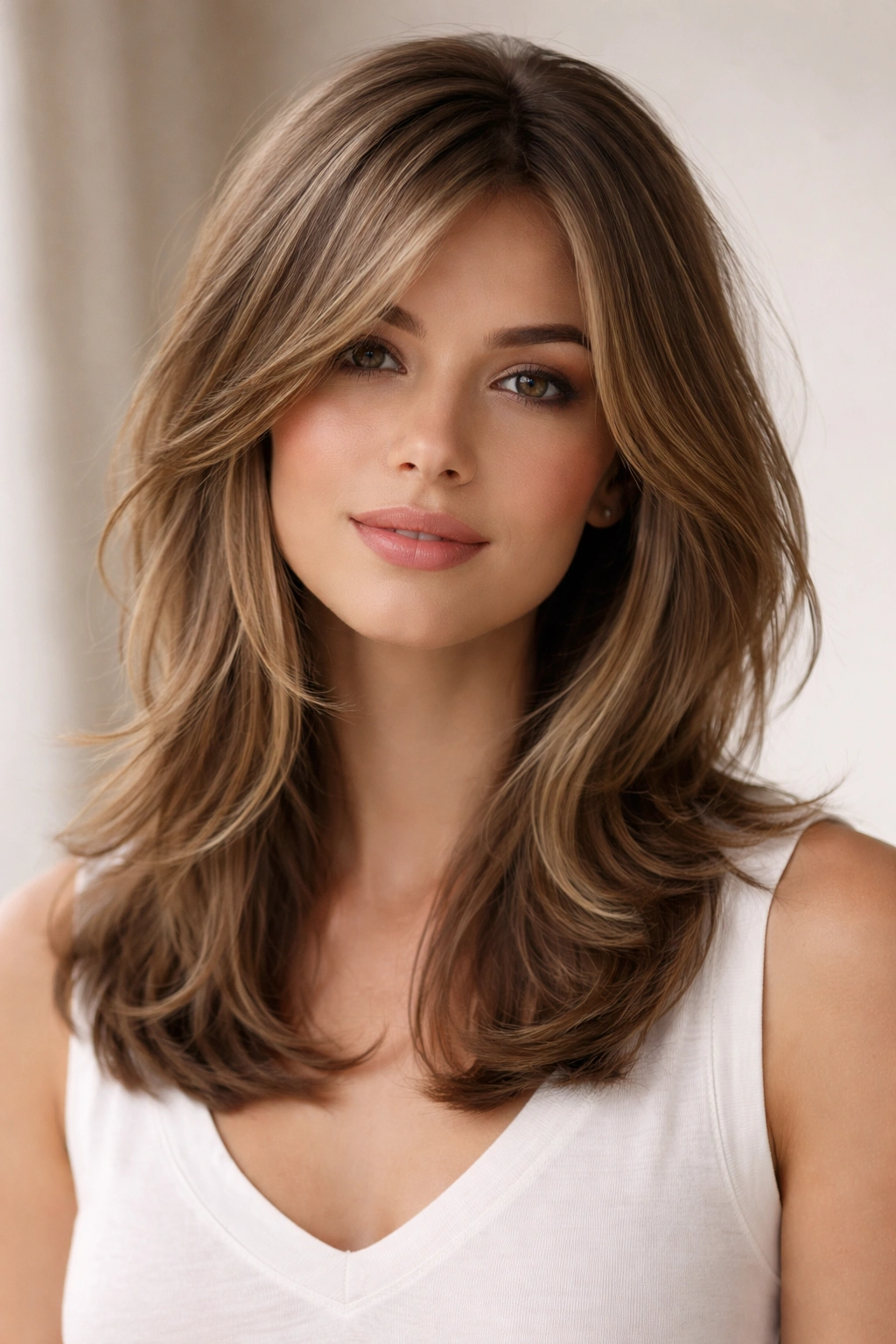
Classic layers never go out of style because they solve a universal problem: how to add volume, movement, and shape to medium-length hair without requiring extensive daily styling. The magic of well-placed layers is that they catch light differently at various points, creating dimension and the illusion of fullness even if your hair is fine or thin. Layers can be customized from subtle (just a few longer pieces around the face) to dramatic (multiple shorter layers throughout), so the style adapts to your hair density and texture.
Why This Works for Everyone
Layers add texture and shape that flatters different face shapes—shorter pieces around the face create a softer frame for angular faces, while longer layers maintain length for those who want it. The movement that layers create is incredibly flattering because it catches light and draws attention upward.
Key Details to Request
- Longer layers in front (typically chin-length or slightly shorter) to frame the face
- Subtle to medium layers throughout the crown for lift without shortening overall length
- Choppy or blunt ends (depending on your preference) to enhance movement
- Consider asking for face-framing layers specifically if you have a long or angular face shape
Pro tip: Layers look best when they have some length to them—request that your stylist avoid overly choppy, short layers that can make hair look wispy or thin if you’re working with finer texture.
2. Sleek Long Bob (Lob)
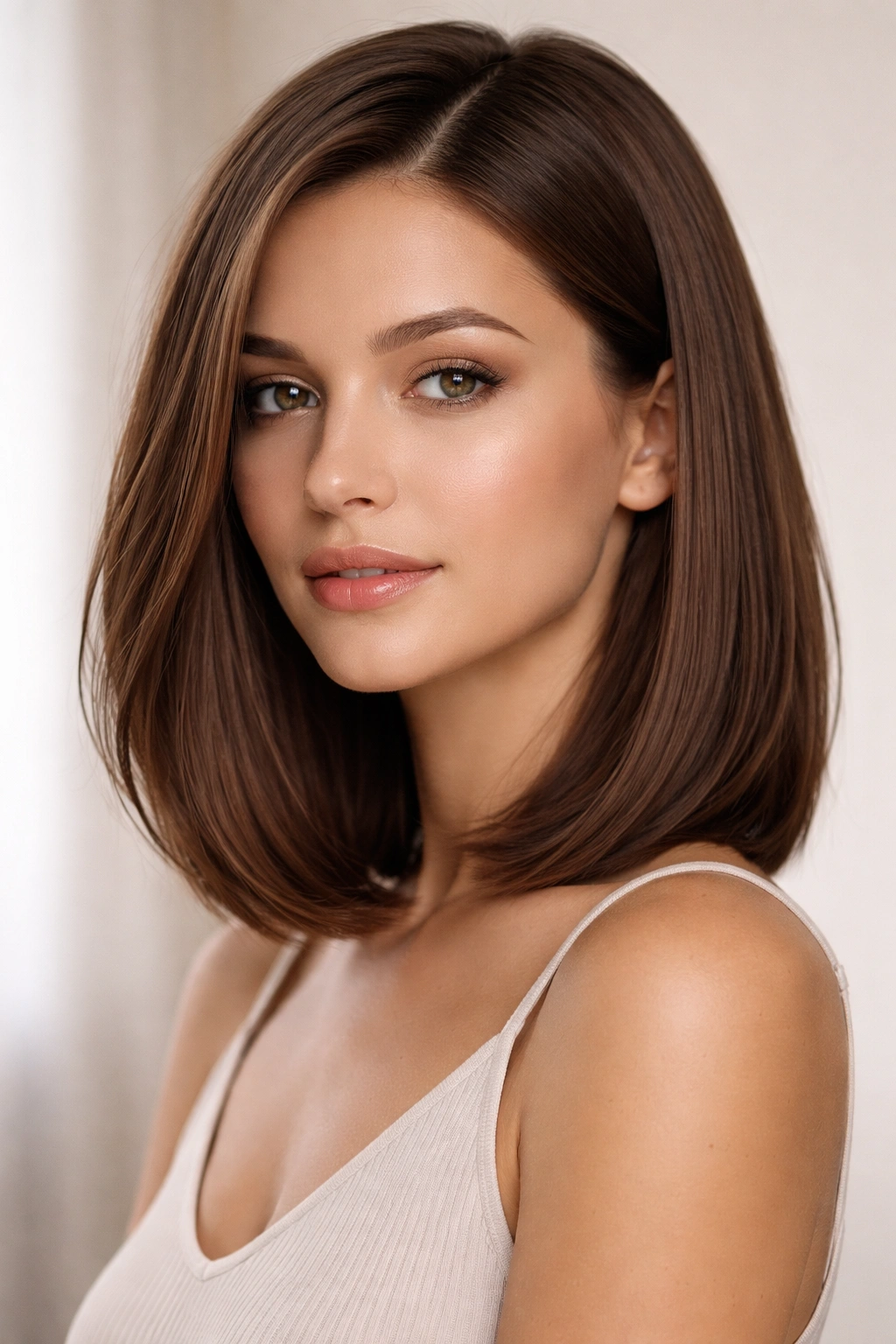
The long bob, or “lob,” is essentially the sophisticated older sibling of the classic bob—it’s longer, requires less dramatic bluntness, and works with more hair types and face shapes. A lob typically falls between chin and collarbone length, giving you that clean, polished silhouette without the severity of a true bob. The appeal is straightforward: it’s professional enough for any setting, casual enough for everyday wear, and striking enough to feel intentional and put-together without being high-maintenance.
Why This Works for Everyone
The lob’s length is forgiving—it’s long enough to frame most face shapes gently but short enough to add volume where it counts (around the face). The line is clean but not rigid, which means it works whether your hair is stick-straight or naturally wavy.
How to Style It
- Blow-dry straight for a polished, professional look
- Encourage your natural wave or add soft waves with a curling iron for movement
- Tuck one side behind your ear for a more refined moment
- Style with a deep side part to add dimension
Worth knowing: A lob works best when your stylist creates a subtle, slightly textured ends rather than a razor-sharp blunt line. This prevents the style from looking too structured or aged, and it makes styling more forgiving.
3. Textured Shag
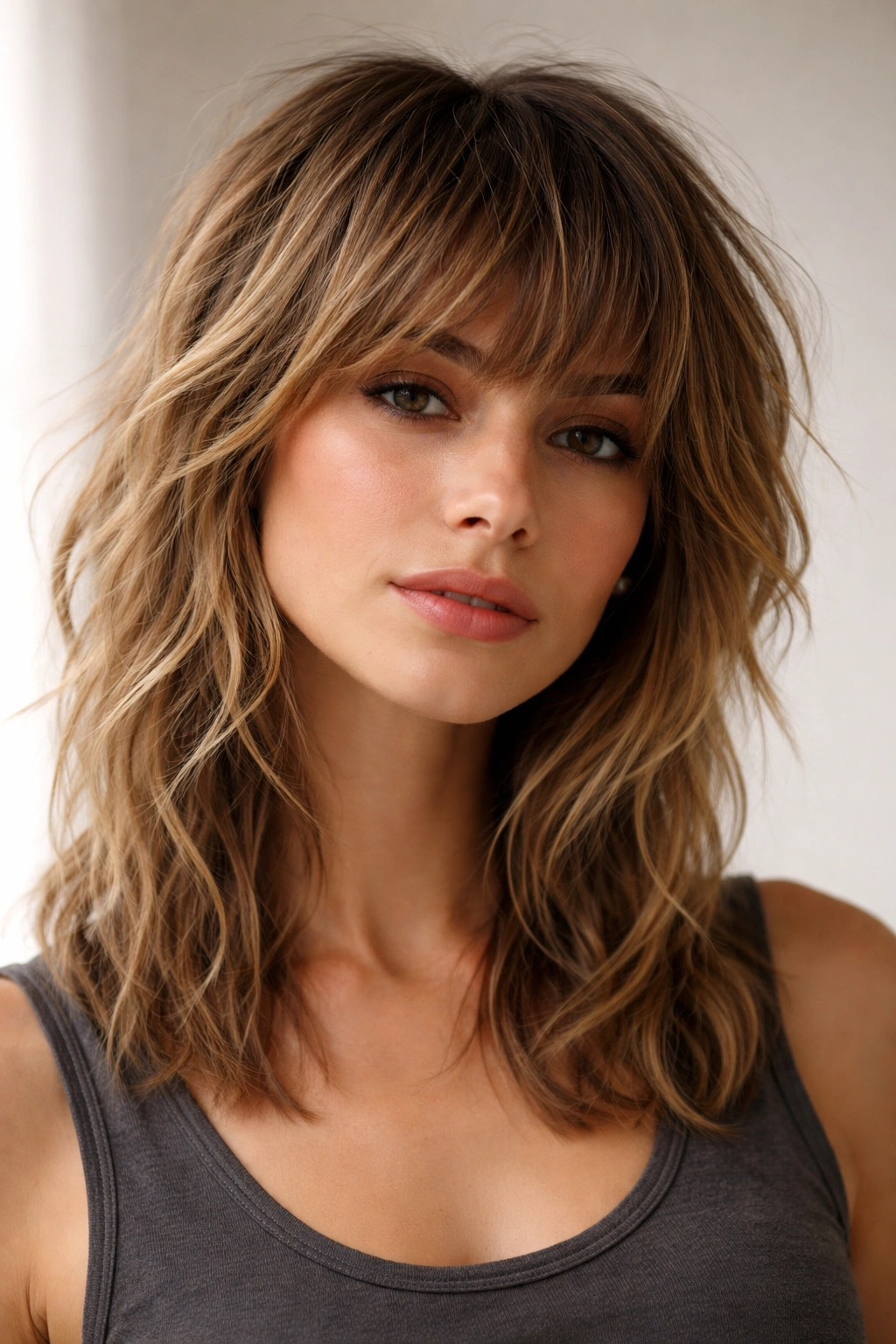
The modern shag is edgier and more textured than its disco-era ancestor, combining shorter layers on top with longer pieces underneath to create movement and volume without requiring length. A shag celebrates texture—whether that’s your natural wave, curl, or created texture through styling—and the choppy layers mean you don’t need perfectly smooth hair for the style to work. It’s rebellious and fun without being impractical for everyday wear.
Why This Works for Everyone
The shag’s multiple layers work with different hair textures because they’re designed to move and shift. Fine hair gets the illusion of volume from the shorter pieces, while thicker hair gets tamed by the textured approach rather than blunt heaviness.
What Makes It Work
- Shorter, choppy layers throughout the crown for texture and lift
- Longer pieces in front to frame the face and show movement
- Textured, choppy ends (never blunt) to emphasize the style’s edgy intent
- Works best with some body or wave—whether natural or styled
Insider note: The shag is having a major moment because it’s actually low-maintenance once it’s styled—the whole point is controlled texture, so you’re not fighting to make it sleek. This makes it perfect if you have naturally wavy or curly hair.
4. Shoulder-Length Straight Cut with Minimal Layers
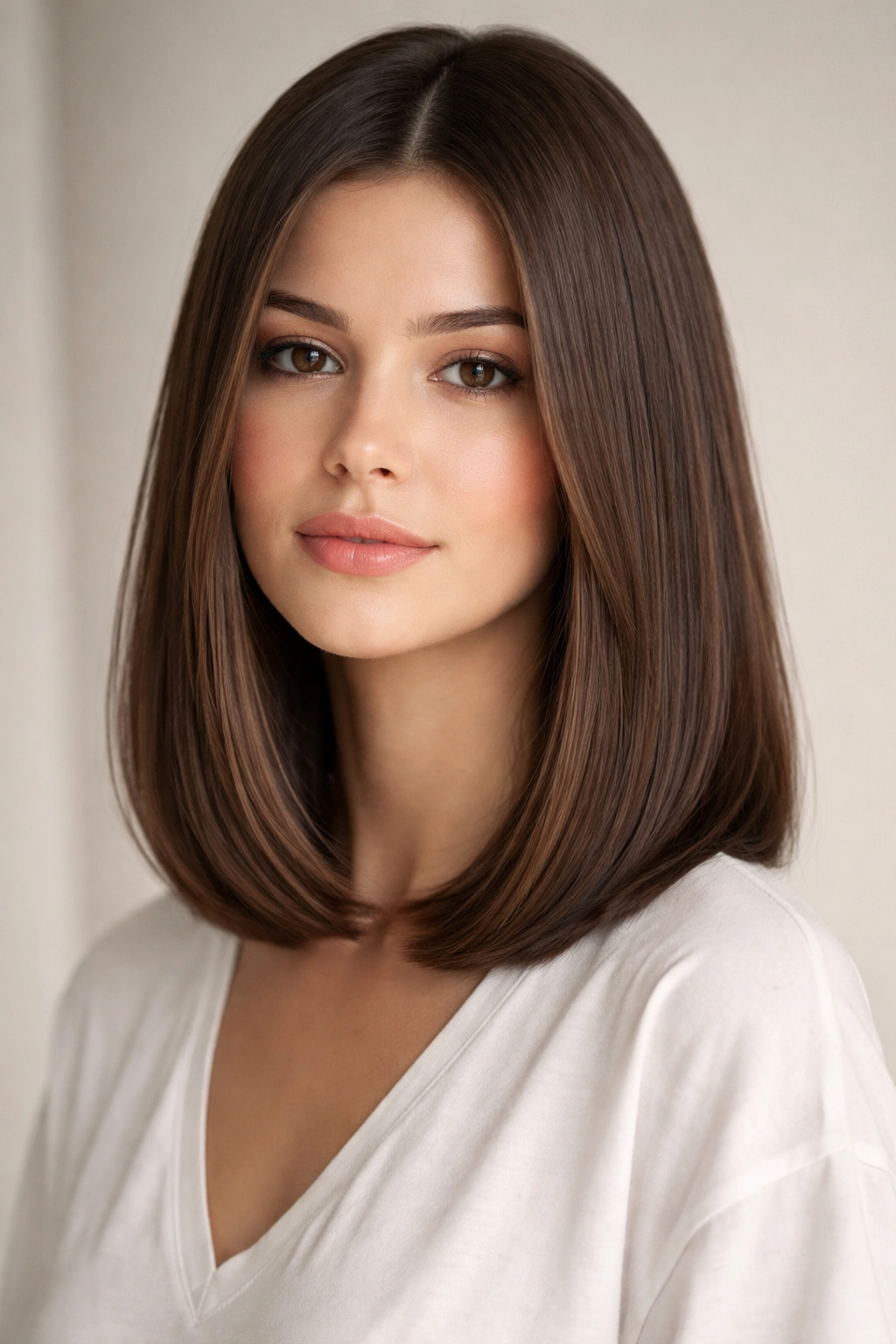
Sometimes the most elegant solution is the simplest: a straight, blunt or nearly-blunt cut that hits right around the shoulders with minimal layers or none at all. This style is pure sophistication—it’s the haircut equivalent of a well-fitted white button-down. It requires relatively minimal styling, works across different hair types when executed properly, and has a timeless quality that feels both modern and enduring.
Why This Works for Everyone
The clean line of a blunt shoulder-length cut is incredibly flattering because it creates a defined frame for the face and shoulders. It works on straight, wavy, and curly hair when styled appropriately, and it’s professional enough for any environment.
Styling Approach
- Blow-dry straight or with subtle waves, depending on your preference
- The blunt ends create their own structure, so minimal effort required
- Can be worn with a center part (more sophisticated) or side part (softer)
- Works beautifully with or without bangs
Real talk: This style is lower-maintenance than trendy cuts, but that doesn’t mean it’s boring. The sophistication comes from the precision of the cut and the quality of the hair—keeping this style looking sharp requires regular trims every 6-8 weeks.
5. Textured Waves with Curtain Bangs
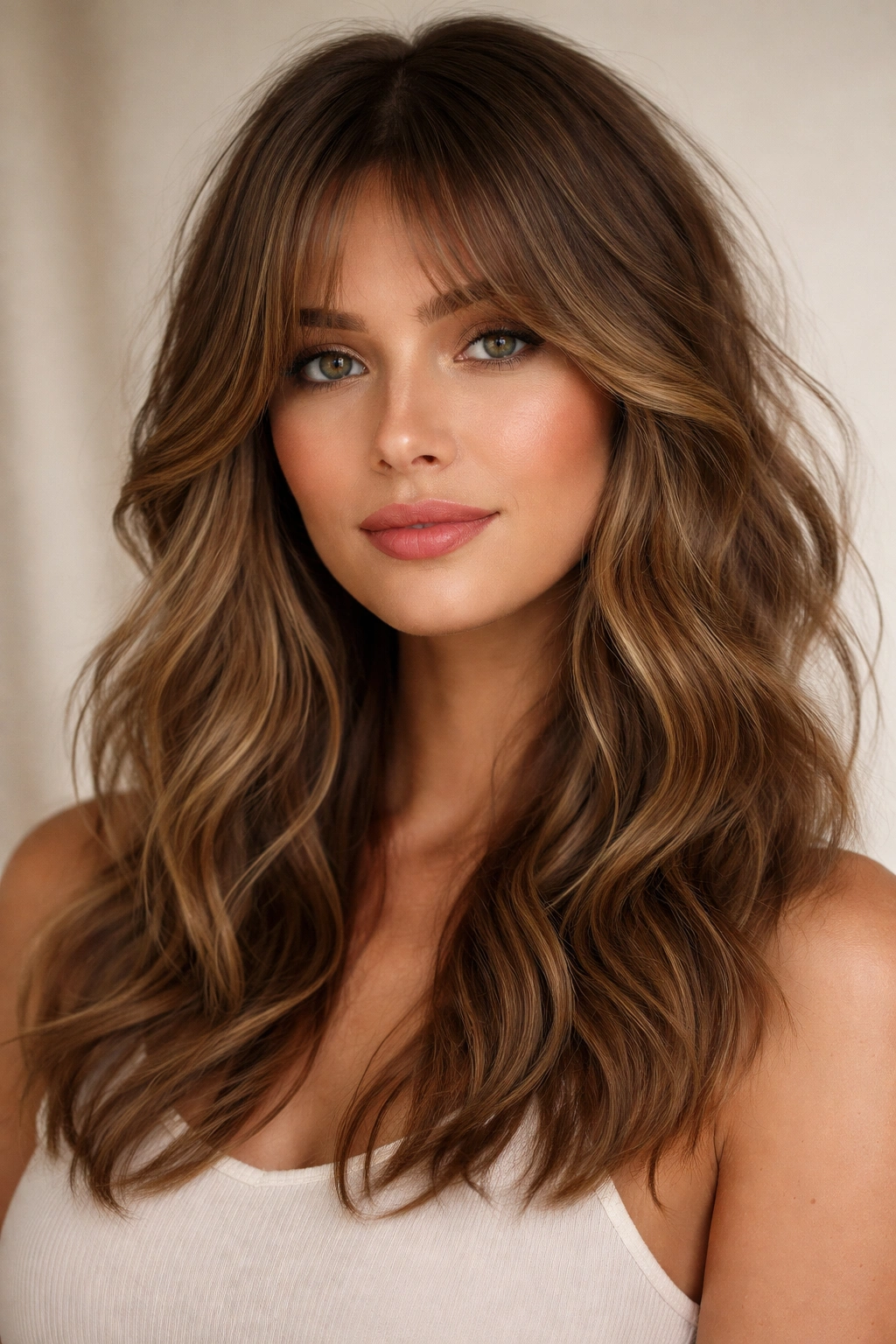
Curtain bangs—those soft, face-framing pieces that fall away from the center—have become ubiquitous because they genuinely flatter most face shapes and work with nearly every hair type. Paired with textured, tousled waves throughout the length, this combination delivers movement, softness, and a deliberately undone quality that’s both modern and romantic. The waves don’t need to be perfect; in fact, imperfection is the point.
Why This Works for Everyone
Curtain bangs are universally flattering because they frame the face without covering it completely and create softness that suits different face shapes. Textured waves add movement that photographs beautifully and translates as effortlessness.
Creating the Look
- Soft, choppy layers throughout to encourage wave and movement
- Curtain bangs that start at the cheekbone and fall away toward the back
- Textured ends (not blunt) to emphasize the intentional imperfection
- Works best with some natural texture or the willingness to style waves regularly
Pro tip: This look is easiest to maintain if your hair has some natural wave texture. If you have straight hair, you’ll need to style with a curling iron or waves product most days, which is worth knowing before committing to the cut.
6. One-Length Medium Cut with Micro Bangs
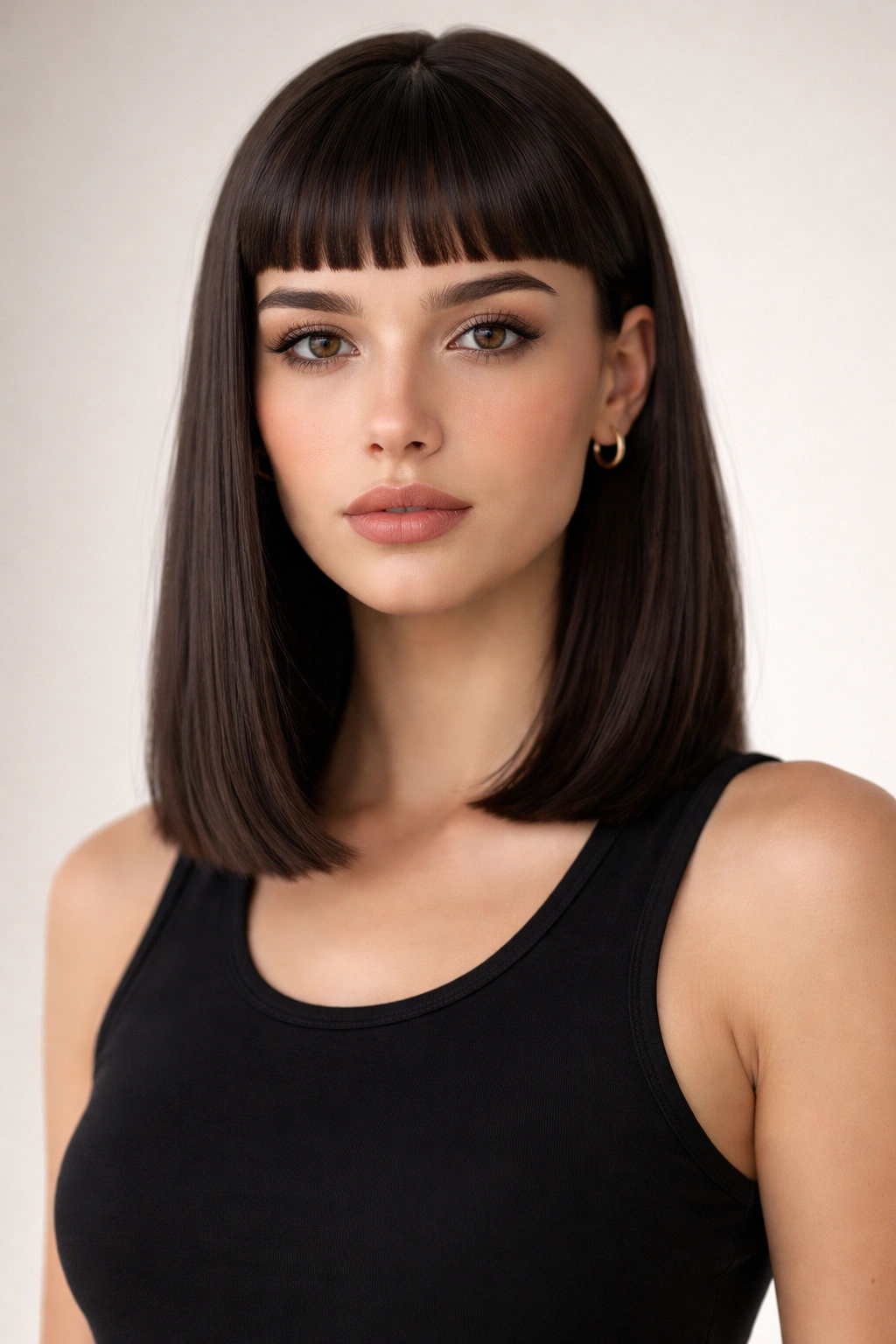
Micro bangs—those short, trendy bangs that sit well above the eyebrows—work surprisingly well with medium-length, one-length cuts for a fashion-forward look that’s simultaneously playful and deliberate. The one-length approach keeps things clean and simple, while the micro bangs add personality and visual interest. This style works best on straighter hair textures and with more angular face shapes, but it’s undeniably striking.
Why This Works for Everyone
The combination of simplicity and boldness appeals to different aesthetics. The clean lines are flattering on angular faces, and the micro bangs add youthfulness without looking juvenile.
Key Execution Details
- Precise one-length cut (typically chin to collarbone)
- Micro bangs cut blunt and short, typically ending above the eyebrows
- Minimal to no layers (the simplicity is the point)
- Works best with straight or slightly wavy hair
Worth knowing: Micro bangs require precise styling and relatively frequent trims to stay sharp. If you have curly hair or hair that doesn’t dry smoothly, this style will be frustrating to maintain.
7. Soft Waves with Side-Swept Bangs
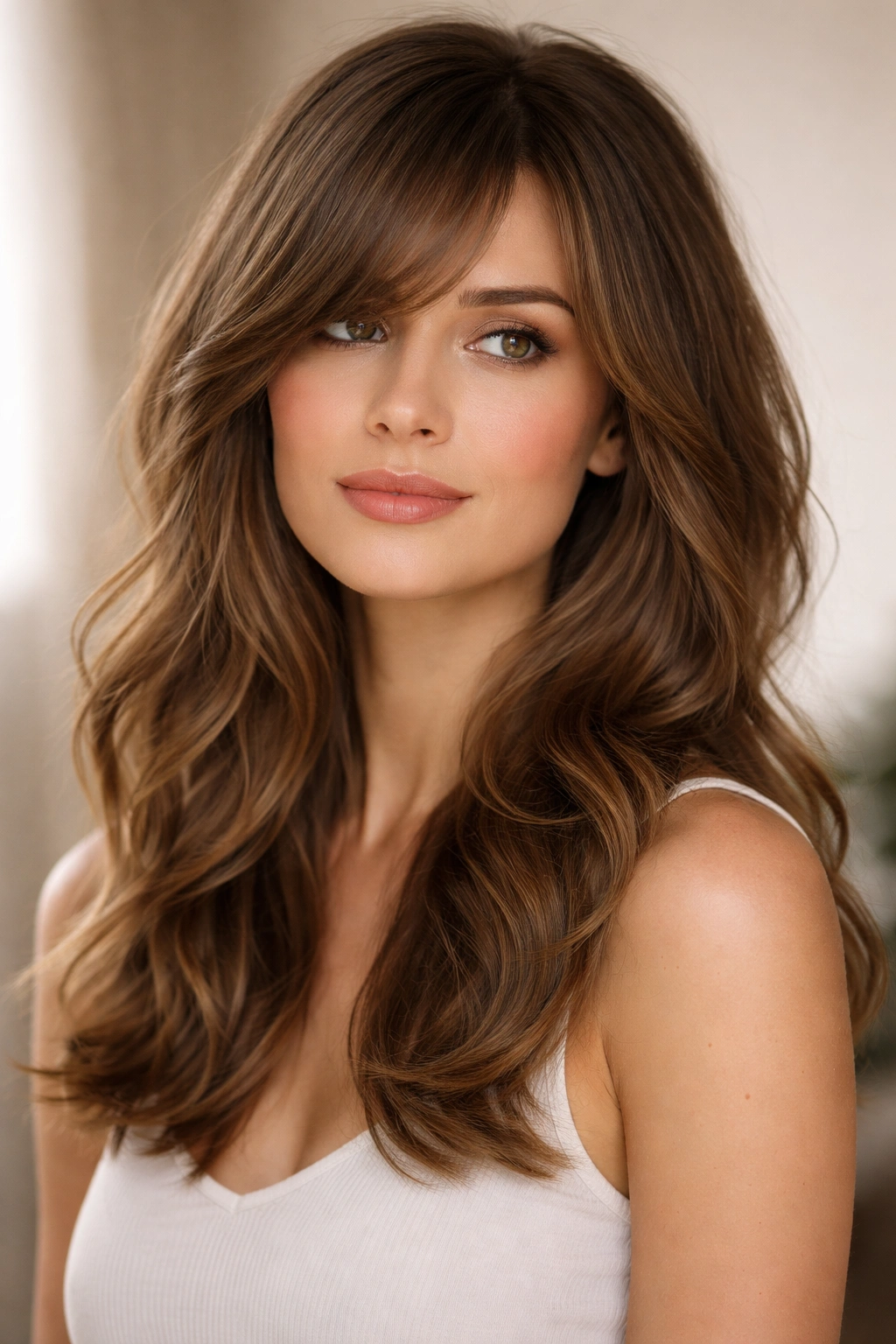
A softer version of the curtain bang is the side-swept bang—a longer, fuller bang that sweeps to one side and integrates into the rest of the hair. Combined with soft waves throughout, this style is romantic, accessible, and works across different hair textures and face shapes. It’s the option if you want bangs that feel less edgy than curtain bangs but still frame the face in a flattering way.
Why This Works for Everyone
Side-swept bangs are endlessly flattering because they elongate the face, work with different face shapes, and create softness without requiring a dramatic styling commitment. Paired with waves, the overall effect is polished yet approachable.
How to Get the Look
- Side-swept bangs that blend into longer layers on one side
- Soft, loose waves throughout using a large-barrel curling iron or styling wand
- Layers throughout the length to encourage wave and movement
- Works beautifully on straight, wavy, and curly hair with appropriate styling
Insider note: This style is forgiving because it’s designed to move and shift slightly. You don’t need salon-perfect waves every day—touchable, imperfect waves actually enhance the romantic quality.
8. Blunt Bangs with Shoulder-Length Straight Hair
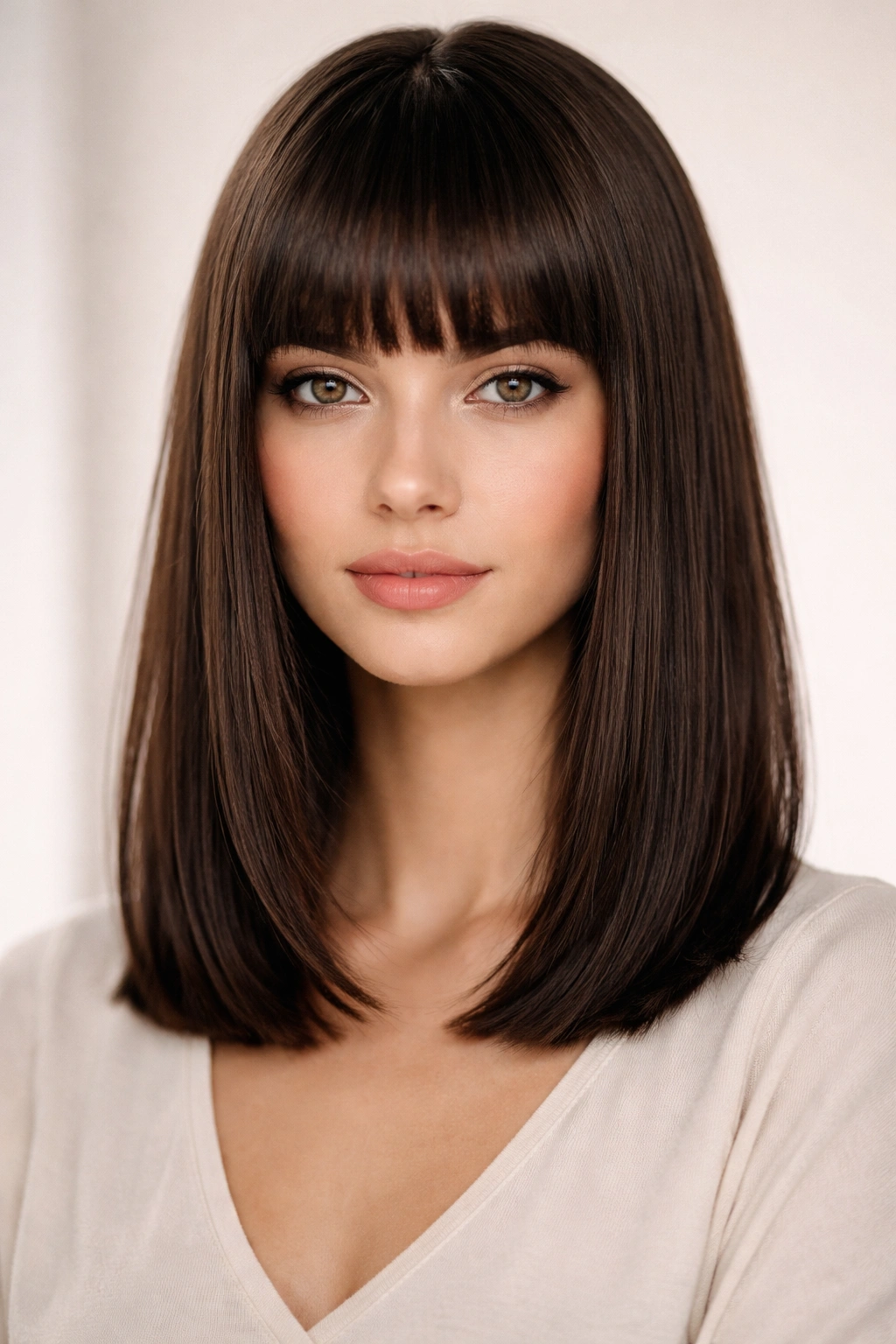
Blunt bangs—those straight-across, precise bangs that sit just above the eyebrows—are having a major moment, and for good reason: they’re bold, modern, and surprisingly flattering when paired with medium-length hair. Combined with a straight cut and minimal layers, blunt bangs create a strong visual statement that’s both chic and youthful. This look works best on straighter hair types and more angular face shapes, but it’s incredibly striking.
Why This Works for Everyone
Blunt bangs draw attention to the eyes and create a defined frame for the face. They’re modern and fashion-forward without being trendy in a way that will feel dated quickly.
Creating the Look
- Blunt bangs cut precisely, typically sitting just above the eyebrows
- Shoulder-length straight cut with minimal layers
- Works best with straight or nearly-straight hair
- Pairs well with a center part for maximum impact
Real talk: Blunt bangs require regular maintenance—you’ll likely need trims every 3-4 weeks to keep them looking sharp. They also require straightening if you have any natural wave or curl. This is a commitment, but the payoff is a genuinely striking look.
9. Layered Shag with Colored Highlights
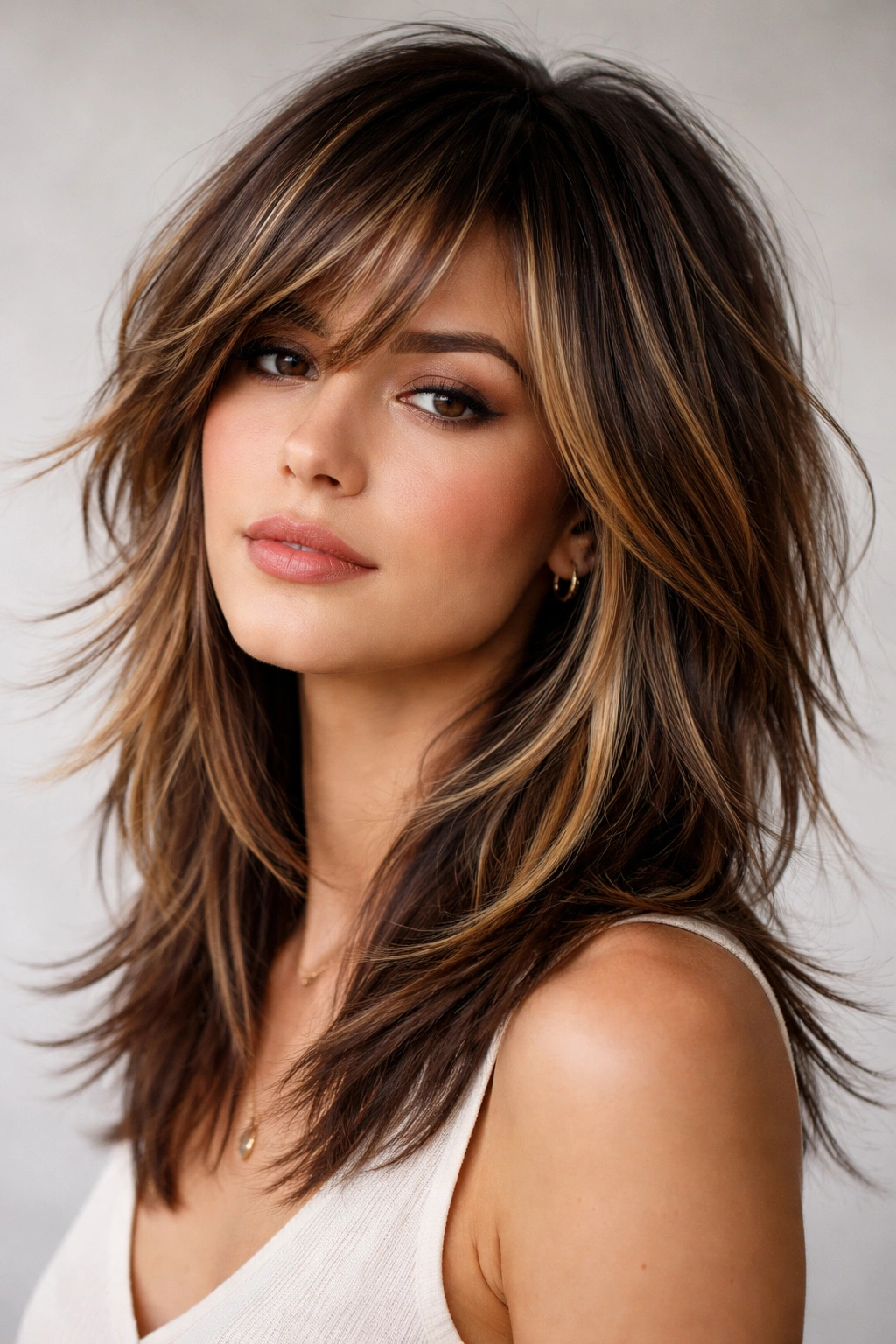
A modern shag becomes even more dynamic when you add dimension through color—whether that’s subtle highlights, dimension painting, or more intentional color blocking. The textured movement of the shag works beautifully with color variation because the layers catch light differently, making color changes visually interesting. This combination is edgy, contemporary, and surprisingly wearable for everyday life.
Why This Works for Everyone
Color adds dimension that’s flattering across different skin tones and face shapes. The shag’s texture means the color doesn’t sit flat; it moves and catches light constantly.
Executing This Style
- Choppy, textured layers throughout
- Color dimension (highlights, balayage, or dimensional coloring) placed to enhance the movement
- Longer pieces in front for framing
- Best with some natural or styled texture
Pro tip: The combination of a shag cut and dimensional color requires some styling commitment—you’ll get the best results if you’re willing to style with product (texturizing spray, cream, or wax) several times a week.
10. Bouncy Layers with Volume at the Crown
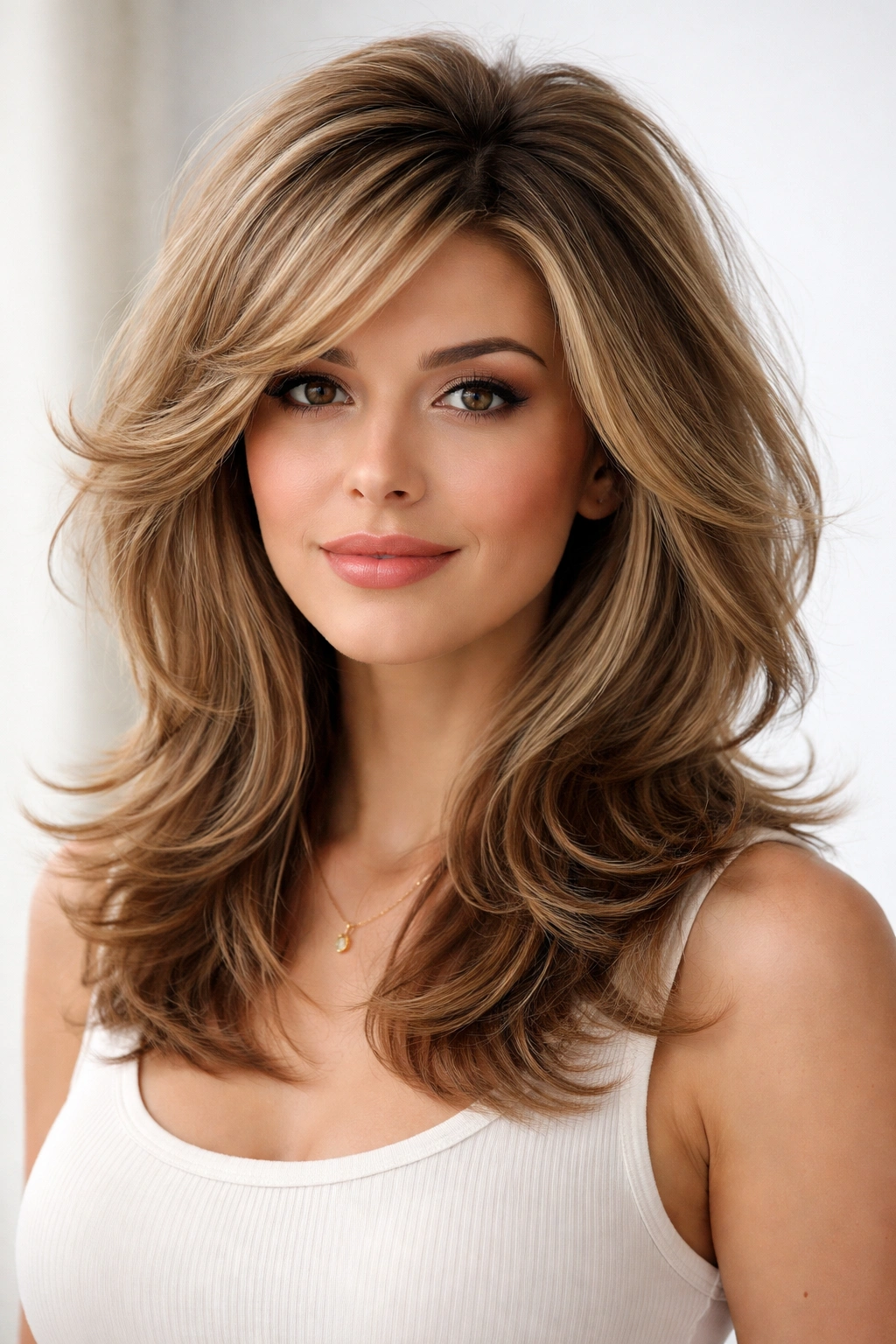
If your main goal is maximum volume and movement, ask your stylist for bouncy layers specifically designed to lift at the crown and create fullness throughout. This approach involves shorter layers on top (for lift) and longer layers underneath (to maintain length), creating what’s often called a “choppy” or “textured” look. It’s ideal if you have fine or flat hair that needs help looking fuller.
Why This Works for Everyone
Bouncy, voluminous layers flatter fine hair by creating the illusion of thickness, and they work beautifully with wavy or curly hair because the texture enhances the movement. Even thick, straight hair gets visual interest from this approach.
What to Discuss with Your Stylist
- Shorter layers focused on the crown for lift
- Longer layers below to maintain length and movement
- Textured, choppy ends (not blunt) to encourage bounce
- Consider requesting layers that work with your hair’s natural texture
Worth knowing: This style benefits from a volumizing product (mousse, spray, or cream) applied to damp hair before blow-drying. The investment in product is worth it if you want to maximize the voluminous effect.
11. Sleek Straight Hair with Subtle Face-Framing
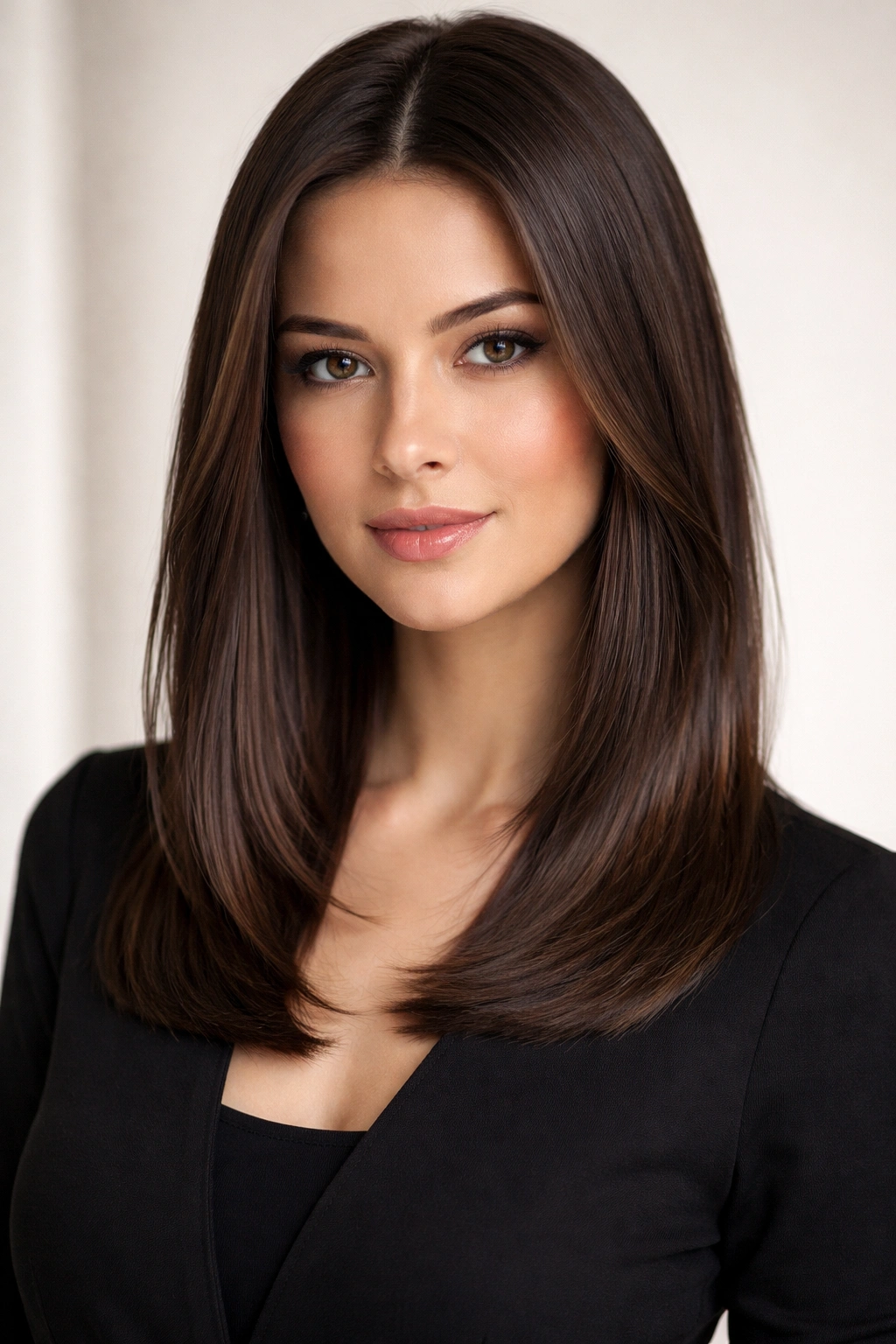
If you prefer the polished look of straight hair without going too short, ask for a medium-length cut with subtle, almost invisible face-framing layers. This approach keeps the overall length and weight of the hair while creating just enough dimension that the style feels intentional rather than shapeless. Straight hair with subtle face-framing is timeless and works in any environment.
Why This Works for Everyone
The subtlety of invisible layers means this style works for anyone uncomfortable with dramatic changes. Straight hair is polished and professional, and soft face-framing adds femininity without compromising sophistication.
How to Style It
- Blow-dry straight with a smoothing serum or light oil
- Use a flat iron if you have natural wave
- Center part or side part both work beautifully
- Minimal effort required for daily wear
Insider note: This is the style to choose if you want low-maintenance but still polished. You’re not fighting texture; you’re embracing the sleekness of straight hair.
12. Textured Pixie-Bob Hybrid
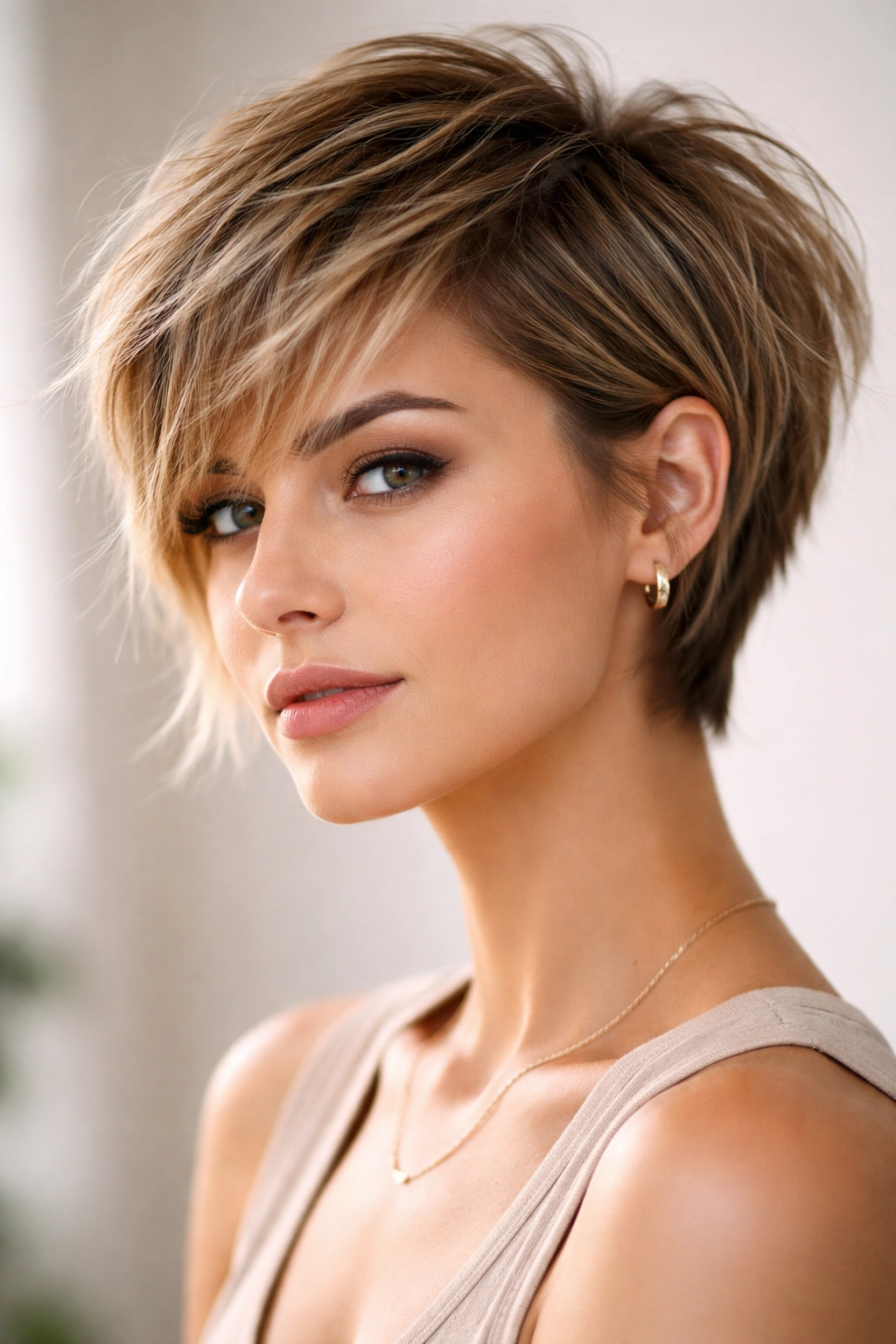
A pixie-bob is a hybrid between a pixie cut and a bob—it has shorter, textured layers on top with longer pieces in front that fall around the jaw. This style is edgy and modern while still maintaining enough length to feel like a “real” haircut. It’s perfect for anyone wanting something more dramatic than a standard bob but less extreme than a full pixie cut.
Why This Works for Everyone
The hybrid length works on different face shapes because the longer pieces in front frame the face while the shorter top adds attitude. It’s androgynous enough to suit anyone regardless of aesthetic.
Key Styling Elements
- Textured, choppy layers on top and throughout
- Longer pieces in front (at least jaw-length)
- Short, textured back for definition
- Works best with some natural texture or willingness to style with product
Pro tip: This style pairs beautifully with bold color or darker, rich tones. The texture and movement make any color look dimensional and interesting.
13. Soft Curls Throughout with Defined Texture
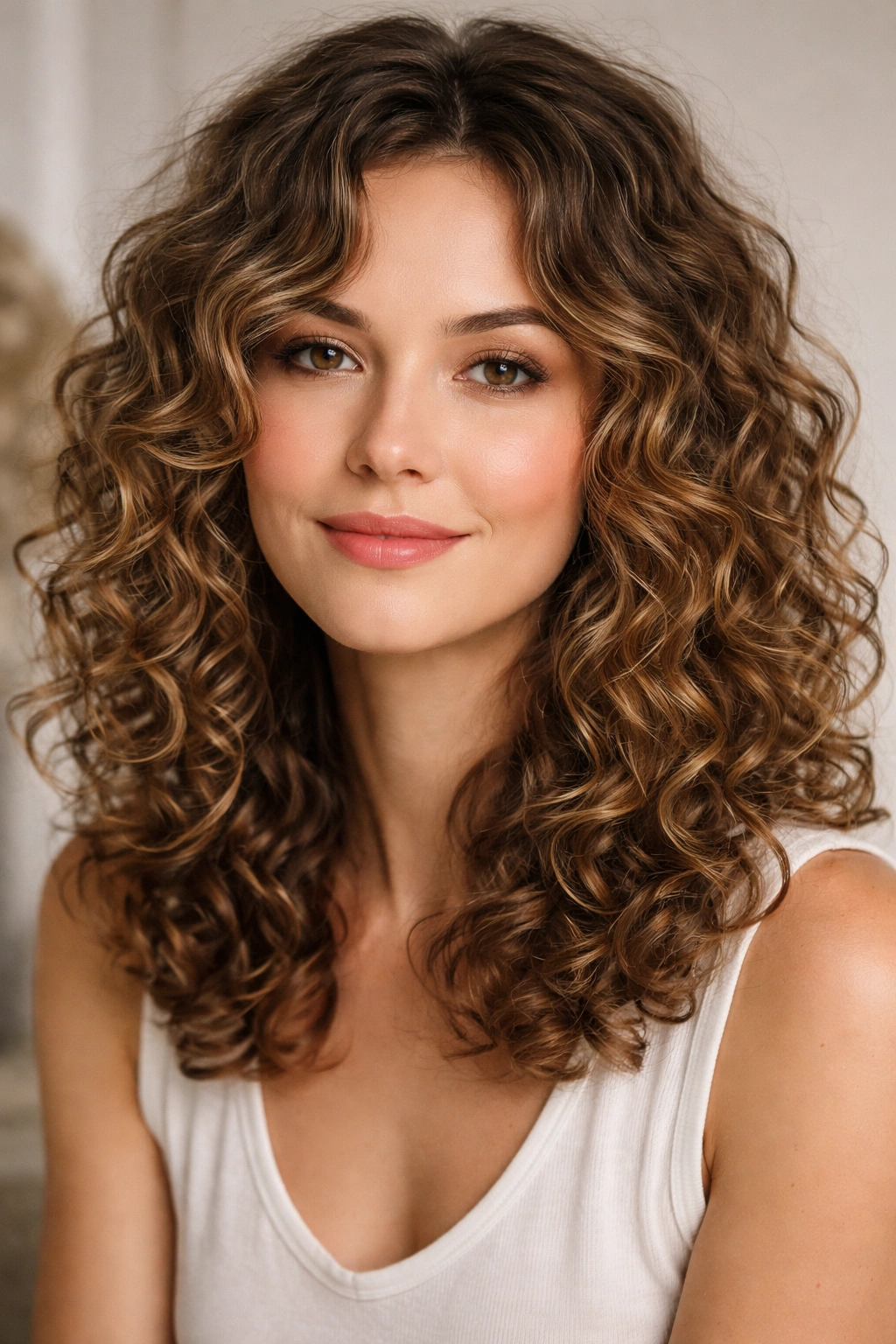
If you have naturally curly or textured hair, a cut designed specifically for your curl pattern—with layers that work with your texture rather than against it—is transformative. A medium-length cut with defined texture celebrates your natural curls and creates shape without requiring you to fight your hair’s natural tendencies. This is the style that says “your hair is beautiful as it is.”
Why This Works for Everyone
Curly hair deserves a cut designed for curls, and when executed properly, it’s stunning. Layers in curly hair create shape, movement, and visual interest without needing to be blow-dried straight.
What to Request
- Cut specifically designed for your curl pattern (the stylist should cut your hair while it’s curly and dry)
- Layers that enhance your curl definition and create shape
- A shape that works with your natural texture, not against it
- Regular cuts (every 6-8 weeks) to keep the curl pattern looking fresh
Real talk: Finding a stylist who understands curly hair is crucial for this style. Not every stylist is trained in curly-cutting techniques, so ask specifically whether they cut curly hair regularly before booking.
14. Wavy Medium Length with Textured Bangs
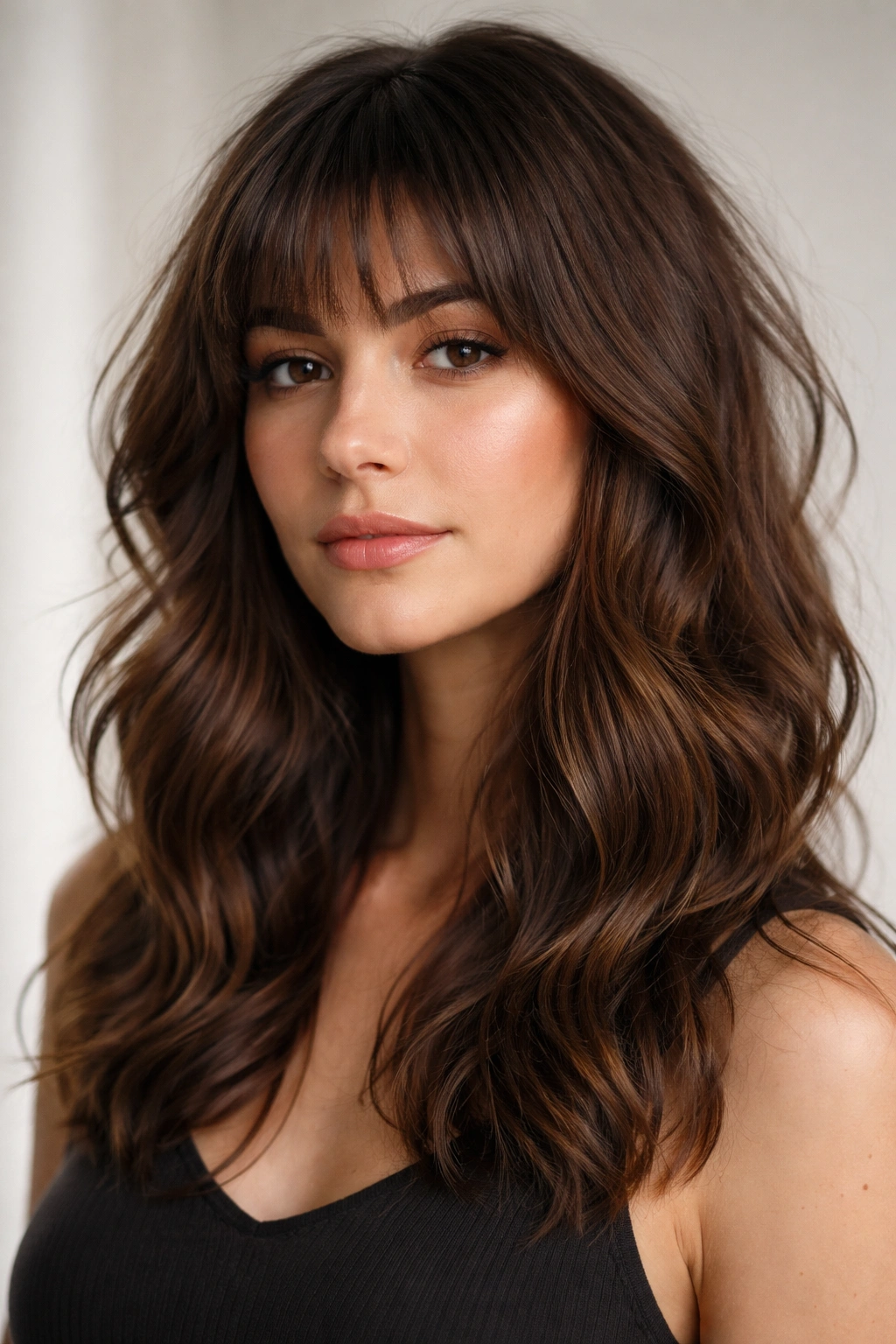
Textured bangs are the evolution of traditional bangs—instead of a blunt or smooth line, they’re choppy and textured to match the rest of the hair’s movement. Paired with medium-length wavy hair, this approach is romantic, modern, and surprisingly low-maintenance because the texture means you’re not aiming for perfect precision.
Why This Works for Everyone
Textured bangs are forgiving because they’re designed to move and shift. They work on different hair types and face shapes because the imperfection is intentional.
Creating the Effect
- Textured, choppy bangs that blend into the longer layers
- Soft waves throughout created with a curling wand or hot tools
- Layers to encourage movement and texture
- Works beautifully on naturally wavy or curly hair
Pro tip: This style is perfect if you want bangs but don’t want to commit to the daily precision required by blunt or side-swept bangs. Textured bangs are genuinely forgiving about styling imperfection.
15. Clean-Girl Aesthetic with Sleek Pulls
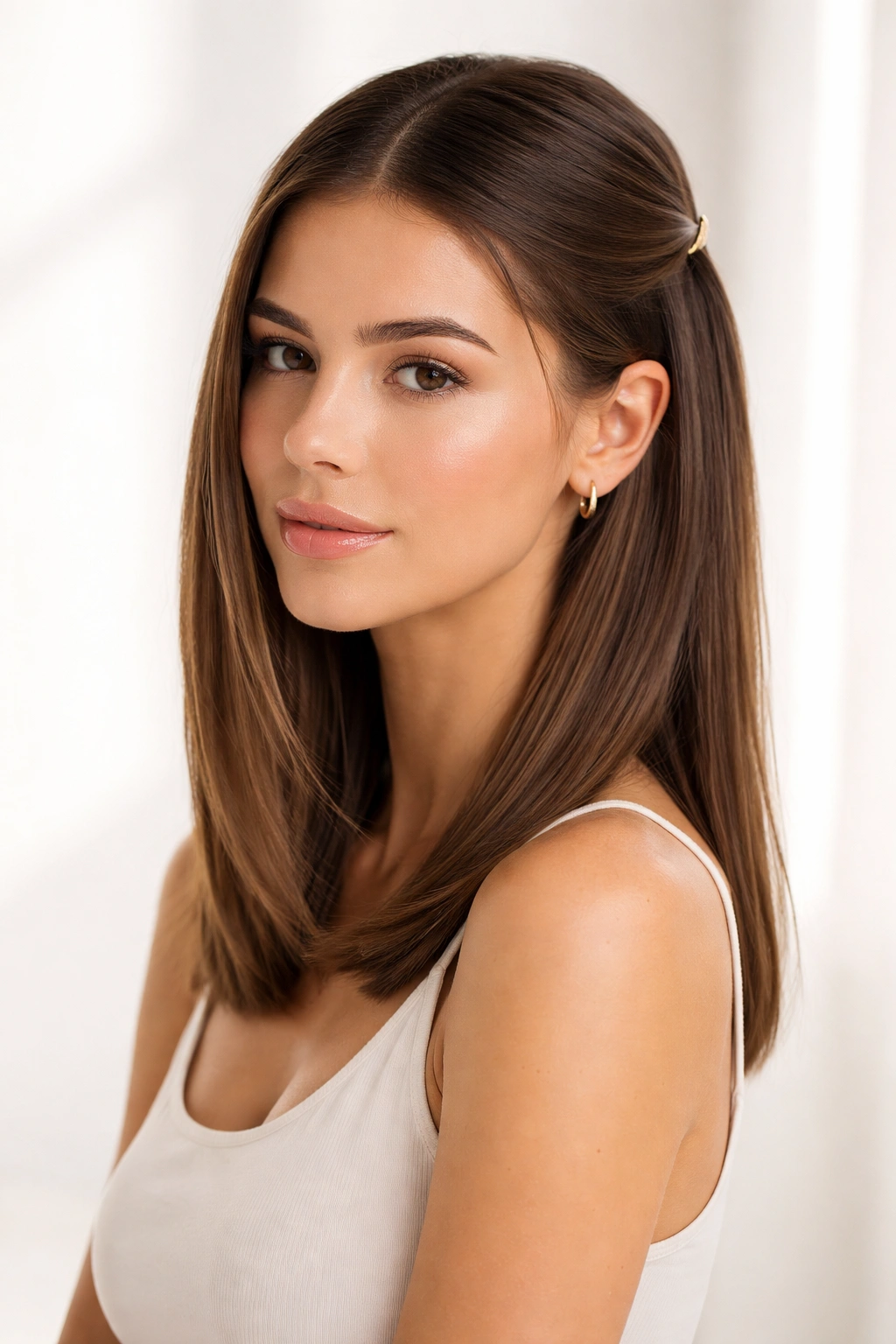
The “clean girl” aesthetic—minimal, polished, effortlessly sophisticated—translates beautifully into medium-length hair styled with sleek, understated pulls. This means the hair is mostly down and straight but with subtle styling touches like a soft clip or a barely-there twist that shows intentionality. It’s the opposite of “trying too hard,” which is precisely why it feels so contemporary and appealing.
Why This Works for Everyone
The clean-girl aesthetic is universally flattering because it’s about minimalism and grooming rather than dramatic style. It works on any hair type when styled with appropriate tools and products.
How to Execute It
- Medium-length hair cut in a simple shape (one-length or very subtle layers)
- Sleek straight hair using a smoothing product and flat iron
- Minimal styling: a claw clip, a soft twist, or a barely-there half-up
- Focus on healthy, shiny hair rather than dramatic style
- Classic colors (your natural shade or subtle dimension) rather than bold color
Insider note: This aesthetic requires really good hair care because you’re not hiding anything with texture or styling tricks. Invest in quality shampoo, conditioner, and shine products.
16. Choppy Layers with Disconnected Styling
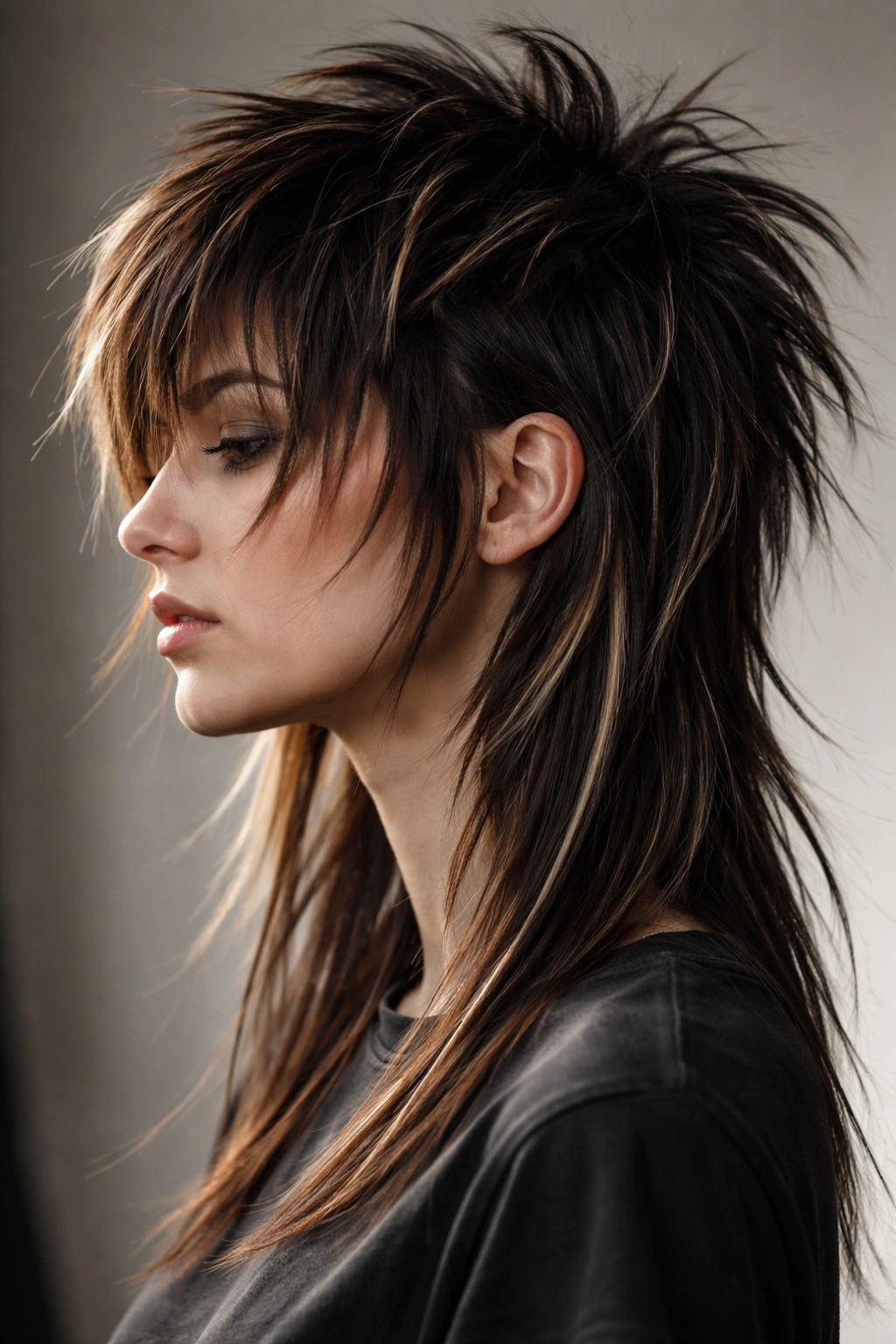
A “disconnected” style means the shorter pieces on top don’t blend into the longer pieces below—there’s visible separation and definition between different lengths. This creates a more avant-garde, fashion-forward look that’s perfect if you want something edgier than a typical layered cut. The visual separation makes the style feel intentional and deliberate.
Why This Works for Everyone
Disconnected styling works best on angular face shapes and with straight or wavy hair, but it’s undeniably striking. If you want a style that commands attention and says something about your aesthetic, this is it.
Key Elements
- Very short, textured layers on top
- Noticeably longer pieces below that don’t blend
- Sharp, visible lines between different lengths
- Works best with straight or wavy hair that shows definition clearly
Real talk: This is a bold style that requires confidence to wear well. It’s also relatively high-maintenance because the separation means you need to show the intentional structure through styling or frequent trims.
17. Soft Undercut with Length on Top
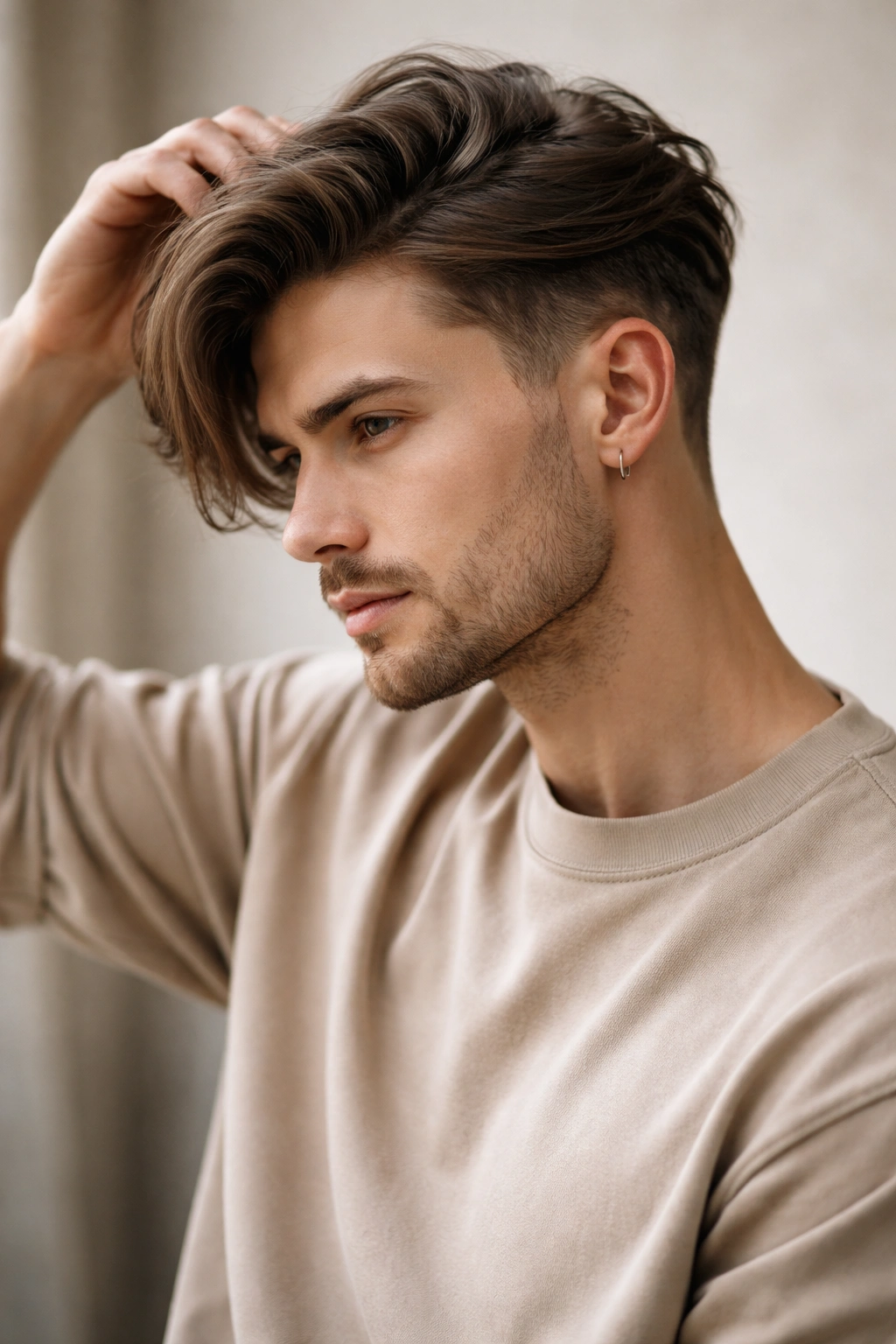
An undercut—where the hair underneath (typically at the nape or sides) is cut much shorter than the top—adds edge to medium-length hair without requiring you to cut the top short. This hidden-until-it-moves style is perfect for anyone wanting something edgy and modern but not ready to commit to visible short hair. When your hair is down, it looks like a standard medium-length cut; when you pull it up or tuck it, the undercut is revealed.
Why This Works for Everyone
The beauty of an undercut is that it’s as subtle or visible as you want. You can keep the longer top layers to frame your face while the shorter underneath adds modern attitude and practicality (less bulk at the nape, better air circulation in warm weather).
Styling Variations
- Wear it down to look like a standard medium-length cut
- Pull the top into a high ponytail or bun to show the undercut
- Tuck one side behind your ear to reveal the undercut on that side
- Style with volume on top and sleekness underneath for contrast
Pro tip: An undercut grows out gradually, so the upkeep is less intense than styles where you need precision throughout. You can go 6-8 weeks between trims without the style looking neglected.
18. Soft, Romantic Waves with Movement Throughout
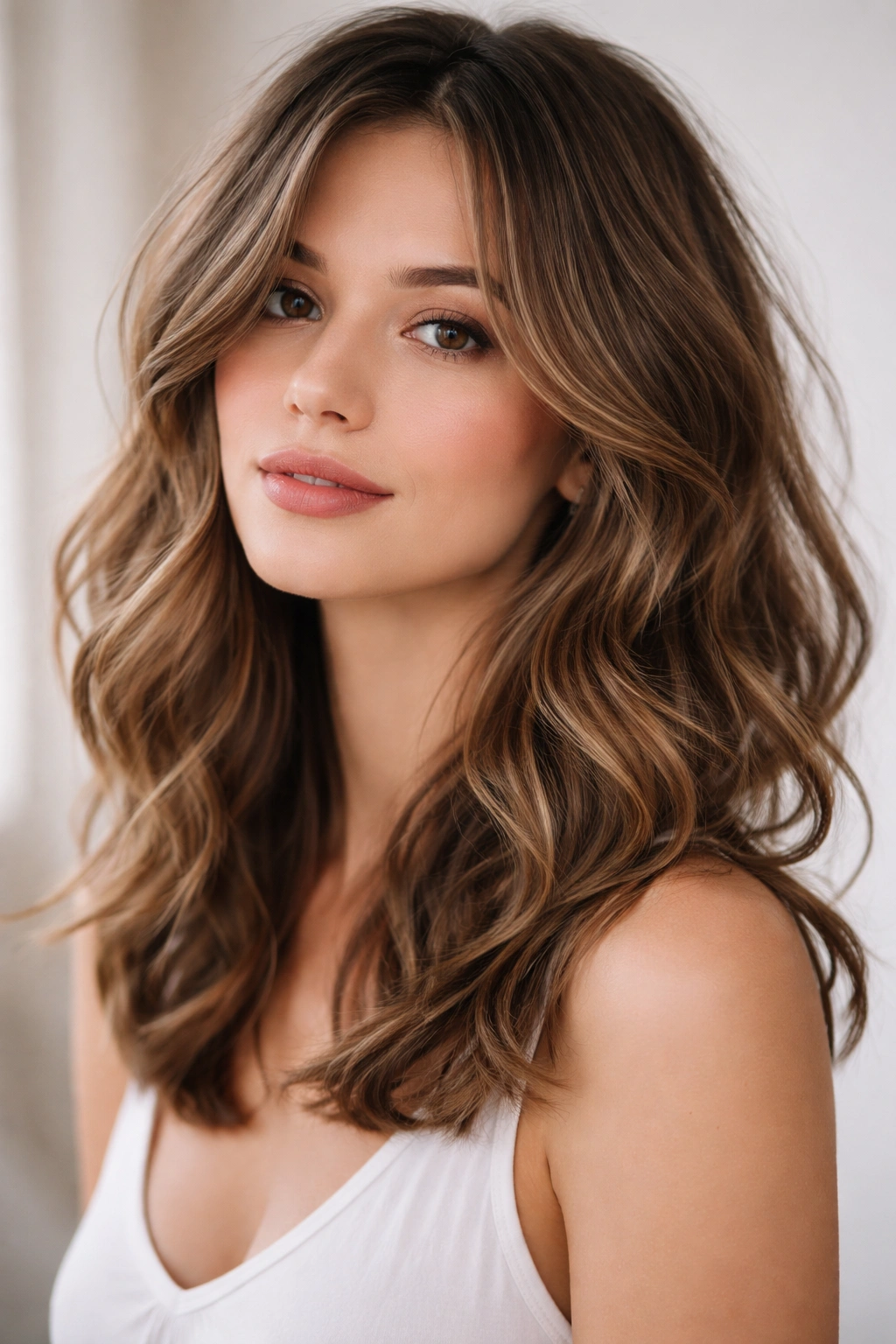
Pure, simple romantic waves—created with a large-barrel curling iron or waving iron and styled with texture product—are genuinely flattering and surprisingly wearable for daily life. This isn’t about perfectly formed ringlets; it’s about soft, touchable waves that catch light and create movement. Paired with minimal styling and layers, this approach works across different hair types.
Why This Works for Everyone
Soft waves are inherently flattering because they create movement that photographs beautifully and feels feminine without being overly styled. The waves work on different face shapes because the movement is what matters, not a specific structure.
How to Create It
- Layers throughout the medium-length cut to encourage wave
- Use a large-barrel waving iron (1.5 inches or wider) or curling iron
- Apply texture product (sea salt spray, cream, or texturizing spray) before waving
- Gently tousle waves with your fingers rather than leaving them perfectly formed
- Waves look best with some movement and imperfection
Worth knowing: This style requires styling effort most days, but it’s worth it because the waves genuinely flatter most faces and hair types. The key is accepting that imperfection is the point.
19. Angled Cut with Longer Pieces in Front
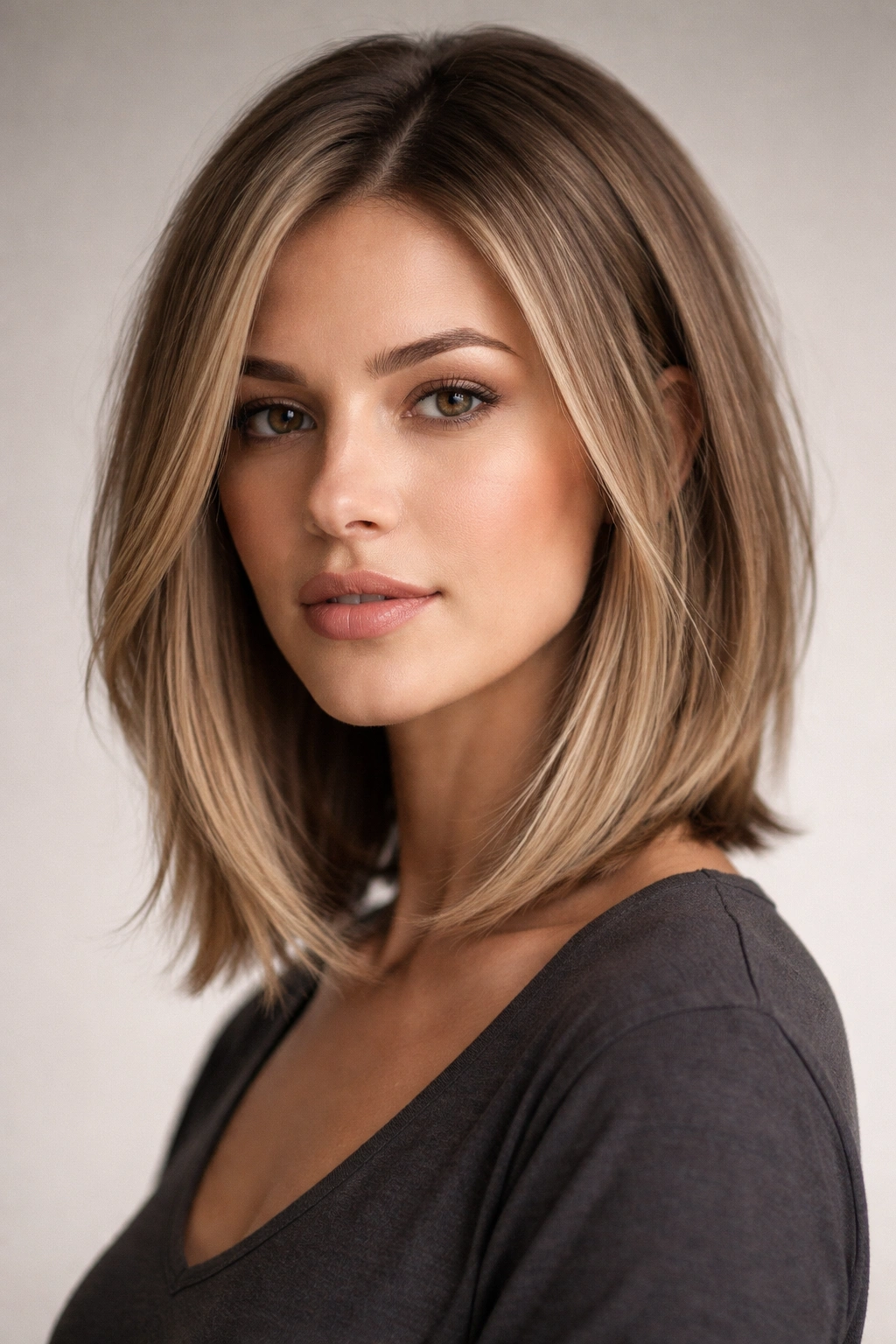
An angled cut—where the front is noticeably longer than the back—is chic and modern while creating flattering movement around the face. The longer pieces in front frame the face and create a soft line, while the shorter back adds shape and dimension. This is a cut with personality that still reads as wearable and sophisticated.
Why This Works for Everyone
Angled cuts work beautifully on different face shapes because the longer pieces in front provide customizable framing. The angle creates movement that’s flattering without requiring constant styling.
Executing the Style
- Front pieces at least chin-length (or longer, depending on face shape)
- Noticeably shorter back, creating a gradual or dramatic angle depending on preference
- Layers throughout to enhance the angle and create movement
- Works on straight, wavy, and curly hair
Insider note: An angled cut shows your stylist’s skill level—a poorly executed angle can look awkward, but a well-executed one is transformative. Make sure you’re working with a stylist experienced with this particular cut.
20. Tousled Texture with Loose Waves and Side Part
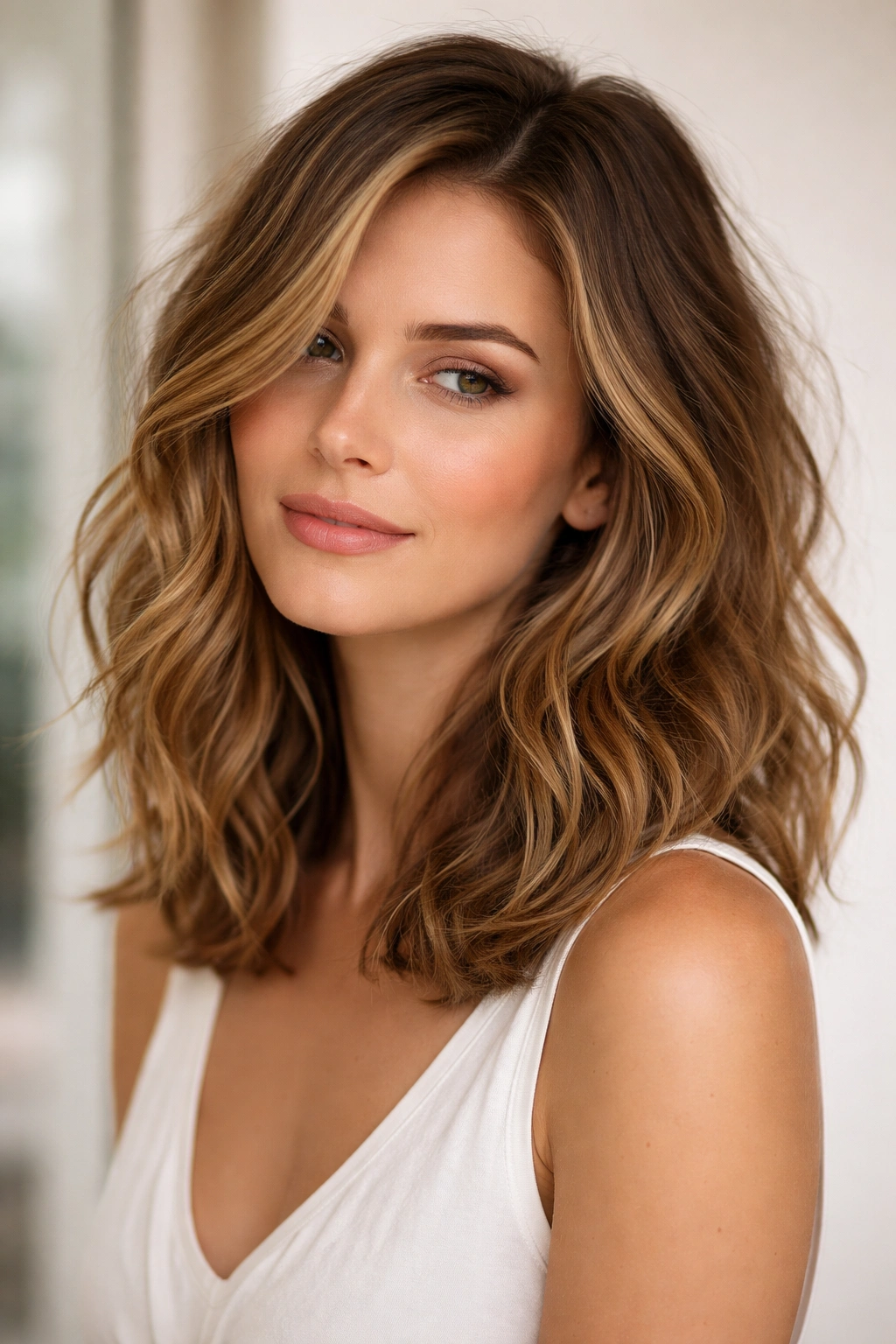
This style is effortlessly undone—tousled waves created with minimal effort, a loose side part, and just enough texture product to show intentional styling without looking overdone. It’s the hairstyle equivalent of “I didn’t try but somehow look great,” which is precisely why it’s so appealing and consistently wearable.
Why This Works for Everyone
The beauty of this style is in its imperfection. Nobody expects it to be “done,” which means it works across different hair types and face shapes. Fine hair can look fuller with texture product, while thicker hair gets tamed by the intentional tousling.
Creating the Look
- Medium-length cut with layers throughout
- Side part that creates movement and asymmetry
- Loose waves created with a curling wand or by enhancing natural texture
- Texture product applied to enhance the tousled effect
- Styling that celebrates imperfection rather than aiming for precision
Pro tip: This style is perfect if you want something that looks good even when you’re tired or haven’t had time for full styling. The tousled quality means minor imperfections actually enhance the overall effect.
21. Volume-Boosting Layers with Textured Ends
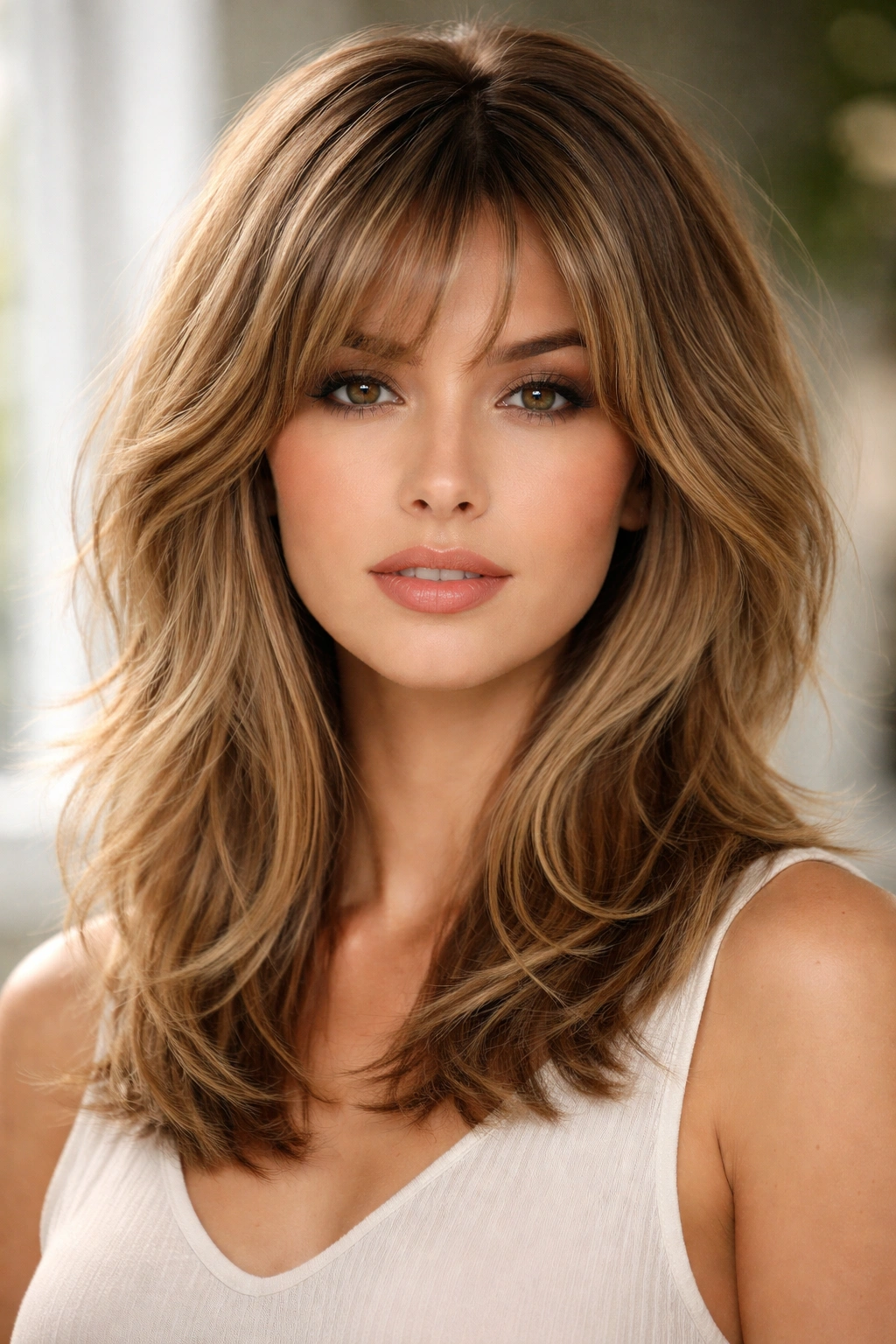
If you’re working with fine hair that struggles with flatness, ask for volume-boosting layers specifically designed to create the illusion of fullness. This involves shorter layers throughout (especially at the crown) and textured, choppy ends that catch light and create visual fullness. The texture means you’re not fighting against your hair’s natural tendencies; you’re working with them.
Why This Works for Everyone
Textured layers create the visual illusion of volume even on fine or thin hair. The texture means the style has dimension without heaviness, which is the perfect balance for finer hair types.
Key Details
- Shorter layers focused on crown for lift
- Choppy, textured ends throughout (never blunt)
- Layers that work with fine hair’s natural movement patterns
- Styling with volumizing products for maximum effect
Real talk: This style is best paired with a volumizing mousse or spray applied to damp roots before blow-drying. The styling product is an essential part of making the style work.
22. Blunt Ends with Subtle Dimension
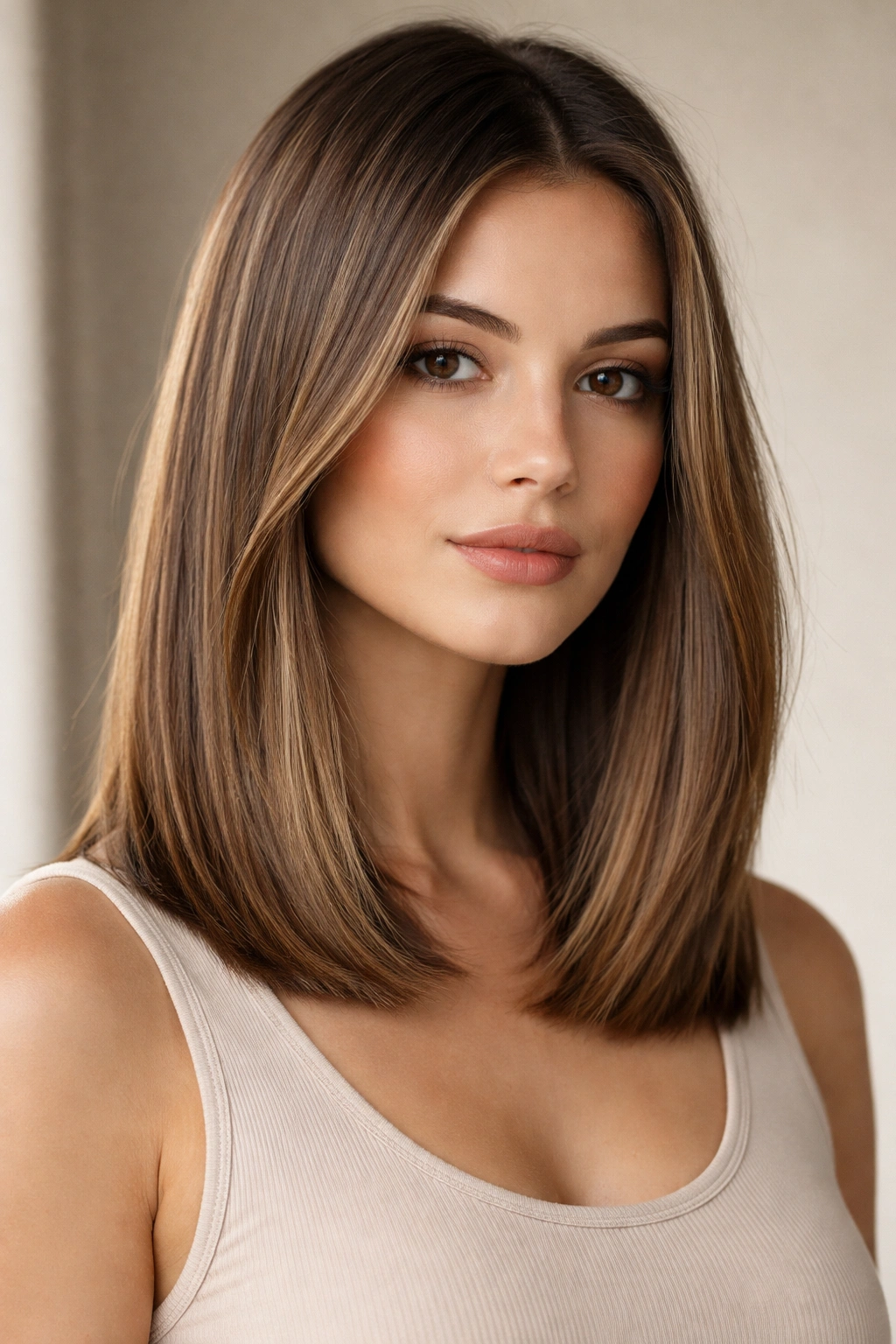
A medium-length cut with blunt or near-blunt ends and subtle dimensional coloring is polished, modern, and strikes a perfect balance between simplicity and visual interest. The blunt ends are clean and graphic, while the subtle color dimension (whether highlights, balayage, or dimensional toning) keeps it from feeling too severe. This is sophistication without overdoing it.
Why This Works for Everyone
Blunt ends work on straighter hair types and create a defined, intentional look. Subtle color dimension adds interest that flatters different skin tones and face shapes without being high-maintenance.
How to Execute It
- Precise blunt or nearly-blunt ends (cut straight across or with minimal texture)
- Minimal layers (the simplicity is the point)
- Subtle color dimension placed strategically (typically face-framing or overall dimension)
- Works best on straight or nearly-straight hair
- Professional styling required for full effect
Insider note: This style shows hair quality clearly—there’s nowhere for the hair to hide. Make sure you’re committed to good hair care and regular trims (every 6-8 weeks) to keep the blunt ends looking sharp.
23. Lived-In Texture with Movement and Dimension
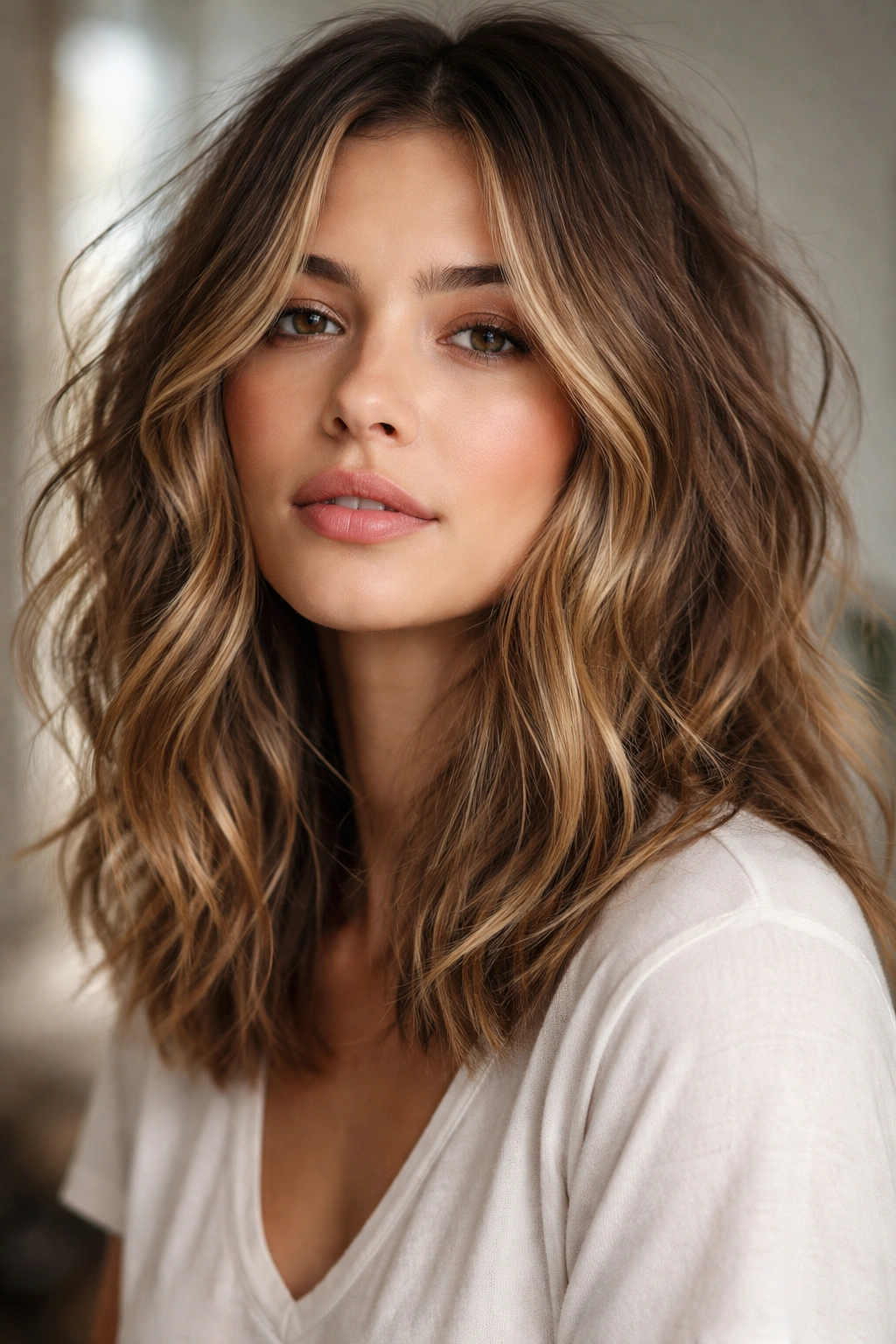
A “lived-in” texture is intentionally imperfect—textured waves, some frizz, color that moves and catches light unevenly—creating a style that looks effortlessly beautiful rather than salon-perfect. This approach celebrates your hair’s natural texture rather than fighting it, and it’s infinitely more forgiving than styles requiring perfect precision.
Why This Works for Everyone
The lived-in aesthetic works because it embraces imperfection. It works on different hair types and face shapes because the goal is texture and movement, not a specific shape. Most importantly, it doesn’t require salon-perfect styling every day.
Creating the Effect
- Layers designed to enhance your natural texture
- Color that’s slightly dimensional rather than one-dimensional
- Styling with texture products that enhance natural waves or curls
- Acceptance of minor frizz and imperfection as part of the aesthetic
Pro tip: This style is perfect if you have naturally wavy or curly hair or if you’re not willing to commit to daily heat styling. The whole point is working with your hair, not against it.
24. Sleek Undercut Layers with Top Knot Styling
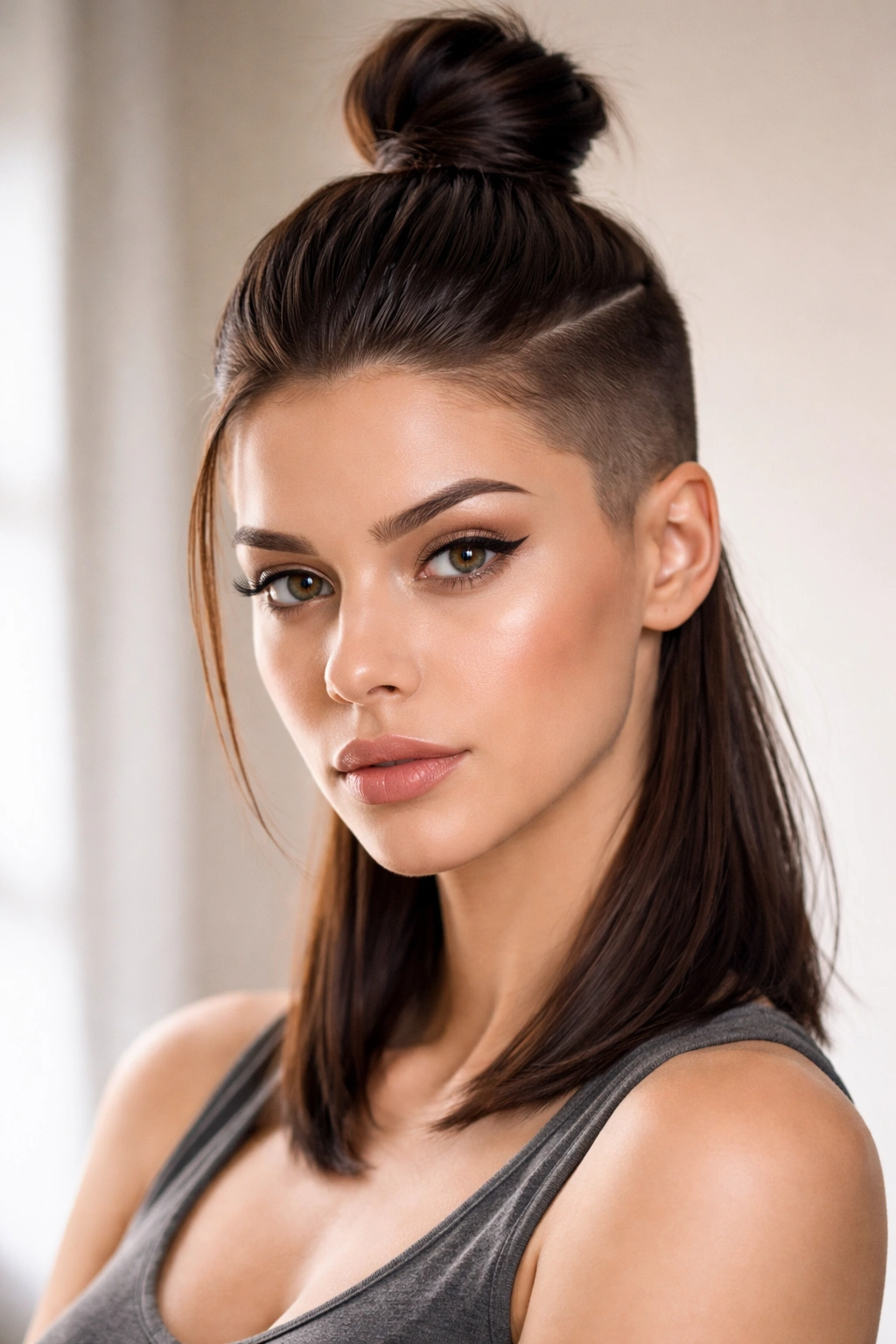
Combining an undercut with sleek layers on top creates a style that’s versatile—wear it down for a standard medium-length look, or style the top into a sleek high bun or top knot to show the undercut and add drama. This approach gives you two distinct styles in one cut, which is practical and visually interesting.
Why This Works for Everyone
The versatility is the appeal—you get a style that adapts to different occasions and moods. The sleek styling keeps it polished and modern rather than edgy.
Styling Options
- Wear down with the top layers textured and the underneath sleek
- Style the top into a high, sleek bun or knot
- Create contrast by keeping the top textured while showing the short undercut
- Works best on straight or wavy hair where you can create clear definition
Worth knowing: This style requires styling products (smoothing serum, texture spray, or cream) to achieve the contrast between the top and underneath. The payoff is a style that’s genuinely versatile.
25. Modern Shag with Face-Framing and Dimension
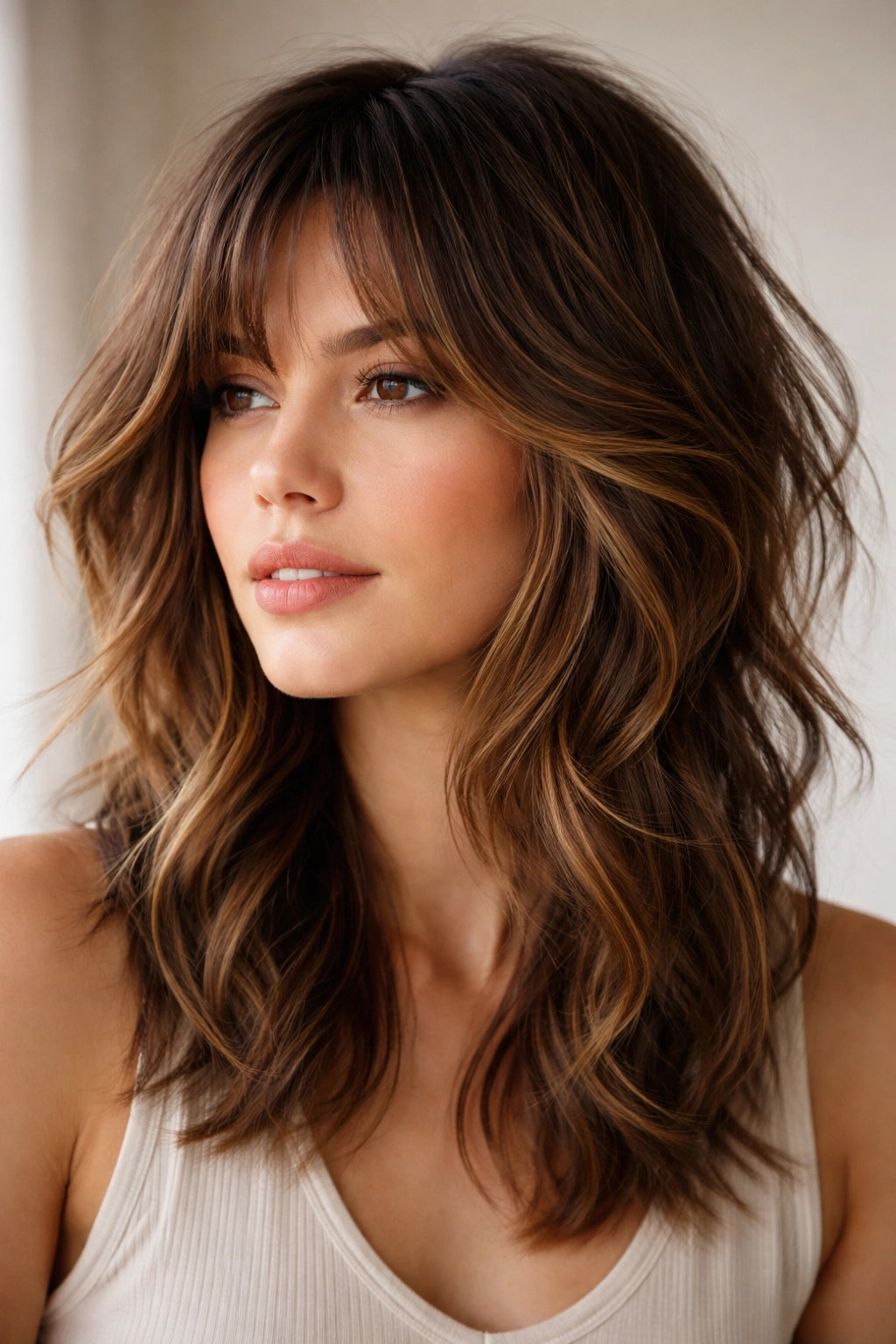
The final modern shag variation combines textured layers throughout with specific face-framing pieces and dimensional color, creating a style that’s contemporary, flattering, and surprisingly wearable. This is the shag executed at its absolute best—edgy and fashionable but still grounded in practicality.
Why This Works for Everyone
This version of the shag works across different hair types and face shapes because the face-framing pieces are customizable and the texture means the style has movement regardless of your hair’s natural texture. The dimensional color adds visual interest without requiring solid, dramatic color commitment.
Key Elements
- Choppy, textured layers throughout
- Specific face-framing pieces that work with your face shape
- Dimensional color (highlights, balayage, or toning) placed strategically
- Styling with texture products to enhance the intentional imperfection
- Works beautifully with some natural wave or curl
Real talk: This style requires a stylist who understands modern shag cutting techniques and dimensional coloring. The investment in finding the right stylist is worth it because the payoff is a genuinely striking, wearable style that’s distinctly yours.
Final Thoughts
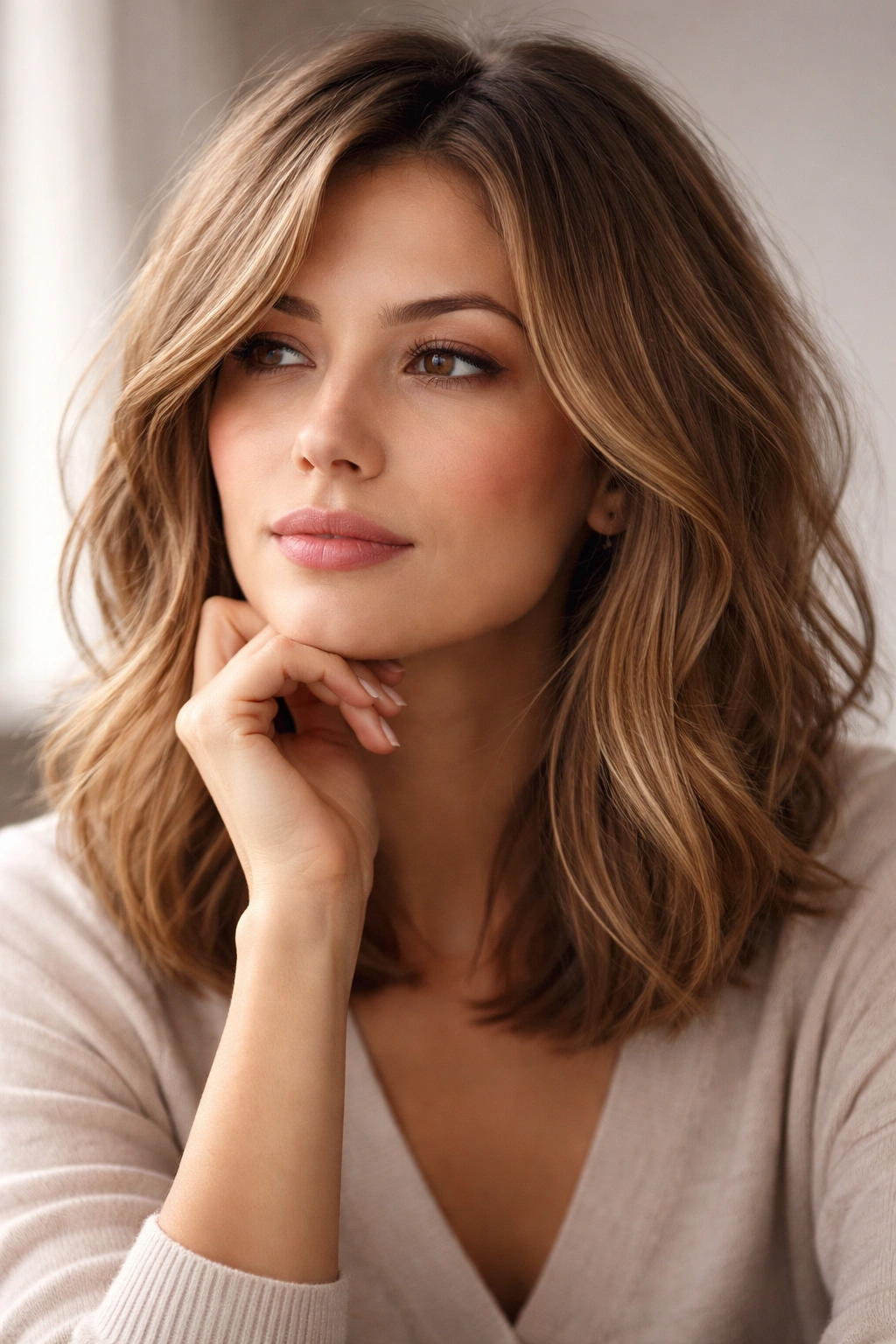
Medium-length hair offers genuine versatility because you’re long enough to explore texture, layers, and movement, but short enough to maintain manageability and structure. The styles above represent different aesthetics and hair types because no single style is universally perfect—what works beautifully for someone with naturally curly hair might be frustrating for someone with straight hair, and vice versa.
The real key to finding your perfect medium-length hairstyle is being honest with yourself about three things: how much styling effort you’re genuinely willing to invest daily, whether you prefer a polished look or a more tousled aesthetic, and what your hair naturally wants to do. Work with your hair’s texture and structure rather than constantly fighting it. The most beautiful hairstyles are the ones that make you feel confident and require a realistic level of maintenance for your lifestyle.
Finally, find a stylist you trust and communicate clearly about what you want. Bring photos, discuss your hair’s tendencies and texture, and be honest about your styling commitment. A good cut is transformative, but it only works if it’s executed well and suits both your hair and your lifestyle.
