



A pixie cut with bangs is one of the most transformative styles you can choose—but it’s also one of the most intimidating. The combination feels edgy and bold, yet somehow still approachable. The right pixie with bangs can enhance your cheekbones, balance your facial proportions, bring out your eyes, and make every morning feel like you’ve got a professional stylist in your bathroom. The wrong one, though, can feel flat, unflattering, or just… not you.
Here’s what most people get wrong: they think a pixie cut with bangs is a one-size-fits-all style. It isn’t. The length of those bangs, the texture of the sides, the shape of the crown, the angle of the cut—all of these variables change everything about how the style lands on your face. A blunt bang hits completely differently on an oval face than it does on a round one. Wispy, feathered bangs that work beautifully for someone with a square jawline might overwhelm a delicate, heart-shaped face. The goal is finding the specific combination of pixie cut and bang style that not only suits your face shape but makes you feel genuinely confident and like yourself.
What makes this style so powerful is its versatility—and that’s exactly why we’re breaking it down for you. Below, you’ll find 18 distinct pixie cuts with bangs, each tailored to work with different face shapes, hair textures, and personal styles. Some are soft and romantic. Some are sharp and architectural. Some are textured and tousled. All of them prove that short hair with bangs can be absolutely stunning when it’s the right cut for you. Whether you’re considering this move for the first time or you’re a pixie veteran looking to switch things up, there’s something here for you.
1. The Classic Textured Pixie with Side-Swept Bangs
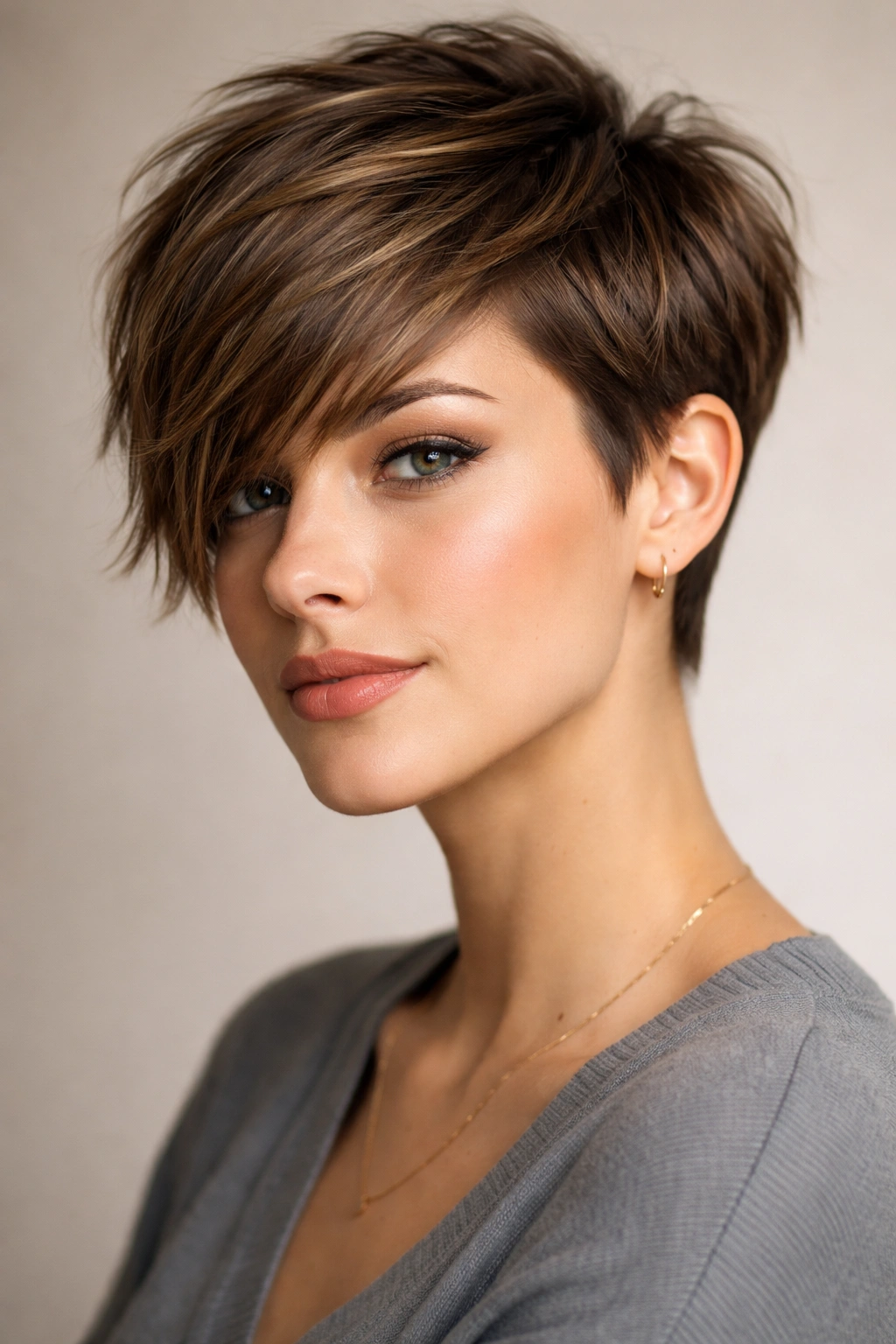
This is the style that made pixie cuts famous—the one that’s been flattering faces for decades. The crown is left full and textured, built up with layers that give it movement and dimension. The sides are tapered close, and the back is short but still has some length to create a subtle shape. The bangs sweep dramatically to one side, starting longer at the inside and graduating to shorter as they move across.
Why This Works for Most Face Shapes
This cut is genuinely forgiving because the side-swept bang creates a diagonal line that elongates the face. That diagonal movement draws the eye downward and outward, which is why it works so well for round faces—it makes them appear longer. For oval and oblong faces, the soft texture and side-swept direction prevent the style from looking too severe. Even for square faces, the way the bangs taper and move softens the jawline without hiding it entirely.
How to Style and Maintain It
- Textured pixies thrive on movement, so consider using a texturizing spray or light pomade through the crown to amp up definition
- Blow-dry with your fingers to encourage that textured, piecy look rather than smooth styling
- The bangs need regular trimming every 3-4 weeks to maintain the side-sweep shape
- Works beautifully on all hair types, though it’s particularly forgiving on wavy and curly hair
Pro tip: This cut actually looks better slightly tousled and undone. Trying too hard to perfect it can make it feel stiff. Embrace the texture and let it move naturally.
2. The Wispy Choppy Pixie with Blunt Bangs
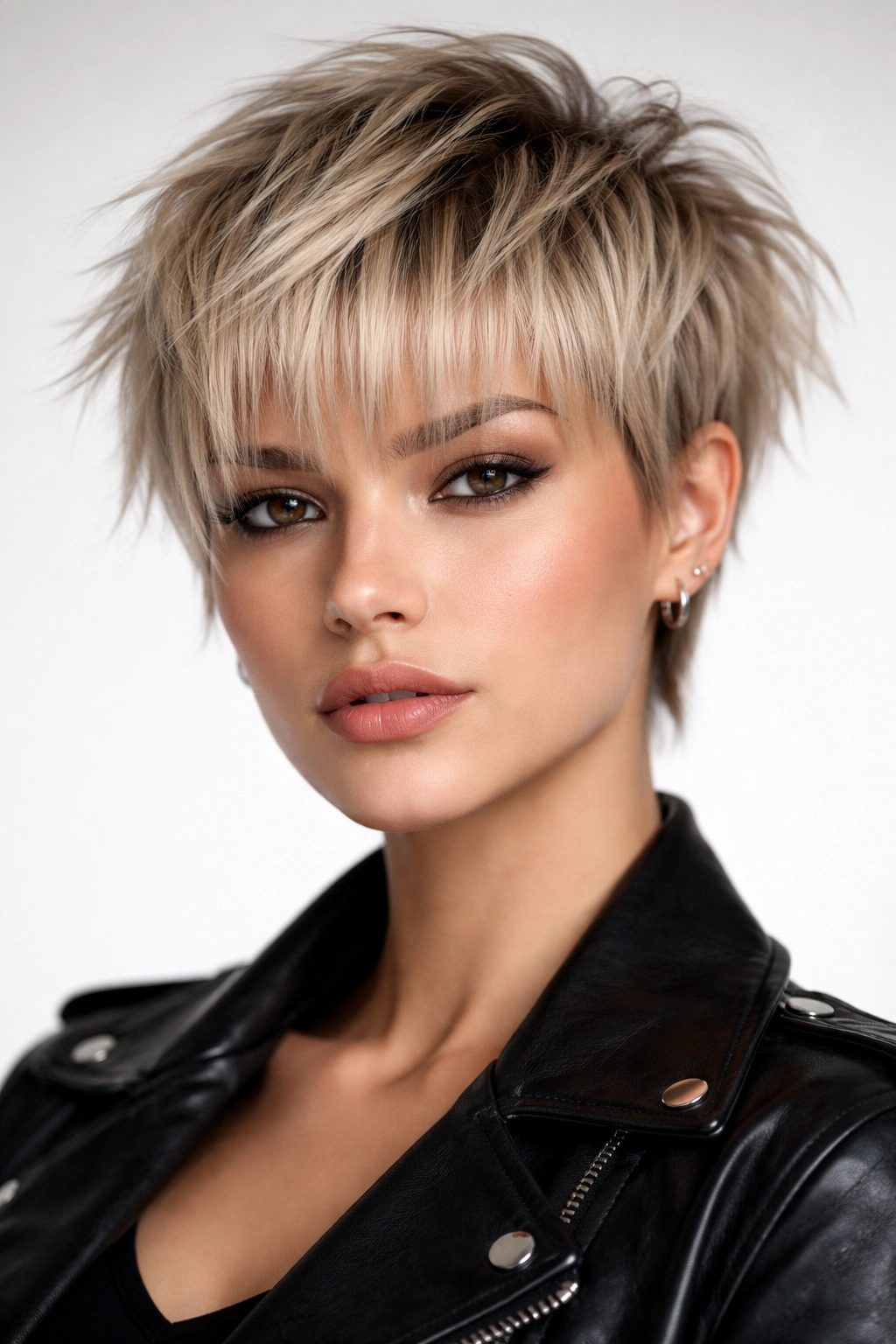
Where the classic textured pixie is soft and approachable, this version goes harder. Choppy, disconnected layers throughout create movement and edge, while blunt-cut bangs create a strong, graphic line across the forehead. The sides are disconnected from the top, and the whole effect reads modern and intentional. The bangs sit right at eyebrow level with no taper—they’re the same length all the way across.
The Geometric Effect on Different Face Shapes
Blunt bangs create a horizontal line, which is excellent for making longer faces appear shorter and more balanced. If you have a long, oblong, or rectangular face, this cut adds width visually and prevents the style from elongating your features further. For oval faces, blunt bangs create a grounded, chic look that feels fashion-forward. Round faces can wear this too, but pair it with tapered sides to avoid adding too much fullness to the middle of the face.
Styling Techniques for Maximum Impact
- Blunt bangs require precision styling more than textured ones—they read best when they’re intentional and clean
- A light styling cream or wax through the chopped layers keeps them separated and piece-y without looking messy
- Blow-dry the bangs straight down and slightly forward for the cleanest blunt line
- Trim the bangs every 2-3 weeks to maintain that razor-sharp line—they grow noticeably fast on your forehead
Worth knowing: This style demands regular maintenance to look polished, but the impact is absolutely worth it if you love a modern, high-fashion vibe.
3. The Voluminous Pixie with Feathered Bangs
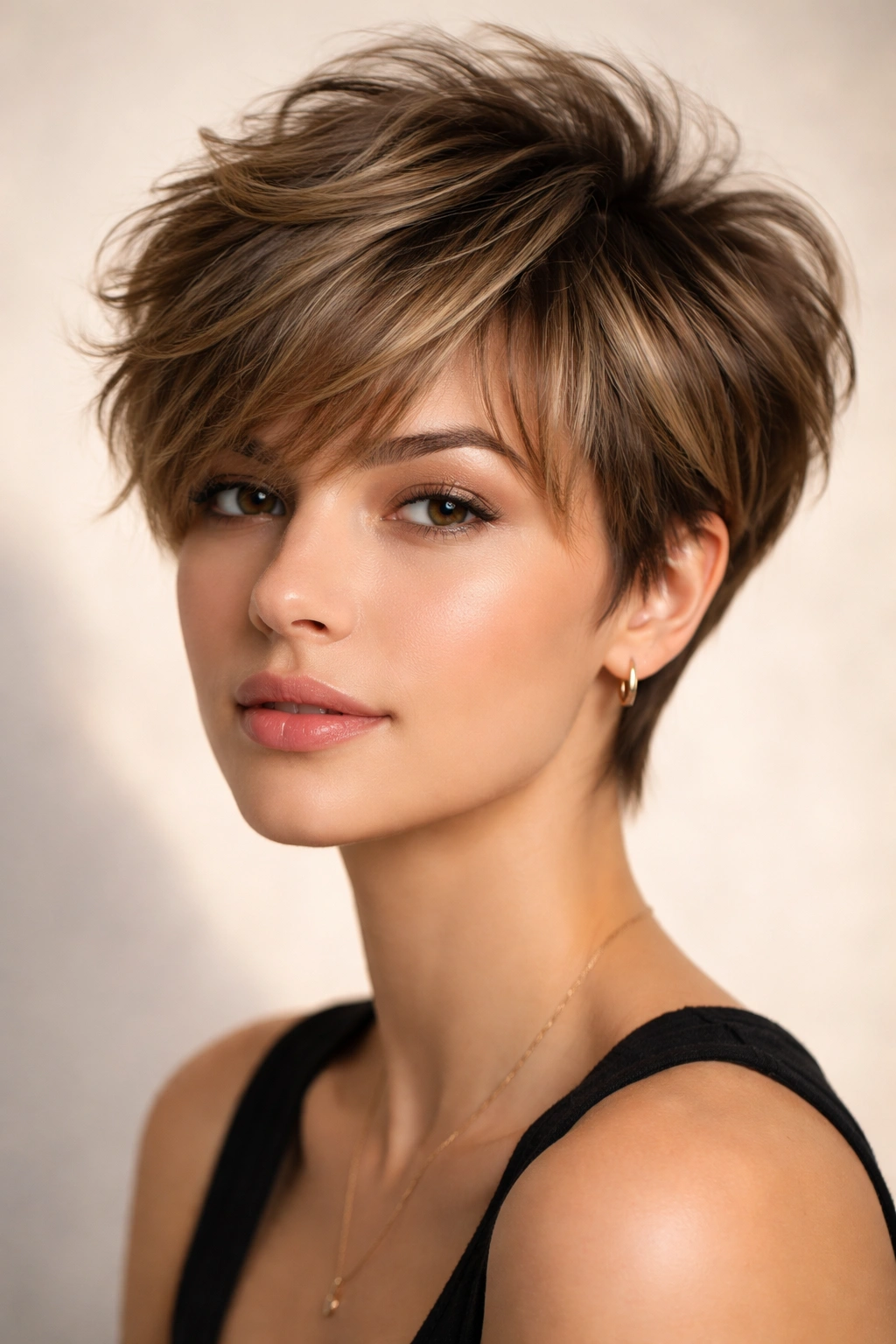
If you love the idea of a pixie but worry about it being too severe or hair-revealing, this is your answer. Everything is full and voluminous, built with layers that create tons of texture and movement. The crown sits high and round, created through strategic layering and blow-drying technique. The bangs are feathered rather than blunt—they’re longer on the sides and shorter in the center, creating a soft, face-framing effect. They blend seamlessly into the rest of the cut.
Which Face Shapes Benefit Most
The round, full shape of this cut is particularly flattering on heart-shaped faces, where the fullness at the crown balances a narrower jawline. Oval faces adore this version because it adds softness and texture without overwhelming the proportions. Oblong and rectangular faces benefit because the crown volume adds width and the feathered bangs add softness to sharper features. Even round faces can wear this when the sides are tapered enough to avoid adding extra fullness to the cheeks.
Creating and Maintaining the Volume
- This cut absolutely thrives with blow-drying and styling—it won’t work as a wash-and-go for most people
- Use a volumizing mousse or root-lift spray at the crown for extra height without weight
- Blow-dry in the opposite direction of how you want it to sit, then flip and finish in the correct direction for maximum lift
- Feathered bangs need trimming every 4-5 weeks, though they’re more forgiving than blunt bangs since you can’t see the exact line as clearly
4. The Sleek Pixie with Microbangs
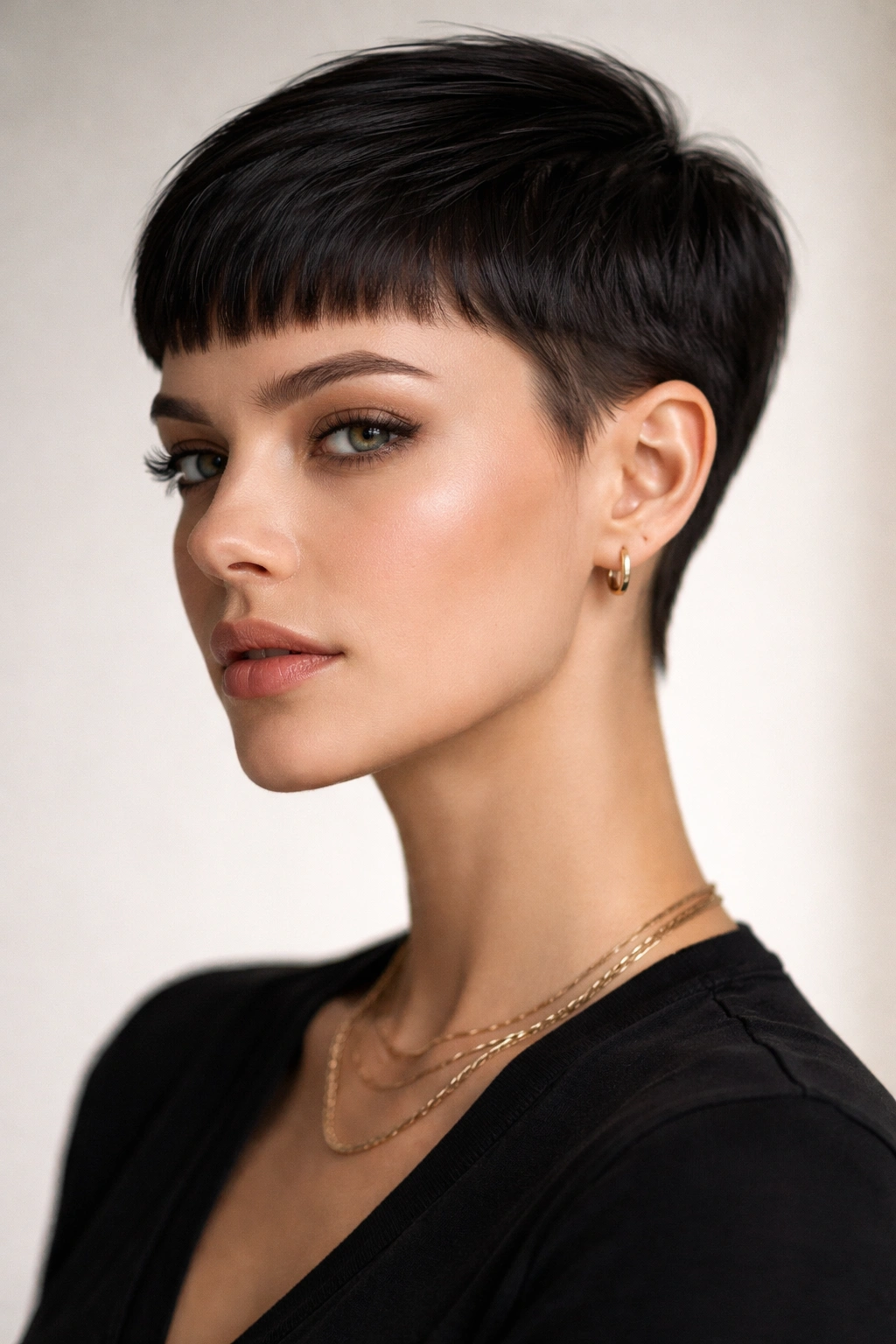
This is a bold move, but it’s absolutely stunning when it works. Everything about this cut is smooth, sleek, and polished. The hair is cut extremely short on the sides, with a slightly longer, still-smooth crown that’s styled slicked back or to the side. The bangs are micro—sitting just above the eyebrows or even higher—and they’re cut blunt and precise. The whole effect is clean, modern, and decidedly artistic.
Face Shape Considerations
Microbangs work beautifully on oval and square faces because the short, high placement draws attention to the eyes and forehead without obscuring those features. Heart-shaped faces can wear this cut too, with the micro bangs emphasizing the forehead rather than making it feel small. This cut is trickier on round faces because the short, high placement can make the face appear rounder, though if your face shape allows, the sleekness creates such a striking visual that the cut becomes more about boldness than flattery.
Styling Demands and Practicality
- This cut requires precision styling nearly every day—it’s not a low-maintenance choice
- Sleek styling gel or pomade is essential for achieving the polished look
- The microbangs are extremely high-maintenance; they need trimming every 2-3 weeks to look intentional rather than just grown out
- This works best on straight to wavy hair; very curly hair will be harder to style sleek
- Consider your lifestyle and willingness to style daily before committing to this version
Real talk: This cut is for people who genuinely love a styling routine and want to make a statement. It’s not the right choice if you’re looking for ease.
5. The Asymmetrical Pixie with Side Bangs
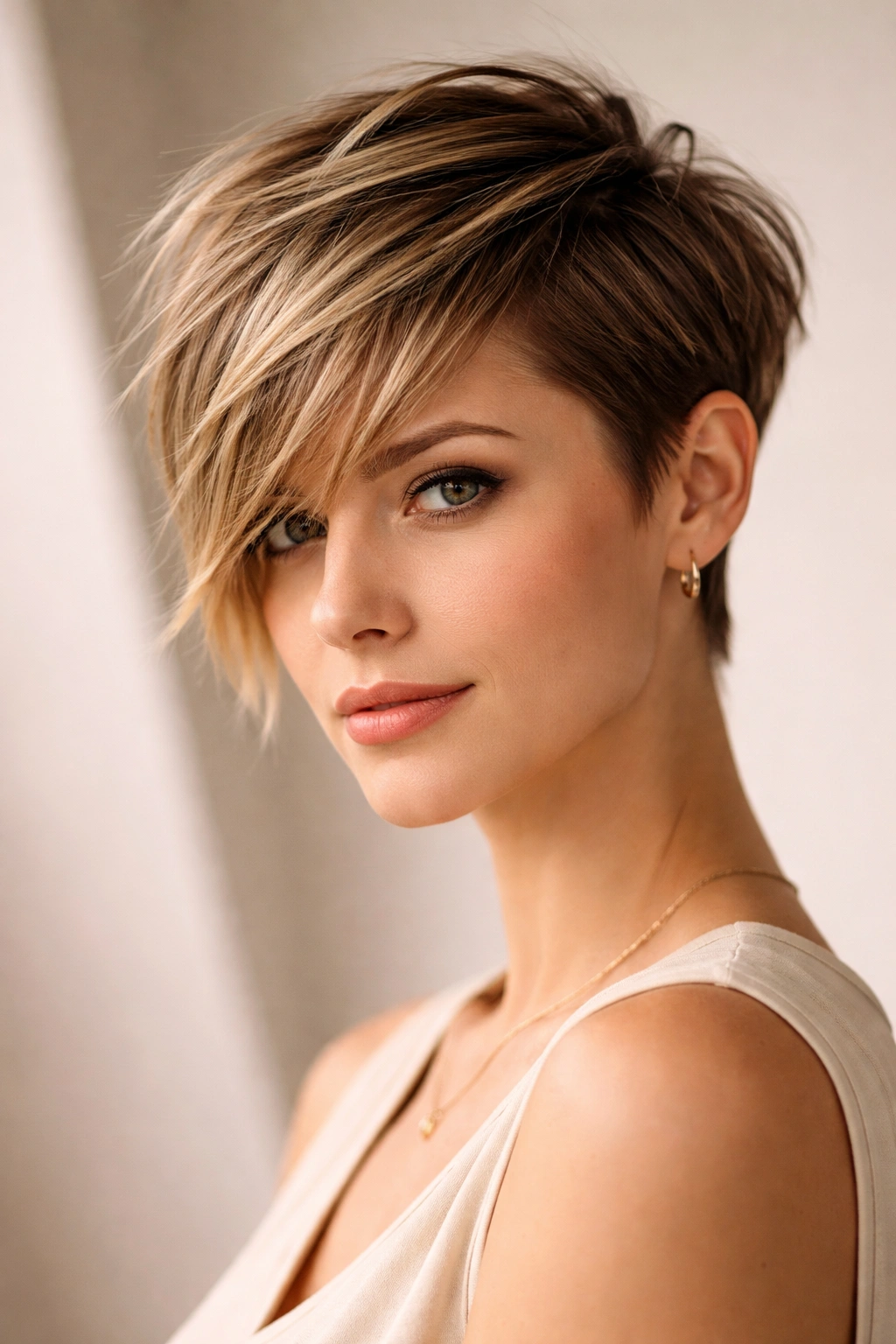
Asymmetry is having a major moment, and this cut fully embraces it. One side is cut significantly shorter and closer to the head, while the other side is left longer with visible texture and length. The bangs extend more on the longer side and taper shorter on the close-cut side, creating a diagonal line across the forehead. The whole style reads modern, fashion-forward, and unapologetically bold.
How Asymmetry Interacts with Face Shape
Asymmetrical cuts are excellent for angular or square faces because they break up straight lines and add movement. The longer side can be positioned over one side of the face to soften a strong jawline or cheekbone. Heart-shaped faces can angle the longer side toward the chin to add balance. Oval faces look stunning in asymmetrical cuts because the oval shape is flexible enough to handle the directional play. Round faces should be careful with this cut unless they’re prepared to keep the longer side styled with texture that moves outward, not inward.
Styling an Asymmetrical Cut
- The longer side will need regular styling to look intentional—don’t let it just hang flat
- Use texturizing products and blow-dry technique to give the longer side movement and shape
- The shorter side requires more frequent trims to maintain the precise, close-cut look—every 3-4 weeks
- This cut demands a stylist who really understands asymmetry and can create balance despite the obvious length difference
- The longer side works best with some texture or tousle rather than completely sleek styling
6. The Tousled Pixie with Piece-y Bangs
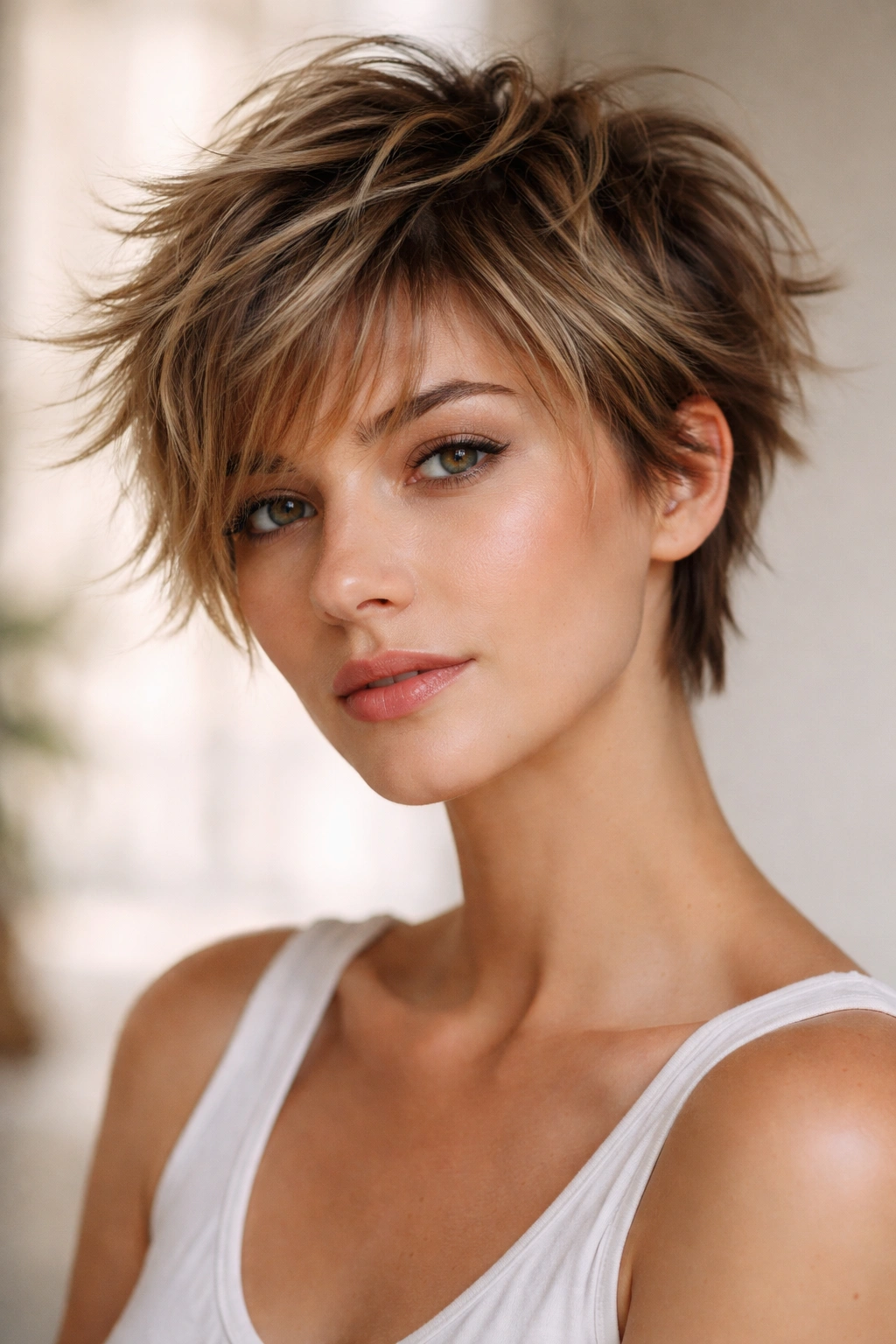
This is the pixie for people who want texture, movement, and effortless-looking style. The entire cut is built on choppy, disconnected layers that create tons of piece-y separation throughout. The bangs are similarly piece-y—cut to chin-length layers that blend into the cut and move in multiple directions. Nothing about this cut is smooth or polished; everything is deliberately textured and tousled. The result looks like you just styled it with your fingers and a bit of sea salt spray.
Universal Appeal of Piece-y Texture
One of the reasons this cut works across so many face shapes is that all the texture and movement prevents any single line from being too defining. The piece-y bangs don’t create a harsh line the way blunt ones do; instead, they frame the face softly. This works beautifully on round faces because the texture prevents a blunt horizontal line from adding fullness. Heart-shaped faces adore this because the choppy texture at the chin softens a narrower jawline. Rectangular faces benefit because the texture breaks up length. Essentially, if you prefer soft, approachable style over architectural precision, this cut works for you.
Achieving the Perfectly Tousled Look
- Piece-y cuts thrive on texturizing spray, sea salt spray, or dry shampoo—these products are essential for the look
- Blow-dry with your fingers rather than a brush, scrunching and separating pieces as you go
- Don’t aim for perfection; the messier and more undone, the better it looks
- This cut actually looks better when it’s slightly grown out between trims, as the layers blend together more
- Trim every 6-8 weeks rather than more frequently—you want to keep the layers without constantly refreshing the precision
Pro tip: This style is genuinely low-maintenance once you understand that tousled means imperfect. Stop fighting it and embrace the texture.
7. The Undercut Pixie with Bold Bangs
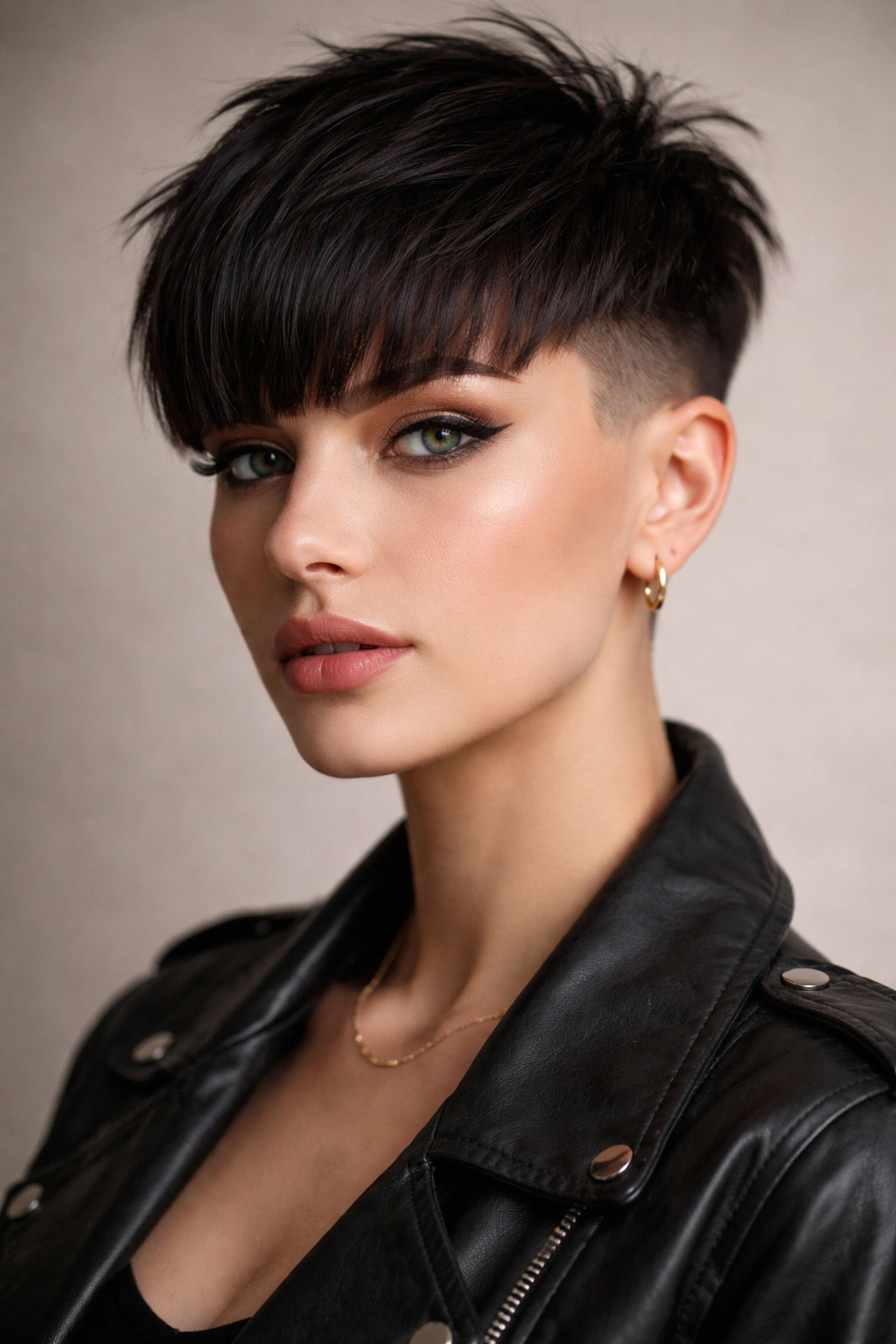
The undercut pixie takes the shaved or very closely cropped sides to their extreme, creating dramatic contrast between the long-on-top/short-underneath structure. The crown is left longer and textured, sometimes even styled back or up to fully showcase the undercut. The bangs are bold—whether blunt, thick, or geometric—and they’re the statement piece of the entire style.
Who Should Wear an Undercut
This cut is statement-making and works best on people who want to draw attention and aren’t concerned with looking conventional. Oval and rectangular faces can absolutely pull this off—the undercut adds width and the bangs draw attention to the eyes. Square faces benefit because the contrast between close-cut sides and longer top is extremely flattering. Heart-shaped faces work with this style when the top is styled with volume and movement rather than lying flat. Round faces can wear this but should pair it with a tapered fade rather than a completely shaved undercut, as the extreme contrast can emphasize roundness.
Maintaining the Undercut Look
- The undercut requires frequent touch-ups—every 2-3 weeks to maintain clean, defined lines
- This isn’t a style you can let grow out gracefully; once the undercut starts growing in, it looks unkempt rather than intentional
- Consider your commitment level carefully before choosing this style
- Bangs with an undercut need even more frequent trimming because the contrast makes any growth immediately visible
- This cut demands a stylist with experience in precision cutting and understanding of fade lines
8. The Tapered Pixie with Curtain Bangs
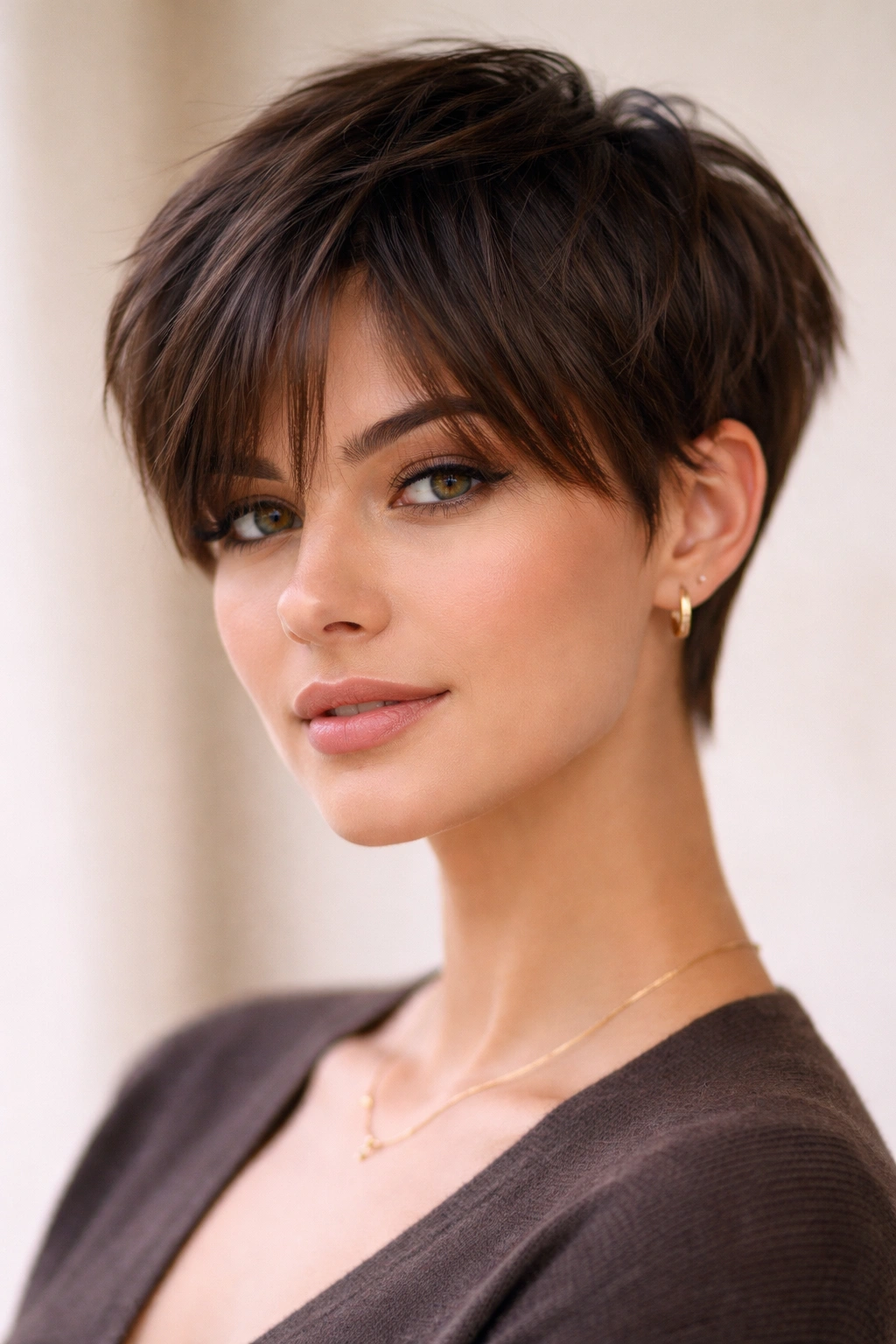
Curtain bangs are having a major resurgence, and they pair beautifully with a tapered pixie. The sides and back are tapered—closer at the nape and gradually getting longer as you move toward the crown. The top has textured layers that add movement. The bangs part in the center and frame the face like curtains, longer on the outsides and gradually tapering shorter toward the center part.
Why Curtain Bangs Work on Every Face Shape
Curtain bangs are possibly the most universally flattering bang style because they create a diagonal line on both sides of the face. This elongates rounder faces, softens angular faces, and balances virtually every face shape. Paired with a tapered pixie, this creates a style that’s genuinely hard to get wrong. The tapered sides prevent the style from being too heavy, and the textured layers add movement that keeps the whole look soft and approachable.
Styling and Growing Out Curtain Bangs
- Curtain bangs look best with some texture and movement—blow-dry them with a round brush to add shape
- As they grow out, they actually look better because they become longer and the center part gets deeper
- You can trim them every 6-8 weeks rather than the 3-4 weeks blunt bangs require
- This is genuinely one of the easier bang styles to maintain as it grows
- Works beautifully on most hair types and textures
9. The Layered Pixie with Wispy Bangs
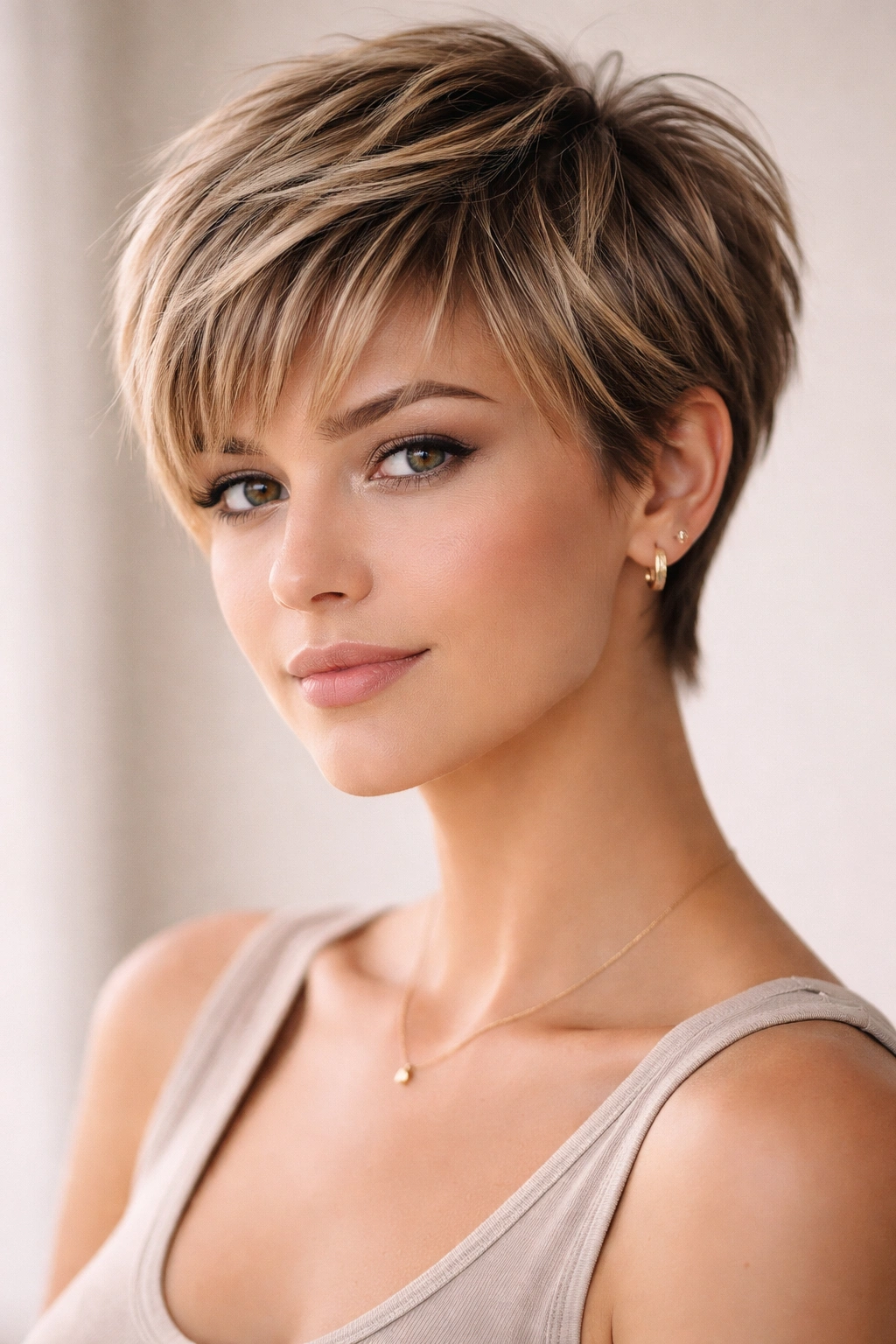
This cut is all about creating movement and dimension through strategic layering. The crown is built up with layers of varying lengths, creating a textured, almost shaggy effect. The sides taper gradually, and the back has shape. The bangs are wispy—shorter in the center and longer on the outsides, with feathered edges that blend into the side layers.
Face Shape Suitability
The texture and movement of this cut works across all face shapes because it avoids harsh lines and adds softness everywhere. Round faces benefit from the textured, directional movement that prevents flatness. Oval faces can wear this effortlessly. Heart-shaped faces adore the softness of wispy bangs paired with textured sides. Square and rectangular faces benefit from the texture that breaks up linear features.
Creating Texture and Movement
- This cut thrives on texture, so texturizing spray, mousse, or dry shampoo is your friend
- Blow-dry with your fingers to separate and enhance the layers
- The more you tousle and move this cut around, the better it looks
- Trim every 4-6 weeks to maintain the layered shape without constantly refreshing the precision
- This is one of the more forgiving cuts as it grows out, since the layers blend together
10. The Grown-Out Pixie with Blunt-Cut Bangs
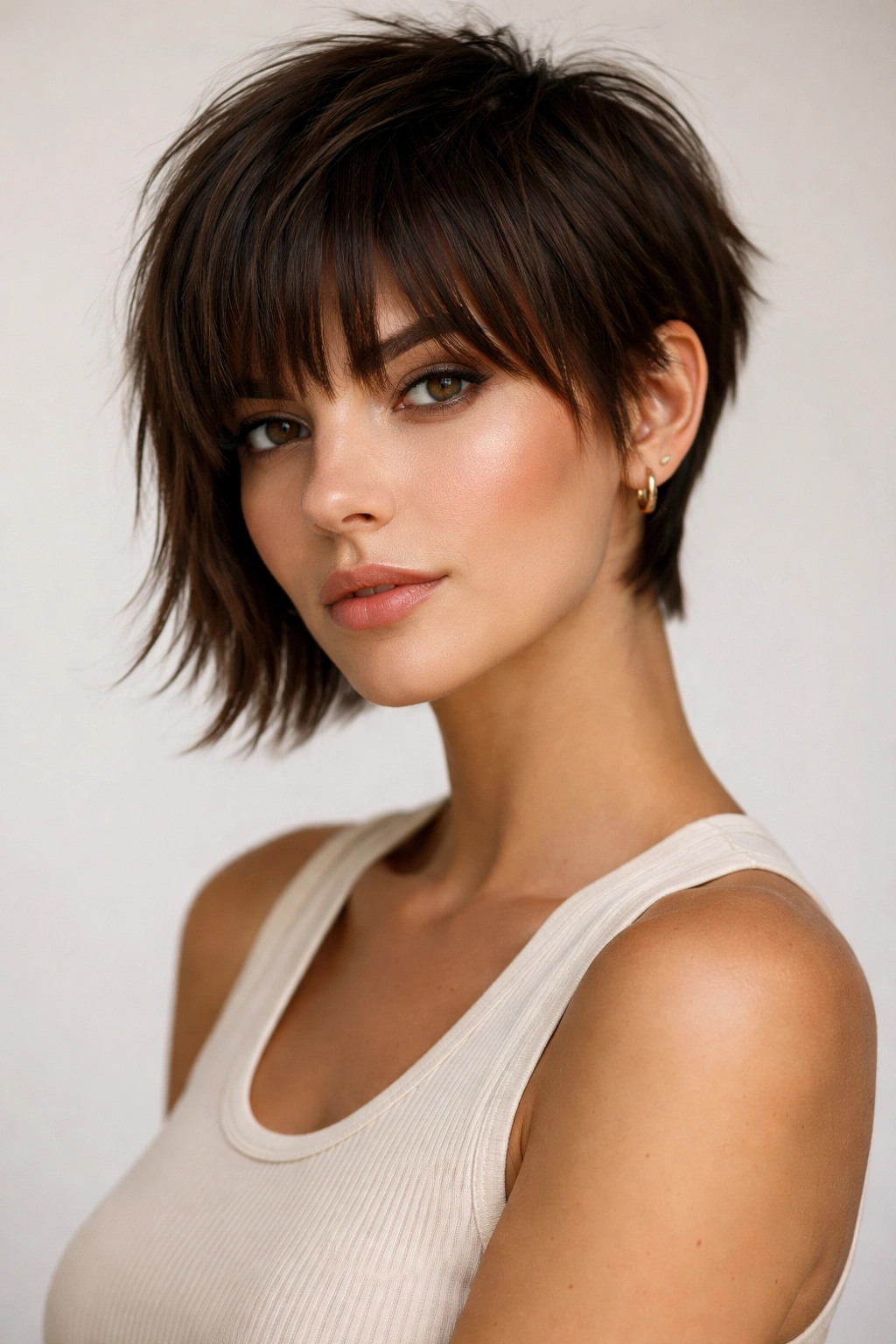
This is the pixie for people who are transitioning out of the cut or who prefer a less severe version. It’s longer than a traditional pixie—usually 2-3 inches on top—but still short enough to maintain that pixie energy. The sides gradually taper rather than being cut extremely short. The bangs are blunt-cut and substantial, usually extending to mid-cheek, creating a dramatic frame for the face.
Who Rocks This Hybrid Style
The grown-out pixie works beautifully on heart-shaped faces because the longer bangs balance a narrower jawline. Oval faces look stunning in this style because the length adds versatility without losing the pixie’s charm. Round faces benefit because the longer bangs create more coverage and the slightly longer top adds shape. Even rectangular faces work with this cut when the bangs provide enough visual weight.
Versatility of the Grown-Out Pixie
- This cut is more forgiving than a short pixie in terms of styling—it can look great tousled or sleeker
- You have more options for styling as it grows out; you can wear it slicked back, to the side, or forward
- Bangs need trimming every 3-4 weeks to maintain the blunt line
- This is an excellent transition style if you’re thinking about growing your hair out or not ready to fully commit to a short pixie
- Works well on most hair textures and types
11. The Textured Crop with Shaggy Bangs
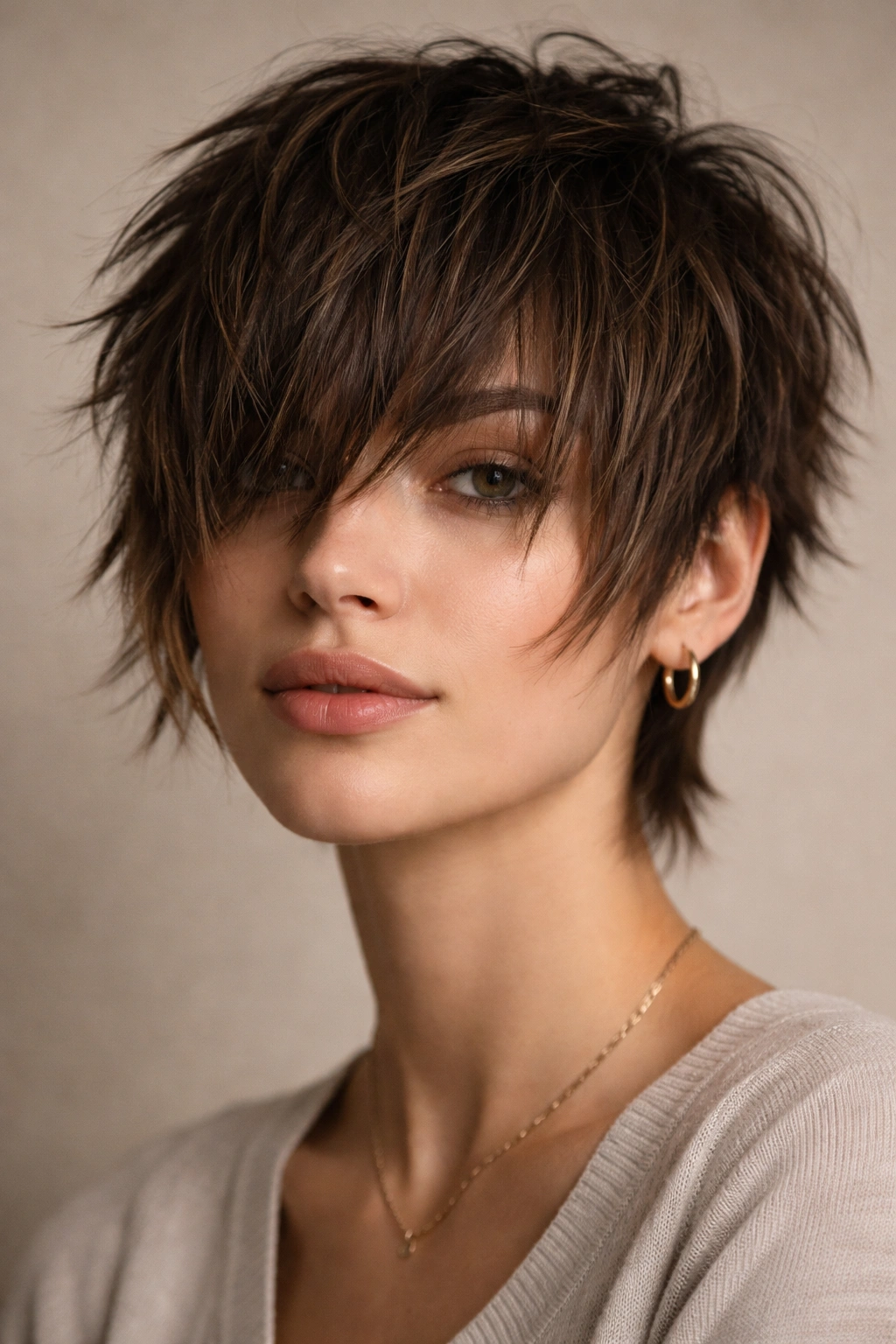
This cut brings ’70s shag energy to the modern pixie. The entire cut is built on choppy, disconnected layers that create a messy, textured effect. The bangs are shaggy and long, extending to the cheekbones or slightly longer, with heavy layering throughout. The sides maintain some length and texture rather than being tapered close. The whole effect is undone, cool, and effortlessly chic.
Shaggy Bangs Across Face Shapes
Shaggy bangs work across most face shapes because they’re not a definitive line—they’re texturized and layered, so they frame rather than define. Heart-shaped faces love this because the longer, layered bangs add softness around the jaw. Oval and rectangular faces benefit from the texture breaking up longer features. Round faces should ensure the sides are tapered to prevent adding fullness, but the shaggy bangs themselves work beautifully.
Maintaining Shaggy Texture
- This cut actually improves with a bit of length—it shouldn’t look freshly cut and precise
- Trim every 6-8 weeks to maintain the layered structure without constantly chasing perfection
- Texturizing spray is essential for keeping the shaggy, undone vibe
- Blow-dry with your fingers and let it air dry for that perfectly tousled finish
- This is genuinely one of the lower-maintenance cuts if you embrace the undone aesthetic
12. The Androgynous Pixie with Longer Bangs
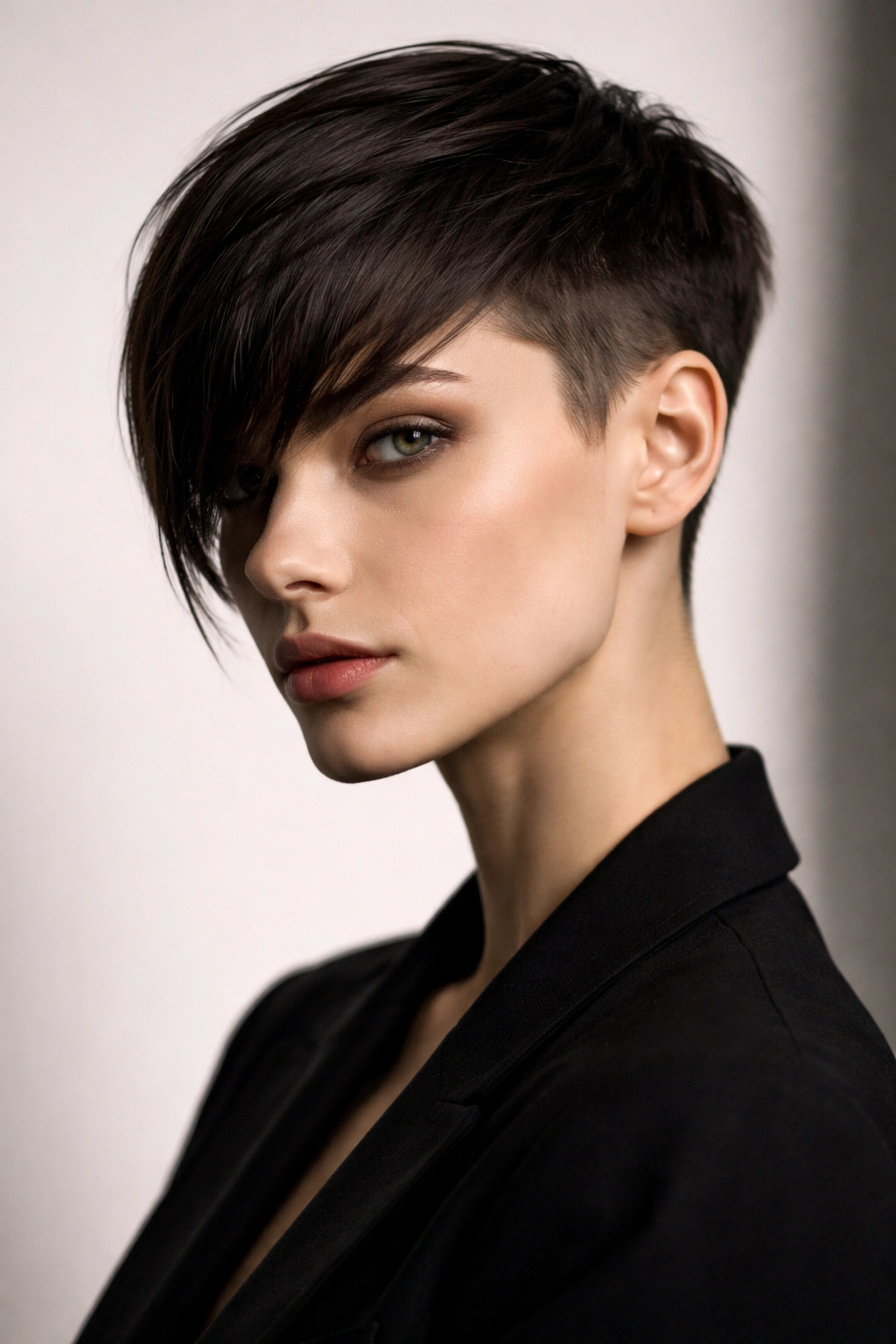
This cut leans into androgynous styling with a sleek, architectural cut and bangs that extend longer than traditional pixie bangs. The sides are extremely close-cropped or faded, the top is longer and smooth, and the bangs extend to the cheekbones, creating a distinct line between short sides and longer top/front. It reads sharp, modern, and intentionally gender-neutral.
Androgynous Styling Across Face Shapes
This cut works best on oval faces where the longer bangs don’t overwhelm the proportions. Square faces benefit from the architectural contrast. Rectangular faces can wear this beautifully with the longer bangs and smooth styling creating visual interest. Round faces should be cautious with the longer, straight bangs that might add width, though this cut can work with the right styling.
Styling an Androgynous Pixie
- Sleek styling is essential—use styling gel or pomade to create smooth lines and definition
- The longer bangs can be styled straight, slightly curved, or swept to create different vibes
- This cut requires styling to look intentional; it won’t work as a wash-and-go
- Trim the sides every 2-3 weeks and bangs every 3-4 weeks to maintain clean lines
- Works best on straight to wavy hair; very curly hair is harder to style sleek
13. The Spiky Textured Pixie with Geometric Bangs
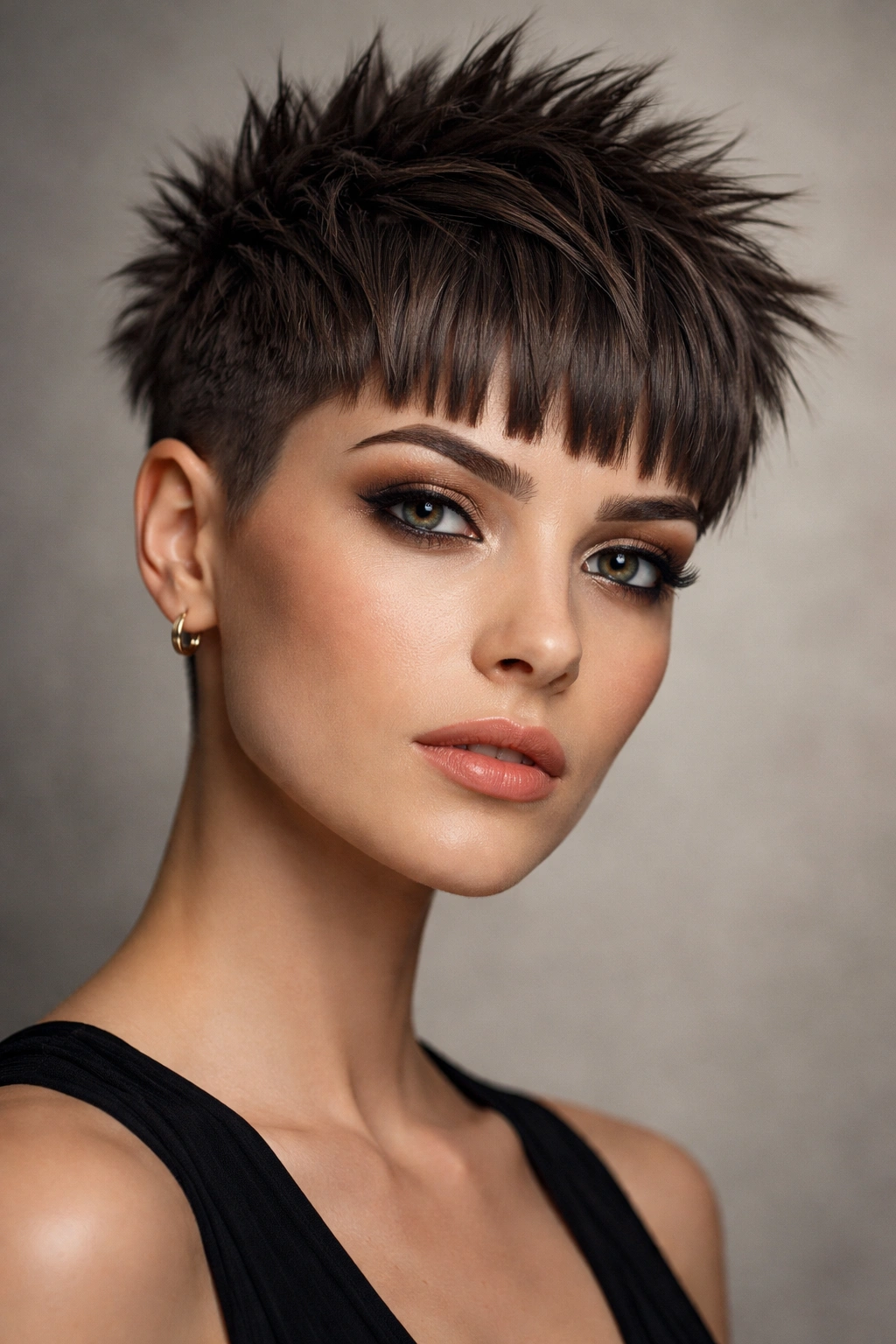
This is the cut for people who want to make a clear statement. The entire top is built for spikiness—short, choppy layers create separation and definition throughout. The sides are tapered close. The bangs are geometric and blunt, sometimes cut at a slight angle to one side, creating an architectural line. Everything about this cut is sharp, modern, and intentionally edgy.
Who Should Choose Geometric Bangs
Geometric bangs work best on oval and square faces where the strong line is flattering rather than overwhelming. Rectangular faces can wear this with the understanding that the strong horizontal line might emphasize length, though the spiky texture throughout prevents a too-severe look. Heart-shaped faces should pair geometric bangs with tapered sides. Round faces should be very careful with strong horizontal lines, though this cut can work if the overall texture and movement prevent it from looking too heavy.
Achieving the Spiky Look
- This cut requires texturizing product to really sing—use a matte texturizing paste or clay
- Blow-dry with your fingers, really separating and lifting each section
- Aim for texture and movement rather than slicked-down spikes
- Trim every 3-4 weeks to maintain the sharp, defined layers
- This works best on straight to wavy hair that can hold texture and separation
Worth knowing: This cut demands daily styling if you want to maintain the spiky, textured look. It won’t work as a wash-and-go style.
14. The Soft Pixie with Rounded Bangs
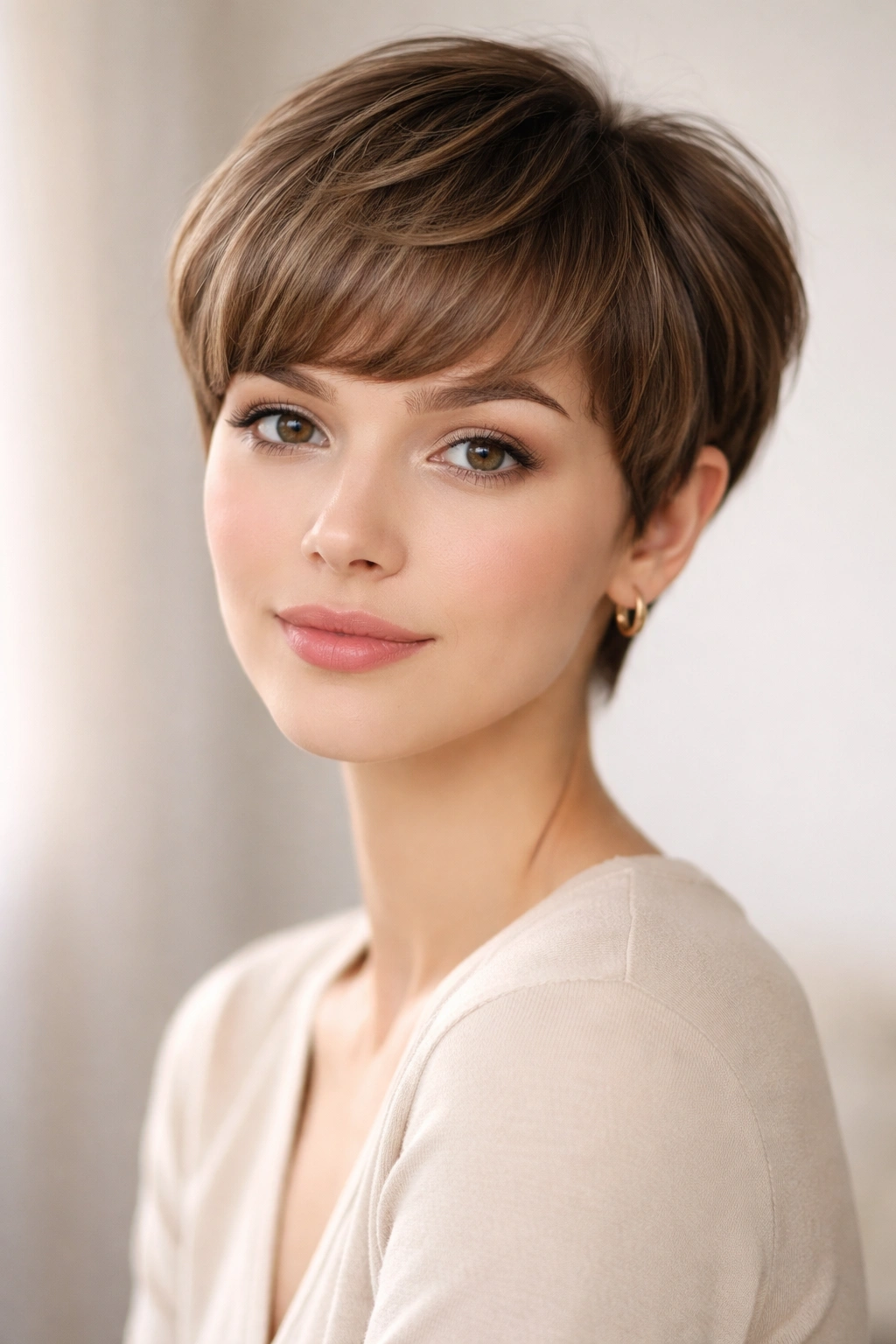
If you want a pixie cut but worry about looking too severe, this is your answer. The entire cut is soft and rounded—no sharp lines anywhere. The crown is built up with rounded layers that create fullness without spikiness. The sides taper gradually. The bangs are rounded, sometimes cut with a slight curve, hitting the forehead softly without a harsh line.
Universal Flattery of Soft, Rounded Shapes
Rounded bangs and soft layers work across virtually all face shapes because they don’t create harsh lines. Round faces benefit because the soft, full shapes complement rather than conflict with face shape. Oval faces look sophisticated and soft. Heart-shaped faces love this because the rounded bangs add softness around the forehead. Square and rectangular faces benefit from the curves that soften angular features.
Styling a Soft Pixie
- This cut can work with minimal styling—it looks great tousled or soft and smooth
- Use a light styling cream or mousse to enhance softness rather than texture
- Blow-dry with a round brush to emphasize the rounded shape
- Trim every 4-5 weeks to maintain the rounded line
- This is one of the more forgiving, lower-maintenance pixie variations
15. The Disconnected Pixie with Thick Bangs
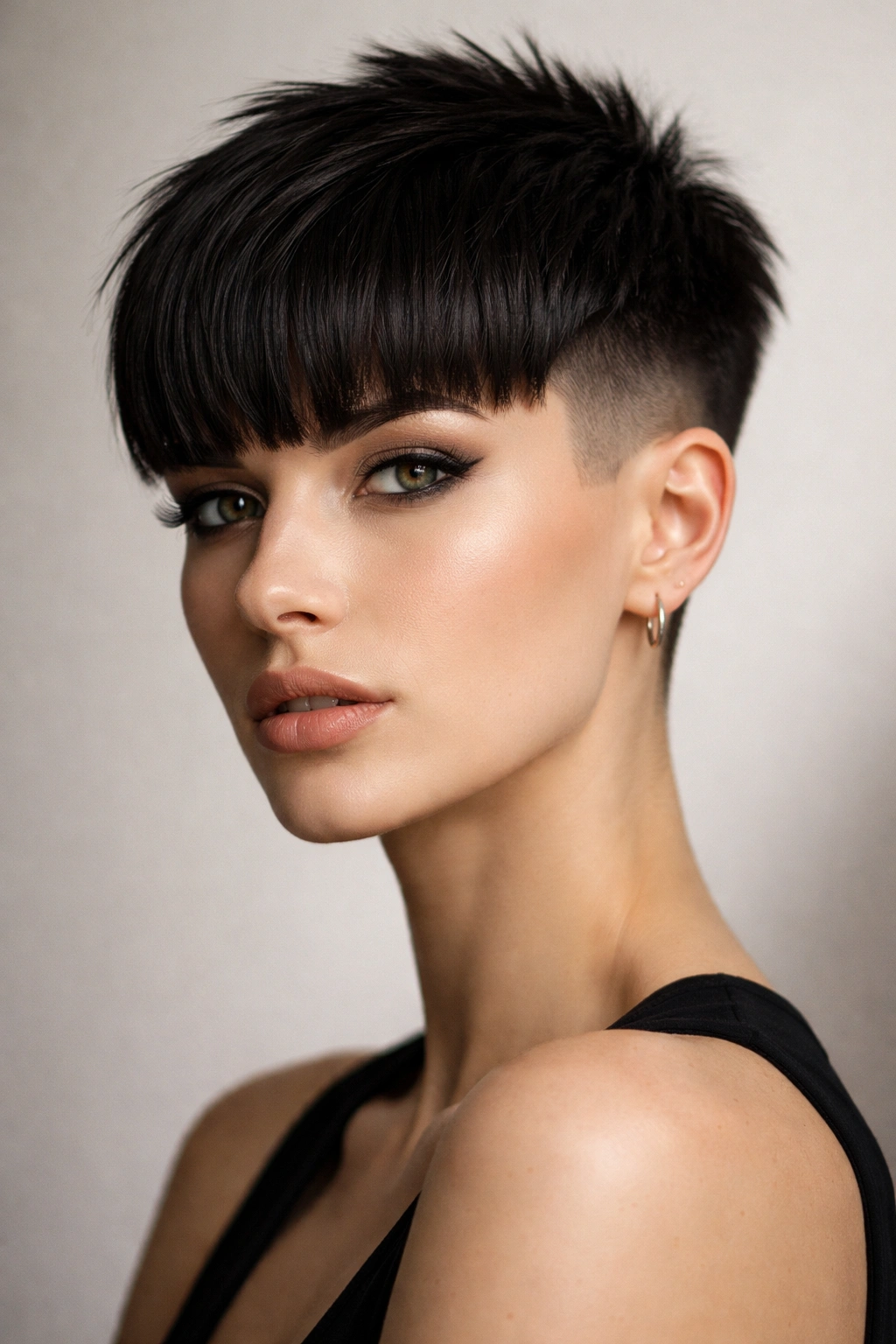
This cut embraces a modern, fashion-forward aesthetic with clearly disconnected sections. The top is longer and textured, the sides are closely cropped or shaved, and there’s no gradual fade—it’s a clear, defined disconnect. The bangs are thick, blunt, and substantial, often extending below the eyebrows, creating a dramatic frame.
Face Shapes and Disconnected Structure
The disconnected structure works beautifully on oval and square faces where the contrast is flattering. Heart-shaped faces can wear this with the longer bangs balancing a narrower jawline. Rectangular faces benefit from the visual width of the fuller top and dramatic bangs. Round faces should be cautious with thick bangs that create a horizontal line, though the overall cut’s modern aesthetic sometimes makes the statement worth it.
Maintaining Disconnected Precision
- This cut is high-maintenance—the disconnect needs to be clean and defined
- Trim the sides every 2-3 weeks to maintain the disconnected line
- Bangs need trimming every 3-4 weeks to keep them thick and substantial-looking
- This requires a skilled stylist who understands how to create and maintain disconnect lines
- Consider your commitment to regular trims before choosing this cut
16. The Curved Pixie with Side-Parted Bangs
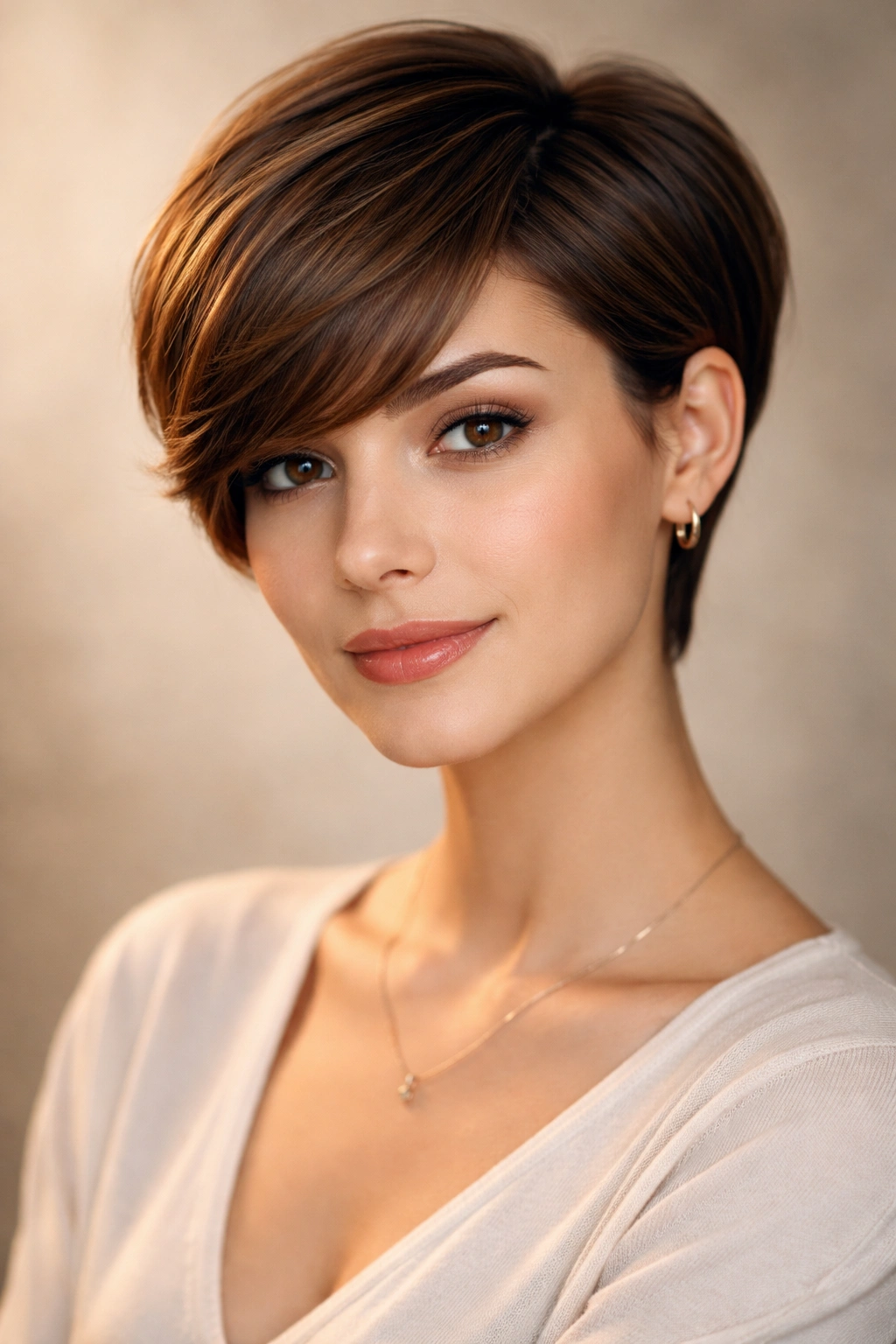
This cut emphasizes softness through curved lines throughout. The crown has curved layers that create a rounded, almost feminine silhouette. The sides curve back rather than being straight-tapered. The bangs are side-parted and curve to one side, longer on the outer edge and gradually tapering shorter toward the part. The whole effect is graceful and romantic.
Which Face Shapes Benefit from Curves
Curved cuts work beautifully on angular faces because the curves soften sharp features. Heart-shaped faces adore this cut because the side-parted bangs can be directed toward the wider forehead, and the curved sides soften the jawline. Oval faces look refined in this style. Square faces benefit from the curves that soften hard lines. Round faces should ensure the sides curve outward rather than creating too much roundness.
Styling Curved Lines
- This cut works beautifully with gentle blow-drying to enhance the curves
- Use a round brush to curl and shape the curved sections
- Side-parted bangs look great with a light styling cream for separation
- Trim every 4-6 weeks—the curved shape becomes softer and more blended as it grows slightly
- This is one of the more romantic and traditionally feminine pixie options
17. The High-Fade Pixie with Short Bangs
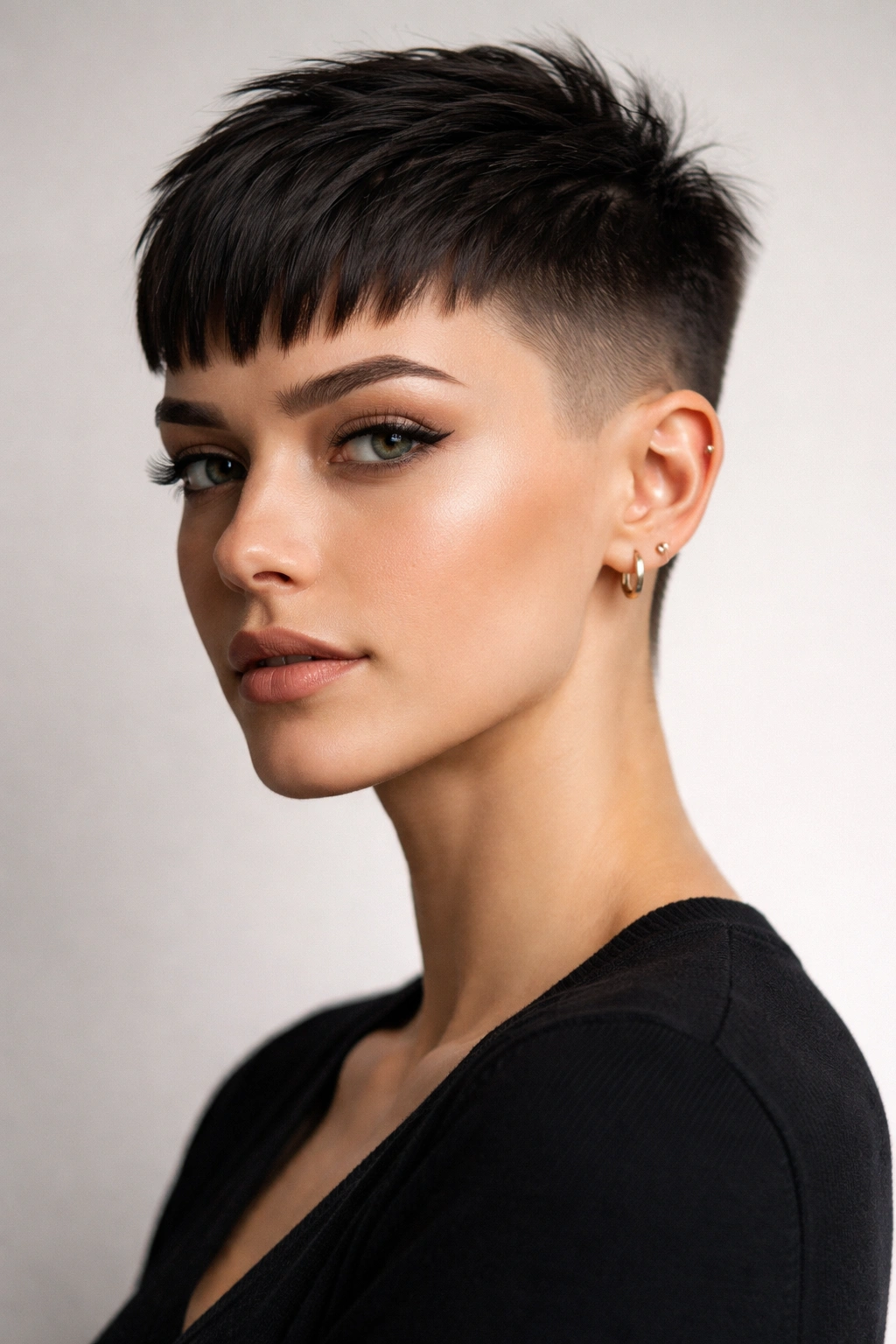
This cut takes the modern undercut to the extreme with a high, very visible fade and short, architectural bangs. The fade is razor-sharp and defined, creating an obvious gradient from almost-shaved at the sides to longer on top. The crown sits high and can be styled back or up. The bangs are short—sometimes barely longer than the sides—creating a near-seamless transition.
Bold Choices with High Fades
This cut demands confidence because there’s nowhere to hide. Oval faces wear this beautifully. Square faces benefit from the contrast and sharp lines. Rectangular faces can rock this look, though the short bangs might emphasize the longer face shape. Heart-shaped faces work with this when the top has enough volume to balance the forehead. Round faces should pair the high fade with a fuller top to add length.
Maintaining a Sharp Fade
- High fades require extremely frequent maintenance—every 1-2 weeks to stay sharp
- Short bangs need trimming every 2-3 weeks to maintain the architectural line
- This is genuinely one of the highest-maintenance cuts in terms of regular salon visits
- Consider your budget and salon access before committing
- This cut looks intentional and polished but demands precision styling and grooming
18. The Tousled Romantic Pixie with Face-Framing Bangs
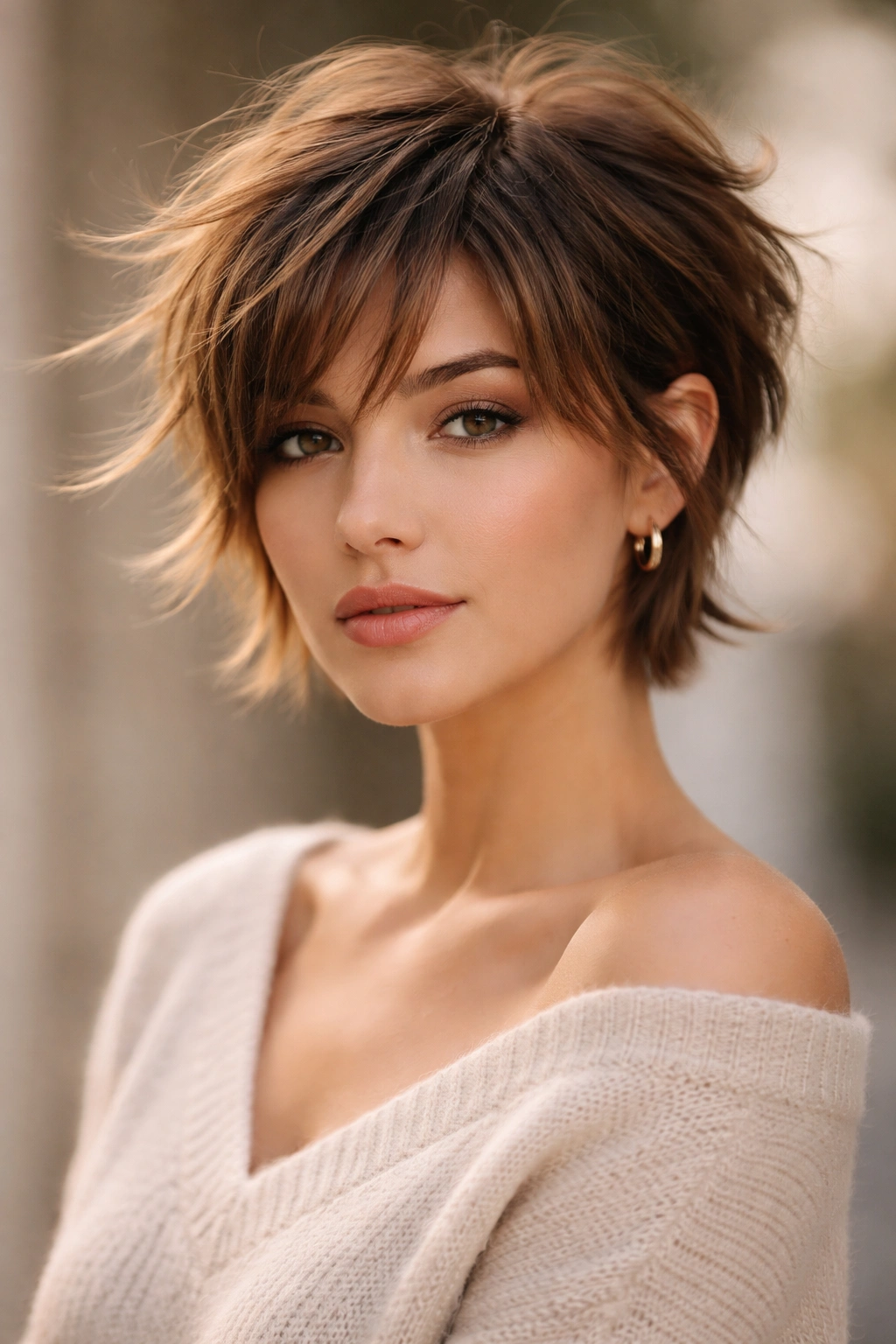
This is the pixie for people who want short hair but with undeniable femininity and romance. The entire cut is built on soft, choppy layers that create movement and texture. The bangs are longer and face-framing, starting longer at the center and gradually tapering as they move outward, blending into the layers around the face. Nothing is severe or blunt; everything is soft, moving, and romantic.
Universal Appeal of Romantic Styling
Face-framing bangs work beautifully on virtually every face shape because they literally frame rather than define. The soft, layered approach prevents harsh lines. Heart-shaped faces absolutely adore this cut because the layered bangs frame the forehead beautifully. Oval faces look sophisticated and soft. Round faces benefit because the texture and movement prevent flatness. Square and rectangular faces love the softness and movement that breaks up angular features.
Creating the Romantic Tousled Effect
- This cut thrives on texture and movement, so texturizing spray is essential
- Blow-dry with your fingers, scrunching and separating pieces throughout
- The more undone and tousled, the better it looks
- Trim every 5-7 weeks—this cut actually improves slightly as layers blend together
- This is one of the lower-maintenance cuts if you embrace the tousled aesthetic
- Works beautifully on most hair textures, especially wavy and textured hair
The Right Pixie for Your Face
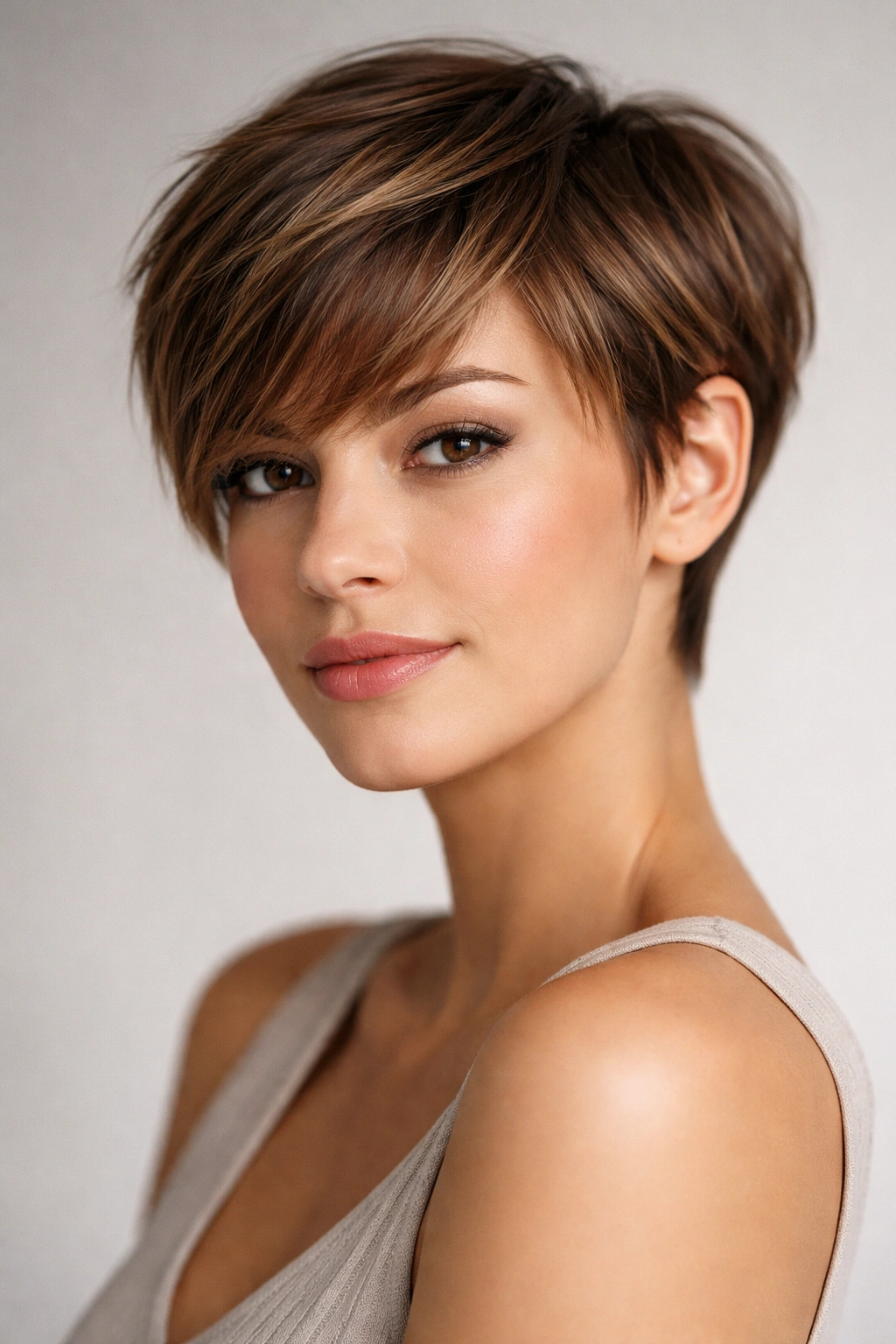
The most important thing to understand is that the perfect pixie cut with bangs isn’t about following rules—it’s about understanding which combination of length, shape, texture, and bang style complements your specific face shape and personality. The cut that looks absolutely stunning on someone with an oval face might feel wrong on you with a rounder face. The bangs that make one person feel confident might feel too severe or too soft for someone else.
When you’re ready to take the leap, bring multiple reference photos to your stylist—not just one image, but several showing different bang styles and proportions you’re drawn to. Discuss your face shape openly and ask for honest feedback about which variations will flatter you most. A great stylist will help you understand how length, texture, and bang style interact with your specific features and hair type.
The beauty of short hair is that if you don’t love the cut, it grows out relatively quickly. You have the freedom to experiment in ways that aren’t possible with longer hair. Whether you choose something edgy and architectural or soft and romantic, a pixie cut with bangs can be absolutely transformative when it’s the right one for you.
