



Line design hairstyles have become one of the most striking and creative expressions in Black hair culture. These geometric patterns, sharp edges, and intricate designs aren’t just decorative details—they’re bold statements that transform braids, locs, natural hair, and protective styles into wearable art. Whether it’s a clean, minimalist line carved into the side of your head or an elaborate geometric pattern that covers your entire scalp, line designs demand attention and showcase serious styling skill.
The beauty of line design hairstyles is that they work across virtually every hair texture and length. You can rock them with box braids, knotless braids, cornrows, locs, twist-outs, or shaved designs on close-cut hair. They elevate your entire aesthetic, add visual interest to protective styles that might otherwise feel basic, and give you endless room to customize based on your personal style, occasion, and creative vision. What started as a subtle enhancement has evolved into a major trend with infinite variations—from intricate tribal patterns to minimalist geometric shapes to full-color creations that blend design with hair art.
If you’ve been scrolling through social media or noticing bold new hairstyles on the people around you, line designs are everywhere. The level of artistry involved in creating these styles is genuinely impressive, and the range of options means there’s a line design aesthetic that fits any personality or occasion. Let’s explore the most striking versions that Black women are wearing right now.
Understanding Line Designs and Their Cultural Significance
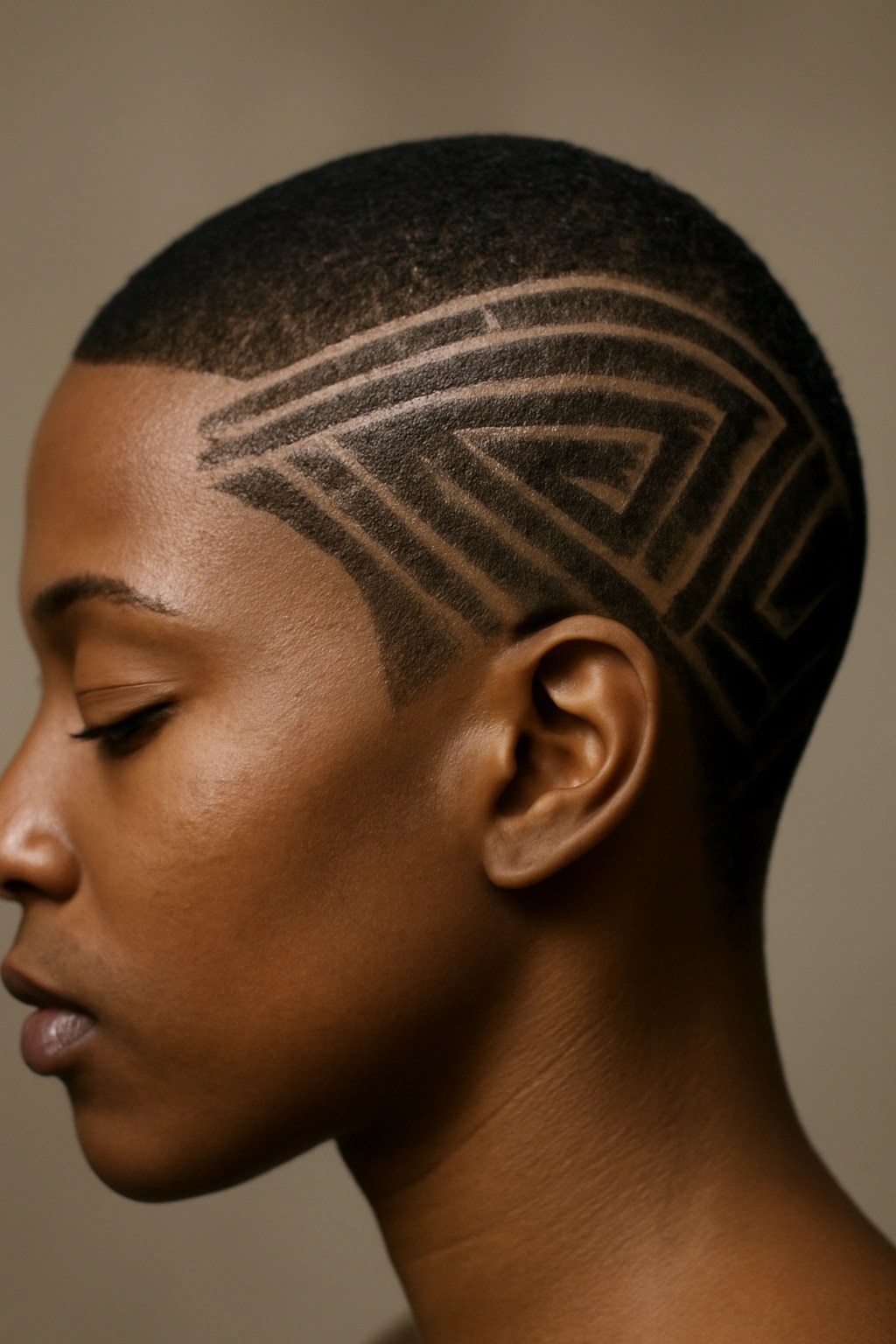
Line design hairstyles draw deeply from African and diaspora traditions where intricate braiding, sculpting, and decoration have been central to personal identity and cultural expression for centuries. Modern line designs build on this legacy while adding contemporary artistic flair, making them both culturally rooted and entirely current.
These designs serve multiple purposes at once. They’re protective in the practical sense—when incorporated into braids or twists, they help preserve the hairstyle and keep edges neat. They’re aesthetic, transforming a standard protective style into something visually dynamic and memorable. They’re also deeply personal, allowing you to express your individuality, artistic taste, and confidence through your hair.
The versatility of line designs is part of why they’ve become such a dominant trend. You can go subtle or bold, simple or complex, monochromatic or multi-colored. A line design can be your entire aesthetic statement or a small detail that only people looking closely will notice. The skill required to execute these designs—whether you’re a stylist or doing your own hair—speaks to the level of artistry and technical knowledge within Black hair culture.
1. Geometric Edge Line Designs
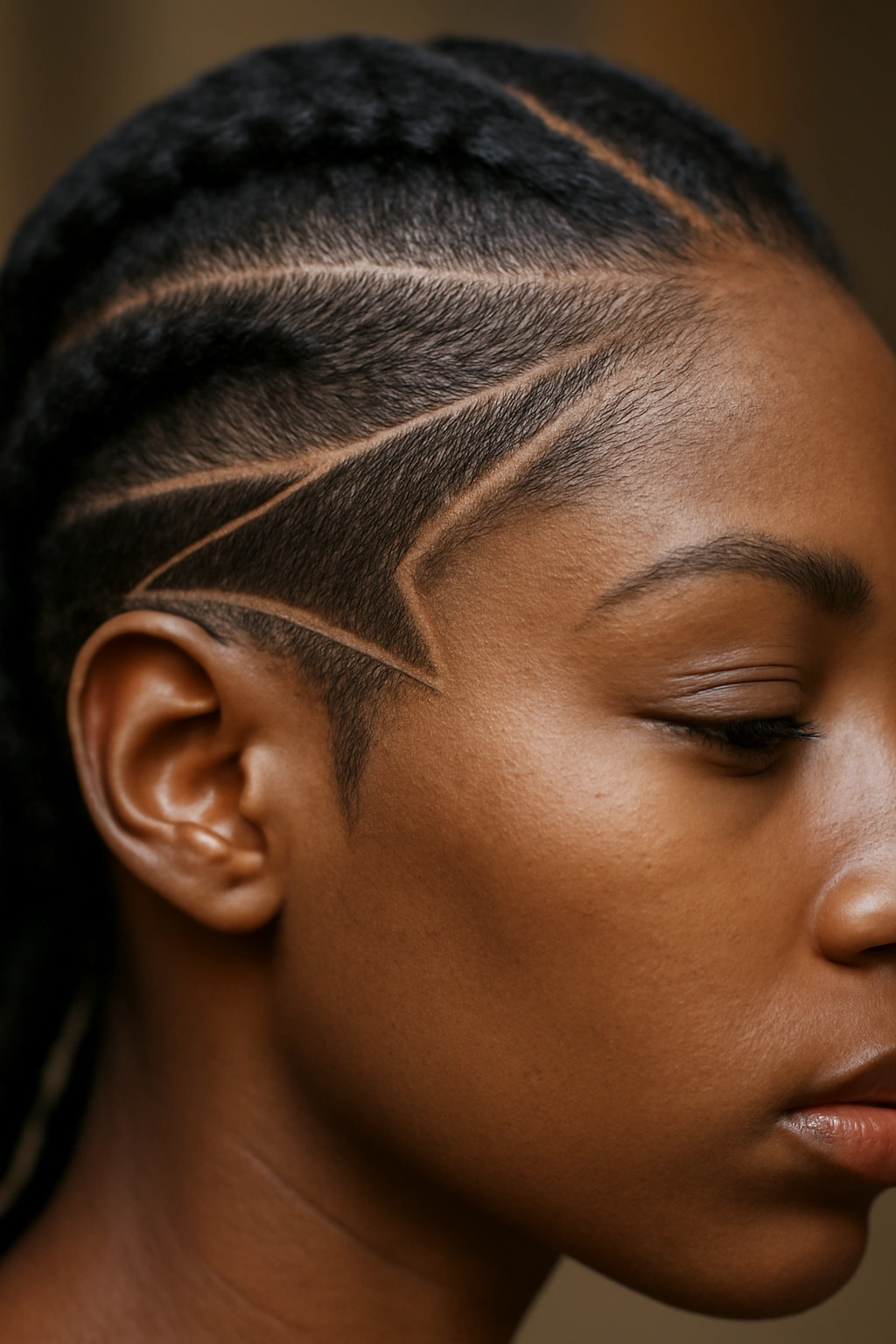
Geometric edge designs feature clean, sharp lines that form perfect shapes along your hairline, parts, or throughout your braids. Think triangles, diamonds, squares, and angular patterns that create a highly structured, modern look. These designs are mathematical in their precision—every angle is intentional, every line is deliberate, and the overall effect is striking and contemporary.
Why This Style Stands Out
Geometric designs have an almost architectural quality that looks absolutely polished and intentional. Unlike freeform or flowing designs, geometric patterns convey precision and control. They work beautifully with box braids, knotless braids, and cornrows because the linear nature of these styles complements the geometric lines perfectly. Geometric edge designs are particularly popular at the temples, along the front hairline, or running down the center part—anywhere that gets noticed and makes an impact.
What to Know About Geometric Designs
- These designs look sharpest when they’re tightly executed, which requires either a skilled stylist or real patience if you’re doing it yourself
- Geometric patterns tend to look fresher longer than curved or flowing designs because the lines stay visible as your braids or twists settle and shift
- Popular geometric variations include diamond cascades down the side of your head, triangular patterns at the temple, and repeated square patterns along your part
- The contrast between the geometric lines and the curves of your braids or coils creates a dynamic visual effect
- These designs work across all braid sizes and thicknesses, from micro braids to jumbo braids
Pro tip: Geometric designs photograph incredibly well, so if you’re planning to document your style, these are a smart choice for pics that really showcase the detail.
2. Curved Pattern Line Designs
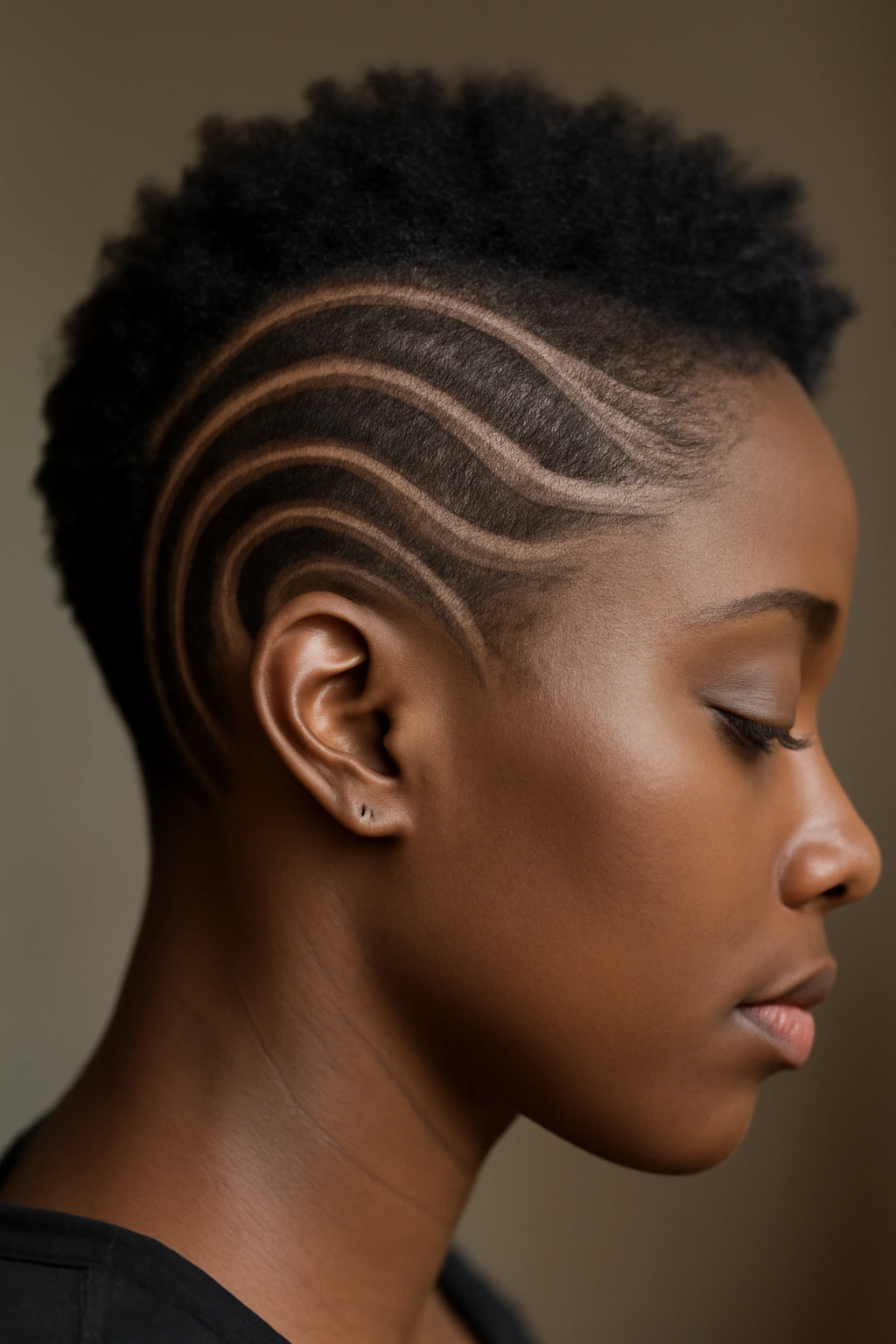
Curved pattern designs are the flowing, organic counterpart to geometric styles. These lines follow natural curves, waves, and swooping patterns that look almost like calligraphy across your scalp. Rather than sharp angles, you’re working with smooth, connected curves that create movement and elegance.
Why This Style Stands Out
Curved designs have an undeniable elegance that makes them feel sophisticated and artistic. They can look almost like line drawings or tattoo-inspired art when executed well. Curved patterns are incredibly forgiving in terms of execution—because they’re not confined to rigid angles, they have more room for variation while still looking intentional. They pair beautifully with flowing braids, locs, and twist styles where the curves of the design echo the curves of your hair texture.
What to Know About Curved Designs
- Curved patterns often look more fluid and natural than geometric designs, which appeals to people who prefer organic rather than rigid aesthetics
- These designs work particularly well along the sides of your head, creating a frame for your face and drawing attention to your features
- Popular curved design variations include spiral patterns, flowing wave designs, and interconnected circular patterns
- Curved lines can be incorporated into almost any braid pattern, from cornrows to box braids to locs
- These designs tend to flow naturally with your hair movement, so they look good as your style settles and evolves
Worth knowing: If you’re not sure whether you want to commit to a permanent shaved design, curved lines are easier to incorporate into braids in a way that can be removed later without cutting your hair.
3. Tribal-Inspired Line Details
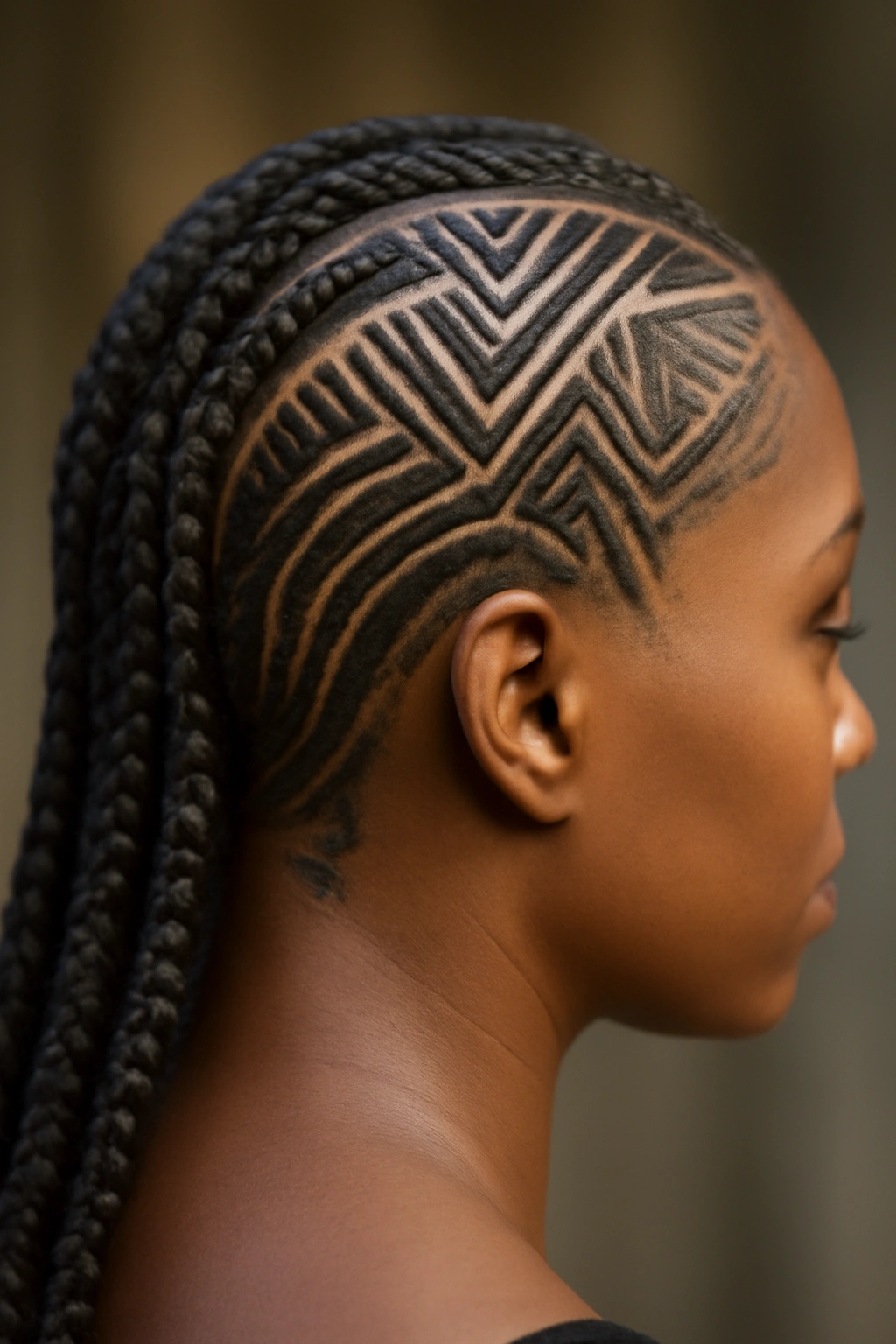
Tribal-inspired line designs draw from traditional African aesthetics and patterns that have been used for generations as markers of identity, community, and cultural belonging. These designs feature intricate, often symmetrical patterns that might include multiple thin lines, dotted patterns, or designs that reference specific cultural traditions.
Why This Style Stands Out
Tribal-inspired designs carry cultural weight and artistic meaning beyond just visual impact. When done with intention and respect for the traditions they reference, they’re a powerful way to honor your heritage and connect with ancestral aesthetics. These designs tend to be more intricate and detailed than simple geometric or curved patterns, which makes them visually complex and genuinely impressive when they’re well-executed. They work beautifully on people who want their hair to tell a cultural story, not just serve as decoration.
What to Know About Tribal-Inspired Designs
- These designs often work best on a larger canvas—cornrows with multiple lines, braids along the entire scalp, or full locs with detailed patterns throughout
- Tribal patterns frequently incorporate symmetry and repetition, creating a sense of intentional structure and cultural significance
- Common tribal-inspired elements include dotted lines, geometric shapes borrowed from traditional cloth patterns, and designs that reference specific ethnic or regional aesthetics
- These designs are particularly stunning on locs, where the texture of the locs themselves becomes part of the overall artistic composition
- The meaning and cultural significance of specific tribal patterns varies—learning about what particular designs represent is important if you’re incorporating them
Insider note: If tribal designs resonate with you but you’re not sure about the cultural specifics, researching the particular patterns and their origins shows respect for the tradition while deepening your own understanding.
4. Minimalist Hair Geometry
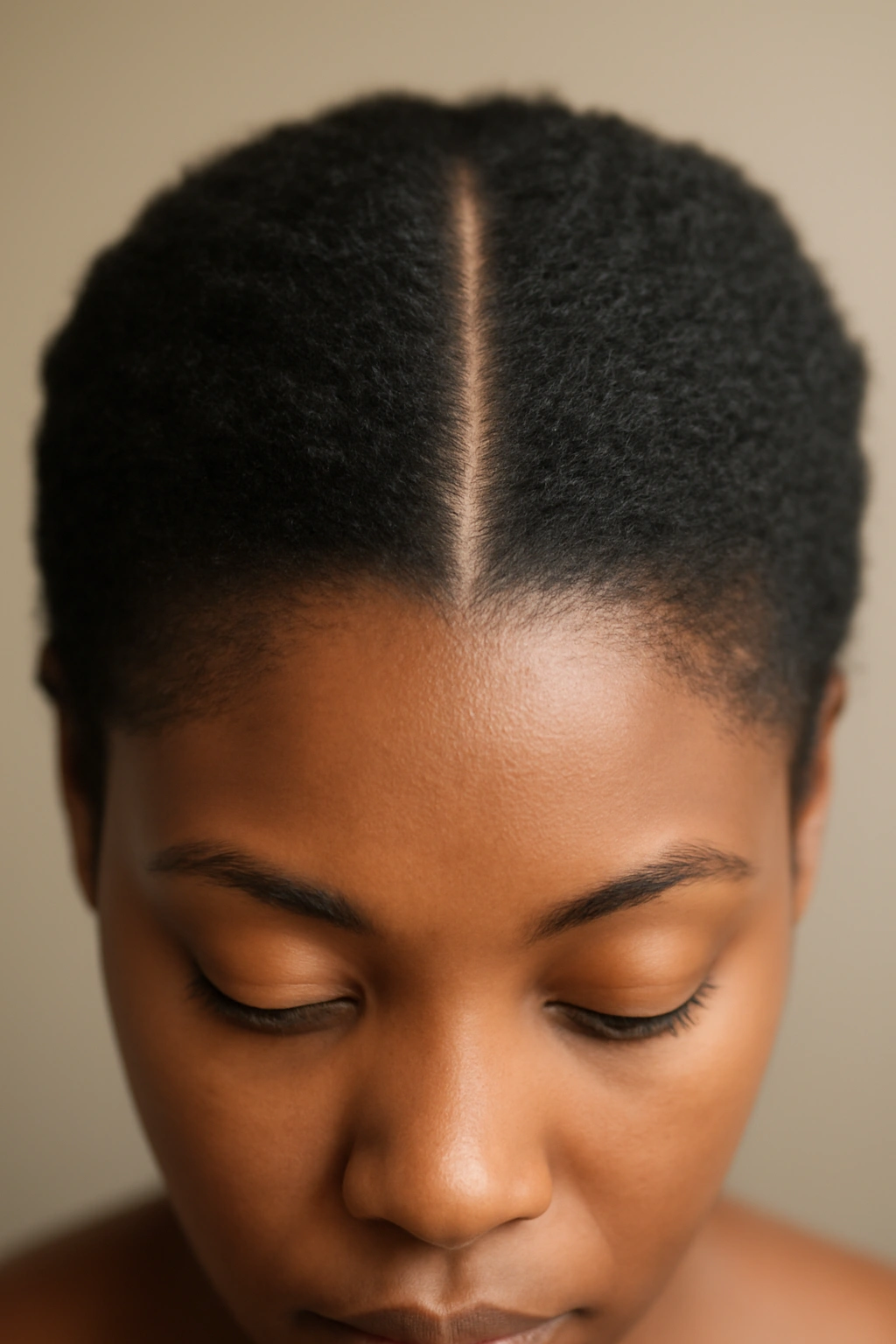
Minimalist line designs strip everything down to the essentials—one or two clean, simple lines that create impact through restraint rather than complexity. This might be a single thin line along your part, a subtle line at each temple, or a small geometric shape carved into your hairline. Less is more, and the simplicity is the statement.
Why This Style Stands Out
Minimalist designs appeal to people who love sophistication and subtlety. A single, perfectly executed line carries more weight than you might expect—it draws the eye, signals intentionality, and looks endlessly chic. These designs work across any protective style without overwhelming the style itself, so they’re perfect if you want to enhance rather than dominate your look. They’re also significantly faster to create and easier to maintain than elaborate designs, which makes them more accessible for people doing their own hair.
What to Know About Minimalist Designs
- Single lines work beautifully along your center part, at your temples, or framing your hairline—anywhere that creates a natural focal point
- Minimalist designs actually require very precise execution because there’s nowhere to hide; every line needs to be absolutely clean and straight
- You can incorporate minimalist lines into any protective style—braids, twists, locs, natural hair—and they’ll enhance rather than clash
- These designs age well and look fresh throughout the entire wear of your protective style
- Minimalist doesn’t mean boring; a single perfectly-placed line can be just as striking as elaborate patterns once you see it in person
Pro tip: Minimalist line designs are ideal if you’re testing out line designs for the first time—they’re lower commitment, easier to create, and incredibly effective at demonstrating whether this aesthetic works for you.
5. Bold Ombré Line Designs
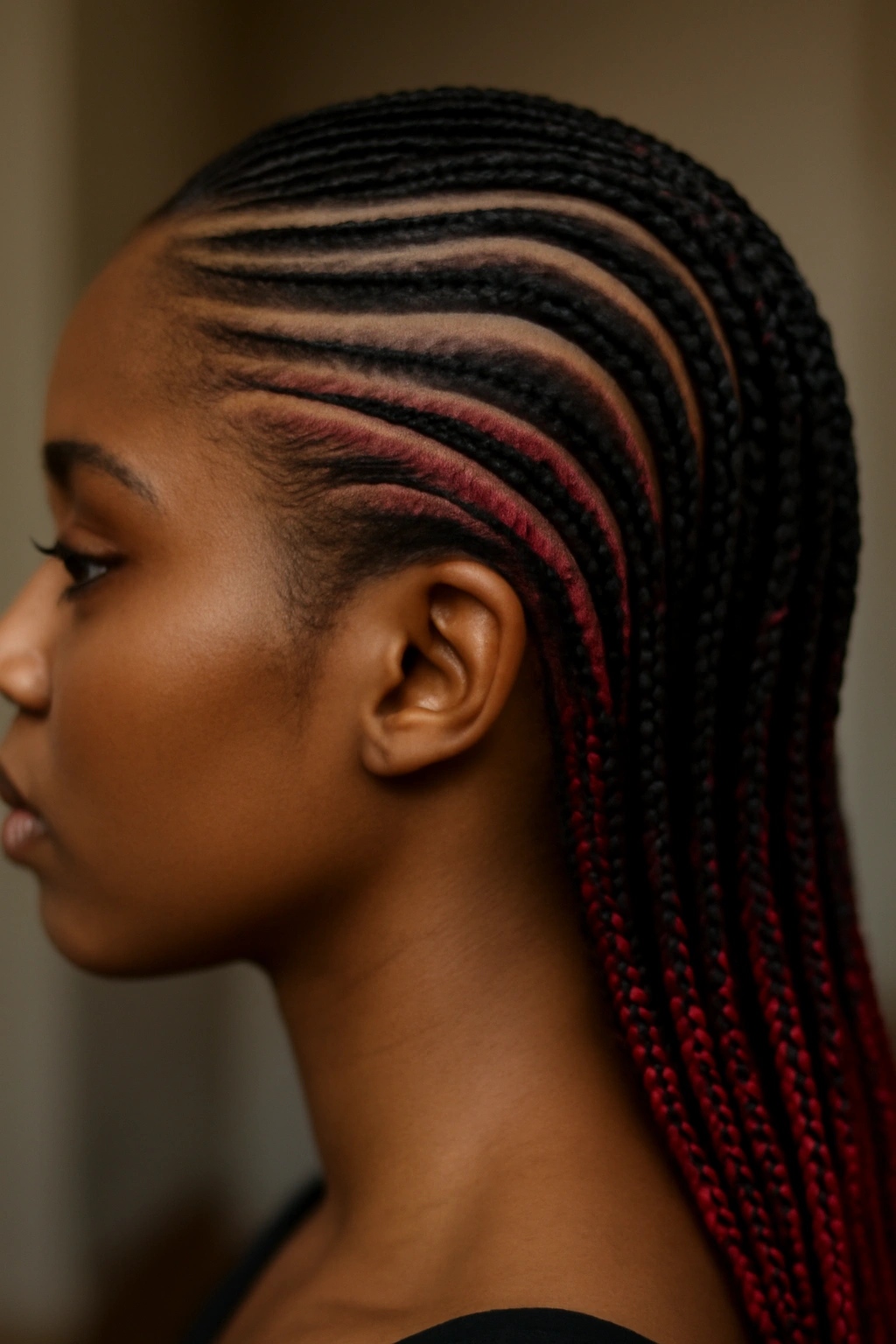
Ombré line designs combine the precision of line work with color blocking or gradients, creating lines that fade or transition between two or more colors. You might have a line that fades from black to burgundy, or lines that use contrasting colors to create maximum visual impact.
Why This Style Stands Out
Color immediately elevates a line design, transforming it from a texture detail into a color statement. Ombré lines create dimension and movement in a way that monochromatic lines don’t—your eyes travel along the color transition and trace the line’s path across your head. These designs look particularly striking on box braids and knotless braids where the line color contrasts sharply with your base braid color. The color aspect adds a layer of individuality and personality that makes these designs feel deeply personal.
What to Know About Ombré Line Designs
- Color braids are essential for ombré line designs, and you’ll want to work with a stylist experienced in color work to achieve a smooth, intentional gradient
- Popular ombré combinations include black-to-burgundy, black-to-blonde, deep purple-to-pink, and jewel-tone transitions that complement your skin tone
- Ombré lines work best on medium to thick braid sizes where there’s enough surface area for the color transition to be visible and impactful
- These designs photograph beautifully and tend to be major photo-worthy when you’re documenting your style
- Color maintenance is important—depending on the dye type and your environment, colors may shift or fade differently over time
Worth knowing: If you love color but worry about commitment or damage, some braiders use temporary color sprays or install colored braids that can be removed, giving you the ombré line aesthetic without permanent color.
6. Braided Line Patterns
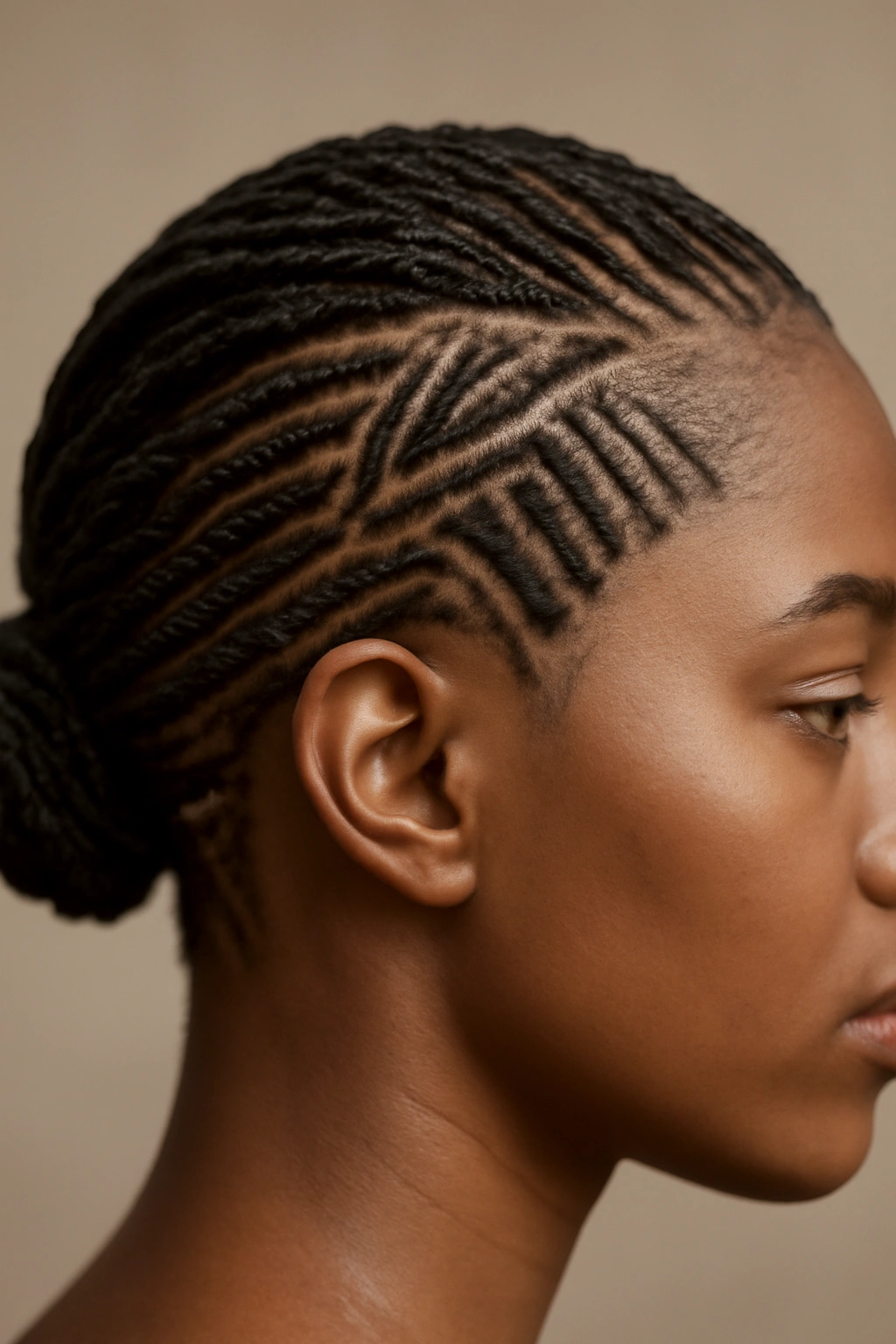
Braided line patterns use smaller braids, microbraids, or cornrow details to create intentional designs and patterns across your scalp. Rather than shaving or sculpting hair, you’re using the braid pattern itself to create the line design—perhaps a zigzag of thinner braids, a spiral of cornrows, or a geometric grid of detailed braiding.
Why This Style Stands Out
Braided line patterns are technically challenging and genuinely impressive from a styling perspective. They preserve your hair completely while still creating stunning visual designs. These patterns work beautifully with protective styles like box braids and cornrows because the line pattern becomes an integral part of the overall protective style rather than something added on top. The dimension created by raised braids versus shaved sections gives these designs a sculptural quality that’s absolutely striking.
What to Know About Braided Line Patterns
- Braided line patterns require a stylist with real technical skill and spatial reasoning ability to execute properly
- These patterns look best when there’s significant contrast between the braided lines and the rest of your hair—usually achieved by having the line braids be thinner or tighter than surrounding braids
- Popular variations include zigzag patterns, spiral designs, and geometric grids that cover sections of your scalp
- Braided patterns age well as your protective style settles and wears—they don’t require the same maintenance as shaved designs
- These patterns work across all hair textures and lengths, as long as you have enough hair to create contrast between the line braids and the rest of your style
Pro tip: If you’re committing to a protective style for several weeks, braided line patterns actually improve as your style settles because the contrast between different braid thicknesses becomes more visible over time.
7. Shaved and Sculpted Lines
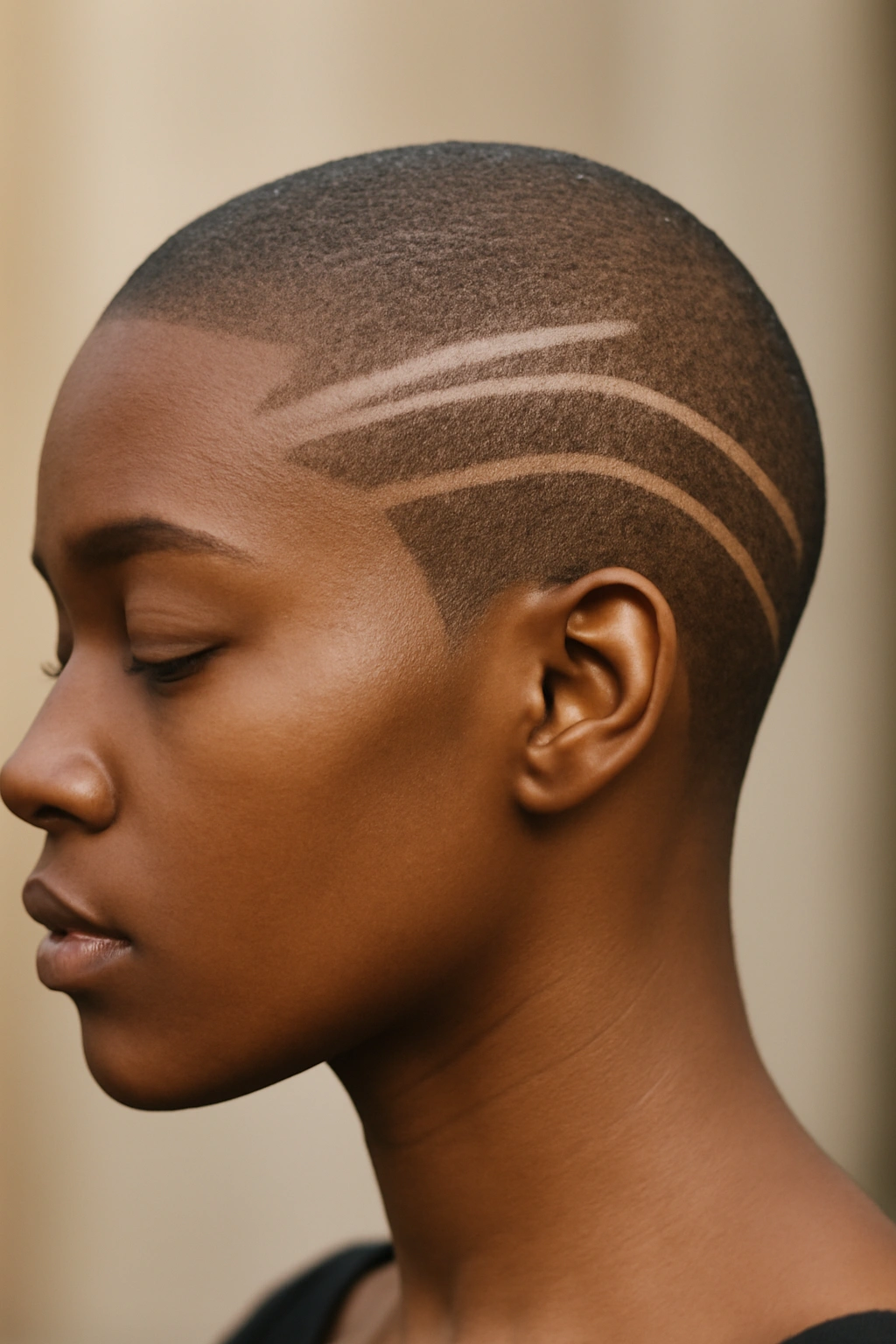
Shaved and sculpted line designs use clippers or razors to remove sections of hair, leaving clean, precise lines across your scalp. These designs are immediate and bold—you’re creating negative space (where hair is removed) rather than sculpting the hair that remains. Shaved lines can be thin and delicate or thick and dramatic, simple or elaborate.
Why This Style Stands Out
Shaved designs have an undeniable boldness and confidence—they’re a statement that says you’re committed to your look and comfortable with maximum visibility. These designs create the sharpest, most defined lines possible because you’re working with bare scalp rather than trying to create definition within hair. Shaved line designs work beautifully on all skin tones and head shapes because the contrast of bare scalp against hair is universally striking. The maintenance is also cleaner—the lines stay crisp for longer than designs that rely on sculpting hair alone.
What to Know About Shaved Designs
- Shaved line designs are permanent until your hair grows back in, so you’re committing for at least a few weeks while the lines grow out
- These designs work best with very sharp clippers or razors and a skilled hand—imprecise shaving creates visible irregularities
- Popular shaved design variations include thin line details, thick geometric shapes, elaborate multi-layered patterns, and designs that extend across the entire back section of your head
- Shaved designs pair beautifully with braids, locs, or textured natural hair—anywhere that creates contrast against the shaved sections
- As your hair grows out, you’ll need touch-ups every 2-3 weeks to keep the lines looking crisp, or you can allow the design to grow in naturally and shift as your hair lengthens
Worth knowing: Shaved designs look particularly striking in professional photos and video, so if you’re creating content or documenting your style, these are incredibly camera-friendly.
8. Intricate Corner Designs
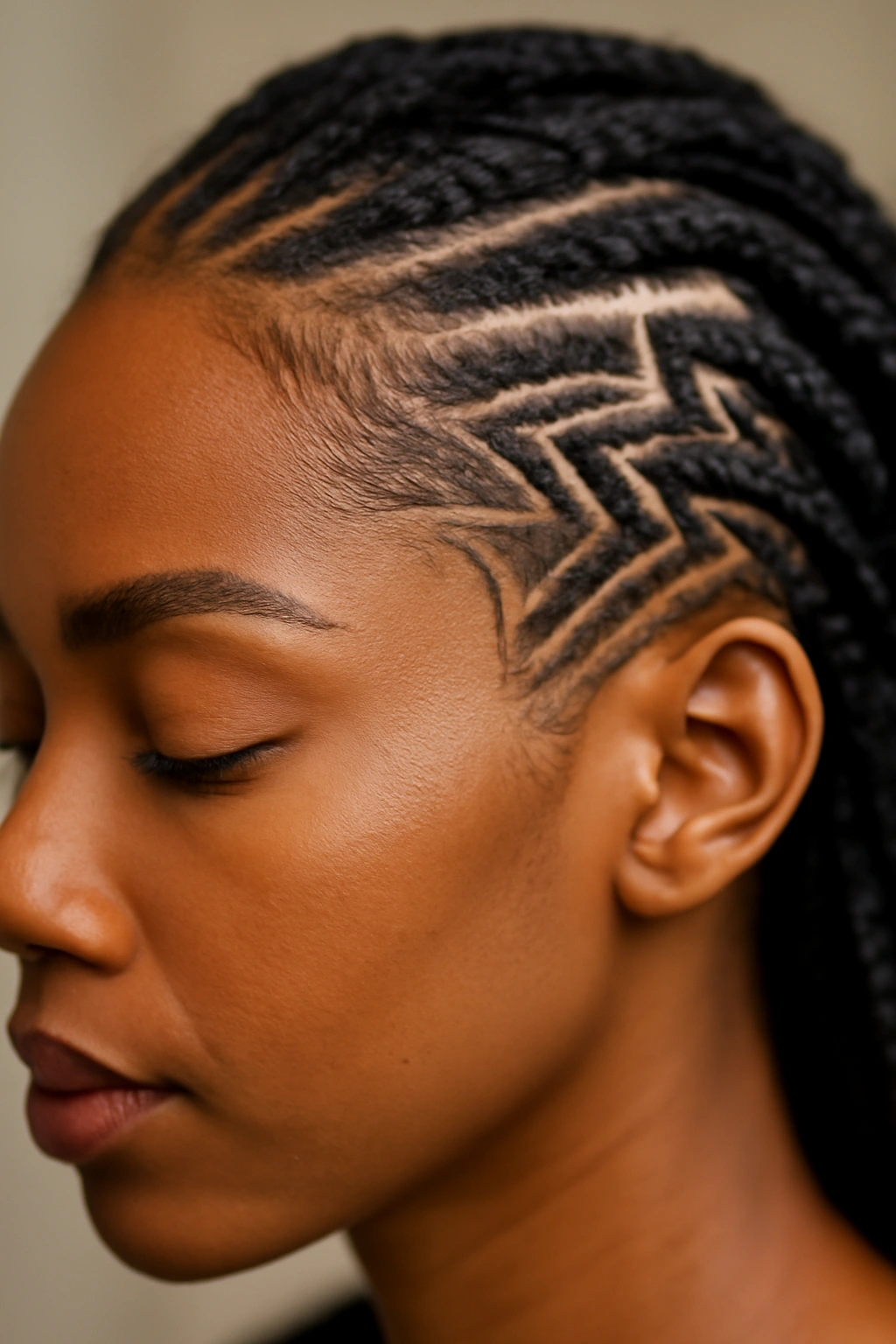
Corner designs focus on creating elaborate, detailed patterns specifically in the corners of your hairline—the corners at your temples, the inner corners near your ears, or the corners where your front hairline meets the sides of your head. These designs take full advantage of high-visibility areas and create intricate focal points.
Why This Style Stands Out
Corner designs are genius from a styling perspective because they draw attention to your face and facial features while requiring less overall scalp coverage than all-over designs. A small, perfectly executed intricate design in your corner can look just as striking as a larger, simpler design. These designs are also forgiving in terms of space—you can get genuinely complex with your patterns because you’re working with a concentrated area. Corner designs photograph beautifully because they frame your face and become a natural focal point in photos.
What to Know About Corner Designs
- Corner designs work best with medium to high precision—the intricate nature means every line or shape needs to be clearly visible
- Popular corner design variations include small geometric patterns, connected line designs, and miniature tribal-inspired or artistic patterns
- These designs can be created through shaving, braiding, or a combination of both techniques
- Corner designs work with virtually any protective style—braids, locs, twists, natural hair—without interfering with the main style
- Because they’re positioned near your face, corner designs feel very personal and speak to your styling choices and aesthetic taste
Insider note: Corner designs are perfect for people who want to dip their toes into line design hairstyles without fully committing to a large design—they’re impactful but not overwhelming.
9. Colored Line Accents
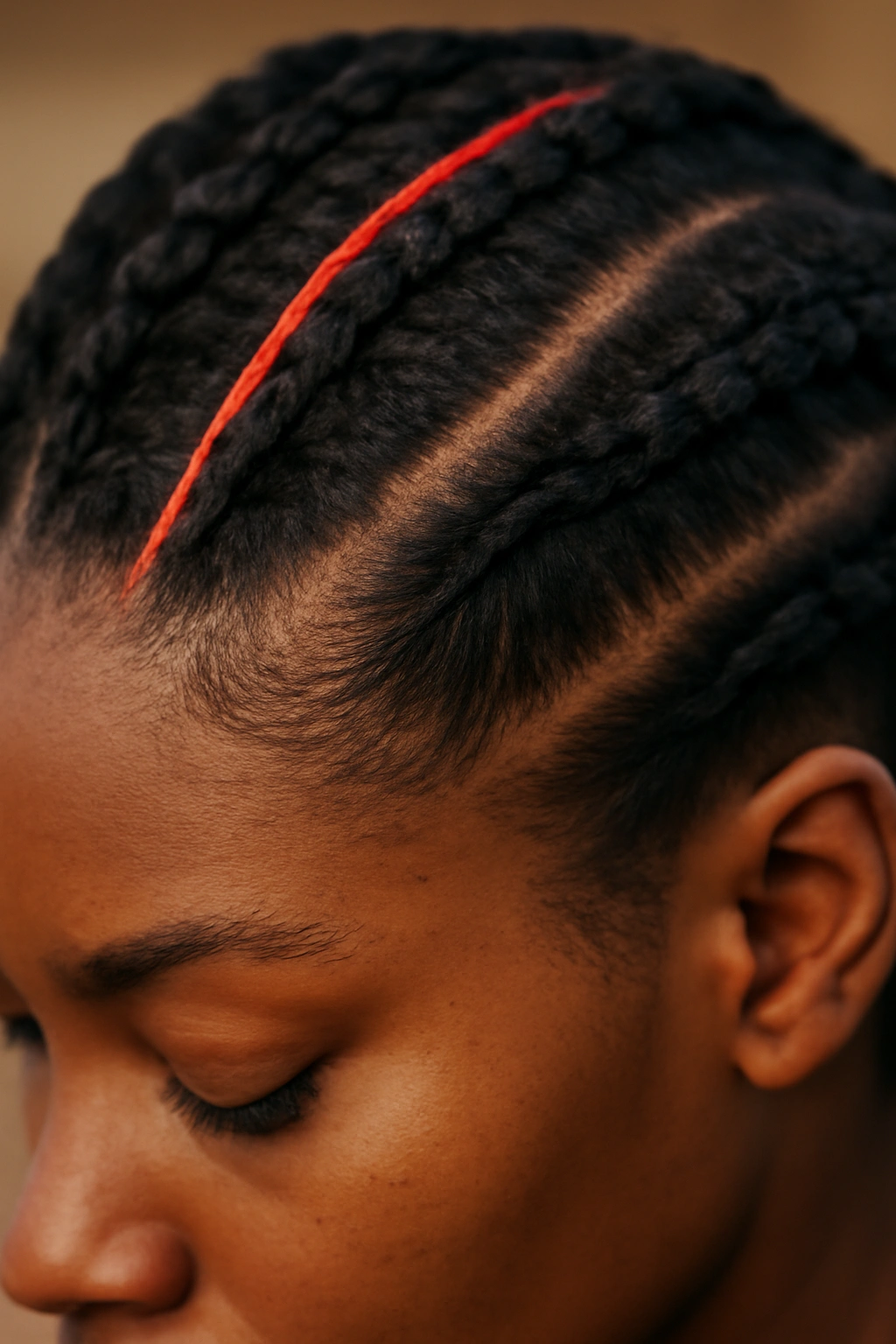
Colored line accents add a pop of color to specific lines without the full commitment of an ombré design. You might have a single line of colored braids running through your style, or thin colored lines creating a pattern against your natural hair color.
Why This Style Stands Out
Color accents add personality and individuality to your line design without dominating your entire look. A single line of bright color—hot pink, deep purple, emerald green, or gold—can completely transform how your hairstyle feels and looks. Colored accents allow you to express your personality and make a bold statement while still maintaining a wearable, professional-appropriate look (depending on your color choice and work environment). The strategic use of color makes these designs feel custom and thoughtful rather than following a standard aesthetic.
What to Know About Colored Accents
- Colored accents work best when the color choice contrasts with your base braid color—think dark braids with a neon accent, or lighter braids with a jewel-tone accent
- Popular color accent choices include jewel tones like sapphire, emerald, and amethyst; bright statement colors like hot pink and electric purple; and metallic accents like gold and silver
- Colored accents can be incorporated into single lines, multiple parallel lines, or designs that use color to highlight specific geometric patterns
- These accents work beautifully on all protective styles—box braids, knotless braids, cornrows, locs—and on natural hair with colored products
- Color maintenance depends on the type of color used; semi-permanent colors may fade or shift over time, while permanent colors last longer but can be harder to remove
Pro tip: If you’re not ready to dye your braids, temporary color sprays and colored braid sprays let you test out color combinations and change them between protective style installations.
10. Freeform Artistic Lines
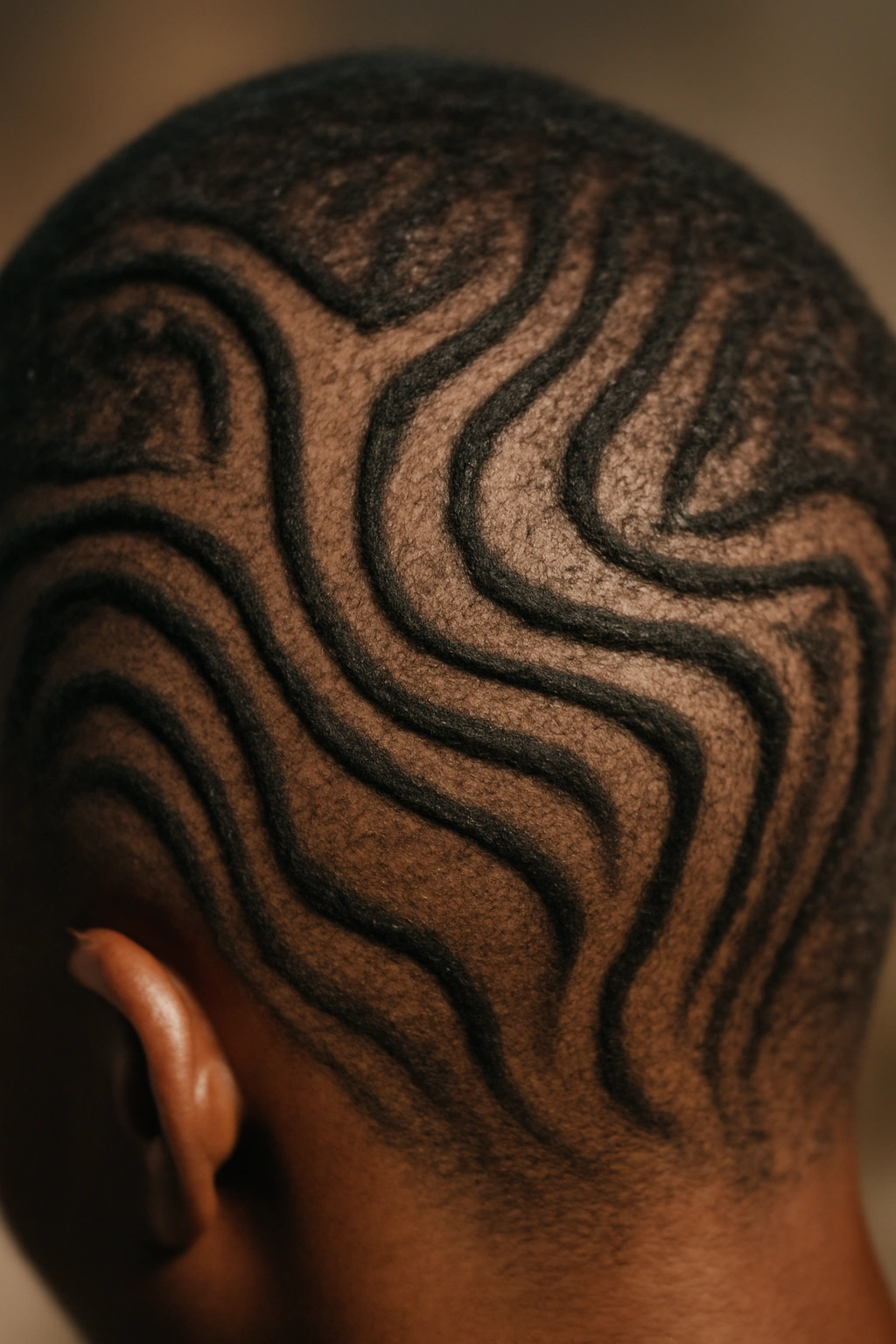
Freeform artistic lines throw out the rulebook and embrace pure creativity. These designs might be abstract, asymmetrical, inspired by art styles like graffiti or watercolor, or completely unique interpretations that don’t fit into standard geometric or tribal categories. This is where line design becomes pure art.
Why This Style Stands Out
Freeform designs feel deeply personal because they’re often custom creations rather than interpretations of established patterns. These designs allow you and your stylist to collaborate creatively and create something that’s entirely unique to you. Freeform artistic lines can be as simple or complex as you want—there’s no rule book, so you’re only limited by your imagination and your stylist’s skill. These designs often feel the most reflective of individual personality and artistic taste, which makes them incredibly compelling.
What to Know About Freeform Artistic Designs
- Freeform designs require a stylist who’s comfortable with creative freedom and has strong technical skills to execute artistic vision
- These designs can incorporate elements of other line design styles—geometric shapes, curved lines, color, braiding, shaving—all in one custom creation
- Freeform designs often work best on larger canvases like full-head cornrows, entire sections of braids, or locs that are getting restyled
- Because they’re custom, freeform designs are often more expensive and time-intensive than standard line designs
- These designs photograph beautifully because they’re unique and often become conversation starters about your creative vision and style
Worth knowing: Bringing mood boards, artistic references, or a clear description of your vision helps your stylist understand exactly what you’re going for, even with freeform designs. The collaboration between your creative direction and your stylist’s technical skill is what makes these designs shine.
Final Thoughts
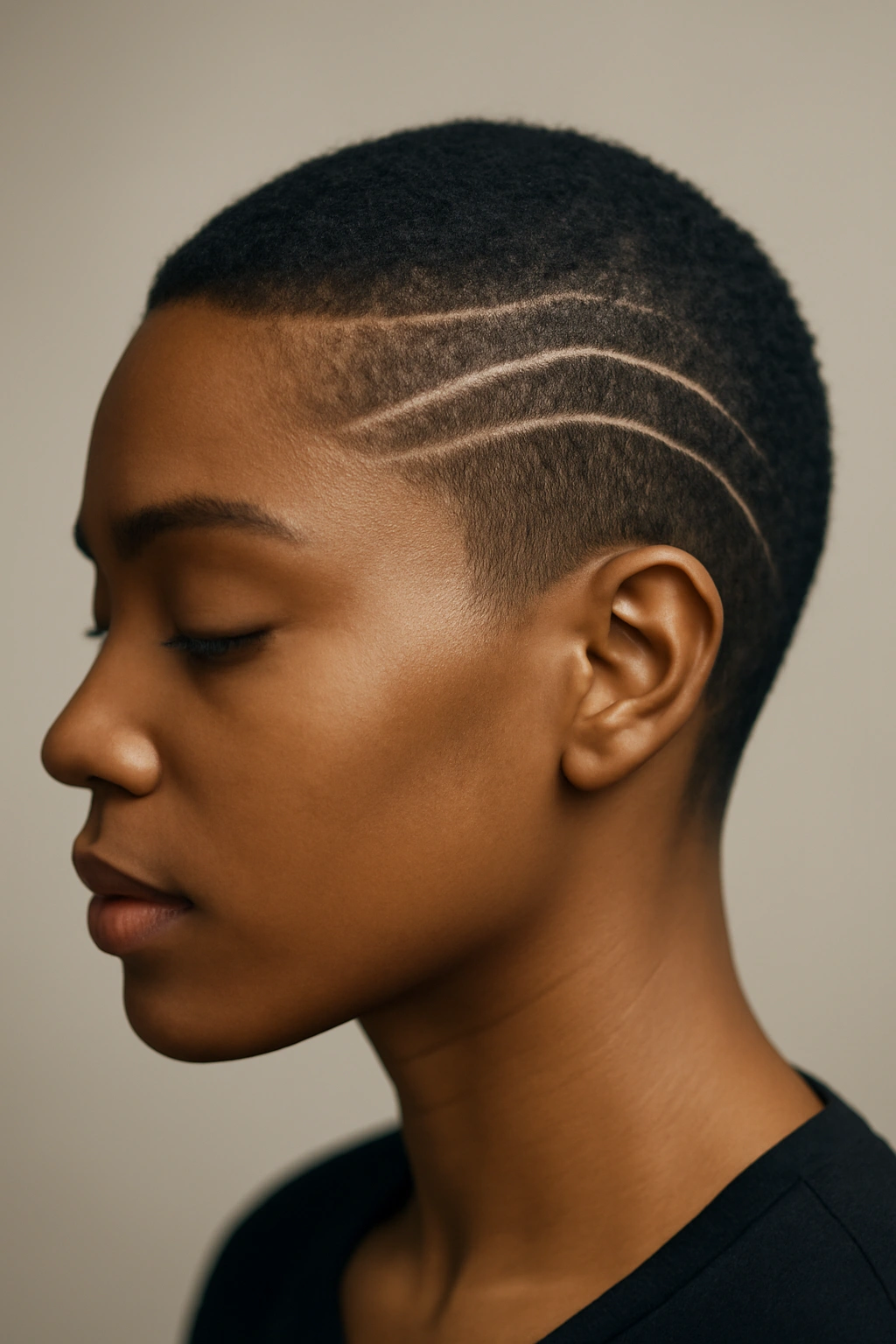
Line design hairstyles represent the intersection of technical skill, artistic vision, and cultural expression. Whether you’re drawn to geometric precision, cultural significance, minimalist elegance, or bold artistic flair, there’s a line design aesthetic that speaks to who you are. The range of options available—from simple, single lines to elaborate artistic patterns—means you can find or create something that feels authentic to your personal style.
The most important thing when considering a line design is working with a stylist who understands your vision and has the skill to execute it well. These designs demand precision and artistry, so don’t hesitate to spend time looking at portfolios, asking questions, and getting a sense of whether a stylist’s aesthetic aligns with yours. A well-executed line design elevates your entire look, while a poorly executed one is immediately visible—the payoff for finding the right stylist is absolutely worth it.
Line designs also work beautifully as subtle additions to protective styles you’re already wearing or as transformative elements that completely shift how you feel about a hairstyle. You can start small and minimal, get a feel for how line designs work with your personal aesthetic, and expand from there. Whatever direction you choose, line design hairstyles are a celebration of creativity, skill, and the endless possibilities available in Black hair culture.
