



The perfect hairstyle has incredible power—it can completely transform how you feel about yourself, frame your face in the most flattering way possible, and give you a confidence boost that lasts far longer than just one good hair day. But finding that perfect style can feel overwhelming when there are so many options out there, especially if you’re not sure what actually works with your hair length, texture, and lifestyle. Whether you’re someone who loves switching things up frequently, searching for a dramatic change, or just trying to figure out what’s possible with the length you’re working with right now, the right cut makes all the difference.
Hair length is genuinely one of the most important factors in determining which styles you can pull off and how easy they’ll be to maintain. A cut that would look stunning on someone with collarbone-length hair might need completely different styling to work on someone with waist-length locks, and what works beautifully as an everyday style for a pixie cut would be totally impractical for longer lengths. Understanding the possibilities at your own hair length helps you make smarter decisions about what cut to ask for, how much styling commitment you’re willing to take on, and whether a particular trending look is actually achievable with your current length.
This guide walks through twenty-five different hairstyles for women, organized by length so you can focus on the options that actually work for you. Whether you’re drawn to the freedom and low-maintenance appeal of short hair, the versatility of medium lengths that can be styled up or down, or the drama and styling possibilities of longer hair, you’ll find detailed descriptions of each style, what makes it work, and exactly how to know if it’s right for you.
1. Classic Pixie Cut
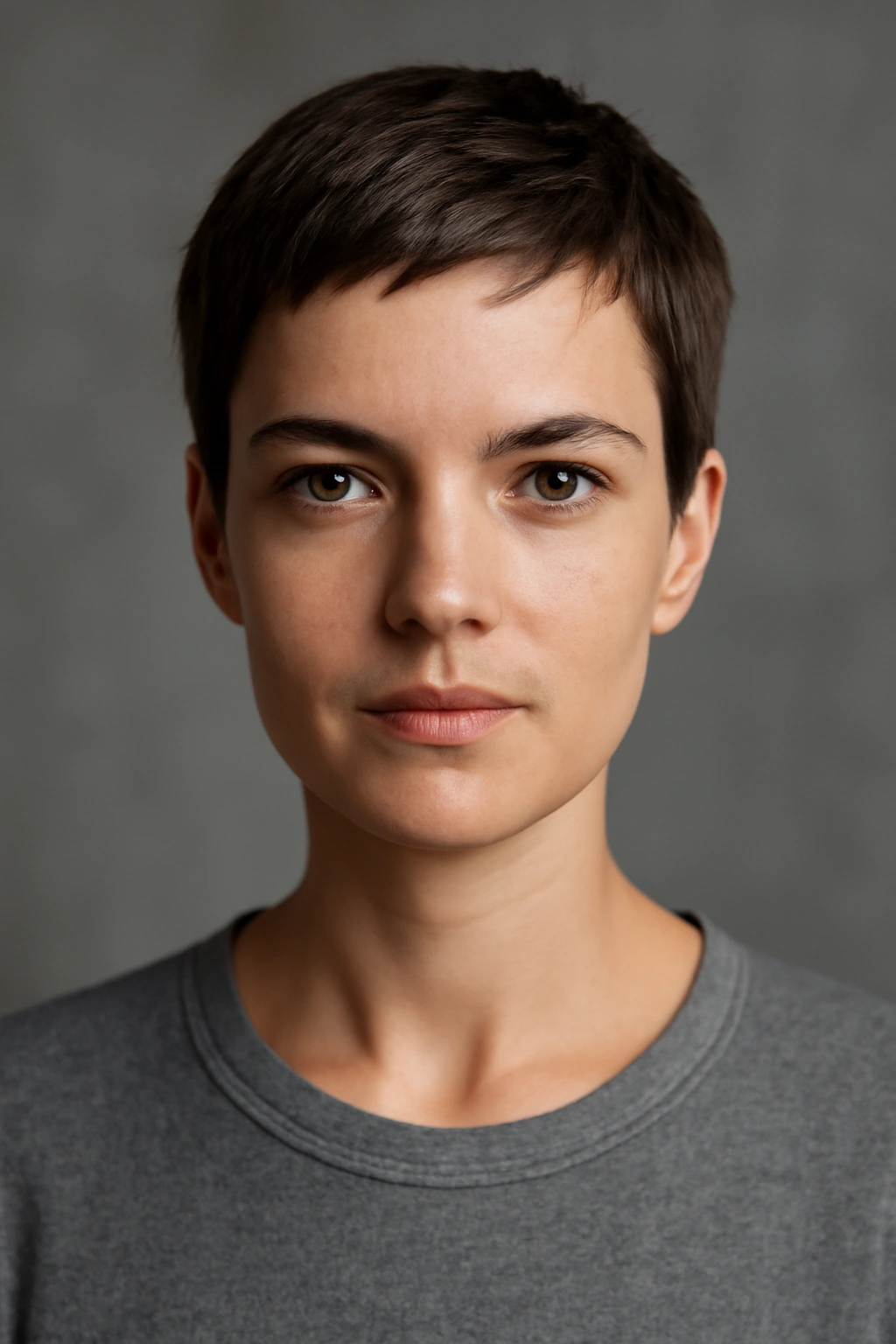
The pixie cut is the short-hair style that refuses to go out of style because it’s genuinely flattering on almost every face shape and works with virtually every hair texture. It’s a very close, cropped cut—usually around one to two inches on top—that requires almost zero styling time and minimal upkeep between salon visits. The beauty of a true pixie is that it’s bold without being complicated; you get to show off your face and your bone structure without any hair hiding what’s really there.
Why It Works So Well
Pixies suit you best if you want a cut that requires literally minutes in the morning and works beautifully with your natural hair texture rather than fighting against it. The short length means no product-heavy styling, no blow-dryer time, and no tangled ends to deal with. It’s also incredibly flattering because it draws attention to your eyes, cheekbones, and facial structure—there’s nowhere for the eye to go except to your face.
How to Make It Work
- Works best on people with fine to medium-textured hair; very thick or very curly hair requires frequent trims to keep the shape sharp
- Ask your stylist for slightly longer pieces around the face if you want a softer, more feminine version
- Pixies look polished with a very short, clean crop OR with a slightly tousled, piecey texture—avoid an in-between shaggy length
- Minimal styling time needed: just wash, add a tiny bit of texture cream if your hair is very straight, and go
Real talk: Pixies require a skilled stylist and frequent maintenance trims every 3-4 weeks because the shape is so defined. If you’re not ready to commit to that, this probably isn’t your cut.
2. Textured Undercut Pixie
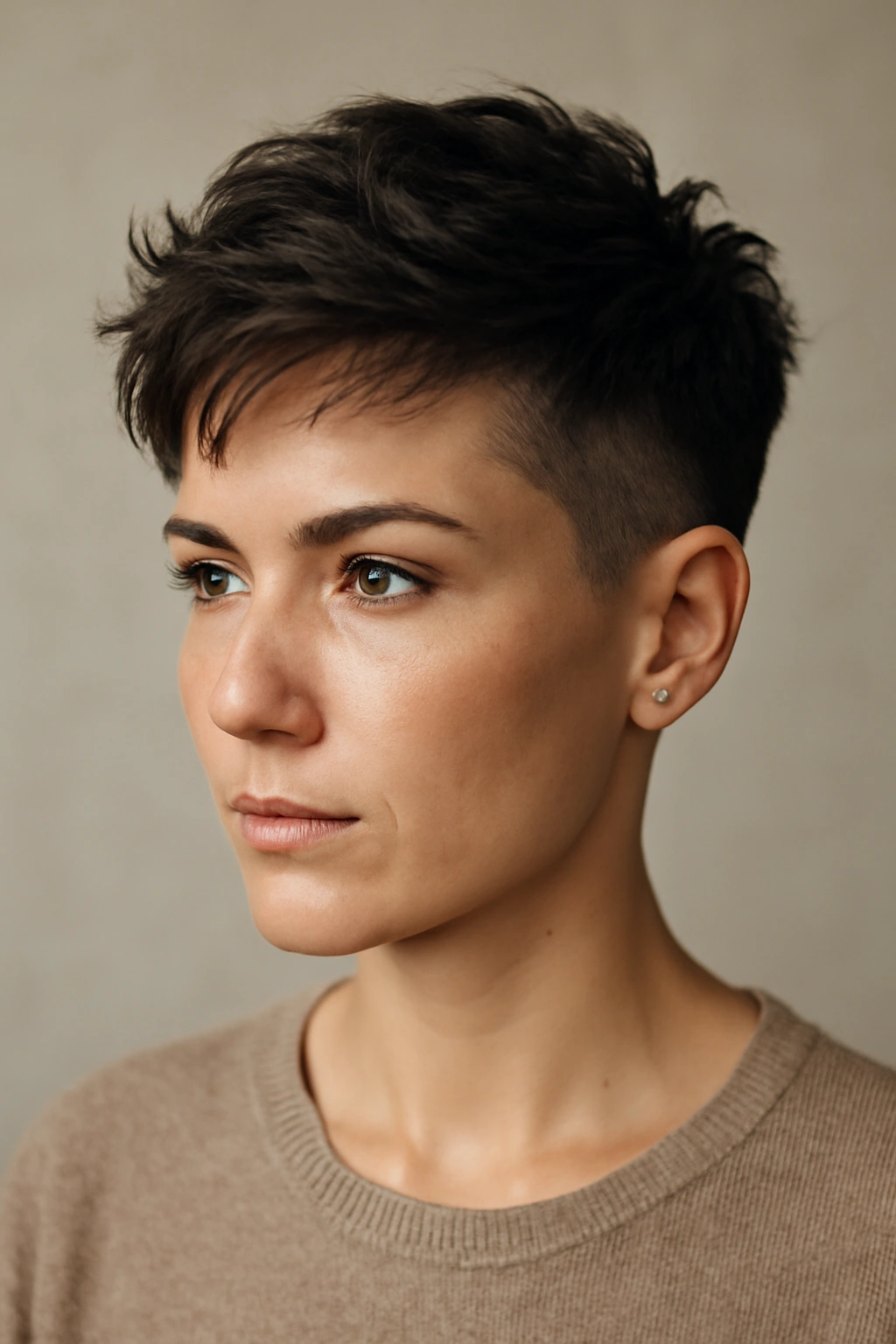
This is the pixie’s edgier, more fashion-forward cousin. An undercut pixie has closely cropped sides and back with longer, textured pieces on top that you can actually style and play with. It gives you the short-hair freedom of a pixie while giving you enough length on top to create movement, stack texture, or even hide the undercut on days when you want to look more traditional.
The Modern Appeal
The textured undercut takes the pixie concept but adds attitude and styling versatility that appeals to people who want short hair with a bit more personality. You get the easy maintenance of an undercut with the creative styling options of having some actual length to work with.
Styling and Maintenance Tips
- The top length typically ranges from two to four inches, giving you room to create texture and shape
- You’ll need products designed for short hair—think texture paste, matte clay, or light wax applied to damp hair
- The undercut (shorter sides and back) requires trims every 2-3 weeks to keep that contrast sharp
- This cut photographs incredibly well and tends to look even better with a small amount of styling intentionality
Styling tip: Run your fingers through the textured top in different directions to create that piece-y, styled-on-purpose look that makes this cut feel intentional rather than lazy.
3. Sleek Blunt Bob
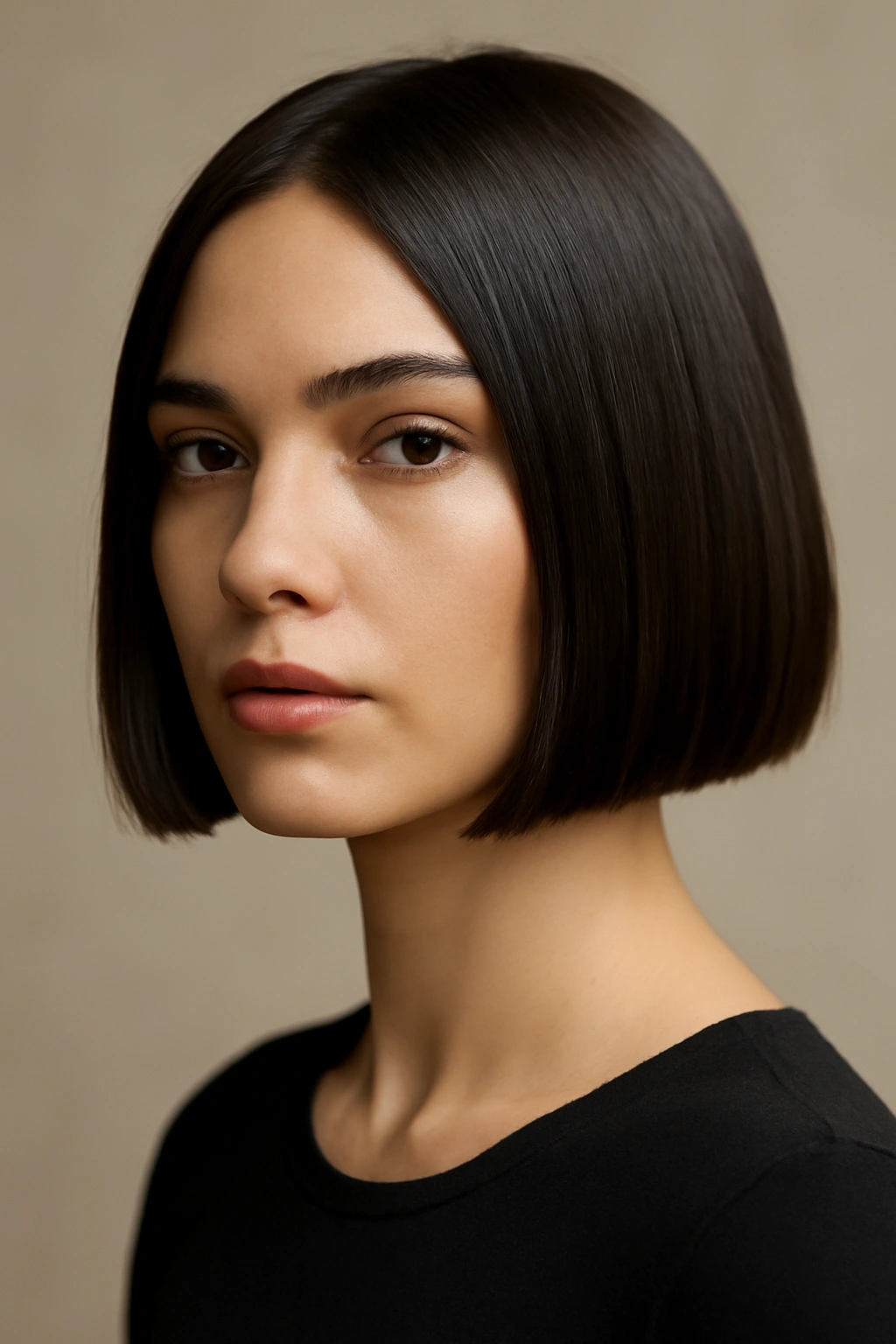
A blunt bob is a precision cut that sits right around jaw-level with zero texture and completely straight edges all around. It’s minimalist, architectural, and genuinely timeless—a cut that feels current whether you’re seeing it on a fashion runway or in a street-style photo. The bluntness is what makes it work; any wiggle in that line and the whole cut falls apart.
Why the Precision Matters
The blunt bob works because of its geometric precision, not in spite of it. The straight lines frame your face and neck beautifully, and the cut is forgiving enough that it works on most face shapes as long as you get the right length for your proportions. It’s polished without trying too hard.
Making It Your Own
- Best on hair with natural smoothness or on people willing to blow-dry straight after every wash
- Pair it with a side part for a softer feel or a deep middle part for more drama
- The cut typically ranges from chin-length to just-below-the-jaw for the most flattering proportion
- Bangs can intensify the vibe—a blunt fringe with a blunt bob creates a very specific, very intentional aesthetic
Know this first: Blunt bobs require frequent trims (every 4-6 weeks) because any growth looks chaotic. You’re also committing to either regular blow-drying or having hair that’s naturally smooth and straight.
4. Choppy Textured Bob
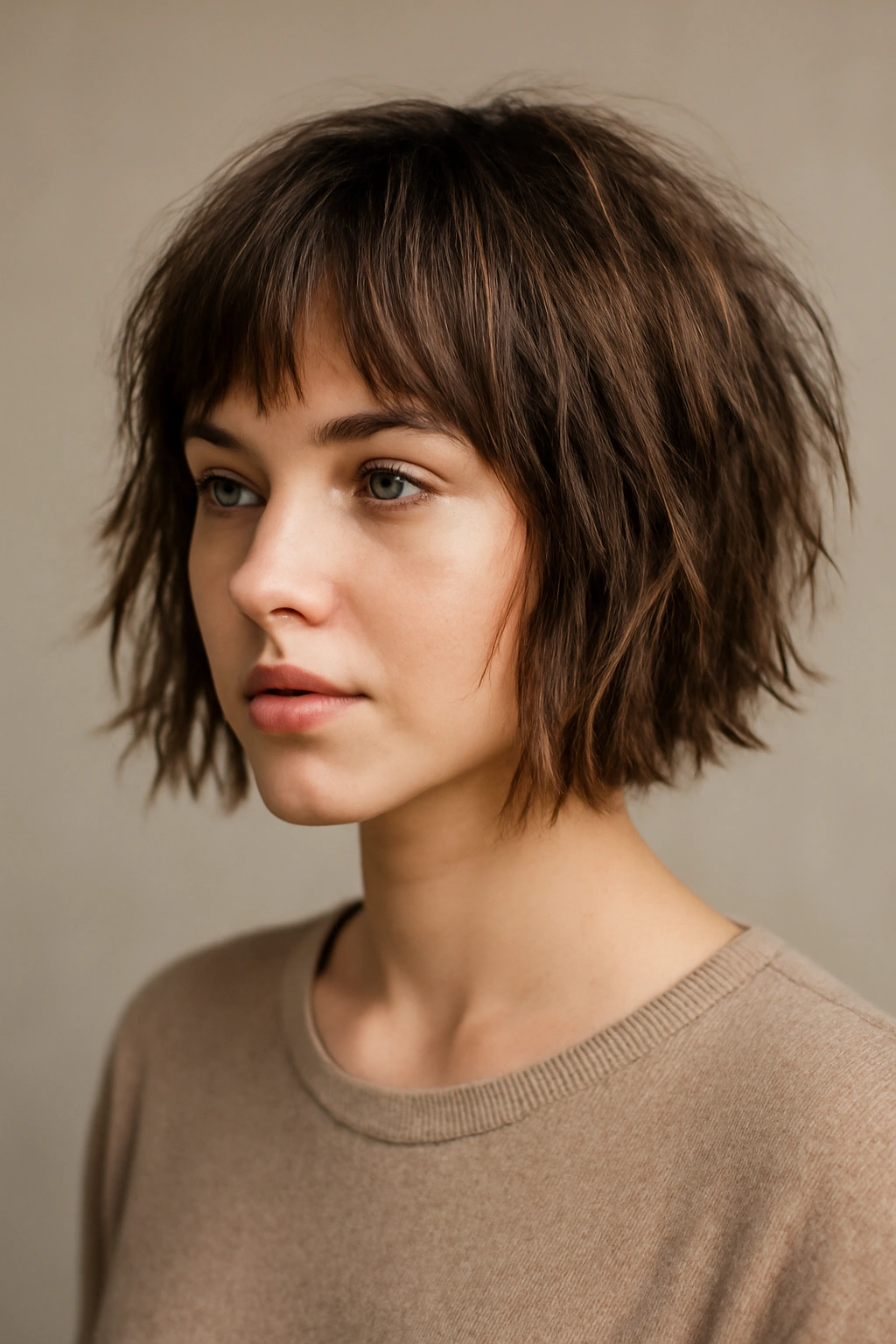
Where a blunt bob is all precision, a choppy textured bob leans into movement and dimension. This cut is shorter in some pieces and longer in others, creating intentional choppiness and texture that works with your hair’s natural tendencies rather than against them. It’s way more forgiving than a blunt bob and looks intentionally cool rather than requiring absolute perfection.
The Beauty of Controlled Chaos
A choppy bob works because it embraces texture and movement. The varying lengths create layers that catch light differently, making your hair look thicker and fuller. This cut also photographs beautifully and works with both straight and wavy hair.
Styling and Texture Tips
- This style works on wavy, straight, and even mildly curly hair—the texture is actually a feature, not a problem
- Length typically ranges from chin to just-below the jaw with lots of layering throughout
- You can style it smooth and piecy or let it dry naturally and embrace the chop
- Products that help: texturizing spray, dry shampoo for grip, or a light styling cream
The choppy texture means you can go longer between salon visits (6-8 weeks) because the intentional variation hides new growth better than a blunt cut does.
5. Rounded Bob With Curved Bangs
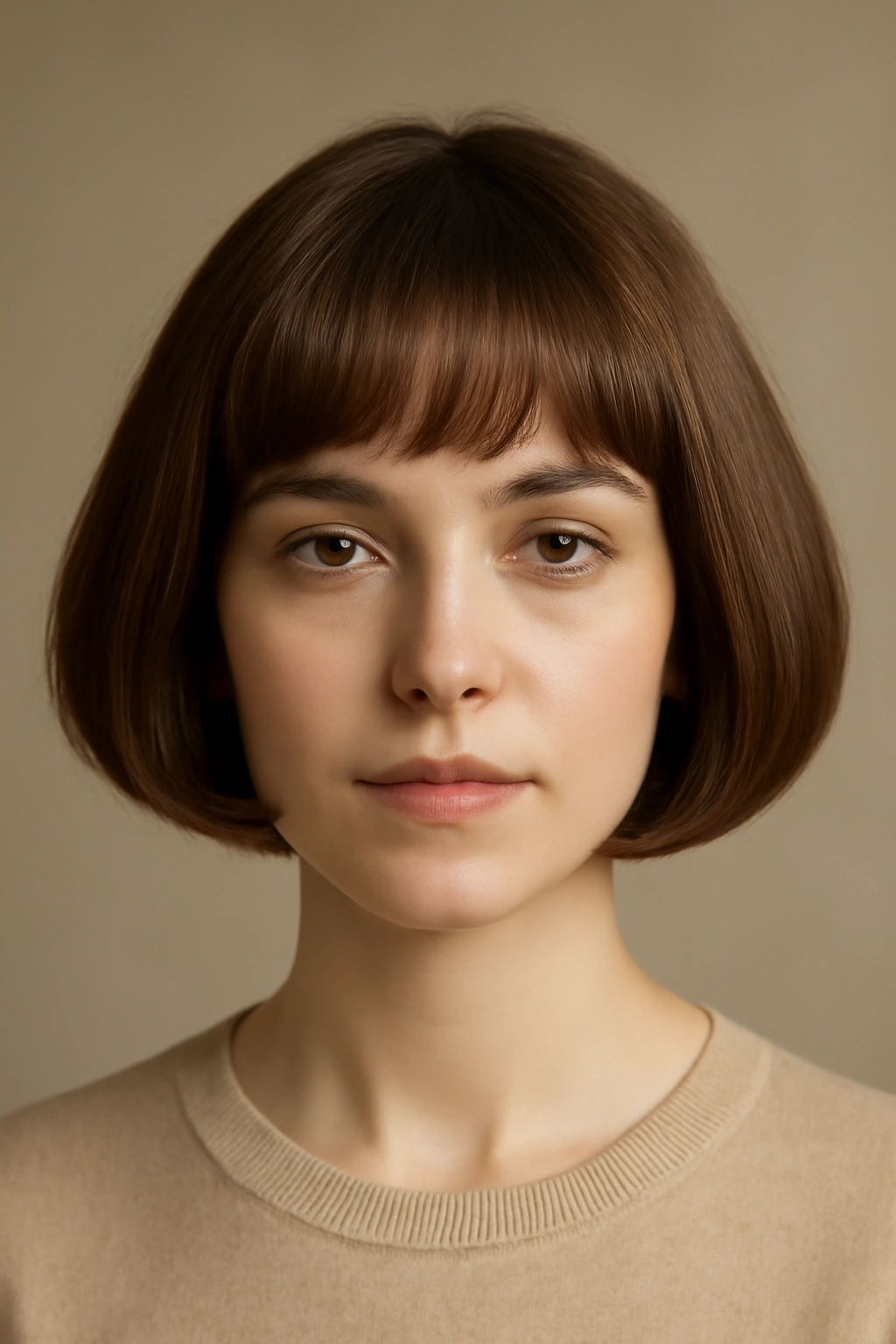
This is the Bob that reads as soft, romantic, and nostalgic without being costume-y. The cut is rounded rather than blunt—it curves around the sides of your face rather than hitting straight—and it usually pairs with curved bangs that frame your eyes beautifully. It’s the kind of cut that makes you feel polished and intentional the moment you walk out of the salon.
Why This Shape Flatters
The rounded shape is incredibly forgiving on different face shapes because the curves soften rather than define. The bangs add personality and frame your face in a way that draws attention upward. This style sits somewhere between retro and current, which means it never feels dated.
Maintenance and Styling
- Works best on straight to wavy hair; very curly hair requires more styling effort
- The curve relies on good layering, so your stylist’s skill matters a lot
- Bangs need refreshing every 3-4 weeks, but the overall shape can go longer between cuts
- Styling is simple: blow-dry with a round brush to emphasize the curve, or let it air-dry for a softer, less structured version
Pro tip: This cut pairs beautifully with warm blonde tones, rich brunettes, or bold colors because the shape is structured enough to showcase color choices.
6. Shaggy Pixie
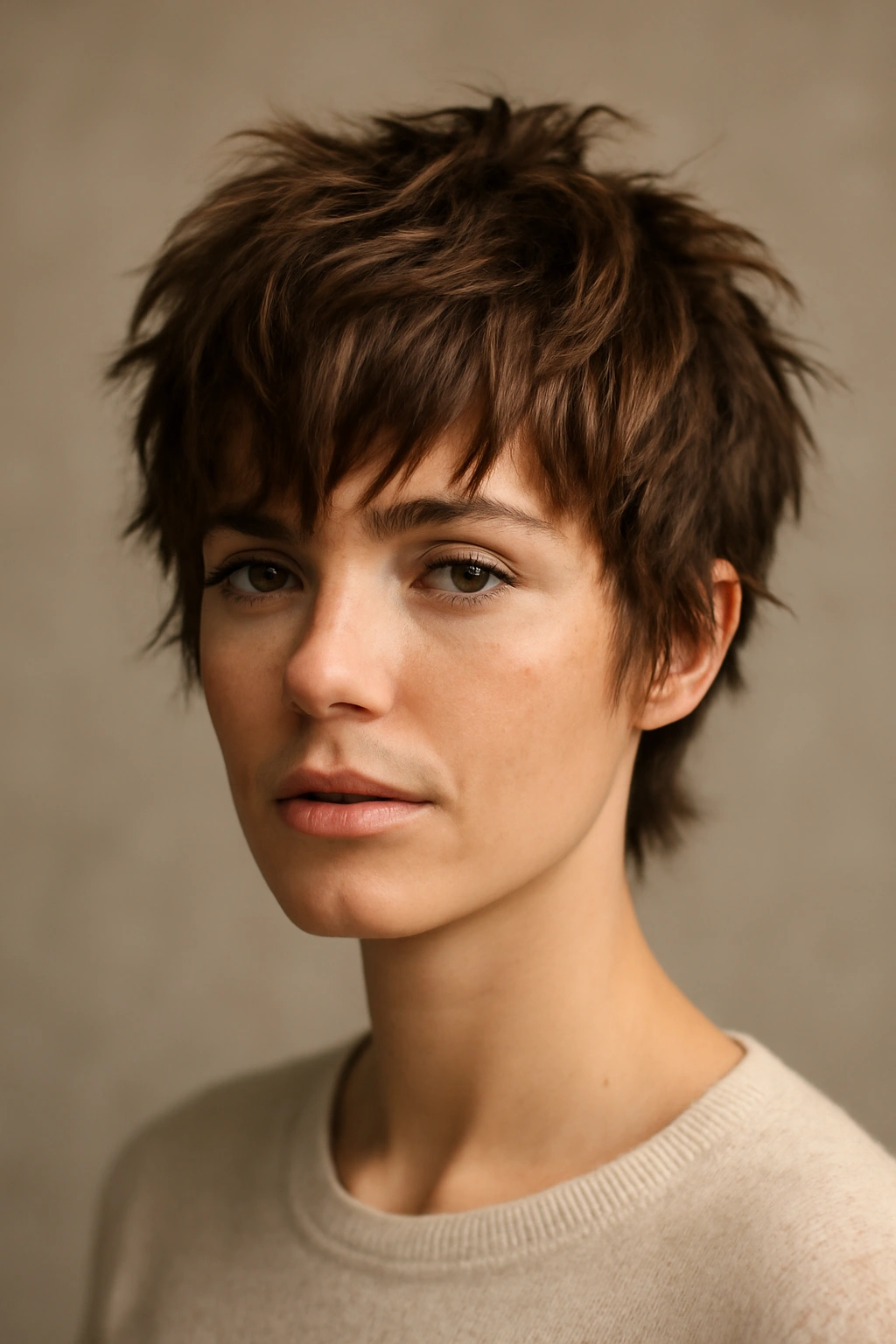
A shaggy pixie takes the short-hair cut concept but adds layering and texture throughout so it has that effortless, lived-in feeling rather than looking precisely cropped. It’s short enough to be easy to maintain but long enough to have actual personality and movement. This is the pixie for people who want short hair but also want their hair to do something.
The Effortless Appeal
The shaggy pixie is textured and piece-y by design, which means you can actually style it to look intentional or let it air-dry into something organically cool. It works beautifully with naturally textured hair and creates movement even on straighter hair types.
How to Work With This Cut
- Typically around two inches on top with lots of layers that create natural separation
- Works on all hair textures, but looks especially cool on wavy or curly hair
- Styling options: tousled and textured with a styling cream, or sleek and smooth with a different product
- Requires trims every 4-6 weeks to keep the layered shape looking intentional rather than messy
This style has genuine ’70s energy without being a costume—it’s a modern take on vintage texture that actually feels fresh and current.
7. Buzz Cut or Ultra-Short Crop
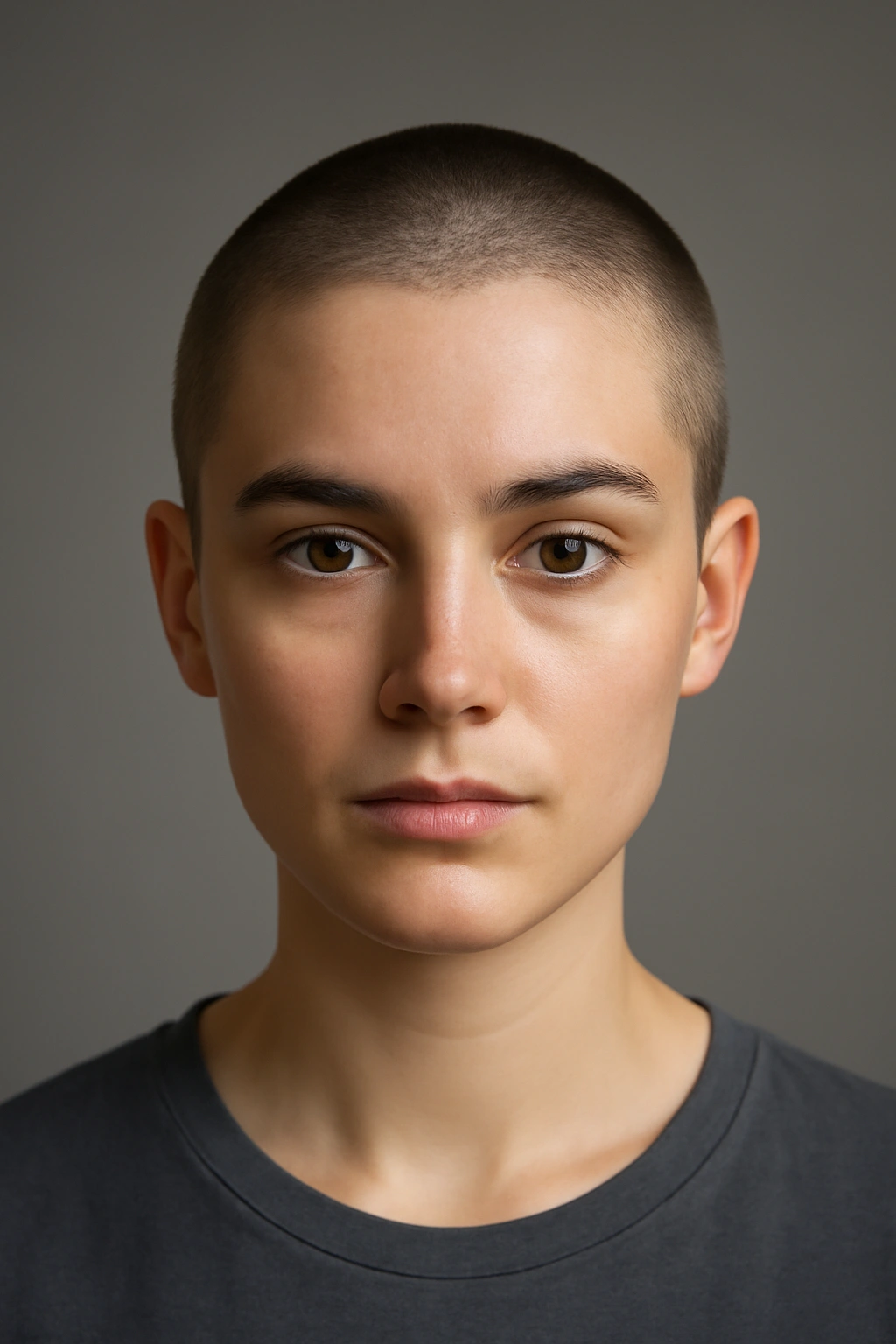
The buzz cut or ultra-short crop is the minimalist choice—typically cut to about a quarter-inch or less all over, sometimes with slightly longer pieces on top. It’s the ultimate low-maintenance cut and the most assertive statement a hairstyle can make. This is a cut for people who genuinely love their bone structure and aren’t interested in hiding anything with hair.
The Confidence Factor
An extremely short cut works best when you’re doing it for yourself, not because you think you should. It’s incredibly flattering on people with defined facial structure, and it completely changes how you present to the world. The practical reality is hard to overstate: wash, done.
Maintenance Reality
- Needs trims every 2-3 weeks to maintain definition, OR you embrace the grow-out phase and transition to a longer style
- Works on all hair types and actually looks great with texture
- The cut is about confidence and bone structure more than styling technique
- This is genuinely the lowest-maintenance option available
Real consideration: This cut requires comfort with your face and features completely visible. If you’re used to hiding behind hair, this might feel exposing at first—but many people find that freedom genuinely life-changing.
8. Asymmetrical Bob
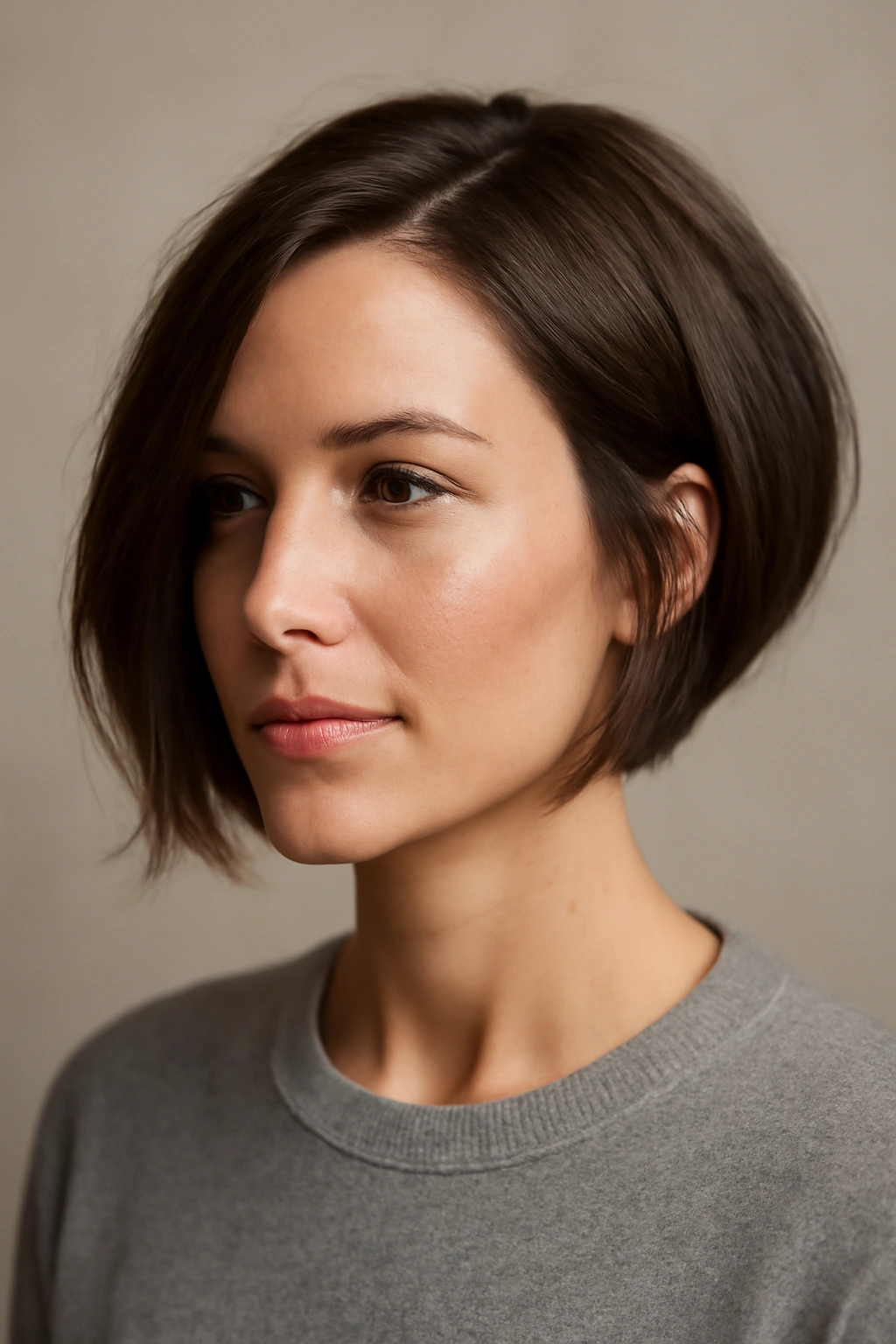
An asymmetrical bob is slightly longer on one side than the other—sometimes just an inch difference that’s subtle, sometimes a more dramatic variation where one side hits at the jawline and the other is closer to ear-length. It’s a cut that feels artistic and intentional without being impractical for everyday wear.
The Modern Twist
Asymmetrical cuts feel current and fashion-forward while still being wearable and not costume-y. The imbalance creates visual interest and movement that a symmetrical cut doesn’t have. It’s the choice for people who like a bit of edge but don’t want to go too short.
Styling and Asymmetry Tips
- The longer side can be tucked behind the ear or worn forward depending on your mood
- Works with blunt, choppy, or curved styling—the asymmetry is the main feature
- Length typically ranges from chin-level to just-below the jaw, with the difference between sides varying
- Can be styled smooth and sleek or textured and piece-y depending on your preference
The asymmetry actually helps this cut age gracefully because new growth isn’t as noticeable on the longer side, and the overall imbalance is part of the design rather than a flaw.
9. Tousled Shag
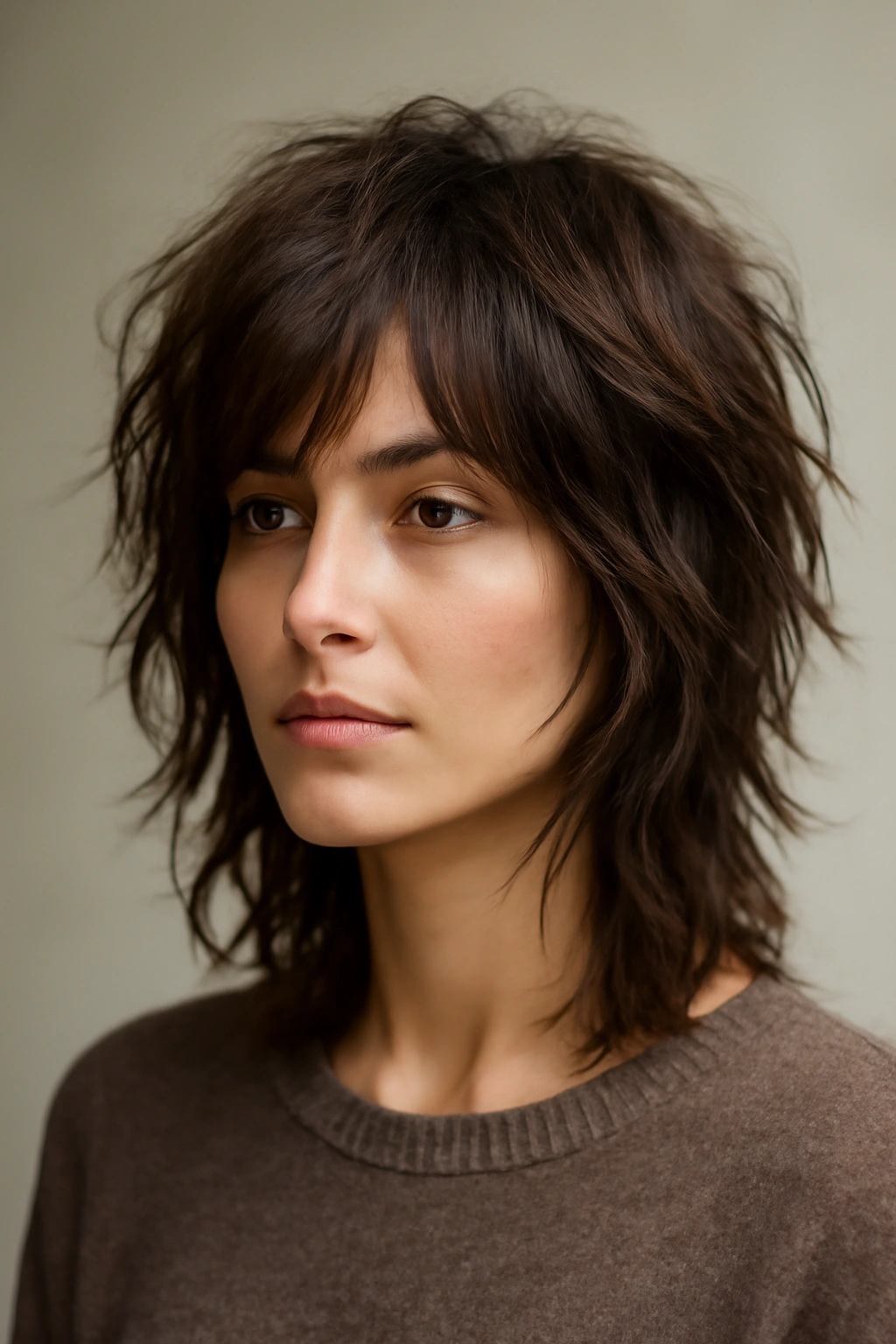
A shag is a cut with lots of layers throughout—shorter on top, longer underneath—that creates intentional movement and texture. A tousled shag is that classic concept but with modern styling that makes it look effortlessly cool rather than trying too hard. It’s one of those cuts that works beautifully whether you’re putting in zero effort or a moderate amount of styling intentionality.
Why Shags Are Having a Moment
Shags work because they create incredible texture and movement without looking overdone. They’re flattering on most face shapes, work with many different hair textures, and age beautifully as you grow them out. The cut actually looks better with a bit of texture and movement than perfectly smooth styling.
Styling the Shag
- Works on straight, wavy, and curly hair—the texture is a feature
- Typically ranges from shoulder-length to mid-back with layers throughout
- Styling options: blow-dry with texture for a polished look, or let it air-dry for that effortless vibe
- Products that help: texturizing spray, dry shampoo, or light styling cream
Practical note: Shags require maintenance trims every 6-8 weeks to keep the layers looking intentional, but the cut is forgiving enough that they don’t need the precision of a blunt bob.
10. Lob (Long Bob)
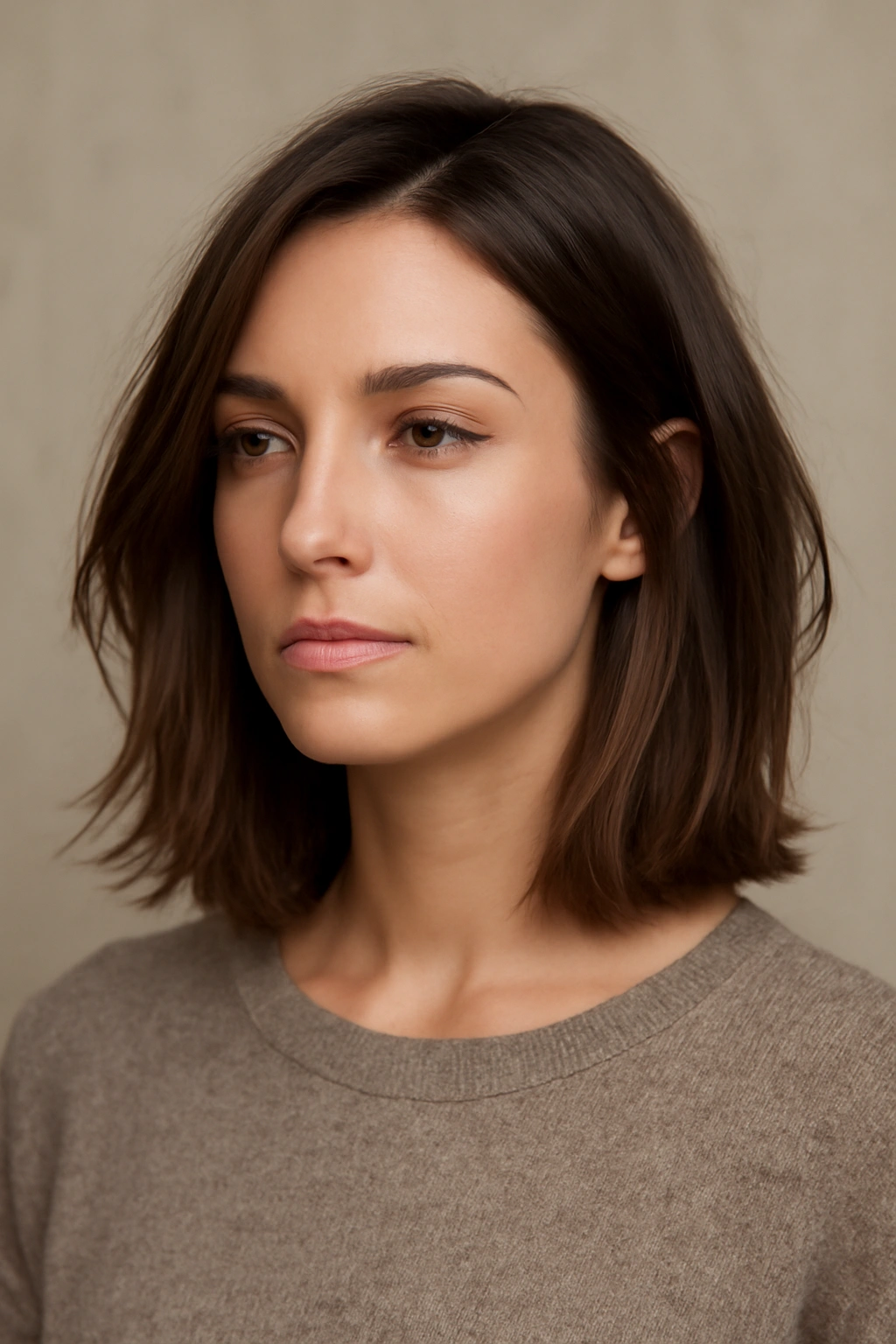
A lob sits somewhere between a bob and truly long hair—typically falling to around bra-band level, usually with layers throughout. It’s the Goldilocks of hairstyles: short enough to feel like a significant change and easy to manage, long enough to have serious styling versatility. You can wear a lob down and loose or up in a ponytail, bun, or braid without it looking too short for those styles.
The Versatility Sweet Spot
A lob is genuinely one of the most versatile cuts available. You get the refreshed feeling of a significant cut without committing to actually short hair. It works on virtually every hair texture and face shape, and it looks good whether you’re putting in serious styling effort or going completely natural.
Making Your Lob Work
- Length typically falls between bra-band and shoulder-blade level
- Layers throughout create movement and work with your hair’s natural texture
- Styling flexibility: can be worn sleek and straight, textured and wavy, or in updos
- Works with bangs or without, with lots of layers or just subtle layering
A lob is genuinely low-commitment once you understand how to style it—you can go 8-10 weeks between salon visits and it still looks intentional, unlike a blunt bob that falls apart after a few weeks.
11. Curtain Bangs With Shoulder-Length Layers
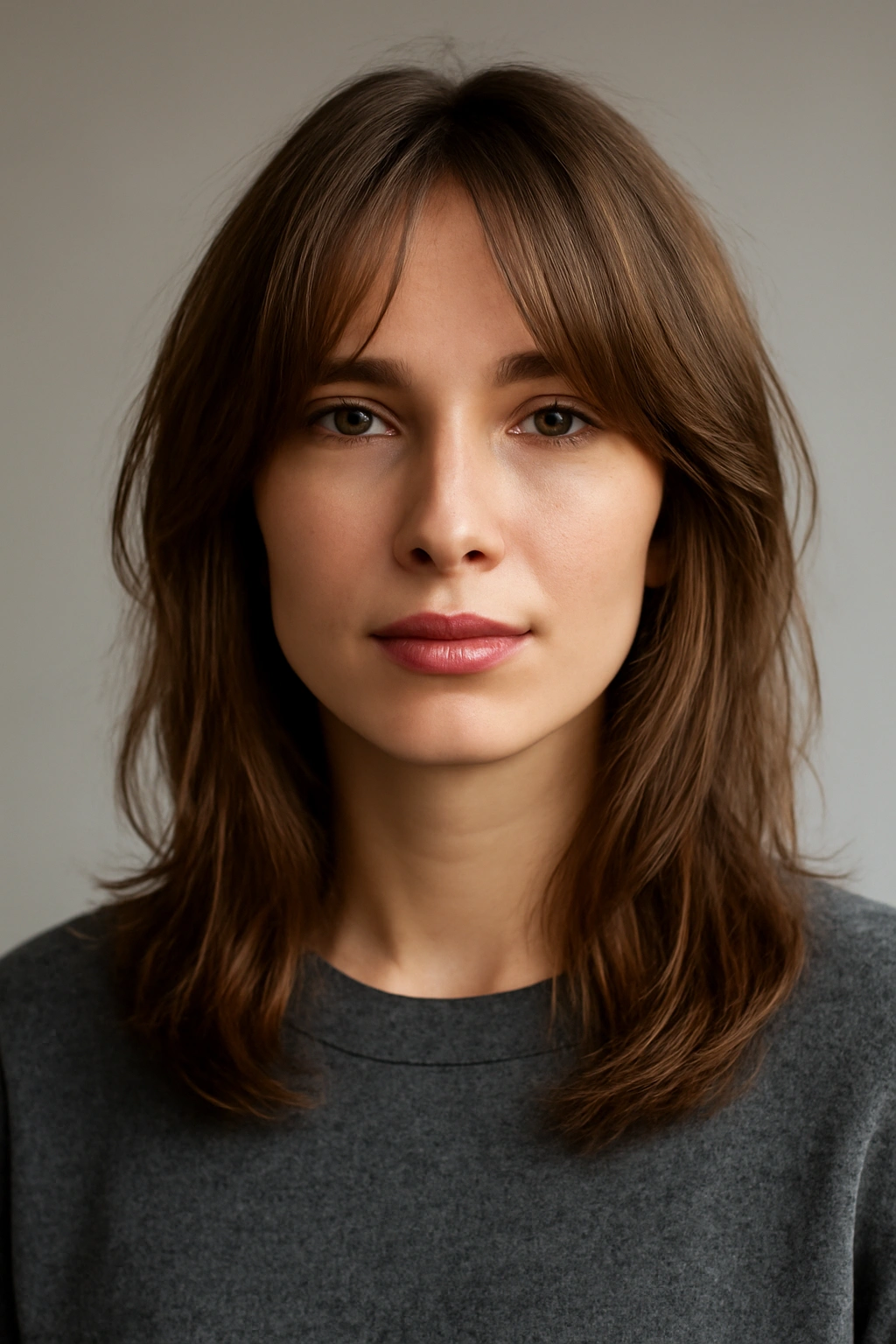
This cut has layers throughout the length with bangs that are longer and frame the face on either side—they actually frame your face rather than covering your forehead. Shoulder-length with curtain bangs reads as polished and intentional, and it’s incredibly flattering because the bangs draw attention to your eyes while the layers create movement throughout.
The Flattering Frame
Curtain bangs are genuinely magic for creating a softness around your face while layers throughout add texture and movement to your whole head. This combination is flattering on most face shapes and works with straight, wavy, and curly hair.
Styling This Cut
- Length typically hits around shoulder level, with layers throughout
- Bangs start at eye-level and curve outward to frame the face
- Styling: blow-dry for a polished, separated look or let it air-dry for something softer
- Works beautifully with wave spray, texturizing spray, or completely natural air-dried texture
The curtain bangs require a bit more maintenance than layered hair without bangs (trims every 4-5 weeks), but they’re way less demanding than full-coverage bangs.
12. Sleek Straight Shoulder-Length Hair
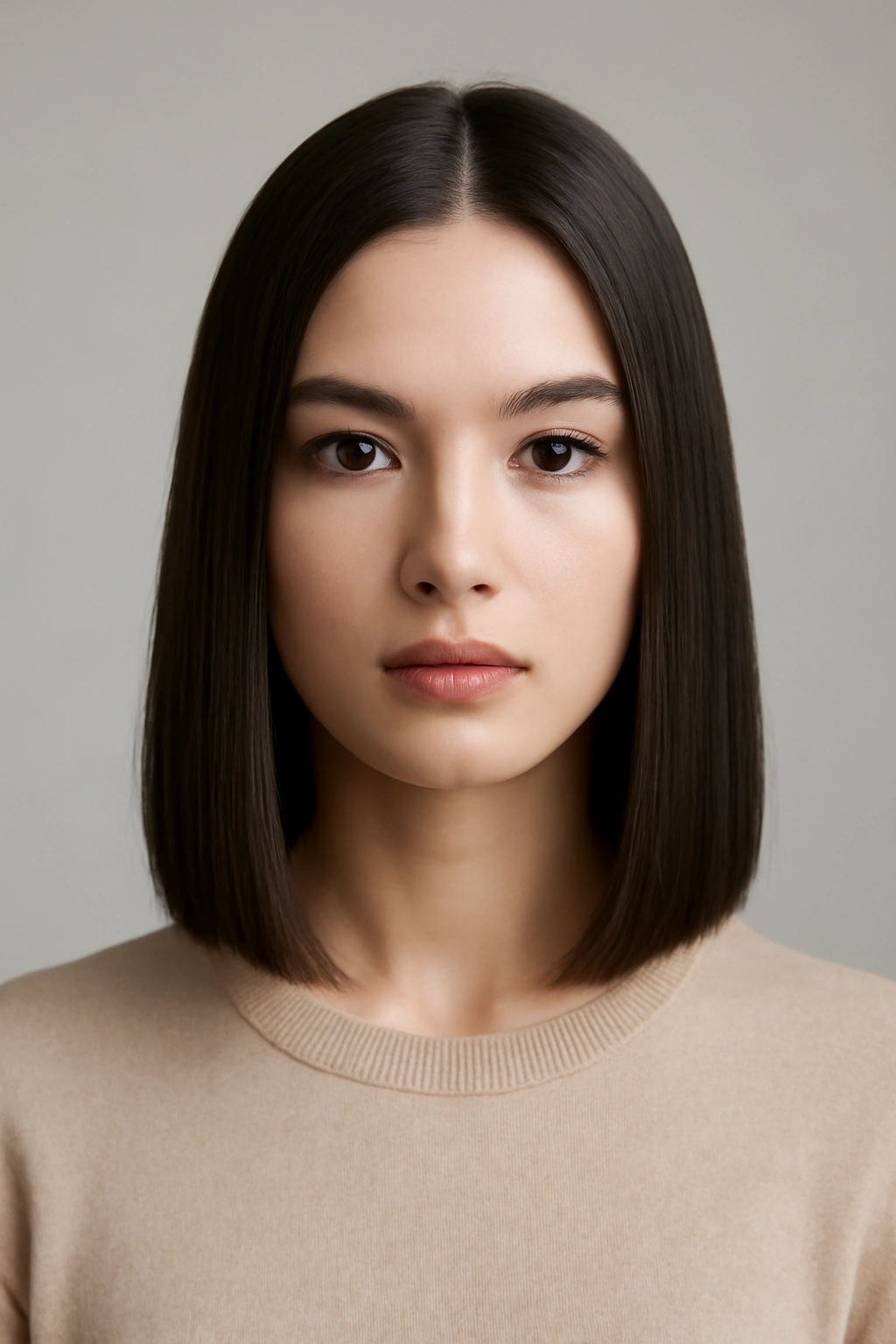
This is the sophisticated, polished option: hair that hits right around shoulder level, cut with intention for a smooth, straight silhouette. No heavy layers, no choppy texture—just clean, straight lines that look effortless and expensive. It works on people with naturally straight or very smooth hair, or people committed to regular blow-drying and smoothing.
The Minimalist Appeal
A sleek shoulder-length cut works because of its simplicity and polish. There’s nowhere to hide with a cut this minimal, so it’s all about the cut itself and your hair’s condition. It’s the choice for people who want to look put-together without a lot of fussing.
Maintenance and Styling
- Requires either naturally straight hair or commitment to blow-drying and smoothing products
- Length hits right at shoulder level for the most flattering proportion
- Works beautifully as-is or with a middle part or a side part depending on your mood
- Minimal product needed: maybe a smoothing serum or light hairspray
Reality check: This cut is only as good as your hair’s condition. You’ll need regular deep-conditioning treatments and split-end trims every 6-8 weeks for it to look expensive rather than neglected.
13. Textured Medium-Length Shag
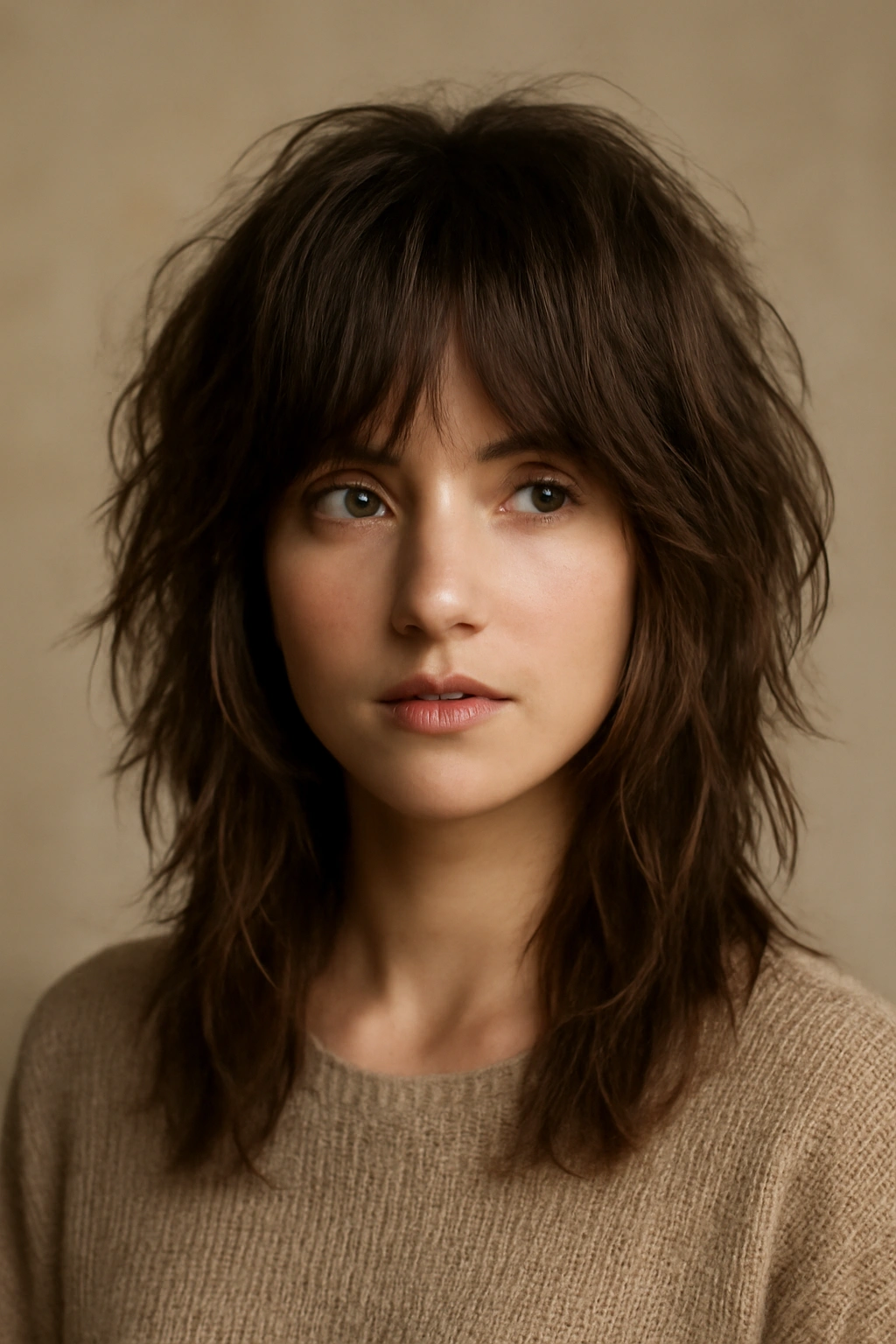
A medium-length shag is textured and layered all the way through, typically hitting somewhere between shoulder and mid-back length. The texture is intentional and embraced—this isn’t a cut that’s trying to be sleek; it’s celebrating movement and dimension. It reads as effortlessly cool whether you’ve spent an hour styling it or five minutes.
Why Texture Works Here
Medium-length shags are flattering because the length and texture together create incredible movement and the cut frames your face beautifully. The layers mean the cut actually looks better with some texture and movement than perfectly smooth styling would.
Getting the Look Right
- Works on all hair textures, but especially beautiful on naturally wavy or curly hair
- Typically hits between shoulder and bra-band level with lots of choppy layers
- Styling: let it air-dry into natural texture, or blow-dry for more separation and definition
- Products: texturizing spray, dry shampoo, or a light styling cream
This cut is forgiving about regular maintenance, but you’ll want trims every 8-10 weeks to keep the layers looking intentional.
14. Sleek Waves to Shoulder Length
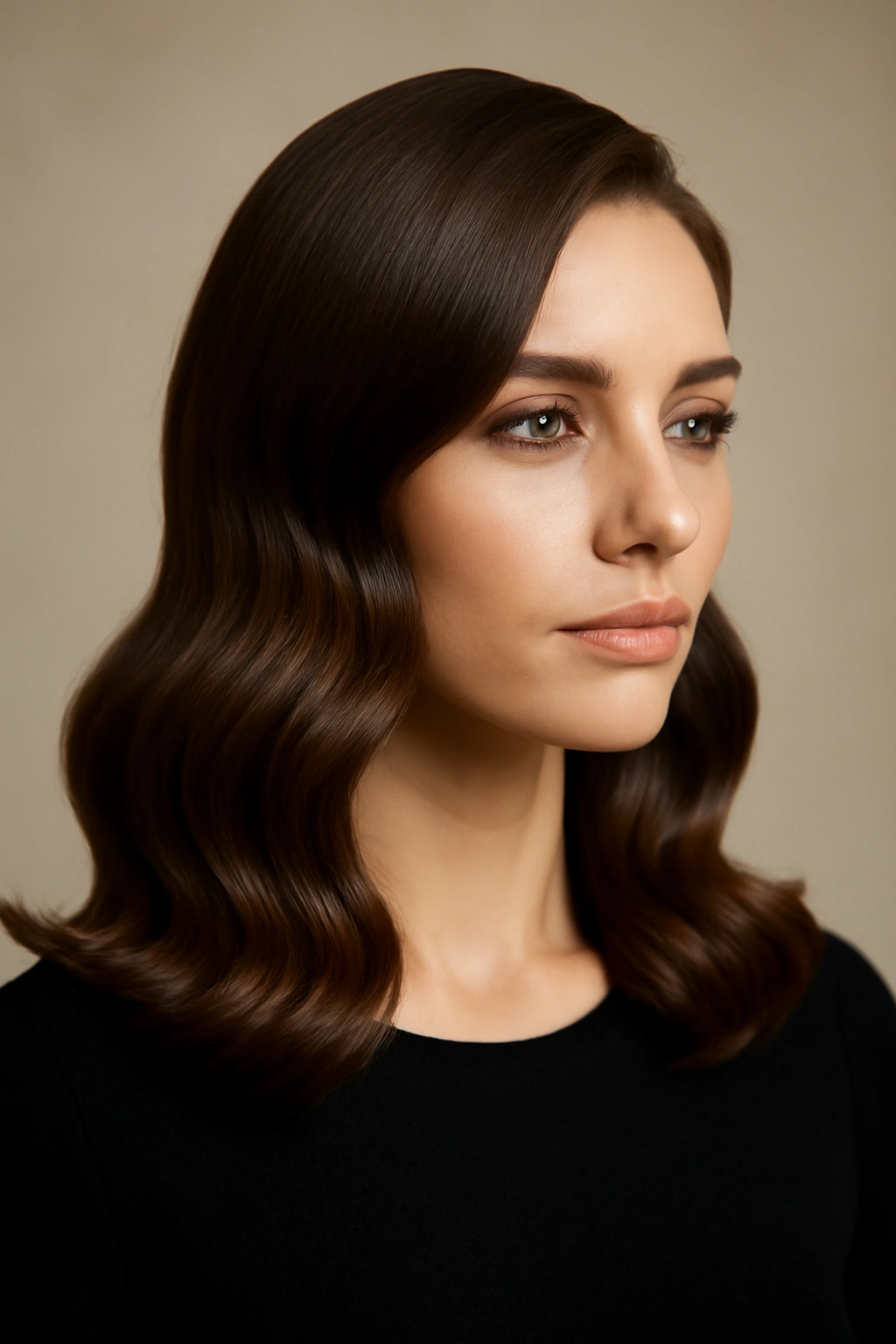
This is hair that hits right around shoulder level, styled with intentional waves that read as polished and put-together without looking overdone. The waves are smooth and controlled rather than textured, and the whole effect is polished and elegant. It’s the look that photographs beautifully and makes you feel fancy without being costume-y.
The Polished Wave
Sleek waves create movement and softness while still looking controlled and intentional. This styling works with medium to longer hair and can be achieved on different hair types depending on how much styling effort you’re willing to put in.
Creating and Maintaining Waves
- Length hits around shoulder level for the most flattering proportion
- Waves can be created with a flat iron, curling iron, or blow-drying with a round brush
- Works best on straight to wavy hair; very curly hair requires smoothing products
- The polished, non-textured wave requires intentional styling—this isn’t an air-dry aesthetic
Styling note: Sleek waves hold better if you blow-dry your hair first, then add the waves when your hair is completely dry, rather than trying to wave damp hair.
15. Layered Waist-Length With Movement
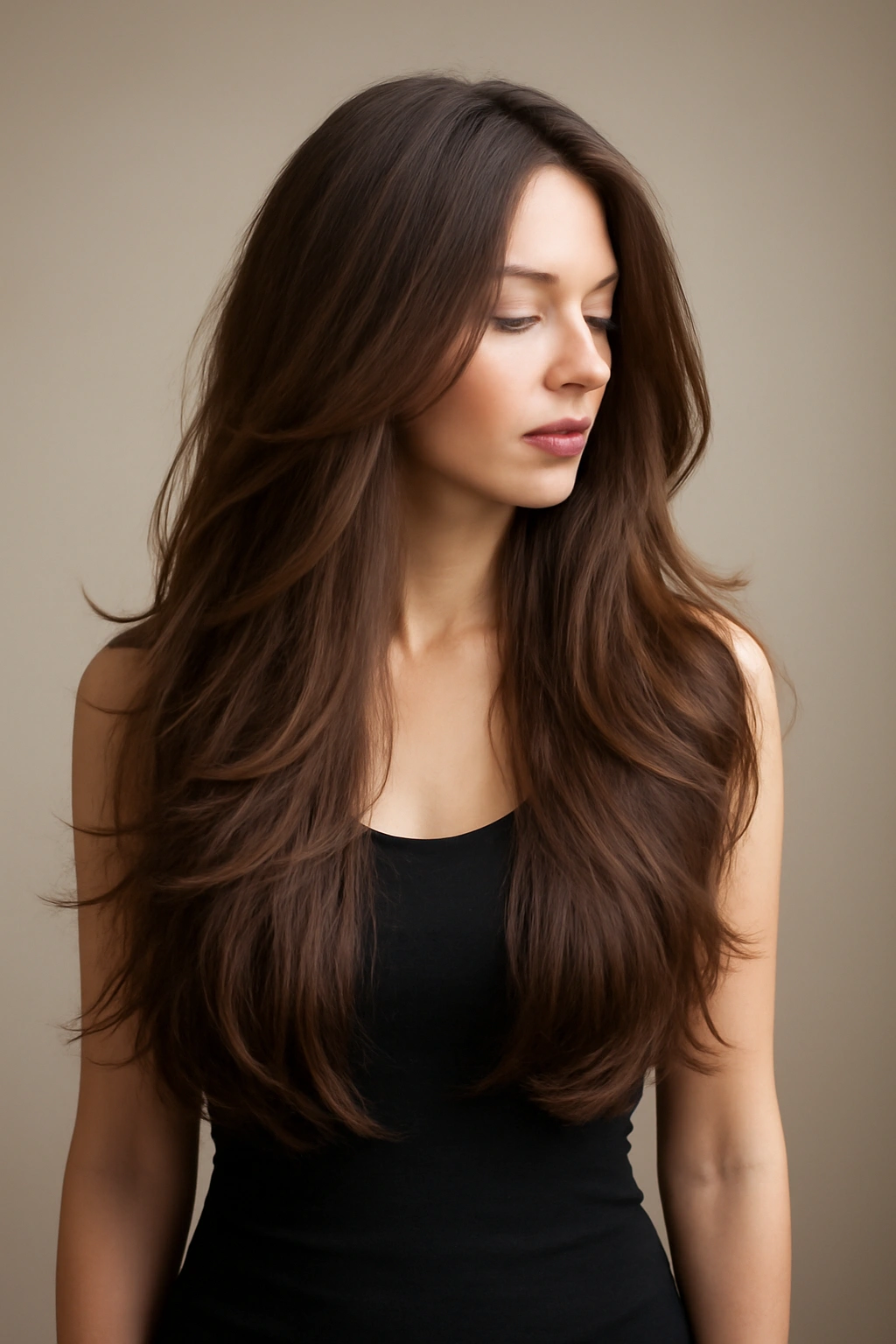
This is genuinely long hair with lots of layers throughout that create incredible movement and dimension. The layers make even very long hair feel lighter and less heavy, and they catch light beautifully. Long hair with great layers is flattering because the layers frame your face while the length gives you serious styling options.
Why Long Layers Work
Lots of layers in long hair create movement that pure length alone doesn’t have. The layers also make your hair look thicker because of the dimension and texture, and they genuinely look better with some natural texture or waves than stick-straight styling.
Styling Long Layers
- Works on all hair textures and is especially beautiful on wavy or curly hair
- Requires regular deep conditioning because the ends are older and more prone to damage
- Trims every 8-10 weeks help keep the layers looking intentional
- Styling flexibility: can be worn completely natural and wavy, or blown out smooth for a different vibe
Long layered hair is versatile for styling: wear it down loose, in a braid, half-up, or fully up depending on your mood and the occasion.
16. Long Hair With Subtle Face-Framing Layers
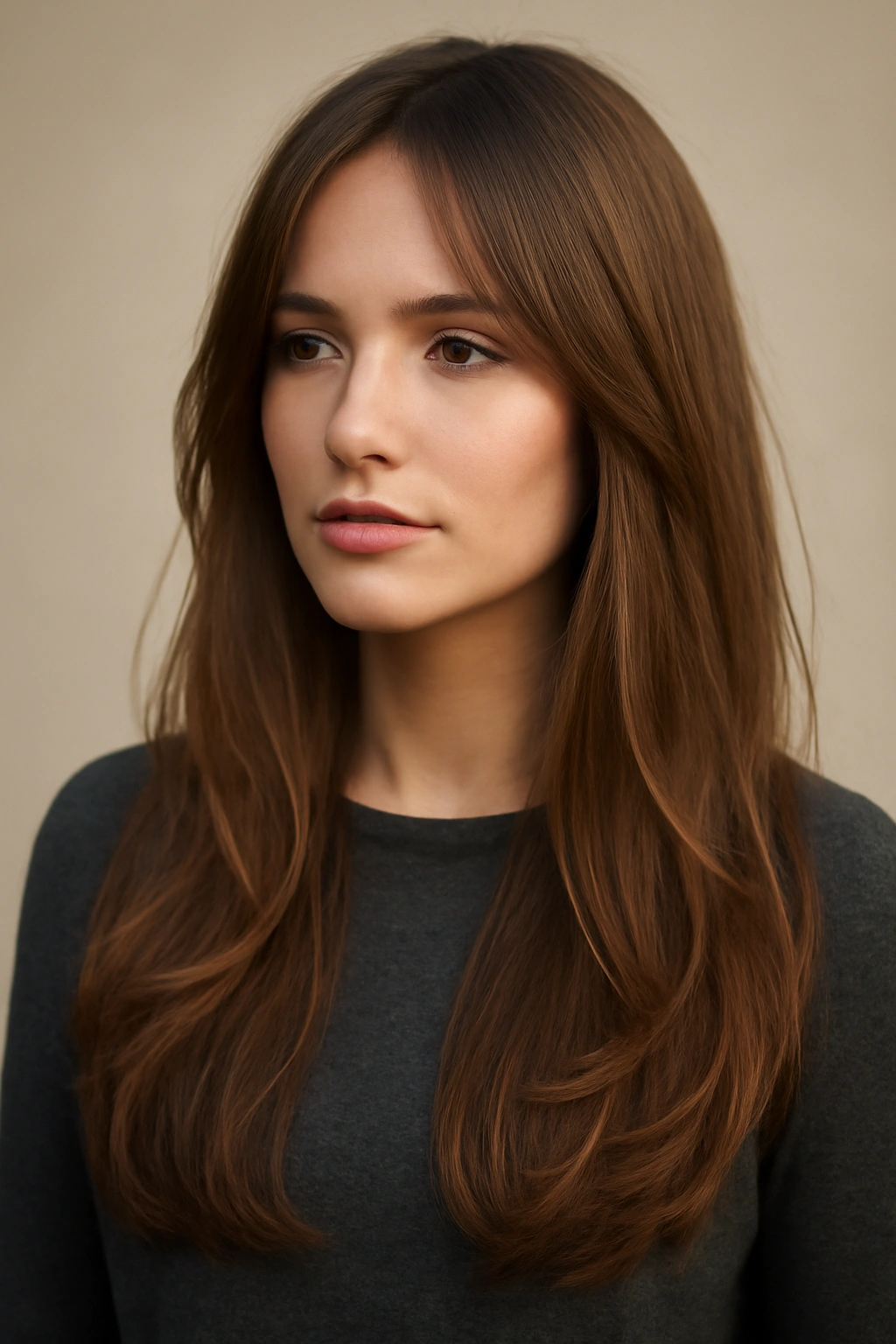
This is long hair—typically waist-length or longer—where the layers are subtle and mostly concentrated around your face to create framing without chopping up the overall length. The rest of the length stays relatively intact, so you get the dramatic length while having shorter, face-framing pieces that are flattering.
Strategic Layer Placement
Face-framing layers work because they soften your face and create movement around your features without sacrificing the length you wanted. The subtle layering elsewhere means the cut still feels long and dramatic while actually having real styling dimension.
Making Face-Framing Layers Work
- Length typically hits at waist level or longer, with layers only around the face and possibly the crown
- The face-framing pieces typically hit around shoulder or bra-band level
- Creates flattering dimension without the choppy feeling of lots of layers throughout
- Works beautifully on all hair textures
Care note: Long hair with subtle face-framing layers requires regular deep conditioning (weekly or bi-weekly) and trims every 10-12 weeks to keep the layers from looking ragged as they grow out.
17. Straight and Sleek Extra-Long Hair
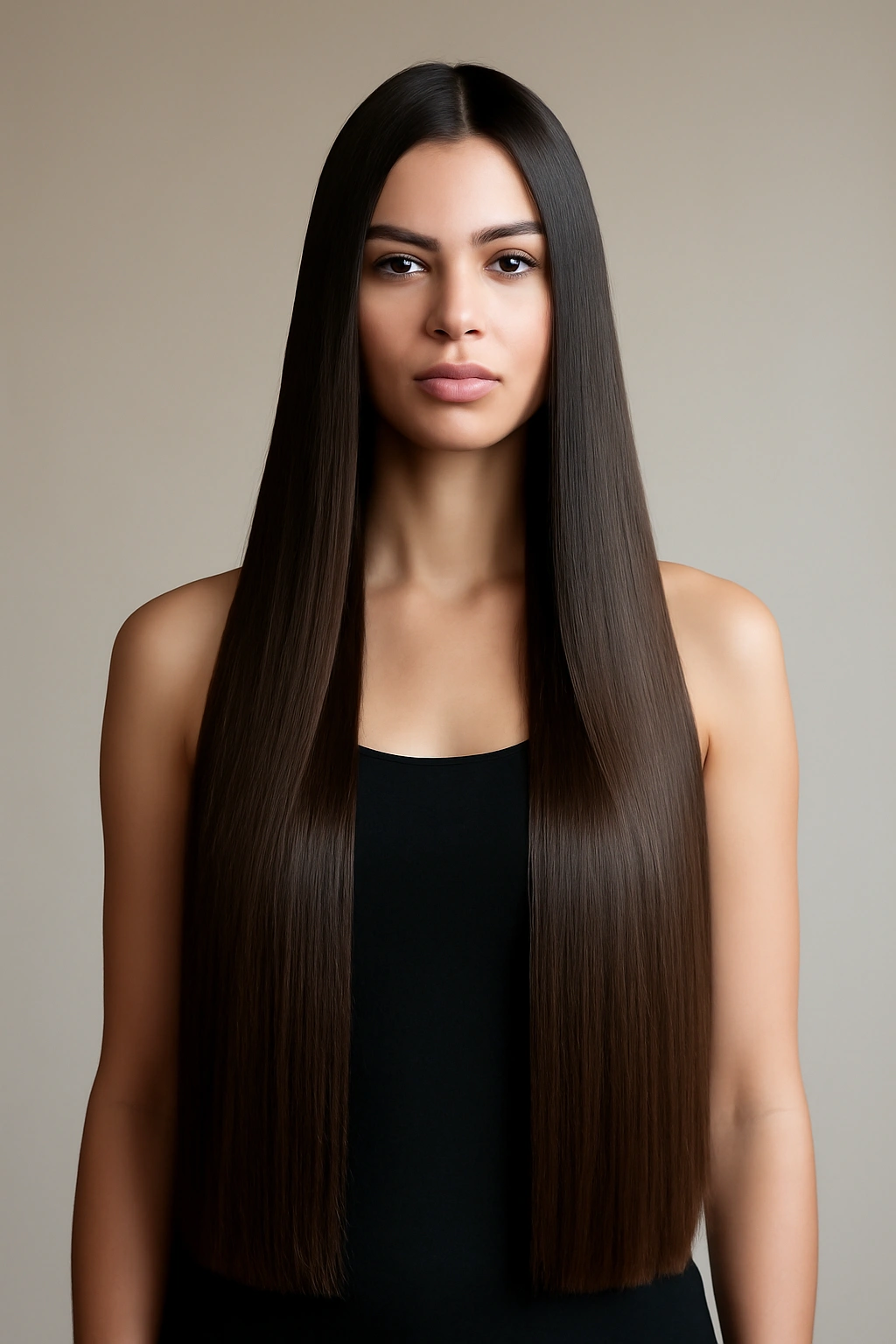
This is the dramatic choice: hair that’s waist-length or longer, cut blunt (or with minimal layering), and styled sleek and straight. It’s the ultimate statement of length and commitment to maintenance. This look requires significant dedication to hair health and regular styling, but the payoff is genuinely dramatic.
The Power of Pure Length
Extra-long straight hair is a bold statement that reads as dramatic and intentional. It photographs beautifully and feels luxurious. The key is keeping it looking healthy and shiny rather than tired or damaged.
The Maintenance Reality
- Requires weekly deep conditioning treatments and regular split-end trims (every 10-12 weeks)
- Works best on naturally straight hair or with commitment to regular blow-drying and smoothing
- Styling products: smoothing serum, heat protectant, and possibly a smoothing treatment
- The longer your hair, the older the ends are—hair health becomes critical
Be honest about this: Extra-long hair requires genuine maintenance commitment. If you’re not willing to do weekly conditioning and regular trims, the look will read as tired rather than intentional within a few months.
18. Long Beach Waves
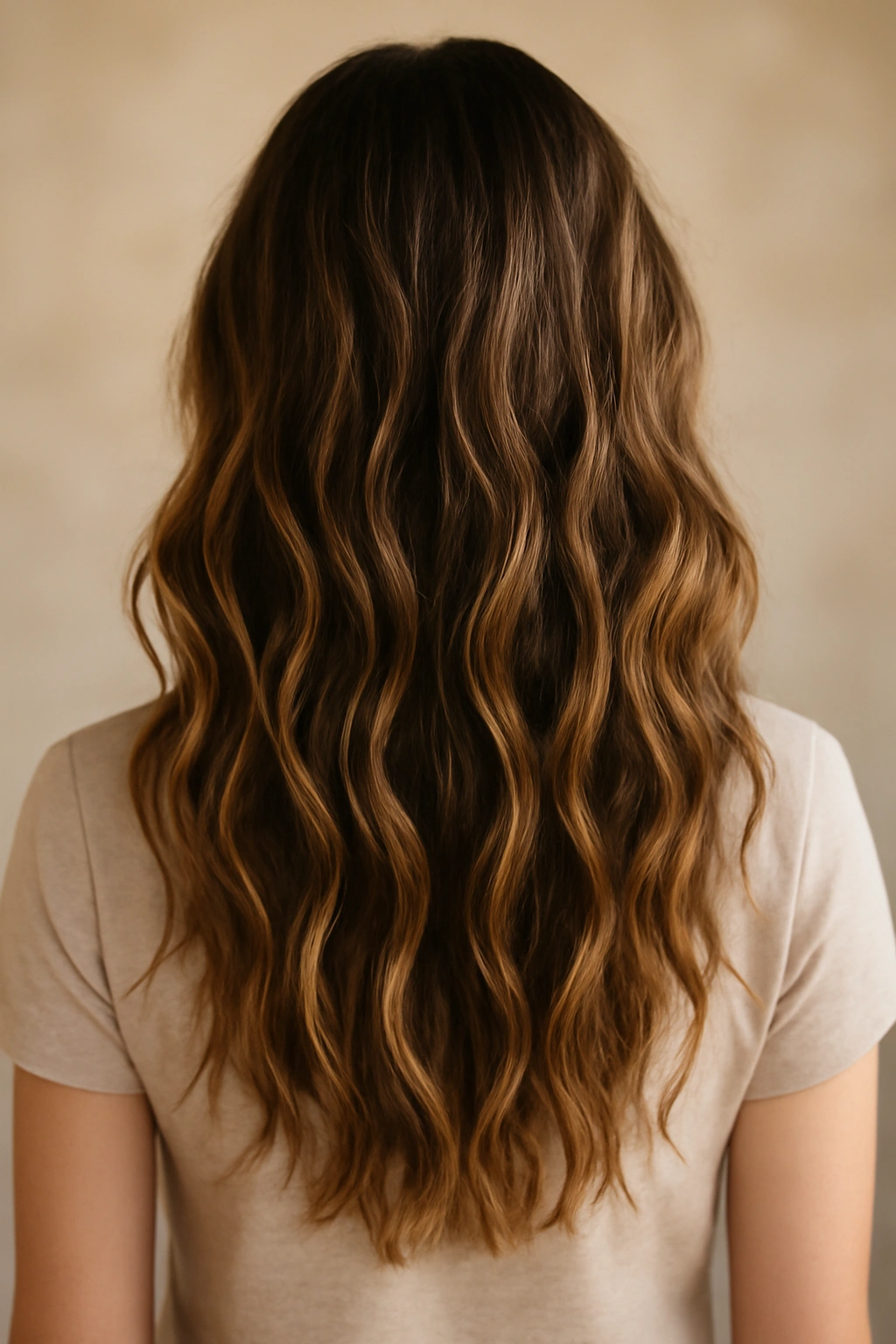
Long hair with effortless-looking beach waves is one of the most versatile and wearable long styles. The waves create movement and texture, the length is dramatic, but the styling reads as relaxed rather than overdone. It works on virtually every hair texture and genuinely looks better with some natural texture than perfectly straight hair would.
The Effortless Vibe
Beach waves on long hair create the impression that you just came from the ocean and your hair naturally looks this good—even though creating that effect usually requires some intentional styling. The wave pattern is typically loose and undefined rather than tight spirals.
Creating Beach Waves
- Works on all hair types and actually looks best with some natural texture
- Length typically hits waist level or longer
- Can be created with a curling iron, salt spray, or by braiding damp hair and letting it air-dry
- Layers throughout help the waves hold better and look more natural
Beach waves are genuinely versatile: wear them down and loose, in a half-up style, or in a braid depending on your mood and the situation.
19. Mermaid Waves With Lots of Texture
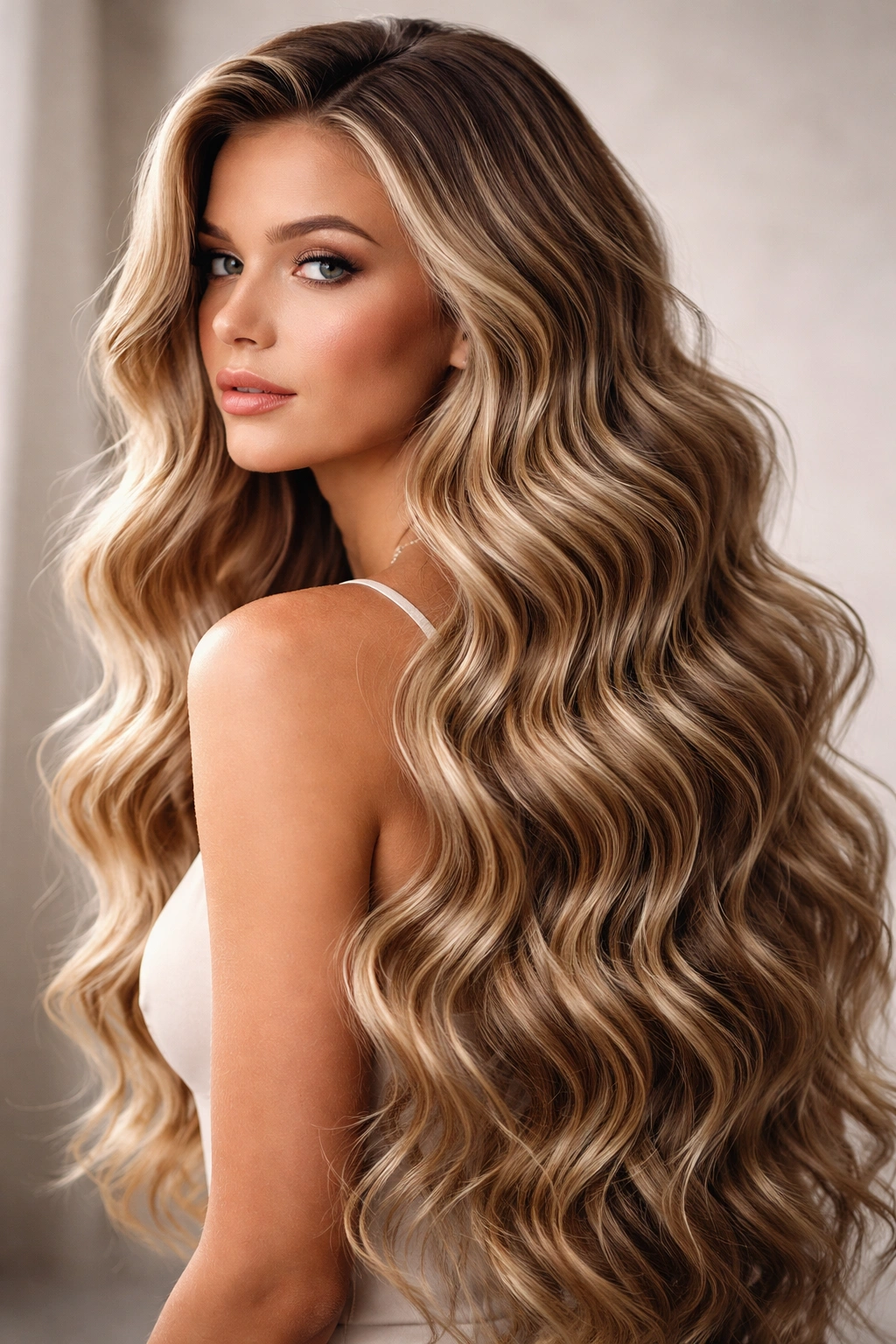
Mermaid waves are more defined and intentional than beach waves—they’re sculpted, textured waves that create dramatic movement throughout long hair. This style has real personality and definitely requires more styling effort than beach waves, but the payoff is genuinely showstopping.
The Sculpted Wave
Mermaid waves are typically created with a curling iron or wand, and the waves are tighter and more defined than beach waves. The effect is romantic and dramatic without being costume-y. This style photographs incredibly well.
Creating Mermaid Waves
- Works on all hair types but works best on hair with some natural texture to grip onto
- Typically created with a barrel curling iron or wave wand
- Works best on hair that’s at least shoulder-length, ideally longer
- Takes 30-45 minutes to create, so this is a styling commitment
Mermaid waves hold better if your hair has some natural texture, if you use a product like sea salt spray before styling, and if you don’t run your fingers through your hair constantly after creating them.
20. Waist-Length With Choppy Layers Throughout
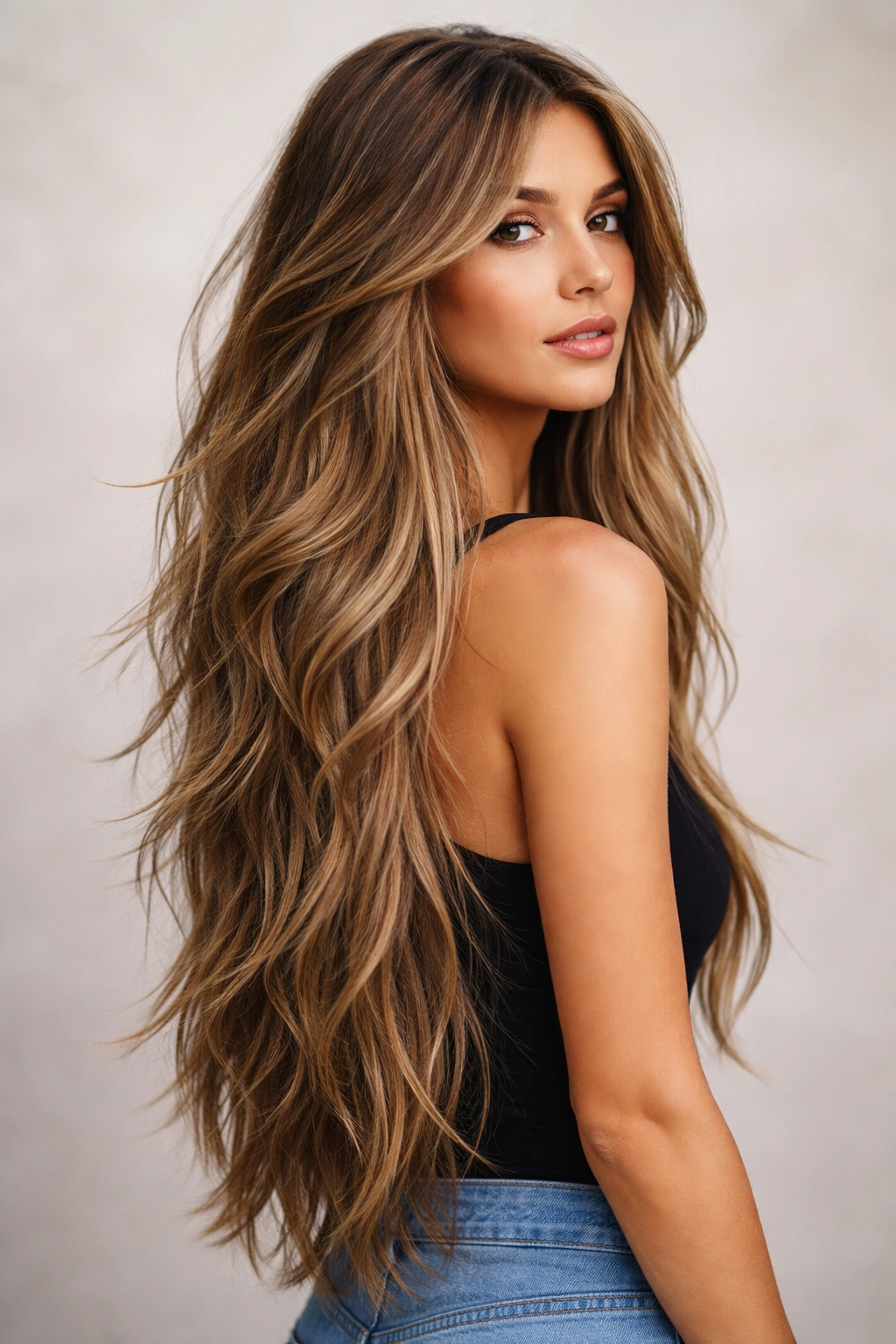
Long hair with lots of choppy, textured layers throughout creates incredible movement and dimension. The choppiness prevents the hair from feeling heavy, and the layers catch light beautifully. This style reads as effortlessly cool and works with your hair’s natural texture rather than fighting against it.
Why Chop Long Hair
Choppy layers in long hair create movement that pure length alone doesn’t have. The varying lengths mean the hair moves in different directions, catching light and creating dimension. This style is especially flattering on people with naturally wavy or curly hair.
Styling Choppy Long Layers
- Works on all hair textures and is especially beautiful on naturally textured hair
- Requires trims every 8-10 weeks to keep the chop looking intentional
- Can be worn completely natural and textured, or blown out smooth for a different vibe
- The choppiness actually means you can go longer between haircuts than you might think—six weeks doesn’t look bad
This is a genuinely low-maintenance long style if you embrace your hair’s natural texture rather than fighting it.
21. Long Hair With Bangs
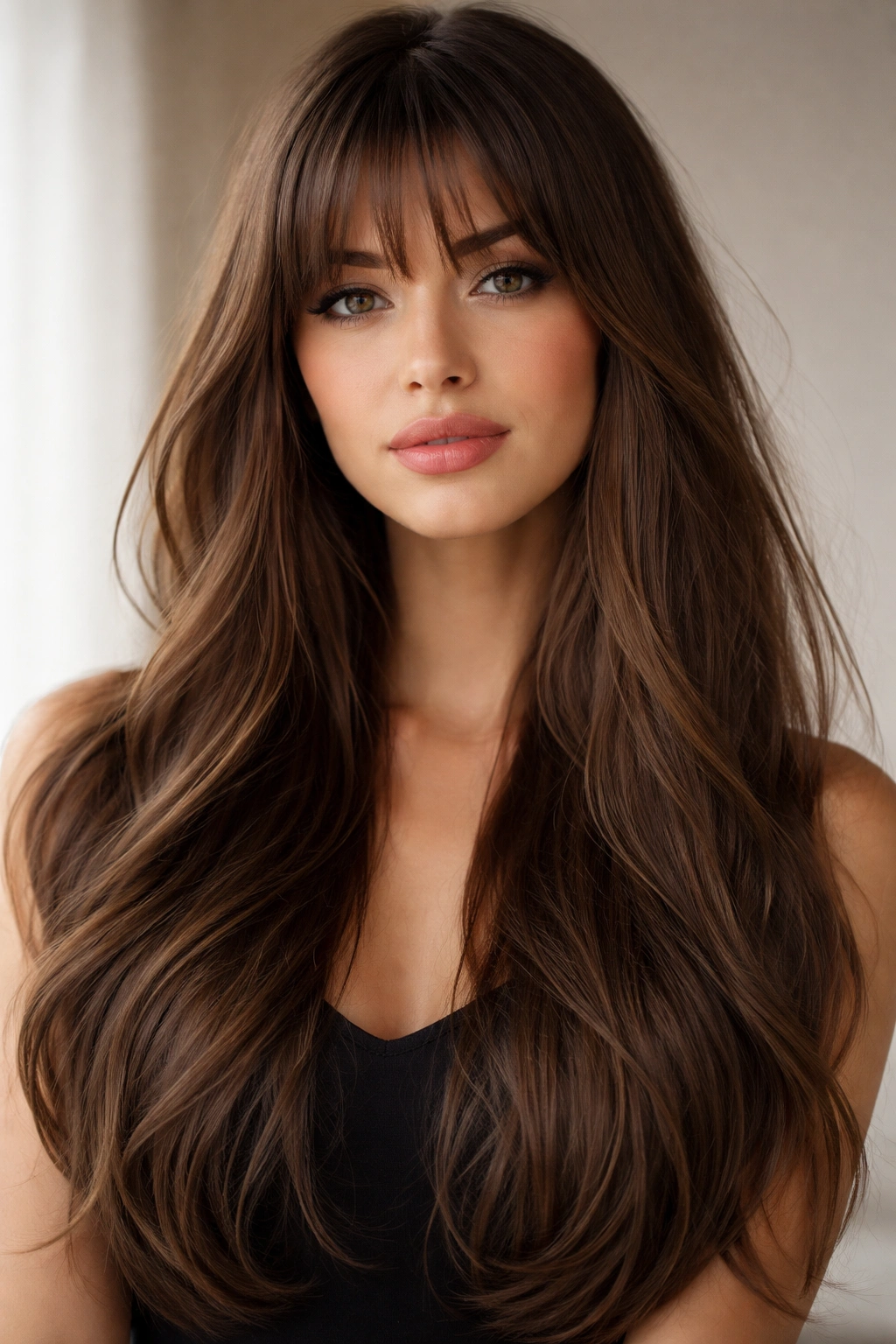
Long hair paired with bangs creates a whole different vibe than long hair without them. The bangs draw attention to your eyes and face, while the length stays dramatic. This combo works with various bang styles: blunt, wispy, curtain, side-swept—the key is choosing bangs that work with your face shape and styling commitment.
The Personality Shift
Adding bangs to long hair completely changes the aesthetic without requiring cutting off the length you love. The bangs create a frame that makes you look younger and more playful while the long length remains dramatic.
Different Bang Options With Long Hair
- Blunt bangs with long hair: bold and intentional, requires regular trims (every 3-4 weeks)
- Wispy or curtain bangs: softer and more romantic, less maintenance-intensive
- Side-swept bangs: elegant and flattering on most face shapes
- The longer your hair, the more dramatic bangs become
Bangs require commitment to regular maintenance, but they genuinely transform the whole look in a way that’s impossible to achieve otherwise.
22. Braid-Friendly Mid-Back Length
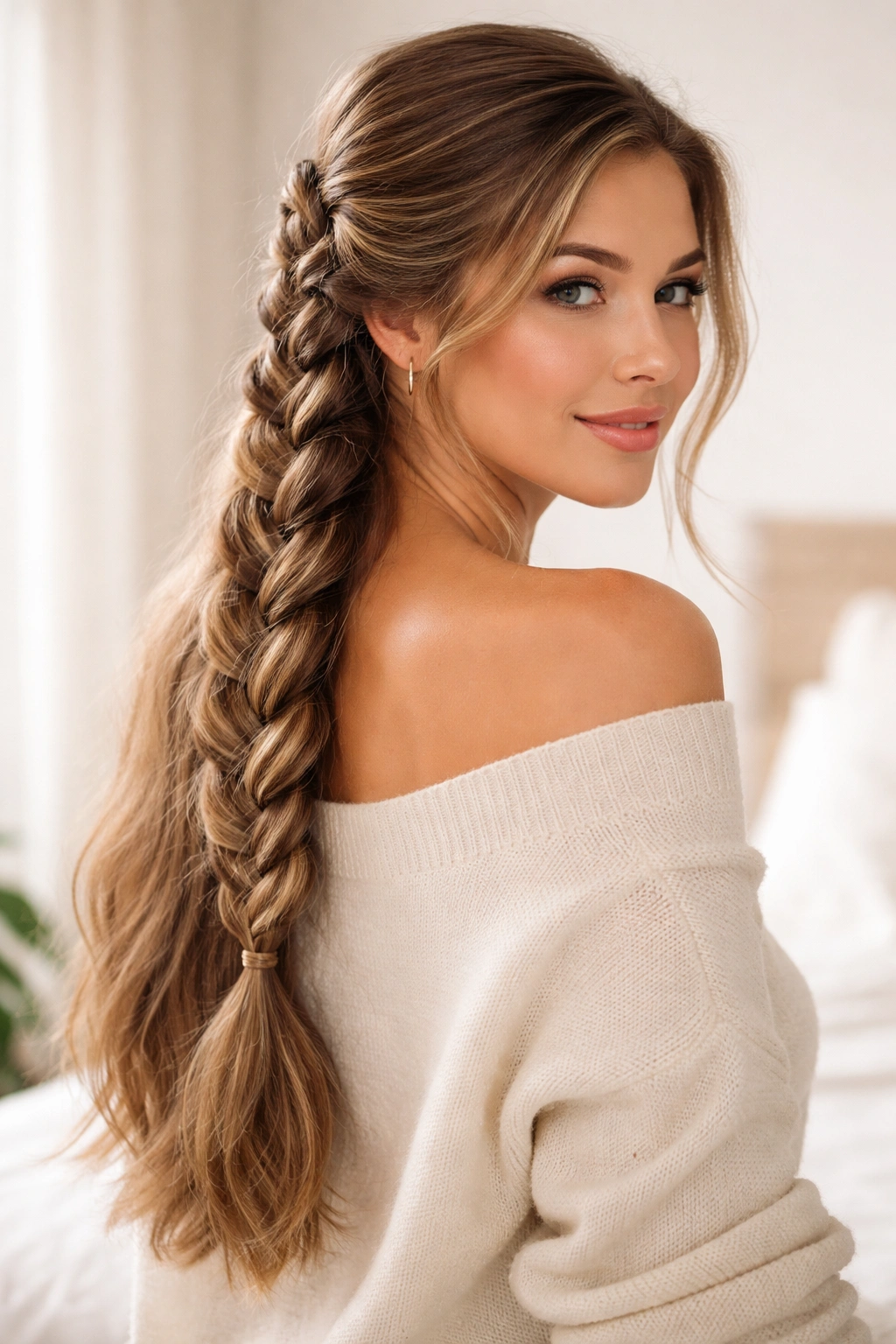
Hair that hits around mid-back length is the sweet spot for people who love braiding—long enough to braid easily and have the braid be substantial, but not so long that the hair feels unmanageable for everyday wear. This length is incredibly versatile for styling and genuinely practical for an active lifestyle.
The Braiding Advantage
Mid-back length is long enough that braids hold well and look substantial, but short enough that you’re not dealing with waist-length hair all day. You can wear it down, braided, half-up, or up entirely depending on your mood and activity.
Styling Options
- Length hits around mid-back, typically with some layering
- Works beautifully braided (Dutch braids, French braids, fishtail braids all look great)
- Can also be worn down with waves, curls, or straight
- Layers throughout work better than blunt ends for this length
This length is practical for active people who still want the drama and versatility of longer hair.
23. Collarbone Length With Subtle Layers
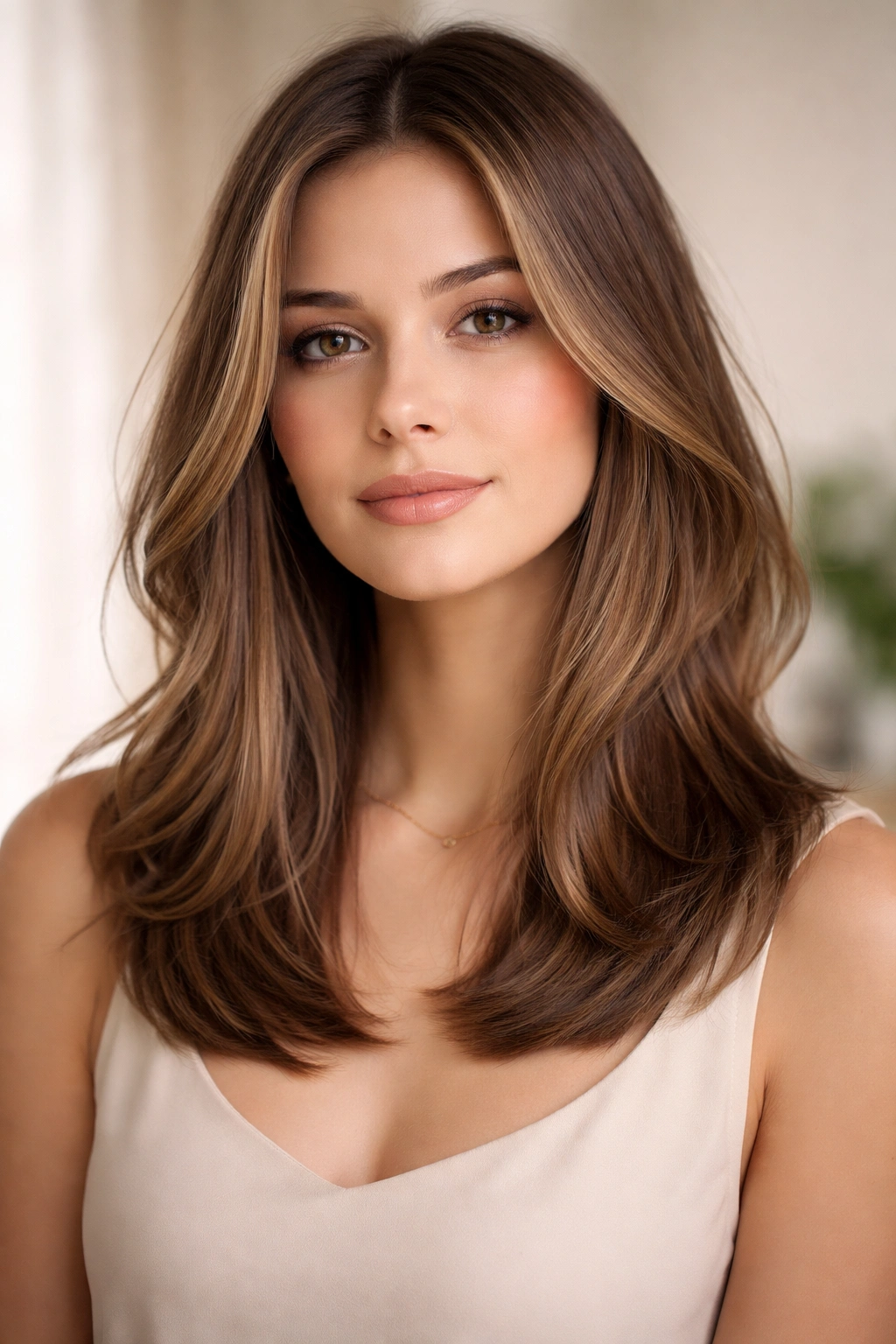
Collarbone-length hair with subtle layers is sophisticated and surprisingly versatile. It’s long enough that it can go in a ponytail or bun, but short enough that it requires minimal daily styling. The subtle layers prevent it from looking flat while maintaining the polished, intentional feeling.
The Sophistication Factor
Collarbone length reads as polished and intentional without being overdone. It’s long enough to have real styling options but short enough to be genuinely low-maintenance. The subtle layers keep it from looking blunt without making it look choppy.
Styling This Length
- Works beautifully straight and sleek, or with waves and texture
- Can be worn down, half-up, or in a bun depending on your mood
- Subtle layers make it look fuller and more dimensional than blunt ends would
- Regular trims every 6-8 weeks keep it looking intentional
This is genuinely one of the most versatile lengths available.
24. Braided Crown or Half-Up Braid Style
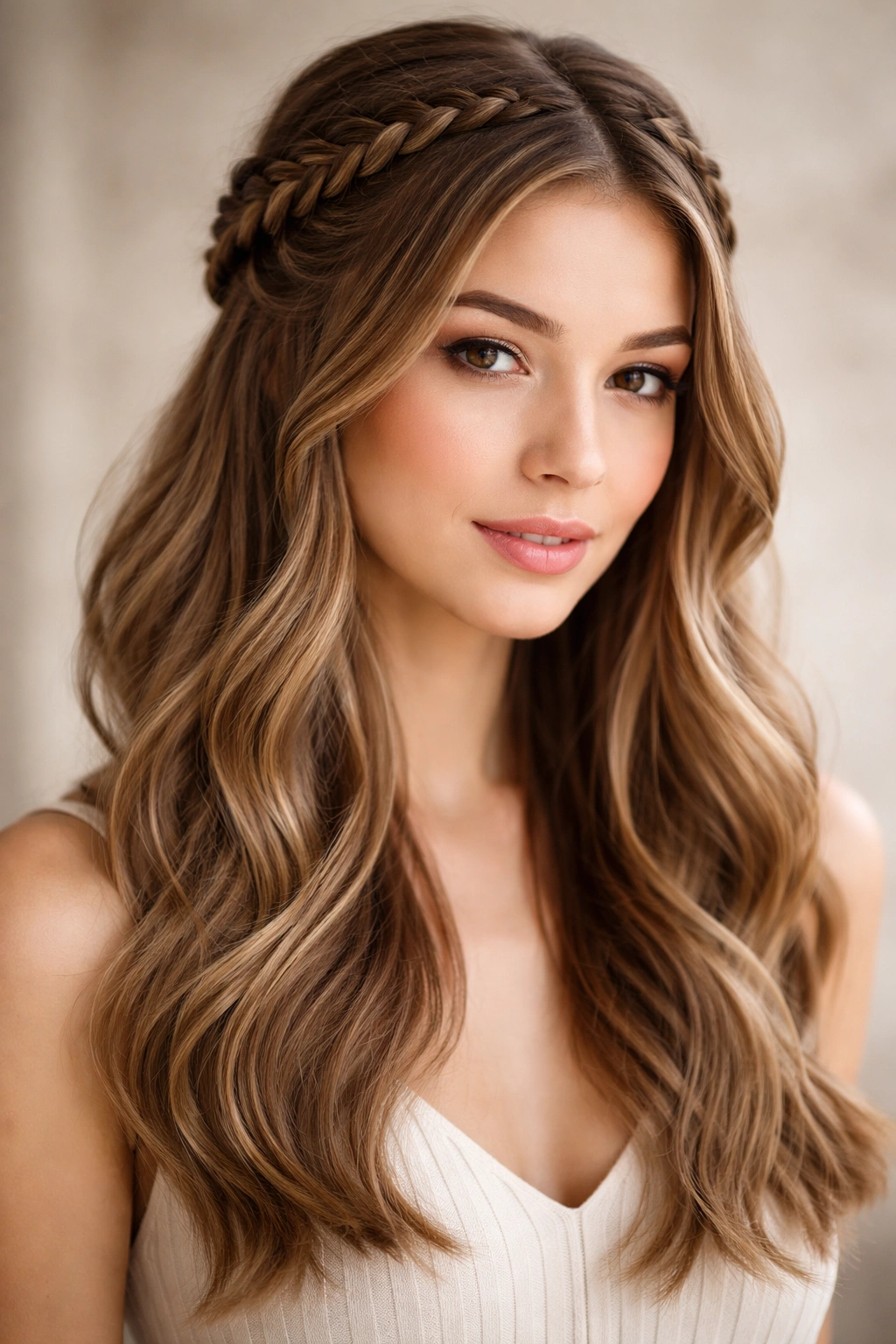
While this can technically be worn with various hair lengths, it’s particularly stunning on longer hair (shoulder-length or longer). A braided crown or half-up braid transforms your look without requiring a cut—you can wear your hair down most days and then style it up with a braid for special occasions or whenever you want to feel fancy.
The Styling Versatility
A half-up braid or braided crown style lets you have both length and the polished, intentional feeling of shorter hair. It’s especially flattering because it frames your face while keeping hair off your shoulders and out of your way. This is both a practical styling choice and a genuinely pretty way to wear your hair.
Different Braid Options
- Half-up Dutch braid: thick and statement-making, works on all hair types
- Braided crown: romantic and elegant, especially gorgeous with waves
- Side braid: casual and flattering, works on all hair textures
- Fishtail braid: intricate and pretty, works best on hair with some texture
The beauty of braid styles is that you’re not cutting off length—you’re just styling it differently on days when you want that aesthetic.
25. Long Curly Hair Embraced Naturally
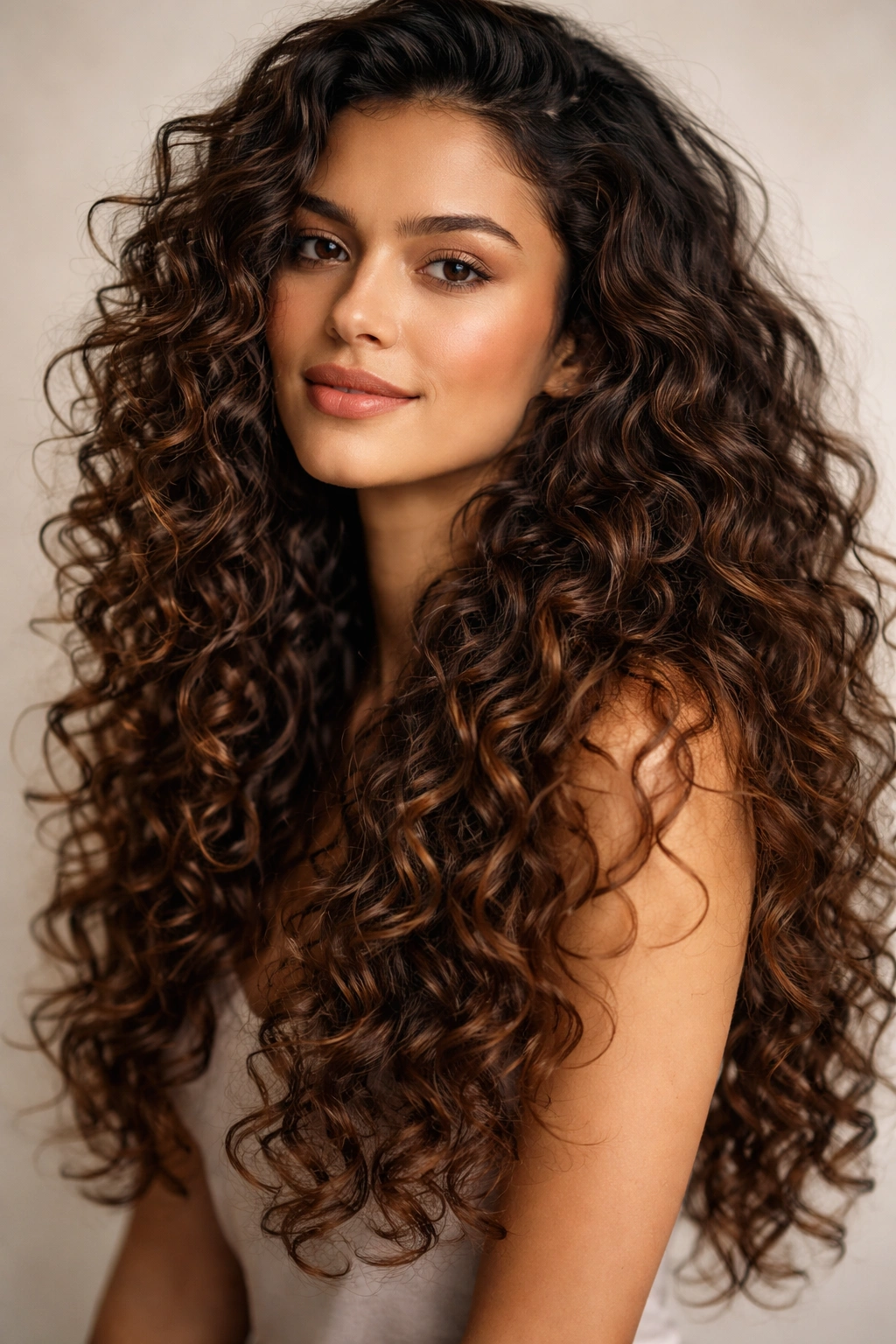
This is genuinely long, curly hair that’s cut and styled to embrace and celebrate the natural texture rather than fighting it. The cut has layers and texture throughout that work with your curls rather than against them, and the styling approach is about defining and enhancing your natural curl pattern rather than trying to make it straight or perfect.
Celebrating Your Texture
Long, naturally curly hair is genuinely beautiful when it’s cut and styled properly. The key is finding a stylist who understands curly hair and can cut in a way that works with your curl pattern rather than against it. The styling approach should be about enhancing your curls, not fighting them.
Curly Hair Care and Styling
- Requires a cut that understands curl patterns and layers accordingly
- Works best with products designed for curly hair: leave-in conditioner, curl cream, or gel
- Deep conditioning is critical for curl health; weekly or bi-weekly treatments
- Styling method: wet your curls, apply products to soaking wet hair, scrunch and plop to encourage curl formation
The honest truth: Naturally curly long hair requires more maintenance than straight hair, but the payoff is genuine—your hair can be genuinely beautiful and low-maintenance if you work with your texture rather than against it.
Final Thoughts
The right hairstyle isn’t about finding what’s technically trendy—it’s about understanding what actually works with your face shape, hair texture, lifestyle, and the amount of styling time and maintenance you’re genuinely willing to commit to. A perfect cut that matches what you want to do with your hair every single day changes everything; a beautiful cut that requires more maintenance than you’re willing to sustain ends up feeling like a burden within weeks.
Whether you’re drawn to the freedom and low-maintenance appeal of short hair, the sweet spot versatility of medium lengths, or the drama and styling possibilities of longer hair, you have real options within your preferred length range. The key is being honest about your lifestyle, your styling commitment, and what you actually want your daily hair routine to look like. That’s where you find the style that works.
Take your time with this choice, look at photos of each style on different face shapes and hair types, and have a detailed conversation with your stylist about maintenance, styling requirements, and realistic expectations. The best hairstyle is the one that makes you feel genuinely good and fits into your life in a way that feels sustainable.
