



Finding the right haircut when you have a small forehead can feel like you’re working against your natural proportions. You want a style that’s trendy and flattering, but you also need something that complements your specific face shape rather than drawing unwanted attention to your forehead. The good news? A small forehead is actually an asset — it gives you the freedom to rock short haircuts that many other face shapes can’t pull off as effectively.
Short hairstyles are incredibly versatile when you understand how to work with your proportions instead of against them. The key is choosing cuts that either minimize forehead prominence through strategic coverage or that balance it with volume and movement in other areas. A well-chosen short haircut can completely transform how your face looks, boosting confidence and simplifying your daily styling routine.
The real challenge isn’t finding a short haircut — it’s finding the right one. Not every trendy pixie or crop will work equally well for your specific forehead size and face shape. Some cuts will make your forehead look larger than it is, while others will create perfect visual harmony. Understanding which styles naturally complement smaller foreheads means you can walk into a salon with confidence, ask for exactly what you need, and know that your stylist is working with you, not against you.
1. The Micro Bangs Pixie
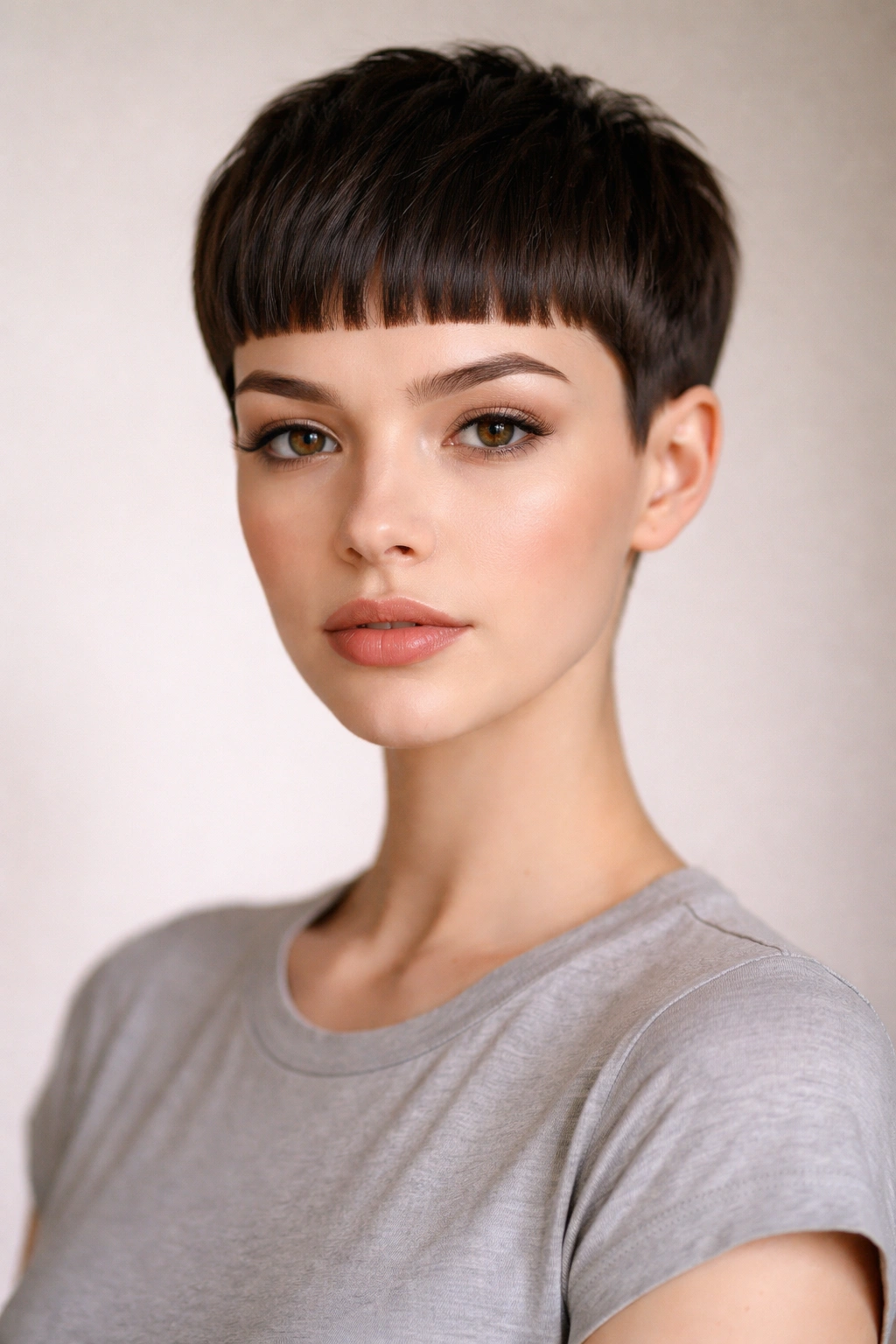
A micro bangs pixie is practically designed for people with smaller foreheads. This cut features the signature short, tapered sides and back of a pixie, but with one crucial difference: instead of a longer top section, the bang line sits very short and high on the forehead. The bangs themselves are blunt and horizontal, creating a graphic, eye-catching detail that commands attention and visually balances your proportions.
What makes this cut work so beautifully for small foreheads is that the bangs don’t try to hide anything — they embrace the space and make it part of the design. The high placement actually makes your forehead appear larger as a visual element, which creates a more balanced overall face shape. The cut also draws focus upward, away from the face and toward the crown, creating a lifted, angular silhouette.
Why It’s Perfect for Small Foreheads
Micro bangs work because they transform your small forehead from something you might hide into an intentional design choice. The graphic nature of the style makes the entire cut feel deliberate and fashionable rather than like you’re trying to compensate for anything. This confidence shows through in how the haircut photographs and how it frames your face.
What to Ask Your Stylist For
- Blunt, straight-across micro bangs positioned about half an inch above your natural eyebrow line
- Tightly tapered sides fading to skin or a number 1-2 guard
- Textured, choppy layers throughout the crown for movement and dimension
- A slightly longer top section that can be styled forward, back, or to the side
- Use a texturizing razor rather than blunt scissors to keep the cut from feeling too severe
Pro tip: Micro bangs require commitment — they grow fast and need trimming every 2-3 weeks to maintain the look. Chat with your stylist about whether you’re willing to maintain the frequent appointments before committing.
2. The Textured Crop
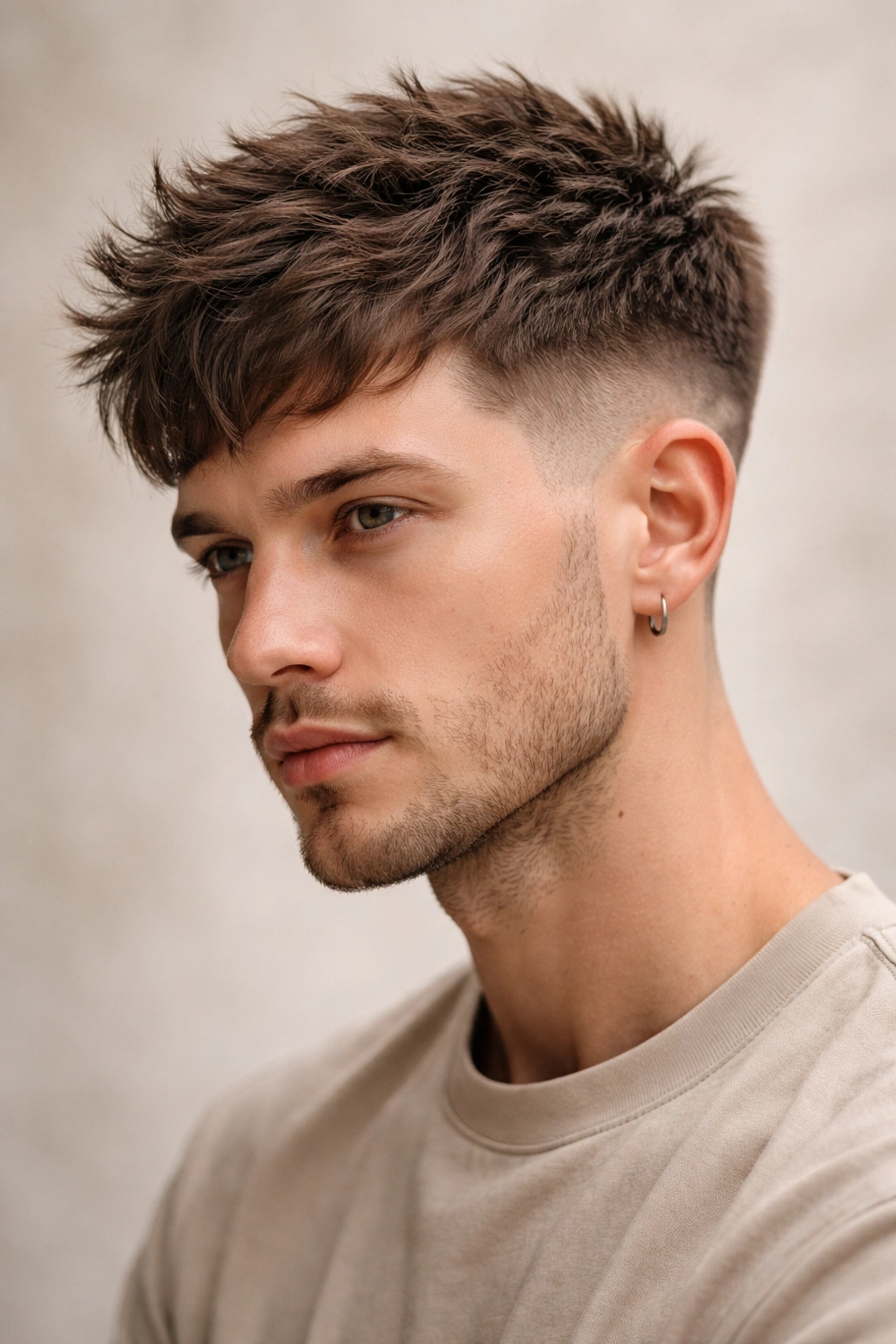
The textured crop is one of the most flattering short cuts for small foreheads because it adds significant volume and movement through layering rather than relying on length for visual interest. This cut is shorter overall than a pixie — typically 1-2 inches on top — but uses choppy, jagged layers to create texture and lift at the crown. The back and sides are closely cropped, while the top section has multiple lengths that create a tousled, deliberately undone appearance.
A textured crop works wonderfully for small foreheads because the emphasis is entirely on movement and dimension rather than on coverage. The layers catch the light differently, creating visual interest that pulls the eye upward and around the head. Your small forehead becomes a non-issue when the rest of the cut is so visually dynamic.
Why It’s Perfect for Small Foreheads
The beauty of this cut lies in its focus on texture over length. When your haircut is visually interesting through layering and movement, forehead size becomes largely irrelevant — your face is beautifully framed by the cut itself rather than by hair length. The upward movement also naturally lifts the face, creating a youthful, energetic appearance.
What to Ask Your Stylist For
- Multiple choppy, uneven layers throughout the crown for maximum texture
- Sides kept very short (number 1 or 2 guard) for contrast and definition
- Longer pieces at the top that can be styled forward, spiked, or tousled
- Texturizing rather than blunt lines for that effortless, lived-in feel
- Slightly longer front sections that can frame the face if desired
Worth knowing: This cut looks best when air-dried with some texture product — it’s designed to look intentionally messy. If you prefer a sleeker, more polished look, this might not be the right cut for you.
3. The Blunt Bob with Bangs
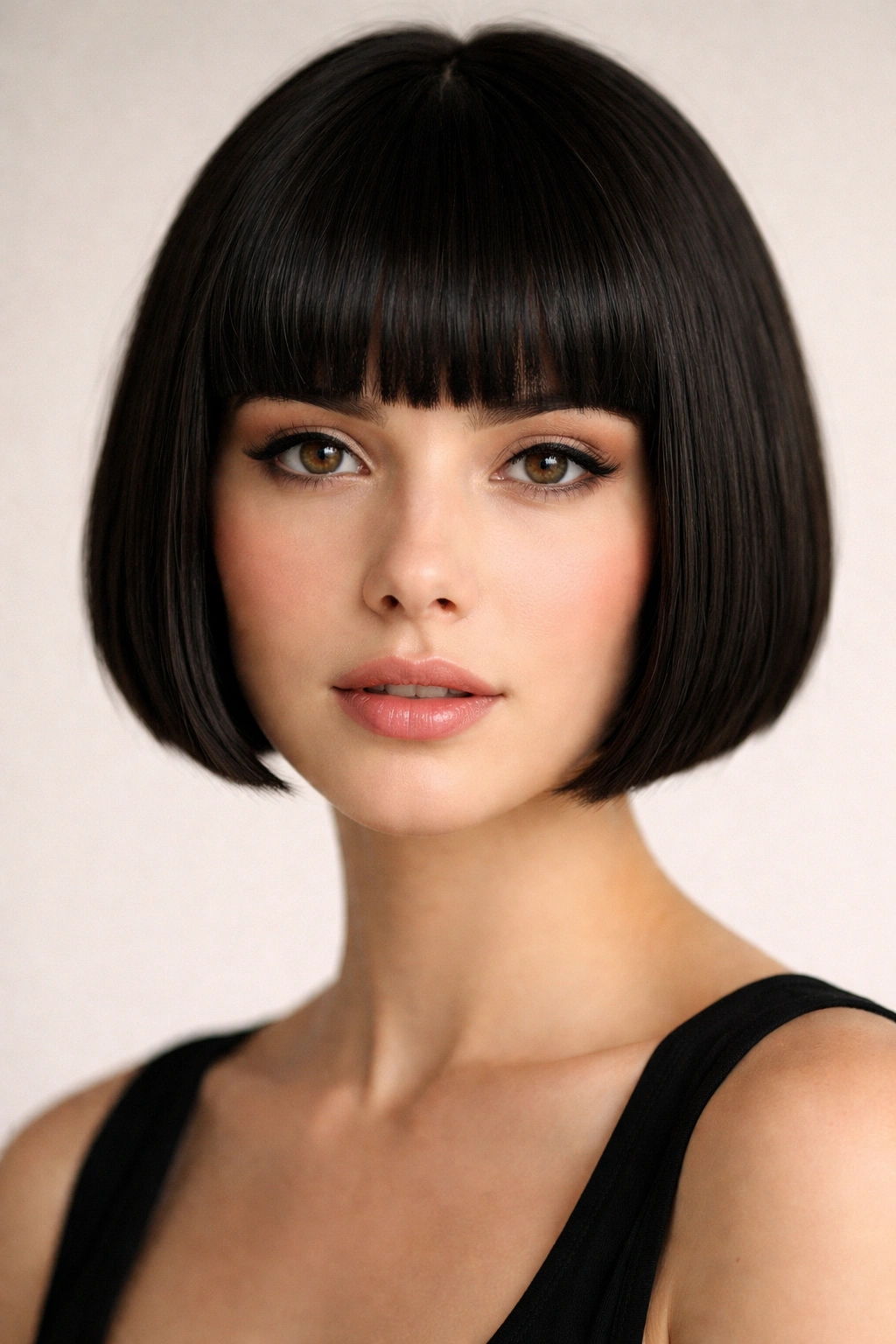
Don’t assume that bobs only work for longer hair. A short, blunt bob with bangs is a sophisticated option that can be absolutely stunning on people with small foreheads. This cut sits at the ear or just above, features a straight, blunt line all the way around, and includes straight-across bangs that hit at the eyebrows. The overall effect is geometric, polished, and intentionally structured.
Bangs in a blunt bob specifically help balance a small forehead by introducing a horizontal line at the top of the face. This line visually expands the forehead area and creates proportion. The blunt nature of the cut also gives the style a confident, modern edge that makes any facial proportions feel intentional and fashionable rather than accidental.
Why It’s Perfect for Small Foreheads
The horizontal line of the bangs and the blunt, graphic nature of this cut create structure that complements smaller facial features beautifully. The style commands confidence and looks best when you’re owning the look completely. Your small forehead becomes a canvas for the geometrically perfect bangs, which become the focal point.
What to Ask Your Stylist For
- Blunt bangs that hit right at the eyebrow line — neither too short nor too long
- A rounded or blunt line all the way around the head, hitting at the ear or slightly above
- Minimal layers (this style relies on bluntness, not texture)
- Smooth, polished texture rather than choppy or textured movement
- Consider asking for an internal undercut if you want to feel like the cut is shorter without it appearing that way
Pro tip: This cut is absolutely gorgeous on straight to wavy hair. If your hair is very curly, you may need to style it with a blowdryer and straightener to achieve the blunt effect — ask your stylist whether your natural texture will cooperate with this style.
4. The Shaggy Layer Cut
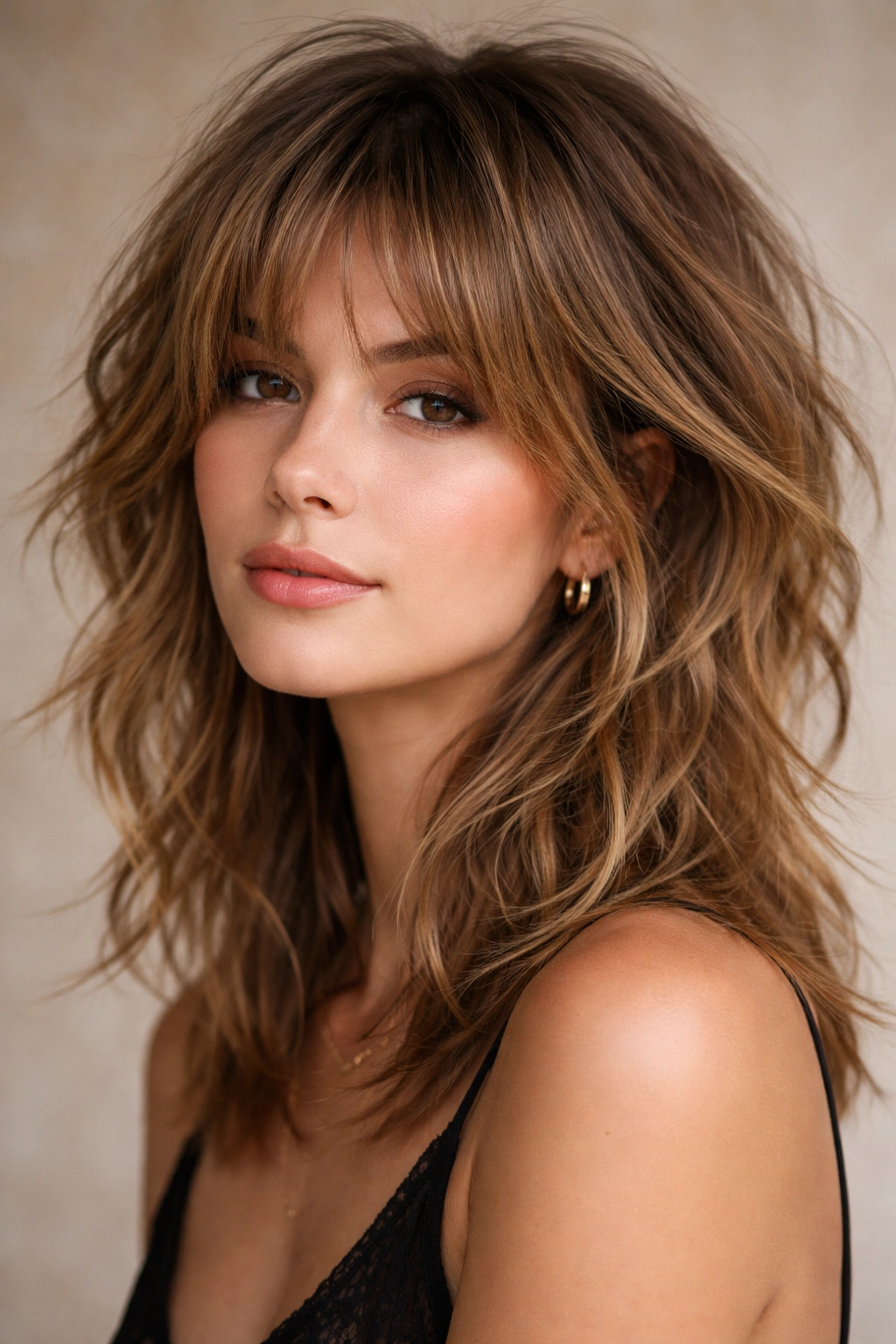
A shaggy layer cut is a short haircut with lots of choppy layers throughout, creating a rock-and-roll, deliberately unkempt vibe. Unlike the textured crop, which is closely cropped on the sides, a shaggy layer cut maintains slightly more length all over while using disconnected, choppy layers to create movement and texture. The overall effect is edgy, cool, and effortlessly styled.
This cut works beautifully for small foreheads because the emphasis is on movement and layers rather than on how the hair frames the face. The textured, choppy nature of the cut means that focus naturally goes to the dynamic layering throughout the cut rather than to any single feature. Your small forehead becomes irrelevant in the face of such visually interesting styling.
Why It’s Perfect for Small Foreheads
Shag haircuts were made for creating visual interest through texture and movement. When the haircut itself is busy with layers and dimension, no single facial feature dominates. Your small forehead is simply part of the overall composition of the cut, and the composition is strong enough that proportion becomes a non-issue.
What to Ask Your Stylist For
- Choppy, disconnected layers throughout the entire head
- Slightly more length overall (2-3 inches on top) to emphasize the shaggy texture
- Shorter, tighter layers at the back and sides for shape
- A slightly longer front section that can be styled away from the face
- Texturizing throughout to enhance the deliberately undone appearance
Worth knowing: A shag cut can look either intentionally cool or accidentally messy depending on how you style it. Plan to use some texture paste or dry shampoo and take time to style the layers intentionally — it’s not a wash-and-go cut for most people.
5. The Side-Swept Pixie
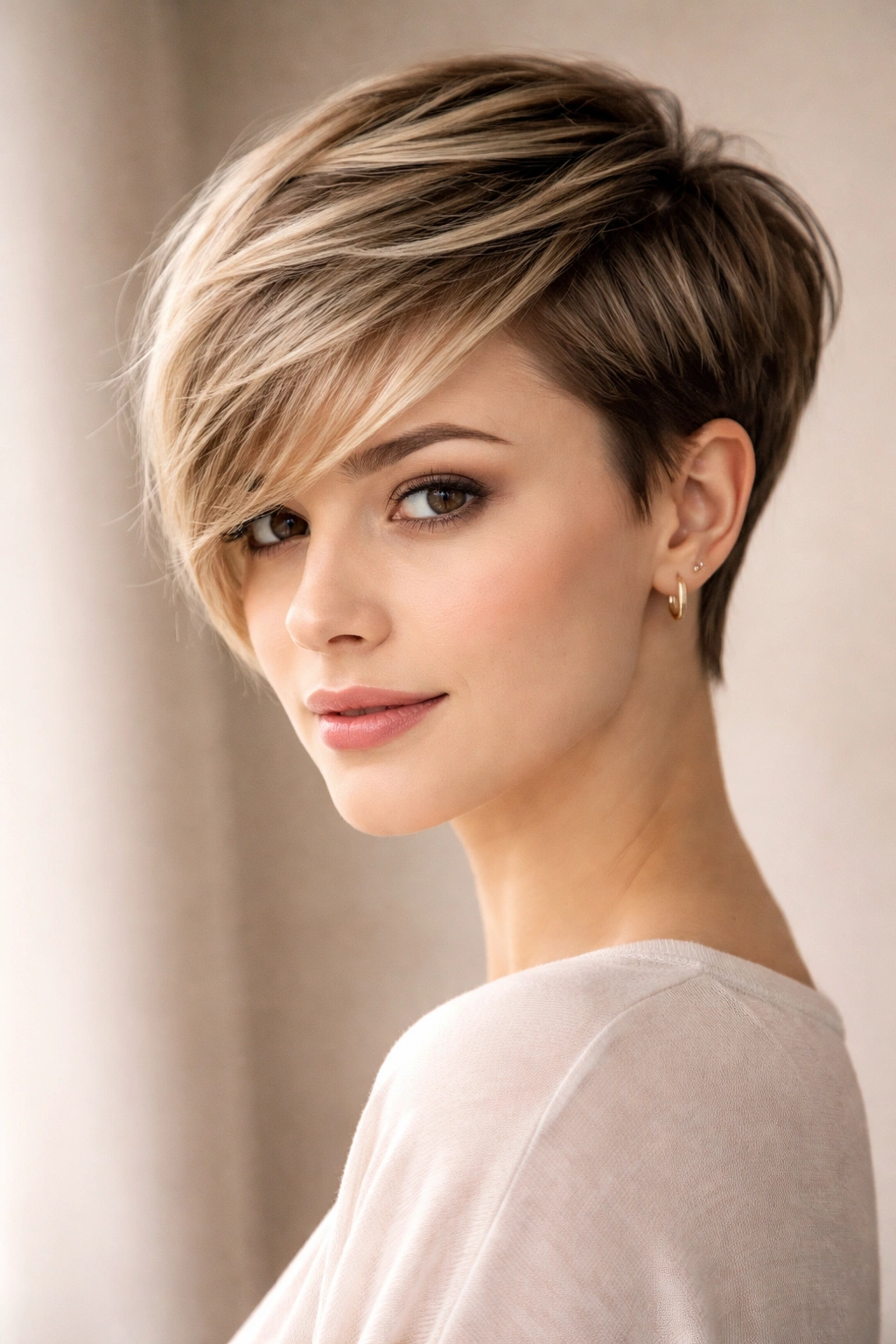
A side-swept pixie is a pixie cut where the longer top section is styled dramatically to one side of the head rather than being worn straight back or forward. The sides and back remain short and tapered, but the front section is longer and swept across the face at an angle. This creates a chic, fashion-forward look with built-in visual interest.
The side-swept pixie is particularly flattering for small foreheads because it uses an angled line to create dimension and visual complexity. The sweep of longer hair across the face creates a diagonal line that visually expands the forehead area while simultaneously drawing the eye to the movement and shape. Your small forehead becomes part of a larger, more interesting composition.
Why It’s Perfect for Small Foreheads
The angled sweep creates a visual trick that makes foreheads appear more proportional. The eye follows the line of the longer hair across the face rather than landing directly on the forehead area. This subtle visual shift is remarkably effective at creating better overall face balance without obviously trying to hide anything.
What to Ask Your Stylist For
- A tapered pixie base with very short sides and back (number 1 or 2 guard)
- Significantly longer front sections on one side that can be swept across the face
- Choppy, textured layers throughout the crown to support the sweep
- Length that reaches approximately to your cheekbone when swept
- Ask your stylist to show you how to style it and what products work best
Pro tip: This cut requires styling to look its best — you’ll need to use a blow dryer and likely some lightweight styling product to achieve the intended sweep. If you’re looking for a completely wash-and-go style, this might not be the right choice.
6. The Taper Fade with Length on Top
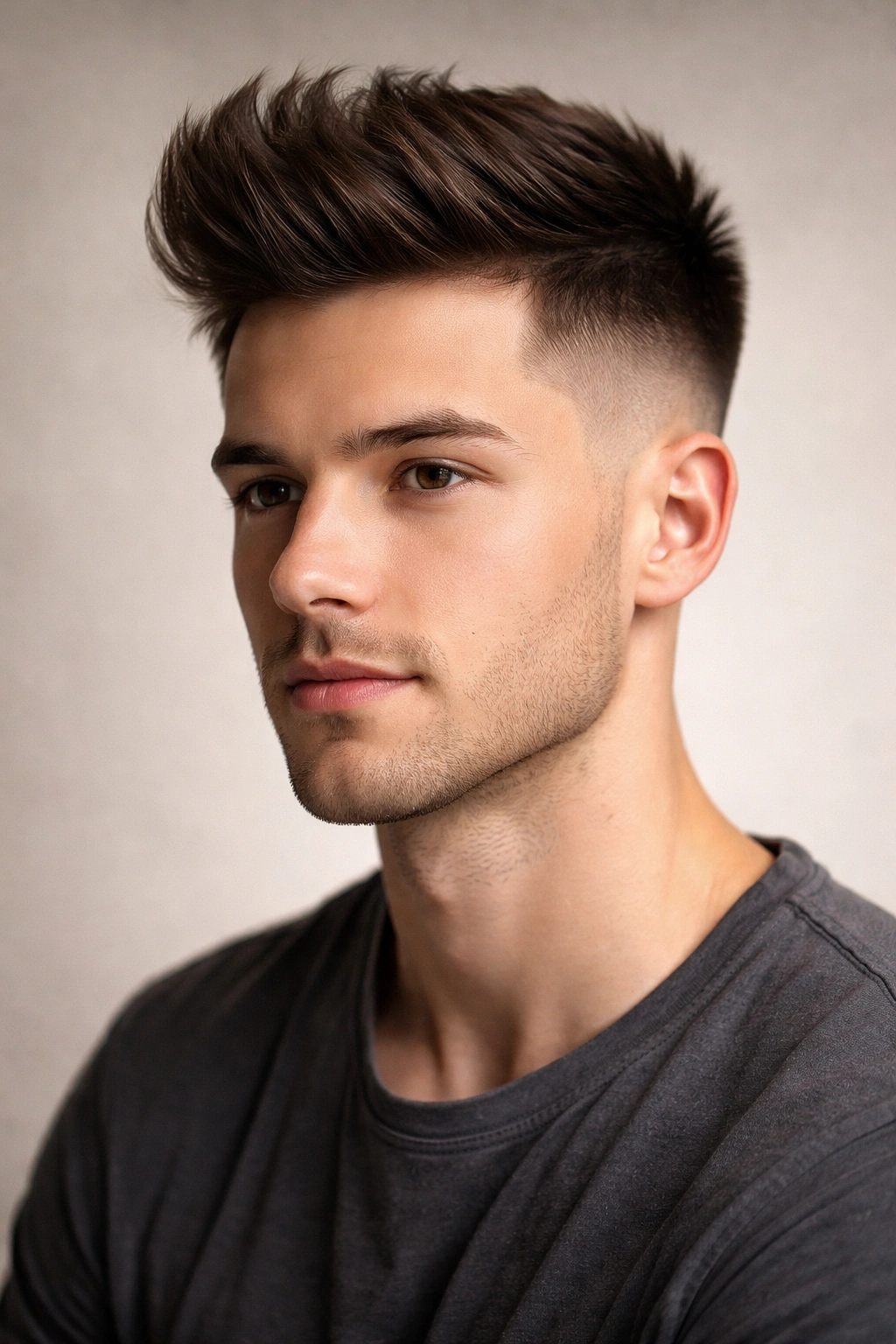
For those who prefer a more masculine-leaning aesthetic, a taper fade with significant length on top offers a modern, stylish option that works beautifully with small foreheads. This cut features very short, faded sides that gradually blend down to skin or nearly skin-level, while the top section maintains 3-4 inches of length. The contrast between the short sides and the longer top creates striking visual dimension.
This cut works well for small foreheads because the length on top automatically draws the eye upward and away from the forehead area. The longer hair at the crown creates height and visual interest that makes facial proportions feel less important. The cut naturally emphasizes the top of the head rather than the face itself.
Why It’s Perfect for Small Foreheads
The proportional difference between the short sides and the long top creates so much visual movement that forehead size becomes a minor detail. The eye travels upward along the fade and then focuses on the length and styling at the crown. This natural movement of visual attention is exactly what makes this cut so flattering for smaller foreheads.
What to Ask Your Stylist For
- A skin or near-skin fade on the sides and back (typically a number 0 or 1 guard that blends into longer lengths)
- A clean line around the ears and neck
- At least 3 inches of length on top to create the height contrast
- Textured, choppy layers through the top to allow for styling versatility
- Ask about styling options — whether you prefer a slicked-back look, a tousled look, or something else
Worth knowing: Fade haircuts require maintenance every 2-3 weeks to keep the fade looking sharp. This is not a grow-out-friendly style — the contrast is what makes it look intentional.
7. The Messy Bedhead Cut
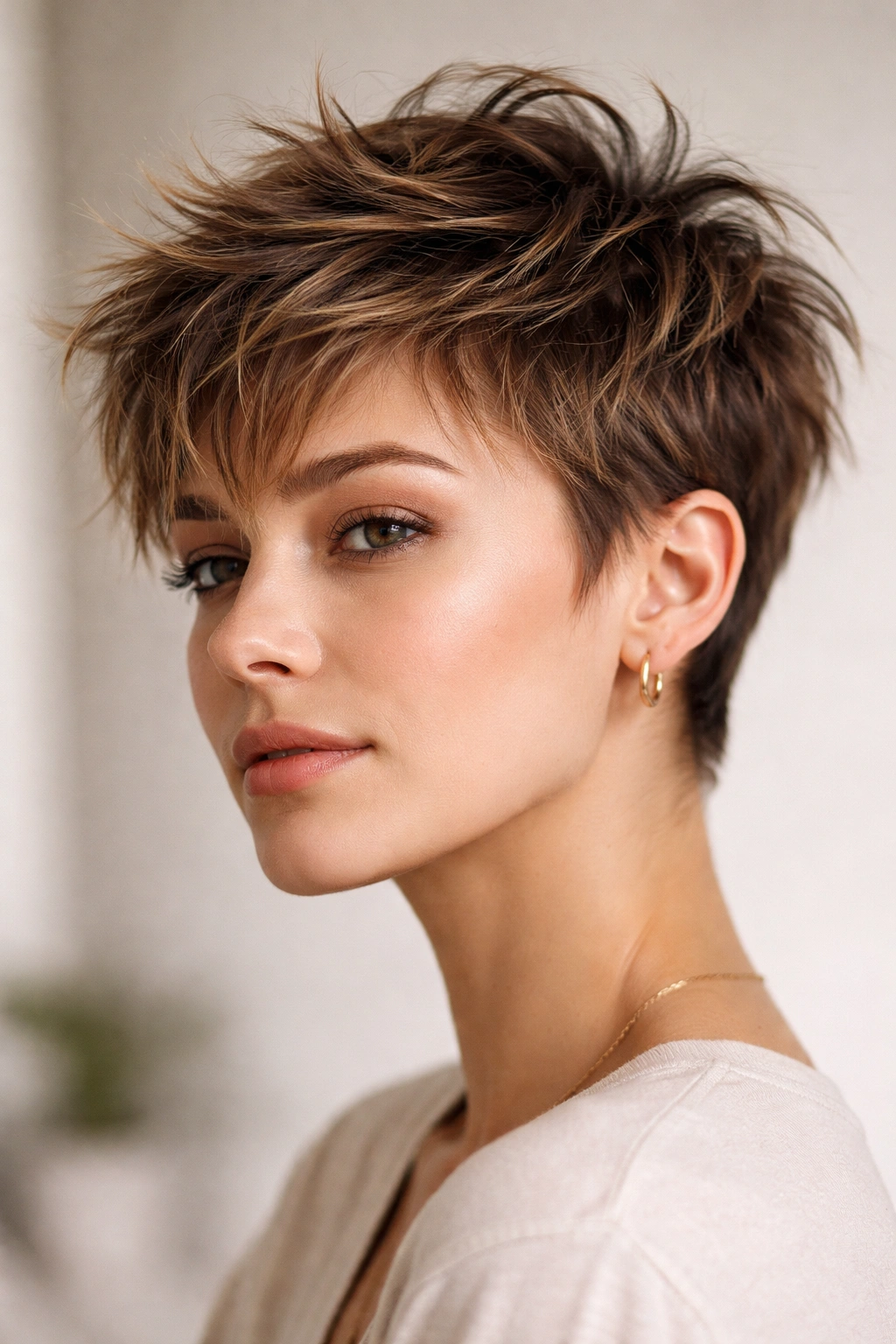
The messy bedhead cut is a short, deliberately undone style that looks like you’ve just rolled out of bed in the best possible way. It’s typically 2-3 inches on top with choppy, uneven layers and very short sides. The key to this cut is that it’s designed to look effortlessly textured and tousled rather than polished or structured.
For small foreheads, the bedhead cut is ideal because it embraces casualness and movement over any kind of formal proportional balance. The messiness and texture are the entire point of the cut, so your forehead is just one element within a much larger, more visually complex picture. There’s no attempt to hide or disguise anything — just intentional styling throughout.
Why It’s Perfect for Small Foreheads
The inherent messiness and texture of this cut mean that no single feature is highlighted or emphasized. Everything is part of the tousled composition. Your small forehead doesn’t stand out as problematic when the entire cut is designed to look deliberately undone and full of movement.
What to Ask Your Stylist For
- Choppy, very uneven layers throughout the crown and sides
- Shorter sides (number 2 or 3 guard) that blend into the longer layers
- Multiple different lengths creating that lived-in, textured appearance
- Slightly longer pieces in the front that can be styled to frame the face
- Ask your stylist to show you how to style it with products and technique
Pro tip: This cut actually improves with a day or two of not washing — the texture and grip improve as your natural oils build up. Plan accordingly if you’re someone who showers and styles every morning.
8. The Short Curtain Bangs
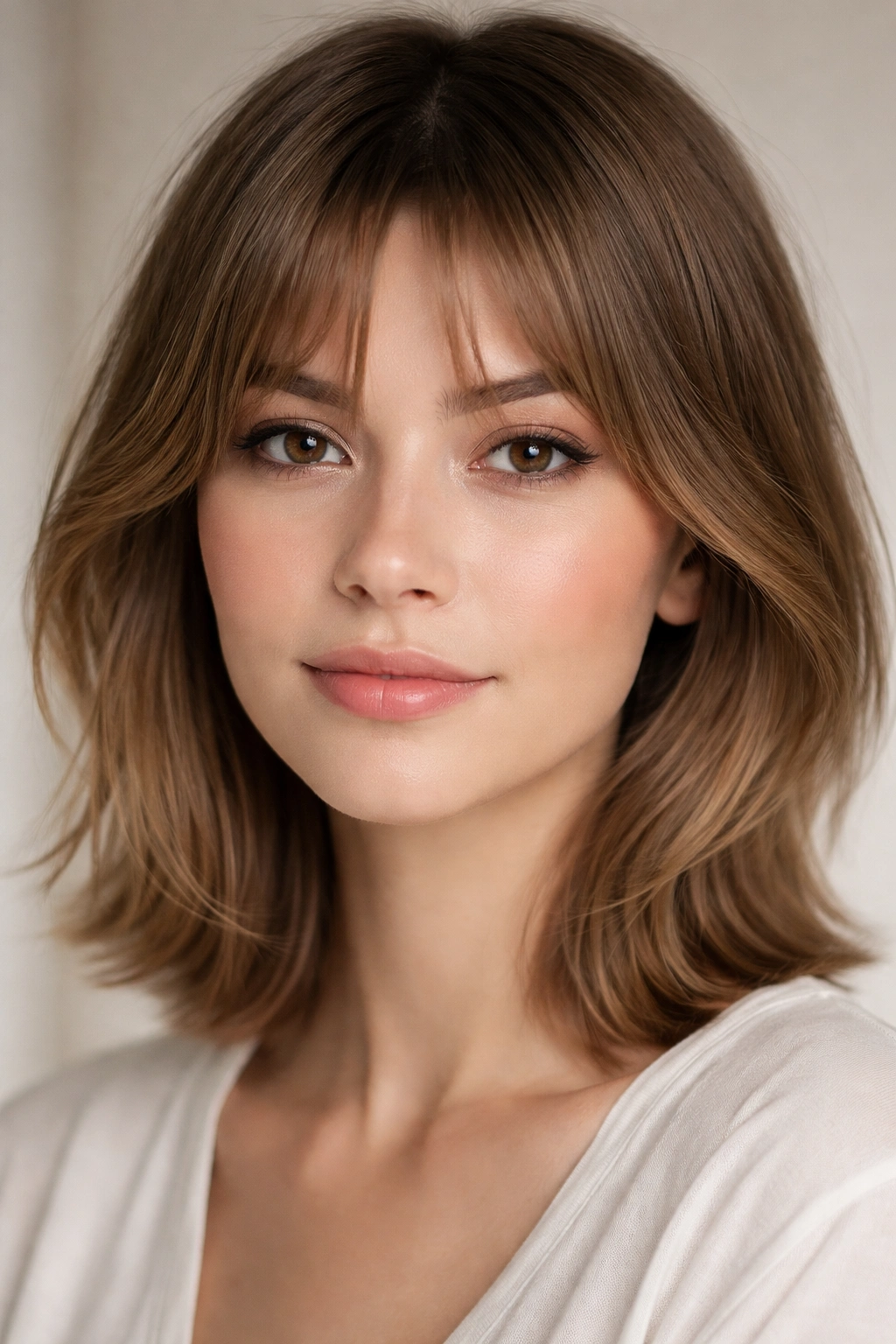
Short curtain bangs are bangs that part in the middle and sweep gently to either side of the face, creating a soft, face-framing effect. Paired with a short cut, this style is romantic and modern simultaneously. The curtains don’t cover the forehead entirely — they frame the face while leaving the forehead visible, which is why this works so beautifully for people who don’t want to hide their foreheads.
This style is particularly flattering for small foreheads because the parted, sweeping nature of the bangs creates width and frames the face gracefully. The bangs draw attention to the eye area rather than the forehead, and the soft, curved line of curtain bangs is more flattering than blunt bangs would be. Your small forehead becomes part of a softer, more romantic overall composition.
Why It’s Perfect for Small Foreheads
Curtain bangs create a gentle frame for the face without the graphic quality of blunt bangs. They introduce movement and curve where blunt bangs would be stark and linear. For small foreheads, this softer approach often feels more flattering because it doesn’t emphasize lines or proportions in the same way.
What to Ask Your Stylist For
- Bangs that hit at or just below the cheekbone when swept to the sides
- A center part that’s clean and intentional
- Slightly choppy, textured ends rather than blunt, blunt lines
- Longer sides that blend smoothly into the bangs
- Layers throughout the rest of the cut to support the movement of the bangs
Worth knowing: Curtain bangs require styling to look their best — you’ll typically need to blow dry them with a round brush to create the sweeping curve. If you want a completely hands-off style, this might require more maintenance than you’re looking for.
9. The Choppy Layers with Movement
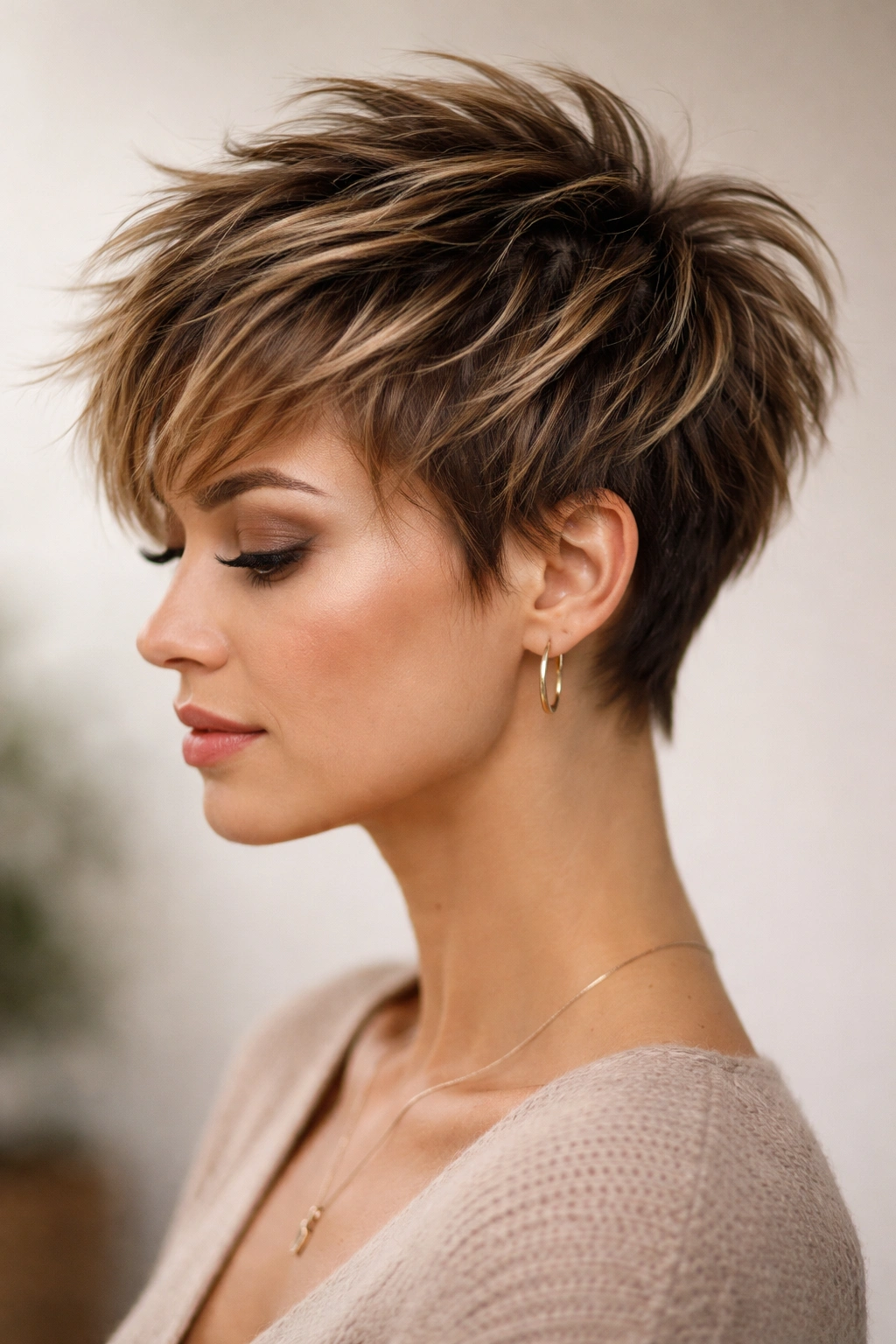
This is a catch-all category for any short cut that emphasizes layers and movement throughout. Similar to some of the previous styles, but specifically focused on the interplay between different lengths, this cut features multiple choppy, disconnected layers that create visual interest and dimension from every angle. The length overall is short — typically 1.5 to 3 inches — but the layering makes it feel dynamic and interesting.
Choppy layers work beautifully for small foreheads because they distribute visual interest throughout the entire head. Instead of focus landing on any single area like the forehead, the eye travels around the head following the different layers and lengths. Your small forehead is simply one part of a much more complex, interesting composition.
Why It’s Perfect for Small Foreheads
The primary advantage of choppy layers is that they create visual noise and interest that overshadows any proportional concerns. When a haircut is inherently interesting through layering and movement, individual features become less significant. Forehead size becomes background information rather than a focal point.
What to Ask Your Stylist For
- Choppy, textured layers throughout the entire head
- Multiple different lengths rather than a uniform length all over
- Very short sides and back (number 1 or 2 guard) for contrast
- Longer pieces at the top and front for styling flexibility
- A texturizing razor throughout rather than blunt scissors to enhance the choppy effect
Pro tip: If you have naturally wavy or curly hair, choppy layers will work gorgeously because your natural texture will add even more dimension. If you have straight hair, you may need to use styling products or a curling iron to enhance the layered effect.
10. The Sleek Pixie with Angle
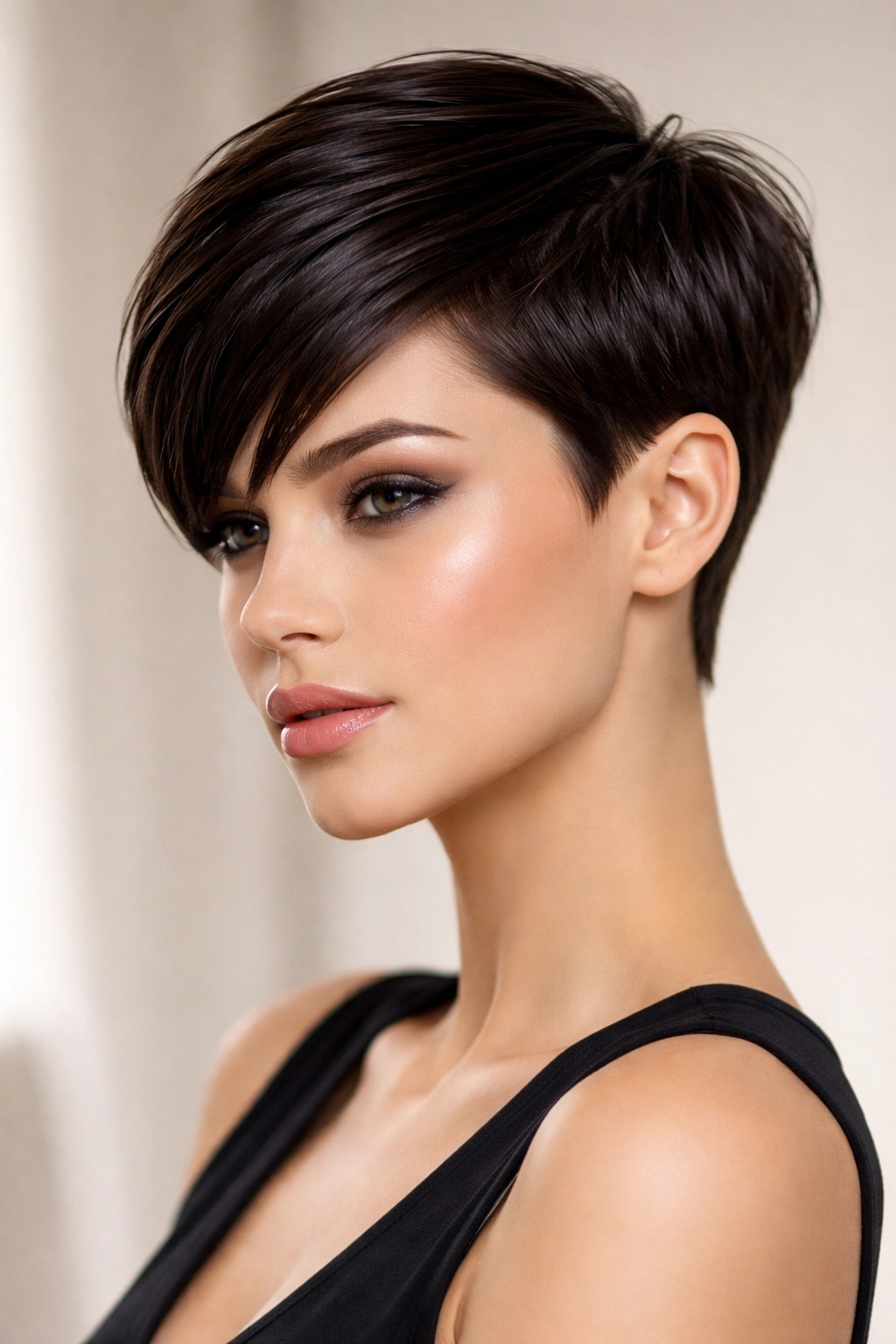
The sleek pixie with angle is a polished, sophisticated version of a pixie cut where the top section is slightly longer and styled with intentional shape and direction. Unlike the textured crop or the shaggy layer cut, this pixie prioritizes sleekness and control while still maintaining interesting angles and lines. The result is chic, modern, and undeniably fashionable.
This cut works wonderfully for small foreheads because the slicked, angular styling creates shape and visual interest that transcends basic proportion. The intentional angles and lines of the styling become the focal point, and your small forehead becomes part of the overall aesthetic rather than a point of concern. This is a cut that communicates confidence and style.
Why It’s Perfect for Small Foreheads
The sleekness of this cut, combined with the intentional angles and directions of the styling, creates a composed, put-together aesthetic. When your haircut looks this intentionally styled and fashionable, proportional details become less important than the overall impression. Your small forehead is simply part of a very polished, intentional look.
What to Ask Your Stylist For
- A tapered pixie with very short sides (number 1 or 2 guard)
- Longer top section that can be styled at an angle — typically 2-3 inches
- Clean lines around the ears and neck
- Smooth rather than textured layers — this style relies on polish, not texture
- Ask your stylist to demonstrate how to style it with a blow dryer and product
Worth knowing: This cut will require product and styling to maintain the sleek, angled look. If you prefer completely hands-off styling, ask your stylist whether the cut can work with a tousled style as well, or whether it specifically needs to be slicked and angled.
Final Thoughts

The perfect short haircut for your small forehead isn’t about hiding or compensating — it’s about embracing your proportions and choosing a style that works with your face shape rather than against it. Whether you prefer graphic, micro bangs or soft, sweeping curtains; whether you like textured layers or sleek, polished angles, there’s absolutely a short haircut that will make you feel confident and beautiful.
The most important thing you can do is communicate clearly with your stylist about your small forehead and what you’re hoping to achieve. Show them photos of styles you love, talk honestly about how much time you’re willing to spend styling daily, and listen to their professional recommendations about what will work best with your hair texture and face shape. A great stylist will help you find a cut that feels like it was made specifically for you.
Remember that even the perfect haircut requires some maintenance and styling to look its absolute best. Those first few days after your cut appointment, while everything is freshly shaped and styled, are the gold standard — expect that you’ll need to replicate that look at home with some help from styling products, a blow dryer, or both. Build in realistic expectations about maintenance appointments, too. Most short cuts need a refresh every 4-6 weeks to maintain their shape and intentional lines.
You’ve got this. Walk into that salon knowing exactly what you want, trusting your proportions, and ready to rock a short haircut that makes you feel like the best version of yourself.
