



Pregnancy brings remarkable changes to your body, and your hair often joins the party—sometimes in the best way possible. Those hormonal shifts can give you thicker, shinier locks that look amazing, or they can leave you feeling too tired and uncomfortable to fuss with complicated styling routines. Either way, the last thing you want to do when you’re carrying extra weight, dealing with swelling, and trying to find a comfortable position is spend 30 minutes wrestling with a blow dryer or precision braiding.
The right hairstyle during pregnancy should do three things at once: look polished enough that you feel like yourself, require minimal daily effort so you can conserve energy for growing a human, and feel physically comfortable against your changing body. Some days you’ll have the energy to attempt something elaborate. Most days, you’ll want something that works fresh out of the shower, doesn’t pull uncomfortably on your scalp, and actually stays put through a full day of moving around, sweating, and honestly, just existing while pregnant.
The good news? The best pregnancy hairstyles aren’t complicated—they just need to be strategic. The ones that work best tend to be loose enough to avoid tension headaches, don’t require daily heat styling, and actually look intentional rather than like you gave up. You don’t need special pregnancy-only haircuts or products; you just need to know which styles actually work for your changing body, growing belly, and real life. Here are the 10 hairstyles that pregnant women genuinely love because they actually work.
1. The Loose Braided Crown
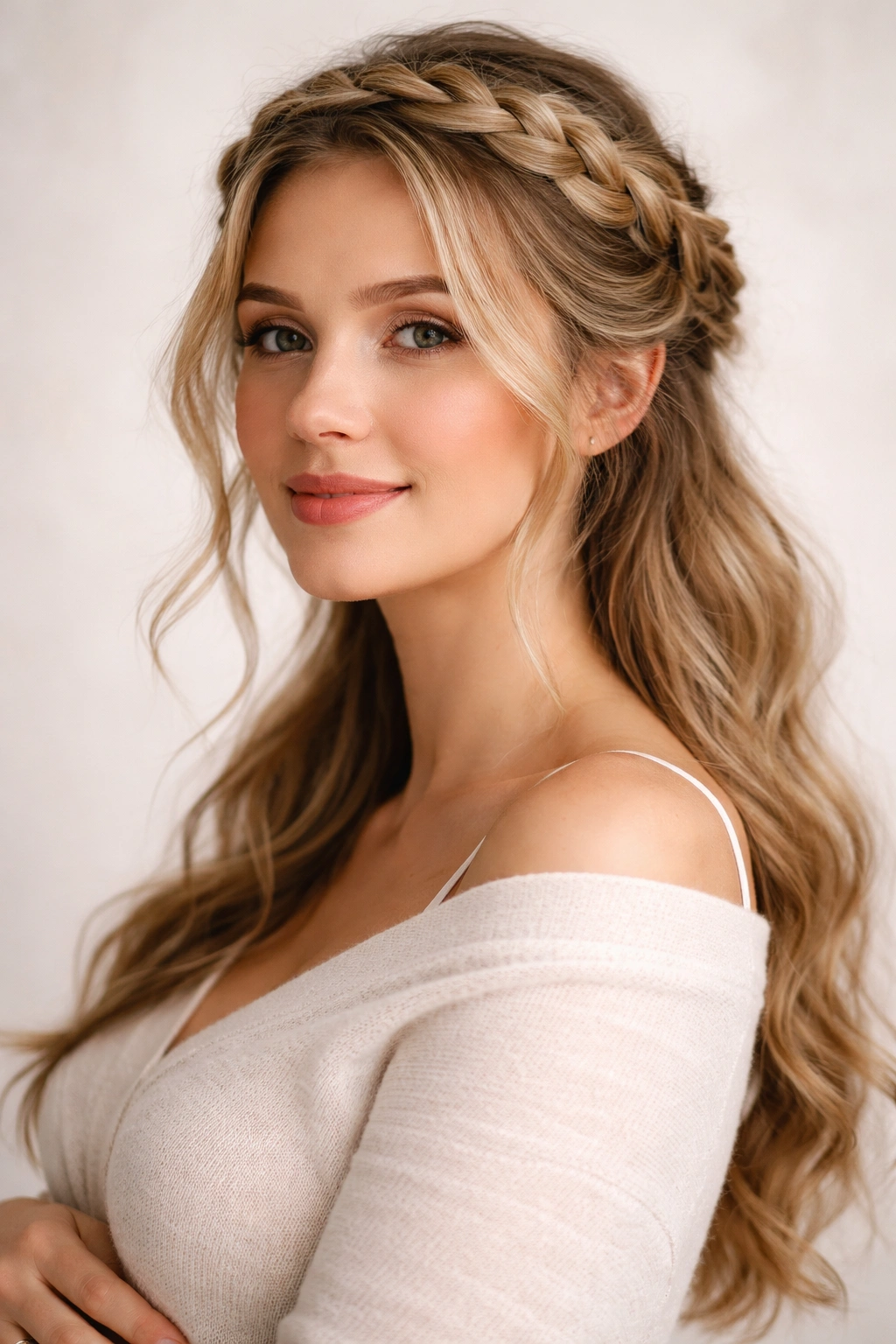
A braided crown skims the top of your head and wraps around like a halo, gathering your hair off your face and neck without pulling it back severely. This style works beautifully during pregnancy because it looks effortlessly elegant—the kind of thing people compliment you on—while genuinely solving the problem of hair sticking to your neck and face when you’re overheated. The braid sits loosely enough that you won’t feel tension on your scalp, which matters more than you’d think when you’re already dealing with pregnancy-related aches.
Why It Works for Pregnancy
The crown braid doesn’t require you to lean back against your belly or crane your neck in awkward angles while styling. You can braid it while sitting down, taking your time without feeling rushed. Because it’s a loose, relaxed braid rather than a tight French braid pulled back to the nape of your neck, it won’t cause the tension headaches some pregnant women experience from styles that pull too tightly. The style is also incredibly forgiving—if some shorter pieces fall out throughout the day, it actually looks more intentional and romantic, not messy.
How to Style It
Start with damp or dry hair depending on your hair texture. Section off a piece of hair at the very crown, roughly from your temple to your temple across the top of your head. Divide it into three sections and braid loosely all the way down, allowing some frizz and flyaways to remain (this makes it look softer and less harsh). Pin the end of the braid to the opposite side of your head with bobby pins, allowing the braid to curve gently around. Pull slightly on each section of the braid to loosen it further—this relaxed, undone look is exactly what you’re going for.
What You’ll Need: Two bobby pins in a color that matches your hair, a hair elastic or small clear band, and about five minutes of your time once or twice per week. The beauty of this style is that you can sleep in it gently and refresh it in the morning with minimal effort.
2. The Low Messy Bun
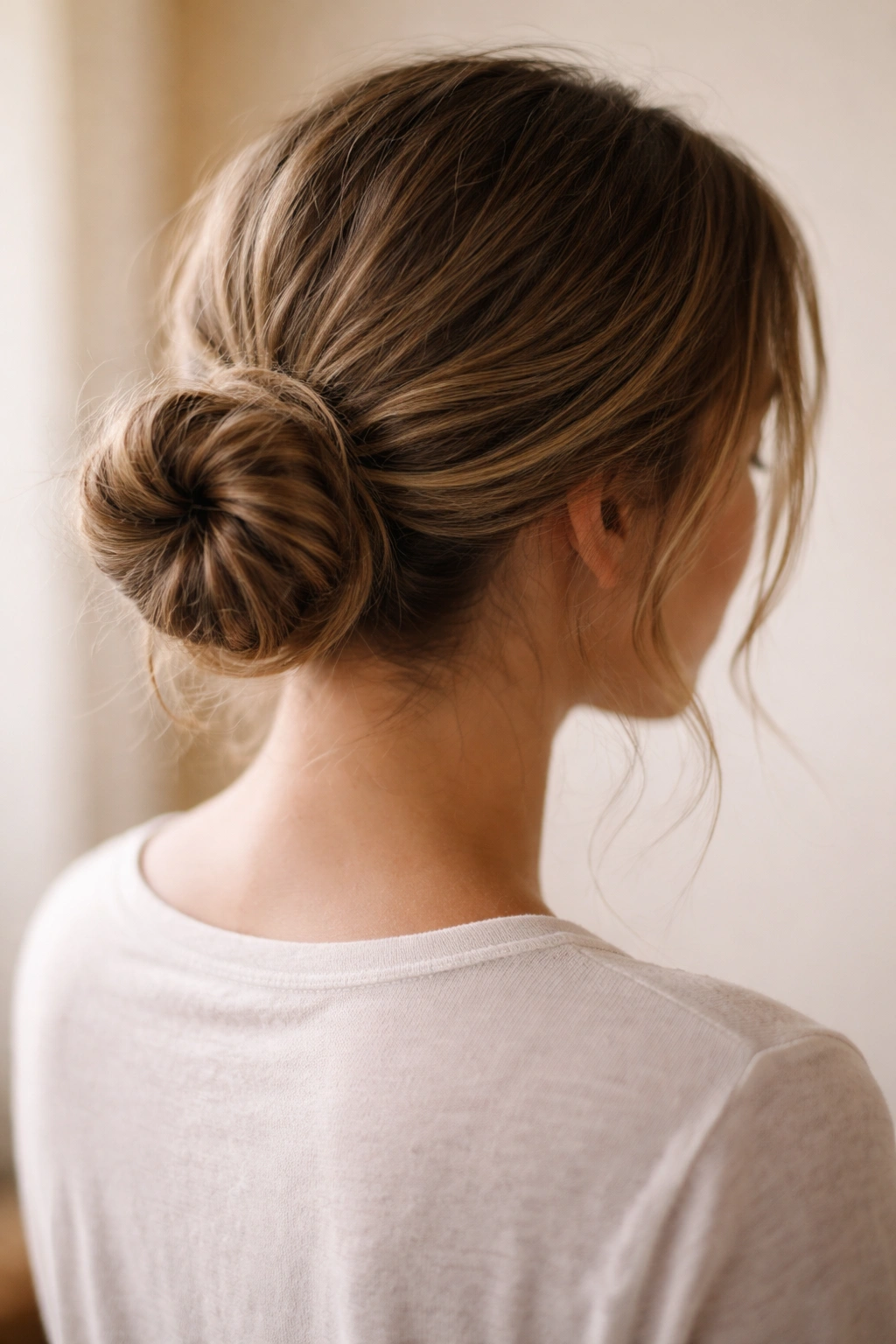
A low bun at the nape of your neck or slightly off to one side gets hair completely off your face and neck, which becomes increasingly important as pregnancy hormones make you run hotter than usual. Unlike a high bun that requires you to raise your arms up and reach overhead—uncomfortable when your belly is in the way—a low bun is relaxed, takes 60 seconds to create, and looks intentionally undone rather than like you didn’t try.
Why It Works for Pregnancy
The lower placement means you’re not pulling hair up and away from your face with tension, which can feel uncomfortable when you’re already sensitive around the hairline. You can create a low bun while sitting down, and you won’t feel it pulling during the day. It also naturally accommodates the changing proportions of your body because the style is worn lower and looser, so it doesn’t feel awkwardly positioned as you change shape. The messy texture means that when strands fall out (which happens with a low bun throughout the day), it still looks intentional and cute rather than sloppy.
How to Style It
Brush your hair back into a low ponytail at the nape of your neck or slightly off to one side, depending on which side feels more comfortable. Don’t pull it too tightly—you want the ponytail to feel secure but gentle against your scalp. Twist the ponytail loosely and wrap it around its own base, then secure it with bobby pins. Once it’s pinned, pull gently on sections of the bun to create that soft, undone texture. Let several shorter pieces fall around your face.
Pro Tip: If your bun feels like it’s slipping by midday, use a texturizing spray or even a light dry shampoo on the ponytail section before twisting it—this gives you more grip without heat styling.
3. The Side Part with Soft Waves
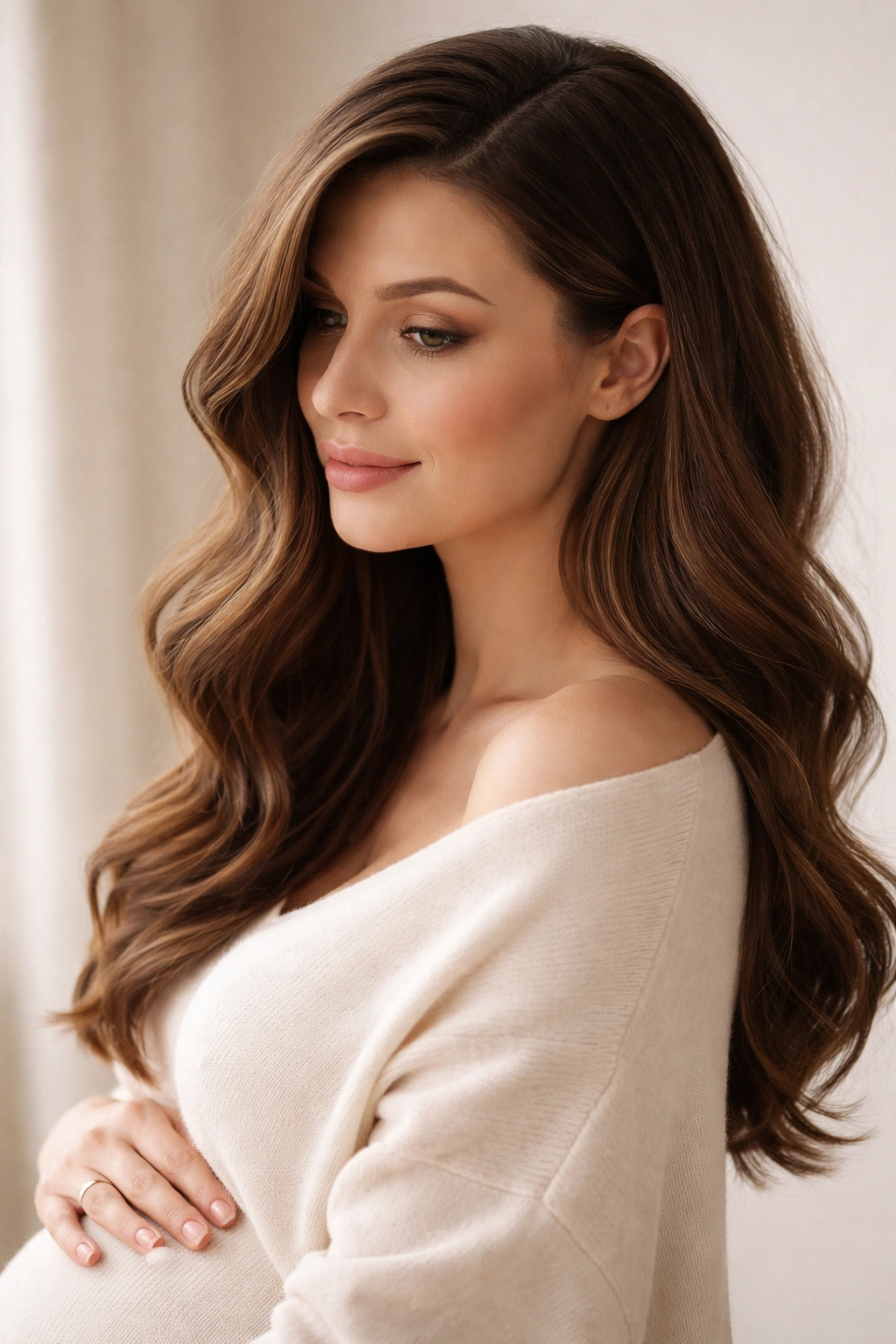
Shifting your part from the center to deeply side-parted creates an entirely different face frame that many pregnant women find more flattering as their face naturally shifts shape. Add gentle waves or loose curls, and you’ve got a style that looks current and polished while requiring minimal effort. The soft waves can be created with a curling iron if you have energy, or with a braid-out method if you don’t.
Why It Works for Pregnancy
A deep side part is forgiving when your hair texture shifts during pregnancy—which it often does due to hormonal changes. The waves don’t need to be perfect; loose, relaxed waves actually look better than tight, uniform curls. You can create this style the night before by braiding damp hair and releasing it in the morning, which means zero heat styling when you’re overheated. The style skims off your face on one side, making you feel more polished even on days when you’re exhausted.
How to Style It
Part your hair deeply to one side, roughly starting from the top of your ear and moving back. If you’re using heat, use a large-barrel curling iron on low to medium heat, taking large sections and curling away from your face. For a heat-free option, braid two or three sections of slightly damp hair before bed and release them in the morning. Once your waves are set, brush through them gently with your fingers to soften them. Consider using a lightweight texturizing spray to enhance the waves without weighing your hair down.
What to Watch For: Some pregnant women find that hormonal changes make their hair curlier or straighter than usual. If your hair isn’t holding waves the way it normally does, try using a light mousse on damp hair before styling—it gives you grip without crunchiness.
4. The High Ponytail (Modified for Comfort)
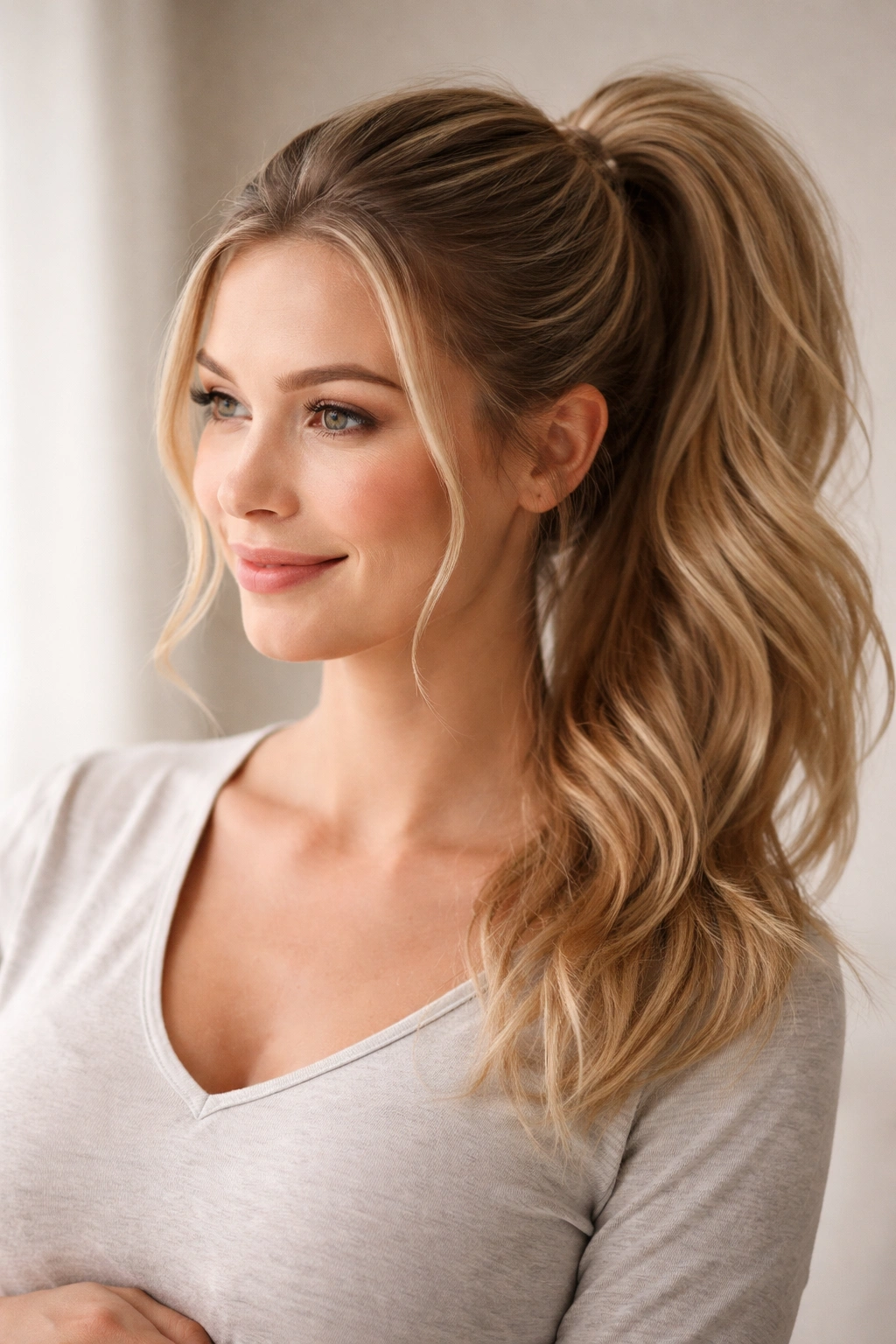
A high ponytail gets hair completely off your face, neck, and back, which solves the practical problem of being hot and uncomfortable. The modification that makes this work during pregnancy is keeping the ponytail loose rather than slick, slightly off-center rather than dead-center, and ensuring the elastic sits comfortably without pulling your hairline back tightly.
Why It Works for Pregnancy
Your center of gravity is shifting, so a high ponytail that’s slightly off-center often feels more balanced and less awkward than a perfectly centered one. The loose texture means you’re not creating tension on your scalp, which matters when pregnancy already has you dealing with potential headaches and tension. Because the ponytail is voluminous and textured rather than sleek and tight, it looks intentional and styled even though it takes less than two minutes to create.
How to Style It
Flip your head upside down and brush your hair together at a point slightly toward the back and one side of your head. Flip back up and secure with a hair elastic. Don’t pull every single strand back tightly; let some pieces frame your face and relax around your ears. Once it’s secured, gently tease the ponytail with a fine-tooth comb or brush to create subtle volume, then smooth the top layer so it looks polished. You can also wrap a small section of hair from the ponytail around the elastic to hide it and add a finished touch.
Worth Knowing: As your pregnancy progresses and your body swells, you might find that even a loose elastic feels tight by the end of the day. Switch to a fabric scrunchie or claw clip on days when you’re feeling particularly swollen—they’re gentler and won’t leave visible dents in your hair.
5. The Half-Up Twist
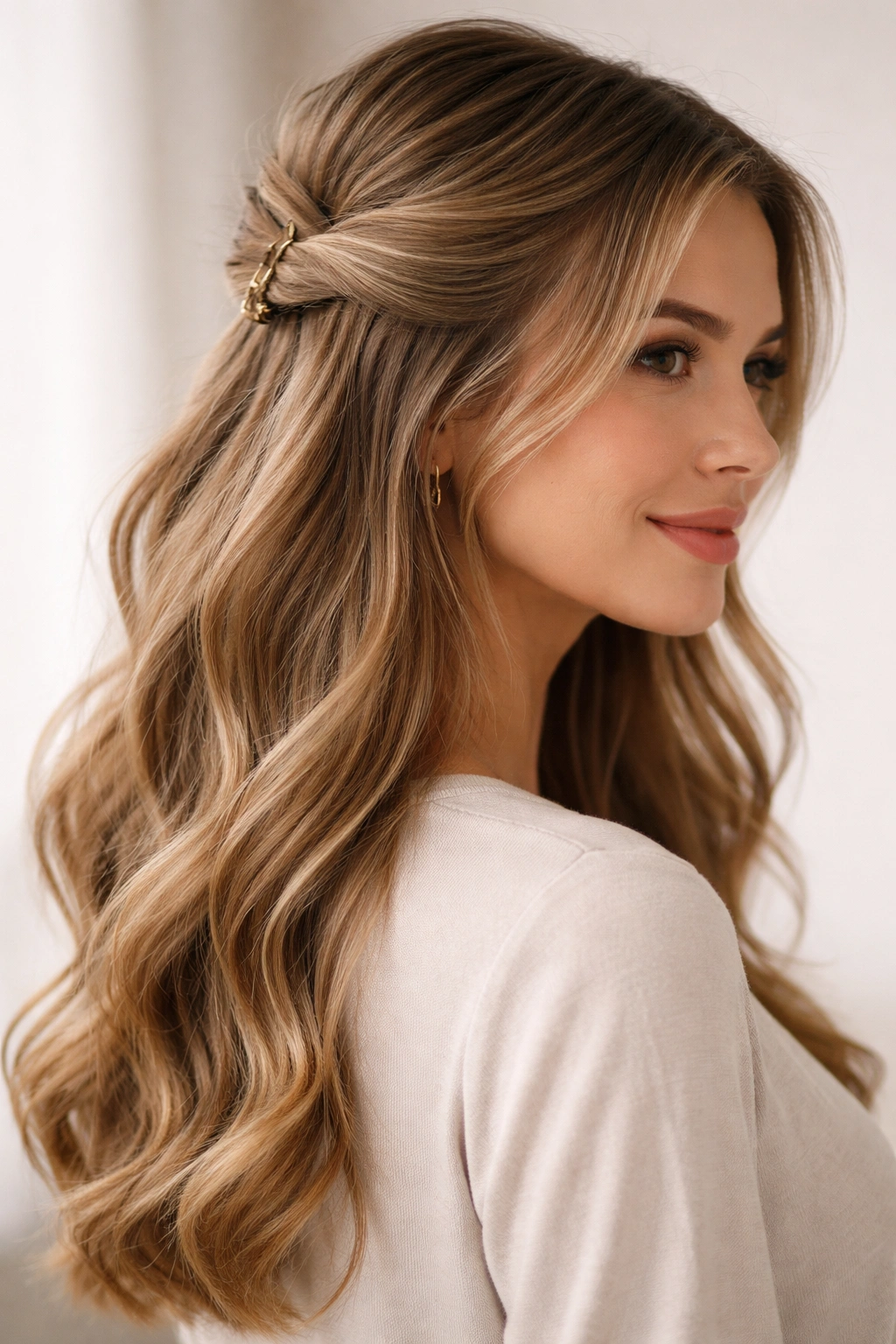
A half-up style takes only the top half of your hair and twists it back, securing it with a clip or elastic, while leaving the bottom half down. This gives you the best of both worlds: hair off your face and neck, but without the commitment of a full updo. The twist is gentler on your scalp than a full ponytail because you’re only securing half the weight of your hair.
Why It Works for Pregnancy
This style balances volume and practicality perfectly. You get the cooling benefit of hair off your neck without pulling all your hair back, which can feel uncomfortable. The twist is asymmetrical and loose enough to accommodate hair texture changes during pregnancy. If you’re having a day when your hair feels limp and flat, a half-up twist gives you movement and shape without requiring heat styling or complicated techniques.
How to Style It
Section off the top half of your hair from ear to ear across the crown. Twist this section gently and move it to the back of your head, securing it with a clip, elastic, or bobby pins. Don’t pull the twist tightly—the relaxed, undone look is what makes this style work. Let some shorter pieces fall around your face and release tension by gently pulling on sections of the twist.
Quick Fact: You can sleep in a half-up twist if you pin it securely, and it refreshes beautifully in the morning with just a few minutes of work. This makes it perfect for when you’re exhausted and don’t have energy for daily styling.
6. The Sleek Low Pony with a Bump
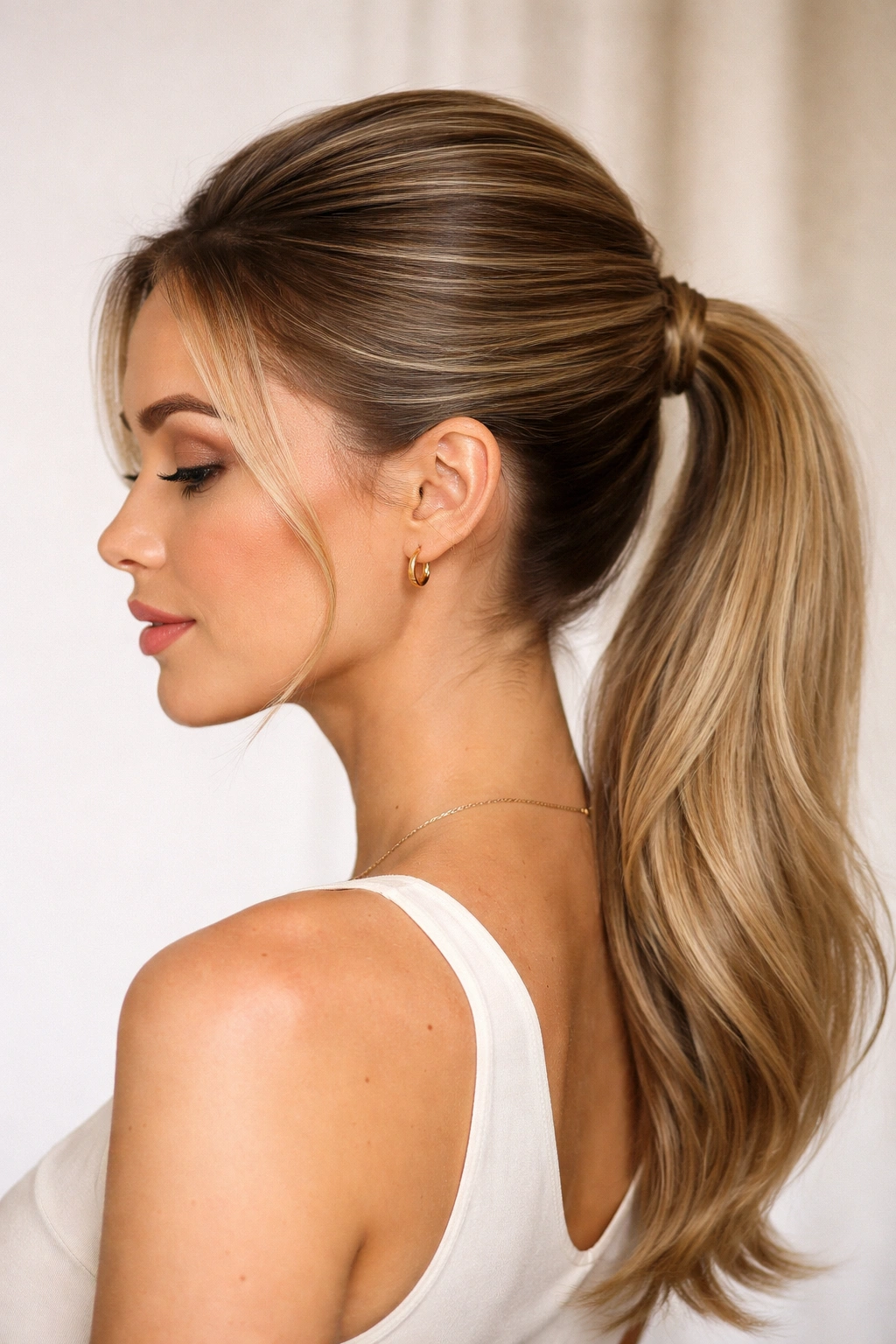
This style combines the practicality of a low ponytail with a subtle crown bump that adds dimension and works beautifully with changing hair texture. You create just a little bit of height and shape at the crown, then smooth everything back into a low ponytail. It looks more polished than a plain ponytail, but it requires maybe 30 seconds of extra effort.
Why It Works for Pregnancy
A subtle bump at the crown flatters most face shapes, particularly as your face naturally shifts shape during pregnancy. The style is low enough to feel comfortable throughout the day and loose enough to avoid pulling tension on your scalp. If your hair is thinning in places during pregnancy—which happens to some women—the gentle teasing at the crown creates the illusion of fuller hair without requiring tons of product.
How to Style It
Blow-dry or air-dry your hair and gently brush it back. Tease gently at the crown with a fine-tooth comb, creating just a subtle amount of volume. Smooth the top layer so the teasing doesn’t show. Gather all your hair into a low ponytail and secure it. Twist a small section of hair from the ponytail around the elastic to hide it. The whole process takes about three minutes, and you look infinitely more polished than with a plain ponytail.
Pro Tip: On days when you’re retouching the style rather than starting fresh, just spray a little texturizing spray on the crown section and gently rake a comb through it—this refreshes the bump without re-teasing.
7. The Side Braid
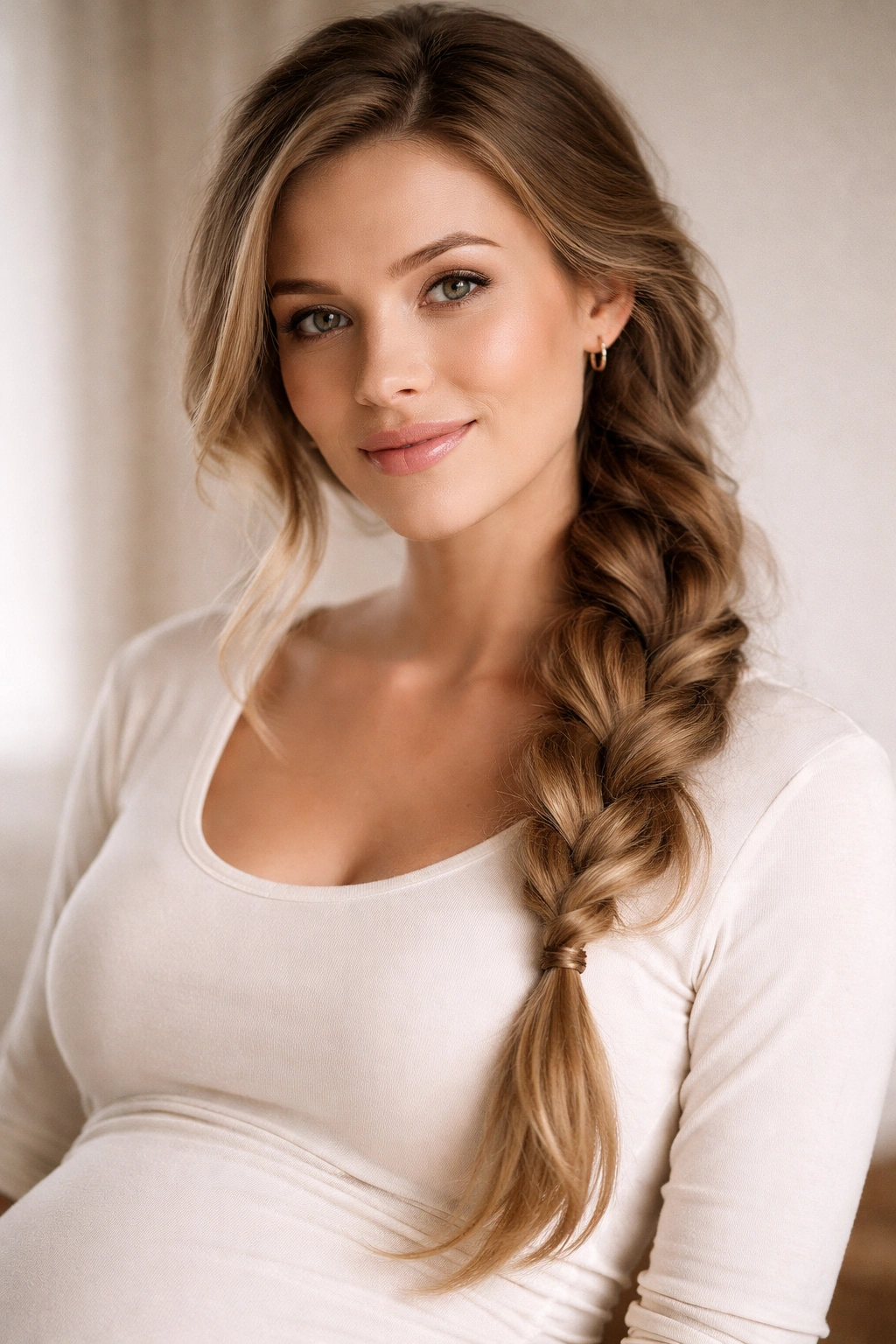
A loose braid swept to one side is the ultimate low-effort hairstyle that somehow always looks intentional and polished. For pregnancy, a side braid is perfect because it gets hair off your face and neck, accommodates changing hair texture, and genuinely looks elegant despite taking minimal effort to create.
Why It Works for Pregnancy
Unlike a center-parted braid that requires you to part your hair down the middle and balance a braid down your back, a side braid flows naturally off to one side. This asymmetrical styling is flattering during pregnancy when your body is changing shape and your center of gravity is shifting. The braid doesn’t require perfect technique—loose, slightly imperfect braids actually look more current and romantic than tight, precise ones. You can create a side braid while sitting down, and it stays put throughout the day without requiring re-securing.
How to Style It
Start at the temple on one side and create a loose three-strand braid all the way down. You don’t need to include every piece of hair; leaving some face-framing pieces loose is actually intentional and flattering. As you braid, gently pull on each section to loosen the braid and create that soft, relaxed texture. Secure the end with an elastic or decorative clip. For extra softness, wrap a small piece of hair around the elastic to hide it.
What You’ll Need: One elastic and about five minutes of your time, once per week. The best part about a side braid is that you can sleep in it and refresh it in the morning with minimal fussing—just gently pull it apart slightly and re-fluff.
8. The Textured Top Knot
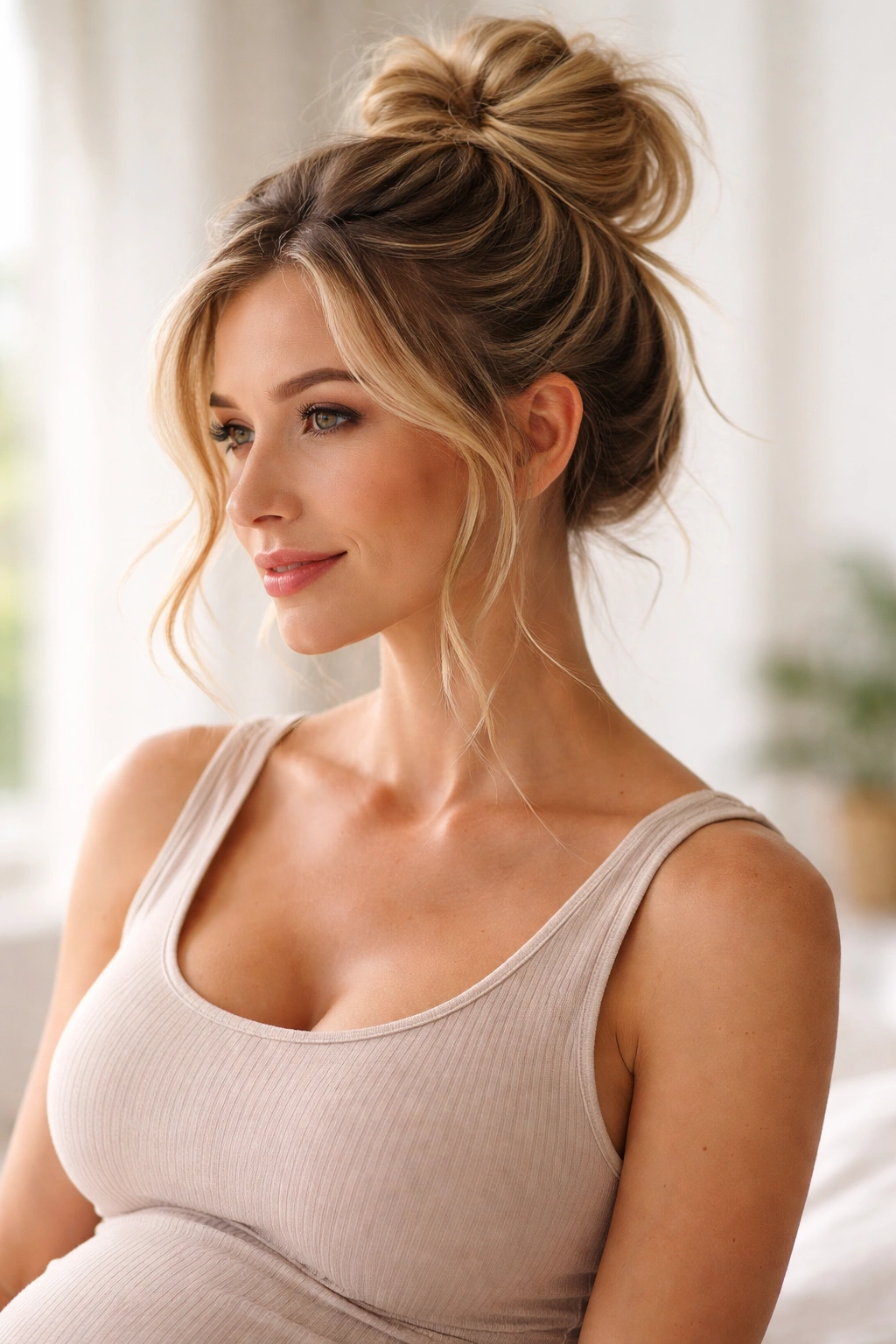
A top knot is hair twisted and wrapped around itself at the crown of your head, creating a compact, voluminous knot. For pregnancy, the key is keeping it soft and textured rather than sleek and tight. This style works because it gets all your hair off your face, neck, and back, and because the textured version looks intentional rather than like a rushed updo.
Why It Works for Pregnancy
A top knot placed at the crown feels balanced with your changing proportions during pregnancy. Unlike a bun worn lower on the head, a top knot is actually easier on your neck because it doesn’t pull hair back and down. The textured version looks effortlessly cool rather than overly polished, so you don’t feel pressure to make it perfect. You can create a top knot while sitting down, and it stays secure without cutting off circulation.
How to Style It
Flip your head upside down and gather all your hair at the very crown of your head. Flip back up and secure in a high ponytail using an elastic. Twist the ponytail gently and wrap it around its own base, securing with bobby pins as you go. Once it’s in place, gently pull sections of the knot to create softness and volume. Let several shorter pieces fall around your face and ears.
Pro Tip: If you have thick hair and the top knot feels bulky, you can also do a softer version by twisting sections of hair rather than braiding, which creates a looser, more relaxed texture.
9. The Headband or Scarf Tie
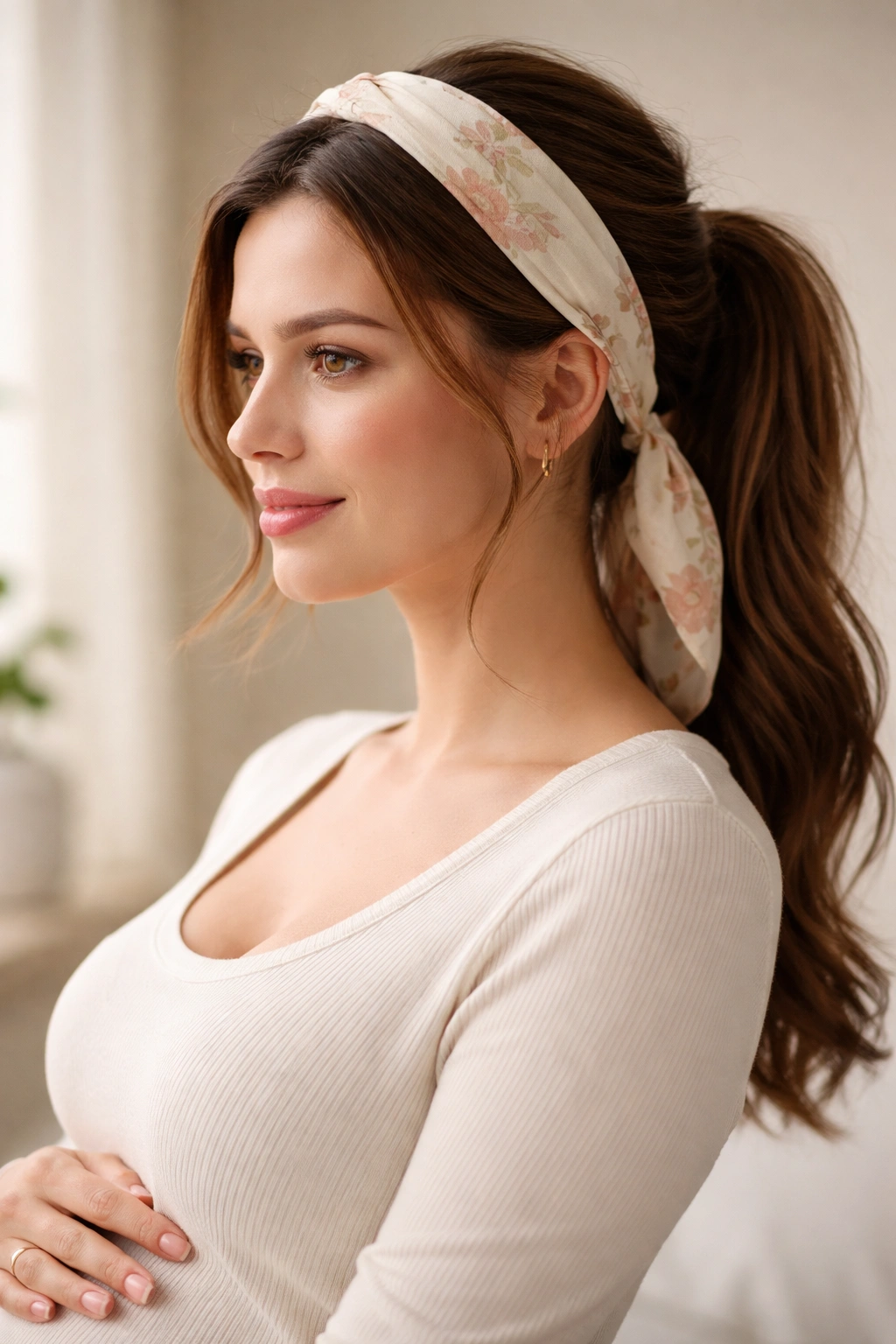
Sometimes the easiest solution is to use an accessory to manage your hair rather than creating an elaborate style. A soft headband, a silk scarf tied loosely, or a decorative clip can get hair off your face and neck while adding a style moment that makes you feel put-together. During pregnancy, when you have limited energy, this approach is genuinely smart.
Why It Works for Pregnancy
Accessories require zero styling effort, which is huge when you’re tired. A soft headband or scarf doesn’t create any tension on your scalp, making it perfect if you’re experiencing pregnancy-related headaches or scalp sensitivity. You can wear your hair down, textured, and natural, and the accessory pulls it back and adds instant polish. If your hair texture is changing during pregnancy, this approach lets you work with your natural texture rather than fighting it.
How to Style It
Wear your hair down with a soft texture—whether that’s waves, curls, or just your natural texture air-dried. Place a silk or satin headband across the crown or slightly lower, securing it gently. For a scarf, fold it into a strip, place it across your head, and tie it gently at the nape of your neck or slightly to one side, leaving your hair falling freely beneath and around it. The key is keeping everything loose and comfortable rather than tight and restrictive.
Quick Facts: Silk and satin headbands and scarves are gentler on your hair than cotton or elastic, especially important when pregnancy hormones might already be affecting your hair texture. They’re also more comfortable to wear for extended periods without creating indentations or discomfort.
10. The Loose Waves with Clip
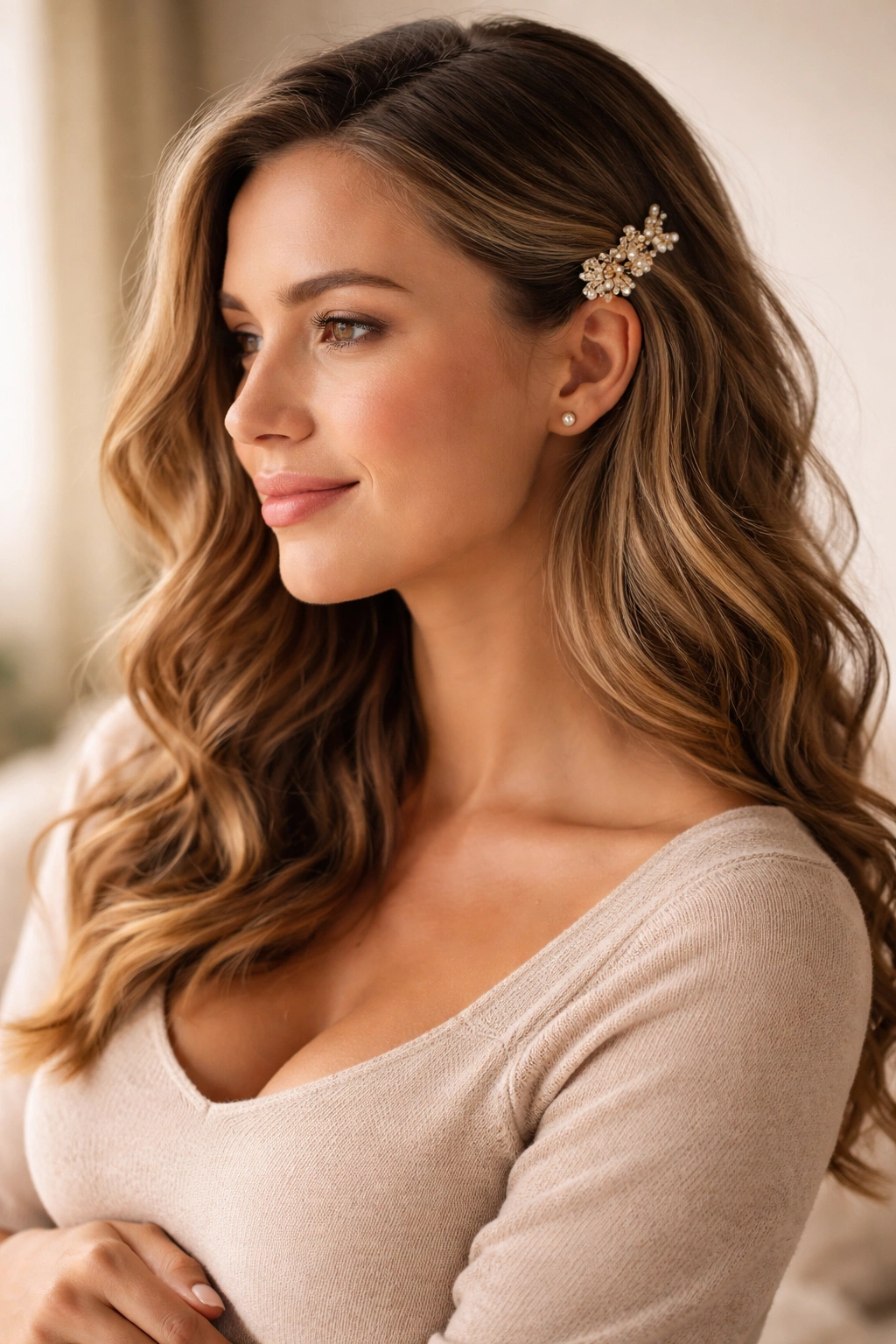
Soft waves or curls worn down and secured gently to one side with a decorative clip is a style that looks current, feels effortless, and requires minimal daily effort. During pregnancy, this approach lets you work with whatever your hair naturally wants to do while keeping it partially off your face when you need it.
Why It Works for Pregnancy
This style doesn’t require perfect technique or heat styling if you don’t want to—you can create soft waves using the braid-out method and then add a clip in the morning. The clip holds hair gently off your face on one side without pulling or creating tension. It’s flexible, too; on days when you’re overheated, you use the clip. On cooler days, you can release it and wear your hair fully down.
How to Style It
Create soft waves using your preferred method—whether that’s a curling iron on low heat, braiding damp hair overnight, or using a texturizing spray on your natural texture. Once you have waves, brush through them gently with your fingers to soften them. Sweep one side of your hair back and secure it with a decorative clip at the ear or slightly below. Let the rest of your hair fall freely, creating movement and softness.
Worth Knowing: Decorative clips come in so many beautiful options now—tortoiseshell, pearl, metal, and jeweled designs—that you can match them to your style without spending much money. A good clip becomes part of your look rather than just a functional accessory.
Final Thoughts

The best hairstyle during pregnancy is the one that feels comfortable on your scalp, doesn’t require complicated daily styling, and actually makes you feel like yourself rather than like you’re hiding under a hat because your hair exhausts you. Every single one of these styles solves the practical problems pregnancy creates—heat, exhaustion, changing body proportions—while looking intentional and polished.
You don’t need special products, expensive treatments, or complicated techniques. What you actually need is to give yourself permission to keep things simple, to wear your hair in ways that feel good against your body, and to embrace styles that work with your changing energy levels rather than against them. These 10 styles prove that simple and easy can absolutely look beautiful.
As your pregnancy progresses and your energy fluctuates, you’ll probably rotate through these styles depending on how you’re feeling that day. On energized days, you might create an elaborate side braid. On exhausted days, a clip and loose waves take literally two minutes. Both are equally valid, equally beautiful, and both let you feel like yourself—which matters infinitely more than any hairstyle trend.
