



Flat hair doesn’t have to be your default setting—the right cut can transform your entire look by adding dimension, movement, and the illusion of volume where gravity once won. The problem with flat hair isn’t always lack of texture or thickness; sometimes it’s just that a style isn’t working with your hair’s natural growth pattern or weight distribution. A good haircut redirects how your hair sits and moves, creating lift at the roots and making every strand count.
The secret that most hairstylists won’t tell you is that short haircuts are actually your best friend when you’re dealing with flat hair. When you remove length, you remove weight. Less weight means your hair doesn’t pull down on itself, doesn’t flatten against your scalp from gravity, and gets a fighting chance to stand up and create volume. The right short cut combines strategic layering, intentional texture, and a shape that works with your hair’s natural fall pattern rather than against it.
What makes the difference between a short haircut that looks flat and one that looks full is all about how the cut is executed. The placement of layers matters. The way the stylist removes bulk from underneath matters. The angles they cut into the hair matter. Length matters too—there’s a sweet spot for every hair type and face shape where your hair suddenly looks thicker and fuller than it actually is. Most people are surprised to discover that going shorter actually solves their flat hair problem rather than making it worse.
This guide walks through ten of the most effective short haircut styles that genuinely give flat hair more body. These aren’t just trendy cuts that look good on thick-haired models—these are styles specifically chosen because they work with flat, fine, or thin hair to create the appearance and reality of more volume. Each one approaches the problem from a slightly different angle, so whether your hair is naturally flat or gets weighed down easily, you’ll find at least a few that speak to your situation.
1. Pixie Cut with Layers
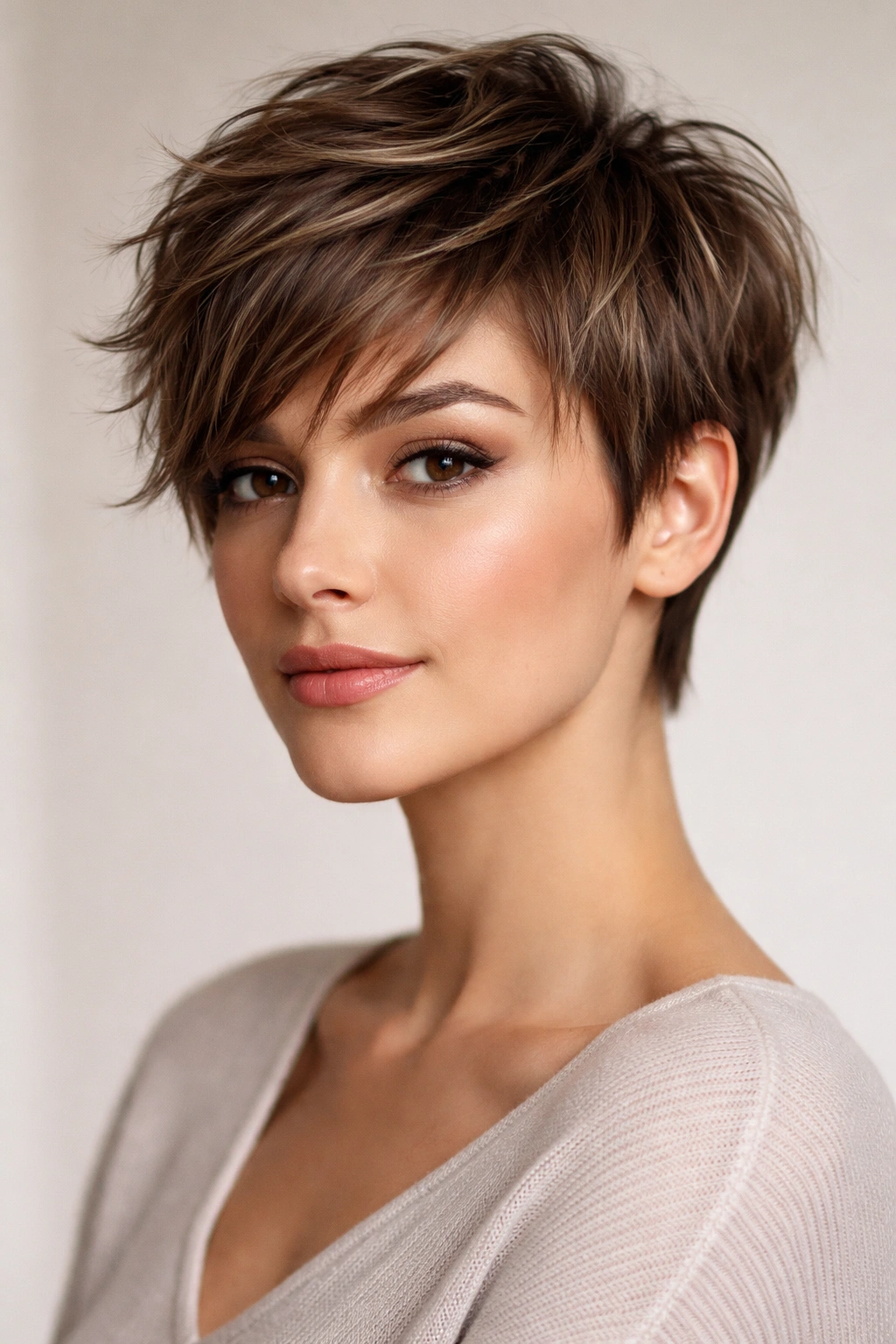
A layered pixie cut is arguably one of the most transformative styles for flat hair because it removes so much weight while adding deliberate texture throughout. The magic happens when your stylist cuts short, choppy layers throughout the crown and sides—each layer is slightly different in length, which creates an uneven surface that catches light and makes hair look fuller and more dimensional. Rather than creating a sleek, smooth surface that can look thin, the layers create visual texture that reads as volume even if your actual hair count hasn’t changed.
Why This Energizes Flat Hair
The pixie cut with layers works because it shortens the distance that gravity has to pull on your hair. Flat hair struggles because the weight of longer strands pulls everything down flat against the scalp. A pixie keeps everything short enough that even fine hair has natural lift. The layering is the real MVP here—each choppy layer creates its own shape and direction, and when these layers catch light at different angles, your eye perceives more density and fullness. Styling is minimal, which means your hair maintains whatever volume and texture the cut creates, rather than getting weighed down by products or styling techniques.
Getting the Look and Styling It
- Ask your stylist for a layered pixie with choppy texture throughout (not a smooth, blunt pixie)
- Request layers that are shorter on top and gradually longer toward the perimeter for dimension
- Plan for regular trims every 4-6 weeks to maintain the shape and keep layers looking intentional
- Use a texturizing paste or matte clay product worked through damp hair to amplify the choppy texture
- Blow-dry with your fingers or a small round brush to encourage height at the crown
- The cut looks even better with a slight style—tousled and piece-y is the entire aesthetic
Pro tip: This cut genuinely improves with every wash because the natural texture and movement of freshly washed hair plays directly into the layered design. Many people find this is actually their lowest-maintenance hairstyle once they commit to the regular trims.
2. Textured Bob
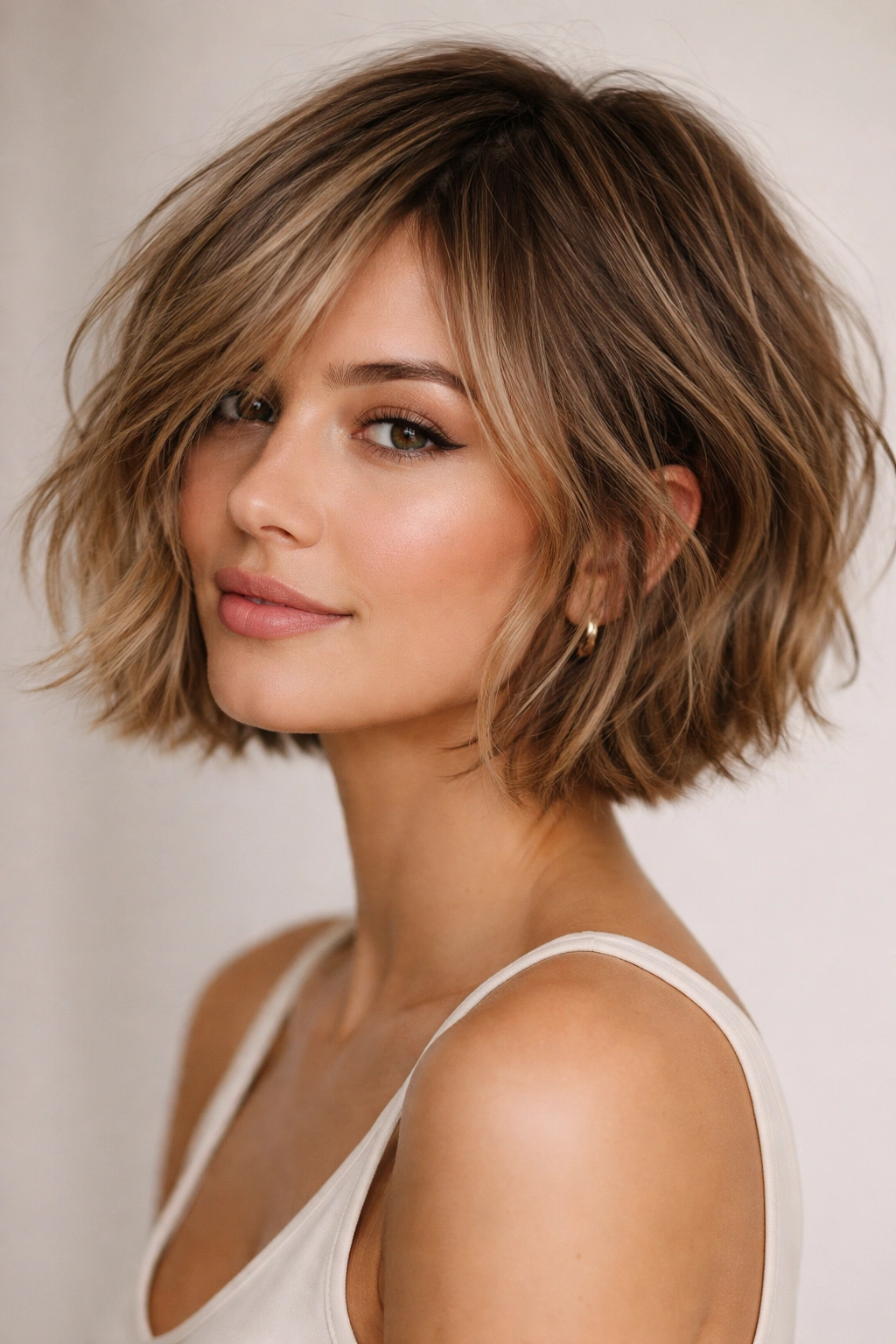
A short, textured bob—typically landing somewhere between chin-length and ear-length—creates the illusion of fullness through strategic choppy layers that break up the surface of the hair. Unlike a smooth, sleek bob that can emphasize thinness, a textured bob has intentional roughness and movement built into the cut itself. The layers are cut to create separation between sections of hair, so instead of one solid mass of hair, you’re seeing individual pieces that can move and shift independently. This visual separation is exactly what makes flat hair look voluminous.
How Texture Creates the Volume Effect
The textured bob works specifically because it defeats the appearance of flatness—instead of your hair lying flat as one unified surface, the choppy layers create peaks and valleys across your head. Light hits these different surfaces at different angles, which your brain interprets as more dimension and fullness. When you style it even slightly, the pieces can move apart from each other rather than clinging together, creating actual space between strands that makes everything look less dense and more intentionally textured. For flat hair, this is the difference between looking thin and looking deliberately piece-y.
Creating and Maintaining the Look
- Ask for a textured bob with choppy, disconnected layers throughout
- The length should hit somewhere between ear-length and jaw-length for the most flattering proportion
- Layers should be cut at slightly different angles to maximize movement and separation
- Style with a texturizing spray on damp hair before blow-drying for maximum grip and hold
- Blow-dry using a medium round brush to flip pieces outward and create movement
- A matte finish product—paste, clay, or dry texture spray—applied to piece-y sections after styling makes the definition last
- Schedule maintenance trims every 5-7 weeks to keep the choppy layers sharp
Worth knowing: The textured bob requires a stylist who understands how to cut texture into hair intentionally—not every stylist executes choppy layers well, so look at portfolios before booking.
3. Shaggy Short Hair
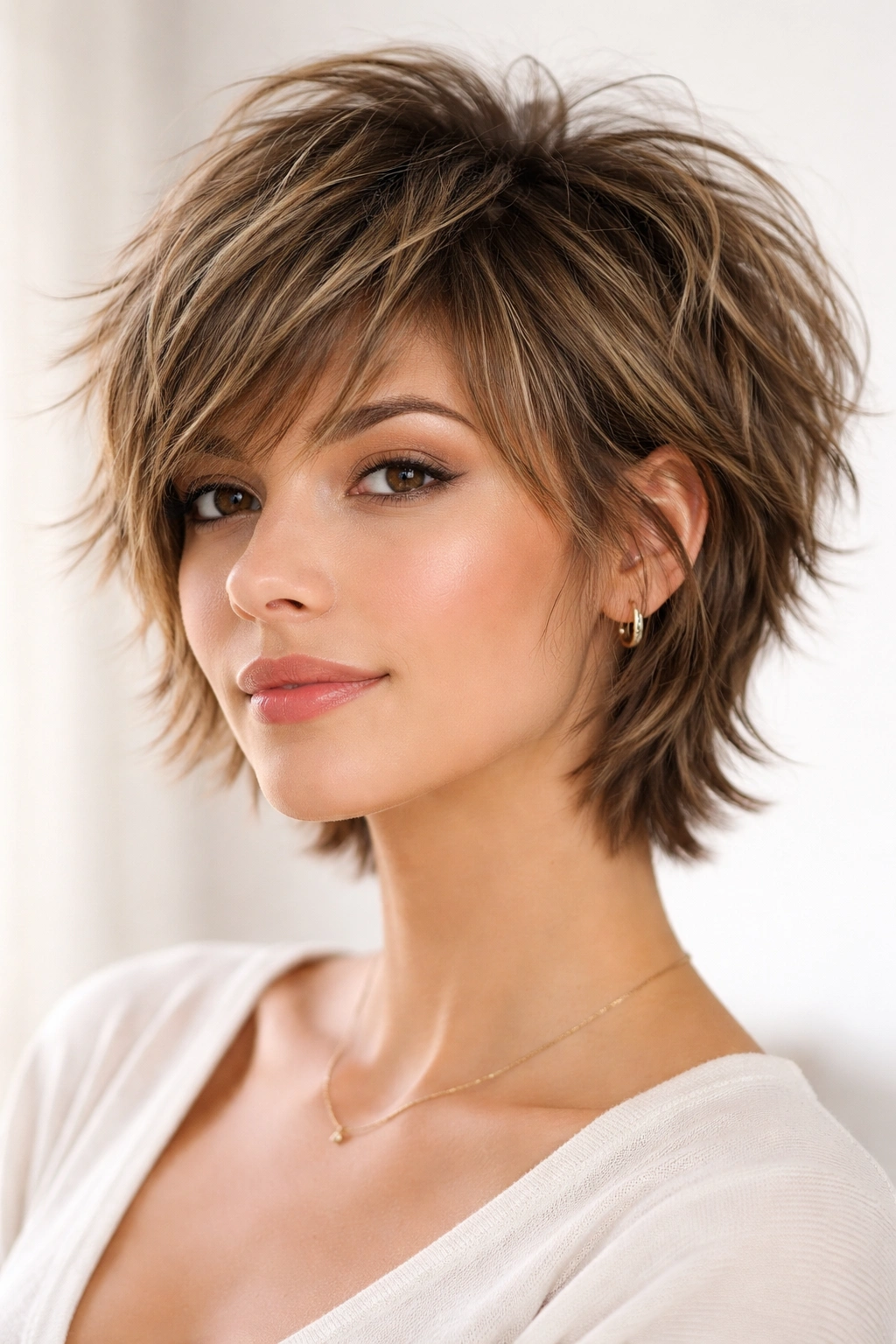
A shaggy short haircut brings the appeal of longer shag hairstyles but engineered for flat hair in short form. The shag works through a combination of shorter layers on top that create height and longer, slightly longer pieces throughout that add movement and flow. The way the layers transition from top to bottom creates a natural taper that removes bulk where it weighs your hair down most—typically around the face and crown—while maintaining slightly more length through the middle and ends for movement. This graduated approach gives your hair somewhere to go instead of just sitting flat against your head.
Why Shaggy Layers Build Volume
The shag hairstyle historically works because the multiple layers create movement and prevent any part of the hair from sitting flat. For people with flat hair specifically, the short shag solves the problem by keeping length minimal (so no excessive weight) while maximizing the number of individual pieces created by layering. Your hair naturally wants to move and separate because the cut is designed with built-in disconnection. Even without any product or special styling, a well-executed shag has movement because the geometry of the cut encourages it. The layers also create visual interest across the entire head, so even if your hair is thin, the textural variation makes it appear fuller.
Styling Your Shag for Maximum Volume
- Request a shag with shorter, choppy layers throughout the crown and a slightly more connected length through the middle and bottom
- Mention to your stylist that you have flat hair and want lots of texture and movement built into the cut
- Use a volumizing mousse on damp roots before blow-drying for lift at the base
- Blow-dry using fingers or a brush to encourage all layers to separate and point in different directions
- Finish with a texture spray or matte paste worked through the pieces to emphasize separation
- The shag actually looks better slightly tousled and piece-y than perfectly smooth
- Trim every 6-8 weeks to keep the layers sharp and the shag shape intentional rather than shaggy in a messy way
Insider note: The shag hit peak popularity because it genuinely works for most hair types, and for flat hair specifically, it’s almost a cheat code—the cut does most of the work to create volume, and styling just enhances what’s already there.
4. Tapered Fade
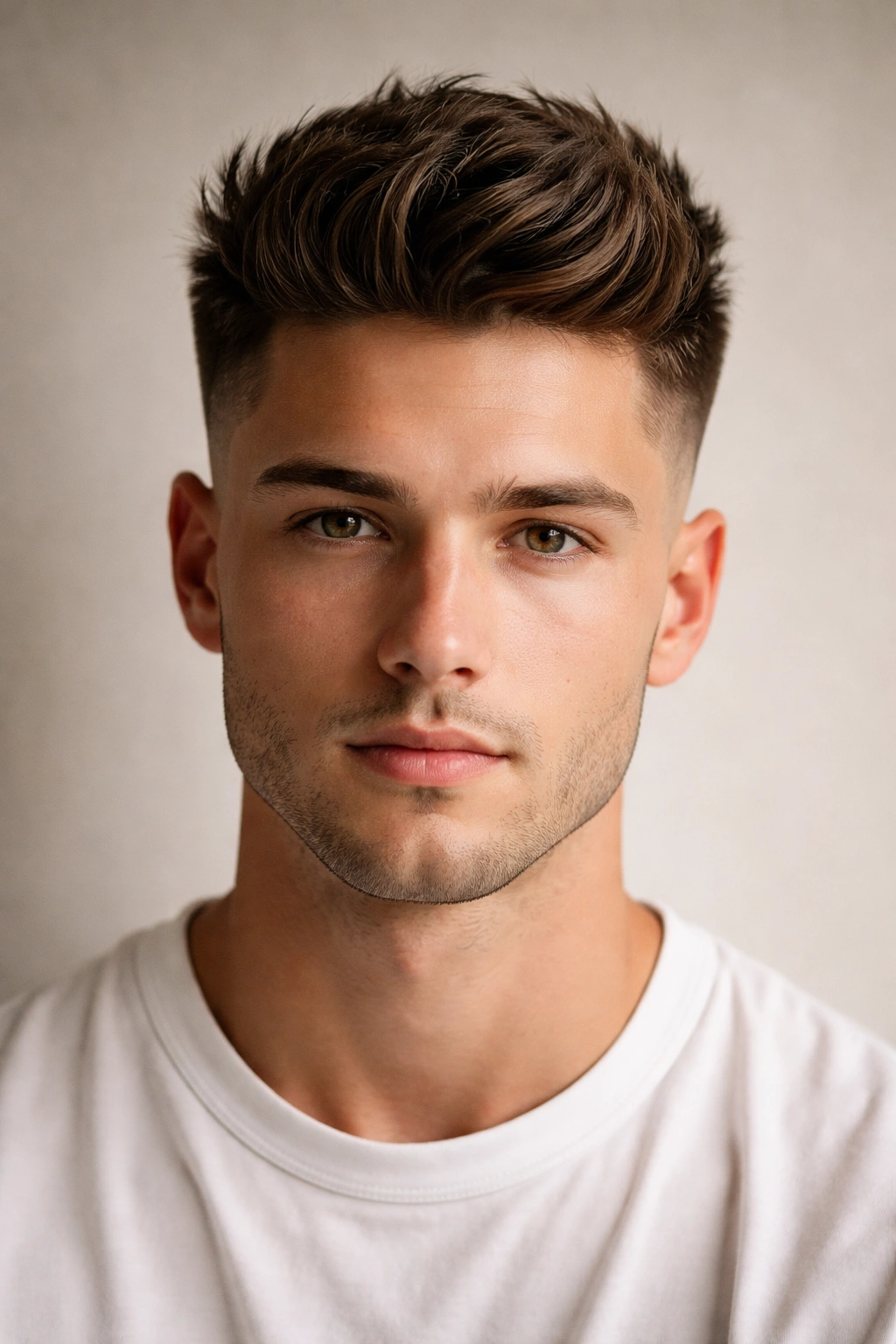
A tapered fade with slightly longer hair on top creates volume through contrast—very short, clipped sides and back create the illusion that the hair on top is fuller and thicker by comparison. For flat hair, the genius of the fade is that it removes all the weight from the sides and back where gravity pulls hair down hardest, leaving length only where you want height and movement. The top section keeps enough length to have some texture and styling options, while the shorter fade underneath means no weight dragging everything down. The transition from longer to shorter creates a dramatic shape that reads as more voluminous even if the hair on top is fine and sparse.
How Contrast Creates Perceived Fullness
When you remove hair from the sides and back, two things happen: first, you literally remove weight that would otherwise pull the hair on top flat, and second, you create a visual contrast that makes whatever hair remains on top look denser by comparison. The eye is drawn to the contrast between the faded sides and the fuller top, which automatically perceives the top as having more volume. This is pure optical illusion combined with actual physics—by removing weight, you’ve given the top section a genuine chance to have more height and texture, while the contrast amplifies the perception of fullness.
Getting the Cut and Styling It
- Work with a barber or stylist who specializes in fades for the most precise execution
- Request a tapered fade—short on the sides and back, blending up to slightly longer hair on top
- The length on top should be long enough for some texture (typically 1.5 to 3 inches depending on your hair type and face shape)
- Use a volumizing powder or texture spray at the roots before styling for maximum lift
- Blow-dry the top hair upward and backward to maximize height
- Style with a matte product—paste, powder, or clay—worked into the lengths and ends
- The fade requires maintenance every 3-4 weeks to keep the contrast sharp as the sides grow out
- This cut works particularly well if you’re willing to do a bit of daily styling
Pro tip: Many people discover this cut solves their flat hair problem because the fade is so visually striking that it redirects focus to the shape and volume of the top section rather than the overall density of the hair.
5. Choppy Crop
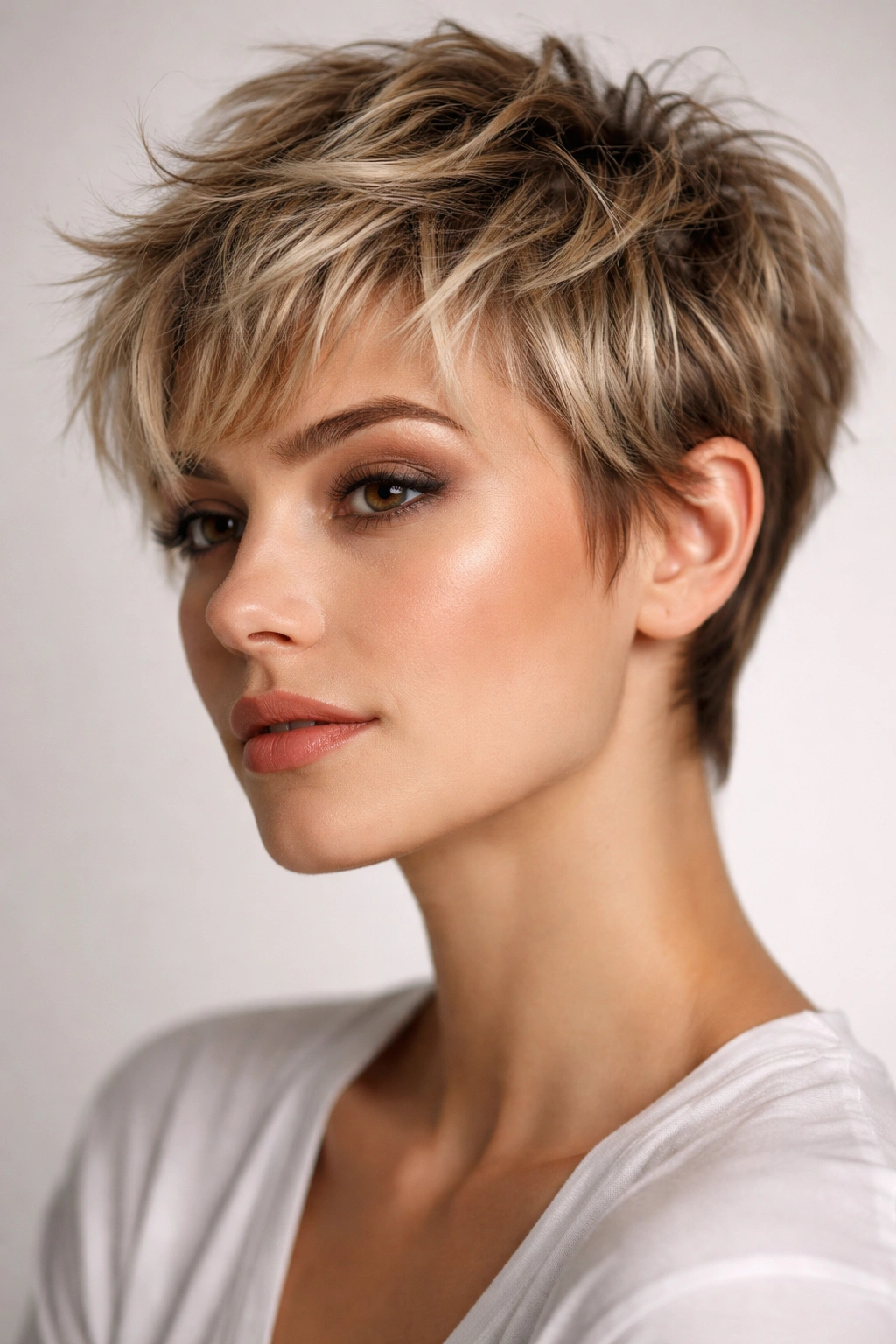
A choppy crop is an extremely short cut—typically 2 inches or less on top—with intentionally choppy, uneven layers that create texture throughout. Unlike a smooth crew cut or buzz cut, which can emphasize thinness, the choppy texture breaks up the surface and creates visual interest. Each choppy layer catches light slightly differently, so your eye perceives more texture and dimension. The short length means zero weight, so even the finest hair stands up from the scalp. For people with very flat hair or hair that gets weighed down easily, the choppy crop is often the most transformative option because it eliminates the weight problem entirely while maximizing textural interest.
Why Choppy Texture Defeats Flatness
Flat hair is most noticeable when it lies smooth and unified against the scalp. A choppy crop eliminates that smooth surface by creating rough, separated texture throughout. The individual pieces of hair created by choppy layers aren’t long enough to weight each other down, so they maintain whatever natural texture your hair has. This is especially effective for wavy or curly hair hidden under flat, straight hair—once you remove the weight and create texture through layers, the natural curl or wave can finally express itself. Even for truly straight hair, the choppy texture creates visual volume through the interplay of light and shadow across the uneven surface.
Creating the Choppy Crop Look
- Ask your stylist for a very short, choppy crop with deliberate texture throughout
- Request that the layers be cut at slightly different angles to maximize visual interest
- The length on top should be short enough that you see texture, not a smooth surface (typically 1 to 2 inches)
- Use a matte texture product—powder, clay, or dry shampoo—for grip and to amplify the choppy texture
- Style with your fingers or a small brush to encourage the pieces to separate and point in different directions
- This cut requires minimal blow-drying; texture spray or product applied to damp hair often creates the best look
- Trim every 3-4 weeks to keep the choppy texture sharp and intentional
Worth knowing: A choppy crop is genuinely one of the lowest-maintenance hairstyles once you’ve committed to the cut, because the short length means minimal daily styling and the texture is built into the shape.
6. Short Spiky Cut
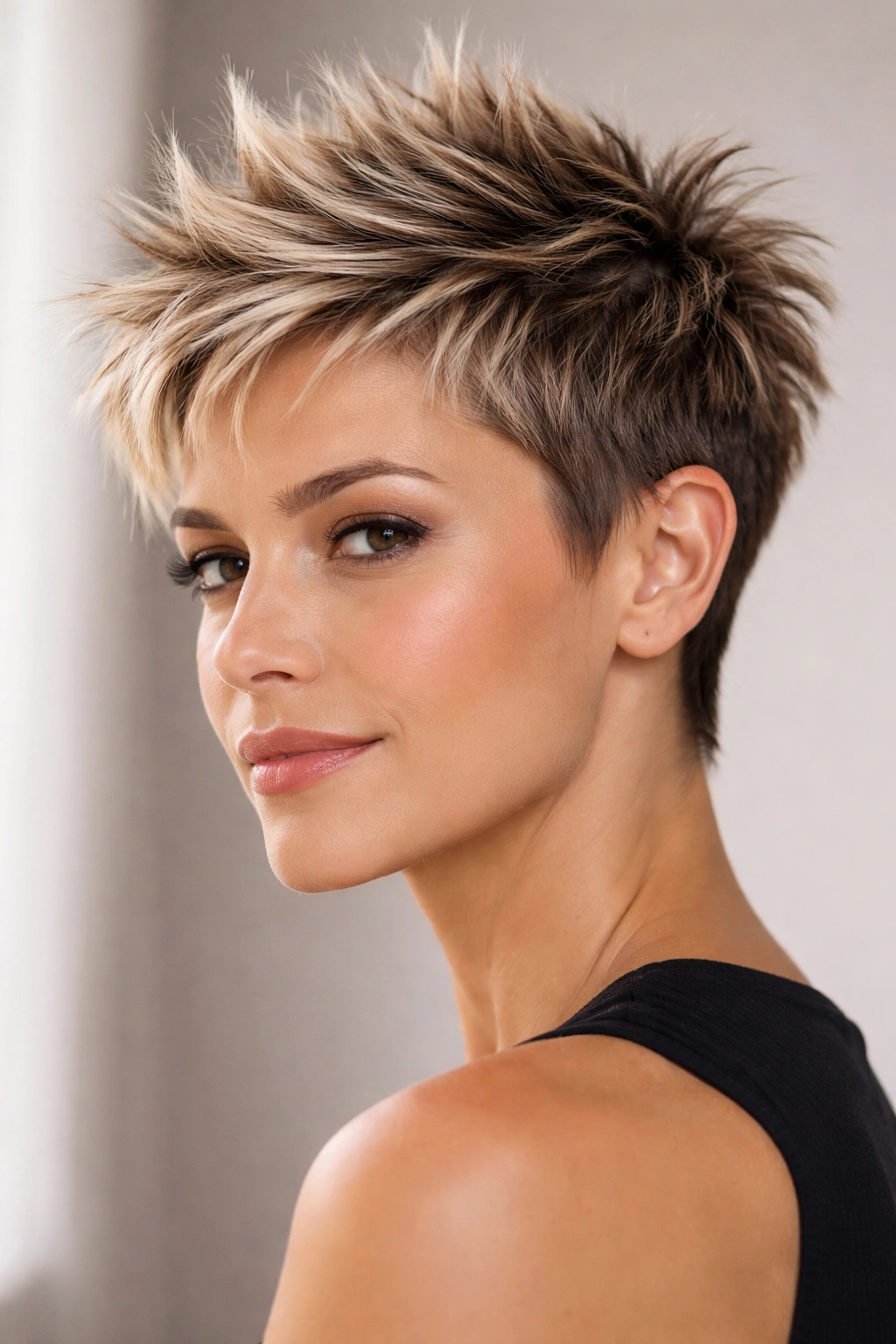
A short spiky cut deliberately uses length variation and product to create an upright, energetic aesthetic that reads as volume. Unlike a smooth short cut, a spiky cut has slightly longer hair on top (typically 2 to 3 inches) that’s cut to stand up rather than lay flat, with shorter sides that create contrast and remove weight. The genius for flat hair is that the upward direction is built into the cut itself—even without much product or styling, the layers are cut at angles that naturally point upward. The spikes you see aren’t just product illusion; they’re created by how the hair is cut and the way the layers interact with each other. This approach actively works against the flatness that naturally pulls your hair down.
How Upward Angles Create Lift
The spiky cut works by changing the direction of the hair growth. Instead of allowing gravity to pull everything flat against the scalp, the cut is engineered so that each layer naturally points upward or outward. When you add styling product and work it through, you’re amplifying an upward direction that’s already built into the shape. This is why a spiky cut can make even very fine hair look fuller—the direction and the texture work together to create the appearance of volume. The shorter sides ensure there’s no weight pulling the top down, and the layered top means each piece can stand somewhat independently rather than clinging to the pieces around it.
Executing the Spiky Cut
- Request a short, textured cut with intentionally short sides and longer, layer-cut top
- Tell your stylist you want the layers cut at angles that naturally point upward
- The top should be cut with choppy layers of slightly varying lengths to maximize texture
- Use a volumizing mousse or texturizing spray on damp roots before blow-drying
- Blow-dry the top hair upward using your fingers or a brush to amplify the spiky texture
- Apply a strong-hold styling product (paste, wax, or pomade) to the lengths and work it through with your fingers
- Pull the product through to the ends, encouraging each piece to stand up or point outward
- Trim every 4-5 weeks to maintain the sharp, textured shape on top
- This style requires daily styling with product, but the effort is minimal once you have a routine
Pro tip: The spiky cut looks intentionally effortless, but it actually requires a good product and maybe 2 minutes of morning styling—the trade-off is that you look like you have way more hair than you actually do.
7. Layered Undercut
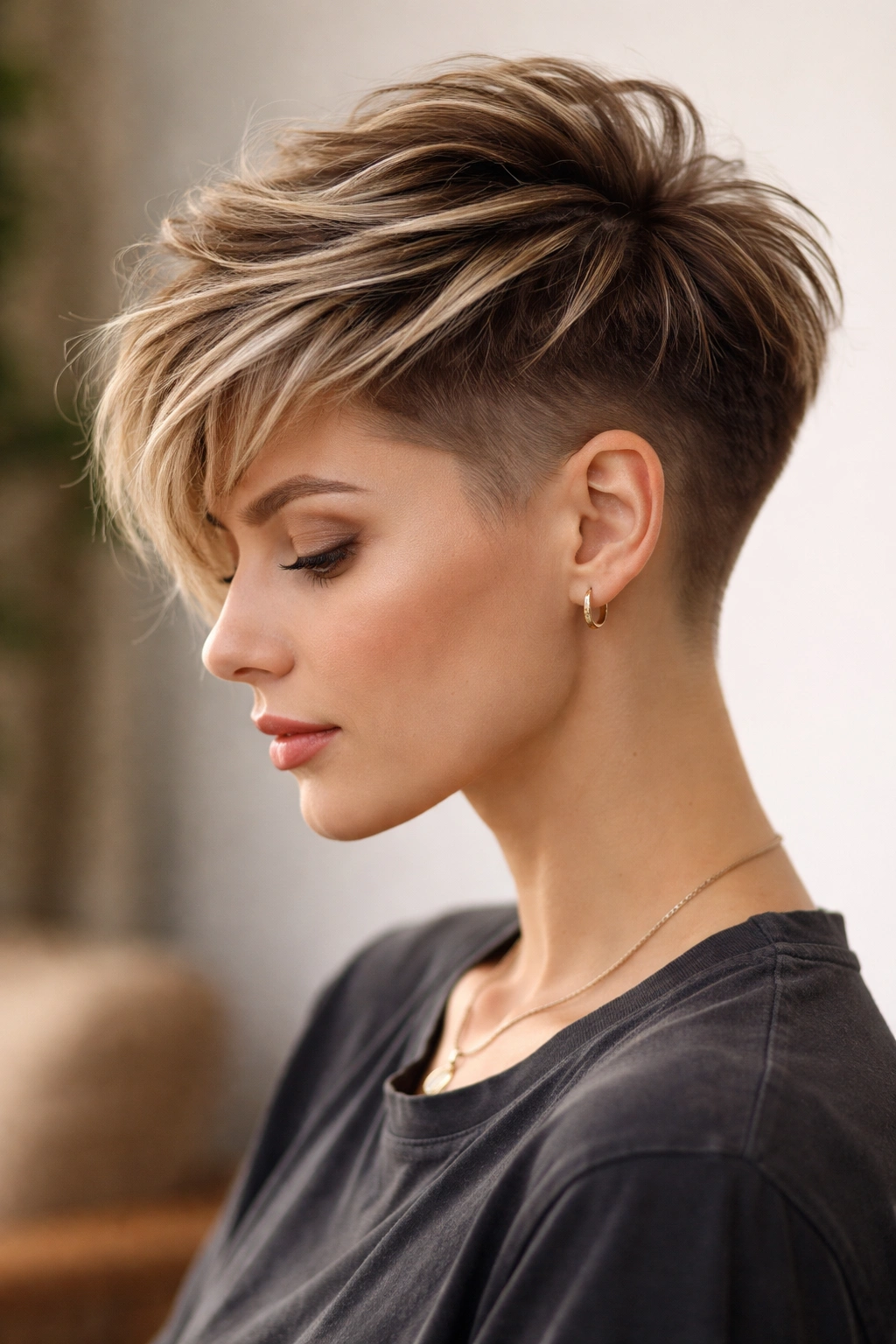
A layered undercut combines an undercut—where the sides and back are cut very short—with intentional layers throughout the longer hair on top. The undercut removes weight and creates contrast, while the layers on top add texture and prevent the hair from sitting flat. The genius of this combination is that you get the visual contrast and weight-removal benefits of an undercut plus the textural volume of layers. The layers on top can be longer than they would need to be on their own because the undercut below removes so much bulk. For flat hair, this gives you more styling versatility—you can style it smooth and sleek on some days (the undercut keeps the overall silhouette compact) or textured and piece-y on others (the layers allow for separation and movement).
Why Layering Plus Undercut Works for Flat Hair
An undercut alone removes weight but can feel blunt if your hair is very fine. Layers alone add texture but still deal with weight issues throughout the entire head. Combined, they solve both problems—the undercut eliminates weight and creates contrast, while the layers create texture and prevent flatness. For flat hair specifically, the layers ensure that even the longer section on top doesn’t sit as a smooth, flat mass. Instead, the layers within the longer hair create internal texture and movement. The contrast between the undercut and the layers also creates a visually interesting silhouette that emphasizes the textured, voluminous section on top.
Building a Layered Undercut
- Ask your stylist for an undercut (very short sides and back, typically faded or clipped)
- Request layers throughout the longer hair on top, with varying lengths to create texture
- The top can be longer since the undercut removes weight (typically 2 to 4 inches depending on your preference)
- Layers should be choppy and disconnected rather than blended smoothly
- Use a volumizing mousse on damp roots for lift at the base
- Blow-dry the top section upward and backward, encouraging the layers to separate
- Style with a texture product worked through the lengths to emphasize separation and movement
- The undercut needs maintenance every 3-4 weeks as it grows out
- The length on top can go 6-8 weeks between trims since the shape is primarily created by the undercut
Insider note: The layered undercut gives you the best of both worlds—an edgy, modern silhouette from the undercut combined with the soft, textured volume of layers on top.
8. Messy Short Layers
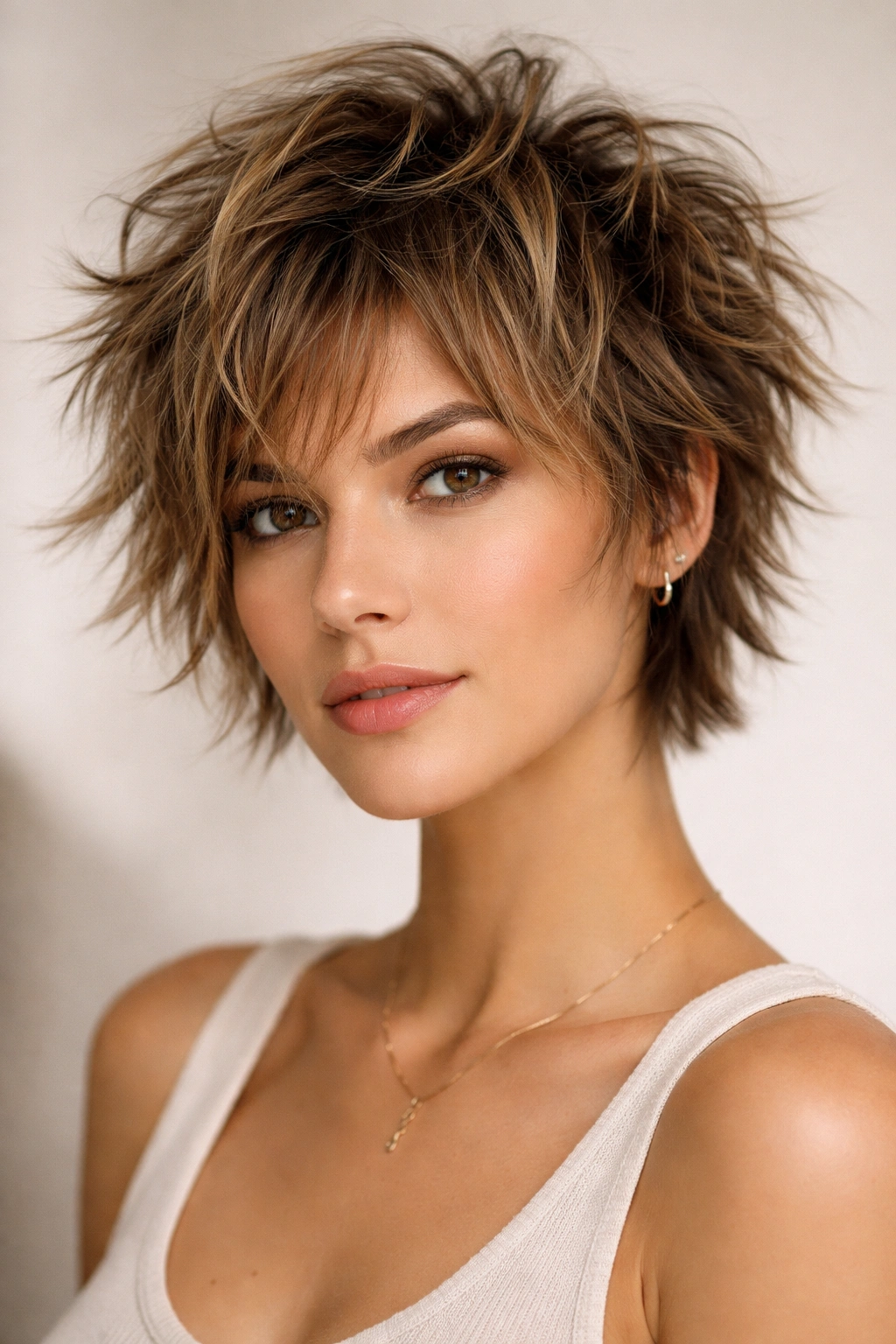
Messy short layers might sound like minimal effort, but a truly effective messy cut is actually precisely engineered to look effortlessly textured. Short, choppy, disconnected layers throughout the entire head create an intentionally messy aesthetic where the cut does the work of making your hair look fuller and more textured. This isn’t a shaggy cut or a deliberately styled look—this is a cut where the shape itself is short, separated, and piece-y. For flat hair, messy layers work because the short length removes weight, and the numerous layers create visual texture and prevent any smooth, flat surface from forming.
How Intentional Mess Defeats Flatness
The messy short layer cut looks good because it embraces texture and separation rather than fighting against it. For flat hair, which naturally wants to lay smooth and unified, this is exactly what you need—a cut that’s designed to be piece-y and separated. The numerous layers mean that even if your individual hairs aren’t particularly voluminous, the way they’re arranged creates visual fullness. The messy aesthetic also means that your hair doesn’t have to be perfectly styled to look good—slightly mussed, slightly bed-head messy, or tousled actually looks intentional rather than unkempt.
Getting the Messy Layers Effect
- Request short, choppy layers throughout your entire head with a deliberately piece-y, disconnected aesthetic
- The layers should vary in length to create visual interest and texture
- Length should be short enough that the style reads as textured rather than longer and tousled (typically 2 to 3 inches on top)
- Use a matte texture product—powder, clay, or a texturizing spray—rather than a shiny gel or pomade
- Apply to damp hair before blow-drying for maximum grip and texture
- Blow-dry using your fingers to encourage pieces to separate and move in different directions
- Finish with a light mist of texture spray for hold without heaviness
- The beauty of this cut is that it doesn’t require much styling—it looks good tousled, piece-y, or slightly undone
- Trim every 5-6 weeks to keep the layers sharp and the messy aesthetic intentional
Worth knowing: This is the cut for people who want to look like they have volume and don’t want to spend much time styling—the cut does most of the work, and minimal styling maintains the effect.
9. Disconnected Undercut
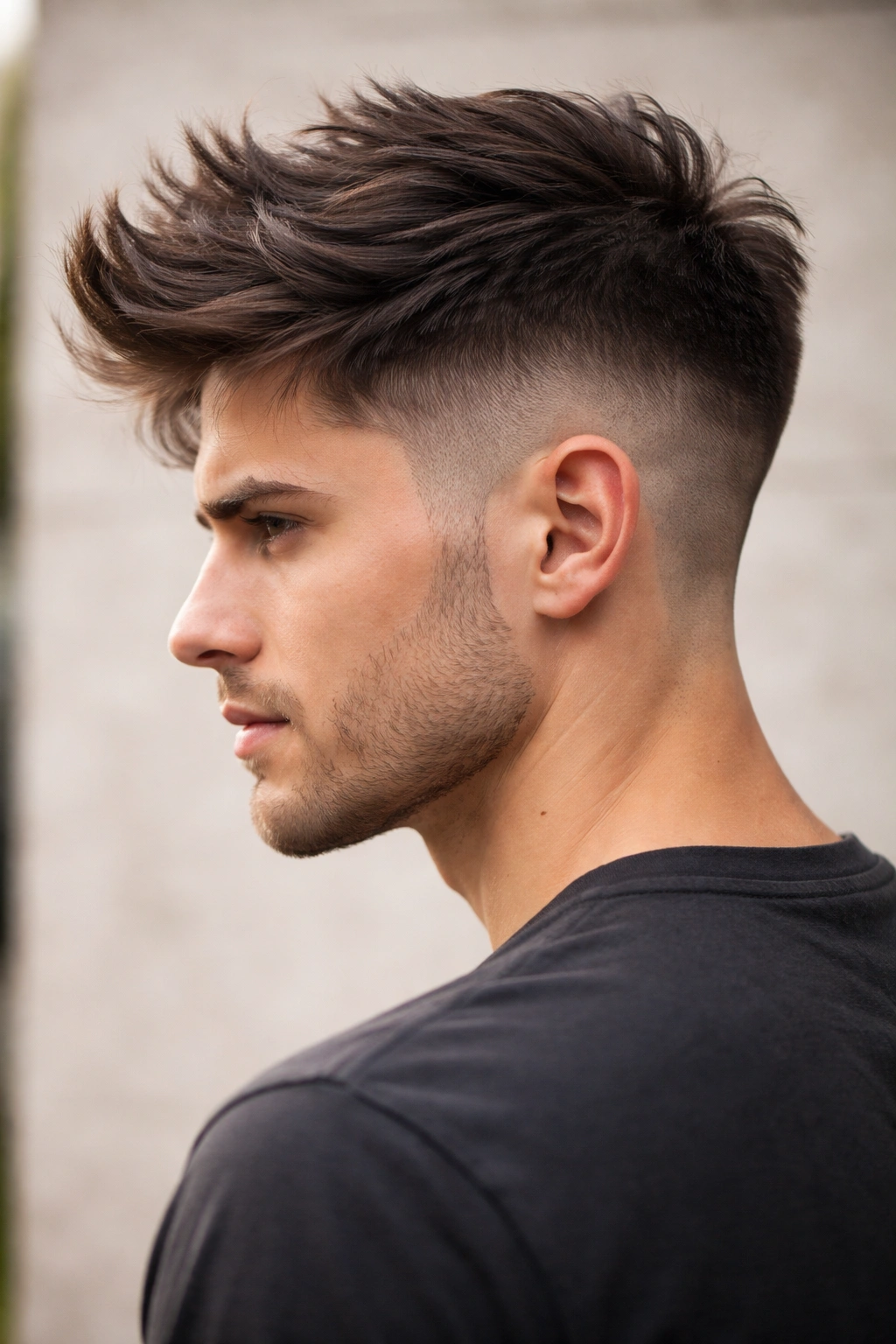
A disconnected undercut takes the undercut concept further by creating an obvious, intentional separation between the longer hair on top and the very short, clipped sides and back. Unlike a tapered fade that blends gradually, a disconnected undercut has a visible line where the two lengths meet. For flat hair, the benefit is twofold: the disconnection creates a dramatic visual contrast that makes the longer hair on top look fuller, and the very short undercut removes maximum weight so the top hair has the best possible chance of standing up. The disconnect also gives you styling flexibility—you can slick the top straight back for a sleek look or mess it up textured, and the undercut beneath keeps the overall silhouette sharp and modern.
Why Disconnection Amplifies Volume Perception
When there’s an obvious line between short and long, your eye is drawn to that contrast. The longer hair on top automatically appears fuller in comparison to the very short undercut. Beyond the visual illusion, the disconnection also means maximum weight removal from the sides and back, so the longer hair on top isn’t being pulled down by surrounding bulk. This combination—visual contrast plus actual weight reduction—makes a disconnected undercut particularly effective for flat hair. The defined separation also creates a striking silhouette that reads as intentional and modern, which shifts focus away from hair density and toward the overall shape.
Creating a Disconnected Undercut
- Work with a stylist or barber experienced in creating clean disconnected undercuts
- Request very short sides and back (typically clipped or faded to skin, or clipper length 0.5 to 1.5)
- Ask for an obvious disconnection—a visible line where the longer hair on top begins
- The top should be long enough to style (typically 2 to 4 inches) but short enough to manage
- Layers within the top section add even more texture and prevent flatness
- Use a matte texture product and blow-dry the top upward to emphasize height
- The disconnected style works particularly well with piece-y, textured styling on top
- Maintenance is required every 3-4 weeks to keep the disconnection crisp and clean
- As the undercut grows out, the disconnection softens—this is when you’ll want to retrim
Pro tip: The disconnected undercut is one of the most visually striking short haircuts, and the contrast it creates genuinely makes thin or flat hair look fuller and more voluminous.
10. Short Tousled Cut
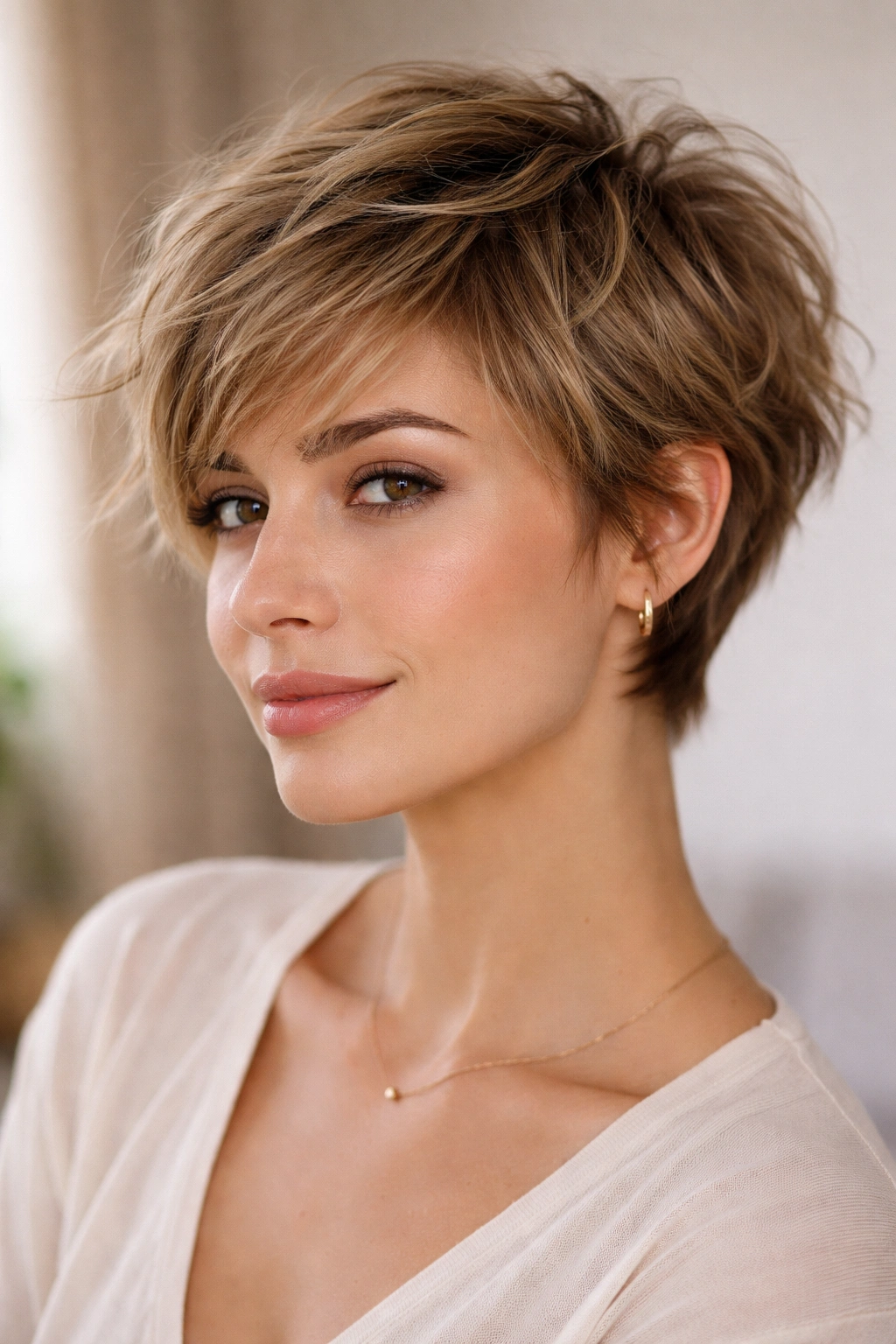
A short tousled cut is designed to look naturally messed up—it’s short enough throughout to be manageable but cut with enough texture and variation that it looks intentionally piece-y and full without requiring much styling. Rather than having distinct long and short sections like an undercut, a tousled cut has relatively even short length throughout with choppy, textured layers creating variation. For flat hair, this works because the short length removes weight, and the textured, piece-y cut creates the appearance of movement and fullness. The tousled aesthetic also forgives flat hair—slightly mussed, slightly undone, slightly textured is literally the goal of the style.
How Tousled Texture Creates Visual Fullness
The short tousled cut works by embracing the natural texture and movement of your hair rather than fighting against it. Choppy layers create spaces and separation so that your hair doesn’t form a unified flat surface. The relatively short length means your hair has natural lift from the scalp and can actually stand up rather than being weighed down. The tousled styling—applied to texture and moved slightly rather than combed smooth—amplifies the separation and movement that’s built into the cut. For flat hair, this is perfect because the aesthetic is literally centered on looking textured and slightly undone rather than sleek and smooth.
Achieving the Short Tousled Look
- Request a short, choppy cut with textured layers throughout that’s designed to look tousled and piece-y
- The length can be relatively even around the head (typically 2 to 3 inches) but should have lots of internal texture
- Ask for choppy, disconnected layers rather than smooth, blended ones
- Use a texturizing spray or matte texture product on damp hair before blow-drying
- Blow-dry using your fingers to encourage the choppy layers to move and separate
- Finish by working a texture product (paste, powder, or spray) through the lengths with your fingers
- Tousle and move the hair slightly rather than smoothing it—piece-y is the goal
- The beauty of this cut is that it genuinely looks better slightly undone than perfectly polished
- Trim every 5-7 weeks to maintain the choppy texture and keep the tousled shape intentional
Worth knowing: This is the cut for people who want to look like they have volume and movement without spending much effort styling—the tousled aesthetic means slightly messy actually reads as intentional and on-point.
Final Takeaways
The common thread running through all these short haircuts is that they solve the flat hair problem by combining short length (which removes weight and creates lift) with strategic layers and texture (which prevent smooth, flat surfaces and create visual fullness). Whether you choose a pixie, a bob, a fade, or any of the other styles, the underlying principle remains the same: remove weight, add texture, and cut in a direction that encourages your hair to move away from your scalp rather than lay flat against it.
The style you choose should match your daily styling tolerance and lifestyle. Some of these cuts—like the pixie and the messy layers—genuinely look better slightly undone, which means minimal daily styling. Others, like the spiky cut or the tapered fade, require a bit of product and maybe a few minutes with a blow-dryer to look their best. Neither approach is wrong; it just depends on what you’re willing to commit to each morning. The good news is that once you find a style that works with your hair’s natural texture and your willingness to style, you’ll finally have a cut that makes your hair look fuller and more voluminous than you thought possible.
When you book your appointment, bring photos of cuts you like and be explicit about your flat hair concerns. A good stylist will understand that the goal isn’t just a trendy cut but a cut engineered to work specifically for your hair type. Ask about layering strategy, texture, and what kind of styling they recommend for maximum volume. The difference between a good short haircut and a transformative one often comes down to how much texture and intentional direction the stylist builds into the shape. With the right cut in place, flat hair becomes an advantage rather than a limitation—you finally have the space to experiment with texture, styling, and personality that longer hair sometimes prevents.
