



There’s something undeniably powerful about a bob haircut—it’s polished, it’s versatile, and when it’s cut right for your hair texture and face shape, it completely transforms how you present yourself. The problem is that not every bob works the same way for everyone. Asian hair tends to have a different density, texture, and growth pattern than Caucasian or African hair, which means what looks stunning on one person might fall flat on another. The good news? The past few years have seen an explosion of bob variations specifically tailored to work with Asian hair characteristics rather than against them, and we’re here to walk you through the best options worth considering.
Short bobs have become the definitive haircut for women who want to look intentional without sacrificing ease of maintenance or style range. They work across age groups, professional settings, and casual occasions. Whether you’re drawn to blunt edges, soft waves, layered texture, or graphic asymmetry, there’s a bob that will work with your hair’s natural tendencies and flatter your specific face shape. Many Asian women have found that shorter bobs—particularly those cut to work with their hair’s natural body and weight—actually require less styling than longer styles, making them a practical choice for busy lives.
The key to finding your ideal bob is understanding what your hair naturally wants to do and what your face shape needs to feel balanced. We’ve curated 10 distinct bob styles that genuinely work for Asian hair types and face structures, with specific tips on how to style each one and what to tell your stylist so you actually get what you’re envisioning.
1. Textured Choppy Bob With Piece-y Layers
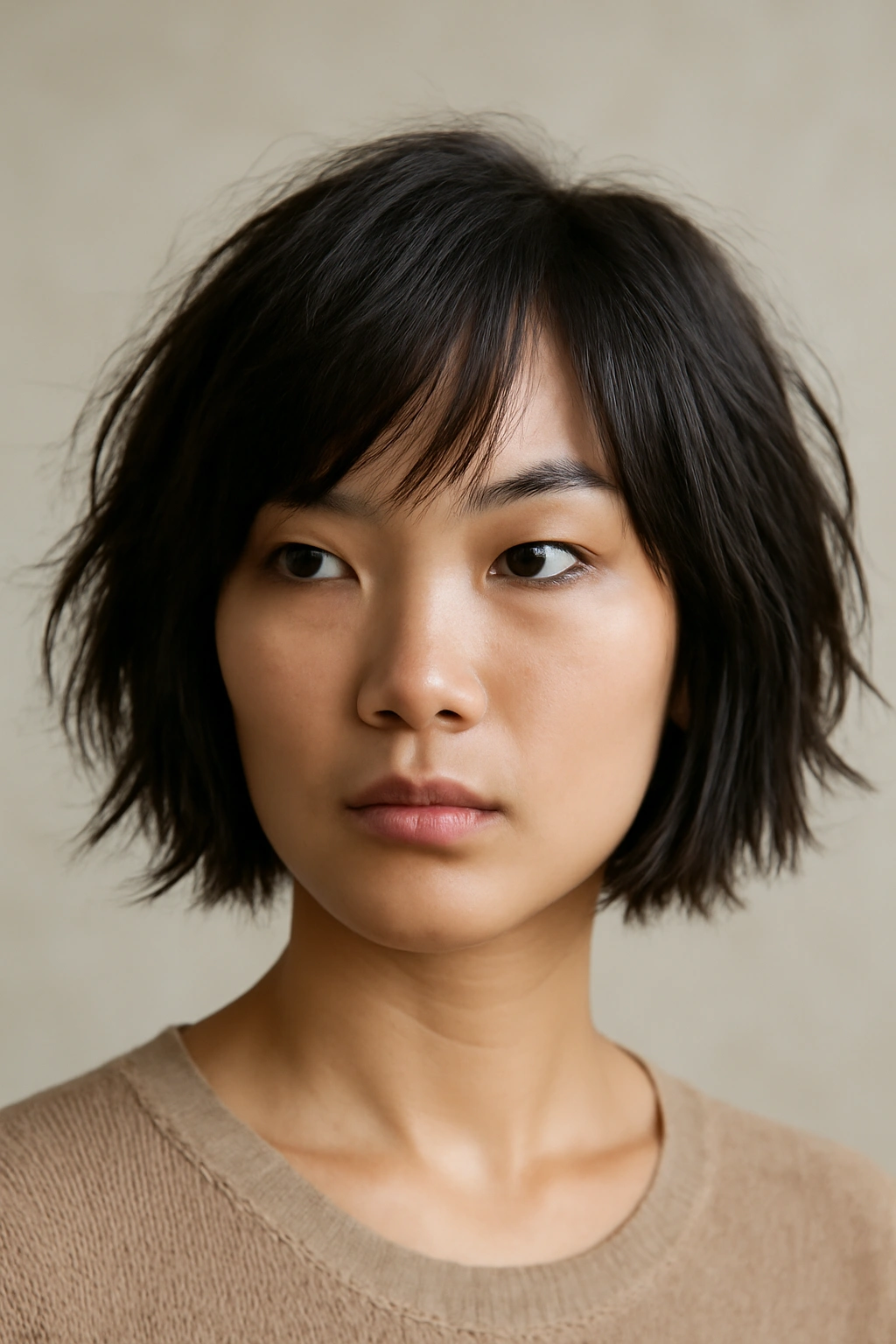
This bob embraces texture instead of fighting it, which is why it works so beautifully on Asian hair that tends to have natural density and can feel heavy without the right cut. The choppy layering creates movement and removes bulk from underneath while keeping enough length on top to frame the face. Each piece sits independently rather than as one solid block, which is especially flattering if you have a round or square face shape.
Why This Cut Suits Asian Hair Types
The choppy texture breaks up the solid weight that Asian hair can sometimes feel when cut blunt, and the layers are short enough that they won’t drag the hair down even with your hair’s natural density. This style actually looks better when your hair has some natural wave or slight frizz—the texture adds to the intentional pieciness rather than working against it. You’re essentially giving your hair permission to do what it naturally wants to do, which means less fighting with styling tools daily.
How to Style and Maintain It
- Ask your stylist for choppy, disconnected layers throughout, not blended layers that create a subtle A-line
- Use a texturizing spray or dry shampoo on damp roots to give the layers more definition and prevent the cut from falling flat
- Blow dry with a round brush, lifting at the roots and scrunching the mid-lengths and ends to emphasize the piece-y texture
- Get trims every 5-6 weeks to maintain the sharp, intentional chop—this cut loses its character quickly as it grows out
- A light texturizing paste or matte pomade on the ends adds definition without making hair look greasy
Pro tip: This bob photographs exceptionally well because the texture catches light in a way that reads as movement and dimension, even in flat lighting.
2. Blunt-Edge Bubble Bob With Curved Crown
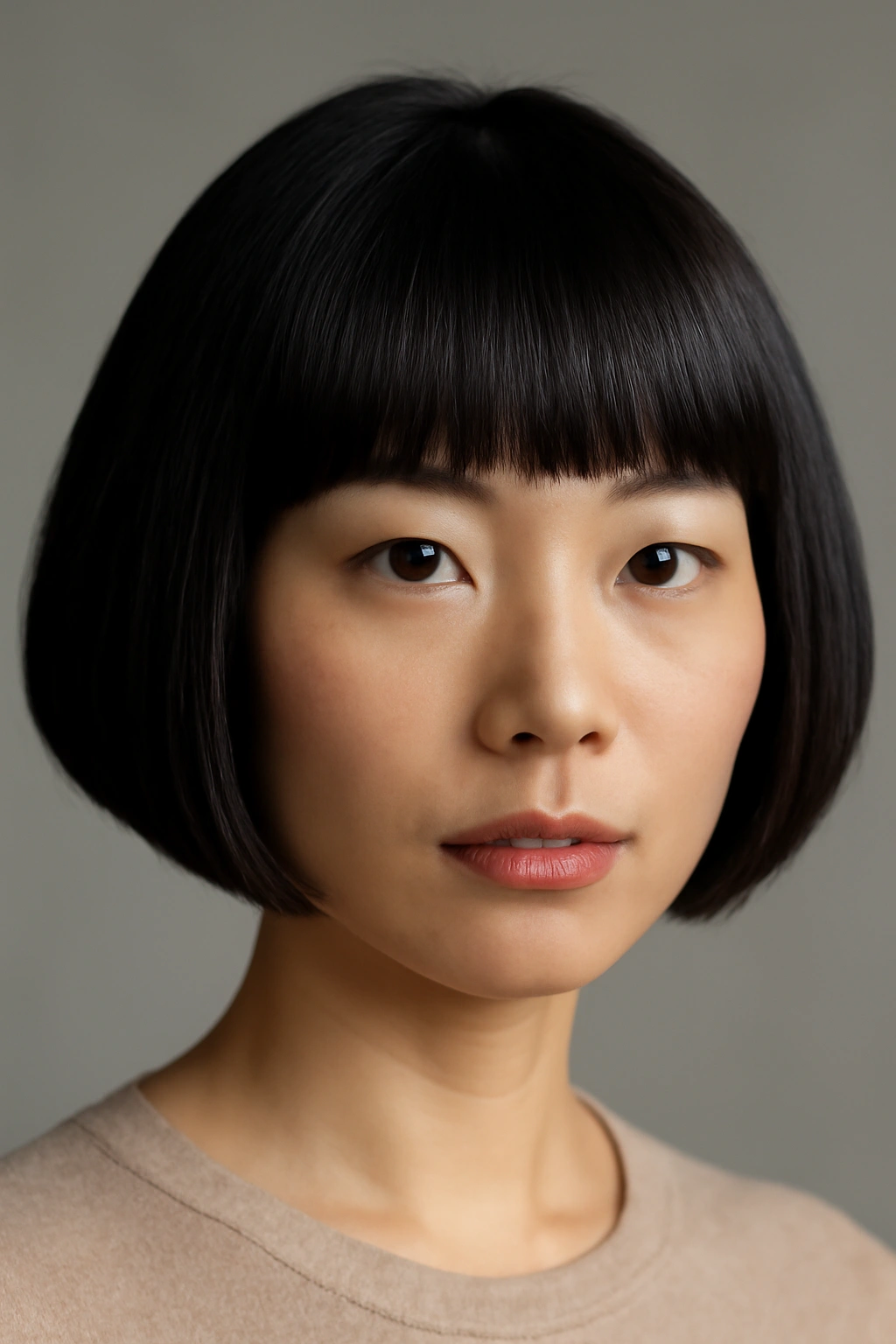
The bubble bob is having a cultural moment in Asian beauty spaces, and for good reason—it maximizes volume at the crown and sides while keeping a clean, blunt perimeter line. The curve creates an almost sculptural shape that’s distinctly contemporary. This style works particularly well for women with straighter hair or finer hair textures because the blunt line creates the illusion of density and the curved crown adds height that balances rounder face shapes.
The Shape That Makes It Work
A true bubble bob has volume that peaks at the sides and crown, with the perimeter sitting just at or slightly above the jawline in a continuous, blunt line. The key is that the crown is cut shorter and layered subtly to create that round, full silhouette without looking obviously layered. Your stylist should be creating this shape through a combination of cut technique and how the layers sit, not just through styling.
Styling Techniques for Maximum Impact
- Blow dry your roots with the dryer angled upward to encourage height and prevent the crown from sitting flat
- Smooth the perimeter with a flat iron or round brush to keep the blunt line clean and intentional
- Add volume spray or volumizing mousse to damp roots before blow drying for extra lift that lasts through the day
- The sides should curve gently inward toward the jawline, so use a round brush to create this curve as you dry
- This cut benefits from sleek styling—avoid tousling or creating texture that breaks the clean bubble silhouette
Worth knowing: This bob requires regular trims every 4-5 weeks because the blunt line becomes noticeably grown-out quickly, and the shape depends entirely on that precise perimeter.
3. Soft Wave Curtain Bob With Center Part
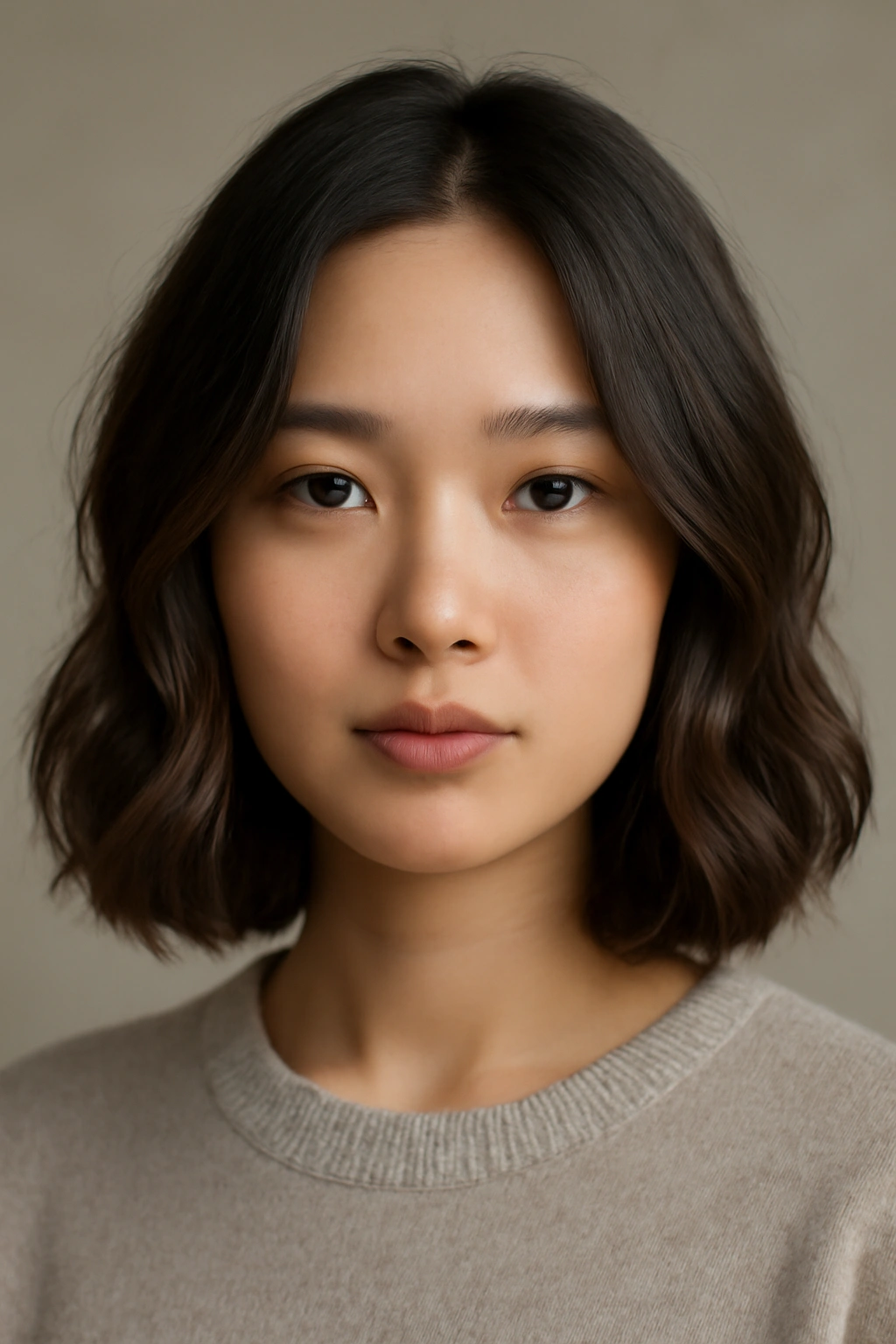
If you prefer movement over structure, this style delivers softness while maintaining the practical length of a bob. The center part naturally creates a balanced frame for most face shapes, and the soft waves add femininity without requiring you to style your hair into submission. This bob works beautifully if you have natural wave in your hair or if you’re willing to curl it with a waver or curling iron a few times a week.
Why This Works for Center-Parted Faces
A center part divides the face exactly in half, which means you need soft, piece-y framing that doesn’t look severe. The curtain effect—where hair on each side of the part falls gently forward—is inherently flattering because it softens the central line. For women with longer face shapes, this is particularly valuable because the horizontal waves create visual width that balances vertical length.
Creating and Maintaining the Wave
- Get the cut shaped with minimal layers—you want a foundation that works even when hair is straight
- Waves are either naturally occurring (if you have that texture) or created with a 1.25-inch curling waver or flat iron
- Create the center part while hair is slightly damp, then wave sections away from the face on both sides
- Let waves cool completely before running your fingers through them to create softer, more natural-looking movement
- A lightweight texturizing spray helps waves hold their shape without making hair feel stiff or crunchy
Insider note: This bob actually looks more intentional and polished when the waves aren’t perfectly uniform—slight variation between left and right sides reads as effortless rather than overdone.
4. Pixie Bob Hybrid (Short and Textured on Top, Longer Underneath)
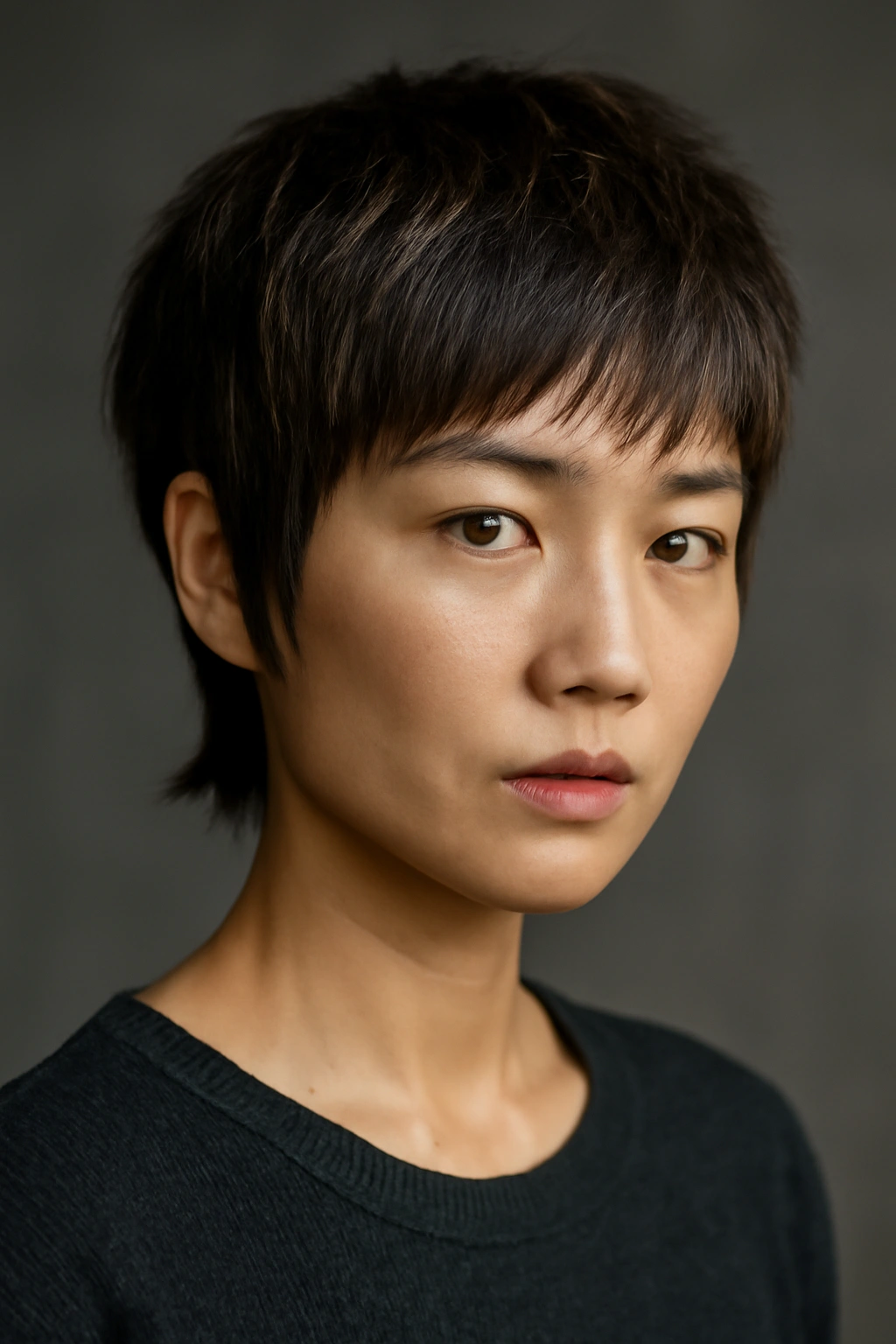
This is for women who want to push boundaries and embrace a more fashion-forward silhouette. The pixie bob blurs the line between a pixie cut and a bob by keeping the crown very short and textured while maintaining enough length in the back and sides to qualify as a bob. It’s bold, it’s androgynous, and it’s absolutely stunning when styled with intention and confidence.
Who This Style Flatters Most
This cut works best on women with strong features—defined cheekbones, a confident jawline, or distinctive facial structure that can handle the exposure a short crown creates. The style doesn’t hide anything, so if you love your bone structure and want to show it off, this is your cut. It’s also ideal for women with fine or medium hair density because the short crown prevents overwhelming the face with too much hair mass.
Styling to Emphasize the Modern Edge
- The textured crown should have disconnected, choppy layers that point upward and outward
- Blow dry the crown first with fingers to create piece-y texture and maximum height
- Add a light matte texture spray or dry shampoo to enhance the choppy, intentional look
- The longer back and sides can be smooth or wavy—keep them sleek as a contrast to the textured crown, or match the texture throughout for full commitment to the choppy aesthetic
- This cut looks best with a visible part—either side-swept or in the center—that’s intentional and clean
Pro tip: A pixie bob hybrid is one of the few short cuts that looks exceptional when you eventually grow it out because it naturally transitions into a longer textured bob as the crown grows.
5. Layered A-Line Bob With Graduated Taper
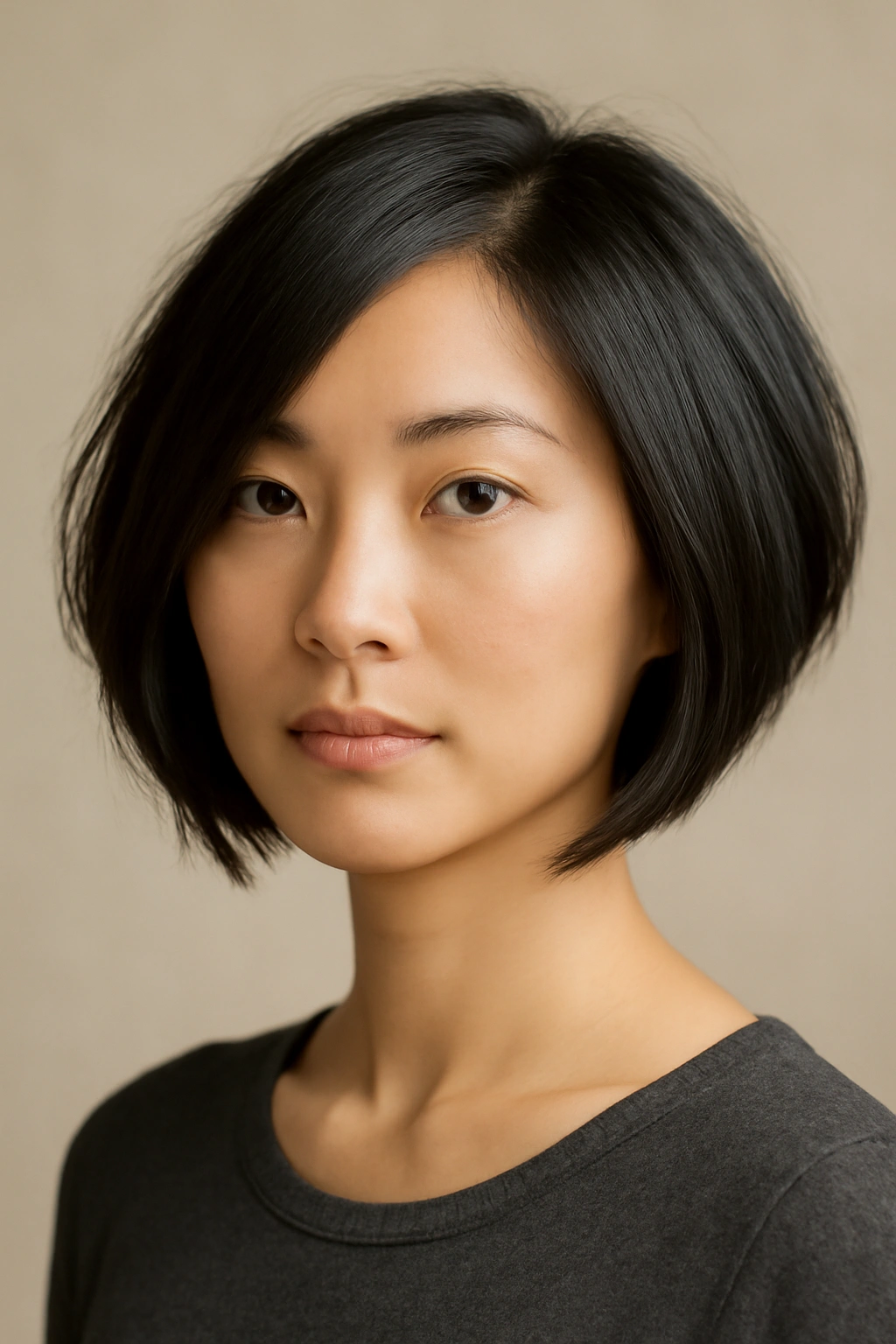
An A-line bob is longer in front and shorter in back, creating a diagonal line that naturally draws attention upward toward the face and eyes. For Asian women, the graduated taper (where the back gradually gets shorter rather than cutting to one specific length) works beautifully because it removes bulk from the back of the head without creating obvious, choppy layers. This is the middle ground between a blunt, structured bob and a heavily layered, piece-y bob.
How the A-Line Shape Benefits Your Face
The angle of an A-line naturally frames the face by bringing length to the front where you need it while preventing a heavy, flat back. This is especially valuable if you have a rounder face because the longer front section creates vertical lines that balance horizontal width. The tapered back also prevents that boxy appearance some bobs can create, making the style feel more organic and less geometric.
Cutting and Styling Specifics
- Your stylist should cut this with a razor or point-cut technique to create a gradual taper rather than visible steps
- The front pieces should hit right at your chin or jawline—longer in front is the signature of the style
- Blow dry by creating volume at the crown first, then smooth the front pieces slightly forward to emphasize the angle
- A light straightening or smoothing of the front helps emphasize the A-line shape; the back can remain slightly textured
- This bob transitions beautifully with grow-out because the A-line shape continues to read as intentional even when longer
Worth knowing: A-line bobs require trims every 6-7 weeks to maintain the angle, but they grow out more gracefully than blunt bobs because the tapered back prevents an obviously overgrown appearance.
6. Sleek Straight Tapered Bob (The Minimalist)
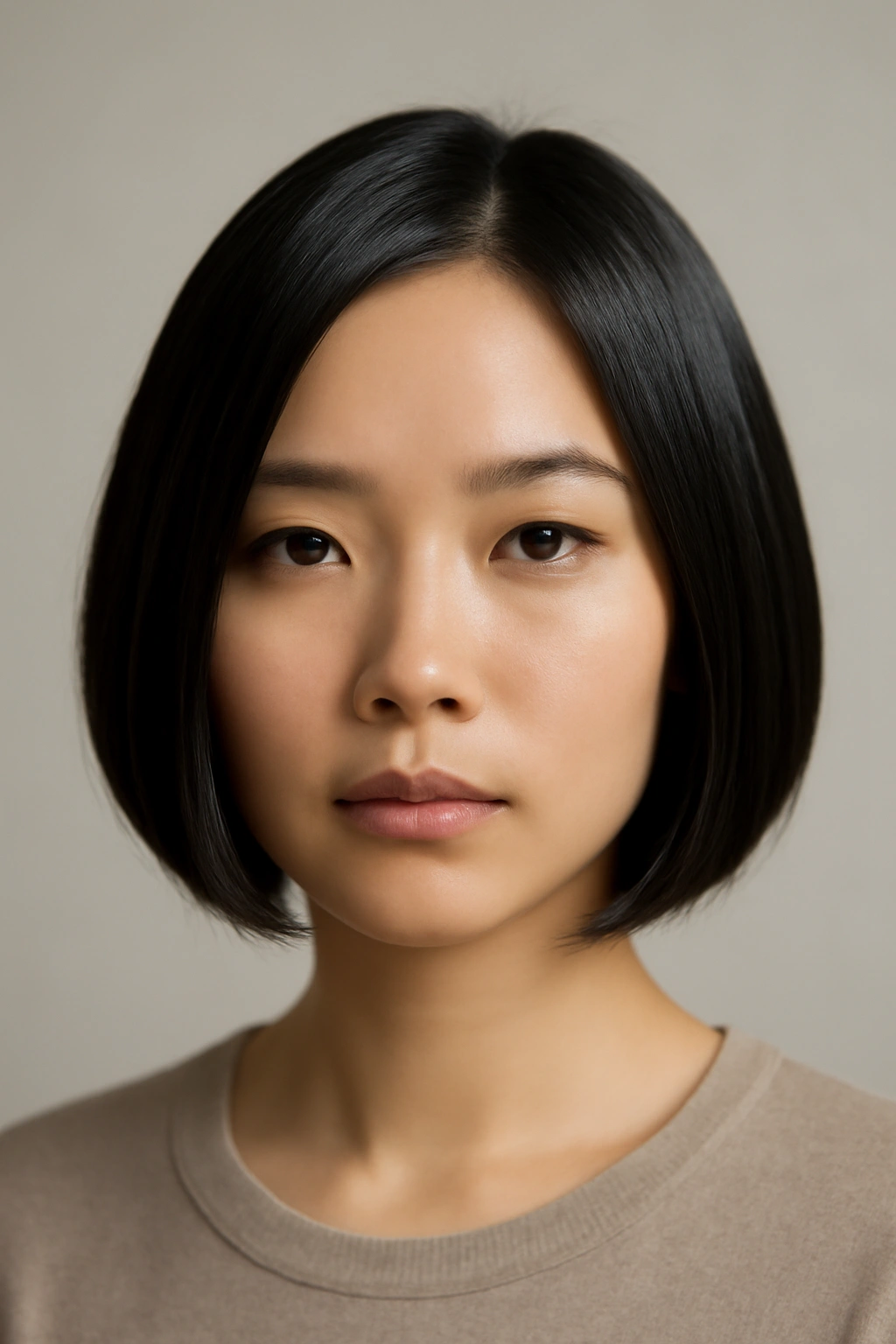
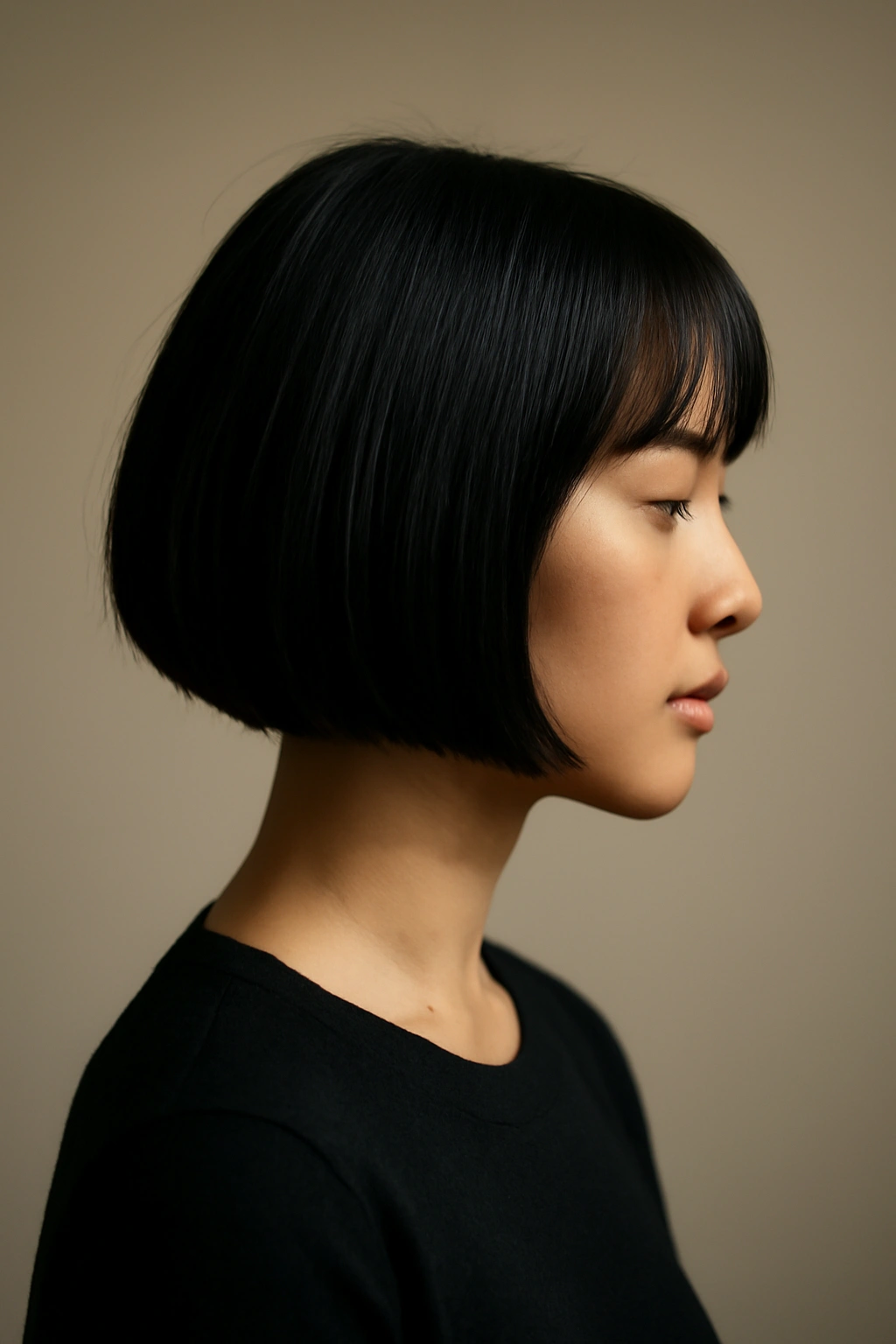
For women who love clean lines and prefer a more severe, architectural approach to their haircut, this is the definitive option. A sleek, straight bob with a subtle taper is the opposite of texture—it’s all about precision, bluntness, and the hair’s natural shine. This style works beautifully on Asian hair because it emphasizes the natural glossiness and straightness that many Asian hair types naturally have.
The Geometric Precision That Defines This Style
This bob should feel almost architectural when you run your fingers along the perimeter—there should be a clear line where your hair ends and the world begins. The taper means the back is slightly shorter than the front, but it’s subtle, not dramatic. The entire effect is one of control, intentionality, and modern minimalism rather than softness or movement.
Achieving the Sleek, Polished Appearance
- This style requires regular salon visits every 4 weeks because the blunt line becomes noticeably dulled as it grows out
- Blow dry straight with a paddle brush, concentrating on smoothing the perimeter line until it catches light evenly
- A smoothing serum or lightweight styling oil applied to damp hair before blow drying creates extra shine and reduces frizz
- Flat iron the perimeter line if needed after blow drying to ensure it’s perfectly straight and sharp
- Your natural hair shine is the style’s main feature, so keep hair healthy and hydrated—this cut shows every bit of damage or dryness
Pro tip: This bob is the perfect canvas for experimenting with hair color or balayage because the sleek style shows off dimensional color beautifully and doesn’t compete with highlights or color work.
7. Tousled Shag Bob (Disconnected and Lived-In)
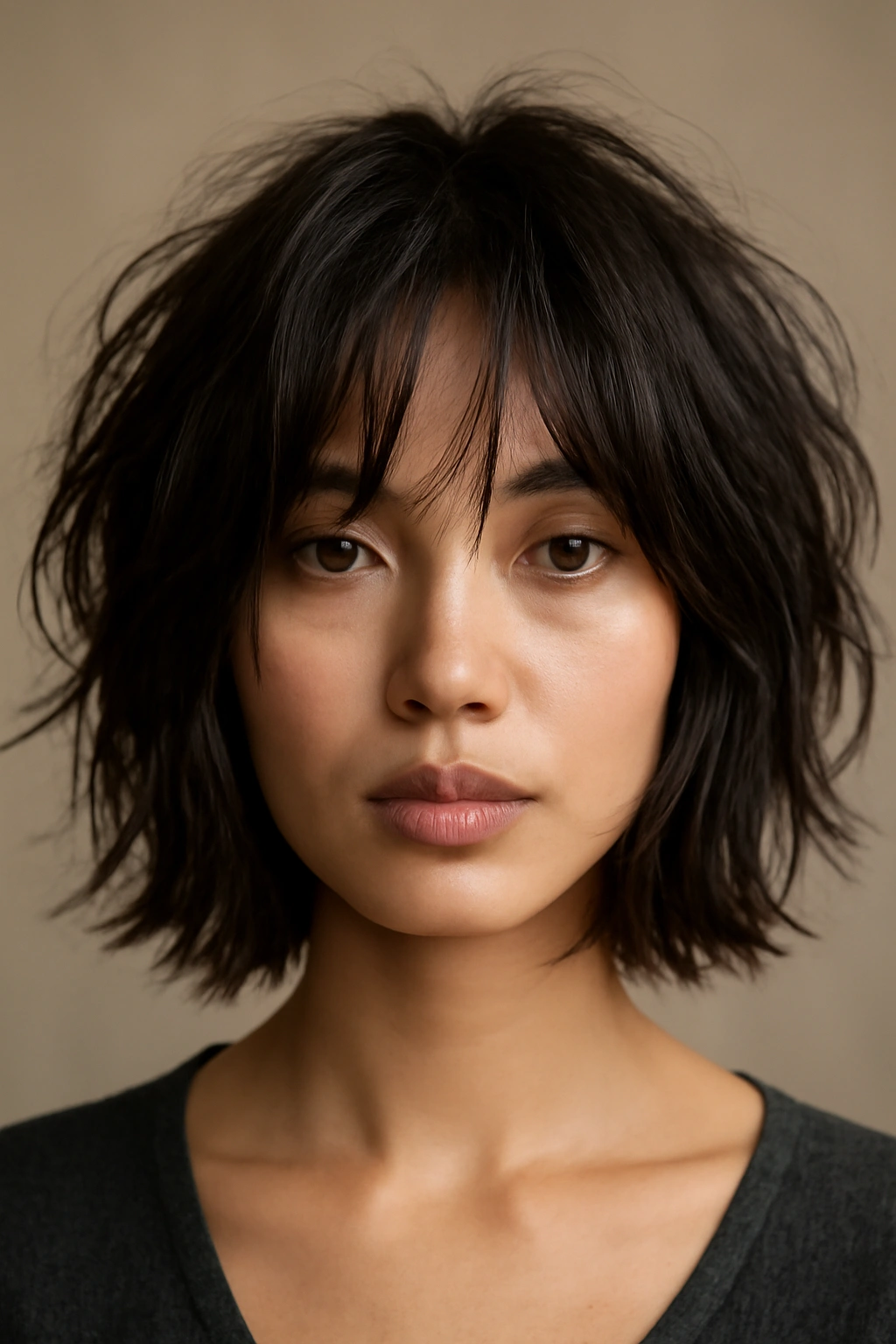
A shag bob takes the easy-going, piece-y aesthetic of a textured chopped bob and pushes it even further with longer layers throughout that create significant movement and a deliberately disheveled appearance. This cut is the opposite of the minimalist sleek bob—it’s about embracing texture, movement, and a “I just got out of bed looking this good” aesthetic that actually requires more styling technique than it appears to.
The Texture That Makes a Shag Bob Feel Modern
A true shag bob has disconnected layers that are visible and intentional, usually starting higher on the head than a standard textured bob. The layers create multiple lengths that move independently, giving the hair a cloud-like volume and movement. This is particularly flattering on women with oval, long, or heart-shaped faces because the layers create horizontal lines that add width and balance vertical length.
Styling the Shag for Maximum Movement
- Use a lightweight texturizing spray or sea salt spray on damp hair before blow drying to enhance the natural texture
- Blow dry with a round brush, lifting at the roots and scrunching mid-lengths and ends to encourage the pieces to separate
- A curling iron or waver adds extra movement if your hair doesn’t naturally wave—aim for loose, undone waves rather than perfect curls
- Matte texture paste or dry shampoo applied to the ends enhances the piece-y, disconnected aesthetic
- This style actually looks better when it’s slightly messy—perfect, pristine styling reads as too controlled for a shag’s aesthetic
Worth knowing: Shag bobs need trims every 5-6 weeks to maintain the layering and prevent the cut from becoming one solid, shapeless length as it grows out.
8. Deep Side-Swept Bob With Hidden Layers
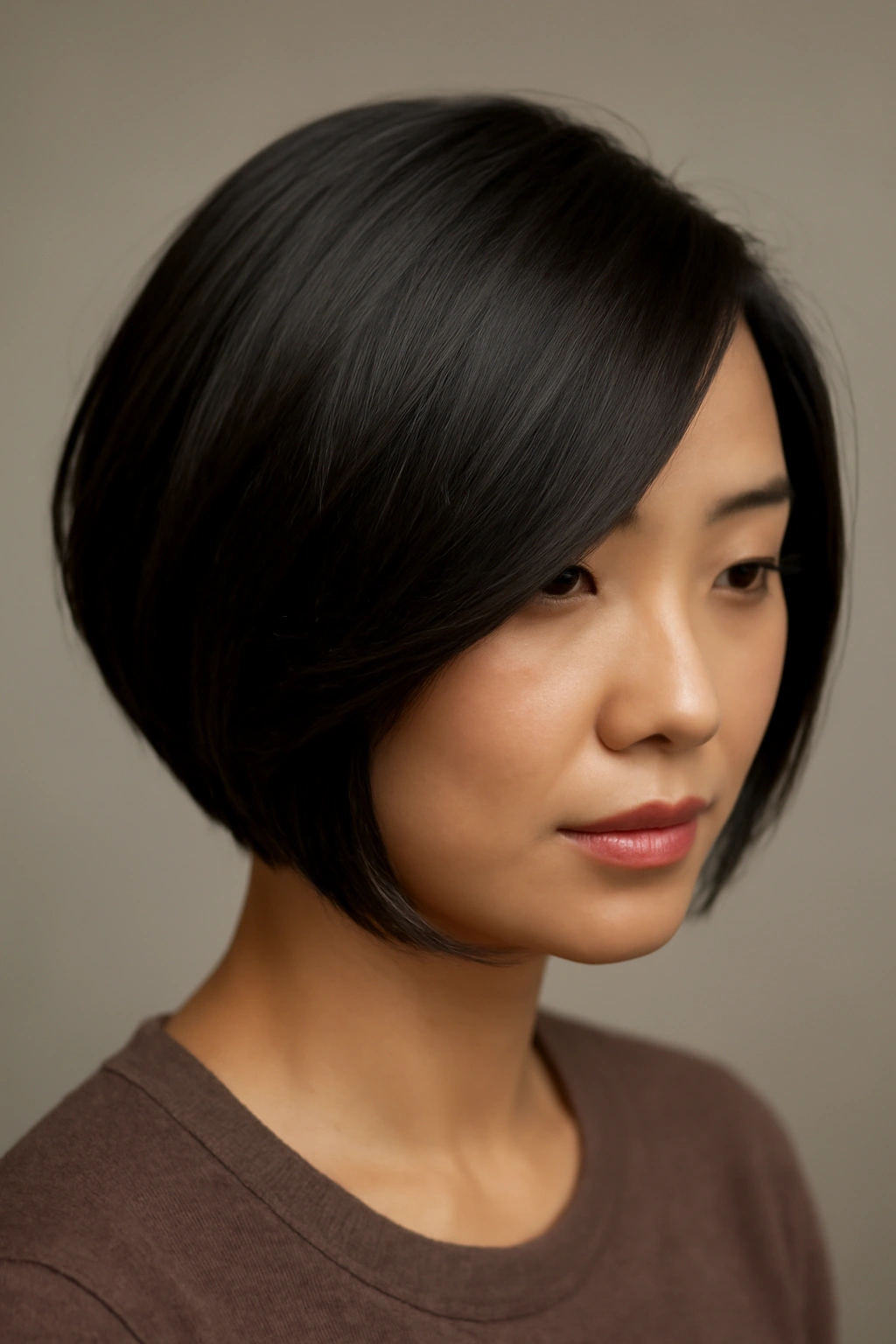
A deep side part combined with a bob creates instant flattery and visual interest, especially when the cut has hidden layers that create movement without obvious choppiness. The side-swept style naturally frames one side of the face while creating a dynamic, asymmetrical silhouette. This is ideal for women who find center parts aging or unflattering, or for those who want visual balance for asymmetrical face shapes.
Why Side-Swept Bobs Flatter Most Face Shapes
A deep side part creates an asymmetrical frame that’s inherently flattering because it breaks up facial symmetry and draws attention to one eye or cheekbone. The longer side can hide areas you want to de-emphasize while the shorter side can create lift where you want it. This makes the side-swept bob one of the most adaptable styles for different face shapes and features.
Creating Depth and Dimension in the Side Sweep
- The cut should be shorter on one side and gradually longer on the other—not an obvious A-line, but a subtle asymmetry
- Hidden layers inside the longer side create movement without obvious choppiness on the surface
- Blow dry with a round brush, directing the longer side across the face and the shorter side backward for volume
- A side part created while hair is damp will stay in place through the day and define the asymmetrical silhouette
- Smooth the longer side slightly with a flat iron or round brush to emphasize the sweep across the face
Pro tip: A deep side-swept bob photographs beautifully because the asymmetry reads as dynamic and intentional in photos, making it an excellent choice if you’re frequently photographed or enjoy taking selfies.
9. Chin-Length Wispy Bob With Soft Fringe
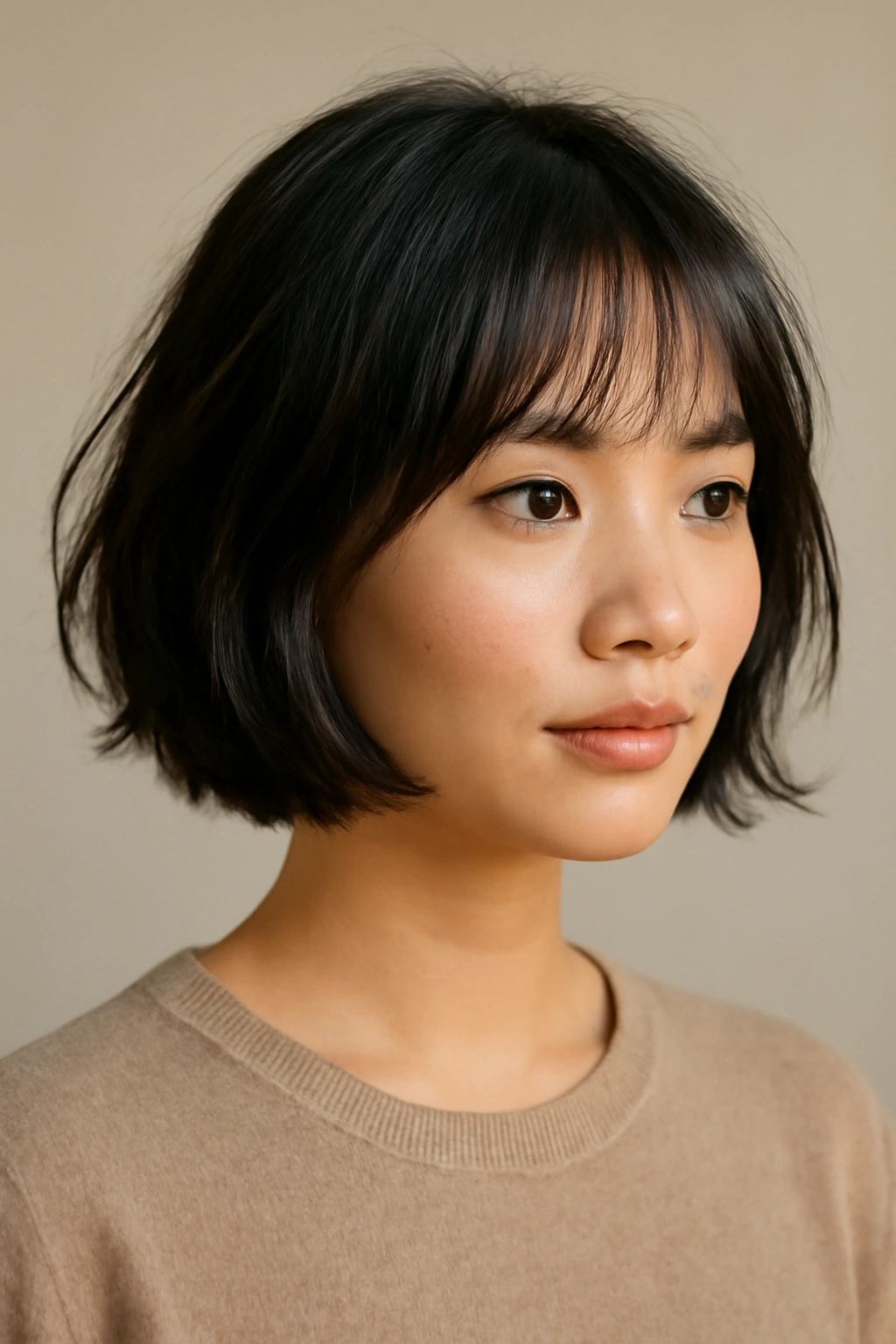
This bob sits right at the chin and features soft, wispy layers throughout that create an ethereal, romantic aesthetic while maintaining the practicality of a short bob. The wispy fringe-like layers at the front create a frame that’s inherently flattering and adds softness to stronger facial features. This style is less trendy and more timeless, making it an excellent choice if you prefer classic beauty over fashion-forward cutting.
How Wispy Layers Create Flattery
Wispy layers are finer, thinner pieces of hair cut at varying lengths rather than blunt or choppy sections. They create a soft frame around the face that adds femininity and draws attention to the eyes and cheekbones. The length variation means the style has movement and dimension without looking textured or intentionally piece-y—it reads as effortlessly soft rather than fashion-statement choppy.
Achieving the Soft, Romantic Aesthetic
- Ask your stylist for razor-cut layers rather than blunt or point-cut layers—razoring creates a softer, less defined line
- The fringe-like pieces at the front should be thin and delicate, not chunky or obvious
- Blow dry with a round brush or curling iron to encourage a slight bend or wave in the layers
- A lightweight styling cream or smoothing product keeps wispy layers soft without weighing them down
- This bob pairs beautifully with loose waves or curls created with a curling wand or flat iron
Worth knowing: Wispy layers require more frequent trims (every 4-5 weeks) because the thinner pieces become noticeably blunt and choppy as they grow out, losing the soft aesthetic that defines this style.
10. Voluminous Mullet Bob (Short Front, Longer Back)
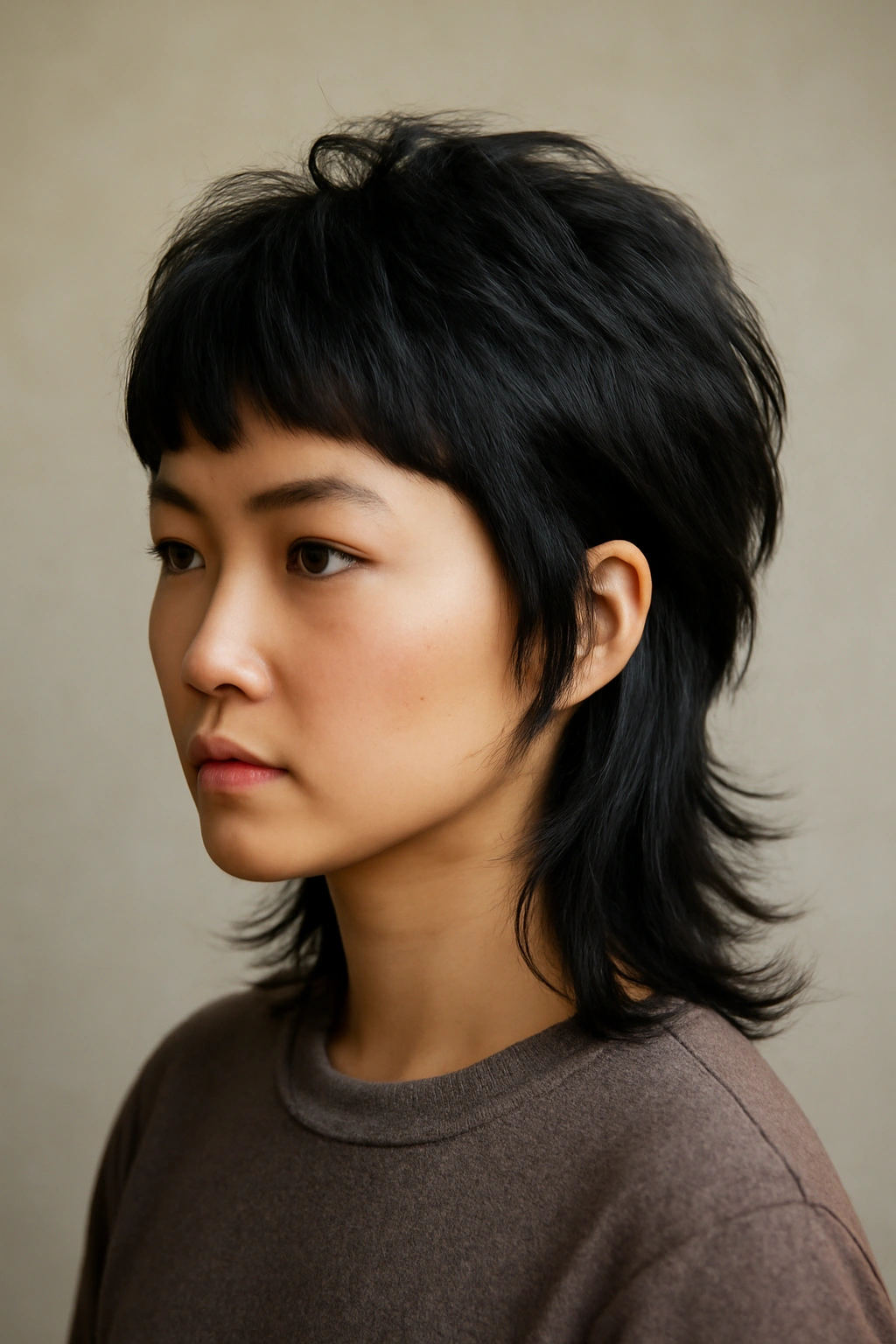
The modern mullet has made an undeniable comeback, and when applied to a bob silhouette, it creates a bold, edgy style that’s unexpectedly wearable. A mullet bob maintains bob-appropriate length in the front while keeping significantly longer length in the back, creating an intentionally dramatic contrast. This is for women who want to make a statement and love the androgynous, rock-and-roll aesthetic that a mullet brings.
The Confidence Required for This Cut
A mullet bob isn’t subtle—it’s a statement piece that requires you to own the style with confidence. The best mullet bobs are worn by women who genuinely love the aesthetic rather than those who are wearing it because it’s trendy. That said, when you commit to it, the mullet bob is absolutely magnetic and creates a distinctive silhouette that’s impossible to ignore.
Styling the Mullet for Maximum Impact
- The front should be textured and piece-y—choppy layers create the modern, intentional look rather than an accidentally blunt front
- The back can be longer (shoulder-length or beyond) with visible layers and movement, creating an obvious contrast to the short front
- Blow dry the front with texture and uplift, then curl or wave the back for contrast and movement
- Matte texture spray or dry shampoo on the front enhances the choppy, piece-y aesthetic
- The back can be sleek and straight for ultimate contrast, or textured to match the front for a more cohesive statement
Pro tip: A mullet bob is actually easier to grow out than many people think because the natural length difference is built into the cut—it transitions gracefully into a shag or longer layered style as it grows.
Final Thoughts
The bob haircut has proven itself as one of the most versatile styles in contemporary hair fashion, and the variety of options means there’s genuinely a bob for every personality, face shape, and hair type. The key to finding your perfect bob is being specific with your stylist about what you’re envisioning—bring photos, discuss your hair texture and natural tendencies, and explain what level of styling effort you’re willing to invest daily.
Asian hair responds beautifully to bobs because many of the cuts work with your hair’s natural density, straightness, and growth patterns rather than fighting them. Whether you’re drawn to texture and movement or clean lines and minimalism, a well-cut bob can completely transform how you feel about your appearance while actually requiring less maintenance than longer styles. The investment in a skilled stylist who understands how to cut specifically for Asian hair types is absolutely worth it—a great bob cut will look intentional and flattering for months between trims, making it one of the smartest style choices you can make.
