



The mullet has officially cycled back into the style conversation, and this time it’s getting a sophisticated, modern makeover across Asia. What was once relegated to ’80s hair magazines and rock concerts has transformed into a genuinely cool, fashion-forward option that works beautifully with Asian hair texture and face shapes. The key difference? Today’s mullets are intentional, tailored, and often paired with sharp fades, textured styling, and contemporary color treatments that make them feel current rather than costume-y.
If you’ve been scrolling through Korean, Japanese, and Southeast Asian styling accounts, you’ve probably noticed the mullet appearing everywhere—from street style to music videos to high-fashion editorials. What makes this version different from its predecessors is the versatility. Asian hair, with its natural thickness and straight-to-wavy texture, actually takes to mullet cuts with remarkable ease. The back can hold volume and movement without looking scraggly, and the front can be styled sleek or textured depending on your vibe that day.
The mullet works because it solves a real styling problem for people who want length and personality but don’t want to commit to fully long hair. It’s short enough to look intentional and modern, long enough to show off individuality. Whether you’re drawn to a subtle business-in-the-front aesthetic or a more dramatic wolf-cut interpretation, there’s a mullet variation that fits your face shape, hair texture, and personal style. Let’s break down twelve distinct versions that are genuinely gaining momentum right now.
1. The Sharp Korean Fade Mullet
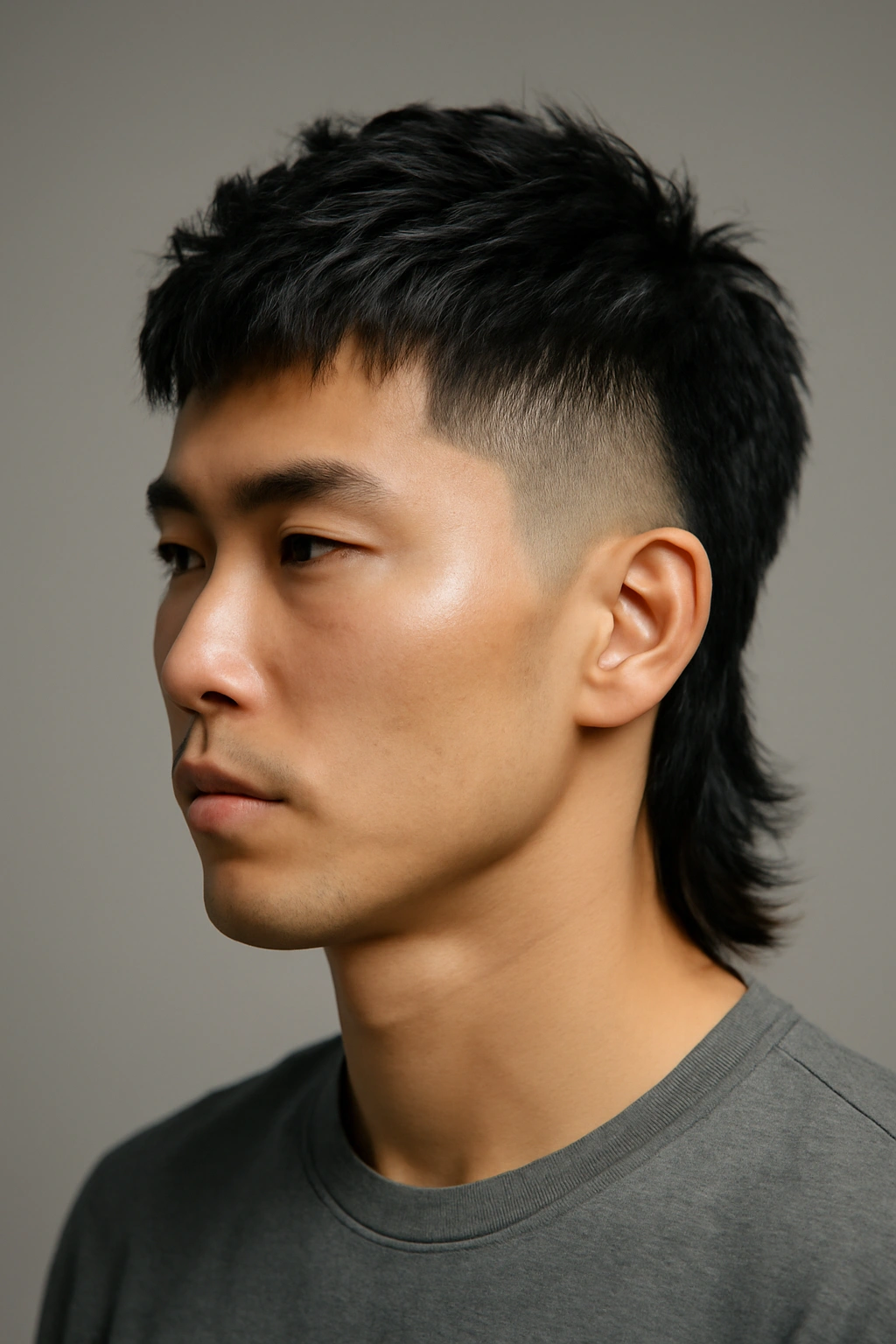
This is the most polished interpretation of the modern mullet, originating from Korean barbering traditions that emphasize clean lines and precision. The sides are faded tight—we’re talking skin fade or nearly there—while the top is kept textured and slightly longer, typically 2 to 3 inches. The back transitions smoothly into length that hits around the collar or slightly past, creating a seamless graduation rather than the choppy, obvious contrast of ’80s mullets.
Why This Cut Works for Asian Hair
Asian hair’s natural density means that even a conservative fade doesn’t look thin or wispy. The textured top catches light beautifully and can be styled forward, swept to the side, or worn slightly messy. This version suits oval, rectangular, and heart-shaped faces particularly well because the tapered sides create the illusion of width that balances longer features.
Key Styling Details
- Pair with a matte or low-shine product to keep the texture defined without looking greasy
- The back can be worn straight and sleek, or with subtle texture depending on your mood
- A deep side part emphasizes the fade and adds sophistication
- Works with or without color, but a subtle ash tone or honey highlights draw attention to the texture on top
Pro tip: Ask your barber for a gradual transition between the fade and the longer back section—this is what separates a sharp Korean mullet from a choppy one.
2. The Wolf Cut Mullet Hybrid
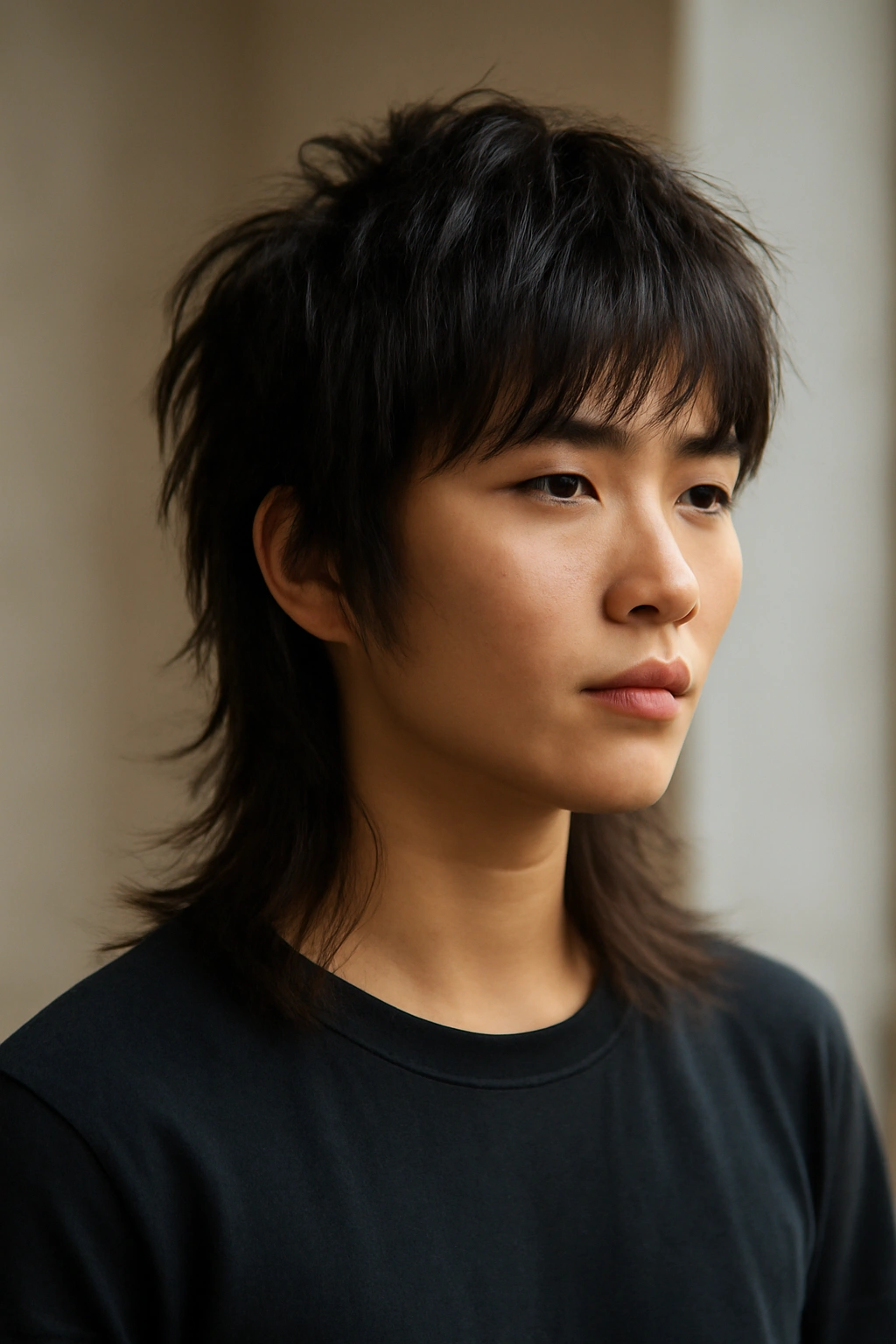
The wolf cut—that shag-meets-mullet hybrid that blends longer layers throughout with shorter, textured pieces on top—has evolved into a genuinely cool mullet variation. This version keeps the signature mullet short-in-front, long-in-back structure but incorporates choppy layers throughout that create movement and dimension. The layers are typically 1 to 2 inches apart, creating that signature wolf-cut texture while maintaining the mullet’s fundamental shape.
What Sets It Apart
This cut feels less like a traditional mullet and more like a modern shag that happens to have a longer back. It’s messier by design, which makes it forgiving for people who like a “I woke up like this” aesthetic but still want obvious personality in their cut. The choppy layers mean you get volume and texture without needing much styling effort—the cut does the work.
Best Face Shapes and Hair Types
Wolf cut mullets suit thick, straight, or slightly wavy hair exceptionally well. If your hair is fine or prone to tangles, the layering throughout requires a bit more maintenance. Round and square faces benefit from the vertical movement of this cut, which elongates and slims features through its choppy, directional layers.
The styling flexibility is remarkable—you can wear it sleek with a blow dryer and product, or rumpled and undone. Most people find they can flip between looks depending on whether they’ve got five minutes or thirty.
3. The Textured Undercut Mullet
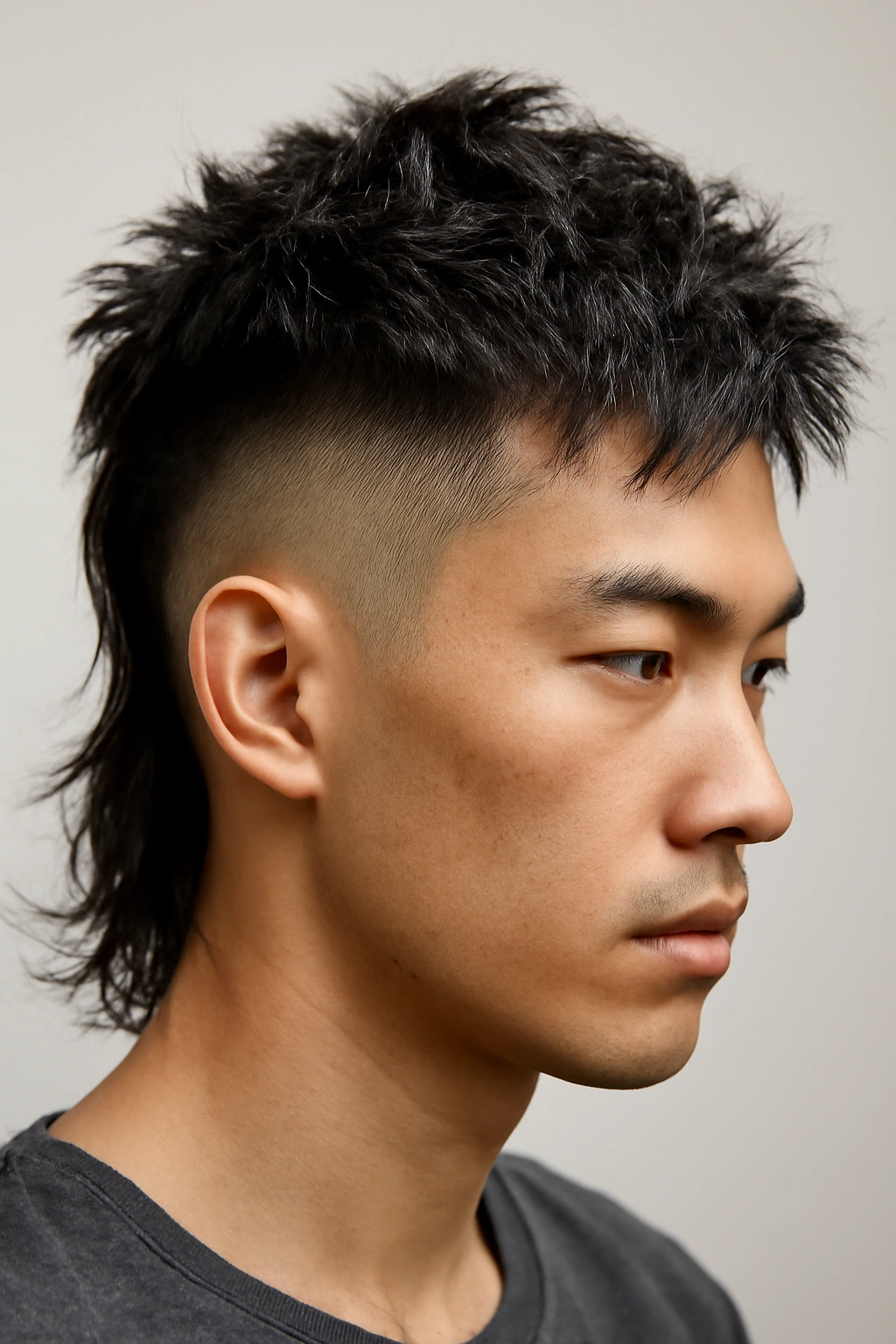
This version emphasizes contrast and modernity through an undercut—closely trimmed sides that sit even shorter than a traditional fade, often with clipper designs, geometric patterns, or hard lines. The top and back maintain length, but the sides are almost shaved, making the length appear to float above the undercut. This is the most avant-garde interpretation of the mullet, popular among artists, musicians, and fashion-forward stylists.
Why Asian Hair Shines With This Cut
The density of Asian hair means an undercut reads as intentional and striking rather than sparse. The strong contrast between the shaved or nearly shaved sides and the textured, longer top creates a bold statement. This cut suits people with strong facial features and confident personal style—it’s not subtle, and that’s the entire point.
Customization Options
- Add geometric clipper fade designs on the sides for extra edge
- Vary the length on top: keep it short and textured, or grow it longer for a more dramatic contrast
- The back can be straight or layered depending on how much movement you want
- Color works beautifully—a contrasting tone on the top against the shorter sides creates even more visual drama
Worth knowing: An undercut mullet requires touching up every two to three weeks to maintain the sharp line between the undercut and the longer sections.
4. The Sleek Business Mullet
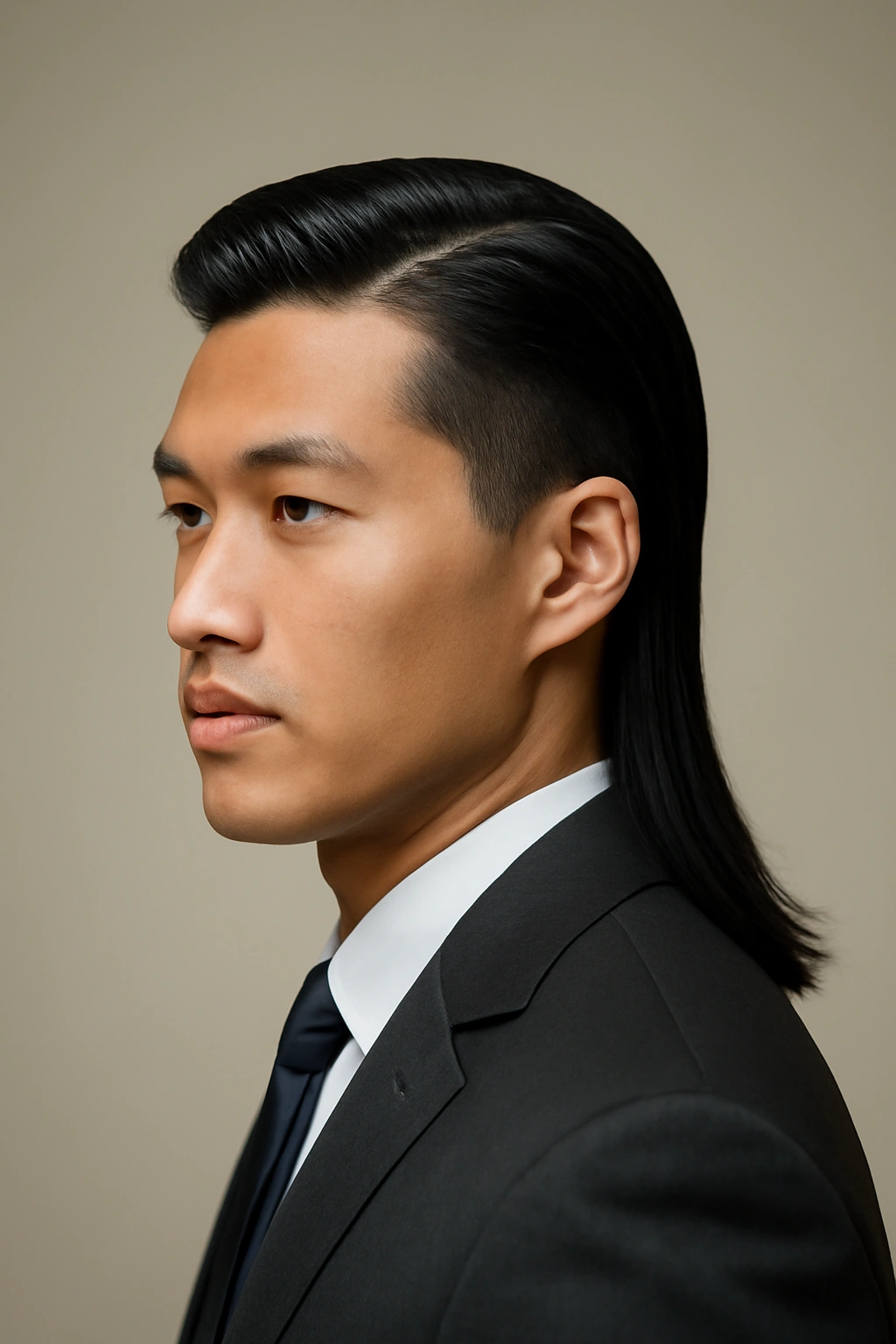
For people who want the personality of a mullet but need to look polished in professional settings, the business mullet keeps everything conservative on top while maintaining a surprise of length in the back. The top is trimmed to about 1.5 to 2 inches, slicked back or swept to the side with a sharp side part. The back is kept at a respectable length—hitting around the collar—and is typically worn straight and neat rather than textured or voluminous.
The Appeal for Professionals
This cut is genuinely clever because it looks conventional in formal photos or from the front, but reveals its personality when you turn around. Many people in corporate, legal, or academic fields have embraced this version because it lets them express individuality without explicitly breaking dress codes. It’s a quiet rebellion, which is exactly why it’s increasingly popular.
Styling for the Boardroom
- Use a lightweight pomade or gel with a matte finish to keep the top smooth and professional
- A deep side part adds polish and sophistication
- Keep the back straight and smooth—texture reads as less professional in this context
- The cut itself does most of the work; you’re just maintaining what the barber created
The business mullet proves that this haircut isn’t inherently casual or punk—it’s just a shape, and the styling choices determine whether it reads as edgy or conventional.
5. The Spiky Textured Mullet
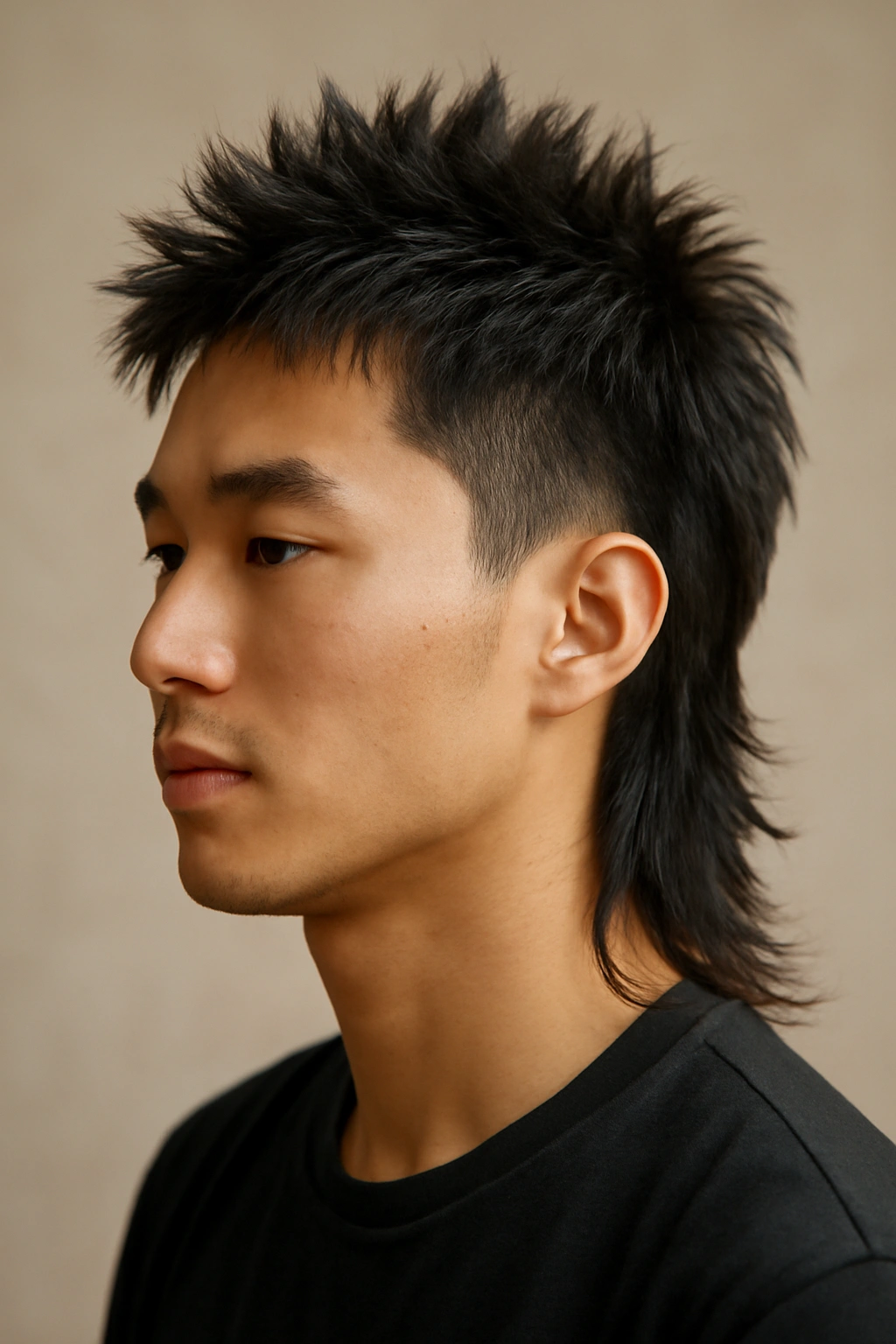
This version embraces maximum texture on top through shorter, choppy layers that stick up naturally, combined with medium length in the back. The top is typically cut to 1 to 2 inches with deliberate separation between individual pieces, creating that spiky, piece-y texture that requires minimal product but reads as intentionally styled. The back grows longer and can be worn smooth or with subtle texture.
Why This Works for Asian Hair
Asian hair often has a natural tendency toward texture and movement when cut in the right way. This cut amplifies that natural tendency rather than fighting against it. The individual layers mean that even without styling, the cut has dimension and personality. With a bit of matte product and your fingers, you can enhance the texture even more.
Daily Styling Approach
- Wash and air dry for a relaxed, textured look
- Use a matte clay or powder product to enhance separation between pieces
- Comb with your fingers rather than a brush to maintain the choppy, piece-y effect
- The minimal styling requirement is part of the appeal—this cut works for people who don’t want to spend twenty minutes on their hair each morning
Real talk: This cut requires a skilled barber who understands how to cut individual layers for texture. A subpar haircut will look patchy rather than intentionally choppy.
6. The Long-Back Volume Mullet
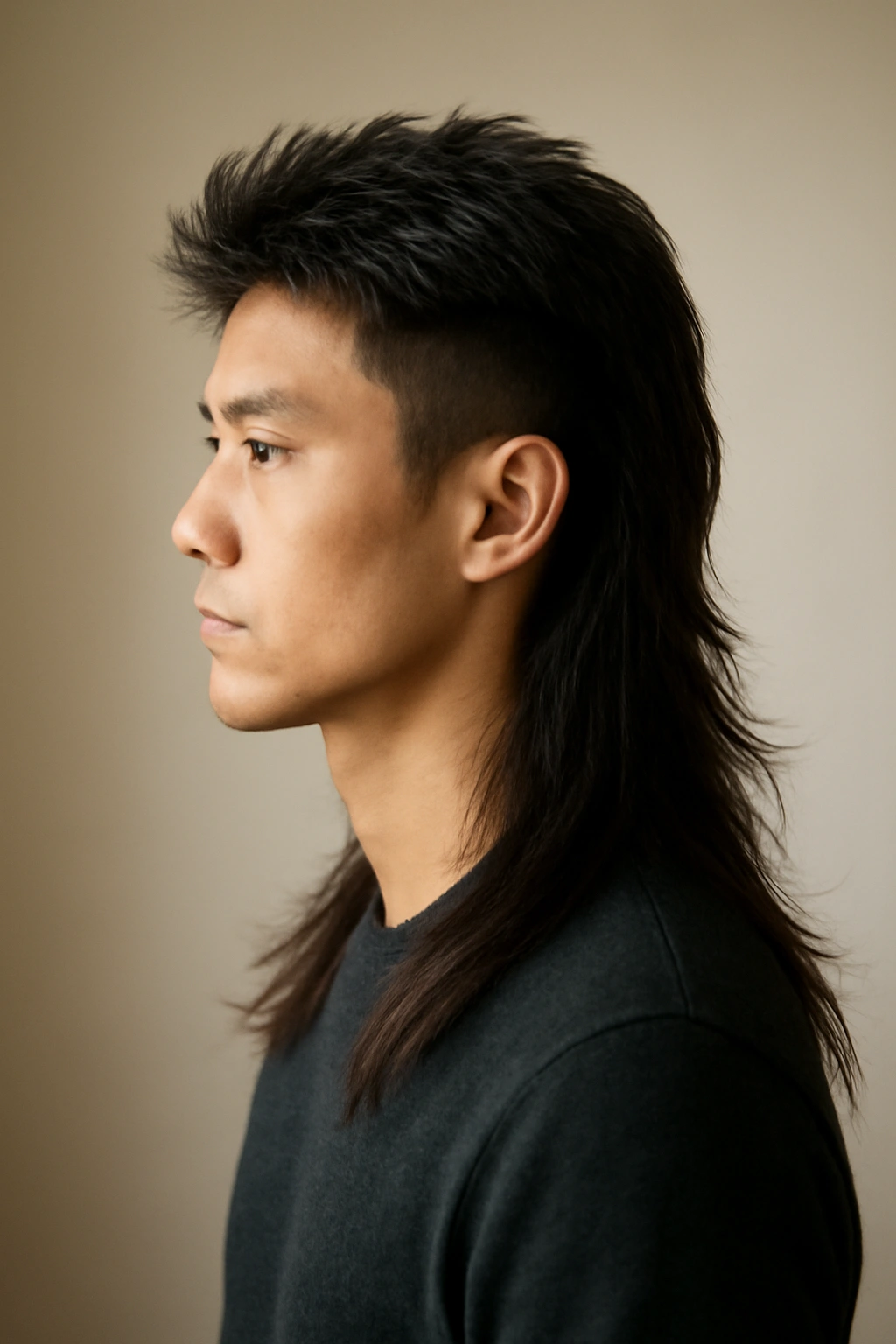
For people who want genuinely long hair in the back but a modern, contained look on top, the long-back volume mullet commits to real length—often 8 to 12 inches in back—while keeping the front and sides short and controlled. The back is cut into layers that create volume and movement rather than one thick, heavy line. This version walks the line between mullet and modern shag, leaning into the mullet’s identity through the sharp contrast between front and back.
The Visual Impact
This is the most dramatic interpretation of the mullet silhouette. When worn down, the long, layered back creates movement and presence. When styled up or partially pinned, it reveals the short, sharp front. The duality is part of the entire appeal—you’re getting two very different hairstyles in one cut.
Best For
People with medium-to-thick, straight or wavy hair who enjoy maintenance and styling. This cut requires regular trims to keep the layers intact and prevent the back from becoming one heavy piece. The back benefits from layering work every 4 to 6 weeks, and the front needs cleaning up every 3 weeks.
The styling possibilities are remarkable—you can wear this as a full-length hairstyle, half-up, in a small bun, or clipped partially back depending on your mood and context.
7. The Blonde Textured Mullet
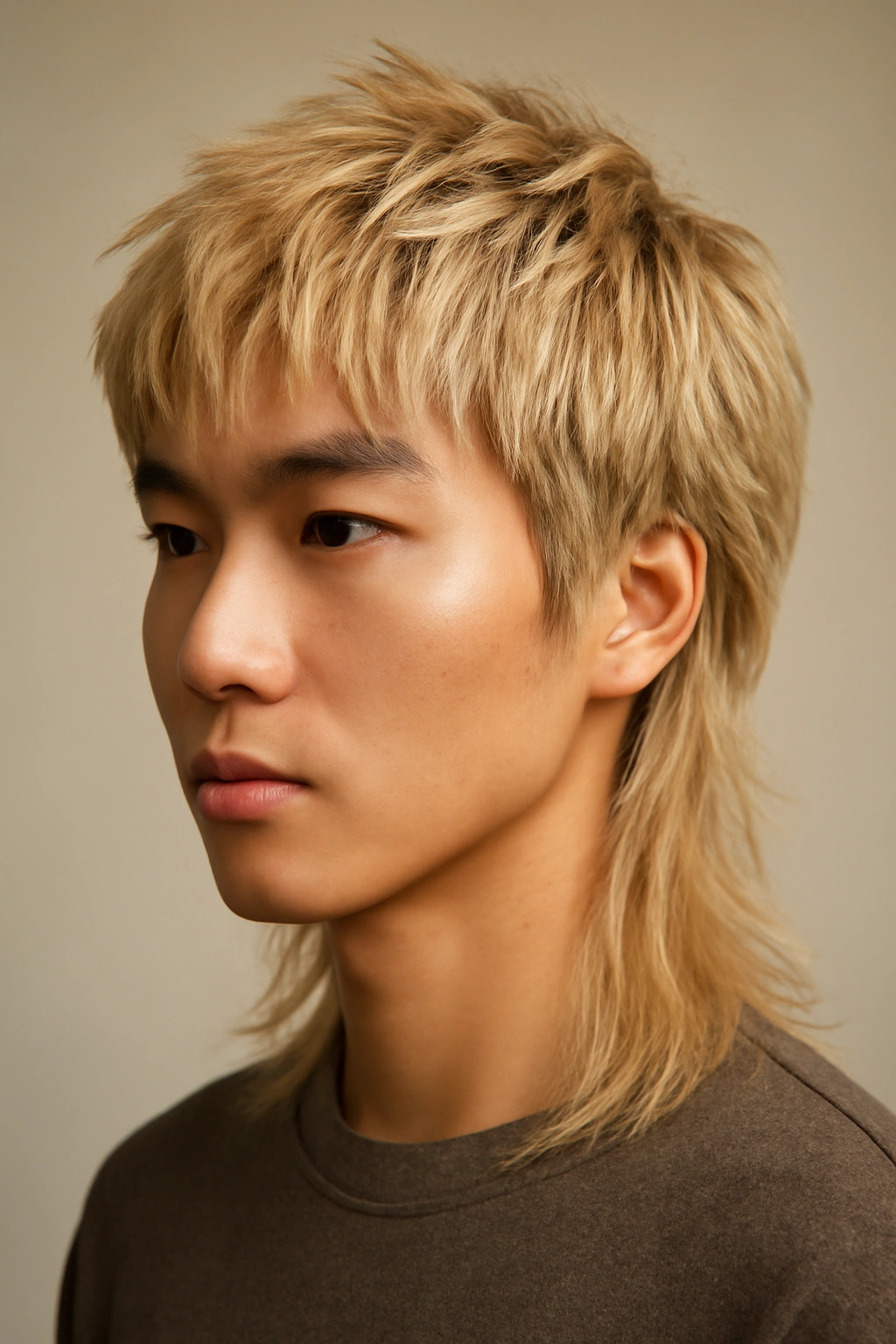
Color transforms any haircut, and when you add a blonde tone—especially honey, ash, or platinum—to a textured mullet, the depth and movement become even more visible. This version combines a choppy, textured cut with dimensional color work, whether that’s all-over blonde, balayage, or root shadow. The color catches light throughout the textured layers, creating an effect that makes the cut appear more dimensional and intentional.
Color Strategy for Asian Hair
Lighter tones on Asian hair can create stunning contrast and make texture more apparent. The challenge is maintaining blonde on Asian hair without damage. This is the version that requires commitment—not just to the cut but to color maintenance every 4 to 6 weeks, plus regular deep conditioning and toning treatments.
The Texture-Plus-Color Combination
- Blonde + textured layers = maximum dimension and movement
- The lighter tone emphasizes individual pieces and separations
- Works with any texture—from spiky short layers to long, wavy back pieces
- Pairs beautifully with modern styling products that add texture without heaviness
Insider note: A good toner is non-negotiable with this version. Without it, blonde on Asian hair can shift toward yellow or brassy tones, which changes the entire aesthetic.
8. The Subtle Shoulder-Length Mullet
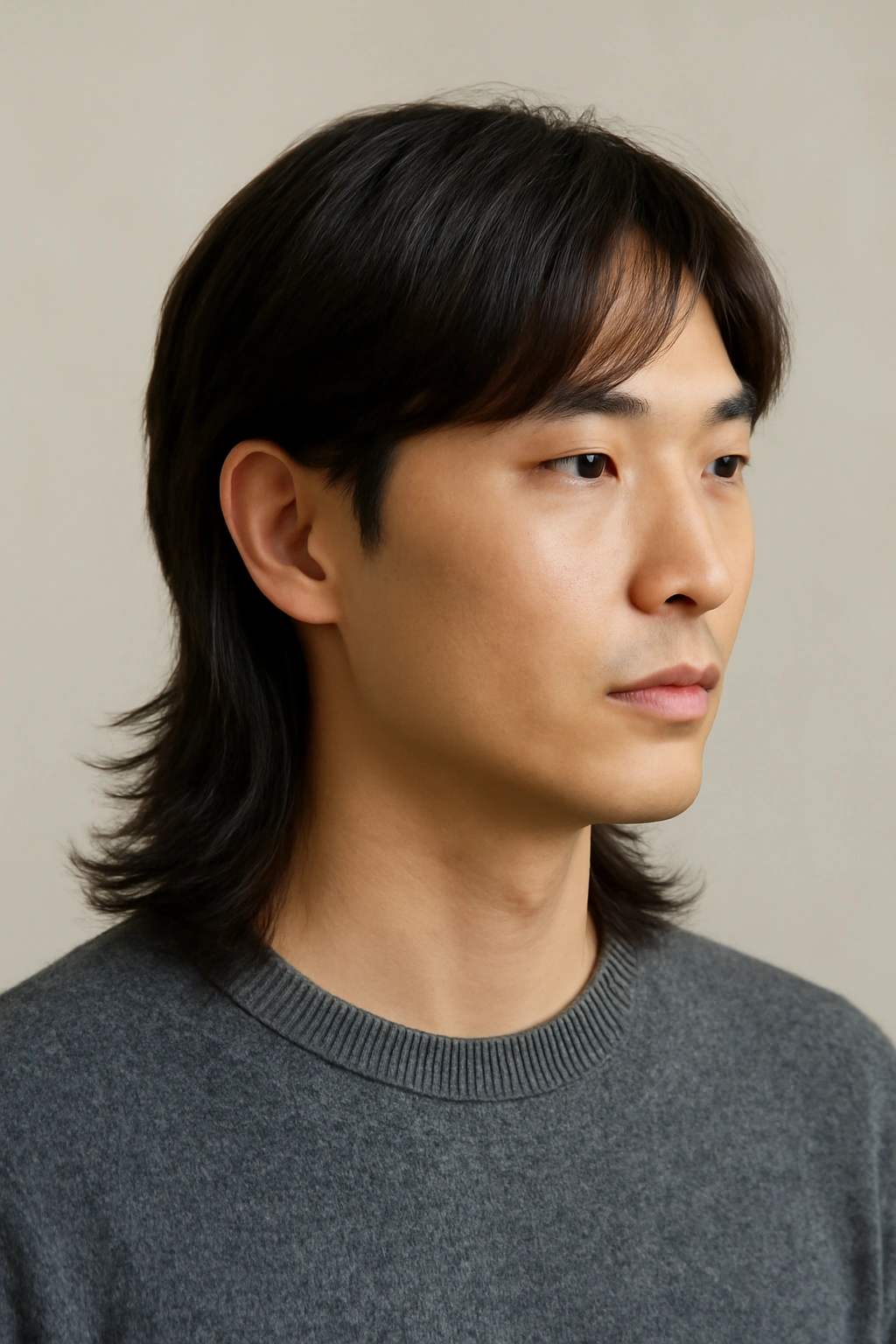
For people who aren’t ready for the drama of a true mullet but want a hint of personality, the subtle shoulder-length mullet keeps everything relatively conservative in length while maintaining the fundamental mullet architecture. The front and sides are kept at approximately chin-length or slightly shorter, while the back grows to shoulder length or just past. The contrast is gentle rather than shocking, making this the most wearable version for people testing out the trend.
The Advantages of Subtlety
This cut reads as long hair with a slight shape rather than an obvious mullet. It’s easy to style multiple ways—you can tuck it all back, let it down, pin part of it, or wear it half-up. The gradual length change means no obvious line where the short ends and the long begins; instead, it flows. This is the version that people often choose before committing to a more dramatic mullet.
Versatility Factor
- Works for professional settings more easily than a dramatic mullet
- Easy to grow out if you change your mind
- Can be styled sleek, textured, wavy, or straight depending on your mood
- Suits almost any face shape because the change is so gradual
Key point: The subtle mullet relies heavily on how your barber cuts the transition. A sharp, obvious line reads as intentional; a smooth, gradual fade reads as intentional too—but the feeling is completely different.
9. The Shaggy Wolf-Mullet with Bangs
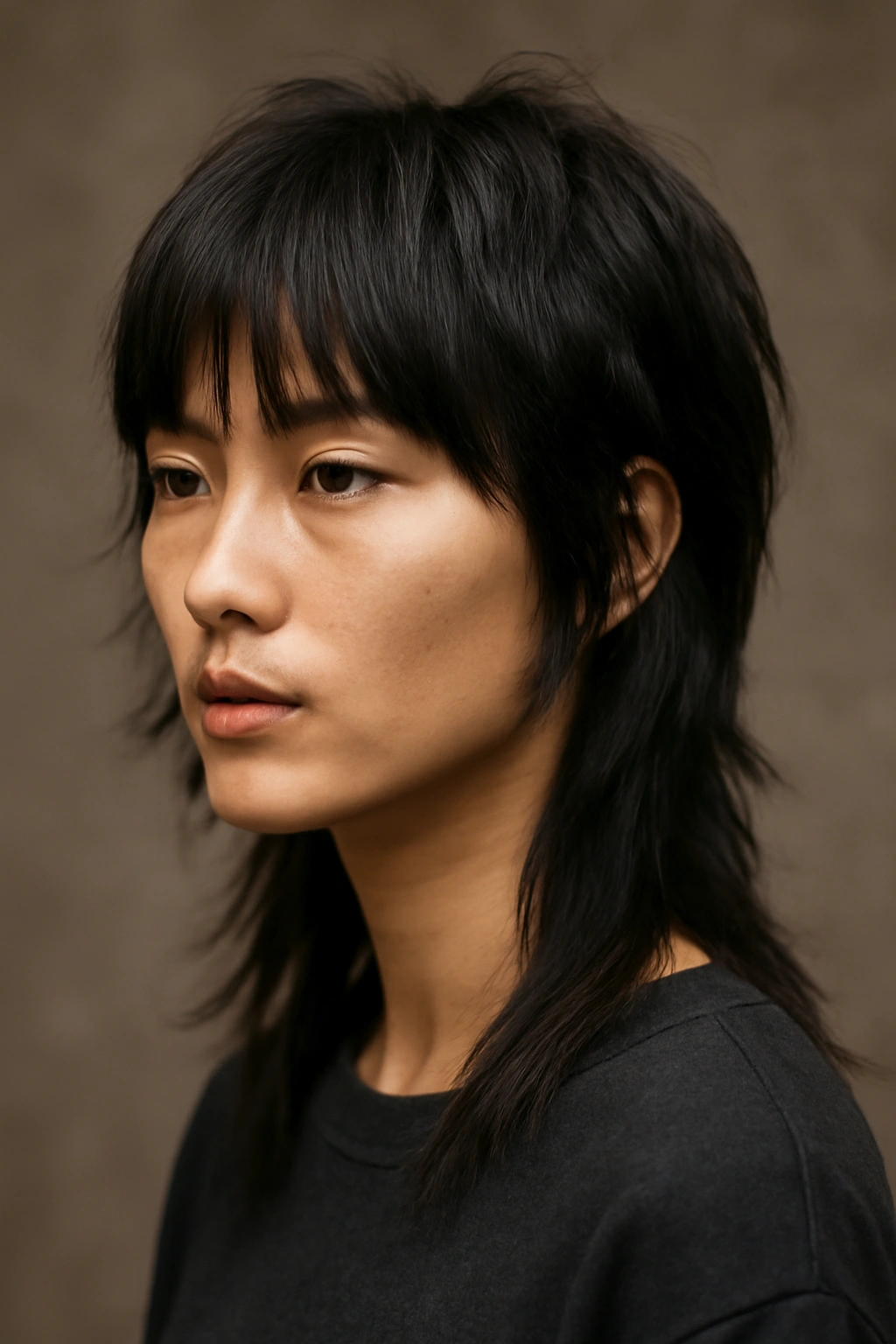
This version layers in textured, choppy bangs that frame the face, combined with choppy layers throughout and longer back sections. It’s a hybrid of the wolf cut and mullet aesthetic but with an added bang element that creates additional framing and dimension. The bangs are typically longer, face-framing pieces that hit around the cheekbones or slightly below, choppy and textured rather than blunt.
Why Bangs Transform the Mullet
Bangs add another dimension of styling flexibility. You can style them forward and piece-y, sweep them to the side, or pin them back to reveal more of your forehead depending on your face shape or the vibe you’re going for that day. The bangs also work to frame and balance the shorter front while the longer back maintains the mullet silhouette.
Best Face Shapes
Round and long face shapes benefit most from textured bangs, which add width and break up vertical space. The choppy, piece-y style prevents bangs from looking heavy or unflattering.
Styling the Bangs and Back Together
- The bangs should echo the texture of the back for visual cohesion
- Style bangs with the same product as the rest of your hair for consistency
- Consider how bangs will work in your daily life—sweating, sleeping, helmet-wearing, etc.
- Bangs require more frequent trims than the rest of the cut to maintain their shape
10. The Modern Asymmetrical Mullet
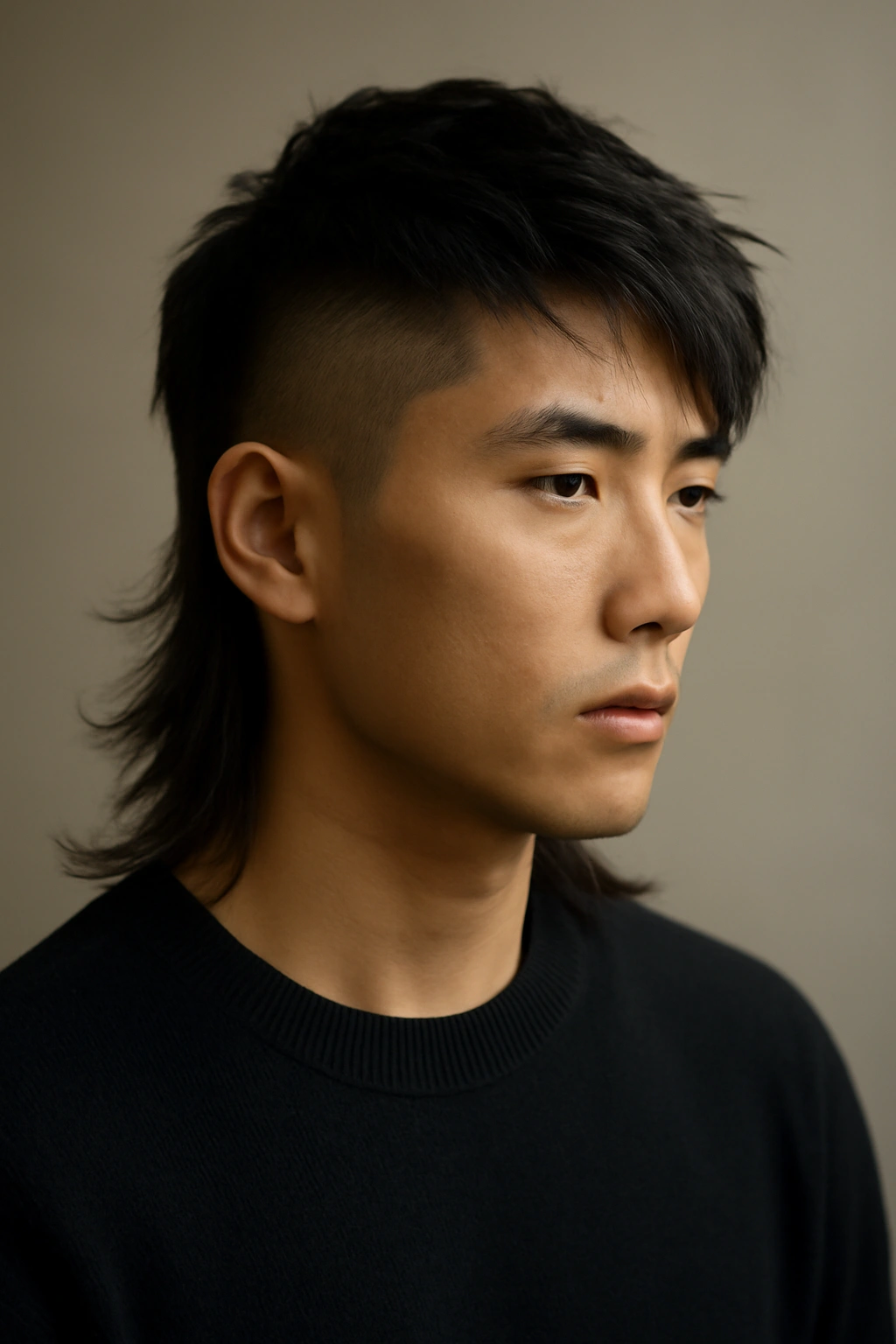
Asymmetry adds another layer of edge to the mullet silhouette. This version keeps one side shorter and more faded while the other side is left slightly longer, creating an imbalanced, deliberately off-kilter look. The back is typically longer on one side than the other as well, or the back flows at an angle rather than straight down the center. This is the most fashion-forward interpretation, popular among designers, musicians, and style-forward individuals.
The Confidence Factor
An asymmetrical mullet is a confident choice. It’s saying “I’m not interested in symmetry or balance as traditionally understood.” It works beautifully on people with strong personal style who aren’t concerned with looking conventionally attractive. This cut is about fashion, identity, and artistic expression rather than flattery or universality.
Customization and Styling
- One side can be shaved or undercut while the other is faded
- The longer back can hang at an angle, creating an intentional off-kilter silhouette
- Color works beautifully with asymmetry—different tones on different sides amplify the avant-garde feeling
- The styling is entirely up to you; there’s no “right way” because the cut itself is deliberately unconventional
True story: Asymmetrical mullets are having a moment in high fashion and editorial photography specifically because they communicate boldness and artistic identity in a single image.
11. The Wavy-Textured Mullet
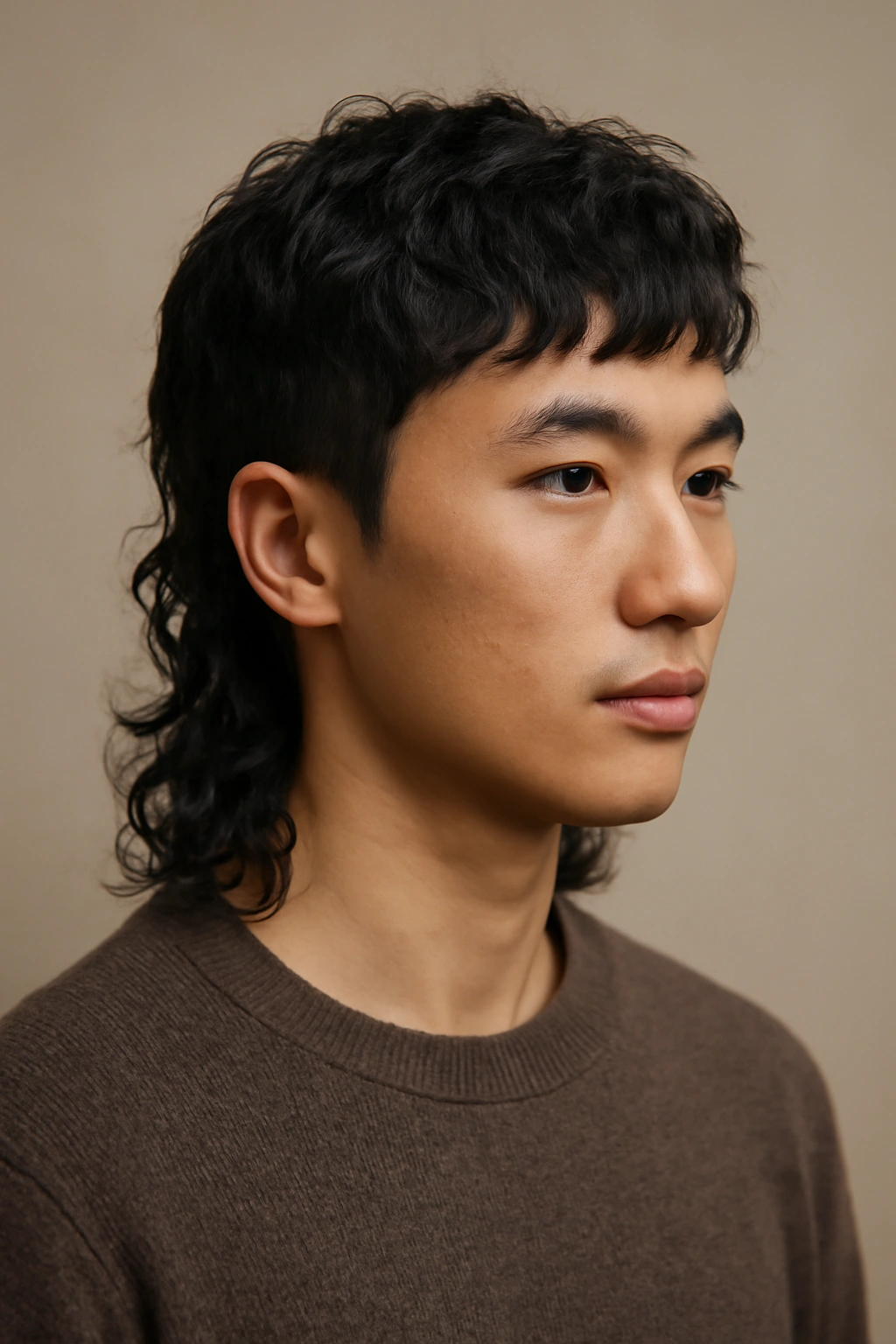
For people with naturally wavy or curly hair, a mullet cut to enhance and work with their natural texture rather than against it is absolutely stunning. This version keeps the front and sides shorter so waves don’t become a puffed-out mess, while the back is cut into longer layers that encourage wave definition and movement. The layers create space for curls and waves to fall and move rather than bunch up.
Why This Works for Wavy Asian Hair
Some people of Asian descent have naturally wavy or curly hair, and this cut is specifically designed for them. Rather than trying to straighten or control the texture, this version leans into it. The shorter front allows waves to frame the face without looking unkempt. The layered back means curls and waves have room to move and hang beautifully.
Styling Wavy and Curly Mullets
- Use curl-enhancing products—creams, gels, or mousses designed for wave or curl definition
- Apply products to damp hair and encourage your natural pattern
- Diffuse dry with a hair dryer set to low heat, or air dry completely
- The layers mean you can style pieces differently if you want—some pieces curly, some piece-y, some smoother
The wavy-textured mullet is genuinely one of the most flattering versions for people whose hair naturally does this—it works with their hair rather than against it.
12. The Sleek Straight-Back Mullet
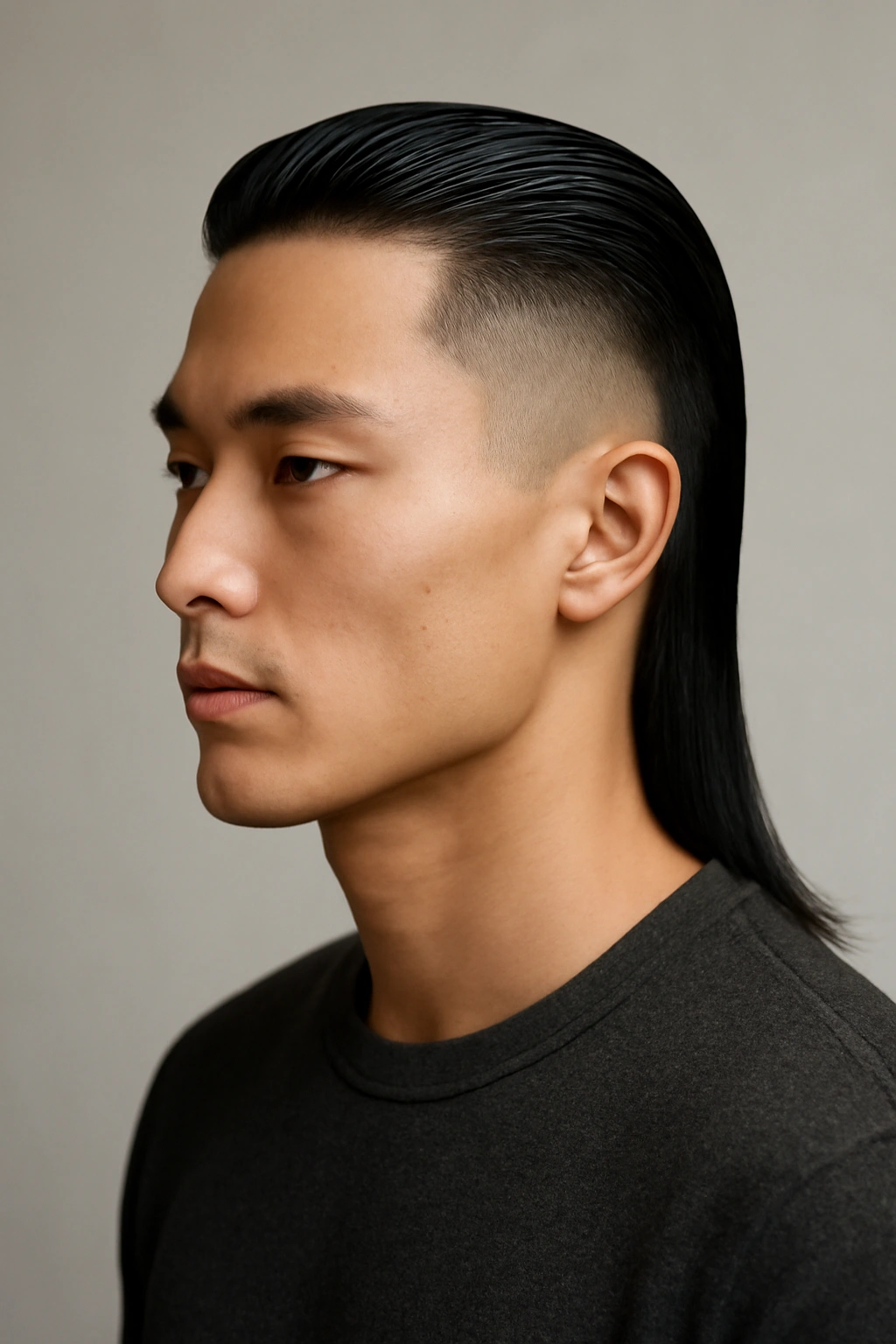
This is the most classic modern interpretation: sharp, clean lines throughout, with everything worn straight and smooth. No layers, no texture, no choppy pieces—just a precise fade or undercut on the sides, smooth, slightly longer hair on top, and a defined longer section in the back that’s kept absolutely straight and neat. It’s the mullet as a pure shape, letting the geometry do the work rather than texture or color.
The Appeal of Simplicity
This version reads as intentional and fashion-forward precisely because it’s so clean. There’s nowhere to hide with this cut—every line shows, which is why it demands a genuinely skilled barber. The simplicity means the focus is entirely on the shape and the precision of how it’s cut.
Why This Works for Every Face Shape
The straight-back mullet’s pure geometry means it’s adaptable. The fade or undercut on the sides can be tailored to your face width and shape. The back can be adjusted in length to balance your proportions. It’s the mullet stripped to essentials, which paradoxically makes it one of the most versatile versions.
Maintenance Requirements
- Requires touching up every 3 to 4 weeks to maintain sharp lines
- Regular straightening or blow-drying keeps the back sleek
- Hair oil or light styling product maintains polish without adding texture
- The cut itself is timeless; you’re maintaining precision rather than chasing trends
The bottom line: This version works because it’s honest. It’s a mullet with no apologies, no softening, no hiding. The confidence of owning that shape completely is what makes it work.
Key Takeaways
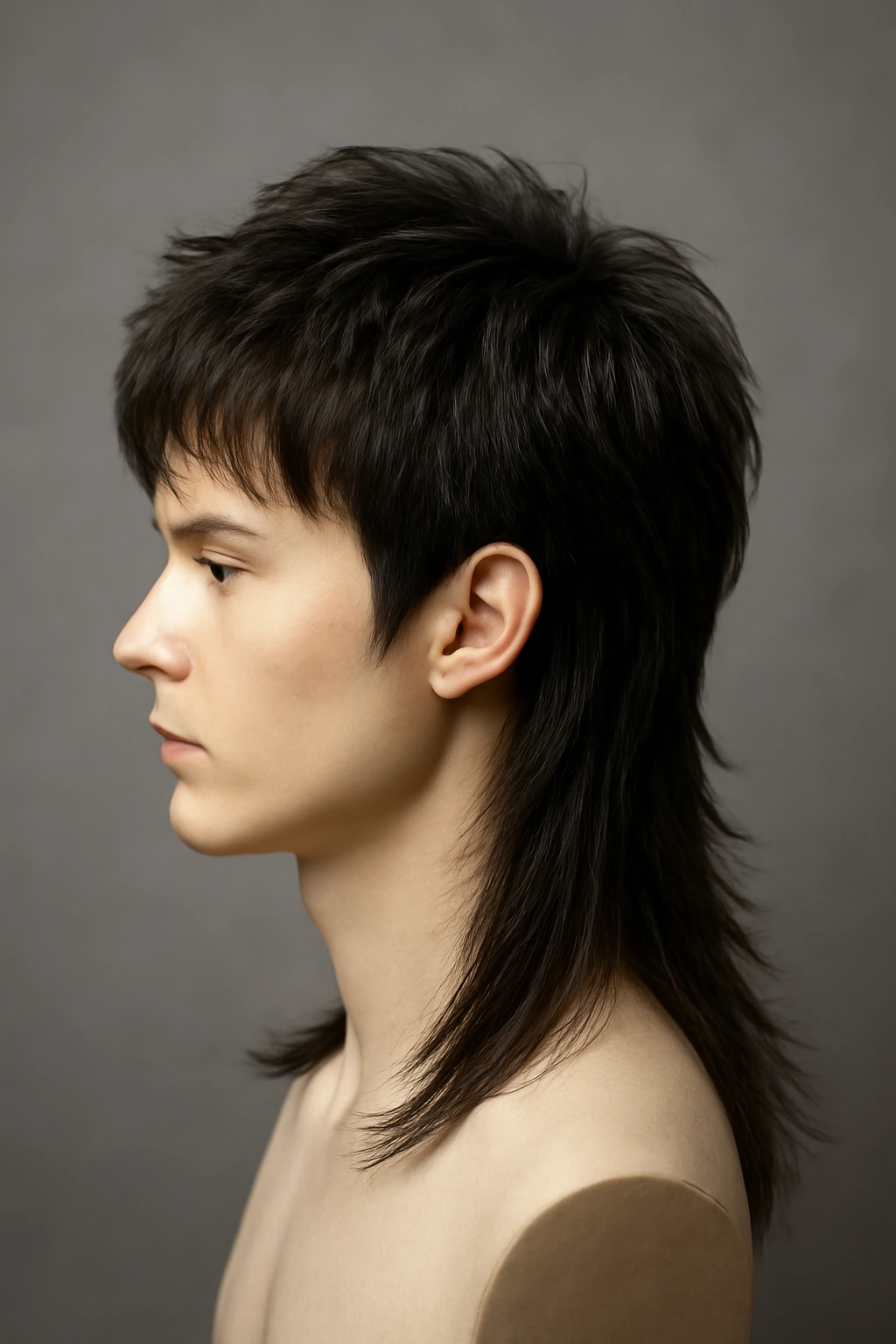
The mullet has genuinely evolved into something more interesting and versatile than its historical version. Whether you’re drawn to sharp Korean-barbering precision, fashion-forward asymmetry, or texture-forward wolf-cut hybrids, there’s a mullet version that fits your aesthetic. The key to pulling off any of these cuts is finding a barber who understands your specific vision and can execute it with skill.
What makes these versions work particularly well for Asian hair is the natural texture, density, and growth patterns that actually complement the mullet silhouette. The hair reads as intentional and polished rather than sparse or amateur. Pair any of these cuts with appropriate styling maintenance, quality products, and regular trims, and you’re wearing a genuinely compelling contemporary hairstyle rather than a nostalgic throwback.
The mullet is no longer a costume or a joke—it’s a legitimate, fashion-forward choice that’s being worn by stylish people across Asia and globally. Whether you go subtle or dramatic, textured or sleek, the commitment is simply recognizing that you want to make a statement with your hair. And that commitment, honestly, is what makes any version of this cut work.
