



Short hair doesn’t have to mean playing it safe. Some of the boldest, most striking hairstyles come in the form of a well-executed pixie cut—especially when you’re willing to lean into texture, asymmetry, undercuts, and dramatic styling choices that make a real statement. If you’ve been thinking about taking the plunge but want something with genuine edge rather than the soft, feminine pixie everyone’s already seen, this is where the real transformations happen.
The beauty of an edgy pixie cut is that it’s simultaneously practical and unapologetic. You’re getting the easy manageability of short hair while simultaneously communicating that you don’t do boring. Whether you pair it with an undercut, add shaved designs, experiment with color contrasts, or simply style it with deliberate texture and height, an edgy pixie says something about who you are—and what you’re brave enough to try.
What makes a pixie truly “edgy” versus just short isn’t only about length. It’s about the deliberate styling choices, the interplay of different lengths within the cut itself, the confidence in how it’s worn, and often the willingness to push beyond what’s traditionally feminine or safe. An edgy pixie is intentional. It catches light differently. It moves in unexpected ways. And it absolutely demands the right styling products, the right confidence, and ideally, a stylist who understands both precision cutting and the attitude that brings these cuts to life.
1. The Textured Spiky Pixie with Cropped Sides
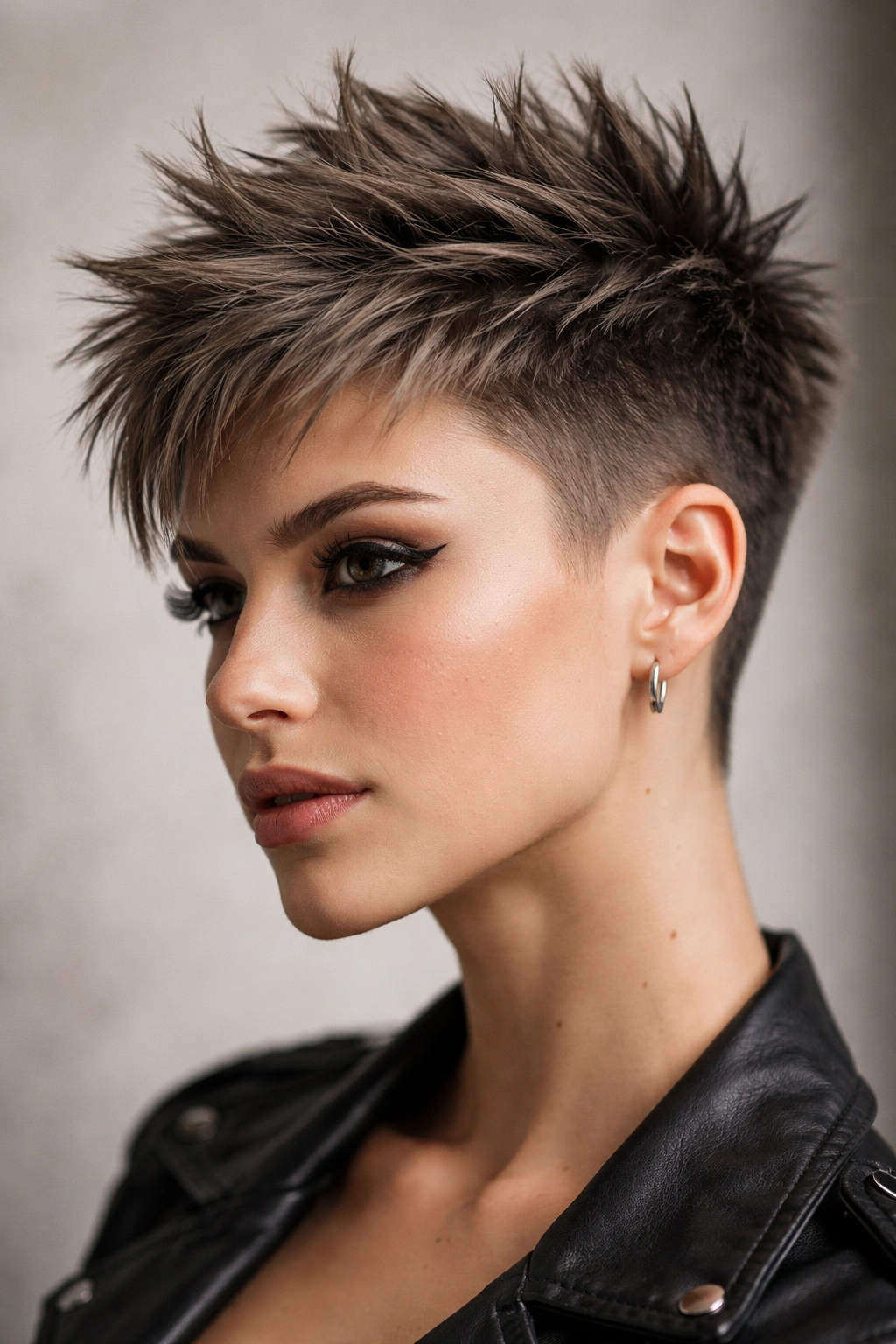
This is the pixie cut that says you’re not interested in blending in. The magic of this style lies in the contrast between deliberately textured and choppy lengths on top—typically two to three inches—and closely cropped sides that might sit at a quarter inch or even shorter. The top isn’t neat or uniform; instead, it’s cut with lots of point-cutting and texturizing techniques that create natural spikes and movement.
What Makes It Edgy
The cropped sides expose the lines of your face and ears in a way that demands confidence. There’s nowhere for your hair to hide flaws or soften edges. Instead, the cut emphasizes cheekbones, jawline definition, and the natural shape of your head. The spiky texture on top can be styled upward and forward with a strong-hold product like a matte clay or pomade, creating a deliberately tousled, just-rolled-out-of-bed-and-didn’t-care vibe that’s actually incredibly intentional.
Styling and Maintenance
- This cut requires regular trims every 3-4 weeks to maintain the distinction between the textured crown and the clean cropped sides
- Styling takes 5-10 minutes with the right product—matte pomade or textured clay works better than shiny gel
- The longer texture on top gives you flexibility to style it sleek, spiky, swept to one side, or tousled depending on your mood
- Works beautifully with dark hair that shows texture definition, but also stunning on lighter shades where the shadows of the texture really read
Pro tip: Ask your stylist to use a razor or texturizing shears on the crown rather than just scissors—this creates that choppy, piecy texture that’s harder to achieve with blunt cuts alone.
2. The Disconnected Undercut Pixie
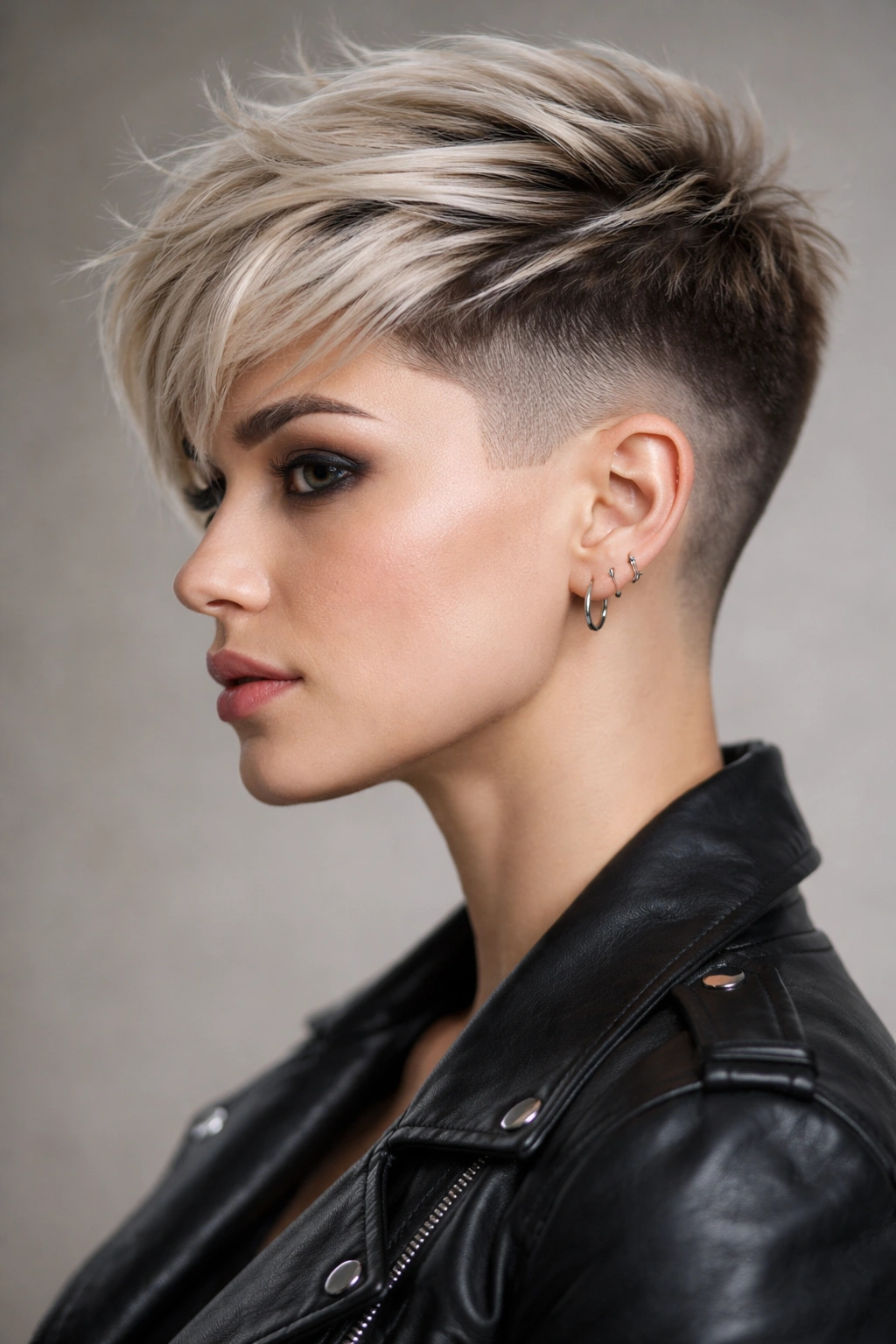
When you want an edgy pixie that truly commands attention, the disconnected undercut is the gold standard. This style features a clear, dramatic separation between the longer hair on top (typically 2-3 inches) and an undercut that’s clipped down to a quarter-inch or shorter on the sides and back. The key word is “disconnected”—there’s no blend or fade. It’s a sharp, defined line that makes a statement.
What Makes It Edgy
The stark contrast between the two distinct lengths creates visual drama every time you move or tilt your head. The longer hair on top can cover the undercut when you want a subtler look, or you can tuck and style it to completely expose the shaved sections. This duality means you get different aesthetics depending on how you style it—soft one day, hard-edged the next, entirely by choice.
Styling and Maintenance
- The undercut portion needs a trim every 2-3 weeks to stay sharp and defined
- The longer top can go longer between trims since the disconnection means there’s less blending required
- Styling options are endless: slicked back to expose the undercut, volume on top with texture, swept to one side, or even braided if the top is long enough
- This style is particularly striking on people with angular features, but works on anyone with the confidence to carry it
Worth knowing: Undercuts can reveal scalp if you have fine or thinning hair. A stylist can work with you to find the right clipper length that maintains density where it matters while still creating the edgy disconnection you want.
3. The Asymmetrical Pixie with Shaved Sides
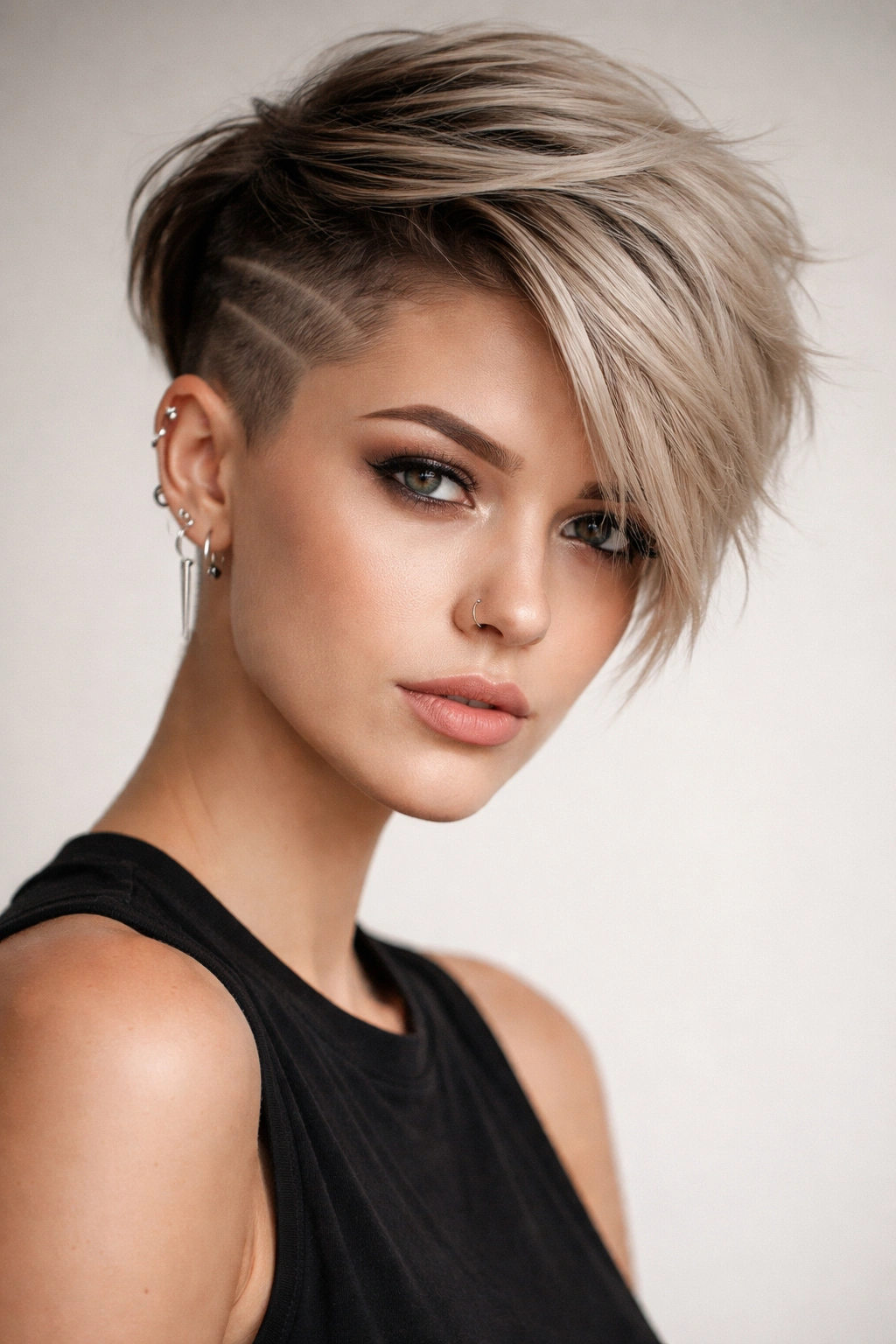
True asymmetry—where one side is significantly shorter than the other—creates an inherent edge that even traditional pixies can’t quite match. Picture one side shaved down very short (often with designs or patterns) and the other side longer, sometimes covering the eye or reaching toward the jaw. This forces you to style it with intention and creates an undeniably bold silhouette.
What Makes It Edgy
Asymmetry breaks symmetry, and our brains read symmetry as safe and predictable. When you break that pattern with a shaved side and a longer side, you’re creating visual tension that reads as daring. The shaved side exposes your face, ear, and neck in a way that feels vulnerable and powerful simultaneously. If you add designs, patterns, or even color to the shaved section, you’re elevating it from bold to truly avant-garde.
Styling and Maintenance
- The shaved side needs touching up every 2-3 weeks to maintain clean lines
- The longer side needs regular trims to maintain the distinct shape and length difference
- Styling is quite flexible on the longer side—you can wear it forward, back, tucked behind your ear, or swept across
- The shaved side can be a blank canvas for personal expression through color, designs, or patterns
- This cut works beautifully as a statement piece, especially when the longer side is styled with intentional texture or color
Pro tip: If you’re nervous about committing to a fully shaved side, ask your stylist about a very short fade (around a half-inch) on one side paired with a longer pixie on the other. It gives 80% of the edgy effect with slightly more flexibility if you change your mind.
4. The Frosted Pixie with Bleached Highlights
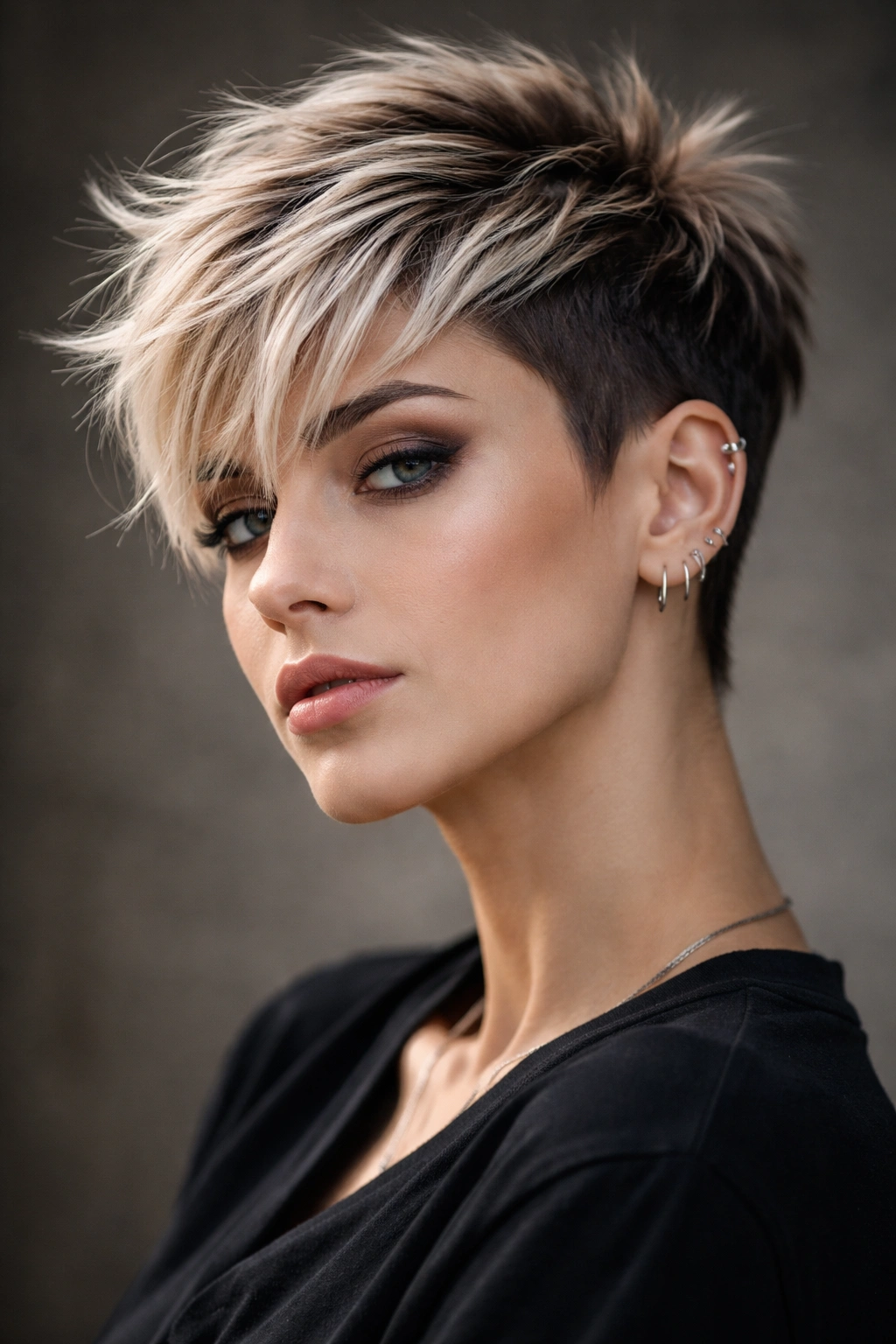
The edginess of this cut comes partly from the cut itself—typically a textured pixie with some length variation—but equally from the color work. Think strategic blonde or white highlights hitting the crown, spiky pieces, and texture points, creating contrast against a darker base. The frosted effect is deliberately retro-cool, referencing the bold color moves of earlier eras while feeling completely current.
What Makes It Edgy
This is the pixie cut that catches light and demands a second look. The contrast between light and dark creates dimension that makes the texture of the cut itself read more dramatically. It’s a color-forward choice that says you’re thinking about how light plays off your hair, not just accepting whatever grows out of your head. The frosted effect also has a slightly futuristic, almost otherworldly quality that’s inherently edgy.
Styling and Maintenance
- The lightened pieces need toning every 4-6 weeks to maintain the brightness and prevent brassiness
- Regular deep conditioning is essential since both the cut and color can be drying
- Styling should emphasize the texture and show off the color contrast—matte styling products work best
- The base color often looks best when kept rich and dark to maximize the contrast with the highlights
- This style requires a skilled colorist who understands how to place highlights to complement the cut’s texture and movement
Worth knowing: If you have fine or damaged hair, discuss whether full foils or a root-touch highlight strategy would work better for you. Some stylists use balayage or hand-painted techniques on short hair to create a frosted effect with less damage than traditional foil work.
5. The Razored Shag Pixie
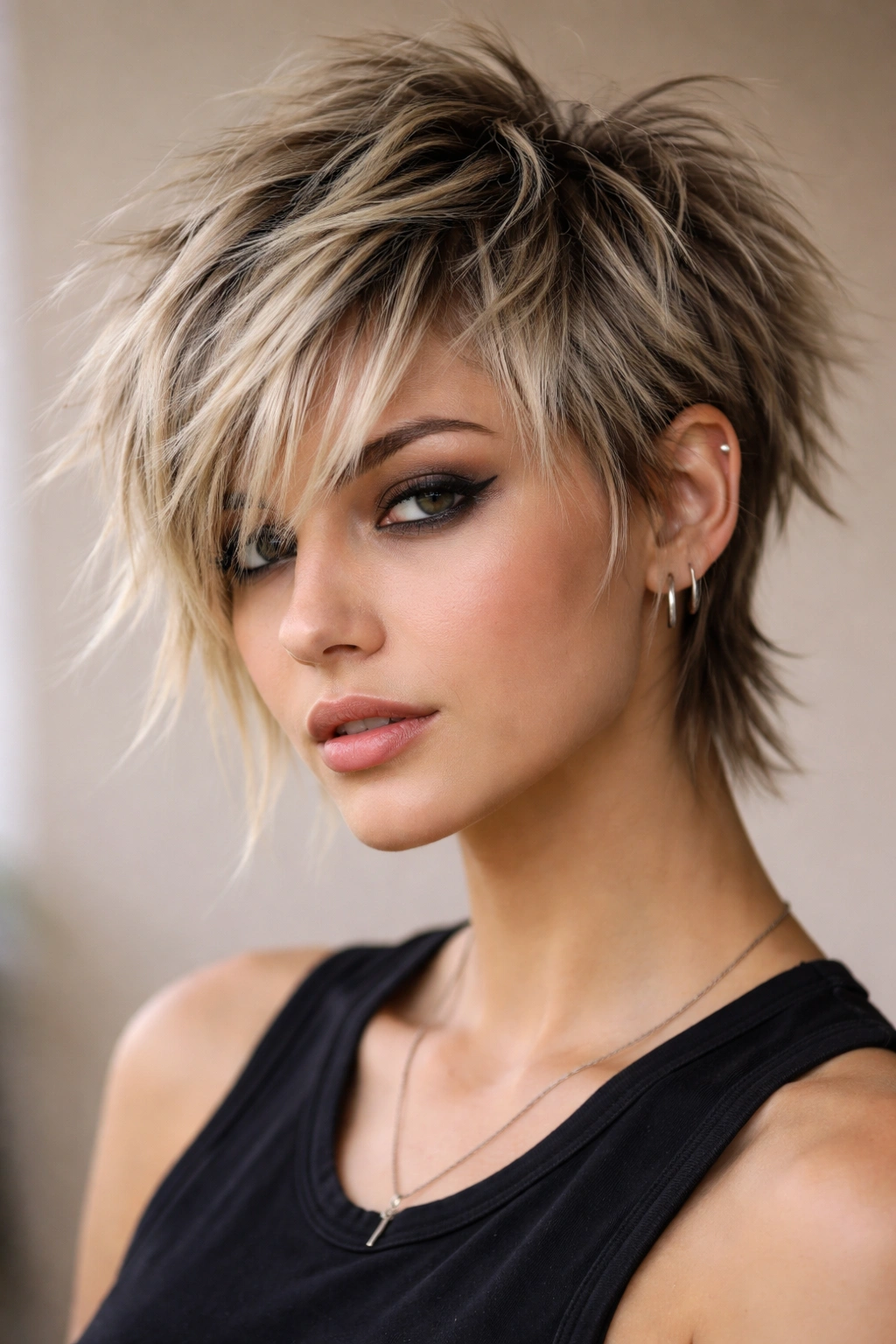
The shag is back, and when applied to a pixie cut with razored edges and choppy layers, it becomes a genuinely edgy statement. This style has lots of different lengths working throughout—some pieces at the crown reaching up to three inches, others much shorter, all cut with a razor to create feathered, piecey texture throughout. It’s textured chaos that’s actually very deliberately controlled.
What Makes It Edgy
A razored shag pixie reads as rock-and-roll because it genuinely was born from that aesthetic. There’s movement in every direction, visual texture that catches light, and an almost rebellious quality in its refusal to be neat or uniform. It’s the pixie cut that looks best when it looks slightly undone, which is ironic because achieving that effortless effect requires precision cutting and good styling choices.
Styling and Maintenance
- This cut needs trims every 4-5 weeks to maintain the layered shape and prevent it from looking matted or overgrown
- Styling is essential—without product and direction, it can read as messy rather than intentionally tousled
- A texturizing product like sea salt spray, matte clay, or lightweight pomade brings out the movement and layers
- Blow-drying with a diffuser can enhance the texture and lift, or you can air-dry for a more natural shag effect
- This style suits people who genuinely want to engage with their hair daily and aren’t looking for a wash-and-go cut
Pro tip: The razored shag works beautifully with a color that has dimension—either natural highlights, a balayage, or even a subtle two-tone effect that makes the layers pop visually.
6. The Sleek Geometric Pixie
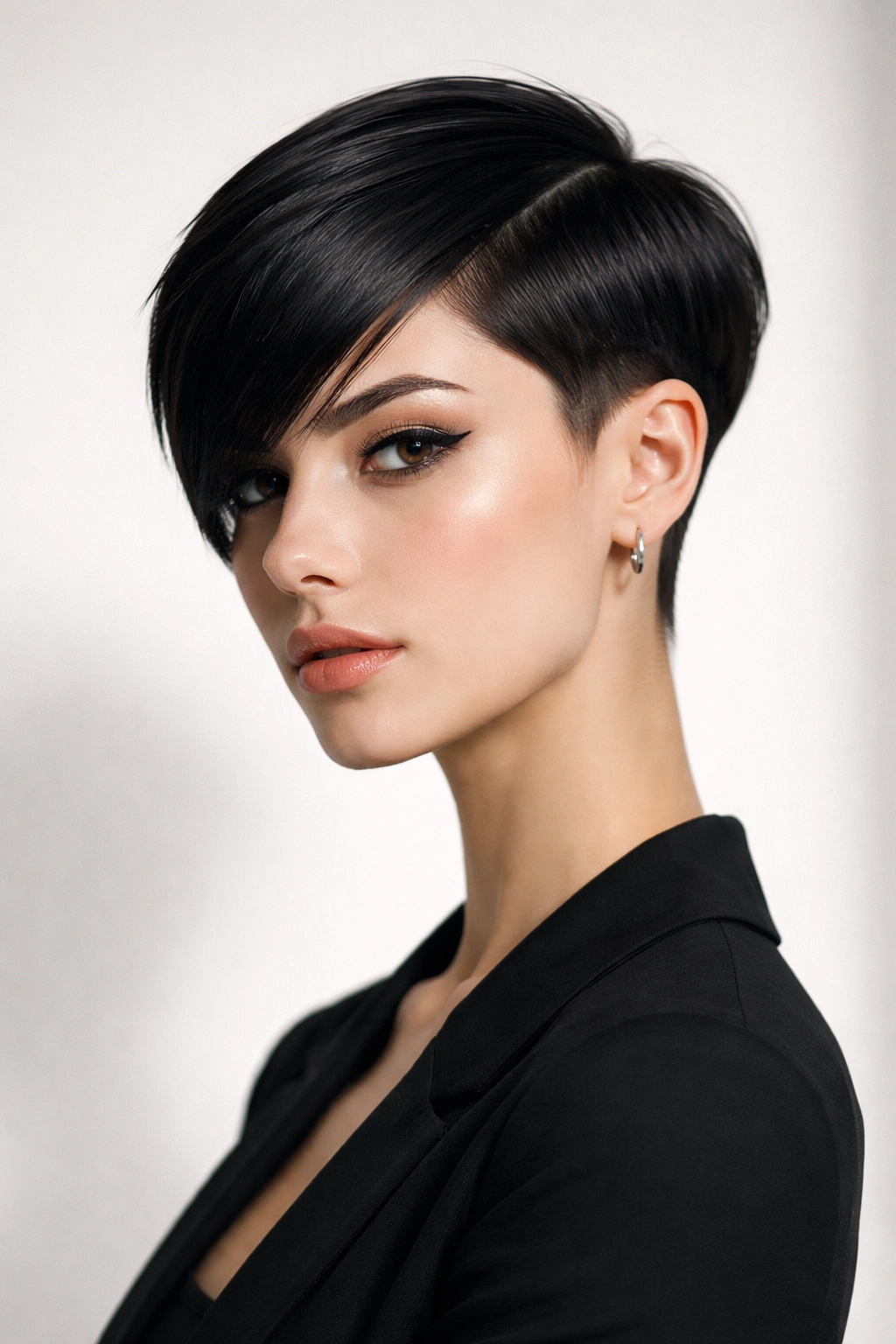
If edgy means sharp lines and precision architecture, this is your cut. A geometric pixie is marked by clean, deliberate angles—sharp diagonal lines, defined planes, and minimal texture. Think of it almost like a sculptural art piece worn on your head. The sides might angle upward toward the back, the top might be blunt and structured, and there’s absolutely no softness or blur to the shapes.
What Makes It Edgy
The edginess here is intellectual and architectural rather than rebellious. This cut says you understand proportions, balance, and precision. It’s all about the purity of the shapes and the confidence to wear something so deliberately constructed. It looks incredibly striking with a monochromatic color, especially something bold like a true silver, platinum, jet black, or even a jewel tone.
Styling and Maintenance
- This cut requires a skilled stylist who understands proportion and line—not all barbers or stylists excel at geometric cuts
- It needs more frequent trims (every 2-3 weeks) because any growth softens the sharp lines immediately
- Styling can be minimal—a quick smoothing with a flat iron and maybe a matte product to reduce shine can be all that’s needed
- This cut looks best on people with patience for regular maintenance and a willingness to prioritize precision
- Hair texture matters less here than precision of cut, so it works on straight, wavy, and even curly hair if it’s cut with intention
Worth knowing: If you have natural curl or wave, discuss with your stylist whether you want a cut that works with your texture or one you’ll need to blow-dry straight daily. Geometric cuts can work with natural texture but require careful cutting and product choices.
7. The Grown-Out Pixie with Faded Sides
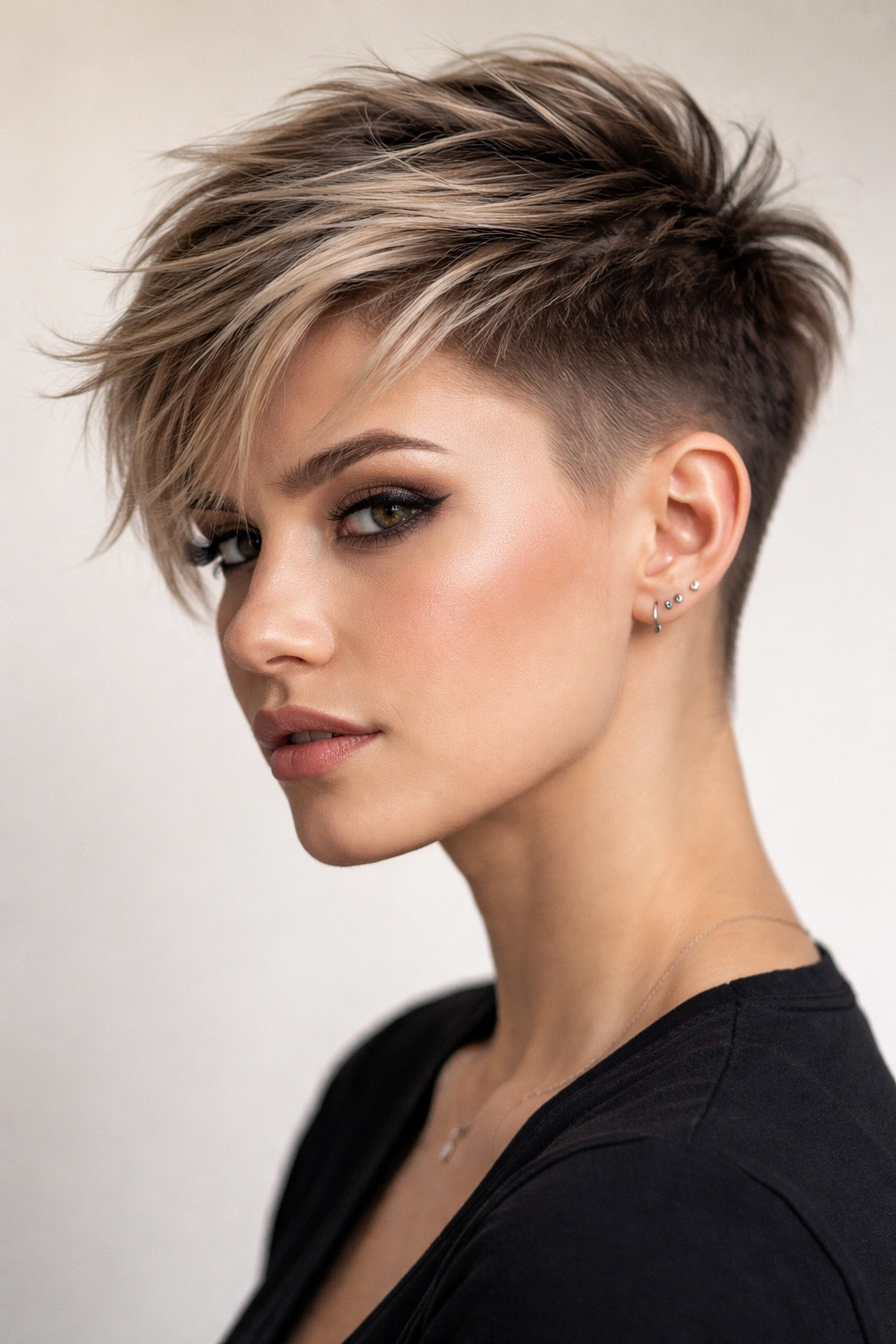
This is the edgy pixie that’s actually in a transitional stage—somewhere between a pixie and a longer crop. The top has more length and can be styled in multiple directions, while the sides feature a fade that’s not completely shaved but significantly shorter (typically a quarter-inch to three-quarters of an inch). This creates an interesting middle ground that’s less intense than a full undercut but more edge than a traditional pixie.
What Makes It Edgy
The fade creates definition and structure without the stark drama of a disconnected undercut. It says you’re confident in shorter hair but maybe you’re growing it out, or you like the flexibility of having options with how much hair you’re working with. The longer top means you can style it multiple ways—swept back, forward, to one side, textured, slicked, or even twisted into tiny braids if it’s long enough.
Styling and Maintenance
- The fade needs maintenance every 3-4 weeks to keep the gradation clean and intentional
- The longer top grows out more gracefully than an undercut because of the gradual fade, giving you more flexibility on timing
- This style works beautifully with texture products that emphasize movement and separation on the longer top
- You have real styling versatility here—everything from boyish and cool to textured and feminine depending on how you approach it
- This cut is particularly flattering if you’re experimenting with short hair and want something that doesn’t feel quite as committed as a true pixie
Pro tip: As you’re growing this out, work with your stylist on a plan for how the fade will gradually transition into longer sides. Growing out a fade is different than growing out a disconnected undercut, and having a strategy prevents an awkward in-between phase.
8. The Color-Blocked Pixie with Contrasting Undercut
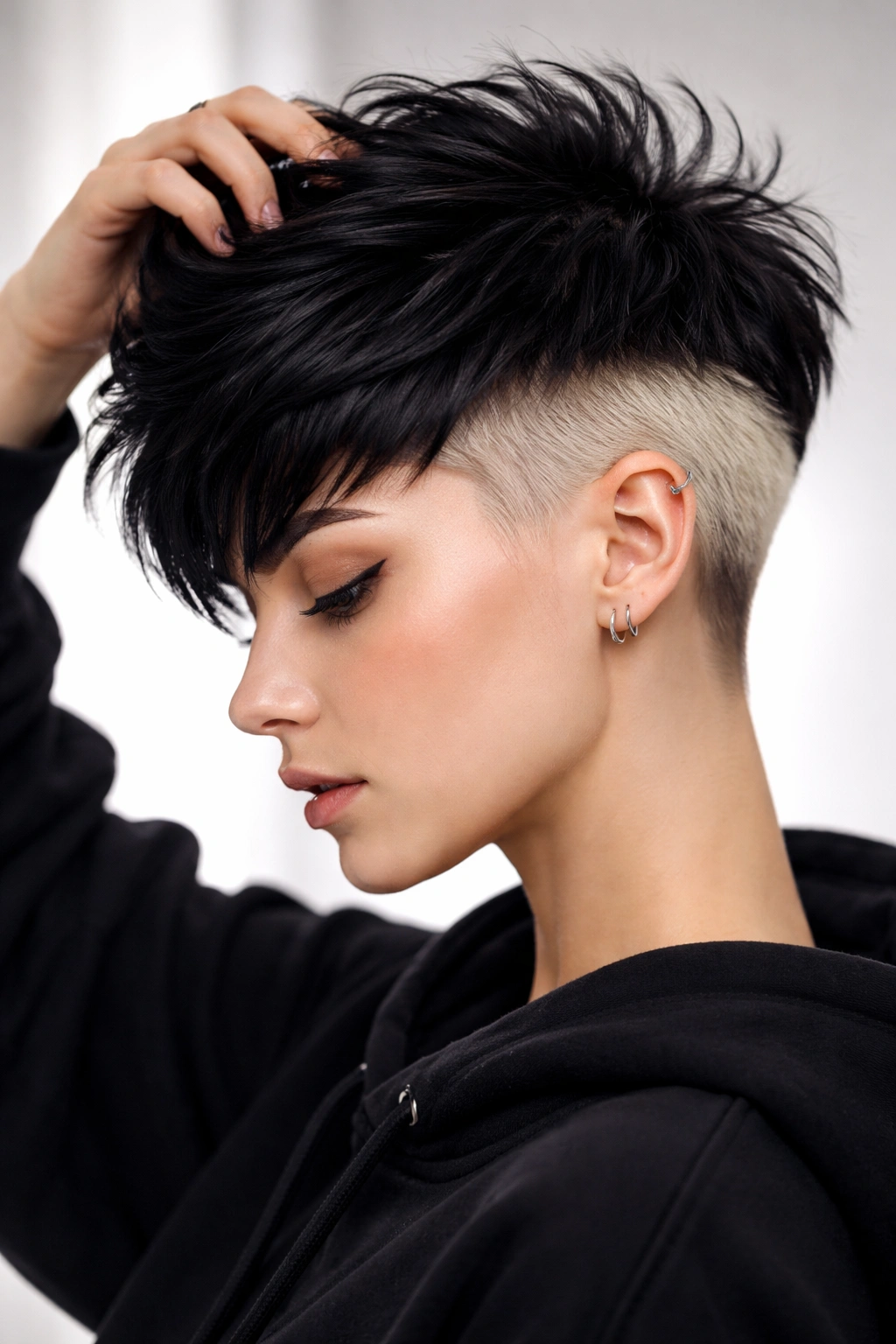
Take the drama of an undercut and amplify it with color: one color on top, a completely different color underneath. Picture a dark pixie on top with bright blonde, silver, or even a jewel tone underneath. When you tuck the top section back or style it to the side, the contrast is absolutely shocking and gorgeous.
What Makes It Edgy
Color-blocking is a statement all by itself, but color-blocking in a pixie—where the contrast is mobile, appearing and disappearing depending on how you style it—takes it to another level entirely. It’s like you’re wearing two different people depending on whether you’re covering the undercut or exposing it. This requires real commitment to both the cut and color maintenance, which signals genuine dedication to this aesthetic.
Styling and Maintenance
- Both the cut and color need regular maintenance—plan for salon visits every 3-4 weeks for both trims and color touch-ups
- The top section often needs toning or refreshing more frequently than the undercut section depending on what colors you chose
- Styling strategies matter: you can make this cut appear subtle by covering the undercut, or make it dramatically bold by exposing it
- This look is particularly striking in motion—when you turn your head and the hidden color flashes, it’s genuinely memorable
- Works beautifully with contrasts like black and platinum, brunette and copper, or any two colors with real visual difference
Worth knowing: If you’re choosing two very different colors, talk with your colorist about whether the top color needs lightening before applying the new shade. This affects both the final result and the damage profile of the work.
9. The Bleached Blonde Pixie with Dark Roots
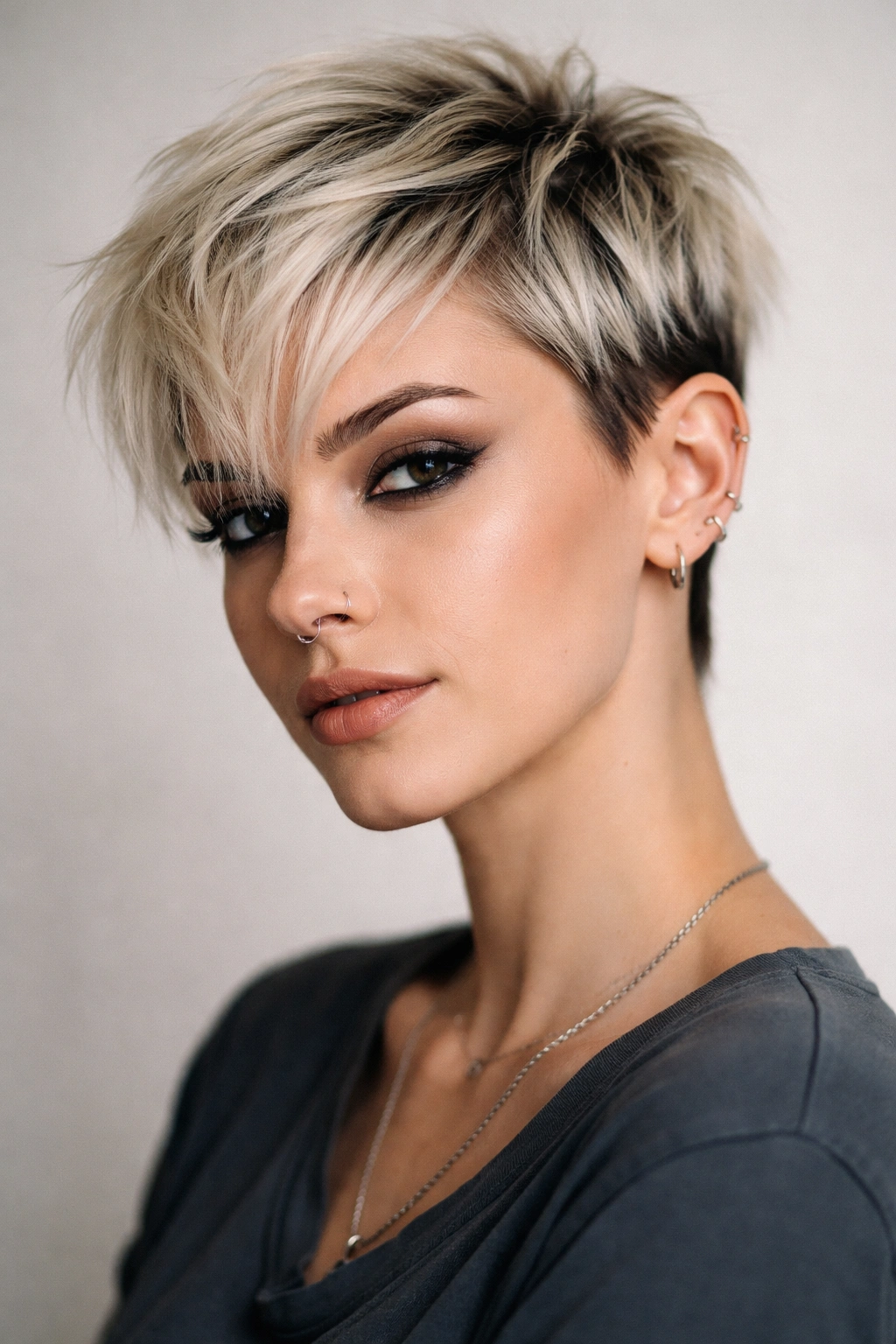
This is the intentionally undone, I-don’t-care-about-growing-out aesthetic that’s actually incredibly deliberate. The top is a pale blonde, silver, or even white, while the roots grow in dark—and instead of rushing to cover those roots, you embrace them. The contrast is striking, the maintenance is actually easier than keeping perfect blonde, and the vibe is effortlessly cool.
What Makes It Edgy
Dark roots on a pixie read as edgy because it breaks the rulebook of “always color-match and hide your regrowth.” Instead, you’re weaponizing regrowth as part of your aesthetic. It says you’re confident enough to let your natural color show and that you’re not anxious about perfection. There’s something punk and anti-establishment about this approach, even though it’s actually quite wearable and low-maintenance.
Styling and Maintenance
- Your light blonde or silver section needs toning every 4-6 weeks to maintain brightness and prevent yellowing
- The dark roots actually require less maintenance than if you were keeping everything uniform
- Styling can emphasize the contrast with texture products that show the root line, or soften it with sleeker styling
- This look works on any base hair color but is most striking when you have naturally dark hair or can commitment to keeping the roots dark
- The cut itself can be a simple textured pixie, which means the attention is on the color work rather than complex layering
Pro tip: Use a toning shampoo and conditioner on your light sections to maintain the color between salon visits. The roots naturally anchor the look, so your maintenance schedule can be more relaxed than with a full head of blonde.
10. The Structured Blonde Pixie with Textured Layers
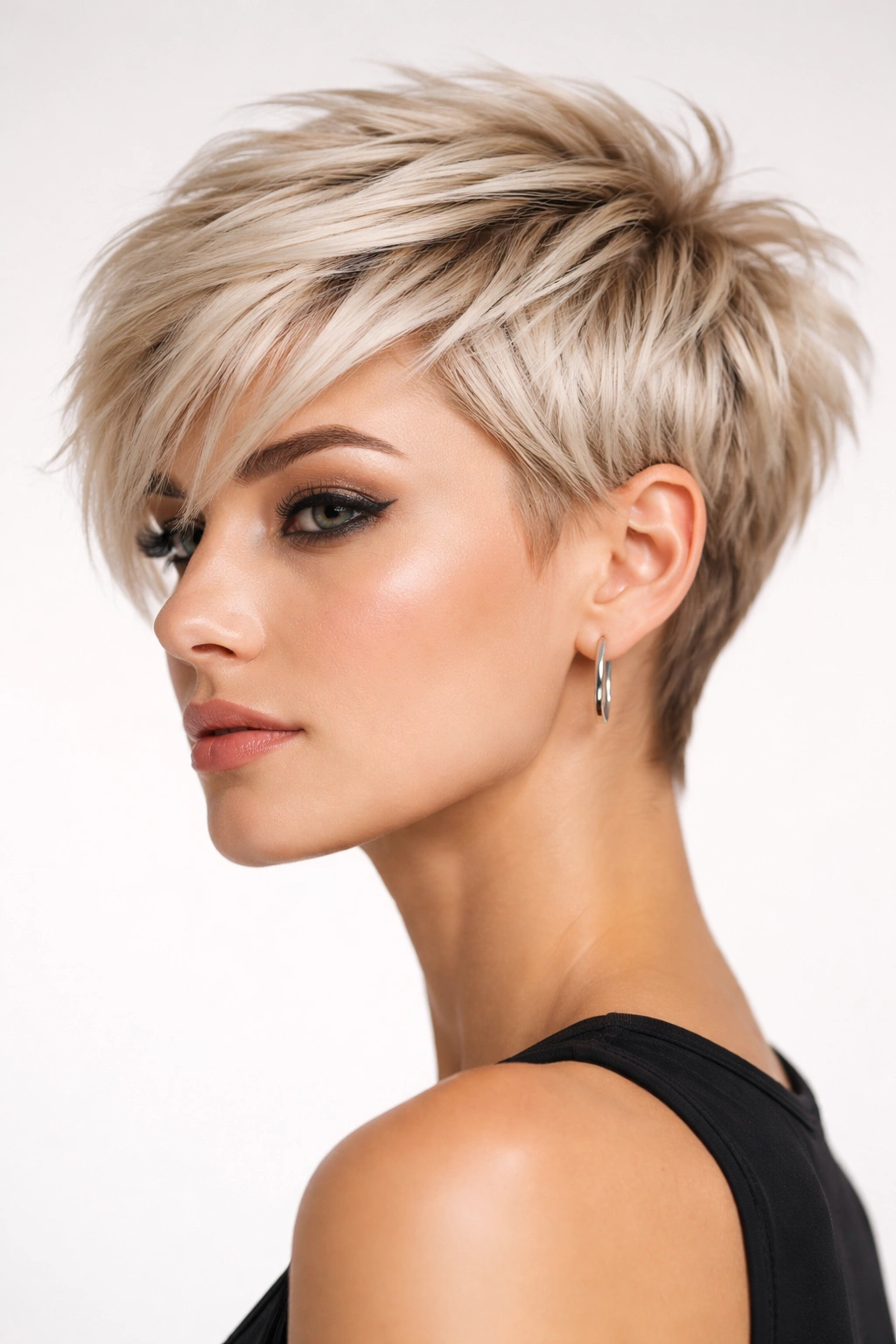
This final option combines technical cutting precision with bold color work. Picture a carefully layered, textured pixie in a pale blonde or platinum, where every layer has been deliberately planned and cut to catch light and create movement. The layers are shorter on top, longer as they graduate toward the back, creating a structured shape that’s simultaneously edgy and wearable.
What Makes It Edgy
The edginess comes from the combination of intentional styling choices: the cool, bold blonde color, the precision of the layered cut, and the refusal to make it soft or rounded. This is a pixie that’s been thought through completely—every length, every angle, every color placement is strategic. It’s edgy because it’s unquestionably deliberate and unapologetically styled.
Styling and Maintenance
- Both the cut and color require skilled maintenance—plan for salon visits every 4-6 weeks for trims and toning
- This style does require daily styling: blow-drying and texturizing product are essential to bring out the intentional layers and movement
- The layering creates natural texture, which means you don’t need as much product as you might with a sleeker pixie
- This works beautifully as an everyday wearable pixie that still reads as bold and fashion-forward
- The pale blonde shows texture beautifully, so investing in a good cut matters more here than with some other options
Worth knowing: If you have naturally darker hair, achieving this look involves significant lightening. Discuss with your colorist about doing the lightening in phases rather than all at once to minimize damage, especially if your hair is fine or sensitive.
Final Thoughts
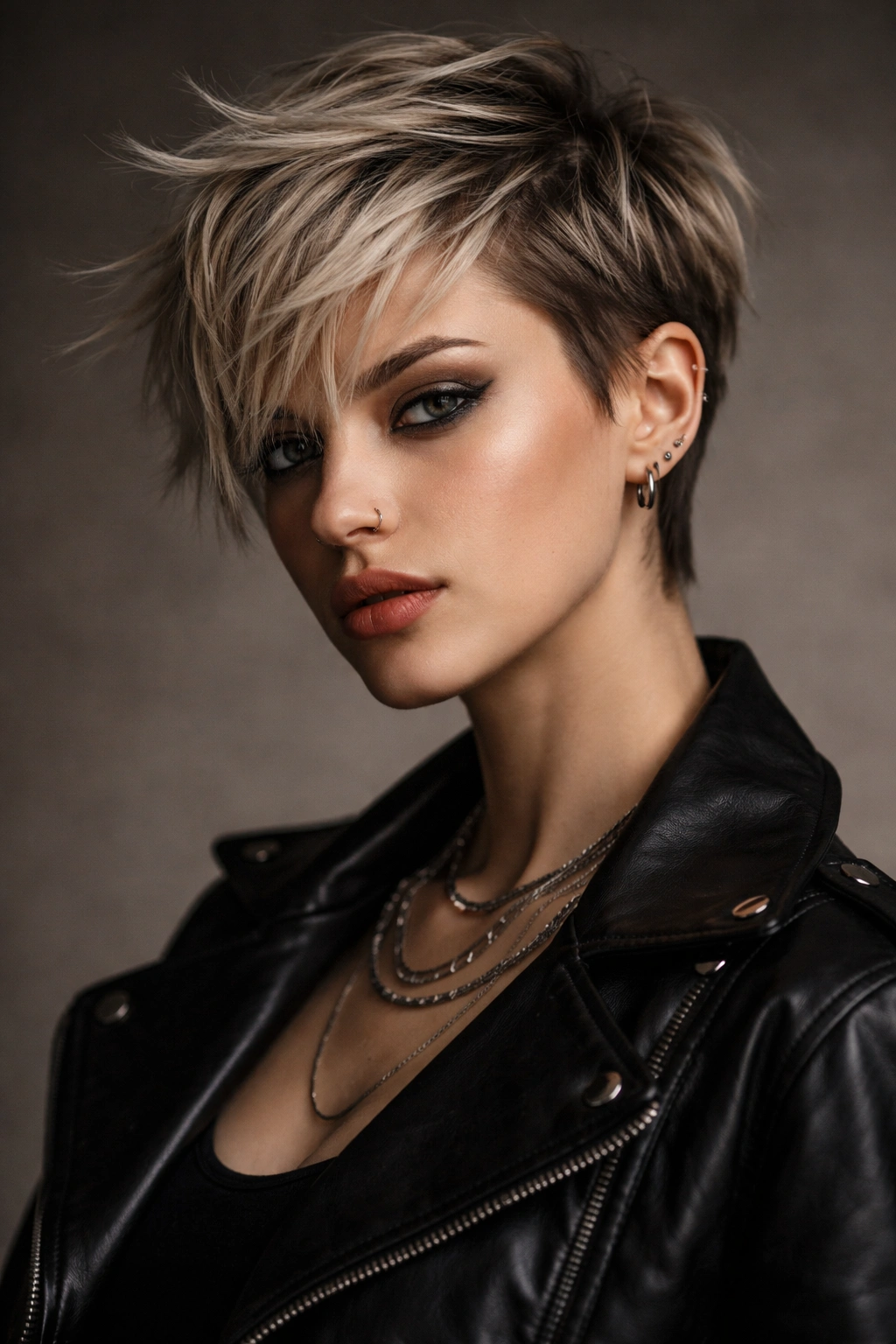
An edgy pixie cut is more than just a length—it’s a full aesthetic commitment that starts with the cut, often includes color strategy, and lives in how you choose to style it every single day. The cut itself is only half the equation. The other half is owning it completely, styling it with intention, and understanding that this is a hairstyle that asks questions and makes statements.
If you’re ready to take the leap into edgy pixie territory, find a stylist who understands both precision cutting and the attitude that brings these cuts to life. Bring inspiration photos that show the specific vibe you want, discuss maintenance expectations honestly, and be clear about your styling commitment level. A heavily textured cut that requires daily styling is very different from a geometric cut you can smooth and go.
The best edgy pixie is the one that makes you feel powerful when you look in the mirror. Whether that’s through shocking color contrast, razor-sharp lines, deliberate asymmetry, or textured movement, your cut should be a genuine reflection of how you want to move through the world. Short hair is freedom—make yours count.
