



Short straight blonde hair is having a major moment, and for good reason. There’s something undeniably chic and effortless about a clean, sharp bob paired with the luminosity of blonde—it’s a combination that photographs beautifully, transitions seamlessly from casual to professional, and genuinely flatters most face shapes when cut with precision. The beauty of short straight styles isn’t just about the length; it’s about the architectural clarity that comes with removing length and letting texture-free, sleek lines do the heavy lifting.
What makes this particular category so compelling right now is the shift away from heavy styling and toward cuts that work with your hair’s natural texture rather than against it. A well-executed short straight blonde cut doesn’t require blow-drying tools, extensive product application, or daily maintenance routines—it’s built-in polish. The straightness of your hair becomes an asset rather than something to fight, and blonde amplifies that clean, modern aesthetic in ways that darker shades sometimes struggle to achieve.
Whether you’re naturally blonde, considering going blonde specifically for a new cut, or already rocking the color and looking for fresh inspiration, the variety within short straight haircuts is genuinely broader than most people realize. The difference between a pixie and a bob, between a blunt cut and one with subtle layering, between something sleek and something with movement—these distinctions matter enormously for how a cut photographs, how it feels to wear, and whether it genuinely suits your lifestyle and face shape. Let’s walk through ten of the most wearable, visually striking short straight blonde cuts that actually deliver on the promise of looking amazing.
1. The Blunt Chin-Length Bob
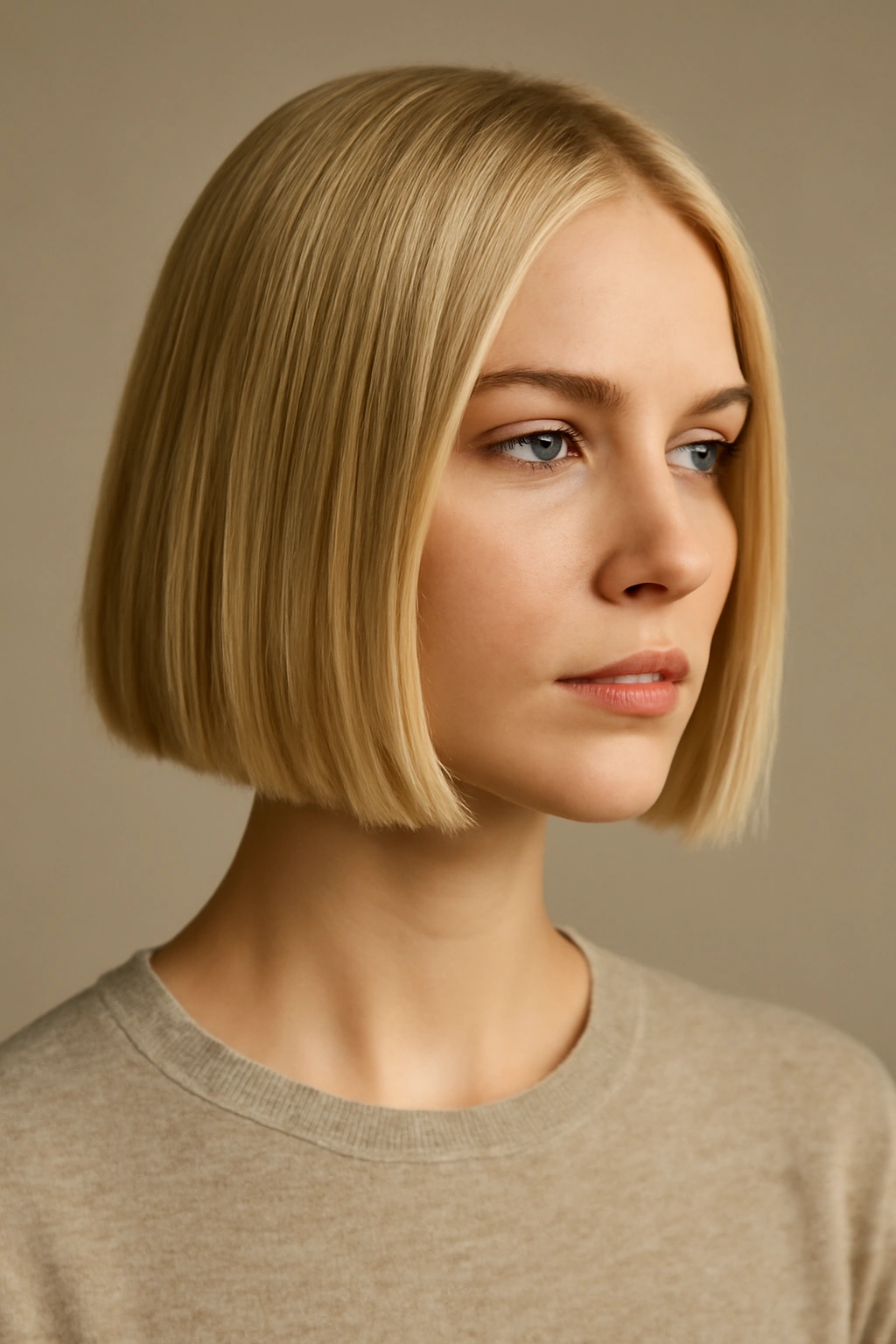
A blunt chin-length bob is the foundation—the cut that introduced the world to short blonde hair done right. This is a geometric, precision-forward cut that lands right at your jawline with a sharp, intentional line across the bottom. No layers, no angle, no compromise: just a clean, even perimeter that frames the face with architectural confidence. When cut correctly in straight blonde hair, this style has an almost sculptural quality.
Why This Cut Commands Attention
The blunt bob works because it’s honest. There’s nowhere to hide with this cut—it lives or dies on the precision of the line and the health of your hair. The straightness means every millimeter of length is visible, every angle is intentional, and the overall effect reads as both modern and timeless simultaneously. In blonde, the evenness of the line is emphasized even more, creating a striking frame for your features. The cut actually makes your face appear more defined because the solid perimeter creates strong visual boundaries.
What Makes It Work Best
- Works beautifully on straight hair that’s naturally fine to medium in texture—the cut needs to maintain its shape without constant correction
- Best suited for oval, heart, or square face shapes; the horizontal line balances angular features
- Requires a trim every 4-6 weeks to maintain that razor-sharp perimeter edge
- Looks most striking with glossy, healthy-looking blonde—this cut shows every imperfection in color or condition
- Pairs effortlessly with side-swept bangs or a deep center part depending on your styling preference
Pro tip: The angle of your part completely changes the visual impact of a blunt bob. A center part makes it feel modern and editorial, while a deep side part softens the geometry and feels more romantic.
2. The Textured Pixie with Length on Top
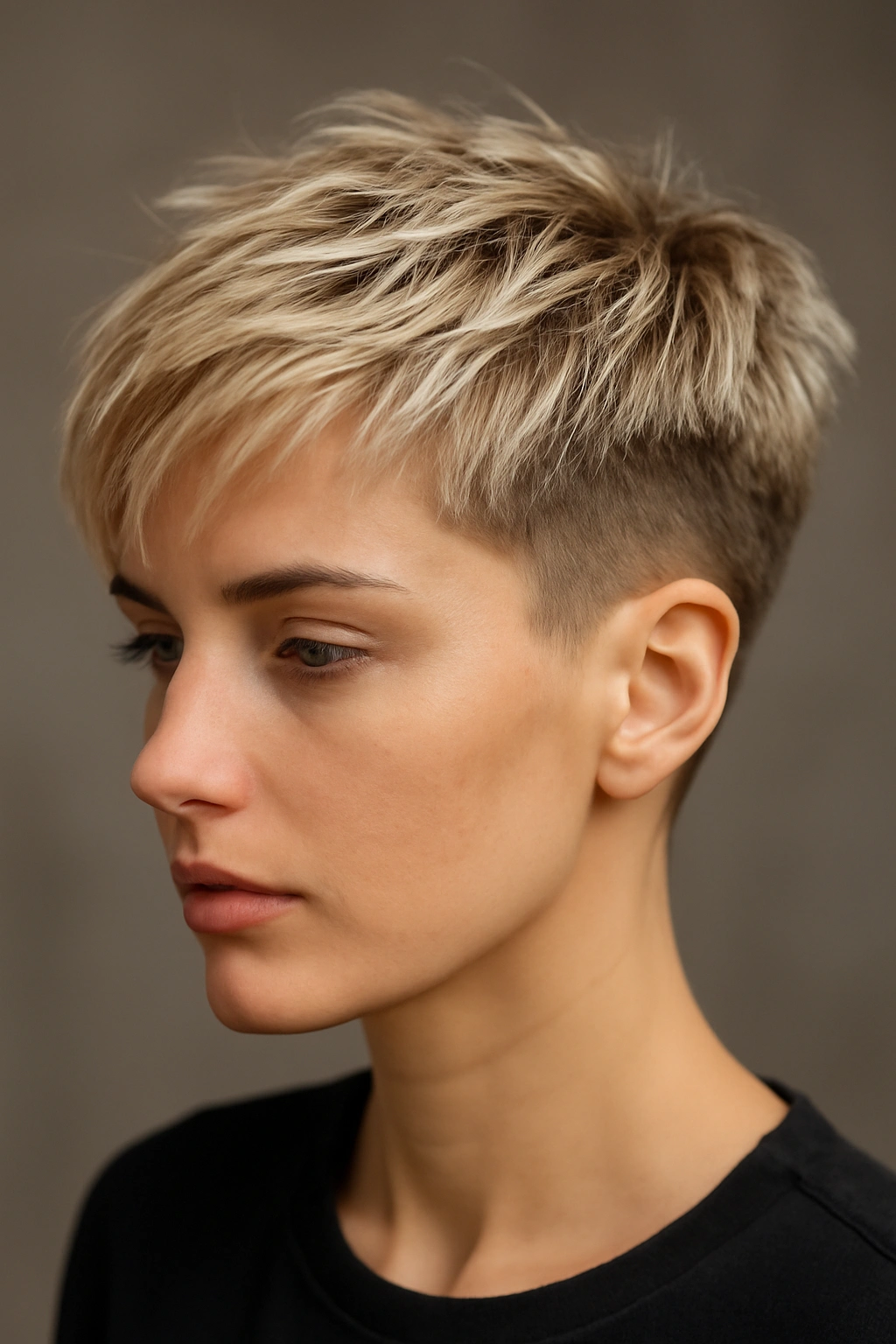
A textured pixie isn’t an extreme buzzcut—it’s the sophisticated middle ground where you get the radical freshness of very short hair while maintaining enough length on top to create movement and personality. Think 2-3 inches on top that’s cut into choppy, deliberately undone layers, with sides and back faded close to the scalp. In blonde, this creates incredible dimension and shadow play that reads as both edgy and fundamentally wearable.
The Art of Controlled Texture
This cut succeeds because it embraces texture deliberately rather than fighting for sleekness. The layers on top catch light differently at different angles, creating visual interest without requiring styling that takes 20 minutes. The straight blonde hair underneath these texture layers acts as a neutral canvas that lets the cut itself become the star. You get movement without frizz, personality without appearing unkempt, and a silhouette that’s genuinely flattering on most face shapes because the top volume draws attention upward.
Essential Details That Make the Difference
- Top length should be substantial enough to create actual styling options—short enough to look cropped, long enough to sweep and shape
- The fade on sides and back should be gradual, not aggressive, unless you’re specifically going for an ultra-modern aesthetic
- Works beautifully with a slightly grown-out blonde with some darker root shadow for dimension
- Styling this cut takes 3 minutes: run some pomade through damp hair and rough-dry it, or just air-dry for a more undone vibe
- Requires trims every 3-4 weeks to keep the texture intentional rather than shaggy
Worth knowing: This cut is genuinely transformative if you’ve had longer hair your whole life—the psychological shift of having short hair often matters more than the actual visual change.
3. The Sleek Asymmetrical Bob
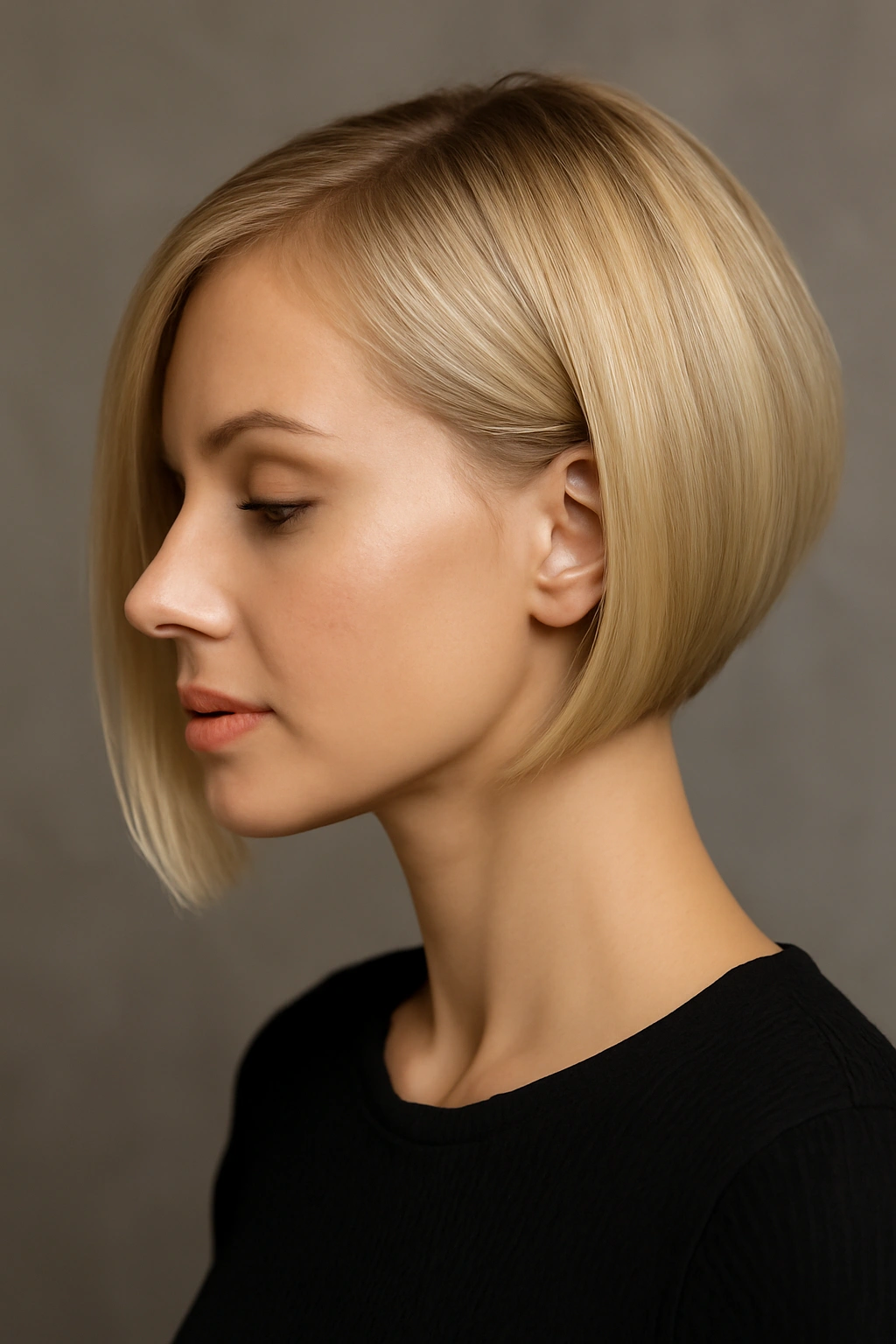
An asymmetrical bob isn’t about dramatic extremes; it’s about one side being noticeably longer than the other, creating a subtle direction and movement that a blunt cut simply can’t offer. One side might hit at the jawline while the other extends to just below the ear, or the difference could be more pronounced—2-3 inches of variation. In straight blonde hair, this asymmetry creates a sense of motion even when you’re standing still.
How Asymmetry Adds Visual Interest
The beauty of an asymmetrical cut lies in how it uses perspective. The longer side creates a line that can be swept back or forward depending on how you style it, while the shorter side opens up that side of the face. When done in blonde, the straight lines of the cut are enhanced by this directional quality—it feels intentional and modern without appearing gimmicky. The cut actually helps frame the face differently depending on how you part your hair or sweep the longer section, giving you versatility from a single cut.
Making It Work for Your Face
- Best on oval, oblong, or rectangular face shapes where the asymmetry can help add visual width
- The longer side should ideally fall in front of the face rather than behind the ear, creating that sweeping quality
- This cut looks most intentional when paired with a deep side part that enhances the directional movement
- Straightens beautifully with minimal effort, even if your hair has some natural wave
- Works especially well with balayage or rooted blonde—the color can follow the directional lines of the cut
Pro tip: Style the longer side forward and tuck it behind your ear for a more conservative, polished look, or let it fall freely for something edgier and more modern.
4. The Modern Shag with Straight Hair
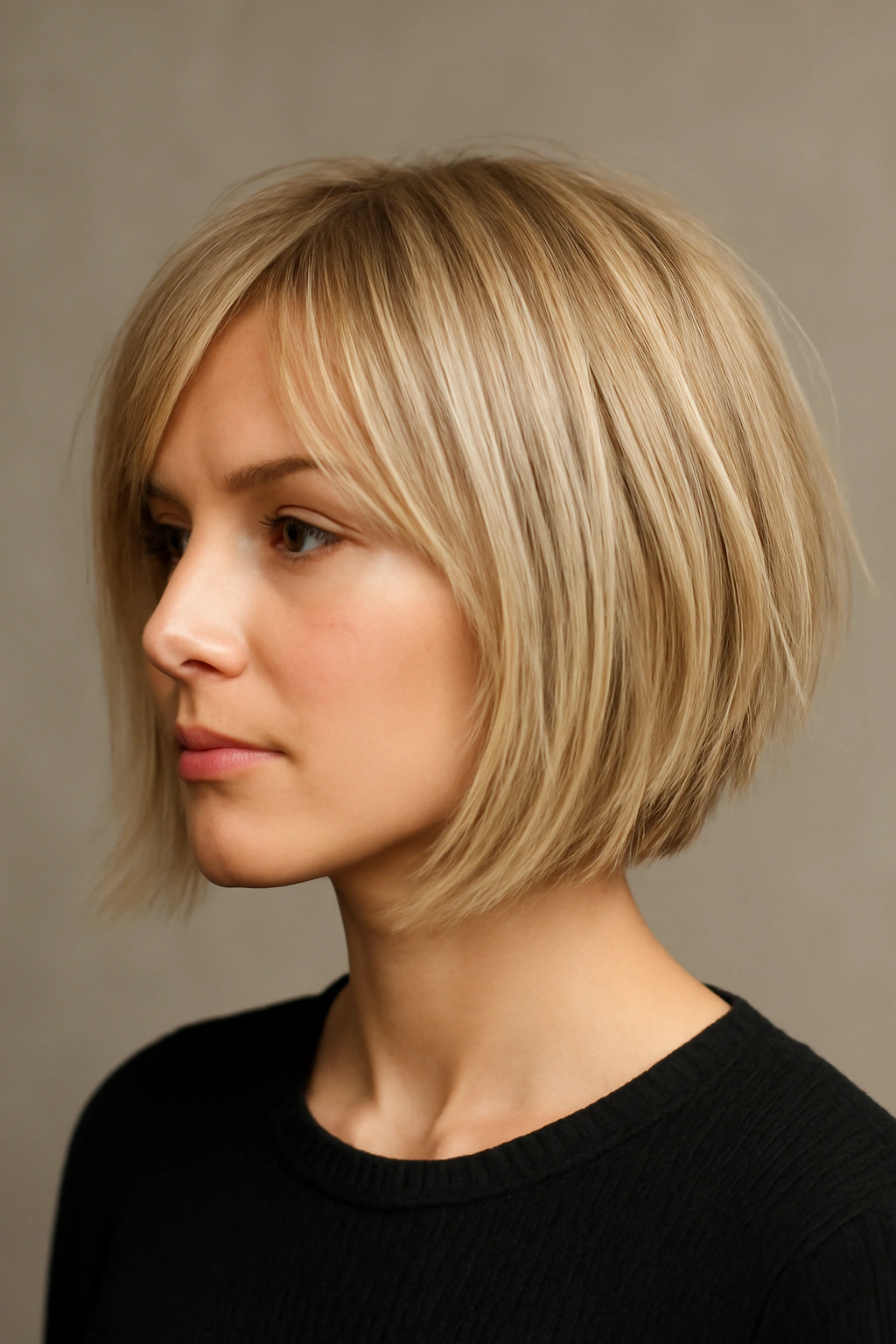
A shag in straight blonde hair is the opposite of the frizzy, textured shags you might picture from decades past. This version features longer pieces on top and shorter layers throughout, creating a stacked, dimensional silhouette that has movement without requiring a curling iron. Think chin-length overall, but with strategic shorter layers that create actual shape and make the hair appear fuller and bouncier than it actually is.
Why Straight Hair Makes Shags Work Better
Shags live or die on their cut, and straight hair makes this exponentially easier. Every layer shows exactly where it’s supposed to be, every line is precise, and the overall shape reads clearly instead of getting lost in texture or waviness. In blonde, the layers catch light at different points, creating incredible dimension and making the hair appear thicker and fuller than it is. A shag also moves—when you walk, turn your head, or even just breathe, the layers shift and create this gorgeous, lived-in motion that feels relaxed without appearing untidy.
The Maintenance Reality
- This cut requires styling with a round brush and blow-dryer to look intentional rather than just shaggy
- You’ll need a trim every 4-6 weeks to keep the layers from blending together
- Works beautifully with either a center part or a side part, depending on the mood you’re going for
- Pairs well with textured or layered blonde—solid color works, but dimension adds to the visual complexity
- This is genuinely one of the most flattering cuts for people who want to keep some length but need shape and movement
Worth knowing: A shag is actually easier to style than you’d think—point the blow-dryer down the hair shaft to create smoothness, then flip your head over to add volume at the roots.
5. The Geometric Sharp Bob with Bangs
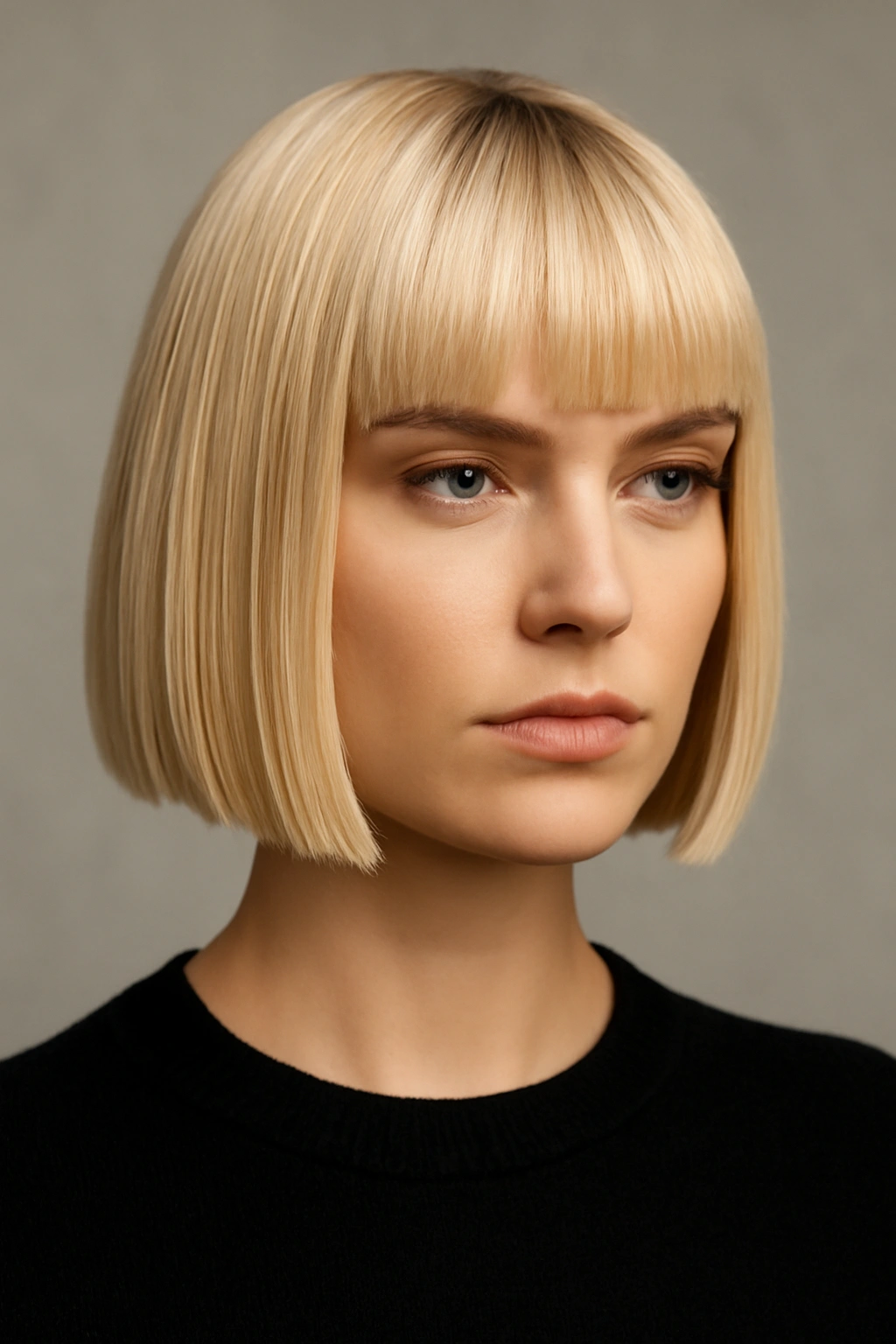
This is a blunt bob taken to its most architectural extreme: a precise, shoulder-grazing (or shorter) bob paired with blunt, straight-across bangs that fall right at the eyebrow. Everything is cut to exact specifications with zero variation or softness at the edges. In blonde, this creates an incredibly striking, almost editorial look that reads as confidently modern and entirely intentional.
The Power of Graphic Lines
There’s something almost defiant about a geometric bob with bangs—it commits fully to the concept of precision cutting and doesn’t apologize for its sharpness. The bangs draw immediate attention to your eyes and face, while the bob creates a solid horizontal line that grounds the overall silhouette. In straight blonde hair, both of these elements are emphasized because there’s no texture or wave to soften or blur the lines. The result is a look that photographs beautifully and reads as high-fashion in person.
Making the Commitment
- Bangs require maintenance every 2-3 weeks to keep them at the right length as your hair grows
- The bob itself needs trimming every 4-6 weeks to maintain that crisp line
- This cut demands confidence—it’s not subtle, and that’s entirely the point
- Works best on people with relatively straight hair; even slight waviness will affect how the bangs look
- Pairs beautifully with glasses, bold lipstick, or other statement accessories
Pro tip: The placement of your bangs matters enormously. They should fall between your eyebrow and lash line; too long and they feel heavy, too short and they look accidental.
6. The Grown-Out Pixie Fade
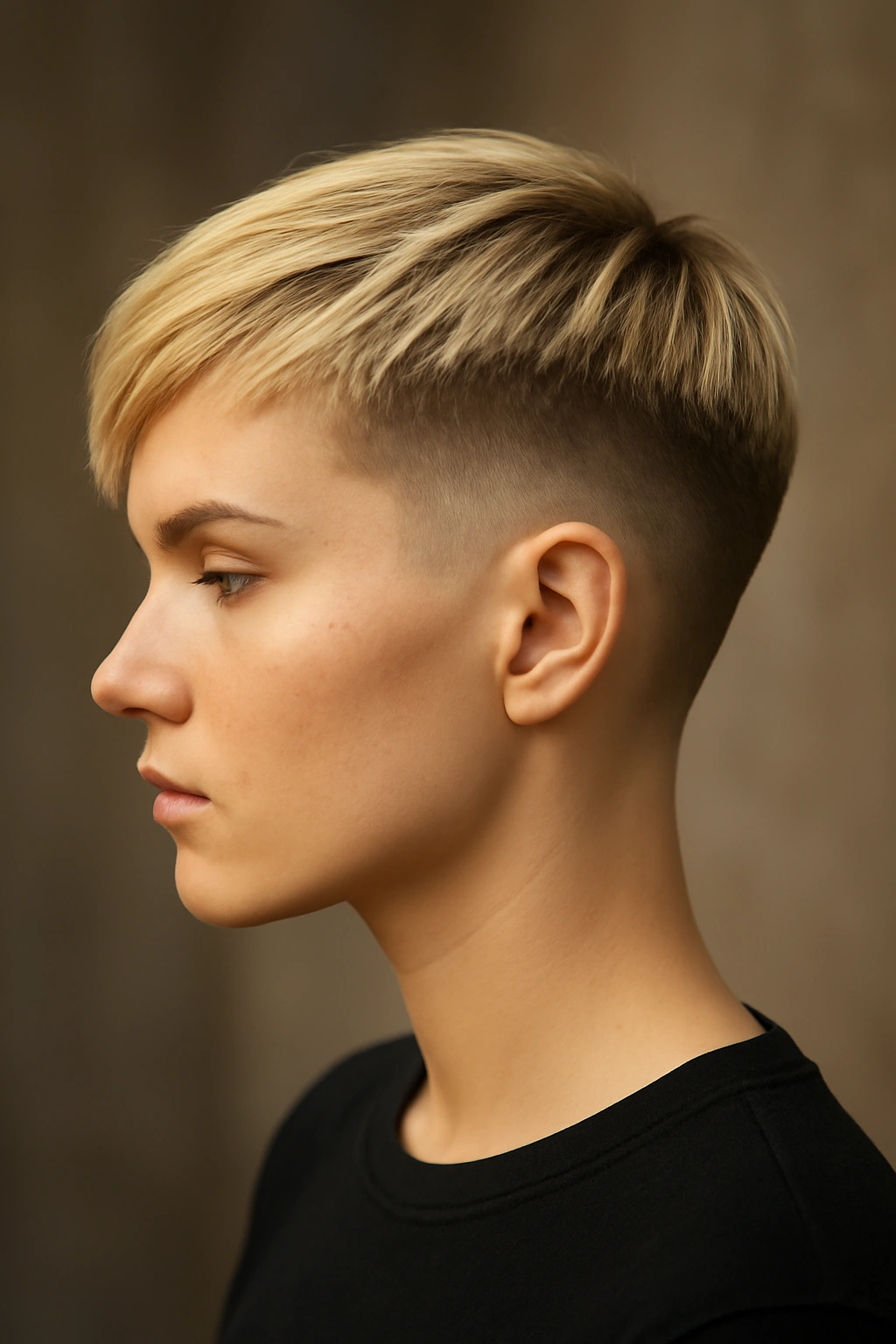
This is a pixie that’s been lived with for a few months, where the top is now long enough to comb and style but still maintains that cropped, close-to-the-scalp quality on the sides and back. You get genuine length to work with (4-5 inches on top) while keeping the radical edge of buzzed sides. It’s a cut that bridges the gap between “super short” and “actually long enough to style,” and in straight blonde hair, it’s absolutely striking.
The Freedom of a Grown-Out Pixie
The magic of a grown-out pixie is that it gives you options that the original pixie doesn’t offer. You can slick it back, you can sweep it to the side, you can create texture and movement, or you can comb it forward and make it look almost like a modern mullet. The straight blonde hair on top can be styled in multiple directions, and the close crop on the sides keeps everything feeling cohesive and intentional. It’s a cut that feels rebellious but remains entirely wearable in professional or formal settings.
Styling and Maintenance
- Requires a trim every 3-4 weeks to maintain the fade, but the top can grow longer between cuts
- Works beautifully with some styling product—pomade, clay, or even just a styling cream
- The straight hair on top is your canvas; you can part it, sweep it, or texture it depending on your mood
- Looks especially striking with some dimensional blonde or shadow roots for added depth
- This cut genuinely flatters most face shapes, especially if you’re confident enough to pull off something this short
Worth knowing: A grown-out pixie is easier to style than a blunt pixie because you actually have length to work with—ironically, having more hair gives you more styling flexibility.
7. The Chic Lob (Long Bob) with Subtle Layers
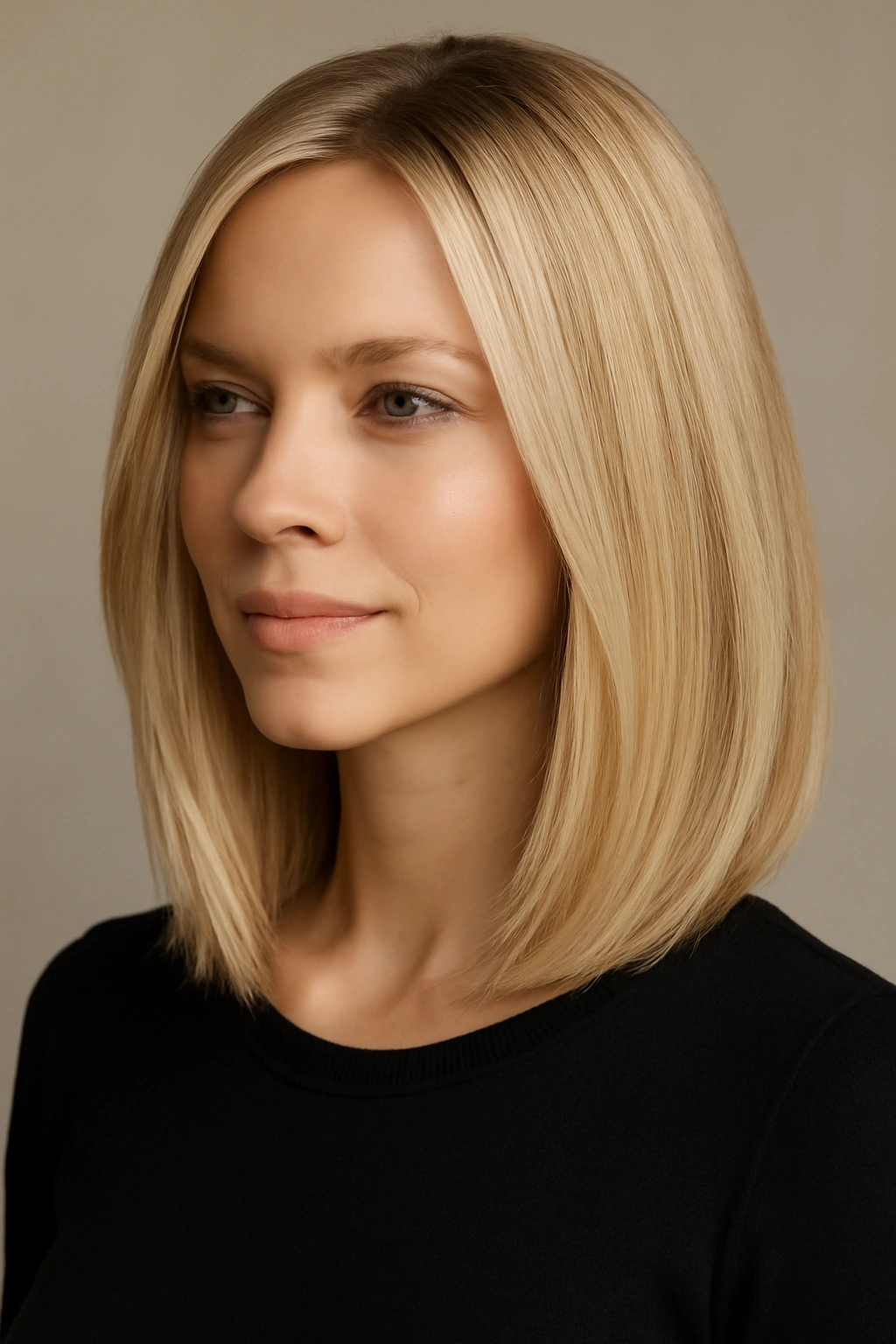
A lob is longer than a traditional bob (usually landing between ear length and shoulder length) but still fundamentally short compared to truly long hair. The magic is in the subtle layering—not choppy or shaggy, just enough variation in length that the style has movement and dimension without sacrificing the sophistication of a polished bob. In straight blonde hair, a lob reads as effortlessly elegant.
Why Lobs Are Enduringly Popular
A lob splits the difference beautifully: you get the fresh, styled quality of short hair with enough length to wear in a ponytail or bun if you want. The subtle layers create movement that keeps the style from looking limp, while the overall length maintains a sense of polish and refinement. Straight blonde hair in a lob looks incredibly expensive and considered—like you’ve deliberately chosen this length and shape rather than just letting your hair grow out. It’s a grown-up cut that doesn’t scream “trying too hard.”
What Makes a Lob Work Best
- Best worn with a center part or a very subtle side part that shows off the length and shape
- Subtle layers should be concentrated toward the face and around the crown for shape without choppiness
- Requires a trim every 6-8 weeks to maintain the shape as it grows
- Works beautifully with any blonde, from platinum to darker honey tones
- This is genuinely one of the easiest short-to-medium cuts to style—it looks polished with just a brush and some straightening serum
Pro tip: Get your lob cut slightly shorter than you think you want it, because it will immediately feel longer as your hair grows out, and you’ll appreciate not having to trim too frequently.
8. The Blunt Textured Crop
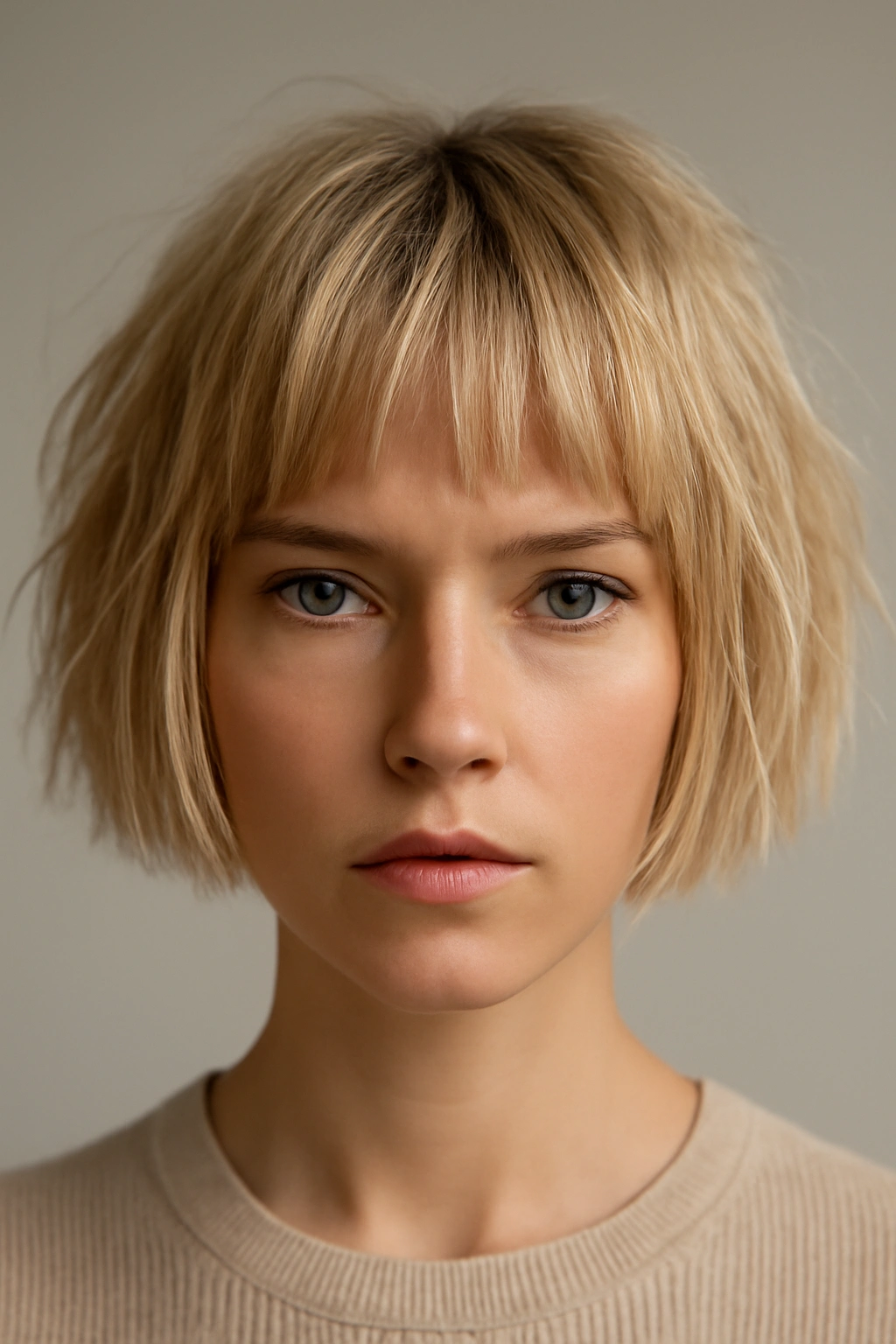
This is a crop—very short overall, like a pixie but slightly longer and less faded—that trades the sleekness of a traditional pixie for deliberately choppy, piece-y texture. Imagine a cut that’s 2-3 inches all over the head, with slightly longer pieces on top that are cut into uneven chunks creating that “just-tousled” aesthetic. In straight blonde hair, this creates incredible visual interest and movement.
Creating Intentional Texture in Straight Hair
The beauty of a textured crop in straight hair is that the texture becomes the entire point—there’s no relying on natural waves or curls to create dimension. Instead, the cut itself creates visual complexity and movement. Each layer of the crop catches light differently, creating shadows and highlights that make the hair appear fuller and more dynamic than a blunt crop ever could. In blonde, this is particularly striking because the light-catching quality is amplified.
Styling This Cut
- Air-drying works, but a quick blow-dry with some texture product creates the most intentional look
- Works beautifully with a messy, tousled aesthetic or can be combed sleeker for a different mood
- Requires a trim every 3 weeks to maintain the intentional texture rather than letting it grow into shapelessness
- Looks stunning with some shadow roots or dimensional blonde that emphasizes the cut
- This is one of the most personality-forward short haircuts—it reads as creative and confident
Worth knowing: Don’t be afraid of styling products with this cut—a bit of texture cream or pomade actually makes it look more intentional and less like you just woke up that way.
9. The Side-Swept Layered Bob
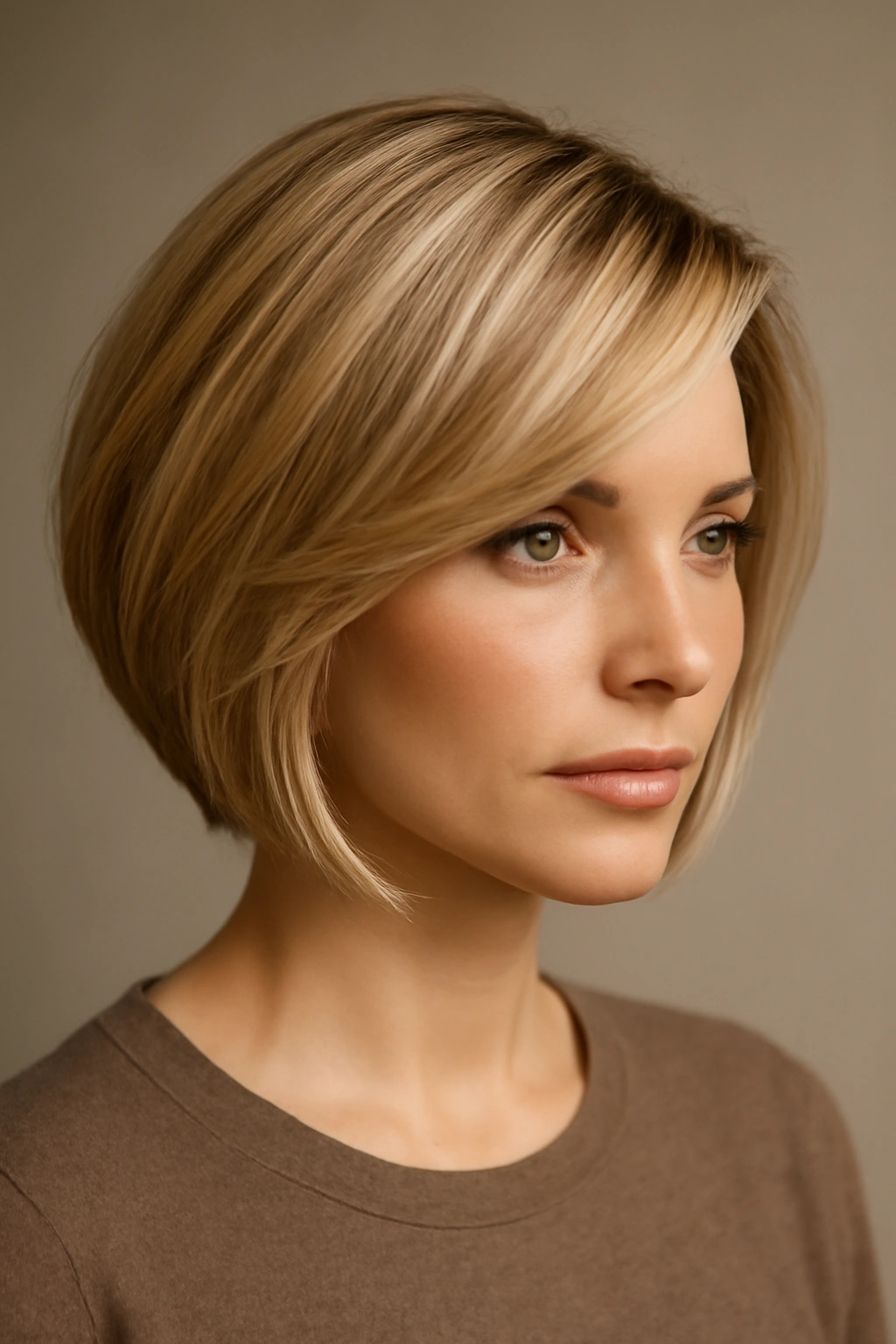
This bob is cut with progressive layering that creates movement when swept to one side—think a longer side that falls across your face and a shorter side that opens up that side of your face, with layers throughout that create depth rather than just length variation. When side-swept, it has a soft, romantic quality while maintaining the polish and structure of a intentionally cut bob.
How Layering Transforms a Bob
Layers are the secret tool for adding movement and softness to a bob without making it feel sloppy or undone. Subtle layers mean the cut has shape that works from multiple angles—straight-on, from the side, or swept in a particular direction. In straight blonde hair, these layers create shadowing and dimension that makes the cut appear more complex and interesting than the sum of its parts. The side-swept element adds a romantic, slightly dramatic quality that feels current without being trendy.
Wearing It With Confidence
- Works best with a deep side part that you style consistently
- The longer side should sweep smoothly across your face without being pinned or clipped back
- Layers should be concentrated on the ends and around the face; the back can be slightly heavier for structure
- Requires a trim every 5-6 weeks to keep the layering intentional
- Looks incredible paired with soft, romantic makeup or bolder, graphic makeup—it adapts to your mood
Pro tip: Use a smoothing serum or lightweight styling cream to help the sweep glide smoothly, and consider getting the longer side slightly texturized at the ends so it fans out prettily rather than blunting across your face.
10. The Modern Micro Fringe with Blonde
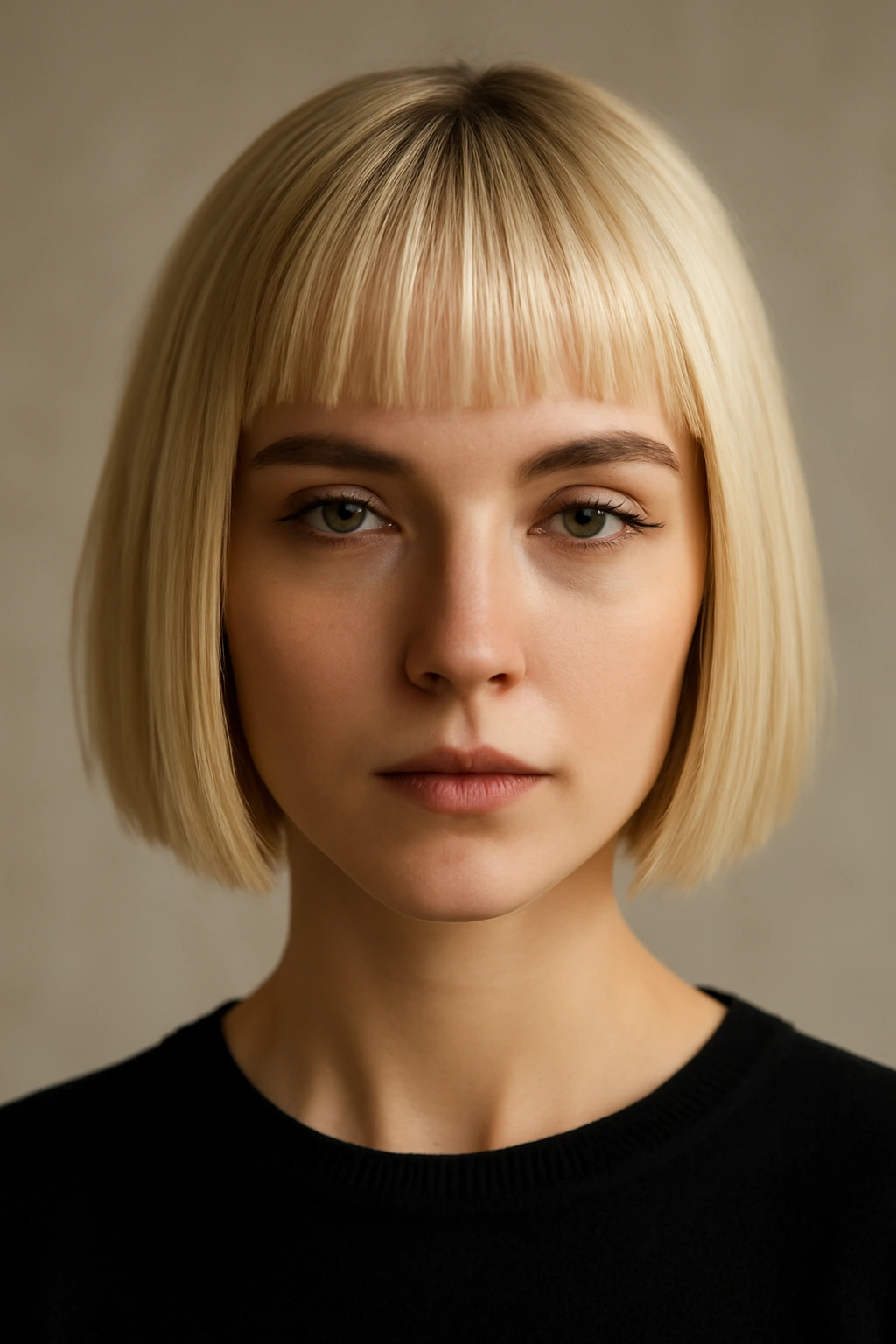
A micro fringe (also called a baby fringe or short fringe) is deliberately short, thick bangs that fall just below the eyebrow or even shorter, paired with a longer bob or longer pixie-length hair. It’s a cut that makes a statement and reads immediately as fashion-forward and intentional. In straight blonde hair, the micro fringe creates an incredibly striking frame for your face while the longer sections provide contrast and sophistication.
The Graphic Impact of a Micro Fringe
A micro fringe is unapologetically modern and architectural. It draws massive attention to your eyes and the upper portion of your face, which can be incredibly flattering if you have good skin and features you want to showcase. The contrast between the very short fringe and slightly longer hair on the rest of your head creates visual interest and makes the overall silhouette feel more complex and intentional. In blonde, the fringe stands out with particular clarity, creating almost a graphic quality.
Commit to the Maintenance
- Micro fringes require trimming every 2-3 weeks to maintain the precise length
- They work best on people with relatively straight hair; any significant wave will affect how they look
- Pair this with a bob for sophistication or with longer length for edge and rebellion
- This cut demands confidence and intention—it’s not a look for the indecisive
- Works beautifully with bold makeup, statement accessories, or a very minimal, clean aesthetic
Worth knowing: The cut-off point for your micro fringe makes an enormous difference in how modern or vintage it reads. Higher (closer to very short) reads more contemporary; slightly longer reads slightly more ’90s-inspired.
Key Takeaways
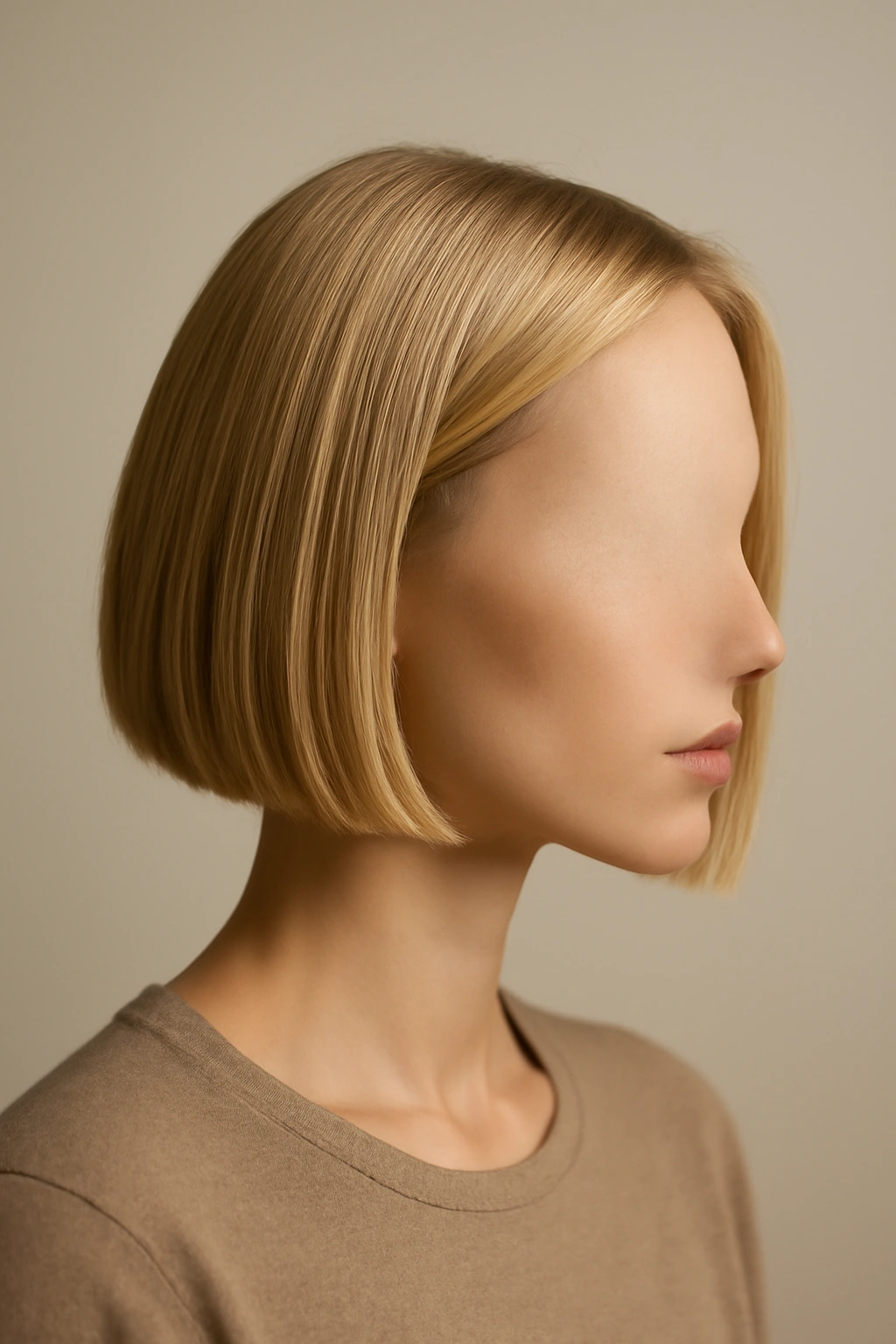
The through-line connecting all of these cuts is precision. Short straight blonde haircuts work because they’re built on exact specifications, clean lines, and the assumption that every millimeter matters. Unlike longer styles or those with significant texture or wave, short straight cuts live or die on their execution—there’s nowhere for imprecision to hide.
What’s genuinely exciting about this moment for short blonde hair is the variety within the category. You don’t have to choose between edgy and polished, between statement and subtle, between fashion-forward and timeless. These ten cuts cover virtually every possible preference: pixies for the brave, bobs for the classic-minded, asymmetrical cuts for those who want movement, textured options for those who want personality. The straight blonde serves as the perfect foundation—it’s inherently reflective, inherently graphic, and it lets the architecture of the cut truly shine.
When you’re considering going this direction, the most important thing is finding a stylist who understands that these cuts aren’t generic—they’re precision pieces that require vision, skill, and the ability to see how light, shadow, line, and your specific face shape will interact. The right cut will feel effortless to wear and genuinely flattering. It’s worth investing time and resources to get it right rather than settling for something close enough.
