



If you’re juggling work, family, fitness, and a social life that barely fits into your calendar, your haircut probably isn’t high on your list of things to worry about. But the truth is, choosing the right cut can eliminate hours of styling and maintenance hassle every month. A poorly chosen style will leave you frustrated, reaching for dry shampoo on day two, or spending 20 minutes every morning trying to recreate what you saw in the salon.
The magic of a truly low-maintenance haircut is that it works with your natural hair texture, not against it. It’s cut in a way that looks intentional whether you air-dry it, toss it in a ponytail, or run your fingers through it on your way out the door. These cuts embrace your hair’s natural movement, grow out gracefully without looking scraggly, and don’t demand perfect styling every single day to look put-together.
What makes a haircut low-maintenance isn’t just about length — it’s about structure, texture, and how strategically the stylist uses layering, angles, and weight distribution to create shape that holds itself. A cropped cut can be just as fussy as a long, flowing style if it’s cut with razor-sharp precision that requires daily styling. Conversely, a longer cut can be effortlessly chic if the layers are placed thoughtfully and the overall structure works with your hair’s natural tendencies.
Let me walk you through 15 haircuts that genuinely deliver on the low-maintenance promise — styles that look great with minimal effort, grow out beautifully, and won’t leave you feeling frumpy on days when you don’t have time to style.
1. The Textured Pixie Cut
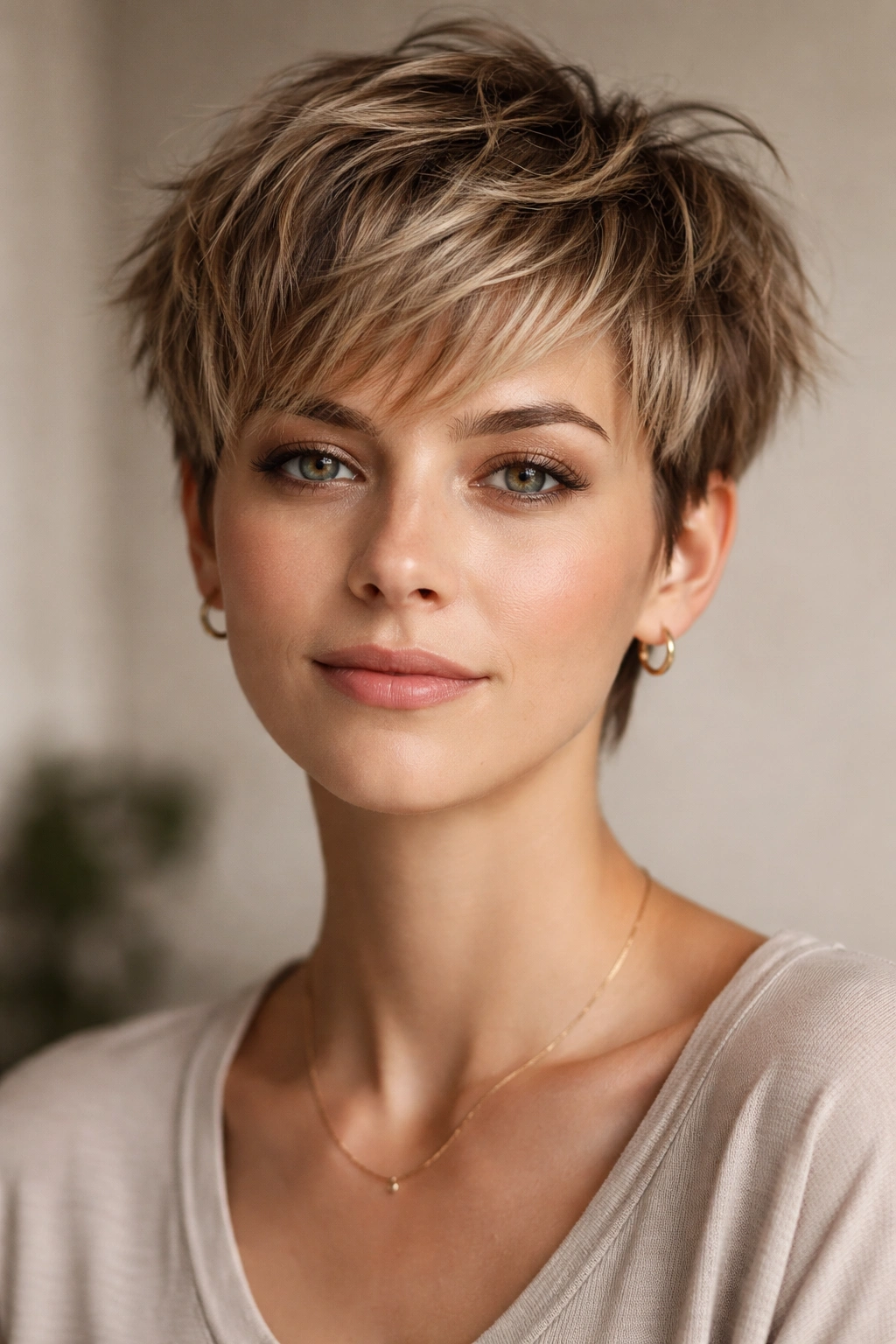
The textured pixie sits somewhere between a crop and traditional pixie — slightly longer on top, with choppy, deliberate layers that create movement and shape without requiring styling products or blow-dry precision. This cut works beautifully for people with naturally wavy or textured hair, and even straight-haired individuals find it more forgiving than a blunt short crop.
Why It Works for Busy Schedules
A textured pixie relies on its choppy layering to look intentional, which means bedhead actually becomes an asset. The built-in texture and movement mean you can wake up, run your fingers through your hair, and head out the door. Because there’s no single “right way” to wear it, the cut is incredibly forgiving of inconsistent styling.
What You Need to Know
- Requires a trim every 4-6 weeks to maintain the textured shape and prevent the layers from growing into an undefined mop
- Works best on hair that has at least some natural wave or texture; straight fine hair may need a texturizing product to create intentional movement
- Looks polished with minimal effort — even unstyled, it reads as intentional rather than unkempt
- Pairs beautifully with minimal or no product; some people use a light texturizing spray for definition on lazy days
- Ear and neck are fully exposed, so commit to this look only if you’re comfortable showing your face and features clearly
Pro tip: Ask your stylist to use point-cutting or razor-cutting techniques to create texture throughout rather than blunt-cutting, which would require more styling to look intentional.
2. The Shag Cut
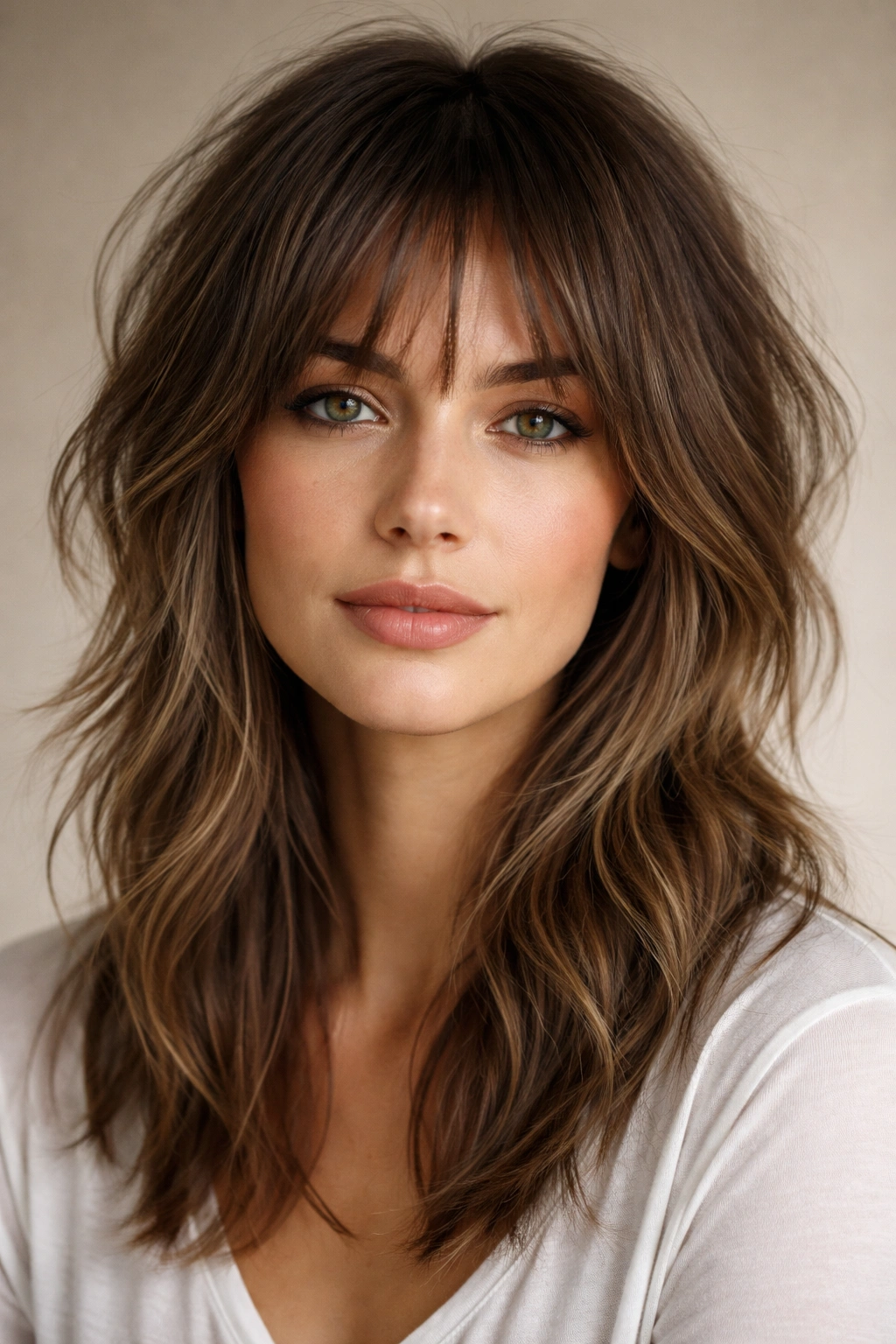
The modern shag is nothing like the 1970s version — it’s a layered cut with longer pieces on top and shorter, feathered layers throughout that create movement and volume. What makes it low-maintenance is that the layers do the work of creating shape and dimension, so you don’t have to blow-dry it sleek or style it heavily.
Why This Cut Suits Active Schedules
Shag cuts were designed to work with your hair’s natural texture rather than fight against it. The layers are cut in a way that they sit naturally, creating movement whether your hair is wavy or straight. This cut actually looks better the more relaxed and undone you style it.
What to Know
- Can be worn wavy, straight, or in its natural state and still look intentional and fashionable
- Requires a refresh every 8-10 weeks to keep the layered shape crisp and defined
- Works on almost all hair types and textures, though it’s particularly stunning on wavy or curly hair
- The layers create built-in volume, so it’s especially flattering if you have fine or limp hair
- Pairs well with a light texture spray or sea salt spray on days when you want to amp up the movement, but it looks great without any product
Worth knowing: A shag cut is actually one of the few styles where slightly grown-out roots and slightly flattened layers still look on-trend rather than neglected.
3. The Blunt Bob
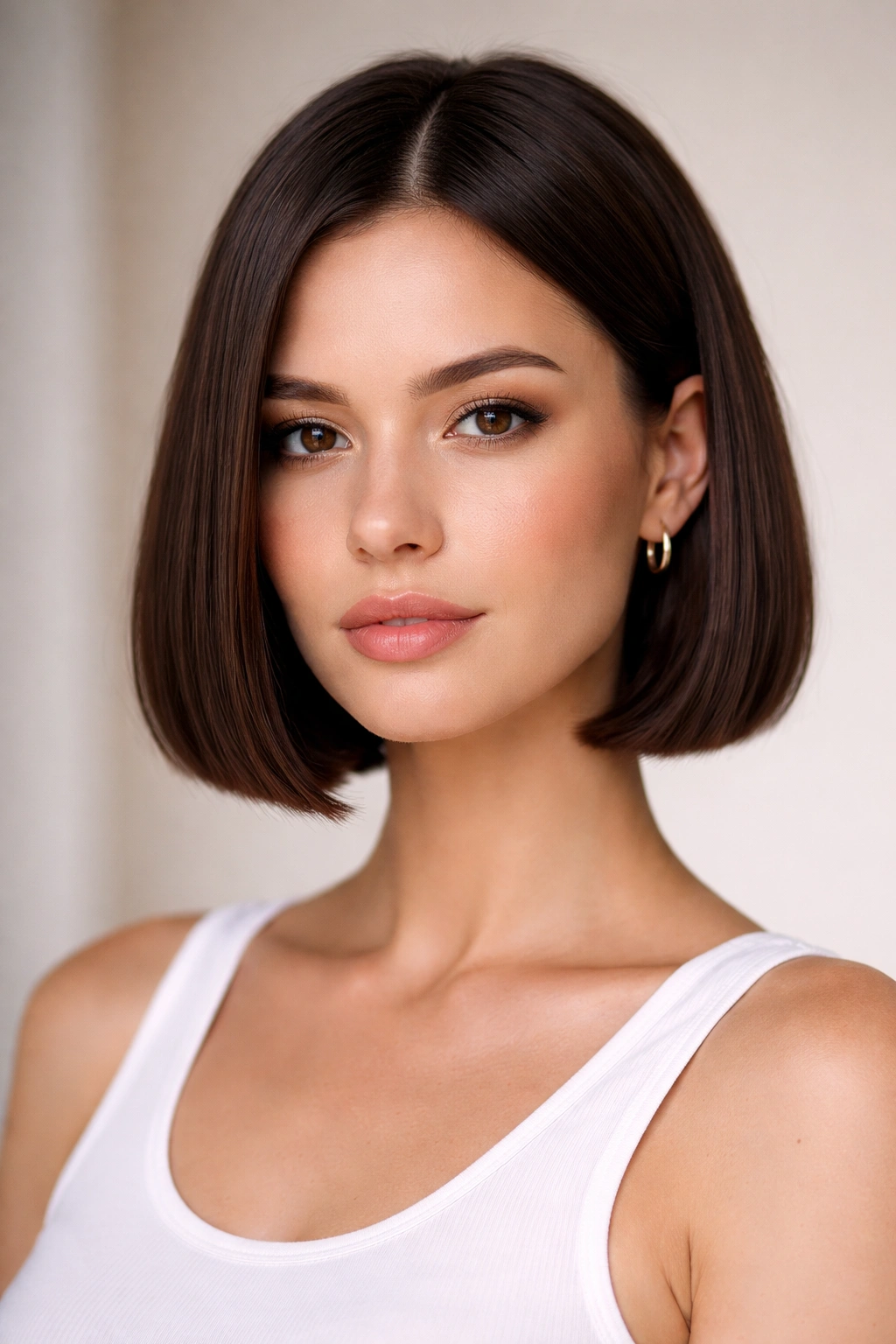
A well-cut blunt bob is deceptively simple — it’s one length, usually chin-length or slightly shorter, with a clean, straight line across the ends. The magic is in the cut itself: a skilled stylist makes sure the line is perfectly blunt and the bob falls in a way that frames your face without any awkward angles.
What Makes It Low-Maintenance
Once cut properly, a blunt bob is incredibly easy to manage. You can air-dry it, blow-dry it sleek, or style it wavy — it looks good in all iterations. The simplicity means there’s less to go wrong, and minimal styling technique is required to make it look intentional.
The Details
- Requires trims every 6-8 weeks to maintain the blunt, defined line
- Best for hair that’s at least somewhat straight or wavy; very curly hair might need texture spray to maintain the line between cuts
- Can be styled slicked back, flipped under, or left to fall naturally — all look intentionally chic
- Ear-length or slightly longer versions are more forgiving than very short bobs if your hair doesn’t cooperate
- Works with or without bangs, though bangs do add a styling element if you’re not committed to trimming them regularly
Insider note: Ask your stylist to cut a slight curve into the back rather than a razor-straight line — it photographs better and is slightly more forgiving if you’re not blow-drying it perfectly straight every time.
4. The Textured Lob
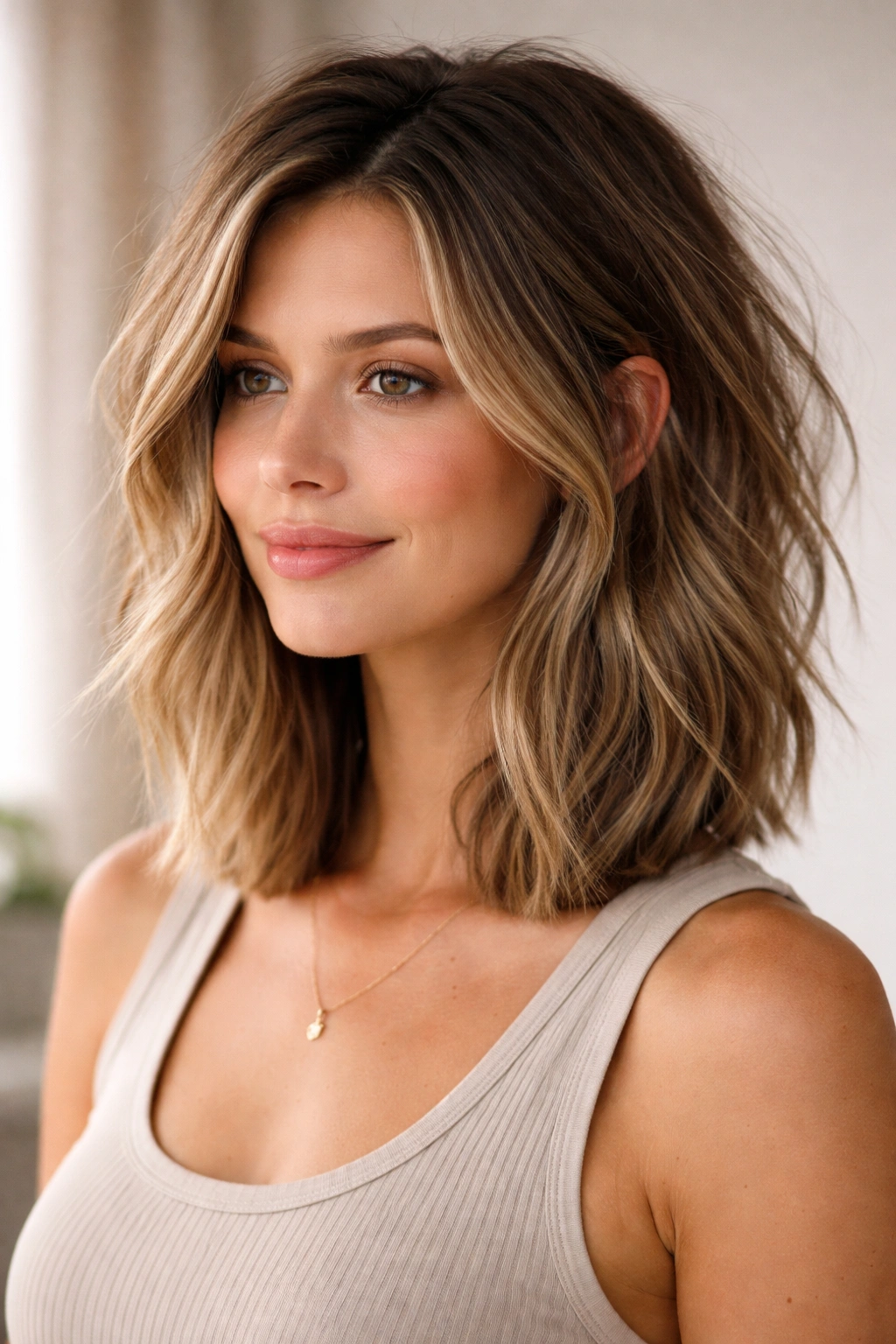
A lob (long bob) that features choppy, intentional layers throughout creates shape and movement that doesn’t require much styling to look polished. The layers mean the cut has movement built in, so even air-dried, it looks intentionally textured rather than flat and limp.
Why It Works
Lobs are inherently low-maintenance because they’re long enough that you can put them up in a ponytail on days when you don’t want to style them, yet short enough to feel fresh and require less overall maintenance than shoulder-length or longer hair. The textured layers eliminate the need for heat styling to create dimension.
Key Points to Remember
- Requires trims every 8-10 weeks to keep the layers sharp and defined
- Looks best with some wave or texture; straight hair works but may need a styling product to emphasize the intentional layers
- Can be worn down for a polished look or pulled up into a ponytail or bun when you’re busy — both options work well
- Choppy layers mean you can hide a bad hair day by tousling it or adding a texturizing spray
- Pairs beautifully with minimal styling; a salt spray or texture spray is optional but helpful on days when you want extra dimension
Pro tip: Request layers that graduate throughout rather than heavy choppy layers just at the ends — you’ll get movement and dimension without the “piecey” look that requires more styling to pull together.
5. The Curly Crop
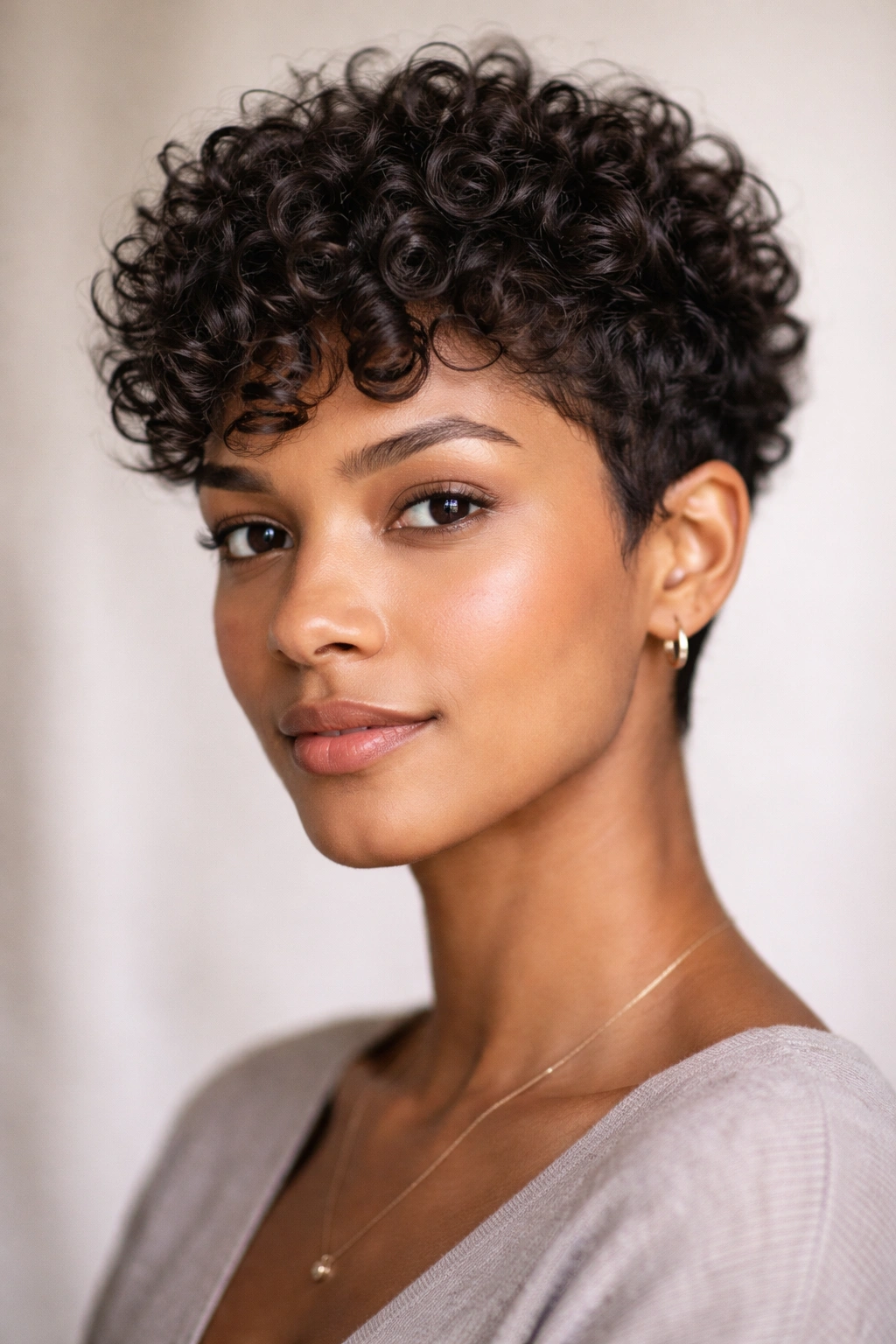
If you have naturally curly or coily hair, a cropped cut that embraces your curl pattern is one of the lowest-maintenance styles available. The key is choosing a stylist experienced in cutting curly hair and asking for a shape that works with your curls’ natural texture and curl pattern.
Why Curly Hair Thrives in Cropped Cuts
Shorter hair dries much faster, which means less time spent managing wet hair. The curls have enough density that even a short crop looks full and intentional. And because the whole point of the style is to celebrate your natural texture, you’re not fighting against what your hair naturally does — you’re leaning into it.
What You Should Know
- Requires a cut every 4-6 weeks to maintain the shape as new growth comes in at the crown
- Should be cut wet and styled to your normal curl pattern, not straight, so the stylist can see how your curls actually sit
- Requires a leave-in conditioner and possibly a curl cream or gel, but no blow-drying needed
- Dries much faster than longer curly hair, saving significant time
- Looks fuller and more intentional than longer curly styles, with less frizz and more defined curls
Worth knowing: A curly crop shows off your face and bone structure beautifully, and there’s something incredibly freeing about not spending 30 minutes blow-drying and styling curly hair every morning.
6. The Textured Fringe
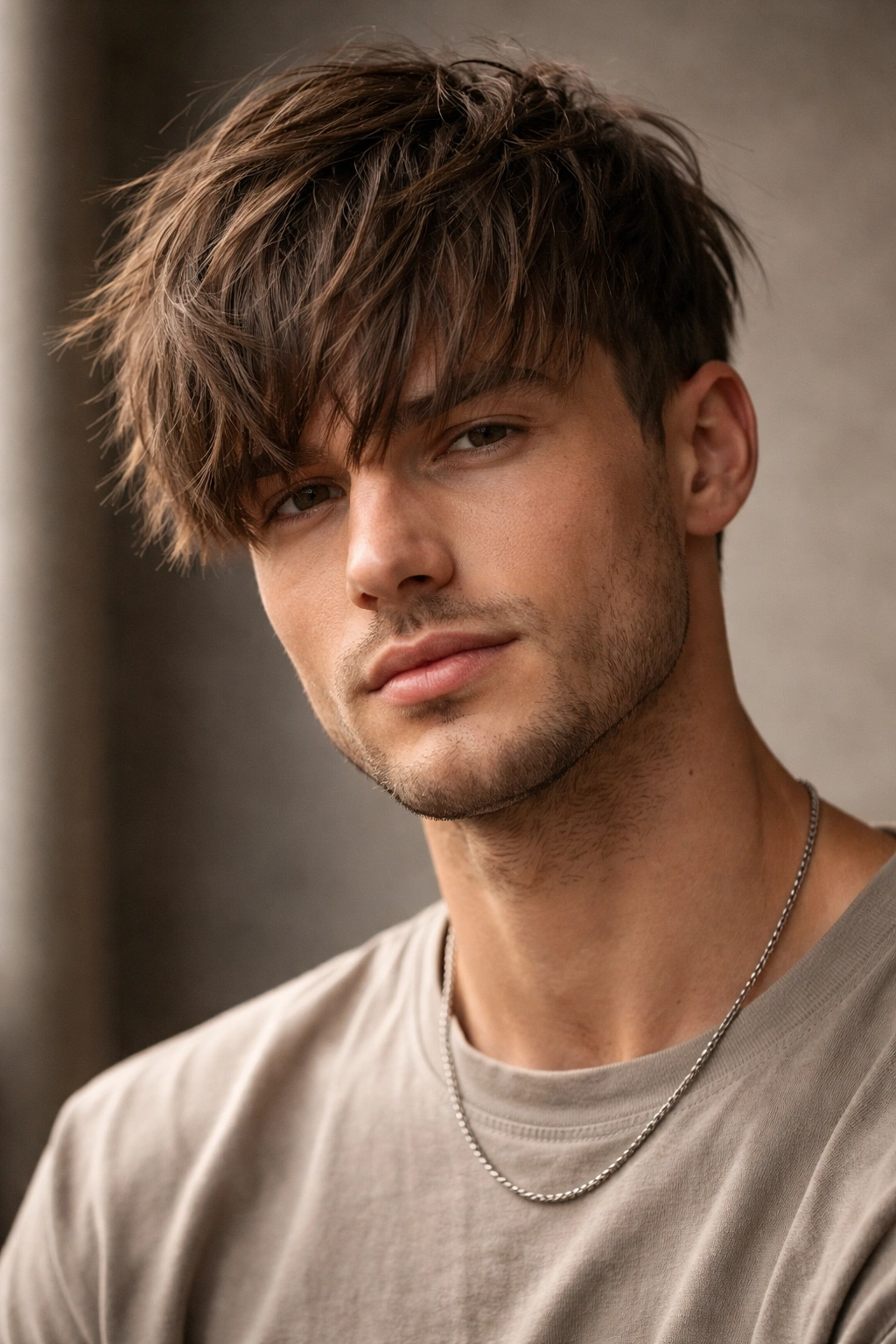
A longer, choppy fringe paired with longer layers throughout creates a style that looks effortlessly cool and intentional without requiring precision styling. The texture in both the fringe and the layers means bedhead becomes character, not a problem.
Why Fringes Work for Low-Maintenance Hair
Fringes are trending because they instantly add personality and movement to any cut. When cut with texture and choppy layers rather than blunt precision, the fringe becomes forgiving. It doesn’t require daily blow-drying into a specific shape; the imperfection and texture are exactly the point.
Things to Keep in Mind
- Requires trims every 4-6 weeks to keep the fringe at the right length and texture
- Works best with textured or wavy hair; straight hair may need a texturizing product to maintain the choppy, intentional look
- Can be swept to the side, down, or tousled — multiple styling options mean flexibility on busy mornings
- Pairs beautifully with longer, layered hair for a cohesive, textured look throughout
- A texturizing spray or sea salt spray enhances the look but isn’t necessary
Pro tip: Ask for face-framing layers that are longer than the main fringe — this gives you flexibility. If you’re in a rush, you can tuck the longer pieces back; on days when you have time, you can style everything forward for a fuller fringe effect.
7. The Sleek Pixie
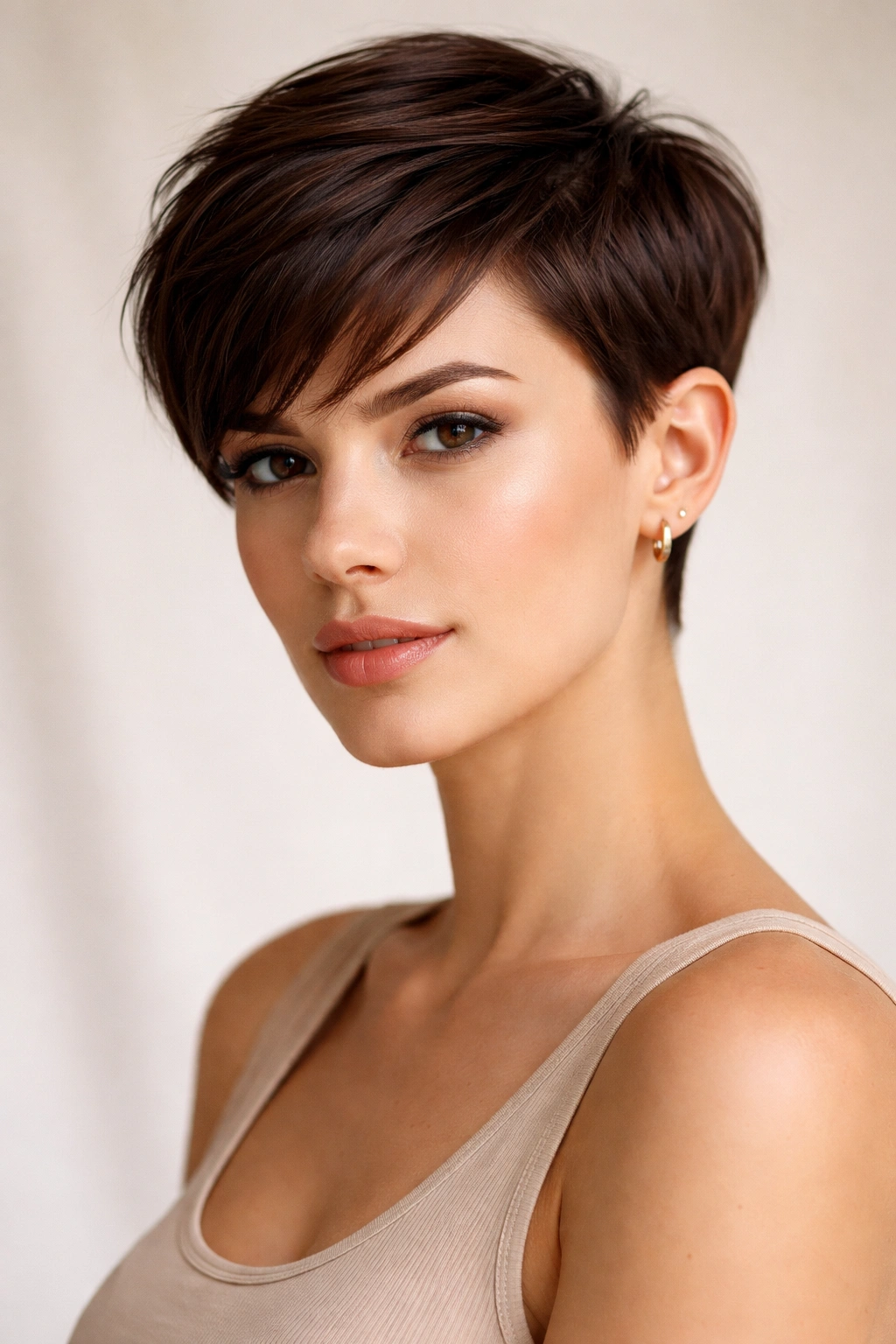
If you have straight or naturally sleek hair, a clean, sculpted pixie cut can be incredibly low-maintenance. The key is choosing a cut that’s slightly longer on top so you have a bit of texture to work with, rather than cropped so short it requires daily grooming.
What Makes This Cut Practical
A sleek pixie relies on your hair’s natural straightness and smoothness, eliminating the need for blow-drying or styling products. It’s a wash-and-wear style for people whose hair naturally falls into this pattern. The cut has built-in shape, so there’s nothing you need to do to make it look intentional.
Important Details
- Requires a trim every 4-6 weeks to maintain the sculpted shape
- Best for straight or naturally sleek hair; very wavy hair fights against the sleek aesthetic
- Can be styled slicked back with a touch of product for a polished look, or left to fall naturally for a relaxed vibe
- Requires no blow-drying, no styling tools, and minimal products
- Exposes your entire face and neck, so choose this cut only if you’re confident with that exposure
Insider note: A slight stubble or shadow of new growth actually looks intentional with a pixie cut, so you don’t need to worry about growing it out perfectly between cuts.
8. The Shoulder-Length Layered Cut
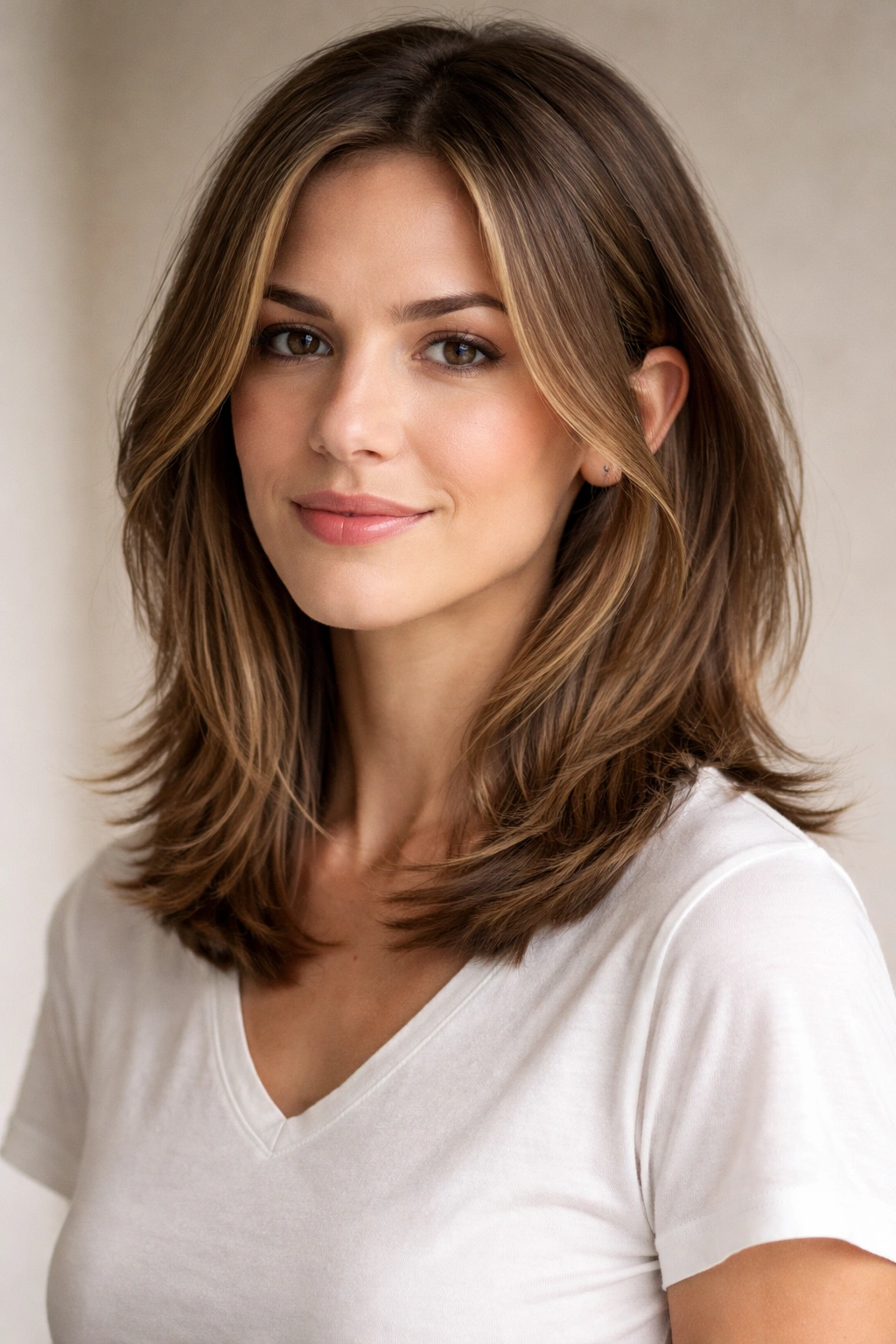
A mid-length cut with strategically placed layers throughout creates movement and dimension without requiring heavy styling. The length means you can tuck it behind your ears or put it up when you’re busy, while the layers prevent it from looking flat or shapeless.
Why This Length Hits the Sweet Spot
Shoulder-length hair is long enough to offer styling versatility — you can wear it down, up, or half-up — but short enough to be manageable on busy mornings. The layers create shape that looks intentional whether you’ve styled it or not, and the length is forgiving when you’re a week past a trim.
What to Know
- Requires trims every 8-10 weeks to keep the layers crisp
- Works on virtually all hair types and textures
- Air-dries beautifully with natural wave; straight hair may benefit from a light texturizing product
- Can be worn down, up in a ponytail, or in a half-up style depending on your mood and time
- Pairs with minimal products; a texturizing spray or heat protectant is optional
Pro tip: Ask your stylist to cut the longest layers to fall just past your shoulder — this length is forgiving for everything from just-washed hair to day-four bedhead.
9. The Choppy Crop
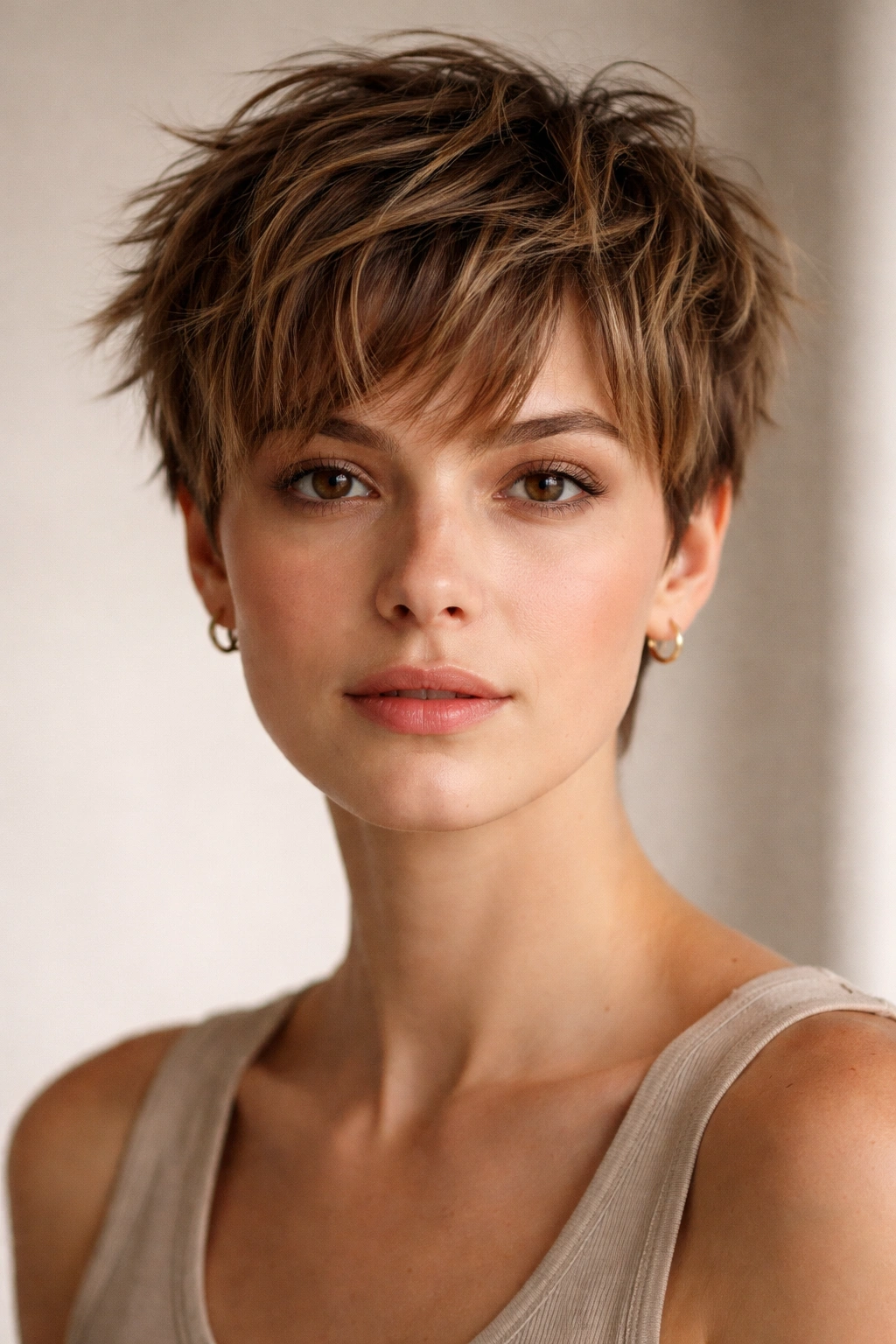
A cropped cut with choppy, uneven layers throughout embraces texture and imperfection in the best way. This style is intentionally undone, which means you’re not trying to achieve a perfectly neat look — you’re going for textured and cool.
Why Choppy Crops Are Effortless
The whole aesthetic of a choppy crop is that it looks best when it’s slightly messy and textured. This means your natural hair texture and slightly imperfect styling become a feature, not a flaw. You literally cannot style this cut “wrong” because the vibe is intentionally casual and textured.
Key Information
- Requires trims every 4-6 weeks as new growth comes in and you want to maintain the choppy definition
- Works beautifully on wavy, textured, or curly hair; straight hair may look best with a light texturizing product
- Can be styled with or without product, blown out smooth or left to dry naturally
- Bedhead is your friend with this cut; the messier and more textured, the better it looks
- Requires minimal styling time — five minutes maximum, usually just running your fingers through it
Worth knowing: This cut is particularly freeing if you’ve spent years trying to get your hair to look “perfect.” The choppy crop celebrates your hair’s natural texture and movement rather than fighting against it.
10. The Feathered Cut
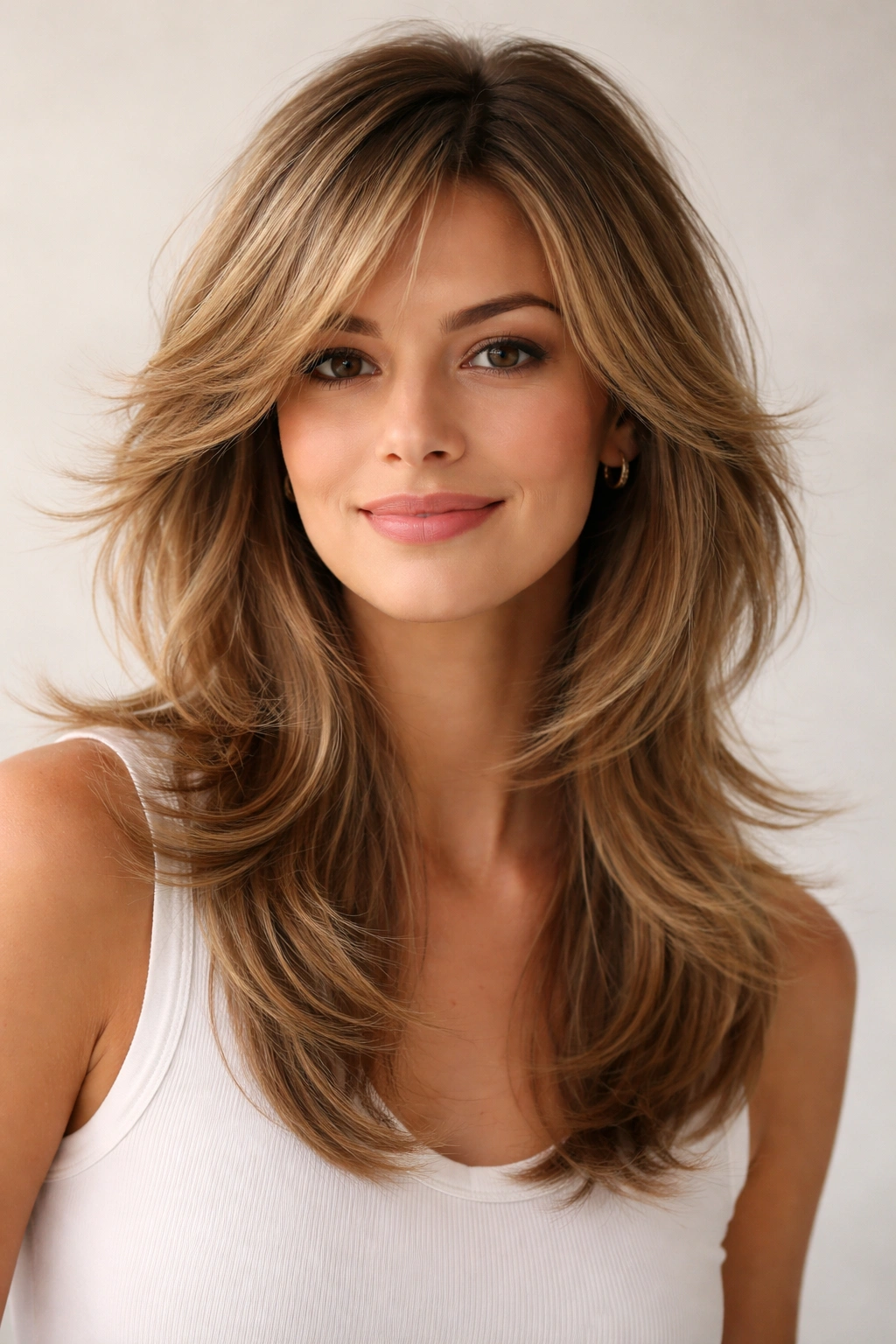
A feathered cut has layers throughout that are cut at angles away from the head, creating a soft, wispy silhouette. The feathering means the hair has built-in movement and shape, so it looks dimensional even when air-dried.
Why Feathered Cuts Require Minimal Maintenance
Feathering creates the illusion of volume and movement without requiring blow-drying or styling techniques. The layered structure means the cut looks intentional whether you’ve styled it or let it air-dry. Your hair’s natural texture actually enhances the feathered effect.
Details Worth Knowing
- Requires trims every 8-10 weeks to maintain the feathered shape and keep the layers looking intentional
- Works beautifully on medium to longer hair, especially with at least some natural wave
- Air-dries in a soft, dimensional way without requiring heat styling
- Looks great on fine or limp hair because the feathering creates the appearance of volume
- Pairs well with minimal styling; a texturizing spray is optional but can enhance the feathered movement
Pro tip: If you have frizz-prone hair, a leave-in conditioner or anti-frizz serum will help keep the feathered layers defined and smooth without needing to blow-dry them into place.
11. The Grown-Out Pixie
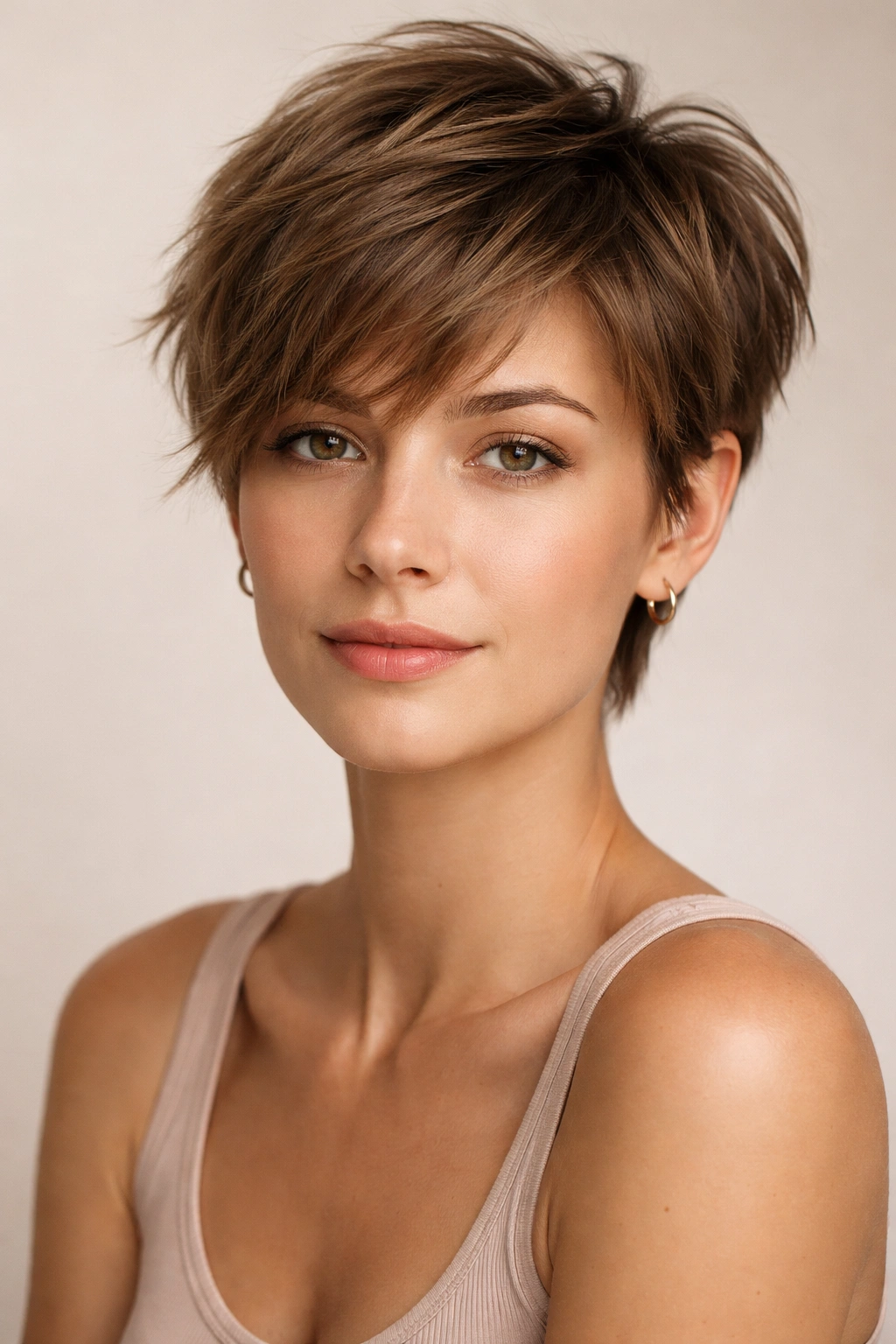
A slightly longer pixie that’s been grown out intentionally creates a textured, undone look that requires minimal daily maintenance while still reading as a cohesive style. This is for people who love the low-maintenance vibe of a pixie but want a little more length and styling flexibility.
Why This Offers the Best of Both Worlds
A grown-out pixie has enough length that you can style it multiple ways — tousled and textured, or slightly more polished and brushed back — but short enough that it dries quickly and requires minimal product. It’s the pixie cut for people who change their mind about short hair halfway through.
Important Points
- Requires trims every 6-8 weeks to maintain the intentional shape and prevent it from becoming an undefined mop
- Works well with textured or wavy hair; straight hair benefits from a texturizing product
- Can be styled sleek and polished, or tousled and undone depending on your preference that day
- Takes 5-10 minutes to style if you want to; looks intentional with zero styling effort
- Dries quickly, making morning routines much shorter
Insider note: A grown-out pixie is the perfect transitional cut if you’re not 100% sure about committing to short hair full-time.
12. The One-Length Cut with Subtle Layers
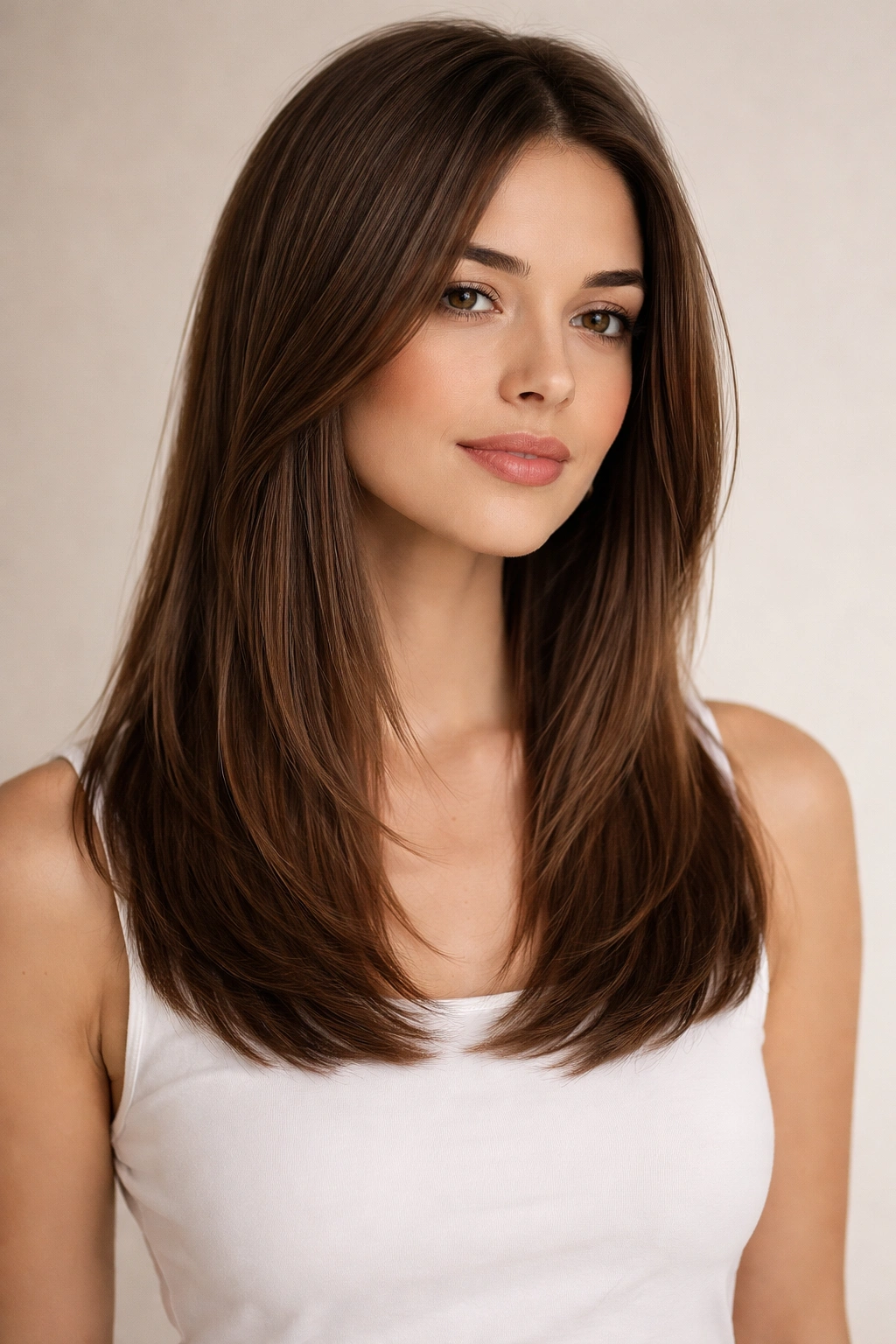
A cut that appears to be one length at first glance but features subtle layers underneath creates movement and dimension without obvious choppy texture. This style looks sleek and streamlined while secretly having all the movement-building layers built in.
What Makes This Cut Deceptively Low-Maintenance
The subtle internal layers do the heavy lifting of creating shape and dimension, so you don’t need to style aggressively to create movement. The relatively uniform appearance means minor imperfections from growth or styling are less obvious than they would be in a heavily layered style.
What You Should Know
- Requires trims every 8-10 weeks to maintain the clean line and keep the internal layers working to create shape
- Works on all hair types and textures
- Can be worn sleek and smooth or tousled and textured depending on your mood
- The subtle layers mean you’re not limited to one specific styling direction — flexibility is built in
- Looks polished with minimal styling, yet still offers dimension and movement
Pro tip: Ask your stylist to show you how the internal layers look when you flip your head upside down — this helps you understand what’s creating the subtle movement and dimension.
13. The Curly Bob
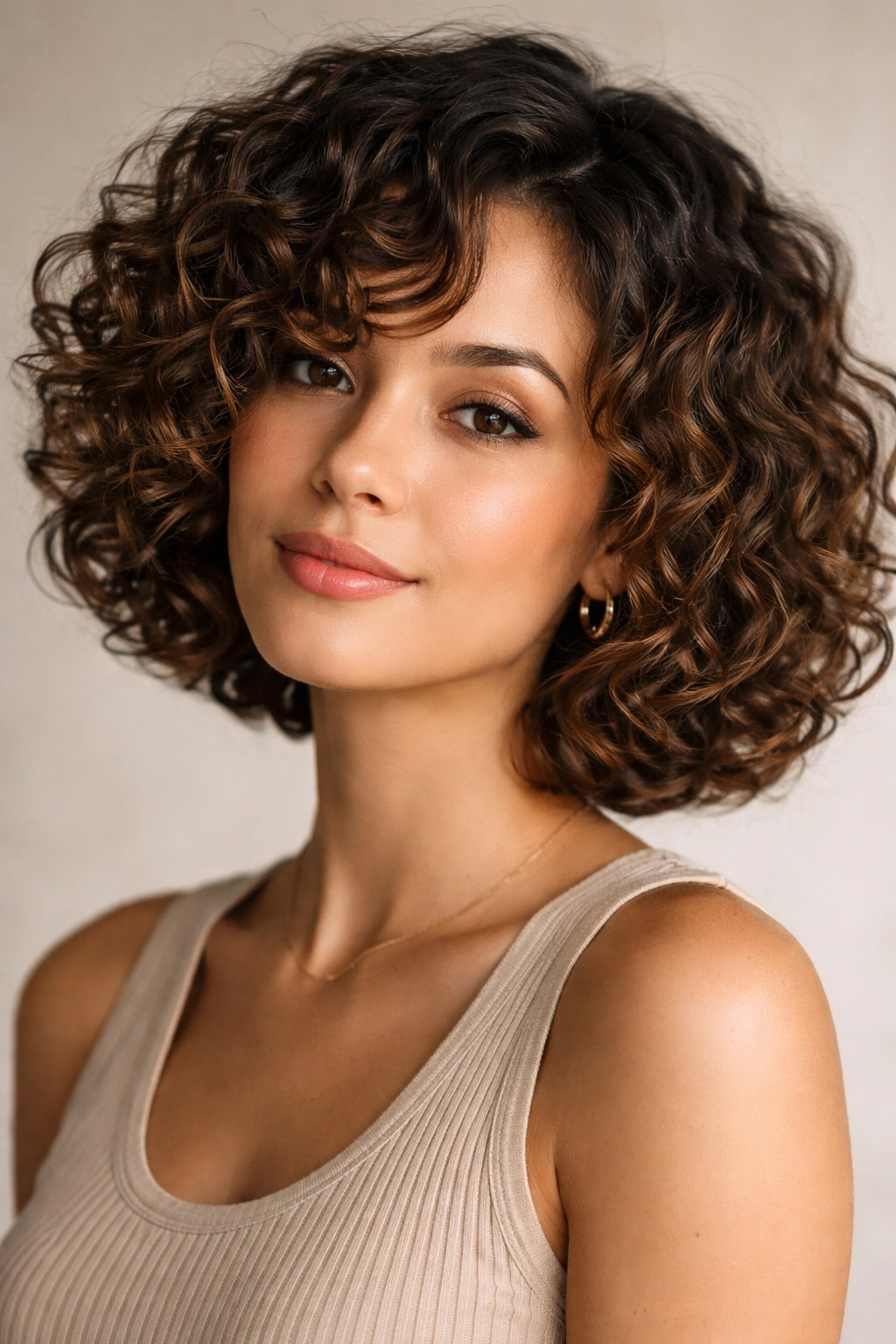
For people with curly or coily hair, a bob cut that celebrates the curl pattern is incredibly low-maintenance. The shorter length means less time managing wet hair and faster drying, while the curl pattern creates built-in volume and shape.
Why Curly Bobs Are Effortless
Curls are densest and most defined when hair is shorter, so a curly bob looks fuller and more intentional than longer curly hair. The shorter length means you spend less time detangling, conditioning, and drying. You’re working with your hair’s natural pattern, not against it.
Key Information to Know
- Requires trims every 6-8 weeks to maintain the bob shape and keep curls tight and defined
- Should be cut when your hair is in its natural curl pattern, not straight
- Dries much faster than longer curly hair, cutting styling time significantly
- Requires a leave-in conditioner and curl cream or gel, but no blow-drying
- Looks fuller and healthier than longer curly styles, with less frizz and more defined curls
Worth knowing: A curly bob actually requires less maintenance than longer curly hair, despite being shorter, because the curl pattern is more defined and easier to manage at this length.
14. The Tousled Wavy Bob
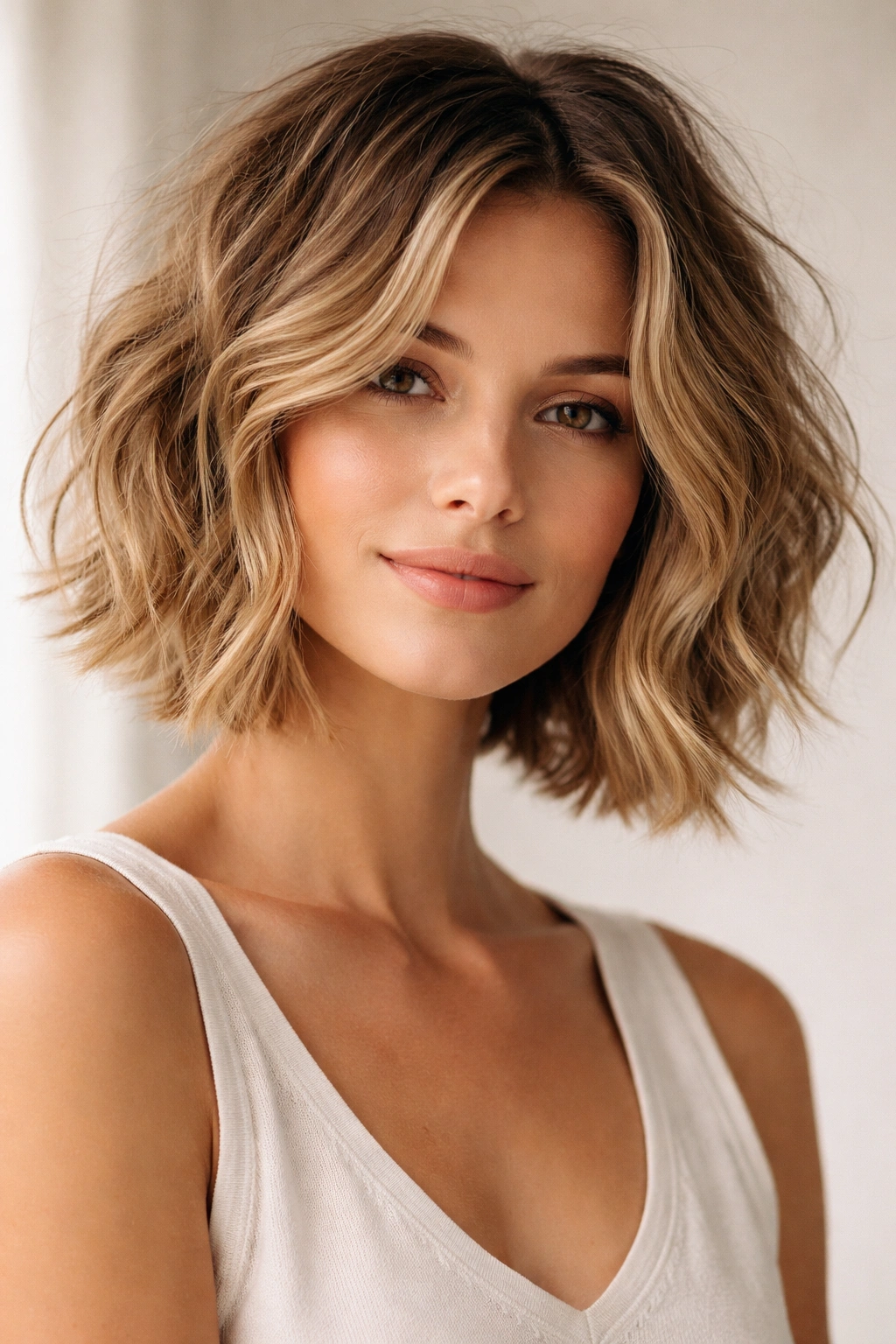
A bob with choppy layers and movement throughout that’s specifically cut to work with natural or enhanced waves is incredibly forgiving. The texture and wave built into the cut means it looks great whether you’ve diffuser-dried your waves or simply air-dried it.
Why Wavy Texture Makes This Cut Easy
The whole point of a tousled wavy bob is that it celebrates imperfection and texture. You’re not going for sleek and polished; you’re going for dimensional and undone. This means your natural hair texture and minimal styling actually become the goal rather than something you have to correct.
Things to Keep in Mind
- Requires trims every 7-9 weeks to keep the layers looking fresh and intentional
- Works beautifully with naturally wavy hair or hair that holds a wave easily
- Can be styled with a light wave-enhancing spray or left to air-dry for an even more undone look
- Takes 5 minutes to style or looks intentional with zero styling effort
- The shorter length is forgiving for growth and requires less product than longer wavy styles
Pro tip: A salt spray or wave-enhancing spray is optional but helpful for enhancing your natural wave pattern on days when you want extra texture and dimension.
15. The Straight, Blunt, Longer Style
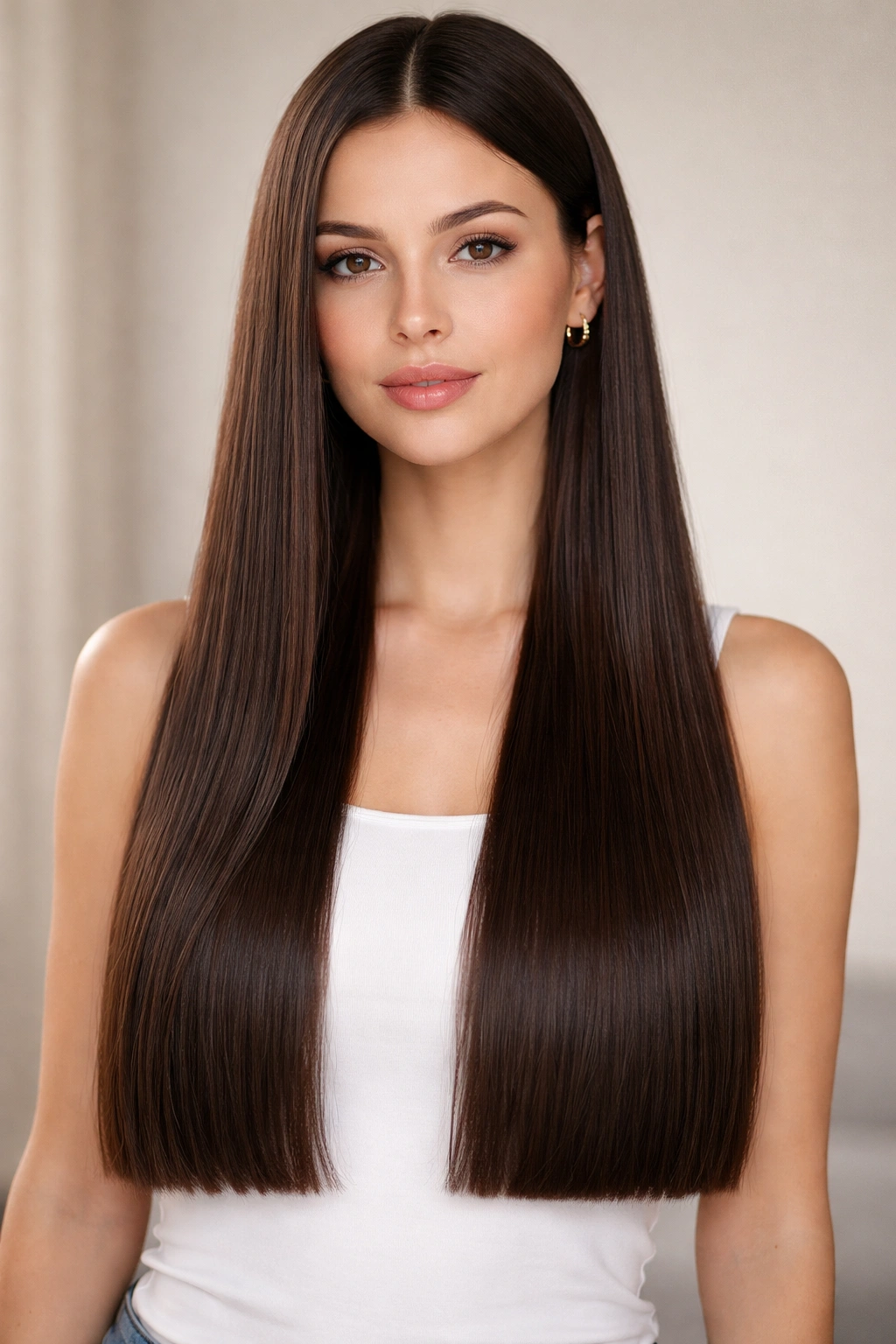
For people with straight or naturally sleek hair, a longer, blunt-cut style that relies on the hair’s natural straightness and shine is incredibly low-maintenance. There are no layers to maintain, no choppy texture to create or enhance — just clean, sleek lines.
Why Blunt-Cut Long Hair Works
When your hair is naturally straight and healthy, a blunt cut actually requires minimal maintenance. You’re not fighting your hair’s texture or trying to create movement; you’re celebrating the natural straightness and shine. The simplicity means there’s less to go wrong and less styling required.
What You Need to Know
- Requires trims every 8-12 weeks to maintain the blunt line and prevent split ends from traveling up the hair shaft
- Best for naturally straight or very sleek hair; wavy hair may look best with subtle layers
- Can be worn down, up, or half-up depending on your mood and time
- Requires minimal styling; a flat iron can maintain the blunt line, but it’s not necessary if your hair is naturally straight
- Looks polished with zero product, though a shine serum can enhance shine on special occasions
Insider note: Long, straight, blunt-cut hair actually photographs beautifully and conveys a sense of intentional minimalism. If you have naturally straight hair and minimal time for styling, this cut is deceptively powerful.
Final Thoughts

The lowest-maintenance haircut for you isn’t about following what’s trendy or popular — it’s about choosing a style that works with your hair’s natural texture, thickness, and growth pattern rather than against it. The best cut is one where you wake up, maybe run your fingers through your hair, and head out the door feeling put-together.
The key is communicating clearly with your stylist about your daily routine and styling tolerance. Be honest: if you hate blow-drying your hair, don’t choose a style that requires it every day. If you love the ease of putting your hair up, make sure your cut works in a ponytail. If you have curly hair, find a stylist who specializes in cutting curls and is willing to cut your hair in its natural state.
Remember that the maintenance timeline matters too. If you can comfortably get to a salon every 6 weeks, styles like pixies and curly crops work beautifully. If you can only make it every 10-12 weeks, longer styles with subtle layers grow out more gracefully. Matching your cut to your realistic maintenance schedule — not your ideal fantasy schedule — is what actually keeps your hair looking intentional and polished.
