



If you’ve been struggling to add volume and dimension to fine hair, a stacked angled bob might be the solution you’ve been searching for. These cuts work with your hair’s natural texture rather than against it, creating the illusion of density and thickness that most people with fine hair crave. The genius of this style lies in how the layers are positioned—the stacked sections at the back create lift at the crown, while the angled front pieces frame your face and add movement throughout.
Fine hair deserves a cut that’s specifically engineered to maximize what you have rather than fighting an uphill battle. Too many traditional bobs sit flat against the head or require blow-drying and styling products just to look acceptable. Stacked angled bobs are different because the cut itself does most of the heavy lifting. The layers catch light differently, the angles create visual width, and the texture prevents your hair from looking thin and wispy.
What makes these styles particularly brilliant for fine hair is that they work at different hair lengths, face shapes, and styling preferences. Whether you prefer something you can style in thirty seconds or you enjoy the ritual of blow-drying and texturizing, there’s a stacked angled bob that’ll work with your routine. The key is finding the specific version that complements your face and matches your lifestyle.
1. Classic Textured Stacked Bob
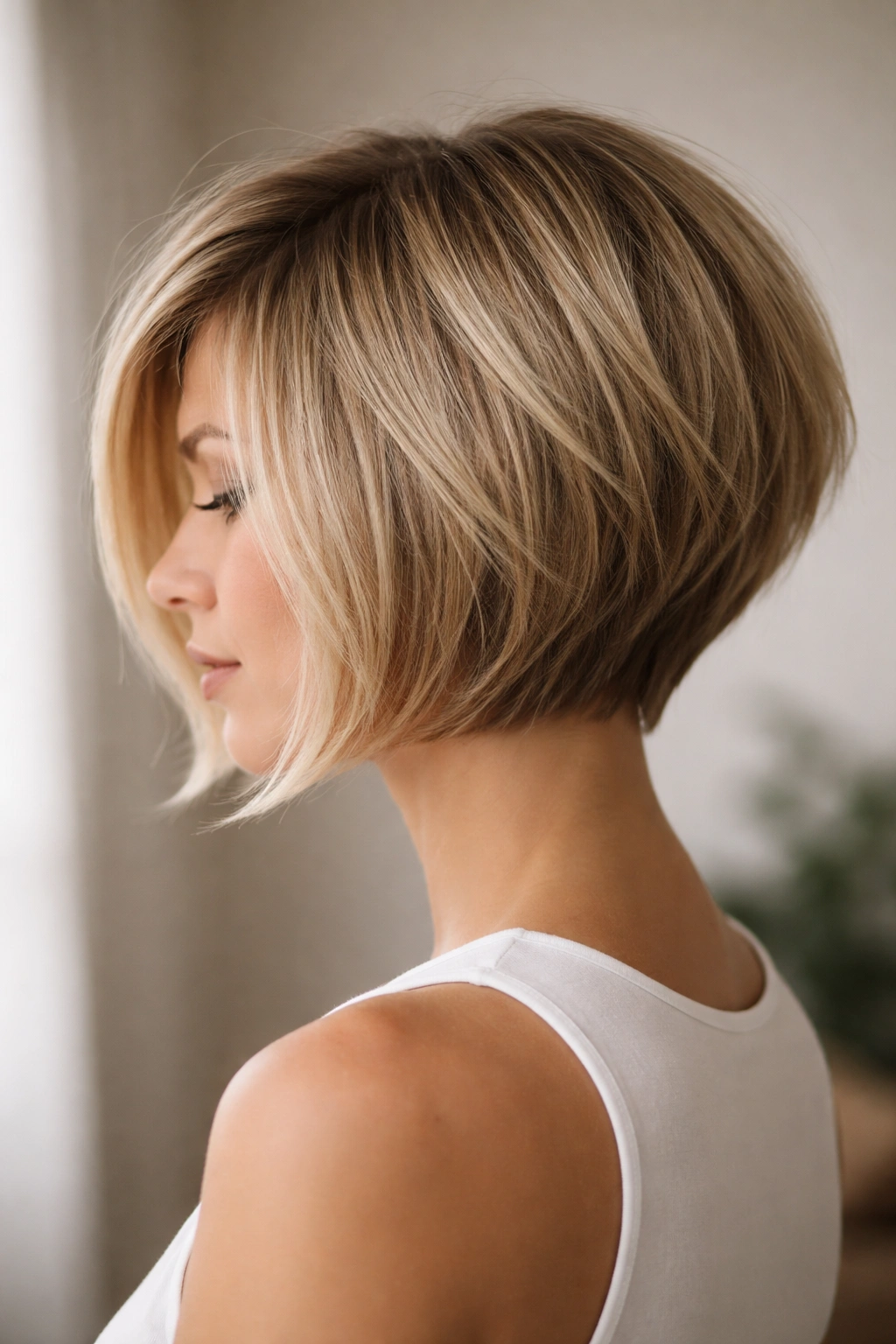
The classic textured stacked bob is the foundation of this whole category—it’s the version that works for nearly everyone. The back is cut shorter with distinct stacked sections that build volume from the nape up, while the front gradually angles longer to frame your jawline. What makes this one “classic” is that it doesn’t push any trends; it’s a timeless structure that’s been working for fine hair for decades.
Why It’s Perfect for Adding Volume
A textured stacked bob creates dimension through the cutting technique itself, not just through styling. The hairstylist uses point-cutting or texturizing shears to remove weight strategically, which allows each layer to move independently. This prevents the dreaded “helmet head” effect that happens when fine hair gets weighed down by too much bulk. The stacked sections in the back sit at different lengths, creating the optical illusion of thicker hair even when you’re not styling it.
How to Style and Maintain It
- Blow-dry with a round brush to direct volume upward at the crown and wave the layers throughout
- Use a lightweight texturizing spray or dry shampoo to enhance the separation between layers
- Refresh curls with a curling iron on medium heat to reactivate the texture
- Visit your stylist every 4 to 6 weeks to maintain the stacked shape and prevent it from growing into a shapeless mess
2. Choppy Layers Stacked Angled Bob
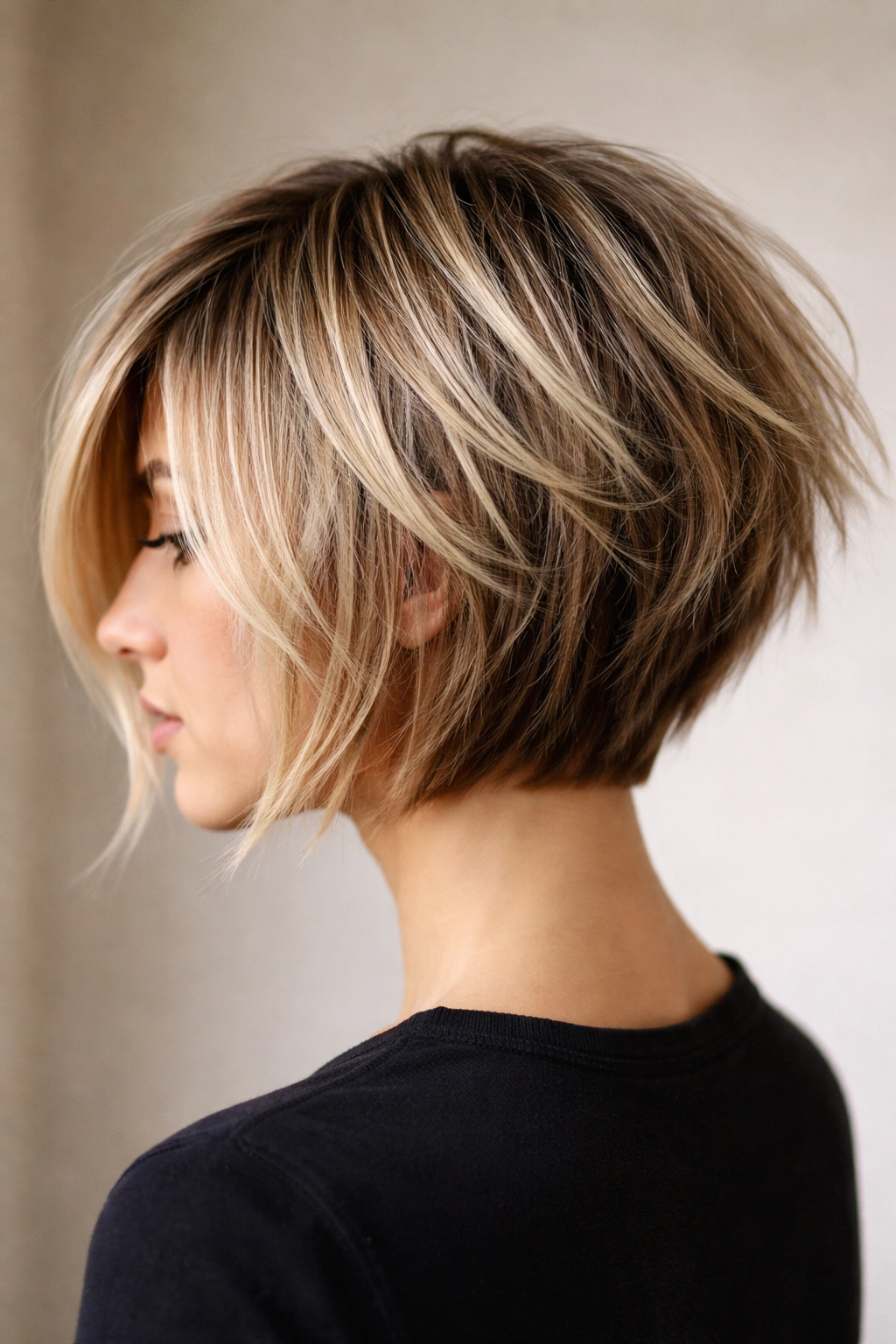
This version takes the basic stacked bob and amps up the choppiness, creating a more deliberately textured, piece-y look. The layers are shorter and more pronounced, with noticeably jagged edges rather than blended ones. If your fine hair has a bit of natural wave or texture, this style celebrates that instead of fighting it.
The Visual Impact of Intentional Choppiness
Choppy layers create movement that makes fine hair look fuller because each piece can move separately. Instead of your hair lying flat as one unit, the shorter, disconnected layers catch light from multiple angles and create visual density. This style also has an effortless, undone quality that appeals to people who don’t want their cut to look overly groomed or rigid.
Styling Tips for Maximum Movement
- Work product through damp hair before blow-drying to help the layers separate
- Use a blow dryer with a diffuser attachment to enhance natural texture and waves
- Consider adding sea salt spray for grip and definition between layers
- Finger-comb through the layers as you dry rather than using a brush, which can flatten them
3. Soft-Wave Feathered Stack
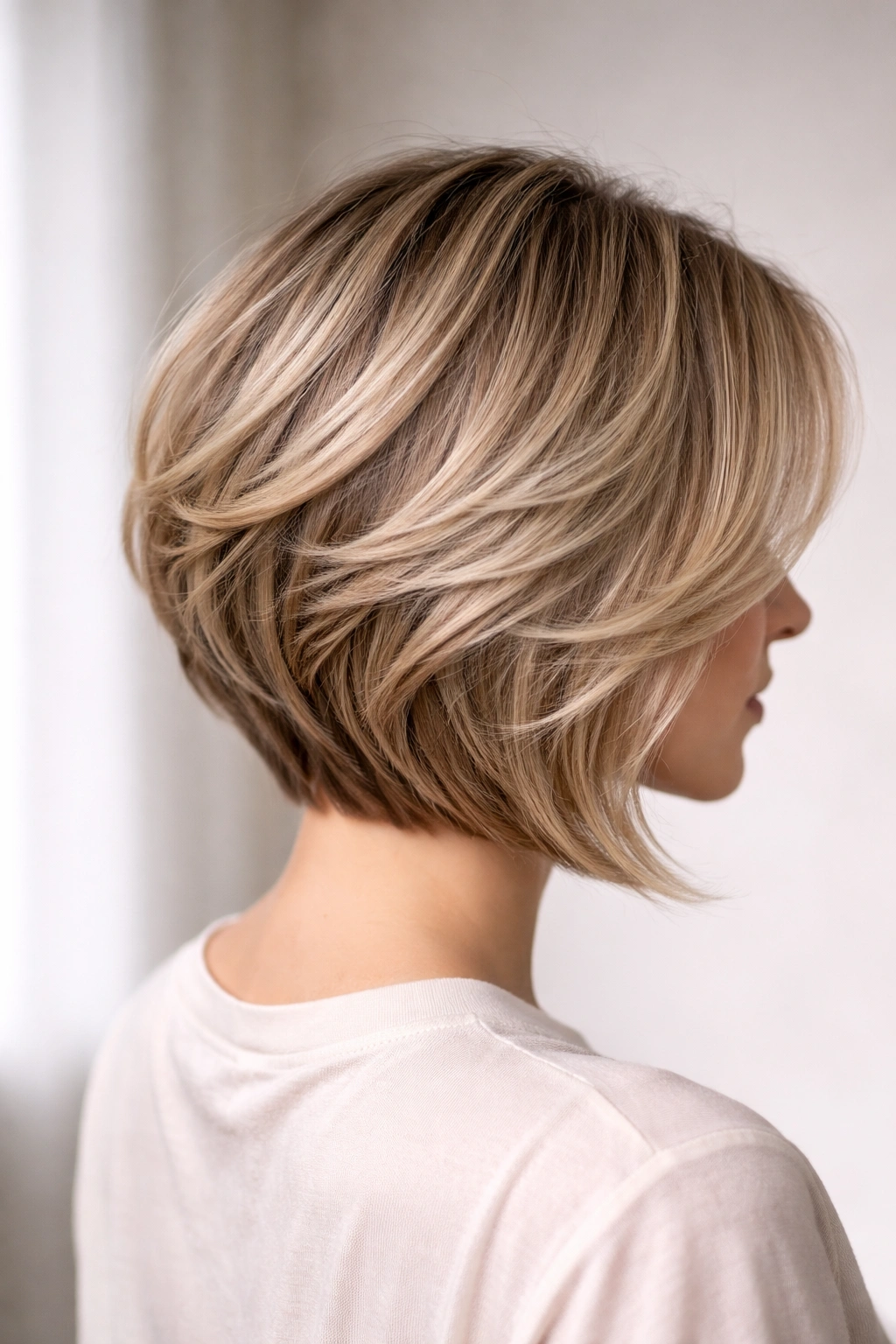
The soft-wave feathered stack is for people who want volume and movement without the choppy, edgy aesthetic. This version uses slightly longer layers that blend more smoothly, with feathering techniques that create gentle waves rather than pronounced texture. The front pieces are longer and more curved, following the line of your face.
Creating Soft Movement Through Strategic Layering
Feathering is a cutting technique where the stylist creates layers by cutting horizontally into the hair, which creates shorter pieces throughout without completely disconnecting them. For fine hair, this approach adds volume while keeping the overall shape cohesive and soft. The stacked back still provides lift, but the transition from back to front is more graceful and less dramatic than choppier versions.
How to Get That Effortless Wave
- Blow-dry with a round brush or paddle brush to create a subtle bend throughout
- Use a large-barrel curling iron to wave the layers gently, then finger-comb to soften
- Apply a lightweight wave cream or styling mousse to damp hair before drying
- The waves don’t need to be perfect or uniform—soft and loose actually looks better
4. Blunt Angled Bob with Volume
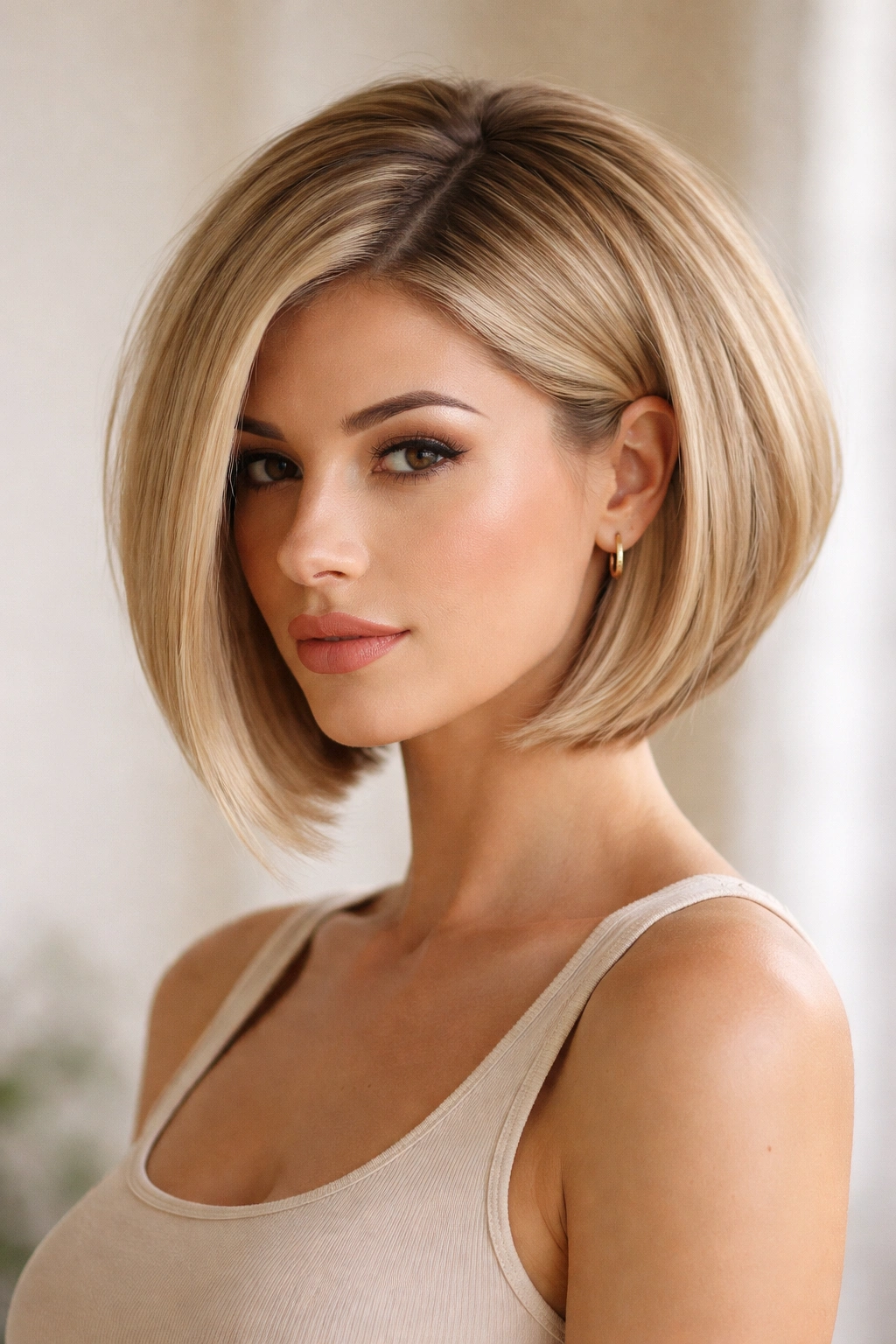
This style keeps the front edge relatively blunt (not choppy or feathered), which creates a clean, polished silhouette while still maintaining the stacked structure in the back. The blunt line at the front emphasizes the angle and creates a more modern, intentional appearance. It’s the perfect option if you like a cleaner aesthetic but still want fine hair to look thick.
Why Blunt Edges Work with Fine Hair
You might think a blunt edge would look too heavy for fine hair, but the key is that the blunt line is on the shorter side of an angle. Your front pieces are only chin-length or slightly shorter, so even though they’re blunt, they’re not dense with bulk. The stacking at the back is doing all the heavy lifting for volume, while the blunt front provides definition and shape.
Maintaining the Crisp Blunt Line
- Get trims every 3 to 5 weeks to keep the blunt edge sharp and prevent it from looking ratty
- Blow-dry with tension to smooth the front line and ensure it sits where you want it
- Use a straightening iron on very low heat if needed to press the blunt edge neat
- Avoid layering the front; keeping it blunt is what gives this style its distinctive look
5. Piece-y Disconnected Stack
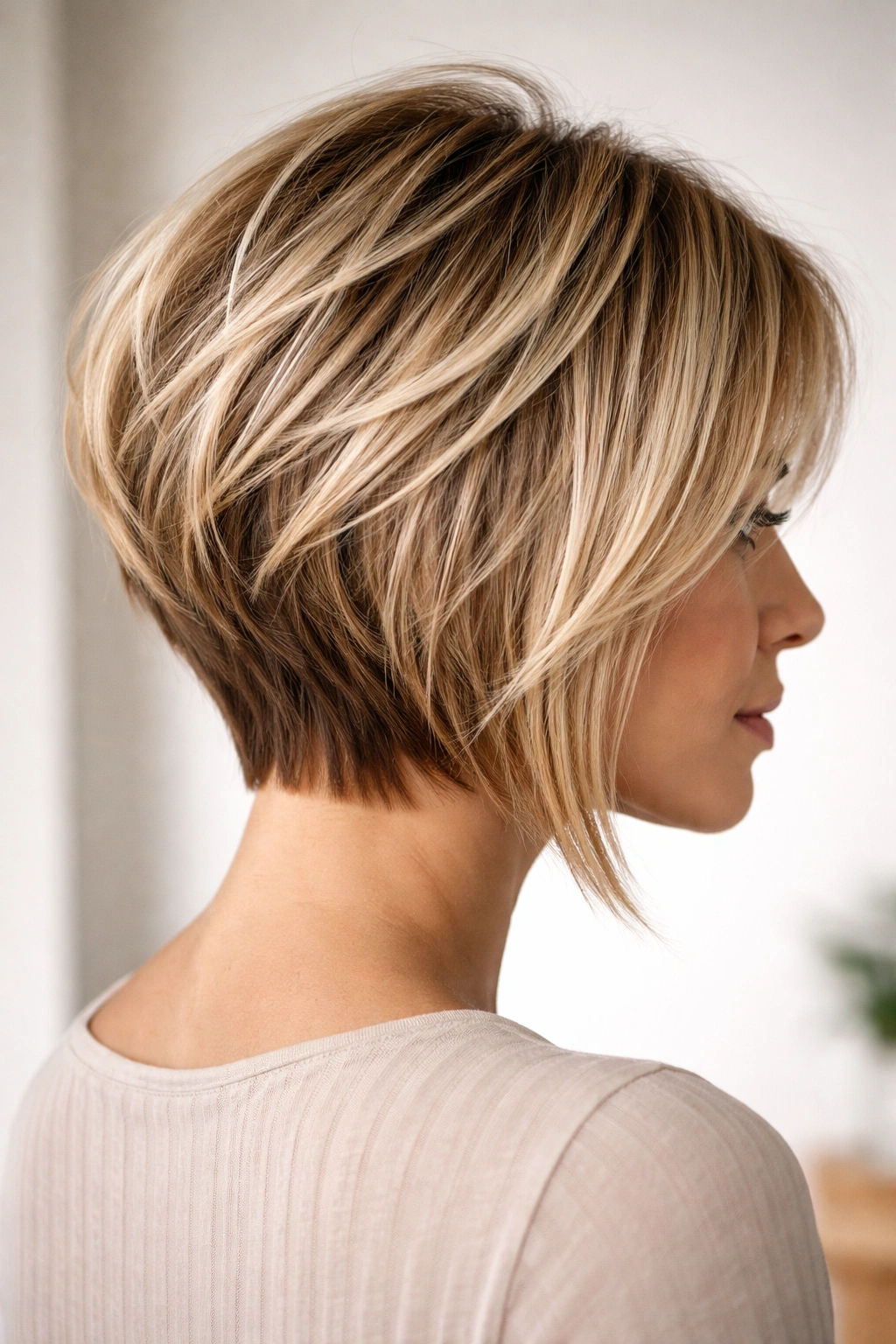
This is the most modern, fashion-forward version of the stacked angled bob. The layers are very deliberately disconnected from each other, creating distinct, separate pieces throughout the entire cut. The back is aggressively stacked with short, choppy sections, and the front has longer pieces that frame the face with very visible disconnection.
How Disconnection Creates Dimension for Fine Hair
When layers are disconnected, each piece functions as its own individual unit, which means your hair can never look flat or lifeless. Even without styling, the disconnected pieces stick out slightly and create the appearance of much more density than you actually have. This style is deliberately high-texture and undone, which actually works in fine hair’s favor because it looks intentional rather than thin.
Styling Disconnected Layers
- Apply a texturizing product (mousse, cream, or spray) to damp roots for grip
- Blow-dry with your head tilted forward to encourage pieces to separate and stand away from the head
- Use your fingers to tousle and separate pieces as you dry
- A little bit of frizz is actually desirable here—it adds to the texture and separates pieces further
6. Asymmetrical Stacked Bob
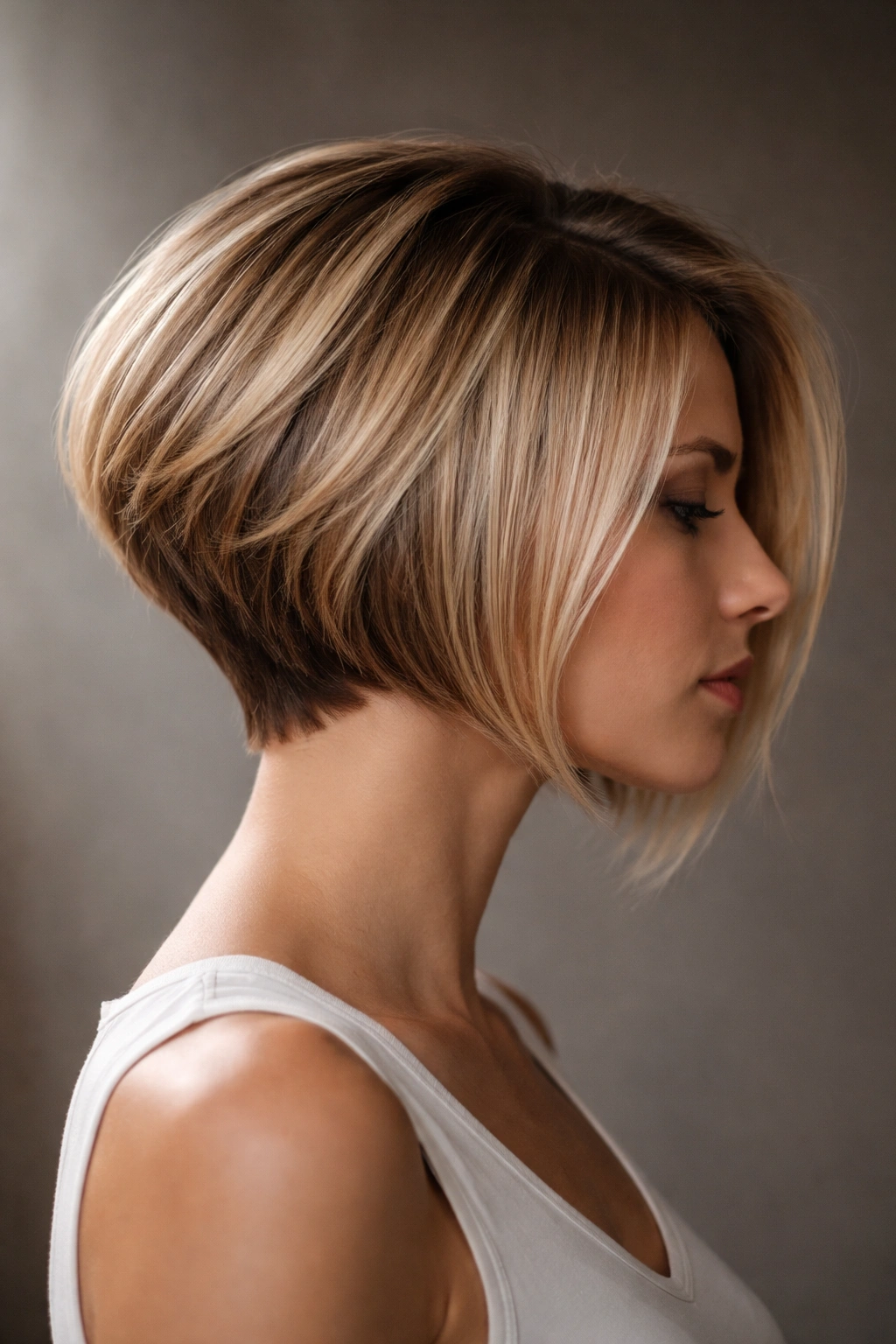
An asymmetrical stacked bob takes the angled concept further by making one side noticeably shorter than the other. One side might be cropped to ear-level while the other angles down to jaw-length or longer. This creates an intentionally off-balance, artistic look that’s bold and modern.
The Visual Drama of Asymmetry
Asymmetry is surprisingly flattering for fine hair because the shorter side appears fuller—the less hair you have covering an area, the thicker it looks. The contrast between the two sides also draws attention and adds visual interest, which makes the overall style feel more substantial. This works especially well if you have a round face, because the varying lengths help create the appearance of more angles and definition.
Who Should Rock This Style
- Anyone confident enough to go bold with their hair
- People with good bone structure and facial symmetry who can carry off an edgy look
- Those willing to style their hair regularly to maintain the intentional shape
- Fine-haired individuals who want to make a statement rather than go subtle
7. Razored Choppy Bob
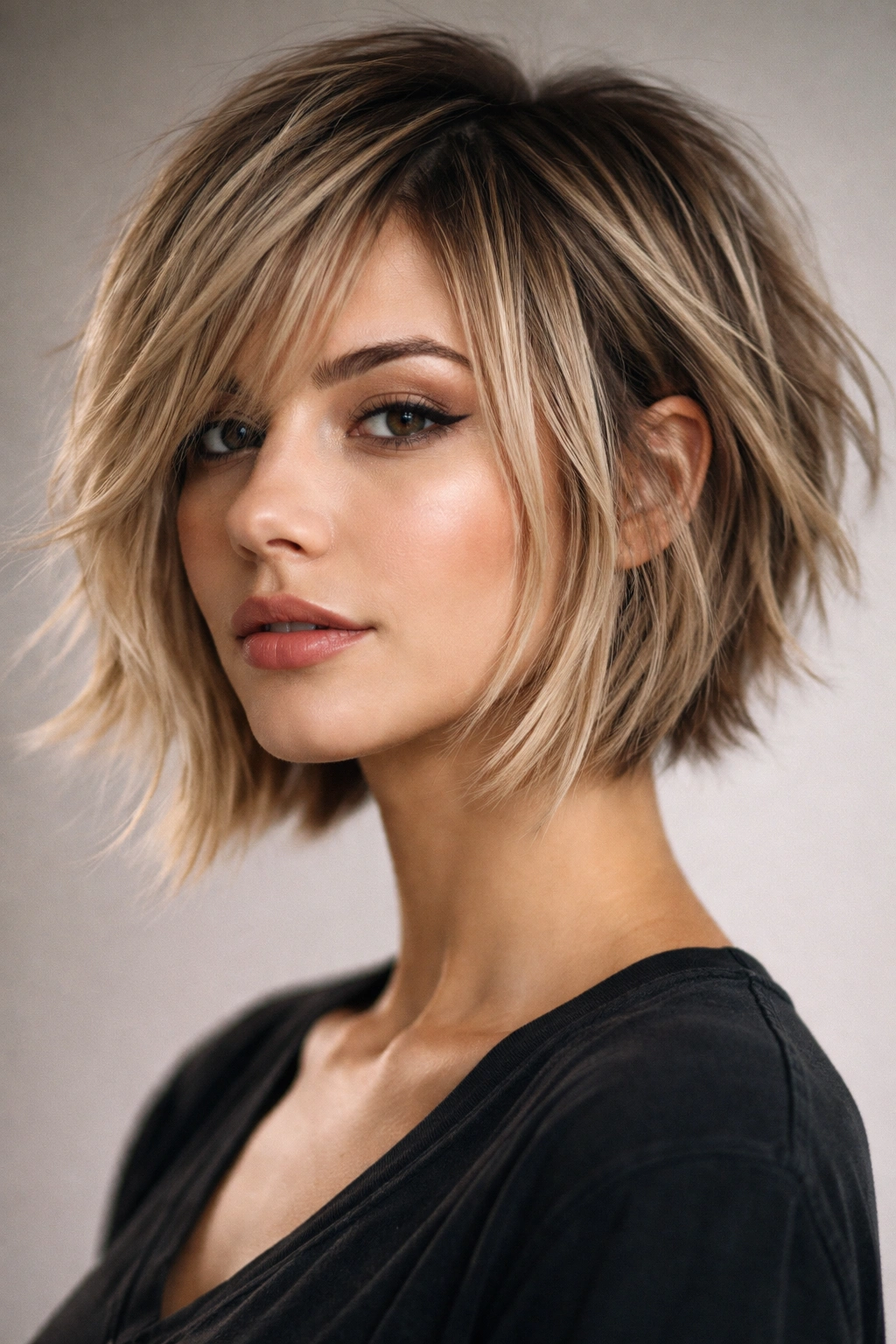
Razored cuts use a razor tool instead of scissors, which creates much sharper, more textured edges. A razored choppy bob is maximum texture—the layers are very short and aggressively choppy, with a deliberately shaggy appearance. This creates the most movement possible and is ideal for fine hair that needs as much visual volume as you can get.
Why Razors Create Superior Texture for Fine Hair
Razored edges are thinner and sharper than scissor-cut edges, which means they separate more easily and catch more light. Each layer has a feathered quality even without specific feathering technique. For fine hair, this means maximum texture with minimal bulk—your stylist is removing weight through the sharpness of the edges rather than cutting out huge chunks of hair.
The Reality of Razored Cuts
- They require more frequent trims because the edges fray faster than blunt cuts
- They often look best when you have at least a little natural texture or wave
- Straight, very fine hair might show separation lines more obviously, which can look less polished
- They’re higher-maintenance in terms of styling but incredibly rewarding for texture and movement
8. Subtle Face-Framing Stack
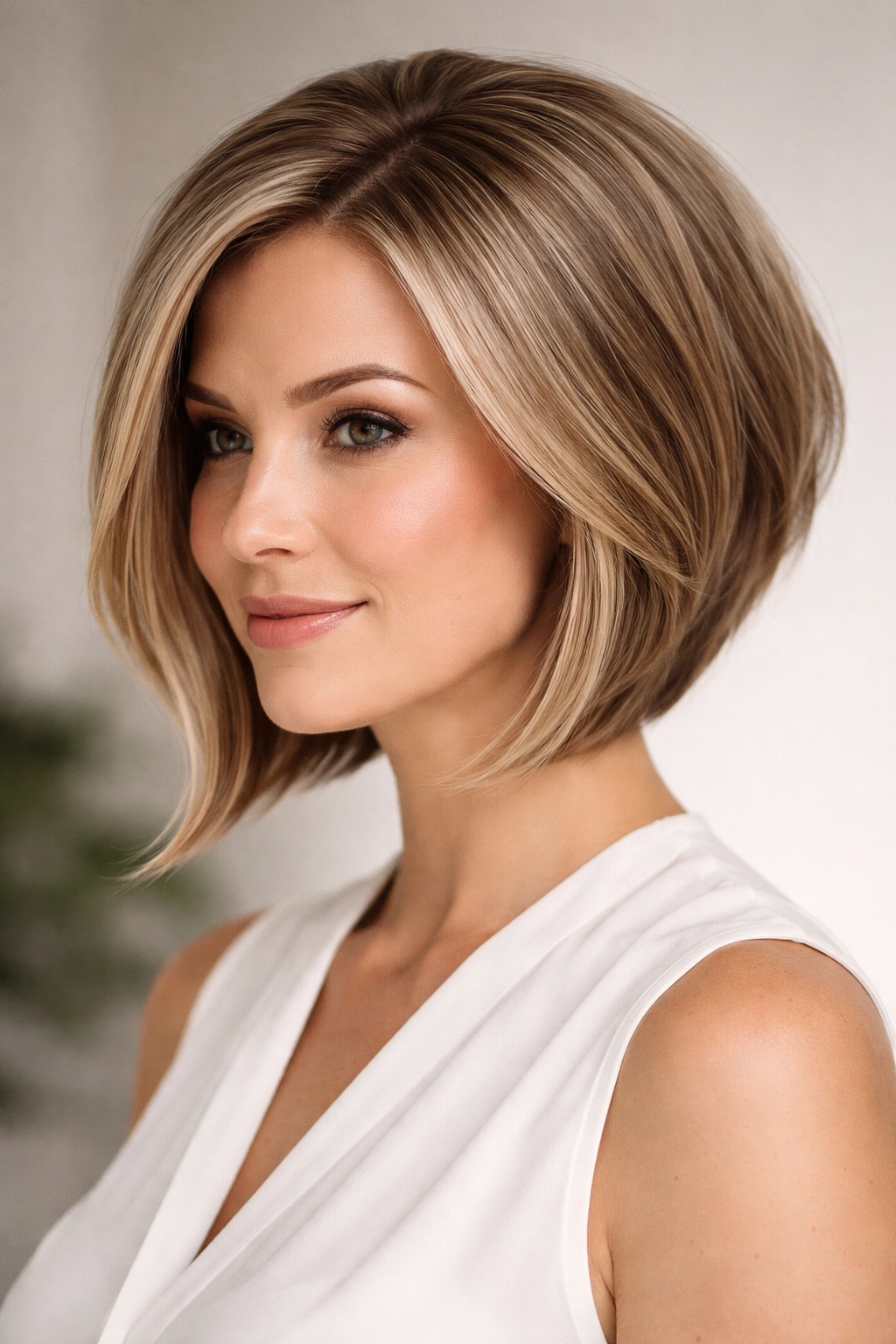
This version prioritizes face-framing over dramatic texture. The back is still stacked for volume, but the front pieces are longer, softer, and more gently curved around your face. The overall shape is more conservative and less edgy, making it perfect for professional settings or anyone who prefers subtlety.
How Gentle Framing Balances Bold Stacking
The contrast between bold stacking in the back and soft framing in the front creates visual interest while remaining sophisticated. The longer front pieces draw attention to your face and create a flattering frame, while the stacked back does the heavy lifting for volume. You get all the benefits of a stacked bob’s volume without the bold, trendy aesthetic.
Styling for a Polished Look
- Blow-dry smooth to emphasize the soft frame around your face
- Curl just the front-facing pieces gently to enhance the frame
- Keep the back more textured for contrast with the smoother front
- This style looks particularly elegant when styled sleek or with soft waves
9. Tousled Textured Bob
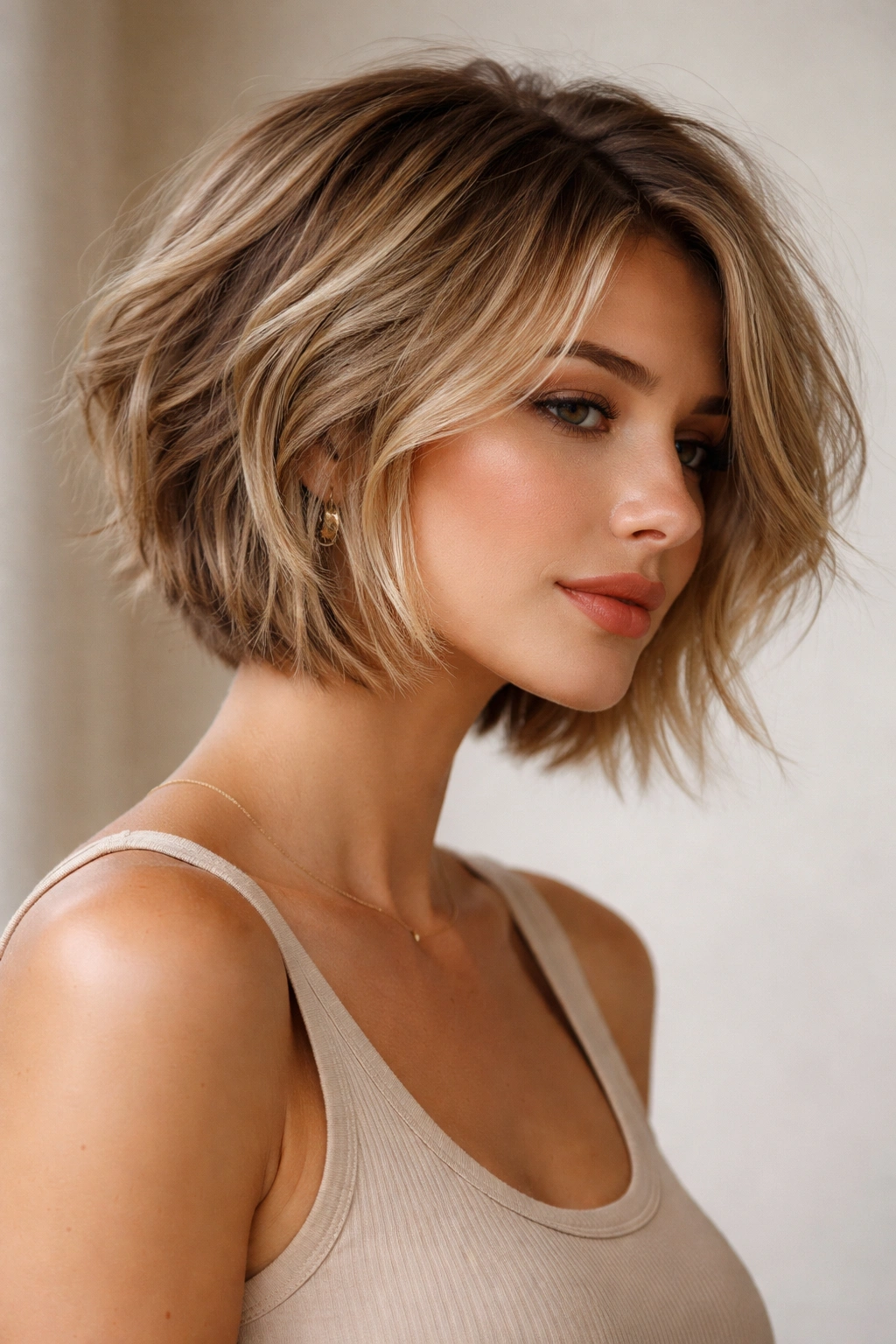
The tousled textured bob sits somewhere between polished and deliberately undone. The layers are choppy enough to create movement and texture, but they blend together more smoothly than a completely disconnected cut. The overall impression is effortless and textured but still cohesive as a shape.
Achieving That Effortlessly Cool Aesthetic
This style works beautifully for fine hair because the “tousled” appearance is actually built into the cut itself. Your stylist creates layers and texture that naturally look a bit undone, which means you don’t have to style it perfectly to look intentional. Even on a no-styling day, this cut has enough movement and dimension to look put-together.
Low-Maintenance Styling Options
- Wash and air-dry with a texturizing product for completely hands-off styling
- Blow-dry with a diffuser for a more defined texture
- Scrunch in some sea salt spray while wet for enhanced separation
- Run your fingers through to tousle and separate layers as the final step
10. Sculpted Layered Angled Bob
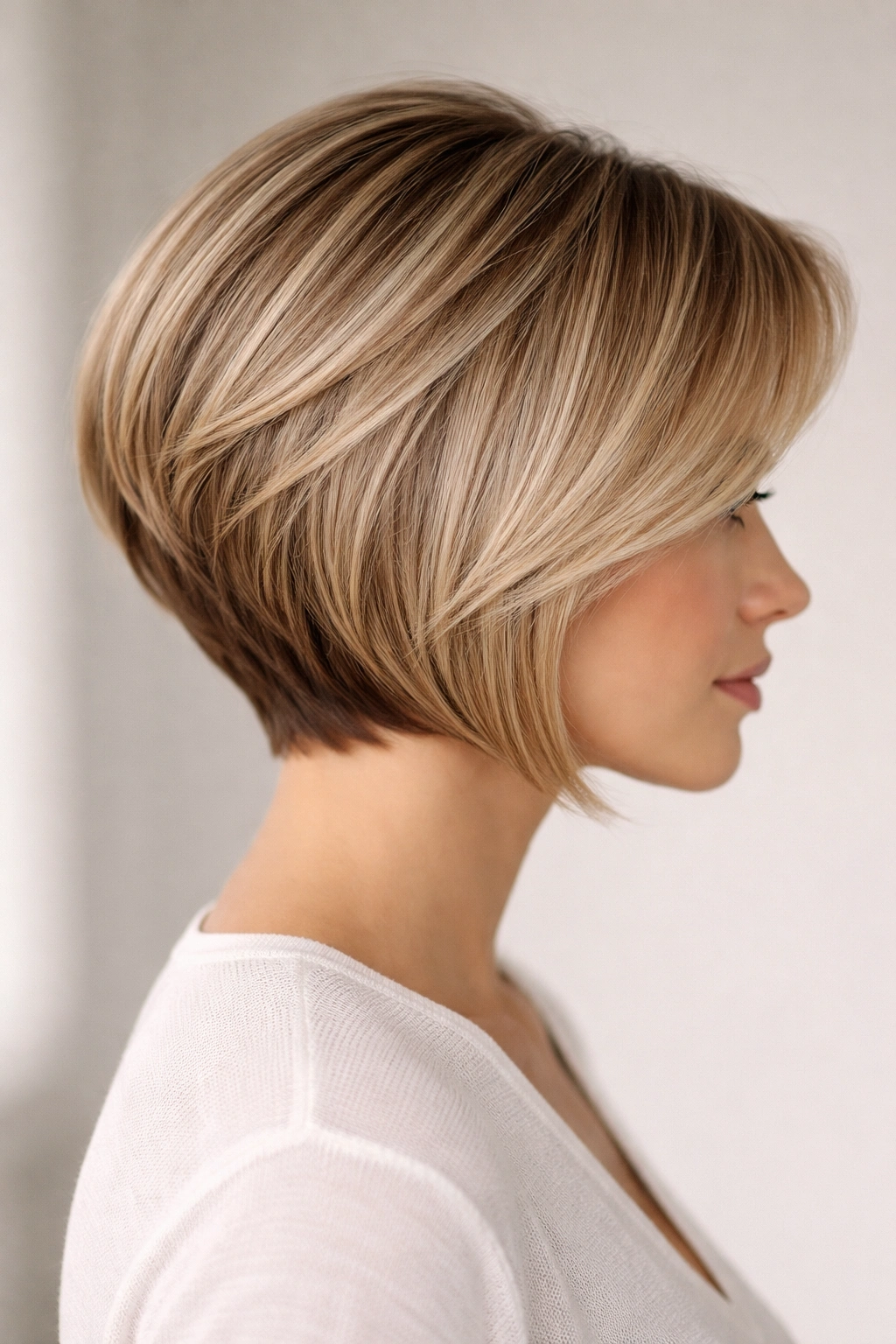
The sculpted layered angled bob is precise and intentional, with carefully planned layers that create a specific silhouette. The back layers are sculpted to angle upward and inward, creating a rounded shape at the crown, while the front angles down to frame your face. Every layer has a purpose in the overall design.
The Precision Behind Sculpted Layers
Sculpted layering is an advanced technique that requires a skilled stylist who understands how fine hair moves and how layers interact. The goal is to create layers that work together to build volume without bulk, that angle in specific directions to create shape, and that complement your natural hair growth patterns. This is a cut that’s less about trends and more about working with your individual hair.
Maintaining Sculpted Structure
- Schedule regular trims every 4 to 6 weeks to maintain the precise shape
- Blow-dry with a round brush to encourage the sculpted direction of the layers
- Use a light-hold styling product that doesn’t weigh down the structure
- Avoid heavy serums or oils that can collapse the sculpted layers
Final Thoughts
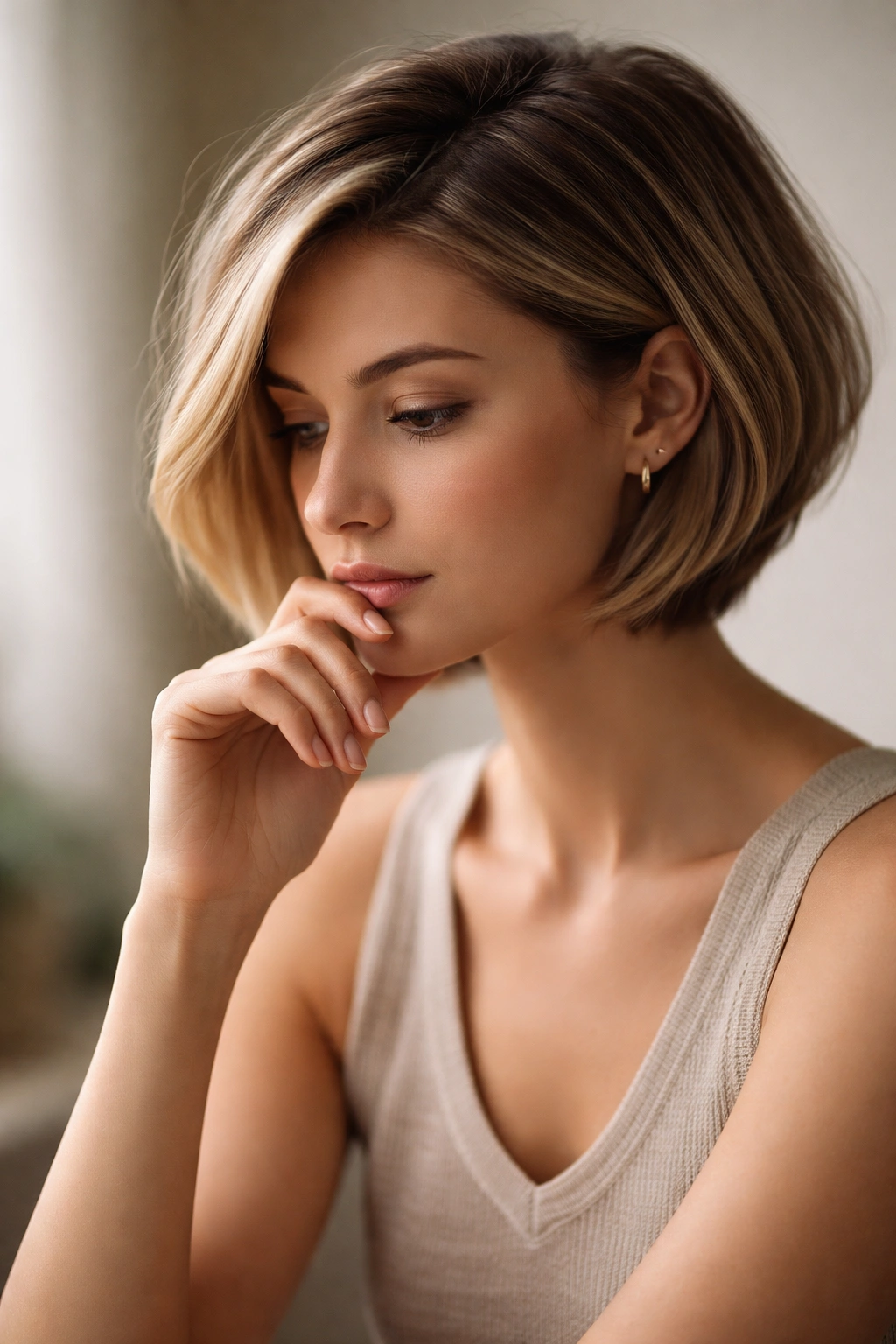
A stacked angled bob is one of the smartest choices for fine hair because it works with your hair’s natural qualities rather than against them. Whether you go for choppy and bold or soft and subtle, the fundamental structure—stacked density at the back combined with an angled front—creates volume, movement, and visual thickness that transform how your hair looks and feels.
The version that works best for you depends on your face shape, natural texture, lifestyle, and how much styling you’re willing to do. Someone with a round face might prefer a more dramatic disconnected version to create angles, while someone with a long face might love the soft, face-framing approach. The key is communicating clearly with your stylist about your hair’s texture, your styling routine, and what you’re hoping to achieve.
Get a consultation before committing to any cut. Show your stylist reference photos of the exact version you want, discuss how much time you’re willing to spend styling, and be honest about whether you’ll come back for regular trims. A stacked angled bob only works if you maintain it—the cut needs refreshing every 4 to 6 weeks to keep the shape crisp and the layers defined. When you commit to that maintenance and choose the version that matches your lifestyle, you’ll finally have the volume and dimension you’ve been dreaming about.
