



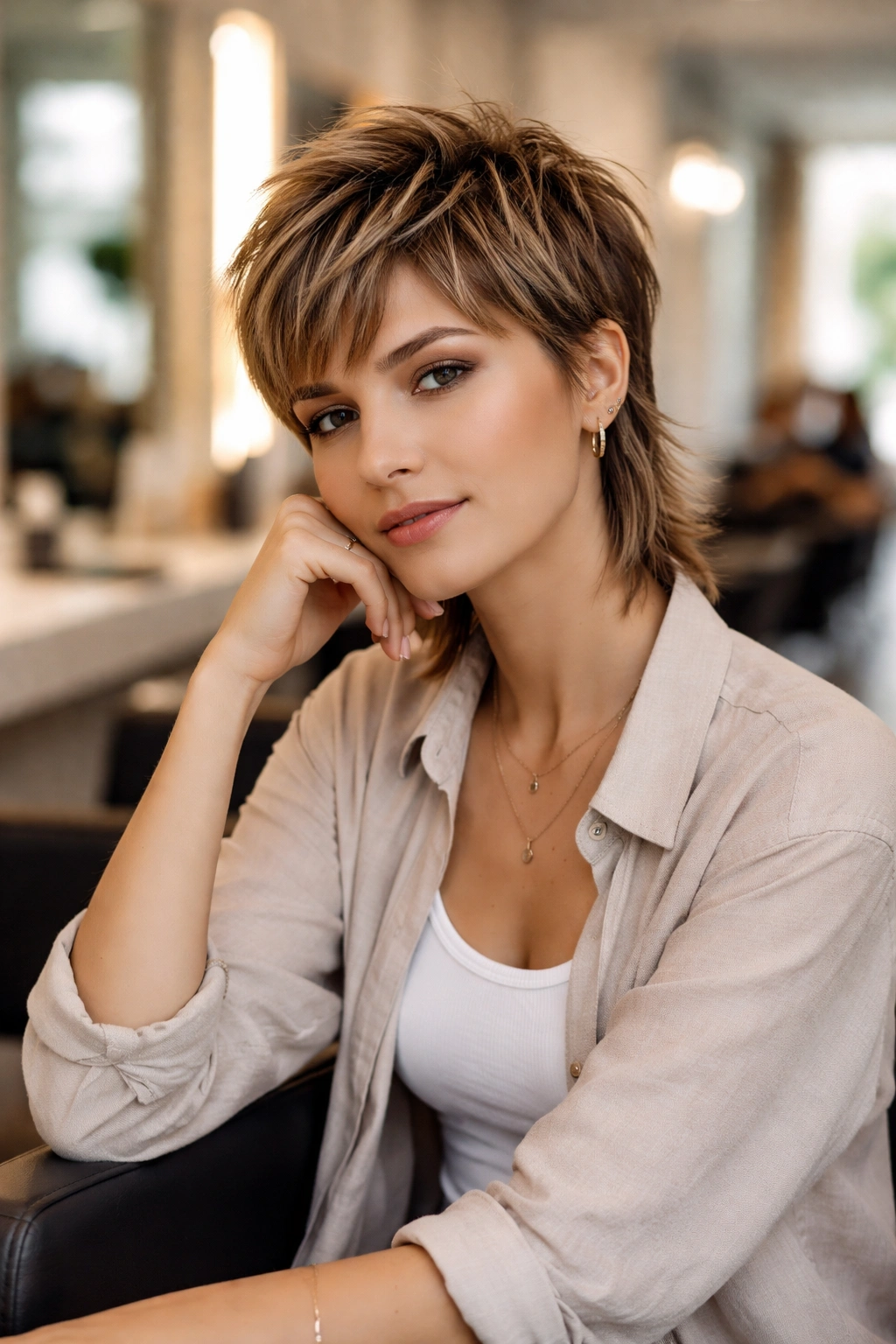
The mullet and the pixie cut have experienced a remarkable resurgence, and their collision has sparked one of the most exciting hybrid trends in modern hairstyling. The mixie — a blend of the mullet’s business-in-front, party-in-back attitude with the pixie’s cropped, edgy sophistication — represents a perfect middle ground for people who want short hair with personality but also some length to play with.
What makes the mixie so compelling is that it breaks traditional rules while remaining surprisingly wearable. You’re getting the low-maintenance appeal of a pixie with the unexpected volume and movement of a mullet. The front and sides stay closely cropped, keeping that sharp, defined look, while the back gradually lengthens into something you can actually tuck behind your ears or let grow into subtle layers. It’s modern without feeling costume-like, and it works across different face shapes because of the customizable proportions.
The beauty of this hybrid cut is that it’s endlessly adaptable. Whether you prefer a subtle, barely-there mullet vibe or a more pronounced long-back situation, there’s a mixie variation that fits your personal style and lifestyle. Some versions lean heavily into the pixie’s minimalist aesthetic, while others emphasize that unexpected mullet payoff. The result is a cut that feels fresh, confident, and entirely your own.
1. The Classic Mixie
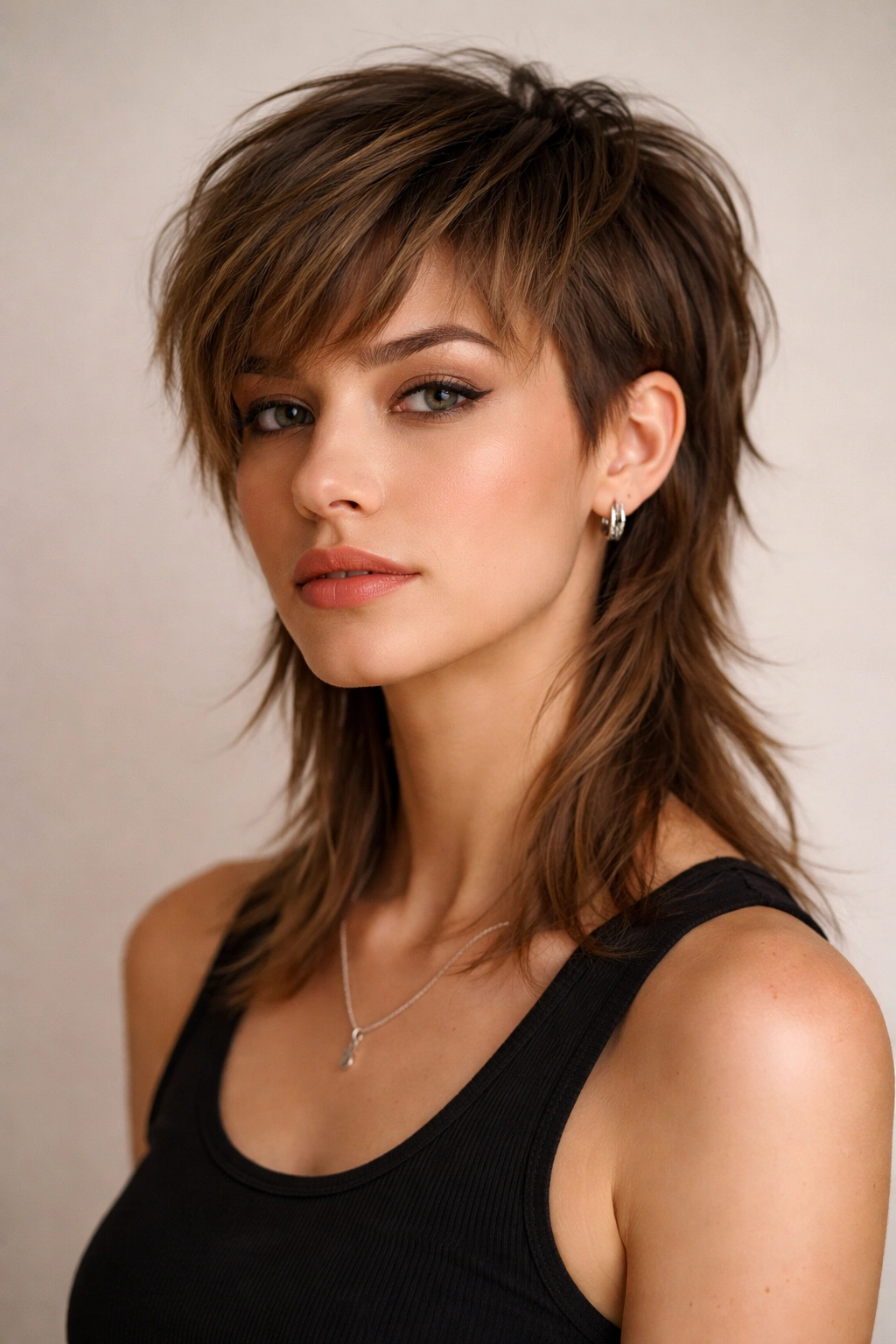
The classic mixie is the most balanced interpretation of this hybrid style — it’s the gateway version for anyone curious about blending these two cuts without committing to something too extreme.
The Cut Structure and Proportions
The classic mixie keeps the sides and front clipped short, typically around a quarter-inch to half-inch length, creating that crisp pixie definition. The top maintains enough length to add dimension and texture, usually two to three inches depending on your hair type and face shape. The back gradually transitions from the shorter sides into length that reaches your lower neck or just past your shoulders — the exact endpoint depends on how pronounced you want the mullet element.
How to Style and Maintain
- Wash and go potential with a good texturizing product for grip and separation
- Blow-dry the top and sides forward and upward for maximum lift and shape
- Use a lightweight mousse or dry shampoo to enhance texture and prevent flatness
- Back length can be tousled, tucked behind ears, or left to fall naturally
- Touch-ups every 4-6 weeks keep the pixie-short areas looking sharp
Pro tip: Ask your stylist to layer the back subtly rather than cutting it blunt — this creates movement and prevents the length from feeling heavy, which is crucial for maintaining the cut’s overall balance.
2. The Textured Shag Mixie
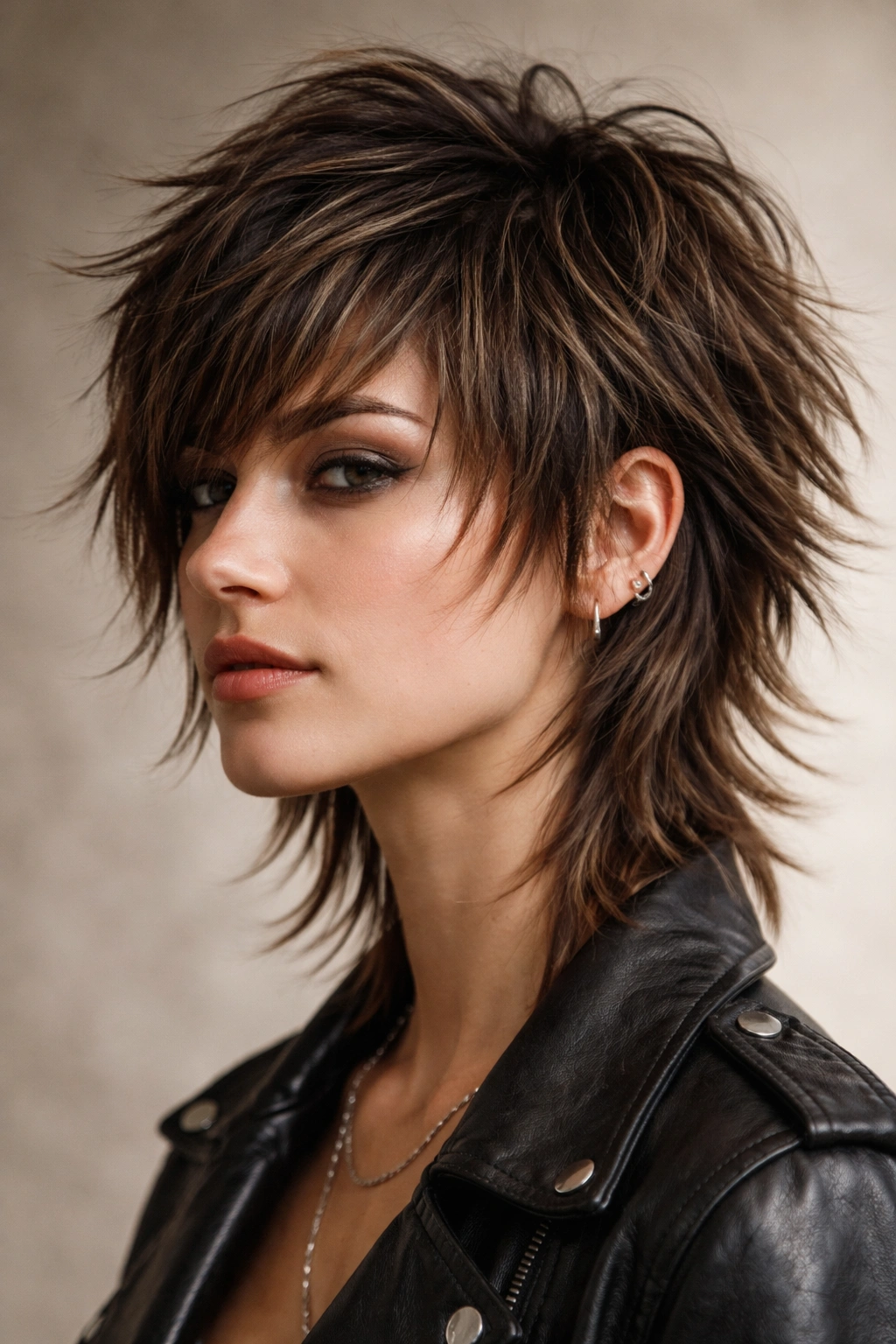
This variation leans into choppy, layered texture throughout, creating a lived-in, deliberately undone appearance that feels contemporary and rock-and-roll.
What Sets the Shag Version Apart
The textured shag mixie uses strategic layering from the crown all the way through the back to create movement and dimension. Instead of smooth, blunt lines, you’re working with broken layers that catch light differently and move independently. The front sections can be slightly longer than the sides, creating asymmetrical angles that add attitude. This version works particularly well if you have naturally wavy or curly hair, as the texture does half the work for you.
Styling Technique and Product Choices
- Apply sea salt spray or texturizing mist to damp hair for immediate definition
- Scrunch gently while air-drying, or use a diffuser if you have curls
- For straight or fine hair, use a blow-dryer with a medium-heat setting and rough-dry with your fingers
- A matte clay or pomade adds grip without making the cut look plastic or overdone
- Occasional finger-combing throughout the day maintains that intentional dishevelment
The shag version requires a stylist who understands texture and movement — make sure they’re comfortable working with deliberate choppy lines rather than blending everything smooth.
3. The Sleek Minimalist Mixie
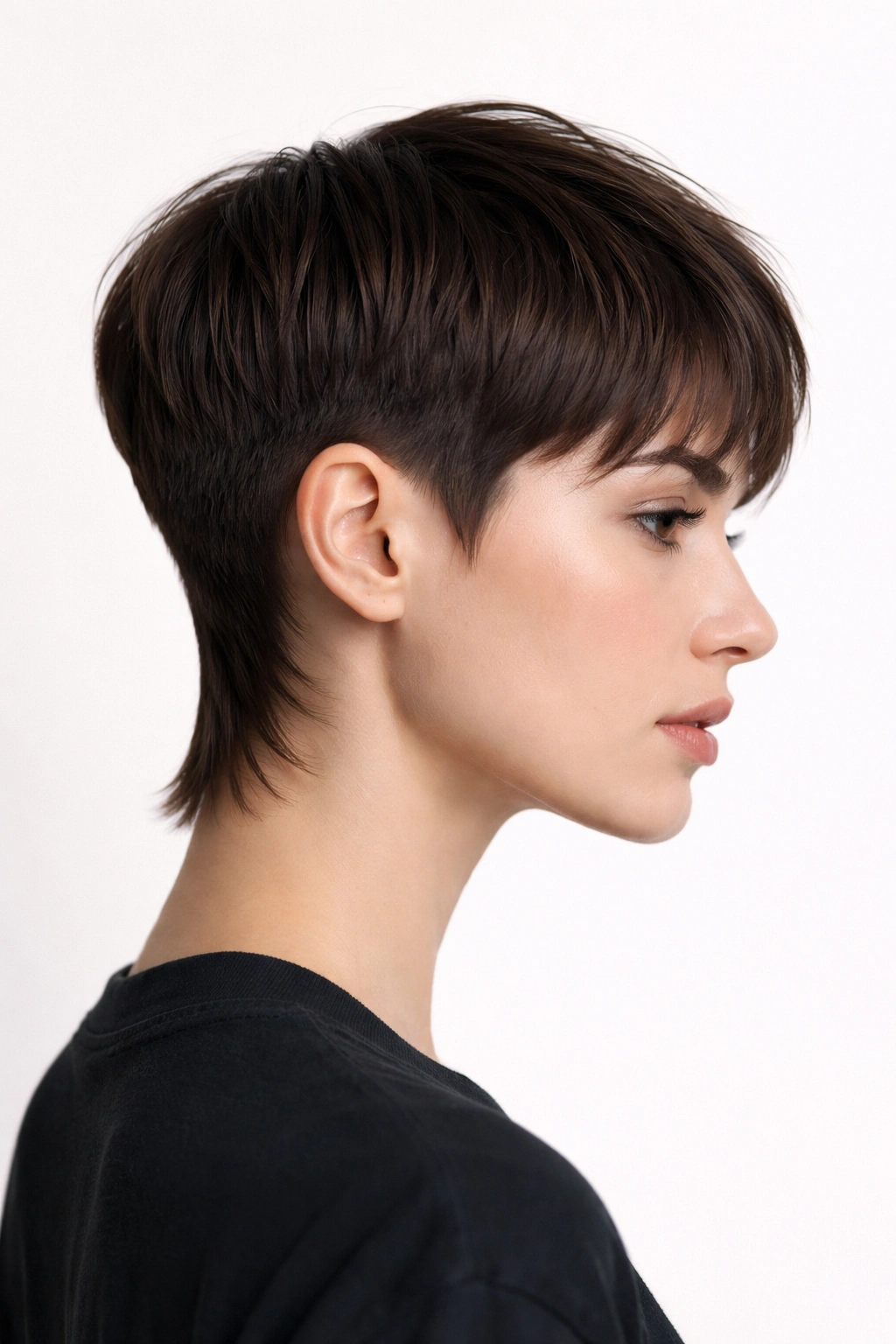
If you love the mullet-pixie concept but prefer clean lines and sophistication over texture and movement, the sleek minimalist version delivers all the hybrid appeal with a polished, almost architectural finish.
Precision and Geometry
The sleek minimalist keeps lines sharp and well-defined with minimal layering. The sides remain very closely cropped, almost faded rather than chunky. The top is kept short enough to lie smoothly without excessive bulk, creating an elegant silhouette from the side. The back length is the only place indulgence happens — it’s kept straight and blunt at the ends, creating that deliberate contrast between restraint and length.
Maintenance and Styling Requirements
- This cut needs more frequent trims to maintain its precision — every 3-4 weeks is ideal
- A lightweight pomade or edge control product keeps everything in place
- Blow-dry the top smooth with a brush for a polished finish
- The back can be left to hang naturally or tucked for a completely different look
- Best suited to straight or wavy hair — very curly textures need the choppy layers to prevent bulk
Worth knowing: This version requires a stylist with barbering skills and precision-cutting ability. Bring reference photos and discuss exactly how short you want the sides and where you want the transition to happen.
4. The Asymmetrical Mixie
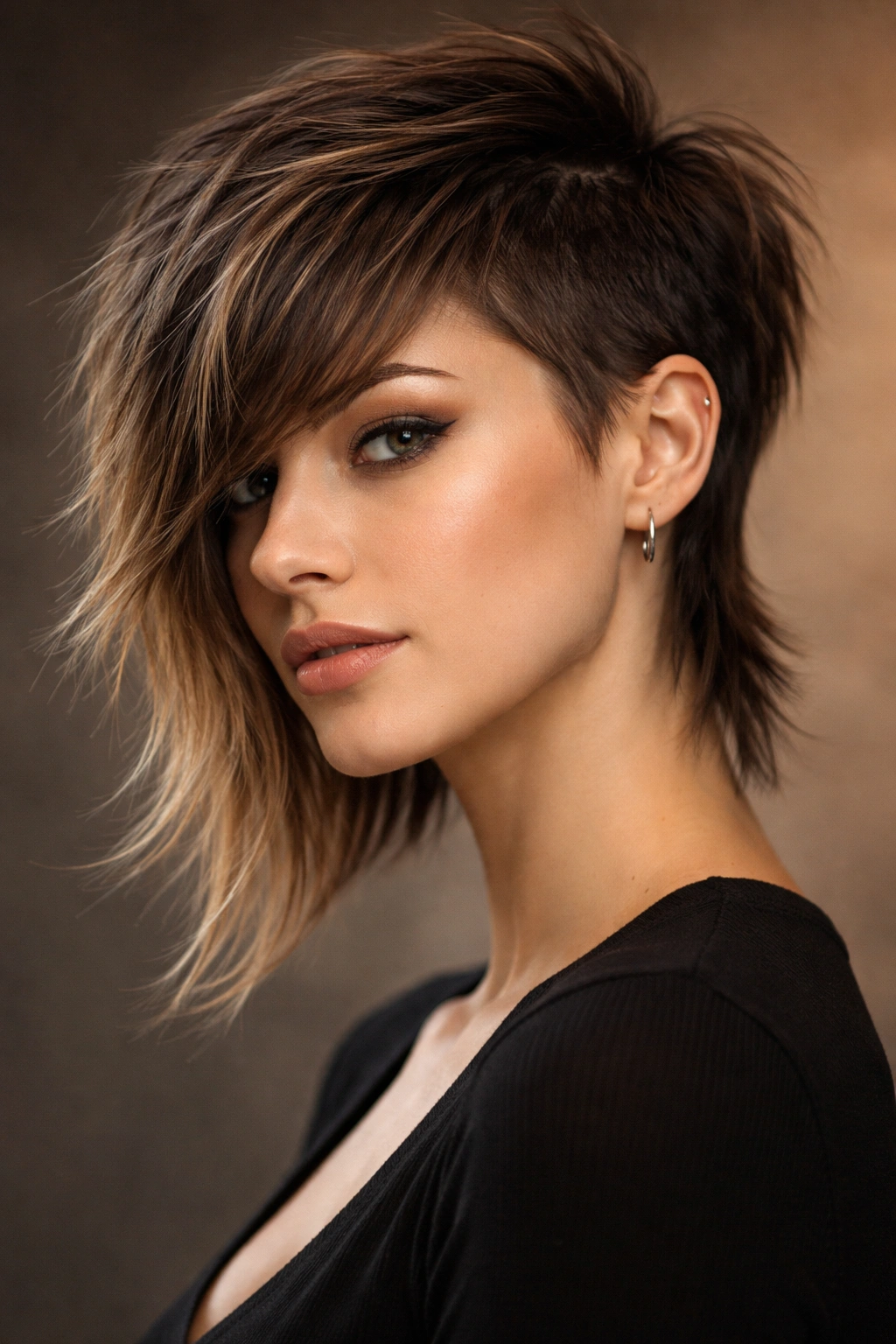
The asymmetrical mixie breaks the symmetry rule entirely, keeping one side shorter or longer than the other, creating a fashion-forward, deliberately one-sided composition that feels artistic and modern.
Asymmetrical Design Elements
One side is clipped dramatically short — sometimes down to skin-level fading — while the other side can be left slightly longer, creating immediate visual interest and movement. The back can remain symmetrical or also be slightly longer on one side, depending on how bold you want to be. The top retains length but can be styled to emphasize the asymmetry, with longer pieces on the longer side. This version appeals to people who aren’t afraid of bold style statements.
Confidence and Styling Approach
- The asymmetrical cut is partly about confidence — you’re making a statement with your hair
- Style the longer pieces forward and over, letting them frame one side of your face
- Use texture and wave to enhance the asymmetry rather than fight it
- A strong pomade or styling cream helps emphasize the direction you’re creating
- This cut actually benefits from slightly longer intervals between trims, as the asymmetry grows more pronounced and interesting
This version is ideal if you have a face shape that’s balanced enough to handle visual weight on one side — it’s a cut that draws attention, so you want to be wearing it confidently.
5. The Faux Hawk Mixie
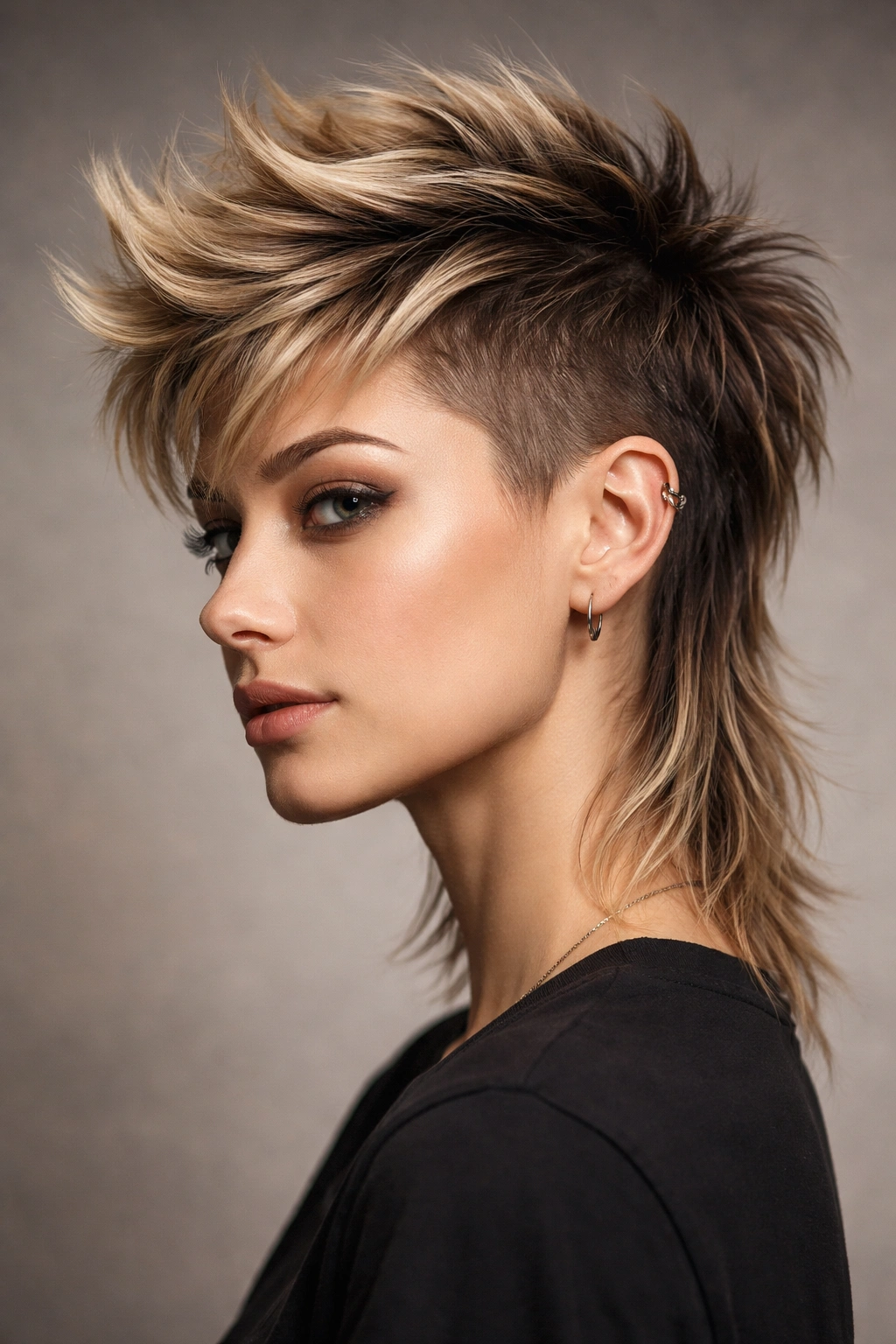
The faux hawk mixie maintains the hybrid mullet-pixie blend but emphasizes height and volume through the crown, creating a statement-making version that’s edgy without feeling costume-like.
Building Height and Direction
The faux hawk version keeps the sides extremely short — almost faded — while leaving significantly more length on top, typically three to four inches or longer. The top is cut and styled to encourage height rather than lying flat. The back maintains the mullet element, lengthening gradually into a subtle shag or blunt length depending on the overall vibe. The transition from sides to top is the focal point, creating a dramatic contrast that reads as deliberately bold.
Styling to Create the Faux Hawk Effect
- Start with damp hair and apply a volumizing mousse or thickening spray to roots
- Blow-dry the top backward and upward, using your fingers to create lift at the crown
- Once dry, use a strong-hold pomade or clay to push the top sections upward
- The sides stay smooth and close to the head, emphasizing the height difference
- Some people use a texturizing spray to add grip and definition to the top sections
The faux hawk mixie is for people who want their hair to make an entrance — it’s bolder than other mixie variations but still maintains an everyday-wearable quality if you choose neutral colors and keep the styling intentional.
6. The Grown-Out Mixie
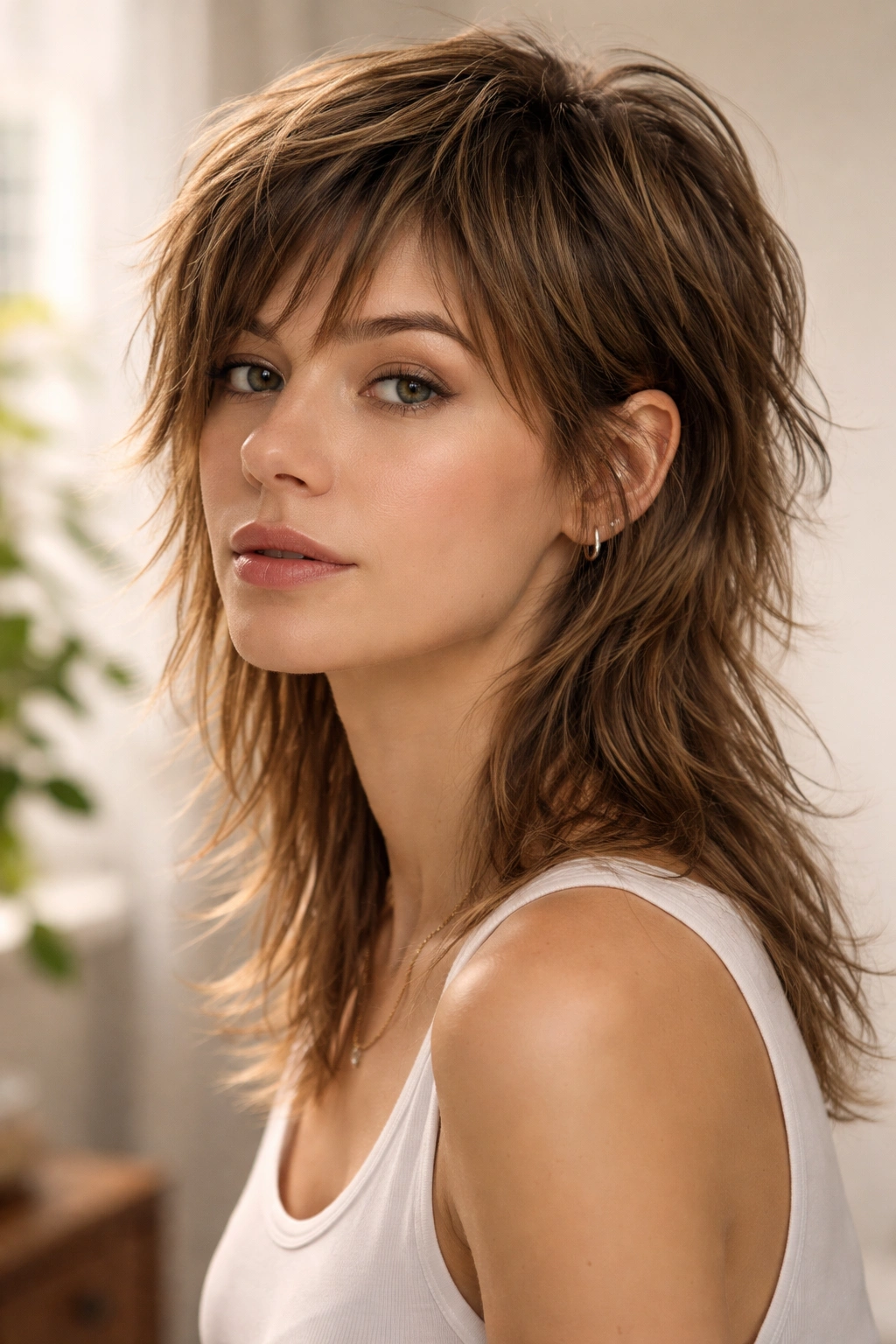
The grown-out mixie allows the cut to evolve over eight to twelve weeks, creating a naturally shaggy, evolving look that benefits from some length as it transitions from fresh cut to ready-for-a-trim.
Embracing the Growth Phase
Many mixie cuts look even better slightly grown out, because the length creates more opportunities for texture and movement. The pixie-short sections blend more softly into the longer back, and the overall shape becomes more forgiving and natural-looking. Rather than fighting the growth, some people specifically style their mixie to enhance this intermediate phase, letting the back grow toward shoulder length and allowing the top to develop more texture.
Low-Maintenance Styling During Growth
- Embrace texture and layers rather than trying to keep everything in place
- Tousle with dry shampoo or sea salt spray for instant dimension
- The more you let it be undone, the better it looks during this growth phase
- Minimal styling required — this is the low-maintenance period of the haircut cycle
- When you’re ready to reset, the trim brings everything back to sharp definition
This version is perfect if you prefer minimal maintenance and styling but still want the mixie’s hybrid appeal — let nature and growth do the work for you.
7. The Curly/Textured Mixie
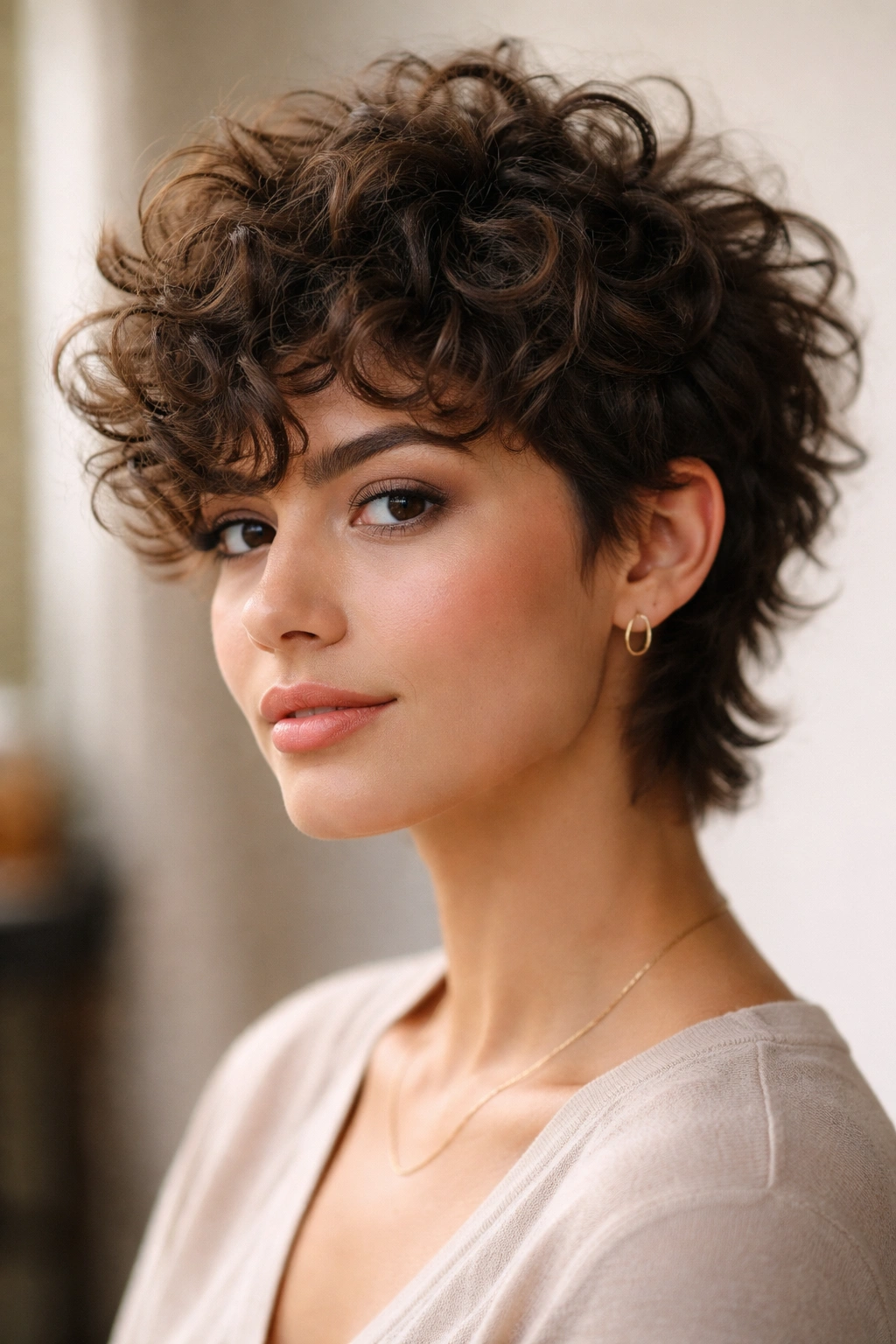
For people with naturally curly, coily, or kinky hair, the curly mixie adapts the hybrid cut to work with texture rather than against it, using layers and strategic cutting to enhance rather than fight what your hair naturally does.
Layering for Natural Texture
The curly mixie uses deliberate layering throughout to prevent the bulk that often comes with shorter curly cuts. The sides are clipped short but with sufficient taper that they blend smoothly into the longer top. The top contains multiple layers that encourage the curl pattern to spring outward and upward rather than compressing. The back can range from a gradual mullet-style length to a shag, depending on how much texture you want.
Caring for Curly Mixies
- The cut is best done on dry, natural hair so your stylist can see exactly how the curls fall
- Use a curl-defining cream or gel applied to soaking-wet hair and scrunched in
- Plopping (wrapping hair in a microfiber towel) while it air-dries encourages curl formation
- Avoid combing or brushing when dry — finger-comb or use a wide-tooth comb on soaking-wet hair only
- Regular moisture-focused conditioning is essential; curly hair dries faster than straight hair
The curly mixie celebrates texture rather than fighting it — it’s a cut that looks fuller, bouncier, and more vibrant as the curls develop their full personality.
8. The Luxe Long-Back Mixie
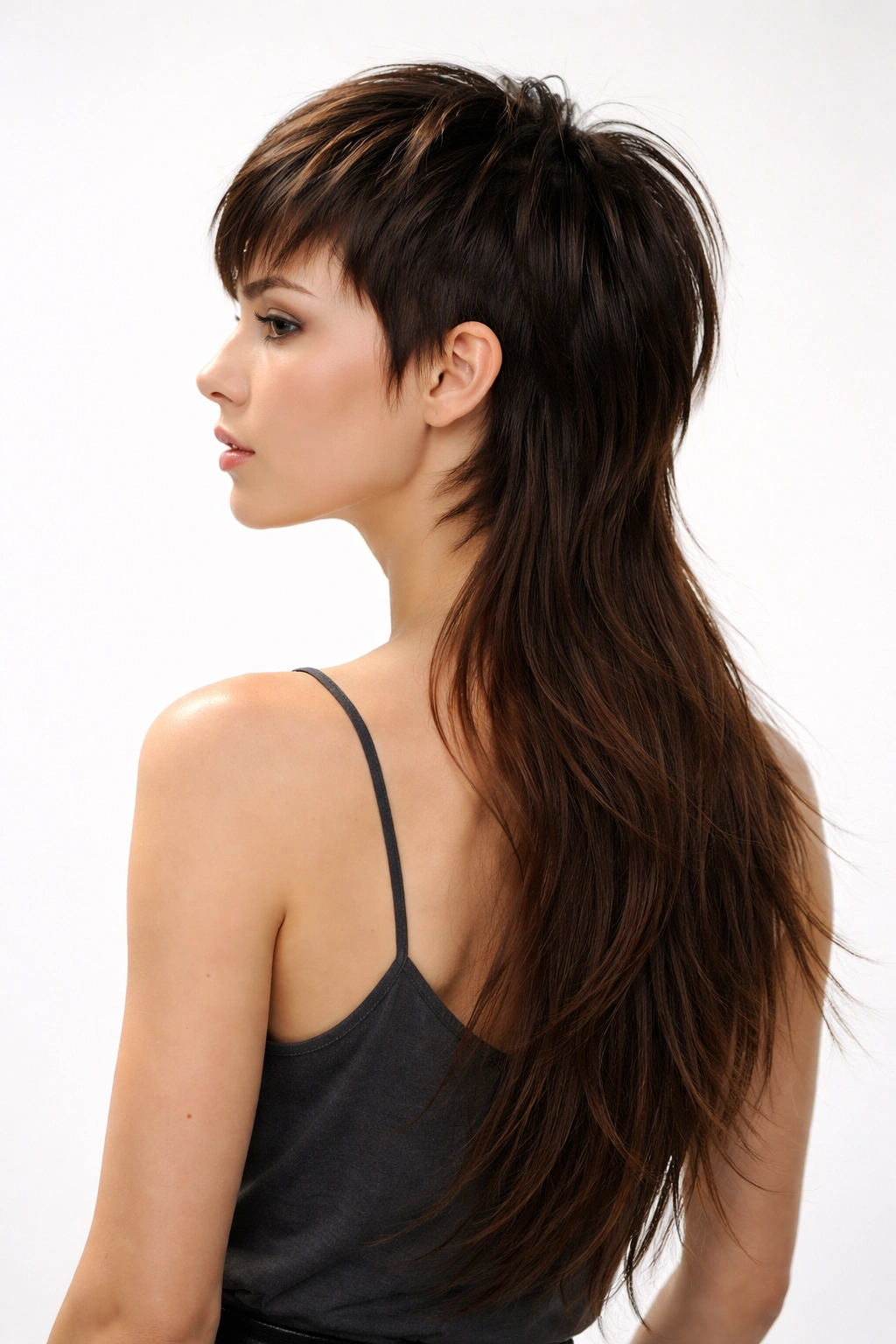
The luxe long-back mixie pushes the mullet side of the hybrid further, allowing the back to grow significantly longer — sometimes to mid-back length — while maintaining the pixie’s short, defined front and sides.
Dramatic Contrast and Composition
This version creates the most dramatic contrast between front and back. The sides and front remain cropped close, but the back is allowed to grow into substantial length with layers that create movement and flow. This works best if you’re willing to maintain the length with regular trims every six to eight weeks to prevent damage. The extended length is styled with intention — it’s not an accident but a deliberate style choice that requires regular care.
Styling the Extended Length
- Regular deep conditioning treatments keep the length healthy and prevent split ends
- Blow-drying is optional — you can air-dry the back or style it slicked back and tucked
- Braiding the back length protects it while sleeping and creates interesting texture for the next day
- Hair oil or serum applied to the ends adds shine and smoothness without weight
- The front and sides require regular trims every 4-6 weeks to maintain definition
Insider note: The luxe long-back mixie works best as a style statement if you’re genuinely willing to commit to maintenance. The contrast is stunning, but it requires more upkeep than subtler variations.
Final Thoughts
The mixie proves that hairstyling doesn’t have to be all-or-nothing — you can honor opposing aesthetics and create something that feels entirely new. Whether you choose a subtle classic blend or a dramatic asymmetrical statement, the mixie gives you permission to play with proportion, texture, and length in ways that feel modern and undeniably yours.
The key to finding your perfect mixie variation is thinking honestly about how much styling you actually want to do, how frequently you’re willing to get trims, and whether you prefer clean architectural lines or textured, tousled movement. Once you identify those preferences, your stylist can adjust the fundamental mixie structure to match exactly who you are — not who you think you should be.
