



Short bob cuts have become the go-to style for anyone seeking a transformative yet manageable haircut. Whether you have fine hair that falls flat or thick hair that demands structure, a well-chosen bob can work beautifully for you. The secret isn’t finding a one-size-fits-all style — it’s understanding how different bob variations interact with your hair texture and density to create the result you’re actually looking for.
The evolution of the bob has moved far beyond the rigid, uniform cuts of decades past. Modern bobs embrace texture, movement, and individual styling preferences while still delivering that polished, intentional appearance that makes the style so appealing. Fine hair needs bobs with strategic layering and movement to avoid looking flat or limp, while thick hair thrives with cuts that distribute volume and prevent bulk. The beautiful part is that within each category, multiple bob variations can work — you just need to understand the mechanics of how each cut interacts with your specific hair type.
What makes a bob successful isn’t just the cut itself, but how well it complements your face shape, lifestyle, and styling commitment. A textured, piece-y bob might be perfect for someone who enjoys styling their hair, while a sleek, blunt bob suits someone who prefers minimal fuss. Some bobs benefit from regular trims to maintain their shape, while others actually improve as they grow out slightly. Understanding these distinctions will help you choose a style you’ll love wearing, not just one that looks good in a salon photo.
1. Blunt Bob
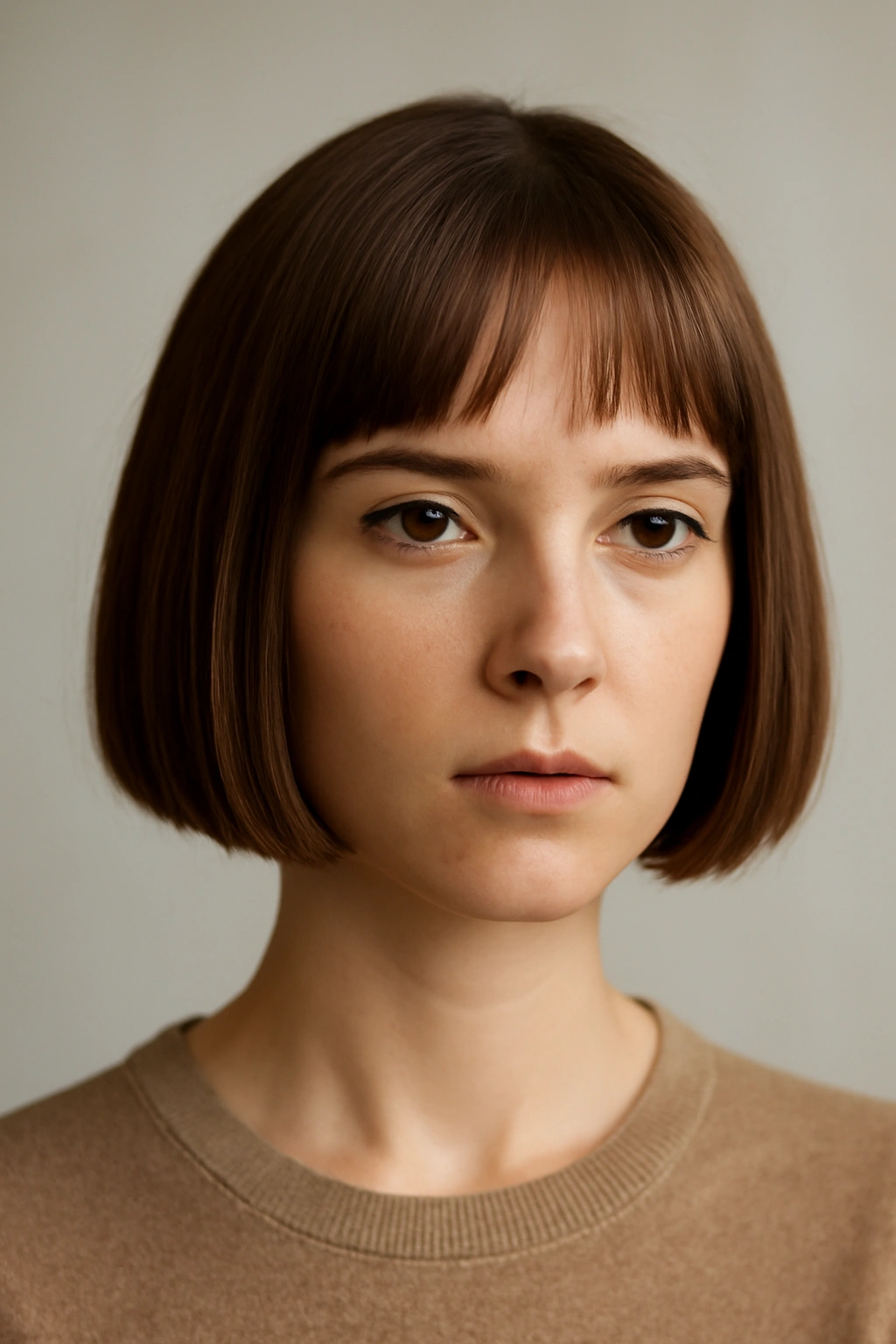
A blunt bob sits at chin length with a straight, even hemline all the way around — no layers, no angles, pure geometric precision. This classic cut works for both hair types because it creates clean lines that flatter the face while the bluntness adds subtle weight and presence. For fine hair, the blunt line creates the illusion of density without actually requiring thickness, and the one-length approach means your hair doesn’t thin out at the ends from layering.
Why It Works for Different Hair Types
Thick hair absolutely owns a blunt bob because the straight line contains volume beautifully and creates polished, intentional-looking shape. The blunt edge anchors the cut and prevents that wispy, undefined quality that thick hair can sometimes have. Fine hair gets a visual density boost from the blunt hem — when all the hair ends at the same length, it reads as fuller than it actually is. The key for fine hair is keeping the blunt bob slightly shorter (chin length or just above) so you’re not relying on fragile ends to hold the shape.
How to Style and Maintain
- Require trims every 4-6 weeks to keep that blunt edge crisp and defined — this cut shows every bit of growth
- Style with a round brush and blow dryer, turning the ends slightly inward for a polished finish
- Use lightweight styling products to avoid weighing down fine hair, or volumizing products for thick hair that needs taming
- The blunt cut works beautifully with straight hair or slight waves, but requires styling effort to look sharp on wavy or curly hair
- Sleep on a silk pillowcase to minimize frizz on fine hair or unnecessary tangles on thick hair
Pro tip: A blunt bob’s crispness depends entirely on your haircut and blow-dry technique. If you’re committed to the look, schedule regular maintenance appointments and invest in learning how to blow dry it properly — this cut doesn’t forgive a lazy styling day.
2. Textured Bob
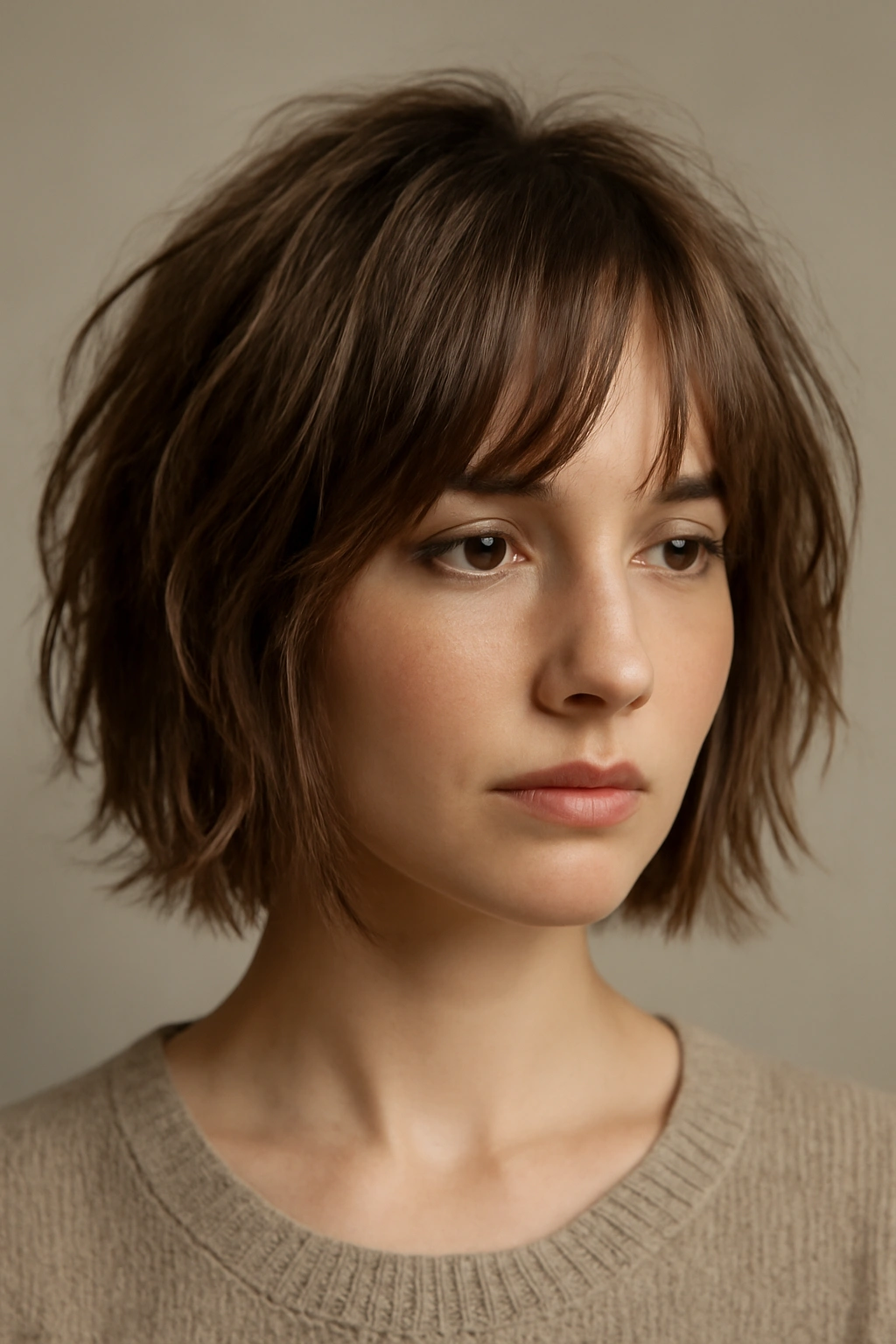
A textured bob incorporates choppy, piece-y layers throughout that create a deliberately undone, lived-in appearance. Rather than a uniform length, this cut uses shorter and longer pieces strategically layered to create movement and visual interest. The texture breaks up density on thick hair while creating apparent volume on fine hair through the strategic placement of layers.
The Charm of Deliberate Messiness
What makes a textured bob different from a choppy bob is the intention behind the choppy pieces. A textured bob is designed to look effortlessly tousled, like you just woke up and ran your fingers through your hair. The layers catch light differently, creating dimension and preventing that flat, helmet-like appearance some bobs can have. For fine hair, the varied lengths prevent concentration of weight in any one area, making the cut feel less limp and more intentional.
Styling Considerations for Your Hair Type
- Fine hair: Use a texturizing spray or sea salt spray to enhance the piece-y quality and add grip between layers
- Thick hair: Apply a smoothing serum or light oil to tame the texture layers and prevent frizz while maintaining movement
- Both types: Embrace air-drying or use a diffuser attachment if you have natural waves — this cut actually looks better with some natural texture
- Piece-y layers work with straight hair too, but require more styling effort and product to maintain definition
- The cut requires less frequent trims than a blunt bob (every 6-8 weeks) because the layers look intentional even as they grow
Pro tip: Texturizing products are your best friend with this cut. Even if you have naturally smooth hair, a light texturizing spray applied to damp hair creates the separation between layers that makes this cut shine.
3. Layered Bob
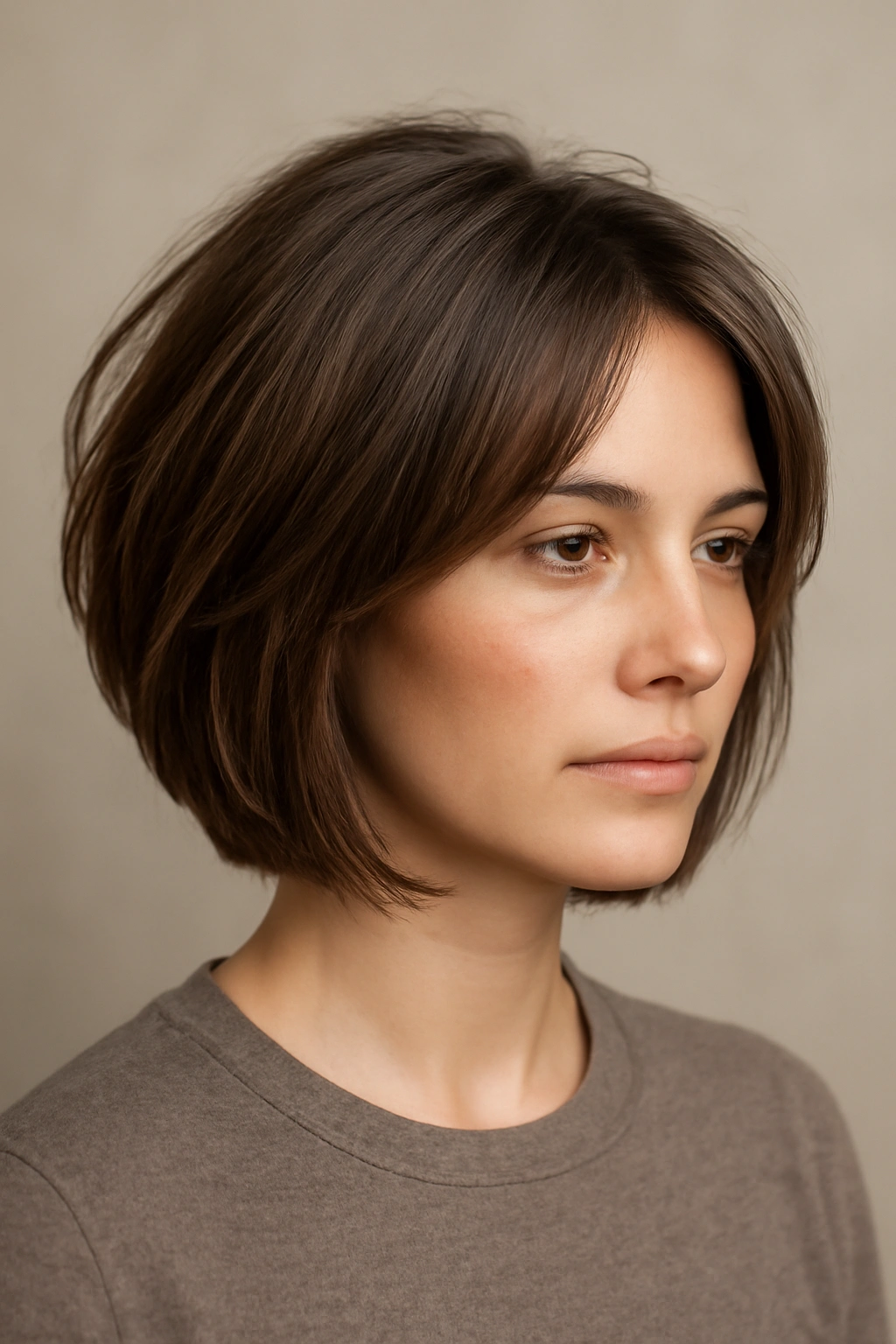
A layered bob uses graduated layers throughout to create movement and reduce bulk, with shorter layers on top that build volume and longer pieces underneath. Unlike a textured bob which emphasizes the piece-y quality, a layered bob maintains a more cohesive shape while still offering dimension. This cut is exceptionally versatile because the layers can be subtle or pronounced depending on how many you add and where they’re placed.
How Layers Solve Different Hair Problems
Thick hair benefits enormously from strategic layering because it removes weight and bulk while maintaining length where you want it. Layers prevent that solid, dense block of hair that can make thick hair feel heavy and immovable. Fine hair gets apparent volume from layers because they create texture and movement without requiring actual thickness. The shorter top layers catch light and create the illusion of fuller hair at the crown — exactly where fine-haired people usually need help.
Styling and Maintenance Requirements
- Fine hair: Blow dry with a round brush, lifting the shorter top layers away from the scalp for maximum volume
- Thick hair: Layers help you style more efficiently — you can create sleek looks without fighting against density
- Maintenance trims every 5-7 weeks keep the layers looking intentional and prevent them from growing out into a shapeless mop
- This cut works beautifully with waves or slight curl, which naturally enhances the layered effect
- You can wear a layered bob smooth and polished, tousled and textured, or anywhere in between depending on your mood and styling approach
Worth knowing: The number of layers matters tremendously. Too many layers and fine hair can look thin and wispy. Too few layers and thick hair feels bulky. Your stylist should customize the layering specifically for your hair density.
4. Choppy Bob
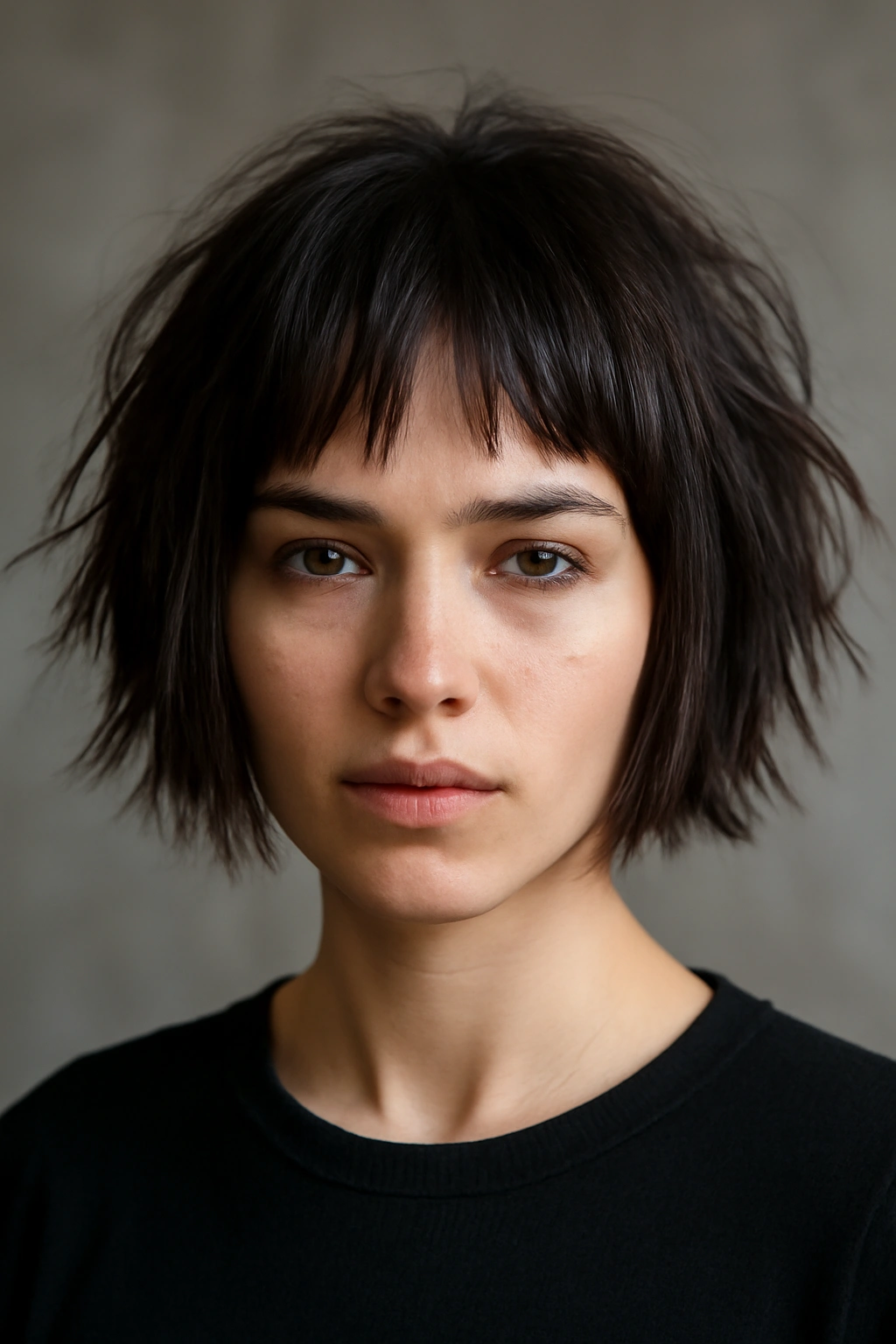
A choppy bob takes the textured concept further with more dramatically different lengths and intentionally jagged, uneven pieces. The ends are cut at slightly different levels rather than following a clean line, creating sharp angles and pronounced texture. This is a statement cut that works best for people who actively style their hair and want that edgy, fashion-forward appearance.
The Visual Impact of Sharp, Uneven Pieces
Choppy cuts create movement and visual interest that makes hair appear thicker and fuller than it is. Fine hair especially benefits because the irregular ends prevent that limp, stringy appearance — the choppiness creates texture that reads as volume. Thick hair looks modern and intentional with a choppy cut rather than just heavy. The sharp angles create light and shadow, adding depth to the overall style even if the basic color is uniform.
Making It Work With Your Hair Type
- Fine hair: Use styling creams or pomades to define the choppy pieces and prevent them from looking thin and scraggly
- Thick hair: Let the natural texture and density create the choppy effect — styling products help define individual pieces without adding frizz
- This cut demands styling commitment — it doesn’t look intentional when air-dried unless you have naturally wavy or curly hair
- Maintenance every 5-6 weeks keeps the choppiness looking fresh rather than grown-out and shapeless
- Works particularly well with face-framing pieces that add dimension around your cheeks and jawline
Insider note: Choppy bobs photograph incredibly well and feel fashion-forward, but they require more styling product and blow-dry time than other bob variations. Make sure you’re genuinely willing to style it before committing to this cut.
5. Pixie Bob
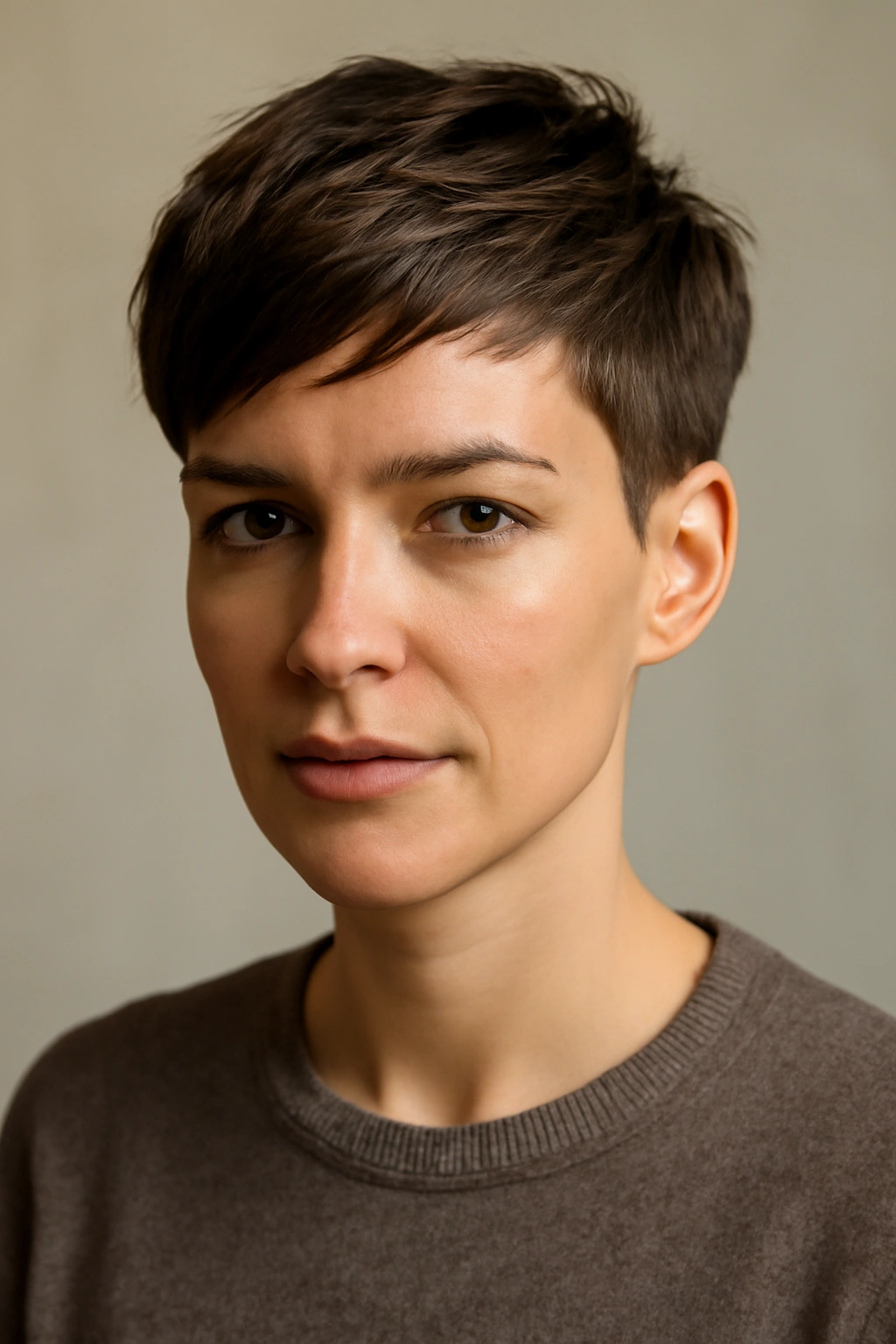
A pixie bob is essentially a grown-out pixie cut — significantly shorter on the sides and back than a traditional bob, with more length on top and subtle layering. It’s a bold cut that requires facial features and confidence, but it’s incredibly low-maintenance and works wonderfully for both fine and thick hair. The extreme short sides create the illusion of face framing while the longer top section provides some length and styling versatility.
Why This Cut Suits Different Hair Densities
Fine hair looks deceptively full with a pixie bob because the ultra-short sides remove all the weight and bulk from the sides of your head, making the longer top appear fuller by comparison. The minimal amount of hair at the sides and back means zero flatness or limpness — the structure is built into the cut itself. Thick hair looks chic and modern with a pixie bob, with the short sides preventing that overwhelming density while the longer top gives you some styling options.
The Low-Maintenance Appeal
- Requires minimal styling — your hair can air-dry and still look intentional if the cut is good
- Trims every 4-5 weeks maintain the style, but because so little hair is being cut, appointments are quick and inexpensive
- Works beautifully with your natural hair texture — wavy, straight, or curly all look great on a pixie bob
- Creates a sharp, fashion-forward appearance that reads as intentional and confident
- No product necessary, though you can style with pomade or cream if you want definition
Worth knowing: A pixie bob is a commitment because it’s a highly visible, statement-making cut. Unlike longer bobs that you can grow out more gracefully, a pixie bob that’s overdue for a trim looks scraggly and unkempt pretty quickly. Only choose this if you’re willing to maintain regular trims.
6. Asymmetrical Bob
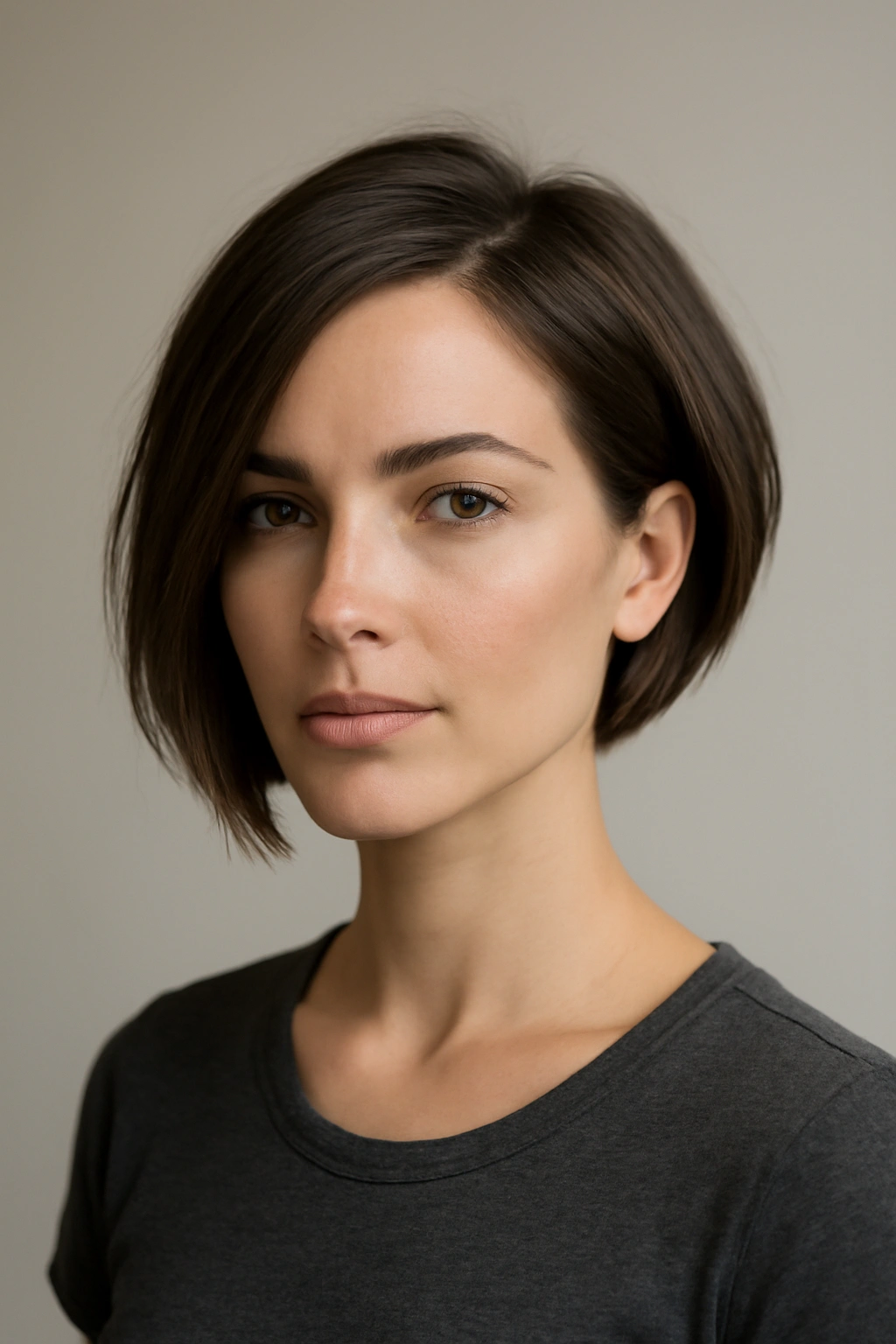
An asymmetrical bob features different lengths on each side of the head — typically longer in front on one side (often framing the face) and shorter in back, or shorter on one side and longer on the other. This cut immediately draws attention and creates movement while offering incredible styling versatility. It works for both hair types because you can customize which side is longer and which is shorter based on your face shape and hair density.
Strategic Asymmetry for Different Hair Types
Fine hair can use asymmetry to create the illusion of volume in specific areas. If you have a rounder face that needs lengthening, longer front pieces on one side create that effect. If your hair is thin at the crown, shorter pieces on top can be angled to create lift and volume. Thick hair benefits from asymmetry because it breaks up the density and creates movement through the intentional length variations. The uneven cut prevents that solid, block-like appearance that uniform bobs can sometimes create.
Styling Flexibility of Asymmetrical Cuts
- The longer side can be swept back, tucked behind your ear, or worn down depending on your styling preference
- Side parts look fantastic with asymmetrical bobs and emphasize the longer side beautifully
- You can style asymmetrical bobs multiple ways — sleek and polished, textured and piece-y, or tousled and undone
- Maintenance trims every 6-7 weeks keep the asymmetry intentional and prevent it from looking uneven
- The cut works with straight, wavy, or curly hair, though the texture will emphasize the asymmetry more on wavy and curly hair
Pro tip: Asymmetrical bobs look best when styled with intention — they’re not a cut you can pull back into a ponytail and forget about. If you want styling versatility, this is your cut. If you want low-maintenance, stick with more traditional bobs.
7. Wavy Bob
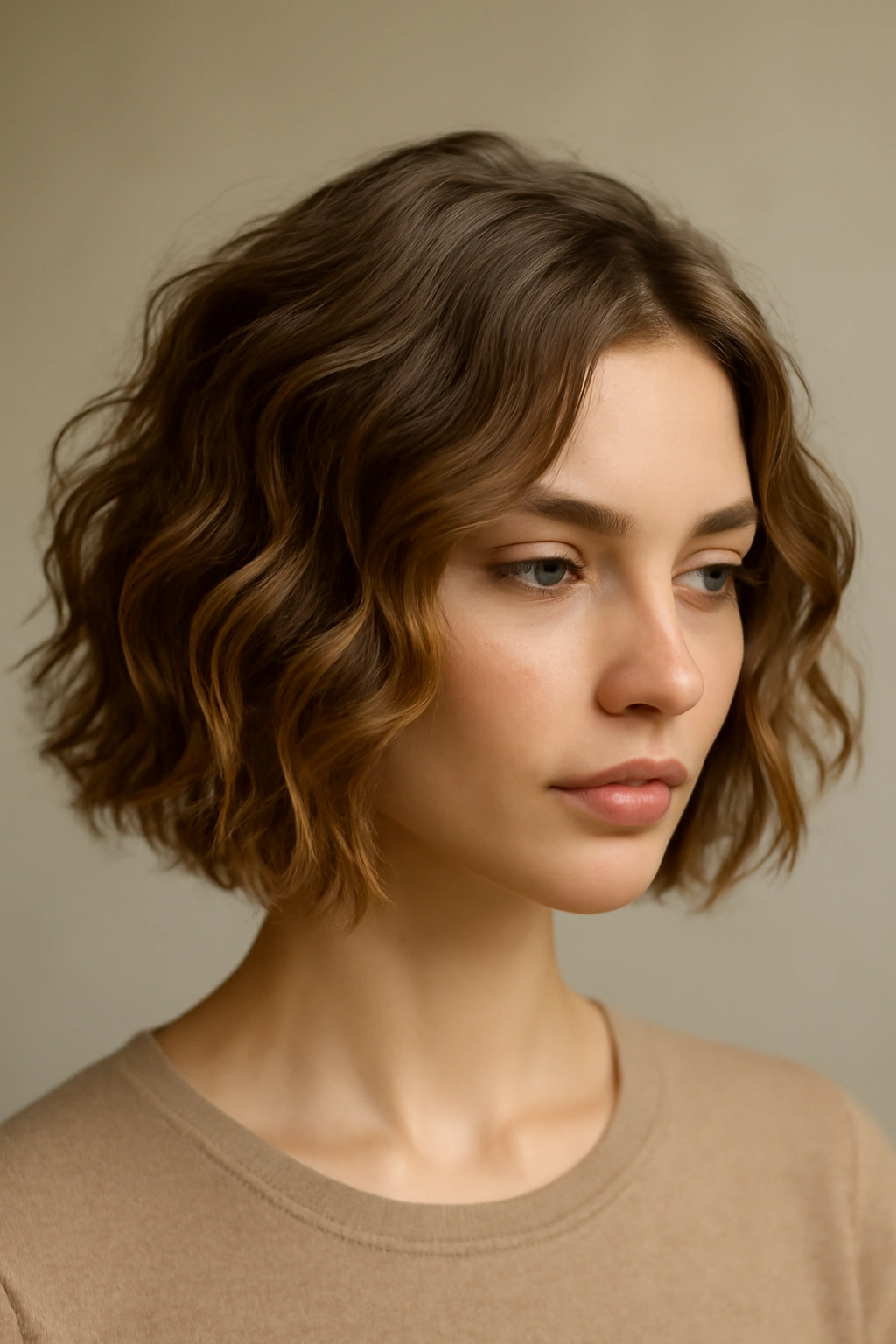
A wavy bob is cut specifically to work with natural or styled waves, using layers and texturizing to enhance movement rather than fight against it. The cut acknowledges and celebrates wave patterns rather than trying to flatten them into submission. This makes it ideal for anyone with naturally wavy hair who’s tired of straightening their hair just to wear a bob.
How Waves Change the Bob Game
Wavy hair naturally creates texture and dimension, so a wavy bob needs less layering than a straight-haired bob to achieve movement. The cut can be simpler — sometimes just a solid length with subtle layers — and let the waves do the work of creating interest. Fine wavy hair looks absolutely full in a wavy bob because the waves create the illusion of density without requiring thick hair. Thick wavy hair can be tamed with the right layers that break up density while maintaining length.
Styling Your Wavy Bob
- Embrace your natural texture — this cut is designed to work with waves, not against them
- Use curl-enhancing or wave-defining products to bring out your natural pattern
- A diffuser attachment on your blow dryer sets waves without frizz while maintaining their natural shape
- You can enhance waves by sleeping on them while slightly damp (twist into a bun or braid while damp, unwind in the morning)
- Maintenance every 6-8 weeks maintains the shape without requiring constant styling
- This cut actually improves as it grows slightly — two-inch waves look even better than brand-new waves
Worth knowing: A wavy bob requires you to accept and work with your natural texture. If you’re someone who prefers poker-straight hair, you’ll fight this cut constantly. But if you love your waves and want a cut that celebrates them, a wavy bob is transformative.
8. Shaggy Bob
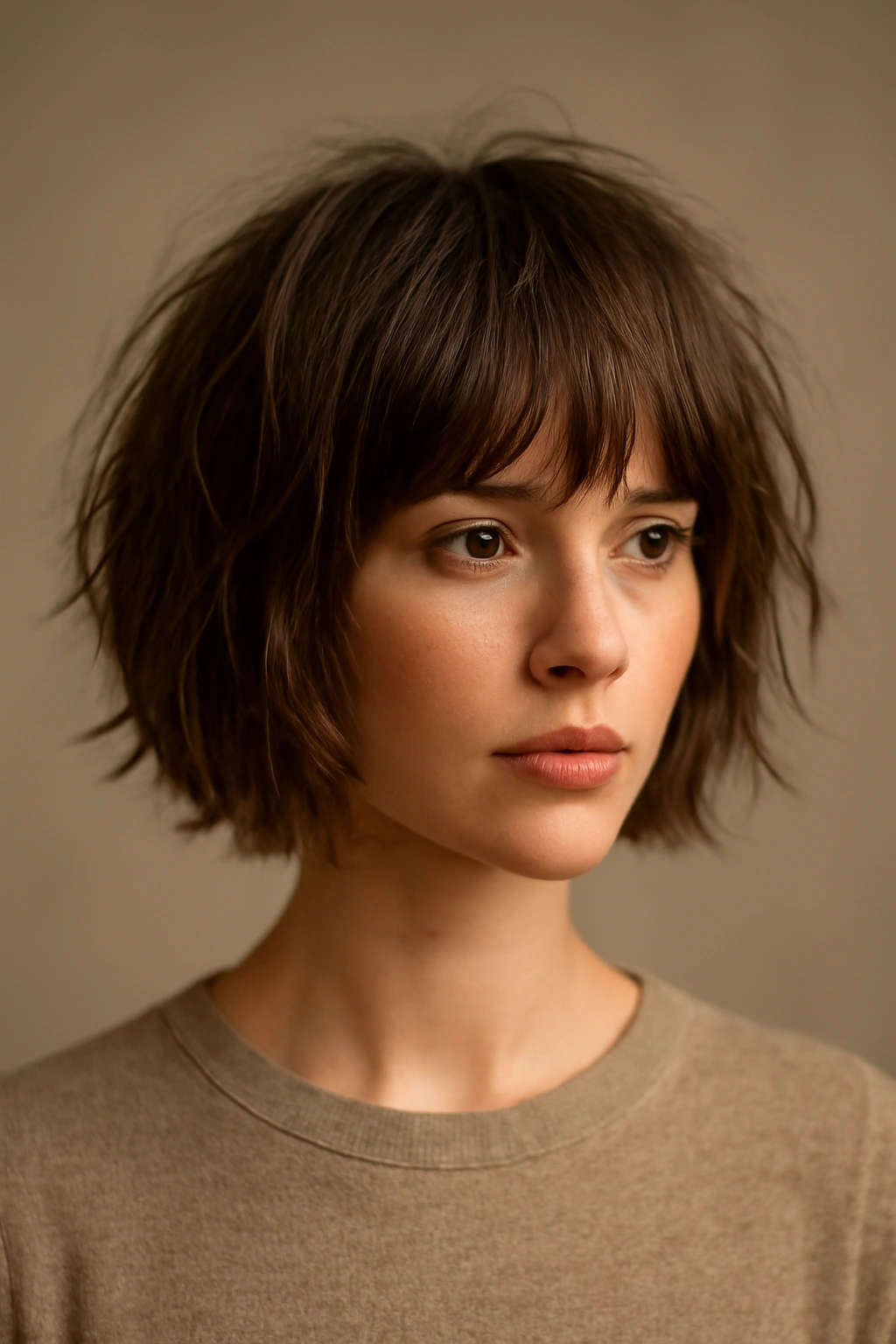
A shaggy bob combines choppy layers with a rock-and-roll attitude, creating tons of movement and texture throughout. It’s inspired by 1970s shag cuts but modernized with strategic layering and piece-y texture. The shag bob works for both hair types because the layers are extensive enough to remove bulk from thick hair while creating apparent volume in fine hair.
The Modern Shag Aesthetic
Unlike choppy bobs that are more angular and sharp, shaggy bobs embrace a softer, more undone quality. The layers blend together to create movement rather than standing out as distinct choppy pieces. There’s something inherently youthful and cool about a shag bob — it reads as fashion-forward and confident without being too severe. Fine hair looks full and textured in a shag bob because the extensive layering prevents any flat areas while maintaining enough length that it doesn’t look thin.
Making Your Shag Bob Work
- Styling with texture is essential — use texturizing spray, sea salt spray, or pomade to enhance the layered effect
- This cut looks best with some movement, so waves or slight curl enhance the shag aesthetic beautifully
- Blow dry or air dry with a diffuser to encourage movement and texture
- Maintenance every 6-7 weeks keeps the shag looking intentional rather than grown-out
- Works with straight hair too, but requires more styling product and technique to maintain definition
- Pairs beautifully with face-framing pieces that add movement around your cheekbones
Pro tip: A shag bob is a commitment to texture and movement. If you prefer sleek, polished looks, this isn’t your cut. But if you love having dimensional, textured hair, a shag bob is endlessly fun to style and style with different products.
9. Angled Bob
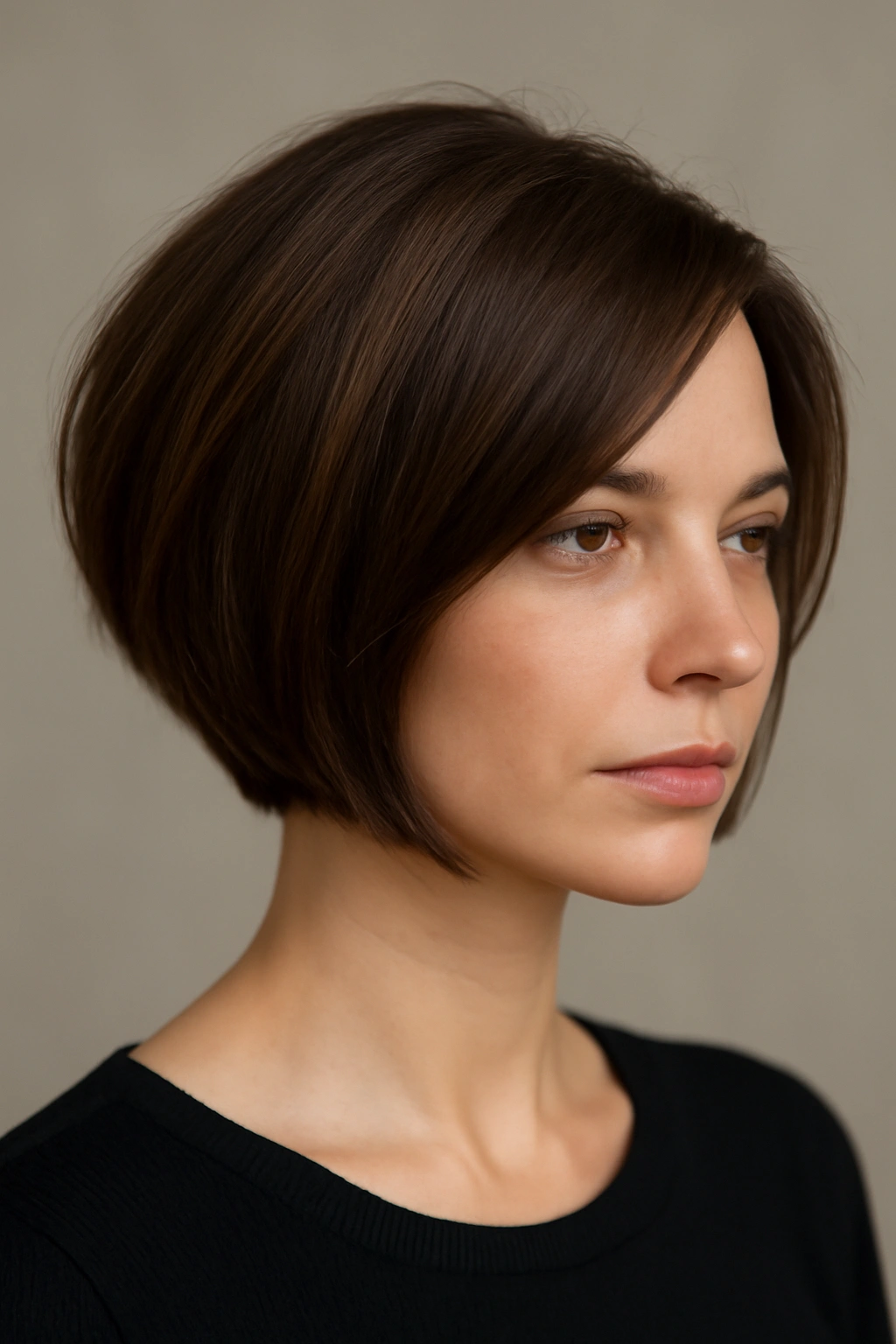
An angled bob (also called a graduated bob) is longer in the front and progressively shorter toward the back, creating a stacked, angular silhouette. The front pieces can frame your face beautifully while the shorter back creates shape and lift. Unlike an asymmetrical bob with dramatic length differences, an angled bob transitions smoothly from front to back, creating a cohesive shape.
Why Angled Bobs Work for Everyone
Fine hair benefits tremendously from an angled bob because the shorter back creates lift at the crown (where fine hair often needs it most) while longer front pieces provide length and framing. The graduated structure is built into the cut, so fine hair doesn’t need to rely on styling to create volume. Thick hair looks modern and intentional with an angled cut, and the graduation prevents that solid density that can make thick hair feel overwhelming.
Styling an Angled Bob
- The front pieces naturally frame your face, so longer angled bobs look incredibly flattering on most face shapes
- You can wear it sleek and straight for a polished look, or textured and wavy for something softer
- The back layers create natural volume at the crown, so fine hair gets an instant boost
- Maintenance every 5-6 weeks keeps the angle sharp and intentional
- This cut works beautifully with waves — the angle guides where waves fall and creates even more dimension
- Side parts enhance the angled effect, drawing attention to the longer front pieces
Worth knowing: The angle of your angled bob can be customized based on your face shape. Wider angles work better for rounder faces, while steeper angles suit longer, more angular face shapes. Talk to your stylist about what angle complements your specific features.
10. Sleek Bob
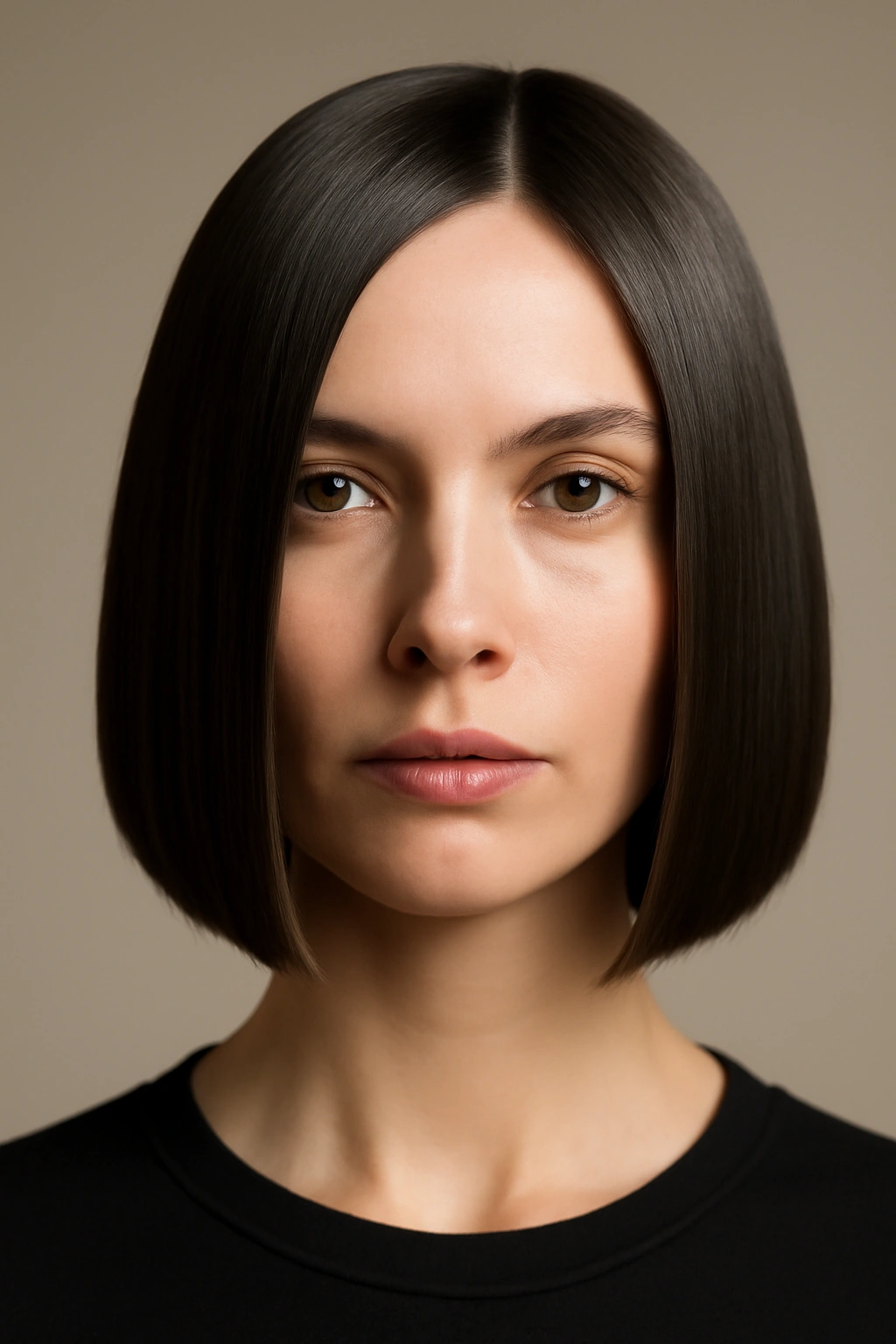
A sleek bob is cut for a refined, polished appearance with smooth lines and minimal texture. It can be blunt or slightly layered, but the emphasis is on sleekness rather than texture or movement. This is the bob you see on runways and red carpets — it reads as intentional, expensive, and sophisticated. Both fine and thick hair can pull off sleek bobs beautifully when they’re properly styled.
The Elegance of Simplicity
A sleek bob requires less hair decoration or styling — the sophistication comes from the cut itself and your styling technique. Fine hair can look incredibly refined in a sleek bob because the smooth lines don’t expose thinness at the ends the way textured cuts might. Thick hair looks polished and controlled in a sleek bob, with the sleekness preventing that wild, unkempt appearance that texture can sometimes create.
Achieving and Maintaining Sleekness
- Blow dry with a round brush, creating tension and smoothness throughout
- Use a smoothing serum, anti-frizz cream, or lightweight hair oil to enhance sleekness
- A flat iron or smoothing brush can create perfect smoothness on stubborn texture
- Maintenance every 4-6 weeks keeps the ends smooth and prevents split ends that disrupt sleekness
- This cut requires regular styling — you’re not getting a sleek bob by air-drying
- Works best with straight hair, though straight-haired people with slight wave can achieve sleekness with styling
Insider note: A sleek bob is less forgiving than textured or choppy bobs because sleekness showcases your styling technique and product choice. If you’re not willing to blow dry and style regularly, sleekness will look flat instead of polished.
11. Tousled Bob
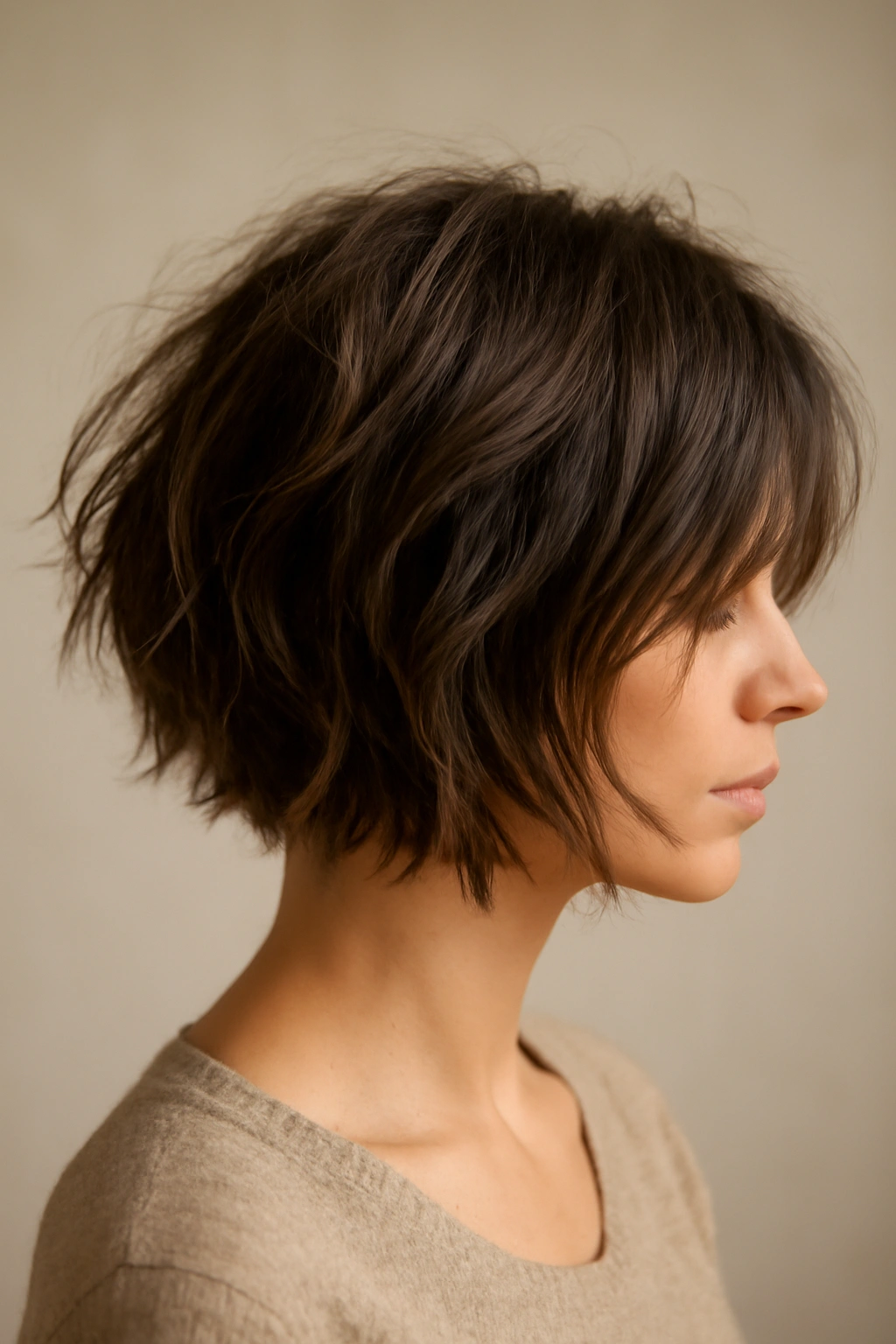
A tousled bob is cut with enough layers and texture to look effortlessly undone without actually requiring that much effort. It’s the bridge between a sleek, high-maintenance bob and a fully textured, product-heavy cut. The tousled bob looks like you just woke up with perfect hair — which means it’s cut specifically to air-dry into that appearance.
The Practical Elegance of Tousled Cuts
Fine hair absolutely thrives in a tousled bob because the layering and texture create apparent volume and movement without relying on dense hair. The undone aesthetic actually works in fine hair’s favor — it’s designed to look like it lacks precision, which means fine hair’s natural softness is a feature rather than a problem. Thick hair looks controlled and intentional in a tousled bob, with the layers and texturizing preventing that heavy, solid appearance.
Styling a Tousled Bob
- You can genuinely air-dry this cut if you have wavy or curly hair — let it dry and scrunch with a texturizing product
- For straight-haired people, use a diffuser or blow-dry with your fingers for a more tousled finish
- Light texturizing spray applied to damp hair helps create and maintain that tousled look throughout the day
- Maintenance every 6-8 weeks keeps the tousled cut looking intentional rather than overgrown
- This cut works with any hair texture, though it looks most effortless on wavy or curly hair
- You can wear it more polished on days you style with a blow dryer, or fully undone on days you air-dry
Pro tip: A tousled bob is one of the most forgiving short cuts because its entire aesthetic is based on looking undone. Bad hair days are built into the style’s design, making it perfect for people who want something that looks intentional without requiring constant styling.
12. Undercut Bob
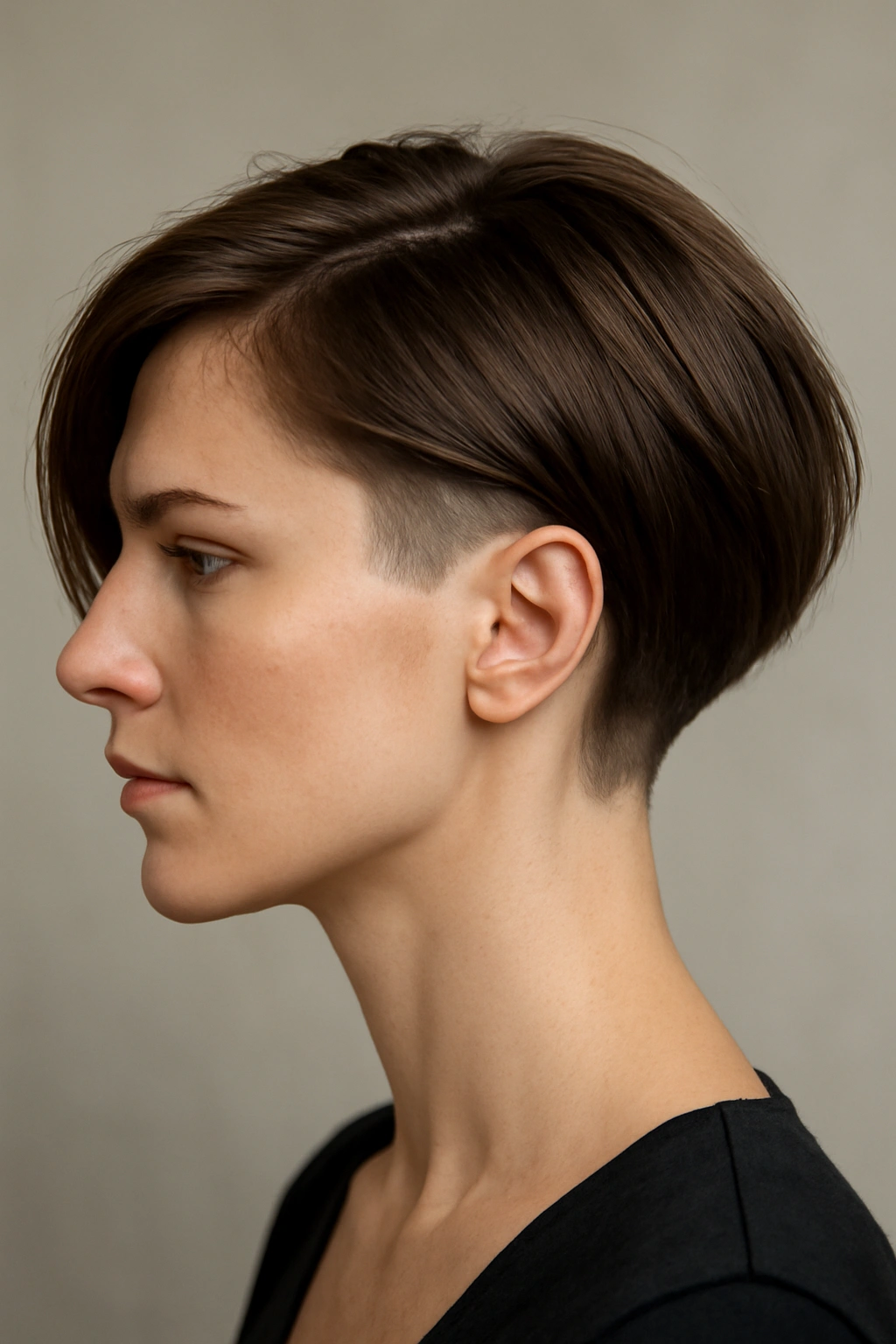
An undercut bob features very short, closely cropped sections underneath (typically at the nape and sides) with longer hair on top that covers the undercut when it’s styled down. The undercut can be minimally visible or a dramatic statement depending on how much you expose it. This cut offers incredible versatility — you can look extremely polished with the undercut hidden, or edgy and fashion-forward when you style to show it off.
Why Undercuts Work at Different Hair Densities
Fine hair benefits from an undercut because it removes all the weight and bulk from underneath, preventing that flat, limp appearance at the back and sides. The longer top section has much less competing weight, so it appears fuller. Thick hair looks modern and intentional with an undercut, with the closely cropped sections preventing density while the longer top provides styling versatility.
Styling Flexibility and Maintenance
- You can tuck your hair behind your ears to fully show the undercut, creating an edgy, fashion-forward look
- You can let longer top layers cover the undercut completely for a more conservative appearance
- Half-up hairstyles look incredible on undercut bobs, showing off the sharp undercut while keeping longer pieces down
- You can braid the undercut section when it’s fully exposed for added dimension
- Maintenance every 3-4 weeks keeps the undercut crisp, while the longer top sections need trims every 5-6 weeks
- This cut is best with straight or wavy hair — very curly hair makes it harder to show the undercut intentionally
Worth knowing: An undercut bob is a bold choice because it’s a visible, statement-making cut. You need to be willing to show it off sometimes — if you’re planning to keep it hidden permanently, the undercut is unnecessary upkeep.
13. Curly Bob
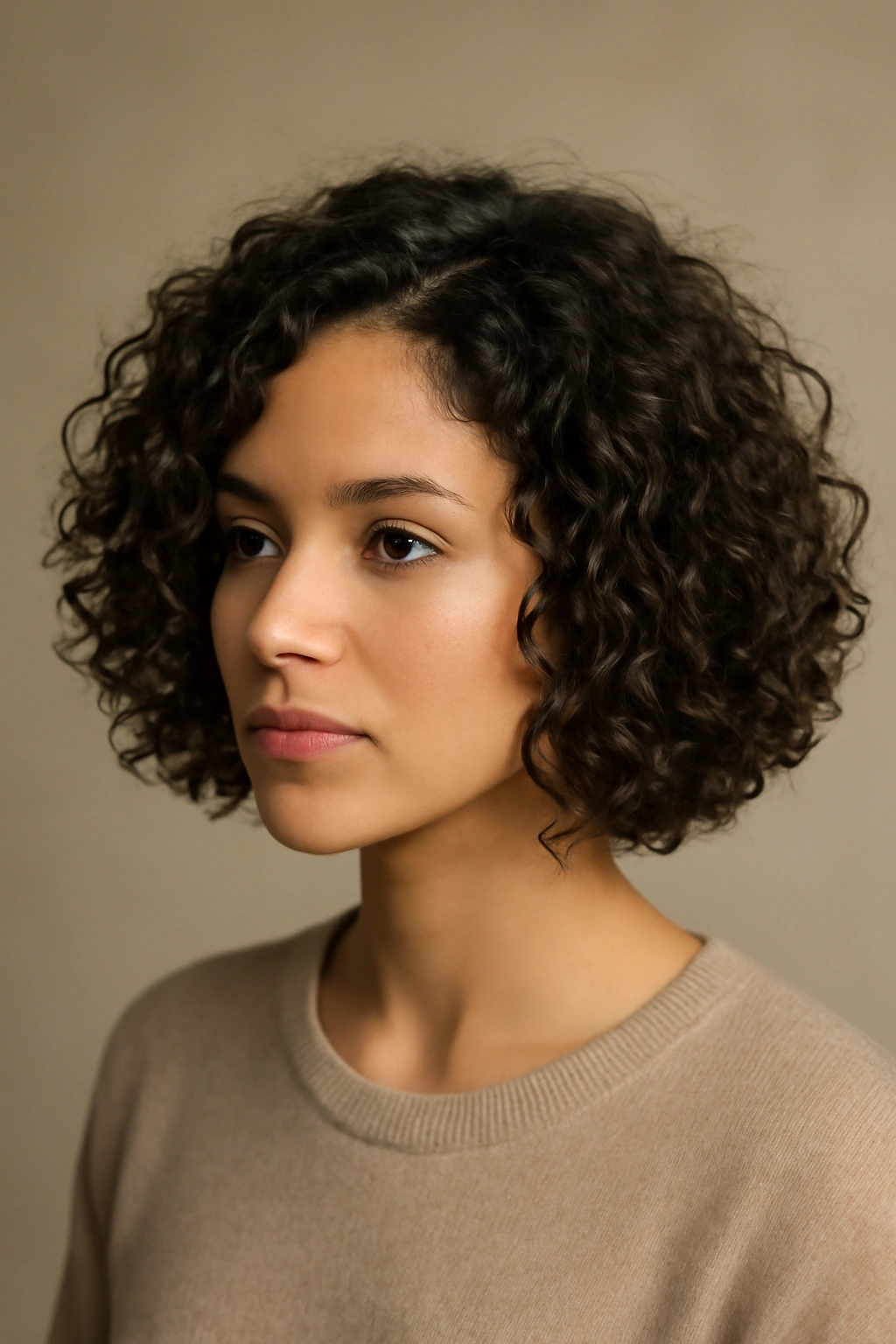
A curly bob is specifically cut for naturally curly or coily hair, working with the curl pattern rather than trying to straighten it into submission. The cut uses layers strategically placed to distribute curl weight and prevent the dense, heavy appearance curly bobs can sometimes have. Fine curly hair gets its natural volume enhanced and shaped, while thick curly hair gets structure and manageability.
How Curls Change Cut Strategy
Curly hair has different needs than straight or wavy hair because curl pattern, density, and porosity all factor into how the cut will look when dry. A curly bob needs enough layers to prevent bulk without removing so much hair that curls look thin and wispy. The cut must account for shrinkage — curly hair often shrinks significantly when it dries, so a cut that looks good when wet can look very different when your curls fully form.
Working With Your Natural Curl Pattern
- Have your cut done on clean, dry curls so your stylist can see exactly how your curls form and shrink
- Use curl-defining products that enhance your curl pattern without weighing it down
- Deep conditioning is essential for curly hair — curls need moisture to look bouncy and defined rather than frizzy and undefined
- Embrace protective styling techniques like pineapple buns when sleeping to maintain curl definition
- Maintenance every 8-10 weeks works for curly bobs because curl patterns mask some overgrowth
- Avoid brushing curls when dry — use your fingers or a wide-tooth comb on wet hair instead
Pro tip: The curl cream, leave-in conditioner, or gel you use matters enormously for how your curly bob looks and behaves. Experiment with different products until you find ones that define your curls without crunchiness or frizz.
14. Straight Bob With Bangs
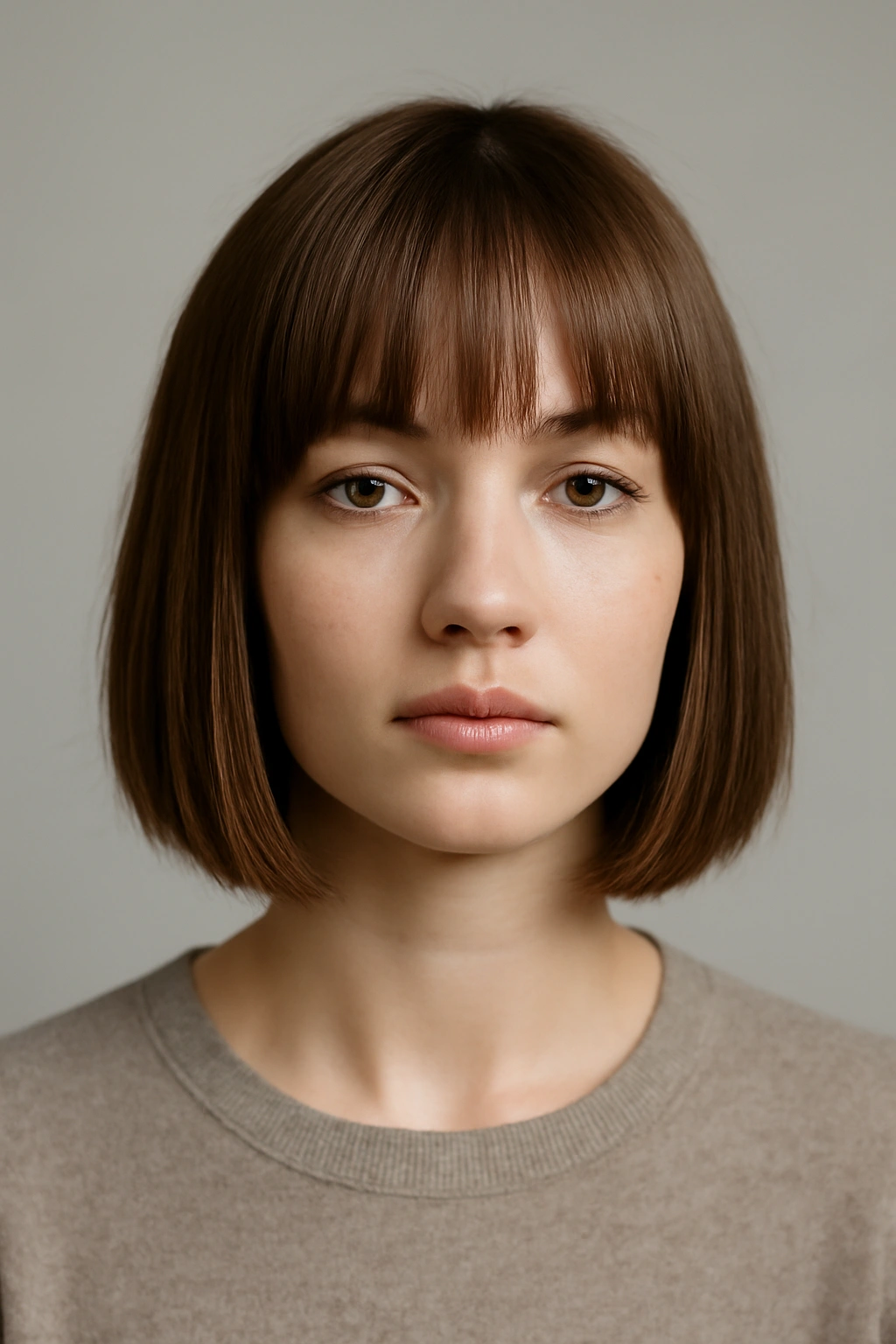
A straight bob with bangs combines the clean lines of a blunt cut with the face-framing dimension that bangs provide. The bangs can be full and heavy, wispy and textured, or somewhere in between depending on your preference. Adding bangs to a bob instantly changes the vibe from sophisticated to playful, and the bangs create a focal point that draws attention upward.
How Bangs Work With Different Hair Types
Fine hair can actually look fuller with bangs because they add texture at the forehead and draw attention to your eyes (away from any thinness on the crown). The bangs need to be textured rather than heavy to avoid looking overwhelming on fine hair. Thick hair needs textured or lighter bangs to avoid looking too heavy-handed — blunt, thick bangs on thick hair can feel overwhelming.
Styling Straight Bobs With Bangs
- Bangs require more frequent trims than the rest of your bob — plan on bang trims every 2-3 weeks
- Style your bangs with a round brush or flat iron to maintain smoothness and ensure they frame your face rather than falling into your eyes
- The rest of the bob can be textured or sleek, depending on your preference and styling commitment
- Bangs dramatically change how your face appears, so consider whether they suit your face shape before committing
- Bangs work best with straight or slightly wavy hair — very curly bangs are difficult to style consistently
- You can wear your hair down and forward (bangs fully showing) or sweeping to the side depending on your mood
Worth knowing: Bangs are more high-maintenance than you might think. They require regular trims and styling to look intentional rather than scraggly. If you’re not willing to maintain them, bangs on a bob might frustrate you.
15. Feathered Bob
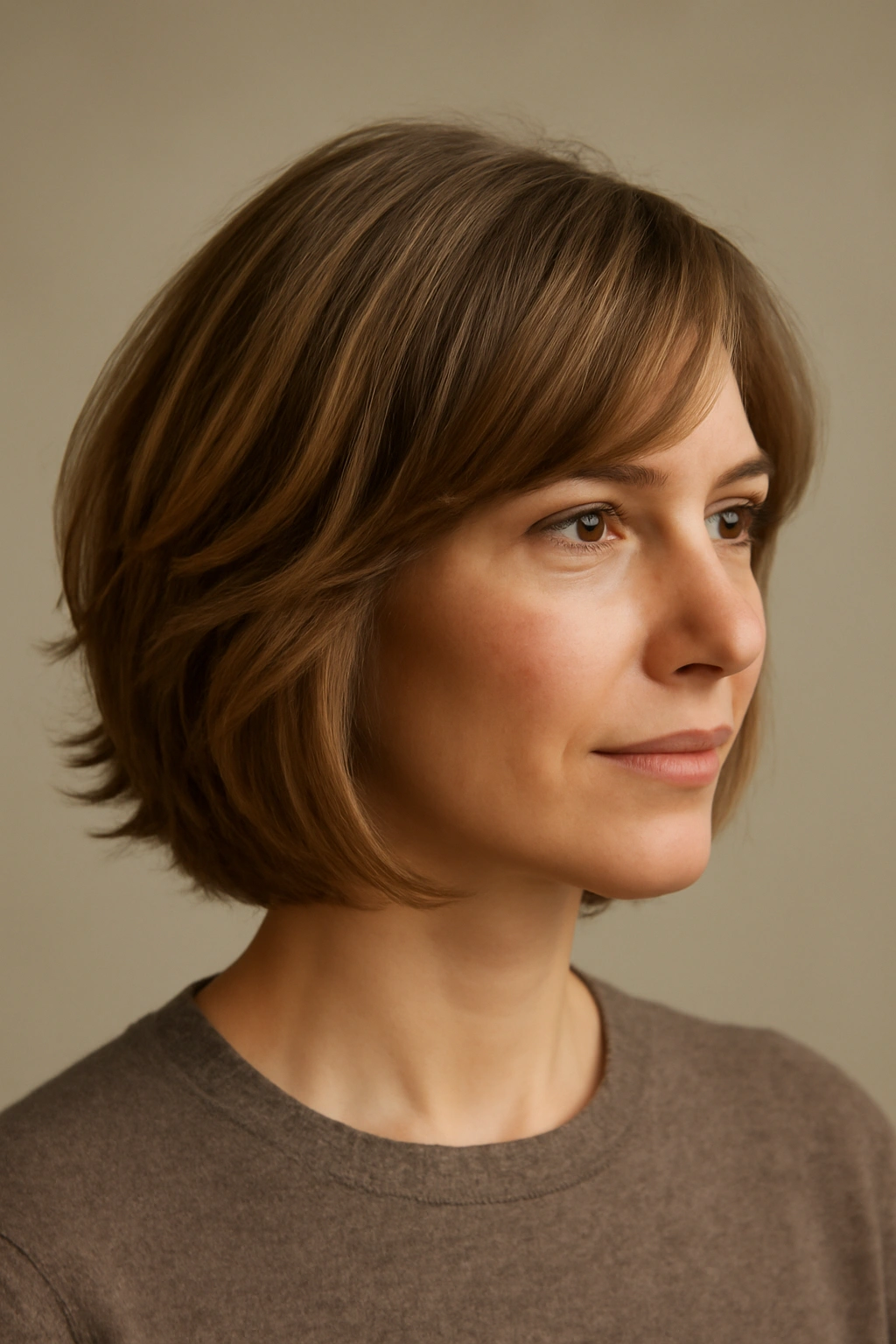
A feathered bob uses layers that feather (gradually taper) throughout, creating soft, flowing movement without the choppiness of a choppy bob. The layers blend together smoothly, creating an overall silhouette that’s both shaped and soft. Feathering works beautifully for both hair types because it removes bulk without creating that piece-y, textured appearance.
The Soft Sophistication of Feathered Layers
Fine hair looks full and textured in a feathered bob because the layers create movement and dimension without the scattered, wispy appearance that choppy bobs can have on fine hair. The feathering is subtle enough that it doesn’t expose thinness but dramatic enough that it creates obvious volume and movement. Thick hair looks controlled and refined in a feathered bob, with the graduated layers preventing density while maintaining length and shape.
Styling a Feathered Bob
- Blow dry with a round brush, directing the layers to flow and feather outward for maximum movement
- Light texturizing product enhances the feathered effect without weighing it down
- You can wear a feathered bob sleek and polished or tousled and textured depending on your styling choice
- Maintenance every 6-7 weeks keeps the feathering looking intentional and prevents the layers from growing out unevenly
- Works beautifully with straight, wavy, or slightly curly hair — the feathering guides how texture falls
- Face-framing pieces look particularly good on a feathered bob, adding softness around your cheekbones and jawline
Insider note: Feathered bobs are sometimes underrated because they’re less dramatic than choppy or pixie bobs. But they’re incredibly versatile — you can style them multiple ways and they’re forgiving enough for people who don’t want super high-maintenance cuts.
16. Bixie Cut
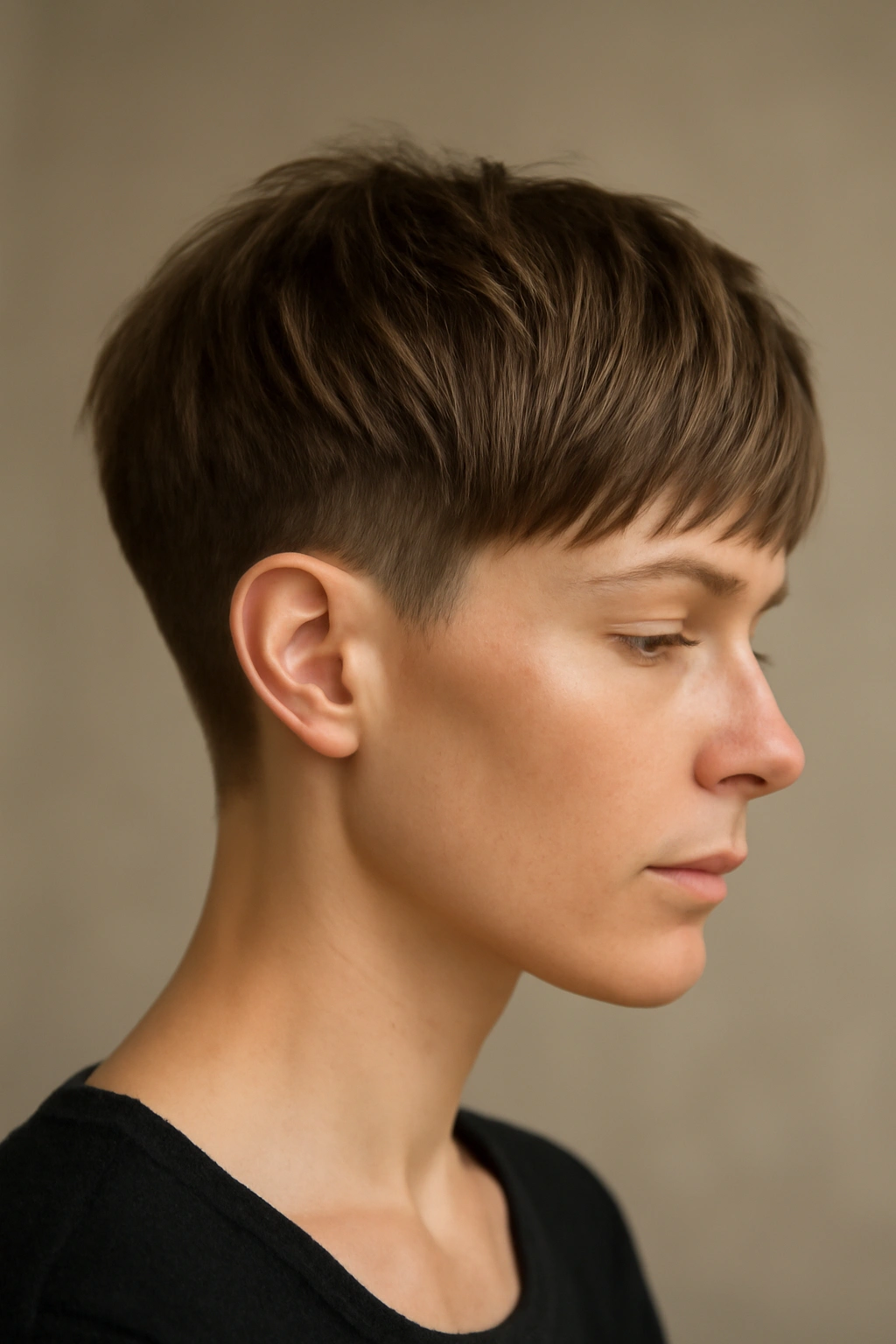
A bixie cut is literally a combination of a bob and a pixie, featuring longer hair on top (like a bob) with very short, tapered sides and back (like a pixie). It’s an edgy, modern cut that’s exploded in popularity because it offers incredible versatility. You can style it like a pixie or like a bob depending on your mood and how you arrange your longer top section.
The Versatility of Hybrid Cuts
Fine hair looks surprisingly full in a bixie cut because the ultra-short sides create visual proportion — the longer top appears fuller by comparison. The minimal hair at the sides and back removes all the weight that makes fine hair flatten, while the longer top provides styling options. Thick hair looks fashion-forward in a bixie cut, with the short sides preventing density while the longer top offers length and movement.
Styling Flexibility of a Bixie
- You can style the longer top back like a pixie, or forward like a bob — completely different looks from one cut
- The longer top can be textured and piece-y, or smoother and more polished depending on your styling choice
- You can do half-up styles, pulling the longer pieces back while exposing the short sides
- Maintenance requires regular trims every 3-4 weeks for the shorter sections and every 5-6 weeks for the longer top
- This cut looks best with straight or wavy hair — very curly hair makes it harder to style the longer top multiple ways
- It’s an inherently statement-making cut that reads as fashion-forward and confident
Pro tip: A bixie cut is perfect if you love the ease of a pixie but miss having longer hair to style. It gives you the best of both worlds, though maintaining two different lengths does require slightly more frequent salon visits than a single-length cut.
17. Messy Bob
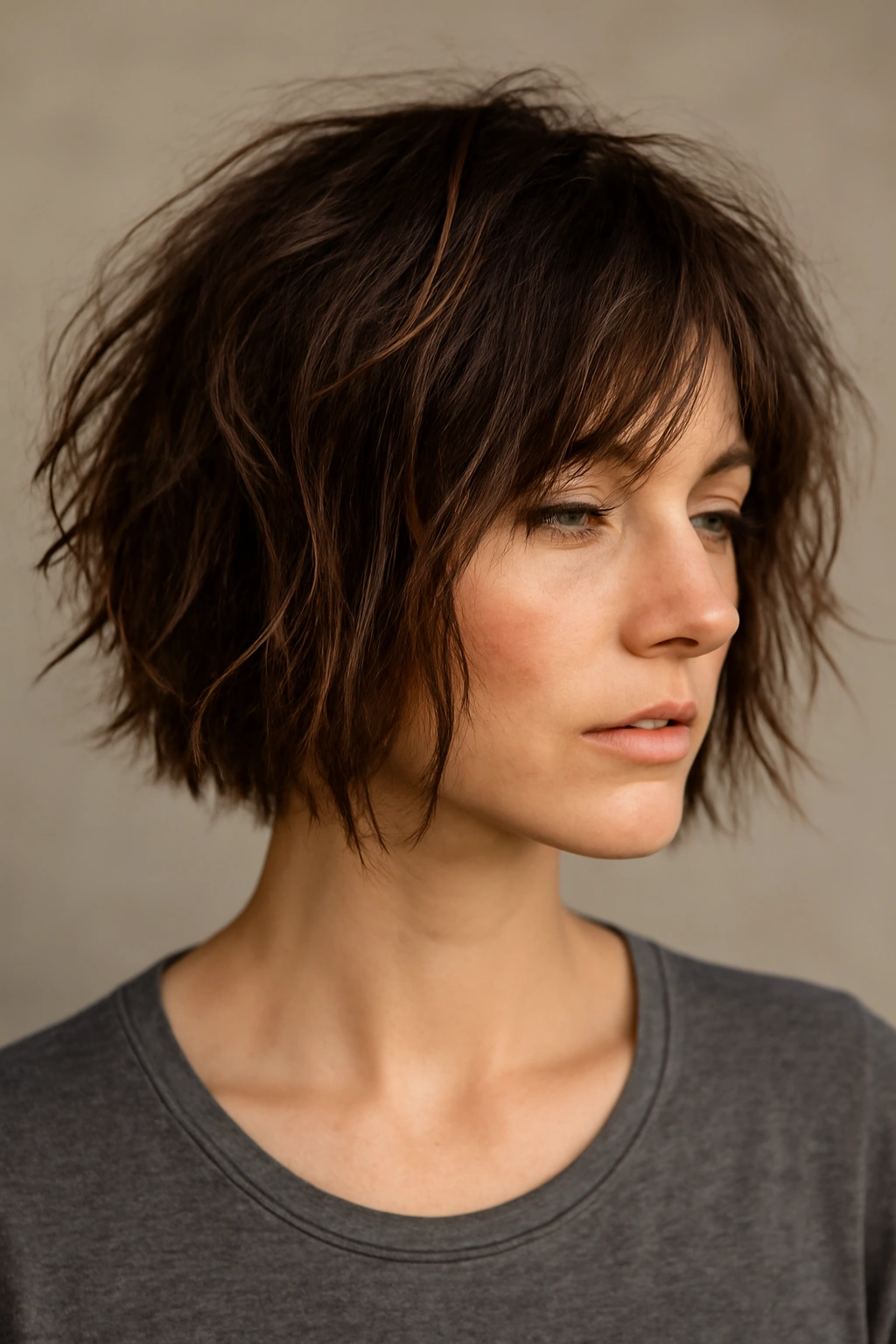
A messy bob is intentionally undone and texture-focused, using choppy layers and emphasizing that just-woke-up-and-shook-my-head aesthetic. It’s similar to a shag bob but with emphasis on the messy, undone quality rather than the rock-and-roll vibe. This cut is perfect for people who love the idea of a bob but dread the idea of maintaining a pristine, polished shape.
Embracing Intentional Imperfection
Fine hair looks absolutely full in a messy bob because the extensive choppy layers create texture and movement that reads as volume. The messy aesthetic actually works in fine hair’s favor because precision and polish aren’t the goal. Thick hair looks controlled and intentional in a messy bob, with the choppy layers preventing that solid, overwhelming density while maintaining movement.
Styling Your Messy Bob
- Use texturizing spray or sea salt spray generously to enhance the choppy, undone effect
- Embrace your natural texture — this cut looks best with waves, curls, or textured styling
- You can genuinely air-dry if you have wavy or curly hair, or use a diffuser attachment on a blow dryer
- Styling products are more important than styling technique — good texture spray makes a messy bob look intentional and cool
- Maintenance every 6-8 weeks keeps the choppiness looking intentional rather than overgrown and disheveled
- This cut works with any texture and actually improves with slightly undone styling
Worth knowing: A messy bob requires you to fully embrace the undone aesthetic. If you’re someone who wants a pristine, polished look, this cut will frustrate you because its entire goal is to look intentionally imperfect.
18. Geometric Bob
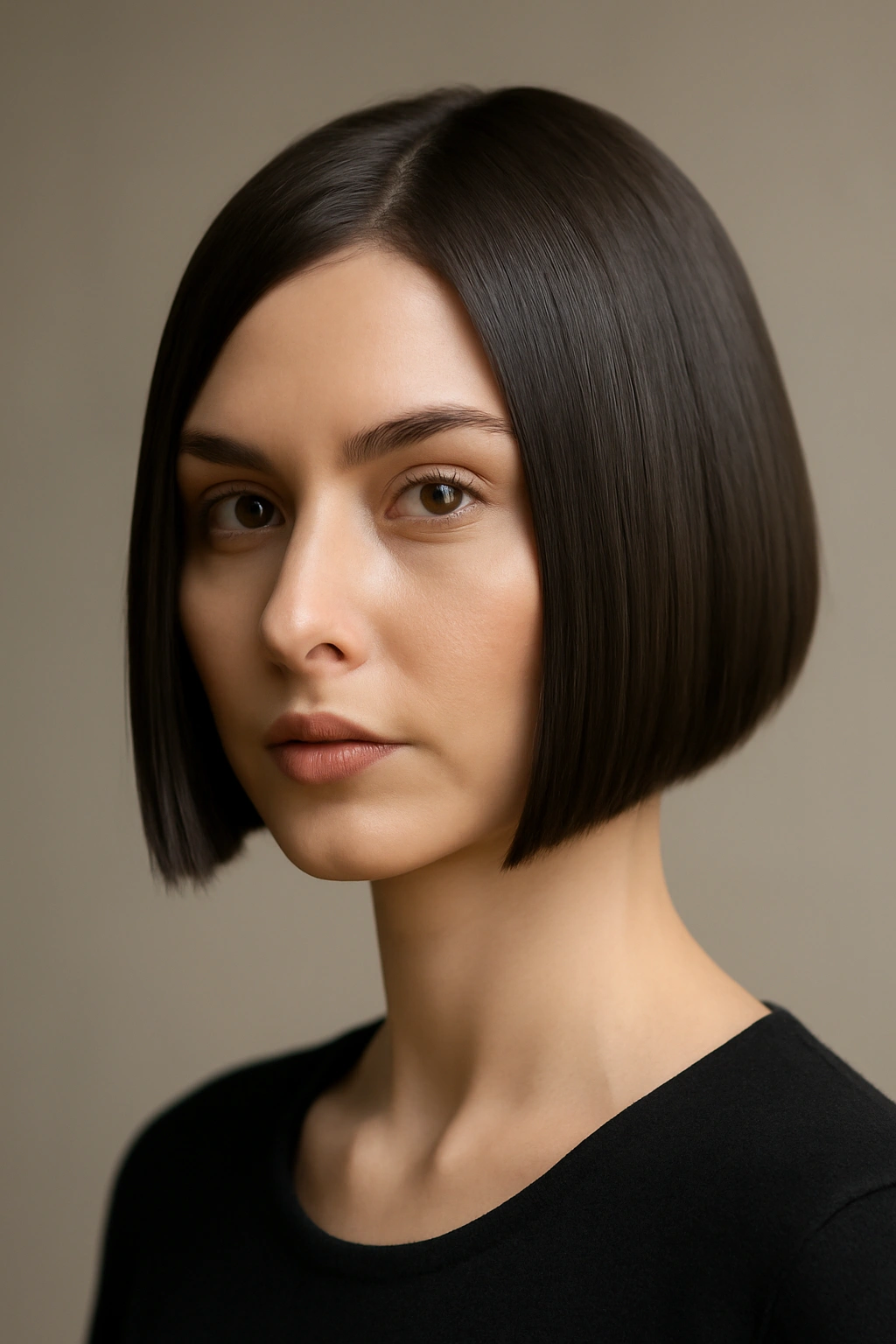
A geometric bob features sharp, clean lines and often includes an element of unexpected shape — perhaps an unexpected angle, a severe undercut, or an extremely blunt, almost architectural cut. It’s a bold, fashion-forward style that reads as high-fashion and intentional. Geometric bobs work for both hair types because the sharp lines are cut intentionally to enhance the specific shape you’re going for.
The Statement-Making Power of Geometric Precision
Fine hair can look incredibly chic in a geometric bob because the sharp, clean lines make every strand count — there’s no filler or fluffiness, just precision. The cut structure itself creates the appearance of volume because the lines are so intentional and well-defined. Thick hair looks modern and controlled in a geometric bob, with the sharp lines preventing any sense of heaviness or bulk.
Achieving and Maintaining Geometric Precision
- Styling with sleekness is essential — geometric bobs need smooth, polished styling to look sharp
- Use a flat iron or smoothing brush to ensure lines are crisp and well-defined
- Anti-frizz products are crucial because any frizz disrupts the clean geometric lines
- Maintenance every 4-5 weeks is essential to keep lines sharp and prevent growth from obscuring the geometric shape
- This cut requires regular blow-drying and styling — you’re not achieving geometric precision by air-drying
- Works best with straight hair, though straight-haired people with slight wave can achieve geometric looks with styling
- The cut itself is a statement, so you don’t need additional styling tricks or products beyond smoothing and shine
Pro tip: Geometric bobs photograph beautifully and feel incredibly fashion-forward, but they’re among the most high-maintenance bobs because they demand precision and regular styling. Only choose this cut if you’re willing to commit to regular trims and styling.
Final Thoughts
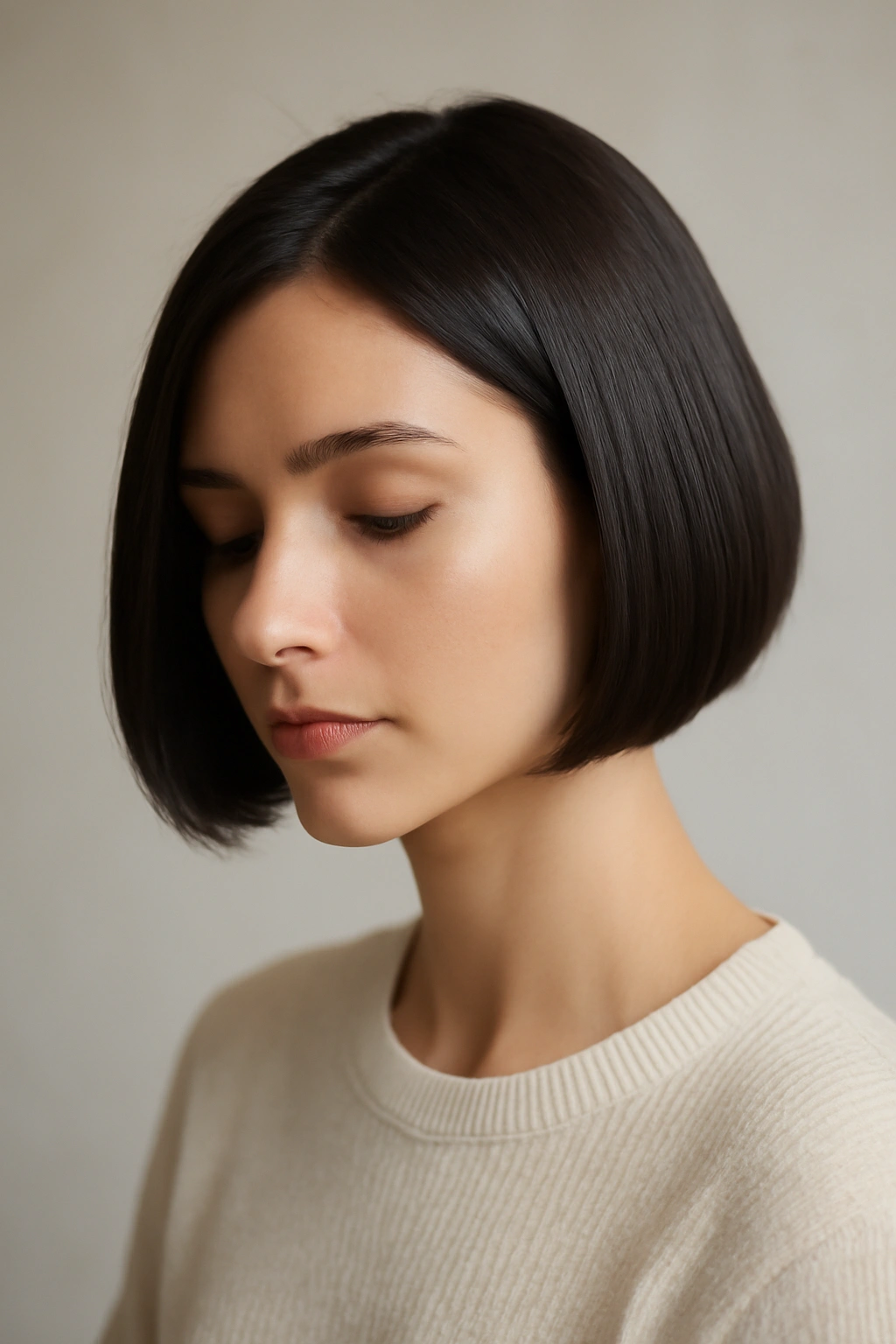
The perfect bob isn’t about finding the most popular style or the one that looks best on someone else — it’s about understanding how different cut structures interact with your specific hair type and what level of styling commitment you’re actually willing to make. Fine-haired people have multiple options that create the illusion of volume and movement through strategic layering and texture, while thick-haired people benefit from cuts that remove bulk and create intentional shape.
Whether you’re drawn to the simplicity of a blunt bob, the versatility of an asymmetrical cut, or the fashion-forward edge of a geometric style, spending time with your stylist discussing your hair type, face shape, and lifestyle will help you choose something you’ll genuinely love wearing. Consider taking photos of bobs you love to your consultation, but also talk honestly about how much styling you’re willing to do and how often you can commit to trims.
The best part about short bobs is that they’re transformative — they completely change how you feel and look — while remaining manageable and wearable in real life. You don’t need perfect hair to pull off a great bob. You need a cut that’s chosen specifically for your hair type, maintained with regular trims, and styled with intention. Start there, and you’ll find a bob that feels like it was made for you.
