



There’s something undeniably powerful about a perfectly executed bob. It’s clean, it’s polished, and it instantly elevates your entire look without requiring hours of styling each morning. But not all bobs work the same way, and if you’ve got naturally straight hair, you’re sitting on one of the biggest hair advantages out there. Straight hair is the canvas that makes a bob truly shine — the lines fall exactly where you want them, the angles stay sharp, and that coveted sleek finish comes naturally without fighting your hair’s texture. Whether you’re thinking about a dramatic change or just looking for inspiration for your next salon visit, straight hair opens up a world of sophisticated bob possibilities that maximize your hair’s natural strengths.
1. Blunt Bob with Rounded Ends
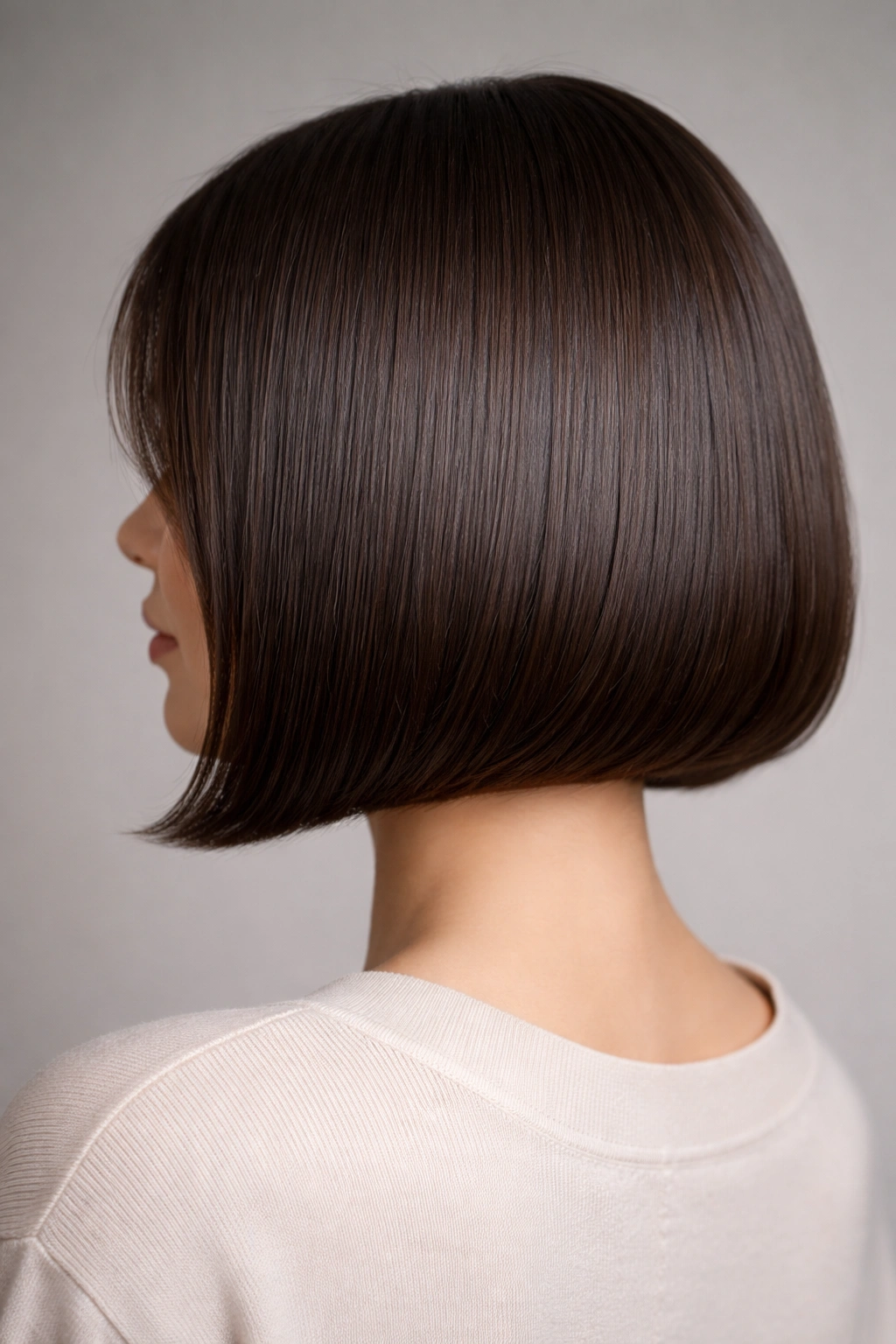
A blunt bob is the classic foundation, and when executed on straight hair, it becomes almost sculptural. This cut features a severely straight hemline all the way across, typically hitting at the jaw or just below the chin. The magic happens with the rounded ends — instead of sharp corners at the back, the stylist curves the line slightly inward, creating an elegant finish that frames the face beautifully. This prevents the “helmet head” effect and allows the cut to sit more naturally against your neck and shoulders.
Why Straight Hair Is Ideal for This Cut
Straight hair shows off a blunt line with absolute precision. There’s no waviness to blur the edge, no curl to soften the boundary — just a clean, intentional line that speaks to high-level craftsmanship. The rounded end detail becomes the focal point when your hair is naturally straight; it’s the signature gesture that prevents the cut from feeling too harsh or severe. This style works exceptionally well if you have a round or square face shape, as the blunt edge provides structure while the rounded ends soften the overall effect.
Styling and Maintenance Tips
- Straight-iron your bob every 2-3 days to keep the blunt line razor-sharp and maintain that expensive-salon look
- Use a smoothing serum or lightweight hair oil on the ends to prevent any frizz or separation along the hemline
- This cut requires a trim every 4-6 weeks to maintain the precise blunt edge; skipping trims will result in a ragged, unpolished appearance within weeks
- A volumizing mousse applied to damp roots before blow-drying creates subtle texture that keeps the bob from looking flat
Pro tip: Ask your stylist to slightly undercut the interior layers — you won’t see this from the outside, but it prevents bulk at the back and makes the bob sit more naturally on your head.
2. Chin-Length Sleek Bob
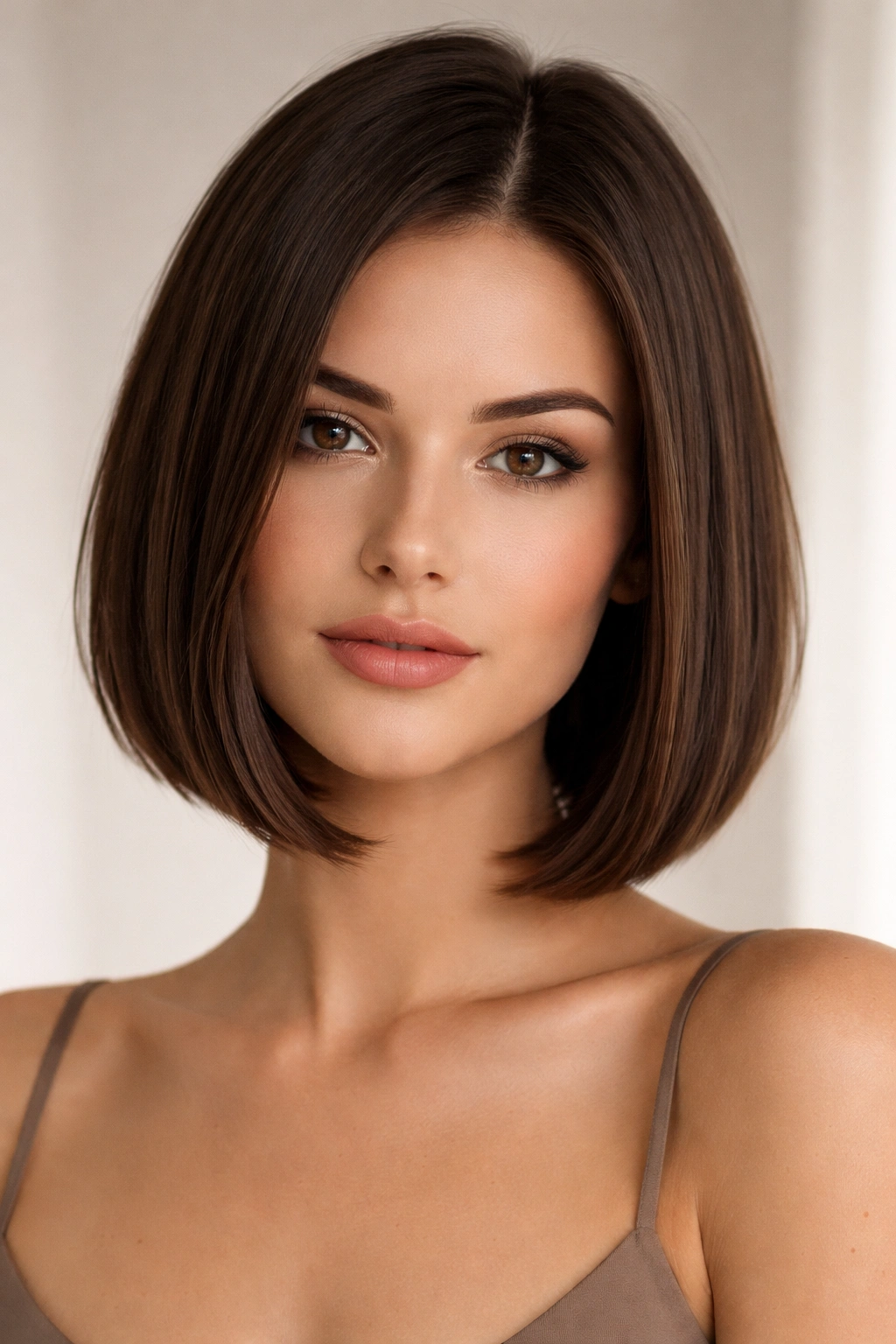
The chin-length bob is the Goldilocks of bob cuts — not too short, not too long, but precisely calibrated to hit right at your jawline or slightly below. This length is incredibly versatile because it works with most face shapes, and on straight hair, it becomes an elegant everyday style that looks intentional whether you’re wearing it sleek or tousled. The cut typically features subtle layers throughout to create movement without sacrificing that coveted sleek appearance.
The Face-Framing Magic
What makes this length so effective is how it interacts with your face. The ends fall right at the point where your face rounds toward your neck, creating a natural frame that draws attention upward to your eyes and cheekbones. On straight hair, this framing effect is enhanced because the layers catch light differently and create subtle shadow and dimension. The slight curve inward at the ends means the cut actually enhances your bone structure rather than competing with it.
Daily Styling Routine
- Blow-dry your hair straight using a paddle brush to maintain the sleek finish and emphasize the cut’s clean lines
- This length is perfect for a middle part or a deep side part — experiment to see which suits your face shape best
- The chin-length bob pairs beautifully with minimal makeup and clean, modern clothing because the cut itself is the statement
- Refresh your blowout between washes with a light mist of dry shampoo and a quick pass with a flat iron
Worth knowing: If your hair has even a slight natural wave, you’ll need to flat-iron this cut to maintain its sleek appearance. The shorter length means any texture becomes more visible, so consistency with styling matters more here than with longer bobs.
3. Asymmetrical Bob with Geometric Lines
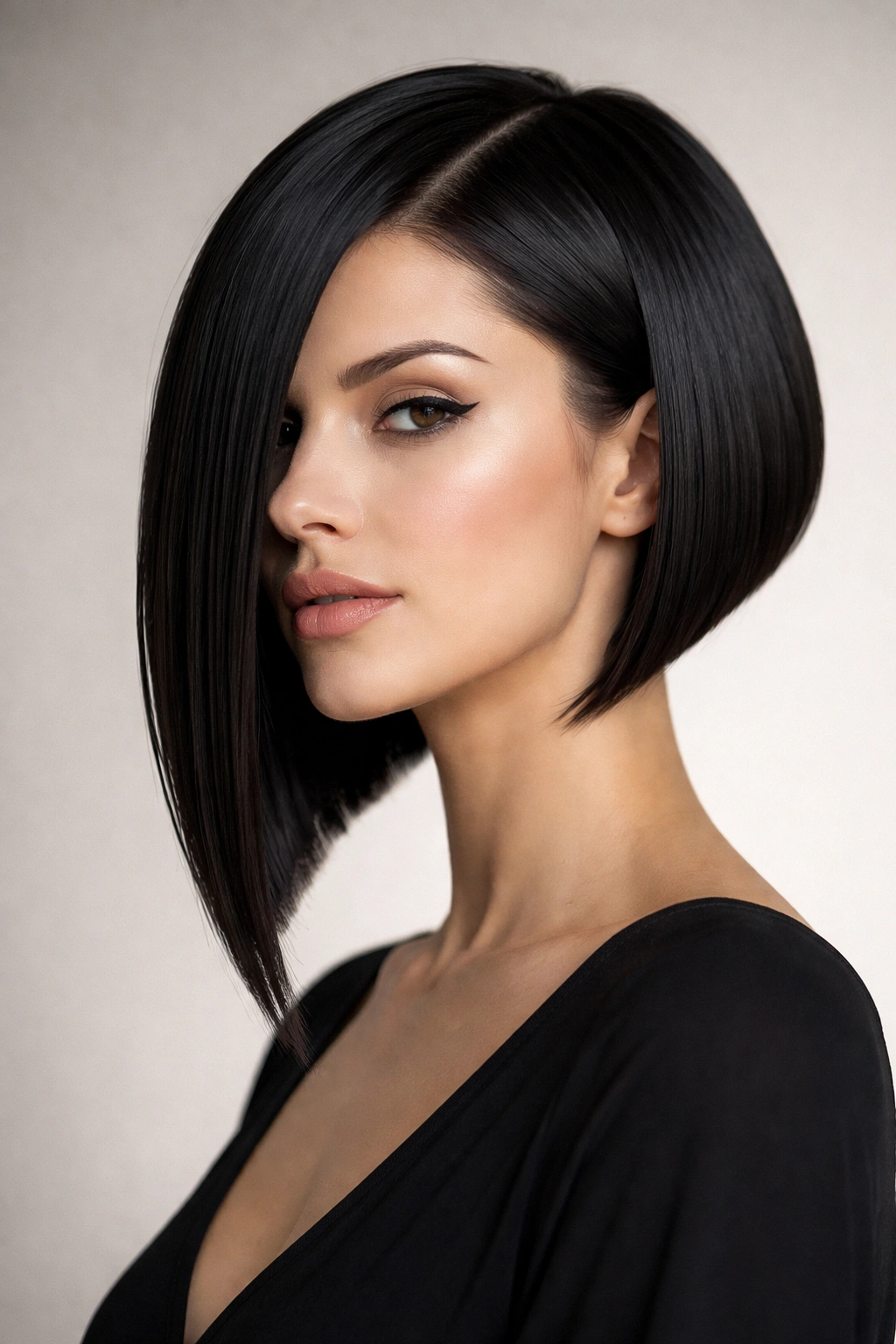
For those wanting to make a bolder statement, an asymmetrical bob delivers edge and modernity in a way that other cuts simply cannot. This style features one side significantly longer than the other — sometimes the difference is just 1-2 inches, sometimes it’s a dramatic 4-5 inch variation. The longer side typically falls toward the face, while the shorter side sits above the ear or even higher, creating striking geometric lines that feel architectural and intentional.
Why Asymmetry Works on Straight Hair
Straight hair makes the geometric contrast of an asymmetrical cut absolutely undeniable. Because your hair doesn’t have natural texture to blur or soften the angle, each side reads as a distinct, deliberate shape. This clarity is what makes the cut feel contemporary and fashion-forward. The asymmetry also creates movement and visual interest without requiring any actual curls or waves — the shape of the cut itself becomes the movement.
Styling and Face-Shape Considerations
- This cut favors longer face shapes because the geometric angles create width and fullness where needed
- Always style the longer side slightly forward and away from the face to emphasize the asymmetrical silhouette
- Consider your hair’s thickness: if you have very fine hair, the shorter side might expose your scalp, so your stylist might opt for a less dramatic angle
- Use a texturizing spray or sea salt spray on the shorter side to add grip and prevent it from lying too flat against your head
- The longer side benefits from a slight inward curve at the end, which balances the severity of the opposite side
Insider note: An asymmetrical bob photographs beautifully from the angled side. If you have a “good side,” position your longer length there and use your shorter side to create visual interest.
4. Textured Sleek Bob for Movement
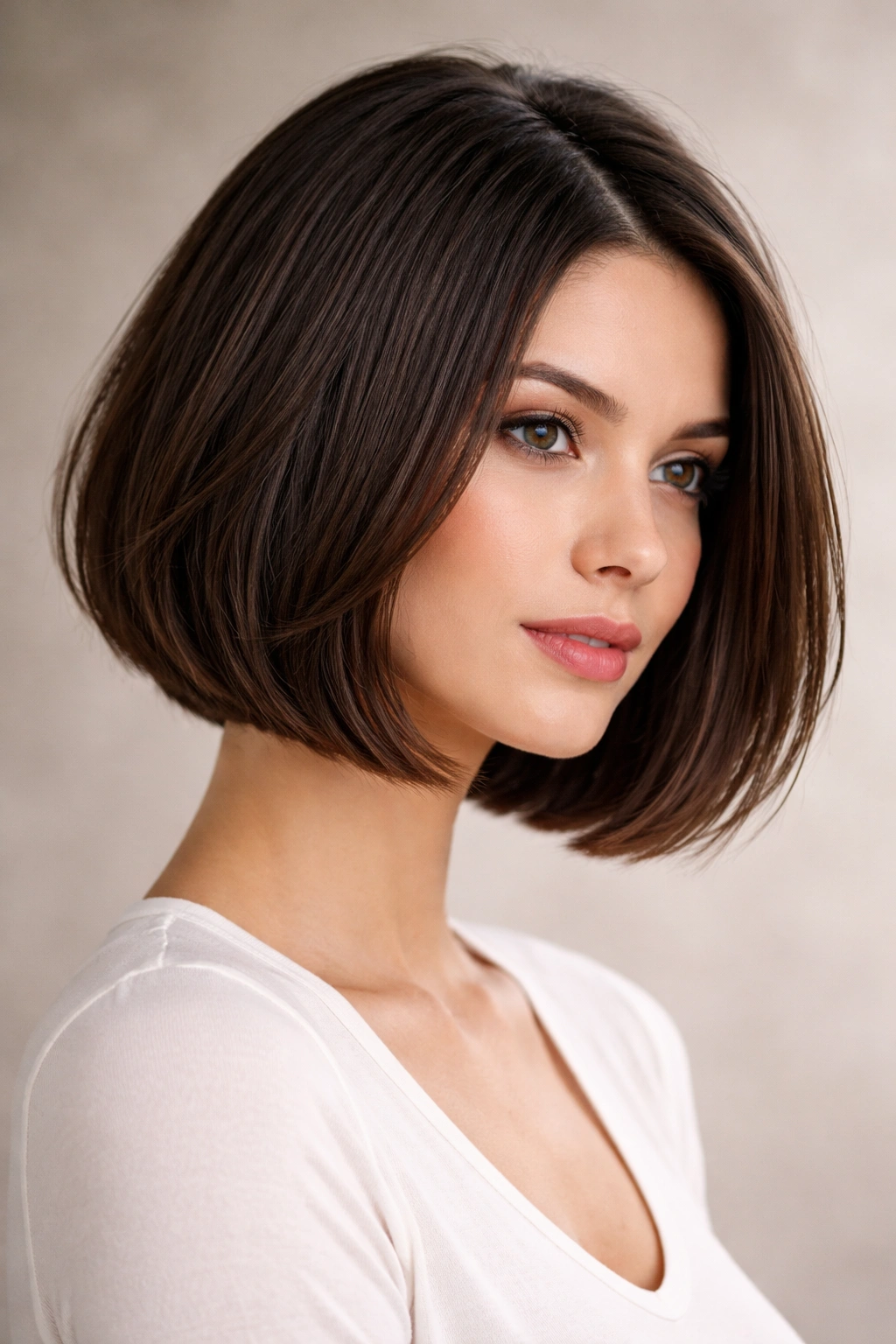
This style proves that “sleek” doesn’t have to mean completely blunt and severe. A textured sleek bob combines the refined silhouette of a traditional bob with interior layering and point-cut ends that create subtle movement and texture. On straight hair, this becomes the best of both worlds — you get the sophisticated line of a sleek bob without the requirement for daily flat-ironing to maintain perfection.
How Texture Changes the Game
Layers throughout the cut are angled upward and inward, creating shorter pieces on top that naturally fall at slightly different heights. This technique is sometimes called “point-cutting” or “texturizing,” and it breaks up the heaviness of a solid bob while still maintaining a cohesive shape. On straight hair, this technique is especially effective because you can see every individual layer — there’s no texture from waves or curls hiding the layering work. The movement these layers create looks intentional and modern.
Styling for the Textured Approach
- This cut looks best when you embrace its natural texture and skip the flat-iron entirely (or use it minimally)
- Blow-dry with a round brush for subtle volume at the roots, then use your fingers to encourage the textured ends to separate and move
- A light texturizing spray or dry shampoo works wonders to enhance the layered effect and add grip to the cut
- You can wear this style sleek by straight-ironing it, or messy and textured by scrunching in a sea salt spray — it’s genuinely versatile
- Trims every 5-6 weeks help maintain the texture; this cut can look shaggy faster than a blunt bob if you go too long between appointments
Real talk: This is the best choice if you want a bob that doesn’t require military-precision styling every single day but still looks intentional and polished.
5. Straight-Across Bangs with Bob
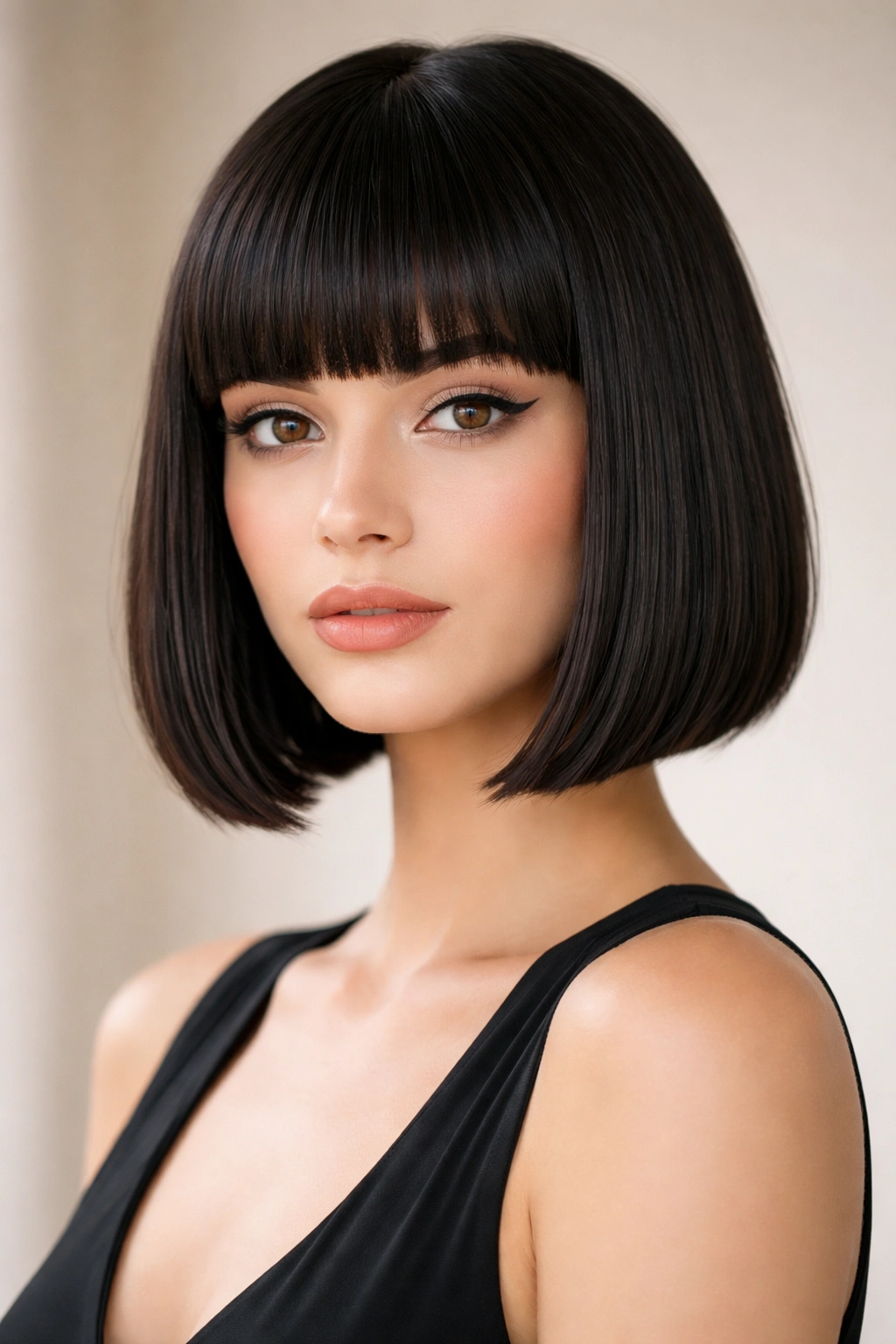
Adding blunt bangs to a bob creates one of the most striking and fashion-forward looks possible. The bangs sit just above your eyebrows, falling in a perfectly straight line across your forehead, while the rest of your hair follows a traditional bob shape below. This combination creates a graphic, almost androgynous effect that feels distinctly modern and editorial.
The Transformation Bangs Create
Bangs instantly frame your entire face and draw focus to your eyes. On straight hair, the geometric precision of blunt bangs looks intentional and polished rather than accidental or messy. They add an element of visual interest to the top of your head that a regular bob doesn’t inherently have. This style is particularly flattering if you have a longer face shape or a high forehead, as the bangs visually shorten your face and create width.
Maintenance Reality Check
- Straight-across bangs require the most maintenance of any bob style — they need a trim every 2-3 weeks to maintain their precise edge
- You’ll need to blow-dry your bangs straight every single morning; they cannot be left to air-dry if you want that clean line
- Bangs collect oil from your scalp faster than the rest of your hair, so even if you don’t wash your whole head, you might need to refresh your bangs with dry shampoo mid-week
- A small travel flat-iron is your best friend for quick bang touch-ups throughout the day
- Be realistic about your commitment level before choosing this style — neglected bangs look significantly worse than a neglected regular bob
Important to consider: If you’ve never had bangs before, try extensions or a clip-in style first to see how they feel. Not everyone loves the sensation of hair on their forehead, and bangs are a significant commitment to maintain properly.
6. Long Sleek Bob (Lob Style)
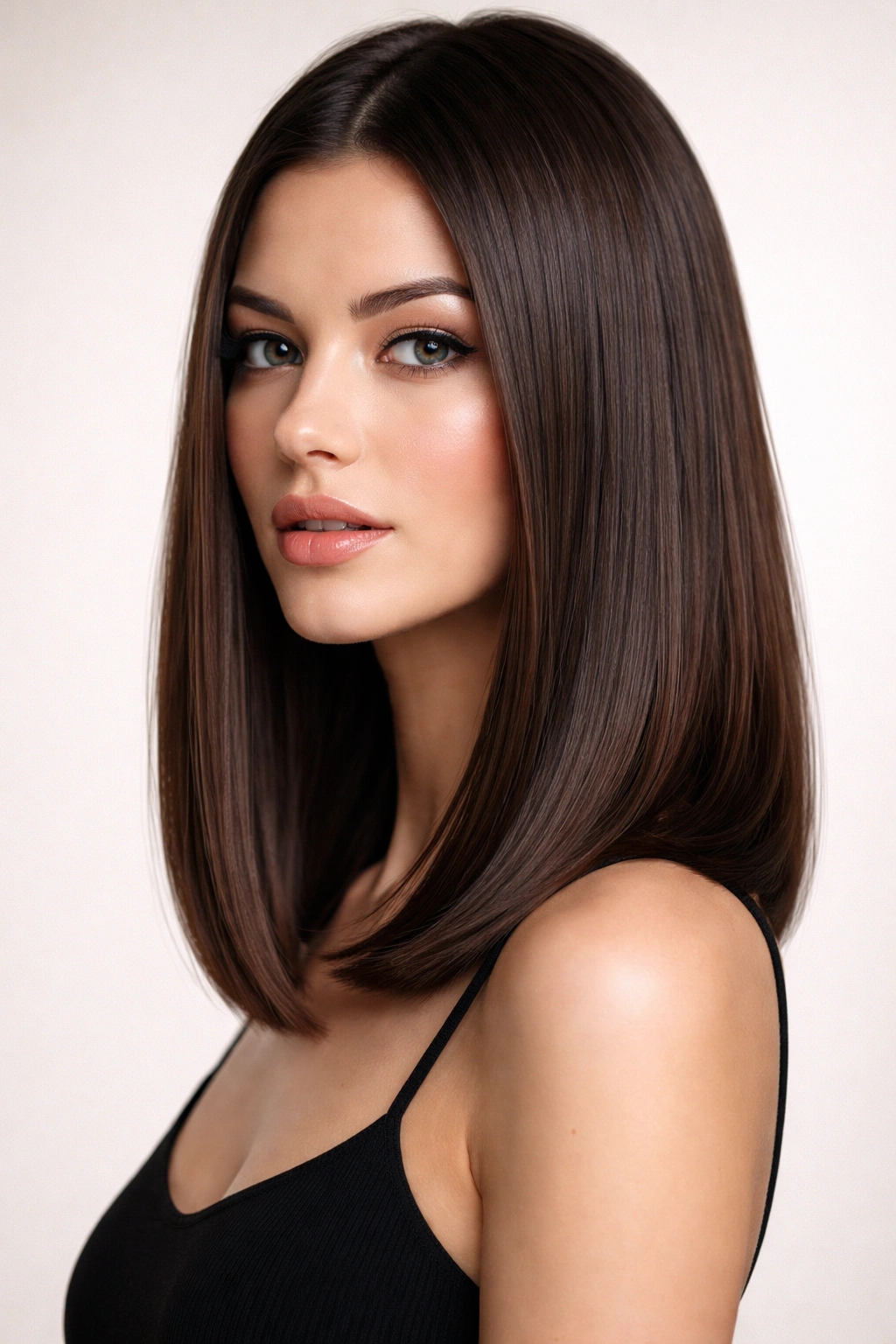
A lob — that hybrid between a long bob and a short long style — sits anywhere from shoulder-length to mid-shoulder, giving you the sophistication of a bob with more versatility. On straight hair, a sleek lob hits the sweet spot for someone who wants a polished, intentional cut without fully committing to short hair. This length is long enough to style in various ways yet structured enough to feel like a deliberate style rather than just “long hair.”
The Versatility Factor
The lob is genuinely one of the most versatile cuts available. You can wear it down and straight for a sleek, runway-ready look; you can blow-dry it with body for texture and movement; you can half-up style it; you can even braid it. Because it’s longer than a traditional bob, it also transitions more gracefully as it grows out — you can go longer between trims without the cut losing its integrity. On straight hair specifically, a lob looks refined and intentional without requiring a special finish or styling product.
Styling Approaches and Maintenance
- A middle part creates an effortlessly chic vibe; a deep side part feels more dramatic and asymmetrical
- Blow-dry straight for a sleek, polished appearance, or use a round brush on the ends for a subtle curl or flip
- This length pairs beautifully with minimal layering; keeping the cut fairly blunt preserves the sleek appearance while a few subtle face-framing layers add softness
- Trims every 6-8 weeks keep the ends looking fresh and prevent the inevitable split-end frizz that develops with longer hair
- A lob is particularly flattering if you have thick, straight hair that can support the length without looking weighed down
Pro tip: If you’re nervous about going shorter but want the structured look of a bob, a lob is the perfect starter style — it gives you the sleek shape and intentionality of a bob with the security of having more length to work with.
7. Tapered Bob with Undercut Detail
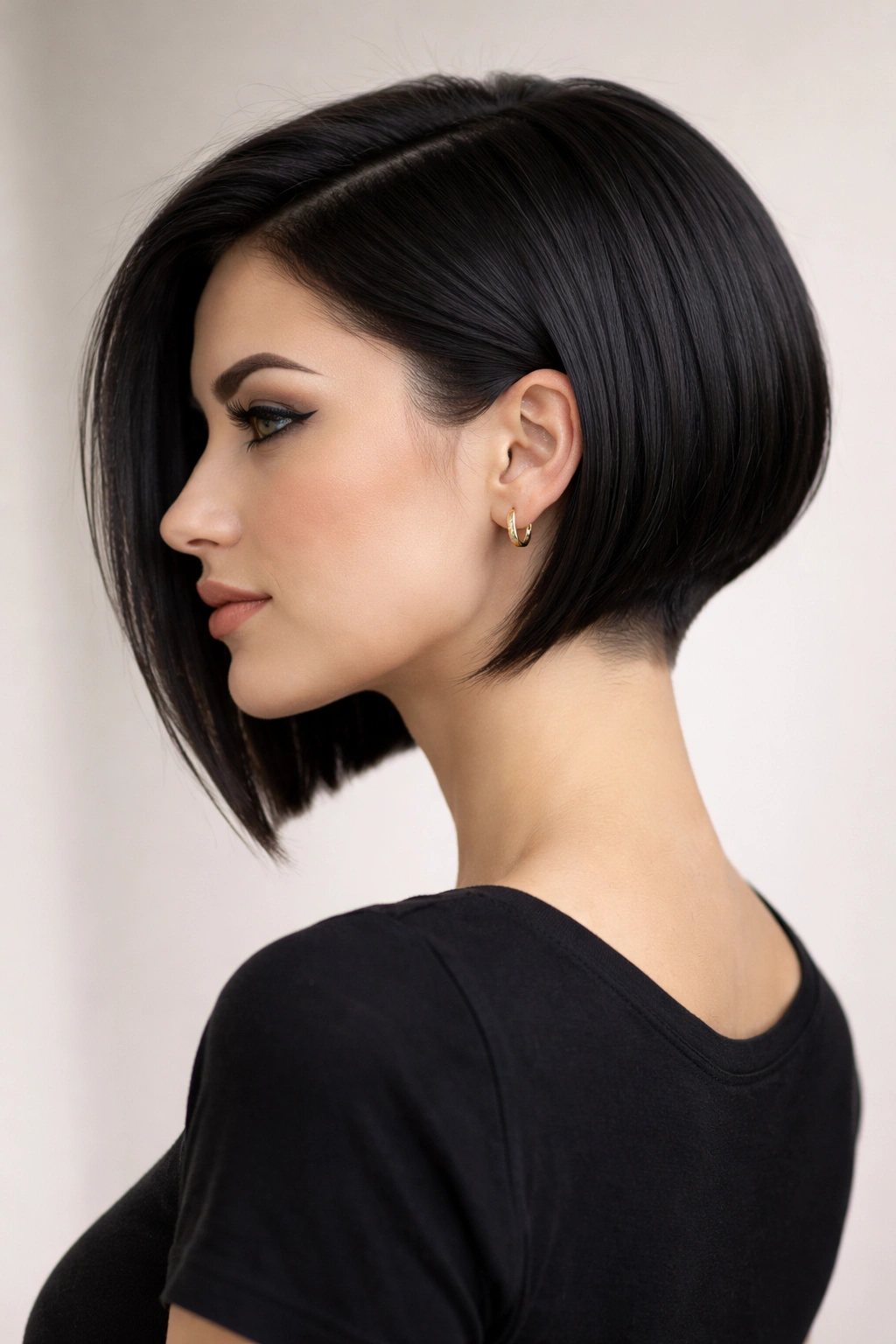
This modern variation of the classic bob features slightly longer hair in the front (framing the face) and progressively shorter layers toward the back, creating a tapered, almost disconnected look. An undercut detail — where the underneath layers are cut significantly shorter than the top layers — adds architectural interest and a contemporary edge that straight hair showcases beautifully.
The Structural Appeal
A tapered bob creates movement and shape without requiring any natural curl or wave to look intentional. The way the layers stack and overlap creates visual depth and prevents the bob from looking one-dimensional. When combined with an undercut, you get the additional benefit of weight reduction toward the back, which prevents the cut from sitting heavy on your neck. This structure is particularly effective on straight hair because you can actually see the individual layers and how they create the silhouette.
Styling the Undercut
- The undercut is typically hidden by the outer layers, creating a surprise element when you flip your head or put your hair in a half-up style
- You can style your bob with the undercut completely hidden for a traditional appearance, or flip and tousle the outer layers to show the textured layers underneath
- Blow-dry the outer layers down and inward to create a smooth exterior while the textured undercut creates interest and movement
- This cut works beautifully with a side part because the undercut on the shorter side becomes more visible, adding asymmetry
- Maintenance requires trimming every 5-6 weeks; the undercut layers grow out faster and can make the outer shape look messy if neglected
What to know: An undercut requires a skilled stylist who understands how to layer short and long lengths in a way that creates intention rather than looking accidental. Bring reference photos to your consultation.
8. Curved Bob with Side Parting
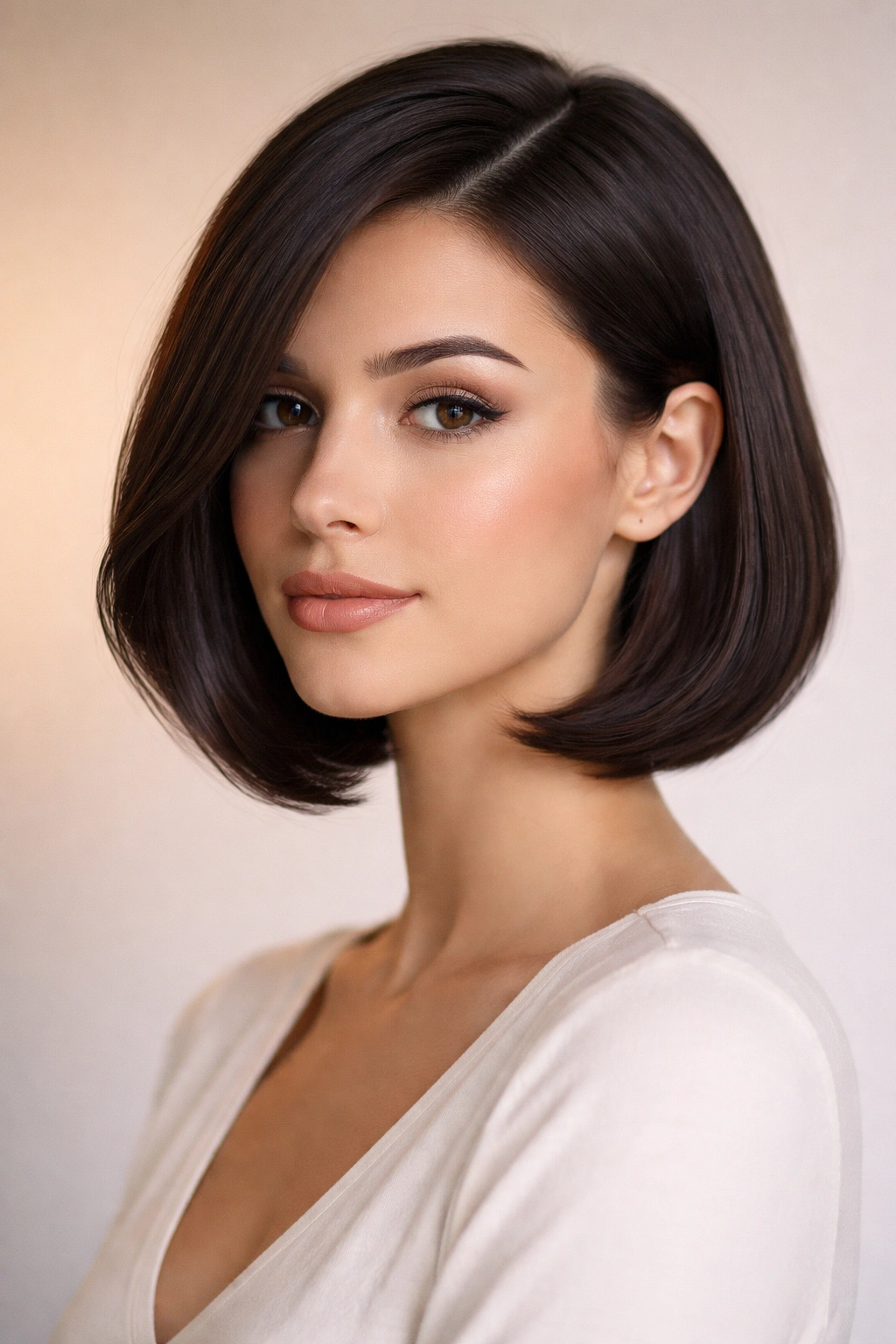
A curved bob is the elegant, slightly romantic version of the sleek bob — it features subtle curves that frame the face and create softness without sacrificing the modern, polished aesthetic. A deep side part emphasizes these curves and creates an asymmetrical silhouette that feels contemporary and intentional. The overall effect is less architectural than other bob variations and more fluid and feminine.
How Curves Enhance Straight Hair
When a skilled stylist cuts curves into a bob, they’re essentially creating an internal structure that shapes how the hair falls. On straight hair, these curves become extremely visible and precise — each curve reads as a deliberate design choice. The outer layers curve inward toward your face while the inner layers maintain slightly more length, creating movement without requiring you to blow-dry with a round brush. This cut feels effortlessly polished, which is the hallmark of good design.
Achieving the Right Curve
- Ask your stylist for curves that frame your cheekbones and follow your face shape — this isn’t a one-size-fits-all approach
- A deep side part (anywhere from 1/3 to 1/2 of your head from one side) emphasizes the asymmetrical, curved silhouette
- Blow-dry while directing your hair away from your face on the larger side; this emphasizes the curve and keeps hair off your features
- The curved bob looks fresh with minimal styling products; a light smoothing serum is usually all you need
- This style looks particularly elegant when paired with gold jewelry, warm tones, or minimalist aesthetic because it’s not trying to be edgy — it’s trying to be refined
Pro tip: If you have a round face, a curved bob with a side part creates height at the crown and visual angles that balance your face shape. If you have a square or angular face, the curves soften your features.
9. Micro Bob (Ultra-Short Sleek)
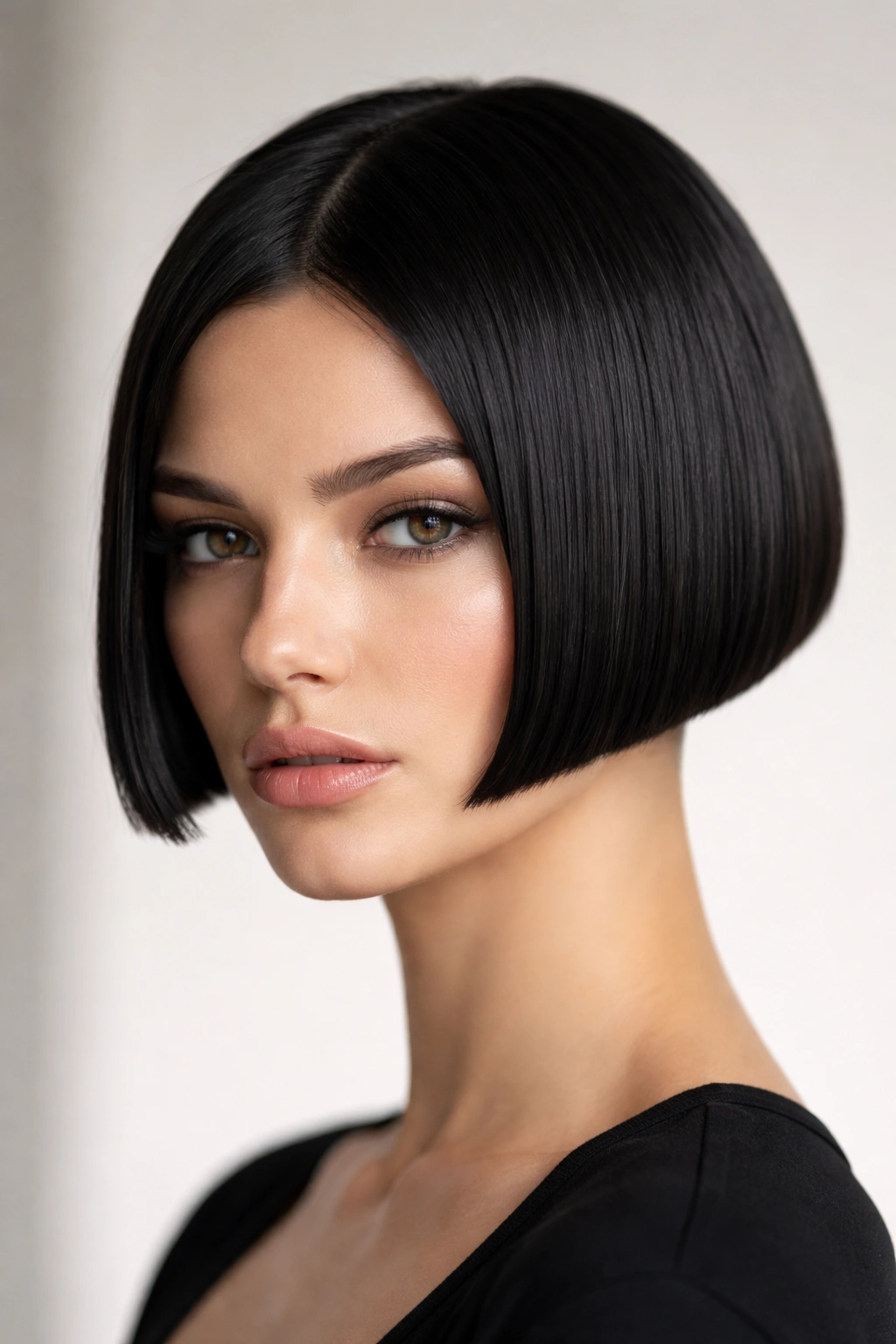
For the truly adventurous, a micro bob takes the bob concept to its absolute extreme — sitting just above the ears, sometimes as short as 1-2 inches in length. This is where straight hair truly shines. Without any natural curl to create volume or softness, a micro bob becomes an incredibly chic, modern statement that reads as confident and editorial.
Why Straight Hair Is Essential for This Length
A micro bob on wavy or curly hair can look shapeless or accident-prone. But on straight hair? It becomes a sculpture. Every angle is visible, every line is intentional, and the cut reads as deliberate rather than like you’re growing it out. This length requires absolute precision from your stylist — even a 1/4 inch off can change the entire feel of the cut. The benefit is that you never worry about your hair looking shaggy or needing a trim; it grows in relatively gradually and maintains its shape.
Living With Extremely Short Hair
- You’ll need to style your micro bob almost every day to maintain the sleek finish; air-drying isn’t an option if you want it to look polished
- A small, high-quality blow-dryer and a paddle brush are your essentials; consider a travel flat-iron as backup for stubborn pieces
- Surprisingly, a micro bob requires less washing because short hair doesn’t accumulate oil as visibly as longer hair
- This cut exposes your ears, jawline, and the back of your neck completely — so any skin texture concerns in these areas become visible
- Personality matters with this cut — it reads as confident and fashion-forward, so commit to the attitude that goes with it
Real talk: A micro bob is a statement. It’s not a compromise or a starter style — it’s a deliberate choice that signals you don’t need length to feel beautiful or feminine. It’s perfect for someone who loves minimalism, who has excellent bone structure they want to show off, or who simply wants to turn heads.
10. Two-Toned Sleek Bob
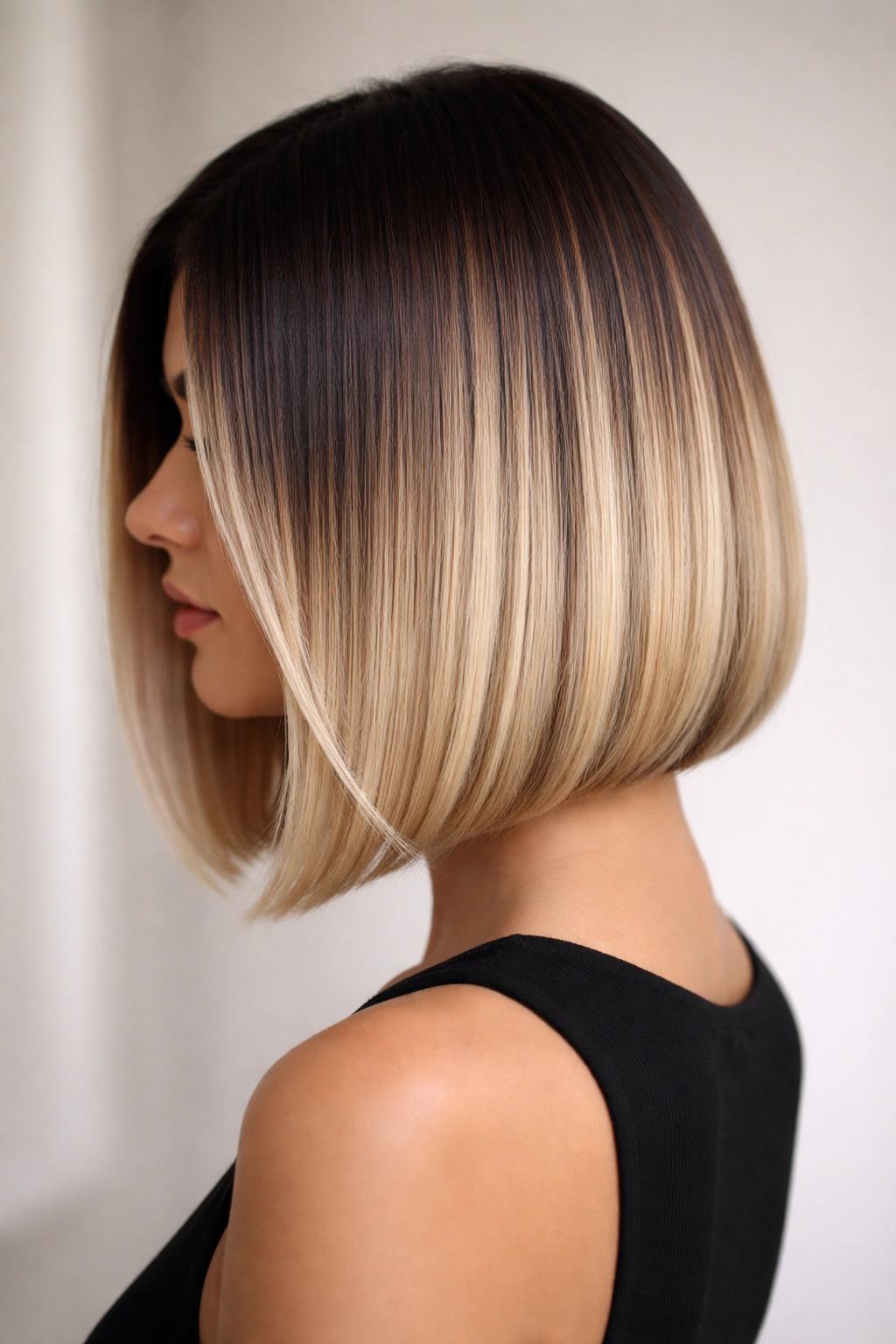
This style combines the structure of a sleek bob with the visual interest of color — typically a darker base with lighter pieces throughout the mid-lengths and ends, or a bold contrast like jet-black with platinum blonde. The cut itself is a traditional sleek bob, but the color work creates dimension and modern appeal that elevates the entire look.
How Color Transforms the Cut
Color adds visual interest that a single-tone bob doesn’t inherently have. When you combine this with straight hair, the color melts or blends from one shade to another with clear precision — there’s no texture hiding the color work. A two-toned bob creates the illusion of dimension and movement even when your hair is perfectly straight and sleek. This approach is brilliant if you want a modern style without going for an extreme cut like a micro bob or an asymmetrical shave.
Color Maintenance Reality
- Two-toned bobs require professional color maintenance every 4-8 weeks depending on how contrasted your colors are and how visible your roots become
- Lighter pieces (especially platinum or ash tones) require purple-toning shampoo to stay bright and prevent yellowing
- Straight hair shows color damage more visibly than textured hair, so invest in deep-conditioning treatments and quality color-safe shampoos
- The cut itself still needs trims every 4-6 weeks; color and structure both require commitment here
- Consider whether you’re comfortable with the maintenance before committing — this isn’t a low-effort style
Worth knowing: A two-toned sleek bob works best on medium to thick hair with enough density to support color saturation. Fine hair can look thin and breakage-prone if you’re doing dramatic color contrasts. Consult your colorist about whether your hair can handle this style.
Final Thoughts
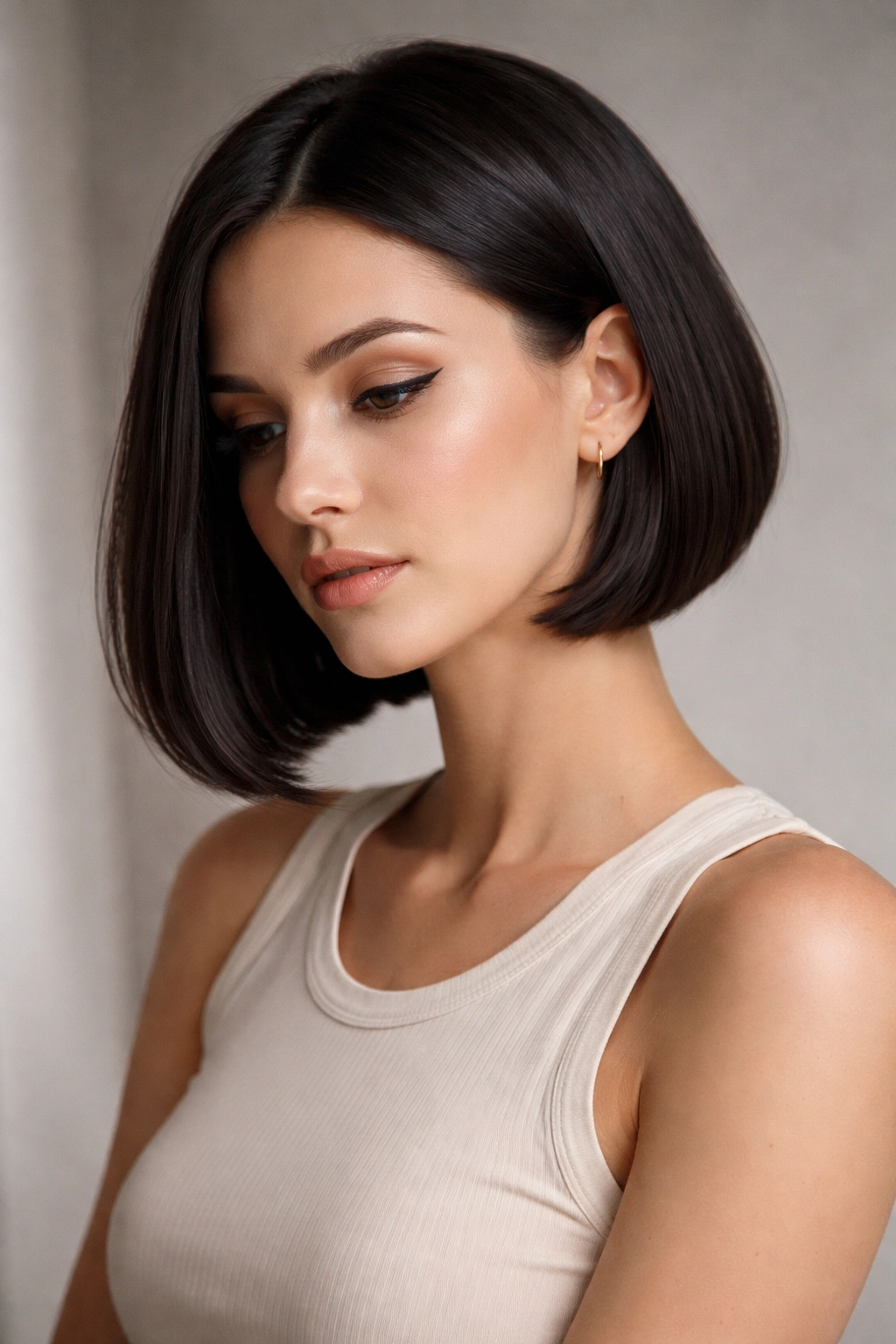
A sleek bob on straight hair is one of those rare combinations where the cut and hair type are perfectly suited to each other. Your naturally straight texture becomes your greatest asset, allowing you to wear precision-cut styles that would require daily styling effort on other hair types. Whether you’re drawn to the classic blunt lines, the modern asymmetry, the architectural undercut, or the editorial micro bob, there’s a sleek bob variation that matches your personality and lifestyle.
The most important thing to remember is that every one of these styles requires a skilled stylist who understands how to cut straight hair specifically. The precision matters enormously. Bring references, communicate clearly about your maintenance comfort level, and be honest about how much time you want to spend styling each morning. A great bob is worth the investment in a good haircut and the commitment to maintenance — straight hair makes it all look effortlessly polished.
