



When you commit to short curly hair, you’re not just choosing a length — you’re embracing a completely different relationship with your curls. Short cuts actually make curls easier to manage than longer styles, which is counterintuitive to most people. The weight of longer hair can drag curls down, flatten them, and make frizz more noticeable. But cut curls short, and they spring to life with volume, texture, and personality that feels effortless (even though it’s not always as simple as it looks). The real magic of a good short curly cut is that it works with your natural curl pattern instead of fighting against it.
The challenge isn’t whether short curly hair can look incredible — it absolutely can. The challenge is finding the specific cut that matches your curl type, face shape, and the time you’re willing to invest in styling. A pixie cut that’s flawless on someone with loose waves might feel shapeless on someone with tight coils. A textured bob that’s stunning on straight hair might lose definition completely on curls. That’s why choosing the right style matters so much, and why walking into a salon with just a Pinterest photo isn’t enough.
What follows are 20 genuinely distinctive short curly haircuts, each with specific details about who they work best for, how to style them, and what kind of curl pattern suits each one. These aren’t generic categories — they’re real cuts with real personalities that deserve real explanation.
Why Short Cuts Work Better for Curly Hair
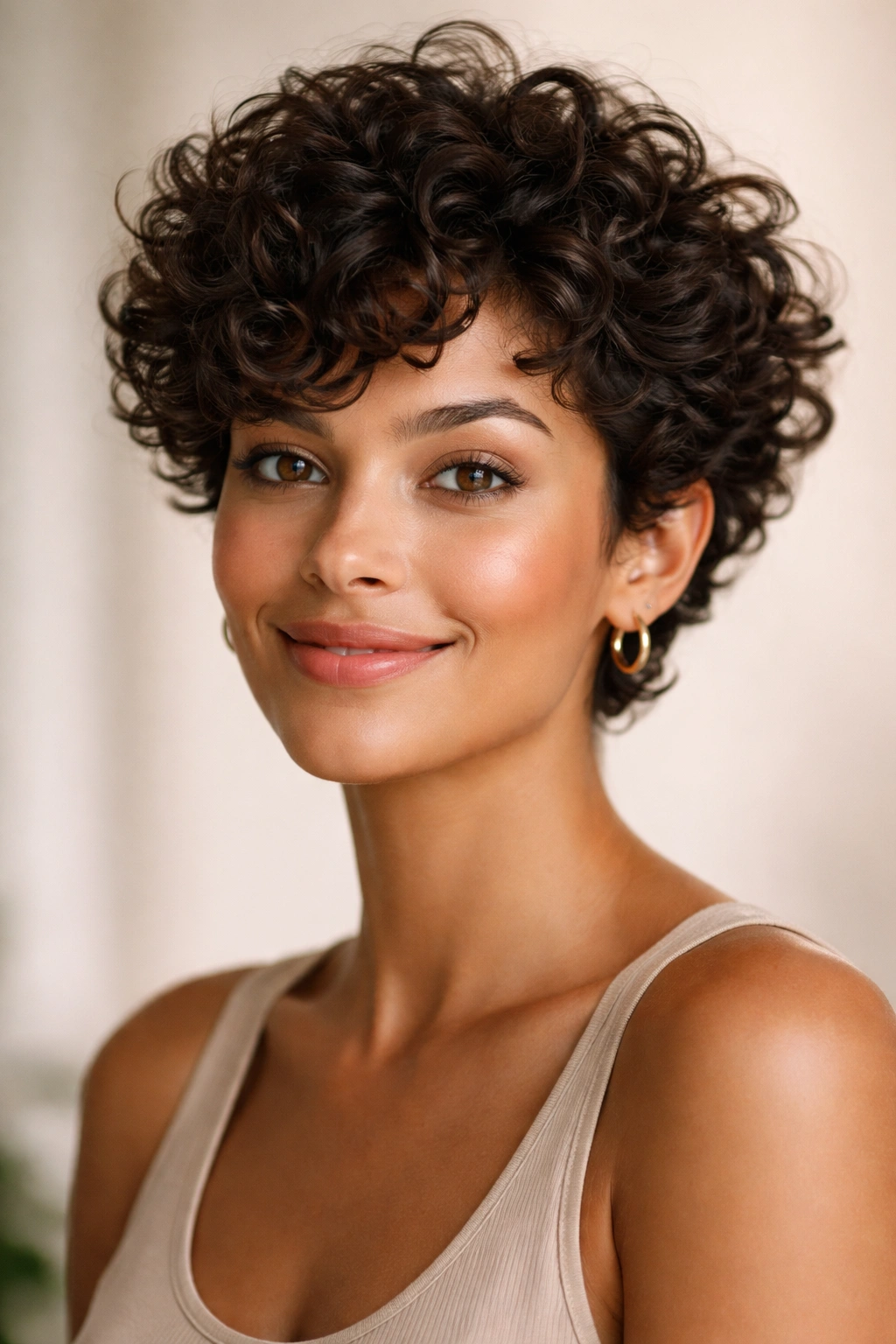
The physics of curly hair change completely at shorter lengths, and understanding this shift makes everything else make sense. Curls have inherent weight and density that longer styles amplify. When you remove several inches or more, you instantly reduce that weight, and curls bounce back with more volume and definition.
Short cuts also mean fewer curl combinations. A 14-inch curl travels 14 inches down the hair shaft before reaching the scalp, collecting frizz, dryness, and straightening forces along the way. A 3-inch curl stays compact, stays moisturized, and maintains its pattern more consistently from root to tip. This is why short curly cuts actually look fresher longer between wash days than longer styles.
How Density Changes Everything
Curly hair already has less surface area per strand than straight hair — the curl compresses the surface. Add length to that curl, and density decreases (hair looks thinner). Shorten it, and density becomes immediately visible. This is why a short cut can make thin, fine curls look abundant, while longer curls of the same density might look wispy.
The Styling Advantage
Short curly cuts take less product, less drying time, and less hands-on styling compared to longer curly styles. You’re not wrapping sections around a diffuser for 30 minutes. You’re not dealing with the bottom curl clinging to your neck while the top dries out first. Short curls dry more evenly, style more quickly, and hold their shape more consistently through a regular day.
Finding Your Perfect Short Curly Cut
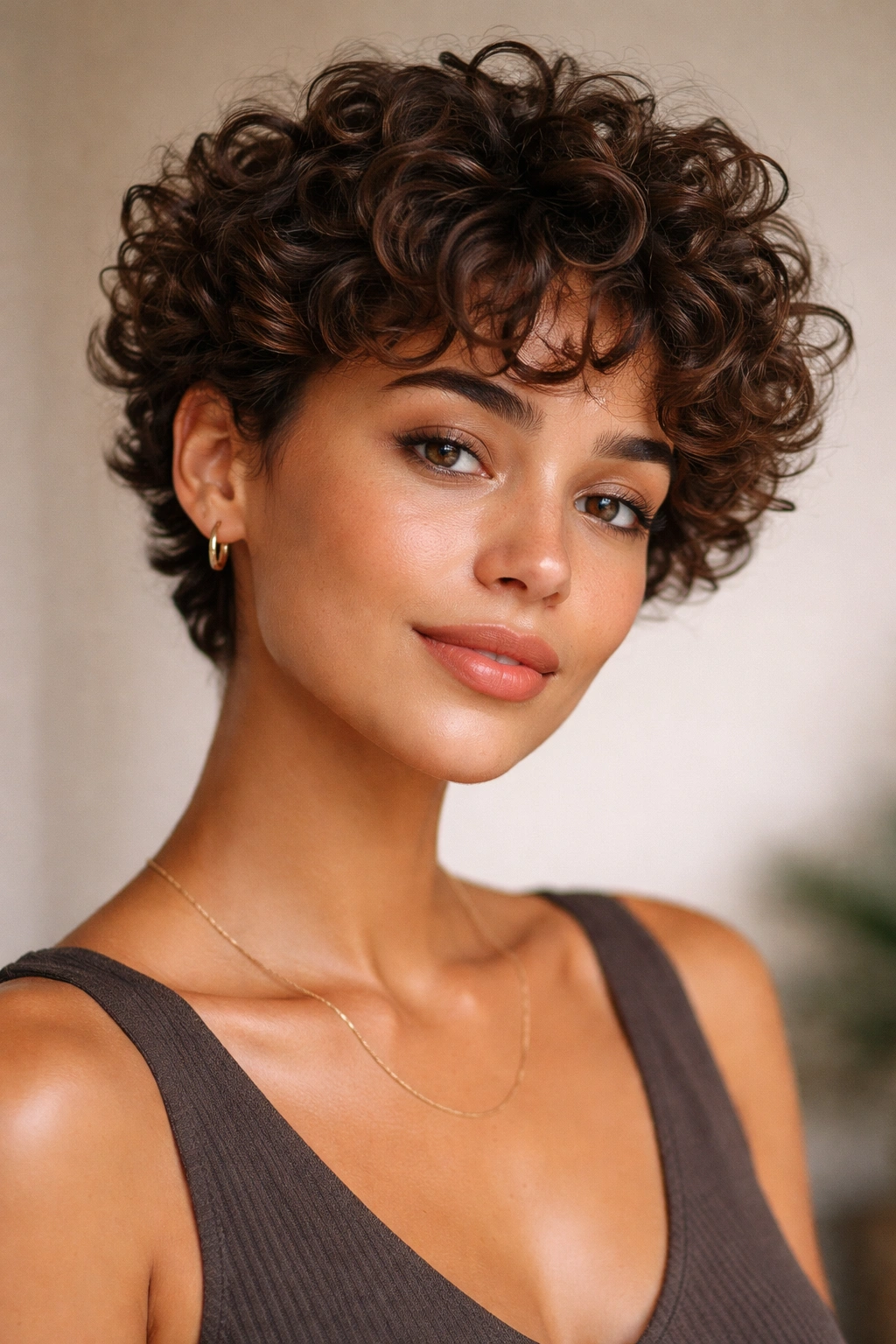
Not every short curly cut will flatter every face shape, and that’s not a flaw — it’s just how faces and hair work together. The goal is understanding which features your face has, which cuts will complement them, and which will fight against them.
Face shape matters more than trend. An asymmetrical pixie cut can look dynamic on an oval face but can look unbalanced on a round face. A textured crop works beautifully for square faces but can emphasize roundness on circular faces. Before choosing your next cut, figure out whether your face is round, oval, square, rectangular, heart-shaped, or diamond-shaped. This single piece of knowledge eliminates half the trial-and-error.
Curl Pattern and Cut Compatibility
Your specific curl type has to match your cut choice. A layered textured cut with lots of movement works beautifully for loose waves and medium curls (types 2 and 3). But someone with tight coils or kinky curls (types 4 and higher) might find that heavy layering creates too much separation and breaks up their curl definition. A blunt, shaped cut with less layering lets coils sit together and look fuller and more cohesive.
Fine, fragile curls need different cutting approaches than thick, resilient curls. Fine curls can be damaged by over-layering and aggressive cutting. Thick curls can handle more texture and movement without losing definition.
1. The Textured Pixie
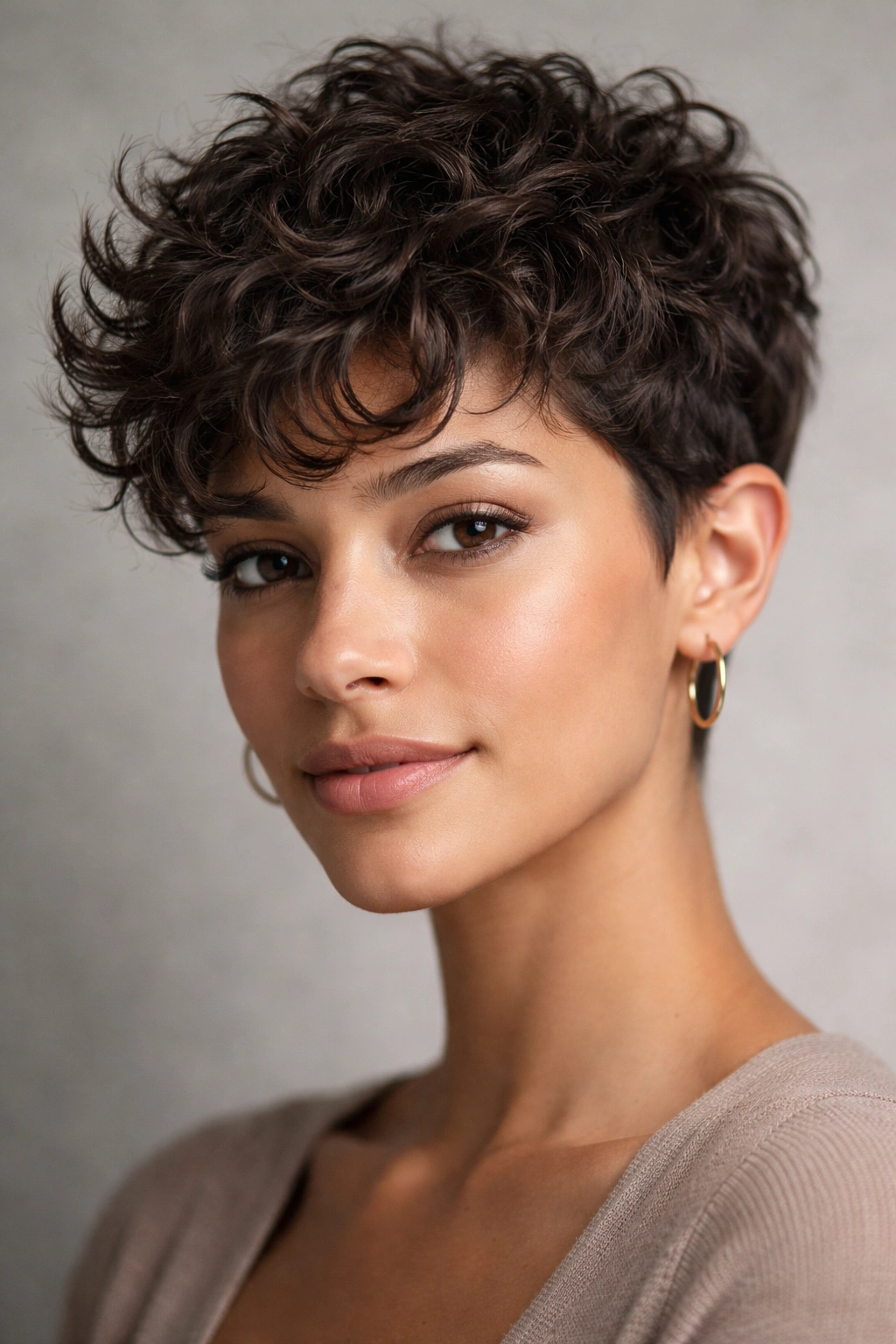
The textured pixie is short everywhere — typically one to two inches on top, faded or closely cropped on the sides. The magic is in the texturizing. A great barber or stylist cuts into the top with point-cutting or razor techniques, creating lots of piecey, separated strands. This isn’t a smooth, sculpted pixie; it’s deliberately choppy and lived-in.
Why It Works So Well for Curls
Because texturizing is already removing bulk and separating strands, your natural curl pattern gets to shine instead of being weighed down. Curls have room to spring forward individually. The cut is so short that styling is nearly hands-off — you can air-dry, use a lightweight cream, and go. There’s no way to make it look “wrong” because the whole point is texture and movement.
Best For and Styling Notes
- Works beautifully for tight curls, coils, and thick waves (types 3c through 4c)
- Flatters angular, square, and heart-shaped faces because the texture adds visual interest and softness to strong features
- Style it by applying a curl cream or gel to damp hair, scrunching upward, and either air-drying or diffusing on low heat
- The cut usually lasts 4 to 6 weeks before needing a touch-up as the style grows out and loses its shape
2. The Curly Bob With Layers
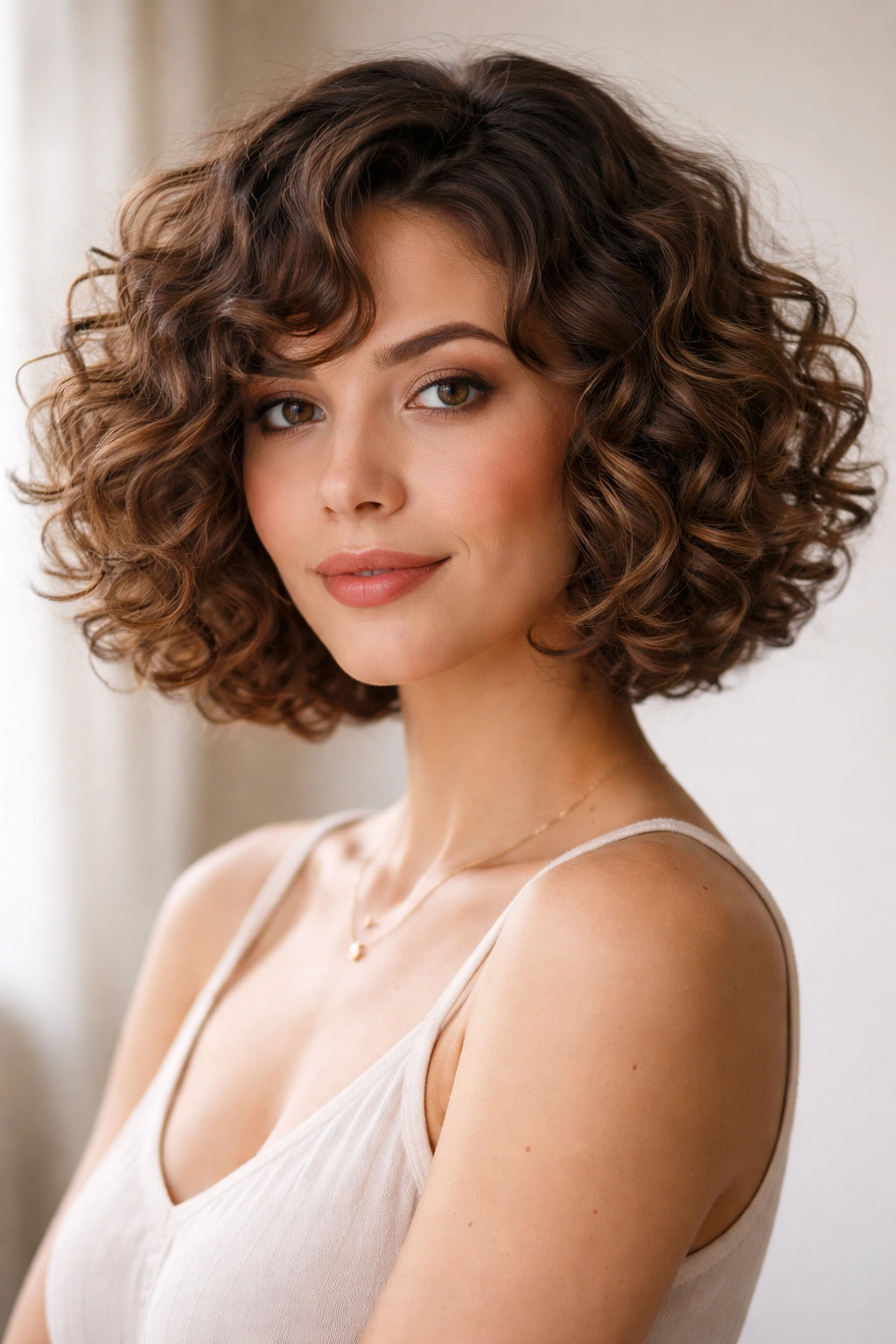
A curly bob sits roughly chin-length or slightly shorter, with significant layering throughout. Unlike a blunt bob that sits flat, a layered curly bob has movement from crown to ends. Each layer is cut at a different length, so curls can move independently instead of stacking on top of each other.
What Makes This Cut Special
Layering in a curly bob creates dimension and bounce without sacrificing length. The sides can swing out slightly at the jawline, and the crown has fullness. It’s shorter than a typical long curly cut but longer than a pixie, giving you a middle ground. The layers also create the illusion of more volume, which is especially helpful for fine or thin curls.
Best For and Styling Notes
- Works for wavy to curly hair (types 2 through 4a) because loose to medium curls look bouncy and defined with layers
- Suits oval, heart-shaped, and square faces because the length and movement balance proportions
- Style by applying products to wet hair, scrunching, and diffusing or air-drying
- Can be worn both curly and with some wave definition — styling flexibility is one of the appeal
- Requires trims every 8 to 10 weeks to maintain the layered shape as curls grow
3. The Blunt Tapered Cut
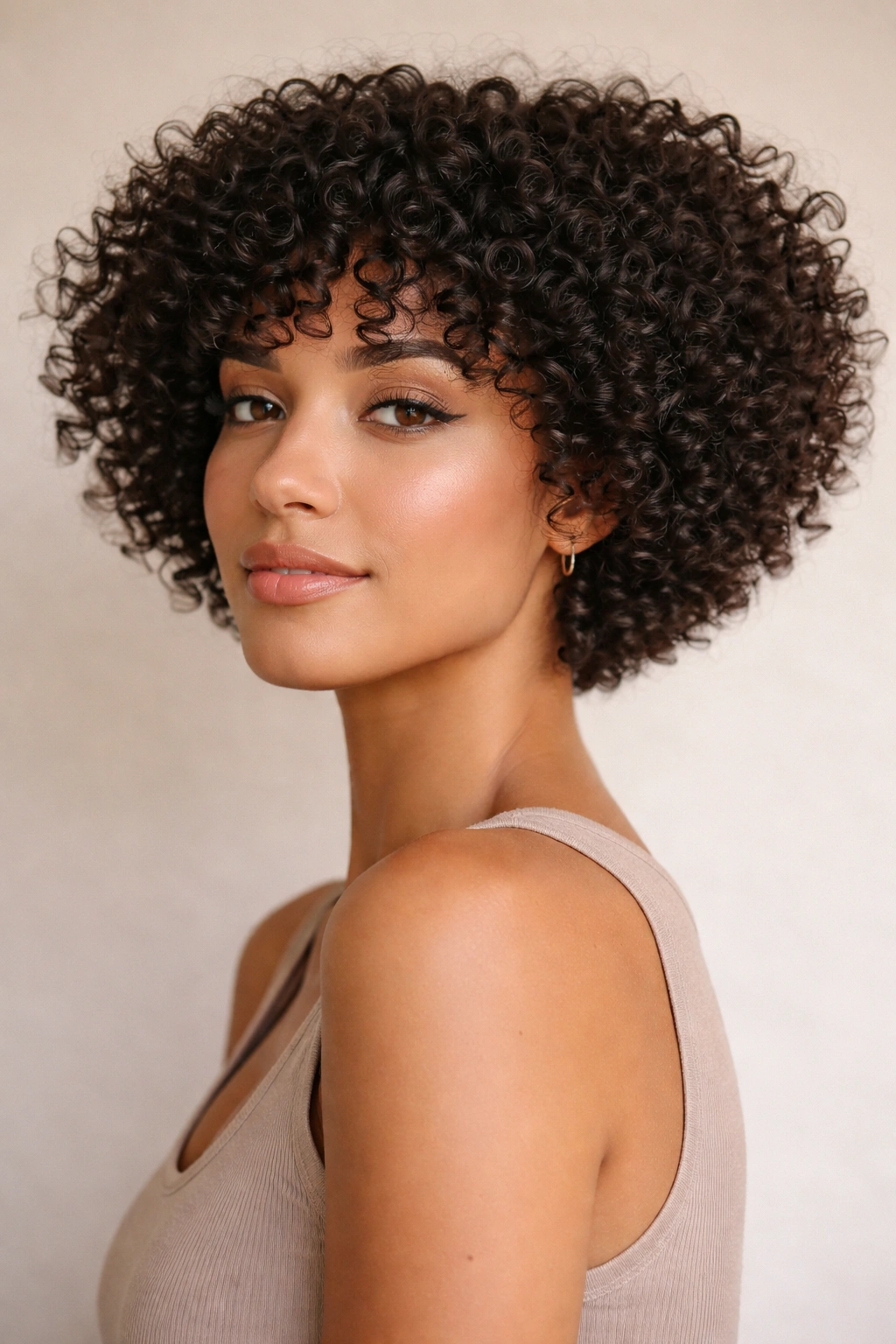
This cut keeps significantly more length than a pixie but is deliberately blunt at the ends and tapered shorter at the nape and sides. The back might be two inches while the crown is three to four inches. There’s minimal layering, so curls sit together in clumps rather than separated pieces. The overall effect is textured but cohesive.
Why This Works for Coily Hair
Coily and kinky hair (types 4a through 4c) looks fuller and more defined when curls cluster together. Heavy layering separates them too much and can make the style look sparse. A blunt tapered cut respects that natural clustering. The tapered sides keep the style looking intentional while not making a dramatic statement like a pixie or undercut.
Best For and Styling Notes
- Perfect for tight coils, kinky curls, and densely textured hair that benefits from curls sitting closely together
- Flatters round, oval, and diamond faces because the bluntness and taper create clear lines and proportion
- Style by applying leave-in conditioner and a styler to wet hair, then air-drying or diffusing while scrunching
- The shape holds well and looks intentional for weeks — usually needs a trim every 10 to 12 weeks
- Can be styled with a wave or clump definition for special occasions by using a stronger hold product
4. The Tapered Fade
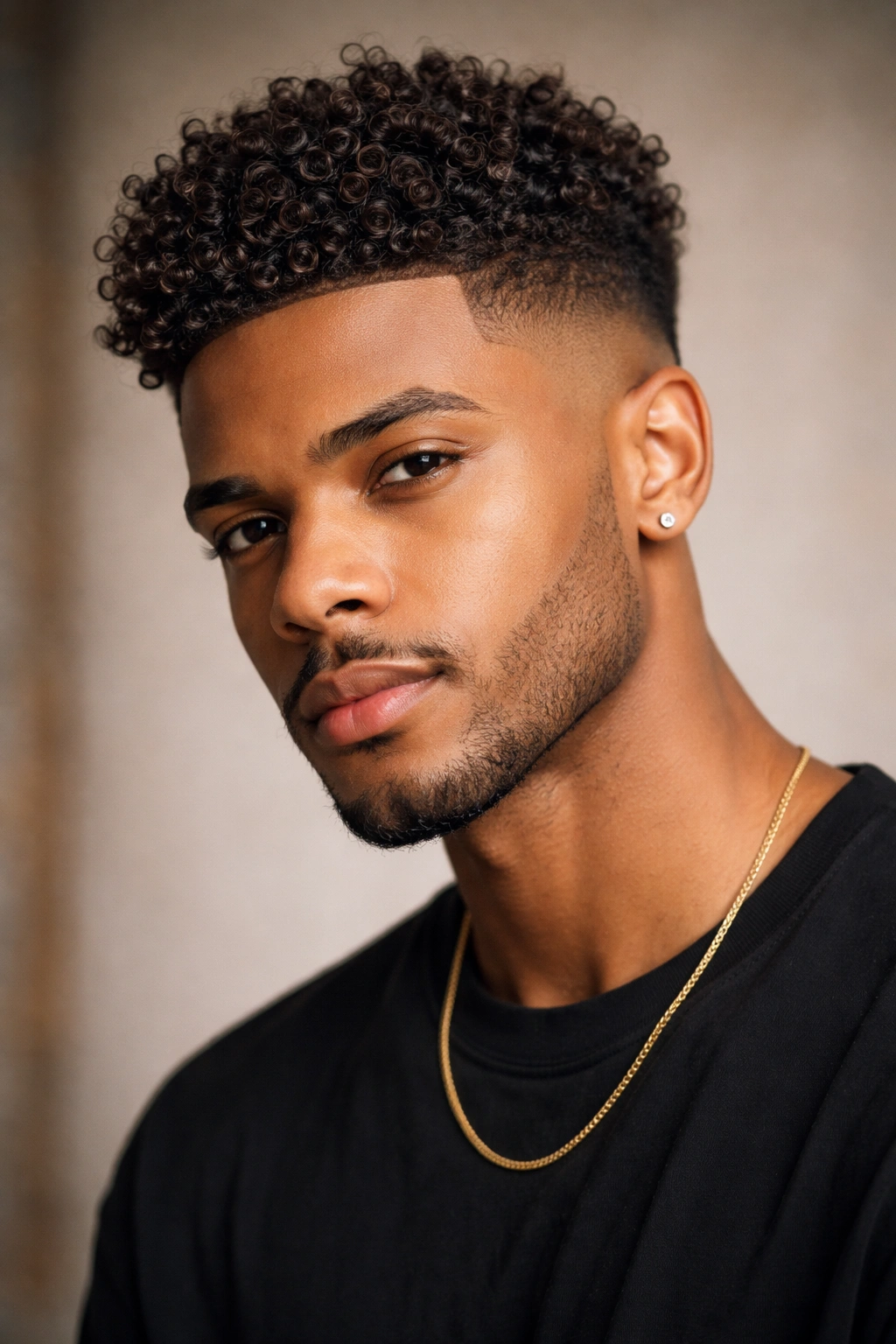
An undercut or fade where the sides are very short (sometimes shaved or nearly shaved) while the top is left longer — typically two to four inches. This is bold, modern, and high-contrast. The longer top can be textured, curly, or wavy while the sides disappear.
The Visual Impact of Contrast
The drama in this cut comes from the contrast. It’s not a subtle style; it’s a statement. On curly hair, that contrast actually makes curls look more defined because there’s no visual competition from longer side hair. The eye is drawn entirely to the curl pattern on top. It’s also a very practical cut for curly-haired people who find their sides and nape area prone to drying out or developing less-defined curl.
Best For and Styling Notes
- Works for almost any curl type but is especially striking on tight curls, coils, and textured hair where the contrast is most dramatic
- Flatters square, oval, and rectangular faces because the clean lines create clear facial proportion
- Requires styling; you’ll apply product to the top and either air-dry, diffuse, or blow-dry for texture
- The sides need touch-ups every 3 to 4 weeks as hair grows out, so it’s a higher-maintenance style in that regard
- Makes a statement — it’s a cut for people who want their hair to be noticed and who don’t mind frequent appointments
5. The Tousled Shag
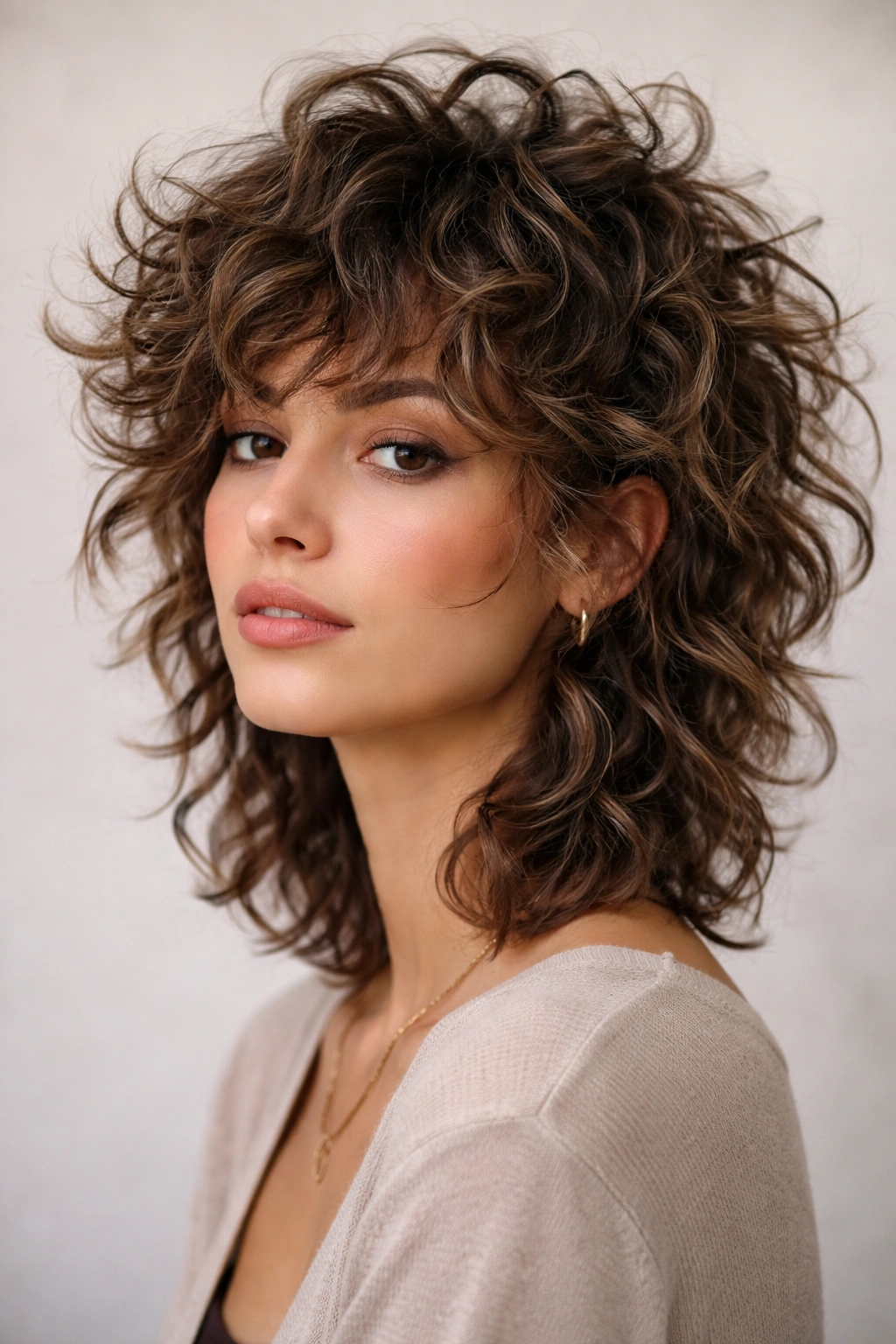
A shag is characterized by lots of short, choppy layers throughout, with shorter layers on top and progressively longer layers beneath. On curly hair, this creates multiple movement points. Curls bend differently at each layer, creating a lived-in, effortless-looking texture.
Why Shags and Curls Are a Classic Pairing
Shags have always worked well on texture because that’s the point of the cut — to create dimension and movement through layering. With curls, you get that layered effect naturally. The cut is specifically designed to work with curl patterns, not against them. A good shag cut on curly hair looks like you woke up and your hair is perfect, even if it took 20 minutes to style.
Best For and Styling Notes
- Works beautifully for medium to curly hair (types 2c through 4a) because the layers create multiple texture points
- Suits nearly all face shapes because shags by design create visual movement that flatters different proportions
- Style by scrunching in product while hair is wet, then either air-drying or diffusing — the choppy layers mean you don’t have to be precise
- The cut grows out well; it still looks intentional at 4 to 6 weeks, though it gets shaggier (which many people like)
- Pairs well with bangs for added interest and style variation
6. The Curly Crop With Bangs
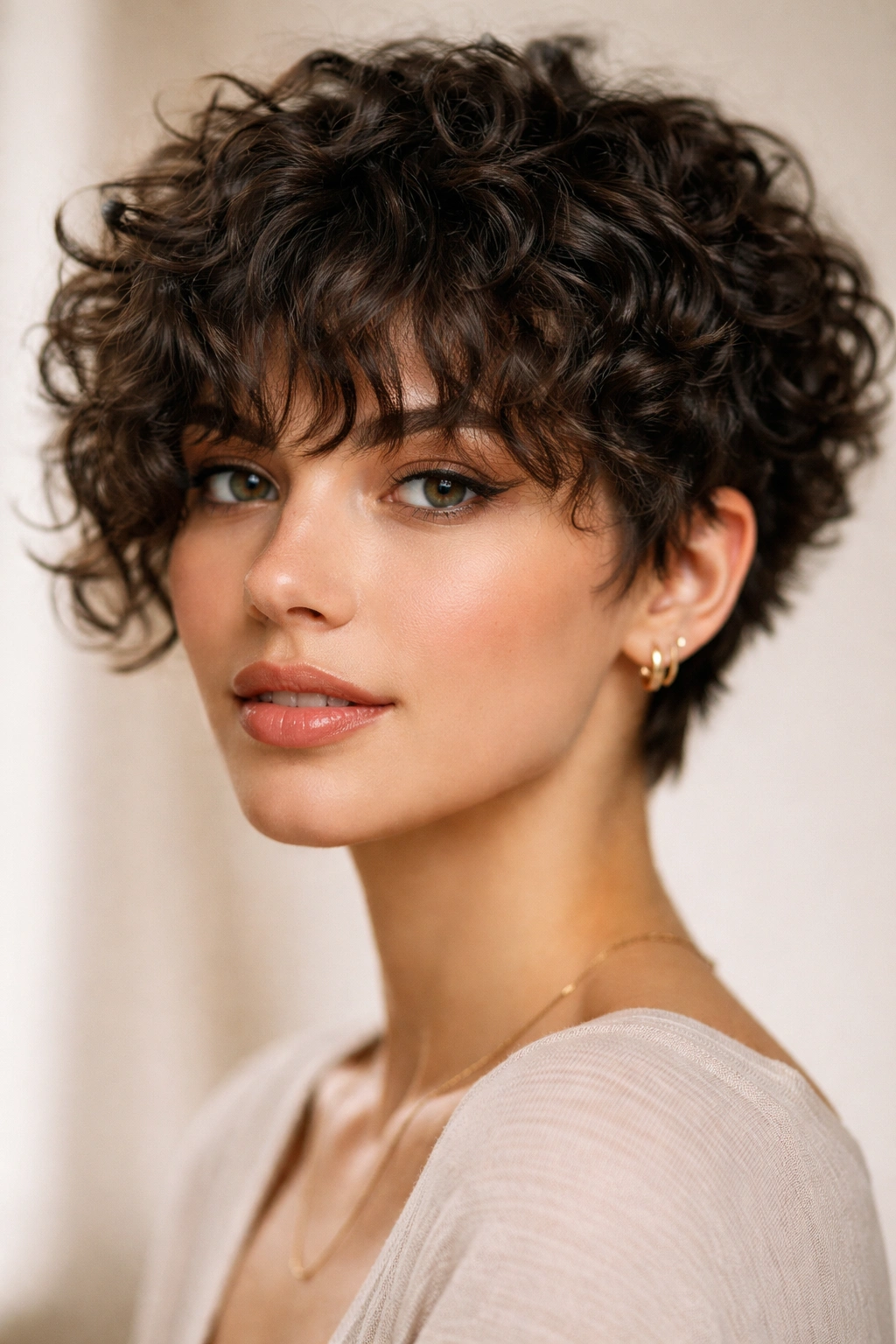
A short crop — typically two to three inches throughout — paired with longer bangs that sit somewhere between the eyebrows and eyelashes. The contrast between very short crown and longer bangs creates personality. The bangs frame the face while the short back and sides keep the style manageable.
Bangs as a Styling Feature
Bangs on short curly hair are either fantastic or frustrating — there’s rarely a middle ground. They require daily styling because they’re exposed to your face, oils, and friction. But when they work, they completely change your look and can make a simple crop feel elegant or playful depending on how you style them.
Best For and Styling Notes
- Works for loose to curly hair (types 2 through 4a) because medium curls sit well in bangs
- Flatters heart-shaped and round faces because bangs break up the forehead and the short sides create balance
- Style bangs by applying a lightweight styling cream and either air-drying them into a tousled wave or blow-drying them to a smoother finish
- Requires more styling time and attention than a crop without bangs
- The bangs need the most frequent trims because they’re in constant contact with your face and eyes; expect bang trims every 3 to 4 weeks
7. The Textured Undercut With Length
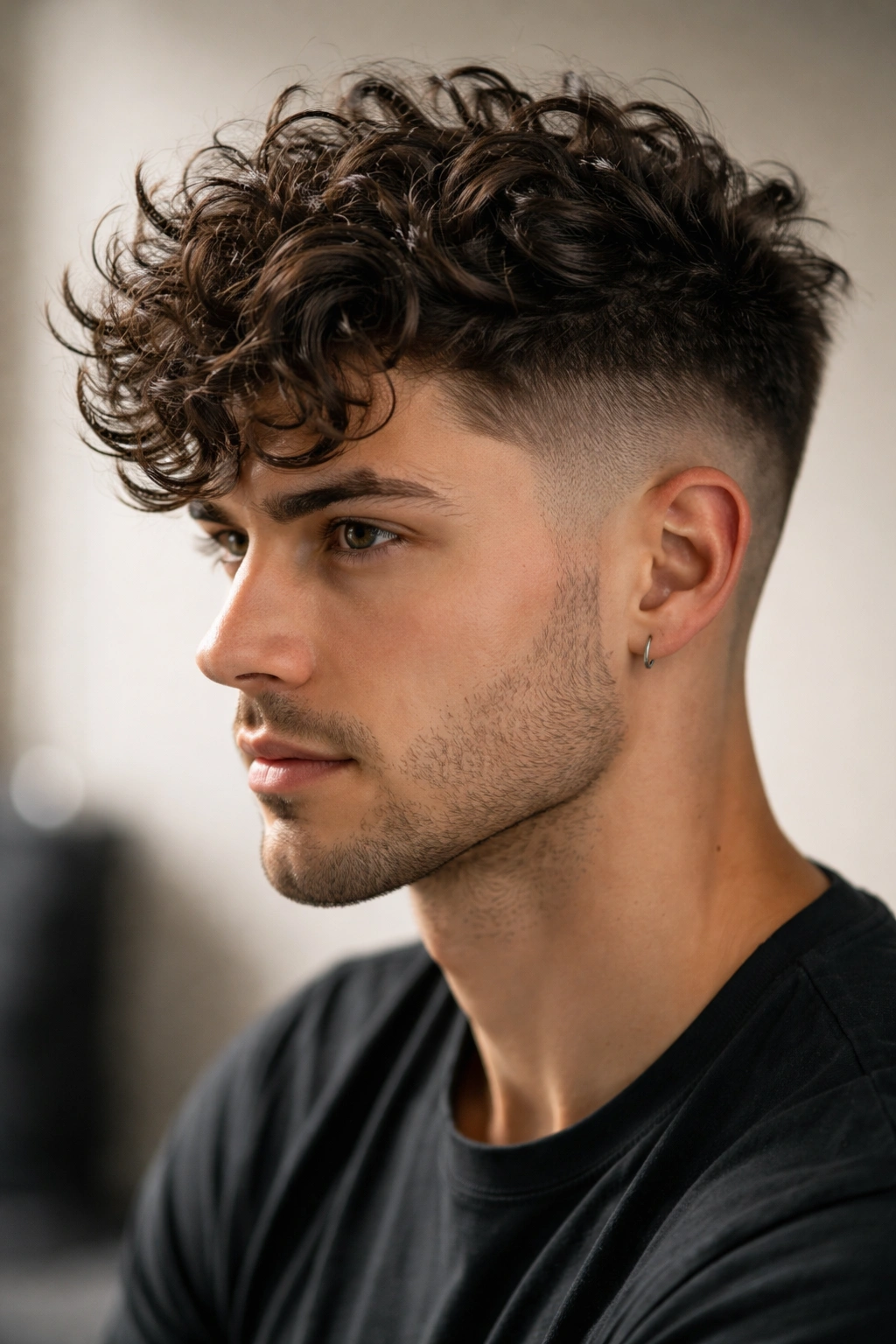
An undercut where the sides are clipped very short while the top is left to six inches or slightly longer, creating a high-ratio contrast. The top is heavily textured through cutting, not just product. Curls on top are emphasized and moved around during the cut to create a specific, shaped profile.
The Styling Freedom of This Cut
Because the style is cut into the hair rather than relying entirely on product and blow-drying, it requires less daily effort to look put-together. You apply a styler and it falls into place. It’s bold enough that it can look intentional even when you’re rushing or even partially air-dried.
Best For and Styling Notes
- Works for all curl types but is especially striking on tight, defined curls (types 3c and higher) where the undercut contrast is most dramatic
- Flatters oval, square, and angular faces because the cut creates clear lines and proportion
- Style by applying gel, cream, or butter to damp hair and either air-drying or diffusing while scrunching
- The top grows out over weeks and gradually becomes longer and less tightly textured — some people love this evolution, others prefer regular trims to maintain the shape
- The undercut needs touch-ups every 3 to 4 weeks
8. The Curly Lob (Long Bob)
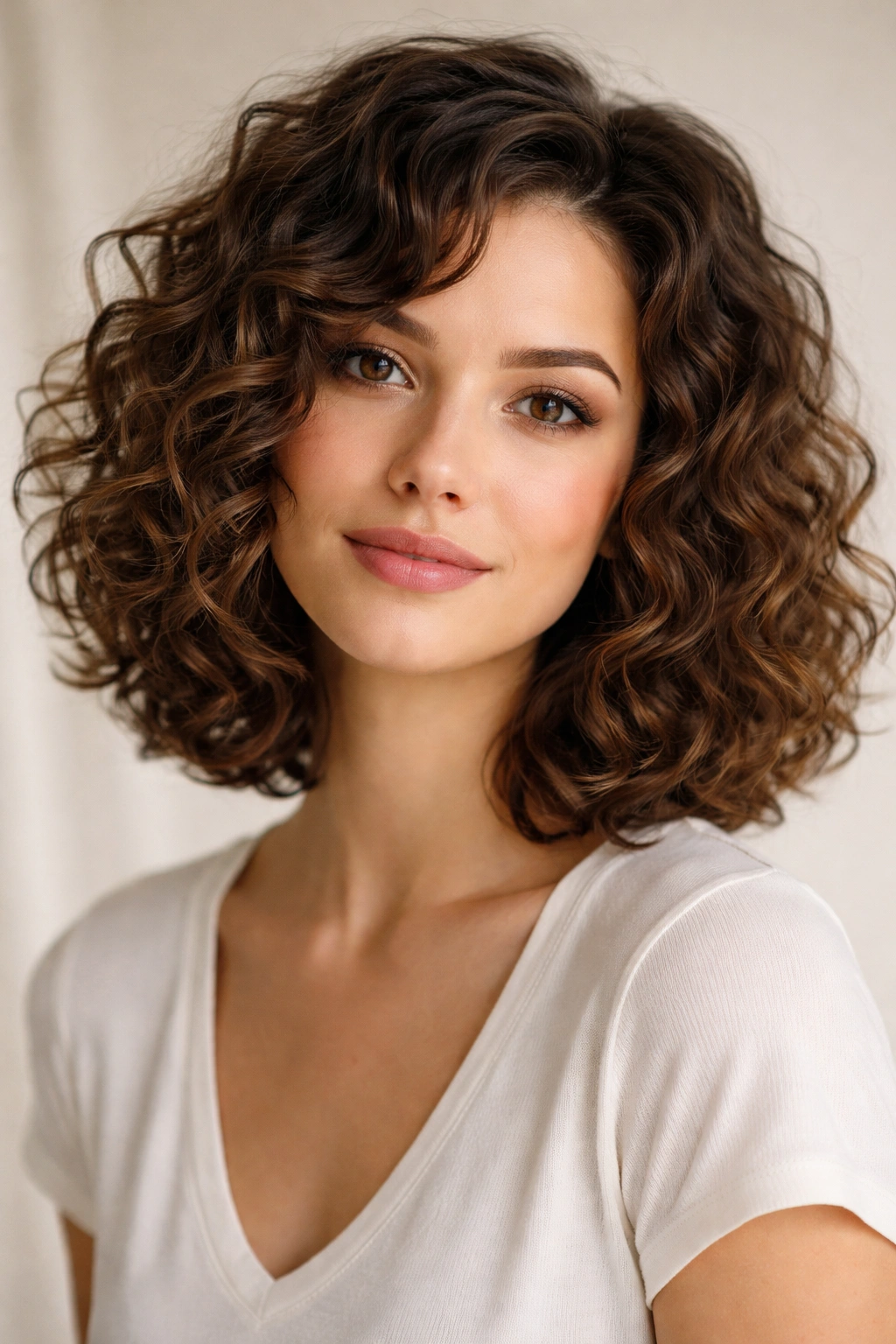
A lob is a longer bob — typically hitting at chin length or just below — with liberal layering throughout. It’s longer than a traditional bob but shorter than shoulder-length hair. On curly hair, this creates a sweet spot: long enough to have shape and weight, short enough to maintain curl definition.
Why Lobs Suit Curly Hair
The lob is a modern answer to the dilemma of wanting curly hair that’s short enough to manage but long enough to style different ways. You can wear it curly, you can wear it in loose waves, you can pull it back. The length gives you options without the maintenance burden of truly long curly hair.
Best For and Styling Notes
- Works for all curl types from wavy to coily, though it’s most flattering on medium to curly hair (types 2c through 4a) where curls still bounce at this length
- Suits nearly all face shapes because the length creates balance and the layers prevent bulk
- Style by scrunching product into wet hair and either air-drying or diffusing, or by blow-drying sections for more wave definition
- Can also be worn with some sections straightened for a mixed-texture look
- Requires trims every 8 to 10 weeks to maintain layer shape and prevent bulk at the ends
9. The Blunt Banged Pixie
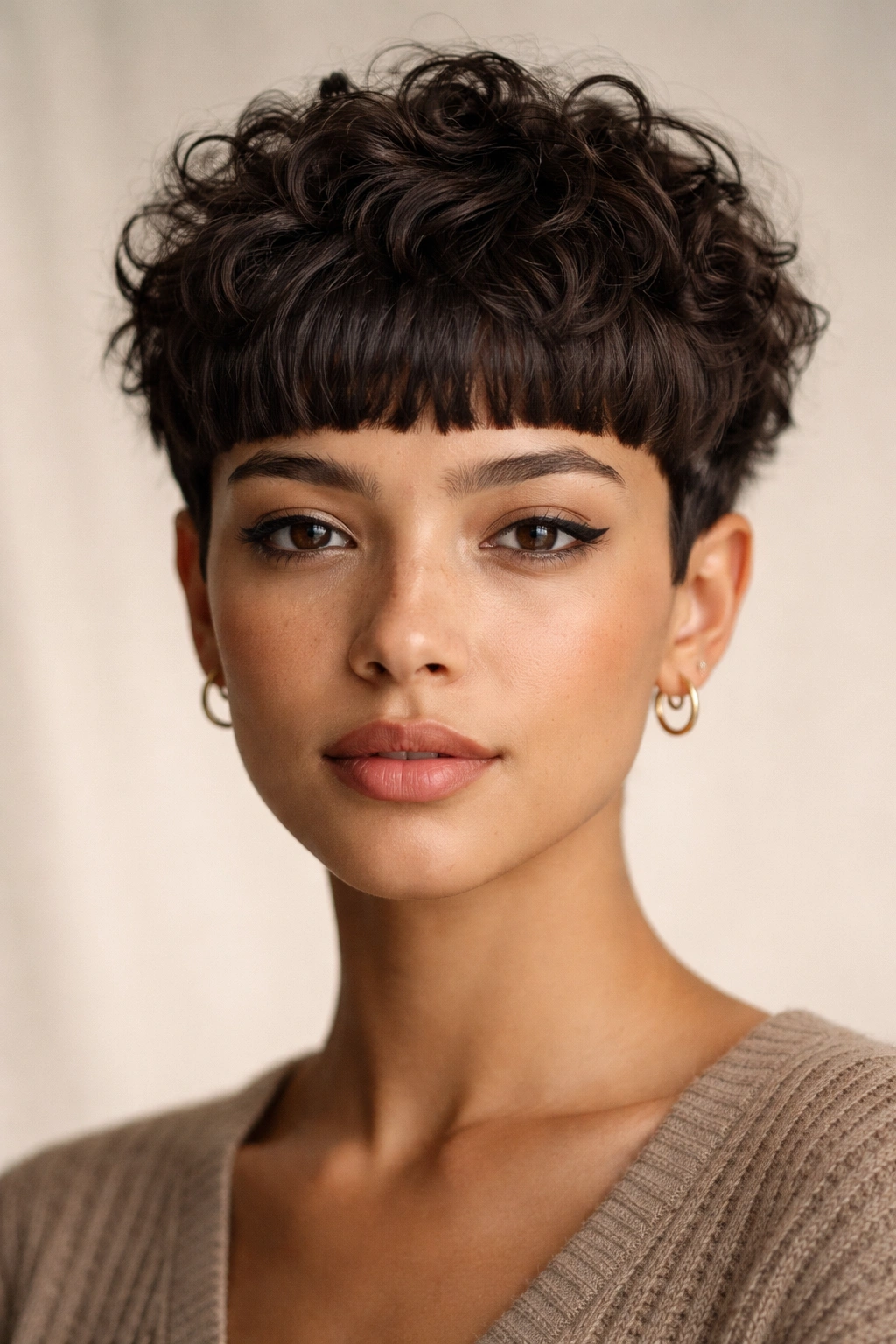
A pixie cut where the bangs are blunt and sit relatively low on the forehead — creating a bolder statement than a textured pixie. The bangs are usually one or two inches long, very intentional, and super-defined. The rest of the cut is textured short, but the bangs are the statement piece.
Why Blunt Bangs Matter
Blunt bangs create a graphic quality that makes the cut feel more editorial and intentional. They’re a commitment — they require regular trims and they’re visible. But on someone who wants their short curly cut to feel polished rather than casual, blunt bangs create that exact effect.
Best For and Styling Notes
- Works for fairly uniform, medium-density curls (types 2c through 3b) because the bangs need to be relatively consistent to look intentional
- Flatters square, heart-shaped, and oval faces because blunt bangs break up forehead space and the short cut balances features
- Style bangs by blow-drying them straight or by scrunching in product for a more textured, wavy bang look
- Requires bang trims every 3 to 4 weeks because they’re in constant view and need to stay blunt and sharp-looking
- Can feel more formal or polished than a standard pixie, so it works well if you want short curly hair that reads as deliberate and styled
10. The Rounded Crop
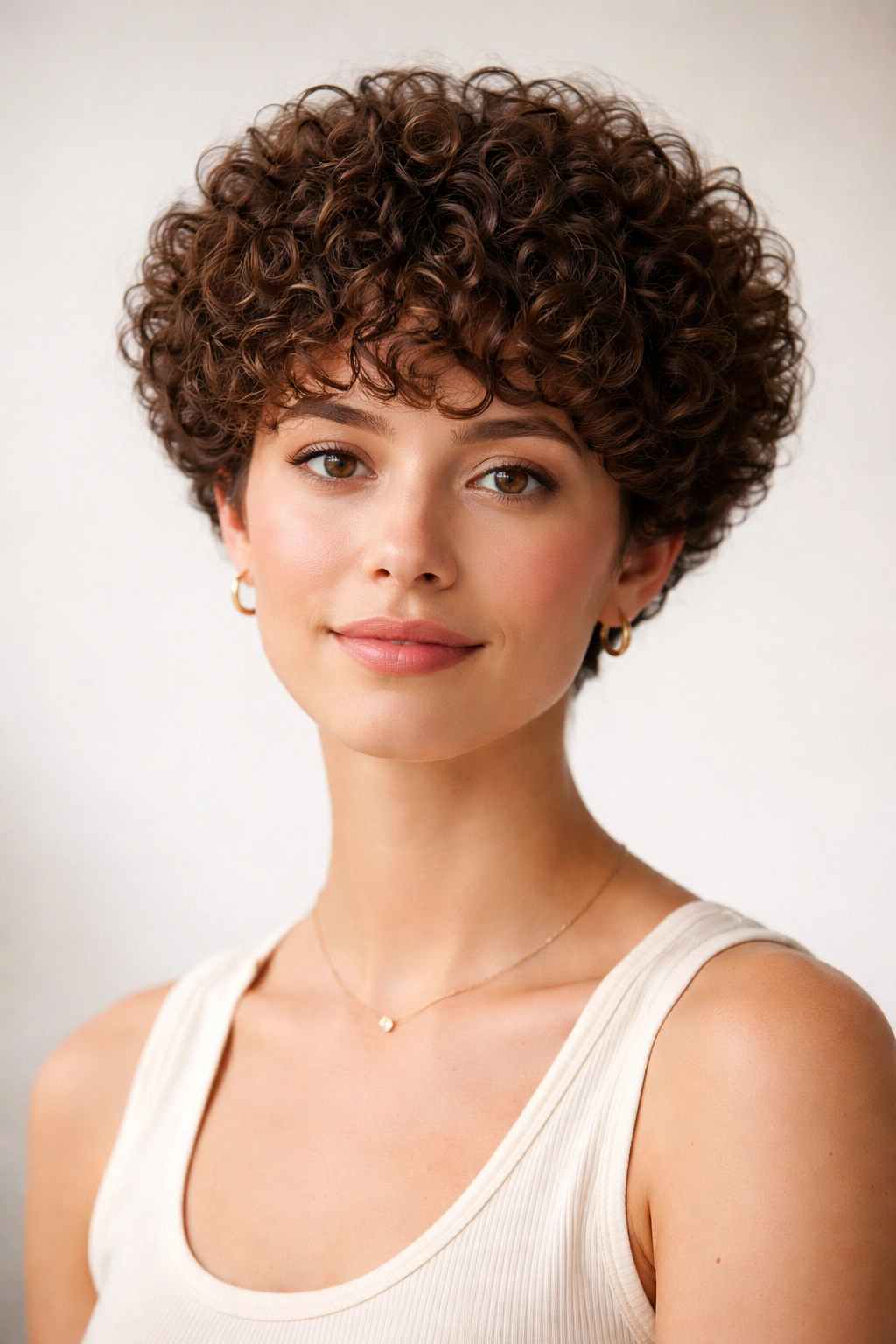
A short crop — typically two to three inches throughout — cut into a very rounded shape. The crown is fuller and rounder, the sides taper in slightly, and the overall silhouette is gentle and curved rather than angular or choppy. It’s almost like a modern helmet shape, but softer.
The Shape as Statement
This cut relies on shape rather than texture or contrast to make its statement. The roundedness is flattering because it softens angular faces and creates visual fullness on top. It’s a less edgy choice than many short cuts, but no less interesting.
Best For and Styling Notes
- Works for all curl types because the roundedness works with any level of texture or definition
- Especially flattering on square, angular, and rectangular faces because the rounded shape softens and balances hard features
- Style by applying a curl cream or light gel and either air-drying or diffusing while scrunching into the rounded shape
- The shape holds incredibly well; the cut can go 5 to 6 weeks between trims and still look intentional
- Pairs beautifully with a longer bang or side-swept bang for added softness and interest
11. The Choppy Pixie Shag
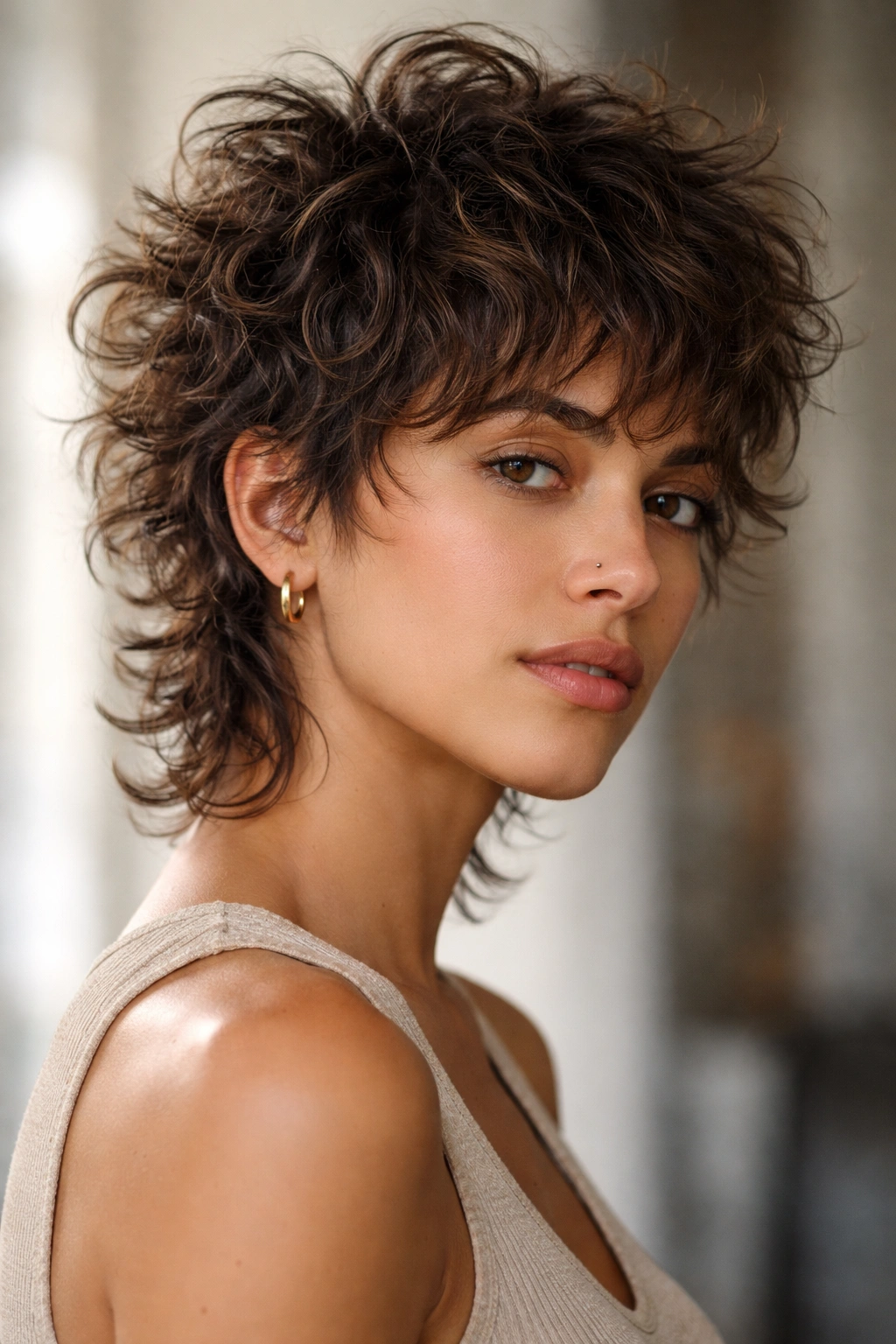
A hybrid between a pixie and a shag, with very short crown hair (around one to two inches) and progressively longer, choppier layers as you move backward and down. The back might be three to four inches with choppy, uneven layers. It’s textured throughout and deliberately rough rather than polished.
The Personality of This Cut
This cut has real personality — it reads as creative, unconventional, and confident. It’s not trying to be sleek or neat; it’s deliberately the opposite. On curly hair, that works perfectly because the cut is designed to work with natural texture rather than fight it.
Best For and Styling Notes
- Works for all curl types from wavy to coily, though the choppiness is most striking on medium to tight curls
- Suits creative, bold personalities and works on nearly all face shapes because the multiple texture points create visual interest
- Style by applying a texturizing product or light gel and either air-drying or diffusing for maximum texture
- The cut grows out beautifully and remains interesting for 4 to 6 weeks before getting too long
- Can be styled in multiple ways — more textured and rough, or with product applied to encourage more definition and less separation
12. The Side-Swept Curly Crop
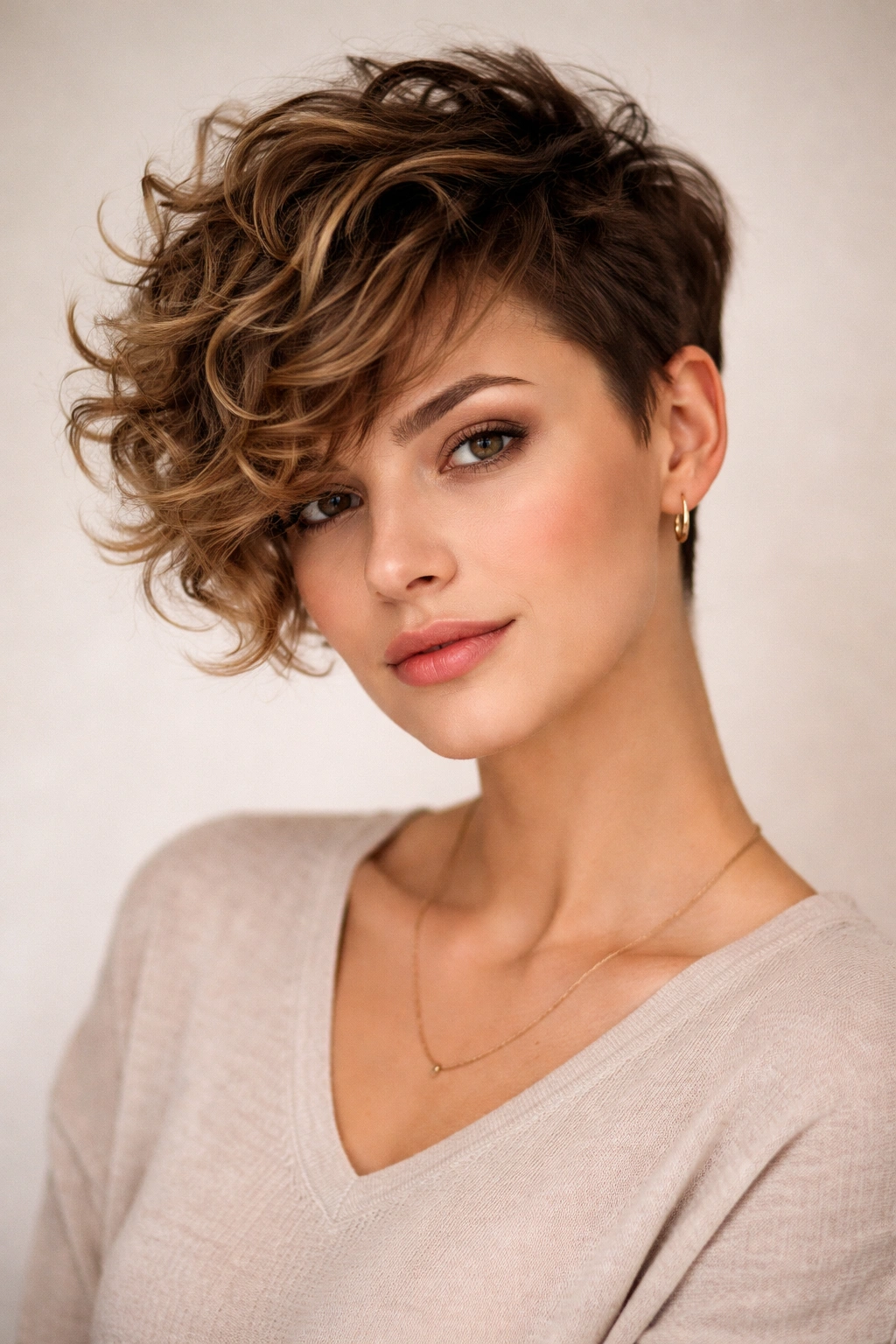
A short crop with most of the length on one side and progressively shorter as you move to the opposite side. The longer side might be three inches while the shorter side is one inch or slightly longer. This creates an asymmetrical silhouette that feels modern and intentional.
Asymmetry as a Design Choice
Asymmetrical cuts are powerful because they create visual movement and prevent a cut from feeling boring or generic. On curly hair, the side-swept element is even more dramatic because curls add texture to the already-interesting shape.
Best For and Styling Notes
- Works for all curl types and densities
- Flatters oval, square, and heart-shaped faces because the asymmetry creates visual interest and prevents the face from looking flat or two-dimensional
- Style by applying a styler to the damp hair and directing the longer side across as you dry, then texturizing the shorter side for contrast
- The asymmetry is fairly obvious even as the cut grows out, so it looks intentional for 4 to 6 weeks
- Works beautifully with color — an undercut or fade on the short side can add even more contrast and visual interest
13. The Defined Coil Cut
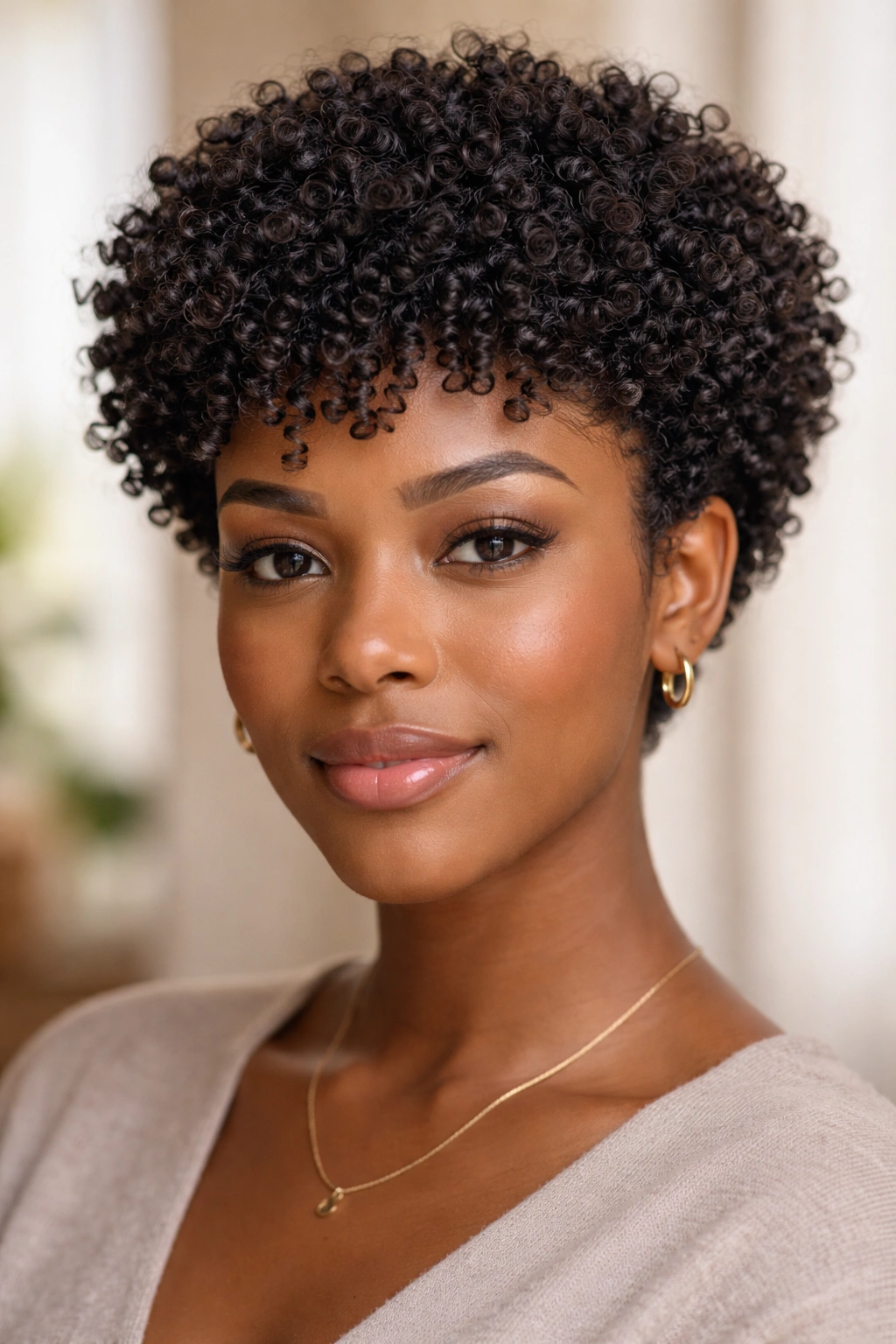
A cut specifically designed for coily and kinky hair (types 4a through 4c) where the shape is cut while the hair is in its natural, coiled state. The curls are not stretched or straightened during cutting; instead, the stylist cuts them in their natural contracted form. This means the curl pattern is respected and defined perfectly.
Why Cutting Coils in Their Coily State Matters
Cutting curly or coily hair while it’s straightened out means you’re cutting to a different length than the actual coil length. When the hair reverts to its coil, sections might be shorter than you expected. Cutting coils in their natural state means every coil is cut to the exact length you want.
Best For and Styling Notes
- Essential for coily and kinky hair (types 4a through 4c) — this is the best way to get a cut that actually flatters your natural texture
- Works for all face shapes because the cut is entirely about honoring and defining the natural curl
- Style by applying a moisturizer and styler to damp hair, then either air-drying or diffusing while scrunching
- The defined coil cut grows out beautifully and remains intentional-looking for many weeks because it’s cut into your actual curl pattern
- Requires finding a stylist experienced in cutting coily hair — this is not a standard cut, and not all stylists know how to do it well
14. The Feathered Pixie
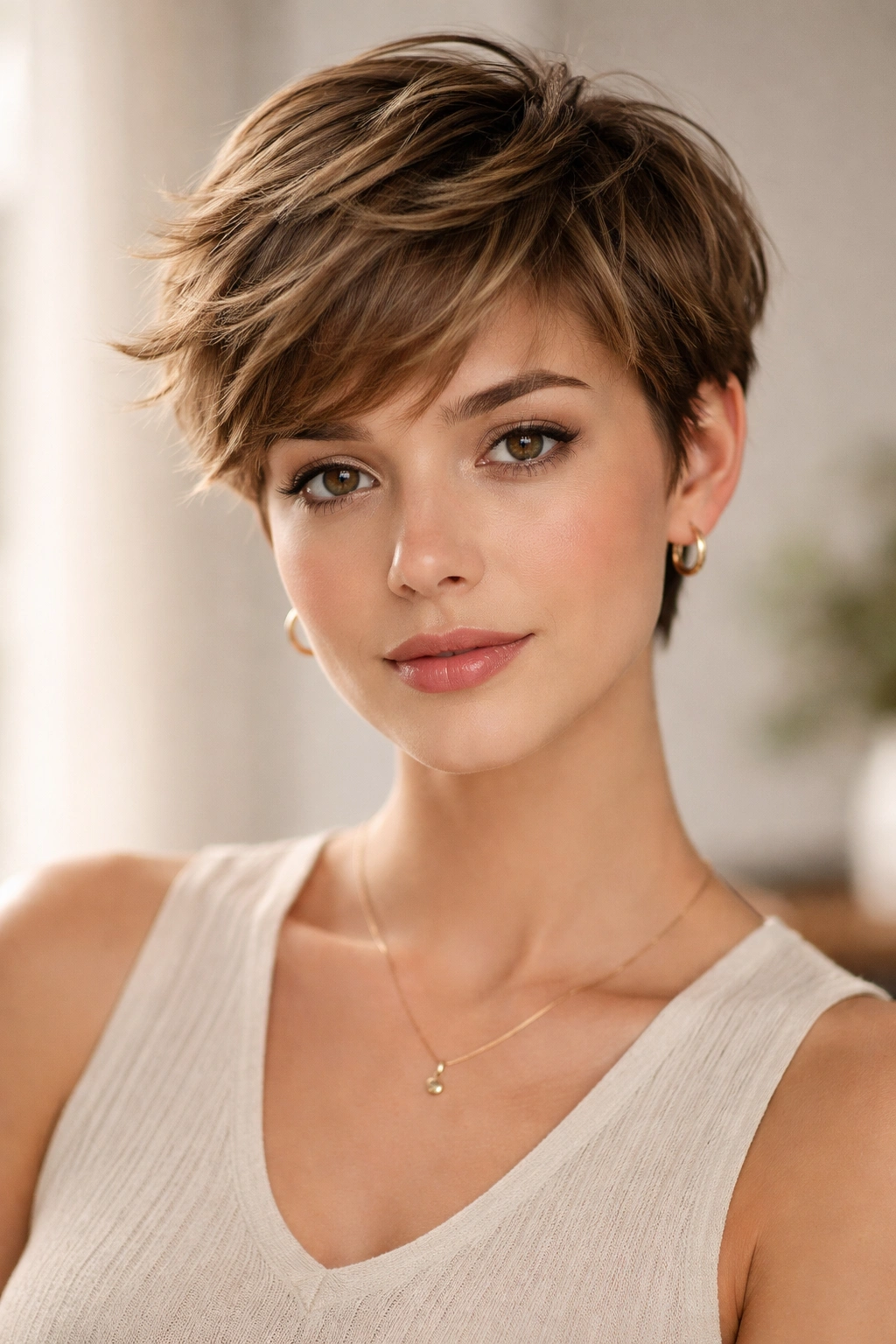
A pixie with softer, feathered layers rather than choppy or blunt texture. The feathering is subtle and creates movement without being super-obvious. The cut looks polished and intentional rather than textured and rough. It’s a more refined short cut, appropriate for people who want shorter hair but in a gentler style.
Feathering vs. Heavy Texturizing
Feathering creates movement and dimension while maintaining more cohesion and polish than heavy texturizing. The effect is lighter, airier, and more refined. It’s a technical cut that requires a skilled stylist who understands how to layer subtly on curly hair.
Best For and Styling Notes
- Works for loose to medium curly hair (types 2c through 3b) because the feathering needs some length to create visible layers
- Suits professional settings and people who want short hair but in a polished, refined style
- Style by applying a lightweight cream or gel and diffusing on medium heat for a soft, feathered look
- The feathering is subtle, so it reads as a polished, intentional pixie rather than a textured, casual cut
- Grows out well and remains flattering for 4 to 6 weeks as the feathering gradually softens
15. The Twist-Out Friendly Cut
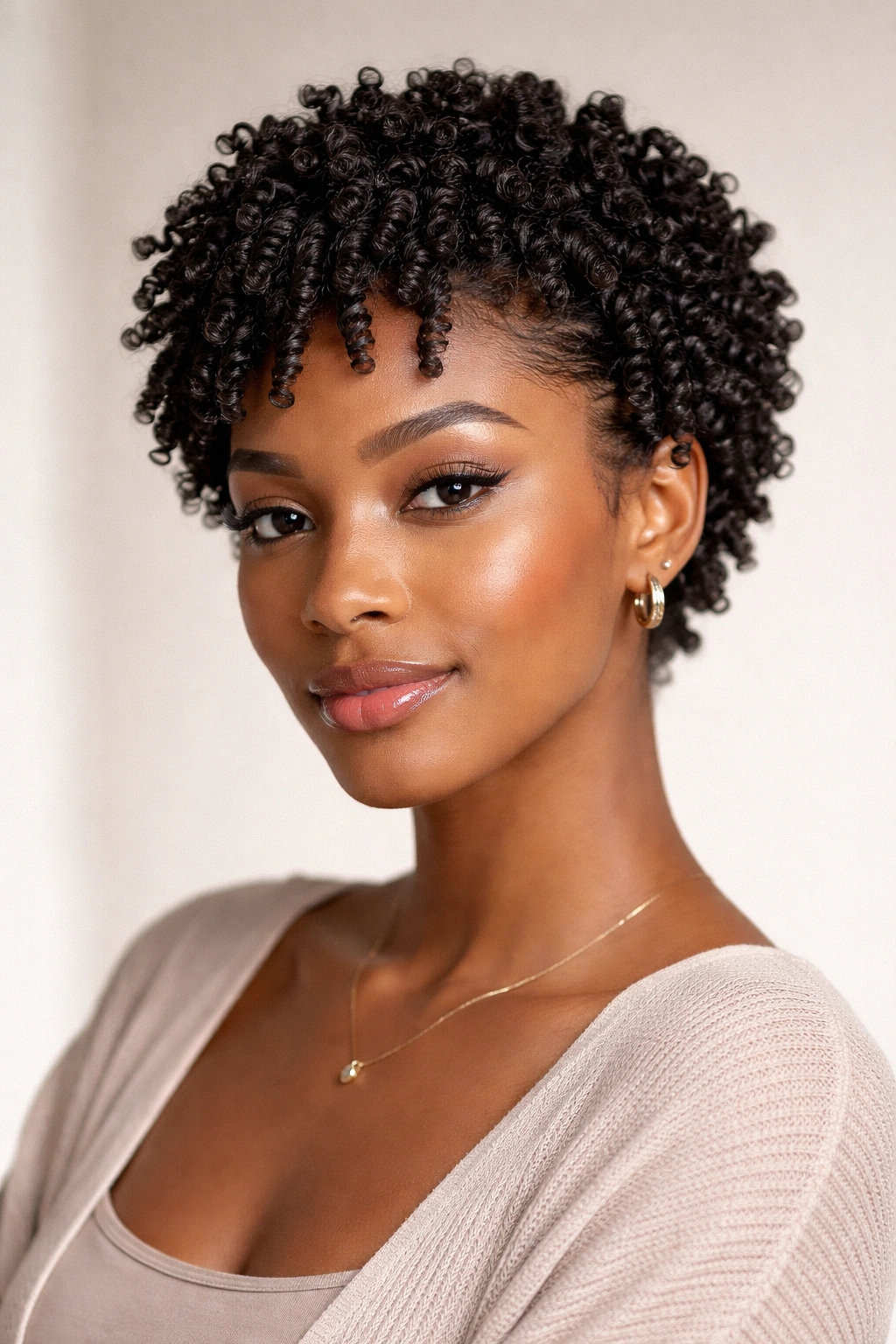
A cut designed with twist-outs or braid-outs in mind — styles where you section hair, twist or braid it when wet, then unravel it when dry to create defined coils or waves. The cut is shaped to work with these styles, with enough length to hold the twists and enough texture created through cutting to complement the defined coil effect of the style.
Styling Versatility With This Cut
This cut is specifically for people who style their curls with twists or braids. It looks intentional and beautiful when worn twisted or braided out. It also looks good in a regular curly style, but the cut is optimized for the twist-out effect.
Best For and Styling Notes
- Best for coily and kinky hair (types 3c through 4c) because tight curls hold twist-outs beautifully
- Works for all face shapes because you can change your look regularly by alternating between twisted-out styles and regular curly styles
- Usually kept around two to four inches long to give twists enough length to work with
- Requires learning to do twists or braid-outs, but once you do, you have multiple styles from one cut
- The cut grows out over weeks and you can control the shape by changing where you section and twist
16. The Curly French Crop
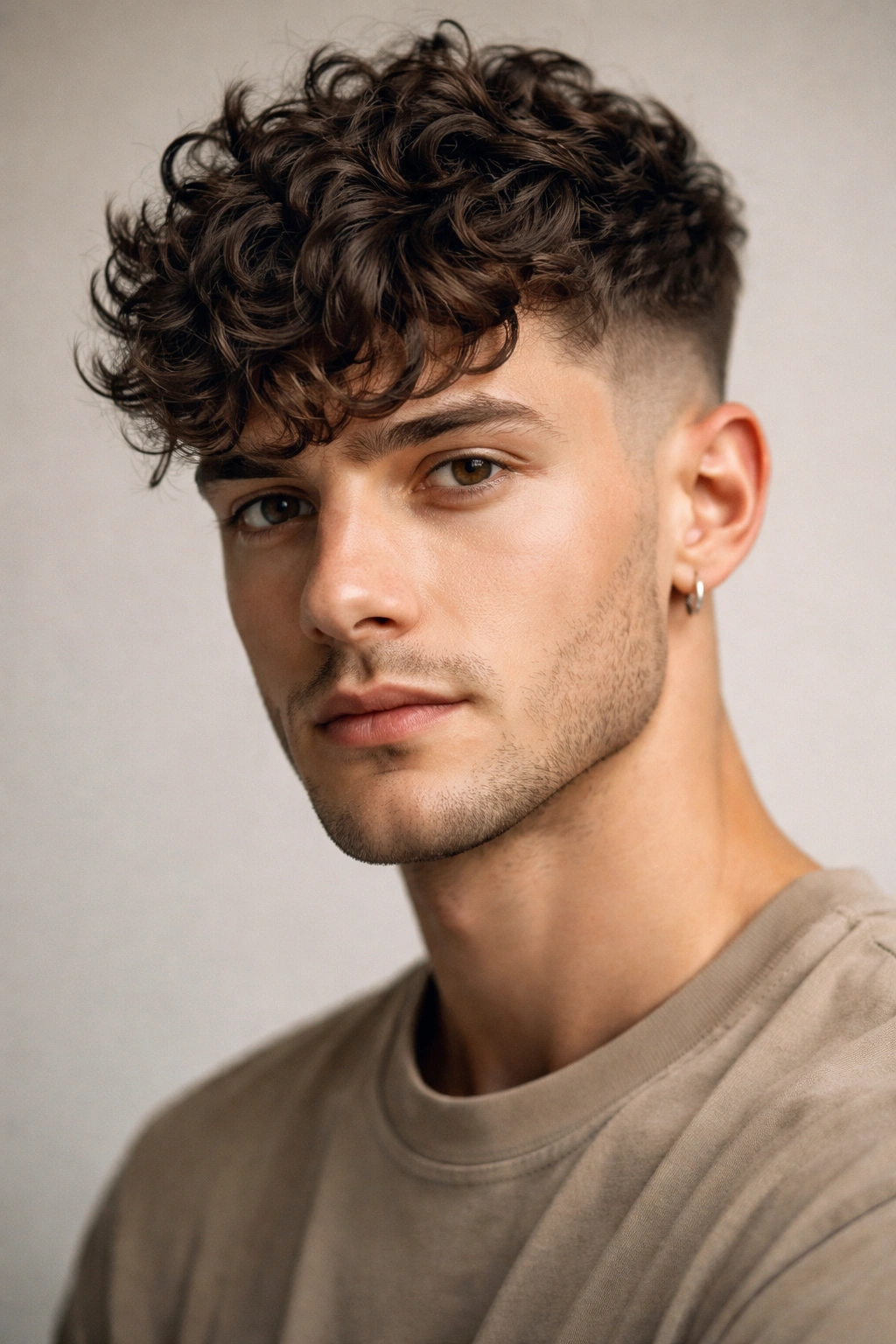
A style inspired by the French crop — short on the sides and back, slightly longer on top with a deliberate, full fringe-like area in the front. On curly hair, this creates a front-focused silhouette where the curls in front are emphasized. The sides and back are cleanly tapered so the style doesn’t look too bulky.
The Drama of Front-Loaded Texture
This cut creates focus on the front face area because that’s where the length and texture are most visible. It’s a style choice that deliberately draws the eye to your face rather than creating an all-over balanced silhouette.
Best For and Styling Notes
- Works for medium to curly hair (types 2c through 4a) because front curls need some length to frame the face
- Suits heart-shaped and oval faces because the fuller front area balances and softens features
- Style by applying product to damp hair and scrunching the front curls upward while diffusing the sides and back
- The front can be styled more deliberately and polished, while the back remains more casual
- Requires regular touch-ups on the sides and back to maintain the taper — usually every 3 to 4 weeks
17. The Curl-Embracing Mullet
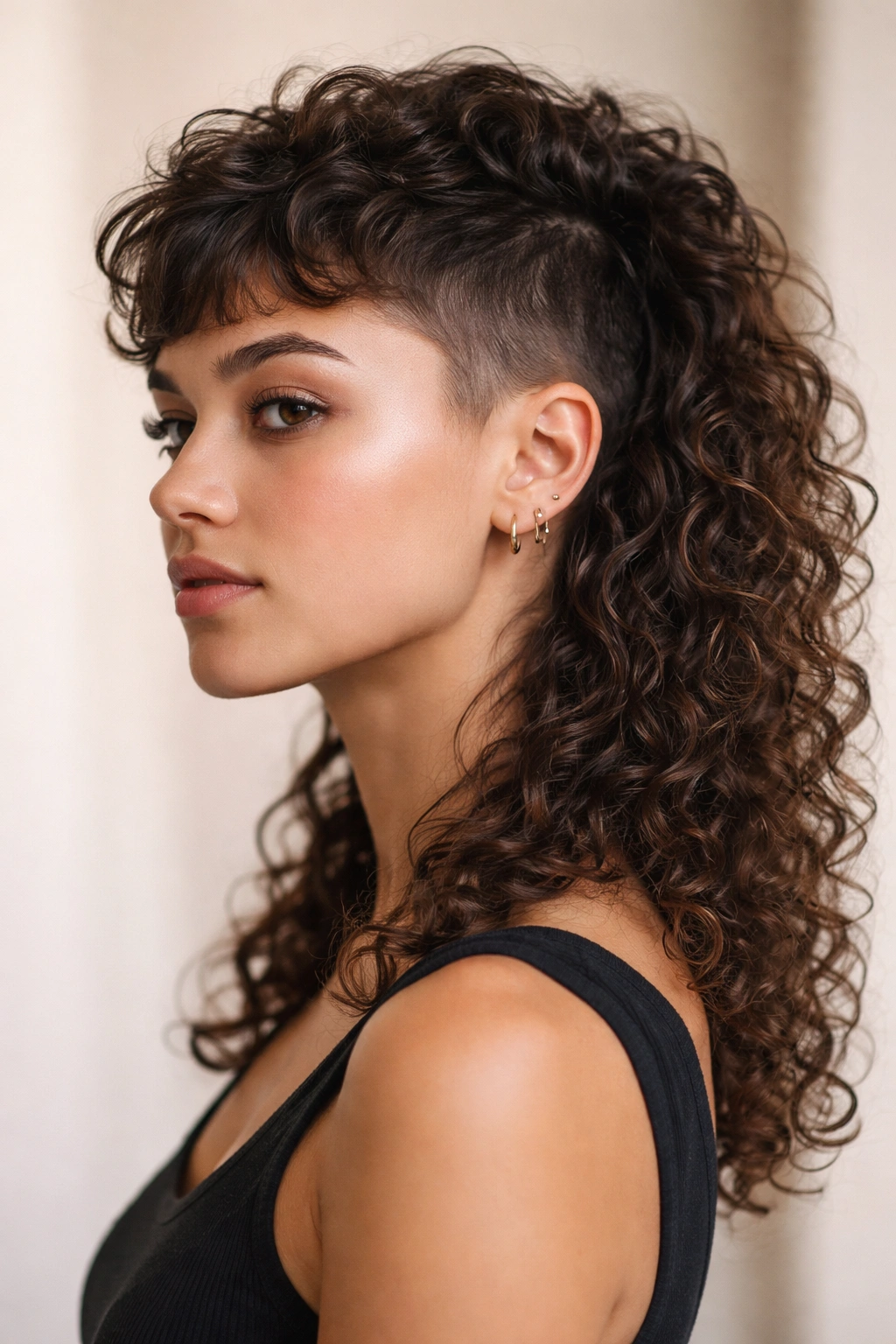
A modern take on the mullet — very short on top and sides, with longer, fuller curly length in the back. On curly hair, this creates an interesting contrast: a cropped, textured top and sides, and then full, bouncy curls in the back. It’s bold and unconventional.
Why This Works on Curly Hair
A traditional straight-hair mullet can feel dated or one-note. But on curly hair, the texture and movement of the back curls create something entirely different. The contrast between the textured short top and the defined curls in back creates visual interest and personality.
Best For and Styling Notes
- Works for all curl types, but is most striking on medium to very curly hair where the back curls can be noticeably fuller and bouncier
- Suits bold, confident personalities and those who don’t mind standing out
- Style the top like a short crop with texture and movement; style the back with product to encourage definition and bounce
- The back hair requires more styling attention because longer curls need more product and care
- This is a statement cut — it’s not subtle, and it works best on people who want their hair to be noticed and discussed
18. The Sculpted Wave Cut
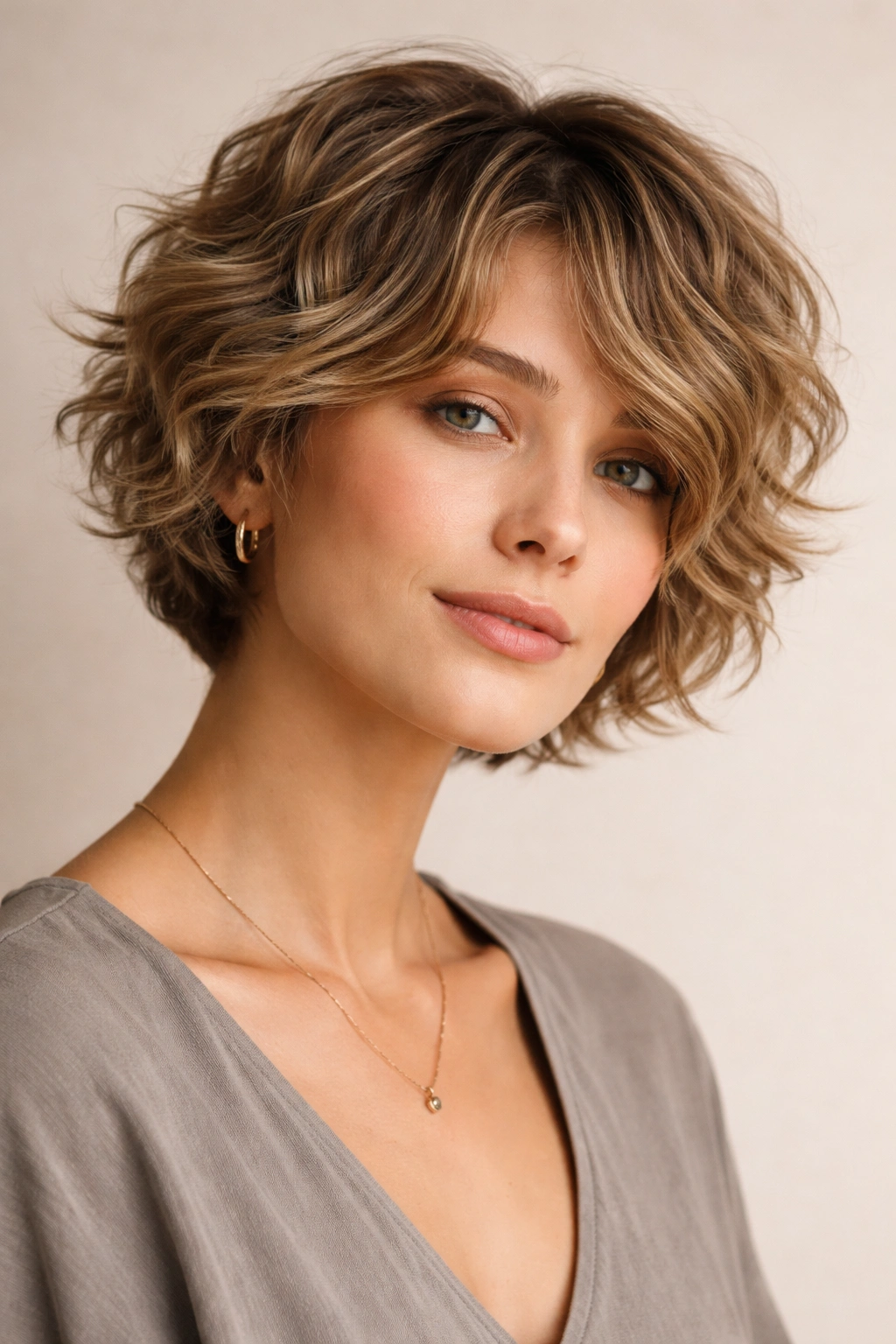
A cut designed to create waves rather than defined curls — the layering and shape encourage the hair to fall in wave formation rather than bounce in individual curls. It’s technically still a curly cut, but the intent is different. The style reads as wavy rather than curly.
The Difference Between Waves and Curls
Waves are bigger, looser, and flatter than curls. Defined curls bounce vertically. Waves move horizontally and have more of a fluid quality. A cut designed for waves creates layers that encourage this horizontal movement rather than vertical bounce.
Best For and Styling Notes
- Works for wavy to loose curly hair (types 2 through 3a) because tighter curls don’t easily fall into wave formation
- Suits people who like the texture and movement of curly hair but prefer a softer, less textured aesthetic
- Style by applying a soft hold product and blow-drying with a paddle brush to encourage waves to form
- Can look less intentional than a cut designed for defined curls, so styling is more important
- Grows out gradually and loses its wave shape as it gets longer, requiring maintenance every 8 weeks or so
19. The Textured Fade With Volume
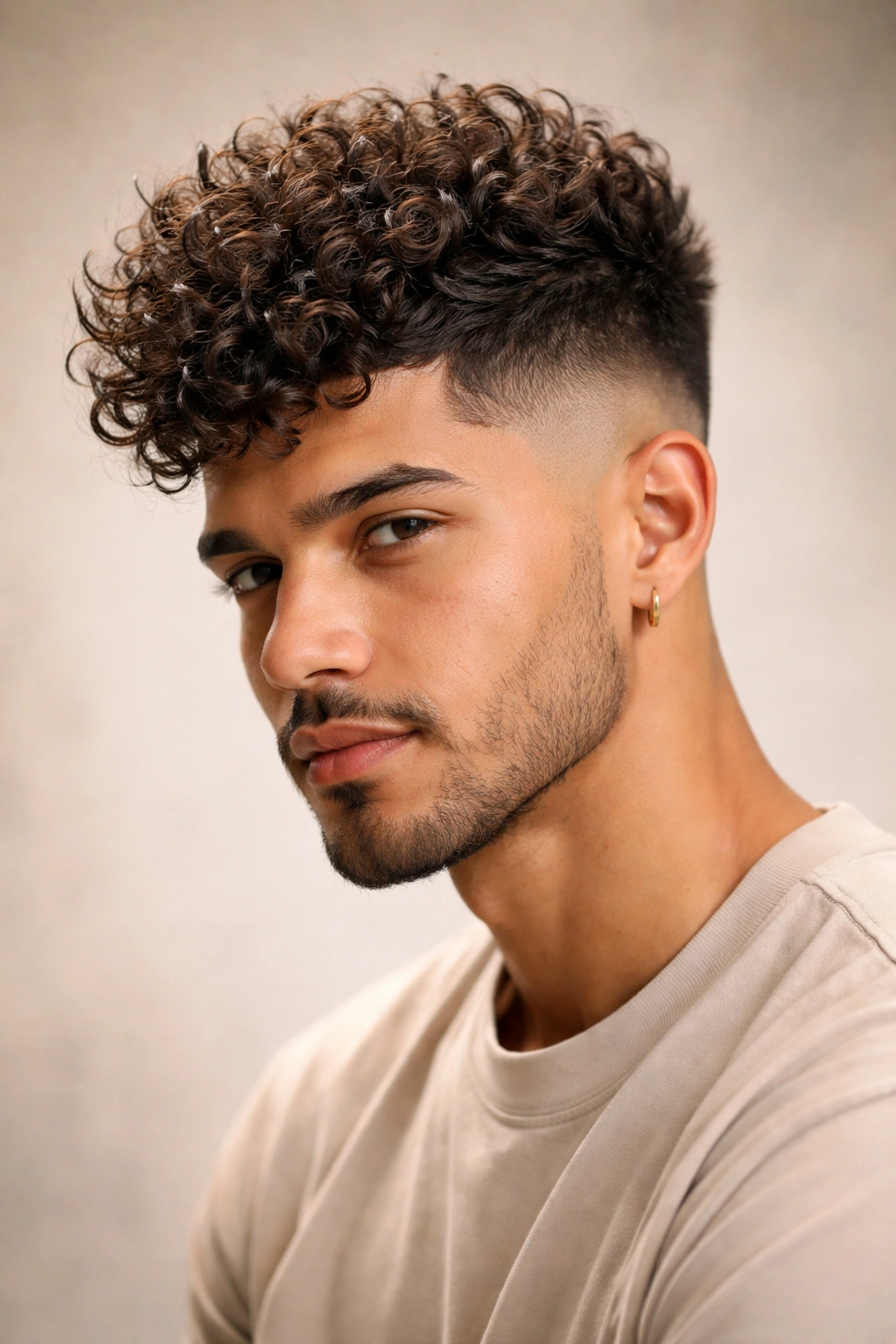
A fade cut where the sides fade very short while the top is left long — typically three to five inches — and heavily textured. But instead of the textured top being choppy and separated, the cut is shaped to create volume and height rather than width. The crown area is cut to stand up and out, while the textured pieces maintain definition.
Volume vs. Width in Short Cuts
Volume (height) feels very different from width (fullness to the sides). This cut prioritizes volume, making it especially flattering for faces that need balance through vertical line rather than horizontal fullness. It’s a powerful, modern style.
Best For and Styling Notes
- Works for all curl types and is especially striking on tight curls and coils where the height is most dramatic
- Flatters round and square faces because the vertical volume balances horizontal face width
- Style by applying a volumizing mousse or light gel and blow-drying with fingers through the hair to encourage upward movement
- Requires styling every day; it doesn’t look good with just air-drying
- The fade needs touch-ups every 3 weeks or so, and the textured top needs a trim every 4 to 6 weeks
20. The Tousled Texture Crop
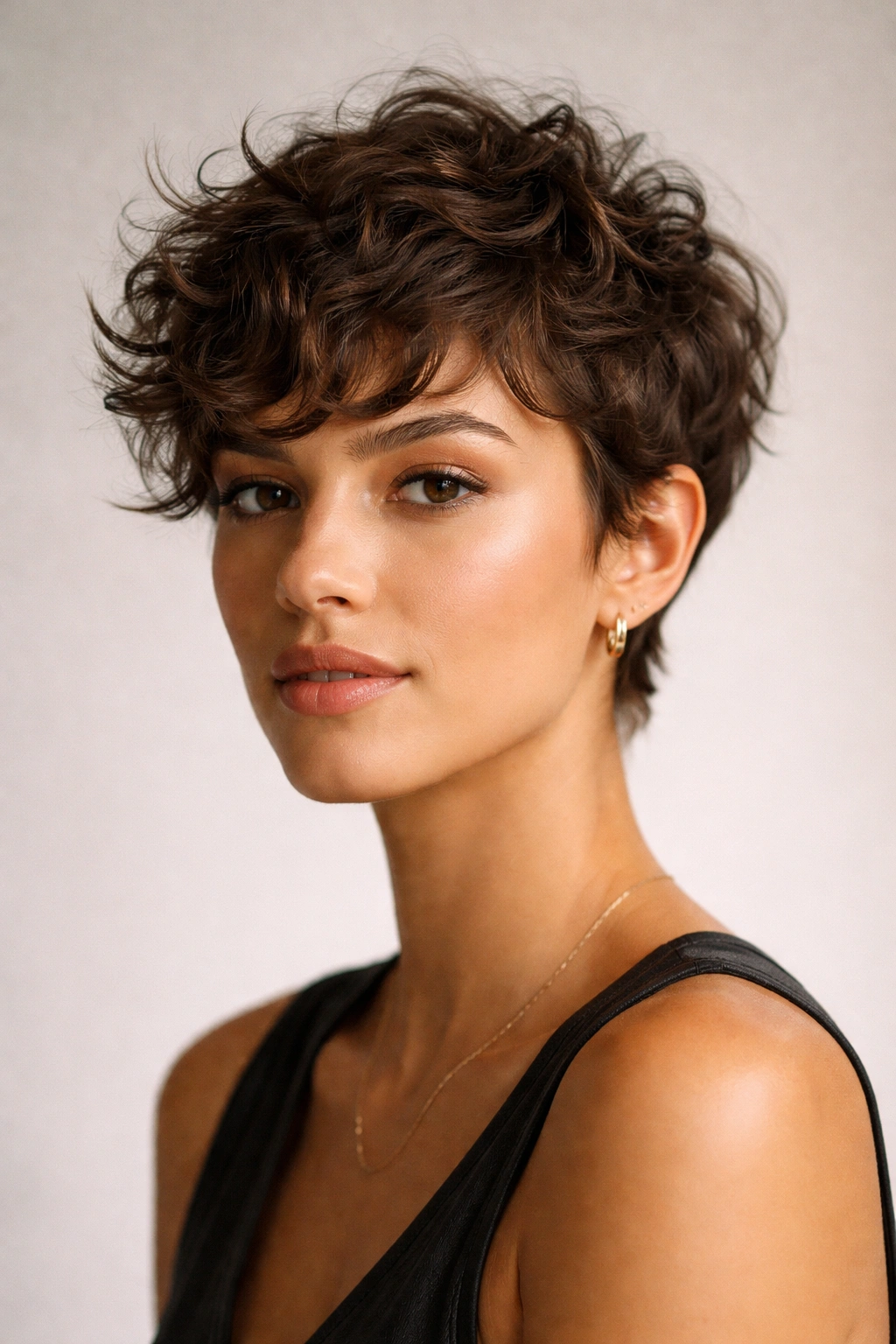
A short crop — typically two to three inches throughout — where every part is intentionally textured through cutting. There’s no sleekness or smoothness; the entire cut is rough, tousled, and deliberately undone. It’s about embracing texture entirely rather than trying to create shape or definition.
Texture as the Entire Design
This cut doesn’t rely on shape, contrast, or layers to create interest. The interest is purely textural. On curly hair, this is easy to achieve because texture is natural. The cut simply maximizes that texture through heavy texturizing techniques.
Best For and Styling Notes
- Works beautifully for all curl types because the entire point is embracing natural texture
- Suits creative, casual personalities and those who want their hair to look effortlessly textured
- Style by applying a texture spray or light gel and either air-drying or diffusing while scrunching for maximum texture
- Can look amazing with minimal product if your curls are well-hydrated and healthy
- Grows out over weeks and remains textured and interesting as it gets longer, looking intentional for 4 to 6 weeks
How to Style and Maintain Short Curly Cuts
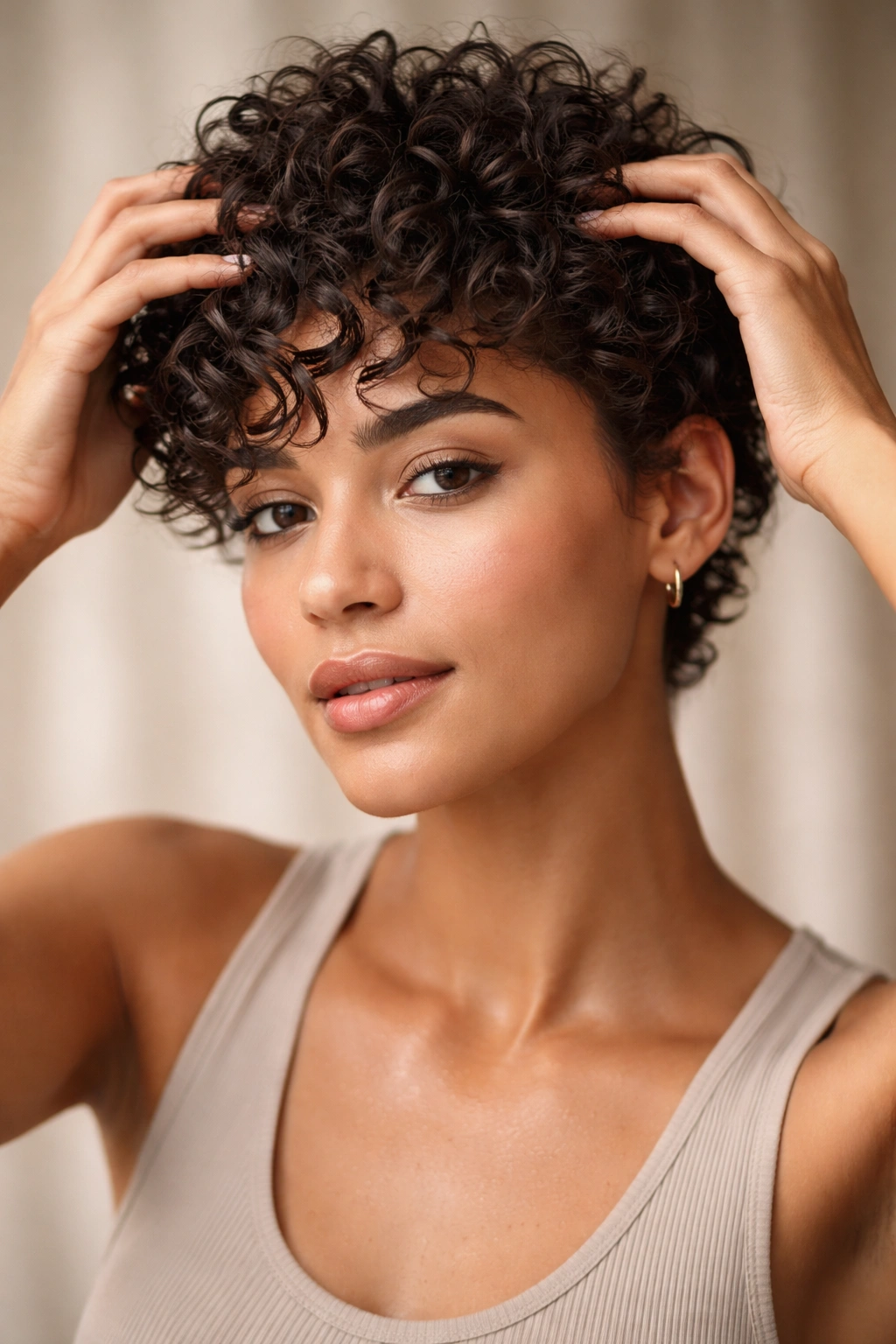
The right cut is only half the equation. Styling and maintenance determine whether your short curly hair actually looks incredible or just looks short. The difference between a cut that’s stunning and one that’s disappointing often comes down to daily care and styling habits.
Product matters enormously. Not all curl products work on short hair the way they do on longer hair. Heavy butters and creams that feel amazing in long curls can weigh down a short cut and make it look flat or greasy. Short curls often do better with lightweight creams, gels, or mousses that provide hold without heaviness. The rule of thumb is: the shorter your hair, the lighter your product should be.
Styling method also changes with length. Short curls air-dry faster than long curls, but they also might dry unevenly or develop unwanted frizz in that quick drying time. Many short curly styles look best when diffused on low to medium heat while you scrunch and encourage curl formation. This takes 10 to 15 minutes instead of 30, so it’s still faster than styling longer curls, but it’s not quite as simple as air-drying.
Creating Definition in Short Curls
Short curls can look clumpy, separated, or undefined depending on your technique and products. To create clear curl definition rather than a muddled mass, apply products to soaking-wet hair, scrunch upward in the direction you want curls to go, and then diffuse or air-dry while maintaining that upward scrunching motion. The motion is as important as the product.
Some people find that applying product to soaking-wet hair and then using a microfiber towel to gently scrunch away excess water before diffusing creates the best results. Others find that plopping (wrapping wet hair in a microfiber towel) for 10 to 20 minutes before diffusing helps. Experiment to find what creates the definition you want without frizz or flatness.
Touch-Ups Between Cuts
Short curly cuts need regular maintenance — usually every 4 to 8 weeks depending on the style. The time between cuts when a short cut starts looking unkempt is shorter than for longer hair because proportion and shape are more obvious. A cut that looks intentional at six weeks might look overgrown at eight weeks.
Between cut appointments, you can maintain your style by refreshing curls on non-wash days. Use a spray bottle of water and a lightweight product, scrunch curls upward while the hair is damp, and diffuse or air-dry. This often revives curls that have slept on one side or gotten flat during the day.
When to Wash and How Often
Short curls can usually go longer between washes than longer curls because oils from your scalp don’t have to travel as far down the hair shaft. Many people with short curly hair find they can wash every 4 to 7 days without their hair getting greasy. But this varies hugely depending on your curl type, scalp, product use, and styling method. Some people need to wash twice a week; others manage once a week.
Regardless of how often you wash, use a sulfate-free, gentle shampoo and condition primarily the mid-lengths and ends rather than your scalp. Scalp massage and some water runoff during conditioning usually provides enough conditioning for your scalp area.
Styling Short Curls for Different Occasions
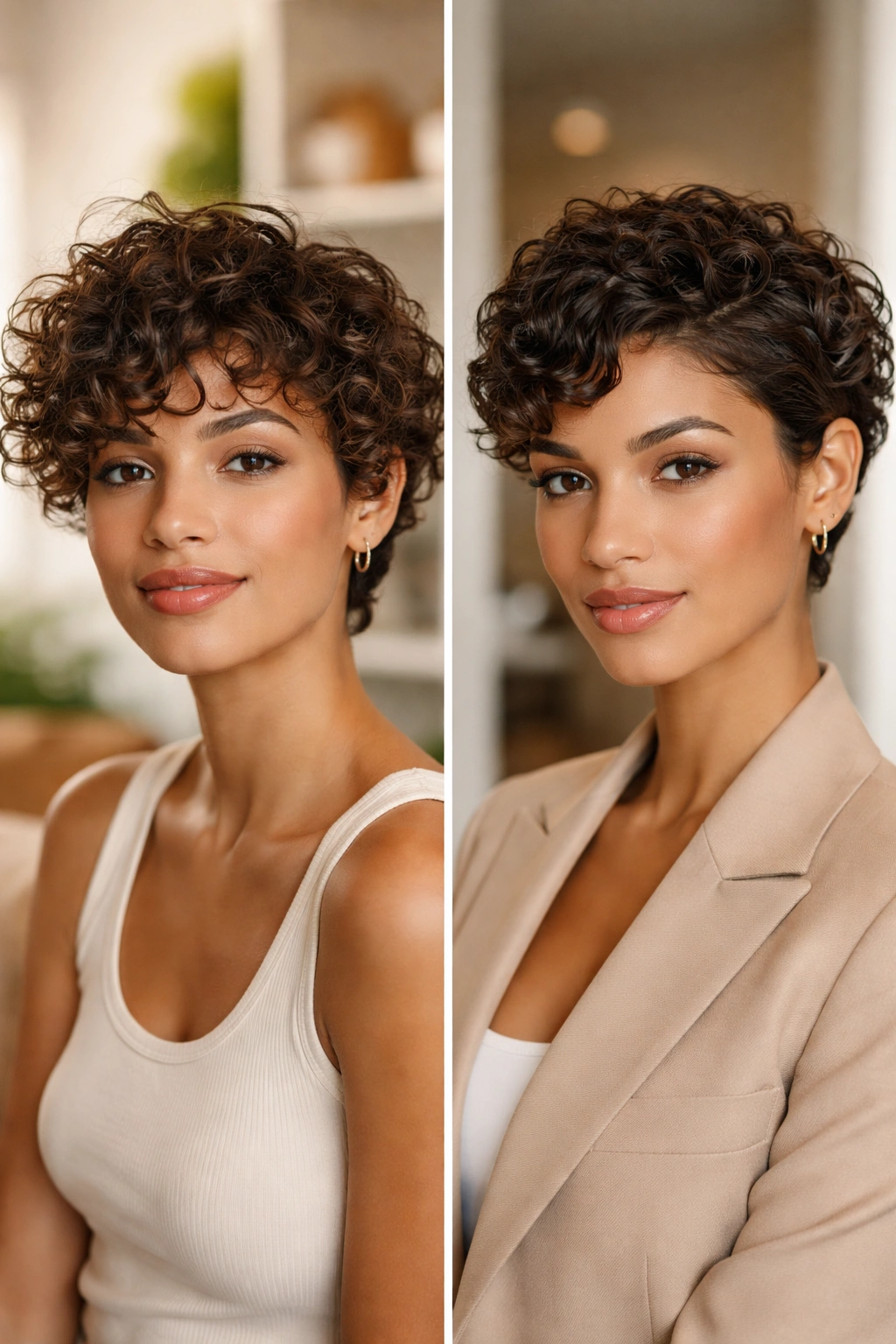
The same short curly cut can look casual, professional, or elegant depending on how you style it and what products you use. This versatility is one of the real advantages of a good short curly cut.
For a polished, professional look, use a more structured hold product like a gel, and style your curls with more deliberate definition. Smooth down flyaways with a tiny bit of serum or oil. The curl pattern should be clear and intentional, not wild or undone.
For a casual, textured look, use a light cream or mousse and let your curls dry more naturally. Embrace a bit of frizz and imperfection. Let curls sit wherever they land. The idea is effortless and relaxed.
For a sleeker look on short curly hair, you can blow-dry with a paddle brush to encourage waves instead of curls, creating a softer texture. Apply smoothing serum before blow-drying to reduce frizz. The result is less textured than your natural curl but still shows movement and dimension.
Final Thoughts
A great short curly cut isn’t just about choosing a style that’s trendy or flattering — it’s about choosing something that matches your curl type, your face shape, your lifestyle, and the time you’re willing to invest in styling. The 20 cuts above offer real variety, from bold and editorial to soft and approachable, from high-maintenance statement cuts to low-fuss practical styles.
The most important step is finding a stylist who truly understands how to cut curly hair. This isn’t a universal skill — many stylists trained primarily on straight hair cut curly hair incorrectly, often cutting it too short, layering too heavily, or not understanding how curls move and settle. When you find a stylist who gets curly hair, who listens to what you’re trying to achieve, and who understands your specific curl pattern, hold onto them.
Start with a consultation where you show your stylist photos of cuts you love, talk about your daily styling habits and how much time you want to invest, and be honest about your hair’s texture, density, and challenges. The best cut is one that you can actually style consistently and that makes you feel confident. That’s infinitely more important than following a trend or replicating someone else’s exact style.
