



Dreadlocks are one of the most versatile and expressive hairstyles available to women, offering far more variation than many people realize. Whether you’re rocking short, shoulder-length, or waist-length locks, there’s a styling option that can completely transform your look while maintaining the protective, low-maintenance nature that makes dreads so appealing. The beauty of locs is that they’re not a one-size-fits-all style—you can wear them up, down, twisted, braided, adorned, or blended, and each approach creates an entirely different vibe.
The key to keeping your dreadlock style fresh and interesting is understanding what works for your current length, hair texture, and lifestyle. Some styles work beautifully when your locs are thick and heavy, while others shine when locs are still new and more pliable. Some require daily styling, while others work best left alone. Many women stick with one style for years without realizing they could completely refresh their look with a simple technique they haven’t tried yet.
This guide covers the most wearable, genuinely different dreadlock styles for women, organized by what you can realistically achieve at various lengths. You’ll find updos that work for professional settings, casual everyday looks that take seconds, and statement styles that turn heads. Whether you’re fresh into your loc journey or celebrating years of growth, these fifteen styles give you actual direction on how to style your locks in ways that feel intentional and polished.
1. The Sleek High Ponytail
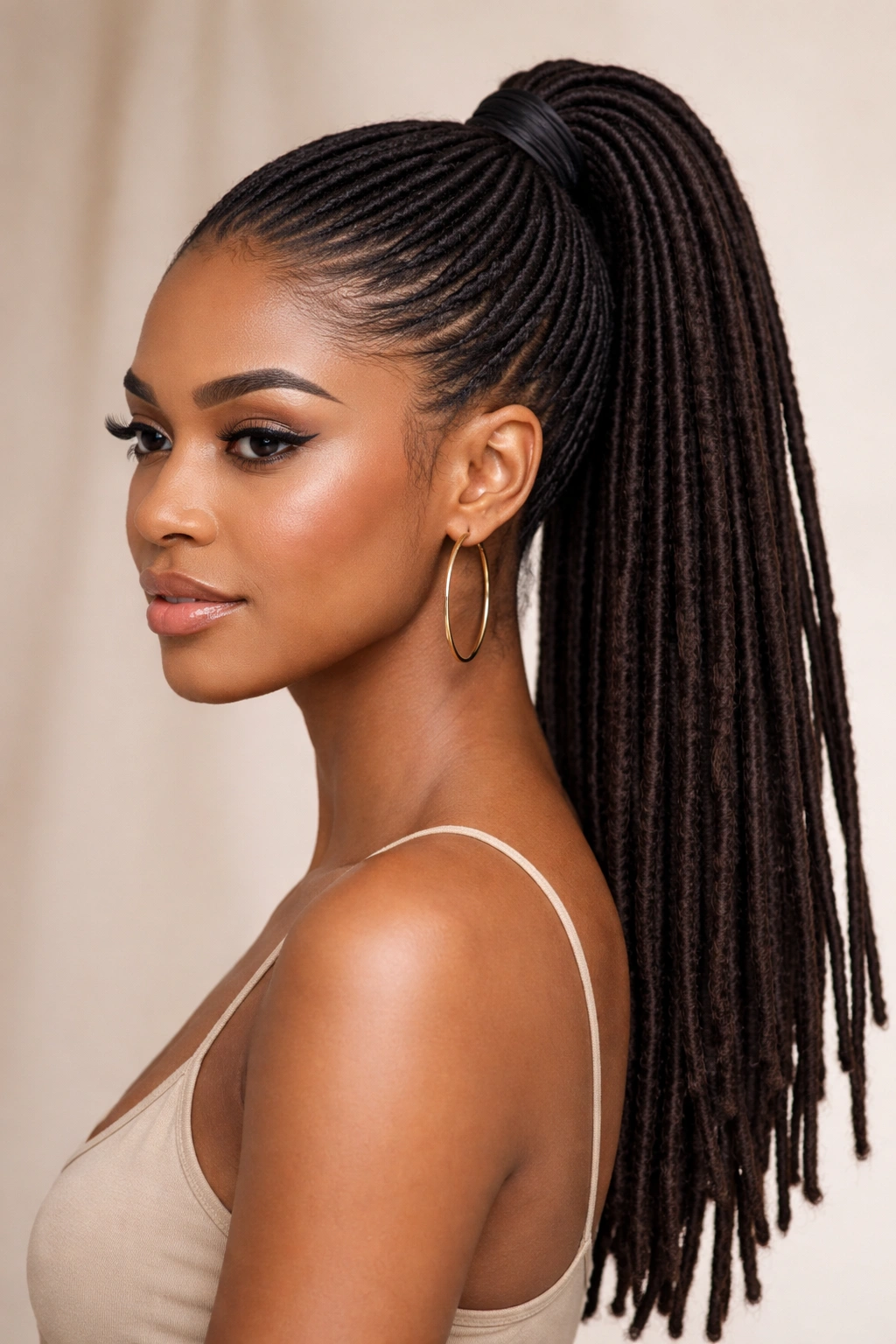
The sleek high ponytail is the fastest way to transform your look and take your dreadlocks from casual to intentional in under two minutes. This style works at virtually any length, though it’s most striking when your locs reach at least shoulder length and have enough density to create visible volume at the crown. The key is gathering your locs tightly at the very top of your head—think just behind your hairline—and securing them with a sturdy elastic or hair tie that won’t slip under the weight of your locs.
Why This Style Works Year-Round
The high ponytail is polished enough for professional environments, athletic enough for workouts, and stylish enough for nights out without feeling like you’re trying too hard. It keeps your locs completely off your face and neck, which is particularly valuable during humid weather when you want that clean, intentional aesthetic. The slight lift at your crown also creates the illusion of more length and adds subtle dimension to your overall silhouette.
How to Perfect Your Version
- Brush or smooth your locs back from your face using a smoothing gel or edge control product—this creates that polished, intentional look rather than a haphazard gathered style
- Secure with a hair elastic or decorative hair stick (wooden sticks or metal hair forks work beautifully and add an extra design element)
- Leave a few face-framing pieces loose around your temples if you want a softer, less severe look
- Try a contrasting scrunchie or metallic elastic to make the ponytail itself a statement accessory
2. Double Buns on Top
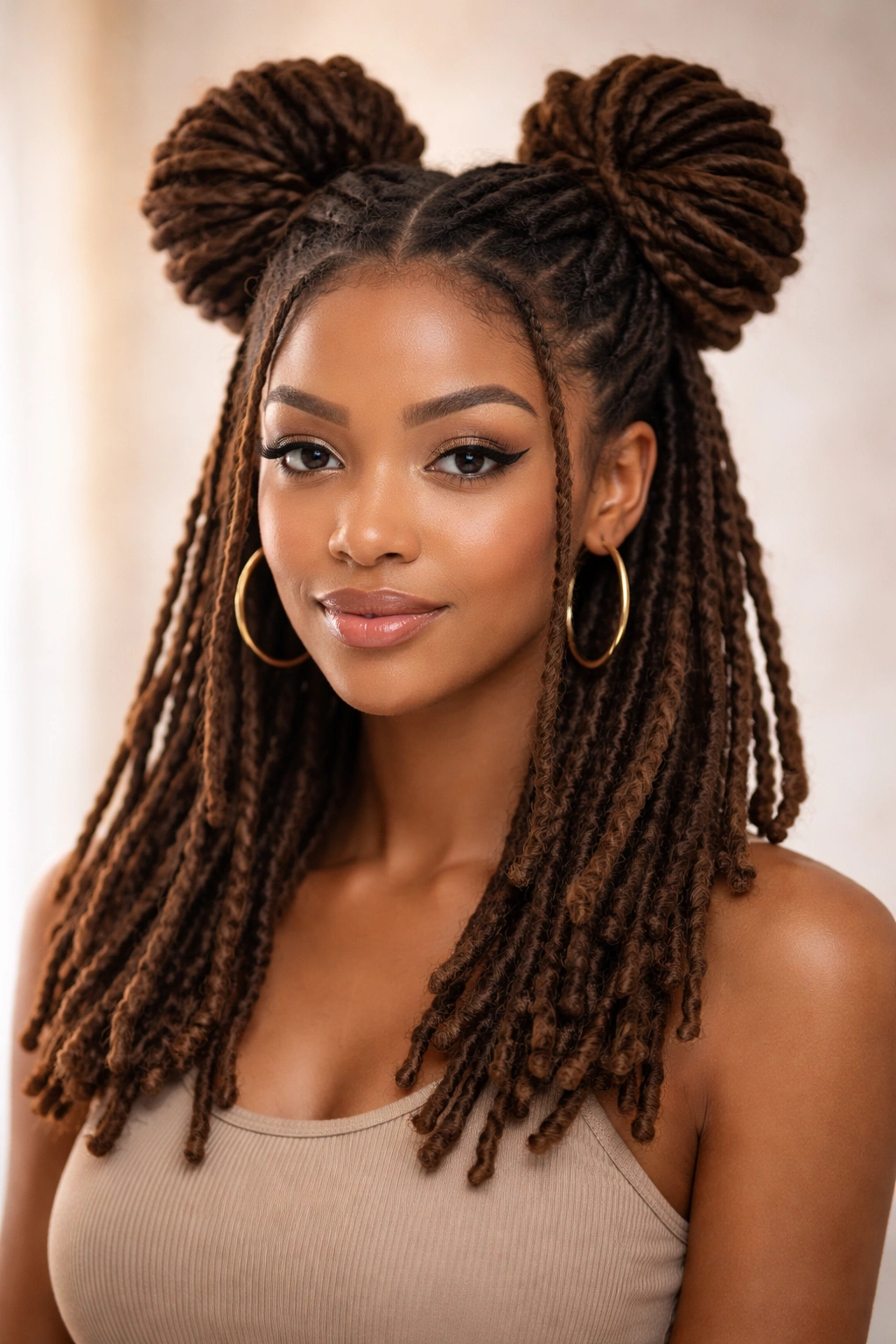
Double buns are the playful, youthful update to traditional updos, and they work particularly well when your locs are thick enough to create substantial buns without looking sparse. This style works best when you have enough length to wrap your locs around the base of each bun—roughly shoulder-length or longer—but it’s possible even with shorter locs if you group several together to create fuller sections.
Making This Style Age-Appropriate
Double buns can read as either cute and whimsical or sophisticated and artistic depending on how you execute them. For an elevated version, make your buns high and tight, use minimal face-framing, and add a metallic or neutral hair accessory to ground the look. For a softer, more relaxed vibe, position your buns lower (roughly ear-level), allow a few strands to escape, and lean into the playful energy of the style.
Step-by-Step Approach
- Divide your locs into two equal sections using a center part from your forehead to the nape of your neck
- Gather each section high on either side of your head, roughly where you’d position pigtails
- Twist or wrap each section tightly around its base to create a compact bun
- Secure with bobby pins and an elastic to lock everything in place
- Smooth any flyaways with edge control and add decorative hair cuffs or clips to each bun if desired
3. The Twisted Crown
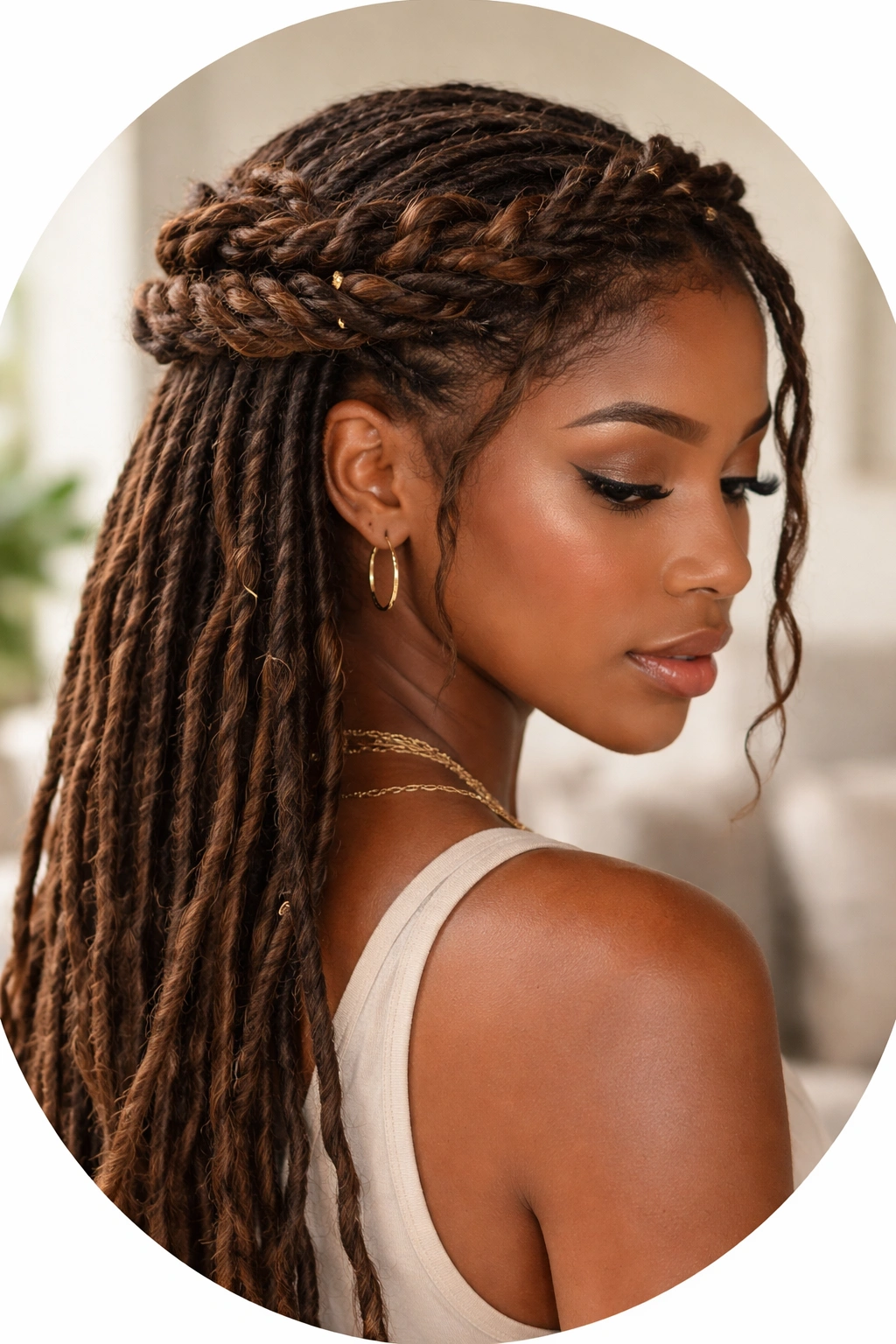
The twisted crown style elevates your locs by literally twisting sections around your head like a halo, creating a romantic, bohemian aesthetic that reads as effortlessly put-together. This style requires locs long enough to reach at least your chin when loose—ideally shoulder-length or longer—because you’re twisting sections all the way around your head and pinning them in place. It’s one of the most photogenic dreadlock styles and works beautifully for special occasions, date nights, or any time you want to feel extra polished.
The Protective Benefit
Beyond being gorgeous, the twisted crown style is also protective, as it gathers all your locs up and off your shoulders, reducing friction and manipulation. Your locs stay stationary throughout the day without the need for constant restyling, and you’re not sitting on the ends of your locks, which can cause breakage or weakening at the tips.
How to Build Your Crown
- Section your locs into 2-4 thick strands, depending on how full you want your crown to be
- Starting at one temple, begin twisting your first section, working that twist horizontally across the back of your head
- As you twist, add additional locs to the twist to create more volume and coverage
- Secure the twisted section with bobby pins every few inches to keep it anchored to your head
- Repeat on the opposite side, overlapping the twists slightly at the back for a seamless crown effect
- Finish with a light mist of setting spray to hold any loose ends in place
4. Individual Loc Wraps and Beads
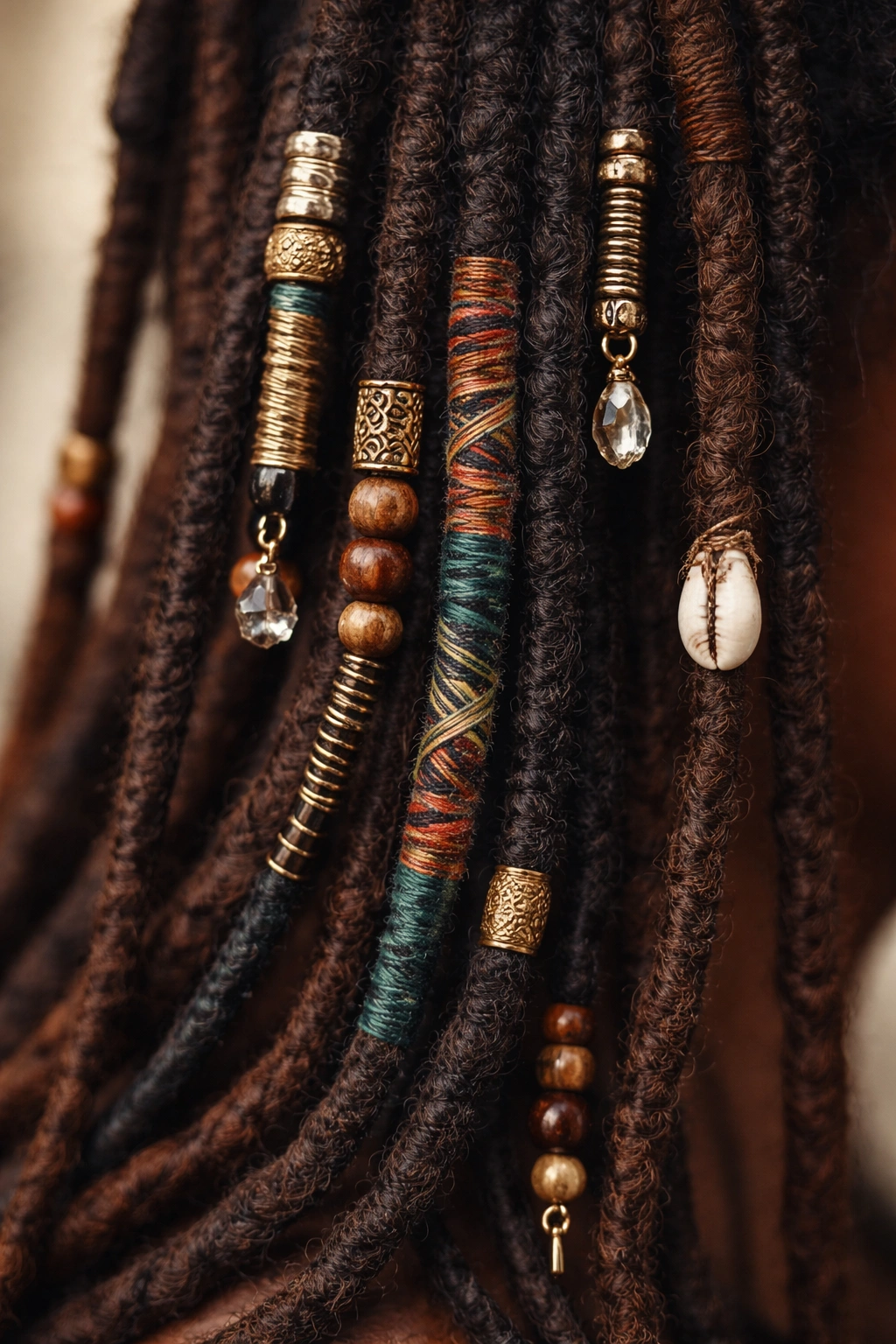
Decorating individual locs with wraps, beads, and cuffs is one of the simplest ways to completely change your aesthetic without actually styling your hair differently. Wire wraps, metal cuffs, wooden beads, and fabric wraps can transform a basic loose-loc look into something intentional and designed, and the best part is you can change which locs are decorated every single time you want a new look.
Choosing Your Decoration Style
Metallic cuffs create a sleek, modern aesthetic and work beautifully on locs of any color. Wooden beads and natural fibers add warmth and an earthy, bohemian vibe. Fabric wraps in contrasting colors create visual interest and can be rewrapped in different colors or patterns whenever you want a change. Combining different decoration styles—some locs with metal cuffs, some with beads, some with wraps—creates depth and visual texture.
Application Tips
- Beads slide easily onto locs; start at the root if you want security, or slide them down a few inches if you prefer more movement
- Fabric wraps require you to wrap material around your loc and tie or stitch the ends; this holds permanently until you remove it
- Metal cuffs slide on like hair rings; they won’t stay in place on their own, so stack multiple cuffs on one loc for security or combine them with a bead
- Mix metallic and natural materials on the same head for a balanced, sophisticated look rather than using only one type of decoration
5. The Side Sweep
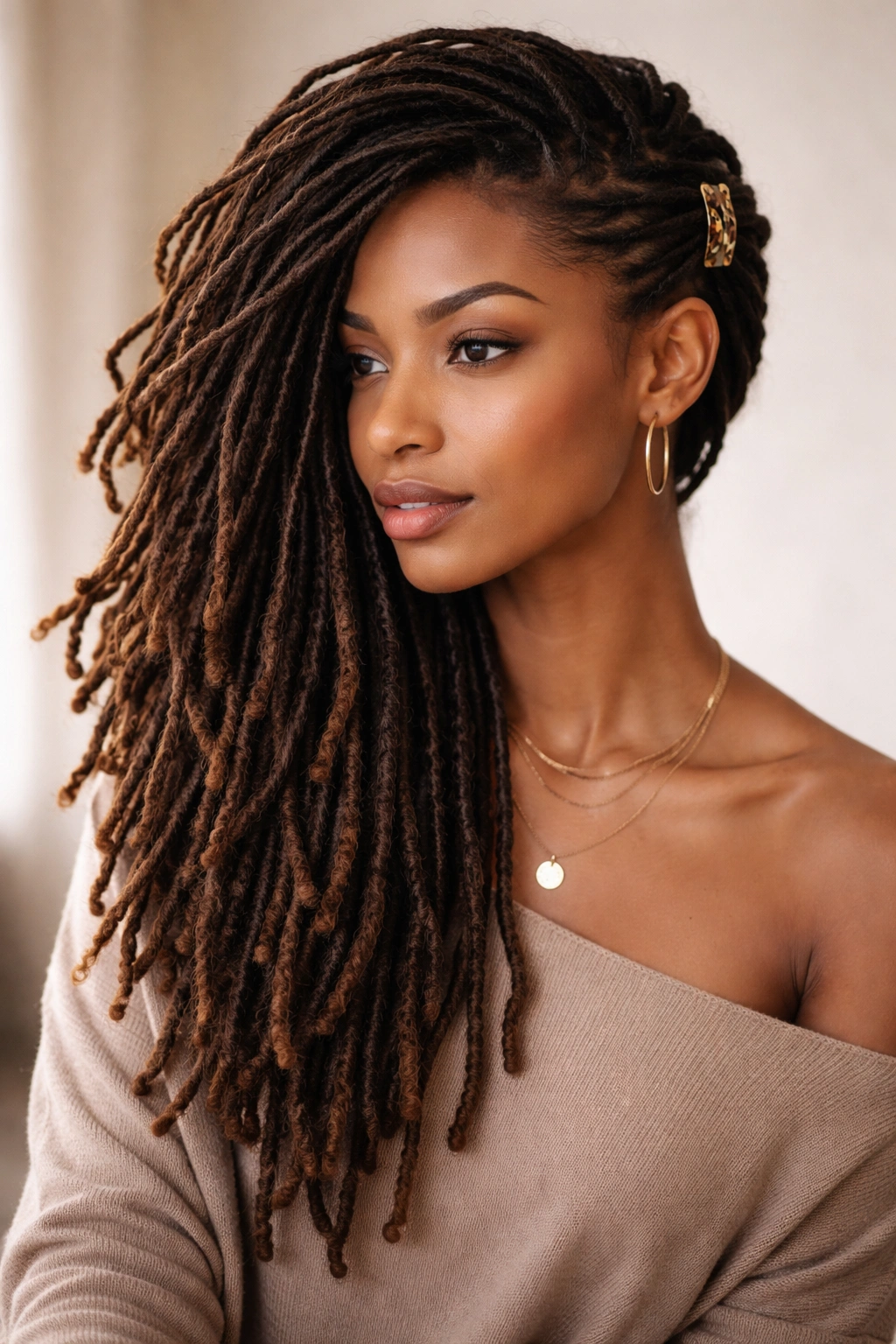
The side sweep takes all your locs and gathers them dramatically to one side, creating an asymmetrical look that’s simultaneously casual and striking. This works beautifully at any length and requires minimal effort—you’re literally just taking your locs from one side and sweeping them across to the other, securing with a clip or elastic. It’s the kind of style that looks effortless but immediately reads as intentional and styled.
When to Wear This Look
The side sweep works perfectly for situations where you want your locs completely off one side of your face but don’t want a full updo. It’s ideal for showing off your face shape, wearing statement earrings on the uncovered side, or simply wanting the visual interest of an asymmetrical style. It works for professional settings, casual hangouts, and nights out—it’s genuinely versatile.
Creating the Perfect Sweep
- Decide which side you want to sweep toward (usually the direction your hair naturally falls is best)
- Smooth your locs back from the opposite side using edge control or smoothing gel
- Gather your locs at roughly ear-level on your sweeping side, creating a loose, relaxed bunch rather than a tight bundle
- Secure with a decorative clip, silk scrunchie, or elastic that complements your aesthetic
- Leave a few face-framing pieces loose around your temples for softness, or smooth everything back for a more polished look
6. Locs Pinned Half-Up
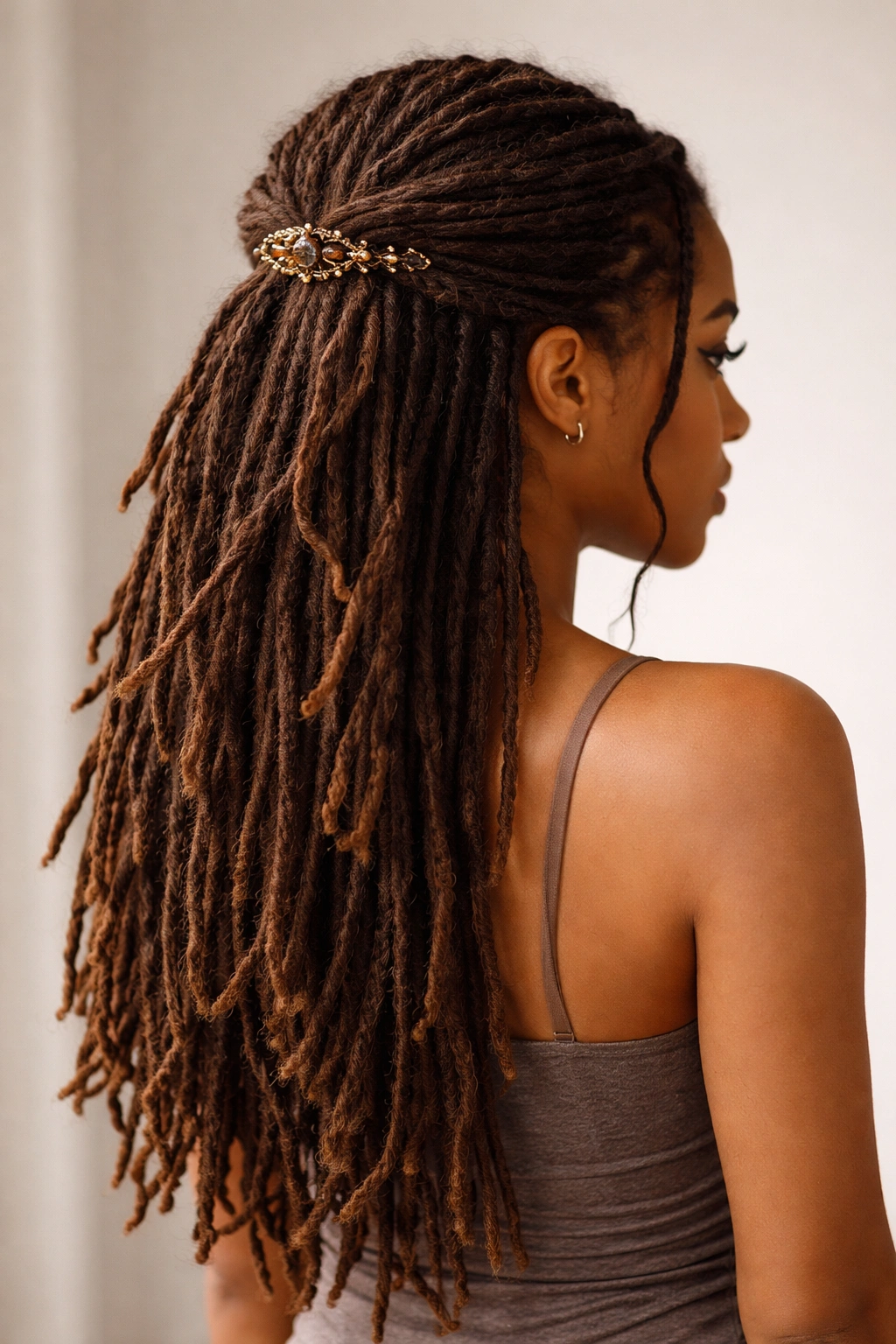
The half-up style gives you the best of both worlds—you have locs down for length and movement, but the top half is secured and off your face. This style works at any length and is particularly effective when you have enough thickness at your crown to create visible volume in the upper section. It strikes the perfect balance between casual and styled, making it ideal for everyday wear that still feels intentional.
Why This Style Lasts All Day
Because you’re only securing the upper half, gravity naturally keeps your locs in place throughout the day. You’re not fighting with a full updo that might loosen, and you’re not leaving all your locs down to fall in your face. The secured upper portion prevents your locs from shifting around your shoulders while the lower half remains free to move.
Execution Guidelines
- Gather the upper third or half of your locs (from roughly temple to temple across the top of your head)
- Secure with a decorative clip, hair stick, or elastic—whichever creates the aesthetic you want
- Let the lower half fall freely down your back and shoulders
- Add decorative elements to the secured section if desired: hair cuffs, beads, or fabric wraps make the secured portion more visually interesting
- You can smooth the secured section with edge control for a polished look, or leave it slightly textured for a more relaxed aesthetic
7. The Braided Waterfall
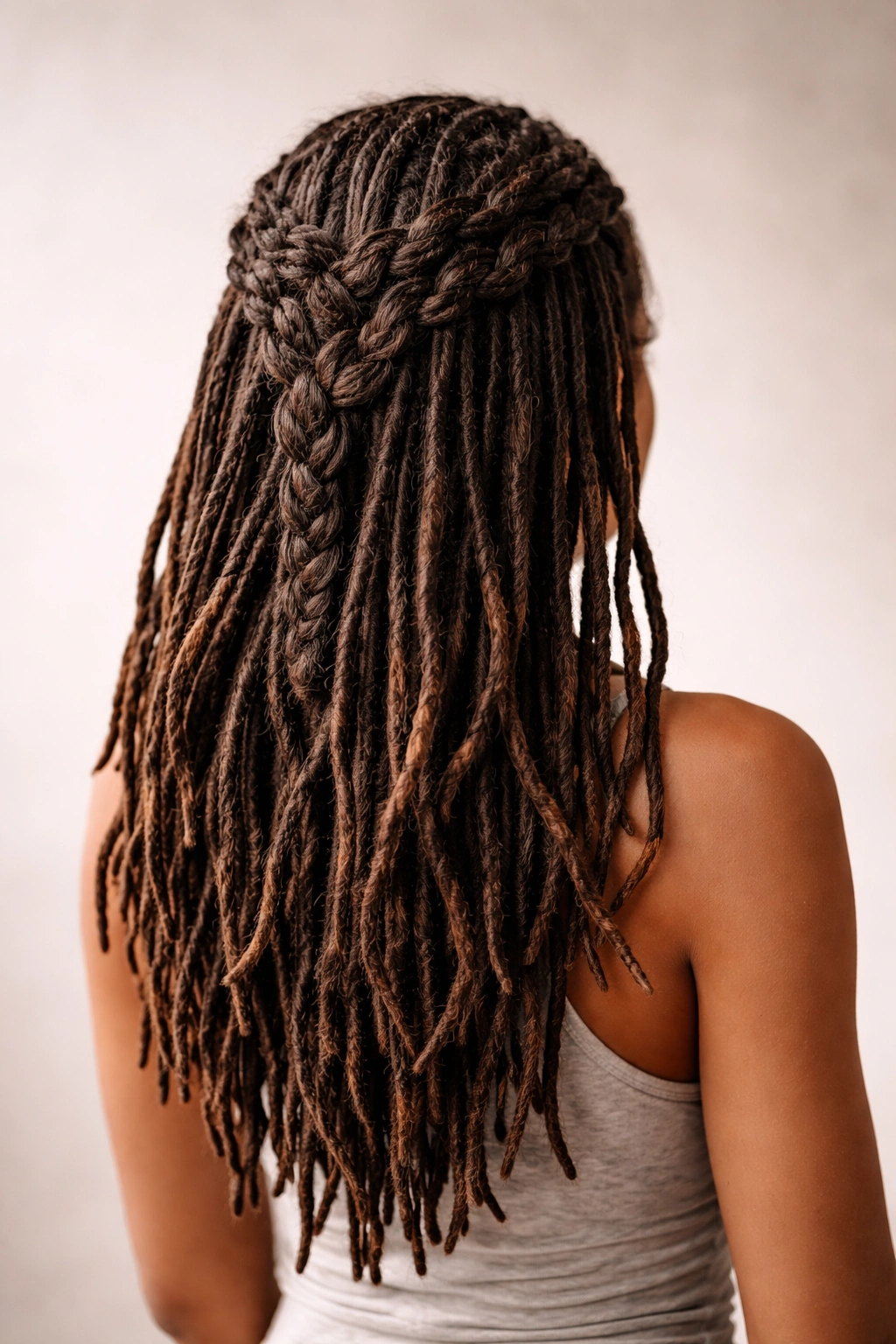
The braided waterfall style incorporates sections of your locs into braids that literally cascade down your back like a waterfall, combining the protective benefits of braiding with the freedom of loose locs. This style works beautifully at shoulder-length or longer and is particularly striking when you have thick, well-defined locs that hold their shape. It requires a bit more time than some styles—plan for 10-15 minutes—but the result is genuinely show-stopping.
Building Dimension Into Your Style
The waterfall technique naturally creates visual depth because the braided sections contrast with the loose locs, and the way the braids fall in lines draws the eye downward. This makes your hair appear fuller and longer than it actually is, and it’s one of the most photogenic dreadlock styles available.
How to Create Your Waterfall
- Start at one temple and select 3-4 thick locs to begin your first braid
- Braid these locs together in a standard three-strand braid, working the braid at a slight angle downward toward the back of your head
- As you braid, occasionally release one strand and replace it with a new, unbraided loc from below—this creates the “waterfall” effect of locs dropping out of the braid
- When you reach the back of your head, secure the braid with a small elastic or bobby pins
- Repeat on the opposite side, creating a second waterfall braid that mirrors the first
- The result is braided sections on either side with loose locs cascading between and below them
8. Goddess Locs Braids
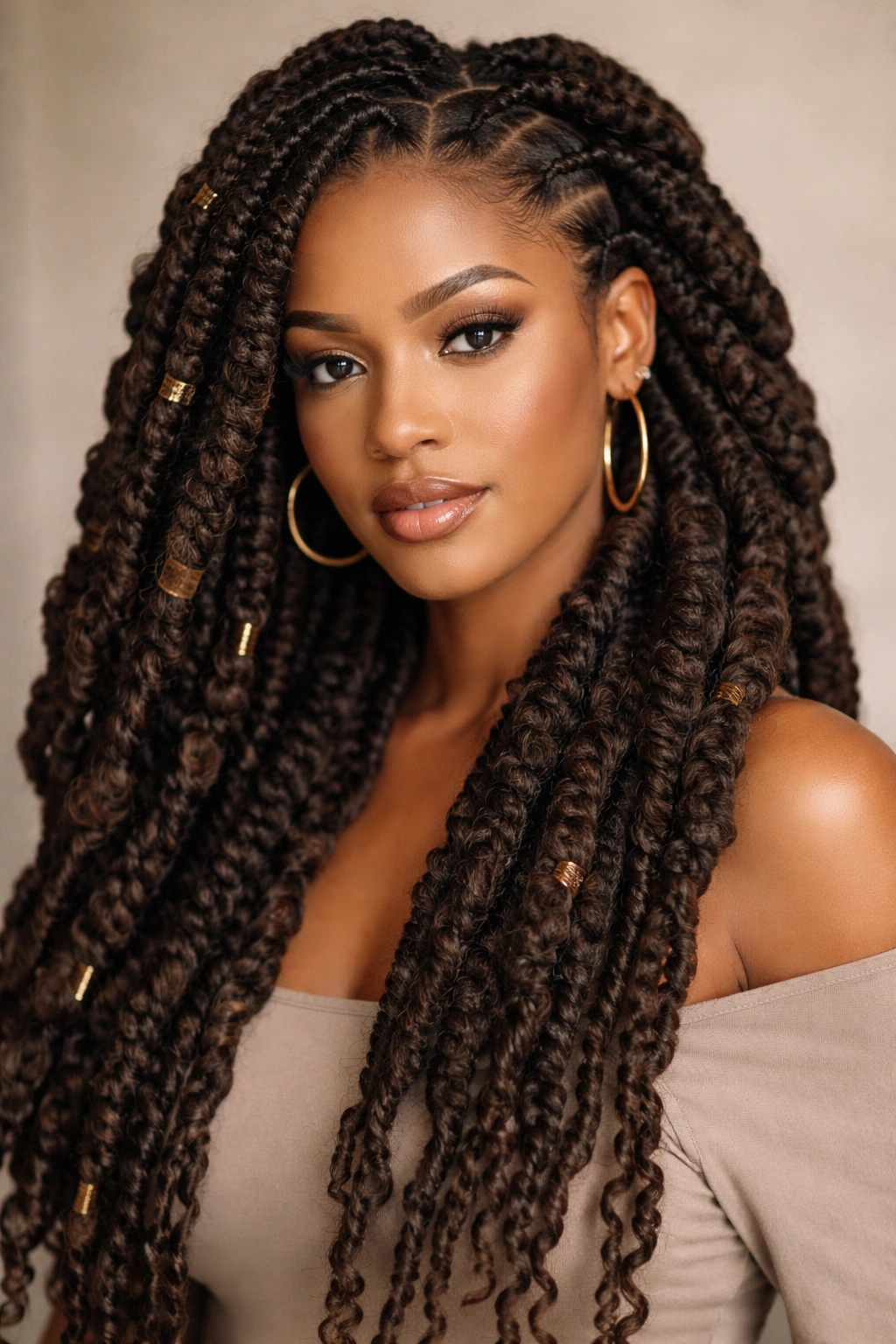
Goddess locs are thicker, fuller braids created by braiding multiple locs together, and they create an intentional, sculptural look that’s powerful and feminine simultaneously. This style works best when you have enough locs to divide into substantial sections—it’s most achievable when your locs are on the thicker side or when you have a dense head of locs. The result is fewer, thicker braids that create strong visual impact.
The Statement Quality of This Style
Goddess braids read as intentional and designed in a way that loose locs sometimes don’t. They’re popular for special occasions, photo shoots, and moments when you want your hairstyle to be a statement rather than background. The braids are thick enough to hold their shape beautifully and they last longer than many other styles before needing to be redone.
Building Your Goddess Braids
- Divide your locs into 4-8 sections (depending on how many goddess braids you want)
- Group 3-5 locs together to form each thick braid section
- Braid these grouped locs together using a standard three-strand technique, working the braids as thick and chunky as possible
- Secure each braid at the ends with a small elastic or by wrapping it with thread or fabric
- You can wear these braids loose down your back, gathered into a low ponytail, or wrapped around your head like a crown
- Leave a few unbraid locs out around your face for softness, or braid everything for a completely sleek aesthetic
9. The Low Bun with Face-Framing Pieces
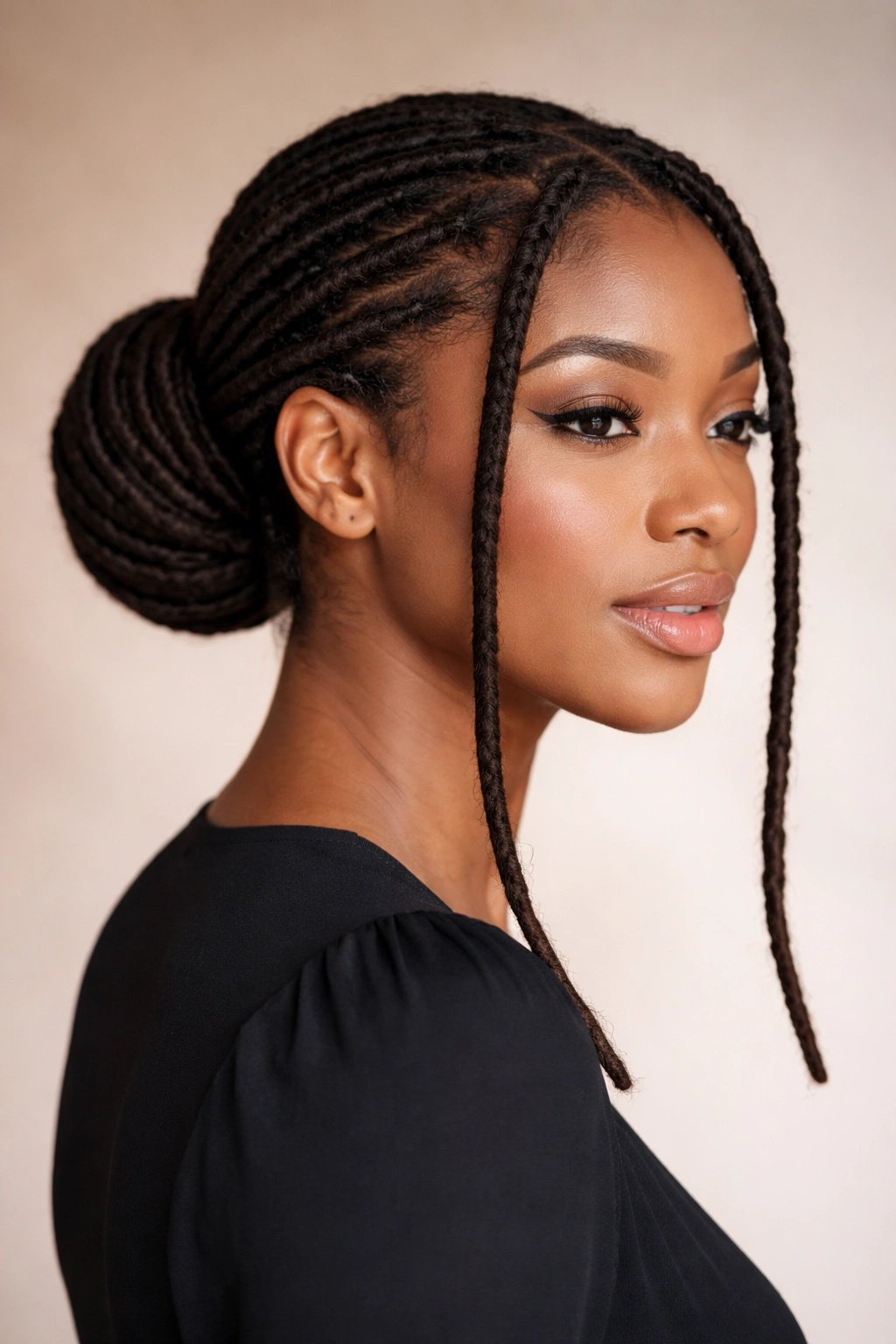
The low bun is the ultimate in understated elegance, particularly effective when paired with a few strategically placed face-framing locs. This style works at any length and reads as polished without feeling overdone. The low placement is naturally flattering because it elongates your face and keeps weight away from your neck, making it perfect for professional settings, formal events, or simply days when you want to feel put-together without effort.
Why Face-Framing Matters
Even a small number of loose locs framing your face completely changes the energy of a low bun. Two locs on either side of your face create a soft, romantic aesthetic. Face-framing locs also draw attention to your face and eyes, making the overall look feel less severe than a completely pulled-back style.
Creating Your Low Bun
- Gather your locs at the nape of your neck, roughly where a traditional low ponytail would sit
- Twist or braid your gathered locs, then wrap them around the base to form a compact bun
- Secure with bobby pins and a small elastic, making sure the bun feels stable and won’t slip
- Select 2-4 locs from your front section and leave them loose to frame your face
- Smooth these face-framing locs with edge control or smoothing gel, curling them gently around your face if desired
- A few wisps and slight texture make this style feel intentional rather than severe
10. Interlocking Spiral Locs
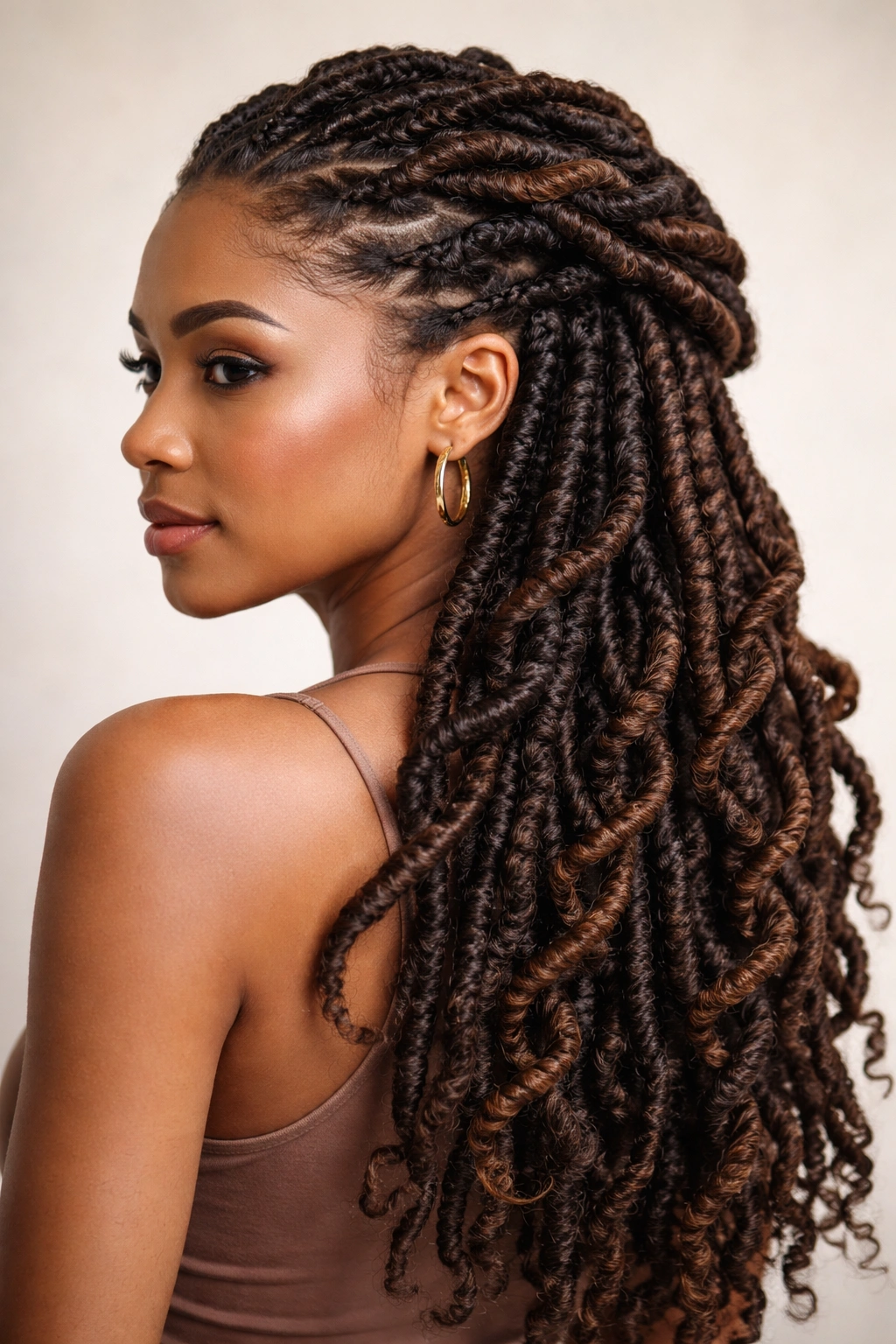
If you’re looking for visual excitement and movement, interlocking spirals create dynamic curves throughout your locs by twisting multiple locs together in spiraling patterns. This style works best when you have relatively new locs with some flexibility, or when your locs are thin to medium thickness. The spirals can run vertically down your back, wrap around your head, or be positioned strategically for visual interest.
The Visual Impact
Spiraling locs create the impression of movement and flow even when your hair is stationary. The twisted patterns catch light differently and add textural interest that makes your locs feel more dynamic than the same locs worn loose and unstyles. This style is perfect if you want your locs to feel playful and artistic rather than completely natural.
Technique for Creating Spirals
- Select 2-3 adjacent locs to twist together
- Twist these locs tightly around each other, working from root to tip, maintaining even tension throughout
- Secure the spiral at the end with a small elastic or thread wrap
- Repeat this process on other sections of your head, creating multiple spirals or focusing spirals in specific areas
- You can create symmetrical spirals on either side of your head, or scatter them asymmetrically for a more artistic look
- Spirals hold better when locs have some stickiness; newer locs often hold spirals longer than completely mature locs
11. The Wrapped and Tucked Style
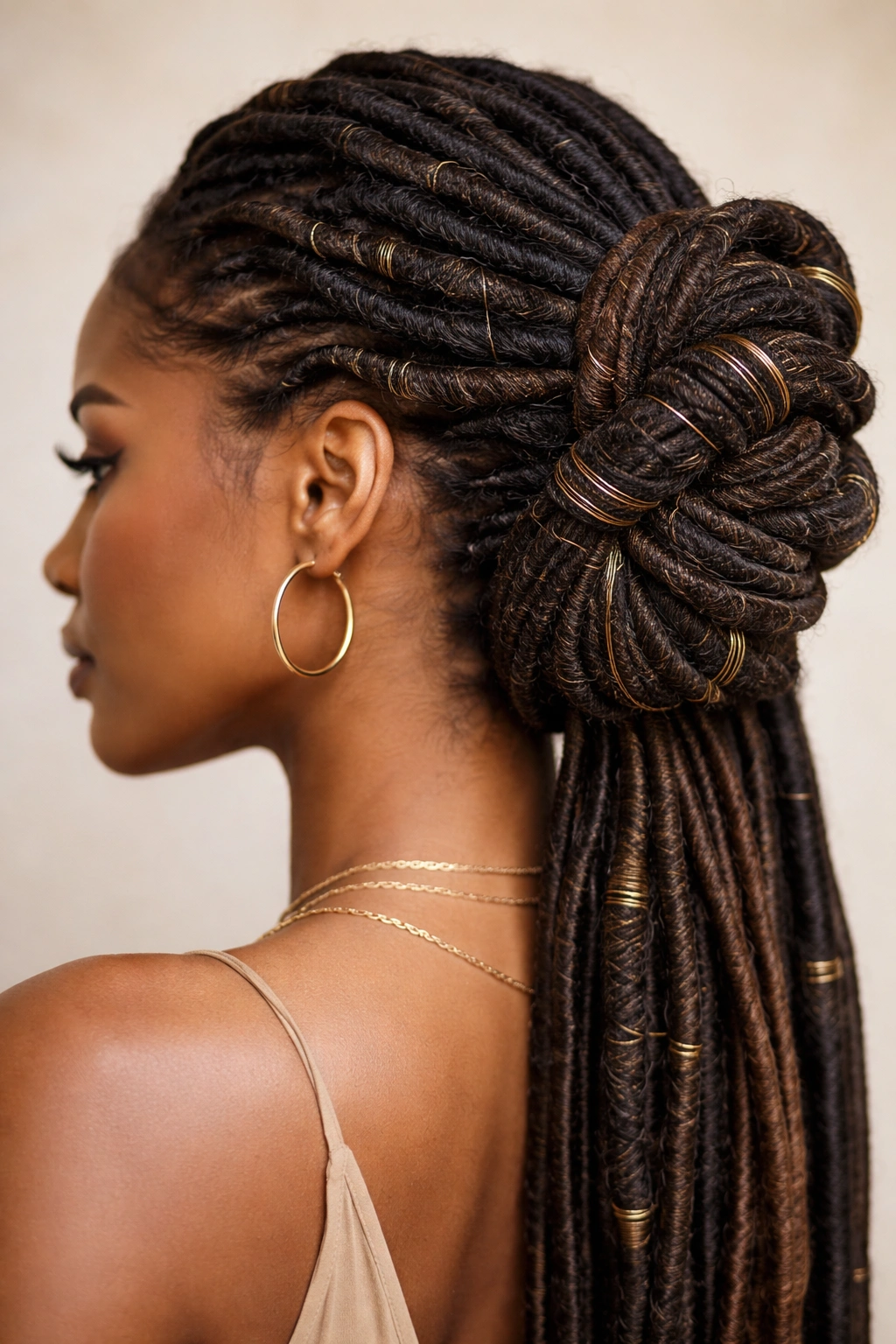
The wrapped and tucked style involves wrapping your locs with coordinating fabric, thread, or wire and then tucking the wrapped sections into loops or knots to create a compact, controlled look. This style is incredibly effective at transforming messy or newly styled locs into something polished, and it works at virtually any length. The wrapping provides practical benefits—it protects your locs and keeps them secure—while creating visual interest and allowing you to change your aesthetic by simply wrapping different sections.
Practical Protection Benefits
Beyond being beautiful, wrapping and tucking actually protects your locs by securing the ends and reducing manipulation. Wrapped sections don’t tangle as easily, shed less, and maintain their shape better throughout the day. This makes it an excellent style for active days, travel, or simply maintaining your locs between wash days.
How to Wrap and Tuck
- Select sections of your locs to wrap (you might wrap every other loc, or focus wraps on specific areas)
- Starting at the base of your loc, wrap thread, yarn, or thin fabric tightly around your loc, working downward toward the end
- Once you’ve wrapped a section, fold it into a loop or knot and tuck it under adjacent locs or secure it with bobby pins
- Create multiple wrapped-and-tucked sections throughout your head for visual interest
- Combine different colored wrapping materials to create patterns or ombre effects
- This style can look elegant and intentional, or playful and artistic depending on your wrapping colors and patterns
12. Locs Styled Half-Up With Twists
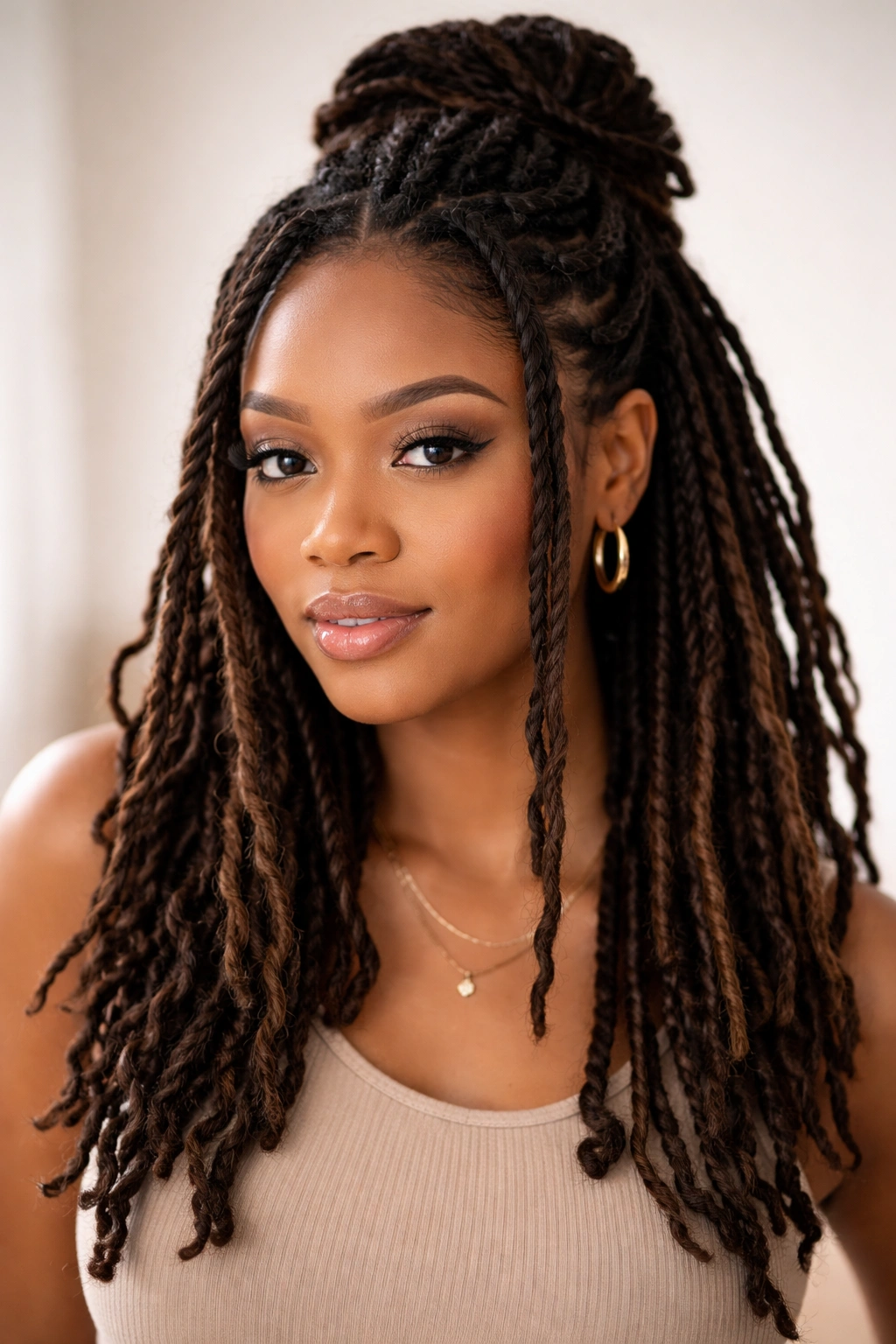
Combining a half-up style with twisted locs creates dimension and visual complexity that makes your look feel more styled than it actually is. You’re gathering your upper locs while twisting select sections, which adds textural interest and prevents the half-up from looking flat or plain. This style works beautifully at any length and is one of the fastest ways to make loose locs feel intentional.
Creating Balanced Visual Interest
The key to this style is balancing the twisted sections with the untwisted locs so the whole look feels cohesive rather than chaotic. If you twist too many sections, the style feels busy. If you twist too few, you’ve barely changed the basic half-up silhouette. Aim for twisting 2-4 key sections that frame your face or highlight your best angles.
Execution Strategy
- Gather your upper locs into a half-up position, securing loosely with a hair tie or clip
- Before fully securing, select 2-3 locs within the half-up section to twist
- Twist these locs tightly, working from root to end, and wrap the twisted locs around the base of your half-up bundle before securing everything together
- The twisted locs now add texture and visual interest to the bundle
- Alternatively, select face-framing locs below the half-up section and twist them, leaving them loose to frame your face while the upper half is secured
- This creates a style that’s simultaneously polished and playful
13. The Crown Braided With Loose Ends
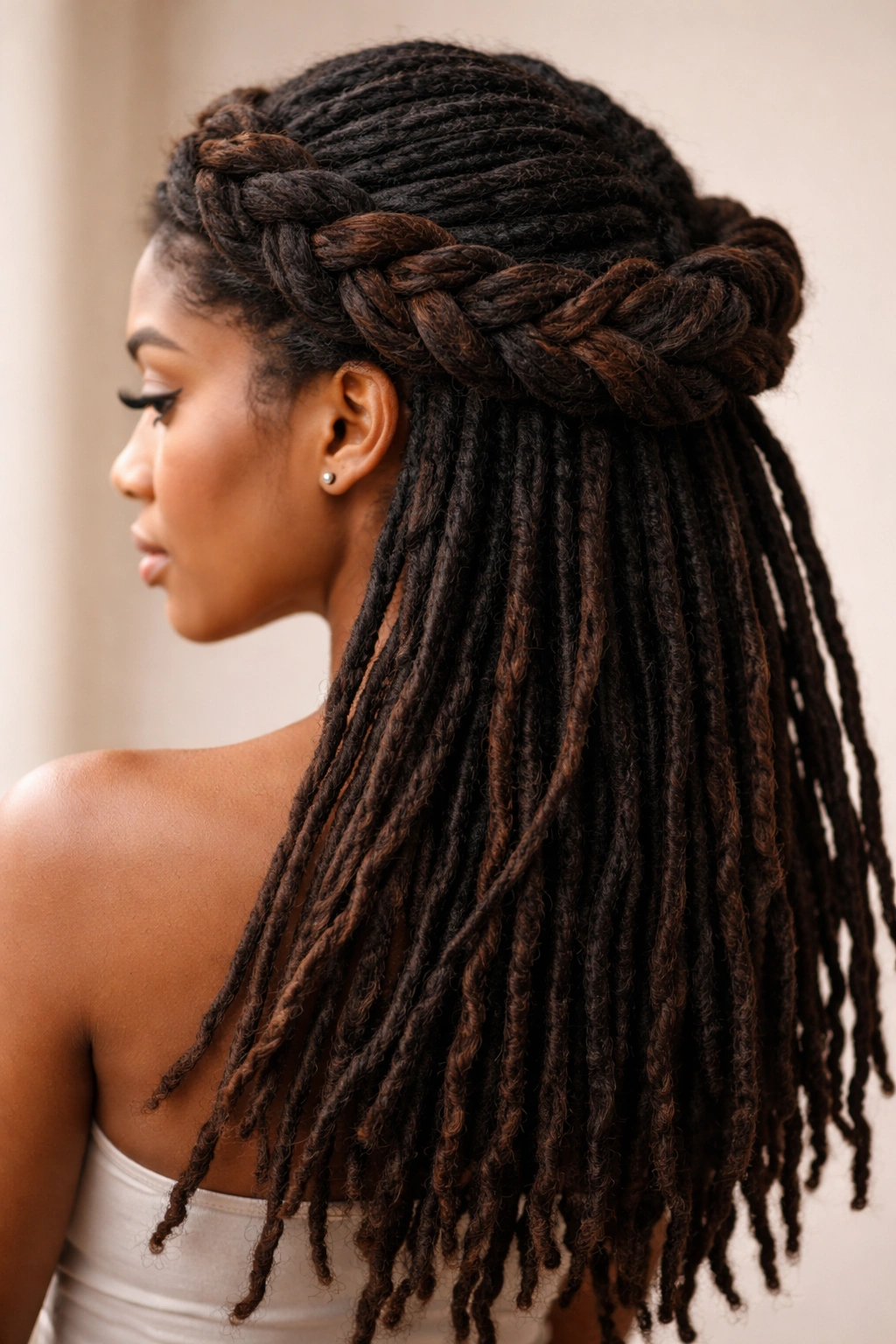
The crown braid combines the romantic vibe of a braided style with the freedom of loose locs by braiding a crown around your head while leaving the back completely loose. This style works beautifully at any length and is particularly striking when you have enough locs to create a substantial, visible braid. It’s one of the most feminine dreadlock styles and works perfectly for dates, special occasions, or simply days when you want to feel special.
Length and Visibility Considerations
This style shows off your braid work, so it’s most effective when you have enough length in your locs to create a braid that’s at least 1-2 inches thick. The braid is positioned high on your head like a tiara, which automatically elevates your overall look and brings attention to your face and crown area.
Creating Your Crown Braid
- Starting at one temple, select 3-4 thick locs to begin your braid
- Braid these locs together using a standard three-strand technique, working the braid horizontally around the back of your head
- As you braid, gradually add additional locs to the braid to create volume and coverage
- Stop braiding once you reach your opposite temple, leaving your remaining locs completely loose in the back
- Secure the braid with bobby pins at both ends, making sure it feels stable
- Your back locs should fall completely free, creating a contrast between the controlled braid and the loose, flowing locs below
- The contrast is what makes this style visually striking
14. Locs Pulled Through a Hair Ring or Cuff
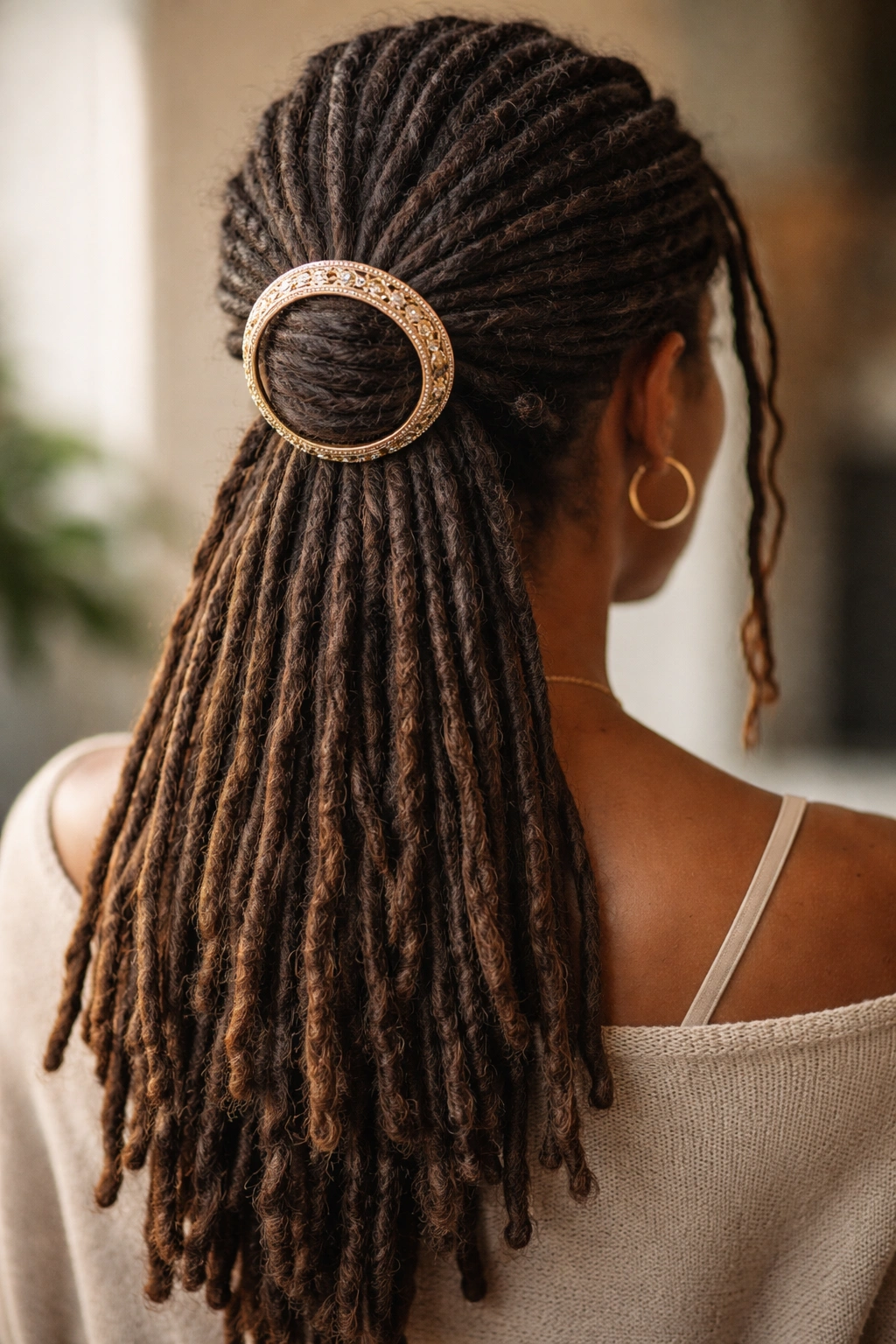
One of the simplest but most visually effective styling techniques is simply pulling all your locs through a large decorative hair ring or metal cuff positioned at the back of your head. This instantly transforms a basic loose-loc style into something intentional and styled, and it requires absolutely no technical skill. Hair rings come in endless styles—metal, beaded, wood, wire—so you can change your entire aesthetic simply by switching out your ring.
The Versatility Factor
Hair rings work at virtually any length and thickness, and because they’re removable, you can change your style multiple times per day if desired. A sleek silver ring creates a modern, minimalist aesthetic. A beaded or ornate ring creates bohemian or artistic vibes. Multiple rings stacked together create a bold statement. This is truly a wear-it-however-you-want styling option.
How to Use a Hair Ring Effectively
- Position your hair ring at the back of your head where you want your locs to gather
- Pull all your locs (or just your back section) through the ring from top to bottom
- Adjust your locs so they create the silhouette you want—pulled tight for a sleek look, or looser for a more relaxed aesthetic
- Fan out the locs below the ring so they fall naturally down your back
- Smooth any flyaways with edge control
- You can create a high, mid-height, or low gathering depending on where you position your ring
- Multiple rings at different levels create an avant-garde, artistic look
15. The Statement Colored Section With Partial Updo
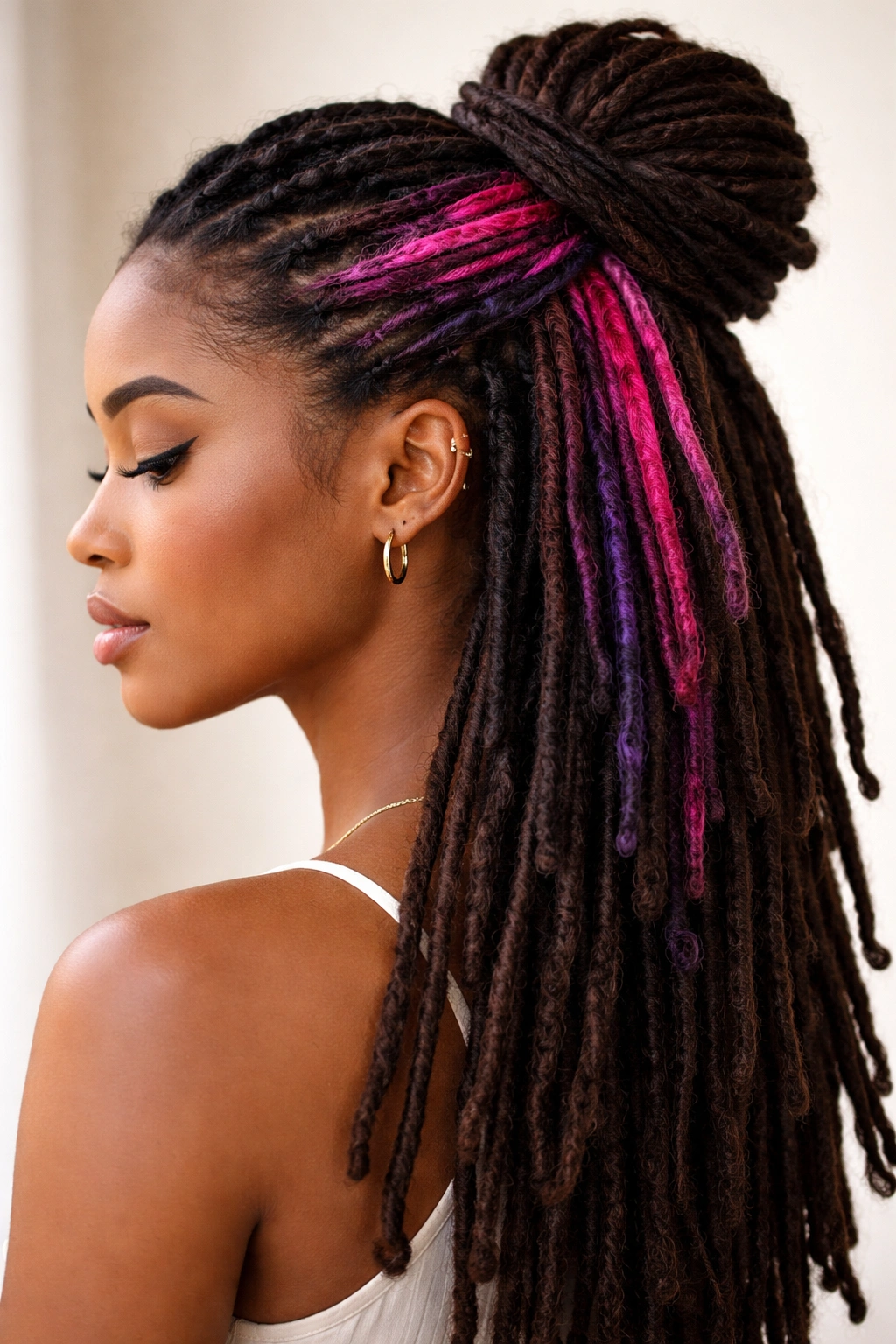
For your final styling option, consider incorporating a bold, colorful section into a partial updo, allowing the colored locs to be visible while the rest of your locs are gathered. Whether you’ve colored a few select locs bright pink, blue, purple, or kept them natural while coloring others, positioning colored locs strategically makes them a statement element rather than an afterthought. You might have all your colored locs on one side, or distributed throughout for a more subtle effect.
Maximizing Your Color Investment
If you’ve invested time and money into colored locs, styling them in a way that keeps them visible and showcased makes sense. A partial updo works beautifully because you gather enough locs to look polished and intentional, while leaving your colored section free to be the focal point. This prevents your color from being hidden under other locs or tucked away where no one can see it.
Styling Your Colored Locs
- Determine which locs are colored and where they’re positioned on your head
- Create a partial updo (half-up, twisted crown, or side gather) that deliberately leaves your colored section visible
- If your colored locs are at the front, leave your front section loose while gathering the back
- If your colored locs are scattered throughout, position your updo so colored pieces frame your face or peek through the gathered section
- You might also braid your colored locs separately and incorporate them into your updo as a visual accent
- The key is making your colored locs feel like an intentional design choice rather than something that just happened to be visible
Final Thoughts
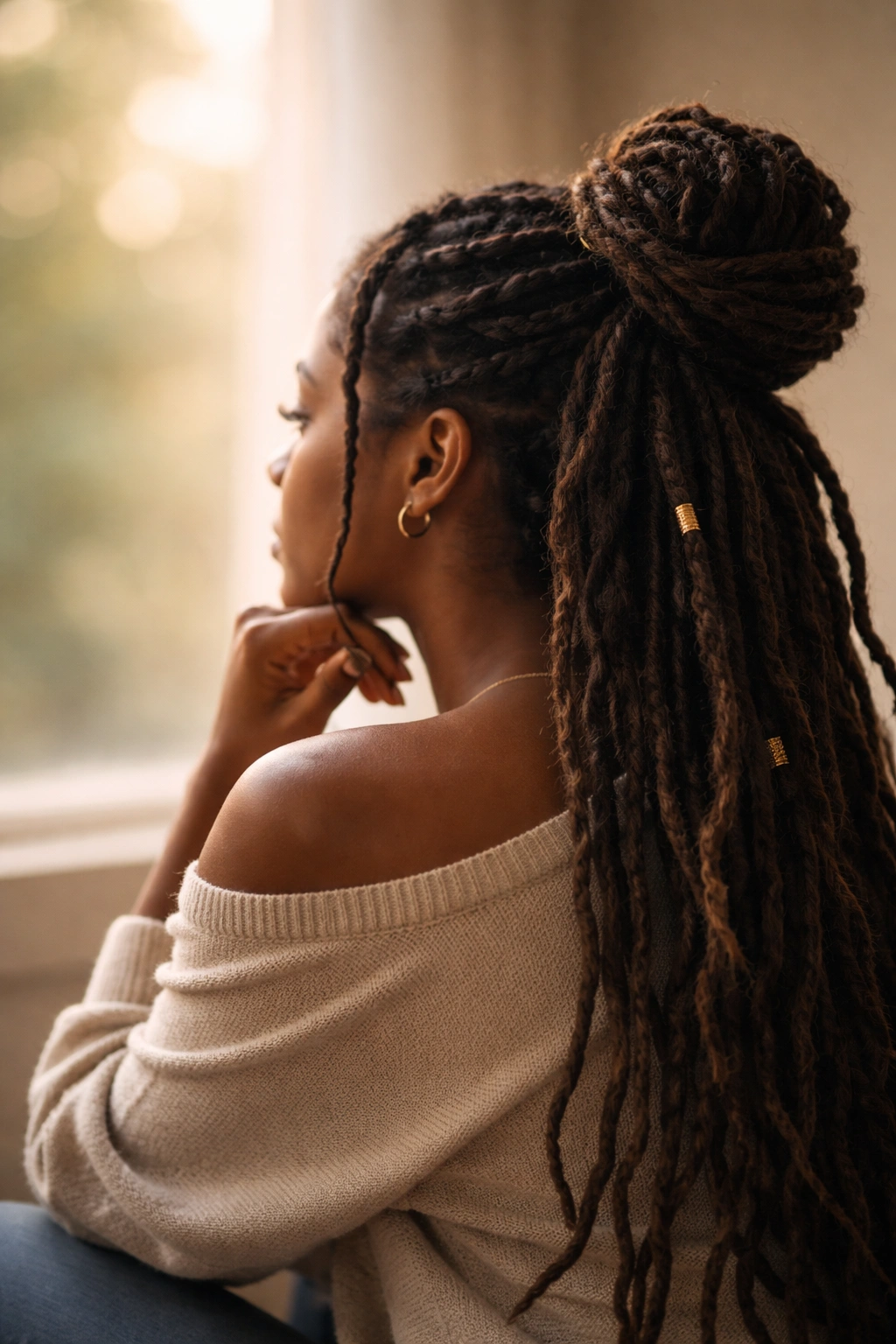
Dreadlocks offer incredible flexibility in styling, and most women dramatically underestimate the number of different looks they can create with a single set of locs. The styles that work for you depend on your specific loc length, thickness, density, and the time you want to invest in styling, but the reality is you have far more options than simply wearing them down or pulling them into a basic ponytail. A sleek high ponytail feels completely different from a wrapped-and-tucked style, which feels entirely separate from a crown braid with loose ends, yet all three styles use the exact same locs.
The best approach is to experiment with different styles until you find the ones that genuinely work with your hair and feel natural to you. Some styles might take practice to perfect, while others become your go-to because they take seconds and always look great. The beauty of locs is that you can completely refresh your look without cutting, coloring, or permanently changing your hair—you’re simply arranging what you already have in new ways.
Start with the styles that match your current length and skill level, then gradually branch out to more complex techniques as you become more comfortable styling your locs. Watch tutorials, practice on days when you don’t have anywhere to be, and don’t hesitate to combine elements from different styles to create something uniquely yours. Your locs are a blank canvas, and these fifteen styles are just the beginning of what’s possible.
