



Bangs and curly hair have a complicated relationship—one that many curl-textured folks have learned the hard way after a botched salon visit or a regretted impulse cut. But here’s the thing: bangs don’t have to be your curl’s enemy. When you choose the right style and understand how to work with your natural texture instead of against it, bangs can completely transform your look, frame your face beautifully, and add serious personality to your curls.
The key is understanding which bang styles actually work with curly hair’s structure and moisture needs. Some bang cuts fight your curl pattern relentlessly, leaving you frustrated and frizzy every morning. Others? They bloom into gorgeous, textured frames that seem made for waves and coils. The difference comes down to the cut itself—the length, the layering, the angle, and how the stylist works with your specific curl pattern rather than ignoring it.
Whether you’re thinking about taking the plunge or you’re already rocking bangs and want to switch things up, the right style can be genuinely transformative. Curly bangs catch light differently, create dimension naturally, and give you a whole new way to express yourself. Let’s explore eighteen beautiful bang styles that actually look incredible on curly hair—and more importantly, how to wear them confidently.
1. Micro Bangs for Bold Texture
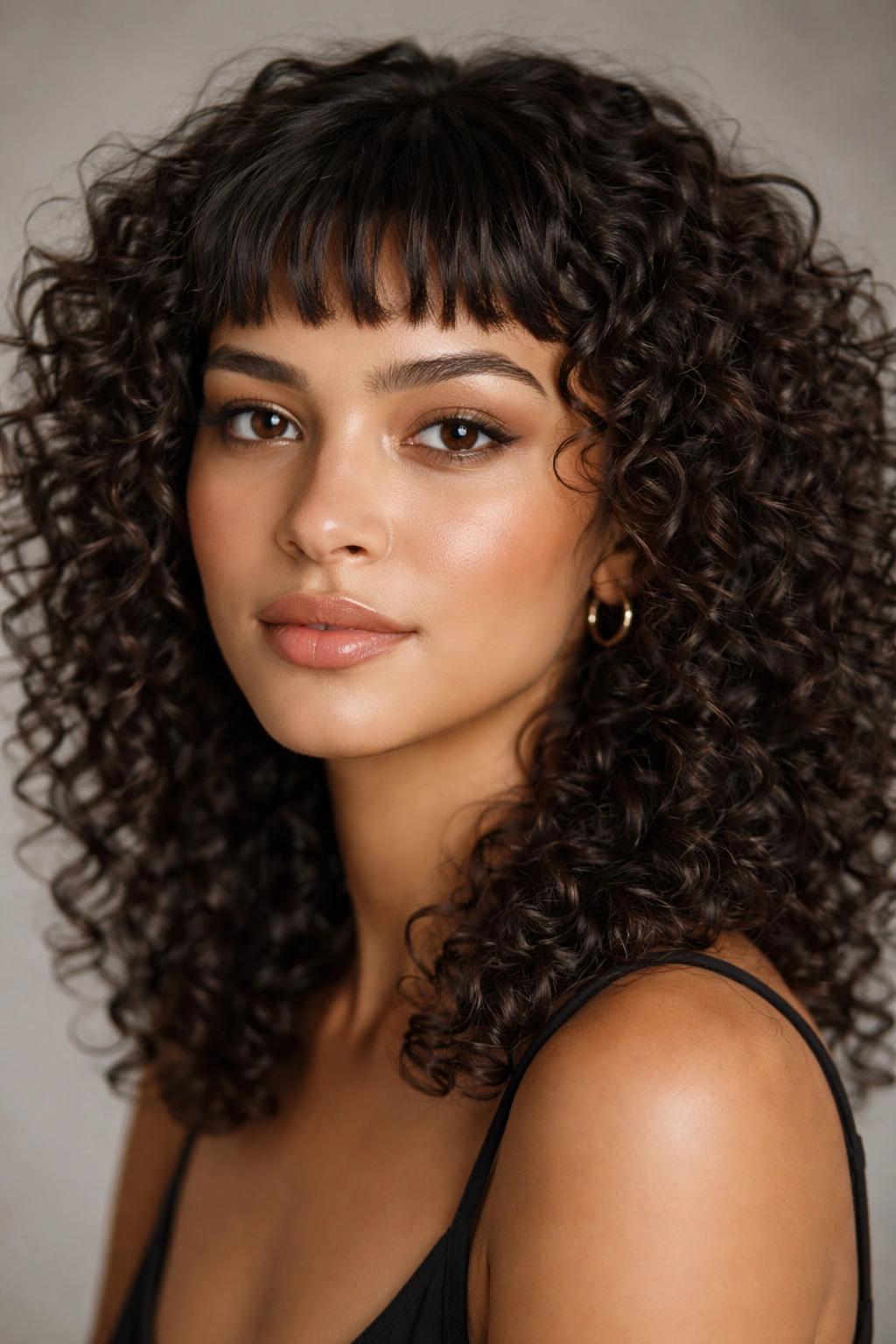
Micro bangs sit just above the eyebrows and hit that sweet spot of “statement-making without being unmanageable” on most curly textures. They’re short enough to showcase your face and cheekbones, but long enough that they don’t require constant babying. The magic here is that the brevity actually works for curls rather than against them—your curls have less distance to travel, so they tend to hold their shape better without as much stretching.
Why Micro Bangs Work Beautifully on Curls
The shorter length means less weight pulling your curls down, which helps them spring back into their natural pattern. Micro bangs also work with the natural texture rather than creating a flat, blunt line that fights curl. When curls are this short, they create natural texture and movement that feels intentional and dimensional rather than messy. The look reads as deliberately textured, not accidental or uncontrolled.
How to Wear and Style Them
- Pair with longer, layered lengths throughout to create contrast and movement
- Blow-dry with a diffuser attachment for bouncy, defined curls, or air-dry for a more relaxed texture
- Use a light curl cream or gel to define individual curl patterns rather than smooth them down
- Refresh mid-week with a spray bottle and your favorite leave-in conditioner to reactivate the curl
- Avoid heavy serums or oils that can weigh micro bangs down and make them stick to your forehead
Pro tip: Micro bangs actually photograph beautifully because they’re short enough to frame your eyes without casting shadows, which is why they’ve become so popular on social media.
2. Curtain Bangs for Soft Framing
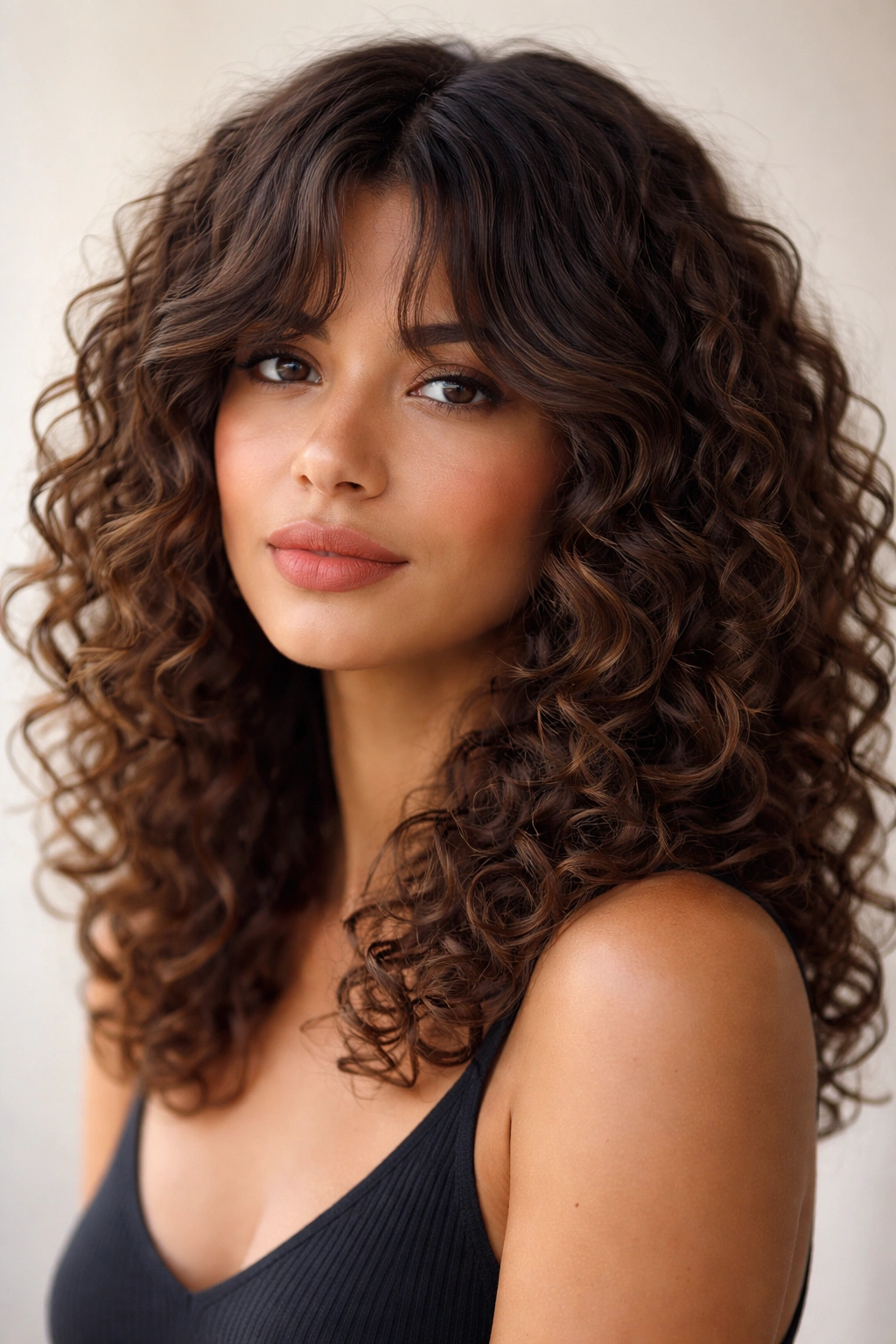
Curtain bangs—those pieces that part in the middle and sweep toward the sides—are arguably the most forgiving bang style for curly hair. They’re long enough to move, they don’t require perfect placement because the parting is natural and flexible, and they work with just about every curl pattern from loose waves to tight coils. The asymmetry actually works with curly hair’s tendency toward movement, creating a soft, lived-in frame rather than a structured line.
The Science Behind Curtain Bang Success
Curtain bangs work because they don’t fight the curl—they encourage it. The length allows your curl to form its natural shape without tension pulling it straight. The middle part is built into the styling, so your curls can fall where they naturally want to go. There’s no battle between the cut and your hair’s intention, which is why curtain bangs feel effortlessly blended into a curly cut rather than sitting on top of it like a separate element.
Styling Tips for Maximum Impact
- Let them air-dry whenever possible to maintain your curl’s natural bounce and shape
- Use a curl-defining cream or gel on damp bangs, scrunching upward to encourage your curl pattern
- If you blow-dry, use a diffuser and try to direct the curls away from your face rather than smoothing them flat
- Consider tucking one side behind your ear for variation, which works beautifully with the natural parting
- Refresh with a light mist of water and product between washes rather than rewashing
3. Wispy Bangs for Effortless Movement
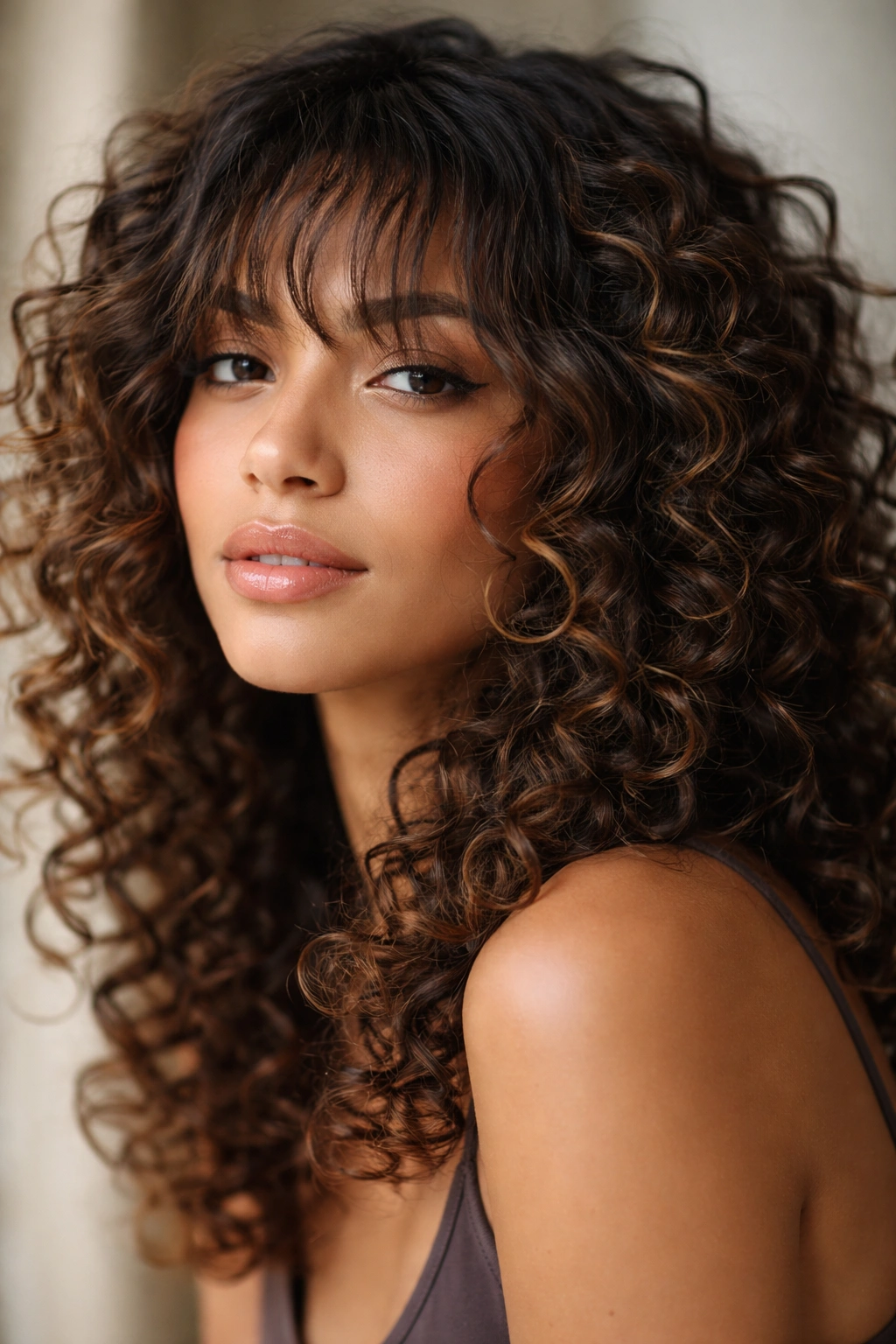
Wispy bangs are individual strands or thin sections of hair that create texture and movement rather than a solid block of bangs. They’re literally designed to move independently, which makes them practically built for curly hair. Wispy bangs work across all curl types and actually look more intentional and beautiful on textured hair because the natural movement feels purposeful rather than requiring perfect styling every single day.
What Makes Wispy Bangs Ideal for Curls
The individual pieces mean that even if each hair is doing its own thing (which is basically curly hair’s whole thing), the overall effect reads as dimensional and textured rather than sloppy. Wispy bangs don’t depend on being perfectly smooth or perfectly placed—they depend on movement and texture, which are curly hair’s natural superpowers. You’re not fighting your curl pattern; you’re letting it showcase the artistry of the cut itself.
Maintenance and Styling
- Use a lightweight, curl-defining mousse rather than heavy creams that can clump wispy pieces together
- Diffuse-dry on low heat for separation, or air-dry and finger-comb gently to enhance the texture
- Refresh between washes with water and a tiny bit of gel spritzed into your hands
- Avoid brushing through wispy bangs when dry, which can create frizz and break up the intentional texture
- Consider a light dry shampoo at the roots if wisps start to feel limp mid-week
Worth knowing: Wispy bangs need a skilled curl-savvy stylist who understands how to cut individual pieces rather than creating blunt lines. This is one style where the cut quality really matters.
4. Full Blunt Bangs With Texture and Movement
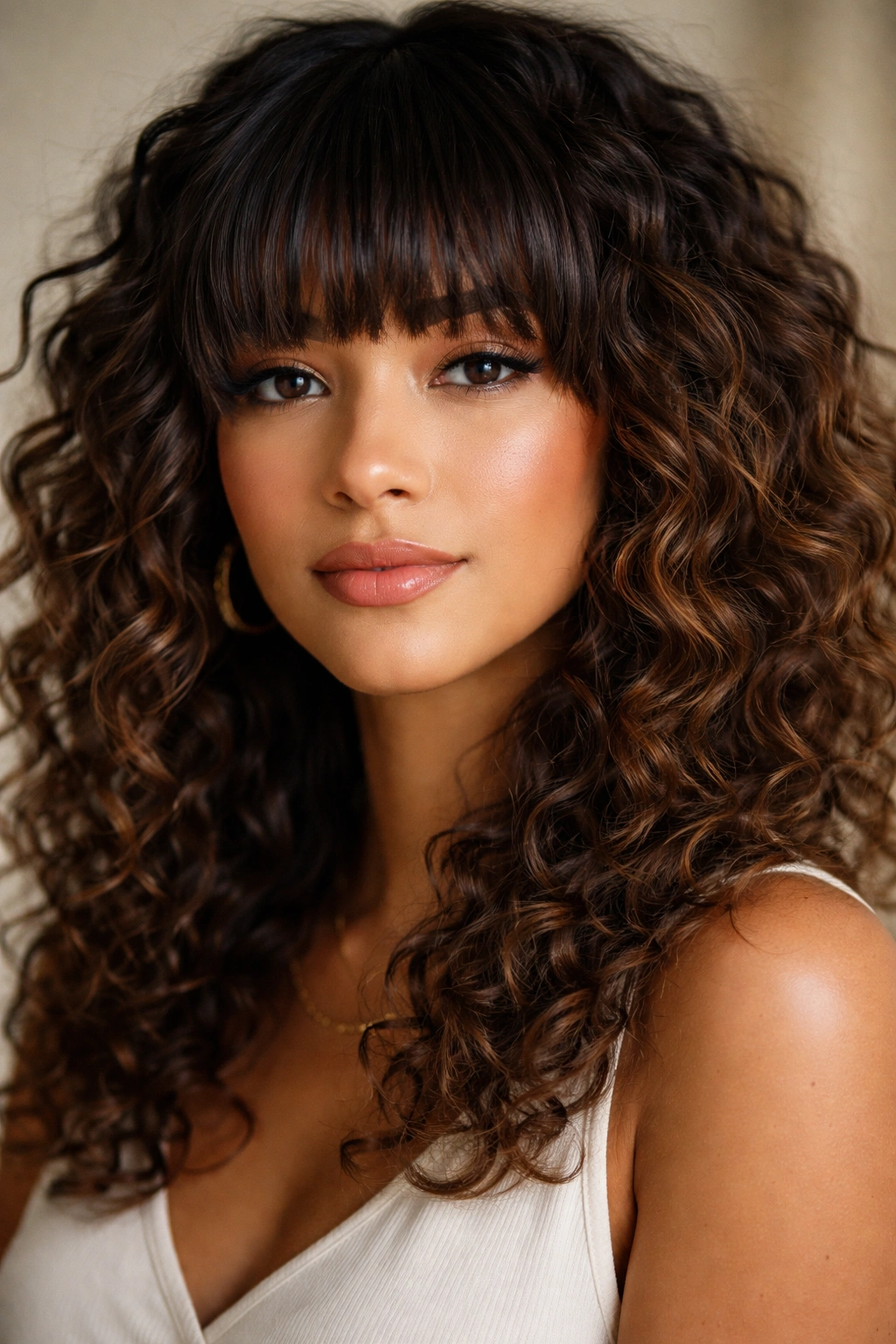
Full blunt bangs—a solid line across the forehead—can work beautifully on curly hair, but only if your stylist cuts them with movement and texture built in. The key is asking for choppy layers, texture within the bang itself, or a slightly shorter blunt line that allows curls to reach and move. A truly blunt, smooth line across curly hair usually reads as fighting the texture rather than enhancing it, but blunt bangs with intentional choppiness or movement create visual interest and work with your curl.
Why Textured Blunt Bangs Are Different
The difference between blunt bangs that fight curls and blunt bangs that celebrate them is texture within the cut itself. A skilled stylist will layer the bang with choppy interior layers or cut the ends with slight angles that create movement rather than a dead-flat line. These textured blunt bangs still feel solid and defined from a distance, but up close they have life and dimension that curly hair naturally possesses.
Achieving the Look and Maintaining It
- Ask your stylist specifically for choppy texture or layers within the bang line itself
- Blow-dry with a round brush and diffuser to create wave and movement, or air-dry for a relaxed texture
- Use a definitive curl cream or gel to shape individual curls within the bang area
- Plan for trims every 4-6 weeks, as texture in bangs becomes less defined as hair grows
- Avoid straightening blunt bangs, which defeats the entire purpose of having texture-based movement
5. Side-Swept Bangs for Versatility
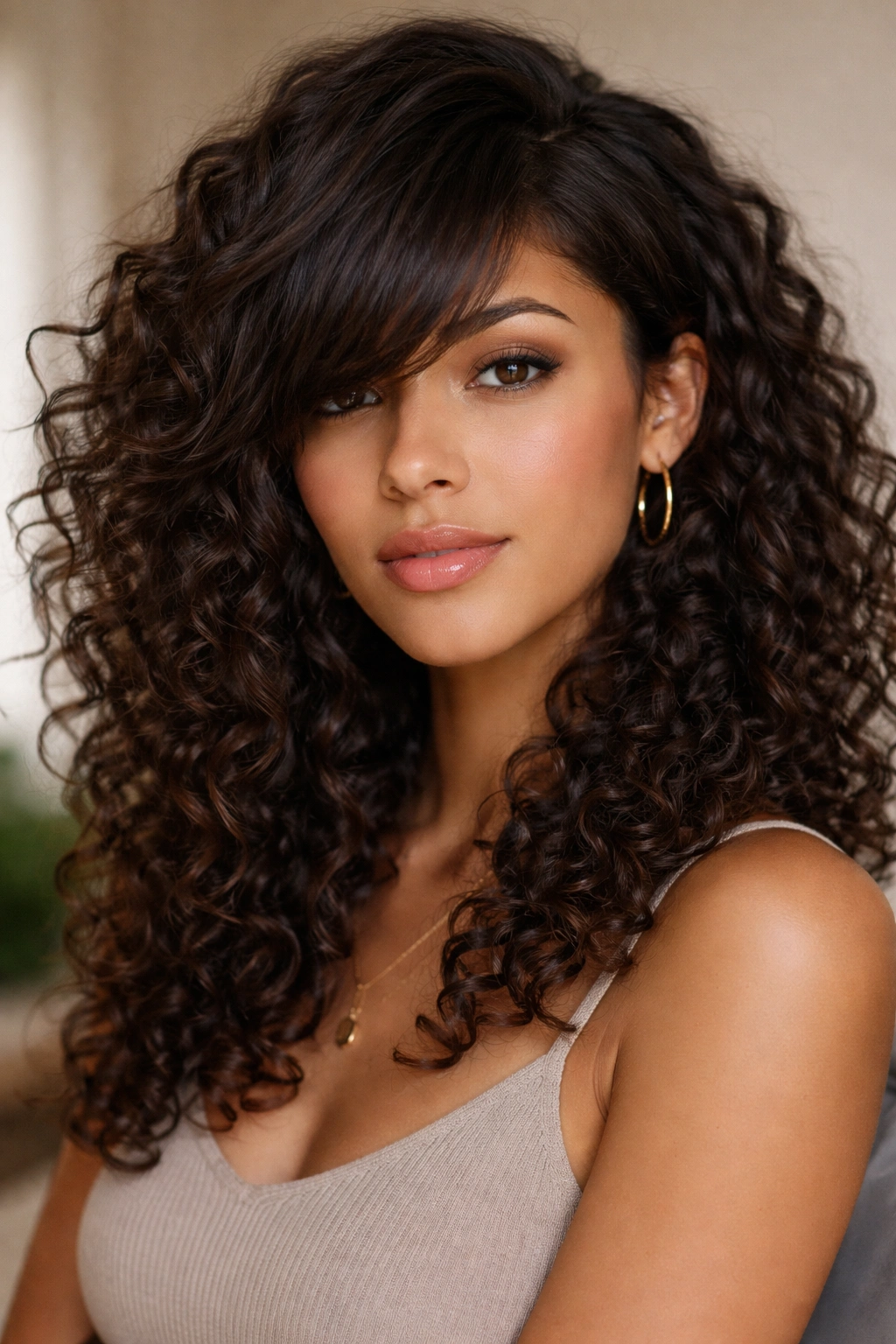
Side-swept bangs—longer pieces that sweep across to one side—offer incredible versatility because you can adjust how you wear them based on your mood, your curl, and the day’s humidity. Some days they can look like curtain bangs if you part them in the middle; other days they’re fully swept to one side creating an asymmetrical frame. This flexibility makes them perfect for curly hair, where texture and moisture levels naturally shift day to day.
The Styling Advantage of Asymmetry
Side-swept bangs work beautifully because asymmetry is inherently forgiving. If one curl springs higher than another, if one piece has more texture than another, it actually reads as intentional rather than messy. The whole point of side-swept is movement and dimension, which is exactly what curly hair naturally provides. You’re not trying to create a perfectly symmetric line; you’re playing with movement and texture, which curls do automatically.
How to Wear Them
- Blow-dry the swept side with a diffuser, encouraging curls away from your face
- Use a curl cream applied to damp bangs to set the intended direction and enhance texture
- Refresh by gently twisting the side-swept piece and pinning it back or tucking it behind your ear
- Try tucking both sides back occasionally for a different look, which also keeps the hair from your eyes on humid days
- Experiment with which side feels most flattering to your face shape—the versatility lets you adjust
Pro tip: If you have one side of your hair that curls tighter than the other, side-swept bangs let you leverage that natural asymmetry rather than fighting it.
6. Layered Bangs for Dynamic Texture
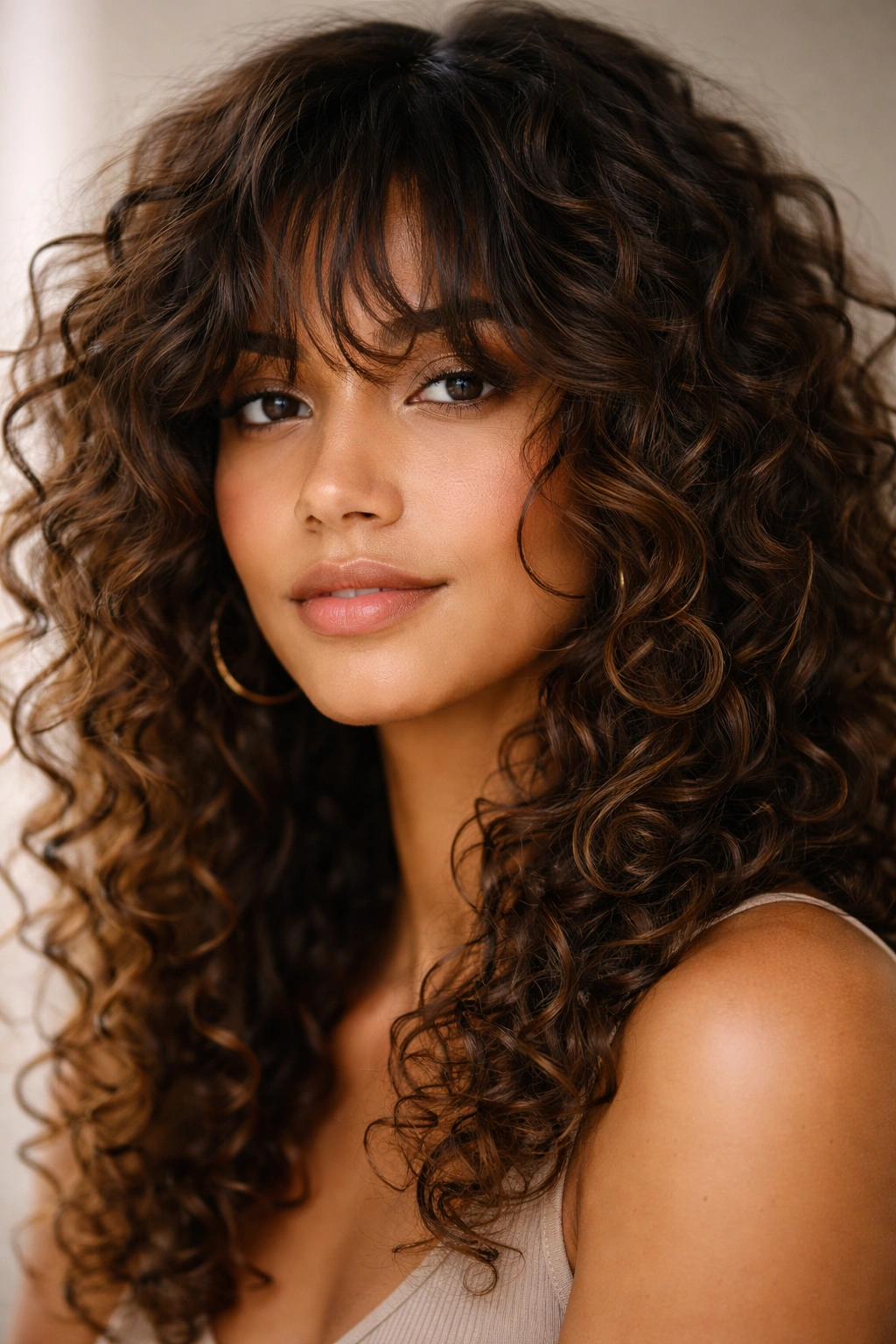
Layered bangs—multiple lengths within the bang area, creating peaks and valleys—are designed specifically for movement and texture. They’re practically custom-made for curly hair because the layers work with your curl’s tendency to spring upward and create dimension. Instead of one blunt line hitting at the same level, layered bangs have high points and lower points that create visual interest and allow each curl to find its own level.
How Layering Changes Everything for Curls
Layers within bangs mean that your curls aren’t all fighting against the same line length. Instead, some curls reach their natural level sooner, while others hang slightly longer. The result is that the bang area has inherent texture and dimension without requiring you to do anything special—it’s literally built into the cut. Layered bangs also don’t show grown-out roots as obviously as a solid line does, which is a practical bonus for anyone who doesn’t want super frequent trims.
Styling Layered Bangs
- Diffuse-dry for definition that plays up each layer’s individual movement
- Use a gel or cream applied to individual curls to ensure each layer is defined
- Avoid brushing when dry, which can clump layers together and eliminate the dimensional effect
- Let the natural curl dry time determine how the layers sit—they’ll find their own level if you don’t force them
- Refresh by lightly scrunching damp bangs with product rather than combing through them
7. Textured and Choppy Bangs for Artistic Flair
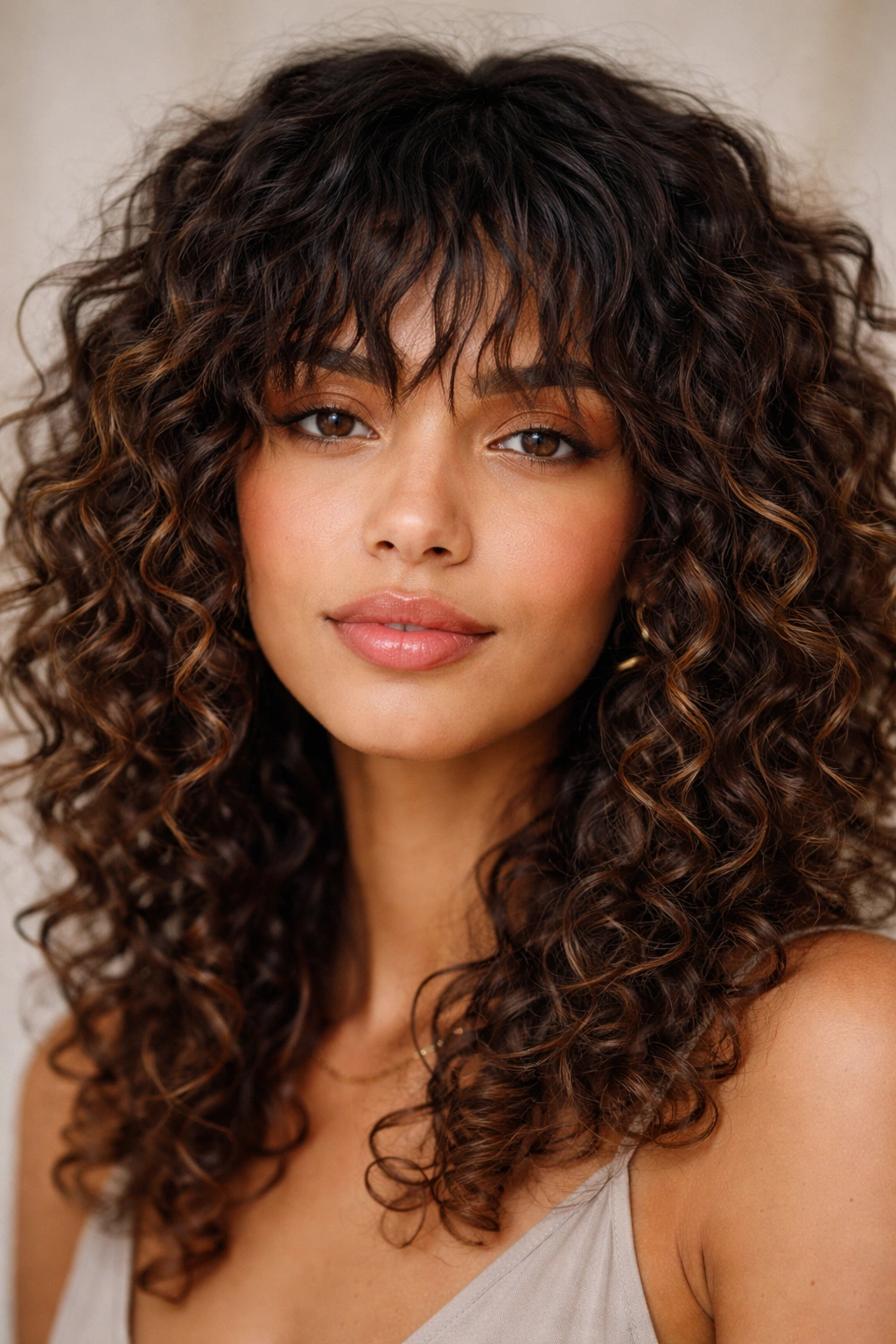
Choppy bangs go beyond just layers—they’re deliberately cut with varied lengths, multiple angles, and intentional texture throughout the entire bang section. When done well, choppy bangs on curly hair look intentional and artistic rather than accidental. The chop actually works with curly hair’s natural movement, creating a piece-y, dimensional look that celebrates texture instead of fighting it.
Why Choppy Works on Curly More Than Other Textures
Straight or wavy hair can look unintentionally messy if bangs are too choppy. But curly hair’s natural texture and movement makes chop feel intentional. Choppy bangs on curls read as deliberately artistic rather than sloppy because the curls have inherent shape and definition. You’re using the curl pattern itself as part of the design rather than adding texture that isn’t naturally there.
Maintaining Choppy Bangs
- Book trims every 4-6 weeks to keep the chop defined, as layers can grow together and lose their impact
- Diffuse-dry to enhance each chop and texture within the bang area
- Use lightweight products that won’t clump the choppy pieces together
- Finger-comb rather than brush to preserve the intentional separation between pieces
- Consider a curl cream or mousse over gel for a softer, more artistic effect that lets the chop breathe
8. French Bangs for Classic Elegance
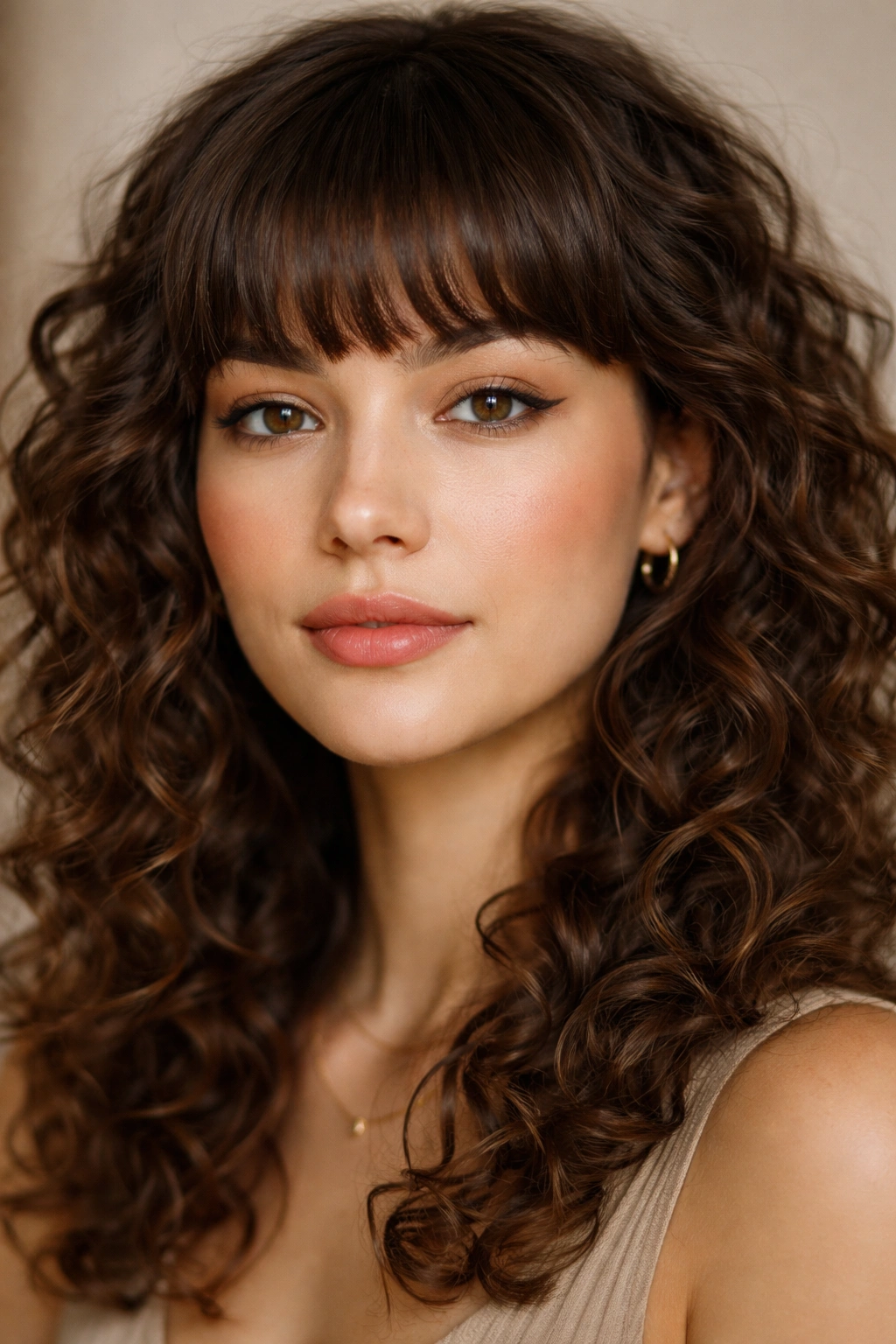
French bangs are short, thick, and blunt—sitting just above the eyebrows with a fuller, denser appearance than micro bangs. They’re classically chic and actually work beautifully on curly hair when the cut includes subtle texture. The thickness means there’s enough hair to support the curl without looking thin or stringy. French bangs create a polished frame that feels intentional and structured, which contrasts beautifully with looser or wilder curls throughout the rest of your hair.
The French Bang Aesthetic on Curly Hair
French bangs represent a return to polish and intention. They’re not wispy or soft—they’re a statement. When combined with curly hair, they create an interesting tension: the structured, thick bang line paired with the natural movement and texture of your curls. This contrast actually reads as very fashion-forward and intentional, not boring or restrictive at all.
Styling French Bangs
- Blow-dry with a round brush and low heat to create subtle wave rather than flat straightness
- Use a curl cream to define texture within the bang, preventing them from looking too heavy
- Keep the rest of your hair textured and bouncy so the thickness of the bangs feels intentional rather than heavy
- Plan for trims every 3-4 weeks as the blunt line becomes less defined with growth
- Avoid heavy serums or oils that can make the dense bang area look greasy or flat
Worth knowing: French bangs require hair that can support thickness and density. If you have very fine curls, a stylist might recommend a slightly longer version or less-blunt texture to avoid the bangs looking overly heavy.
9. Piece-y Bangs for Textured Separation
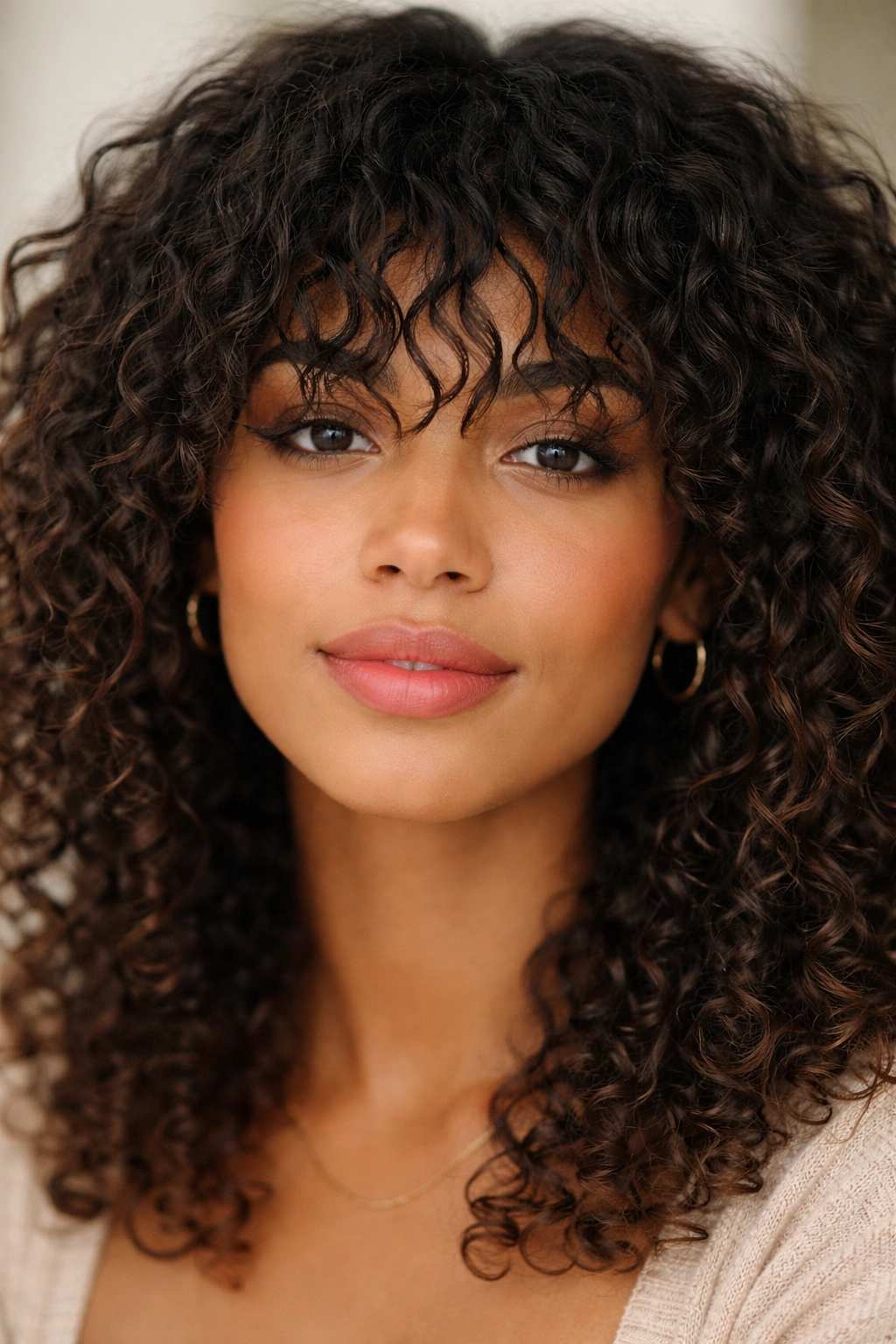
Piece-y bangs—strands that are cut at different angles and lengths, creating individual pieces that sit apart from each other—combine some of the best elements of wispy and choppy bangs. Each piece has its own shape and direction, creating a bangstyle that looks dimensional and intentional rather than like a uniform line. Piece-y bangs work beautifully on curly hair because the individual pieces can each follow their own curl pattern.
What Makes Piece-y Bangs Perfect for Curls
Piece-y bangs literally celebrate individual movement. Your left curl and your right curl don’t have to match perfectly because the whole aesthetic is built on different pieces doing different things. This makes piece-y bangs one of the most forgiving styles for curly hair—you’re not trying to make all your bangs sit exactly the same way. Instead, you’re letting each piece follow its natural curl while still creating a cohesive, intentional look.
Working with Piece-y Bangs
- Define individual pieces with a curl cream, scrunching each piece gently into your curl pattern
- Diffuse-dry to encourage each piece to find its own curve and shape
- Refresh between washes by finger-combing and re-scrunching with product rather than rewashing
- Consider a light-hold gel that defines without stiffening, which lets pieces move naturally
- Avoid brushing when dry, which destroys the intentional piece-y separation
10. Bixie Bangs—The Hybrid Haircut
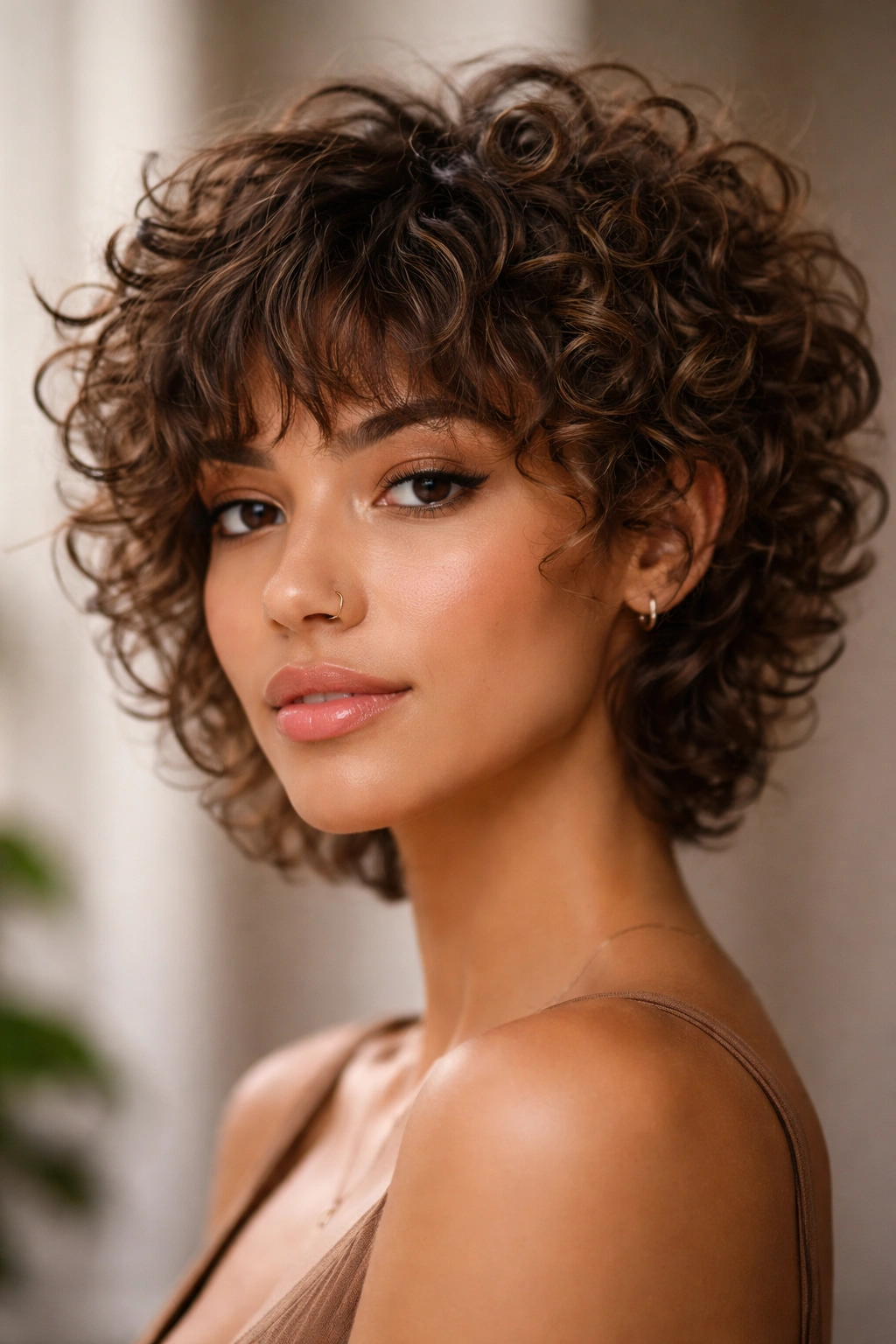
Bixie bangs blend the best of a shaggy pixie cut with longer layers and textured bangs. They’re not quite a traditional pixie’s structure, but they have that textured, layered, piece-y quality that works beautifully on curly hair. Bixie bangs are bold—they’re a commitment—but they create incredible movement and texture that celebrates curly hair rather than taming it. If you want a real transformation that showcases your curl’s personality, bixie bangs deliver it.
The Bixie’s Appeal for Curly Hair
Bixie cuts are designed for texture and movement. The whole cut celebrates your hair doing its own thing rather than fighting it. Lots of layers mean lots of texture. The shorter bang section means they don’t require constant styling. The overall effect is bold, modern, and undeniably fashionable—it’s a look that works best on people willing to embrace their hair’s natural texture rather than constantly fighting it.
Embracing the Bixie Fully
- Work with a stylist who specializes in textured cuts—bixies are specifically designed for curly and textured hair
- Air-dry whenever possible to let the cut showcase its natural movement and texture
- Use a lightweight curl cream or mousse applied to damp hair to enhance the overall shape
- Refresh between washes with water and a tiny bit of product—the cut should have built-in texture
- Plan for touch-ups every 6-8 weeks to keep the layers defined and the overall shape sharp
Pro tip: Bixie cuts look particularly stunning on people with tight curls or coils because the layering creates incredible bounce and movement.
11. Feathered Bangs for Soft Dimension
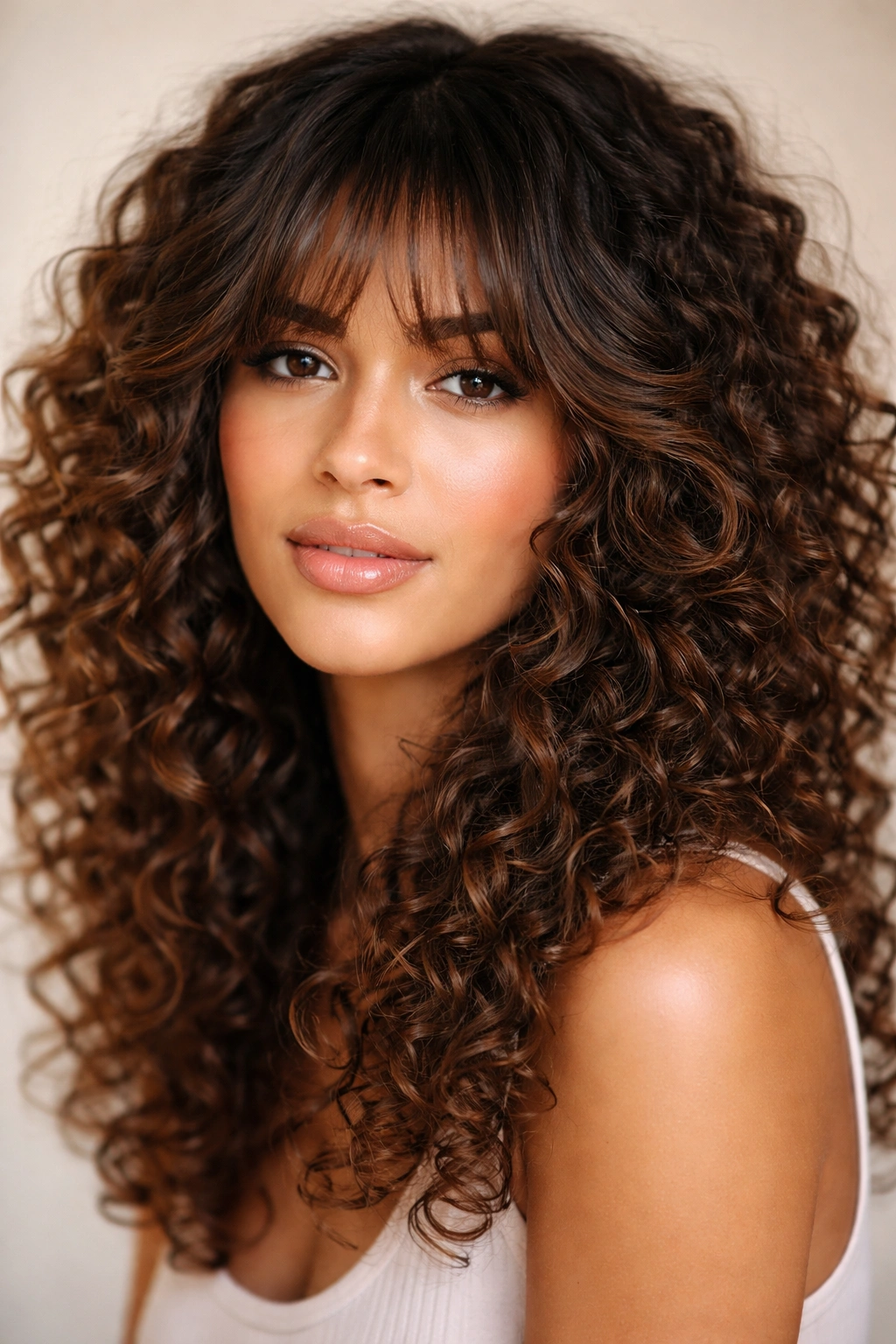
Feathered bangs are cut at angles that create a soft, feather-like appearance—shorter at the sides and gradually longer toward the center, or with varied lengths throughout that create a flowing, soft look. The feathering is more delicate than choppy texture, creating dimension without the bold artistic statement. Feathered bangs on curly hair create an incredibly soft frame that works beautifully across all curl types and face shapes.
Why Feathering Complements Curly Hair
Feathering is all about softness and movement. The angled cuts encourage your curls to fall naturally and frame your face in the softest possible way. Feathered bangs don’t create hard lines or require precise placement—they work with your curl’s natural flow. This makes them ideal for curly hair that wants dimension and intentionality without the commitment of a bolder style.
Maintaining Feathered Bangs
- Diffuse-dry to encourage soft waves and movement within the feathered sections
- Use a curl cream that defines without being too heavy—you want soft curls, not crunchy texture
- Refresh with water and a light spritz of product rather than rewashing
- Get trims every 6-8 weeks to keep the feathering distinct—as it grows, layers can become less obvious
- Avoid heavy oils or serums that can flatten the feathered texture
12. Asymmetrical Bangs for Bold Personality
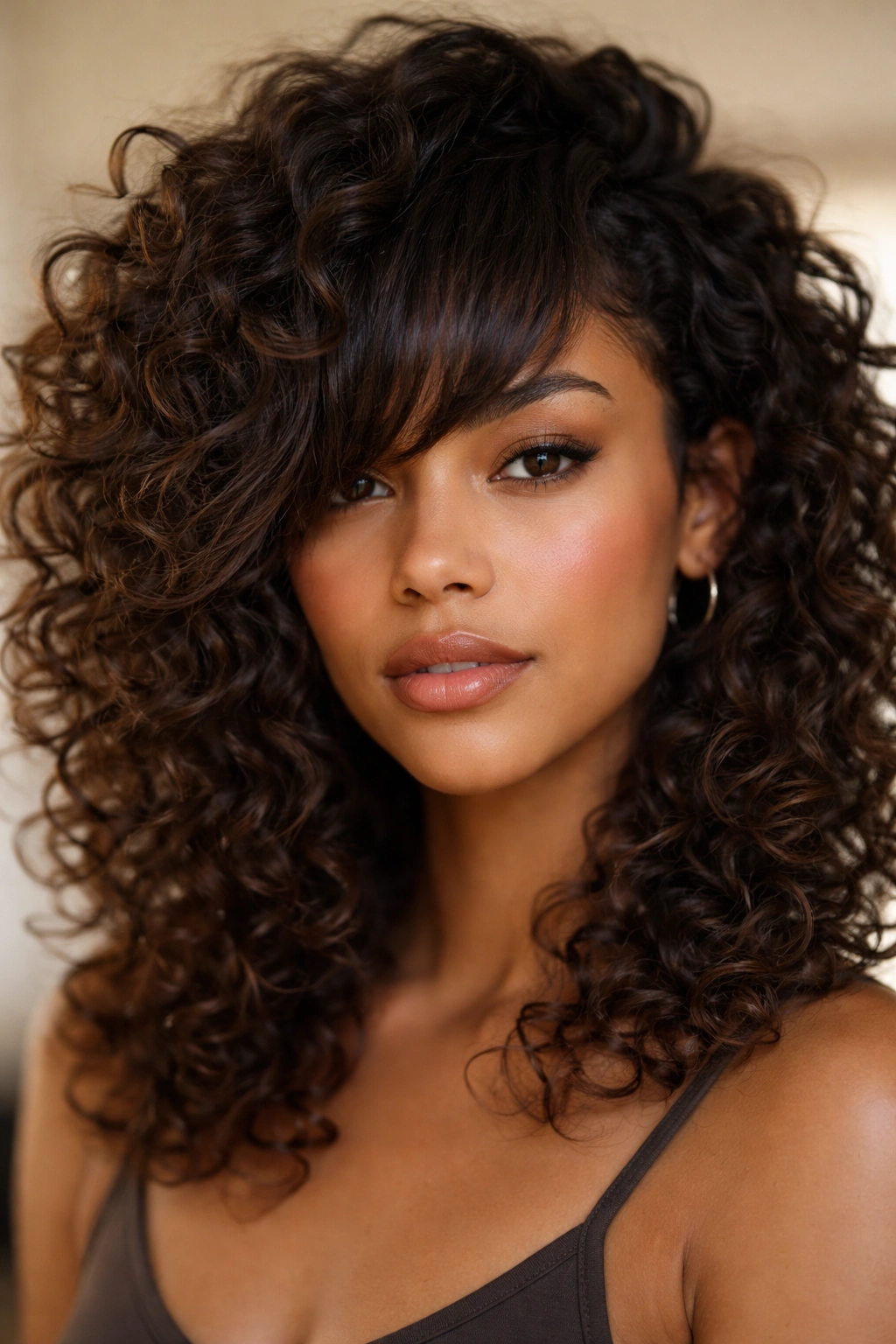
Asymmetrical bangs—where one side is noticeably longer than the other—make a serious statement. One side might hit at your cheekbone while the other is significantly shorter, creating an intentionally unbalanced look that’s bold and modern. Asymmetrical bangs work beautifully on curly hair because the asymmetry actually plays with curl’s natural tendency toward movement and variation rather than against it.
The Confidence Behind Asymmetrical Bangs
This style isn’t for everyone—it’s genuinely bold and requires confidence. But on someone who loves it, asymmetrical bangs feel incredibly powerful and fashion-forward. They draw attention to your face asymmetrically, which can actually flatter your features differently than a symmetric cut. The asymmetry on curly hair reads as intentional and artistic rather than messy, especially if the cut has texture and shape built in.
Styling Asymmetrical Bangs
- Define both sides clearly, even if they’re different lengths—the definition is what makes the asymmetry intentional
- Diffuse-dry to encourage both sides to curl naturally without forcing symmetry
- Consider tucking the longer side behind your ear occasionally to show different angles of the cut
- Use the same products on both sides to ensure they both have the texture and definition the style requires
- Work with a confident stylist who understands how to make bold cuts look intentional rather than accidental
13. Halo Bangs for Face-Framing Softness
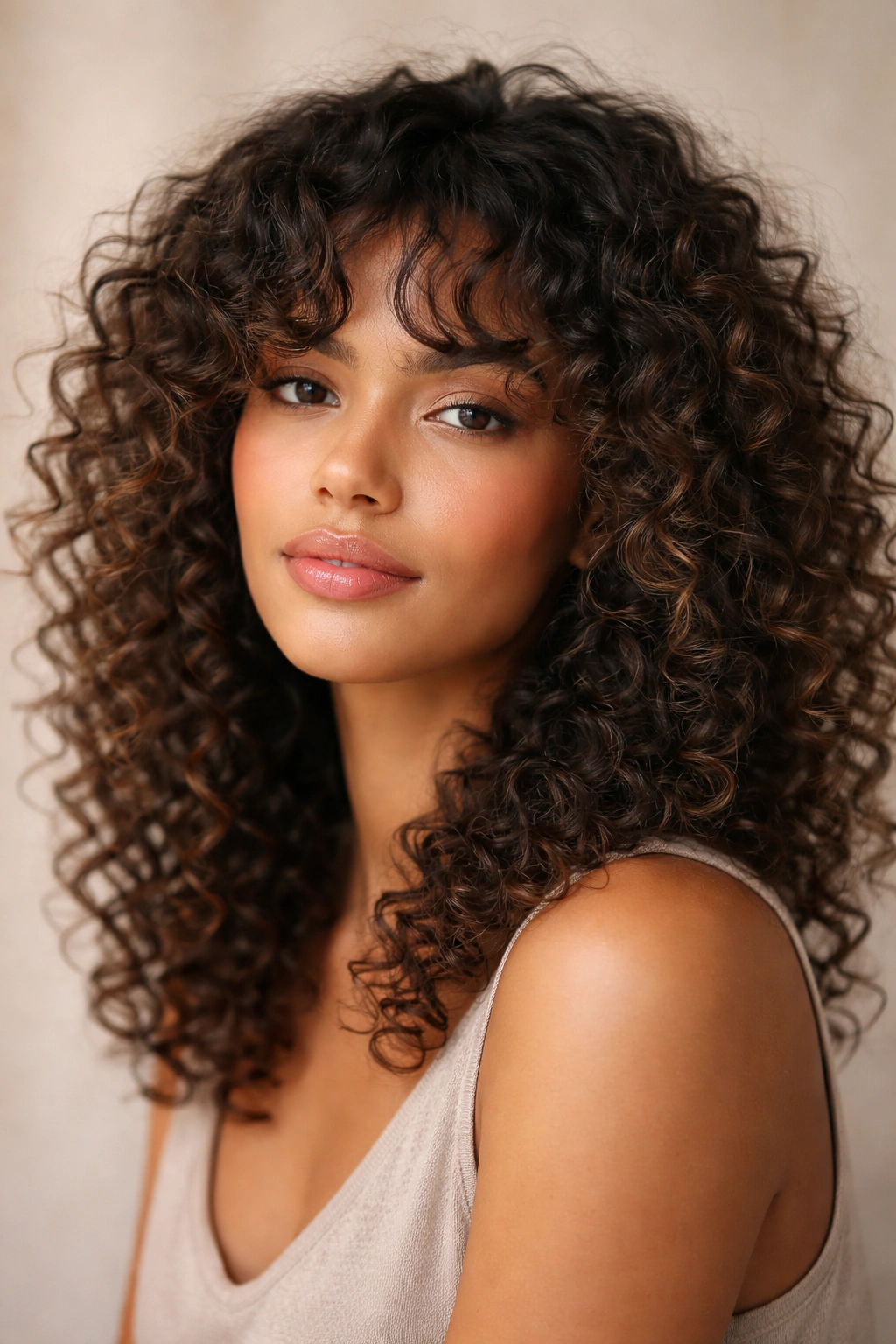
Halo bangs are longer, softer pieces that frame your face in a curved, almost halo-like shape rather than sitting directly across your forehead. They’re swept back or to the sides while remaining part of your bang layer, creating a dreamy, soft frame. This style works beautifully on curly hair because the curve of the halo actually complements the natural curves and movement of your curls.
The Gentle Impact of Halo Bangs
Halo bangs are less about statement and more about soft, romantic framing. They work beautifully if you want bang styling without a harsh line across your forehead. The longer length means they blend seamlessly with your curls, and the softer placement means they work with your hair’s natural movement rather than against it. You get the benefit of bangs—face framing and visual interest—without the commitment of a shorter cut.
Wearing Halo Bangs
- Style them similar to curtain bangs, sweeping to the sides rather than staying centered
- Use a curl cream to define the halo pieces individually so they’re visible against your other curls
- Tuck them behind your ears occasionally for a completely different look
- Air-dry for the softest, most romantic appearance
- Refresh by twisting the halo pieces gently and reactivating curls with water and product
14. Long Layered Bangs for Seamless Blending
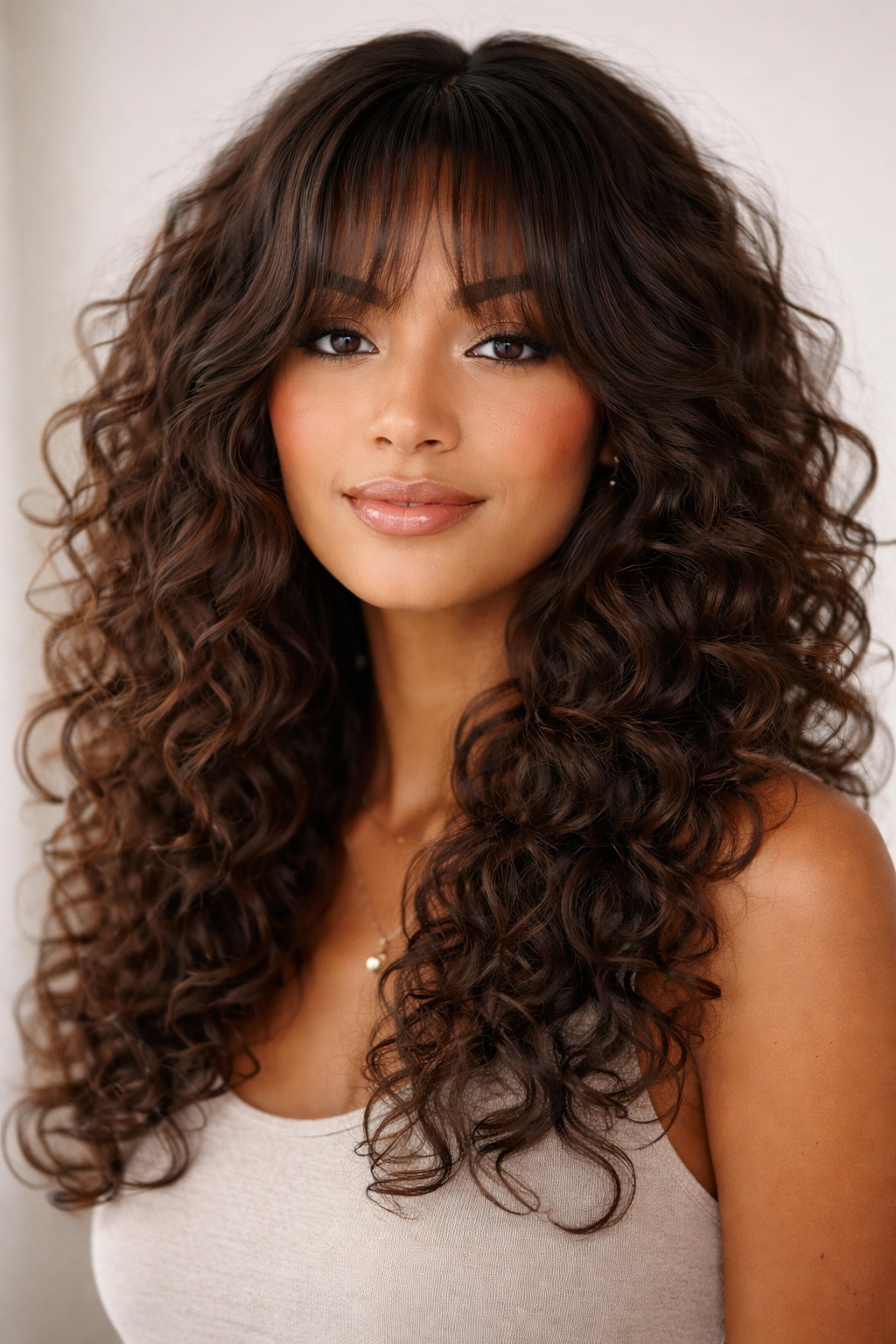
Long layered bangs extend longer than traditional bangs—sometimes to chin-length or beyond—creating multiple layers within that longer section. Rather than sitting bluntly across your forehead, long layered bangs gradually blend into your face-framing layers. This style is incredibly forgiving and works beautifully on curly hair because the longer length and multiple layers mean they feel like a natural part of your cut rather than a separate element.
Why Long Layers Feel Integrated
Long layered bangs blur the line between bangs and regular layers, which actually works perfectly for curly hair. Your curls can move freely within the longer length, and the layers mean there’s texture built throughout rather than a blunt line. The overall effect is that your bangs feel like an intentional part of your cut rather than sitting on top of your hair looking disconnected.
Styling Long Layered Bangs
- Diffuse-dry to encourage movement and texture throughout all the layers
- Use a curl cream or gel to define individual strands within the long layered section
- These bangs blend beautifully with wet styling techniques like plopping or praying hands
- Refresh between washes by spritzing with water and scrunching product through the layers
- Get trims every 8-10 weeks to keep all the layers distinct and avoid them growing together into one length
Worth knowing: Long layered bangs require longer hair overall to work properly—they should blend smoothly into the rest of your length rather than feeling disconnected.
15. Braided Bangs—A Styling Technique
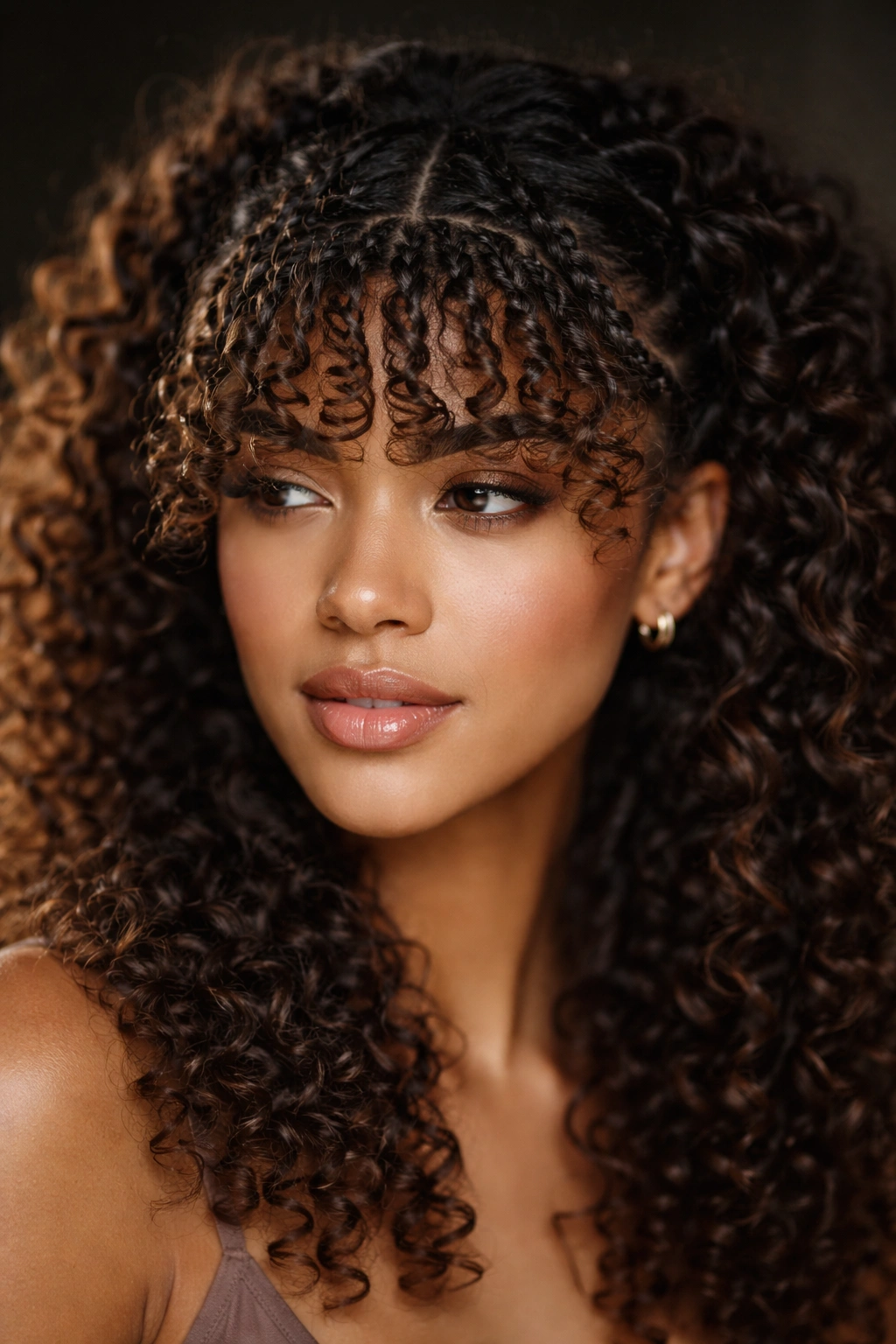
Braided bangs aren’t a cut—they’re a styling technique where you braid sections of your bang area to create texture, shape, and movement. This approach is perfect for curly hair because you can create the look of a specific bang style through styling rather than committing to a permanent cut. You might braid different sections on different days, creating different effects depending on your mood and the look you’re going for.
The Creative Freedom of Braided Styling
Braided bangs let you experiment with bang styles and effects without actually cutting your hair. A simple three-strand braid through your center bangs creates a line of texture. Twin braids create a fuller, more intentional effect. French braids create softness and movement. You can do all of this with your existing hair length, experimenting until you find what you love before committing to an actual cut.
Techniques for Braided Bangs
- Start with damp hair and a light curl cream to give the braid something to grip and define
- Try a center braid for a focal point down the middle of your face
- Try twin braids for a fuller, more statement-making effect
- Try a small French braid along one side for a softer, more romantic look
- Leave the braids in for an hour or so after styling to set texture, then gently undo them for crimped, textured bangs
16. Half-Up Bangs—Bang Styling Without the Commitment
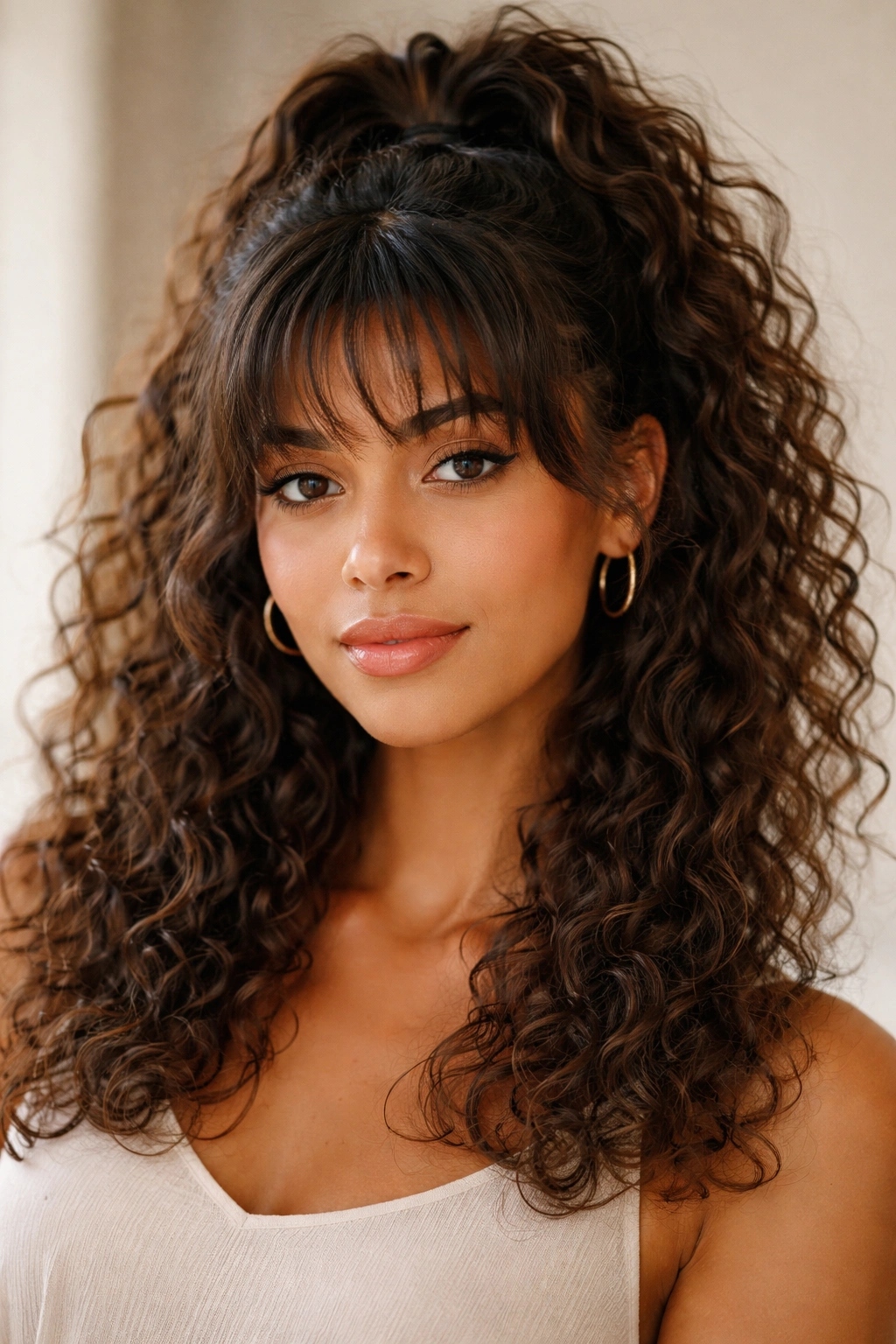
Half-up bangs are a styling approach where you pull up the top portion of your hair while leaving the bottom portion (including your bang area) down and textured. This creates a soft, face-framing effect without actually cutting bangs or committing to a bang style. It’s perfect for curly-haired folks who want to play with bang aesthetics without the permanent decision.
The Practical Appeal of Half-Up Styling
Half-up bangs give you the visual frame and face-focusing quality of bangs without the daily maintenance. On a day when your curls aren’t cooperating, you can pull up the top section and style just the bottom half. On a day when your curls are looking incredible, you can let everything down. This flexibility is especially valuable for curly hair, where texture and moisture levels vary day to day.
Creating Half-Up Bangs
- Clip the top half of your hair away, leaving the face-framing pieces and bottom layers down
- Define your banglike pieces with curl cream, scrunching individual curls
- Diffuse-dry or air-dry the down section while keeping the top section clipped
- Release the top section and style it however you normally would—or leave it clipped for a different effect
- Add a small clip or ribbon around where you clipped for a finished, intentional look rather than a casual updo
17. Scalloped Bangs for Artistic Edge
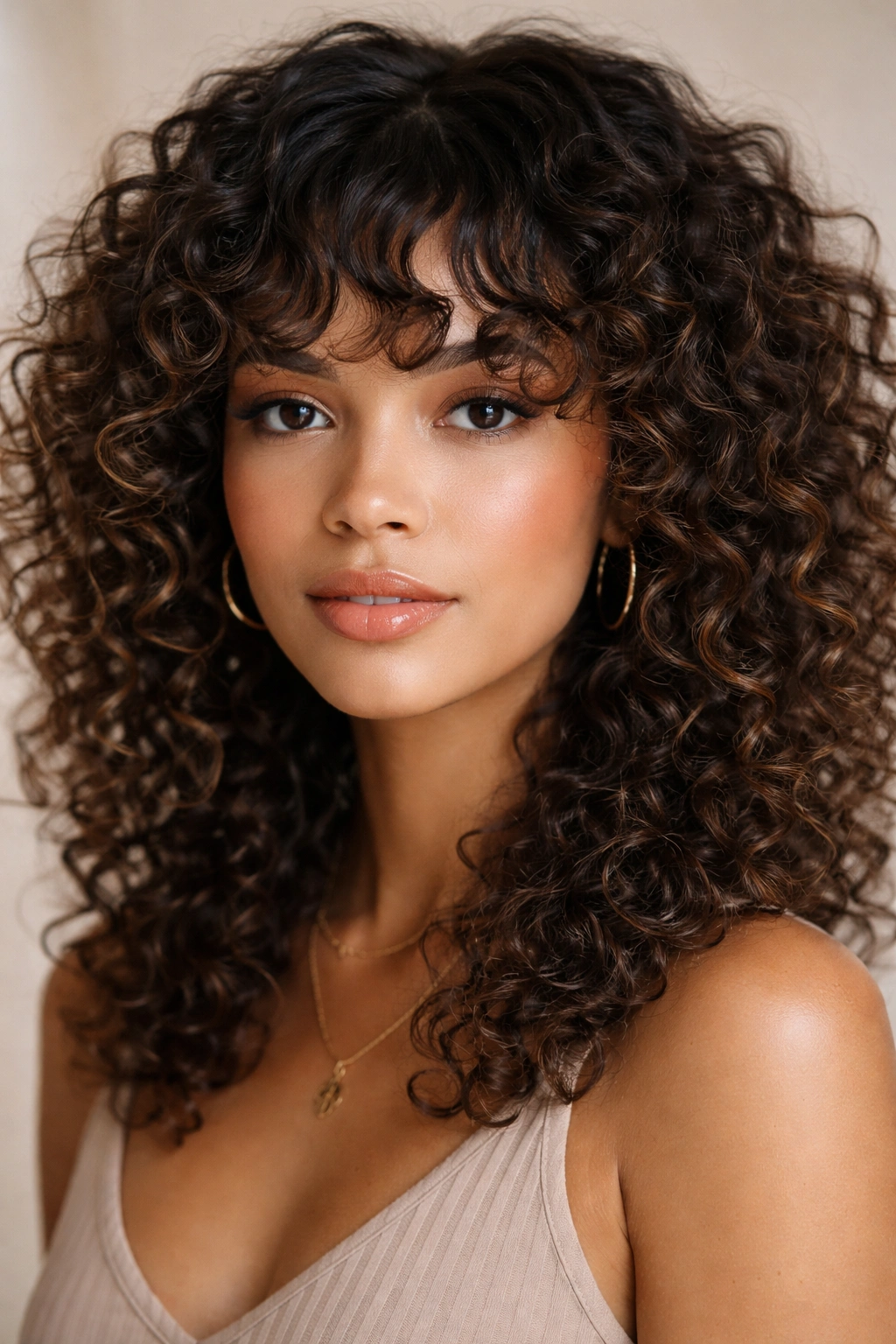
Scalloped bangs feature a curved, wavy edge rather than a straight or angular one—imagine gentle curves across your forehead instead of a line. This cut combines the structure of bangs with soft, artistic movement. On curly hair, scalloped bangs create an incredibly interesting texture effect because the natural curl combines with the curved cut to create multiple layers of visual interest.
The Unique Visual Effect of Scalloping
Scalloped bangs create an artistic, almost decorative edge to your bang line. The curves mean your bangs have multiple lengths and points, similar to choppy bangs but with a softer, more intentional curve rather than sharp angles. On curly hair, the natural texture of your curls combined with the scalloped cut creates a visual effect that reads as incredibly intentional and fashion-forward.
Styling Scalloped Bangs
- Work with a skilled stylist who understands how to cut curved lines into curly hair
- Diffuse-dry to enhance the curves and texture built into the cut
- Use a definitive curl cream or gel to ensure each curve and piece is clearly defined
- Plan for trims every 4-6 weeks to keep the scalloped edge distinct as hair grows
- Avoid straightening scalloped bangs, which would eliminate the entire point of the curved cut
18. Zigzag Bangs for Maximum Impact
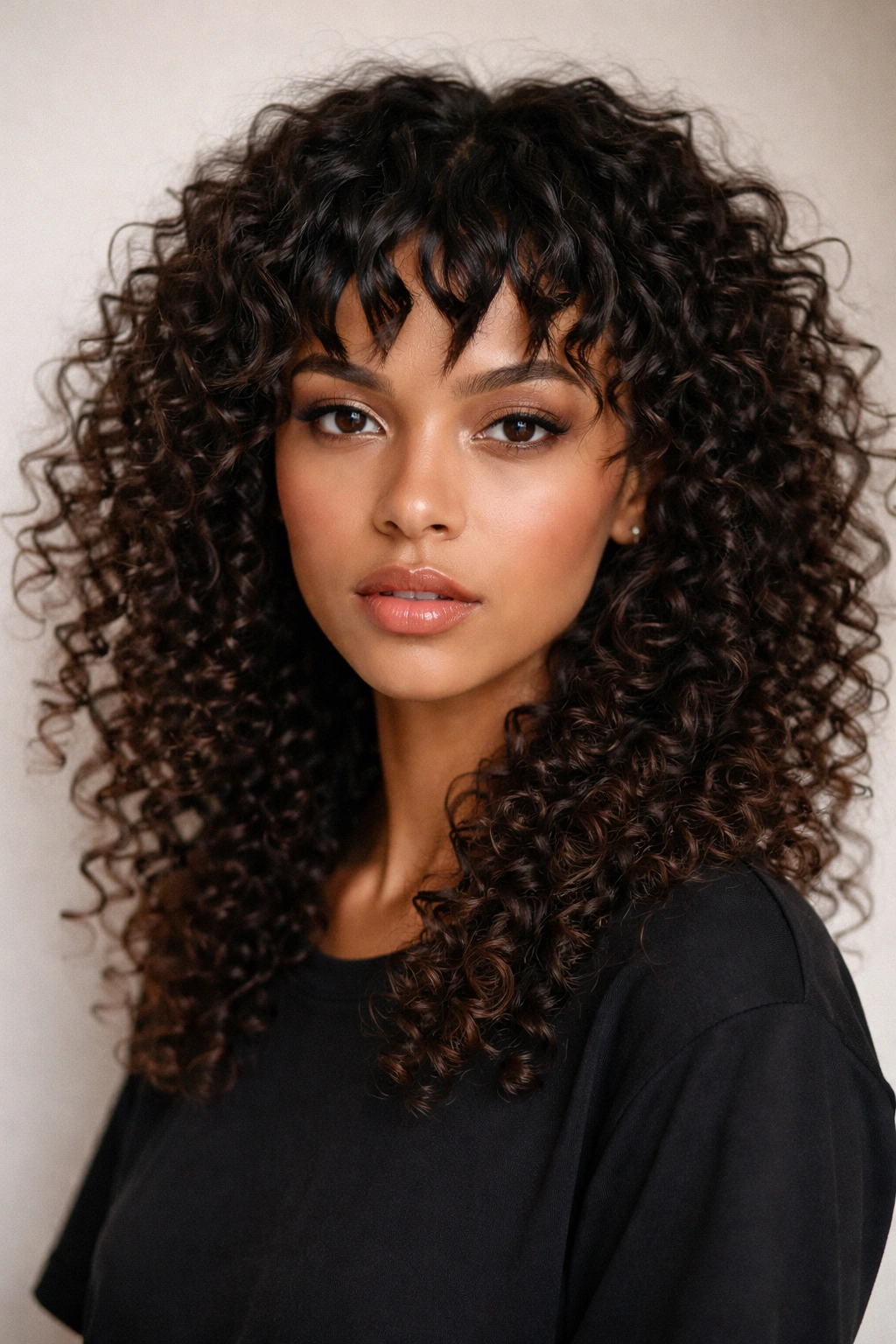
Zigzag bangs—sharp, angular pieces that create a zigzag pattern across your forehead—are the bold statement end of the bang spectrum. They’re art. They’re sculpture. They’re definitely not for everyone, but on someone who loves them, zigzag bangs create an absolutely stunning frame. The sharp lines and multiple angles create texture and visual interest that literally cannot be ignored.
Embracing Zigzag as Artistic Expression
Zigzag bangs are worn by people who are confident in their choice to be noticed. They’re not subtle or soft—they’re bold artistic choices. On curly hair, the natural texture of your curls creates an interesting interplay between the hard lines of the zigzag cut and the soft movement of your curl. It’s a striking contrast that reads as very intentional and modern.
Creating and Maintaining Zigzag Bangs
- This style requires a stylist who specializes in textured, artistic cuts—not all stylists feel comfortable creating sharp zigzag lines
- Diffuse-dry to maintain texture within each piece while keeping the overall zigzag shape clear
- Use a hold-focused gel or mousse to ensure each angle and point stays defined
- Refresh between washes by finger-scrunching sections to maintain the individual pieces
- Plan for trims every 3-4 weeks to keep the zigzag lines sharp and intentional
Pro tip: Zigzag bangs photograph absolutely beautifully and create an incredibly striking frame for professional headshots or styled photography.
Final Thoughts
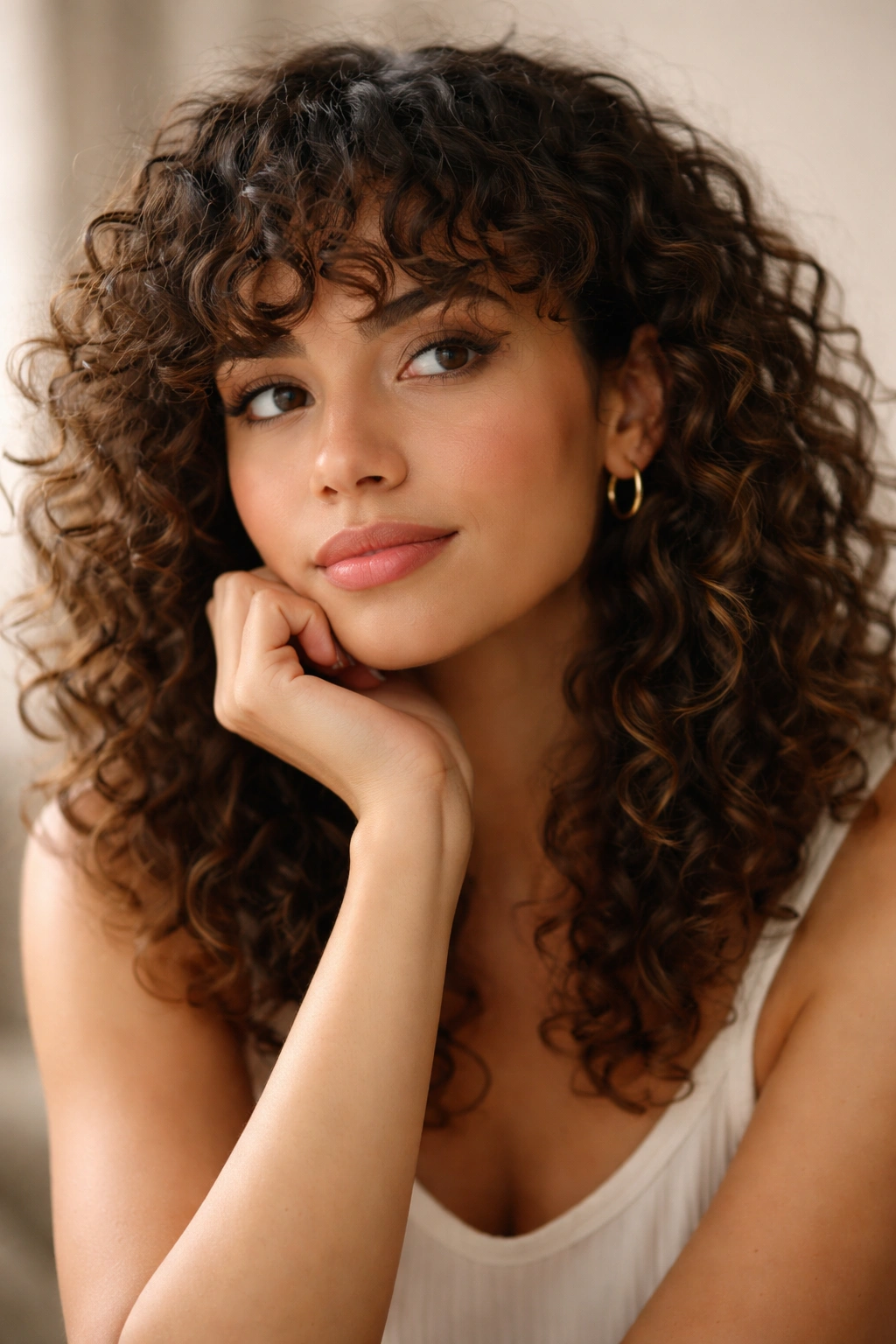
The right bangs can completely transform how you feel about your curly hair. Rather than seeing bangs as something that has to fight your texture or something that requires hours of styling, you can choose a style that works with your curl pattern—one that celebrates what makes your hair unique rather than battling it. Whether you go soft and wispy, bold and artistic, textured and choppy, or any of the eighteen styles between, the key is finding bangs that make you feel confident and beautiful.
The most important step is finding a stylist who understands curly hair specifically. Not all hairstylists have the training or experience to cut bangs well on textured hair—some cut straight hair beautifully but create disaster on curls. A good curl-savvy stylist will cut your bangs with your curl pattern in mind, building in layers and texture rather than fighting your hair’s natural movement. They’ll ask about your styling routine, your moisture level, your curl pattern, and the exact look you’re going for before they ever pick up scissors.
Start with a consultation where you bring photos of styles you love. Talk through the daily maintenance involved with each style. Be honest about how much styling you’re willing to do versus how much you want your bangs to work with your hair’s natural pattern. Once you find the right style and the right stylist, bangs can become one of your favorite parts of your look—a frame for your face that celebrates your curls instead of fighting them.
