



Shoulder-length shags are having a major moment, and for good reason. They’re effortlessly cool, incredibly versatile, and work with virtually every hair type when you find the right variation. The shag cut sits at this sweet spot between edgy and wearable — it’s got that rock-and-roll attitude without demanding you spend an hour styling it every morning. Whether your hair is thick and curly, fine and straight, or somewhere in between, there’s a shag cut out there that’ll make you feel like the best version of yourself.
What makes a shag different from other layered cuts is the choppy, textured approach. Instead of smooth, blended layers, shags embrace broken-up texture and movement. The layers are intentionally placed to create lift at the crown and that signature feathered effect around the face and shoulders. This isn’t a cut that demands perfection — in fact, the slightly undone quality is exactly what makes it so appealing. You can wear it with a sleek blow-dry or just let it air-dry into its natural texture, and it’ll look intentionally cool either way.
The barrier that keeps people from going shorter or trying something bolder is often uncertainty — not knowing if a cut will actually work for your specific hair type, face shape, and lifestyle. That’s where seeing real examples makes all the difference. Each shag variation below works within the shoulder-length range while offering distinctly different vibes, from polished and modern to deliberately undone and rebellious. Read through these options and you’ll find at least one (probably more) that speaks to exactly what you’re after.
1. Choppy Textured Shag With Broken Layers
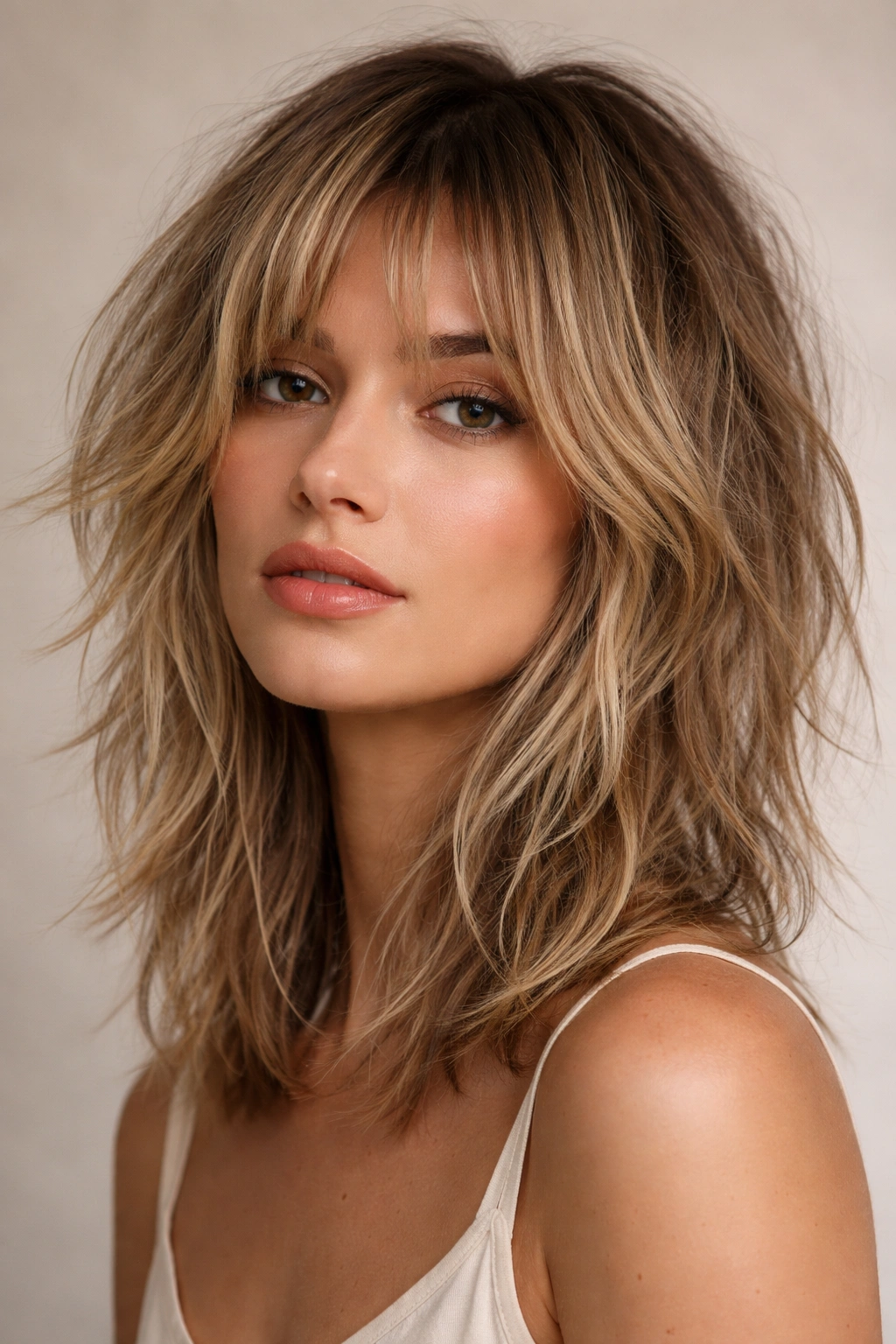
This is the shag that says “I woke up like this” — except you’re going to need a stylist who really knows how to work texture. The choppy textured shag features short, snappy layers throughout that create movement and dimension from root to tip. The layers are uneven and deliberately broken up rather than blended smoothly, which gives the cut that lived-in, effortlessly tousled appearance that looks editorial in magazines and genuinely cool on the street.
Why It’s Such a Bold Choice
The choppy textured shag works because the broken layers catch light differently across your head, creating natural dimension and volume. It’s particularly stunning on straight and wavy hair, where you can really see each individual layer. The cut demands confidence because it’s undeniably modern and fashion-forward — this isn’t a subtle change.
How to Style and Maintain It
- Use a texturizing spray or salt spray before blow-drying for enhanced definition
- Work a sea salt spray through damp hair and scrunch upward to encourage the choppy texture
- Avoid over-smoothing with a flat iron; instead, use a round brush to create soft movement
- Get trims every 4-6 weeks to keep the choppy layers sharp and defined
- Pair with a matte or texturized product rather than shiny serums for the right attitude
Pro tip: This cut looks best when you’re not trying to fight your hair’s natural texture — if your hair naturally wants to be a bit wild and undone, this cut amplifies that in the best way.
2. Feathered Modern Shag With Face-Framing Layers
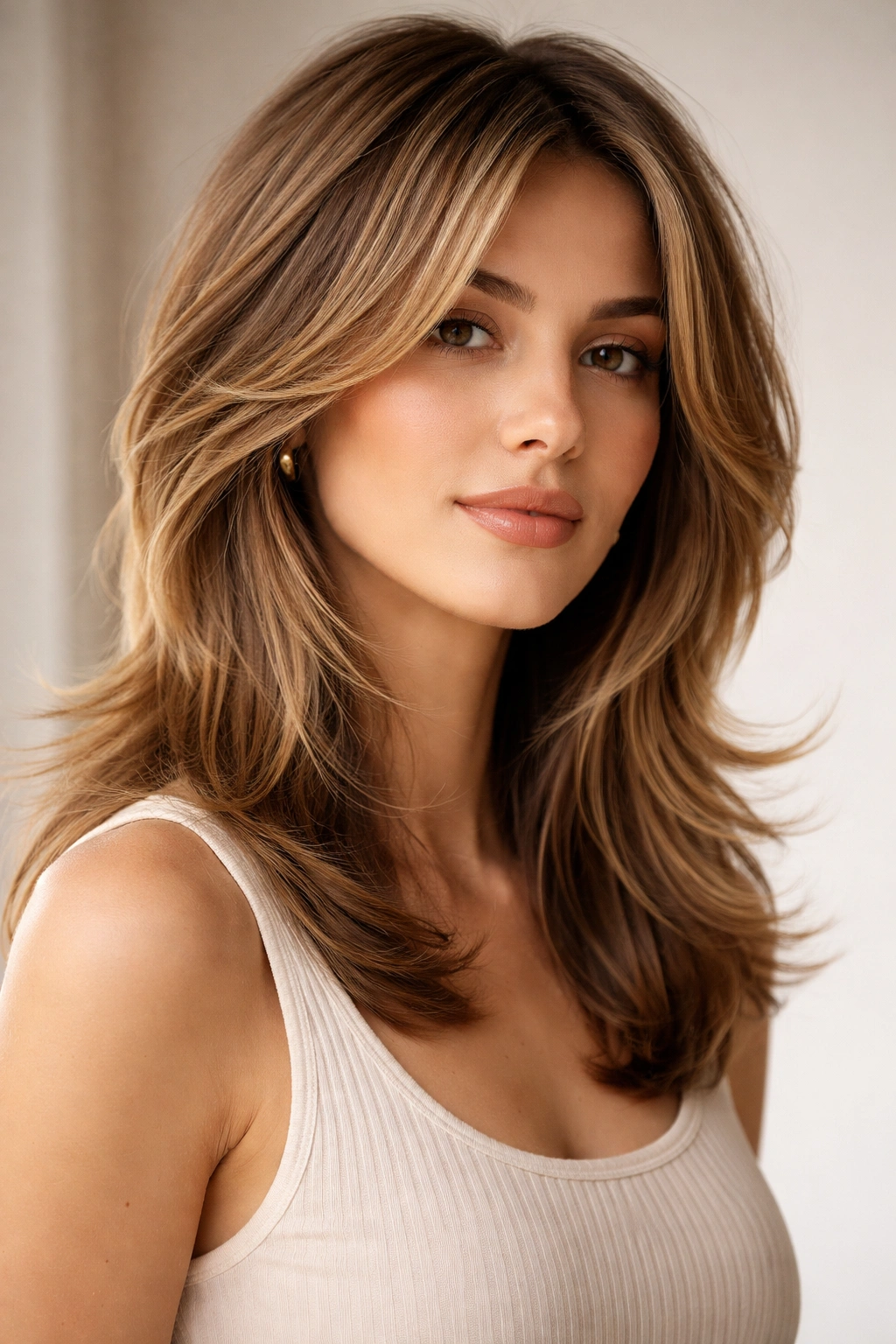
The feathered modern shag takes the classic ’70s inspiration and brings it firmly into right now. Where a true vintage shag can look costume-y, the feathered modern version is sleeker and more intentional. The layers are feathered away from the face in smooth, curved motions, creating this ethereal, flowing quality that’s romantic without being fussy. The underneath layers are shorter, while the front sections and longest pieces stay closer to shoulder length.
What Makes This Version Different
This shag leans into soft, feminine energy while maintaining that cool-girl edge. The feathering is precise rather than choppy, which means the cut works beautifully on finer hair without making it look wispy or thin. The face-framing layers draw attention to your features and create a naturally flattering silhouette around the jawline and cheekbones.
Styling This Cut
- Blow-dry with a round brush to create the signature curved feather effect
- Use a medium-barrel curling iron to enhance the layers and add soft waves
- A volumizing mousse applied to damp roots helps fine and medium hair hold the shape
- Dry shampoo works wonders to enhance the texture between washes
- This cut looks gorgeous with beachy waves or sleek straight hair, so you’ve got styling options
Worth knowing: You’ll want a stylist who understands feathering technique specifically — it’s different from standard layering and requires a particular cutting angle to nail.
3. Blunt Shag With Sharp, Defined Layers
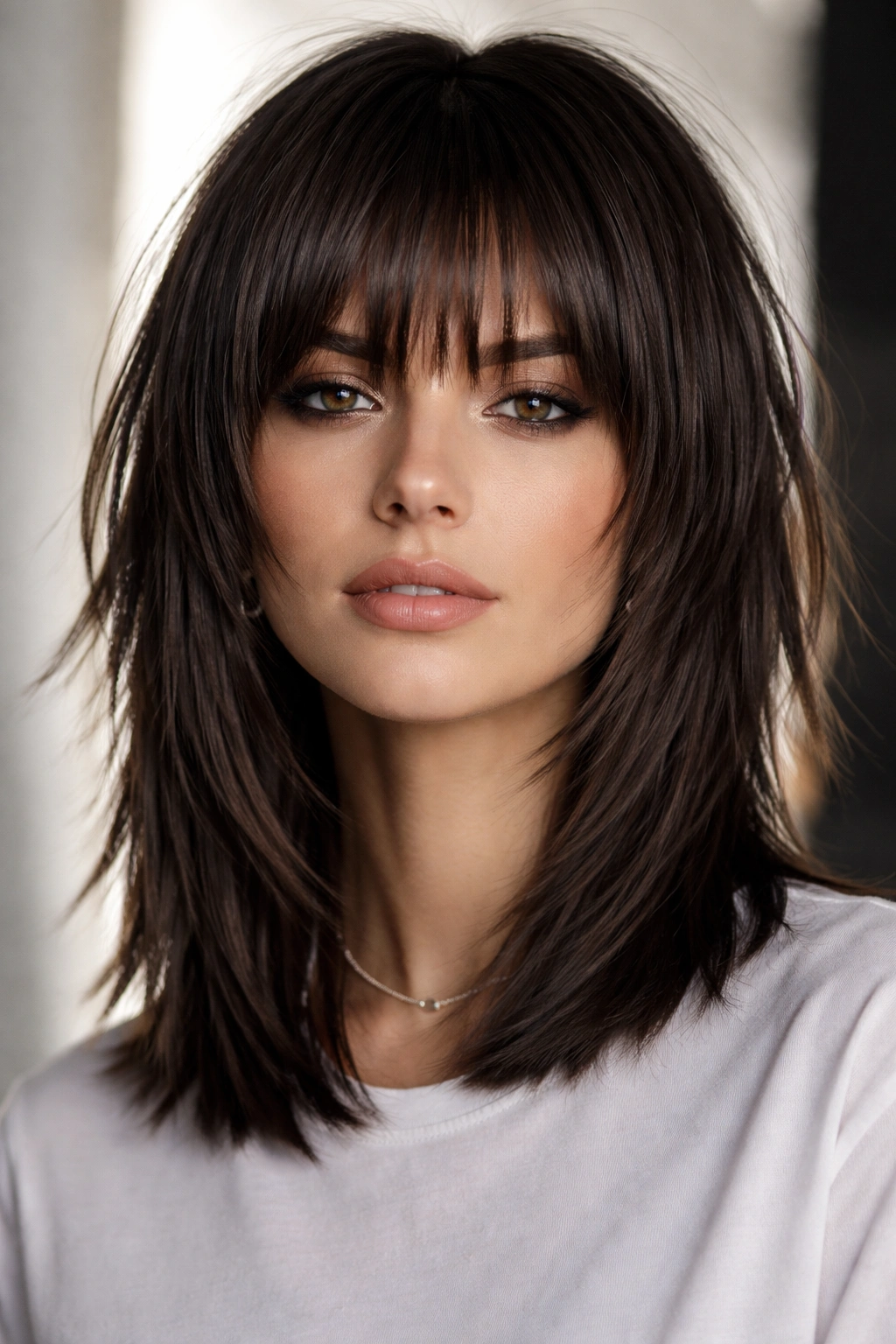
If you want a shag with more structure and definition, the blunt shag is your answer. This version features relatively blunt ends throughout, but with short, sharp layers that create movement and texture. The cut has a more architectural quality than a soft, feathered shag — it’s cleaner, more geometric, and feels very intentional. The shoulder-length blunt ends create a defined perimeter while the interior layers provide lift and motion.
Why This Cut Feels So Polished
The blunt shag bridges the gap between a tidy, put-together look and genuine edge. It reads as modern and fashion-conscious without looking like you’re trying too hard. The defined layers catch movement beautifully, especially when your hair is down, and the blunt ends create a satisfying visual boundary.
How to Keep It Looking Sharp
- Get trims every 4-8 weeks to maintain the blunt line at your shoulders
- Blow-dry with a paddle brush to keep ends relatively smooth and defined
- A smoothing serum or anti-frizz cream helps maintain the polished quality
- This cut looks stunning with a center or side part, so experiment with both
- Pair with a bold lip or minimal makeup to let the cut be the statement
Real talk: This cut requires slightly more maintenance than a super-textured shag because blunt lines show damage more obviously, so you’ll want to be committed to regular trims.
4. Curly Girl Shag With Defined Layers for Curl Pattern
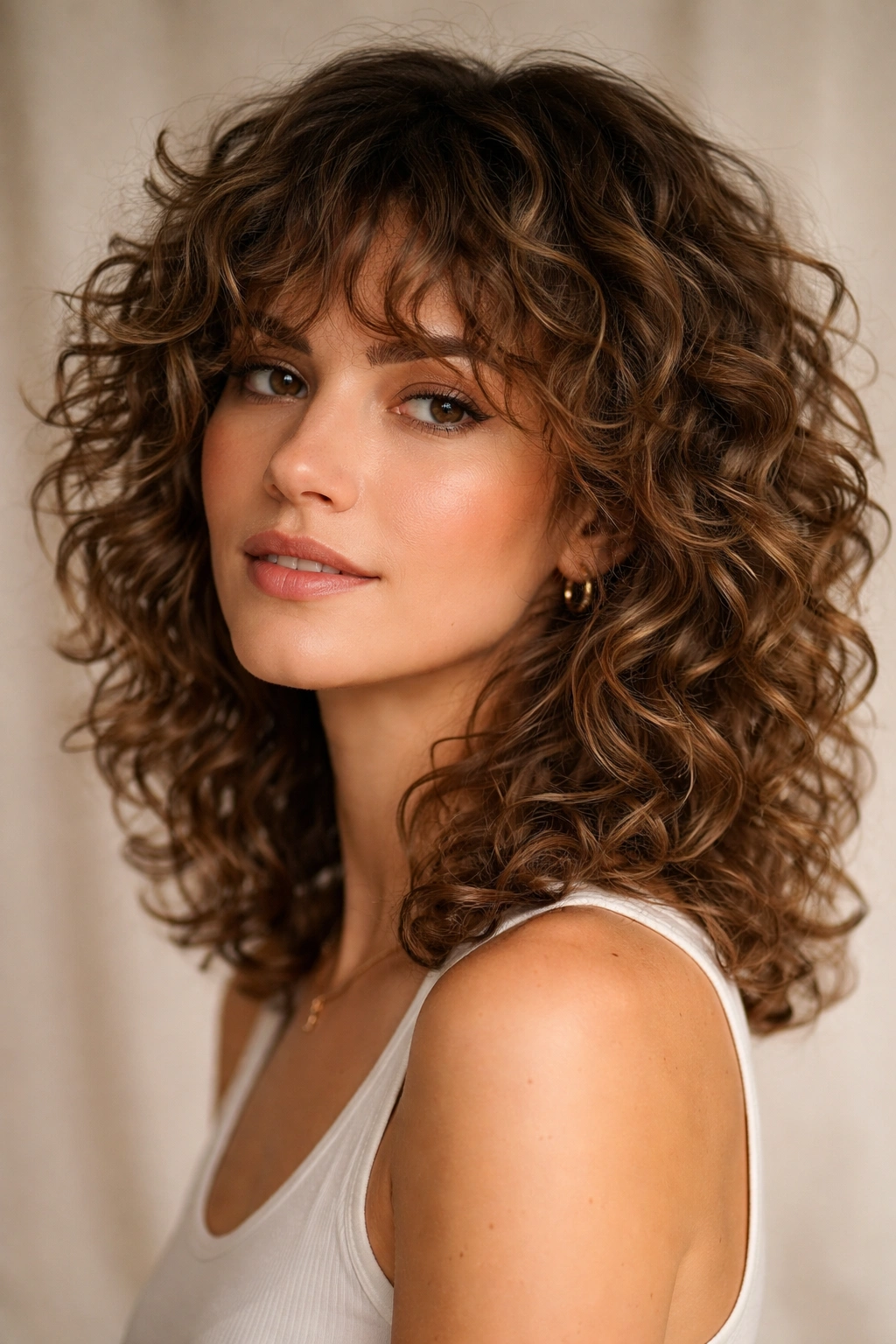
Curly hair and shags are actually a match made in heaven — the layers give your curls room to move and prevent the bulky, helmet-like appearance that can happen with longer, single-length curly hair. A curly girl shag features shorter layers throughout that are cut with your curl pattern in mind, not against it. The key is having a stylist who understands curly hair and cuts when it’s dry (or cuts your curls in their natural curl pattern) so the layers work with your texture, not against it.
What Makes This Cut Work for Curls
Layers in curly hair can go wrong in a hurry if they’re not cut correctly, but when they’re shaped around your curl pattern, they look incredible. The layers reduce bulk, enhance the natural spring of your curls, and create that gorgeous bouncy, voluminous quality that curly-haired people dream about. The shorter layers at the top create lift at the crown, while longer curls frame your face beautifully.
Styling Your Curly Shag
- Use the praying hands method to apply leave-in conditioner and styling cream to soaking wet hair
- Scrunch styling products upward into your curls to encourage definition and curl pattern
- Plopping (wrapping hair in a towel) helps create more defined curls and reduces frizz
- Diffuse with a blow dryer on medium heat and low speed, or air-dry for the most defined curls
- A refresh spray and quick scrunch with a curling cream can revive curls on day two or three
Insider note: Find a stylist who specializes in curly hair — they’ll cut your curls dry so they can see exactly how your curls sit and move, which makes all the difference in how the final cut turns out.
5. Straight Sleek Shag With Micro Layers
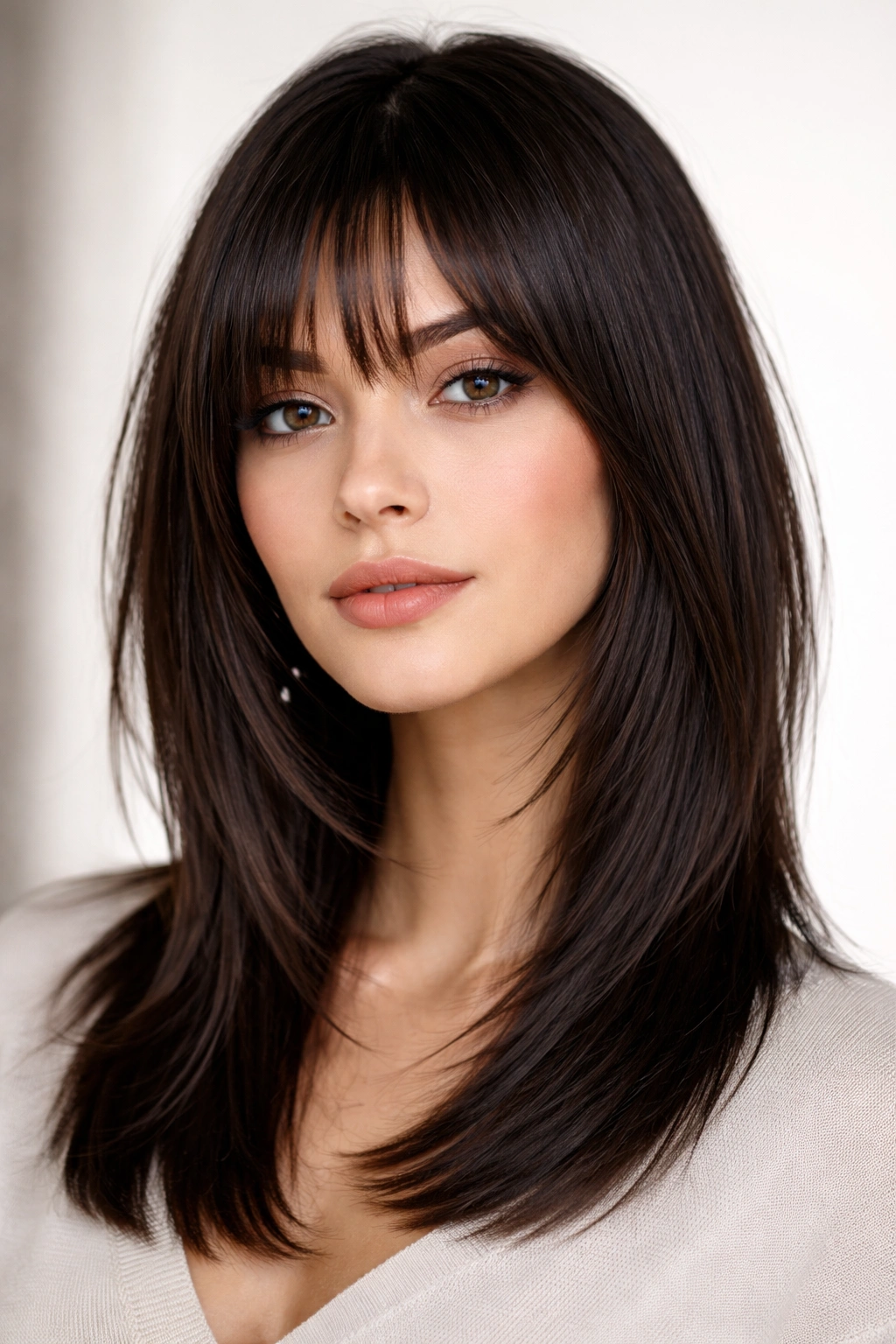
For those with naturally straight or smoothly blow-dried hair, the straight sleek shag is pure sophistication. This version features very short, delicate micro-layers throughout that create subtle movement and texture without the choppy quality of a textured shag. The layers are nearly invisible when your hair is down, but they create movement and prevent the weight that can make long straight hair look flat and heavy. The overall silhouette is streamlined and modern.
The Understated Elegance of This Approach
The sleek shag is for people who want the benefits of layers — movement, volume, texture — without looking like they’re wearing an edgy rock-and-roll cut. It’s the shag for minimalists and people who prefer a polished, refined aesthetic. The micro-layers create dimension and prevent that blunt, severe quality that can come with very long, one-length straight hair.
Styling for Maximum Sleekness
- Blow-dry with a paddle brush and ionic flat iron for ultra-smooth results
- A smoothing serum or lightweight silicone spray creates shine and reduces any frizz
- This cut looks beautiful with a deep side part or sleek center part
- Straightening iron touch-ups between washes keep everything polished
- The cut pairs beautifully with minimal makeup and clean, classic style
Pro tip: Because the layers are subtle and refined, this cut actually requires consistent styling to look its best — if you air-dry, the micro-layers might not be as visible.
6. Messy Tousled Shag With Lived-In Texture
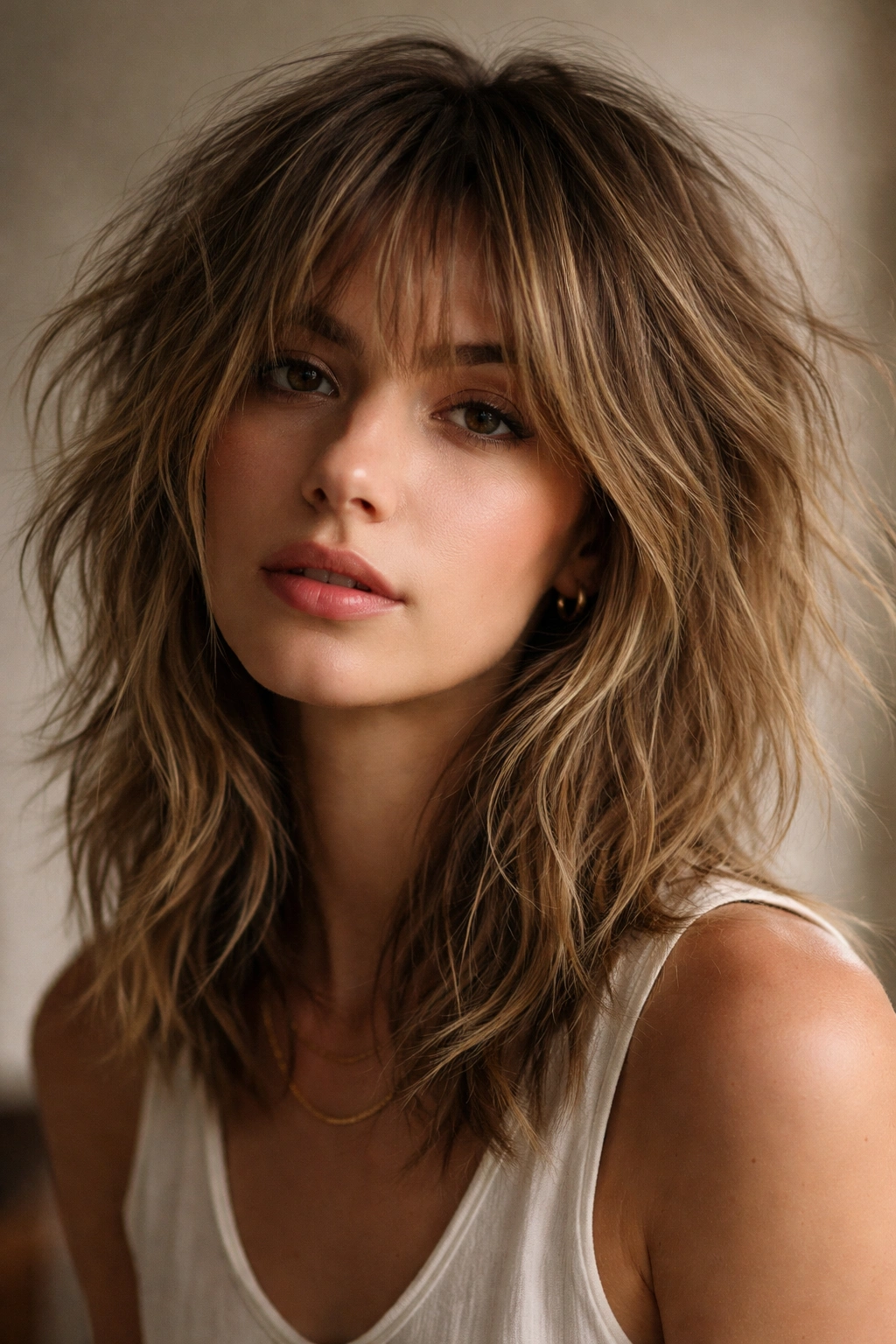
The messy tousled shag is the cut for people who genuinely don’t have time for styling but want to look intentionally cool anyway. This version features choppy layers throughout combined with deliberately undone texture. The whole point is that it should look slightly chaotic in the best way — like you just rolled out of bed or came in from a motorcycle ride with perfect hair by accident. Shorter layers at the crown create lift, and the overall effect is very Gen Z cool-girl energy.
Making “Messy” Look Actually Intentional
The trick with this shag is that the messiness is built into the cut itself. Your stylist is creating that tousled quality through strategic layer placement and choppy texture, not leaving anything to chance. When you wear it, it’ll look effortlessly undone because the cut itself is structured to look that way. It’s low-maintenance in the sense that you don’t need to style it perfectly, but it does need the right cut to begin with.
Styling a Messy Shag
- Scrunch texturizing spray or sea salt spray into damp hair for instant texture
- Blow-dry with your fingers, tousling hair upward, rather than using traditional styling tools
- A matte texturizing paste or pomade defines the layers and adds movement
- Avoid shine serums and smooth products that fight the messy aesthetic
- This cut looks good on day-two or day-three hair, so you can actually go longer between washes
Worth knowing: This cut appeals to people who have realistic expectations about their styling time and energy. If you love a slicked-back bun and prefer sleek finishes, this shag won’t feel right for you.
7. Face-Framing Shag With Softly Layered Front Pieces
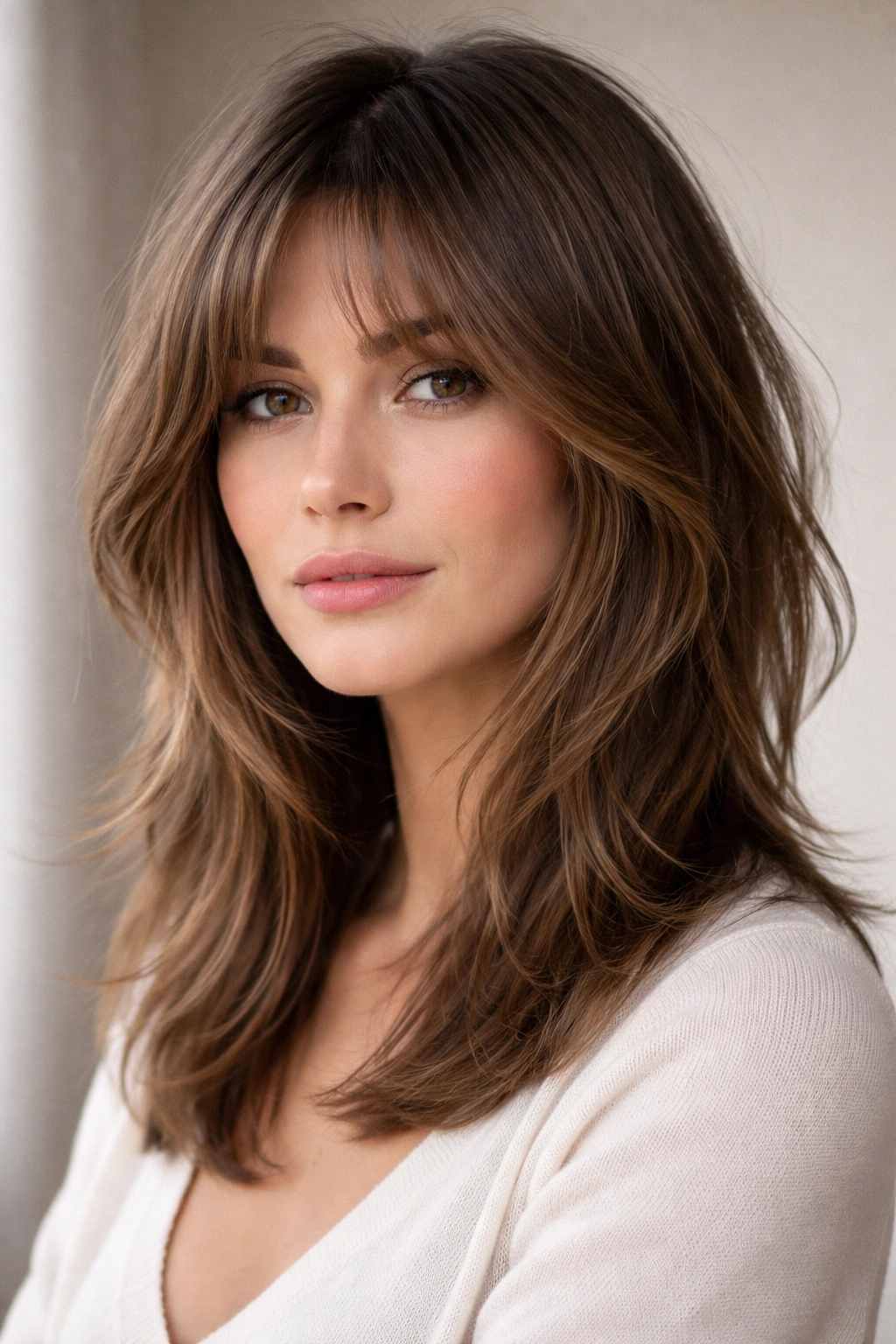
The face-framing shag puts the emphasis on pieces that specifically frame your face, while the back remains slightly longer and straighter for balance. The front layers are distinctly shorter, creating this beautiful feathered swoosh effect that draws attention to your eyes, cheekbones, and jawline. It’s architectural in the best way — strategic cutting that flatters your face shape while maintaining that shag attitude. The longer back pieces prevent the cut from reading as too short or choppy.
Why This Cut Is So Flattering
Face-framing layers work with virtually every face shape because they can be customized to emphasize your best features. For a rounder face, longer face-framing pieces elongate. For a longer face, shorter, fuller layers add width. The cut combines the slimming effect of layers with the softness of a shag, giving you the best of both worlds. The front pieces draw the eye upward to your face rather than letting attention settle on your jawline or shoulders.
How to Style Face-Framing Layers
- Use a small barrel curling iron to create soft waves in the face-framing pieces
- Blow-dry with a round brush, lifting the front sections away from your face
- Face-framing layers look beautiful with an off-center part that shows off one side
- A light texturizing spray enhances the separation between layers
- This cut looks good both styled and slightly undone, giving you flexibility
Real talk: If you have very curly hair, make sure your stylist cuts the face-framing pieces slightly longer than they appear when curly, because curls spring up and shorten visibly once they dry.
8. Asymmetrical Shag With Uneven Length and Attitude
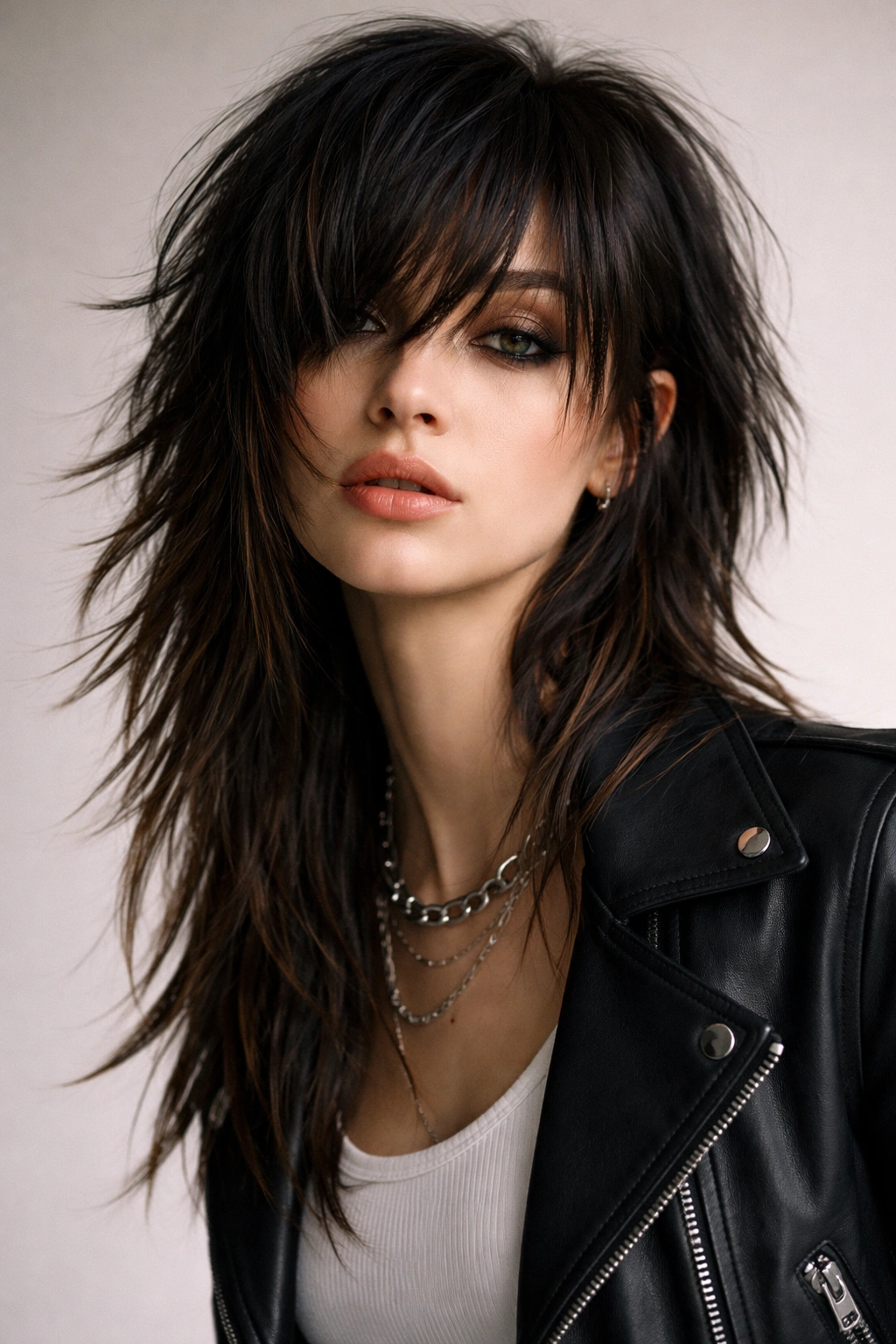
The asymmetrical shag is for the bold — it features deliberately uneven lengths between the left and right sides of your head. One side might hit right at shoulder length while the other extends a couple inches longer, or the layers on one side might be noticeably shorter and choppier. It’s avant-garde, it’s fashion-forward, and it absolutely requires confidence. But if you’re the type who’s willing to make a statement with your hair, this shag delivers serious cool-girl energy.
The Confidence Factor
Asymmetrical cuts have been having a moment because they feel modern, editorial, and undeniably intentional. This isn’t a cut that someone could mistake for a mistake — it’s obviously a deliberate choice. The asymmetry creates visual interest and movement, and because one side is different, the cut draws attention upward to your face and creates an intriguing visual quality.
Wearing an Asymmetrical Shag
- Center your part down the middle to balance the asymmetry and emphasize the geometry of the cut
- A side part can emphasize one side and create even more dramatic visual interest
- Blow-dry with intention, using a round brush to create curves that follow the intentional imbalance
- This cut pairs beautifully with bold makeup, fashion-forward accessories, and clean, minimal clothing
- The cut looks stunning in photos and on social media because of its architectural quality
Pro tip: If you’re nervous about committing to a full asymmetrical shag, ask your stylist to start with a subtle asymmetry (maybe just an inch of difference) and you can always go bolder at your next appointment.
9. Shag With Soft Bangs for Extra Face-Framing
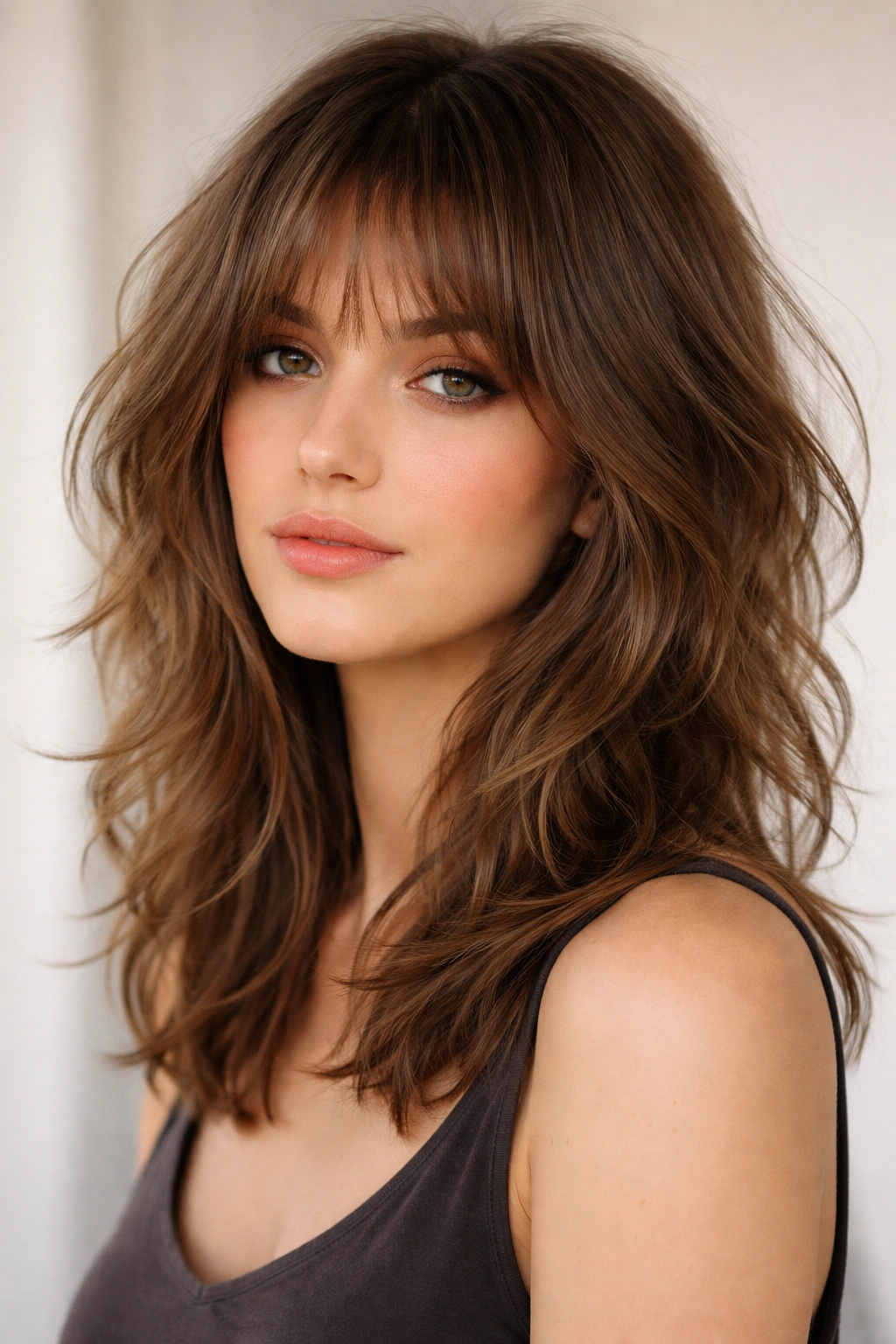
Adding soft bangs to a shoulder-length shag creates this romantic, bohemian quality that’s been beloved for decades and keeps coming back around. The bangs should be feathered and face-framing rather than blunt — they blend seamlessly with the layers of the shag rather than being a separate, distinct element. The bangs help frame your eyes and cheekbones while the layered shag provides movement and texture throughout. It’s a softer, more romantic take on the shag cut.
The Romantic Quality of Bangs Plus Shag
This combination reads as dreamy and effortlessly cool — think modern ’70s vibes with a feminine edge. The bangs don’t need to be perfectly straight or blunt; in fact, they work better when they’re slightly textured and move with the rest of your hair. This style suits people who love a softer aesthetic but still want that shag’s edge and movement.
Styling Bangs With Your Shag
- Blow-dry bangs with a round brush, directing them slightly to the side for a softer effect
- Avoid a severe, blunt bang look — feathered bangs blend better with the overall cut
- Use a texturizing spray before blow-drying to enhance the soft, moved quality
- A deep side part can create a more dramatic, face-framing effect with soft bangs
- On days when you don’t feel like styling, tuck your bangs to the side with a clip for a different look
Insider note: Soft bangs require slightly more regular trims than the rest of your hair because they sit on your face and need to maintain their shape. Plan for bang trims every 3-4 weeks.
10. Shag for Thick Hair With Strategically Shortened Layers
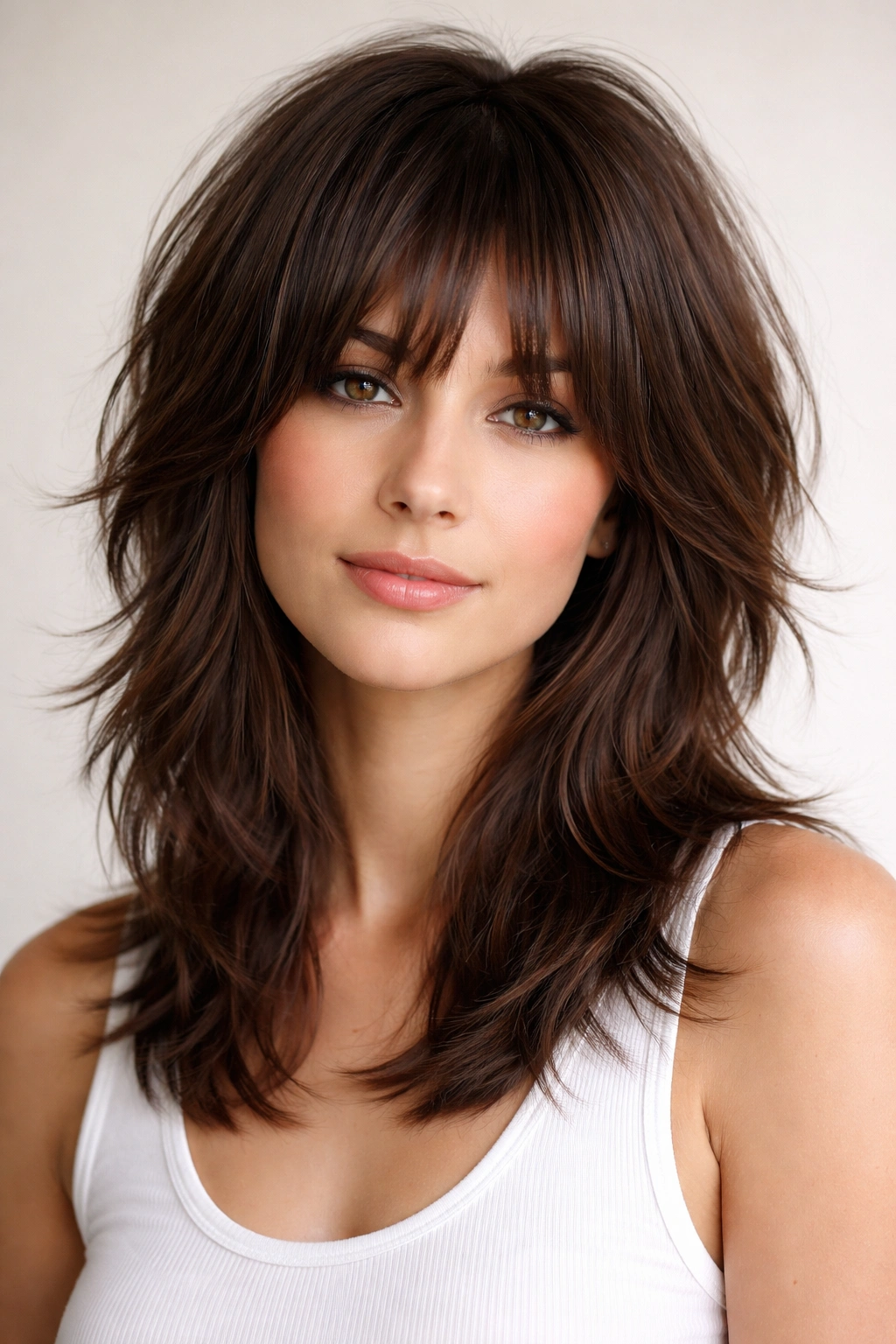
If you’ve got thick, heavy hair, a shag is genuinely one of the best cuts to make it work beautifully. Rather than fighting your hair’s natural density, this version embraces it by creating short, snappy layers throughout that remove weight without creating a thin or wispy effect. The layers are concentrated throughout rather than just at the face, which prevents the bulk that thick hair can create. The result is a cut that’s full and voluminous without being heavy or overwhelming.
Why Shags Work for Thick Hair
Thick hair often needs layers to prevent a helmet-like appearance, but too-subtle layers can get lost in the density. A properly layered shag creates movement and removes weight while still maintaining the fullness that thick hair naturally has. The cut works with your hair’s strength rather than against it. You get volume and movement without the flat, heavy quality that makes some thick-haired people feel weighed down.
Styling Thick Hair in a Shag
- Blow-dry with a diffuser attachment on medium heat to enhance natural texture without adding excess volume
- A lightweight mousse or volumizing spray helps define the layers without adding weight
- Avoid heavy serums and oils that can weigh thick hair down
- This cut looks beautiful with loose waves or a slightly tousled texture
- You can often air-dry this cut and still look intentional because the layers create natural movement
Worth knowing: With thick hair, you might actually need to get trims slightly more frequently (every 5-6 weeks) to keep the layers from growing out and creating bulk again.
11. Shag for Fine Hair With Subtle Layers and Texture
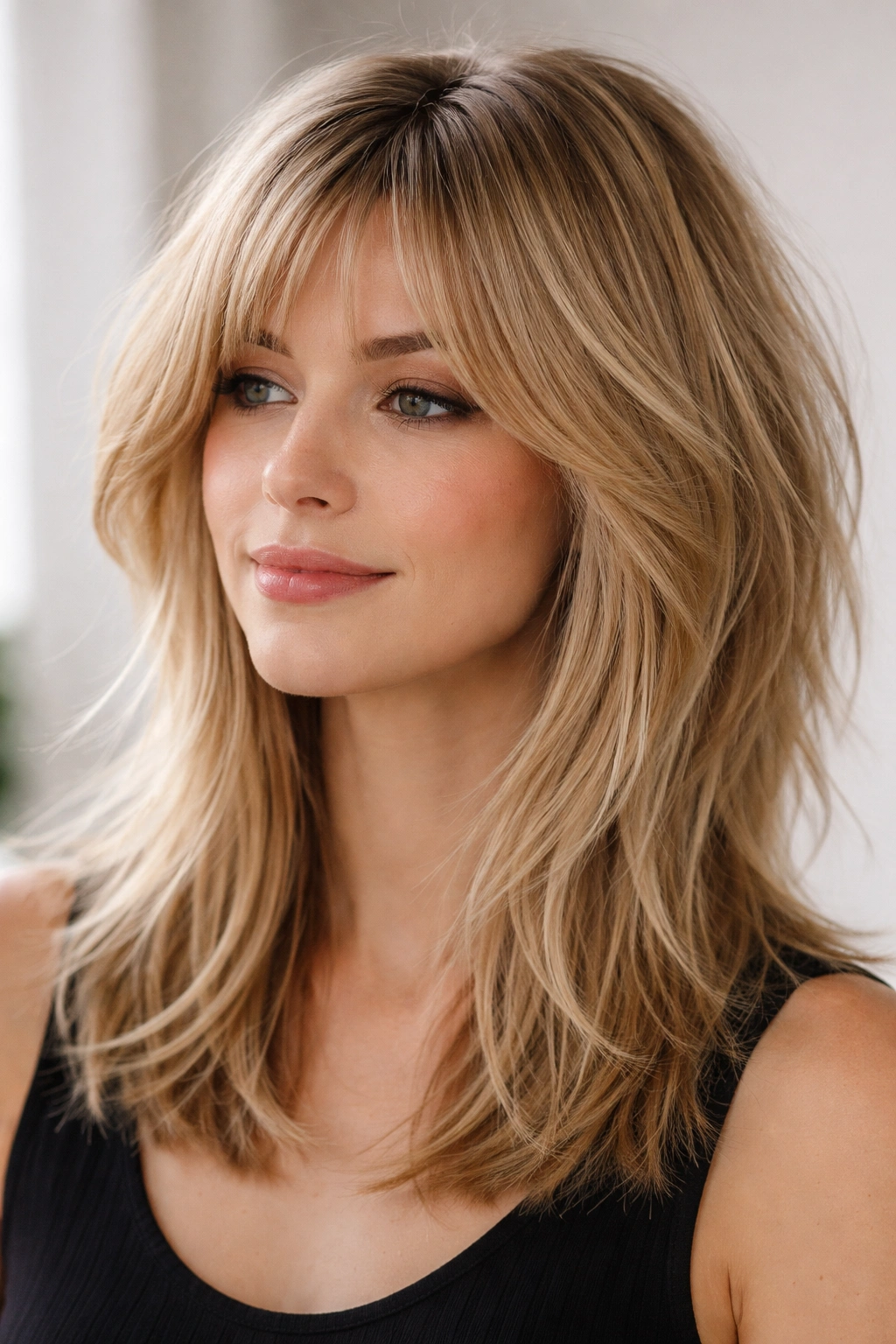
Fine hair requires a different approach to shag cutting — you want layers that create movement and prevent the flat, limp quality that fine hair can develop, but you don’t want so many layers that your hair looks thin or wispy. This version features subtle layers that are placed strategically to add body without removing so much hair that you lose fullness. The overall effect is textured and moved without looking sparse.
Making Fine Hair Work in a Shag
The key with fine hair is working with your hair’s natural texture rather than against it. A shag can actually be perfect for fine hair because the layers create the illusion of fullness and movement. Rather than trying to add bulk through short layers everywhere, strategic layers in the right places create lift and body. The cut should feel airy and light, not thin.
Styling Fine Hair Shag
- Volumizing mousse or lightweight spray applied to damp roots helps create lift
- Blow-dry with a round brush, lifting hair at the roots for maximum volume
- Fine hair often air-dries beautifully into natural waves and texture, so embrace that
- Dry shampoo between washes helps add texture and grip that fine hair sometimes lacks
- Avoid heavy products; instead use light texturizing sprays and finishing sprays
Pro tip: Ask your stylist to avoid cutting too many layers into very fine hair — sometimes fewer, more thoughtfully placed layers look fuller than many subtle layers in delicate hair.
12. Shag With Color Dimension and Two-Tone Highlights
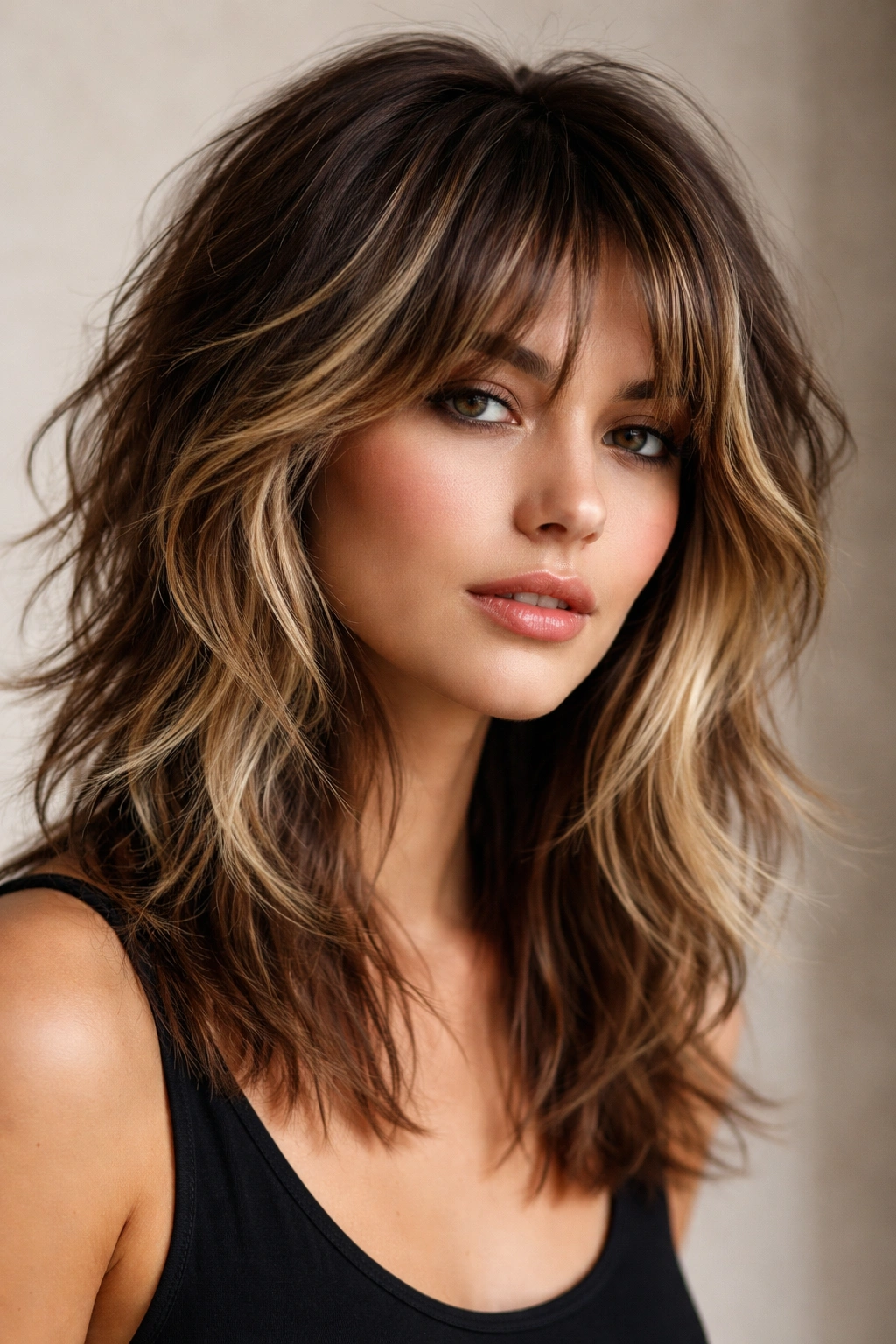
A shoulder-length shag becomes even more dynamic when you add color dimension — the layers catch light differently, and color creates visual interest that amplifies the movement of the cut. A two-tone approach might mean darker roots with lighter midlengths and ends, or contrasting cool and warm tones throughout. The color works with the cut to create depth and dimension that reads as intentional and editorial.
How Color Enhances a Shag Cut
The texture and movement of a shag shows off color changes beautifully. Where a one-length cut might hide color dimension, the layers of a shag mean the highlights and lowlights are constantly visible and shifting as you move. Dimensional color makes the cut feel more sophisticated and adds interest without requiring a more complicated or time-consuming cut.
Popular Two-Tone Approaches
- Darker roots with honey or caramel midlengths and ends (gives dimension and requires less frequent root maintenance)
- Cool-toned ash or platinum highlights blended with warmer midtones (creates depth and modern interest)
- Rooted look with darker regrowth at the base and progressively lighter toward the ends (blends with natural growth and looks intentional)
- Contrasting warm and cool tones throughout (adds visual complexity and interest)
Real talk: Dimensional color does require commitment to maintenance — root touch-ups every 4-6 weeks and color-safe products to keep the shade vibrant between appointments. But if you love color and want your shag to really stand out, the investment is worth it.
Final Thoughts
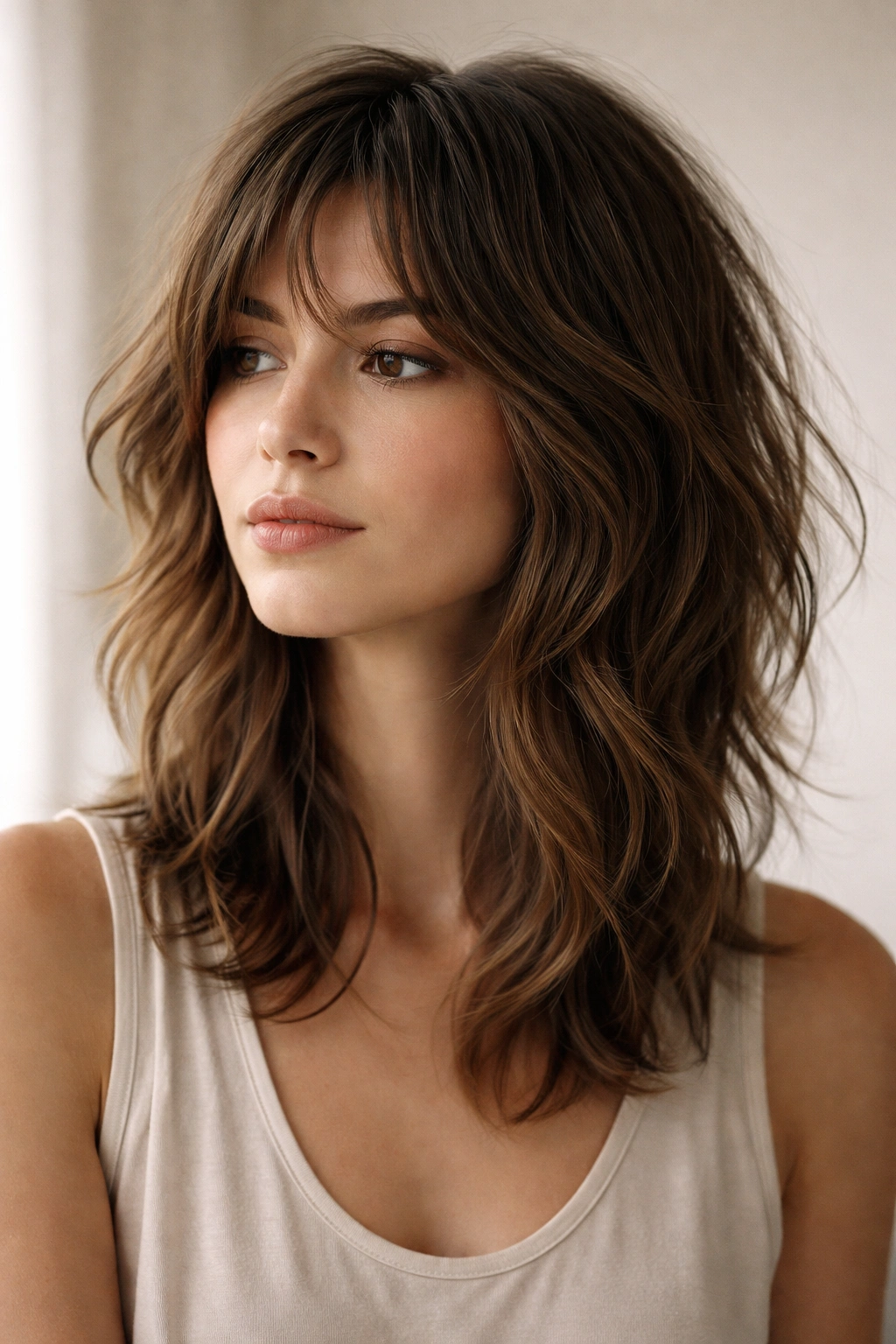
A shoulder-length shag works for basically everyone, but finding the right version for your hair type, face shape, and lifestyle is what makes the difference between a great haircut and one that feels off. The cuts above represent the spectrum — from polished and refined to deliberately messy and undone, from face-framing softness to asymmetrical boldness. The common thread is that each one embraces movement, texture, and that effortlessly cool vibe that makes shags so appealing right now.
The beautiful part about shags is that they’re genuinely low-pressure compared to some cuts. You don’t have to blow-dry them perfectly, they look good slightly undone, and they actually improve with a little texture and movement in your hair. Find a stylist who understands how to cut shags specifically and has experience with your hair type, come with reference photos of the version that speaks to you, and be honest about your styling time and energy. A well-cut shag becomes something you actually look forward to styling — and that’s when you know you’ve found the right cut.
