



There’s something undeniably powerful about a well-executed fringe on curly hair. The way it frames your face, catches the light, and adds personality to your overall look is unlike anything else. But here’s the honest truth: most fringe styles aren’t designed with curly or textured hair in mind. A straight-haired client walks into a salon with a photo of their ideal fringe, and the stylist can recreate it with relative precision. With curls, though? That fringe needs to work with your natural texture, not against it.
The good news is that curly fringes, when cut and styled correctly, create an absolutely stunning frame for your face. They add dimension, soften your features, and give you flexibility that sleek styles simply can’t match. Whether your curls are loose waves or tight coils, there’s a fringe style that’ll make you feel like the best version of yourself. The key is understanding which styles actually work with your specific curl pattern and how to maintain them so they keep looking fresh between salon visits.
If you’ve ever felt frustrated by fringes that either went limp, fizzed out, or just refused to cooperate with your curls, you’re not alone. The right style changes everything—not just how you look, but how confident you feel every single day. Let’s explore the fringe styles that genuinely work for curly hair.
Understanding Curly Fringes and Face Framing
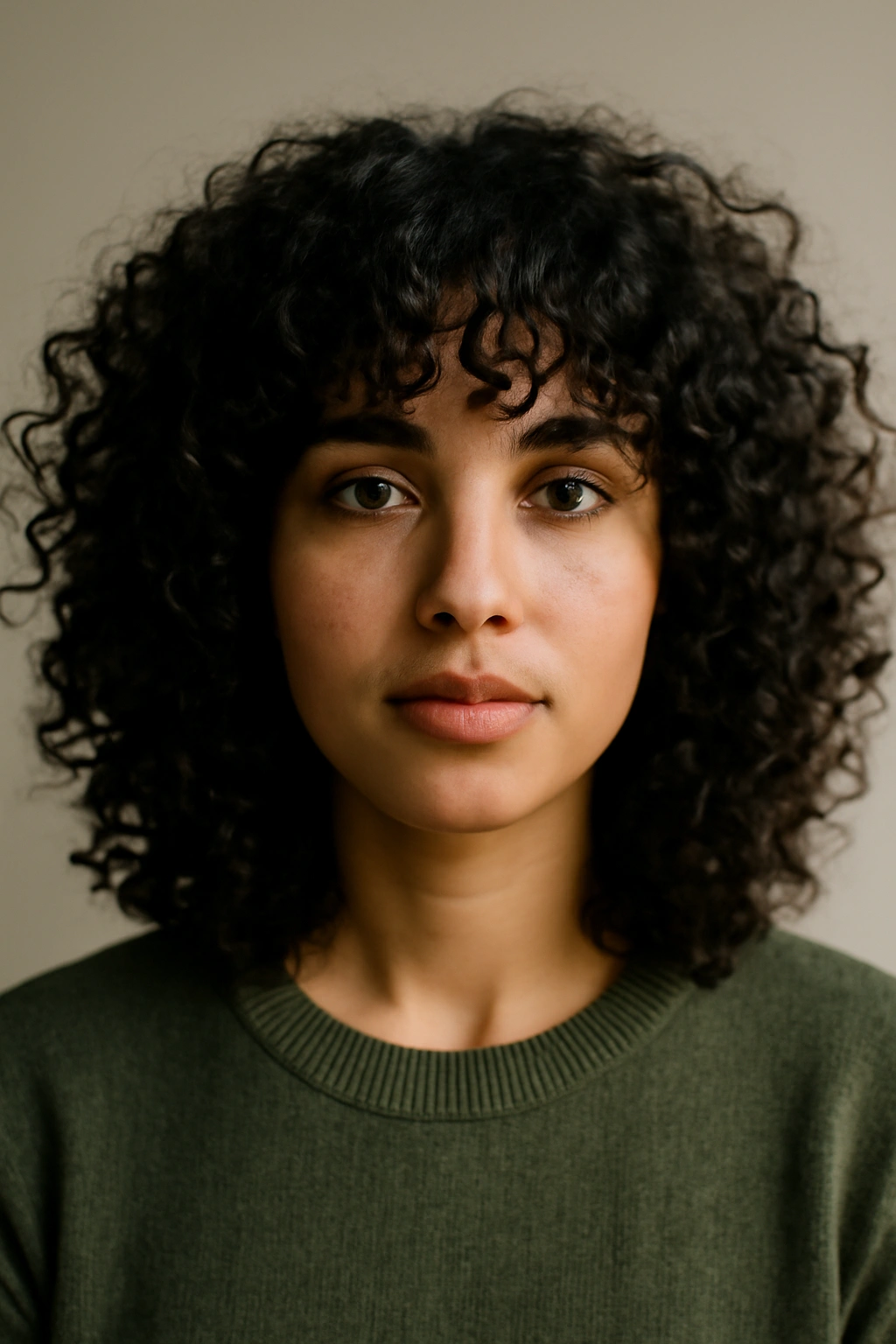
Curly fringes operate by a completely different set of rules than their straight-haired counterparts. When you have curls, your fringe isn’t just about length and angle—it’s about how the curl pattern is going to expand, shrink, and move throughout the day. A fringe that looks perfect when you leave the salon might look entirely different by evening if your stylist didn’t cut it with your curl behavior in mind.
The magic of a great curly fringe is that it uses your natural texture as an asset rather than fighting against it. Instead of trying to smooth and straighten your fringe into submission, the best styles celebrate the curl and shape the cut so the fringe works with the way your hair naturally grows and moves. This means choosing a length and technique that complements how your curls expand when they’re fully dry and hydrated.
Face framing with curly hair also means considering where your fringe will actually fall when it’s wet versus when it’s been set and dried. Curls shrink as they dry, so a fringe that feels long when you’re applying product might be noticeably shorter once it’s completely set. A skilled stylist who understands curly hair cuts anticipates this and adjusts the initial cut accordingly.
What Makes a Fringe Work for Curly Hair
The best curly fringes share certain characteristics that make them stable, flattering, and maintainable. They’re cut with enough texture and layers that air-drying creates a soft, intentional frame rather than a heavy, blunt line. They work with your natural curl pattern rather than requiring heat tools or constant manipulation to keep their shape. They’re designed to actually look better as your curls dry and set, not worse.
How to Determine the Right Fringe Style for Your Curl Pattern
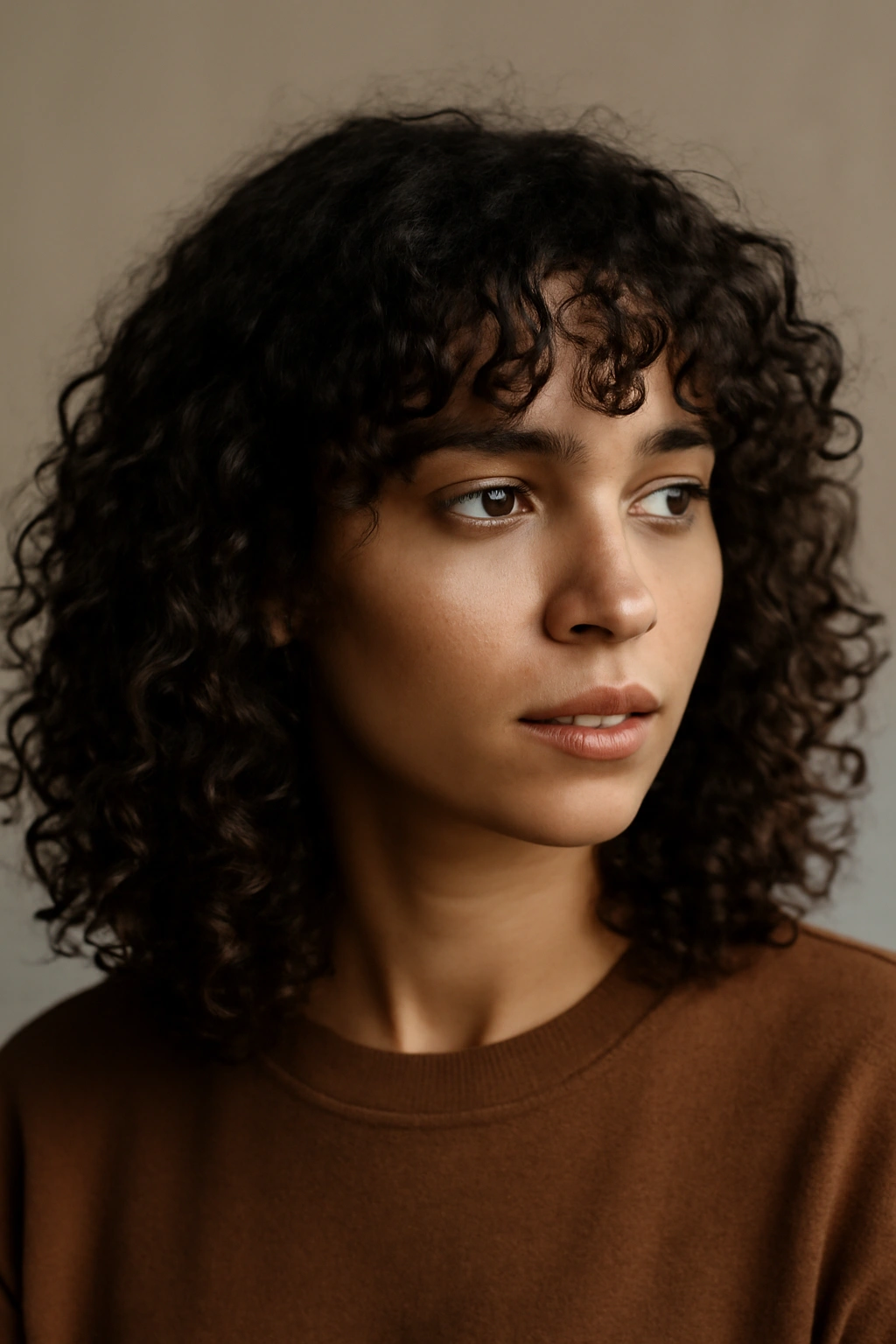
Not every fringe will suit every curl type, and that’s completely okay. Tight coils require different fringe strategies than loose waves, just like fine curls need different handling than thick, dense curls. The thickness, length, and texture of your curls all influence which styles will frame your face most beautifully.
Consider your face shape as well. Certain fringes elongate rounder faces, while others add width and drama to longer faces. A stylist experienced with curly hair will assess both your curl pattern and your face shape to recommend styles that actually work for your specific combination. If you’re shopping for a new stylist or thinking about asking for a fringe at your next appointment, this is the conversation worth having.
Your lifestyle and maintenance commitment also matter. Some fringe styles need a refresh trim every 4-6 weeks to maintain their shape, while others are more forgiving and can stretch longer between cuts. Be honest about how much styling you’re willing to do each morning and how often you can realistically get to the salon.
1. Bouncy Wispy Bangs
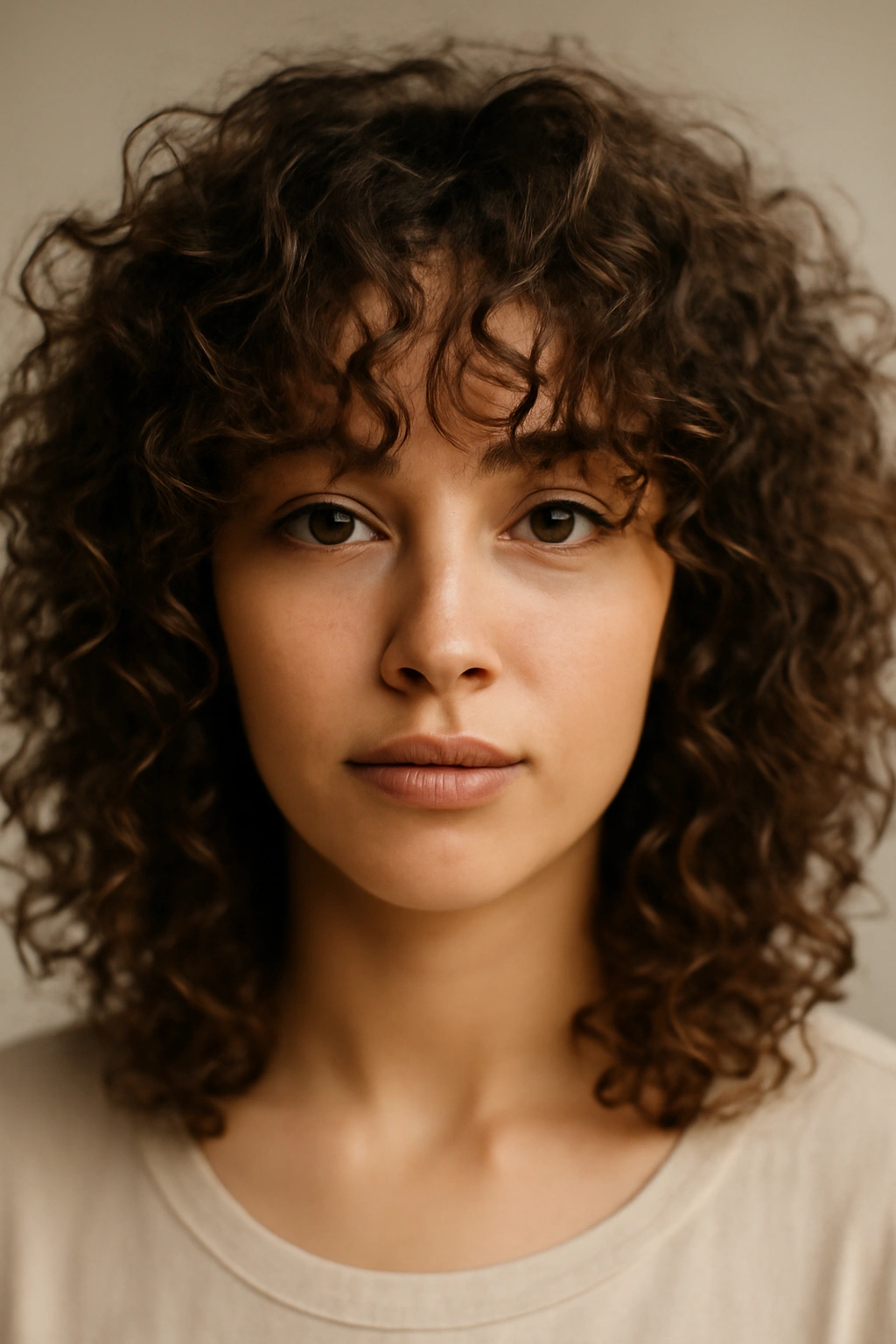
Wispy bangs are the gateway drug to curly fringes—they look incredible and feel surprisingly manageable once you understand the technique. These aren’t blunt-cut bangs. Instead, a skilled stylist layers and texturizes them so individual curl sections can bounce and move independently, creating a soft, airy frame around your face. When done right, wispy bangs literally scatter light and soften your entire face shape.
Why Wispy Bangs Suit Curly Hair So Well
Wispy bangs work beautifully with curly hair because the layers and texture of the cut actually enhance what curls naturally want to do. Rather than fighting the curl, the cut encourages each small section to form its own perfect ringlet or wave. This means your fringe looks intentionally designed, not like you accidentally got product-heavy hair stuck in your face. The visual effect is incredibly soft and romantic while still feeling modern and intentional.
Making Wispy Bangs Work for You
- Start with a consultation about your specific curl pattern and how your stylist recommends adapting the cut to your texture
- Plan for a refresh trim every 4-6 weeks to maintain the layered texture and prevent the fringe from looking overgrown
- Use a curl-defining cream or gel on damp fringe sections to encourage each layer to form its own curl
- Avoid brushing the bangs when they’re dry—finger-comb through them instead to maintain separation and bounce
- Sleep on a silk pillowcase or pineapple your fringe to reduce frizz and maintain curl definition overnight
Pro tip: Wispy bangs photograph beautifully and create a soft frame that looks flattering in both selfies and profile shots—if you love having great hair photos, this style rewards you for it.
2. Curtain-Cut Fringe with Defined Center Part
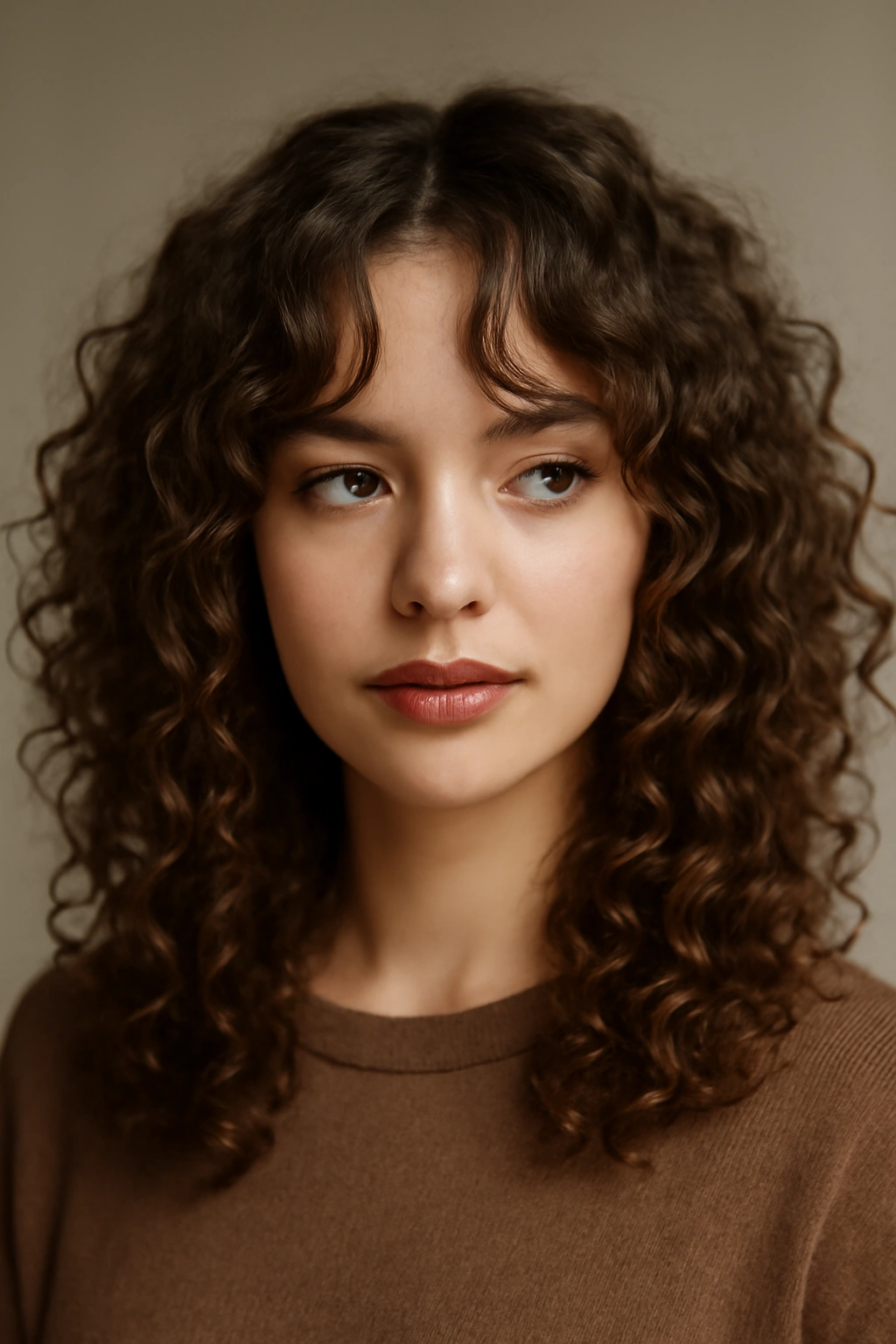
Curtain-cut fringes sit somewhere between a full fringe and no fringe at all, sweeping back toward your temples and creating an incredibly flattering frame. The defined center part lets your curls flow naturally around your face while keeping some hair off your forehead. This style works especially well for people who want the softness of a fringe without committing to the daily styling requirements of a full, blunt-cut bang.
The Face-Framing Magic of Curtain Cuts
The curtain-cut fringe works because it creates movement and softness around your face while allowing your natural curl pattern to shine. Unlike styles that require you to keep the fringe perfectly in place, curtain cuts actually improve as your curls dry because the swooping motion becomes more defined. The center part creates a natural line of symmetry that’s inherently flattering, and because the fringe isn’t sitting directly on your forehead, you don’t get the sweat and humidity issues that sometimes plague fuller fringes.
How to Style and Maintain Curtain-Cut Fringes
- Apply curl cream or leave-in conditioner to damp fringe sections and encourage them to spiral back toward your temples
- Let the fringe air-dry in its natural direction rather than trying to direct every curl into place
- You can wear the part centered for a romantic look or shift it slightly to one side for a more casual, tousled vibe
- Trim every 6-8 weeks to maintain the sweeping shape and prevent the fringe from looking too overgrown
- On days when your curls feel less defined, you can lightly diffuse the fringe using a blow dryer on low speed to encourage curl formation
Worth knowing: This style actually gets better the more humidity it’s exposed to, because humidity encourages curls to form. It’s literally a fringe style made for curly hair.
3. Textured Pixie Fringe with Piecey Layers
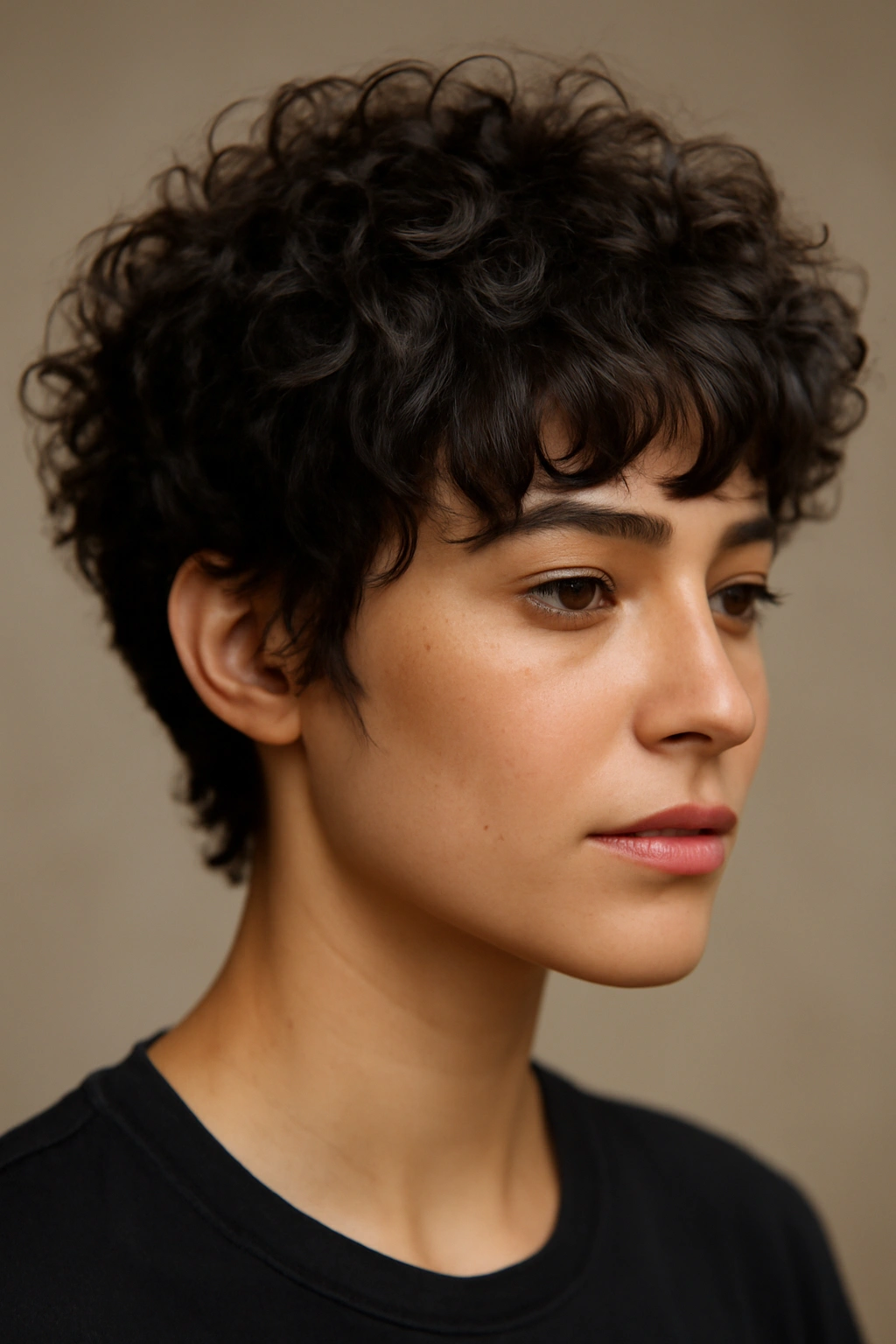
If you want serious texture and movement, a piecey pixie-style fringe delivers exactly that. This shorter, more deliberately textured cut uses lots of layers and texture to create individual pieces that frame your face with personality and edge. It’s a bolder choice than wispy bangs, but if you love the idea of a fringe that commands attention and creates serious dimension, this is your style.
Why Textured Pixie Fringes Command Attention
Short, textured fringes on curly hair create immediate dimension and visual interest because each layer reads as its own distinct element rather than as one cohesive piece. The cut encourages curl formation and makes your natural texture the focus rather than something to be minimized. This style is particularly stunning on people with medium to thick curls, where the layers create a almost sculptural frame around the face. The cut also photographs beautifully because it creates multiple shadow lines and catch-light points that add complexity to your appearance.
Styling and Maintenance for Textured Pixies
- Use a strong-hold curl cream on soaking-wet fringe sections and allow them to air-dry in their natural formation
- The more you try to style this fringe, the less intentional it looks—embrace the slightly tousled aesthetic
- A light touch with a diffuser can help set curls if they’re being stubborn, but avoid too much manipulation
- Plan for a trim every 3-4 weeks because the texture really does define the style
- This fringe looks best when your overall curly style also has significant texture and layering—it’s a commitment to the textured aesthetic
Pro tip: This fringe style pairs beautifully with a lob or shoulder-length cut where the layers throughout your hair reinforce the piece-y aesthetic of the fringe.
4. Soft Side-Swept Bangs
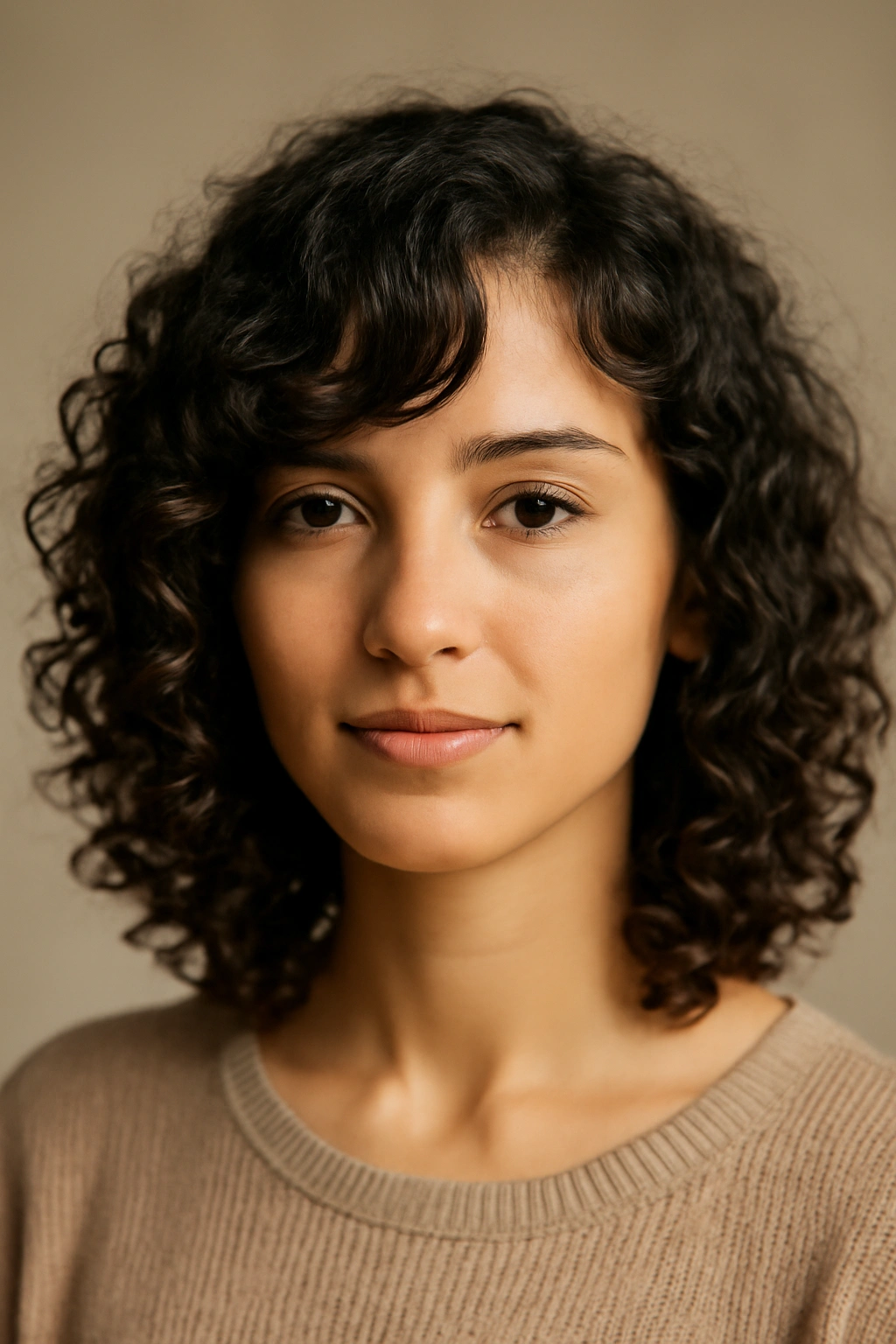
Side-swept bangs offer the beauty of a full fringe without requiring you to maintain a center part. By sweeping the hair to one side, you get full face-framing softness while your curls naturally fall in the direction they want to go. This style is forgiving, adaptable, and works across an enormous range of face shapes and curl patterns. It’s also one of the easiest curly fringes to wear casually because you have so much flexibility in how you style it.
The Versatility of Side-Swept Fringe
Side-swept bangs work because they don’t fight your natural curl direction—they align with it. If your curls naturally want to fall to one side (which most people’s do), a side-swept fringe capitalizes on that rather than trying to override it. This means less frustration, more natural-looking results, and a fringe that feels like it’s part of your hair’s design rather than something you’re forcing into place. You also have the flexibility to wear the fringe swept back on lazy days or to pull it forward for more definition and frame on days when you have the energy to style.
Making Side-Swept Bangs Look Their Best
- Determine which direction your curls naturally want to fall and have your stylist cut the fringe accordingly
- Apply your curl products to damp fringe sections and encourage them to flow in the direction of the cut
- You can wear the fringe fully swept to one side or partially pulled back into a clip for variation throughout the week
- The beauty of this style is that it looks intentional whether it’s perfectly placed or slightly tousled
- Plan for a trim every 6-8 weeks to maintain the length and prevent the fringe from getting too thin as it grows
Real talk: This is arguably the most forgiving curly fringe style because there’s genuine flexibility in how you wear it, making it perfect if you’re new to having a fringe.
5. Micro Bangs with Integrated Texture
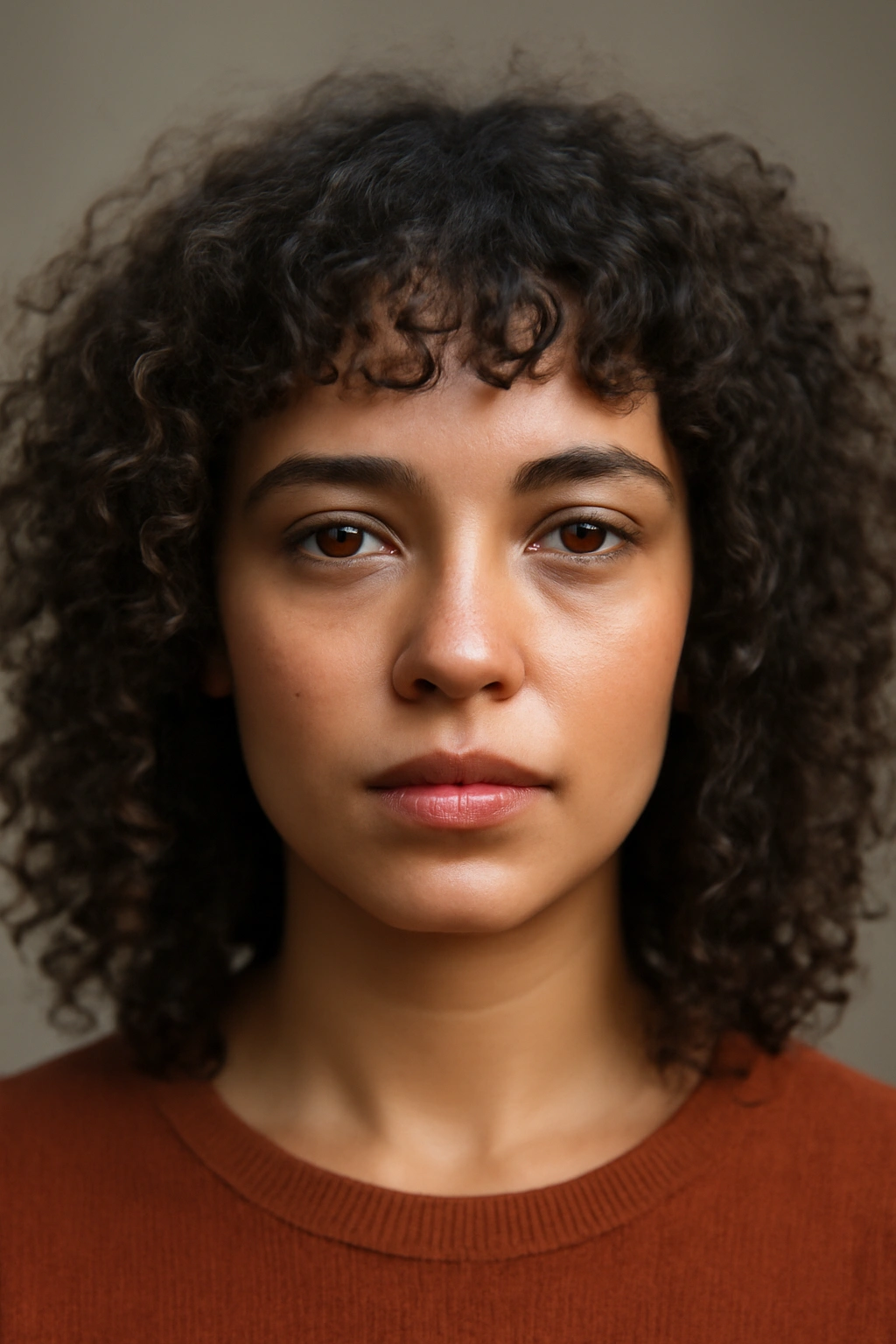
Micro bangs are short—sitting just barely above your eyebrows or even grazing them—and they create a bold, fashion-forward statement that’s particularly stunning on curly hair. Because micro bangs sit higher on the forehead, they don’t interfere with your natural curl fall pattern the way longer fringes might. The key is cutting them with enough texture and layers that they read as intentionally voluminous rather than sparse or thin.
The Bold Beauty of Micro Bangs on Curls
Micro bangs work exceptionally well with curly hair because curls add visual weight and presence to shorter hair lengths in ways that straight hair simply can’t match. A micro bang cut with texture becomes a real design element rather than a nervous experiment. This style is particularly gorgeous on people with medium to tight curls, where the curl pattern itself becomes part of the aesthetic statement. It’s a choice that says you’re confident in your natural texture and you’re willing to let it be the star of your look.
Styling Micro Bangs for Maximum Impact
- Keep micro bangs well-hydrated with a lightweight curl cream or gel applied to damp hair
- Allow them to fully air-dry before assessing how they look, because curls continue to form and set as they dry
- The shorter length means you’ll notice growth more quickly—plan for a trim every 3-4 weeks
- This style pairs best with curly hair that’s overall on the shorter to medium side—it’s harder to balance with very long hair
- Embrace the slightly bold aesthetic rather than trying to tone it down—micro bangs are meant to make a statement
Worth knowing: Micro bangs might feel like a big commitment, but they’re actually incredibly easy to style because the shorter length means less to manage every morning.
6. Blended Fringe That Dissolves Into Layers
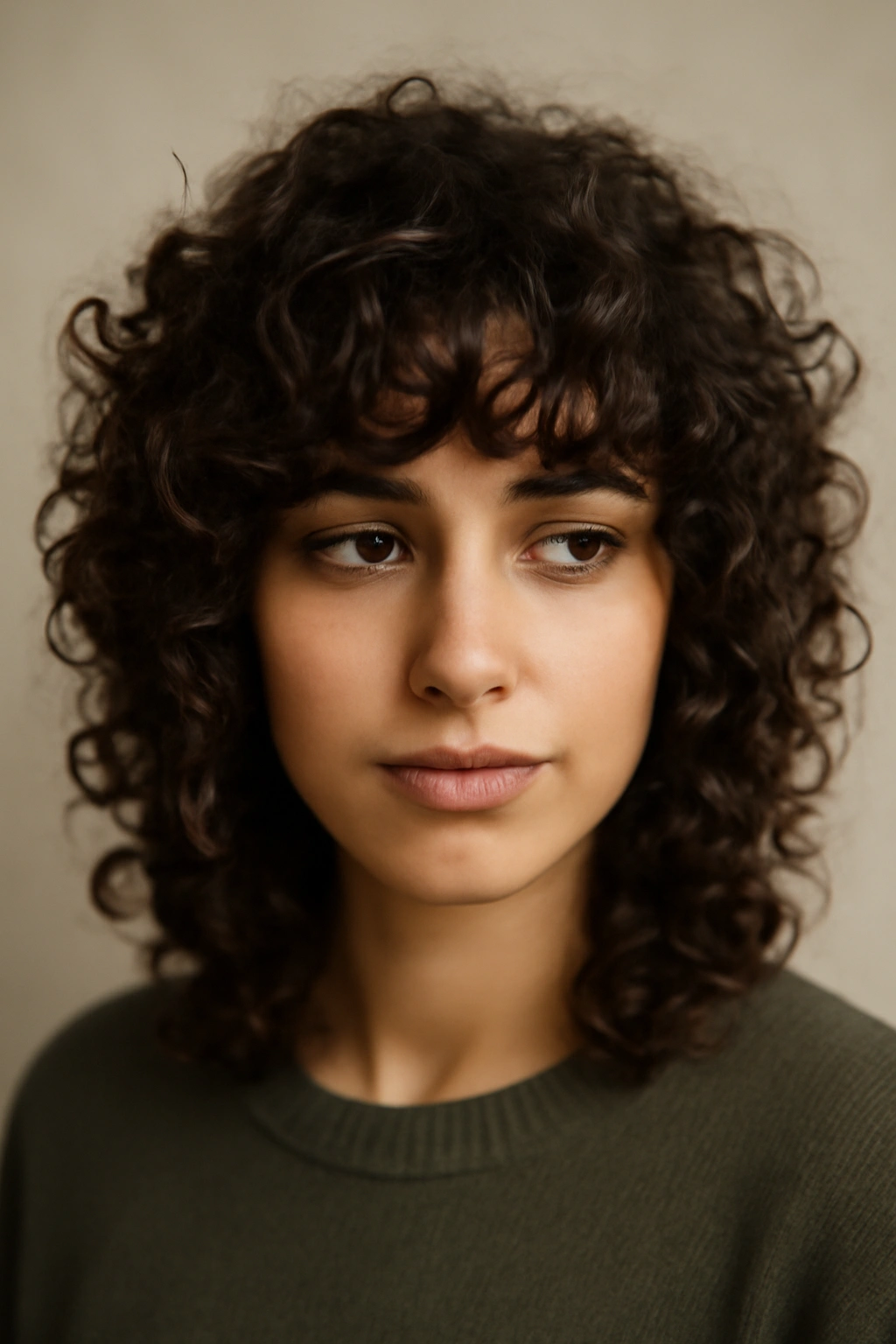
A blended fringe gradually transitions into the rest of your haircut rather than existing as a distinct, separate section. This works beautifully with curly hair because it means there’s no harsh line between your fringe and your layers—instead, there’s a seamless progression of curl. This style is ideal if you want the softness and face-framing of a fringe without the feeling of having a separate “bangs moment.”
How Blended Fringes Create Seamless Face Framing
The genius of a blended fringe is that it feels like a natural extension of your overall curl pattern rather than an added element. Because there’s no distinct line between the fringe and the rest of your curls, the fringe reads as intentional layering rather than as a separate hairstyle choice. This approach works particularly well if your hair is already fairly layered throughout, and it’s stunning on people who have an overall shorter to medium-length cut. The visual result is a face-framing softness that feels organic and effortless.
Maintaining Blended Fringe Cuts
- Have your stylist explain exactly where the fringe begins and ends so you understand the overall shape of the cut
- When you’re styling, apply product to the entire face-framing section—not just the fringe—so the transition reads as seamless
- Trim every 6-8 weeks to maintain the smooth blending between the fringe and layers
- This style works best when your entire cut has intentional layering and texture throughout
- Because there’s no distinct line to maintain, this fringe is one of the more forgiving options for between-salon time
Pro tip: If you’re drawn to the look of a fringe but worry you’ll regret committing to a distinct bang line, a blended fringe gives you the best of both worlds.
7. Choppy Wispy Fringe with Lots of Movement
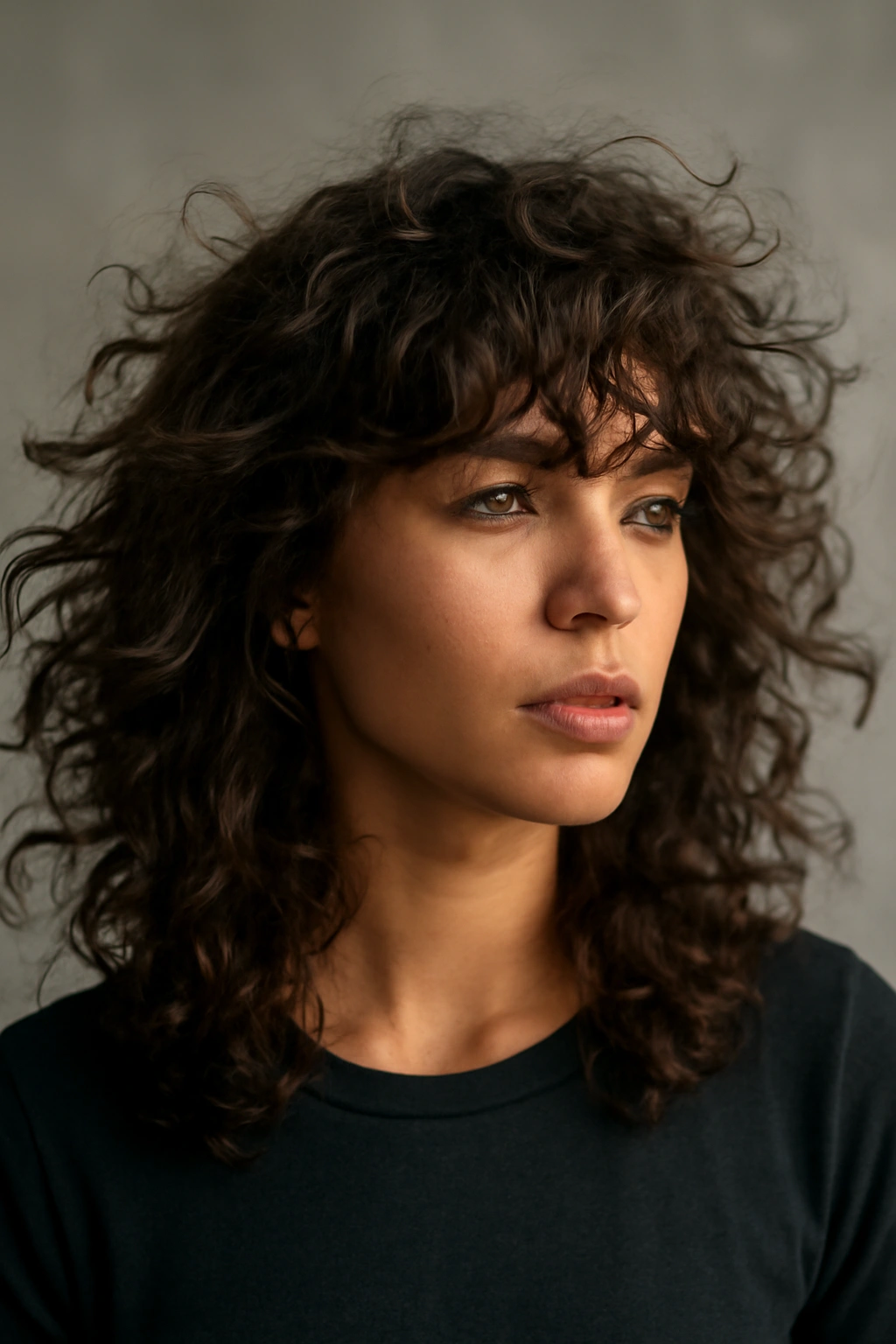
Choppy fringes take the wispy concept and amplify it with more dramatic layers and texture. This style uses a chopped, almost shaggy technique to create individual pieces that move and bounce independently, creating a playful, youthful frame. It’s perfect for people who want serious movement and dimension and who embrace a more casual, lived-in aesthetic.
The Dynamic Energy of Choppy Fringes
Choppy wispy fringes look their absolute best on curly hair because the natural curl pattern amplifies the movement that the cut creates. Each layer becomes its own element, and when curls form around those layers, you get incredible dimension and visual interest. This style doesn’t look polished or perfectly groomed—it looks intentional, modern, and full of personality. It’s ideal for people who love their curls and want to celebrate them rather than tame them.
Styling Choppy Fringe for Best Results
- Apply a curl-defining cream or gel to damp fringe sections and let them air-dry in their natural pattern
- The more texture you maintain, the better this style looks—fighting the choppy layers defeats the purpose
- Avoid brushing the fringe when dry; instead, use your fingers to gently separate pieces if needed
- Plan for a trim every 4-6 weeks because the choppy layers will start to look shaggy and unkempt if they get too grown out
- This fringe pairs beautifully with an overall shaggy or layered haircut that reinforces the movement-focused aesthetic
Worth knowing: This style photographs incredibly well because the layers and movement create dynamic visual interest in every angle.
8. Rounded Fringe That Follows Your Natural Curl Line
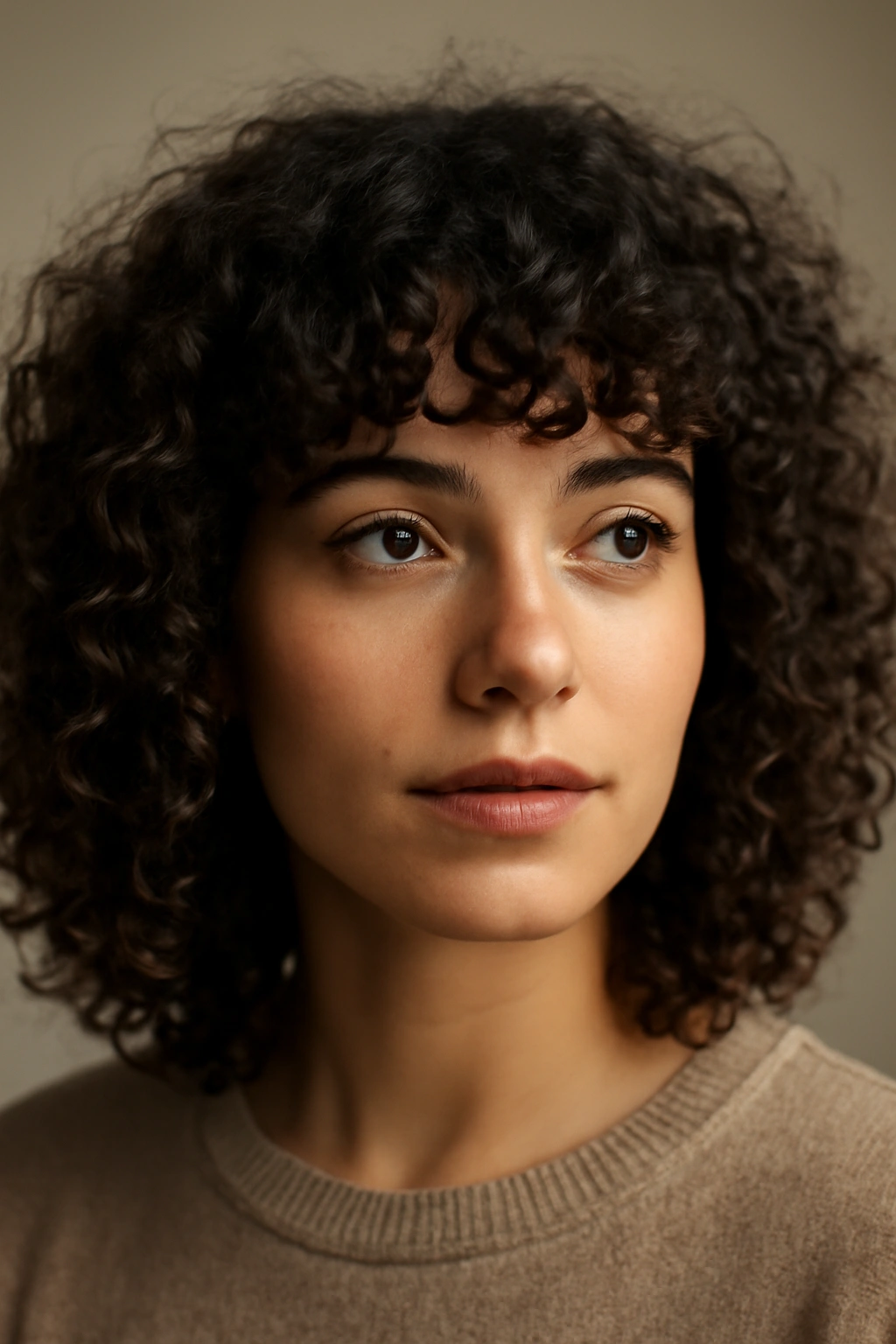
A rounded fringe uses your natural curl curve to create a soft, almost bubble-like frame. Instead of cutting a straight or angled line, the stylist follows the way your curls naturally want to fall and cuts along that curve. The result is incredibly flattering and means your fringe naturally settles into its perfect position without requiring lots of daily styling.
The Ease of Rounded Fringe Cuts
Rounded fringes are magical because they work with your hair’s natural behavior rather than fighting it. Your curls literally want to fall in the shape the stylist has cut, which means they look intentional and beautiful with minimal effort. This style is particularly great for people who don’t want to spend significant time styling their fringe every morning. The rounded shape is also incredibly flattering—it softens facial features and creates a gentle, approachable appearance.
Maintaining Rounded Fringe Cuts
- Let your fringe air-dry in its natural formation and resist the urge to force it into a different shape
- Use a leave-in conditioner or curl cream on damp fringe to encourage your natural curl pattern to form
- The rounded shape means the fringe looks good even when it’s slightly tousled or not perfectly in place
- Trim every 6-8 weeks to maintain the rounded shape as the fringe grows out
- This is one of the lowest-maintenance fringe options available, making it perfect for busy people
Pro tip: Ask your stylist to show you a photo of what a rounded fringe looks like on fully dried, set curls before you commit—this helps you understand exactly what you’re getting.
9. Deep Side Part with Voluminous Fringe
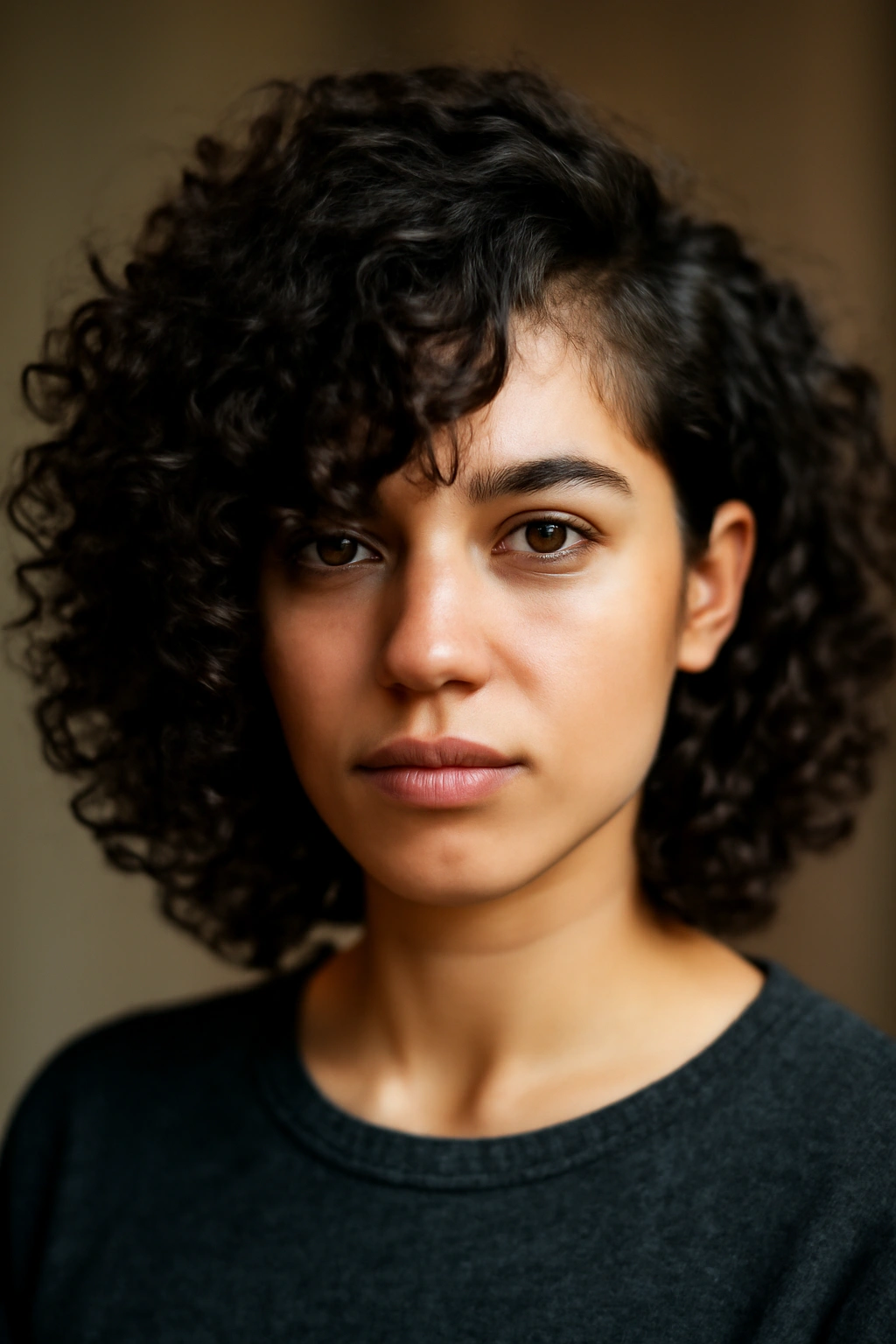
A deep side part combined with a voluminous fringe creates incredible dimension and drama while remaining surprisingly wearable. By placing the part dramatically to one side, you create a situation where most of your hair falls to one side, but enough remains to create a lush, textured fringe on the other. This style is bold, modern, and absolutely stunning on curly hair.
The Drama of Deep-Part Fringe
This style works because the deep part creates a natural flow for your hair while the fringe adds a distinct face-framing element. The voluminous texture of curls on the fringe side creates visual interest and softness, while the deeper-part side adds balance and complexity. It’s a style that demands attention but in a sophisticated, intentional way. This works particularly well for people with medium to thick curls who have enough hair to sustain both the deep part and a substantial fringe.
Styling Deep-Part Voluminous Fringe
- Place the part dramatically to the side, ideally using a rat-tail comb to create a clean line while hair is still damp
- Apply curl cream to damp fringe sections and encourage them to form defined, voluminous curls
- The volume in the fringe is part of what makes this style work—aim for lift and dimension rather than flat, sleek curls
- You can vary where you place the part throughout the week, which adds versatility
- Trim every 6-8 weeks and request that your stylist maintain the voluminous texture through thoughtful layering
Real talk: This is a style that looks best when you’re genuinely embracing volume and texture rather than trying to smooth everything down.
10. Soft Curtain-Cut Fringe with Loose Waves

Soft curtain-cut fringes with loose waves create an incredibly romantic, effortless aesthetic. These fringes sweep to either side with a center part, but rather than defined, tight curls, the waves are looser and more relaxed. This style works beautifully on people with looser curl patterns (waves, rather than coils) and creates a frame that feels soft, approachable, and genuinely beautiful.
The Romantic Beauty of Soft Curtain Waves
This style is all about celebrating natural movement and softness. The curtain cut allows the hair to frame your face while the loose waves create a romantic, almost dreamy quality. It’s a style that works across multiple face shapes and hair textures, making it genuinely universally flattering. Because the waves are loose rather than tight, this style also requires less intensive curl maintenance, which makes it appealing for people who love their natural texture but aren’t interested in dramatic styling demands.
Making Soft Curtain Waves Look Their Best
- Apply a lightweight wave cream or leave-in conditioner to damp fringe sections and allow them to air-dry
- Because the waves are loose, you have flexibility in whether they’re perfectly in place or slightly tousled
- Trim every 6-8 weeks to maintain the length and prevent the fringe from looking overgrown and stringy
- This style pairs beautifully with longer hair or a long lob where the waves flow throughout
- You can enhance the romantic aesthetic by occasionally scrunching the fringe with a curl-enhancing product for more definition
Pro tip: This is an ideal fringe style for transition periods when you’re growing out your curls or experimenting with different curl patterns, because it works across various wave types.
Final Thoughts
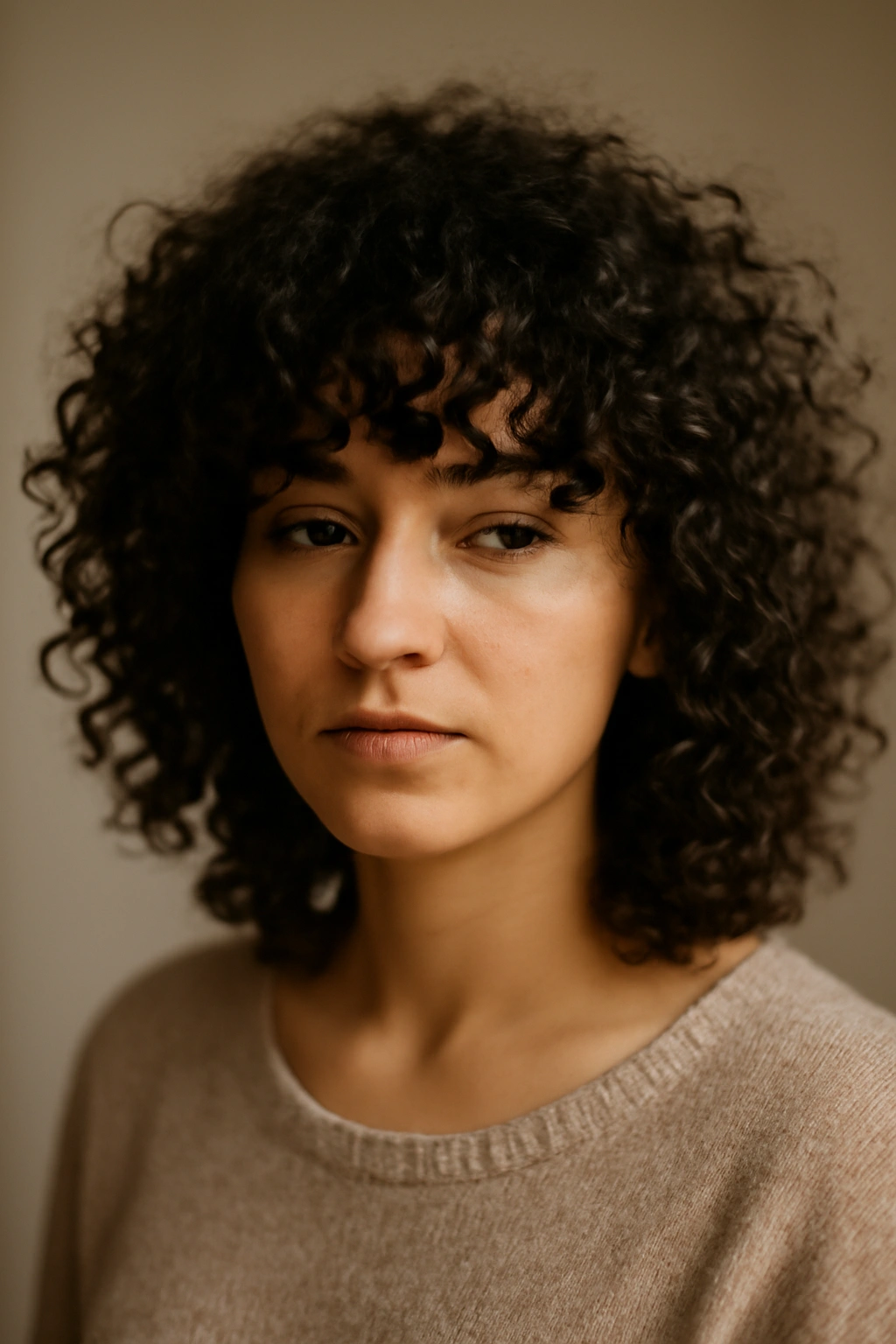
A curly fringe isn’t just a hairstyle choice—it’s a statement about how you want to present yourself and how willing you are to celebrate your natural texture. The right fringe style makes you feel more like yourself every single day, which is honestly what beautiful hair is really about.
Your curl pattern is genuinely an asset when choosing a fringe, not a limitation. Curls add volume, movement, and personality to fringe styles in ways that straight hair simply can’t replicate. Instead of viewing your curls as something to work around, find a stylist who understands how to work with them. Ask specifically about how they’ll adapt any fringe style to your particular curl pattern, how the fringe will look when it’s fully dried and set, and what maintenance you’ll realistically need to keep it looking fresh.
Start with a consultation before committing to any fringe. Bring photos of styles you love, but also be honest about your curl pattern and how much styling you’re willing to do. The most beautiful fringe in the world isn’t beautiful if you hate maintaining it or if it requires tools and techniques that don’t align with how you actually want to live. Choose a style that aligns with your real life, your actual curl pattern, and the aesthetic that makes you feel most confident. That’s the fringe that’ll become your signature.
