



Layered haircuts have earned their staying power for a reason—they add movement, texture, and dimension to virtually every hair type without requiring you to commit to a drastic style change. Whether you’re working with pencil-thin strands that need all the help they can get or thick, coarse hair that’s been weighing you down for years, the right layered cut can completely transform how your hair moves and how confident you feel running your fingers through it.
The challenge, though, is that not every layered cut works for every head. A choppy, heavily layered pixie that looks edgy and chic on someone with fine, straight hair might look thin and wispy on naturally fine, curly strands. A long, cascading layered cut that brings out the best in thick, wavy hair could overwhelm someone with delicate facial features and thinner hair. The magic happens when you find a layered style that actually works with your hair’s natural texture and density, rather than fighting against it.
What makes layered cuts so versatile is that the actual technique—removing length and weight strategically throughout the hair to create separation and movement—can be adapted infinitely. Layers can be subtle and barely-there, or they can be dramatic and choppy. They can start close to the scalp for maximum texture, or begin further down the hair shaft for a softer transition. Understanding how length and hair type interact with these cutting techniques is the difference between a haircut that transforms you and one you’ll regret within two weeks.
Below, you’ll find 20 distinct layered haircut options organized by length and hair type, with specific guidance on what makes each one work, who it suits best, and how to style it for the best results.
1. The Textured Pixie for Fine, Straight Hair
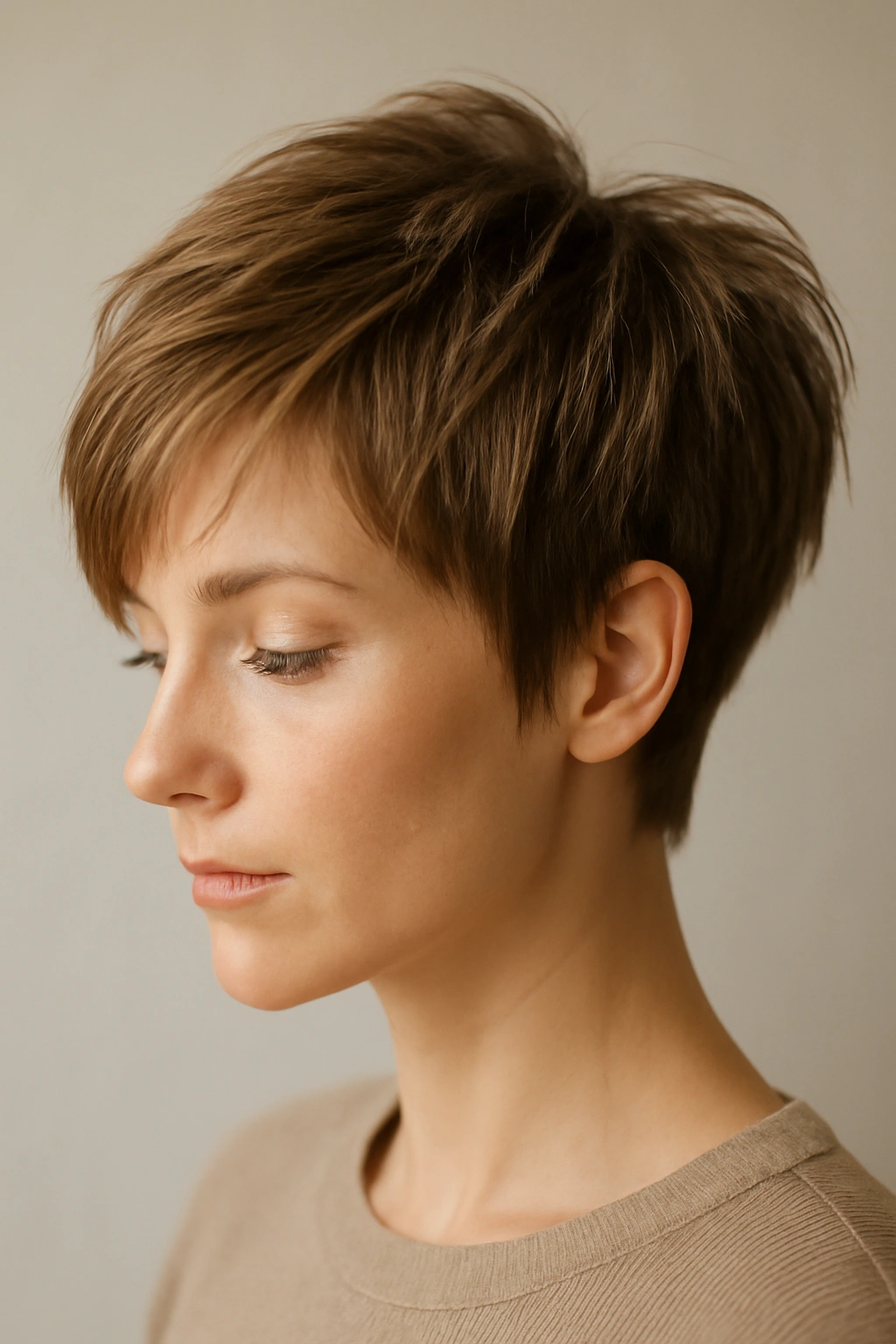
A textured pixie is the short layered cut that actually adds fullness to fine hair by strategically distributing what you have across the head rather than letting it collapse flat. The cut works by creating multiple short layers throughout—typically keeping the crown about 2 to 3 inches and stacking shorter layers underneath to build the illusion of density. The sides and back are cut close to the head with subtle texturizing, while longer pieces in the front create asymmetry and movement.
Why It Works So Well for Fine Hair
Fine hair thrives when you remove weight rather than bulk up the overall volume. A textured pixie cuts away the heavy underneath that would flatten everything, leaving just enough hair in the right places to create shape and texture. This cut also exposes more scalp, which naturally makes the head appear fuller than longer styles that stick to the skull. The short length means less distance for your delicate strands to hang, so they hold style longer and respond better to styling products like volumizing sprays and lightweight mousses.
How to Make It Your Own
- Cut total length on top to 2 to 3 inches, angling longer toward the face if you prefer dimension
- Add very short choppy layers underneath for maximum texture and movement
- Keep the back and sides close and clean for a polished, modern look
- Ask for longer pieces in the front that can graze your jawline for softening
- Use a texturizing spray on damp hair and rough-dry with your fingers for that piece-y, lived-in effect
Pro tip: Sleep on slightly damp hair after applying a lightweight mousse, and wake up with natural texture already in place — this cut holds its shape beautifully overnight.
2. The Choppy Lob for Fine, Wavy Hair
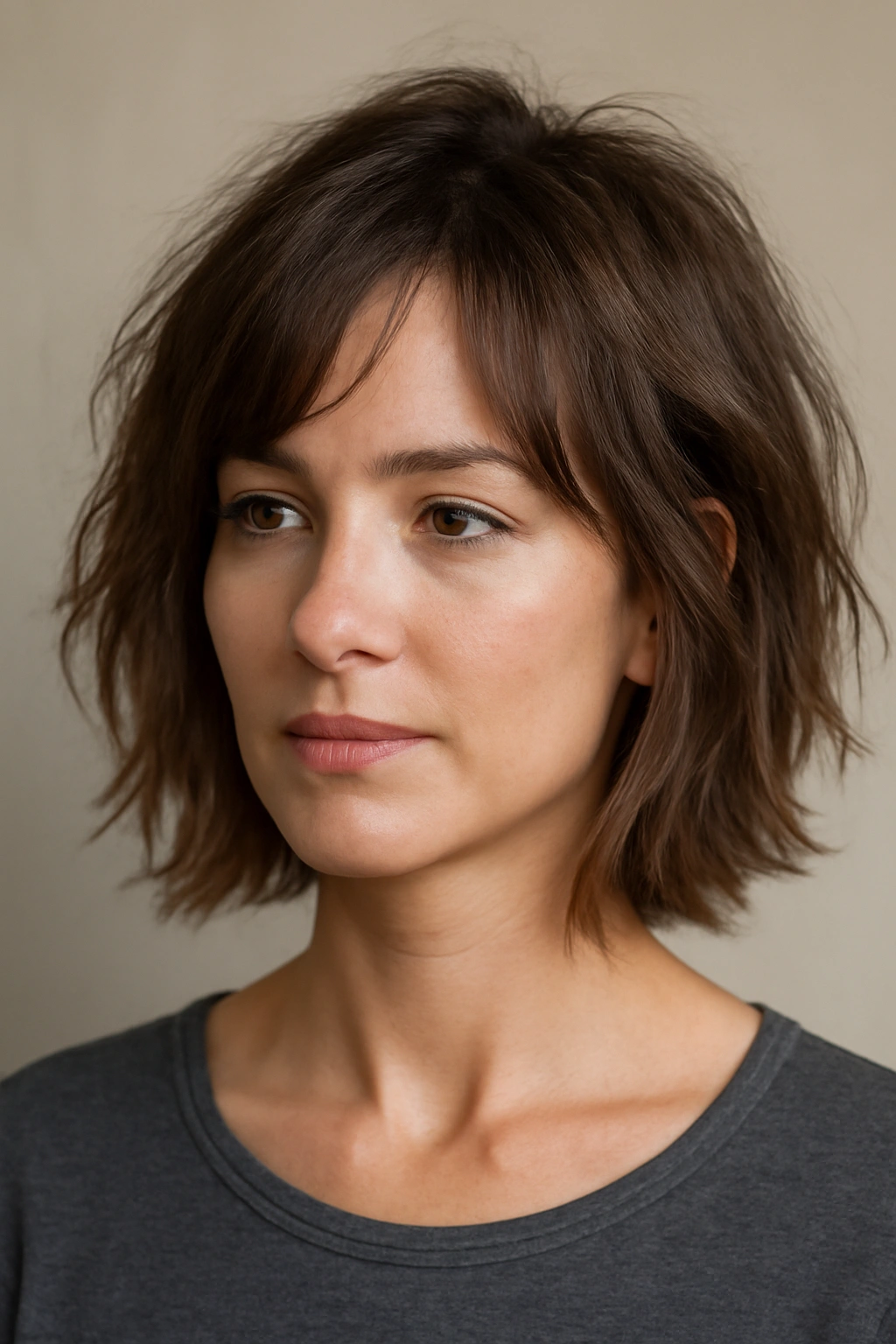
A choppy lob (shoulder-length bob) with pronounced layers gives fine, wavy hair the texture it naturally wants to move into, without the weight of a blunt cut that would flatten your waves. This cut typically sits right at the shoulder or just below, with layers starting at the cheekbone and becoming increasingly choppy toward the bottom. The choppy layering creates space between the strands, allowing your natural wave pattern to shine instead of getting weighed down by too much hair sitting on top of it.
What Makes This Cut Ideal for Your Hair Type
Fine, wavy hair walks a tightrope—you want enough length to avoid looking too sparse, but not so much that weight overcomes your waves. A choppy lob splits that difference perfectly. The layers begin high enough to create volume at the crown and around the face, but the choppy texture throughout prevents the ends from becoming one heavy, blunt line that would drag down your waves. Wavy texture actually works in your favor here because the natural movement is amplified by the layering, making your hair look fuller and more textured than it actually is.
Styling and Maintenance Tips
- Blow-dry with a round brush to enhance wave texture, or air-dry with a sea salt spray for effortless waves
- Use a lightweight leave-in conditioner to define and separate the layers without weighing hair down
- Refresh waves between washes with a texturizing spray or dry shampoo for added grip
- Get trims every 6 to 8 weeks to keep choppy layers looking intentional and not overgrown
- Style with loose waves or tucked-behind-the-ear styling to showcase the layering
Worth knowing: This cut looks even better as it grows out slightly—the layers relax into softer waves, and you’ll get an extra month or two of great styling before needing a trim.
3. The Shaggy Crop for Curly, Coarse Hair
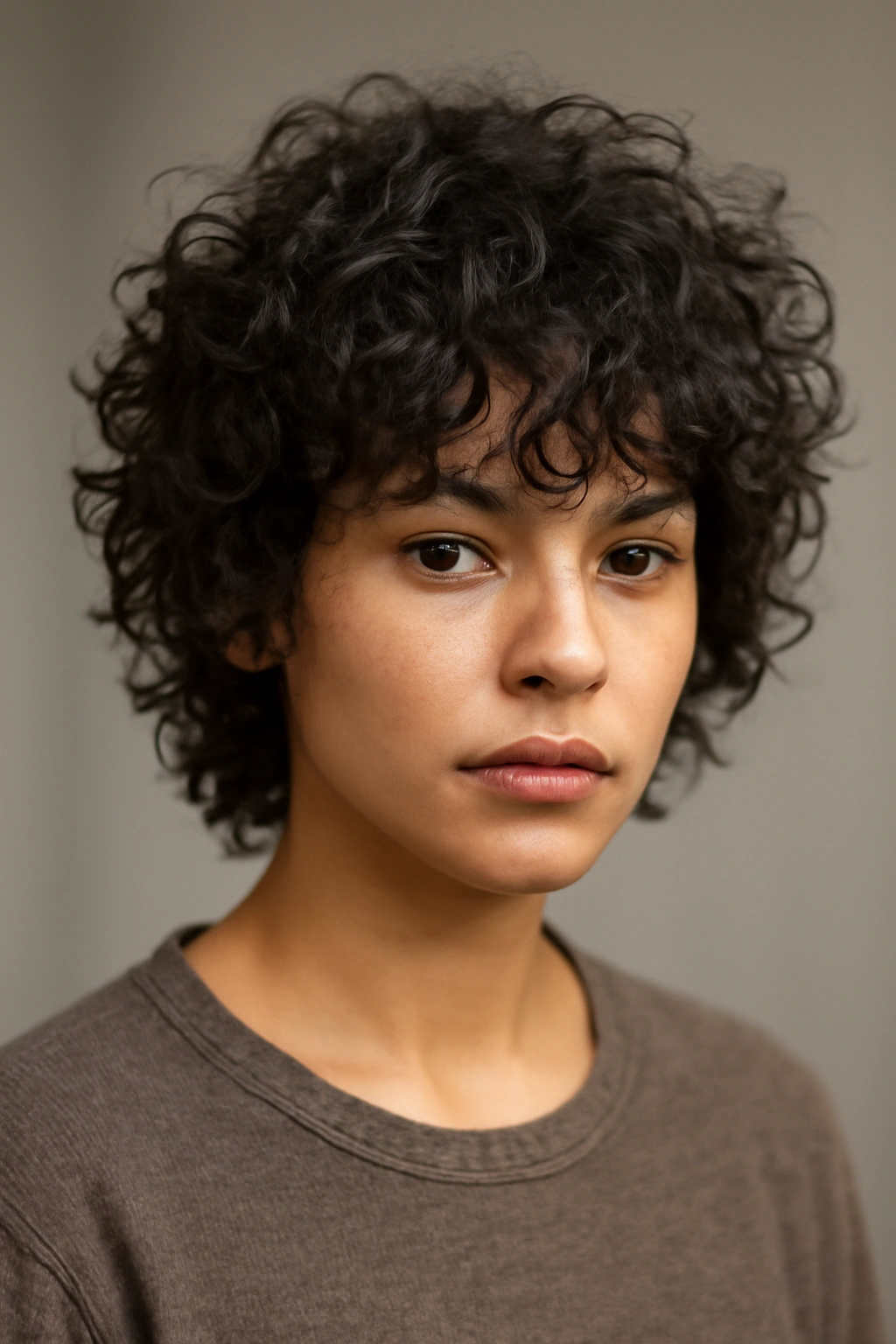
A shaggy crop is the short, textured, heavily layered cut designed specifically for thick, curly, or coarse hair that needs serious texture work to avoid looking bulky. This cut is all about creating movement and separation throughout, with layers that start very close to the crown and are stacked throughout the entire head. The result is a cut that sits around 2 to 3 inches on top and is much shorter underneath, creating a tousled, deliberately undone vibe that actually requires significant skill from your stylist to execute well.
Why Coarse and Curly Hair Needs This Approach
Thick, curly hair has natural volume that a lot of cuts try to fight by keeping it long and heavy. A shaggy crop does the opposite—it embraces the texture and uses layers to channel that volume into style instead of bulk. The shorter overall length means curls sit closer to the scalp where they naturally have more shape, and the stacked layers create definition between curls rather than matting them together. Your natural texture becomes the style itself, which means less styling effort required and better results that match what your hair naturally wants to do.
How to Wear and Maintain It
- Apply curl cream or gel to soaking-wet hair and scrunch upward to encourage curl formation
- Air-dry completely or use a diffuser on low heat to avoid disrupting curl pattern
- Refresh curls between washes by misting with water and scrunching in more product
- Get shaped-up trims every 4 to 6 weeks because coarse hair grows visibly and texture shows growth faster
- Use a wide-tooth comb only on soaking-wet hair to avoid disrupting curl definition
Insider note: The best versions of this cut happen when your stylist understands your specific curl pattern and cuts your hair dry (or at least mostly dry) so they can see exactly how curls will sit when they dry.
4. The Blunt Bob with Internal Layers for Thick, Straight Hair
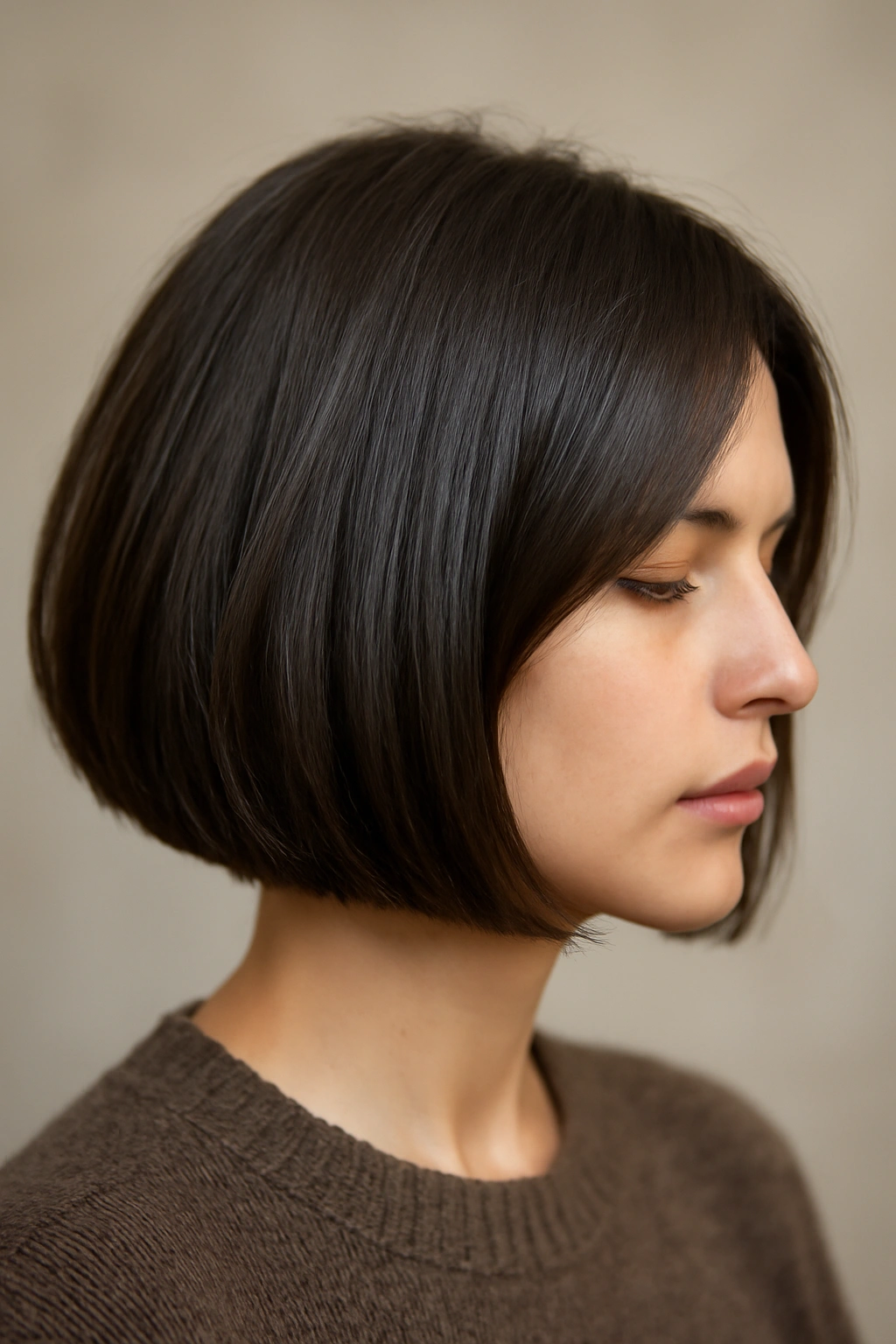
A blunt bob with internal layering is the cut that gives thick, straight hair serious structure and movement without sacrificing the clean, polished bluntness that flatters straight textures. This cut maintains a blunt perimeter line at the chin or slightly longer, but adds internal layers throughout to remove weight and create volume at the crown without making the outside edges look thin or choppy. It’s a hybrid between a classic blunt bob and a layered cut—the best of both worlds for someone with substantial hair that can handle the density.
The Strategic Advantage for Thick Hair
Thick, straight hair can absorb an enormous amount of layering without looking thin, which means you can remove serious weight while maintaining the sleek, polished perimeter line that straight hair does so well. The internal layers create bounce and movement that a completely blunt cut might lack, while keeping the clean lines that make thick, straight hair look elegant and deliberate. This cut also prevents the helmet-head effect that can happen when thick, straight hair is cut blunt without any internal texture work—the layers keep it looking intentional and current rather than heavy-handed.
Styling for Maximum Impact
- Blow-dry with a paddle brush for smooth, sleek finish that highlights the blunt edge
- Use a flat iron with light tension to enhance shine and straightness if desired
- Apply a lightweight serum or oil to ends to enhance bluntness while keeping shine
- Layer a volumizing powder at the roots for lift, especially if you have a round face
- The beauty of this cut is that it’s low-maintenance—straight hair naturally sits the way it was cut
Quick facts:
- Best face shapes: oval, square, and rectangular faces benefit from the structure this cut provides
- Maintenance: trims every 6 to 8 weeks keep the blunt line clean
- Works well with: sleek, professional styling and also with beachy waves for weekend looks
- Styling time: 10 minutes or less most days
5. The Feathered Shag for Medium-Length Fine Hair
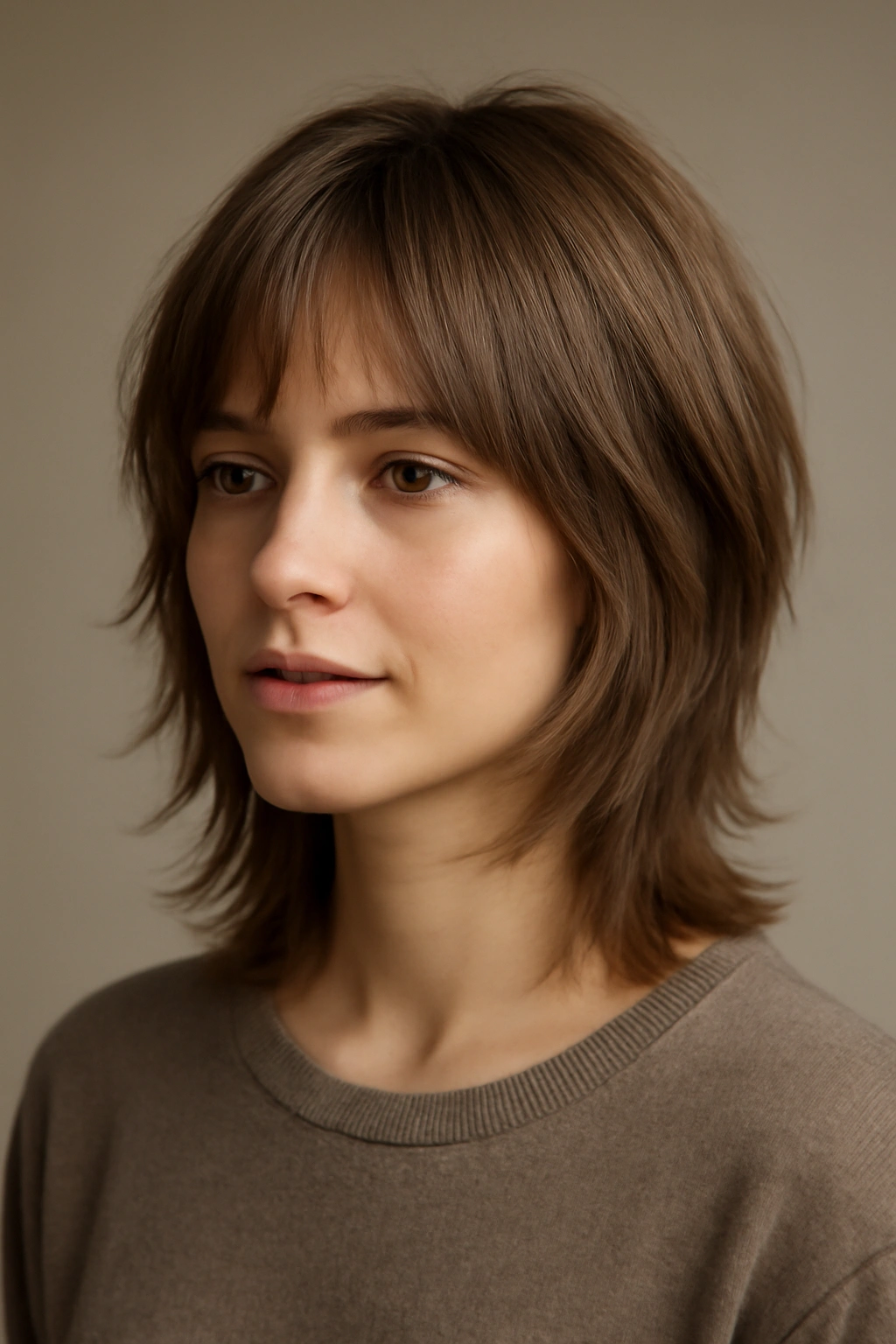
A feathered shag is a medium-length cut that sits around shoulder-length or slightly longer, with layers that begin at the cheekbone and are feathered (tapered rather than choppy) throughout. This cut creates soft, flowing movement without the choppy texture—the layers blend smoothly into each other rather than creating distinct separation. For fine hair, this matters because feathering removes weight gradually rather than in chunks, so you get the volume benefits of layers without the sparse, stringy look that choppy layers can create on thinner strands.
Why Feathering Wins for Fine Hair
The difference between feathered and choppy layering is texture and density. Feathered layers blend gradually from longer to shorter, which works beautifully with fine hair’s natural thinness by creating a gradual transition rather than a stark contrast. This makes the hair look fuller and more intentional, whereas choppy layers can expose scalp and thin patches if your fine hair doesn’t have enough density to support them. The feathering technique also allows you to wear your hair down and flowing, which is often more flattering on finer strands than heavily textured, separates-every-strand styling.
Best Ways to Style This Cut
- Apply volumizing mousse to damp roots before blow-drying for lift and body
- Blow-dry away from the face with a round brush to create soft waves
- Sleep in loose braids or buns to add natural waves without heat damage
- Use a light hairspray that doesn’t weigh down fine hair
- Style with your natural hair texture—this cut is designed to enhance, not transform
Pro tip: This cut looks incredibly romantic when styled with soft waves, but also works beautifully slicked back into a high ponytail, which shows off the layering and the shape of your head.
6. The Textured Shag for Medium-Length Wavy Hair
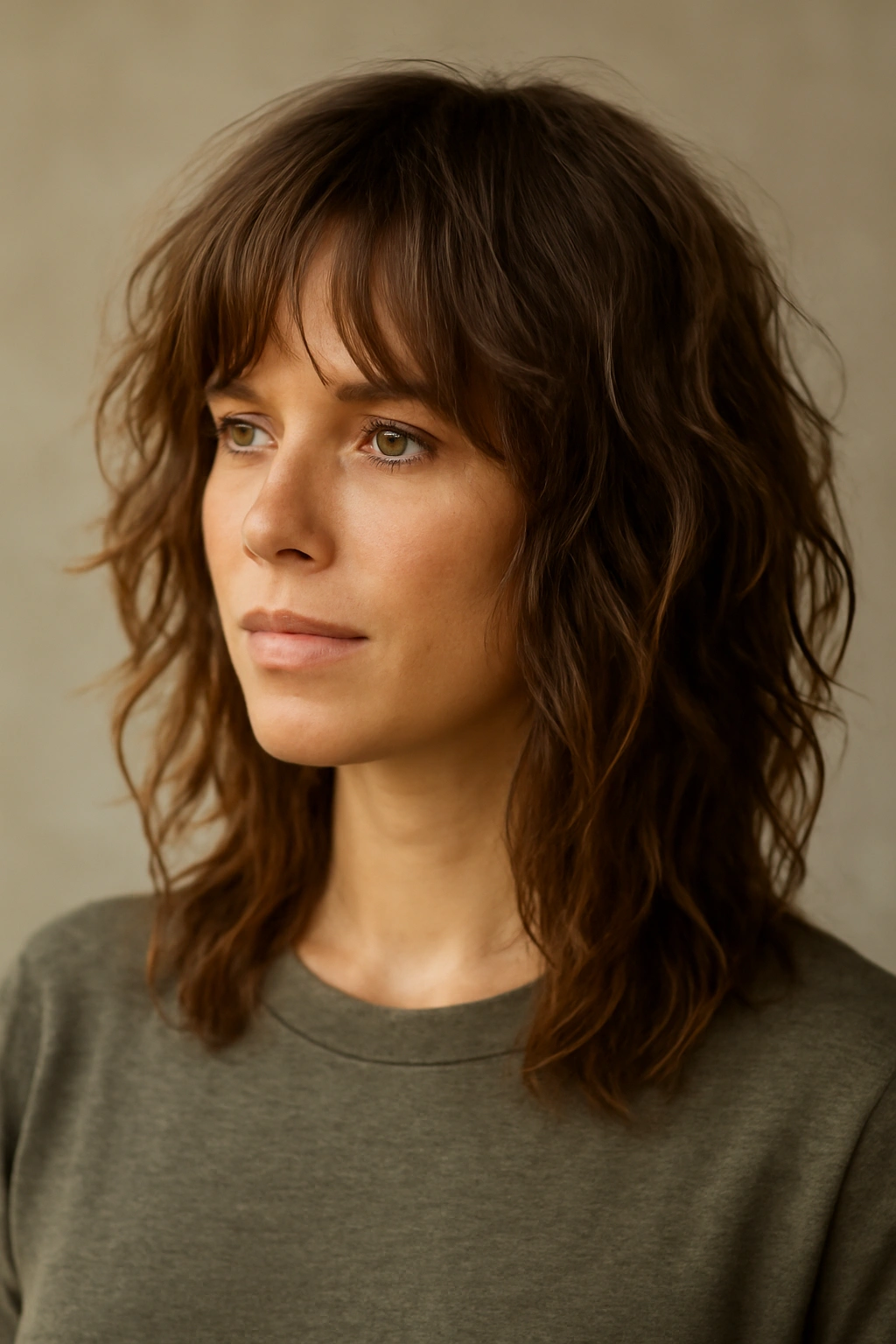
A textured shag for medium-length wavy hair is the cut that leans into your natural waves and amplifies them through deliberate layering and texturizing throughout. This cut typically sits right around shoulder-length with pronounced layers that start at the cheekbone and become progressively choppy toward the bottom, creating separation and movement throughout. The whole concept is built around the idea that your natural wave texture is the style—the layers are there to show off and enhance what your hair naturally wants to do.
What Makes This Perfect for Wavy Hair
Wavy hair benefits enormously from layering because it naturally has movement, and layers create space for that movement to express itself fully. A textured shag doesn’t fight your waves—it works with them, giving you permission to embrace that texture rather than trying to blow-dry it straight or weigh it down with heavy product. The choppy layers throughout mean you’re not dependent on one consistent wave pattern or one perfect blow-dry; instead, each layer moves independently, creating a tousled, intentional vibe that looks great whether it’s perfectly styled or you just threw it in a bun.
How to Achieve the Shag Look
- Apply a sea salt spray or texturizing spray to damp hair and scrunch to encourage waves
- Blow-dry with fingers or a diffuser to enhance natural wave pattern, or air-dry for effortless texture
- Refresh waves between washes with dry shampoo or a texturizing spray for added grit and grip
- Use a lightweight leave-in conditioner or wave cream to define and separate layers
- Style with your hair down and tousled, or pin half back to show off face-framing layers
Worth knowing: This cut actually improves over several weeks as you wear it—it gets shaggy in the best way possible, with more movement and texture as the layers relax and grow slightly.
7. The Layered Mullet for Curly, Medium-Length Hair
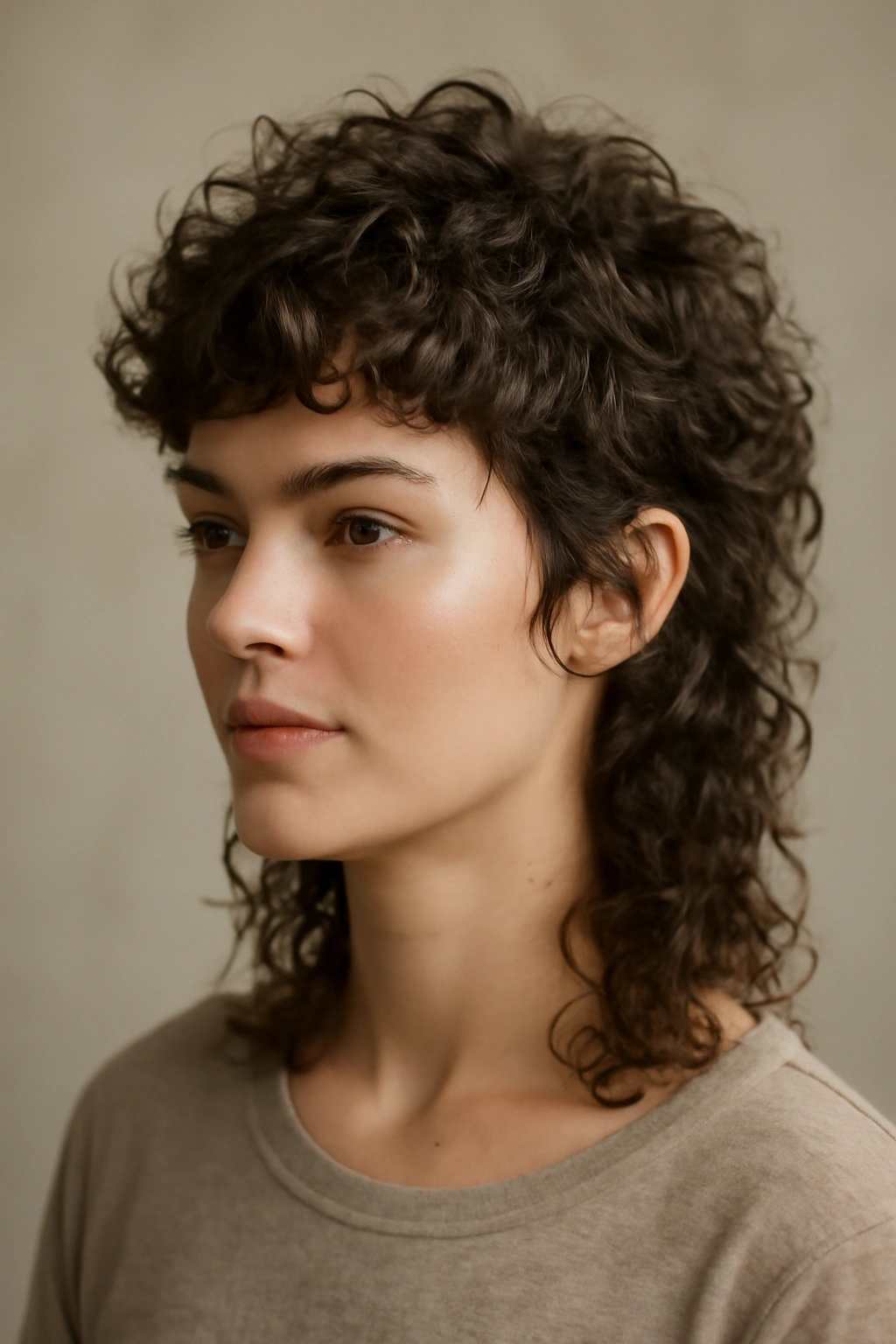
A layered mullet might sound edgy and trendy, but for curly, medium-length hair, it’s actually a strategic cut that creates serious style and movement. This cut keeps curly, textured hair shorter on top and at the sides while leaving longer length in the back, with layers throughout that create definition and separation in your curl pattern. It’s not the 1980s mullet—modern versions are blended and intentional, with choppy, textured layers that work with your curl pattern rather than against it.
Why This Works for Curls at Medium Length
A mullet structure gives you the best of both worlds with curly hair: shape and definition on top where curls naturally have the most volume, and length in the back for people who love having longer, flowing hair but still want structure. The layers throughout create separation between individual curls, which prevents matting and clumping while making each curl more defined and visible. The shorter, textured top creates an intentional, deliberately styled look, while the longer back gives you movement and flow—it’s the opposite of trying to make curly hair do something it doesn’t want to do.
Maintaining and Styling Your Mullet
- Use a curl-defining cream on soaking-wet hair, scrunching and squeezing to encourage curl formation
- Plop with a microfiber towel or t-shirt to remove excess water without disrupting curls
- Air-dry or use a diffuser on low heat to preserve curl definition
- Refresh curls between washes by misting with water and adding more product as needed
- Get shaped-up trims every 4 to 6 weeks because the structure of a mullet shows growth and reshaping needs
Quick facts:
- Best for: people comfortable with a bold, fashion-forward look who want serious style
- Styling time: 15 to 20 minutes in the morning, less if you air-dry
- Works with: intentional, curated styling and also with down-and-casual tousled looks
- Maintenance: regular trims required to keep shape crisp
8. The Lived-In Lob for Thick, Wavy Hair
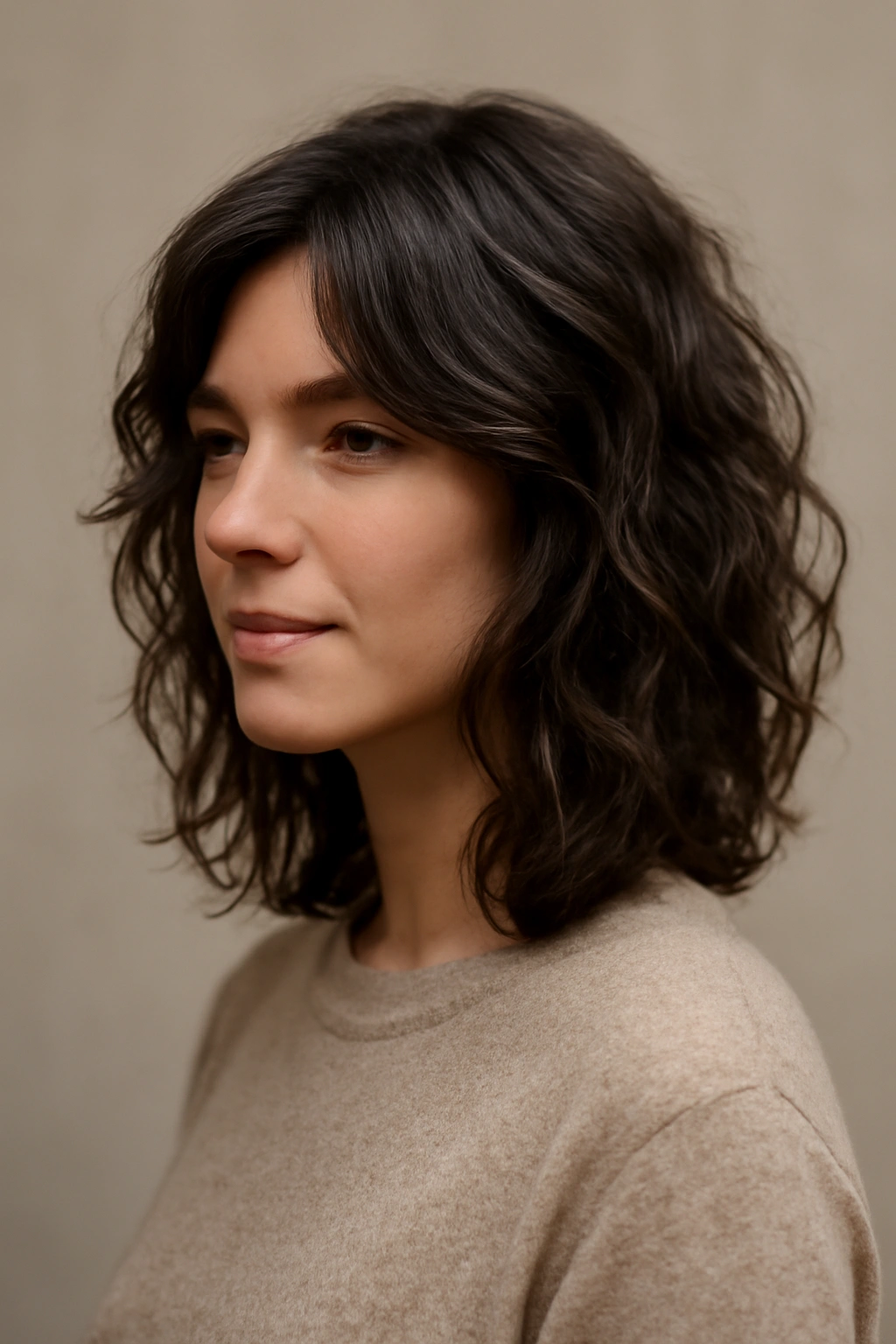
A lived-in lob is the medium-length layered cut designed to look effortlessly undone, like your hair just naturally falls that way—even though there’s actually quite a bit of intentional cutting and styling work behind it. This cut sits around shoulder-length with soft, subtle layers that begin lower on the head (often around the ears) and become progressively softer as they go down, creating a vaguely shaggy but definitely polished vibe. For thick, wavy hair, it’s the perfect length to leverage your natural texture without the weight of longer hair becoming overwhelming.
Why Thick, Wavy Hair Makes This Cut Look Incredible
A lived-in lob on thick, wavy hair practically styles itself—your natural waves create the texture and movement that the cut is designed to showcase, and the thickness means your hair fills out the shape beautifully without looking sparse or wispy. The soft layering works with your natural wave pattern rather than against it, so you don’t need to do dramatic styling work to make it look great. This is the cut that looks equally good styled deliberately or thrown together at the last minute, which is the whole point of the “lived-in” aesthetic.
Styling This Cut for Maximum Dimension
- Blow-dry on medium heat with your fingers to enhance waves and create volume
- Use a lightweight sea salt spray for texture and separation throughout
- Sleep on the sides of your hair to enhance waves naturally
- Style with your hair down and slightly tousled, or half-up for variety
- Refresh between washes with dry shampoo for grip and added texture
Pro tip: This cut looks even better when it grows out slightly—the layers relax and become softer, giving you an extra 6 to 8 weeks of great-looking hair before needing a trim.
9. The Choppy Wolf Cut for Fine, Curly Hair
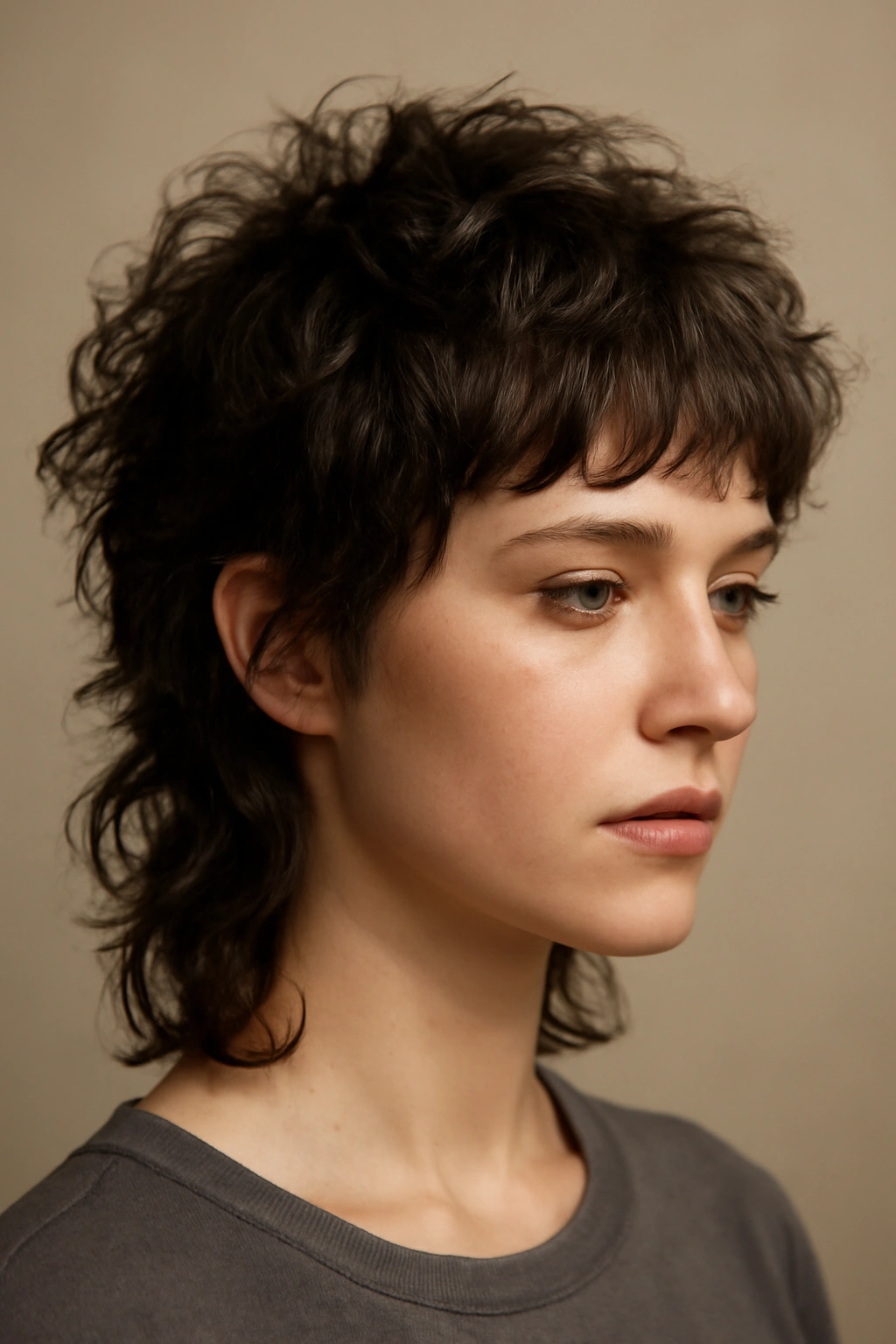
A wolf cut is a modern, fashion-forward layered cut that blends the softness of a shag with the intentionality of a mullet, and when executed properly for fine, curly hair, it’s absolutely transformative. This cut features shorter, textured layers on top for definition and lift, with progressively longer layers creating a wolf-like silhouette—hence the name. For fine, curly hair, the choppy layers throughout create serious movement and definition while the longer back pieces provide length and flow without weighing down the delicate curls at the crown.
How This Cut Transforms Fine Curls
Fine, curly hair often struggles with volume at the crown because the weight of longer curls pulls everything down and makes curls look matted. A wolf cut solves this by removing length and weight strategically on top, where you need the most lift, while keeping length through the back. The choppy layers throughout create separation between individual curls, preventing the matted, undefined look that sometimes happens with fine curls. The result is a cut where your curls actually have room to express themselves individually, creating the appearance of much more volume than you might actually have.
Styling and Maintenance Strategy
- Apply curl cream or gel to soaking-wet hair, scrunching and squeezing to activate curl pattern
- Use the praying hands method or squish-to-condish to smooth and shape curls
- Air-dry completely or use a diffuser on low heat for best results
- Refresh curls between washes by misting with water and scrunching in product
- Get shaped-up trims every 4 to 6 weeks because fine curls show growth visibly
Worth knowing: The success of this cut depends heavily on having a stylist who understands your specific curl pattern—ideally someone who specializes in curly hair and can cut your hair dry to see exactly how your curls will sit.
10. The Subtle Layers for Long, Fine Hair
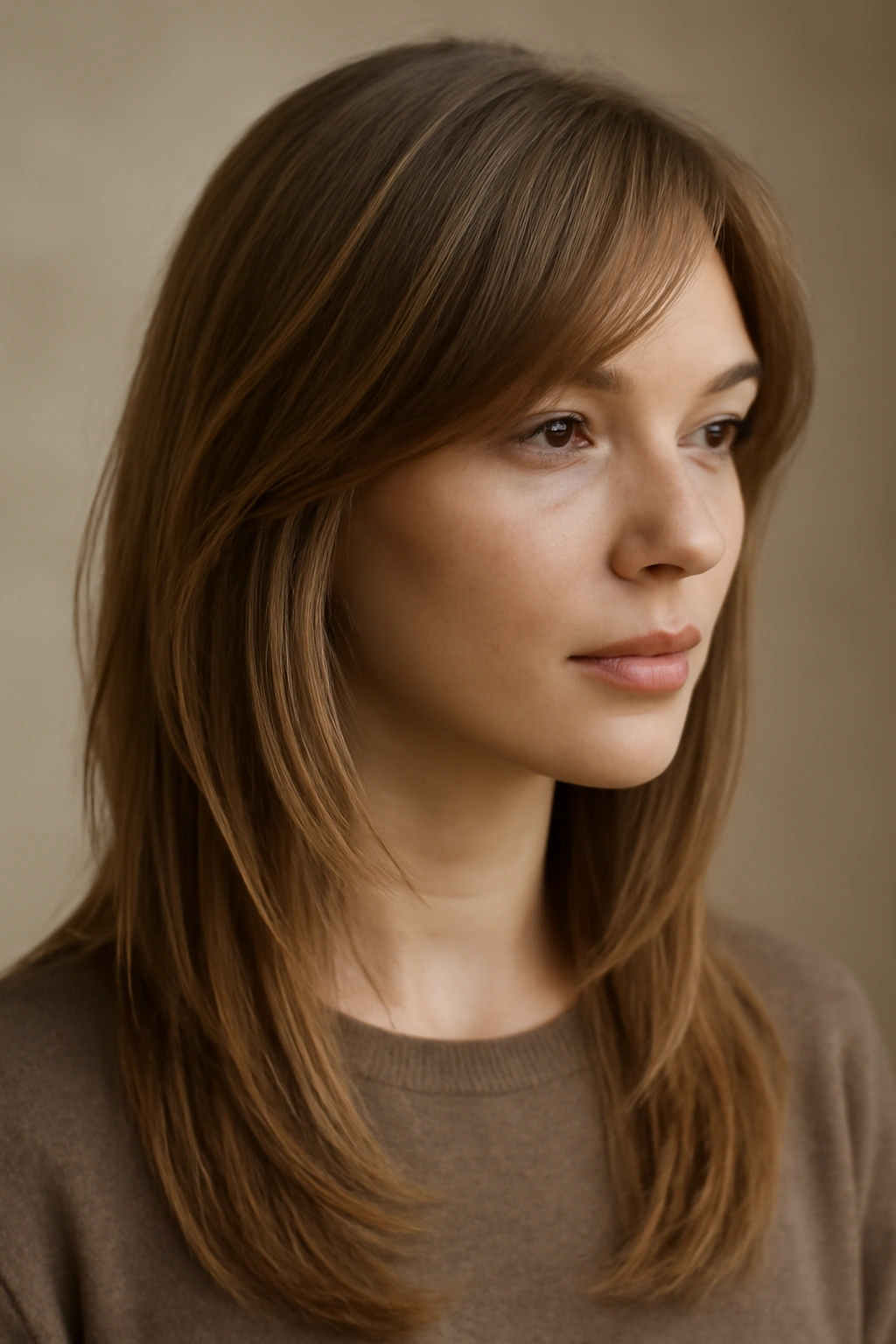
When you have long, fine hair, you need layers badly—flat, blunt long hair on fine strands often looks thin and shapeless. But you also can’t do aggressive layering without risking a wispy, sparse appearance. A subtle layer cut for long, fine hair works by placing layers strategically where they’ll create volume and movement without creating noticeable gaps or thinness. Typically, this means layers starting at mid-length or lower, feathered gently rather than chopped, and concentrated around the face for framing and dimension.
Why Subtle Layering Is the Answer for Fine, Long Hair
Long hair on fine strands is heavy, and that weight pulls curls and movement out of your hair. Subtle layers remove just enough weight to allow your hair to hold volume and shape, but not so much that you end up with disconnected, stringy-looking layers. The feathering technique blends the layers smoothly, so there’s no stark contrast between layered and un-layered sections—it’s all one cohesive piece. This approach lets you keep the length you love while finally having the movement and body that fine hair needs.
Making Long, Layered Fine Hair Work
- Blow-dry with a round brush on medium heat to create lift and smooth the layers
- Use volumizing mousse at the roots before blow-drying for maximum lift
- Sleep in loose braids to create natural waves without heat
- Apply a lightweight serum to ends to minimize frizz without weighing hair down
- Style with waves or curls that showcase the feathering throughout
Quick facts:
- Best face shapes: layers starting near the face work for all face shapes
- Styling time: 15 to 20 minutes with blow-dry, or air-dry for effortless waves
- Maintenance: trims every 8 to 10 weeks to keep subtle layers looking intentional
- Pairs well with: long, flowing styling and also with half-up, half-down looks
11. The Textured Long Shag for Thick, Curly Hair
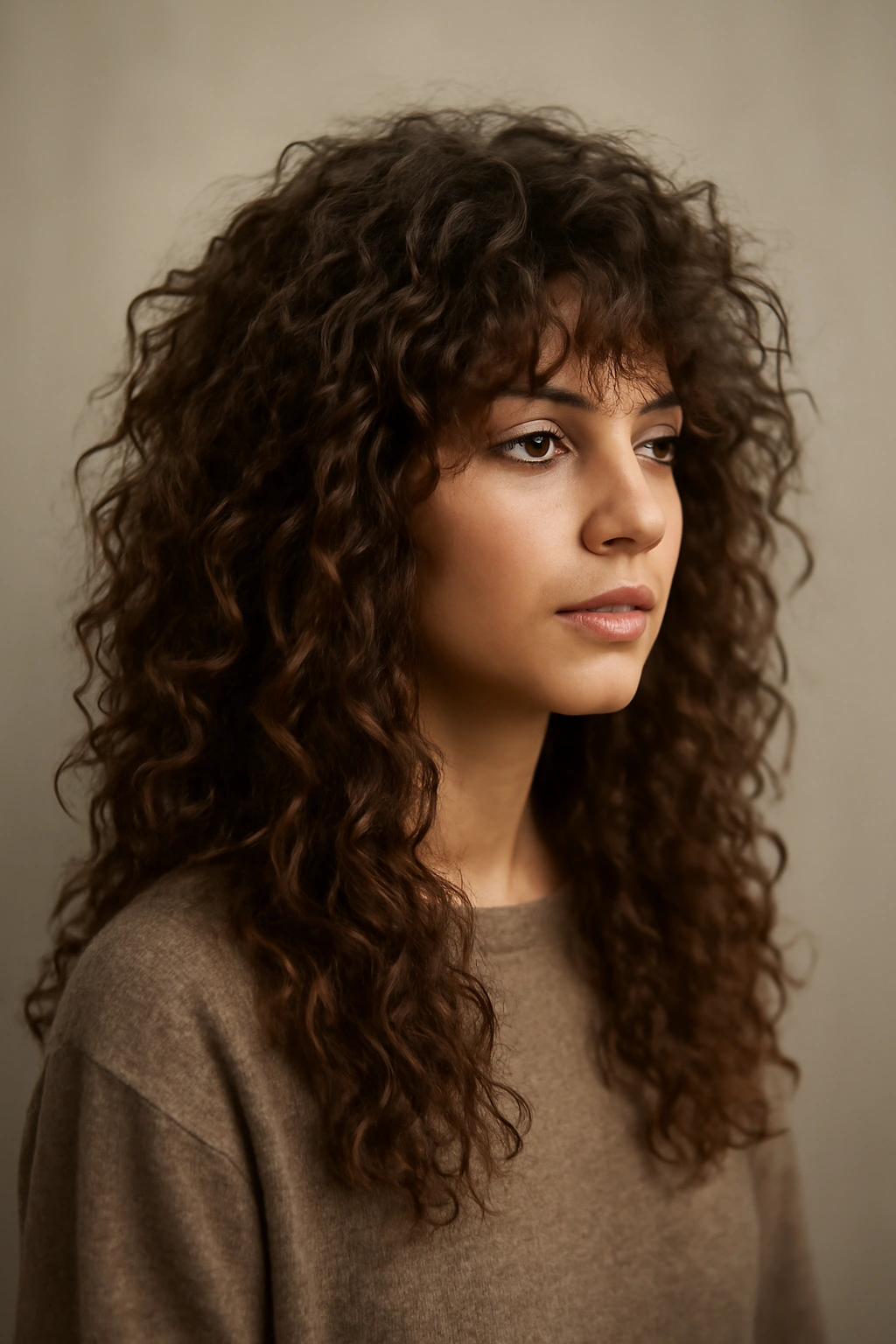
A textured long shag is the long-length cut designed specifically for thick, curly, or coarse hair that benefits from serious texture work and layering throughout. This cut typically extends to mid-back or longer, with choppy, textured layers starting at the crown and continuing all the way down, creating separation and definition throughout your curl pattern. It’s the long-hair equivalent of the shaggy crop—embracing your natural texture and using layers to channel that volume into intentional style rather than an overwhelming bulk.
What Makes This Ideal for Long, Thick Curls
Thick, curly hair has inherent volume and texture that many cuts try to contain—usually unsuccessfully. A long shag leans into that texture completely, using layers to create definition and separation throughout. The layers prevent curls from matting together into one heavy mass, and instead create a deliberately tousled, textured look that embraces your natural pattern. The length is preserved for people who love having long hair, while the layers ensure it doesn’t look like an unruly, unmanageable mane.
How to Wear and Maintain Long Texture
- Apply curl cream or gel to soaking-wet hair, scrunching and squeezing to encourage curl formation
- Plop with a microfiber towel or t-shirt for 15 to 20 minutes to remove excess water
- Air-dry or use a diffuser on low heat to preserve curl definition
- Refresh curls between washes with water and more product
- Get shaped-up trims every 6 to 8 weeks because long curls show growth and require reshaping
Pro tip: Sleeping on a silk or satin pillowcase prevents frizz and helps maintain curl definition through the night, which is especially important with long, layered curls.
12. The Cascading Layers for Long, Wavy Hair
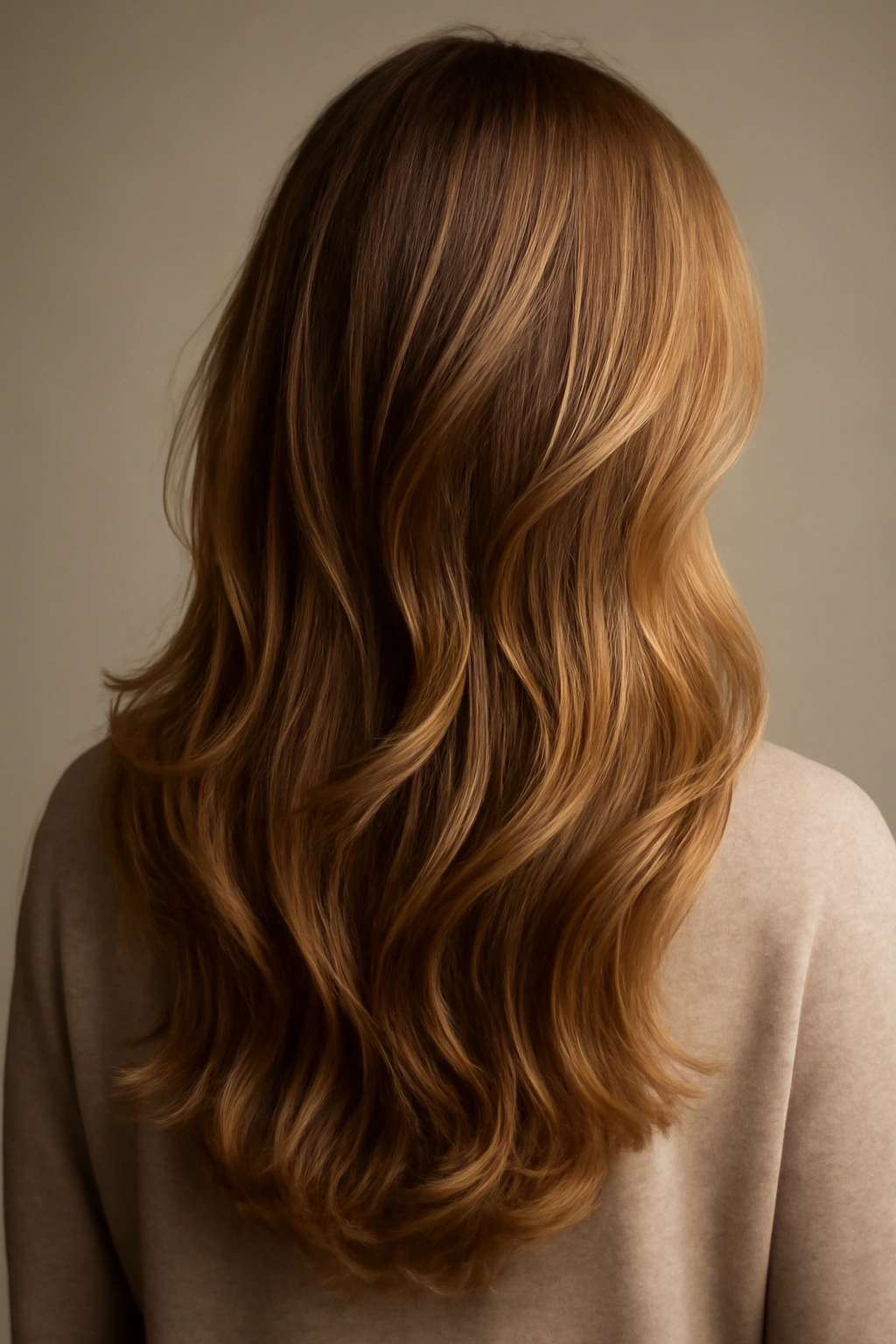
Cascading layers for long, wavy hair is the cut that creates soft, flowing movement without sacrificing length. This cut features subtle to moderate layers that begin higher on the head and cascade down gradually, creating a gentle graduation of length throughout. The layers are designed to enhance and emphasize your natural waves, making them more pronounced and creating gorgeous movement from root to tip. It’s the “mermaid hair” aesthetic—long, flowing, and undeniably feminine, but with intentional shaping through layers.
Why Cascading Layers Work for Long Waves
Long, wavy hair can sometimes look formless because waves are distributed throughout the length without much structure. Cascading layers add intentionality and shape by creating a gradient of length that emphasizes your wave pattern and creates movement throughout. The softer layering means there’s no stark contrast or choppiness—instead, everything flows together into one cohesive, wave-enhanced style. Your natural waves become more visible and pronounced because the layers create space for them to move independently.
Styling Cascading Waves
- Apply a wave cream or sea salt spray to damp hair and scrunch to enhance waves
- Blow-dry with a round brush to emphasize waves or air-dry for effortless texture
- Sleep in loose braids or a bun to enhance natural waves
- Use a light hairspray that doesn’t weigh down the waves
- Style with your hair down and flowing, or half-up to show off the face-framing layers
Worth knowing: This cut pairs beautifully with long, flowing layers and also looks stunning with occasional curling iron waves for when you want extra drama and movement.
13. The Modern Shag for Medium, Fine Hair
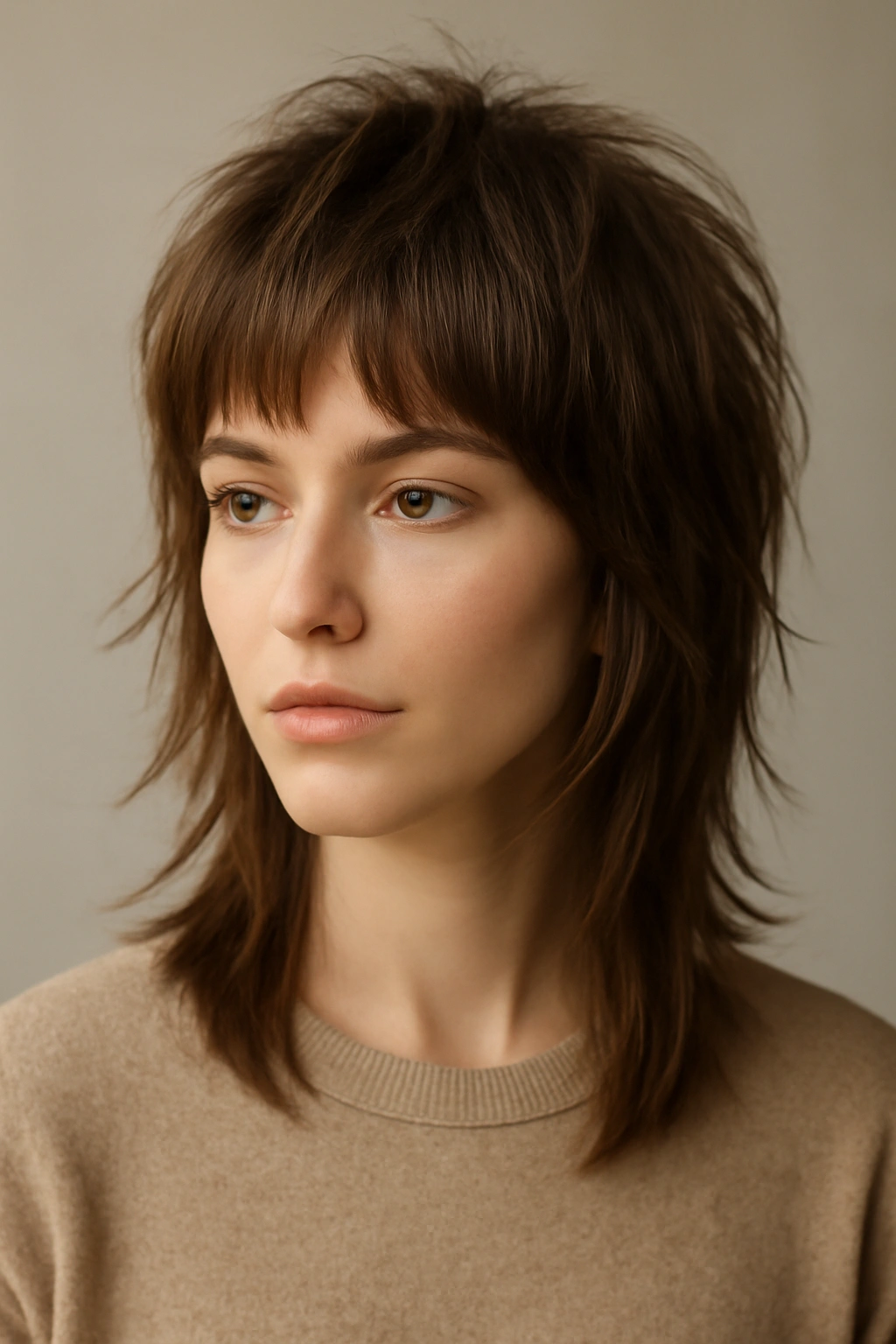
A modern shag for fine hair is an updated take on the classic 1970s shag—it’s choppy and textured like the original, but more intentional and shaped, with particular attention to preventing the sparse, stringy look that can happen when fine hair is heavily layered. This cut features short, choppy layers on top for texture and lift, with progressively longer layers throughout, and it’s executed with care to ensure the layers blend cohesively rather than creating disconnected sections. The result is textured, slightly wild, but carefully shaped—the opposite of accidentally unkempt.
Making Modern Shag Work on Fine Hair
Fine hair needs the texture and lift that a shag provides, but also needs careful execution to avoid looking thin or sparse. A modern shag balances this by keeping enough density while still creating intentional texture throughout. The choppy layers work best when they’re slightly blended rather than completely disconnected, and when the shortest layers are kept long enough that they don’t expose bald spots or thin patches. A skilled stylist understands fine hair’s limitations and works within them while still delivering the textured, intentional look of a true shag.
Styling Your Modern Shag
- Apply texturizing spray or mousse to damp hair before blow-drying
- Blow-dry with your fingers or a blow-dryer and round brush for texture
- Use a light hairspray for hold without weighing down delicate strands
- Sleep on slightly damp hair to add natural texture overnight
- Style with piece-y, separated texture that showcases the layering
Quick facts:
- Styling time: 10 to 15 minutes most days, less with air-drying
- Maintenance: trims every 6 weeks because fine hair grows visibly and texture shows growth
- Works with: undone, tousled styling and also slightly more polished versions for professional settings
- Best with: volumizing products that add grip and texture without weight
14. The Blunt Long Bob with Choppy Ends for Thick Hair
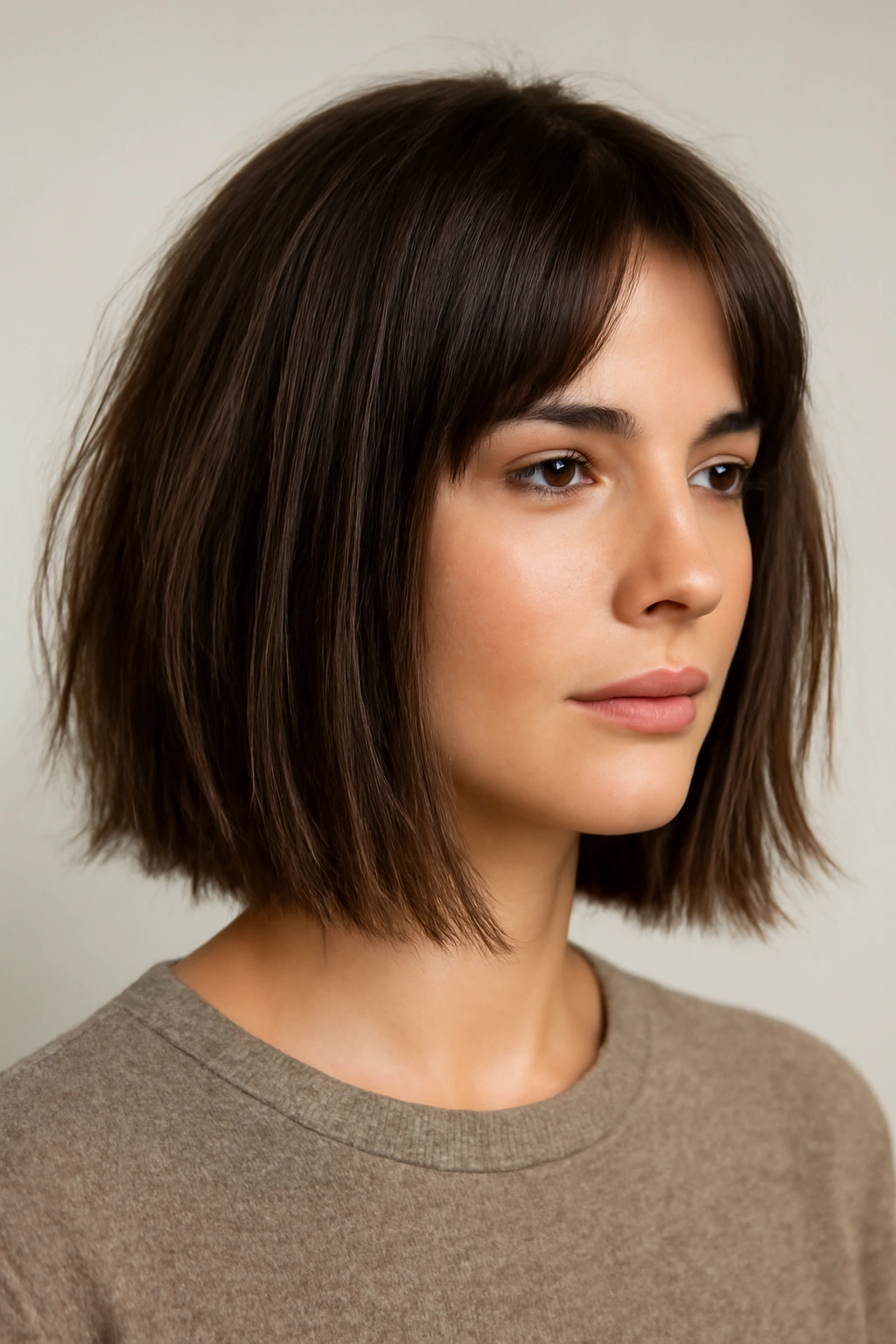
A blunt long bob—sometimes called a “thick lob”—with choppy, textured ends is the cut for thick, straight or wavy hair that wants length and polish but needs serious texture work to avoid looking heavy. This cut maintains a generally blunt perimeter around hip-length or mid-back, but adds choppy, deliberate texture throughout, especially at the ends, creating a style that’s both polished and textured. The choppiness at the ends prevents the weight from becoming overwhelming, and the texture adds dimension and movement that a completely blunt, thick cut would lack.
Why Choppy Ends Work for Thick Long Hair
Thick hair can absorb an enormous amount of texture and chopping, which means you can remove significant weight through layers and texture without the hair looking thin or sparse. The choppy ends prevent the “helmet hair” effect that can happen with thick hair cut completely blunt—they add dimension and movement while keeping the overall shape sleek and intentional. This cut also prevents the issue of split, straggly ends that often happens with very long, thick hair; the deliberate chopping keeps the ends looking intentional rather than damaged.
How to Maintain and Style
- Blow-dry straight with a paddle brush for a sleek, polished look
- Apply a lightweight oil or serum to choppy ends to enhance texture and shine
- Use a flat iron lightly on the ends to emphasize the choppiness
- Get regular trims every 8 weeks to maintain the choppy texture and prevent splitting
- Style with sleek waves or completely straight for maximum impact
Pro tip: The choppy ends look even better slightly tousled and undone, so don’t feel like you have to blow-dry perfectly straight every day—the intentional chopping looks great with a little texture and movement.
15. The Feathered Wolf Cut for Medium, Curly Hair
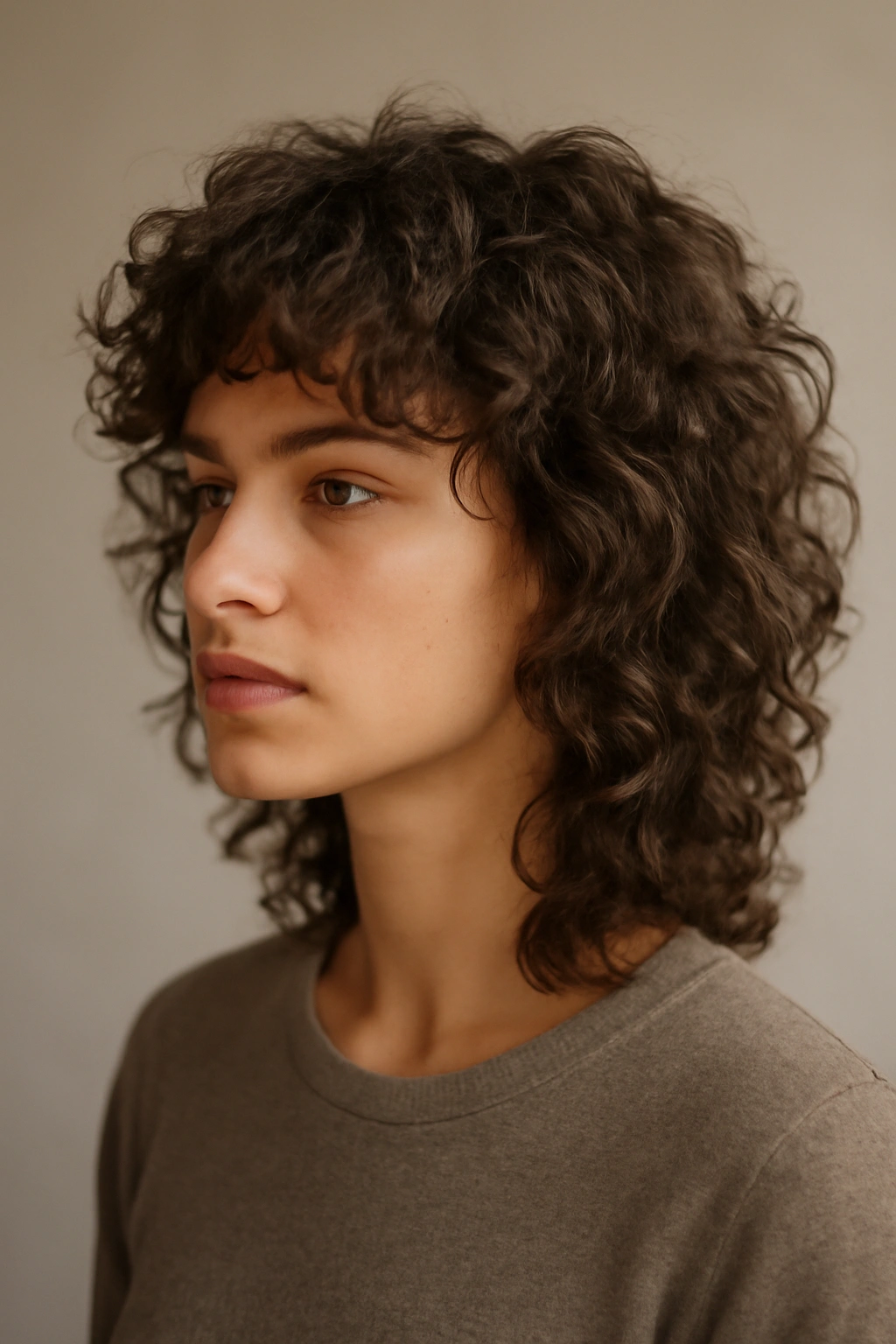
A feathered wolf cut for medium, curly hair combines the benefits of a wolf cut (short on top for lift, longer in back for length) with feathering instead of chopping, creating a softer, more blended look that works beautifully with curly textures. This cut features shorter, feathered layers on top that gradually transition to longer feathered layers in the back, creating a wolf-like silhouette that’s softened by the feathering technique. For curly hair, feathering matters because it creates separation and definition without the stark, disconnected feeling that aggressive chopping can create.
Why Feathering Works Better Than Chopping for Curls
Curly hair has natural texture and separation already built in, so heavy chopping can sometimes create too much chop, making individual curls look disconnected and separated in a way that’s less flattering. Feathering removes weight and creates shape while maintaining some cohesiveness between curls. The tapered, gradual transition from short to long feathered layers works with your curl pattern rather than against it, creating definition without the slightly wild, intentionally disconnected look of a heavily chopped cut.
Styling and Maintaining Your Feathered Wolf
- Apply curl cream or gel to soaking-wet hair, scrunching to encourage curl formation
- Use the praying hands method to smooth and shape curls
- Air-dry or use a diffuser on low heat for best curl definition
- Refresh curls between washes with water and product
- Get shaped-up trims every 4 to 6 weeks to maintain the feathered wolf shape
Worth knowing: This cut looks best when you embrace your natural curl pattern rather than trying to smooth it out—the feathering is designed to work with your curls, not fight them.
16. The Heavily Textured Pixie for Thick, Curly Hair
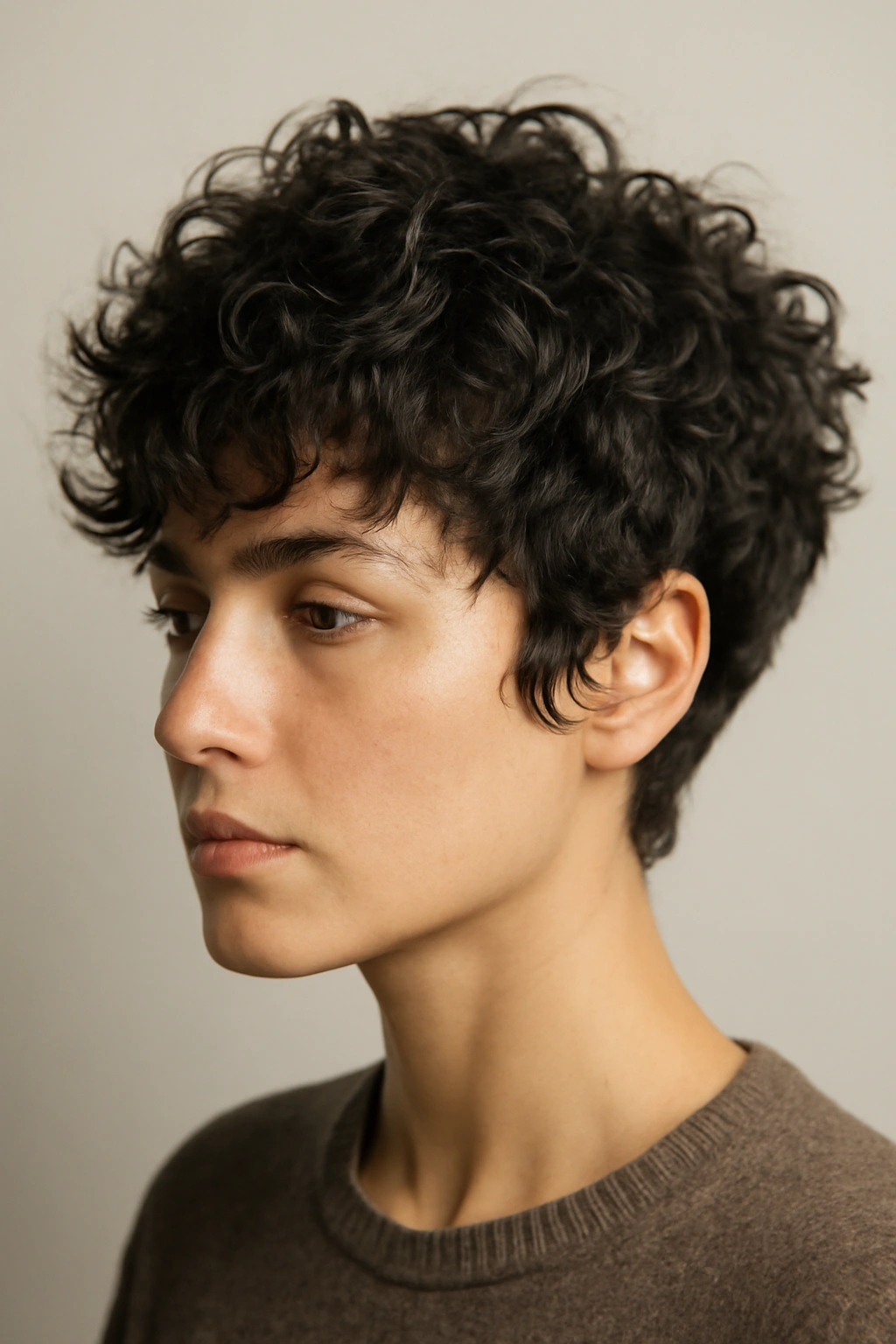
A heavily textured pixie for thick, curly hair is the short, dramatically layered cut that turns natural curls into an intentional style statement. This cut embraces maximum texture through choppy, varied-length layers throughout, creating serious dimension and definition in your curl pattern. The overall length sits around 2 to 4 inches depending on your face shape and curl size, with much shorter layers underneath creating volume and shape, and slightly longer pieces in front for framing. For thick, curly hair, this cut is liberating—it removes the weight that was holding down your texture and creates a deliberately styled, undeniably confident look.
Why Thick Curls Thrive in a Heavily Textured Pixie
Thick, curly hair in a pixie cut finally gets to be exactly what it wants to be—textured, curly, and full of movement. The short length and heavy layering mean each curl has room to express itself fully without being weighed down by the hair above it. The texture work prevents the flat, matted look that sometimes happens with thick curls in longer lengths, and instead creates definition and separation throughout. This cut is the opposite of forcing curly hair into a sleek, controlled style—it’s giving your hair permission to be its best, most textured self.
Making a Textured Pixie Your Own
- Apply curl cream or gel to soaking-wet hair, scrunching and squeezing to activate curls
- Air-dry or use a diffuser to preserve curl definition completely
- Refresh curls between washes with water, scrunching, and product
- Get shaped-up trims every 4 weeks because textured pixies show growth noticeably
- Embrace the texture—this cut is designed to look intentionally curly and textured
Quick facts:
- Styling time: 5 to 10 minutes, mostly scrunching in product and air-drying
- Maintenance: regular, frequent trims because this cut shows growth and requires reshaping
- Confidence required: this is a bold, statement-making cut—embrace it
- Best with: intentional, proud styling that celebrates your curl pattern
17. The Soft, Subtle Layers for Long, Straight Hair
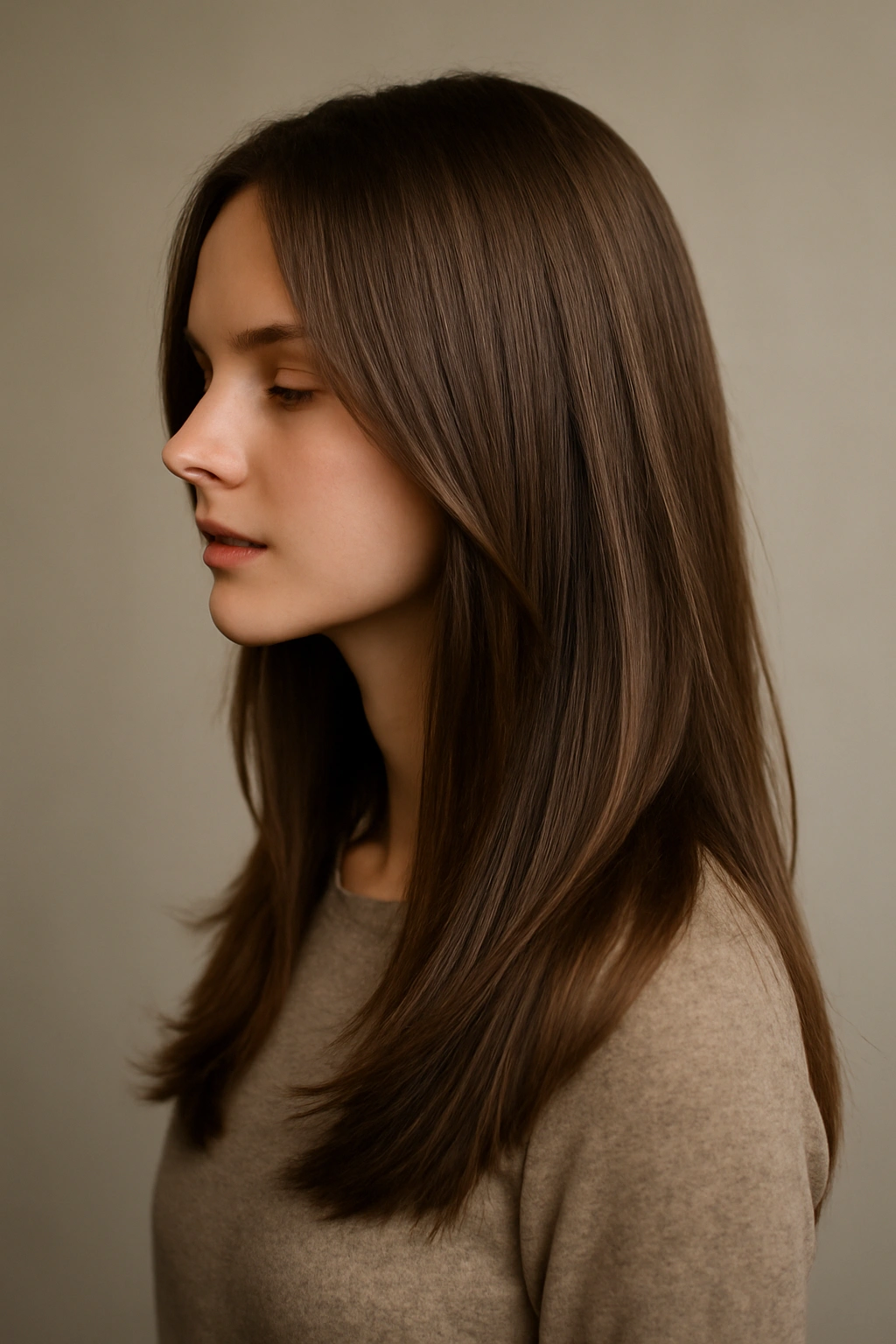
When you have long, straight hair and want the movement of layers without a dramatic style change, soft, subtle layering is the answer. This cut features minimal, barely-noticeable layers that begin lower on the head (around mid-length or lower) and are feathered softly to blend seamlessly into the longer underneath. The overall effect is barely different from your original length, but with just enough subtle texture to create soft movement and prevent the hair from looking completely flat. It’s the gentle approach to layering for people who love their length and want only the subtlest addition of dimension.
Why Subtlety Works for Straight, Long Hair
Long, straight hair doesn’t need aggressive texture work—in fact, subtle is often more flattering because it maintains the sleekness and polish that straight hair does so well, while adding just enough dimension to prevent a one-note look. Soft, feathered layers on straight hair create gentle movement without the choppy texture that some people find less sophisticated. This approach works beautifully for people who wear their hair down and flowing most of the time, as well as for people who frequently style it up and want shape to show through in different ways.
Styling Long Straight Hair with Subtle Layers
- Blow-dry straight with a paddle brush for smooth, sleek results
- Apply a lightweight serum or oil to ends for shine and smoothness
- Use a flat iron lightly to enhance the sleekness and create soft movement
- Sleep with hair in a loose braid or bun for gentle waves
- Style with gentle waves for movement that plays up the subtle layering
Pro tip: Subtle layers look even better slightly wavy, so sleeping in braids or using a curling iron occasionally creates gorgeous dimension that really showcases the soft layering.
18. The Choppy, Shoulder-Length Cut for Wavy, Medium-Density Hair
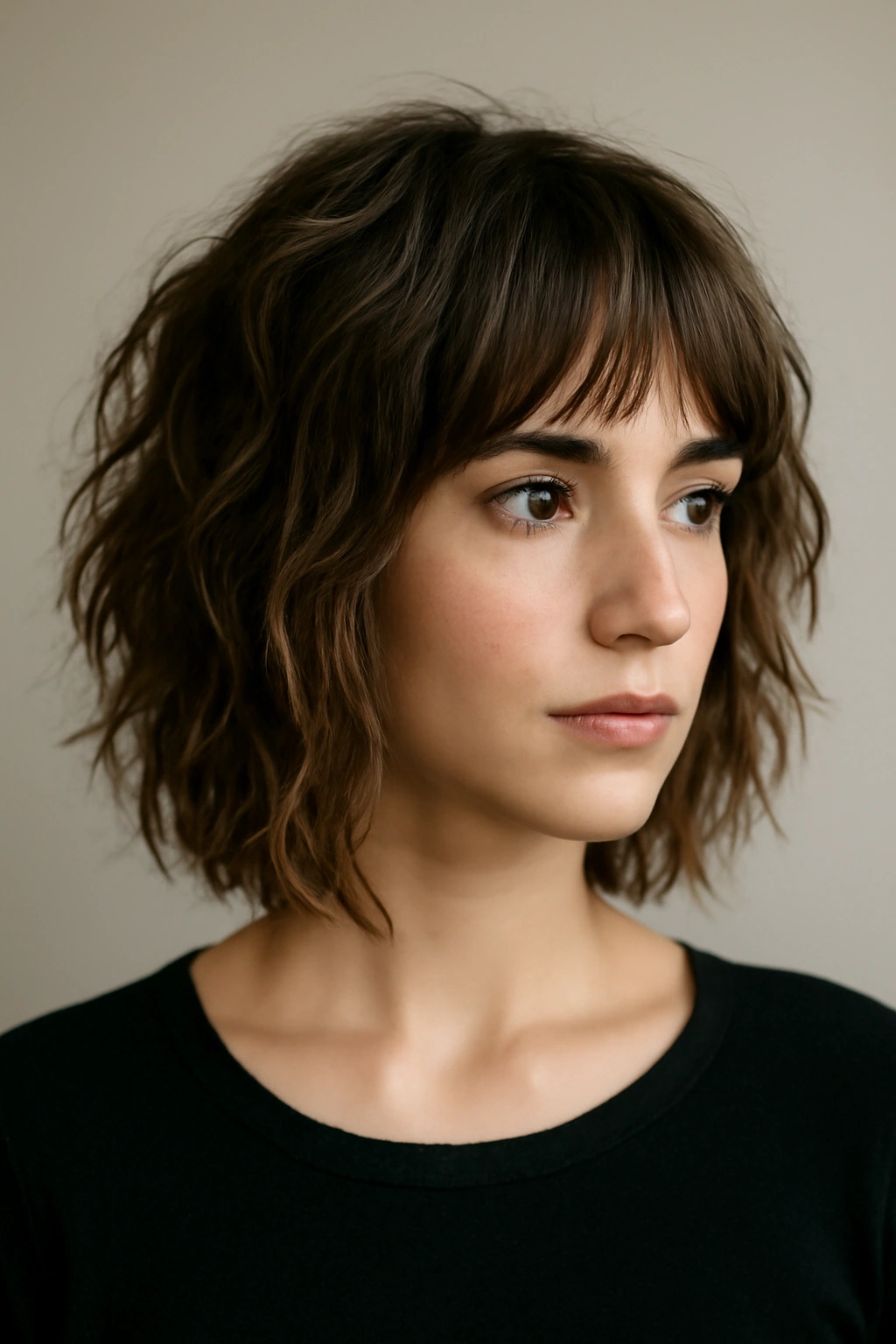
A choppy, shoulder-length cut with pronounced layers throughout is the perfect middle ground for wavy hair that has some body but isn’t thick, and for people who want an intentional, textured, modern style. This cut sits right at the shoulders with choppy layers starting near the crown and continuing throughout, creating serious texture and movement. The choppiness prevents the waves from creating one heavy, uniform curl pattern—instead, individual waves and pieces move independently, creating a lived-in, intentionally textured aesthetic that reads as contemporary and fashion-forward.
What Makes This Ideal for Medium-Density Wavy Hair
Medium-density wavy hair is in a sweet spot for layering—you have enough hair that aggressive choppy layers look intentional and full, but not so much that you end up with an overwhelming bulk. The choppy layers work beautifully with wavy texture, creating separation and movement throughout while maintaining enough density to avoid looking sparse. This cut works with your waves rather than against them, so you’re not fighting to blow-dry straight or weigh down with products—instead, you’re embracing and enhancing the texture you naturally have.
How to Wear Your Choppy Waves
- Apply sea salt spray or texturizing spray to damp hair
- Blow-dry with your fingers or a diffuser to enhance waves
- Sleep on slightly damp hair in braids for natural-looking texture
- Use dry shampoo between washes for added texture and grip
- Style with tousled waves that showcase the choppy layers throughout
Worth knowing: This cut actually looks better when it’s slightly undone and textured rather than perfectly blow-dried and polished—embrace the lived-in aesthetic that the choppy layering creates.
19. The Soft Shag for Long, Wavy, Thin Hair
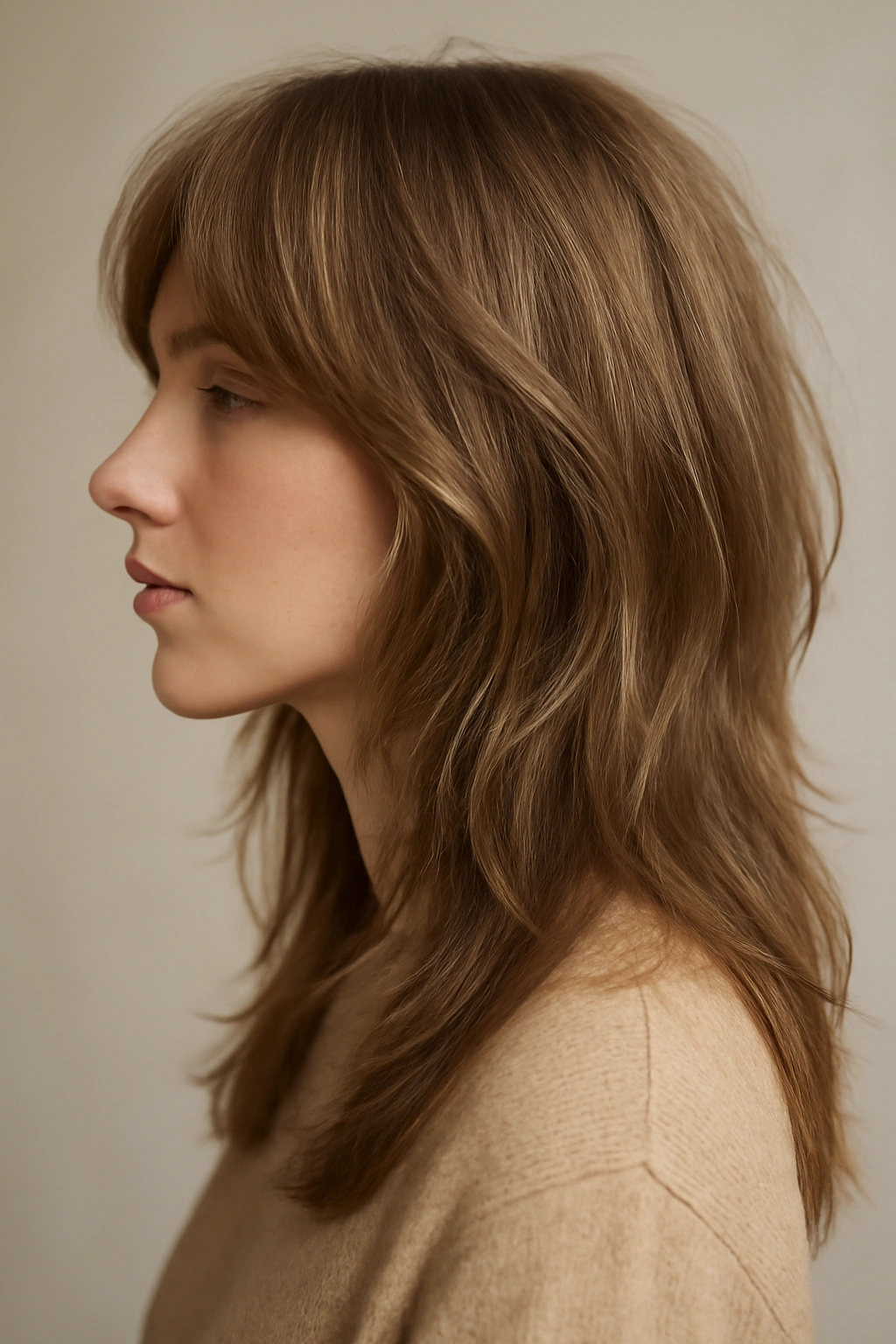
A soft shag for long, wavy, thin hair takes the texture and movement of a traditional shag but executes it with subtlety and care to avoid the sparse, stringy appearance that thin hair can take on with aggressive layering. This cut features soft, feathered layers throughout that create separation and movement without removing so much length and density that the hair looks thin or wispy. The feathering technique (rather than chopping) means the layers blend together cohesively, and the longer overall length provides coverage while the subtle layering creates the movement and texture that thin hair needs.
Making Soft Shag Work on Thin, Long Hair
The key to a successful soft shag on thin hair is restraint—you need enough layering to create movement and prevent flatness, but not so much that you end up with disconnected, sparse-looking sections. Feathering is the essential technique here because it removes weight gradually and blends layers rather than creating stark contrast. The longer overall length provides coverage and density, while the soft feathering throughout adds the texture and movement that prevents thin, long hair from looking completely flat and limp.
Styling Your Soft Shag
- Apply a volumizing mousse to damp roots before blow-drying
- Blow-dry with a round brush to create lift and enhance waves
- Sleep on braids or in a bun for natural-looking waves
- Use a light texturizing spray that doesn’t weigh hair down
- Style with soft waves that enhance the subtle layering
Quick facts:
- Best for: people who love long hair but need texture and movement to prevent flatness
- Styling time: 15 to 20 minutes with blow-dryer, or air-dry for effortless waves
- Maintenance: trims every 8 to 10 weeks to keep soft layers looking intentional
- Pairs well with: anything from polished styling to undone, tousled waves
20. The Choppy Lob for All Hair Types
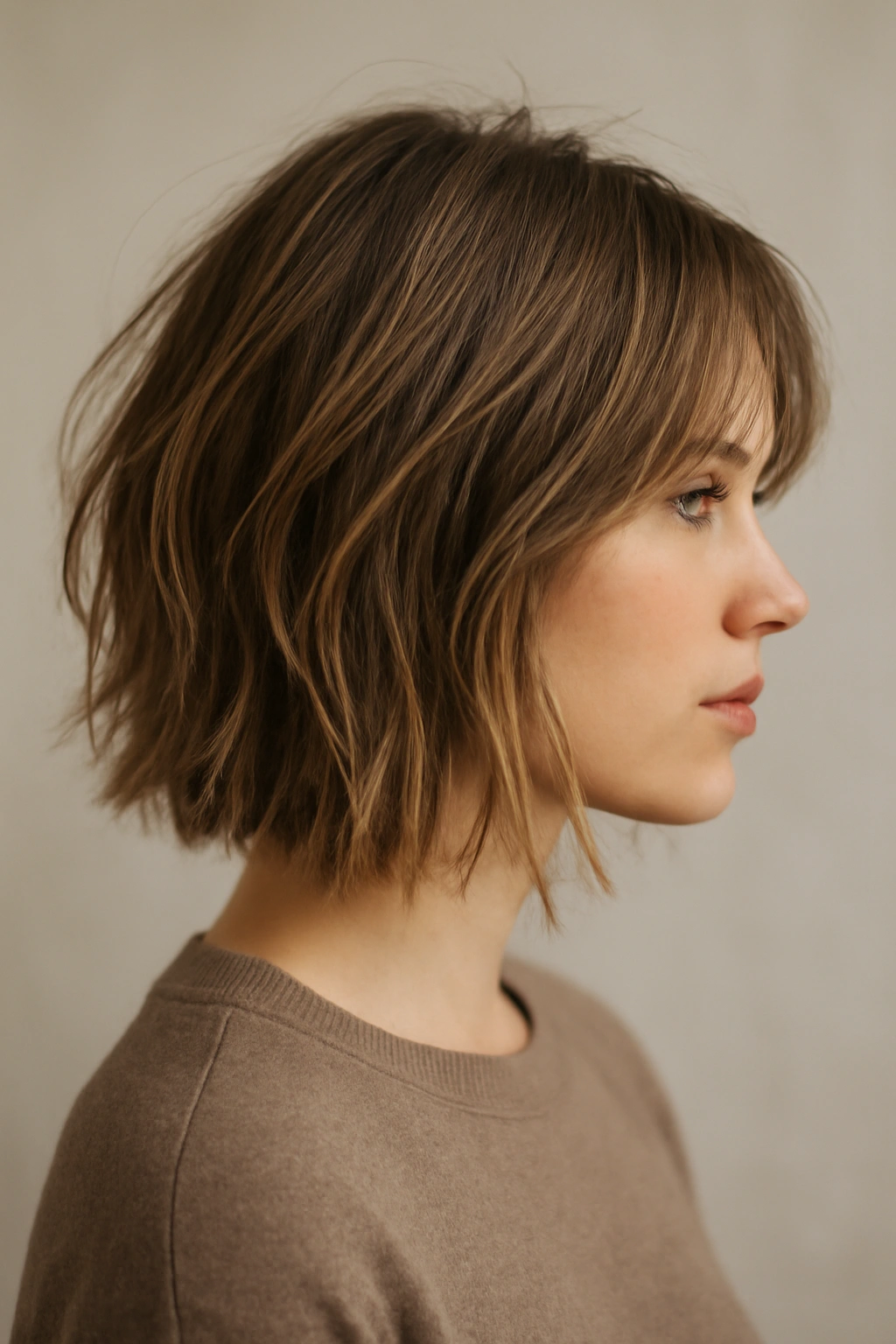
A choppy lob is the ultimate versatile layered haircut because the short-to-medium length and choppy texture can be adapted to work with virtually any hair type, density, or texture. A lob sits right around shoulder-length, and when it’s choppy—with layers distributed throughout rather than just at the ends—it becomes a style that works for straight, wavy, curly, fine, or thick hair. The key is adaptation; your stylist works with your specific hair type and density to create choppy layers that enhance your natural texture rather than fight against it. For some people, choppiness means defined, piece-y layers. For others, it means intentional texture throughout. The result is a cut that fits your hair perfectly while giving you a contemporary, intentionally textured style.
Why Choppy Lobs Work for Everyone
A choppy lob is powerful because the short-to-medium length is flattering on almost every face shape, and the choppy texture adapts beautifully to any hair type. For fine hair, it removes enough weight to create volume without going too short. For thick hair, it removes weight and prevents bulk while maintaining length and movement. For wavy and curly hair, it creates separation and definition. For straight hair, it adds dimension and prevents one-note flatness. The shoulder-length positioning is also universally flattering—long enough to feel substantial, short enough to not overwhelm most face shapes.
Adapting a Choppy Lob to Your Hair Type
- Fine hair: Ask for choppy layers that are softly feathered rather than aggressively chopped, to maintain density
- Thick hair: Request choppy layers throughout that remove serious weight and prevent bulk
- Wavy hair: Chop layers to enhance your natural wave pattern and create intentional movement
- Curly hair: Use choppy layers to create separation between curls and define your curl pattern
- Straight hair: Add choppy texture throughout to create dimension and prevent flatness
Pro tip: The beauty of a choppy lob is that it works beautifully at multiple length stages—as it grows out from shoulder-length toward mid-back, the layers relax and soften, giving you 3 to 4 months of genuinely great-looking hair before you need a trim.
Final Thoughts

The right layered haircut can completely transform not just how you look, but how you feel every time you run your hands through your hair. The key is understanding what your specific hair type needs—fine hair requires a different approach to layers than thick hair, and curly strands benefit from techniques that would be wrong for straight texture. The twenty cuts above represent every combination of length and hair type, but the real magic happens when you find a skilled stylist who understands your specific hair and can adapt a cut to work with your texture rather than against it.
Before booking your appointment, spend time looking at pictures of cuts you love and pay attention to the details. Notice whether the layers are choppy or feathered, where they begin on the head, and how much texture is throughout. Bring those pictures to your stylist and have a real conversation about your hair type, your daily styling time, and what you’re hoping to achieve. A great stylist will listen carefully and tell you honestly whether a specific cut will work for your hair, and how they’d adapt it to suit you perfectly.
Layered haircuts have earned their enduring popularity because they solve real problems—they add movement to flat hair, create shape for heavy hair, add dimension to one-note textures, and refresh your entire look without requiring you to go short if you don’t want to. Whether you choose a textured pixie, a choppy lob, a soft shag, or anything in between, the goal is the same: finding a cut that works with your hair, not against it, and makes you excited to style it every single day.
